


Abstract
Academic motivation and achievement are central to student success in applied STEM, engineering, and technical and vocational education and training (TVET); however, despite extensive research, the evidence remains fragmented across theoretical traditions, educational levels, and disciplinary settings. This structured narrative review synthesizes research on the factors shaping academic motivation, achievement, and career readiness in these contexts. A literature search was conducted in Web of Science, Scopus, ScienceDirect, PubMed, and PsycINFO for studies published between 2010 and 2025. A total of 58 studies met the inclusion criteria from an initial pool of 2184 records. Guided by self-determination theory, achievement goal theory, social cognitive career theory, and expectancy–value theory, this review identifies self-efficacy, perceived competence, task value, intrinsic/extrinsic motivation, goal orientation, metacognitive skills, teacher and peer support, curriculum relevance, and industry-aligned learning opportunities as key factors associated with student engagement, achievement, and career-related development. The synthesis shows that these factors operate through an integrated motivational core linking motivational regulation, self-belief, task value, and goal orientation. The findings suggest that student success is shaped by the interaction between individual beliefs, social support, instructional conditions, and perceived links between learning and future professional pathways. Practical implications are discussed for designing student-centered, career-relevant, and motivation-supportive learning environments in engineering and TVET.
1. Introduction
Academic motivation and achievement are widely recognized as central determinants of student success in applied science, technology, engineering, and mathematics (STEM) education, particularly in the technical and vocational education and training (TVET) context. Motivated students are more likely to engage actively in learning, persist through challenges, and develop a deeper understanding of both the theoretical concepts and practical skills essential for their fields (Islam & Chakrabarty, 2020; Lopez & Arida, 2025). Academic achievement, in turn, reflects the extent to which students attain these competencies and meet educational goals, shaping their employability, career progression, and capacity to contribute meaningfully to industry and innovation (Qasem et al., 2025; Shettar et al., 2015). In applied STEM disciplines, where learning is closely tied to real-world applications, motivation plays a particularly critical role in fostering engagement with hands-on activities, internships, and work-integrated learning experiences (Koyuncuoglu, 2020).
In this study, applied STEM education refers to educational contexts in which theoretical knowledge is intentionally connected to practical, problem-based, or work-integrated learning activities designed to prepare students for technical professions and real-world applications (Bou Saad et al., 2025). Engineering education refers to formal degree programs (usually undergraduate and higher) that prepare students to become engineering professionals through foundational sciences, design, and applied projects. TVET, as defined by UNESCO (2016), is education and training focused on acquiring the competencies, knowledge, and attitudes needed for employment in specific trades or technical occupations. Although engineering education and TVET programs differ in their academic levels and curricula, the two types of education can be classified under the broader category of applied STEM education because they both integrate theoretical content with practical occupation-oriented learning.
Academic motivation can be understood as the internal processes that energize, direct, and sustain the learning behaviors of students (Amrai et al., 2011; Koyuncuoglu, 2020). In the present review, academic motivation is operationalized as the constellation of motivational beliefs and orientations that influence students’ engagement with academic tasks, including self-efficacy, task value, goal orientation, and the quality of regulation (autonomous vs. controlled). Academic motivation is commonly conceptualized along a continuum ranging from intrinsic motivation, which is driven by personal interest and enjoyment, to extrinsic motivation, which is influenced by external rewards, such as grades or career prospects (Deci et al., 2001; Jeno et al., 2023; Ryan & Deci, 2020). Within self-determination theory, extrinsic motivation is itself differentiated by the degree to which external regulations have been internalized, ranging from external regulation (compliance with external demands) to identified and integrated regulation, the latter of which functions much like intrinsic motivation in supporting persistence and well-being (Ryan & Deci, 2020). This distinction matters in applied STEM and TVET contexts, where the career- and employability-related goals of students can become deeply identified with their sense of self rather than remaining purely external. Intrinsic motivation is consistently associated with deeper learning, persistence, and higher-quality engagement, while extrinsic motivation may support short-term performance but can be less sustainable over time (Howard et al., 2021). Conversely, amotivation, characterized by a lack of intention or interest, has been associated with poorer academic outcomes, such as lower achievement, disengagement, and increased absenteeism (Jeno et al., 2023; Norvilitis et al., 2022).
Academic achievement in applied STEM education is operationalized as the performance of students on formal academic indicators, such as grade point average (GPA), skill acquisition, and competency development aligned with industry needs (Hernández-de-Menéndez et al., 2019; Norvilitis et al., 2022). High-achieving students tend to participate more actively in project-based learning, collaborative problem solving, and innovation-oriented activities, all of which are central to engineering and TVET (Charosky et al., 2022). These learning environments require not only cognitive abilities but also non-cognitive attributes, such as self-efficacy, resilience, and goal orientation, influenced by the motivation of students (Bjørnebekk et al., 2013; Islam & Chakrabarty, 2020). Theoretical frameworks such as self-determination theory (SDT) and achievement goal theory (AGT) further emphasize how motivation shapes engagement, learning strategies, and performance outcomes in educational settings (Ryan & Deci, 2020; Senko, 2019).
Despite extensive research on academic motivation and achievement, the existing evidence remains fragmented across disciplines and educational contexts, which is observable along four dimensions. First, theoretically, studies have applied different motivation frameworks, such as SDT, AGT, social cognitive career theory (SCCT), and expectancy–value theory (EVT), largely in isolation, producing parallel studies that rarely speak to one another. Second, methodologically, most evidence is cross-sectional and survey-based, with limited longitudinal, mixed-methods, or intervention designs. Third, across educational levels, the literature includes primary, secondary, and tertiary samples without clearly disentangling how motivational dynamics differ by stage. Fourth, applied STEM, engineering, and TVET are unevenly represented across the Western, East Asian, and Global South contexts both disciplinarily and geographically, and findings are rarely synthesized across these settings. The present review responds to all four dimensions by deliberately integrating evidence across theories, designs, levels, and disciplinary and regional contexts. Studies conducted in different countries highlight both consistent patterns and contextual variations. For example, intrinsic motivation has been shown to positively influence performance across age groups, while the effects of extrinsic motivation may vary depending on context and learner characteristics (Liu et al., 2024). Similarly, motivation has been identified as a significant predictor of academic success in some contexts (İlter, 2023; Weiler & Murad, 2022), while other studies report weaker or non-significant relationships (Çetin, 2015). These inconsistencies suggest that the relationship between motivation and achievement is complex and associated with a range of cognitive, non-cognitive, and social factors. Additionally, studies by Bacca et al. (2018) and Emmanuel et al. (2022) have correlated academic motivation with student engagement in automotive programs. Conversely, Widiarini et al. (2023) affirmed that while factors such as admission processes, student services, and reward systems were linked to achievement, they do not significantly predict motivation. Overall, there is a lack of integrative synthesis that brings together these diverse findings within applied STEM, engineering, and TVET contexts, highlighting the need for a more comprehensive and unified understanding.
In applied STEM and TVET, this complex interplay between individual motivational beliefs and contextual influences is further explained by the dual emphasis on theoretical knowledge and practical skill development. Rapid technological advancements and evolving labor market demands require students to develop adaptable competencies, making motivation a critical factor in sustaining engagement and achievement (Achuodho & Pikó, 2024; Achuodho et al., 2025). However, challenges such as amotivation, weak motivational engagement, underachievement, and dropout rates persist in many technical education settings, particularly in developing contexts. These challenges are frequently attributed to a lack of alignment among the curriculum content, the interests and motivations of students, and evolving industry expectations. Moreover, although motivation and achievement have been widely examined in general education and STEM contexts, the evidence remains scattered across separate theoretical traditions and educational settings. In applied STEM and TVET, this fragmentation is particularly problematic because the success of students depends not only on their individual motivational beliefs, such as self-efficacy and task value, but also on contextual conditions, such as teacher and peer support, curriculum relevance, mentoring, and alignment with industry expectations. Therefore, an integrated synthesis is needed to clarify how these factors jointly shape the engagement, academic achievement, and career readiness of engineering and TVET learners across applied STEM disciplines. This study addresses this need by reviewing and integrating the existing research on the cognitive, non-cognitive, and social determinants of motivation and achievement. Based on established theoretical frameworks and empirical evidence, this review aims to provide a more coherent understanding of how these factors interact and how they can be effectively utilized to inform pedagogical practices and improve the outcomes of students in applied STEM education.
2. Literature Review
2.1. Theoretical Perspectives on Academic Motivation and Achievement in Applied STEM and TVET
Four theoretical frameworks were purposively selected to anchor this review: self-determination theory (SDT), achievement goal theory (AGT), social cognitive career theory (SCCT), and expectancy–value theory (EVT). These four were chosen because, collectively, they cover the principal dimensions of academic motivation that recur across the applied STEM, engineering, and TVET literature while offering distinct vantage points. The four frameworks are complementary rather than competing: SDT and AGT primarily illuminate why students engage and what they pursue, whereas SCCT and EVT illuminate how appraisals of competence, value, and outcome translate into sustained academic- and career-related behavior. Their combination is therefore particularly well-suited to applied STEM and TVET, where motivation is shaped simultaneously by classroom experience, identity development, and orientation to the labor market. Other theories (attribution theory, goal orientation theory, social identity theory) are discussed briefly in Section 2.1.5 as complementary perspectives that provide further nuance.
2.1.1. Self-Determination Theory (SDT): Intrinsic Motivation and Psychological Needs
Self-determination theory (SDT) (Deci & Ryan, 1985) posits that intrinsic motivation is sustained through the fulfillment of three fundamental psychological needs: autonomy, competence, and relatedness. These needs are crucial for promoting sustained engagement in learning environments (Dunn & Zimmer, 2020; Ryan & Deci, 2020). SDT addresses the quality and regulation of motivation (autonomous vs. controlled) and, in educational contexts, explains how need-supportive environments foster greater engagement, self-regulation, and persistence over time (Guay, 2022; Jeno et al., 2023). Recent theoretical developments also highlight SDT’s relevance in team motivation, showing that team learning is maximized when group interactions satisfy these psychological needs (Grenier et al., 2024; Litalien et al., 2019). Chiu (2022) demonstrated that the satisfaction of these needs underpins self-regulated human motivation. At the same time, Chiu (2022) notes that while SDT has been extensively tested in general education settings, its applicability to TVET programs, where extrinsic motivators such as employability are potentially at their highest, has been largely untested.
2.1.2. Achievement Goal Theory (AGT): Goal Orientation and Adaptive Learning
AGT focuses on the goal structures that students adopt (mastery vs. performance) and their consequences for engagement and persistence, distinguishing between mastery goals, which involve striving to develop competence and a deep understanding of the material, and performance goals, which focus on outperforming others (Struck Jannini et al., 2024). Mastery orientation is consistently associated with adaptive learning behaviors and resilience (Senko, 2019; Świątkowski & Dompnier, 2020). Recent theoretical advancements underscore AGT’s relevance in shaping educational practices. Research has affirmed that while performance goals can sometimes encourage achievement, avoidance goals are consistently correlated with anxiety and disengagement (Canfield & Zastavker, 2010; Chazan et al., 2022; Cheng, 2023; Struck Jannini et al., 2024).
2.1.3. Social Cognitive Career Theory (SCCT): Goal-Directed Behaviors and Self-Efficacy
SCCT introduces the self-efficacy and career development dimension that is especially salient in applied and vocational education, where academic choices are tightly coupled to anticipated professional trajectories. According to Lent et al. (2010), SCCT integrates Bandura’s (1986) principles of self-efficacy to explicate how perceptions of competency (self-efficacy) and perceived outcomes affect academic and career trajectories—here understood as the sequence of educational choices, persistence decisions, and occupational pathways that students pursue from formal study to employment in technical or engineering fields. Empirical evidence suggests that SCCT-based interventions, such as mentorship, exposure to role models, improved educational access, outcome expectancy training, barrier reduction, and goal-setting training, all play a crucial role in enhancing motivation, particularly among underrepresented student populations (Gibbons et al., 2020; Schunk & DiBenedetto, 2020; D. Wang et al., 2022). However, further research is needed to examine how AGT- and SCCT-informed interventions operate in applied STEM and vocational fields, where competency-based interventions may have distinct effects on motivational drivers.
2.1.4. Expectancy–Value Theory (EVT): Expectancy and Task-Value Beliefs
Expectancy–value theory (EVT) (Eccles & Wigfield, 2002) posits that motivation arises from individual expectations of success and the perceived value of a task, including its utility and intrinsic interest (Q. Wang & Xue, 2022). EVT contributes the expectancy and task-value beliefs that link learners’ appraisals of competence and meaning to their persistence in technical fields. This dual emphasis on subjective task value and perceived competence explains variations in academic performance, goal setting, and academic behavior (Q. Wang & Xue, 2022). EVT has been used to explain persistence in STEM fields, particularly when students perceive alignment between their academic plans and learning activities (Bandhu et al., 2024; Shang et al., 2023). Furthermore, individuals are more likely to excel in activities toward which they hold a positive attitude—especially those they find personally meaningful, interesting, or satisfying (Chung & Kim, 2022; Tang et al., 2022). Thus, EVT offers a valuable roadmap for designing motivational interventions that influence both cognitive beliefs and value-based engagement.
2.1.5. Complementary Theoretical Perspectives and Future Directions
Several other theoretical frameworks exist that give insight into academic motivation and achievement. For instance, attribution theory examines individuals’ explanations for success and failure in academics and the degree to which these explanations influence their motivational and achievement behaviors (Urhahne & Wijnia, 2023). Goal orientation theory explores the types of goals learners pursue, such as mastery vs. performance goals, and how these orientations affect learning strategies, persistence, and achievement (Cheng, 2023). According to Tajfel and Turner (1979), social identity theory investigates how individuals’ identification with academic or social groups shapes their motivation, engagement, and achievement in educational contexts, proposing that identification with academic or peer groups can significantly impact students’ sense of belonging and academic drive. Nonetheless, while all these theories collectively highlight the roles of autonomy, competence beliefs, goal valuation, and academic pursuits, their interplay in TVET contexts, where hands-on skills and employability outcomes are prioritized, remains under-theorized despite their relevance. Future research should examine how these frameworks can be integrated into applied learning environments, with particular attention to the unique motivational barriers faced by engineering and TVET students.
2.1.6. Integration and Complementarity of Theories in TVET Context
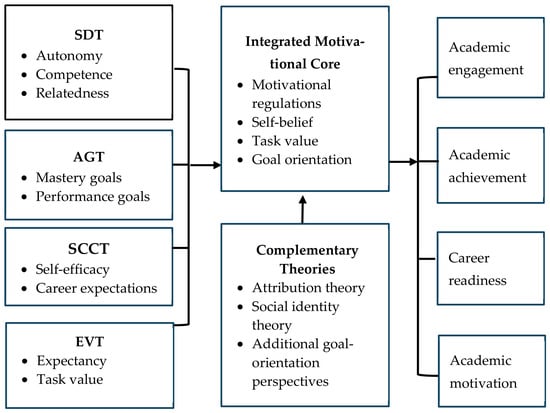
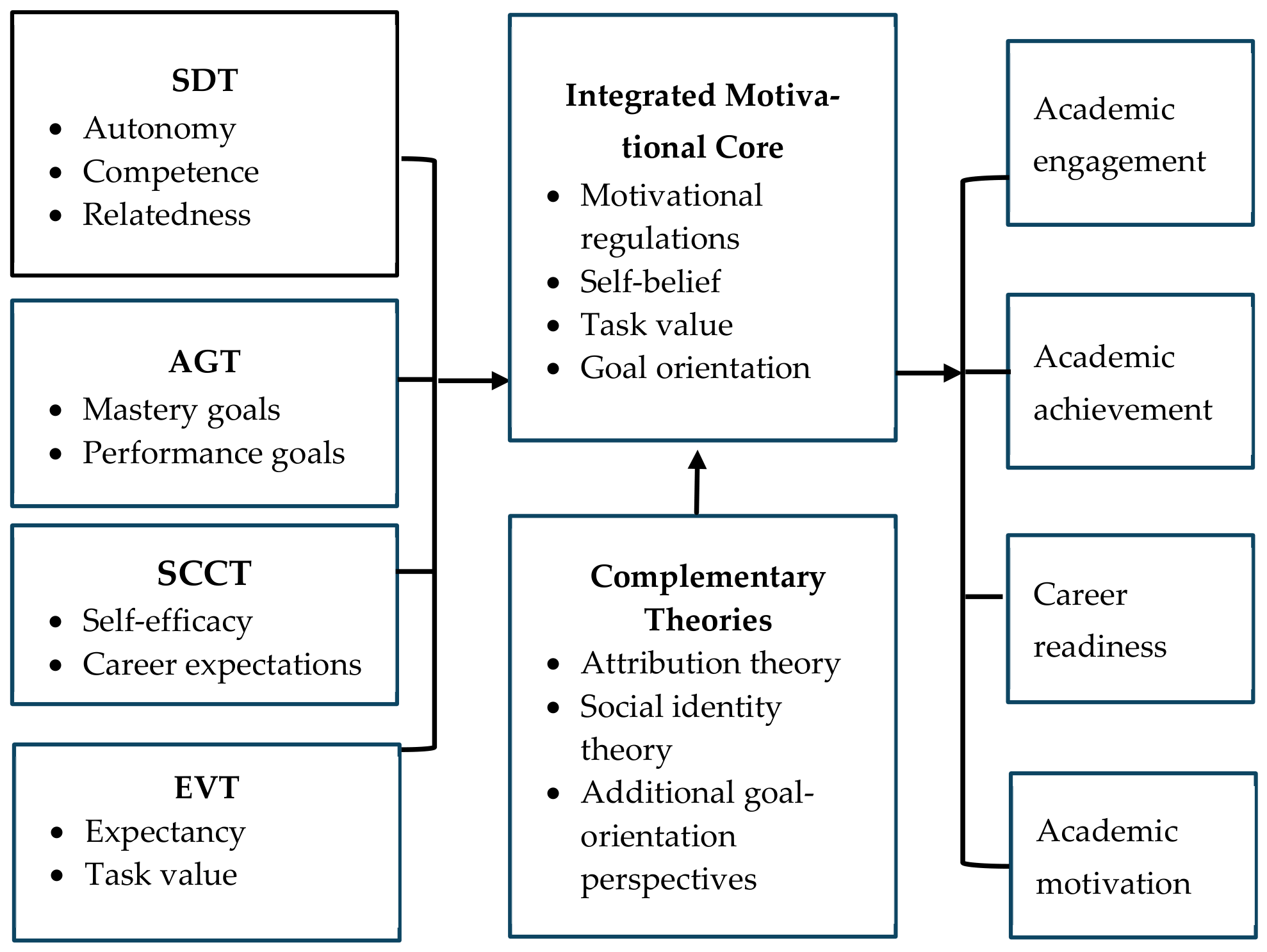
In applied STEM and TVET contexts, integrating SDT, AGT, SCCT, and EVT provides a comprehensive framework for understanding academic motivation and achievement. As shown in Figure 1, SDT emphasizes the importance of autonomy (e.g., choice in project-based tasks), competence (e.g., developing expertise in domain-specific tools and techniques), and relatedness (e.g., collaboration in practical or workshop-based learning environments), which collectively support both intrinsic motivation for experiential learning and extrinsic motivators such as employability.
Figure 1.
The theoretical integration of the four selected motivation frameworks (SDT, AGT, SCCT, and EVT) and complementary theories used to guide this review. Note: This figure presents an a priori conceptual lens through which the literature was synthesized; it is not an empirical result of this review. The integrated framework derived from the synthesis is presented separately in Figure 5. Motivational regulation in Figure 1 reflects its specific origin in SDT’s autonomous–controlled regulation continuum. Academic motivation is shown as a higher-order construct that emerges from the integration of motivational regulation, self-belief, task value, and goal orientation.
AGT and SCCT contribute by explaining how goal orientation (e.g., striving for mastery of subject-specific skills) and self-efficacy (e.g., confidence in one’s ability to solve technical problems) shape the persistence and engagement of students in applied learning contexts. EVT further complements these perspectives by highlighting the roles of expectancy (e.g., beliefs about successfully completing technical tasks) and task value (e.g., perceived relevance of learning activities to future career pathways) in influencing motivation and performance. Together, these theoretical perspectives converge on a shared motivational core comprising self-belief, goal orientation, and task value that directly informs the academic engagement, motivation, and achievement of students and ultimately contributes to their career readiness in applied STEM and vocational environments.
2.2. The Aims of the Present Review
This structured narrative review aims to synthesize and critically examine the cognitive, non-cognitive, and social factors influencing academic motivation and achievement in applied STEM education, with particular attention to engineering and TVET contexts, and to provide an integrated understanding of the mechanisms through which these factors shape student engagement and performance based on the following theoretical frameworks: self-determination theory (Deci & Ryan, 1985; Ryan & Deci, 2020), achievement goal theory (Senko, 2019), social cognitive career theory (Lent et al., 2010), and expectancy–value theory (Eccles & Wigfield, 2002). Moreover, this review integrates fragmented evidence across theoretical and empirical domains, examining key determinants of motivation and achievement and identifying gaps for future research.
- RQ1: What cognitive, non-cognitive, and social factors influence the academic motivation and achievement of students in applied STEM, particularly in engineering and TVET contexts?
- RQ2: How can these factors be integrated into a framework incorporating motivation, support, curriculum relevance, industry alignment, and career readiness?
3. Materials and Methods
The present study was a structured narrative literature review designed to examine theoretical perspectives and empirical evidence on academic motivation and achievement in applied STEM education, paying particular attention to engineering and TVET contexts. A structured narrative review was selected in preference to a fully systematic or meta-analytic review because the aim was conceptual and integrative rather than effect size estimation. Specifically, the review needed to (i) integrate evidence from heterogeneous theoretical frameworks (SDT, AGT, SCCT, EVT) that operationalize motivation differently and cannot be directly pooled; (ii) include both empirical and theoretical contributions; and (iii) span quantitative, qualitative, and mixed-methods designs and several educational levels. These features make narrative synthesis methodologically appropriate (Gregory & Denniss, 2018). At the same time, a structured approach was adopted in this study to mitigate the risk of selection bias that is often associated with traditional narrative reviews. Pre-specified databases, search dates, search strings, inclusion/exclusion criteria, and a documented screening flow were used (reported below and in Figure 2), drawing on procedures commonly associated with systematic reviews without claiming exhaustive coverage or quantitative pooling. This approach was chosen for its capacity to qualitatively synthesize, interpret, and summarize the existing research, providing a comprehensive and up-to-date understanding of the topic (Gregory & Denniss, 2018; Tareke et al., 2024). The final database search was conducted on 15 December 2025, with no subsequent database updates, using the following major academic databases: Web of Science, Scopus, ScienceDirect, PubMed, and PsycINFO. The search targeted publications from January 2010 to December 2025, prioritizing the most recent contributions to the field. Boolean search terms were applied in diverse combinations, such as (“predictors” OR “influencing factors”) AND (“academic motivation” AND “academic achievement” OR “academic success” OR “academic performance”) AND (“engineering students” OR “TVET students”) AND (“STEM education”), and (“academic motivation theories” AND “achievement” AND “technical education”). The complete database-specific search strings, search fields, filters applied, and exact date of search are reported in Appendix A (Table A1) to support reproducibility.
Figure 2.
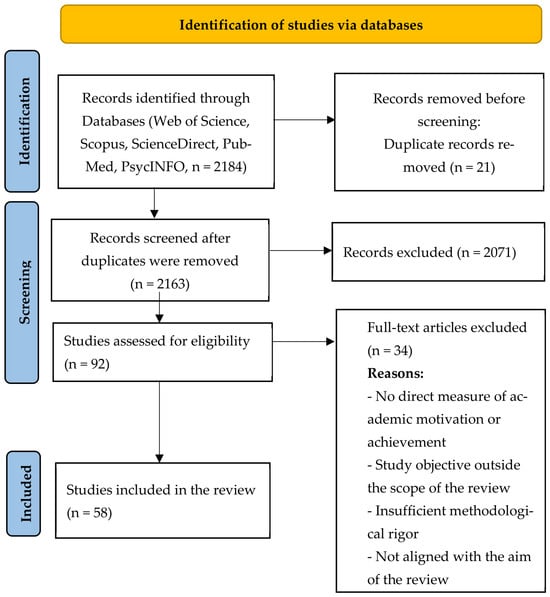
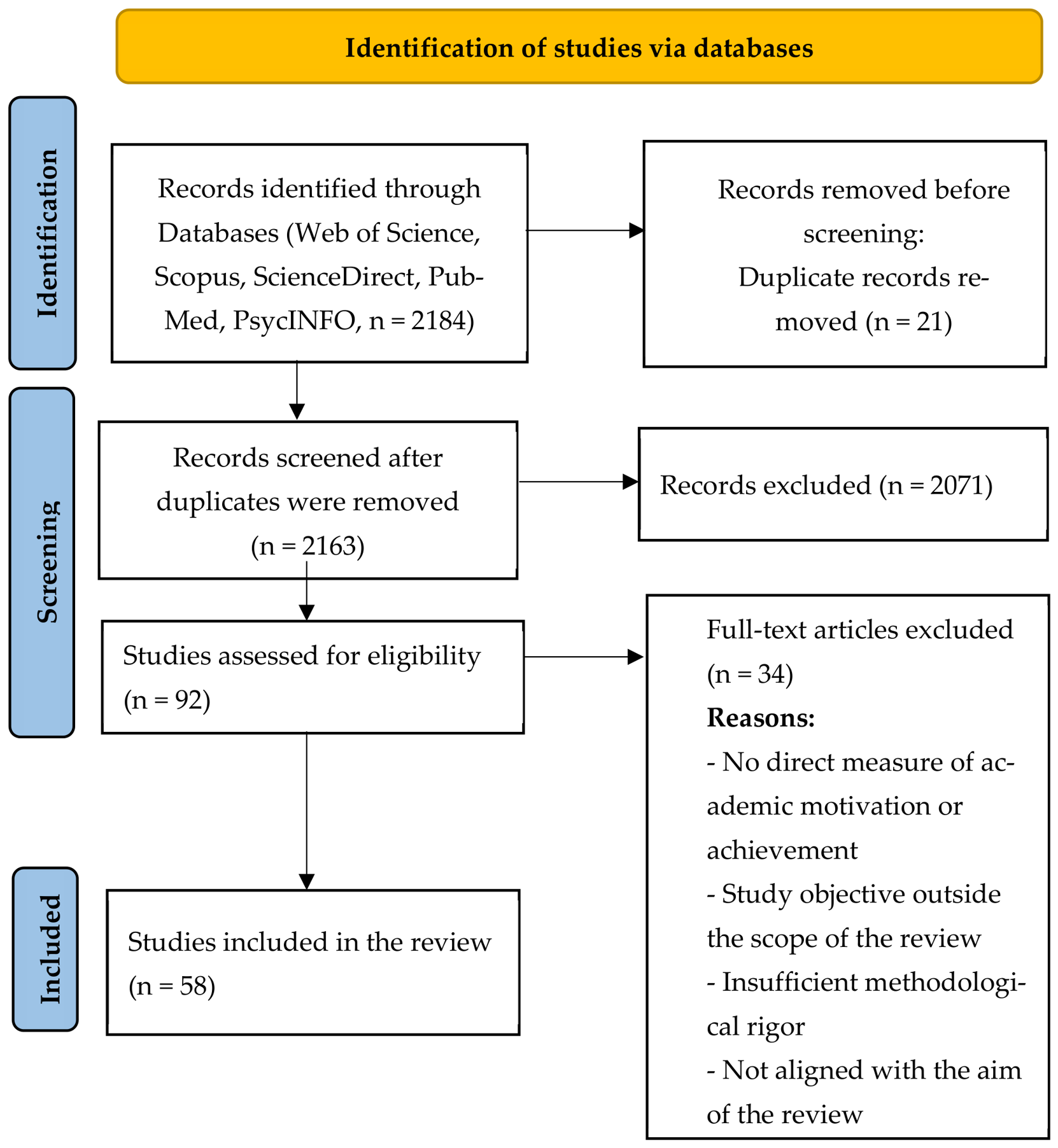
A flow diagram of the article identification, screening, and selection process, presented in a PRISMA-2020-informed format. Note: The diagram reports the databases searched (Web of Science, Scopus, ScienceDirect, PubMed, PsycINFO) and the numbers of records identified, duplicates removed, records with their title/abstract screened against the inclusion and exclusion criteria, full-text articles assessed for eligibility, studies excluded at the full-text stage with reasons, and studies retained for synthesis (N = 58).
Studies were included if they met the following criteria: published in English, appeared in peer-reviewed journals, and focused on factors associated with academic motivation, engagement, achievement, or closely related academic outcomes of students in applied STEM, engineering, TVET, or comparable educational settings. Only articles published between January 2010 and December 2025 were considered to ensure the inclusion of recent findings. Exclusion criteria included dissertations, editorials, letters to the editor, news articles, conference abstracts without full text, articles without accessible abstracts or full texts, and studies focused exclusively on physiological or clinical outcomes unrelated to academic performance.
The initial search yielded a total of 2184 articles. Records were exported to a reference management system (Mendeley, https://www.mendeley.com/), where 21 duplicates were removed prior to screening. The remaining 2163 records were then screened in two stages. In Stage 1 (title/abstract screening), two reviewers independently assessed each record against the inclusion (peer-reviewed, English-language, focused on motivation/engagement/achievement in applied STEM, engineering, TVET, or directly comparable settings, published 2010–2025) and exclusion (dissertations, editorials, letters, news items, conference abstracts without full text, items without accessible abstract/full text, and purely physiological or clinical outcomes) criteria. Disagreements were first resolved by discussion between the two reviewers; where consensus could not be reached, a third reviewer adjudicated. In Stage 2 (full-text screening), the 92 full-text articles retained from Stage 1 were independently reassessed by the same two reviewers against the same criteria, and an additional check was performed to ensure that each study reported a measurable relationship between motivation/motivational constructs and an academic outcome. For empirical studies, an additional criterion was that each study reported a measurable relationship between motivational constructs and academic, engagement, or career-related educational outcomes. Theoretical and review papers were retained when they provided substantial conceptual or integrative value for the synthesis. Disagreements at this stage were again resolved by discussion and, where necessary, third-reviewer adjudication.
The methodological quality of the studies retained at the full-text stage was appraised using the standardized criteria of Kmet et al. (2004), with separate checklists applied to quantitative (14 items) and qualitative (10 items) studies; mixed-methods studies were appraised with both, and theoretical/review papers were assessed against an adapted set of items covering aim clarity, conceptual coherence, and transparency of sources. Each item was scored 2 (“yes”), 1 (“partial”), or 0 (“no”), and a summary score was computed for each study as the proportion of the maximum possible score. The two reviewers again independently appraised each study; discrepancies of more than one point on any item were resolved by discussion, with a third reviewer adjudicating unresolved disagreements. Studies scoring below 0.55 of the maximum possible were excluded from the synthesis on quality grounds; this threshold has been applied in prior education and health research reviews using the Kmet criteria. The appraisal therefore functioned in two ways: (i) as an exclusion filter at the full-text stage, where studies with serious methodological shortcomings, such as absence of motivational measures, unclear analytical strategy, or undefined sampling, were excluded rather than included with a quality caveat; and (ii) as a weighting consideration in interpretation, such that findings from higher-quality studies (≥0.75) were given more weight in the narrative synthesis, and convergence between higher- and lower-quality studies was noted where relevant. The 58 retained studies were of mixed but acceptable quality; the predominance of cross-sectional designs in the retained pool is reflected in the limitations. A comprehensive thematic synthesis was conducted, prioritizing the most significant factors influencing the academic motivation and achievement of engineering and TVET students, as well as of high school and college students. Figure 2 (a flow diagram of the article selection process) presents the search and selection flow used in this structured narrative review. Given the structured narrative design, the synthesis aimed to identify and interpret dominant conceptual and empirical patterns rather than to provide a fully exhaustive or meta-analytic account of the literature.
4. Results
4.1. Characteristics of Included Studies
Evidence was drawn from six world regions across the 58 included studies (see Appendix A, Table A2). Asia was the largest contributor (n = 20 studies), including China, Hong Kong, South Korea, India, Iran, Jordan, Bangladesh, Indonesia, Malaysia, the Philippines, Saudi Arabia, and Türkiye. Europe contributed 13 studies, representing Norway, Spain, Italy, Romania, Germany, Finland, and Scotland. North America contributed 12 studies, predominantly from the United States, alongside studies from Canada and Mexico. Oceania contributed four studies from Australia and New Zealand, while Africa was represented by only two studies, both conducted in Nigeria. South America contributed one study from Peru. In addition, six studies were based on global or multinational datasets, including systematic reviews, meta-analyses, and theoretical syntheses drawing on evidence from multiple countries. In terms of educational level, tertiary education samples (university, college, engineering, medical, and TVET students) accounted for approximately 35 studies, secondary and middle school students for 11 studies, and 12 studies were theoretical, systematic reviews, meta-analyses, or conceptual papers that did not involve a single empirical sample. By disciplinary focus, approximately six studies addressed engineering or applied STEM contexts directly (including automotive engineering, automotive electronics, engineering project studies, chemical engineering, physical chemistry, and engineering education), six addressed TVET or vocational education explicitly, and the remainder examined motivation and achievement in general higher education, K–12, or domain-specific contexts (e.g., mathematics, science, and physical education) with theoretically transferable findings. This distribution highlights two characteristics of the field that motivated this review: (1) a heavy reliance on Asian and North American evidence; and (2) a comparatively thin direct evidence base in TVET and specific engineering subfields relative to the broader STEM literature.
4.2. Methodological Distribution
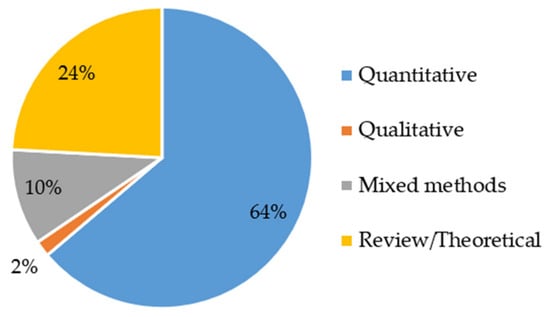
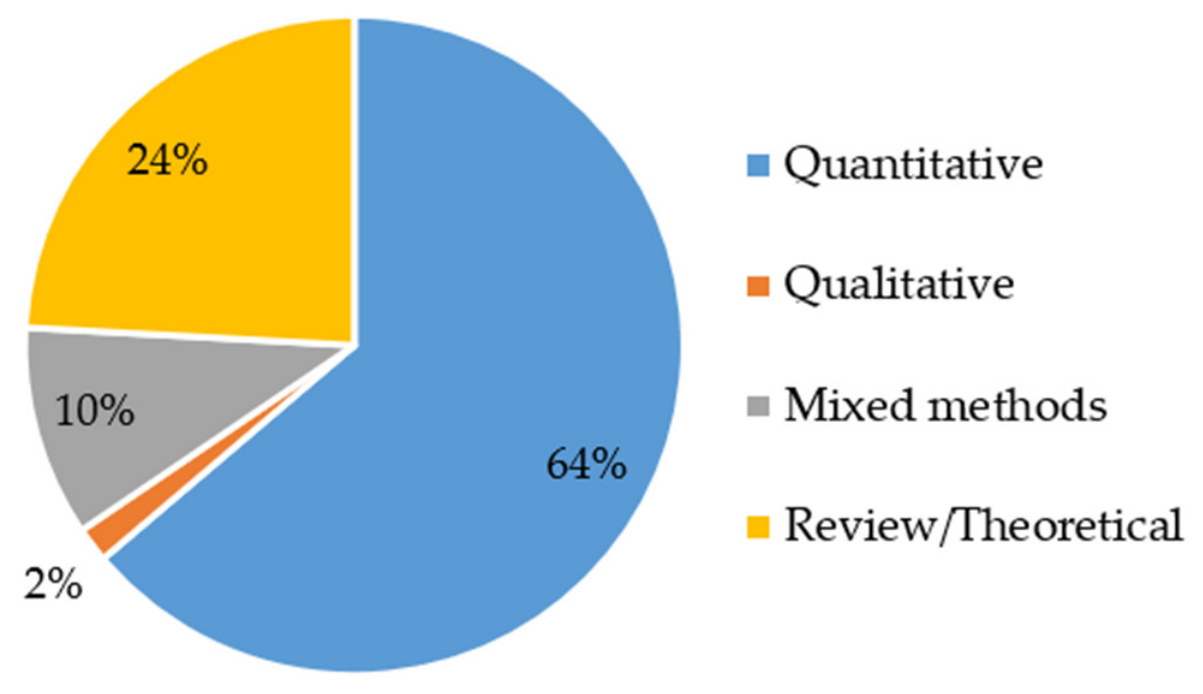
Figure 3 shows the methodological composition of the 58 reviewed articles. Table A2 presents the characteristics of the included studies. Quantitative studies account for approximately 64% (n = 37) of the sample, review and theoretical studies constitute approximately 24% (n = 14), while mixed-methods and qualitative studies account for about 10% (n = 6) and under 2% (n = 1), respectively. This distribution indicates that, within the literature reviewed, researchers predominantly used quantitative, survey-based designs to examine motivation and achievement in applied STEM and TVET. Given the heterogeneity of these settings, a more balanced methodological approach—particularly the use of mixed-methods designs capable of capturing both measurable relationships and contextual meaning—could yield richer insight in future work.
Figure 3.
The methodological distribution of the included studies (N = 58).
4.3. Thematic Foci of Included Studies
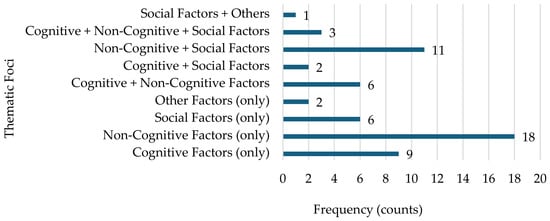
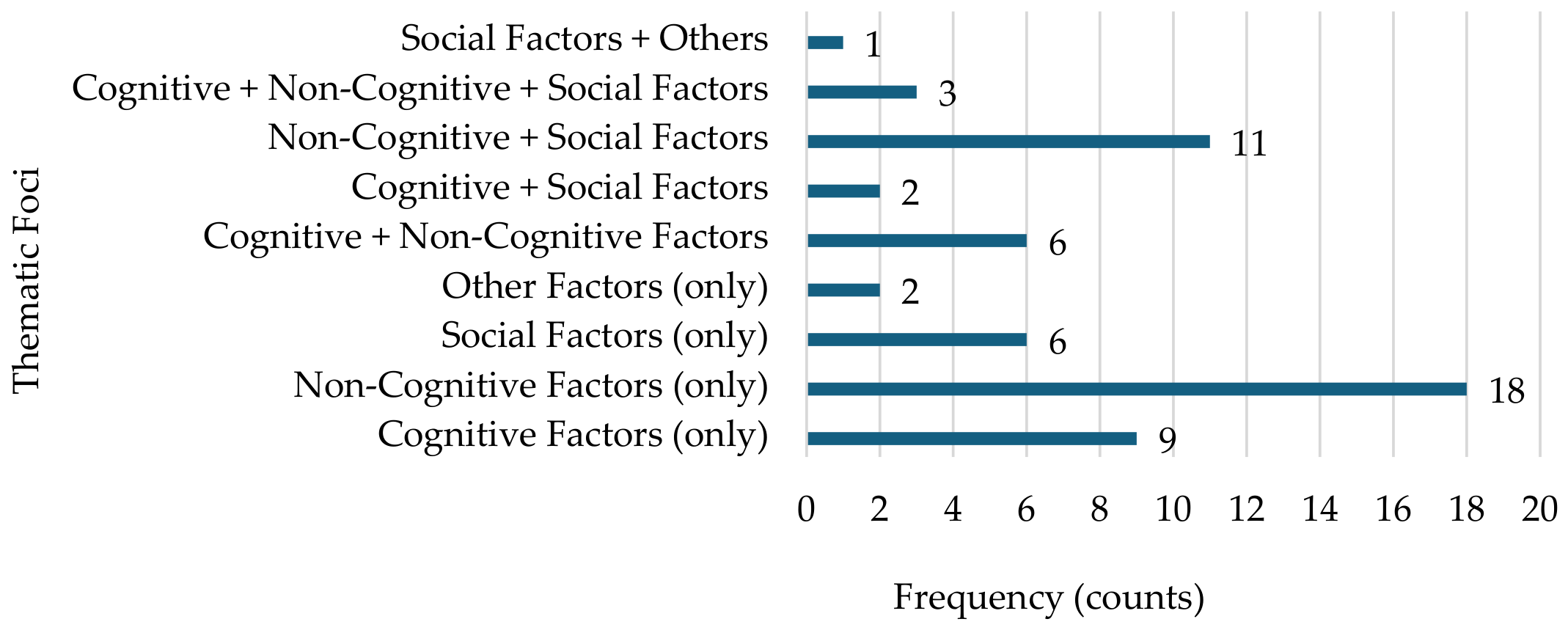
Thematic analysis of the reviewed studies (n = 58) revealed distinct thematic patterns, as illustrated in Figure 4. Specifically, about 16% (n = 9) focused solely on cognitive factors, about 31% (n = 18) on non-cognitive factors, about 10% (n = 6) on social factors, and about 3% (n = 2) on other single themes (i.e., institutional, motivational quality, or SDT internalization constructs that did not fit cleanly into the cognitive, non-cognitive, or social categories). Studies combining two or more thematic categories accounted for the remainder: about 10% (n = 6) examined cognitive and non-cognitive factors jointly; about 3% (n = 2) addressed cognitive–social interactions; about 19% (n = 11) combined non-cognitive and social factors; about 5% (n = 3) incorporated all three major categories (cognitive, non-cognitive, and social); and about 2% (n = 1) combined social and other factors. Two patterns are notable. First, non-cognitive constructs (typically self-efficacy, task value, goal orientation, and autonomous motivation) dominate the field, appearing in roughly 38 of the 58 studies; this concentration likely reflects the prominence of SDT, AGT, SCCT, and EVT on current research agendas and the comparative ease of measuring motivational self-reports relative to cognitive performance measures. Second, only three studies addressed cognitive, non-cognitive, and social factors simultaneously, indicating that genuinely integrative work remains rare and supporting the rationale for the present synthesis.
Figure 4.
Distribution of thematic foci among included studies.
4.4. Synthesis of Results of Included Studies
The studies presented in Table A2 collectively highlight the multifaceted nature of academic motivation and its strong correlations with academic performance, engagement, and well-being across diverse educational levels and contexts. Several consistent themes emerged. Numerous studies, such as those by AL-Baddareen et al. (2015), Hayat and Shateri (2019), Jeno et al. (2023), Kleitman and Gibson (2011), M. Singh et al. (2022), and Lei (2024), corroborate that self-efficacy, perceived competence, autonomy support, emotional intelligence, and adaptive motivational traits (such as mastery goals, self-regulation, metacognition, task management, and planning) positively predict academic achievement, motivation, self-confidence, engagement, and emotional well-being. Research rooted in SDT (Chiu, 2022; Guay, 2022; Howard et al., 2021) has consistently indicated that the satisfaction of basic psychological needs, digital support, supportive teaching, and autonomous motivation are associated with higher engagement, achievement, persistence, and well-being. Chazan et al. (2022), Harackiewicz and Hulleman (2010), Kubsch et al. (2022), and Widlund et al. (2024) reported that mastery goals, as opposed to performance-avoidance goals, are correlated with higher achievement, persistence, and well-being. This pattern of findings aligns with the AGT-informed practices recommended in school-based research. Studies that identified motivational profiles suggest that students with high intrinsic/self-determined motivation fare best academically and emotionally (Kubsch et al., 2022; Widlund et al., 2024).
Islam and Chakrabarty (2020), Jafari and Asgari (2020), and Yang et al. (2023) have suggested that contextual variables, such as family background, classroom climate, parental involvement, teacher support, peer influence, institutional support, citizenship status, and first-generation status, significantly influence the motivation and academic outcomes of students. Nonetheless, findings on extrinsic motivation and performance-oriented goals are mixed. While some studies, such as those by Liu et al. (2024) and Norvilitis et al. (2022), identified positive indirect or mediated effects, others, including those of AL-Baddareen et al. (2015) and Howard et al. (2021), reported weak or negative direct associations with academic motivation, achievement, and well-being. Interventions such as project-based learning, spiral curricula, and active learning approaches (Hamlen & Chu, 2023; Hernández-de-Menéndez et al., 2019) have been associated with improved motivation, self-determination, teamwork, problem solving, competence development, and perceived career preparation, emphasizing the role of engaging, well-structured pedagogy. S. Singh et al. (2023) and Foong et al. (2022) reported that integrating AI/ML, AR, spiral curricula, and challenge-based or project-based learning may enhance motivation, engagement, and skill development, indicating the potential value of technological and pedagogical innovations.
Studies such as those by Collie and Martin (2024) and Howard et al. (2021) emphasize that motivation is closely correlated with mental health and emotional outcomes: low self-determination or high amotivation is associated with higher psychological distress, whereas perceived autonomous motivation supports well-being. Additionally, Islam and Chakrabarty (2020) and M.-T. Wang et al. (2020) have suggested that cultural, family, and socioeconomic factors influence motivation differently in diverse contexts, highlighting the need for context-sensitive interventions. While some studies, such as those by Kamin et al. (2018) and Shettar et al. (2015), prioritize engineering environments, the lack of empirical studies specifically examining academic achievement and motivation among engineering and TVET students highlights a clear gap in the literature. According to Q. Wang and Xue (2022) and Guay (2022), further research is necessary to understand the formation of motivation and how it can be fostered over time within technical education fields utilizing longitudinal, mixed-methods, and intervention-based strategies.
5. Discussion
5.1. How the Review Findings Inform the Integrated Theoretical Framework
The review findings clarify the role of the integrated framework presented in Figure 1. Rather than treating self-determination theory (SDT), achievement goal theory (AGT), social cognitive career theory (SCCT), and expectancy–value theory (EVT) as separate explanatory traditions, the synthesis shows that these theories describe interrelated motivational mechanisms in applied STEM and TVET contexts. SDT explains how autonomy, competence, and relatedness are supported through teacher support, peer relationships, mentoring, and positive classroom climates. AGT explains how mastery-oriented goals and adaptive learning strategies connect motivational beliefs to persistence and engagement in demanding technical tasks. SCCT explains why self-efficacy, role models, mentoring, and career expectations are central in vocationally oriented learning environments. EVT explains why task value, utility value, curriculum relevance, and industry alignment are especially important in contexts where students evaluate learning partly through its perceived professional relevance.
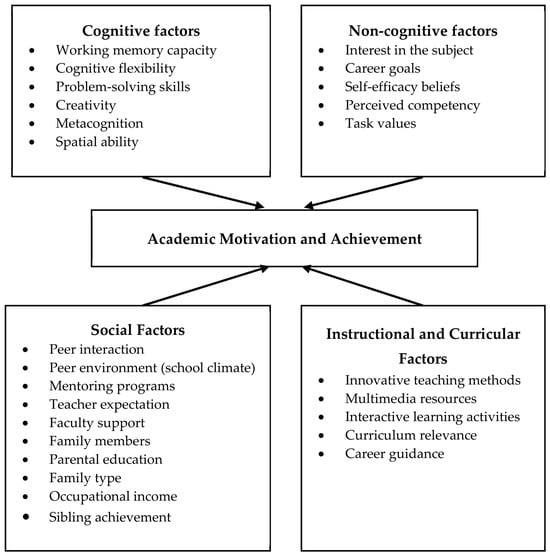
Thus, the reviewed evidence refines the “Integrated Motivational Core” in Figure 1 as a set of recurring mechanisms through which empirical factors influence motivation and achievement. Motivational regulation, self-belief, task value, and goal orientation function as central pathways linking cognitive, social, instructional, and career-related factors to academic engagement, achievement, and career readiness. Figure 1 therefore provides the theoretical architecture of the review, whereas Figure 5 summarizes the empirical domains identified through the synthesis. In this sense, Figure 5 answers what types of factors emerged from the literature, while Figure 1 explains how these factors may operate motivationally.
Figure 5.
An integrated model of the factors shaping academic motivation and achievement in applied STEM and TVET. Note: The four categories shown in the figure are conceptual groupings derived from the synthesis. The reviewed literature suggests that cognitive, non-cognitive, social, and instructional/curricular factors interact reciprocally with academic motivation and achievement rather than influencing them in a strictly unidirectional manner.
Addressing the first research question, the review indicates that cognitive, non-cognitive, social, and instructional factors influence motivation and achievement primarily through the motivational mechanisms represented in Figure 1. Cognitive factors, such as metacognition, problem-solving, working memory, and perceived academic competence, are important because they shape students’ beliefs about whether they can successfully complete demanding technical tasks. Within the integrated framework, these factors correspond mainly to self-belief, perceived competence, and expectancy of success (Fehér et al., 2023; Lei, 2024; M. Singh et al., 2022). Non-cognitive factors, including self-efficacy, task value, interest, autonomous motivation, and goal orientation, form the most direct part of the motivational core. The evidence suggests that motivation in applied STEM and TVET is strongest when students experience competence, value, purpose, and personally meaningful goals, while also recognizing the occupational relevance of their studies (Ryan & Deci, 2020; Talley & Martinez Ortiz, 2017). In this respect, extrinsic and career-related motives should not be interpreted as merely external pressures; when internalized, they may become meaningful sources of persistence and engagement in applied and vocationally oriented learning.
Social, instructional, and curricular factors operate as contextual conditions that activate or constrain these motivational mechanisms. Teacher and peer support, mentoring, classroom climate, teacher expectations, formative assessment, and formative feedback may support autonomy, competence, relatedness, and self-efficacy, whereas curriculum relevance, project-based learning, industry partnerships, and career guidance strengthen task value and outcome expectations (Borbélyová & Nagyová, 2025; Foong et al., 2022; Hamlen & Chu, 2023; Hornstra et al., 2018; Jafari & Asgari, 2020; Shettar et al., 2015). These findings are particularly important in engineering and TVET because students are often required to connect abstract conceptual knowledge with practical, collaborative, and occupation-oriented tasks. Supportive learning environments therefore contribute not only to academic motivation and achievement but also to the development of work-relevant competencies and career readiness.
The synthesis also suggests that career-related goals should be understood as part of the motivational system rather than only as distal labor-market outcomes. Students’ perceptions of the future usefulness of their studies reflect EVT-related utility value, while their confidence in entering and succeeding in technical occupations reflects SCCT-related occupational self-efficacy and outcome expectations. This interpretation helps to explain why mentoring, role models, industry-aligned learning, and career guidance are motivationally relevant in applied STEM and TVET. However, because relatively few studies directly examined specific engineering and TVET subfields, the proposed framework should be interpreted as an integrative model that requires further empirical testing across disciplines, institutional contexts, and learner groups.
Addressing the second research question, the reviewed studies were synthesized into the integrated framework summarized in Figure 5. The framework identifies four main domains of influence: cognitive factors, non-cognitive motivational factors, social factors, and instructional/curricular factors. These domains are theoretically connected through the motivational pathways specified in Figure 1. Instructional and social support may foster autonomy, competence, relatedness, and self-efficacy; curriculum relevance and industry alignment may strengthen task value and outcome expectations; and mentoring or role-model exposure may enhance self-efficacy and career expectations. Across these pathways, academic motivation and achievement emerge from the interaction between individual beliefs and learning environments rather than from isolated factors.
5.2. Limitations
While this research offers valuable insights into academic motivation and achievement in STEM education, particularly in engineering and TVET contexts, several limitations must be acknowledged. First, as a narrative literature review, this study did not follow the strict methodological protocols of systematic or scoping reviews. Although a structured search strategy was employed, the selection and interpretation of studies may have been subject to bias, which may have affected the reproducibility and generalizability of the findings. Therefore, the conclusions should be interpreted within the context of a qualitative and integrative synthesis rather than as an exhaustive representation of all available evidence. Second, the reviewed literature includes diverse educational levels, disciplines, and geographical contexts. While this breadth strengthens the generalizability of the findings across applied STEM fields, it may also obscure important discipline-specific differences in motivational processes and learning environments. In particular, variations between academic and vocational pathways, as well as between different engineering domains, need more targeted investigation. Third, several contextual factors remain underexplored in the existing literature. Variables such as gender, year of study, nationality, cultural background, and socioeconomic status are not consistently addressed, despite their potential influence on the motivation, engagement, and achievement of students. Relatedly, the reviewed TVET literature does not provide balanced representation across vocational disciplines (e.g., automotive, electrical/electronic, construction, ICT, agriculture, hospitality), and the strength of the link between motivation and longer-term occupational outcomes is rarely measured directly. Future research should adopt more inclusive, discipline-specific, and context-sensitive approaches and, where possible, measure the connection between academic motivation and downstream career outcomes rather than infer it. Finally, the majority of studies included in this review are cross-sectional, limiting insight into how academic motivation develops over time. Longitudinal and mixed-methods research is needed to examine motivational processes, particularly in relation to transitions between educational stages and from education to employment. A deeper understanding of how academic motivation evolves into career-related motivation and professional identity formation would provide valuable contributions to both theory and practice in applied STEM education.
6. Conclusions
This structured narrative review synthesizes research on academic motivation and achievement in applied STEM education, paying particular attention to engineering and TVET contexts. The findings indicate that students’ success in these settings is shaped by the interaction of cognitive, non-cognitive, social, and instructional/curricular factors rather than by isolated motivational predictors. Across the reviewed studies, self-efficacy, perceived competence, task value, goal orientation, metacognitive skills, teacher and peer support, curriculum relevance, and industry-aligned learning opportunities emerged as key predictors of the motivation, engagement, academic achievement, and career-related development of students.
A central contribution of this review is that it connects the empirical factor domains identified in the literature with an explicit theoretical integration of SDT, AGT, SCCT, and EVT. The findings suggest that cognitive, non-cognitive, social, and instructional/curricular factors can be interpreted through an integrated motivational core consisting of motivational regulation, self-belief, task value, and goal orientation. Within the limits of the reviewed evidence, this framework suggests that students’ engagement and performance are more likely to be supported when individual motivational beliefs are connected to meaningful learning environments, supportive relationships, and clear links between academic tasks and future professional pathways. Because the underlying studies are largely cross-sectional and contextually heterogeneous, this framework should be read as a synthesizing model to be tested rather than as a settled causal account.
This review also offers practical implications for educators and institutions. In engineering and TVET contexts, student-centered pedagogical approaches should be used to strengthen students’ sense of competence, autonomy, and task value. Project-based learning, simulation-based instruction, authentic workplace tasks, mentoring, peer learning, formative feedback, and industry-relevant capstone projects may help students recognize the relevance of their studies and sustain motivation. At the institutional level, stronger partnerships with industry, structured career guidance, teacher professional development, and flexible curricula can further support the academic persistence of students and the transition from education to employment.
Future research should examine these relationships through longitudinal, mixed-methods, and intervention-based designs. Further studies are needed to clarify how motivation develops over time as students move from classroom-based instruction to practical training, internships, and professional identity formation. More attention should also be given to contextual differences across countries, institutions, disciplines, and learner groups. Such research would strengthen the theoretical and practical understanding of how applied STEM and TVET can foster motivated, competent, and work-ready graduates.
Author Contributions
All authors made substantial, direct, and intellectual contributions to this work and approved it for publication. All authors have read and agreed to the published version of the manuscript.
Funding
University of Szeged Open Access Fund, Grant ID: 8698. This study was funded by the Digital Society Competence Centre of the Humanities and Social Sciences Cluster of the Centre of Excellence for Interdisciplinary Research, Development and Innovation of the University of Szeged. The authors are members of the New Tools and Techniques for Assessing Students Research Group.
Institutional Review Board Statement
Not applicable.
Informed Consent Statement
Not applicable.
Data Availability Statement
No new datasets were generated or analyzed in this study.
Conflicts of Interest
The authors declare no conflicts of interest.
Appendix A
Table A1.
Database search strategy.
Table A2.
Characteristics of included studies.
References
- Achuodho, H. O., Berki, T., & Pikó, B. F. (2025). A cluster analysis of identity processing styles, educational, and psychological variables among TVET students in the Nyanza region of Kenya. Education Sciences, 15(2), 135. [Google Scholar] [CrossRef] [Scilit]
- Achuodho, H. O., & Pikó, B. F. (2024). Experiencing online training and educational inequality in TVET delivery among trainers and trainees in Kenya during the COVID-19 pandemic: A case study. Hungarian Educational Research Journal, 14(4), 428–445. [Google Scholar] [CrossRef] [Scilit]
- Affuso, G., Zannone, A., Esposito, C., Pannone, M., Miranda, M. C., De Angelis, G., Aquilar, S., Dragone, M., & Bacchini, D. (2023). The effects of teacher support, parental monitoring, motivation and self-efficacy on academic performance over time. European Journal of Psychology of Education, 38(1), 1–23. [Google Scholar] [CrossRef] [Scilit]
- AL-Baddareen, G., Ghaith, S., & Akour, M. (2015). Self-efficacy, achievement goals, and metacognition as predictors of academic motivation. Procedia—Social and Behavioral Sciences, 191, 2068–2073. [Google Scholar] [CrossRef] [Scilit]
- Amrai, K., Motlagh, S. E., Zalani, H. A., & Parhon, H. (2011). The relationship between academic motivation and academic achievement of students. Procedia—Social and Behavioral Sciences, 15, 399–402. [Google Scholar] [CrossRef] [Scilit]
- Bacca, J., Baldiris, S., Fabregat, R., & Kinshuk. (2018). Insights into the factors influencing student motivation in augmented reality learning experiences in Vocational Education and Training. Frontiers in Psychology, 9, 1486. [Google Scholar] [CrossRef] [Scilit] [PubMed]
- Bandhu, D., Mohan, M. M., Nittala, N. A. P., Jadhav, P., Bhadauria, A., & Saxena, K. K. (2024). Theories of motivation: A comprehensive analysis of human behavior drivers. Acta Psychologica, 244, 104177. [Google Scholar] [CrossRef] [Scilit] [PubMed]
- Bandura, A. (1986). Social foundations of thought and action: A social cognitive theory. Prentice-Hall. [Google Scholar]
- Bjørnebekk, G., Diseth, Å., & Ulriksen, R. (2013). Achievement motives, self-efficacy, achievement goals, and academic achievement at multiple stages of education: A longitudinal analysis. Psychological Reports, 112(3), 771–787. [Google Scholar] [CrossRef] [Scilit] [PubMed]
- Borbélyová, D., & Nagyová, A. (2025). Formative assessment in primary education = Formatívne hodnotenie v primárnom vzdelávaní. Disputationes Scientificae, 25(3), 105–112. [Google Scholar] [CrossRef] [Scilit]
- Botejara-Antúnez, M., Sánchez-Barroso, G., González-Domínguez, J., & García-Sanz-Calcedo, J. (2022). Determining the learning profile of engineering project students from their characteristic motivational profile. Education Sciences, 12(4), 256. [Google Scholar] [CrossRef] [Scilit]
- Bou Saad, R., Garcia, A. L., & Garcia, J. M. C. (2025). Mapping constructivist active learning for STEM: Toward sustainable education. Sustainability, 17(13), 6225. [Google Scholar] [CrossRef] [Scilit]
- Canfield, C., & Zastavker, Y. V. (2010, October 27–30). Achievement goal theory: A framework for implementing group work and open-ended problem solving [Conference session]. 2010 IEEE Frontiers in Education Conference (FIE), Arlington, VA, USA. [Google Scholar] [CrossRef] [Scilit]
- Charosky, G., Hassi, L., Papageorgiou, K., & Bragós, R. (2022). Developing innovation competences in engineering students: A comparison of two approaches. European Journal of Engineering Education, 47(2), 353–372. [Google Scholar] [CrossRef] [Scilit]
- Chazan, D. J., Pelletier, G. N., & Daniels, L. M. (2022). Achievement goal theory review: An application to school psychology. Canadian Journal of School Psychology, 37(1), 40–56. [Google Scholar] [CrossRef] [Scilit]
- Cheng, X. (2023). Looking through goal theories in language learning: A review on goal setting and achievement goal theory. Frontiers in Psychology, 13, 1035223. [Google Scholar] [CrossRef] [Scilit] [PubMed]
- Chiu, T. K. F. (2022). Applying the self-determination theory (SDT) to explain student engagement in online learning during the COVID-19 pandemic. Journal of Research on Technology in Education, 54(S1), S14–S30. [Google Scholar] [CrossRef] [Scilit]
- Chung, Y., & Kim, S. (2022). Expectancies, task values, and perceived costs: Reciprocal effects on math-related career intention and achievement among middle school girls. Learning and Individual Differences, 96, 102145. [Google Scholar] [CrossRef] [Scilit]
- Collie, R. J., & Martin, A. J. (2024). Students’ perceived competence across academic and social-emotional domains: Unique roles in relation to autonomy-supportive teaching, academic engagement, and well-being. Learning and Individual Differences, 116, 102563. [Google Scholar] [CrossRef] [Scilit]
- Çetin, B. (2015). Academic motivation and self-regulated learning in predicting academic achievement in college. Journal of International Education Research (JIER), 11(2), 95–106. [Google Scholar] [CrossRef] [Scilit]
- Deci, E. L., Koestner, R., & Ryan, R. M. (2001). Extrinsic rewards and intrinsic motivation in education: Reconsidered once again. Review of Educational Research, 71(1), 1–27. [Google Scholar] [CrossRef] [Scilit]
- Deci, E. L., & Ryan, R. M. (1985). Intrinsic motivation and self-determination in human behavior. Plenum. [Google Scholar]
- Dumulescu, D., Sarcă, D. M., & Necula, C. V. (2020). Career mentoring in higher education: Students’ perceptions and experiences. Journal of Research in Higher Education, 4(2), 35–53. [Google Scholar] [CrossRef] [Scilit]
- Dunn, J. C., & Zimmer, C. (2020). Self-determination theory. In J. Haegele, S. Hodge, & D. Shapiro (Eds.), Routledge handbook of adapted physical education (pp. 296–312). Routledge. [Google Scholar] [CrossRef] [Scilit]
- Eccles, J. S., & Wigfield, A. (2002). Motivational beliefs, values, and goals. Annual Review of Psychology, 53, 109–132. [Google Scholar] [CrossRef] [Scilit] [PubMed]
- Edgerton, E., & McKechnie, J. (2023). The relationship between students’ perceptions of their school environment and academic achievement. Frontiers in Psychology, 13, 959259. [Google Scholar] [CrossRef] [Scilit] [PubMed]
- Emmanuel, K. C., Victor, O. A., & Ikechukwu, E. C. (2022). Influence of achievement motivation and family background on the academic performance of automobile/metalwork and building/woodwork technology students in Nigerian universities. International Journal of Scientific and Research Publications (IJSRP), 12(6), 424–432. [Google Scholar] [CrossRef] [Scilit]
- Fehér, Z., Jaruska, L., Szarka, K., & Tóthová Tarová, E. (2023). Students’ propositional logic thinking in higher education from the perspective of disciplines. Frontiers in Education, 8, 1247653. [Google Scholar] [CrossRef] [Scilit]
- Foong, C. C., Liew, P. Y., & Lye, A. J. (2022). Changes in motivation and its relationship with academic performance among first-year chemical engineering students. Education for Chemical Engineers, 38, 70–77. [Google Scholar] [CrossRef] [Scilit]
- Gibbons, M. M., Hardin, E. E., Taylor, A. L., Brown, E., & Graham, D. (2020). Evaluation of an SCCT-based intervention to increase postsecondary awareness in rural Appalachian youth. Journal of Career Development, 47(4), 424–439. [Google Scholar] [CrossRef] [Scilit] [PubMed]
- Greco, A., Annovazzi, C., Palena, N., Camussi, E., Rossi, G., & Steca, P. (2022). Self-efficacy beliefs of university students: Examining factor validity and measurement invariance of the new academic self-efficacy scale. Frontiers in Psychology, 12, 498824. [Google Scholar] [CrossRef] [Scilit] [PubMed]
- Gregory, A. T., & Denniss, A. R. (2018). An introduction to writing narrative and systematic reviews—Tasks, tips and traps for aspiring authors. Heart Lung and Circulation, 27(7), 893–898. [Google Scholar] [CrossRef] [Scilit] [PubMed]
- Grenier, S., Gagné, M., & O’Neill, T. (2024). Self-determination theory and its implications for team motivation. Applied Psychology, 73(4), 1833–1865. [Google Scholar] [CrossRef] [Scilit]
- Guay, F. (2022). Applying self-determination theory to education: Regulation types, psychological needs, and autonomy-supporting behaviors. Canadian Journal of School Psychology, 37(1), 75–92. [Google Scholar] [CrossRef] [Scilit]
- Hamlen, K. R., & Chu, P. P. (2023). Effects of a spiral curriculum with application-based project and lab components on motivation and achievement of engineering students in an urban university. IEEE Transactions on Education, 66(1), 12–19. [Google Scholar] [CrossRef] [Scilit]
- Harackiewicz, J. M., & Hulleman, C. S. (2010). The importance of interest: The role of achievement goals and task values in promoting the development of interest. Social and Personality Psychology Compass, 4(1), 42–52. [Google Scholar] [CrossRef] [Scilit]
- Hayat, A. A., & Shateri, K. (2019). The role of academic self-efficacy in improving students’ metacognitive learning strategies. Journal of Advances in Medical Education and Professionalism, 7(4), 205–212. [Google Scholar] [CrossRef] [Scilit] [PubMed]
- Hernández-de-Menéndez, M., Vallejo Guevara, A., Tudón Martínez, J. C., Hernández Alcántara, D., & Morales-Menendez, R. (2019). Active learning in engineering education: A review of fundamentals, best practices and experiences. International Journal on Interactive Design and Manufacturing, 13(3), 909–922. [Google Scholar] [CrossRef] [Scilit]
- Hill, S. E. M., Ward, W. L., Seay, A., & Buzenski, J. (2022). The nature and evolution of the mentoring relationship in academic health centres. Journal of Clinical Psychology in Medical Settings, 29(3), 557–569. [Google Scholar] [CrossRef] [Scilit] [PubMed]
- Hornstra, L., Stroet, K., van Eijden, E., Goudsblom, J., & Roskamp, C. (2018). Teacher expectation effects on need-supportive teaching, student motivation, and engagement: A self-determination perspective. Educational Research and Evaluation, 24(3–5), 324–345. [Google Scholar] [CrossRef] [Scilit]
- Howard, J. L., Bureau, J., Guay, F., Chong, J. X. Y., & Ryan, R. M. (2021). Student motivation and associated outcomes: A meta-analysis from self-determination theory. Perspectives on Psychological Science, 16(6), 1300–1323. [Google Scholar] [CrossRef] [Scilit] [PubMed]
- Islam, M. N., & Chakrabarty, S. (2020). A study of the relationship between familial factors and academic motivation and achievement in high school students. Psychological Studies, 65(1), 87–96. [Google Scholar] [CrossRef] [Scilit]
- İlter, İ. (2023). Which types of amotivation affect school absenteeism and academic performance of middle school students? A structural equation modeling analysis. RMLE Online, 46(2), 1–20. [Google Scholar] [CrossRef] [Scilit]
- Jafari, S., & Asgari, A. (2020). Predicting students’ academic achievement based on the classroom climate, mediating role of teacher-student interaction and academic motivation. Integration of Education, 24(1), 62–74. [Google Scholar] [CrossRef] [Scilit]
- Jeno, L. M., Nylehn, J., Hole, T. N., Raaheim, A., Velle, G., & Vandvik, V. (2023). Motivational determinants of students’ academic functioning: The role of autonomy-support, autonomous motivation, and perceived competence. Scandinavian Journal of Educational Research, 67(2), 194–211. [Google Scholar] [CrossRef] [Scilit]
- Kamin, Y. B., Bin Saud, M. S., Yahaya, N., Al-Rahmi, W. M., Latib, A. A., Ahmad, A., Amin, N. F., & Cartledge, D. (2018). Comparative analysis of students’ perception on the relevance of diploma certificate in automotive engineering to the industry. IEEE Access, 6, 79129–79137. [Google Scholar] [CrossRef] [Scilit]
- Kleitman, S., & Gibson, J. (2011). Metacognitive beliefs, self-confidence and primary learning environment of sixth grade students. Learning and Individual Differences, 21(6), 728–735. [Google Scholar] [CrossRef] [Scilit]
- Kmet, L. M., Lee, R. C., & Cook, L. S. (2004). Standard quality assessment criteria for evaluating primary research papers from a variety of fields. Alberta Heritage Foundation for Medical Research. [Google Scholar] [CrossRef]
- Koyuncuoglu, O. (2020). An investigation of academic motivation and career decidedness among university students. International Journal of Research in Education and Science, 7(1), 125. [Google Scholar] [CrossRef] [Scilit]
- Kubsch, M., Fortus, D., Neumann, K., Nordine, J., & Krajcik, J. (2022). The interplay between students’ motivational profiles and science learning. Journal of Research in Science Teaching, 60(1), 3–25. [Google Scholar] [CrossRef] [Scilit]
- Lei, Y. (2024). Unlocking the secrets of STEM success: Exploring the interplay of motivation to learn science, self-regulation, and emotional intelligence from a perspective of self-determination theory. Learning and Motivation, 87, 102012. [Google Scholar] [CrossRef] [Scilit]
- Lent, R. W., Sheu, H. B., Gloster, C. S., & Wilkins, G. (2010). Longitudinal test of the social cognitive model of choice in engineering students at historically Black universities. Journal of Vocational Behavior, 76(3), 387–394. [Google Scholar] [CrossRef] [Scilit]
- Li, J., & Xue, E. (2023). Dynamic interaction between student learning behaviour and learning environment: Meta-analysis of student engagement and its influencing factors. Behavioral Sciences, 13(1), 59. [Google Scholar] [CrossRef] [Scilit] [PubMed]
- Litalien, D., Gillet, N., Gagné, M., Ratelle, C. F., & Morin, A. J. S. (2019). Self-determined motivation profiles among undergraduate students: A robust test of profile similarity as a function of gender and age. Learning and Individual Differences, 70, 39–52. [Google Scholar] [CrossRef] [Scilit]
- Liu, Y., Ma, S., & Chen, Y. (2024). The impacts of learning motivation, emotional engagement and psychological capital on academic performance in a blended learning university course. Frontiers in Psychology, 15, 1357936. [Google Scholar] [CrossRef] [Scilit] [PubMed]
- Lopez, E. C. R. (2025). Factors influencing the academic performance of chemical engineering students in physical chemistry. Education for Chemical Engineers, 52, 119–132. [Google Scholar] [CrossRef] [Scilit]
- Lopez, E. C. R., & Arida, D. P. R. (2025). Understanding the factors influencing undergraduate performance in chemical engineering thermodynamics. Education for Chemical Engineers, 52, 37–50. [Google Scholar] [CrossRef] [Scilit]
- Norvilitis, J. M., Reid, H. M., & O’Quin, K. (2022). Amotivation: A key predictor of college GPA, college match, and first-year retention. International Journal of Educational Psychology, 11(3), 314–338. [Google Scholar] [CrossRef] [Scilit]
- Ongcoy, P. J. B., & Tagare, R. L., Jr. (2024). The role of social support in shaping students’ goal achievement. The International Journal of Learner Diversity and Identities, 31(1), 950–958. [Google Scholar] [CrossRef]
- Ossai, M. C., Ethe, N., Edougha, D. E., & Okeh, O. D. (2023). Academic integrity during examinations, age and gender as predictors of academic performance among high school students. International Journal of Educational Development, 100, 102811. [Google Scholar] [CrossRef] [Scilit]
- Qasem, R., Rashed, G., Abubakar, A. A., Madani, O., & Al-Mamary, Y. H. (2025). Enhancing student engagement and motivation for sustainable education: The role of internship and institutional support. Sustainability, 17(12), 5291. [Google Scholar] [CrossRef] [Scilit]
- Ryan, R. M., & Deci, E. L. (2020). Intrinsic and extrinsic motivation from a self-determination theory perspective: Definitions, theory, practices, and future directions. Contemporary Educational Psychology, 61, 101860. [Google Scholar] [CrossRef] [Scilit]
- Schunk, D. H., & DiBenedetto, M. K. (2020). Motivation and social cognitive theory. Contemporary Educational Psychology, 60, 101832. [Google Scholar] [CrossRef] [Scilit]
- Senko, C. (2019). When do mastery and performance goals facilitate academic achievement? Contemporary Educational Psychology, 59, 101795. [Google Scholar] [CrossRef] [Scilit]
- Shang, C., Moss, A. C., & Chen, A. (2023). The expectancy-value theory: A meta-analysis of its application in physical education. Journal of Sport and Health Science, 12(1), 52–64. [Google Scholar] [CrossRef] [Scilit] [PubMed]
- Shettar, A., Desai, B. L., Iyer, N. C., Uma, K. M., Raju, A. B., Kerur, C. D., Nissimagoudar, P. C., Mane, V., Ramakrishna, S., Kiran, M. R., Eligar, S., Badiger, A., & Joseph, A. (2015). An effective industry institute engagement for curriculum design and delivery: A success story. Journal of Engineering Education Transformations, 29(1), 85–90. [Google Scholar] [CrossRef] [Scilit]
- Singh, M., James, P. S., Paul, H., & Bolar, K. (2022). Impact of cognitive-behavioral motivation on student engagement. Heliyon, 8(7), e09843. [Google Scholar] [CrossRef] [Scilit] [PubMed]
- Singh, S., Yadav, B., & Batheri, R. (2023). Industry 4.0: Meeting the challenges of demand sensing in the automotive industry. IEEE Engineering Management Review, 51(4), 179–184. [Google Scholar] [CrossRef] [Scilit]
- Steinmayr, R., Weidinger, A. F., Schwinger, M., & Spinath, B. (2019). The importance of students’ motivation for their academic achievement-replicating and extending previous findings. Frontiers in Psychology, 10, 1730. [Google Scholar] [CrossRef] [Scilit] [PubMed]
- Struck Jannini, A. V., Akdemir, Z., & Menekse, M. (2024). Achievement goal theory in STEM education: A systematic review. Journal of Engineering Education, 113(4), 986–1007. [Google Scholar] [CrossRef] [Scilit]
- Świątkowski, W., & Dompnier, B. (2020). A regulatory focus perspective on performance goals’ effects on achievement: A small-scale meta-analytical approach. Learning and Individual Differences, 78, 101840. [Google Scholar] [CrossRef] [Scilit]
- Tajfel, H., & Turner, J. (1979). An integrative theory of intergroup conflict. In W. G. Austin, & S. Worchel (Eds.), The social psychology of intergroup relations (pp. 33–47). Brooks/Cole. [Google Scholar]
- Talley, K. G., & Martinez Ortiz, A. (2017). Women’s interest development and motivations to persist as college students in STEM: A mixed methods analysis of views and voices from a Hispanic-Serving Institution. International Journal of STEM Education, 4(1), 5. [Google Scholar] [CrossRef] [Scilit]
- Tang, X., Lee, H. R., Wan, S., Gaspard, H., & Salmela-Aro, K. (2022). Situating expectancies and subjective task values across grade levels, domains, and countries: A Network approach. AERA Open, 8(1), 1–16. [Google Scholar] [CrossRef] [Scilit]
- Tareke, T. G., Woreta, G. T., Zewude, G. T., Amukune, S., & Oo, T. Z. (2024). Overview of Ethiopian public higher education: Trends, system, challenges, and quality issues. Education Sciences, 14(10), 1065. [Google Scholar] [CrossRef] [Scilit]
- Timmermans, A. C., & Rubie-Davies, C. M. (2023). Gender and minority background as moderators of teacher expectation effects on self-concept, subjective task values, and academic performance. European Journal of Psychology of Education, 38(4), 1677–1705. [Google Scholar] [CrossRef] [Scilit]
- Țepordei, A. M., Zancu, A. S., Diaconu-Gherasim, L. R., Crumpei-Tanasă, I., Măirean, C., Sălăvăstru, D., & Labăr, A. V. (2023). Children’s peer relationships, well-being, and academic achievement: The mediating role of academic competence. Frontiers in Psychology, 14, 1174127. [Google Scholar] [CrossRef] [Scilit] [PubMed]
- UNESCO. (2016). Recommendation concerning technical and vocational education and training (TVET) (pp. 1–9). United Nations Educational, Scientific and Cultural Organization. Available online: http://unesdoc.unesco.org/images/0023/002341/234137e.pdf (accessed on 10 January 2026).
- Urhahne, D., & Wijnia, L. (2023). Theories of motivation in education: An integrative framework. Educational Psychology Review, 35(2), 45. [Google Scholar] [CrossRef] [Scilit]
- Wang, D., Liu, X., & Deng, H. (2022). The perspectives of the social cognitive career theory approach in current times. Frontiers in Psychology, 13, 1023994. [Google Scholar] [CrossRef] [Scilit] [PubMed]
- Wang, M.-T., Guo, J., & Degol, J. L. (2020). The role of sociocultural factors in student achievement motivation: A cross-cultural review. Adolescent Research Review, 5(4), 435–450. [Google Scholar] [CrossRef] [Scilit]
- Wang, Q., & Xue, M. (2022). The implications of expectancy-value theory of motivation in language education. Frontiers in Psychology, 13, 992372. [Google Scholar] [CrossRef] [Scilit] [PubMed]
- Weiler, T., & Murad, M. W. (2022). Motivational factors influencing learners’ academic success in an Australian enabling education setting. Journal of Social Studies Education Research, 13(4), 97–119. [Google Scholar]
- Widiarini, W., Supriyanto, A., & Sunandar, A. (2023). Influential factors affecting students’ achievement in the higher education institution system. Journal of Development Research, 7(1), 29–37. [Google Scholar] [CrossRef] [Scilit]
- Widlund, A., Tuominen, H., & Korhonen, J. (2024). Motivational profiles in mathematics—Stability and links with educational and emotional outcomes. Contemporary Educational Psychology, 76, 102256. [Google Scholar] [CrossRef] [Scilit]
- Yang, D., Chen, P., Wang, K., Li, Z., Zhang, C., & Huang, R. (2023). Parental involvement and student engagement: A review of the literature. Sustainability, 15(7), 5859. [Google Scholar] [CrossRef] [Scilit]
- Yarin, A. J., Encalada, I. A., Elias, J. W., Surichaqui, A. A., Sulca, R. E., & Pozo, F. (2022). Relationship between motivation and academic performance in Peruvian undergraduate students in the subject mathematics. Education Research International, 2022, 3667076. [Google Scholar] [CrossRef] [Scilit]
- Zheng, F. (2022). Fostering students’ well-being: The mediating role of teacher interpersonal behaviour and student-teacher relationships. Frontiers in Psychology, 12, 796728. [Google Scholar] [CrossRef] [Scilit] [PubMed]
Disclaimer/Publisher’s Note: The statements, opinions and data contained in all publications are solely those of the individual author(s) and contributor(s) and not of MDPI and/or the editor(s). MDPI and/or the editor(s) disclaim responsibility for any injury to people or property resulting from any ideas, methods, instructions or products referred to in the content. |
© 2026 by the authors. Licensee MDPI, Basel, Switzerland. This article is an open access article distributed under the terms and conditions of the Creative Commons Attribution (CC BY) license.