


Abstract
This study examines the impact of a National Institute of Health (NIH)-funded STEM project on high school students’ STEM self-efficacy and perceptions of future STEM careers across two academic years in Western New York. The intervention engaged students in authentic scientific practices, including environmental sampling, microbial DNA analysis, and presenting research posters at a Capstone event. Pre- and post-surveys were administered to intervention and control groups, measuring STEM self-efficacy and perceived future in STEM. Data from 313 students were analyzed using explanatory factor analysis (EFA), confirmatory factor analysis (CFA), and structural equation modeling (SEM) with multiple imputation. EFA results supported a one-factor structure, which was confirmed by CFA results showing a good model fit for both constructs. SEM findings indicated that program participation significantly improved STEM self-efficacy, while effects on perceived future in STEM were nonsignificant, though potentially moderated by cohort. No race-based interaction effects emerged, suggesting consistent program benefits. The findings imply that schools should incorporate authentic STEM learning experiences to strengthen students’ confidence and broaden equitable engagement in STEM. Limitations include the bias on self-report measures. Future longitudinal and mixed-methods research is needed to examine how early gains in self-efficacy translate into sustained STEM pathways.
1. Introduction
A comprehensive understanding of genomics is increasingly recognized as a vital component of scientific and health literacy. As genomic technologies become more integrated into modern society, students must be equipped not only with foundational knowledge but also with the ability to critically engage with emerging scientific developments (Zimani et al., 2021; Hurle et al., 2013). However, most high school science curricula remain limited in their coverage of genomics. Teachers often lack formal training in this area, and few resources are available to support instruction in complex topics such as genome structure, function, or sequencing technologies (GLEE Initiative, 2017).
At the same time, students’ interest in STEM careers has continued to decline. National survey data indicate that among adolescents aged 13–17, the proportion of boys interested in STEM dropped from 36% in 2017 to 24% in 2018, while interest among girls remained consistently low at 11%. Moreover, only 16% of U.S. high school seniors were found to be proficient in mathematics and simultaneously interested in STEM fields (U.S. Department of Education, 2015). These trends highlight the need for effective educational strategies that can both increase students’ engagement with advanced scientific content and foster their long-term aspirations in STEM fields.
One promising direction lies in targeting students’ motivational beliefs, especially the psychological mechanisms that underlie persistence and interest in STEM. Among these motivational constructs, self-efficacy, considered as the belief in one’s ability to succeed in scientific tasks, has been shown to significantly predict both academic performance and students’ orientation toward STEM careers (Bandura, 1997; Britner & Pajares, 2006). Recent studies also emphasized the importance of how instruction is delivered. For example, problem-based learning environments and supportive teacher-student relationships enhance motivation and future-oriented thinking in STEM (LaForce et al., 2017; Prieto, 2016). Interventions that promote mastery experiences and authentic learning opportunities have been shown to significantly improve students’ self-efficacy, particularly among those from underserved communities (Sheu et al., 2018; Kitchen et al., 2022).
Additionally, the concept of “perceived future in STEM”, which is how students perceive themselves belonging to scientific communities and careers, has emerged as a critical lens of understanding STEM aspirations (Carlone & Johnson, 2007; Lent et al., 2000). This construct integrates self-efficacy, identity development, and potential outcome expectations, which is sensitive to both individual beliefs and classroom learning context.
A potential gap in the literature suggests that K-12 educational resources have often lagged behind scientific advances in this area. Earlier work noted that relatively few high school teachers had received formal training in genomics or guidance on how to teach the subject effectively (Wray, 2017). Some other research continues to report that teachers frequently feel underprepared to teach rapidly evolving topics such as genome sequencing, bioinformatics, gene editing, and the complex relationship between genes and environment (Duncan et al., 2016; Donovan, 2022). Indeed, understanding of genomics has become an increasingly important component of science and health literacy, as genomic knowledge informs personal health decisions, public policy, biotechnology, and an expanding range of professional fields. Preparing students to engage thoughtfully with issues like these requires meaningful exposure to foundational genomic concepts and hands-on experiences during secondary education.
This study builds on that body of literature by examining how an applied genomics intervention may shape students’ beliefs about their future in STEM and their confidence in engaging with scientific tasks. By comparing survey responses from participating and non-participating high school students across two academic years, we investigate whether hands-on exposure to real-world science can support the development of STEM self-efficacy and career intention, which are two critical constructs identified in both theory and empirical research. Thus, the following research questions will be addressed in this study: (1) To what extent does participation in the NIH-funded program improve students’ STEM efficacy and career aspirations in STEM at the post-survey stage, after controlling for pre-survey and demographic variables? (2) Do the effects of participating in this program differ across student characteristics, especially cohort and race?
2. Literature Review
Whether students choose to pursue STEM-related careers is often not only determined by their academic abilities, but is deeply influenced by their beliefs in self-efficacy. According to Bandura (1997), who proposed the theory of social cognition, self-efficacy refers to an individual’s belief in their ability to complete a specific task. It not only affects whether the individual will attempt an activity, but also determines the degree of persistence and strategies used when encountering difficulties (Bandura, 1986, 1997). In the context of STEM education, self-efficacy specifically refers to students’ confidence in successfully accomplishing tasks in science, mathematics, engineering, and technology. This belief is widely regarded as a key psychological mechanism that influences students’ motivation to learn STEM, academic performance, and career choices (Britner & Pajares, 2006; Sheu et al., 2018). For instance, LaForce et al. (2017) found that students with higher motivation and STEM-related ability beliefs were more likely to pursue STEM career interests in the context of problem-based learning.
Bandura (1997) suggested that self-efficacy is primarily formed from four sources of information: mastery experience, vicarious experience, verbal persuasion, and physiological/emotional states. Among these, mastery experience, that is, the successful experience students gain from completing actual tasks, is considered the strongest source for enhancing self-efficacy (Sheu et al., 2018). In a study of high school students, X. Hu et al. (2022) found that science self-efficacy significantly increased between the 10th and 11th grades, especially when students engaged in more inquiry-based and practical science courses. The study emphasized that high school is a critical period for shaping students’ STEM self-efficacy, where interventions are highly effective and have great developmental potential.
The construct perceived future in STEM in our study reflects how students view themselves as potential participants in scientific communities and careers. It extends beyond immediate self-efficacy to encompass identity formation and outcome expectations about long-term trajectories. Carlone and Johnson (2007) conceptualized science identity as composed of competence, performance, and recognition, arguing that persistence in science depends not only on skill but also on being recognized by oneself and by others as a “science person”. This recognition process shapes whether students can imagine themselves belonging to and succeeding in science fields, which directly informs their perceived future in STEM. Similarly, Social Cognitive Career Theory (SCCT) emphasized outcome expectations as central to career development: students’ beliefs about the likely results of engaging in certain pathways influence their intentions and goals (Lent et al., 2000). Together, these frameworks suggest that perceived future in STEM integrates both identity-related recognition and context-sensitive outcome expectations. It is therefore a critical construct for understanding how authentic learning experiences not only build self-efficacy but also help students develop a coherent vision of themselves as future scientists.
Racial background is also an important social variable that influences psychological mechanisms related to STEM. Previous studies have shown that students from different ethnic groups may experience distinct pathways and learning environments in the development of science self-efficacy, which in turn affects their academic performance and long-term career motivation (Larry & Wendt, 2022). In the 2022 study by Larry and Wendt involving urban minority high school students found that students’ science self-efficacy significantly predicted their science achievement, and race, as a background variable, had statistical significance in the model concerning the relationship between self-efficacy and achievement. In addition, the study emphasized that teacher interpersonal behaviors had an indirect effect on students’ self-efficacy, particularly among minority groups.
Building on these findings, it is crucial to consider how racial and social equity intersect with students’ sense of belonging and identity in STEM. Research consistently showed that students from historically marginalized racial and ethnic groups face systemic barriers, including implicit bias in classroom interactions and a lack of representation in STEM careers (Ong et al., 2011). These barriers not only constrain opportunities but also influence students’ sense of belonging and identity in science. Carlone and Johnson (2007) demonstrated that recognition from others is central to sustaining participation, yet such recognition is often unequally distributed across racial and gender lines. Brickhouse and Potter (2001) similarly argued that identity development is shaped by students’ local cultural contexts and by the degree to which schools validate or dismiss their ways of knowing. Together, this research highlights that interventions must not only provide mastery experiences but also actively counter structural inequities by fostering inclusive environments where diverse forms of participation are valued. Positioning racial and social equity as central to STEM education underscores that broadening participation requires more than academic skill development. It necessitates attention to the sociocultural dimensions of belongings and opportunity which can greatly influence potential future in STEM.
Echoing theoretical research, a growing number of studies in recent years have examined the impact of STEM intervention programs on students’ career intentions. In three large-scale quasi-experimental studies involving numerous universities across the United States, Kitchen et al. (2018, 2022, 2024) found that students who participated in university-led STEM summer camps, career days, or research activities during high school were 1.3 to 1.8 times more likely to express an intention to pursue STEM careers upon graduation than those in the control group. This effect remained significant across various student backgrounds even after controlling for gender, ethnicity, academic performance, and prior interest in STEM. More importantly, Kitchen et al. pointed out that these programs effectively guided students toward STEM careers by providing a wealth of mastery experiences (such as participation in real scientific research), emotional support, and positive experiences of goal attainability, precisely the sources of efficacy emphasized in Bandura’s model. Especially, in their 2022 study, Kitchen et al. further indicated that the impact of intervention programs is not only reflected in the short-term enhancement of motivation, but may also translate into actual changes in students’ future academic aspirations. The study found that even at the college level, students who had participated in STEM programs still expressed stronger career aspirations and willingness to engage. This long-term effect suggests that early interventions can have profound impacts on students’ self-positioning and career identity.
More recent work similarly suggests that authentic and research-based STEM experiences can support students’ self-efficacy and engagement in STEM pathways. For example, Reyes et al. (2025) found that students in a biomedical research training program showed gains in research self-efficacy in STEM, highlighting that these outcomes may develop through their participation in STEM projects to help with success in STEM fields. Likewise, Cimetta et al. (2025) reported that participation in vertically integrated neuroscience research projects was associated with gains in STEM efficacy, suggesting that extended involvement in authentic scientific work can strengthen students’ confidence in STEM. In addition, Nguyen et al. (2026) showed that the potential career pursuit in the STEM field is shaped not only by support structures but also by students’ broader beliefs about themselves and their future pathways, reinforcing the importance of psychologically meaningful STEM learning environments. Together, these recent studies support the view that STEM interventions are effective when they provide authentic research opportunities and participation to support the learning environment.
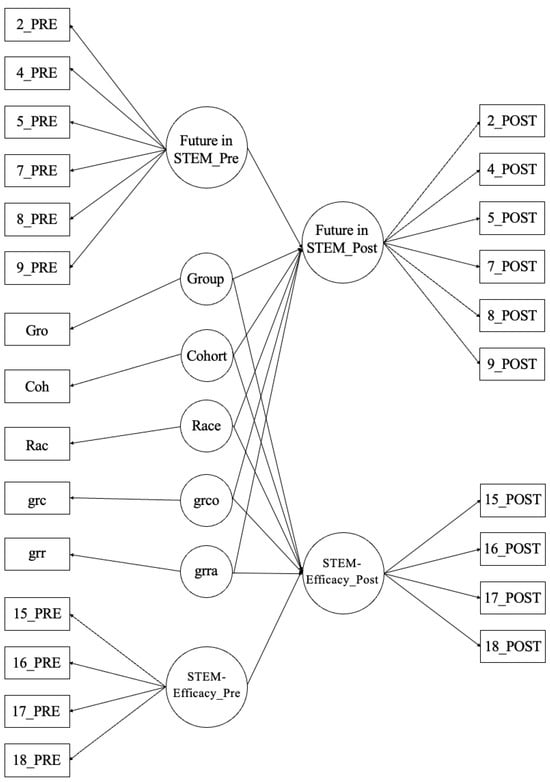
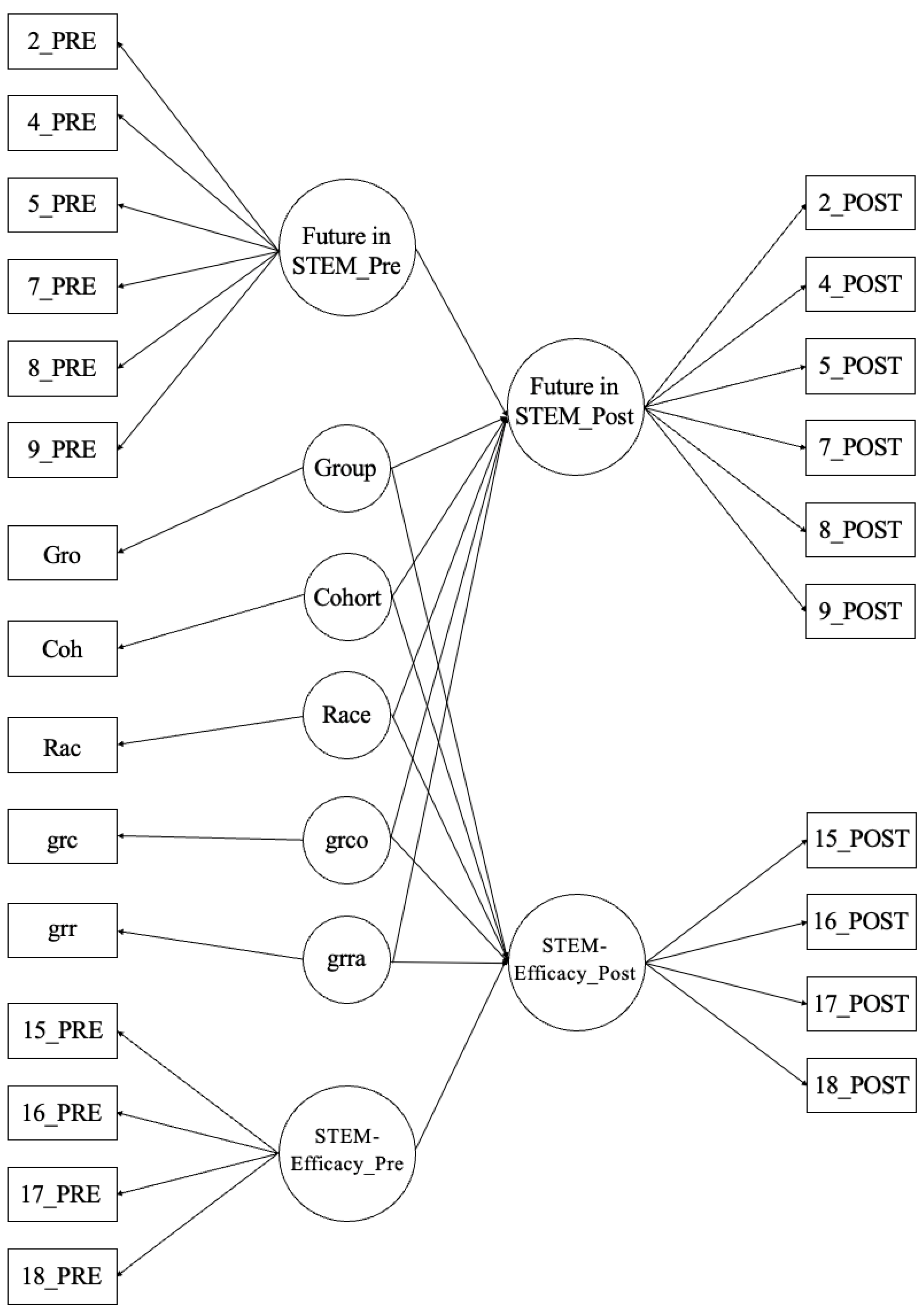
Methodological choices play a central role in how STEM education research conceptualizes and tests psychological constructs. Traditional regression-based approaches capture relationships among observed variables but often fail to account for measurement error or the latent nature of constructs such as self-efficacy and perceived future in STEM. Structural equation modeling (SEM) addressed these limitations by simultaneously estimating measurement and structural models, thereby providing more valid and reliable tests of theoretical frameworks (Kline, 2023; Byrne, 2016). SEM is particularly valuable in STEM education research because it allows researchers to examine how latent constructs interrelate within a theoretically grounded framework (Marsh et al., 2004). In addition, SEM supports the testing of mediating and moderating mechanisms, making it especially suitable for exploring how interventions impact students’ psychological development and career trajectories. As Schumacker and Lomax (2016) argued, SEM’s ability to model complex, multivariate relationships reflects the realities of human learning and identity processes better than simpler methods. Thus, adopting SEM in the present study is not merely a technical preference but a methodological necessity for capturing the multidimensional nature of self-efficacy and perceived future in STEM, and for evaluating the nuanced effects of intervention programs. We present the following conceptual diagram (Figure 1) to establish the conceptual framework, wherein our intervention of mastery experience serves as the independent variable predicting our outcomes of self-efficacy and perceived future in STEM. It illustrates the hypothesized paths from the intervention participation to the two endogenous outcomes, while controlling for pre-survey baselines and demographic variables.
Figure 1.
Conceptual Diagram: Full SEM.
3. Materials and Methods
Prior to participant recruitment, this project received approval from the Institutional Review Board (IRB) for research involving human subjects. High school teachers from Western New York were recruited through voluntary participation. Each teacher then recruited a minimum of 10 students, also on a voluntary basis. For students under the age of 18, both parental consent and student assent were obtained. For those 18 and older, students provided their own consent. Following consent, students completed a pre-survey in their classrooms measuring two constructs: perceived future in STEM and STEM self-efficacy (See Appendix A). Demographic information including gender, race, and grade level was also collected. Over the course of several instructional sessions, students worked with the National Institute of Health (NIH) grant team and teachers to collect water samples from local water sources near their schools. Under teacher guidance, students identified microorganisms within the samples and analyzed their DNA sequences. To conclude the instructional component, students created research posters to report their findings and participated in a Capstone event, where they presented their work alongside peers from other schools. Post-survey data was then collected at the end of the academic year to measure changes both within and between groups.
Survey instruments were developed by a third-party evaluation team to measure both students’ perceived future in STEM and STEM efficacy. The Future in STEM scale included 8 items, measured on a 5-point Likert scale (1 = Strongly Disagree to 5 = Strongly Agree). One sample item reads: “Having a job in a health-related field one day is very important to me.” Cronbach’s alpha indicated strong internal consistency, with reliability scores of 0.873 and 0.886 for the control and intervention groups, respectively. The STEM Efficacy scale contained 4 items and also used the same Likert format. A sample item is: “I treat course material as a starting point and try to develop my own ideas about it.” The reliability scores for this scale were more modest, which are 0.644 and 0.694 for the control and intervention groups, respectively.
The final dataset included 313 student responses, with 151 from the 2022–2023 cohort and 162 from the 2023–2024 cohort. Our sample size of 313 is appropriate for structural equation modeling (SEM), as it exceeds the minimum threshold of 200 cases (e.g., Boomsma, 1985; Schumacker & Lomax, 2010, 2016). To further verify the adequacy of our sample, an a priori power analysis was conducted using the semPower package in R (Moshagen & Bader, 2024). The results indicated that a sample size of 200 participants is sufficient to achieve 80% power (alpha = 0.05) to detect a target effect size of RMSEA = 0.05 with 40 or greater degrees of freedom (df). All data were de-identified, and participants were assigned unique numerical IDs to enable linking of pre- and post-surveys. Missing values were addressed using multiple imputations with 10 datasets generated to account for missingness. Variables included in the analysis were group (control = 0, intervention = 1), cohort (year of participation), gender (dummy-coded: male = 0, non-male = 1), and race (dummy-coded: white = 0, non-white = 1). Interaction terms (e.g., group × cohort, group × race) were created in SPSS Version 26.0 (IBM Corp., 2019).
Preliminary analyses were conducted using SPSS and Mplus Version 8.3, starting with an explanatory factor analysis (EFA) and parallel analysis (IBM Corp., 2019; Johnson & Creech, 1983; Muthén & Muthén, 1998–2017; Reckase, 1979). EFA was conducted separately for the pre- and post-survey data. Two items (Q3 and Q6) were removed from both the pre- and post-surveys due to low factor loadings for the Future in STEM construct (Hair et al., 2010). Results suggested a dominant primary factor (Zwick & Velicer, 1986) which accounted for a substantial proportion of the variance (Reckase, 1979). For the STEM-Efficacy construct, EFA results also supported a one-factor structure for the pre- and the post-survey (Reckase, 1979). To further evaluate the factor structure, a series of parallel analyses were conducted, which corroborated the one-factor structure (Glorfeld, 1995; Ruscio & Roche, 2012). Based on these findings, a one-factor solution was retained for both constructs.
Subsequent analyses were conducted using LISREL (Jöreskog & Sörbom, 2022), following a two-step approach that integrates confirmatory factor analysis (CFA) and path analysis (Kline, 2023; Schumacker & Lomax, 2016). We began with CFA to validate the measurement structure, confirming the appropriateness of the modified Future in STEM construct following the exclusion of items Q3 and Q6. Given the model’s complexity and limited sample size, excluding these weaker items improved model fit and parsimony. Modification indices were also used to refine the model. The CFA for STEM efficacy yielded strong model fit without the need to remove any items or apply modifications.
After we got robust CFA models, we conducted a full Structural Equation Model (SEM) to examine the structural relationships between each variable. In this model, group served as a predictor variable, whereas cohort and race were treated as covariates. Post-survey scores were modeled as endogenous outcomes. Pre-survey scores were also included as control variables. To define the measurement model, we fixed the variance of the latent variables to 1 (Schumacker & Lomax, 2016), rather than designating a reference item, due to the lack of strong theoretical justification.
4. Results
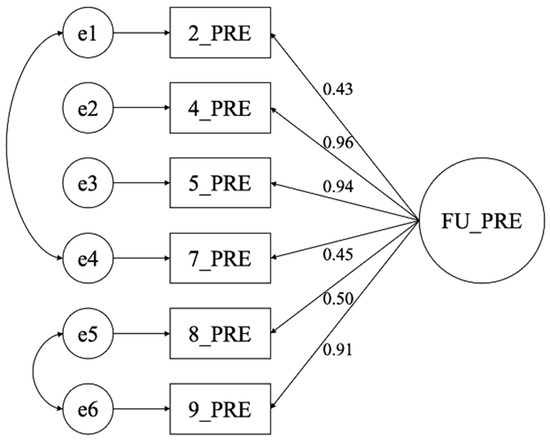
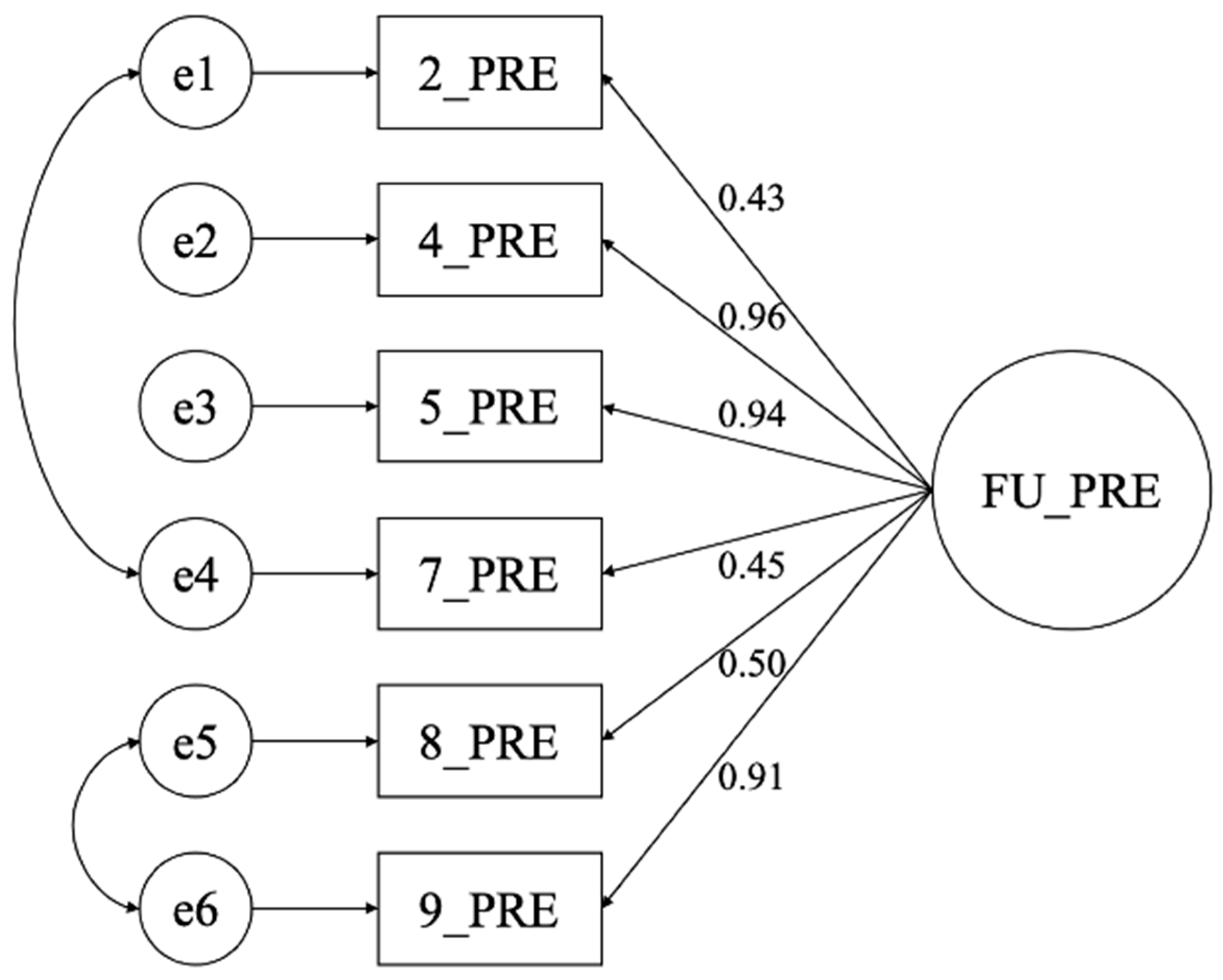
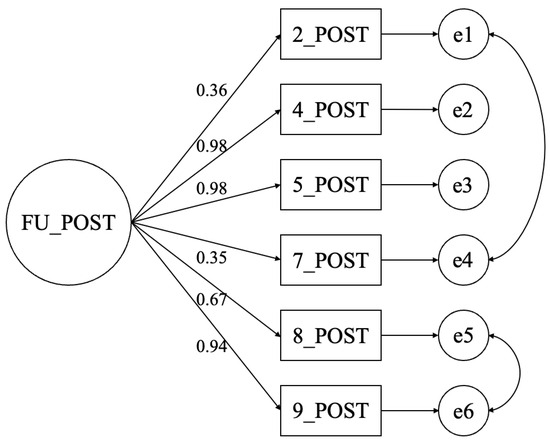
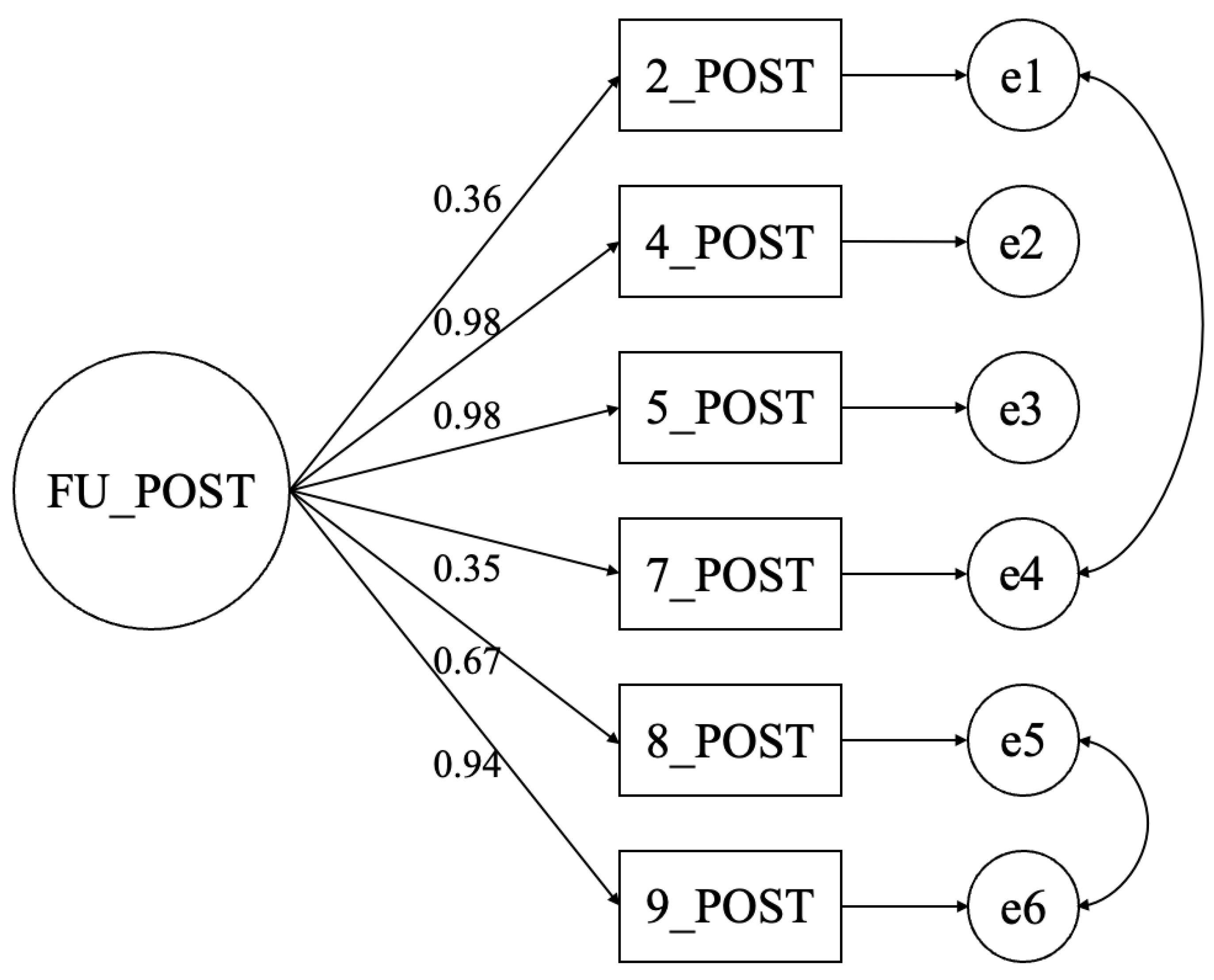
Based on the modification results in confirmatory factor analysis (CFA), as you can see in Figure 2 and Figure 3, the error covariances of Q2 and Q7 were correlated, as well as for Q8 and Q9. For the perceived future in STEM in the pre-survey level (Figure 2), the model fit statistics reported excellent model fits (RMSEA < 0.05; CFI > 0.95; IFI > 0.95) with the thresholds suggested by L. Hu and Bentler (1999). Similarly, for the perceived future in STEM in the post-survey level (Figure 3), we observed excellent model fit statistics (RMSEA < 0.05; CFI > 0.95; IFI > 0.95).
Figure 2.
CFA of the Perceived Future in STEM Level at the Pre-Survey Stage.
Figure 3.
CFA of the Perceived Future in STEM Level at the Post-Survey Stage.
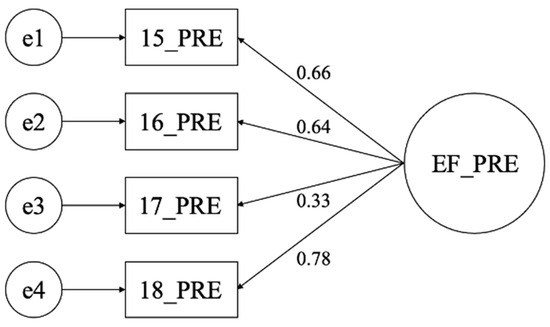
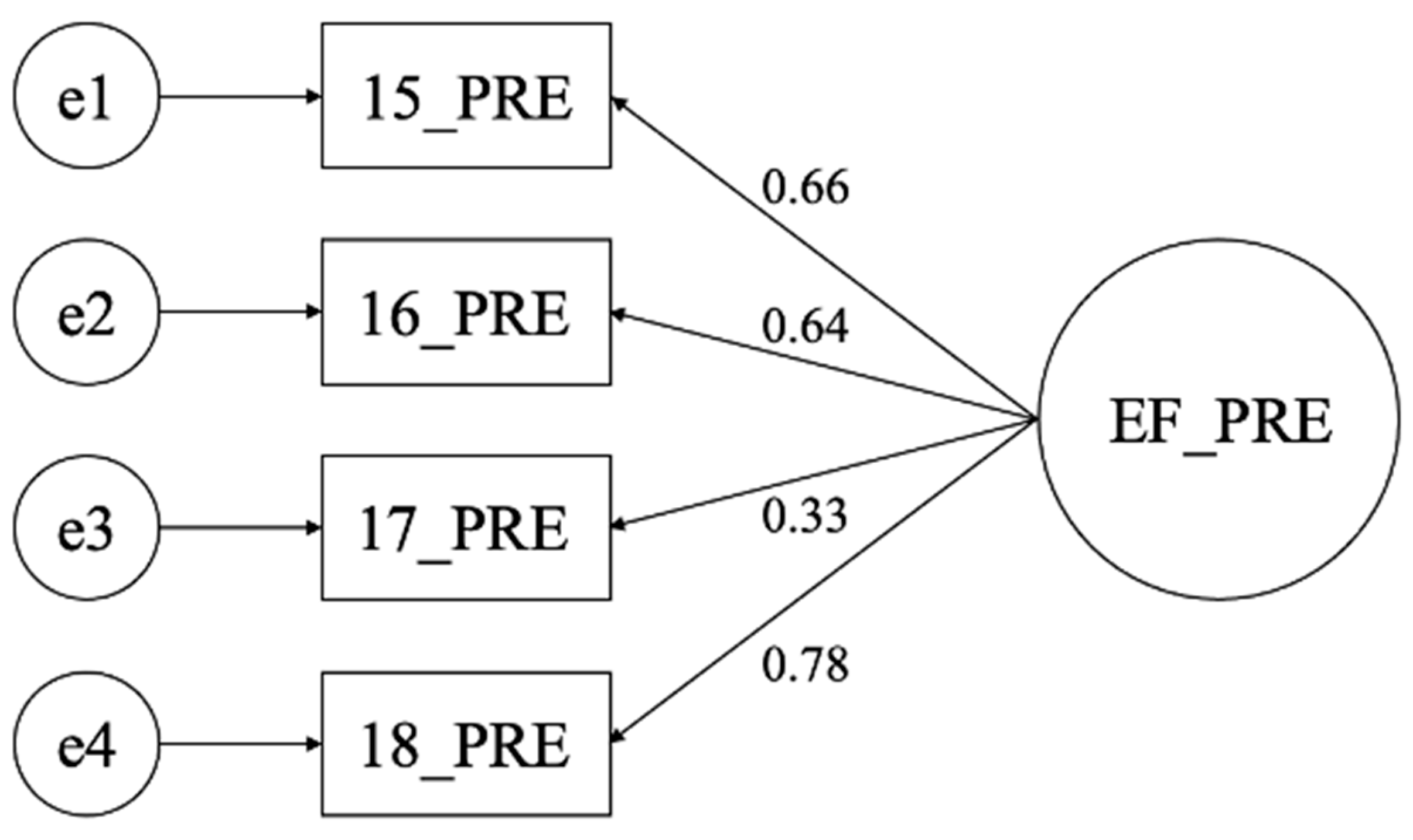
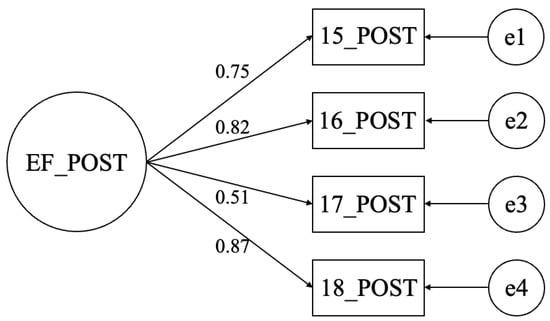
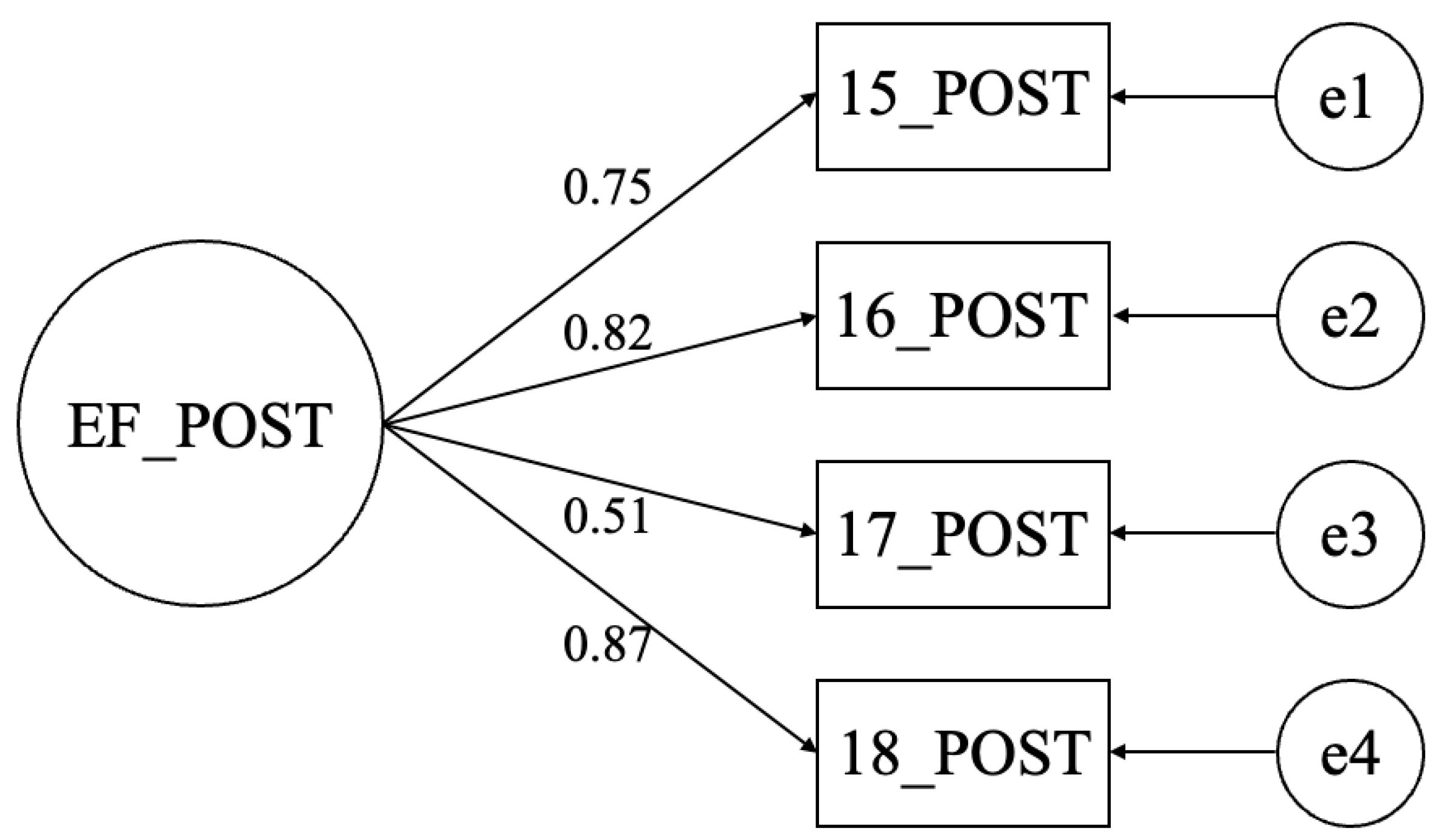
STEM efficacy shared similar traits with perceived future in STEM. On the pre-survey level (Figure 4), the model fit statistics (RMSEA < 0.05; CFI > 0.95; IFI > 0.95) showed excellent model fit, while the model fit statistics (RMSEA < 0.05; CFI > 0.95; IFI > 0.95) showed excellent model fit as well for the post-survey model (Figure 5). While all the models have significant chi-square values, it is notable that chi-square is extremely sensitive to sample size. Chi-square is often a good indicator of model fit when sample size is between 75 and 200 (Stone, 2021), where it is more likely to become significant as the sample size gets larger (Alavi et al., 2020). While our chi-square results are significant, given its sensitivity to large sample sizes (greater than 200; our sample size N = 313), the significant chi-square alongside three strong fit indices, RMSEA, CFI, and IFI, which indicates that our model demonstrates good fit.
Figure 4.
CFA of the STEM Efficacy at the Pre-Survey Stage.
Figure 5.
CFA of the STEM Efficacy at the Post-Survey Stage.
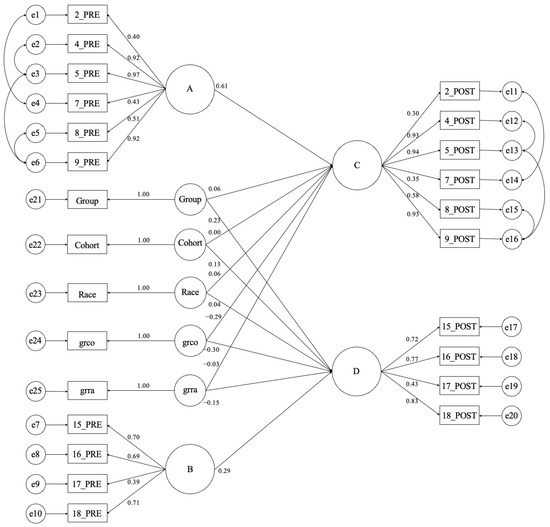
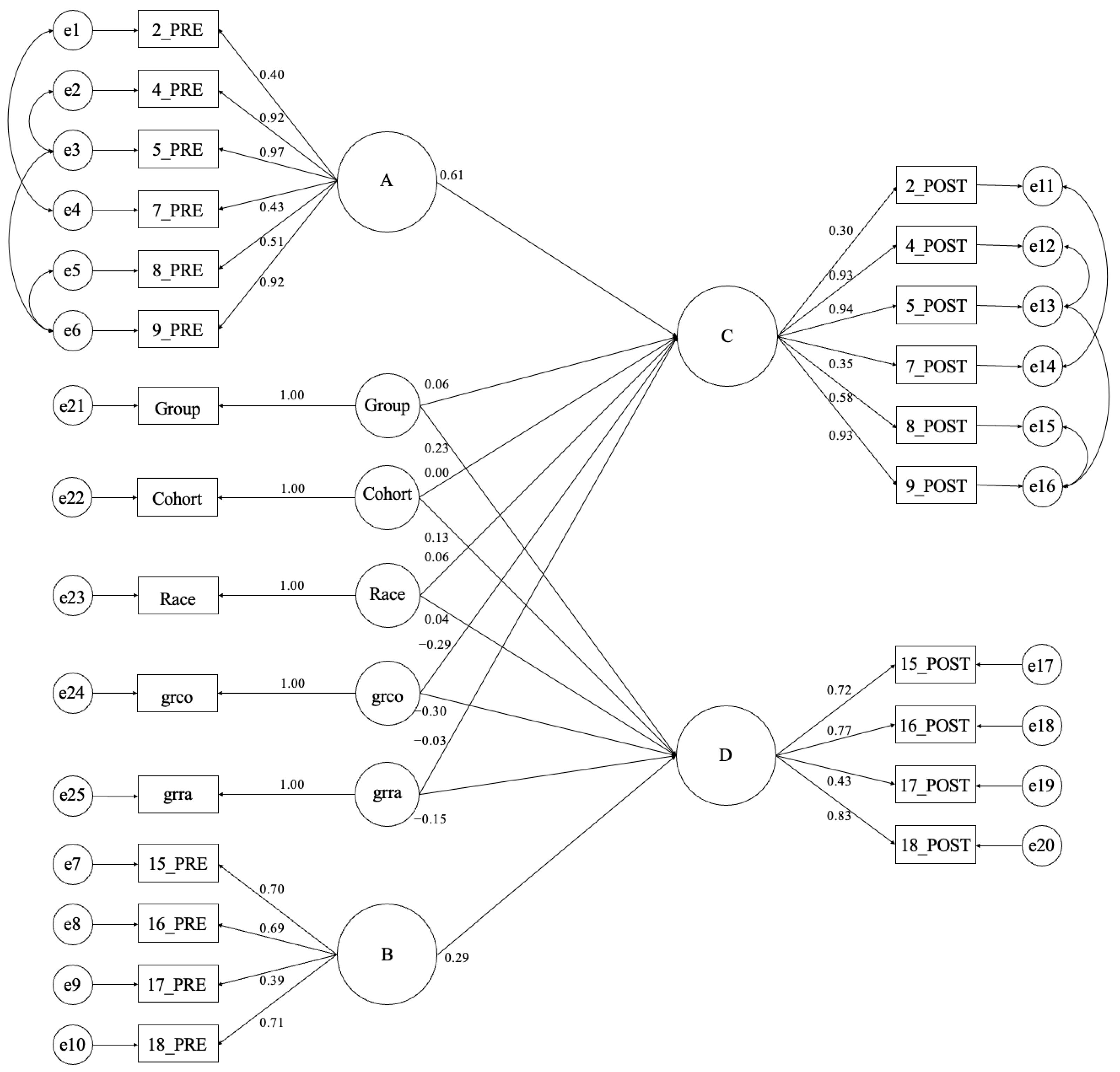
Final full SEM (Figure 6) fit indices (RMSEA < 0.08; CFI > 0.90; IFI > 0.90) indicated acceptable overall model fit (see Table 1 for details). Full SEM results indicated that pre-survey scores significantly predicted post-survey scores for both constructs, supporting internal consistency.
Figure 6.
Path Diagram with Parameter Estimates: Full SEM. Notes: A indicates perceived Future in STEM at the pre-survey level; B indicates STEM-efficacy at the pre-survey level; C indicates perceived future in STEM at the post-survey level; D indicates STEM-efficacy at the post-survey level; grco indicates the interaction term between group and cohort; grra indicates the interaction term between group and race.
Table 1.
Model Fit Statistics of the SEM.
For the Future in STEM outcome (Table 2), the main effect of group was not significant. However, the interaction between group and cohort was significant, suggesting that program effects differed across cohorts. For STEM efficacy (Table 3), the group variable significantly predicted post-survey outcomes, indicating a positive program effect. The non-significant group × race interaction implies that the program’s effectiveness was consistent across racial groups, while the significant group × cohort interaction highlights variation in effectiveness by cohort.
Table 2.
Structural Equation Model Statistics of the Perceived Future in STEM.
Table 3.
Structural Equation Model Statistics of the STEM Efficacy.
5. Discussion
This study evaluated the impact of the NIH-funded Project, a hands-on STEM learning intervention, on high school students’ STEM self-efficacy and perceived future in STEM careers. Drawing from pre- and post-survey data and employing CFA and SEM, the study found that the program significantly increased students’ STEM self-efficacy but showed cohort-dependent effects on students’ perceived future in STEM. These findings enrich the growing literature on potential interests in future STEM careers and self-efficacy in STEM by demonstrating the utility of integrating authentic scientific practices into high school instruction, while also highlighting important limitations and directions for future research.
The strong CFA results for both constructs across pre- and post-survey support the structural validity of the measurement models. Notably, the final SEM achieved acceptable model fit, reinforcing confidence in the robustness of the model and its inferences. Pre-survey scores were strong predictors of post-survey outcomes, lending support to the internal consistency and relevance of the measures over the year.
The positive effect of program participation on STEM self-efficacy supports Bandura’s (1997) social cognitive theory, particularly the role of mastery experiences as the most powerful indicator of efficacy beliefs. This program provided direct engagement with scientific practices, including DNA extraction, microbial sequencing, and presenting at Capstone events, which mirrors the types of mastery experiences that increase confidence in navigating scientific tasks (Sheu et al., 2018). Students exposed to these activities reported statistically significant improvements in STEM self-efficacy, suggesting the program offered meaningful opportunities to build skills and confidence in science.
However, the relationship between the intervention and perceived future in STEM was not significant. While there was no main effect of program participation on this construct, a significant interaction emerged between group and cohort. Students in the first cohort showed greater gains in career-oriented thinking than those in the second, despite similar recruitment and baseline conditions. This pattern suggests that while the intervention structure remained consistent, cohort-specific variables such as instructor quality, school environment, or implementation fidelity, may have influenced outcomes. Notably, cohort 1 is the first cohort that attended the program after the pandemic. Their intentions for their future career paths may have been negatively influenced by the COVID pandemic (Poma et al., 2022). The fact that self-efficacy improved uniformly across cohorts, while perceived career aspirations did not, is noteworthy. It aligns with Carlone and Johnson’s (2007) science identity framework, which emphasizes that self-efficacy is just one component of a broader, socially mediated science identity that also includes recognition by others and alignment with personal goals.
Additionally, in response to Research Question 2, the non-significant group × race interaction on both outcomes suggests the program had equitable effects across racial groups, providing preliminary evidence that such interventions may help reduce opportunity gaps in STEM confidence. This finding aligns with the work of Kitchen et al. (2022), who found that well-structured, inquiry-based STEM programs increased efficacy across diverse student populations. Nonetheless, as discussed below, the binary coding of race likely obscured within-group differences, and future research should employ more detailed intersectional analyses.
5.1. Implications for Teaching
The observed improvement in STEM self-efficacy among program participants has meaningful implications for both science education practice and educational equity. High school remains an important period in the formation of students’ science self-concepts, and interventions like this program may serve as a key mechanism for interrupting declining interest in STEM careers. The integration of authentic research experiences supports national calls for deeper engagement with genomics and biotechnology in secondary education (Hurle et al., 2013). Also, consistent with social cognitive theory, mastery experiences appear to play a central role in shaping students’ confidence in STEM (Bandura, 1997). Therefore, teachers should incorporate structured opportunities for students to engage in authentic scientific practices, such as designing experiments, analyzing real-world data, solving social issues, and presenting findings (Habig & Gupta, 2021). These activities allow students to experience success in meaningful tasks, which can strengthen their beliefs in their ability to perform in STEM contexts.
In addition, teachers can support self-efficacy by scaffolding complex tasks into manageable components. Providing clear guidance, step-by-step support, and providing timely feedback can help students build self-efficacy gradually over time. This may help reduce the feelings of frustration and increase confidence in completing STEM tasks, and, in turn, better prepare them for future STEM-related majors or career pathways (Habig & Gupta, 2021). This is particularly important for students with limited prior exposure to advanced STEM content.
The fact that gains in efficacy were consistent across racial groups is encouraging, particularly in light of prior research documenting racial disparities in science confidence (Larry & Wendt, 2022). When viewed through a racial equity lens, this program may be interpreted as an accessible model for reducing barriers to advanced scientific content. However, as Brickhouse and Potter (2001) have argued, science identity development is deeply shaped by students’ cultural and social positioning. Educational programs like ours must therefore be adapted to recognize and affirm students’ lived experiences, not only through equitable access to content, but also through culturally responsive pedagogy.
Additionally, the differential cohort effects on students’ perceived future in STEM suggest that variations in instructional delivery, not just curriculum content, may influence students’ ability to perceive themselves in future STEM careers. Although the program materials remained consistent, the way that teachers engaged students, structured lessons, and fostered a classroom climate likely contributed to different outcomes. Prieto and Dugar (2017) emphasized that students’ perceptions of mathematics and their resulting interest in STEM are deeply shaped by how content is taught with supportive instruction playing a key role in shaping positive attitudes and long-term motivation. This reinforces the idea that instruction is not only for delivering STEM content, but a dynamic process that interacts with students’ beliefs, especially among those historically underrepresented in STEM fields. Furthermore, as Larry and Wendt (2022) highlighted, teacher interpersonal behaviors significantly influence students’ science self-efficacy, with minority students especially sensitive to the quality of these interactions. Taken together, these findings suggest that professional development should focus not only on pedagogical strategies but also on equipping teachers to serve as motivational and identity-affirming figures. Teacher-level implementation must be conceptualized as relational and instructional quality, which can be further considered in different teacher professional development trainings.
5.2. Implications for Research
The findings of this study also have important implications for future research in STEM education. First, the differential effects observed between STEM self-efficacy and perceived future in STEM suggest that these constructs may develop through distinct processes. While self-efficacy may be more immediately responsive to mastery experiences, career-related beliefs may require longer-term exposure and broader contextual support.
Theoretically, the results also inform the SCCT model, which indicates that both self-efficacy and outcome expectations influence career goals (Lent et al., 2000). While our program improved self-efficacy, it did not uniformly shift students’ perceived future in STEM, suggesting that career-related beliefs may require deeper or more sustained scaffolding. For example, students may need to see tangible, achievable STEM pathways and receive affirmation from teachers, mentors, and families to envision themselves in those careers (Carlone & Johnson, 2007). This indicates a need for future research to examine how different features of STEM interventions—such as duration, instructional quality, and opportunities for career exploration—differentially influence short-term and long-term outcomes. Longitudinal designs may be particularly valuable for understanding how early gains in self-efficacy translate into sustained interest and academic trajectories. Prior research has shown that self-efficacy and achievement are related over time, further supporting the need for longitudinal investigation (Estrada et al., 2018).
5.3. Limitations and Future Research
Despite its contributions, this study has several limitations. First, the quasi-experimental design limits causal inference. Although the use of matched control groups and pre/post comparisons helps reduce bias, random assignment was not feasible. Students who self-selected into the program may have differed in motivation or background, even if baseline equivalence was observed. Future iterations should incorporate random assignments or at least richer baseline measures of interest, parental support, or science exposure.
Additionally, while SEM results were statistically robust, the reliability of the STEM self-efficacy scale was moderate (α = 0.644–0.694), potentially limiting the precision of the findings. While acceptable for early-stage or exploratory instruments, future studies should consider expanding the item pool or triangulating findings with qualitative data (e.g., student interviews or open-ended reflections).
To build on this work, future research should consider several directions. First, qualitative data could help unpack how students interpret and respond to the project experience. What aspects of the program do students find most motivating? How do they understand their role as “scientists”? Answers to these questions would shed light on the mechanisms behind observed changes in self-efficacy and help refine the intervention’s design.
Lastly, a promising direction for future research is to extend the analysis longitudinally. Previous research has shown that students experience developmental shifts in STEM self-efficacy and achievement, underscoring how these outcomes evolve through sustained participation (Estrada et al., 2018; Reyes et al., 2025). Tracking students beyond high school could clarify whether program participation influences longer-term outcomes, such as enrollment in advanced STEM courses, choice of STEM majors, or engagement in STEM careers in the future (Wang, 2013). Together, these approaches could provide deeper insights into the persistence and contextual variation of program effects, offering practical implications for sustaining student motivation and encouraging them to go into STEM-related careers.
6. Conclusions
In sum, this study demonstrates that a real-world, genomics-based STEM program can significantly improve high school students’ STEM self-efficacy, particularly when authentic scientific experiences are implemented with consistency and instructional quality. This finding is consistent with Social Cognitive Theory, which emphasizes mastery experiences as a powerful source of efficacy beliefs (Bandura, 1997). Although effects on perceived future in STEM were more limited and appeared to vary across cohorts, the results suggest that strengthening students’ confidence in their STEM abilities may provide an important foundation for longer-term motivation and career-related thinking. Cohort differences further indicate that instructional delivery, classroom climate, and teacher support should be carefully considered in future implementations. Importantly, the intervention appeared to benefit students across racial groups, providing a promising model for equity-oriented STEM education, which aligns with prior work suggesting that well-structured, inquiry-based STEM programs can promote positive outcomes across diverse student populations (Kitchen et al., 2022). At the same time, equitable STEM education requires more than access to advanced content alone. As Carlone and Johnson (2007) emphasized, students’ science identity development is shaped by recognition, belonging, and alignment between science learning and personal goals. As the field continues to advance, integrating science identity perspectives and culturally responsive pedagogy will be essential for designing effective STEM interventions. Our program illustrates how partnerships between schools, universities, and within even a broader community can create meaningful learning experiences that not only build students’ scientific skills, but also strengthen their confidence and future aspirations into future STEM participation.
Author Contributions
Conceptualization, W.D.; methodology, W.D. and S.K. (Sunha Kim); software, W.D. and S.K. (Sunha Kim); validation, W.D. and S.K. (Sunha Kim); formal analysis, W.D. and S.K. (Sunha Kim); investigation, W.D., S.K. (Sunha Kim), S.K. (Stephen Koury), and S.S.; resources, S.K. (Sunha Kim), S.K. (Stephen Koury), S.S.; data curation, W.D., S.K. (Sunha Kim), S.K. (Stephen Koury), and S.S.; writing—original draft preparation, W.D., W.L., W.W. and S.K. (Sunha Kim); writing—review and editing, W.D., W.L., W.W. and S.K. (Sunha Kim); visualization, W.D.; supervision, S.K. (Sunha Kim); project administration, S.K. (Stephen Koury), S.K. (Sunha Kim), S.S.; funding acquisition, S.K. (Stephen Koury), S.K. (Sunha Kim), S.S. All authors have read and agreed to the published version of the manuscript.
Funding
This study was supported by the National Institutes of Health (NIH) through the Science Education Partnership Award (SEPA) program (R25GM137364).
Institutional Review Board Statement
The study involving human participants was reviewed and approved by the Institutional Review Board (IRB) of University at Buffalo (STUDY00006356) on 6 June 2022.
Informed Consent Statement
Informed consent was obtained from all subjects involved in the study.
Data Availability Statement
The participants of this study did not give written consent for their data to be shared publicly, so due to the sensitive nature of the research supporting data is not available.
Acknowledgments
The authors would like to thank Jordan Anthony, at Erie Niagara AHEC; Brittany Tranello, at Erie Niagara AHEC; Erin Brauen, at WNY R-AHEC; Sara Longhini, at WNY R-AHEC; Jonathan Bard, Department of Biochemistry at UB; Norma Nowak, Department of Biochemistry at UB; Kelley Madden, at BRI; Emma O’Connor, at BRI, for their contributions to this project. We also gratefully acknowledge the participating teachers and their students from high schools across Western New York, New York’s Southern Tier, and the greater Rochester, NY area. These teachers demonstrated exceptional dedication to student learning by supporting this opportunity for students to engage in authentic research and learning beyond the traditional classroom. We are especially appreciative of the students who volunteered their time and went above and beyond normal high school expectations to enthusiastically participate in this project.
Conflicts of Interest
The authors declare no conflicts of interest. The funders had no role in the design of the study; in the collection, analyses, or interpretation of data; in the writing of the manuscript; or in the decision to publish the results.
Abbreviations
The following abbreviations are used in this manuscript:
| CFA | Confirmatory Factor Analysis |
| CFI | Comparative Fit Index |
| CI | Confidence Interval |
| COVID | Coronavirus Disease |
| df | Degrees of Freedom |
| DNA | Deoxyribonucleic Acid |
| EFA | Explanatory Factor Analysis |
| GLEE | Genomic Literacy, Education, and Engagement |
| IBM | International Business Machines Corporation |
| ID | Identifier |
| IFI | Incremental Fit Index |
| IRB | Institutional Review Board |
| NIH | National Institutes of Health |
| PBL | Problem-Based Learning |
| RMSEA | Root Mean Square Error of Approximation |
| SCCT | Social Cognitive Career Theory |
| S.E. | Standard Error |
| SEM | Structural Equation Modeling |
| SPSS | Statistical Package for the Social Sciences |
| STEM | Science, Technology, Engineering, and Mathematics |
Appendix A
| Measures | Item Description | Scale |
| Perceived Future in STEM | 2. I have always hoped to have a job in science, technology, engineering or math one day. | 1. I strongly disagree. 2. I disagree. 3. I neither disagree or agree. 4. I agree. 5. I strongly agree. |
| 3. Having a job in science, technology, engineering or math one day is very important to me. | ||
| 4. I have always hoped to have a job in a health-related field. | ||
| 5. Having a job in a health-related field one day is very important to me. | ||
| 6. I am familiar with careers in genomics, bioinformatics, biology, environmental science, microbiology, or chemistry. | ||
| 7. I am interested in careers in genomics, bioinformatics, biology, environmental science, microbiology, or chemistry. | ||
| 8. I am familiar with health-related careers. | ||
| 9. I am interested in health-related careers. | ||
| STEM-Efficacy | 15. When a theory, interpretation, or conclusion is presented in class or in the readings, I try to decide if there is good supporting evidence. | 1. I strongly disagree. 2. I disagree. 3. I neither disagree or agree. 4. I agree. 5. I strongly agree. |
| 16. I treat course material as a starting point and try to develop my own ideas about it. | ||
| 17. I can do well in my science courses. | ||
| 18. Whenever I read or hear a claim or conclusion in a class, I think about possible alternatives. | ||
| Notes: Item numbering follows the original survey and is consistent with the figures presented in the manuscript. Question 1 is demographic information, so it is not included here. | ||
References
- Alavi, M., Visentin, D. C., Thapa, D. K., Hunt, G. E., Watson, R., & Cleary, M. (2020). Chi-square for model fit in confirmatory factor analysis. Journal of Advanced Nursing, 76, 2209–2211. [Google Scholar] [CrossRef] [Scilit]
- Bandura, A. (1986). Social foundations of thought and action: A social cognitive theory. Prentice Hall. [Google Scholar]
- Bandura, A. (1997). Self-efficacy: The exercise of control. W. H. Freeman and Company. [Google Scholar]
- Boomsma, A. (1985). Nonconvergence, improper solutions, and starting values in LISREL maximum likelihood estimation. Psychometrika, 50, 229–242. [Google Scholar] [CrossRef] [Scilit]
- Brickhouse, N. W., & Potter, J. T. (2001). Young women’s scientific identity formation in an urban context. Journal of Research in Science Teaching, 38(8), 965–980. [Google Scholar] [CrossRef] [Scilit]
- Britner, S. L., & Pajares, F. (2006). Sources of science self-efficacy beliefs of middle school students. Journal of Research in Science Teaching, 43(5), 485–499. [Google Scholar] [CrossRef] [Scilit]
- Byrne, B. M. (2016). Structural equation modeling with AMOS: Basic concepts, applications, and programming (3rd ed.). Routledge. [Google Scholar]
- Carlone, H. B., & Johnson, A. (2007). Understanding the science experiences of successful women of color: Science identity as an analytic lens. Journal of Research in Science Teaching, 44(8), 1187–1218. [Google Scholar] [CrossRef] [Scilit]
- Cimetta, A. D., Friesen, R. S., Davis, S. M., & Bhattacharya, M. R. C. (2025). Neuroscience vertically integrated projects benefit STEM student self-efficacy and identity. Scholarship and Practice of Undergraduate Research, 8(3), 21–31. [Google Scholar] [CrossRef] [Scilit]
- Donovan, B. M. (2022). Ending genetic essentialism through genetics education. HGG Advances, 3(1), 100058. [Google Scholar] [CrossRef] [Scilit]
- Duncan, R. G., Castro-Faix, M., & Choi, J. (2016). Informing a learning progression in genetics: Which should be taught first, mendelian inheritance or the central dogma of molecular biology? International Journal of Science and Mathematics Education, 14(3), 445–472. [Google Scholar] [CrossRef] [Scilit]
- Estrada, M., Hernandez, P. R., & Schultz, P. W. (2018). A longitudinal study of how quality mentorship and research experience integrate underrepresented minorities into STEM careers. CBE Life Sciences Education, 17(1), 9. [Google Scholar] [CrossRef] [Scilit]
- GLEE Initiative. (2017). Genomic literacy, education, and engagement (Glee) initiative 2017 strategic visioning meeting: K-16 working group. Available online: https://www.genome.gov/Pages/About/OD/ECIB/GLEE/GLEE_white_paper_K-16_WG.pdf (accessed on 4 February 2026).
- Glorfeld, L. W. (1995). An improvement on horn’s parallel analysis methodology for selecting the correct number of factors to retain. Educational and Psychological Measurement, 55(3), 377–393. [Google Scholar] [CrossRef] [Scilit]
- Habig, B., & Gupta, P. (2021). Authentic STEM research, practices of science, and interest development in an informal science education program. International Journal of STEM Education, 8(1), 57. [Google Scholar] [CrossRef] [Scilit]
- Hair, J. F., Black, W. C., Babin, B. J., & Anderson, R. E. (2010). Multivariate data analysis (7th ed.). Pearson. [Google Scholar]
- Hu, L., & Bentler, P. M. (1999). Cutoff criteria for fit indexes in covariance structure analysis: Conventional criteria versus new alternatives. Structural Equation Modeling: A Multidisciplinary Journal, 6(1), 1–55. [Google Scholar] [CrossRef] [Scilit]
- Hu, X., Jiang, Y., & Bi, H. (2022). Measuring science self-efficacy with a focus on the perceived competence dimension: Using mixed methods to develop an instrument and explore changes through cross-sectional and longitudinal analyses in high school. International Journal of STEM Education, 9(1), 47. [Google Scholar] [CrossRef] [Scilit]
- Hurle, B., Citrin, T., Jenkins, J. F., Kaphingst, K. A., Lamb, N., Roseman, J. E., & Bonham, V. L. (2013). What does it mean to be genomically literate?: National Human Genome Research Institute meeting report. Genetics in Medicine, 15(8), 658–663. [Google Scholar] [CrossRef] [Scilit]
- IBM Corp. (2019). IBM SPSS statistics for macintosh (Version 26.0). IBM Corp. [Google Scholar]
- Johnson, D. R., & Creech, J. C. (1983). Ordinal measures in multiple indicator models: A simulation study of categorization error. American Sociological Review, 48(3), 398–407. [Google Scholar] [CrossRef] [Scilit]
- Jöreskog, K. G., & Sörbom, D. (2022). LISREL 12.2 for windows [Computer software]. Scientific Software International. Available online: https://www.ssicentral.com/lisrel/ (accessed on 4 February 2026).
- Kitchen, J. A., Chen, C., Sonnert, G., & Sadler, P. (2022). The impact of participating in college-run STEM clubs and programs on students’ STEM career aspirations. Teachers College Record, 124(2), 117–142. [Google Scholar] [CrossRef] [Scilit]
- Kitchen, J. A., Sonnert, G., & Sadler, P. M. (2018). The impact of college-and university-run high school summer programs on students’ end of high school STEM career aspirations. Science Education, 102(3), 529–547. [Google Scholar] [CrossRef] [Scilit]
- Kitchen, J. A., Williams, M. S., Sonnert, G., & Sadler, P. (2024). A quasi-experimental study of the impact of college-run science, technology, engineering, and mathematics (STEM) career days on American students’ STEM career aspirations. International Journal of Science Education, 46(2), 109–130. [Google Scholar] [CrossRef] [Scilit]
- Kline, R. B. (2023). Principles and practice of structural equation modeling (5th ed.). Guilford Publications. [Google Scholar]
- LaForce, M., Noble, E., & Blackwell, C. (2017). Problem-based learning (PBL) and student interest in STEM careers: The roles of motivation and ability beliefs. Education Sciences, 7(4), 92. [Google Scholar] [CrossRef] [Scilit]
- Larry, T., & Wendt, J. L. (2022). Predictive relationship between gender, ethnicity, science self-efficacy, teacher interpersonal behaviors, and science achievement of students in a diverse urban high school. Learning Environments Research, 25(1), 141–157. [Google Scholar] [CrossRef] [Scilit]
- Lent, R. W., Brown, S. D., & Hackett, G. (2000). Contextual supports and barriers to career choice: A social cognitive analysis. Journal of Counseling Psychology, 47(1), 36–49. [Google Scholar] [CrossRef]
- Marsh, H. W., Hau, K. T., & Wen, Z. (2004). In defense of causal indicators: A comparison of SEM approaches. Psychological Methods, 9(3), 275–300. [Google Scholar] [CrossRef] [Scilit]
- Moshagen, M., & Bader, M. (2024). semPower: General power analysis for structural equation models. Behavior Research Methods, 56, 2901–2922. [Google Scholar] [CrossRef] [Scilit]
- Muthén, L. K., & Muthén, B. O. (1998–2017). Mplus user’s guide (8th ed.). Muthén, & Muthén. Available online: https://www.statmodel.com/ugexcerpts.shtml (accessed on 4 February 2026).
- Nguyen, R. L., Stolle-McAllister, K., & Sun, S. (2026). Science identity and growth mindset as mechanisms to support STEM students’ career self-efficacy. Canadian Journal of Science, Mathematics and Technology Education, 26(2), 27. [Google Scholar] [CrossRef] [Scilit]
- Ong, M., Wright, C., Espinosa, L., & Orfield, G. (2011). Inside the double bind: A synthesis of empirical research on undergraduate and graduate women of color in science, technology, engineering, and mathematics. Harvard Educational Review, 81(2), 172–209. [Google Scholar] [CrossRef] [Scilit]
- Poma, M., Al Amri, F., Tawse-Smith, A., & Ma, S. (2022). How are you coping with the COVID-19 pandemic? Survey of undergraduate dental students’ well-being during an unexpected global event. European Journal of Dental Education, 26(3), 459–467. [Google Scholar] [CrossRef] [Scilit]
- Prieto, E. (2016). “It just takes so much time!”: A study of teachers’ use of ICT to convey relevance of mathematical content. International Journal for Technology in Mathematics Education, 23(1), 13–24. [Google Scholar] [CrossRef] [Scilit]
- Prieto, E., & Dugar, N. (2017). An enquiry into the influence of mathematics on students’ choice of STEM careers. International Journal of Science and Mathematics Education, 15(8), 1501–1520. [Google Scholar] [CrossRef] [Scilit]
- Reckase, M. D. (1979). Unifactor latent trait models applied to multifactor tests: Results and implications. Journal of Educational and Behavioral Statistics, 4(3), 207–230. [Google Scholar] [CrossRef] [Scilit]
- Reyes, C., Wagler, A., & Monarrez, A. (2025). Longitudinal changes in science identity, research self-efficacy, and academic self-concept for biomedical research trainees at a Hispanic-serving institution. Frontiers in Education, 10, 1518726. [Google Scholar] [CrossRef] [Scilit]
- Ruscio, J., & Roche, B. (2012). Determining the number of factors to retain in an exploratory factor analysis using comparison data of known factorial structure. Psychological Assessment, 24(2), 282–292. [Google Scholar] [CrossRef] [Scilit]
- Schumacker, R. E., & Lomax, R. G. (2010). A beginner’s guide to structural equation modeling (3rd ed.). Routledge. [Google Scholar]
- Schumacker, R. E., & Lomax, R. G. (2016). A beginner’s guide to structural equation modeling (4th ed.). Routledge. [Google Scholar]
- Sheu, H.-B., Lent, R. W., Miller, M. J., Penn, L. T., Cusick, M. E., & Truong, N. N. (2018). Sources of self-efficacy and outcome expectations in science, technology, engineering, and mathematics domains: A meta-analysis. Journal of Vocational Behavior, 109, 118–136. [Google Scholar] [CrossRef] [Scilit]
- Stone, B. M. (2021). The ethical use of fit indices in structural equation modeling: Recommendations for psychologists. Frontiers in Psychology, 12, 783226. [Google Scholar] [CrossRef] [Scilit]
- U.S. Department of Education. (2015). Science, technology, engineering and math: Education for global leadership. Available online: https://www.ed.gov/stem (accessed on 4 February 2026).
- Wang, X. (2013). Why students choose STEM majors: Motivation, high school learning, and postsecondary context of support. American Educational Research Journal, 50(5), 1081–1121. [Google Scholar] [CrossRef] [Scilit]
- Wray, C. G. (2017). Introducing students to the genome: Brave new world or the red queen’s wonderland? The American Biology Teacher, 79(4), 253. [Google Scholar] [CrossRef] [Scilit]
- Zimani, A. N., Peterlin, B., & Kovanda, A. (2021). Increasing genomic literacy through national genomic projects. Frontiers in Genetics, 12, 693253. [Google Scholar] [CrossRef] [Scilit] [PubMed]
- Zwick, W. R., & Velicer, W. F. (1986). Comparison of five rules for determining the number of components to retain. Psychological Bulletin, 99(3), 432–442. [Google Scholar] [CrossRef]

Disclaimer/Publisher’s Note: The statements, opinions and data contained in all publications are solely those of the individual author(s) and contributor(s) and not of MDPI and/or the editor(s). MDPI and/or the editor(s) disclaim responsibility for any injury to people or property resulting from any ideas, methods, instructions or products referred to in the content. |
© 2026 by the authors. Licensee MDPI, Basel, Switzerland. This article is an open access article distributed under the terms and conditions of the Creative Commons Attribution (CC BY) license.