1. Introduction
Microcredentials are valuable short-term courses that equip learners with in-demand skills for employment, education, and training. They are designed to be brief, flexible, and stackable, and can be issued as certificates and digital badges. From an employer’s perspective, microcredentials offer a clearer view of an individual’s demonstrated competencies and applied skills. For learners, these programs provide opportunities to acquire and formally validate job-relevant skills without the requirement of completing a full academic degree. This review synthesizes the current literature and incorporates a survey conducted at Tuskegee University to identify perceptions of the effectiveness, challenges, and potential benefits of microcredentials in educational settings. The literature review explored the benefits, advantages, disadvantages, and challenges of microcredentials in the context of geospatial and data sciences, as well as their potential impact on the professional development and advancement of individuals from communities and Racial Groups with Small Populations (RGSP). In this study, RGSP refers to predominantly non-white communities and groups, characterized by relatively small populations and limited access to higher education, workforce training programs, technological infrastructure, and socioeconomic opportunities compared to the broader United States (US) population. These groups often include Black, Hispanic, Native American, and other populations.
This review identified several challenges to implementing microcredential programs. These challenges include the lack of global consensus on the definitions and content of discipline-specific microcredentials, the absence of accreditation frameworks, and the high cost of obtaining microcredential certificates. Despite these challenges, microcredential programs can be an effective and practical pathway to entering the workforce and advancing in one’s career, especially for learners from RGSP. According to
IBM (
2022), the geospatial analytics market is experiencing robust, sustained growth, with projections indicating significant expansion over the coming years, reaching USD 96.3 billion by 2025. Similarly, the
U.S. Bureau of Labor Statistics (
2023) projects strong workforce demand in technology- and data-related occupations. Employment of computer and information systems managers is projected to grow 15% over the same period, reflecting much faster growth than the average for all occupations (
Bureau of Labor Statistics, U.S. Department of Labor, 2025a). Meanwhile, employment in data science roles is expected to grow by 36% between 2024 and 2034 (
Bureau of Labor Statistics, U.S. Department of Labor, 2025b). Careers in geospatial and mapping sciences, data science, and related technologies are also growing. Employment of geoscientists is expected to increase 3% between 2024 and 2034 (
Bureau of Labor Statistics, U.S. Department of Labor, 2025c), and employment of surveying and mapping technicians is projected to grow 5% (
Bureau of Labor Statistics, U.S. Department of Labor, 2025d), both of which are above the average growth rate for all occupations. These trends demonstrate the necessity for educational institutions to offer accessible programs in geospatial and data science to prepare the youth for 21st-century job opportunities in these fields.
The workforce trends described above suggest that demand for geospatial and data science skills is growing faster than the current educational pipeline can meet. Enrollment in geography and spatially focused degree programs in the United States grew steadily for decades, peaking at roughly 5000 undergraduate degrees conferred in 2012, but has since declined to approximately 4000 (
American Association of Geographers, 2022). Beyond geospatial fields, data science and emerging technologies also appear to face equally pressing skill shortages. Organizations report difficulty launching new initiatives, not because of limited budgets, but because qualified talent in areas like AI, machine learning, and data infrastructure is simply hard to find. Industry leaders increasingly point away from traditional four-year degrees as the only solution, advocating instead for skills-based hiring, certifications, and targeted training programs as more practical ways to build workforce capacity (
Jarvis, 2023). This study does not conduct a direct curriculum-to-skill mapping of the reviewed programs, and these labor market trends are presented as context rather than as evidence that the programs address specific gaps. Instead, structural characteristics such as cost, duration, delivery format, and stackability are examined as indicators of accessibility and workforce readiness.
To explore initial perceptions, awareness, and preferences regarding microcredential programs in geospatial and data sciences, a survey was administered to students from RGSP at Tuskegee University in Alabama. As a leading Historically Black College and University (HBCU), Tuskegee University provides a meaningful and contextually relevant setting for this exploratory work, offering an initial, localized perspective on how students in geospatial and data science programs perceive and engage with microcredential opportunities. The survey explored factors such as cost, the time participants were willing to dedicate, and preferred learning modalities—whether virtual, hybrid, or in-person. The findings offer a localized, exploratory glimpse into how students at one minority-serving institution think about microcredential participation. This review focused on the landscape of geospatial and data science microcredentials available to prospective learners in the United States. This includes offerings from universities, community colleges, and major Massive Open Online Course (MOOC) platforms to explore the benefits, challenges, and community preferences of these programs, particularly those available to RGSP. The following research questions guide this study: (1) What is the current landscape of geospatial and data science microcredential programs available to learners in the United States in terms of cost, duration, delivery format, and stackability? (2) Do meaningful differences in cost, accessibility, and program structure exist between institution-based and MOOC-based microcredential programs? (3) To what extent do existing microcredential offerings, particularly at HBCUs, address the educational and workforce development needs of RGSP?
2. Materials and Methods
This study employed a multi-component exploratory design comprising a targeted literature review, a systematic review of microcredential program offerings, and a student survey to assess students’ preliminary perceptions and preferences regarding microcredential participation at one HBCU.
2.1. Literature Review and Program Identification
Two complementary data acquisition processes were employed to examine the availability and characteristics of microcredential programs relevant to the geospatial and data science workforces. Initial program identification was conducted in Spring 2024, with a subsequent review and update of program information completed in Winter 2025 to reflect the most current offerings. The first process focused on institutional offerings at HBCUs. Twenty HBCUs were selected based on the
U.S. News & World Report (
2025) rankings, ordered from highest to lowest rank. For each institution, official websites were reviewed to identify microcredential and certificate programs, using the following terms: Geographic Information Systems (GIS), remote sensing, data science, and geomatics. This section was designed to assess the availability and structure of microcredentials within minority-serving higher education institutions.
The second process involved a broader market-based search to capture the wider landscape of microcredential programs available to learners in the United States. This approach complemented the first process by extending beyond institutional offerings to reflect the full range of flexible, non-traditional learning opportunities currently accessible in the field. Using the same keywords (Geographic Information Systems (GIS), remote sensing, data science, and geomatics), systematic searches were conducted on Google, Bing, Google Scholar, and the search functions of major MOOC platforms, including Coursera, edX, Udacity, and FutureLearn.
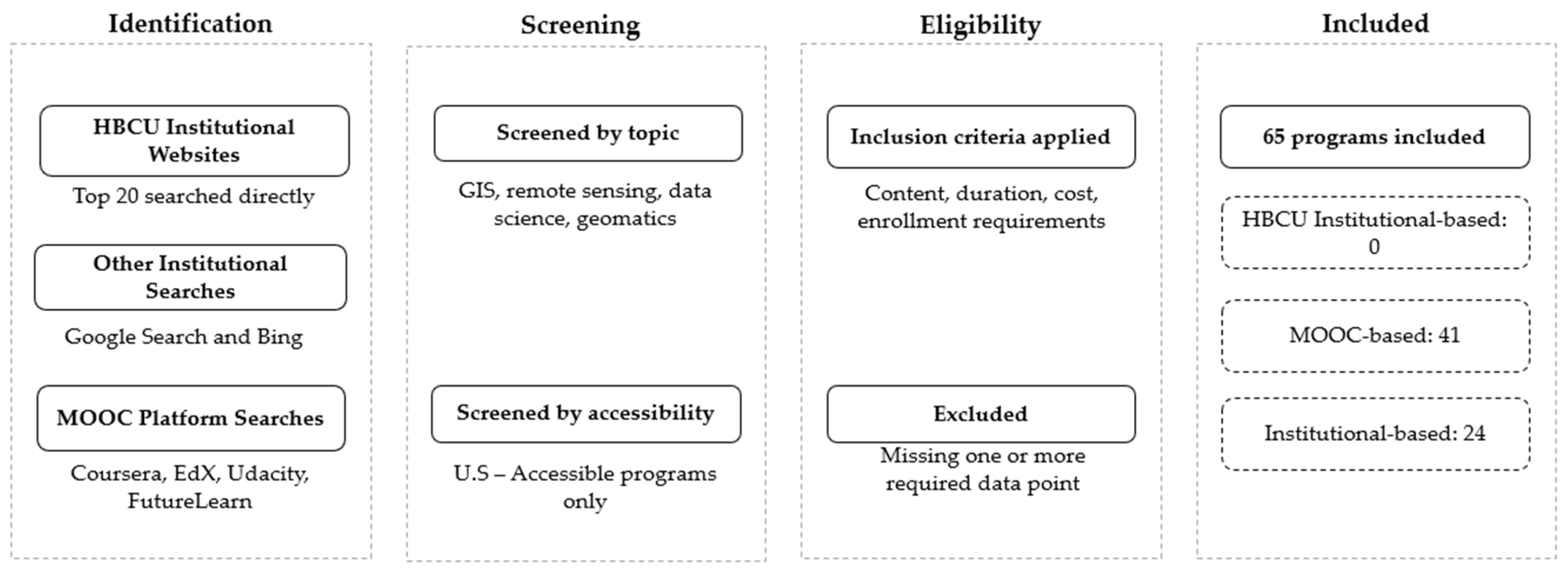
Programs identified through this process were evaluated against the study’s operational definition of microcredentials: short-term, structured learning experiences that include formal assessment components and explicitly defined learning outcomes, offered by either accredited institutions or established MOOC platforms. Programs were included if sufficient publicly available information was provided on content, duration, cost, and enrollment requirements, and if they appeared to be accessible to learners in the United States. It should be noted that inclusion was based on the availability and alignment of publicly available information with these criteria, and findings reflect the landscape of available programs rather than any assessment of demonstrated workforce outcomes. Programs lacking one or more of these data points were excluded from the analysis. Using these criteria, 65 microcredential programs were identified. Forty-one of these programs were delivered through MOOC platforms, and the remaining 24 programs were offered directly by academic institutions, including universities, colleges, and community colleges. Programs offered by the same provider were included independently when each represented a distinct credential with unique content, duration, or disciplinary focus. Accordingly, multiple entries from the same provider reflect genuinely distinct offerings rather than duplicate records. It is important to note that some MOOC-based programs were developed and taught by university faculty but delivered through third-party platforms. In these cases, the programs were classified as MOOC-based based on their delivery and enrollment mechanisms rather than the instructors’ institutional affiliations. This ensured consistency in the classification of the issuing entities.
Figure 1 shows a simplified identification and screening diagram that illustrates the exploratory nature of the search process. However, exact exclusion counts were not systematically recorded, a limitation acknowledged by the study.
The following variables were extracted for each eligible program: Program title; program duration in months; instruction method; stackability; credit availability; cost per credit; total program cost; enrollment eligibility; and issuing entity. These variables were selected to capture key dimensions of accessibility, affordability, and program design that are relevant to participation among the RGSP. Programs were classified into three primary disciplinary categories: Geographic Information Systems (GIS), Data Science, and Geospatial/Interdisciplinary. Classification was based on the primary instructional focus, as indicated by program titles and course descriptions. Program duration was standardized into four categories: (1) less than one month, (2) short duration (lasting one to three months), (3) medium duration (lasting three to six months), and (4) long duration (lasting more than six months). Enrollment eligibility was categorized as open enrollment (no degree required), student-only enrollment, or degree-holder/prerequisite-based enrollment. Program costs were standardized to U.S. dollars and calculated using publicly available tuition and credit information. For institution-based programs, non-resident tuition rates for the 2025–2026 academic year were used when applicable to ensure consistency. Cost categories were defined using a percentile-based approach to reflect relative affordability across offerings. Costs for completing microcredential programs were classified into four categories based on percentiles calculated across all 65 programs combined, ensuring that thresholds reflect relative affordability across the full landscape of offerings rather than absolute price points. Cost categories were defined as follows: Low cost (bottom 25 percent, total cost less than or equal to 100 USD), median low cost (25th to 50th percentile, 101 to 574 USD), median high cost (50th to 75th percentile, 575 to 3000 USD), and high cost (top 25 percent, greater than or equal to 3001 USD). Summary statistics for program costs are reported in
Section 4 alongside the cost distribution analysis.
2.2. Student Survey
In addition to conducting a literature review, we designed and distributed a brief survey via Microsoft Forms to gather insights into participants’ perspectives on preferences and key considerations related to enrollment in microcredential certificate programs. The survey was accessible to all students at Tuskegee University, including both undergraduate and graduate students, and 31 responses were collected. As the survey was distributed broadly across the student body without a tracked distribution list, a formal response rate could not be calculated. The survey served an exploratory purpose, aiming to obtain initial insights into student perceptions, preferences, and levels of awareness. It concentrated on interests regarding microcredentials in geospatial science, data science, and related fields. The survey included multiple-choice questions about cost sensitivity, time commitment, preferred instructional format, employment status in related fields, employer support for pursuing microcredentials, and acceptable program duration. Respondents were permitted to select multiple responses where applicable. Optional open-ended fields were included for participants to provide additional comments or feedback. Specifically, participants were asked the following:
Whether the cost of a microcredential certificate would significantly impact their decision to pursue such a program;
How much time would they be willing to dedicate to a microcredential course per week?;
Their preferred course format (e.g., online, hybrid, or in-person);
Whether they are currently employed in a related field, such as geospatial science, data science, or geomatics;
Whether their employer would support them in pursuing a microcredential in these areas;
The maximum duration (in weeks or months) they would be willing to invest in completing a microcredential program.
Participation in the student survey was voluntary, and respondents were informed of the study’s purpose prior to participating. No personally identifiable information was used in the analysis, and responses were examined collectively to protect participant confidentiality. Moreover, the survey research retained the “EXEMPT” category under which it was approved by Tuskegee University and implemented consistent with 45 CFR 46.101 Categories 1(i) and 2(i).
This study combines two separate but complementary parts. The first is a descriptive analysis of 65 microcredential programs, and the second is an exploratory student survey conducted at Tuskegee University. Rather than being analytically integrated, these components were designed as parallel analyses, each addressing a distinct aspect of the research landscape. The students surveyed were not asked about the specific programs reviewed, nor was it determined whether they were aware of or had access to these programs. Instead, the survey captures how the 31 students who participated at a single HBCU perceive and think about microcredentials. Taken together, the program analysis characterizes what is currently available in the market while the survey provides an initial, localized view of the needs and priorities of prospective learners from RGSP, offering a fuller exploratory picture of both supply and perceived demand within this domain.
3. Literature Review
Microcredentials are short courses designed to provide in-demand skills necessary for employment, education, and training. These courses are offered as certificates and digital badges and are typically short, stackable, and flexible. One of the most important uses of microcredentials is demonstrating skills to potential employers. According to
Gauthier (
2020), feedback from industry professionals and stakeholders indicates that, while college transcripts list the courses an applicant completed, they do not adequately provide information on the measurable skills gained during the degree process.
Oliver (
2022) defines microcredentials more precisely as records of focused learning achievements that verify what learners know, understand, and can do. They include an assessment based on clearly defined standards and are awarded by a trusted provider. Similarly, microcredentials should have a standalone value while still being able to be combined with other programs.
To develop a nuanced understanding of microcredentials, it is necessary to examine their definitions alongside the various types of credentials in educational and industry settings. According to
Clements et al. (
2020), microcredentials can take various forms, including skill badges designed to recognize demonstrated technical skills. For instance, IBM offers more than a thousand badges and certifications in technology, cloud computing, and cybersecurity. In academia, Brigham Young University, Purdue University, and the University of Memphis offer educators badges to showcase their technology skills. Similarly, knowledge badges are awarded to individuals who demonstrate knowledge in a particular field, regardless of their experience or training. This metadata-driven approach supports broader recognition of learning and achievement. Badges provide a multidimensional, metadata-driven perspective on achievement and easily acknowledge progress that would otherwise go unnoticed in an era of diverse learning and sharing opportunities (
Finkelstein et al., 2013).
There are also social, or life badges, that recognize soft skills. For instance, the University of Central Oklahoma has a program that recognizes leadership, health and wellness, disciplinary knowledge, and service learning (
University of Central Oklahoma, n.d.). Participation badges, on the other hand, recognize voluntary involvement in events and research programs and are issued by both companies and universities. Finally, identity badges showcase a professional’s growth and involvement in specific communities. Microcredentials take many forms and are developed for various professional preparation and training purposes. According to
Ferguson and Whitelock (
2024), there is no one-size-fits-all approach to planning and development. It is important to highlight the personalized aspect of creating and designing microcredentials. Rather than following a one-size-fits-all approach, they should be tailored to fit specific situations and individual requirements.
Although microcredentials vary widely and are adapted to different professional settings, most programs focus primarily on their delivery and cost structures rather than tangible outcomes such as employment rates, wage increases, or career advancement after earning the credential (
Peters et al., 2025;
Varadarajan et al., 2023). While enthusiasm for microcredentials is high, the evidence base supporting their efficacy remains limited, and questions about their long-term impact on employability and career progression are still being explored. Some empirical evidence suggests that earning a microcredential can increase workers’ earnings. Research based on transaction-level data from an online labor platform found that this increase is not due to enhanced productivity but rather a reduction in employer uncertainty (
Kässi & Lehdonvirta, 2024). However, it is important to note that this evidence is limited to freelance digital labor markets and may not apply to traditional employment settings. These gaps underscore the need for more outcome-focused research, particularly for RGSP learners, where recognition of microcredentials is most critical.
Despite these limitations, microcredentials do offer several potential advantages. From an industry perspective, they provide a flexible way to upskill the workforce in emerging technologies through short, regularly updated courses aligned with industry standards. Employers can also evaluate candidates’ specific competencies and job-relevant skills. For learners, microcredentials can serve as concise training programs that validate their skills, even if they lack a full academic degree.
Ashizawa et al. (
2024) state that the benefits of microcredentials, such as program accessibility and affordability, are important for those who may not have the opportunity to pursue traditional higher education. Microcredentials can further enhance education by supporting personalized, flexible, and employment-focused learning, allowing learners to progress at their own pace and potentially earn continuing professional development credits for full qualifications.
According to
Kiiskilä et al. (
2023), one significant perceived benefit of digital credentials for learners is the ability to share information about their abilities with employers. Unlike traditional paper certificates, digital credentials often include metadata that verifies the issuing institution, the criteria for earning the credential, and evidence of the learner’s work or skills. This transparency enables employers to swiftly and accurately evaluate a candidate’s qualifications, streamlining the hiring process. Furthermore, digital credentials can be updated in real time, enabling learners to showcase their most current skills and achievements as they continue their professional development.
It is important to acknowledge that individuals with different economic circumstances do not have equal opportunities. According to the Bureau of Labor Statistics, even though the country has experienced a remarkable economic recovery, RGSP have not recovered as well as other groups of workers. Before the pandemic, the unemployment rate for Black women aged 20 and older was 4.8%. However, it increased to 5.5% in December 2022. In contrast, White women in the same age group experienced an unemployment rate of 2.8% after the pandemic. In 2025, the Black unemployment rate rose to 7.2–7.5%. Studies by
Stewart et al. (
2021) show that Black high school students are less likely to attend college, and those who do are more likely to drop out with significant debt. Students from RGSP, who are historically underrepresented in higher education, are the most vulnerable group and likely to struggle to find gainful employment (
Perea, 2020). However, microcredentials could provide short-term training and an opportunity to develop critical skills for accessing new job opportunities and well-paying positions.
While the benefits of microcredentials are well-documented, their broader implementation is not without obstacles. Several studies have identified key challenges that must be addressed to ensure their effectiveness and acceptance. First,
Varadarajan et al. (
2023) state that there is no global consensus on the definition or structure of microcredentials. This is problematic because it may lead to confusion and distrust among employers. The value of these badges and certifications depends on employer recognition.
Acree (
2016) emphasizes the importance of considering how users engage with microcredentials throughout the development process. When developing a microcredential program, it is crucial to clearly identify the specific skills and competencies that will be taught and evaluated throughout the course. It is also important to provide prospective learners with a comprehensive understanding of the criteria they must fulfill to earn the microcredential. This clarity ensures that participants know exactly what is expected of them and can engage fully in the learning process. However, platforms such as
Credly (
n.d.) by Pearson not only manage the creation of credentials, certificates, and badges but also build networks to establish a consistent understanding of microcredentials.
The absence of standardized accreditation frameworks is widely acknowledged as a significant barrier to the effective implementation and recognition of microcredential programs. Several organizations have explored emerging technologies that could enhance the credibility, security, and portability of microcredentials in response to these concerns. The United Nations Educational, Scientific, and Cultural Organization (UNESCO) has highlighted one such approach: using blockchain technology to support credential verification. Blockchain provides a decentralized, transparent infrastructure for issuing, storing, and verifying digital credentials, rendering records highly resistant to alteration or falsification. According to
UNESCO (
2018), blockchain-based systems can provide secure, tamper-proof mechanisms for credential management, enabling learners, employers, and educational institutions to authenticate. Additionally, blockchain enables rapid, intermediary-free verification of credentials, reducing administrative burdens and fraud risk. By improving trust, verification efficiency, and portability, blockchain technology has the potential to facilitate broader recognition of microcredentials and support greater workforce mobility across institutional and geographic boundaries.
Microcredentials require rigorous curricula because they establish standards of mastery for specific skills. To be valuable to employers, they must be supported and updated over time, and program providers must provide direct, personalized feedback to enhance students’ learning experience. However, according to
Rimland (
2019), providing personalized feedback is not feasible for a large number of submissions. However, many of these issues can be resolved by collaborating closely with industries and employers when planning these programs. Industry input and collaboration would help develop appropriate program content and the training structure needed to make microcredentials instrumental in developing the important skills required for the 21st-century job market. One potential approach is to use artificial intelligence (AI) to provide feedback on program activities. AI can provide timely, tailored responses across a range of activities, potentially creating a more personalized experience for each trainee.
These challenges are particularly evident at minority-serving institutions, where microcredential programs are often underdeveloped or absent. For instance, our review of HBCUs indicated that offerings in geospatial and data sciences are limited. While HBCUs have demonstrated a strong track record of supporting academic success, professional development, and social justice for students from diverse backgrounds, only three of the HBCUs examined offered certificate programs. These programs had a narrow focus, typically limited to specific subject areas, and were available only to currently enrolled students. Importantly, none addressed topics relevant to this study, such as geospatial or data sciences, nor were they accessible to the general public. As such, they do not align with the broader definition of microcredentials used in this review, which emphasizes short, flexible, and widely accessible learning opportunities designed to enhance skill development for a broader audience. Given its position as one of the top HBCUs in the country, Tuskegee University is well-positioned to expand access to critical microcredential programs in areas such as geospatial and data sciences, potentially benefiting both RGSP learners and the wider community.
It is important to note that the institutions presented in
Table 1 are not Historically Black Colleges and Universities, but rather a sample of non-HBCU institutions currently offering microcredential programs in geospatial and data science fields.
Table 1 summarizes the key characteristics of these sample microcredential programs offered by universities and community colleges within the United States, including their instructional focus, expected duration of programs, mode of delivery, and stackability with undergraduate and graduate coursework, referring to whether microcredentials may be applied toward degree requirements upon admission to an academic program, even if the learner was not enrolled at the time of completion (
American Military University, n.d.;
American Public University, n.d.;
California State University, Fullerton, n.d.;
Eastern University, n.d.;
Farmingdale State College, n.d.;
Finger Lakes Community College, n.d.;
Harvard University Extension School, n.d.-a,
n.d.-b;
Miami University, n.d.;
Monroe Community College, n.d.;
Northern Kentucky University, n.d.;
Oregon State University, n.d.-a,
n.d.-b;
Southern Oregon University, n.d.;
State University of New York, n.d.;
Stevens Institute of Technology, n.d.;
University at Buffalo, n.d.;
University of Aberdeen, n.d.;
University of California, Los Angeles Extension, n.d.;
University of Houston, n.d.-a,
n.d.-b;
University of Maine, n.d.;
State University of New York at Potsdam, n.d.).
Alongside the development of microcredentials, MOOCs have emerged as a popular alternative for building skills. While both aim to enhance workforce readiness, they differ in structure, formality, and job market recognition. Currently, many academic institutions and private companies offer MOOCs through third-party platforms such as Coursera, Udacity, FutureLearn, and edX. These courses compete directly with microcredentials because they are pretty similar but differ in key ways. First, MOOCs provide access to a wide range of programs, though they may not always offer the same depth, structure, or clearly defined outcomes as formal microcredentials.
These programs emphasize depth in a specialized skill area and may be perceived as carrying greater weight in the job market. They are highlighted in this report as potential resources for individuals, especially those in RGSP, looking to expand their knowledge in these fields.
Shah (
2020) notes the massive growth of MOOCs in 2020, positioning these programs as a significant component of the global education landscape. However, this expansion is accompanied by challenges such as increased risks of cheating and plagiarism.
Table 2 presents details on the microcredential programs offered by the two largest MOOC platforms, Coursera and edX. It includes important characteristics such as the entity and country responsible for the program, its duration, and the title of the microcredential certificate awarded upon completion of all required courses (
Coursera, n.d.;
edX, n.d.;
Udacity, n.d.;
FutureLearn, n.d.).
4. Review Summary and Discussions
A total of 65 microcredential programs were reviewed and classified by issuing entity. Two categories were considered: institution-based programs, which are offered directly by educational institutions such as colleges and universities, and MOOC-based programs, delivered through third-party online platforms.
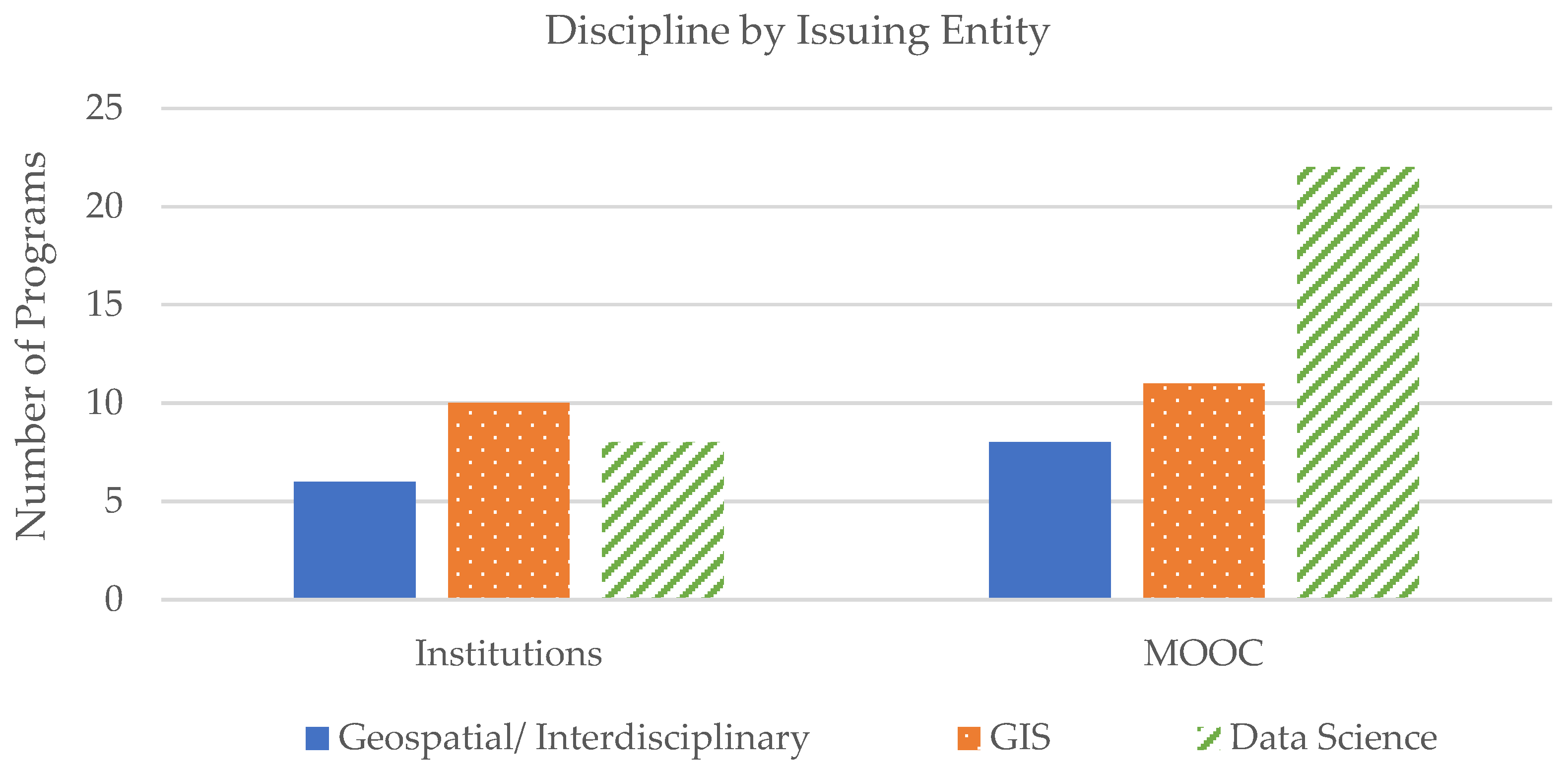
Figure 2 shows the distribution of programs by disciplinary focus. Within the programs reviewed, data science microcredentials appeared most commonly through MOOCs, whereas GIS-related programs were more frequently offered directly by institutions. Geospatial/interdisciplinary programs represent the least common category across both issuing entities.
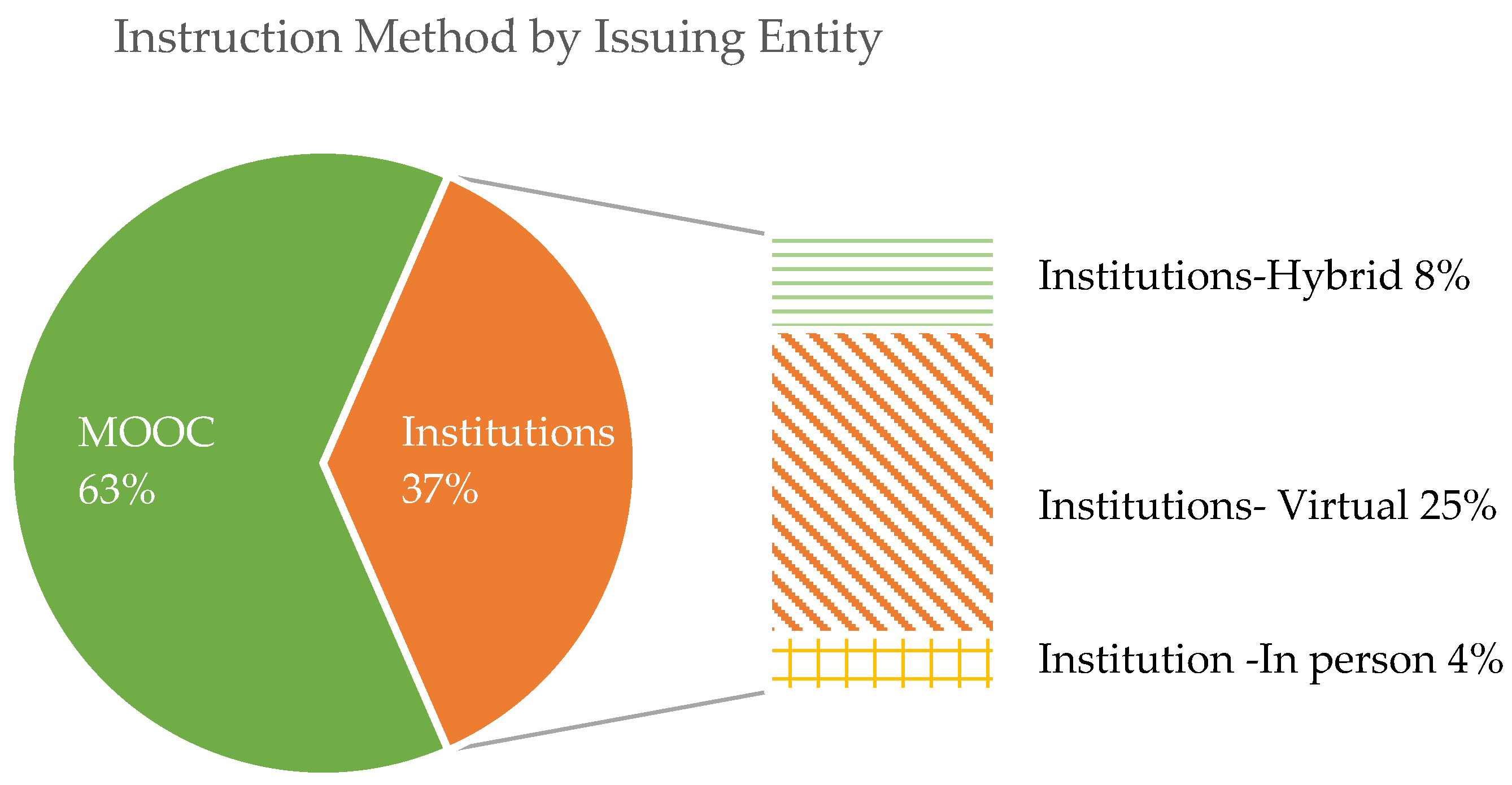
Figure 3 illustrates the distribution of instructional methods by issuing entity. Since all MOOC-based programs found by this review are delivered entirely online, they are more accessible to learners in the United States and around the world. In contrast, location-specific and institution-based programs employ a wider range of instructional formats. While fully online delivery is the most common format among institutions, accounting for approximately 25% of the programs, some offerings follow a hybrid model, combining online coursework with required in-person components such as labs, fieldwork, or capstone activities. A smaller proportion of programs (4%) are delivered exclusively in person, reflecting program designs that prioritize hands-on learning to ensure that specific educational objectives are met. This aligns with
Ashizawa et al. (
2024), who identify program accessibility and flexible delivery as critical factors for learners who cannot pursue traditional higher education, particularly those from underserved communities.
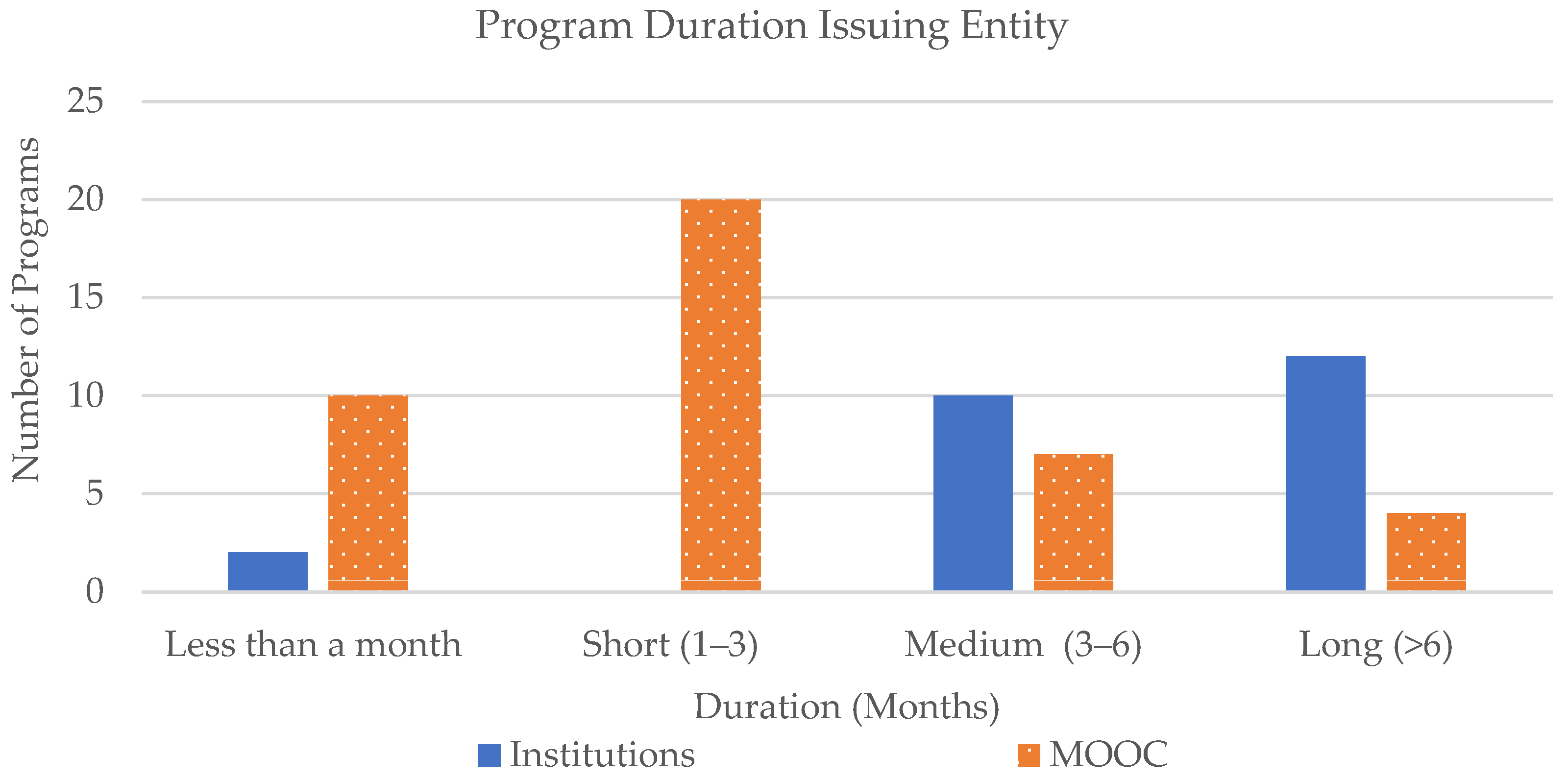
Moreover, program duration (
Figure 4) is one of the most important characteristics of microcredential offerings, particularly in relation to learner adaptability and accessibility. Most MOOC-based programs found by this review fall into the short-duration category, typically requiring 1 to 3 months to complete. This indicates they are better suited for working professionals and learners with limited time constraints. In contrast, institution-based programs have a wider range of duration, including offerings that can be completed in less than one month as well as programs that extend beyond six months. This variation is closely tied to traditional university academic structures, such as semester- or quarter-based schedules. Among the programs reviewed, most institutional offerings required more than six months to complete. This has direct implications for overall program cost because longer durations are often associated with higher tuition and credit requirements. This structural dynamic reflects broader patterns in the credentialization literature, in which institutional program design tends to prioritize academic rigor over accessibility (
Perea, 2020).
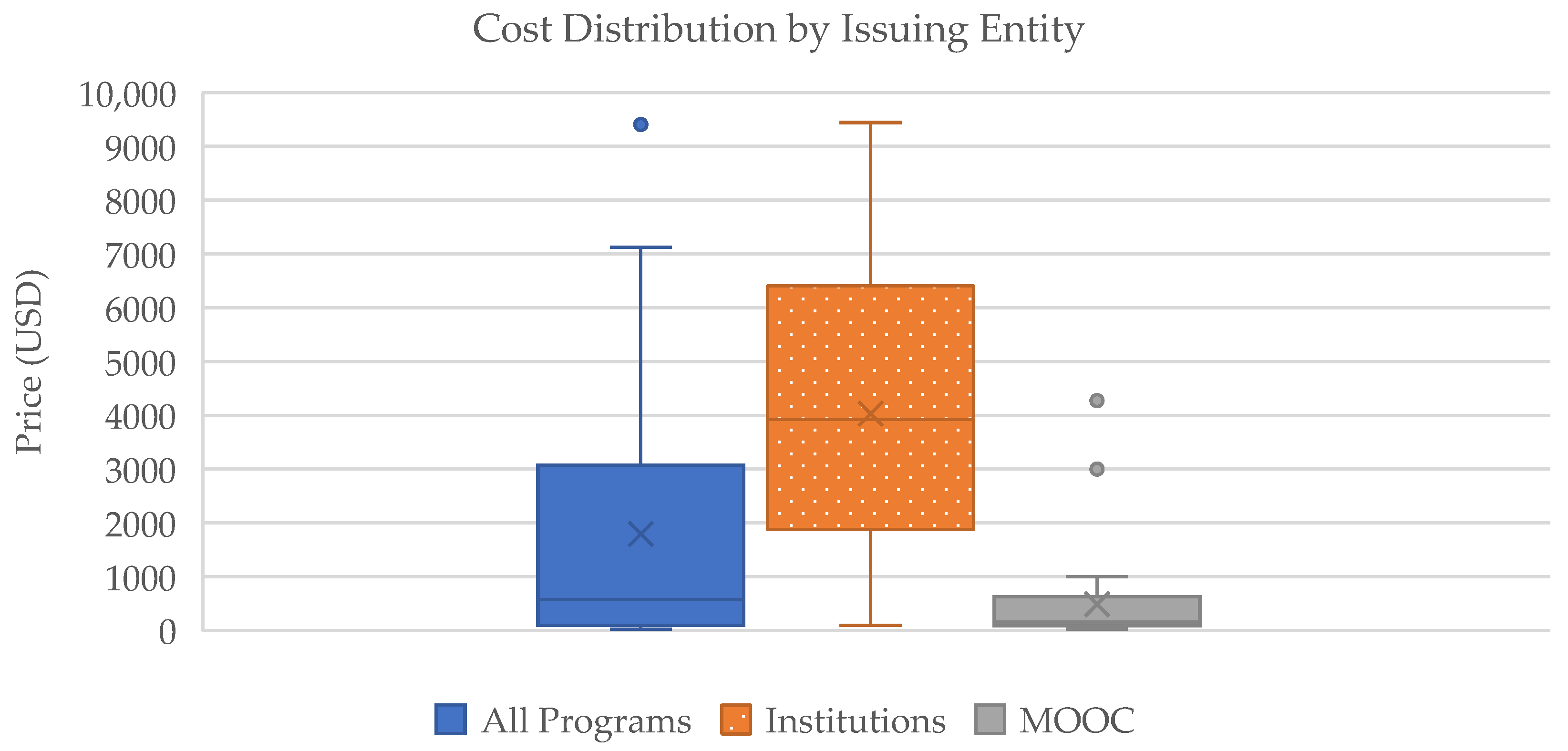
The following box-and-whisker diagram shows the cost distribution of the microcredential programs included in this study. It also shows separate distributions for institution-based programs and MOOCs. Within the programs reviewed, the broad cost range reflects the variety of the microcredential landscape, where programs vary significantly in structure, duration, instructional design, and credential value. While some programs in the dataset appear designed to provide affordable and rapid skill development, others require a greater financial investment, potentially due to longer completion times, formal credit allocation, or institutional tuition models.
Separating programs by issuing entity reveals apparent differences in pricing structure, as shown in
Figure 5. Among the programs reviewed, institutional microcredential programs have higher median costs and broader interquartile ranges, with a notable concentration in the upper cost categories. The extended upper whisker indicates the presence of high-cost outliers in the dataset, suggesting greater price variability and higher financial barriers within institution-based offerings. In contrast, MOOC programs are predominantly clustered in the lower cost range, with low median values and relatively compact interquartile ranges. Outlier values suggest that high-cost offerings are uncommon in this delivery model.
These cost differences could have significant implications for access and workforce participation, particularly for learners from underrepresented or economically disadvantaged backgrounds, including those from RGSP. For these learners, lower-cost MOOCs may be the most feasible way to develop GIS, data science, and geospatial skills. This finding is consistent with
Varadarajan et al. (
2023), who identify cost and flexibility as the primary determinants of microcredential participation among non-traditional learners.
Table 3 presents summary statistics for program costs across all 65 programs and by issuing entity. The mean cost of institution-based programs (4035 USD) is more than eight times that of MOOC-based programs (487 USD), and the difference in medians is even more pronounced: 3933 USD versus 158 USD, confirming that the gap is not driven solely by outliers. The overall median of 574 USD across all programs falls precisely at the boundary between the median low and median high-cost categories, reflecting how strongly the lower cost MOOC programs pull the combined distribution downward.
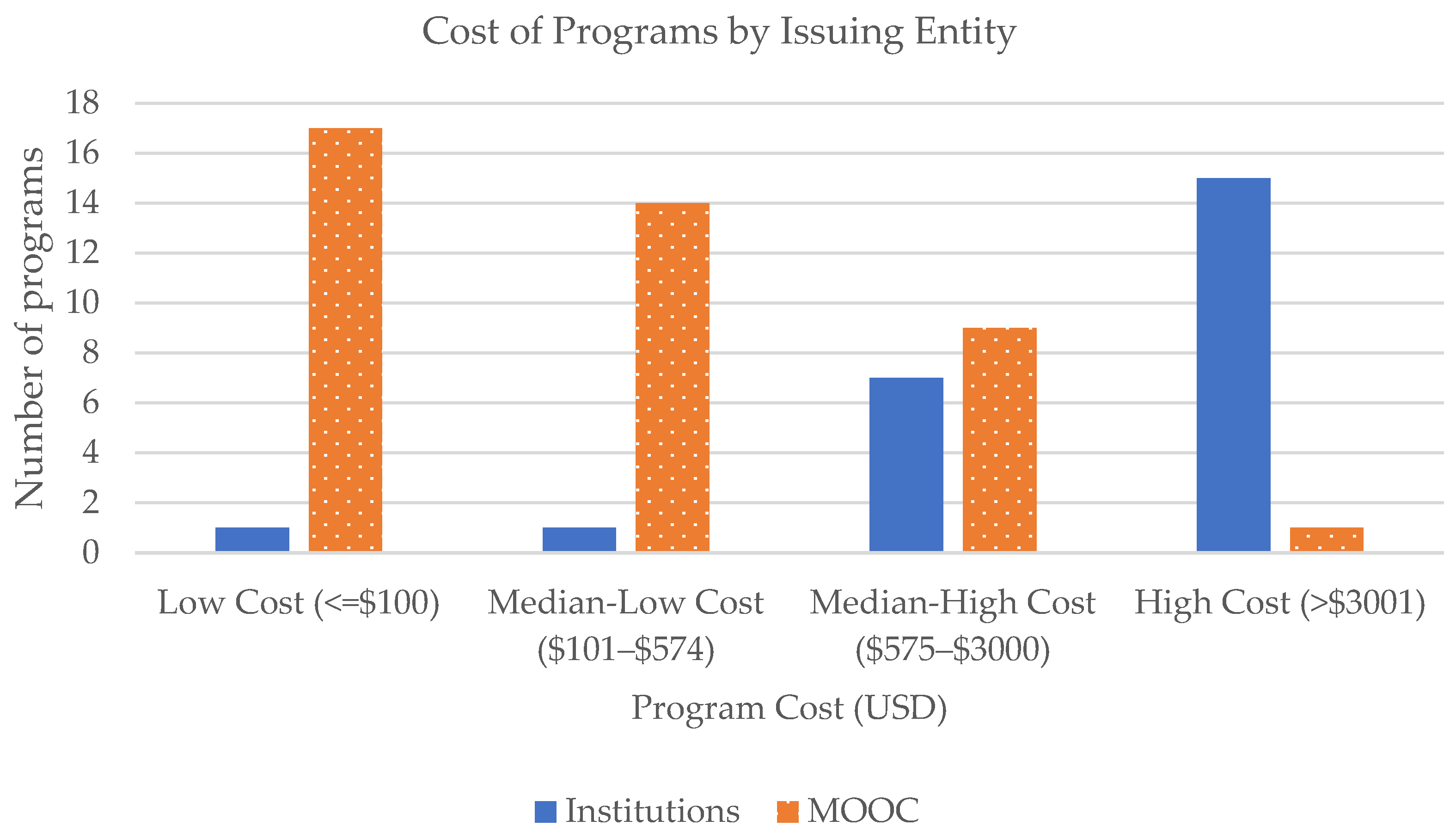
Figure 6 examines cost distributions by issuing entity, using percentile-based cost categories that reflect relative affordability across all programs found by this review. Institution-based microcredentials are concentrated primarily in the median–high and high-cost categories, overall. Among the programs reviewed, MOOC-based offerings were more evenly distributed across lower-cost categories, suggesting greater relative affordability and accessibility than institution-based programs.
Within the programs reviewed, the issuing entity appeared to influence cost differences; tough program discipline can also affect pricing structures.
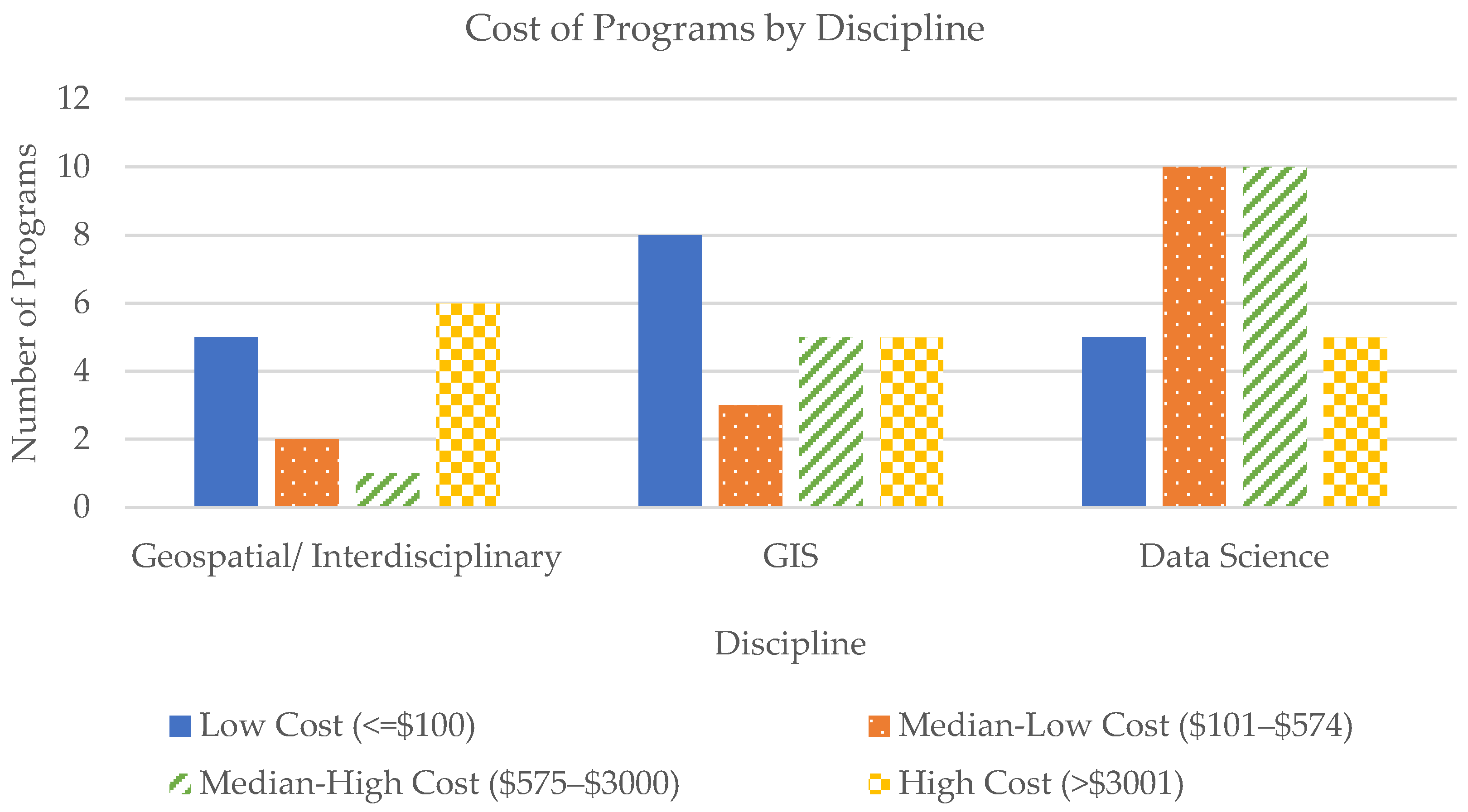
Figure 7 illustrates this relationship by comparing cost distribution across disciplines. Programs categorized as geospatial or interdisciplinary tend to fall at the higher end of the cost range. As shown in the figure, six programs are in the high-cost category, while five are in the low-cost category. Among the offerings examined, this pattern suggests that interdisciplinary programs may tend to be costlier, potentially because they cover a wider range of topics, require more advanced technical skills, or are designed to serve multiple fields simultaneously.
In the dataset reviewed, programs classified as GIS are generally positioned at the lower end of the cost spectrum. While some higher-cost GIS offerings were identified, the programs analyzed suggest that GIS microcredentials are more commonly offered as affordable, entry-level, or skills-based options. This trend may reflect the maturity of GIS as a field, the availability of standardized curricula, and the widespread adoption of low-cost online delivery formats. In contrast, data science programs in the dataset show a more balanced cost distribution, with offerings evenly divided between the median-low- and median-high-cost categories, with five programs in each. Additionally, the number of low- and high-cost programs is equal, with five in each category. This symmetrical distribution suggests that the data science microcredentials identified in this review are offered across a wide range of pricing models, from introductory, skill-based courses to more advanced, intensive programs that align with industry demand.
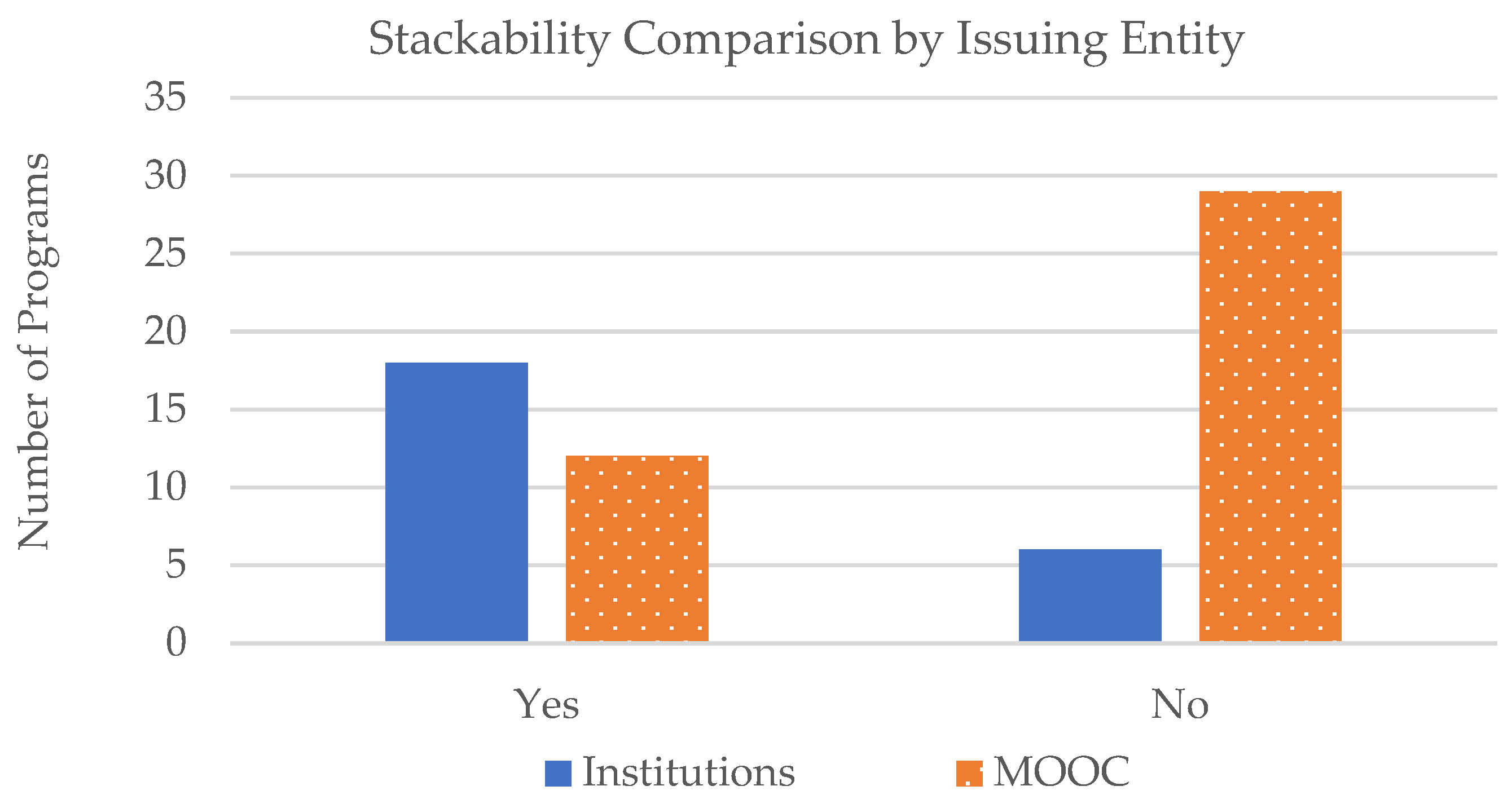
Another variable to consider is stackability, which refers to the ability to apply credit from a short-term course or microcredential toward a full degree later. Rather than starting from scratch, students may build their education piece by piece, ensuring that each certification serves as a stepping stone toward a larger academic goal.
Figure 8 shows the stackability of the identified programs, categorized by issuing entity. Institutional microcredentials demonstrate strong stackability potential, as most of their programs can be stacked into larger degrees or further academic offerings. In contrast, only 12 out of 41 microcredentials offered by MOOC providers are stackable into formal academic pathways. In this sample of programs, institutional microcredentials appeared to offer clearer academic progression pathways. However, their higher costs, admission requirements, and geographic constraints may limit accessibility for RGSP and other underserved learners. Conversely, MOOCs, despite their lower stackability options, may offer learners in RGSP greater immediate accessibility due to lower costs and flexible delivery methods. However, they offer fewer opportunities for formal academic advancement. The trade-off between accessibility and formal recognition is a critical consideration for educational equity and the design of inclusive credentialing systems.
The patterns observed across
Figure 2 through
Figure 8 were further examined using non-parametric statistical tests to determine whether the differences were statistically significant. Mann–Whitney U tests were used for continuous and ordinal variables, given the non-normal distribution of costs, and a chi-square test was used for categorical associations. Institution-based programs were significantly more expensive than MOOC-based programs (U = 61.0,
p < 0.001) and significantly longer in duration (U = 171.0,
p < 0.001). These differences are consistent with broader literature on the cost structures of formal versus non-formal credentialing, where institutional overhead, accreditation requirements, and faculty involvement tend to drive up both cost and time-to-completion (
Wheelahan & Moodie, 2021;
OECD, 2021), raising important questions about accessibility for learners with limited financial resources or time constraints.
Stackable programs cost significantly more than non-stackable ones (U = 803.0,
p = 0.0003), suggesting that formal academic integration comes at a premium. This finding points to a tension noted in the literature: stackability, while theoretically advantageous for learners seeking pathways to full degrees, may introduce additional cost barriers for the very populations microcredentials are intended to serve. Stackability was also significantly associated with the issuing entity (χ
2 = 10.97,
p < 0.001), with institution-based programs far more likely to offer stackable credentials (18 of 24) than MOOC-based programs (12 of 41), reflecting a structural divide in how different providers interpret the role of microcredentials within broader educational pathways. While microcredentials are generally portrayed as offering greater flexibility and affordability, particularly for learners from disadvantaged settings (
Tamoliune et al., 2023), the cost premium associated with stackable and institution-based offerings observed here suggests that these benefits are not uniformly distributed across program types. Taken together, these findings reveal an underlying issue at the heart of the microcredential landscape: flexibility and accessibility versus formal recognition and academic integration. This has significant implications for learners, especially from RGSP, for whom cost, duration, and credential recognition are likely to be critical factors in informing their decision-making.
5. Survey Results and Discussion
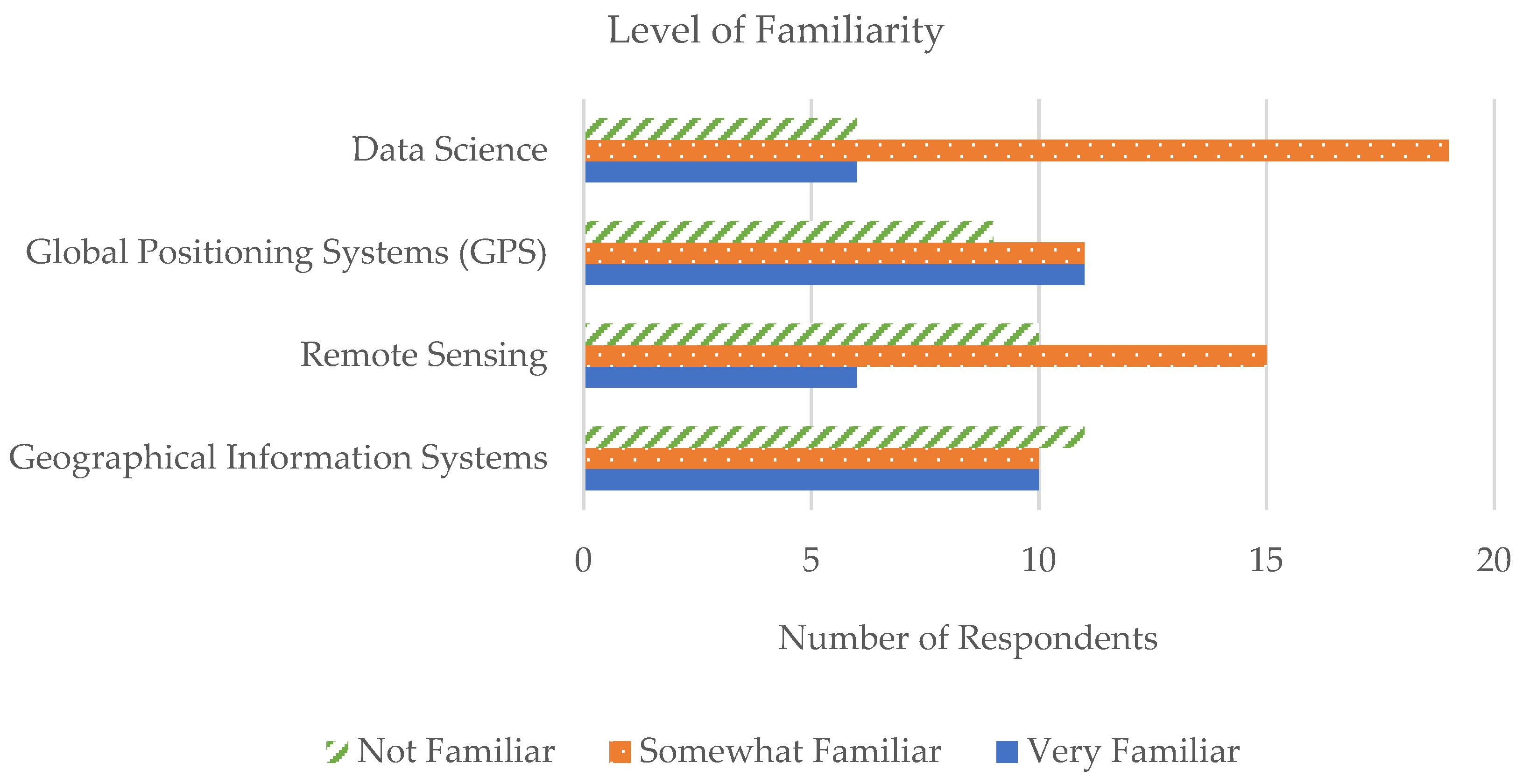
A survey was conducted to gather preliminary perceptions, needs, preferences, and benefits of microcredential programs at Tuskegee University, a minority-serving institution. This component of the study explored how participating students at one HBCU perceive microcredentials in geospatial and data sciences, offering preliminary insights into awareness and preferences rather than directly measuring professional advancement or skill gaps. Survey responses revealed varying levels of familiarity with geospatial disciplines among the students sampled. The highest proportion of respondents reported strong familiarity with GIS and Global Positioning Systems (GPS) (32–36%), while the lowest proportion reported strong familiarity with remote sensing and data science (19%). Most respondents were at least somewhat familiar with each field, particularly data science, with 61% reporting moderate familiarity. However, a significant proportion of respondents, up to 35% for GIS, reported being unfamiliar with specific disciplines, suggesting potential knowledge gaps and opportunities for targeted training or professional development. These results are presented in
Figure 9.
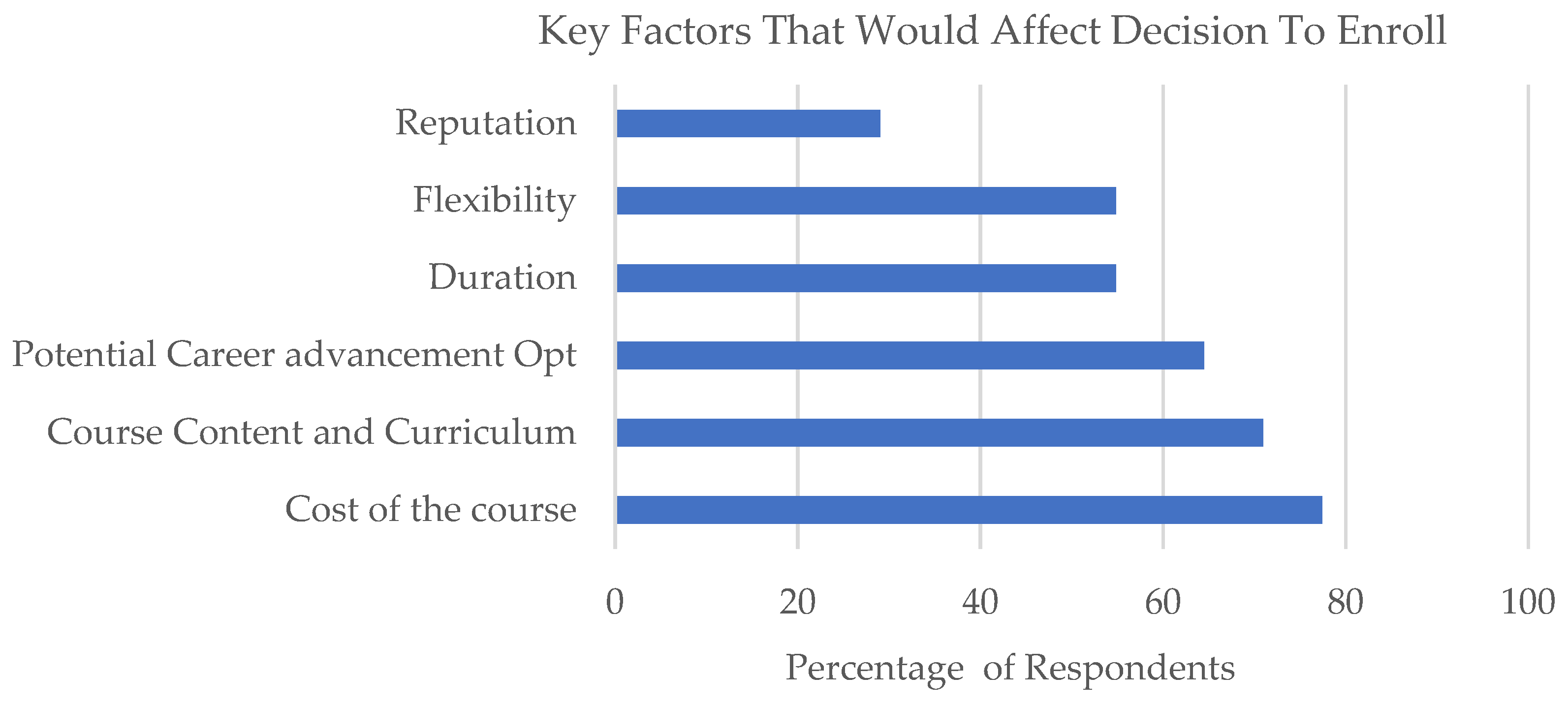
Figure 10 illustrates the primary factors that appeared to influence enrollment considerations among survey respondents. Cost was identified as the most important consideration, with 77.4% of respondents prioritizing it and 74% reporting that it directly affected their decision. Course content and curriculum were also highly valued, with 71% of respondents emphasizing the need for relevant, high-quality material. Career advancement potential influenced 65% of participants, while 55% considered course duration and flexibility important. In contrast, institutional reputation was less influential among survey respondents, with only 29% considering it significant. Based on these preliminary findings, affordability, relevant content, career advancement potential, and flexible schedules may be important considerations for programs seeking to increase enrollment among similar student populations. However, these preferences cannot be generalized beyond the sample surveyed.
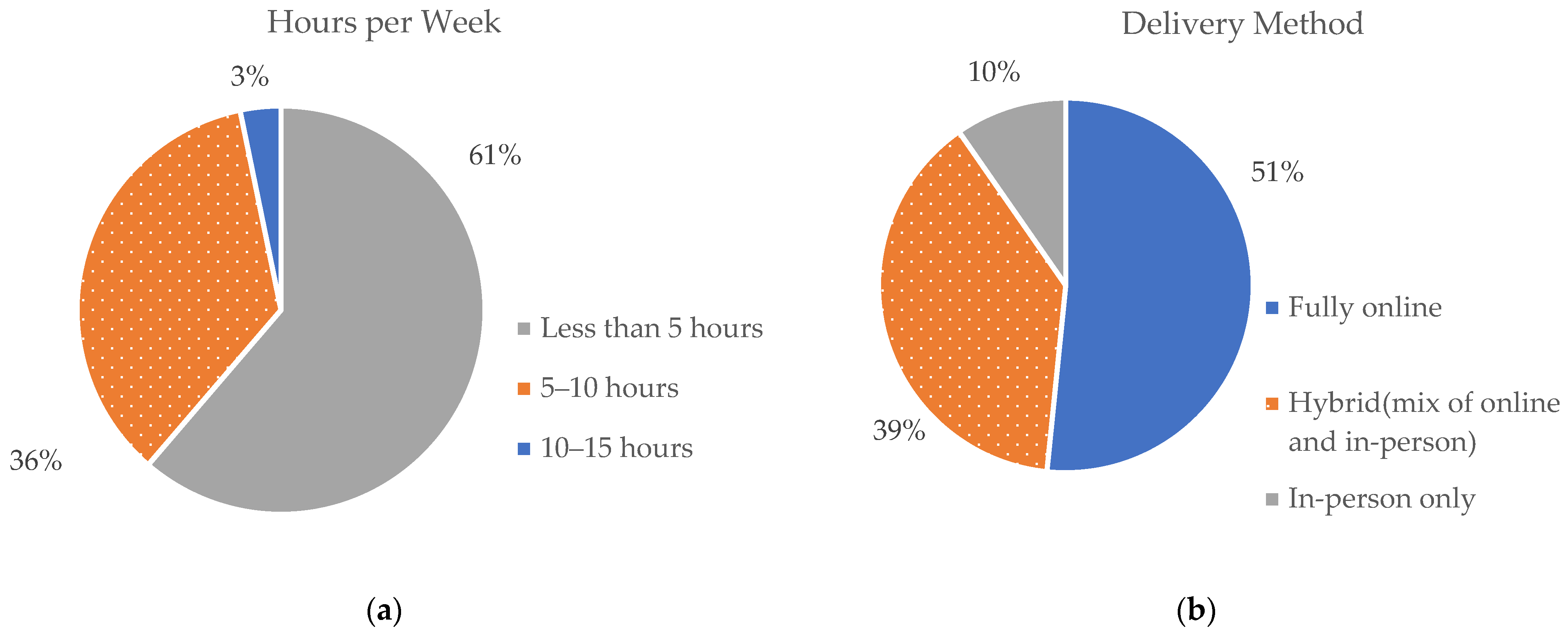
Figure 11a,b show participants’ preferences regarding the time commitment and course format of microcredential programs. Most respondents (61%) said they could dedicate fewer than 5 h per week to a course. Thirty-five percent said they could dedicate 5–10 h, while only 3% said they could dedicate 10–15 h. None of the respondents were willing to spend more than 15 h per week on a course. Among the students surveyed, these findings suggest that concise, manageable workloads may be an important consideration when designing microcredential programs for similar student populations.
Regarding course format, the majority of participants (52%) preferred fully online programs. Thirty-nine percent favored hybrid models that combine online and in-person elements, while only 10% opted for entirely in-person classes. Among the students surveyed, responses indicated a preference for flexible, accessible learning options, particularly online and hybrid delivery formats. These findings suggest that compact program duration and flexible delivery may be important considerations for reaching similar student populations. However, they should be interpreted cautiously and not assume to represent broader learner preferences.
6. Conclusions
This study explored geospatial and data science microcredentials as a potential pathway for career advancement, with particular attention to accessibility for communities and Racial Groups with Small Populations (RGSP). Using a literature review, a systematic analysis of 65 microcredential programs, and a student survey, the study provides a preliminary view of current microcredential structures and factors that may influence participation. While the findings suggest the significant potential of microcredentials to address workforce skill gaps, they also point to important structural barriers that limit their impact, particularly for historically underserved communities.
One of the key findings of this study is that cost appears to play an important role in determining access to microcredential programs, although it does not determine whether learners will ultimately complete programs or achieve expected employment outcomes. Among survey respondents, affordability was identified as a factor influencing their interest in pursuing microcredentials. Program-level analysis revealed substantial variation in costs across issuing entities and disciplinary focus. Among the programs identified in this review, institution-based microcredentials were disproportionately represented in the median, high, and high-cost categories, reflecting tuition-based pricing models, longer program durations, and credit-bearing structures. In contrast, MOOC-based programs were concentrated primarily in the low- and median-cost ranges, suggesting lower costs than institution-based offerings in this sample. Cost differences also appeared to be related to disciplinary focus: geospatial and interdisciplinary programs identified by this review tended to occupy the higher end of the cost spectrum, while GIS-focused programs were more frequently offered at lower price points, and data science programs exhibited a broader, more balanced cost distribution, suggesting the presence of both entry-level and advanced offerings. These patterns suggest that program complexity, technical depth, and cross-disciplinary scope contribute to higher costs, which may unintentionally restrict access to skills increasingly in demand in the labor market.
Among the programs reviewed, the issuing entity appeared to be a meaningful factor in determining cost, flexibility, delivery format, and stackability. Institution-based programs often offer stackable credentials that could be applied toward undergraduate or graduate degrees, providing clearer academic progression pathways. However, they generally require a longer time commitment, formal enrollment, and higher financial investment. MOOC-based programs, in contrast, had shorter durations and lower costs, which may make them more accessible to learners facing financial or time constraints. These differences highlight a trade-off between affordability and formal academic recognition and underscore the need for more inclusive program design, though further research is needed to determine whether these structural attributes translate into meaningful outcomes for learners.
Another significant finding of this study is the limited availability of geospatial and data science microcredentials at historically black colleges and universities (HBCUs). Despite their mission to promote academic success and workforce development for underrepresented groups, most of the HBCUs reviewed did not offer microcredentials in the fields examined in this study. This gap represents both a challenge and an opportunity. Institutions such as Tuskegee University are well-positioned to develop affordable, flexible, stackable micro-credential programs that align with workforce needs and directly serve the RGSP.
Overall, this study provides preliminary insight into how microcredentials may expand access to geospatial and data science education, particularly for learners from communities and RGSP. Affordability, flexible delivery, and transparent academic pathways emerged as important structural considerations. These findings should be interpreted as exploratory rather than conclusive, as the study did not analyze employment outcomes or skill acquisition. Future research incorporating outcome data, curriculum-to-skill mapping, and broader survey populations will be necessary to fully assess the potential of microcredentials to support career development and economic mobility for RGSP learners. Whether microcredentials ultimately serve as an effective pathway for career advancement will depend on both program design and the commitment of institutions, employers, and policymakers to ensuring that such pathways are genuinely accessible.