


Abstract
Despite the existence of several systematic reviews and meta-analyses on co-teaching, research that includes student voice through students’ views and experiences is rare. This systematic review of 63 published and unpublished studies synthesises the experiences and views of students with and without disabilities when co-taught by a general and a special educator. Data were extracted from seven databases in July 2025. We used an assimilated approach to synthesise findings from qualitative, quantitative and mixed-methods studies through reflexive thematic analysis. Findings show that most students with and without disabilities perceive co-teaching as having positive academic, social, and affective impacts, with many preferring varied co-teaching models. Students valued support from special educators for all learners, but some reported frustration and limited academic benefits when collaboration between co-teachers was weak. Their voice calls for reconsidering co-teaching as an inclusive approach through changes in model implementation and co-teachers’ role delivery. Recommendations for future research include examining the distinct voices of students with and without disabilities and increasing their involvement as primary stakeholders in co-teaching research. Recommendations for policy and practice, particularly regarding students’ academic, social, and affective outcomes, highlight the importance of student engagement through participatory activities in promoting the inclusive orientation of co-teaching.
1. Introduction
Students with disabilities receive instruction and services in different ways and settings worldwide. Schools typically provide a continuum of placements, ranging from all day in a special education school or class to all day in general education classes. Many students with disabilities receive instruction for a specified number of minutes across a week in a special education class (e.g., U.S.) and in resource provision (e.g., England) (i.e., classes in general education schools in which students with disabilities are educated for a few hours/days per week), but they spend most of the school day in general education classes with accommodations and modifications (DfE, 2015; U.S. Department of Education, 2023).
One way for students with disabilities to receive services is through co-teaching, which consists of general and special education teachers partnering to design, deliver, and assess instruction in a general education class where they teach students with and without disabilities (L. Cook & Friend, 1995; Friend et al., 2010). Co-teaching is one of the several inclusive approaches in which students with disabilities are educated with their same-aged peers in the mainstream class (Paulsrud & Nilholm, 2020; Solis et al., 2012). It is important to research co-teaching as an inclusive approach because an increasing number of schools is educating students with disabilities in such settings (U.S. Department of Education, 2023). Although much is known about co-teachers’ views on co-teaching as a service delivery model for educating students in the least restrictive environment (e.g., Campbell & Jeter-Iles, 2017; Casserly & Padden, 2018), including the need for co-teachers to be well prepared (Brendle et al., 2017; Jortveit & Kovač, 2022) to monitor the impact of interventions (Bottge et al., 2018), there are fewer studies eliciting students’ voice (e.g., Jurkowski, & Müller, 2018; Rönn-Liljenfeldt et al., 2023). In this review, we engage with student voice through their views and experiences in co-taught classrooms that need to be actively valued and used to inform co-teaching understanding and practice (Messiou et al., 2025).
1.1. Importance of Seeking Students’ Voice
Students with and without disabilities who receive instruction in co-taught classes can provide eye-opening feedback for researchers, co-teachers, and other school personnel seeking to establish effective inclusive co-taught classes (e.g., Embury & Kroeger, 2012). Students possess a unique capacity to understand and articulate the difficulties within their learning experiences, shaping educational decisions and classroom practice (Cook-Sather, 2018; Charteris & Smardon, 2019). Indeed, as more co-teaching studies feature data from students (e.g., Rush, 2022; Rönn-Liljenfeldt et al., 2023) raising their voice, the field acquires empirical information showing that students are valuable contributors regarding what does and does not promote their learning and inclusion when co-taught. Students’ views and experiences can provide insights from their unique perspectives, and, as Messiou et al. (2025) note, valuing what students say through dialogue strengthens their inclusion. Others have indicated that student voice has predictive validity for social and academic outcomes and can support teachers’ learning about effective co-teaching (Nelson, 2015). Thus, consolidating studies with student voice on co-teaching can be a way to refine the corresponding environment, including choices of instructional techniques and co-teaching models.
The concept of student voice and student participation in research has received increasing attention (Noyes, 2005; Strnadová & Walmsley, 2018). Students’ role in research can range from informants to co-researchers (e.g., collect data alongside researchers) with adults as facilitators (Thomas, 2017). Their overall participation depends on the adult researchers’ perspectives of students’ capacity to exercise influence upon their social world (e.g., in designing research, if researchers believe that students’ experiences can help in selecting appropriate research questions) (Christensen & Prout, 2005; Sandoval & Messiou, 2022). As Papadopoulou and Sidorenko (2022, p. 368) noted, students should be encouraged to participate in research not only as informants but also as co-researchers; acknowledging that their agency can positively influence the research design and its outcomes. The ways in which students with and without disabilities engage in research on co-teaching reflects researchers’ attitudes towards student agency in shaping co-teaching policy and practice. Therefore, careful consideration should be given to how these students are included in research.
1.2. Co-Teaching Models and Other Features Researched in Co-Taught Classrooms
Co-teachers typically select from multiple models or grouping structures to deliver instruction (L. Cook & Friend, 1995; Friend et al., 2010). In the “one teach, one assist/support” model, one teacher leads while the other provides help such as cues or prompts and in “one teach, one observe,” one teacher monitors student work and behaviour (Rush, 2022). In both, the general educator usually leads while the special educator supports (Scruggs et al., 2007). Other models position both educators as lead instructors. In “team teaching,” they share instruction with the whole class; in “parallel teaching,” each leads half the class; in “alternative teaching,” one teaches most of the class while the other instructs a smaller group; and in “station teaching,” students rotate among independent work stations led by each teacher.
Exclusive reliance on “one teach, one assist/support” suggests to students that only one teacher is the “real” teacher (R. G. Keeley, 2014). When special educators take this role, students often perceive them as assistants rather than certified teachers (Bessette, 2008; Embury & Kroeger, 2012; Preston-Smith et al., 2020). Students recognise this power differential (Embury & Kroeger, 2012), whereas when both teachers are active, outcomes improve. For example, Bottge et al. (2015) found middle school students with and without disabilities increased their math performance in co-taught compared to solo-taught general education settings, when both educators were active. Overuse of the “one teach, one assist” model therefore limits the benefits of two certified teachers and reduces pedagogical opportunities (Strogilos et al., 2023). Research on parity, whether roles are evenly shared, has often examined teachers’ rather than students’ perspectives (Jurkowski & Müller, 2018). Effective co-teaching evolves varied co-teaching models which promote flexibility, individualisation, and opportunities for feedback, thus creating dynamic learning environments for all students (Iacono et al., 2021).
Other factors researched in co-taught classrooms include students’ friendships, sense of belonging, behaviour, and self-efficacy regarding successful academic experiences. Belongingness in the class is reflected in peer friendships and a sense of acceptance from teachers and the school (Goodenow, 1993). Some studies found that students’ behaviour improved in co-taught compared to solo-taught classes (Bessette, 2008; Embury & Kroeger, 2012) and that students prefer special education to co-taught classes (Leafstedt et al., 2007). Miller and Oh (2013) investigated whether students with disabilities can benefit from co-teaching in not only academics but also socialisation aspects, including friendships and participation with peers. Other researchers have examined students’ feelings about belonging in the co-taught class, indicating acceptance of students, such as praising students and establishing a positive rapport with them (e.g., King-Sears & Strogilos, 2020; Bessette, 2008).
1.3. Previous Reviews on Co-Teaching
Although several qualitative reviews have examined teachers’ views on co-teaching (Strogilos et al., 2023; Scruggs et al., 2007) and meta-analyses have focused on student academic outcomes (King-Sears et al., 2020; Losinski et al., 2019; Murawski & Swanson, 2001), studies that include students’ perspectives remain rare. Wagner et al. (2024), through thematic analysis, focused on the identification of contextual variables surrounding co-teaching and how these may serve as mediating factors for students’ perceptions. They included 33 studies gleaned from four databases published prior to 2020, whereas, as we mention in Section 2 below, we searched seven databases and found 63 eligible studies published up to 2025. Wagner et al.’s research questions focused on the characteristics of eligible studies (e.g., methodology, grade level of students), student population (e.g., race, disability), and the benefits and challenges of co-teaching. They elicited themes about the academic benefits and challenges of having two teachers, but there were no themes in relation to students’ social participation, belonging, behaviour management, and self-efficacy in co-taught classrooms. A systematic review of students’ views on co-teaching to synthesise the plethora of themes that have appeared in research studies is missing.
Hence, our systematic review of qualitative, quantitative and mixed-methods studies can contribute to the literature by providing a wholistic overview of the features/factors that influence students’ views about co-teaching. Such a review can contribute towards students’ academic and social success by providing valuable recommendations for policy and practice. It can also guide researchers in selecting empirical questions based on students’ understanding of co-teaching which might differ from co-teachers’, as a practice that co-teachers control and deliver themselves. Students’ voice, as the primary recipients of co-teaching, can also inform preparation programmes with theoretical ideas and practical issues that co-teachers, as those who deliver co-teaching, cannot consider (Proffitt et al., 2025). The main research question framing this study is “What are the views and experiences of students with and without disabilities in co-taught classrooms?”
2. Method
2.1. Information Sources and Search Strategies
We conducted this systematic review in accordance with the Preferred Reporting Items for Systematic Reviews and Meta-Analyses (PRISMA) guidelines (Page et al., 2021). We accessed the following databases for the search: EBSCO, ERIC, Academic Search Complete, PsycINFO, OmniFile Full Text Select (H.W. Wilson), Open Dissertations, ProQuest Dissertations and Conference Proceedings Citation Index-Science. The searched dates were June 2025 to January 1990 (the search was completed in July 2025) to include sources in the 1990s when seminal articles on co-teaching first appeared (e.g., L. Cook & Friend, 1995). The following search string was used to identify relevant studies: “coteach*” OR “co-teach*” OR “cooperative teach*” OR “co-operative teach*” OR “team teach*” OR “collaborative teach*”. We decided not to use “student views/perspectives/attitudes/voice” as a search term to avoid excluding relevant sources that did not explicitly use these terms in their abstracts. We included grey literature, knowing that there is a substantial number of unpublished dissertations on co-teaching which could enhance the findings of this review. Following grey literature procedures, we made “calls to the field” for unpublished studies via social media and emails to organisations such as the American Educational Research Association, Asia Pacific Educational Research Association, and European Educational Research Association. We contacted leading researchers in co-teaching to enquire if they have any unpublished studies. We hand-searched the references of all eligible articles identified in the e-search in line with other systematic reviews (Van Garderen et al., 2012). From these sources, we identified an additional 12 studies. After removing duplicates, the first and the third author independently examined the studies’ titles, abstracts and full texts for eligibility. The inter-rater agreement for determining eligible studies was very high, k = 0.82, p < 0.001. The fourth author scrutinised all the discrepancies to reach 100% consensus with the other authors.
2.2. Eligibility of Studies and Search Results
Eligible criteria included the following: (a) original published or unpublished research studies (dissertations, theses, and conference proceedings) with primary data from students with and/or without disabilities in co-taught classrooms; (b) K-12 grades; (c) students received instruction from general and special co-teachers; (d) study written in English; and (e) when other participants in the study (e.g., teachers), data from the students were disaggregated. Exclusion criteria included: (a) research with student data that was about inclusion but not about co-teaching; (b) data from others (e.g., co-teachers) was aggregated with the student data such that disaggregation could not occur; (c) participants were preservice teachers; (d) general and special educators as part of a larger team working together but not co-teaching; (e) research studies with data only on students’ scores (e.g., standardised tests); and (f) research in which co-teaching appeared in the findings and was not initially included in the research aims/questions. For studies which featured other participants (e.g., co-teachers), only the portion featuring students was included.
A total of 16,205 records were identified from the e-search, from which 9271 duplicates were excluded, with 6946 records remaining, which were screened by title and abstract. After excluding non-related articles (e.g., theoretical articles), a full-text search occurred for 179 studies from which 67 featured student data on co-teaching (see Table 1 for study characteristics, the primary themes of each study, and the aims/research questions of each study) and met our eligibility criteria (see Figure 1 PRISMA). From the 67 eligible studies two dissertations (R. G. Keeley, 2014; Preston-Smith, 2015) were later published (Burks-Keeley & Brown, 2014; R. G. Keeley, 2015; R. G. Keeley et al., 2017; Preston-Smith et al., 2020). To avoid duplicating findings (Hussein et al., 2022), only the dissertations were included in the synthesis, reducing the number of eligible studies to 65. After excluding two studies due to low methodological quality (see section below), the final number of eligible studies was 63 (43 dissertations and 20 articles). Four out of the 63 studies were authored by members of this review team.
Table 1.
Characteristics of eligible studies.
Figure 1.
PRISMA flow diagram on student views on co-teaching.
2.3. Study Quality
We appraised all eligible studies only for student data. Study quality was examined (see Table 2 and Table 3 for items used to measure quality) using the Critical Appraisal Skills Program checklist (CASP, 2018) for qualitative studies and the checklist developed by Protogerou and Hagger (2020) for survey studies. All mixed-methods studies (n = 11) included surveys, and other qualitative elements (e.g., semi-structured interviews) were assessed with Protogerou and Hagger’s checklist for the survey and the CASP’s checklist for the qualitative element. Two raters independently scored each item in both checklists from 1 to 3 (1: Little to no justification offered for the particular issue; 2: The issue was addressed but did not fully elaborate; 3: Extensive justification and explanation of the issue was provided), consistent with other researcher studies (Boshoff et al., 2017; Duggleby et al., 2012). Disagreement was considered when the two raters did not provide the same score (e.g., 1, 2, or 3) for each item when rating the same study. Interrater agreement was substantial (k = 0.76, p < 0.001), after which the two raters discussed to reach 100% consensus. Quality scores for survey studies ranged from 28 to 53 (60 = maximum score) for raw scores with an average number of 41 (68.3%), whereas for qualitative studies raw scores ranged from 18 to 27 (30 = maximum score) with an average score of 21 (70%). Two studies (Maxwell, 2020; Parrello, 2010) were excluded due to poor methodological rigour. Due to the varying methodological strengths and weaknesses of the included studies, as well as the diversity of themes elicited in each study, we did not assign greater weight to higher-quality studies (Schünemann et al., 2024). Instead, we opted for an equal weighting approach, prioritising the richness and depth of findings. Table 2 and Table 3 present the percentages of quality items for the 23 qualitative, 28 surveys, and 11 mixed-methods studies.
Table 2.
Quality of study items averaged for 23 qualitative studies and 11 qualitative elements of mixed-methods studies (n = 34).
Table 3.
Quality of study items averaged for 28 survey studies and the survey element in 11 mixed-methods studies (n = 39).
Most studies mainly included questionnaires and individual interviews with students (see exact numbers in Section 3 below). In a small number of studies, the primary authors used portfolios (Schmid-Riggins, 2011) or drawings (Bessette, 2008) instead of other child-friendly creative research methods such as used in the Mosaic approach (Clark, 2007) or photo voice (Sutton-Brown, 2014) to elicit students’ views. Most authors selected research methods appropriate for adults (e.g., questionnaires) to use with primary and secondary students. This raises concerns regarding the successful communication of these students’ ideas and feelings, particularly where for example they have a learning disability. Surveys were most often completed by a convenience sample of one or more classrooms usually in one school (n = 19), and 15 out of the 28 surveys lacked a convincing justification for the sample size. In 11 studies, the surveys were accompanied by a small number of interviews (e.g., five to seven) providing both quantitative and qualitative data as mixed-methods studies. In these mixed-methods studies, quantitative data were typically presented as the primary focus, while qualitative data played a supplementary role, with minimal effort to integrate the two data types. Overall, the studies which included student data and other data (e.g., from co-teachers) received a lower quality score than those which had solely student data. This implies that the primary authors prioritised co-teachers’ data over students’ data, and hence the collection and analysis of student views did not receive the same attention.
2.4. Analysis
We integrated findings from quantitative, qualitative, and mixed-methods studies in all stages in the analysis, which mainly included themes from interviews and other qualitative methods, descriptive statistics and correlations from the surveys. We employed reflexive thematic analysis (Braun et al., 2019) to elicit the themes from the primary studies and to produce a narrative synthesis. We considered the qualitative and quantitative findings complementary and for this reason we used an assimilated approach in the synthesis by describing, comparing and merging qualitative with quantitative findings under each theme (Pluye et al., 2009). Consistent with other systematic reviews (Strogilos et al., 2023), we synthesised students’ voices by providing direct quotations or survey data of the primary studies as well as the primary researchers’ interpretations.
We completed the analysis in two stages. In the first stage, two researchers read half of the studies each and extracted the following data in a Word document titled “Research Report”: (a) type (article or dissertation); (b) country; (c) school level/student grade; (d) student disability; (e) co-teachers’ characteristics (e.g., experience); (f) aim and research questions; (g) design, research tools, and analytic method; and (h) a summary of the findings and authors’ conclusions. We also noted our reflections regarding the value of the findings and similarities and differences with other studies. A third researcher read all Research Reports and discussed any varied passages until concurrence was reached.
In the second stage, we imported all the primary studies and the Research Reports into NVivo v.14. We followed Braun and Clarke’s (2006) steps to analyse the studies in more depth: generate initial codes (open coding), search for themes, review themes, define and give name to themes, and write final report. We focused on the “findings” and “discussion” sections of the primary studies and the authors’ conclusions. Open coding included the selection of small pieces of text from the primary studies, or Research Reports, or the use of keywords to search the long text in dissertations. For example, when dissertation research included “models of co-teaching,” we used keywords (e.g., “models”) to locate text. Two researchers generated the initial codes independently into themes for half of the studies each, and a third discussed in detail 20% of the coding with each researcher to ensure consistency. As a result of discussion, nine themes were identified, then four collapsed into two when writing the narrative, resulting in seven main themes: “Models of co-teaching: prevalence and student preferences”; “Student experiences about the roles of co-teachers and their collaboration”; “Student feelings: Satisfaction and classroom atmosphere”; “Student experiences of academic learning”; “Social participation and acceptance”; “The impact of co-teaching on student behaviour”; and “Student views of self-efficacy”. Although some studies reported findings separately for students with and without disabilities, the majority disaggregated the data in ways that precluded direct comparisons between the two groups. Furthermore, many studies did not specify the type of disability (see Table 1), making it unfeasible to conduct analyses based on these two factors.
After the synthesis was written, all researchers reviewed its consistency and overall trustworthiness. Following Timulak’s (2017) recommendation, we sought to further enhance the trustworthiness of the synthesis by inviting feedback from three primary authors whose studies received high scores in the study appraisal activity (see Section 2.3 above). We sent each author their Research Report and paragraphs of the synthesis related to their findings. Two authors confirmed our descriptions and interpretations, and one did not respond.
3. Findings
3.1. Study Characteristics
From the 63 eligible studies (see Table 1), most used questionnaires/surveys (n = 28), interviews/focus groups (n = 22) or questionnaires combined with some interviews/focus groups (n = 11). Only two studies employed child-friendly methods of collecting data such as drawings (Bessette, 2008; Williams, 2014). Twenty-three (36%) studies were published before 2010, whereas 40 (64%) were published between 2010 and 2025, reflecting increasing research interest in students’ views on co-teaching. Altogether, 14 (24%) studies were conducted in elementary schools, 42 (65%) in secondary schools, and seven (11%) in both. Fifty-eight (92%) studies were conducted in the USA, and one (1.6%) each for five countries: Australia, Finland, Germany, Greece, and Northern Cyprus. Primary researchers used a variety of terms, such as “perceptions,” “attitudes,” or “views”. We use “views” to consolidate similar terms and maintain consistency throughout the findings. Next, we synthesise the findings within the seven themes.
3.2. Models of Co-Teaching: Prevalence and Student Preferences
Students were frequently asked to identify the co-teaching models their teachers used (n = 17 studies). The “one teach, one assist/observe” model was most common (e.g., Bessette, 2008; Preston-Smith, 2015). For example, in Preston-Smith’s (2015) questionnaire study, most secondary students with and without disabilities (61 out of a total of 103 students: 45 with and 58 without disabilities), reported that “one teach, one observe” was used more frequently in science classes, though they also noted other models. Bessette (2008) also found that the “one teach, one observe’’ and “one teach, one drift” models were most common in middle- and elementary-grade students’ drawings. In Strogilos and King-Sears’s (2019) study, a student with disabilities in a science class described the use of “one teach, one assist” as: “Ms. Y is mainly like the main teacher and Mr. X is the help teacher to go to if you don’t understand something from Ms. Y’s teaching. He’s like the help teacher” (p. 96).
Only in eight studies researchers asked students to state preferences about co-teaching models. The majority of the 37 secondary students with and without disabilities in an English language arts class indicated that they prefer receiving instruction in parallel, team-teaching arrangements and from both teachers as opposed to one (R. G. Keeley, 2014). They claimed that they learn less during the “one teach, one assist” model in comparison to other models. Keeley suggested this was because team teaching, parallel teaching or station teaching promoted greater engagement through varied formats. Similarly, seven 5th graders with disabilities in Wraight’s (2019) study indicated that station teaching boosted academic achievement, because it was easier to understand instruction. The students claimed that it helped them focus on the work in front of them, maintained their attention, and the objectives were attainable. However, they asked for more time per station. Cole (2009) mentioned that nine of the 12 students interviewed viewed grouping as helpful in biology, while only one preferred one-to-one. Negative views about the “one teach, one assist” model also emerged in Xanthopoulou’s (2017) study, where students disliked the constant individual support provided by the special educator, as it distanced them from their classmates: “I am collaborating less with my classmates since Ms Tina came to the classroom… because Ms Tina is always sitting next to me” (p. 116).
3.3. Student Experiences of Co-Teachers’ Roles and Their Collaboration
How students experience co-teachers’ roles was a common theme across studies (n = 24), ranging from understandings and descriptions of role preferences to evaluations of teachers’ collaboration. In 25 studies, the students were asked to describe teacher actions (who does what?). Reflecting the prevalence of the “one teach, one assist” model, most described the general educator as the lead teacher and the special educator as the supporting teacher or teaching assistant (Alsarawi, 2020; O’Rourke & Houghton, 2009). As one student described in Palombo’s (2004) study, “When Mrs. A is talking and saying something that I don’t get something, I raise my hand and Ms. B comes and explains things to me so I can get it” (p. 229). Additionally, another student referred to co-teachers’ roles as complementary noting that “It’s because the two teachers are stronger in different areas because Mrs. C can teach strategies and Mrs. D can teach other things” (p. 229).
Other researchers described variations, such as in Rönn-Liljenfeldt et al.’s (2023) questionnaire study; although most students with and without disabilities indicated the general educator gave instructions, responded to students’ schoolwork, and planned most of the lessons, students noted receiving support from both teachers. In another questionnaire study, both group of students stated that they could ask either teacher for help, and that both teachers were explaining content (King-Sears & Strogilos, 2020). Contrary to the prevalence of lead and support teacher roles, 7th and 8th grade students in Embury and Kroeger’s (2012) interview study reported fewer role differences, indicating that co-teachers’ roles were similar and that both teachers taught all students. In particular, the 7th graders used the words “teach/teacher” more often to describe the special educator than the general educator and the words “help/helper/helping” nearly equally for both teachers.
Students in six studies described the importance of co-teachers’ positive interactions and collaboration, and the impact these have on students’ understanding of co-teachers’ roles as equal, complementary, or different. Most middle and elementary grade students’ drawings in Bessette’s (2008) study portrayed their teachers as respecting students. In 73% of elementary and 43% of middle student drawings, the co-teachers were depicted as enjoying their jobs (e.g., smiling at students). King-Sears et al. (2020) found that all 23 students with and without disabilities in an algebra co-taught class agreed that the co-teachers enjoyed teaching the class. The students praised the co-teachers’ collaboration in Dixon’s (2020) case study. One student with disabilities described the importance:
I see them when they’re looking at each other in class sometimes. It’s their way of saying stuff without saying it. They’ll look up at each other and start laughing or shaking their heads about something. It’s sort of like when something happens, and you don’t want other people around you to know about it, so you play it off or try and keep it between you and the other person who you’re talking to or who saw it too.(p. 220)
Another remarked: “The teachers help each other out and this helps the kids because we get to learn stuff in the classroom. You can split in groups and teach different things and ask questions” (Palombo, 2004, p. 229). In a similar study by Jurkowski and Müller (2018), 184 secondary students completed a questionnaire three times across the school year. Students’ responses showed that teacher collaboration decreased over time. Jurkowski and Müller described student responses as alarming and claimed that co-teachers need training to harmonise their roles.
3.4. Student Feelings: Satisfaction and Classroom Atmosphere
How students feel in co-taught classes was a prevalent theme (n = 22, e.g., Miller & Oh, 2013; Preston-Smith, 2015). Students’ feelings were investigated in relation to either their satisfaction (e.g., benefits, challenges) of having two teachers or in relation to the classroom atmosphere. Overall, most students enjoyed having two teachers and spoke positively about the support they received (e.g., Dixon, 2020; Preston-Smith, 2015). King-Sears and Strogilos (2020) found that all algebra students enjoyed having two teachers because they provided good explanations and help. In addition, most students with disabilities (83.3%) and almost half of students without disabilities (47.1%) wished all classes had two teachers. An increase in students with disabilities’ satisfaction about learning in a co-taught class was also found by Miller and Oh (2013). Although Palombo (2004) found none of the students expressed negative feelings about having a special educator in the class, Preston-Smith (2015) reported that 56 secondary students without disabilities expressed more positive feelings about having two teachers than the 44 students with disabilities.
Students particularly enjoyed co-teaching when it provided extra help and a fun atmosphere. In an interview study with three students with and seven without disabilities, all noted positive comments about the funny atmosphere that co-teachers created when teasing one another or the students themselves (Strogilos & King-Sears, 2019). The fun atmosphere of the co-taught class was highlighted by the majority of the 23 6th grade students who participated in Caprio’s (2019) survey. One student in Palombo’s (2004) study described himself as happy in the co-taught class saying that “It’s fun because sometimes we have fun when she helps out and she does games for us to learn and I learn different things” (p. 231). The fun atmosphere and lack of boredom were the main reasons that one student considered the co-taught class an enjoyable learning environment (Dixon, 2020). In the student’s own words
Yeah, I like it when they joke around with each other and let us have fun, but we’re still learning at the same time. It makes time go by quicker because we’re having fun while we’re learning, and it’s not as dry and boring as it is in some of our other classes.(p. 142)
Not all students had positive feelings about co-teaching. Rosati (2009) found mixed emotions about co-teaching in interviews with eight students with learning disabilities who participated in co-taught and resource special education settings. Although these students expressed anxiety about going to resource classes, they also indicated being stressed in the co-taught class when they could not understand the material. They also reported feeling stigmatised when the special educators came near their desk. Rosati noted that students’ anxiety related to their fear that the general education students would learn that they had a disability, but this did not prevent most of them from preferring the co-taught in relation to the resource class. From students’ interviews in two studies (Strogilos & King-Sears, 2019; Xanthopoulou, 2017), some students reported confusion and frustration when the co-teachers were speaking simultaneously. Rush (2022) indicated that only eight of 20 students reported on a survey that all peers were respected in the co-taught class. Rush noted that during the interview process, the students “felt that they were being made fun of from their general education peers due to initially trying to fit into the general education classroom” (p. 73). According to Rush, most of these students still felt the stigma of having a disability, the pace in the co-taught class was fast, or they wanted more individual instruction.
3.5. Student Views of Academic Learning
Student views on academic learning were explored in 58 out of the 62 studies. Both students with and without disabilities reported important academic benefits in co-taught classrooms (e.g., Gerber & Popp, 1999; Rush, 2022). As one student described in a focus group, “Everybody keeps going up in levels. There are all kinds of kids low and high, but everybody is going up” (Gerber & Popp, 1999, p. 291). Chilcoat (2011) reported that 218 out of 233 [93.5%] 7th graders preferred co-teaching, describing it as more beneficial than solo-taught instruction. Williams (2014) similarly reported a positive correlation between student learning and co-teaching in surveys of 50 6th and 8th graders in two urban schools.
Rönn-Liljenfeldt et al. (2023), surveying 242 primary students, found a statistically significant difference in learning outcomes between co-teaching lessons and students’ disability status (with or without). In particular, students without disabilities perceived greater benefits with more co-taught lessons per week, while students with disabilities were most positive with four to five. In Wilson and Michaels’ (2006) survey, both students with (n = 127) and without disabilities (n = 219) indicated that co-teaching improved reading and writing skills and predicted better grades. Likewise, all 18 students in Pugach and Wesson’s (1995) interviews reported better academic outcomes in co-taught than in resource rooms, even though the work was harder.
An important finding in almost half of the studies was that both groups identified positive academic benefits from both teachers. For example, in Dixon’s (2020) study, a student without disabilities said that
I see both of them as our teachers. They both teach, and they both help us out if we need help in class. Even though MW is supposed to be in here for the special ed. kids when I need help with something, I can go to her, and she helps me out.(p. 219)
A student without disabilities, in O’Rourke and Houghton’s (2009) study, also reported that it was academically beneficial for her to ask the special educator questions rather than the general educator because “it is embarrassing asking the (general) teacher all the time when you still don’t get it” (p. 32). In a similar interview study, some students identified benefits of co-teaching for all students and not only students with disabilities, an “unexpected finding” (p. 6) as described by Strogilos and King-Sears (2019). Additionally, Palombo (2004) found that some students without disabilities indicated that the special educator helped them learn and identified this teacher as a source to get more academic help.
Not all students reported learning best in co-taught settings, which they attributed to issues such as the lack of collaboration between the co-teachers, individual support for those with disabilities, or a challenging environment for students without disabilities (e.g., Harkins, 2007; Harper, 2009). Interestingly, although many students liked having co-taught lessons, some acknowledged a few downsides. For example, some students felt the pace of instruction was too brisk, while others noted they sometimes experienced comprehension struggles (Rush, 2022). Similarly, in a case study in a secondary co-taught class with 17 students with disabilities, most expressed frustration for the fast pace and frequent disruptions from classmates (Harkins, 2007). The low level of collaboration between co-teachers was the main reason that many of the 107 secondary students in Harper’s (2009) survey declared that co-teaching was confusing, and they could not see academic benefits. Preston-Smith (2015) also found students without disabilities considered having two teachers less confusing than students with disabilities. Experience of academic difficulties were also depicted in Bessette’s (2008) study in which some of the students drew speaking bubbles reading “I don’t get it,” “What!?!,” “That doesn’t make sense,” or “The test scores were very low” (p. 138).
3.6. Social Participation and Acceptance
Although the social participation of students with disabilities in co-taught class is important as it reflects their relationships with their classmates (Leonard, 2014), only one third of the studies (e.g., Xanthopoulou, 2017) explored this theme. This included students’ views about the class social climate (e.g., “student to student” and “student to teacher” interactions, well-being), belonging, and friendships.
Rönn-Liljenfeldt et al. (2023) reported that students with disabilities perceived higher participation in co-taught classes compared to those without and a more positive social climate when they received two to three co-teaching lessons weekly. All students were positive about the social impact of co-teaching because the learning environment becomes calmer, and teaching more varied. In another survey, most of the 31 secondary students with disabilities perceived academic success in co-taught classes (Leonard, 2014). When asked about peer relationships, some students with disabilities were neutral, yet more agreed the co-taught setting “helps me get along with my classmates” (p. 29). Most of the 15 students with disabilities in Walker’s (2013) survey also indicated more help from their friends in co-taught classrooms and more attention and assistance from both teachers. However, Xanthopoulou (2017) found that extensive use of the “one teach, one assist” model limited the social interactions of some students with disabilities and, subsequently, their relationships with classmates. These children “blamed” the special educator for minimal peer contact.
Very positive findings emerged in relation to friendships and the overall sense of belonging and acceptance (e.g., Rivera et al., 2014). Dozier (2005) found that 87% of 245 secondary students reported having friends in co-taught classrooms (no percentages for those with and without disabilities were given). Similarly, 13 out of 15 students with disabilities in Walker’ s (2013) study reported more friends in co-taught than other classes. Ten students in a co-taught secondary class also indicated a high sense of belonging on self-rating measures (King-Sears & Strogilos, 2020). Similarly, Rivera et al. (2014) noted a high sense of belonging among 56 secondary students with disabilities across 12 schools. Moreover, in schools where teachers reported more co-teaching, students indicated higher satisfaction and belonging. One student with disabilities in Perla’s (2007) case study specifically noted that she got invited to peers’ birthday parties and all classmates (n = 19) celebrated on hers. Whinnery et al. (1995) stated that 16 students with disabilities in resource classrooms reported classmates teased them more often than those in co-taught classes. However, in a comparison of full-time co-taught and consultation/part-time co-taught classrooms, which included 185 (59 with learning difficulties) 6th grade students, the latter demonstrated more positive outcomes on friendship quality and peer-acceptance (Vaughn et al., 1998).
3.7. The Impact of Co-Teaching on Student Behaviour
Whether student behaviour was better in co-taught classrooms was discussed in a small number of studies (n = 6, e.g., Hang & Rabren, 2009). Most students indicated that behaviour was better in co-taught classrooms because of the presence of two adults. For example, students in one study agreed that the two teachers minimised inappropriate behaviour (R. G. Keeley, 2014). Similarly, the majority of the 58 students with disabilities in seven elementary, middle, and high schools indicated that they exhibited appropriate behaviour in co-taught classrooms (Hang & Rabren, 2009). The researchers explained this through the importance of “behaviour models” from peers. Additionally, King-Sears et al. (2014) reported that almost 75% of the students agreed that students behave better with two teachers in the class. An interesting finding in Dozier’s (2005) study was that most students believed that their learning was rarely adversely impacted by other students’ behaviour. Dozier also reported that most students indicated that their behaviour was better in the co-taught class and that it was easier to get caught doing something wrong. Similarly, in Harper’s (2009) study, the students mentioned being cautious because of “an extra set of eyes in the room (p. 25),” or as a student in Gerber and Popp’s (1999) study said, “if one’s not watching, the other one is” (p. 291).
3.8. Student Views of Self-Efficacy
How students perceive their self-efficacy in co-taught classrooms was not discussed in many studies (n = 5, e.g., Martin, 2023). Rivera et al. (2014) found that higher levels of co-teaching resulted in higher self-efficacy for students with disabilities. The authors considered this important given that self-efficacy can be lower among students with learning difficulties (e.g., Lackaye et al., 2006). Palombo (2004) surveyed 20 students in co-taught classrooms and found students with disabilities had higher self-efficacy scores. Additionally, high self-efficacy scores were reported by co-taught students in Wilson and Michaels’ (2006) survey study. Some students said that: “I gained confidence in my work” (p. 218), “I now have more confidence mentally” (p. 218), and “I feel like I have more strength and determination” (p. 218). However, in Martin’s (2023) case study, six students with disabilities reported that co-teaching negatively impacted their self-efficacy. They attributed this to embarrassment when asking for help while peers watched, or struggling to keep up with the class pace.
4. Discussion
There have been multiple qualitative reviews (e.g., Strogilos et al., 2023; Scruggs et al., 2007) and quantitative meta-analyses (e.g., King-Sears et al., 2020; Losinski et al., 2019; Murawski & Swanson, 2001) featuring special and general education co-teachers as participants. Despite students being the primary stakeholders that experience co-teaching, their voices have not been predominant, evidenced by only one recent systematic review that analysed 33 studies gleaned from four databases (Wagner et al., 2024). Wagner et al. identified benefits, including increased access to two teachers and varied instruction, which students reported led to more academic success. Barriers included confusion from co-teachers’ instruction (e.g., talking at same time) and increased behaviour monitoring. The benefits and barriers found as isolated themes by Wagner et al. align well with the advantages and disadvantages as found by our review across themes. Additionally, we found several themes characterised as affective, which promoted students’ sense of belongingness, impacted behaviour management, and led to increased self-efficacy in co-taught classrooms (Hang & Rabren, 2009; Rönn-Liljenfeldt et al., 2023). These themes are highly connected with the overall effectiveness of co-teaching and directly influence students’ inclusion in the co-taught classroom. They need to be considered in co-teachers’ training programmes, which Rytivaara et al. (2024) found mainly focus on the principles of inclusive education and less on teaching and instruction.
In the current systematic review, the research question was about discerning the experiences and views of co-taught students. The seven themes described in Section 3 are folded into three categories for discussion, pairing the first two together as mechanics about the co-teaching model, which subsumes students’ preferences for models and comments on the roles and collaboration of their co-teachers within those models. Academic learning and behaviour management were paired for the next category, and affective themes (i.e., students’ feelings, social participation and acceptance, and self-efficacy) formed the last category.
4.1. The Mechanics of the Co-Teaching Models and Co-Teachers’ Roles
In two meta-syntheses of qualitative studies on co-teaching (Strogilos et al., 2023; Scruggs et al., 2007), special and general education co-teachers identified “one teach, one assist” as the co-teaching model used most frequently. In the current review, students also identified that this co-teaching model was used the most, and they expressed a desire for other co-teaching models (e.g., station teaching). When co-teachers employed models other than “one-teach, one assist,” students tended to characterise co-teachers as having the same job, teaching all students, and both being active (Burks-Keeley & Brown, 2014; Cole, 2009), evidencing parity and equality in their roles. The authentic voice of students accrued learning advantages when co-teachers divided students in groups and co-teacher collaboration was strong, which students attributed to co-teachers’ use of different co-teaching models and having multiple opportunities to respond (Palombo, 2004; Wraight, 2019). These students’ voice reinforces diversity in the use of co-teaching models which is not only considered an inclusive practice (Strogilos et al., 2023) but can also boost students’ achievement.
However, evidence emerged that “one-teach, one assist” is not students’ preferred co-teaching model (R. G. Keeley, 2014; Wraight, 2019). Additional research is needed to more deeply examine why students prefer other models. A supposition is that students may be more engaged when co-teachers’ roles are either directing or facilitating instruction. Subsequent implications for co-teachers are to expand their use of varied co-teaching models so students accrue more benefits due to each co-teacher’s active engagement during instruction. Accordingly, teacher education programmes should promote flexibility in the use of co-teaching models and emphasise the importance of both teachers’ active engagement in responding to diverse student needs.
Students with and without disabilities shared that general education co-teachers led more instruction than special education co-teachers, referring to the general educator as the “real” teacher (e.g., Alsarawi, 2020; Xanthopoulou, 2017). This lack of parity, instructional equity, and shared responsibilities demonstrates a power differential which is evident to students (Bessette, 2008; Embury & Kroeger, 2012). Interestingly, Preston-Smith (2015) found secondary students believed some special educators needed more content expertise, such as in science. Consequently, an administrative implication for partnering co-teachers is to strategically identify co-teaching teams based on their content and pedagogical knowledge.
4.2. Learning and Behaviour: Academic and Instructional Aspects of Co-Teaching
Students with and without disabilities perceived academic advantages and disadvantages to co-teaching in general as well as to the co-teaching models their teachers used. Most studies reported students enjoyed the academic advantages of the co-teaching environment (Strogilos & King-Sears, 2019; Palombo, 2004). This finding aligns with King-Sears et al.’s (2020) meta-analysis evidencing that students with disabilities have increased academic achievements in co-taught classrooms compared to those in special education settings. Some advantages of co-teaching were expressed by both groups of students, such as receiving help more quickly and believing they made higher grades (e.g., Chilcoat, 2011; Wilson & Michaels, 2006). Students’ perceptions that co-teaching enhances their academic achievement represent an important finding that policymakers should consider when developing policies regarding the education of students with disabilities, particularly when prioritising their inclusion in co-taught classrooms.
Rather than seeking help from only the general educator, students with and without disabilities reported they sought help from both co-teachers (Embury & Kroeger, 2012; Rönn-Liljenfeldt et al., 2023). Another advantage students asserted were opportunities to receive instruction from each co-teacher when they expanded beyond the “one-teach, one assist” co-teaching model (Bessette, 2008). As in Strogilos et al.’s (2023) meta-synthesis of co-teaching research, in this review, students without disabilities identified the special educator as another source of academic support (e.g., O’Rourke & Houghton, 2009). As such, this extends the role of special educators in the co-taught class with benefits for all students. To this end, special educators should support all students, increasing their role’s importance, which can be well-received by school administrators and policymakers. Preparation programmes should align their aims with these students’ voice by training teachers in developing equal teaching partnerships (Rytivaara et al., 2024).
However, other studies reported student data that were critical about co-teaching (e.g., Jurkowski & Müller, 2018). Disadvantages noted by students included when they felt the pace of instruction was too brisk, subsequently leading to learning struggles for students who found it challenging to keep up (Harkins, 2007; Rush, 2022). Although not as common, there were students with disabilities who did not prefer co-taught instruction compared to special education classes, or they attributed learning struggles to their co-teachers’ lack of collaboration (Palombo, 2004). For example, some high school students with learning disabilities preferred receiving instruction from the special educator in a special education class, and they did not believe they received appropriate accommodations in their co-taught classes (Leafstedt et al., 2007). Indeed, McKenna et al. (2015), who observed co-teachers’ instruction across eight high school English and Algebra classes, found that co-teachers did not engage students in many opportunities-to-respond (e.g., answering questions), and infrequently used behaviour-specific praise statements. When students with disabilities are included in effective co-taught classes, the instructional techniques and arrangements should shift in ways that are responsive to their needs (e.g., Brusca-Vega et al., 2011; Fontana, 2005); yet, as students with disabilities reported in this review, that individualisation does not always occur (e.g., Rush, 2022). The mere presence of these students in co-taught classrooms without corresponding responsive instruction is insufficient; absent instructional changes, students may not thrive. Co-teachers should not overlook students’ individual needs and should enhance their inclusion either by differentiating tasks or by using other useful practices such as peer tutoring (Toulia et al., 2023). However, co-teachers should be careful in balancing individual support with other types of support (e.g., group work) to avoid making the students feel stigmatised (Rosati, 2009) or isolated from their peers (Xanthopoulou, 2017). Hence, co-teachers should reflect on their instructional effectiveness; school administrators should ensure time for co-teachers for such reflections; and policymakers should offer appropriate guidance on the differentiation of the curriculum to meet the needs of all students.
Relatedly, students noticed their off-task or other interfering behaviours decreased when two adults were in the room. Although a small number of studies explored the association between student behaviour and their academic learning in co-taught class (Chilcoat, 2011; Dozier, 2005), one can conclude that instructional time can be maximised when discipline issues are resolved more quickly, or they occurred less frequently. More research is needed to identify how co-teaching influences student behaviour and its implications for their learning and inclusion.
4.3. Affective Aspects of Co-Teaching
Among factors that influence students’ affective experiences in co-taught classes were friendships with peers, their sense of belongingness in the co-taught class, and their self-efficacy (e.g., Rönn-Liljenfeldt et al., 2023). Belonging is evidenced via friendships with peers and meaningful participation in group work interactions. Vigilant and effective co-teachers pick up on such interactions and monitor that each student feels they belong, both academically and socially (Bessette, 2008; Bundock et al., 2023).
Although earlier studies found dissimilar results among students’ peer acceptance and quality of friendships in co-taught compared to consultation settings (e.g., Vaughn et al., 1998), there is affective potential anytime students have opportunities to learn and interact with peers. For example, Miller and Oh (2013) found that after experiencing co-teaching, almost all students without disabilities shared that they had developed friendships with peers who had disabilities. Overall, studies supported that the affective growth areas for students in co-taught classes can yield significant gains for all students’ social participation (e.g., Dozier, 2005; Leonard, 2014). Subsequently, co-teachers and school administrators should consider co-teaching a practice that contributes to the development of friendships among all students, which can subsequently strengthen the students’ sense of belonging in school. This aspect should therefore be highlighted in teacher education programmes as an element that teachers need to actively encourage and monitor.
5. Limitations and Future Research
The reviewed studies included student views but, as S. C. Cook et al. (2017) note, “perceived effectiveness does not equate with actual effectiveness” (p. 241). Future research should pair academic performance data (e.g., grades, test scores) with students’ voice to provide a broader picture of its effectiveness. This review included multiple subjects and grade levels. As more studies tap into the underutilised resource of acquiring student input, the quantity per subject (e.g., English) and grade level (e.g., 5th grade) may grow such that a review confined to subject and grade level may be possible. Meta-analyses on co-teaching, some of which also included studies on inclusion and collaboration, that used subjects as a moderator found no subject-specific advantages (e.g., King-Sears et al., 2020; Vembye et al., 2024).
We included studies only from the Global North published in English and conducted in K-12 environments, with the majority originating in the USA. While contextual factors differ, there is a need for research to extend to international contexts, particularly in the Global South and multilingual settings, as well as within higher education (e.g., Brendle et al., 2017). Because some students reported ineffective practices (e.g., no individual support), we recommend future studies also focus on instructional observations (e.g., McKenna et al., 2015) as a component that documents and augments students’ responses about pedagogical procedures and co-teaching models. Some researchers did not separate the views of students with and without disabilities (e.g., Harper, 2009; Rush, 2022), precluding exploration of whether and which views vary between the two groups. Future research, when possible, should disaggregate data by subgroup membership (e.g., disability, English language learner) so similarities and variance among participants’ intersectional variables can be detected and compared (McDonald, 2013; Rosati, 2009; Wagner et al., 2024). Researchers should consider child-friendly research methods and participatory research approaches (Nind, 2014) such as including students as co-researchers, enabling them to more actively and authentically contribute and participate as primary stakeholders in researching co-teaching.
6. Conclusions
This timely review contributes to co-teaching’s overall consideration as an inclusive practice for all students (Villa et al., 2008), providing evidence that most students with and without disabilities believe that co-teaching has a positive impact on their academic and social progress. This review confirmed prior findings indicated by co-teachers in previous reviews (Strogilos et al., 2023; Paulsrud & Nilholm, 2020), strengthening the assumption that student voice can contribute to inclusive decision-making in schools (Egan et al., 2025). Unique students’ insights included their preference for varied co-teaching models, their desire to be taught by both co-teachers, and the positive feelings that many students with and without disabilities experience when co-taught. Students also shared concerns about insufficient individual support for some students with disabilities and the lack of a challenging environment for some without disabilities. These findings can encourage co-teachers to rethink the extensive use of the “one teach, one assist” model, and policy makers and school administrators can conceptualise both co-teachers’ roles to support all students.
As noted by King-Sears et al. (2019) and Nelson (2015), co-teachers should act upon students’ voice to improve co-teaching. An extension of this review is for co-teachers to include an implementation component by capturing student voice on co-teaching through participatory activities (Messiou et al., 2025). With the assumption that student voice is valuable, it would behove co-teachers to analyse what students prefer, then determine what actions they can take to align their instruction with that voice.
Author Contributions
Conceptualization: V.S. and M.K.-S.; methodology: V.S. and M.K.-S.; formal analysis: E.T., A.T. and V.S.; data curation: A.T. and E.T.; writing—original draft preparation: V.S. and M.K.-S.; writing—review and editing: V.S., M.K.-S., A.T. and E.T.; project administration: V.S. All authors have read and agreed to the published version of the manuscript.
Funding
This research did not receive any specific grant from funding agencies in the public, commercial, or not-for-profit sectors.
Data Availability Statement
Data can be requested from the authors.
Conflicts of Interest
The authors declare no conflict of interest.
References
- Alsarawi, A. A. (2020). Perceptions regarding the effectiveness of co-teaching practices to support students with learning disabilities in secondary inclusive classrooms: Case study (Publication No. 27964536) [Doctoral dissertation, University of Northern Colorado]. ProQuest Dissertations & Theses Global. [Google Scholar]
- Avenall, D. (2014). What are the similiarities and differences of reading instruction of fourth grade students with learning disabilities taught in a co-taught classroom, a resource classroom and a single-taught teacher classroom? (Publication No. 3646946) [Doctoral dissertation, University of Wayne State]. ProQuest Dissertations & Theses Global. [Google Scholar]
- Bessette, H. J. (2008). Using students’ drawings to elicit general and special educators’ perceptions of co-teaching. Teaching and Teacher Education, 24, 1376–1396. [Google Scholar] [CrossRef] [Scilit]
- Boshoff, K., Gibbs, D., Phillips, R. L., Wiles, L., & Porter, L. (2017). Parents’ voices: “Our process of advocating for our child with autism.” A meta-synthesis of parents’ perspectives. Child Care Health and Development, 44(1), 147–160. [Google Scholar] [CrossRef] [Scilit]
- Bottge, B. A., Cohen, A. S., & Choi, H. J. (2018). Comparisons of mathematics intervention effects in resource and inclusive classrooms. Exceptional Children, 84(2), 197–212. [Google Scholar] [CrossRef] [Scilit]
- Bottge, B. A., Toland, M. D., Gassaway, L., Butler, M., Choo, S., Griffen, A. K., & Ma, X. (2015). Impact of enhanced anchored instruction in inclusive math classrooms. Exceptional Children, 81(2), 158–175. [Google Scholar] [CrossRef] [Scilit]
- Braun, V., & Clarke, V. (2006). Using thematic analysis in psychology. Qualitative Research in Psychology, 3(2), 77–101. [Google Scholar] [CrossRef] [Scilit]
- Braun, V., Clarke, V., Hayfield, N., & Terry, G. (2019). Thematic analysis. In P. Liamputtong (Ed.), Handbook of research methods in health social sciences (pp. 843–860). Springer. [Google Scholar] [CrossRef] [Scilit]
- Brendle, J., Lock, R., & Piazza, K. (2017). A study of co-teaching identifying effective implementation strategies. International Journal of Special Education, 32(3), 538–550. [Google Scholar]
- Brenner, T. H. (1999). Perceptions of students, parents, and teachers toward cooperative teaching (Publication No. 9949634) [Doctoral dissertation, University of North Dakota]. ProQuest Dissertations & Theses Global. [Google Scholar]
- Brusca-Vega, R., Brown, K., & Yasutake, D. (2011). Science achievement of students in co-taught, inquiry-based classrooms. Learning Disabilities: A Multidisciplinary Journal, 17(1), 23–31. [Google Scholar] [CrossRef] [Scilit]
- Bundock, K., Rolf, K., Hornberger, A., & Halliday, C. (2023). Improving access to general education via co-teaching in secondary mathematics classrooms: An evaluation of Utah’s professional development initiative. Rural Special Education Quarterly, 42(2), 78–93. [Google Scholar] [CrossRef] [Scilit]
- Burks-Keeley, R. G., & Brown, M. R. (2014). Student and teacher perceptions of the five co-teaching models: A pilot study. Journal of the American Academy of Special Education Professionals, 3, 149–185. [Google Scholar] [CrossRef] [Scilit]
- Campbell, J. D. B., & Jeter-Iles, P. (2017). Educator perceptions on co-teaching more than a decade later. Journal of Behavioral and Social Sciences, 4, 156–163. [Google Scholar]
- Caprio, C. (2019). Student perceptions on the effectiveness of co-teaching: Do students perceive co-teaching to be beneficial? (Publication No. 13881001) [Doctoral dissertation, Trinity Christian College]. ProQuest Dissertations & Theses Global. [Google Scholar]
- Casserly, A. M., & Padden, A. (2018). Teachers’ views of co-teaching approaches in addressing pupils with special educational needs (SEN) in multi-grade classrooms. European Journal of Special Needs Education, 33(4), 555–571. [Google Scholar] [CrossRef] [Scilit]
- Charteris, J., & Smardon, D. (2019). Democratic contribution or information for reform? Prevailing and emerging discourses of student voice. Australian Journal of Teacher Education, 44(6), 1–18. [Google Scholar] [CrossRef] [Scilit]
- Chilcoat, E. R. (2011). Co-teaching: A mixed methods study of the effectiveness of a secondary co-taught classroom versus a traditional model (Publication No. 1651828526) [Doctoral dissertation, Missouri Baptist University]. ProQuest Dissertations & Theses Global. [Google Scholar]
- Chilmonik, W. J. (2016). Effects of professional development on co-teaching on 5th grade students with exceptional learning needs (Publication No. 10120162) [Doctoral dissertation, Rowan University]. ProQuest Dissertations & Theses Global. [Google Scholar]
- Christensen, P., & Prout, A. (2005). Anthropological and sociological perspectives on the study of children. In S. Greene, & D. Hogan (Eds.), Researching children’s experience. Approaches and methods (pp. 42–60). Sage. [Google Scholar] [CrossRef] [Scilit]
- Clark, A. (2007). A hundred ways of listening: Gathering children’s perspectives of their early childhood environment. YC Young Children, 62(3), 76. [Google Scholar]
- Clement, S. V. (2011). Friends and enemies in an inclusionary classroom: A comparative case study exploring transitional experiences of students with learning disabilities (Publication No. 3492089) [Doctoral dissertation, Texas A&M University–Corpus Christi]. ProQuest Dissertations & Theses Global. [Google Scholar]
- Cole, V. S. (2009). The effects of co-teaching on student test performance and attitudes towards science in high school biology (Publication No. 3385363) [Doctoral dissertation, University of Alabama]. ProQuest Dissertations & Theses Global. [Google Scholar]
- Connolly, N. J. (2011). Examining eighth grade students’ perceptions of a coteaching environment (Publication No. 3457654) [Doctoral dissertation, Walden University]. ProQuest Dissertations & Theses Global. [Google Scholar]
- Cook, L., & Friend, M. (1995). Co-teaching: Guidelines for creating effective practices. Focus on Exceptional Children, 28(3), 1–16. [Google Scholar]
- Cook, S. C., McDuffie-Landrum, K. A., Oshita, L., & Cook, B. G. (2017). Co-teaching for students with disabilities: A critical and updated analysis of the empirical literature. In J. M. Kauffman, D. P. Hallahan, & P. C. Pullen (Eds.), Handbook of special education (pp. 233–248). Routledge. [Google Scholar]
- Cook-Sather, A. (2018). Tracing the evolution of student voice in educational research. In R. Bourke, & J. Loveridge (Eds.), Radical collegiality through student voice: Educational experience, policy and practice. Springer Publishers. [Google Scholar]
- Critical Appraisal Skills Programme. (2018). CASP qualitative checklist. Available online: https://casp-uk.net/casp-tools-checklists/ (accessed on 25 November 2025).
- Crowley, A. J. (2025). Effects of co-teaching models on self-efficacy in students with disabilities and English language learners (Order No. 32038766) [Master’s dissertation, Western Colorado University]. ProQuest Dissertations & Theses Global. [Google Scholar]
- Deering, T. M. (2014). A co-teaching program evaluation in a school district in Missouri (Publication No. 3682282) [Doctoral dissertation, Lindenwood University]. ProQuest Dissertations & Theses Global. [Google Scholar]
- Department for Education [DfE]. (2015). Special educational needs and disability. Code of practice: 0 to 25 years. Available online: https://www.gov.uk/government/publications/send-code-of-practice-0-to-25 (accessed on 25 November 2025).
- Dixon, E. C. (2020). Inside the relationship: Exploring the interpersonal elements of effective middle school co-teaching partnerships [Doctoral dissertation, Piedmont College]. ProQuest Dissertations & Theses Global. [Google Scholar]
- Dozier, P. A. (2005). How do secondary students feel about the co-teaching strategy? (Publication No. 3201788) [Doctoral dissertation, Kansas State University]. ProQuest Dissertations & Theses Global. [Google Scholar]
- Duggleby, W., Hicks, D., Nekolaichuk, C., Holtslander, L., Williams, A., Chambers, T., & Eby, J. (2012). Hope, older adults, and chronic illness: A metasynthesis of qualitative research. Journal of Advanced Nursing, 68(6), 1211–1223. [Google Scholar] [CrossRef] [Scilit]
- Egan, S., O’Donovan, M., & Lafferty, N. (2025). Creating an inclusive school community: Exploring school leaders’ perceptions of student voice and student participation in decision-making in Irish post-primary schools. Social Sciences & Humanities Open, 12, 101847. [Google Scholar] [CrossRef] [Scilit]
- Embury, D. C., & Kroeger, S. D. (2012). Let’s ask the kids: Consumer constructions of co-teaching. International Journal of Special Education, 27(2), 101–111. [Google Scholar]
- Fontana, K. C. (2005). The effects of co-teaching on the achievement of eighth grade students with learning disabilities. Journal of At-Risk Issues, 11(2), 17–23. [Google Scholar]
- Friend, M., Cook, L., Hurley-Chamberlain, D., & Shamberger, C. (2010). Co-teaching: An illustration of the complexity of collaboration in special education. Journal of Educational and Psychological Consultation, 20, 9–27. [Google Scholar] [CrossRef] [Scilit]
- Gerber, P. J., & Popp, P. A. (1999). Consumer perspectives on the collaborative teaching model: Views of students with and without LD and their parents. Remedial and Special Education, 20(5), 288–296. [Google Scholar] [CrossRef] [Scilit]
- Gokbulut, O. D., Akcamete, G., & Guneyli, A. (2020). Impact of co-teaching approach in inclusive education settings on the development of reading skills. International Journal of Education and Practice, 8(1), 1–17. [Google Scholar] [CrossRef] [Scilit]
- Goodenow, C. (1993). The psychological sense of membership among adolescents: Scale development and educational correlates. Psychology in the Schools, 30(1), 79–90. [Google Scholar] [CrossRef] [Scilit]
- Hang, Q., & Rabren, K. (2009). An examination of co-teaching: Perspectives and efficacy indicators. Remedial & Special Education, 30(5), 259–268. [Google Scholar] [CrossRef] [Scilit]
- Harkins, L. S. (2007). A measure of progress: Voices of rural secondary students with disabilities in co-taught settings (Publication No. 3280048) [Doctoral dissertation, Ohio University]. ProQuest Dissertations & Theses Global. [Google Scholar]
- Harper, C. L. (2009). Perceptions of the co-teaching experience: Examining the views of teaching staff and students (Publication No. 3370056) [Master’s dissertation, Marietta College]. ProQuest Dissertations & Theses Global. [Google Scholar]
- Hussein, H., Nevill, C. R., Meffen, A., Abrams, K. R., Bujkiewicz, S., Sutton, A. J., & Gray, L. J. (2022). Double-counting of populations in evidence synthesis in public health: A call for awareness and future methodological development. BMC Public Health, 22(1), 1827. [Google Scholar] [CrossRef] [Scilit]
- Iacono, T., Landry, O., Garcia-Melgar, A., Spong, J., Hyett, N., Bagley, K., & McKinstry, C. (2021). A systematized review of co-teaching efficacy in enhancing inclusive education for students with disability. International Journal of Inclusive Education, 27(13), 1454–1468. [Google Scholar] [CrossRef] [Scilit]
- Jezyk, D. (2009). Examining the impact of two inclusion models on the academic success and self-advocacy skills of seven special education students at Delcastle Technical High School: A case study (Publication No. 3358447) [Doctoral dissertation, Wilmington University Delaware]. ProQuest Dissertations & Theses Global. [Google Scholar]
- Johnson, K. A. (2013). Are two better than one? Implications of the co-teaching service delivery model on high-stakes, standards-based assessments for students with educational disabilities (Publication No. 3560942) [Doctoral dissertation, College of Saint Elizabeth]. ProQuest Dissertations & Theses Global. [Google Scholar]
- Jortveit, M., & Kovač, V. B. (2022). Co-teaching that works: Special and general educators’ perspectives on collaboration. Teaching Education, 33(3), 286–300. [Google Scholar] [CrossRef] [Scilit]
- Jurkowski, S., & Müller, B. (2018). Co-teaching in inclusive classes: The development of multi-professional cooperation in teaching dyads. Teaching and Teacher Education, 75, 224–231. [Google Scholar] [CrossRef] [Scilit]
- Keeley, P. W. (2017). An analysis of co-teaching as an intervention to support special education students in the least restrictive environment (Publication No. 10638390) [Doctoral dissertation, Concordia University Chicago]. ProQuest Dissertations & Theses Global. [Google Scholar]
- Keeley, R. G. (2014). Teacher and student perceptions of the effectiveness of co teaching models: A comparison (Publication No. 3582318) [Doctoral dissertation, New Mexico State University]. ProQuest Dissertations & Theses Global. [Google Scholar]
- Keeley, R. G. (2015). Measurements of student and teacher perceptions of co-teaching models. The Journal of Special Education Apprenticeship, 4(1), 1–15. [Google Scholar] [CrossRef] [Scilit]
- Keeley, R. G., Brown, M. R., & Knapp, D. (2017). Evaluation of the student experience in the co-taught classroom. International Journal of Special Education, 32(3), 520–537. Available online: https://eric.ed.gov/?id=EJ1184125 (accessed on 25 November 2025).
- King-Sears, M. E., Brawand, A. E., Jenkins, M. C., & Preston-Smith, S. (2014). Co-teaching perspectives from secondary science co-teachers and their students with disabilities. Journal of Science Teacher Education, 25(6), 651–680. [Google Scholar] [CrossRef] [Scilit]
- King-Sears, M. E., Brawand, A. E., & Johnson, T. M. (2019). Acquiring feedback from students in co-taught classes. Support for Learning, 34, 312–325. [Google Scholar] [CrossRef] [Scilit]
- King-Sears, M. E., Jenkins, M. C., & Brawand, A. (2020). Co-teaching perspectives from middle school algebra co-teachers and their students with and without disabilities. International Journal of Inclusive Education, 24(4), 427–442. [Google Scholar] [CrossRef] [Scilit]
- King-Sears, M. E., & Strogilos, V. (2020). An exploratory study of self-efficacy, school belongingness, and co-teaching perspectives from middle school students and teachers in a mathematics co-taught classroom. International Journal of Inclusive Education, 24(2), 162–180. [Google Scholar] [CrossRef] [Scilit]
- Lachal, J., Revah-Levy, A., Orri, M., & Moro, M. R. (2017). Metasynthesis: An original method to synthesize qualitative literature in psychiatry. Frontiers in Psychiatry, 8, 269. [Google Scholar] [CrossRef] [Scilit]
- Lackaye, T., Margalit, M., Ziv, O., & Ziman, T. (2006). Comparisons of self-efficacy, mood, effort, and hope between students with learning disabilities and their non-LD-matched peers. Learning Disabilities Research & Practice, 21, 111–121. [Google Scholar] [CrossRef] [Scilit]
- Leafstedt, J. M., Richards, C., LaMonte, M., & Cassidy, D. (2007). Perspectives on co-teaching: Views from high school students with learning disabilities. Learning Disabilities: A Multidisciplinary Journal, 14(3), 177–184. Available online: http://www.ldanatl.org/journal.asp (accessed on 25 November 2025).
- Leonard, P. (2014). A case study of a school district’s implementation of co-teaching for middle school students with a specific learning disability in inclusive classrooms (Publication No. 3639619) [Doctoral dissertation, Southern Illinois University]. ProQuest Dissertations Publishing. [Google Scholar]
- Lersch, M. (2012). Student perceptions of co-teaching: What do students think about co-teaching? (Publicatiοn No 1509465) [Doctoral dissertation, Arizona State University]. ProQuest Dissertations & Thesis Global. [Google Scholar]
- Losinski, M., Sanders, S., Parks-Ennis, R., Wiseman, N., & Katsiyannis, A. (2019). An investigation of co-teaching to improve academic achievement of students with disabilities: A meta-analysis. Journal of the American Academy of Special Education Professionals, 149, 170. Available online: https://www.naset.org/index.php?id=5158 (accessed on 25 November 2025). [CrossRef] [Scilit]
- Martin, B. D. (2023). The impact of co-teaching on special education students (Publication No. 30315985) [Doctoral dissertation, Southern Wesleyan University]. ProQuest Dissertations and Thesis Global. [Google Scholar]
- Maxwell, E. (2020). The effects of co-teaching strategies on student behavior in an inclusive setting (Publication No. 28024739) [Master’s dissertation, The William Paterson University of New Jersey]. ProQuest Dissertations & Theses Global. [Google Scholar]
- McDonald, G. E. (2013). The leadership role in transitioning an urban secondary school from a traditional service delivery model to a co-teaching service delivery model for students with disabilities: A phenomenological case study (Publication No. 3558395) [Doctoral dissertation, University of Arkansas]. Proquest Dissertations and Thesis Global. [Google Scholar]
- McKenna, J. W., Muething, C., Flower, A., Bryant, D. P., & Bryant, B. (2015). Use and relationships among effective practices in co-taught inclusive high school classrooms. International Journal of Inclusive Education, 19(1), 53–70. [Google Scholar] [CrossRef] [Scilit]
- McMahon, D. F. (2020). An evaluative study of the co-teaching program at city high school (Publication No. 27957290) [Doctoral dissertation, University of Massachusetts Lowell]. ProQuest Dissertations & Theses Global. [Google Scholar]
- Messiou, K., de los Reyes, J., Potnis, C., Dong, P., & Rwang, V. K. (2025). Student voice for promoting inclusion in primary schools. International Journal of Inclusive Education, 29(7), 1168–1182. [Google Scholar] [CrossRef] [Scilit]
- Miller, C., & Oh, K. (2013). The effects of professional development on co-teaching for special and general education teachers and students. Journal of Special Education Apprenticeship, 2(1), 1–17. [Google Scholar] [CrossRef] [Scilit]
- Murawski, W. W., & Swanson, H. L. (2001). A meta-analysis of co-teaching research: Where are the data? Remedial and Special Education, 22(5), 258–267. [Google Scholar] [CrossRef] [Scilit]
- Nelson, E. (2015). Opening up to student voice: Supporting teacher learning through collaborative action research. Learning Landscapes, 8(2), 285–299. [Google Scholar] [CrossRef] [Scilit]
- Nind, M. (2014). Inclusive research and inclusive education: Why connecting them makes sense for teachers’ and learners’ democratic development of education. Cambridge Journal of Education, 44(4), 525–540. [Google Scholar] [CrossRef] [Scilit]
- Noyes, A. (2005). Pupil voice: Purpose, power and the possibilities for democratic schooling. British Educational Research Journal, 31(4), 532–540. [Google Scholar] [CrossRef] [Scilit]
- Ordonez, J. E. (2022). Examination on inclusion structures and practices in high schools for students with mild to moderate disabilities (Publication No. 29998578) [Doctoral dissertation, California State University]. ProQuest LLC. [Google Scholar]
- O’Rourke, J., & Houghton, S. (2009). The perceptions of secondary teachers and students about the implementation of an inclusive classroom model for students with mild disabilities. Australian Journal of Teacher Education, 34(1), 23–41. [Google Scholar] [CrossRef] [Scilit]
- Page, M. J., McKenzie, J. E., Bossuyt, P. M., Boutron, I., Hoffmann, T. C., Mulrow, C. D., Shamseer, L., Tetzlaff, J. M., Akl, E. A., Brennan, S. E., Chou, R., Glanville, J., Grimshaw, J. M., Hróbjartsson, A., Lalu, M. M., Li, T., Loder, E. W., Mayo-Wilson, E., McDonald, S., … Moher, D. (2021). The PRISMA 2020 statement: An updated guideline for reporting systematic reviews. PLoS Medicine, 18(3), e1003583. [Google Scholar] [CrossRef]
- Palombo, P. (2004). All learners in one classroom: The impact of partial inclusion on elementary students’ academic achievement, attitudes, and perceptions (Publication No. 3134447) [Doctoral dissertation, Fordham University]. ProQuest Dissertations & Theses Global. [Google Scholar]
- Papadopoulou, M., & Sidorenko, E. (2022). Whose ‘voice’ is it anyway? The paradoxes of the participatory narrative. British Educational Research Journal, 48(2), 354–370. [Google Scholar] [CrossRef] [Scilit]
- Parrello, J. (2010). The effects of co-teaching on the academic achievement of general education students (Publication No. 1474919) [Master’s dissertation, Caldwell College]. ProQuest Dissertations & Theses Global. [Google Scholar]
- Paulsrud, D., & Nilholm, C. (2020). Teaching for inclusion—A review of research on the cooperation between regular teachers and special educators in the work with students in need of special support. International Journal of Inclusive Education, 27(4), 541–555. [Google Scholar] [CrossRef] [Scilit]
- Perla, F. (2007). Stories from the inclusive classroom: Student-teacher relationships, ownership and membership (Publication No. 3293416) [Doctoral dissertation, Arcadia University]. ProQuest Dissertations & Theses Global. [Google Scholar]
- Pluye, P., Gagnon, M.-P., Griffiths, F., & Johnson-Lafleur, J. (2009). A scoring system for appraising mixed methods research, and concomitantly appraising qualitative, quantitative and mixed methods primary studies in Mixed Studies Reviews. International Journal of Nursing Studies, 46(4), 529–546. [Google Scholar] [CrossRef] [Scilit]
- Preston-Smith, S. (2015). A comparison of perceptions from high school students with and without disabilities about their science co-teaching experiences (Publication No. 10031794) [Doctoral dissertation, George Mason University]. ProQuest Dissertations & Theses Global. [Google Scholar]
- Preston-Smith, S., King-Sears, M. E., Evmenova, A. S., & Baker, P. H. (2020). What do high school students think about co-teaching in science classrooms? Learning Disabilities: A Multidisciplinary Journal, 25(1), 29–43. [Google Scholar] [CrossRef] [Scilit]
- Proffitt, W. A., Mccall, Z., Rath, S., & Matusevich, H. A. (2025). Trust the experts: Advancing student voice in special education teacher preparation. Teaching and Teacher Education, 159, 105002. [Google Scholar] [CrossRef] [Scilit]
- Protogerou, C., & Hagger, M. S. (2020). A checklist to assess the quality of survey studies in psychology. Methods in Psychology, 3, 100031. [Google Scholar] [CrossRef] [Scilit]
- Pugach, M. C., & Wesson, C. L. (1995). Teachers’ and students’ views of team teaching of general education and learning-disabled students in two fifth grade classes. Elementary School Journal, 95(3), 279–295. [Google Scholar] [CrossRef] [Scilit]
- Rivera, E. A., McMahon, S. D., & Keys, C. B. (2014). Collaborative teaching: School implementation and connections with outcomes among students with disabilities. Journal of Prevention & Intervention in the Community, 42(1), 72–85. [Google Scholar] [CrossRef] [Scilit]
- Rosati, M. L. (2009). Student, teacher, and administrator perceptions of a co-teaching inclusion model in one Virginia high school (Publication No. 3394568) [Doctoral dissertation, Wilmington University]. ProQuest Dissertations& Theses Global. [Google Scholar]
- Rönn-Liljenfeldt, M., Sundqvist, C., Ström, K., & Korhonen, J. (2023). Students’ perceptions of co-teaching in the general classroom. European Journal of Special Needs Education, 39(2), 311–326. [Google Scholar] [CrossRef] [Scilit]
- Rush, E. (2022). Teachers’ and students’ perceptions of co-teaching strategies and effectiveness in traditional classrooms (Publication No. 29324156) [Doctoral dissertation, McKendree University]. ProQuest Dissertations Publishing. [Google Scholar]
- Rytivaara, A., Ahtiainen, R., Palmu, I., Pesonen, H., & Malinen, O. P. (2024). Learning to co-teach: A systematic review. Education Sciences, 14(1), 113. [Google Scholar] [CrossRef] [Scilit]
- Sandoval, M., & Messiou, K. (2022). Students as researchers for promoting school improvement and inclusion: A review of studies. International Journal of Inclusive Education, 26(8), 780–795. [Google Scholar] [CrossRef] [Scilit]
- Satterlee Vizenor, A., & Matuska, J. (2018). Actualizing characteristics of successful schools for young adolescents through co-teaching. Middle School Journal, 49(3), 17–25. [Google Scholar] [CrossRef] [Scilit]
- Saxon, K. M. (2007). Integrating students with disabilities into the general education classroom: An ethnographic study on two service delivery models (Publication No. 3301804) [Doctoral dissertation, Boston College]. ProQuest Dissertations & Theses Global. [Google Scholar]
- Schlarman, L. (2000). The effect of in-class support on mathematics performance of classified and non-classified high school students (Publication No. 9977800) [Doctoral dissertation, University of Seton Hall University]. ProQuest Dissertations & Theses Global. [Google Scholar]
- Schmid-Riggins, P. (2011). The impact of team teaching on inclusion in secondary education (Publication No. 345434) [Doctoral dissertation, Walden University]. ProQuest Dissertations & Thesis Global. [Google Scholar]
- Schünemann, H. J., Higgins, J. P. T., Vist, G. E., Glasziou, P., Akl, E. A., Skoetz, N., & Guyatt, G. H. (2024). Chapter 14: Completing ‘Summary of findings’ tables and grading the certainty of the evidence [last updated August 2023]. In J. P. T. Higgins, J. Thomas, J. Chandler, M. Cumpston, T. Li, M. J. Page, & V. A. Welch (Eds.), Cochrane handbook for systematic reviews of interventions (version 6.5). Cochrane. Available online: https://www.cochrane.org/authors/handbooks-and-manuals/handbook/current/chapter-14 (accessed on 25 November 2025).
- Scruggs, T. E., Mastropieri, M. A., & McDuffie, K. A. (2007). Co-teaching in inclusive classrooms: A metasynthesis of qualitative research. Exceptional Children, 73(4), 392–416. [Google Scholar] [CrossRef] [Scilit]
- Solis, M., Vaughn, S., Swanson, E., & McCulley, L. (2012). Collaborative models of instruction: The empirical foundations of inclusion and co-teaching. Psychology in the Schools, 49(5), 498–510. [Google Scholar] [CrossRef] [Scilit]
- Strnadová, I., & Walmsley, J. (2018). Peer-reviewed articles on inclusive research: Do co-researchers with intellectual disabilities have a voice? Journal of Applied Research in Intellectual Disabilities, 31(1), 132–141. [Google Scholar] [CrossRef] [Scilit]
- Strogilos, V., & King-Sears, M. E. (2019). Co-teaching is extra help and fun: Perspectives on co-teaching from middle school students and co-teachers. Journal of Research in Special Educational Needs, 19(2), 92–102. [Google Scholar] [CrossRef] [Scilit]
- Strogilos, V., King-Sears, M. E., Tragoulia, E., Voulagka, A., & Stefanidis, A. (2023). A meta-synthesis of co-teaching students with and without disabilities. Educational Research Review, 38, 100504. [Google Scholar] [CrossRef] [Scilit]
- Sutton-Brown, C. A. (2014). Photovoice: A methodological guide. Photography and Culture, 7(2), 169–185. [Google Scholar] [CrossRef] [Scilit]
- Talley, M. (2017). A phenomenological study of ninth grade students’ with disabilities perceptions of educational settings (Publication No. 10271128) [Doctoral dissertation, Liberty University]. ProQuest Dissertations & Theses Global. [Google Scholar]
- Thomas, N. (2017). Turning the tables: Children as researchers. In P. Christensen, & A. James (Eds.), Research with children. Perspectives and practices (3rd ed., pp. 160–179). Routledge. Available online: https://www.routledge.com/Research-with-Children-Perspectives-and-Practices/Christensen-James/p/book/9781138100893 (accessed on 25 November 2025).
- Thompson, K. (2010). The many faces of co-teaching: How does co-teaching impact students at different levels of academic functioning? (Publication No. 3443013) [Doctoral dissertation, University of West Georgia]. ProQuest Dissertations & Theses Global. [Google Scholar]
- Timulak, L. (2017). Qualitative meta-analysis. In U. Flick (Ed.), The SAGE handbook of qualitative data analysis (pp. 481–495). Sage. [Google Scholar]
- Toulia, A., Strogilos, V., & Avramidis, E. (2023). Peer tutoring as a means to inclusion: A collaborative action research project. Educational Action Research, 31(2), 213–229. [Google Scholar] [CrossRef] [Scilit]
- Turchioe, K. (2016). Learning together: How do middle school teachers and specialized learners respond to new collaborative teaching strategies? (Publication No. 10003778) [Doctoral dissertation, The William Paterson University of New Jersey]. ProQuest Dissertations & Theses Global. [Google Scholar]
- U.S. Department of Education. (2023). 44th annual report to congress on the implementation of the individuals with disabilities education act 2022. Office of Special Education and Rehabilitative Services, Office of Special Education Programs.
- Van Garderen, D., Stormont, M., & Goel, N. (2012). Collaboration between general and special educators and student outcomes: A need for more research. Psychology in the Schools, 49(5), 483–497. [Google Scholar] [CrossRef] [Scilit]
- Vaughn, S., Elbaum, B. E., Schumm, J. S., & Hughes, M. T. (1998). Social outcomes for students with and without learning disabilities in inclusive classrooms. Journal of Learning Disabilities, 31(5), 428–436. [Google Scholar] [CrossRef] [Scilit]
- Vembye, M. H., Weiss, F., & Hamilton Bhat, B. (2024). The effects of co-teaching and related collaborative models of instruction on student achievement: A systematic review and meta-analysis. Review of Educational Research, 94(3), 376–422. [Google Scholar] [CrossRef] [Scilit]
- Villa, R. A., Thousand, J. S., & Nevin, A. (2008). A guide to co-teaching: Practical tips for facilitating student learning (Vol. 2). Corwin Press. [Google Scholar]
- Wagner, M. L., Cosand, K., Zagona, A. L., & Malone, B. J. (2024). Students’ perceptions of instruction in co-teaching classrooms: A systematic literature review and thematic analysis. Exceptional Children, 90(3), 313–330. [Google Scholar] [CrossRef] [Scilit]
- Walker, K. L. (2013). A model of inclusion and the academic achievement of students with disabilities (Publication No. 3564237) [Doctoral dissertation, Capella University]. ProQuest Dissertations & Theses Global. [Google Scholar]
- Weichel, W. A. (2001). An analysis of student outcomes in cotaught settings in comparison to other special education service delivery options for students with learning disabilities (Publication No. 3021407) [Doctoral dissertation, University of California, Riverside]. ProQuest Dissertations & Theses Global. [Google Scholar]
- Whinnery, K. W., King, M., Evans, W. H., & Gable, R. (1995). Perceptions of students with learning disabilities: Inclusion versus pull-out services. Preventing School Failure, 40(1), 5–9. [Google Scholar] [CrossRef] [Scilit]
- Williams, L. (2014). Co-teaching in inclusive classrooms: A case study of the effect on teaching and learning in a large urban school system (Publication No. 3622741) [Doctoral dissertation, Cambridge College]. ProQuest Dissertations & Theses Global. [Google Scholar]
- Wilson, G. L., & Michaels, C. A. (2006). General and special education students’ perceptions of co-teaching: Implications for secondary-level literacy instruction. Reading & Writing Quarterly, 22(3), 205–225. [Google Scholar] [CrossRef] [Scilit]
- Wischnowski, M. W., Salmon, S. J., & Eaton, K. (2004). Evaluating co-teaching as a means for successful inclusion of students with disabilities in a rural district. Rural Special Education Quarterly, 23(3), 3–14. [Google Scholar] [CrossRef] [Scilit]
- Wraight, J. M. (2019). The effects of station teaching on academic achievement, attention and focus of students with learning disabilities in an inclusive classroom (Publication No. 22589416) [Master’s dissertation, Rowan University]. ProQuest Dissertations & Theses Global. [Google Scholar]
- Xanthopoulou, P. D. (2017). Co-teaching/co-education in Greek secondary mainstream classrooms from the perspective of co-teachers and children with special educational needs (Publication No. 10958552) [Doctoral dissertation, University of Exeter]. ProQuest Dissertations & Theses Global. [Google Scholar]
- Zgonc, K. C. (2007). The impact of co -teaching on student learning outcomes in secondary social studies classrooms implementing content enhancement routines (Publication No. 3256952) [Doctoral dissertation, University of Central Florida]. ProQuest Dissertations & Theses Global. [Google Scholar]
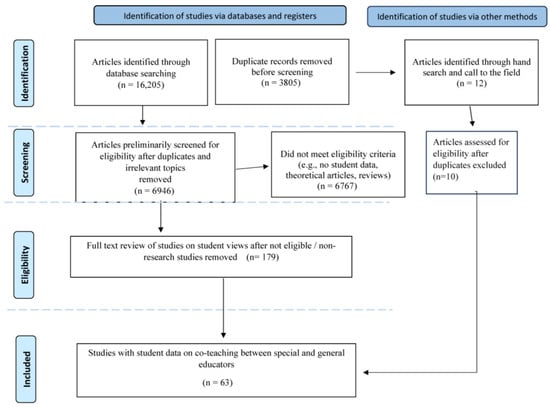
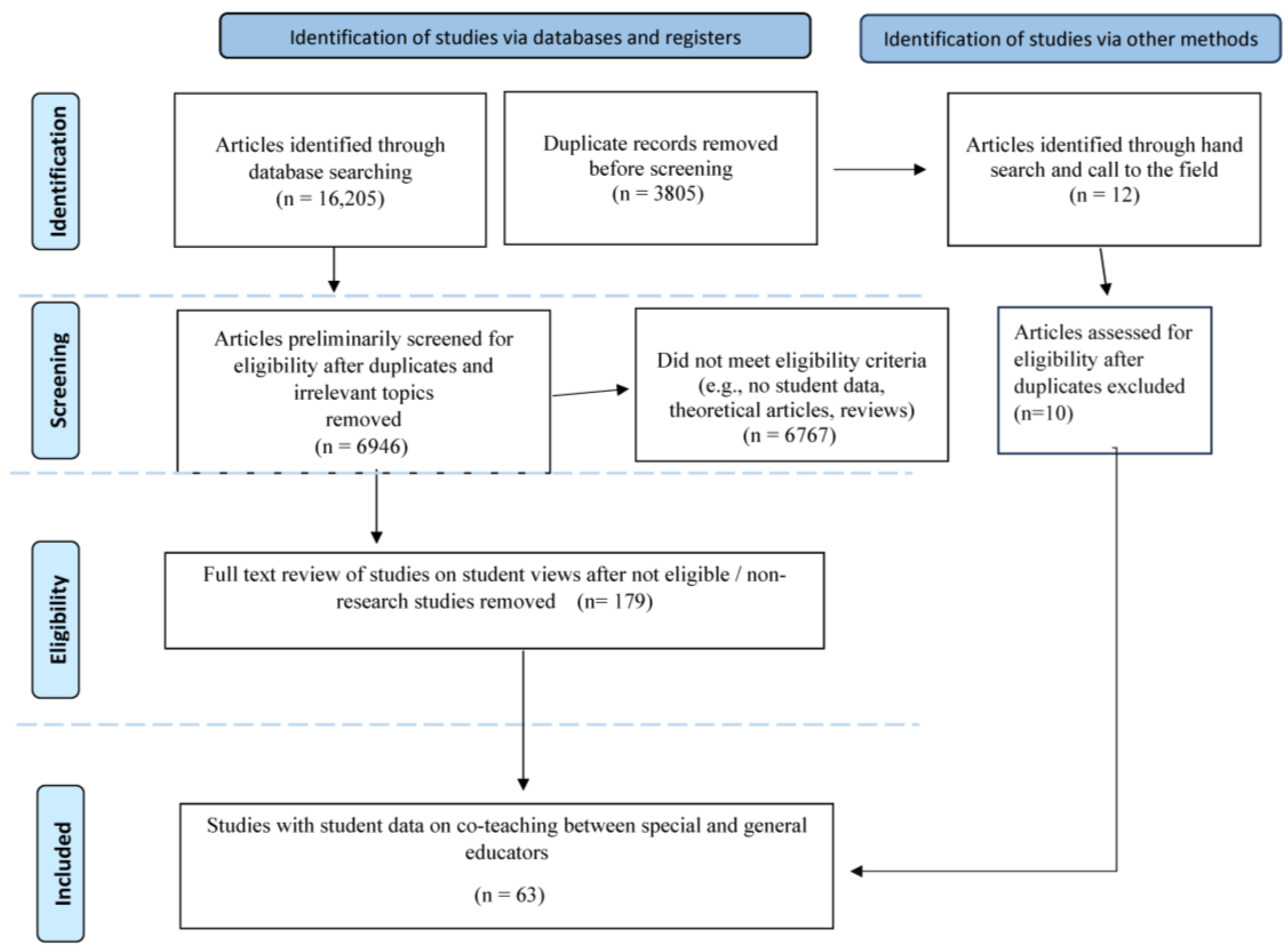

Disclaimer/Publisher’s Note: The statements, opinions and data contained in all publications are solely those of the individual author(s) and contributor(s) and not of MDPI and/or the editor(s). MDPI and/or the editor(s) disclaim responsibility for any injury to people or property resulting from any ideas, methods, instructions or products referred to in the content. |
© 2026 by the authors. Licensee MDPI, Basel, Switzerland. This article is an open access article distributed under the terms and conditions of the Creative Commons Attribution (CC BY) license.