


Abstract
Youth mentoring is a popular means for preventing negative psychosocial outcomes (e.g., high-risk behaviors, school dropout) and promoting positive ones (e.g., matriculation, goal setting). Mentors matched with youth through formal programs, such as Big Brothers Big Sisters, are uniquely positioned to promote the development of the mentee’s positive educational attitudes, beliefs, and behaviors (EABBs; e.g., academic engagement, grit, growth mindset). While school staff, such as school psychologists, are often unable to directly serve all students in need of support due to lack of time or large caseloads, youth mentoring may be a means to target EABB development. However, a critical precursor to leveraging mentoring for this purpose is understanding whether and how mentoring relationships influence youth EABBs. Despite extensive research on youth mentoring, relatively little work has examined mentoring outcomes specifically in relation to EABBs. This study addresses this gap by examining how young people benefit from mentoring relationships in relation to EABBs. A scoping review was conducted to determine the effects of program-sponsored mentoring relationships on EABBs, as well as which factors influence these effects. Results from 17 studies indicate small to moderate positive effects of youth mentoring on EABB development. Several factors, such as the relational context, the ecological context, and mentoring processes, appear to impact these effects. We highlight practical implications for how school personnel may use this information to partner with community-based mentoring programs to promote EABBs.
1. Introduction
Mounting evidence indicates the importance of social and emotional factors in students’ success in school (Domitrovich et al., 2017; Zins et al., 2007). These outcomes—sometimes referred to as educational attitudes, beliefs, and behaviors (EABBs)—are critical causal and maintaining factors that influence persistence and academic success. EABBs refer to constructs like school belonging, school engagement, school connectedness, growth mindset, and academic motivation. Students who demonstrate more positive EABBs tend to earn better grades, be more engaged academically, and subsequently accrue greater levels of economic success (Dweck, 2006; Proctor et al., 2008). Given the positive long-term outcomes associated with EABBs, researchers and practitioners have examined ways to promote them.
Youth mentoring is a popular youth development intervention that can facilitate the development of EABBs by pairing a supportive non-parental adult with a young person who may want or need support (McQuillin & Lyons, 2016; McQuillin et al., 2018). By connecting students with supportive adults, mentoring programs are believed to help prevent and address negative school-related outcomes such as dropout, suspension, and school failure (McQuillin & Lyons, 2016; Raposa et al., 2019). Program-sponsored mentors (i.e., mentors who are matched with youth through structured programs, such as Big Brothers Big Sisters of America) are well positioned to support students’ EABB development given their unique role within youths’ developmental contexts (DuBois et al., 2011; Rhodes et al., 2006).
Although mentoring programs often aim to prevent and address negative school-related outcomes, they frequently target a wide range of EABB outcomes through non-specific and heterogenous activities. While the non-specific design of mentoring programs has been noted for its practical benefits, such as allowing mentors to tailor practices to meet individual needs (Cavell et al., 2021), this design also presents challenges for researchers attempting to understand how mentoring influences a diverse set of outcomes. In this scoping review, we examine research that addresses the potential influence of mentoring on youth EABBs. In doing so, we hope to equip researchers and school staff to better understand the landscape of youth mentoring programs as they influence EABBs. We first review prior literature on EABBs, the importance of strong relationships in schools, and then discuss the unique opportunity of mentors to serve as means towards leveraging relationships to promote EABBs in schools.
2. Educational Attitudes, Beliefs, and Behaviors (EABBs)
Educational attitudes, beliefs, and behaviors (EABBs) refer to the attitudes and beliefs youth have about their experiences in school (e.g., academic self-efficacy, connectedness to peers and teachers, grit, goal setting), as well as the behaviors they exhibit during the school day (e.g., classroom participation, prosocial helping). EABBs are associated with a host of positive developmental outcomes, such as better grades, greater engagement in school, and increased resiliency (Lyons et al., 2013; Lyons & Huebner, 2016). Because EABBs are thought to be causal and maintaining factors that influence academic and behavioral outcomes, these outcomes are often targeted by mentoring programs (e.g., DeWit et al., 2016; Schwartz et al., 2012).
Historically, interventions targeting EABBs have been viewed as a service to prevent and address negative school-related outcomes (e.g., dropout, suspension, and school failure; Komosa-Hawkins, 2010). In addition to this function, interventions targeting EABBs have increasingly also been viewed as a means of promoting positive overall youth development in school (Taylor et al., 2017). This shift from focusing on preventing unwanted EABBs to promoting EABBs coincides with shifts in the fields of education, human development, and psychology. Collectively, these fields recognize the importance of not only alleviating problems, but also promoting positive development and subsequent long-term social, academic, and economic success (Larson, 2000; Proctor et al., 2008; Seligman & Csikszentmihalyi, 2000).
3. Positive Relationships in Schools
Just as EABBs often function as precursors to positive academic outcomes, positive relationships are key supports for students in schools. Students who form strong relationships with adults in their school contexts tend to be more academically engaged and successful than peers who lack these positive relationships (Black et al., 2010; May & Witherspoon, 2019; Samuels et al., 2023). In accordance with Bronfenbrenner and Morris’s (2007) ecological model of development, schools provide critical developmental contexts for students in which non-familial adults—such as teachers, coaches, and counselors—serve as key ecological resources who promote students’ psychological, socioemotional, and academic growth.
Extant research suggests that positive relationships in schools are especially important for systemically oppressed students, such as those from low-resource backgrounds and/or minoritized youth (e.g., Erickson et al., 2009; Hagler, 2018; Sulimani-Aidan & Melkman, 2022). Minoritized students face an array of barriers, including overcrowded schools and less access to extracurricular activities and class materials, compared to students from more privileged backgrounds (Hagler, 2018; Putnam, 2016). Stressors that originate outside the school environment, such as unstable housing and community violence, can also interfere with students’ ability to focus on learning and may hinder their access to supportive relationships with caring adults beyond the school setting (Putnam, 2016; Rogers & Mirra, 2014).
Further, empirical studies have found that youth experiences of racism, prejudice, discrimination, and oppression negatively affect the development of EABBs and that youth-adult relationships can either mitigate or magnify these effects (Anderson et al., 2019). Researchers have also found that youth-adult relationships may attenuate the negative effects of race-based discrimination on youth engagement in school (Gray et al., 2018; Tatum, 2004). In sum, adults within the school context provide support and share resources that are meaningful for minoritized students.
4. Mentoring as a Means to Promote Positive Relationships in Schools
One popular means of promoting positive relationships in schools is through youth mentoring. Youth mentoring programs pair young people with supportive adults to promote positive psychosocial outcomes, such as healthy decision making and academic engagement (Lyons et al., 2019; McQuillin & Lyons, 2016). Researchers highlight several ways that mentoring might promote positive youth development. For example, those who conceptualize support from mentors from an ecological framework highlight mentoring relationships as processes that are embedded in, and have cascading effects for, a youth’s broader developmental context (Bronfenbrenner & Morris, 2007).
In contrast, Rhodes et al.’s (2006) model of mentoring suggests that mentors support positive youth development by enhancing young people’s social–emotional skills, cognitive skills, and identity development. Some researchers have argued that characteristics of the mentoring relationship such as the closeness of the mentor-mentee match influence the relationship’s success (e.g., Rhodes & DuBois, 2008). However, more recent perspectives suggest that goal-related behaviors within “good-enough” relationships may be better indicators of success (e.g., Cavell & Elledge, 2014; Lyons et al., 2019), or that a supportive relationship may be a meaningful end in and of itself (e.g., Cavell et al., 2021).
Limitations notwithstanding, researchers consistently find that children benefit from relationships with mentors. Raposa et al.’s (2019) meta-analysis examined 70 studies of youth mentoring programs and found that children with mentors experienced significantly better health, psychosocial, and school outcomes compared to non-mentored peers. Mentored youth tend to be more academically engaged, matriculate at higher rates, and earn better grades than those without mentors (McQuillin & Lyons, 2016; Raposa et al., 2019). These youth also engage in fewer disruptive behaviors in school and are more likely to make decisions that prioritize their health and well-being (DeWit et al., 2016; McQuillin & Lyons, 2016).
Further, youth with mentors experience greater levels of life satisfaction and self-esteem and decreased symptoms of anxiety and depression compared to youth without mentors (DeWit et al., 2016; McQuillin & Lyons, 2016). Minoritized youth may especially benefit from having a mentor, as the mentor can share resources and social capital that the youth’s network may lack (DuBois et al., 2011; Granovetter, 1973; Thompson & Kelly-Vance, 2001). Mentoring relationships are also thought to serve as supportive contexts for identity development (Rhodes et al., 2006), which may be particularly beneficial for youth navigating racial/ethnic identity development. Research indicates that approximately 75% of youth mentored through structured programs identify as youth of color (Garringer et al., 2017). This suggests that mentoring programs are a means of helping promote positive development among minoritized youth.
Given the potential benefits of mentoring programs, school systems and personnel have become increasingly interested in partnering with community-based mentoring organizations to serve their students. Indeed, approximately 60% of mentoring programs occur within the school context (Garringer et al., 2017). Research indicates that school-based mentoring—mentoring that occurs within the school context—can have moderate to large positive impacts on mentees’ academic, behavioral, and socioemotional outcomes (Lyons et al., 2019; McQuillin & Lyons, 2016). Recent literature also reflects an interest in collaboration and task-shifting between school psychologists and community-based mentors to meet students’ needs (Hart et al., 2021). Taken together, these results suggest that partnerships between school personnel and mentoring programs may be valuable ways to support students’ needs.
5. Current Study
Students are more likely to succeed in school when they demonstrate positive educational attitudes, beliefs, and behaviors (EABBs). Emerging research suggests that mentoring may offer a means of promoting positive academic and psychosocial outcomes for students, especially those from minoritized backgrounds. Given that most mentoring occurs in schools (Garringer et al., 2017) and that school personnel have become increasingly interested in collaborating with mentoring programs to serve students (e.g., Hart et al., 2021; Lyons et al., 2019; Lyons et al., 2025), there is a need to better understand how effective mentoring is in promoting EABBs. Examining the effects of mentoring on EABBs and identifying the factors that may influence these effects may better equip school personnel to partner with mentoring programs to support students. Such examination is especially important in elucidating considerations for promoting EABB development among minoritized students.
Given the diversity of mentoring approaches and the variability in how EABBs are conceptualized and measured, we chose to conduct a scoping review to synthesize the current literature. We used this approach to capture the breadth of current research, identify gaps in the literature, and highlight key themes and contextual factors that may shape mentoring’s influence on EABBs. In this study, we examine the following research question: What are the effects of program-sponsored, mentoring relationships on educational attitudes, beliefs, and behaviors (EABBs), and what factors influence these effects? In answering this question, we provide practical recommendations for how school personnel and mentoring programs may come together to support students.
6. Method
A scoping review was conducted during May 2025 to answer our research question. Potential studies for inclusion in the review were identified through PsycINFO using Boolean strings (using AND) with the following searches: “mentoring” AND “school belonging”; “mentoring” AND “school connectedness”; “mentoring” AND “academic self-efficacy”; “mentoring” AND “study skills”; “mentoring” AND “growth mindset”; “mentoring” AND “grit”; “mentoring” AND “self-regulated learning”; “mentoring” AND “academic motivation”; and “mentoring” AND “goal setting.” The search was limited to peer-reviewed journal articles published from 2000–2024.
Studies identified through these search terms were screened according to the Preferred Reporting Items for Systematic Reviews and Meta-Analyses (PRISMA) guidelines (Page et al., 2021). Specifically, we used the PRISMA-ScR Scoping Review Extension (Tricco et al., 2018). We chose the scoping review approach to be intentionally breadth-oriented in our survey of the research. Eligible studies were included in the review if they met one of the following four criteria: (1) Did the study evaluate a mentoring program for K-12 youth? (2) Did the study’s context take place within a mentoring program for K-12 youth? (3) If the article was a systematic review or conceptual piece, was its focus on mentoring for K-12 youth? (4) Did the paper’s findings, commentary, or suggestions fall within the scope of our research question?
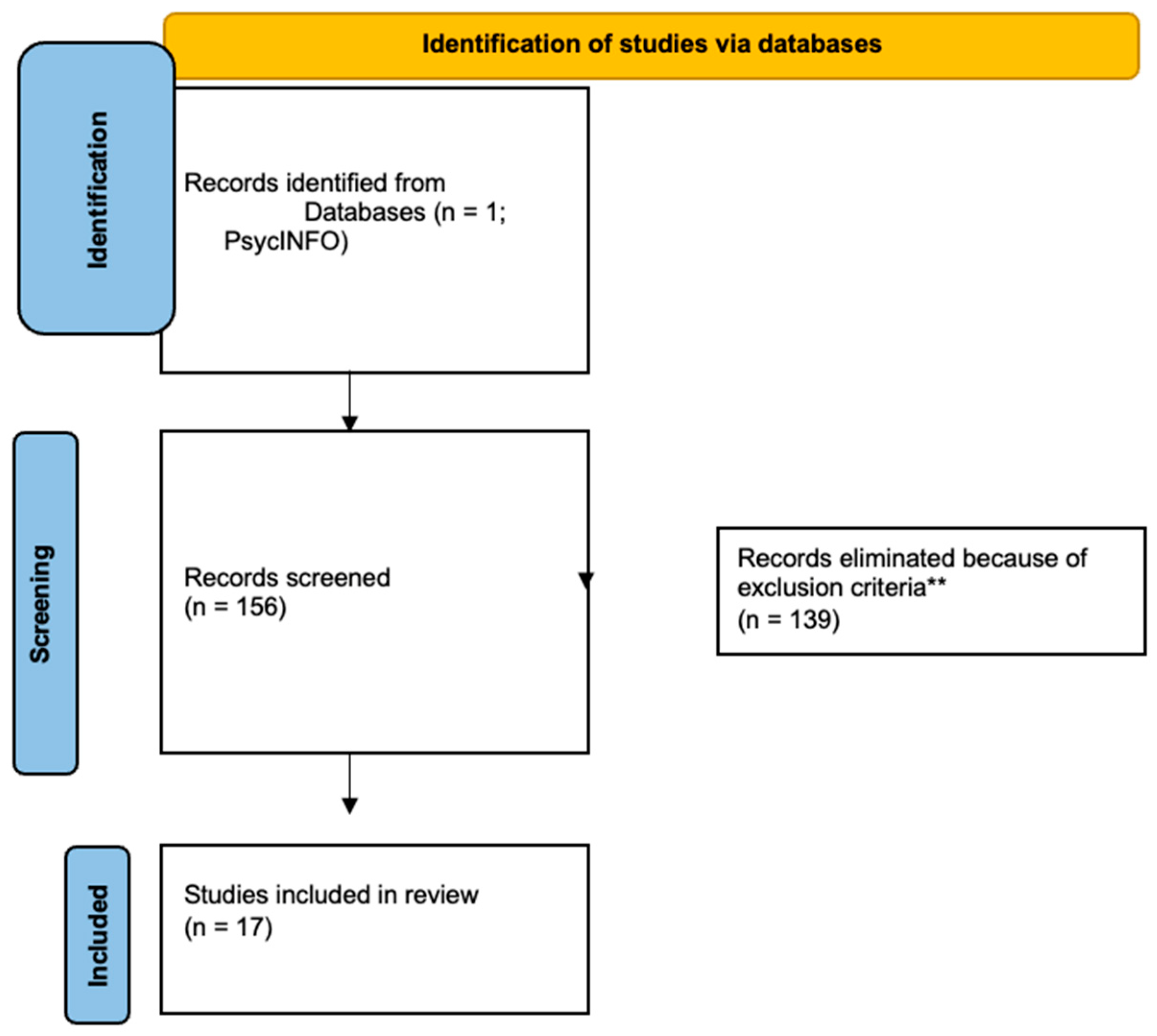
Only papers written in English were screened. To complete the review, one set of authors initially screened the titles and abstracts of the search results to exclude any studies that did not meet the inclusion criteria described above. Any study that appeared to meet full inclusion criteria was retrieved and the full text assessed for inclusion. Next, a second set of authors independently repeated the search and screening process to verify the final set of included studies. No discrepancies were identified between the two author groups regarding study inclusion. For more information on the number of studies screened and included in this review, see Figure 1 and Supplementary Material (Table S1).
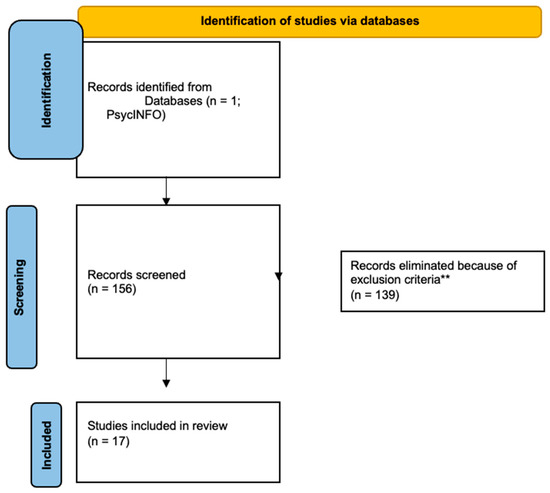
Figure 1.
PRISMA Chart. Note: ** Eligible studies were included in the review if studies met one of the following criteria: (1) Did the study evaluate a mentoring program for K-12 youth? (2) Did the study’s context take place within a mentoring program for K-12 youth? (3) If it was a systematic review or conceptual piece, was the focus of the article on mentoring for K-12 youth? (4) Did the paper’s findings, commentary, or suggestions fall within the scope of our research question?
7. Results
This study found that mentoring programs of varying types and formats have demonstrated potential to strengthen EABBs, with small effects on outcomes such as school connectedness, school engagement, and attitudes toward school. Researchers screened a total of 156 records and identified 17 studies that met the study’s eligibility criteria. None of the studies ultimately included were theoretical or conceptual pieces. Of the 17 studies included in the review, three focused on school belonging as an outcome, four focused on school connectedness, three on academic self-efficacy, one on grit, two on study skills, two on self-regulated learning, one on goal setting, and one on academic motivation. In this section and the Supplementary Material (Table S1), effect sizes are reported as they were presented in the original manuscripts. Because the included studies used different metrics, these values are not directly comparable in magnitude. Although conventions for interpreting effect sizes (e.g., small, moderate) vary across metrics, we used standard interpretation guidelines for each statistic to maintain consistency in our descriptions. Effect sizes reported across the studies included in this review varied widely depending on the metric used, with standardized regression coefficients (β) ranging from −0.92 to 0.52 (Chan et al., 2013; Lyons et al., 2019), partial eta-squared (η2p) values ranging from 0.031 to 0.089 (Núñez et al., 2013), and Cohen’s d values ranging from 0.31 to 2.82 (Converse & Lignugaris/Kraft, 2009; Destin et al., 2018; Evans et al., 2016; Marino et al., 2020; Martins et al., 2024; Weiler et al., 2019).
7.1. Mentoring and School Belonging
Review of the literature suggests that mentoring programs can lead to increased feelings of school belonging, which in turn can result in improved academic skills such as problem solving and decision making (Cavell et al., 2018; Holt et al., 2008; Kuperminc et al., 2020). Cavell et al. (2018) examined six different mentoring programs and found that elementary and middle school students felt better about their self-worth and social competence in school after participating in the mentoring program; teachers also rated students’ academic performance more strongly following mentorship. These positive effects persisted despite differences in program practices (e.g., mentor recruitment procedures).
Kuperminc et al. (2020) examined the role of a year-long mentoring program on increasing resilience for first-year high school students who were at high risk for school dropout. At the completion of the year-long program, mentees reported higher scores in school support, school belonging, school meaningful participation, peer caring relationships, prosocial peers, and home meaningful participation. Students in the mentoring program also reported higher scores on problem solving. Similarly, Holt et al. (2008) found that mentees at risk of academic failure reported greater perceived teacher support, school belonging, and confidence in decision making after participating in a school-based mentoring program.
7.2. School Connectedness
Marino et al. (2020) found that participants in a mentoring program reported a slight, non-significant increase in school connectedness (Cohen’s d = 0.32). Coyne-Foresi (2016) found similar effects, with mentoring program participants reporting a slightly higher degree of school connectedness compared to participants not assigned to a mentoring program (η = 0.22). Chan et al. (2013) also reported that involvement in a mentoring program resulted indirectly (i.e., through improved relationships with teachers and parents) in a modest effect on a range of academic outcomes, including school connectedness (β ranging from 0.12–0.52). Further, Converse and Lignugaris/Kraft (2009) found that middle school students who participated in a school-based mentoring program reported significantly higher post-mentoring levels of school connectedness than non-mentored peers after controlling for pre-mentoring ratings (d = 2.82).
7.3. Academic Self-Efficacy
Larose and colleagues (Larose et al., 2018) investigated whether mentor support influenced academic outcomes such as problem solving, assistance seeking, academic self-efficacy, and positive school attitude. Their study revealed positive associations with all academic outcomes except academic self-efficacy. However, Weiler et al. (2019) found that youth with supportive or attuned mentors reported higher academic self-efficacy compared with individuals in other comparison groups (Cohen’s d = 0.50). Deane et al. (2017) similarly found that a sample of 600 mentored students reported significant improvements in academic self-efficacy after involvement in the program, and these effects remained consistent one year after the conclusion of the program.
7.4. Grit
Grit is an EABB traditionally defined as “perseverance and passion for long-term goals” (Duckworth et al., 2007, p. 1087). Destin et al. (2018) used a randomized controlled field experiment to examine whether eighth-grade students in a mentoring treatment group reported an increase in persistence through academic difficulty. Consistent with this definition, participants assigned to the mentoring group reported significant increases in grit (Cohen’s d = 0.49).
7.5. Study Skills
Earl Irving and colleagues (Earl Irving et al., 2003) examined the effects of a three-year-long mentoring program on academic outcomes of high-ability students. The study found no significant impact on academic achievement outcomes, including study skills, goal setting, and time management. Evans et al. (2016) compared two school-based training interventions with students with attention-deficit/hyperactivity disorder (ADHD), one of which was a mentoring program. They found no significant differences in organizational skills, time management, or planning skills between mentored students and a control group. However, mentored students were less likely to avoid and more productive when completing homework than students in the control group. This difference was modest in effect size (Cohen’s d = 0.31) and only approached statistical significance; it was not maintained at follow-up six months later.
7.6. Self-Regulated Learning
Martins et al. (2024) examined the effectiveness of a 12-session mentoring program on several fifth-grade students’ social–emotional and academic outcomes, such as self-regulation, school engagement, and goal setting. They found moderate effects mid-intervention (Cohen’s d = 0.44) and large positive effects at the end of the program (Cohen’s d = 0.79). Similarly, Núñez et al. (2013) assessed the efficacy of a mentoring program on the use of self-regulated learning strategies, self-efficacy, and perceived usefulness of self-regulated learning strategies. Students in the academic mentoring program reported significantly higher scores in their self-regulated learning competencies than a comparison group. However, the effect sizes of academic mentoring were small three months after the study (η2p = 0.031), medium after six months (η2p = 0.089), and medium after nine months (η2p = 0.089). Taken together, these results suggest that the effectiveness of an academic mentoring program depends on how long after the intervention the outcomes are measured.
7.7. Goal Setting
Lyons et al. (2019) assessed a national study of school-based mentoring programs and tested the influence of mentee-reported relationship quality and mentor-reported use of goal setting on academic outcomes. Broadly, goal setting and feedback-oriented activities showed moderate to large effects on academic, social–emotional, and behavioral outcomes. Negative effects (up to β = −0.92) emerged when instrumental strategies were used without high-quality relationships, especially for academic grades. Mentees who reported a high-quality relationship with their mentor and had a mentor who engaged in goal setting or provided feedback had the greatest treatment effects.
7.8. Academic Motivation
Larose and colleagues (Larose et al., 2020) examined the association between mentoring relationship quality and student academic adjustment in a school-based mentoring program. The results indicate that mentoring relationship quality indicators predict outcomes such as academic efficacy and academic motivation. Specifically, feelings of connection to mentors positively predicted positive changes in mentees’ academic motivation, although the effect was relatively small. In addition, mentoring relationship quality, particularly mentor–mentee bonding, was associated with moderate improvements in academic motivation (β = 0.41; ΔR2 = 0.19), with the strongest effects observed among students with lower initial mastery goal orientation.
8. Discussion
The research reviewed indicates that youth mentoring programs have small to moderate effects on the development of student EABBs. These effects are moderated by several factors, including the relational context (e.g., mentor characteristics and relationship quality) and mentoring processes (e.g., mentoring program activities). Findings from this review have implications for school personnel who seek to partner with mentoring organizations to improve students’ educational attitudes, beliefs, and behaviors.
One clear takeaway from the review is that there are numerous reasons why EABBs may be suffering, both at a large scale (such as in a school that has a pervasive bullying culture) and for individual youth (a specific learning disability, for example). Thus, mentored youth may experience radically different root causes of their EABBs. Mentoring relationships are unlikely to offer effective support if the adults running the program misunderstand those causes or misattribute a lack of youth engagement to misaligned values or simply not caring.
Results of this study highlight at least two practice implications for understanding the EABBs of students. First, gathering information about why students may develop negative EABBs through individual interviews may reveal both the deeper systemic challenges and the personal struggles that are often at the heart of those feelings. Second, carefully reviewing quantitative data from school climate surveys, teacher report cards, and even disciplinary referrals related to EABBs could provide valuable insights into the overall culture within a school or classroom, as well as individual student perspectives. Together, these sources of information can help practitioners better understand why students are struggling with how they think about school and their education, recognizing that each student may require a unique mentoring experience to get back on track. Mentoring programs might also assist in gathering this information through schoolwide surveys or early conversations between mentors and mentees. One resource that can help with broader surveying, especially for school-based programs, is the School Climate Survey Compendium, an excellent collection of school climate and related surveys available through the National Center on Safe Supportive Learning Environments (NCSSLE, n.d.). Regardless of how a program elicits this information, it is vital not to guess or assume why mentees might have negative views about education, but instead to discover the genuine source of those feelings.
Results also highlight that mentors (and mentoring programs) may have heterogenous effects on EABBs, which has implications for both practitioners and researchers. For practitioners, the many factors that influence EABBs may make it challenging to identify mentors who are well suited to support youth facing these myriad challenges and concerns. However, several key traits may be particularly important when recruiting mentors. First, mentors who are empathetic, or perhaps who have struggled with EABBs themselves, may be well positioned to foster positive relationships with students who are struggling. Similarly, given the importance of the ecological context in EABB development, it is critical to recruit mentors who can reflect on their own biases and examine their own frames of reference. Mentors who lack cultural understanding, responsiveness, and humility may struggle to understand youth perspectives or identify systemic challenges that need to be addressed to make the learning environment more of a “promoting” one (Sánchez et al., 2021). Conversely, mentors who can both help students reframe their internal thinking and values surrounding challenging situations (e.g., a toxic school environment) and advocate for institutional and systemic change might be particularly effective in promoting positive youth development. Providing training in skills such as giving feedback, active listening, reaffirming youth perspectives, and offering praise in addition to constructive criticism may help mentors support mentees in modifying behaviors or thinking patterns in ways that promote sustainable change (Hart et al., 2025). For researchers, these findings suggest the importance of examining variation in mentor characteristics and mentoring approaches when evaluating program effectiveness. Future research should explore which mentor traits, training components, and relational practices are most strongly associated with positive changes in EABBs, as well as how contextual factors such as school climate or student background may moderate these effects.
Our review highlights the importance of incorporating processes and activities within the mentoring relationship that promote EABB development. Based on these findings, school personnel might consider adopting mentoring models that center youth voice and emphasize engagement. For example, while we often think of adult mentors as the primary means of fostering relationships to improve negative EABBs, findings from this review highlight that group or peer mentoring models might also be effective in targeting EABBs. These models decenter the voices of adults and promote EABBs by encouraging young people to lead and work together to confront their negative attitudes and beliefs around education.
Another way to tap into mentoring processes to promote EABBs is by embedding evidence-based interventions into mentoring. A growing body of work suggests that mentors need to do more than just build a positive relationship with their mentee. In addition, they need to incorporate practices and strategies that have been proven effective in addressing the mentee’s needs (Lyons et al., 2019).
A variety of strategies and interventions can promote positive EABBs. Interventions such as motivational interviewing may be particularly helpful in addressing ambivalence about learning or issues around motivation (Miller, 2013). If the root causes of negative EABBs relate to school culture or leadership, any number of anti-bullying curricula or programs addressing school climate and behavior might be sources of mentoring activities or prompts for critical conversations. As noted in the review, mentors’ use of more specified and prescribed practices might be more effective and easier for program staff to train on and potentially monitor for implementation fidelity.
Last, strengthening connections between community-based mentoring programs and families appears to be an underutilized yet promising avenue for promoting student EABBs. Although many mentoring programs examined in this review were situated within an ecological model (e.g., bringing mentors into students’ school contexts), few of the reviewed studies aimed to engage families in promoting EABBs. This finding suggests there is an opportunity for mentoring researchers and program developers to consider additional strategies to promote family engagement in mentoring and school contexts. For example, mentoring programs might consider modeling family engagement practices on school-based strategies for engaging families (Downey & Lyons, 2025) to further strengthen connections between schools, mentoring programs, and students’ home contexts. Offering pre-service training to community-based mentors on the benefits of and ways to best implement such strategies can better equip them to support students across their home, school, and mentoring environments.
9. Limitations
Given the emergent nature of this research area, one limitation of this work is our use of a scoping review approach rather than a systematic review. While a scoping review allows for broad mapping of the existing literature and identification of key themes and gaps, it limits the ability to draw definitive conclusions about intervention effectiveness. Therefore, further inquiry into this area may be appropriate as the scope of the literature grows.
Additionally, because our search was limited to formal mentoring programs working with K-12 youth, the findings of this study do not reflect the benefits of informal mentoring relationships (e.g., between young people and teachers, coaches, spiritual leaders, etc.) or mentoring relationships among college students. These narrower inclusion criteria, while necessary for feasibility and focus, mean the study’s findings may not fully represent the diverse forms and developmental stages of mentoring relationships that contribute to EABB outcomes.
Last, publication bias may overestimate the magnitude of the effects of mentoring on EABBs presented in this study (Murad et al., 2018). Studies with null or negative findings are less likely to be published, which may skew the understanding of mentoring effectiveness and mechanisms. Furthermore, the database and search terms used may have missed relevant studies published in non-English languages or in grey literature such as program evaluations, dissertations, and reports from community organizations, which may limit the inclusiveness and global applicability of the review.
10. Implications and Future Directions
This review highlights several implications for school practitioners. First, findings related to the efficacy of youth mentoring in promoting EABB development suggest these programs might be a promising means to serve students. School practitioners, such as school psychologists and counselors, are often limited in their ability to directly serve students due to large caseloads and competing demands. Collaborating with mentoring programs may offer a means through which school personnel can reach a larger group of students with targeted prevention or intervention efforts.
Although collaboration with mentoring programs may be a useful means to promote student EABB development, findings from this review also highlight the significance of the relational context and mentoring processes in modulating the effects of mentoring. School personnel might consider how their broader school ecologies (e.g., bullying climate; racial/ethnic diversity and inclusion) influence the needs of their students when it comes to EABBs. After considering these factors, school personnel may be better equipped to partner with programs that best fit students’ needs; they might also consider tailoring the activities or goals of a selected program to better suit these needs.
Findings from this review have implications for researchers as well. Although implementation monitoring was not a central theme of the reviewed studies, there was notable variability in how program implementation was assessed and reported. Future research might benefit from exploring program implementation to better understand how this modulates program effectiveness. Particular attention to how community-based programs are implemented in school settings might contribute to school practitioners’ knowledge of how to best collaborate with these programs to serve students. Through the continued commitment of researchers and practitioners, the field of youth mentoring demonstrates promise for promoting the development of EABBs and allowing young people to thrive in school and beyond.
Supplementary Materials
The following supporting information can be downloaded at: https://www.mdpi.com/article/10.3390/educsci16040549/s1, Table S1: Overview of the descriptive information provided for each article in this review.
Author Contributions
Conceptualization, A.L.D., J.K., S.M., and M.D.L.; methodology, A.L.D., J.K., S.M. and M.D.L.; validation, A.L.D., J.K., S.B.S., S.M. and M.D.L.; investigation, A.L.D., J.K., S.M. and M.D.L.; writing—original draft preparation, A.L.D. and J.K.; writing—review and editing, A.L.D., S.B.S., S.M., and M.D.L.; visualization, A.L.D.; supervision, S.M. and M.D.L.; project administration, A.L.D. All authors have read and agreed to the published version of the manuscript.
Funding
This research received no external funding.
Data Availability Statement
No new data were created or analyzed in this study. Data sharing is not applicable to this article.
Conflicts of Interest
The authors declare no conflicts of interest.
References
- Anderson, A. J., Sánchez, B., & McMahon, S. D. (2019). Natural mentoring, academic motivation, and values toward education among Latinx adolescents. American Journal of Community Psychology, 63(1–2), 99–109. [Google Scholar] [CrossRef] [PubMed]
- Black, D. S., Grenard, J. L., Sussman, S., & Rohrbach, L. A. (2010). The influence of school-based natural mentoring relationships on school attachment and subsequent adolescent risk behaviors. Health Education Research, 25(5), 892–902. [Google Scholar] [CrossRef] [PubMed]
- Bronfenbrenner, U., & Morris, P. A. (2007). The bioecological model of human development. In W. Damon, & R. M. Lerner (Eds.), Handbook of child psychology (pp. 793–828). John Wiley & Sons, Inc. [Google Scholar]
- Cavell, T. A., & Elledge, L. C. (2014). Mentoring and prevention science. In D. DuBois, & M. J. Karcher (Eds.), Handbook of youth mentoring (pp. 29–42). Sage. [Google Scholar]
- Cavell, T. A., Gregus, S. J., Craig, J. T., Pastrana, F. A., & Hernandez Rodriguez, J. (2018). Program-specific practices and outcomes for high school mentors and their mentees. Children and Youth Services Review, 89, 309–318. [Google Scholar] [CrossRef]
- Cavell, T. A., Spencer, R., & McQuillin, S. D. (2021). Back to the future: Mentoring as means and end in promoting child mental health. Journal of Clinical Child & Adolescent Psychology, 50(2), 281–299. [Google Scholar] [CrossRef] [PubMed]
- Chan, C. S., Rhodes, J. E., Howard, W. J., Lowe, S. R., Schwartz, S. E. O., & Herrera, C. (2013). Pathways of influence in school-based mentoring: The mediating role of parent and teacher relationships. Journal of School Psychology, 51(1), 129–142. [Google Scholar] [CrossRef]
- Converse, N., & Lignugaris/Kraft, B. (2009). Evaluation of a school-based mentoring program for at-risk middle school youth. Remedial and Special Education, 30(1), 33–46. [Google Scholar] [CrossRef]
- Coyne-Foresi, M. (2016). Wiz Kidz: Fostering school connectedness through an in-school student mentoring program. Professional School Counseling, 19(1), 68–79. [Google Scholar] [CrossRef]
- Deane, K. L., Harré, N., Moore, J., & Courtney, M. G. R. (2017). The impact of the project K youth development program on self-efficacy: A randomized controlled trial. Journal of Youth and Adolescence, 46(3), 516–537. [Google Scholar] [CrossRef]
- Destin, M., Castillo, C., & Meissner, L. (2018). A field experiment demonstrates near peer mentorship as an effective support for student persistence. Basic and Applied Social Psychology, 40(5), 269–278. [Google Scholar] [CrossRef]
- DeWit, D. J., DuBois, D., Erdem, G., Larose, S., & Lipman, E. L. (2016). The role of program-supported mentoring relationships in promoting youth mental health, behavioral and developmental outcomes. Prevention Science, 17(5), 646–657. [Google Scholar] [CrossRef]
- Domitrovich, C. E., Durlak, J. A., Staley, K. C., & Weissberg, R. P. (2017). Social-emotional competence: An essential factor for promoting positive adjustment and reducing risk in school children. Child Development, 88(2), 408–416. [Google Scholar] [CrossRef]
- Downey, S. K., & Lyons, M. D. (2025). State of the states: A systematic review of family engagement practices across state education agencies in the United States. School Psychology Review, 55, 193–208. [Google Scholar] [CrossRef]
- DuBois, D. L., Portillo, N., Silverthorn, N., & Valentine, J. C. (2011). How effective are mentoring programs for youth? A systematic assessment of the evidence. Psychological Science in the Public Interest, 12(2), 57–91. [Google Scholar] [CrossRef]
- Duckworth, A. L., Peterson, C., Matthews, M. D., & Kelly, D. R. (2007). Grit: Perseverance and passion for long-term goals. Journal of Personality and Social Psychology, 92(6), 1087–1101. [Google Scholar] [CrossRef] [PubMed]
- Dweck, C. S. (2006). Mindset: The new psychology of success (1st ed.). Random House. [Google Scholar]
- Earl Irving, S., Moore, D. W., & Hamilton, R. J. (2003). Mentoring for high ability high school students. Education & Training, 45(2), 100–109. [Google Scholar] [CrossRef]
- Erickson, L. D., McDonald, S., & Elder, G. H., Jr. (2009). Informal mentors and education: Complementary or compensatory resources? Sociology of Education, 82(4), 344–367. [Google Scholar] [CrossRef] [PubMed]
- Evans, S. W., Langberg, J. M., Schultz, B. K., Vaughn, A., Altaye, M., Marshall, S. A., & Zoromski, A. K. (2016). Evaluation of a school-based treatment program for young adolescents with ADHD. Journal of Consulting and Clinical Psychology, 84(1), 15–30. [Google Scholar] [CrossRef]
- Garringer, M., McQuillin, S., & McDaniel, H. (2017). Examining youth mentoring services across America: Findings from the 2016 national mentoring program survey. MENTOR: The National Mentoring Partnership. [Google Scholar]
- Granovetter, M. S. (1973). The strength of weak ties. American Journal of Sociology, 78(6), 1360–1380. [Google Scholar] [CrossRef]
- Gray, D. L., Hope, E. C., & Matthews, J. S. (2018). Black and belonging at school: A case for interpersonal, instructional, and institutional opportunity structures. Educational Psychologist, 53(2), 97–113. [Google Scholar] [CrossRef]
- Hagler, M. (2018). Processes of natural mentoring that promote underrepresented students’ educational attainment: A theoretical model. American Journal of Community Psychology, 62(1–2), 150–162. [Google Scholar] [CrossRef]
- Hart, M. J., Flitner, A. M., Kornbluh, M. E., Thompson, D. C., Davis, A. L., Lanza-Gregory, J., McQuillin, S. D., Gonzalez, J. E., & Strait, G. G. (2021). Combining MTSS and com-munity-based mentoring programs. School Psychology Review, 53(2), 185–199. [Google Scholar] [CrossRef]
- Hart, M. J., McQuillin, S. D., Iachini, A., Cooper, D. K., & Weist, M. D. (2025). The efficacy and usability of motivational interviewing just-in-time trainings for youth mentors. American Journal of Community Psychology, 76, 121–132. [Google Scholar] [CrossRef]
- Holt, L. J., Bry, B. H., & Johnson, V. L. (2008). Enhancing school engagement in at-risk, urban minority adolescents through a school-based, adult mentoring intervention. Child & Family Behavior Therapy, 30(4), 297–318. [Google Scholar] [CrossRef]
- Komosa-Hawkins, K. (2010). Best practices in school-based mentoring programs for adolescents. Child & Youth Services, 31(3–4), 121–137. [Google Scholar] [CrossRef]
- Kuperminc, G. P., Chan, W. Y., Hale, K. E., Joseph, H. L., & Delbasso, C. A. (2020). The role of school-based group mentoring in promoting resilience among vulnerable high school students. American Journal of Community Psychology, 65(1–2), 136–148. [Google Scholar] [CrossRef] [PubMed]
- Larose, S., Boisclair-Châteauvert, G., DeWit, D. J., DuBois, D., Erdem, G., & Lipman, E. L. (2018). How mentor support interacts with mother and teacher support in predicting youth academic adjustment: An investigation among youth exposed to Big Brothers Big Sisters of Canada programs. The Journal of Primary Prevention, 39(3), 205–228. [Google Scholar] [CrossRef]
- Larose, S., Duchesne, S., & Châteauvert, G. B. (2020). How does mentoring by teachers improve the adjustment of academically at-risk students in high school? International Journal of School & Educational Psychology, 8(1), 36–49. [Google Scholar] [CrossRef]
- Larson, R. W. (2000). Toward a psychology of positive youth development. American Psychologist, 55(1), 170–183. [Google Scholar] [CrossRef]
- Lyons, M. D., & Huebner, E. S. (2016). Academic characteristics of early adolescents with higher levels of life satisfaction. Applied Research in Quality of Life, 11, 757–771. [Google Scholar] [CrossRef]
- Lyons, M. D., Huebner, E. S., & Hills, K. J. (2013). The dual-factor model of mental health: A short-term longitudinal study of school-related outcomes. Social Indicators Research, 114, 549–565. [Google Scholar] [CrossRef]
- Lyons, M. D., McQuillin, S. D., & Henderson, L. J. (2019). Finding the sweet spot: Investigat-ing the effects of relationship closeness and instrumental activities in school-based mentoring. American Journal of Community Psychology, 63(1–2), 88–98. [Google Scholar] [CrossRef] [PubMed]
- Lyons, M. D., Meldrum, M., Daniel, S., Griffith, A. N., Sjogren, A. L., & Zabek, F. (2025). Coordinating mental health supports across out-of-school and in-school providers: A scoping review. Education Sciences, 15(6), 639. [Google Scholar] [CrossRef]
- Marino, C., Santinello, M., Lenzi, M., Santoro, P., Bergamin, M., Gaboardi, M., Calcagnì, A., Altoè, G., & Perkins, D. D. (2020). Can mentoring promote self-esteem and school connectedness? An evaluation of the Mentor-UP project. Psychosocial Intervention, 29(1), 1–8. [Google Scholar] [CrossRef]
- Martins, J., Rosário, P., Cunha, J., Carlos Núñez, J., Vallejo, G., & Moreira, T. (2024). Effectiveness of a school-based group mentoring program promoting students’ engagement, self-regulation, and goal setting. Contemporary Educational Psychology, 76, 102230. [Google Scholar] [CrossRef]
- May, E. M., & Witherspoon, D. P. (2019). Maintaining and attaining educational expectations: A two-cohort longitudinal study of Hispanic youth. Developmental Psychology, 55(12), 2649–2664. [Google Scholar] [CrossRef]
- McQuillin, S. D., & Lyons, M. D. (2016). Brief instrumental school-based mentoring for middle school students: Theory and impact. Advances in School Mental Health Promotion, 9(2), 73–89. [Google Scholar] [CrossRef]
- McQuillin, S. D., Lyons, M. D., Clayton, R. J., & Anderson, J. R. (2018). Assessing the impact of school-based mentoring: Common problems and solutions associated with evaluating nonpre-scriptive youth development programs. Applied Developmental Science, 24(3), 215–229. [Google Scholar] [CrossRef]
- Miller, W. R. (2013). Motivational interviewing: Helping people change (3rd ed.). Guilford Press. [Google Scholar]
- Murad, M. H., Chu, H., Lin, L., & Wang, Z. (2018). The effect of publication bias magnitude and direction on the certainty in evidence. BMJ Evidence-Based Medicine, 23, 84–86. [Google Scholar] [CrossRef]
- National Center on Safe Supportive Learning Environments (NCSSLE). (n.d.). Available online: https://safesupportivelearning.ed.gov/ (accessed on 19 January 2026).
- Núñez, J. C., Rosário, P., Vallejo, G., & González-Pienda, J. A. (2013). A longitudinal assessment of the effectiveness of a school-based mentoring program in middle school. Contemporary Educational Psychology, 38(1), 11–21. [Google Scholar] [CrossRef]
- Page, M. J., McKenzie, J. E., Bossuyt, P. M., Boutron, I., Hoffmann, T. C., Mulrow, C. D., Shamseer, L., Tetzlaff, J. M., Akl, E. A., Brennan, S. E., Chou, R., Glanville, J., Grimshaw, J. M., Hróbjartsson, A., Lalu, M. M., Li, T., Loder, E. W., Mayo-Wilson, E., McDonald, S., … Moher, D. (2021). The PRISMA 2020 statement: An updated guideline for reporting systematic reviews. BMJ, 372(71), n71. [Google Scholar] [CrossRef] [PubMed]
- Proctor, C. L., Linley, P. A., & Maltby, J. (2008). Youth life satisfaction: A review of the literature. Journal of Happiness Studies, 10(5), 583–630. [Google Scholar] [CrossRef]
- Putnam, R. D. (2016). Our kids: The American dream in crisis. Simon and Schuster. [Google Scholar]
- Raposa, E. B., Rhodes, J., Stams, G. J. J. M., Card, N., Burton, S., Schwartz, S., Sykes, L. A. Y., Kanchewa, S., Kupersmidt, J., & Hussain, S. (2019). The effects of youth mentoring programs: A meta-analysis of outcome studies. Journal of Youth and Adolescence, 48(3), 423–443. [Google Scholar] [CrossRef]
- Rhodes, J. E., & DuBois, D. L. (2008). Mentoring relationships and programs for youth. Current Directions in Psychological Science, 17(4), 254–258. [Google Scholar] [CrossRef]
- Rhodes, J. E., Spencer, R., Keller, T. E., Liang, B., & Noam, G. (2006). A model for the influence of mentoring relationships on youth development. Journal of Community Psychology, 34(6), 691–707. [Google Scholar] [CrossRef]
- Rogers, J., & Mirra, N. (2014). It’s about time: Learning time and educational opportunity in california high schools. UCLA Institute for Democracy, Education, and Access (IDEA). Available online: https://idea.gseis.ucla.edu/projects/its-about-time/Its%20About%20Time.pdf (accessed on 19 January 2026).
- Samuels, J., Davis, A. L., & McQuillin, S. D. (2023). Assessing longitudinal impacts of mentor role on youth outcomes. Youth & Society, 55(5), 999–1025. [Google Scholar] [CrossRef]
- Sánchez, B., Anderson, A. J., Weiston-Serdan, T., & Catlett, B. S. (2021). Anti-racism education and training for adult mentors who work with BIPOC adolescents. Journal of Adolescent Research, 36(6), 686–716. [Google Scholar] [CrossRef]
- Schwartz, S. E., Rhodes, J. E., & Herrera, C. (2012). The influence of meeting time on academic outcomes in school-based mentoring. Children and Youth Services Review, 34(12), 2319–2326. [Google Scholar] [CrossRef]
- Seligman, M. E., & Csikszentmihalyi, M. (2000). Positive psychology: An introduction. American Psychologist, 55(1), 5–14. [Google Scholar] [CrossRef]
- Sulimani-Aidan, Y., & Melkman, E. (2022). School belonging and hope among at-risk youth: The contribution of academic support provided by youths’ social support networks. Child & Family Social Work, 27(4), 700–710. [Google Scholar] [CrossRef]
- Tatum, B. D. (2004). Family life and school experience: Factors in the racial identity development of black youth in white communities. Journal of Social Issues, 60(1), 117–135. [Google Scholar] [CrossRef]
- Taylor, R. D., Oberle, E., Durlak, J. A., & Weissberg, R. P. (2017). Promoting positive youth development through school-based social and emotional learning interventions: A meta-analysis of follow-up effects. Child Development, 88(4), 1156–1171. [Google Scholar] [CrossRef] [PubMed]
- Thompson, L. A., & Kelly-Vance, L. (2001). The impact of mentoring on academic achievement of at-risk youth. Children and Youth Services Review, 23(3), 227–242. [Google Scholar] [CrossRef]
- Tricco, A. C., Lillie, E., Zarin, W., O’Brien, K. K., Colquhoun, H., Levac, D., Moher, D., Peters, M. D. J., Horsley, T., Weeks, L., Hempel, S., Akl, E. A., Chang, C., McGowan, J., Stewart, L., Hartling, L., Aldcroft, A., Wilson, M. G., Garritty, C., … Straus, S. E. (2018). PRISMA extension for scoping reviews (PRISMA-ScR): Checklist and explanation. Annals of Internal Medicine, 169(7), 467–473. [Google Scholar] [CrossRef] [PubMed]
- Weiler, L. M., Chesmore, A. A., Pryce, J., Haddock, S. A., & Rhodes, T. (2019). Mentor response to youth academic support-seeking behavior: Does attunement matter? Youth & Society, 51(4), 548–569. [Google Scholar] [CrossRef]
- Zins, J. E., Bloodworth, M. R., Weissberg, R. P., & Walberg, H. J. (2007). The scientific base linking social and emotional learning to school success. Journal of Educational and Psychological Consultation, 17(2–3), 191–210. [Google Scholar] [CrossRef]
Disclaimer/Publisher’s Note: The statements, opinions and data contained in all publications are solely those of the individual author(s) and contributor(s) and not of MDPI and/or the editor(s). MDPI and/or the editor(s) disclaim responsibility for any injury to people or property resulting from any ideas, methods, instructions or products referred to in the content. |
© 2026 by the authors. Licensee MDPI, Basel, Switzerland. This article is an open access article distributed under the terms and conditions of the Creative Commons Attribution (CC BY) license.