


Abstract
Given the concurrent challenges of declining participation rates in STEM education and the growing societal demand for STEM expertise, understanding and implementing motivation-enhancing interventions is essential for safeguarding the future STEM workforce and enabling societies to respond to technological and societal challenges. This narrative literature review synthesized studies published between 2014 and 2025 and aimed to elucidate the underlying rationales and drivers of motivation-focused STEM research, as well as to identify and evaluate interventions designed to increase students’ motivation for STEM. The synthesis identified four recurring drivers of motivation-focused STEM research: increasing demand for the STEM workforce, inequities in STEM participation, the strategic socioeconomic importance of STEM and declining student motivation over time. Interventions were analytically grouped into six categories: motivational STEM interventions/programs, community engagement initiatives, hands-on learning approaches, supportive instructional materials and educational technologies, extracurricular interventions, and interventions leveraging social support. Overall, the synthesis indicated that motivational effects were shaped less by the setting of an intervention and more by its implementation characteristics, including duration, intensity, pedagogical integration and alignment with students’ motivational needs. Interventions that were sustained and well-integrated tended to have more positive effects, whereas short or weakly embedded approaches yielded mixed or transient outcomes. The insights presented here provide structured guidance for educators and policymakers seeking to foster more motivated STEM learners, with potential implications for improving retention in STEM pathways and addressing the growing societal demand for STEM professionals.
1. Introduction
STEM, the acronym for science, technology, engineering and mathematics, represents a multidimensional framework encompassing four dimensions: STEM as a discipline (individual or integrated subjects), STEM as an instruction (active, student-centered learning), STEM as a field (academic study programs) and STEM as a career (professional pathways) (Hasanah, 2020). STEM disciplines can be delivered either as separate, independently taught subjects (Hasanah, 2020; Murphy et al., 2019) or through integrated models that mirror the interdisciplinary nature of modern STEM professions (Alali & Wardat, 2024; Millar, 2020; Murphy et al., 2019). Integrated STEM approaches combine knowledge and practices from multiple domains (Nadelson & Seifert, 2017), fostering problem-solving and innovative thinking skills (Han & Kelley, 2022). For example, in Flemish secondary education, STEM subjects are typically taught as distinct courses, although integrative initiatives such as iSTEM do exist (De Loof et al., 2019).
Against the backdrop of rapid technological innovation and digitalization, the demand for STEM competencies continues to intensify (Green, 2024; OECD, 2024; Vărzaru & Bocean, 2024; World Economic Forum, 2025). In line with patterns associated with skill-based technological change, labor market indicators across numerous countries point to a sustained expansion in the need for qualified STEM professionals (Ball et al., 2017; Jones et al., 2017; National Science Board, 2024; OECD, 2019; Playfoot et al., 2017; Sharma et al., 2019; World Economic Forum, 2025). In response, governments and supranational bodies have advanced a broad range of policies and programs. These include U.S. initiatives by the National Science Foundation and recommendations from the Rising Above the Gathering Storm Committee aimed at strengthening STEM education and career interest (Education Council, 2016; National Academy of Sciences et al., 2010). However, the scope and stability of such federal support have become less certain in recent years. In parallel, the European Commission has continued to promote strategies aimed at strengthening STEM education and pathways across member states (European Commission, 2025). However, the available evidence indicates that these measures have not fully reversed prevailing trends: many systems continue to report flat or declining student interest and motivation in STEM, particularly in the upper years of secondary education (National Science Board, 2024; Playfoot et al., 2017; Potvin & Hasni, 2014; Sharma et al., 2019; Shin et al., 2019), together with declining enrollment in STEM pathways (Bottia et al., 2018; Playfoot et al., 2017; Sharma et al., 2019) and leakage of STEM graduates into non-STEM sectors (Jelks & Crain, 2020). In Europe, these challenges are compounded by broader educational issues, including deteriorating proficiency in mathematics and science, a shrinking share of top performers and persistent underachievement among disadvantaged groups (Pokropek et al., 2024). These trends underscore the need for coordinated policy, curriculum innovation and workforce strategies that not only strengthen STEM provisions but also better motivate students and stimulate their interest in STEM, thereby helping them meet future labor-market demands.
One promising avenue to meet this need is the implementation of targeted motivational interventions, which have been shown to increase students’ motivation and interest in STEM (e.g., Chiu, 2023; Großmann & Wilde, 2020; Rosenzweig et al., 2019; Shin et al., 2019). Such interventions aim to strengthen students’ motivation for STEM, where motivation refers to the internal processes that energize and direct behavior, helping explain why some students persist in STEM while others disengage (Deci & Ryan, 2000; Ryan & Deci, 2020). Examples include interventions that emphasize the personal relevance or utility value of STEM, approaches grounded in the satisfaction of basic psychological needs (autonomy, relatedness, competence), and mastery-goal-oriented strategies (Rosenzweig et al., 2019; Senko, 2019; Shin et al., 2019; Taylor et al., 2014). These interventions have demonstrated positive effects on students’ motivation, interest and willingness to engage in scientific activities (Chiu, 2023; Großmann & Wilde, 2020; Rosenzweig et al., 2019; Sáinz et al., 2022; Shin et al., 2019). In addition, motivational STEM interventions have been shown to improve academic performance in STEM disciplines (Guo et al., 2017; Jungert et al., 2020; Rozek et al., 2017; Taylor et al., 2014), shape students’ intentions and decisions to pursue STEM studies and careers (Aeschlimann et al., 2016; Stets et al., 2017) and reduce attrition within STEM pathways (Asher et al., 2023).
Despite encouraging findings in motivational science, the implementation of motivation-focused interventions in education remains challenging. Schools are confronted with a proliferation of intervention options, which complicates informed selection and adoption (Dalal et al., 2022; Van Den Hurk et al., 2019). Moreover, many interventions are highly context dependent, further limiting their transferability across settings and populations (Daniel, 2012; Lazowski & Hulleman, 2016; Yeager & Walton, 2011). Existing reviews provide valuable but partial guidance. For example, Sáinz et al.’s (2022) offer a scoping review of initiatives aimed at increasing young people’s interest in STEM, whereas Lazowski and Hulleman’s (2016) meta-analysis synthesizes the overall effectiveness of educational motivation interventions across domains. However, these reviews either do not focus specifically on motivation in STEM contexts or emphasize aggregate effects across heterogeneous educational settings, thereby offering limited insight into which STEM-specific interventions are effective, why they work and under what conditions. Building on this literature, the present review makes a distinct contribution by elucidating the underlying rationales and drivers of motivation-focused STEM research and by identifying and evaluating interventions designed to increase students’ motivation for STEM across both school-based and out-of-school contexts through an integrative synthesis. In doing so, this review addresses a limitation identified by Bayanova et al. (2023), namely, that existing reviews fail to summarize research findings on motivation in STEM education. Accordingly, this review is guided by two research questions:
- (1)
- What rationales and drivers underpin motivational STEM research?
- (2)
- What types of interventions have been implemented to foster students’ motivation for STEM and what is currently known about their effectiveness?
2. Method
This study adopted a narrative literature review approach to elucidate the underlying rationales and drivers of motivation-focused STEM research and to identify and evaluate interventions aimed at enhancing students’ motivation for STEM. A narrative review is a form of evidence synthesis that integrates findings across conceptually and methodologically diverse studies to identify patterns and explanatory mechanisms (Booth et al., 2012; Ferrari, 2015). Among review typologies, narrative reviews are often referred to as “traditional reviews” (Booth et al., 2012, p. 19). Unlike systematic or meta-analytic reviews, which prioritize exhaustive coverage and statistical aggregation, narrative reviews are particularly well suited to address explanatory questions across heterogeneous bodies of literature (Booth et al., 2012; Ferrari, 2015). A narrative approach was selected because it allows for the synthesis of diverse theoretical perspectives and methodological designs that may be overlooked or excluded in strictly systematic or meta-analytic reviews (Ferrari, 2015). To ensure methodological rigor and transparency, the review followed structured, discipline-neutral guidance adapted from Amog et al. (2022). In line with Booth et al. (2012), the synthesis extended beyond descriptive tabulation toward thematic and analytic integration, enabling an examination of which motivational STEM interventions are effective, under what conditions and through which mechanisms.
2.1. Search Strategy
The search strategy included the following query: (autonom* OR independent OR self-direct* OR intrin*) AND (moti* OR encourag* OR determinat*) AND (you* OR pupil* OR child* OR adolescent*) AND STEM AND (school*). To ensure relevance and capture recent advancements in the field, the search was refined to include literature published between 2014 and October 2025. The year 2014 was adopted as the starting point because it immediately followed the release of the NGSS Lead States (2013) and coincided with the launch of Horizon 2020 and the European Commission’s Science Education for Responsible Citizenship agenda (2015). Consequently, studies published from 2014 onward more accurately reflect contemporary policy and curricular frameworks within which STEM motivation interventions are embedded (European Commission, 2014, 2015; NGSS Lead States, 2013). The search was conducted in Scopus and Web of Science, which are frequently utilized in educational research (e.g., Hasanah, 2020; Martín-Páez et al., 2019). However, a limitation of both databases is their bias toward journals from countries with dominant academic publishers, such as the United States and the United Kingdom (Mongeon & Paul-Hus, 2016). To mitigate this limitation, a thorough screening was conducted on the included articles to ensure representation from a diverse array of countries. Only publications in English or Dutch were considered to maintain accessibility. Furthermore, the search was restricted to full, peer-reviewed journal articles; conference proceedings, editorials, and books were deliberately excluded to maintain methodological rigor and data quality. Following an initial review of the titles and abstracts from the search results, a list of relevant papers was compiled. To minimize bias and enhance reliability, the full-text review was carried out by one researcher and independently verified by one additional researcher, as recommended by Ganann et al. (2010).
2.2. Inclusion and Exclusion Criteria
The inclusion criteria for selecting articles in this study were as follows: (1) published between 2014 and October 2025; (2) appearing in peer-reviewed or scientific journals; (3) containing the search terms in the title, keywords and/or abstract; and (4) written in English or Dutch. In terms of the exclusion criteria, the following documents were omitted: (1) publications for which the full text was unavailable; (2) publications that did not fall within the domains of “psychology”, “science technology” or “social sciences”; and (3) studies that fell outside of an academic or educational context. The initial search in Web of Science (WoS) resulted in 344 articles. After excluding publications outside the 2014–2025 window, 295 studies remained. Furthermore, 67 were removed because they were not peer-reviewed journal articles. An additional 30 articles were excluded because they were not written in English or Dutch. Finally, 83 articles that did not fall within the “science and technology” or “social sciences” domains were removed. This screening yielded 115 articles for further analysis. The Scopus search initially yielded 119 records. After excluding publications outside the 2014–2025 window, 98 articles remained. After filtering by language (English or Dutch), 97 records were retained. Additionally, excluding studies outside the domains of “psychology” or “social sciences” reduced the selection to 54 relevant articles. After the 54 relevant articles from Scopus were combined with the 115 selected from Web of Science, 32 duplicate records were removed, resulting in the identification of 137 unique articles. The dataset was then further refined by applying additional exclusion criteria, as shown in the flowchart below. Following this process, 31 articles were retained for the main analysis. This selection procedure is presented in Figure 1.
Figure 1.
Flow Diagram.
2.3. Article Selection and Data Extraction
To ensure the reliability and robustness of this narrative literature review, a multiphase process was implemented. Initially, one researcher screened the titles and abstracts of all the retrieved articles, followed by a secondary screening conducted by another researcher. Metadata, including the author(s), year of publication, study objective, country of study, main research topic, research methodology, study population, sample size and key findings or conclusions, were extracted from each included article. For an overview of the extracted metadata, refer to Appendix A.
2.4. Thematic Analysis
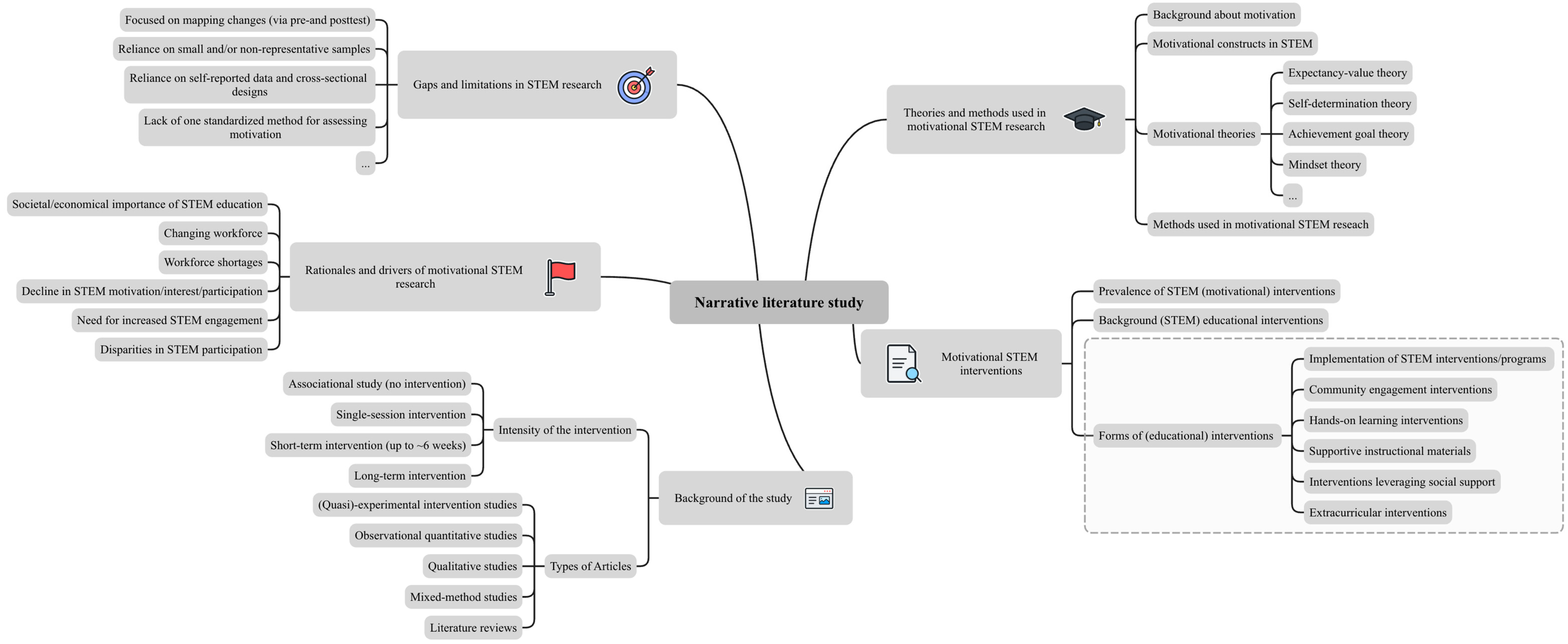
To elucidate the underlying rationales and drivers of motivation-focused STEM research and to identify and evaluate interventions designed to increase students’ motivation for STEM, a thematic analysis was conducted in NVivo, following Braun and Clarke’s (2006) six-phase framework. A thematic approach was well-suited for this narrative literature review because it enables transparent coding across heterogeneous study designs, revealing cross-cutting patterns and contextual contingencies while preserving interpretive depth (Braun & Clarke, 2006). The unit of analysis was the relevant analytic passage within each article rather than the article as a whole, enabling studies to receive multiple codes when they addressed more than one motivational mechanism or intervention type. All the articles were coded in full to prevent analytic insights from being constrained by predefined sections. The analysis employed an inductive coding strategy. In phase 1, all the authors engaged in iterative readings to achieve data familiarization and constructed a metadata table (Appendix A) to develop an overview of the included studies. In the second phase, initial codes were generated (Braun & Clarke, 2006). An example of an initial code is “interventions leveraging social support”, which was applied to the following passage from Mackenzie et al. (2024): “perceived science classroom social supports predict science expectancies and values, which in turn predict intended science subject selections” (p. 1084). The reliability of the codes was evaluated through the interrater reliability of a subset of the data. One researcher coded all 31 articles, whereas an additional researcher independently coded 10 articles to assess consistency. The comparison resulted in a kappa value of 0.91, which is considered “almost perfect agreement” (Cohen, 1968; Landis & Koch, 1977). The third phase focused on developing themes in direct alignment with the study’s aim to elucidate the underlying rationales and drivers of motivation-focused STEM research and to identify and evaluate interventions designed to increase students’ motivation for STEM. The finalized codes were organized into four overarching categories: (1) rationales and drivers of motivational STEM research; (2) theories and methods used in motivational STEM research; (3) motivational STEM interventions; and (4) gaps and limitations in STEM research. Categories 1 and 2 were used to address the rationales and drivers of motivation-focused STEM research. Categories 3 and 4 were used to identify existing motivational STEM interventions and to examine their reported effectiveness. Each theme comprised several analytically distinct subthemes that captured more fine-grained patterns in the data. For example, within the theme “motivational STEM interventions”, subthemes reflected the different types of motivation-focused interventions identified across studies, such as community engagement interventions, hands-on learning approaches, extracurricular interventions, etc. To enhance transparency and navigability, a graphical overview of themes and subthemes is provided in Appendix B.1, alongside a codebook in Appendix B.2. As an illustration, the aforementioned code was assigned to the category “interventions leveraging social support”, nested within forms of (educational) interventions, and ultimately within the higher-order theme of motivational STEM interventions. In the fourth phase, these themes were reviewed. Internal homogeneity was examined to ensure coherence within the themes, whereas external heterogeneity confirmed that the themes were sufficiently distinct from one another (Clark et al., 2021). The themes met these criteria, allowing the process to move to the fifth phase, where the themes were named and defined. This phase involved identifying the core of each theme. In the sixth and final phase, the results were presented concisely, coherently and logically to address the research aim.
3. Results
The search strategy yielded 463 initial records, 31 of which met all the inclusion criteria and were included in the final review. The selected body of literature comprised 24 quantitative studies, 2 qualitative studies, 4 mixed-method studies and 1 literature review. Together, these studies provided the empirical foundation for addressing two guiding research objectives of this review. First, they aimed to elucidate the underlying rationales and drivers of motivation-focused STEM research. Second, they sought to identify and evaluate interventions designed to enhance students’ motivation for STEM.
3.1. Rationales and Drivers of Motivational STEM Research
The reviewed literature highlighted four main factors that explained the rationales behind developing and implementing motivational STEM interventions. First, many studies highlighted a growing demand for STEM professionals and, in some cases, actual workforce shortages. This issue was often presented either as the starting point of the research or as the problem the proposed interventions aimed to address (Ball et al., 2017; Chittum et al., 2017; Chiu, 2023; Chiu et al., 2023; De Loof et al., 2019; Gülen et al., 2025; Jones et al., 2017; Joy et al., 2025; Mackenzie et al., 2024; McDavid et al., 2020; Murphy et al., 2019; Reiser et al., 2025). In addition, several studies emphasized an increasing imbalance between the supply of STEM professionals and the growing societal demand for STEM expertise (Ball et al., 2017; De Loof et al., 2019; Jones et al., 2017; Mackenzie et al., 2024; McDavid et al., 2020; Patall et al., 2017; Reiser et al., 2025). Second, a body of research has addressed persistent disparities in STEM participation, with a particular focus on the underrepresentation of women, students from lower socioeconomic backgrounds and individuals with a migration background. These studies emphasized the necessity of targeted interventions to promote more equitable participation and representation in STEM fields (Aeschlimann et al., 2016; Ball et al., 2017; Gao et al., 2025; Gülen et al., 2025; Joy et al., 2025; Puente et al., 2024; Reiser et al., 2024, 2025; Slobodin et al., 2024; Stupuriene et al., 2022). Third, motivational STEM interventions were often informed by a growing recognition of the strategic socioeconomic importance of STEM. In particular, STEM was seen as crucial for sustaining global competitiveness and responding to rapid societal and technological transformations (Aeschlimann et al., 2016; Chiu, 2023; Chiu et al., 2023; De Loof et al., 2019; Gao et al., 2025; Gülen et al., 2025; Jones et al., 2017; Mackenzie et al., 2024; Murphy et al., 2019; Ng & Chu, 2021; Puente et al., 2024; Reiser et al., 2025; Shin et al., 2019, 2022). For example, Ball et al. (2017) highlighted the pivotal role of STEM in maintaining the economic competitiveness of the United States, whereas Murphy et al. (2019) demonstrated how various nations increasingly leveraged STEM to address evolving global challenges. Finally, several studies emphasized that these interventions are also driven by the need to counteract declining levels of student motivation, engagement and interest in STEM disciplines (Joy et al., 2025; Kirchhoff et al., 2024; Laine et al., 2017; Mackenzie et al., 2024; Patall et al., 2017; Reiser et al., 2024, 2025; Shin et al., 2019, 2022; Truchly et al., 2019).
3.2. Interventions to Increase STEM Motivation
The thematic analysis indicated that interventions aimed at enhancing students’ motivation for STEM could be grouped into six categories across the included studies. These were: (1) the implementation of motivational STEM interventions and programs; (2) community engagement initiatives; (3) hands-on learning approaches; (4) the integration of supportive instructional materials; (5) extracurricular interventions; and (6) interventions leveraging social support. Before elaborating on these findings, it is essential to highlight an overarching finding of the analysis, namely, the context-dependent nature of motivational STEM interventions. The synthesis demonstrated that such interventions are implemented both within school- and classroom settings (e.g., Aeschlimann et al., 2016; Ball et al., 2017; Chen et al., 2024; Chiu, 2023; Chiu et al., 2023; De Loof et al., 2019; Gao et al., 2025; Gülen et al., 2025; Jones et al., 2017; Joy et al., 2025; Jungert et al., 2020; Mackenzie et al., 2024; Mollov et al., 2025; Patall et al., 2017; Reiser et al., 2024, 2025; Shin et al., 2019, 2022; Slobodin et al., 2024; Stupuriene et al., 2022; Tang et al., 2024; Truchly et al., 2019) and in out-of-school environments (e.g., Chittum et al., 2017; Kirchhoff et al., 2024; Laine et al., 2017; Mackenzie et al., 2024; McDavid et al., 2020; Ng & Chu, 2021; Puente et al., 2024; Rubach & Bonanati, 2021; Schiefer et al., 2021).
In addition, the analysis revealed that the intensity and duration of these interventions vary both across and within these two contexts. Within school and classroom contexts, the reviewed studies displayed heterogeneity in terms of intervention design and intensity. Several studies implemented multisession or long-term interventions, often spanning multiple weeks or months and involving repeated instructional activities (e.g., Ball et al., 2017; Chen et al., 2024; Chiu, 2023; Chiu et al., 2023; Gülen et al., 2025; Mollov et al., 2025; Patall et al., 2017; Reiser et al., 2024, 2025; Shin et al., 2019, 2022; Tang et al., 2024). For example, Mollov et al. (2025) implemented a 32-h program, Gülen et al. (2025) delivered a 12-week intervention, Reiser et al. (2024, 2025) conducted five 90-min sessions, and Tang et al. (2024) implemented an 18-week intervention comprising multiple weekly lessons. By contrast, other classroom-based interventions were of shorter duration or only minimally specified in terms of intensity (e.g., Jones et al., 2017; Stupuriene et al., 2022; Truchly et al., 2019). Importantly, differences in intervention intensity and duration were associated with differences in reported effectiveness. Longer and more intensive interventions more often produced positive motivational outcomes, as discussed in the sections that follow. In contrast to these structured designs, several studies did not introduce a discrete intervention but instead examined associations between students’ STEM motivation and factors such as teaching practices or social support (e.g., Aeschlimann et al., 2016; De Loof et al., 2019; Joy et al., 2025; Jungert et al., 2020; Slobodin et al., 2024).
A similar pattern of variability emerged in out-of-school contexts. There, the intensity of initiatives ranged from brief, single-session activities to extended, long-term programs, alongside several non-interventional research designs. Some extracurricular or outreach interventions consisted of relatively short engagements, such as a single 180-min session or a brief simulation-based activity (e.g., Kirchhoff et al., 2024; Ng & Chu, 2021). Others involved more sustained participation, including weekly 90-min sessions over several weeks, full-year programs, or approximately 30 h of instruction delivered over a 13-week period (e.g., Chittum et al., 2017; Laine et al., 2017; McDavid et al., 2020; Schiefer et al., 2021). Importantly, differences in program design and intensity were accompanied by differences in motivational outcomes. Multiweek interventions that offered repeated opportunities for engagement were more likely to produce motivational gains. In contrast, skill-focused or short-duration initiatives mainly enhanced inquiry competencies without affecting broader motivational constructs. Finally, several out-of-school studies did not implement an intervention. Instead, they used longitudinal or cross-sectional survey designs to examine associations between variables such as social support, motivational beliefs, and academic outcomes (e.g., Mackenzie et al., 2024; Puente et al., 2024; Rubach & Bonanati, 2021).
Taken together, these findings underscore that both the educational context and the intensity of implementation are critical for interpreting the effectiveness of motivational STEM interventions. The following sections therefore discuss the six analytically derived intervention categories with these considerations in mind.
3.2.1. The Implementation of Motivational STEM Interventions and Programs
Motivational STEM interventions are often implemented in school and classroom settings. They encompass a wide range of approaches, including utility value (UV) interventions, competence-based curricula, robotics and coding programs and design-based instructional models (Gülen et al., 2025; Mollov et al., 2025; Reiser et al., 2024, 2025; Shin et al., 2019, 2022; Tang et al., 2024). UV interventions aim to enhance students’ motivation by strengthening their perceptions of the relevance and usefulness of STEM subjects (Mackenzie et al., 2024; Shin et al., 2019). In the studies by Shin et al. (2019, 2022), a UV intervention lasting approximately 280 min was delivered across seven classroom sessions. This intervention increased students’ perceived personal and communal relevance of STEM and fostered short-term interest. Although UV interventions are relatively low-cost and initially effective (Mackenzie et al., 2024), their impact often attenuates within six months in the absence of sustained curricular integration (Shin et al., 2022).
In contrast, more intensive and extended classroom-based programs generally yielded stronger motivational outcomes. These included design-based (≈450 min), competence-oriented (≈1920 min) and robotics-focused interventions (≈1680 min) implemented over several weeks or months (Gülen et al., 2025; Mollov et al., 2025; Reiser et al., 2024, 2025; Tang et al., 2024). Design-based learning approaches are instructional methods in which students design solutions to authentic, real-world problems (Reiser et al., 2024). These approaches have been shown to significantly enhance intrinsic motivation among students aged 10–14 years compared with traditional science and biology instruction, with particularly strong effects for girls (Reiser et al., 2024, 2025). Similarly, Gülen et al. (2025) demonstrated that a twelve-week robotics and coding program implemented with seventh-grade students in a Turkish girls’ school led to significantly higher levels of STEM motivation, attitudes and career aspirations relative to a control group. Comparable benefits were reported for a competence-based STEM program integrating theoretical instruction with Arduino-based project work, with the largest motivational gains observed among students with lower initial performance levels (Mollov et al., 2025). Finally, qualitative evidence from Tang et al. (2024) suggested that self-selected STEM projects promoted motivation by enabling students to engage with real-world problems and contribute meaningfully to their communities. Taken together, these findings suggest that while lower-intensity interventions can yield short-term motivational gains, more sustained and intensive interventions are more likely to affect students’ motivation.
3.2.2. Community Engagement Initiatives
Another practice involves integrating community engagement into classroom activities, which has been shown to increase students’ sense of autonomy, relatedness and competence (Chiu et al., 2023). These psychological needs are drivers of increased interest in STEM subjects and the strengthening of STEM identity (Chiu et al., 2023). While these initiatives are theoretically associated with promoting autonomous motivation, further empirical research is necessary to conclusively confirm this link (Chiu et al., 2023). Nonetheless, preliminary support for this notion comes from qualitative research by Tang et al. (2024). They reported that students were motivated to engage in self-selected STEM projects because these projects allowed them to address local problems. This motivation was grounded in the students’ desire to address STEM-related challenges they had identified within their own communities (Tang et al., 2024).
3.2.3. Hands-On Learning Approaches
Hands-on learning approaches constitute a frequently used strategy to enhance students’ motivation for STEM. This approach actively involves students in practical activities, such as physical computing projects or simulations of real-world scenarios (Ng & Chu, 2021; Stupuriene et al., 2022). However, the reviewed studies reveal considerable variation in both the nature of hands-on activities and their motivational effectiveness. For example, short, highly focused interventions (such as a single 1.5-h flight simulation) were found to stimulate motivation primarily through social mechanisms (Ng & Chu, 2021). In contrast, more extended or repeated implementations, such as maker-based activities embedded across multiple science units, were associated with increases in self-efficacy and interest in STEM careers but did not report effects on motivation (Chen et al., 2024). Other studies reported more nuanced or limited effects. For example, Laine et al. (2017) reported no significant differences in overall STEM interest after a year-long inquiry-based mobile learning intervention, despite students identifying hands-on activities, autonomy and digital tools as engaging features. Similarly, Stupuriene et al. (2022) reported that hands-on ecological engineering projects were particularly motivating for students who already held positive attitudes toward technology, suggesting that prior dispositions moderated intervention effects. Finally, Reiser et al. (2024) demonstrated that design-based, hands-on learning yielded significant gains in intrinsic motivation, especially among girls, with initial motivation and cognitive ability further shaping outcomes. Taken together, these findings suggest that the motivational impact of hands-on learning depends less on the mere presence of practical activities and more on their intensity, duration, pedagogical integration and alignment with learners’ initial characteristics and social context.
3.2.4. Integration of Supportive Instructional Materials
A further category of motivational STEM interventions centers on the integration of educational technologies and supportive instructional materials. Technology-based approaches include computing interventions and virtual laboratory environments (Ball et al., 2017; Truchly et al., 2019). While computing-focused interventions have shown small positive effects on students’ intrinsic value toward STEM, these effects have generally not reached statistical significance (Ball et al., 2017). Virtual laboratories appear more promising, particularly when embedded within structured self-directed learning frameworks. For example, Truchly et al. (2019) reported significant gains in knowledge acquisition alongside more positive emotional experiences. However, evidence regarding their direct and sustained effects on student motivation remains inconclusive (Truchly et al., 2019). Similarly, the use of supportive STEM-focused instructional materials as standalone interventions has yielded mixed results. Jones et al. (2017) reported that such materials did not lead to significant increases in students’ motivation, although modest improvements in perceived competence were observed.
3.2.5. Extracurricular Interventions
Another approach to increasing students’ motivation and interest in STEM lies in extracurricular activities and programs (Chittum et al., 2017; Kirchhoff et al., 2024; McDavid et al., 2020; Ng & Chu, 2021; Schiefer et al., 2021). These programs often aim to strengthen motivational factors, such as “self-efficacy, value, relatedness and interest” (Murphy et al., 2019, p. 314). A hallmark of many of these initiatives is inquiry-based learning. This pedagogical strategy engages students in active exploration and allows them to assume the role of researchers as they uncover connections within phenomena (Kirchhoff et al., 2024; Laine et al., 2017; Ng & Chu, 2021; Schiefer et al., 2021). This approach takes diverse forms, such as structured inquiry models (Kirchhoff et al., 2024), scientific inquiry cycles (Schiefer et al., 2021) and mobile inquiry-based environments (Laine et al., 2017). Research on the effectiveness of extracurricular programs presents mixed findings. For example, Chittum et al. (2017) demonstrated that Studio STEM participants achieved significantly higher scores in terms of college aspirations, attainment value, interest value, utility value and competence beliefs than their peers did. Similarly, Schiefer et al. (2021) found that the Young Researchers Program effectively enhanced students’ epistemic beliefs and inquiry-related skills. However, it had a limited impact on motivational variables such as intrinsic motivation and self-concept. Laine et al. (2017) reported that mobile inquiry-based learning initially decreased interest in physics and chemistry before it stabilized, but its effect on motivation remained inconclusive. Kirchhoff et al. (2024) revealed that while structured inquiry outreach laboratories did not enhance mastery goals or psychological interest, they mitigated negative motivational outcomes. The mixed motivational outcomes of extracurricular STEM programs can be attributed primarily to differences in program design and duration. Programs that reported clear motivational gains, such as Studio STEM (Chittum et al., 2017), were implemented over multiple weeks and provided repeated opportunities for engagement, agency and value internalization. In contrast, interventions with a strong focus on skill development rather than motivation, such as the Young Researchers Program (Schiefer et al., 2021), have mainly improved inquiry competencies but have had limited effects on broader motivational constructs. Very short or one-off interventions, including the single-session outreach laboratory studied by Kirchhoff et al. (2024), were insufficient to influence motivation.
When extracurricular programs are compared with school-based interventions, evidence suggests that both have distinct benefits. McDavid et al. (2020) reported that an after-school STEM program fostered greater autonomy and reduced controlled motivation compared with a school-based counterpart. However, it had limited effects on self-determined motivation and psychological need satisfaction. Similarly, Kirchhoff et al. (2024) reported that students in outreach science laboratories experienced greater competence and relatedness and less pressure than those in traditional school settings. However, overall motivational variables did not differ significantly.
3.2.6. Interventions Leveraging Social Support
A final category of motivational STEM interventions focuses on leveraging social support mechanisms within and beyond school contexts (e.g., Aeschlimann et al., 2016; Chiu, 2023; De Loof et al., 2019; Gao et al., 2025; Joy et al., 2025; Jungert et al., 2020; Mackenzie et al., 2024; Patall et al., 2017; Puente et al., 2024; Rubach & Bonanati, 2021; Slobodin et al., 2024). Social support is commonly defined as the perceived availability of care, assistance and affirmation derived from interpersonal relationships (Barrera, 2000; Cutrona & Russell, 1983; De Loof et al., 2019). Across the reviewed studies, social support emerges as a meaningful motivational mechanism in STEM education, although it is conceptualized and operationalized through different theoretical perspectives.
In classroom-based interventions, grounded in self-determination theory, needs-supportive teaching practices have been shown to enhance students’ experiences of autonomy, relatedness and competence. These experiences are associated with higher levels of motivation, interest and STEM identity development (Chiu, 2023; De Loof et al., 2019; Patall et al., 2017). An important consideration is that Patall et al. (2017) reported that the cumulative autonomy-supportive practices were more effective than isolated strategies. These practices included offering meaningful choices and minimizing control of instructional routines. Although this study did not directly establish whether increased need for support translated into heightened motivation, converging evidence from other research supports this theoretical link. Specifically, Joy et al. (2025) reported that when teachers promoted inclusive perceptions of STEM ability, particularly for historically underrepresented groups, students reported higher levels of basic psychological need satisfaction. This, in turn, predicted greater intrinsic motivation. Further evidence indicates that supporting adolescents’ basic psychological needs is associated with increased motivation in STEM domains (De Loof et al., 2019). In addition to these quantitative findings, qualitative studies highlight the importance of supportive learning environments. These environments are characterized by positive teacher-student relationships, teacher responsiveness and classroom climates in which students feel respected and psychologically safe (Gao et al., 2025). In addition to needs-supportive practices grounded in self-determination theory, other forms of social support also contribute to fostering students’ motivation in STEM contexts. Teacher enthusiasm, for example, has been shown to enhance students’ intrinsic motivation as well as their self-efficacy and task value (Jungert et al., 2020; Mackenzie et al., 2024). In addition, social support from both teachers and peers is indirectly associated with adolescents’ intentions to pursue science through its positive effects on self-efficacy and task value (Mackenzie et al., 2024). Peer support, in particular, can reinforce engagement in STEM by fostering a collaborative learning environment characterized by shared academic experiences (Mackenzie et al., 2024; Ng & Chu, 2021).
Finally, parental support represents an additional form of social support for fostering students’ motivation in STEM. Across studies, parental involvement has been shown to provide emotional and practical resources that positively shape students’ motivational and academic outcomes (Jungert et al., 2020; Mackenzie et al., 2024; Puente et al., 2024; Rubach & Bonanati, 2021; Slobodin et al., 2024). Parental enthusiasm for STEM subjects is positively associated with students’ intrinsic motivation (Jungert et al., 2020), whereas academic support at home has been linked to enhanced intrinsic motivation and more favorable attitudes toward mathematics (Rubach & Bonanati, 2021). Active parental engagement in science-related activities further strengthens students’ motivation in science (Puente et al., 2024). Furthermore, parental support has been shown to influence adolescents’ autonomous motivation when high school majors are chosen, affecting both the STEM and non-STEM pathways (Slobodin et al., 2024). Importantly, such support does not require specialized training; rather, it requires genuine interest, enthusiastic discussions and shared activities.
3.2.7. Considerations
Across the reviewed literature, six categories of motivational STEM interventions were identified. Although they are described here as distinct, individual approaches, they can, and frequently are, be implemented in combination (e.g., Chiu et al., 2023; Reiser et al., 2024, 2025; Stupuriene et al., 2022; Truchly et al., 2019). This is illustrated by several of the included studies. For example, Chiu et al. (2023) combined community engagement and design-based learning within their intervention, whereas Reiser et al. (2024, 2025) employed both cross-domain and design-based elements in the intervention design. In addition, several studies highlighted the importance of timing in the implementation of school-based interventions. Early implementation, particularly during early adolescence, plays a pivotal role in the design and effectiveness of interventions aimed at increasing STEM motivation (Shin et al., 2022). Research has highlighted the value of initiating these efforts early (Ball et al., 2017; Chiu et al., 2023; Shin et al., 2019, 2022), as early interventions can slow the downward trajectory often observed in later stages of academic development (Shin et al., 2022). Another consideration when implementing interventions is the provision of sustained support and ongoing execution. This pattern is well illustrated by the study of Shin et al. (2022). They showed that although utility value interventions are effective, their impact often diminishes within six months without sustained curricular integration. This underscores the need for continued support to ensure long-term effectiveness. Finally, overall, research has shown that extracurricular programs and interventions could complement formal education (Schiefer et al., 2021). However, their impact on motivation has remained limited (Kirchhoff et al., 2024; McDavid et al., 2020), indicating room for improvement in designing interventions that effectively address motivational outcomes. Collectively, these considerations underscore that the effectiveness of motivational STEM interventions depends not only on their content but also on how, when and in what combinations they are implemented.
4. Discussion
4.1. Summary of Findings
This review aimed to address two research questions: (1) What rationales and drivers underpin motivational STEM research? (2) What types of interventions have been implemented to foster students’ motivation for STEM and what is currently known about their effectiveness? To address the first research question, a narrative synthesis of 31 studies identified four drivers of motivation-focused STEM research. These were workforce demand and perceived shortages (e.g., Ball et al., 2017; De Loof et al., 2019; McDavid et al., 2020); persistent inequities in STEM participation (e.g., Aeschlimann et al., 2016; Puente et al., 2024; Slobodin et al., 2024); the strategic socioeconomic importance of STEM (e.g., Murphy et al., 2019; Shin et al., 2019, 2022); and concerns about declining student motivation and engagement over time (e.g., Laine et al., 2017; Kirchhoff et al., 2024). Together, these drivers position student motivation as both an educational outcome and a broader societal and policy concern.
In response to the second research question, the thematic analysis identified six distinct categories: (1) motivational STEM interventions and programs; (2) community engagement initiatives; (3) hands-on learning approaches; (4) integration of supportive instructional materials; (5) extracurricular interventions; and (6) interventions leveraging social support. Across categories, intervention effectiveness depended less on context alone (school-based versus out-of-school) and more on implementation features, particularly intensity, duration and pedagogical integration. First, school-based motivational STEM programs generally showed stronger motivational effects when implemented over extended periods (Gülen et al., 2025; Mollov et al., 2025; Reiser et al., 2024, 2025; Shin et al., 2019, 2022). Second, community engagement initiatives appeared theoretically promising because they supported basic psychological needs and strengthened perceived relevance and STEM identity. However, empirical evidence for direct effects on motivation remained limited, indicating a plausible but still underexplored mechanism (Chiu et al., 2023; Tang et al., 2024). Third, hands-on learning approaches yielded heterogeneous outcomes (Ng & Chu, 2021; Chen et al., 2024; Laine et al., 2017). The mixed findings suggest that hands-on activities are not inherently motivational; rather, their effectiveness depends on sustained engagement, pedagogical coherence and alignment with learners’ characteristics and social contexts (Reiser et al., 2024; Stupuriene et al., 2022). Fourth, interventions centered on educational technologies and supportive instructional materials showed generally small or inconsistent motivational effects. For example, computing interventions yielded limited gains (Ball et al., 2017), virtual laboratories were linked more to positive learning experiences than to sustained motivational change (Truchly et al., 2019) and standalone instructional materials produced mixed outcomes (Jones et al., 2017). Fifth, extracurricular interventions also produced mixed motivational effects. Programs implemented over longer periods with repeated opportunities for engagement and agency tended to report clearer motivational benefits (Chittum et al., 2017), whereas short or one-off initiatives primarily influenced situational experiences (Kirchhoff et al., 2024). Finally, social support emerged as a cross-contextual mechanism operating within and beyond school settings. Support from teachers, peers and parents was associated with motivational outcomes, often indirectly through self-efficacy, task value, and psychological need satisfaction (De Loof et al., 2019; Jungert et al., 2020; Mackenzie et al., 2024; Puente et al., 2024). Converging evidence further indicated that sustained, needs-supportive practices and inclusive learning climates were key levers for fostering students’ motivational experiences in STEM (Chiu, 2023; Joy et al., 2025; Gao et al., 2025).
Taken together, the effectiveness of motivational STEM interventions depends not only on which intervention is implemented but also on how, for whom and under which contextual and implementation conditions it is delivered. To support interpretability, Table 1 summarizes the intervention categories, their core characteristics and key empirical patterns.
Table 1.
Interventions, Descriptions and Empirical Findings.
4.2. Critical Reflections
The first reflection concerns the observation that most included studies focused on mapping changes in motivation, interest or skills through pre- and post-tests in both formal and informal educational environments (Ball et al., 2017; Chen et al., 2024; Chiu et al., 2023; De Loof et al., 2019; Kirchhoff et al., 2024; Reiser et al., 2024; Schiefer et al., 2021; Shin et al., 2019, 2022; Truchly et al., 2019). Our search strategy imposed no restrictions on study design, yet the resulting evidence base was largely quantitative. This likely reflects prevailing methodological preferences in STEM motivation research rather than our inclusion criteria. While this quantitative approach provides insight into temporal trends, it neglects the experiences and perceptions of participants. This lack of attention to qualitative, contextual data limits the understanding of the complex dynamics in informal and formal learning environments. Another observation concerns the wide range of instruments used to measure motivation across the included studies. These included the situational motivation scale (Stupuriene et al., 2022), the academic motivation scale (Jungert et al., 2020), the intrinsic motivation inventory (Jones et al., 2017), the academic self-regulation questionnaire (McDavid et al., 2020) and the Kurzskala intrinsischer motivation (Reiser et al., 2024). This underscores the lack of standardized methods for assessing STEM motivation, which hinders the ability to draw meaningful comparisons and synthesize findings. A final reflection concerns the growing importance of digital technologies in STEM education. The reviewed studies highlighted the potential of new technologies and underscored the need for continued research to optimize their implementation and improve student outcomes (Ball et al., 2017; Chen et al., 2024; Chiu et al., 2023; Laine et al., 2017; McDavid et al., 2020; Ng & Chu, 2021; Stupuriene et al., 2022; Truchly et al., 2019). As online learning environments and virtual simulations become more prevalent, it is crucial to examine their impact on student motivation and learning outcomes.
4.3. Limitations and Future Research
This review presents two sets of limitations: those inherent to the narrative approach and those arising from the included studies. First, as a narrative literature review, the synthesis is susceptible to selection bias in study inclusion (Ferrari, 2015). Future work could mitigate this by preregistering protocols and conducting systematic reviews or meta-analyses to ensure more reproducible search procedures and provide quantifiable effect estimates. Second, the scope of this review was restricted to peer-reviewed journal articles, excluding gray literature, conference proceedings and unpublished studies. Although this decision strengthens the academic rigor of the corpus, it may exclude emergent or context-specific evidence. Subsequent reviews should therefore adopt broader search frames (including gray literature) to capture a more comprehensive intervention landscape. Notwithstanding these constraints, narrative synthesis remains valuable for integrating heterogeneous designs in an evolving field such as STEM motivation (Ferrari, 2015).
Several recurring limitations also emerged within the included studies. Many relied on small or nonrepresentative samples, constraining generalizability and limiting subgroup analyses (e.g., Laine et al., 2017; Mackenzie et al., 2024; Rubach & Bonanati, 2021; Stupuriene et al., 2022). Small samples further reduced the statistical power and increased the risk of attrition bias (Toh & Watt, 2022). Future research should employ larger, more diverse, multisite samples to increase external validity and power (Mackenzie et al., 2024; Rubach & Bonanati, 2021; Shin et al., 2019; Stupuriene et al., 2022). A second limitation is the heavy reliance on self-reported outcomes (Chen et al., 2024; Chiu, 2023; Jungert et al., 2020; Shin et al., 2022). As Chiu (2023) highlighted, this “may threaten the validity of the data” (p. 104). Future studies should triangulate self-reports with behavioral indicators (e.g., course-taking patterns, persistence, etc.), performance data and administrative records. Third, many investigations have used cross-sectional designs (e.g., Aeschlimann et al., 2016; Mackenzie et al., 2024; McDavid et al., 2020). This design captures data at a single point in time rather than tracking changes over an extended period (Clark et al., 2021). While this approach enables the examination of associations between variables, it has notable limitations. As Aeschlimann et al. (2016) noted, “a cross-sectional study does not allow for reliable conclusions about causal mechanisms” (p. 39), whereas Mackenzie et al. (2024) further emphasized that cross-sectional designs “do not allow for determination of the direction of effects” (p. 1089). Moreover, cross-sectional research fails to assess the long-term impact of STEM interventions, thereby limiting their effectiveness in evaluating educational outcomes. An avenue for further investigation is the need for longitudinal research. Several researchers have emphasized the value of longitudinal approaches for understanding how STEM motivation develops over time and is shaped by contextual factors (Chiu et al., 2023; Mackenzie et al., 2024; McDavid et al., 2020; Ng & Chu, 2021; Toh & Watt, 2022).
4.4. Recommendations for Practice and Policy
Notably, informed instructional design, integrating making into education, utilizing competence-based curricula, robotics and coding interventions, etc., has been shown to increase motivation/interest in STEM careers and science-related jobs (Aeschlimann et al., 2016; Chen et al., 2024; Gülen et al., 2025; Mollov et al., 2025; Stupuriene et al., 2022). This information can be leveraged by policymakers to establish projects on the basis of these findings, motivating and engaging more students in pursuing STEM careers. A consideration is that motivating or piquing interest does not necessarily imply effective pursuit; however, it may increase the likelihood. As a first recommendation, and as also highlighted in Section 3.2.7, it is crucial for policymakers and educators to consider the timing of intervention implementation when designing initiatives aimed at increasing STEM motivation. Research underscores the importance of early implementation in determining the effectiveness of such interventions (Ball et al., 2017; Chiu et al., 2023; Shin et al., 2019, 2022). Another consideration concerns the provision of sustained support and ongoing implementation. This is illustrated by the work of Shin et al. (2022), which demonstrated that although utility value interventions can be effective, their impact often diminishes within six months in the absence of continued curricular integration.
Another recommendation pertains to social support. Parental and teacher enthusiasm have been shown to increase students’ motivation for STEM subjects (Jungert et al., 2020; Rubach & Bonanati, 2021). This increased motivation is associated with improved STEM performance over the academic year (Jungert et al., 2020). This highlights the role that schools can play in supporting parents and teachers by encouraging their active involvement in their children’s learning at home (Rubach & Bonanati, 2021). The final recommendation pertains to extracurricular STEM projects. McDavid et al. (2020) reported that in-school environments are often associated with lower levels of self-determined motivation than are after-school STEM programs. This finding underscores the value of implementing such initiatives, as they appear to foster greater motivation in STEM learning. Moreover, their research suggests that the successful elements of these after-school programs can be adapted and integrated into school settings (McDavid et al., 2020). This presents an opportunity for policymakers and schools to enhance the educational experience by incorporating practices from extracurricular programs into the formal curriculum.
5. Conclusions
This narrative review synthesized findings from 31 studies to examine the drivers of motivation-focused STEM research and to identify and evaluate the effectiveness of interventions aimed at enhancing students’ motivation for STEM. The evidence indicates that this body of research is driven by workforce demands, persistent inequities in STEM participation, the strategic socioeconomic importance of STEM, and concerns about declining student motivation. Across the reviewed literature, six categories of motivational STEM interventions were identified. Across these categories, intervention effectiveness appeared to depend less on the educational setting and more on the design and implementation characteristics, including duration, intensity, pedagogical integration and alignment with students’ motivational needs. Compared with shorter interventions, more intensive and sustained motivational STEM programs were generally associated with stronger motivational effects. Community engagement and hands-on learning approaches showed heterogeneous outcomes, whereas technology-based interventions and supportive instructional materials yielded limited or inconsistent motivational effects. The results of the extracurricular programs displayed mixed findings, with motivational outcomes varying by program duration and intensity. Across contexts, social support was associated with motivational outcomes, often indirectly through self-efficacy, task value and psychological need satisfaction. Overall, the findings indicate that motivational outcomes in STEM education are shaped by a combination of intervention characteristics and contextual factors. By integrating evidence across diverse intervention types, this review provides a structured overview of current knowledge on motivation-focused STEM interventions and identifies key patterns and limitations that may inform future research and practice.
Author Contributions
C.K. and V.T. conceptualized the study and authored the introduction and methods section. They also developed the analytical framework. C.K. conducted the data analysis, specifically the thematic analysis of the included articles. C.K. and V.T. prepared the initial draft of the manuscript, and A.S. provided critical feedback. C.K. revised the manuscript for submission and edited all necessary components. The visualization, including the tables and figures were created by C.K. and V.T. Supervision was provided by V.T. All authors have read and agreed to the published version of the manuscript.
Funding
The authors are grateful to Helios and VUB Foundation for financial support of their research through the Hugo Thienpont STEAM-Chair.
Institutional Review Board Statement
Not applicable.
Informed Consent Statement
Not applicable.
Data Availability Statement
Not applicable, no new data were created or analyzed in this study.
Acknowledgments
The authors are grateful to Helios and VUB Foundation for financial support of their research through the Hugo Thienpont STEAM-Chair. They also thank master’s student Liese Vervaele for conducting the interrater reliability assessment.
Conflicts of Interest
The authors declare no conflicts of interest.
Abbreviations
The following abbreviations are used in this manuscript:
| STEM | Science, Technology, Engineering and Mathematics |
| U.S. | United States |
| UV | Utility value intervention |
| SDT | Self-determination theory |
Appendix A
Table A1.
Analysis/Metadata of Selected Studies.
Appendix B
Appendix B.1
Figure A1.
Visualization of Themes and Codes.
Appendix B.2
Table A2.
Codebook.
References
- Aeschlimann, B., Herzog, W., & Makarova, E. (2016). How to foster students’ motivation in mathematics and science classes and promote students’ STEM career choice. A study in Swiss high schools. International Journal of Educational Research, 79, 31–41. [Google Scholar] [CrossRef] [Scilit]
- Alali, R., & Wardat, Y. (2024). Enhancing student motivation and achievement in science classrooms through STEM education. STEM Education, 4, 82–105. [Google Scholar] [CrossRef] [Scilit]
- Amog, K., Pham, B., Courvoisier, M., Mak, M., Booth, A., Godfrey, C., Hwee, J., Straus, S. E., & Tricco, A. C. (2022). The web-based “Right Review” tool asks reviewers simple questions to suggest methods from 41 knowledge synthesis methods. Journal of Clinical Epidemiology, 147, 42–51. [Google Scholar] [CrossRef] [Scilit]
- Asher, M. W., Harackiewicz, J. M., Beymer, P. N., Hecht, C. A., Lamont, L. B., Else-Quest, N. M., Priniski, S. J., Thoman, D. B., Hyde, J. S., & Smith, J. L. (2023). Utility-value intervention promotes persistence and diversity in STEM. Proceedings of the National Academy of Sciences USA, 120(19), e2300463120. [Google Scholar] [CrossRef] [Scilit] [PubMed]
- Ball, C., Huang, K.-T., Cotten, S. R., & Rikard, R. V. (2017). Pressurizing the STEM pipeline: An expectancy-value theory analysis of youths’ STEM attitudes. Journal of Science Education and Technology, 26(4), 372–382. [Google Scholar] [CrossRef] [Scilit]
- Barrera, M., Jr. (2000). Social support research in community psychology. In Handbook of community psychology (pp. 215–245). Kluwer Academic Publishers. [Google Scholar] [CrossRef] [Scilit]
- Bayanova, A. R., Orekhovskaya, N. A., Sokolova, N. L., Shaleeva, E. F., Knyazeva, S. A., & Budkevich, R. L. (2023). Exploring the role of motivation in STEM education: A systematic review. Eurasia Journal of Mathematics, Science and Technology Education, 19(4), em2250. [Google Scholar] [CrossRef] [Scilit]
- Booth, A., Papaioannou, D., & Sutton, A. (2012). Systematic approaches to a successful literature review. Sage. [Google Scholar]
- Bottia, M. C., Stearns, E., Mickelson, R. A., & Moller, S. (2018). Boosting the numbers of STEM majors? The role of high schools with a STEM program. Science Education, 102(1), 85–107. [Google Scholar] [CrossRef] [Scilit]
- Braun, V., & Clarke, V. (2006). Using thematic analysis in psychology. Qualitative Research in Psychology, 3, 77–101. [Google Scholar] [CrossRef] [Scilit]
- Chen, K., Chu, S. L., Quek, F., & Schlegel, R. J. (2024). Integrating making with authentic science classes: An approach and evidence. Journal of Science Education and Technology, 33(4), 479–492. [Google Scholar] [CrossRef] [Scilit]
- Chittum, J. R., Jones, B. D., Akalin, S., & Schram, Á. B. (2017). The effects of an afterschool STEM program on students’ motivation and engagement. International Journal of STEM Education, 4(1), 11. [Google Scholar] [CrossRef] [Scilit]
- Chiu, T. K. F. (2023). Using self-determination theory (SDT) to explain student STEM interest and identity development. Instructional Science, 52(1), 89–107. [Google Scholar] [CrossRef] [Scilit]
- Chiu, T. K. F., Ismailov, M., Zhou, X., Xia, Q., Au, C. K., & Chai, C. S. (2023). Using self-determination theory to explain how community-based learning fosters student interest and identity in integrated STEM education. International Journal of Science and Mathematics Education, 21(Suppl. 1), 109–130. [Google Scholar] [CrossRef] [Scilit]
- Clark, T., Foster, L., Sloan, L., & Bryman, A. (2021). Bryman’s social research methods (6th ed., pp. 113–137). Athenaeum Uitgeverij. [Google Scholar]
- Cohen, J. (1968). Weighted kappa: Nominal scale agreement provision for scaled disagreement or partial credit. Psychological Bulletin, 70(4), 213–220. [Google Scholar] [CrossRef] [Scilit]
- Cutrona, C., & Russell, D. (1983). The provisions of social relationships and adaptation to stress. In Advances in personal relationships (Vol. 1, pp. 37–67). JAI Press. [Google Scholar]
- Dalal, M., Carberry, A., Efe, S., James-Okeke, P., & Rogers, D. (2022). Collaboration instead of competition: Blending existing pre-college engineering programs for greater impact. In 2022 IEEE frontiers in education conference (FIE). IEEE. [Google Scholar] [CrossRef] [Scilit]
- Daniel, D. B. (2012). Promising principles: Translating the science of learning to educational practice. Journal of Applied Research in Memory and Cognition, 1(4), 251–253. [Google Scholar] [CrossRef] [Scilit]
- Deci, E. L., & Ryan, R. M. (2000). The ‘what’ and ‘why’ of goal pursuits: Human needs and the self-determination of behavior. Psychological Inquiry, 11(4), 227–268. [Google Scholar] [CrossRef] [Scilit]
- De Loof, H., Struyf, A., Boeve-de Pauw, J., & Van Petegem, P. (2019). Teachers’ motivating style and students’ motivation and engagement in STEM: The relationship between three key educational concepts. Research in Science Education, 51(1), 109–127. [Google Scholar] [CrossRef] [Scilit]
- Education Council. (2016). National STEM school education strategy 2016–2026 [Text]. Available online: https://www.education.gov.au/australian-curriculum/support-science-technology-engineering-and-mathematics-stem/national-stem-school-education-strategy-2016-2026 (accessed on 1 December 2025).
- European Commission. (2014). Horizon 2020 in brief: The EU framework programme for research & innovation. Publications Office of the European Union. [Google Scholar] [CrossRef]
- European Commission. (2015). Science education for responsible citizenship: Report to the European Commission of the expert group on science education. Publications Office of the European Union. [Google Scholar] [CrossRef]
- European Commission. (2025). Union of skills. Available online: https://commission.europa.eu/topics/eu-competitiveness/union-skills_en (accessed on 1 December 2025).
- Ferrari, R. (2015). Writing narrative style literature reviews. Medical Writing, 24(4), 230–235. [Google Scholar] [CrossRef] [Scilit]
- Ganann, R., Ciliska, D., & Thomas, H. (2010). Expediting systematic reviews: Methods and implications of rapid reviews. Implementation Science, 5(1), 56. [Google Scholar] [CrossRef] [Scilit] [PubMed]
- Gao, A. L., Carter, E., Kwok, P. K. P., Shima, L., & Singal, N. (2025). Engaging student voice in Rwandan secondary schools: Understanding factors supporting learning in STEM and future aspirations. British Educational Research Journal, 51, 2920–2941. [Google Scholar] [CrossRef] [Scilit]
- Green, A. (2024). Artificial intelligence and the changing demand for skills in the labour market (Vol. 14). OECD Artificial Intelligence Papers No. 14. OECD. [Google Scholar] [CrossRef] [Scilit]
- Großmann, N., & Wilde, M. (2020). Promoting interest by supporting learner autonomy: The effects of teaching behaviour in biology lessons. Research in Science Education, 50(5), 1763–1788. [Google Scholar] [CrossRef] [Scilit]
- Guo, J., Marsh, H. W., Parker, P. D., Morin, A. J. S., & Dicke, T. (2017). Extending expectancy-value theory predictions of achievement and aspirations in science: Dimensional comparison processes and expectancy-by-value interactions. Learning and Instruction, 49, 81–91. [Google Scholar] [CrossRef] [Scilit]
- Gülen, S., Dönmez, İ., Şengönül, F. B., Aslantaş, M., Saritaş, T., Sukenari, Ö., Eke, E., & Uçar, S. (2025). The effect of robotics and coding education on girls’ STEM motivation, attitude and career aspirations. SAGE Open, 15(3), 21582440251382631. [Google Scholar] [CrossRef] [Scilit]
- Han, J., & Kelley, T. R. (2022). STEM Integration through shared practices: Examining secondary science and engineering technology students’ concurrent think-aloud protocols. Journal of Engineering Design, 33(5), 343–365. [Google Scholar] [CrossRef] [Scilit]
- Hasanah, U. (2020). Key Definitions of STEM education: Literature review. Interdisciplinary Journal of Environmental and Science Education, 16(3), e2217. [Google Scholar] [CrossRef] [Scilit]
- Jelks, S. M. R., & Crain, A. M. (2020). Sticking with STEM: Understanding STEM career persistence among STEM bachelor’s degree holders. Journal of Higher Education, 91(5), 805–831. [Google Scholar] [CrossRef] [Scilit]
- Jones, L. C. R., McDermott, H. J., Tyrer, J. R., & Zanker, N. P. (2017). Future engineers: The intrinsic technology motivation of secondary school pupils. European Journal of Engineering Education, 43(4), 606–619. [Google Scholar] [CrossRef] [Scilit]
- Joy, A., Hartstone-Rose, A., Knox, J., Mathews, C. J., Cerda-Smith, J., & Mulvey, K. L. (2025). STEM ability perceptions, basic needs satisfaction, and intrinsic motivation in adolescents: The role of inclusive perceptions in self-determination. PLoS ONE, 20(3), e0318266. [Google Scholar] [CrossRef] [Scilit]
- Jungert, T., Levine, S., & Koestner, R. (2020). Examining how parent and teacher enthusiasm influences motivation and achievement in STEM. Journal of Educational Research, 113(4), 275–282. [Google Scholar] [CrossRef] [Scilit]
- Kirchhoff, T., Wilde, M., Randler, C., & Grossmann, N. (2024). Are you learning or performing? A comparison of students’ goal orientation during experimentation at an outreach science laboratory and at school using the CEAS model. Learning and Instruction, 93, 101972. [Google Scholar] [CrossRef] [Scilit]
- Laine, E., Veermans, M., Lahti, A., & Veermans, K. (2017). Generation of student interest in an inquiry-based mobile learning environment. Frontline Learning Research, 5(4), 42–60. [Google Scholar] [CrossRef] [Scilit]
- Landis, J. R., & Koch, G. G. (1977). The measurement of observer agreement for categorical data. Biometrics, 33(1), 159. [Google Scholar] [CrossRef] [Scilit]
- Lazowski, R. A., & Hulleman, C. S. (2016). Motivation interventions in education: A meta-analytic review. Review of Educational Research, 86(2), 602–640. [Google Scholar] [CrossRef] [Scilit]
- Mackenzie, E., Holmes, K., Berger, N., & Cole, C. (2024). Adolescents’ intentions to study science: The role of classroom-based social support, task values, and self-efficacy. Research in Science Education, 54(6), 1075–1093. [Google Scholar] [CrossRef] [Scilit]
- Martín-Páez, T., Aguilera, D., Perales-Palacios, F. J., & Vílchez-González, J. M. (2019). What are we talking about when we talk about STEM education? A review of literature. Science Education, 103(4), 799–822. [Google Scholar] [CrossRef] [Scilit]
- McDavid, L., Carleton Parker, L., Li, W., Bessenbacher, A., Randolph, A., Harriger, A., & Harriger, B. (2020). The effect of an in-school versus after-school delivery on students’ social and motivational outcomes in a technology-based physical activity program. International Journal of STEM Education, 7(1), 28. [Google Scholar] [CrossRef] [Scilit]
- Millar, V. (2020). Trends, issues and possibilities for an interdisciplinary STEM curriculum. Science & Education, 29, 929–948. [Google Scholar] [CrossRef] [Scilit]
- Mollov, M., Stoitsov, D., & Stoitsov, G. (2025). Statistical analysis of academic achievement and intrinsic motivation in stem students educated through a competency-based approach. Mathematics and Informatics, 68(3), 257–283. [Google Scholar] [CrossRef] [Scilit]
- Mongeon, P., & Paul-Hus, A. (2016). The journal coverage of Web of Science and Scopus: A comparative analysis. Scientometrics, 106(1), 213–228. [Google Scholar] [CrossRef] [Scilit]
- Murphy, S., MacDonald, A., Danaia, L., & Wang, C. (2019). An analysis of Australian STEM education strategies. Policy Futures in Education, 17(2), 122–139. [Google Scholar] [CrossRef] [Scilit]
- Nadelson, L. S., & Seifert, A. L. (2017). Integrated STEM defined: Contexts, challenges, and the future. The Journal of Educational Research, 110(3), 221–223. [Google Scholar] [CrossRef] [Scilit]
- National Academy of Sciences, National Academy of Engineering & Institute of Medicine. (2010). Rising above the gathering storm, revisited: Rapidly approaching category 5. National Academies Press. [Google Scholar] [CrossRef] [Scilit]
- National Science Board. (2024). The skilled technical workforce: Crafting America’s science & engineering enterprise (p. 2). National Science Foundation. Available online: https://nsf-gov-resources.nsf.gov/files/nsb-skilled-technical-workforce-factsheet.pdf?VersionId=xd9jM94RXayhxijjkfHB8VDnbfowPghR (accessed on 1 December 2025).
- Ng, D. T. K., & Chu, S. K. W. (2021). Motivating students to learn STEM via engaging flight simulation activities. Journal of Science Education and Technology, 30(5), 608–629. [Google Scholar] [CrossRef] [Scilit]
- NGSS Lead States. (2013). Next generation science standards: For states, by states (p. 18290). National Academies Press. [Google Scholar] [CrossRef] [Scilit]
- OECD. (2019). PISA 2018 results (Volume II): Where all students can succeed. OECD. [Google Scholar] [CrossRef] [Scilit]
- OECD. (2024). OECD digital economy outlook 2024 (Volume 2): Strengthening connectivity, innovation and trust. OECD Publishing. [Google Scholar] [CrossRef] [Scilit]
- Patall, E. A., Vasquez, A. C., Steingut, R. R., Trimble, S. S., & Pituch, K. A. (2017). Supporting and thwarting autonomy in the high school science classroom. Cognition and Instruction, 35(4), 337–362. [Google Scholar] [CrossRef] [Scilit]
- Playfoot, J., Nicola, C., & Salvadore, F. (2017). A new experiential model to innovate the STEM learning processes. In INTED2017 proceedings (pp. 4145–4153). IATED. [Google Scholar] [CrossRef] [Scilit]
- Pokropek, A. (2024). STEM competencies, challenges, and measurements: A literature review (G. Mazzeo Ortolani, Z. Karpinksi, & F. Biagi, Eds.). Publications Office of the European Union. [Google Scholar] [CrossRef]
- Potvin, P., & Hasni, A. (2014). Analysis of the decline in interest towards school science and technology from grades 5 through 11. Journal of Science Education and Technology, 23(6), 784–802. [Google Scholar] [CrossRef] [Scilit]
- Puente, K., Simpkins, S. D., & Eccles, J. S. (2024). Longitudinal associations between Latine parents’ support and their adolescents’ science motivation and STEM career expectations. Journal of Adolescence, 96(6), 1182–1197. [Google Scholar] [CrossRef] [Scilit]
- Reiser, M., Binder, M., & Weitzel, H. (2024). Effects of design-based learning arrangements in cross-domain, integrated STEM lessons on the intrinsic motivation of lower secondary pupils. Education Sciences, 14(6), 607. [Google Scholar] [CrossRef] [Scilit]
- Reiser, M., Binder, M., & Weitzel, H. (2025). Influence of a design-based approach in integrated STEM lessons combining biology and engineering on the intrinsic motivation of secondary school pupils. Cogent Education, 12(1), 2469414. [Google Scholar] [CrossRef] [Scilit]
- Rosenzweig, E. Q., Harackiewicz, J. M., Priniski, S. J., Hecht, C. A., Canning, E. A., Tibbetts, Y., & Hyde, J. S. (2019). Choose your own intervention: Using choice to enhance the effectiveness of a utility-value intervention. Motivation Science, 5(3), 269–276. [Google Scholar] [CrossRef] [Scilit]
- Rozek, C. S., Svoboda, R. C., Harackiewicz, J. M., Hulleman, C. S., & Hyde, J. S. (2017). Utility-value intervention with parents increases students’ STEM preparation and career pursuit. Proceedings of the National Academy of Sciences USA, 114(5), 909–914. [Google Scholar] [CrossRef] [Scilit]
- Rubach, C., & Bonanati, S. (2021). The impact of parents’ home- and school-based involvement on adolescents’ intrinsic motivation and anxiety in math. Psychology in the Schools, 60(6), 1615–1635. [Google Scholar] [CrossRef] [Scilit]
- Ryan, R., & Deci, E. (2020). Intrinsic and extrinsic motivation from a self-determination theory perspective: Definitions, theory, practices, and future directions. Contemporary Educational Psychology, 61, 101860. [Google Scholar] [CrossRef] [Scilit]
- Sáinz, M., Fàbregues, S., Romano, M. J., & López, B.-S. (2022). Interventions to increase young people’s interest in STEM. A scoping review. Frontiers in Psychology, 13, 954996. [Google Scholar] [CrossRef] [Scilit]
- Schiefer, J., Stark, L., Gaspard, H., Wille, E., Trautwein, U., & Golle, J. (2021). Scaling up an extracurricular science intervention for elementary school students: It works, and girls benefit more from it than boys. Journal of Educational Psychology, 113(4), 784–807. [Google Scholar] [CrossRef] [Scilit]
- Senko, C. (2019). When do mastery and performance goals facilitate academic achievement? Contemporary Educational Psychology, 59, 101795. [Google Scholar] [CrossRef] [Scilit]
- Sharma, S., Choudhary, N., Zhao, D., Muntean, C. H., & Muntean, G. M. (2019). Improving students’ learning experience in a programming module with multimedia assisted materials and problem-based learning. In Edulearn19 proceedings, 11th international conference on education and new learning technologies (pp. 3010–3018). IATED Academy. [Google Scholar] [CrossRef] [Scilit]
- Shin, D. D., Lee, M., & Bong, M. (2022). Science utility value intervention for elementary school students: A six-month follow-up study. International Journal of Educational Research, 113, 101954. [Google Scholar] [CrossRef] [Scilit]
- Shin, D. D., Lee, M., Ha, J. E., Park, J. H., Ahn, H. S., Son, E., Chung, Y., & Bong, M. (2019). Science for all: Boosting the science motivation of elementary school students with utility value intervention. Learning and Instruction, 60, 104–116. [Google Scholar] [CrossRef] [Scilit]
- Slobodin, O., Samuha, T., Hannona-Saban, A., & Katz, I. (2024). When boys and girls make their first career decisions: Exploring the role of gender and field in high school major choice. Social Psychology of Education, 27(5), 2455–2478. [Google Scholar] [CrossRef] [Scilit]
- Stets, J. E., Brenner, P. S., Burke, P. J., & Serpe, R. T. (2017). The science identity and entering a science occupation. Social Science Research, 64, 1–14. [Google Scholar] [CrossRef] [Scilit]
- Stupuriene, G., Jevsikova, T., & Juskeviciene, A. (2022). Solving ecological problems through physical computing to ensure gender balance in STEM education. Sustainability, 14(9), 4924. [Google Scholar] [CrossRef] [Scilit]
- Tang, K.-S., McLure, F., Williams, J., & Donnelly, C. (2024). Investigating the role of self-selected STEM projects in fostering student autonomy and self-directed learning. Australian Educational Researcher, 51(5), 2355–2379. [Google Scholar] [CrossRef] [Scilit]
- Taylor, G., Jungert, T., Mageau, G. A., Schattke, K., Dedic, H., Rosenfield, S., & Koestner, R. (2014). A self-determination theory approach to predicting school achievement over time: The unique role of intrinsic motivation. Contemporary Educational Psychology, 39(4), 342–358. [Google Scholar] [CrossRef] [Scilit]
- Toh, L., & Watt, H. M. G. (2022). How do adolescent mathematical self-concept and values explain attainment of different kinds of STEM degrees in adulthood? Contemporary Educational Psychology, 69, 102057. [Google Scholar] [CrossRef] [Scilit]
- Truchly, P., Medvecky, M., Podhradsky, P., & El Mawas, N. (2019). STEM education supported by virtual laboratory incorporated in self-directed learning process. Journal of Electrical Engineering-Elektrotechnicky Casopis, 70(4), 332–344. [Google Scholar] [CrossRef] [Scilit]
- Van Den Hurk, A., Meelissen, M., & Van Langen, A. (2019). Interventions in education to prevent STEM pipeline leakage. International Journal of Science Education, 41(2), 150–164. [Google Scholar] [CrossRef] [Scilit]
- Vărzaru, A. A., & Bocean, C. G. (2024). Digital transformation and innovation: The influence of digital technologies on turnover from innovation activities and types of innovation. Systems, 12(9), 359. [Google Scholar] [CrossRef] [Scilit]
- World Economic Forum. (2025). The future of jobs report 2025 (p. 290). World Economic Forum. Available online: https://www.weforum.org/publications/the-future-of-jobs-report-2025/digest/ (accessed on 1 December 2025).
- Yeager, D. S., & Walton, G. M. (2011). Social-psychological interventions in education: They’re not magic. Review of Educational Research, 81(2), 267–301. [Google Scholar] [CrossRef] [Scilit]
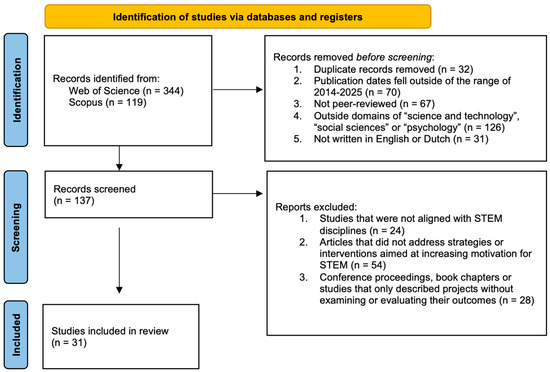
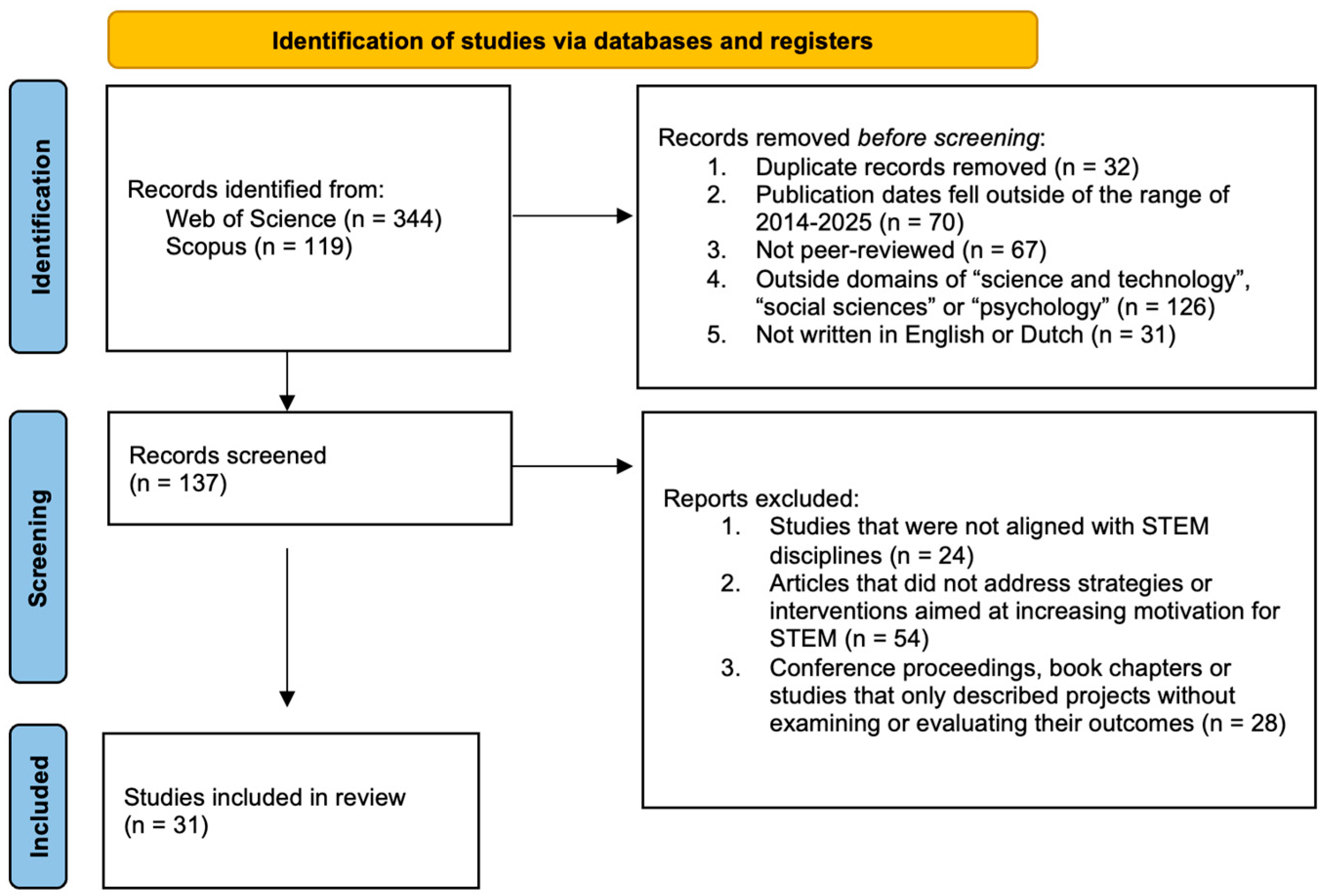

Disclaimer/Publisher’s Note: The statements, opinions and data contained in all publications are solely those of the individual author(s) and contributor(s) and not of MDPI and/or the editor(s). MDPI and/or the editor(s) disclaim responsibility for any injury to people or property resulting from any ideas, methods, instructions or products referred to in the content. |
© 2026 by the authors. Licensee MDPI, Basel, Switzerland. This article is an open access article distributed under the terms and conditions of the Creative Commons Attribution (CC BY) license.