


Abstract
STEM outreach evaluations often rely on full-sample averages and general enjoyment metrics, overlooking how specific pedagogical factors relate to students without a consolidated vocation. This study evaluates the “Desayuna Ingeniería” (Breakfast Engineering) STEM outreach programme to identify intervention variables associated with perceived increases in pre-university students’ vocational interest in industrial engineering. In the retrospective survey (N = 584), 48.8% of participants reported increased interest after the visit. Focusing specifically on the target subsample of students with low or moderate prior interest, who represent the “undecided” group (n = 408), binary logistic regression models examined how active workshop participation, overall workshop satisfaction, and mentor gender configuration were associated with perceived vocational change. Active workshop participation showed a positive predictive trend that did not reach the prespecified significance threshold (p = 0.056), overall workshop satisfaction showed no statistically significant association (p = 0.697), and evidence regarding mentor gender configuration was inconclusive. Exploratory gender-stratified analyses suggested that perceived increases were primarily associated with baseline interest in female students, and with baseline interest alongside a positive, although non-significant, trend for active participation (p = 0.052) in male students. Brief interventions may benefit from prioritising hands-on involvement, whereas fostering girls’ baseline STEM motivation at earlier school stages remains a theoretical hypothesis for future longitudinal studies.
1. Introduction
The promotion of STEM careers has become a strategic priority at the international level, driven by the need to meet labour market demand, strengthen competitiveness and accelerate innovation in the context of digital and ecological transition (Kayan-Fadlelmula et al., 2022). In this context, STEM education is increasingly seen as a driver of economic and social development, as well as a tool for promoting inclusion, diversity and social mobility within education and labour markets (Santangelo et al., 2021).
Against this backdrop, the engineering sector in Europe is facing a critical shortage of professionals and the need to align training with the demands of the labour market by updating curricula and skills (Bachiller, 2024). This situation is particularly worrying in Spain: despite the growing need for qualified professionals in the fields of digital transformation, the energy transition and reindustrialisation, enrolment figures for engineering courses have fallen by 33 per cent since the 2002–2003 academic year, meaning that engineering now accounts for around 17 per cent of the university system (Spanish Institute of Graduate Engineers and Technical Engineers, 2025). Added to this is a gender gap that still persists: although the number of female students has risen steadily, women currently account for only 26.5 per cent of university students, around 20 per cent of the profession and a mere 8 per cent of senior management posts (Spanish Institute of Engineering, 2026).
To counter this trend, higher education institutions have invested considerable effort in expanding their pre-university outreach initiatives through a variety of formats, such as workshops, guided tours and hands-on experiences (Neher-Asylbekov & Wagner, 2023). Although the stated aim of these programmes is to spark interest among teenagers and introduce engineering to those who have not yet decided on their academic path, recent literature warns of the methodological risks of assessing their success solely through the prism of edutainment (educational entertainment) (Clavert et al., 2025). The effects of these interventions are often assessed using short-term indicators, such as overall satisfaction, immediate enthusiasm or the extent to which pupils enjoy themselves (Maiorca et al., 2021). However, the fact that an activity is enjoyable does not necessarily imply a profound educational impact: for an outreach experience to contribute to a change in career aspirations, students must participate actively, feel competent and develop positive expectations regarding their ability to thrive in the STEM field (Yarkin & DeCoito, 2026). Although positive emotions and enjoyment can create favourable conditions for learning, they are not sufficient on their own to foster lasting changes in STEM identity, self-efficacy or long-term commitment to these disciplines (Smit et al., 2025).
Given that the literature is still dominated by descriptive studies, there remains scope to provide further quantitative evidence explaining the mechanisms linking STEM stereotypes to changes in vocational interests (Luo et al., 2021). The literature shows that persistence in STEM subjects depends on perceived utility, intrinsic motivation and expectations of success, rather than simply having fun (Rosenzweig & Chen, 2023). In this regard, practical involvement and authentic hands-on experiences are more strongly associated with pupils’ situational interest and their understanding of STEM degree programmes, although not necessarily with their career aspirations (Drymiotou et al., 2021). This impact does not appear to be due to a general sense of enjoyment, but rather to an increase in pupils’ self-efficacy, their expectations of outcomes and their perception of competence when engaging in real-world scientific activities (Jiang et al., 2024).
Within the framework of theories on the development of interest, various authors point out that purely recreational activities tend to elicit a fleeting ‘situational interest’. For this initial stimulus to develop into a sustained ‘individual interest’ that guides career choices, the intervention must link theory to real-world problems and highlight the social utility of engineering (Ribeirinha et al., 2024b). Thus, the development of a genuine STEM identity requires adolescents to move from simple, awe-struck observation to seeing themselves as agents capable of devising technological solutions (Shin et al., 2019).
Added to this motivational complexity is the need to analyse interventions from a gender perspective, given that vocational profiles differ significantly between boys and girls (Hermans et al., 2022). Various studies suggest that exposure to female role models in STEM can raise young women’s aspirations, even through brief interventions, by reducing gender stereotypes and strengthening their expectations of success (González-Pérez et al., 2020). In this context of short-term interventions, the role of female role models takes on critical nuances. Whilst their presence can highlight possible career paths and increase the sense of belonging (Tal et al., 2024), their effectiveness depends to a large extent on pupils perceiving the success of these role models as an achievable goal; otherwise, excessively exceptional role models may have a demotivating effect (Chen & Rosenzweig, 2026). In this regard, the literature on stereotype threat reveals that presenting female engineering professionals as “innate geniuses” is counterproductive for adolescent girls (Starr & Leaper, 2024). Conversely, pre-university female students seem to benefit particularly from role models who demonstrate a growth mindset, showing that technical competence can be developed through effort, perseverance, and a constructive response to failure, thereby questioning the idea that engineering relies solely on innate talent (Kramer et al., 2023). The most recent evidence suggests that role models foster genuine interest primarily when integrated into active participation dynamics, rather than functioning merely as figures of abstract inspiration (Paul et al., 2023).
Despite these theoretical advances, significant empirical gaps remain in the literature. Frequently, the evaluation of STEM programmes suffers from a structural limitation: they base their conclusions on the overall averages of all attendees, including students who already possessed a consolidated vocation prior to participating (Nabi et al., 2025). There is, therefore, a lack of methodological designs that identify and model vocational change in a focused and exclusive manner within the subgroup of undecided students, who constitute the true target audience of these interventions (Bahr et al., 2025). Much of the literature has treated a student’s STEM choice as the result of general factors, and there are still few longitudinal studies that integrate math anxiety and self-efficacy, especially at early ages when vocational identity is shaped and relevant educational decisions are made (Cuder et al., 2024). Mitigating these barriers may require active pedagogical strategies, such as inquiry-based learning, direct manipulation, and practical experimentation, which foster experiences of achievement and increase interest in STEM (Cui et al., 2022); furthermore, subgroup analyses, such as those based on gender, are important for detecting effects that might not be visible in an aggregated analysis (Ribeirinha et al., 2024a).
Likewise, existing research on STEM motivation and role models relies mainly on qualitative or descriptive approaches. Multivariate statistical models can therefore help examine how specific variables, such as active workshop participation and overall workshop satisfaction, relate to perceived vocational increases among undecided students, alongside potential gender-stratified patterns (Paola Sevilla et al., 2022).
To address this gap, the present study evaluates the perceived short-term changes associated with the immersive programme Desayuna Ingeniería, implemented at the School of Industrial Engineering of the University of Extremadura. By applying binary logistic regression models to a specific sample of 408 pre-university students with low or moderate prior interest, this work aims to offer three empirical contributions to STEM education focused on the promotion of industrial engineering: (1) to analyse the respective associations of active workshop participation and overall workshop satisfaction with perceived vocational change; (2) to examine whether mentor gender configuration is associated with perceived vocational change in very brief interventions; and (3) to explore potential gender-stratified patterns in perceived vocational interest. Altogether, this study provides educators and institutions with an empirical analytical framework to inform the design of future technological outreach activities.
Theoretical Hypotheses and Research Questions
In line with previous literature on STEM interest development, the predictors and control variables included in our empirical models (Models 1 and 2) were selected on the basis of specific theoretical expectations regarding perceived vocational change:
- Baseline predisposition and student gender (structural controls): Based on identity development theories (Shin et al., 2019) and documented gender disparities in STEM (Hermans et al., 2022), a higher initial motivational predisposition is expected to act as a structural facilitator of perceived vocational gains (Ahn et al., 2025). Students’ prior characteristics, such as their initial individual interest, moderate the perception of situational interest triggers; thus, students with moderate interest or an incipient orientation towards technical–scientific fields would be more likely to report positive shifts after the intervention than those with very low initial interest (Ochsen et al., 2023). In turn, student gender is included as a structural control variable to explore whether the association between initial motivational predisposition and perceived vocational change exhibits differentiated patterns between female and male students (Ribeirinha et al., 2024a).
- General school attention (contextual control): This variable is incorporated into the baseline model (Model 1) to control for a potential “halo effect” (Cannon & Cipriani, 2022). From a methodological standpoint, evaluations of hospitality, courtesy, or the general treatment received during the institutional visit are not expected to be significantly associated with perceived vocational change, thereby helping to distinguish general visit appreciation from responses to the specific workshop activities (Yarkin & DeCoito, 2026).
- Active workshop participation: Grounded in the literature on experiential learning and self-efficacy, we hypothesise that higher reported hands-on involvement will be positively associated with perceived increases in vocational interest (H1) (Cui et al., 2022). Participation by “doing” (manipulating tools, solving problems, and direct experimentation) provides mastery experiences that strengthen students’ perceived competence in engineering tasks, favouring a positive short-term shift in perceived interest (Habib et al., 2021).
- Overall workshop satisfaction: Given the theoretical distinction in the literature between superficial edutainment (educational entertainment) and genuine situational interest (Maiorca et al., 2021), we expect the association between overall workshop satisfaction (self-reported enjoyment) and perceived interest change to be weaker than that expected for active workshop participation (H2). Accordingly, we examine whether overall workshop satisfaction shows an independent association with perceived interest change after accounting for active participation and baseline student characteristics, as an enjoyable visit does not necessarily translate into a stronger scientific-technological vocation without hands-on involvement and cognitive challenge (Neher-Asylbekov & Wagner, 2023).
- Female role models: Based on the literature regarding stereotype threat mitigation (Hermans et al., 2022), we hypothesise a positive association between exposure to female role models in STEM and perceived increases in vocational interest (Kramer et al., 2023), although from a theoretical perspective we anticipate that this association may be constrained or attenuated by the strictly brief nature of the intervention (H3) (De Gioannis et al., 2023).
These hypotheses guide the construction of the statistical models and are directly linked to the exploratory research questions (RQs) that structure the observational evaluation of the programme:
- RQ1: How do practical involvement (active workshop participation) and overall workshop satisfaction associate with perceived short-term changes in students’ STEM interest? This question addresses H1 and H2 by empirically examining whether active workshop participation and overall workshop satisfaction exhibit different statistical patterns in their relationship with perceived vocational change among undecided students.
- RQ2: Is there an observable association between the gender profile of the mentors and perceived changes in students’ vocational interest, given the constraints of specific workshop formats? This question explores H3 within the specific context of the intervention, examining whether exposure to female mentors or mixed teams is associated with higher levels of perceived vocational change compared to exclusively male mentoring, whilst considering the inherent constraints of a brief intervention where the mentor’s profile is tied to the workshop topic.
- RQ3: Do the factors associated with perceived vocational change exhibit differentiated exploratory patterns depending on the students’ gender and their baseline interest in STEM? This question expands the analysis through gender-stratified models to examine on an exploratory basis how the predictor variables (baseline predisposition, active participation, and overall satisfaction) operate separately in male and female students, with the aim of generating hypotheses regarding potential differentiated pathways to guide future programme adaptations.
Thus, the theoretical hypotheses provide the conceptual foundation for interpreting the results, whilst the research questions guide the empirical analysis and connect the findings with practical implications for informing the design of future engineering outreach interventions (see Figure 1).
Figure 1.
Conceptual framework of the statistical analysis. The analytical sequence begins with Model 1 to account for structural baseline characteristics and contextual variables (potential halo effect). Model 2 evaluates the specific pedagogical variables (addressing RQ1 and RQ2) while retaining the structural controls, and the gender-stratified models (addressing RQ3) are designed to explore potentially differentiated associative patterns among female and male students.
2. Materials and Methods
2.1. Intervention Context and Outreach Strategy
The present study evaluated the Desayuna Ingeniería STEM outreach programme, organised by the School of Industrial Engineering of the University of Extremadura. Across four academic years (from September 2022 to May 2026), the initiative accommodated an estimated total of approximately 3500 pre-university students, based on institutional booking records submitted by visiting schools. To ensure the programme’s attendance and dissemination, a mixed recruitment strategy was designed, including institutional promotion at University of Extremadura outreach fairs and direct, coordinated communication with collaborating teachers from regional secondary and high schools.
2.2. Intervention Design and Mentor Training
The programme was structured across four annual editions corresponding to the academic years 2022/2023 through 2025/2026 (operating during the school term from September/October to May), with multiple school visits held throughout each academic year. For each visiting school, the intervention consisted of attending an in-person morning session (from approximately 9:00 a.m. to 1:30 p.m.) at the university facilities, designed to offer an immersive and dynamic experience. The activities included an institutional reception, a healthy breakfast to create a space for informal interaction, and, fundamentally, rotating participation in a circuit of 4 or 5 hands-on technological workshops, depending on the schedule selected by the visiting school. These workshops were geared towards the direct manipulation of tools and engineering problem-solving.
The educational offer consisted of a catalogue of 23 workshops. These were not all taught simultaneously; a specific itinerary was configured for each visit based on the schools’ preferences and the availability of the centre’s staff. The workshops were led by different academic profiles (university students, scientific research staff, and senior faculty) and included a varied gender configuration in mentoring. The catalogue of workshops and the gender profile of the associated mentors are detailed below.
- 3D World (scientific research staff; mixed);
- Artificial intelligence lecture (senior faculty; male);
- Biodiesel and bio-lubricants (scientific research staff; mixed);
- Biotech medical simulation (scientific research staff; mixed);
- DronLab (senior faculty; male);
- Electrical and electronic power systems (scientific research staff; male);
- Electronics laboratory (scientific research staff; male);
- Energy for all (€4a): save Energy (scientific research staff; female).
- Escape from the library (senior faculty; mixed);
- FabLab (university students; male);
- Hydraulic machine equipment (senior faculty; male);
- Infrared thermography (senior faculty; mixed);
- Materials science (scientific research staff; male);
- Occupational risk prevention (scientific research staff; female);
- Practical engineering (senior faculty; male);
- Projecting with Legos (scientific research staff; mixed);
- Renewable energies (senior faculty; male);
- Sensor laboratory (scientific research staff; mixed);
- Superconductivity (senior faculty; mixed);
- Swallowing the surgeon: micro-robots for medical applications (scientific research staff; mixed);
- UNEX Motorsport (university students; male);
- Waste management (scientific research staff; mixed);
- Wind tunnel and rocket launch (senior faculty; male);
Of these 23 workshops, 11 were led exclusively by men, 2 exclusively by women, and 10 featured mixed mentoring teams. Prior to the sessions, mentors and facilitators received instruction on facilitation guidelines and inclusive interaction methodologies with adolescent students from the centre’s management team.
2.3. Participants and Data Collection Procedure
To evaluate the perceived outcomes of these sessions in a structured manner, an evaluation system using a paper-based survey was implemented. This study employed a single-group retrospective design; as a control group was not available, this study evaluates perceived associations rather than direct causal effects. While administrative booking records indicate that approximately 3500 students were registered to attend the programme across its four annual editions (September 2022 to May 2026), the formal questionnaire protocol was implemented in a second phase covering three academic years, from October 2023 to May 2026. During the inaugural academic year (September 2022 to May 2023), approximately 600 students attended the programme (Communications Office of the University of Extremadura, 2024) prior to the establishment of the evaluation protocol. From October 2023 to May 2026, institutional registration logs recorded 83 scheduled secondary school visits comprising an estimated 2900 pre-registered students. These attendance figures are necessarily approximate. They reflect the expected group sizes reported in advance by visiting high schools to the host school’s administration, and no individual roll-call was conducted on the day of each visit to account for occasional student absences. During this evaluation period, the paper questionnaire was offered in person to all attending students at the conclusion of the morning activities. Because completion was completely anonymous, voluntary, and uncompensated, many students opted not to participate, and no log of individual refusals or reasons for non-participation was maintained. Furthermore, because no school or visit identifiers were recorded on the paper forms, the exact number of unique schools represented among respondents cannot be disaggregated. In total, 584 valid questionnaires were collected, yielding an estimated response rate of 20.1% relative to the approximately 2900 pre-registered students (an approximate participation proportion based on administrative booking records). The overall surveyed sample consisted of 584 students (mean age = 15.64 years; SD = 1.48; 382 men, 193 women, and 9 students with another gender identity).
In the post-session questionnaire, prior interest in studying engineering was assessed retrospectively using a 5-point Likert scale (asking students to recall their initial predisposition before the visit). Responses were categorised into three levels: low interest (scores 1 and 2), moderate interest (score 3), and high interest (scores 4 and 5). In this segmentation, lower values reflect a weak or distant initial predisposition and the central value represents an intermediate or neutral stance, together encompassing the spectrum of students without a consolidated vocation, whereas higher values reflect a previously consolidated vocation.
As summarised in Table 1 and Figure 2, the segment with a consolidated high vocation was excluded from the predictive models, focusing the analysis exclusively on students with low or moderate prior interest, who represent the “undecided” target group (n = 412).
Table 1.
Categorisation and coding of previous interest and interest change variables.
Figure 2.
Timeline of the outreach programme implementation and sample selection process for the formal evaluation phase.
From this group, four students who reported another gender identity were excluded, given that their small sample size was insufficient to stably estimate the statistical parameters by gender, establishing the final analytical sample at 408 participants. The perceived change in vocational interest after the intervention was self-reported through a direct question evaluated with another 5-point Likert scale (grouped into: 1 and 2 = “Decreased”, 3 = “Remained the same”, and 4 and 5 = “Increased”).
2.4. Variable Management and Statistical Analysis
The data were transcribed into a structured data matrix (student × workshop evaluation) and analysed using Python 3.13.2 with pandas 2.2.3, NumPy 1.26.4, and statsmodels 0.14.6.
2.4.1. Instrument and Measures
The evaluation was conducted using an ad hoc paper survey designed by the research team. Face validity was established through review and approval by the school’s management team. The survey employed direct single-item measures to accommodate the time constraints of the visit. Prior interest was assessed retrospectively with the statement: “Before participating in the Desayuna Ingeniería activities, your interest in studying engineering was”, anchored on a scale from 1 (Very low) to 5 (Very high). Perceived change in interest was measured by the statement: “After participating in the Desayuna Ingeniería activities, your interest in studying engineering”, rated on a scale where 1 and 2 represent a decrease, 3 represents remaining the same, and 4 and 5 represent an increase. Active participation and overall satisfaction were measured by asking students to rate their degree of hands-on involvement and overall enjoyment for each specific workshop they attended on numerical scales from 1 (Minimum) to 10 (Maximum).
2.4.2. Data Cleaning and Missing-Data Treatment
Null values in the student × workshop evaluation matrices were treated as structurally missing data (representing workshops the student did not attend). To resolve this, the continuous variables “active workshop participation” and “overall workshop satisfaction” were calculated as the arithmetic mean of only the specific workshops each student actually attended. Occasional missing data in baseline covariates were handled using listwise deletion. After excluding the four students who reported another gender identity, no additional participants were excluded due to missing data, resulting in a final analytical sample of 408.
2.4.3. Coding and Analytical Sample
Dichotomous variables were created for the logistic regression (see Table 1). Positive change ratings were grouped as “1 = increased” and the rest as “0 = remained the same or decreased”. An ordinal model was considered, but the very small number of responses in the decrease category (only 8 out of 584 students) resulted in unstable estimation and convergence problems. Therefore, the outcome variable was dichotomised for the primary analysis. This choice reduces outcome granularity and is acknowledged as a limitation.
Gender was coded as 1 = female, 0 = male, and prior interest level as 1 = moderate, 0 = low (reference category). Finally, a binary variable was created to capture any exposure to female mentoring across the attended circuit (1 = attended at least one workshop led by a female mentor or a mixed-gender team; 0 = attended workshops led exclusively by male mentors). Because only 2 of the 23 workshops in the catalogue were led exclusively by women while 10 featured mixed teams, grouping female-only and mixed configurations was necessary in a multi-workshop rotation; however, we acknowledge that combining these two conceptually distinct exposures reduces the interpretability of this predictor. Because each student attended 4–5 workshops, this variable does not reflect the proportion of workshops with female or mixed mentoring, but merely whether the student had at least one such exposure during their circuit.
2.4.4. Econometric Modelling and Diagnostics
Binary logistic regression models were fitted using maximum likelihood estimation (MLE). The prespecified threshold for statistical significance was set at α = 0.05. Additional analytical decisions (e.g., handling of small subgroups, model specification, and diagnostic procedures) are described transparently in Section 2.3 and Section 2.4. Prior to interpreting individual coefficients, overall model fit and global significance were evaluated using the likelihood ratio test (χ2) and McFadden’s Pseudo-R2. Multicollinearity was assessed using Variance Inflation Factors (VIF), adopting the recommended threshold of <5. The linearity of continuous predictors with respect to the logit was tested via the Box–Tidwell procedure (incorporating X · ln(X) interaction terms) at the α = 0.05 level. Influential observations were examined using Cook’s distance against both the conventional 4/n heuristic cut-off and the critical threshold of 1.0. Model calibration and comparative fit on the exact same analytical sample were evaluated using the Hosmer–Lemeshow goodness-of-fit test, the Brier score, the Akaike Information Criterion (AIC), and nested Likelihood Ratio Tests (LRT). The results are reported using Coefficients, Standard Errors, Odds Ratios (OR), and 95% Confidence Intervals.
2.5. Data Availability and Reproducibility
To ensure transparency, methodological openness, and reproducibility, the complete anonymised dataset and the source codes (Python) developed for data cleaning and statistical modelling are publicly available. Because the dataset omits school, visit date, programme edition, and workshop group identifiers and includes only broad demographic variables, the risk of direct or indirect student re-identification is minimised https://github.com/Dorotea93/Increase-interest-in-STEM-careers (accessed on 22 September 2026).
3. Results
3.1. Sample Characteristics and Initial Predisposition
The overall surveyed sample consisted of 584 pre-university students, with a mean age of 15.64 years (SD = 1.48). In terms of gender distribution, 382 men, 193 women, and 9 students of another gender identity participated. Regarding retrospectively reported prior interest in studying engineering, the largest group reported moderate interest (38.7%), followed by low interest (31.8%) and high interest (29.5%). Overall, 70.5% of the students reported a low or moderate initial interest, constituting the “undecided” target group of the intervention (see Table 2).
Table 2.
Demographic profile and initial level of interest among participants.
This initial distribution is relevant because it allows us to analyse how the intervention was associated with perceived interest changes across both students with a previously consolidated vocation and those with lower initial predisposition towards engineering studies.
3.2. Rates of Interest Change After the Intervention
The analysis of self-reported change in interest after participating in the programme showed a positive perceived shift in a substantial portion of the sample. In the overall group, 285 students reported an increase in their interest in studying engineering (scores 4 and 5 on the change scale), 291 indicated that their interest remained the same (score 3), and only 8 reported a decrease (scores 1 and 2).
When perceived change in interest was examined according to retrospectively reported prior interest, the distribution of responses differed across baseline groups. Among those with high prior interest, no student reported a decrease; 83.1% indicated that their interest increased after the activity, and the remaining 16.9% noted that their interest remained at previous levels (see Table 3). In the group with moderate prior interest, 41.6% reported an increase, compared to 57.1% who reported no change, and 1.3% who reported a decrease. In the group with low prior interest, 25.8% reported an increase in their interest, 71.5% remained unchanged, and 2.7% reported a decrease.
Table 3.
Perceived change in interest after the programme by retrospectively reported prior interest.
Additionally, examining the global distribution of the change scale (Table 4) reveals a generalised trend towards perceived increases in interest. To summarise this distribution quantitatively, the overall arithmetic mean of the change scale was calculated (where 3 equals “remained the same”). The sample yielded a mean of 3.70 out of 5, reflecting an overall positive self-reported shift following the visit, with nearly half of the sample (48.8%) falling into the positive change categories (scores 4 and 5).
Table 4.
Global distribution of perceived change after the intervention (interest change scale, N = 584).
Examining the baseline profile of the 139 students who reported the highest degree of perceived vocational increase (score 5 on the change scale), shown in the cross-tabulation (Table 5), provides useful descriptive insight. Although students with high prior interest had the highest within-group probability of reporting an increase (Table 3), more than half of the students in the maximum perceived change category (74 out of 139 students, 53.2%—within a sample where low and moderate profiles represented 70.5% of participants) initially reported moderate (50 students) or low (24 students) prior interest. Descriptively, this indicates that substantial perceived gains were not restricted exclusively to students with pre-existing vocations, as a notable subset of students initially more distanced from STEM disciplines also reported high perceived increases.
Table 5.
Cross-tabulation of retrospective prior interest and perceived change in interest after the programme (N = 584).
The breakdown of the remaining categories in the cross-tabulation complements this pattern. The 146 students who indicated that their interest increased moderately (score 4) came predominantly from the groups with high (78 students) and moderate (44 students) prior interest, which is consistent with a reinforcement pattern among already motivated profiles. Conversely, the neutral category (“remained the same”, score 3), which encompassed nearly half of the sample (291 participants, 49.8%), was the predominant response among those starting with low (133 students) or moderate (129 students) prior interest—an expected pattern in brief outreach interventions, given that shifting vocational interest among less predisposed profiles typically requires sustained exposure.
Finally, the low frequency of negative responses is noteworthy: only 8 students (1.4% of the total) reported a decrease in their interest after the activity, with no recorded cases of decreased interest among students starting with high initial motivation. Taken together, these descriptive results indicate that a relevant proportion of students with lower initial predisposition reported positive shifts in perceived interest, students with high initial motivation predominantly reported further reinforcement, and self-reported decreases in interest were rare across the sample.
3.3. Association of Gender, Prior Interest, and Perception of the Environment (Model 1)
To evaluate the factors associated with perceived increases in interest in studying industrial engineering among students with low or moderate initial predisposition, a binary logistic regression model was fitted. The starting point was the subsample of 412 students resulting from excluding participants who already reported high prior interest before the programme (n = 172). This exclusion was carried out to reduce potential ceiling effects and examine the factors associated with perceived vocational increases within the undecided target group. Furthermore, within this subgroup, 4 cases corresponding to “Another gender identity” were identified (the remaining 5 in this category had already been excluded due to their high initial interest). Given that this sample size (n = 4) is statistically insufficient to constitute a third comparison category without compromising model stability, these cases were excluded from the analysis, establishing a final analytical sample of 408 students for the regression estimation.
The dependent variable was the perceived increase in interest in studying engineering (1 = increased; 0 = remained the same or decreased), grouping these latter two categories to ensure model convergence due to the low frequency of decreases. Predictor variables included student gender, prior interest level, and the rating of general attention received during the visit. The overall model was statistically significant (χ2(3) = 13.84, p < 0.01), indicating that the combined association of the predictor variables with perceived vocational change was greater than expected by chance.
The model yielded a McFadden’s Pseudo-R2 of 0.026. Rather than representing the percentage of variance explained, this value indicates a 2.6% relative improvement in model fit compared to the null model. While this is a modest improvement, it is consistent with the complexity and multiplicity of factors influencing vocational decision-making and supports examining more specific pedagogical variables of the workshops (see Table 6).
Table 6.
Factors associated with increased interest amongst pupils (Model 1).
The regression results showed that prior interest level was the only statistically significant baseline predictor. Specifically, students starting with moderate prior interest had nearly twice the odds of reporting an increase in their interest in engineering compared to those starting with low prior interest (OR = 1.95, p = 0.004). Conversely, student gender showed no statistically significant association with perceived interest change (OR = 0.85, p = 0.489), nor did the rating of general attention received at the school (OR = 1.08, p = 0.152).
General school attention was not significantly associated with perceived interest increase in this sample. This finding provides no clear evidence of a halo effect, although the absence of statistical significance does not definitively rule one out. Thus, the perceived increase in vocational interest reported by students does not appear to be explained merely by courtesy, hospitality, or general appreciation for the centre’s facilities, suggesting the relevance of examining more specific pedagogical components of the intervention.
Taken together, these results indicate that prior interest is associated with the perceived increase in interest, whereas student gender and general school attention do not show a significant association with the outcome in this model. These results should be interpreted cautiously given the modest model fit and the limitations of the retrospective, non-clustered design. Because the general school attention variable did not show a statistically significant association, it was excluded from the subsequent specification to preserve model parsimony, and specific educational intervention variables (active workshop participation, overall workshop satisfaction, and mentor gender configuration) were evaluated in a second explanatory model while retaining student gender and prior interest as structural control variables.
3.4. Association of the Intervention Variables: Participation, Satisfaction, and Mentoring (Model 2)
To empirically evaluate the association of the dynamics developed during each visit of the Desayuna Ingeniería programme, a final explanatory model (Model 2) was fitted. This model incorporated the variables specific to the intervention (average active workshop participation, average overall workshop satisfaction, and any exposure to a female mentor), keeping student gender and prior interest level as structural control variables, as described in Section 3.3. Diagnostic checks indicated that Model 2 did not show serious violations of key statistical assumptions: multicollinearity remained below the recommended threshold of 5 (predictor VIFs ranged from 1.01 to a maximum of 4.42); the Box–Tidwell procedure indicated no statistically significant violations of logit linearity at the α = 0.05 level for either active workshop participation (p = 0.8520) or overall workshop satisfaction (p = 0.0653, which, while approaching the threshold, did not justify non-linear transformations given model parsimony); and Cook’s distance revealed no extreme outliers distorting parameter estimates (maximum Cook’s D = 0.0750, with 0 cases exceeding the critical threshold of 1.0 and only 12 cases slightly above the 4/n heuristic cut-off of 0.0097). The overall model was statistically significant (p < 0.001) and reached a McFadden’s Pseudo-R2 of 0.066.
To evaluate model improvement on the exact same analytical sample, Model 2 was compared against the nested structural baseline model retaining student gender and prior interest. A nested Likelihood Ratio Test confirmed that introducing the three specific pedagogical variables in Model 2 provided a statistically significant improvement in model fit over this structural baseline model (LRT χ2(3) = 23.20, p < 0.001). This improvement was further supported by a reduction in the Akaike Information Criterion (AIC) from 524.99 in the structural baseline model to 507.79 in Model 2, while the Hosmer–Lemeshow test (χ2(8) = 6.07, p = 0.6392) and Brier score (0.2090) indicated adequate model calibration (see Table 7).
Table 7.
Final logistic model of factors associated with vocational change (Model 2).
The results showed that, when controlling for the new pedagogical variables, the association of baseline predisposition remained structurally stable: students with moderate prior interest retained almost twice the odds of reporting an increase in their vocational interest (OR = 1.96, p = 0.005), while the student gender variable continued to show no statistically significant association (OR = 0.80, p = 0.338).
Regarding the variables specific to the activity, higher average active workshop participation showed a positive predictive trend associated with perceived interest increase, although it did not reach the prespecified statistical significance threshold and its confidence interval included the null value (OR = 1.37, p = 0.056, 95% CI [0.992, 1.882]). Conversely, average overall workshop satisfaction showed no statistically significant association with perceived vocational change (OR = 1.07, p = 0.697, 95% CI [0.777, 1.459]). Regarding mentor configuration, the analysis did not provide sufficiently precise evidence of an association between any exposure to female or mixed mentoring and perceived vocational change compared to exclusively male mentoring (OR = 0.372, p = 0.337, 95% CI [0.049, 2.802]), with the wide confidence interval reflecting substantial estimation uncertainty.
Overall, these results suggest that a perceived increase in interest in industrial engineering is significantly associated with the student’s initial predisposition and shows a positive trend in relation to active hands-on involvement in tasks (the “doing”), whereas no clear association was observed for overall workshop satisfaction or general self-reported enjoyment of the activity. Although McFadden’s Pseudo-R2 (0.066) indicates a modest relative improvement in model fit compared to the null model, this order of magnitude is expected and common in quantitative studies of vocational behaviour, given the vast multiplicity of individual, family, and contextual factors that influence complex academic decisions.
3.5. Stratified Analysis: Exploratory Observations by Gender
To explore possible underlying nuances in the patterns of perceived vocational change according to student gender, separate binary logistic regression models were estimated for female students (n = 165) and male students (n = 243). In both models, the dependent variable was the perceived increase in interest in studying engineering (1 = increased; 0 = remained the same or decreased), including prior interest level, average active workshop participation, and average overall workshop satisfaction as explanatory variables. The variable “Presence of female mentor (Female/Mixed)” was not included in these stratified models due to the low variability in this condition within each gender stratum, which led to convergence and stability problems in the estimations.
The model for female students was statistically significant (p = 0.003). The primary factor associated with perceived increases in vocational interest was initial predisposition: female students starting with moderate prior interest had more than twice the odds of reporting an increase in their interest in engineering compared to those starting with low prior interest (OR = 2.12, p = 0.039). Conversely, the specific intervention variables—average active workshop participation (OR = 1.17, p = 0.662) and average overall workshop satisfaction (OR = 1.28, p = 0.462)—did not show statistically significant associations with perceived change in interest (see Table 8).
Table 8.
Logistic model of factors associated with vocational change in female students (n = 165).
The model for male students was also statistically significant (p < 0.001) and suggested a complementary pattern of associations. In this group, prior interest was likewise significantly associated with the outcome, with students starting with moderate prior interest having nearly twice the odds of reporting a positive change compared to those starting with low prior interest (OR = 1.95, p = 0.034). Additionally, average active workshop participation showed a positive predictive trend that did not reach the prespecified statistical significance threshold (OR = 1.45, p = 0.052, 95% CI [0.997, 2.110]). Consistent with the female subsample, average overall workshop satisfaction showed no statistically significant association with perceived vocational change (OR = 0.99, p = 0.940) (see Table 9).
Table 9.
Logistic model of factors associated with vocational change in male students (n = 243).
Overall, these exploratory results suggest potential nuances in how intervention variables relate to perceived vocational change across groups. However, it is crucial to note that observing a statistically significant or borderline association in one stratum and a non-significant association in another does not statistically demonstrate a difference between genders. Because formal gender-by-predictor interaction tests were not conducted due to subgroup sample size constraints, these stratified patterns must be interpreted with strict caution. Rather than representing confirmed gender differences, they serve as exploratory hypotheses regarding potential gender-differentiated pathways to be investigated in future studies with adequately powered designs.
4. Discussion
The present study evaluated the perceived short-term changes in the vocational interest of pre-university students associated with the Desayuna Ingeniería programme, focusing specifically on analysing which intervention variables are associated with perceived interest increases among undecided students. The results nuance several traditional assumptions regarding the design of STEM outreach activities and offer exploratory observations regarding gender-stratified patterns.
4.1. Vocational Mobilisation in Undecided Students
Before analysing the factors associated with perceived vocational change, it is worth noting that participation in the intervention was associated with positive self-reported shifts in interest. A frequent concern in the literature on STEM outreach programmes is the risk that such initiatives primarily attract or benefit students who already possess a strong prior interest in technical–scientific fields, which could limit their utility to reinforcing pre-existing vocations (Neher-Asylbekov & Wagner, 2023).
However, the descriptive results of this study offer a more nuanced picture. Looking at the within-group probabilities (Table 3), while students with high prior interest were the most likely to report a positive shift (83.1%), notable proportions of students starting with moderate prior interest (41.6%) and low prior interest (25.8%) also reported an increase in their interest after the visit. Consistently, the cross-tabulation (Table 5) indicates that more than half of the students who reported the highest level of perceived vocational increase (score 5; 74 out of 139 students, 53.2%, within a sample where low and moderate profiles represented 70.5% of participants) came from profiles initially more distanced from engineering. Descriptively, this suggests that positive perceived shifts in well-structured immersive interventions are not restricted solely to students with consolidated vocations, but can also occur among a relevant subset of undecided students, potentially supporting situational interest (Brakhage et al., 2023) in profiles traditionally more distanced from STEM disciplines.
Furthermore, the low frequency of negative responses (1.4% overall), with no recorded cases of decreased interest among students starting with high initial motivation, suggests a favourable pedagogical balance: the format was associated with perceived reinforcement among already motivated students while simultaneously coinciding with positive perceived shifts among a substantial proportion of undecided participants.
4.2. Active Workshop Participation and Overall Workshop Satisfaction
A relevant finding of this research is that active workshop participation and overall workshop satisfaction showed different statistical patterns in relation to perceived vocational interest. While the explanatory models indicated that active workshop participation showed a positive predictive trend associated with perceived increases in interest in industrial engineering that did not reach the prespecified significance threshold (p = 0.056), overall workshop satisfaction did not show a statistically significant association (p = 0.697).
Although our single-item satisfaction measure captures general self-reported enjoyment rather than the multidimensional construct of edutainment, this pattern is consistent with previous literature warning against evaluating science outreach solely through immediate enjoyment or recreational satisfaction (Davis et al., 2022). Designing outreach workshops exclusively to ensure that students evaluate the visit positively does not necessarily translate into a stronger scientific-technological vocation. In line with prior studies (Ješková et al., 2022), our findings suggest that for a brief intervention to be associated with positive perceived vocational shifts, the pedagogical design should transcend demonstrative or passive formats. Encouraging students to assume an active role—manipulating tools, solving problems, and directly experiencing processes typical of engineering practice—may be relevant for the design of outreach activities aimed at supporting practical skills, creative thinking, and motivation towards engineering (Habib et al., 2021).
4.3. Exploratory Gender-Stratified Patterns in Perceived Vocational Change
When stratifying the analysis by student gender, the results suggested exploratory patterns with differentiated nuances. Among female students, perceived increases in interest were primarily associated with their initial predisposition (moderate versus low prior interest, p = 0.039). Among male students, the observed within-stratum pattern pointed towards a dual association: perceived increases in vocational interest were significantly associated with baseline predisposition (p = 0.034) and showed a positive predictive trend in relation to practical involvement (active workshop participation, p = 0.052, which did not reach the prespecified α = 0.05 threshold). As noted in Section 3.5, because formal gender-by-predictor interaction tests were not performed, these stratified results do not establish statistically significant gender differences and should be treated strictly as exploratory observations.
Although constructs such as gender stereotypes, social barriers, and STEM self-concept were not directly measured in our survey, prior literature offers plausible theoretical frameworks to contextualise these exploratory patterns (Schmader, 2023). From a theoretical standpoint, it is possible that, due to persistent sociocultural stereotypes, female students may benefit from a previously consolidated motivational base to capitalise on brief, one-off interventions; the external stimulus of a single morning workshop might be less likely to coincide with a perceived shift if some initial predisposition is not already present. Male students, conversely, socialised in environments that more frequently associate them with technological competence, might more readily connect brief hands-on experiences with vocational interest in engineering (Chan, 2022).
As a theoretical implication consistent with prior research—rather than a direct empirical test from our data—these observations align with studies emphasising the importance of fostering initial motivation and strengthening STEM self-concept among girls at earlier educational stages, prior to adolescence (Ruiz-Bartolomé & Greca, 2023). Along these lines, institutional programmes aimed at enhancing self-efficacy and a sense of belonging (Zorwick et al., 2024) highlight the potential value of sustained, inclusive educational experiences that go beyond one-off technical outreach.
Given the exploratory nature of this stratification, future work should examine these hypotheses through longitudinal designs capable of tracking the temporal evolution of these associative patterns. Likewise, experimental or quasi-experimental studies that manipulate levels of practical involvement and autonomy would help clarify potential causal mechanisms. Finally, larger sample sizes are needed to provide sufficient statistical power for formal gender interaction tests, directly measuring how internal constructs (e.g., motivation, STEM self-concept, and stereotypes) interact with external workshop characteristics.
4.4. The Role of Female Role Models in Brief Interventions
In contrast to some recent literature (González-Pérez et al., 2020), our model did not provide conclusive statistical evidence (OR = 0.372, p = 0.337) of an association between exposure to female role models or mixed mentoring teams and perceived interest change compared to exclusively male mentoring. However, this result must be interpreted with strict caution. Specifically, the wide confidence interval (95% CI [0.049, 2.802]) and the structural confounding between mentor configuration and specific workshop content prevent a reliable interpretation of the estimated direction or magnitude of this parameter. Furthermore, combining exclusively female-led workshops (only 2 in the catalogue) with mixed-gender teams into a single binary indicator of any female mentor exposure blends two conceptually distinct role-model experiences, further limiting interpretability. Therefore, we cannot conclude that pedagogical content outweighs mentor gender, nor that brief formats lack role-model effects; rather, this inconclusive finding reflects both the methodological constraints of the rotating itinerary design and the inherently limited time for personal, direct interaction during single-morning visits.
Prior literature notes that in brief, one-off outreach activities, the short duration of exposure can constrain the extent to which role models influence students’ deeper vocational identity (Archer et al., 2021). As previous studies suggest, the positive effects of female mentoring in fostering STEM trajectories often depend on structural implementation, requiring programmes of sufficient duration, regular contact, and a high-quality mentor–student relationship to materialise their full potential (Ziegler et al., 2019).
4.5. Study Limitations
Although the sample provides a useful basis for exploratory analysis and the multivariate models offer a realistic fit for this type of behavioural variable, the present work has several methodological limitations. First, the evaluation of the dependent variable is based on self-report measures of short-term perceived interest change, gathered immediately following the intervention. Although early vocational interest is a relevant predictor in the literature (Hoff et al., 2022), immediate perceived shifts do not guarantee actual individual enrolment in engineering degrees in the long term.
Second, this study lacks a control group. Without a baseline comparison of students who did not attend the programme, the observed perceived changes in interest cannot be attributed causally to the intervention, as external factors could also influence students’ perceptions. Furthermore, the reliance on a retrospective measure for prior interest introduces potential recall bias, as students’ post-intervention impressions might have influenced their recollection of their initial state. Additionally, using a single perceived-change item is a limited proxy for measuring sustained vocational change, capturing only an immediate situational reaction. Similarly, measuring overall workshop satisfaction through a single numerical item captures general self-reported enjoyment but does not directly measure the broader pedagogical construct of edutainment.
Third, the statistical models assume independence of observations and do not account for potential clustering (e.g., nesting within schools, visits, programme editions, or specific workshop itineraries). Because the paper-based surveys were collected under conditions of strict anonymity, tracking identifiers for school, visit date, programme edition, and student rotation group were not collected and could not be reconstructed retrospectively. Furthermore, students did not attend a single session but participated in rotating circuits of 4 to 5 workshops divided into smaller groups. When daily attendance exceeded 50 students, logistical time constraints within a single morning meant that not all groups rotated through the exact same set of workshops, resulting in heterogeneous workshop itineraries even within the same school visit. Consequently, a clustered or multilevel analysis could not be implemented, nor is it possible to reconstruct the exact overall exposure distribution across the 23 workshops to determine whether specific technical topics were overrepresented. Therefore, the individual-level regression models should be interpreted as exploratory, and their standard errors may be underestimated if residual dependence within clusters was substantial.
Fourth, the approximate 20.1% participation proportion (relative to administrative pre-registration records) and the voluntary nature of the survey introduce potential volunteer and non-response bias, meaning the sample might overrepresent students who felt more strongly about the experience.
Fifth, gathering all self-reported data from the same instrument at a single time point introduces the risk of common-method bias.
Sixth, the mentor gender variable combined female-only and mixed teams, exhibited low variability across rotating itineraries, yielded wide confidence intervals, and was intrinsically confounded with specific workshop content, precluding precise isolation of role-model associations.
Finally, to ensure model convergence, the dependent variable was dichotomised, which reduces the granularity of the outcome. This, combined with the limited subgroup precision in the gender-stratified models due to sample size constraints, reinforces the need to interpret the gender-stratified observations strictly as exploratory hypotheses.
From a broader institutional perspective, since its implementation in September 2022, the Desayuna Ingeniería programme has accommodated approximately 3500 pre-registered students. Over the same period, the School of Industrial Engineering has recorded a sustained increase in academic demand, reaching a 98% occupancy rate in its first-year degree programmes as of September 2025. While this institutional trend provides encouraging context, it cannot be causally attributed to the outreach programme based on the present observational data. Future longitudinal studies tracking actual enrolment trajectories—complemented by qualitative methodologies such as focus groups or in-depth interviews—would be valuable to examine whether programme participation contributes to university enrolment and to explore the sociocultural factors and unmeasured constructs underlying the exploratory gender-stratified patterns observed in this study.
5. Conclusions
The present study evaluated the perceived short-term changes in the vocational interest of pre-university students associated with the Desayuna Ingeniería programme at the University of Extremadura. By focusing the empirical analysis on the subgroup of initially undecided students (those with low or moderate prior interest, n = 408), this study offers three main conclusions that nuance traditional assumptions regarding the design of brief STEM outreach activities:
- Active workshop participation and overall workshop satisfaction showed different statistical patterns: The results indicate that overall workshop satisfaction (self-reported enjoyment), which should be distinguished from the broader pedagogical construct of edutainment, did not show a statistically significant association with perceived change in vocational interest (p = 0.697). Conversely, higher reported active workshop participation showed a positive predictive trend associated with perceived interest increase, although this association did not reach the prespecified significance threshold (p = 0.056). This pattern suggests that brief outreach interventions seeking to support positive shifts in perceived vocational interest may benefit from transcending passive or purely recreational formats and encouraging students to assume an active role by manipulating tools and experiencing engineering practice firsthand, a hypothesis that warrants confirmation in future prospective and clustered study designs.
- Exploratory gender-stratified patterns in perceived vocational change: The gender-stratified analyses suggested potential nuances between male and female subsamples. Among male students, perceived positive change was significantly associated with baseline interest (p = 0.034) and showed a positive predictive trend for active workshop participation (p = 0.052), whereas among female students, it was significantly associated only with prior motivational predisposition (p = 0.039). Because formal gender-by-predictor interaction tests were not conducted, these observations do not demonstrate statistically significant gender differences and must be interpreted strictly as exploratory hypotheses. From a theoretical perspective grounded in prior literature, rather than a direct empirical test within our dataset, as sociocultural barriers and STEM self-concept were not directly measured, these patterns suggest that female students might benefit from a previously consolidated motivational foundation to capitalise on brief, one-off interventions. Consequently, addressing STEM motivation and self-concept at earlier school stages (primary and early secondary education) represents a plausible theoretical implication to be examined in future longitudinal research.
- The role of female role models in brief interventions: Our analysis yielded inconclusive evidence regarding the association between mentor gender configuration and perceived vocational change in this brief format (OR = 0.372, p = 0.337, 95% CI [0.049, 2.802]). Because the binary indicator combined female-only and mixed mentoring teams, exhibited substantial estimation imprecision across multi-workshop rotations, and was intrinsically confounded with specific workshop content, the present data do not allow us to isolate the specific contribution of mentor gender relative to workshop content. Rather than ruling out the value of female role models, this inconclusive result reflects the structural constraints of a single-morning rotating itinerary and aligns with prior literature suggesting that consolidating STEM identity through mentoring typically requires longer-term programmes and sustained mentor–student interaction to materialise.
Ultimately, while the evaluated programme has accommodated nearly 3500 pre-registered students, alongside encouraging institutional trends in academic demand, the present observational findings cannot establish causal effects and should be complemented by future longitudinal and qualitative studies. A deeper examination of how unmeasured sociocultural constructs interact with hands-on pedagogical formats will support the continued optimisation of immersive outreach experiences, helping to inform more effective and equitable strategies for promoting engineering vocations.
Author Contributions
Conceptualization, F.A.H.-O. and D.C.F.; methodology, D.D.-A. and D.F.Y.-M.; software, D.D.-A.; validation, D.F.Y.-M. and D.C.F.; formal analysis, D.D.-A. and D.F.Y.-M.; investigation, F.A.H.-O. and D.D.-A.; resources, D.C.F.; data curation, D.D.-A.; writing—original draft preparation, F.A.H.-O. and D.D.-A.; writing—review and editing, D.F.Y.-M. and D.C.F.; visualization, F.A.H.-O. and D.D.-A.; supervision, D.C.F.; project administration, D.C.F.; funding acquisition, F.A.H.-O. and D.C.F. All authors have read and agreed to the published version of the manuscript.
Funding
The publication has been 85% co-financed by the European Union, the European Regional Development Fund, and the Junta de Extremadura. Managing Authority: Ministry of Finance. Grant file number: GR24120.
Institutional Review Board Statement
The outreach programme and its evaluation questionnaire were reviewed and approved by the Management Team of the School of Industrial Engineering at the University of Extremadura. Formal review by the University’s Research Ethics Committee was waived in accordance with institutional guidelines because this study involved the evaluation of a standard educational practice—an institutional outreach programme—using a completely anonymous, voluntary, and non-intrusive survey. Given that the majority of participants were minors, parental or legal guardian consent for participation in the university visit was obtained and managed directly by the participating secondary schools in accordance with their standard protocols for extracurricular educational activities. The data collection instrument did not request any personally identifiable information (PII), ensuring that students’ responses could not be traced back to them. This research was conducted in accordance with the ethical standards of the Declaration of Helsinki and the institutional guidelines for educational innovation projects.
Informed Consent Statement
Formal written informed consent for the survey was waived in accordance with institutional guidelines and under the supervision of the School’s Management Team because the survey was completely anonymous and voluntary. Before completing the questionnaire, students were verbally informed of its voluntary nature and of their right not to participate. Voluntary completion of the questionnaire constituted student assent to participate in this study.
Data Availability Statement
The original data presented in the study are openly available in GitHub at https://github.com/Dorotea93/Increase-interest-in-STEM-careers (accessed on 22 September 2026).
Acknowledgments
The authors gratefully acknowledge the SOFD of the University of Extremadura for funding the awarded PID projects, and all members of the GID Innovacción group for their invaluable support and collaboration in developing these projects.
Conflicts of Interest
The authors declare no conflicts of interest.
Abbreviations
The following abbreviations are used in this manuscript:
| STEM | Science, Technology, Engineering, and Mathematics |
| SD | Standard Deviation |
| MLE | Maximum Likelihood Estimation |
| OR | Odds Ratio |
| CI | Confidence Interval |
| SE | Standard Error |
| B | Regression coefficient |
| N/n | Sample size (N for the global sample, n for subsamples) |
References
- Ahn, J. S., Ratelle, C. F., Duchesne, S., & Plamondon, A. (2025). Motivational resources of agency in adolescents’ career development in postsecondary transition: More than being self-efficacious. Journal of Career Development, 52(4), 449–468. [Google Scholar] [CrossRef] [Scilit] [PubMed]
- Archer, M., Dewitt, J., Davenport, C., Keenan, O., Coghill, L., Christodoulou, A., Durbin, S., Campbell, H., & Hou, L. (2021). Going beyond the one-off: How can STEM engagement programmes with young people have real lasting impact? Research for All, 5(1), 67–85. [Google Scholar] [CrossRef] [Scilit]
- Bachiller, C. (2024, April 15). Engineering in Europe: “There is a shortage of professionals; they need to adapt to the labour market and acquire new skills”. ElDiario. Available online: https://www.eldiario.es/castilla-la-mancha/de-ciencia/ingenieria-europa-escasean-profesionales-necesitan-adaptarse-mercado-laboral-adquirir-nuevas-competencias_132_11289509.html (accessed on 29 July 2026).
- Bahr, T., Brändle, M., & Zinn, B. (2025). STEM career choices for K–12 students and the influencing factors—A comparison of students in different support programs. Journal for STEM Education Research, 8(1), 1–29. [Google Scholar] [CrossRef] [Scilit]
- Brakhage, H., Gröschner, A., Gläser-Zikuda, M., & Hagenauer, G. (2023). Fostering students’ situational interest in physics: Results from a classroom-based intervention study. Research in Science Education, 53(5), 993–1008. [Google Scholar] [CrossRef] [Scilit]
- Cannon, E., & Cipriani, G. P. (2022). Quantifying halo effects in students’ evaluation of teaching. Assessment and Evaluation in Higher Education, 47(1), 1–14. [Google Scholar] [CrossRef] [Scilit]
- Chan, R. C. H. (2022). A social cognitive perspective on gender disparities in self-efficacy, interest, and aspirations in science, technology, engineering, and mathematics (STEM): The influence of cultural and gender norms. International Journal of STEM Education, 9(1), 37. [Google Scholar] [CrossRef] [Scilit]
- Chen, X. Y., & Rosenzweig, E. Q. (2026). Investigating academic and demographic similarities to career role models for motivating diverse college students in STEM. Learning and Individual Differences, 125, 102807. [Google Scholar] [CrossRef] [Scilit]
- Clavert, M., Suviniitty, J., Gumaelius, L., & Pantzos, P. (2025). Increasing interest towards engineering in the context of Nordic STEM outreach activities. European Journal of Engineering Education, 50(6), 1161–1177. [Google Scholar] [CrossRef] [Scilit]
- Communications Office of the University of Extremadura. (2024, May 14). The School of Industrial Engineering at the University of Extremadura successfully celebrates a new edition of “Desayuna con la Ingeniería”. University of Extremadura News. Available online: https://comunicacion.unex.es/2024/05/14/la-escuela-de-ingenierias-industriales-de-la-uex-celebra-con-exito-una-nueva-edicion-desayuna-con-la-ingenieria/ (accessed on 22 September 2026).
- Cuder, A., Pellizzoni, S., Di Marco, M., Blason, C., Doz, E., Giofrè, D., & Passolunghi, M. C. (2024). The impact of math anxiety and self-efficacy in middle school STEM choices: A 3-year longitudinal study. British Journal of Educational Psychology, 94(4), 1091–1108. [Google Scholar] [CrossRef] [Scilit] [PubMed]
- Cui, Y., Hong, J. C., Tsai, C. R., & Ye, J. H. (2022). How does hands-on making attitude predict epistemic curiosity and science, technology, engineering, and mathematics career interests? Evidence from an international exhibition of young inventors. Frontiers in Psychology, 13, 859179. [Google Scholar] [CrossRef] [Scilit] [PubMed]
- Davis, L. S., León, B., Bourk, M. J., Zhu, L., & Finkler, W. (2022). Infotainment may increase engagement with science but it can decrease perceptions of seriousness. Sustainability, 14(17), 10659. [Google Scholar] [CrossRef] [Scilit]
- De Gioannis, E., Pasin, G. L., & Squazzoni, F. (2023). Empowering women in STEM: A scoping review of interventions with role models. International Journal of Science Education, Part B: Communication and Public Engagement, 13(3), 261–275. [Google Scholar] [CrossRef] [Scilit]
- Drymiotou, I., Constantinou, C. P., & Avraamidou, L. (2021). Enhancing students’ interest in science and understandings of STEM careers: The role of career-based scenarios. International Journal of Science Education, 43(5), 717–736. [Google Scholar] [CrossRef] [Scilit]
- González-Pérez, S., Mateos de Cabo, R., & Sáinz, M. (2020). Girls in STEM: Is it a female role-model thing? Frontiers in Psychology, 11, 2204. [Google Scholar] [CrossRef] [Scilit] [PubMed]
- Habib, M. K., Nagata, F., & Watanabe, K. (2021). Mechatronics: Experiential learning and the stimulation of thinking skills. Education Sciences, 11(2), 46. [Google Scholar] [CrossRef] [Scilit]
- Hermans, S., Gijsen, M., Mombaers, T., & van Petegem, P. (2022). Gendered patterns in students’ motivation profiles regarding iSTEM and STEM test scores: A cluster analysis. International Journal of STEM Education, 9(1), 67. [Google Scholar] [CrossRef] [Scilit]
- Hoff, K. A., Chu, C., Einarsdóttir, S., Briley, D. A., Hanna, A., & Rounds, J. (2022). Adolescent vocational interests predict early career success: Two 12-year longitudinal studies. Applied Psychology, 71(1), 49–75. [Google Scholar] [CrossRef] [Scilit]
- Ješková, Z., Lukáč, S., Šnajder, Ľ., Guniš, J., Klein, D., & Kireš, M. (2022). Active learning in STEM education with regard to the development of inquiry skills. Education Sciences, 12(10), 686. [Google Scholar] [CrossRef] [Scilit]
- Jiang, H., Zhang, L., & Zhang, W. (2024). Influence of career awareness on STEM career interests: Examining the roles of self-efficacy, outcome expectations, and gender. International Journal of STEM Education, 11(1), 22. [Google Scholar] [CrossRef] [Scilit]
- Kayan-Fadlelmula, F., Sellami, A., Abdelkader, N., & Umer, S. (2022). A systematic review of STEM education research in the GCC countries: Trends, gaps and barriers. International Journal of STEM Education, 9(1), 2. [Google Scholar] [CrossRef] [Scilit]
- Kramer, A., Dringenberg, E., Morris, C., & McCarthy, D. (2023). An intervention to promote growth mindset and STEM self-efficacy of high school students: Exploring the complexity of beliefs. Journal of Pre-College Engineering Education Research, 13(1), 1. [Google Scholar] [CrossRef] [Scilit]
- Luo, T., So, W. W. M., Wan, Z. H., & Li, W. C. (2021). STEM stereotypes predict students’ STEM career interest via self-efficacy and outcome expectations. International Journal of STEM Education, 8(1), 36. [Google Scholar] [CrossRef] [Scilit]
- Maiorca, C., Roberts, T., Jackson, C., Bush, S., Delaney, A., Mohr-Schroeder, M. J., & Soledad, S. Y. (2021). Informal learning environments and impact on interest in STEM careers. International Journal of Science and Mathematics Education, 19(1), 45–64. [Google Scholar] [CrossRef] [Scilit]
- Nabi, G., Walmsley, A., Mir, M., & Osman, S. (2025). The impact of mentoring in higher education on student career development: A systematic review and research agenda. Studies in Higher Education, 50(4), 739–755. [Google Scholar] [CrossRef] [Scilit]
- Neher-Asylbekov, S., & Wagner, I. (2023). Effects of out-of-school STEM learning environments on student interest: A critical systematic literature review. Journal for STEM Education Research, 6(1), 1–44. [Google Scholar] [CrossRef] [Scilit]
- Ochsen, S., Bernholt, A., Grund, S., & Bernholt, S. (2023). Interestingness is in the eye of the beholder–the impact of formative assessment on students’ situational interest in chemistry classrooms. International Journal of Science Education, 45(5), 383–404. [Google Scholar] [CrossRef] [Scilit]
- Paola Sevilla, M., Alberto Hurtado, U., & Snodgrass Rangel, V. (2022). Career development in highly sex-typed postsecondary vocational technical education programs: A social cognitive analysis. Journal of Career Assessment, 30(4), 658–677. [Google Scholar] [CrossRef] [Scilit]
- Paul, K. M., Miel, K., Portsmore, M. D., & Maltese, A. (2023). Challenging the notion of role models in engineering outreach programs for youth. Journal of Pre-College Engineering Education Research, 13(2), 69–83. [Google Scholar] [CrossRef] [Scilit]
- Ribeirinha, T., Baptista, M., & Correia, M. (2024a). Investigating the impact of STEM inquiry-based learning activities on secondary school student’s STEM career interests: A gender-based analysis using the social cognitive career framework. Education Sciences, 14(10), 1037. [Google Scholar] [CrossRef] [Scilit]
- Ribeirinha, T., Baptista, M., & Correia, M. (2024b). The impact of STEM activities on the interest and aspirations in STEM careers of 12th-grade Portuguese students in science and technology curriculum. European Journal of STEM Education, 9(1), 21. [Google Scholar] [CrossRef] [Scilit] [PubMed]
- Rosenzweig, E. Q., & Chen, X. Y. (2023). Which STEM careers are most appealing? Examining high school students’ preferences and motivational beliefs for different STEM career choices. International Journal of STEM Education, 10(1), 40. [Google Scholar] [CrossRef] [Scilit]
- Ruiz-Bartolomé, E., & Greca, I. M. (2023). Extracurricular program for girls to improve competencies and self-concept in science and technology. Education Sciences, 13(1), 70. [Google Scholar] [CrossRef] [Scilit]
- Santangelo, J., Hobbie, L., Lee, J., Pullin, M., Villa-Cuesta, E., & Hyslop, A. (2021). The (STEM)2 network: A multi-institution, multidisciplinary approach to transforming undergraduate STEM education. International Journal of STEM Education, 8(1), 3. [Google Scholar] [CrossRef] [Scilit] [PubMed]
- Schmader, T. (2023). Gender inclusion and fit in STEM. Annual Review of Psychology, 74, 219–243. [Google Scholar] [CrossRef] [Scilit] [PubMed]
- Shin, D. J. D., Lee, M., Ha, J. E., Park, J. H., Ahn, H. S., Son, E., Chung, Y., & Bong, M. (2019). Science for all: Boosting the science motivation of elementary school students with utility value intervention. Learning and Instruction, 60, 104–116. [Google Scholar] [CrossRef] [Scilit]
- Smit, R., Schmid, R., & Robin, N. (2025). Experiencing enjoyment in visual programming tasks promotes self-efficacy and reduces the gender gap. British Journal of Educational Technology, 56(3), 1231–1247. [Google Scholar] [CrossRef] [Scilit]
- Spanish Institute of Engineering. (2026, January 2). The gender gap in STEM careers persists. Spanish Institute of Engineering. Available online: https://www.iies.es/single-post/la-brecha-de-g%C3%A9nero-en-carreras-stem-se-mantiene (accessed on 29 July 2026).
- Spanish Institute of Graduate Engineers and Technical Engineers. (2025, November 27). INGITE presents its third report on university engineering studies: A key analysis of the future of technical talent in Spain. Spanish Institute of Graduate Engineers and Technical Engineers. Available online: https://ingite.es/informe-titulaciones-universitarias-ingenieria-2025/ (accessed on 29 July 2026).
- Starr, C. R., & Leaper, C. (2024). That’s not me: (Dis)concordance between pSTEM nerd-genius stereotypes and self-concepts predicts high school students’ pSTEM identity. Social Psychology of Education, 27(3), 1161–1192. [Google Scholar] [CrossRef] [Scilit]
- Tal, M., Lavi, R., Reiss, S., & Dori, Y. J. (2024). Gender perspectives on role models: Insights from STEM students and professionals. Journal of Science Education and Technology, 33(5), 699–717. [Google Scholar] [CrossRef] [Scilit]
- Yarkin, A. K., & DeCoito, I. (2026). Serial-mediation study of STEM outreach workshops, cognitive variables, identity and grade-12 students’ career aspirations. School Science and Mathematics, 1–14. [Google Scholar] [CrossRef] [Scilit]
- Ziegler, H. S. A., Debatin, T., & Heilemann, M. (2019). Online mentoring for talented girls in stem: The role of relationship quality and changes in learning environments in explaining mentoring success. New Directions for Child and Adolescent Development, 2019(168), 75–99. [Google Scholar] [CrossRef] [Scilit] [PubMed]
- Zorwick, M. L. W., Kinoshita, V., Lassiter-Counts, L., Moran, M., & MacDonald, L. (2024). Intentional scaffolding of advising, mentoring, and wise intervention programming in the 1st year experience promotes student resilience in the face of a global pandemic: A case study of STEM student responses to college and COVID-19 stressors. Cultural Studies of Science Education, 19(4), 647–673. [Google Scholar] [CrossRef] [Scilit]
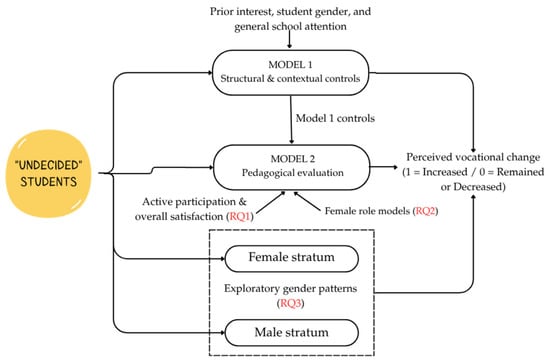
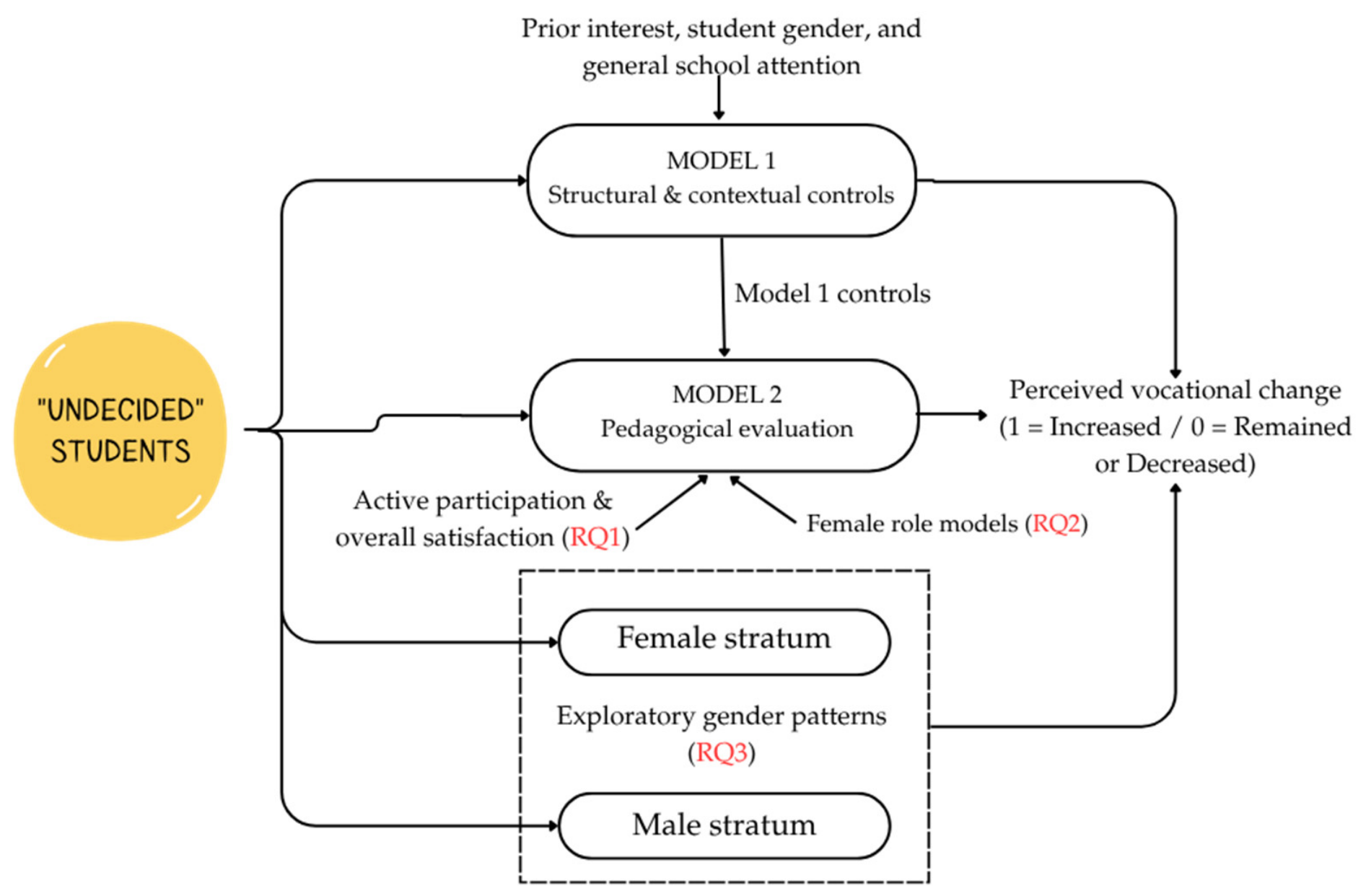
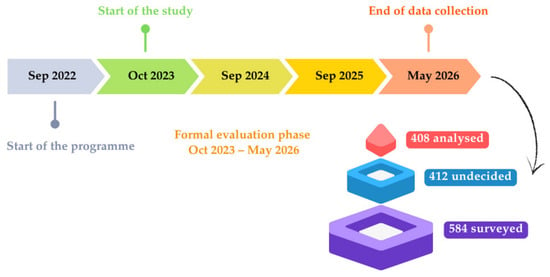
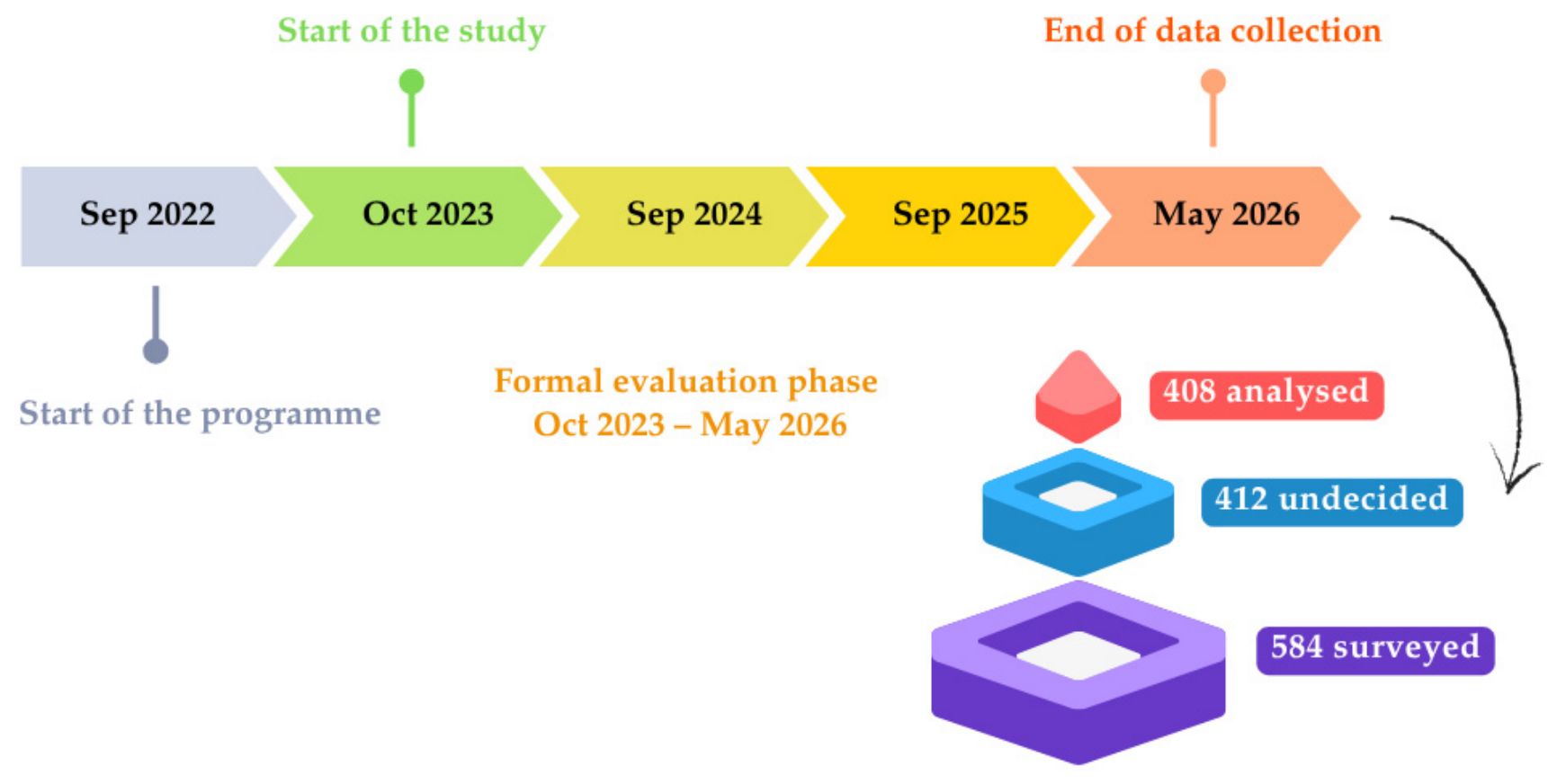

Disclaimer/Publisher’s Note: The statements, opinions and data contained in all publications are solely those of the individual author(s) and contributor(s) and not of MDPI and/or the editor(s). MDPI and/or the editor(s) disclaim responsibility for any injury to people or property resulting from any ideas, methods, instructions or products referred to in the content. |
© 2026 by the authors. Licensee MDPI, Basel, Switzerland. This article is an open access article distributed under the terms and conditions of the Creative Commons Attribution (CC BY) license.