


Abstract
Scientific argumentation is a core scientific practice recognized by multiple national science standards, yet many science teachers experience challenges integrating it into their classrooms. This systematic review examined the resources identified by research as shaping teachers’ argumentation instruction and how these resources were reported to support teachers’ classroom practice. Guided by an adapted version of the Pedagogical Design Capacity Framework, we analyzed 79 empirical studies published between 1983 and 2025. Resources were categorized as personal, instructional, or contextual, and their specific supportive aspects were grouped according to their reported contributions. Personal resources included teachers’ beliefs, knowledge of argumentation, and pedagogical content knowledge for argumentation. Instructional resources comprised curriculum materials, professional development programs, and technological tools. Contextual resources (factors) including classroom culture, school administration, and policy environments mediated teachers’ uptake of instructional resources. These resources operated collectively rather than in isolation. This review indicated a tension regarding explicit argumentation instruction: although it can establish shared repertoires at the beginning, excessive emphasis on structural understandings may divert students’ attention from the epistemic purposes of argumentation. These findings highlight the need for coordinated and context-responsive supports that help teachers understand how, when, and why particular instructional approaches can foster students’ epistemic engagement in argumentation practice.
1. Introduction
One of the hallmarks of science education featured in Framework for K-12 Science Education and Next Generation Science Standards (NGSS) is to engage students in a set of scientific and engineering practices, such as developing and using models, analyzing and interpreting data, and constructing evidence-based explanations (NGSS Lead States, 2013; National Research Council, 2012). Among these core practices, argumentation involves processes of constructing arguments, identifying possible weaknesses, and iteratively refining them based on evidence (González-Howard & McNeill, 2020; Inkinen et al., 2020; Nussbaum et al., 2024). Argumentation instruction therefore requires teachers to create opportunities for students to participate in these processes. Such participation can help students understand how science knowledge develops and enable them to exercise epistemic agency in knowledge construction (Miller et al., 2018). Emerging research also underscores the efficacy of argumentation instruction in helping students learn scientific content knowledge, understand the nature of science, and foster critical thinking (e.g., Giri & Paily, 2020; Khishfe, 2020; Taylor et al., 2018). However, many science teachers still face significant challenges in effectively integrating argumentation instruction into their classroom practices. These include limited instructional time, insufficient pedagogical content knowledge (PCK), perceived students’ unpreparedness, unavailability of supportive curricular materials, and institutional mandates that work against the incorporation of novel approaches (e.g., McNeill, 2009; McNeill & Knight, 2013; McNeill & Pimentel, 2010; Wang & Buck, 2016; Sandoval et al., 2019; Zafrani & Yarden, 2022). Although existing studies have provided a wide range of resources that support teachers’ integration of argumentation instruction, a comprehensive understanding of these resources and how they support teachers’ classroom practice is still lacking. Therefore, this study aims to review the existing resources that researchers have reported as supporting teachers’ argumentation instruction and synthesize how these resources prepare teachers for argumentation instruction and support or sustain their classroom practices.
Although a number of review studies have examined the scholarship on argumentation in science education (Duschl & Osborne, 2002; Erduran et al., 2015; Faize et al., 2017; Koçoğlu & Kanadlı, 2024; Li et al., 2022; McDonald, 2017; Nielsen, 2013; Wess et al., 2023), most of these reviews focus primarily on the benefits of argumentation instruction for students’ learning, the practical challenges students face during argumentation activities, and classroom environments necessary for productive argumentation. For instance, Erduran et al. (2015) explored how researchers positioned argumentation research in leading science education journals and found that many researchers prioritized epistemic and linguistic dimensions of argumentation. Faize et al. (2017) examined the use of argumentation in science education, recognizing its benefits for developing critical thinking and problem-solving skills along with potential challenges faced by both students and teachers. Koçoğlu and Kanadlı (2024) similarly synthesized effects of argumentation instruction on student achievement and implementation related factors.
Whereas these reviews effectively highlight affordances and challenges of argumentation instruction pertaining to students’ experiences, limited attention is given to teachers’ perspectives. Of these reviews, only Wess et al. (2023) examined professional development programs (PDs) aimed at improving science teachers’ skills for facilitating argumentation. However, this review presents limitations, without sufficient recognition of the contextual resources that mediate the effectiveness of PDs, such as school culture, administrative leadership, curriculum constraints, and students’ demographics. This gap underscores the need for a more holistic understanding of the resources that impact teachers’ argumentation instruction. Thus, it is timely to explore multifaceted resources that influence science teachers’ design and implementation of argumentation instruction and how these resources can support teachers’ instructional practices. Specifically, this review aims to answer the following questions:
- What resources, as identified by the literature, shape science teachers’ argumentation instruction in classrooms?
- How are these resources reported to support science teachers’ classroom argumentation instruction?
2. Theoretical Framework
2.1. Scientific Argumentation in Science Education
Over the past several decades, a growing emphasis on argumentation in science education contexts has emerged, marking a significant shift from teaching “what we know” to engaging students in understanding “how we know and why we believe” (Duschl & Osborne, 2002). Recognized as one of the scientific practices, argumentation is both a high-order thinking skill that students ought to develop and a pedagogical tool that supports students in learning and constructing science knowledge (McNeill & Knight, 2013; National Research Council, 2012). As a learning goal for students, argumentation is considered a practice that students need to perform as scientists to construct an argument using evidence and critique and identify flaws in others’ arguments. As a pedagogical tool, argumentation instruction departs from the traditional belief that science teaching is a transmissive process in which teachers impart canonical science facts and students learn them through rote learning. Instead, argumentation instruction prioritizes science instruction as a process of engaging students in knowledge construction and validation mediated by social interactions. Engaging students in this cognitively demanding practice yields multiple benefits, such as deepening their understanding of content knowledge (Venville & Dawson, 2010), advancing their communicative competencies and critical thinking, and enculturating them into the practices of scientific community (Jiménez-Aleixandre & Erduran, 2008).
For the purpose of this review, it is important to operationalize argumentation as encompassing both structural and dialogic perspectives (Kuhn & Udell, 2003; Kuhn, 1991; McNeill & Pimentel, 2010). The structural perspective emphasizes components of argumentation such as claims, evidence, and reasoning, while the dialogic perspective recognizes argumentation as a social process in which scientists interact with each other with a focus on persuasion. The structural perspective requires learners to understand the basic structure of an argument consisting of claims supported by evidence and reasoning (McNeill et al., 2006). Evidence includes different types of scientific data like experimental observations, while reasoning explains how evidence supports claims (McNeill et al., 2016b). When students attend to structural elements of an argument, it helps them make stronger arguments (González-Howard & McNeill, 2020). The dialogical perspective requires learners to be able to engage in multiple types of social interactions in science classrooms, such as listening to others, asking for clarification, building off peers’ ideas, critiquing others, and revising arguments (McNeill et al., 2016b; González-Howard & McNeill, 2020). Taken together, these two interrelated perspectives on argumentation underscore the significant role teachers play in supporting students’ engagement in an argumentation focused classroom.
2.2. Pedagogical Design Capacity (PDC) Framework
To capture the multifaceted resources impacting teachers’ argumentation instruction, this review adopted Brown’s (2009) Pedagogical Design Capacity (PDC) framework to search and structure review findings. PDC frames teaching as a design activity, positioning teachers as competent designers who can strategically mobilize existing resources to craft their own instructional episodes tailored to their specific contexts (Brown, 2009). Originally, these resources included teacher personal resources (e.g., beliefs, subject content knowledge, pedagogical content knowledge, and their prior practical experiences), and available curricular resources (Brown, 2009). While Brown’s original PDC primarily operationalized how teachers’ personal resources impact their use of a provided curriculum, Knight-Bardsley and McNeill (2016) expanded the concept of “curricular resources” into a wider range of instructional resources. This expanded category included not only curriculum materials but also professional development programs (PDs) and other tools (Knight-Bardsley & McNeill, 2016, p. 647). These scholars argued that science teachers could mobilize curriculum materials, PDs, and other tools, to design their own argumentation lessons. We adopted this expansion of the original PDC framework. Additionally, beside instructional and teacher resources, extensive research highlights the significance of contextual resources (e.g., Chowning, 2023; Osborne et al., 2013; Sampson & Blanchard, 2012; Sengul et al., 2021). These contextual resources, such as school culture, administrative leadership, and students’ demographics, directly or indirectly shape the growth of teachers’ personal resources or mediate their uptake of available instructional resources, thereby sustaining classroom practices. We therefore added “contextual resources” as a third broader component to the Knight-Bardsley and McNeill’s (2016) adapted PDC framework. We termed the expanded framework as PDC_C for argumentation instruction, as presented in Figure 1.
Figure 1.
PDC_C for argumentation instruction (adapted from Brown, 2009).
3. Method
3.1. Literature Inclusion and Exclusion
To identify relevant literature addressing the two review questions, we conducted two rounds of literature searching in February and March 2026. We first conducted a systematic search across Educational Resources Information Center (ERIC), PsycINFO, Educational Full Text using the terms TI = “argument*”, AB = “science teacher”, and AB = (“science education” OR “science teaching” OR “science learning” OR “science instruction”). This yielded 129 records after excluding dissertations (n = 25), book chapters (n = 1), reports (n = 17), conference proceedings (n = 2), and non-English articles (n = 10). ERIC and Education Full Text were selected for their coverage of education research, including science education, curriculum development, teacher education, and classroom practices, whereas PsycINFO was included to capture the cognitive and psychological aspects of argumentation instruction. The selection of multiple databases was intended to address the differences in coverage across education databases (Fitzgerald et al., 2025). During this process, peer-reviewed journal articles were prioritized to ensure an initial degree of research rigor and quality control among the included studies. In addition to using the three databases, we conducted a manual search of articles published in journals in science education, teacher education, and the learning science, including Science Education (SE), Journal of Research in Science Teaching (JRST), International Journal of Science Education (IJSE), Research in Science & Technological Education (RSTE), Journal of Teacher Education (JTE), Journal of the Learning Sciences (JLS), and Cognition & Instruction (C&I) with same terms and Boolean searching strategies as used with the databases. For the journal of Teaching and Teacher Education (TATE), we used the single search term “argument” in title, which hit 13 publications. We prioritized this set of journals because they are prominent research outlets for science education, learning science, and teacher education (Lin et al., 2025; Seel & Zierer, 2019), the fields most directly relevant to our review of argumentation instruction. This second round of searching generated 132 studies. After removing 39 duplicates from the two searches, 222 studies remained for screening. Two reviewers independently screened the titles and abstracts of these studies, applying the following three inclusion criteria to select the studies for full-text review.
- (1)
- Empirical studies published in peer-reviewed journals: only studies that explicitly indicated how they collected and analyzed data for addressing their research questions. Specifically, studies needed to specify the methods used for examining resources that impact teachers’ argumentation integration, and authors needed to recognize which aspects are supportive and discuss how the reported resources support teachers’ argumentation instruction. While dissertations, book chapters, theoretical papers, literature reviews, and practitioner articles are also important for outlining resources for science teachers, they are not prioritized in this review. They were referenced as necessary in the writing process.
- (2)
- In-service science teachers or K-12 students were positioned as primary participants. This review excluded studies focusing on pre-service teachers because the review questions concern not just general resources for supporting argumentation instruction but also examine supportive and productive aspects of these resources. Pre-service teachers may have received some supports in relation to these resources in their methods courses, but their opportunities to examine the resources’ utility in authentic classrooms are limited (Sadler, 2006; Wess et al., 2023). As this review concerns science teachers’ argumentation instruction, it inevitably involves students in classrooms. If studies involved both teachers and students but the findings focused primarily on teachers’ professional development, then they were included. If K-12 students were positioned as primary participants, but the study included extra description about the process of argumentation instruction and discussed implications for teacher professional development, then it was included in the review (e.g., Evagorou & Osborne, 2013). Studies focusing only on student argumentation without analyzing the teacher’s role were excluded.
- (3)
- Only studies that focused on argumentation instruction in K-12 science classrooms were included. Some studies integrated argumentation instruction into undergraduate courses or Mathematics teaching. While these can be relevant for argumentation research, they were not aligned with the main foci for the current review.
After the first round of independently screening titles and abstracts, 16 of the 222 studies were revisited and discussed. During this process, we introduced a fourth inclusion criterion: argumentation was positioned as one of the outcomes of professional learning opportunities teachers experienced rather than an intervention tool for improving teachers’ conceptual understanding or changing their dispositions toward science curriculum (Ogunniyi, 2007a, 2007b; Ramorogo & Ogunniyi, 2010). Introducing the fourth inclusion criterion aligned with our focus on the role of science teachers as instructors who design and implement argumentation instruction, rather than as learners who engage in argumentation in order to better understand scientific concepts. This criterion was not originally included because this issue had not been anticipated during the initial phases of the review process. Once the criterion was added, we reassessed previously included records to ensure that all criteria were applied consistently. This resulted in removal of seven studies.
Altogether, 90 studies remained for full-text screening. At this stage, two reviewers assessed the methodological quality of these studies using the Mixed Methods Appraisal Tool (MMAT) (Hong et al., 2018). This tool was designed to appraise methodological quality of five categories of studies: qualitative research, randomized controlled trials, non-randomized studies, quantitative descriptive studies, and mixed method studies. It contains two screening questions that apply for all research categories: (S1) are there clear research questions? and (S2) Do the collected data allow the research questions to be addressed? An affirmative answer to both questions were necessary for a study to be further considered. For each category of research, there are different sets of appraisal criteria (questions). Researchers do not have to apply them all but need to apply them uniformly across all included studies. Two authors initially discussed and agreed upon the appraisal criteria for each category with five studies. For example, Table 1 presents the assessment questions for qualitative research. Questions aligned with the other research types were also employed—we present the qualitative research questions because this research approach accounts for about half of the reviewed studies. Then, the first author assessed the quality of the remaining studies using the agreed screening questions. Twelve studies were discussed with the third author and removed due to insufficient details about qualitative coding procedures, quantitative sampling rationales, or pre-and post-test comparisons. For example, qualitative studies that were removed either did not employ appropriate data collection to address the research questions or did not report inter-rater reliability for coding (n = 8). Two mixed methods studies were removed because they lacked rationales for mixed method research design. One non-randomized study was removed because the authors did not discuss the representativeness of its sample. One randomized controlled study that did not report pretest results to capture students’ improvement in argumentation skills following engagement with inquiry-based curricula was also removed. Figure 2 illustrates the literature search and selection process following the PRISMA guidelines (Page et al., 2021).
Table 1.
Methodological quality appraisal for qualitative research.
Figure 2.
Flow diagram of literature and selection.
3.2. Literature Analysis
After title and abstract screening and full-text screening, 79 studies were included for data extraction. Our initial data extraction consisted of three steps. First, the first author extracted the following characteristics from each study: (a) publication year; (b) country in which studies were conducted; (c) research design; and (d) educational level. Second, two authors applied a priori themes from the PDC_C framework to identify types of resource, their subcategories, and the supportive aspects examined in each study. Resources were broadly classified into the three categories outlined earlier: personal, instructional, and contextual. Each category contained several subcategories. For instance, instructional resources included curriculum materials, professional development programs (PDs), and technological tools. Within each resource subcategory, we then identified supportive aspects reported or characterized by the authors. We defined supportive aspects as the specific components that were explicitly reported by study authors as preparing, supporting, or sustaining teachers’ argumentation instruction. We initially used the terms presented in the reviewed studies to characterize the supportive aspects. For example, Varelas et al. (2008) examined how ambiguous artifact materials afforded student debate with each other and how teachers’ instructional strategies like encouraging explanations, highlighting discrepancies, and asking for clarifications, helped facilitate students’ engagement in argumentation practice. Accordingly, ambiguous artifacts were coded as a supportive aspect of curriculum materials because they were reported to create opportunities for student debate and support classroom argumentation engagement. However, identifying supportive aspects alone did not explain the broader ways in which these components supported teachers’ argumentation instruction. Therefore, in the third step, we used an inductive approach to group conceptually related supportive aspects into broader supportive dimensions for characterizing the ways that resources support teachers’ classroom practice. Table 2 presents the three resource categories (personal, instructional, and contextual), their subcategories, supportive dimensions, and representative supportive aspects (codes) that emerged from the reviewed studies. For example, the supportive aspects identified within the curriculum materials subcategory included “SSI contexts,” “inquiry laboratories,” “ambiguous artifacts,” “writing frames,” “curricular scaffolds,” “evidence cards sorting,” “Argument-Driven Inquiry model (ADI),” “Science Writing Heuristic (SWH),” “educative curriculum materials,” “practice explanations,” “implementation guidance,” “multimedia representations,” and “explicit argumentation instruction.” We subdivided these aspects into four supportive dimensions based on how they were reported to support argumentation instruction: (a) curriculum contexts that situate argumentation within controversial or authentic problems; (b) curriculum designs that support and scaffold students’ engagement in argumentation; (c) educative curriculum materials (ECMs) that support teachers’ learning and implementation; and (d) instructional frameworks that teach argument components and structure instructional processes. Likewise, this combination of deductive and inductive approach was employed to analyze all studies reviewed.
Table 2.
Data analysis results.
To ensure the reliability of the coding process, two authors independently coded 21% (n = 16) of the included studies, focusing on the types of resources and their corresponding supportive aspects. We then compared and discussed our codes until consensus was reached. At this stage, we used a deductive approach to ensure consistency in coding resource types and their specific supportive aspects. We also documented supportive mechanisms that were described in each study, including how the resources influenced science teachers’ argumentation practices and reported outcomes, whether positive or negative. After all coding discrepancies had been discussed and resolved, the first author coded the remaining studies. Once all studies had been coded for resource type and their corresponding supportive aspects, the first author used an iterative inductive approach to synthesize the supportive dimensions for characterizing the ways these resources support teachers’ classroom practices. The fourth author reviewed the proposed supportive dimensions, their definitions, and mapping supportive aspects to each dimension. The two authors discussed areas of ambiguity or disagreement (e.g., PCK for argumentation instruction), referenced the relevant studies, and refined the dimensions and their mappings through several rounds of peer debriefing.
4. Results
This review explores the resources that shape science teachers’ classroom argumentation instruction and synthesizes how these resources prepare, support, or sustain teachers’ classroom instruction. In the following sections, we first present a descriptive overview of reviewed studies, then synthesize the identified resources and their subcategories based on the PDC_C framework. We subdivide the supportive aspects from reviewed studies into different supportive dimensions to characterize ways they empower teachers’ argumentation instruction.
4.1. Descriptive Overview
The publication year of the studies reviewed ranges from 1983 to 2025 and were mainly conducted in North America (n = 42) and Europe (n = 18) (see Table 3). Seven were completed in Asia, six in the Middle East, four in Oceania, and two in South America. Most of the studies occurred exclusively in secondary schools (n = 61), with 15 studies being conducted in elementary schools. Only three studies involved both elementary and secondary schools. The majority of the included studies employed qualitative research designs (n = 39), followed by mixed-method studies (n = 20). Quantitative approaches were less common, including randomized controlled trials (n = 10), non-randomized controlled trials (n = 7), and descriptive quantitative studies (n = 3).
Table 3.
The overview of the selected studies.
4.2. Personal Resources
Teachers’ beliefs and knowledge are widely recognized as personal resources that shape how they interpret instructional goals and make decisions about classroom practice and impact their instructional quality (Flint et al., 2024; Leijen et al., 2024). Consistent with this broader scholarship, the current review further identifies beliefs and knowledge that specifically related to argumentation as important subcategories of personal resources supporting teachers’ argumentation instruction. In the following sections, we detail the beliefs that significantly impact science teachers’ integration of argumentation instruction and related knowledge of argumentation and how they influence teachers’ instructional decisions and capacity to engage students in this practice.
4.2.1. Teachers’ Beliefs
Teachers’ beliefs, such as their views about the nature of knowledge and goals of science education, can significantly impact whether and how they integrate argumentation into science classrooms (Pajares, 1992). Three main types of teachers’ beliefs that support argumentation instruction emerged from 12 studies (see Figure 3): (1) epistemological beliefs (Anderson Quarderer & McDermott, 2020; Chan & Erduran, 2023; Sengul et al., 2020), (2) beliefs about the value of argumentation in science education (Al-Saadi et al., 2025; Chan & Erduran, 2023; Choi et al., 2021; Katsh-Singer et al., 2016; McNeill et al., 2016b, 2017; Park et al., 2022; Sampson & Blanchard, 2012; Wang & Buck, 2016), (3) beliefs about students’ capacity to engage in argumentation (Katsh-Singer et al., 2016; McNeill et al., 2016b; Sampson & Blanchard, 2012; Sengul et al., 2021; Wang & Buck, 2016).
Figure 3.
Teachers’ personal resources for argumentation instruction.
Three studies addressed science teachers’ epistemological beliefs in relation to argumentation instruction (Anderson Quarderer & McDermott, 2020; Chan & Erduran, 2023; Sengul et al., 2020). These studies collectively suggest that teachers’ views about the nature and learning of scientific knowledge impact how they understand and enact argumentation instruction. Teachers who believed that science knowledge is uncertain and open to revision with new evidence tended to implement the Argument-Drive Inquiry (ADI) model as intended and facilitate students’ interaction in ways that encouraged students to generate, share, evaluate, and refine arguments collaboratively to reach consensus (Sengul et al., 2020), whereas those who believed scientific knowledge is fixed tended to provide less emphasis on evaluating claims through evidence and greater teacher control in classrooms (Anderson Quarderer & McDermott, 2020; Chan & Erduran, 2023). However, these studies differed in evidence supporting their arguments with Sengul et al. (2020) directly analyzing teachers’ epistemological belief profiles and association with their teaching practices, while the other two studies inferred epistemological beliefs from participating teachers’ interviews or reflections (Anderson Quarderer & McDermott, 2020; Chan & Erduran, 2023). These studies together highlighted the development of science teachers’ personal epistemological beliefs, particularly the evaluativist stage as a key for them to integrate argumentation practice into classrooms.
Nine studies recognized teachers’ beliefs about argumentation and its role in science education (Al-Saadi et al., 2025; Choi et al., 2021; Erduran et al., 2020; Katsh-Singer et al., 2016; McNeill et al., 2016b, 2017; Park et al., 2022; Sampson & Blanchard, 2012; Wang & Buck, 2016). These beliefs explain science teachers’ willingness and preparedness to integrate argumentation into classrooms. Across these studies, teachers who had a chance to attempt argumentation instruction in their classrooms expressed positive views and reported students’ learning gains afterwards. McNeill et al. (2017) further reported that teachers with higher quality argumentation instruction were more likely to understand argumentation as an epistemic practice and recognize its crucial role in scientific sensemaking. Nevertheless, teachers’ recognition of the benefits of argumentation instruction for student learning did not always translate into their classroom practices as they reported more barriers in their workplaces, such as limited knowledge of argumentation (McNeill et al., 2016b), time constraints (Al-Saadi et al., 2025; Wang & Buck, 2016), large class size (Choi et al., 2021), lack of curriculum materials (Sampson & Blanchard, 2012), perceived misalignment between argumentation and standardized assessments (Katsh-Singer et al., 2016), low self-efficacy in teaching argumentation (McNeill et al., 2016b; Sampson & Blanchard, 2012), and students’ lack of preparedness (Katsh-Singer et al., 2016; Wang & Buck, 2016). These contrasting findings show that positive beliefs about argumentation can motivate and facilitate teachers’ uptake of argumentation instruction, but these beliefs alone may not result in sustainable classroom integration, particularly when teachers lack instructional supports or face systemic barriers. Oftentimes, teachers have to make trade-off between providing students with opportunities to engage in argumentation practice and tackling different systemic barriers.
Five studies explored teachers’ beliefs about students’ capacity in participating in argumentation practice and how these beliefs influenced their instructional decisions (Katsh-Singer et al., 2016; McNeill et al., 2016b; Sampson & Blanchard, 2012; Sengul et al., 2021; Wang & Buck, 2016). Multiple studies found that teachers perceived argumentation as a cognitively demanding practice and questioned whether their students had the necessary content knowledge, reasoning skills, and communicative abilities to participate effectively (Katsh-Singer et al., 2016; McNeill et al., 2016b; Sampson & Blanchard, 2012; Wang & Buck, 2016). Some science teachers considered argumentation practice as an optional activity that primarily benefited high academic achievers, and believed that many students lacked the prerequisite background knowledge and habits of mind needed to engage in it productively (Katsh-Singer et al., 2016; Sampson & Blanchard, 2012; Wang & Buck, 2016). Similarly, McNeill et al. (2016b) noted that teachers viewed students’ proficiency in reading, writing, and talking as essential prerequisites for students’ successful argumentation engagement. These beliefs, in turn, shaped teachers’ instructional decisions (Sengul et al., 2021; Wang & Buck, 2016). For instance, Wang and Buck (2016) found that when a teacher perceived students as passive learners who were incapable of constructing knowledge through argumentation, he tended to adopt a more transmissive teaching approach and removed uncertain aspects nested in the curriculum to ensure students acquire accurate science knowledge quickly. Likewise, Sengul et al. (2021) reported that teachers’ beliefs about student science learning and ability influenced how they interpreted and adapted an ADI instructional model during classroom implementation. As a whole, these findings collectively suggest teachers’ beliefs about students shape not only their expectations for student participation but also the extent to which they retain the epistemic and dialogic features of argumentation instruction in classrooms. Helping teachers shift away from deficit beliefs about students’ capabilities becomes important for promoting teachers’ professional development in argumentation instruction.
In summary, the reviewed studies together suggest that teachers’ epistemological beliefs, perceived value of argumentation in science education, and beliefs about students’ capacity to engage in this practice impact their approaches to argumentation instruction. When teachers hold evaluativist beliefs about knowledge, positive views of argumentation as a practice, and asset-based beliefs about students, they may be more likely to take up argumentation instruction in their classrooms, although contextual factors may also shape their long-term uptake. These contextual factors will be further discussed in later sections.
4.2.2. Knowledge of Argumentation
Teachers play an essential role in supporting students’ engagement in classroom argumentation. However, teachers may find it difficult to incorporate argumentation into their classrooms if they do not understand argumentation as a scientific practice (Zembal-Saul, 2009). Such understanding involves knowledge of basic argument components and the ability to construct and evaluate arguments. Of the reviewed studies, only two explicitly examined science teachers’ knowledge of argumentation, primarily focusing on the construction and evaluation of arguments (Lytzerinou & Iordanou, 2020; Sampson & Blanchard, 2012) (see Figure 3). Both studies showed that many in-service teachers struggled with constructing evidence-based arguments and evaluating arguments with valid evidence, even though some reported high self-efficacy in teaching argumentation. Most science teachers in Sampson and Blanchard’s (2012) study relied largely on their prior science knowledge for evaluating the validity of alternative explanations rather than available evidence. Lytzerinou and Iordanou (2020) further found that teachers’ abilities to construct arguments predicted their ability to evaluate arguments. These findings suggest that there is a need for professional development programs tailored directly toward supporting in-service teachers’ capacity to construct evidence-based arguments and their understanding of the criteria of evaluating arguments.
4.2.3. PCK for Argumentation Instruction
Shulman (1986) originally conceptualized PCK as an additional dimension of knowledge necessary for effective teaching. It distinguishes the profession of teaching by considering what specifically a teacher needs to know to help students learn subject matter knowledge effectively. The Framework for K-12 Science Education described subject matter knowledge consisting of three dimensions: scientific practices, crosscutting concepts, and disciplinary core ideas (National Research Council, 2012). This review focuses on teachers’ PCK for one of the scientific practices, argumentation. Davis and Krajcik (2005) similarly suggested that PCK for scientific practices is a distinct aspect of PCK and argued that science teachers need to know how to help students engage in scientific practices like designing investigations or constructing explanations. Instead of prescribing a top-down definition of PCK for argumentation instruction, this review synthesized the aspects that researchers suggested as important and effective for teachers to integrate argumentation into classroom instruction. Across the reviewed studies, teachers’ PCK for argumentation instruction was characterized in terms of instructional strategies and student assessment.
Six studies suggested that intentionally framing argumentation goals can initiate students’ engagement in dialogic argumentation. For example, Berland and Hammer (2012), González-Howard and McNeill (2019), and Sandoval et al. (2019) foregrounded teachers’ use of framing to establish shared expectations about the purposes of argumentation and students’ roles within argumentation activities. These initial framings communicated through teachers’ repeated verbal reminders and physical actions were reported to impact students’ subsequent participation (González-Howard & McNeill, 2019; Sandoval et al., 2019). For example, Berland and Hammer (2012) found when a teacher framed argumentation as an intellectual competition, students appeared more motivated to make claims, justify them with evidence and reasoning, and attend to and challenge one another’s ideas. Sandoval et al. (2019) described a teacher who repeatedly framed the goal of argumentation activities as reaching consensus about the number of bones in the human body. This framing encouraged students to work through disagreements by explaining their ideas to convince others. Likewise, González-Howard and McNeill (2019) contrasted two teachers who framed argumentation goals differently, one as an opportunity to develop stronger individual arguments and the other as a process of building a communal understanding. Students in the latter classroom built off on each other’s ideas more often during argumentation discussions. Together these findings suggest that intentionally framing the goals and expectations of argumentation activities in particular ways constitutes an important instructional strategy for argumentation as it could shape students’ participation from the very beginning of the argumentation activities.
Seventeen studies have reported on the importance of teachers’ use of facilitative discourse moves to support and sustain students’ argumentation engagement. For example, Martin and Hand (2009), McNeill and Pimentel (2010), Russell (1983), Jin and Kim (2021), and Soysal (2023) emphasized teachers’ frequent use of open-ended, translanguaging support, probing, and different levels of cognitively demanding questions to improve students’ argument quality and their classroom engagement. Ten reviewed studies also emphasized the teacher’s role as a bridge to connect students’ ideas and encourage debates by asking for clarification, managing students’ epistemic uncertainty, surfacing discrepancies among students, playing devil’s advocate, revoicing or paraphrasing students’ ideas to entire classrooms, and normalizing critiques (Chen & Qiao, 2020; Christodoulou & Osborne, 2014; Dawson & Venville, 2010; Felton et al., 2022; González-Howard & McNeill, 2020; González-Howard et al., 2017; Özdem Yilmaz et al., 2017; Sandoval et al., 2019; Swanson et al., 2014; Varelas et al., 2008). These facilitative discourse moves were frequently reported by researchers as significant for promoting and sustaining whole-class argumentation. In addition to this group of studies, Convertini et al. (2024) and Tang (2022) reconceptualized argumentation as a chain of human-materials interaction incorporating physical artifacts and highlighted teachers’ roles in coordinating physical materials with speech and actions. Together, these findings position teachers not merely as discussion facilitators but also as managers of epistemic interactions among students, discourse, and material resources.
Two studies focused on teachers’ knowledge of assessing students’ argumentation performance as another important aspect of PCK for argumentation. Christenson et al. (2017) emphasized teachers’ abilities to assess SSI written arguments; whereas, McNeill et al. (2016a) extended this perspective by exploring assessment of student argumentation in both written and dialogic form within classroom contexts.
In summary, teachers’ PCK for argumentation functions in two ways. It ranges from supporting classroom argumentation through framing and intentional use of facilitative discourse moves to assessing students’ argumentation performance in both written and oral forms. These aspects of teachers’ PCK for argumentation instruction, as a whole, reposition teachers from transmitters of scientific knowledge to designers and facilitators of epistemic learning environments in which students collaboratively construct, evaluate, and refine knowledge through argumentation. However, the reviewed studies prioritized teachers’ facilitative roles in argumentation instruction with relatively limited attention to teachers’ knowledge of assessing student performance.
4.3. Instructional Resources
Growing evidence suggests that integrating argumentation into science classrooms requires teachers to navigate a range of instructional resources. These resources, including curriculum materials, professional development opportunities, and technological tools, support science teachers in argumentation practices in several different ways (see Figure 4). They alleviate teachers’ instructional design burdens, hone PCK for argumentation instruction, and create digital teaching/learning environments for simulating argumentation instruction. It is noteworthy that although these instructional resources are presented separately for clarity of presentation, they rarely work in isolation. Rather, they are often entangled and mutually reinforced within classroom practice. In the following sections, we detail these supportive aspects as they relate to each type of sub-resource identified in the reviewed studies and how they support teachers’ argumentation instruction.
Figure 4.
Instructional resources for teachers’ argumentation instruction.
4.3.1. Curriculum Materials
There has been interest in studying how curriculum materials can support argumentation instruction (e.g., Arias et al., 2017; Larrain et al., 2018; Larraín et al., 2017; Rapanta, 2021). A key question arising from this strand of research concerns the curricular features that influence teachers’ implementation, students’ engagement, and students’ learning outcomes. In this review, forty studies surfaced four supportive dimensions of curriculum materials, including (1) curriculum contexts, (2) curriculum designs, (3) educative curriculum materials (ECMs) features, and (4) instructional frameworks.
Curriculum Contexts
Twenty studies explored a range of contexts and material artifacts that support teachers’ argumentation instruction and afford students’ argumentation engagement. For example, socioscientific issues (SSIs) were frequently recognized by researchers as productive argumentation contexts (Dawson, 2024; Dawson & Venville, 2010; Dawson & Venville, 2022; Foong & Daniel, 2013; Garrecht et al., 2021; Khishfe, 2014, 2020, 2021; Kruit et al., 2025; Lu et al., 2025; Venville & Dawson, 2010; Zohar & Nemet, 2002). SSIs, such as COVID-19 and gene editing, are complex and controversial dilemmas that intertwine both social and scientific factors (Sadler, 2004). Characteristics reported in these studies that make SSIs useful for argumentation instruction include authentic personal relevance (Garrecht et al., 2021; Kruit et al., 2025; Lu et al., 2025), the inherent multidisciplinary nature of the issues (Garrecht et al., 2021), connections to nature of science (NOS) (Khishfe, 2014, 2020, 2021), and the lack of clear-cut solutions (e.g., Dawson & Venville, 2010; Venville & Dawson, 2010). All of these characteristics invite students to move beyond rote memorization of scientific facts to allow more diverse perspectives into discussions. Beyond SSI contexts, researchers have also emphasized the utility of inquiry-based activities in promoting classroom argumentation instruction and students’ learning (Gray & Kang, 2014; McNeill, 2011; Newell & Misar, 2022; Sampson et al., 2011, 2013; Wang & Buck, 2016; Yerrick, 2000). In these studies, argumentation was positioned as a central scientific practice in which teachers engaged students in evidence-based argument construction throughout the inquiry process. For example, Yerrick (2000), McNeill (2011), and Sampson et al. (2011, 2013) reported that inquiry-based activities and instruction promoted students’ conceptual understanding of argumentation, engagement in argumentation, argumentation skills, and science content knowledge across elementary, middle, and high school settings. Similarly, Varelas et al. (2008) demonstrated how curriculum tasks incorporating ambiguous physical artifacts created productive opportunities for students’ argumentation. However, inquiry-based activities do not inherently lead to effective argumentation instruction. Instead, different modes of inquiry vary in their effectiveness for fostering classroom argumentation. For example, Gray and Kang (2014) compared how high school science teachers presented arguments in teaching experimental and historical modes of inquiry. Their analysis indicated that evidence was not provided to support claims in teaching experimental topics (e.g., DNA), whereas considerably more evidence was used to justify claims made in the historical science topics like evolution. They attributed this difference in use of evidence not to the complexity or scope of topics but to the mode of inquiry embedded in the curriculum.
Taken together, these studies suggest that effectiveness of curriculum contexts lies not simply in presenting authentic or controversial problems but enabling teachers to create opportunities for students to contribute to evidence-based knowledge construction and critique. Whether through SSIs or inquiry-based activities these contexts support students in making sense of complex problems or negotiating ideas through active interactions with peers.
Curriculum Designs
Twelve studies reported that embedded curricular scaffolds and explicit instruction in argumentation and NOS supported students’ engagement in argumentation. Curriculum materials incorporated writing frames, evidence cards, structured prompts, and argumentative tasks to make argumentation components and their relationships explicit and epistemically meaningful to students (Guilfoyle & Erduran, 2021; McNeill & Krajcik, 2009; Newell & Misar, 2022; Pallant et al., 2020; Venville & Dawson, 2010). Writing frames prompted students to articulate claims, evidence, justifications, and rebuttals before whole classroom discussions (Venville & Dawson, 2010). Evidence-card sorting focused students’ attention on evidence-claim relationships (Guilfoyle & Erduran, 2021), and argumentative tasks supported reasoning about complex topics such as evolution, or evaluating evidence use (Newell & Misar, 2022; Pallant et al., 2020). Across these studies, curricular scaffolds supported students’ participation in argumentation by reducing task complexity, focusing student attention on evidence, reasoning, and uncertainty, and creating structured opportunities for them to construct, evaluate, and communicate scientific arguments.
Some curricula included explicit argumentation instruction and connected it with NOS instruction to support students’ epistemic understanding of argumentation practice. Early studies embedded explicit argumentation instruction within SSIs, reporting improvements in students’ content knowledge, argument quality, reasoning skill, and transfer (Venville & Dawson, 2010; Zohar & Nemet, 2002). Khishfe (2014, 2020, 2021, 2023) extended this work by connecting argumentation with explicit NOS instruction. Her work showed that explicit NOS instruction, particularly when combined with explicit argumentation instruction, supported students’ growth and retention in both argumentation skills and NOS understandings. Similarly, explicit NOS instruction involving web-based SSI instruction and philosophy-of-science questions were reported to support argumentation skills, although improvements in NOS understanding were not consistent (Kruit et al., 2025; Shi, 2024). Together, these studies suggest that curricular activities featuring explicit argumentation and NOS instruction supported students’ acquisition of argumentation skills. Students were not only taught how to construct claims, evidence and reasoning, but also why evidence, justification, critique, uncertainty, and revision matter in science knowledge development. However, these studies conceptualized explicit argumentation and NOS instruction differently, which might lead to some nuances in terms of their conclusions.
Educative Curriculum Materials (ECMs) Features
Five reviewed studies examined the supportive aspects of ECMs, focusing on their functions and forms (Arias et al., 2017; Larraín et al., 2017; Loper et al., 2019; McNeill et al., 2017, 2018). Among these studies, ECMs ranged from providing text-based guidance to offering multimedia and interactive supports. For example, McNeill et al. (2017), Arias et al. (2017), and Larraín et al. (2017) incorporated two types of text-based educative supports: (1) description of arguments, including structure, dialogic processes, and underlying rationales; and (2) implementation guidance, such as lesson plan scripts, common student misconceptions, instructional strategies to address them, lesson adaptation examples, student written arguments examples, and assessment rubrics. McNeill et al. (2018) expanded on this by including both text-based and multimedia educative supports. They included similar text-based supports and supplemented them with instructional videos. These multimedia elements illustrated the structural and dialogic aspects of argumentation in real classrooms, providing concrete examples for adaptations. Loper et al. (2019) further advanced teachers’ learning about argumentation by creating interactive spaces. They combined videos, featuring classroom footage, teacher narratives, and graphics, with reflective prompts. This approach pushed teachers to actively customize instruction, for example, by considering how to “step back” and let students lead discussions. This interactivity also allowed the educative elements to be adaptive, responding directly to teachers’ inputs. Taken together, these studies suggest that ECMs support teachers’ learning and implementation by combining conceptual explanations of argumentation with implementation guidance. These supports contributed to improved teachers’ understanding of argumentation practice, teaching self-efficacy, and beliefs about the value of argumentation instruction, while also enhancing students’ argumentation skills (Arias et al., 2017; Larraín et al., 2017; Loper et al., 2019).
Instructional Frameworks
Nine studies introduced and examined six types of instructional frameworks for teaching argumentation components and structuring argumentation instruction. These included Toulmin’s Argument Pattern (TAP) (Lazarou & Erduran, 2021), Claim-Evidence-Reasoning (CER) (McNeill, 2011), and Self-Regulated Strategy Development with DEFEND writing-to-learn strategy (SRSD-DEFEND writing-to-learn) (Drew et al., 2024), Argument-Driven Inquiry (ADI) (Al-Saadi et al., 2025; Sampson et al., 2011, 2013), the Science Writing Heuristic (SWH) (Martin & Hand, 2009; Taylor et al., 2018), and the Scientific Reasoning and Argumentation framework (SRA) (Dorfner et al., 2018).
TAP is the most frequently cited instructional framework for teaching components of a scientific argument (Toulmin, 1958). It conceptualizes an argument as comprising a claim, data that support the claim, warrants that explain why data support the claim, backings that strengthen the warrant, and rebuttals that identify conditions under which claims would fail (Toulmin, 1958). The structural complexity of TAP allows it to function as both an instructional and analytical framework. It is more frequently used as an analytical framework for evaluating the quality of student or teacher generated arguments or characterizing classroom dialogic interactions than as an instructional framework (e.g., Erduran et al., 2004; Evagorou & Osborne, 2013; Gray & Kang, 2014; Heng et al., 2015; Russell, 1983). Recognizing the instructional challenges posed by the full TAP model, researchers have adapted it to better support classroom practice. One of the most widely adopted adaptations is CER made by McNeill and her colleagues (e.g., McNeill, 2011; McNeill et al., 2006; McNeill & Krajcik, 2009). They simplified TAP into three core components, claim, evidence, and reasoning. Other researchers adapted TAP to address different instructional needs. Teachers added the indicator “since” to make warrants more explicit and facilitate context-sensitive analyses of students’ writing (Lazarou & Erduran, 2021). Drew et al. (2024) integrated TAP components with self-regulated strategy development (SRSD) to create DEFEND, a structured writing scaffold that guides students to compose evidence-based scientific explanations. These adaptations suggest that TAP generally serves as a useful instructional framework to support science teachers not only by making the structure of an argument explicit but also by its adaptable flexibility to address different instructional goals and learners’ needs.
Rather than teaching argumentation structure in isolation, SWH, ADI, and SRA immersed students in authentic inquiry processes in classroom settings. The SWH emphasized scientific writing as a vehicle for reflection and sensemaking by engaging students in generating investigable questions, designing and conducting investigations, and constructing written explanations based on evidence (Martin & Hand, 2009; Taylor et al., 2018). Through these inquiry and writing experiences, the SWH shifted instruction from teacher-centered knowledge transmission to student-centered learning, leading to greater student participation in scientific discourse and improved science achievement, including among students with disabilities (Martin & Hand, 2009; Taylor et al., 2018). ADI organizes argumentation through a coherent sequence of inquiry activities, including task identification, data collection, tentative argument generation, collaborative argumentation, investigation reports, peer review, and revision (Al-Saadi et al., 2025; Sampson et al., 2011, 2013). SRA similarly connected inquiry activities and argumentation through eight epistemic activities including problem identification, questioning, hypothesis generation, construction and redesign of artefacts, evidence generation, evidence evaluation, drawing conclusions, and communication and scrutinizing. Dorfner et al. (2018) indicated that integrating more of these epistemic activities positively predicted students’ learning and achievement.
In summary, these instructional frameworks shaped teachers’ argumentation instruction in three interrelated ways. First, they helped teachers and students develop a shared understanding of the key components of an argument by making them explicit (Lazarou & Erduran, 2021; McNeill, 2011). Second, they enculturated students into the scientific community through multimodal engagement in argumentation practices involving listening, reading, talking, and writing (Al-Saadi et al., 2025; Dorfner et al., 2018; Lazarou & Erduran, 2021; Martin & Hand, 2009; Sampson et al., 2011, 2013; Taylor et al., 2018). Third, they provided a shared instructional language and coherent sequences or structures for planning and enacting argumentation activities (Al-Saadi et al., 2025; Dorfner et al., 2018; Martin & Hand, 2009; McNeill, 2011; Sampson et al., 2011, 2013; Taylor et al., 2018).
4.3.2. Professional Development Programs
Professional development programs (PDs) play a crucial role in supporting science teachers’ uptake of argumentation instruction (Wess et al., 2023). Eleven studies collectively identified three supportive aspects these PDs involved and how they helped teachers’ integration of argumentation instruction.
First, these PDs sought to develop science teachers’ knowledge and beliefs necessary for argumentation instruction. A common starting point was helping teachers establish a conceptual understanding of argumentation by clarifying its educational goals and explaining its structural components. Six studies explicitly rationalized argumentation instruction in science education and introduced argumentation frameworks (e.g., TAP or CER) to help teachers understand key elements of high-quality arguments (Chan & Erduran, 2023; Fishman et al., 2017; McNeill & Knight, 2013; Osborne et al., 2013; Sengul et al., 2020; Venville & Dawson, 2010). Building on this conceptual foundation, several PDs further highlighted strengthening teachers’ pedagogical content knowledge for argumentation by introducing instructional frameworks (e.g., SWH or ADI) and engaged them as learners in argumentation activities with exemplar instructional strategies (Anderson Quarderer & McDermott, 2020; Fishman et al., 2017; Martin & Hand, 2009; McNeill & Knight, 2013; Murphy et al., 2018; Osborne et al., 2013; Sengul et al., 2020). Some PDs moved further to reshape teachers’ beliefs about the nature of argumentation. For example, Chowning (2022) immersed teachers in authentic scientific research settings, where they conducted micro-ethnographic observations of scientists’ interaction during data analysis and laboratory meetings. This PD experience expanded teachers’ view of social dialogic argumentation resulting in transformation in their classroom practices. In a related study, Chowning (2023) showed that collaborative professional learning helped teachers recognize relationships in classrooms that could be leveraged for argumentation, deepening their understanding of trust and vulnerability for fostering productive argumentative discourse. Similarly, Chan and Erduran (2023) suggested that sustained collaboration between science and religious teachers in PDs could boost science teachers’ appreciation of argumentation in science.
Second, these PDs supported teachers’ argumentation-focused curriculum design, enactment, and adaptation. Rather than introducing argumentation as an abstract instructional approach, many PDs situated teachers’ learning within concrete curriculum materials that served as examples for classroom implementation. Across the reviewed studies, six incorporated argumentation-focused curricular resources, such as Ideas, Evidence and Argument in Science (IDEAS), Argument-Driven Inquiry (ADI) investigation activities, Argument-based Strategies for STEM-Infused Science Teaching inquiry activities (ASSIST), and Quality Talk Science lessons (Anderson Quarderer & McDermott, 2020; Fishman et al., 2017; McNeill & Knight, 2013; Murphy et al., 2018; Osborne et al., 2013; Sengul et al., 2020). These curricula served not only as ready-for-use lessons to be adopted intact or partially, but also as educative resources that supported teachers in designing, enacting, and adapting for their own classroom realities. For example, these PDs provided structured opportunities for teachers to engage with the curriculum from multiple perspectives. During initial workshops, teachers experienced argumentation lessons as learners while simultaneously reflecting on instructional decisions from a teacher’s perspective. Teachers were also invited to tailor the provided curriculum materials to their local contexts, design curriculum-inspired lessons using shared lesson planning templates, and examined classroom artifacts such as student writings, investigation reports, and lesson videos to anticipate common student misconceptions and instructional challenges (McNeill & Knight, 2013; Sengul et al., 2020). Not expecting teachers to enact provided lessons completely, Osborne et al. (2013) encouraged lead teachers to embed and adapt argumentation activities within their existing science curriculum before supporting colleagues in making similar curricular adaptations. Taken together, these activities enabled teachers to move beyond understanding argumentation conceptually toward developing practical expertise in designing and enacting argumentation instruction that was responsive to their own classroom contexts. However, these initiatives only represented the initial stage of teachers’ professional learning through PDs. Transforming teachers’ classroom practices required continued and sustained support as they confronted authentic classroom challenges during implementation.
Third, some PDs sustained teachers’ argumentation practice through ongoing collaborative reflection and professional coaching. The most successful PDs extended beyond one-time workshops by providing sustained implementation support over multiple sessions. For example, Martin and Hand (2009), Murphy et al. (2018), and Fishman et al. (2017) offered regular instructional coaching to help teachers address challenges encountered while implementing argumentation lessons. Additionally, McNeill and Knight (2013), Osborne et al. (2013), Fishman et al. (2017), Murphy et al. (2018), Sengul at al. (2020), Anderson Quarderer and McDermott (2020), and Chowning (2023) further created collaborative spaces where teachers publicly shared classroom experiences with recorded videos, discussed implementation challenges, analyzed student works, and reflected on successes with colleagues and PD facilitators from different schools. These collaborative reflections allowed teachers to refine their subsequent instruction based on their classroom evidence or peers’ advice.
In summary, the reviewed studies suggest that sustained cycles of enactment, reflection, coaching, and collaborative problem solving are important for teacher PD in the area of argumentation. PDs have been shown to promote professional learning and acceptance of argumentation instruction but varied in their impacts on students’ learning outcomes. For example, Martin and Hand (2009) documented teachers’ gradual shift from traditional teacher-centered instruction toward a more student-centered approach through SWH, supported by an 18-month professional development partnership, but the research paid limited attention to student learning outcomes. Similarly, although Osborne et al. (2013) found that participating schools adopted more dialogic teaching approaches and embedded argumentation more systematically within their school science curriculum, these instructional innovations did not translate into consistent improvements in students’ reasoning, classroom engagement, or epistemic understanding. Fishman et al. (2017), however, demonstrated positive changes in both teacher and student classroom science discourses following a practice-based PD program. These inconsistent findings suggest that while PDs support teachers’ capacity to enact argumentation instruction, their effects on students’ learning outcomes remained mixed. It necessitates further research to characterize PDs that successfully promote both teacher and student learning in argumentation instruction.
4.3.3. Technological Tools
Compared to curriculum materials and professional development programs, only a small portion of reviewed studies examined technological tools as resources for supporting argumentation (n = 4). Across the four studies, technological tools supported argumentation instruction in three interrelated ways. First, it supported teachers’ professional learning by creating authentic environments for teachers to practice their facilitative skills before entering real classrooms. For example, Mikeska and Lottero-Perdue (2022) employed a simulated classroom with student avatars to allow teachers to rehearse argumentation-focused discussions within a situation of reduced complexity. Teachers practiced responding to evolving student ideas and facilitating productive discussions without the uncertainty of real classrooms. Their findings suggest that the simulated classroom environment creates a reasonable approximation with respect to facilitating argumentation discussions. Second, these technological tools scaffolded students’ argumentation engagement by carefully structuring learning tasks and collaborative interactions digitally. Yang et al. (2015) designed an online inquiry and argumentation program that guided students through six inquiry activities while teaching them argumentation components and prompting them to provide claims, evaluate evidence, and justify claims. Similarly, both Kruit et al. (2025) and Bahcivan et al. (2025) immersed students into digital learning environments (web-based instrument or e-argumentation software) that integrated structured workflows, evidence evaluation, multimedia resources, and peer discussion spaces to scaffold students’ engagement in argumentation process virtually. Third, technological tools reduced teachers’ instructional burden by assuming the role of classroom manager, allowing teachers to provide targeted feedback to individual students rather than classroom management. Both Kruit et al. (2025) and Bahcivan et al. (2025) illustrated how technology played teachers’ role by providing information, organizing collaborative interactions with concept cartoons or online group discussions, and tracking student generated arguments throughout the learning process. As such, teachers were empowered to monitor students’ progress in real time and provide personalized supports when students faced difficulties. All these features redistributed many other routine responsibilities and enabled teachers to check students’ argumentation progress.
Overall, these studies suggest that technological tools function not as replacements for teachers but as an instructional support that strengthen both teaching and learning during argumentation instruction. Their effectiveness is also evidenced by students’ significant gains in argumentation skills and content knowledge, as well as teachers’ shifts in instructional focus from whole classroom management to individualized support (Bahcivan et al., 2025; Kruit et al., 2025).
4.4. Contextual Factors
Contextual factors can influence teachers’ capacity to implement argumentation instruction primarily by mediating or moderating how instructional resources are accessed, interpreted, and enacted by teachers. In addition to instructional resources, these factors are situated within the broader ecological systems in which teachers work, ranging from most immediate classroom communities to school organizations and policy environments (see Figure 5). In some cases, these contextual and instructional resources overlapped. For example, the PDs involving continued or sustained support or communities of practices could also be conceptualized as contextual factors if they are reported or identified as such by the researchers. However, this review still categorized the continued support from PDs and communities of practices led by researchers as instructional resources because they represented professional supports that came from outside of the teachers’ workplaces. Although few studies directly examined these contextual factors as a primary focus, they discussed them as important conditions shaping teachers’ uptake of argumentation instruction. It is beyond the scope of this review to exhaust all potential contextual factors that may influence teachers’ decisions for argumentation integration. This review only discussed the contextual factors that emerged from the reviewed studies.
Figure 5.
Contextual factors influencing teachers’ argumentation instruction.
The characteristics of classroom communities, particularly classroom culture and student mobility, were highly influential. For example, Foong and Daniel (2013) discussed how cultural norms within Confucian classrooms discouraged students from confronting disagreements and challenging others’ ideas, making argumentative practices uncomfortable for many students. As a result, researchers suggested that teachers need to spend considerable time building discussion norms and creating a psychologically safe space for students to confidently contribute and exchange ideas during these argumentative discussions (Al-Saadi et al., 2025; Chowning, 2023). Classroom mobility also shaped opportunities for students to engage in argumentation. González-Howard and McNeill (2016), for instance, found that high student mobility in Sheltered English Immersion (SEI) science classrooms hindered students’ from interacting with peers regularly, and limited their opportunities to develop argumentation skills over time. Together these studies suggest that having a stable and psychologically safe classroom environment constitutes important contextual resources for initiating productive argumentation instruction.
At the school level, organizational conditions such as socioeconomic status (SES), teacher autonomy, and collegial collaboration also shaped teachers’ willingness and capacity to incorporate argumentation instruction. For instance, Katsh-Singer et al. (2016) reported that teachers from low-SES schools perceived greater pressure to improve standardized test score than those in high-SES schools. This accountability pressure reduced teachers perceived autonomy and made them less likely to integrate argumentation activities in their classrooms. Although teachers in high-SES schools acknowledged similar assessment pressure, they generally described it as less influential on their instructional decisions. Katsh-Singer et al.’s (2016) findings show that school context may mediate how accountability policies are experienced by teachers. Schools also created collaborative opportunities that supported teachers’ enactment of argumentation instruction. Chan and Erduran (2023) and Park et al. (2022) recognized that school cross-subject collaboration enabled teachers from different subjects to learn from each other and to conduct argumentation instruction together. In another study, Osborne et al. (2013) brought a school-based minimal professional development model in which leading teachers supported their colleagues by providing instructional advice, organizing regular meetings, and sharing relevant materials. Nonetheless, this intervention turned out not to be effective for improving students’ learning outcomes like reasoning ability and NOS understandings. They explained this null result as a misalignment between school-level innovations and individual teachers’ knowledge and beliefs about argumentation instruction. These findings suggest that school organization contexts can either constrain or promote teachers’ willingness to integrate argumentation instruction, depending not only on the degree of professional autonomy and collaborative support available, but also on the extent to which school-level initiatives align with teachers’ knowledge and beliefs.
Broader contextual factors like standardized tests moderated teachers’ interactions with other professional interventions. Several studies highlighted how accountability systems and standardized assessments influenced teachers’ priorities differently. For example, Sampson et al. (2013) argued that state-level standardized testing pressure reduced the instructional time teachers allocated to ADI activities in their classrooms, because of concern that time spent on ADI could ultimately lead to lowered test scores. In contrast, teachers in Sengul et al.’s (2021) study addressed the test preparation pressure through highlighting the scientific practices shared by ADI activities and science standards. Similarly, McNeill et al.’s (2016b) teachers perceived limited effects of external policy and assessment on their argumentation instruction compared to their learning objectives and teaching self-efficacy. These contrasting findings suggest that policy environments do not directly determine teachers’ instructional practices but instead interact with individual teachers’ beliefs and the ways they uptake instructional resources available to them.
Overall, contextual factors were rarely investigated as primary foci for argumentation instruction in the reviewed studies. Instead, they functioned in conjunction with other instructional and personal resources to influence teachers’ opportunities or willingness to integrate argumentation instruction. These findings indicate that successful integration of argumentation instruction relies not only on the availability of instructional and personal resources, but also on an ecological context that helps teachers move through the variety of challenges they might face.
5. Discussion and Implications
Given the importance of argumentation instruction for fostering students’ conceptual, epistemological, and methodological understanding of science (Jiménez-Aleixandre & Erduran, 2008), national science standards across multiple countries have called for its integration into science classrooms (Australian Curriculum, Assessment and Reporting Authority, 2022; Ministry of Education, Singapore, 2026; NGSS Lead States, 2013; National Research Council, 2012). Science teachers are often considered the primary actors to actualize argumentation in real classrooms. However, having not experienced this approach as students, many science teachers feel professionally unprepared to incorporate argumentation into their own teaching (e.g., Choi et al., 2021; McNeill et al., 2016b; Sampson & Blanchard, 2012). This review examined the personal characteristics that science teachers need, the instructional resources provided by professional communities, the impactful contextual factors influencing interactions between these resources, and their supportive aspects identified in the literature. The following sections summarize the major findings through the lens of the PDC_C framework, discuss their implications, and conclude with recommendations for teacher educators and curriculum developers.
Through the lens of the PDC_C framework, the reviewed studies suggest that evaluativist beliefs, knowledge of argumentation, and PCK for argumentation instruction function as a set of interrelated personal resources that shape teachers’ willingness and capacity to integrate argumentation instruction. These resources play distinct but complementary roles. Evaluativist beliefs lay a foundational premise that acknowledges science knowledge as subject to evaluation, critique, and revision. Knowledge of argumentation enables teachers to understand both the structural components of an argument and also dialogic process through which knowledge is developed, critiqued, and refined. PCK for argumentation instruction, in turn, enables teachers to translate these beliefs and understandings into instructional moves, such as facilitating students’ interaction, and assessing students’ written or oral arguments. However, the research further suggests that participating in-service teachers demonstrated limited understanding in nature of science knowledge and its development processes and performed limited capacity to construct or evaluate arguments. Compared to pre-service teachers, in-service teachers tend to resist argumentation instruction if they have been teaching for years and have formed their own teaching philosophy (de Sá Ibraim & Justi, 2016). This might be a signal to teacher educators that they need to prioritize professional supports that problematize teachers’ current teaching and foster their evaluativist beliefs and argumentation knowledge. Additionally, the reviewed studies tended to focus more on examining science teachers’ teaching practices or facilitative instructional strategies for classroom argumentation rather than their knowledge of student assessment. This limited emphasis on teachers’ capacity to evaluate arguments and assess students’ argumentation performance may constrain the sustained enactment of argumentation practice in classroom.
Second, this review shows that some professional development programs for argumentation instruction successfully developed teachers’ knowledge and beliefs by engaging them in classroom practices with exemplar curriculum materials and sustained professional support over time. However, these improvements in teacher learning did not necessarily translate into improved student learning outcomes. For example, Osborne et al. (2013) found that participating schools adopted more dialogic teaching approaches and embedded argumentation more systematically within their school science curriculum after 18 months’ intervention; however, these instructional innovations did not translate into improvements in students’ reasoning, classroom engagement, or epistemic understanding. Fishman et al. (2017), however, demonstrated positive changes in both teacher and student classroom science discourses following a practice-based PD program. These inconsistent findings present a challenge to Desimone’s (2009) conceptual framework of teacher professional development. She proposes an ideal pathway in which professional development improves teachers’ knowledge and beliefs, these improvements lead to changes in classroom practices, and ultimately, changed classroom practices promote student learning. The inconsistency surfaces the moderating effects of contextual factors and others, which are likewise acknowledged in Desimone’ framework. For example, Osborne et al. (2013) discussed the potential impact of teachers who did not voluntarily participate in the PD and validity of measuring instruments employed. Other studies considered the timing for evaluating student learning outcome. As Loucks-Horsley et al. (1998) argued that “it is foolhardy to either expect or focus on measuring student learning when teachers have just begun to learn and experiment with new ideas and strategies” (p. 222). These perspectives remind us of inherent complexities for evaluating the effects of argumentation-focused professional development programs on students and the need for further research.
Third, this review finds that existing instructional resources (e.g., curricular materials) placed considerable emphasis on explicit argumentation instruction to help teachers develop knowledge of argumentation. This emphasis is reflected in the use of instructional frameworks, curriculum designs, or professional learning activities. Some studies have criticized explicit approaches to argumentation instruction as presenting “pseudoargumentation” rather than helping teachers grasp argumentation as a practice (Ford, 2008). These research tensions further illustrate inconsistencies between the professional training that teachers received and practical skills that teachers need to perform in the classroom. This also raises three important questions: (1) to what extent should explicit argumentation instruction be emphasized in teachers’ professional learning, (2) how can teachers be supported in incorporating argumentation effectively into their own classroom practice? (3) under what conditions, or for which teachers and classroom contexts, does explicit argumentation instruction become “pseudoargumentation”? The reviewed studies suggest that teachers lack sufficient knowledge of argumentation including its components and criteria for evaluating them. Explicit argumentation instruction therefore provides an efficient way for developing teachers’ conceptual understanding of argumentation, particularly within short-term or light-touch PD programs. Teaching argumentation explicitly can also provide initial, shared argumentative repertoires that enable teachers and students to appropriate terminologies and conventions useful for the practice. However, teachers may need to understand that knowing the different components of an argument is not the ultimate goal of argumentation instruction. As Berland and Hammer (2012) argued, overly emphasizing explicit argumentation instruction might inadvertently weaken students’ understandings of their knowledge construction process. Students might frame what they do as “doing the lesson” for their teachers rather than “doing science” for figuring out a scientific phenomenon. Thus, it might be helpful for teachers to further understand the goals of explicit argumentation and its underlying mechanism in promoting students’ use of scientific discourses in knowledge construction. For example, teachers may need to introduce explicit argumentation instruction when students start composing their explanations to certain scientific phenomena. Furthermore, it might be useful for teachers to intentionally and repeatedly frame what and why students need to engage in argumentation sessions, specifically directing their work to problem solving. Teachers themselves may need to experience different framing as learners in PDs and reflect its productive usage with peers or facilitators. These require teacher educators to realize the importance of instructional framing and how it might shape directions of classroom practice.
6. Conclusions
This review synthesized evidence on the resources that support science teachers’ integration of argumentation instruction and characterized through the lens of the PDC_C framework. The findings indicate that teachers’ successful implementation of argumentation instruction depends not only on their personal resources, including beliefs and knowledge, but also on the instructional and contextual resources available to support their professional learning. The current instructional resources, including curriculum materials, professional development programs, and technological tools, can provide a range of opportunities for teachers to learn from experts and colleagues, enact argumentation practice, and reflect on its success and challenges. This review further identifies tensions between the widespread use of explicit argumentation instruction approach and its potential to shift students’ attention away from the epistemic goals of argumentation activities toward procedural completion of classroom tasks. Future research need consider providing more context-responsive and principled supports that help teachers not only understand how to enact explicit argumentation instruction but also consider when and why to use them to foster students’ epistemic engagement in argumentation.
Supplementary Materials
The following supporting information can be downloaded at: https://www.mdpi.com/article/10.3390/educsci16101673/s1.
Author Contributions
Conceptualization, N.F. and T.D.S.; methodology, N.F., E.A.K., M.Z. and T.D.S.; formal analysis, N.F., E.A.K. and M.Z.; writing—original draft preparation, N.F.; writing—review and editing, E.A.K., M.Z. and T.D.S.; funding acquisition, T.D.S. and E.A.K. All authors have read and agreed to the published version of the manuscript.
Funding
This material is based upon work supported by the National Science Foundation under Grant DRL-2201192, Grant ID 2430462. Any opinions, findings, and conclusions or recommendations expressed in this material are those of the author(s) and do not necessarily reflect the views of the National Science Foundation.
Institutional Review Board Statement
Not applicable.
Informed Consent Statement
Not applicable.
Data Availability Statement
Additional materials could be found in the Supplementary Materials.
Conflicts of Interest
The authors declare no conflict of interest.
References
- Al-Saadi, S. H. K., Shahat, M. A., & Nasr, M. H. (2025). Science teachers’ perceptions and classroom implementation of the argument-driven inquiry (ADI) model in primary education. International Journal of Science Education. Advance online publication. [Google Scholar] [CrossRef] [Scilit]
- Anderson Quarderer, N., & McDermott, M. A. (2020). Examining science teacher reflections on argument-based inquiry through a critical discourse lens. Research in Science Education, 50(6), 2483–2504. [Google Scholar] [CrossRef] [Scilit]
- Arias, A. M., Smith, P. S., Davis, E. A., Marino, J.-C., & Palincsar, A. S. (2017). Justifying predictions: Connecting use of educative curriculum materials to students’ engagement in science argumentation. Journal of Science Teacher Education, 28(1), 11–35. [Google Scholar] [CrossRef] [Scilit]
- Australian Curriculum, Assessment and Reporting Authority. (2022). Australian curriculum: Science (Version 9.0). Available online: https://v9.australiancurriculum.edu.au/curriculum-information/understand-this-learning-area/science (accessed on 29 July 2026).
- Bahcivan, E., Yavuzalp, N., Kıngır, S., Demirbağ, M., Güneş, E., Tahsin Üstündağ, M., Kılıç, M., Özdemir, Y., & Öztürk, N. (2025). The effect of e-argumentation supported instruction on middle school students’ academic achievement, argumentation skills and epistemic beliefs. International Journal of Science Education. Advance online publication. [Google Scholar] [CrossRef] [Scilit]
- Berland, L. K., & Hammer, D. (2012). Framing for scientific argumentation. Journal of Research in Science Teaching, 49(1), 68–94. [Google Scholar] [CrossRef] [Scilit]
- Brown, M. W. (2009). The teacher-tool relationship: Theorizing the design and use of curriculum materials. In J. Remillard, B. A. Herbel-Eisenmann, & G. M. Lloyd (Eds.), Mathematics teachers at work: Connecting curriculum materials and classroom instruction. Routledge. [Google Scholar]
- Chan, J., & Erduran, S. (2023). The impact of collaboration between science and religious education teachers on their understanding and views of argumentation. Research in Science Education, 53(1), 121–137. [Google Scholar] [CrossRef] [Scilit] [PubMed]
- Chen, Y.-C., & Qiao, X. (2020). Using students’ epistemic uncertainty as a pedagogical resource to develop knowledge in argumentation. International Journal of Science Education, 42(13), 2145–2180. [Google Scholar] [CrossRef] [Scilit]
- Choi, A., Seung, E., & Kim, D. (2021). Science teachers’ views of argument in scientific inquiry and argument-based science instruction. Research in Science Education, 51(l1), 251–268. [Google Scholar] [CrossRef] [Scilit]
- Chowning, J. T. (2022). Science teachers in research labs: Expanding conceptions of social dialogic dimensions of scientific argumentation. Journal of Research in Science Teaching, 59(8), 1388–1415. [Google Scholar] [CrossRef] [Scilit] [PubMed]
- Chowning, J. T. (2023). “We all sort of jump to that relationship piece”: Science teachers’ collaborative professional learning about the role of relationships in argumentation. Cognition and Instruction, 41(4), 436–471. [Google Scholar] [CrossRef] [Scilit] [PubMed]
- Christenson, N., Gericke, N., & Rundgren, S.-N. C. (2017). Science and language teachers’ assessment of upper secondary students’ socioscientific argumentation. International Journal of Science and Mathematics Education, 15(8), 1403–1422. [Google Scholar] [CrossRef] [Scilit]
- Christodoulou, A., & Osborne, J. (2014). The science classroom as a site of epistemic talk: A case study of a teacher’s attempts to teach science based on argument. Journal of Research in Science Teaching, 51(10), 1275–1300. [Google Scholar] [CrossRef] [Scilit]
- Convertini, J., Arcidiacono, F., & Miserez-Caperos, C. (2024). Teachers’ interventions in science education at primary school. The role of semiotic resources during argumentative interactions in classroom. Research in Science & Technological Education, 42(1), 94–113. [Google Scholar] [CrossRef] [Scilit]
- Davis, E. A., & Krajcik, J. S. (2005). Designing educative curriculum materials to promote teacher learning. Educational Researcher, 34(3), 3–14. [Google Scholar] [CrossRef] [Scilit]
- Dawson, V. (2024). Teachers’ support in developing year 7 students’ argumentation skills about water-based socioscientific issues. International Journal of Science Education, 46(3), 222–239. [Google Scholar] [CrossRef] [Scilit]
- Dawson, V., & Venville, G. (2010). Teaching strategies for developing students’ argumentation skills about socioscientific issues in high school genetics. Research in Science Education, 40(2), 133–148. [Google Scholar] [CrossRef] [Scilit]
- Dawson, V., & Venville, G. (2022). Testing a methodology for the development of socioscientific issues to enhance middle school students’ argumentation and reasoning. Research in Science & Technological Education, 40(4), 499–514. [Google Scholar] [CrossRef] [Scilit]
- de Sá Ibraim, S., & Justi, R. (2016). Teachers’ knowledge in argumentation: Contributions from an explicit teaching in an initial teacher education programme. International Journal of Science Education, 38(12), 1996–2025. [Google Scholar] [CrossRef] [Scilit]
- Desimone, L. M. (2009). Improving impact studies of teachers’ professional development: Toward better conceptualizations and measures. Educational Researcher, 38(3), 181–199. [Google Scholar] [CrossRef] [Scilit]
- Dorfner, T., Förtsch, C., Germ, M., & Neuhaus, B. J. (2018). Biology instruction using a generic framework of scientific reasoning and argumentation. Teaching and Teacher Education, 75, 232–243. [Google Scholar] [CrossRef] [Scilit]
- Drew, S. V., Thomas, J., & Nagle, C. (2024). Improving argument-based explanation writing in inclusive high school science class for students with and without exceptionalities. Exceptionality, 32(4), 251–279. [Google Scholar] [CrossRef] [Scilit]
- Duschl, R. A., & Osborne, J. (2002). Supporting and promoting argumentation discourse in science education. Studies in Science Education, 38(1), 39–72. [Google Scholar] [CrossRef] [Scilit]
- Erduran, S., Guilfoyle, L., & Park, W. (2020). Science and religious education teachers’ views of argumentation and its teaching. Research in Science Education, 52(2), 655–673. [Google Scholar] [CrossRef] [Scilit]
- Erduran, S., Ozdem, Y., & Park, J.-Y. (2015). Research trends on argumentation in science education: A journal content analysis from 1998–2014. International Journal of STEM Education, 2(1), 5. [Google Scholar] [CrossRef] [Scilit]
- Erduran, S., Simon, S., & Osborne, J. (2004). TAPping into argumentation: Developments in the application of Toulmin’s argument pattern for studying science discourse. Science Education, 88(6), 915–933. [Google Scholar] [CrossRef] [Scilit]
- Evagorou, M., & Osborne, J. (2013). Exploring young students’ collaborative argumentation within a socioscientific issue. Journal of Research in Science Teaching, 50(2), 209–237. [Google Scholar] [CrossRef] [Scilit]
- Faize, F. A., Husain, W., & Nisar, F. (2017). A critical review of scientific argumentation in science education. Eurasia Journal of Mathematics, Science and Technology Education, 14(1), 475–483. [Google Scholar] [CrossRef] [Scilit] [PubMed]
- Felton, M., Levin, D. M., De La Paz, S., & Butler, C. (2022). Scientific argumentation and responsive teaching: Using dialog to teach science in three middle-school classrooms. Science Education, 106(6), 1354–1374. [Google Scholar] [CrossRef] [Scilit]
- Fishman, E. J., Borko, H., Osborne, J., Gomez, F., Rafanelli, S., Reigh, E., Tseng, A., Million, S., & Berson, E. (2017). A practice-based professional development program to support scientific argumentation from evidence in the elementary classroom. Journal of Science Teacher Education, 28(3), 222–249. [Google Scholar] [CrossRef] [Scilit]
- Fitzgerald, S. R., Weaver, K. D., & Droog, A. (2025). Selecting a specialized education database for literature reviews and evidence synthesis projects. Research Synthesis Methods, 16(1), 30–41. [Google Scholar] [CrossRef] [Scilit] [PubMed]
- Flint, A., Rubie-Davies, C. M., & Peterson, E. (2024). Teacher views of relationships between their teaching practices and beliefs, the school context, and student achievement. New Zealand Journal of Educational Studies, 59(1), 157–173. [Google Scholar] [CrossRef] [Scilit]
- Foong, C.-C., & Daniel, E. G. S. (2013). Students’ argumentation skills across two socio-scientific issues in a Confucian cassroom: Is transfer possible? International Journal of Science Education, 35(14), 2331–2355. [Google Scholar] [CrossRef] [Scilit]
- Ford, M. (2008). Grasp of Practice’ as a reasoning resource for inquiry and nature of science understanding. Science & Education, 17(2), 147–177. [Google Scholar] [CrossRef] [Scilit]
- Garrecht, C., Reiss, M. J., & Harms, U. (2021). ‘I wouldn’t want to be the animal in use nor the patient in need’—The role of issue familiarity in students’ socioscientific argumentation. International Journal of Science Education, 43(12), 2065–2086. [Google Scholar] [CrossRef] [Scilit]
- Giri, V., & Paily, M. U. (2020). Effect of scientific argumentation on the development of critical thinking. Science & Education, 29(3), 673–690. [Google Scholar] [CrossRef] [Scilit]
- González-Howard, M., & McNeill, K. L. (2016). Learning in a community of practice: Factors impacting English-learning students’ engagement in scientific argumentation. Journal of Research in Science Teaching, 53(4), 527–553. [Google Scholar] [CrossRef] [Scilit]
- González-Howard, M., & McNeill, K. L. (2019). Teachers’ framing of argumentation goals: Working together to develop individual versus communal understanding. Journal of Research in Science Teaching, 56(6), 821–844. [Google Scholar] [CrossRef] [Scilit]
- González-Howard, M., & McNeill, K. L. (2020). Acting with epistemic agency: Characterizing student critique during argumentation discussions. Science Education, 104(6), 953–982. [Google Scholar] [CrossRef] [Scilit]
- González-Howard, M., McNeill, K. L., Marco-Bujosa, L. M., & Proctor, C. P. (2017). ‘Does it answer the question or is it French fries?’: An exploration of language supports for scientific argumentation. International Journal of Science Education, 39(5), 528–547. [Google Scholar] [CrossRef] [Scilit]
- Gray, R., & Kang, N.-H. (2014). The Structure of scientific arguments by secondary science teachers: Comparison of experimental and historical science topics. International Journal of Science Education, 36(1), 46–65. [Google Scholar] [CrossRef] [Scilit]
- Guilfoyle, L., & Erduran, S. (2021). Recalibrating the evolution versus creationism debate for student learning: Towards students’ evaluation of evidence in an argumentation task. International Journal of Science Education, 43(18), 2974–2995. [Google Scholar] [CrossRef] [Scilit]
- Heng, L. L., Surif, J., & Seng, C. H. (2015). Malaysian students’ scientific argumentation: Do groups perform better than individuals? International Journal of Science Education, 37(3), 505–528. [Google Scholar] [CrossRef] [Scilit]
- Hong, Q. N., Fàbregues, S., Bartlett, G., Boardman, F., Cargo, M., Dagenais, P., Gagnon, M.-P., Griffiths, F., Nicolau, B., O’Cathain, A., Rousseau, M.-C., Vedel, I., & Pluye, P. (2018). The mixed methods appraisal tool (MMAT) version 2018 for information professionals and researchers. Education for Information, 34(4), 285–291. [Google Scholar] [CrossRef] [Scilit]
- Inkinen, J., Klager, C., Juuti, K., Schneider, B., Salmela-Aro, K., Krajcik, J., & Lavonen, J. (2020). High school students’ situational engagement associated with scientific practices in designed science learning situations. Science Education, 104(4), 667–692. [Google Scholar] [CrossRef] [Scilit]
- Jiménez-Aleixandre, M. P., & Erduran, S. (2008). Argumentation in science education: An overview. In S. Erduran, & M. P. Jiménez-Aleixandre (Eds.), Argumentation in science education: Perspectives from classroom-based research (pp. 3–27). Springer. [Google Scholar] [CrossRef] [Scilit]
- Jin, Q., & Kim, M. (2021). Supporting elementary students’ scientific argumentation with argument-focused metacognitive scaffolds (AMS). International Journal of Science Education, 43(12), 1984–2006. [Google Scholar] [CrossRef] [Scilit]
- Katsh-Singer, R., McNeill, K. L., & Loper, S. (2016). Scientific argumentation for all? Comparing teacher beliefs about argumentation in high, mid, and low socioeconomic status schools. Science Education, 100(3), 410–436. [Google Scholar] [CrossRef] [Scilit]
- Khishfe, R. (2014). Explicit nature of science and argumentation instruction in the context of socioscientific issues: An effect on student learning and transfer. International Journal of Science Education, 36(6), 974–1016. [Google Scholar] [CrossRef] [Scilit]
- Khishfe, R. (2020). Retention of acquired argumentation skills and nature of science conceptions. International Journal of Science Education, 42(13), 2181–2204. [Google Scholar] [CrossRef] [Scilit]
- Khishfe, R. (2021). Explicit instruction and student learning of argumentation and nature of science. Journal of Science Teacher Education, 32(3), 325–349. [Google Scholar] [CrossRef] [Scilit]
- Khishfe, R. (2023). Connected learning: An approach for teaching nature of science aspects and argumentation components. Journal of Research in Science Teaching, 60(10), 2180–2215. [Google Scholar] [CrossRef] [Scilit]
- Knight-Bardsley, A., & McNeill, K. L. (2016). Teachers’ pedagogical design capacity for scientific argumentation. Science Education, 100(4), 645–672. [Google Scholar] [CrossRef] [Scilit]
- Koçoğlu, A., & Kanadlı, S. (2024). Effect of argumentation-based instruction on student achievement: A mixed-research synthesis. Asia Pacific Education Review, 25(4), 1051–1081. [Google Scholar] [CrossRef] [Scilit]
- Kruit, P. M., Bredeweg, B., & Nieuwelink, H. (2025). Enhancing students’ argumentation skills, content knowledge, and nature of science understanding through a web-based educational instrument in the context of socio-scientific issues. International Journal of Science Education, 47(6), 749–768. [Google Scholar] [CrossRef] [Scilit]
- Kuhn, D. (1991). The skills of argument. Cambridge University Press. [Google Scholar]
- Kuhn, D., & Udell, W. (2003). The development of argument skills. Child Development, 74, 1245–1260. [Google Scholar] [CrossRef] [Scilit] [PubMed]
- Larrain, A., Howe, C., & Freire, P. (2018). ‘More is not necessarily better’: Curriculum materials support the impact of classroom argumentative dialogue in science teaching on content knowledge. Research in Science & Technological Education, 36(3), 282–301. [Google Scholar] [CrossRef] [Scilit]
- Larraín, A., Moreno, C., Grau, V., Freire, P., Salvat, I., López, P., & Silva, M. (2017). Curriculum materials support teachers in the promotion of argumentation in science teaching: A case study. Teaching and Teacher Education, 67, 522–537. [Google Scholar] [CrossRef] [Scilit]
- Lazarou, D., & Erduran, S. (2021). “Evaluate what I was taught, not what you expected me to know”: Evaluating students’ arguments based on science teachers’ adaptations to toulmin’s argument pattern. Journal of Science Teacher Education, 32(3), 306–324. [Google Scholar] [CrossRef] [Scilit]
- Leijen, Ä., Pedaste, M., Baucal, A., Poom-Valickis, K., & Lepp, L. (2024). What predicts instructional quality and commitments to teaching: Self-efficacy, pedagogical knowledge or integration of the two? Frontiers in Psychology, 15, 1287313. [Google Scholar] [CrossRef] [Scilit] [PubMed]
- Li, X., Wang, W., & Li, Y. (2022). Systematically reviewing the potential of scientific argumentation to promote multidimensional conceptual change in science education. International Journal of Science Education, 44(7), 1165–1185. [Google Scholar] [CrossRef] [Scilit]
- Lin, T.-J., Lin, T.-C., Potvin, P., & Tsai, C.-C. (2025). Research trends in science education from 2018 to 2022: A systematic content analysis of publications in selected journals. International Journal of Science Education, 47(4), 510–538. [Google Scholar] [CrossRef] [Scilit]
- Loper, S., McNeill, K. L., González-Howard, M., Marco-Bujosa, L. M., & O’Dwyer, L. M. (2019). The impact of multimedia educative curriculum materials (MECMs) on teachers’ beliefs about scientific argumentation. Technology, Pedagogy and Education, 28(2), 173–190. [Google Scholar] [CrossRef] [Scilit]
- Loucks-Horsley, S., Hewson, P. W., Love, N., & Stiles, K. (1998). Designing professional development for teachers of science and mathematics. Corwin Press. [Google Scholar]
- Lu, Y., Peng, F., Liu, W., Ma, H., & Li, G. (2025). An intervention study on argumentation and decision-making skills about cancer-based socio-scientific issues in a disadvantaged school. International Journal of Science Education. Advance online publication. [Google Scholar] [CrossRef] [Scilit]
- Lytzerinou, E., & Iordanou, K. (2020). Teachers’ ability to construct arguments, but not their perceived self-efficacy of teaching, predicts their ability to evaluate arguments. International Journal of Science Education, 42(4), 617–634. [Google Scholar] [CrossRef] [Scilit]
- Martin, A. M., & Hand, B. (2009). Factors affecting the implementation of argument in the elementary science classroom. A longitudinal case study. Research in Science Education, 39(1), 17–38. [Google Scholar] [CrossRef] [Scilit]
- McDonald, C. V. (2017). Exploring nature of science and argumentation in science education. In B. Akpan (Ed.), Science education: A global perspective (pp. 7–43). Springer International Publishing. [Google Scholar] [CrossRef] [Scilit]
- McNeill, K. L. (2009). Teachers’ use of curriculum to support students in writing scientific arguments to explain phenomena. Science Education, 93(2), 233–268. [Google Scholar] [CrossRef] [Scilit]
- McNeill, K. L. (2011). Elementary students’ views of explanation, argumentation, and evidence, and their abilities to construct arguments over the school year. Journal of Research in Science Teaching, 48(7), 793–823. [Google Scholar] [CrossRef] [Scilit]
- McNeill, K. L., González-Howard, M., Katsh-Singer, R., & Loper, S. (2016a). Pedagogical content knowledge of argumentation: Using classroom contexts to assess high-quality PCK rather than pseudoargumentation. Journal of Research in Science Teaching, 53(2), 261–290. [Google Scholar] [CrossRef] [Scilit]
- McNeill, K. L., González-Howard, M., Katsh-Singer, R., & Loper, S. (2017). Moving beyond pseudoargumentation: Teachers’ enactments of an educative science curriculum focused on argumentation. Science Education, 101(3), 426–457. [Google Scholar] [CrossRef] [Scilit]
- McNeill, K. L., Katsh-Singer, R., González-Howard, M., & Loper, S. (2016b). Factors impacting teachers’ argumentation instruction in their science classrooms. International Journal of Science Education, 38(12), 2026–2046. [Google Scholar] [CrossRef] [Scilit]
- McNeill, K. L., & Knight, A. M. (2013). Teachers’ pedagogical content knowledge of scientific argumentation: The impact of professional development on K-12 teachers. Science Education, 97(6), 936–972. [Google Scholar] [CrossRef] [Scilit]
- McNeill, K. L., & Krajcik, J. (2009). Synergy between teacher practices and curricular scaffolds to support students in using domain-specific and domain-general knowledge in writing arguments to explain phenomena. Journal of the Learning Sciences, 18(3), 416–460. [Google Scholar] [CrossRef] [Scilit]
- McNeill, K. L., Lizotte, D. J., Krajcik, J., & Marx, R. W. (2006). Supporting students’ construction of scientific explanations by fading scaffolds in instructional materials. Journal of the Learning Sciences, 15(2), 153–191. [Google Scholar] [CrossRef] [Scilit] [PubMed]
- McNeill, K. L., Marco-Bujosa, L. M., González-Howard, M., & Loper, S. (2018). Teachers’ enactments of curriculum: Fidelity to procedure versus fidelity to goal for scientific argumentation. International Journal of Science Education, 40(12), 1455–1475. [Google Scholar] [CrossRef] [Scilit]
- McNeill, K. L., & Pimentel, D. S. (2010). Scientific discourse in three urban classrooms: The role of the teacher in engaging high school students in argumentation. Science Education, 94(2), 203–229. [Google Scholar] [CrossRef] [Scilit]
- Mikeska, J. N., & Lottero-Perdue, P. S. (2022). How preservice and in-service elementary teachers engage student avatars in scientific argumentation within a simulated classroom environment. Science Education, 106(4), 980–1009. [Google Scholar] [CrossRef] [Scilit]
- Miller, E., Manz, E., Russ, R., Stroupe, D., & Berland, L. (2018). Addressing the epistemic elephant in the room: Epistemic agency and the next generation science standards. Journal of Research in Science Teaching, 55(7), 1053–1075. [Google Scholar] [CrossRef] [Scilit]
- Ministry of Education, Singapore. (2026). Science teaching & learning syllabus: Primary three to six-standard/foundation. Available online: https://www.moe.gov.sg/-/media/files/primary/syllabus/primary-science-syllabus-2023_may24.pdf (accessed on 29 July 2026).
- Murphy, P. K., Greene, J. A., Allen, E., Baszczewski, S., Swearingen, A., Wei, L., & Butler, A. M. (2018). Fostering high school students’ conceptual understanding and argumentation performance in science through Quality Talk discussions. Science Education, 102(6), 1239–1264. [Google Scholar] [CrossRef] [Scilit]
- National Research Council. (2012). A framework for K-12 science education: Practices, crosscutting concepts, and core ideas. National Academy Press. [Google Scholar]
- Newell, G. E., & Misar, K. S. (2022). Argumentative writing as an epistemic practice in middle school science. Journal of Literacy Research, 54(3), 272–297. [Google Scholar] [CrossRef] [Scilit]
- NGSS Lead States. (2013). Next generation science standards: For states, by states. The National Academies Press. [Google Scholar]
- Nielsen, J. A. (2013). Dialectical features of students’ argumentation: A critical review of argumentation studies in science education. Research in Science Education, 43(1), 371–393. [Google Scholar] [CrossRef] [Scilit]
- Nussbaum, E. M., Van Winkle, M. S., Tian, L., Putney, L. G., Huerta, M., Perera, H. N., Dove, I. J., Herrera, A. N., & Carroll, K. R. (2024). Extending science instruction beyond the CER: Use of critical questions in the argumentation of middle school science students. Science Education, 108(5), 1420–1447. [Google Scholar] [CrossRef] [Scilit]
- Ogunniyi, M. B. (2007a). Teachers’ stances and practical arguments regarding a science-indigenous knowledge curriculum: Part 1. International Journal of Science Education, 29(8), 963–986. [Google Scholar] [CrossRef] [Scilit]
- Ogunniyi, M. B. (2007b). Teachers’ stances and practical arguments regarding a science-indigenous knowledge curriculum: Part 2. International Journal of Science Education, 29(10), 1189–1207. [Google Scholar] [CrossRef] [Scilit]
- Osborne, J., Simon, S., Christodoulou, A., Howell-Richardson, C., & Richardson, K. (2013). Learning to argue: A study of four schools and their attempt to develop the use of argumentation as a common instructional practice and its impact on students. Journal of Research in Science Teaching, 50(3), 315–347. [Google Scholar] [CrossRef] [Scilit]
- Özdem Yilmaz, Y., Cakiroglu, J., Ertepinar, H., & Erduran, S. (2017). The pedagogy of argumentation in science education: Science teachers’ instructional practices. International Journal of Science Education, 39(11), 1443–1464. [Google Scholar] [CrossRef] [Scilit]
- Page, M. J., McKenzie, J. E., Bossuyt, P. M., Boutron, I., Hoffmann, T. C., Mulrow, C. D., Shamseer, L., Tetzlaff, J. M., Akl, E. A., Brennan, S. E., Chou, R., Glanville, J., Grimshaw, J. M., Hróbjartsson, A., Lalu, M. M., Li, T., Loder, E. W., Mayo-Wilson, E., McDonald, S., … Moher, D. (2021). The PRISMA 2020 statement: An updated guideline for reporting systematic reviews. BMJ, 372, n71. [Google Scholar] [CrossRef] [Scilit] [PubMed]
- Pajares, M. F. (1992). Teachers’ beliefs and educational research: Cleaning up a messy construct. Review of Educational Research, 62(3), 307–332. [Google Scholar] [CrossRef]
- Pallant, A., Lee, H.-S., & Pryputniewicz, S. (2020). How to support secondary school students’ consideration of uncertainty in scientific argument writing: A case study of a high-adventure science curriculum module. Journal of Geoscience Education, 68(1), 8–19. [Google Scholar] [CrossRef] [Scilit]
- Park, W., Erduran, S., & Guilfoyle, L. (2022). Secondary teachers’ instructional practices on argumentation in the context of science and religious education. International Journal of Science Education, 44(8), 1251–1276. [Google Scholar] [CrossRef] [Scilit]
- Ramorogo, G., & Ogunniyi, M. (2010). Exploring teachers’ conceptions of the rainbow using an argumentation-based intervention. African Journal of Research in Mathematics, Science and Technology Education, 14(1), 24–35. [Google Scholar] [CrossRef] [Scilit]
- Rapanta, C. (2021). Can teachers implement a student-centered dialogical argumentation method across the curriculum? Teaching and Teacher Education, 105, 103404. [Google Scholar] [CrossRef] [Scilit]
- Russell, T. L. (1983). Analyzing arguments in science classroom discourse: Can teachers’ questions distort scientific authority? Journal of Research in Science Teaching, 20(1), 27–45. [Google Scholar] [CrossRef] [Scilit]
- Sadler, T. D. (2004). Informal reasoning regarding socioscientific issues: A critical review of research. Journal of Research in Science Teaching, 41(5), 513–536. [Google Scholar] [CrossRef] [Scilit]
- Sadler, T. D. (2006). Promoting discourse and argumentation in science teacher education. Journal of Science Teacher Education, 17(4), 323–346. [Google Scholar] [CrossRef] [Scilit]
- Sampson, V., & Blanchard, M. R. (2012). Science teachers and scientific argumentation: Trends in views and practice. Journal of Research in Science Teaching, 49(9), 1122–1148. [Google Scholar] [CrossRef] [Scilit]
- Sampson, V., Enderle, P., Grooms, J., & Witte, S. (2013). Writing to learn by learning to write during the school science laboratory: Helping middle and high school students develop argumentative writing skills as they learn core ideas. Science Education, 97(5), 643–670. [Google Scholar] [CrossRef] [Scilit]
- Sampson, V., Grooms, J., & Walker, J. P. (2011). Argument driven inquiry as a way to help students learn how to participate in scientific argumentation and craft written arguments: An exploratory study. Science Education, 95(2), 217–257. [Google Scholar] [CrossRef] [Scilit]
- Sandoval, W. A., Enyedy, N., Redman, E. H., & Xiao, S. (2019). Organising a culture of argumentation in elementary science. International Journal of Science Education, 41(13), 1848–1869. [Google Scholar] [CrossRef] [Scilit]
- Seel, N. M., & Zierer, K. (2019). Bibliometric synthesis of educational productivity research: Benchmarking the visibility of German educational research. Research in Comparative and International Education, 14(2), 294–317. [Google Scholar] [CrossRef] [Scilit]
- Sengul, O., Enderle, P. J., & Schwartz, R. S. (2020). Science teachers’ use of argumentation instructional model: Linking PCK of argumentation, epistemological beliefs, and practice. International Journal of Science Education, 42(7), 1068–1086. [Google Scholar] [CrossRef] [Scilit]
- Sengul, O., Enderle, P. J., & Schwartz, R. S. (2021). Examining science teachers’ enactment of argument-driven inquiry (ADI) instructional model. International Journal of Science Education, 43(8), 1273–1291. [Google Scholar] [CrossRef] [Scilit]
- Shi, X. (2024). Improving argumentation by teaching philosophy of science with critical questions in Chinese senior high school. International Journal of Science Education, 46(16), 1690–1712. [Google Scholar] [CrossRef] [Scilit]
- Shulman, L. S. (1986). Those who understand: Knowledge growth in teaching. Educational Researcher, 15(2), 4–14. [Google Scholar] [CrossRef]
- Soysal, Y. (2023). An exploration of the determinants of middle school students’ argument quality by classroom discourse analysis. Research in Science & Technological Education, 41(1), 343–371. [Google Scholar] [CrossRef] [Scilit]
- Swanson, L. H., Bianchini, J. A., & Lee, J. S. (2014). Engaging in argument and communicating information: A case study of English language learners and their science teacher in an urban high school. Journal of Research in Science Teaching, 51(1), 31–64. [Google Scholar] [CrossRef] [Scilit]
- Tang, K.-S. (2022). Material inquiry and transformation as prerequisite processes of scientific argumentation: Toward a social-material theory of argumentation. Journal of Research in Science Teaching, 59(6), 969–1009. [Google Scholar] [CrossRef] [Scilit]
- Taylor, J. C. T., Tseng, C., Murillo, A., Therrien, W., & Hand, B. (2018). Using argument-based science inquiry to improve science achievement for students with disabilities in inclusive classrooms. Journal of Science Education for Students with Disabilities, 21(1), 1–14. [Google Scholar] [CrossRef] [Scilit]
- Toulmin, S. E. (1958). The uses of argument. Cambridge University Press. [Google Scholar]
- Varelas, M., Pappas, C. C., Kane, J. M., Arsenault, A., Hankes, J., & Cowan, B. M. (2008). Urban primary-grade children think and talk science: Curricular and instructional practices that nurture participation and argumentation. Science Education, 92(1), 65–95. [Google Scholar] [CrossRef] [Scilit]
- Venville, G. J., & Dawson, V. (2010). The impact of a classroom intervention on grade 10 students’ argumentation skills, informal reasoning, and conceptual understanding of science. Journal of Research in Science Teaching, 47(8), 952–977. [Google Scholar] [CrossRef] [Scilit]
- Wang, J., & Buck, G. A. (2016). Understanding a high school physics teacher’s pedagogical content knowledge of argumentation. Journal of Science Teacher Education, 27(5), 577–604. [Google Scholar] [CrossRef] [Scilit]
- Wess, R., Priemer, B., & Parchmann, I. (2023). Professional development programs to improve science teachers’ skills in the facilitation of argumentation in science classroom—A systematic review. Disciplinary and Interdisciplinary Science Education Research, 5(1), 9. [Google Scholar] [CrossRef] [Scilit]
- Yang, W.-T., Lin, Y.-R., She, H.-C., & Huang, K.-Y. (2015). The effects of prior-knowledge and online learning approaches on students’ inquiry and argumentation abilities. International Journal of Science Education, 37(10), 1564–1589. [Google Scholar] [CrossRef] [Scilit]
- Yerrick, R. K. (2000). Lower track science students’ argumentation and open inquiry instruction. Journal of Research in Science Teaching, 37(8), 807–838. [Google Scholar] [CrossRef] [Scilit]
- Zafrani, E., & Yarden, A. (2022). Dialog-constraining institutional logics and their interactional manifestation in the science classroom. Science Education, 106(1), 142–171. [Google Scholar] [CrossRef] [Scilit]
- Zembal-Saul, C. (2009). Learning to teach elementary school science as argument. Science Education, 93(4), 687–719. [Google Scholar] [CrossRef] [Scilit]
- Zohar, A., & Nemet, F. (2002). Fostering students’ knowledge and argumentation skills through dilemmas in human genetics. Journal of Research in Science Teaching, 39(1), 35–62. [Google Scholar] [CrossRef] [Scilit]
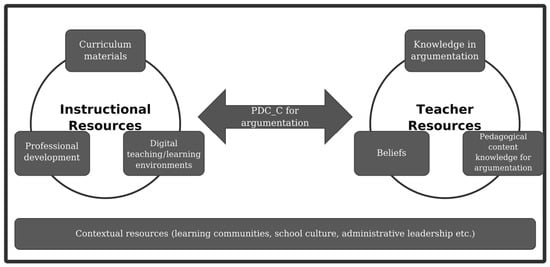
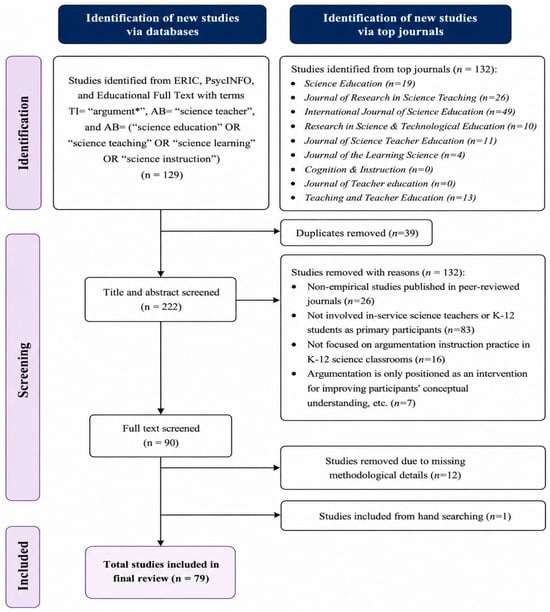
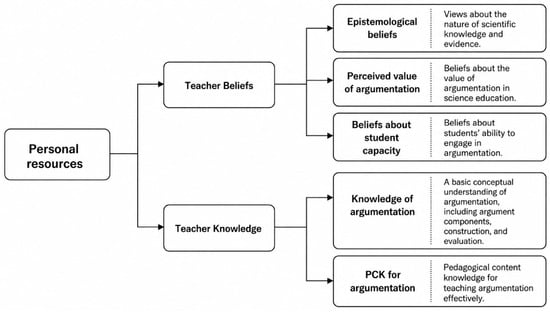
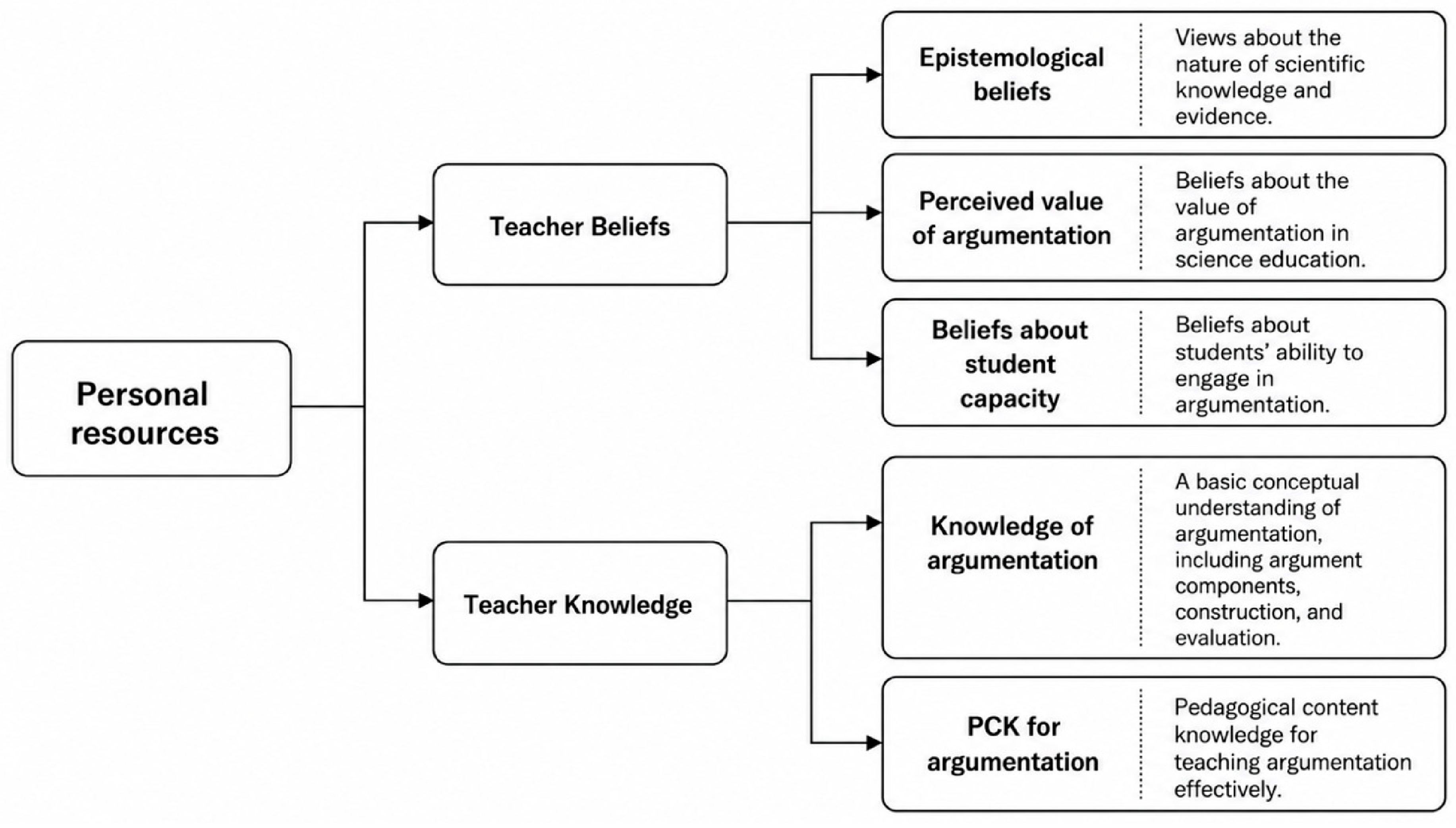
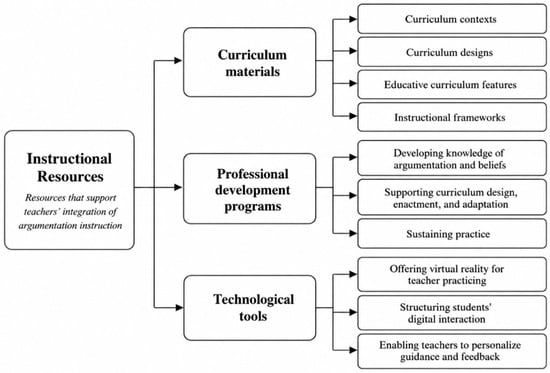
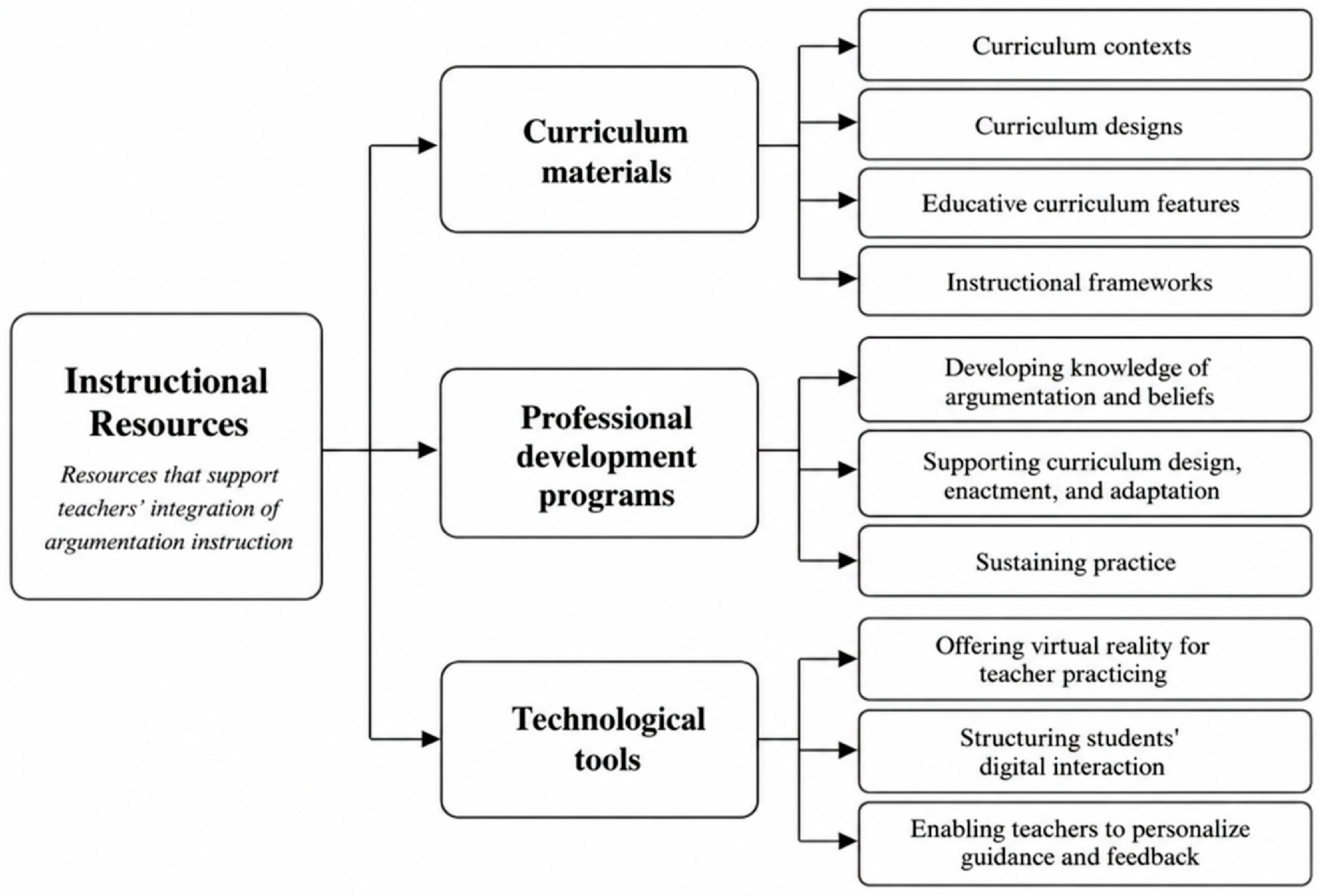
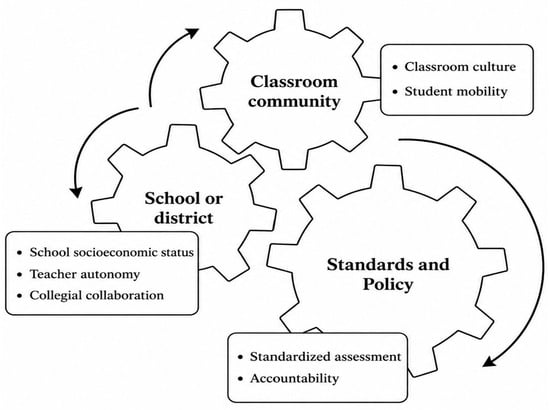
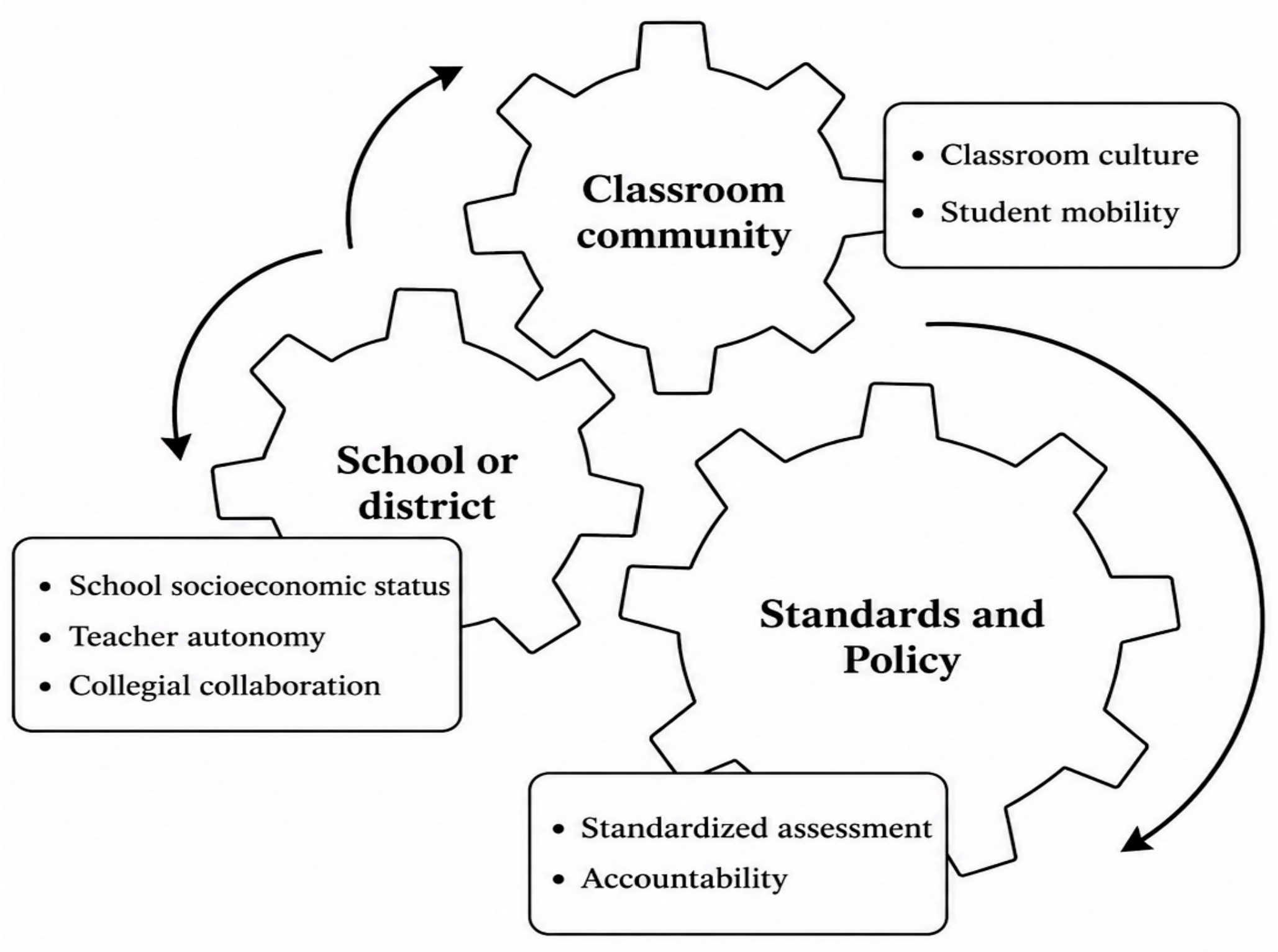

Disclaimer/Publisher’s Note: The statements, opinions and data contained in all publications are solely those of the individual author(s) and contributor(s) and not of MDPI and/or the editor(s). MDPI and/or the editor(s) disclaim responsibility for any injury to people or property resulting from any ideas, methods, instructions or products referred to in the content. |
© 2026 by the authors. Licensee MDPI, Basel, Switzerland. This article is an open access article distributed under the terms and conditions of the Creative Commons Attribution (CC BY) license.