


Abstract
Among many other factors, the formation of adolescents’ attitudes toward immigrants is related to multiple socio-economic, personal, and educational factors, yet little is known about their relative importance across educational systems. This study examined the relative contribution of students’ socio-economic background, personal characteristics, civic activities at school, and civic activities outside school to attitudes toward immigrants using nationally representative data from the International Civic and Citizenship Education Study 2022, including almost 70,000 participating eighth-grade students from 21 European educational systems. A series of regression models examined the extent to which different blocks of variables attenuated the association between socio-economic background and positive attitudes toward immigrants. Across the 21 educational systems, higher socio-economic background was generally associated with more positive attitudes. Among the examined predictor blocks, the inclusion of students’ personal characteristics attenuated the most of these associations, followed by civic activities at school, whereas civic activities outside school contributed relatively little. The overall pattern of findings was remarkably consistent across the participating educational systems. These findings highlight the central role of adolescents’ personal civic dispositions in explaining their attitudes toward immigrants and suggest that schools can promote more inclusive attitudes by fostering students’ civic development alongside opportunities for meaningful civic participation.
1. Introduction
Over the past few decades, rising immigration to European countries has rendered the promotion of tolerance toward immigrants a central objective of policies on education for democratic citizenship and human rights (Council of Europe, 2017). Accordingly, adolescents’ attitudes toward immigrants (ATI) represent a very important issue in the European educational context and in cross-national research (e.g., Isac et al., 2012). Apart from general detrimental effects of intolerant ATI on the functioning of democratic societies and/or specifically on educational climates at school, such attitudes among adolescents may lead to prejudice and discriminatory treatment of their immigrant peers at school and out of school (Özdemir et al., 2016; Plenty & Jonsson, 2016). Indeed, research shows, for example, that immigrant students were—compared to the natives—more frequently harassed and bullied by their peers (Alivernini et al., 2019b; Özdemir et al., 2016), more likely to be rejected or socially isolated in the classroom (Cavicchiolo et al., 2019; Plenty & Jonsson, 2016) and in other contexts (Cherng, 2015), and assessed as less academically competent by their teachers, even with relevant factors of academic achievement controlled for (Glock et al., 2013; Kleen & Glock, 2018). All these can contribute to poorer academic performance of immigrant students (Cavicchiolo & Alivernini, 2018; Guerra et al., 2019), their lower subjective well-being (Guerra et al., 2019; Motti-Stefanidi et al., 2020), and to an increase in the likelihood of further disadvantages in their future life (e.g., Motti-Stefanidi et al., 2012).
Although intergroup sentiments, stereotypes, attitudes, and representations of simple everyday relationships develop early in life, and are then (re)shaped in different socialization contexts over childhood and adolescence (e.g., Crocetti et al., 2022), early adolescence (approx. ages 12 to 14) is considered especially malleable when it comes to the formation and/or change in intergroup attitudes, prejudice and (in)tolerance of diversity (Gniewosz & Noack, 2015; van Zalk et al., 2013). The early adolescent intellectual spurt (a rapid quantitative increase in cognitive ability) and an associated major qualitative change from concrete to formal operations (Andrich & Styles, 1994; Styles, 1999) result in an improvement in socio-cognitive competencies. These enable adolescents to gradually develop more abstract beliefs, explore and evaluate their own and others’ attitudes from different perspectives, deepen their understanding of justice and egalitarian principles, and build more complex views on the society and intergroup relations (Crocetti et al., 2022; Torney-Purta et al., 2004; van Zalk & Kerr, 2014). Concurrently, adolescents begin to explore their personal and social identity across several domains, including the civic domain (e.g., Lep & Zupančič, 2023), and steadily expand their knowledge across different social contexts while engaging in various interpersonal and intergroup relations. These developmental processes unfold in increasingly multicultural societies, where globalization and migration have also challenged traditional understandings of citizenship by shifting the emphasis from exclusive national belonging toward more inclusive conceptions of political community (Bezjak, 2012). These considerations imply that the process of developing a mature citizenship may be linked to different factors in adolescents’ social environments, as documented for students’ ATI within different European countries (Albarello et al., 2023; Gniewosz & Noack, 2015; Motti-Stefanidi et al., 2020; van Zalk & Kerr, 2014; Wilson-Daily et al., 2018). However, there is also a downside: these attitudes become increasingly resistant to change with age (Dražanová et al., 2023).
Comparative studies evaluating cross-national differences in adolescents’ ATI are scarce, but essential, as they serve to monitor, contextualize, and explain cross-national differences across participating educational systems (Isac et al., 2012). One of such large-scale assessments, the International Civic and Citizenship Education Study (ICCS, with data collections in 2009, 2016, and 2022; Schulz et al., 2010, 2018, 2023) is concerned with eighth-grade students’ (approximately 14 years old) readiness to develop and undertake their roles as citizens. It includes investigation into adolescents’ beliefs about equal rights and opportunities for different social groups in the society, i.e., people of different gender, ethnic/racial status, and immigration background (Schulz et al., 2016). The findings offer an insight into the educational-system-specific challenges to act upon in promoting tolerance of diversity among young members of democratic multicultural societies, especially because complex sampling and assessment designs of the ICCS provide representative data for the populations of the participating educational systems. Every few years, data on students’ knowledge in the civic and citizenship domain (based on performance tests), as well as their background characteristics and the context of civic and citizenship education is collected through student, teacher, and school principal questionnaires (Schulz et al., 2023).
For the present study, we use the ICCS 2022 student questionnaire data across 21 European countries to inquire into the relations of students’ socio-economic background variables with their ATI, and to examine whether other relevant variables assessed by the ICCS 2022 mitigate these relations. As children grow up in families, characterized by differences in socio-economic background and parental interest, schools represent an important socialization environment where civic interest, values, and attitudes are formed. The question remains, however, whether school-level variables have the possibility to mitigate the potential negative effects of student- and family-level variables in supporting more positive ATI. Over the next four sections, we will present key findings and mechanisms linking selected SES-related variables, included in ICCS 2022, with students’ ATI, and then outline again the study’s aim and describe the models we tested across countries.
1.1. Theoretical Framework
The literature suggests that the development of adolescents’ ATI is related to a broad range of socio-economic, personal, school, and civic participation factors. Previous studies have typically examined these predictors separately or within individual national contexts, providing limited evidence about their relative importance across educational systems. Consequently, it remains unclear which factors account for socio-economic differences in adolescents’ ATI most strongly and whether these patterns are consistent across countries. Addressing this gap is important for both theory and educational policy, as identifying the strongest correlates of positive ATI may help inform interventions aimed at promoting tolerance and reducing socio-economic inequalities in civic attitudes. Among the ICCS 2022 measures, we selected three SES-related family background variables (family SES, family immigration background, and parental interest in social/political issues) and sets of variables reflecting students’ personal characteristics, their civic engagement in school and civic participation out of school. As the measures in each set are widely diverse, we drew from different theories and empirical findings to select the variables that could explain their potential links to students’ ATI as discussed in Section 1.1.1, Section 1.1.2, Section 1.1.3 and Section 1.1.4.
Beyond their empirical basis in the ICCS 2022 instrument, the four blocks examined in our paper can be understood as four distinct pathways through which family socio-economic background could contribute to adolescents’ ATI, ordered from the most distal to the most proximal and agentic (see Figure 1). Family SES background represents the ascribed starting point—the socio-economic and socialization resources available to a student independent of their own choices. Personal characteristics represent a dispositional pathway, capturing the internalized psychological orientations (e.g., self-efficacy, political interest, institutional trust, threat perception) through which SES is thought to underlie attitudes from within the individual (Bandura, 1977; Stephan & Stephan, 2000). Civic activities at school represent a structured, institutional pathway: a compulsory context in which socio-economic differences in opportunity may either be reproduced or compensated for by the school environment. Civic activities outside school, by contrast, represent an informal, elective pathway, likely facilitated by family resources (time, encouragement, financial means) but largely outside the direct reach of educational institutions. Comparing the relative contribution of these blocks to the attenuation of the SES–ATI association therefore tests a specific theoretical proposition: whether the socio-economic gradient in adolescents’ ATI is associated primarily through internalized dispositions, through structured school-based socialization, or through unequally distributed informal civic opportunity. This distinction has direct practical relevance, as only some of these pathways (personal characteristics, school activities) are realistically open to school-based intervention, while others (family SES, out-of-school participation) are largely beyond schools’ reach.
Figure 1.
Summary of the proposed pathways examined in relation to the association between socio-economic background and attitudes towards immigrants.
1.1.1. Socio-Economic Background and Attitudes Toward Immigrants
In general, higher individual and/or local socio-economic status (SES)—typically measured by education, income, and occupational status—was found to be negatively, though rather weakly, related to peoples’ intolerant ATI (Dražanová et al., 2023; Martín & Indelicato, 2022). The findings, however, are not straightforward and suggest that the SES–ATI relation may depend on moderating factors, such as local economic prosperity, country-specific institutional features (Dražanová et al., 2023; Hoxhaj & Zuccotti, 2020) and/or experiences of permeability of the boundaries between wealth groups (Jetten, 2019). Considering specific social-demographic characteristics based on data from the European Social Survey conducted in 27 European countries, Martín and Indelicato (2022) identified several groups with more positive ATI. Among these were young students, employed citizens, those having a good economic condition, and individuals with immigrant background. Likewise, a recent meta-analysis of individual-level variables by Dražanová et al. (2023) revealed the strongest associations of higher education and younger age with positive ATI, and substantially lower (yet significant) positive relations of higher-skilled occupation, higher income, and minority background.
Similarly, research suggests that adolescent students with higher family SES tend to hold more positive ATI (Barber et al., 2013; Gniewosz & Noack, 2008; Isac et al., 2012), while their peers with lower SES are less likely to be open and tolerant, thus exhibiting fewer positive attitudes toward outgroups (e.g., immigrants). Consistent with these outcomes, students in high SES classrooms exhibited less prejudice toward immigrants than those in low SES classrooms (Albarello et al., 2023), and higher family SES adolescents reported more mixed sentiments (Alivernini et al., 2019a), viewing immigrants both as a new source of prosperity and a potential annoyance or threat, rather than expressing outright negativity.
The SES–ATI relationship is usually explained within the frameworks of the intergroup contact theory (Pettigrew & Tropp, 2006), pointing to the role of competition for resources which can heighten the perception of immigrants as a realistic (economic resources, physical, or well-being) and/or symbolic (values, beliefs, or way of life) threat (Stephan et al., 2015), and socialization theories (e.g., social learning theory, Bandura, 1977). Adolescents from more affluent families often have more opportunities for intercultural contact (e.g., travel, extracurricular activities, and diverse social networks), which broadens their views about their own and foreign societies, and increases tolerance toward immigrants (Kern et al., 2020). As education exposes people to diverse perspectives and critical thinking about social issues, higher attained education also contributes to more open and tolerant intergroup attitudes (Martín & Indelicato, 2022). Moreover, better educated parents (the strongest SES component, e.g., Dražanová et al., 2023) transmit these attitudes to their children via socialization processes (e.g., Gniewosz & Noack, 2015), both implicitly (through daily interactions and communications, modelling) and explicitly (purposive teaching).
Along with the students’ family SES in relation to their ATI, we also consider family immigration background and parental interest in politics/social issues as important indicators of adolescent’s socio-economic milieu in our paper. In line with the findings in age-heterogeneous samples (Dražanová et al., 2023; Martín & Indelicato, 2022), research suggests that adolescents’ family immigration background is significantly associated with their ATI. Compared to peers without immigrant background, the first- or second-generation immigrant adolescents generally show more favourable ATI. This is often attributed to shared experiences, greater empathy, and a sense of common social identity with other immigrants (König et al., 2022; Molteni et al., 2025). Nevertheless, immigrant adolescents assimilate over generations, and their ATI can become less positive, gradually aligning with those of the native (non-immigrant) population as indicated by data from the European Values Study (Molteni et al., 2025). Parental interest and engagement in political and social issues are linked to adolescents’ ATI, primarily through processes of political socialization and intergenerational value transmission (Crocetti et al., 2022; Gniewosz & Noack, 2015; Miklikowska, 2016, 2017; Okolikj & Hooghe, 2022), wherein parents foster political discussions, modelling, and create supportive environments for value transmission. Thus, adolescents tend to adopt parental political ideologies, in particular when parents are actively involved in discussions about political/social issues with their children. It is also of note that these effects are likely bidirectional as there is some evidence of adolescent-to-parent effect on ATI, especially in families with open communication (e.g., Miklikowska, 2016, 2017).
However, the effect of SES-related variables on ATI does not appear in isolation. There are many other factors (e.g., personal, school and out-of-school civic experiences) related to adolescents’ ATI. The purpose of this article was thus to identify the strongest predictors of ATI (among the available ICCS 2022 variables from student data) that are likely to attenuate the relationship between family SES-related variables and students’ ATI. Here, we focused on students’ personal characteristics, as well as perceived contextual factors pertaining to the students’ experience and engagement in both civic activities at school and out-of-school.
1.1.2. Students’ Personal Characteristics
The ICCS 2022 includes gender (binary), several indicators related to students’ civic dispositions and perceptions of society, which previous research has linked to ATI. Students’ personal characteristics can be understood as reflecting broader societal values and perceptions of social cohesion, which are likely to underlie how young people evaluate immigrants and immigration. For example, students who feel capable of participating in civic life, show interest in political and social issues, and trust social and political institutions tend to perceive society as based on democratic participation, cooperation, and inclusion. Such orientations may foster openness toward social diversity and encourage more positive ATI. In contrast, adolescents who perceive immigration as a threat to democracy, societal stability, or the future of their country may be more likely to view immigrants as an outgroup that endangers valued social arrangements.
Regarding gender, empirical evidence that considered only two genders in the surveys indicates that adolescent girls are likely to express more positive feelings toward immigrants than their male peers with the same SES (Alivernini et al., 2019a). This pattern holds across Europe and over time, with adolescent girls expressing greater support for immigrants’ rights, less annoyance or negativity toward immigrants, and tending to have more positive ATI compared to boys (Bayram Özdemir et al., 2022; Munck et al., 2018; Stattin & Amnå, 2022). However, no gender differences in ATI were reported for general, age-heterogeneous populations (Dražanová et al., 2023; Martín & Indelicato, 2022).
Citizenship self-efficacy in adolescents—the perceived ability to perform specific tasks in the civic domain with confidence in the ability to participate as active, responsible citizens—significantly underlies adolescents’ ATI (Lundberg & Abdelzadeh, 2022; Tomul et al., 2024). Bandura’s (1986) social cognitive theory, emphasizing the role of self-efficacy in guiding behaviour and attitudes through social learning and perceived agency, provides a useful framework for understanding these relationships. According to this theory, citizenship self-efficacy empowers adolescents to adopt more positive, tolerant ATI by enhancing intercultural sensitivity (e.g., openness and empathy toward immigrants), adaptability (positive responses to diverse social groups) (Tomul et al., 2024), civic engagement and self-confidence in undertaking specific civic or political tasks (Schulz et al., 2018), especially when reinforced by supportive social environments (Eckstein et al., 2021).
Studies further suggest that greater interest in political and social issues links to more positive ATI (Hannuksela et al., 2024; Stattin & Amnå, 2022). Politically interested individuals are, in general, more likely to engage in discussions and civic activities (Prior, 2019), which promote perspective-taking and openness to diversity, while conservative values attenuate the positive relationship between political interest and ATI (Hannuksela et al., 2024). Nonetheless, adolescents may be highly interested in political and social issues but put little value to societal concerns, making the direction of the effect dependent on moderating variables such as values. Indeed, youth who put little value to societal concerns exhibited less inclusive ATI and less positive views on democratic principles than either those attaching high importance to the welfare of others or those expressing less interest in political and social issues (Stattin & Amnå, 2022).
Trust in institutions was found to be positively associated with pro-immigrant attitudes in Europe. This holds for both majority and minority ethnic populations, with fair and supportive political institutions playing a crucial role in creating a more immigrant-tolerant environment (Halapuu et al., 2013). Among adolescents, the limited body of large-scale cross-national research has primarily examined the relationship between trust in civic/government-related institutions and civic engagement (Schulz, 2024b; Torney-Purta et al., 2004) or referred to adolescent social trust (general trust in people) in relation to ATI (e.g., Miklikowska et al., 2019). Large-scale international studies demonstrated that higher social trust is linked to greater tolerance, reduced prejudice, and more inclusive ATI among people (e.g., Van Der Linden et al., 2017). In Sweden, the majority of adolescents also showed that higher levels of social trust mediated the link between an increase in teacher support and a decrease in students’ negative ATI (Miklikowska et al., 2019). This may imply that general social trust may be partly reflected in adolescents’ trust in civic institutions even though adolescents have little or no direct contacts in such institutions, which is in line with evidence suggesting that institutional trust precedes other forms of trust (Sønderskov & Dinesen, 2016). Still, they are likely to interact with delegated representatives (schools, youth organizations, sports clubs) in such institutions.
Taken together, trust in institutions seems to be an important predictor of positive ATI, but such trust is dwindling across the world as societies face increasing uncertainty about the future. In line with the integrated threat theory (Stephan & Stephan, 2000), perception of threats, either to one’s actual resources (realistic) or the established way of life (symbolic threat), is related to more negative intergroup relations and more negative ATI. And indeed, perceived economic, cultural, and security threats are closely tied to discriminatory immigration attitudes across countries (Gu et al., 2021). In Finnish adolescents, realistic and symbolic threats were the most salient immigrant-related threats (Nshom & Croucher, 2017), while negative ATI significantly predict fear and hopelessness about the future (Karataş, 2025). Therefore, we expect that perceived threats to democracy and threats to the world’s future, both measured in ICCS 2016, will be linked with more negative ATI.
1.1.3. Students’ Experiences and Participation at School
School environments act as one of the key socialization contexts that can either foster positive ATI or reinforce negative ones, with supportive, inclusive, and democratic school climates promoting intergroup tolerance and reducing prejudice. Students’ perceptions of openness in classroom discussions appears as one of such factors. A democratic classroom climate—where students experience open discussion, mutual respect, and deliberate participation—predicts less negative ATI at both the individual and classroom levels (Albarello et al., 2023; Eckstein et al., 2021).
Tolerance is higher in schools where students feel respected, treated equally, and have opportunities to participate in school policy and organization. However, merely having classroom discussions on controversial issues is not enough; the context of mutual respect and responsiveness is essential for boosting tolerance (Maurissen et al., 2018). A classroom climate fostering contact, cooperation, multiculturalism, and colour-evasion is positively associated with adolescents’ intercultural competence, with none of these aspects being sufficient on their own (Schwarzenthal et al., 2020). A cooperative classroom climate reduces anti-immigrant attitudes and promotes positive ATI among Swedish adolescents (Miklikowska et al., 2021). Moreover, frequent classroom political discussions in Swedish adolescents lead to lower anti-immigrant attitudes, due to increased general political interest (Miklikowska et al., 2022).
Recent longitudinal and cross-national studies consistently demonstrate that features such as a democratic classroom climate, supportive peer relations, multicultural education, and cooperative learning environments are associated with more positive attitudes and greater tolerance toward immigrants among adolescents (Albarello et al., 2023; Beyer & Brese, 2024; Eckstein et al., 2021; Miklikowska et al., 2019, 2022; Özdemir & Özdemir, 2020; Schachner et al., 2019; Schwarzenthal et al., 2017, 2020). The presence of open discussion, mutual respect, and opportunities for student participation further enhances tolerance, while exposure to hate speech or unfair treatment can increase prejudice (Maurissen et al., 2018; Gniewosz & Noack, 2008). Classroom diversity, when paired with positive intergroup contact and supportive norms, also plays a protective role, buffering against negative parental or peer influences (Bohman & Miklikowska, 2021; Miklikowska et al., 2019; Wilson-Daily et al., 2018). Diversity is suggested to increase the likelihood of cross-ethnic friendships, which are in turn associated with to lower levels of anti-immigrant attitudes in adolescents, even after transitioning to new schools (Bohman & Miklikowska, 2021). Intergroup friendships and positive contact norms in the classroom are linked to increased tolerance and reduced engagement in ethnic victimization (Özdemir & Özdemir, 2020; van Zalk & Kerr, 2014).
Adolescents’ perceptions of student–teacher relations, referring to the perceived teacher support, respect, fairness and interest in students’ well-being, were consistently reported significant in predicting students’ positive ATI (e.g., Gniewosz & Noack, 2008; Maurissen et al., 2018; Miklikowska et al., 2019), and suggested to help reduce intolerance among adolescent students. Recent findings based on ICCS 2022 data further reinforce the importance of supportive school environments by demonstrating that democratic school culture, particularly positive peer interactions and students’ perceived agency in school decision-making, is associated with more positive student–teacher relationships (Peras & Bezjak, 2025). Applying the attachment theory (Bowlby, 1982) to the student–teacher relationships, Miklikowska et al. (2019) conducted a follow-up on a Swedish sample of early adolescents into late adolescence and established that perceived greater teacher support at both the individual level and the classroom level was steadily associated with weaker negative ATI, with greater social trust also mediating these effects. The authors suggested that positive relationships with teachers as secondary attachment figures, characterized by high levels of support and interpersonal reliability, can provide a secure base from which adolescents explore their social worlds, accept ethnic diversity, and experience less fear and anxiety of outgroup members (Bowlby, 1982; Mikulincer & Shaver, 2001).
Finally, research shows that civic participation in schools (involvement in formal and informal activities related to civic and democratic life, e.g., participation in student councils, discussions of social and political issues, school-based campaigns, and other activities of practicing citizenship in school) is linked with increased tolerance and positive ATI across countries (Beyer & Brese, 2024). However, as students in lower-secondary education are not yet able to fully participate in society, the measurement of behavioural intentions regarding future engagement is an important component of ICCS. This is in line with the theory of planned behaviour (Ajzen, 2001; Ajzen & Fishbein, 2000) that posits a link between attitudes and behaviour through intentions. Given that school-based engagement provides young people with opportunities to experience political activities within their immediate environment, and that such experiences are associated with higher levels of later political engagement (see, for example, Keating & Janmaat, 2016), ICCS has, since 2016, also included a measure of students’ willingness to engage at school, in addition to past or present school-based engagement. Stemming from research showing that the youth are ready to act politically if something bad happens to other people, for example (Stattin & Amnå, 2022), we might conclude that not only participation, but also willingness to participate can be linked with more positive ATI.
1.1.4. Students’ Experiences and Participation Outside the School
While participation in civic activities in school and diverse classrooms is associated with increased attitudes of tolerance towards minorities in most analyzed countries between 2009 and 2016 (Beyer & Brese, 2024), the literature is less conclusive about the role of out-of-school participation in relation to ATI. Some research shows, however, that participation in civic activities reduces anti-immigrant attitudes (Lundberg & Abdelzadeh, 2022), while community-based activities such as volunteering and protests can reduce prejudice, especially when they foster empathy and intergroup friendships (Miklikowska, 2017, 2018). Moreover, the civic participation–ATI relationships are likely moderated by demographic and contextual factors. For example, politically interested adolescents who attach high importance to others’ welfare would be expected to be more involved in civic activities with others or in political or civic associations than their politically interested peers who attach low importance to others’ welfare.
Besides school, families remain an important socialization environment throughout adolescence. Thus, the role of parents should be considered—parental (in)tolerance toward immigrants relates to adolescents’ ATI, with higher correspondence in prejudice when adolescents perceive their parents as supportive (Miklikowska, 2016). The most significant relationships between parental and adolescent’s negative ATI are observed in early adolescence (grades 6 and 7) and last until age 16 (Gniewosz & Noack, 2015). One of the possible transmission mechanisms here is the discussion of political and social issues. Through discussion (with parents), social issues such as immigration might be framed in a way that is favourable or detrimental to positive ATI, adolescents can be exposed to diverse opinions and multicultural values, and discussion can lead to formation of new or consolidation of existing attitudes.
1.2. The Present Study
Taken together, the overview of the literature points to a considerable heterogeneity in theoretical approaches to understanding the factors of ATI in students. In response, stemming from the theoretical framework of ICCS 2022, we propose and test three possible pathways underlying the relationship between SES and ATI (see Figure 1). Specifically, using nationally representative ICCS 2022 data from 21 European educational systems that participated in the study (excluding the three non-European participants: Brazil, Chinese Taipei, and Colombia), this study aims to examine the relative contribution of students’ socio-economic background, personal characteristics, civic activities in school, and civic activities outside the school to students’ ATI. The study uses only European education systems’ data as, besides the between-countries variation, they share much more similar (European) context, compared to the rest of the participating countries. While the extant literature shows that civic socialization, including the development of attitudes on social issues (such as immigration), unfolds in various environments and through different socialization agents (see Lep, 2022), we surmise that students’ personal characteristics that also include psychological dispositions will remain the strongest predictor of their ATI. Specifically, we hypothesize that, across countries, the set of personal characteristics of students would attenuate the relationship between socio-economic background and the students’ ATI to a relatively greater extent, compared to the set of civic activities outside school and civic activities inside school.
2. Materials and Methods
2.1. Data
The data for this study stem from the International Civic and Citizenship Education Study (ICCS) 2022 (IEA & ACER, 2024), a cross-sectional study conducted every few years, targeting the population of students in Grade 8. A total of 24 educational systems took part in the 2022 cycle (Schulz et al., 2023). In this paper, we use data for 21 European educational systems: Bulgaria, Croatia, Cyprus, Denmark, Estonia, France, Germany (North-Rhine Westphalia), Germany (Schleswig-Holstein), Italy, Latvia, Lithuania, Malta, the Netherlands, Norway, Poland, Romania, Serbia, Slovak Republic, Slovenia, Spain, and Sweden. Within the ICCS framework, North-Rhine Westphalia and Schleswig-Holstein are what is called “benchmarking participants”, as they represent only their federal provincial educational systems and not the whole German educational system (see Schulz et al., 2023). Although ICCS collects data on student civic knowledge, as well as contextual and background data on the context of civic and citizenship education through student, teacher, and school principal questionnaires (Schulz et al., 2023), this study uses only the student data, as per its hypothesis. The ICCS uses complex sampling and assessment design providing representative data for the populations of the participating educational systems. The sample sizes and their population estimates in each participating educational system in this study are presented in Table 1.
Table 1.
Sample sizes and population estimates for the participating jurisdictions.
2.2. Measures
This study uses data from the student questionnaire, collected in all 21 countries. The variables from ICCS 2022 and their roles in the analysis model (see the next section) are presented in Table 2.
Table 2.
ICCS 2022 variables used in the analyses.
2.2.1. Simple Indices
We adopted several simple indices composed by the ICCS 2022 International Study Center and available in the publicly accessible dataset (IEA & ACER, 2024). The S_NISB, an index of home wealth, is composed from the highest occupational status of either parent, highest educational attainment of either parent, and the number of books in the student’s home. The index was constructed using CFA and the individual student scores are factor scores (for more details, see Schulz & Friedman, 2024; Afana et al., 2024). We refer to this index as student socio-economic background (SES) later in the paper.
The S_IMMIG, an index of the student’s immigration background, was computed using the information about the country of birth (in the host country or abroad). It depends on the values of three variables: “At least one parent born in country”; “Students born in country but parent(s) born abroad”; and “Students and parent(s) born abroad” (see Schulz & Friedman, 2024; Afana et al., 2024).
The S_HINT represents the highest interest in political and social issues of either the mother or the father of the student. The value of S_HINT represents the highest category (out of “Not interested at all”, “Not very interested”, “Quite interested”, “Very interested”) (see Schulz & Friedman, 2024; Afana et al., 2024).
Similarly, the S_SINT represents the highest interest in political and social issues of the student themselves. The data was collected by directly asking the student about how much they are interested in political and social issues. The response categories are the same as for the S_HINT.
2.2.2. Complex Scales
Most of the variables in this study are complex scales composed from multiple items in the student questionnaire using Item Response Theory (IRT) Partial Credit Model (PCM). The IRT item parameters were estimated, weighting equally all educational systems’ data, so that those having larger populations do not exert undue weight over the parameter values compared to smaller systems and, thus, introduce bias. The final scores were generated using Weighted Likelihood Estimation (WLE) from item parameters and the vector of responses. The metric of complex scales is altered, so that each scale has a center point of 50 and standard deviation of 10 score points (Schulz & Friedman, 2024). The description of the scales and the items used in their composition is listed below (for more details, see Afana et al., 2024).
Attitudes toward immigrants (the S_IMMPOS scale) consists of five items asking students to indicate the level of their agreement (“Strongly disagree”, “Disagree”, “Agree”, and “Strongly agree”) with items stating that immigrant children should have equal educational opportunities, immigrants who have lived in the country for several years to have equal voting opportunities, the right to keep their customs and lifestyle, equal rights as everyone else in the country, and that immigrants bring many cultural, social and economic benefits to the country.
Beliefs about threats to democracy (the S_DEMTHRT scale) comprises seven items on students’ opinions about how bad for democracy (“Not bad at all”, “Somewhat bad”, “Quite bad”, and “Very bad”) are the following: political leaders giving government jobs to family members, when the government breaks a law to fulfil a promise before being elected, arrests of opposition leaders who openly criticize a new law, when a government appoints only judges who support it, when government closes media outlets who criticize it, when a government blocks social media to prevent users from criticizing its policies, and when a government controls all media in the country.
Citizenship self-efficacy (the S_CITEFF scale) consists of seven items tapping into students’ opinions on how well (“Not at all”, “Not very well”, “Fairly well”, and “Very well”) they can argue their point of view on a controversial social or political issue, stand as candidates in school elections, organize a group of students to achieve changes in school, follow a debate on a controversial issue, write to a newspaper to give their own point of view on an issue, speak in front of their class on a social or a political issue, and assess the credibility of information on a political or social issue.
Trust in civic institutions (the S_INTRUST scale) is composed of six items assessing students on their degree of trust in national institutions (“Not at all”; “A little”; “Quite a lot”, and “Completely”), i.e., national government, local government, courts of justice, police, political parties, and parliament.
Gender (the SD_GENDER) is a dichotomous variable (“Girl” and “Boy”).
Discussion of political or social issues outside school (the S_POLDISC scale) contains four items asking students about the frequency of their participation in the following activities outside of school (“Daily or almost daily”, “Weekly”, “Monthly”, and “Never or hardly ever”): talking with parents and talking with friends on political and social issues and talking with parents and friends on what is happening in other countries.
Participation in wider community groups or organizations (the S_COMPART scale) is composed of five items on students’ involvement in a youth organization affiliated with a political party or a union, a voluntary group helping the local community, a group or organization campaigning for a particular cause, a global campaign for a particular issue, and a community youth group. There were three response options to each of the items: “No, I have never done this”, “Yes, I have done this, but more than a year ago”, and “Yes, I have done this in the last twelve months”.
Participation in civic activities at school (the S_SCHPART scale) includes seven items about students’ engagement in civic activities at school: active participation in an organized debate, voting for class representative or school parliament/council, taking part in decision-making on how the school is run, taking part in discussions at a student assembly/gathering, becoming a candidate for class representative or school parliament/council, participating in activities to make the school more environmentally friendly, and writing articles on political and social issues for a school publication or website. The response options were “Strongly disagree”, “Disagree”, “Agree”, and “Strongly agree”.
Willingness to participate in school activities (the S_SCACT scale) consists of four items asking students how likely they would take part in the following school activities if given a chance (“Not at all likely”, “Not very likely”, “Quite likely”, and “Very likely”): vote in school elections of class representatives or school parliament/council, join a group campaigning for an issue the students agree with, become candidates for class representatives or school parliament/council, and take part in discussions in a student assembly/gathering.
Perceptions of openness in classroom discussions (the S_OPDISC scale) comprises six items about classroom events when discussions on political and social issues take place: teachers encourage students to make their own minds, students bring discussions of current political and social issues, students express their opinions even if they differ from the opinions of other students, teachers encourage student discussions with others when opinions differ, teachers present different sides of an issue when explaining it to the class, and teachers encourage students to express their opinions. The response options for each of the items were “Never”, “Rarely”, “Sometimes”, and “Often”.
Perceptions of student–teacher relations at school (the S_STUTREL scale) comprises five items on how much students agree (“Strongly disagree”, “Disagree”, “Agree”, and “Strongly agree”) that the relationship between students and teachers are good: being treated fairly by teachers, students get along well with most teachers, most of the teachers are interested in students’ well-being, most of the teachers listen to what the students have to say, and the students receive extra help from their teachers if they needed it.
We created an additional scale for the purpose of this study—Students’ perceived threats to the world’s future (the S_THREAT scale). Its eight items refer to students’ opinion on the extent different issues represent a threat to the world’s future: violent conflicts, poverty, climate change, unemployment, overpopulation, infectious diseases, terrorism, and global financial crises. The response options were “Not at all”, “To a small extent”, “To a moderate extent”, and “To a large extent”. The scale was produced following the same methodology as the ICCS 2022 International Study Center. IRT with PCM was used to estimate the item parameters, rescaling the sampling weights, so that each country had the same size of its population and none had a larger impact on the estimates. The scores on these scales were produced and the metric was changed to N(50, 10) (for more details, Schulz & Friedman, 2024). In addition, the scale’s structure was tested using Confirmatory Factor Analysis (CFA). The model fit was rather satisfactory, with χ2 (14) = 2344.747 (p < 0.001), CFI = 0.993, TLI = 0.989, RMSEA = 0.056, and SRMR = 0.039. The alpha coefficient of the CFA model was 0.84 which is satisfactory given that the scale will not be used for inferences about individuals.
2.3. Analysis
To test its hypothesis, this study uses a series of linear regression models. The dependent variable is the students’ positive attitudes toward migrants (S_IMMPOS). The relationship between the dependent variable and the SES-related variables (S_NISB, S_IMMIG, and S_HINT) is tested through a base model. All other models add one block of control variables at a time, as follows:
- The first model tests the relationship between S_IMMPOS and SES-related variables when controlling for personal characteristics;
- The second model tests the relationship between S_IMMPOS and SES-related variables when controlling for civic activities outside the school;
- The third model tests the relationship between S_IMMPOS and SES-related variables when controlling for civic activities inside the school.
The results from these three models were then compared to evaluate the changes in the coefficients of the SES-related variables and in their significance.
Like many other large-scale assessments and surveys, ICCS uses complex sampling in each educational system—multistage cluster sampling with probability of selection proportional to the size of the sampling units (schools), known as PPS sampling. In the first stage, schools are selected with probability of selection depending on their number of students in the target student population (grade 8). In the second stage, one or two intact classes with all their students are selected in each school. This leads to two analytical issues. The first one is the clustering effect that stems from selecting intact classes. The second one is the unequal probability of selection for each school and, respectively, their classes that result in sampling weights that differ across the schools, as well as their sampled students. To overcome these issues, ICCS (as well as this study) uses jackknife repeated replication (JRR) with 75 replicated weights for computing the standard errors and, subsequently, the p-values (see Schulz, 2024a). The data this study uses is only the student-level ICCS 2022 data. Thus, the analyses are performed as single-level linear regression. All analyses are performed using the RALSA package (see Mirazchiyski, 2021) which automatically accounts for all statistical complexities related to analyzing ICCS 2022 data, as well as other large-scale assessments and surveys.
Student gender, student migration background, parental interest in social and political issues, and student interest in social and political issues are on a metric that differs from all other variables in the regression models. Thus, all regression analyses were performed using standardized coefficients, so that the coefficients are interpretable the same way regardless of the metric any of the variables have. As the regression analyses are computed with standardization on all variables, the values for the intercepts are not available and, thus, not reported.
3. Results
This section presents the findings in the order of the analytical strategy outlined in the Methods section. We first report the bivariate associations between students’ positive attitudes toward immigrants (ATI) and the three socio-economic background variables. We then present the regression analyses examining the extent to which the inclusion of students’ personal characteristics, civic activities outside school, and civic activities in school attenuates these associations across the 21 participating educational systems.
The correlations between S_IMMPOS (dependent variable) and the SES-related variables (S_NISB, S_IMMIG, and S_HINT) are presented in Table 3.
Table 3.
Correlations of S_IMMPOS with S_NISB, S_IMMIG, and S_HINT.
As shown in Table 3, students’ socio-economic background (S_NISB) is significantly related to more positive ATI in all countries, except for Slovenia and Spain. Of all education systems where a significant correlation is found, it is the weakest in Serbia and Sweden (r = 0.07), and strongest in Romania (r = 0.24). The Spearman correlation between the students’ immigration status (S_IMMIG) and their positive ATI is insignificant in about half (10 out of the 21) of the education systems: Bulgaria, Croatia, Estonia, Italy, Lithuania, North-Rhine Westphalia (Germany), Poland, Romania, Schleswig-Holstein (Germany), and Serbia. In Slovenia, Malta, Cyprus, Spain, Norway, the Netherlands, Denmark, France and Sweden, the relationship is significant and positive (the stronger the immigration background the students have, the more positive ATI they tend to have). In Latvia and Slovak Republic, however, the relationship is negative (r = −0.10 and r = −0.07, respectively) and significant (i.e., the stronger the immigration status of the students, the less positive ATI they tend to have). The relationship between students’ positive ATI and interest of their parents in political and social issues (S_HINT) is positive (i.e., the higher the parental interest is, the more positive the attitudes tend to be) and statistically significant in all countries (except for Spain), even if the associations are weak.
The results of the regression models are presented in Table A1, Table A2, Table A3 and Table A4 in Appendix A. As shown in Table A1 (the base model), the SES-related variables (S_NISB, S_IMMIG, and S_HINT) are significantly related to students’ positive ATI. However, not all of the three variables are significantly related to students’ attitudes in all countries, and the number of countries where the predictors are significantly related to the outcomes also differ. For the family socio-economic background, a significant relationship with the students’ positive ATI is not found only in Slovenia and Spain. In all the other countries the relationship is positive—the higher the national socio-economic background of the students, the more positive ATI they tend to have.
In about half of the educational systems (Bulgaria, Croatia, Estonia, North-Rhine Westphalia [Germany], Schleswig-Holstein [Germany], Lithuania, Poland, Romania, Serbia, and Slovak Republic) the student’s immigration background is not significantly associated with the students’ ATI. In all the other countries, the immigration background is significantly related to students’ positive ATI—the higher the immigration status of students, the more positive ATI they tend to have.
The results for the parental interest in social and political issues are similar to the ones for immigration background. In eight countries (Croatia, Estonia, France, Schleswig-Holstein [Germany], Poland, Romania, Serbia, and Spain) the relationship with student positive ATI is insignificant. In six of these countries (Croatia, Estonia, Schleswig-Holstein [Germany], Poland, Romania, and Serbia) there was also no significant relationship between immigration status and ATI. In all other 13 countries the parental interest in political and social issues is significantly related to the students’ ATI: the more interested the parents are, the more positive students’ attitudes tend to be.
Table A2, Table A3 and Table A4 in the Appendix A show the changes in SES-related variables when controlling for different blocks of variables (personal characteristics, civic activities in and out of school). In general, across all countries and across all SES-related variables, the cases where the coefficients became insignificant are students’ personal characteristics (Table A2): after controlling for personal characteristics, 30 out of the 43 significant cases remained significant. The next block with highest decrease in significant cases is activities in school where 35 out of the 43 cases remained significant. The inclusion of civic activities that changed the significance of the least relationships between SES-related variables and students’ positive ATI is the civic activities outside school. Only two cases for all variables across all countries have become insignificant.
When controlling for personal characteristics, the students’ national index of socio-economic background (students’ SES background) becomes insignificant in four (North-Rhine Westphalia [Germany], Schleswig-Holstein [Germany], Latvia, and Serbia) of the initial 19 educational systems. Controlling for personal characteristics does not change the significance of the coefficients for student immigration status in any of the countries. The only exception is Serbia where the coefficient for students’ immigration status becomes significant. The change in the coefficient and its p-value, however, are only minimal and due to the small change in the standard errors resulting from adding the personal characteristics as control variables. The greatest change in the relationship between the SES-related variables and the block of personal characteristics is for the parental interest in political and social issues. While the uncontrolled model found 13 countries where the relationship was significant, after adding the personal characteristics, the relationship remained significant only in the Netherlands and Sweden. That is, in these two countries the inclusion of personal characteristics did not change the relationship between the attitudes toward immigrants and SES-related variables.
When controlling the relationship between students’ ATI and SES-related variables for student civic activities inside school (Table A4 in the Appendix A), the coefficients for the students’ family socio-economic background and student immigration status remain about the same or remain the same in all systems where they were significant without controlling for activities inside school. As for the parental interest in social and political issues, the coefficients remain significant only in three of the 13 educational systems they were previously found (Bulgaria, North-Rhine Westphalia [Germany], and Norway) after controlling for civic activities inside school.
Lastly, controlling for civic activities outside of school did not meaningfully change the relationship between ATI and SES-related variables (Table A3 in the Appendix A). For socio-economic background, the relationship to attitudes does not change in any of the educational systems and remains significant in all of those where it was found significant before controlling for civic activities outside school. The same applies to student immigration status. For parental interest, the relationship becomes insignificant after adding civic activities in school only in the Netherlands and Slovak Republic.
4. Discussion
This study contributes to the growing body of research on adolescents’ ATI toward immigrants by providing a comparative analysis of the relative importance of socio-economic background, personal characteristics, and school/out-of-school civic activities across 21 European educational systems. While previous studies have identified a range of individual and contextual factors associated with ATI, they have generally focused on specific predictors or single-country contexts. By examining these groups of predictors simultaneously across multiple educational systems, the present study offers a more comprehensive understanding of their relative importance, compared to each other, in explaining adolescents’ ATI.
Specifically, we first analyzed how students’ socio-economic background and characteristics of their family background (their immigration status and interest of their parents in social and political issues) correlate with their ATI. In all but two educational systems, students with more favourable socio-economic background exhibited more positive ATI, consistent with the extant literature (e.g., Dražanová et al., 2023; Martín & Indelicato, 2022). It is of note, however, that the correlations were modest and insignificant in Slovenia and Spain. One possible explanation is the SES itself. In 2022 (when this cycle of ICCS was conducted) Slovenia had the second-lowest Gini coefficient in Europe, and the Gini coefficient in Spain was also among the lowest ones (World Bank, n.d.). That is, the income inequalities were very low in these countries at the time of testing (and even now) and this could have posed a floor effect in the estimation of the correlation between SES and ATI. This hypothesis, however, needs further investigation which is beyond the scope of this paper. Similarly, students who perceive their parents as more interested in social and political issues, generally hold more positive ATI. These correlations (albeit modest) were significant in all countries but Spain. On one hand, this might point to the fact that interest of parents may translate into attitudes both implicitly (by their children modelling their attitudes) and explicitly, through direct teaching and discussions—a transmission pattern well-established in other domains, such as financial socialization (e.g., Zupančič et al., 2023). On the other hand, this might point to the possible limitation in how the item measuring parental interest is understood by the students. Perhaps as they are framed, they can be construed more strongly as interest in progressive and liberal ideas, and not the opposite, thus strengthening the correlation. This notion, however, should be tested in future studies, as other transmission processes are possible too. Perhaps parents with more tolerant worldviews are more prone to socializing their children through discussion than parents with more negative ATI, as adolescents who discuss social and political issues more frequently with parents, resemble them more in components of prejudice and ideological attitudes (Meeusen & Dhont, 2015).
Finally, regarding the relationship between students’ immigration status and their ATI, the picture is much more complex. In some educational systems, the relationship was positive, in others it was negative, and in some, it was insignificant. Put simply, in some systems, if students themselves have stronger immigration background, they viewed immigrants more favourably, and in others, more negatively. The interpretation of these findings is therefore strongly dependent on the social context in participating educational systems and findings cannot be generalized. Perhaps in contexts where immigrants are treated very negatively, students with immigrant background are motivated to establish greater distinctiveness between themselves and “the immigrants” which might explain negative attitudes toward this outgroup (in line with the integrated threat theory; Stephan & Stephan, 2000). For example, in countries like Sweden, France and Denmark in this study, the proportion of people born outside the country is rather high (20.8%, 14.0% and 14.4%, respectively, Eurostat, 2026b), and these are the countries where the strongest association between students’ own immigration backgrounds and ATI was found. On the other hand, in countries like Bulgaria and Poland, the association between these two variables is insignificant and very close to zero (i.e., they are unrelated), and these are among the European countries with the lowest proportions of foreign-born residents (Eurostat, 2026b). Further analyses (beyond the scope of this paper) could differentiate the associations between ATI and the immigration background of the students or control for own immigration background. Alternatively, the differences in the socio-economic background of different waves of immigrants could be different; perhaps participating students with stronger immigration background are culturally more similar to the “native” students in the educational system or their family has higher SES than a typical representative of immigrants arriving to the country in the present. Corroborating or refuting either of the proposed transmission processes, however, would require additional analyses, such as controlling for socio-economic background, length of stay in the country of residence, and probing for what is the representation of an immigrant that was referred to by the students when responding to the items. Still, our findings do support the latter explanation to an extent. In regression analyses, where the contribution of immigrant background to ATI was controlled by SES, the two negative correlations observed in pairwise correlations (Latvia and Slovak Republic) changed. In Slovak Republic, the relationship became insignificant, while in Latvia it changed the direction and became positive, aligning this educational system with about a half of the others included in the study.
4.1. Comparative Contribution of Personal Characteristics
This change in significance of the relationship underscores the importance of considering different variables in joint models—a key foundation of our study. Therefore, in the second step of our analyses, we tested how the relationship between SES-related variables and ATI change when controlling for different blocks of variables: personal characteristics of the students, their activities outside the school, and their activities inside the school. The results of the statistical analyses supported our hypothesis that, across countries, the personal characteristics contributed strongest relatively to change in the relationship between the students’ ATI, compared to their civic activities outside school and civic activities at school. However, not all three relationships with the SES-related variables were attenuated the same way by the students’ personal characteristics. The coefficients for students’ immigration background were the least attenuated, as the relationship with ATI lost its significance in only one country. This means that immigration status is a very stable predictor and its relationship with the students’ attitudes is not dependent on personal factors. This is in line with our interpretation of immigrant status not solely as a demographic characteristic, but rather a socially dependent identification outside the domain of students’ self-perceptions and beliefs.
The relationship between students’ socio-economic background and their ATI was attenuated slightly more by the personal characteristics, as the coefficients became insignificant in four educational systems, but the family SES was still a very stable predictor of ATI across the remaining educational systems. This relationship between students’ positive attitudes and highest parental interest was attenuated to the highest degree in the entire study, as in 11 countries the relationship became insignificant. As adolescent students develop their attitudes and identities in the civic domain (Lep & Zupančič, 2023) and specifically in intergroup settings related to prejudice and (in)tolerance (Gniewosz & Noack, 2015; van Zalk et al., 2013), these changes underscore the increasing importance of students’ personal characteristics and highlight the need to better understand how these characteristics and their associations with civic attitudes evolve during adolescence.
While the exploration of the contribution of each of these personal variables to ATI were not the main focus of the paper (and they are well-documented in the extant literature, presented in the introduction), it is still worth pointing out that some clear patterns emerged. In all educational systems in this study, students who held stronger beliefs about threats to democracy or perceived more threats to the world’s future held more tolerant ATI (modest correlations; see Appendix A). Similarly, higher institutional trust was linked with more positive ATI in all but two countries (France and Romania), while the contribution of other variables was more varied. Drawing from these results, our study builds upon extant knowledge of the relationship between social trust and greater tolerance (e.g., Van Der Linden et al., 2017) by showing similar correlation in an international sample of adolescents. Moreover, the findings on what we labelled personal characteristics tap into a wider social context characterized by dwindling trust and uncertainty that may be associated to the perceptions of threats and of the future (Lep et al., 2025). On the contrary, variables that more closely resemble psychological traits (student’s interest in political and social issues and citizenship self-efficacy) were generally independent, which calls for systemic changes when implementing policies aimed at fostering more tolerant ATI.
4.2. Comparative Contribution of Activities Inside and Outside the School
Similar to personal characteristics, the relationship between SES-related variables and ATI across countries was attenuated by the civic activities in school. The relationship between ATI and parental interest was attenuated by participation in civic activities in school in ten out of 13 countries where this relationship was present in the baseline model. While the overall contribution of participation in civic activities in school was less frequently observed across the participating educational systems than personal characteristics, our results align with extant findings on the importance of various socialization environments in forming attitudes and worldviews during adolescence (Crocetti et al., 2022). Specifically, openness in classroom discussion (significant in all countries except Lithuania) and perceptions of student–teacher relations in school (significant in all educational systems except Schleswig-Holstein), both dependent on engagement and activities of teachers, underlie the importance of professionals in the educational system, who serve not only as “organizers” of activities, but also as socialization agents (Lep, 2022). While such results might suggest teachers should do more to foster more positive ATI, both openness in classroom discussion and student–teacher relations are the result of ongoing interactions between teachers and their classrooms, their specific characteristics, and also the framework of educational governance in the given educational system. Because the nature of these interactions is changing, effective establishment of trust, positive relationship, and an open climate calls for teachers’ adaptability and flexibility in the use of educational approaches, rather than enforcing uniformed mandates.
On the other hand, frequency of participation in civic activities in schools was generally unrelated to ATI after controlling for other variables in the model, further suggesting that it is not student behaviour, but teaching practices and social variables that are important in developing ATI.
Unlike civic activities in school, participation in those outside the school introduced a very limited change in the relationship between the students’ ATI and SES-related variables: none on the socio-economic background variables (except the coefficient for immigration background in one country and highest parental interest in two countries) was rendered insignificant. This does not mean, however, that civic activities outside of school do not attenuate the relationship. ICCS asks about participation in various organizations and activities, but it also matters what these activities and organizations are in their essence or what ideas students encounter there. These can vary greatly across the countries where the educational systems are situated and be context-dependent. Thus, more in-depth, and possibly qualitative studies are needed to elucidate their specific contributions. This might be especially important in terms of disentangling the relative contribution of such activities compared to those in school, which will become less prominent as students age, while activities outside the school will likely become both more prevalent and consequential. Again, this might be beyond the scope of the present study, but still important if we are to understand the importance of the school environment in underlying the attitudes in childhood and adolescence in the civic domain (and especially prejudice and tolerance) that are likely to persist into adulthood (Henry & Sears, 2009; Rekker et al., 2015), thus relating to more or less inclusive societies.
4.3. Cross-Country Comparisons
An important aspect of this study (and, indeed, one of its aims) was to integrate data from different educational systems and countries to explore the stability of relationships between family SES-related variables and students’ ATI—after controlling for sets of individual-level predictors—across the European education systems participating in ICCS 2022. While our results—along with general trends outlined in the sections above—show some country-specific deviations, we caution against overinterpreting those without accounting for the characteristics of the social and educational realities in participating countries. Instead, our initial expectation was that there will be country groupings depending on the base model and the controlled models.
Although this study used data from East, West, North, Central and South Europe, no clear patterns emerged from the data. Even though the students’ personal characteristics and the civic activities in school were associated with differences in the strength of the relationship between SES-related variables and ATI in many of the countries, these associations were rather uniform and did not reveal any specific groups of countries. This is rather reassuring, for despite the differing contexts, political systems, and even historical divisions in the past, the relationship between students’ ATI and SES-related variables (with and without controlling for different groups of variables) are rather robust, which opens the avenue for development of widely applicable approaches and interventions aimed at fostering and improving ATI in increasingly multicultural societies across Europe (Eurostat, 2026a). Such interventions could benefit students with immigrant backgrounds who face various challenges in the educational context (e.g., Cavicchiolo & Alivernini, 2018; Guerra et al., 2019), but also the functioning of democratic societies at large.
4.4. Limitations and Future Directions
This study comes with some limitations that should be considered when interpreting the findings. First, ICCS data are cross-sectional. All observed relationships should be only interpreted as associations, not as causation. Longitudinal studies would therefore be an added value to examine how ATI develop over time and whether the identified predictors have lasting effects.
Second, this study uses a multifactorial approach. While this approach is useful for identifying the personal characteristics attenuating the association between socio-economic background and positive attitudes toward immigrants in this target population, it has limitations. The results from this single snapshot in 2022 are correlational and cannot reflect the structural social dynamics or the consequences of intolerance, like its persistence or its transition to racism, discrimination or growing hostility towards migrants. This is related to the first limitation and its recommendation for conducting longitudinal studies in future.
Third, not all European educational systems participated in ICCS 2022. A broader country coverage would be beneficial for this study as more educational systems could provide richer results, more comprehensive examinations of cross-national similarities and differences covering a larger part of Europe.
Fourth, the analyses relied exclusively on student questionnaire data, with most variables based on self-evaluations. Consequently, the results may be confounded by common method variance, as both the predictor variables and the outcome measures were collected from the same respondents at the same time. This single-source design may inflate the observed associations among variables due to shared method effects, such as response styles, social desirability, or common item context.
Fifth, because our analyses were based on a selected set of variables available in the ICCS 2022 student questionnaire, the possibility of omitted variable bias cannot be ruled out. Unmeasured characteristics and experiences at the student, family, school, or community level may be associated with both the predictors and the outcomes, potentially contributing to the observed relationships. Therefore, the reported associations should be interpreted with caution and should not be regarded as evidence of causal relationships. Future studies could, for example, incorporate potentially important school- and classroom-level characteristics, such as classroom socio-economic composition, the proportion of students with an immigrant background, school diversity, and teachers’ attitudes and instructional practices.
Sixth, while this paper finds that personal characteristics are indeed related to lower ATI, the schools barely (if at all) have any avenue to alter them. For example, lower SES students were found to have lower ATI as well, but the education systems do not have the power to alter the family SES. There are, however, other avenues towards raising the lower SES students’ ATI. One of them is civic knowledge itself—it has been found that in all participating countries in ICCS, lower SES students also tend to have significantly lower civic knowledge (Schulz et al., 2023). Raising civic knowledge could also shift the ATI of lower SES students, which is one of the schools’ tasks. Moreover, it could be not just the overall civic knowledge, but in a specific aspect. Al-Afifi and Nygren (2026), for example, find that raising civic knowledge on the reasons for migration can shift student ATI.
Finally, although the present study compares the relative associations of different blocks of predictors, it cannot fully capture the complexity of adolescents’ civic socialization or disentangle the unique associations of individual predictors. Future research should integrate individual-, school-, and country-level factors and apply additional methodological and analytical approaches to better understand the processess underlying adolescents’ ATI.
5. Conclusions
The findings of the present study demonstrate that, although socio-economic background remains consistently associated with adolescents’ ATI, the strength of this relationship varies depending on the inclusion of different groups of predictors. In particular, students’ personal characteristics account for a substantially larger share of this association than civic activities within or outside school. The overall consistency of these patterns across 21 participating educational systems indicates that the observed associations are not confined to particular national contexts and are evident across a diverse range of European educational systems, despite known differences in educational policies, migration histories, and social environments. These findings underscore the importance of adopting a multidimensional perspective when studying adolescents’ ATI. Rather than considering socio-economic background, personal characteristics, or civic experiences in isolation, future research and educational practice may benefit from recognizing the interplay among these domains. By comparing the relative contribution of different groups/blocks of predictors across a large number of educational systems, this study provides new evidence that can inform future comparative research and support the development of educational approaches aimed at fostering inclusive attitudes and democratic citizenship among young people.
Author Contributions
Conceptualization, P.V.M., M.Z. and E.K.M.; Methodology, P.V.M. and E.K.M.; Software, P.V.M.; Validation, P.V.M. and M.Z.; Formal analysis, P.V.M.; Investigation, P.V.M., M.Z. and E.K.M.; Resources, E.K.M.; Data curation, P.V.M.; Writing—original draft, P.V.M., M.Z., Ž.L. and E.K.M.; Writing—review and editing, P.V.M., M.Z., Ž.L. and E.K.M.; Supervision, E.K.M.; Project administration, E.K.M.; Funding acquisition, E.K.M. All authors have read and agreed to the published version of the manuscript.
Funding
This research was funded by the Slovenian Research and Innovation Agency grant number L5-4571 (Eight Graders’ Attitudes Towards Migration Topics in Slovenia and Europe), and program group on Educational Research grant number P5-0106.
Institutional Review Board Statement
Not applicable, as the study analyzed publicly available anonymized secondary data.
Informed Consent Statement
Not applicable, as the study analyzed publicly available anonymized secondary data.
Data Availability Statement
The original data presented in this study are openly available from the IEA Data Repository at https://www.iea.nl/data-tools/repository/iccs (accessed on 9 May 2026).
Conflicts of Interest
The authors declare no conflicts of interest.
Appendix A
Table A1.
Regression coefficients from the base model.
Table A2.
Regression coefficients from Model 1 (controlling for personal characteristics).
Table A3.
Regression coefficients from Model 2 (controlling for civic activities outside of school).
Table A4.
Regression coefficients from Model 3 (controlling for civic activities inside school).
References
- Afana, Y., Brese, F., Kowolik, H., Cortes, D., & Schulz, W. (Eds.). (2024). ICCS 2022 user guide for the international database. IEA. [Google Scholar]
- Ajzen, I. (2001). Nature and operation of attitudes. Annual Review of Psychology, 52(1), 27–58. [Google Scholar] [CrossRef] [Scilit] [PubMed]
- Ajzen, I., & Fishbein, M. (2000). Attitudes and the attitude-behavior relation: Reasoned and automatic processes. European Review of Social Psychology, 11(1), 1–33. [Google Scholar] [CrossRef] [Scilit]
- Al-Afifi, M., & Nygren, T. (2026). Gaining tolerance of immigrants through simulating migratory experiences: Quasi-experimental evidence from secondary school classrooms. Computers & Education, 249, 105603. [Google Scholar] [CrossRef] [Scilit]
- Albarello, F., Manganelli, S., Cavicchiolo, E., Lucidi, F., Chirico, A., & Alivernini, F. (2023). Addressing adolescents’ prejudice toward immigrants: The role of the classroom context. Journal of Youth and Adolescence, 52, 951–966. [Google Scholar] [CrossRef] [Scilit] [PubMed]
- Alivernini, F., Cavicchiolo, E., & Manganelli, S. (2019a). Brothers, ants or thieves: Students’ complex attitudes towards immigrants and the role of socioeconomic status and gender in shaping them. Social Psychology of Education, 22, 629–647. [Google Scholar] [CrossRef] [Scilit]
- Alivernini, F., Manganelli, S., Cavicchiolo, E., & Lucidi, F. (2019b). Measuring bullying and victimization among immigrant and native primary school students: Evidence from Italy. Journal of Psychoeducational Assessment, 37(2), 226–238. [Google Scholar] [CrossRef] [Scilit]
- Andrich, D., & Styles, I. (1994). Psychometric evidence of intellectual growth spurts in early adolescence. Journal of Early Adolescence, 14(3), 328–344. [Google Scholar] [CrossRef] [Scilit]
- Bandura, A. (1977). Self-efficacy: Toward a unifying theory of behavioral change. Psychological Review, 84(2), 191–215. [Google Scholar] [CrossRef] [PubMed]
- Bandura, A. (1986). Social foundations of thought and action: A social cognitive theory. Prentice-Hall. [Google Scholar]
- Barber, C., Fennelly, K., & Torney-Purta, J. (2013). Nationalism and support for immigrants’ rights among adolescents in 25 countries. Applied Developmental Science, 17(2), 60–75. [Google Scholar] [CrossRef] [Scilit]
- Bayram Özdemir, S., Yanagida, T., & Özdemir, M. (2022). Bystanders of ethnic victimization: Do classroom context and teachers’ approach matter for how adolescents intend to act? Child Development, 93(5), 1540–1558. [Google Scholar] [CrossRef] [Scilit] [PubMed]
- Beyer, C., & Brese, F. (2024). Secondary school students’ attitudes of tolerance towards minorities. Large-Scale Assessments in Education, 12(1), 28. [Google Scholar] [CrossRef] [Scilit]
- Bezjak, S. (2012). Globalising Citizenship: The Impact of Global Migrations on Concept Formation. Dve domovini/Two Homelands, 35, 21–33. [Google Scholar]
- Bohman, A., & Miklikowska, M. (2021). Does classroom diversity improve intergroup relations? Short- and long-term effects of classroom diversity for cross-ethnic friendships and anti-immigrant attitudes in adolescence. Group Processes & Intergroup Relations, 24(8), 1372–1390. [Google Scholar] [CrossRef] [Scilit]
- Bowlby, J. (1982). Attachment and loss: Vol.1 attachment (2nd ed.). Basic Books. [Google Scholar]
- Cavicchiolo, E., & Alivernini, F. (2018). The Effect of classroom composition and size on learning outcomes for Italian and Immigrant Students in High School. Journal of Educational, Cultural and Psychological Studies, 18, 437–448. [Google Scholar] [CrossRef] [Scilit]
- Cavicchiolo, E., Girelli, L., Lucidi, F., Manganelli, S., & Alivernini, F. (2019). The Classmates Social Isolation Questionnaire for Adolescents (CSIQ-A): Validation and invariance across immigrant background, gender and socioeconomic level. Journal of Educational, Cultural and Psychological Studies, 19, 163–174. [Google Scholar] [CrossRef] [Scilit]
- Cherng, H.-Y. S. (2015). Social isolation among racial/ethnic minority immigrant youth. Sociology Compass, 9(6), 509–518. [Google Scholar] [CrossRef] [Scilit]
- Council of Europe. (2017). Learning to live together. Council of Europe report on the state of citizenship and human rights education in Europe. Available online: https://rm.coe.int/factsheets-learning-to-live-together-council-of-europe-report-on-the-s/1680727be3 (accessed on 3 June 2026).
- Crocetti, E., Albarello, F., Meeus, W., & Rubini, M. (2022). Identity: A developmental social-psychological perspective. European Review of Social Psychology, 34(1), 161–201. [Google Scholar] [CrossRef] [Scilit] [PubMed]
- Dražanová, L., Gonnot, J., Heidland, T., & Krüger, F. (2023). Which individual-level factors explain public attitudes toward immigration? A meta-analysis. Journal of Ethnic and Migration Studies, 50(2), 317–340. [Google Scholar] [CrossRef] [Scilit]
- Eckstein, K., Miklikowska, M., & Noack, P. (2021). School matters: The effects of school experiences on youth’s attitudes toward immigrants. Journal of Youth and Adolescence, 50, 2208–2223. [Google Scholar] [CrossRef] [Scilit] [PubMed]
- Eurostat. (2026a). Demography of Europe—2026 edition. Eurostat (the statistical office of the European Union). [Google Scholar] [CrossRef]
- Eurostat. (2026b). EU population diversity by citizenship and country of birth. Available online: https://ec.europa.eu/eurostat/statistics-explained/index.php?title=EU_population_diversity_by_citizenship_and_country_of_birth&etrans=sk (accessed on 5 August 2026).
- Glock, S., Krolak-Schwerdt, S., Klapproth, F., & Böhmer, M. (2013). Beyond judgment bias: How students’ ethnicity and academic profile consistency influence teachers’ tracking judgments. Social Psychology of Education, 16(4), 555–573. [Google Scholar] [CrossRef] [Scilit]
- Gniewosz, B., & Noack, P. (2008). Classroom climate indicators and attitudes towards foreigners. Journal of Adolescence, 31(5), 609–624. [Google Scholar] [CrossRef] [Scilit] [PubMed]
- Gniewosz, B., & Noack, P. (2015). Parental influences on adolescents’ negative attitudes toward immigrants. Journal of Youth and Adolescence, 44, 1787–1802. [Google Scholar] [CrossRef] [Scilit] [PubMed]
- Gu, Y., Zhang, X., & Lin, Z. (2021). Factors affecting attitudes toward migrants: An international comparative study. Chinese Political Science Review, 7, 234–258. [Google Scholar] [CrossRef] [Scilit]
- Guerra, R., Rodrigues, R., Aguiar, C., Carmona, M., Alexandre, J., & Lopes, R. (2019). School achievement and well-being of immigrant children: The role of acculturation orientations and perceived discrimination. Journal of School Psychology, 75, 104–118. [Google Scholar] [CrossRef] [Scilit] [PubMed]
- Halapuu, V., Paas, T., Tammaru, T., & Schütz, A. (2013). Is institutional trust related to pro-immigrant attitudes? A pan-European evidence. Eurasian Geography and Economics, 54(5–6), 572–593. [Google Scholar] [CrossRef] [Scilit]
- Hannuksela, V., Söderlund, P., & Miklikowska, M. (2024). Political interest, political ideology, and attitudes toward immigration. Frontiers in Political Science, 6, 1422364. [Google Scholar] [CrossRef] [Scilit]
- Henry, P. J., & Sears, D. O. (2009). The crystallization of contemporary racial prejudice across the lifespan. Political Psychology, 30(4), 569–590. [Google Scholar] [CrossRef] [Scilit]
- Hoxhaj, R., & Zuccotti, C. (2020). The complex relationship between immigrants’ concentration, socioeconomic environment and attitudes towards immigrants in Europe. Ethnic and Racial Studies, 44(2), 272–292. [Google Scholar] [CrossRef] [Scilit]
- IEA & ACER. (2024). ICCS 2022 international database: International civic and citizenship education study—Edition 2 [Dataset]. IEA. [Google Scholar] [CrossRef]
- Isac, M. M., Maslowski, R., & van der Werf, G. (2012). Native students attitudes towards equal rights for immigrants. A study in 18 European countries. JSSE—Journal of Social Science Education, 11(1), 7–22. [Google Scholar] [CrossRef]
- Jetten, J. (2019). The wealth paradox: Prosperity and opposition to immigration. European Journal of Social Psychology, 49(6), 1097–1113. [Google Scholar] [CrossRef] [Scilit]
- Karataş, A. (2025). The effect of youth’s negative attitudes towards immigrants on their future concerns. EKEV Akademi Dergisi, 104, 245–262. [Google Scholar] [CrossRef] [Scilit]
- Keating, A., & Janmaat, J. G. (2016). Education through citizenship at school: Do school activities have a lasting impact on youth political engagement? Parliamentary Affairs, 69(2), 409–429. [Google Scholar] [CrossRef] [Scilit]
- Kern, M., Duinhof, E., Walsh, S., Cosma, A., Moreno-Maldonado, C., Molcho, M., Currie, C., & Stevens, G. (2020). Intersectionality and adolescent mental well-being: A cross-nationally comparative analysis of the interplay between immigration background, socioeconomic status and gender. The Journal of Adolescent Health, 66(6), S12–S20. [Google Scholar] [CrossRef] [Scilit] [PubMed]
- Kleen, H., & Glock, S. (2018). A further look into ethnicity: The impact of stereotypical expectations on teachers’ judgments of female ethnic minority students. Social Psychology of Education, 21(4), 759–773. [Google Scholar] [CrossRef] [Scilit]
- König, S., Stang-Rabrig, J., & McElvany, N. (2022). Adolescents’ implicit attitudes towards people with immigrant background: Differences and correlates. Social Psychology of Education, 25, 1381–1409. [Google Scholar] [CrossRef] [Scilit]
- Lep, Ž. (2022). Razvoj državljanske identitete in državljansko udejstvovanje mladostnikov ter mladih na prehodu v odraslost [Civic identity development and civic engagement in adolescents and emerging adults] [Doctoral dissertation, Faculty of Arts, University of Ljubljana]. [Google Scholar]
- Lep, Ž., Klemenčič Mirazchiyski, E., & Mekiš Recek, Ž. (2025). Growing up with growing uncertainty: Perceived future threats, optimism, and educational expectations of the adolescents. Horizons of Psychology, 34(1), 174–188. [Google Scholar] [CrossRef] [Scilit]
- Lep, Ž., & Zupančič, M. (2023). Civic identity in emerging adulthood: Validation of the Civic Identity Status Scale. European Journal of Psychological Assessment, 39(2), 114–123. [Google Scholar] [CrossRef] [Scilit]
- Lundberg, E., & Abdelzadeh, A. (2022). Time matters: Civic engagement and the development of anti-immigrant attitudes among adolescents. Acta Politica, 57, 597–620, (Correction in 2022, Acta Politica, 57, 621–622). [Google Scholar] [CrossRef] [Scilit]
- Martín, J., & Indelicato, A. (2022). A fuzzy-hybrid analysis of citizens’ perception toward immigrants in Europe. Quality & Quantity, 57, 1101–1124. [Google Scholar] [CrossRef] [Scilit]
- Maurissen, L., Barber, C., & Claes, E. (2018). Classroom discussions and political tolerance towards immigrants: The importance of mutual respect and responsiveness. Acta Politica, 55, 242–266. [Google Scholar] [CrossRef] [Scilit]
- Meeusen, C., & Dhont, K. (2015). Parent–child similarity in common and specific components of prejudice: The role of ideological attitudes and political discussion. European Journal of Personality, 29(6), 585–598. [Google Scholar] [CrossRef] [Scilit]
- Miklikowska, M. (2016). Like parent, like child? Development of prejudice and tolerance towards immigrants. British Journal of Psychology, 107(1), 95–116. [Google Scholar] [CrossRef] [Scilit] [PubMed]
- Miklikowska, M. (2017). Development of anti-immigrant attitudes in adolescence: The role of parents, peers, intergroup friendships, and empathy. British Journal of Psychology, 108, 626–648. [Google Scholar] [CrossRef] [Scilit] [PubMed]
- Miklikowska, M. (2018). Empathy trumps prejudice: The longitudinal relation between empathy and anti-immigrant attitudes in adolescence. Developmental Psychology, 54(4), 703–717. [Google Scholar] [CrossRef] [Scilit] [PubMed]
- Miklikowska, M., Eckstein, K., & Matera, J. (2021). All together now: Cooperative classroom climate and the development of youth attitudes toward immigrants. New Directions for Child and Adolescent Development, 2021(177), 123–139. [Google Scholar] [CrossRef] [Scilit] [PubMed]
- Miklikowska, M., Rekker, R., & Kudrnáč, A. (2022). A little more conversation a little less prejudice: The role of classroom political discussions for youth’s attitudes toward immigrants. Political Communication, 39(3), 405–427. [Google Scholar] [CrossRef] [Scilit]
- Miklikowska, M., Thijs, J., & Hjerm, M. (2019). The impact of perceived teacher support on anti-immigrant attitudes from early to late adolescence. Journal of Youth and Adolescence, 48, 1175–1189. [Google Scholar] [CrossRef] [Scilit] [PubMed]
- Mikulincer, M., & Shaver, P. R. (2001). Attachment theory and intergroup bias: Evidence that priming the secure base schema attenuates negative reactions to out-groups. Journal of Personality and Social Psychology, 81(1), 97–115. [Google Scholar] [CrossRef]
- Mirazchiyski, P. (2021). RALSA: The R analyzer for large-scale assessments. Large-Scale Assessments in Education, 9(1), 21. [Google Scholar] [CrossRef] [Scilit]
- Molteni, F., Ladini, R., & Biolcati, F. (2025). Losing empathy with assimilation: Immigrants’ attitudes toward other immigrants in Europe. Sociology Compass, 19(5), e70070. [Google Scholar] [CrossRef] [Scilit]
- Motti-Stefanidi, F., Berry, J. W., Chryssochoou, X., Sam, D. L., & Phinney, J. S. (2012). Positive immigrant youth adaptation in con text: Developmental, acculturation, and social-psychological per spectives. In A. S. Masten, K. Liebkind, & D. J. Hernandez (Eds.), Realizing the potential of immigrant youth (pp. 117–158). Cambridge University Press. [Google Scholar]
- Motti-Stefanidi, F., Pavlopoulos, V., Mastrotheodoros, S., & Asendorpf, J. (2020). Longitudinal interplay between peer likeability and youth’s adaptation and psychological well-being: A study of immigrant and nonimmigrant adolescents in the school context. International Journal of Behavioral Development, 44(5), 393–403. [Google Scholar] [CrossRef] [Scilit]
- Munck, I., Barber, C., & Torney-Purta, J. (2018). Measurement invariance in comparing attitudes toward immigrants among youth across Europe in 1999 and 2009: The alignment method applied to IEA ICVED and ICCS. Sociological Methods & Research, 47(4), 687–728. [Google Scholar] [CrossRef] [Scilit]
- Nshom, E., & Croucher, S. (2017). Perceived threat and prejudice towards immigrants in Finland: A study among early, middle, and late Finnish adolescents. Journal of International and Intercultural Communication, 10, 309–323. [Google Scholar] [CrossRef] [Scilit]
- Okolikj, M., & Hooghe, M. (2022). Political congruence between adolescence and their parents: Evidence from a quasi-experimental local elections in the city of Ghent (Belgium). Acta Politica, 58, 101–117. [Google Scholar] [CrossRef] [Scilit]
- Özdemir, S. B., & Özdemir, M. (2020). The role of perceived inter-ethnic classroom climate in adolescents’ engagement in ethnic victimization: For whom does it work? Journal of Youth and Adolescence, 49(6), 1328–1340. [Google Scholar] [CrossRef] [Scilit] [PubMed]
- Özdemir, S. B., Özdemir, M., & Stattin, H. (2016). What makes youth harass their immigrant peers? Understanding the risk factors. Journal of Early Adolescence, 36(5), 601–624. [Google Scholar] [CrossRef] [Scilit]
- Peras, I., & Bezjak, S. (2025). Democratic school culture and student–teacher relationships: Insights from native and immigrant-background students. Social Sciences, 14(7), 419. [Google Scholar] [CrossRef] [Scilit]
- Pettigrew, T. F., & Tropp, L. R. (2006). A meta-analytic test of inter group contact theory. Journal of Personality and Social Psychology, 90(5), 751–783. [Google Scholar] [CrossRef] [Scilit] [PubMed]
- Plenty, S., & Jonsson, J. (2016). Social exclusion among peers: The role of immigrant status and classroom immigrant density. Journal of Youth and Adolescence, 46, 1275–1288. [Google Scholar] [CrossRef] [Scilit] [PubMed]
- Prior, M. (2019). Hooked: How politics captures people’s interest. Cambridge University Press. [Google Scholar]
- Rekker, R., Keijsers, L., Branje, S., & Meeus, W. (2015). Political attitudes in adolescence and emerging adulthood: Developmental changes in mean level, polarization, rank-order stability, and correlates. Journal of Adolescence, 41, 136–147. [Google Scholar] [CrossRef] [Scilit] [PubMed]
- Schachner, M. K., Schwarzenthal, M., van de Vijver, F. J. R., & Noack, P. (2019). How all students can belong and achieve: Effects of the cultural diversity climate amongst students of immigrant and nonimmigrant background in Germany. Journal of Educational Psychology, 111(4), 703–716. [Google Scholar] [CrossRef] [Scilit]
- Schulz, W. (2024a). The reporting of ICCS 2022 results. In W. Schulz, T. Friedman, & J. Fraillon (Eds.), International civic and citizenship education study 2024 technical report (pp. 283–295). IEA. [Google Scholar]
- Schulz, W. (2024b). Young people’s trust in institutions, civic knowledge and their dispositions toward civic engagement. Large-scale Assessments in Education, 12, 23. [Google Scholar] [CrossRef] [Scilit]
- Schulz, W., Ainley, J., Fraillon, J., Kerr, D., & Losito, B. (Eds.). (2010). ICCS 2009 international report: Civic knowledge, attitudes, and engagement among lower secondary school students in 38 countries. IEA. [Google Scholar]
- Schulz, W., Ainley, J., Fraillon, J., Losito, B., & Agrusti, G. (2016). IEA international civic and citizenship education study 2016: Assessment framework. Springer Open. [Google Scholar]
- Schulz, W., Ainley, J., Fraillon, J., Losito, B., Agrusti, G., Damiani, V., & Friedman, T. (2023). Education for citizenship in times of global challenge: IEA international civic and citizenship education study 2022 international report (Revised edition). IEA. [Google Scholar]
- Schulz, W., Carstens, R., Losito, B., & Fraillon, J. (Eds.). (2018). International civic and citizenship education study 2016 technical report. IEA. [Google Scholar]
- Schulz, W., & Friedman, T. (2024). Scaling procedures for ICCS 2022 questionnaire items. In W. Schulz, T. Friedman, & J. Fraillon (Eds.), ICCS 2022 technical report (pp. 173–282). International Association for the Evaluation of Educational Achievement. [Google Scholar]
- Schwarzenthal, M., Juang, L. P., Schachner, M. K., Van De Vijver, F. J. R., & Handrick, A. (2017). From tolerance to understanding: Exploring the development of intercultural competence in multiethnic contexts from early to late adolescence. Journal of Community & Applied Social Psychology, 27(5), 388–399. [Google Scholar] [CrossRef] [Scilit]
- Schwarzenthal, M., Schachner, M. K., Juang, L. P., & Van De Vijver, F. J. R. (2020). Reaping the benefits of cultural diversity: Classroom cultural diversity climate and students’ intercultural competence. European Journal of Social Psychology, 50(2), 323–346. [Google Scholar] [CrossRef] [Scilit]
- Sønderskov, K. M., & Dinesen, P. T. (2016). Trusting the state, trusting each other? The effect of institutional trust on social trust. Political Behavior, 38, 179–202. [Google Scholar] [CrossRef] [Scilit]
- Stattin, H., & Amnå, E. (2022). Basic values transform political interest into diverse political values, attitudes and behaviors. Journal of Youth and Adolescence, 51, 2205–2218. [Google Scholar] [CrossRef] [Scilit] [PubMed]
- Stephan, W. G., & Stephan, C. W. (2000). An integrated threat theory of prejudice. In S. Oskamp (Ed.), Reducing prejudice and discrimination (pp. 23–45). Lawrence Erlbaum Associates Publishers. [Google Scholar]
- Stephan, W. G., Ybarra, O., & Rios, K. (2015). Integrated threat theory. In T. Nelson (Ed.), Handbook of prejudice, stereotyping, and discrimination (2nd ed., pp. 255–273). Psychology Press. [Google Scholar]
- Styles, I. (1999). The study of intelligence–the interplay between theory and measurement. In M. Anderson (Ed.), The development of intelligence (pp. 19–42). Psychology Press. [Google Scholar]
- Tomul, E., Taslidere, E., Almış, S., & Açıl, E. (2024). The moderation effect of economic, social and cultural status on mediating role of adaptability and intercultural sensitivity in the relationship between self-efficacy and attitudes towards immigrants in Türkiye. Current Psychology, 43, 19264–19282. [Google Scholar] [CrossRef] [Scilit]
- Torney-Purta, J., Barber, C., & Richardson, W. (2004). Trust in government-related Institutions and political engagement among adolescents in six countries. Acta Politica, 39, 380–406. [Google Scholar] [CrossRef] [Scilit]
- Van Der Linden, M., Hooghe, M., De Vroome, T., & Van Laar, C. (2017). Extending trust to immigrants: Generalized trust, cross-group friendship and anti-immigrant sentiments in 21 European societies. PLoS ONE, 12(5), e0177369. [Google Scholar] [CrossRef] [Scilit] [PubMed]
- van Zalk, M. H. W., & Kerr, M. (2014). Developmental trajectories of prejudice and tolerance toward immigrants from early to late adolescence. Journal of Youth and Adolescence, 43(10), 1658–1671. [Google Scholar] [CrossRef] [Scilit] [PubMed]
- van Zalk, M. H. W., Kerr, M., Van Zalk, N., & Stattin, H. (2013). Xenophobia and tolerance toward immigrants in adolescence: Cross-influence processes within friendships. Journal of Abnormal Child Psychology, 41(4), 627–639, (Erratum in 2013, Journal of Abnormal Child Psychology, 41, 679). [Google Scholar] [CrossRef] [Scilit] [PubMed]
- Wilson-Daily, A., Kemmelmeier, M., & Prats, J. (2018). Intergroup contact versus conflict in Catalan high schools: A multilevel analysis of adolescent attitudes toward immigration and diversity. International Journal of Intercultural Relations, 64, 12–28. [Google Scholar] [CrossRef] [Scilit]
- World Bank. (n.d.). Gini index. Available online: https://data.worldbank.org/indicator/SI.POV.GINI (accessed on 5 September 2026).
- Zupančič, M., Poredoš, M., & Lep, Ž. (2023). Intergenerational model of financial satisfaction and parent-child financial relationship. Journal of Social and Personal Relationships, 40(8), 2568–2591. [Google Scholar] [CrossRef] [Scilit]
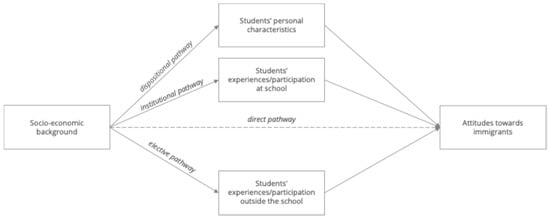
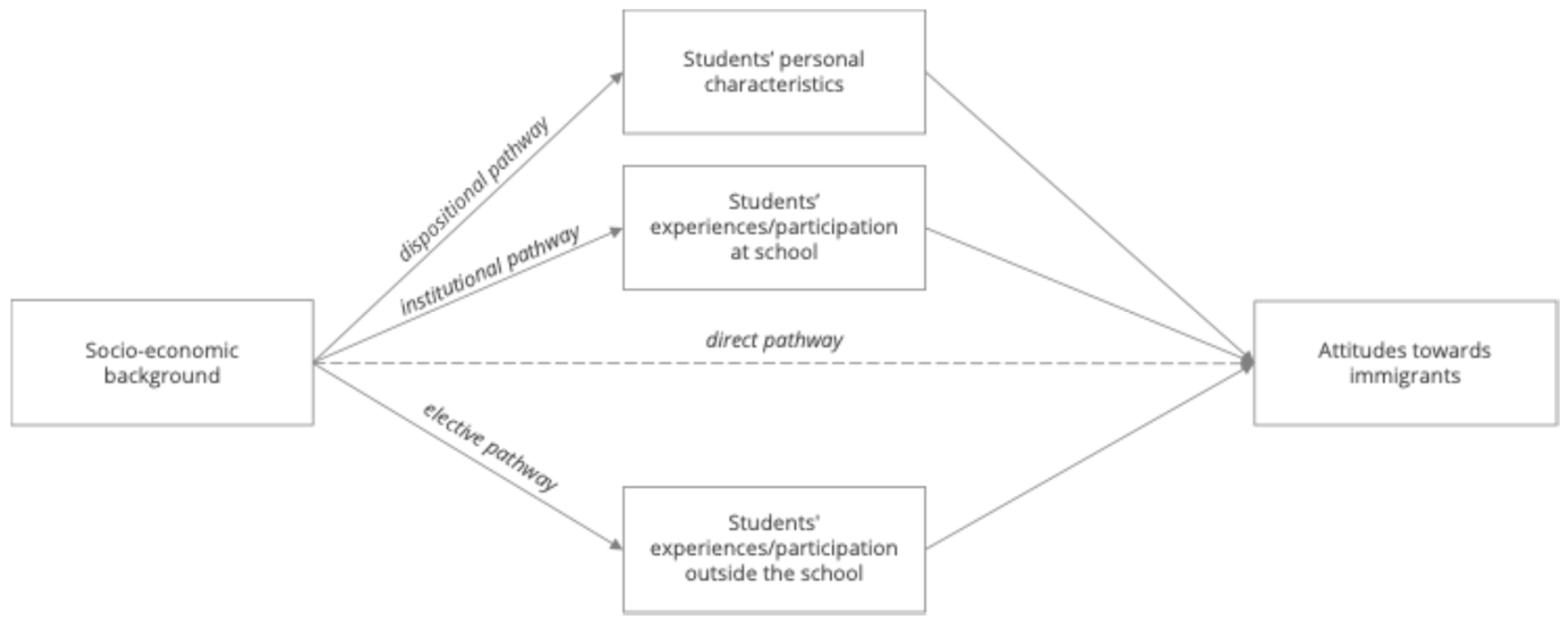

Disclaimer/Publisher’s Note: The statements, opinions and data contained in all publications are solely those of the individual author(s) and contributor(s) and not of MDPI and/or the editor(s). MDPI and/or the editor(s) disclaim responsibility for any injury to people or property resulting from any ideas, methods, instructions or products referred to in the content. |
© 2026 by the authors. Licensee MDPI, Basel, Switzerland. This article is an open access article distributed under the terms and conditions of the Creative Commons Attribution (CC BY) license.