


Abstract
A robust, evidence-informed knowledge base for initial teacher education (ITE) is essential for preparing prospective teachers. Although a growing body of research addresses the content of ITE curricula, there is little consensus on what constitutes the minimal agreed knowledge for ‘learning how to teach’. This study reports a comparative analysis of two published, evidence-informed core ITE curricula. Items appearing in both were compiled into the Minimal Agreed Knowledge Set (MAKS) and corroborated against two research literature: teacher-effectiveness research and cognitive/educational psychology. The MAKS comprises 52 knowledge elements, organised under eight instructional principles and one category of general statements on teaching and learning, and represents areas of convergence between two frameworks from a shared, evidence-informed policy tradition. It is intended as a tool for ITE providers to review and refine their own curricula, rather than as a prescriptive programme. Implications for curriculum development and directions for future research on MAKS are discussed.
1. Introduction
Decades of research on teacher effectiveness show the powerful influence of teaching on student achievement (e.g., Muijs & Reynolds, 2017; Muijs et al., 2014; Nye et al., 2004), especially for children from disadvantaged backgrounds (Kyriakides et al., 2020). Students who have experienced highly effective teachers tend to display stronger social, behavioural, and motivational skills, enjoy better health outcomes, and later in life are more likely to attend college, secure higher earnings, and accumulate greater savings for retirement (see e.g., Chetty et al., 2014; Hanushek & Rivkin, 2012; Jennings & DiPrete, 2010; Ruzek et al., 2015). However, no one is born a great teacher, and even those who appear ‘born to teach’ need good instruction to prepare them for the complex demands of teaching (Darling-Hammond, 2006). While initial teacher education (ITE) is expected to provide prospective teachers with the foundational skills and knowledge for entry-level teaching competence, the lack of agreement at all levels (from local, to state, to national; see the United States of America as an example; Darling-Hammond, 2000; Levine, 2006) on what such curricula should contain makes it difficult to establish what we collectively agree should belong in an ITE curriculum (Perry et al., 2019). Anchoring ITE curricula in robust evidence from cognitive and educational psychology and teacher-effectiveness research may help to address the current gaps and variability in content. In this article, we explore the extent to which existing evidence-informed ITE core curricula show convergence on a set of instructional principles. We analyse content from two national ITE curricular frameworks and evaluate the empirical grounding of any shared items with the aim to identify candidate areas of commonality that can inform the development of a Minimal Agreed Knowledge Set (MAKS).
2. Current Findings from Teacher Education Curriculum Research
Curriculum is defined here as a framework that sets out the content of a programme, including the declarative knowledge (‘know that’) and procedural knowledge (‘know how’, sometimes also referred to as ‘skills’) to be gained in the programme (Van den Akker, 2003). Within this narrow definition, two problems hamper determining the quality of an ITE curriculum: a lack of information on the effectiveness of ITE curricula, and a lack of agreement on what instructional content should be included.
2.1. Lack of Information on the Effectiveness of ITE Curricula
The lack of information on the effectiveness of ITE curricula centres on three interrelated areas, namely (1) the specific components of ITE-curricula that contribute to a programme’s effectiveness, (2) the characteristics of the ITE curricula themselves, and (3) their scientific underpinnings.
While much research has been conducted on particular aspects of ITE curricula, there is little unequivocal evidence on what makes them effective as a whole. Extensive research has been conducted on various aspects of these curricula including methodology (e.g., competency-based vs. holistic; see Creemers et al., 2013), underlying philosophical–ethical aspects of teaching including socially sensitive and moral issues (Malinen et al., 2012), and acquisition of twenty-first-century competences and soft skills (Kereluik et al., 2013). Also, there is a substantial body of research on the inclusion of instruction on pedagogical content knowledge (PCK), teacher identity, lesson delivery and planning, teacher educator pedagogy, etc. (for an overview, see Flores, 2016). Despite the recent surge in research linking specific full teacher education programmes (such as traditional vs. alternative) to the outcomes of in-service teachers and their students (Goldhaber, 2019), our understanding of how best to prepare pre-service teachers at the curriculum level remains limited. Also, the causal effects of how ITE curricula affect future teachers’ knowledge and skills is not well understood (Comb et al., 2023; Goldhaber, 2019). What, for example, is the direct impact on teacher (e.g., PCK, instructional quality, retention rates) and student outcomes (e.g., academic performance, self-efficacy) of embedding specific curricular content in a primary education ITE curriculum? This knowledge gap is unsurprising, considering the vast number of confounding variables inherent in programme studies and the intricate causality chains of those variables (Scheerens & Blömeke, 2016; Zhang et al., 2022).
This effectiveness problem might also be partly grounded in the second area, namely the characteristics of ITE curricula themselves, as it is often unclear what (i.e., the content) is taught, making it difficult to relate content to outcomes. For instance, propelled by social constructivism, some curricula emphasise reflective practice, soft skills, and generic competencies (Bolhuis, 2006; Menter, 2016) to the detriment of subject knowledge and knowledge of how we learn, leading to generically formulated competencies that are sometimes pitched at such an abstract level that they could be applied to different constructs (for a sociological perspective, see Barrett et al., 2017). This is often reinforced by local standards and/or competences for teachers, which are then used to inform ITE curricula and which vary significantly in interpretation and application internationally, ranging from tightly defined and more instrumental conceptions of standards and competences to broader and more adaptable interpretations (Conway et al., 2009; Townsend, 2011). This diversity results in substantial differences in teacher standards worldwide and over time (Shulman, 1986). For instance, in the Flanders region of Belgium, one can read this standard: “The teacher can select, structure, and translate learning content or learning experiences into coherent educational provision” (Aelterman et al., 2008, p. 12). This standard does not specify the nature of such ‘learning experiences’ and what constitutes a ‘coherent educational provision’. As a reaction to this generic competence-oriented characteristic, a countermovement can now be observed, with a growing interest in and research on the importance of reintegrating well-defined bodies of knowledge into the curriculum (Graesser, 2009; Rata, 2024; Surma et al., 2025; Willingham, 2021).
Another area contributing to the lack of knowledge on the effectiveness of ITE curricula centres on their scientific underpinnings. If constituent courses fail to align with the best available evidence, it is unclear if such courses add to ITE’s effectiveness. Several lines of evidence suggest that pre-service teachers may not be exposed to the current state of scientific knowledge within the teaching domain. Recent reviews of ITE textbooks found that many devoted little to no attention to the substantial body of research and evidence about teaching and learning, and in some cases even presented concepts with minimal or no empirical foundation as hard science (Flower et al., 2017; Freeman et al., 2014; Pomerance et al., 2016; Surma et al., 2018; Sylvester Dacy et al., 2011). In 29 US states, government-issued test-preparation materials for ITE exams still promote the discredited theory of ‘learning styles’ (Robinson et al., 2022). Freeman et al. (2014) examined the classroom management courses provided within American ITE programmes. Even though 95% of the ITE programmes analysed claimed to provide instruction on classroom management strategies (e.g., setting rules and establishing positive environments), yet just 65% demonstrated that they addressed classroom management practices supported by empirical evidence. Similar results were found in studies by Pomerance et al. (2016) and Surma et al. (2018), which noted a scarcity of information on foundational instructional strategies such as spaced practice and retrieval practice in textbooks used in the USA and the Netherlands/Flanders (Belgium), respectively. Furthermore, it is frequently reported that introductory psychology and educational textbooks often are outdated, failing to incorporate or reflect recent advancements and contemporary understandings in the field (Bartels, 2023; Wininger et al., 2019; Zrudlo, 2023).
Despite a lack of information on what constitutes an effective ITE curriculum, a minimal consensus can be observed to be forming. Perry et al. (2019) presented a valuable working model for ITE curricular content consisting of three interconnected domains: learning to teach (including generic instructional strategies and behavioural management strategies), learning to teach a subject (including subject and curriculum knowledge, and subject-specific approaches), and learning to be a teacher (including knowledge of the educational system and wider professional responsibilities).
This tripartite structure resonates across numerous other curricular frameworks in teacher education, manifesting itself under varying terminologies and conceptualisations (e.g., Baumert et al., 2010; Darling-Hammond, 2006; Shulman, 1986). There is also a growing consensus in the academic community that the content of ITE-curricula should be grounded in a solid evidence base and that there should be ample room for clinical practice (BERA-RSA, 2014; Perry et al., 2019; Toom et al., 2010). This implies that curricula should deliver both declarative (‘know that’) and procedural (‘know how to’) knowledge on teaching supported by a strong theoretical foundation and rigorous empirical research and provide opportunities for pre-service teachers to apply this knowledge base in clinical (i.e., teaching) settings. This approach inherently presupposes the need for ITE to establish and adhere to a common ground for a curriculum on ‘learning to teach’: a common core of best evidence on the science of instruction.
2.2. Lack of Agreement on Instructional Content of ITE Curricula
A second fundamental challenge in evaluating the quality of ITE curricula concerns the absence of a shared understanding of what instructional content should be included. Blömeke and Kaiser (2014) recognised that there was no common comprehensive core curriculum on ‘learning how to teach’ among fifteen participating countries in the Teacher Education and Development Study in Mathematics (TEDS-M). To move toward an evidence-informed reform of ITE, pre-service teachers must be provided with clearly defined and agreed-upon opportunities to learn what empirical research has taught us about high-quality instruction (Conway et al., 2009). But defining a core base of declarative and procedural knowledge (from here onwards referred to as ‘knowledge’) for ITE curricula on instruction is no simple matter. This may be due to a lack of consensus amongst researchers, teachers, teacher educators, government agencies and policy makers, accreditation boards, etc., on what constitutes that knowledge base. Seeing as how ‘learning to teach’ is one of the three core areas of ITE curricula, the lack of research on the content thereof is surprising (Perry et al., 2019). For instance, of the 67 chapters in the SAGE Handbook of Research on Teacher Education (Clandinin & Husu, 2017)—a reference work of the state-of-the-art of research on ITE—only one (Van Driel & Berry, 2017 on pedagogical content knowledge) attempted to provide insight into a curricular focus on learning how to teach. This may be because there are many different perspectives on what ‘teaching’ is. Defining teaching is at times hotly contested, as seen in debates on what constitutes expert, quality, good, successful, effective teaching (Ko et al., 2013), as well as the discussions on constructivist education, explicit instruction, and problem-based learning. Central to this ambiguity is the ‘assistance dilemma’, a term coined by Koedinger and Aleven (2007) to describe the discussions in educational science about the balance between providing explicit guidance and promoting discovery in learning environments. This debate, historically explored by P. A. Kirschner et al. (2006), Kuhn (2007), Tobias and Duffy (2009), Lee and Anderson (2013), and recently continued by Zhang et al. (2022), de Jong et al. (2023, 2025), and Sweller et al. (2024), highlights the complexities of teaching, where no single approach can be isolated as universally effective. For instance, despite the strong empirical backing for explicit instruction, more experienced learners with high levels of domain-specific prior knowledge can benefit from instructional methods with less guidance (i.e., the expertise reversal effect; Kalyuga, 2007; Tetzlaff et al., 2025). Therefore, a key question is whether a knowledge base for ITE can be developed that distinguishes ‘what is known’ from ‘what is contested’. If this is possible, then it can become an evidence-informed approach to developing ITE curricula, without engaging in often fruitless discussion of, for example, ‘traditional’ versus ‘progressive’ approaches.
Despite efforts to establish a clear understanding of the nature of requisite knowledge, these attempts have not yielded unequivocal outcomes. Koedinger et al. (2013, p. 935) stated that “many debates about instructional methods suffer from a tendency to apply compelling labels to vaguely described procedures, rather than operational definitions of instructional practices”. Theoretical accounts of teaching are both numerous and highly varied (e.g., Maulana et al., 2023; Praetorius & Charalambous, 2023), and theories often fail to translate straightforwardly into instructional practice and have been criticised for generating uncertainty and opacity for teachers, to the point of irrelevancy for practice (e.g., Barrett & Hordern, 2021; Grossman & Richert, 1988). Teacher-effectiveness research, in contrast, has provided frameworks outlining the characteristics of effective teachers (e.g., P. A. Kirschner et al., 2022), and educational and cognitive psychology research has provided central principles for how learning happens (e.g., P. A. Kirschner & Hendrick, 2020). However, clarity regarding what should be integrated into an ITE curriculum is lacking. Therefore, many ITE programmes rely on the experiences and traditions of their faculty members, existing textbooks and course materials, national or local standards, and sometimes even the latest “educational buzzwords” (Yan et al., 2024) to design a coursework for teaching. Consequently, ITE curricula risk becoming an ever-evolving hodgepodge of diverse interpretations, practices, and hypes as evidenced by the varied and sometimes unscientific approaches adopted by different ITE programmes (Perry et al., 2019).
3. Towards ‘Best Knowledge’ in Teacher Education
3.1. The ‘What Works’ Movement
To tackle these challenges, there has been a discernible push towards better specifying ITE curricula based on best evidence (Cochran-Smith, 2021; D’haese et al., 2024). This ‘what works’ movement was initially incentivised by policies such as the No Child Left Behind Act (2001) and best-evidence centres such as the What Works Clearinghouse in the US and the Education Endowment Foundation (EEF) in England (Slavin, 2020). The EEF, for instance, has been instrumental in publishing toolkits and guidance reports summarising the “best available evidence” (Edovald & Nevill, 2021, p. 55). In the US, the What Works Clearinghouse claims to provide scientific evidence on which to ground education practice and policy (Institute of Education Sciences, n.d.). Deans for Impact emerged in the United States as a bottom-up collaborative effort among 20 teacher education institutions, offering curriculum blueprints such as the science of learning based on insights from cognitive psychology (Deans for Impact, 2015, 2026). This movement, while not without criticism (e.g., Hordern & Brooks, 2023; Surma, 2026; Yan et al., 2024), was accompanied by a movement towards developing materials summarising the most valuable evidence from the learning sciences. Pioneered by educators such as John Hattie and Robert Marzano, these materials address the challenges faced by teachers, such as limited time, lack of specialised knowledge, and restricted access to scholarly articles (Rowe & Hattie, 2023). Comparable actions were taken in the fields of medicine, architecture and social work (see e.g., Institute of Medicine, 2004), where incorporating best evidence encountered some initial resistance, but despite its recognised and ongoing limitations, it has since become a cornerstone of the pre-service education of many professional domains. While the movement’s primary objective was not the direct enhancement of ITE, it significantly influenced curriculum initiatives aimed at bringing best evidence to ITE. The English Department for Education, for example, published the Core Content Framework. An Initial Teacher Training Framework (Department for Education, 2019)—endorsed by the EEF—comprises a core curriculum that all teacher education programmes must meet to be accredited. In Australia, Strong Beginnings (Teacher Education Expert Panel, 2023), a core curriculum for ITE, was developed in collaboration with the Australian Education Research Organisation.
3.2. The New Science of Learning
The ‘what works’ movement and its core curricula on ITE have brought certain fields of scientific research to the forefront, such as cognitive and educational psychology and teacher-effectiveness research, sometimes critically referred to as the ‘new science of education’ (Furlong & Whitty, 2017). We describe these fields, highlighting why they are considered valuable for providing best evidence for ITE curricula on instruction.
3.2.1. Cognitive and Educational Psychology
General description. Cognitive and educational psychology deal with ‘the development and application of psychological principles to education, as well as the adoption of psychological perspectives on education’ (O’Donnell & Levin, 2001, p. 73). Researchers in cognitive psychology design experimental studies—preferably but not exclusively the manipulation of one or more variables under controlled conditions—to obtain evidence of the operation of internal psychological processes instrumental to human thought and behaviour (Mandler, 2011). Educational psychologists take the insights gained from cognitive psychology and then apply them to understand how learners learn and to determine how teaching can most effectively support that process. This field has progressively brought to the forefront influential theories such as cognitive load theory, dual coding theory, elaboration theory, cognitive theory of multimedia learning, and information processing theory, to name but a few (for an overview, see, e.g., Graesser et al., 2008; P. A. Kirschner & Hendrick, 2020; Pashler et al., 2007; Winne & Nesbit, 2010). Since the effects in these studies were first found in controlled laboratory settings, questions about their practical applicability in real classroom environments have been raised. In response, a growing contingent of researchers actively sought to apply and validate these findings within classroom environments (e.g., Agarwal et al., 2021; Dunlosky & Rawson, 2015). These studies confirm the effectiveness of various practices for more effective learning, some of which are even counterintuitive, including retrieval practice (e.g., retrieving information from long-term memory, even if faulty or incomplete, works better than rereading for learning), spaced practice (e.g., shorter but spaced periods of study work better than massed study for learning), and generative learning (e.g., transforming presented information such as a text into another form such as a mind map or figure). These practices have been empirically studied for many years, and the results have been replicated to the point where psychologists no longer question their value or lack thereof. A notable example is research on cognitive load theory (Sweller, 2023), which has significant instructional implications, especially in terms of addressing the limitations of working memory capacity. Findings from cognitive load theory research suggest that explicit instruction is generally more effective for novice learners in a domain than unguided, discovery-based methods (P. A. Kirschner et al., 2006). This assertion is supported by research examining the relationship between classroom practices and student achievement (see the subsequent section on teacher effectiveness).
Relevance for ITE. At the end of the last century, an influential paper by Anderson et al. (1995) called for the integration of psychological topics throughout the ITE curriculum. Historically, there has been a strong interconnection between learning, teaching, and psychology, with educational psychological theories often considered the scientific basis for teaching practices (Berliner, 2006; Mayer, 2018). As preparing pre-service teachers to become effective teachers is the central purpose of ITE, and learning is the central goal of education, it follows that teaching practices that have a greater chance to lead to better learning outcomes, why this is so, and how they should be employed should be at the core of ITE. If teachers have a profound understanding of the central principles of human cognitive architecture (Sweller, 2012) and human learning (Willingham, 2017, 2018), they will be better equipped to both teach and evaluate their classroom actions based on the cognitive processes they stimulate in their students and will also be given a language with which they can critically communicate with each other, reflect on their own teaching practices and see through the daily teaching hypes they are confronted with (Schön, 1987; Yan et al., 2024). This is analogous to the field of medicine, where research in anatomy, physiology, pathology, oncology, and so forth underpin daily medical practice.
Many educational and psychological research findings are also often broadly applicable across diverse age groups, demographics, and subject matter, highlighting the versatility of learning principles within ITE for both general teaching practice and subject-specific teaching (P. A. Kirschner et al., 2017). Systematic reviews and accessible articles, practice guides, and books containing research findings on learning are available to teachers and teacher educators in ITE curricula (P. A. Kirschner & Hendrick, 2020; Weinstein et al., 2018; Willingham, 2021). For instance, seven cognitive principles of learning were described as a consensus among researchers in the cognitive community in a practice guide for teachers on Organising Instruction and Study to Improve Student Learning (Pashler et al., 2007). The seven principles are (1) space learning over time, (2) interleave worked example solutions with problem-solving exercises, (3) combine graphics with verbal descriptions, (4) connect and integrate abstract and concrete representations of concepts, (5) use quizzing to promote learning, (6) help students allocate study time effectively, and (7) ask deep explanatory questions.
Concurrently, the field continues to address and rectify common misconceptions concerning topics as learning styles, multiple intelligences, and discovery-based approaches, which have also invaded the teacher landscape through ITE (P. A. Kirschner & De Bruyckere, 2017; Mayer, 2004; Robinson et al., 2022).
3.2.2. Teacher-Effectiveness Research
While cognitive and educational psychology provide one scientific foundation for understanding how students learn, a complementary strand of evidence emerges from research that examines what effective teaching looks like in real classrooms.
General description. Teacher-effectiveness research can be viewed as a subset of the broader domain of educational effectiveness research, which focuses on identifying what works in education and understanding the underlying reasons for their effectiveness (Muijs & Reynolds, 2017). Where educational and cognitive psychological research addresses psychological constructs in both laboratory and ecologically valid experimental settings, teacher-effectiveness research investigates ‘natural’ variation in classroom settings (Lindorff et al., 2020). Effective teaching has been characterised in multiple ways, for example, in terms of observable teacher behaviour (such as warmth and clarity), teacher knowledge (such as subject matter), or teacher beliefs, among others. But here, we follow the definition as proposed by Good et al. (2009, p. 803): “the ability to improve student achievement as shown by research”. The basic model is the process-product approach to instruction, which revolutionised educational research by bringing researchers into classrooms to examine how teaching practice contributes to student achievement, classroom climate, and student attitudes (e.g., Brophy & Good, 1986). This literature includes both correlational and quasi-experimental studies that relate teacher and teaching factors (e.g., daily review, guided practice, feedback) to student and classroom outcomes, illuminating factors that are positively and negatively—and correlational and/or causally—related to these outcomes (e.g., Creemers, 1994; Muijs & Reynolds, 2003; Rosenshine & Stevens, 1986). These factors were included in frameworks and models of effective teaching such as the dynamic model of educational effectiveness (Creemers & Kyriakides, 2011), the three-dimensional model of instructional quality (Praetorius et al., 2018), and the general model of effective instruction of Rosenshine and Stevens (1986). This research has, for example, consistently shown positive relations between components of explicit and structured teaching and student achievement, particularly for but not limited to disadvantaged students or students with less prior knowledge (Muijs et al., 2014; Opdenakker, 2020).
Relevance for ITE. Findings from teacher-effectiveness research can be viewed as generalised and codified examples of what the most effective teachers do to construct classrooms that value achievement, maximise time on task, and respect individual differences in students. These findings yield valuable guidelines for ITE curricula, and give prospective teachers the opportunity to include these factors in their teaching (Kyriakides et al., 2013). The greater our understanding of teacher characteristics and processes associated with favourable student outcomes, the better the teacher can enhance learning (Mortimore, 1998). Furthermore, teaching factors such as feedback, questioning, and modelling have been found to be teachable to teachers, i.e., teachers trained on these factors outperformed teachers who were not trained, based on student learning outcomes (Good & Grouws, 1979; Anderson et al., 1979; Antoniou & Kyriakides, 2011). Factors derived from teacher-effectiveness research were also found to be transferable across disciplines and age groups, although it is important to note the varying amount of evidence across subject areas, with more data available for some, such as mathematics and English as a native language, than for others such as Geography and Religious Education. The field is rich with reviews that have not only documented effective instructional practices but have also translated them into actionable insights for the teachers and their ITE (Coe et al., 2020; Rosenshine, 2012).
It should, of course, be clear that these knowledge bases cannot in themselves encompass the full range of knowledge that beginning teachers require. An understanding of Special Educational Needs, pastoral care, and the role of the teacher as part of the school community are all important for ITE curricula. However, the two knowledge bases discussed are core to the practice of classroom teaching for student learning. While we have presented these two approaches separately, it should be clear that there is a significant overlap in the findings from them. A number of researchers have summarised the key findings of both and have developed frameworks for doing so (e.g., Rosenshine, 2012; Surma et al., 2019). A prominent example is Rosenshine’s (2012) Principles of Instruction, which summarises key findings from both in an integrated and accessible way.
4. Towards a Knowledge Base on Instruction
Teacher competence goes beyond ‘knowing’ or ‘implementing effective teaching strategies’. It also includes applying a solid knowledge base with theoretical underpinnings to everyday problems and tasks in teaching (Berliner, 2001; Korthagen et al., 2006). Van Driel et al. (1998) speak of teachers’ craft knowledge, which represents teachers’ accumulated wisdom with respect to their teaching practice. A codified knowledge base on effective learning and instruction does not replace this craft knowledge but can be regarded as a complement. As no piece of best evidence carries with it the situations in which it applies, a teacher who holds this evidence must still determine when, why, and how it is warranted in the lesson before them. Expert teachers make such judgements from rich experiential schemas accumulated over years of practice, which allow them to read a situation and act on it almost intuitively (Berliner, 2001; Shulman, 1986). Student teachers do not yet hold those schemas. This is why initial teacher education should give access to a well-organised and research-informed knowledge base: it provides the material from which such schemas can begin to form, and the explanatory principles with which a novice can reason about a situation that experience has not yet made legible. As stated by Blömeke et al. (2022), teachers’ knowledge of instruction is relatively stable across different situations, representing the potential a teacher brings to the classroom to be a reflective practitioner who can perceive, interpret, and make teaching decisions in specific classroom situations (Hartmann et al., 2021; Schön, 1987). Such knowledge acts as a filter in the mind for each situation encountered and facilitates teachers learning from these situations (Borko et al., 1997). As reflective processes often occur subconsciously, possessing this knowledge potentially reshapes professional experience into an intuitive or even ‘obvious’ appearance while teaching (Abbott, 1988; Yates, 2005). Even though it is nearly impossible to empirically link teacher knowledge to student gains (Blömeke et al., 2022), some longitudinal evidence suggests that applying theory to classroom problems is itself a resource for teaching quality (Rochnia et al., 2023), and it seems unlikely that not possessing foundational knowledge would lead to better teaching practice and student learning.
5. The Current Study
5.1. The Rationale Adopted in This Analysis
Every curriculum begins with a rationale. Even on that grand day when all the evidence is in, were it ever to occur, decisions would still rest in part on values, moral principles, priorities, available resources, trade-offs, and commitments. The analysis reported here adopts an effectiveness lens, as instruction is examined in terms of its contribution to student learning outcomes, thereby explicitly drawing on findings from research in cognitive and educational psychology and teacher effectiveness. Other traditions or paradigms, for instance, those grounded in European Pädagogik and Didaktik, would organise such a core around instruction for its formative potential rather than around instructional effectiveness, and would do so on principled grounds (Deng, 2025; Wiliam, 2013). Democratic and commons-oriented conceptions of schooling go further still, treating knowledge and curriculum time as goods to be collectively governed rather than be specified in advance (Pantazidis, 2026b).
The scope of our analysis is narrower than the term ‘core curriculum’ might suggest in at least three respects. First, the inclusion criteria documented below select curriculum documents from a single and identifiable policy tradition: two Anglophone systems with strong accountability procedures, both commissioned or endorsed by local best evidence bodies. Some convergence between these curriculum documents is therefore anticipated in part by the sampling frame, and what the analysis maps is convergence within the effectiveness lens rather than agreement across the broad field of initial teacher education or the stakeholders who would have to implement such a curriculum. Second, only content relating to instruction was examined, on the grounds set out in Section 6, which leaves substantial parts of both frameworks (, e.g., behaviour management) outside the scope of the analysis. Finally, the analysis is confined to research linking instruction to learning outcomes, and it does not consider work relating teaching practices to behavioural or socio-emotional outcomes. That is not to say that these outcomes are not important, but these restrictions are stated here rather than among the limitations because they shape what the resulting item set can be taken to establish.
Whether teacher educators, teachers, scholars, and policy makers would endorse items from our analysis is an open question, and one for which Delphi procedures are better suited than document analysis (D’haese et al., 2026). The resulting set should therefore be seen as a candidate object for such procedures to examine.
5.2. Selection of Curricula
To develop a body of core knowledge, we conducted a comparative document analysis of published core curricula in teacher education. We selected curricula that claim to be grounded in strong empirical evidence from cognitive and educational psychology and teacher-effectiveness research and were endorsed by best-evidence centres such as the EEF. The curricula needed to be published in English and needed to be accessible—a prerequisite for thorough and transparent analysis. They needed to articulate a core of evidence-based declarative (‘know that’) and procedural knowledge (‘know how’), as opposed to a complete, prescriptive curriculum with detailed teaching materials and sequenced learning and evaluation activities. The curricula needed to be ‘general’ and not limited to an individual ITE programme; rather, it should include the minimum amount of specific knowledge required for ITE programmes in general (e.g., at the national or regional level). Two curricula met all of the criteria: The Core Content Framework. An Initial Teacher Training Framework (Department for Education, 2019, 2024) and ‘Strong Beginnings’ (Teacher Education Expert Panel, 2023), the Australian core curriculum for ITE.
To our knowledge, this is the first time that the content features of national best-evidence core knowledge curricula have been systematically studied. The central research question guiding this analysis was: To what extent do core curricula claiming to be evidence-informed reflect converging content, and to which extent are shared items empirically grounded in two established evidence bases of cognitive/educational psychology and teacher-effectiveness research? By identifying both commonalities and differences, this study helps to establish a knowledge base on effective instruction to inform the design and revision of ITE programmes. The analysis aims to support curriculum developers, teacher educators, and textbook authors in aligning instructional content more explicitly with established research on how learning and teaching works.
6. Method
Comparative document analysis is appropriate for cross-curricular studies, as it facilitates a comprehensive and systematic examination of curricular content (Bowen, 2009). The analysis process is split into two distinct phases: within-case analysis and cross-case analysis. In the within-case analysis, each curriculum is analysed separately with respect to three relevant curriculum components: (1) context and genesis, (2) core vision, and (3) curriculum structure and items (Madaus & Kellaghan, 1992). This analysis constructs a descriptive understanding of each curriculum and sets the stage for the second phase: the cross-case analysis. Cross-case analysis involves constant comparative analysis, a method well suited for identifying recurrent themes across multiple cases, encompassing cyclic iteration of reading, interpreting, and controlling the items of the curricula. Codebook thematic analysis was used, which combines a structured pre-existing coding framework with additional themes formulated early in the research procedure. This facilitated further advancement of themes throughout the analysis process. Each item across the curricula was interpreted and coded.
6.1. Delimiting Instructional Content
Both core curricula extend well beyond instruction, so a boundary had to be drawn before coding could begin. Items were retained when they referred to teaching behaviours observable during a typical lesson and directed at the learning of factual, conceptual, procedural, and metacognitive knowledge (Ko et al., 2013), together with items that theoretically underpin the effectiveness of those behaviours. This boundary was drawn by the content of an item rather than by the sections within the source documents. Models of teacher effectiveness comprise both an instructional strand and a classroom management strand (Creemers & Kyriakides, 2011; Rosenshine & Stevens, 1986); the present analysis deliberately confines itself to the former, and management-specific content, together with, e.g., pastoral care and lesson planning, was therefore excluded for this analysis. Because the curricula section architecture does not coincide with that boundary, a small number of items were retained from sections nominally devoted to behaviour management. For instance, ‘Use feedback that acknowledges student effort’ appears in Strong Beginnings under classroom management as a proactive practice, yet it was retained as instructional content on feedback. Conversely, ‘Creating and explicitly teaching routines in line with the school ethos that maximise time for learning’, filed in the English framework under Managing Behaviour, was excluded as behaviour management content even though time for learning is a central factor in effectiveness models. The full set of decisions is visible in Appendix A.
6.2. Coding Procedure
For logical categorisation of the items, knowledge items were coded using a pre-existing framework derived from Rosenshine’s (2012) Ten Principles of Instruction. The initial categories were to: (1) Begin a lesson with a short review of previous learning; (2) present new material in small steps with student practice after each step; (3) ask a large number of questions and check the responses of all students; (4) provide models; (5) guide student practice; (6) check for student understanding; (7) obtain a high success rate; (8) provide scaffolds for difficult tasks; (9) require and monitor independent practice; (10) engage students in weekly and monthly reviews. Items from the two curricula were coded deductively to the Rosenshine categories where possible. Categories were renamed during the coding process when the underlying items could be conceptually better captured using a different term (see Table 1).
Table 1.
Comparison of final coding categories with Rosenshine’s Principles of Instruction.
For instance, the category ‘Begin a lesson with a short review of previous learning’ was replaced by ‘Activate prior knowledge’, as items in the curricula suggested that activation of prior knowledge need not only occur at the beginning of a lesson. Additional categories were incorporated when a curriculum item did not align with one of Rosenshine’s principles.
Two coding rounds were conducted. In the first round, the second author, acting as principal coder, and the first author coded all items independently of one another. In the second round, the two coders reviewed every discrepancy and settled each by discussion, referring unresolved cases to the remaining authors for adjudication. Agreement was reached by negotiation, which is consistent with a codebook thematic analysis in which the category set is itself an output of the procedure rather than an instrument applied to it. Coding was managed in NVivo (Lumivero, 2023).
6.3. Corroboration Against the Two Evidence Bases
Items appearing in both frameworks were subsequently examined against the two research literature. Each shared item was mapped onto four models of effective teaching, selected because they are widely used syntheses that specify teacher factors at a level of granularity comparable to that of the curriculum items: the dynamic model of educational effectiveness (Creemers & Kyriakides, 2011), the three-dimensional model of instructional quality (Praetorius et al., 2018), the synthesis of Seidel and Shavelson (2007), and the general model of effective instruction of Rosenshine and Stevens (1986). The cognitive mechanism underlying each category was identified using Graesser et al.’s (2008) principles of learning. Their synthesis was adopted as the labelling instrument because it condenses twenty-five well-replicated learning principles into testable, mechanism-level claims at a satisfying level of granularity (see also Winne & Nesbit, 2010). No item was removed at this stage as the mapping records where an item’s empirical backing lies rather than testing whether it has one, and the step should accordingly not be regarded as an exclusionary filter.
7. Results
7.1. Within-Case Analysis
7.1.1. Initial Teacher Training and Early Career Framework (ITTECF, England)
Following the Carter (2015) review’s audit of the English Teacher Education System, a core content framework for ITE (Department for Education, 2019) was established, which underwent substantial updates in 2019 and 2024. The Carter review noted that the English ITE system was generally functioning well, yet also pointed to considerable variability in ITE content across the higher education system. They identified significant gaps in areas such as subject knowledge, subject-specific pedagogy, assessment, behaviour management, and Special Educational Needs and Disabilities (SEND). The version analysed in the present study is the 2024 framework (Department for Education, 2024).
Both the initial and the revised content framework, “Initial Teacher Training and Early Career Framework” (ITTECF), were designed to offer a systematic introduction to fundamental knowledge and skills that exemplify excellent teaching in five areas: behaviour management, pedagogy, curriculum, assessment, and professional behaviours. Endorsed by the EEF, the framework is now compulsory for all ITE programmes in England. According to the Department for Education (2019), all ITE providers integrated the comprehensive content outlined in the framework to maintain or achieve accreditation. To align with the eight British Teachers’ Standards, the framework is organised into eight sections. Behaviour management is addressed in High Expectations and Managing Behaviour (S1 and S7); instruction in How Pupils Learn, Classroom Practice and Adaptive Teaching (S2, S4, S5); and curriculum, assessment and professional behaviours in S3, S6 and S8, respectively. Each section presents ‘Learn that’ statements, which provide knowledge over best-evidence in teaching, and ‘Learn how to’ statements detailing practical skills and opportunities for collaborative learning with colleagues (see Figure 1). The framework asserts that the ‘Learn that’ statements are “informed by the best available educational research” (p. 5), with references and further reading provided for in-depth exploration. It also includes a comprehensive reference list, citing 186 sources.
Figure 1.
An example of a standard with ‘Learn that…’ and ‘Learn how to…’ statements.
The framework covers the content pre-service teachers are required to learn and know regardless of subject area or educational stage. It is therefore the responsibility of ITE providers to ensure that they carefully create well-structured and coherent curricula appropriate for the phase, setting, and subject to be taught. It is stipulated that the ITTECF should not be used as an assessment framework against the teachers (Department for Education, 2019, p. 7). The introduction of the framework was not without controversy. Critics such as Hordern and Brooks (2023) and Murtagh et al. (2023) have argued that the curriculum is overly technical, too generic, takes a limited view of evidence, and is overly prescriptive. Some of these criticisms were said to be addressed in the most recent revision of the framework, which is now integrated within a curriculum for early career support (Department for Education, 2024).
7.1.2. Strong Beginnings (Australia)
The Quality Initial Teacher Education Review (Department of Education, Skills and Employment, 2022) reported that many novice teachers in Australia enter the profession insufficiently prepared for crucial areas such as reading, cultural responsiveness, supporting diverse learners, classroom management, and engagement with families and carers. The review further concluded that their readiness would be enhanced by a stronger emphasis on evidence-based teaching strategies. The Australian Education Research Organisation was tasked with identifying evidence-based practices with the strongest impact on student learning, which pre-service teachers should acquire and be able to demonstrate. The panel published a discussion paper that consisted of a core content framework, ‘Strong Beginnings’ (2023), which draws on evidence from a broad range of disciplinary perspectives that teachers are expected to integrate into varied subject-specific teaching contexts. It identified four content domains to be mandated in ITE:
(1) The brain and learning—understanding why specific instructional practices work (see Figure 2); (2) effective pedagogical practices—understanding how teaching strategies respond to how the brain processes, stores and retrieves information; (3) classroom management—including rules and routines, proactive practices, managing behaviour and whole-school frameworks; (4) responsive teaching—content that ensures teachers are teaching culturally and contextually appropriate material (p. 9).
Figure 2.
An example of a learning outcome with ‘Core content ITE programmes should teach’. Bold type appears in the original document.
The framework is not designed to encompass all knowledge that beginning teachers should master; responsibility lies with ITE providers to embed the core content coherently within their curricula and adapt it to local contexts. To guarantee its integration, pre-service teachers are required to demonstrate mastery of the core content and achieve its learning outcomes before graduation. The framework includes a comprehensive reference list, citing 73 sources.
Both frameworks locate this knowledge in initial teacher preparation, although their reach differs. In Australia, pre-service teachers must have demonstrated knowledge of the core content prior to graduation (Teacher Education Expert Panel, 2023), whereas in England, the ITTECF extends beyond initial training into the statutory two-year induction period, during which early career teachers revisit and deepen the content acquired during training (Department for Education, 2024). Neither framework prescribes where within a programme the content is to be taught or practised; the division between theoretical coursework and clinical practice is left to the providers.
7.2. Cross-Case Analysis
Based on a cross-case analysis, the most relevant findings underlying this study are presented in Table 2 and, in full, in Appendix A. Note first that both curricula are generic in nature and thus refer to teacher knowledge as being assumed to affect student learning irrespective of student age, content domain, gender, ethnicity, grade, and other contextual elements. The category structure used in this comparison was developed through an iterative codebook thematic analysis, starting from Rosenshine’s (2012) Principles of Instruction as a deductive framework and refined through merging, renaming, and the inductive addition of new categories where curriculum items did not align with the original list. The knowledge items are arranged around eight instructional principles and one category comprising general statements on learning and instruction. Within each category, there are declarative items (“pre-service teachers should know that”) and procedural items (“pre-service teachers should know how to…”). The principles that a pre-service teacher should acquire are minimally a multifaceted understanding of general statements on teaching and learning: (1) activating and using prior knowledge; (2) providing clear, structured and challenging learning environments; (3) modelling and using worked and concrete examples; (4) activating and generative learning; (5) check for students’ understanding; (6) scaffolding; (7) spaced practice opportunities; (8) providing feedback opportunities.
Table 2.
Minimal Agreed Knowledge Set structure with example items.
Appendix A presents a comprehensive examination of all the curriculum items from Strong Beginnings and ITTECF arranged around the same eight instructional principles and category comprising general statements on learning and instruction. It shows 52 knowledge items shared by both core curricula (which constitute the Minimal Agreed Knowledge Set) and 65 curriculum items found in only one of the two (which reflect specific educational foci or priorities unique to one of the two). For each principle, the corresponding theoretical underpinnings from educational or cognitive psychology are shown. Concurrently, the principles outlined in our analysis show maximal overlap with current models of teacher effectiveness (i.e., Creemers & Kyriakides, 2011; Praetorius et al., 2018; Rosenshine & Stevens, 1986; Seidel & Shavelson, 2007), though some teacher factors from these models were missing in the core curriculum. For instance, knowledge items associated with findings stating that effective teachers are expected to assist students to apply metacognitive strategies and to develop their own strategies to solve different kinds of problems (Muijs et al., 2014) appear in the Creemers and Kyriakides (2011) and Praetorius et al. (2018) frameworks but not in both Strong Beginnings and ITTECF. Dealing with student responses is also a common feature of many of the research-based frameworks (e.g., Praetorius et al., 2018; Rosenshine & Stevens, 1986) but did not find overlap in both core curricula.
The same holds for the evidence base in cognitive and educational psychological evidence base, although the mapping here operates at the level of the categories rather than of individual items. Of the twenty-five learning principles (Graesser et al., 2008), twenty are named as theoretical underpinnings in Appendix A, and seventeen of these sit in categories that contain at least one shared item. Dual coding and multimedia effects, imperfect metacognition, and self-regulated learning appear only under multimodal instruction and metacognition, the two categories that yielded no shared items. Perceptual-motor grounding, organisation effects, exam expectations, cognitive disequilibrium, and cognitive flexibility have no mirror in both core curricula.
The corroboration mapping is reported in full in Appendix A. Of the 52 shared items, 30 correspond to a teacher factor in at least one of the four models of effective teaching, and 22 do not. Fourteen of these are concentrated in two categories: eight of the ten items under general statements on teaching and learning, and six of the eight items under scaffolding. The remaining eight are distributed across the other categories. These items are not thereby unsupported. They concern the limited capacity of working memory, the reduction in cognitive load, and the structure of long-term memory, and their warrant comes from cognitive and educational psychology rather than from classroom process-product research. The two evidence bases therefore seem to operate complementarily across the set, and an item’s presence in the Minimal Agreed Knowledge Set reflects corroboration by at least one of them.
Table 3 offers a detailed breakdown of the number of items per curriculum coded under each instructional principle. While not all instructional principles were represented equally in both curricula, providing clear, structured, and challenging learning environments (Principle 2); scaffolding (Principle 6); modelling and using worked and concrete examples (Principle 3); and checking for students’ understanding (Principle 5) were the most consistently featured principles across all curricula. Multimodal instruction and metacognition emerged inductively during coding but yielded no items shared by both curricula; they are retained as categories in Table 3 and Appendix A but contribute no items to the MAKS.
Table 3.
Overview of the number of items per curriculum coded under each instructional Principle.
8. Discussion and Conclusions
This study set out to examine whether existing evidence-informed ITE core curricula converge on specific items of knowledge relating to ‘learning how to teach’. The results add to the current literature on ITE curricula in general and curricula on ‘learning how to teach’ in particular. Based on the analyses of existing core curricula, 52 curriculum items were identified as shared, 42 categorised under eight instructional principles and 10 under a category of general statements on teaching and learning. These shared items together form what is referred to as the Minimal Agreed Knowledge Set (MAKS). Although these instructional principles (see Table 2) are interrelated, each has its own distinctive characteristics that translate into particular teacher behaviours when applied. Therefore, each principle acts as an overarching factor comprising specific items associated with student achievement gains. Our analysis counters critiques of the quality of ITE curricula regarding its underlying scientific underpinnings and its specificity. It offers an initial point of convergence for ITE institutions to shape their curriculum on instruction.
8.1. A Curriculum Underpinned with Best Evidence
The set of shared items identified in this study is backed by best evidence about ‘learning how to teach’. Not only was there overlap in principles from both the English ITT-framework and the Australian Strong Beginnings curriculum, but evidence for the shared principles and their underlying knowledge items was also found in both teacher-effectiveness research (Creemers & Kyriakides, 2011; Praetorius et al., 2018) and cognitive and educational psychology, as the principles were also conceptually linked to well-established findings that explain why each principle supports students’ thinking and learning (Graesser et al., 2008; Pashler et al., 2007). A notable example is spaced practice opportunities which contains the knowledge items stating that regular purposeful spaced practice of what has previously been taught helps to consolidate material and help students remember what they have learned and that requiring students to retrieve information from memory is likely to strengthen recall. Cognitive psychologists have provided a robust foundation for both the effectiveness of the underlying spacing and testing effect (Carpenter et al., 2022; Mawson & Kang, 2025). Similarly, various frameworks from teacher-effectiveness research indicate the importance of daily, weekly or monthly reviews, frequent revision and questioning, and structured opportunities to practice as characteristic behaviours of effective teachers (Creemers & Kyriakides, 2011; Rosenshine & Stevens, 1986). Pre-service teachers should therefore recognise that spacing practice sessions with retrieval opportunities, both within and between lessons, contributes more to sustainable learning than concentrated practice at a single time and they could consider this in their lesson planning. A second example pertains to activating prior knowledge which consists of knowledge items clarifying that the brain applies prior knowledge from long-term memory to learn new information and to achieve complex skills (e.g., critical thinking, problem solving, and reading comprehension) by accessing memory or combining and re-combining memory to generate possible solutions. Psychologists have revealed that activated and relevant prior knowledge is one of the most important determinants of the quality of future learning (Ausubel, 1968; Brod, 2021; Simonsmeier et al., 2022; Surma et al., 2025). Concurrently, the role of teacher factors, such as ‘exploring and activating prior knowledge’, is considered critical in the findings of systematic observations of expert teachers (Creemers & Kyriakides, 2011; Praetorius et al., 2018). Therefore, pre-service teachers whose programmes incorporate MAKS should be aware of the advantages of engaging with prior knowledge from earlier curriculum units when, for instance, introducing a new chapter. Because of its scientific backbone, it is reasonable to assume that the principles in the MAKS establish a knowledge base that, within the evolving nature of science, is stable and can be considered to be, as it currently stands, an agreed-upon absolute minimum of codified practical and scientific wisdom of beginner teaching practice
8.2. A Curriculum More Specific in Nature
The MAKS counters the critique that overly broad knowledge items or widely accepted truisms leave too much room for interpretation (Graesser, 2009; Surma et al., 2025). In particular, ITE institutions with limited research literacy should find it easier to interpret and implement the MAKS when the items are clearly and specifically stated. For instance, a curriculum item on the use of examples (i.e., explicitly model new skills and content through (partially) worked examples to focus on the specific steps and to demonstrate clearly how to complete a task or to execute a skill) is more specific than curriculum items derived from teacher standards such as ‘… select learning experiences’ (Aelterman et al., 2008, p. 12). It is argued that specified and testable principles are more inviting of enquiry, debate, and inspiration regarding the construction of the ITE curriculum. These are “claims with teeth” (Graesser, 2009, p. 195) that motivate researchers and instructional designers to uncover situations where these principles fail in teaching pre-service teachers how to teach, to engage in discussions with those who contest or confirm the curriculum items, and to measure relevant curriculum effects on teacher and student outcomes.
8.3. A Curriculum on Instruction Beyond the Debates
The knowledge items focus on well-established concepts rather than those contested in scientific debates about instruction (e.g., practice is crucial to long-term retention, prior knowledge impacts future learning) and offer an initial point of convergence on knowledge concerning ‘learning how to teach’. From a content perspective, it is notable that the MAKS incorporates principles and items that stem from specific approaches to instruction, such as direct and explicit instruction (i.e., structuring lessons, questioning, feedback, and independent practice; Rosenshine & Stevens, 1986), as well as a wider spectrum of knowledge that integrates items from different frameworks, models, or theories, including teacher expectations of student performance (Good, 2024), generative learning (Fiorella & Mayer, 2016), and scaffolding (Van de Pol et al., 2010). From a theoretical perspective, it may not be beneficial for ITE curricula to impose unnecessary divisions between different teaching frameworks, models, or theories, nor to perpetuate the ongoing debate over which single approach or model is “best.” Instead, it may be more fruitful to focus on specific instructional actions, interactions between the teacher and learners, and the underlying mechanisms that facilitate student learning, regardless of whether they align more closely with one framework or another (Kyriakides et al., 2013). It is noteworthy that the items in our analysis resonate with other fields of literature not typically included in Strong Beginnings or ITTECF. For example, in school improvement literature (Agirdag & Muijs, 2023), elements of this core curriculum are part of evidence-informed approaches to improving the quality of schools (i.e., high-performing schools placed a strong emphasis on explicit teaching methods as a central element of their pedagogical approach). This aligns with one of the initial objectives of teacher-effectiveness research, namely to enhance overall education (Kyriakides et al., 2018; Lindorff et al., 2020). The knowledge described in our analysis also connects with findings from Special Educational Needs and Disability (SEND) literature (Hughes et al., 2017; Mitchell & Sutherland, 2020) and non-WEIRD (Western, Educated, Industrialised, Rich, Democratic) populations (Ekuni & Jaeger, 2022), which suggests that these practices appear to travel across populations. While some items vary in granularity, comprehensiveness, and other characteristics, most also align with features identified by the literature on high leverage practices (Ball & Forzani, 2009), which are frequently used practices in teaching that teachers can implement in classrooms across different instructional approaches and/or curricula (e.g., explaining and modelling content, practices, and strategies; providing appropriate scaffolding; and providing feedback to students) (Matsumoto-Royo & Ramírez-Montoya, 2021). Most items, however, are linked to teacher behaviour associated with forms of explicit, teacher-guided instruction. Hughes et al. (2017) describe explicit instruction as “group of research-supported instructional behaviours used to design and deliver instruction that provides needed support for successful learning through clarity of language and purpose, and reduction in cognitive load. It promotes active student engagement by requiring frequent and varied responses followed by appropriate affirmative and corrective feedback and assists long-term retention through the use of purposeful practice strategies” (p. 143).
The prominence of items stemming from explicit instruction can be explained as follows. First, it has been demonstrated that components of explicit instruction can be taught to teachers (i.e., ‘learn to teach’), as evidenced by experimental studies that found that students taught by teachers who mastered explicit instruction outperformed students taught by teachers not taught these principles (Anderson et al., 1979; Antoniou & Kyriakides, 2011; Good & Grouws, 1979; Grenell et al., 2024). Second, these teachable elements form the foundational instructional approach crucial for pre-service teachers to become skilled at, as they underpin more complex instructional approaches (Lavigne & Good, 2019). In these approaches, such as project-based learning, collaborative learning, and blended learning, teachers should understand how students learn, make use of students’ prior knowledge, and provide them with feedback and opportunities to practice. Achieving success with these approaches is therefore, to some extent, reliant on teachers’ competence in the execution of the principles specified in the MAKS. Finally, the emphasis on explicit forms of teaching also corresponds with findings from teacher expertise development, indicating that progress in instructional quality is made through several phases, from novice to expert (Kyriakides et al., 2013; Maulana et al., 2015). Kyriakides et al. (2013, 2025) describe that the teacher initially masters the basic elements of explicit forms of instruction and practices to demonstrate expertise in these components. As the teacher progresses from novice to expert, more complex approaches such as adaptive instruction emerge. Consequently, it is logical that the knowledge items associated with the first phase of expertise development hold a prominent place in curricula designed to train pre-service teachers into becoming competent beginners.
8.4. Next Steps for Core ITE Curriculum
The mere delivery of this MAKS should not be viewed as a panacea. This work should be seen as a precursor to a “Volume 1” in a more comprehensive overview of ITE core curricula. To scrutinise current core curriculum, the professional and academic community should thoroughly assess the MAKS and undertake similar activities for other key components of the ITE curriculum such as ‘learning to teach a subject’ (i.e., domain-specific issues) and ‘learning to be a teacher’ (Perry et al., 2019).
Future research should address some limitations of the present study. First, it is important to acknowledge that not all essential aspects of teaching practices are explicitly listed in the MAKS. It should not be considered an irrevocable compilation of the core characteristics of expert teachers, but as a minimal set of agreed-upon items to be entry-ready for the profession. Core curriculum building is perceived here as an evolving process that requires ongoing debate, refinement, validation, and research, rather than as a fixed product that fosters reductionism or is used as a performative tool for assessing teaching behaviour. For instance, certain principles prominent in cognitive psychology and teacher effectiveness frameworks, such as those related to collaborative group work, adaptive teaching, multimedia instruction, and self-regulated learning, are conspicuously absent from our synthesis. Collaborative group work, for instance, has been found to be effective, provided the right circumstances are present (e.g., P. A. Kirschner et al., 2018; Slavin, 2017), and should be considered part of the toolkit of an expert teacher (Seidel & Shavelson, 2007). However, effective group work is notoriously difficult to achieve (F. Kirschner et al., 2009; Muijs et al., 2014) and might therefore be less likely to be a primary skill for pre-service teachers. Similarly, advanced forms of classroom adaptive teaching, such as being able to differentiate teaching practices according to students’ needs and offering appropriate application and structuring tasks for a subgroup of students, are situated at the most demanding stages of the developmental scale of teaching skills (Kyriakides et al., 2025). This hierarchy of professional skills originates from practice, not from principle. Although considering individual student needs is essential for good teaching and should be a basic skill, research indicates that novice teachers must initially master other skills before they can begin addressing individual differences among students effectively (Maulana et al., 2015; Van de Grift et al., 2011). Furthermore, as advancements in technology have made it remarkably easy for educators to purposefully combine illustrations and visuals with verbal content, it is unclear why dual coding or multimedia learning mechanisms have not emerged as a prominent aspect of the contemporary core ITE curriculum (Camp et al., 2021; Mayer, 2008). Finally, given the current enthusiasm for incorporating self-regulated learning in educational settings, it should be discussed whether knowledge elements related to this belong in the core curriculum. Clearly, ITE institutions could—and arguably should—incorporate some of the aforementioned elements, along with other elements, into their core curriculum as well.
Debates on how the core curriculum can be expanded and refined can and should thus proceed in various ways. A fruitful avenue for future research could entail carrying out different iterations of Delphi-like studies to engage teacher educators, scholars, teachers, and other practitioners in identifying essential knowledge areas for inclusion in the core ITE curriculum (for initial work in this area, see D’haese et al., 2026), as has been done with specific curricula for teaching history and mathematics (Fogo, 2014; Muñiz-Rodríguez et al., 2017) and project-based learning (Dean et al., 2023).
It should not be considered that teaching skills develop naturally by incorporating this MAKS in ITE. Pre-service teachers do not move through these principles in a lock-step fashion, nor should they be educated solely in these principles. Nor do they arrive without prior conceptions and beliefs about teaching practice: pre-service teachers enter ITE with sedimented images of schooling that shape how curricular content is received (Pantazidis, 2026a). The principles and underlying knowledge items must be carefully embedded in the curriculum. For instance, the principles and items should be systematically integrated into both theoretical and practical courses, ensuring a gradual and cumulative build-up of opportunities to revisit key concepts using a spiral curriculum approach (walk-the-walk principle). Additionally, practical curriculum development necessitates prioritisation and determination of which principles should be introduced earlier to provide a coherent basis for subsequent learning (Surma et al., 2025). For instance, it may be useful to introduce fundamental insights into cognitive processes, such as the constraints of working memory, before discussing why certain instructional approaches, such as explicit guided instruction, can be effective for students with limited prior knowledge. Attention should also be paid to follow-up curricula in induction programmes and further continuous professional development, as teachers and teaching continue to evolve during the initial years of practice—a period where teaching skills are honed as much in the field as in formal teacher education (Van Driel et al., 1998). These aspects warrant further research, linking theories of curriculum design to theories of teacher development and professional learning continuum from ITE to the early years of teaching (e.g., Berliner, 2001; Feiman-Nemser, 2001; Kyriakides et al., 2013). Future research should also investigate the effectiveness of the MAKS itself, in particular whether teachers prepared with its content integrated in the ITE curriculum have a measurable positive impact on their students’ learning. Such research would enable ITE curriculum developers to make informed decisions regarding prioritisation, sequencing, and a spiral approach in integrating theory and practice overarching the teacher education continuum.
Finally, one could argue that the question of what constitutes effective teacher education must be answered first. Obviously, this question goes without a straightforward answer due to the varying perspectives and frameworks regarding the goals of education (Wiliam, 2013) and variations in ideological orientations towards teaching and teacher education, such as a focus on social efficiency, deregulation, and social justice, which are often different across countries but also within different ITE providers within the same national context (Conway et al., 2009). As set out in Section 5.1, the analysis is confined to research linking instruction to learning outcomes. This is not because other outcomes are not important. It has been observed, in part as a result of the COVID pandemic, that the emotional welfare of students has increasingly come to the forefront in education (Mazrekaj & De Witte, 2023), and as we develop ITE curricula, existing and emerging evidence in these areas should be considered in future work.
9. Concluding Remarks
There is an absence of a “common technical vocabulary” for teaching, as sociologist Lortie (1975, p. 73) observed in his influential book on the field half a century ago. The same goes for ITE, which lacks a core agreed-upon curriculum that encompasses both specified declarative and procedural knowledge on ‘learning to teach’. A first step toward working more collaboratively within the field of ITE curricula content research, as well as its effects on teacher and student outcomes, lies in granting teacher educators and curriculum designers the opportunity to discuss their specific findings and rationales to others. Consider this as an initial attempt in an under-researched area. The aim was to propose components on instruction in which an initial consensus appears to be emerging from published core ITE curricula, and which were backed with best-evidence findings in cognitive and educational psychology and teacher-effectiveness research. This work is just one part of a complex puzzle, limited to one aspect (instruction) from one perspective (effectiveness of learning and teaching processes) for one goal (describing a Minimal Agreed Knowledge Set for educating pre-service teachers). Successful teaching will require many categories of teacher knowledge, and only a subset of them are targeted by cognitive psychologists and teacher-effectiveness researchers. This, in turn, does not imply relativism. Their part is nevertheless fundamental in gaining a basic understanding of teaching and, in general, includes the core contents that teachers have to possess to engage in the effective teaching of new ideas and concepts.
Author Contributions
Conceptualisation, T.S., P.A.K. and D.M.; methodology, T.S., D.D. and K.V.; formal analysis, T.S. and D.D.; writing—original draft preparation, T.S.; writing—review and editing, T.S., D.D., K.V., G.C., P.A.K. and D.M.; supervision, P.A.K., G.C. and D.M. All authors have read and agreed to the published version of the manuscript.
Funding
This research received no external funding.
Institutional Review Board Statement
Not applicable. This study is a comparative document analysis of publicly available curriculum documents and did not involve human participants or animals.
Informed Consent Statement
Not applicable.
Data Availability Statement
The core curriculum documents analysed in this study are publicly available: the Initial Teacher Training and Early Career Framework (Department for Education, 2019, updated 2024) and Strong Beginnings (Teacher Education Expert Panel, 2023). The categorised item data are reported in full in Appendix A; further materials are available from the corresponding author upon reasonable request.
Conflicts of Interest
The authors declare no conflicts of interest.
Abbreviations
The following abbreviations are used in this manuscript:
| EEF | Education Endowment Foundation |
| ITE | Initial Teacher Education |
| ITT | Initial Teacher Training |
| ITTECF | Initial Teacher Training and Early Career Framework |
| MAKS | Minimal Agreed Knowledge Set |
| PCK | Pedagogical Content Knowledge |
| SEND | Special Educational Needs and Disabilities |
| TEDS-M | Teacher Education and Development Study in Mathematics |
Appendix A
Table A1.
A Comprehensive examination of the curriculum items.
References
- Abbott, A. (1988). The system of professions: An essay on the division of expert labor. University of Chicago Press. [Google Scholar]
- Aelterman, A., Meysman, H., Troch, F., Vanlaer, O., & Verkens, A. (2008). Een nieuw profiel voor de leraar secundair onderwijs. Hoe worden leraren daartoe gevormd? [A new profile for secondary school teachers. How are teachers prepared for this?]. Departement Onderwijs en Vorming. [Google Scholar]
- Agarwal, P. K., Nunes, L. D., & Blunt, J. R. (2021). Retrieval practice consistently benefits student learning: A systematic review of applied research in schools and classrooms. Educational Psychology Review, 33(4), 1409–1453. [Google Scholar] [CrossRef] [Scilit]
- Agirdag, O., & Muijs, D. (2023). School leadership development and academic achievement: Effectiveness of the high performing schools programme. International Journal of Educational Research, 122, 102248. [Google Scholar] [CrossRef] [Scilit]
- Anderson, L. M., Blumenfeld, P., Pintrich, P. R., Clark, C. M., Marx, R. W., & Peterson, P. (1995). Educational psychology for teachers: Reforming our courses, rethinking our roles. Educational Psychologist, 30(3), 143–157. [Google Scholar] [CrossRef] [Scilit] [PubMed]
- Anderson, L. M., Evertson, C. M., & Brophy, J. E. (1979). An experimental study of effective teaching in first-grade reading groups. The Elementary School Journal, 79(4), 193–223. [Google Scholar] [CrossRef] [Scilit]
- Antoniou, P., & Kyriakides, L. (2011). The impact of a dynamic approach to professional development on teacher instruction and student learning: Results from an experimental study. School Effectiveness and School Improvement, 22(3), 291–311. [Google Scholar] [CrossRef] [Scilit]
- Ausubel, D. P. (1968). Educational psychology: A cognitive view. Holt, Rinehart and Winston. [Google Scholar]
- Ball, D. L., & Forzani, F. M. (2009). The work of teaching and the challenge for teacher education. Journal of Teacher Education, 60(5), 497–511. [Google Scholar] [CrossRef] [Scilit]
- Barrett, B., Hoadley, U., & Morgan, J. (Eds.). (2017). Knowledge, curriculum and equity: Social realist perspectives. Routledge. [Google Scholar]
- Barrett, B., & Hordern, J. (2021). Rethinking the foundations: Towards powerful professional knowledge in teacher education in the USA and England. Journal of Curriculum Studies, 53(2), 153–165. [Google Scholar] [CrossRef] [Scilit]
- Bartels, J. M. (2023). Indoctrination in introduction to psychology. Psychology Learning and Teaching, 22(3), 226–236. [Google Scholar] [CrossRef] [Scilit]
- Baumert, J., Kunter, M., Blum, W., Brunner, M., Voss, T., Jordan, A., Klusmann, U., Krauss, S., Neubrand, M., & Tsai, Y.-M. (2010). Teachers’ mathematical knowledge, cognitive activation in the classroom, and student progress. American Educational Research Journal, 47(1), 133–180. [Google Scholar] [CrossRef] [Scilit]
- BERA-RSA. (2014). The role of research in teacher education: Reviewing the evidence. British Educational Research Association. Available online: https://www.thersa.org/reports/the-role-of-research-in-teacher-education-reviewing-the-evidence/ (accessed on 15 March 2025).
- Berliner, D. C. (2001). Learning about and learning from expert teachers. International Journal of Educational Research, 35(5), 463–482. [Google Scholar] [CrossRef] [Scilit]
- Berliner, D. C. (2006). Educational psychology: Searching for essence throughout a century of influence. In P. A. Alexander, & P. H. Winne (Eds.), Handbook of educational psychology (2nd ed., pp. 3–27). Lawrence Erlbaum Associates. [Google Scholar]
- Blömeke, S., Jentsch, A., Ross, N., Kaiser, G., & König, J. (2022). Opening up the black box: Teacher competence, instructional quality, and students’ learning progress. Learning and Instruction, 79, 101600. [Google Scholar] [CrossRef] [Scilit]
- Blömeke, S., & Kaiser, G. (2014). Homogeneity or heterogeneity? Profiles of opportunities to learn in primary teacher education and their relationship to cultural context and outcomes. In S. Blömeke, F.-J. Hsieh, G. Kaiser, & W. H. Schmidt (Eds.), International perspectives on teacher knowledge, beliefs and opportunities to learn (pp. 299–325). Springer. [Google Scholar] [CrossRef] [Scilit]
- Bolhuis, S. (2006). Professional development between teachers’ practical knowledge and external demands: Plea for a broad social-constructivist and critical approach. In F. K. Oser, F. Achtenhagen, & U. Renold (Eds.), Competence oriented teacher training: Old research demands and new pathways (pp. 237–249). Sense. [Google Scholar]
- Borko, H., Mayfield, V., Marion, S., Flexer, R., & Cumbo, K. (1997). Teachers’ developing ideas and practices about mathematics performance assessment: Successes, stumbling blocks, and implications for professional development. Teaching and Teacher Education, 13(3), 259–278. [Google Scholar] [CrossRef] [Scilit]
- Bowen, G. A. (2009). Document analysis as a qualitative research method. Qualitative Research Journal, 9(2), 27–40. [Google Scholar] [CrossRef] [Scilit]
- Brod, G. (2021). Toward an understanding of when prior knowledge helps or hinders learning. npj Science of Learning, 6(1), 24. [Google Scholar] [CrossRef] [Scilit] [PubMed]
- Brophy, J. E., & Good, T. (1986). Teacher behavior and student achievement. In M. C. Wittrock (Ed.), Handbook of research on teaching (3rd ed., pp. 328–375). Macmillan. [Google Scholar]
- Camp, G., Surma, T., & Kirschner, P. A. (2021). Foundations of multimedia learning. In R. E. Mayer, & L. Fiorella (Eds.), The Cambridge handbook of multimedia learning (3rd ed., pp. 17–24). Cambridge University Press. [Google Scholar] [CrossRef] [Scilit]
- Carpenter, S. K., Pan, S. C., & Butler, A. C. (2022). The science of effective learning with spacing and retrieval practice. Nature Reviews Psychology, 1(9), 496–511. [Google Scholar] [CrossRef] [Scilit]
- Carter, A. (2015). Carter review of initial teacher training (ITT). Available online: https://www.gov.uk/government/publications/carter-review-of-initial-teacher-training (accessed on 25 September 2025).
- Chetty, R., Friedman, J. N., & Rockoff, J. E. (2014). Measuring the impacts of teachers II: Teacher value-added and student outcomes in adulthood. American Economic Review, 104(9), 2633–2679. [Google Scholar] [CrossRef] [Scilit]
- Clandinin, D. J., & Husu, J. (Eds.). (2017). The SAGE handbook of research on teacher education. SAGE. [Google Scholar]
- Cochran-Smith, M. (2021). Rethinking teacher education: The trouble with accountability. Oxford Review of Education, 47(1), 8–24. [Google Scholar] [CrossRef] [Scilit]
- Coe, R., Rauch, C. J., Kime, S., & Singleton, D. (2020). Great teaching toolkit: Evidence review. Evidence Based Education. [Google Scholar]
- Comb, M., Cowan, J., Goldhaber, D., Jin, Z., & Theobald, R. (2023). State ratings of educator preparation programs: Connecting program review to teacher effectiveness. Journal of Education Human Resources, 41(2), 347–374. [Google Scholar] [CrossRef] [Scilit]
- Conway, P. F., Murphy, R., Rath, A., & Hall, K. (2009). Learning to teach and its implications for the continuum of teacher education: A nine country cross-national study. Teaching Council. [Google Scholar]
- Creemers, B. P. M. (1994). The effective classroom. Cassell. [Google Scholar]
- Creemers, B. P. M., & Kyriakides, L. (2011). Improving quality in education: Dynamic approaches to school improvement. Routledge. [Google Scholar] [CrossRef] [Scilit]
- Creemers, B. P. M., Kyriakides, L., & Antoniou, P. (2013). Going beyond the classical dichotomy related to the content of teacher training and professional development. In B. Creemers, L. Kyriakides, & P. Antoniou (Eds.), Teacher professional development for improving quality of teaching (pp. 43–61). Springer. [Google Scholar] [CrossRef] [Scilit]
- Darling-Hammond, L. (2000). Teacher quality and student achievement: A review of state policy evidence. Education Policy Analysis Archives, 8(1), 1–44. [Google Scholar] [CrossRef] [Scilit]
- Darling-Hammond, L. (2006). Constructing 21st-century teacher education. Journal of Teacher Education, 57, 300–314. [Google Scholar] [CrossRef] [Scilit]
- Dean, C. G. P., Grossman, P., Enumah, L., Herrmann, Z., & Kavanagh, S. S. (2023). Core practices for project-based learning: Learning from experienced practitioners in the United States. Teaching and Teacher Education, 133, 104275. [Google Scholar] [CrossRef] [Scilit]
- Deans for Impact. (2015). The science of learning. Available online: https://www.deansforimpact.org/tools-and-resources/the-science-of-learning (accessed on 25 September 2025).
- Deans for Impact. (2026). The science of learning. Available online: https://www.deansforimpact.org/tools-and-resources/the-science-of-learning (accessed on 20 May 2026).
- de Jong, T., Georgiou, M., Kapici, H. O., Saigon, M., & Visser, T. C. (2025). Why not have the best of both worlds? How to use direct instruction principles in inquiry-based instructional design. Learning and Individual Differences, 124, 102785. [Google Scholar] [CrossRef] [Scilit]
- de Jong, T., Lazonder, A. W., Chinn, C. A., Fischer, F., Gobert, J., Hmelo-Silver, C. E., Koedinger, K. R., Krajcik, J. S., Kyza, E. A., Linn, M. C., Pedaste, M., Scheiter, K., & Zacharia, Z. C. (2023). Let’s talk evidence—The case for combining inquiry-based and direct instruction. Educational Research Review, 39, 100536. [Google Scholar] [CrossRef] [Scilit]
- Deng, Z. (2025). Knowledge and curriculum: Towards an educational and didaktik/curriculum way of thinking and theorizing. Journal of Curriculum Studies, 57(1), 64–77. [Google Scholar] [CrossRef] [Scilit]
- Department for Education. (2019). ITT core content framework. Available online: https://www.gov.uk/government/publications/initial-teacher-training-itt-core-content-framework (accessed on 25 September 2025).
- Department for Education. (2024). Initial teacher training and early career framework. Available online: https://www.gov.uk/government/publications/initial-teacher-training-and-early-career-framework (accessed on 25 September 2025).
- Department of Education, Skills and Employment. (2022). Next steps: Report of the quality initial teacher education review. Australian Government. Available online: https://www.education.gov.au/quality-initial-teacher-education-review/resources/next-steps-report-quality-initial-teacher-education-review (accessed on 25 September 2025).
- D’haese, D., Surma, T., Bijlsma, H., Nijlunsing, J., Muijs, D., & Kirschner, P. A. (2026). Educating tomorrow’s teachers: A best-evidence core content framework for teacher education curricula [Manuscript submitted for publication]. Centre of Expertise Education and Learning, Thomas More University of Applied Sciences. [Google Scholar]
- D’haese, D., Surma, T., Bijlsma, H., Nijlunsing, J., Vanhoyweghen, K., Knuivers, J., Muijs, D., & Kirschner, P. A. (2024). Educating tomorrow’s teachers: Innovating teacher education curricula with best-evidence core content. Thomas More University of Applied Sciences. [Google Scholar]
- Dunlosky, J., & Rawson, K. A. (2015). Practice tests, spaced practice, and successive relearning: Tips for classroom use and for guiding students’ learning. Scholarship of Teaching and Learning in Psychology, 1(1), 72–78. [Google Scholar] [CrossRef] [Scilit]
- Edovald, T., & Nevill, C. (2021). Working out what works: The case of the Education Endowment Foundation in England. ECNU Review of Education, 4(1), 46–64. [Google Scholar] [CrossRef] [Scilit]
- Ekuni, R., & Jaeger, A. (2022). Retrieval practice as a learning strategy for diverse populations. In M. V. Alves, R. Ekuni, M. J. Hermida, & J. Valle-Lisboa (Eds.), Cognitive sciences and education in non-WEIRD populations: A Latin American perspective (pp. 245–258). Springer. [Google Scholar] [CrossRef] [Scilit]
- Feiman-Nemser, S. (2001). From preparation to practice: Designing a continuum to strengthen and sustain teaching. Teachers College Record, 103(6), 1013–1055. [Google Scholar] [CrossRef] [Scilit]
- Fiorella, L., & Mayer, R. E. (2016). Eight ways to promote generative learning. Educational Psychology Review, 28(4), 717–741. [Google Scholar] [CrossRef] [Scilit]
- Flores, M. A. (2016). Teacher education curriculum. In J. Loughran, & M. L. Hamilton (Eds.), International handbook of teacher education (Vol. 1, pp. 187–230). Springer. [Google Scholar] [CrossRef] [Scilit]
- Flower, A., McKenna, J. W., & Haring, C. D. (2017). Behavior and classroom management: Are teacher preparation programs really preparing our teachers? Preventing School Failure: Alternative Education for Children and Youth, 61(2), 163–169. [Google Scholar] [CrossRef] [Scilit]
- Fogo, B. (2014). Core practices for teaching history: The results of a Delphi panel survey. Theory & Research in Social Education, 42(2), 151–196. [Google Scholar] [CrossRef] [Scilit]
- Freeman, J., Simonsen, B., Briere, D. E., & MacSuga-Gage, A. S. (2014). Pre-service teacher training in classroom management: A review of state accreditation policy and teacher preparation programs. Teacher Education and Special Education, 37(2), 106–120. [Google Scholar] [CrossRef] [Scilit]
- Furlong, J., & Whitty, G. (2017). Knowledge traditions in the study of education. In G. Whitty, & J. Furlong (Eds.), Knowledge and the study of education: An international exploration (pp. 13–57). Symposium Books. [Google Scholar]
- Goldhaber, D. (2019). Evidence-based teacher preparation: Policy context and what we know. Journal of Teacher Education, 70(2), 90–101. [Google Scholar] [CrossRef] [Scilit]
- Good, T. L. (2024). Reflecting on decades of teacher expectations and teacher effectiveness research: Considerations for current and future research. Educational Psychologist, 59(2), 111–141. [Google Scholar] [CrossRef] [Scilit]
- Good, T. L., & Grouws, D. A. (1979). The missouri mathematics effectiveness project: An experimental study in fourth-grade classrooms. Journal of Educational Psychology, 71(3), 355–362. [Google Scholar] [CrossRef]
- Good, T. L., Wiley, C. R. H., & Florez, I. R. (2009). Effective teaching: An emerging synthesis. In L. J. Saha, & A. G. Dworkin (Eds.), International handbook of research on teachers and teaching (pp. 803–816). Springer. [Google Scholar] [CrossRef] [Scilit]
- Graesser, A. C. (2009). Cognitive scientists prefer theories and testable principles with teeth. Educational Psychologist, 44(3), 193–197. [Google Scholar] [CrossRef] [Scilit]
- Graesser, A. C., Halpern, D. F., & Hakel, M. (2008). 25 principles of learning. Taskforce on Lifelong Learning at Work and at Home. [Google Scholar]
- Grenell, A., Ernst, J. R., & Carlson, S. M. (2024). Preschool children’s science learning: Instructional approaches and individual differences. Early Education and Development, 35(8), 1891–1919. [Google Scholar] [CrossRef] [Scilit] [PubMed]
- Grossman, P. L., & Richert, A. E. (1988). Unacknowledged knowledge growth: A re-examination of the effects of teacher education. Teaching and Teacher Education, 4(1), 53–62. [Google Scholar] [CrossRef] [Scilit]
- Hanushek, E. A., & Rivkin, S. G. (2012). The distribution of teacher quality and implications for policy. Annual Review of Economics, 4(1), 131–157. [Google Scholar] [CrossRef] [Scilit]
- Hartmann, U., Kindlinger, M., & Trempler, K. (2021). Integrating information from multiple texts relates to pre-service teachers’ epistemic products for reflective teaching practice. Teaching and Teacher Education, 97, 103205. [Google Scholar] [CrossRef] [Scilit]
- Hordern, J., & Brooks, C. (2023). The core content framework and the ‘new science’ of educational research. Oxford Review of Education, 49(6), 800–818. [Google Scholar] [CrossRef] [Scilit]
- Hughes, C. A., Morris, J. R., Therrien, W. J., & Benson, S. K. (2017). Explicit instruction: Historical and contemporary contexts. Learning Disabilities Research & Practice, 32(3), 140–148. [Google Scholar] [CrossRef] [Scilit]
- Institute of Education Sciences. (n.d.). About IES: Connecting research, policy and practice. Available online: https://ies.ed.gov/ (accessed on 25 September 2025).
- Institute of Medicine. (2004). Improving medical education: Enhancing the behavioral and social science content of medical school curricula. The National Academies Press. [Google Scholar] [CrossRef] [Scilit] [PubMed]
- Jennings, J. L., & DiPrete, T. A. (2010). Teacher effects on social and behavioral skills in early elementary school. Sociology of Education, 83(2), 135–159. [Google Scholar] [CrossRef] [Scilit]
- Kalyuga, S. (2007). Expertise reversal effect and its implications for learner-tailored instruction. Educational Psychology Review, 19(4), 509–539. [Google Scholar] [CrossRef] [Scilit]
- Kereluik, K., Mishra, P., Fahnoe, C., & Terry, L. (2013). What knowledge is of most worth: Teacher knowledge for 21st century learning. Journal of Digital Learning in Teacher Education, 29(4), 127–140. [Google Scholar] [CrossRef] [Scilit]
- Kirschner, F., Paas, F., & Kirschner, P. A. (2009). A cognitive load approach to collaborative learning: United brains for complex tasks. Educational Psychology Review, 21(1), 31–42. [Google Scholar] [CrossRef] [Scilit]
- Kirschner, P. A., & De Bruyckere, P. (2017). The myths of the digital native and the multitasker. Teaching and Teacher Education, 67, 135–142. [Google Scholar] [CrossRef] [Scilit]
- Kirschner, P. A., & Hendrick, C. (2020). How learning happens: Seminal works in educational psychology and what they mean in practice. Routledge. [Google Scholar]
- Kirschner, P. A., Hendrick, C., & Heal, J. (2022). How teaching happens: Seminal works in teaching and teacher effectiveness and what they mean in practice. Routledge. [Google Scholar]
- Kirschner, P. A., Sweller, J., & Clark, R. E. (2006). Why minimal guidance during instruction does not work: An analysis of the failure of constructivist, discovery, problem-based, experiential, and inquiry-based teaching. Educational Psychologist, 41(2), 75–86. [Google Scholar] [CrossRef] [Scilit] [PubMed]
- Kirschner, P. A., Sweller, J., Kirschner, F., & Zambrano, J. (2018). From cognitive load theory to collaborative cognitive load theory. International Journal of Computer-Supported Collaborative Learning, 13, 213–233. [Google Scholar] [CrossRef] [Scilit] [PubMed]
- Kirschner, P. A., Verschaffel, L., Star, J., & Van Dooren, W. (2017). There is more variation within than across domains: An interview with Paul A. Kirschner about applying cognitive psychology-based instructional design principles in mathematics teaching and learning. ZDM, 49(4), 637–643. [Google Scholar] [CrossRef] [Scilit]
- Ko, J., Sammons, P., & Bakkum, L. (2013). Effective teaching: A review of research and evidence. CfBT Education Trust. Available online: https://files.eric.ed.gov/fulltext/ED546794.pdf (accessed on 25 September 2025).
- Koedinger, K. R., & Aleven, V. (2007). Exploring the assistance dilemma in experiments with cognitive tutors. Educational Psychology Review, 19(3), 239–264. [Google Scholar] [CrossRef] [Scilit]
- Koedinger, K. R., Booth, J. L., & Klahr, D. (2013). Instructional complexity and the science to constrain it. Science, 342(6161), 935–937. [Google Scholar] [CrossRef] [Scilit] [PubMed]
- Korthagen, F., Loughran, J., & Russell, T. (2006). Developing fundamental principles for teacher education programs and practices. Teaching and Teacher Education, 22(8), 1020–1041. [Google Scholar] [CrossRef] [Scilit]
- Kuhn, D. (2007). Is direct instruction an answer to the right question? Educational Psychologist, 42(2), 109–113. [Google Scholar] [CrossRef] [Scilit]
- Kyriakides, L., Christoforou, C., & Charalambous, C. Y. (2013). What matters for student learning outcomes: A meta-analysis of studies exploring factors of effective teaching. Teaching and Teacher Education, 36, 143–152. [Google Scholar] [CrossRef] [Scilit]
- Kyriakides, L., Creemers, B. P. M., & Panayiotou, A. (2018). Using educational effectiveness research to promote quality of teaching: The contribution of the dynamic model. ZDM, 50(3), 381–393. [Google Scholar] [CrossRef] [Scilit]
- Kyriakides, L., Creemers, B. P. M., Panayiotou, A., & Charalambous, E. (2020). Quality and equity in education: Revisiting theory and research on educational effectiveness and improvement. Routledge. [Google Scholar] [CrossRef] [Scilit]
- Kyriakides, L., Polymeropoulou, V., & Charalambous, E. (2025). Stages of effective teaching: Searching for their impact on student learning outcomes in language. Studies in Educational Evaluation, 86, 101479. [Google Scholar] [CrossRef] [Scilit]
- Lavigne, A. L., & Good, T. L. (2019). Enhancing teacher education, development, and evaluation: Lessons learned from educational reform. Routledge. [Google Scholar] [CrossRef] [Scilit]
- Lee, H. S., & Anderson, J. R. (2013). Student learning: What has instruction got to do with it? Annual Review of Psychology, 64(1), 445–469. [Google Scholar] [CrossRef] [Scilit] [PubMed]
- Levine, A. (2006). Educating school teachers. The Education Schools Project. [Google Scholar]
- Lindorff, A., Sammons, P., & Hall, J. (2020). International perspectives in educational effectiveness research: A historical overview. In J. Hall, A. Lindorff, & P. Sammons (Eds.), International perspectives in educational effectiveness research (pp. 9–31). Springer. [Google Scholar] [CrossRef] [Scilit]
- Lortie, D. C. (1975). Schoolteacher: A sociological study. University of Chicago Press. [Google Scholar]
- Lumivero. (2023). NVivo (Version 14). Available online: www.lumivero.com (accessed on 25 September 2025).
- Madaus, G. F., & Kellaghan, T. (1992). Curriculum evaluation and assessment. In P. W. Jackson (Ed.), Handbook of research on curriculum: A project of the American Educational Research Association (pp. 119–154). MacMillan. [Google Scholar]
- Malinen, O.-P., Väisänen, P., & Savolainen, H. (2012). Teacher education in Finland: A review of a national effort for preparing teachers for the future. The Curriculum Journal, 23(4), 567–584. [Google Scholar] [CrossRef] [Scilit]
- Mandler, G. (2011). A history of modern experimental psychology: From James and Wundt to cognitive science. MIT Press. [Google Scholar]
- Matsumoto-Royo, K., & Ramírez-Montoya, M. S. (2021). Core practices in practice-based teacher education: A systematic literature review of its teaching and assessment process. Studies in Educational Evaluation, 70, 101047. [Google Scholar] [CrossRef] [Scilit]
- Maulana, R., Helms-Lorenz, M., & Klassen, R. M. (Eds.). (2023). Effective teaching around the world: Theoretical, empirical, methodological, and practical insights. Springer. [Google Scholar] [CrossRef] [Scilit]
- Maulana, R., Helms-Lorenz, M., & van de Grift, W. (2015). A longitudinal study of induction on the acceleration of growth in teaching quality of beginning teachers through the eyes of their students. Teaching and Teacher Education, 51, 225–245. [Google Scholar] [CrossRef] [Scilit]
- Mawson, R. D., & Kang, S. H. (2025). The distributed practice effect on classroom learning: A meta-analytic review of applied research. Behavioral Sciences, 15(6), 771. [Google Scholar] [CrossRef] [Scilit] [PubMed]
- Mayer, R. E. (2004). Should there be a three-strikes rule against pure discovery learning? American Psychologist, 59(1), 14–19. [Google Scholar] [CrossRef] [Scilit] [PubMed]
- Mayer, R. E. (2008). Applying the science of learning: Evidence-based principles for the design of multimedia instruction. American Psychologist, 63(8), 760–769. [Google Scholar] [CrossRef] [Scilit] [PubMed]
- Mayer, R. E. (2018). Educational psychology’s past and future contributions to the science of learning, science of instruction, and science of assessment. Journal of Educational Psychology, 110(2), 174–179. [Google Scholar] [CrossRef] [Scilit]
- Mazrekaj, D., & De Witte, K. (2023). The impact of school closures on learning and mental health of children: Lessons from the COVID-19 pandemic. Perspectives on Psychological Science, 19(4), 686–693. [Google Scholar] [CrossRef] [Scilit] [PubMed]
- Menter, I. (2016). Teacher education: Generator of change or a mechanism for educational conformity? In H. E. Lees, & N. Noddings (Eds.), The Palgrave international handbook of alternative education (pp. 257–272). Palgrave Macmillan. [Google Scholar] [CrossRef] [Scilit] [PubMed]
- Mitchell, D., & Sutherland, D. (2020). What really works in special and inclusive education: Using evidence-based teaching strategies (3rd ed.). Routledge. [Google Scholar] [CrossRef] [Scilit]
- Mortimore, P. (1998). The road to improvement: Reflections on school effectiveness. Taylor & Francis. [Google Scholar]
- Muijs, D., Kyriakides, L., Van der Werf, G., Creemers, B. P. M., Timperley, H., & Earl, L. (2014). State of the art–teacher effectiveness and professional learning. School Effectiveness and School Improvement, 25(2), 231–256. [Google Scholar] [CrossRef] [Scilit]
- Muijs, D., & Reynolds, D. (2003). Student background and teacher effects on achievement and attainment in mathematics: A longitudinal study. Educational Research and Evaluation, 9(3), 289–314. [Google Scholar] [CrossRef] [Scilit]
- Muijs, D., & Reynolds, D. (2017). Effective teaching: Evidence and practice (4th ed.). Sage. [Google Scholar]
- Muñiz-Rodríguez, L., Alonso, P., Rodríguez-Muñiz, L. J., & Valcke, M. (2017). Developing and validating a competence framework for secondary mathematics student teachers through a Delphi method. Journal of Education for Teaching, 43(4), 383–399. [Google Scholar] [CrossRef] [Scilit]
- Murtagh, L., Gregory, E., Archer, R., & Beswick, K. (2023). Reclaiming the narrative and re-professionalising the teacher: Responding to the homogenous and prescriptive policy in ITE in England. Forum: For Promoting 3–19 Comprehensive Education, 65(2), 30–45. [Google Scholar] [CrossRef] [Scilit]
- Nye, B., Konstantopoulos, S., & Hedges, L. V. (2004). How large are teacher effects? Educational Evaluation and Policy Analysis, 26(3), 237–257. [Google Scholar] [CrossRef] [Scilit]
- O’Donnell, A. M., & Levin, J. R. (2001). Educational psychology’s healthy growing pains. Educational Psychologist, 36(2), 73–82. [Google Scholar] [CrossRef] [Scilit] [PubMed]
- Opdenakker, M.-C. (2020). Three decades of educational effectiveness research in Belgium and The Netherlands: Key studies, main research topics and findings. In J. Hall, A. Lindorff, & P. Sammons (Eds.), International perspectives in educational effectiveness research (pp. 231–286). Springer. [Google Scholar] [CrossRef] [Scilit]
- Pantazidis, S. (2026a). Anticipating practicum: Pre-service teachers’ educational imaginaries and the schoolized mind. Trends in Higher Education, 5(2), 36. [Google Scholar] [CrossRef] [Scilit]
- Pantazidis, S. (2026b). Democracy and the pedagogy of the possible in schools. Encyclopedia, 6(6), 132. [Google Scholar] [CrossRef] [Scilit]
- Pashler, H., Bain, P. M., Bottge, B. A., Graesser, A., Koedinger, K., McDaniel, M., & Metcalfe, J. (2007). Organizing instruction and study to improve student learning. (NCER 2007–2004). U.S. Department of Education, National Center for Education Research, Institute of Education Sciences. Available online: https://files.eric.ed.gov/fulltext/ED498555.pdf (accessed on 25 September 2025).
- Perry, E., Booth, J., Owen, D., & Bower, K. (2019). The curriculum for initial teacher education: Literature review. Sheffield Institute of Education, Sheffield Hallam University. Available online: https://shura.shu.ac.uk/24770/ (accessed on 25 September 2025).
- Pomerance, L., Greenberg, J., & Walsh, K. (2016). Learning about learning: What every new teacher needs to know. National Council on Teacher Quality. Available online: https://www.nctq.org/research-insights/learning-about-learning-what-every-new-teacher-needs-to-know/ (accessed on 25 September 2025).
- Praetorius, A.-K., & Charalambous, C. Y. (Eds.). (2023). Theorizing teaching: Current status and open issues. Springer. [Google Scholar] [CrossRef] [Scilit]
- Praetorius, A.-K., Klieme, E., Herbert, B., & Pinger, P. (2018). Generic dimensions of teaching quality: The German framework of three basic dimensions. ZDM, 50(3), 407–426. [Google Scholar] [CrossRef] [Scilit]
- Rata, E. (Ed.). (2024). Research handbook on curriculum and education. Edward Elgar Publishing. [Google Scholar]
- Robinson, D. H., Yan, V. X., & Kim, J. A. (Eds.). (2022). Learning styles, classroom instruction, and student achievement. Springer. [Google Scholar] [CrossRef] [Scilit]
- Rochnia, M., Radisch, F., & Kastens, C. (2023). Theory application in school and meaning-oriented learning opportunities at university—Resources for teaching quality. Education Sciences, 13(4), 381. [Google Scholar] [CrossRef] [Scilit]
- Rosenshine, B. (2012). Principles of instruction: Research-based strategies that all teachers should know. American Educator, 36(1), 12–19. [Google Scholar]
- Rosenshine, B., & Stevens, R. (1986). Teaching functions. In M. C. Wittrock (Ed.), Handbook of research on teaching (3rd ed., pp. 376–391). Macmillan. [Google Scholar]
- Rowe, L. I., & Hattie, J. (2023). Research through the eyes of teachers. In C. E. Overson, C. M. Hakala, L. L. Kordonowy, & V. A. Benassi (Eds.), In their own words: What scholars and teachers want you to know about why and how to apply the science of learning in your academic setting (pp. 44–60). Society for the Teaching of Psychology. [Google Scholar]
- Ruzek, E. A., Domina, T., Conley, A. M., Duncan, G. J., & Karabenick, S. A. (2015). Using value-added models to measure teacher effects on students’ motivation and achievement. The Journal of Early Adolescence, 35(5–6), 852–882. [Google Scholar] [CrossRef] [Scilit]
- Scheerens, J., & Blömeke, S. (2016). Integrating teacher education effectiveness research into educational effectiveness models. Educational Research Review, 18, 70–87. [Google Scholar] [CrossRef] [Scilit]
- Schön, D. A. (1987). Educating the reflective practitioner: Toward a new design for teaching and learning in the professions. Jossey-Bass. [Google Scholar]
- Seidel, T., & Shavelson, R. J. (2007). Teaching effectiveness research in the past decade: The role of theory and research design in disentangling meta-analysis results. Review of Educational Research, 77(4), 454–499. [Google Scholar] [CrossRef] [Scilit]
- Shulman, L. S. (1986). Those who understand: Knowledge growth in teaching. Educational Researcher, 15(2), 4–14. [Google Scholar] [CrossRef]
- Simonsmeier, B. A., Flaig, M., Deiglmayr, A., Schalk, L., & Schneider, M. (2022). Domain-specific prior knowledge and learning: A meta-analysis. Educational Psychologist, 57(1), 31–54. [Google Scholar] [CrossRef] [Scilit]
- Slavin, R. E. (2017). Instruction based on cooperative learning. In R. E. Mayer, & P. A. Alexander (Eds.), Handbook of research on learning and instruction (2nd ed., pp. 388–404). Routledge. [Google Scholar]
- Slavin, R. E. (2020). How evidence-based reform will transform research and practice in education. Educational Psychologist, 55(1), 21–31. [Google Scholar] [CrossRef] [Scilit]
- Surma, T. (2026). Pathways to evidence-informed practice: From teacher education curricula to classroom learning [Doctoral dissertation, Open Universiteit]. Research Portal Open Universiteit. [Google Scholar]
- Surma, T., Vanhees, C., Wils, M., Nijlunsing, J., Crato, N., Hattie, J., Muijs, D., Rata, E., Wiliam, D., & Kirschner, P. A. (2025). Developing curriculum for deep thinking. The knowledge revival. Springer. [Google Scholar] [CrossRef] [Scilit]
- Surma, T., Vanhoyweghen, K., Camp, G., & Kirschner, P. A. (2018). The coverage of distributed practice and retrieval practice in Flemish and Dutch teacher education textbooks. Teaching and Teacher Education, 74, 229–237. [Google Scholar] [CrossRef] [Scilit]
- Surma, T., Vanhoyweghen, K., Sluijsmans, D., Camp, G., Muijs, D., & Kirschner, P. A. (2019). Wijze lessen: 12 bouwstenen voor effectieve didactiek [Wise lessons: Twelve building blocks for effective instruction]. Ten Brink Uitgevers. [Google Scholar]
- Sweller, J. (2012). Human cognitive architecture: Why some instructional procedures work and others do not. In K. R. Harris, S. Graham, T. Urdan, C. B. McCormick, G. M. Sinatra, & J. Sweller (Eds.), APA educational psychology handbook, Vol. 1. Theories, constructs, and critical issues (pp. 295–325). American Psychological Association. [Google Scholar] [CrossRef] [Scilit]
- Sweller, J. (2023). The development of cognitive load theory: Replication crises and incorporation of other theories can lead to theory expansion. Educational Psychology Review, 35(4), 95. [Google Scholar] [CrossRef] [Scilit]
- Sweller, J., Zhang, L., Ashman, G., Cobern, W., & Kirschner, P. A. (2024). Response to De Jong et al.’s (2023) paper “Let’s talk evidence—The case for combining inquiry-based and direct instruction”. Educational Research Review, 42, 100584. [Google Scholar] [CrossRef] [Scilit]
- Sylvester Dacy, B. J., Nihalani, P. K., Cestone, C. M., & Robinson, D. H. (2011). (Lack of) support for prescriptive statements in teacher education textbooks. The Journal of Educational Research, 104(1), 1–6. [Google Scholar] [CrossRef] [Scilit]
- Teacher Education Expert Panel. (2023). Strong beginnings: Report of the Teacher Education Expert Panel. Australian Government, Department of Education. [Google Scholar]
- Tetzlaff, L., Simonsmeier, B., Peters, T., & Brod, G. (2025). A cornerstone of adaptivity–A meta-analysis of the expertise reversal effect. Learning and Instruction, 98, 102142. [Google Scholar] [CrossRef] [Scilit]
- Tobias, S., & Duffy, T. M. (Eds.). (2009). Constructivist instruction: Success or failure? Routledge. [Google Scholar]
- Toom, A., Kynäslahti, H., Krokfors, L., Jyrhämä, R., Byman, R., Stenberg, K., Maaranen, K., & Kansanen, P. (2010). Experiences of a research-based approach to teacher education: Suggestions for future policies. European Journal of Education, 45(2), 331–344. [Google Scholar] [CrossRef] [Scilit]
- Townsend, T. (2011). Searching high and searching low, searching east and searching west: Looking for trust in teacher education. Journal of Education for Teaching, 37(4), 483–499. [Google Scholar] [CrossRef] [Scilit]
- Van de Grift, W. J. C. M., Van der Wal, M., & Torenbeek, M. (2011). Ontwikkeling in de pedagogisch didactische vaardigheid van leraren in het basisonderwijs. Pedagogische Studiën, 88(6), 416–432. [Google Scholar]
- Van den Akker, J. (2003). Curriculum perspectives: An introduction. In J. van den Akker, W. Kuiper, & U. Hameyer (Eds.), Curriculum landscapes and trends (pp. 1–10). Kluwer Academic Publishers. [Google Scholar] [CrossRef] [Scilit]
- Van de Pol, J., Volman, M., & Beishuizen, J. (2010). Scaffolding in teacher–student interaction: A decade of research. Educational Psychology Review, 22(3), 271–296. [Google Scholar] [CrossRef] [Scilit]
- Van Driel, J. H., & Berry, A. K. (2017). Developing pre-service teachers’ pedagogical content knowledge. In D. J. Clandinin, & J. Husu (Eds.), The SAGE handbook of research on teacher education (Vol. 1, pp. 561–576). SAGE Publications. [Google Scholar]
- Van Driel, J. H., Verloop, N., & De Vos, W. (1998). Developing science teachers’ pedagogical content knowledge. Journal of Research in Science Teaching, 35(6), 673–695. [Google Scholar] [CrossRef]
- Weinstein, Y., Madan, C. R., & Sumeracki, M. A. (2018). Teaching the science of learning. Cognitive Research: Principles and Implications, 3(1), 2. [Google Scholar] [CrossRef] [Scilit] [PubMed]
- Wiliam, D. (2013). Principled curriculum design. In P. Chambers (Ed.), Redesigning schooling. SSAT (The School Network) Ltd. [Google Scholar]
- Willingham, D. T. (2017). A mental model of the learner: Teaching the basic science of educational psychology to future teachers. Mind, Brain, and Education, 11(4), 166–175. [Google Scholar] [CrossRef] [Scilit]
- Willingham, D. T. (2018). Unlocking the science of how kids think: A new proposal for reforming teacher education. Education Next, 18(3), 42–49. [Google Scholar]
- Willingham, D. T. (2021). Why don’t students like school?: A cognitive scientist answers questions about how the mind works and what it means for the classroom (2nd ed.). John Wiley & Sons. [Google Scholar]
- Wininger, S. R., Redifer, J. L., Norman, A. D., & Ryle, M. K. (2019). Prevalence of learning styles in educational psychology and introduction to education textbooks: A content analysis. Psychology Learning & Teaching, 18(3), 221–243. [Google Scholar] [CrossRef] [Scilit]
- Winne, P. H., & Nesbit, J. C. (2010). The psychology of academic achievement. Annual Review of Psychology, 61, 653–678. [Google Scholar] [CrossRef] [Scilit] [PubMed]
- Yan, V. X., Sana, F., & Carvalho, P. F. (2024). No simple solutions to complex problems: Cognitive science principles can guide but not prescribe educational decisions. Policy Insights from the Behavioral and Brain Sciences, 11(1), 59–66. [Google Scholar] [CrossRef] [Scilit] [PubMed]
- Yates, G. C. (2005). “How Obvious”: Personal reflections on the database of educational psychology and effective teaching research. Educational Psychology, 25(6), 681–700. [Google Scholar] [CrossRef] [Scilit]
- Zhang, L., Kirschner, P. A., Cobern, W. W., & Sweller, J. (2022). There is an evidence crisis in science educational policy. Educational Psychology Review, 34(2), 1157–1176. [Google Scholar] [CrossRef] [Scilit]
- Zrudlo, I. (2023). Why the learning styles myth appeals and how to persuade believers otherwise. Teaching and Teacher Education, 132, 104266. [Google Scholar] [CrossRef] [Scilit]
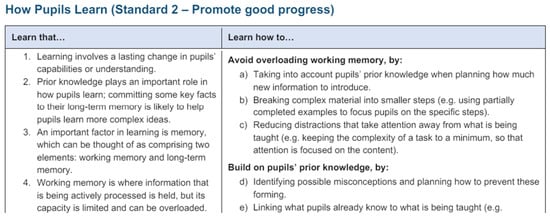
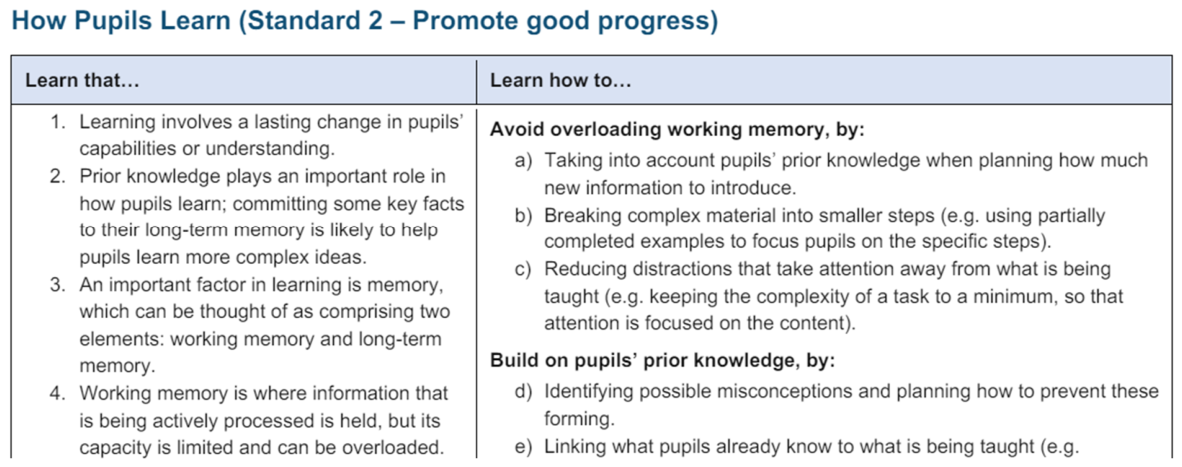
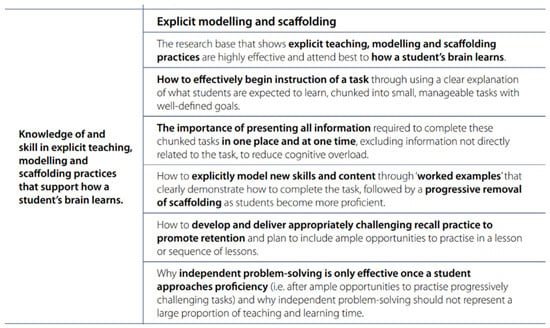
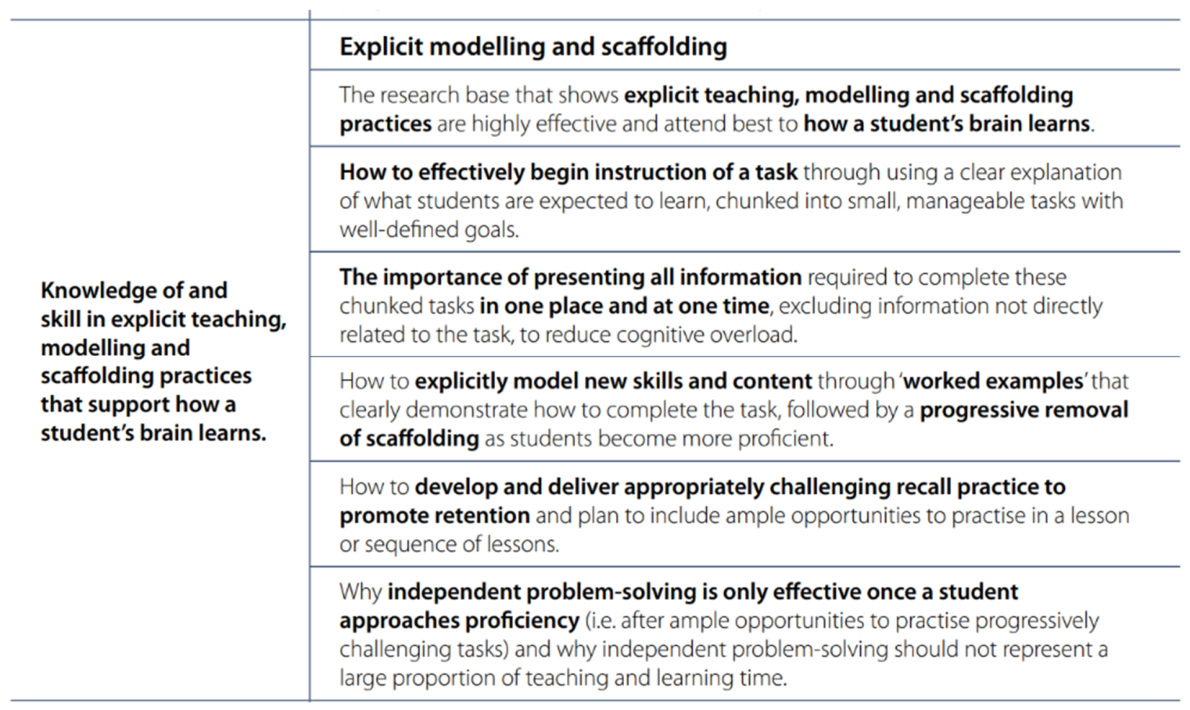

Disclaimer/Publisher’s Note: The statements, opinions and data contained in all publications are solely those of the individual author(s) and contributor(s) and not of MDPI and/or the editor(s). MDPI and/or the editor(s) disclaim responsibility for any injury to people or property resulting from any ideas, methods, instructions or products referred to in the content. |
© 2026 by the authors. Licensee MDPI, Basel, Switzerland. This article is an open access article distributed under the terms and conditions of the Creative Commons Attribution (CC BY) license.