


Abstract
The application of quantum physics principles has opened the door to a radically different way of conceiving and performing data computation. While still in its infancy, quantum computation offers the potential to efficiently solve problems that are classically considered intractable, thanks to the inherent parallelism granted by quantum effects like superposition and entanglement. The aim of this review is to discuss the potential applications of quantum computation in air transport problems by introducing its main concepts, in addition to how quantum algorithms are designed and their limitations, and then discussing solutions that have already been proposed in the literature. Finally, we draw some conclusions about the factors hindering wider application of quantum computation in air transport and sketch what the future may look like.
1. Introduction
As famously said by R. Landauer back in 1996, “Information is not a disembodied abstract entity; it is always tied to a physical representation” [1]. When representing information through classical computation, a bit is not an abstract entity; it is represented by two physical states of a given physical system that can reliably be distinguished—from carvings in a clay slate to electrical charges passing through a transistor. The important aspects are that there is no information without representation and that the manipulations that can be applied to that information, i.e., the computation, are defined by the physical laws governing the representation. While computation principles have mostly remained constant in the last decades, the increasing miniaturisation of electronic components has resulted in the appearance of quantum effects, i.e., different laws of physics. Two alternatives then arise: we must either try to compensate for these effects or embrace them.
This dichotomy traces back to Feynman’s seminal insight: he proposed using quantum computers to simulate quantum systems that defy simulation by classical digital computers [2,3]. This intuition gave birth to the field of quantum computation, defined as the study of the application of quantum principles for information representation and manipulation [4,5]. As classical and quantum physics substantially differ in the way they represent and manipulate the physical world, they also allow the execution of computations in radically different ways. Yet, many misconceptions have also arisen. For example, there is no computation that quantum systems can perform that a classical system cannot “in theory” also perform; the key aspect is the practical part, as the former can solve problems in polynomial time that would require exponential time in the latter case. Also, quantum computers are not “more powerful” versions of classical ones. Their way of representing information is substantially different from their classical counterpart, implying that not all computations are executed more efficiently in the former case—although the same computations can, in principle, be executed, even if inefficiently, by simulating a classical circuit. Finally, and as a consequence of the previous point, quantum computation is not only about parallelising problems; rather, specific algorithms and protocols have to be developed to solve any given problem, and the available hardware implementations must be considered too.
In the last few years, the air transport community has taken note of this new technology and the potential benefits it can yield. While aircraft are not quantum objects, their management entails computational problems that, in some cases, reach the limit of what classical computers can achieve in a reasonable time. This can easily be seen in any task with a combinatorial element: for example, there are a vast number of possible combinations when assigning aircraft and crews to routes, even in a medium-sized fleet; finding the optimum is practically impossible, and airlines have to resort to heuristics. By better exploring this landscape using quantum computation, airlines could improve their efficiency. Yet, this comes at a cost: quantum hardware is expensive, both to set up and maintain, as it is yet not a commercially mature technology. Benefits may therefore not (yet) surpass the costs.
This work aims to present an overview of potential applications of quantum computation in air transport, with a special focus on its theoretical tenets and challenges. We start by reviewing, in Section 2, what quantum computation is, including its main principles (Section 2.1), the types of computers currently available and under study (Section 2.2), specific algorithms that have been developed (Section 2.3), and some open challenges when it comes to real-world implementations (Section 2.4). We next move to a review of solutions that have hitherto been proposed, at least in theory, and of potential problems that may be tackled using this approach in the future (see Section 3). We finally use these results to draw some conclusions, and sketch what awaits us, in Section 4.
Before moving to the core of this work, two aspects ought to be clarified. Firstly, quantum computation can be a very technical and challenging topic, involving advanced mathematics and results that defy common expectations. As this review is aimed at air transport practitioners, we have tried to keep the formal part as simple as possible; the interested reader will still find definitions of more challenging notions, along with a collection of relevant references. Secondly, quantum computation is a field evolving at a fast pace, especially when it comes to real-world implementations. We tried to maintain an equilibrium between established concepts and algorithms and more cutting-edge ones; yet, the reader must be aware that some aspects of this work may be outdated in a few years time.
2. What Is Quantum Computation?
2.1. Principles
As previously mentioned, quantum computation is based on a representation of information at the quantum level, which in turn allows one to apply quantum physics rules to it and hence perform computation in a way different from the classical approach. Three ingredients are at its core: quantum bits, i.e., how information is physically encoded; entanglement, that is, the creation of connections between these bits; and finally the measurement of the results of computation. Let us discuss these elements in more detail; see Figure 1 for a schematic representation.
Figure 1.
Schematic representation of the main elements of quantum computation, from setting up the initial state to the final measurement.
Quantum bits. In classical computers, information is stored in sequences of bits, i.e., the minimum information elements, restricted to two discrete states (0 or 1). These states can easily be visualised as physical switches, either “on” or “off”, or by the presence of an electric charge in an electronic circuit. In contrast, quantum computation encodes information in qubits, i.e., a superposition of two states . Note the use of the bra-ket notation, also called Dirac notation [6]. This information is composed of two elements: a ket , where v is a vector representing the state of the system, and a bra , with f being a linear map acting on v. For the sake of this work, and can simply be understood as the two states that a given qubit can assume. In contrast to classical computation, these states have an amplitude, or a “probability”, represented above by and . Finally, applying a bra to a ket , i.e., , yields a complex number that encodes a probability amplitude. The interested reader will find an in-depth explanation of the mathematics of quantum mechanics in Ref. [7], where the amplitudes and are complex numbers constrained by the normalisation condition .
While this may seem a minor difference, the reality is much more complex. First, while each classical bit encodes (by definition) a single bit of information, specifying the state of one qubit requires infinite precision: two complex numbers constrained only by the normalisation condition—note that the information accessible from a qubit (e.g., via measurement) is still at most 1 classical bit per qubit. This further scales with the number of available qubits. For example, three qubits can encode eight possible states, and their combinations and are thus equivalent to eight coefficients describing the probability of each state. In other words, n qubits are equivalent to classical variables.
Secondly, qubits encode a superposition of states—or, put simply, information about multiple classical states at the same time—and any manipulation affects all of them simultaneously. To illustrate this, one may use the case of the Pauli-X-gate, i.e., the quantum equivalent of the classical NOT gate, which transforms into , and vice versa. For an overview of quantum gates and how they relate to classical Boolean ones, the reader may refer to [8]. In the case of a superposition of two states, e.g., , the result will be ; or, in other words, an operation is performed using both possible classical states at the same time.
Entanglement. One surprising property of quantum systems, and hence qubits, is that they can be entangled: their states become connected, irrespective of the physical distance, such that they cannot be distinguished from the others [9,10]. For example, if two qubits are entangled such that their total spin is zero, measuring (or forcing) one to have an “up” spin forces the other to have a “down” spin in such a way that the total state can be written, apart from a normalisation factor, as . This enables what is called quantum parallelism [11]: changing one qubit also acts on the state of all other qubits entangled with it, thus making this process equivalent to multiple sequential operations in a classical computer. This can be leveraged by quantum computers to explore large computational spaces in a short time, while the classical counterpart would require assessing each possibility one by one. When this is merged with the previous concept of superposition, the real power is unleashed: n qubits can represent states in superposition, and a single operation performed on them is effectively equivalent to a manipulation of all the states simultaneously.
Measurement. While a single qubit’s state can encode a continuous range of information via its complex amplitudes, as seen above, there is a caveat: such information has to be transformed into its classical counterpart to be useful. Unfortunately, we can never directly observe the superposition itself, resulting in the problem of measurement [12,13,14]. The interested reader can also find a discussion on the ontological and epistemological aspects of the measurement problem in Ref. [15]. Any measurement operation forces the quantum state to collapse probabilistically into one of the basis states ( or ), with probabilities given by the Born rule ( and , respectively) [16]. The wave-function collapse further implies that performing repeated measurements on the same is also impossible: if the result of the first measurement is, for instance, , the qubit will be transformed into , and all previous information is lost. Furthermore, quantum mechanics forbids making multiple copies of an unknown state [17].
Quantum algorithms circumvent the measurement problem through constructive interference techniques: one needs to prepare the answer in such a way that all but one of the amplitudes are zero or very close to zero; the remainder (answer) state will then have a significant probability of being indicated by the measurement. Additionally, it is important to design problems whose answer can easily be confirmed by classical means (as is the case of factoring large numbers) in order to recognise false results that may occasionally be produced by low-probability outcomes. In short, while quantum computation can in principle be used to speed up many (if not all) problems, this requires the design of very specific algorithms, effectively restricting its applicability.
2.2. Types of Hardware
As previously described, information and computation are linked to the physical system used for representation and processing; and, while all modern computers are based on the same technology (i.e., semiconductors), it is, in principle, possible to construct computers using any other physical system, e.g., from oscillators [18,19] to slime moulds [20,21]. It should therefore not come as a surprise that multiple alternative means of constructing quantum computers are being explored, each with specific advantages and challenges. Here, we review the main available alternatives; a summary of their respective advantages and disadvantages is reported in Table 1.
Table 1.
Summary of the advantages and disadvantages of the types of hardware currently used to construct quantum computers, along with the typical range of physical qubits available in commercial solutions.
Superconductivity. One of the most common types of quantum computers is based on superconductivity [22], i.e., the property of some materials to have zero electrical resistance when cooled to extremely low temperatures. They are composed of superconducting circuits, which are designed to behave like artificial atoms, with states represented by the two lowest energy states—i.e., the ground state and the first excited state [23]. Contrary to common intuition, in the quantum world, an electron cannot have an arbitrary energy level. Energy states then refer to the discrete energy levels that an electron can occupy in an atomic or molecular system. These states can then be manipulated by applying microwave pulses with a specific frequency and finally be measured through microwave resonators, i.e., circuits that resonate at a specific microwave frequency that is dependent on the state of the coupled qubit.
Superconducting quantum computers present many advantages, including scalability, as they leverage technologies that are similar to those employed in the classical semiconductor industry; the ability to be easily integrated with classical circuits, as in the case of hybrid computers; and high speed, with operations on qubits requiring nanoseconds. On the negative side, they require cryogenic cooling, something complex to achieve and very energy-intensive. They are also highly sensitive to external noise, and defects in fabrication can lead to inhomogeneous qubits and even cross-talk between them.
Photonic. This is a general category for describing quantum computers that use light particles, i.e., photons, to perform computation. Two states, and , can be encoded in multiple ways: through polarisation, i.e., the orientation of the photon’s electromagnetic field [24,25]; through paths in an optical circuit [26]; through time bins, i.e., the arrival time of a photon [27]; and through different frequencies [28]. Qubits can then be manipulated through different optical elements, e.g., beam splitters, phase shifters, mirrors, or nonlinear optical materials. Crucially, there are also different ways of enforcing entanglement between qubits, from Spontaneous Parametric Down-Conversion (SPDC), in which a high-energy photon splits into two lower-energy entangled photons [29], to the Hong–Ou–Mandel effect [30,31], according to which two identical photons become entangled when they meet at a beam splitter.
Unlike superconducting solutions, photonic quantum computation presents the advantage of being possible at room temperature, hence being substantially less expensive and energy-intensive while also retaining high speed. On the negative side, photons can be lost during transmission and within optical components and are weakly interacting; this results in additional complexity when trying to build large (i.e., with a large number of qubits) systems.
Neutral atoms. As the name suggests, this approach involves using individual, uncharged (neutral) atoms as qubits [32,33,34]. These atoms must first be cooled down to extremely low temperatures to reduce their kinetic energy; information can then be encoded in their internal energy levels, typically the two stable hyperfine ground states. A hyperfine structure refers to the small shifts in energy between electronic levels that would otherwise be equal (or degenerate) due to electromagnetic interaction between the nucleus and electron cloud [35]. Entanglement is then achieved by exciting the atoms to highly energetic electronic states called Rydberg states [36]: when two of them are close enough, i.e., within a distance known as the Rydberg blockade radius, the excitation of one atom shifts the energy levels of the other. Finally, measurement is performed by illuminating the atoms with laser light at specific frequencies and recording their light emission.
The main limitations of this approach are the need for cryogenic cooling and the complexity associated with manipulating a large number of atoms at the same time—as this requires the synchronised use of multiple lasers. Additionally, this approach yields gates that are much slower than the solutions previously described and that require larger physical spaces (hence, miniaturisation is a major challenge). At the same time, they offer an unique advantage: the possibility of arranging and connecting qubits dynamically.
Trapped ions. As with the neutral-atoms approach, trapped ions are based on individual atoms, which, in this case, are electrically charged [37]. The fact that they are charged simplifies the process of controlling and placing them, for instance, through a combination of electric and magnetic fields. Information is encoded in their internal electronic states; and entanglement can be achieved through Rydberg interactions (as in the neutral case—see above) or through the collective vibrational modes shared by multiple ions in the same trap. As they are conceptually similar, neutral atoms and trapped ions solutions share most of the same advantages and challenges.
Quantum dots. Quantum dots are nanoscale semiconductor structures, usually built using materials like silicon, germanium, or gallium arsenide, that confine electrons in all three spatial dimensions [38]. Information can then be encoded in different ways [39], namely, as the spin of a single electron confined within a quantum dot, or through the location of an electron in two adjacent quantum dots. These qubits can be manipulated using microwave or voltage pulses, depending on how the information was codified. Finally, entanglement can be achieved using capacitive coupling, i.e., when voltage pulses applied to one qubit influence the energy levels of neighbouring ones, or by exchanging virtual photons through a shared cavity or resonator.
As with the superconducting approach, quantum dots present the advantage of requiring existing semiconductor technologies, creating small-sized gates. Speed, uniformity in fabrication, and the need for low temperatures are nevertheless major disadvantages.
Topological Qubits. To conclude this list, let us also mention the case of topological qubits, which represent one of the most theoretically promising, but experimentally challenging, approaches to quantum computing [40]. Unlike other qubit types that rely on fragile quantum states prone to decoherence, information is encoded in the topological properties of a system, i.e., in the relative positions of exotic quantum particles like Majorana fermions and anyons. Majorana fermions are both a particle and their own antiparticle; as they cannot possess intrinsic electric or magnetic moments, they are highly resilient against external noise. No elementary particle with such a property has yet been observed (the nature of neutrinos is still under debate); instead, the same effect can be obtained by using quasi-particles in superconductors [41,42]. Anyons are quasi-particles that have only been observed in two-dimensional systems and behave surprisingly under “braiding”: when exchanging two identical anyons, the result is a different system; i.e., a historical record of the event is created [43,44]. This, in principle, allows the achievement of intrinsic fault tolerance and resistance against noise, as the information is distributed among multiple elements. At the same time, this approach is highly experimental, with no commercial solutions available at the time this manuscript was written.
Finally, it is worth noting that, in the evaluation of quantum-computing architectures, circuit width and depth serve as key metrics for assessing hardware performance, with width generally corresponding to the number of logical or physical qubits available. Google’s Sycamore machine is an example of a universal gate-based machine that attempts to create deep circuits capable of correcting errors, which requires a substantial number of physical qubits for each logical qubit [45,46]. In contrast, machines like D-Wave’s Advantage annealers, which are not universal, have a large number of physical qubits, but they are only suitable for simple, specific tasks, and they are not very flexible [47]. This trade-off between universality, depth, and width defines the current landscape, with no architecture optimising all three.
2.3. Notable Algorithms
As previously discussed, quantum computation is not a simple matter of compiling a classical program for a different type of microprocessor. Aspects like the measurement problem and entanglement imply that specific algorithms have to be developed for any given problem. Additionally, different hardware approaches have specific limitations in terms of, e.g., the number of qubits available; algorithms must thus be tuned to the available hardware. We briefly review the most famous algorithms that have been proposed in quantum computing, with a specific focus on those that may have clear applications in air transport.
Grover’s algorithm. Grover’s algorithm is a quantum algorithm for unstructured searches proposed by L. K. Grover in 1996 [48]. In general terms, given a function that can be assumed to be a black box, it finds, with high probability, the unique input that produces a particular output value. This is usually used to perform searches in an unsorted database—provided the black box yields a specific value when the input matches the desired record. Notably, it only requires evaluations, where N is the size of the function’s domain, differing in this way from the of the classical counterpart. Here, the computational cost is represented using “big O notation”, i.e., an upper bound of how fast time and space requirements grow with input size. For example, indicates constant time (i.e., the cost is independent of the input size), and suggests that it scales linearly.
The initial state must be composed of n qubits such that corresponds to the number of records to be evaluated; these qubits are put into an equal superposition of all possible states, representing an unknown initial solution. The algorithm is then based on two operations. The first is an oracle. In computer science, an oracle is a theoretical object representing a function or algorithm that can instantaneously solve a specific problem. It is treated as a black box: its internal workings are not relevant; the only relevant point is that it always yields the correct solution. Such oracle performs a phase flip on the target state; i.e., it flips only the state corresponding to the desired solution. Second, there is a diffusion operator, which performs an inversion about the average amplitude of all the states; in other words, it amplifies the amplitude of the state corresponding to the desired solution and lowers all other amplitudes. These two steps are repeated multiple times, on the order of ; in the end, the state corresponding to the solution will have a high amplitude.
Shor’s algorithm. Shor’s algorithm is a quantum algorithm developed by Peter Shor in 1994 that efficiently solves the integer factorisation problem, a task believed to be intractable for classical computers [49,50]. It is designed to factorise large numbers at an exponential rate, i.e., faster than the best-known classical methods; this, in turn, is expected to threaten widely used cryptographic systems, which rely on the difficulty of factorisation for security. The algorithm works by exploiting quantum parallelism and the quantum Fourier transform (QFT) to find the period of a modular exponential function, which reveals the factors of a composite number. Shor’s algorithm requires a fault-tolerant quantum computer with thousands of qubits, a device that is still beyond current technological abilities; yet, its existence has driven advancements in quantum hardware and quantum cryptography research aimed at developing encryption methods resistant to such attacks. Demonstrations of Shor’s algorithm have only been performed on small-scale quantum computers; its scalability remains a key milestone for practical quantum computing.
Brassard–Høyer–Tapp algorithm. This is a quantum algorithm designed to solve the collision problem: Given a black-box function f mapping N inputs to some output, the goal is to find two distinct inputs x and y such that [51]. It is based on two steps. Firstly, a small subset of the complete input set is extracted, typically with a size of , and collisions are searched within it using a classical approach. If no results are found, the remainder of the data set is evaluated against the subset using the previously described Grover’s algorithm. The final computational cost is a balance between the initial (classical) collision evaluation and the following quantum part; by using , an optimum is achieved, which is of the order of —compared to the complexity of classical solutions.
Quantum walk search. Quantum-walk-based searches involve an agent moving at random on a graph, i.e., a mathematical representation of a system composed of nodes that are pairwise-connected by links, with the objective of finding a marked (target) node in this network. While the problem was first proposed by Aharonov and coauthors in 1993 [52], and while many alternatives have been proposed [53,54], no universal solution is known. The main problem lies in when to perform the measurement on the quantum system: premature measurement may yield a non-marked element, while delaying the measurement too long can result in the probability of finding the marked element decreasing dramatically, known as the “soufflé problem”. The quantum walk search can also be extended to cases where multiple nodes are marked [55].
Quantum optimisation/annealing algorithms. These represent a general family of algorithms designed to find the best possible solution from a vast number of options; this is usually framed as a minimisation problem, where one tries to minimise an error, which depends on the solution [56,57]. Given a problem and the corresponding cost function, there are two key elements. Firstly, the potential solution has to be represented by a specific state of a system of qubits; for instance, different qubit configurations can be used to represent the route of an aircraft as a sequence of unique waypoints. Secondly, one needs to create a Hamiltonian. In quantum mechanics, the Hamiltonian of a system is a function that represents its total energy as the sum of the kinetic and potential energies of all particles; it also defines the evolution of a system over time by using the Schrödinger equation. The Hamiltonian represents the cost, i.e., a quantum mechanical operator whose lowest energy state (or “ground state”) is the optimal solution to the original problem. Given these two elements, the initial configuration gradually evolves; if this process is adiabatic, i.e., if it is slow enough, the system will tend toward the lowest energy and hence the optimal solution. The equivalent of this latter evolution process in metallurgy, involving the gradual cooling of a metal, is called annealing, hence the name. Note the two challenges in this process, namely, encoding the Hamiltonian, and the stochastic nature of quantum computation, implying that the obtained solution may not always be the optimal one. For the discussion in Section 3, the following three quantum optimisation algorithms and formulations are of special importance:
- Quadratic Unconstrained Binary Optimisation (QUBO). This is a mixed-integer quadratic program where the decision variables are restricted to assuming binary values and there are no explicit constraints; in other words, the cost of the solution is given by the sum of the cost of activating the individual elements and of pairs thereof [58,59]. As such, QUBO is to be considered as a problem-encoding framework, which can be solved using the following approaches. For examples of quantum implementations, see Refs. [60,61].
- Quantum Approximate Optimisation Algorithm (QAOA). This is an optimisation algorithm designed to find approximate solutions to hard problems based on a layered structure, in which each layer retrieves a better approximation of the true optimal solution. Initially proposed in 2014 [62], its relative simplicity has fostered its application in multiple contexts; see Refs. [63,64].
- Variational Quantum Algorithm (VQA). This is a general framework for hybrid optimisation, in which the output of a quantum circuit is used to optimise the parameters of an algorithm running on a classical machine [65,66].
Quantum Machine Learning algorithms. As the name implies, this is a family of algorithms that tries to exploit quantum mechanics to achieve advantages over classical machine learning models [67,68]. As most of them can be seen as designed for optimisation problems, i.e., where one tries to minimise the error in the yielded forecast, quantum optimisation algorithms can, in principle, be used to achieve substantial speed improvements, especially in the case of large quantities of data. This nevertheless creates two challenges. On the one hand, loading large classical data sets into quantum states is a significant task, also known as the “input problem”. On the other hand, the final result must be the full model; yet, as discussed above, obtaining the full state of the quantum system is computationally hard. Even when this can be solved through multiple measurements, a large number of them may be required in order to get precise results (e.g., on the order to thousands); hence, this may effectively negate the speedups fostered by the quantum computation. As such, the advantage of using quantum hardware in machine learning problems has still to be proven experimentally. Note that these challenges are mitigated when the input data are already quantum, such as in quantum communication networks. Here, the input problem vanishes, as the data natively reside in a quantum state, bypassing the need for classical-to-quantum encoding. Moreover, tasks like quantum-state classification or the identification of patterns in quantum many-body systems can leverage QML without the measurement bottleneck, as the output might itself be a quantum state.
In spite of the above challenges, several solutions have been proposed. These include Quantum Support Vector Machines, in which the underlying quadratic programming problem is optimised by performing linear algebra in quantum feature spaces [69,70]; Quantum Principal Component Analysis [71]; Quantum Neural Networks, usually using a hybrid approach in which the neural network is evaluated using quantum hardware, but the parameters themselves are optimised through classical means [72,73]; Quantum Reservoir Computing, a subclass of neural networks especially suited to time-series processing, offering the advantage of fast training [74]; and Quantum Kernel Methods, aimed at generating functions that measure the similarity between data points in very-high-dimensional feature spaces [75].
2.4. Open Challenges
Several challenges have been revealed by the previous description of hardware solutions and algorithms. The same principles responsible for the advantages of quantum computing also impose fundamental constraints on it. The no-cloning theorem prevents the perfect copying of an unknown quantum state, complicating error correction and data buffering; quantum evolution is constrained to unitary (reversible) operations, which restricts the design of quantum algorithms and necessitates careful gate engineering; and information has to be encoded (and read back) to the quantum world. Notably, most current technologies require cryogenic cooling and very specialised components. This implies that available quantum computers are extremely expensive to build and maintain, thus limiting the number of potential (meaningful) applications. Furthermore, some additional problems have to be mentioned.
Information (i.e., bits) in a classical computer is extremely stable; unless the power is disconnected, data are expected to remain available and can even be stored for long periods of time (e.g., in solid-state drives and other storage products). Notably, the same does not hold true in the quantum world, where qubits are extremely fragile. This is due to the problem of decoherence [76]: they can lose the desired superposition of states or even become entangled with each other. Decoherence is triggered by many factors, including thermal fluctuations, electromagnetic noise, mechanical vibrations, or imperfections in the physical medium. While these factors can be minimised at a hardware level (albeit at a high cost), they can never be completely eliminated. Each quantum computer hence has a limited coherence time, i.e., the time before the decoherence kicks in, within which any solution has to be obtained. Note that in some technologies, most notably superconducting quantum computers, this time scale can be as small as hundreds of microseconds. Alternatively, if it is unfeasible to improve hardware, one solution is so-called Quantum Error Correction (QEC): schemes that encode quantum information redundantly across multiple physical qubits, with the ability to detect and correct errors in them [77,78,79]. As we have not yet entered the fault-tolerant quantum-computing era, actual quantum-computing experimental implementations are tested against artificial algorithms, especially those designed to test quantum supremacy, with a computational complexity tailored to the existing quantum computers (in the order of 100 physical qubits in most of the platforms). While better QEC solutions are constantly being proposed, they come at a major cost: the need of a larger number of physical qubits.
This leads to the second problem: scalability. While each qubit can encode much more information than its classical counterpart, creating systems composed of a large number of qubits is highly challenging, not only economically but also technologically. To illustrate this, consider that the largest quantum computer (at the time this manuscript was written) merely surpasses qubits, and the average quantum hardware device available commercially may comprise tens of them.
Finally, one has to consider the problem of accessibility. Buying an entry-level quantum computer can cost (as of the time this manuscript was written) anywhere between to , plus the cost of maintaining and operating it. As of the time of writing, one of the most affordable options is provided by the company SpinQ, with portable Nuclear Magnetic Resonance (NMR) quantum computers of up to three qubits [80], although these solutions nevertheless primarily target education and research as opposed to real-world applications. Notably, on-demand (or cloud) solutions are also becoming available, in which the user only has to pay proportionally to the complexity of the executed task, or per “shot”, i.e., a single run of a quantum circuit.
3. Applications
Air transport operations involve a multitude of complex decision problems, from planning airline schedules and managing fleets to controlling air traffic and airport logistics [81]. Many of these problems are NP-hard combinatorial optimisations, meaning they become difficult to solve optimally as their size grows beyond small toy examples. As a consequence, many planning algorithms/systems in the air transport industry rely on hard-coded heuristics and hand-tuned optimisations. In recent decades, more sophisticated classical algorithms (e.g., mixed-integer programming and heuristics) have found their way into the industry, but these often incur long runtimes or sacrifice optimality for speed. Quantum computing presents a potential paradigm shift by exploiting quantum parallelism and novel algorithms, which could tackle these large-scale optimisation challenges more efficiently, providing better solutions, faster runtimes, or both, compared to classical methods [82,83]. As depicted in Figure 2, below, we discuss several key application areas in air transport and discuss for each their computational hardness, the state-of-the-art classical approaches, and how quantum computing/machine learning has a proven potential to improve performance significantly.
Figure 2.
Overview of the quantum computing/quantum machine learning application areas discussed in Section 3.
3.1. Aircraft Tail Assignment
The tail assignment problem, also known as the aircraft-routing problem, involves deciding the specific sequence of flights for each aircraft in an airport, including routing each aircraft through the schedule and maintenance checks, constituting a critical problem for airline operations [84]. As shown in Figure 3, the problem involves assigning hundreds of aircraft to thousands of legs while accounting for and ensuring connectivity and periodic maintenance, a problem that is known to be NP-hard [85]. Realistic instances often involve millions of binary decision variables; and even simply ensuring that all aircraft undergo the required maintenance within legal intervals adds a hard constraint that makes the routing problem extremely difficult [86]. Airlines usually solve these problems with advanced operations research techniques [87], e.g, through branch-and-price methods. Tail assignment can be formulated as a huge set-partitioning or network flow model, and algorithms generate feasible aircraft routes and select an optimal set covering all flights. Techniques like cutting planes and heuristics have also been applied for sub-problems. While state-of-the-art commercial solvers can handle various large daily tail assignment problems, this can only by achieved with rather coarse time discretisation or by fixing some decisions beforehand to reduce complexity [85].
Figure 3.
Connection network for the tail assignment problem. Central nodes, marked to , represent flights; left and right nodes denote the airports to be connected. The red arrows depict the consecutive flights that can be served by the same aircraft, whereas the black dotted lines connect flights and airports.
Quantum computing holds promise for ensuring more integrated and efficient tail assignment. Quantum annealers can naturally represent assignment problems as QUBO formulations. Several researchers have already formulated the tail assignment problem for quantum algorithms. Ref. [88] developed a QUBO model for tail assignment and tested it on a D-Wave annealer. Similarly, ref. [89] applied a gate-model QAOA algorithm to the tail assignment problem. The paradigm of the two different quantum algorithms is shown in Figure 4. Furthermore, ref. [90] benchmarked QAOA, quantum annealing, and the state-of-the-art operations research method, branch-and-price. We report their results in Table 2 to highlight the potential computational efficiency of quantum hardware.
Figure 4.
Quantum-computing paradigm for solving operation research problems.
Table 2.
Time-to-solution (TTS) comparison from [90] under different solution methods as the number of routes (qubits) increases. Fastest solutions are reported in bold. All values are reported in seconds.
Besides the use of so-called pure quantum methods, some authors have also proposed to integrate QAOA into the branch-and-price framework for efficiently solving pricing sub-problems [91,92]. The corresponding studies confirmed the viability of encoding aircraft routing constraints into a quantum-friendly format and found that current quantum methods could find valid assignments for toy-sized problems. These early results on tail assignment highlight the need for deeper circuits and more qubits to represent full airline networks for pure quantum methods.
3.2. Crew Pairing and Rostering
Crew scheduling is another critical and complex subtask in airline scheduling [93]. Airlines must build efficient working rosters for pilots and flight attendants, respecting an intricate set of rules (e.g., labour regulations, rest requirements, and training qualifications). Crew scheduling is typically divided into two phases: (1) crew pairing, i.e, partitioning all flight legs into sequences (pairings) that a single crew can perform, usually as a multi-day work trip starting and ending at the crew’s home base [94], and (2) crew rostering, which assigns specific crew members to the pairings and to days off, producing individual monthly schedules [95]. Since crew costs are considered the second-largest operating cost for airlines, there is a major financial incentive to optimise crew utilisation and thus avoid excess staffing. Even a small reduction in crew costs may translate into millions of dollars of savings annually. Moreover, a well-optimised schedule improves crew quality of life, indirectly aiding retention and performance. Not surprisingly, crew scheduling is also NP-hard [96]. The crew-pairing phase can be formulated as a set-partitioning problem, where the set of all feasible pairings (tours of duty) must be chosen such that each flight leg is covered exactly once. Enumerating all feasible pairings is itself an enormous task [97]. Airlines rely on advanced optimisation systems for crew scheduling, but even state-of-the-art approaches use decomposition and heuristics [98,99]. Crew pairing is often solved through column generation: a smaller master problem selects pairings, while a sub-problem generates new feasible pairings with reduced cost. This approach can handle large problems by not enumerating all pairings explicitly. Nevertheless, it still requires hours of computation and yields near-optimal solutions. For crew rostering, after pairings are chosen, airlines either solve assignment models or use heuristic rule-based systems to construct rosters [100]. Integrated pairing and rostering is rarely solved optimally together because it is even more complex [101].
Quantum algorithms, particularly Variational Quantum Algorithms (VQAs) and Quantum Annealing, represent novel approaches to overcoming these limitations. Ref. [102] developed an extensible quantum optimisation benchmark suite explicitly applied to the crew-pairing problem using VQE and a QAOA, showing promising results for manageable problem instances. Ref. [103] further supported the feasibility of quantum solutions for the crew-pairing problem, emphasising quantum annealing’s effectiveness. Additionally, ref. [104] explored the application of quantum annealing specifically to crew rostering. By transforming crew-pairing problems into binary quadratic models and Constrained Quadratic Models (CQMs), they highlighted the quantum solvers’ ability to offer reduced runtimes and improved solution quality relative to classical and quantum-inspired methods.
3.3. Air Traffic Control
Air Traffic Control (ATC) encompasses critical functions aimed at ensuring safe, efficient, and reliable management of airspace operations. These include, among others, arrival sequencing [105], conflict detection and resolution [106], and route optimisation [107]. With increasing air traffic density and complexity, traditional ATC systems are facing mounting pressure to maintain efficiency and safety standards. The computational complexity of ATC tasks is significant due to the short horizon of decision-making time. For example, arrival-sequencing and -scheduling problems are NP-hard and must be solved in anywehre from seconds to several minutes, particularly when there are multiple aircraft and runways [108]. Conflict detection and resolution similarly scale exponentially as each aircraft manoeuvre must be evaluated in seconds for safety, leading to intractable computation times for large traffic volumes [109]. Route optimisation, though solvable in longer time horizons pre-tactically, requires optimisation over large networks of routes and constraints, which also represent complex optimisation tasks known to be NP-hard [110]. Current classical solutions employ a variety of heuristic and optimisation techniques to buttress real-time ATC decision support tools, including mixed-integer linear programming (MILP), genetic algorithms, and other metaheuristics [111]. Conflict detection and resolution typically rely on rule-based systems, local search heuristics, and, more recently, deep reinforcement learning [112]. Route optimisations are supported by algorithms like dynamic programming and iterative optimisation approaches, but these solutions face limitations in scalability and computational efficiency as air traffic demand grows [113].
Given the time requirements of the discussed tasks, quantum computing has promising applications in ATC. For optimising aircraft arrival sequencing, ref. [114] explored using quantum annealing to solve the problem, which was formulated as a mixed-integer programming (MIP) problem. By discretising time slots and implementing slot-blocking functions, a significant reduction in computational complexity was achieved. Further enhancement through a quantum–classical hybrid Metropolis–Hastings algorithm enabled efficient sequencing optimisation even for scenarios involving over 100 aircraft, significantly outperforming classical approaches in computational efficiency [115]. For conflict detection and resolution, ref. [116] applied QAOA algorithms to address the tactical aircraft deconfliction problem. Regarding route optimisation, ref. [117] applied Grover’s Algorithm combined with QAOA to identify optimal flight paths. Finally, ref. [118] proposed a quantum-enhanced Dijkstra algorithm, where a Grover’s algorithm is embedded in the Dijkstra’s minima finding procedure. Experiments were conducted both on IBM simulator and real machine of eight qubits.
3.4. Urban Air Mobility
Urban Air Mobility (UAM) envisions fleets of passenger-carrying air taxis and delivery drones crisscrossing city skylines at low altitudes [119]. The prospect of hundreds or thousands of aerial vehicles operating over a city presents a new air traffic management challenge. The concept of unmanned traffic management (UTM) has been proposed as a framework for UAM operations, with a key goal being strategic deconfliction to minimise the likelihood of conflicts before flights take off [120]. The UAM routing and scheduling problem is inherently complex and combinatorial [121]. It can be thought of as a three-dimensional extension of vehicle-routing problems (VRP) coupled with scheduling. Each UAM vehicle needs not only a path from origin to destination but also an assigned departure or arrival time, and it must avoid conflicts with other vehicles in both space and time. Moreover, UAM operations have unique constraints: vehicles have limited battery life/endurance [122], there may be predefined aerial corridors or vertiport hubs [123], and weather or no-fly zones can dynamically affect route availability [124]. Classical approaches to UAM routing/scheduling build upon methods from related fields like traditional vehicle routing. One approach is to discretise the urban airspace into a network of nodes and edges and then use graph algorithms or mathematical programming to find routes [123]. To handle multiple vehicles, researchers have proposed extending these algorithms with conflict detection rules or using iterative routing [125].
Quantum computing has shown particular promise for UAM routing and scheduling in recent pioneering studies. Ref. [126] demonstrated a quantum-annealing-based approach to optimising UAM flight routes and schedules that was validated using an air traffic management simulator for Singapore’s urban airspace. Although direct quantum applications in the field of UAM are scant, several studies have been conducted in similar areas in transportation [127,128,129]. Ref. [130] benchmarked a simulated annealing algorithm on a CPU against a D-Wave hybrid algorithm for a realistic VRP with 61 trucks and 23 nodes from Aisin Corporation. They iteratively assigned routes for one truck at a time, and each instance had approximately 2500 quadratic binary variables. Ref. [131] explored the potential of QA in regard to a multi-commodity network flow (MCNF) problem. They adopted an MIP formulation of the MCNF problem to test a D-Wave hybrid constrained quadratic model (CQM) solver, comparing it with CPLEX. The largest instance included 10,000 origin–destination (OD) pairs and 2527 links. The results revealed significant superiority of the hybrid solver when addressing large-scale problems with over 2000 OD pairs and 1779 links. These studies all indicate the potential for practical usages of quantum computing in UAM routing and scheduling. Readers are referred to [132] for more applications of quantum approaches in logistics and supply chain management.
3.5. Airport Gate Assignment
For airports, efficient operations are as important on the ground as they are in the air. The airport gate assignment problem (GAP) is a fundamental operational challenge in airport management, given that its solution has direct impacts on airport efficiency, passenger experience, and resource utilisation [133]. The GAP can be formulated as a Quadratic Assignment Problem (QAP), where flights need to be assigned to gates such that a quadratic cost (e.g., passenger transit time, which depends on pairs of flights if passengers connect) is minimised [134,135]. However, the QAP is a well-known NP-hard problem. Gate assignment at major hubs is usually solved by integer programming or heuristic algorithms that run as part of airport resource management systems [136]. A common approach is to use a mixed-integer program that assigns flights to gates with overlapping and compatibility constraints to minimise walking or towing distances. For large airports, exact optimisation may be too slow, so heuristic rules and greedy assignment are often used, or optimisation is done using a rolling horizon method [137].
Quantum computing offers significant potential to enhance gate assignment optimisation at airports. Recent studies have provided promising results using quantum-computing frameworks, particularly Quantum Annealing and Variational Quantum Eigensolver (VQE) algorithms. Ref. [138] explored solving flight gate assignment problems using quantum annealing by formulating the optimisation task as a Quadratic Unconstrained Binary Optimisation (QUBO) problem. Utilising real-world data from a mid-sized German airport, they successfully solved small problem instances using a D-Wave 2000Q quantum annealer. Their work validated quantum annealing’s potential, particularly in efficiently navigating complex solution spaces inherent to gate assignment tasks. Ref. [139] extended the exploration of quantum-computing solutions for gate assignment by implementing the VQE method on digital quantum computers. Using a qubit-efficient encoding scheme with cyclic mapping and the Conditional Value at Risk (CVaR) aggregation function, they found that the CVaR-VQE approach consistently achieved good solutions with significantly fewer evaluations compared to classical counterparts [140]. Ref. [141] further investigated quantum-computing applications specifically tailored to the quadratic GAP on both IBM’s quantum computing simulator and a 27-qubit quantum computer. Their research evaluated VQE methods enhanced by space-efficient graph colouring within a QUBO framework.
3.6. Quantum Machine Learning Applications
Beyond direct operation research methods for improving air transportation, machine learning can leverage large amounts of data to enhance the situation awareness of the decision-maker. For instance, dynamic airspace sectorisation [142] could incorporate traffic flow predictions using supervised learning to reveal when and how to configure an airspace properly [143,144]. Furthermore, controllers could ask agents trained via reinforcement learning how to resolve potential conflicts [112]. Current machine learning methods have been able to effectively assist decision making after appropriate training on historical data. However, as data size scales up, the efficiency of offline training becomes a critical problem. Though it only requires training once, developers require too much time to update and test their models, especially for modern large models for weather prediction [145]. Furthermore, the extensive requirements of GPU devices make it prohibitive for individual researchers to contribute in this area. As a consequence, most researchers choose to perform studies on small models that are compatible with their available computational devices.
Quantum Machine Learning (QML) is deemed to have the potential to alleviate this situation in regard to efficiency and scalability, taking advantage of quantum superposition, entanglement, and interference to handle high-dimensional data [146]. A typical workflow of QML is shown in Figure 5. Though few studies have applied QML in the air transportation domain, early trials have been conducted in the general transportation research. For unsupervised learning, ref. [147] investigated the potential of Quantum Annealing in clustering a bike-sharing system by solving it as a Constraint Satisfaction Problem. This quantum clustering technique could be useful for solving the airspace sectorisation problem. Regarding supervised learning, many researchers have applied QML to forecasting tasks. Ref. [148] proposed a Temporal–Spatial Quantum Graph Convolutional Neural Network based on a Schrödinger approach for traffic congestion prediction using TensorFlow Quantum. Ref. [149] explored the use of hybrid quantum–classical neural networks for traffic flow prediction in urban environments. The quantum neural networks achieved competitive accuracy, especially when the number of qubits increased. Ref. [150] explored applying a hybrid quantum–classical machine learning model to the emergency escape routing problem. They introduced a hybrid feature-wise linear modulation neural network, integrating quantum and classical elements to dynamically learn Dijkstra’s shortest-path algorithm. Lastly, there are also studies on quantum reinforcement learning. Ref. [151] proposed a hybrid classical–quantum reinforcement learning framework that integrates quantum circuits into attention-based models for combinatorial routing tasks. Specifically, the authors replaced the key and query vectors in classical attention heads with entangled quantum states, which were then measured to produce attention scores. This approach serves as a promising prototype for future exploration; see [146] for more QML applications.
Figure 5.
Quantum machine learning workflow. The grey arrows represent procedures that only need to be executed once, whereas the black arrows represent major training loops. In the circuit, the variation circuits have trainable parameters , whereas the feature map can encode original features with embedding techniques (e.g., angle encoding).
We summarise the relative suitability of the discussed problems for near-term and long-term quantum computing in Table 3, which reflects both variable structure and decision-time requirements. Planning problems such as aircraft tail assignment, crew pairing, and airport gate assignment rely primarily on binary or discrete decision variables and are naturally formulated as large-scale 0-1 combinatorial optimisation problems, making them more suitable to near-term hybrid quantum approaches. In contrast, use cases for air traffic control and urban air mobility involve continuous time variables, where the binary variable conversions will consume substantial quantities of qubits, thereby limiting their near-term suitability with respect to quantum hardware. Finally, quantum machine learning applications are assessed conservatively, as they require new designs of algorithms specifically for quantum machines, posing additional challenges for outperforming traditional GPU-based machine learning.
Table 3.
Comparison of air transport application classes in terms of decision horizon and quantum suitability. “Near-term” refers to current hybrid usage (e.g., QA/QAOA/VQE as a module within a classical pipeline); “Long-term” refers to future fault-tolerant quantum computing.
4. Conclusions and Prospects
Throughout this short review, we have seen how quantum computing could help us achieve more efficient air transport. Quantum computing is not a mere improvement in the computational capabilities of current hardware; on the contrary, by changing the rules used to encode and process information, it radically transforms the way algorithms themselves must be thought of—at times requiring concepts, like entanglement, that are far from everyday intuition. In exchange, it has the potential to make tractable problems that are nowadays too complex and thus open the door to substantial improvements in many real-world fields. Before concluding this review, we want to discuss some final topics that, in our opinion, will shape the future of this field.
4.1. Is Quantum Computation Economically Viable?
While this is a fundamental question that has to be answered in order to understand the impact that quantum computation may have in future air transport, it is also a very challenging one. For the sake of completeness, we report an estimation for a hypothetical scenario. Yet, the reader must be aware that this is only an exercise: true cost figures are seldom disclosed; and the economic benefits of a quantum solution are difficult to estimate, as examples of real-world applications are scarce at best. Still, let us consider a scenario in which a large organisation, such as EUROCONTROL, would deploy a fully quantum computation solution to improve routing and slot allocation in European airspace; and let us try to conduct a cost/benefit analysis.
The first part of the analysis should involve an estimation of the total savings that could be obtained by deploying such system. This is of course extremely difficult to forecast, but we can get an idea of the magnitude by using the scenarios of future costs reported in Ref. [152]. In 2024, the total cost of inefficiencies in trajectories within the Single European Sky was approximately billion euros, and this figure is expected to grow to at least billion euros by 2030 in a conservative scenario (see figure in page 35 of Ref. [152]). Let us consider a conservative estimate, according to which of that cost increase can be avoided by the deployed solution—this may come from the planning of more efficient trajectories by taking advantages of dominant winds [113], the availability of more accurate weather predictions [153], or cost index optimisations [154]. This would imply savings of billion euros annually by the year 2030 or million euros daily.
Estimating the cost of deploying a quantum solution (i.e., not considering the development and maintenance of software) is also challenging. While the cost of a medium-size quantum computer can be of the order of millions of euros, this does not include the expenses associated with running it; note that in the case of superconducting hardware, the energy required to maintain such a state can be extremely high. Lacking better estimations, we resort to the Amazon Web Services IonQ computer Forte, which comprises 36 qubits and can be rented at a price of 6000 euro per hour (see https://aws.amazon.com/braket/pricing/, accessed on 20 January 2026). Yet, 36 qubits is hardly enough to optimise the trajectories of thousands of flights; we thus further suppose that the cost scales linearly with the number of qubits (something that does not hold true nowadays) and that we need 1000 of them, reaching a price of euros per hour for a 1000-qubit system.
By merging both numbers, we find that the solution may be economically feasible provided the computation can be performed each day in less than 15 h. Beyond the specific numbers, which are, again, only estimations, a clear message stands out: quantum computation is still far from being commercially viable; its cost is still very high; and any real-world deployment will be subject to a high degree of uncertainty. The interested reader may also check the keynote address given by Prof. Lieven Vandersypen at ISSCC 2017; a corresponding video is available at https://youtu.be/dYQbT-zI-YM (accessed 23 December 2025). Beyond a general introduction to quantum computing, it also discusses when the “usefulness threshold” will be crossed—probably not sooner than 2040. Progress is nevertheless being achieved on a daily basis, and what seems science fiction today may be reality in a decade from now.
4.2. Can Hybrid Quantum–Classical Algorithms Better Enhance Air Transport Systems?
The integration of hybrid quantum–classical algorithms presents a promising avenue for enhancing computational efficiency in air transport systems. While quantum computing offers significant advantages for certain types of problems, it is not yet capable of fully replacing classical computing methods, at least in a cost-efficient way. Hybrid algorithms leverage the strengths of both paradigms, using quantum computers to handle specific tasks where they excel, such as optimisation and simulation, while relying on classical systems for other computations. This approach can mitigate some of the current limitations of quantum computing, such as noise and decoherence, which can affect its accuracy and reliability. For instance, in the context of air traffic management, hybrid algorithms could be employed to optimise flight routes and schedules, where quantum computers handle the complex optimisation tasks and classical systems manage the broader computational workload. This synergy could lead to more efficient air traffic control, reduced flight times, and lower fuel consumption, ultimately contributing to a more sustainable and cost-effective air transport system. However, the development and implementation of hybrid algorithms require significant research and collaboration between quantum computing experts and air transport professionals to ensure that these algorithms are tailored to the specific needs and challenges of the industry.
4.3. How Can Quantum Machine Learning Revolutionise Air Transport?
Quantum machine learning (QML) holds obvious potential for revolutionising various aspects of air transport. Traditional machine learning algorithms have already demonstrated their value in the aviation industry by improving predictive analytics, enhancing safety, and optimising operations [113,155,156,157]. Quantum machine learning, however, could take these capabilities to new heights by processing vast amounts of data more efficiently and identifying patterns that are beyond the reach of classical algorithms. For example, QML could be used to predict equipment failures more accurately by analysing complex datasets from aircraft sensors, thereby reducing maintenance costs and improving flight safety. Additionally, QML could enhance air traffic management by providing more accurate predictions of flight delays and optimising the allocation of resources in real-time. Despite these promising applications, the integration of QML into air transport systems faces several challenges, including the need for robust quantum hardware and the development of algorithms that can effectively leverage quantum computing principles. Addressing these challenges will require concerted efforts from researchers, industry stakeholders, and policymakers to ensure that the benefits of QML are fully realised in the air transport sector.
4.4. How Can We Push Collaboration with Industry Partners?
Collaboration with industry partners is crucial for the successful integration of quantum-computing technologies into air transport systems. The complex and highly regulated nature of the aviation industry necessitates close cooperation between academic researchers, quantum-computing experts, and industry stakeholders to develop practical and effective solutions. For instance, partnerships between airlines, air traffic control organisations, and quantum-computing firms could lead to the creation of innovative solutions for optimising flight routes, managing air traffic, and improving operational efficiency. Furthermore, industry collaborations can help address the economic and technical challenges associated with quantum computing, such as the high costs of quantum hardware and the need for specialised expertise. By working together, industry partners can pool their resources to invest in research and development, share the risks and benefits of quantum-computing projects, and ensure that the resulting technologies are aligned with industry standards and regulations. Ultimately, strong collaboration with industry partners will be essential for overcoming the barriers to the adoption of quantum computing in air transport and realising its full potential.
4.5. Towards Quantum Air Transport
As outlined through this review, it is our believe that several factors are hindering the (currently) limited applicability of quantum computing in air transport. On the one hand, as illustrated above, this technology is not ready for commercial application: all real-world solutions are quite costly and limited in ability. Additionally, open problems, such as, noise and decoherence time, strongly limit the applicability of quantum computation to large tasks. On the other hand, one should ask the following questions: does air transport involve so many problems requiring a quantum approach, including those in which the latter can introduce a fundamental paradigm shift? As an example, one may consider any of the applications discussed in Section 3, e.g., the aircraft tail assignment problem. While airlines could clearly benefit from an optimal solution, the gap between what is currently obtained by heuristics and the optimum may not be that large; consequently, the savings that could be obtained through quantum computation can hardly justify the associated cost.
Is this state of affairs immutable? Clearly, it is not. On the one hand, the cost of quantum computers is constantly dropping, while their computational power (as measured, e.g., in terms of qubits) is increasing. A recent review [158] discusses how quantum computers have moved from being cutting-edge demonstrations to instruments used by standard users without an experimental background. At the same time, air transport is becoming increasingly complex. The rising demand and the limited capacity of resources are pushing current solutions to their limits. To illustrate, the Computer-Assisted Slot Allocation (CASA) algorithm used to assign slots in Europe is based on simple heuristics, which has proven to be improvable [159,160,161] and whose efficiency will further decrease with increasing traffic. Completely different paradigms are also being evaluated, e.g., free routing and Trajectory-Based Operations, which require sophisticated and near-realtime optimisations to be viable. In addition, and as seen above, there may be problems that could benefit from a hybrid approach, in which quantum computation only tackles specific tasks; and new problems may even emerge, thanks to the increasing availability of data about individual aspects of operations. In short, decreasing costs and increasing benefits may soon cross, making quantum computation viable and even necessary.
Author Contributions
Conceptualisation, M.Z., Z.D., G.L.G., X.S., and S.W.; investigation, M.Z., Z.D., G.L.G., X.S., and S.W.; writing—original draft preparation, M.Z., Z.D., G.L.G., X.S., and S.W.; writing—review and editing, M.Z., Z.D., G.L.G., X.S., and S.W. All authors have read and agreed to the published version of the manuscript.
Funding
This project has received funding from the European Research Council (ERC) under the European Union’s Horizon 2020 research and innovation programme (grant agreement No 851255). This work was partially supported by the María de Maeztu project CEX2021-001164-M, by the COQUSY project PID2022-140506NB-C21 and -C22 and by the QuantCom project CNS2024-154720, all funded by MICIU/AEI/10.13039/501100011033 and FEDER, EU.
Institutional Review Board Statement
Not applicable.
Informed Consent Statement
Not applicable.
Data Availability Statement
No new data were created or analyzed in this study. Data sharing is not applicable to this article.
Conflicts of Interest
The authors declare no conflicts of interest. The funders had no role in the design of the study; in the collection, analyses, or interpretation of data; in the writing of the manuscript; or in the decision to publish the results.
References
- Landauer, R. The physical nature of information. Phys. Lett. A 1996, 217, 188–193. [Google Scholar] [CrossRef] [Scilit]
- Feynman, R.P. Simulating physics with computers. Int. J. Theor. Phys. 1982, 21, 467–488. [Google Scholar] [CrossRef] [Scilit]
- Feynman, R.P. Quantum mechanical computers. Found. Phys. 1986, 16, 507–532. [Google Scholar] [CrossRef] [Scilit]
- DiVincenzo, D.P. Quantum computation. Science 1995, 270, 255–261. [Google Scholar] [CrossRef] [Scilit]
- Nielsen, M.A.; Chuang, I.L. Quantum Computation and Quantum Information; Cambridge University Press: Cambridge, UK, 2010. [Google Scholar]
- Dirac, P.A.M. A new notation for quantum mechanics. In Proceedings of the Mathematical Proceedings of the Cambridge Philosophical Society; Cambridge University Press: Cambridge, UK, 1939; Volume 35, pp. 416–418. [Google Scholar]
- Teschl, G. Mathematical Methods in Quantum Mechanics; American Mathematical Society: Providence, RI, USA, 2014; Volume 157. [Google Scholar]
- Barenco, A.; Bennett, C.H.; Cleve, R.; DiVincenzo, D.P.; Margolus, N.; Shor, P.; Sleator, T.; Smolin, J.A.; Weinfurter, H. Elementary gates for quantum computation. Phys. Rev. A 1995, 52, 3457. [Google Scholar] [CrossRef] [Scilit]
- Horodecki, R.; Horodecki, P.; Horodecki, M.; Horodecki, K. Quantum entanglement. Rev. Mod. Phys. 2009, 81, 865–942. [Google Scholar] [CrossRef] [Scilit]
- Vedral, V. Quantum entanglement. Nat. Phys. 2014, 10, 256–258. [Google Scholar] [CrossRef] [Scilit]
- Markidis, S. What is quantum parallelism, anyhow? In Proceedings of the ISC High Performance 2024 Research Paper Proceedings (39th International Conference); Prometeus GmbH: Hamburg, Germany, 2024; pp. 1–12. [Google Scholar]
- Fine, A. Insolubility of the quantum measurement problem. Phys. Rev. D 1970, 2, 2783. [Google Scholar] [CrossRef] [Scilit]
- Leggett, A.J. The quantum measurement problem. Science 2005, 307, 871–872. [Google Scholar] [CrossRef] [Scilit]
- Busch, P.; Lahti, P.; Pellonpää, J.P.; Ylinen, K. Quantum Measurement; Springer: Cham, Switzerland, 2016; Volume 23. [Google Scholar]
- Tomaz, A.A.; Mattos, R.S.; Barbatti, M. The quantum measurement problem: A review of recent trends. arXiv 2025, arXiv:2502.19278. [Google Scholar] [CrossRef] [Scilit]
- Born, M. Quantenmechanik der stoßvorgänge. Z. Phys. 1926, 38, 803–827. [Google Scholar] [CrossRef] [Scilit]
- Wootters, W.K.; Zurek, W.H. A single quantum cannot be cloned. Nature 1982, 299, 802–803. [Google Scholar] [CrossRef] [Scilit]
- Raychowdhury, A.; Parihar, A.; Smith, G.H.; Narayanan, V.; Csaba, G.; Jerry, M.; Porod, W.; Datta, S. Computing with networks of oscillatory dynamical systems. Proc. IEEE 2018, 107, 73–89. [Google Scholar] [CrossRef] [Scilit]
- Csaba, G.; Porod, W. Coupled oscillators for computing: A review and perspective. Appl. Phys. Rev. 2020, 7, 011302. [Google Scholar] [CrossRef] [Scilit]
- Adamatzky, A. Slime mould processors, logic gates and sensors. Philos. Trans. R. Soc. A Math. Phys. Eng. Sci. 2015, 373, 20140216. [Google Scholar] [CrossRef] [Scilit]
- Adamatzky, A. Advances in Physarum Machines: Sensing and Computing with Slime Mould; Springer: Cham, Switzerland, 2016; Volume 21. [Google Scholar]
- Narlikar, A.V. Superconductors; Oxford University Press: Oxford, UK, 2014. [Google Scholar]
- Kjaergaard, M.; Schwartz, M.E.; Braumüller, J.; Krantz, P.; Wang, J.I.J.; Gustavsson, S.; Oliver, W.D. Superconducting qubits: Current state of play. Annu. Rev. Condens. Matter Phys. 2020, 11, 369–395. [Google Scholar] [CrossRef] [Scilit]
- Crespi, A.; Ramponi, R.; Osellame, R.; Sansoni, L.; Bongioanni, I.; Sciarrino, F.; Vallone, G.; Mataloni, P. Integrated photonic quantum gates for polarization qubits. Nat. Commun. 2011, 2, 566. [Google Scholar] [CrossRef] [Scilit]
- Wang, Y.; Li, J.; Zhang, S.; Su, K.; Zhou, Y.; Liao, K.; Du, S.; Yan, H.; Zhu, S.L. Efficient quantum memory for single-photon polarization qubits. Nat. Photonics 2019, 13, 346–351. [Google Scholar] [CrossRef] [Scilit]
- Souza, R.; Balthazar, W.; Huguenin, J. Universal quantum gates for path photonic qubit. Quantum Inf. Process. 2022, 21, 68. [Google Scholar] [CrossRef] [Scilit]
- Kupchak, C.; Bustard, P.J.; Heshami, K.; Erskine, J.; Spanner, M.; England, D.G.; Sussman, B.J. Time-bin-to-polarization conversion of ultrafast photonic qubits. Phys. Rev. A 2017, 96, 053812. [Google Scholar] [CrossRef] [Scilit]
- Lukens, J.M.; Lougovski, P. Frequency-encoded photonic qubits for scalable quantum information processing. Optica 2016, 4, 8–16. [Google Scholar] [CrossRef] [Scilit]
- Couteau, C. Spontaneous parametric down-conversion. Contemp. Phys. 2018, 59, 291–304. [Google Scholar] [CrossRef] [Scilit]
- Ou, Z.; Hong, C.; Mandel, L. Relation between input and output states for a beam splitter. Opt. Commun. 1987, 63, 118–122. [Google Scholar] [CrossRef] [Scilit]
- Bouchard, F.; Sit, A.; Zhang, Y.; Fickler, R.; Miatto, F.M.; Yao, Y.; Sciarrino, F.; Karimi, E. Two-photon interference: The Hong–Ou–Mandel effect. Rep. Prog. Phys. 2020, 84, 012402. [Google Scholar] [CrossRef] [Scilit] [PubMed]
- Briegel, H.J.; Calarco, T.; Jaksch, D.; Cirac, J.I.; Zoller, P. Quantum computing with neutral atoms. J. Mod. Opt. 2000, 47, 415–451. [Google Scholar] [CrossRef]
- Weiss, D.S.; Saffman, M. Quantum computing with neutral atoms. Phys. Today 2017, 70, 44–50. [Google Scholar] [CrossRef] [Scilit]
- Henriet, L.; Beguin, L.; Signoles, A.; Lahaye, T.; Browaeys, A.; Reymond, G.O.; Jurczak, C. Quantum computing with neutral atoms. Quantum 2020, 4, 327. [Google Scholar] [CrossRef] [Scilit]
- Schwartz, C. Theory of hyperfine structure. Phys. Rev. 1955, 97, 380. [Google Scholar] [CrossRef] [Scilit]
- Stebbings, R.; Dunning, F. Rydberg States of Atoms and Molecules; Cambridge University Press: Cambridge, UK, 1983. [Google Scholar]
- Bruzewicz, C.D.; Chiaverini, J.; McConnell, R.; Sage, J.M. Trapped-ion quantum computing: Progress and challenges. Appl. Phys. Rev. 2019, 6, 021314. [Google Scholar] [CrossRef] [Scilit]
- Jacak, L.; Hawrylak, P.; Wojs, A. Quantum Dots; Springer Science & Business Media: Berlin/Heidelberg, Germany, 2013. [Google Scholar]
- Loss, D.; DiVincenzo, D.P. Quantum computation with quantum dots. Phys. Rev. A 1998, 57, 120. [Google Scholar] [CrossRef] [Scilit]
- Aghaee, M.; Alcaraz Ramirez, A.; Alam, Z.; Ali, R.; Andrzejczuk, M.; Antipov, A.; Astafev, M.; Barzegar, B.; Bauer, B.; Becker, J.; et al. Interferometric single-shot parity measurement in InAs–Al hybrid devices. Nature 2025, 638, 651–655. [Google Scholar] [CrossRef] [Scilit]
- Franz, M. Race for Majorana fermions. Physics 2010, 3, 24. [Google Scholar] [CrossRef] [Scilit]
- Beenakker, C. Search for Majorana fermions in superconductors. Annu. Rev. Condens. Matter Phys. 2013, 4, 113–136. [Google Scholar] [CrossRef] [Scilit]
- Goldin, G.A.; Menikoff, R.; Sharp, D.H. Representations of a local current algebra in nonsimply connected space and the Aharonov–Bohm effect. J. Math. Phys. 1981, 22, 1664–1668. [Google Scholar] [CrossRef] [Scilit]
- Shtengel, K. A home for anyon? Nat. Phys. 2007, 3, 763. [Google Scholar] [CrossRef] [Scilit]
- Arute, F.; Arya, K.; Babbush, R.; Bacon, D.; Bardin, J.C.; Barends, R.; Biswas, R.; Boixo, S.; Brandao, F.G.; Buell, D.A.; et al. Quantum supremacy using a programmable superconducting processor. Nature 2019, 574, 505–510. [Google Scholar] [CrossRef] [Scilit]
- Google Quantum AI. Suppressing quantum errors by scaling a surface code logical qubit. Nature 2023, 614, 676–681. [Google Scholar] [CrossRef] [Scilit]
- D-Wave Quantum Inc. D-Wave Announces General Availability of Advantage2 Quantum Computer, Its Most Advanced and Performant System. 2025. Available online: https://www.dwavequantum.com/company/newsroom/press-release/d-wave-announces-general-availability-of-advantage2-quantum-computer-its-most-advanced-and-performant-system/ (accessed on 1 February 2026).
- Grover, L.K. A fast quantum mechanical algorithm for database search. In Proceedings of the Twenty-Eighth Annual ACM Symposium on Theory of Computing, Philadelphia, PA, USA, 22–24 May 1996; Association for Computing Machinery: New York, NY, USA, 1996; pp. 212–219. [Google Scholar]
- Shor, P.W. Algorithms for quantum computation: Discrete logarithms and factoring. In Proceedings 35th Annual Symposium on Foundations of Computer Science; IEEE: New York, NY, USA, 1994; pp. 124–134. [Google Scholar]
- Shor, P.W. Polynomial-time algorithms for prime factorization and discrete logarithms on a quantum computer. SIAM Rev. 1999, 41, 303–332. [Google Scholar] [CrossRef] [Scilit]
- Brassard, G.; Hoyer, P.; Tapp, A. Quantum algorithm for the collision problem. arXiv 1997, arXiv:quant-ph/9705002. [Google Scholar]
- Aharonov, Y.; Davidovich, L.; Zagury, N. Quantum random walks. Phys. Rev. A 1993, 48, 1687. [Google Scholar] [CrossRef] [Scilit]
- Shenvi, N.; Kempe, J.; Whaley, K.B. Quantum random-walk search algorithm. Phys. Rev. A 2003, 67, 052307. [Google Scholar] [CrossRef] [Scilit]
- Portugal, R. Quantum Walks and Search Algorithms; Springer: Cham, Switzerland, 2013; Volume 19. [Google Scholar]
- Bezerra, G.A.; Lugão, P.H.; Portugal, R. Quantum-walk-based search algorithms with multiple marked vertices. Phys. Rev. A 2021, 103, 062202. [Google Scholar] [CrossRef] [Scilit]
- Montanaro, A. Quantum algorithms: An overview. NPJ Quantum Inf. 2016, 2, 15023. [Google Scholar] [CrossRef] [Scilit]
- Symons, B.C.; Galvin, D.; Sahin, E.; Alexandrov, V.; Mensa, S. A practitioner’s guide to quantum algorithms for optimisation problems. J. Phys. A Math. Theor. 2023, 56, 453001. [Google Scholar] [CrossRef] [Scilit]
- Kochenberger, G.; Hao, J.K.; Glover, F.; Lewis, M.; Lü, Z.; Wang, H.; Wang, Y. The unconstrained binary quadratic programming problem: A survey. J. Comb. Optim. 2014, 28, 58–81. [Google Scholar] [CrossRef] [Scilit]
- Punnen, A.P. The Quadratic Unconstrained Binary Optimization Problem; Springer International Publishing: Cham, Switzerland, 2022. [Google Scholar]
- Glover, F.; Kochenberger, G.; Du, Y. A tutorial on formulating and using QUBO models. arXiv 2018, arXiv:1811.11538. [Google Scholar]
- Date, P.; Patton, R.; Schuman, C.; Potok, T. Efficiently embedding QUBO problems on adiabatic quantum computers. Quantum Inf. Process. 2019, 18, 117. [Google Scholar] [CrossRef] [Scilit]
- Farhi, E.; Goldstone, J.; Gutmann, S. A quantum approximate optimization algorithm. arXiv 2014, arXiv:1411.4028. [Google Scholar] [CrossRef] [Scilit]
- Zhou, L.; Wang, S.T.; Choi, S.; Pichler, H.; Lukin, M.D. Quantum approximate optimization algorithm: Performance, mechanism, and implementation on near-term devices. Phys. Rev. X 2020, 10, 021067. [Google Scholar] [CrossRef] [Scilit]
- Blekos, K.; Brand, D.; Ceschini, A.; Chou, C.H.; Li, R.H.; Pandya, K.; Summer, A. A review on quantum approximate optimization algorithm and its variants. Phys. Rep. 2024, 1068, 1–66. [Google Scholar] [CrossRef] [Scilit]
- McClean, J.R.; Romero, J.; Babbush, R.; Aspuru-Guzik, A. The theory of variational hybrid quantum-classical algorithms. New J. Phys. 2016, 18, 023023. [Google Scholar] [CrossRef] [Scilit]
- Cerezo, M.; Arrasmith, A.; Babbush, R.; Benjamin, S.C.; Endo, S.; Fujii, K.; McClean, J.R.; Mitarai, K.; Yuan, X.; Cincio, L.; et al. Variational quantum algorithms. Nat. Rev. Phys. 2021, 3, 625–644. [Google Scholar] [CrossRef] [Scilit]
- Schuld, M.; Sinayskiy, I.; Petruccione, F. An introduction to quantum machine learning. Contemp. Phys. 2015, 56, 172–185. [Google Scholar] [CrossRef] [Scilit]
- Biamonte, J.; Wittek, P.; Pancotti, N.; Rebentrost, P.; Wiebe, N.; Lloyd, S. Quantum machine learning. Nature 2017, 549, 195–202. [Google Scholar] [CrossRef] [Scilit]
- Rebentrost, P.; Mohseni, M.; Lloyd, S. Quantum support vector machine for big data classification. Phys. Rev. Lett. 2014, 113, 130503. [Google Scholar] [CrossRef] [Scilit]
- Li, Z.; Liu, X.; Xu, N.; Du, J. Experimental realization of a quantum support vector machine. Phys. Rev. Lett. 2015, 114, 140504. [Google Scholar] [CrossRef] [Scilit]
- Lloyd, S.; Mohseni, M.; Rebentrost, P. Quantum principal component analysis. Nat. Phys. 2014, 10, 631–633. [Google Scholar] [CrossRef] [Scilit]
- Beer, K.; Bondarenko, D.; Farrelly, T.; Osborne, T.J.; Salzmann, R.; Scheiermann, D.; Wolf, R. Training deep quantum neural networks. Nat. Commun. 2020, 11, 808. [Google Scholar] [CrossRef] [Scilit]
- Abbas, A.; Sutter, D.; Zoufal, C.; Lucchi, A.; Figalli, A.; Woerner, S. The power of quantum neural networks. Nat. Comput. Sci. 2021, 1, 403–409. [Google Scholar] [CrossRef] [Scilit]
- Mujal, P.; Martínez-Peña, R.; Nokkala, J.; García-Beni, J.; Giorgi, G.L.; Soriano, M.C.; Zambrini, R. Opportunities in Quantum Reservoir Computing and Extreme Learning Machines. Adv. Quantum Technol. 2021, 4, 2100027. [Google Scholar] [CrossRef] [Scilit]
- Mengoni, R.; Di Pierro, A. Kernel methods in quantum machine learning. Quantum Mach. Intell. 2019, 1, 65–71. [Google Scholar] [CrossRef] [Scilit]
- Chuang, I.L.; Laflamme, R.; Shor, P.W.; Zurek, W.H. Quantum computers, factoring, and decoherence. Science 1995, 270, 1633–1635. [Google Scholar] [CrossRef] [Scilit]
- Lidar, D.A.; Brun, T.A. Quantum Error Correction; Cambridge University Press: Cambridge, UK, 2013. [Google Scholar]
- Devitt, S.J.; Munro, W.J.; Nemoto, K. Quantum error correction for beginners. Rep. Prog. Phys. 2013, 76, 076001. [Google Scholar] [CrossRef] [Scilit]
- Roffe, J. Quantum error correction: An introductory guide. Contemp. Phys. 2019, 60, 226–245. [Google Scholar] [CrossRef] [Scilit]
- Hou, S.Y.; Feng, G.; Wu, Z.; Zou, H.; Shi, W.; Zeng, J.; Cao, C.; Yu, S.; Sheng, Z.; Rao, X.; et al. SpinQ Gemini: A desktop quantum computer for education and research. arXiv 2021, arXiv:2101.10017. [Google Scholar] [CrossRef] [Scilit]
- Wandelt, S.; Signori, A.; Chang, S.; Wang, S.; Du, Z.; Sun, X. Unleashing the potential of operations research in air transport: A review of applications, methods, and challenges. J. Air Transp. Manag. 2025, 124, 102747. [Google Scholar] [CrossRef] [Scilit]
- Coffrin, C.; Lobe, E.; Nannicini, G.; Parekh, O. Introduction to the Special Issue on Quantum Computing and Operations Research. Informs J. Comput. 2025, 37, 2. [Google Scholar] [CrossRef] [Scilit]
- Du, Z.; Wandelt, S.; Sun, X. Overcoming Computational Challenges in Air Transportation: A Quantum Computing Perspective of the Status Quo and Future Applicability. Transp. Res. Part C Emerg. Technol. 2026, 184, 105505. [Google Scholar] [CrossRef] [Scilit]
- Xu, Y.; Wandelt, S.; Sun, X. Airline Integrated Robust Scheduling with a Variable Neighborhood Search Based Heuristic. Transp. Res. Part B Methodol. 2021, 149, 181–203. [Google Scholar] [CrossRef] [Scilit]
- Liang, Z.; Chaovalitwongse, W.A. A Network-Based Model for the Integrated Weekly Aircraft Maintenance Routing and Fleet Assignment Problem. Transp. Sci. 2013, 47, 493–507. [Google Scholar] [CrossRef] [Scilit]
- Yan, C.; Kung, J. Robust Aircraft Routing. Transp. Sci. 2018, 52, 118–133. [Google Scholar] [CrossRef] [Scilit]
- Xu, Y.; Wandelt, S.; Sun, X. Airline scheduling optimization: Literature review and a discussion of modelling methodologies. Intell. Transp. Infrastruct. 2024, 3, liad026. [Google Scholar] [CrossRef] [Scilit]
- Martins, L.; Rocha, A.; Castro, A. A QUBO Model to the Tail Assignment Problem. In Proceedings of the 13th International Conference on Agents and Artificial Intelligence, Virtual Event, 4–6 February 2021; Springer: Cham, Switzerland, 2021; pp. 899–906. [Google Scholar] [CrossRef] [Scilit]
- Vikstål, P. Applying the Quantum Approximate Optimization Algorithm to the Tail-Assignment Problem. Phys. Rev. Appl. 2020, 14, 034009. [Google Scholar] [CrossRef] [Scilit]
- Gili, M.; Sebastian, P.S.; Blázquez-García, A. Optimization of Flight Routes: Quantum Approximate Optimization Algorithm for the Tail Assignment Problem. arXiv 2024, arXiv:2412.12773. [Google Scholar] [CrossRef] [Scilit]
- Svensson, M. Hybrid Quantum-Classical Heuristic to Solve Large-Scale Integer Linear Programs. Phys. Rev. Appl. 2023, 20, 034062. [Google Scholar] [CrossRef] [Scilit]
- Svensson, M. Quantum Computing for Airline Planning and Operations. Ph.D. Thesis, Chalmers University of Technology, Gothenburg, Sweden, 2024. [Google Scholar]
- Wen, X.; Sun, X.; Sun, Y.; Yue, X. Airline Crew Scheduling: Models and Algorithms. Transp. Res. Part E Logist. Transp. Rev. 2021, 149, 102304. [Google Scholar] [CrossRef] [Scilit]
- Muter, İ.; İlker Birbil, Ş.; Bülbül, K.; Şahin, G.; Yenigün, H.; Taş, D.; Tüzün, D. Solving a Robust Airline Crew Pairing Problem with Column Generation. Comput. Oper. Res. 2013, 40, 815–830. [Google Scholar] [CrossRef] [Scilit]
- Kohl, N.; Karisch, S.E. Airline Crew Rostering: Problem Types, Modeling, and Optimization. Ann. Oper. Res. 2004, 127, 223–257. [Google Scholar] [CrossRef] [Scilit]
- Deveci, M.; Demirel, N.Ç. A Survey of the Literature on Airline Crew Scheduling. Eng. Appl. Artif. Intell. 2018, 74, 54–69. [Google Scholar] [CrossRef] [Scilit]
- Desaulniers, G.; Desrosiers, J.; Dumas, Y.; Marc, S.; Rioux, B.; Solomon, M.M.; Soumis, F. Crew Pairing at Air France. Eur. J. Oper. Res. 1997, 97, 245–259. [Google Scholar] [CrossRef] [Scilit]
- Gopalakrishnan, B.; Johnson, E.L. Airline crew scheduling: State-of-the-art. Ann. Oper. Res. 2005, 140, 305–337. [Google Scholar] [CrossRef] [Scilit]
- Li, Y.; Wang, X.; Kang, Q.; Fan, Z.; Yao, S. An MCTS-Based Solution Approach to Solve Large-Scale Airline Crew Pairing Problems. IEEE Trans. Intell. Transp. Syst. 2023, 24, 5477–5488. [Google Scholar] [CrossRef] [Scilit]
- Zhang, Z.; Zhou, M.; Wang, J. Construction-Based Optimization Approaches to Airline Crew Rostering Problem. IEEE Trans. Autom. Sci. Eng. 2020, 17, 1399–1409. [Google Scholar] [CrossRef] [Scilit]
- Shebalov, S.; Klabjan, D. Robust Airline Crew Pairing: Move-up Crews. Transp. Sci. 2006, 40, 300–312. [Google Scholar] [CrossRef] [Scilit]
- Sipos, D.; Czégel, A.; G. -Tóth, B. Variational Quantum Optimization Benchmark Suite for Airline Crew Pairing and More. arXiv 2025, arXiv:2504.11899. [Google Scholar] [CrossRef] [Scilit]
- Labs, N. Quantum Computing-Based Airline Crew Pairing Optimization; Technical Report; Mphasis Research Arm: New York, NY, USA, 2023. [Google Scholar]
- Satam, W.S.; Patel, R.K. Quantum Computing-Based Airline Crew Rostering Optimization; Technical Report, NEXT Labs; Mphasis Research Arm: New York, NY, USA, 2023. [Google Scholar]
- Du, Z.; Zhang, J.; Kang, B. A Data-Driven Method for Arrival Sequencing and Scheduling Problem. Aerospace 2023, 10, 62. [Google Scholar] [CrossRef] [Scilit]
- Ribeiro, M.; Ellerbroek, J.; Hoekstra, J. Review of Conflict Resolution Methods for Manned and Unmanned Aviation. Aerospace 2020, 7, 79. [Google Scholar] [CrossRef] [Scilit]
- Simorgh, A.; Soler, M.; Dietmüller, S.; Matthes, S.; Yamashita, H.; Castino, F.; Yin, F. Robust 4D Climate-Optimal Aircraft Trajectory Planning under Weather-Induced Uncertainties: Free-routing Airspace. Transp. Res. Part D Transp. Environ. 2024, 131, 104196. [Google Scholar] [CrossRef] [Scilit]
- Beasley, J.E.; Krishnamoorthy, M.; Sharaiha, Y.M.; Abramson, D. Scheduling Aircraft Landings—The Static Case. Transp. Sci. 2000, 34, 180–197. [Google Scholar] [CrossRef] [Scilit]
- Ribeiro, M.; Ellerbroek, J.; Hoekstra, J. Improvement of Conflict Detection and Resolution at High Densities Through Reinforcement Learning. In Proceedings of the ICRAT, Virtual, 15 September 2020. [Google Scholar]
- Sauer, M.; Steiner, M.; Sharman, R.D.; Pinto, J.O.; Deierling, W.K. Tradeoffs for Routing Flights in View of Multiple Weather Hazards. J. Air Transp. 2019, 27, 70–80. [Google Scholar] [CrossRef] [Scilit]
- Yang, C.; Zhang, J.; Gui, X.; Peng, Z.; Wang, B. A Data-Driven Method for Flight Time Estimation Based on Air Traffic Pattern Identification and Prediction. J. Intell. Transp. Syst. 2024, 28, 352–371. [Google Scholar] [CrossRef] [Scilit]
- Sui, D.; Ma, C.; Wei, C. Tactical Conflict Solver Assisting Air Traffic Controllers Using Deep Reinforcement Learning. Aerospace 2023, 10, 182. [Google Scholar] [CrossRef] [Scilit]
- Xu, Y.; Wandelt, S.; Sun, X.; Yang, Y.; Jin, X.; Karichery, S.; Drwal, M. Machine-Learning-Assisted Optimization of Aircraft Trajectories Under Realistic Constraints. J. Guid. Control. Dyn. 2023, 46, 1814–1825. [Google Scholar] [CrossRef] [Scilit]
- Yoshikawa, N. Quantum Arrival and Departure Management. In Proceedings of the 33rd Congress of the International Council of the Aeronautical Sciences, Stockholm, Sweden, 4–9 September 2022. [Google Scholar]
- Yoshikawa, N. Pairwise Swapping Sequence Optimization by Metropolis-Hasting Algorithm with Quantum Annealing for Air Traffic Control. In Proceedings of the 34rd Congress of the International Council of the Aeronautical Sciences, Florence, Italy, 9–13 September 2024. [Google Scholar]
- Pecyna, T.; Kurowski, K.; Rózycki, R.; Waligóra, G.; Węglarz, J. Quantum Variational Algorithms for the Aircraft Deconfliction Problem. In Proceedings of the Computational Science—ICCS 2024; Franco, L., de Mulatier, C., Paszynski, M., Krzhizhanovskaya, V.V., Dongarra, J.J., Sloot, P.M.A., Eds.; Springer: Cham, Switzerland, 2024; pp. 307–320. [Google Scholar] [CrossRef] [Scilit]
- Khan, M.I.; Govindharaj, I.; Sathishkumar, R.; Jenifer, D.; Maeghasree, T.; Yohini, K. Optimizing Flight Routes for Better Fuel Efficiency and Optimal Path Using Grover’s Algorithm & QAOA Algorithm—Quantum Computing. In Proceedings of the 2024 International Conference on System, Computation, Automation and Networking (ICSCAN); IEEE: New York, NY, USA, 2024; pp. 1–4. [Google Scholar] [CrossRef] [Scilit]
- Makhanov, H.; Setia, K.; Liu, J.; Gomez-Gonzalez, V.; Jenaro-Rabadan, G. Quantum computing applications for flight trajectory optimization. In Proceedings of the 2024 International Conference on Quantum Communications, Networking, and Computing (QCNC), Kanazawa, Japan, 1–3 July 2024; IEEE: New York, NY, USA, 2024; pp. 65–74. [Google Scholar]
- Straubinger, A.; Rothfeld, R.; Shamiyeh, M.; Büchter, K.D.; Kaiser, J.; Plötner, K.O. An Overview of Current Research and Developments in Urban Air Mobility—Setting the Scene for UAM Introduction. J. Air Transp. Manag. 2020, 87, 101852. [Google Scholar] [CrossRef] [Scilit]
- Kopardekar, P.; Rios, J.; Prevot, T.; Johnson, M.; Jung, J.; Robinson, J.E. Unmanned Aircraft System Traffic Management (UTM) Concept of Operations. In Proceedings of the AIAA AVIATION Forum and Exposition, Washington, DC, USA, 13–17 June 2016. number ARC-E-DAA-TN32838. [Google Scholar]
- Moradi, N.; Wang, C.; Mafakheri, F. Urban Air Mobility for Last-Mile Transportation: A Review. Vehicles 2024, 6, 1383–1414. [Google Scholar] [CrossRef] [Scilit]
- Guo, Z.; Hao, M.; Liu, J.; Yu, B.; Jiang, Y. Joint Routing and Charging Optimization for eVTOL Aircraft Recovery. Aerosp. Sci. Technol. 2022, 126, 107595. [Google Scholar] [CrossRef] [Scilit]
- Wang, Z.; Delahaye, D.; Farges, J.L.; Alam, S. Route Network Design in Low-Altitude Airspace for Future Urban Air Mobility Operations: A Case Study of Urban Airspace of Singapore. In Proceedings of the International Conference on Research in Air Transportation (ICRAT 2020), Virtual, 15 September 2020. [Google Scholar]
- Liu, Y.Q.; Han, J.; Zhang, Y.; Li, Y.; Jiang, T. Multivisit Drone-Vehicle Routing Problem with Simultaneous Pickup and Delivery Considering No-Fly Zones. Discret. Dyn. Nat. Soc. 2023, 2023, 1183764. [Google Scholar] [CrossRef] [Scilit]
- Yahi, N.; Matute, J.; Karimoddini, A. Receding Horizon Based Collision Avoidance for UAM Aircraft at Intersections. Green Energy Intell. Transp. 2024, 3, 100205. [Google Scholar] [CrossRef] [Scilit]
- Haba, R.; Mano, T.; Ueda, R.; Ebe, G.; Takeda, K.; Terabe, M.; Ohzeki, M. Routing and Scheduling Optimization for Urban Air Mobility Fleet Management Using Quantum Annealing. Sci. Rep. 2025, 15, 4326. [Google Scholar] [CrossRef] [Scilit] [PubMed]
- Bentley, C.D.; Marsh, S.; Carvalho, A.R.; Kilby, P.; Biercuk, M.J. Quantum computing for transport optimization. arXiv 2022, arXiv:2206.07313. [Google Scholar]
- Harwood, S.; Gambella, C.; Trenev, D.; Simonetto, A.; Bernal, D.; Greenberg, D. Formulating and solving routing problems on quantum computers. IEEE Trans. Quantum Eng. 2021, 2, 1–17. [Google Scholar] [CrossRef] [Scilit]
- Wang, S.; Pei, Z.; Wang, C.; Wu, J. Shaping the future of the application of quantum computing in intelligent transportation system. Intell. Converg. Netw. 2021, 2, 259–276. [Google Scholar] [CrossRef] [Scilit]
- Weinberg, S.J.; Sanches, F.; Ide, T.; Kamiya, K.; Correll, R. Supply chain logistics with quantum and classical annealing algorithms. Sci. Rep. 2023, 13, 4770. [Google Scholar] [CrossRef] [Scilit] [PubMed]
- Niu, C.; Rastogi, P.; Soman, J.; Tamuli, K.; Dixit, V. Applying Quantum Computing to Solve Multicommodity Network Flow Problem. IEEE Trans. Intell. Transp. Syst. 2025, 26, 5094–5101. [Google Scholar] [CrossRef] [Scilit]
- Phillipson, F. Quantum computing in logistics and supply chain management an overview. arXiv 2024, arXiv:2402.17520. [Google Scholar] [CrossRef] [Scilit]
- Daş, G.S.; Gzara, F.; Stützle, T. A Review on Airport Gate Assignment Problems: Single versus Multi Objective Approaches. Omega 2020, 92, 102146. [Google Scholar] [CrossRef] [Scilit]
- Narciso, M.E.; Piera, M.A. Robust Gate Assignment Procedures from an Airport Management Perspective. Omega 2015, 50, 82–95. [Google Scholar] [CrossRef] [Scilit]
- Kim, S.H.; Feron, E.; Clarke, J.P. Gate Assignment to Minimize Passenger Transit Time and Aircraft Taxi Time. J. Guid. Control. Dyn. 2013, 36, 467–475. [Google Scholar] [CrossRef] [Scilit]
- Karsu, Ö.; Azizoğlu, M.; Alanlı, K. Exact and Heuristic Solution Approaches for the Airport Gate Assignment Problem. Omega 2021, 103, 102422. [Google Scholar] [CrossRef] [Scilit]
- Jiang, Y.; Wang, Y.; Xiao, Y.; Xue, Q.; Shan, W.; Zhang, H. Joint Runway–Gate Assignment Based on the Branch-and-Price Algorithm. Transp. Res. Part C Emerg. Technol. 2024, 162, 104605. [Google Scholar] [CrossRef] [Scilit]
- Stollenwerk, T.; Lobe, E.; Jung, M. Flight Gate Assignment with a Quantum Annealer. In Quantum Technology and Optimization Problems; Springer: Cham, Switzerland, 2019. [Google Scholar] [CrossRef] [Scilit]
- Chai, Y.; Funcke, L.; Hartung, T.; Jansen, K.; Kuehn, S.; Stornati, P.; Stollenwerk, T. Towards Finding an Optimal Flight Gate Assignment on a Digital Quantum Computer. arXiv 2023, arXiv:2302.11595. [Google Scholar] [CrossRef] [Scilit]
- Chai, Y. Optimal Flight-Gate Assignment on a Digital Quantum Computer. Phys. Rev. Appl. 2023, 20, 064025. [Google Scholar] [CrossRef] [Scilit]
- Mohammadbagherpoor, H.; Dreher, P.; Ibrahim, M.; Oh, Y.H.; Hall, J.; Stone, R.E.; Stojkovic, M. Exploring Airline Gate-Scheduling Optimization Using Quantum Computers. arXiv 2021, arXiv:2111.09472. [Google Scholar] [CrossRef] [Scilit]
- Wei, J.; Sciandra, V.; Hwang, I.; Hall, W.D. Design and Evaluation of a Dynamic Sectorization Algorithm for Terminal Airspace. J. Guid. Control. Dyn. 2014, 37, 1539–1555. [Google Scholar] [CrossRef] [Scilit]
- Dalmau, R. Predicting the Likelihood of Airspace User Rerouting to Mitigate Air Traffic Flow Management Delay. Transp. Res. Part C Emerg. Technol. 2022, 144, 103869. [Google Scholar] [CrossRef] [Scilit]
- Zhou, W.; Pham, D.T.; Alam, S. AirFusion: A Machine Learning Framework for Balancing Air Traffic Demand and Airspace Capacity Through Dynamic Airspace Sectorization. In Proceedings of the 2023 IEEE 26th International Conference on Intelligent Transportation Systems (ITSC), Bilbao, Spain, 24–28 September 2023; IEEE: New York, NY, USA, 2023; pp. 5324–5331. [Google Scholar] [CrossRef] [Scilit]
- Wandelt, S.; Sun, X.; Zhang, J. GraphCast for Solving the Air Transportation Nexus among Safety, Efficiency, and Resilience. Commun. Transp. Res. 2024, 4, 100120. [Google Scholar] [CrossRef] [Scilit]
- Niu, C.; Irannezhad, E.; Myers, C.; Dixit, V. Quantum Computing in Transport Science: A Review. arXiv 2025, arXiv:2503.21302. [Google Scholar] [CrossRef] [Scilit]
- Nourbakhsh, A.; Jadidi, M.; Shahriari, K. Clustering Bike Sharing Stations Using Quantum Machine Learning: A Case Study of Toronto, Canada. Transp. Res. Interdiscip. Perspect. 2024, 27, 101201. [Google Scholar] [CrossRef] [Scilit]
- Qu, Z.; Liu, X.; Zheng, M. Temporal-Spatial Quantum Graph Convolutional Neural Network Based on Schrödinger Approach for Traffic Congestion Prediction. IEEE Trans. Intell. Transp. Syst. 2023, 24, 8677–8686. [Google Scholar] [CrossRef] [Scilit]
- Schetakis, N.; Bonfini, P.; Alisoltani, N.; Blazakis, K.; Tsintzos, S.I.; Askitopoulos, A.; Aghamalyan, D.; Fafoutellis, P.; Vlahogianni, E.I. Data Re-Uploading in Quantum Machine Learning for Time Series: Application to Traffic Forecasting. arXiv 2025, arXiv:2501.12776. [Google Scholar] [CrossRef] [Scilit]
- Haboury, N.; Kordzanganeh, M.; Schmitt, S.; Joshi, A.; Tokarev, I.; Abdallah, L.; Kurkin, A.; Kyriacou, B.; Melnikov, A. A Supervised Hybrid Quantum Machine Learning Solution to the Emergency Escape Routing Problem. arXiv 2023, arXiv:2307.15682. [Google Scholar] [CrossRef] [Scilit]
- Sanches, F.; Weinberg, S.; Ide, T.; Kamiya, K. Short Quantum Circuits in Reinforcement Learning Policies for the Vehicle Routing Problem. Phys. Rev. A 2022, 105, 062403. [Google Scholar] [CrossRef] [Scilit]
- Airlines for Europe. Assessment of the Cost of Regulatory Compliance of European Airlines; Technical Report; Airlines for Europe: Brussels, Belgium, 2025. [Google Scholar]
- Miller, C. Impact of Weather Conditions on Aircraft Performance: Predictive Modeling Approaches. Am. J. Aerosp. Aeronaut. Eng. 2024, 5, 1–6. [Google Scholar]
- Prats, X.; de la Torre, D.; Delgado, L. In-flight cost index optimisation upon weather forecast updates. In Proceedings of the 2022 IEEE/AIAA 41st Digital Avionics Systems Conference (DASC), Portsmouth, VA, USA, 18–22 September 2022; IEEE: New York, NY, USA, 2022; pp. 1–10. [Google Scholar]
- Yu, B.; Guo, Z.; Asian, S.; Wang, H.; Chen, G. Flight delay prediction for commercial air transport: A deep learning approach. Transp. Res. Part E Logist. Transp. Rev. 2019, 125, 203–221. [Google Scholar] [CrossRef] [Scilit]
- Zhang, X.; Mahadevan, S. Ensemble machine learning models for aviation incident risk prediction. Decis. Support Syst. 2019, 116, 48–63. [Google Scholar] [CrossRef] [Scilit]
- Stanton, I.; Munir, K.; Ikram, A.; El-Bakry, M. Predictive maintenance analytics and implementation for aircraft: Challenges and opportunities. Syst. Eng. 2023, 26, 216–237. [Google Scholar] [CrossRef] [Scilit]
- Ichikawa, T.; Hakoshima, H.; Inui, K.; Ito, K.; Matsuda, R.; Mitarai, K.; Miyamoto, K.; Mizukami, W.; Mizuta, K.; Mori, T.; et al. Current numbers of qubits and their uses. Nat. Rev. Phys. 2024, 6, 345–347. [Google Scholar] [CrossRef] [Scilit]
- Vranas, P.B. Optimal slot allocation for European air traffic flow management. Air Traffic Control Q. 1996, 4, 249–280. [Google Scholar] [CrossRef] [Scilit]
- Barnier, N.; Brisset, P.; Riviere, T. Slot allocation with constraint programming: Models and results. In Proceedings of the ATM 2001, 4th USA/Europe Air Traffic Management Research and Development Seminar, Santa Fe, NM, USA, 3–7 December 2001. [Google Scholar]
- Chen, Y.; Zhao, Y.; Wu, Y. Recent progress in air traffic flow management: A review. J. Air Transp. Manag. 2024, 116, 102573. [Google Scholar] [CrossRef] [Scilit]
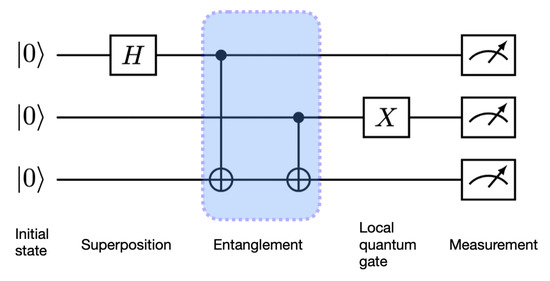
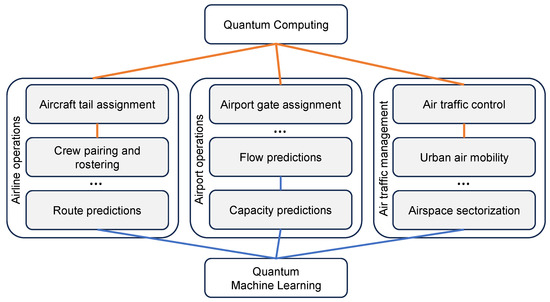
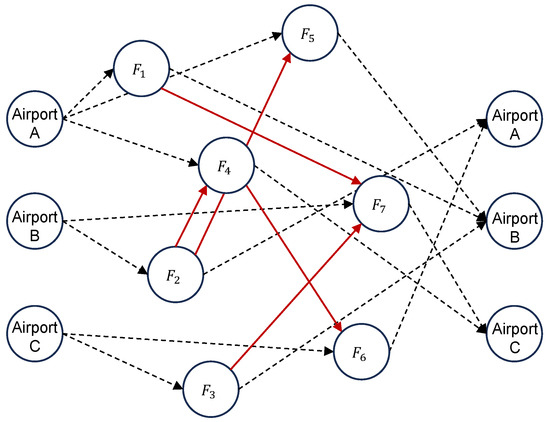
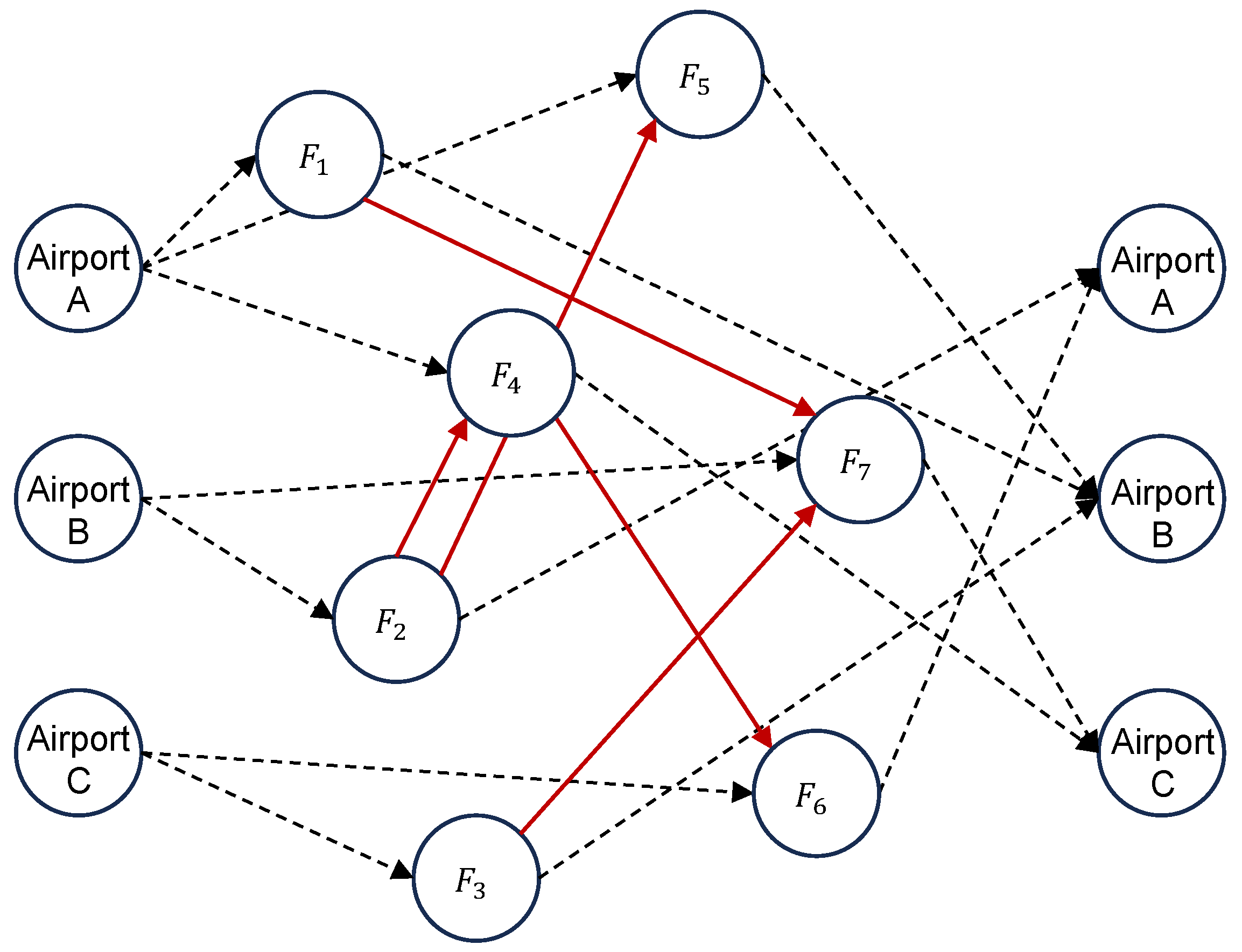
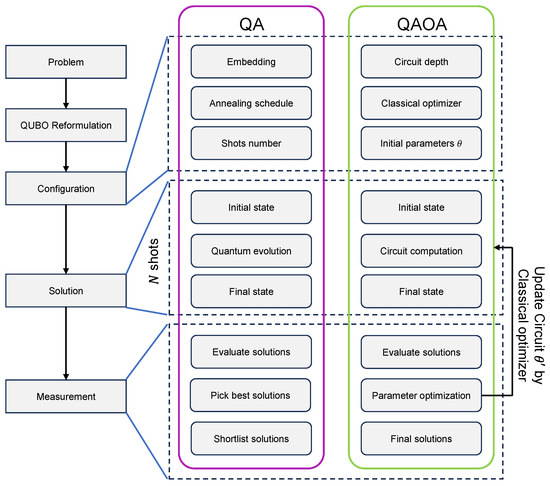
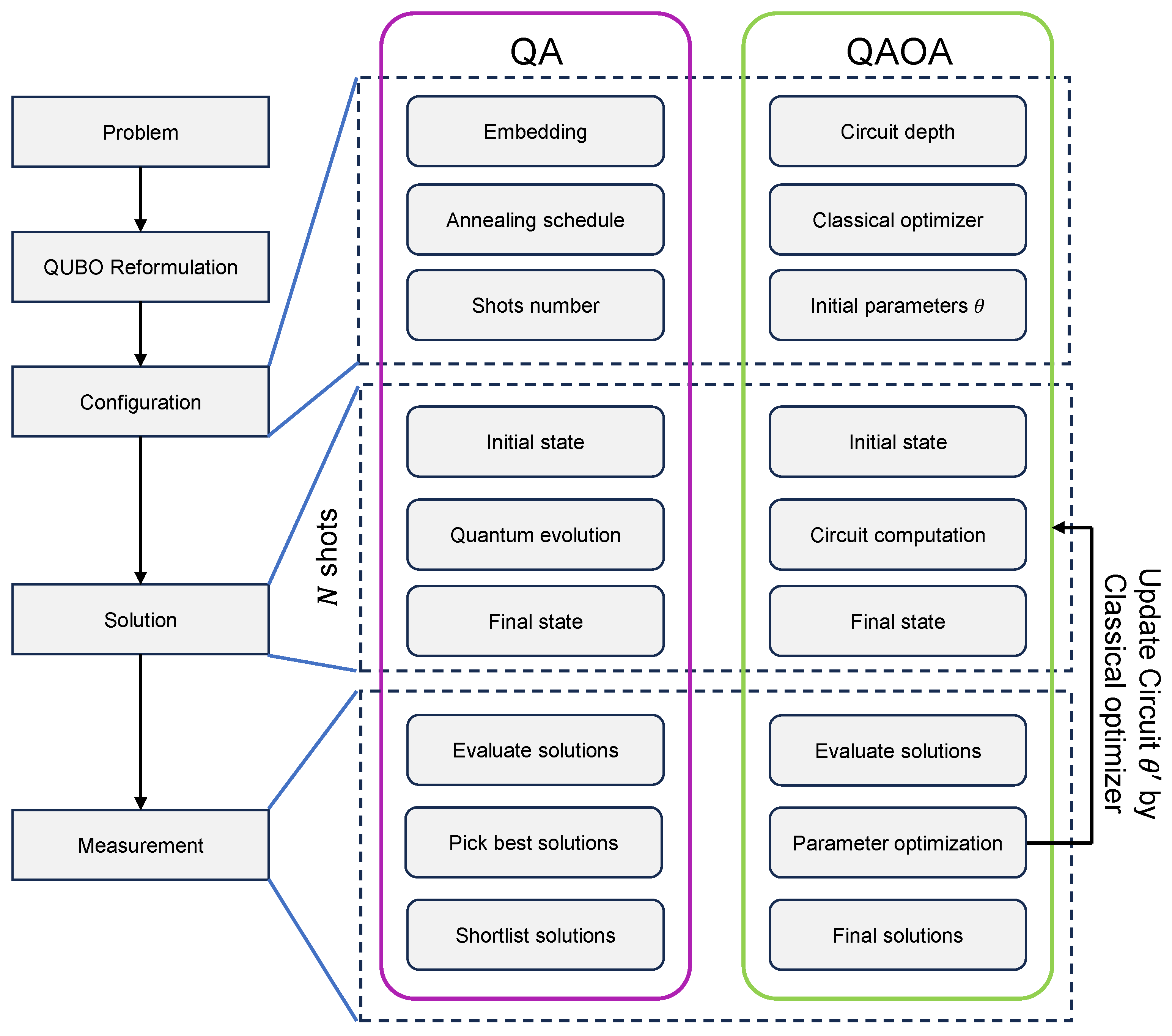
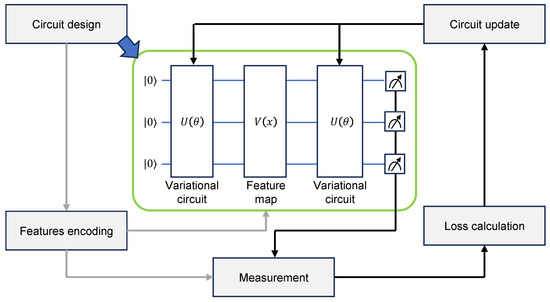

Disclaimer/Publisher’s Note: The statements, opinions and data contained in all publications are solely those of the individual author(s) and contributor(s) and not of MDPI and/or the editor(s). MDPI and/or the editor(s) disclaim responsibility for any injury to people or property resulting from any ideas, methods, instructions or products referred to in the content. |
© 2026 by the authors. Licensee MDPI, Basel, Switzerland. This article is an open access article distributed under the terms and conditions of the Creative Commons Attribution (CC BY) license.