


Abstract
This study examines how venture capitalists’ perceptions of four venture capitalist characteristics and three start-up characteristics are associated with their reported reliance on financial and non-financial information when evaluating start-ups. Drawing on agency theory and signalling theory, fourteen hypotheses were tested using cross-sectional survey data from 405 angel investors and fund professionals in Saudi Arabia. Data were analyzed using PLS-SEM with bootstrapping (5000 subsamples). The model explained 34.4% of the variance in reliance on financial information and 33.3% of the variance in reliance on non-financial information; nine hypotheses were supported. Funding sources, sector specialization, and target market were associated with both dimensions; capital size and governance with the financial dimension only; funding stage with the non-financial dimension only; and syndication with neither. Modeling the dimensions separately within one model reveals partly distinct association patterns and provides quantitative evidence from an emerging market where prior evidence is qualitative. The findings are correlational and based on self-reported data from a purposive sample; item deletion narrowed the scope of the two information dimensions. Investors could align their information requirements with their own characteristics and those of the venture, and start-ups may benefit from maintaining organized financial records alongside information on the founding team, business model, and intellectual capital.
1. Introduction
Start-ups emerge from entrepreneurial ideas characterized by high levels of risk and uncertainty. In their early stages, they lack an operating track record and disclosed financial data, which makes them more difficult to evaluate than conventional firms (Amit et al., 1998; Hidayat et al., 2022), and traditional sources of finance are therefore often reluctant to fund them (Berger & Udell, 1998). Venture capital emerged to fill this financing gap (Gompers & Lerner, 2001). A willingness to bear risk, however, does not eliminate the need for information; rather, it makes that need more pressing, because as information asymmetry between founders and investors increases, each additional piece of information about the firm becomes more valuable (Koenig & Tennert, 2022). The practical stakes are substantial: roughly half of the venture-capital-backed start-ups in one sample had zero-value exits, while about 85% of venture capital returns are generated by just 10% of investments (Hall and Woodward 2010, and Sahlman 2010, both as cited in Nanda & Rhodes-Kropf, 2013).
Accounting information is central to this problem, but it is not homogeneous. The literature distinguishes financial information, derived from financial statements and reports, from non-financial information, relating to the founding team, business model, and intellectual and human capital. Prior research offers differing views on how the two relate. Hand (2005) found that financial statements have almost no value relevance at the first funding round but become increasingly relevant as firms mature, at the expense of non-financial information, suggesting that the two types act as substitutes. Sievers et al. (2013), in contrast, concluded that they are complementary. Debate also persists over the usefulness of accounting information itself in venture capital investment decisions (Gompers et al., 2020; Smith & Cordina, 2014).
A contextual gap accompanies this theoretical one. The available evidence has been generated largely in the United States and Europe (Armstrong et al., 2006; Hand, 2005; Sievers et al., 2013), as well as in China, India and South Korea (Joshi & Bala Subrahmanya, 2019; Kim & Lee, 2022; Que & Zhang, 2021), yet patterns of information use do not necessarily transfer across institutional environments (Wright et al., 2004). Saudi Arabia offers an instructive setting for such an examination. Between 2018 and 2025, annual venture capital investment in Saudi Arabia rose from USD 64 million to USD 1.7 billion, and in 2025 the Kingdom ranked first in the Middle East and North Africa region by venture capital investment value for the third consecutive year (Saudi Venture Capital, 2026). This growth has occurred in a market characterized by relatively recent institutional development and by regulatory requirements for audited disclosure (Al Harbi et al., 2024). Local evidence, however, remains either from the firm perspective (Aleisa & Tijjani, 2020) or qualitative and based on a small number of venture capitalists (Al Harbi et al., 2024, 2026), and these relationships have not been tested quantitatively in this context.
This study is motivated by the gap between the scale of the Saudi venture capital market and the evidence available to explain how investors in it use accounting information. A conceptual framework has previously been proposed that specifies the accounting role as comprising two dimensions and identifies venture capitalist and start-up characteristics as determinants of its use (Alamoudi et al., 2026); that framework has not been tested empirically, and the present study provides that test. It draws on agency theory and signalling theory to derive distinct expectations for the two dimensions. Agency-based accountability generates demand for information that can be documented, a characteristic more closely associated with financial information than with non-financial information (Jensen & Meckling, 1976), whereas signalling theory links the effectiveness of information to its observability and the cost of conveying it (Connelly et al., 2011; Spence, 1973), giving non-financial information particular weight when a financial track record is absent. The study is structured to answer the following questions:
RQ1. Which of venture capitalists’ perceptions of investor characteristics, funding sources, capital size, syndication, and sector specialization are associated with their reliance on financial information, and which with their reliance on non-financial information?
RQ2. Which of venture capitalists’ perceptions of start-up characteristics, funding stage, governance, and target market are associated with each of these two dimensions of the accounting role?
RQ3. What similarities and differences are observed in the patterns of statistically significant associations across the two dimensions of the accounting role: reliance on financial and non-financial information?
In this study, the seven characteristics are measured as venture capitalists’ perceptions, and the two dimensions of the accounting role are their self-reported reliance on each type of information when evaluating start-ups; investment decisions and their outcomes are not observed directly.
This study makes three contributions. First, it examines the financial and non-financial dimensions as separate dependent variables within a single model incorporating all seven characteristics, revealing patterns of association that would be obscured if the two dimensions were combined into a single variable. Second, it tests these relationships, whereas prior research has focused primarily on other outcomes, such as valuations, exits, and performance, rather than on the sources of information on which investors rely (Cumming & Dai, 2011; Cumming & Johan, 2008; Que & Zhang, 2021). Third, it provides large-sample quantitative evidence (N = 405) from a rapidly growing emerging market, thereby complementing the available local qualitative evidence.
The remainder of the paper is organized as follows. Section 2 develops the theoretical framework and hypotheses. Section 3 presents the methodology; Section 4 reports the results. Section 5 discusses the findings. Section 6 sets out the theoretical contributions and practical implications, Section 7 the limitations and directions for future research, and Section 8 concludes.
2. Theoretical Framework and Hypothesis Development
2.1. The Two Dimensions of the Accounting Role Under Information Asymmetry
The theoretical foundation of this study rests on the problem of information asymmetry (Akerlof, 1970), which is particularly pronounced in the venture capital context. Founders typically possess more information about their firms than investors do, while a verifiable historical record against which investors can assess founders’ claims is often limited or unavailable (Gompers & Lerner, 2004). Because venture capitalists’ assessments rely heavily on information disclosed by start-ups, weak disclosure mechanisms may allow firms to present information selectively (Du et al., 2020). In this study, the accounting role is defined as the extent to which venture capitalists report relying on accounting information when evaluating a start-up for investment.
The accounting role is conceptualized along two dimensions. The first is the accounting role of financial information, that is, reliance on historical and projected financial data and reports, including information on accounting transparency and accuracy, historical financial performance, key performance indicators, and post-investment performance monitoring. The second is the accounting role of non-financial information, that is, reliance on the strategic and qualitative aspects of the firm: intellectual and human capital, the clarity of the business model, and leadership competence and innovative thinking. This distinction rests on two considerations. First, limited operating information and high uncertainty can constrain quantitative analysis in early-stage investment, increasing the importance of qualitative factors (Gompers et al., 2020). Non-financial strategic factors also help explain early-stage start-up valuations (Miloud et al., 2012). Second, verifiable non-financial information can capture economic content comparable to that of financial statement information in explaining the valuations of venture-backed start-ups (Sievers et al., 2013). Interviews with valuation advisers and corporate venture capital managers further illustrate how judgments about the management team, business model, competition, and technology inform assessments of whether financial projections can be achieved (Kraus et al., 2025). The conceptual foundations of this role, including the characteristics of venture capitalists and start-ups as determinants of its use, are discussed in detail elsewhere (Alamoudi et al., 2026). The discussion here is limited to the foundations needed to develop the hypotheses.
Measuring the accounting role as reliance is consistent with the decision-usefulness view of accounting information, which emphasizes the usefulness of information for economic decisions. Prior venture capital studies have examined investors’ reported use of, and the importance they attach to, accounting and non-accounting information (Mitchell et al., 1995; Wright & Robbie, 1996; Smolarski et al., 2011). A recent qualitative study also illustrates how VC analysts use accounting and other information to negotiate commitments, maintain relationships with entrepreneurs, and support venture development under uncertainty (Pflueger & Mouritsen, 2025). In Saudi Arabia, interviewees described using financial records and projections to assess the plausibility of founders’ assumptions, alongside qualitative judgments about the founding team’s credibility and capacity to execute (Al Harbi et al., 2026). In the present study, the two outcome constructs measure venture capitalists’ self-reported reliance on each type of information, rather than the effects of that information on observed investment outcomes. The retained financial items capture reliance on accounting transparency and accuracy, historical financial performance, key performance indicators, and accounting-based monitoring. The retained non-financial items capture reliance on the founding team’s human capital, the business model, intellectual capital management, and founding-team quality and innovation (see Table A1).
2.2. Agency Theory and Signalling Theory: Distinct Predictions for the Two Dimensions
Agency theory describes a contractual relationship in which a principal delegates authority to an agent, with agency costs arising from information asymmetry and conflicting interests (Jensen & Meckling, 1976). Venture capitalists can occupy two positions within this relationship. They act as principals in relation to founders, who retain operational control (Kaplan & Strömberg, 2001; Panda, 2018). They also act as agents for the partners and parent organizations that provide their capital. They are accountable to these capital providers for their decisions and risk being unable to raise further funds if their performance is unsatisfactory (Hassan & Leece, 2007; Wright & Robbie, 1996). This dual position yields a specific prediction. Accountability within agency relationships creates demand for information that can be documented and used to justify decisions to the ultimate providers of capital. Financial information may be particularly useful in meeting this need, as some non-financial information may be less costly for management to bias than financial information (Sievers et al., 2013). This perspective provides a rationale for examining whether investors’ perceptions of funding sources and capital size per deal are associated with their self-reported reliance on financial information.
Signalling theory, in turn, explains how information asymmetry can be reduced through signals sent by insiders and interpreted by outsiders. For a signal to be effective, it must be observable and sufficiently costly to make it difficult for lower-quality firms to imitate (Connelly et al., 2011; Spence, 1973). For start-ups without an established track record, the need for signals that reduce uncertainty is especially acute (Koenig & Tennert, 2022). Entrepreneurs signal quality through intellectual and human capital (Bollazzi et al., 2019). Yang et al. (2023) also document a positive association between strong signals and the amount of venture capital funding secured by digital start-ups. The theory thus yields a different prediction: when a financial track record is absent, as in the early stages, or when investors assess characteristics that cannot be reduced to accounting figures, such as market attractiveness and team capabilities, non-financial information is expected to carry greater weight. Such information provides observable signals from which investors infer otherwise unobservable quality.
Both theories are used here to derive expectations and to interpret the results; the mechanisms they imply—accountability to capital providers, the verifiability of information, and the observability and cost of signals—are not measured directly in this study. The hypotheses are therefore stated as associations, and Section 5 and Section 6 distinguish between the empirical associations observed and their theoretical interpretation.
A note on operationalization applies to all the hypotheses that follow. In this study, the seven characteristics are measured as respondents’ perceptions (Section 3.2) rather than as observed attributes such as fund type, the amount invested per deal, the actual funding stage of evaluated start-ups, or measured market size. Each hypothesis is therefore stated, tested, and interpreted as a relationship between venture capitalists’ perceptions of a characteristic and their reported reliance on each type of information.
2.3. Venture Capitalist Characteristics
2.3.1. Funding Sources (Investor Type)
Differences in investor type reflect differences in organizational structure and sources of capital, and hence in the incentives and accountability that govern investment decisions. Independent funds are typically organized as limited partnerships with performance-based compensation (Gompers & Lerner, 2004; Metrick & Yasuda, 2011). Captive funds are subject to the influence and strategic objectives of a parent organization (Gompers & Lerner, 2000b; Hellmann, 2002). Angel investors, by contrast, invest their own capital.
Wright and Robbie (1996) documented substantial differences in valuation practices between investors affiliated with large institutions and independent investors. Smolarski et al. (2011), comparing venture capital and buyout funds, found differences in the use of financial information associated with fund type and investment focus. On the non-financial side, Wessendorf et al. (2020) found substantial similarities between angel investors and venture capital funds in the importance assigned to non-financial determinants of early-stage technology venture valuation. A systematic review identifies shared emphasis on expected financial returns and exit opportunities among venture capitalists and business angels, alongside differences in specific team assessment criteria (Berliner et al., 2025).
This dimension takes on particular significance in the Saudi market, where public or government-backed investment entities, whose objectives extend beyond the maximization of financial returns, are prominent (Saudi Venture Capital, 2023). In this study, funding sources are operationalized as venture capitalists’ perceptions of how different sources of capital vary in the support they provide to start-ups and in the financial and accounting disclosure requirements they apply when evaluating them. As the literature does not establish a clear direction for the relationship between funding sources and either dimension of the accounting role, the following hypotheses are formulated without specifying the direction of the relationship:
H1a.
There is a statistically significant relationship between venture capitalists’ perceptions of funding sources and the accounting role of financial information in their investment decisions in start-ups.
H1b.
There is a statistically significant relationship between venture capitalists’ perceptions of funding sources and the accounting role of non-financial information in their investment decisions in start-ups.
2.3.2. Capital Size
Cumming and Dai (2011) documented a U-shaped relationship between fund size and start-up evaluations, with evidence consistent with limited attention in larger funds. Gompers and Lerner (2000a) similarly noted that venture capital organizations do not increase partner numbers in proportion to capital under management. From an agency perspective, greater capital under management may increase accountability and the pressure to justify investment decisions using accounting information (Wright & Robbie, 1996).
Larger funds also tend to focus more heavily on later-stage investments (Murray, 2021), where financial information is generally more readily available (Al Harbi et al., 2024; Hand, 2005), whereas smaller funds and an early-stage focus are associated with greater reliance on non-financial information (Ho et al., 2016). Smolarski et al. (2011), however, attributed differences in the use of financial information primarily to fund type rather than fund size.
While these studies concern fund size, the present study focuses on capital invested per deal. Capital size is operationalized as the perceived influence of larger investment amounts per deal on venture capitalists’ reliance on standardized quantitative and accounting-based evaluations in their investment decisions. The following hypotheses examine its relationship with the two dimensions of the accounting role:
H2a.
There is a statistically significant relationship between venture capitalists’ perceptions of capital size and the accounting role of financial information in their investment decisions in start-ups.
H2b.
There is a statistically significant relationship between venture capitalists’ perceptions of capital size and the accounting role of non-financial information in their investment decisions in start-ups.
2.3.3. Syndication
Syndication refers to the participation of more than one investor in the same financing round (Cestone et al., 2006). The literature identifies enhanced due diligence and reduced adverse selection as potential benefits of syndication (Cumming & Johan, 2008). Pooling information across venture capital institutions may also reduce information-gathering costs (Du et al., 2020). To the extent that syndication improves information reliability, it may strengthen investors’ reliance on accounting information. Related evidence comes from Que and Zhang (2021), who found that syndication attenuates the association between investor attention and firm valuations.
However, investors may rely on a co-investor’s signal rather than independently gathering information (Cestone et al., 2006). This suggests that greater access to information through syndication need not translate into greater individual reliance on accounting information. The relevance of syndication to the Saudi market is illustrated by the participation of both domestic and international investors in four of the five largest announced funding rounds in 2025 (MAGNiTT, 2026). In this study, syndication is operationalized as venture capitalists’ preference for and reported involvement in co-investment, together with their perceptions of its contribution to due diligence, start-up evaluation, follow-on financing, and exit prospects. These theoretical considerations leave the direction of the relationship open and motivate the following non-directional hypotheses:
H3a.
There is a statistically significant relationship between venture capitalists’ perceptions of syndication and the accounting role of financial information in their investment decisions in start-ups.
H3b.
There is a statistically significant relationship between venture capitalists’ perceptions of syndication and the accounting role of non-financial information in their investment decisions in start-ups.
2.3.4. Sector Specialization
Sector specialization refers to the concentration of venture capitalists’ investments in sectors in which they possess deeper knowledge (Knockaert et al., 2010; Que & Zhang, 2021). Viewed through the lens of information asymmetry, it has been interpreted as a signal on which investors draw when assessing risk (Joshi & Bala Subrahmanya, 2019) and as a means of reducing agency costs through the accumulation of sector-specific human capital (Knockaert et al., 2010; Manigart et al., 2002). Evaluation criteria differ across sectors (Baeyens et al., 2006; Knockaert et al., 2010), and venture capitalists with greater experience in their sector increase their activity when signals from the sector improve (Gompers et al., 2008). Specialized investment deepens a venture capital firm’s understanding of its sector and enables it to apply that knowledge in managing its investments (Wang et al., 2023). Among venture capital firms in India, however, specialization did not emerge as a statistically significant signal for risk assessment. The authors suggested that this finding might partly reflect the limited availability of local investment opportunities (Joshi & Bala Subrahmanya, 2019).
Sector knowledge may shape reliance on both financial and non-financial information. It can help investors interpret revenues, cost structures, and cash burn rates relative to sector norms, as well as assess business models, market acceptance, and team capabilities against sector requirements. In this study, sector specialization is operationalized as venture capitalists’ perceptions of their sector focus and of the benefits derived from sector-specific professional networks and reputation. These arguments motivate the following non-directional hypotheses:
H4a.
There is a statistically significant relationship between venture capitalists’ perceptions of sector specialization and the accounting role of financial information in their investment decisions in start-ups.
H4b.
There is a statistically significant relationship between venture capitalists’ perceptions of sector specialization and the accounting role of non-financial information in their investment decisions in start-ups.
2.4. Start-Up Characteristics
2.4.1. Funding Stage
At the earliest stages, a start-up’s value derives primarily from future investment opportunities rather than assets already in place (Hand, 2005). Limited historical operating information and uncertainty about future cash flows can constrain quantitative analysis, and early-stage investors place relatively greater weight on the management team (Gompers et al., 2020). Miloud et al. (2012) find that strategic, non-financial factors are reflected in early-stage valuations.
Wright and Robbie (1996) found that venture capitalists investing exclusively in later-stage firms placed significantly greater weight on financial information when preparing valuations than did those investing across all stages. Related evidence from a comparison of venture capital and buyout funds suggests that the use of audited financial statements increases as investee firms mature (Smolarski et al., 2011). Hand (2005) found that, among venture-backed U.S. biotechnology firms, the value relevance of financial statements generally increased with maturity, while that of non-financial information declined. Interviews with Saudi venture capitalists similarly indicate that audited financial statements become more important as firms mature (Al Harbi et al., 2024). In this study, the funding stage is operationalized as venture capitalists’ perceptions of stage-related investment considerations—the importance of a start-up’s funding stage to the investment decision and the priority given to non-financial information at early stages—rather than as the actual stage of the start-ups evaluated or the investor’s preferred stage. These considerations motivate the following non-directional hypotheses:
H5a.
There is a statistically significant relationship between venture capitalists’ perceptions of start-ups’ funding stage and the accounting role of financial information in venture capitalists’ investment decisions.
H5b.
There is a statistically significant relationship between venture capitalists’ perceptions of start-ups’ funding stage and the accounting role of non-financial information in venture capitalists’ investment decisions.
2.4.2. Governance
Governance mechanisms address agency problems between venture capitalists as principals and founders as agents (Shleifer & Vishny, 1997). Venture capitalists incorporate control and monitoring rights into investment contracts (Kaplan & Strömberg, 2001). These arrangements are particularly relevant in start-ups, whose governance structures develop as they grow and obtain external resources (Audretsch & Lehmann, 2014; Wasserman, 2017). Venture capitalists also help shape these structures after investment. Gompers et al. (2020) found that 87% provided strategic guidance and 58% helped recruit board members, while Amornsiripanitch et al. (2019) documented changes in board composition across funding rounds.
Proksch et al. (2017) provide evidence linking governance practices to investors’ information requirements. Their analysis of investors’ original documents in Germany identifies contractual reporting requirements and funding milestones involving financial and non-financial targets, including revenues and customer numbers. Investors also required portfolio companies to improve inadequate reporting. Bel et al. (2023) discuss the role of internal audit committees in overseeing accounting, auditing, and financial and non-financial risk management in start-ups. Taken together, these governance practices suggest that governance may shape the accounting role of information by strengthening confidence in financial reports and informing assessments of non-financial attributes, such as management quality and organizational practices. In this study, governance is operationalized as venture capitalists’ perceptions of the relevance of effective corporate governance, frequent board meetings, and internal audit practices to their investment decisions. Because these mechanisms might operate differently across the two dimensions of the accounting role, the following hypotheses examine the relationship between start-up governance and each dimension.
H6a.
There is a statistically significant relationship between venture capitalists’ perceptions of start-ups’ governance and the accounting role of financial information in venture capitalists’ investment decisions.
H6b.
There is a statistically significant relationship between venture capitalists’ perceptions of start-ups’ governance and the accounting role of non-financial information in venture capitalists’ investment decisions.
2.4.3. Target Market
The target market features prominently in venture capital opportunity screening. MacMillan et al. (1985) identified high market growth as the decisive market criterion. Kaplan and Strömberg (2004) found that large, growing markets were described as attractive in approximately 69% of investment memos they examined. More recently, Gompers et al. (2020) reported that 68% of venture capitalists considered market attributes important in their decision-making. However, only 8% ranked market attributes as the single most important factor, compared to 47% who prioritize the management team.
Market characteristics may shape investors’ reliance on both financial and non-financial information. Market size, growth, and penetration estimates can inform assessments of projected revenues and cash flows, while evidence on demand, competitive positioning, and barriers to entry can inform assessments of commercial viability. These uses are related: non-financial market indicators may underpin the assumptions used in financial projections. Maxwell et al. (2011), drawing on 150 interactions between entrepreneurs and potential investors, found that business angels used an elimination-by-aspect approach to narrow the investment opportunities under consideration. Although this evidence concerns initial screening rather than the accounting role of information, it illustrates how particular criteria can influence whether an opportunity receives further consideration. The importance of market characteristics in investment screening does not, however, establish the direction of their relationship with investors’ reliance on either type of information. In the study, the target market is operationalized as venture capitalists’ perceptions of the attractiveness of a start-up’s target market in terms of growth, size, demand, and exit opportunities. These considerations motivate the following non-directional hypotheses:
H7a.
There is a statistically significant relationship between venture capitalists’ perceptions of start-ups’ target market and the accounting role of financial information in venture capitalists’ investment decisions.
H7b.
There is a statistically significant relationship between venture capitalists’ perceptions of start-ups’ target market and the accounting role of non-financial information in venture capitalists’ investment decisions.
2.5. The Research Model
Figure 1 summarizes the research model. It comprises two sets of constructs: venture capitalists’ perceptions of seven characteristics, in two groups (four venture capitalist characteristics and three start-up characteristics), and the two dimensions of the accounting role of information, modeled as distinct outcome constructs: the accounting role of financial information and the accounting role of non-financial information. Each characteristic is linked to both dimensions by direct paths, yielding fourteen structural paths corresponding to the fourteen hypotheses. The suffix (a) identifies the path to the accounting role of financial information, and the suffix (b) identifies the path to the accounting role of non-financial information.
Figure 1.
Research model. Hypotheses H1a-H7a refer to paths to the accounting role of financial information. Hypotheses H1b-H7b refer to paths to the accounting role of non-financial information.
3. Methodology
3.1. Research Design and Sample
The study adopted a quantitative, deductive design based on a cross-sectional survey using a structured questionnaire (Creswell & Creswell, 2018; Saunders et al., 2019). The population consists of venture capitalists involved in investment decisions concerning Saudi start-ups: general partners, investment managers, investment committee members, and financial analysts in venture capital funds, together with individual angel investors. Eligibility required that a participant work in a venture capital fund, or as an angel investor, in a role in which start-ups are evaluated and investment decisions are made—the criterion used in venture capital research to identify qualified respondents (Lange & Banadaki, 2024). No comprehensive official register of this population exists, given the recent emergence of the ecosystem. The sampling frame was therefore constructed at two levels: venture capital funds licensed in the Saudi market and angel investors active in local networks. The frame was compiled from multiple professional sources, including funds’ official websites; reports of the Saudi Venture Capital (SVC) and the Jada Fund of Funds; Capital Market Authority listings; sector databases such as MAGNiTT and PitchBook; and angel investor networks, supplemented by field visits to several funds, the Ministry of Investment, and the Small and Medium Enterprises General Authority (Monsha’at).
A non-probability purposive sample was used, given the difficulty of enumerating the population and the limited access to those who actually evaluate start-ups. This approach is suited to small, hard-to-enumerate venture capital populations (Saunders et al., 2019) and is consistent with the requirements of PLS-SEM (Hair et al., 2022). Because the sample is non-probabilistic, conventional margin-of-error calculations (e.g., Cochran, 1977) are not used to justify its size, and no claim of statistical representativeness is made. Sample adequacy was instead assessed against the requirements of PLS-SEM. By the inverse square root method (Kock & Hadaya, 2018), a sample of 405 permits the detection of standardized path coefficients of approximately 0.12 or larger at α = 0.05 with 80% power; paths smaller than this were estimated with lower power, which is taken into account when interpreting non-significant results (Section 5.3). The sample also comfortably exceeds the minimum of 70 implied by the ten-times rule for the seven structural paths pointing at each endogenous construct (Hair et al., 2022). The questionnaire was administered online through Google Forms and distributed by email, through LinkedIn and X, and via a QR code linking to the questionnaire that was distributed during field visits in Riyadh and Jeddah. Data collection lasted nearly 6 months (10 May to 29 October 2025), with at least three reminders. Participants were informed of the study’s purpose, the voluntary nature of participation, and the confidentiality of their data. A total of 408 responses were collected; three were excluded because respondents did not belong to the study population, yielding a final sample of 405 responses.
Two potential sources of bias were considered. Selection bias may arise because recruitment through professional networks and social media is more likely to reach investors who are digitally active and well connected in the ecosystem. Because the size of the population is unknown and no information is available on those who did not respond, a response rate could not be calculated, and non-response bias was not formally assessed; the results may therefore not reflect the views of investors who chose not to participate.
3.2. Measurement Instrument
The questionnaire comprised two main parts. The first contained eight demographic and professional items (Section 4.1), which were used solely to describe the sample and were not included in the PLS-SEM model. Four of these items—investor type, investment size, sector focus, and targeted stage—provide descriptive context for related characteristics examined through perceptual scales in the model. The second part contained 39 statements rated on a five-point Likert scale (1 = strongly disagree, 5 = strongly agree): 13 measured venture capitalist characteristics, 10 measured start-up characteristics, and 16 measured the accounting role of information, with eight items for each dimension. The model therefore examined associations among perceptual constructs rather than differences between the demographic and professional categories reported in Section 4.1.
The statements were developed from prior studies and adapted to the Saudi venture capital context. Content validity was assessed through review by three academics in accounting and finance and by practitioners. A non-specialist reader also reviewed the questionnaire for clarity. Table 1 reports the number of items administered and retained following measurement model assessment for each construct, together with studies informing item development. The item wording is provided in Table A1.
Table 1.
Construct measurement: items administered and retained, and sources informing item development.
Procedural remedies were adopted to limit common method bias (Podsakoff et al., 2003): participants were assured of the confidentiality of their responses and of the voluntary nature of participation; the explanatory constructs and the outcome constructs were placed in separate sections of the questionnaire; and item wording was reviewed by academics, practitioners, and a non-specialist reader to reduce ambiguity.
Several explanatory items refer to accounting or non-financial information in their wording. The two retained funding sources items (VC_SRC2, VC_SRC3) describe the financial documentation and disclosure that different types of investors are perceived to require; the three capital size items (VC_SIZE1-VC_SIZE3) describe how reliance on accounting-based evaluation is perceived to change as investment amounts increase; two governance items (ST_GOV1, ST_GOV3) refer to the relevance of accounting information and to confidence in financial reporting; and one funding stage item (ST_FUND2) refers to the priority given to non-financial information at early stages. At the theoretical level, investor and start-up characteristics might shape information demands, whereas the outcome constructs concern reported reliance on financial and non-financial information in venture evaluation (Section 2). This intended distinction is imperfect at the item level: some explanatory items already incorporate information requirements, reliance, relevance, or prioritisation into their content (Table A1). The HTMT and Fornell-Larcker criteria were met (Section 4.2), but overlap in item content may still contribute to the observed associations, and Section 5 and Section 7.1 interpret the affected paths in this light.
3.3. Data Analysis
Data were analyzed in two stages. Preliminary analyses in IBM SPSS Statistics, version 26 (IBM Corp., Armonk, NY, USA) comprised exploratory factor analysis (principal component analysis with varimax rotation), Harman’s single-factor test as an initial diagnostic for common method bias (Podsakoff et al., 2003), collinearity diagnostics using variance inflation factors, and correlation analysis. Hypotheses were then tested using partial least squares structural equation modelling (PLS-SEM) and SmartPLS, version 4.1.2.1 (SmartPLS GmbH, Bönningstedt, Germany). PLS-SEM was chosen because the study aims to identify the characteristics associated with, and explain the variance in, two endogenous constructs; because it extends existing theory to the Saudi venture capital context using perceptual scales adapted from prior studies; and because it accommodates the simultaneous estimation of nine constructs and fourteen structural paths (Hair et al., 2019, 2022).
The analysis followed the two-step procedure of Hair et al. (2022). The measurement model was assessed through indicator loadings, composite reliability, Cronbach’s alpha, average variance extracted, and discriminant validity using the HTMT and Fornell-Larcker criteria (Fornell & Larcker, 1981; Hair et al., 2019, 2022). Internal consistency reliability was assessed primarily using composite reliability, which accommodates unequal indicator loadings, whereas Cronbach’s alpha assumes equal loadings and is sensitive to scale length (Hair et al., 2022). The structural model was evaluated through path coefficients, with statistical significance assessed using bootstrapping with 5000 subsamples and two-tailed tests, together with the coefficient of determination (R2) for each dependent dimension and effect sizes (f2) interpreted against Cohen’s (1988) benchmarks. Explanatory power was evaluated against the R2 benchmarks of Chin (1998) and Hair et al. (2019). Because no formal tests of differences between path coefficients were conducted, differences in coefficient magnitude are described as numerical only. Model fit was examined using the standardized root mean square residual (SRMR), which was interpreted alongside the measurement and structural model assessments (Hair et al., 2022; Henseler et al., 2016).
4. Results
4.1. Sample Characteristics
Table 2 reports the characteristics of the sample (N = 405). Respondents’ job titles span positions directly involved in the investment decision, and three-quarters of them have ten years of experience or less, consistent with the recency of the sector. Private funds (37.3%) and angel investors (33.6%) predominate among investor types, whereas government funds, which are prominent in the Saudi market (Saudi Venture Capital, 2023), account for 7.9%. The findings may therefore reflect more heavily the perceptions of private-fund professionals and angel investors. Differences between investor types were not testedApproximately half of the respondents (49.9%) target the early stage, compared with 6.2% who target the late stage, reflecting a market structure in which early-stage deals account for more than 80% of deals each year (MAGNiTT, 2026). A total of 43.5% are classified as specialist investors, investing in three sectors or fewer.
Table 2.
Demographic, professional, and investment characteristics of the respondents (N = 405).
4.2. Preliminary Checks and Measurement Model Assessment
In the exploratory factor analysis, the items of each construct converged on a single component, with the exception of the items measuring the accounting role of non-financial information. For this dimension, the initial analysis of the eight items (KMO = 0.680; Bartlett’s test: x2 = 563.904, df = 28, p < 0.001) yielded three components with eigenvalues greater than 1 (2.501, 1.535, and 1.010), jointly explaining 63.073% of the variance. The patent and brand reputation items (AR_NFIN7 and AR_NFIN8) were loaded together on a separate component (0.836 and 0.833), apart from the remaining items (Table A2). They were therefore excluded, after which the remaining six items converged on a single component (KMO = 0.741; Bartlett’s test: X2 = 346.095, df = 15, p < 0.001; eigenvalue = 2.356; explained variance of 39.274%). In Harman’s single-factor test applied to the final set of items (29 items), the first factor accounted for only 20.171% of the variance, which does not indicate the dominance of a single factor (Podsakoff et al., 2003). VIF values ranged from 1.119 to 3.121 (Hair et al., 2019), and no correlation among the independent variables exceeded 0.80.
In assessing the measurement model, the average variance extracted (AVE) in the initial model fell below 0.50 for four constructs (funding sources, funding stage, and the two dimensions of the accounting role). Item deletion followed the guidelines of Hair et al. (2019, 2022). Indicators with outer loadings below 0.40 were removed, whereas indicators loading between 0.40 and 0.70 were removed only when their deletion was required to raise the AVE of the construct to the 0.50 threshold. Deletion was therefore confined to these four constructs. Within them, indicators were removed one at a time, with the model re-estimated after each deletion, and the deleted indicators were those with the lowest initial loadings. Only one deleted indicator (AR_NFIN 6, 0.372) loaded below 0.40; the remaining seven loaded between 0.502 and 0.590. Indicators loading below 0.70 in constructs that met the AVE criterion (VC_SPEC1, 0.544; VC_SIZ E1, 0.651; ST_MA RK4, 0.624) were retained to preserve content validity (Hair et al., 2022). Deletion raised AVE above 0.50 in all four constructs (e.g., from 0.376 to 0.532 for the financial dimension and from 0.388 to 0.500 for the non-financial dimension), and increased composite reliability in three of them (it changed marginally from 0.826 to 0.819 for the financial dimension). It slightly reduced Cronbach’s alpha for both outcome dimensions (from 0.761 to 0.708 and from 0.686 to 0.662, respectively). Table A2 reports the initial loadings of all deleted items and the indices of the affected constructs before and after deletion. Table 3 presents the final model: composite reliability ranged from 0.748 to 0.851, and AVE from 0.500 to 0.646. Cronbach’s alpha fell below 0.70 for three short constructs (funding sources, 0.440; funding stage, 0.460; and sector specialization, 0.515). With only two or three indicators, and with unequal loadings such as those for funding sources (0.649 and 0.913), alpha tends to underestimate internal consistency (Section 3.3), whereas composite reliability may provide an optimistic estimate (Hair et al., 2022). For the three constructs, composite reliability (0.748–0.784) exceeded 0.70, and AVE was at least 0.50. The constructs were also retained on theoretical grounds: each represents a distinct characteristic specified in the conceptual framework (Alamoudi et al., 2026). Nevertheless, the low alpha values indicate limited internal consistency, and results involving these constructs (H1a, H1b, H4a, H4b, H5a and H5b) are interpreted with caution (Section 7.1).
Table 3.
Indicator loadings, composite reliability, average variance extracted, and Cronbach’s alpha.
The consequences of item deletion for content validity were examined, because removing reflective indicators may narrow the conceptual domain of the construct (Hair et al., 2022). The wording of all ten deleted items is reported in Appendix A. For the explanatory constructs, deletion removed one item from funding sources (VC_SRC1, angel investors as a reliable funding source) and one from the funding stage (ST_FUND3, the central role of financial information in later stages); the retained items still reflect the construct definitions in Section 2, although the funding-stage scale no longer includes an item on later stages. The deletions had a greater effect on the outcome constructs. The financial dimension no longer includes items on forecast costs and financial structure, returns from feasibility studies, cash-flow and liquidity management, and forecast profit margins (AR_FIN3, AR_FIN4, AR_FIN5, AR_FIN7), so the retained scale centers on accounting transparency and accuracy, historical financial performance, performance indicators, and investment monitoring. Liquidity remains explicitly represented among the performance indicators in AR_FIN6, and AR_FIN2 links historical performance to expected future performance; however, these items do not replace the deleted items’ direct coverage of forecasts, expected returns, and cash-flow management. The non-financial dimension no longer includes items on intellectual capital as a driver of exit, commitment to R&D, registered intellectual property, and brand reputation (AR_NFIN1, AR_NFIN6, AR_NFIN7, AR_NFIN8), so it centers on founding-team expertise, the business model, intellectual capital management, and team quality and innovation. The retained items therefore represent selected aspects of the original domains, rather than their full breadth. Both dimensions are interpreted in these narrower senses in Section 5 and Section 6, and the narrowing is acknowledged as a limitation (Section 7.1).
Discriminant validity was established using the HTMT criterion, reported in Table 4: all values fell below 0.85 (Hair et al., 2022), with the highest value, 0.722, between the non-financial dimension and target market. The Fornell-Larcker criterion was likewise satisfied for all constructs, as the square root of the AVE for each construct (0.707–0.804) exceeded its correlations with the other constructs (Fornell & Larcker, 1981). The correlation between the two dimensions of the accounting role (0.374; HTMT = 0.554) supports their empirical distinctiveness. Among the other HTMT values involving an outcome construct, those between the non-financial dimension and funding stage (0.617) and between the financial dimension and funding sources (0.646), capital size (0.578), and governance (0.558) were the highest. All remained below the 0.85 threshold (Henseler et al., 2015), but these four pairs involve explanatory constructs whose items share content with the outcome constructs (Section 3.2). SRMR was 0.072 for the saturated model and 0.073 for the estimated model, below the 0.08 benchmark (Henseler et al., 2016). Model adequacy was therefore judged primarily on the measurement and structural model assessments reported below.
Table 4.
Discriminant validity: HTMT ratios.
4.3. Descriptive Statistics
Table 5 reports the descriptive statistics for the latent variables. Means ranged from 3.74 for capital size to 4.28 for target market. The mean for the accounting role of non-financial information (4.26) was higher than that for the accounting role of financial information (3.88), although this difference was not subjected to testing.
Table 5.
Descriptive statistics for the latent variables (N = 405; 1–5 scale).
4.4. Structural Model Assessment and Hypothesis Testing
4.4.1. Model Explanatory Power
Table 6 reports the results for the fourteen structural paths, obtained through bootstrapping with 5000 subsamples and two-tailed tests, together with effect sizes evaluated against Cohen’s (1988) benchmarks; Figure 2 summarizes these results. Together, the seven characteristics explained 34.4% of the variance in the accounting role of financial information (adjusted R2 = 0.332) and 33.3% of the variance in the accounting role of non-financial information (adjusted R2 = 0.321), representing moderate and comparable explanatory power by the benchmarks of Chin (1998) (0.19 weak, 0.33 moderate, 0.67 substantial); against the more conservative benchmarks of Hair et al. (2019) (0.25 weak, 0.50 moderate, 0.75 substantial), both values lie between weak and moderate. Nine of the fourteen hypotheses were supported, and five were not. All path coefficients for the supported hypotheses were positive, while the negative coefficients for the unsupported paths were close to zero.
Table 6.
Hypothesis testing results (bootstrapping with 5000 samples, two-tailed test).
Figure 2.
Structural model results. FIN and NFIN denote standardized path coefficients for the financial and non-financial information dimensions, respectively. Solid lines indicate significant paths, and dashed lines indicate non-significant paths.. *** p < 0.001; ** p < 0.01; * p < 0.05.
4.4.2. Venture Capitalist Characteristics (H1–H4)
Three of the four venture capitalist characteristics were associated with at least one dimension of accounting role.
Funding sources had a positive significant association with the accounting role of financial information (β = 0.244, p < 0.001, f2 = 0.080) and with the accounting role of non-financial information (β = 0.110, p = 0.015, f2 = 0.016). Accordingly, H1a and H1b were supported, with the numerically larger incremental contribution to the financial dimension.
Capital size had a positive significant association with the financial dimension (β = 0. 0.257, p < 0.001, f2 = 0.079) and no statistically significant association with the non-financial dimension (β = 0.045, p = 0.382, f2 = 0.002). Accordingly, H2a was supported, and H2b was not supported.
Syndication had no statistically significant association with either the financial dimension (β = −0.041, p = 0.388, f2 = 0.002) or the non-financial dimension (β = 0.056, p = 0.236, f2 = 0.004). Accordingly, neither H3a nor H3b was supported.
Sector specialization had a positive significant association with the financial dimension (β = 0.138, p = 0.005, f2 = 0.023) and with the non-financial dimension (β = 0.135, p = 0.012, f2 = 0.022). Accordingly, H4a and H4b were supported, with numerically similar coefficients and effect sizes across the two dimensions.
4.4.3. Start-Up Characteristics (H5–H7)
The three start-up characteristics showed contrasting patterns across the two dimensions.
Funding stage had no statistically significant association with the financial dimension (β = −0.013, p = 0.799, f2 = 0.000) and a positive significant association with the non-financial dimension (β = 0.157, p = 0.006, f2 = 0.030). Accordingly, H5a was not supported, and H5b was supported.
Governance showed the reverse pattern: a positive significant association with the financial dimension (β = 0.190, p < 0.001, f2 = 0.042) and no statistically significant association with the non-financial dimension (β = −0.017, p = 0.739, f2 = 0.000). Accordingly, H6a was supported, and H6b was not supported.
Target market had a positive significant association with both the financial dimension (β = 0.119, p = 0.046, f2 = 0.015) and the non-financial dimension (β = 0.363, p < 0.001, f2 = 0.141). Accordingly, H7a and H7b were supported, and the path to the non-financial dimension had the numerically largest coefficient in the model.
4.4.4. Effect Sizes
Effect sizes (f2) complement the path coefficients. For the financial dimension, the highest values were those of funding sources (0.080) and capital size (0.079), followed by governance (0.042), all of which fall within the range of a small effect. For the non-financial dimension, target market recorded the largest effect size in the model (0.141), the only one approaching the threshold for a medium effect, followed by the funding stage (0.030) and sector specialization (0.022). Two statistically significant paths had effect sizes below the threshold for a small effect: funding sources to the non-financial dimension (0.016) and target market to the financial dimension (0.015), which calls for a cautious reading of their individual contribution.
4.4.5. Sensitivity Analysis
As a sensitivity check, the structural model was re-estimated with all 37 items retained after the exploratory factor analysis, using the same bootstrapping settings. The decisions on all fourteen hypotheses were unchanged: the same nine paths were significant, and the same five were not (Table A3). Path coefficients differed by at most 0.069 in absolute terms (syndication → financial information: 0.028 versus −0.041), and R2 was similar (0.367 and 0.346 versus 0.344 and 0.333). Item refinement narrowed the content represented by the two outcome scales (Section 4.2), but the 37-item and 29-item models yielded the same pattern of hypothesis support.
5. Discussion of Results
The findings are discussed in relation to agency theory and signalling theory, considering both statistical significance and effect size, and distinguishing between the accounting role of financial and non-financial information. Given the cross-sectional design, the observed relationships are interpreted as associations rather than causal effects. Differences between the two dimensions refer only to observed significance patterns and numerical magnitudes; because no formal tests of differences between path coefficients were conducted (Section 3.3), these differences are not interpreted as statistically established.
5.1. Venture Capitalist Characteristics
5.1.1. Funding Sources
Funding sources were positively associated with both dimensions of the accounting role. The association with financial information was statistically significant, with a small effect size (f2 = 0.080; Table 6). The association with non-financial information was also significant, although its effect size (f2 = 0.016) fell below the conventional threshold for a small effect. Thus, funding sources made a numerically larger incremental contribution to explaining the financial dimension in the estimated model. Accordingly, both H1a and H1b were supported. Because the funding sources construct captures respondents’ perceptions of financing providers and their information requirements, these findings should not be interpreted as direct comparisons between investor categories.
Agency theory offers a plausible interpretation of the financial association. Accountability to providers of capital might encourage investors to seek financial information that supports monitoring and provides a documented basis for investment decisions. This interpretation is consistent with the literature linking funding arrangements to the use of accounting information in investment appraisal (Hassan & Leece, 2007; Wright & Robbie, 1996). However, the present study did not directly test accountability as a mechanism underlying the observed association. A further qualification concerns measurement: both retained funding sources items refer to the financial documentation and disclosure that investor types are perceived to require, so part of the association with the financial dimension may reflect shared item content (Section 3.2). The two-item funding sources scale also had low internal consistency (Cronbach’s α = 0.440). Although the construct was retained on the basis of composite reliability and theoretical considerations (Section 4.2), this limitation warrants caution when interpreting the significant associations supporting H1a and H1b.
The smaller effect size for non-financial information suggests that funding sources provided limited additional explanatory value for this dimension after accounting for the other characteristics in the model. One plausible interpretation is that the documentation and disclosure requirements represented in the funding sources measure are more closely aligned with financial reporting than with the non-financial assessments captured by the final outcome measure. The exclusion of patent and brand reputation items also narrows the scope of this interpretation but does not establish why the effect size was small.
The contribution is empirical: examining both dimensions within the same model provides a more differentiated account of how funding sources relate to the accounting role of information in Saudi venture capital investment decisions. Although both associations were statistically significant, their effect sizes indicate different incremental contributions to explaining the two dimensions. This pattern supports the value of examining financial and non-financial information separately, without establishing a statistically significant difference between the two path coefficients.
5.1.2. Capital Size
Capital size was positively associated with the accounting role of financial information, with a small effect size (f2 = 0.079; Table 6). Its effect size was nearly identical to that of funding sources (0.079 and 0.080, respectively); because no formal comparison of path coefficients was conducted, neither characteristic is interpreted as more strongly associated with the financial dimension than the other. No statistically significant association was found for non-financial information (f2 = 0.002). Accordingly, H2a was supported, whereas H2b was not. These results concern the perceptual capital size construct used in this study and should not be interpreted as changes in information use resulting from observed increases in assets under management.
Agency theory and limited attention offer plausible interpretations of the financial association. Wright and Robbie (1996) discuss how venture capitalists’ accountability to providers of funds creates pressure to use accounting and non-accounting information in investment appraisal. Within this framework, larger investment commitments may heighten the perceived need for documented financial assessments. Cumming and Dai (2011) provide a complementary perspective by linking fund size and investment valuations to limited attention and constraints on human capital. Such constraints may help explain investors’ perceived reliance on standardized accounting information when evaluating larger commitments. However, the present model does not distinguish between these explanations, and limited attention is already reflected in the wording of the capital size measure. More generally, all three capital size items describe how reliance on accounting-based evaluation is perceived to change as investment amounts increase, so this construct shares content with the financial outcome. The coefficient for H2a should therefore be read as an association between perceptions that larger commitments call for accounting-based evaluation and reported reliance on financial information, and it may partly reflect this overlap (Section 3.2).
For non-financial information, the small coefficient and effect size indicate that capital size contributed little additional explanatory value in the estimated model. Related evidence from Gompers et al. (2020) shows that both large and small funds regarded management teams as important, with no statistically significant difference reported for this criterion. Although their measure differs from the broader non-financial dimension examined here, this comparison suggests that the importance of some non-financial criteria may be shared across fund sizes. In the present study, evidence of an association with the perceptual capital size construct was confined to the financial dimension; the non-significant result for non-financial information does not establish that such a relationship is absent.
5.1.3. Syndication
Syndication was not significantly associated with the accounting role of either financial information (f2 = 0.002) or non-financial information (f2 = 0.004). Both effect sizes indicate little incremental explanatory contribution in the estimated model. Accordingly, neither H3a nor H3b was supported. These findings indicate insufficient evidence of either association in the present sample; they do not establish that syndication is unrelated to information use.
Different informational mechanisms offer possible interpretations of these findings. Cumming and Johan (2008) discuss how syndication can enhance due diligence by involving multiple investors in investment assessment. Cestone et al. (2006), however, highlight the incentive problems involved in eliciting truthful information from co-investors whose private signals are unverifiable. Access to another investor’s assessment may therefore expand the information available for a decision without necessarily increasing each investor’s individual reliance on accounting information. This remains a possible interpretation, as the present study did not directly measure information sharing, delegation, or individual information-gathering efforts within syndicates.
The scope of the syndication measure also matters. It captures venture capitalists’ preference for and reported involvement in co-investment, together with their perceptions of its contribution to due diligence, start-up evaluation, follow-on financing, and exit prospects. It does not directly capture how investors divide evaluation tasks or use financial and non-financial information within particular syndicated investments. The results therefore concern the association between the perceptual construct and the two dimensions of the accounting role, rather than differences in information use between solo and syndicated deals.
5.1.4. Sector Specialization
Sector specialization was positively associated with the accounting role of both financial information (f2 = 0.023) and non-financial information (f2 = 0.022). Accordingly, both H4a and H4b were supported. The coefficients were numerically similar, and both effect sizes were small.
One possible interpretation is that sector knowledge helps investors interpret financial information in its industry context and assess non-financial information concerning founder competence and the start-up’s business model. Such familiarity may inform their reliance on both types of information when evaluating Saudi start-ups. This mechanism was not directly tested in the present study.
The sector specialization scale captured respondents’ views of sector focus and the benefits of professional networks and sector reputation. It did not directly assess specialized valuation skills. The findings therefore concern perceived sector specialization and its association with information reliance; they do not establish that specialized evaluation skills account for the observed relationships. The sector specialization scale also had low internal consistency (Cronbach’s α = 0.515), which warrants caution when interpreting the significant associations supporting H4a and H4b, both of which had small effect sizes.
5.2. Start-Up Characteristics
5.2.1. Funding Stage
The results provided insufficient evidence of an association between funding stage and the accounting role of financial information in the estimated model (f2 = 0.000; Table 6). Funding stage was positively associated with the accounting role of non-financial information, with a small effect size (f2 = 0.030). Accordingly, H5a was not supported, whereas H5b was supported.
Prior studies provide different perspectives on funding stage and information use. Hand (2005) found that financial statements generally become more value-relevant as venture-backed biotechnology firms matured. Wright et al. (2004), however, reported no significant relationship between investors’ stage focus and the information sources used in valuation. These studies provide context rather than direct comparisons: they examined company maturity or investors’ stage focus, whereas the present study measured perceptions of stage-related investment considerations.
The non-financial association can be interpreted alongside evidence concerning early-stage evaluation. Gompers et al. (2020) found that early-stage investors placed relatively greater importance on the management team, while Hand (2005) documented declining value relevance of non-financial information as firms matured. Saudi qualitative evidence similarly indicates greater reliance on non-financial information for younger companies and increasing importance of audited financial information as firms grow (Al Harbi et al., 2024). Kraus et al. (2025) also describe how limited financial histories can constrain early-stage valuation and may necessitate qualitative assessments. From an information asymmetry perspective, limited operating histories may make assessments of founders and business models particularly relevant. This offers a possible interpretation of the observed association, rather than evidence that the present model directly tested differences across actual funding stages.
Measurement considerations qualify both results. Removing the item concerning financial information in later stages narrowed the funding-stage scale’s coverage of financial considerations, while the retained item ST_FUND2 explicitly refers to prioritizing non-financial information at early stages, creating content overlap with the non-financial outcome (Section 3.2). The coefficient for H5b may therefore partly reflect shared item content. Statistical evidence of discriminant validity does not, by itself, eliminate this content-level concern. These features warrant caution in interpretation; they do not establish that item selection caused either result. The two-item funding stage scale also had low internal consistency (Cronbach’s α = 0.460), further limiting confidence in the significant association supporting H5b.
5.2.2. Governance
Governance was positively associated with the accounting role of financial information (f2 = 0.042; Table 6) but was not significantly associated with the accounting role of non-financial information (f2 = 0.000). Accordingly, H6a was supported, with a small effect size, whereas H6b was not supported. From an agency perspective, oversight and reporting requirements may support investors’ confidence in financial information. This offers a possible interpretation of the financial association, although the model did not directly test this mechanism.
Prior research provides context for this interpretation. Proksch et al. (2017) documented contractual milestones involving revenues and customer acquisition, alongside investor demands for improved reporting by portfolio companies. In the Saudi context, a participant in Al Harbi et al. (2024) reported that the absence of audited financial statements in a company operating for an extended period raised concerns about management reliability. Pflueger and Mouritsen (2025) also describe how accounting reports support post-investment monitoring and shape relationships between VC analysts and entrepreneurs. These observations highlight the relevance of reporting and oversight to investment evaluation, although they do not directly test the relationship examined here.
The content of the governance scale also warrants consideration. Two of the three items (ST_GOV1, ST_GOV3) explicitly refer to the relevance of accounting information and to confidence in financial reporting through internal audit practices, creating content overlap with the financial outcome; the coefficient for H6a may partly reflect this overlap (Section 3.2). For H6b, the hypothesis development (Section 2.4.2) anticipated that governance might inform assessments of management quality and organizational practices. Although the scale included board meetings, it provided limited coverage of those broader practices, constraining assessment of the proposed non-financial channel. These measurement considerations do not establish why either result occurred; the non-significant finding indicates insufficient evidence of a non-financial association in the estimated model.
5.2.3. Target Market
Target market was positively associated with the accounting role of both financial and non-financial information. The non-financial association had the numerically largest path coefficient in the model (β = 0.363, p < 0.001, f2 = 0.141), with an effect size approaching, but remaining below, the conventional medium threshold of 0.15. The financial association was statistically significant (Table 6), although its incremental explanatory contribution was limited (f2 = 0.015), below the 0.02 benchmark for a small effect. Accordingly, both H7a and H7b were supported.
Related literature has examined market characteristics as valuation inputs and investment selection criteria. Miloud et al. (2012) found that industry growth was positively associated with the pre-money valuation of new ventures. MacMillan et al. (1987) identified demonstrated market acceptance and initial insulation from competition as screening criteria consistently associated with several venture performance measures. A systematic review likewise identifies market size and growth potential as relevant criteria in venture capital investment evaluation (Berliner et al., 2025). These findings provide context for the relevance of market conditions to venture valuation, although they do not directly explain the differing associations with financial and non-financial information observed here.
One possible interpretation of the numerically stronger non-financial association is that assessments of a start-up’s ability to capture an attractive market draw on judgments about its business model and founding team. The retained non-financial items address the founding team, business model, intellectual capital management, and innovation, while the target market scale captures perceptions of market growth, size, demand, and exit opportunities. The association therefore links related but distinct areas of assessment. In a related analysis, Almubarak and Almulhim (2026), modeling interdependencies among screening criteria rated by venture capitalists in the United Kingdom and the United States, classified market size, growth, and acceptance among the criteria primarily influenced by other criteria. This interpretation was not directly tested by the model, and the numerical differences in coefficients and effect sizes do not establish a statistically significant difference between the two paths.
Research drawing on signalling theory provides a complementary perspective. Yang et al. (2023) found that app downloads, treated as a signal of market legitimacy, were positively associated with venture capital funding among digital start-ups in China. However, the present target market scale captures investors’ perceptions of market attractiveness rather than signals communicated by start-ups. The findings therefore do not directly test the signalling mechanism.
5.3. What the Non-Significant Findings Contribute
The five non-significant paths indicate insufficient evidence of an association rather than evidence of its absence, but they are informative in three respects. With 405 respondents, the study had 80% power to detect standardized paths of approximately 0.12 (Section 3.1). All non-significant coefficients were smaller than this in absolute value, so smaller associations cannot be ruled out and should be interpreted cautiously.
First, the absence of an association between syndication and either dimension qualifies the expectation that co-investment, by improving due diligence and pooling information, deepens reliance on accounting information (Cumming & Johan, 2008; Du et al., 2020). In this sample, perceptions of the benefits of syndication were not associated with greater reported reliance on either type of information. This is consistent with the possibility that co-investors may draw on another’s assessments rather than intensify their own information use (Cestone et al., 2006). This suggests that the informational benefits of syndication may operate at the level of the syndicate rather than the individual investor, a distinction that studies of syndication focused on valuations and exits have not examined.
Second, the non-significant paths for capital size and governance to non-financial information and for funding stage to financial information are what produce the differentiated pattern that motivates modelling the two dimensions separately. Characteristics that the agency perspective links to accountability and documentation (capital size, governance) were associated only with the financial dimension, whereas the stage-related characteristic that the signalling perspective links to the absence of a financial track record was associated only with the non-financial dimension. This contrast reflects which paths reached statistical significance; it does not establish a statistically significant difference between the corresponding coefficients. Had the two dimensions been combined, these differentiated patterns would have been obscured within a single undifferentiated construct. The pattern is consistent with the complementary predictions developed in Section 2.2, although the underlying mechanisms were not tested.
Third, the non-significant association between funding stage and financial information contrasts with evidence that financial statements become more value-relevant as ventures mature (Al Harbi et al., 2024; Hand, 2005). Given the removal of the later-stage item from the funding-stage scale (Section 4.2), this result indicates that perceptions of stage-related considerations, as measured here, are not associated with reliance on financial information, rather than that maturity is irrelevant to it. This interpretation is also important in the Saudi context, where early-stage deals represented 87% of total venture capital deals in 2025, up from 86% in 2024, indicating the continued dominance of early-stage investment activity in the market (MAGNiTT, 2026). It identifies the measurement of actual funding stage as a priority for future research (Section 7.2).
5.4. Summary of Findings
The seven characteristics collectively explained 34.4% of the variance in the accounting role of financial information and 33.3% of the variance in the accounting role of non-financial information. Nine of the fourteen hypotheses were supported. Funding sources, sector specialization, and target market were positively associated with both dimensions. Capital size and governance showed a statistically significant association with the financial dimension only, whereas the funding stage showed a statistically significant association with the non-financial dimension only. Syndication was not significantly associated with either dimension.
Despite the similar proportions of explained variance, the characteristics showed different patterns of association across the two dimensions. Sector specialization had numerically similar coefficients and effect sizes for both dimensions. Funding sources had a numerically larger effect size for the financial dimension, whereas the target market had a numerically larger effect size for the non-financial dimension and the largest path coefficient in the model. These descriptive patterns illustrate the value of examining the two dimensions separately, without establishing statistically significant differences between their path coefficients. Interpretation remains subject to the perceptual measures and the content coverage limitations discussed above.
6. Theoretical Contributions and Practical Implications
6.1. Theoretical Contributions
The study contributes to the venture capital literature in three ways. First, it develops a differentiated account of the accounting role by examining which investor and start-up characteristics, as perceived by venture capitalists, are associated with reliance on financial and non-financial information. In doing so, it treats reliance on each type of information as an outcome to be explained, complementing studies that examine venture evaluation (Cumming & Dai, 2011) and exit outcomes (Cumming & Johan, 2008). Modelling these dimensions as separate dependent constructs allows each characteristic’s association with each dimension to be examined within the same framework. The findings show that similar levels of explained variance can coexist with different patterns of association, illustrating the analytical value of distinguishing the two dimensions.
Second, the study applies agency theory and signalling theory to develop expectations about these associations under information asymmetry. Agency theory directs attention to accountability and the demand for documented financial assessments, while signalling theory highlights how investors interpret information about otherwise unobservable start-up quality. The findings provide the basis for considering these perspectives together when explaining variation in information reliance. However, the model tests associations between perceptual constructs rather than the underlying mechanisms of accountability, signal credibility, or signalling costs. Its contribution is therefore to inform and refine theory-based expectations about information reliance, rather than to establish these mechanisms.
Third, the study complements qualitative evidence on information use in Saudi venture capital investment decisions (Al Harbi et al., 2024, 2026). Using survey data from 405 respondents, it examines the associations of seven investor and start-up characteristics with reliance on financial and non-financial information within a single model. Its contribution lies in identifying patterns of association across the two dimensions, extending the interview-based understanding of how Saudi investors evaluate ventures. This provides contextual quantitative evidence without assuming that the observed relationships are unique to Saudi Arabia or generalize unchanged to other markets.
6.2. Practical Implication
The practical implications are confined to the statistically supported associations and are weighted by their effect sizes. Because the design is cross-sectional and the measures are perceptual, they are offered as considerations rather than prescriptions.
The numerically largest association in the model links target market to reliance on non-financial information (β = 0.363; f2 = 0.141, a small effect approaching the medium-effect threshold). Investors who regard a start-up’s market as attractive also report greater reliance on information about the founding team, the business model, and the management of intellectual capital. Founders in growing markets may therefore benefit from presenting evidence on market size, growth, and demand together with clear information on the team’s capabilities and the business model through which the market will be served. The association is correlational: it does not imply that a stronger market case will by itself change how investors weigh non-financial information.
Funding sources, capital size, and governance were associated with reliance on financial information, with small effects (f2 = 0.042–0.080). For start-ups seeking larger investment amounts, or approaching investors who are accountable to institutional capital providers, this suggests that organized and transparent financial records, key performance indicators, and basic governance and internal audit practices may be relevant, although the corresponding effect sizes indicate modest incremental explanatory contributions. For early-stage ventures, the small association between funding stage and non-financial information (f2 = 0.030) is consistent with investors attending to the founding team and business model when financial histories are limited.
For venture capitalists, the findings suggest that information requirements may vary with investor and venture characteristics, so screening templates and due diligence checklists could be reviewed in that light—for example, by giving explicit weight to team and business-model assessment where market attractiveness and early-stage considerations are prominent, and to accounting-based monitoring where investment amounts and accountability to capital providers are larger. Sector specialization was associated with both dimensions (small effects), suggesting that sector knowledge may support the use of both types of information. For ecosystem bodies such as Saudi Venture Capital and Monsha’at, the findings are consistent with the usefulness of founder-support programmes that cover both basic financial reporting and structured non-financial disclosure.
Two statistically significant associations had effect sizes below the threshold for a small effect: funding sources with non-financial information (f2 = 0.016) and target market with financial information (f2 = 0.015). These are not regarded as practically substantial, and no recommendation is drawn from them. Likewise, the non-significant results for syndication do not imply that co-investment is irrelevant to investors’ information use.
7. Limitations and Future Research
7.1. Limitations
First, the cross-sectional design does not establish temporal ordering or causal relationships. All constructs were measured through self-reports collected in a single questionnaire administration, creating the possibility of common method bias. Harman’s single-factor test was used as an initial diagnostic, but it cannot rule out this source of bias. The procedural remedies adopted in (Section 3.2) reduce, but do not eliminate, this concern.
Second, all seven explanatory constructs capture respondents’ perceptions of investor and start-up characteristics. The categorical information collected for sample description was not used as a substitute for these perceptual constructs in the structural model. The findings therefore concern associations between investors’ perceptions and their reported reliance on financial and non-financial information, rather than relationships involving independently verified investor or start-up attributes.
Third, measurement limitations warrant caution. The non-financial information dimension had an AVE of 0.50, at the conventional minimum threshold, while Cronbach’s alpha was below 0.70 for three constructs (funding sources, funding stage, and sector specialization); the significant associations involving them (H1a, H1b, H4a, H4b, and H5b) are therefore interpreted with particular caution. Funding sources and funding stage were each represented by only two retained items, limiting their breadth. Scale refinement also narrowed both outcome dimensions: direct coverage of financial forecasts, expected returns, and cash-flow management was reduced, while the non-financial dimension became more focused on the founding team, business model, and management of intellectual capital. Re-estimation with the full item set (37 items retained after the exploratory factor analysis) yielded the same hypothesis decisions (Section 4.4.5), but this does not restore the deleted content. Some explanatory items explicitly referred to accounting information or to the prioritization of non-financial information (funding sources, capital size, governance, and funding stage; Section 3.2. Although discriminant validity was supported, the coefficients for the four affected paths (H1a, H2a, H5b, and H6a) may partly reflect shared item content. These limitations qualify the interpretation of the observed associations.
Fourth, purposive and non-probability sampling limits the generalizability of the findings. The sample cannot be assumed to represent all venture capital investors in Saudi Arabia, and the observed associations may differ across investor groups or institutional settings.
Finally, no formal tests were conducted to compare specific path coefficients. Differences in their numerical magnitudes, or in whether individual paths reach statistical significance, therefore do not establish statistically significant differences between relationships. Non-significant findings likewise indicate insufficient evidence under the estimated model rather than proof that an association is absent.
7.2. Future Research Directions
First, future studies could examine the model using independently verified investor and start-up attributes alongside perceptual measures. Relevant data could include investor type, capital under management, sector concentration, actual funding stage, governance arrangements, and market conditions. These measures would allow researchers to assess whether associations involving the attributes correspond to those involving investor perceptions. Comparisons across investor groups could also be undertaken where sample sizes and measurement comparability permit. Measuring investor and start-up characteristics with items that do not refer to information use could also reduce the content overlap noted in Section 7.1 and allow a cleaner test of the associations.
Second, future research could distinguish between documented non-financial indicators, such as patents, brand reputation, and regulatory certifications, and evaluative assessments of founders, teams, and business models. This would broaden the coverage of the dimension and allow examination of whether verifiability and observability are associated with investors’ reliance on different forms of information. Whether documented non-financial indicators exhibit patterns resembling those of financial information should remain an empirical question.
Third, future studies could directly measure the mechanisms proposed to explain information reliance. Measures of accountability to capital providers, reporting obligations, workload, and available evaluation resources could help distinguish agency-based explanations from attentional constraints. Research comparing the same investor’s syndicated and solo investments could also examine how partner expertise, information sharing, and the allocation of due diligence responsibilities relate to individual information use, while accounting for differences in deal selection and characteristics.
Finally, longitudinal studies combining investor reports with investment records could examine how information reliance changes as start-ups develop and help clarify temporal ordering. Stronger causal inference would require designs that address confounding and selection. Future studies could also formally test differences between path coefficients and replicate the model across emerging markets to assess how institutional conditions shape the observed associations.
8. Conclusions
This study examined how seven investor and start-up characteristics, as perceived by venture capitalists, are associated with their reported reliance on financial and non-financial information when evaluating start-ups in Saudi Arabia. Using survey data from 405 respondents, the model explained approximately one-third of the variance in each dimension, and nine of the fourteen hypotheses were supported. Funding sources, sector specialization, and target market were positively associated with both dimensions. Statistically significant associations were found for capital size and governance with the financial dimension only, and for funding stage with the non-financial dimension only. Syndication was not significantly associated with either dimension.
The findings illustrate the value of examining financial and non-financial information separately. Similar levels of explained variance coexisted with different patterns of statistically significant associations across investor and start-up characteristics. Agency theory and signalling theory offer possible interpretations of these patterns, although their underlying mechanisms were not directly tested. In practice, the findings suggest that investors could consider how their information requirements align with their own characteristics and those of the venture. For start-ups, maintaining organized financial records alongside clear information about the founding team, business model, and intellectual capital may help address the range of information considered in investment evaluation.
These conclusions are bounded by the cross-sectional design, perceptual measures, measurement limitations, and purposive sample. The associations do not establish causality or statistically significant differences between path coefficients. Further research using independently verifiable attributes, longitudinal data, and comparisons across institutional settings could clarify the mechanisms and generalizability of the observed patterns.
Author Contributions
The following statement should be used: Conceptualization, A.A.A., H.A.B. and B.B.B.; methodology, A.A.A.; software, B.B.B. and A.A.A.; validation, A.A.A., H.A.B. and B.B.B.; formal analysis, A.A.A.; investigation, A.A.A.; resources, A.A.A., H.A.B. and B.B.B.; data curation, B.B.B. and A.A.A.; writing—original draft preparation, A.A.A.; writing—review and editing, A.A.A., H.A.B. and B.B.B.; visualization, A.A.A.; supervision, H.A.B. and B.B.B.; project administration, A.A.A.; funding acquisition, A.A.A., H.A.B. and B.B.B. All authors have read and agreed to the published version of the manuscript.
Funding
This research received no external funding.
Institutional Review Board Statement
The study was conducted in accordance with the Declaration of Helsinki, and approved by the Research Ethics Committee, College of Business, King Abdulaziz University, Rabigh, Saudi Arabia (Approval No. 48035255, 4 October 2026).
Informed Consent Statement
Electronic informed consent was obtained from all participants by selecting “I agree” before starting the questionnaire. Participants were provided with information about the study’s purpose and academic context and were informed that their responses would be treated confidentially, used solely for academic research purposes, and that no identifying information would be published or disclosed.
Data Availability Statement
The data supporting the findings of this study are not publicly available but may be obtained upon reasonable request from the corresponding author, subject to applicable ethical and institutional restrictions.
Conflicts of Interest
The authors declare no conflicts of interest. The funders had no role in the design of the study; in the collection, analyses, or interpretation of data; in the writing of the manuscript; or in the decision to publish the results.
Abbreviations
The following abbreviations are used in this manuscript:
| AVE | Average variance extracted |
| CI | Confidence interval |
| CR | Composite reliability |
| HTMT | Heterotrait-monotrait ratio of correlation |
| KMO | Kaiser–Meyer–Olkin measure of sampling adequacy |
| PLS-SEM | Partial least squares structural equation modeling |
| SPSS | Statistical Package for the Social Sciences |
| SRMR | Standardized root mean square residual |
| VC | Venture capital/Venture capitalist(s) |
| SVC | Saudi Venture Capital |
| VIF | Variance inflation factor |
| IPO | Initial Public Offering |
Appendix A. Measurement Items
Item wording is reproduced from the English version of the administered questionnaire.
Table A1.
Measurement items by construct and retention status.
Table A2.
Deleted items: initial loadings and construct indices before and after deletion.
Table A3.
Sensitivity analysis: structural model results with the full item set and with the refined item set.
References
- Akerlof, G. A. (1970). The market for “lemons”: Quality uncertainty and the market mechanism. The Quarterly Journal of Economics, 84(3), 488–500. [Google Scholar] [CrossRef] [Scilit]
- Alamoudi, A., Boshnak, H., & Banhmeid, B. (2026). Conceptualising the role of financial and non-financial accounting information in venture capitalists’ investment decisions in Saudi start-ups. Arab Journal of Administration, 1–24. Advance online publication. (In Arabic) [Google Scholar] [CrossRef] [Scilit]
- Aleisa, B. A., & Tijjani, B. (2020). The impact of the quality of accounting information on the decisions of entrepreneurs in Saudi Arabia. Journal of Entrepreneurship Education, 23(S2), 1–11. Available online: https://www.abacademies.org/articles/the-impact-of-the-quality-of-accounting-information-on-the-decisions-of-entrepreneurs-in-saudi-arabia-9819.html (accessed on 30 December 2023).
- Al Harbi, T., Cordina, R., & Power, D. (2024). Using accounting information to support venture capital decisions. In J. A. Smith (Ed.), Research handbook on accounting and information systems (pp. 68–83). Edward Elgar Publishing. [Google Scholar] [CrossRef] [Scilit]
- Al Harbi, T., Cordina, R., & Power, D. M. (2026). Venture capital practices in Saudi Arabia: The views of investors. Thunderbird International Business Review, 1–14, Advance online publication. [Google Scholar] [CrossRef] [Scilit]
- Almubarak, N., & Almulhim, T. (2026). Interdependence of venture capital screening criteria: A decision support framework. International Journal of Finance & Economics, 31(4), 5573–5590. [Google Scholar] [CrossRef] [Scilit]
- Amit, R., Brander, J., & Zott, C. (1998). Why do venture capital firms exist? Theory and Canadian evidence. Journal of Business Venturing, 13(6), 441–466. [Google Scholar] [CrossRef] [Scilit]
- Amornsiripanitch, N., Gompers, P., & Xuan, Y. (2019). More than money: Venture capitalists on boards. The Journal of Law, Economics, and Organization, 35(3), 513–543. [Google Scholar] [CrossRef] [Scilit]
- Armstrong, C., Davila, A., & Foster, G. (2006). Venture-backed private equity valuation and financial statement information. Review of Accounting Studies, 11(1), 119–154. [Google Scholar] [CrossRef] [Scilit]
- Audretsch, D. B., & Lehmann, E. E. (2014). Corporate governance and entrepreneurial firms. Foundations and Trends in Entrepreneurship, 10(1–2), 1–160. [Google Scholar] [CrossRef] [Scilit]
- Baeyens, K., Vanacker, T., & Manigart, S. (2006). Venture capitalists’ selection process: The case of biotechnology proposals. International Journal of Technology Management, 34(1/2), 28–46. [Google Scholar] [CrossRef] [Scilit]
- Bel, I., Grau, A. J., & Rodrigo, A. (2023). Corporate governance in startups. In P. Sendra-Pons, D. Garzon, & M.-Á. Revilla-Camacho (Eds.), New frontiers in entrepreneurial fundraising (pp. 147–156). Springer. [Google Scholar] [CrossRef] [Scilit]
- Berger, A. N., & Udell, G. F. (1998). The economics of small business finance: The roles of private equity and debt markets in the financial growth cycle. Journal of Banking & Finance, 22(6–8), 613–673. [Google Scholar] [CrossRef] [Scilit]
- Berliner, D., Shneor, R., & Wald, A. (2025). What influences equity investors’ decision-making in entrepreneurial finance: A systematic literature review 1983–2022. Venture Capital. Advance online publication. [Google Scholar] [CrossRef] [Scilit]
- Bollazzi, F., Risalvato, G., & Venezia, C. (2019). Asymmetric information and deal selection: Evidence from the Italian venture capital market. International Entrepreneurship and Management Journal, 15(3), 721–732. [Google Scholar] [CrossRef] [Scilit]
- Cestone, G., Lerner, J., & White, L. (2006). The design of syndicates in venture capital (Documentos de Trabajo No. 7). Fundación BBVA. Available online: https://www.fbbva.es/en/publicaciones/the-design-of-syndicates-in-venture-capital-2/ (accessed on 6 April 2026).
- Chin, W. W. (1998). The partial least squares approach to structural equation modeling. In G. A. Marcoulides (Ed.), Modern methods for business research (pp. 295–336). Lawrence Erlbaum Associates. [Google Scholar]
- Cochran, W. G. (1977). Sampling techniques (3rd ed.). Wiley. [Google Scholar]
- Cohen, J. (1988). Statistical power analysis for the behavioral sciences (2nd ed). Lawrence Erlbaum Associates. [Google Scholar]
- Connelly, B. L., Certo, S. T., Ireland, R. D., & Reutzel, C. R. (2011). Signaling theory: A review and assessment. Journal of Management, 37(1), 39–67. [Google Scholar] [CrossRef] [Scilit]
- Creswell, J. W., & Creswell, J. D. (2018). Research design: Qualitative, quantitative, and mixed methods approaches (5th ed.). SAGE Publications. [Google Scholar]
- Cumming, D., & Dai, N. (2011). Fund size, limited attention and valuation of venture capital backed firms. Journal of Empirical Finance, 18(1), 2–15. [Google Scholar] [CrossRef] [Scilit]
- Cumming, D., & Johan, S. (2008). Information asymmetries, agency costs and venture capital exit outcomes. Venture Capital, 10(3), 197–231. [Google Scholar] [CrossRef] [Scilit]
- Du, P., Shu, H., & Xia, Z. (2020). The control strategies for Information asymmetry problems among investing institutions, investors, and entrepreneurs in venture capital. Frontiers in Psychology, 11, 1579. [Google Scholar] [CrossRef] [Scilit] [PubMed]
- Fornell, C., & Larcker, D. F. (1981). Evaluating structural equation models with unobservable variables and measurement error. Journal of Marketing Research, 18(1), 39–50. [Google Scholar] [CrossRef] [Scilit]
- Gompers, P., Gornall, W., Kaplan, S. N., & Strebulaev, I. A. (2020). How do venture capitalists make decisions? Journal of Financial Economics, 135(1), 169–190. [Google Scholar] [CrossRef] [Scilit]
- Gompers, P., Kovner, A., Lerner, J., & Scharfstein, D. (2008). Venture capital investment cycles: The impact of public markets. Journal of Financial Economics, 87(1), 1–23. [Google Scholar] [CrossRef] [Scilit]
- Gompers, P., & Lerner, J. (2000a). Money chasing deals? The impact of fund inflows on private equity valuations. Journal of Financial Economics, 55(2), 281–325. [Google Scholar] [CrossRef] [Scilit]
- Gompers, P., & Lerner, J. (2000b). The determinants of corporate venture capital success: Organizational structure, incentives, and complementarities. In R. K. Morck (Ed.), Concentrated corporate ownership (pp. 17–54). University of Chicago Press. Available online: https://www.nber.org/system/files/chapters/c9004/c9004.pdf.
- Gompers, P., & Lerner, J. (2001). The venture capital revolution. Journal of Economic Perspectives, 15(2), 145–168. [Google Scholar] [CrossRef] [Scilit]
- Gompers, P., & Lerner, J. (2004). The venture capital cycle (2nd ed.). MIT Press. [Google Scholar]
- Hair, J. F., Risher, J. J., Sarstedt, M., & Ringle, C. M. (2019). When to use and how to report the results of PLS-SEM. European Business Review, 31(1), 2–24. [Google Scholar] [CrossRef] [Scilit]
- Hair, J. F., Jr., Hult, G. T. M., Ringle, C. M., & Sarstedt, M. (2022). A primer on partial least squares structural equation modeling (PLS-SEM) (3rd ed.). SAGE Publications. [Google Scholar]
- Hand, J. R. M. (2005). The value relevance of financial statements in the venture capital market. The Accounting Review, 80(2), 613–648. [Google Scholar] [CrossRef] [Scilit]
- Hassan, A. E., & Leece, D. (2007). Agency and information problems in venture capital markets: An empirical study of the information needs of U.K. Investors and the demand for accounting information. The Journal of Private Equity, 10(2), 93–112. [Google Scholar] [CrossRef] [Scilit]
- Hellmann, T. (2002). A theory of strategic venture investing. Journal of Financial Economics, 64(2), 285–314. [Google Scholar] [CrossRef] [Scilit]
- Henseler, J., Hubona, G., & Ray, P. A. (2016). Using PLS path modeling in new technology research: Updated guidelines. Industrial Management & Data Systems, 116(1), 2–20. [Google Scholar] [CrossRef] [Scilit]
- Henseler, J., Ringle, C. M., & Sarstedt, M. (2015). A new criterion for assessing discriminant validity in variance-based structural equation modeling. Journal of the Academy of Marketing Science, 43(1), 115–135. [Google Scholar] [CrossRef] [Scilit]
- Hidayat, S., Bamahriz, O., Hidayati, N., Sari, C. A., & Dewandaru, G. (2022). Value drivers of startup valuation from venture capital equity-based investing: A global analysis with a focus on technological factors. Borsa Istanbul Review, 22(4), 653–667. [Google Scholar] [CrossRef] [Scilit]
- Ho, H., Jeong, S. B., & Lee, B. G. (2016). Conceptual framework for startup enterprise evaluation: Value of the trust and soft information. In 2016 3rd Asia-Pacific world congress on computer science and engineering (APWC on CSE) (pp. 181–186). IEEE. [Google Scholar] [CrossRef] [Scilit]
- Jensen, M. C., & Meckling, W. H. (1976). Theory of the firm: Managerial behavior, agency costs and ownership structure. Journal of Financial Economics, 3(4), 305–360. [Google Scholar] [CrossRef] [Scilit]
- Joshi, K., & Bala Subrahmanya, M. H. B. (2019). Information asymmetry risks in venture capital (VC) investments: Strategies of transnational VC firms in India. In M. J. Manimala, K. P. Wasdani, & A. Vijaygopal (Eds.), Transnational entrepreneurship: Issues of SME internationalization in the Indian context (pp. 117–142). Springer. [Google Scholar] [CrossRef] [Scilit]
- Kaplan, S. N., & Strömberg, P. (2001). Venture capitalists as principals: Contracting, screening, and monitoring. American Economic Review, 91(2), 426–430. [Google Scholar] [CrossRef] [Scilit]
- Kaplan, S. N., & Strömberg, P. (2004). Characteristics, contracts, and actions: Evidence from venture capitalist analyses. The Journal of Finance, 59(5), 2177–2210. [Google Scholar] [CrossRef] [Scilit]
- Kim, D., & Lee, S. Y. (2022). When venture capitalists are attracted by the experienced. Journal of Innovation and Entrepreneurship, 11(1), 31. [Google Scholar] [CrossRef] [Scilit]
- Knockaert, M., Clarysse, B., & Wright, M. (2010). The extent and nature of heterogeneity of venture capital selection behaviour in new technology-based firms. R&D Management, 40(4), 357–371. [Google Scholar] [CrossRef] [Scilit]
- Kock, N., & Hadaya, P. (2018). Minimum sample size estimation in PLS-SEM: The inverse square root and gamma-exponential methods. Information Systems Journal, 28(1), 227–261. [Google Scholar] [CrossRef] [Scilit]
- Koenig, L., & Tennert, J. (2022). Tell me something new: Startup valuations, information asymmetry, and the mitigating effect of informational updates. Venture Capital, 24(1), 47–69. [Google Scholar] [CrossRef] [Scilit]
- Kraus, P., Vinke, L., Buchner, M., Schlegel, D., & Feierabend, D. (2025). Valuation of tech startups: An exploratory analysis of challenges. SAM Advanced Management Journal, 90(4), 376–396. [Google Scholar] [CrossRef] [Scilit]
- Lange, E. M., & Banadaki, N. G. (2024). ESG consideration in venture capital: Drivers, strategies and barriers. Studies in Economics and Finance, 41(3), 724–739. [Google Scholar] [CrossRef] [Scilit]
- MacMillan, I. C., Siegel, R., & Narasimha, P. N. S. (1985). Criteria used by venture capitalists to evaluate new venture proposals. Journal of Business Venturing, 1(1), 119–128. [Google Scholar] [CrossRef] [Scilit]
- MacMillan, I. C., Zemann, L., & Subbanarasimha, P. N. (1987). Criteria distinguishing successful from unsuccessful ventures in the venture screening process. Journal of Business Venturing, 2(2), 123–137. [Google Scholar] [CrossRef] [Scilit]
- MAGNiTT. (2026). FY 2025 Saudi Arabia venture capital report. Saudi Venture Capital. Available online: https://svc.com.sa/wp-content/uploads/FY_2025_Saudi_Arabia_Venture_Capital_Report_EN.pdf (accessed on 16 November 2026).
- Manigart, S., Baeyens, K., & Van Hyfte, W. (2002). The survival of venture capital backed companies. Venture Capital, 4(2), 103–124. [Google Scholar] [CrossRef] [Scilit]
- Mason, C., & Stark, M. (2004). What do investors look for in a business plan? A comparison of the investment criteria of bankers, venture capitalists and business angels. International Small Business Journal, 22(3), 227–248. [Google Scholar] [CrossRef] [Scilit]
- Maxwell, A. L., Jeffrey, S. A., & Lévesque, M. (2011). Business angel early stage decision making. Journal of Business Venturing, 26(2), 212–225. [Google Scholar] [CrossRef] [Scilit]
- Metrick, A., & Yasuda, A. (2011). Venture capital and other private equity: A survey: Venture capital and other private equity. European Financial Management, 17(4), 619–654. [Google Scholar] [CrossRef] [Scilit]
- Miloud, T., Aspelund, A., & Cabrol, M. (2012). Startup valuation by venture capitalists: An empirical study. Venture Capital, 14(2–3), 151–174. [Google Scholar] [CrossRef] [Scilit]
- Mitchell, F., Reid, G. C., & Terry, N. G. (1995). Post investment demand for accounting information by venture capitalists. Accounting and Business Research, 25(99), 186–196. [Google Scholar] [CrossRef] [Scilit]
- Murray, G. (2021). Ten meditations on government venture capital. Venture Capital, 23(3), 205–227. [Google Scholar] [CrossRef] [Scilit]
- Muzyka, D., Birley, S., & Leleux, B. (1996). Trade-offs in the investment decisions of European venture capitalists. Journal of Business Venturing, 11(4), 273–287. [Google Scholar] [CrossRef] [Scilit]
- Nanda, R., & Rhodes-Kropf, M. (2013). Investment cycles and startup innovation. Journal of Financial Economics, 110(2), 403–418. [Google Scholar] [CrossRef] [Scilit]
- Panda, S. (2018). Adequacy of agency theory in explaining the venture capitalist-entrepreneur relationship: A firm life-cycle perspective. International Journal of Entrepreneurship and Small Business, 34(3), 309–329. [Google Scholar] [CrossRef] [Scilit]
- Pflueger, D., & Mouritsen, J. (2025). Relational work and accounting: What venture capital analysts do with accounting and other information in situations of uncertainty. European Accounting Review, 34(4), 1445–1468. [Google Scholar] [CrossRef] [Scilit]
- Pintado, T. R., De Lema, D. G. P., & Van Auken, H. (2007). Venture capital in Spain by stage of development. Journal of Small Business Management, 45(1), 68–88. [Google Scholar] [CrossRef] [Scilit]
- Podsakoff, P. M., MacKenzie, S. B., Lee, J. Y., & Podsakoff, N. P. (2003). Common method biases in behavioral research: A critical review of the literature and recommended remedies. Journal of Applied Psychology, 88(5), 879. [Google Scholar] [CrossRef] [Scilit] [PubMed]
- Proksch, D., Stranz, W., Röhr, N., Ernst, C., Pinkwart, A., & Schefczyk, M. (2017). Value-adding activities of venture capital companies: A content analysis of investor’s original documents in Germany. Venture Capital, 19(3), 129–146. [Google Scholar] [CrossRef] [Scilit]
- Que, J., & Zhang, X. (2021). Money chasing hot industries? Investor attention and valuation of venture capital backed firms. Journal of Corporate Finance, 68, 101949. [Google Scholar] [CrossRef] [Scilit]
- Saudi Venture Capital. (2023). Impact on venture capital and private equity ecosystem in the kingdom of Saudi Arabia. Available online: https://svc.com.sa/wp-content/uploads/SVC_Impact_Report-_January_2023.pdf (accessed on 16 November 2026).
- Saudi Venture Capital. (2026). Impact on the private capital ecosystem in Saudi Arabia. Venture capital, private equity, venture debt, and private debt. Available online: https://svc.com.sa/wp-content/uploads/SVC_Impact_Report-_January_2026.pdf (accessed on 16 November 2026).
- Saunders, M., Lewis, P., & Thornhill, A. (2019). Research methods for business students (8th ed.). Pearson. Available online: https://www.pearson.com/en-gb/subject-catalog/p/Saunders-Research-Methods-for-Business-Students-8th-Edition/P200000005358?view=educator&utm_source=chatgpt.com (accessed on 16 November 2026).
- Shleifer, A., & Vishny, R. W. (1997). A survey of corporate governance. The Journal of Finance, 52(2), 737–783. [Google Scholar] [CrossRef]
- Sievers, S., Mokwa, C. F., & Keienburg, G. (2013). The relevance of financial versus non-financial information for the valuation of venture capital-backed firms. European Accounting Review, 22(3), 467–511. [Google Scholar] [CrossRef] [Scilit]
- Smith, J. A., & Cordina, R. (2014). The role of accounting in high-technology investments. The British Accounting Review, 46(3), 309–322. [Google Scholar] [CrossRef] [Scilit]
- Smolarski, J., Wilner, N., & Yang, W. (2011). The use of financial information by private equity funds in evaluating new investments. Review of Accounting and Finance, 10(1), 46–68. [Google Scholar] [CrossRef] [Scilit]
- Spence, M. (1973). Job market signaling. The Quarterly Journal of Economics, 87(3), 355–374. [Google Scholar] [CrossRef] [Scilit]
- Wang, S., Wareewanich, T., & Chankoson, T. (2023). Factors influencing venture capital performance in emerging technology: The case of China. International Journal of Innovation Studies, 7(1), 18–31. [Google Scholar] [CrossRef] [Scilit]
- Wasserman, N. (2017). The throne vs. the kingdom: Founder control and value creation in startups. Strategic Management Journal, 38(2), 255–277. [Google Scholar] [CrossRef] [Scilit]
- Wessendorf, C. P., Schneider, J., Gresch, M. A., & Terzidis, O. (2020). What matters most in technology venture valuation? Importance and impact of non-financial determinants for early-stage venture valuation. International Journal of Entrepreneurial Venturing, 12(5), 490–521. [Google Scholar] [CrossRef] [Scilit]
- Wright, M., Lockett, A., Pruthi, S., Manigart, S., Sapienza, H., Desbrieres, P., & Hommel, U. (2004). Venture capital investors, capital markets, valuation and information: US, Europe and Asia. Journal of International Entrepreneurship, 2(4), 305–326. [Google Scholar] [CrossRef] [Scilit]
- Wright, M., & Robbie, K. (1996). Venture capitalists, unquoted equity investment appraisal and the role of accounting information. Accounting and Business Research, 26(2), 153–168. [Google Scholar] [CrossRef] [Scilit]
- Yang, Y., Fang, Y., Wang, N., & Su, X. (2023). Mitigating information asymmetry to acquire venture capital financing for digital startups in China: The role of weak and strong signals. Information Systems Journal, 33(6), 1312–1342. [Google Scholar] [CrossRef] [Scilit]
- Zhou, H., Sandner, P. G., Martinelli, S. L., & Block, J. H. (2016). Patents, trademarks, and their complementarity in venture capital funding. Technovation, 47, 14–22. [Google Scholar] [CrossRef] [Scilit]
- Zinecker, M., & Bolf, D. (2015). Venture capitalists’ investment selection criteria in CEE countries and Russia. Business: Theory and Practice, 16(1), 94–103. [Google Scholar] [CrossRef] [Scilit]
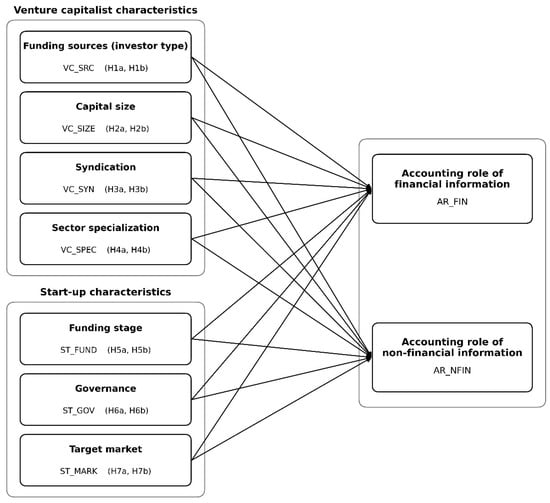
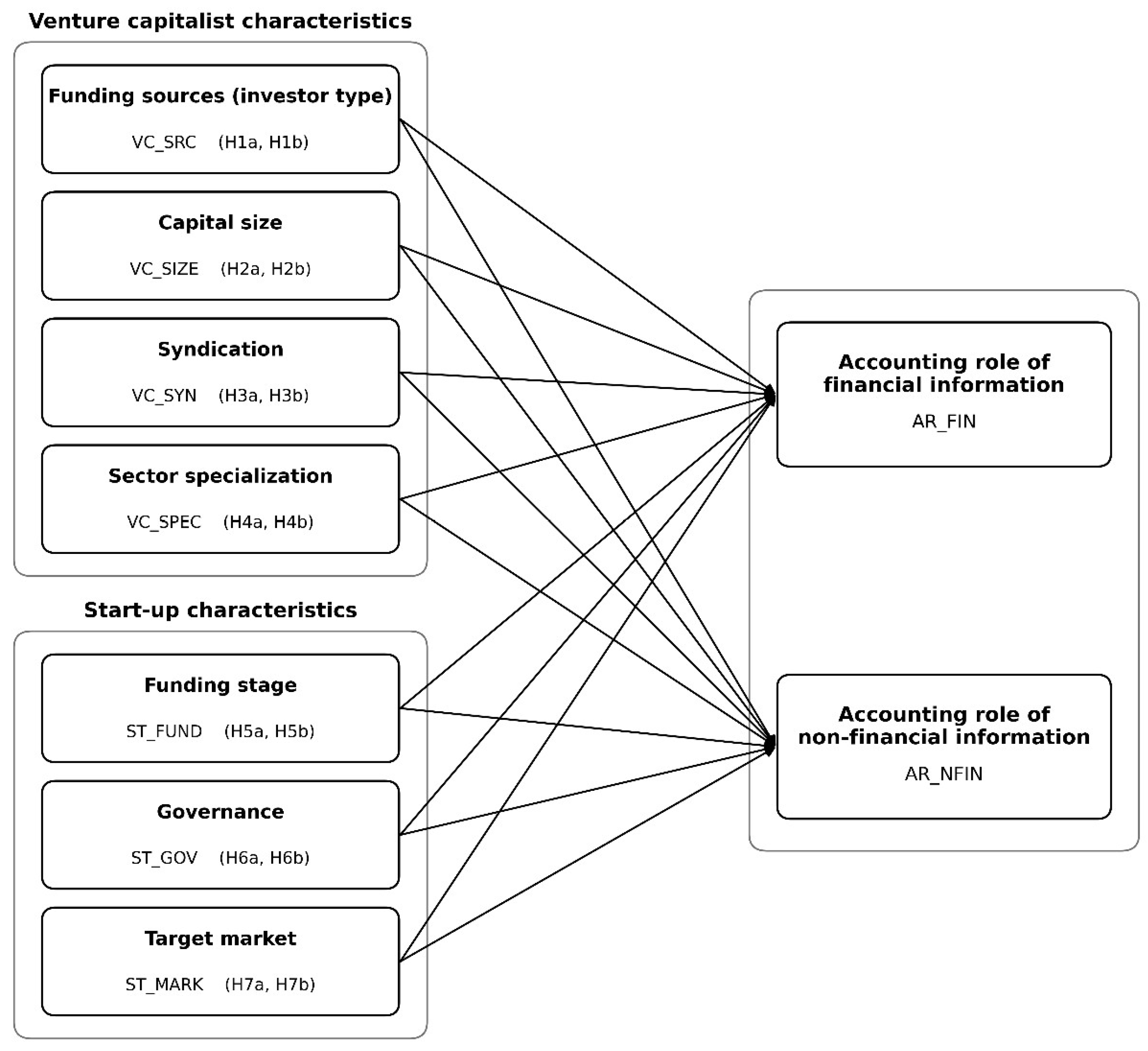
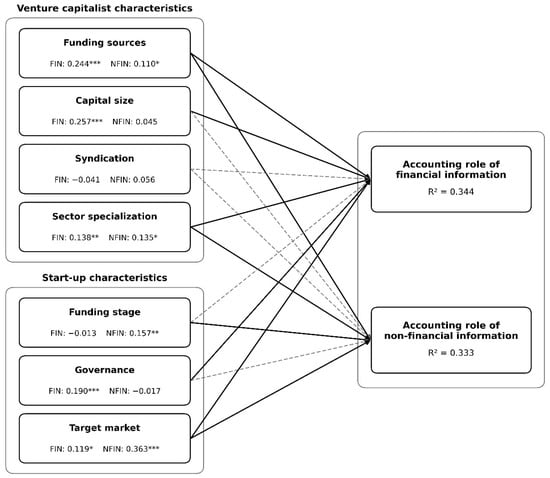
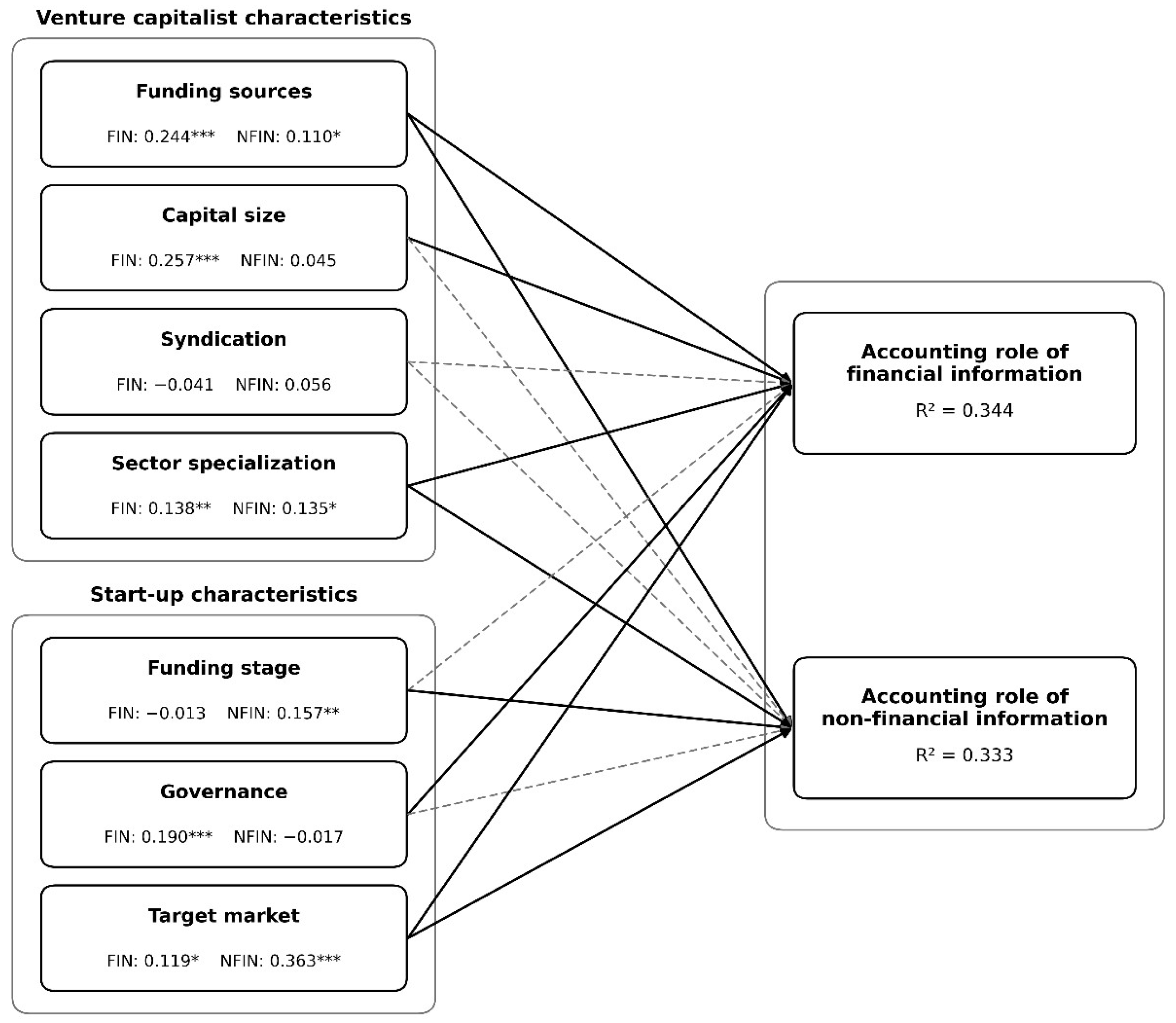

Disclaimer/Publisher’s Note: The statements, opinions and data contained in all publications are solely those of the individual author(s) and contributor(s) and not of MDPI and/or the editor(s). MDPI and/or the editor(s) disclaim responsibility for any injury to people or property resulting from any ideas, methods, instructions or products referred to in the content. |
© 2026 by the authors. Licensee MDPI, Basel, Switzerland. This article is an open access article distributed under the terms and conditions of the Creative Commons Attribution (CC BY) license.