


Abstract
Digital transformation has become one of the key drivers of airport sustainability development; however, existing digital maturity frameworks are not fully tailored to the aviation context, particularly within Australia. This study built a conceptual digital maturity model for Australian airports by integrating ISO/IEC maturity framework with the Airport 1.0–5.0 concept. A structured literature review informed the dimension formulation, and the model was validated through case studies of Australia’s Big 4 airports and one regional airport. The findings show that the Big 4 airports have largely achieved Airport 4.0 maturity, while Cairns Airport demonstrates maturity between Airport 2.5 and 3.0. These results confirm the model’s applicability and discriminative capability across diverse operational scales. The proposed model offers a practical, context-specific framework for benchmarking, planning, and guiding digital transformation initiatives across Australian airports.
1. Introduction
Digital technology is a powerful enabler of organizational efficiency and productivity, encompassing tools such as digital electronics, digital media, digital content, the digital economy, and digital data [1]. It benefits different industries by providing different advantages and opportunities; aviation is not an exemption. The aviation sector is driven by technology and creates value through innovations in its services and products [2]. Digital applications influence the industry both directly and indirectly, offering new opportunities to improve passenger experience, to better understand customer needs, and to help them adapt to an increasingly digital world [3]. Artificial intelligence (AI) and blockchain enable aviation companies to conduct more practical and proactive strategic plans, offering them with opportunities to transform their businesses and meet the challenges of the digital market. Moreover, higher passenger satisfaction can stimulate tourism and hospitality growth, supporting related industries. Therefore, looking into an airport’s digital maturity level is essential for the aviation industry when developing strategic plans that leverage digital transformation to support long-term industry improvement.
Moreover, digital transformation is one of the key drivers supporting the aviation industry in achieving sustainability development, meeting the 17 Sustainable Development Goals (SDGs). Some paperless services and products have been developed through different digital technologies. As one of the earliest introduced digital services, online ticketing contributes largely to reducing aviation waste and carbon emissions [4]. Beyond environmental benefits, digital applications also support economic and social sustainability by enhancing convenience, improving passenger in-airport experience, decreasing operational costs, and reducing human errors [5,6]. Reduced operation cost and human errors are the additional sustainability benefits achieved through automatic and AI applications [5]. At the airport level specifically, advanced digital capabilities such as predictive operations, passenger flow optimization, and automated ground processes directly support sustainability, including but not limited to using measures like reducing aircraft taxiing delays and fuel burning, lowering terminal energy consumption, and minimizing operational waste. Therefore, digital transformation in aviation aligns with global development trends and can attract environmentally conscious passengers, thereby achieving long-term viability. To convert these opportunities into benefits, the assessment of aviation digital maturity is essential for developing effective strategic plans.
Digital maturity contributes to sustainability outcomes through several identifiable mechanisms. First, advanced data analytics and predictive systems enable optimisation of aircraft movements, reducing taxiing time and fuel consumption. Second, digital passenger processing systems improve flow efficiency, reducing congestion and terminal energy use. Third, integrated data platforms enhance resource allocation, supporting more efficient staffing and infrastructure utilisation. Finally, automation and paperless processes reduce operational waste and improve environmental performance.
These mechanisms demonstrate that higher levels of digital maturity are directly associated with measurable environmental, operational, and economic sustainability outcomes in airport systems.
This study presents a comprehensive literature review of digital maturity models and examines their relevance to the airport sector. It analyzes how airports have adopted digital technologies and how far they have progressed toward integrated, smart, and passenger-centric operations, using selected Australian airports as illustrative examples. As an island continent, Australia has unique topographical features, creating some distinct challenges and opportunities for its aviation industry. In this context, airports play a critical role in connecting Australia to the world, and air travel becomes the only practical transport mode in many situations [7]. Domestically, airports need to bridge vast distances between cities, regional, and remote areas, aiming to enhance national mobility and supporting regional economic activity [7]. Australia’s aviation dates back to the early 1900s, and in 1922 the first commercial flight took off, indicating the start of civil aviation in Australia [8]. As Australian aviation has a long history and is relatively mature, transforming its conventional structure and processes into digital ones is essential for helping the Australian aviation market satisfy both its development needs and passenger expectations. Moreover, as the Australian government continues to invest in its regional and remote aviation, the results of this study can provide guidance on advancing digital transformation in alignment with national development objectives [9]. By analyzing the existing literature and assessing the digital progress of major airports, this study offers a comprehensive framework to support both large and regional airports in developing effective digital strategies.
While the proposed model draws on established digital maturity frameworks, its contribution is not a simple recombination of existing approaches. Unlike prior models, which are either generic or limited to specific technological perspectives, this study integrates the ISO/IEC maturity structure with the Airport 1.0–5.0 evolution framework to create a domain-specific staging logic for airport digital transformation. In addition, the model introduces a six-dimension architecture tailored to airport operations and operationalises maturity through observable indicators, enabling transparent and comparable assessment across airports. This combination provides both theoretical advancement and practical applicability within the airport context.
2. Literature Review
2.1. Digital Maturity
When considering digital transformation, the concept of digital maturity should be taken into account. Digital refers to the degree to which an organization integrates digital technologies and converts its resources, processes, and capabilities into digitally enabled assets, supported by strategic initiatives that guide progress toward higher levels of maturity [10]. However, as advanced technologies continue to emerge and the need for innovation increases, organizations across all industries need to assess their current organizational models and strategies to remain aligned with global market trends [11].
Different industries have varying attitudes and demand regarding digital transformation, and a linear model with limited flexibility cannot meet these diverse requirements. Current digital maturity models like ODM3 and the Digital Maturity Matrix by MIT & Capgemini have been developed [10]. Although these models have merits such as ease of application and accessibility, their scope remains limited to specific industries or regional context [10]. Therefore, there is an urgent need to develop a digital maturity model tailored to the operational characteristics and strategic priorities of the aviation industry, particularly within the Australian context. In addition, there is a notable lack of research focused on digital transformation within the Australian aviation industry.
This study aims to address this gap by offering valuable insights to airport operators, policymakers, and industry stakeholders. By developing reliable and actionable digital strategies, the Australian aviation sector can apply the findings of this study to support sustainable development and align with global trends in digital innovation.
2.2. Digital Maturity Models and Assessment Approach
2.2.1. Digital Maturity Levels
Assessing an organization’s digital maturity level is essential to identify its capabilities in the current digital era. Moreover, an effective digital maturity model can serve as a strong reference to guide the organization in designing its path for capability development [12]. A digital maturity model, typically comprising various dimensions and criteria, is a tool used to assess an organization’s current digital status and identify the possible path towards maturity [13]. According to Williams [14], terms like “path”, “future state”, and “capabilities” are frequently mentioned in many developed digital maturity models. However, one critical element often overlooked in these models’ development process is the consideration of digital transformation success factors [14]. This element is widely used in innovation management and covers various aspects, including the application of new technologies, necessary skills and knowledge, and available information [14]. Generally, the main aim of a digital maturity model is to assess the gap between an organization’s current abilities and its future capabilities.
The history of maturity models can be traced back to the 1980s, with the development of the five-level Capability Maturity Model for software by the Software Engineering Institute at Carnegie Mellon University [15]. Since then, a series of maturity models have been developed for various areas. With the advent of the digital transformation era, digital maturity models have emerged to assist organizations in transforming their existing processes into technology-based ones [16]. To fulfill these needs, several factors must be considered during the development of a digital maturity model, including the definition of scope, dimensions, and levels, which are the factors among the most important [14].
There are two types of organizational maturity models: generic maturity models and specific maturity models [17]. Therefore, to develop a digital maturity model for the Australian aviation industry, the scope of the maturity model in this study is deliberately bounded to the digital, aviation, and Australian contexts.
Maturity levels are crucial components of digital maturity models, serving as direct indicators of an organization’s digital achievement. Most existing digital maturity models reference SPICE, the set of standards from the ISO/IEC 3300XX family, to define these levels [16,18,19]. The ISO/IEC framework outlines five standard maturity levels, which are Level 1: Performed, Level 2: Managed, Level 3: Established, Level 4: Predictable, and Level 5: Optimizing [18]. Building on SPICE, some studies have proposed an additional level, creating a six-level framework for digital maturity models, which is Level 0: Incomplete [16,18,20]. These six levels encompass the full spectrum of an organization’s digital transformation journey. Table 1 provides detailed definitions for each level.
Table 1.
Maturity Levels [16,20].
The maturity framework is a fundamental component of digital maturity models, used to assess an organisation’s capabilities and level of development [16]. These models typically comprise 4–10 dimensions, most commonly including culture, technology, strategy, organisation, customer, and employees [21], while some also incorporate transformation processes [18], as well as operations, innovation, and products [21]. As digital maturity models differ in their strengths, limitations, and underlying assumptions [14], the selection of dimensions should be tailored to the specific industry context to ensure relevance and practical applicability.
2.2.2. Digital Maturity Dimensions
Selecting and confirming the dimensions is a critical step in the development of digital maturity models. In this section, 24 existing digital maturity models were analyzed, including 6 models specifically related to the aviation field, as shown in Table 2 and Table 3. The search focused on peer-reviewed publications published 2016 onwards; studies were selected based on predefined inclusion and exclusion criteria focusing on conceptual relevance, methodological rigor, and applicability to airport digital transformation.
The literature search identified a broad body of studies on digital maturity and digital transformation across multiple industries. During the screening process, studies were excluded if they did not propose an explicit maturity or transformation assessment model, lacked defined maturity levels or dimensions, or focused solely on isolated technologies without organizational or strategic relevance. Following full-text screening, 24 digital maturity models that met the inclusion criteria and were available at the time of the review were identified. These models represent the complete set of digital maturity frameworks suitable for conceptual synthesis under the defined scope. Among them, 6 models were explicitly developed for the aviation domain. No additional aviation-specific digital maturity models meeting the inclusion criteria were identified. The remaining non-aviation models were retained to support cross-industry comparison and theory synthesis, informing the development of an airport-specific digital maturity framework.
Table 2.
Existing Digital Maturity Models in Aviation Domain.
Table 3.
Existing Digital Maturity Models in Other Domains.
Based on Table 2 and Table 3, different digital maturity models include various dimensions. Figure 1 shows the most commonly used dimensions across these models.
Figure 1.
The use of dimensions in general digital maturity models.
All the dimensions identified in Table 2 and Table 3 were classified into 18 groups. As shown in Figure 1, the most frequently used dimension is Technology, which is a factor highly relevant to digital transformation. Additionally, Organization and Process groups rank second and third, respectively. However, unlike other industries such as manufacturing and construction, the aviation industry is considered a service-oriented and technology-seeking sector [2]. Therefore, the dimensions frequently used in aviation digital maturity models may differ from general industry trends. Figure 2 presents the most frequently used dimensions in aviation digital maturity models identified in Table 2.
Figure 2.
The use of dimensions in aviation digital maturity models.
Figure 2 shows 17 groups of dimensions used in aviation digital maturity models, with Technology and Structure groups occupying the highest places. Additionally, unlike the rankings in Figure 1, the Passenger group is ranked third in aviation digital maturity models. Other dimension groups, such as Organization and Products, also hold strong positions in these models. Therefore, Figure 1 and Figure 2 serve as important references for dimension selection in this study. In the next section, dimensions will be determined based on the specific operational characteristics and strategic needs of the Australian aviation industry.
2.3. Digital Assessment in the Airport Context
2.3.1. Digital Impacts and Digital Applications in Airports
The digital transformation happening in airports is now revolutionizing operations, improving passenger experiences, and enhancing overall efficiency. The integration of digital technologies is significantly reshaping airport ground operations. Ground handling agents, for instance, increasingly leverage self-service technologies, such as check-in kiosks, RFID-enabled baggage tracking, and automated baggage drop-off systems, to improve preflight and post-flight processes [42]. Additionally, digital transformation extends to workforce management, where applications like automated centralized planning tools and digital employee profiles are utilized for staff scheduling, ultimately improving airport management and resource utilization [42,43].
Beyond operational enhancements and passenger services, digital twins are emerging as a transformative technology in airport planning [44].
The application of advanced digital technologies such as artificial intelligence (AI) and automation has further strengthened internal and external communication between airports and their stakeholders [45]. More importantly, these innovations contribute to safety, a priority in the aviation industry, by reducing hazardous work and minimizing human error in operational processes [44]. Some of the most recognized benefits of digitalization in airports are the reduction in processing time and the enhancement of passenger experience, with passenger satisfaction serving as a key driver for airport investments in digital solutions [6]. However, despite these advantages, concerns persist regarding the financial implications of digital transformation. The initial costs of replacing manual processes with digital solutions can be substantial [6,46]. Nevertheless, research suggests that these investments can yield long-term cost benefits by increasing efficiency and reducing operational costs [46].
With careful planning, strategic market research, and phased implementation, digital technologies can drive substantial positive impacts for airports. These benefits include time and cost savings, improved resource management, enhanced security, and a more seamless passenger experience, improving sustainability and competitiveness in the aviation sector.
2.3.2. Airport Digital Transformation Measurement
Assessing digital transformation in airports requires evaluating how effectively digital technologies are integrated across operational domains. A structured evaluation framework is essential for measuring progress and supporting strategic decision-making, as performance measurement provides insights that drive organisational improvement [47]. Metrics play a central role by linking strategy, execution, and value creation, and similarly enable airports to assess implementation stages, identify gaps, and refine digital strategies [48].
However, there is still a lack of a comprehensive and unified framework for evaluating digital performance in airports [48]. This underscores the need for an adaptable, industry-specific model that supports integration with digital solutions and long-term technological development. Accordingly, this study offers guidance for airport operators to assess their current digital maturity and identify opportunities for future advancement.
2.4. Existing Challenges and Research Motivation
Despite the significant benefits of digital transformation, airports face several challenges when implementing digital technologies. These challenges go beyond simply integration of the latest technological advancements and extend to the requirement to transform the entire organizational structure [49]. One of the most significant obstacles is the gap between airport operational management and technology implementation. This gap can hinder the seamless integration of digital processes into everyday operations, leading to difficulties in staff education and training [49]. These challenges underscore the necessity for a comprehensive framework that helps airports align their organizational strategies with technological advancements while addressing operational needs.
From the passenger perspective, the effectiveness of digital transformations in airports also faces challenges, particularly regarding passengers’ willingness to adopt digital technologies [50]. Although some cybersecurity solutions, like public key infrastructure (PKI) cryptographic method and fog and multi-access edge paradigm (FMEC), are applied to address these concerns [25,50], some airports still fail to prioritize public trust. This highlights the importance of establishing a domain-specific evaluation framework that captures both the achievements and vulnerabilities of digital transformation efforts.
Furthermore, the high upfront costs associated with digital transformation pose another challenge for airports, particularly in contexts where financial and operational resources are constrained [46]. Digital transformation needs to be strategically planned and implemented across different levels to ensure a return on investment [49].
Existing digital maturity models in aviation and other industries typically adopt either generic organisational dimensions or technology-centric perspectives. For example, aviation-specific models emphasise technology, process, and passenger experience but often lack a structured maturity progression aligned with operational evolution. In contrast, general models provide comprehensive dimensions but lack contextual adaptation to airport operations.
The proposed model differs from prior studies in three key aspects. First, it introduces a dual-structure integration, combining ISO/IEC maturity levels with the Airport 1.0–5.0 evolution framework, thereby linking abstract capability maturity with observable operational stages. Second, it develops a context-specific dimension set, reflecting airport operational complexity, passenger-centric service logic, and data-driven systems. Third, it incorporates an indicator-based assessment mechanism, enabling empirical application and cross-case comparison.
These distinctions position the model as a bridge between conceptual maturity theory and operational airport assessment, addressing a gap not fully covered in the existing literature.
The existing literature on digital maturity can be grouped into three main strands: (i) generic maturity models focusing on organisational transformation, (ii) aviation-specific models emphasising operational and passenger dimensions, and (iii) indicator-based approaches aiming to operationalise maturity assessment. While each strand contributes valuable insights, none fully integrates domain-specific operational stages with measurable assessment criteria.
This study builds on and extends these strands by combining structured maturity levels, airport-specific dimensions, and observable indicators into a unified framework tailored to airport digital transformation.
3. Methodology
3.1. Research Design
This study adopts a conceptual model development approach combined with illustrative and evaluative case-based assessment. The purpose of the case studies is not to generalise findings, but to demonstrate the explanatory and discriminative capability of the proposed framework across airports with different operational characteristics.
The research followed a three-stage process aligned with this design logic. First, a theory synthesis review of academic and industry literature was conducted to synthesize existing digital maturity and airport digital transformation theories, identifying commonly applied digital maturity dimensions and assessment levels. Second, this theoretical synthesis was used to construct a conceptual digital maturity model by integrating the ISO/IEC digital maturity structure with the Airport 1.0–5.0 evolution framework. Third, the conceptual model was examined through selected airport case studies using secondary data to assess its ability to distinguish between airports with different operational characteristics and digital development levels. The selected cases include Australia’s four major hub airports and one regional airport. This selection reflects variation in operational scale, resource availability, and digital development levels within a shared regulatory environment. The inclusion of Cairns Airport provides a representative regional comparison, enabling assessment of the model’s applicability beyond large hub airports.
Importantly, case studies are used for illustrative empirical examination rather than theory building, serving to evaluate the explanatory and classificatory utility of the proposed framework. This staged design follows established principles of conceptual research, ensuring that the framework is grounded in the prior literature and is reproducible rather than dependent on researcher-specific interpretation.
3.2. Structured Literature Search and Theory Synthesis
A structured literature search was conducted to support conceptual model development, following established guidelines for theory synthesis research [51]. Academic literature was retrieved from Scopus, Web of Science, and Google Scholar, covering publications from 2016 to October 2025. Search strings applied to titles, abstracts, and keywords included: “Digital maturity model” and “Airport”; “Digital transformation” and “Airport”; “Airport digital maturity assessment”; “Aviation digital transformation”; “Industry 4.0” or “Industry 5.0” and “Aviation”; “Digital maturity model”; and “Digital maturity assessment”.
Two categories of studies were included: (i) peer-reviewed journal articles and authoritative industry reports addressing digital maturity or digital transformation with direct relevance to airports or aviation systems; (ii) peer-reviewed journal articles and authoritative industry reports addressing digital maturity or digital transformation in other industries, used to inform transferable maturity dimensions and assessment logic.
Studies were excluded if they lacked a defined maturity structure, did not address organizational or operational digital transformation, or were not available in English. The selected literature was systematically analyzed to extract recurring maturity dimensions, transformation stages, and conceptual structures. These elements were synthesized to inform the construction of the airport-specific digital maturity model proposed in this study.
3.3. Conceptual Model Development
According to Jaakkola [51], a conceptual model is developed through the existing literature and aims to establish a theoretical framework that explains or predicts the relationships among key concepts relevant to a specific phenomenon. It should be noted that the varying numbers of maturity levels reported in Table 2 and Table 3 reflect the original structures used in prior studies and were not directly condensed into the five levels adopted in this study. Instead, the five-level maturity structure used in this study was conceptually defined by aligning the ISO/IEC maturity logic with the Airport 1.0–5.0 framework, which provided a consistent, airport-relevant staging basis for model development.
Based on the characteristics of Australian airport context, six key dimensions were identified and selected from the literature review, including Technology and innovation, Passenger, Service and product, Strategy and process, Data logic and system, and People and organization.
The six maturity dimensions were derived through a structured synthesis process based on the 24 digital maturity models summarized in Table 2 and Table 3. First, as discussed in Section 2.2.2, dimension labels reported in each model were extracted and standardized through label harmonization to address terminological variation. For example, “organization process” and “processes” were coded under “process”. Second, standardized labels were grouped into thematic categories, resulting in the dimension groups shown in Figure 1 and Figure 2. Third, a dimension reduction step was applied using a hybrid logic combining (i) frequency across models presented in Figure 1 and Figure 2, (ii) conceptual relevance to airport digital transformation, and (iii) non-overlap and practical interpretability within an airport maturity assessment context. Through this process, overlapping categories, e.g., “technology” and “innovation”, were consolidated, and airport-relevant groups were retained as the final six dimensions.
3.4. Data Collection
Secondary data were systematically collected from multiple verifiable sources to ensure reliability and transparency of the assessment. Data was collected between September 2025 and October 2025, ensuring temporal relevance. These sources include:
- (1)
- Official airport websites (Brisbane Airport, Melbourne Airport, Perth Airport, Sydney Airport, and Cairns Airport [52]), which provide information on operational technologies, passenger services, and digital initiatives;
- (2)
- Airport annual reports and corporate publications, which detail strategic priorities, digital transformation initiatives, and infrastructure investments;
- (3)
- Government and regulatory publications, including reports from the Australian Government and industry bodies related to aviation development and digitalisation; and
- (4)
- Industry reports and technology provider publications (Cirium, Microsoft, and other aviation technology partners), which describe implemented digital systems, data platforms, and innovation programs.
A representative list of the sources used for each airport is provided in Appendix A Table A1, with full bibliographic details and links reported in the reference list.
3.5. Illustrative Case-Based Assessment of the Conceptual Model
Two case categories were selected to examine the conceptual model. Firstly, the Big 4 Australian airports, which are Brisbane International Airport (BNE), Melbourne International Airport (MEL), Perth International Airport (PER), and Sydney Kingsford Smith International Airport (SYD), were selected to represent Australia’s main travel hubs and digital leaders. Then, Cairns International Airport (CNS) was selected as a representative regional airport due to its dual domestic-international function and publicly available digital information. The purpose of this case-based assessment is to demonstrate whether the proposed framework can consistently differentiate between airports with differing operational scales, resource availability, and digital development profiles under a shared regulatory environment. To improve reliability and validity, multiple independent data sources were cross-verified to minimize potential bias. The assessment focused on digital technologies that were either already operational or officially deployed and scheduled for immediate operational use at the time of data collection, excluding pilot trials, experimental deployments, and future or conceptual initiatives. The conceptual framework was aligned with recognized international digital maturity theory to ensure theoretical robustness. In addition, the inclusion of both major hub airports and a regional international airport allowed case differentiation, assessing whether the model could effectively discriminate between airports with different operational characteristics and digital development profiles.
3.6. Research Limitations
This study has several limitations. First, the indicator-based assessment involves a degree of subjectivity in interpreting publicly available evidence. Second, the use of binary scoring simplifies complex digital capabilities and may not fully capture differences in implementation depth. Third, the sample size is limited to five airports, restricting broader generalisation. Fourth, the study focuses on the Australian aviation context, and results may not fully apply to other regulatory or operational environments.
Future research should incorporate primary data collection, such as expert interviews and stakeholder validation, and extend the model to a larger and more diverse sample of airports.
4. Conceptual Digital Maturity Model for Australian Airports
4.1. Dimension
Different industries encounter distinct challenges when adopting digital transformation, as well as aviation [24]. Although many previous studies have proposed different digital maturity models, the limited number of aviation-specific models does not adequately meet current industry needs. As per Gökalp [53], approximately 70% of existing digital maturity models are designed for the manufacturing sector, highlighting a clear gap for airport-focused frameworks. Therefore, there is an essential need to develop an airport-specified digital maturity model, providing the industry with an effective tool to assess its digital abilities and capabilities.
Increasingly adoption of advanced technologies is a growing trend in Australian aviation. For example, the sector is exploring the use of renewable energy solutions such as green hydrogen, which can stimulate technological innovation and reshape future aviation operations [54]. In a broader context, the considerable population and housing growth in Australia lead to a rise in the future mobility needs, which requires interconnected transport systems and greater technological innovation to enhance passenger experience [54]. These developments highlight capability, technology, innovation, and passenger as the four critical dimensions influencing digital transformation in Australian aviation.
Digital technology adoption also varies significantly across airports. Major hubs such as Melbourne Airport provide highly automated passenger processing, including the use of self-check-in kiosks and automated bag drop facilities for nearly all domestic flights. However, regional airports like Cairns Airport use more limited automation, offering self-check-in for selected flights while relying on manual counters for baggage drop-off [52]. These contrasts underscore the need for a maturity model that is sufficiently flexible to apply to both major hub airports and regional airports, capturing varying levels of digital readiness and diverse operational constraints.
Based on the dimensions listed in Figure 1 and Figure 2 as well as the specific characteristics of the Australian airport sector, six dimension groups were selected as the most relevant ones for the conceptual digital maturity model developed in this study. These six dimensions were evaluated against the criteria summarized in Figure 3, derived from both the literature and earlier conceptual discussions, to ensure their alignment with the needs of Australian airports.
Figure 3.
Dimension relevance criteria and dimension selection.
The criteria presented in Figure 3 were derived from both the literature review section and earlier conceptual discussions, to ensure their alignment with the needs of Australian airports. The criteria were applied as a structured screening instrument to reduce the initial set of dimension groups into a final set of maturity dimensions suitable for the Australian airport context. Each candidate dimension group was assessed against the five criteria using a binary decision rule, which consists of pass or fail. A dimension was retained if it (i) demonstrated direct relevance to airport digital transformation, (ii) could be meaningfully examined using public evidence in case-based examination, and (iii) did not substantially overlap with other retained dimensions. Dimensions failing two or more criteria were excluded or merged into conceptually adjacent categories to improve interpretability and avoid redundancy.
Applying this screening process resulted in six final dimension groups that satisfied the selection criteria and collectively captured the technological, operational, passenger-focused, strategic, data-centric, and organizational aspects of airport digital maturity.
4.2. Level
As discussed in previous section, maturity levels are essential components of a digital maturity model as they provide a structured basis for evaluating an organization’s digital capability. In the airport context, many studies used airport digital transformation stage metrics to measure the digital maturity levels [6]. One widely accepted framework outlines four evolutionary stages:
- Airport 1.0: Airports fully rely on manual operations and basic IT solutions.
- Airport 2.0: Airports adopt some basic technologies like WiFi to improve the process and enhance passenger experience.
- Airport 3.0: Airports largely incorporate digital technology and automation into airport operational process and passenger services.
- Airport 4.0: Smart Airports use big data and real-time data analysis to seamlessly connect all the process and generate ancillary revenue [49,50,55].
With the emergence of intelligent automation and Industry 5.0 concepts, Airport 5.0, as the fifth stage, has been proposed to reflect the next level of technological and organizational evolution. Although a unified definition of Airport 5.0 has not yet been established, the literature indicates several core elements including human–machine collaboration, sustainable development, and intelligent automation, which can be enabled by advanced technologies such as digital twins, edge computing, and collaborative robotics [44,56,57,58].
Based on these key characteristics, assessment criteria can be formulated to help airports determine their current digital stage and develop targeted strategies for progressing toward higher levels of digitalization. Table 4 summarizes the assessment metrics associated with each airport transformation stage.
Table 4.
Digital maturity level of Airports.
A conceptual comparison between the Airport 1.0–5.0 framework and the ISO/IEC digital maturity level reveals strong structural and developmental alignment. This mapping is grounded in a structural correspondence between ISO/IEC’s process capability logic (performed → managed → established → predictable → optimizing) and airports’ evolution from fragmented manual operations toward standardized, integrated, predictable, and continuously improving digital systems. As shown in Table 1 and Table 4, Airports 1.0 and 2.0 correspond to Levels 1 and 2 in traditional digital maturity models, as both emphasize basic digital tools, manual or partially digital processes, and limited data awareness. Airport 3.0 aligns with Level 3, representing the shift from partial automation to more interconnected and data-driven systems. Airport 4.0 corresponds to Level 4, indicating a seamless digital environment. In ISO/IEC terms, this stage reflects “predictable” performance, supported by real-time monitoring, data integration, and analytics-enabled operational control. Finally, Airport 5.0 aligns with Level 5, reflecting a fully optimized, human-centric, and sustainability-oriented ecosystem driven by artificial intelligence and advanced analytics. This mirrors ISO/IEC’s “optimizing” level, where AI-supported intelligence and continuous improvement mechanisms enable adaptive performance enhancement rather than static digitization. This alignment demonstrates that the Airport 1.0–5.0 model can effectively serve as a domain-specific adaptation of traditional digital maturity frameworks, offering a contextually relevant approach for assessing airport digital transformation in a systematic and industry-appropriate way.
4.3. Conceptual Digital Maturity Model for Airport
Based on Figure 3, six groups of digital maturity dimensions were identified as the most relevant for the Australian airport context. By integrating the ISO/IEC maturity structure with the Airport 1.0–5.0 framework, this study establishes a comprehensive model designed specifically to assess airport digital maturity. While the Airport 1.0–5.0 framework represents the development stages of airport digital transformation, the six maturity dimensions capture the different aspects of this progression. The comprehensive model is presented in Table 5. Table 5 presents the finalized digital maturity framework for Australian airports. The six dimension groups were derived by synthesizing and clustering the Airport 1.0–5.0 indicator pool into conceptually consistent categories that reflect core domains of airport digital transformation. Specifically, indicators were reviewed and grouped based on their primary function. The classification was supported by prior airport digital transformation and digital maturity literature to ensure conceptual validity and consistency with established maturity constructs. This table therefore serves as the bridge between the observable indicator pool used in the case assessment (Appendix A) and the dimension-based maturity classifications in Section 5. Supporting literature is cited to justify indicator relevance and classification logic.
Table 5.
Digital Maturity Model for Australian Airport [44,49,50,55,56,57,58,59].
Table 5 outlines a holistic maturity assessment model that reflects how airports evolve across digital transformation stages. At the early stages, airports rely primarily on manual operations, basic IT infrastructure, and limited data integration, reflecting a functional but very basic operational model. As airports evolve towards Airport 3.0, automation and data-driven decision-making begin to emerge, supported by increasingly connected systems and enhanced service delivery. Airport 4.0 marks the transition to a fully integrated and intelligent digital system, characterized by predictive analytics, real-time coordination, and AI-enhanced passenger experiences. Finally, Airport 5.0 represents the most advanced maturity stage, where technological innovation is seamlessly aligned with human-centric and sustainable development principles. At this level, airports apply advanced technologies such as digital twins, edge computing, and collaborative robotics. Across all stages, the six dimensions collectively capture the co-evolution of technological sophistication, organizational capability, and passenger-centric value creation, providing a comprehensive way for assessing digital maturity in the airport sector.
Organizational awareness and workforce digital skills become increasingly prominent in advanced stages such as Airport 5.0, while earlier stages show limited development in these areas. This progression reflects how human and organizational capacities evolve alongside technological adoption. For example, manual operations at Airport 1.0 require minimal digital skills, whereas AI-driven and networked systems at Airport 5.0 demand highly skilled staff and collaborative cultures. Therefore, this dimension group was identified in relation to the other dimensions, particularly in the earlier stages, ensuring that even the early stages of airport digital maturity model include the foundational aspects of human and organizational readiness. This strengthens the model’s completeness and applicability across airports of varying sizes and digital capacities.
5. Demonstration of Discriminative Utility Through Airport Case Studies
To illustratively examine the conceptual digital maturity model proposed above, this research conducted case study analysis of selected Australian airports, representing both major capital city hubs and regional airports. The first stage focuses on the Big 4 airports, which are Brisbane International Airport (BNE), Melbourne International Airport (MEL), Perth International Airport (PER), and Sydney Kingsford Smith International Airport (SYD). These airports were selected because they function as Australia’s primary international gateways, featuring advanced digital infrastructure and high operational complexity. Big Australian airports, like the Big 4s, are pioneers in the Australian aviation industry’s digital transformation journey, implementing advanced technologies to enhance both operational efficiency and passenger experience [60,61,62,63]. Therefore, they serve as valuable benchmarks for government and industry initiatives aimed at promoting digital equity across regional aviation. In addition, evaluating their digital maturity levels provides a reference framework to help regional airports identify technological gaps and define strategic development goals.
Then, a regional airport was selected to examine whether the model is able to clearly distinguish the different characteristics between the Big 4 airports and other regional airports in Australia. Cairns International Airport (CNS) was chosen as the sample case to assess its digital maturity across the 6 dimensions. Cairns Airport is a major regional airport serving both domestic and international routes and acting as the principal gateway to North Queensland and the Great Barrier Reef [64]. Therefore, this airport provides an appropriate balance of operational scale, passenger diversity, and regional connectivity, making it a representative case for assessing digital maturity beyond major hubs. In addition, the airport’s publicly available operational and passenger data make it suitable for a literature-based maturity assessment [64]. Using Cairns enables the study to examine whether the proposed digital maturity model captures gaps across multiple digital transformation dimensions and provides insights for strengthening digital maturity and long-term viability within regional Australian aviation.
All data and information used in this section were collected from publicly available sources, including airport official websites, technology provider reports, government releases, and industry media reports. All maturity classifications reported in this study represent a time-bounded snapshot based on publicly available evidence collected by October 2025. Given that airport digital initiatives may evolve rapidly and may not be publicly disclosed immediately, some recently applied technologies may not have been captured within the data window. To be more specific, this study relied on publicly available secondary sources, which provide stronger visibility of externally observable digital capabilities, such as passenger-facing technologies like self-service facilities and online check-ins, publicly announced operational innovations like data management program and stakeholder communication platform, sustainability strategies, and technology partnerships. However, some categories of digital maturity are systematically less observable through public sources, including internal operational platforms, some cybersecurity systems, and internal data governance architectures. As a result, the maturity classification reflects observable maturity based on disclosed evidence, rather than a complete internal audit of airport digital systems. All the information presented reflects the most up-to-date and verifiable materials available at that time, ensuring its validity and contextual relevance to the assessment period. In addition, the assessment focused on digital technologies that were either already operational or officially deployed and scheduled for immediate operational use at the time of data collection, excluding pilot trials, experimental deployments, and future or conceptual initiatives.
5.1. Digital Maturity Assessment Rule
The maturity assessment follows a structured, reproducible procedure. First, data were collected from publicly available sources, including airport websites, annual reports, government publications, and industry reports (Section 3.4). Second, observable digital capabilities were coded using an indicator-based approach, where each indicator was assigned a binary value (TRUE/FALSE) based on verifiable evidence of implementation. Third, indicators were mapped to the six maturity dimensions using a predefined coding structure (Appendix A Table A2), which operationalizes the dimension structure in Table 5 by linking each maturity stage (Airport 1.0–5.0) to specific observable indicators. Dimension-level maturity was determined using a “highest fully achieved stage” rule, ensuring that higher maturity levels require consolidation rather than isolated capability adoption. Finally, overall airport maturity was derived through cross-dimensional aggregation. To ensure consistency and reduce subjectivity, all assessments were conducted independently by two researchers, with discrepancies resolved through discussion and re-examination of evidence sources. Where ambiguity existed, conservative coding was applied. This procedure enhances transparency and allows replication of the assessment process.
For each airport and each dimension, maturity evidence was derived from the indicator-level observations in Appendix A Table A1 and grouped using the indicator-to-dimension mapping in Appendix A Table A2. Table 6 presents stage-evidence flags within each dimension. A stage-evidence flag was marked TRUE when at least one publicly observable indicator associated with that stage was identified as implemented or operationally applied. Importantly, these stage-evidence flags represent the presence of stage-linked features, rather than a final maturity classification. As a result, more than one maturity stage may be marked TRUE within a single dimension when an airport demonstrates capabilities spanning multiple stages.
To determine each dimension’s maturity classification, this study applied a highest fully achieved stage rule. A dimension was classified as fully achieved at stage X.0 only when the stage-evidence flag was TRUE for stage X.0 and no lower-stage evidence, i.e., stages 1.0 to X-1.0, remained present within that dimension. This rule reflects the maturity principle of standardization and consolidation, whereby higher maturity requires not only the adoption of advanced features but also the replacement of lower-stage practices as the dominant operating mode. Where higher-stage evidence was observed but lower-stage evidence persisted, the dimension was classified at the highest stage that was fully achieved, indicating ongoing transition rather than full maturity consolidation.
While binary coding (TRUE/FALSE) was adopted to ensure transparency and consistency when using publicly available data, this approach represents a simplified operationalisation of digital maturity. It allows clear identification of observable digital capabilities but does not capture intensity, scale, or performance variation. To address this limitation, the indicator system was designed as an extensible structure, where future studies may incorporate weighted scoring, multi-level scales, or expert validation methods to enhance measurement precision and robustness.
To summarize an airport’s overall digital maturity stage, a cross-dimension aggregation procedure was applied. For each of the six dimensions, the maturity stage was first classified using highest fully achieved stage rule described above. An airport was then classified at an overall maturity stage when at least five of the six dimensions fully achieved that stage. Airports that fully achieved the stage in four dimensions were classified as near-complete at that stage, indicating substantial maturity with remaining gaps in one to two dimensions. Airports that fully achieved the stage in three or fewer dimensions were classified as transitional, reflecting partial adoption of higher-stage features without sufficient cross-dimensional maturity.
The 5 ≥ 6, 4/6, and ≤3/6 thresholds were adopted to reflect the principle that airport digital maturity represents cross-functional integration rather than isolated digital adoption. A classification of “given” maturity therefore requires maturity evidence across nearly all core dimensions (≥5/6), indicating system-wide capability alignment. A 4/6 outcome was labelled “near-complete” to capture airports that demonstrate substantial maturity but still show gaps in one or two dimensions. When maturity evidence is limited to three or fewer dimensions, the airport remains “transitional,” as digital development in that level is still partial and insufficiently integrated across the organization. These thresholds were intentionally conservative to avoid overstating airport-wide maturity based on strong performance in only a small subset of dimensions. To be more specific, in applying the Airport 1.0–5.0 criteria, the operational discriminator between Airport 3.0 and Airport 4.0 was the transition from isolated automation to integrated, real-time system coupling and predictive operational capability. The cross in Table 6 indicates that the airport has implemented this digital technology.
To strengthen reliability, maturity assessments were conducted independently by two researchers. Initial coding results were compared, and discrepancies were resolved through discussion and re-checking evidence sources until consensus was reached. Ambiguous cases were coded conservatively to the lower stage unless strong evidence supported a higher classification.
Table 6.
Digital maturity assessment for the Big 4 Airports and Cairns Airport [7,65].
5.2. Airport Case Studies
Table 6 presents stage-evidence flags by dimensions for the Big 4 Airports and Cairns Airports. A checked box indicates at least one observable indicator for that stage. Multiple stages may be checked within one dimension. However, the maturity stage is determined using the highest fully achieved stage rule. The following analysis first identifies key limiting dimensions for each airport, and then provides a direct cross-airport comparative synthesis by maturity dimension.
Overall, the results show that the Big 4 airports cluster at advanced maturity levels and exhibit strong progress toward Airport 4.0 characteristics, particularly in technology deployment, passenger digital services, and organizational readiness. However, maturity consolidation remains uneven across dimensions. Across the Big 4, the most common constraints relate to incomplete end-to-end integration, limited disruption minimization capability, and gaps in fully seamless biometric passenger processing.
In contrast, Cairns Airport displays a substantially lower maturity profile, positioned at near-complete Airport 3.0. While CNS has progressed beyond foundational digitization through selective adoption of digital services and integration mechanisms, it does not yet demonstrate the system-wide automation, predictive analytics, and integrated service architecture associated with higher maturity stages.
5.2.1. Airport-Specific Diagnosis: Dominant Limiting Dimensions
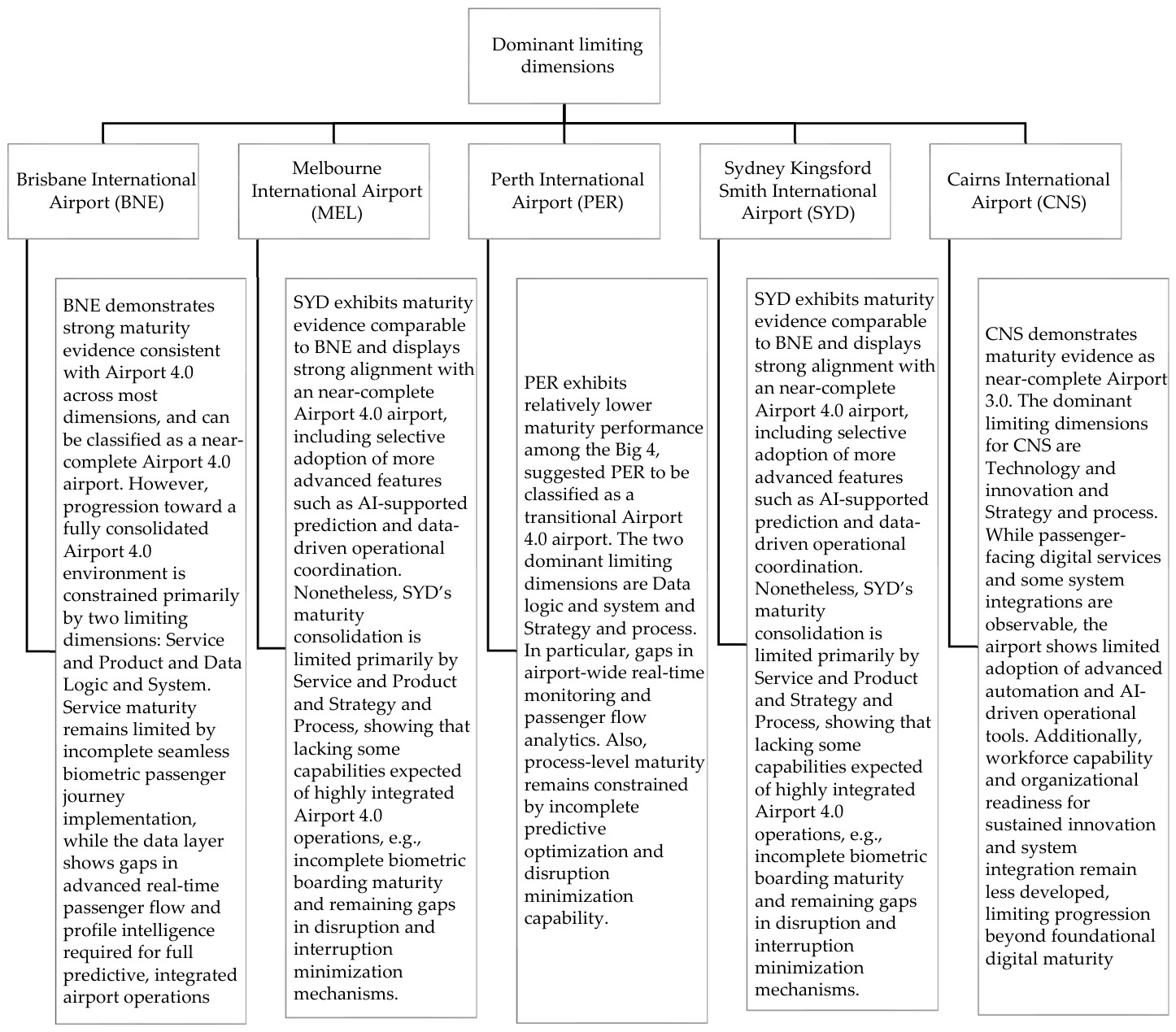
To move beyond restating table outcomes and provide actionable interpretation, the assessment identifies the dominant limiting dimensions that prevent each airport from progressing to the next consolidated maturity stage (Figure 4).
5.2.2. Cross-Airport Comparative Synthesis by Maturity Dimension
To address the need for direct comparison across airports, this section synthesizes maturity differences dimension-by-dimension, highlighting how the Big 4 differ from each other and from Cairns.
- Technology and innovation. Across the Big 4 airports, Technology and Innovation maturity is strong, with evidence of automation adoption and advanced digital infrastructure consistent with Airport 4.0 maturity. MEL demonstrates the most prominent evidence of higher-stage innovation, which includes emerging Airport 5.0 initiatives. PER shows comparatively weaker depth of deployment. CNS remains at earlier maturity, i.e., Airport 2.0 evidence, reflecting basic self-service and partial automation rather than advanced AI, big data, or next-generation operational technologies.
- Passenger. All Big 4 airports demonstrate advanced passenger maturity consistent with Airport 4.0, supported by extensive digital service touchpoints and digitally enabled passenger processing systems. CNS reflects Airport 3.0 passenger maturity, indicating standard digital services and notifications but limited personalization and AI-enhanced journey capability.
- Service and product. Service and product maturity remains a common bottleneck across airports. While the Big 4 Airports demonstrate advanced self-service and processing automation, the absence of fully seamless biometric in-airport processes across all hubs constrains service consolidation at the upper Airport 4.0 level. CNS shows moderate progress in service maturity, but gaps remain in limited automation depth and ongoing reliance on staff-supported processes, especially in baggage and processing operations.
Figure 4.
Dominant limiting dimensions.
- 4.
- Strategy and process. The strategy and process dimension shows the greatest spread in maturity levels across airports. BNE demonstrates stronger maturity aligned with predictive operational improvement and disruption resilience. By comparison, SYD, MEL, and PER exhibit fragmented maturity, indicating that although enabling technologies are in place, disruption minimization and process optimization remain underdeveloped. CNS reflects Airport 2.0 to 3.0 maturity, characterized by early-stage digital decision support with limited strategic integration.
- 5.
- Data logic and system. Although the majority of Big 4 Airports demonstrate Airport 3.0 to 4.0 maturity in the Data logic and system dimension, this dimension provides the clearest discrimination between airports. SYD and BNE show stronger predictive analytics and real-time monitoring maturity. MEL shows high capability potential but is limited by incomplete consolidation of predictive and optimization functions. PER exhibits the most significant gaps, particularly in real-time monitoring and passenger flow intelligence. CNS demonstrates selective progress, supporting Airport 3.0 to 4.0 maturity, indicating developing integration but limited maturity in predictive analytics and real-time optimization.
- 6.
- People and organization. The Big 4 Airports demonstrate relatively high People and organization maturity, reflecting workforce readiness and innovation culture required to support advanced digital operations. However, MEL and PER show weaker cross-dimensional alignment, suggesting that organizational capability has not fully consolidated with process and data maturity. CNS remains at Airport 3.0 maturity, indicating developing readiness but ongoing constraints in workforce upskilling, innovation capacity, and organizational practices necessary for sustained advancement.
Overall, the case outcomes demonstrate that the proposed digital maturity model provides meaningful discrimination between airports operating under a common national regulatory environment but different operational scales and digital development profiles. The Big 4 Airports cluster around advanced maturity, however, still showing distinct limiting dimensions that define their development priorities. Cairns Airport exhibits a lower but steadily developing maturity profile, illustrating how the model can be used to identify stage-appropriate digital development pathways for regional airports. This indicates that the model is sensitive to airport type and maturity variation and can serve as a practical diagnostic framework for strategic digital planning across Australian airports.
6. Conclusions
This study developed and validated a digital maturity model tailored to the Australian airport context by integrating the ISO/IEC maturity structure with the Airport 1.0–5.0 framework. From a theoretical perspective, this study contributes to digital maturity research by demonstrating how generic maturity frameworks can be systematically adapted to domain-specific contexts through structured integration and indicator operationalisation. It extends the existing literature by linking maturity stages with observable operational characteristics in airports, addressing the gap between conceptual models and applied assessment. Based on the literature review and the operational characteristics of the Australian aviation sector, six most suitable dimensions were identified for assessing airport digital maturity, which are (1) Technology and innovation, (2) Passenger, (3) Service and product, (4) Strategy and process, (5) Data logic and system, (6) People and organization. Together, these dimensions form a holistic and context-focused digital maturity assessment framework for Australian airports.
From a practical perspective, the model provides airport operators with a structured diagnostic tool to identify digital capability gaps across multiple dimensions, prioritise investment areas, and plan progression toward higher maturity stages. Policymakers may use the framework to support benchmarking and digital policy alignment across national airport systems, while technology providers can better align solutions with airport maturity needs.
To evaluate the practicality and applicability of the proposed model, two case studies were conducted, representing both major hub airports and regional airports. The assessment results indicated that Australia’s Big 4 airports have largely reached Airport 4.0, demonstrating advanced deployment of digital technologies, strong data-driven operations, and emerging sustainability and innovation initiatives. However, critical gaps remain in fully integrated predictive analytics, seamless biometric operational processes, and disruption-resilient operational system. These gaps suggest that further strategic effort and investment are required for these airports to transition toward truly future-oriented, self-optimizing, and human-centric Airport 5.0 capabilities.
In contrast, Cairns Airport demonstrates a digital maturity level between Airport 2.5 and 3.0, indicating that it has moved beyond basic transport services and has made selective progress in areas such as digital self-services and foundational data systems. Nonetheless, the airport requires significant advancement in innovation capacity, digital culture development, automation depth, and predictive intelligence to progress toward higher maturity stages.
These contrasting maturity assessments illustrate the effectiveness and clarity of the proposed model in identifying digital capability gaps and guiding future strategic development pathways for both major hub airports and regional airports in Australia.
Overall, the proposed digital maturity model has demonstrated sector relevance and is able to differentiate maturity levels between airports with similar national regulatory environments but different operational scales and digital status. The findings not only extend the academic understanding of digital maturity in aviation but also offer a decision-support tool for airport operators, regulators, and technology partners to prioritize investment, benchmark progress, and plan strategic transition toward Airport 5.0. As Australia continues to face growing passenger demand, the ability to progress toward higher digital maturity will be central to maintaining service quality, operational resilience, and global competitiveness.
7. Limitation and Future Work
This study has four main limitations. First, as the case study assessment relied solely on publicly available secondary data, some digital initiatives and non-public published operational technologies may not have been captured. As a result, some digital maturity levels may be conservatively estimated. Moreover, since the assessment relied on publicly available data within a defined time window, rapidly evolving or recently applied digital initiatives may be under-represented, potentially biasing some airports toward lower apparent maturity classifications. Also, as the proposed framework remains a conceptual model, it has not yet been assessed through direct engagement with airport stakeholders. Finally, the model assessment included only one regional airport, which may not fully reflect the characteristics of remote and very low-volume aviation facilities across Australia.
Future research should incorporate primary data collection such as structured interviews, expert focus groups, or stakeholder workshops to refine and calibrate dimension indicators. In addition, applying the model to a broader sample of regional and remote airports would enhance representativeness and enable more robust benchmarking across diverse Australian airport profiles.
Author Contributions
Conceptualization, D.L. and I.H.; methodology, D.L.; validation, D.L.; formal analysis, D.L. and I.H.; investigation, D.L.; resources, D.L.; data curation, D.L.; writing—original draft preparation, D.L.; writing—review and editing, I.H.; visualization, D.L.; supervision, D.L. and I.H.; project administration, D.L.; funding acquisition, D.L. All authors have read and agreed to the published version of the manuscript.
Funding
This research received no external funding.
Data Availability Statement
The original contributions presented in the study are included in the article, further inquiries can be directed to the corresponding author.
Conflicts of Interest
The authors declare no conflicts of interest.
Appendix A
Table A1.
Evidence anchors and coding logic supporting the maturity classifications ([52,60,61,62,63,66,67,68,69,70,71,72,73,74,75,76,77,78,79,80,81,82]).
Table A2.
Indicator-to-dimension coding structure used for maturity classification.
References
- Molchanova, K. A Review of Digital Technologies in Aviation Industry. Logist. Transp. 2020, 47, 69–77. [Google Scholar]
- Pereira, B.A.; Lohmann, G.; Houghton, L. Technology Trajectory in Aviation: Innovations Leading to Value Creation (2000–2019). Int. J. Innov. Stud. 2022, 6, 128–141. [Google Scholar] [CrossRef] [Scilit]
- Mayer, C. Digital Passengers: A Great Divide or Emerging Opportunity? J. Airpt. Manag. 2019, 13, 335–344. [Google Scholar] [CrossRef] [Scilit]
- Meske, C.; Amojo, I.; Müller, C. Online Flight Booking: Digital Nudging to Decrease Aviation-Related Carbon Emissions. Inf. Technol. People 2024, 37, 29–50. [Google Scholar] [CrossRef] [Scilit]
- Sanz, A.R.; Castán, J.P. Aviation 4.0: More Safety through Automation and Digitization. Aircr. Technol. 2018, 25. [Google Scholar] [CrossRef] [Scilit]
- Halpern, N.; Budd, T.; Suau-Sanchez, P.; Bråthen, S.; Mwesiumo, D. Conceptualising Airport Digital Maturity and Dimensions of Technological and Organisational Transformation. J. Airpt. Manag. 2021, 15, 182–203. [Google Scholar] [CrossRef] [Scilit]
- Australian Airports Association. Taking Flight: The Economic and Social Contribution of Australia’s Airports. 2023. Available online: https://airports.asn.au/wp-content/uploads/2023/11/Deloitte-Taking-flight_The-economic-and-social-importance-of-Australias-Airports.pdf (accessed on 1 June 2025).
- New South Wales State Library. Aviation in Australia. 2024. Available online: https://www.sl.nsw.gov.au/stories/aviation-australia (accessed on 14 September 2025).
- Australian Government. Regional & Remote Aviation. 2024. Available online: https://www.infrastructure.gov.au/infrastructure-transport-vehicles/aviation/regional-remote-aviation (accessed on 14 September 2025).
- Aslanova, I.V.; Kulichkina, A.I. Digital Maturity: Definition and Model. In Proceedings of the 2nd International Scientific and Practical Conference “Modern Management Trends and the Digital Economy: From Regional Development to Global Economic Growth (MTDE 2020)”; Atlantis Press: Dordrecht, The Netherlands, 2020; pp. 443–449. [Google Scholar]
- Remane, G.; Hanelt, A.; Wiesboeck, F.; Kolbe, L.M. Digital Maturity in Traditional Industries—An Exploratory Analysis. In Proceedings of the European Conference on Information Systems (ECIS); AIS eLibrary: Atlanta, GA, USA, 2017; p. 10. [Google Scholar]
- Thordsen, T.; Murawski, M.; Bick, M. How to Measure Digitalization? A Critical Evaluation of Digital Maturity Models. In Responsible Design, Implementation and Use of Information and Communication Technology. I3E 2020, 19th IFIP WG 6.11 Conference on e-Business, e-Services, and e-Society, Skukuza, South Africa, 6–8 April 2020; Springer: Cham, Switzerland, 2020; pp. 358–369. [Google Scholar]
- Berghaus, S.; Back, A. Stages in Digital Business Transformation: Results of an Empirical Maturity Study. In Mediterranean Conference on Information Systems (MCIS) 2016 Proceedings; AIS eLibrary: Atlanta, GA, USA, 2016. [Google Scholar]
- Williams, C.; Schallmo, D.; Lang, K.; Boardman, L. Digital Maturity Models for Small and Medium-Sized Enterprises: A Systematic Literature Review. In Proceedings of the ISPIM Innovation Conference; International Society for Professional Innovation Management (ISPIM): Manchester, UK, 2019; pp. 1–15. [Google Scholar]
- Paulk, M.C. A History of the Capability Maturity Model for Software. ASQ Softw. Qual. Prof. 2009, 12, 5–19. [Google Scholar]
- Gökalp, E.; Martinez, V. Digital Transformation Capability Maturity Model Enabling the Assessment of Industrial Manufacturers. Comput. Ind. 2021, 132, 103522. [Google Scholar] [CrossRef] [Scilit]
- Virkkala, P.; Saarela, M.; Hänninen, K.; Kujala, J.; Simunaniemi, A.M. Business Maturity Models for Small and Medium-Sized Enterprises: A Systematic Literature Review. Management 2020, 137–155. [Google Scholar] [CrossRef] [Scilit]
- Haryanti, T.; Rakhmawati, N.A.; Subriadi, A.P. The Extended Digital Maturity Model. Big Data Cogn. Comput. 2023, 7, 17. [Google Scholar] [CrossRef] [Scilit]
- Haryanti, T.; Rakhmawati, N.A.; Subriadi, A.P. Assessing the Digital Transformation Landscapes of Organization: The Digital Transformation Self-Assessment Maturity Model (DX-SAMM). Procedia Comput. Sci. 2024, 234, 1561–1569. [Google Scholar] [CrossRef] [Scilit]
- Valdez-de-Leon, O. A Digital Maturity Model for Telecommunications Service Providers. Technol. Innov. Manag. Rev. 2016, 6, 42–52. [Google Scholar] [CrossRef]
- Bumann, J.; Peter, M. Action Fields of Digital Transformation—A Review and Comparative Analysis of Digital Transformation Maturity Models and Frameworks. Digit. Und And. Innov. Im Manag. 2019, 2, 13–40. [Google Scholar]
- Meltem, Ö.; Meltem, M.; Burç, Ç.; Burçin, S. Evaluating the Information Systems Integration Maturity Level of Travel Agencies. Inf. Technol. Tour. 2019, 21, 237–257. [Google Scholar] [CrossRef] [Scilit]
- Büyüközkan, G.; Havle, C.A.; Feyzioğlu, O. Digital Competency Evaluation of Low-Cost Airlines Using an Integrated IVIF AHP and IVIF VIKOR Methodology. J. Air Transp. Manag. 2021, 91, 101998. [Google Scholar] [CrossRef] [Scilit]
- Kıyıklık, A.; Kuşakcı, A.O.; Mbowe, B. A Digital Transformation Maturity Model for the Airline Industry with a Self-Assessment Tool. Decis. Anal. J. 2022, 3, 100055. [Google Scholar] [CrossRef] [Scilit]
- Marmier, F.; Filipas, I.; Zaharia, S.E. Transition 4.0 for the Airport Industry. IFAC-PapersOnLine 2023, 56, 3698–3703. [Google Scholar] [CrossRef] [Scilit]
- Altundag, A.; Wynn, M. Advanced Analytics and Data Management in the Procurement Function: An Aviation Industry Case Study. Electronics 2024, 13, 1554. [Google Scholar] [CrossRef] [Scilit]
- Gill, M.; VanBoskirk, S. The Digital Maturity Model 4.0. In Benchmarks: Digital Transformation Playbook; Forrester Research: Cambridge, MA, USA, 2016. [Google Scholar]
- Schumacher, A.; Erol, S.; Sihn, W. A Maturity Model for Assessing Industry 4.0 Readiness and Maturity of Manufacturing Enterprises. Procedia CIRP 2016, 52, 161–166. [Google Scholar] [CrossRef] [Scilit]
- De Carolis, A.; Macchi, M.; Negri, E.; Terzi, S. A Maturity Model for Assessing the Digital Readiness of Manufacturing Companies. In Advances in Production Management Systems. The Path to Intelligent, Collaborative and Sustainable Manufacturing; IFIP WG 5.7 International Conference (APMS 2017), Hamburg, Germany, 3–7 September 2017; Springer: Cham, Switzerland, 2017; pp. 13–20. [Google Scholar]
- Colli, M.; Madsen, O.; Berger, U.; Møller, C.; Wæhrens, B.V.; Bockholt, M. Contextualizing the Outcome of a Maturity Assessment for Industry 4.0. IFAC-PapersOnLine 2018, 51, 1347–1352. [Google Scholar] [CrossRef] [Scilit]
- Şener, U.; Gökalp, E.; Eren, P.E. Towards a Maturity Model for Industry 4.0: A Systematic Literature Review and a Model Proposal. Industry 2018, 4, 4. [Google Scholar]
- Canetta, L.; Barni, A.; Montini, E. Development of a Digitalization Maturity Model for the Manufacturing Sector. In Proceedings of the 2018 IEEE International Conference on Engineering, Technology and Innovation (ICE/ITMC); IEEE: Piscataway, NJ, USA, 2018; pp. 1–7. [Google Scholar]
- Aguiar, T.; Gomes, S.B.; da Cunha, P.R.; da Silva, M.M. Digital Transformation Capability Maturity Model Framework. In Proceedings of the 2019 IEEE 23rd International Enterprise Distributed Object Computing Conference (EDOC); IEEE: Piscataway, NJ, USA, 2019; pp. 51–57. [Google Scholar]
- Ifenthaler, D.; Egloffstein, M. Development and Implementation of a Maturity Model of Digital Transformation. TechTrends 2020, 64, 302–309. [Google Scholar] [CrossRef] [Scilit]
- Santos, R.C.; Martinho, J.L. An Industry 4.0 Maturity Model Proposal. J. Manuf. Technol. Manag. 2020, 31, 1023–1043. [Google Scholar] [CrossRef] [Scilit]
- Ilin, I.; Borremans, A.; Levina, A.; Esser, M. Digital Transformation Maturity Model. In Digital Transformation and the World Economy: Critical Factors and Sector-Focused Mathematical Models; Springer International Publishing: Cham, Switzerland, 2022; pp. 221–235. [Google Scholar]
- Uhlenkamp, J.F.; Hauge, J.B.; Broda, E.; Lütjen, M.; Freitag, M.; Thoben, K.D. Digital Twins: A Maturity Model for Their Classification and Evaluation. IEEE Access 2022, 10, 69605–69635. [Google Scholar] [CrossRef] [Scilit]
- Aras, A.; Büyüközkan, G. Digital Transformation Journey Guidance: A Holistic Digital Maturity Model Based on a Systematic Literature Review. Systems 2023, 11, 213. [Google Scholar] [CrossRef] [Scilit]
- Tubis, A.A. Digital Maturity Assessment Model for the Organizational and Process Dimensions. Sustainability 2023, 15, 15122. [Google Scholar] [CrossRef] [Scilit]
- Ka, X.; Ying, T.; Tang, J. A Conceptual Model for Developing Digital Maturity in Hospitality Micro and Small Enterprises. J. Theor. Appl. Electron. Commer. Res. 2023, 18, 1511–1528. [Google Scholar] [CrossRef] [Scilit]
- Liu, Y.; Feng, J.; Lu, J.; Zhou, S. A Review of Digital Twin Capabilities, Technologies, and Applications Based on the Maturity Model. Adv. Eng. Inform. 2024, 62, 102592. [Google Scholar] [CrossRef] [Scilit]
- Kovynyov, I.; Mikut, R. Digital Technologies in Airport Ground Operations. Netnomics 2019, 20, 1–30. [Google Scholar] [CrossRef] [Scilit]
- Ip, W.H.; Chung, N.; Ho, G. Using Integer Programming for Airport Service Planning in Staff Scheduling. Int. J. Eng. Bus. Manag. 2010, 2, 8. [Google Scholar] [CrossRef] [Scilit]
- Siddiqui, F.M.; Mead, C.J. Digital Twin ConOps as a Platform for Airport Master Planning. In Proceedings of the 2024 New Trends in Civil Aviation (NTCA), Prague, Czech Republic; IEEE: Piscataway, NJ, USA, 2024; pp. 105–111. [Google Scholar]
- Thums, J.; Künzel, L.; Klumpp, M.; Bardmann, M.M.; Ruiner, C. Future Air Transportation and Digital Work at Airports—Review and Developments. Transp. Res. Interdiscip. Perspect. 2023, 19, 100808. [Google Scholar] [CrossRef] [Scilit]
- Remencová, T.; Sedláčková, A.N. Modernization of Digital Technologies at Regional Airports and Its Potential Impact on Cost Reduction. Transp. Res. Procedia 2021, 55, 18–25. [Google Scholar] [CrossRef] [Scilit]
- Folan, P.; Browne, J. A Review of Performance Measurement: Towards Performance Management. Comput. Ind. 2005, 56, 663–680. [Google Scholar] [CrossRef] [Scilit]
- Dini, L.; Schulke, A.; Klingenberg, C. Digital Transformation: An Analysis of the Current State within Europe’s Top Five Digital Airports. J. Airpt. Manag. 2023, 17, 429–442. [Google Scholar] [CrossRef] [Scilit]
- Zaharia, S.E.; Pietreanu, C.V. Challenges in Airport Digital Transformation. Transp. Res. Procedia 2018, 35, 90–99. [Google Scholar] [CrossRef] [Scilit]
- Alabsi, M.I.; Gill, A.Q. A Review of Passenger Digital Information Privacy Concerns in Smart Airports. IEEE Access 2021, 9, 33769–33781. [Google Scholar] [CrossRef] [Scilit]
- Jaakkola, E. Designing Conceptual Articles: Four Approaches. AMS Rev. 2020, 10, 18–26. [Google Scholar] [CrossRef] [Scilit]
- Cairns Airport. Airport Guide. 2025. Available online: https://www.cairnsairport.com.au/travelling/airport-guide/ (accessed on 14 September 2025).
- Gökalp, E.; Martinez, V. Digital Transformation Maturity Assessment: Development of the Digital Transformation Capability Maturity Model. Int. J. Prod. Res. 2022, 60, 6282–6302. [Google Scholar] [CrossRef] [Scilit]
- Swann, L.; Kelly, N.; Rezayan, L.; Jenek, W.; Lim, T.; Kerr, J.; McKinnon, H.; Day, J.; Lin, K.E.K.; Criner, R.; et al. H-Flight: Imagining the Future of Australian Aviation; Report/Project Output. 2022. Available online: https://eprints.qut.edu.au/242419/ (accessed on 12 June 2025).
- Rajapaksha, A.; Jayasuriya, N. Smart Airport: A Review on Future of the Airport Operation. Glob. J. Manag. Bus. Res. 2020, 20, 25–34. [Google Scholar] [CrossRef] [Scilit]
- Taj, I.; Zaman, N. Towards Industrial Revolution 5.0 and Explainable Artificial Intelligence: Challenges and Opportunities. Int. J. Comput. Digit. Syst. 2022, 12, 295–320. [Google Scholar] [CrossRef] [Scilit]
- Adel, A. Unlocking the Future: Fostering Human–Machine Collaboration and Driving Intelligent Automation through Industry 5.0 in Smart Cities. Smart Cities 2023, 6, 2742–2782. [Google Scholar] [CrossRef] [Scilit]
- Maddikunta, P.K.R.; Pham, Q.V.; Prabadevi, B.; Deepa, N.; Dev, K.; Gadekallu, T.R.; Ruby, R.; Liyanage, M. Industry 5.0: A Survey on Enabling Technologies and Potential Applications. J. Ind. Inf. Integr. 2022, 26, 100257. [Google Scholar] [CrossRef] [Scilit]
- Barata, J.; Kayser, I. Industry 5.0—Past, Present, and Near Future. Procedia Comput. Sci. 2023, 219, 778–788. [Google Scholar] [CrossRef] [Scilit]
- Microsoft News Center. Sydney Airport Unlocks New Data Management, Analytics and Operational Capabilities with Azure to Enhance the Customer Experience. 2024. Available online: https://news.microsoft.com/en-au/features/sydney-airport-unlocks-new-data-management-analytics-and-operational-capabilities-with-azure-to-enhance-the-customer-experience/ (accessed on 14 September 2025).
- Cirium. Brisbane Airport Uses Sky Warehouse for Advanced Analytics. 2025. Available online: https://www.cirium.com/thoughtcloud/brisbane-airport-embraces-advanced-analytics-from-cirium-sky-warehouse/ (accessed on 15 September 2025).
- O’Sullivan, C. How Technology Is Enabling Melbourne Airport’s Growth. 2024. Available online: https://www.cio.com/article/2069447/how-technology-is-enabling-melbourne-airports-growth.html (accessed on 15 September 2025).
- Travel News Global. Perth Airport: Goodbye Lines, Hello Biometrics—A Seamless Journey Begins. 2025. Available online: https://travelnewsglobal.com/article/perth-airport-goodbye-lines-hello-biometrics-a-seamless-journey-begins (accessed on 15 September 2025).
- Cairns Airport. About Us. 2025. Available online: https://www.cairnsairport.com.au/corporate/about-us/ (accessed on 15 September 2025).
- Bureau of Infrastructure, Transport and Regional Economics (BITRE). Australian Aviation Forecasts—2024 to 2050 (Summary); Department of Infrastructure, Transport, Regional Development, Communications and the Arts: Canberra, Australia, 2024. Available online: https://www.bitre.gov.au/sites/default/files/documents/bitre-rr157-summary.pdf (accessed on 15 September 2025).
- DAIFUKU. Melbourne Airport. The Start of Something Big. Available online: https://daifukuatec.com/case-study/melbourne-airport-self-bag-drop (accessed on 16 September 2025).
- Brisbane Airport. New Fast Track Kiosk Check-in Facilities Launched at BNE International. 2013. Available online: https://newsroom.bne.com.au/new-fast-track-kiosk-check-in-facilities-launched-at-bne-international/ (accessed on 16 September 2025).
- Perth Airport. Transforming the Way You Travel. 2022. Available online: https://www.perthairport.com.au/home/corporate/articles/2022/05/16/07/07/transforming-the-way-you-travel (accessed on 16 September 2025).
- Airport Assist. Cairns Meet and Greet Airport Assistance. Available online: https://www.airportassist.com/cairns-meet-and-greet-airport-assistance-services (accessed on 16 September 2025).
- Airport Assist. PERTH Airport Assistance (PER). Available online: https://perthairportassistance.com/ (accessed on 16 September 2025).
- Faucon, M. Passenger Flow Monitoring Solution Adoption. 2022. Available online: https://www.internationalairportreview.com/article/182103/passenger-flow-monitoring-solution-adoption (accessed on 16 September 2025).
- Martin, C. Perth Airport Swaps Boarding Passes for Facial Recognition. 2022. Available online: https://australianaviation.com.au/2022/10/perth-airport-swaps-boarding-passes-for-facial-recognition (accessed on 16 September 2025).
- International Airport Review. New Airport Management System Implemented at Perth Airport. 2021. Available online: https://www.internationalairportreview.com/news/153469/airport-management-system-perth-airport (accessed on 16 September 2025).
- Perth Airport. Perth Airport Precinct Northern Access: Annual Project Sustainability Report 2023; Perth Airport: Perth, Australia, 2023. [Google Scholar]
- Khalil, S. Sydney Airport’s Massive T2 Upgrade to Begin in May. 2025. Available online: https://www.news.com.au/travel/travel-advice/airports/sydney-airports-massive-t2-upgrade-to-begin-in-may/news-story/335fa2c72d22bfacfd4ee7724afc41aa (accessed on 16 September 2025).
- Sydney Airport. Ready to Lead the Journey Forward. 2023. Available online: https://downloads.ctfassets.net/v228i5y5k0x4/6QxcPlOUTfY8H7iMXOT2o0/01987f81ed21c37bf7c7888b49b56bfe/SYD_AIRPORT_SR23.pdf (accessed on 16 September 2025).
- Copenhagen Optimization. Sydney Airport Enhances Capacity and Efficiency with Copenhagen Optimization’s Better Airport Software Suite. Available online: https://copenhagenoptimization.com/resources/case-studies/sydney-airport-addressing-capacity-and-efficiency-challenges (accessed on 16 September 2025).
- ESRI. Perth Airport Flies High with Geospatial Intelligence. Available online: https://www.esri.com/news/arcnews/spring11articles/perth-airport-flies-high-with-geospatial-intelligence.html (accessed on 16 September 2025).
- Microsoft. Melbourne Airport Democratizes Data-Driven Decision Making with Microsoft Fabric. 2024. Available online: https://www.microsoft.com/en/customers/story/18901-australia-pacific-airports-melbourne-pty-ltd-microsoft-fabric (accessed on 16 September 2025).
- Quacquarelli, E. 4 Ways Brisbane Airport Uses Customer Journey Analytics to Enhance the Customer Experience. 2024. Available online: https://emarsys.com/learn/blog/brisbane-airport-customer-journey-analytics-customer-experience/ (accessed on 16 September 2025).
- Tangri, K. Brisbane Airport Continues to Embrace Digital Engineering. 2020. Available online: https://www.internationalairportreview.com/article/104474/embracing-digital-engineering (accessed on 16 September 2025).
- Giannelis, M. Biometric Technology to Support Upgraded Smart Gates and Kiosks at Australia’s Airports. 2024. Available online: https://www.techbusinessnews.com.au/news/biometric-technology-to-support-upgraded-smart-gates-and-kiosks-at-australias-airports (accessed on 16 September 2025).
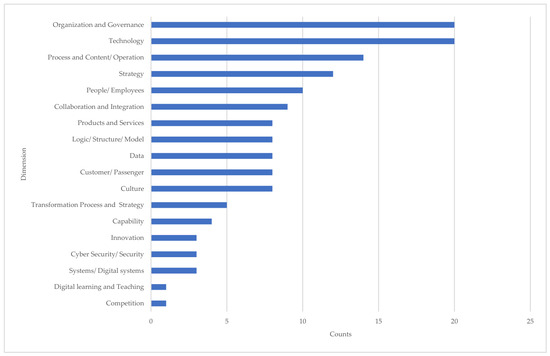
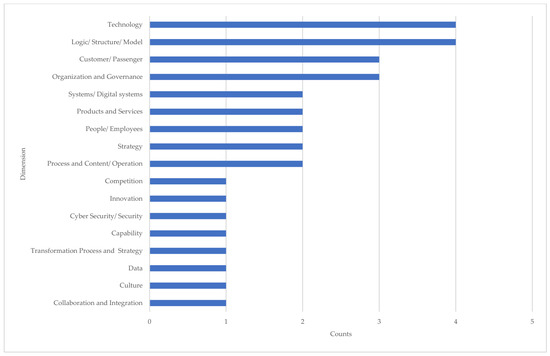
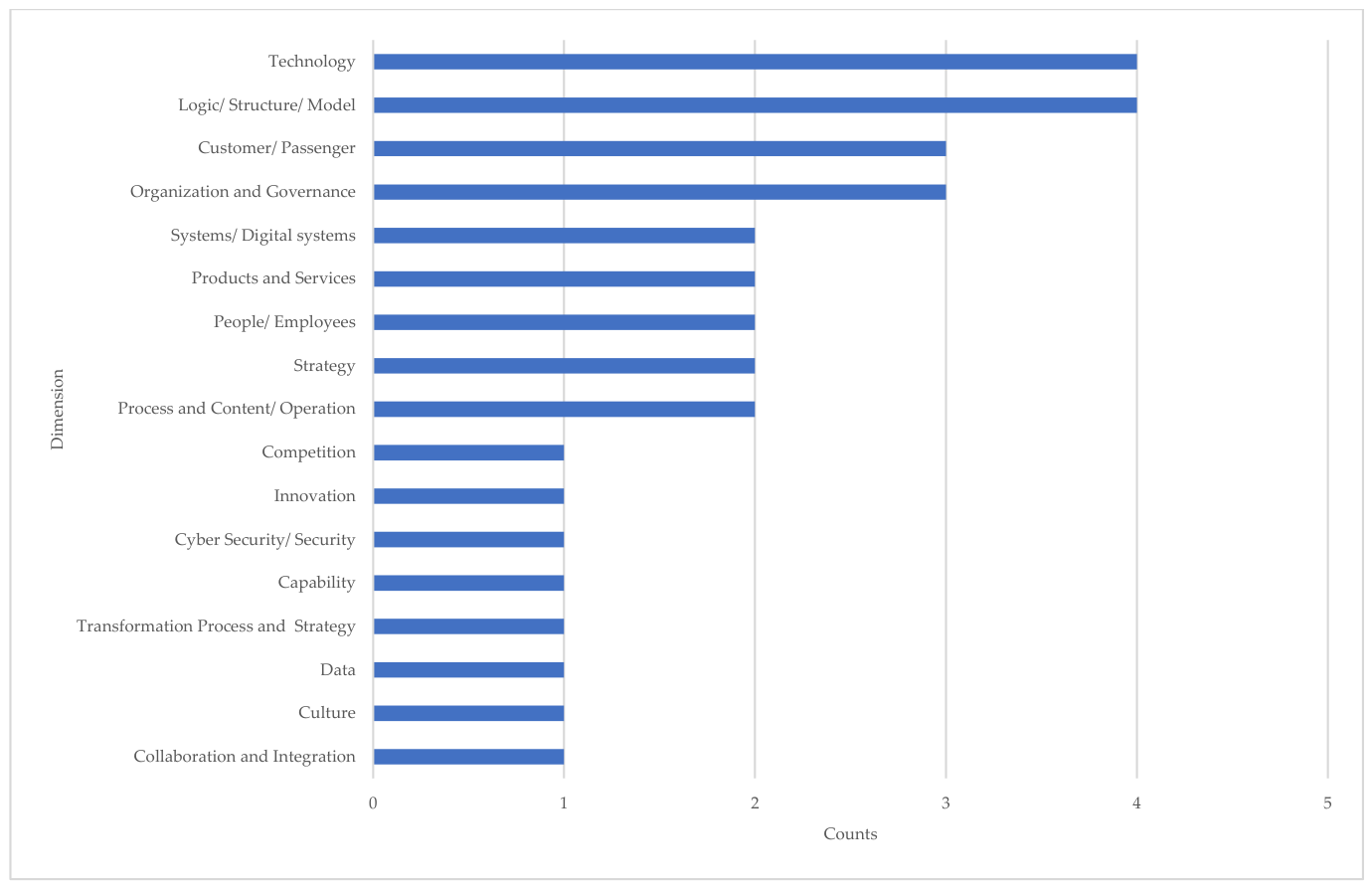
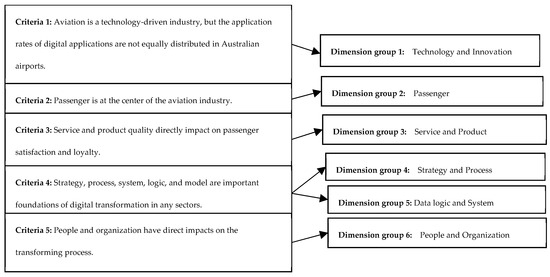
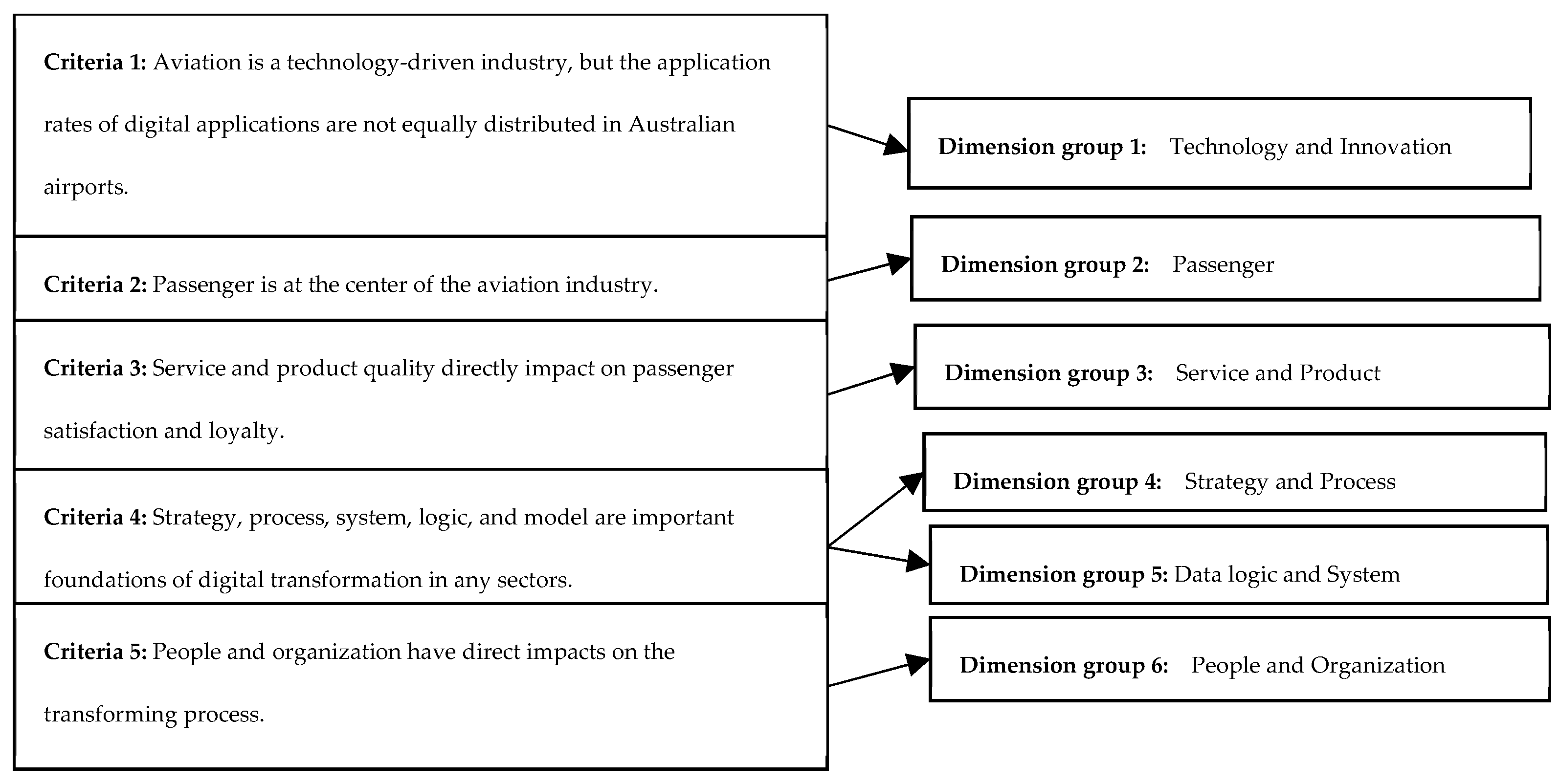

Disclaimer/Publisher’s Note: The statements, opinions and data contained in all publications are solely those of the individual author(s) and contributor(s) and not of MDPI and/or the editor(s). MDPI and/or the editor(s) disclaim responsibility for any injury to people or property resulting from any ideas, methods, instructions or products referred to in the content. |
© 2026 by the authors. Licensee MDPI, Basel, Switzerland. This article is an open access article distributed under the terms and conditions of the Creative Commons Attribution (CC BY) license.