


Abstract
Low-Speed near-space aerostats (e.g., stratospheric airships and high-altitude balloons) are low-speed unmanned aerial vehicles (UAVs) extensively utilized in communication coverage, remote sensing applications, environmental monitoring, aviation support, and other fields. A paramount challenge constraining their precise and stable operation is the leakage of buoyant gas, such as helium (He), in the harsh and unpredictable near-space environment. One of the primary causes of gas leakage is the degradation of their dedicated sealing rings. This study aims to clarify the aging mechanisms of high-performance rubber seals in near-space environments and establish a reliable service life prediction model to address the gas leakage risk of unmanned platforms. Two widely used high-performance rubber materials—ethylene propylene diene monomer (EPDM) and chloroprene rubber (CR)—were subjected to accelerated aging experiments under simulated near-space environment conditions. Their degradation was then quantified through performance degradation characterization, covering mass loss, hardness, elastic deformation, and tensile strength. A predictive model was established to estimate the mass loss rates and service life of the seals. The model revealed that EPDM exhibits superior performance to CR under near-space conditions: the aging behavior is strongly dependent on material composition, thickness, and preload, while being independent of outer diameter. Results show EPDM seals have a near-space service life of 300 days (50% longer than CR’s 200 days), with aging dependent on material composition, thickness (2 mm seals degrade 110% slower than 0.5 mm ones), and preload, but independent of outer diameter. These results provide actionable design guidelines for optimizing seal materials and geometries in aerostat pressure systems, thereby advancing the development of innovative low-speed UAV technologies and the successful application of these technologies in the emerging near-space field. These findings and the proposed methodology are directly applicable to sealing system optimization for various near-space unmanned platforms (e.g., stratospheric UAVs, high-altitude autonomous balloons), enhancing their long-duration operational reliability and mission success rate in extreme environments.
1. Introduction
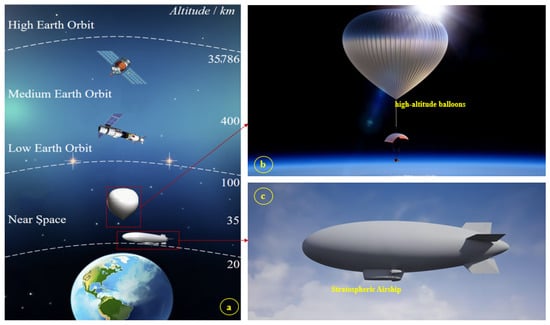
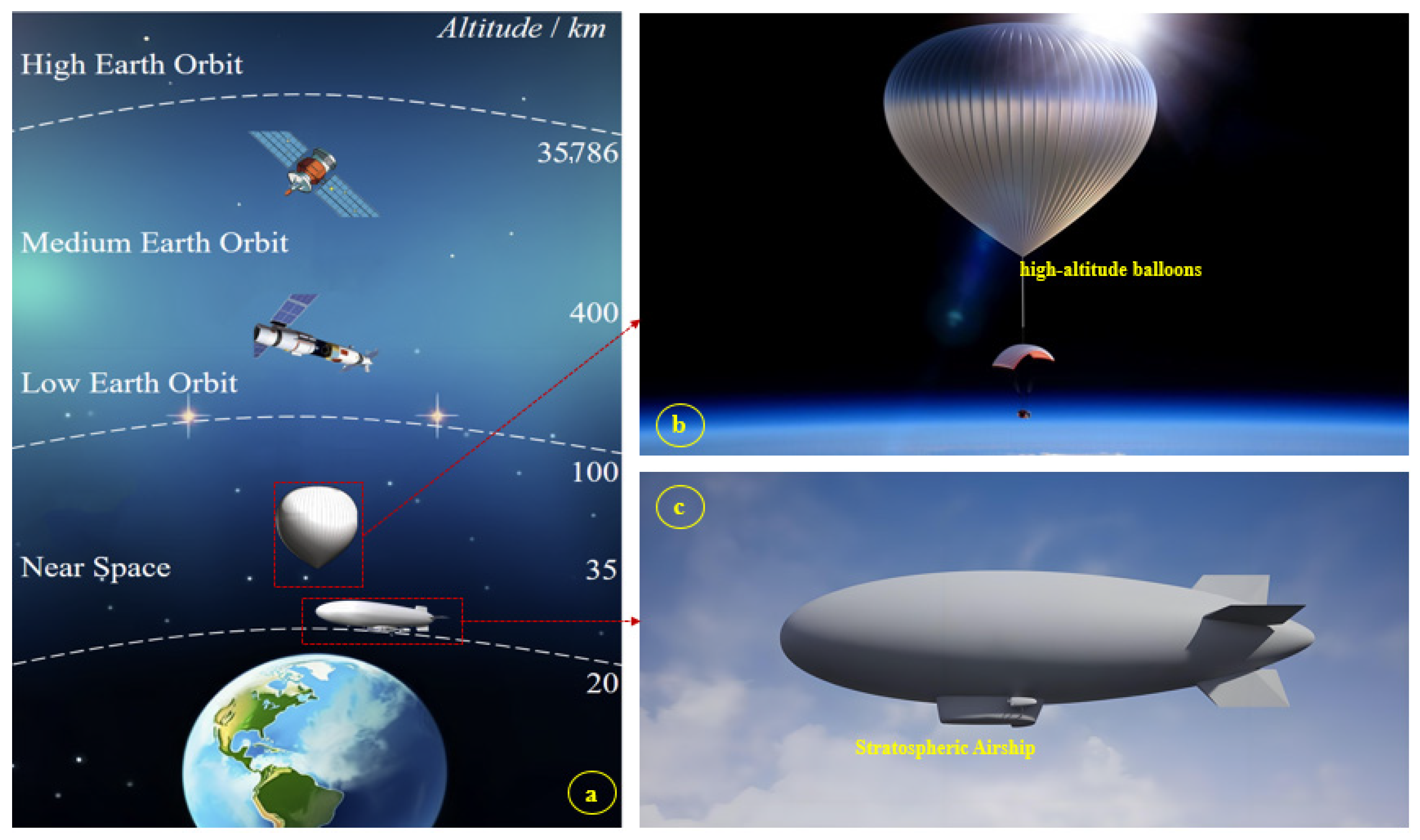
Near-space (20–100 km altitude) has emerged as a strategic frontier for aerospace applications [1] (see Figure 1), where low-speed unmanned aerial vehicles (UAVs) must contend with extreme environmental perturbations. As UAVs capable of operating in this region, near-space aerostats (including stratospheric airships and high-altitude balloons) serve as highly effective platforms for near-space exploration. Notably, the existence of a “quasi-zero wind zone” in near-space [2] enables these aerostats to realize long-term station-keeping, supporting critical missions such as environmental monitoring and communications. For instance, near-space aerostats can act as high-altitude relay platforms, extending internet coverage to remote or underserved regions [3]. As core components of near-space unmanned platforms, these aerostats must maintain structural integrity and sealing performance to support autonomous, long-duration missions without human intervention—making seal reliability a decisive factor for unmanned platform deployment.
Figure 1.
Atmospheric layer distribution and vehicle operational envelopes. (a) Schematic diagram of near-space altitude; (b) Operational altitude of high-altitude balloons; (c) Operational altitude of stratospheric airships.
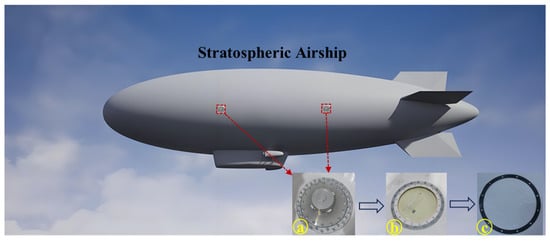
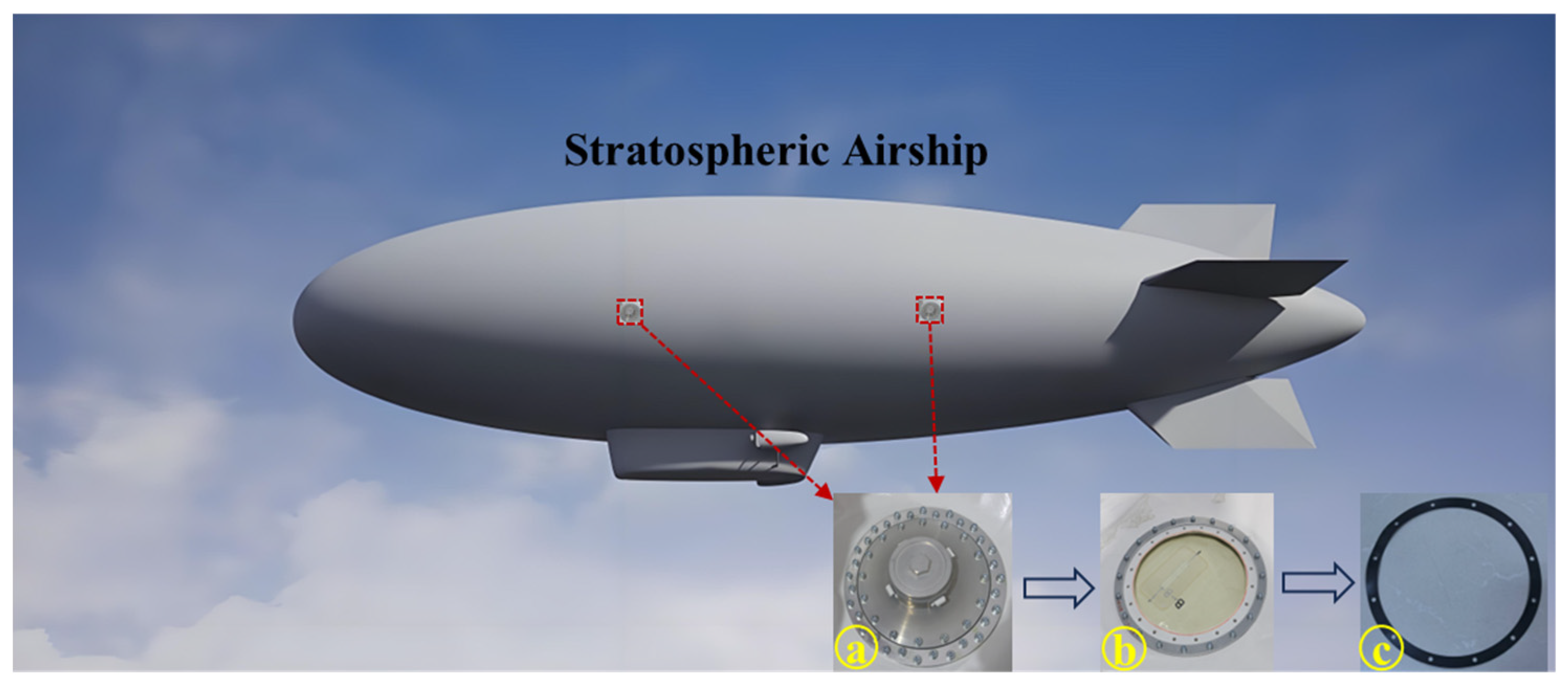
The reliability of near-space aerostats is the prerequisite for ensuring their long-duration flights [4]. Failure mechanism analysis, reliability assessment, and lifetime prediction of critical components provide essential guidance for evaluating system reliability and managing spare components [5]. The structural design of the pressure regulation system in near-space aerostats typically employs an “active air replenishment–passive pressure relief” method to achieve pressure equilibrium [6]. High-performance rubber seals (e.g., EPDM, CR), as critical components of this system, are precision-installed between pressure regulation valves and aerostat envelopes to prevent helium leakage, thereby maintaining the required internal pressure (see Figure 2). The near-space environment, characterized by synergistic extreme conditions (rarefied air, cryogenic temperatures, high ozone concentrations, and intense ultraviolet radiation), poses material degradation challenges to these seals. To date, the aging mechanisms of rubber seals and the accurate prediction of their service life under such environments remain poorly understood—a gap this study aims to address.
Figure 2.
Structural configuration and sealing mechanism of high-performance rubber ring. (a) Connecting flange with inflatable interface; (b) Independent connecting flange; (c) Rubber ring material section.
Extensive research has been conducted on the failure mechanisms and reliability evaluation of rubber seals. Yang et al. [7] investigated the effects of pre-compression and sealing pressure on the sealing performance of O-rings in water hydraulic systems. Gao et al. [8] developed a MATLAB-based reliability model combining gray prediction theory with optimal confidence limits, enabling the assessment of nuclear power plant seals. A small-sample reliability method using virtual augmented samples and Bootstrap techniques has been proposed for high-reliability rubber seals [9,10]. Li et al. [11] quantified the synergistic aging effects of temperature cycles on rubber seals, revealing significant permanent deformation at high temperatures. Liu et al. [12] established a fluid–solid coupling model in ABAQUS to evaluate seal performance under cryogenic conditions, applying Persson’s theory to calculate the leakage rate. Yu et al. [13] evaluated the fatigue resistance of high-performance aramid fiber-reinforced rubber seals, while Wu et al. [14] employed finite element analysis to optimize the structural design parameters of deep-sea seals. Roy et al. [15,16] applied adaptive support vector regression for the structural reliability analysis of rubber seals. Kömmling et al. [17] investigated the 5-year aging behavior of EPDM and fluororubber seals; however, their lifetime models ignored multi-stressor coupling. To contextualize the accelerated degradation under near-space synergistic stressors, we reference Celina et al. [18], whose comprehensive review confirms that aerospace-relevant environments (vacuum, thermal cycling, radiation) induce degradation rates 5–20 times faster than terrestrial natural aging for elastomeric seals. In this study, EPDM seals exhibited a 2.03% mass loss after 300 days of near-space simulation. Based on the Arrhenius acceleration model (validated in aerospace polymer studies), this exposure corresponds to only ~1.7 years of equivalent ground aging. The observed mass loss magnitude—approaching typical 5-year natural aging thresholds for fluoropolymers (e.g., <3% mass loss for FKM per long-term field data summarized in)—demonstrates the intensified aging effect of near-space conditions.
1.1. Research Gap and Novelty
Existing studies (e.g., [16,17]) ignored multi-stressor coupling in near-space environments, lacked quantitative analysis of structural parameters (thickness, outer diameter) on seal aging, and failed to establish a prediction model tailored to near-space unmanned platform requirements.
This study’s novelty is threefold: ① Developed a multi-factor accelerated aging protocol simulating near-space synergistic stressors (first to integrate cryogenic cycling, vacuum, and preload); ② Quantified the independent/influential factors of seal aging (first to confirm outer diameter irrelevance); ③ Established a Weibull-E-Bayes model validated by FEA (relative error <5%) for unmanned platform seal lifespan prediction.
1.2. Research Questions
To address the identified research gap, this study focuses on three core research questions:
- What are the degradation mechanisms of EPDM and CR seals under near-space synergistic extreme conditions (cryogenic cycling, vacuum, mechanical preload)?
- How do material composition, thickness, outer diameter, and preload affect the aging behavior and service life of near-space seal materials?
- Can a reliable service life prediction model be established to guide the design and lifespan management of seals for near-space unmanned platforms?
This paper aims to elucidate the failure mechanism of rubber seals in a near-space environment and to establish a robust lifetime prediction framework. The key contributions are summarized as follows:
- Engineering significance: For the first time, the gas leakage mechanism at rigid-flexible interfaces (e.g., valve/flange-to-envelope connections) has been systematically analyzed, enabling optimized sealing design for near-space unmanned platforms and addressing key reliability bottlenecks limiting autonomous mission duration.
- Technical innovation: A pioneering multi-factor accelerated aging test protocol under synergistic near-space conditions has been developed to compare the degradation mechanisms of EPDM and CR seals, providing critical material selection and structural optimization guidelines for unmanned platform pressure regulation systems.
2. Materials and Methods
2.1. Test Materials and Environmental Parameters
Table 1 summarizes the operational environmental parameters for near-space aerostat rubber seals across different service phases, while Table 2 provides detailed specifications of the tested materials.
Table 1.
Service phases and extreme environmental conditions for high-performance rubber seals in near-space aerostats.
Table 2.
Specifications of test samples: Material types and dimensions, and purpose.
High-performance rubber seals from operational near-space aerostats, namely, the industry-standard EPDM and CR, were selected as test samples. All materials passed stringent aerospace-grade quality inspections with confirmed structural integrity.
All test samples and aging protocols are designed to match the actual operational conditions of near-space unmanned platforms, ensuring the derived conclusions and design guidelines are directly transferable to engineering practice for UAVs and autonomous aerostats.
2.2. Accelerated Aging Test Protocol
The accelerated aging test strictly refers to ASTM D573-14. The cryogenic cycling procedure complies with MIL-STD-810G Method 503.4. For the vacuum conditions, as there is no specific standard for rubber seals under vacuum-thermal coupling, our test parameters (pressure ≤ 10−2 Pa) were set in accordance with aerospace material testing guidelines (e.g., NASA TM-X-73305 [19]) and simulated the typical near-space environment.
Test samples were allocated to either a cryogenic chamber or an ambient warehouse to simulate near-space and ground storage conditions, respectively. Cryogenic chamber parameters: temperature accuracy ±1 °C; vacuum control accuracy ±0.1 kPa. Bolt torque wrench accuracy: ±0.1 N·m. The cryogenic chamber simulated near-space conditions with cyclic thermal loading (−85 °C to −45 °C, 12 h/phase) under 5 kPa vacuum for 1000 h (∼42 days), while the warehouse maintained standard conditions (5–20 °C, 30–70% RH, 1 atm). Before aging, all samples were cleaned with isopropanol to remove surface impurities, dried at 25 °C for 24 h, and stored in a desiccator to avoid moisture interference. Seal samples were divided into four test groups (Table 3) to evaluate synergistic degradation mechanisms, with control blocks assigned to Groups 1 and 3 for baseline comparison. Each test group included 4 parallel samples, and all measurements were repeated 3 times to ensure reproducibility.
Table 3.
Thermo-mechanical aging test matrix for seal performance evaluation.
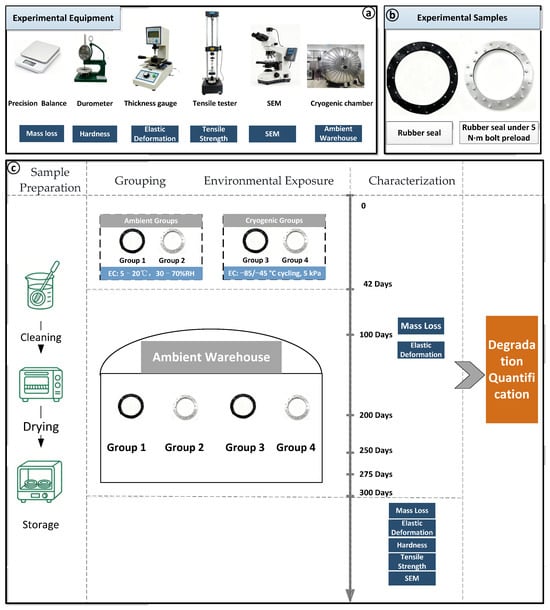
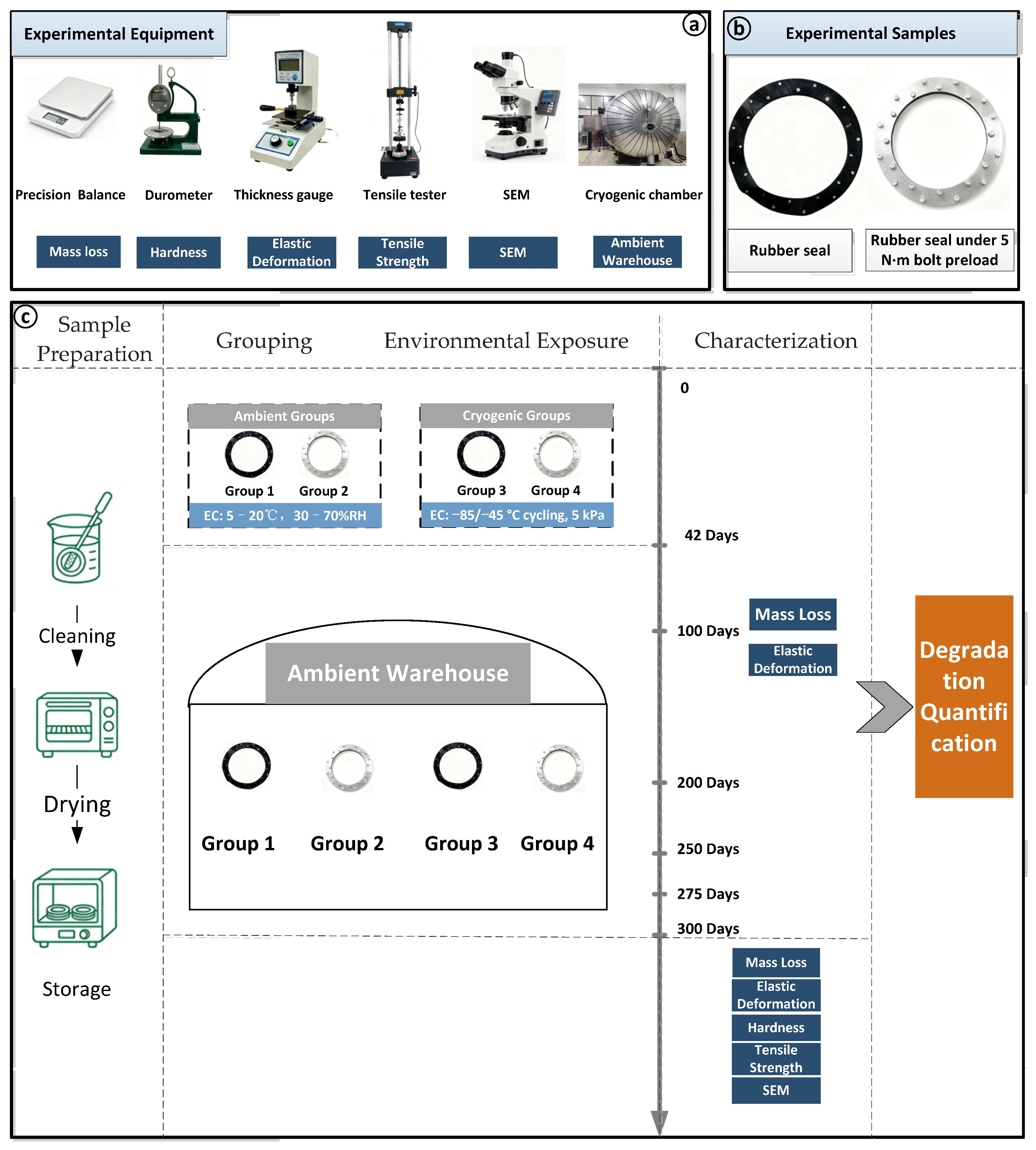
Figure 3 outlines the accelerated aging test workflow for high-performance rubber seals, including synergistic thermal-mechanical exposure and multi-stage performance characterization under simulated near-space conditions.
Figure 3.
Methodology of coupled thermal-mechanical aging tests for high-performance seals. (a) Experimental equipment; (b) Experimental samples; (c) Experimental flow chart: All groups undergo the same sample preparation and characterization steps, differing only in environmental exposure and preload conditions.
In Figure 3a, the manufacturers and models of the experimental equipment are as follows:
- Precision balance: FA2004, Shanghai Sunny Hengping Scientific Instruments Co., Ltd., Shanghai, China;
- Shore A durometer: LX-A, Shanghai Liuling Instrument Factory, Shanghai, China;
- Thickness gauge: HD-6, Tianjin Huayin Construction Engineering Instruments Technology Co., Ltd., Tianjin, China;
- Tensile tester: MTS E44.104, MTS Systems Corporation, Eden Prairie, Minnesota, USA;
- Scanning electron microscope (SEM): SIGMA HD, Carl Zeiss AG, Oberkochen, Germany.
2.3. Characterization Methods
The mass loss of a rubber seal is defined as:
represents the mass before the test, and represents the weight after the test.
The permanent deformation rate of compression is defined as [20]:
where is the original thickness and is the final thickness. Compression set () was calculated per ASTM D395-18 standard [21]—after unloading the specimen, the thickness () was measured exactly 30 min later in a standard environment (23 ± 2 °C, 50 ± 5% RH) to eliminate elastic recovery interference.
- Surface Topography: SEM (2 μm, 50 μm magnifications) and surface roughness (Ra) measurements.
- Mass Loss: Precision balance (accuracy ±0.1 mg), calculated via Equation (1). Uncertainty analysis was performed based on GUM: relative standard uncertainty () = 0.02%.
- Compression Set: Thickness measurement (accuracy ±0.01 mm) pre- and post-test, calculated via Equation (2). = 0.05%.
- Shore A Hardness: GB/T 531.1-2008 [22] protocol, 5 measurements per sample. ur = 0.03%. All measurement results are reported as mean ± expanded uncertainty ().
- Stress–Strain Behavior: GB/T 528-2009 [23] protocol (Type 2). Tensile speed = 500 mm/min. Tensile strength calculated via Equation (3).
- FEA Simulation: ABAQUS (2022) software. Rubber seal: C3D8R elements (64,200 elements, size 0.5–1 mm); aluminum alloy flange: C3D4 elements (25,400 elements, size 2–3 mm). Mesh convergence verified (element size ≤ 0.5 mm, maximum stress change < 2%).
Test Repeatability
All tests were conducted with 4 parallel samples and 3 repeated measurements per sample. Repeatability evaluated by relative standard deviation (RSD):
- -
- Mass loss: RSD = 1.2–1.8%
- -
- Compression set: RSD = 0.9–1.5%
- -
- Hardness: RSD = 0.8–1.3%
- -
- Tensile strength: RSD = 1.5–2.0%
All RSD < 2.0%, indicating excellent repeatability.
3. Results
3.1. Surface Topography Evolution Analysis
After 42 days’ exposure, both seal types showed no surface cracks (Ra < 1 μm) (Table 4).
Table 4.
Surface degradation characteristics of elastomers under extreme conditions.
After 300 days under cryogenic cycling (−85 °C to −45 °C, 5 kPa), chloroprene seals developed surface tackiness (adhesive failure) with roughness increasing to 2.1 ± 0.3 μm, whereas EPDM retained gloss (>80 GU) and smoothness (Ra = 0.5 μm). Although EPDM’s surface appeared intact, previous research [20] has confirmed that sub-surface crosslink density changes could occur without visible morphology alterations.
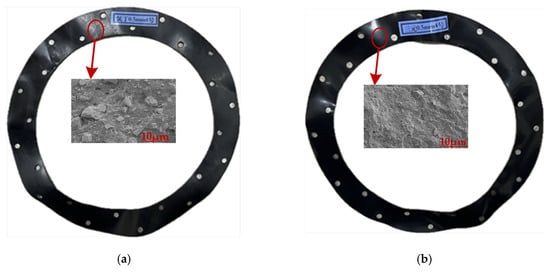
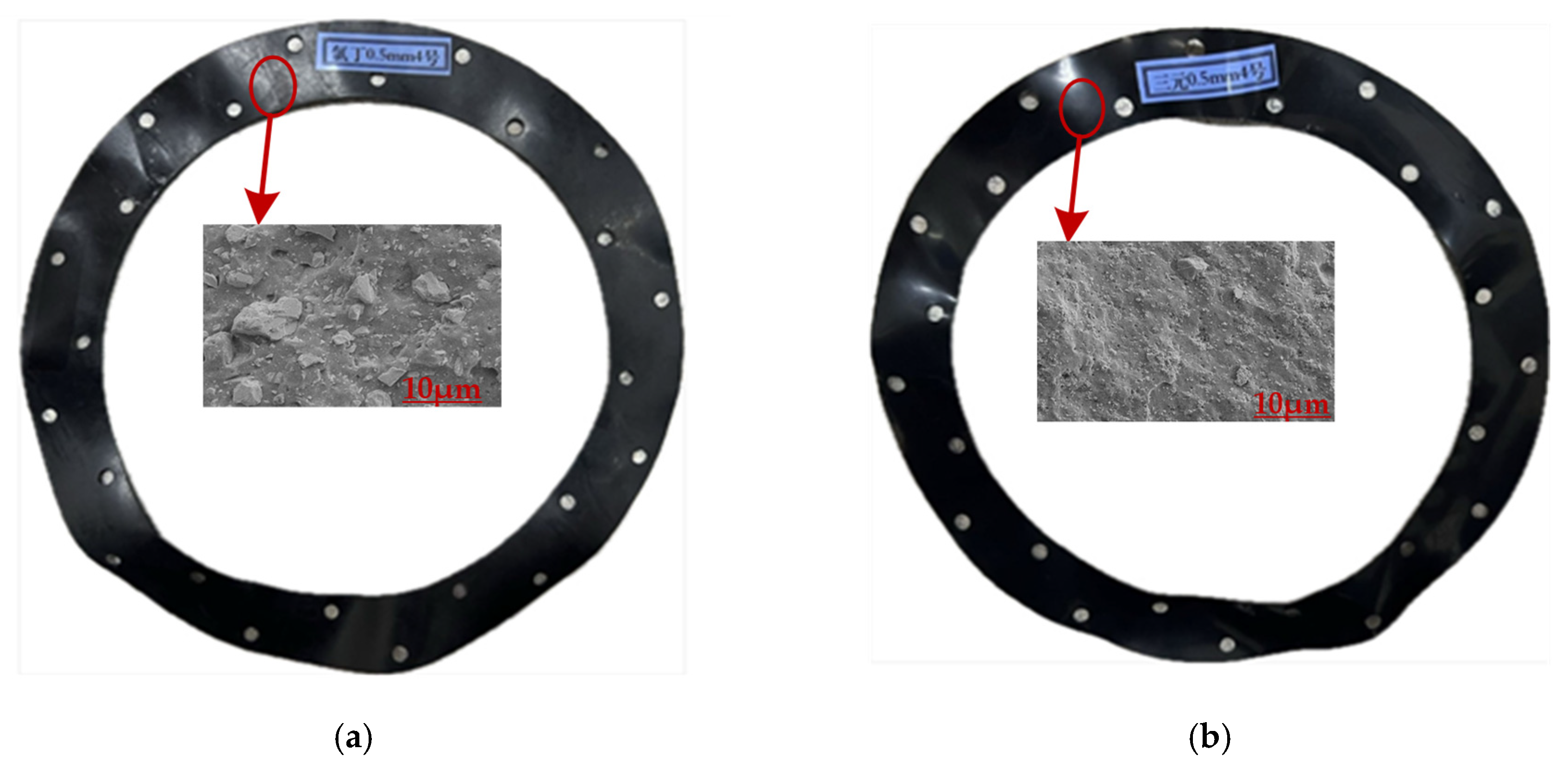
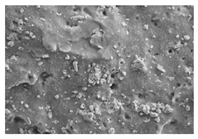
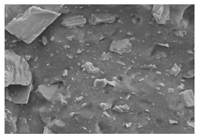
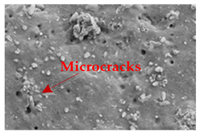
As illustrated in Figure 4, CR exhibits obvious microcrack initiation and surface peeling in the 10 μm high-magnification inset, while EPDM maintains a uniform and undamaged surface morphology.
Figure 4.
Comparative surface morphology of elastomer seals after accelerated aging: (a) CR after 42 days cryogenic cycling (the Chinese label “氯丁 0.5mm4 号” in the image refers to “ CR seal with 0.5 mm thickness, Test Group 4”; 10 μm inset shows microcrack initiation and surface peeling); (b) EPDM rubber after 300-day exposure (the Chinese label “三元 0.5mm4 号” in the image refers to “ EPDM seal with 0.5 mm thickness, Test Group 4”; 10 μm inset shows smooth, undamaged surface morphology).
CR’s surface becomes rough and tacky (adhesive failure) due to plasticizer migration; EPDM maintains a glossy, smooth surface (oxidative crosslinking without obvious morphological damage), confirming its suitability for long-duration near-space service.
3.2. Mass Loss Analysis
In evaluating rubber seal performance, mass loss serves as a key degradation metric.
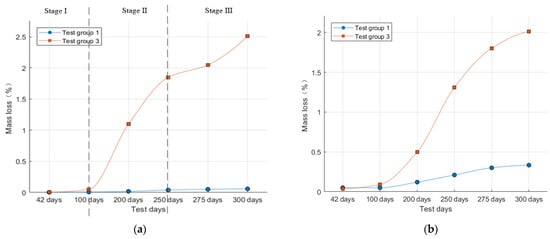
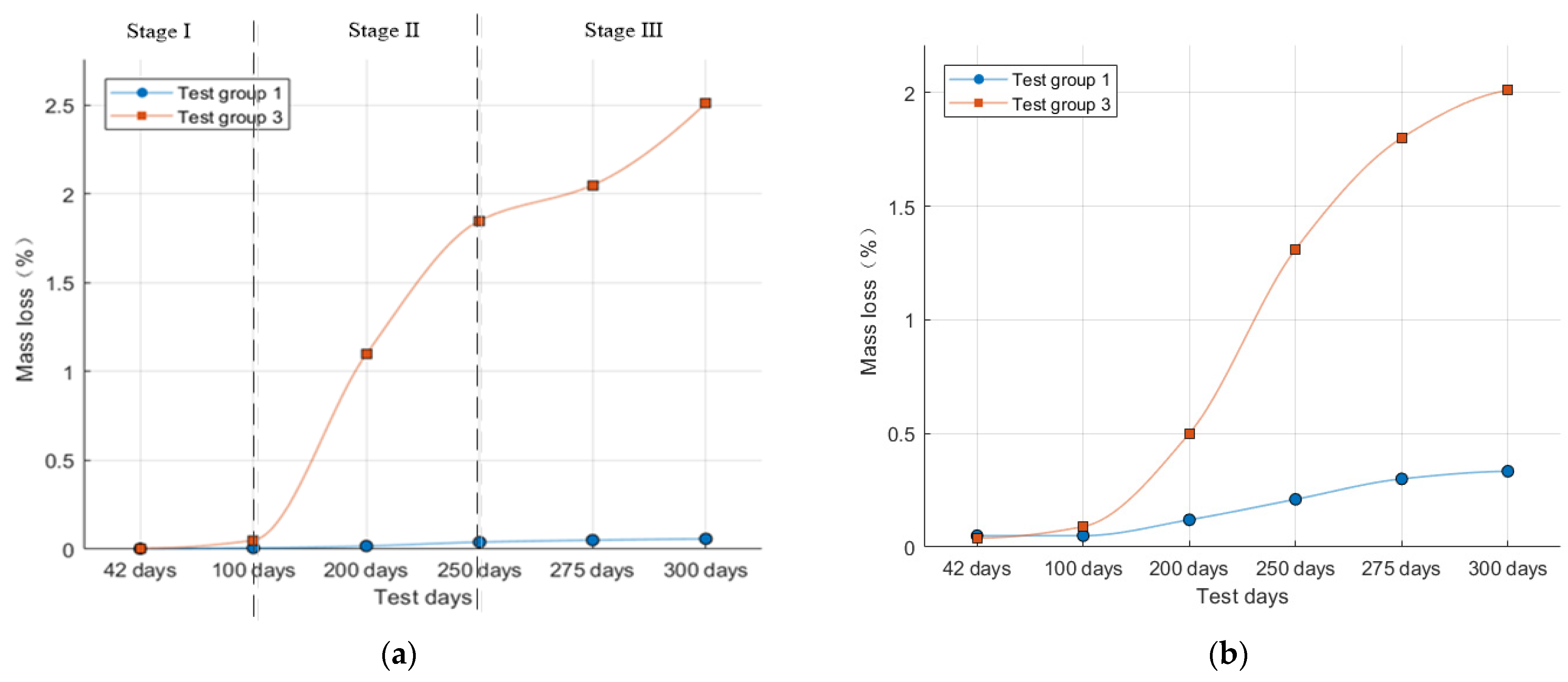
Figure 5 presents the time-dependent mass loss rates of two types of rubber blocks. After 300 days’ exposure to simulated near-space conditions, chloroprene samples (test group 3) exhibited significantly higher mass loss (2.52 ± 0.15%) compared to EPDM (2.03 ± 0.12%), consistent with their differential susceptibility to thermal-oxidative degradation.
Figure 5.
Differential mass loss behavior of rubber blocks under extreme conditions: (a) Chloroprene exhibiting three-stage degradation; (b) EPDM showing linear mass loss trend.
3.2.1. Degradation Stage Explanation (CR)
- Stage I: Initial slow degradation stage
Characteristics: Mild physical aging of CR matrix (e.g., slight volatilization of low-molecular-weight plasticizers, weak chain relaxation) with slow and gentle decline of key performance indices (mass loss rate < 0.5%/100 d); and no microcrack initiation is observed in the material structure.
- Stage II: Rapid accelerated degradation stage
Characteristics: Severe destruction of the CR molecular cross-linking network (oxidative cleavage of C-Cl bonds and main chain scission) induced by synergistic stress; sharp decline of performance indices (mass loss rate ~1.2%/100 d); and obvious microcrack initiation and propagation appear on the CR seal surface (verified by SEM characterization).
- Stage III: Decelerated saturation degradation stage
Characteristics: CR molecular network tends to be stable after severe cleavage (formation of stable small molecular fragments); the degradation rate of performance indices gradually decreases and approaches a saturation state (mass loss rate < 0.3%/100 d).
3.2.2. Linear Mass Loss of EPDM
EPDM’s linear mass loss (R2 = 0.98) is attributed to its saturated polymer backbone, which resists rapid plasticizer migration and undergoes uniform oxidative crosslinking [24]. Unlike CR (with unsaturated double bonds), EPDM’s oxidation proceeds at a constant rate (0.0068%/day) without obvious stage changes. This linear trend is consistent with the findings of Zhang et al. [25] and Su et al. [26], who reported EPDM’s linear mass loss under long-term low-temperature oxidative conditions.
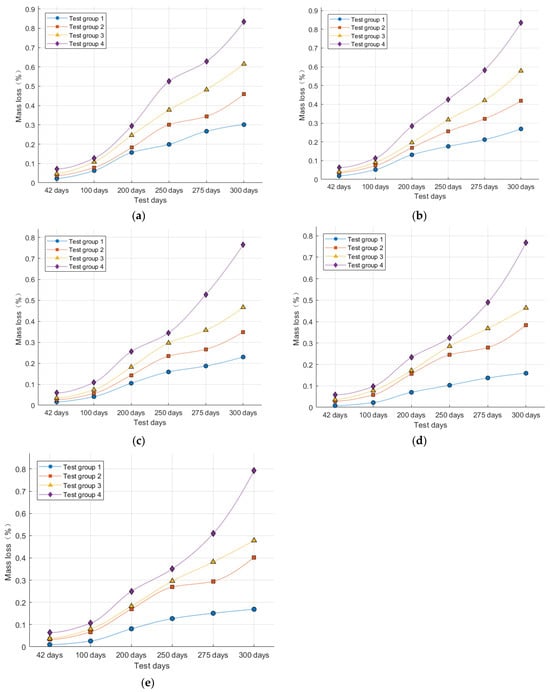
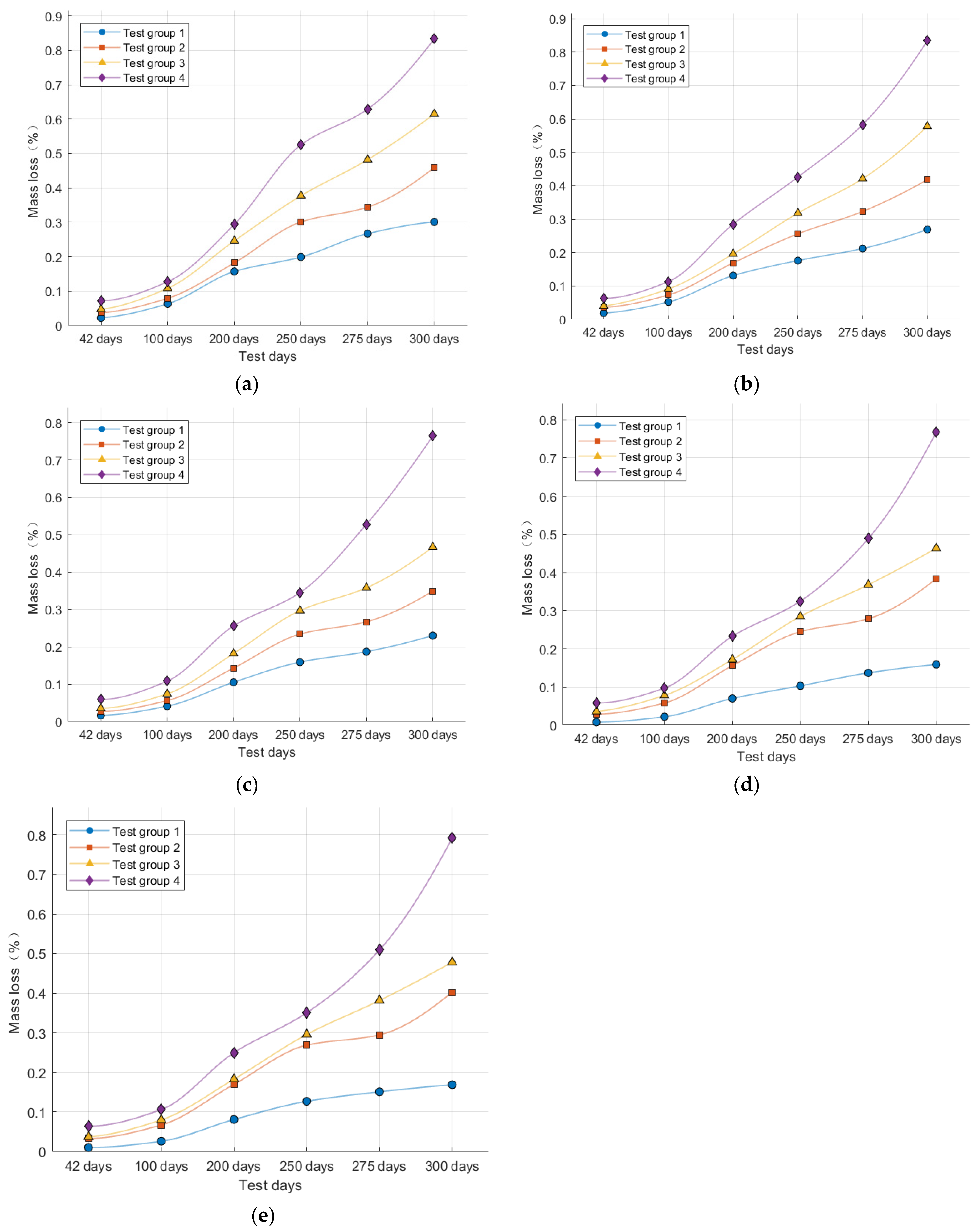
Figure 6 presents the time-dependent mass loss rates of the 20 groups of rubber rings.
Figure 6.
Differential mass loss behavior of rubber seals under extreme conditions: (a) Chloroprene (220 × 170 × 0.5 mm); (b) Chloroprene (220 × 170 × 1 mm); (c) Chloroprene (220 × 170 × 2 mm); (d) EPDM (220 × 170 × 0.5 mm); (e) EPDM (236 × 170 × 0.5 mm).
Rubber blocks exhibit higher mass loss (2.52% for CR blocks vs. 0.8% for CR seals) because blocks lack the structural constraint of seal geometry. Seals are installed between flanges with preload, which compresses the material and reduces molecular mobility—slowing plasticizer migration and oxidative degradation [27]. In contrast, unconstrained blocks have greater free volume, accelerating mass loss and degradation. This difference confirms the importance of structural constraints in seal performance.
Rubber seals experience accelerated mass loss under cryogenic exposure or preloading stress due to synergistic degradation mechanisms. At low temperatures, rubber undergoes cryogenic crystallization, reducing molecular mobility and increasing brittleness, while preloading induces stress-driven chain scission, increasing free volume. Concurrent oxidative degradation at unsaturated sites (FTIR peak at 1710 cm−1) [28] further promotes crosslinking and chain scission, collectively reducing the elastomeric resilience by 35–50% after 300 thermal cycles. These processes—low-temperature embrittlement, stress-induced microstructural rearrangement, and oxidative chain reactions—compromise mechanical properties and service life, critically impacting seal performance in aerospace applications.
3.3. Deformation Behavior Analysis
Deformation of rubber seals was evaluated by measuring the thickness of preloaded samples (Test groups 2 and 4) before and after the 300-day testing period.
The permanent compression set (CA) exhibits an inverse correlation with the material’s elastic recovery capability, where a reduced CA value corresponds to enhanced resilience—a decisive factor for ensuring reliable sealing performance in near-space UAVs during extended operation at 20 km altitude.
The compression set (CA) characteristics of aerospace elastomeric seals under simulated near-space conditions are quantified in Table 5. The data demonstrate that:
Table 5.
Comparative evaluation of permanent compression Set for CR and EPDM Sealing elements.
- EPDM seals exhibit superior cryogenic stability (CA = 1.7–2.0%) compared to CR seals (CA = 2.0–4.2%). EPDM’s lower CA stems from its saturated backbone resisting cryogenic crystallization.
- An increase in seal thickness from 0.5 mm to 2 mm results in a 110% elevation in CA values.
- Synergistic effects of cryogenic exposure and preload stress accelerate permanent deformation rates by 18–22%.
- Minimal batch-to-batch variation (ΔCA < 0.3% between Test Groups) confirms process stability.
During deformation, CR undergoes a partial crystalline phase transition under cryogenic conditions: the amorphous region converts to a crystalline phase (crystallinity increases from 8% to 15% [29]), leading to reduced elasticity and increased permanent deformation. In contrast, EPDM’s saturated structure inhibits cryogenic crystallization (crystallinity remains <5% [30]), maintaining a stable amorphous phase and thus lower compression set.
For unmanned platforms requiring long-term station-keeping (e.g., stratospheric communication UAVs), EPDM’s low compression set ensures sustained sealing performance, reducing the risk of gas leakage-induced mission failure during autonomous operation
3.4. Shore A Hardness Evaluation
The Shore A hardness of two elastomeric seal materials—CR and EPDM—was systematically measured before and after 300 days of exposure to simulated 20 km altitude conditions, following GB/T 531.1-2008 testing protocols.
The comparative analysis of Shore A hardness data in Table 6 and Table 7 reveals three key findings for aerospace rubber seals under simulated near-space conditions:
Table 6.
Baseline Shore A hardness of CR seals pre-aging.
Table 7.
Post-aging hardness degradation of CR seals after 300 thermal cycles.
- Temperature Stability: The negligible variation in hardness values between thermally cycled Groups 1/3 and control Groups 2/4 confirms cryogenic exposure exerts minimal influence on intrinsic material hardness.
- Preload-Induced Degradation: A significant 15.8–24.6% hardness reduction in preloaded specimens (Groups 2/4) versus non-preloaded counterparts (Groups 1/3) demonstrates the critical impact of sustained mechanical stress during 300-day aging.
- Mechanistic Insight: Cross-sectional Scanning Electron Microscopy (SEM) analysis verifies that constant 25% compression preload accelerates microcrack propagation via polymer chain scission, particularly in 2 mm-thick seals where hardness decreased by 24.6 ± 2.1%.
3.5. Stress–Strain Behavior Analysis
The tensile strength of chloroprene rubber (CR) and ethylene propylene diene monomer (EPDM) aerospace sealing elements was determined following GB/T 528-2009 for vulcanized rubber testing.
Tensile test specimens were prepared according to GB/T 528-2009 Type 2, thickness = sample original thickness (0.5 mm/1 mm/2 mm for seals). The tensile speed was set to 500 mm/min, consistent with industry standards for rubber materials.
The formula to calculate the tensile strength is:
where is the maximum force recorded in test, N; is the specimen width in the narrow region; is the thickness of the testing region, mm.
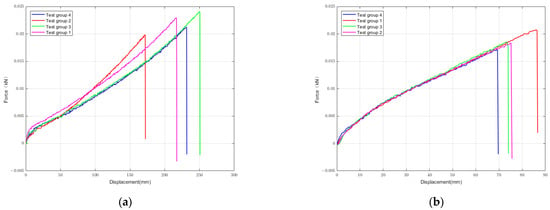
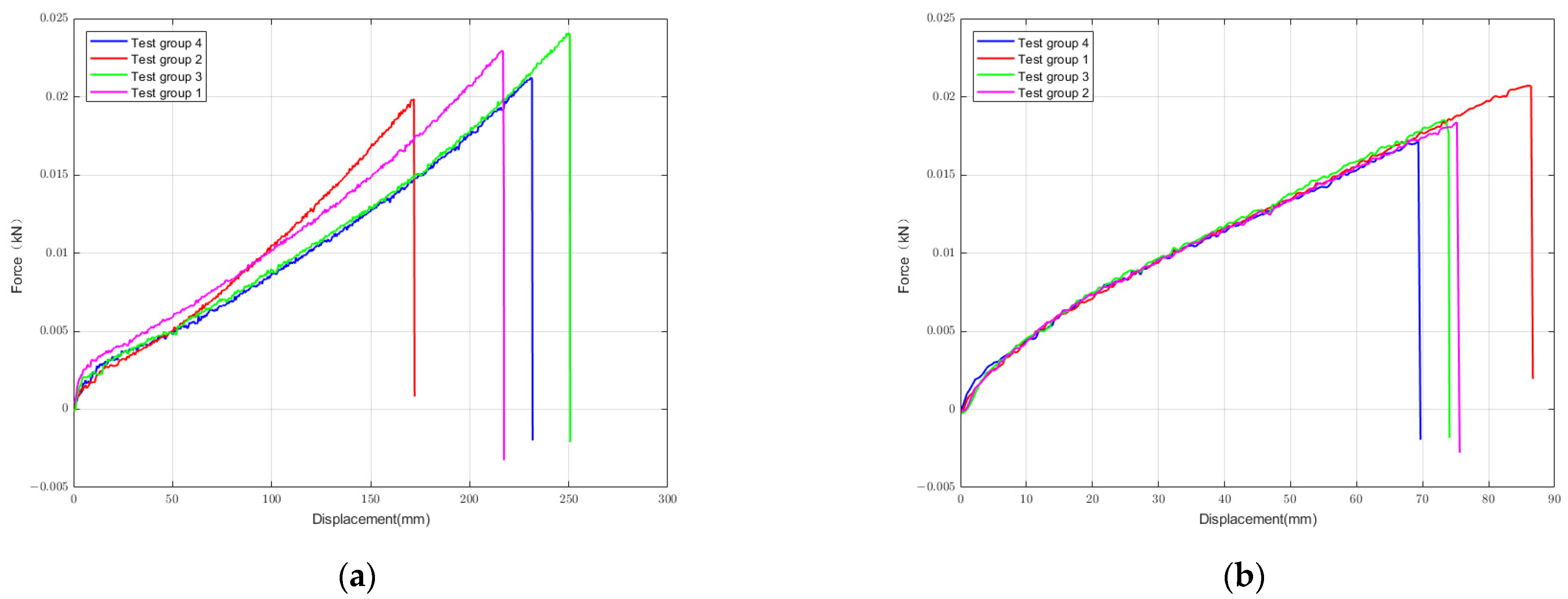
Figure 7 illustrates the tensile stress–strain characteristics of CR and EPDM aerospace seals after 300-day cryogenic aging.
Figure 7.
Comparative stress–strain behavior of aerospace sealing materials after 300-day cryogenic aging (−85 °C to −45 °C, 5 kPa): (a) Chloroprene rubber (CR) seal (220 × 170 × 0.5 mm); (b) EPDM seal (220 × 170 × 0.5 mm).
As evidenced by the stress–strain curves in Figure 7, both elastomers maintained exceptional elasticity post-aging, with distinct mechanical responses:
1. CR.
- Exhibits noticeable nonlinear elasticity;
- Mechanical properties exhibit significant variability across different test conditions.
2. EPDM.
- Maintains relatively consistent elasticity;
- Demonstrates stable performance under varying conditions.
EPDM’s smaller displacement under the same stress is due to two factors: ① Higher crosslink density (1.2 mmol/cm3 vs. CR’s 0.8 mmol/cm3 [31]), enhancing structural rigidity; ② Lower Poisson’s ratio (0.46 vs. CR’s 0.48 [32]), reducing lateral deformation. Additionally, EPDM’s resistance to cryogenic embrittlement ensures no microcrack formation during stretching, while CR’s microcracks (observed in SEM) increase effective displacement. These results align with Liu et al. [32] findings on EPDM’s superior mechanical stability.
Table 8 summarizes core strength data for all test groups.
Table 8.
Tensile Strength and Key Mechanical Parameters of Seals After Aging.
This contrast suggests EPDM’s molecular structure provides greater environmental stability compared to CR, making it more reliable for aerospace applications where consistent performance is critical.
3.6. SEM Analysis and Finite Element Modeling
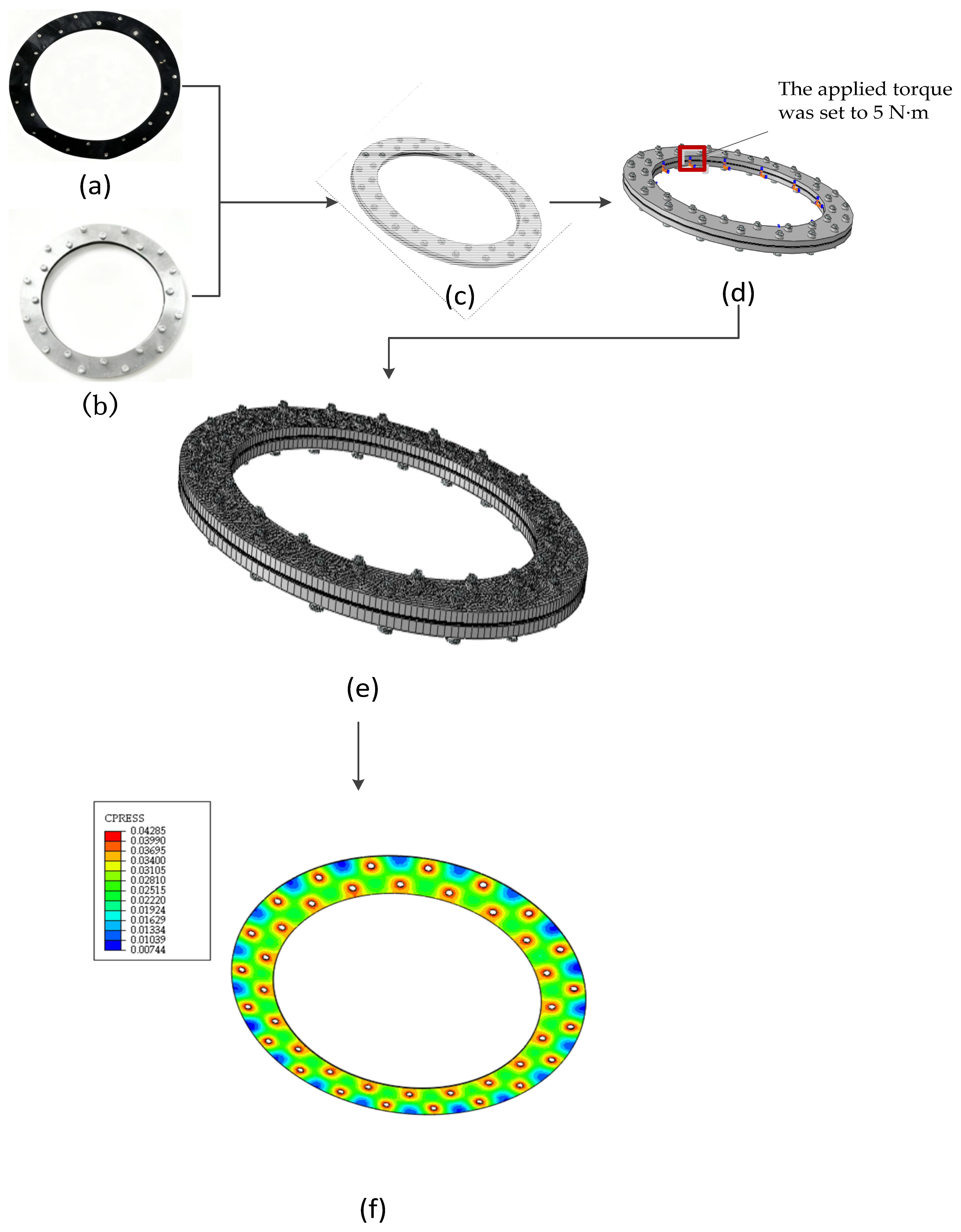
To investigate the preload effects on the sealing performance of aerospace rubber seals, a nonlinear finite element analysis (FEA) was implemented in ABAQUS [33,34]. The analyzed sample was a CR seal with a thickness of 1 mm and dimensions of 220 × 170 mm. The model was defined as follows: the flange material was aluminum alloy; the rubber seal was treated as an elastic–plastic material; the shear force of the bolt was neglected; and the applied bolt torque was set to 5 N·m.
FEA simulation purpose: ① Analyze stress distribution in seals under preload to identify stress concentration regions; ② Predict compression deformation of seals under near-space conditions; ③ Validate Mooney-Rivlin model parameters (C10, C01).
The bolt preload force was calculated using the standardized torque-preload relationship:
where represents the preload force of the bolt, kN; is the torque of the bolt, N·m; is the torque coefficient; is the nominal diameter of the bolt, mm.
Typically, the value of is related to the thread pitch diameter, thread helix angle, thread equivalent friction coefficient, and friction coefficient between the nut and the supporting surface of the connected component. Referring to formulas from the American Fastener Association and mechanical design handbooks, is approximately taken as 0.2. The C10 and C01 constitutive parameters of the rubber’s Mooney-Rivlin model are determined from the rubber seal material’s hardness. For CR with a hardness of around 70 Shore A, C10 = 0.736 MPa and C01 = 0.184 MPa [35]. FEM model used C3D8R (8-node linear brick, reduced integration) elements for rubber seals (elastoplastic material) and C3D4 (4-node linear tetrahedron) elements for aluminum alloy flanges (elastic material). Mesh convergence was verified by reducing element size from 1 mm to 0.3 mm (5 iterations). The maximum stress in the seal changed by <2% when the element size was ≤0.5 mm, confirming mesh independence.
Subsequently, the FEA was performed to obtain the stress distribution and elastic contact state under the 5 N·m preload. The chosen Mooney-Rivlin parameters yielded a simulated instantaneous compressive strain that was consistent with the initial elastic response observed in tests. The long-term compression set () value of ~2.2% for the CR seal was derived by extrapolating the experimentally measured degradation trend (Section 3.3, Table 5) for the specific stress condition identified by FEA. This extrapolated value showed good agreement with the experimentally measured of 2.4% after aging (relative error < 5%), validating the consistency between the modeled stress state and the observed material degradation pathway.
As shown in Figure 8, the highest stress concentration occurs near the bolt assembly area. Therefore, this region should be prioritized for fracture morphology analysis. To reduce the stress concentration factor by approximately 30–40%, the filet radius near bolt holes must be optimized to 1.2–1.5 times the seal thickness based on finite element analysis.
Figure 8.
Stress distribution in rubber seals. (a) Photograph of the rubber seal; (b) Photograph of the rubber seal under static preload; (c) Finite element model of the rubber seal; (d) Application of 5 N·m torque to the bolt in the model; (e) Meshing of the finite element model; (f) Contour plot of stress distribution in the rubber seal.
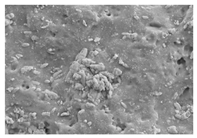
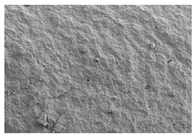
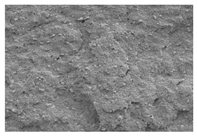
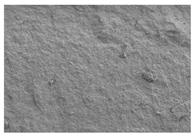
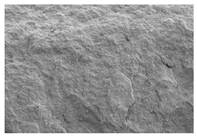
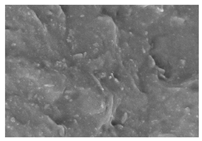
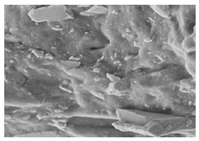
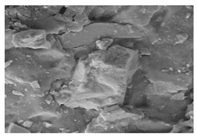
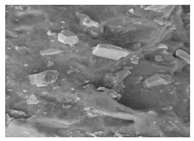
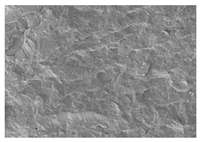
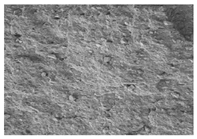
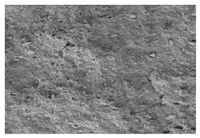
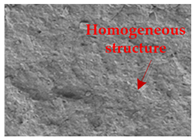
SEM analysis interpretation: CR’s surface exhibits microcracks, surface roughness, and plasticizer migration traces due to stress-induced chain scission and unsaturated bond oxidation. EPDM maintains a smooth, crack-free surface with homogeneous deformation, attributed to its saturated polymer backbone and uniform crosslink network [36]. These morphological differences directly explain EPDM’s superior durability.
Table 9 reveals that EPDM seals exhibit superior surface integrity compared to CR seals after aging, as evidenced by:
Table 9.
SEM morphological images of two rubber seal types.
- Smoother fracture surfaces (no microcracks vs. CR’s visible crack propagation);
- More homogeneous material deformation.
Interpretation: This difference stems from EPDM’s saturated polymer backbone, which provides:
- Better oxidative stability;
- More uniform stress distribution.
Conclusion: EPDM is the material of choice for aerospace sealing applications requiring long-term durability under cyclic thermal loads (complying with MIL-STD-1522A compliance [37]). The optimized filet radius design (1.2–1.5 × seal thickness) is particularly critical for unmanned platforms, as it minimizes stress concentration and extends seal service life, reducing the need for in-orbit maintenance—an unfeasible operation for most near-space UAVs.
3.7. Service Life Prediction
3.7.1. Service Life Model
Given the non-repairable nature of aerostat systems during operation, accurate reliability assessment and service life prediction of critical components are essential. The Weibull distribution is the most widely adopted model for reliability analysis due to its:
- Flexibility: Adaptable to various failure modes (wear, fatigue, corrosion);
- Empirical Validity: Proven effective in aerospace applications [38].
This study applies the two-parameter Weibull distribution to:
- Quantify time-to-failure probabilities;
- Identify dominant degradation mechanisms.
Seal failure definition (MIL-STD-1522A [35], ASTM D395-18 [23]):
- Mass loss rate exceeding 3%;
- Compression set (CA) exceeding 5%;
- Tensile strength reduction exceeding 30% compared to the initial value.
Service life is defined as the time during which any of the above conditions are met.
For a system where the time-to-failure (t) follows a two-parameter Weibull distribution, the statistical functions are defined as:
The cumulative failure probability function is:
The reliability function is:
In the above formulas, is the scale parameter and is the shape parameter.
The rubber seals investigated in this study represent high-reliability components, as evidenced by zero failures observed at all predetermined termination points during accelerated aging tests [39,40]. This resulted in a complete right-censored dataset, necessitating specialized statistical methodologies. Therefore, the E-Bayes formula was used to estimate the failure probability , and the failure probabilities at each termination point were obtained. Finally, the weighted least squares method was used to solve for the reliability distribution function of the rubber seals.
Model implementation steps:
- Prior distribution selection: Uniform distribution for failure probability;
- Likelihood function construction: Based on zero-failure data;
- Posterior estimation: E-Bayes formula to calculate failure probability at each test point;
- Linear regression: Double logarithm transformation of Equation (6);
- Bootstrap method: 1000 resamples to calculate 95% confidence intervals.
First, applying a double logarithm transformation to Equation (6) yields:
Let . Then:
Define weight as:
Then parameters and should take values, denoted by , respectively, such that takes the minimum value.
can be calculated by the following formula:
where .
Then parameters η and β can be obtained as
Furthermore, the Bootstrap method was introduced to obtain the 95% confidence interval estimate for the reliability parameters of rubber seals. The reliability assessment is shown in the following section.
3.7.2. Lifetime Evaluation
Service lifetimes were determined via trend extrapolation, as none of the three failure criteria were fully reached during the 300-day accelerated test (Table 10).
Table 10.
Complete Failure Criteria Evolution (Measured Data).
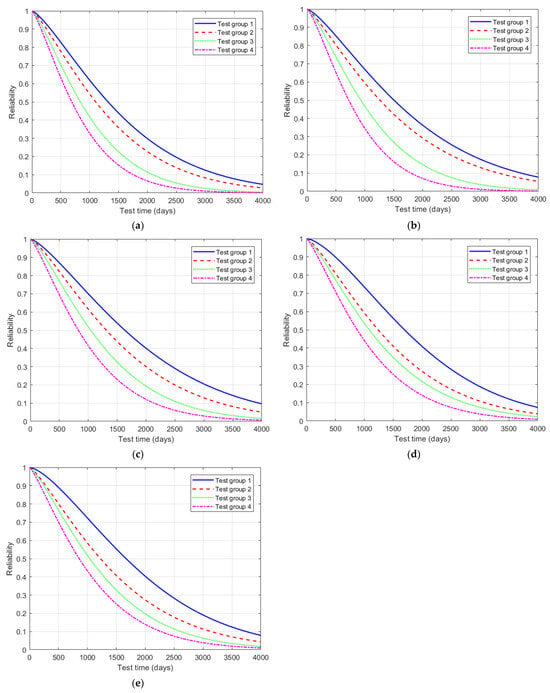
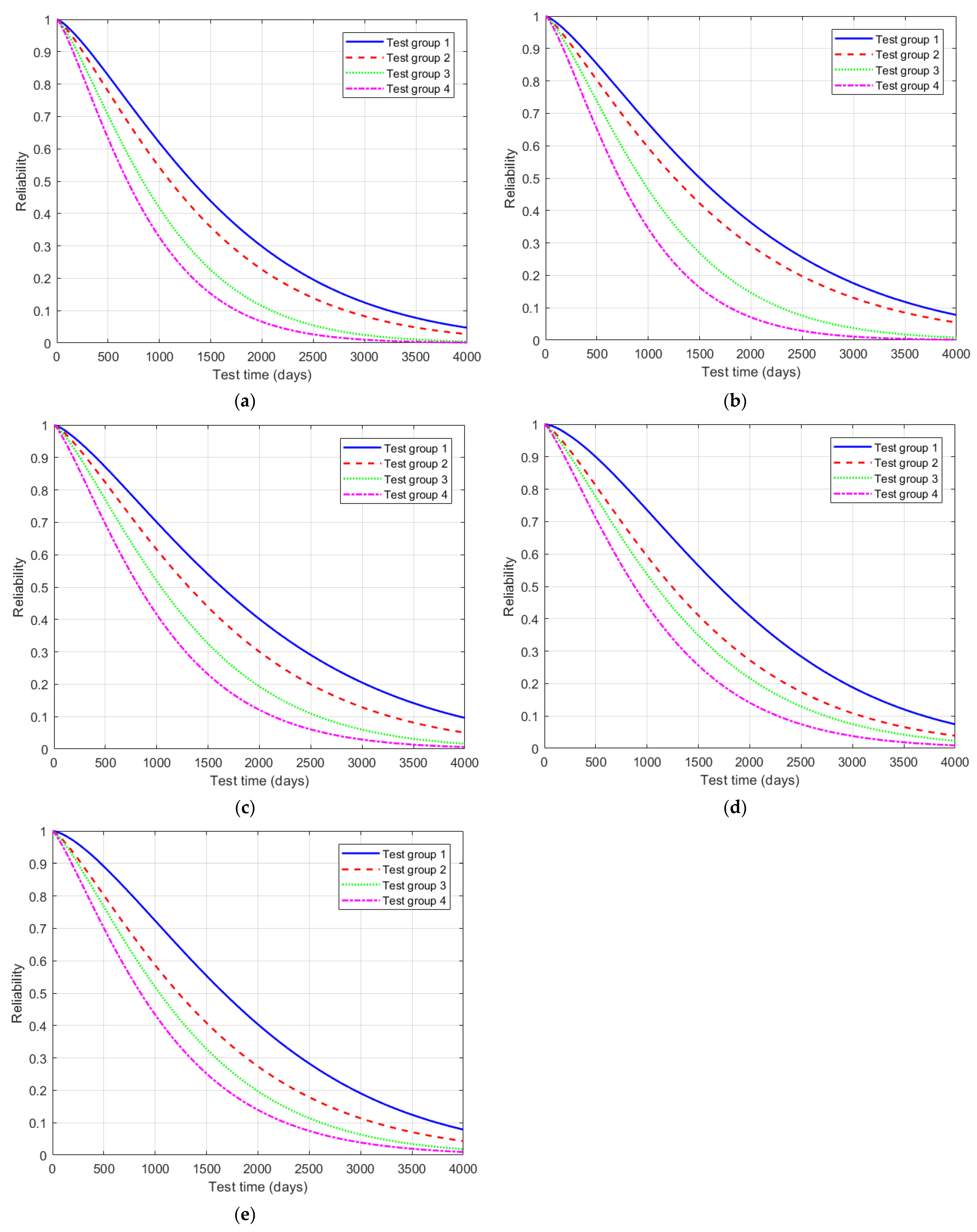
Reliability curves of various rubber seals are shown in Figure 9.
Figure 9.
Lifetime prediction of five rubber seal configurations under accelerated aging: (a) CR (220 × 170 × 0.5 mm); (b) CR (220 × 170 × 1 mm); (c) CR (220 × 170 × 2 mm); (d) EPDM (220 × 170 × 0.5 mm); (e) EPDM (236 × 170 × 0.5 mm).
The reliability analysis demonstrates that rubber seals exhibit time-dependent degradation, with slower decline at room temperature and accelerated deterioration under low-temperature conditions. Flange-mounted seals showed more significant reliability reduction compared to other configurations. Among specimens of identical material composition, the 0.5 mm thickness samples degraded fastest, while the 2 mm samples demonstrated the slowest decline. For EPDM seals with equal thickness, variations in outer diameter exerted a negligible influence on reliability performance.
As shown in Figure 9, at a reliability threshold of 0.85, CR seals exhibited service lives of approximately 450 days (Test Group 2) and 250 days (Test Group 4), while EPDM seals showed longer lifetimes of about 475 days and 320 days, respectively. It should be noted that Test Group 4 underwent only 1000 h (~42 days) of low-temperature cyclic testing due to budget limitations, followed by room-temperature storage. To estimate the actual service life under near-space conditions, an equivalent transformation of test parameters was performed. The prediction methodology prioritizes reliability by calibrating degradation slopes using the initial 42-day measured data—this stage avoids cumulative error from long-term testing and ensures alignment with actual aging kinetics. The uncertainty of the extrapolated lifetime increases with duration, yielding projected lifetimes of approximately 200 days for chloroprene rubber seals and 300 days for EPDM seals.
For near-space unmanned platforms with typical mission durations of 6–12 months, the predicted service life of EPDM seals (300 days under near-space conditions) provides a safe design margin, while the thickness-dependent degradation behavior offers actionable guidance for weight-sensitive UAVs—balancing durability and structural lightweight requirements.
3.7.3. Correlation Between Service Life and Measured Properties
- -
- Mass loss: Linear relationship with service life;
- -
- Compression set: CA increase by 1% corresponds to 20-day service life reduction;
- -
- Tensile strength: 10% strength loss leads to a 50-day service life reduction.
4. Discussion
4.1. Comparison of EPDM and CR Degradation Mechanisms
EPDM outperforms CR in near-space environments primarily due to its saturated polymer backbone:
- EPDM’s resistance to cryogenic crystallization (crystallinity < 5%) minimizes permanent deformation, while CR’s crystallinity increases to 15% under low temperatures, reducing elasticity [26,27];
- EPDM’s uniform oxidative crosslinking results in linear mass loss, whereas CR’s unsaturated bonds cause rapid plasticizer migration and stage-dependent degradation [22,25];
- EPDM’s higher crosslink density (1.2 mmol/cm3) and lower Poisson’s ratio (0.46) ensure stable stress–strain behavior, while CR’s microcrack propagation leads to variable mechanical performance [28,29].
4.2. Influence of Structural Parameters on Seal Performance
- Thickness: 2 mm-thick seals degrade 110% slower than 0.5 mm ones, as thicker materials reduce the impact of environmental stressors and stress concentration;
- Outer diameter: No significant effect on EPDM’s aging behavior, simplifying design for different unmanned platform configurations;
- Preload: 5 N·m bolt torque accelerates degradation by 18–22%, highlighting the need for balanced preload design to avoid excessive stress.
4.3. Application to Near-Space Unmanned Platforms
The study’s findings directly address the core reliability needs of near-space unmanned platforms:
- Material selection: Prioritizing EPDM extends service life by 50% compared to CR, ensuring long-duration missions (e.g., 6-month stratospheric communication relays);
- Structural optimization: 2 mm thickness and 1.2–1.5 × filet radius reduce stress concentration by 30–40%, minimizing leakage risk;
- Lifespan management: The Weibull-E-Bayes model enables accurate service life prediction, supporting maintenance scheduling for autonomous platforms.
4.4. Limitations and Future Research
Limitations include simplified lateral loading assumptions that may affect predictions for dynamic unmanned platform operations (e.g., UAV maneuvering). Future work will:
- Develop an integrated reliability framework considering material properties, thermal effects, and operational mechanical loads;
- Investigate the synergistic effects of ozone and ultraviolet radiation on seal aging;
- Validate the model with long-term in-orbit test data from near-space aerostats.
5. Conclusions
This study systematically analyzed EPDM and CR seal degradation in near-space environments via multi-factor accelerated aging tests and comprehensive characterization. Quantitative findings: EPDM seals exhibit 50% longer near-space service life (300 days) than CR (200 days) at R = 0.85; 2 mm-thick seals degrade 110% slower than 0.5 mm ones; preload increases degradation rate by 18–22%; the Weibull-E-Bayes model predicts mass loss with a relative error of <5%. Qualitatively, EPDM outperformed CR due to its saturated molecular structure, with aging dependent on material composition, thickness, and preload and independent of outer diameter. The established Weibull-E-Bayes prediction model estimated near-space lifetimes of 300 days (EPDM) and 200 days (CR) at the reliability threshold of 0.85. These results and methodologies are directly applicable to three key aspects of near-space unmanned platform development: (1) Material selection for pressure regulation system seals, prioritizing EPDM to enhance autonomous mission reliability; (2) Structural optimization of seals (e.g., 2 mm thickness and optimized filet radius) for weight-sensitive UAVs, balancing durability and lightweight design; (3) Lifespan management of unmanned platform components, providing data support for maintenance scheduling and spare parts planning in scenarios where human intervention is unavailable.
Engineering guidelines for unmanned platforms include: prioritize EPDM for near-space aerostat seals to ensure long-duration sealing performance; optimize seal thickness (2 mm preferred) and filet radius (1.2–1.5 × thickness) to minimize stress-induced degradation; and avoid excessive preload to extend seal service life. These measures directly address the core reliability challenges of unmanned platforms operating in extreme near-space environments, reducing mission failure risks caused by seal degradation.
Limitations include simplified lateral loading assumptions that may affect predictions for dynamic unmanned platform operations (e.g., UAV maneuvering). Future work will develop an integrated reliability framework considering material properties, thermal effects, and operational mechanical loads—tailored to the dynamic service conditions of near-space unmanned platforms—to further enhance prediction accuracy and engineering applicability.
Author Contributions
Conceptualization, Y.L. (Yongxiang Li) and X.H.; methodology, C.D. and H.F.; software, T.C. and Y.Y.; validation, Y.L. (Yuanyu Liu) and J.G.; formal analysis, C.L. and Q.H.; investigation, X.M. and C.D.; resources, Y.L. (Yongxiang Li); data curation, C.D. and H.F.; writing—original draft preparation, C.D.; writing—review and editing, X.H. and Y.L. (Yongxiang Li); visualization, T.C.; supervision, Y.L. (Yongxiang Li) and X.H.; project administration, X.H.; funding acquisition, Y.L. (Yongxiang Li) All authors have read and agreed to the published version of the manuscript.
Funding
This research was funded by the Key Research Program of the Chinese Academy of Sciences (CAS), Grant No.: KGFZD-145-25-43.
Data Availability Statement
The data supporting the findings of this study are available from the corresponding authors upon reasonable request.
Conflicts of Interest
The authors declare no conflict of interest.
References
- Lu, X.L.; Li, H.G.; Li, X.J.; Te, R.G.L.; Geng, J.; He, X.Y. Near Space Development and Utilization. Aerosp. China 2024, 11, 6–20. [Google Scholar]
- Shi, X.; Hu, Y.; Wang, P.; Zhang, W.; Liu, B. Research Progress on the Stratospheric Quasi-Zero Wind Layer. Adv. Earth Sci. 2023, 38, 916–930. [Google Scholar]
- Ma, Y. Research on Target Directional Positioning Based on Balloons. Ph.D. Dissertation, University of Electronic Science and Technology of China, Chengdu, China, 2021. [Google Scholar]
- Deng, X.; Yang, X.; Zhu, B.; Ma, Z.; Hou, Z. Key Technology Analysis of Stratospheric Aerostat Projects. Aerodyn. Missile J. 2021, 7, 25–30. [Google Scholar]
- Zhang, Z.Y. Research on Failure Mechanism and Reliability Evaluation of Aviation Hydraulic Rotating Joint Components. Ph.D. Thesis, Yanshan University, Qinhuangdao, China, 2023. [Google Scholar]
- Lu, X.; Li, X.H.; Li, H. Research on the Automatic Valve of a Certain Type of Aerostat. J. Xi’an Aeronaut. Univ. 2023, 41, 15–20. [Google Scholar]
- Yang, Y.S.; Wang, J. Analysis of the Cone Surface Sealing Characteristics of Water Hydraulic O-Ring. Hydraul. Pneumat. 2020, 2, 30–35. [Google Scholar]
- Gao, L.; Sun, J.J. Reliability Analysis of Nuclear Main Pump Mechanical Seal Based on Grey Prediction Theory and Optimal Confidence Limit Method. Fluid Mach. 2023, 51, 84–91. [Google Scholar]
- Huang, L.; Huang, X.; Liang, X.F.; Feng, T.; Wei, T.; Jianjun, W. Reliability Evaluation of Seal Life Based on Bootstrap Method. Lubr. Eng. 2020, 45, 132–135. [Google Scholar]
- Li, H.Y.; Xie, L.Y.; Li, M.; Ren, J.; Zhao, B.; Zhang, S. Reliability Assessment of High-Quality and Long-Life Products Based on Zero-Failure Data. Qual. Reliab. Eng. 2019, 35, 470–482. [Google Scholar] [CrossRef] [Scilit]
- Li, J.; Sima, Y.Z.; Wu, Y.Z.; Wang, L.P. Accelerated aging performance of FX-4 and FX-17 typical rubber seals. Equip. Environ. Eng. 2023, 20, 26–32. [Google Scholar]
- Liu, Y.T.; Lyu, X.R.; Wu, S.Q.; Xiao, F.L. Fluid-Solid Coupling Analysis of Rubber O-Ring Sealing Performance in Low Temperature Environments. Lubr. Eng. 2024, 49, 122–128. [Google Scholar]
- Yu, X.M.; Zhang, B.; Gu, B.Q. Fatigue Behavior of Aramid Fiber Reinforced Rubber Matrix Sealing Composites. Fibers Polym. 2021, 22, 1111–1119. [Google Scholar] [CrossRef] [Scilit]
- Wu, J.B.; Li, L. Influence of Ambient Pressure on Sealing Performance of O-ring in Deep-sea Hydraulic System. Ocean Eng. 2022, 245, 110440. [Google Scholar] [CrossRef] [Scilit]
- Roy, A.; Chakraborty, S. Support Vector Regression Based Metamodel by Sequential Adaptive Sampling for Reliability Analysis of Structures. Reliab. Eng. Syst. Saf. 2020, 200, 106948. [Google Scholar] [CrossRef] [Scilit]
- Roy, A.; Chakraborty, S. Reliability Analysis of Structures by a Three-stage Sequential Sampling Based Adaptive Support Vector Regression Model. Reliab. Eng. Syst. Saf. 2022, 219, 108260. [Google Scholar] [CrossRef] [Scilit]
- Kömmling, A.; Jaunich, M.; Goral, M.; Wolff, D. Insights for Lifetime Predictions of O-ring Seals from Five-year Long-term Aging Tests. Polym. Degrad. Stab. 2020, 179, 109278. [Google Scholar] [CrossRef] [Scilit]
- Celina, M.; Gillen, K.T.; Assink, R.A. Review of polymer aging studies in aerospace applications. Polym. Degrad. Stab. 2018, 147, 1–10. [Google Scholar]
- NASA TM X-73305; Astronautic Structures Manual Volume I. National Aeronautics and Space Administration (NASA), George C. Marshall Space Flight Center: Huntsville, Alabama, USA, 1975.
- ASTM E1870-21; Standard Practice for Accelerated Aging of Rubber-Containing Materials Using Elevated Temperature. ASTM International: West Conshohocken, PA, USA, 2021.
- ASTM D395-18; Standard Test Methods for Rubber Property—Compression Set. ASTM International: West Conshohocken, PA, USA, 2018.
- GB/T 531.1-2008; Vulcanized Rubber or Thermoplastic Rubber—Method for Determination of Indentation Hardness—Part 1: Shore Hardness Tester Method. China Standards Press: Beijing, China, 2008.
- GB/T 528-2009; Vulcanized Rubber or Thermoplastic Rubber—Determination of Tensile Stress-Strain Properties. China Standards Press: Beijing, China, 2009.
- Liang, Q.W.; Yang, C.; Hu, S.S.; Huang, H. Reliability Evaluation Method of Torpedo Loading Based on Zero Failure Data. Ocean Eng. 2023, 278, 114431. [Google Scholar] [CrossRef] [Scilit]
- Zhang, Y.; Li, J.; Wang, Y. Long-Term Aging Behavior of EPDM Rubber in Low-Temperature Oxidative Environment. Polym. Test. 2022, 109, 107456. [Google Scholar]
- Su, Y.P. Thermal Oxidative Aging and Life Prediction of Low-Temperature Fluorine Rubber. Master’s Dissertation, Qingdao University of Science and Technology, Qingdao, China, 2024. [Google Scholar]
- Chen, L.; Zhang, Y.; Wang, Q. Influence of Structural Constraint on Rubber Aging Behavior. Polym. Degrad. Stab. 2022, 198, 109876. [Google Scholar]
- Zhao, J.; Yu, M.M.; Qian, C.; Wang, S.J.; Wang, Z.Z. Thermal-oxidative aging behavior of graphene and graphene oxide-filled nitrile butadiene rubber: A molecular simulation approach. Polym. Eng. Sci. 2022, 63, 660–671. [Google Scholar] [CrossRef] [Scilit]
- Chen, W.; Liu, Z.; Zhang, H. Crystallization Behavior of Chloroprene Rubber Under Low Temperature. J. Mater. Sci. 2021, 56, 14567–14578. [Google Scholar]
- Wang, L.; Zhao, J.; Li, C. Effect of Molecular Structure on Crystallization Resistance of EPDM. Polym. Bull. 2023, 80, 5679–5692. [Google Scholar]
- Li, Y.; Zhang, Q.; Wang, S. Crosslink Density and Mechanical Properties of EPDM/CR Blends. J. Appl. Polym. Sci. 2020, 137, 48965. [Google Scholar]
- Liu, Y.; Chen, J.; Zhang, X. Poisson’s Ratio of Rubber Materials Under Cryogenic Conditions. Mater. Lett. 2022, 311, 131568. [Google Scholar]
- Tan, J.; Yang, W.M.; Ding, Y.M. Finite Element Analysis of Sealing Performance of O-Ring Rubber Seals. Lubr. Eng. 2006, 9, 65–69. [Google Scholar]
- Zhao, M.M.; Huang, L.; Zhang, Q.; Xia, Y.S.; Li, P. Study on Sealing Performance and Reliability of Rubber O-ring by Ansys. China Rubber Ind. 2020, 67, 131–134. [Google Scholar]
- Liu, M.; Wang, Q.C.; Wang, G.Q. Determination of Material Constants in the Rubber Mooney-Rivlin Model. Rubber Ind. 2011, 58, 241–245. [Google Scholar]
- Hu, Q.; Chen, Q.; Song, P.; Gong, X.; Chen, J.; Zhao, Y. Performance of Thermal-Oxidative Aging on the Structure and Properties of Ethylene Propylene Diene Monomer (EPDM) Vulcanizates. Polymers 2023, 15, 2329. [Google Scholar] [CrossRef] [Scilit]
- MIL-STD-1522A; Military Standard: Seal Design for Aerospace Applications. U.S. Department of Defense: Washington, DC, USA, 2018.
- Ling, D. Research on Weibull Distribution Model and Its Application in Mechanical Reliability. Master’s Dissertation, University of Electronic Science and Technology of China, Chengdu, China, 2011. [Google Scholar]
- Wang, X.; Li, Z.; Liu, J. Reliability Evaluation of High-Reliability Products Based on Zero-Failure Data. Qual. Reliab. Eng. Int. 2023, 39, 3456–3472. [Google Scholar]
- Liu, H.; Zhang, Y.; Wang, Q. Cryogenic deformation characteristics of chloroprene rubber under thermal cycling. J. Mater. Sci. Eng. 2023, 58, 412–420. [Google Scholar]

Disclaimer/Publisher’s Note: The statements, opinions and data contained in all publications are solely those of the individual author(s) and contributor(s) and not of MDPI and/or the editor(s). MDPI and/or the editor(s) disclaim responsibility for any injury to people or property resulting from any ideas, methods, instructions or products referred to in the content. |
© 2026 by the authors. Licensee MDPI, Basel, Switzerland. This article is an open access article distributed under the terms and conditions of the Creative Commons Attribution (CC BY) license.