


Abstract
Crop production is continuously under threat from the fall armyworm (Spodoptera frugiperda) and other crop pests. The overuse of chemical insecticides has contributed to cross-resistance, environmental contamination, and non-target effects, and plant-derived toxicants are considered potential alternatives for integrated pest management (IPM). We mapped published evidence on plant sources, active constituents, target organisms, and bioactivity classes using NetworkX-based bipartite networks, heatmaps, and compound–bioactivity matrices built from 54 plant–target records (22 plant taxa, one aggregate monoterpenoid blend, and 35 target organisms). We found that Azadirachta indica and Sphagneticola trilobata are highly networked sources, and our findings further demonstrate that Spodoptera litura, S. frugiperda, and Helicoverpa armigera are major targeted pests by these bioactive compounds. Additionally, Azadirachtin and β-asarone had broader functional profiles compared to other essential-oil constituents, which were found to exhibit contact toxicity. Findings from the network and matrix-based approach provide a basis for prioritizing bioactive compounds for further experimental validation and organizing botanical pesticide evidence. Importantly, the present computational findings should be interpreted as hypothesis-generating and require further experimental proof.
1. Introduction
Globally, food systems are increasingly under threat from invasive pests, climate change, biodiversity loss, and the associated cost of production [1]. Such challenges, particularly in Sub-Saharan Africa, have detrimental effects on food security, especially when staple food crops such as maize are vulnerable to pest outbreaks [2,3]. The fall armyworm (FAW; Spodoptera frugiperda) has been found to have a wide host range, high dispersal capacity, and resistance to chemical control measures, resulting in crop destruction [4,5,6,7]. The FAW has since migrated from its origin in the Americas to other regions, including Sub-Saharan Africa [8]. Its global impact on food security led the FAO to list it as a high-risk pest with serious effects on agriculture and livelihoods [9]. Moreover, weather and climate change can alter pests’ natural habitats and their growth and development, thus facilitating the migration of invasive pests that, in turn, affect crop production in areas newly colonized by the pests [9,10]. Such spreading of pests is associated with increased management costs and threatens food security across the affected regions.
Although insecticide use in crop protection has improved yields, misuse and prolonged use have contributed to resistance development, environmental pollution, and harm to beneficial and non-target organisms [4,5]. The role of chemical approaches in crop protection notwithstanding, their established effects on the environment and developing resistance necessitate alternatives in pest management [11,12,13]. Thus, controlling FAW is particularly challenging due to the above factors. Conversely, these challenges associated with synthetic pesticide use have necessitated the development of alternative agents for crop protection, where plant-derived metabolites have been considered due to their safety and environmental friendliness.
Plants contain bioactive metabolites with proven activity, including terpenoids, alkaloids, phenolics, glucosinolates, and flavonoids [14,15]. These plant-based derivatives have the potential to act through several mechanisms (ovicidal, larvicidal, antifeedant, repellent, growth-inhibitory, and fecundity-suppressing mechanisms) that ultimately reduce the risk of resistance and align well with integrated pest management (IPM) [16,17].
Though there are several studies on the utilization of phytochemical toxins against insects, a clear connection between plant species, protocols, pest targets, and endpoints of bioactivity has not been established. This limited information makes it challenging to identify underexplored pests and potential bioactive candidates useful in integrated pest management. Therefore, this study synthesized reported data using network and matrix-based visualization approaches to aid in further experimental validation.
Therefore, this study synthesized reported data using network and matrix-based visualization to map where evidence exists, where it is thin, and which compounds merit experimental validation. The primary focus is the fall armyworm and other crop pests. Records for mosquito vectors and phytopathogenic fungi were retained as comparator groups because the same plant extracts and compound classes (for example, essential oils) are tested across these groups, allowing the breadth of activity to be compared. A sensitivity analysis restricted to crop and stored-product insects is reported. This study is an evidence map of a purposively assembled dataset, not a systematic review or a meta-analysis. Specifically, we describe the structure of the plant–compound–target network, test whether its modular structure and hubs exceed what is expected from sparse data and unequal research effort, and summarize the bioactivity classes reported for each compound.
Insect Pest Management
Plant-derived secondary compounds are promising agents in sustainable pest management and provide an alternative in crop protection (Table 1). Studies have demonstrated their ability to induce larvicidal activity [18], repellency [19], fumigant activity, and antifeedant activity, and act as ovicides and oviposition deterrents [20]. Their eco-friendliness makes them attractive agents in this era of sustainable agriculture [21]. These attributes of biocompounds qualify their fitness in the IPM principles, which focus on sustainability and minimizing harm to non-target insects.
Table 1.
Sources of bioactive extracts and their respective targeted insect(s).
Neem is among the most extensively studied botanical sources of insecticidal compounds [22,23]. Neem extracts have been shown to control Tribolium confusum and Sitophilus oryzae [24]. When used in combination with Gliricidia sepium extracts, neem can suppress Murgantia histrionica, Pieris oleracea, Melanoplus sanguinipes, Phyllotreta cruciferae, and Lipaphis erysimi, while leaving beneficial arthropods largely unharmed [23]. The selective toxicity of neem-derived products is therefore desirable for sustainable crop protection. Another important metabolite is rocaglamide, which is obtained from Aglaia elaeagnoidea and has been demonstrated to exhibit inhibitory activity against Helicoverpa armigera [25]. Bioactive compounds from more than 30 Aglaia species have also shown activity against the gypsy moth (Lymantria dispar) and the cotton leafworm (Spodoptera littoralis) [38].
Extracts from Alpinia galanga, Acorus calamus, Curcuma longa, and related species control Spodoptera litura [54]. Combinations of α- and β-asarone (from A. calamus) with N-isobutyl-(2E,4E,14Z)-eicosatrienamide (from Piper retrofractum) have been evaluated against lepidopteran pests. Mechanistically, β-asarone targets juvenile stages more effectively than piperine, while their combination increases both repellency and mortality [36]. Alpinia galanga extracts inhibit digestive and detoxification enzymes in S. litura larvae [29]. Comparative studies indicate that ginger (Zingiber officinale) phytochemicals possess higher larvicidal and antifeedant activity than turmeric [32].
Piperine is an alkaloid that has been obtained from Piper nigrum and manages S. litura and Mythimna separata [30,36]. The Piper species also contain other bioactive compounds like limonene, linalool, naphthalene, and caryophyllene, which exhibit ovicidal and larvicidal properties against Callosobruchus maculatus [37]. Piper ribesioides, for instance, contains pinocembrin and pinostrobin, which are toxic to beet armyworm (Spodoptera exigua) larvae [35]. The other bioactive compound extensively researched is capsaicin, which was found to delay larval development and reduce pupal moulting in H. armigera [14,39]. Similar effects of this metabolite have been observed against H. zea, Heliothis virescens, S. frugiperda, and S. latifascia [14,40]. Capsaicin’s antimicrobial activity has been demonstrated against several bacterial species [55,56], illustrating the ability of this metabolite to target several organisms.
Other significant biological sources of bioactive metabolites have demonstrated insecticidal properties, such as the methanolic extracts of Gliricidia sepium against H. armigera [28,31]. Extracts of Curcuma longa were also found to mitigate weevils in stored maize [31]. Seed-oil extracts of Jatropha curcas show insecticidal activity against S. frugiperda, S. litura, Plutella xylostella, and Copitarsia decolora [46,47,50,51]. Essential oils of Sphagneticola trilobata possess ovicidal and larvicidal effects on mosquito vectors while remaining relatively safe to selected non-target microorganisms [33,34]. Hesperidin from citrus fruits exhibits larvicidal effects against Culex pipiens by inhibiting acetylcholinesterase [43]. Extracts of Schinus terebinthifolius are toxic to S. littoralis [44]. These data demonstrate that several plants act as potential sources of bioactive metabolites that can be employed in pest control, particularly in agricultural settings.
Currently, combination approaches are becoming popular, where it has been observed that the combinations of terpenoids and phenolics often display higher toxicity and reduced resistance risk compared with single agents [57,58]. Specifically, α-terpineol and thymol enhance the effectiveness of 1,8-cineole and linalool against Chilo partellus. Mixtures containing trans-anethole, citronellal, thymol, and α-terpineol improve control efficacy through multiple mechanisms that include interference with detoxification, feeding, and moulting pathways [41,42]. These findings illustrate the potential of combination approaches in effective management of pests through targeting different pathways in pests.
Taken together, the literature demonstrates that plant-derived phytochemicals can act as multi-target, eco-friendly agents when used alone or in combination. However, the evidence base remains fragmented, where different studies employed heterogeneous extraction methods, bioassay protocols, and endpoint definitions that make direct quantitative comparison difficult. Molecular mechanisms (e.g., acetylcholinesterase inhibition by hesperidin, enzyme-suppression activity of Alpinia extracts, or disruption of juvenile-hormone pathways by azadirachtin) are only partially characterized for most compounds. Moreover, many reports focus on laboratory mortality or antifeedant indices rather than field efficacy, non-target safety, or resistance-management potential. The network and matrix analyses presented in this study are intended to organize this heterogeneous body of evidence, identify highly connected plant sources and compounds, and select under-explored pest–compound combinations that merit standardized experimental validation before practical IPM deployment [16,59].
2. Results
2.1. Network Structure of Plant–Insect Interactions
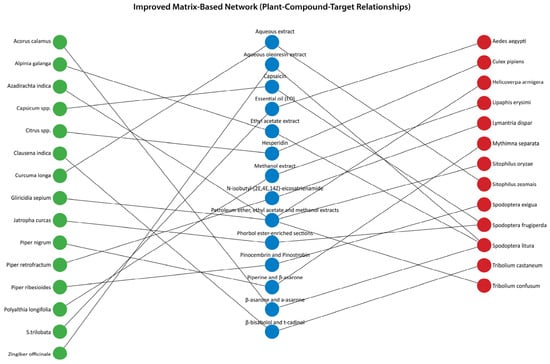
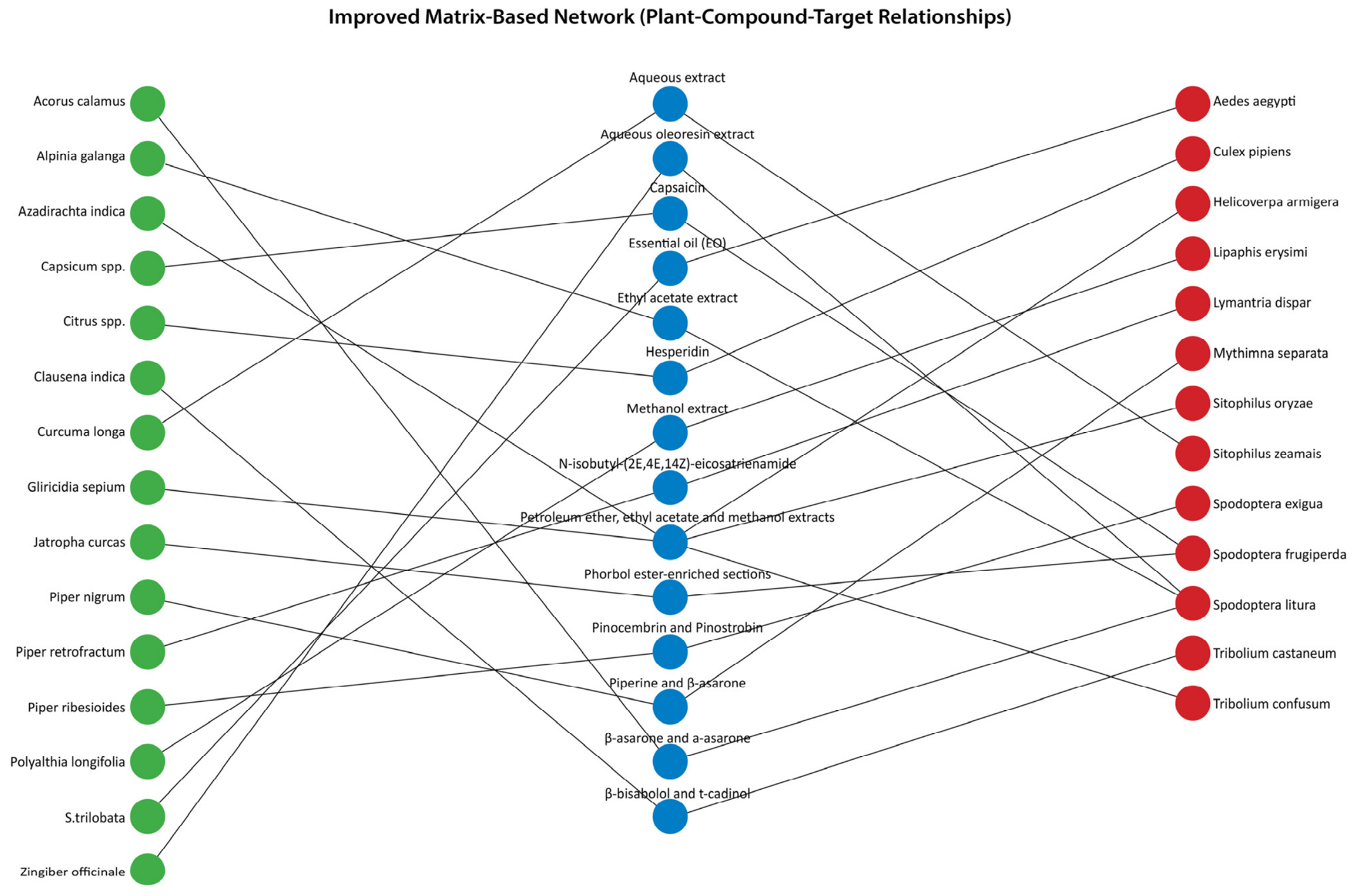
Using the adopted network and matrix-based analytical methods, the activity network option revealed a highly structured landscape of interactions distinguished by hubs, clusters, and modular linkage patterns. The dataset contained 54 plant–target records compiled from Table 1. These involved 22 plant taxa, one aggregate monoterpenoid blend (“assorted plants”), and 35 target organisms, giving 58 nodes. Network density was 0.067, meaning that only about 7% of possible plant–target pairs have been documented. The network split into six connected components, that is, groups of nodes that are linked to one another but not to any node outside the group. The largest component (37 nodes, 64% of all nodes) contained 15 plants and 22 insect targets. These targets were mainly crop and stored-product pests, such as S. frugiperda, S. litura, H. armigera, and Tribolium spp., and the component was held together by S. litura, which was tested against nine of the 15 plants. The second component (13 nodes) contained four plants (S. trilobata, Illicium verum, Syzygium aromaticum, and Trachyspermum ammi), three mosquito vectors, and six fungal or oomycete pathogens, and it was connected only through the shared mosquito Aedes aegypti. The remaining four components were single plant–target pairs (P. ribesioides–Spodoptera exigua, C. longa, Citrus spp., and Chilo partellus). Figure 1 shows the layered plant–compound–target relationships for a subset of these records.
Figure 1.
Layered network linking plant sources (left), active ingredients or extract types (center), and target organisms (right) for a subset of the records in Table 1. Each line is one documented link.
Louvain community detection [60,61] assigned the nodes to ten communities with a modularity of Q = 0.740. Because sparse bipartite graphs have high modularity by chance, Q was compared with 500 degree-preserving randomizations of the same graph (mean Q = 0.707 ± 0.018). The observed value was not clearly higher (p = 0.052). The same was true after excluding fungal records (Q = 0.730 vs. 0.701, p = 0.066) and after excluding fungal and mosquito records (Q = 0.677 vs. 0.665, p = 0.281). The six groups are therefore connected components of a sparse dataset, and they are not statistically supported knowledge domains. The reported (Q) values correspond to the network partitions obtained by maximizing modularity and demonstrated stepwise on Supplementary Files Table S1. Network metrics and community structure for Table S1A–F.
2.2. Connectivity
S. trilobata had the highest plant degree (9), but this came from two publications: three mosquito records [33] and six fungal or oomycete records [34], the latter from a review article. When fungi were excluded, its degree fell to 3, and when mosquitoes were also excluded, it had no remaining links. A. indica had a degree of 7 from six publications, but five of its seven links rested on a single study [23]. Among targets, S. litura had a degree of 9 (seven publications) and the highest betweenness centrality (0.30), connecting plants from several families. S. frugiperda (degree 4) and H. armigera (degree 3) followed. Degree correlated positively with the number of supporting publications for both plants and targets, as shown in Table 2.
Table 2.
Plant node metric.
2.3. Bipartite Networks
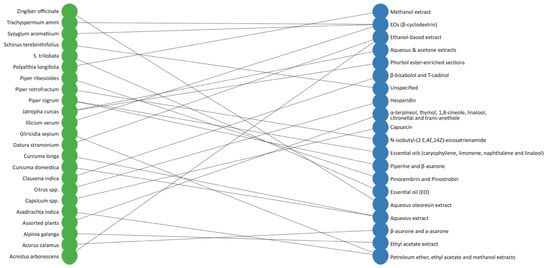
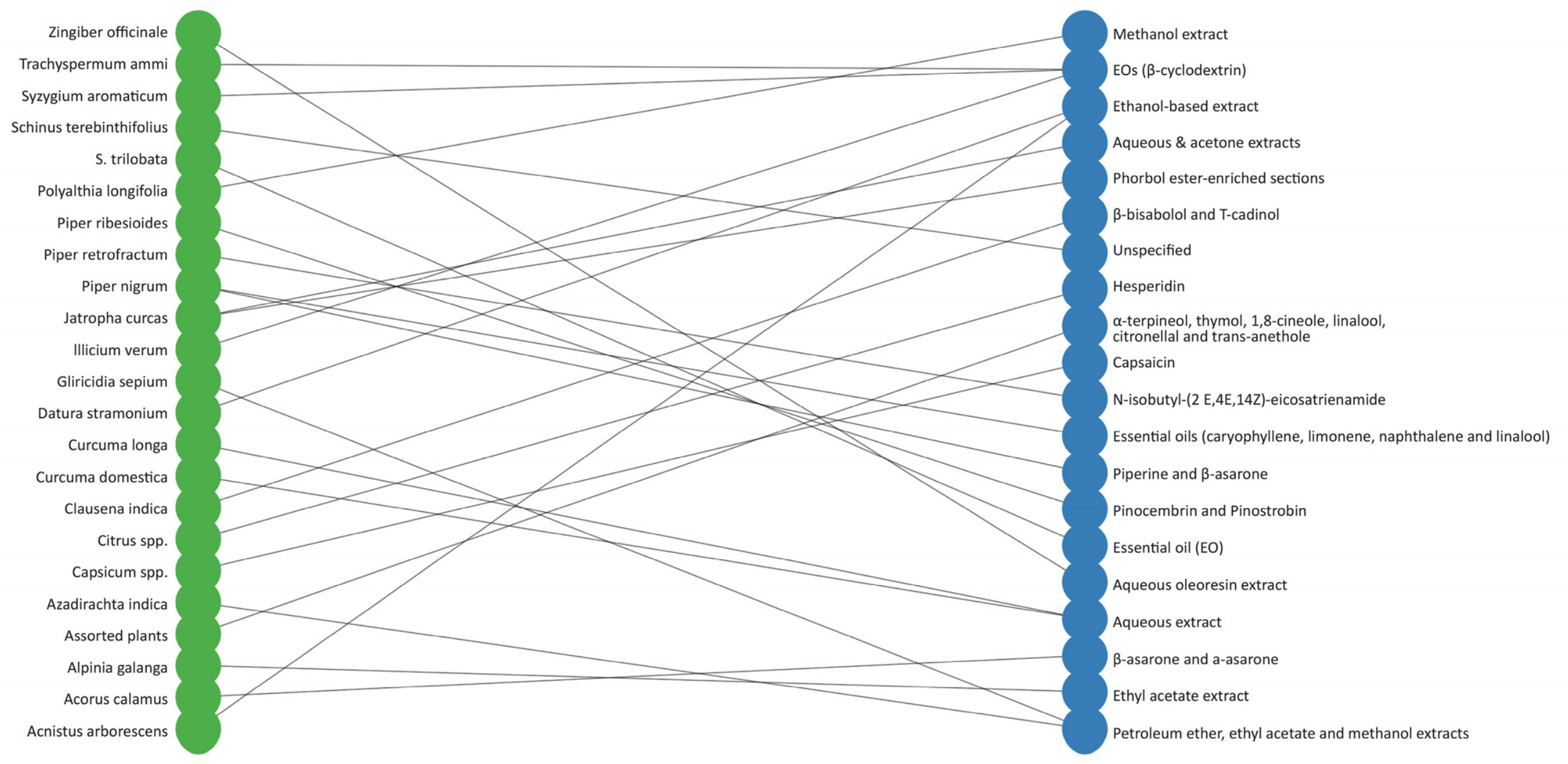
A bipartite graph (Figure 2), which provided a two-mode representation linking plant sources, active compounds, bioactivities, and pest targets, was developed. Using this graph, we identified six distinct clusters, indicating that botanical pest-management research is potentially organized into semi-isolated knowledge domains with limited cross-linkage. Shared nodes were observed between petroleum-ether, ethyl-acetate and methanol extracts (neem and Gliricidia), aqueous extracts (turmeric and C. longa), ethanol-based extracts (Datura and Acnistus), β-cyclodextrin essential oils (Illicium verum, Syzygium aromaticum and Trachyspermum ammi), and the caryophyllene–limonene–naphthalene–linalool oils (P. nigrum and P. retrofractum). This splitting could, therefore, suggest opportunities for translational synthesis, particularly testing bioactive metabolites across multiple pest systems.
Figure 2.
Bipartite graph linking plant sources (left) to the active ingredients or extract types reported for them (right). Each line is one documented link. Fungal records are excluded.
2.4. Interaction Density, Redundancy, and Research Gaps in Bioactives Against Pests
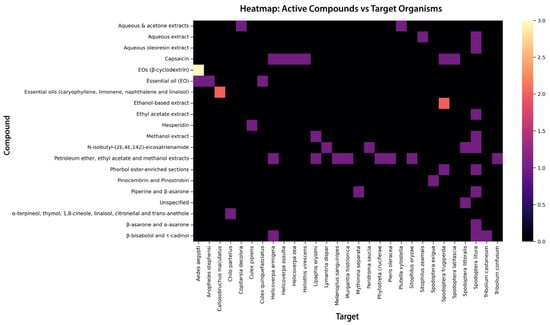
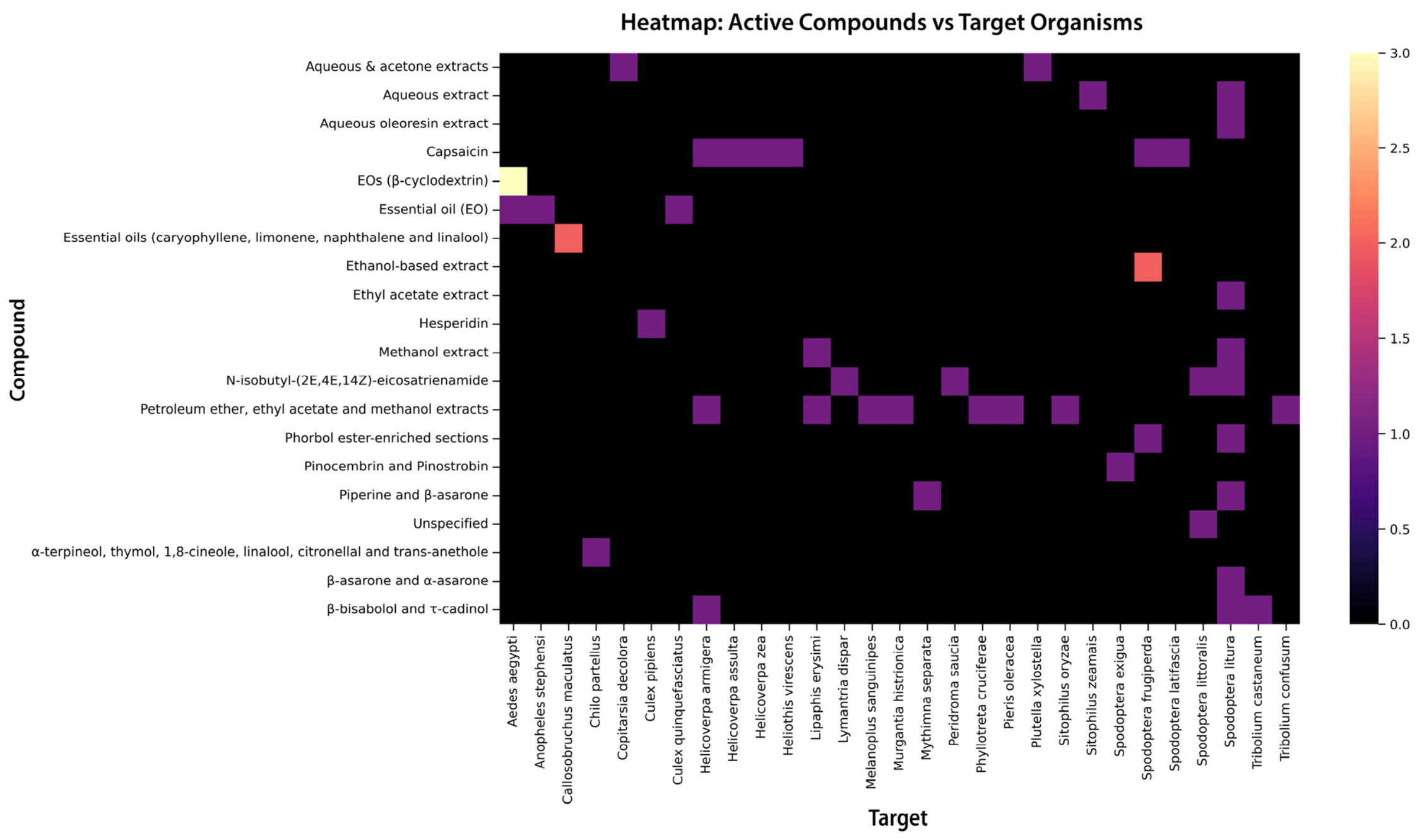
Heatmaps were generated to visualize interactions of plant, pest, and compound bioactivities, as represented in Figure 3. Cells with more than one record were the β-cyclodextrin essential oils against Ae. aegypti (n = 3), the ethanol-based extracts against S. frugiperda (n = 2), and the Piper essential-oil blend against Callosobruchus maculatus (n = 2). Capsaicin was linked to six lepidopteran targets and the petroleum-ether, ethyl acetate, and methanol extracts to eight targets. The S. litura column was the densest, whereas aphids, storage pests, and most non-lepidopteran targets appeared in one or two cells only, thus marking them as research gaps.
Figure 3.
Heatmap of the number of records linking each active compound or extract (rows) to each target organism (columns). Color intensity indicates the number of records (n). Fungal records are excluded.
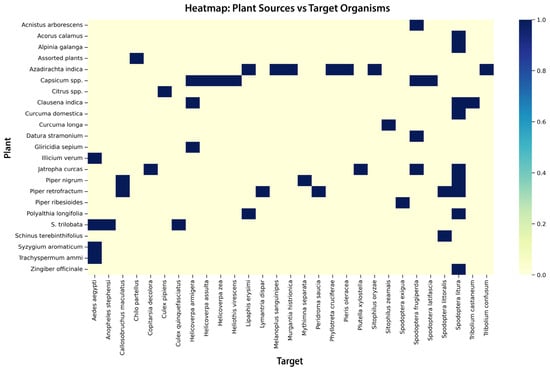
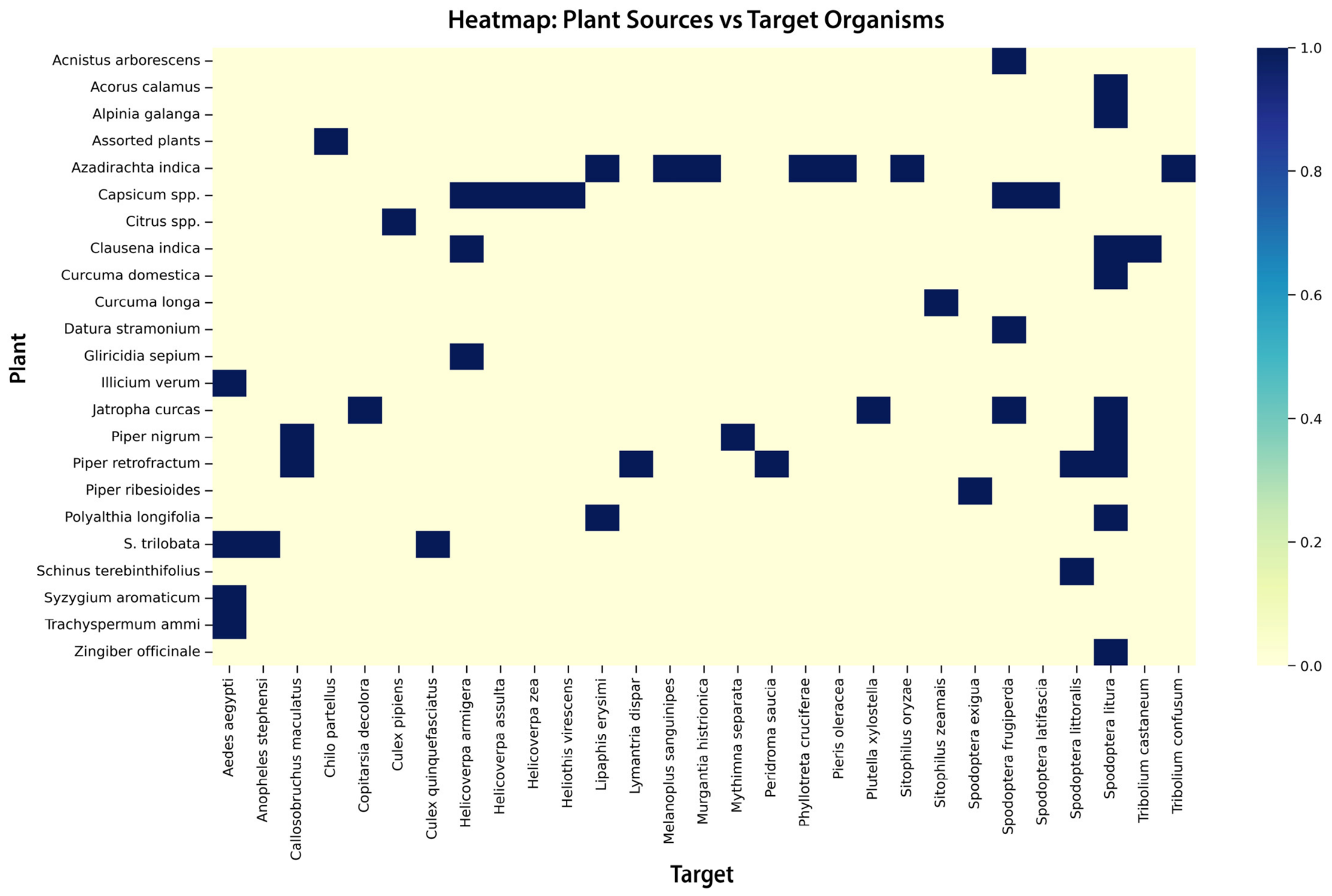
Further presentation using a heatmap provided information as a binary plant × target matrix (23 plants × 29 targets; 48 filled cells, density 0.072). A. indica (7 targets), Capsicum spp. (6), and P. retrofractum (5) had the most filled cells. S. litura was linked to nine plants, S. frugiperda to four (Capsicum, J. curcas, D. stramonium, and A. arborescens), and H. armigera to three. Large empty regions show that most plant–pest combinations have not been tested, as depicted in Figure 4.
Figure 4.
Binary matrix of documented plant source (rows) and target organism (columns) pairs. Dark cells indicate a documented interaction. Fungal records are excluded.
2.5. Bioactivity Classes of Compounds and Extracts
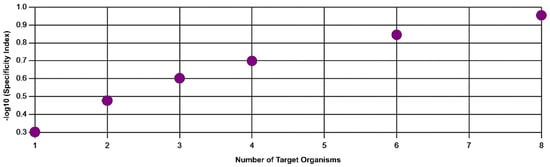
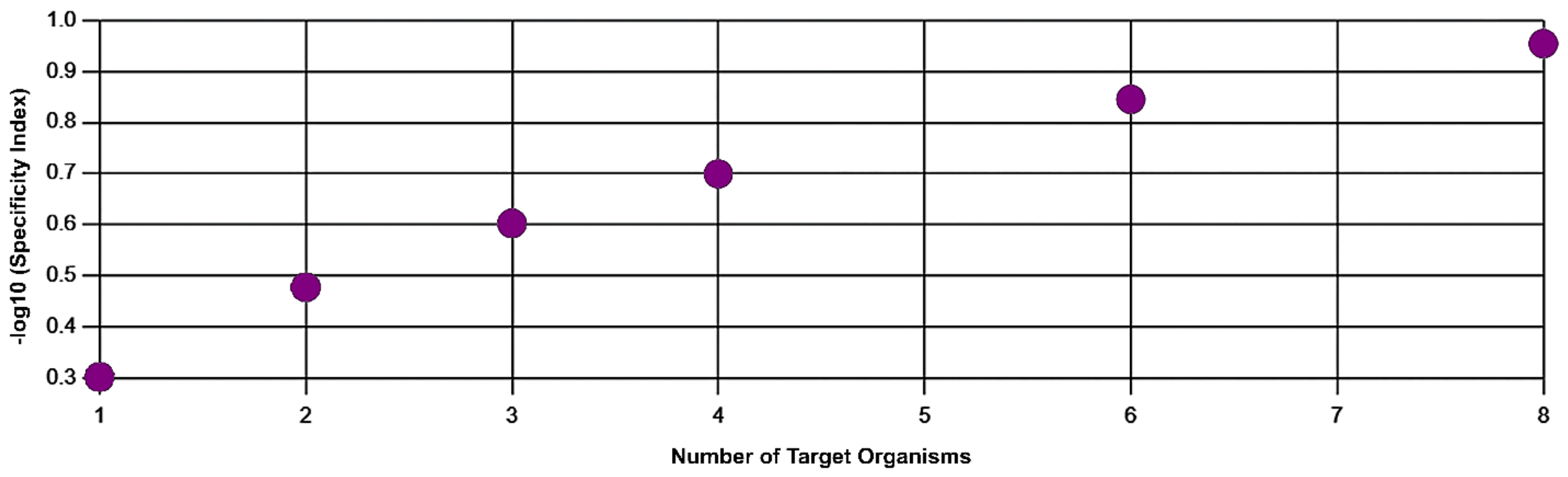
Table A1 lists 49 compounds or extracts, along with their reported bioactivity classes, where contact toxicity was recorded most often (25 entries), followed by antifeedant (20), larvicidal (13), ovicidal (11), and adulticidal (10) activity. Fecundity suppression was recorded twice, for azadirachtin and β-asarone. β-asarone was reported in six classes, and azadirachtin in five. Piperine was recorded for contact toxicity only. Out of the 18 entries for individual essential-oil constituents, 14 were reported for contact toxicity only, and four (linalool, caryophyllene, limonene, and naphthalene, counted by entry) for three classes. Figure 5 is an illustrative plot of a specificity index against the number of target organisms. Its values are simulated and calculated from the number of targets alone and were not used to prioritize compounds.
Figure 5.
Illustrative relationship between the number of target organisms and a log-transformed target-count index, calculated as . Each point represents a target count and its corresponding transformed value. The index contains no effect-size or statistical-significance information and must not be interpreted as evidence of biological specificity or efficacy. For demonstrability, one target had a calculated resultant index of 0.301, two had 0.4471, three had 0.6021, four had 0.699, six had 0.8451, and eight had 0.9542.
Illustrative target-count transformation. Figure 5 was constructed using an illustrative log-transformed target-count index, calculated as follows:
where denotes the number of documented target organisms associated with a compound or extract. The addition of one allows the transformation to be defined when the target count is zero. Higher index values indicate more documented targets in the compiled evidence base. The index is a deterministic transformation of target count and does not measure biological specificity, effect size, statistical significance, or efficacy. It was used for illustration only and was not used to prioritize compounds, as reflected in Figure 5.
3. Discussion
3.1. Network-Based Characterization of Plant-Pest Bioactivity Landscapes
On one hand, the network topology indicated that several plant species acted as high-connectivity nodes, particularly A. indica (neem) and S. trilobata (creeping daisy). The nine targets of S. trilobata came from two publications [33,34], and the six fungal records came from a review rather than primary experiments [34]. Five of the seven targets of A. indica rest on one study [23]. Their extensive connectivity across multiple pest taxa supports documented longstanding evidence of broad-spectrum bioactivity. However, though presented as vital central components of multi-target pest-suppression strategies with higher degrees between nodes, these findings are provisional and need confirmation in primary studies, particularly in crop insects. From an application point of view, such high-degree nodes are promising candidates for integrated pest management (IPM) to simultaneously manage wide pest regimes.
Conversely, the pest-side structure revealed strong centrality for S. litura and S. frugiperda, indicating their economic importance. S. litura, S. frugiperda, and H. armigera are economically important [4,5,6,7,9] and are therefore studied more often, and S. litura also had the highest betweenness centrality, because many plant families have been tested against it. Further, this extrapolates to a concentration of botanical research targeting lepidopteran herbivores. Their prominence within the network also suggests that current botanical insecticide research has concentrated on a few model pests [59], potentially leading to research that could be disproportionately focused on them and leaving other pest taxa comparatively underexplored. Therefore, the identification of sparsely connected pests highlights priority areas for expanding future botanical research.
3.2. Structural Specialization and Functional Redundancies Using Bipartite Networks
Using the network’s spring layout clustering in the modular clustering format, groups were formed around taxonomically related pests. This implies that the different secondary metabolites have shared susceptibility profiles or common phytochemical modes of action against various pests/insects. These shared profiles may suggest conserved physiological vulnerabilities among related pests/insects and provide a mechanistic basis for developing targeted botanical formulations. Thus, compounds tested on only one or two pests, such as piperine on S. litura and M. separata [36], or hesperidin on C. pipiens [43], could be tested against S. frugiperda and other pests.
From the network, S. trilobata showed the greatest interaction diversity, engaging with nine pest targets, including mosquito vectors such as Anopheles stephensi and Aedes aegypti and phytopathogenic fungi (e.g., Rhizoctonia solani and Fusarium oxysporum) compared to other plant sources. The nine targets of S. trilobata came from two publications [33,34], and the six fungal records come from a review rather than primary experiments [34]. Although the data show the potential of Sphagneticola extracts in targeting various pests and pathogenic animals, the potential broad-spectrum activity remains provisional and needs confirmation in primary studies. Mosquito and fungal records were retained as comparator groups because the same extracts and compound classes—notably, essential oils—are tested on all of these organisms. These records do not show activity against crop pests, because modes of action and exposure routes differ between insect orders and fungi [59,62]. The sensitivity analysis restricted to crop and stored-product insects is therefore the more relevant view for pest management. Additionally, A. indica showed extensive connectivity with seven pest species, demonstrating its potential for use as a botanical pesticide [23]. The Capsicum family, i.e., Capsicum frutescens and C. annuum, and P. retrofractum had relatively moderate network connections but with functionally diverse interaction profiles.
The interaction network singled out S. litura as the most highly targeted pest species, interacting with nine plant sources. Additionally, other economically important pests, such as H. armigera and S. frugiperda, formed secondary hubs, while storage pests and aphids had comparatively lower representation. Based on these interactions, it is demonstrated that botanical extracts possess the ability to control pests, especially the economically dominant pests, and this presents an opportunity for more research focused on underrepresented species.
The clustered bipartite structure demonstrates specialization and existing redundancies within botanical pest-control strategies. Thus, it was clear that some plant species were closely associated with specific pests, while other plants exhibited broad cross-cluster connectivity. These different modes of action suggest both specific and broad bioactivity of botanical extracts against pests. Such observed redundancy is critical in pest management, especially in preventing drug resistance [16,17]. Therefore, these findings may propose alternating phytochemical use or adopting a rational combinational approach in designing phytochemicals with overlapping functional roles.
3.3. Interaction Density, Redundancy, and Research Gaps in Bioactive Compounds Against Pests
Notably, the heatmap was used to observe the frequency of documented bioactivity of the phytochemicals, redundancy in potential targets, and research gaps. Thus, this study observed significant overlaps among plant sources targeting the same pests, suggesting opportunities to develop synergistic formulations or perform comparative efficacy studies between the plants or their individual identified phytochemicals. On the contrary, heatmap regions with scattered interactions indicated that the pest taxa had limited botanical alternatives, implying an essential research gap for future phytochemical screening. Moreover, critical information could further be synthesized to provide information for data-driven decision-making in biosafety and pest control. In our case, it provided a scalable, systematic method for integrating substantial literature and discovering promising leads for implementing IPM strategies. Therefore, this tool can be used to develop and promote continuous discovery of new phytochemical–pest interactions, which can project the landscape of knowledge expansion and optimization.
The compound-level heatmap analysis also demonstrated the multimodal bioactivity potential of various phytochemicals, including β-asarone; azadirachtin; and essential-oil constituents such as linalool, caryophyllene, and limonene. The insecticidal mechanisms portrayed by these phytochemicals include larvicidal, ovicidal, and adulticidal effects. This agrees with neurotoxic modes of action described for monoterpenoids, including effects at octopaminergic sites [62,63]. As identified before, the compound-level analysis confirmed that many essential oils had strong contact toxicity but narrower functional spectra. This specificity predicted for essential oils suggests that they may have unique targets, and the other compounds could be acting as broad-spectrum agents [33]. Thus, this information is important in formulating drug combinations, as well as in the general use of these phytochemicals in crop protection. Importantly, these predictions and preliminary findings are critical in prioritization of which biocompound(s) are promising as a potential drug candidate against the fall armyworm.
3.4. Compound-Bioactivity Networks Reveal Functional Diversity and Mode-of-Action Specialization
From the bioactivity bipartite networks, several compounds are linked to different bioactivities. Generally, the graphs show pronounced heterogeneity in functional frameworks of the compounds. For instance, broad-spectrum acting compounds such as β-asarone and azadirachtin were linked to multiple classes of biological activity [36]. Their ability to target various organisms and act through various mechanisms of action supports their potential as central components of multi-target IPM formulations [16]. For instance, capsaicin is transformed by multiple cytochrome P450 enzymes in H. armigera [39], and Helicoverpa assulta is more tolerant of capsaicin than other noctuids [40], suggesting that detoxification limits single-compound efficacy. Hesperidin inhibited acetylcholinesterase, and docking predicted this mode of action [43]. A. galanga extract suppressed digestive and detoxification enzymes in S. litura [29]. Terpenoid–phenolic mixtures acted on detoxification, feeding, and moulting pathways [41,42], and a piperine–β-asarone mixture increased mortality and repellency [36]. These findings support the use of mixtures and compound rotation to delay resistance [57,58]. Essential-oil constituents, on the other hand, were strongly associated with contact toxicity, indicating their suitability for topical or fumigant applications. Interestingly, our predictions found some compounds with specialized activity, mainly associated with contact toxicity, such as piperine. Such specificity indicates the potential for targeted deployment in integrated pest-control strategies where selective modes of action are desirable.
3.5. Statistical and Analytical Basis for the Prioritization of Compound Efficacy
From the volcano-style plot, a narrow bioactivity spectrum was observed for rocaglamide and azadirachtin, though they had demonstrated high relative frequency, implying a more focused functional profile than broad-spectrum applications [25]. Such visualization frameworks illustrate how computational meta-analyses can assist in triaging candidate compounds for laboratory validation, bioassay design, and formulation optimization.
It is important to note, however, that the effect sizes and p-values were simulated in this case; thus, the plots should be interpreted purely as an illustrative tool and not as empirical evidence of compound efficacy. Consequently, we recommend that future studies substitute the simulated values with standard values obtained from bioassays, such as LC50, LD50, repellency percentage, feeding inhibition index, oviposition deterrence index, or pooled effect sizes from meta-analysis. Experimental findings could bolster the reliability of these computational predictions, especially when a wide range of studies are conducted.
3.6. Translational Consequences for Integrated Pest Management and Botanical Pesticide Development
Our analysis shows that these botanical pest-control methods could be structured within the ecological–chemical interaction network rather than viewed as a relationship between the plant and the pest. These predictions further point out that highly connected plant species function as valuable hubs for multi-target management, while group formations suggest common susceptibility among pest guilds. This study has observed existing redundancies of plant-derived bioactivities in targeting pests, highlighting the potential of phytochemicals in resistance management, compound rotation, or combinational formulations. Antifeedant activity of the bioactive compounds emerged as one of the most widely distributed functional traits, which is very promising as a sustainable, non-lethal mechanism of action. In contrast, fecundity suppression was relatively rare, identifying a promising but underexplored direction for future botanical pesticide discovery. Opportunities arise in this underutilized platform of insecticide development, where phytochemicals demonstrate an alternative approach for pest control. To enhance translationability, further laboratory and field trials on the candidate compounds are required.
3.7. Limitations of the Study
The dataset used in this study was assembled purposively, reflecting only the sampled literature and not the whole field. Some records used in this study relied on secondary sources, which may not be reliable. Moreover, extract types, solvents, life stages, and endpoints differ between studies, so records are not directly comparable. The study is mainly hypothesis-generating; thus, it used simulated values only to illustrate how prioritization could be displayed once standardized data are available. Simulated values cannot, therefore, support prioritization, so no conclusions are drawn from it. Future work should use standardized values such as LC50, LD50, repellency percentage, feeding inhibition index, or pooled effect sizes from meta-analysis.
4. Materials and Methods
4.1. Literature Search and Study Selection
Studies were selected purposively and not through a systematic search. Relevant publications were located by targeted searches of scholarly sources, including Google Scholar and Scopus, using combinations of keywords such as “plant extract”, “essential oil”, “botanical insecticide”, “phytochemical”, “fall armyworm”, Spodoptera, “insect pest”, larvicidal, and antifeedant. Studies were retained when the plant source, target organism, and reported bioactivity could be identified.
Purposive sampling of the literature on botanical control of fall armyworm and related target organisms was performed using online sources. The evidence base consists of the 35 publications cited in Table 1, published between 2001 and 2025, where 31 are research articles or conference papers, two are books [22,25], and two are review articles [21,34]. The 54 plant–target records were extracted from these publications, with up to eight records from a single publication [23]. This study is classified as an evidence map of a purposive sample, and it does not claim to be exhaustive. Reporting followed the PRISMA-ScR items [64] that apply to a non-systematic evidence map (rationale, objectives, eligibility criteria, data items, and synthesis).
4.2. Data Compilation and Curation
This study compiled peer-reviewed studies on plant extracts, essential oils, and phytochemicals tested against agricultural pests, disease vectors, and phytopathogens (Table 1 and Table A1). Recorded variables were plant species, active compound, type of extract, target organism, reported bioactivity, and the source publication. A record was included when a plant–target or compound–bioactivity relationship was reported in the cited publication. Records were excluded when the plant source, target organism, or bioactivity endpoint could not be identified. This review is an evidence map (scoping-type) and was not designed as a systematic review or meta-analysis.
Datasets generated from the publications were organized either as plant/compound sources or as pest targets and represented as bipartite networks. In the network, the nodes denote botanical sources/phytochemicals or pest species, while the network edges represent documented bioactivity relationships. We used the NetworkX platform in Python to construct and visualize these networks, and graphical layouts were generated using a force-directed spring algorithm.
The network interactions were then transformed into binary matrices, where 1 indicated a documented interaction, and 0 indicated no documented interaction in the reviewed dataset. Thereafter, heatmaps were generated to visualize the interaction density, redundancy, and gaps across botanical sources, pest targets, and bioactivity classes. A schematic map of active ingredients to report functional endpoints, including contact toxicity, antifeedant activity, larvicidal activity, ovicidal activity, adulticidal activity, and fecundity suppression, was established to identify compound bioactivity networks. Degree-based measures were used to identify compounds with broader reported activity profiles than others on a comparative scale.
4.3. Network Construction and Analysis
Records were converted into bipartite graphs with plant sources and target organisms as nodes and documented relationships as edges. Graphs were built and analyzed with NetworkX (version 3.6.1; NetworkX developers, originally Los Alamos National Laboratory, Los Alamos, NM, USA) [65] in Python (version 3.12.3; Python Software Foundation, Wilmington, DE, USA). Heatmaps and layouts were drawn with Matplotlib (3.10.8), seaborn (0.13.2), and pandas (3.0.2) (open-source projects; fiscal sponsor NumFOCUS, Austin, TX, USA). Network density, connected components, degree, betweenness centrality, and the number of supporting publications per node were calculated. Communities were detected with the Louvain algorithm [60] (best of 10 random starts), and partition quality was measured as modularity (Q) [61]. To test whether Q exceeded chance expectation, 500 degree-preserving randomizations of the bipartite graph (edge swaps) were generated, and the empirical p-value was the proportion of randomized Q values greater than or equal to the observed value. The relationship between degree and number of supporting publications was tested with Spearman’s rank correlation (SciPy 1.17.1). Analyses were repeated without fungal records and with crop and stored-product insects only. Bioactivity classes in Table A1 (contact toxicity, antifeedant, ovicidal, larvicidal, adulticidal, and fecundity suppression) were converted into a binary compound × class matrix, and the number of classes per compound was used as a measure of breadth.
Network density is the proportion of observed connections relative to the maximum possible number of connections among all nodes in the network. For the undirected network used in this study, density (D) was calculated as follows:
where (E) is the number of observed edges, and (N) is the total number of nodes in the network. Substituting these values into the equation yielded a network density of 0.067. Thus, approximately 6.7% of all theoretically possible connections were present in the observed network, indicating that the network was relatively sparse.
Q represents network modularity, which measures the extent to which a network can be divided into modules with more within-module connections than expected under a corresponding random network model. For an undirected and unweighted network, modularity was calculated using the Newman–Girvan equation:
where () is the element of the adjacency matrix describing whether nodes (i) and (j) are connected; kikj are the degrees of nodes (i) and (j), respectively; (E) is the total number of edges; ci, cj are the modules assigned to nodes (i) and (j); and δ(ci, cj) equals 1 when the two nodes belong to the same module, and 0 otherwise.
5. Conclusions
Through the utilization of network and matrix visualizations, this study has demonstrated the usefulness in organizing complex botanical pesticide evidence and identifying promising plant sources, phytochemicals, pest targets, and research gaps. Our analysis suggests that the fall armyworm and related lepidopterans (S. frugiperda, S. litura, and H. armigera) are the best-studied targets, whereas aphids, storage pests, and many other taxa are poorly covered. Based on breadth of reported bioactivity and the number of pest targets, azadirachtin, β-asarone, capsaicin, piperine and the essential-oil constituents linalool, limonene and caryophyllene are proposed as priority candidates for standardized bioassays against fall armyworm. These findings are hypothesis-generating and not proof of efficacy, and they should be validated through laboratory bioassays, field trials, toxicity assessments, formulation studies and evaluation of non-target effects before IPM deployment. Therefore, future research is recommended to validate the prioritized compounds through standardized laboratory bioassays, field trials, toxicity assessments, formulation studies, and evaluations of non-target effects before recommending practical IPM deployment.
Supplementary Materials
The following supporting information can be downloaded at https://www.mdpi.com/article/10.3390/plants15223612/s1, Table S1. Network metrics and community structure for Table S1A–F. Values were computed from the 54 plant-target interaction records presented in Table 1 using NetworkX v3.6.1. Betweenness centrality and closeness centrality are reported as normalised values. Community detection was performed using the Louvain algorithm, retaining the solution with the highest modularity obtained from 10 independent random starts. Statistical significance of network structure was evaluated against a null model generated through 500 degree-preserving bipartite edge-swap randomisations. The category “Assorted plants” represents an aggregated monoterpenoid blend and should not be interpreted as a plant taxon. The number of supporting publications corresponds to the count of distinct citation numbers associated with each node’s records in Table 1, including the cited books [22,25] and review article [34].
Author Contributions
A.A.K., conceptualization, methodology, software, formal analysis, investigation, writing—original draft preparation, visualization, and funding acquisition; F.L.O.O., methodology, formal analysis, investigation, data curation, writing—review and editing, and visualization; P.K.O., software, validation, investigation, writing—review and editing, and supervision; E.K.M., software, validation, investigation, writing—review and editing, and supervision; F.M.K., validation, investigation, resources, writing—review and editing, supervision, project administration, and funding acquisition. All authors have read and agreed to the published version of the manuscript.
Funding
The authors gratefully acknowledge the financial support for this research by the following organizations and agencies: Pan-African University Institute for Basic Sciences, Technology and Innovation, PAU/ADM/PAUSTI/2024/11; the Swedish International Development Cooperation Agency (Sida); the Swiss Agency for Development and Cooperation (SDC); the Australian Centre for International Agricultural Research (ACIAR); the Government of Norway; the German Federal Ministry for Economic Cooperation and Development (BMZ); and the Government of the Republic of Kenya. The views expressed herein do not necessarily reflect the official opinion of the donors.
Data Availability Statement
All data generated or analyzed during this systematic review are derived from published, peer-reviewed literature fully cited within the manuscript. No new datasets were created. Additional materials used in constructing the interaction networks, matrices, and visualizations are available from the corresponding author upon reasonable request.
Acknowledgments
The authors gratefully acknowledge the financial support for this research by the following organizations and agencies: Pan-African University Institute for Basic Sciences, Technology, and Innovation; the Swedish International Development Cooperation Agency (Sida); the Swiss Agency for Development and Cooperation (SDC); the Australian Centre for International Agricultural Research (ACIAR); the Government of Norway; the German Federal Ministry for Economic Cooperation and Development (BMZ); and the Government of the Republic of Kenya. The views expressed herein do not necessarily reflect the official opinion of the donors. The authors have reviewed and edited the output and take full responsibility for the content of this publication.
Conflicts of Interest
The authors declare no conflicts of interest. The funders had no role in the design of the study; in the collection, analyses, or interpretation of data; in the writing of the manuscript; or in the decision to publish the results.
Abbreviations
The following abbreviations are used in this manuscript:
| PAUSTI | Pan-African University Institute for Basic Sciences, Technology and Innovation |
| SDC | Swiss Agency for Development and Cooperation |
| SIDA | Swedish International Development Cooperation Agency |
| ACIAR | Australian Centre for International Agricultural Research |
| BMZ | German Federal Ministry for Economic Cooperation and Development |
| FAW | fall armyworm |
| IPM | integrated pest management |
| EO | essential oil |
Appendix A
Table A1.
Mode of extracts/active ingredients’ activity against insects and pests.
References
- FAO; IFAD; UNICEF; WFP; WHO. The State of Food Security and Nutrition in the World 2019. Safeguarding Against Economic Slowdowns and Downturns; FAO: Rome, Italy; United Nations: Rome, Italy, 2019.
- FSIN. 2020 Global Report on Food Crises Food Security Information Network (FSIN); Food Security Information Network: Rome, Italy, 2020. [Google Scholar]
- OECD. OECD Policy Responses to Coronavirus (COVID-19)—COVID-19 and Africa: Socio-Economic Implications and Policy Responses; Organisation for Economic Co-operation and Development (OECD): Paris, France, 2020.
- IPCC. Climate Change and Land: An IPCC Special Report on Climate Change, Desertification, Land Degradation, Sustainable Land Management, Food Security, and Greenhouse Gas Fluxes in Terrestrial Ecosystems; IPCC: Geneva, Switzerland, 2019.
- Willett, W.; Rockström, J.; Loken, B.; Springmann, M.; Lang, T.; Vermeulen, S.; Garnett, T.; Tilman, D.; DeClerck, F.; Wood, A.; et al. Food in the Anthropocene: The EAT–Lancet Commission on healthy diets from sustainable food systems. Lancet 2019, 393, 447–492, Erratum in Lancet 2020, 396, e56. [Google Scholar] [CrossRef] [Scilit] [PubMed]
- Overton, K.; Maino, J.L.; Day, R.; Umina, P.A.; Bett, B.; Carnovale, D.; Ekesi, S.; Meagher, R.; Reynolds, O.L. Global crop impacts, yield losses and action thresholds for fall armyworm (Spodoptera frugiperda): A review. Crop Prot. 2021, 145, 105641. [Google Scholar] [CrossRef] [Scilit]
- Montezano, D.G.; Specht, A.; Sosa-Gómez, D.R.; Roque-Specht, V.F.; Sousa-Silva, J.C.; Paula-Moraes, S.V.; Peterson, J.A.; Hunt, T.E. Host Plants of Spodoptera frugiperda (Lepidoptera: Noctuidae) in the Americas. Afr. Entomol. 2018, 26, 286–300. [Google Scholar] [CrossRef] [Scilit]
- FAO. Global Action for Fall Armyworm Control: Action Framework 2020–2022. Working Together to Tame the Global Threat; FAO: Rome, Italy, 2020. [Google Scholar] [CrossRef] [Scilit]
- FAO. Technical Guidance on Fall Armyworm—Coordinated Surveillance and an Early Warning System for the Sustainable Management of Trans-Boundary Pests, with Special Reference to Fall Armyworm (Spodoptera Frugiperda) ([J.E. Smith]) in South and Southeast Asia; United Nations: Rome, Italy, 2022.
- Ajani, A.; Van der Geest, K. Climate change in rural Pakistan: Evidence and experiences from a people-centered perspective. Sustain. Sci. 2021, 16, 1999–2011. [Google Scholar] [CrossRef] [Scilit]
- FAO, Food and Agriculture Organization. More People, More Food… Worse Water?—Water Pollution from Agriculture: A Global Review; BookSection{10E1AE25-8928-4300-8D78-F8B0DF3F4D89}; United Nations: Rome, Italy, 2018; p. 224.
- Wang, X.; Xu, X.; Ullah, F.; Ding, Q.; Gao, X.; Desneux, N.; Song, D. Comparison of full-length transcriptomes of different imidacloprid-resistant strains of Rhopalosiphum padi (L.). Entomol. Gen. 2021, 2021, 289–304. [Google Scholar] [CrossRef] [Scilit]
- Dey, P.; Kundu, A.; Kumar, A.; Gupta, M.; Lee, B.; Bhakta, T.; Dash, S.; Kim, H. Analysis of Alkaloids (indole Alkaloids, Isoquinoline Alkaloids, Tropane Alkaloids). In Recent Advances in Natural Products Analysis; Elsevier: Amsterdam, The Netherlands, 2020. [Google Scholar]
- Chabaane, Y.; Marques Arce, C.; Glauser, C.; Benrey, B. Altered capsaicin levels in domesticated chilli pepper varieties affect the interaction between a generalist herbivore and its ectoparasitoid. J. Pest Sci. 2022, 95, 735–747. [Google Scholar] [CrossRef] [Scilit] [PubMed]
- Senthil-Nathan, S. Physiological and biochemical effect of neem and other Meliaceae plants secondary metabolites against lepidopteran insects. Front Physiol. 2013, 4, 359. [Google Scholar] [CrossRef] [Scilit] [PubMed]
- Kedia, A.; Prakash, B.; Mishra, P.K.; Singh, P.; Dubey, N.K. Botanicals as ecofriendly biorational alternatives of synthetic pesticides against Callosobruchus spp. (Coleoptera: Bruchidae)-a review. J. Food Sci. Technol. 2015, 52, 1239–1257. [Google Scholar] [CrossRef] [Scilit] [PubMed]
- Mrid, R.; Benmrid, B.; Hafsa, J.; Boukcim, H.; Sobeh, M.; Yasri, A. Secondary metabolites as biostimulant and bioprotectant agents: A review. Sci. Total Environ. 2021, 777, 146204. [Google Scholar] [CrossRef] [Scilit]
- Pandiyan, G.N.; Nisha, M.; Sundharesan, M. Larvicidal activity of selected essential oil in synergized combinations against Aedes aegypti. Ecotoxicol. Environ. Saf. J. 2019, 174, 549–556. [Google Scholar] [CrossRef] [Scilit] [PubMed]
- Chen, F.; Qiang, Z.; Huiyan, G.U.; Lei, Y. A modified approach for separating essential oil from the roots and rhizomes of Asarum heterotropoides var. mandshuricum. J. Clean. Prod. 2018, 172, 2075–2089. [Google Scholar] [CrossRef] [Scilit]
- Soonwera Mayura, S.P. Adulticidal, larvicidal, pupicidal and oviposition deterrent activities of essential oil from Zanthoxylum limonella Alston (Rutaceae) against Aedes aegypti (L.) and Culex quinquefasciatus (Say). Asian Pac. J. Trop. Biomed. 2017, 7, 967–978. [Google Scholar] [CrossRef] [Scilit]
- Catani, L.; Manachini, B.; Grassi, E.; Guidi, L.; Semprucci, F. Essential Oils as Nematicides in Plant Protection-A Review. Plants 2023, 12, 1418. [Google Scholar] [CrossRef] [Scilit] [PubMed]
- Schmutterer, H. The Neem Tree, 2nd ed.; Neem Foundation: Mumbai, India, 2002. [Google Scholar]
- Kamanga, R.M.; Bhikha, S.; Kamala, F.D.; Mwale, V.M.; Tembo, Y.; Ndakidemi, P.A. Neem and Gliricidia Plant Leaf Extracts Improve Yield and Quality of Leaf Mustard by Managing Insect Pests’ Abundance Without Harming Beneficial Insects and Some Sensory Attributes. Insects 2025, 16, 156. [Google Scholar] [CrossRef] [Scilit] [PubMed]
- Pakeerathan, K.; Piris, B.; Sayanthan, S. Efficacy of Botanical Extracts Against Storage Insect Pest Tribolium confusum (confused flour beetle) and Sitophilus oryzae (Rice Weevil). In Proceedings of the 1st International Electronic Conference Entomology (IECE 2021), Online, 1–15 July 2021. [Google Scholar]
- Koul, W.S.O. Neem: Today and in the New Millennium; Kluwer Academic Publishers: Dordrecht, The Netherlands, 2004. [Google Scholar]
- Montes-Molina, J.; Luna-Guido, M.; Espinoza-Paz, N.; Govaerts, B.; Gutierrez-Miceli, F.; Dendooven, L. Are extracts of neem (Azadirachta indica A. Juss. (L.)) and Gliricidia sepium (Jacquin) an alternative to control pests on maize (Zea mays L.)? Crop Prot. 2008, 27, 763–774. [Google Scholar] [CrossRef] [Scilit]
- Montes-Molina, J.; Nuricumbo-Zarate, I.; Hernández-Díaz, J.; Gutiérrez-Miceli, F.; Dendooven, L.; Ruíz-Valdiviezo, V. Characteristics of tomato plants treated with leaf extracts of neem (Azadirachta indica A. Juss. (L.)) and mata-raton (Gliricidia sepium (Jacquin)): A greenhouse experiment. J. Environ. Biol. 2014, 35, 935. [Google Scholar] [PubMed]
- Jose, S.; Sujatha, K. Antifeedant activity of different solvent extracts of Gliricidia sepium against third-instar larvae of Helicoverpa armigera (Hubner) (Lepidoptera: Noctuidae). Int. J. Adv. Res. Biol. Sci. 2017, 4, 201–204. [Google Scholar] [CrossRef] [Scilit]
- Datta, R.; Kaur, A.; Saraf, I.; Singh, I.P.; Kaur, S. Enzymatic suppression activity of Alpinia galanga extract against polyphagous lepidopteran pest Spodoptera litura (Fabricius). Arch. Phytopathol. Plant Prot. 2021, 54, 19–20. [Google Scholar] [CrossRef] [Scilit]
- Kumar, S.; Warikoo, R.; Wahab, N. Larvicidal potential of ethanolic extracts of dried fruits of three species of peppercorns against different instars of an Indian strain of dengue fever mosquito, Aedes aegypti L. (Diptera: Culicidae). Parasitol. Res. 2010, 107, 901–907. [Google Scholar] [CrossRef] [Scilit] [PubMed]
- Mamoon-ur-Rashid, M.; Baloch, M.S.; Begum, H.A.; Law, D.; Elsadek, M.F.; Al-Numair, K.S.; Yasin, M. Supplementary bioactivities of Curcuma longa extracts and parasitoid Anisopteromalus calandrae as a post-harvest eco-friendly management tactic against maize weevil, Sitophilus zeamais (Motschulsky) (Coleoptera: Curculionidae). Entomol. Res. 2025, 55, e70013. [Google Scholar] [CrossRef] [Scilit]
- Santi, I.S.; Manto, A.; Noviana, G. Effectiveness of Ginger Extract (Zingiber officinale) and Turmeric (Curcuma domestica) against the mortality of the Armyworm (Spodoptera litura). Trop. Plant. J. 2024, 3, 17–22. [Google Scholar] [CrossRef] [Scilit]
- Selvakumaran, J.; Ganesan, P.; Ignacimuthu, S. Chemical composition, insecticidal activity and non-target effects of Sphagneticola trilobata (L.) Pruski essential oil against immature stages (egg, larvae and pupae) of dengue, filariasis, malaria vectors and four natural predators. Environ. Sci. Pollut. Res. 2025, 32, 13837–13846. [Google Scholar] [CrossRef] [Scilit] [PubMed]
- Manar, T.A.; Dalia, A.; Al-Mahdy; El Fishawy, A.M.; Asmaa, M.O. Sphagneticola trilobata (L.) Pruski: An updated exploration of its traditional applications, taxonomy, phytochemical profile and pharmacological properties. South Afr. J. Bot. 2024, 174, 183–207. [Google Scholar] [CrossRef] [Scilit]
- Pengsook, A.; Vasakorn, B.; Opender, K.; Saksit, N.; Chatwadee, S.; Thitaree, Y.; Poonnanan, P.; Wanchai, P.; Nutchaya, K. Antifeedant Activity and Biochemical Responses in Spodoptera exigua Hübner (Lepidoptera: Noctuidae) Infesting Broccoli, Brassica oleracea var. alboglabra, exposed to Piper ribesioides Wall Extracts and Allelochemicals. Chem. Biol. Technol. Agric. 2022, 9, 17. [Google Scholar] [CrossRef] [Scilit]
- Yooboon, T.; Bullangpoti, V.; Kainoh, Y. Contact toxicity and antifeedant activity of binary mixtures of piperine and β-asarone against the crop pests, Spodoptera litura and Mythimna separata (Lepidoptera: Noctuidae). Int. J. Pest Manag. 2021, 69, 81–88. [Google Scholar] [CrossRef] [Scilit]
- Wanna, R.; Bunphan, D.; Wongsawas, M. Chemical composition and bioactivity of essential oils from Piper nigrum L. and Piper retrofractum vahl. Against Callosobruchus maculatus (F.). Aust. J. Crop Sci. 2023, 17, 664–670. [Google Scholar] [CrossRef] [Scilit]
- Greger, H.; Pacher, T.; Brem, B.; Bacher, M.; Hofer, O. Insecticidal flavaglines and other compounds from Fijian Aglaia species. Phytochemistry 2001, 57, 57–64. [Google Scholar] [CrossRef] [Scilit] [PubMed]
- Kai, T.J.Z.; Mei, L.; Xinghui, Q. Capsaicin is efficiently transformed by multiple cytochrome P450s from Capsicum fruit-feeding Helicoverpa armigera. Pestic. Biochem. Physiol. 2019, 56, 145–151. [Google Scholar] [CrossRef] [Scilit] [PubMed]
- Seung-Joon, A.; Badenes-Pérez, F.; Heckel, D. The host-plant specialist Helicoverpa assulta is more tolerant to capsaicin from Capsicum annuum than other noctuid species. J. Insect Physiol. 2011, 57, 1212–1219. [Google Scholar] [CrossRef] [Scilit] [PubMed]
- Hummelbrunner, L.A.; Isman, M.B. Acute, sublethal, antifeedant, and synergistic effects of monoterpenoid essential oil compounds on the tobacco cutworm, Spodoptera litura (Lep., Noctuidae). J. Agric. Food Chem. 2001, 49, 715–720. [Google Scholar] [CrossRef] [Scilit] [PubMed]
- Singh, R.; Koul, O.; Rup, P.J.; Jindal, J. Toxicity of some essential oil constituents and their binary mixtures against Chilo partellus (Lepidoptera: Pyralidae). Int. J. Trop. Insect Sci. 2009, 29, 93–101. [Google Scholar] [CrossRef] [Scilit]
- Haikal, A.; Kamal, M.; Hosni, E.M.; Amen, Y. Evaluation of hesperidin as a potential larvicide against Culex pipiens with computational prediction of its mode of action via molecular docking. Sci. Rep. 2025, 15, 2677. [Google Scholar] [CrossRef] [Scilit] [PubMed]
- Hussein, H.S.; Salem, M.Z.M.; Soliman, A.M.; Eldesouky, S.E. Comparative study of three plant-derived extracts as new management strategies against Spodoptera littoralis (Boisd.) (Lepidoptera: Noctuidae). Sci. Rep. 2023, 13, 3542. [Google Scholar] [CrossRef] [Scilit] [PubMed]
- Devi, J.A.; Thangapandian, R.; Vijayaraghavan, C.; Patel, R.R.D.; Kiran, S.R. Insecticidal Potential of Essential Oil and Sesquiterpene Alcohols from Leaves of Clausena indica (Dalz.) Oliver Against Spodoptera litura, Helicoverpa armigera, and Tribolium castaneum. Neotrop. Entomol. 2025, 54, 68. [Google Scholar] [CrossRef] [Scilit] [PubMed]
- Ribeiro, S.S.; Silva, T.B.D.; Moraes, V.R.D.S.; Nogueira, P.C.D.L.; Costa, E.V.; Bernado, A.R.; Silva-Man, R. Chemical constituents of methanolic extracts of Jatropha curcas L. and effects on Spodoptera frugiperda (JE Smith) (Lepidoptera: Noctuidae). Quím. Nova 2012, 35, 2218–2221. [Google Scholar] [CrossRef] [Scilit]
- Amoabeng, B.W.; Gurr, G.M.; Gitau, C.W.; Nicol, H.I.; Munyakazi, L.; Stevenson, P.C. Tri-trophic insecticidal effects of African plants against cabbage pests. PLoS ONE 2013, 10, e78651. [Google Scholar]
- Ingle, K.; Deshmukh, A.G.; Padole, D.A.; Dudhare, M.S. Screening of insecticidal activity of Jatropha curcas (L.) against diamond back moth and Helicoverpa armigera. Seed 2017, 5, 20. [Google Scholar]
- Mwine, J.; Ssekyewa, C.; Kalanzi, K.; Van Damme, P. Evaluation of selected pesticidal plant extracts against major cabbage insect pests in the field. J. Med. Plants Res. 2013, 7, 1580–1586. [Google Scholar]
- Brito, R.F.; Miranda, E.H.; Gómez, V.R.Z. Biological Activity of Trichilia americana (Meliaceae) on Copitarsia decolora Guenée (Lepidoptera: Noctuidae). J. Entomol. Sci. 2019, 54, 19–37. [Google Scholar] [CrossRef] [Scilit]
- Figueroa-Brito, R.; Tabarez-Parra, A.S.; Avilés-Montes, D.; Rivas-González, J.M.; Ramos-López, M.A.; Sotelo-Leyva, C.; Salinas-Sánchez, D.O. Chemical Composition of Jatropha curcas Seed Extracts and Its Bioactivity Against Copitarsia decolora under Laboratory and Greenhouse Conditions. Southwest. Entomol. 2021, 46, 103–114. [Google Scholar] [CrossRef] [Scilit]
- Lima, A.F.; Ribeiro, L.D.P.; Gonçalves, G.L.P.; Maimone, N.M.; Gissi, D.S.; de Lira, S.P.; Vendramim, J.D. Searching for bioactive compounds from Solanaceae: Lethal and sublethal toxicity to Spodoptera frugiperda and untargeted metabolomics approaches. J. Pest Sci. 2022, 95, 1317–1329. [Google Scholar] [CrossRef] [Scilit]
- Arora, S.; Mogha, N.; Bhardwaj, T.; Srivastava, C. Antifeedant and Insecticidal Activity of Plant Extracts Against Spodoptera litura (Fab.) and Lipaphis erysimi. Proc. Natl. Acad. Sci. India Sect. B Biol. Sci. 2017, 87, 1229–1236. [Google Scholar] [CrossRef] [Scilit]
- Yooboon, T.; Pengsook, A.; Ratwatthananon, A.; Pluempanupat, W.; Bullangpoti, V. A plant-based extract mixture for controlling Spodoptera litura (Lepidoptera: Noctuidae). Chem. Biol. Technol. Agric. 2019, 6, 5. [Google Scholar] [CrossRef] [Scilit]
- Marini, E.; Magi, G.; Mingoia, M.; Pugnaloni, A.; Facinelli, B. Antimicrobial and anti-virulence activity of capsaicin against erythromycin-resistant, cell-invasive group A streptococci. Front Microbiol. 2015, 6, 1281. [Google Scholar] [CrossRef] [Scilit] [PubMed]
- Argaez, L.G.B.; Salazar, F.F.M.; Zuñiga, F.Z.; Estrada, T.G.; Flores, I.R.I. Characterization of a Capsicum chinense seed peptide fraction with broad antibacterial activity. Asian J. Biochem 2009, 4, 77–87. [Google Scholar] [CrossRef] [Scilit]
- Rizvi, S.A.H.; Ling, S.; Tian, F.; Xie, F.; Zeng, X. Toxicity and enzyme inhibition activities of the essential oil and dominant constituents derived from Artemisia absinthium L. against adult Asian citrus psyllid Diaphorina citri Kuwayama (Hemiptera: Psyllidae). Ind. Crops Prod. 2018, 121, 468–475. [Google Scholar] [CrossRef] [Scilit]
- Anaya-Eugenio, G.D.; Rivero-Cruz, I.; Bye, R.; Linares, E.; Mata, R. Antinociceptive activity of the essential oil from Artemisia ludoviciana. J. Ethnopharmacol. 2016, 403, 179. [Google Scholar] [CrossRef] [Scilit] [PubMed]
- Isman, M.B. Botanical insecticides, deterrents, and repellents in modern agriculture and an increasingly regulated world. Annu. Rev. Entomol. 2006, 51, 45–66. [Google Scholar] [CrossRef] [Scilit] [PubMed]
- Blondel, V.D.; Guillaume, J.-L.; Lambiotte, R.; Lefebvre, E. Fast unfolding of communities in large networks. J. Stat. Mech. 2008, 2008, 10008. [Google Scholar] [CrossRef] [Scilit]
- Newman, M.E.J. Modularity and community structure in networks. Proc. Natl. Acad. Sci. USA 2006, 103, 8577–8582. [Google Scholar] [CrossRef] [Scilit] [PubMed]
- Rattan, R.S. Mechanism of action of insecticidal secondary metabolites of plant origin. Crop Prot. 2010, 29, 913–920. [Google Scholar] [CrossRef] [Scilit]
- Enan, E. Insecticidal activity of essential oils: Octopaminergic sites of action. Comp. Biochem. Physiol. C 2001, 130, 325–337. [Google Scholar] [CrossRef] [Scilit] [PubMed]
- Tricco, A.C.; Lillie, E.; Zarin, W.; O’BRien, K.K.; Colquhoun, H.; Levac, D.; Moher, D.; Peters, M.D.; Horsley, T.; Weeks, L.; et al. PRISMA extension for scoping reviews (PRISMA-ScR): Checklist and explanation. Ann. Intern. Med. 2018, 169, 467–473. [Google Scholar] [CrossRef] [Scilit] [PubMed]
- Hagberg, A.A.; Schult, D.A.; Swart, P.J. Exploring network structure, dynamics, and function using NetworkX. In Proceedings of the 7th Python in Science Conference (SciPy 2008), Pasadena, CA, USA, 19–24 August 2008; pp. 11–15. [Google Scholar]

Disclaimer/Publisher’s Note: The statements, opinions and data contained in all publications are solely those of the individual author(s) and contributor(s) and not of MDPI and/or the editor(s). MDPI and/or the editor(s) disclaim responsibility for any injury to people or property resulting from any ideas, methods, instructions or products referred to in the content. |
© 2026 by the authors. Licensee MDPI, Basel, Switzerland. This article is an open access article distributed under the terms and conditions of the Creative Commons Attribution (CC BY) license.