


Abstract
As climate change increases, drought is a major constraint on alfalfa (Medicago sativa L.) productivity, particularly in Mediterranean environments. Native rhizobia are considered promising bioinoculants for improving crop adaptation to water-limited conditions. This preliminary study investigated nodule-associated bacteria isolated from alfalfa grown in two Moroccan agroecological regions and preliminarily assessed their effects on plant growth under different water regimes. Fifty-six isolates were recovered from nodules, and six isolates were selected following morphological and pathogenicity screening. Molecular identification based on 16S rRNA gene sequencing suggested that most isolates were affiliated with Sinorhizobium (closest match S. meliloti), while one isolate was affiliated with Lysobacter sp., a non-classical nodule associate whose functional role was not assessed in this study. Greenhouse experiments conducted under three irrigation regimes (100, 66 and 33% field capacity) demonstrated that water availability was the main factor affecting plant height, branch number and leaf production (p < 0.001). Although bacterial inoculation did not exert a significant effect, and no comparison with the controls remained significant after multiplicity adjustment, several S. meliloti strains tended to show greater plant growth than uninoculated plants under severe drought, although these differences were not statistically significant. These preliminary findings, based on a limited number of sampling sites, isolates and biological replicates, provide baseline information on nodule-associated bacteria of Moroccan alfalfa and identify candidate isolates meriting further characterization for future bioinoculant development.
1. Introduction
Rainfed agricultural cultivation in the Mediterranean region, where there are cold winter months and hot and dry summer seasons, is increasingly at risk of drought and extreme temperatures [1,2]. The adverse effects of such climate conditions include increased water requirement of crops and increased soil moisture deficits, therefore restricting productivity, and resilience [3]. Climate projections further suggest that, under continued greenhouse gas emissions, Mediterranean regions could experience a decline in precipitation of up to 40% by the end of the century [4], with likely a reduction in precipitation levels in south and central Mediterranean environments throughout the year [5].
In Morocco, the agriculture sector plays a major socio-economic role [6,7]. Rainfed farming systems are the most common in Morocco, making the agricultural productivity dependent on rainfall patterns and sensitive to weather changes [6,8]. Alfalfa (Medicago sativa L.) is a widely cultivated forage crop worldwide and holds significant importance in Mediterranean climates. In Mediterranean drylands, alfalfa provides substantial forage even during periods of low rainfall, which helps livestock productivity and the stability of the agroecosystem [9]. However, as a perennial species, it must endure severe environmental stresses during summer heat waves to ensure both survival and sustained productivity under rainfed Mediterranean conditions [10]. The effect of water deficit on the plants is significant, mainly by restricting the plant’s nutrient uptake, leading to slower growth and reductions in various growth parameters such as plant height, biomass accumulation, branching intensity, leaf production per plant, leaf area, cell wall thickness in leaves, stomatal density, and premature leaf senescence [11,12]. Roy et al. [13], showed that drought stress negatively affected alfalfa plants by reducing morphological growth by up to 54%, gas exchange efficiency, and chlorophyll content defined by a decrease in Chl a and Chl b by 29% and 40%, respectively, along with reducing mineral content; furthermore it increased the accumulation of reactive oxygen species (ROS). Researchers have widely investigated the effect of salinity on alfalfa [11,14], but drought tolerance studies have only recently emerged as a major focus in alfalfa breeding, and studies addressing drought adaptation under Mediterranean climatic conditions remain to be further explored in the literature.
Often described as the plant’s second genome, the microbiome represents a reservoir of functional potential that can enhance plant resilience under environmental stress [15,16]. Plants and microbes have developed intricate, mutually beneficial relationships, exemplified by the symbiosis between rhizobia and legumes [17]. Numerous studies have shown that microorganisms inhabiting the rhizosphere play an important role in promoting plant growth, suppressing soil-borne pathogens, and improving plant tolerance to environmental constraints such as drought, low temperatures, and salinity [15,18]. These interactions are based on a two-way signaling pathway between host plants and the associated microbes [19]. In this context, Plant Growth-Promoting Rhizobacteria (PGPR) have become a promising way to help plants survive drought in climate-smart farming systems [20]. Their modes of action include the production of phytohormones such as auxins and gibberellins, which stimulate root system development and enhance water and nutrient acquisition [21]. PGPR promote plant growth through several physiological mechanisms, including biological nitrogen fixation, phosphorus and potassium solubilization, and the release of nutrients in bioavailable forms [22]. Part of this group is the symbiotic nitrogen-fixing rhizobia, a phytomicrobiome specialized in atmospheric nitrogen fixation and converting it into ammonia, an assimilable form by the plants. Studies have demonstrated that soil microbes and nodule-associated microbiomes can significantly enhance drought adaptability in alfalfa, with effects that vary according to plant genotype and microbial composition [23].
Despite their agronomic importance, the composition, functional diversity, and ecological roles of native rhizobia in Mediterranean ecosystems remain poorly characterized, particularly across the North African region. We hypothesized that nodule-associated bacteria from contrasting Moroccan regions might include isolates adapted to local conditions that could be candidates for regionally based inoculants. Unraveling their geographical, genetic, and nodulation diversity is crucial for the design and application of regionally based microbiological inoculants suitable for the agroecosystem’s context [24].
Previous studies in Morocco have characterized the diversity of Sinorhizobium isolates from alfalfa grown in drought- and salt-affected regions of southern Morocco [25] and the response to water deficit of alfalfa inoculated with two rhizobial strains from southeastern Morocco [26]. The development of regionally adapted inoculants, however, requires linking the identity of locally recovered isolates, the soils from which they originate and their performance under water deficit, an approach that, to our knowledge, has not been applied to alfalfa in the Souss-Massa and Fez-Meknes regions. This preliminary study therefore combined these three aspects to provide a first screening of nodule-associated bacteria from two contrasting regions. Its objectives were to (i) isolate and characterize nodule-associated bacteria from M. sativa cultivated in two contrasting Moroccan agroecological regions, (ii) describe the physicochemical properties of the soils of the sampling sites in relation to the field nodulation observed, and (iii) preliminarily assess the plant growth response of selected isolates to inoculation under different water regimes.
2. Results
2.1. Isolation, Morphological Characterization, and Pathogenicity Screening of Nodule-Associated Bacterial Isolates
Bacterial isolation from the samples collected across the studied sites resulted in a total of 56 isolates. Initial selection of presumptive rhizobia was based on colony morphology, following purification on nutritive media. Colonies showing Rhizobium-like morphology namely circular, convex shapes with smooth margins and a translucent to creamy white appearance, were selected for further screening. Growth on selective medium supplemented with Congo red further supported isolate identification.
A hypersensitivity reaction (HR) assay on tobacco was employed as an initial screening to exclude isolates eliciting this response; it provides no information on the ability of an isolate to nodulate M. sativa. The isolates showing a negative HR were selected for further analysis. Based on the growth consistency, morphological characteristics, six isolates were chosen for further testing (Table 1).
Table 1.
Summary of morphological traits, HR, and origin of the six selected nodule-associated bacterial isolates.
2.2. Soil Physicochemical Analysis: Study of Two Alfalfa-Growing Regions
The physicochemical analysis of the soil samples harvested from the studied agroecological zones in Morocco revealed marked differences in pH, nutrient availability, and soil texture, which were accompanied by differences in the nodulation observed in the field (Table 2). The soils from Ait Baha and Ait Milk were predominantly alkaline (pH > 8.2), characterized by relatively high electrical conductivity (0.302–0.377 dS m−1), elevated total limestone content (6.73–11.22%), and very low available phosphorus concentrations (0.27–0.59 mg kg−1). These conditions are generally considered less favourable for rhizobial survival, symbiotic establishment, and effective nodulation, which is consistent with the limited nodulation observed in these sites.
Table 2.
Soil physicochemical characteristics and nodulation potential across four agroecological sites in Morocco. Values correspond to a single soil sample per site; no analytical replicates were performed.
In contrast, the soils from Belfaa and Ait Harz Allah exhibited neutral to slightly alkaline pH values (7.10–7.73), lower limestone content (2.24–5.00%), and substantially higher concentrations of available phosphorus (10.00–39.98 mg kg−1). These more favorable soil conditions were associated with greater nodulation intensity, with abundant nodules in Belfaa and moderate nodulation in Ait Harz Allah. Although exchangeable calcium content varied only slightly among the four sites, moderate soil pH, higher phosphorus availability, greater organic carbon and nitrogen contents, lower carbonate levels, and reduced electrical conductivity were observed at the sites with greater nodulation, which may be consistent with a more favorable environment for rhizobial establishment and nodulation.
2.3. Biochemical Characterization by API 20E
The API 20E gallery was used only as a descriptive panel of enzymatic reactions (Table 3). All isolates were positive for β-galactosidase (ONPG), arginine dihydrolase (ADH), citrate utilization (CIT) and urease (URE), and negative for tryptophan deaminase (TDA), indole production (IND), acetoin production (VP), hydrogen sulfide production (H2S) and gelatinase (GEL). The isolates differed only in lysine and ornithine decarboxylase activities (LDC, ODC), which were negative for E0-2 and G0-4 and positive for the other isolates. Negative results in the carbohydrate tests (GLU, MAN, INO, SOR, RHA, SAC, MEL, AMY, ARA) are expected for aerobic bacteria under the fermentation-based conditions of this system (18 h, 28 °C).
Table 3.
Descriptive enzymatic profile of the selected isolates obtained with the API 20E system.
2.4. Molecular Identification and Phylogenetic Analysis
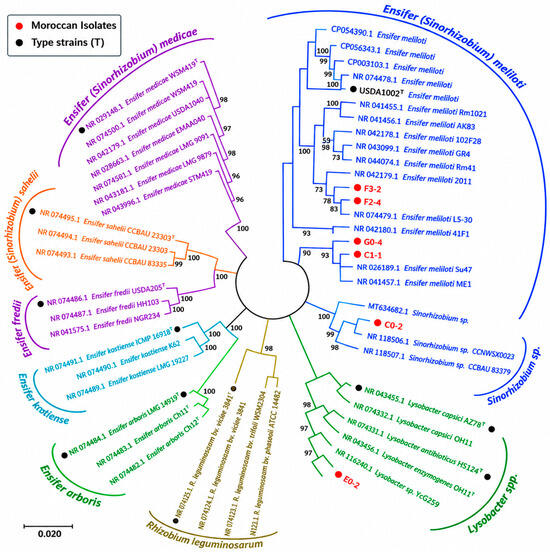
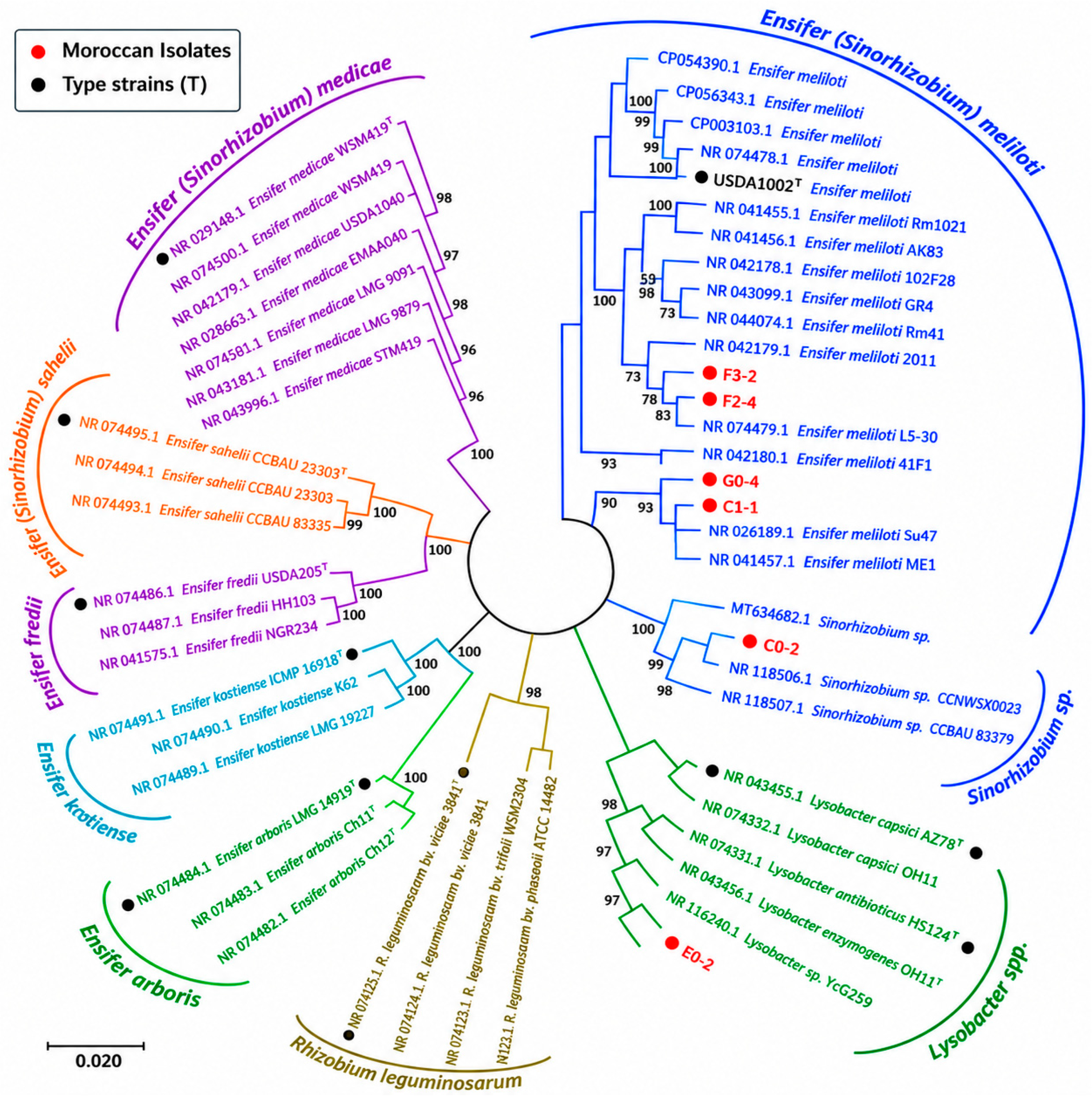
Comparative analysis of the 16S rRNA gene sequences against the NCBI BLASTn database suggested the taxonomic affiliation of the bacterial isolates, with high sequence similarity values (Table 4). The obtained partial sequences, from single-strand reads with primer pA, ranged from 700 to 1400 bp and were closely related to members of the genus Sinorhizobium (currently classified as Ensifer), except for one isolate that showed high similarity to the genus Lysobacter. Among the selected isolates, strains F3-2 and F2-4 exhibited 100% sequence identity with Sinorhizobium meliloti, although 16S rRNA similarity alone does not equate to species-level identification, which would require additional markers (recA, atpD, glnII); G0-4 and C1-1 also showed very high similarity (99.73% and 99.79%, respectively). In contrast, isolate C0-2 shared 95.42% sequence identity with Sinorhizobium sp., a value close to the genus-level threshold, so its assignment to Sinorhizobium sp. is tentative. Isolate E0-2 was tentatively identified as Lysobacter sp. with 99.72% sequence identity (Table 4).
Table 4.
Closest BLASTn matches of the 16S rRNA gene sequences of the six isolates.
The phylogenetic analysis based on 16S rRNA gene sequences was consistent with the BLASTn identification at the genus level (Figure 1). The Maximum Likelihood tree separated the isolates into two major lineages corresponding to the genera Ensifer (Sinorhizobium) and Lysobacter, which belong to different classes (Alphaproteobacteria and Gammaproteobacteria). Isolates F3-2, F2-4, G0-4, and C1-1 clustered within the S. meliloti clade together with reference strains, supporting their close phylogenetic relationship with this species. Isolate C0-2 formed a distinct branch within the Sinorhizobium lineage, consistent with its lower sequence identity (95.42%), its assignment to this genus remaining tentative. In contrast, isolate E0-2 clustered with reference strains of Lysobacter, suggesting its affiliation with this genus. Overall, the phylogenetic reconstruction was consistent with the BLASTn results at the genus level.
Figure 1.
Unrooted maximum-likelihood phylogenetic tree based on partial 16S rRNA gene sequences, showing the relationships among Moroccan isolates and reference strains of Sinorhizobium (Ensifer), Rhizobium and Lysobacter, and used to illustrate the genus-level affiliation of the isolates. Bootstrap values based on 1000 replicates are indicated at the nodes; they are not informative within the S. meliloti clade, where the sequences are nearly identical. Moroccan isolates are highlighted by red circles, whereas type strains (T) are indicated by black circles.
2.5. Effect of Bacterial Inoculation on the Morphological Response of Medicago sativa Under Different Water Regimes
The growth response of M. sativa to inoculation with five bacterial isolates was evaluated under three water regimes corresponding to 100%, 66%, and 33% of field capacity (FC). Plant growth was assessed using morphological parameters including plant height, number of branches, and number of leaves, which are indirect indicators of plant performance and do not show whether the isolates formed nodules or contributed nitrogen to the host.
Two-way ANOVA revealed that water regime had a highly significant effect on all measured morphological parameters (p < 0.001), confirming the strong impact of drought stress on plant growth (Table 5). In contrast, the main effect of bacterial strain and the interaction between strain and water regime were not statistically significant for any of the studied variables (p > 0.05).
Table 5.
Two-way ANOVA results for the effects of bacterial inoculation and water regime on morphological parameters of M. sativa.
These results indicate that plant growth was primarily influenced by water availability rather than by differences among the tested isolates.
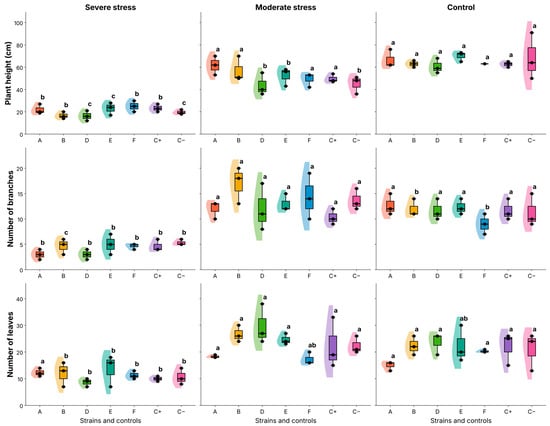
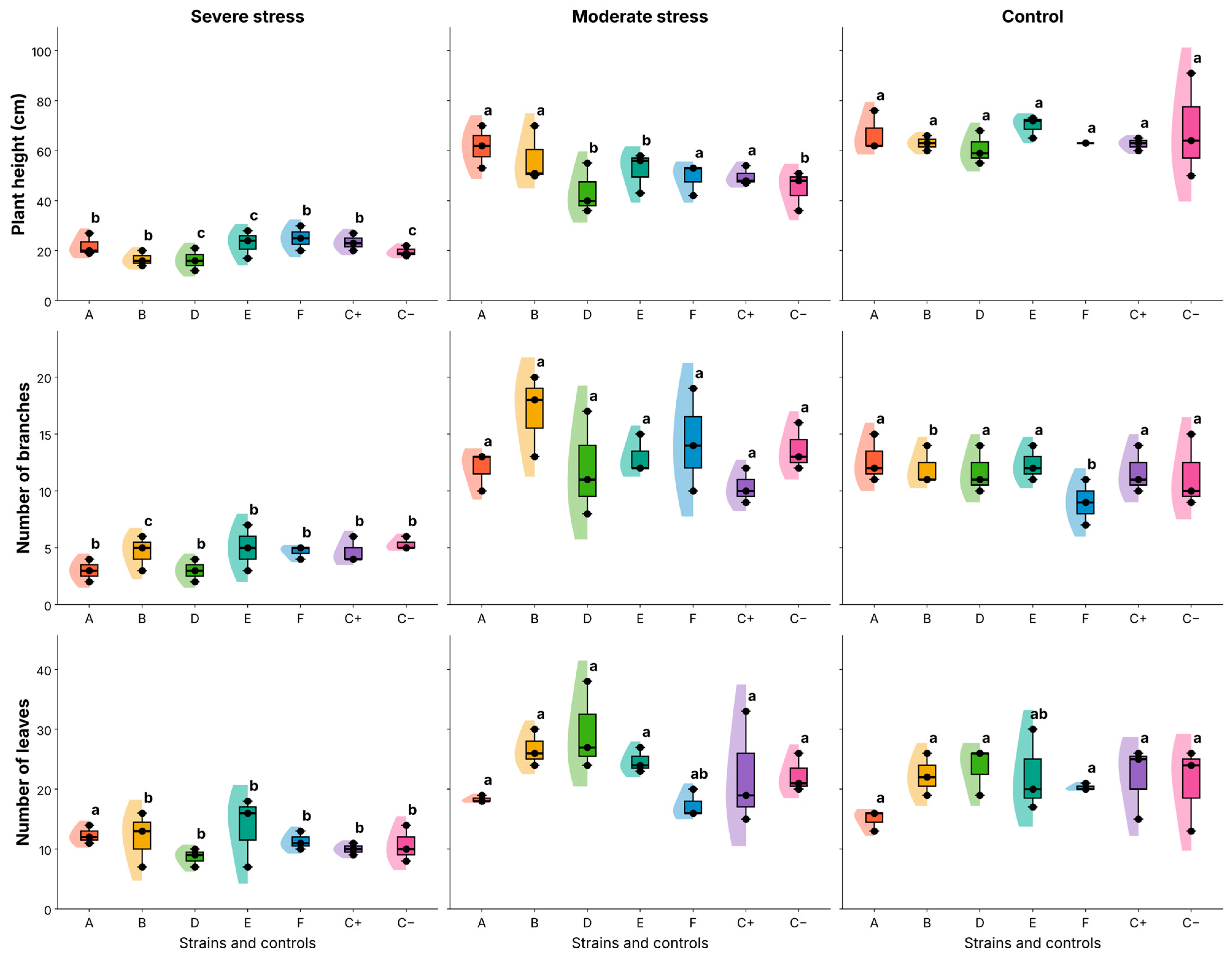
Water regime significantly affected plant height (F = 189.44, p < 0.001), with a marked decrease as soil moisture declined from 100% to 33% field capacity (FC), highlighting the detrimental effect of drought on plant growth. Although the overall effect of bacterial strain was not significant (F = 1.57, p = 0.179), the contrast between plants inoculated with S. meliloti F3-2 and the uninoculated control under moderate drought stress (66% FC) (difference +16.7 cm; 95% CI 4.3 to 29.0; unadjusted p = 0.0095) did not remain significant after Holm adjustment across all 108 contrasts (adjusted p = 1.00). No significant difference between inoculated and control plants was detected at any irrigation level, including under severe drought stress (33% FC). Nevertheless, strains S. meliloti C1-1, F2-4 and F3-2 tended to maintain greater plant height than the uninoculated control, although these differences were not statistically significant.
Similarly, the number of branches was strongly affected by water regime (F = 88.82, p < 0.001), decreasing markedly under severe drought stress. Neither the main effect of bacterial strain (p = 0.306) nor the strain × water regime interaction (p = 0.234) was significant. The contrast between plants inoculated with Sinorhizobium sp. C0-2 and the nitrogen control under moderate drought stress (66% FC) (difference +6.7; 95% CI 2.9 to 10.4; unadjusted p = 0.0009) did not remain significant after Holm adjustment across all 108 contrasts (adjusted p = 0.099). Under severe drought stress, branch production was reduced across all treatments, and no significant differences were observed between inoculated plants and the controls. Water regime also had a significant effect on leaf production (p < 0.001), with the number of leaves decreasing mainly under severe drought (33% FC) (Figure 2). In contrast, neither bacterial strain nor the strain × water regime interaction significantly affected this trait. Although no statistically significant differences were detected among treatments, plants inoculated with S. meliloti F2-4 and F3-2 tended to maintain a slightly higher number of leaves under severe drought stress than the uninoculated control.
Figure 2.
Morphological parameters of alfalfa inoculated with different nodule-associated bacterial isolates under varying irrigation levels. Plant height (top), number of branches (middle), and number of leaves (bottom) were measured after inoculation with five bacterial isolates and two control treatments under three irrigation regimes: severe stress (33% FC), moderate stress (66% FC), and control conditions (100% FC). Data are presented as half-violin plots combined with boxplots and individual data points, representing the distribution of biological replicates (n = 3 per treatment and irrigation level). The boxplots indicate the median and interquartile range, while points represent individual replicates. Strain codes: A = F3-2 (S. meliloti), B = C0-2 (Sinorhizobium sp.), D = G0-4 (S. meliloti), E = F2-4 (S. meliloti), F = C1-1 (S. meliloti), C+ = nitrogen control (uninoculated plants receiving additional nitrogen), C− = uninoculated control (no inoculation and no additional nitrogen). Within each treatment, different letters indicate significant differences among irrigation levels (Tukey’s HSD, p < 0.05); the letters do not compare treatments with each other or with the controls. The raw data are provided in Supplementary Table S1.
Overall, increasing drought intensity significantly reduced all measured growth parameters, confirming the high sensitivity of Medicago sativa to water limitation. Bacterial inoculation did not produce a significant overall effect, and no comparison with the controls remained significant after multiplicity adjustment. Under severe drought, S. meliloti C1-1, F2-4 and F3-2 showed a non-significant tendency to maintain higher growth than the uninoculated control; additional experiments with larger sample sizes are needed to determine whether these tendencies reflect a real contribution to drought tolerance.
3. Discussion
Rhizobia establish nitrogen-fixing symbioses with legumes and contribute to soil fertility and plant nutrition, particularly under adverse environmental conditions [27]. In Mediterranean regions, where increasing water scarcity and soil degradation threaten forage production, identifying native rhizobial populations adapted to local environments has become a priority for developing sustainable agricultural practices [28]. The diversity of alfalfa-nodulating rhizobia has been investigated in several Mediterranean countries, including Italy [29], Tunisia [30] and Spain [31]. In Morocco, previous work has focused on isolates from drought- and salt-affected regions of southern Morocco [25] and on the response of alfalfa–rhizobia associations to water deficit [26], whereas information from other agroecological regions remains limited. The present study therefore provides a preliminary characterization of nodule-associated bacteria of M. sativa in Morocco by integrating soil physicochemical characterization, phenotypic and molecular identification of nodule-associated bacteria, and a preliminary evaluation of the growth response of selected isolates to inoculation under water deficit. Such an integrative approach provides preliminary information on nodule-associated bacteria from two Moroccan regions and a basis for selecting isolates for further characterization. The first part of this study explored whether the nodulation observed at each site varied with the environmental characteristics of the sites. Overall, differences in soil physicochemical properties among the four sampling sites were accompanied by differences in the field nodulation observed. Although the relatively limited number of sampling locations and the qualitative nature of the nodulation assessment do not allow definitive conclusions regarding causal relationships, the observed trends suggest that soil fertility and chemical composition may be associated with the nodulation observed in the field. Previous ecological studies have reported that rhizobial diversity is influenced not only by host plant genotype but also by multiple edaphic factors, including soil pH, nutrient availability, salinity, organic matter content, and climatic conditions [32,33]. In general, the distribution of indigenous rhizobia is considered to reflect the long-term adaptation of bacterial populations to local environmental constraints [34].
Among the soil properties investigated, available phosphorus was the one that differed most between the sites with abundant or moderate nodulation and those with low nodulation (Table 2). Phosphorus is indispensable for numerous physiological and metabolic processes involved in symbiotic nitrogen fixation, including ATP synthesis, nucleic acid metabolism, membrane formation, and energy transfer [35]. Because biological nitrogen fixation is one of the most energy-demanding processes in plants, phosphorus deficiency directly limits nodule initiation, bacteroid differentiation, nitrogenase activity, and ultimately plant productivity [36]. Yao et al. [37] previously demonstrated that phosphate stress inhibits nodule biomass and nitrogenase activity in legumes, thereby reducing plant growth. More recent studies have further confirmed that phosphorus availability regulates the expression of symbiosis-related genes and influences both rhizobial infection efficiency and nodule functionality [38,39]. The higher phosphorus availability observed at the sites with abundant and moderate nodulation is therefore consistent with the well-established physiological importance of this nutrient during the establishment and maintenance of effective rhizobial symbiosis.
Organic carbon and total nitrogen were also highest at the site with abundant nodulation (Belfaa) [40]. Although rhizobia acquire atmospheric nitrogen only after successful symbiosis, their persistence in soil as free-living bacteria depends largely on the availability of carbon substrates that sustain cellular metabolism and population survival [41]. Soils enriched in organic matter generally support greater microbial biomass and activity by providing diverse carbon sources, improving soil aggregation, water retention, and nutrient availability [42]. Consequently, higher organic matter content creates favorable ecological niches for rhizobial survival between cropping seasons and enhances their capacity to colonize legume roots upon host establishment. Similar relationships between soil organic carbon and rhizobial diversity have been reported in several Mediterranean and semi-arid ecosystems, highlighting the importance of maintaining soil organic fertility to preserve beneficial microbial communities [43,44,45].
Conversely, the lower limestone content at the sites with abundant and moderate nodulation (Table 2) may be consistent with the possibility that excessive carbonate concentrations restrict the establishment of effective symbioses. Calcareous soils frequently reduce the availability of essential micronutrients such as iron, zinc, manganese, and phosphorus through precipitation reactions, thereby indirectly limiting both plant nutrition and microbial activity [46]. High carbonate content may also modify rhizosphere pH and alter root exudation patterns that regulate bacterial attraction and colonization. Nevertheless, the influence of limestone on nodulation remains complex because moderate liming may improve acidic soils by correcting excessive acidity while simultaneously increasing calcium availability for root development [19]. Indeed, Grewal and Williams [47] reported that appropriate liming practices significantly enhanced root growth, nodulation, forage yield, and protein content in alfalfa. Therefore, the trend observed in the present study could reflect the detrimental effects of naturally excessive carbonate accumulation rather than the beneficial effects associated with controlled agricultural liming.
Electrical conductivity, an indicator of soil salinity, was lowest at the site with abundant nodulation. Salinity represents one of the major environmental constraints affecting rhizobial survival because elevated salt concentrations reduce bacterial growth, impair root hair infection, inhibit nodulation, and decrease nitrogenase activity [48]. Under saline conditions, rhizobial cells experience osmotic stress, membrane destabilization, oxidative damage, and metabolic disturbances that collectively reduce their competitiveness in the rhizosphere [49]. Previous studies have consistently demonstrated that indigenous rhizobial populations originating from saline environments evolve specific adaptive mechanisms, including the accumulation of compatible solutes, modification of membrane lipid composition, and enhanced production of extracellular polysaccharides, allowing them to maintain cellular homeostasis under osmotic stress. This is not inconsistent with the well-documented sensitivity of many rhizobial species to saline conditions [50,51], although electrical conductivity was measured in a 1:5 extract and the differences observed cannot be related to specific salinity thresholds.
From the 56 bacterial isolates recovered from alfalfa nodules, six were selected on the basis of growth consistency and phenotypic characteristics, including colony morphology, Congo red behavior on yeast extract mannitol agar and the absence of hypersensitive reaction on tobacco leaves. These criteria are only presumptive: a negative hypersensitive reaction indicates the absence of this response in tobacco and provides no information on the ability to nodulate M. sativa. Biochemical characterization with API 20E, a system designed for Enterobacteriaceae, showed few differences among the selected isolates (only lysine and ornithine decarboxylase) and did not allow their metabolic capacities to be assessed; it is therefore reported as descriptive information only.
Molecular identification based on 16S rRNA gene sequencing suggested that the majority of the selected isolates belonged to the genus Sinorhizobium (currently classified within the genus Ensifer), which is widely recognized as the predominant microsymbiont of Medicago species throughout Mediterranean ecosystems. This finding is fully consistent with numerous phylogenetic studies reporting S. meliloti and S. medicae as the principal nitrogen-fixing symbionts associated with alfalfa [52,53]. The affiliation of most of the characterized isolates with S. meliloti is in line with reports from Italy [29], Tunisia [30], Spain [31] and southern Morocco [25]. Regional differences may however lie in intraspecific diversity and symbiotic genotypes [25,30,31], which cannot be resolved with the 16S rRNA data obtained here for six isolates; any regional specificity of Moroccan populations therefore remains to be demonstrated with multilocus and symbiotic gene markers. One particularly interesting finding was the identification of one isolate closely related to the genus Lysobacter. Although Lysobacter species are not classical nitrogen-fixing rhizobia, they have increasingly been recognized as important members of the plant microbiome because of their remarkable capacity to produce extracellular lytic enzymes, antimicrobial metabolites, and diverse bioactive compounds involved in biological control [54,55]. The recovery of a Lysobacter-related isolate from surface-sterilized nodules, which remains to be confirmed as an endophytic association, may reflect the growing concept of the nodule microbiome, which recognizes that legume nodules host complex microbial communities extending beyond the nitrogen-fixing symbionts alone [56]. Recent studies have reported that these non-rhizobial endophytes may contribute to nutrient acquisition, pathogen suppression, hormone production, and stress tolerance, thereby complementing the functions performed by rhizobia [57,58]. The detection of Lysobacter in the present study could be consistent with a cooperative microbial strategy in which multiple microorganisms coexist within the nodule, although this remains hypothetical.
The recently proposed “Cry for Help” concept, whereby stressed plants recruit beneficial microorganisms through modifications of root exudation and rhizosphere signaling [59,60], provides one possible framework for interpreting this finding. However, the detection of this isolate may reflect either an adaptive association or incidental colonization, and the present data cannot distinguish between these possibilities. Its functional role was not assessed here and remains hypothetical; future investigations combining whole-genome sequencing, functional assays, and co-inoculation experiments with Ensifer strains would be needed to clarify the ecological significance of this unexpected association. The second part of this study explored whether the selected isolates from contrasting Moroccan agroecosystems improved alfalfa performance under drought conditions. Overall, our greenhouse experiment did not provide statistical support for an inoculation effect. As expected, drought stress significantly reduced plant height, branch number, and leaf production, confirming the detrimental effects of water limitation on alfalfa growth. Water deficit restricts cell expansion, decreases photosynthetic activity through stomatal closure, and impairs biological nitrogen fixation by limiting rhizobial infection, nodule development, and nitrogenase activity. Similar responses have been widely reported in legumes, highlighting the high sensitivity of the rhizobium-legume symbiosis to soil water availability [26,61].
Despite the strong inhibitory effect of drought, no statistically supported difference in growth was detected between plants inoculated with the native isolates and the uninoculated control, including under severe water deficit. Improved plant growth following rhizobial inoculation under abiotic stress has been reported in other crops, such as maize under salinity [62], but such an effect was not detected here. Whether responses to drought are strain-dependent cannot be concluded from the present data. The absence of a detectable effect is common in greenhouse experiments, where plant responses are influenced by complex interactions among bacterial genotype, host genotype, environmental conditions, and biological variability [63]; in addition, contamination of the substrate by indigenous rhizobia, which would tend to reduce differences between inoculated and uninoculated plants, cannot be excluded. Moreover, beneficial effects of rhizobia may first appear at the physiological level, including improvements in photosynthetic efficiency, water-use efficiency, antioxidant capacity, and root development, before becoming evident through morphological traits. Therefore, the absence of significant differences in growth parameters does not by itself exclude an effect of inoculation, nor does it establish one, and this would need to be tested through physiological measurements [64,65].
Although no superior performance of indigenous isolates was demonstrated here, local adaptation has been proposed to play an important role in rhizobial efficiency under drought. Native strains evolving under arid and semi-arid environments are continuously exposed to osmotic stress, nutrient limitation, and fluctuating temperatures, promoting the selection of adaptive traits that improve both bacterial persistence and symbiotic performance [66]. Consequently, locally adapted rhizobia often establish more efficient interactions with their host plants than non-native strains, emphasizing the importance of exploiting indigenous microbial resources for the development of climate-resilient biofertilizers [67].
Plant growth promotion by rhizobia under water deficit has been attributed to multiple complementary mechanisms rather than to biological nitrogen fixation alone, although none of these mechanisms was measured here. Besides supplying nitrogen, many rhizobial strains synthesize phytohormones such as indole-3-acetic acid, which stimulate root elongation and lateral root formation, thereby increasing water and nutrient uptake under drought conditions. Likewise, the production of ACC deaminase reduces stress-induced ethylene accumulation, allowing continued root growth and delaying drought-induced senescence. These mechanisms have been recognized as major contributors to microbial-mediated drought tolerance in legumes [68].
Rhizobial adaptation to drought also relies on efficient osmotic adjustment. Increasing evidence shows that rhizobia accumulate compatible solutes such as proline, glutamine, taurine, trehalose, and glycine betaine, which stabilize proteins and membranes while protecting bacterial cells against dehydration and oxidative stress [69,70,71,72]. In addition, many drought-tolerant rhizobia produce extracellular polysaccharides (EPS), which promote biofilm formation, improve soil aggregation, increase water retention around roots, and facilitate bacterial colonization under water-limited conditions. The production of siderophores further enhances iron acquisition and contributes to maintaining cellular homeostasis during stress [73].
Another mechanism reported in the literature is the stimulation of the plant antioxidant defense system. Drought-induced accumulation of reactive oxygen species (ROS) causes oxidative damage to membranes, proteins, and photosynthetic tissues [74]. Numerous rhizobial strains have been reported to enhance the activity of antioxidant enzymes, including superoxide dismutase, catalase, and peroxidases, thereby reducing oxidative stress and preserving photosynthetic capacity. Although these physiological parameters were not measured in the present study, they could be examined in future work [75].
Overall, the mechanisms described above are reported in the literature as ways by which rhizobia may contribute to drought tolerance (improved nitrogen nutrition, hormonal regulation, osmotic adjustment, antioxidant protection and enhanced root development); none of them was assessed here. The tested isolates may be considered as candidates meriting further evaluation for the development of microbial inoculants adapted to drought-prone Mediterranean agroecosystems. However, direct measures of nodulation and symbiotic effectiveness, together with additional physiological, biochemical, and molecular analyses, are required to determine whether the isolates have a beneficial effect and, if so, to identify the specific mechanisms responsible.
4. Materials and Methods
4.1. Sampling Site and Nodule Collection
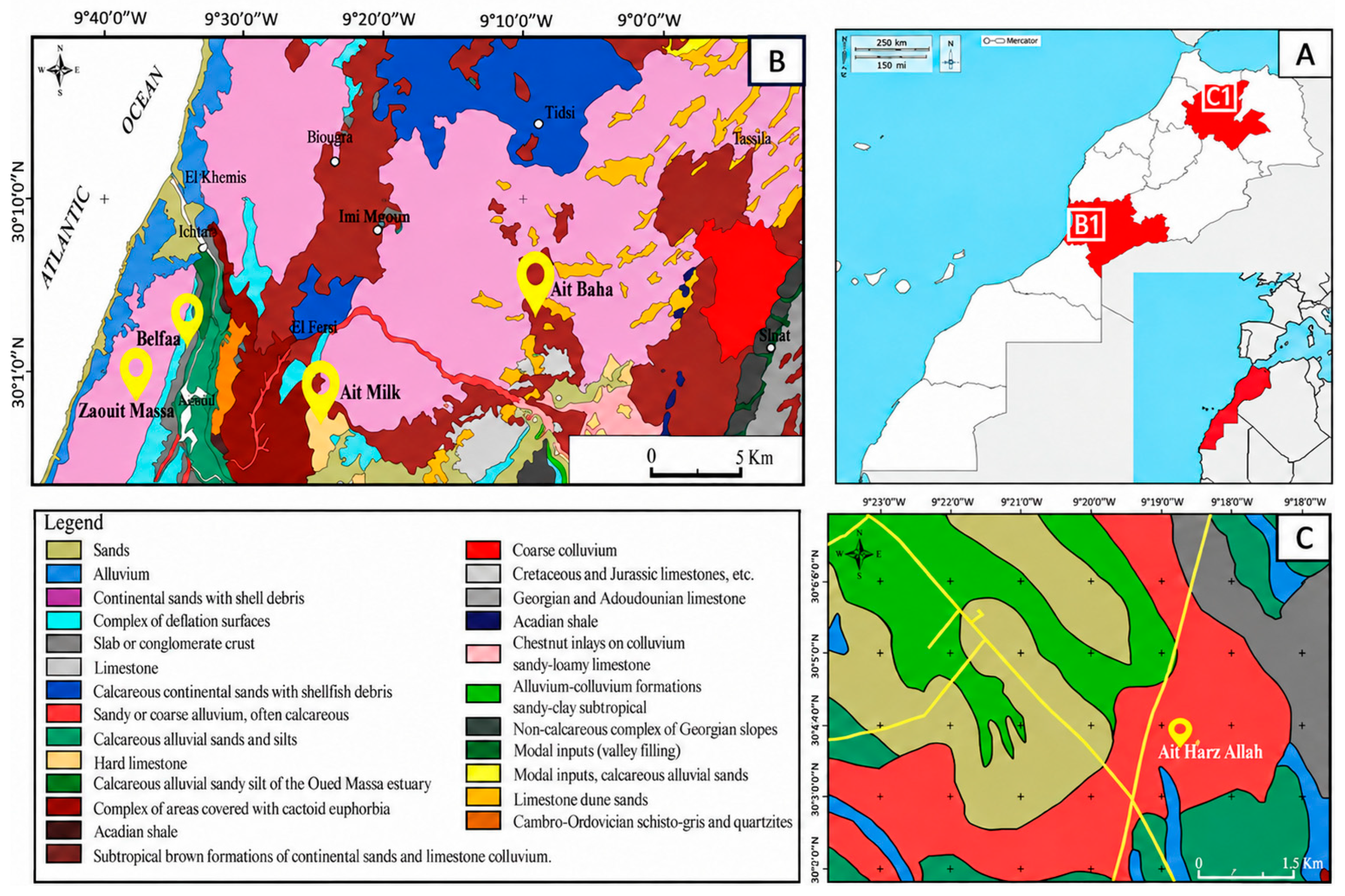
Bacterial strains were isolated from alfalfa between February and April 2020 from two ecologically diverse regions of Morocco. Sites were selected to represent contrasting climatic conditions, within the limits imposed by accessibility and the availability of established alfalfa fields. The first site was Ait Harz Allah (33.894° N, 5.554° W; 550 m altitude), Meknes region, with semiarid climate and clay loam soil with slightly neutral pH. The second site located around Agadir and characterized by an arid climate, included several collection points: Ait Baha, situated near a seasonal watercourse with rocky, mineral-poor soils; Ait Milk, with sandy-calcareous soils frequently amended with farmyard manure; Belfaa; and Zaouit Massa, both characterized by sandy to sandy-clay soils and long-term alfalfa cultivation (Figure 3). In each location, 10 to 15 healthy alfalfa plants, at the flowering stage, were randomly collected. An area with a diameter of 20–30 cm was marked around the plant, and the whole root system along with the nodules, as well as the soil from the rhizosphere, was carefully removed with a sterilized hand shovel. The plants were carefully placed in sterilized plastic bags, kept in ice, and transported within 24 h to the lab for microbiological isolation. This procedure preserved nodule integrity and ensured bacterial viability for subsequent isolation and characterization [76]. Nodulation was assessed qualitatively at the time of sampling by visual inspection of the nodules on the excavated root systems and classified at each site as low, moderate or abundant. No nodule counts or scores were recorded.
Figure 3.
Geographical and geological context of the study areas in Morocco. (A) Regional map of Morocco showing the administrative regions containing the study sites (highlighted in red) within a North African context. The locator labels (B1) and (C1) indicate the regions shown in panels (B) and (C), respectively. (B) Geological formations of the Souss-Massa region, with yellow pins indicating the sampling sites at Ait Baha, Ait Milk, Belfaa, and Zaouit Massa. (C) Geological formations of the Fez-Meknes region around Ait Harz Allah; the yellow pin indicates the sampling site.
4.2. Isolation and Purification of Nodule-Associated Bacteria from Root Nodules
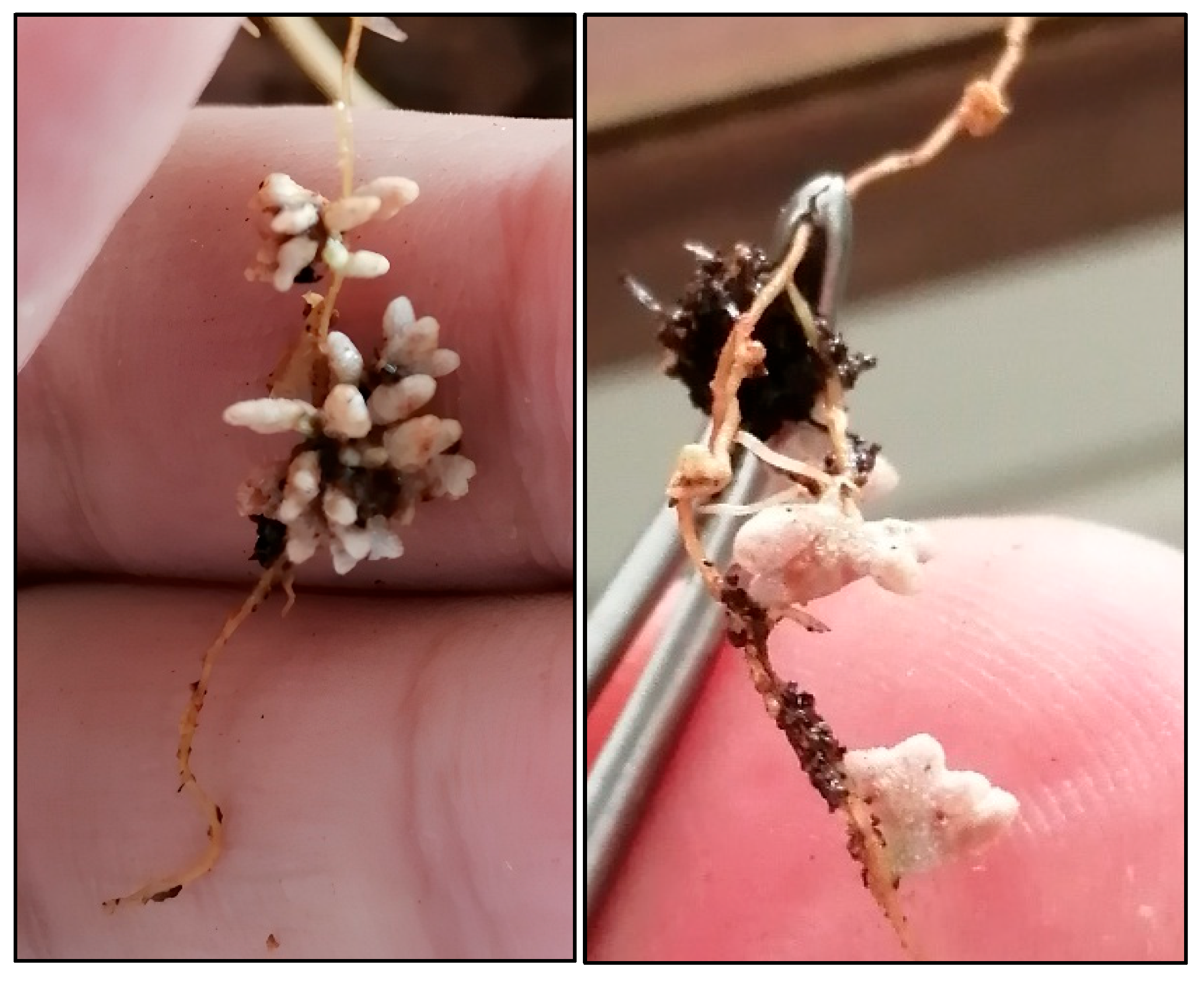
Bacterial strains were isolated from the root nodules (Figure 4) of field-collected M. sativa plants following the procedure of Carter and Gregorich [77] with some modifications. Nodules were carefully separated from the root tissues and examined for healthy, pink aspect indicative of active nodules. They were then rinsed in tap water and surface-sterilized by transferring them for 10 s to 70% (v/v) ethanol, then treated with 2% (w/v) sodium hypochlorite (NaOCl) for another minute, and finally rinsed five times with sterile distilled water (SDW) to remove residual disinfectants. The surface-sterilized nodules were then aseptically crushed in a sterile Petri dish, resuspended in SDW of 1 mL, and the suspension streaked on Yeast Extract Mannitol Agar (YMA) plates, following the method of Callow and Vincent [78]. Plates were incubated at 28 ± 1 °C for 2–5 days under aerobic conditions. Colonies were initially differentiated on the basis of their morphological properties typical of Rhizobium spp. colonies, namely circular, convex, translucent to whitish colonies with smooth edges.
Figure 4.
Root nodules of Medicago sativa collected for Rhizobium isolation.
For additional characterization, isolates were streaked on YMA media with 25 mg/L of Congo red [78]. After 48 to 72 h of incubation at 28 ± 1 °C, colonies with minimal to no absorption of the dye (appearing pale pink to pink instead of bright red) were considered presumptive Rhizobium isolates. Isolate purification was done through subculturing on YMA media. The isolates were kept short-term on YMA medium at 4 °C and long-term in Yeast Extract Mannitol Broth (YMB) containing 25% (v/v) glycerol at −80 °C.
4.3. Physicochemical Characterization of Soil Samples
In order to examine the edaphic context of the sampling sites, a physicochemical soil analysis was carried out using one soil sample taken at each field site at a depth of 10–20 cm, without analytical replicates. In the laboratory, the soil pH value, electrical conductivity (EC), organic carbon content, base exchangeable cations (Na+, K+, Ca2+), assimilable phosphorus (P), total nitrogen (N), active limestone content, and total limestone content were determined to describe the edaphic context of the sites and compare it descriptively with the field nodulation observed at each site. Soil pH was determined using a pH meter (potentiometric method). A soil sample of 10 g of air-dried soil with a 2 mm sieve was added to 20 mL of deionized water (1:2 w/v) in a 50 mL sample tube and kept under agitation for 30 min at 140 rpm [79]. Electrical conductivity (EC) measurements with a conductivity meter were performed using the soil water extract (1:5 w/v) that consisted of adding 4 g of soil sample with 20 mL of deionized water under the same agitation conditions [80] and expressed in dS m−1.
The organic carbon content was analyzed using the Walkley–Black oxidation method [81]. In short, the method requires the digestion of 1 g of sieved soil samples with 10 mL of 1 N potassium dichromate (K2Cr2O7) and 20 mL of 96% H2SO4, which is then back-titrated with 0.5 N ferrous sulfate (FeSO4) using the ferroin indicator. The organic matter (%) content can be calculated using the organic carbon (%) content, where 1.72 is the conversion factor. The content of exchangeable basic cations, Na+, K+, and Ca2+, were extracted from 2 g of soil samples using 50 mL of 1 M ammonium acetate solution at pH 7.0 after agitation at 140 rpm for 30 min and analyzed using flame photometry; concentrations in the extract (mg L−1) were converted to mg kg−1 of soil using the soil:solution ratio (1:25, w/v).
Available phosphorus was analyzed using the Olsen extraction technique with 2.5 g soil samples extracted with 50 mL of 0.5 M NaHCO3 solution (pH 8.5) at 30 min under agitation [82]. After filtration, the amount of phosphate in the aliquot was determined colorimetrically at 825 nm using the molybdenum blue technique and expressed in mg kg−1 of soil. Total nitrogen content was estimated using Kjeldahl digestion with 1 g of soil samples digested with concentrated H2SO4 in the presence of a catalyst mixture (FeSO4/K2SO4/CuSO4) under a programmed temperature control [83]. Total nitrogen is expressed as a percentage of air-dried soil. The resulting distillate from steam distillation of ammonia to a mixture of boric acid was titrated with 0.1 N H2SO4. The total amounts of limestone were determined using a Bernard calcimeter, based on the volume of released CO2 gas following the reaction of 1 g of soil with HCl. The active form of limestone was estimated using the Drouineau method: a solution of 4 g of soil extracted with 100 mL of N/5 ammonium oxalate solution under agitation (140 rpm, for 2 h), and then the filtration solution was acidified with H2SO4 (20%) and titrated with KMnO4 (N/10) solution below 70 °C until it turned a permanent pink color.
4.4. Hypersensitivity Reaction Assay
In order to determine the pathogenic potential of the bacterial isolates, a hypersensitive response (HR) assay was performed using leaves of Nicotiana tabacum L. [84]. Bacterial suspensions were prepared by resuspending freshly grown cultures in SDW to an optical density corresponding to approximately 108 CFU mL−1, as measured at 600 nm with a spectrophotometer. Fully expanded, healthy leaves were selected from 4- to 6-week-old greenhouse-grown plants maintained under controlled conditions. Each bacterial suspension was infiltrated on the abaxial leaf surface using a sterile, needleless syringe, applying gentle and uniform pressure to minimize mechanical damage. SDW was the negative control, while the positive control was provided by a known HR-inducing bacterium in tobacco, Erwinia amylovora. The inoculated plants were maintained at room temperature (22–25 °C) under ambient light. The leaves were visually observed for symptoms at 2 days post inoculation (dpi) and then again at 5 dpi. The development of localized lesions around the infiltration point was considered a marker of the positive HR, which revealed the capacity of the tested strain to trigger plant defensive responses through virulence factors. Each treatment was replicated three times on leaves, and the experiment was conducted twice.
4.5. Biochemical Characterization of Bacterial Isolates
The biochemical and metabolic characteristics of the bacterial isolates were assessed using the API 20E system (bioMérieux, Marcy-l’Étoile, France). In the present study, the API 20E gallery was used exclusively as a standardized panel of miniaturized biochemical assays to record a descriptive profile of enzymatic reactions, rather than for taxonomic identification or assessment of metabolic capacities. Molecular methods were subsequently employed for bacterial identification. Fresh bacterial cultures grown on yeast extract peptone glucose agar (YPGA) medium at 28–30 °C for 24 h were used for the analysis. A single well-isolated colony was suspended in SDW and adjusted to a turbidity equivalent to a 0.5 McFarland standard. The API 20E strips were inoculated according to the manufacturer’s instructions and incubated at 28 °C. Biochemical reactions were recorded after 18 h of incubation.
4.6. Molecular Identification of Bacterial Isolates
The bacterial isolates were grown using YPGA and incubated at 30 °C for 72 h. After incubation, the genomic DNA was purified from the harvested bacterial cells using a standard protocol for DNA extraction. The protocol included cell lysis, DNA purification, and elution into micro-centrifuge tubes that had been sterilized for use. The amount and purity of genomic DNA extracted for analysis was measured using the NanoDrop spectrophotometer (Thermo Fisher Scientific, Waltham, MA, USA). The DNA concentration measured in terms of ng/µL and the ratio of A260/230 was noted to validate the absence of protein contamination in the samples, which is indicated by readings ranging from 1.8 to 2.0 units. The 16S rRNA gene was amplified using universal primers pA (5′-AGAGTTTGATCCTGGCTCAG-3′) and pH (5′-AAGGAGGTGATCCAGCCGCA-3′), which amplify a fragment of about 1500 bp. The PCR was set up with Green-Taq DNA polymerase (Thermo Fisher Scientific, Waltham, MA, USA), using the following conditions: initial denaturation at 94 °C for 5 min, followed by 35 cycles consisting of denaturation at 94 °C for 30 s, annealing at 56 °C for 30 s, extension at 72 °C for 30 s, followed by a final extension of 5 min at 72 °C.
The amplified products were then electrophoresed using a 1% agarose gel prepared with 0.5× Tris-acetate-EDTA (TAE) buffer. The gel portion corresponding to the target fragment size was excised, and the DNA fragments were purified using ExoSAP-IT (Thermo Fisher Scientific, Waltham, MA, USA) PCR Product Cleanup Reagent. The purified products were subsequently sequenced using the Sanger sequencing technique with primer pA and the BigDye Terminator v3.1 Cycle Sequencing Kit (Thermo Fisher Scientific, Waltham, MA, USA). The obtained sequences were compared with sequences available in the NCBI nucleotide database using BLASTn (https://www.ncbi.nlm.nih.gov/, accessed on 15 September 2026) to identify their closest taxonomic relatives. Multiple sequence alignment was performed using Clustal X2 as implemented in SeaView v4, including the 16S rRNA gene sequences of closely related reference species. The resulting alignment comprised 1676 nucleotide positions. Phylogenetic relationships were inferred using the Maximum Likelihood (ML) method implemented in SeaView v4, with 1000 bootstrap replicates to assess the robustness of the inferred branches. The best-fit nucleotide substitution model and the treatment of gap-containing positions were considered in the phylogenetic reconstruction. The resulting tree was visualized using FigTree v1.4.3 (http://tree.bio.ed.ac.uk/software/figtree/, accessed on 15 September 2026). The tree was displayed in an unrooted format and was used to illustrate the genus-level affiliation of the bacterial isolate.
4.7. Plant Inoculation and Growth Response Under Drought Stress
A greenhouse experiment was conducted to examine the growth response of alfalfa (ITACA variety) to inoculation with five of the selected isolates under varying levels of water stress. The seeds were subjected to surface sterilization using 70% (v/v) ethanol for 1 min and 1% (w/v) NaOCl for 5 min and washed 2–6 times with SDW. The seeds germinated in the dark at 25 °C for 3–7 days on sterile cotton soaked with sterile distilled water (SDW) in Petri dishes covered with aluminum foil. In preparation for the inoculum, the isolates were grown in YMB. The incubation was at 28 °C and 150 rpm for 48 h. The isolates were centrifuged at 8000 rpm for 3 min, and the pellets were suspended in SDW. The cell density was adjusted to an OD600 of 1.0, or approximately 108 CFU/mL, using a spectrophotometer.
Seed inoculation was done based on the protocol by Howieson and Dilworth [85], where 1 mL of the bacterial suspension was applied onto the pre-germinated seeds for two days at 22 °C in the dark. Seedlings were planted into polyethylene pots measuring 25 cm in diameter, 25 cm in height, containing 1 kg of soil mixture (sand, clay, and peat 1:1:1: tailored for watering and aeration). The pots were disinfected using 20% NaOCl before being filled. The substrate was treated twice with NaOCl, followed by thorough rinses using boiling distilled water, with short intervals of cooling to reduce nitrogen carryover. The sterility of the substrate and the nodulation status of the uninoculated controls were not checked, so contamination by indigenous rhizobia cannot be excluded. Three seedlings were planted per pot and were later reduced to one per pot. The field capacity (FC) of the substrate was determined on one representative pot. The water regimes were set at 100% FC as the control treatment, 66% FC as the moderate drought treatment, and 33% FC as the severe drought treatment. These values were sustained throughout the study by weighing the pots every 3 days and adding water to restore their target weight; no correction for plant biomass was applied. The experiment had a completely randomized treatment layout. In addition to the inoculated treatments, two uninoculated controls were included: a nitrogen control (C+), which received ammonium nitrate (33% N) applied by broadcasting on the soil surface, and a negative control (C−), which received no additional nitrogen. The inoculated treatments did not receive additional nitrogen. The dose and frequency of the nitrogen application were not recorded. All other conditions, including substrate, irrigation, nutrient supply and growth conditions, were identical among treatments. The pots received a 16/8-h photoperiod, with day/night temperatures of 26 ± 1 °C and 22 °C, respectively. The plants in the flowering phase had their growth parameters measured as plant height (cm), number of leaves, and number of branches.
4.8. Statistical Analysis
Statistical analyses were performed using R software (version 4.5.1; R Foundation for Statistical Computing, Vienna, Austria). The effects of bacterial inoculation and irrigation regime on plant height, number of branches and number of leaves were assessed using two-way ANOVA. Model assumptions were verified using Shapiro–Wilk and Levene’s tests; a slight deviation from normality was detected for plant height (p = 0.036), but the balanced design and homogeneous variances support the robustness of the ANOVA. For each trait and irrigation level, two families of six contrasts were defined, comparing the six other treatments (five isolates and the other control) with either the uninoculated control (C−) or the nitrogen control (C+) (estimated marginal means from the two-way model, emmeans package); the p-values of all 108 contrasts (18 families) were adjusted together using the Holm method. Confidence intervals are not adjusted for multiplicity. Differences among irrigation levels within each treatment were assessed using Tukey’s HSD test. Statistical significance was considered at p < 0.05.
5. Conclusions
Alfalfa productivity is increasingly threatened by drought, highlighting the need for sustainable strategies to enhance crop resilience under water-limited conditions.
In this preliminary study, the six characterized isolates from contrasting Moroccan agroecological regions were mostly affiliated with S. meliloti (four isolates), with one Sinorhizobium sp. isolate and one isolate affiliated with Lysobacter sp.
Greenhouse experiments confirmed that water availability was the primary factor governing the growth of M. sativa. Bacterial inoculation did not produce a significant overall effect on the evaluated morphological traits, and no comparison with the controls remained significant after multiplicity adjustment. S. meliloti C1-1, F2-4 and F3-2 showed a non-significant tendency to maintain plant growth under severe drought, which merits further investigation.
Overall, this pilot study provides preliminary information on nodule-associated bacteria of alfalfa in Morocco and identifies candidate strains meriting further characterization. Further studies integrating larger numbers of sites, isolates and biological replicates, nodulation assays and measurements of symbiotic effectiveness, physiological and biochemical analyses, and field validation are required to elucidate the mechanisms underlying their potential plant growth-promoting activity and to confirm their effectiveness under natural drought conditions.
Supplementary Materials
The following supporting information can be downloaded at: https://www.mdpi.com/article/10.3390/plants15223611/s1, Table S1: Raw data of the greenhouse experiment. Plant height (cm), number of branches and number of leaves of each plant (n = 3 per treatment and irrigation level), according to the bacterial treatment (A = F3-2, B = C0-2, D = G0-4, E = F2-4, F = C1-1; C+ = positive control; C− = negative control) and the irrigation level (100%, 66% and 33% of field capacity).
Author Contributions
Conceptualization, K.H., K.A., N.B. and M.H.; methodology, F.A., K.H., H.Y., J.B. and R.A.; software, F.A. and I.M.; validation, K.H., M.H. and K.A.; formal analysis, F.A., K.H., H.Y. and N.B.; investigation, K.H., S.E.I. and K.A.; resources, K.A., M.H., A.A. and K.H.; data curation, F.A. and K.H.; writing—original draft preparation, K.H. and H.Y.; writing—review and editing, K.H. and K.A.; visualization, K.H.; supervision, K.H., M.H. and K.A.; project administration, K.A.; funding acquisition, K.A. All authors have read and agreed to the published version of the manuscript.
Funding
This research was conducted within the framework of the ALL-IN project and was supported by the Institut National de la Recherche Agronomique (INRA), Morocco, which provided the financial and research resources required to carry out this study.
Data Availability Statement
The raw data of the greenhouse experiment are provided in Supplementary Table S1. The 16S rRNA gene sequences have not been deposited in a public database and are available from the corresponding authors upon request.
Acknowledgments
The authors gratefully acknowledge the support provided by the ALL-IN project and thank the INRA and ICARDA teams for their valuable technical and scientific contributions to this work.
Conflicts of Interest
The authors declare no conflicts of interest.
References
- Del Pozo, A.; Espinoza, S.; Barahona, V.; Inostroza, L.; Gerding, M.; Humphries, A.; Lobos, G.; Cares, J.; Ovalle, C. Aerial and ground-based phenotyping of an alfalfa diversity panel to assess adaptation to a prolonged drought period in a Mediterranean environment of central Chile. Eur. J. Agron. 2023, 144, 126751. [Google Scholar] [CrossRef] [Scilit]
- Noushahi, H.A.; del Pozo, A. Traits underpinning productivity and persistence of alfalfa in rainfed mediterranean environments. Eur. J. Agron. 2026, 174, 127964. [Google Scholar] [CrossRef] [Scilit]
- Yu, L.; Gao, X.; Zhao, X. Global synthesis of the impact of droughts on crops’ water-use efficiency (WUE): Towards both high WUE and productivity. Agric. Syst. 2020, 177, 102723. [Google Scholar] [CrossRef] [Scilit]
- Polade, S.D.; Gershunov, A.; Cayan, D.R.; Dettinger, M.D.; Pierce, D.W. Precipitation in a warming world: Assessing projected hydro-climate changes in California and other Mediterranean climate regions. Sci. Rep. 2017, 7, 10783. [Google Scholar] [CrossRef] [Scilit]
- Zhu, D.; Pfahl, S.; Knutti, R.; Fischer, E.M. Future extreme precipitation may shift to colder seasons in northern mid- and high latitudes. Commun. Earth Environ. 2025, 6, 657. [Google Scholar] [CrossRef] [Scilit]
- Achli, S.; Ongoma, V.; Epule, T.E.; Dhiba, D.; Salih, W.; Ousayd, L.; Chehbouni, A. Exploring the key drivers of crop yields in Morocco—A systematic review. Front. Agron. 2025, 7, 1515938. [Google Scholar] [CrossRef] [Scilit]
- World Bank Group. Morocco Country Climate and Development Report; World Bank: Washington, DC, USA, 2022; Available online: https://hdl.handle.net/10986/38240 (accessed on 1 November 2026).
- Sraïri, M.T. Water uses in sustainable agriculture practices: Reconsidering the priorities in water scarce areas. APAR 2018, 8, 333–334. [Google Scholar] [CrossRef] [Scilit]
- Noushahi, H.A.; Inostroza, L.; Barahona, V.; Espinoza, S.; Ovalle, C.; Quitral, K.; Lobos, G.A.; Guerra, F.P.; Kefauver, S.C.; Del Pozo, A. Selecting High Forage-Yielding Alfalfa Populations in a Mediterranean Drought-Prone Environment Using High-Throughput Phenotyping. Remote Sens. 2025, 17, 1517. [Google Scholar] [CrossRef] [Scilit]
- Hochman, A.; Marra, F.; Messori, G.; Pinto, J.G.; Raveh-Rubin, S.; Yosef, Y.; Zittis, G. Extreme weather and societal impacts in the eastern Mediterranean. Earth Syst. Dynam. 2022, 13, 749–777. [Google Scholar] [CrossRef] [Scilit]
- Daud, M.; Qiao, H.; Xu, S.; Hui, X.; Adil, M.; Lu, Y. Understanding abiotic stress in alfalfa: Physiological and molecular perspectives on salinity, drought, and heavy metal toxicity. Front. Plant Sci. 2025, 16, 1627599. [Google Scholar] [CrossRef] [Scilit]
- Zia, R.; Nawaz, M.S.; Siddique, M.J.; Hakim, S.; Imran, A. Plant survival under drought stress: Implications, adaptive responses, and integrated rhizosphere management strategy for stress mitigation. Microbiol. Res. 2021, 242, 126626. [Google Scholar] [CrossRef] [Scilit]
- Roy, M.; Niu, J.; Irshad, A.; Kareem, H.A.; Hassan, M.U.; Xu, N.; Sui, X.; Guo, Z.; Amo, A.; Wang, Q. Exogenous melatonin protects alfalfa (Medicago sativa L.) seedlings from drought-induced damage by modulating reactive oxygen species metabolism, mineral balance and photosynthetic efficiency. Plant Stress 2021, 2, 100044. [Google Scholar] [CrossRef] [Scilit]
- Efe, B.; Ergün, N.; Sancak, C. Effects of Prolonged High Salinity Stress on Alfalfa (Medicago sativa L.) Cultivars and Populations. Legume Res. Int. J. 2024, 47, 2049. [Google Scholar] [CrossRef] [Scilit]
- Leng, F.; Liu, X.; Zhou, L.; Zhang, Q.; Li, S.; Wu, F.; Luo, W.; Yang, H.; Wang, Y.; Zhu, X.; et al. Salt-tolerance of Alfalfa (Medicago sativa L.) are mediated by rhizosphere microbiome and root exudate. Rhizosphere 2025, 36, 101216. [Google Scholar] [CrossRef] [Scilit]
- Zhao, K.; Yang, T.; Pang, B.; Wang, H.; Yang, Z.; Liang, W.; Rui, C.; Gao, W. Response of different cotton genotypes to salt stress and re-watering. BMC Plant Biol. 2025, 25, 587. [Google Scholar] [CrossRef] [Scilit]
- Yu, X.; Zhu, H. Enacting partner specificity in legume–rhizobia symbioses. aBIOTECH 2025, 6, 311–327. [Google Scholar] [CrossRef] [Scilit]
- Mao, H.-C.; Sun, Y.; Tao, C.; Deng, X.; Xu, X.; Shen, Z.; Zhang, L.; Zheng, Z.; Huang, Y.; Hao, Y.; et al. Rhizosphere Microbiota Promotes the Growth of Soybeans in a Saline–Alkali Environment under Plastic Film Mulching. Plants 2023, 12, 1889. [Google Scholar] [CrossRef] [Scilit]
- Zhang, Y.-Y.; Liu, J.-L.; Wang, X.; Cao, X.; Liu, K.-H.; Luo, Y.-T.; Chen, J.-Y.; Zhang, J.; Fan, Y.-H. A Review of the Regulatory Role of Plant Growth–Promoting Rhizobacteria in Alfalfa Under Stress Conditions. Plants 2025, 14, 3248. [Google Scholar] [CrossRef] [Scilit]
- Harkhani, K.; Sharma, A.K. Alleviation of Drought Stress by Plant Growth-Promoting Rhizobacteria (PGPR) in Crop Plants: A Review. Commun. Soil Sci. Plant Anal. 2024, 55, 735–758. [Google Scholar] [CrossRef] [Scilit]
- Etesami, H.; Maheshwari, D.K. Use of plant growth promoting rhizobacteria (PGPRs) with multiple plant growth promoting traits in stress agriculture: Action mechanisms and future prospects. Ecotoxicol. Environ. Saf. 2018, 156, 225–246. [Google Scholar] [CrossRef] [Scilit]
- Chattaraj, S.; Samantaray, A.; Ganguly, A.; Thatoi, H. Employing plant growth-promoting rhizobacteria for abiotic stress mitigation in plants: With a focus on drought stress. Discov. Appl. Sci. 2025, 7, 68. [Google Scholar] [CrossRef] [Scilit]
- Martínez-Hidalgo, P.; Humm, E.A.; Still, D.W.; Shi, B.; Pellegrini, M.; de la Roca, G.; Veliz, E.; Maymon, M.; Bru, P.; Huntemann, M.; et al. Medicago root nodule microbiomes: Insights into a complex ecosystem with potential candidates for plant growth promotion. Plant Soil 2022, 471, 507–526. [Google Scholar] [CrossRef] [Scilit]
- O’Callaghan, M.; Ballard, R.A.; Wright, D. Soil microbial inoculants for sustainable agriculture: Limitations and opportunities. Soil Use Manag. 2022, 38, 1340–1369. [Google Scholar] [CrossRef] [Scilit]
- Elboutahiri, N.; Thami-Alami, I.; Udupa, S.M. Phenotypic and Genetic Diversity in Sinorhizobium meliloti and S. medicae from Drought and Salt Affected Regions of Morocco. BMC Microbiol. 2010, 10, 15. [Google Scholar] [CrossRef] [Scilit]
- Mouradi, M.; Farissi, M.; Bouizgaren, A.; Makoudi, B.; Kabbadj, A.; Very, A.-A.; Sentenac, H.; Qaddourya, A.; Ghoulam, C. Effects of water deficit on growth, nodulation and physiological and biochemical processes in Medicago sativa-rhizobia symbiotic association. Arid. Land Res. Manag. 2015, 30, 193–208. [Google Scholar] [CrossRef] [Scilit]
- Clúa, J.; Roda, C.; Zanetti, M.; Blanco, F. Compatibility between Legumes and Rhizobia for the Establishment of a Successful Nitrogen-Fixing Symbiosis. Genes 2018, 9, 125. [Google Scholar] [CrossRef] [Scilit]
- Farina, R.; Ilyas, M.; Diacono, M.; Bene, C.D.; Baratella, V.; De Santis, C.; Neri, U.; Persiani, A.; Montemurro, F.; Piccini, C.; et al. Regenerative Agriculture and Carbon Farming in European Mediterranean Agroecosystems: A Focused Review. Earth 2026, 7, 114. [Google Scholar] [CrossRef] [Scilit]
- Carelli, M.; Gnocchi, S.; Fancelli, S.; Mengoni, A.; Paffetti, D.; Scotti, C.; Bazzicalupo, M. Genetic Diversity and Dynamics of Sinorhizobium meliloti Populations Nodulating Different Alfalfa Cultivars in Italian Soils. Appl. Environ. Microbiol. 2000, 66, 4785–4789. [Google Scholar] [CrossRef] [Scilit]
- Saidi, S.; Zribi, K.; Badri, Y.; Aouani, M.E. Genetic Characterisation and Symbiotic Proprieties of Native Sinorhizobia Trapped by Medicago sativa on Tunisian Soils. Aust. J. Soil Res. 2009, 47, 321–327. [Google Scholar] [CrossRef] [Scilit]
- Ramírez-Bahena, M.-H.; Vargas, M.; Martín, M.; Tejedor, C.; Velázquez, E.; Peix, Á. Alfalfa Microsymbionts from Different ITS and nodC Lineages of Ensifer meliloti and Ensifer medicae Symbiovar Meliloti Establish Efficient Symbiosis with Alfalfa in Spanish Acid Soils. Appl. Microbiol. Biotechnol. 2015, 99, 4855–4865. [Google Scholar] [CrossRef] [Scilit]
- Wang, X.L.; Cui, W.J.; Feng, X.Y.; Zhong, Z.M.; Li, Y.; Chen, W.X.; Chen, W.F.; Shao, X.M.; Tian, C.F. Rhizobia inhabiting nodules and rhizosphere soils of alfalfa: A strong selection of facultative microsymbionts. Soil Biol. Biochem. 2018, 116, 340–350. [Google Scholar] [CrossRef] [Scilit]
- Habibi, S.; Aryan, S.; Seerat, A.Y.; Yasuda, M.; Agake, S.-I.; Sharifi, M.Z.; Ohkama-Ohtsu, N.; Yokoyama, T. Unveiling the genetic and physiological characteristics of alfalfa-nodulating rhizobia in Afghanistan soils. Symbiosis 2026, 100, 227–239. [Google Scholar] [CrossRef] [Scilit]
- Moura, E.G.; Carvalho, C.S.; Bucher, C.P.C.; Souza, J.L.B.; Aguiar, A.C.F.; Ferraz Junior, A.S.L.; Bucher, C.A.; Coelho, K.P. Diversity of Rhizobia and Importance of Their Interactions with Legume Trees for Feasibility and Sustainability of the Tropical Agrosystems. Diversity 2020, 12, 206. [Google Scholar] [CrossRef] [Scilit]
- Rakhmatova, M.; Khusanov, T.; Kushiev, K.; Tekebayeva, Z.; Wang, Z.; Temirbekova, A.; Amantayeva, A.; Abzhalelov, A.; Bekshin, Z.; Dubey, A.K.; et al. Harnessing Nitrogen-Fixing and Phosphate-Mobilizing Bacteria for Sustainable Agriculture. Microorganisms 2026, 14, 803. [Google Scholar] [CrossRef] [Scilit]
- Wang, T.; Wang, F.; Su, S.; Yan, L.; Hao, Z.; Xu, J.; Han, H.; Wu, Y.; Li, D.; Zhang, S. Engineering Symbiotic Nitrogen Fixation for Agriculture: Predominant Role of Host Plants and Fine-Tuning Regulation. Plants 2026, 15, 1256. [Google Scholar] [CrossRef] [Scilit]
- Yao, Y.; Yuan, H.; Wu, G.; Yan, J.; Zhao, D. Nitrogen fixation capacity and metabolite responses to phosphorus in soybean nodules. Symbiosis 2022, 88, 21–35. [Google Scholar] [CrossRef] [Scilit]
- Isidra-Arellano, M.C.; Valdés-López, O. Understanding the Crucial Role of Phosphate and Iron Availability in Regulating Root Nodule Symbiosis. Plant Cell Physiol. 2024, 65, 1925–1936. [Google Scholar] [CrossRef] [Scilit]
- Singh, J.; Valdés-López, O.; Schornack, S. Beyond nitrogen: Phosphate controls root nodule symbiosis commitment. Trends Plant Sci. 2026, 31, 787–793. [Google Scholar] [CrossRef] [Scilit]
- Wang, X.; Zhou, B.; Yang, Q. Carbon Metabolism Characteristics of Rhizosphere Soil Microbial Communities in Different-Aged Alfalfa (Medicago sativa L.) and Their Covarying Soil Factors in the Semi-Arid Loess Plateau. Agronomy 2025, 15, 1602. [Google Scholar] [CrossRef] [Scilit]
- Lindström, K.; Mousavi, S.A. Effectiveness of nitrogen fixation in rhizobia. Microb. Biotechnol. 2019, 13, 1314–1335. [Google Scholar] [CrossRef] [Scilit]
- Moreno-Barriga, F.; Díaz, V.; Acosta, J.A.; Muñoz, M.Á.; Faz, Á.; Zornoza, R. Organic matter dynamics, soil aggregation and microbial biomass and activity in Technosols created with metalliferous mine residues, biochar and marble waste. Geoderma 2017, 301, 19–29. [Google Scholar] [CrossRef] [Scilit]
- Wu, C.; Qiu, L. The Role of Rhizobium in Legume Crop Enhancement: Genetic Insights and Practical Applications. Legume Genom. Genet. 2024, 15, 140–151. [Google Scholar] [CrossRef] [Scilit]
- Warren Raffa, D.; Ros, M.; Testani, E.; Carrascosa-Robles, Á.; Ciaccia, C.; De Toma, A.; Fontaine, S.; Piton, G.; Supronienė, S.; Kadziene, G.; et al. Linking plant and microbial traits to soil organic carbon dynamics: A functional approach. Appl. Soil Ecol. 2025, 213, 106308. [Google Scholar] [CrossRef] [Scilit]
- Bekhit, N.; Faraoun, F.; Bennabi, F.; Ayache, A.; Toumi, F.; Mlih, R.; Lovynska, V.; Bol, R. Impact of Management Practices on Soil Organic Carbon Content and Microbial Diversity Under Semi-Arid Conditions. Land 2025, 14, 1126. [Google Scholar] [CrossRef] [Scilit]
- Beyyavaş, V.; Kara, H.; Sakin, E.; Yanardağ, İ.H.; Cun, S.; Fırat, Z.; Yılmaz, A.; Cevheri, C.İ.; Ramazanoğlu, E. Nutrient management in calcareous soils under semi-arid environments: Effects on cotton productivity and soil health. BMC Plant Biol. 2026, 26, 652. [Google Scholar] [CrossRef] [Scilit]
- Grewal, H.S.; Williams, R. Liming and Cultivars Affect Root Growth, Nodulation, Leaf to Stem Ratio, Herbage Yield, and Elemental Composition of Alfalfa on an Acid Soil. J. Plant Nutr. 2003, 26, 1683–1696. [Google Scholar] [CrossRef] [Scilit]
- El Kenany, E.T.; El-Keblawy, A.; Shaltout, S.K. Effects of soil salinity on nodulation and growth of non-native (Neltuma Juliflora and Prosopis pallida) and native (Prosopis cineraria) seedlings in the arid deserts of the United Arab Emirates. Plant Ecol. 2025, 226, 957–968. [Google Scholar] [CrossRef] [Scilit]
- Daurova, A.; Daurov, D.; Sapakhova, Z.; Kanat, R.; Abilda, Z.; Toishimanov, M.; Isgandarov, I.; Mukhametov, A.; Volkov, D.; Shamekova, M. Rhizosphere microbiome dynamics and plant adaptation to abiotic stress in major oilseed crops: A review. Front. Plant Sci. 2026, 17, 1832403. [Google Scholar] [CrossRef] [Scilit]
- Chen, D.; Smagghe, G.; Su, J.; Ma, S.; Liu, R.; Zhang, W.; Wang, Z.; Zhang, R.; Wang, F.; Zhong, F.; et al. Microbial allies for salinity resilience: Mechanisms, innovations, and holobiont strategies for sustainable crop production. Plant Stress 2026, 22, 101446. [Google Scholar] [CrossRef] [Scilit]
- Magaisa, A.; Ngadze, E.; Mamphogoro, T.P.; Moyo, M.P.; Kamutando, C.N. Exploring the Role of Rhizobacteria in Sorghum bicolor Adaptation to Combined Drought and Heat Stress. Microorganisms 2025, 13, 2454. [Google Scholar] [CrossRef] [Scilit]
- Jia, R.Z.; Wang, E.T.; Liu, J.H.; Li, Y.; Gu, J.; Yuan, H.L.; Chen, W.X. Effectiveness of different Ensifer meliloti strain-alfalfa cultivar combinations and their influence on nodulation of native rhizobia. Soil Biol. Biochem. 2013, 57, 960–963. [Google Scholar] [CrossRef] [Scilit]
- Pourbabaee, A.A.; Khazaei, M.; Alikhani, H.A.; Emami, S. Root nodulation of alfalfa by Ensifer meliloti in petroleum contaminated soil. Rhizosphere 2021, 17, 100305. [Google Scholar] [CrossRef] [Scilit]
- Gómez Expósito, R.; Postma, J.; Raaijmakers, J.M.; De Bruijn, I. Diversity and Activity of Lysobacter Species from Disease Suppressive Soils. Front. Microbiol. 2015, 6, 1243. [Google Scholar] [CrossRef] [Scilit]
- Soares, R.; Trejo, J.; Lorite, M.J.; Figueira, E.; Sanjuán, J.; Videira e Castro, I. Diversity, Phylogeny and Plant Growth Promotion Traits of Nodule Associated Bacteria Isolated from Lotus parviflorus. Microorganisms 2020, 8, 499. [Google Scholar] [CrossRef] [Scilit]
- Ben-Laouane, R.; Ait-El-Mokhtar, M.; Meddich, A.; Baslam, M. Nodule–Microbiome Dynamics: Deciphering the Complexities of Nodule Symbiosis and the Root Microbiome. Int. J. Mol. Sci. 2026, 27, 1487. [Google Scholar] [CrossRef] [Scilit]
- Hassen, A.I.; Muema, E.K.; Diale, M.O.; Mpai, T.; Bopape, F.L. Non-Rhizobial Endophytes (NREs) of the Nodule Microbiome Have Synergistic Roles in Beneficial Tripartite Plant–Microbe Interactions. Microorganisms 2025, 13, 518. [Google Scholar] [CrossRef] [Scilit]
- Sen, A.; Saji, J.; Faseela, P.; Zhang, C.; Mohanan, S.; Xia, Y. Exploring the Functional Roles of Endophytic Bacteria in Plant Stress Tolerance for Sustainable Agriculture: Diversity, Mechanisms, Applications, and Challenges. Plants 2026, 15, 206. [Google Scholar] [CrossRef] [Scilit]
- Rolfe, S.A.; Griffiths, J.; Ton, J. Crying out for help with root exudates: Adaptive mechanisms by which stressed plants assemble health-promoting soil microbiomes. Curr. Opin. Microbiol. 2019, 49, 73–82. [Google Scholar] [CrossRef] [Scilit]
- Fang, J.; Ma, J.; Wen, T.; Niu, G.; Wei, S.; Su, S.; Yi, L.; Cheng, Y.; Yuan, J.; Zhao, X.; et al. Cry for help from rhizosphere microbiomes and self-rescue strategies cooperatively alleviate drought stress in spring wheat. Soil Biol. Biochem. 2025, 206, 109813. [Google Scholar] [CrossRef] [Scilit]
- El-Saadony, M.T.; Saad, A.M.; Mohammed, D.M.; Fahmy, M.A.; Elesawi, I.E.; Ahmed, A.E.; Algopishi, U.B.; Elrys, A.S.; Desoky, E.-S.M.; Mosa, W.F.A.; et al. Drought-tolerant plant growth-promoting rhizobacteria alleviate drought stress and enhance soil health for sustainable agriculture: A comprehensive review. Plant Stress 2024, 14, 100632. [Google Scholar] [CrossRef] [Scilit]
- Ali, Q. Inoculation with rhizobial consortium for improving the growth, yield and quality of maize under salt-stressed conditions. Pak. J. Agric. Sci. 2017, 54, 97–105. [Google Scholar] [CrossRef] [Scilit]
- Fadiji, A.E.; Adeniji, A.; Lanrewaju, A.A.; Adedayo, A.A.; Chukwuneme, C.F.; Nwachukwu, B.C.; Aderibigbe, J.; Omomowo, I.O. Key Challenges in Plant Microbiome Research in the Next Decade. Microorganisms 2025, 13, 2546. [Google Scholar] [CrossRef] [Scilit]
- Fahde, S.; Boughribil, S.; Sijilmassi, B.; Amri, A. Rhizobia: A Promising Source of Plant Growth-Promoting Molecules and Their Non-Legume Interactions: Examining Applications and Mechanisms. Agriculture 2023, 13, 1279. [Google Scholar] [CrossRef] [Scilit]
- Nonato, E.R.L.; da Silva, C.L.; de Sousa, M.B.; da Silva Santos, P.C.; Gallo, R.; dos Santos, D.R.; de Oliveira Freire, A.L. Rhizobium spp. strains improve the physiological attributes of Mimosa tenuiflora (Willd.) Poiret seedlings under different water contents. Discov. Plants 2026, 3, 329. [Google Scholar] [CrossRef] [Scilit]
- Yanni, Y.; Zidan, M.; Dazzo, F.; Rizk, R.; Mehesen, A.; Abdelfattah, F.; Elsadany, A. Enhanced symbiotic performance and productivity of drought stressed common bean after inoculation with tolerant native rhizobia in extensive fields. Agric. Ecosyst. Amp Environ. 2016, 232, 119–128. [Google Scholar] [CrossRef] [Scilit]
- Grönemeyer, J.L.; Kulkarni, A.; Berkelmann, D.; Hurek, T.; Reinhold-Hurek, B. Rhizobia Indigenous to the Okavango Region in Sub-Saharan Africa: Diversity, Adaptations, and Host Specificity. Appl. Environ. Microbiol. 2014, 80, 7244–7257. [Google Scholar] [CrossRef] [Scilit]
- Mir, M.Y.; Karabulut, F. Promoting Plant Growth by ACC Deaminase Enzymes Producing Bacterial Endophytes Under Biotic Stress Conditions. In Microbial Biostimulants; Apple Academic Press: New York, NY, USA, 2024; pp. 261–276. [Google Scholar] [CrossRef] [Scilit]
- Abdul Rahman, N.S.N.; Abdul Hamid, N.W.; Nadarajah, K. Effects of Abiotic Stress on Soil Microbiome. Int. J. Mol. Sci. 2021, 22, 9036. [Google Scholar] [CrossRef] [Scilit]
- Ozturk, M.; Turkyilmaz Unal, B.; García-Caparrós, P.; Khursheed, A.; Gul, A.; Hasanuzzaman, M. Osmoregulation and its actions during the drought stress in plants. Physiol. Plant. 2021, 172, 1321–1335. [Google Scholar] [CrossRef] [Scilit]
- Poudel, M.; Mendes, R.; Costa, L.A.S.; Bueno, C.G.; Meng, Y.; Folimonova, S.Y.; Garrett, K.A.; Martins, S.J. The Role of Plant-Associated Bacteria, Fungi, and Viruses in Drought Stress Mitigation. Front. Microbiol. 2021, 12, 743512. [Google Scholar] [CrossRef] [Scilit]
- Ben Gaied, R.; Brígido, C.; Sbissi, I.; Tarhouni, M. Sustainable Strategy to Boost Legumes Growth under Salinity and Drought Stress in Semi-Arid and Arid Regions. Soil Syst. 2024, 8, 84. [Google Scholar] [CrossRef] [Scilit]
- Bhagat, N.; Raghav, M.; Dubey, S.; Bedi, N. Bacterial Exopolysaccharides: Insight into Their Role in Plant Abiotic Stress Tolerance. J. Microbiol. Biotechnol. 2021, 31, 1045–1059. [Google Scholar] [CrossRef] [Scilit]
- Hasanuzzaman, M.; Bhuyan, M.H.M.; Zulfiqar, F.; Raza, A.; Mohsin, S.; Mahmud, J.; Fujita, M.; Fotopoulos, V. Reactive Oxygen Species and Antioxidant Defense in Plants under Abiotic Stress: Revisiting the Crucial Role of a Universal Defense Regulator. Antioxidants 2020, 9, 681. [Google Scholar] [CrossRef] [Scilit]
- Irshad, A.; Rehman, R.N.U.; Abrar, M.M.; Saeed, Q.; Sharif, R.; Hu, T. Contribution of Rhizobium–Legume Symbiosis in Salt Stress Tolerance in Medicago truncatula Evaluated through Photosynthesis, Antioxidant Enzymes, and Compatible Solutes Accumulation. Sustainability 2021, 13, 3369. [Google Scholar] [CrossRef] [Scilit]
- Somasegaran, P.; Hoben, H.J. Handbook for Rhizobia; Springer: New York, NY, USA, 1994. [Google Scholar] [CrossRef] [Scilit]
- Carter, M.R.; Gregorich, E.G. (Eds.) Soil Sampling and Methods of Analysis; CRC Press: Boca Raton, FL, USA, 2007. [Google Scholar] [CrossRef] [Scilit]
- Callow, J.A.; Vincent, J.M. A Manual for the Practical Study of Root-Nodule Bacteria. J. Appl. Ecol. 1971, 8, 977. [Google Scholar] [CrossRef] [Scilit]
- Bashour, I.I.; Sayegh, A.H. Methods of Analysis for Soils of Arid and Semi-Arid Regions; Food and Agriculture Organization of the United Nations: Rome, Italy, 2007. [Google Scholar]
- He, Y.; DeSutter, T.; Prunty, L.; Hopkins, D.; Jia, X.; Wysocki, D.A. Evaluation of 1:5 soil to water extract electrical conductivity methods. Geoderma 2012, 185–186, 12–17. [Google Scholar] [CrossRef] [Scilit]
- Bahadori, M.; Tofighi, H. Investigation of Soil Organic Carbon Recovery by the Walkley-Black Method Under Diverse Vegetation Systems. Soil Sci. 2017, 182, 101. [Google Scholar] [CrossRef] [Scilit]
- Maghanga, K.J.; Kituyi, L.J.; Segor, K.F.; Kisinyo, O.P. Soil Phosphorous Extraction by Olsen and Double Acid Methods in Acid Soils of Western Kenya. East Afr. J. Pure Appl. Sci. 2012, 2, 1–5. [Google Scholar]
- Bremner, J.M. Determination of nitrogen in soil by the Kjeldahl method. J. Agric. Sci. 1960, 55, 11–33. [Google Scholar] [CrossRef] [Scilit]
- Klement, Z. Rapid Detection of the Pathogenicity of Phytopathogenic Pseudomonads. Nature 1963, 199, 299–300. [Google Scholar] [CrossRef] [Scilit]
- Howieson, J.G.; Dilworth, M.J. Working with Rhizobia; Australian Centre for International Agricultural Research: Canberra, Australia, 2016; pp. 125–144.

Disclaimer/Publisher’s Note: The statements, opinions and data contained in all publications are solely those of the individual author(s) and contributor(s) and not of MDPI and/or the editor(s). MDPI and/or the editor(s) disclaim responsibility for any injury to people or property resulting from any ideas, methods, instructions or products referred to in the content. |
© 2026 by the authors. Licensee MDPI, Basel, Switzerland. This article is an open access article distributed under the terms and conditions of the Creative Commons Attribution (CC BY) license.