

Evaluated School-Based Exercise Interventions with Nutritional Supplementation in Obese Children and Adolescents: A Systematic Review of Randomized Controlled Trials for Highlighting a Research Gap

 ,
,  ,
,  and
and 
Abstract
1. Introduction
2. Materials and Methods
2.1. Experimental Approach to the Problem
2.2. Information Sources
2.3. Search Strategy
2.4. Eligibility Criteria
2.5. Data Extraction
2.6. Quality of Studies
3. Results
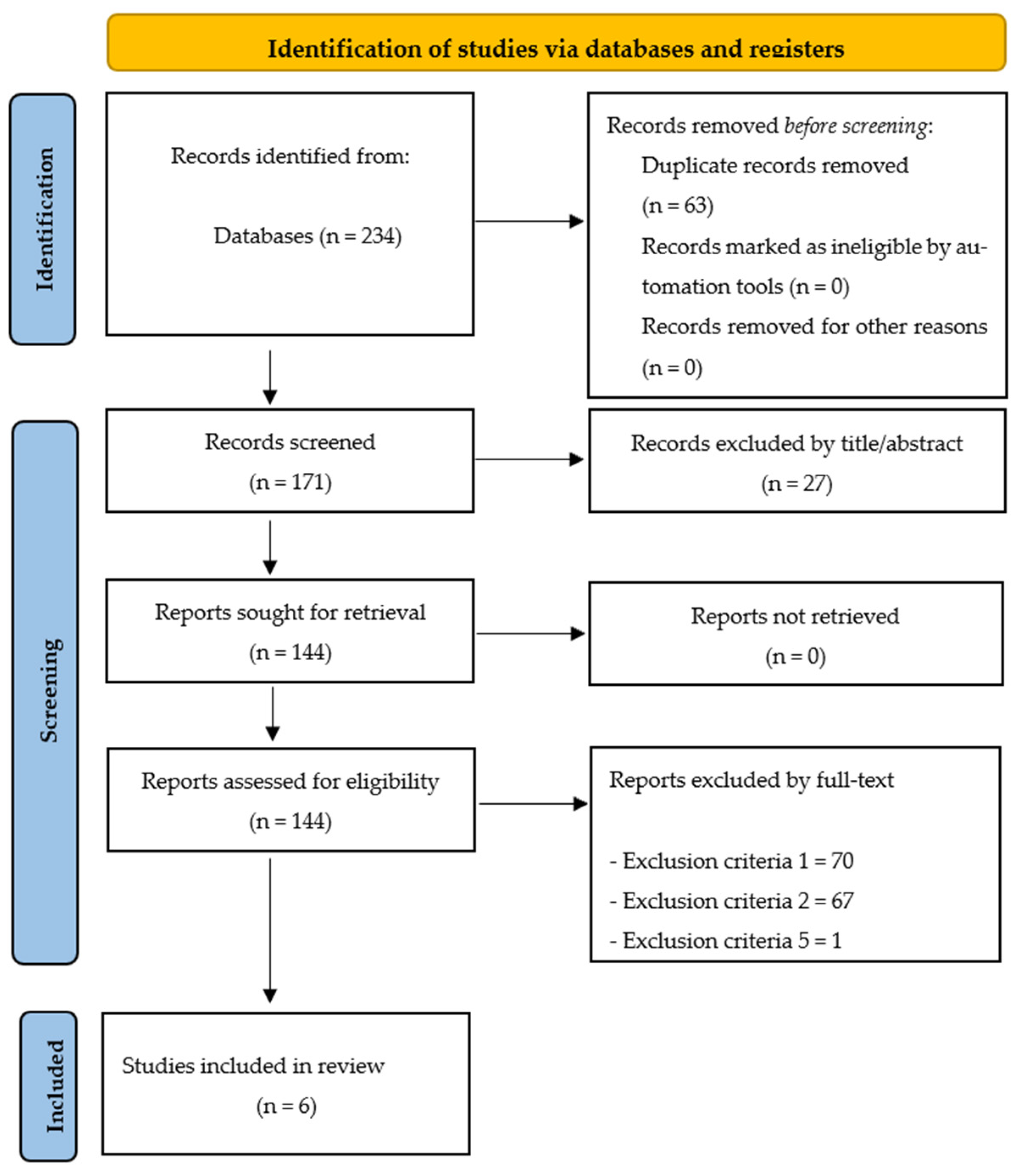
3.1. Identification and Selection of Studies
3.2. Quality Assessment
3.3. Characteristics of Included Studies
4. Discussion
5. Conclusions and Practical Applications
Author Contributions
Funding
Institutional Review Board Statement
Informed Consent Statement
Data Availability Statement
Conflicts of Interest
References
- Bull, F.C.; Al-Ansari, S.S.; Biddle, S.; Borodulin, K.; Buman, M.P.; Cardon, G.; Carty, C.; Chaput, J.-P.; Chastin, S.; Chou, R.; et al. World Health Organization 2020 Guidelines on Physical Activity and Sedentary Behaviour. Br. J. Sports Med. 2020, 54, 1451–1462. [Google Scholar] [CrossRef] [Scilit] [PubMed]
- World Health Organization. New WHO Guidelines on Physical Activity, Sedentary Behaviour and Sleep for Children Under 5 Years of Age; World Health Organization: Geneva, Switzerland, 2019. [Google Scholar]
- Liu, Z.; Xu, H.-M.; Wen, L.-M.; Peng, Y.-Z.; Lin, L.-Z.; Zhou, S.; Li, W.-H.; Wang, H.-J. A Systematic Review and Meta-Analysis of the Overall Effects of School-Based Obesity Prevention Interventions and Effect Differences by Intervention Components. Int. J. Behav. Nutr. Phys. Act. 2019, 16, 95. [Google Scholar] [CrossRef] [Scilit] [PubMed]
- Minja, E.G.; Mrimi, E.C.; Mponzi, W.P.; Beckmann, J.; Finda, M.F.; Okumu, F.O.; Lang, C.; Gerber, M.; Utzinger, J.; Long, K.Z. Effect of Physical Activity and Multi-Micronutrient Supplementation on Body Composition among Tanzanian Schoolchildren: Secondary Outcomes from the KaziAfya Cluster-Randomized Controlled Trial. BMC Public Health 2025, 25, 2356. [Google Scholar] [CrossRef] [Scilit] [PubMed]
- García-Hermoso, A.; López-, J.F.; Izquierdo, M.; Ramírez-Vélez, R.; Ezzatvar, Y. Exercise and Insulin Resistance Markers in Children and Adolescents With Excess Weight A Systematic Review and Network Meta-Analysis. JAMA Pediatr. 2023, 177, 1276–1284. [Google Scholar] [PubMed]
- Zhou, Z.; Ren, H.; Yin, Z.; Wang, L.; Wang, K. A Policy-Driven Multifaceted Approach for Early Childhood Physical Fitness Promotion: Impacts on Body Composition and Physical Fitness in Young Chinese Children. BMC Pediatr. 2014, 14, 118. [Google Scholar] [CrossRef] [Scilit] [PubMed]
- Wang, H.; Cheng, R.; Xie, L.; Hu, F. Comparative Efficacy of Exercise Training Modes on Systemic Metabolic Health in Adults with Overweight and Obesity: A Network Meta-Analysis of Randomized Controlled Trials. Front. Endocrinol. 2024, 14, 1294362. [Google Scholar] [CrossRef] [Scilit] [PubMed]
- Liu, X.; Li, Q.; Lu, F.; Zhu, D. Effects of Aerobic Exercise Combined with Resistance Training on Body Composition and Metabolic Health in Children and Adolescents with Overweight or Obesity: Systematic Review and Meta-Analysis. Front. Public Health 2024, 12, 1409660. [Google Scholar] [CrossRef] [Scilit] [PubMed]
- Jiménez-Peláez, C.C.; Fernández-Aparicio, Á.; Montero-Alonso, M.A.; González-Jiménez, E. Effect of Dietary and Physical Activity Interventions Combined with Psychological and Behavioral Strategies on Preventing Metabolic Syndrome in Adolescents with Obesity: A Meta-Analysis of Clinical Trials. Nutrients 2025, 17, 2051. [Google Scholar] [CrossRef] [Scilit] [PubMed]
- Wu, T.; Gao, X.; Chen, M.; van Dam, R.M. Long-Term Effectiveness of Diet-plus-Exercise Interventions vs. Diet-Only Interventions for Weight Loss: A Meta-Analysis. Obes. Rev. 2009, 10, 313–323. [Google Scholar] [CrossRef] [Scilit] [PubMed]
- Racey, M.; Ali, M.U.; Sherifali, D.; Fitzpatrick-Lewis, D.; Lewis, R.; Jovkovic, M.; Gramlich, L.; Keller, H.; Holroyd-Leduc, J.; Giguère, A.; et al. Effectiveness of Nutrition Interventions and Combined Nutrition and Physical Activity Interventions in Older Adults with Frailty or Prefrailty: A Systematic Review and Meta-Analysis. CMAJ Open 2021, 9, E744–E756. [Google Scholar] [CrossRef] [Scilit]
- Nqweniso, S.; DuRandt, R.; Adams, L.; Degen, J.; Gall, S.; Gerber, M.; Joubert, N.; Müller, I.; Smith, D.; Seelig, H.; et al. Effect of School-Based Interventions on Body Composition of Grade-4 Children from Lower Socioeconomic Communities in Gqeberha, South Africa. S. Afr. J. Child Health 2021, 15, 89. [Google Scholar] [CrossRef] [Scilit]
- Long, K.Z.; Beckmann, J.; Lang, C.; Seelig, H.; Nqweniso, S.; Probst-Hensch, N.; Müller, I.; Pühse, U.; Steinmann, P.; Du Randt, R.; et al. Impact of a School-Based Health Intervention Program on Body Composition among South African Primary Schoolchildren: Results from the KaziAfya Cluster-Randomized Controlled Trial. BMC Med. 2022, 20, 27. [Google Scholar] [CrossRef] [Scilit] [PubMed]
- Long, K.Z.; Beckmann, J.; Lang, C.; Seelig, H.; Nqweniso, S.; Probst-Hensch, N.; Pühse, U.; Steinmann, P.; Randt, R.D.; Walter, C.; et al. Randomized Trial to Improve Body Composition and Micronutrient Status Among South African Children. Am. J. Prev. Med. 2024, 66, 1078–1088. [Google Scholar] [CrossRef] [Scilit] [PubMed]
- Page, M.J.; McKenzie, J.E.; Bossuyt, P.M.; Boutron, I.; Hoffmann, T.C.; Mulrow, C.D.; Shamseer, L.; Tetzlaff, J.M.; Akl, E.A.; Brennan, S.E.; et al. The PRISMA 2020 Statement: An Updated Guideline for Reporting Systematic Reviews. BMJ 2021, 372, n71. [Google Scholar] [CrossRef] [Scilit] [PubMed]
- Rico-González, M.; Pino-Ortega, J.; Clemente, F.M.; Los Arcos, A. Guidelines for Performing Systematic Reviews in Sports Science. Biol. Sport 2022, 39, 463–471. [Google Scholar] [CrossRef] [Scilit] [PubMed]
- Lambourne, K.; Washburn, R.; Lee, J.; Betts, J.L.; Thomas, D.; Smith, B.; Gibson, C.; Sullivan, D.K.; Donnelly, J. A 6-Month Trial of Resistance Training With Milk Supplementation in Adolescents: Effects on Body Composition. Int. J. Sport Nutr. Exerc. Metab. 2013, 23, 344–356. [Google Scholar] [CrossRef] [Scilit] [PubMed]
- Doaei, S.; Jarrahi, S.; Torki, S.; Haghshenas, R.; Jamshidi, Z.; Rezaei, S.; Moslem, A.; Ghorat, F.; Khodabakhshi, A.; Gholamalizadeh, M. Serum Vitamin D Level May Be Associated with Body Weight and Body Composition in Male Adolescents; a Longitudinal Study. Pediatr. Endocrinol. Diabetes Metab. 2020, 26, 125–131. [Google Scholar] [CrossRef] [Scilit] [PubMed]
- Hassan, M.A.; McDonough, D.J.; Ryu, S.; Zhou, W.; Oginni, J.; Gao, Z. Comparative Effectiveness of School-Based Obesity Prevention Programs for Children and Adolescents: A Systematic Review and Network Meta-Analysis. Front. Public Health 2024, 12, 1504279. [Google Scholar] [CrossRef] [Scilit] [PubMed]
- Nikooyeh, B.; Yari, Z.; Hariri, Z.; Baghdadi, G.; Yazdani, H.; Motlagh, M.E.; Neyestani, T.R. Which School-Based Interventions Work Better to Combat Obesity in Children? A Network Meta-Analysis. Syst. Rev. 2025, 14, 125. [Google Scholar] [CrossRef] [Scilit] [PubMed]
- Kuriyan, R.; Thankachan, P.; Selvam, S.; Pauline, M.; Srinivasan, K.; Kamath-Jha, S.; Vinoy, S.; Misra, S.; Finnegan, Y.; Kurpad, A.V. The Effects of Regular Consumption of a Multiple Micronutrient Fortified Milk Beverage on the Micronutrient Status of School Children and on Their Mental and Physical Performance. Clin. Nutr. 2016, 35, 190–198. [Google Scholar] [CrossRef] [Scilit] [PubMed]
- Thankachan, P.; Selvam, S.; Surendran, D.; Chellan, S.; Pauline, M.; Abrams, S.A.; Kurpad, A.V. Efficacy of a Multi Micronutrient-Fortified Drink in Improving Iron and Micronutrient Status among Schoolchildren with Low Iron Stores in India: A Randomised, Double-Masked Placebo-Controlled Trial. Eur. J. Clin. Nutr. 2013, 67, 36–41. [Google Scholar] [CrossRef] [Scilit] [PubMed]
- Nally, S.; Carlin, A.; Blackburn, N.E.; Baird, J.S.; Salmon, J.; Murphy, M.H.; Gallagher, A.M. The Effectiveness of School-Based Interventions on Obesity-Related Behaviours in Primary School Children: A Systematic Review and Meta-Analysis of Randomised Controlled Trials. Children 2021, 8, 489. [Google Scholar] [CrossRef] [Scilit] [PubMed]
- Kretschmer, L.; Salali, G.D.; Andersen, L.B.; Hallal, P.C.; Northstone, K.; Sardinha, L.B.; Dyble, M.; Bann, D.; International Children’s Accelerometry Database (ICAD) Collaborators. Gender Differences in the Distribution of Children’s Physical Activity: Evidence from Nine Countries. Int. J. Behav. Nutr. Phys. Act. 2023, 20, 103. [Google Scholar] [CrossRef] [Scilit] [PubMed]
- Palmer, J.C.; Davies, A.L.; Spiga, F.; Heitmann, B.L.; Jago, R.; Summerbell, C.D.; Higgins, J.P.T.; Inequity in Obesity Prevention Trialists Collaborative Group. Do the Effects of Interventions Aimed at the Prevention of Childhood Obesity Reduce Inequities? A Re-Analysis of Randomized Trial Data from Two Cochrane Reviews. eClinicalMedicine 2025, 81, 103130. [Google Scholar] [CrossRef] [Scilit] [PubMed]
- Klein, D.H.; Mohamoud, I.; Olanisa, O.O.; Parab, P.; Chaudhary, P.; Mukhtar, S.; Moradi, A.; Kodali, A.; Okoye, C.; Arcia Franchini, A.P. Impact of School-Based Interventions on Pediatric Obesity: A Systematic Review. Cureus 2023, 15, e43153. [Google Scholar] [CrossRef] [Scilit] [PubMed]
- Wang, D.; Shinde, S.; Young, T.; Fawzi, W.W. Impacts of School Feeding on Educational and Health Outcomes of School-Age Children and Adolescents in Low- and Middle-Income Countries: A Systematic Review and Meta-Analysis. J. Glob. Health 2021, 11, 04051. [Google Scholar] [CrossRef] [Scilit] [PubMed]
- Klingberg, S.; Draper, C.E.; Micklesfield, L.K.; Benjamin-Neelon, S.E.; van Sluijs, E.M.F. Childhood Obesity Prevention in Africa: A Systematic Review of Intervention Effectiveness and Implementation. Int. J. Environ. Res. Public Health 2019, 16, 1212. [Google Scholar] [CrossRef] [Scilit] [PubMed]
- Brown, T.; Summerbell, C. Systematic Review of School-Based Interventions That Focus on Changing Dietary Intake and Physical Activity Levels to Prevent Childhood Obesity: An Update to the Obesity Guidance Produced by the National Institute for Health and Clinical Excellence. Obes. Rev. 2009, 10, 110–141. [Google Scholar] [CrossRef] [Scilit] [PubMed]
- Hodder, R.K.; O’Brien, K.M.; Lorien, S.; Wolfenden, L.; Moore, T.H.M.; Hall, A.; Yoong, S.L.; Summerbell, C. Interventions to Prevent Obesity in School-Aged Children 6-18 Years: An Update of a Cochrane Systematic Review and Meta-Analysis Including Studies from 2015-2021. eClinicalMedicine 2022, 54, 101635. [Google Scholar] [CrossRef] [Scilit] [PubMed]
- Yuksel, H.S.; Şahin, F.N.; Maksimovic, N.; Drid, P.; Bianco, A. School-Based Intervention Programs for Preventing Obesity and Promoting Physical Activity and Fitness: A Systematic Review. Int. J. Environ. Res. Public Health 2020, 17, 347. [Google Scholar] [CrossRef] [Scilit] [PubMed]
- Wyszyńska, J.; Ring-Dimitriou, S.; Thivel, D.; Weghuber, D.; Hadjipanayis, A.; Grossman, Z.; Ross-Russell, R.; Dereń, K.; Mazur, A. Physical Activity in the Prevention of Childhood Obesity: The Position of the European Childhood Obesity Group and the European Academy of Pediatrics. Front. Pediatr. 2020, 8, 535705. [Google Scholar] [CrossRef] [Scilit] [PubMed]
- Zamanillo-Campos, R.; Colom-Rossello, M.; Rodríguez-Calero, M.A.; Martín, M.I.; Planas, T.; Núñez-Jiménez, C.; Ramos, M. Key Components of Effective Non-Pharmacological Interventions for Childhood Obesity: A Review Considering Social Determinants of Health. Eur. J. Pediatr. 2025, 184, 449. [Google Scholar] [CrossRef] [Scilit] [PubMed]


| No. | Item | Inclusion Criteria | Exclusion Criteria | Search Coherence |
|---|---|---|---|---|
| 1 | Population | A sample that includes overweight/obese children recruited from kindergartens, elementary schools or secondary schools | No overweight/obese children in the sample. Children not recruited from preschools, primary schools or secondary education centers. Children with medical attention by an illness diagnostic (treatment for cancer). Sport/athlete children not recruited from school (recruited from sport teams, extracurricular activities). | (preschool* OR kindergarten OR school OR “elementary education” OR “primary education” OR high-school OR “secondary education” OR “secondary school” OR adolescent*) AND (obese OR overweight) |
| 2 | Intervention/Exposure | Children participating in physical activity program during school hours with nutritional supplementation | Children not participating in physical activity (videogames, virtual reality). Children not receiving supplementation, in addition to physical activity program Intervention with parents as targets. Children receiving supplements in order to address a certain illness. Programs with nutrition suggestion, but not supplementation. Supplementation affecting physical activity levels. | (supplement* OR vitamin OR calcium OR micronutrient* OR omega OR zinc OR iron) AND (intervention OR program*) AND (exercise OR “Physical activity” OR “physical education” OR sport OR fitness OR aerobic) |
| 3 | Comparison | - | - | - |
| 4 | Outcome(s) | Any | - | - |
| 5 | Study Design | Randomized controlled trials | Non-randomized controlled trials | “randomized controlled trial” |
| 6 | Other Criteria | Peer-reviewed, original, full-text studies | Non-peer-reviewed, non-original (systematic reviews, meta-analysis) or conference papers | - |
| Study | Random Sequence Generation | Allocation Concealment | Blinding of Participants and Personnel | Blinding of Outcome Assessment | Incomplete Outcome Data | Selective Reporting | Other Bias | |
|---|---|---|---|---|---|---|---|---|
| Lambourne et al. [17] |  | |  |  | | | | |
| Minja et al. [4] | | | | | | | | |
| Nqweniso et al. [12] | | | | | | | | |
| Long et al. [13] | | | | | | | | |
| Long et al. [14] | | | | | | | | |
| Doaei et al. [18] | | | | | | | | |
 | High risk | |||||||
 | Low risk | |||||||
 | Some concerns | |||||||
| Authors | Sample Characteristics | Supplement | In-School Physical Exercise Intervention | Variables | Main Results | Conclusions and Applications |
|---|---|---|---|---|---|---|
| Lambourne et al. [17] | Sample: 108 adolescents (39 boys, 69 girls). Age: Mean 13.6 years. Context: Middle-school students from Kansas City, KS, USA. Predominantly overweight (mean BMI percentile = 85th). | Substance: Fluid milk (fat-free chocolate and low-fat white milk). Dosage: 24 oz/day (16 oz post-exercise, 8 oz at lunch on RT days; varied schedule on non-RT days). | Duration: 6 months. Type: Supervised resistance training (RT), 3 days/week. Intensity: Progressive (40–85% 1-RM), 7 exercises, 2–3 sets, 5–15 reps. | Body mass (BM), fat mass (FM), fat-free mass (FFM), % body fat, BMI percentile, waist circumference (WC). Assessed via DXA. | No significant between-group differences in changes in BM, FM, FFM, % fat or WC. Significant within-group increases in BM, FM and FFM in all groups. FFM accounted for 62–74% of weight gain. Boys showed near-significant FM reduction in water vs. milk group (p = 0.054). | Conclusions: Milk supplementation during RT did not enhance body composition changes compared to isocaloric juice or water in overweight adolescents. Applications: Milk can be safely recommended alongside RT without adverse effects on body composition. Future studies should consider higher protein doses post-exercise and more frequent RT sessions (e.g., 5 days/week). |
| Minja et al. [4] | Sample: 745 children (396 girls, 349 boys) from 16 clusters at final follow-up (T3). Age: 6–12 years (Mean ~11.5 y at T3). Context: Rural primary schools in the Kilombero district, Tanzania. High prevalence of stunting (23–35%) and lower prevalence of overweight/obesity (8–13%). | Substance: Multi-micronutrient supplementation (MMNS) chewing tablet based on MixMe™ powder. Dosage: One tablet daily, 5 days/week. | Duration: 26 months (disrupted by COVID-19 school closures). Type: Two 45 min PA classes per week, including “moving to music” and structured “physical education” lessons based on the Kazikidz program. Intensity: Not specified in detail; lessons were designed to be playful and engaging. | Fat mass (FM), fat-free mass (FFM), truncal fat mass (TrFM), truncal fat-free mass (TrFFM) assessed via Bioelectrical Impedance Analysis (BIA). | Overall (primary outcome): No statistically significant differences in body composition were found across intervention groups compared to the control. Sex-stratified analysis: • Girls in PA group: Significant decrease in FM and FFM. • Girls in PA + MMNS group: Significant decrease in FFM and TrFFM. • Boys in MMNS group: Significant increase in FFM and TrFFM. • Boys in PA + MMNS group: Significant increase in FFM and TrFFM and a significant decrease in TrFM. | Conclusions: The interventions had no overall effect but revealed significant, contrasting gender-specific effects. MMNS promoted lean mass accumulation in boys, while PA (alone or combined) was associated with reductions in both fat and lean mass in girls. The combination of PA + MMNS was most effective for improving body composition in boys. Applications: School-based interventions combining PA and MMNS show potential as a “double-duty” strategy to address the dual burden of malnutrition. Programs must be tailored by gender to be effective, as boys and girls responded differently. Further research is needed to understand the causes of these sex differences and to design optimal interventions for both genders. |
| Nqweniso et al. [12] | Sample: 898 children (458 boys, 440 girls) from 8 schools. Age: 8–11 years. Context: Grade-4 children from quintile 3 (no-fee, government-funded) schools in Gqeberha (Port Elizabeth), South Africa. Schools were in low socioeconomic, historically disadvantaged townships. | Substance: Ready-to-Use Supplementary Food (RUSF), a peanut butter-based, energy-dense supplement. Dosage: One sachet (100 g, 530 kcal) administered once a day, 5 days a week for 10 weeks. | Duration: 10 weeks. Type: Varied by school. The PA intervention consisted of two 40 min structured PE lessons per week, one 40 min “moving-to-music” lesson, regular in-class activity breaks and adaptation of school playgrounds. Intensity: Not specified. Lessons were aligned with the prescribed PE curriculum and conducted by teachers assisted by external specialists. | Body Mass Index (BMI), BMI-for-age z-scores (BAZ), body fat percentage (BF%) measured via triceps and subscapular skinfold thickness using the Slaughter equation. | Overall: BMI, BAZ and BF% increased significantly from baseline to post-intervention in the total sample. By nutritional status: • Normal-weight children: The PA intervention (alone or combined with health education) mitigated increases in body fat levels compared to controls. • Overweight/Obese children: The PA intervention alone was associated with lower body fat increases compared to controls. • Nutrition intervention: The supplement (RUSF) did not show a significant beneficial effect on body composition; in one combined intervention group, the experimental group had a larger increase in BAZ than the control (though baseline was lower). | Conclusions: School-based physical activity interventions can be effective in mitigating unhealthy gains in body fat in both normal-weight and overweight/obese children from disadvantaged settings. The energy-dense nutritional supplement did not improve outcomes and may contribute to weight gain, highlighting that supplementation must be appropriately targeted. Applications: PA should be promoted within schools to combat rising obesity. Interventions must be tailored to the population’s needs; energy supplementation is not suitable for general school populations and should be reserved for undernourished sub-groups. The study underscores the challenge of the “double burden of malnutrition” and the need for precise public health strategies. |
| Long et al. [13] | Sample: 1227 children (586 girls, 641 boys) from original 1304 Age: 6–12 years (Mean ~8.3 y) Context: Peri-urban, disadvantaged communities (Quintile 3 schools) in Gqeberha, South Africa. High prevalence of stunting (~9%) and overweight/obesity (~15%). | Substance: Multi-micronutrient supplementation (MMNS) chewing tablet based on MixMe™ powder sprinkle. Modified by replacing vitamin A with 4500 µg β-carotene. Dosage: One tablet daily, 5 days/week. | Type: 1. Daily in-class activity breaks. 2. Weekly 45–60 min playful physical education lessons. 3. Weekly 45–60 min dancing-to-music lessons. Intensity: Not specified in detail; lessons were designed to be playful and engaging. | Fat mass (FM), fat-free mass (FFM), truncal fat mass (TrFM), truncal fat-free mass (TrFFM) assessed via Bioelectrical Impedance Analysis (BIA). | At 9 months (T2): • PA arm was associated with reduced FM (p = 0.03) and reduced TrFM (p < 0.01) in the full cohort. • MMNS arm was associated with increased FFM (p < 0.01). • Sex-stratified: Significant effects were found predominantly among girls (PA reduced FM and TrFM; MMNS increased FFM). Effects among boys were minimal. • Growth-stratified: Children with lower height velocity in the PA and MMNS arms showed greater improvements (reduced FM/TrFM, increased FFM) compared to controls. • No significant synergistic effect was found for the combined PA + MMNS arm. | Conclusions: School-based physical activity promotion reduces fat mass, while multi-micronutrient supplementation increases fat-free mass. These effects are most pronounced in girls and in children with poorer growth patterns. The interventions work through distinct pathways. Applications: Incorporating PA promotion and MMNS into school health programs represents an effective “double-duty” strategy to simultaneously address the dual burden of malnutrition (undernutrition and obesity) in disadvantaged settings, particularly for vulnerable subgroups like girls and growth-impaired children. |
| Long et al. [14] | Sample: 1304 children (637 girls, 667 boys) Age: 6–12 years Context: Peri-urban, disadvantaged communities (Quintile 3 schools) in Gqeberha, South Africa | Substance: Multi-micronutrient supplementation (MMNS) tablet based on MixMe™ powder sprinkle. Modified to replace Vitamin A with 4500 µg β-carotene. Contains iron, zinc, etc. Dosage: One tablet daily, 5 days/week. | Duration: 21 months (intervention disrupted by COVID-19 school closures) Type: 1. Daily in-class activity breaks. 2. Weekly 45–60 min structured physical education lessons. 3. Weekly 45–60 min dancing-to-music lessons. Intensity: Not specified in detail; lessons were designed to be playful and engaging. | Fat-free mass (FFM), truncal FFM, fat mass (FM), truncal FM (via BIA). Micronutrient status (Vitamin D, Zinc, RBP for Vit A, sTfR for iron). | At 21 months (T3): • Direct intervention effects were not sustained, likely due to COVID-19 disruptions. • Zinc-mediated indirect effects on FFM remained significant for both periods. • No significant associations found for Vitamin D or RBP with body composition changes. | Applications: Combining PA and MMNS in school-based programs is a promising strategy to improve body composition and micronutrient status in children from disadvantaged settings. Program sustainability and resilience to external disruptions are key to long-term success. |
| Doaei et al. [18] | Sample: 90 male overweight/obese adolescents Age: 12–16 years (mean ≈13.9 y) Context: Urban, Tehran, Iran | Substance: None (grouped by baseline serum 25(OH)D; no exogenous vitamin D supplement administered) Dosage: N/A | Duration: 12 weeks Type: Comprehensive school-based lifestyle intervention. Physical component: High-Intensity Interval Training (HIIT). Intensity: High-intensity. Sessions: 10 min warm-up + ≥30 min high-intensity exercise. | Height, mass, BMI, body fat %, skeletal muscle %, serum 25(OH)D. | Baseline: Obese participants had significantly lower serum 25(OH)D than overweight participants (37.67 vs. 44.01 ng/mL, p < 0.04). The high vitamin D group (≥40 ng/mL) had significantly lower body weight (p < 0.01). Post-18 weeks: No significant correlations were found between the changes in vitamin D levels (Δ25(OH)D) and the changes in any anthropometric measurements (Δweight, ΔBMI, Δfat%, Δmuscle%). | Conclusions: Serum vitamin D level is inversely associated with obesity status but is not associated with short-term changes in body weight or composition from an 18-week lifestyle intervention in male adolescents. Applications: The study highlights that vitamin D status may be a marker of obesity but not a modifiable target for short-term weight loss interventions in this demographic. Future research should focus on underlying mediating factors. |
Disclaimer/Publisher’s Note: The statements, opinions and data contained in all publications are solely those of the individual author(s) and contributor(s) and not of MDPI and/or the editor(s). MDPI and/or the editor(s) disclaim responsibility for any injury to people or property resulting from any ideas, methods, instructions or products referred to in the content. |
© 2026 by the authors. Licensee MDPI, Basel, Switzerland. This article is an open access article distributed under the terms and conditions of the Creative Commons Attribution (CC BY) license.
Share and Cite
Rico-González, M.; Formenti, D.; Gómez-Carmona, C.D.; Ardigò, L.P. Evaluated School-Based Exercise Interventions with Nutritional Supplementation in Obese Children and Adolescents: A Systematic Review of Randomized Controlled Trials for Highlighting a Research Gap. Metabolites 2026, 16, 477. https://doi.org/10.3390/metabo16070477
Rico-González M, Formenti D, Gómez-Carmona CD, Ardigò LP. Evaluated School-Based Exercise Interventions with Nutritional Supplementation in Obese Children and Adolescents: A Systematic Review of Randomized Controlled Trials for Highlighting a Research Gap. Metabolites. 2026; 16(7):477. https://doi.org/10.3390/metabo16070477
Chicago/Turabian StyleRico-González, Markel, Damiano Formenti, Carlos D. Gómez-Carmona, and Luca Paolo Ardigò. 2026. "Evaluated School-Based Exercise Interventions with Nutritional Supplementation in Obese Children and Adolescents: A Systematic Review of Randomized Controlled Trials for Highlighting a Research Gap" Metabolites 16, no. 7: 477. https://doi.org/10.3390/metabo16070477
APA StyleRico-González, M., Formenti, D., Gómez-Carmona, C. D., & Ardigò, L. P. (2026). Evaluated School-Based Exercise Interventions with Nutritional Supplementation in Obese Children and Adolescents: A Systematic Review of Randomized Controlled Trials for Highlighting a Research Gap. Metabolites, 16(7), 477. https://doi.org/10.3390/metabo16070477