


Abstract
Obtaining amorphous forms of drugs is one of the ways to increase bioavailability. This is especially important for active pharmaceutical ingredients belonging to class II and IV according to the biopharmaceutical classification. These compounds include the currently widely used fluoroquinolone antibiotics. They have low solubility in water and are therefore typically used as hydrochlorides. The presence of a strong acid and a charged active pharmaceutical ingredient in the drug increases solubility, but can also lead to additional side effects and decreased permeability. One way to improve the properties of active pharmaceutical ingredients is to convert them to amorphous form. In this study, an amorphous form of the fluoroquinolone antibiotic norfloxacin was obtained, its stability was determined, and its solubility was studied. It was shown that the resulting amorphous form has good temporal stability. The optimal models describing the cold crystallization process are the Nakamura and Sbirrazzuoli models. Despite the slower dissolution kinetics compared to the crystalline sample, the amorphous form shows higher equilibrium solubility values. These results can be used in pharmaceutical engineering to produce amorphous forms of active pharmaceutical ingredients and determine their stability.
1. Introduction
Fluoroquinolones are among the key antibiotics currently used, despite the development of resistance in a number of bacteria [1,2]. They remain effective against most Gram-positive and Gram-negative bacteria, as well as some anaerobic microorganisms [3]. They are used to treat infections of the respiratory system, urinary tract, skin and soft tissues, bone and joints, and gastrointestinal tract [4]. Second- and third-generation fluoroquinolones are the most widely used [5,6,7]. These include such representatives as ciprofloxacin, norfloxacin, ofloxacin, levofloxacin, etc. The main problem with the use of these compounds is their limited solubility in water [8]. This problem is solved by using fluoroquinolone hydrochlorides in the final commercial form [9]. However, the use of hydrochlorides entails a number of disadvantages. In ionized form, fluoroquinolones can act as chelating agents. By binding to physiological cations, they completely lose or significantly reduce their activity [10,11]. The introduction of a strong acid into the active pharmaceutical ingredient (API) can lead to a local increase in acidity, negatively affect biochemical processes and irritate the mucous membranes [12]. Another disadvantage of ionized forms is their high hygroscopicity, which affects shelf life and storage conditions and can lead to API hydrolysis [13]. It is also necessary to take into account the factor of pH changes in the intestine, which can lead to precipitation/recrystallization of the less-soluble free base and unpredictable bioavailability [14]. In addition, charged polar compounds penetrate the cell membranes of the small intestinal epithelium with difficulty and have poor permeability through the lipophilic part of biomembranes [15,16]. Moreover, permeability, along with solubility in aqueous media, are two key parameters underlying the biopharmaceutical classification of drugs [17]. In this regard, the problem of obtaining neutral amorphous forms with increased solubility in water and providing high bioavailability values is acute.
Norfloxacin (NOR) is the first synthesized second-generation fluoroquinolone [18] and belongs to class IV according to the biopharmaceutical classification (poor solubility and permeability) [19]. It exhibits antimicrobial activity against Gram-negative and Gram-positive bacteria, being widely used to treat urinary tract infections [20,21,22]. A significant number of approaches have been proposed to address the solubility problem of norfloxacin. For example, solid-state forms with p-aminobenzoic acid have been obtained, which provide improved pharmaceutical characteristics [23]. Complexes with cyclodextrins [24,25], lipid-polymer hybrid nanoparticles [26,27], norfloxacin-loaded solid lipid nanoparticles [28], amorphous solid dispersions [29,30] and other approaches aimed at increasing the bioavailability of poorly water-soluble substances, which will replace the formation of salts for many compounds, are also finding application. It should be noted that simply increasing the dosage of NOR leads to the detection of undissolved crystals of the drug in biological fluids [31]. This reduces its bioavailability by 30–40%.
Previously, the authors of the study [32] obtained an amorphous form of norfloxacin using spray drying. However, the conditions of preparation and stability assessment were not presented in the study. Moreover, for the practical use of amorphous forms of drugs, it is necessary to have an idea of their temporal stability over a wide temperature range. To assess this parameter, two different approaches can be used: isothermal and non-isothermal. The first is based on determining the crystallinity of the sample after its annealing over a wide time interval [33,34,35]. In most cases, this approach is time-consuming and can stretch for months or even years [36]. The second approach is based on non-isothermal kinetics methods and involves determining the parameters of the Arrhenius equation—a kinetic triplet (activation energy, pre-exponential factor, and reaction model)—for the cold crystallization of an amorphous active pharmaceutical ingredient [37,38]. In our previous study [39], the stability of the amorphous state of oxolinic and pipemidic acids, which are classified as first-generation fluoroquinolones, as well as sparfloxacin, a third-generation fluoroquinolone, was investigated. These compounds exhibit high kinetic stability of the amorphous phase, suggesting that similar behavior can be expected for fluoroquinolones of other generations.
Both isoconversion and model-based approaches are used to describe crystallization processes. Among the isoconversional approaches, the Friedman and Kissinger–Akahira–Sunose methods [40,41] stand out, while among the model approaches, autocatalytic models [42,43] and the Avrami–Erofeev nucleation model [44,45] are prominent. These models are based on chemical kinetics approaches and do not always accurately describe physical processes. The Nakamura [46,47] and Sbirrazzuoli [48] models are widely used to describe crystallization in polymers. However, their applicability to the crystallization of small organic molecules requires experimental confirmation.
Fast calorimetry is a powerful tool for studying crystallization kinetics, especially for rapidly crystallizing small organic molecules. This method allows heating and cooling samples at rates up to 108 °C·s−1 [49]. The use of high speeds makes it possible to suppress decomposition processes and determine key parameters for obtaining amorphous forms, in particular the critical cooling rate of the melt (the minimum cooling rate at which the crystallization process does not occur), which cannot be obtained using conventional differential scanning calorimetry.
In this study, fast scanning calorimetry was used to obtain and characterize the kinetic stability of amorphous norfloxacin. Using isothermal kinetic approaches, the optimal model for describing the cold crystallization process was demonstrated to be the Nakamura and Sbirrazzuoli models. These results were confirmed by isothermal kinetic data over a wide temperature range. Spray drying was used to obtain amorphous norfloxacin, and its solubility in aqueous media was studied.
2. Materials and Methods
2.1. Materials
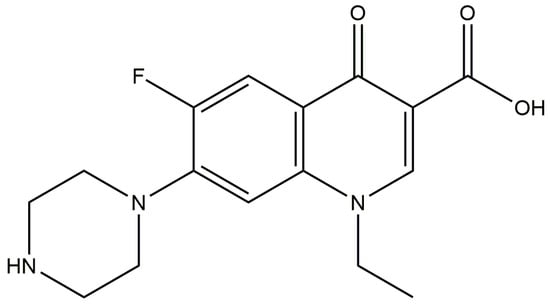
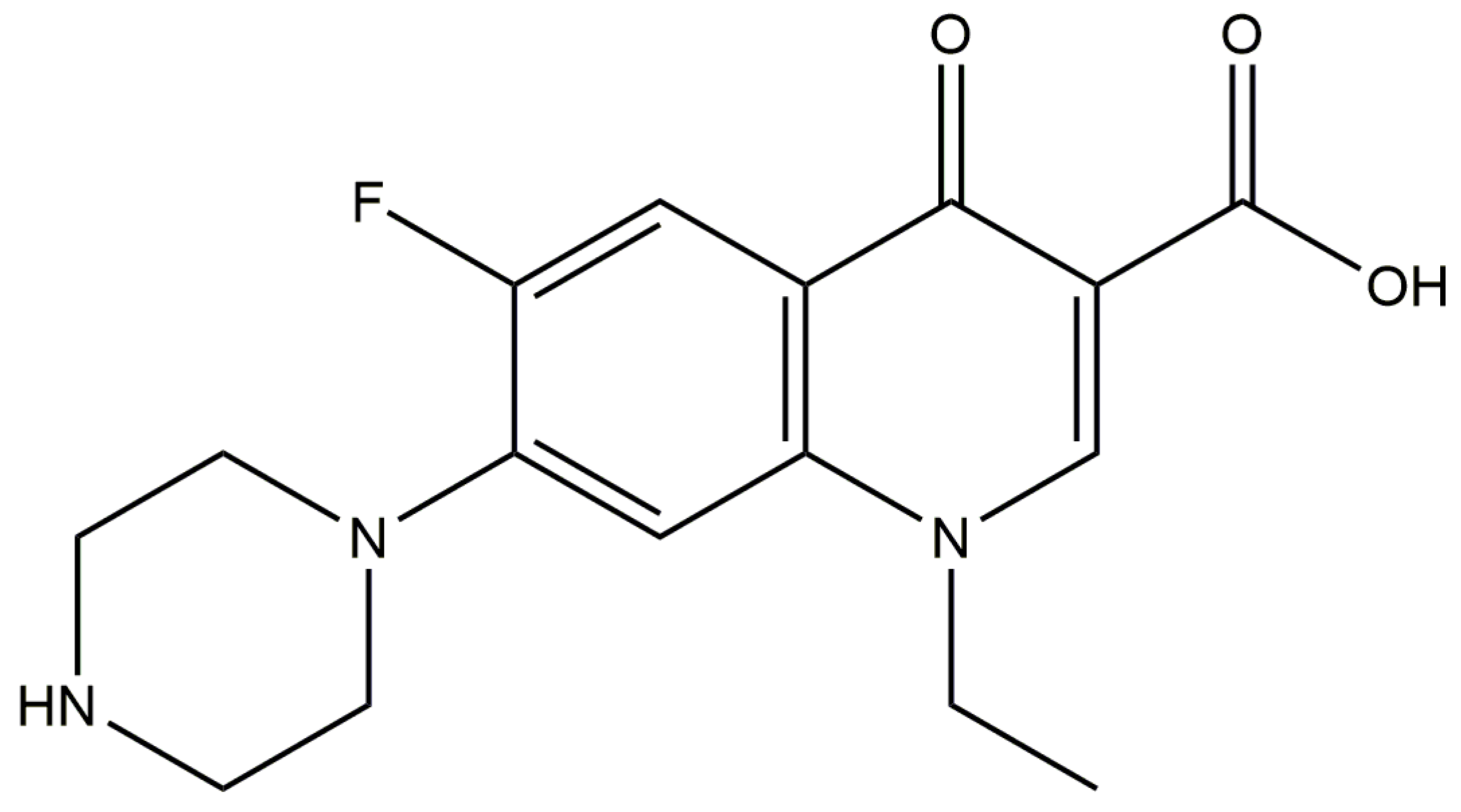
Norfloxacin (NOR) (IUPAC name: 1-ethyl-6-fluoro-4-oxo-7-piperazin-1-ylquinoline-3-carboxylic acid), Figure 1, TCI (Shanghai) Development Co., Ltd., Shanghai, China, Lot: ZHP5O-LSC, purity > 98%; molecular weight 319.34 g∙mol−1 was used without further purification. Phosphate buffer (pH = 6.86, 3.390 g KH2PO4 and 3.530 g Na2HPO4 in 1 L of bidistilled water), Uralkhiminvest LLC, Ufa, Russia. Hydrochloric acid 0.1 N, Uralkhiminvest LLC, Ufa, Russia. Methanol, CP, Aldosa LLC, Moscow, Russia, dichloromethane, UP, Aldosa LLC, Moscow, Russia, and bidistilled water were used as solvents.
Figure 1.
Chemical structure of norfloxacin.
2.2. Simultaneous Thermal Analysis
Thermal stability and the presence of volatile impurities in the samples were studied using an STA449F1 Jupiter synchronous thermal analyzer (Netzsch, Selb, Germany) in the temperature range of 40–500 °C. In each experiment, the temperature rate was 10 °C·min−1, and an argon atmosphere with a total flow rate of 75 mL·min−1 was used. Measurements were performed in 40-μL aluminum crucibles with lids containing three holes with a diameter of 0.5 mm each. The instrument’s thermocouple was calibrated according to the manufacturer’s recommendations. The absolute deviations in the temperature and mass loss were 0.1 °C and 1% accordingly.
2.3. Conventional Differential Scanning Calorimetry
The enthalpies and transition temperatures of the studied compounds were determined by differential scanning calorimetry using a DSC 204 F1 Phoenix instrument (Netzsch, Selb, Germany). Measurements were performed on samples weighing 2.0–5.0 mg at a heating rate of 10 °C·min−1 in a dynamic argon atmosphere (gas flow 150 mL·min−1) in 40-μL aluminum crucibles with a lid with one hole of 0.5 mm diameter. The instrument’s thermocouple was calibrated in accordance with the manufacturer’s recommendations. The absolute deviations in enthalpies and transition temperatures for the calibration samples were limited to a maximum of 0.1 °C and 0.2 kJ·mol−1, respectively.
2.4. Fast Scanning Calorimetry (FSC)
In this study, the Flash DSC 2+ fast scanning calorimeter (Mettler-Toledo, Zurich, Switzerland) equipped with a UFS1 chip sensor was used. Before each experiment, the chip sensor was calibrated and conditioned. Temperature calibration was performed using reference materials with known thermophysical properties (diphenyl, benzoic acid, and anthracene). This compensates for possible measurement deviations and ensures high data accuracy. The conditioning process eliminates residual stresses and ensures uniform temperature distribution.
Before measurements, the NOR sample was pre-melted to ensure good thermal contact between the sample and the sensor. Samples were placed in the central rectangular region (150 × 150 µm) of the calorimeter chip, preventing contact with the heaters and the edges of the chip’s active heating region [50].
2.5. Non-Isothermal Kinetics
The kinetic parameters of cold crystallization of NOR, as well as the predicted crystallization half-times, were calculated according to ICTAC recommendations [37,51,52] using the commercial software Netzsch Kinetics Neo 2.6.6.7.
2.6. Isothermal Kinetics
The isothermal approach is based on recording the dependence of the degree of crystallinity of a substance on the isothermal annealing time. The isothermal approach is used to determine the optimal predictive model for non-isothermal kinetics.
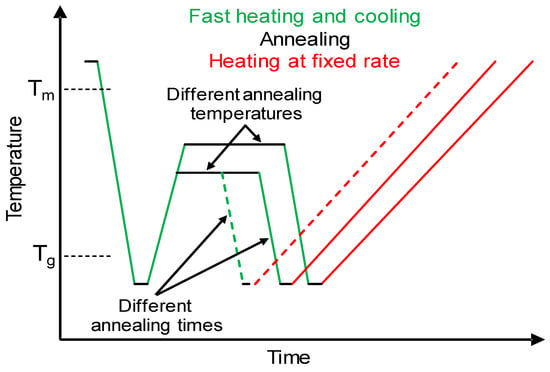
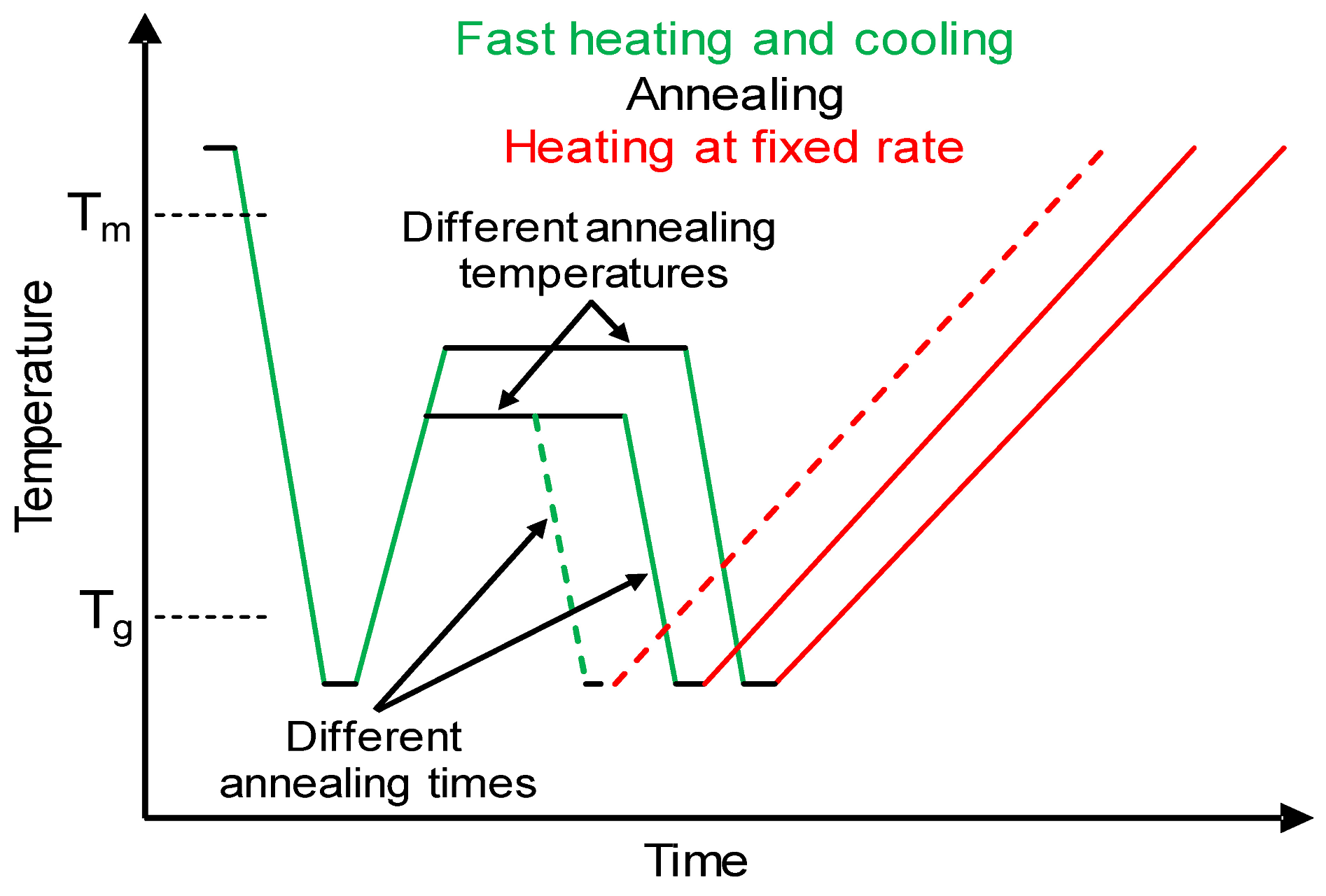
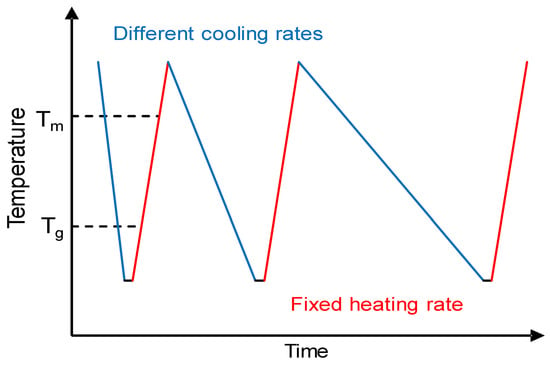
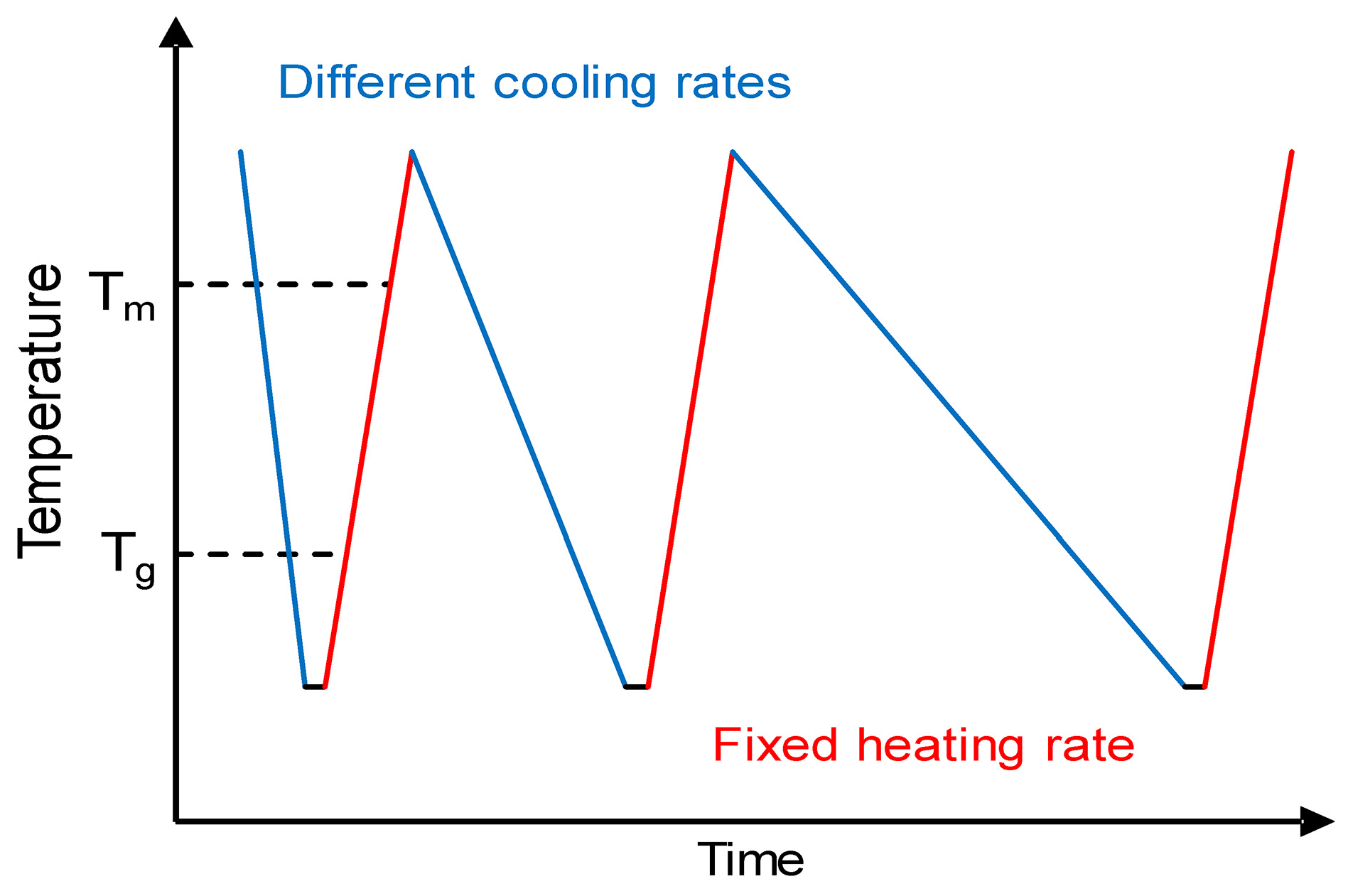
The study was conducted using fast scanning calorimetry. The temperature program was set to heat the initial sample until it completely melted, after which the melt was cooled to a temperature below the glass transition temperature at a rate above the critical cooling rate. The resulting amorphous sample was then heated to the annealing temperature and held at this temperature for a specified time. A schematic representation of the temperature program is shown in Figure 2.
Figure 2.
Schematic representation of the temperature program used in the isothermal experiments.
After isothermal annealing, the sample was cooled to a temperature below the glass transition temperature and then heated until completely melted to determine the dependence of the degree of crystallinity on isothermal annealing time. The heating curve showed an exothermic peak of cold crystallization and an endothermic peak of melting. Since the cooling rate used was significantly higher than the critical value, the normalized latent heat is proportional to the amount of crystalline phase formed during isothermal annealing. The resulting dependence was approximated by the Johnson–Mehl–Avrami–Kolmogorov equation [53,54,55,56,57]:
where t is the isothermal annealing time, τc is the crystallization half-time, and nc is the Avrami crystallization coefficient.
Next, the dependence of the crystallization half-life on the isothermal annealing temperature was plotted.
2.7. Spray Drying
A NOR solution (1% w/v) was prepared by dissolving 0.200 g of the initial crystalline powder in 20 mL of a mixed solvent (methanol:dichloromethane 2:3 v/v). Solid particles were obtained by spray drying on a Nano Spray Dryer B90 (Buchi, Flawil, Switzerland) in open mode using a spray head with a 7.0 μm nozzle diameter: the solution feed rate was 7 mL∙min−1, the drying air flow rate was 130 L∙min−1, and the inlet temperature was 55 °C. The dried solid particles were collected from the particle collection chamber using a scraper, and the resulting powders were stored in Eppendorf tubes at room temperature.
2.8. X-Ray Diffraction Analysis
Powder X-ray diffraction (PXRD) measurements of solid samples were performed on a MiniFlex 600 diffractometer (Rigaku, Tokyo, Japan) equipped with a D/teX Ultra detector. Cu Kα radiation (40 kV, 15 mA) was used and data were collected at room temperature in the range of 2θ from 5 to 50° with a step of 0.02° and exposure time at each point of 0.24 s without sample rotation [58].
2.9. Dissolution Kinetics
NOR dissolution kinetics was studied using a Dissotest CE1 apparatus (Sotax, Aesch, Switzerland) following USP IV methodology in a closed-loop system. For each experiment, samples containing an equivalent quantity of NOR (10.0 mg) were utilized. The study was conducted at 37.0 °C with a flow rate of 17 mL∙min−1. Two media were employed for dissolution testing: phosphate buffer with pH = 6.86 and 0.1 N hydrochloric acid (pH = 1). Aliquots of the dissolution solution were withdrawn at various time points for subsequent analysis. After sampling, the removed volume was immediately replenished by adding an equal volume (4 mL) of fresh dissolution medium. The concentration of NOR was quantified spectrophotometrically utilizing a U-3900H UV-Vis spectrophotometer (Hitachi, Tokyo, Japan) at 273 nm with suitable dilutions.
2.10. Equilibrium Solubility
The effect of NOR form (amorphous or crystalline) on equilibrium solubility at pH 6.86 was studied using the shake-flask method. Solutions of amorphous and crystalline NOR were prepared in phosphate buffer (2 mg∙mL−1) and shaken for 72 h at 37 °C. Aliquots were taken every 24 h to determine the optical density using a U-3900H UV-Vis spectrophotometer (Hitachi, Tokyo, Japan) at a wavelength of 273 nm and suitable dilution. The saturated solution was previously separated from undissolved solids using syringe filters (0.22 μm).
2.11. Scanning Electron Microscopy
The morphology of the samples was examined using a scanning electron microscope (SEM) Zeiss EVO 50 XVP (Carl Zeiss, Oberkochen, Germany) in variable pressure mode. This mode allows for the investigation of non-conductive and highly outgassing samples. In this work, the pressure in the sample chamber was maintained at 19 Pa. Imaging was performed using a backscattered electron detector. The samples were visualized with an accelerating voltage of 20.0 kV. For constructing distribution curves, the software packages Image-Pro Plus 6.0.0.260 and Origin 8.1 were used.
3. Results and Discussion
3.1. Thermal Stability of Norfloxacin
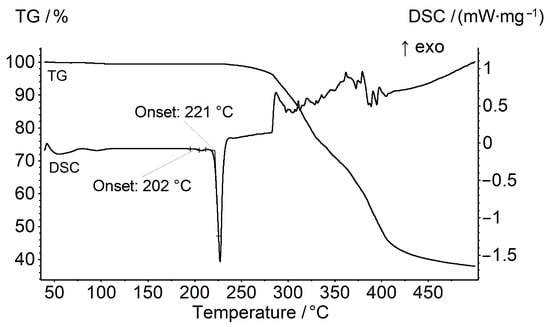
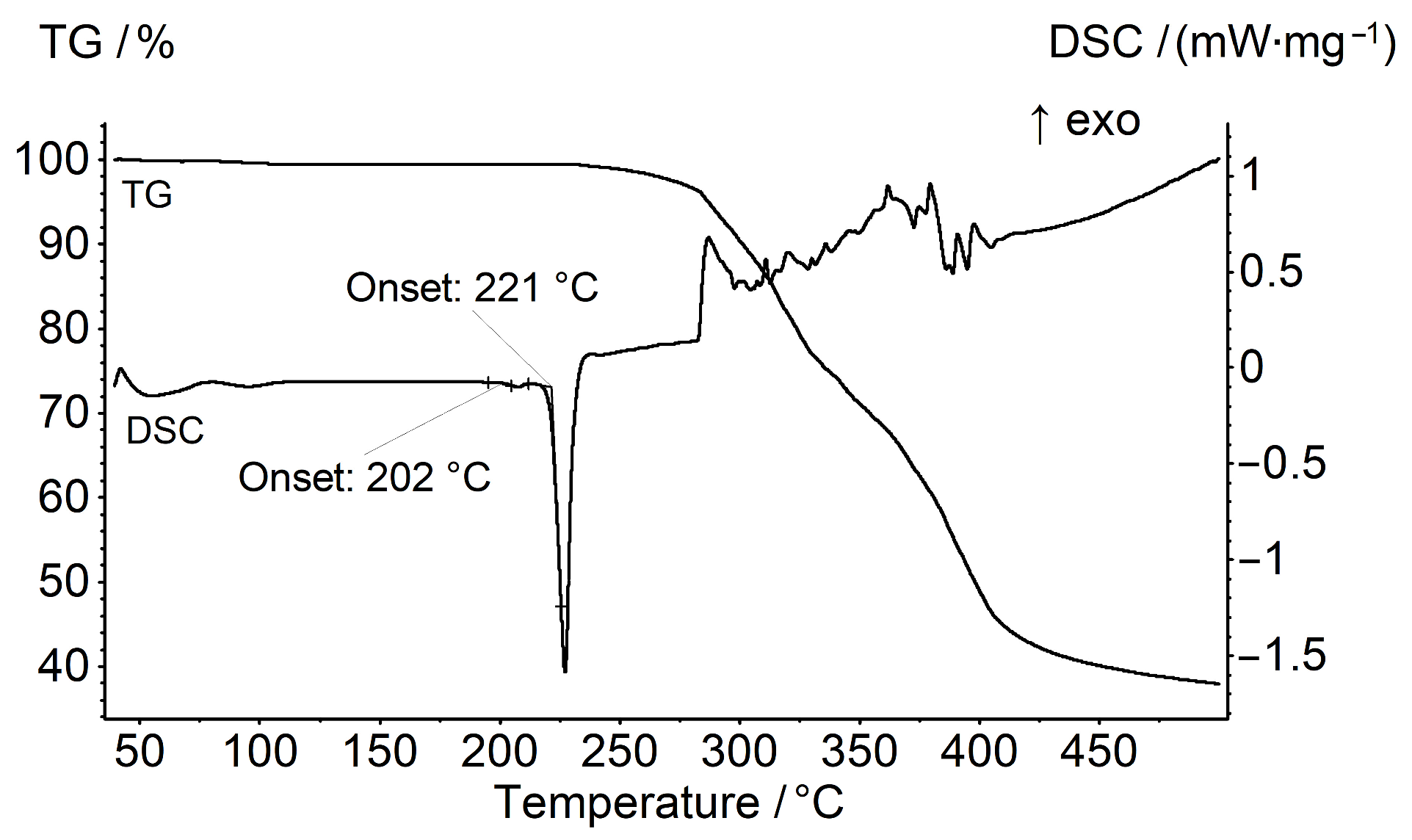
To determine the stability range of NOR, a simultaneous method of thermogravimetry (TG) and differential scanning calorimetry (DSC) was used. The results are shown in Figure 3. Thermal stability information is necessary to determine the temperature range for fast scanning calorimetry studies.
Figure 3.
Results of TG/DSC analysis of the initial NOR in the temperature range of 40–500 °C in a dynamic argon atmosphere (75 mL∙min−1). Heating rate was 10 °C∙min−1.
The TG curve shows no noticeable mass loss (Δm < 1%) in the temperature range of 40–250 °C, indicating the absence of volatile impurities. At temperatures above 250 °C, mass loss is observed due to the onset of decomposition. The DSC curve clearly shows the endo-effect of melting with an onset temperature of 221 °C [59] and the preceding endo-effect of the polymorphic transition with an onset temperature of 202 °C. This transition corresponds to the transition from the B-form to the A-form of NOR [32,60].
3.2. Critical Cooling Rate
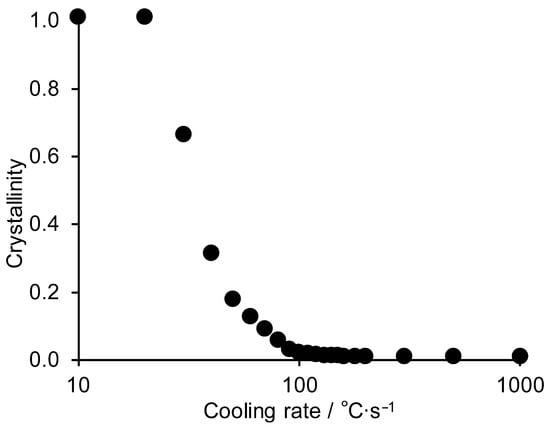
The critical cooling rate of the melt corresponds to the minimum cooling rate at which a completely amorphous substance is formed. This value is determined from the graph of the dependence of the degree of crystallinity on the preliminary cooling rate. The critical cooling rate of the NOR melt was determined using fast scanning calorimetry. The temperature program was as follows: a pre-melted sample was cooled below the glass transition temperature and then reheated until completely melted. During heating, an exothermic peak of cold crystallization and an endothermic peak of melting were recorded. The critical cooling rate was determined from a plot of the normalized latent heat (measured during heating) versus the preliminary cooling rate. The critical cooling rate corresponds to the minimum rate at which the above dependence reaches its limiting value. The latent heat was determined as the sum of the integral values of the cold crystallization and melting peaks. The latent heat value was normalized to the integral value of the melting peak of the crystalline sample. The mass loss due to evaporation was taken into account by comparing the integral values of the melting peak during the first and subsequent heatings [60]. A diagram of the temperature program for determining the critical cooling rate of NOR is shown on Figure 4.
Figure 4.
Schematic representation of the temperature program for determining the critical cooling rate using fast scanning calorimetry.
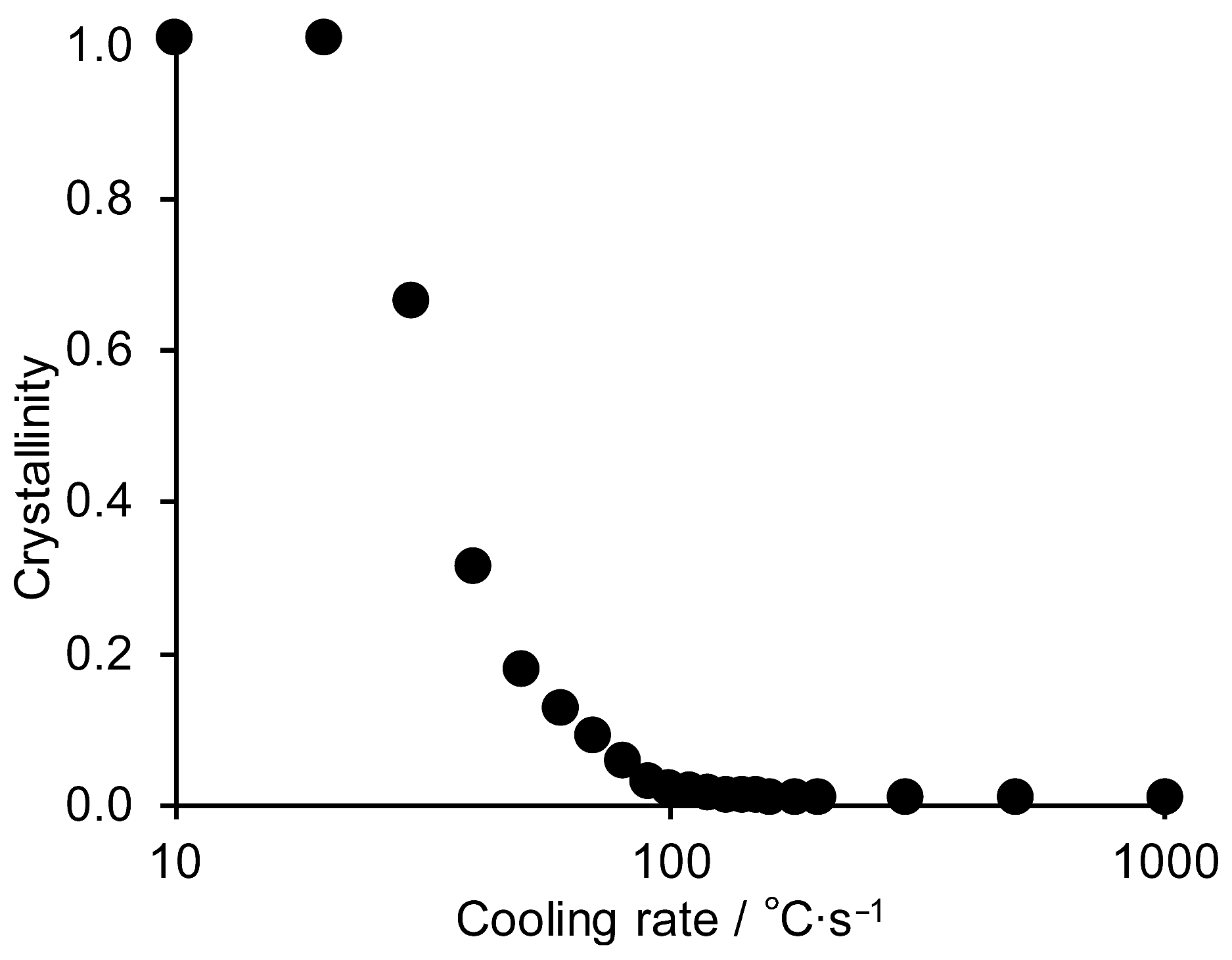
Figure 5 shows that the critical cooling rate of the NOR melt is 200 °C·s−1. A high critical cooling rate may indicate low glass-forming capacity and kinetic stability of the amorphous state of the substance. However, this statement requires further studies of crystallization kinetics.
Figure 5.
Dependence of the degree of crystallinity on the preliminary cooling rate of the NOR melt.
It should be noted that such cooling rates are achievable with modern technologies [61], which increases the practical significance of a certain parameter in the production of amorphous fluoroquinolones by melt quenching or in the creation of personalized dosage forms by additive technologies.
3.3. Results of Non-Isothermal Kinetics of Cold Crystallization
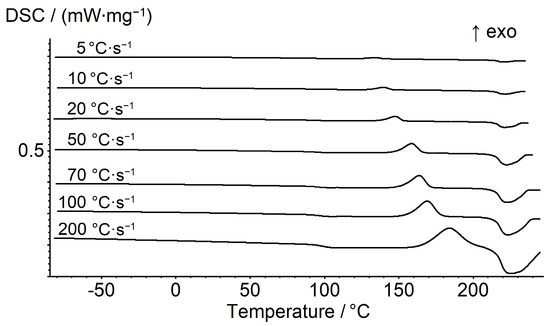
Fast scanning calorimetry was used to study the cold crystallization kinetics of amorphous NOR (am-NOR). According to ICTAC recommendations [37], at least three non-isothermal scans are required to accurately determine the kinetic parameters of the crystallization process. The temperature program was set as follows: the sample was heated to a temperature above the melting point (250 °C) at a rate of 100 °C·s−1. Then it was cooled at a rate higher than the critical cooling rate of the melt (5000 °C∙s−1). The resulting amorphous sample was heated to the above-mentioned temperature at rates of 5, 10, 20, 50, 70, 100, and 200 °C·s−1.
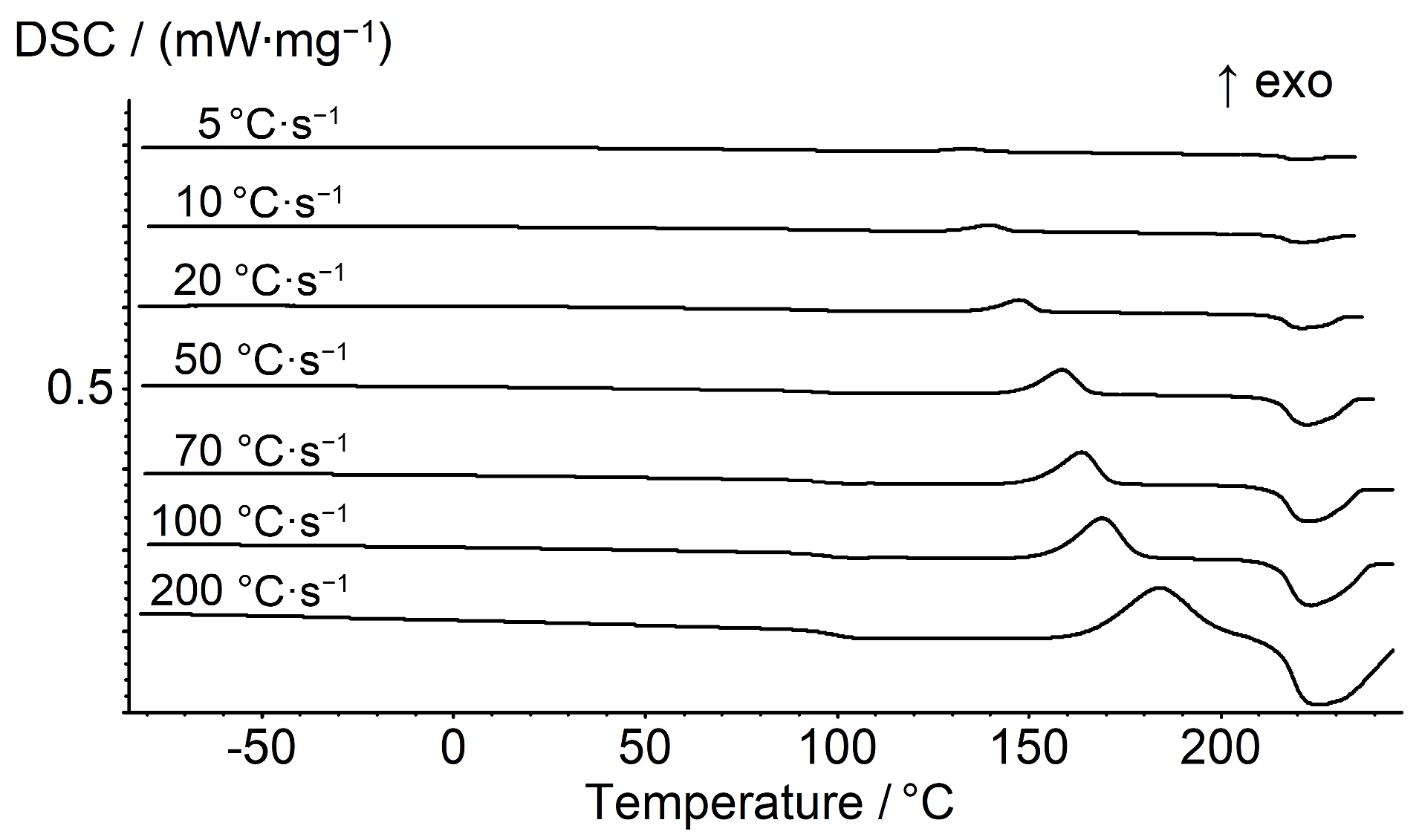
The scanning rates were selected to minimize evaporation and optimize the signal-to-noise ratio. The am-NOR heating curves are shown in Figure 6.
Figure 6.
FSC heating curves of amorphous NOR at different rates.
Isoconversion and model approaches were used to determine the kinetic parameters of the am-NOR cold crystallization process. The isoconversion approaches employed were the Friedman analysis [62] (Fr) and the Kissinger–Akahira–Sunose method [63] (KAS). The modeling methods are represented by the autocatalytic Prout–Tompkins model (Bna) [64], the Avrami–Erofeev n-dimensional nucleation model (An) [65], the Nakamura crystallization model [66] (Nk), based on the Avrami–Erofeev nucleation model and the Hoffman–Lauritzen crystal growth model [67], and the Sbirrazzuoli crystallization model [48,68] (Sb), based on the Sestak–Berggren equation and the Hoffman–Lauritzen crystal growth model.
The kinetic parameters of the cold crystallization process for am-NOR obtained using different approaches are presented in Table 1.
Table 1.
Kinetic parameters of the am-NOR cold crystallization process.
For the Friedman analysis and the KAS method, Table 1 shows the parameter values for a conversion rate of 0.5.
3.4. Results of Isothermal Kinetics of Cold Crystallization
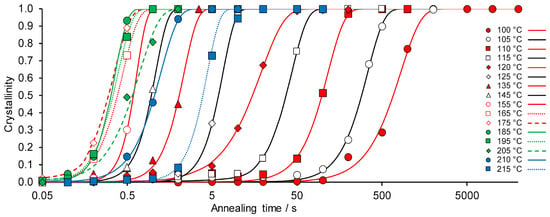
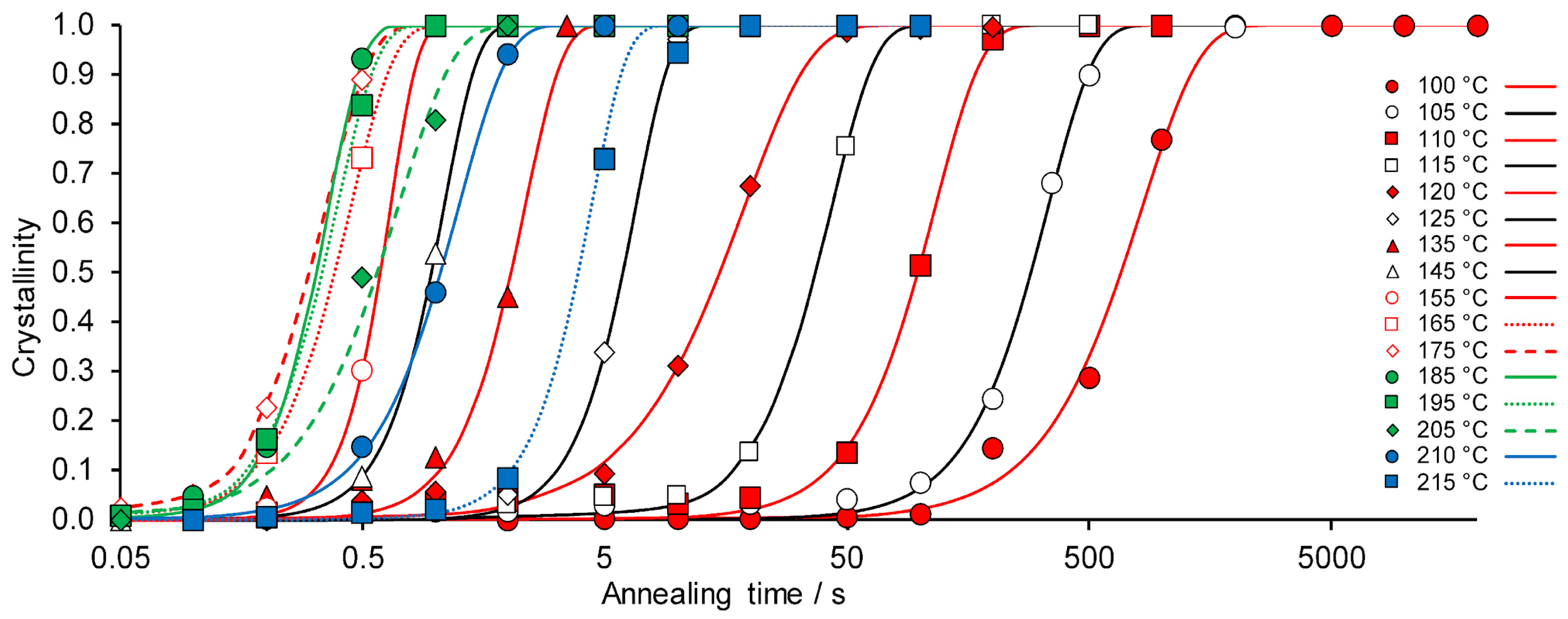
To select the optimal model of cold crystallization process, at least one isothermal experiment is necessary. The isothermal kinetics of am-NOR cold crystallization were studied using fast scanning calorimetry. The following temperature program was used: the initial NOR sample was heated to 250 °C at a rate of 100 °C∙s−1. The melt was then cooled to −90 °C at a rate above the critical cooling rate (5000 °C∙s−1). The samples were then heated at a rate of 5000 °C∙s−1 to the annealing temperature. The annealing temperatures were 100 °C, 105 °C, 110 °C, 115 °C, 120 °C, 125 °C, 135 °C, 145 °C, 155 °C, 165 °C, 175 °C, 185 °C, 195 °C, 205 °C, 210 °C and 215 °C. After isothermal annealing, the samples were cooled again to −90 °C at a rate of 5000 °C∙s−1 and heated to 250 °C at a rate of 100 °C∙s−1.
The rates were selected to optimize the signal-to-noise ratio and minimize evaporation. The dependences of the degree of crystallinity on the isothermal annealing time for the studied NOR, obtained at different temperatures, are shown in Figure 7.
Figure 7.
Dependences of the degree of crystallinity on the time of isothermal annealing at different temperatures for norfloxacin.
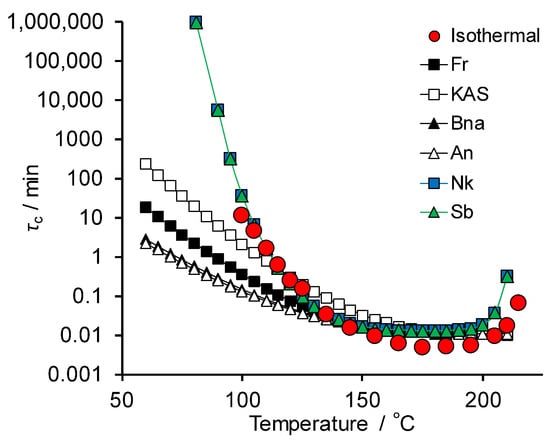
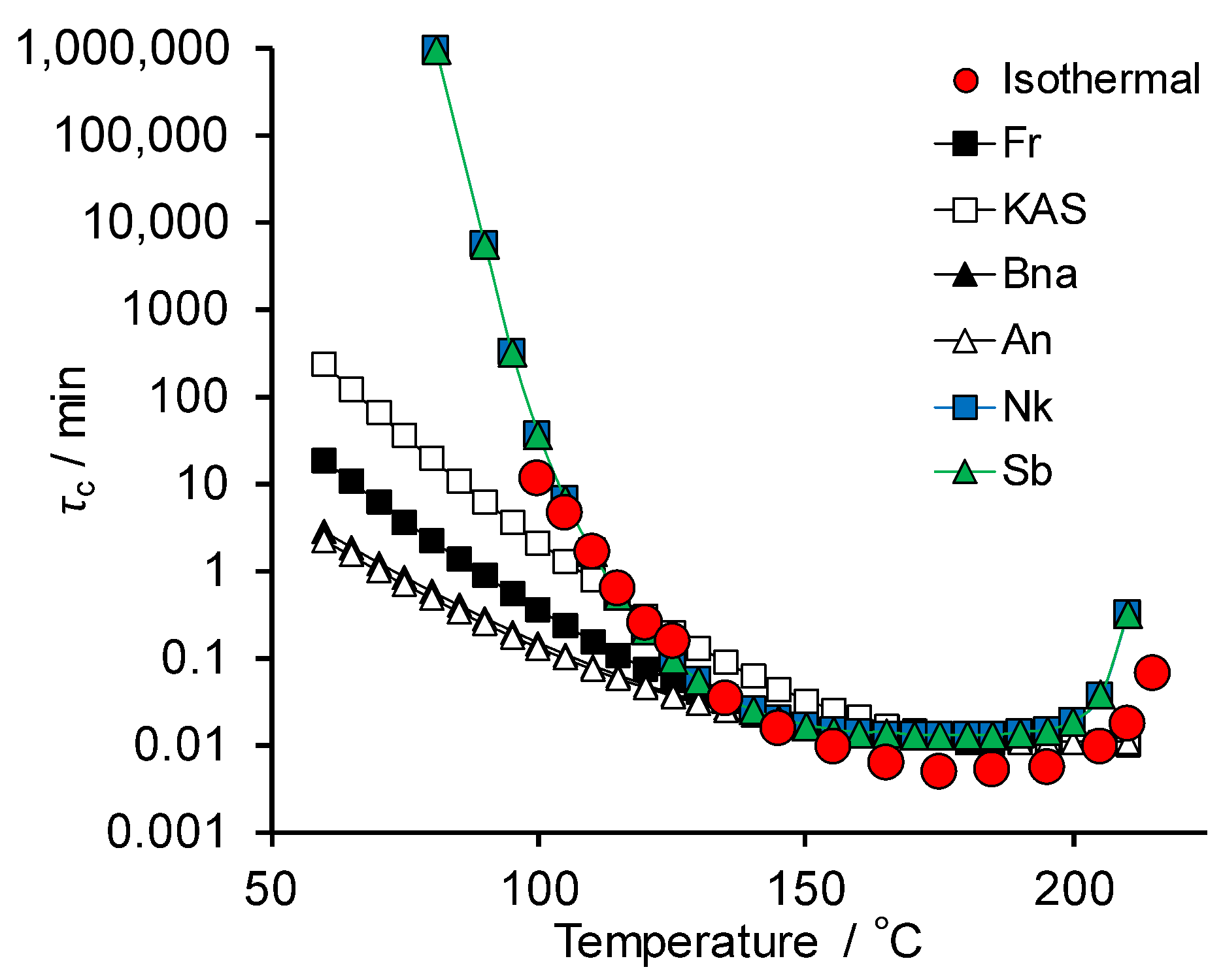
Crystallization half-times were predicted based on non-isothermal kinetics results. The crystallization half-times calculated using non-isothermal kinetics methods and the crystallization half-times obtained in the isothermal experiment are shown in Figure 8. The resulting temperature dependence of the crystallization half-time has a U-shape. A similar curve was previously obtained for the crystallization of dipyridamole [38]. It should be noted that studying the cold crystallization process at temperatures significantly above the glass transition temperature is a nontrivial task, especially for the crystallization of relatively small organic compounds.
Figure 8.
Temperature dependence of crystallization half-times (τc) for norfloxacin obtained using non-isothermal kinetics and crystallization half-times obtained in an isothermal experiment.
Figure 8 shows that the maximum crystallization rate of Norfloxacin is observed at 175 °C.
In the temperature range of 120–200 °C, all models accurately describe the isothermal experiment data. However, at lower and higher temperatures, only the Nakamura and Sbirrazzuoli crystallization models correctly describe the isothermal experiment results. Therefore, the Nakamura and Sbirrazzuoli crystallization models can be used to describe the cold crystallization process of am-NOR over a wide temperature range. Based on these models, the crystallization half-time of am-NOR at 25 °C is more than 10 years.
3.5. Production of Amorphous NOR by Spray Drying
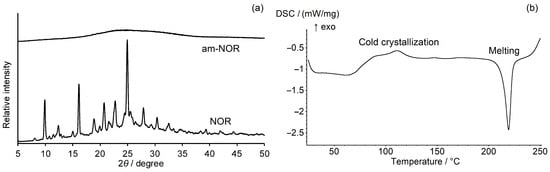
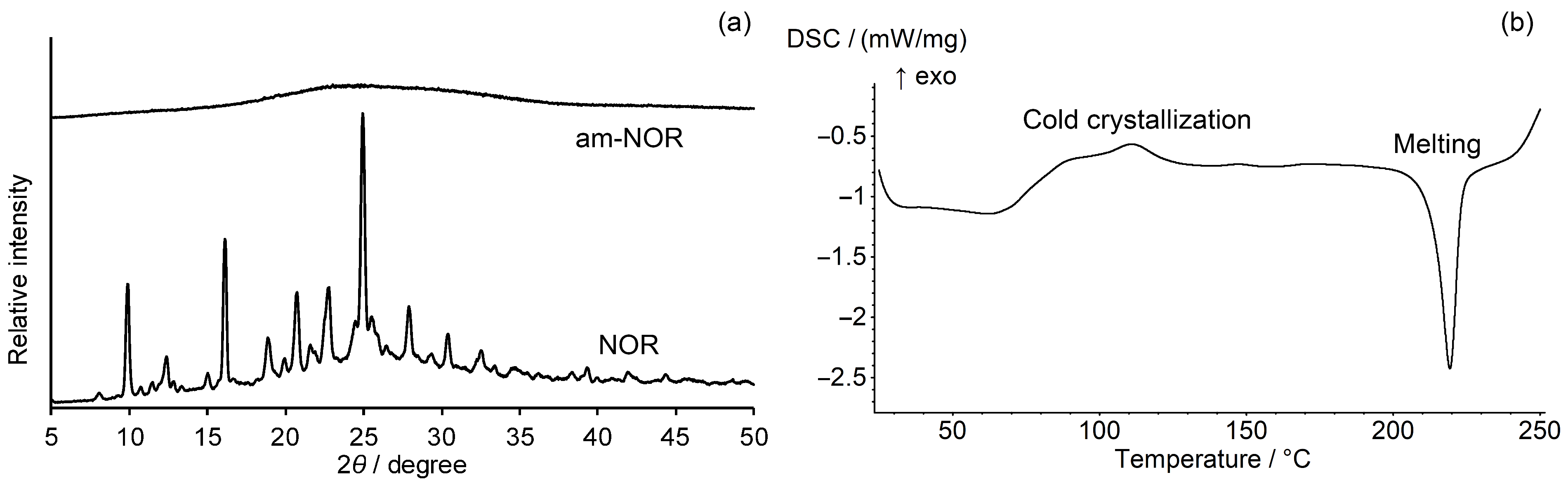
To study the effect of NOR phase state on solubility, an amorphous form of norfloxacin was prepared. The amorphous sample was a white powder (yield~65%). The content of volatile impurities, determined in a separate thermogravimetric experiment, does not exceed 1.5%. Figure 9 shows the results of PXRD and DSC analysis of the obtained amorphous form.
Figure 9.
Results of PXRD (a) and DSC (b) analysis of amorphous norfloxacin obtained by spray drying. A diffraction pattern of the original crystalline norfloxacin is shown for comparison.
The am-NOR diffraction pattern (Figure 9a) shows no noticeable reflections, indicating the formation of an amorphous phase. The DSC curve (Figure 9b) clearly demonstrates the exo-effect of cold crystallization and subsequent melting of NOR. Thus, the spray drying method allows one to obtain NOR in its amorphous form. It should be noted that the identity of amorphous forms of NOR obtained by solvent removal (spray drying) and melt quenching has previously been demonstrated [32].
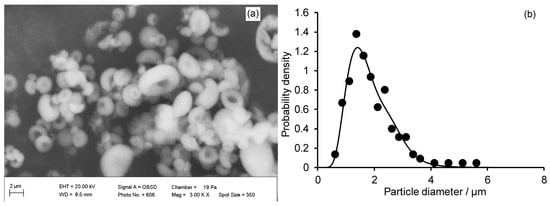
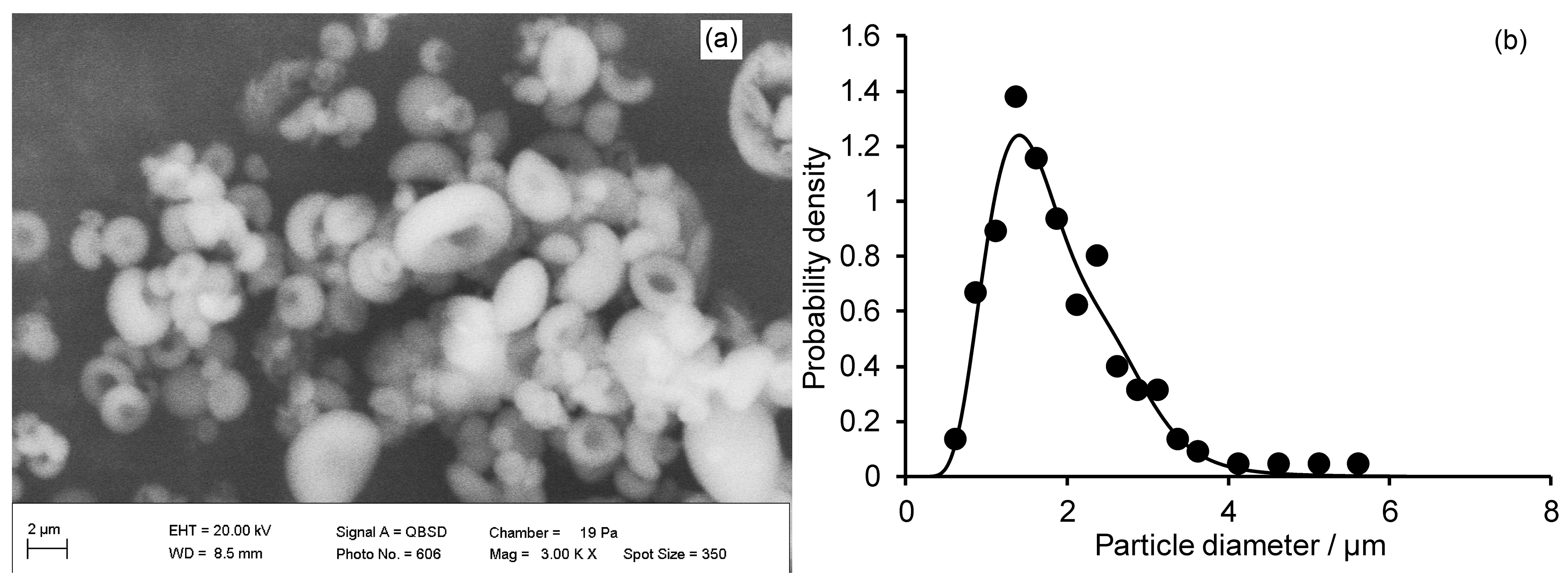
Figure 10 shows the results of scanning electron microscopy analysis of am-NOR. It is evident (Figure 10a) that there are no crystalline structures on the particle surface, which also confirms the production of an amorphous sample. According to the particle size distribution curve, the diameter of most particles is about 1.5 μm.
Figure 10.
SEM images of am-NOR, formed using spray-drying process (a) and size distribution curves calculated from this images (b).
3.6. Results of Dissolution Kinetics Study
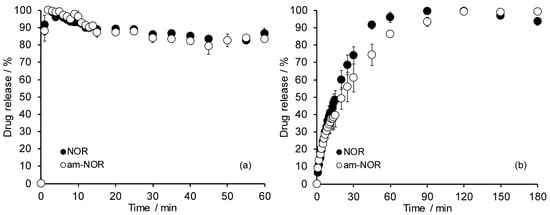
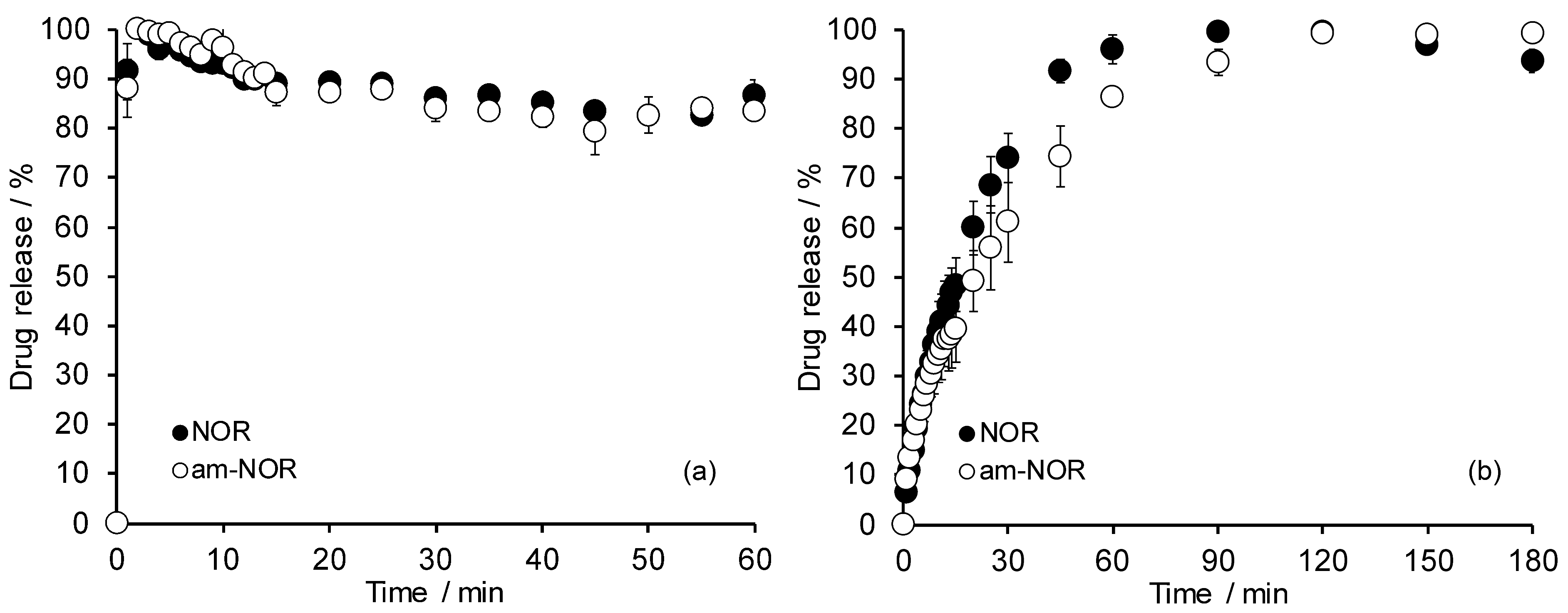
For comparison, the dissolution kinetics of the initial crystalline and amorphous forms of NOR were studied. The results are presented in Figure 11.
Figure 11.
Dissolution profiles of crystalline and amorphous norfloxacin at pH = 1 (a) and 6.86 (b).
When using 0.1 N HCl (pH = 1) as a medium (Figure 11a), no significant difference in the dissolution kinetics of the crystalline and amorphous forms is observed. Complete dissolution is observed already 3 min after the start of the experiment. When using a phosphate buffer (pH = 6.86) as a medium (Figure 11b), the dissolution rate of the original crystalline form of NOR is higher than the dissolution rate of am-NOR. This behavior may be due to the fact that crystalline and amorphous NOR exist in different forms—zwitterionic and unionized. Previously [69] it was shown for ciprofloxacin that the use of spray drying in an ethanol/water mixture produced the unionized form. However, in the original crystalline form, this API is in the zwitterionic form. The presence of charged fragments should ensure both good wettability and the ability to implement intermolecular interactions with water molecules. This leads to API’s in the zwitterionic form dissolving faster than their unionized form. It should be noted that the amorphous state enables the production of supersaturated solutions [70], which should lead to an increase in the API content in aqueous solutions.
To quantitatively compare the dissolution profiles of crystalline and amorphous NOR, the similarity factor (f2) was calculated according to the equation proposed by Moore and Flanner [71]. The calculations were performed using 10 equidistant time points (5, 10, 20, 30, 45, 60, 90, 120, 150, and 180 min) for pH = 6.86, and 3 time points (1, 2, and 3 min) for pH = 1, consistent with the experimental sampling schedule.
The calculated f2 value of 67 at pH = 1 confirms that the dissolution profiles of crystalline and amorphous NOR are statistically similar under acidic conditions, consistent with the visual observation that both forms achieve complete dissolution within 3 min. In contrast, at pH = 6.86, the f2 value of 37 (<50) quantitatively confirms the significant difference between the dissolution profiles of crystalline and amorphous NOR. The accompanying difference factor f1 = 26.7% at pH = 6.86 further corroborates this conclusion. These results objectively substantiate the qualitative observations discussed above regarding the different dissolution behavior of crystalline (zwitterionic) and amorphous (unionized) NOR at near-neutral pH.
3.7. Results of Equilibrium Solubility Study
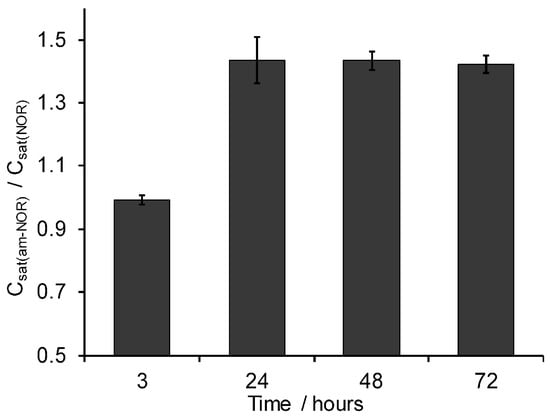
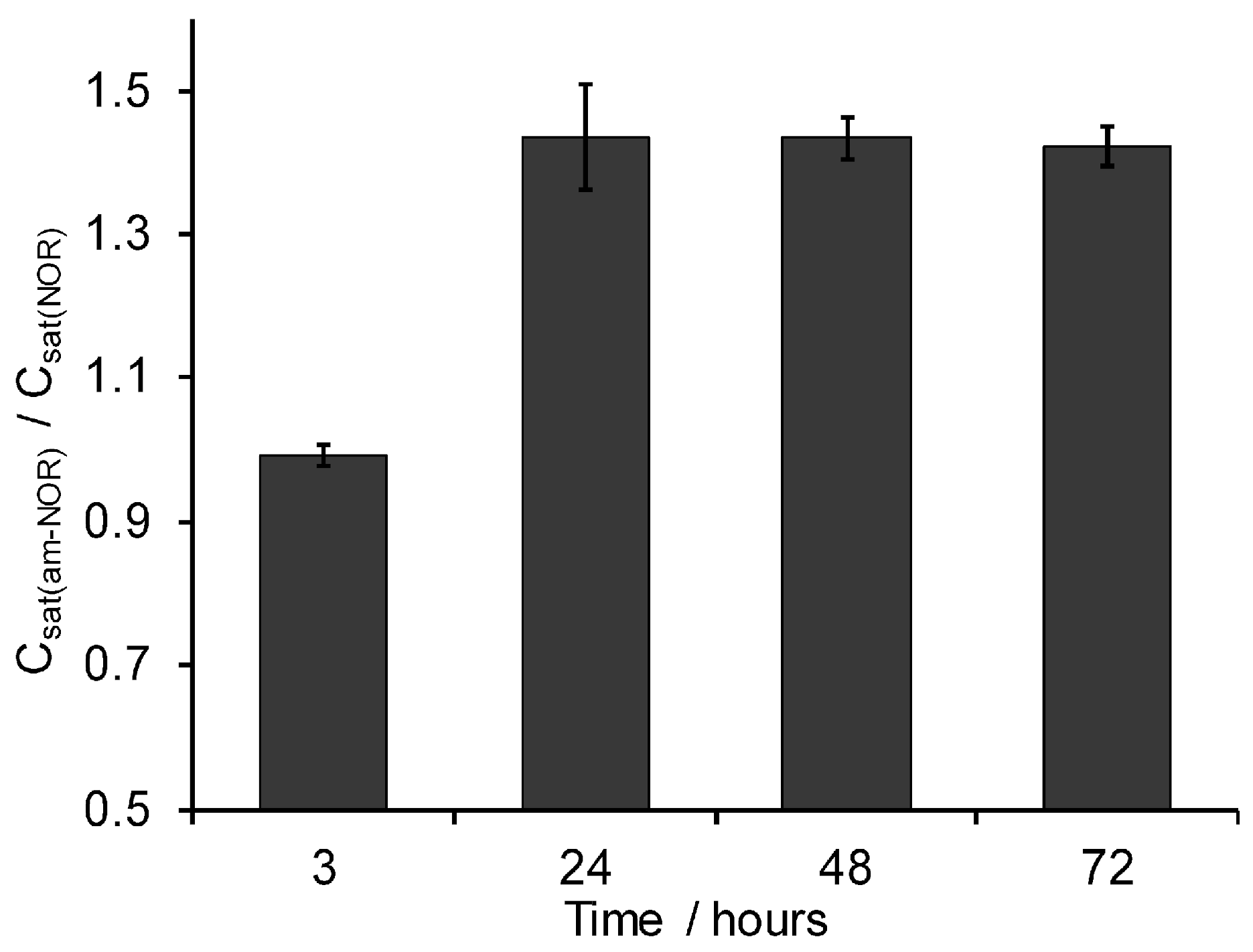
To determine the time dependence of the am-NOR/NOR concentration ratio in the buffer solution, equilibrium solubility was studied. The results of the analysis are shown in Figure 12.
Figure 12.
Relative concentration of norfloxacin in saturated solutions obtained from crystalline and amorphous states.
It is evident that 24 h after the start of the experiment, the NOR concentration in the solution obtained from am-NOR is more than 1.4 times higher. This same ratio is maintained after 48 and 72 h after the start of the experiment. It should be noted that during the dissolution kinetics study (3 h), the NOR concentration in the case of am-NOR does not reach saturation, unlike that of crystalline NOR, whose concentration passes through a maximum (90 min), Figure 10b. Thus, the use of am-NOR ensures slower dissolution kinetics, with a higher equilibrium concentration, at a pH close to neutral. After three hours of analysis, the concentration ratio of norfloxacin in solution is close to 1, which is consistent with the results of the dissolution kinetics study.
4. Conclusions
In this study, an amorphous form of norfloxacin was obtained and its stability was studied for the first time. Using fast scanning calorimetry, the critical cooling rate of the norfloxacin melt was determined to be 200 °C·s−1.
The cold crystallization kinetics of amorphous norfloxacin were studied in detail using non-isothermal and isothermal crystallization kinetics approaches. The Nakamura and Sbirrazzuoli crystallization models were shown to provide the best fit to the isothermal experiment. The predicted half-crystallization time of amorphous norfloxacin at 25 °C is more than 10 years.
A study of the effect of norfloxacin form on dissolution kinetics showed that at pH values close to neutral, the amorphous form has slower dissolution kinetics at a higher equilibrium concentration.
The use of an enteric-coated form of amorphous norfloxacin is promising due to its superior solubility in near-neutral media compared to the crystalline form. This may pro-vide prolonged action and maintain therapeutic concentrations. When using traditional dosage forms, there will be no significant difference in dissolution kinetics and solubility between amorphous and crystalline norfloxacin, due to their rapid conversion to the highly soluble hydrochloride.
Thus, the amorphous form of norfloxacin has the potential for practical application in the form of enteric-coated tablets, as it provides an optimal combination of solubility, dissolution rate (prolonged action) and permeability (unionized form), which are the fundamental triad that determines the oral drugs administration.
Author Contributions
Conceptualization, A.G.; investigation, D.K., L.Z., E.M., N.L., R.N. and S.L.; writing—original draft preparation, A.G.; writing—review and editing, A.G., R.N. and S.L. All authors have read and agreed to the published version of the manuscript.
Funding
The financial support of this work by the Russian Science Foundation (Project No 24-73-10128, https://rscf.ru/project/24-73-10128/ [accessed on 25 May 2026]) is gratefully acknowledged.
Institutional Review Board Statement
Not applicable.
Informed Consent Statement
Not applicable.
Data Availability Statement
The original contributions presented in this study are included in the article. Further inquiries can be directed to the corresponding author.
Conflicts of Interest
The authors declare no conflicts of interest.
Abbreviations
| API | Active pharmaceutical ingredient |
| NOR | Norfloxacin |
| ICTAC | International Confederation for Thermal Analysis and Calorimetry |
| PXRD | Powder X-ray diffraction |
| TG | Thermogravimetry |
| DSC | Differential scanning calorimetry |
| am-NOR | Amorphous norfloxacin |
| FSC | Fast scanning calorimetry |
| Fr | Friedman analysis |
| KAS | Kissinger–Akahira–Sunose method |
| Bna | Autocatalytic Prout–Tompkins model |
| An | Avrami–Erofeev n-dimensional nucleation model |
| nc | Avrami coefficient of crystallization |
| Nk | Nakamura crystallization model |
| Sb | Sbirrazzuoli crystallization model |
| Ea | Activation energy |
| A | Pre-exponential factor |
| Tg | Glass transition temperature |
| Tm | Melting temperature |
| τc | Crystallization half-time |
References
- Maris, A.S.; Mody, P.; Brewer, D.J.; Humphries, R.M. The fluoroquinolones: An update for the clinical microbiologist. Clin. Microbiol. Newsl. 2021, 43, 97–107. [Google Scholar] [CrossRef] [Scilit]
- Bush, N.G.; Diez-Santos, I.; Abbott, L.R.; Maxwell, A. Quinolones: Mechanism, lethality and their contributions to antibiotic resistance. Molecules 2020, 25, 5662. [Google Scholar] [CrossRef] [Scilit] [PubMed]
- Wolfson, J.S.; Hooper, D.C. Fluoroquinolone antimicrobial agents. Clin. Microbiol. Rev. 1989, 2, 378–424. [Google Scholar] [CrossRef] [PubMed]
- Stratton, C. Fluoroquinolone antibiotics: Properties of the class and individual agents. Clin. Ther. 1992, 14, 348–375. [Google Scholar]
- Siddhi, P.U.; Alexander, C.G.; Cohen, A.J. Ambulatory Fluoroquinolone Use in the United States, 2015–2019. In Open Forum Infectious Diseases; Oxford University Press: Oxford, UK, 2021; Volume 8. [Google Scholar] [CrossRef] [Scilit]
- Hamilton, F.; Darley, E.; Arnold, K.; MacGowan, A. Trends in fluoroquinolone prescribing in UK primary and secondary care between 2019 and 2023. J. Antimicrob. Chemother. 2025, 80, 518–527. [Google Scholar] [CrossRef] [Scilit]
- Aiesh, B.M.; Zuhour, A.; Omar, M.A.; Hamad, M.H.; Abutaha, A.; Al-Jabi, S.W.; Sabateen, A.; Zyoud, S.E.H. Patterns of fluoroquinolone utilization and resistance in a tertiary care hospital: A retrospective cross-sectional analysis study from a developing country. BMC Infect. Dis. 2024, 24, 856. [Google Scholar] [CrossRef] [Scilit]
- Blokhina, S.V.; Sharapova, A.V.; Ol’khovich, M.V.; Volkova, T.V.; Perlovich, G.L. Solubility, lipophilicity and membrane permeability of some fluoroquinolone antimicrobials. Eur. J. Pharm. Sci. 2016, 93, 29–37. [Google Scholar] [CrossRef] [Scilit]
- Pawar, P.; Katara, R.; Mishra, S.; Majumdar, D.K. Topical ocular delivery of fluoroquinolones. Expert Opin. Drug Deliv. 2013, 10, 691–711. [Google Scholar] [CrossRef] [Scilit]
- Rusu, A.; Árpád, G.; Hancu, G. New Perspectives: Quinolones as Complexation Agents. Acta Med. Marisiensis 2011, 57, 149–154. [Google Scholar]
- Wallis, S.C.; Charles, B.G.; Gahan, L.R.; Filippich, L.J.; Bredhauer, M.G.; Duckworth, P.A. Interaction of norfloxacin with divalent and trivalent pharmaceutical cations. In vitro complexation and in vivo pharmacokinetic studies in the dog. J. Pharm. Sci. 1996, 85, 803–809. [Google Scholar] [CrossRef] [Scilit]
- Olovson, S.G.; Havu, N.; Regårdh, C.G.; Sandberg, A. Oesophageal ulcerations and plasma levels of different alprenolol salts: Potential implications for the clinic. Acta Pharmacol. Toxicol. 1986, 58, 55–60. [Google Scholar] [CrossRef] [Scilit]
- Dhondale, M.R.; Thakor, P.; Nambiar, A.G.; Singh, M.; Agrawal, A.K.; Shastri, N.R.; Kumar, D. Co-crystallization approach to enhance the stability of moisture-sensitive drugs. Pharmaceutics 2023, 15, 189. [Google Scholar] [CrossRef] [Scilit]
- Serajuddin, A.T. Salt formation to improve drug solubility. Adv. Drug Deliv. Rev. 2007, 59, 603–616. [Google Scholar] [CrossRef] [Scilit]
- Palm, K.; Luthman, K.; Ros, J.; Gråsjö, J.; Artursson, P. Effect of molecular charge on intestinal epithelial drug transport: pH-dependent transport of cationic drugs. J. Pharmacol. Exp. Ther. 1999, 291, 435–443. [Google Scholar] [CrossRef] [Scilit] [PubMed]
- Pleuvry, B.J. Factors affecting drug absorption and distribution. Anaesth. Intensive Care Med. 2005, 6, 135–138. [Google Scholar] [CrossRef] [Scilit]
- Amidon, G.L.; Lennernäs, H.; Shah, V.P.; Crison, J.R. A theoretical basis for a biopharmaceutic drug classification: The correlation of in vitro drug product dissolution and in vivo bioavailability. Pharm. Res. 1995, 12, 413–420. [Google Scholar] [CrossRef] [Scilit]
- Koga, H.; Itoh, A.; Murayama, S.; Suzue, S.; Irikura, T. Structure-activity relationships of antibacterial 6, 7-and 7, 8-disubstituted 1-alkyl-1, 4-dihydro-4-oxoquinoline-3-carboxylic acids. J. Med. Chem. 1980, 23, 1358–1363. [Google Scholar] [CrossRef] [Scilit]
- Deng, Y.; Deng, W.; Huang, W.; Zheng, Z.; Zhang, R.; Liu, S.; Jiang, Y. Norfloxacin co-amorphous salt systems: Effects of molecular descriptors on the formation and physical stability of co-amorphous systems. Chem. Eng. Sci. 2022, 253, 117549. [Google Scholar] [CrossRef] [Scilit]
- Goldstein, E.J. Norfloxacin, a fluoroquinolone antibacterial agent: Classification, mechanism of action, and in vitro activity. Am. J. Med. 1987, 82, 3–17. [Google Scholar] [CrossRef] [Scilit]
- Holmes, B.; Brogden, R.N.; Richards, D.M. Norfloxacin: A review of its antibacterial activity, pharmacokinetic properties and therapeutic use. Drugs 1985, 30, 482–513. [Google Scholar] [CrossRef] [Scilit] [PubMed]
- Beale, J.M.; Block, J.H. Organic Medicinal and Pharmaceutical Chemistry. In Wilson and Gisvold’s Textbook of Organic Medicinal and Pharmaceutical Chemistry, 12th ed.; Wilson, C.O., Beale, J.M., Block, J.H., Eds.; Lippincott Williams & Wilkins: Baltimore, MD, USA, 2011. [Google Scholar]
- Costa, G.D.P.; Ferreira, P.O.; Baptista, J.A.; Silva, P.S.P.; Castro, R.A.; Caires, F.J.; Eusébio, M.E.S. Enhancing Norfloxacin’s solubility: Development and characterization of new solid-state forms with p-aminobenzoic acid. J. Solid State Chem. 2025, 353, 125698. [Google Scholar] [CrossRef] [Scilit]
- Mendes, C.; Meirelles, G.C.; Barp, C.G.; Assreuy, J.; Silva, M.A.; Ponchel, G. Cyclodextrin based nanosponge of norfloxacin: Intestinal permeation enhancement and improved antibacterial activity. Carbohydr. Polym. 2018, 195, 586–592. [Google Scholar] [CrossRef] [Scilit]
- Loh, G.O.K.; Tan, Y.T.F.; Peh, K.K. Enhancement of norfloxacin solubility via inclusion complexation with β-cyclodextrin and its derivative hydroxypropyl-β-cyclodextrin. Asian J. Pharm. Sci. 2016, 11, 536–546. [Google Scholar] [CrossRef] [Scilit]
- Dave, V.; Yadav, R.B.; Kushwaha, K.; Yadav, S.; Sharma, S.; Agrawal, U. Lipid-polymer hybrid nanoparticles: Development & statistical optimization of norfloxacin for topical drug delivery system. Bioact. Mater. 2017, 2, 269–280. [Google Scholar] [CrossRef] [Scilit]
- Mohammed, K.H.; Rasslan, F.; Abd El-Fattah, M.A.; Shawky, S.; Amin, O.M.; Eassa, H.A. Treating burn infections with topical delivery of positively charged norfloxacin-loaded lipid-polymer hybrid nanoparticles. Recent Adv. Drug Deliv. Formul. 2025, 19, 142–155. [Google Scholar] [CrossRef] [Scilit]
- Dong, Z.; Xie, S.; Zhu, L.; Wang, Y.; Wang, X.; Zhou, W. Preparation and in vitro, in vivo evaluations of norfloxacin-loaded solid lipid nanopartices for oral delivery. Drug Deliv. 2011, 18, 441–450. [Google Scholar] [CrossRef] [Scilit]
- Liu, S.; Li, M.; Jia, L.; Chen, M.; Du, S.; Gong, J. Investigation of drug–polymer miscibility, molecular interaction, and their effects on the physical stabilities and dissolution behaviors of norfloxacin amorphous solid dispersions. Cryst. Growth Des. 2020, 20, 2952–2964. [Google Scholar] [CrossRef] [Scilit]
- Suryavanshi, P.; Banerjee, S. Exploration of theoretical and practical evaluation on Kollidon® SR matrix mediated amorphous filament extrusion of norfloxacin by melt extrusion. J. Drug Deliv. Sci. Technol. 2022, 67, 102894. [Google Scholar] [CrossRef] [Scilit]
- Swanson, B.N.; Boppana, V.K.; Vlasses, P.H.; Rotmensch, H.H.; Ferguson, R.K. Norfloxacin disposition after sequentially increasing oral doses. Antimicrob. Agents Chemother. 1983, 23, 284–288. [Google Scholar] [CrossRef] [Scilit]
- Šuštar, B.; Bukovec, N.; Bukovec, P. Polymorphism and stability of norfloxacin, (1-ethyl-6-fluoro-1,4-dihydro-4-oxo-7-(1-piperazinil)-3-quinolinocarboxylic acid. Therm. Anal. 1993, 40, 475–481. [Google Scholar] [CrossRef] [Scilit]
- Kolodziejczyk, K.; Grzybowska, K.; Wojnarowska, Z.; Dulski, M.; Hawelek, L.; Paluch, M. Isothermal cold crystallization kinetics study of sildenafil. Cryst. Growth Des. 2014, 14, 3199–3209. [Google Scholar] [CrossRef] [Scilit]
- Schawe, J.E.; Wyler, N.O. Advanced evaluation methods of isothermal crystallization kinetics with consideration of incubation time and changes in the crystallization mechanism. Thermochim. Acta 2026, 758, 180241. [Google Scholar] [CrossRef] [Scilit]
- Yang, J.; Grey, K.; Doney, J. An improved kinetics approach to describe the physical stability of amorphous solid dispersions. Int. J. Pharm. 2010, 384, 24–31. [Google Scholar] [CrossRef] [Scilit]
- Perez-De Eulate, N.G.; Cangialosi, D. The very long-term physical aging of glassy polymers. Phys. Chem. Chem. Phys. 2018, 20, 12356–12361. [Google Scholar] [CrossRef] [Scilit]
- Vyazovkin, S.; Burnham, A.K.; Criado, J.M.; Pérez-Maqueda, L.A.; Popescu, C.; Sbirrazzuoli, N. ICTAC Kinetics Committee recommendations for performing kinetic computations on thermal analysis data. Thermochim. Acta 2011, 520, 1–19. [Google Scholar] [CrossRef] [Scilit]
- Lapuk, S.E.; Mukhametzyanov, T.A.; Schick, C.; Gerasimov, A.V. Kinetic stability of amorphous dipyridamole: A fast scanning calorimetry investigation. Int. J. Pharm. 2020, 574, 118890. [Google Scholar] [CrossRef] [Scilit]
- Lapuk, S.E.; Mukhametzyanov, T.A.; Schick, C.; Gerasimov, A.V. Kinetic stability and glass-forming ability of thermally labile quinolone antibiotics. Mol. Pharm. 2023, 20, 3202–3209. [Google Scholar] [CrossRef] [Scilit]
- Papageorgiou, G.; Bikiaris, D.N.; Chrissafis, K. A different approach for the study of the crystallization kinetics in polymers. Key study: Poly (ethylene terephthalate)/SiO2 nanocomposites. Polym. Int. 2010, 59, 1630–1638. [Google Scholar] [CrossRef] [Scilit]
- Baghel, S.; Cathcart, H.; Redington, W.; O’Reilly, N.J. An investigation into the crystallization tendency/kinetics of amorphous active pharmaceutical ingredients: A case study with dipyridamole and cinnarizine. Eur. J. Pharm. Biopharm. 2016, 104, 59–71. [Google Scholar] [CrossRef] [Scilit]
- Burnham, A.K.; Weese, R.K.; Weeks, B.L. A distributed activation energy model of thermodynamically inhibited nucleation and growth reactions and its application to the β−δ phase transition of HMX. J. Phys. Chem. B. 2004, 108, 19432–19441. [Google Scholar] [CrossRef] [Scilit]
- Vyazovkin, S.; Sbirrazzuoli, N. Nonisothermal crystallization kinetics by DSC: Practical overview. Processes 2023, 11, 1438. [Google Scholar] [CrossRef] [Scilit]
- Nikolakakis, I.; Kachrimanis, K. Crystallization kinetics of orthorhombic paracetamol from supercooled melts studied by non-isothermal DSC. Drug Dev. Ind. Pharm. 2017, 43, 257–263. [Google Scholar] [CrossRef] [Scilit]
- Zhou, D.; Schmitt, E.A.; Zhang, G.G.; Law, D.; Vyazovkin, S.; Wight, C.A.; Grant, D.J.W. Crystallization kinetics of amorphous nifedipine studied by model-fitting and model-free approaches. J. Pharm. Sci. 2003, 92, 1779–1792. [Google Scholar] [CrossRef] [Scilit]
- Sheikh Nezhad Moghadam, A.; Rafizadeh, M.; Afshar Taromi, F. Non-isothermal crystallization kinetics of polyethylene terephthalate: A study based on Tobin, Hay and Nakamura models. Iran. Polym. J. 2023, 32, 125–137. [Google Scholar] [CrossRef] [Scilit]
- Afrasiabian, N.; Elmoghazy, A.; Blarr, J.; Scheuring, B.; Prahs, A.; Schneider, D.; Liebig, W.V.; Weidenmann, K.A.; Denniston, C.; Nestler, B. Crystallization and crystal morphology of polymers: A multiphase-field study. J. Thermoplast. Compos. Mater. 2025, 38, 3020–3050. [Google Scholar] [CrossRef] [Scilit]
- Guigo, N.; van Berkel, J.; de Jong, E.; Sbirrazzuoli, N. Modelling the non-isothermal crystallization of polymers: Application to poly(ethylene 2,5-furandicarboxylate). Thermochim. Acta 2017, 650, 66–75. [Google Scholar] [CrossRef] [Scilit]
- Minakov, A.; Morikawa, J.; Zhuravlev, E.; Ryu, M.; Schick, C. High-speed dynamics of temperature distribution in ultrafast (up to 108 K/s) chip-nanocalorimeters, measured by infrared thermography of high resolution. J. Appl. Phys. 2019, 125, 054501. [Google Scholar] [CrossRef] [Scilit]
- Jariyavidyanont, K.; Abdelaziz, A.; Androsch, R.; Schick, C. Experimental analysis of lateral thermal inhomogeneity of a specific chip-calorimeter sensor. Thermochim. Acta 2019, 674, 95–99. [Google Scholar] [CrossRef] [Scilit]
- Vyazovkin, S.; Chrissafis, K.; Di Lorenzo, M.L.; Koga, N.; Pijolat, M.; Roduit, B.; Sbirrazzuoli, N.; Suñol, J.J. ICTAC Kinetics Committee recommendations for collecting experimental thermal analysis data for kinetic computations. Thermochim. Acta 2014, 590, 1–23. [Google Scholar] [CrossRef] [Scilit]
- Vyazovkin, S.; Burnham, A.K.; Favergeon, L.; Koga, N.; Moukhina, E.; Pérez-Maqueda, L.A.; Sbirrazzuoli, N. ICTAC Kinetics Committee recommendations for analysis of multi-step kinetics. Thermochim. Acta 2020, 689, 178597. [Google Scholar] [CrossRef] [Scilit]
- Kolmogorov, A.N. K statisticheskoi teorii kristallizacii metallov. Izv. Akad. Nauk. SSSR. Ser. Materm. 1937, 3, 355–359. [Google Scholar]
- Johnson, W.A.; Mehl, R.F. Reaction kinetics in process of nucleation and growth. Trans. Am. Inst. Min. Engin. 1939, 135, 416–458. [Google Scholar]
- Avrami, M. Kinetics of phase change. I. General Theory. J. Chem. Phys. 1939, 7, 1103–1112. [Google Scholar] [CrossRef] [Scilit]
- Avrami, M. Kinetics of phase change. II. Transformation–time relations for random distribution of nuclei. J. Chem. Phys. 1940, 8, 212–224. [Google Scholar] [CrossRef] [Scilit]
- Avrami, M. Kinetics of phase change. III. Granulation, phase change and microstructure. J. Chem. Phys. 1941, 9, 177–184. [Google Scholar]
- Ziganshin, M.A.; Gerasimov, A.V.; Ziganshina, S.A.; Gubina, N.S.; Abdullina, G.R.; Klimovitskii, A.E.; Gorbatchuk, V.V.; Bukharaev, A.A. Thermally induced diphenylalanine cyclization in solid phase. J. Therm. Anal. Calorim. 2016, 125, 905–912. [Google Scholar] [CrossRef] [Scilit]
- Perepezko, J.H.; Glendenning, T.W.; Wang, J.Q. Nanocalorimetry measurements of metastable states. Thermochim. Acta 2015, 603, 24–28. [Google Scholar] [CrossRef] [Scilit]
- Barbas, R.; Martí, F.; Prohens, R.; Puigjaner, C. Polymorphism of norfloxacin: Evidence of the enantiotropic relationship between polymorphs A and B. Cryst. Growth Des. 2006, 6, 1463–1467. [Google Scholar] [CrossRef] [Scilit]
- Engstrom, J.D.; Simpson, D.T.; Lai, E.S.; Williams, R.O., III; Johnston, K.P. Morphology of protein particles produced by spray freezing of concentrated solutions. Eur. J. Pharm. Biopharm. 2007, 65, 149–162. [Google Scholar] [CrossRef] [Scilit]
- Friedman, H.L. Kinetics of thermal degradation of char-forming plastics from thermogravimetry. Application to a phenolic plastic. J. Polym. Sci. Part C Polym. Symp. 1964, 6, 183–195. [Google Scholar] [CrossRef] [Scilit]
- Akahira, T.; Sunose, T. Method of determining activation deterioration constant of electrical insulating materials. Res. Rep. Chiba Inst. Technol. (Sci. Technol.) 1971, 16, 22–31. [Google Scholar]
- Boltz, G.; Arkhangel’skii, I.V.; Dunaev, A.V.; Makarenko, I.V.; Tikhonov, N.A.; Belyaev, S.S.; Tarasov, A.V. Non-Isothermal Kinetic Methods. Workbook and Laboratory Manual; Edition Open Access: Berlin, Germany, 2013; 73p. [Google Scholar]
- Málek, J. The applicability of Johnson-Mehl-Avrami model in the thermal analysis of the crystallization kinetics of glasses. Thermochim. Acta 1995, 267, 61–73. [Google Scholar] [CrossRef] [Scilit]
- Nakamura, K.; Watanabe, T.; Katayama, K.; Amano, T. Some aspects of nonisothermal crystallization of polymers. I. Relationship between crystallization temperature, crystallinity, and cooling conditions. J. Appl. Polym. Sci. 1972, 16, 1077–1091. [Google Scholar] [CrossRef] [Scilit]
- Reynolds, R.J.W. Treatise on solid state chemistry. Polymer 1977, 18, 528. [Google Scholar] [CrossRef] [Scilit]
- Vyazovkin, S.; Sbirrazzuoli, N. Isoconversional approach to evaluation the Hoffman-Lauritzen parameters (U* and Kg) from the overall rates of nonisothermal crystallization. Macromol. Rapid Commun. 2004, 25, 733–738. [Google Scholar] [CrossRef] [Scilit]
- Mesallati, H.; Mugheirbi, N.A.; Tajber, L. Two faces of ciprofloxacin: Investigation of proton transfer in solid state transformations. Cryst. Growth Des. 2016, 16, 6574–6585. [Google Scholar] [CrossRef] [Scilit]
- Almeida e Sousa, L.; Reutzel-Edens, S.M.; Stephenson, G.A.; Taylor, L.S. Assessment of the amorphous “solubility” of a group of diverse drugs using new experimental and theoretical approaches. Mol. Pharm. 2015, 12, 484–495. [Google Scholar] [CrossRef] [Scilit]
- Moore, J.W.; Flanner, H.H. Mathematical comparison of curves with an emphasis on in vitro dissolution profiles. Pharm. Technol. 1996, 20, 64–74. [Google Scholar]

Disclaimer/Publisher’s Note: The statements, opinions and data contained in all publications are solely those of the individual author(s) and contributor(s) and not of MDPI and/or the editor(s). MDPI and/or the editor(s) disclaim responsibility for any injury to people or property resulting from any ideas, methods, instructions or products referred to in the content. |
© 2026 by the authors. Published by MDPI on behalf of the Österreichische Pharmazeutische Gesellschaft. Licensee MDPI, Basel, Switzerland. This article is an open access article distributed under the terms and conditions of the Creative Commons Attribution (CC BY) license.