


Abstract
Background: Antimicrobial resistance (AMR) among bacterial enteropathogens is a major threat to child health. However, few reviews have integrated pathogen-, age-, and region-specific evidence into a unified comparative framework. Methods: A narrative review of literature published from 2000 to 2026 was conducted using PubMed, Scopus, and Web of Science. Data from 99 publications on AMR in Shigella spp., diarrheagenic Escherichia coli (DEC), Salmonella spp., and Campylobacter spp. in children under five years were synthesized descriptively according to geographic region, age group, antimicrobial class, and resistance mechanisms. Results: Shigella showed the highest resistance to first-line agents, with a pooled ampicillin resistance of 76% in LMICs and rates of 74–85% in Africa and the Middle East; co-trimoxazole resistance exceeded 90% in some settings. Salmonella fluoroquinolone resistance exceeded 80% in South Asia, and MDR among Salmonella and Shigella reached 88.5% in Ethiopia. Among DEC, MDR reached 84.6% in Ethiopia, and resistance to third-generation cephalosporins ranged from approximately 40% in Africa to 85% in South Asia. Campylobacter demonstrated fluoroquinolone resistance of up to 90% in Asia and macrolide resistance of up to 55% in sub-Saharan Africa. Age-stratified epidemiological data indicated distinct incidence peaks for major pathogens during the first two years of life. Common resistance mechanisms included enzymatic inactivation, target-site modification, efflux, and reduced permeability. Conclusions: AMR patterns varied substantially by pathogen, region, and age. These findings support pathogen- and region-specific empirical treatment strategies, standardized AMR surveillance, and antimicrobial stewardship. Strengthening vaccination, infection prevention, and WASH interventions is particularly important in resource-limited settings.
1. Introduction
Antimicrobial resistance (AMR) represents one of the most serious threats to global health, contributing to an estimated 1.27 million deaths in 2019, with the highest burden observed in sub-Saharan Africa and South Asia [1]. Beyond its direct impact on mortality, AMR exacerbates complications, increases the risk of adverse outcomes, and imposes a substantial economic burden, thereby undermining child survival in low- and middle-income countries (LMICs) [2,3]. These regions are characterized by limited access to healthcare, inadequate sanitation, and a high burden of infectious diseases, all of which contribute to both prophylactic and therapeutic use of antimicrobial agents [3,4,5]. Against this background, diarrheal diseases remain among the leading causes of infectious mortality in young children. According to the World Health Organization (WHO), diarrhea is the third leading cause of death among children aged 1–59 months, with approximately 1.7 billion episodes occurring annually [6,7]. The Global Burden of Disease Study 2021 estimated that in children under five years, the global prevalence and mortality rates of diarrheal disease were 885.07 and 51.72 per 100,000 population, respectively [8]. Among bacterial enteropathogens, Shigella spp., diarrheagenic Escherichia coli (DEC), Salmonella spp., and Campylobacter spp. are of major clinical and epidemiological importance, being associated with acute enteric infections, inflammatory diarrhea, hemocolitis, and the need for hospitalization. These four pathogen groups were selected for the present review because they represent major contributors to the global burden of bacterial diarrheal disease in children, are associated with substantial and clinically relevant levels of AMR, and have been extensively studied across different geographic regions and pediatric age groups, enabling meaningful comparative analysis. The Global Enteric Multicenter Study (GEMS) demonstrated that these pathogens accounted for up to 30% of cases of moderate-to-severe diarrhea among children under five years of age in Africa and South Asia, with Shigella and enterotoxigenic E. coli (ETEC) contributing substantially to the overall burden [9].
The problem is further compounded by the fact that, in resource-limited settings, the treatment of bacterial diarrhea in children is frequently initiated empirically without identification of the causative pathogen or determination of its antimicrobial susceptibility profile. This practice increases the risk of ineffective therapy and promotes the selection and spread of resistant strains [4,5]. According to data from the WHO Global Antimicrobial Resistance and Use Surveillance System (GLASS), the median proportion of E. coli isolates resistant to third-generation cephalosporins reached 42% across 76 countries, while increasing resistance to last-resort antibiotics, including carbapenems, substantially limits therapeutic options for severe bacterial infections [10]. In its updated 2024 Bacterial Priority Pathogens List, the WHO classified fluoroquinolone-resistant Salmonella Typhi, non-typhoidal Salmonella, and Shigella spp. as high-priority pathogens, while third-generation cephalosporin-resistant and carbapenem-resistant Enterobacterales were designated as critical-priority threats [11]. These classifications reflect not only the clinical importance of these pathogens but also the increasingly limited therapeutic options available, particularly in pediatric practice, where antibiotic selection is further constrained by age-related restrictions and pharmacokinetic considerations.
Despite growing recognition of the problem, previous reviews have predominantly focused on AMR in specific pathogen groups, clinical syndromes, or geographic regions, thereby limiting the ability to obtain a comprehensive global overview of resistance patterns among major enteric pathogens in pediatric populations [12,13]. For example, the systematic review by Okumu et al. (2025) was limited to community-acquired enteropathogens among children aged ≤10 years in LMICs and did not provide detailed age-specific analysis or a comprehensive pathogen-specific analysis of DEC [12]. The meta-analysis by Kowalski et al. (2024) focused exclusively on Enterobacterales infections among children in sub-Saharan Africa and therefore did not provide a global analysis of the major bacterial enteropathogens considered in the present review [13]. Furthermore, previous studies have rarely incorporated detailed age-specific stratification, despite its importance in pediatric practice, where resistance patterns may vary across pediatric age groups [14]. An equally important gap is the limited pathotype-specific analysis of DEC, as antimicrobial resistance patterns may differ among enteroaggregative E. coli (EAEC), enterotoxigenic E. coli (ETEC), and enteropathogenic E. coli (EPEC) [15].
In contrast to previous reviews, the present study provides a comprehensive comparative analysis of four major enteropathogens (Shigella, DEC, Salmonella, and Campylobacter) within a unified analytical framework. The review incorporates age stratification, regional characterization of resistance profiles, analysis of temporal trends, and assessment of currently available therapeutic options. It also includes a critical evaluation of WHO guidelines and national treatment protocols with regard to their concordance with contemporary AMR data, thereby helping to identify discrepancies between current clinical practice and the prevailing epidemiological situation.
The aim of this review is to synthesize and analyze current evidence on global and regional trends in antimicrobial resistance among major bacterial enteropathogens in children, characterize age-specific patterns of infection and antimicrobial resistance in children under five years of age, and determine their clinical implications, including their impact on the selection of empirical antimicrobial therapy and the assessment of remaining therapeutic options across different geographic regions.
2. Materials and Methods
2.1. Review Design and Literature Search
This article presents a narrative review of antimicrobial resistance (AMR) among four major bacterial enteric pathogens in children under five years of age: Shigella spp., diarrheagenic Escherichia coli (DEC), Salmonella spp., and Campylobacter spp. The review aimed to synthesize and compare evidence on the epidemiology and geographic distribution of AMR, age-specific patterns of infection and resistance, resistance profiles, major resistance mechanisms, and clinical implications of AMR in pediatric enteric infections.
A structured literature search was conducted in PubMed, Scopus, and Web of Science, covering publications from January 2000 to 20 August 2026. The search combined the following terms: (“antimicrobial resistance” OR “drug resistance” OR “antibiotic resistance”) AND (“enteric pathogens” OR “diarrhea” OR “gastroenteritis”) AND (“children” OR “pediatric”) AND (“Shigella” OR “Escherichia coli” OR “Salmonella” OR “Campylobacter”). The search syntax was adapted for each database. Additional publications were identified by examining the reference lists of relevant studies and reviews.
The literature search was conducted by two authors (E.S. and A.T.). After manual removal of duplicate records, the same two reviewers independently screened titles and abstracts and subsequently assessed the full texts of potentially eligible publications. Disagreements were resolved through discussion until consensus was reached. The literature selection process is summarized in Figure 1.
Figure 1.
PRISMA 2020 flow diagram of the study selection process. Adapted from the PRISMA 2020 flow diagram template.
2.2. Eligibility Criteria and Study Selection
Studies were included if they (i) investigated children under five years of age (0–59 months); (ii) reported phenotypic AMR or antimicrobial susceptibility data for at least one of the four selected pathogen groups—Shigella spp., DEC, Salmonella spp., or Campylobacter spp.; (iii) included children from community, outpatient, or hospital settings; and (iv) provided sufficient microbiological information to identify the pathogen and characterize resistance.
Animal studies, case reports, studies without microbiological confirmation, and publications without relevant AMR or susceptibility data were excluded. Relevant systematic reviews, surveillance reports, and clinical guidelines were additionally considered as supporting sources for epidemiological context, resistance mechanisms, and clinical interpretation.
2.3. Data Extraction and Narrative Synthesis
The following information was extracted from the included publications: publication year, study location, study population, age group, study design, pathogen or DEC pathotype, antimicrobial agents tested, resistance rates, multidrug resistance (MDR), extended-spectrum β-lactamase (ESBL) production, and, where available, molecular resistance determinants. Findings were synthesized descriptively according to pathogen, geographic region, age group, and antimicrobial class. Differences in study design, population characteristics, diagnostic methods, antimicrobial susceptibility testing procedures, and reporting practices were considered when interpreting the results.
The definition of MDR was not uniform across the included studies. Most studies defined MDR as non-susceptibility to at least one agent in three or more antimicrobial categories, whereas others defined it as resistance to three or more individual antimicrobial agents irrespective of class, and some did not report the definition used. In addition, the number and classes of antimicrobial agents tested varied between studies. MDR estimates were therefore extracted as reported in the original studies and were interpreted descriptively; they were not pooled or directly compared between studies. The included studies used different antimicrobial susceptibility testing methods, most commonly disk diffusion and, less frequently, broth microdilution or gradient diffusion, and applied different interpretive standards, mainly those of the Clinical and Laboratory Standards Institute (CLSI) [16] and the European Committee on Antimicrobial Susceptibility Testing (EUCAST) [17], often in different versions. Because breakpoints differ between these standards and have been revised over time, the same isolate may be categorized differently depending on the method and criteria used. Resistance rates were therefore extracted as reported in the original studies and were not reinterpreted or pooled.
2.4. Selection of Antimicrobial Agents
Antimicrobial agents were selected based on their clinical relevance to bacterial enteric infections, epidemiological importance in antimicrobial resistance surveillance, and availability of susceptibility data in the reviewed literature.
The analysis focused on ampicillin, co-trimoxazole, fluoroquinolones (particularly ciprofloxacin), third-generation cephalosporins (particularly ceftriaxone), macrolides (particularly azithromycin), carbapenems, and aminoglycosides.
Ampicillin and co-trimoxazole were included because of their historical use in the treatment of bacterial enteric infections and the high resistance rates frequently reported for these agents. Ciprofloxacin, ceftriaxone, and azithromycin were examined because of their clinical relevance in the management of selected bacterial enteric infections and the increasing concern regarding resistance to these agents. Carbapenems and aminoglycosides were considered primarily in the context of severe or invasive bacterial infections and the surveillance of resistance to critically important antimicrobial classes. Their inclusion in the review does not imply their routine use in the treatment of pediatric diarrheal disease.
2.5. Methodological Appraisal
The included publications were categorized according to source type and study design. Methodological quality was assessed using appropriate critical appraisal instruments. The Joanna Briggs Institute (JBI) critical appraisal checklists were applied to eligible primary studies, while AMSTAR 2 was used to evaluate systematic reviews. Other study-specific appraisal approaches were applied where appropriate.
The methodological assessment considered study design, sampling procedures, data collection methods, microbiological identification, antimicrobial susceptibility testing, and potential sources of bias. The results of the assessment are presented in Supplementary Table S1. Methodological limitations and differences in study quality were taken into account when interpreting and synthesizing the available evidence.
3. Epidemiology of Antimicrobial Resistance
A total of 99 publications were included (Figure 1), comprising 41 primary studies reporting antimicrobial resistance data in children, 10 systematic reviews and meta-analyses, 10 multicenter epidemiological studies, and 38 publications on resistance mechanisms, clinical outcomes, guidelines, and surveillance. Most primary studies were cross-sectional and conducted in sub-Saharan Africa and Asia. Twenty representative studies are summarized in Table 1. Overall, the included studies reported high resistance to first-line agents, increasing resistance to fluoroquinolones and third-generation cephalosporins, and marked heterogeneity between pathogens and regions.
Table 1.
Summary of studies reporting antimicrobial resistance among enteric pathogens in children, by region, study population, and design.
Understanding the regional and age-specific distribution of major bacterial enteropathogens is critical for interpreting global antimicrobial resistance (AMR) data, as populations with the highest incidence of these infections also face the greatest selective pressure from antibiotic use. Systematic reviews, multicenter studies, and local investigations summarized in Table 1 provide important insights into the key epidemiological patterns underlying the burden of AMR in pediatric populations.
3.1. Regional and Pathogen-Specific Differences in Antimicrobial Resistance
AMR among pediatric enteropathogens varies considerably both between geographic regions and between individual pathogens. In this review, the term “pathotype” applies only to diarrheagenic E. coli and denotes a group of strains sharing a common set of virulence factors and pathogenic mechanism (ETEC, EPEC, EAEC, STEC/EHEC, EIEC, and DAEC). For Shigella, Salmonella, and Campylobacter, differences are described at the species or serovar level. Study-level findings are summarized in Table 1; this section highlights the principal regional and pathogen-specific patterns.
The burden of bacterial enteropathogens and the most pronounced AMR are concentrated in sub-Saharan Africa and South Asia, where DEC is among the leading causes of bacterial diarrhea in children, and Shigella, Salmonella, and Campylobacter contribute substantially to the disease burden [18,19,20,36,37]. In Africa, resistance to first-line antibiotics is high but varies considerably between and within countries. In East Africa, MDR has been reported in 58–88% of enteropathogen isolates from Ethiopia and Kenya [19,20,21]. DEC shows the least favorable profile, combining MDR with frequent ESBL production: ESBL producers account for approximately 40% of DEC isolates in Mali [24] and for all isolates in a study from Zambia [14], while MDR among ETEC in Burkina Faso exceeds 70% [25]. In Asia, the distinctive feature is the emergence of resistance to last-resort agents. In Eastern India, resistance of DEC and S. flexneri to fluoroquinolones and third-generation cephalosporins reaches approximately 60–70%, and blaNDM-1 has been detected [28]. In Bangladesh, ceftriaxone resistance among pediatric enteropathogens reached 75–85% [26]. In China, blaNDM-1 and blaKPC-2 have been identified in DEC [30,31]. In high-income and intermediate-resistance settings, AMR levels are considerably lower, with MDR among Enterobacterales in Australian children not exceeding 15% [33] and ESBL carriage among school-aged children in Timor-Leste of approximately 8% [32]. However, the documentation of carbapenem-resistant Enterobacterales in young children in the United States [34] indicates that a low overall prevalence does not exclude clinically significant resistance.
Within these regional patterns, resistance also differs between pathogens. Among DEC, ETEC and EPEC frequently show resistance to first-line agents. EAEC, which is increasingly recognized as a cause of persistent diarrhea and appears to carry one of the highest MDR burdens among DEC pathotypes [38], consistent with pooled estimates indicating MDR in approximately two-thirds of DEC isolates in Asia [39]. EHEC/STEC occupies a distinct position: although isolates may display in vitro resistance, antimicrobial therapy is generally discouraged because of the risk of Shiga toxin release and hemolytic uremic syndrome (HUS) [40,41].
For Shigella, earlier epidemiological distinctions between species appear to be narrowing. S. flexneri has historically predominated in LMICs and S. sonnei in higher-income settings, yet both species now demonstrate high resistance to conventional agents [9,42]. In China, Shigella resistance to most tested agents exceeds 90% in some studies [30]. In Iran, all isolates of both species were MDR, and ESBL production was detected in approximately two-thirds of each [43]. In Paraguay, where S. sonnei predominated, the majority of isolates were resistant to first-line agents [44]. These observations suggest that species identity alone is no longer a reliable predictor of susceptibility.
In Salmonella, resistance appears to be shaped largely by serovar. Across studies from sub-Saharan Africa, S. Typhimurium has consistently shown a more resistant profile than S. Enteritidis, whether assessed by overall resistance [45], MDR [46], or the carriage of ESBL genes [47]. Equally important is the distinction between non-typhoidal serovars, the predominant cause of gastroenteritis in young children, and S. Typhi, for which the emergence of XDR lineages in South Asia has considerably narrowed therapeutic options [48,49]. Campylobacter differs from the other pathogens in that its clinically relevant resistance is concentrated in fluoroquinolones and macrolides, the classes most often used for its treatment, with marked regional heterogeneity [50,51,52].
Taken together, these findings indicate that AMR among pediatric enteropathogens ranges from predominantly first-line and ESBL-mediated resistance in Africa to the emergence of carbapenem resistance in Asia and that the pathogen, pathotype, and serovar further modify the resistance profile encountered in clinical practice. Empirical treatment should therefore be guided by local data on both resistance and the predominant pathogens. Resistance to individual antimicrobial classes is analyzed in Section 4.
3.2. Age-Specific Patterns of Infection and Antimicrobial Resistance
Analysis of the age distribution of all four pathogen groups indicates that the greatest burden of AMR is concentrated among children during the first two years of life. Most studies in Africa and Asia enrolled children younger than five years [18,19,20,21,22,23,24,25], and systematic reviews confirm that this age group experiences the highest rates of disease and antimicrobial resistance [36,37]. However, the age at which incidence peaks varies substantially between pathogens, with direct implications for selecting empirical antimicrobial therapy.
Campylobacter demonstrates the earliest onset. In the multicenter MAL-ED cohort study, 84.9% of children had at least one stool sample positive for Campylobacter by 12 months of age, with the peak incidence occurring at 7–9 months [53]. In low- and middle-income countries, antibiotic exposure among children aged 0–2 years was associated with phenotypic resistance at the community level [35,53], suggesting that substantial selective pressure may develop during this early period. In Bangladesh, MDR among Campylobacter isolates from older children and adults reached 72.1% [27].
A later age peak characterizes Shigella. Shigellosis is rarely reported among children younger than 6 months, potentially reflecting the protective effects of passive maternal immunity and breastfeeding, and reaches its highest incidence at 12–23 months of age [42,54]. At this age, Shigella in Africa shows high resistance to first-line antibiotics [21,23]. In contrast, in China, resistance to most tested antimicrobial agents is very high, exceeding 90% in some studies [30]. In the same study from Bangladesh, MDR among Shigella (26.2%) was substantially lower than among Campylobacter [27].
Salmonella occupies an intermediate position in terms of age distribution. The highest incidence of non-typhoidal Salmonella (NTS) infection is also observed among children aged 6–23 months, potentially owing to waning passive immunity and increasing dietary exposure. However, although salmonellosis is relatively uncommon in infants younger than 6 months, infection in this age group is associated with a substantially increased risk of bacteremia and severe disease [55]. In Africa, Salmonella in this age group shows high resistance to first-line antibiotics (55–85.7%) [12,20], while in Kenya, fluoroquinolone resistance has been reported to reach 88.9% [22]. For S. Typhi, the peak incidence shifts toward school-age children, representing an important epidemiological distinction from other enteropathogens.
DEC demonstrates the most heterogeneous age distribution. ETEC is more strongly associated with children older than 12 months, whereas EPEC is more frequently observed among infants aged 6–23 months. EAEC, in contrast, does not exhibit a clearly defined age-specific pattern and can be detected across pediatric age groups. At the same time, EAEC is frequently associated with persistent diarrhea. High MDR rates have been reported among DEC in young children, reaching 84.6% in Ethiopia [19] and 73.3% among ETEC in Burkina Faso [25].
Of particular concern are data from the United States, where 67% of CRE infections occurred in children younger than two years, with a case-fatality rate of 13.7% in this age group [34]. These findings indicate that even in high-income countries, infants and young children remain at exceptionally high risk of severe AMR-associated outcomes, irrespective of the underlying pathogen.
Overall, infection peaks differ by pathogen: Campylobacter and EPEC peak at 6–12 months, Shigella and ETEC at ≥12 months, while EAEC shows no clear age pattern. Salmonella poses a higher bacteremia risk in infants. These age-specific patterns inform empirical therapy and vaccine development.
4. Resistance Profiles to Key Antimicrobial Agents
The high prevalence of MDR among the major bacterial enteropathogens substantially limits the options for empirical antimicrobial therapy in children (Table 2). Resistance to conventional first-line agents is widespread, increasing resistance to fluoroquinolones and third-generation cephalosporins restricts the use of agents commonly employed for more severe infections, and the detection of carbapenemase genes indicates an emerging threat to last-resort therapy [28,56]. At the same time, considerable heterogeneity between pathogens and regions, together with differences in study design, antimicrobial susceptibility testing methods, and interpretive criteria, precludes the recommendation of a single global empirical regimen and limits direct comparisons between studies [12,56]. The following subsections therefore summarize the principal resistance patterns for each antimicrobial class and their implications for empirical treatment; estimates from individual studies are presented in Table 1 and Table 2.
Table 2.
Antimicrobial resistance among major bacterial enteric pathogens in children, by pathogen, antimicrobial class, and geographic region. Colour indicates the highest reported value: red, >60%; orange, 41–60%; yellow, 20–40%; green, <20%; grey, no data (ND).
4.1. First-Line Agents: Ampicillin and Co-Trimoxazole
Ampicillin and co-trimoxazole have largely lost their clinical utility against all four pathogen groups in endemic settings, and available trend data indicate no sustained improvement over time [56]. The highest resistance levels have been reported for Shigella spp.: the pooled prevalence of ampicillin resistance in LMICs was estimated at 76% [12], with values of 74–85% reported in Africa and the Middle East, whereas co-trimoxazole resistance exceeded 90% in some settings [43,57,58,68,69]. In Africa, resistance of Shigella to these agents was already high in the mid-2000s and has remained persistently elevated [56]. Resistance levels in Salmonella spp. and DEC are broadly comparable, although generally lower, with ampicillin resistance of 55–86% among Salmonella isolates in sub-Saharan Africa [12,20,70] and above 50% among DEC isolates in most regions [56,71,72,73,74]. Campylobacter spp. exhibit the greatest regional variability, with reported resistance ranging from 12% in India to 76% in Ethiopia [50,51,66]. Consequently, the empirical use of ampicillin or co-trimoxazole in endemic regions of Africa and Asia appears inappropriate, particularly in suspected shigellosis or salmonellosis, and may be considered only when susceptibility has been confirmed.
4.2. Fluoroquinolones (Ciprofloxacin)
Fluoroquinolones retained their activity longer than first-line agents; however, resistance to this class has increased most markedly in recent years, with substantial differences between pathogens. The highest resistance levels have been reported for Campylobacter spp. According to a systematic review, fluoroquinolone resistance in this pathogen increased from initially low to high levels, particularly in Southeast Asia [56], and in a pediatric cohort in Peru, 77–80% of isolates were resistant to ciprofloxacin [52]. In Salmonella spp., ciprofloxacin resistance exceeds 80% in some South Asian studies, limiting the use of this agent for both non-typhoidal salmonellosis and typhoid fever [48,55]. Shigella spp. demonstrate intermediate but highly variable resistance: in the multicountry Enterics for Global Health (EFGH) study, the mean prevalence of ciprofloxacin resistance was 37.2%, ranging from 14.0% to 74.0% across sites [59]. Among DEC, resistance is currently lower but increasing, ranging from approximately 20–40% in Africa to 50–70% in South Asia [28,71], and is mediated by both chromosomal gyrA/parC mutations and plasmid-borne qnr genes (Section 5). Empirical fluoroquinolone therapy is therefore unlikely to be appropriate for Campylobacter infections in Asia or for Salmonella and Shigella infections in South Asia, whereas for DEC, its use should preferably be guided by antimicrobial susceptibility testing.
4.3. Third-Generation Cephalosporins (Ceftriaxone)
Third-generation cephalosporins have long been regarded as a reliable therapeutic option for severe enteric infections; however, the dissemination of ESBL-producing organisms increasingly compromises their clinical utility. The highest resistance levels have been reported among DEC. ESBL production was detected in approximately 40% of isolates in Mali [24] and in all isolates in a study from Zambia [14], whereas ceftriaxone resistance among enteropathogens reached 61% in Eastern India [28] and 75–85% in Bangladesh [26]. This resistance is largely associated with plasmids carrying CTX-M-type genes [75]. Shigella spp. have shown the most rapid increase in recent years. Although the mean prevalence of ceftriaxone resistance in the EFGH study was 16.2% [59], ESBL production was detected in approximately two-thirds of isolates in Iran [43]. Ceftriaxone-resistant S. sonnei emerged in Israel in 2022 and subsequently accounted for the majority of isolates [60], and in Ontario, the proportion of XDR Shigella isolates increased from 1.0% in 2018 to 9.1% in early 2023 [61]. Salmonella spp. occupy an intermediate position, with ESBL production detected in approximately 13% of isolates in Niger [18], whereas XDR S. Typhi strains circulating in South Asia are resistant to third-generation cephalosporins [48,49]. Data for Campylobacter spp. are limited, and cephalosporins play a minor role in the management of campylobacteriosis [76]. Empirical ceftriaxone therapy therefore remains appropriate in many settings but warrants reassessment where ESBL prevalence is high, particularly for DEC in South Asia and for Shigella in settings where ceftriaxone-resistant clones have emerged.
4.4. Macrolides (Azithromycin)
Azithromycin is an important therapeutic option for shigellosis, invasive salmonellosis, and campylobacteriosis; however, resistance is emerging at different rates among these pathogens. In Campylobacter spp., macrolide resistance is predominantly associated with mutations in the 23S rRNA gene [77], and resistance-associated mutations were detected in a substantial proportion of isolates in a pediatric cohort in Peru [52]. In Shigella spp., the mean prevalence of azithromycin resistance in the EFGH study was 22.1% [59]. The mph(A) gene is frequently located on mobile plasmids together with other resistance determinants [78], and XDR strains increasingly combine azithromycin resistance with resistance to fluoroquinolones and ceftriaxone [61]. Salmonella spp. remain largely susceptible, although macrolide resistance was detected in 13.5% of non-typhoidal isolates in Kenya, predominantly S. Typhimurium [46], and azithromycin remains an important oral option for XDR S. Typhi infections [48]. Data on azithromycin resistance among DEC are scarce, representing an important evidence gap given the widespread use of this agent for childhood diarrhea. Azithromycin therefore retains its therapeutic value; however, in regions with increasing resistance, the treatment of shigellosis should preferably be guided by antimicrobial susceptibility testing.
4.5. Reserve Agents: Carbapenems and Aminoglycosides
Carbapenems and aminoglycosides retain activity against most enteropathogens and are generally reserved for severe invasive infections and infections caused by XDR organisms. Carbapenem resistance among DEC remains low (3.4% in Kenya), and amikacin retains activity against most isolates [23]. Nevertheless, the detection of blaNDM-1 among pediatric enteropathogens in India [28] and of blaNDM-1 and blaKPC-2 among DEC in China [31] is of particular concern, as these genes are located on mobile genetic elements that facilitate their horizontal dissemination [75]. Shigella spp. remain susceptible to carbapenems in most settings, whereas Campylobacter infections are largely self-limiting and rarely require carbapenem therapy [40]. In pediatric practice, carbapenems are best restricted to situations in which no other effective agent is available, and enhanced surveillance for carbapenemase genes, including NDM, KPC, and OXA-48, is warranted among Enterobacterales, including DEC. Irrespective of phenotypic susceptibility, antimicrobial therapy should be avoided in suspected EHEC/STEC infection because of the risk of HUS [40,41].
5. Mechanisms of Antimicrobial Resistance
Antimicrobial resistance (AMR) in enteric bacterial pathogens involves enzymatic drug inactivation, modification or protection of antimicrobial targets, active efflux, and reduced cell-envelope permeability. These mechanisms are not equally important in all organisms or for all antibiotic classes. Their effects also depend on the coexistence of other determinants, including mobile resistance genes and regulatory changes. The principal molecular mechanisms and selected resistance determinants identified in Shigella spp., Salmonella spp., diarrheagenic Escherichia coli (DEC), and Campylobacter spp. are summarized in Figure 2 [75,76,79,80,81].
Figure 2.
Major mechanisms of antimicrobial resistance among bacterial enteric pathogens. The schematic illustrates four principal mechanisms of antimicrobial resistance: enzymatic inactivation, target modification or protection, active efflux, and reduced cell-envelope permeability. Selected molecular determinants are shown for Shigella spp., Salmonella spp., diarrheagenic Escherichia coli (DEC), and Campylobacter spp. The occurrence and relative contribution of these mechanisms vary among pathogens, strains, and antimicrobial classes. Multiple mechanisms may coexist and contribute to multidrug resistance. The colors in the upper panels distinguish the four major antimicrobial resistance mechanisms, while those in the lower panels differentiate the four bacterial pathogen groups. The arrows illustrate the relationship between the general resistance mechanisms and their pathogen-specific manifestations.
5.1. Enzymatic Inactivation of Antimicrobial Agents
Among Gram-negative enteropathogens, enzymatic inactivation is particularly important for β-lactam resistance. Extended-spectrum β-lactamases (ESBLs), notably CTX-M enzymes and certain TEM and SHV variants, compromise the activity of extended-spectrum cephalosporins, whereas AmpC enzymes confer a partly overlapping but distinct resistance profile [75,80,81]. The distribution of these enzymes varies by strain, serovar, and epidemiological setting.
In Shigella spp., the identification of an IncI1 plasmid carrying blaCTX-M-15 in Shigella sonnei provides direct evidence of plasmid-associated cephalosporin resistance [82]. A separate genomic investigation of resistant S. sonnei isolates from outbreaks in China identified blaCTX-M-14 alongside the azithromycin resistance gene mphA, demonstrating that resistance to different antibiotic classes can accumulate on mobile genetic elements [78]. Neither observation, however, establishes the population-wide prevalence of these genes.
In Salmonella, ESBL and plasmid-mediated AmpC determinants, including CTX-M and CMY enzymes, are associated with reduced susceptibility to third-generation cephalosporins [80]. The emergence of extensively drug-resistant Salmonella Typhi further illustrates how acquisition of a resistance plasmid can add cephalosporin and fluoroquinolone resistance to an already resistant genetic background [49]. Findings in typhoidal Salmonella should not be generalized to nontyphoidal serovars.
DEC isolates may likewise carry ESBL and AmpC genes, although reported distributions differ among diarrheagenic pathotypes [38,75]. Carbapenemases have been identified in E. coli, but evidence from the species overall does not establish their frequency in DEC. In Campylobacter, β-lactamase activity has been described, whereas resistance to macrolides and fluoroquinolones is generally more relevant to treatment decisions [76,77].
Unlike target-site mutations, which can directly affect susceptibility to particular antimicrobial classes, acquired enzymatic determinants may spread between unrelated bacterial lineages through plasmids and associated mobile elements. Consequently, similar resistance phenotypes may reflect different combinations of underlying genes. Data derived from invasive isolates or hospital-based collections also require careful interpretation when discussing the pathogens responsible for uncomplicated childhood diarrhea.
5.2. Modification and Protection of Antimicrobial Targets
Alterations in antimicrobial targets account for much of the fluoroquinolone resistance observed across these pathogens. In Shigella and Salmonella, mutations within the quinolone resistance-determining regions (QRDRs) of gyrA and parC reduce the interaction of fluoroquinolones with DNA gyrase and topoisomerase IV. Plasmid-encoded Qnr proteins can provide additional target protection, although their presence alone does not necessarily confer high-level resistance [80,81,83,84]. Related mutations and plasmid-mediated determinants occur in DEC, with variation between pathotypes and isolates [38,75].
Campylobacter differs mechanistically from these Enterobacterales. The Thr86Ile substitution in GyrA, commonly associated with the C257T nucleotide mutation, is a major determinant of fluoroquinolone resistance [76]. Macrolides act at the ribosome rather than DNA topoisomerases; resistance in Campylobacter is most often associated with 23S rRNA substitutions, particularly A2075G. The acquired ribosomal methylase determinant erm(B) has also been reported in certain populations [77].
The contribution of target-site mutations differs across bacterial groups. High-level fluoroquinolone resistance in Enterobacterales may involve combinations of chromosomal mutations and additional mechanisms, whereas a single major GyrA alteration can produce a pronounced effect in Campylobacter. The predictive value of an individual mutation therefore cannot be assumed to be equivalent across genera. Genotype–phenotype relationships must also be interpreted in relation to the antimicrobial agent tested and the applicable susceptibility criteria.
5.3. Active Efflux of Antimicrobial Agents
Efflux transporters lower intracellular antibiotic concentrations and can amplify resistance generated by other mechanisms. In Enterobacterales, AcrAB-TolC exports multiple antimicrobial substrates, while changes in regulatory pathways can alter its activity [79,80]. Studies of Shigella and E. coli implicate efflux in multidrug resistance, but detection of an efflux-pump gene is not equivalent to evidence of overexpression or a clinically resistant phenotype [75,81]. Regulatory effects may also differ between Salmonella strains and experimental conditions [85].
In Campylobacter, the CmeABC transporter is a prominent contributor to intrinsic and acquired resistance. Increased efflux can enhance the effects of gyrA mutations and ribosomal alterations, particularly for fluoroquinolones and macrolides [76,77]. Efflux should therefore be interpreted as part of an interacting resistance network rather than as an isolated explanation for reduced antimicrobial susceptibility.
The contribution of efflux transporters is particularly difficult to assess in surveillance studies based exclusively on genomic data because many of these systems belong to the normal bacterial repertoire. Measurements of gene expression, functional assays, and comparisons with isogenic mutants provide stronger mechanistic evidence. This distinction is important when translating experimental findings into conclusions about the clinical significance of efflux-mediated resistance.
5.4. Reduced Cell-Envelope Permeability
Changes in the outer membrane can restrict antibiotic entry and act together with β-lactamases or efflux pumps. Altered porin expression or function may reduce the uptake of selected hydrophilic agents, although the importance of this pathway depends on the antimicrobial compound and the bacterial genetic background [75,80].
In Shigella and DEC, permeability changes have been implicated as contributors to β-lactam resistance, particularly alongside acquired β-lactamases or increased efflux activity [75,81]. In Salmonella Typhimurium, experimental evidence has demonstrated that outer-membrane proteins, including OmpA, influence bacterial susceptibility to β-lactam antibiotics such as ceftazidime and meropenem [86]. STM3031 is not a conventional porin, and this finding should not be presented as evidence of a universal permeability-associated resistance determinant across Salmonella serovars.
Campylobacter also possesses distinctive outer-membrane characteristics that influence antimicrobial accumulation. However, available mechanistic evidence more consistently supports the roles of GyrA, 23S rRNA, and CmeABC than that of any single dominant permeability determinant [76,77].
Porin-associated resistance should not be interpreted as a uniform reduction in membrane integrity. Individual outer-membrane channels differ in their substrate selectivity, and changes in their abundance or function may affect antimicrobial classes differently. Findings involving specific membrane proteins therefore require cautious interpretation when applied to heterogeneous clinical isolates. Accordingly, reduced permeability is best regarded as a complementary mechanism whose contribution depends on the antibiotic and the coexistence of other resistance determinants.
Taken together, these mechanisms produce pathogen- and drug-specific resistance profiles rather than a uniform phenotype of enteric bacterial AMR. For pediatric infections, their clinical significance depends on whether antimicrobial treatment is indicated, the causative organism, and phenotypic susceptibility. This distinction is especially important for DEC, because management differs between pathotypes and antibiotic exposure may be inappropriate in certain infections. An additional consideration is that mechanistic studies frequently examine isolates selected for unusual resistance phenotypes, potentially overrepresenting uncommon determinants relative to their contribution to childhood disease at the population level. Molecular characterization remains essential for surveillance and for understanding resistance evolution, but detection of individual genes cannot reliably substitute for phenotypic susceptibility testing and clinical assessment.
6. Clinical Consequences of Antimicrobial Resistance
The clinical significance of antimicrobial resistance (AMR) in enteric infections depends on whether resistance affects agents used for treatment, particularly in severe, invasive, or complicated cases. Therefore, AMR should be interpreted in relation to the clinical syndrome, pathogen pathotype, and treatment indications rather than as a universal indicator of disease severity.
The strongest quantitative evidence of the clinical impact of AMR comes from non-typhoidal Salmonella spp. An analysis of FoodNet/NARMS data from 2004–2018 (n = 5549) identified resistance to at least one antimicrobial agent in 20% of isolates, while clinically relevant resistance was observed in 16% of isolates tested against the complete antimicrobial panel. Patients with resistant isolates had higher hospitalization rates than those with susceptible isolates (31% vs. 28%; p = 0.01). After adjustment, resistance remained associated with hospitalization (aOR 1.23), with a stronger association for multidrug-resistant isolates (aOR 1.40) [87]. However, clinically relevant resistance alone was not significantly associated with adverse outcomes. Surveillance data from England further documented the clinical burden of invasive non-typhoidal Salmonella infections, including bacteremia, hospitalization, and resistance to first-line antimicrobial agents [88]. These findings indicate an association between AMR and hospitalization, although clinical outcomes also depend on pathogen and host factors.
For Shigella spp., evidence linking AMR to disease severity is more limited, but its impact on treatment effectiveness has been documented. During a 2018 outbreak of multidrug-resistant Shigella sonnei in Vermont, clinical failure occurred in all four patients treated with azithromycin, while two of 15 patients receiving ciprofloxacin experienced treatment failure despite isolates meeting CLSI susceptibility criteria [89]. Resistance-associated determinants included mph(A), erm(B), and a gyrA mutation. The CDC has similarly emphasized the clinical significance of reduced ciprofloxacin susceptibility that may not be adequately reflected by routine susceptibility classifications [90]. Thus, the primary clinical concern is the potential for antimicrobial treatment failure.
For Campylobacter spp., the association between AMR and disease severity remains inconsistent. FoodNet/NARMS surveillance data from 2005–2018 showed no significant differences in fever, bloody diarrhea, bacteremia, or hospitalization between infections caused by resistant and susceptible isolates [91]. Similarly, a Canadian population-based study found no independent association between ciprofloxacin resistance and prolonged illness after multivariable adjustment [92]. Although AMR has not been consistently associated with severe campylobacteriosis, resistance to macrolides and fluoroquinolones may limit treatment options when antimicrobial therapy is indicated.
The clinical consequences of AMR in diarrheagenic Escherichia coli (DEC) depend on the specific pathotype. A systematic review and meta-analysis of 40 Asian studies reported pooled rates of multidrug resistance (66.3%), ESBL production (48.6%), and ampicillin resistance (73.5%), indicating substantial limitations for empirical antimicrobial therapy [39]. However, the clinical implications differ for Shiga toxin-producing E. coli (STEC/EHEC). A meta-analysis restricted to studies with low risk of bias and appropriate diagnostic criteria identified an association between antibiotic exposure and hemolytic uremic syndrome (HUS) [41]. A FoodNet-based study (n = 1308) further reported an association between β-lactam exposure and HUS (adjusted OR 2.80; 95% CI 1.14–6.89) [93]. Consequently, antimicrobial treatment should generally be avoided in STEC O157 infections, infections caused by Shiga toxin 2-producing strains, and cases with unknown toxin genotype, regardless of the susceptibility profile.
Overall, the clinical consequences of AMR vary across enteric pathogens (Table 3). Resistance in non-typhoidal Salmonella is associated with increased hospitalization, whereas in shigellosis, treatment failure is a major concern. For Campylobacter, AMR limits therapeutic options without a consistently demonstrated association with disease severity. In DEC infections, clinical implications are pathotype-dependent, with STEC/EHEC requiring particular caution regarding antimicrobial treatment.
Table 3.
Comparison of the dominant mechanisms, molecular determinants, and clinical significance of antimicrobial resistance in four major bacterial enteric diarrheal pathogens.
7. Future Perspectives and Limitations
The comparative analysis highlights persistent knowledge gaps, emerging challenges, and priorities for future research and public health action. Despite substantial evidence on the epidemiology, diagnosis, treatment, and antimicrobial resistance of acute intestinal infections in children, important gaps remain in surveillance standardization, geographic coverage, and implementation research.
Knowledge gaps include the lack of standardized and longitudinal AMR surveillance among children aged 1–5 years. Differences in case definitions, diagnostic methods, and antimicrobial susceptibility testing limit comparisons across countries [12,56]. Further research is needed to determine the population-level burden of major enteric pathogens in LMICs, clarify their seasonal and geographic variation, and characterize long-term resistance trends. Emerging challenges include maintaining effective antimicrobial treatment while limiting unnecessary antibiotic use, persistent inequalities in access to advanced diagnostics, unequal vaccine coverage and effectiveness, and the potential impact of climate change on waterborne outbreaks [94,95,96,97].
Priority research areas should focus on evaluating the real-world effectiveness and cost-effectiveness of rapid and multiplex diagnostics, including PCR and LAMP/RLDT, and their impact on antibiotic prescribing and clinical outcomes; strengthening standardized AMR surveillance in accordance with WHO GLASS [98]; advancing vaccines against Shigella, ETEC, and norovirus; evaluating integrated WASH, vaccination, and nutritional interventions; and conducting economic and longitudinal studies across diverse geographic settings.
The included studies differed substantially in study design, sample size, age distribution, diagnostic methods, antimicrobial susceptibility testing, and geographic coverage, limiting direct comparisons across settings. In particular, the definition of MDR and the antimicrobial panels tested differed between studies, so reported MDR rates should be regarded as approximate and not directly comparable. Differences in susceptibility testing methods (disk diffusion versus broth microdilution) and in interpretive standards (CLSI versus EUCAST, and their successive revisions) may also have contributed to variation in reported resistance rates.
Differences in pathogen composition and the uneven assessment of resistance mechanisms and clinical outcomes further affected interpretation. As the review relied on published literature, publication bias cannot be excluded. Geographic evidence was concentrated in sub-Saharan Africa and South Asia, with more limited data from other regions. Therefore, the findings should be interpreted in the context of methodological heterogeneity and regional differences in data availability. Nevertheless, the consistency of major findings across large multicenter studies, including GEMS, VIDA, MAL-ED, and EFGH, supports the overall conclusions [9,59,99,100].
Policy priorities should remain context-specific. HICs should continue to prioritize AMR surveillance and antimicrobial stewardship, whereas LMICs require sustained investment in laboratory capacity, diagnostic access, vaccination, and WASH infrastructure [59,98,100,101]. Continued international coordination through WHO GLASS, the Global Action Plan on AMR, and Gavi will be important for translating evidence into context-specific national strategies.
8. Conclusions
Analysis of 99 publications showed that antimicrobial resistance among major enteric pathogens in children varies markedly by region, age, and pathovar, directly influencing empirical therapy choices. For Shigella, ampicillin resistance reached 74–85% in Africa and the Middle East and co-trimoxazole resistance exceeded 90% in some settings, while ciprofloxacin resistance averaged 37.2% (range 14.0–74.0% across sites); azithromycin resistance averaged 22%, and XDR strains accounted for up to 9.1% of isolates in Ontario. For Salmonella, fluoroquinolone resistance exceeded 80% in South Asia, and MDR among Salmonella and Shigella reached 88.5% in Ethiopia. Among DEC, MDR reached 84.6% in Ethiopia, while resistance to third-generation cephalosporins ranged from approximately 40% in Africa to 85% in South Asia. For Campylobacter, fluoroquinolone resistance reached up to 90% in Asia. These findings demonstrate substantial regional heterogeneity and support the use of local resistance data when selecting empirical therapy. Antibiotics should be avoided in suspected STEC/EHEC infection because of the risk of hemolytic uremic syndrome.
Age stratification revealed distinct peaks of disease incidence: Campylobacter/EPEC predominantly at 6–12 months, Shigella/ETEC at 12–23 months, and Salmonella at 6–23 months, with infants having a higher risk of bacteremia. These patterns indicate that age and pathogen should be considered alongside regional resistance profiles when selecting treatment strategies.
The review also demonstrates that limited diagnostic capacity remains an important barrier to appropriate management in LMICs. High testing costs, insufficient equipment and trained personnel, limited access to consumables and technical support, and weak integration of diagnostic results into surveillance systems contribute to continued reliance on empirical treatment and may reinforce antimicrobial selection pressure.
These findings support several immediate priorities for practice and public health. Health authorities should strengthen standardized AMR and diagnostic surveillance, update empirical treatment recommendations using local resistance data, promote rational antibiotic use, and improve laboratory capacity. Clinicians should incorporate regional and age-specific resistance patterns into empirical treatment decisions and avoid antibiotics when STEC/EHEC infection is suspected. Preventive strategies, particularly vaccination and WASH measures, should be integrated with antimicrobial stewardship and diagnostic strengthening, especially in high-burden and resource-limited settings. Persistent regional differences and rising antimicrobial resistance may further narrow effective treatment options for childhood enteric infections, particularly in LMICs. Coordinated action to improve diagnostic access, strengthen laboratory systems, support appropriate treatment, expand prevention, and promote multisectoral One Health collaboration will be essential to preserve effective management of enteric infections and limit the further spread of antimicrobial resistance.
Supplementary Materials
The following supporting information can be downloaded at: https://www.mdpi.com/article/10.3390/diseases14110433/s1, Table S1: Classification of 99 cited references by source type, study design, methodological appraisal framework, and appraisal priority.
Author Contributions
Conceptualization, E.S., A.S. and B.B.; methodology, E.S., A.S., B.B. and I.R.; formal analysis, E.S., A.S., B.B. and A.T.; investigation, E.S., A.S., B.B., I.R., S.A. and N.D.; resources, S.A., N.D. and A.T.; data curation, E.S. and A.T.; writing—original draft preparation, E.S.; writing—review and editing, A.S., B.B., I.R., S.A., N.D. and A.T.; visualization, E.S. and A.T.; supervision, S.A. and N.D.; funding acquisition, S.A. and N.D. All authors have read and agreed to the published version of the manuscript.
Funding
This research was funded by the Committee of Science of the Ministry of Science and Higher Education of the Republic of Kazakhstan under Project No. BR28712749, “A Prospective Comparative Randomised Study of Therapeutic Efficacy and Safety of a Medicinal Product Involving Patients with Gastrointestinal Diseases (Phase 3 Clinical Trial).”
Institutional Review Board Statement
Not applicable.
Informed Consent Statement
Not applicable.
Data Availability Statement
No new data were created or analyzed in this study. Data sharing is not applicable to this article.
Conflicts of Interest
Authors Erik Shorabaev, Amankeldi Sadanov, Baiken Baimakhanova, and Irina Ratnikova were employed by the company Industrial Microbiology LLP. The review is not associated with any commercial activities, financial interests, or contractual obligations with pharmaceutical or other organizations. The authors declare no conflict of interest.
References
- Antimicrobial Resistance Collaborators. Global burden of bacterial antimicrobial resistance in 2019: A systematic analysis. Lancet 2022, 399, 629–655. [Google Scholar] [CrossRef] [Scilit] [PubMed]
- Huynh, B.T.; Padget, M.; Garin, B.; Herindrainy, P.; Kermorvant-Duchemin, E.; Watier, L.; Guillemot, D.; Delarocque-Astagneau, E. Burden of bacterial resistance among neonatal infections in low income countries: How convincing is the epidemiological evidence. BMC Infect. Dis. 2015, 15, 127. [Google Scholar] [CrossRef] [Scilit] [PubMed]
- Sulis, G.; Sayood, S.; Gandra, S. Antimicrobial resistance in low- and middle-income countries: Current status and future directions. Expert Rev. Anti-Infect. Ther. 2022, 20, 147–160. [Google Scholar] [CrossRef] [Scilit] [PubMed]
- Omulo, S.; Thumbi, S.M.; Njenga, M.K.; Call, D.R. A review of 40 years of enteric antimicrobial resistance research in Eastern Africa: What can be done better? Antimicrob. Resist. Infect. Control 2015, 4, 1. [Google Scholar] [CrossRef] [Scilit] [PubMed]
- Hendriksen, R.S.; Bortolaia, V.; Tate, H.; Munk, P.; Njage, P.; van Bunnik, B.; McNally, L.; Lukjancenko, O.; Röder, T.; Nieuwenhuijse, D.; et al. Global monitoring of antimicrobial resistance based on metagenomics analyses of urban sewage. Nat. Commun. 2019, 10, 1124. [Google Scholar] [CrossRef] [Scilit] [PubMed]
- GBD 2021 Diarrhoeal Diseases Collaborators. Global, Regional, and National Age-Sex-Specific Burden of Diarrhoeal Diseases, Their Risk Factors, and Aetiologies, 1990–2021, for 204 Countries and Territories: A Systematic Analysis for the Global Burden of Disease Study 2021. Lancet Infect. Dis. 2025, 25, 519–536. [Google Scholar] [CrossRef] [Scilit] [PubMed]
- World Health Organization. Diarrhoeal Disease; World Health Organization: Geneva, Switzerland, 2023; Available online: https://www.who.int/news-room/fact-sheets/detail/diarrhoeal-disease?ysclid=mtac8cv2zw972431874 (accessed on 10 April 2026).
- GBD 2021 Diseases and Injuries Collaborators. Global incidence, prevalence, years lived with disability (YLDs), disability-adjusted life-years (DALYs), and healthy life expectancy (HALE) for 371 diseases and injuries in 204 countries and territories and 811 subnational locations, 1990–2021: A systematic analysis for the Global Burden of Disease Study 2021. Lancet 2024, 403, 2133–2161. [Google Scholar] [CrossRef] [Scilit] [PubMed]
- Kotloff, K.L.; Nataro, J.P.; Blackwelder, W.C.; Nasrin, D.; Farag, T.H.; Panchalingam, S.; Wu, Y.; Sow, S.O.; Sur, D.; Breiman, R.F.; et al. Burden and aetiology of diarrhoeal disease in infants and young children in developing countries (the Global Enteric Multicenter Study, GEMS): A prospective, case-control study. Lancet 2013, 382, 209–222. [Google Scholar] [CrossRef] [Scilit] [PubMed]
- World Health Organization. Global Antimicrobial Resistance and Use Surveillance System (GLASS) Report 2022; World Health Organization: Geneva, Switzerland, 2022; Available online: https://www.who.int/publications/i/item/9789240062702?ysclid=mtac9mc0a6655565708 (accessed on 23 April 2026).
- World Health Organization. WHO Bacterial Priority Pathogens List, 2024: Bacterial Pathogens of Public Health Importance to Guide Research, Development and Strategies to Prevent and Control Antimicrobial Resistance; World Health Organization: Geneva, Switzerland, 2024; Available online: https://www.who.int/publications/i/item/9789240093461?ysclid=mtacbo0cjv348791602 (accessed on 23 April 2026).
- Okumu, N.; Muloi, D.; Moodley, A.; Watson, J.; Kiarie, A.; Ochieng, L.; Wasonga, J.O.; Mutisya, C.; Alumasa, L.; Ngeranwa, J.J.N.; et al. Antimicrobial resistance in community-acquired enteric pathogens among children aged ≤10 years in low- and middle-income countries: A systematic review and meta-analysis. Front. Microbiol. 2025, 16, 1539160. [Google Scholar] [CrossRef] [Scilit] [PubMed]
- Kowalski, M.; Obama, B.M.; Catho, G.; Dewez, J.E.; Merglen, A.; Ruef, M.; Andrey, D.O.; Hassoun-Kheir, N.; de Kraker, M.E.; Combescure, C.; et al. Antimicrobial resistance in Enterobacterales infections among children in sub-Saharan Africa: A systematic review and meta-analysis. eClinicalMedicine 2024, 70, 102512. [Google Scholar] [CrossRef] [Scilit] [PubMed]
- Chiyangi, H.; Muma, J.B.; Malama, S.; Manyahi, J.; Abade, A.; Kwenda, G.; Matee, M.I. Identification and antimicrobial resistance patterns of bacterial enteropathogens from children aged 0–59 months at the University Teaching Hospital, Lusaka, Zambia: A prospective cross-sectional study. BMC Infect. Dis. 2017, 17, 117. [Google Scholar] [CrossRef] [Scilit] [PubMed]
- Ochieng, J.B.; Powell, H.; Sugerman, C.E.; Omore, R.; Ogwel, B.; Juma, J.; O Awuor, A.; O Sow, S.; Sanogo, D.; Onwuchekwa, U.; et al. Epidemiology of enteroaggregative, enteropathogenic, and Shiga toxin-producing Escherichia coli among children aged <5 years in 3 countries in Africa, 2015–2018: Vaccine Impact on Diarrhea in Africa (VIDA) Study. Clin. Infect. Dis. 2023, 76, S77–S86. [Google Scholar] [CrossRef] [Scilit] [PubMed]
- Clinical and Laboratory Standards Institute (CLSI). Performance Standards for Antimicrobial Susceptibility Testing, 36th ed.; CLSI Supplement M100; Clinical and Laboratory Standards Institute: Wayne, PA, USA, 2026; Available online: https://clsi.org/shop/standards/m100/ (accessed on 23 April 2026).
- European Committee on Antimicrobial Susceptibility Testing (EUCAST). Breakpoint Tables for Interpretation of MICs and Zone Diameters, Version 16.0; EUCAST, 2026. Available online: https://www.eucast.org/bacteria/clinical-breakpoints-and-interpretation/clinical-breakpoint-tables/ (accessed on 23 April 2026).
- Langendorf, C.; Hello, S.L.; Moumouni, A.; Gouali, M.; Mamaty, A.-A.; Grais, R.F.; Weill, F.-X.; Page, A.-L. Enteric bacterial pathogens in children with diarrhea in Niger: Diversity and antimicrobial resistance. PLoS ONE 2015, 10, e0120275. [Google Scholar] [CrossRef] [Scilit] [PubMed]
- Mulu, B.; Belete, M.A.; Demlie, T.B.; Tassew, H.; Tessema, S.T. Characteristics of pathogenic Escherichia coli associated with diarrhea in children under five years in Northwestern Ethiopia. Trop. Med. Infect. Dis. 2024, 9, 65. [Google Scholar] [CrossRef] [Scilit] [PubMed]
- Dessale, M.; Mengistu, G.; Mengist, H.M. Prevalence, antimicrobial resistance pattern, and associated factors of Salmonella and Shigella among under-five diarrheic children attending public health facilities in Debre Markos town, Northwest Ethiopia. Front. Public Health 2023, 11, 1114223. [Google Scholar] [CrossRef] [Scilit] [PubMed]
- Kimile, D.; Ndung’u, P.; Karanja, P.; Moriasi, G. Prevalence, antimicrobial resistance, and risk factors of enteric bacterial infections among children under five in Nairobi County, Kenya. Int. J. Microbiol. 2025, 2025, 6093453. [Google Scholar] [CrossRef] [Scilit] [PubMed]
- Webale, M.; Wanjala, C.; Guyah, B.; Shaviya, N.; Munyekenye, G.O.; Nyanga, P.L.; Marwa, I.N.; Kagoiyo, S.; Wangai, L.N.; Webale, S.K.; et al. Epidemiological patterns and antimicrobial resistance of bacterial diarrhea among children in Nairobi City, Kenya. Gastroenterol. Hepatol. Bed Bench 2020, 13, 238–246. [Google Scholar] [PubMed]
- Shah, M.; Kathiiko, C.N.; Wada, A.; Odoyo, E.; Bundi, M.; Miringu, G.; Guyo, S.; Karama, M.; Ichinose, Y. Prevalence, seasonal variation, and antibiotic resistance pattern of enteric bacterial pathogens among hospitalized diarrheic children in suburban regions of central Kenya. Trop. Med. Health 2016, 44, 27. [Google Scholar] [CrossRef] [Scilit] [PubMed]
- Diarra, B.; Guindo, I.; Kone, B.; Dembélé, M.; Cissé, I.; Thiam, S.; Konaté, K.; Tékété, M.; Maīga, A.; Maīga, O.; et al. High frequency of antimicrobial resistance in Salmonella and Escherichia coli causing diarrheal diseases at the Yirimadio community health facility, Mali. BMC Microbiol. 2024, 24, 298. [Google Scholar] [CrossRef] [Scilit] [PubMed]
- Héma, A.; Tondé, I.; Kaboré, R.; Sangaré, M.; Tamboura, M.; Bako, E.; Bagre, T.S.; Nikiema, M.E.M.; Ouattara, A.; Hossain, M.J.; et al. Antimicrobial resistance and toxin profiles of enterotoxigenic Escherichia coli in children under five years old with diarrhoea in Ouagadougou, Burkina Faso: A sentinel surveillance study. BMC Infect. Dis. 2026, 26, 13722–13728. [Google Scholar] [CrossRef] [Scilit] [PubMed]
- Sharif, N.; Ahmed, S.N.; Khandaker, S.; Monifa, N.H.; Abusharha, A.; Vargas, D.L.R.; Díez, I.D.l.T.; Castilla, A.G.K.; Talukder, A.A.; Parvez, A.K.; et al. Multidrug resistance pattern and molecular epidemiology of pathogens among children with diarrhea in Bangladesh, 2019–2021. Sci. Rep. 2023, 13, 14369. [Google Scholar] [CrossRef] [Scilit] [PubMed]
- Garbern, S.; Chu, T.; Gainey, M.; Kanekar, S.S.; Nasrin, S.; Qu, K.; Barry, M.A.; Nelson, E.J.; Leung, D.T.; Schmid, C.H.; et al. Multidrug-resistant enteric pathogens in older children and adults with diarrhea in Bangladesh: Epidemiology and risk factors. Trop. Med. Health 2021, 49, 68. [Google Scholar] [CrossRef] [Scilit] [PubMed]
- Moharana, S.; Panda, R.; Dash, M.; Chayani, N.; Bokade, P.; Pati, S.; Bhattacharya, D. Etiology of childhood diarrhoea among under five children and molecular analysis of antibiotic resistance in isolated enteric bacterial pathogens from a tertiary care hospital, Eastern Odisha, India. BMC Infect. Dis. 2019, 19, 719. [Google Scholar] [CrossRef] [Scilit] [PubMed]
- Chakraborty, M.; Sardar, S.; De, R.; Biswas, M.; Mascellino, M.T.; Miele, M.C.; Biswas, S.; Mitra, A.N. Current trends in antimicrobial resistance patterns in bacterial pathogens among adult and pediatric patients in the intensive care unit in a tertiary care hospital in Kolkata, India. Antibiotics 2023, 12, 459. [Google Scholar] [CrossRef] [Scilit] [PubMed]
- Qu, M.; Lv, B.; Zhang, X.; Yan, H.; Huang, Y.; Qian, H.; Pang, B.; Jia, L.; Kan, B.; Wang, Q. Prevalence and antibiotic resistance of bacterial pathogens isolated from childhood diarrhea in Beijing, China (2010–2014). Gut Pathog. 2016, 8, 83. [Google Scholar] [CrossRef] [Scilit] [PubMed]
- Zhu, X.; Hou, H.; Lu, Y.; Yu, J.; Mao, L.; Mao, L.; Sun, Z. Characteristics of diarrheagenic Escherichia coli among children under 5 years of age with acute diarrhea: A hospital-based study. BMC Infect. Dis. 2018, 18, 63. [Google Scholar] [CrossRef] [Scilit] [PubMed]
- Oakley, T.; Le, B.; Da Conceicao, V.; Marr, I.; Maia, C.; Soares, M.; Belo, J.C.; Sarmento, N.; da Silva, E.; Amaral, S.; et al. Gastrointestinal carriage of antimicrobial resistance in school-aged children in three municipalities of Timor-Leste. Antibiotics 2022, 11, 1262. [Google Scholar] [CrossRef] [Scilit] [PubMed]
- Williams, A.; Coombs, G.; Bell, J.M.; A Daley, D.; Mowlaboccus, S.; A Bryant, P.; Campbell, A.J.; Cooley, L.; Iredell, J.; Irwin, A.D.; et al. Australian Group on Antimicrobial Research surveillance outcome programs—Bloodstream infections and antimicrobial resistance patterns from patients less than 18 years of age, January 2020–December 2021. Commun. Dis. Intell. 2024, 48, 32. [Google Scholar] [CrossRef] [Scilit] [PubMed]
- Fisher, M.; Komarow, L.; Kahn, J.; Patel, G.; Revolinski, S.; Huskins, W.C.; van Duin, D.; Banerjee, R.; Fries, B.C. Carbapenem-resistant Enterobacterales in children at 18 US health care system study sites: Clinical and molecular epidemiology from a prospective multicenter cohort study. Open Forum Infect. Dis. 2024, 11, ofad688. [Google Scholar] [CrossRef] [Scilit] [PubMed]
- McQuade, E.R.T.; Brennhofer, S.; Elwood, S.E.; McMurry, T.L.; Lewnard, J.A.; Mduma, E.R.; Shrestha, S.; Iqbal, N.; Bessong, P.O.; Kang, G.; et al. Frequency of bystander exposure to antibiotics for enteropathogenic bacteria among young children in low-resource settings. Proc. Natl. Acad. Sci. USA 2022, 119, e2208972119. [Google Scholar] [CrossRef] [Scilit] [PubMed]
- Le Doare, K.; Bielicki, J.; Heath, P.T.; Sharland, M. Systematic review of antibiotic resistance rates among gram-negative bacteria in children with sepsis in resource-limited countries. J. Pediatr. Infect. Dis. Soc. 2015, 4, 11–20. [Google Scholar] [CrossRef] [Scilit] [PubMed]
- Ruef, M.; Emonet, S.; Merglen, A.; Dewez, J.E. Carriage of third-generation cephalosporin-resistant and carbapenem-resistant Enterobacterales among children in sub-Saharan Africa: A systematic review and meta-analysis. eClinicalMedicine 2024, 70, 102508. [Google Scholar] [CrossRef] [Scilit] [PubMed]
- Kamal Raj, D.; Saravanan, S.K.; Viswanathan, A.; Elavarasu, S.M.; Nanda Kumar, S.K.; Sridharan, K.S.; Govindarajan, A.; Krishnan, S.; Ramasamy, M. Pathotype-Specific Antimicrobial Resistance in Diarrheagenic Escherichia Coli: Gene Variants, Resistance Mechanisms, and Evolution of Treatment Strategies. Front. Microbiol. 2026, 17, 1770628. [Google Scholar] [CrossRef] [Scilit] [PubMed]
- Salleh, M.Z.; Nik Zuraina, N.M.N.; Hajissa, K.; Ilias, M.I.; Deris, Z.Z. Prevalence of Multidrug-Resistant Diarrheagenic Escherichia Coli in Asia: A Systematic Review and Meta-Analysis. Antibiotics 2022, 11, 1333. [Google Scholar] [CrossRef] [Scilit] [PubMed]
- Shane, A.L.; Mody, R.K.; Crump, J.A.; Tarr, P.I.; Steiner, T.S.; Kotloff, K.; Langley, J.M.; Wanke, C.; Warren, C.A.; Cheng, A.C.; et al. Infectious Diseases Society of America clinical practice guidelines for the diagnosis and management of infectious diarrhea. Clin. Infect. Dis. 2017, 65, e45–e80. [Google Scholar] [CrossRef] [Scilit] [PubMed]
- Freedman, S.B.; Xie, J.; Neufeld, M.S.; Hamilton, W.L.; Hartling, L.; Tarr, P.I. Shiga Toxin–Producing Escherichia Coli Infection, Antibiotics, and Risk of Developing Hemolytic Uremic Syndrome: A Meta-Analysis. Clin. Infect. Dis. 2016, 62, 1251–1258. [Google Scholar] [CrossRef] [Scilit] [PubMed]
- Kasumba, I.N.; Badji, H.; Powell, H.; Hossain, M.J.; Omore, R.; O Sow, S.; Verani, J.R.; A Platts-Mills, J.; Widdowson, M.-A.; A Zaman, S.M.; et al. Shigella in Africa: New Insights From the Vaccine Impact on Diarrhea in Africa (VIDA) Study. Clin. Infect. Dis. 2023, 76, S66–S76. [Google Scholar] [CrossRef] [Scilit] [PubMed]
- Farhadi, K.; Zomorodi, A.R.; Hassannezhad, M.; Mohebi, S.; Motamedifar, M.; Kasraian, L. Extended spectrum β-lactamase and integron genes among Shigella flexneri and Shigella sonnei isolated from children with diarrhea in Shiraz, Southwest Iran. BMC Pediatr. 2025, 25, 832. [Google Scholar] [CrossRef] [Scilit] [PubMed]
- Pineda Fretez, A.B.; Alvarez, M.; Orrego, V.; Ortiz, H.; Melgarejo Touchet, N.L.; Martinez, M. Distribution of species, serotypes, and antimicrobial resistance of Shigella spp. in patients from the metropolitan area of Paraguay (2019–2025). Pediatr 2026, 53, 5–14. [Google Scholar] [CrossRef] [Scilit]
- Phoba, M.F.; Lunguya, O.; Mayimon, D.V.; Lewo di Mputu, P.; Bertrand, S.; Vanhoof, R.; Verhaegen, J.; Van Geet, C.; Muyembe, J.J.; Jacobs, J. Multidrug-resistant Salmonella enterica, Democratic Republic of the Congo. Emerg. Infect. Dis. 2012, 18, 1692–1694. [Google Scholar] [CrossRef] [Scilit] [PubMed]
- Kering, K.; Njaanake, K.; Wairimu, C.; Mureithi, M.; Kebenei, C.; Mbae, C.; Mugo, M.; Kavai, S.; Kibet, E.; Mbithi, W.; et al. Azithromycin resistance in nontyphoidal Salmonella in an urban informal settlement in Nairobi, Kenya. Microbiol. Spectr. 2025, 13, e00985-25. [Google Scholar] [CrossRef] [Scilit] [PubMed]
- Mpagi, R.; Okidi, L.; Ongeng, D. Prevalence and antibiotic resistance characteristics of non-typhoidal Salmonella enterica serotypes isolated from food and water consumed by children under five years in Karamoja sub-region of Uganda. Food Saf. Risk 2025, 12, 8. [Google Scholar] [CrossRef] [Scilit]
- Karkey, A.; Thwaites, G.E.; Baker, S. The evolution of antimicrobial resistance in Salmonella Typhi. Curr. Opin. Gastroenterol. 2018, 34, 25–30. [Google Scholar] [CrossRef] [Scilit] [PubMed]
- Klemm, E.J.; Shakoor, S.; Page, A.J.; Qamar, F.N.; Judge, K.; Saeed, D.K.; Wong, V.K.; Dallman, T.J.; Nair, S.; Baker, S.; et al. Emergence of an Extensively Drug-Resistant Salmonella Enterica Serovar Typhi Clone Harboring a Promiscuous Plasmid Encoding Resistance to Fluoroquinolones and Third-Generation Cephalosporins. mBio 2018, 9, e00105-18. [Google Scholar] [CrossRef] [Scilit] [PubMed]
- Ghosh, R.; Uppal, B.; Aggarwal, P.; Chakravarti, A.; Jha, A.K. Increasing antimicrobial resistance of campylobacter jejuni isolated from paediatric diarrhea cases in a tertiary care hospital of new delhi, India. J. Clin. Diagn. Res. JCDR 2013, 7, 247–249. [Google Scholar] [CrossRef] [Scilit] [PubMed]
- Worku, M.; Tessema, B.; Ferede, G.; Ochieng, L.; Leliso, S.A.; Mutua, F.; Moodley, A.; Grace, D.; Gelaw, B. Campylobacter jejuni and Campylobacter coli infection, determinants and antimicrobial resistance patterns among under-five children with diarrhea in Amhara National Regional State, Northwest Ethiopia. PLoS ONE 2024, 19, e0304409. [Google Scholar] [CrossRef] [Scilit] [PubMed]
- Schiaffino, F.; Colston, J.M.; Paredes-Olortegui, M.; François, R.; Pisanic, N.; Burga, R.; Peñataro-Yori, P.; Kosek, M.N. Antibiotic Resistance of Campylobacter Species in a Pediatric Cohort Study. Antimicrob. Agents Chemother. 2019, 63, e01911-18. [Google Scholar] [CrossRef] [Scilit] [PubMed]
- MAL-ED Network Investigators. The MAL-ED study: A multinational and multidisciplinary approach to understand the relationship between enteric pathogens, malnutrition, gut physiology, physical growth, cognitive development, and immune responses in infants and children. Clin. Infect. Dis. 2014, 59, S193–S206. [Google Scholar] [CrossRef] [Scilit] [PubMed]
- Libby, T.E.; Delawalla, M.L.M.; Al-Shimari, F.; MacLennan, C.A. Consequences of Shigella infection in young children: A systematic review. Int. J. Infect. Dis. 2023, 129, 78–95. [Google Scholar] [CrossRef] [Scilit] [PubMed]
- Crump, J.A.; Sjölund-Karlsson, M.; Gordon, M.A.; Parry, C.M. Epidemiology, clinical presentation, laboratory diagnosis, antimicrobial resistance, and antimicrobial management of invasive Salmonella infections. Clin. Microbiol. Rev. 2015, 28, 901–937. [Google Scholar] [CrossRef] [Scilit] [PubMed]
- Neupane, R.; Bhathena, M.; Das, G.; Long, E.; Beard, J.; Solomon, H.; Simon, J.L.; Nisar, Y.B.; MacLeod, W.B.; Hamer, D.H. Antibiotic resistance trends for common bacterial aetiologies of childhood diarrhoea in low- and middle-income countries: A systematic review. J. Glob. Health 2023, 13, 04060. [Google Scholar] [CrossRef] [Scilit] [PubMed]
- Zachariah, O.H.; Mwamburi, L.A.; Kakai, R.; Mutuku, M.A. Multiple drug resistance of Campylobacter jejuni and Shigella isolated from diarrhoeic children at Kapsabet County Referral Hospital, Kenya. BMC Infect. Dis. 2021, 21, 109. [Google Scholar] [CrossRef] [Scilit]
- Abbasi, E.; Abtahi, H.; van Belkum, A.; Ghaznavi-Rad, E. Multidrug-resistant Shigella infection in pediatric patients with diarrhea from central Iran. Infect. Drug Resist. 2019, 12, 1535–1544. [Google Scholar] [CrossRef] [Scilit] [PubMed]
- Zenebe, T.; Endewunet, E.; Seman, A.; Eguale, T.; Abebe, T. Epidemiology of Shigella, Salmonella, and Campylobacter among diarrheic under-five-year-old children in central Ethiopia. J. Infect. Dev. Ctries. 2025, 19, 597–607. [Google Scholar] [CrossRef] [Scilit]
- Skripai, A.; Katz, A.; Lellouche, J.; Trabelsi, O.; Sharon, N. Emerging Ceftriaxone Resistance in Paediatric Shigella sonnei: A 10-Year Retrospective Study. Acta Paediatr. 2026, 115, 1063–1069. [Google Scholar] [CrossRef] [Scilit] [PubMed]
- Public Health Ontario. Shigella Antimicrobial Resistance [Surveillance Report]; Public Health Ontario: Toronto, ON, USA, 2023; Available online: https://www.publichealthontario.ca/-/media/Documents/S/2023/shigella-antimicrobial-resistance.pdf (accessed on 3 May 2026).
- Harb, A.; O’Dea, M.; Hanan, Z.K.; Abraham, S.; Habib, I. Prevalence, risk factors and antimicrobial resistance of Salmonella diarrhoeal infection among children in Thi-Qar Governorate, Iraq. Epidemiol. Infect. 2017, 145, 3486–3496. [Google Scholar] [CrossRef] [Scilit] [PubMed]
- Abbasi, E.; Ghaznavi-Rad, E. Quinolone resistant Salmonella species isolated from pediatric patients with diarrhea in central Iran. BMC Gastroenterol. 2021, 21, 140. [Google Scholar] [CrossRef] [Scilit] [PubMed]
- Liao, X.; Lu, J.; Yang, R.; Wu, L.; Wang, C. Antibiotic Resistance Trends and Prescribing Patterns in Pediatric Non-Typhoidal Salmonella Enteritis: A 10-Year Single-Centre Retrospective Study. Infect. Drug Resist. 2026, 19, 632613. [Google Scholar] [CrossRef] [Scilit] [PubMed]
- Lee, M.-C.; Lee, Z.-M.; Yeh, Y.-C.; Yu, H.-R.; Kuo, K.-C. The Clinical Implication of Serogroup Distribution and Drug Resistance of Non-Typhoidal Salmonella in Children: A Single Center Study in Southern Taiwan during 2004–2019. Children 2022, 9, 1403. [Google Scholar] [CrossRef] [Scilit] [PubMed]
- Tafa, B.; Sewunet, T.; Tassew, H.; Asrat, D. Isolation and Antimicrobial Susceptibility Patterns of Campylobacter Species among Diarrheic Children at Jimma, Ethiopia. Int. J. Bacteriol. 2014, 2014, 560617. [Google Scholar] [CrossRef] [Scilit] [PubMed]
- Salmani, F.; Mohamadi, S.; Tasara, T.; Ansarifar, E.; Sadighara, P.; Zeinali, T. Antibiotic Resistance of Campylobacter Species Isolated From Foods, Animals and Humans in Iran Through One Health Approach: A Systematic Review and Meta-Analysis. Vet. Med. Sci. 2025, 12, e70746. [Google Scholar] [CrossRef] [Scilit] [PubMed]
- Hayamo, M.; Alemayehu, T.; Tadesse, B.; Mitiku, E.; Bedawi, Z. Magnitude, risk factors and antimicrobial susceptibility pattern of Shigella and Salmonella, among children with diarrhea in Southern Ethiopia: A Cross-sectional Study. SAGE Open Med. 2021, 9, 20503121211009729. [Google Scholar] [CrossRef] [Scilit] [PubMed]
- Muse, K.; Urgessa, K.; Shume, T.; Tahir, B.; Mlashu, F.W. Prevalence, associated factors and antimicrobial susceptibility patterns of Salmonella and Shigella species among diarrheic under five children in Sultan Sheik Hassan Yabere referral Hospital, Jigjiga, Eastern Ethiopia. BMC Pediatr. 2024, 24, 311. [Google Scholar] [CrossRef] [Scilit] [PubMed]
- Leting, S.K.; Musyoki, S.K.; Maiyoh, G.K. Characterization and drug susceptibility pattern of Salmonella and Shigella in children below five years: A cross-sectional study conducted in Lodwar, Turkana County, in Northern Kenya. Pan Afr. Med. J. 2022, 42, 13. [Google Scholar] [CrossRef] [Scilit] [PubMed]
- Zelelie, T.Z.; Eguale, T.; Yitayew, B.; Abeje, D.; Alemu, A.; Seman, A.; Jass, J.; Mihret, A.; Abebe, T. Molecular epidemiology and antimicrobial susceptibility of diarrheagenic Escherichia coli isolated from children under age five with and without diarrhea in Central Ethiopia. PLoS ONE 2023, 18, e0288517. [Google Scholar] [CrossRef] [Scilit] [PubMed]
- Mwangi, J.; Kiiru, S.; Maina, J.; Songoro, E.; Kariuki, S. Enteric bacterial agents associated with diarrhea and their antimicrobial sensitivity profiles in children under 5 years from Mukuru informal settlement, Nairobi, Kenya. BMC Infect. Dis. 2024, 24, 237. [Google Scholar] [CrossRef] [Scilit] [PubMed]
- Wolde, A.; Deneke, Y.; Sisay, T.; Mathewos, M. Molecular Characterization and Antimicrobial Resistance of Pathogenic Escherichia coli Strains in Children from Wolaita Sodo, Southern Ethiopia. J. Trop. Med. 2022, 2022, 9166209. [Google Scholar] [CrossRef] [Scilit] [PubMed]
- Wang, L.; Huang, Z.; Pan, H.; Zhang, P.; Cao, X.; Ju, W.; Wang, C.; Zhang, J.; Meng, J.; Yuan, Z.; et al. Prevalence and Antimicrobial Resistance Patterns of Diarrheagenic Escherichia coli in Shanghai, China. Pediatr. Infect. Dis. J. 2016, 35, 835–839. [Google Scholar] [CrossRef] [Scilit] [PubMed]
- Liu, M.; Liu, L.; Fu, H.; Li, X.; Wang, Y.; Xu, B. Molecular Epidemiology and Multilevel Drug Resistance Mechanisms of Escherichia coli in the Context of One Health: A Comprehensive Narrative Review. Infect. Drug Resist. 2026, 19, 611271. [Google Scholar] [CrossRef] [Scilit] [PubMed]
- Wieczorek, K.; Osek, J. Antimicrobial resistance mechanisms among Campylobacter. Biomed. Res. Int. 2013, 2013, 340605. [Google Scholar] [CrossRef] [Scilit] [PubMed]
- Bolinger, H.; Kathariou, S. The Current State of Macrolide Resistance in Campylobacter Spp.: Trends and Impacts of Resistance Mechanisms. Appl. Environ. Microbiol. 2017, 83, e00416-17. [Google Scholar] [CrossRef] [Scilit]
- Qiu, S.; Liu, K.; Yang, C.; Xiang, Y.; Min, K.; Zhu, K.; Liu, H.; Du, X.; Yang, M.; Wang, L.; et al. A Shigella sonnei Clone with Extensive Drug Resistance Associated with Waterborne Outbreaks in China. Nat. Commun. 2022, 13, 7365. [Google Scholar] [CrossRef] [Scilit] [PubMed]
- Novelli, M.; Bolla, J.M. RND efflux pump induction: A crucial network unveiling adaptive antibiotic resistance mechanisms. Antibiotics 2024, 13, 501. [Google Scholar] [CrossRef] [Scilit] [PubMed]
- Chaudhari, R.; Singh, K.; Kodgire, P. Biochemical and molecular mechanisms of antibiotic resistance in Salmonella spp. Res. Microbiol. 2023, 174, 103985. [Google Scholar] [CrossRef] [Scilit] [PubMed]
- Ranjbar, R.; Farahani, A. Shigella: Antibiotic-resistance mechanisms and new horizons for treatment. Infect. Drug Resist. 2019, 12, 3137–3167. [Google Scholar] [CrossRef] [Scilit] [PubMed]
- Kim, J.S.; Kim, J.; Jeon, S.E.; Kim, S.J.; Kim, N.-O.; Hong, S.; Kang, Y.-H.; Han, S.; Chung, G.T. Complete nucleotide sequence of the IncI1 plasmid pSH4469 encoding CTX-M-15 extended-spectrum beta-lactamase in a clinical isolate of Shigella sonnei from an outbreak in the Republic of Korea. Int. J. Antimicrob. Agents 2014, 44, 533–537. [Google Scholar] [CrossRef] [Scilit] [PubMed]
- Tamanna; Ramana, J. Structural insights into the fluoroquinolone resistance mechanism of Shigella flexneri DNA gyrase and topoisomerase IV. Microb. Drug Resist. 2016, 22, 404–411. [Google Scholar] [CrossRef] [Scilit] [PubMed]
- Hooper, D.C.; Jacoby, G.A. Topoisomerase inhibitors: Fluoroquinolone mechanisms of action and resistance. Cold Spring Harb. Perspect. Med. 2016, 6, a025320. [Google Scholar] [CrossRef] [Scilit] [PubMed]
- Xie, X.; Zhang, H.; Zheng, Y. RpoE is a putative antibiotic resistance regulator of Salmonella enterica serovar Typhi. Curr. Microbiol. 2016, 72, 457–464. [Google Scholar] [CrossRef] [Scilit] [PubMed]
- Chowdhury, A.R.; Mukherjee, D.; Singh, A.K.; Chakravortty, D. Loss of Outer Membrane Protein A (OmpA) Impairs the Survival of Salmonella Typhimurium by Inducing Membrane Damage in the Presence of Ceftazidime and Meropenem. J. Antimicrob. Chemother. 2022, 77, 3376–3389. [Google Scholar] [CrossRef] [Scilit] [PubMed]
- Francois Watkins, L.K.; Luna, S.; Bruce, B.B.; Medalla, F.; Reynolds, J.L.; Ray, L.C.; Wilson, E.L.; Caidi, H.; Griffin, P.M. Clinical Outcomes of Patients With Nontyphoidal Salmonella Infections by Isolate Resistance—Foodborne Diseases Active Surveillance Network, 10 US Sites, 2004–2018. Clin. Infect. Dis. 2024, 78, 535–543. [Google Scholar] [CrossRef] [Scilit] [PubMed]
- Katiyo, S.; Muller-Pebody, B.; Minaji, M.; Powell, D.; Johnson, A.P.; De Pinna, E.; Day, M.; Harris, R.; Godbole, G. Epidemiology and Outcomes of Nontyphoidal Salmonella Bacteremias from England, 2004 to 2015. J. Clin. Microbiol. 2019, 57, e01189-18. [Google Scholar] [CrossRef] [Scilit] [PubMed]
- Gharpure, R.; Friedman, C.R.; Fialkowski, V.; Collins, J.P.; Strysko, J.; Marsh, Z.A.; Chen, J.C.; Meservey, E.H.; Adediran, A.A.; Schroeder, M.N.; et al. Azithromycin and Ciprofloxacin Treatment Outcomes During an Outbreak of Multidrug-Resistant Shigella sonnei Infections in a Retirement Community—Vermont, 2018. Clin. Infect. Dis. 2022, 74, 455–460. [Google Scholar] [CrossRef] [Scilit] [PubMed]
- Centers for Disease Control and Prevention (CDC). Update–CDC Recommendations for Managing and Reporting Shigella Infections with Possible Reduced Susceptibility to Ciprofloxacin [Health Alert Network (HAN) Update; CDCHAN-00411]; CDC: Atlanta, GA, USA, 2018.
- Ford, L.; Healy, J.M.; Cui, Z.; Ahart, L.; Medalla, F.; Ray, L.C.; Reynolds, J.; Laughlin, M.E.; Vugia, D.J.; Hanna, S.; et al. Epidemiology and Antimicrobial Resistance of Campylobacter Infections in the United States, 2005–2018. Open Forum Infect. Dis. 2023, 10, ofad378. [Google Scholar] [CrossRef] [Scilit] [PubMed]
- Deckert, A.E.; Reid-Smith, R.J.; Tamblyn, S.; Morrell, L.; Seliske, P.; Jamieson, F.B.; Irwin, R.; Dewey, C.E.; Boerlin, P.; Mcewen, S.A. Burden of Illness and Factors Associated with Duration of Illness in Clinical Campylobacteriosis. Epidemiol. Infect. 2013, 141, 2536–2546. [Google Scholar] [CrossRef] [Scilit] [PubMed]
- Mody, R.K.; Hoekstra, R.M.; Scott, M.K.; Dunn, J.; Smith, K.; Tobin-D’Angelo, M.; Shiferaw, B.; Wymore, K.; Clogher, P.; Palmer, A.; et al. Risk of Hemolytic Uremic Syndrome Related to Treatment of Escherichia Coli O157 Infection with Different Antimicrobial Classes. Microorganisms 2021, 9, 1997. [Google Scholar] [CrossRef] [Scilit] [PubMed]
- Prüss-Ustün, A.; Bartram, J.; Clasen, T.; Colford, J.M.; Cumming, O.; Curtis, V.; Bonjour, S.; Dangour, A.D.; De France, J.; Fewtrell, L.; et al. Burden of Disease from Inadequate Water, Sanitation and Hygiene in Low- and Middle-income Settings: A Retrospective Analysis of Data from 145 Countries. Trop. Med. Int. Health 2014, 19, 894–905. [Google Scholar] [CrossRef] [Scilit] [PubMed]
- World Health Organization. Global Genomic Surveillance Strategy for Pathogens with Pandemic and Epidemic Potential; World Health Organization: Geneva, Switzerland, 2022; Available online: https://www.who.int/initiatives/genomic-surveillance-strategy?ysclid=mtacr9zgc0694439044 (accessed on 16 May 2026).
- Prunas, O.; Asare, E.O.; Sajewski, E.; Li, Y.; Pithawala, Z.; Weinberger, D.M.; Warren, J.L.; Armah, G.E.; Cunliffe, N.A.; Iturriza-Gómara, M.; et al. Global Estimates of Rotavirus Vaccine Efficacy and Effectiveness: A Rapid Review and Meta-Regression Analysis. eClinicalMedicine 2025, 81, 103122. [Google Scholar] [CrossRef] [Scilit] [PubMed]
- Fang, Y.-H.; Wan, C.-M.; Gong, S.-T.; Fang, F.; Sun, M.; Qian, Y.; Huang, Y.; Wang, B.-X.; Xu, C.-D.; Jin, Y.; et al. Clinical Practice Guidelines for Acute Infectious Diarrhea in Children in China (2024). World J. Pediatr. 2025, 21, 708–719. [Google Scholar] [CrossRef] [Scilit] [PubMed]
- World Health Organization. Guideline on Management of Pneumonia and Diarrhoea in Children up to 10 Years of Age; World Health Organization: Geneva, Switzerland, 2024; Available online: https://www.who.int/publications/i/item/9789240103412 (accessed on 18 May 2026).
- Buchwald, A.G.; Verani, J.R.; Keita, A.M.; Hossain, M.J.; Roose, A.; O Sow, S.; Omore, R.; Doh, S.; Jones, J.C.M.; Nasrin, D.; et al. Etiology, presentation, and risk factors for diarrheal syndromes in 3 sub-Saharan African countries after the introduction of rotavirus vaccines from the Vaccine Impact on Diarrhea in Africa (VIDA) study. Clin. Infect. Dis. 2023, 76, S12–S22. [Google Scholar] [CrossRef] [Scilit] [PubMed]
- Platts-Mills, J.A.; Liu, J.; Houpt, E.R.; Babji, S.; Bodhidatta, L.; Gratz, J.; Haque, R.; Havt, A.; McCormick, B.J.; McGrath, M.; et al. Pathogen-specific burdens of community diarrhoea in developing countries: A multisite birth cohort study (MAL-ED). Lancet Glob. Health 2015, 3, e564–e575. [Google Scholar] [CrossRef] [Scilit] [PubMed]
- World Health Organization. GLASS Manual for Antimicrobial Resistance Surveillance in Common Bacteria Causing Human Infection; World Health Organization: Geneva, Switzerland, 2023; Available online: https://www.who.int/publications/b/69533?ysclid=mtactgng5n431418925 (accessed on 19 May 2026).
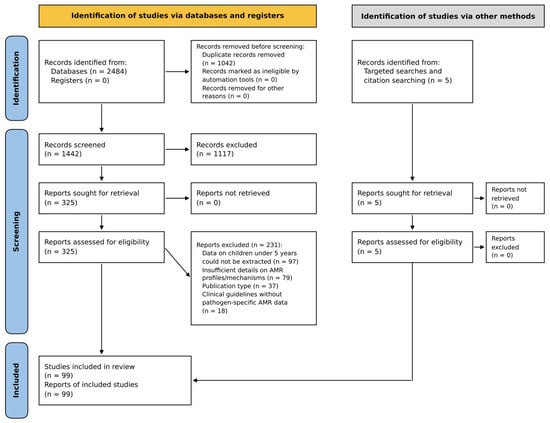
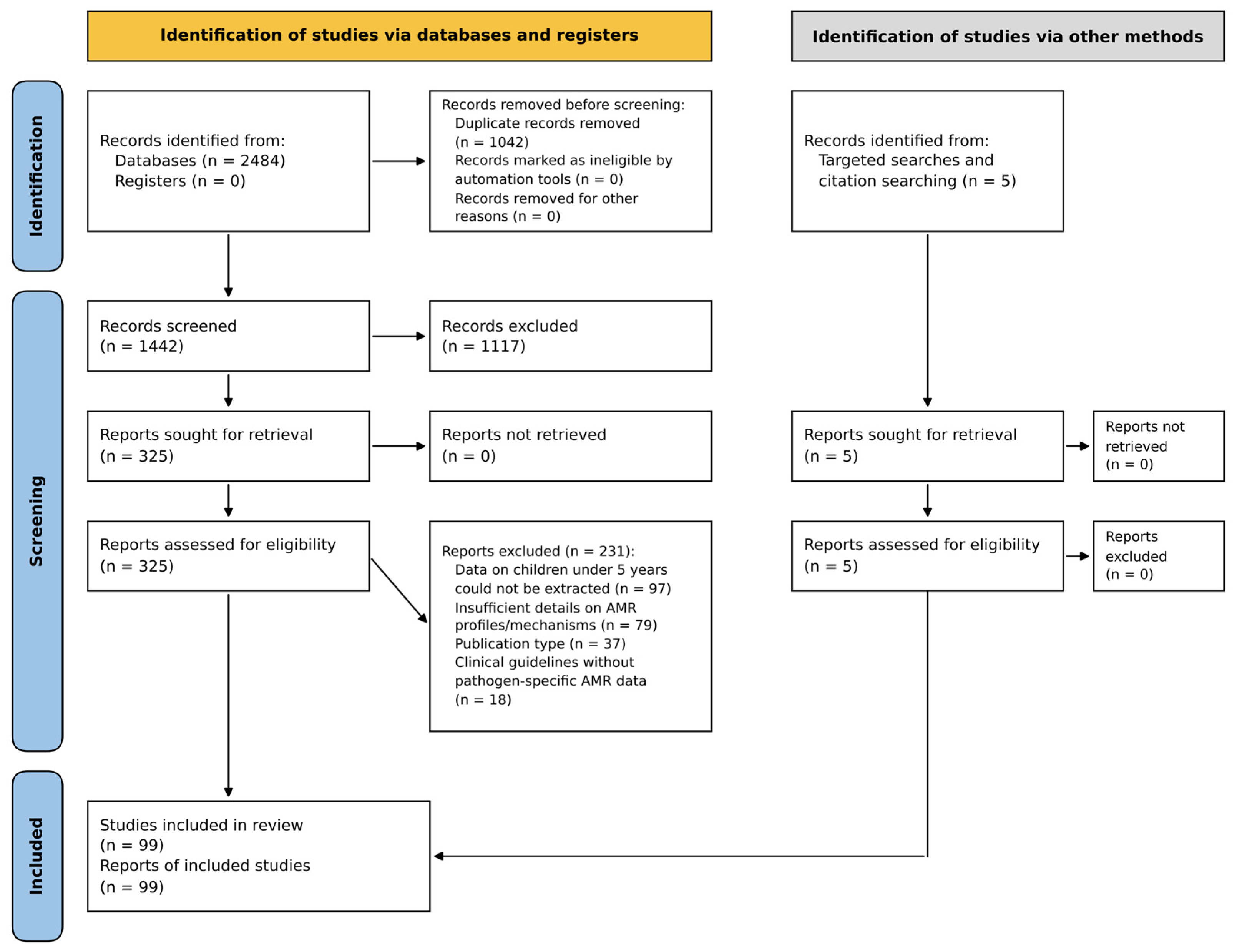
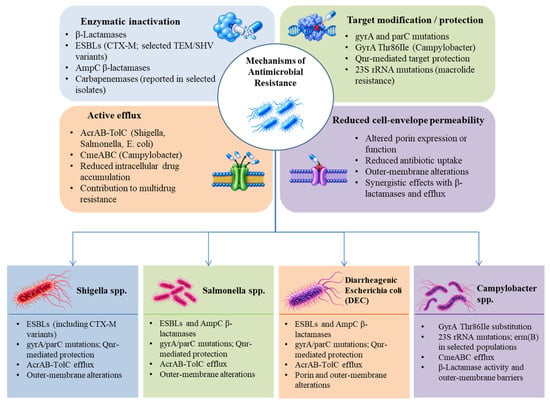
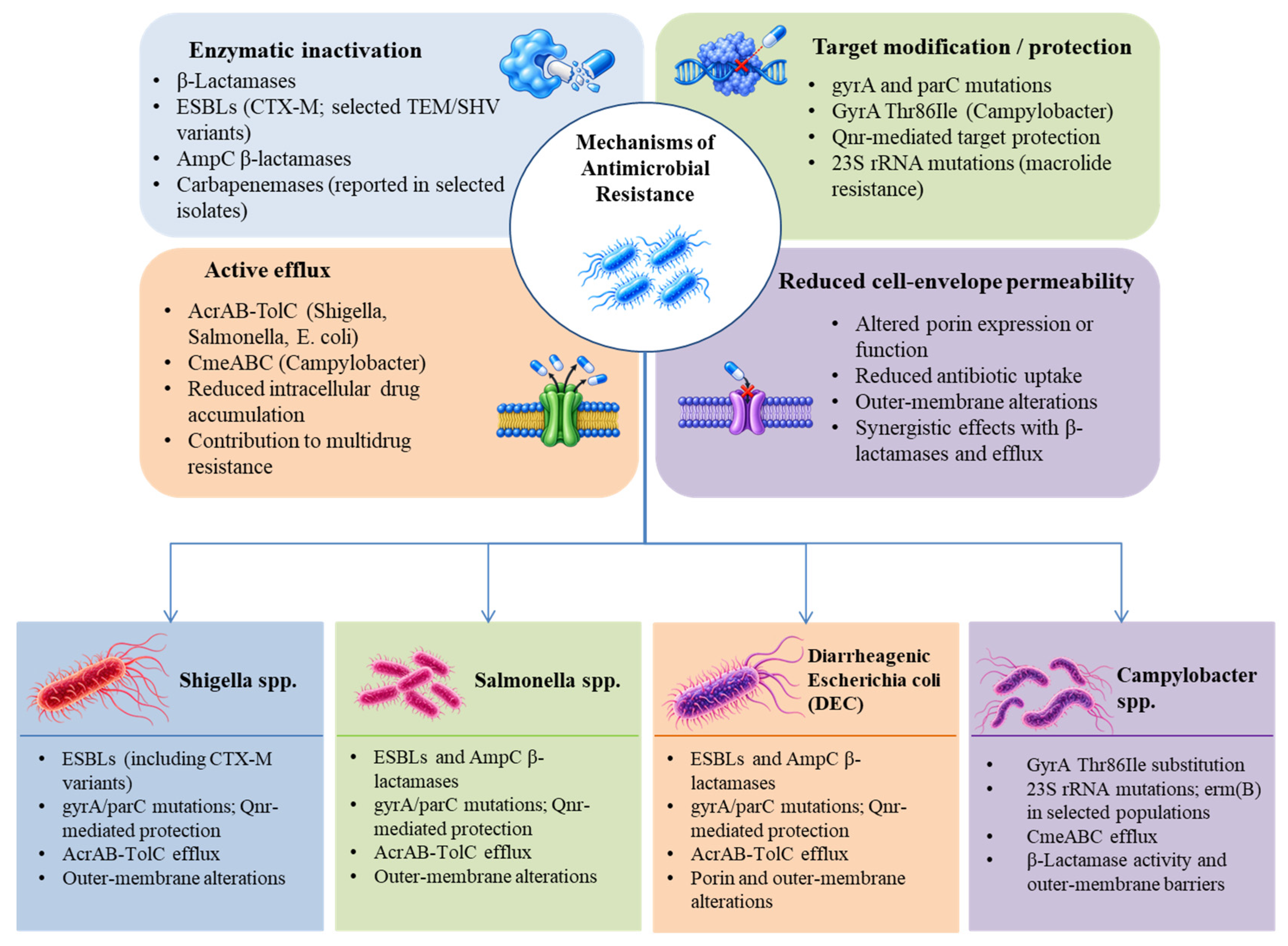

Disclaimer/Publisher’s Note: The statements, opinions and data contained in all publications are solely those of the individual author(s) and contributor(s) and not of MDPI and/or the editor(s). MDPI and/or the editor(s) disclaim responsibility for any injury to people or property resulting from any ideas, methods, instructions or products referred to in the content. |
© 2026 by the authors. Licensee MDPI, Basel, Switzerland. This article is an open access article distributed under the terms and conditions of the Creative Commons Attribution (CC BY) license.