


Abstract
This study evaluated the effects of a lotion containing honey and chamomile fermented with Apilactobacillus kunkeei (A. kunkeei) YB38 on facial skin in healthy Japanese adults. Honey and chamomile extracts (EHC) were fermented with A. kunkeei YB38 to prepare fermented honey and chamomile extract (FHC). To confirm that FHC was fermented, component analysis was performed by HPLC and compared with EHC. Healthy Japanese adults (n = 35) were administered a lotion containing FHC (FHC-Lo) and a placebo lotion (PLBO-Lo) for four weeks in a placebo-controlled, double-blind, split-face trial. Stratum corneum (SC) water content, transepidermal water loss, and skin elasticity were measured before and after application. The presence of lactic and acetic acids indicated FHC fermentation. Applying FHC-Lo for 4 weeks significantly increased SC water content compared to PLBO-Lo (FHC-Lo: from 31.22 ± 1.47 to 37.4 ± 4.68 AU vs. PLBO-Lo: from 31.10 ± 1.52 to 32.4 ± 3.73 AU, p = 5.90 × 10⁻⁶), with no adverse events observed. This mechanism might involve the action of lactic acid increased by fermentation.
1. Introduction
The skin is the first layer of defense against external factors and protects against harmful ultraviolet (UV) rays, bacteria, and other agents [1]. Compared with skin that has adequate water content, dry skin has a thicker stratum corneum (SC) and weaker barrier function, all of which contribute to aging-related skin symptoms such as fine lines, wrinkles, dullness, and uneven skin tone and texture [2,3,4]. Additionally, aging, poor sleep, overexposure to UVB, and air pollution are factors that adversely affect skin hydration [5,6,7,8] and cause oxidative stress and inflammation [9,10]. Since oxidative stress and inflammation are known to degrade the skin barrier function and downregulate crucial moisturizing factors, products with antioxidant and anti-inflammatory properties are considered useful for maintaining and improving skin moisture.
Honey is a natural product made by honeybees from the nectar of flowers. While it is widely consumed as a foodstuff to maintain good health [11], honey is also frequently used as a natural skin moisturizer in dermatological and cosmetic formulations [12,13,14,15,16,17,18]. The moisturizing efficacy of honey is primarily attributed to its unique biochemical composition, which includes carbohydrates, amino acids, minerals, and polyphenols [12,13]. Mechanistically, the high concentration of monosaccharides in honey, such as fructose and glucose, acts as a natural humectant by forming hydrogen bonds with water molecules, thereby retaining moisture within the stratum corneum [12]. Concurrently, specific amino acids and organic acids in honey directly supplement the skin’s natural moisturizing factors (NMF). Beyond these physical humectant properties, honey modulates skin hydration through biological mechanisms involving its strong antioxidant and anti-inflammatory activities. Oxidative stress and chronic inflammation are known to degrade the skin barrier function. The rich presence of phenolic compounds and flavonoids provides honey with potent radical scavenging abilities [15]. Furthermore, honey protects against chronic subclinical systemic inflammation by downregulating the NF-κB and p38 MAPK signaling pathways while upregulating the endogenous antioxidant Nrf2 pathway [17]. By mitigating these inflammatory and oxidative stressors, honey preserves essential hydration-related proteins, including filaggrin [18]. More specifically, recent evidence reveals that certain honeys, such as Manuka honey, can activate the aryl hydrocarbon receptor (AHR) pathway, which directly upregulates filaggrin (FLG) expression and restores skin barrier integrity [18].
Chamomile (Matricaria chamomilla L.) is a medicinal plant belonging to the Asteraceae family that has been widely cultivated and used as a raw material for cosmetics. The therapeutic potential of chamomile is largely attributed to its rich profile of bioactive compounds, particularly apigenin and other diverse polyphenols. Similar to honey, chamomile extracts exhibit robust antioxidant and anti-inflammatory effects [19,20,21]. By scavenging harmful free radicals and suppressing inflammatory mediators, these bioactive constituents protect epidermal cells from oxidative damage and prevent barrier dysfunction. This cytoprotective mechanism helps sustain the expression of essential hydration factors, thereby synergistically contributing to the retention of skin moisture alongside honey. Indeed, previous clinical evaluations have demonstrated that cosmetic formulations containing chamomile microparticles can significantly improve skin moisture within 4 weeks [22].
Fermentation is a transformative process widely utilized to enhance the biological efficacy of cosmetic ingredients. During fermentation, microorganisms not only generate beneficial primary metabolites, such as lactic acid and acetic acid, but can also alter the profile of secondary bioactive compounds. For instance, honey is naturally rich in secondary metabolites, including phenolic acids and flavonoids [23]. Evidence suggests that the enzymatic activity of lactic acid bacteria during fermentation can cleave the sugar moieties of flavonoid glycosides. While this biotransformation can occasionally result in a quantitative decrease in certain intact flavonoids [24], it often alters their bioavailability and functionality. Furthermore, previous studies have demonstrated the cosmetic benefits of various fermented materials. For example, fermenting Acanthopanax koreanum root with the lactic acid bacteria Lactobacillus plantarum and Bifidobacterium bifidum enhances antioxidant activity and suppresses the production of reactive oxygen species (ROS) induced by UVB or hydrogen peroxide (H2O2) more than unfermented Acanthopanax koreanum root alone [25]. Furthermore, milk whey fermented with Lactobacillus helveticus CM4 enhances the mRNA expression of keratin 10, which is an early differentiation marker of keratinocytes, and involucrin, a late differentiation marker of keratinocytes, in comparison to its unfermented counterpart [26]. Additionally, topical application of such fermented products improves the barrier function in mice [27]. Building upon these cumulative findings, our study primarily focused on the generation of lactic acid as a key beneficial outcome of A. kunkeei fermentation, given its well-established role in directly supplementing the skin’s natural moisturizing factors (NMF).
While there is no definitive proof of the individual effects of honey, chamomile, or fermented products on skin health, these ingredients are expected to possess potential benefits such as moisturizing properties. Based on this, we hypothesized that the fermentation of honey and chamomile could lead to an improvement in human skin conditions.
For the fermentation of honey and chamomile, we selected Apilactobacillus kunkeei (A. kunkeei). This species is a fructophilic lactic acid bacterium that preferentially utilizes fructose as a growth substrate, producing both lactic and acetic acids during fermentation [28,29,30]. Because honey is inherently rich in fructose and naturally harbors A. kunkeei—a bacterium commonly found in flowers and bee products such as pollen loads and bee bread [31,32,33]—it provides an optimal and ecologically consistent environment for this specific fermentation process.
This study aimed to determine the effects of fermented honey and chamomile (FHC) on the facial skin of healthy Japanese men and women.
2. Materials and Methods
2.1. Preparation of Fermented Honey and Chamomile (FHC)
In preliminary studies, fermenting honey alone with A. kunkeei YB38 resulted in suboptimal fermentation, likely due to the lack of sufficient nitrogen and protein sources in the high-sugar environment. To optimize the fermentation process, powdered chamomile flowers were added to provide necessary nutrients.
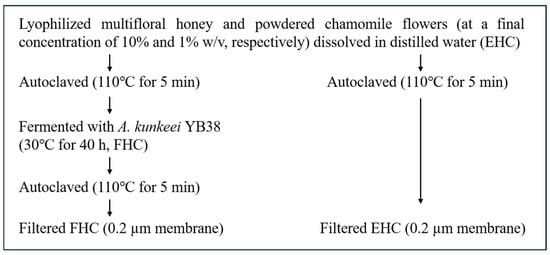
As illustrated in Figure 1, the extract of honey and chamomile (EHC) was prepared by dissolving lyophilized multifloral honey and powdered chamomile flowers in distilled water at final concentrations of 10% and 1% w/v, respectively. The initial EHC was then autoclaved at 110 °C for 5 min. The exact purpose of this primary autoclave step was sterilization to prevent contamination by unintended environmental microorganisms prior to fermentation.
Figure 1.
Sample preparation. EHC, extract of multiflora honey and powdered chamomile flowers; FHC, fermented multiflora honey and powdered chamomile flowers.
To prepare the fermented honey and chamomile (FHC), the sterilized EHC was inoculated with A. kunkeei YB38 and incubated at 30 °C for 40 h. Following fermentation, a secondary autoclave process (110 °C for 5 min) was performed solely on the FHC. The purpose of this second step was to sterilize the product and completely halt the enzymatic and microbial activity of A. kunkeei. Finally, both the fermented mixture (FHC) and the unfermented control (EHC) were filtered through a 0.2 µm membrane. All raw materials, including multifloral honey and A. kunkeei YB38, were sourced from Yamada Bee Company, Inc. (Okayama, Japan), while powdered chamomile flowers were procured from Maruzen Pharmaceuticals Co., Ltd. (Tokyo, Japan).
2.2. Quantitation of Lactic and Acetic Acids by HPLC
To prepare the samples for HPLC analysis, the filtered FHC and EHC obtained from the preparation method in Section 2.1 were used as pure, undiluted solutions (100%). Just prior to injection, these undiluted samples, along with lactic acid (Wako Pure Chemical Industries, Ltd., Osaka, Japan) and acetic acid (Sigma-Aldrich Corp., St. Louis, MO, USA) standards prepared in Milli-Q water (final concentrations of 0.01%, 0.02%, 0.05%, and 1% v/v), were filtered through 0.45-µm membranes.
The HPLC system consisted of an LC-20AB liquid delivery unit and an SPD-M20A photodiode array UV-visible detector controlled by an LCsolution workstation (Shimadzu Co., Kyoto, Japan). Separation was achieved using a Sunniest RP-Aqua column (4.6 mm i.d. × 150 mm, 5 µm; ChromaNik Technologies Co., Ltd., Osaka, Japan). The mobile phase comprised 25 mM potassium dihydrogen phosphate buffer (pH 2.5) at a flow rate of 1.0 mL/min. The sample injection volume was 3 µL. To quantify lactic acid and acetic acid in the samples, the detection wavelength was set at 210 nm. UV detection at this low wavelength was specifically chosen over refractive index (RI) detection to achieve higher sensitivity, selective absorption, and robust quantification for the carboxyl groups of these target organic acids within the fermented matrix.
2.3. Clinical Trial of Lotion Applied to Facial Skin
2.3.1. Protocol
This double-blind, split-face, placebo-controlled clinical trial was approved by the General Incorporated Association Clinical Research Review Center (Serial No. CrrC20-028, Name of the institution: The General Incorporated Association Clinical Research Review Center) on 2 September 2020 and complied with the Declaration of Helsinki (2013) and the Ethical Guidelines for Medical and Health Research Involving Human Subjects (Ministry of Health, Labour and Welfare, 2017). This study was conducted as a contract research project. Since the contracted research organization does not possess its own in-house IRB, the ethical review was outsourced to an independent, external IRB. Consequently, the name of the approving IRB differs from the affiliations of all the authors. The protocol was registered with the University Hospital Medical Information Network (UMIN-CTR: UMIN000039776). This study was conducted between September and December 2020 (Inforward Co., Ltd., Tokyo, Japan). The split-face design allows comparisons of the effects of products applied to the left and right sides of the faces of individuals. Comparing samples with placebo in the same person prevents variations due to individual differences. The effects of lotions without FHC (PLBO-Lo; placebo) and with FHC (FHC-Lo) applied on each side of the face were measured at the intersection between the outer corner of the eye and the nose on each cheek. The participants were acclimated for 20 min at a constant temperature and relative humidity (21 ± 1 °C and 50 ± 5%, respectively) before applying lotions. This trial was reported in accordance with the CONSORT guidelines (Supplementary File S1).
2.3.2. Participants
Inforward Co., Ltd. recruited 91 participants based on the following inclusion and exclusion criteria.
Inclusion criteria: Healthy Japanese men and women aged 30–59 years voluntarily provided written, informed consent to participate in this study on skin water content 25–40 (AU) on both cheeks. They had the ability to understand and comply with instructions and were comprehensively judged as eligible by the principal investigator. Furthermore, participants with minimal differences in skin water content between the left and right cheeks were preferentially enrolled.
Exclusion criteria: Using cosmetics containing honey daily, a medical history of allergies, seeing or planning to see a dermatologist during the study period or under treatment for atopic dermatitis, injury or inflammation at the measurement site, undergoing hormone replacement therapy with estrogen or progesterone, aesthetic medicine use such as hyaluronic acid injections at the investigated sites, tanning at salons and outdoor activities during the study period, continuing epilation and beauty treatments or unable to maintain a regular lifestyle during the study period, night or rotating shift workers, consumption of beer > 500 mL/day, smoked regular or normal cigarettes within the last three months for three months before providing consent, participation in other clinical trials (including food intake studies), or working for health food, cosmetics, and pharmaceutical companies. Such individuals were judged inappropriate to participate by the principal investigator.
Since this study represents the first clinical trial evaluating the test product, the expected effect size required for a formal sample size calculation was unavailable. Therefore, the sample size was determined based on historical data from previous clinical trials conducted in-house. We established a target of 30 completed cases; to account for potential dropouts, the total enrollment target was set at 35 participants.
Study participants were fully informed of the study objectives and the aforementioned inclusion and exclusion criteria and provided their voluntary written informed consent. Although the informed consent form stated that “samples and data may be stored, anonymized, and used for future research after the completion of this study,” please note that the current study is the primary analysis and does not involve any secondary analysis of existing data.
2.3.3. Study Products
Table 1 shows the ingredients of the lotions without (PLBO-Lo) and with 52.8% FHC (FHC-Lo). PLBO-Lo is a lotion that replaces FHC with purified water. This specific concentration of 52.8% FHC was determined based on preliminary safety evaluations to ensure optimal skin tolerance and minimize any risk of skin irritation during daily application. The base formulation containing humectants, such as 1,3-butylene glycol and glycerin, were incorporated at identical concentrations in both lotions. The final pH of the FHC-Lo and PLBO-Lo was determined to be 5.42 and 5.88, respectively, ensuring a mildly acidic environment. The participants washed their faces in the morning and evening and then applied about a quarter-sized amount of each lotion on each cheek twice daily for 4 weeks. If the participants normally used lotions, they were replaced with the study products, and skin care after applying the test products proceeded according to each participant’s regular regime.
Table 1.
Ingredients of test lotions (Lo).
2.3.4. Blinding and Allocation
The test products were prepared by Yamada Bee Company. Prior to the trial, the formulations (FHC-Lo and PLBO-Lo) were confirmed to be visually indistinguishable in color, clarity, and overall appearance. To ensure strict double-blind conditions, the preparations were packaged in identical transparent containers and coded as C or D (C-Lo and D-Lo) to conceal product identities. These blinded samples were subsequently provided to the contract research organization (Inforward Co., Ltd.) To minimize operational complexity while ensuring treatment balance, participant allocation was conducted based on ID numbers assigned sequentially (from 101 to 135) upon enrollment. Participants numbered 101–117 applied C-Lo to the right cheek and D-Lo to the left cheek, whereas those numbered 118–135 applied D-Lo to the right cheek and C-Lo to the left cheek. The personnel at the testing facility, as well as the participants and dermatologists, remained fully blinded to the treatment codes until all statistical analyses were completed, at which point the allocation key was unblinded.
2.3.5. Study Outcomes
The primary endpoint was the SC water content measured using a CM825 Corneometer® (Courage + Khazaka Electronic GmbH, Köln, Germany) initially at screening, then before and after application. Of the five measurements in each time point taken, minimum and maximum values were excluded and the average of the remaining three values was calculated.
The secondary endpoints were amounts of transepidermal water loss (TEWL) and skin elasticity before and after application. TEWL was measured 3 times using the Tewameter® TM300 (Courage + Khazaka Electronic GmbH) and the average value was calculated. The measurement conditions were a standard deviation of 0.2 and a measurement time of 5 s. Skin elasticity was measured using Cutometer® CT580MP (Courage + Khazaka Electronic) and averaged over three measurements. The measurement conditions were Time-strain mode (Mode 1); Pressure 450 mbar; probe aperture 2 mm; on-time 5 s; Off-time 3 s; Pretime 0. The measured parameters of skin elasticity were gross elasticity (R2), viscoelasticity (R6), and biological elasticity (R7), which are, respectively, ratios of total retraction (Ua) to total deformation (Uf), delayed (Uv) to immediate deformation (Ue), and elastic recovery (Ur) to total deformation (Uf). Values of R2 and R7 closer to 1 (100%) indicated higher elasticity and a negative correlation with age. A lower R6 value indicates lower viscosity, less sagging, and a positive correlation with age [34,35].
A medical doctor conducted a safety evaluation to assess adverse events.
2.3.6. Statistical Analysis
All values are shown as mean ± standard deviation. Intragroup results before and after four weeks of application were compared using paired t-tests. The results of FHC-Lo and PLBO-Lo and the amount of change (delta; Δ) before and after the intervention were compared using Student’s t-tests. According to the study protocol, the full analysis set (FAS) was defined for the primary analysis, and the per-protocol set (PPS) was established to evaluate the robustness and stability of the primary analysis results. Regarding the handling of missing data, the protocol stipulated that any participants with missing values would be excluded from the analysis. However, because there were no dropouts or missing data and all enrolled participants successfully completed the trial, the FAS and PPS were identical. Consequently, all statistical analyses were performed on the entire population of completed participants (N = 35). All statistical analyses were performed by Research Center for Immunological Analysis, Inc. (Okayama, Japan) using SPSS Ver. 25 (IBM Corp., Armonk, NY, USA) with two-tailed tests.
3. Results
3.1. Lactic and Acetic Acids Quantified by HPLC
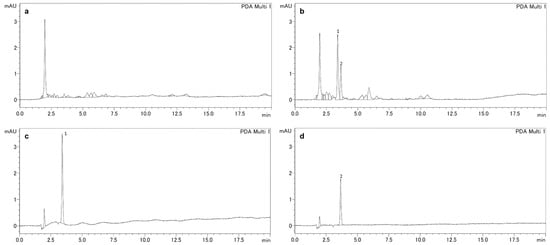
To biochemically confirm the successful metabolic activity of A. kunkeei YB38, the lactic and acetic acid contents of FHC and the unfermented baseline control (EHC) were quantified using HPLC. We specifically targeted these two organic acids because A. kunkeei is known to be an obligate fructophilic and heterofermentative lactic acid bacterium that primarily produces lactic and acetic acids. The results revealed prominent lactic and acetic acid peaks in FHC, yielding concentrations of 202.8 µg/mL and 164.5 µg/mL, respectively (Figure 2b). In contrast, these primary metabolites were completely absent in the unfermented baseline control (EHC) (Figure 2a). Therefore, it is undeniable that A. kunkeei YB38 successfully fermented the EHC mixture. While other uncharacterized peaks were observed in the profiles, the significant generation of these two specific acids confirms the targeted fermentation process.
Figure 2.
Results of HPLC of samples and standards. (a), EHC; (b), FHC; (c,d), standard lactic and acetic acids, respectively. Peaks 1 and 2, lactic and acetic acids, respectively. EHC, honey and chamomile extract; FHC, fermented honey and chamomile extract.
3.2. Effects of Lotions on Facial Skin
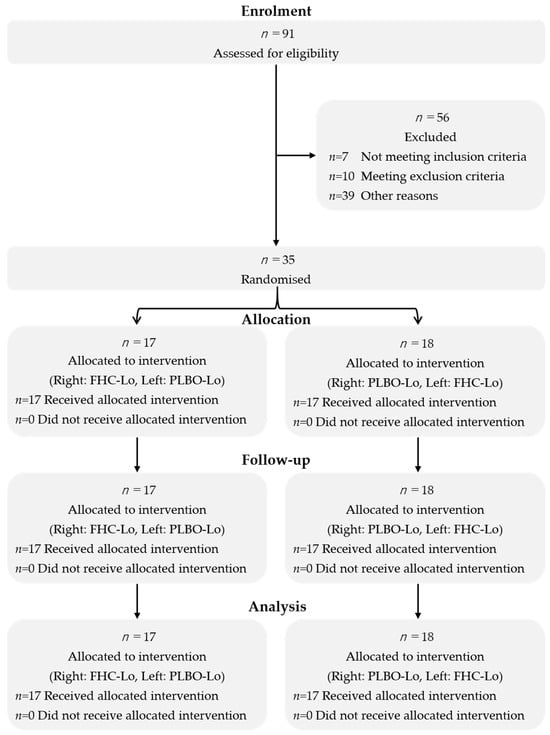
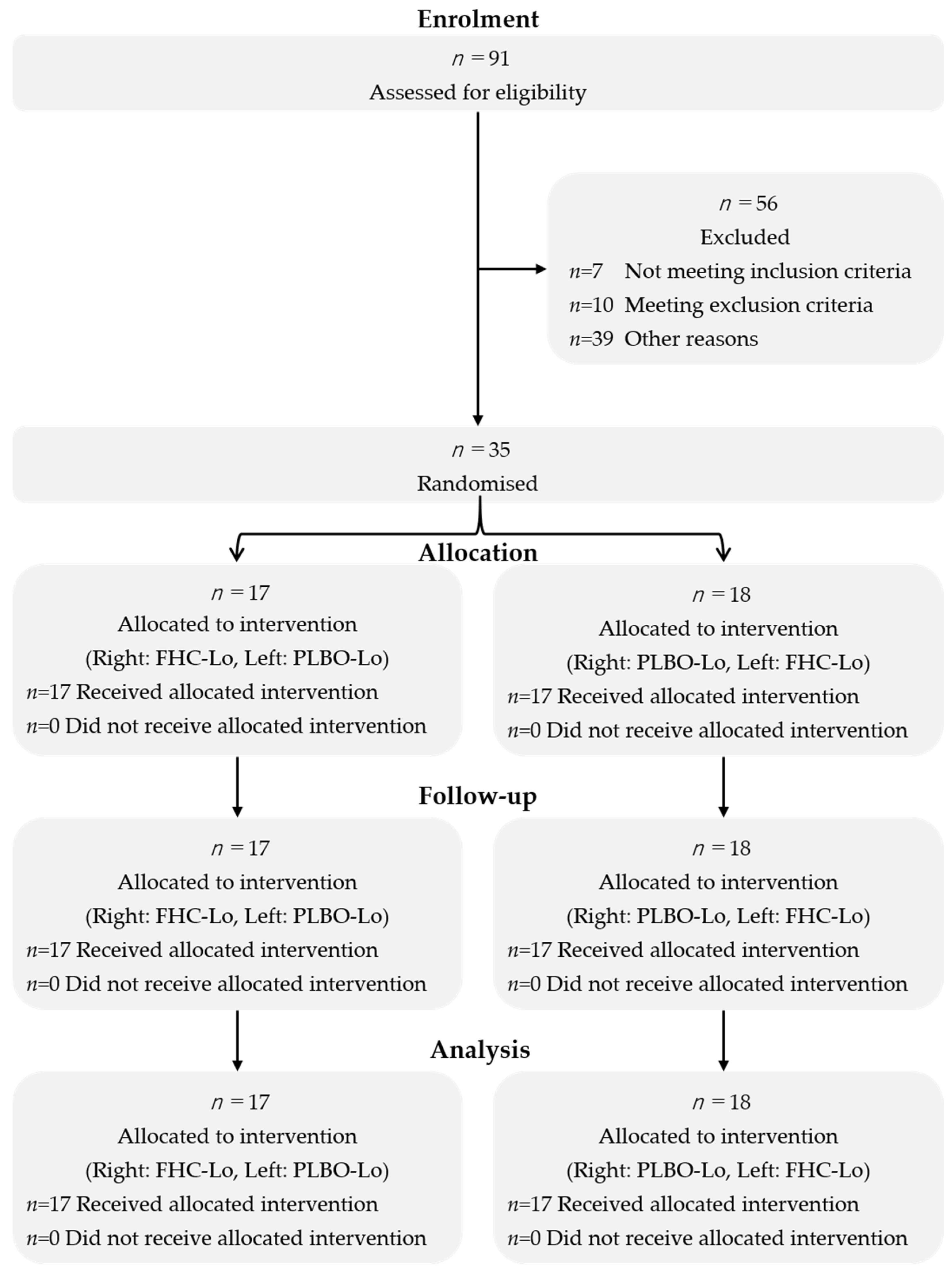
A total of 91 applicants were assessed for eligibility, and 35 participants (17 men, 18 women) were enrolled in the study. No participants dropped out or were lost to follow up during the trial period; therefore, all 35 participants successfully completed the study. Consequently, all 35 enrolled participants were included in the final statistical analysis (Figure 3). Table 2 shows the characteristics of the 35 participants at screening phase. The overall adherence rate for the test products was 99%, with nearly all participants using the products daily throughout the study period. No adverse events occurred at any application site.
Figure 3.
Flow diagram of the study.
Table 2.
Characteristics of participants at screening.
3.2.1. Stratum Corneum Water Content
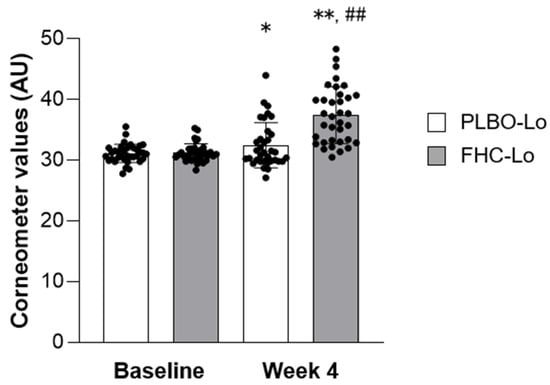
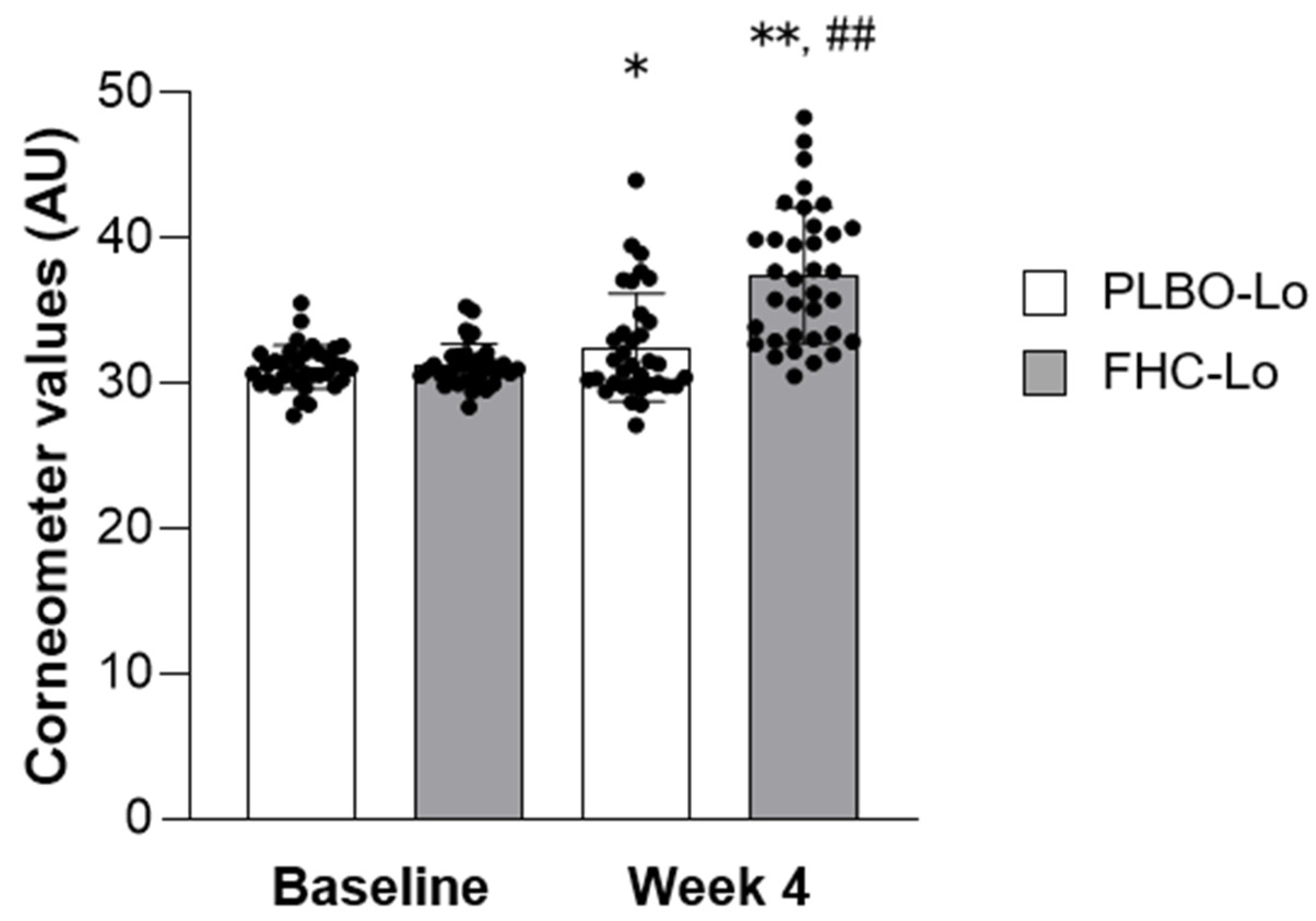
A comparison between the FHC-Lo side and the PLBO-Lo side after application for 4 weeks indicated that the water content of the SC was significantly higher on the FHC-Lo side (p = 5.90 × 10⁻⁶, Figure 4). Furthermore, the water content of the SC after FHC-Lo and PLBO-Lo application for 4 weeks significantly increased from baseline values in both cheeks (p = 2.67 × 10⁻⁶ and p = 0.026, respectively, Figure 4).
Figure 4.
Water content of the SC before and after FHC-Lo and PLBO-Lo application for 4 weeks. Baseline values were obtained prior to the initial intervention. Scores were calculated as averages of 3 of 5 measurements excluding minimum and maximum values and are shown as means ± SD, with individual participant data points overlaid. White and black bars, PLBO-Lo and FHC-Lo, respectively. n = 35, * p < 0.05, ** p < 0.01 vs. baseline (paired t tests), ## p < 0.01 vs. PLBO-Lo (Student t-tests).
3.2.2. Skin Barrier Function (TEWL)
Transepidermal water loss (TEWL) is a widely used parameter to evaluate the integrity of the skin barrier function, with lower values indicating a healthier, more intact barrier. The TEWL values did not significantly differ between the FHC-Lo and PLBO-Lo groups (p = 0.88, Table 3). However, after 4 weeks of FHC-Lo and PLBO-Lo application, the TEWL values significantly increased (p = 0.017) and tended to increase (p = 0.057; Table 3), respectively.
Table 3.
Evaluation of transepidermal water loss (TEWL) before and after applying lotions for 4 weeks.
3.2.3. Skin Elasticity
The measured parameters and the amount of change in skin elasticity did not significantly differ between the FHC-Lo and PLBO-Lo cheeks. R2 significantly decreased in both cheeks (p = 4.13 × 10⁻⁷ and p = 1.42 × 10⁻⁷), R7 significantly increased in both cheeks (p = 0.0057 and p = 0.0160), and R6 significantly decreased in FHC-Lo (p = 0.048) cheeks after applying the lotion for 4 weeks (Table 4).
Table 4.
Evaluation of skin elasticity before and after applying lotions for 4 weeks.
4. Discussion
The present double-blind, split-face, placebo-controlled trial evaluated the effects of FHC-Lo, a cosmetic lotion containing FHC, on skin hydration. The water content significantly increased after the application of FHC-Lo compared to PLBO-Lo for 4 weeks. This is the first report to show that the application of FHC-Lo increases the water content of the SC in facial skin.
There have been no reports on the effect of applying cosmetics containing honey on the water content of the SC. On the other hand, chamomile extracts applied to arms for 4 weeks increased SC water content by ~9% [22]. Here, we identified a 20% increase in SC water content, which was more effective than chamomile alone. Therefore, the combination of honey and chamomile might have additive or synergistic effects, and fermentation might have enhanced these effects.
The additive effect might have been due to the antioxidant and anti-inflammatory effects of honey and chamomile. Oxidative stress and inflammation suppress the expression of aquaporin 3 (AQP3) [36,37,38], which is an important water channel for moisturizing the skin [39], and of filaggrin [40,41] which is a natural moisturizing factor (NMF) [4]. The composition of honey generally differs according to its source, but honey from various sources has the antioxidant property of removing reactive oxygen species [15,16,42]. We fermented multiflora honey, the composition of which changes according to the time of year and the place of origin. This causes problems in terms of the centrally evaluating antioxidant capacity. However, since the active ingredients are phenolic compounds and flavonoids [15,16,42,43,44,45,46], multiflora honey may also have antioxidant effects. Honey has the ability to activate Nrf2 [47] and might enhance its intrinsic antioxidant capacity when consumed. Additionally, chamomile can remove harmful radicals [48] and exert cytoprotective effects owing to its ability to activate Nrf2 [19]. Honey suppresses the production of inflammatory mediators such as NO, TNF-α, PGE-2, and IL-6 [15,17,49,50], while chamomile suppresses the production of COX-2, IL-8, TNF-α and PGE-2 [20,51]. Therefore, the antioxidant and anti-inflammatory effects of honey and chamomile may have promoted AQP3 and filaggrin production, which may have contributed to the improved SC water content. However, the effects of FHC on AQP3 and filaggrin expression remain unknown and require further investigation.
The unique combination of honey and chamomile likely contributes to this protective effect. Indeed, we have previously demonstrated that a heat-treated extract of honey and chamomile effectively activates the KEAP1/NRF2 antioxidative system in cultured human epidermal keratinocytes [52]. This suggests that despite the necessary autoclaving steps required for cosmetic safety, the extract retains potent bioactive properties.
The lactic acid produced during fermentation enhanced the effects of FHCs. Lactic acid is a constituent of NMFs, and its concentration correlates with the water content in the SC [53]. Lotions containing 12% lactic acid reduce the severity of xeroderma [54] and lactic acid increases the moisturizing ingredient ceramide [55]. Therefore, lactic acid might have contributed to the increase in SC water content. Incidentally, we did not identify any components other than lactic and acetic acids that were increased during fermentation. Such components should be investigated and identified, and their effects on SC water content should be verified. Fermenting multiflora honey with yeast increases phenolic compounds [56], fermenting chamomile with Lactobacillus plantarum enhances radical capture capacity [57], and Portulaca oleracea juices fermented with A. kunkeei show an increase in total phenol, enhanced radical capture capacity, and suppress inflammatory mediators such as PGE-2 and NO [58]. Therefore, fermentation with A. kunkeei might have increased the phenolic content of HC and enhanced antioxidant and anti-inflammatory effects, which contributed to the increased water content in SC.
Conversely, while PLBO-Lo contains moisturizing ingredients such as butylene glycol (BG), glycerin, and diglycerin, it did not demonstrate an increase in skin moisture levels. The moisturizing efficacy of glycerin has been confirmed in a 20% cream formulation [59] and that of BG in a 5% moisturizer (specific formulation unknown) [60], but in both cases, they were not assessed as single components. As for diglycerin, we could not find any studies that evaluated its moisturizing effects. Moreover, 1,2-pentanediol, which is also expected to provide moisturization, was incorporated into our test product at a quantity sufficient for its primary role as a preservative. Therefore, considering that the amounts of BG and glycerin in the test product are lower than in previously reported studies, it is suggested that these concentrations were insufficient to produce a moisturizing effect, even in combination with other ingredients.
We initially considered that the increase in SC water content would be associated with an improved barrier function and enhanced skin elasticity. However, we did not find a significant difference in the TEWL values between FHC-Lo and PLBO-Lo, and skin total elasticity (R2) significantly decreased in both groups. These seemingly contradictory trends can be explained by the seasonal environmental impact and study design limitations. This trial was conducted between September and December, a period in Japan corresponding to the transition from autumn to winter. This season is characterized by a drastic decline in environmental humidity and temperature, which is widely reported to naturally exacerbate TEWL and reduce skin elasticity [61]. The overall worsening of TEWL and elasticity (R2) in both groups likely reflects this severe environmental impact. Furthermore, because participants were screened and matched solely based on their SC water content (the primary endpoint), the baseline values for TEWL and elasticity were not strictly controlled. While clear differences in TEWL are easily observed when comparing the skin of individuals with dermatological conditions, like atopic dermatitis, to healthy individuals [62,63], assessing subtle variations among healthy individuals is difficult due to non-negligible individual differences [64]. Given these limitations, the observed fluctuations in TEWL in this study are considered to be within the healthy range and do not indicate an exacerbation of barrier function. Despite these harsh seasonal conditions, the application of FHC-Lo successfully and significantly increased SC water content.
Interestingly, while overall elasticity (R2) declined, the viscoelasticity parameter R6 significantly decreased in the FHC-Lo group. A lower R6 value indicates lower skin viscosity and is associated with less sagging [34,35]. Previous studies have reported that skin viscoelasticity is closely associated with the water content of the SC [65]. Therefore, the significant decrease in R6 and the concurrent increase in SC water content observed in the FHC-Lo group may be closely related, suggesting a potential improvement in specific viscoelastic properties due to enhanced hydration.
Consistent with our findings, previous clinical trials have reported that various fermented cosmetic formulations effectively improve stratum corneum hydration and barrier function. For instance, while existing studies have primarily focused on either single-plant ferments (e.g., fermented pomegranate extracts) [66] or purely bacteria-derived postbiotics (e.g., Lactobacillus lysates) [67], our formulation offers a unique conceptual advantage. By utilizing a novel co-fermentation of honey and chamomile with A. kunkeei, our approach not only provides conventional fermentation benefits (e.g., lactic acid) but is specifically designed to synergistically combine the rich humectant properties of honey-derived saccharides with the well-documented cytoprotective profile of chamomile. Consequently, even under the severe seasonal environmental stress (transitioning to winter) observed in this study, the FHC-Lo successfully maintained and significantly increased SC water content. This suggests that the multifaceted postbiotic profile generated by this specific co-fermentation offers a distinct functional and clinical advantage over conventional single-plant fermented cosmetics.
Finally, this study has several limitations that should be addressed in future research. First, regarding the clinical trial design, participants were matched solely based on SC water content, meaning the baselines for secondary endpoints (such as TEWL) were not strictly controlled. Second, the volunteer cohort was relatively small (n = 35) and restricted entirely to healthy Japanese adults. This demographic limitation means that the current findings may not be fully generalizable to other ethnic populations or individuals with underlying dermatological conditions. Furthermore, because we did not stratify the analysis by sex or account for hormonal variations in female volunteers (e.g., menstrual cycles or menopausal status), future large-scale, multi-ethnic studies are required to elucidate broader and sex-specific responses to FHC. Third, from a biochemical perspective, although we quantified the primary organic acids, we did not directly evaluate the specific antioxidant and anti-inflammatory properties of FHC using in vitro assays, nor did we comprehensively profile all uncharacterized secondary bioactive compounds. Future studies employing advanced analytical techniques (e.g., LC-MS/MS) and cell-based bioassays are necessary to fully elucidate the specific mechanisms of this fermented botanical extract.
Although this clinical trial confirmed an increase in the water content of the SC following the application of the test product, the exact underlying mechanism remains to be fully elucidated. Further research, including the identification of the specific active ingredients responsible for these effects, is expected to contribute to the development of more efficacious skincare cosmetics.
5. Conclusions
A double-blind, split-face, placebo-controlled trial demonstrated that the topical application of FHC-Lo significantly increased the SC water content on facial skin after four weeks, as compared to the PLBO-Lo. This is the first report confirming that the application of FHC-Lo can increase SC water content on facial skin. This beneficial moisturizing effect is likely attributable to the combined antioxidant and anti-inflammatory properties of honey and chamomile, which may promote the production of key moisturizing factors. Furthermore, the elevated lactic acid levels generated during the fermentation process may also play a contributing role.
However, the specific components responsible for this enhanced efficacy and the underlying mechanism remain to be fully elucidated, warranting further investigation.
Supplementary Materials
The following supporting information can be downloaded at: https://www.mdpi.com/article/10.3390/cosmetics13050246/s1, Supplementary File S1: The CONSORT reporting checklist.
Author Contributions
Conceptualization, C.F. and H.N.; methodology, C.F. and H.N.; formal analysis, A.O.; investigation, C.F. and H.N.; resources, N.O. and A.Y.; data curation, A.O.; writing—original draft preparation, C.F.; writing—review and editing, C.F., H.N., N.O., A.Y., N.S., A.O. and K.N.; supervision, N.O., A.Y. and N.S.; project administration, C.F.; funding acquisition, N.S. All authors have read and agreed to the published version of the manuscript.
Funding
This research received no external funding.
Institutional Review Board Statement
The study was conducted in accordance with the Declaration of Helsinki and approved by the Institutional Review Board (or Ethics Committee) of The General Incorporated Association Clinical Research Review Center (Serial No. CrrC20-028 and date of approval: 2 September 2020). The study was registered with the University Hospital Medical Information Network (UMIN-CTR: UMIN000039776, registration date: 1 October 2020).
Informed Consent Statement
Informed consent was obtained from all subjects involved in the study.
Data Availability Statement
The datasets generated and/or analyzed during the current study are not publicly available because informed consent for secondary use, including use and analysis in research unrelated to this study, was not obtained from the participants.
Acknowledgments
The authors are grateful to all the participants. During the preparation of this manuscript, the authors used Gemini 3.1 Pro for the purposes of English editing. The authors have reviewed and edited the output and take full responsibility for the content of this publication.
Conflicts of Interest
This study was funded by Yamada Bee Company, Ltd., which also provided the test product and covered the publication fee for this manuscript. The clinical trial was commissioned by Yamada Bee Company, Ltd. to Research Center for Immunological Analysis, Inc., which performed the statistical analysis. Research Center for Immunological Analysis, Inc. subcontracted the trial management and Principal Investigator (PI) services to Inforward Co., Ltd. Regarding potential conflicts of interest, Norihiro Shigematsu serves as a member of the Board of Directors at Yamada Bee Company, Ltd., and Chizuru Fujikura, Hiroko Nagai, Nobuaki Okumura, and Ayanori Yamaki are employees of the same company. Akio Ohkuma the author is the employee of Research Center for Immunological Analysis, Inc. Kayoko Numano the author is the employee of Numano Clinic.
Abbreviations
The following abbreviations are used in this manuscript:
| A. kunkeei | Apilactobacillus kunkeei |
| AQP3 | aquaporin 3 |
| BG | butylene glycol |
| EHC | honey and chamomile extracts |
| FHC | fermentation of honey and chamomile |
| FHC-Lo | lotion containing fermentation of honey and chamomile |
| H2O2 | hydrogen peroxide |
| IRB | Institutional Review Board |
| NMF | natural moisturizing factor |
| PLBO-Lo | placebo lotion |
| ROS | reactive oxygen species |
| SC | stratum corneum |
| SD | standard deviation |
| TEWL | transepidermal water loss |
| UV | ultraviolet |
References
- Luebberding, S.; Krueger, N.; Kerscher, M. Age-related changes in skin barrier function—Quantitative evaluation of 150 female subjects. Int. J. Cosmet. Sci. 2012, 35, 183–190. [Google Scholar] [CrossRef] [Scilit] [PubMed]
- Lu, N.; Chandar, P.; Tempesta, D.; Vincent, C.; Bajor, J.; McGuiness, H. Characteristic differences in barrier and hygroscopic properties between normal and cosmetic dry skin. I. Enhanced barrier analysis with sequential tape-stripping. Int. J. Cosmet. Sci. 2014, 36, 167–174. [Google Scholar] [CrossRef] [Scilit] [PubMed]
- Feng, L.; Chandar, P.; Lu, N.; Vincent, C.; Bajor, J.; McGuiness, H. Characteristic differences in barrier and hygroscopic properties between normal and cosmetic dry skin. II. Depth profile of natural moisturizing factor and cohesivity. Int. J. Cosmet. Sci. 2014, 36, 231–238. [Google Scholar] [CrossRef] [Scilit] [PubMed]
- McDaniel, D.H.; Dover, J.S.; Wortzman, M.; Nelson, D.B. In vitro and in vivo evaluation of a moisture treatment cream containing three critical elements of natural skin moisturization. J. Cosmet. Dermatol. 2020, 19, 1121–1128. [Google Scholar] [CrossRef] [Scilit] [PubMed]
- Parrish, A.R. The impact of aging on epithelial barriers. Tissue Barriers 2017, 5, e1343172. [Google Scholar] [CrossRef] [Scilit] [PubMed]
- Oyetakin-White, P.; Suggs, A.; Koo, B.; Matsui, M.S.; Yarosh, D.; Cooper, K.D.; Baron, E.D. Does poor sleep quality affect skin ageing? Clin. Exp. Dermatol. 2014, 40, 17–22. [Google Scholar] [CrossRef] [Scilit] [PubMed]
- Kwon, T.-R.; Oh, C.T.; Choi, E.J.; Kim, S.R.; Jang, Y.-J.; Ko, E.J.; Yoo, K.H.; Kim, B.J. Conditioned medium from human bone marrow-derived mesenchymal stem cells promotes skin moisturization and effacement of wrinkles in UVB-irradiated SKH-1 hairless mice. Photodermatol. Photoimmunol. Photomed. 2015, 32, 120–128. [Google Scholar] [CrossRef] [Scilit] [PubMed]
- Parrado, C.; Mercado-Saenz, S.; Perez-Davo, A.; Gilaberte, Y.; Gonzalez, S.; Juarranz, A. Environmental Stressors on Skin Aging. Mechanistic Insights. Front. Pharmacol. 2019, 10, 759. [Google Scholar] [CrossRef] [Scilit] [PubMed]
- Kammeyer, A.; Luiten, R.M. Oxidation events and skin aging. Ageing Res. Rev. 2015, 21, 16–29. [Google Scholar] [CrossRef] [Scilit] [PubMed]
- Dijkhoff, I.M.; Drasler, B.; Karakocak, B.B.; Petri-Fink, A.; Valacchi, G.; Eeman, M.; Rothen-Rutishauser, B. Impact of airborne particulate matter on skin: A systematic review from epidemiology to in vitro studies. Part Fibre Toxicol. 2020, 17, 35. [Google Scholar] [CrossRef] [Scilit] [PubMed]
- Samarghandian, S.; Farkhondeh, T.; Samini, F. Honey and Health: A Review of Recent Clinical Research. Pharmacogn. Res. 2017, 9, 121–127. [Google Scholar] [CrossRef] [Scilit] [PubMed] [PubMed Central]
- Burlando, B.; Cornara, L. Honey in dermatology and skin care: A review. J. Cosmet. Dermatol. 2013, 12, 306–313. [Google Scholar] [CrossRef] [Scilit] [PubMed]
- Ediriweera, E.R.H.S.S.; Premarathna, N.Y.S. Medicinal and cosmetic uses of Bee’s Honey—A review. Ayu 2012, 33, 178–182. [Google Scholar] [CrossRef] [Scilit] [PubMed]
- Tanuğur Samancı, A.E.; Kekeçoğlu, M. Development of a cream formulation containing bee venom and other bee products. J. Cosmet. Dermatol. 2022, 21, 4913–4920. [Google Scholar] [CrossRef] [Scilit] [PubMed]
- Ahmed, S.; Sulaiman, S.A.; Baig, A.A.; Ibrahim, M.; Liaqat, S.; Fatima, S.; Jabeen, S.; Shamim, N.; Othman, N.H. Honey as a Potential Natural Antioxidant Medicine: An Insight into Its Molecular Mechanisms of Action. Oxid. Med. Cell. Longev. 2018, 2018, 8367846. [Google Scholar] [CrossRef] [Scilit] [PubMed]
- Chang, X.; Wang, J.; Yang, S.; Chen, S.; Song, Y. Antioxidative, antibrowning and antibacterial activities of sixteen floral honeys. Food Funct. 2011, 2, 541–546. [Google Scholar] [CrossRef] [Scilit] [PubMed]
- Abd Jalil, M.A.; Kasmuri, A.R.; Hadi, H. Stingless Bee Honey, the Natural Wound Healer: A Review. Skin Pharmacol. Physiol. 2017, 30, 66–75. [Google Scholar] [CrossRef] [Scilit] [PubMed]
- Alangari, A.A.; Ashoori, M.D.; Alwan, W.; Dawe, H.R.; Stockinger, B.; Barker, J.N.; Wincent, E.; Di Meglio, P. Manuka honey activates the aryl hydrocarbon receptor: Implications for skin inflammation. Pharmacol. Res. 2023, 194, 106848. [Google Scholar] [CrossRef] [Scilit] [PubMed]
- Bhaskaran, N.; Srivastava, J.K.; Shukla, S.; Gupta, S. Chamomile Confers Protection against Hydrogen Peroxide-Induced Toxicity through Activation of Nrf2-Mediated Defense Response. Phytother. Res. 2013, 27, 118–125. [Google Scholar] [CrossRef] [Scilit] [PubMed]
- Srivastava, J.K.; Pandey, M.; Gupta, S. Chamomile, a novel and selective COX-2 inhibitor with anti-inflammatory activity. Life Sci. 2009, 85, 663–669. [Google Scholar] [CrossRef] [Scilit] [PubMed]
- Kılıç, S.; Okullu, S.Ö.; Kurt, Ö.; Sevinç, H.; Dündar, C.; Altınordu, F.; Türkoğlu, M. Efficacy of two plant extracts against acne vulgaris: Initial results of microbiological tests and cell culture studies. J. Cosmet. Dermatol. 2019, 18, 1061–1065. [Google Scholar] [CrossRef] [Scilit] [PubMed]
- Garbuio, D.C.; Zamarioli, C.M.; Melo, M.O.D.; Campos, P.M.B.G.M.; Carvalho, E.C.D.; Freitas, L.A.P.D. Safety of a formulation containing chitosan microparticles with chamomile: Blind controlled clinical trial. Rev. Lat. Am. Enferm. 2018, 26, e3075. [Google Scholar] [CrossRef] [Scilit] [PubMed]
- Puścion-Jakubik, A.; Borawska, M.H.; Socha, K. How Phenolic Compounds Profile and Antioxidant Activity Depend on Botanical Origin of Honey-A Case of Polish Varietal Honeys. Molecules 2025, 30, 360. [Google Scholar] [CrossRef] [Scilit] [PubMed]
- Dezmirean, G.I.; Mărghitaş, L.A.; Bobiş, O.; Dezmirean, D.S.; Bonta, V.; Erler, S. Botanical origin causes changes in nutritional profile and antioxidant activity of fermented products obtained from honey. J. Agric. Food Chem. 2012, 60, 8028–8035. [Google Scholar] [CrossRef] [Scilit] [PubMed]
- Park, M.-J.; Bae, Y.-S. Fermented Acanthopanax koreanum Root Extract Reduces UVB- and H2O2-Induced Senescence in Human Skin Fibroblast Cells. J. Microbiol. Biotechnol. 2016, 26, 1224–1233. [Google Scholar] [CrossRef] [Scilit] [PubMed]
- Baba, H.; Masuyama, A.; Takano, T. Short Communication: Effects of Lactobacillus helveticus-Fermented Milk on the Differentiation of Cultured Normal Human Epidermal Keratinocytes. J. Dairy Sci. 2006, 89, 2072–2075. [Google Scholar] [CrossRef] [Scilit] [PubMed]
- Baba, H.; Masuyama, A.; Yoshimura, C.; Aoyama, Y.; Takano, T.; Ohki, K. Oral Intake of Lactobacillus helveticus-Fermented Milk Whey Decreased Transepidermal Water Loss and Prevented the Onset of Sodium Dodecylsulfate-Induced Dermatitis in Mice. Biosci. Biotechnol. Biochem. 2010, 74, 18–23. [Google Scholar] [CrossRef] [Scilit] [PubMed]
- Edwards, C.G.; Haag, K.M.; Collins, M.D.; Hutson, R.A.; Huang, Y.C. Lactobacillus kunkeei sp. nov.: A spoilage organism associated with grape juice fermentations. J. Appl. Microbiol. 1998, 84, 698–702. [Google Scholar] [CrossRef] [Scilit] [PubMed]
- Maeno, S.; Tanizawa, Y.; Kanesaki, Y.; Kubota, E.; Kumar, H.; Dicks, L.; Salminen, S.; Nakagawa, J.; Arita, M.; Endo, A. Genomic characterization of a fructophilic bee symbiont Lactobacillus kunkeei reveals its niche-specific adaptation. Syst. Appl. Microbiol. 2016, 39, 516–526. [Google Scholar] [CrossRef] [Scilit] [PubMed]
- Endo, A.; Irisawa, T.; Futagawa-Endo, Y.; Takano, K.; du Toit, M.; Okada, S.; Dicks, L.M.T. Characterization and emended description of Lactobacillus kunkeei as a fructophilic lactic acid bacterium. Int. J. Syst. Evol. Microbiol. 2012, 62, 500–504. [Google Scholar] [CrossRef] [Scilit] [PubMed]
- Anderson, K.E.; Sheehan, T.H.; Mott, B.M.; Maes, P.; Snyder, L.; Schwan, M.R.; Walton, A.; Jones, B.M.; Corby-Harris, V. Microbial Ecology of the Hive and Pollination Landscape: Bacterial Associates from Floral Nectar, the Alimentary Tract and Stored Food of Honey Bees (Apis mellifera). PLoS ONE 2013, 8, e83125. [Google Scholar] [CrossRef] [Scilit] [PubMed]
- Corby-Harris, V.; Maes, P.; Anderson, K.E. The Bacterial Communities Associated with Honey Bee (Apis mellifera) Foragers. PLoS ONE 2014, 9, e95056. [Google Scholar] [CrossRef] [Scilit] [PubMed]
- Asama, T.; Arima, T.-H.; Gomi, T.; Keishi, T.; Tani, H.; Kimura, Y.; Tatefuji, T.; Hashimoto, K. Lactobacillus kunkeei YB38 from honeybee products enhances IgA production in healthy adults. J. Appl. Microbiol. 2015, 119, 818–826. [Google Scholar] [CrossRef] [Scilit] [PubMed]
- Ryu, H.S.; Joo, Y.H.; Kim, S.O.; Park, K.C.; Youn, S.W. Influence of age and regional differences on skin elasticity as measured by the Cutometer®. Skin Res. Technol. 2008, 14, 354–358. [Google Scholar] [CrossRef] [Scilit] [PubMed]
- Akhtar, N.; Zaman, S.U.; Khan, B.A.; Amir, M.N.; Ebrahimzadeh, M.A. Calendula extract: Effects on mechanical parameters of human skin. Acta Pol. Pharm. 2011, 68, 693–701. [Google Scholar] [PubMed]
- Pellavio, G.; Rui, M.; Caliogna, L.; Martino, E.; Gastaldi, G.; Collina, S.; Laforenza, U. Regulation of Aquaporin Functional Properties Mediated by the Antioxidant Effects of Natural Compounds. Int. J. Mol. Sci. 2017, 18, 2665. [Google Scholar] [CrossRef] [Scilit] [PubMed]
- Teng, W.-L.; Huang, P.-H.; Wang, H.-C.; Tseng, C.-H.; Yen, F.-L. Pterostilbene Attenuates Particulate Matter-Induced Oxidative Stress, Inflammation and Aging in Keratinocytes. Antioxidants 2021, 10, 1552. [Google Scholar] [CrossRef] [Scilit] [PubMed]
- Horie, I.; Maeda, M.; Yokoyama, S.; Hisatsune, A.; Katsuki, H.; Miyata, T.; Isohama, Y. Tumor necrosis factor-α decreases aquaporin-3 expression in DJM-1 keratinocytes. Biochem. Biophys. Res. Commun. 2009, 387, 564–568. [Google Scholar] [CrossRef] [Scilit] [PubMed]
- Sougrat, R.; Gobin, R.; Verbavatz, J.-M.; Morand, M.; Gondran, C.; Barré, P.; Bonté, F.; Dumas, M. Functional Expression of AQP3 in Human Skin Epidermis and Reconstructed Epidermis. J. Investig. Dermatol. 2002, 118, 678–685. [Google Scholar] [CrossRef] [Scilit] [PubMed]
- Jang, Y.A.; Kim, B.A. Protective Effect of Spirulina-Derived C-Phycocyanin against Ultraviolet B-Induced Damage in HaCaT Cells. Medicina 2021, 57, 273. [Google Scholar] [CrossRef] [Scilit] [PubMed]
- Takei, K.; Mitoma, C.; Hashimoto-Hachiya, A.; Uchi, H.; Takahara, M.; Tsuji, G.; Kido-Nakahara, M.; Nakahara, T.; Furue, M. Antioxidant soybean tar Glyteer rescues T-helper-mediated downregulation of filaggrin expression via aryl hydrocarbon receptor. J. Dermatol. 2015, 42, 171–180. [Google Scholar] [CrossRef] [Scilit] [PubMed]
- Erejuwa, O.O.; Sulaiman, S.A.; Ab Wahab, M.S. Honey: A Novel Antioxidant. Molecules 2012, 17, 4400–4423. [Google Scholar] [CrossRef] [Scilit] [PubMed]
- Khalil, M.I.; Alam, N.; Moniruzzaman, M.; Sulaiman, S.A.; Gan, S.H. Phenolic Acid Composition and Antioxidant Properties of Malaysian Honeys. J. Food Sci. 2011, 76, C921–C928. [Google Scholar] [CrossRef] [Scilit] [PubMed]
- van den Berg, A.J.J.; van den Worm, E.; Quarles van Ufford, H.C.; Halkes, S.B.A.; Hoekstra, M.J.; Beukelman, C.J. An in vitro examination of the antioxidant and anti-inflammatory properties of buckwheat honey. J. Wound Care 2008, 17, 172–178. [Google Scholar] [CrossRef] [Scilit] [PubMed]
- Beretta, G.; Orioli, M.; Facino, R. Antioxidant and Radical Scavenging Activity of Honey in Endothelial Cell Cultures (EA.hy926). Planta Med. 2007, 73, 1182–1189. [Google Scholar] [CrossRef] [Scilit] [PubMed]
- Kishore, R.K.; Halim, A.S.; Syazana, M.S.; Sirajudeen, K.N. Tualang honey has higher phenolic content and greater radical scavenging activity compared with other honey sources. Nutr. Res. 2011, 31, 322–325. [Google Scholar] [CrossRef] [Scilit] [PubMed]
- Ranneh, Y.; Akim, A.M.; Hamid, H.A.; Khazaai, H.; Fadel, A.; Mahmoud, A.M. Stingless bee honey protects against lipopolysaccharide induced-chronic subclinical systemic inflammation and oxidative stress by modulating Nrf2, NF-κB and p38 MAPK. Nutr. Metab. 2019, 16, 15. [Google Scholar] [CrossRef] [Scilit] [PubMed]
- Kolodziejczyk-Czepas, J.; Bijak, M.; Saluk, J.; Ponczek, M.B.; Zbikowska, H.M.; Nowak, P.; Tsirigotis-Maniecka, M.; Pawlaczyk, I. Radical scavenging and antioxidant effects of Matricaria chamomilla polyphenolic-polysaccharide conjugates. Int. J. Biol. Macromol. 2015, 72, 1152–1158. [Google Scholar] [CrossRef] [Scilit] [PubMed]
- Kassim, M.; Achoui, M.; Mustafa, M.R.; Mohd Mustafa, A.; Yusoff, K.M. Ellagic acid, phenolic acids, and flavonoids in Malaysian honey extracts demonstrate in vitro anti-inflammatory activity. Nutr. Res. 2010, 30, 650–659. [Google Scholar] [CrossRef] [Scilit] [PubMed]
- Hussein, S.Z.; Mohd Yusoff, K.; Makpol, S.; Mohd Yusof, Y.A. Gelam Honey Inhibits the Production of Proinflammatory Mediators NO, PGE2, TNF-α, and IL-6 in Carrageenan-Induced Acute Paw Edema in Rats. Evid.-Based Complement. Altern. Med. 2012, 2012, 109636. [Google Scholar] [CrossRef] [Scilit] [PubMed]
- Weber, L.; Kuck, K.; Jürgenliemk, G.; Heilmann, J.; Lipowicz, B.; Vissiennon, C. Anti-Inflammatory and Barrier-Stabilising Effects of Myrrh, Coffee Charcoal and Chamomile Flower Extract in a Co-Culture Cell Model of the Intestinal Mucosa. Biomolecules 2020, 10, 1033. [Google Scholar] [CrossRef] [Scilit] [PubMed]
- Ogawa, T.; Ishitsuka, Y.; Nakamura, Y.; Okiyama, N.; Watanabe, R.; Fujisawa, Y.; Fujimoto, M. Honey and Chamomile Activate Keratinocyte Antioxidative Responses via the KEAP1/NRF2 System. Clin. Cosmet. Investig. Dermatol. 2020, 13, 657–660. [Google Scholar] [CrossRef] [Scilit] [PubMed]
- Nakagawa, N.; Sakai, S.; Matsumoto, M.; Yamada, K.; Nagano, M.; Yuki, T.; Sumida, Y.; Uchiwa, H. Relationship Between NMF (Lactate and Potassium) Content and the Physical Properties of the Stratum Corneum in Healthy Subjects. J. Investig. Dermatol. 2004, 122, 755–763. [Google Scholar] [CrossRef] [Scilit] [PubMed]
- Wehr, R.; Krochmal, L.; Bagatell, F.; Ragsdale, W. A controlled two-center study of lactate 12 percent lotion and a petrolatum-based creme in patients with xerosis. Cutis 1986, 37, 205–207. [Google Scholar] [PubMed]
- Rawlings, A.V.; Davies, A.; Carlomusto, M.; Pillai, S.; Zhang, K.; Kosturko, R.; Verdejo, P.; Feinberg, C.; Nguyen, L.; Chandar, P. Effect of lactic acid isomers on keratinocyte ceramide synthesis, stratum corneum lipid levels and stratum corneum barrier function. Arch. Dermatol. Res. 1996, 288, 383–390. [Google Scholar] [CrossRef] [PubMed]
- Czabaj, S.; Kawa-Rygielska, J.; Kucharska, A.; Kliks, J. Effects of Mead Wort Heat Treatment on the Mead Fermentation Process and Antioxidant Activity. Molecules 2017, 22, 803. [Google Scholar] [CrossRef] [Scilit] [PubMed]
- Park, E.-H.; Bae, W.-Y.; Eom, S.-J.; Kim, K.-T.; Paik, H.-D. Improved antioxidative and cytotoxic activities of chamomile (Matricaria chamomilla) florets fermented by Lactobacillus plantarum KCCM 11613P. J. Zhejiang Univ. Sci. B 2017, 18, 152–160. [Google Scholar] [CrossRef] [Scilit] [PubMed]
- Di Cagno, R.; Filannino, P.; Vincentini, O.; Cantatore, V.; Cavoski, I.; Gobbetti, M. Fermented Portulaca oleracea L. Juice: A Novel Functional Beverage with Potential Ameliorating Effects on the Intestinal Inflammation and Epithelial Injury. Nutrients 2019, 11, 248. [Google Scholar] [CrossRef] [Scilit] [PubMed]
- Lodén, M.; Andersson, A.-C.; Andersson, C.; Frödin, T.; Öman, H.; Lindberg, M. Instrumental and dermatologist evaluation of the effect of glycerine and urea on dry skin in atopic dermatitis. Skin Res. Technol. 2001, 7, 209–213. [Google Scholar] [CrossRef] [Scilit]
- Pinto, J.R.; Monteiro e Silva, S.A.; Leonardi, G.R. Effects of 1,3-propanediol associated, or not, with butylene glycol and/or glycerol on skin hydration and skin barrier function. Int. J. Cosmet. Sci. 2024, 46, 85–95. [Google Scholar] [CrossRef] [Scilit] [PubMed]
- Green, M.; Kashetsky, N.; Feschuk, A.; Maibach, H.I. Transepidermal Water Loss (TEWL): Environment and Pollution—A Systematic Review. Skin Health Dis. 2022, 2, e104. [Google Scholar] [CrossRef] [Scilit] [PubMed]
- Damayanti; Anggraeni, S.; Ayu Umborowati, M.; Farah Adiba, A.; Prakoeswa, C.R.S. Profile of Transepidermal Water Loss in Non-Atopic Dermatitis and Atopic Dermatitis in Indonesian Adults. Berk. Ilmu Kesehat. Kulit Kelamin 2025, 37, 28–33. [Google Scholar] [CrossRef] [Scilit]
- Werner, Y.; Lindberg, M. Transepidermal Water Loss in Dry and Clinically Normal Skin in Patients with Atopic Dermatitis. Acta Derm. Venereol. 1985, 65, 102–105. [Google Scholar] [CrossRef] [Scilit]
- Chirikhina, E.; Chirikhin, A.; Xiao, P.; Dewsbury-Ennis, S.; Bianconi, F. In Vivo Assessment of Water Content, Trans-Epidermal Water Loss and Thickness in Human Facial Skin. Appl. Sci. 2020, 10, 6139. [Google Scholar] [CrossRef] [Scilit]
- Mahmood, T.; Akhtar, N.; Khan, B.A.; Shoaib Khan, H.M.; Saeed, T. Changes in skin mechanical properties after long-term application of cream containing green tea extract. Aging Clin. Exp. Res. 2011, 23, 333–336. [Google Scholar] [CrossRef] [Scilit] [PubMed]
- Chan, L.-P.; Tseng, Y.-P.; Liu, C.; Liang, C.-H. Fermented pomegranate extracts protect against oxidative stress and aging of skin. J. Cosmet. Dermatol. 2022, 21, 2236–2245. [Google Scholar] [CrossRef] [Scilit] [PubMed]
- Cui, H.; Feng, C.; Zhang, T.; Martínez-Ríos, V.; Martorell, P.; Tortajada, M.; Cheng, S.; Cheng, S.; Duan, Z. Effects of a lotion containing probiotic ferment lysate as the main functional ingredient on enhancing skin barrier: A randomized, self-control study. Sci. Rep. 2023, 13, 16879. [Google Scholar] [CrossRef] [Scilit] [PubMed]

Disclaimer/Publisher’s Note: The statements, opinions and data contained in all publications are solely those of the individual author(s) and contributor(s) and not of MDPI and/or the editor(s). MDPI and/or the editor(s) disclaim responsibility for any injury to people or property resulting from any ideas, methods, instructions or products referred to in the content. |
© 2026 by the authors. Licensee MDPI, Basel, Switzerland. This article is an open access article distributed under the terms and conditions of the Creative Commons Attribution (CC BY) license.