


Abstract
The accumulation of agricultural waste poses significant agronomic and environmental challenges in tropical smallholder farming systems where organic wastes remain underutilized. This study evaluated the effectiveness of vermicomposting with Eisenia fetida in enhancing nutrient recovery and improving the quality of organic fertilizers produced from agricultural waste. Four substrate treatments—poultry manure and vegetable waste (T1), cow dung, chicken manure, and vegetable waste (T2), cow dung and vegetable waste (T3), and a control without earthworms (T4)—were assessed over a period of 60 days. Key physicochemical properties evaluated included bulk density, pH, electrical conductivity, organic carbon, total nitrogen, available phosphorus and potassium, and the C:N ratio. Vermicomposting significantly improved nutrient composition, with the C:N ratio decreasing from 26.43 in the control treatment to 12.23, indicating enhanced compost maturity. Treatment T2 recorded the highest concentrations of total nitrogen (2.63%), phosphorus (1.21%), and potassium (1.45%). A significant reduction in organic carbon also indicated enhanced mineralization during the decomposition process. Compared with traditional composting, vermicomposting improved nutrient availability, compost maturity, and overall compost quality. These findings demonstrate that vermicomposting is an effective resource recovery strategy for converting agricultural waste into nutrient-rich organic fertilizer while supporting sustainable and climate-resilient agricultural systems.
1. Introduction
Managing agricultural organic waste remains a major agronomic, environmental, and resource management challenge, especially in regions with considerable animal and crop production systems. Large volumes of animal manures and agricultural residues are produced annually, and their improper disposal—by burning, landfilling, or open dumping—causes major environmental harm, including soil erosion, water contamination, and greenhouse gas emissions [1,2]. The plant nutrients and organic matter that may be recovered and reintegrated into agricultural production systems are lost when these improper practices are undertaken. These agricultural residues are underutilized renewable resources rich in organic carbon and essential elements like potassium (K), phosphorus (P), and nitrogen (N), all of which are required to sustain soil fertility, in contrast to waste disposal methods [3,4]. Converting agricultural waste into useful soil additives is therefore a key tactic to improve resource availability, cost, and efficiency in smallholder farming systems.
Composting is a widely used biological process that transforms organic waste into a stable material that mimics humus through microbial decomposition. This process improves soil fertility by increasing nutrient availability, microbial activity, and soil structure [5,6]. Its effectiveness is increasingly questioned under resource-limited conditions. Studies across tropical and African regions have shown that conventional composting is often constrained by long processing periods, inconsistent product quality, high labour costs, and substantial nutrient losses—particularly nitrogen volatilization under high temperatures [7]. Compared to temperate systems, these limitations are more pronounced in tropical climates due to higher decomposition rates and climate variability. As a result, despite its widespread use, composting alone is often insufficient to meet the growing demand for efficient, low-cost, and nutrient-conserving waste management solutions in developing agricultural systems.
Vermicomposting has emerged as a promising alternative that addresses several limitations of conventional composting. Through synergistic interactions between earthworms and microorganisms, vermicomposting accelerates the stabilization of organic matter and enhances nutrient mineralization. Species such as Eisenia fetida are widely used for their adaptability, rapid reproduction, and efficient processing of a range of organic substrates [8,9]. Comparative studies demonstrate that vermicomposting yields a more stable and nutrient-rich product with better physicochemical characteristics, increased nutrient bioavailability, and lower C:N ratios than conventional composting [10]. Furthermore, vermicomposting significantly enhances nutrient recovery efficiency, reduces nutrient losses, and boosts the conversion of waste into high-value agricultural inputs—all of which contribute to a more efficient and ecologically sustainable resource recovery system. Moreover, increased activity of enzymes, including protease, phosphatase, and cellulase, accelerates mineralization and improves compost maturity and quality [11]. These advantages position vermicomposting as a superior waste-to-resource technology, particularly under tropical conditions where rapid organic matter turnover is desirable.
Although vermicomposting has been extensively studied, current research shows a clear bias toward single-substrate vermicomposting systems conducted under controlled experimental conditions, which limits real-world applicability. In contrast, smallholder farming systems, especially in tropical and African contexts, generate heterogeneous organic waste streams, including a mixture of animal manures and crop residues. Emerging studies from regions with similar agro ecological conditions demonstrate that combining nitrogen-rich manures with carbon-rich plant residues offers a significant opportunity to improve nutrient recovery, accelerate decomposition, and make the most of locally available organic resources from a resource-optimization perspective. For instance, chicken manure offers readily available nitrogen, cow dung provides microbial inoculum and buffering capacity, and vegetable waste provides structural carbon that improves aeration and microbial activity [12,13]. However, there remains a lack of systematic and comparative evaluation of different mixed-substrate combinations, particularly in terms of their effects on nutrient compositions, compost quality, and overall resource recovery efficiency. This gap is especially critical in tropical regions where optimizing locally available resources is essential for sustainable agriculture.
This knowledge gap is highly relevant in Mozambique, where agricultural operations generate significant amounts of organic waste that are either poorly managed or underutilized. Similar to other Sub-Saharan African countries, farmers face challenges related to high fertilizer costs, limited access to inputs, and declining soil fertility. While vermicomposting presents a viable solution, there is insufficient region-specific evidence evaluating how different locally available waste combinations influence compost quality and nutrient recovery under tropical conditions. Addressing this gap is essential for developing scalable, cost-effective, and climate-resilient waste management strategies tailored to smallholder farmers.
Therefore, this study aims to critically evaluate the effectiveness of vermicomposting using Eisenia fetida in transforming mixed agricultural waste substrates into high-quality organic fertilizer under tropical conditions. Particularly, the study compares different substrate combinations to determine their effects on nutrient composition, compost maturity, and resource recovery efficiency. Key parameters assessed include total nitrogen, available phosphorus, potassium, organic carbon, C:N ratio, pH, electrical conductivity, and bulk density. By providing a comparative and context-specific analysis, this study contributes to advancing sustainable waste-to-resource technologies and supports the development of environmentally sustainable and economically viable agricultural systems in Mozambique and similar regions.
2. Materials and Methods
2.1. Study Area and Experimental Materials
The earthworm species Eisenia fetida was obtained from a vermiculture plant in the Maputo Province of Mozambique. This species was chosen for its high reproductive capacity, environmental flexibility, and demonstrated effectiveness in bioconverting organic waste across a variety of settings [14].
Earthworms were placed in perforated plastic containers and allowed to adjust to regulated ambient conditions (24 ± 2 °C) for 14 days prior to the experiment. To balance physiological activity and lessen stress-induced mortality, the earthworms were fed decomposed cow dung partially. The experiment’s applicability was confirmed by recording the survival rate at the conclusion of acclimatization. Vegetable waste was collected from the local markets in Maputo City. The specific vegetable used included cabbage (Brassica oleracea), tomato (Solanum lycopersicum), onion (Allium cepa), and lettuce (Lactuca sativa), which are dominant wastes in local markets. The waste was manually sorted to remove non-biodegradable material and then shredded into 1–3 cm fragments using a stainless-steel hand cutter to improve microbial accessibility and decomposition efficiency. Both materials were pre-composted for 10 days under shaded, aerobic conditions, using standard vermicomposting preparation procedures to reduce pathogen load, thermophilic heat, and ammonia toxicity [15].
The moisture content of each substrate was determined using a hot-air oven (Memmert UF110, Schwabach, Germany) set at 105 °C for 24 h until constant weight was reached [16]. Initial moisture levels were (78 ± 2%) for vegetable waste, poultry manure (65 ± 3%), and cow dung (72 ± 2%). The initial carbon-to-nitrogen (C:N) ratios were estimated using values from the existing literature (cow dung: 25:1, poultry manure: 15:1, vegetable waste: 35:1) based on regionally validated studies [17]. Due to the lack of immediate access to elemental analysis facilities, direct measurement was not possible. However, we note this as a methodological limitation and recommend direct measurement in future studies. The absence of initial measured C:N ratios does not affect the primary comparison between treatments, as all treatments were subject to the same estimation method.
2.2. Vermicomposting Configuration and Experimental Design
The research employed a Completely Randomized Design (CRD) with four treatments and three replicates:
T1: Vegetable waste and poultry manure
T2: Vegetable waste + poultry manure + cow dung
T3: Vegetable waste and cow dung
T4 (Control): Conventional composting without earthworms
Each experimental unit consisted of a 250 L perforated high-density polyethylene (HDPE) container. Perforations with a diameter of 5 mm and a spacing of 10 cm ensured sufficient aeration and leachate drainage. Each reactor was verified to contain 60 kg of dry-weight substrate using a precision balance. A 10 cm bedding layer of semi-stabilized compost was placed at the base of each unit to promote microbial activity and earthworm survival.
Earthworms were provided at a density of 4 kg per reactor (about 850 ± 50 individuals, mixing juveniles and adults), in compliance with the optimal vermiculture stocking densities [8]. The moisture content was maintained at 60–70% and monitored every three days using a thermohygrometer [17]. Every day, the temperature was measured using a digital probe thermometer (Testo 925, ±0.5 °C accuracy) set at a depth of 15 cm.
Each reactor was covered with permeable jute fabric. The experiment was conducted in semi-controlled ambient settings (24 ± 2 °C) for sixty days. Unlike conventional vermicomposting systems, light manual turning was performed every 7 days to prevent anaerobic zones due to high substrate density and to ensure uniform decomposition. This approach is justified for mixed-substrate systems with high moisture and compaction risk, as reported in tropical vermicomposting studies [18].
The duration of 60 days was selected based on previous studies demonstrating that Eisenia fetida can achieve optimal substrate stabilization, significant C:N reduction, and nutrient mineralization within 45–60 days under tropical or semi-tropical conditions. This timeframe has been successfully used in recent studies [19] to produce mature vermicompost with favorable characteristics.
2.3. Sampling and Physicochemical Analysis
Composite samples (500 g) were collected from each treatment at the beginning (day 0) and end of the 60-day study period. For each reactor, three subsamples (approximately 200 g each) were collected from three equidistant points across the horizontal plane at top (0–10 cm), middle (10–20 cm), and bottom (20–30 cm) depths. These nine subsamples were combined and homogenized by manual mixing for 5 min using sterile stainless-steel tools to form one composite sample per replicate. Before sampling, the substrate was homogenized manually by thoroughly mixing the material within each reactor using sterile stainless-steel tools to ensure uniformity. Earthworms, cocoons, and juveniles were carefully removed before sampling. Samples were stored in airtight polyethylene bags at 4 °C before analysis to prevent microbial alterations. Fresh samples were used for moisture determination, whereas the remaining samples were air-dried, ground and sieved through a 2 mm mesh sieve before laboratory analysis [20].
2.3.1. pH and Electrical Conductivity (EC)
Measurements were taken in a 1:10 (w/v) compost-to-deionized water solution following 45 min of stirring with a magnetic stirrer (IKA C-MAG HS7). A Hanna HI 2211 digital pH meter (Hanna Instruments, Woonsocket, RI, United States) calibrated with buffer solutions (pH 4.0, 7.0, and 10.0) was used to monitor pH prior to each measurement batch. EC was measured using a Hanna HI 98331 conductivity meter (Hanna Instruments, Woonsocket, RI, United States) calibrated with a 1413 µS/cm reference solution [21].
2.3.2. Nutrient Analysis
All nutrient analyses (TN, P, K, OC) were performed on a dry weight basis to ensure consistency and comparability of results. Total nitrogen (TN) was determined using a VELP Scientifica DK 20 digestion equipment (VELP Scientifica, Usmate, Italy) and the Kjeldahl digestion method [22]. The amount of accessible phosphorus (P) was measured using a UV-Vis spectrophotometer (Shimadzu UV-1800, Shimadzu, Kyoto, Japan) and conventional colorimetric techniques [23]. Potassium (K) was measured using a Jenway PFP7 flame photometer (Jenway, United Kingdom). Organic carbon (OC) was measured using the Walkley–Black wet oxidation method [24]. Each analysis was performed in triplicate to ensure analytical reliability and correctness.
2.4. Compost Stability and Maturity Assessment
To address the stability and maturity of the compost, additional parameters were evaluated:
- The Germination Index (GI) was determined using a seed germination bioassay (lettuce seeds); a GI > 80% indicating mature compost [25].
- The ratio of ammonium (NH4+) to nitrate (NO3−) was measured to assess nitrogen stability; lower ratios indicate maturity [26].
- Cation Exchange Capacity (CEC): Ammonium acetate extraction was used to measure the degree of humification [27].
- The rate of respiration (CO2 evolution) was used as an indicator of biological stability [28].
- The self-heating test was assessed to confirm the biological stability of compost [11].
- To determine the level of humification, the ratio of fulvic acid to humic acid (HA/FA) was computed [29].
- Young worms and cocoons were considered as an indicator of stable systems and favorable biological conditions [30].
These parameters were added to provide a comprehensive assessment of compost maturity, as recommended by advanced vermicomposting studies.
2.5. Decomposition Efficiency
Decomposition efficiency was computed using gravimetric mass loss:
where W1 initial mass before decomposition, W2 final mass after decomposition.
The mass was measured using an Ohaus Pioneer PA214 digital analytical balance with a precision of ±0.01 g.
2.6. Statistical Analysis
All statistical analyses were performed on dry weight data using R software (version 4.3.2, R Core). Data management, statistical testing, and visualization were done using the R packages stats (for inferential analysis), car (for diagnostic and assumption testing), agricolae (for post hoc comparisons), and ggplot2 (for graphical data visualization and figure production) [31].
Prior to statistical inference, every dataset was thoroughly examined to ensure that it met the requirements for parametric testing. The residuals’ normality was assessed using the Shapiro–Wilk test, and the homogeneity of the variance was examined using Levene’s test [32]. These diagnostic methods confirmed that the data was suitable for parametric analysis and ensured the validity of subsequent inferential tests.
To find statistically significant differences between treatment means for all assessed physicochemical and nutritional properties, a one-way analysis of variance (ANOVA) was employed. When significant treatment effects were discovered (p < 0.05), pairwise comparisons were made using Tukey’s Honest Significant Difference (HSD) post hoc test to distinguish substantially different means. The results were graphically displayed using the ggplot2 tool. Figures were produced to illustrate treatment differences, improve the interpretability of patterns across experimental treatments, and provide visual support for statistical results.
The mean ± standard deviation (SD) is used to report all data. A 95% confidence level (α = 0.05) was used to assess the statistical significance. Every study was carried out with a special focus on statistical rigor, reproducibility, and transparency to guarantee the validity of the findings and adherence to accepted scientific reporting standards.
3. Results
3.1. Physicochemical Characteristics of Vermicompost
All evaluated physicochemical parameters showed significant differences among treatments (p < 0.05). Vermicomposted treatments (T1–T3) differed from the conventional composting control treatment (T4). Treatment T2 showed the highest values for several parameters, followed by T3 and T1. T4 showed the lowest values for most parameters.
3.2. pH and Electrical Conductivity
pH varied significantly across treatments (p < 0.05). Vermicomposted treatments (T1–T3) had pH values ranging from 7.50 to 8.00. T4 had a pH of 6.73.
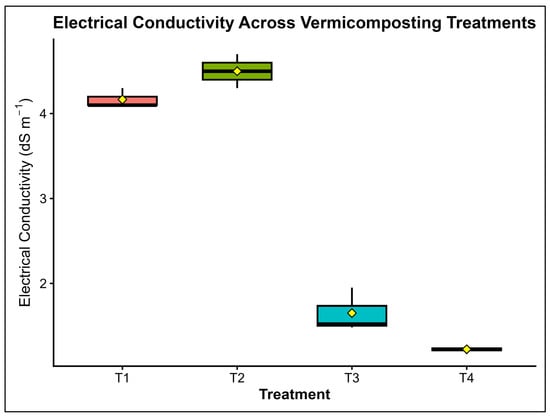
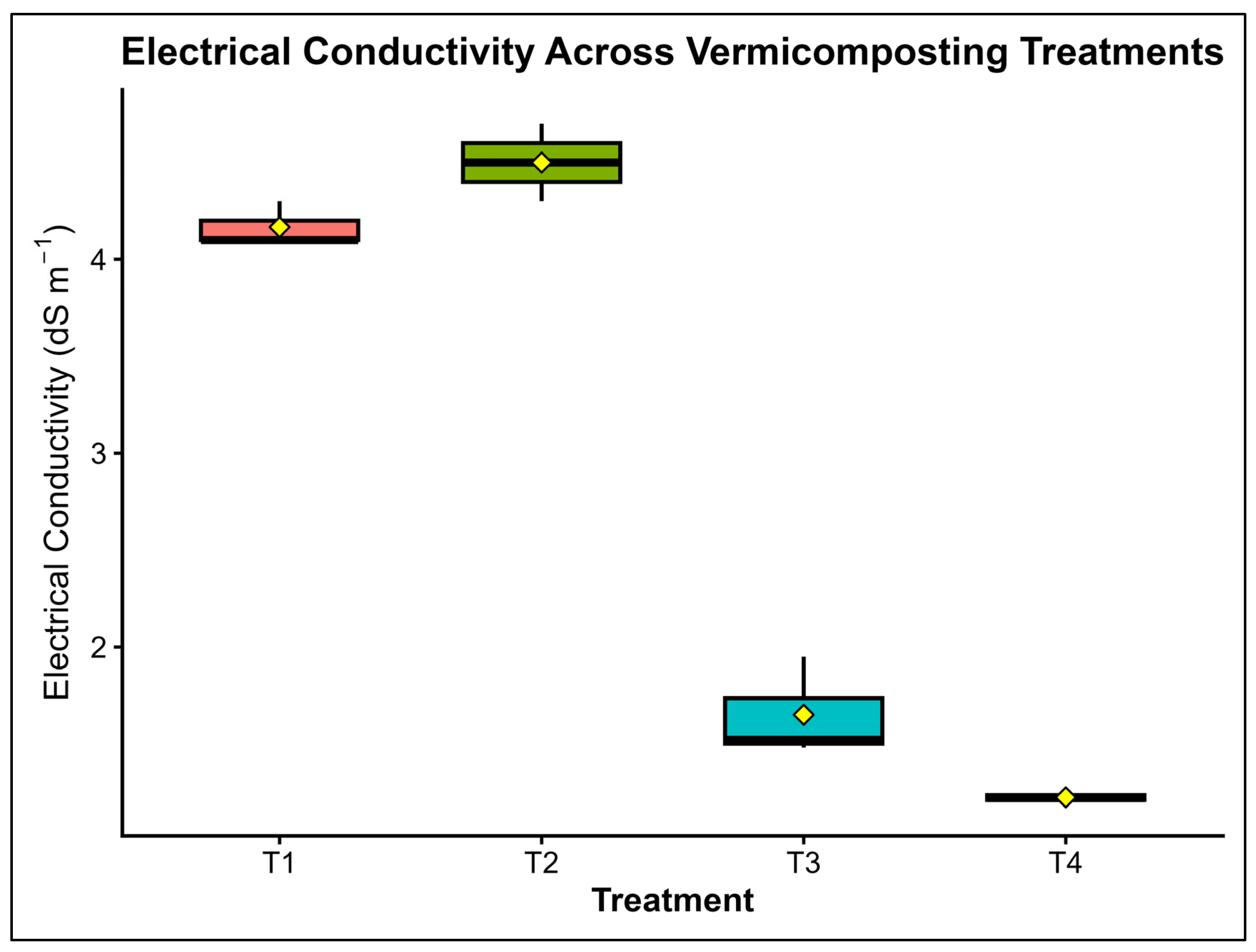
Electrical conductivity (EC) varied significantly (p < 0.05). The highest EC values were found in T2 (4.5 mS cm−1) and T1 (4.2 mS cm−1), followed by T3 (2.0 mS cm−1) and T4 (1.0 mS cm−1) (Figure 1).
Figure 1.
Effects of Vermicomposting on Electrical conductivity.
3.3. Organic Carbon and the C:N Ratio
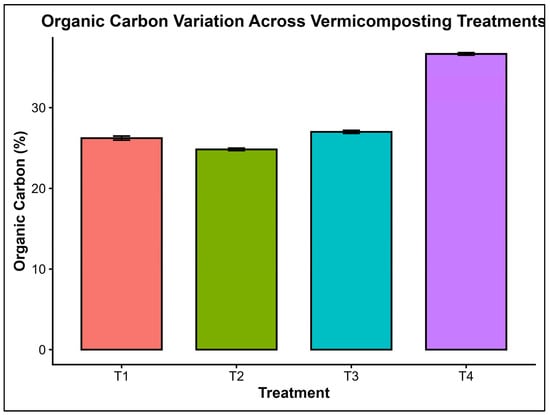
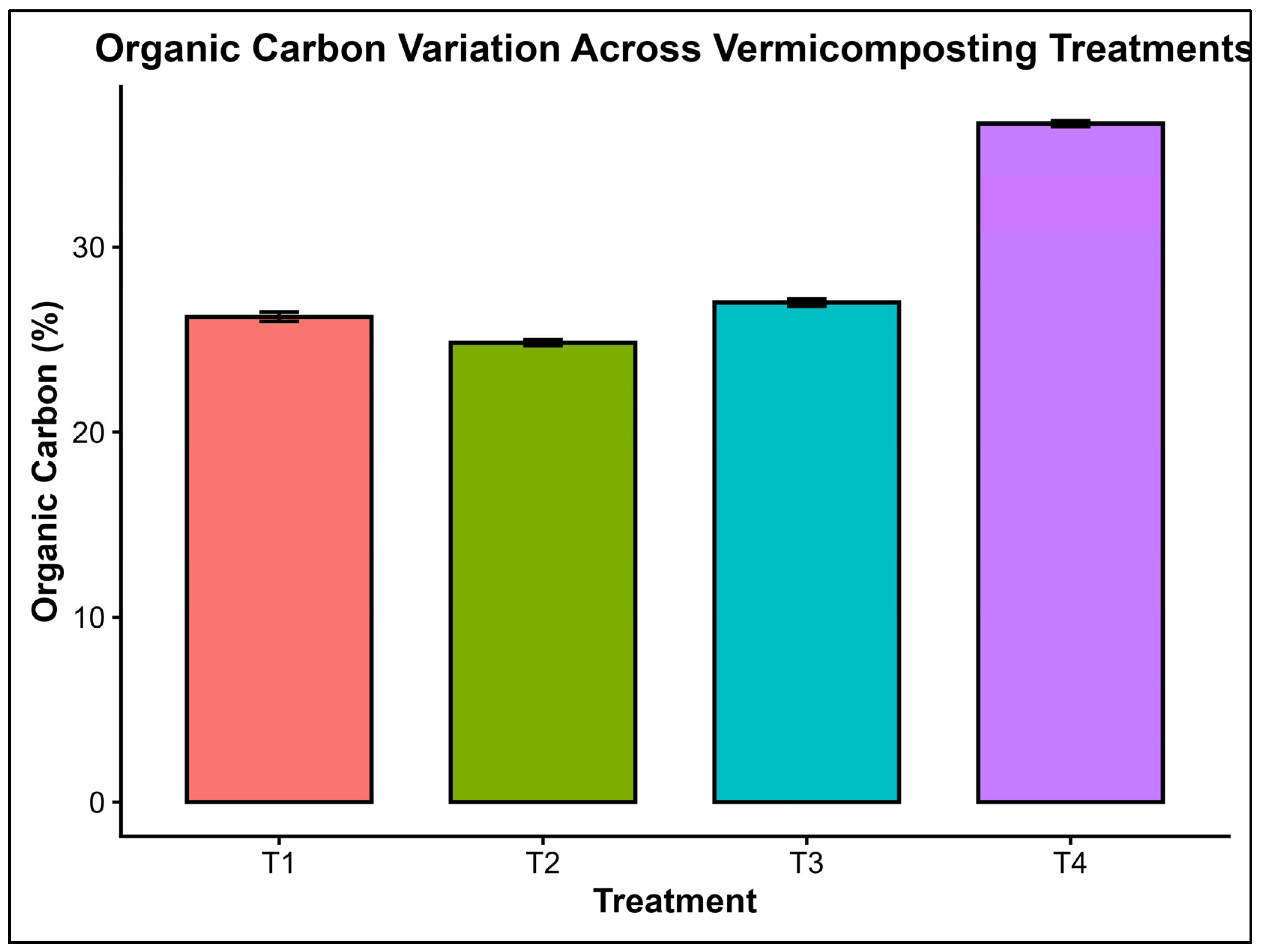
Organic carbon (OC) decreased significantly across all treatments (p < 0.05). T4 had the highest OC value (36.66%). T2 had the lowest OC value (24.83%), followed by T1 (26.23%) and T3 (27.00%).
The C:N ratio varied significantly (p < 0.05). Vermicomposted treatments (T1–T3) had C:N ratios ranging from 12.23 to 14.00. T4 had a C:N ratio of 26.43. T2 had the lowest C:N ratio (12.23), followed by T3 and T1 (Figure 2).
Figure 2.
Effects of vermicomposting on Organic Carbon (OC).
3.4. Macronutrient Composition (N, P, and K)
Available potassium (K), available phosphorus (P), and total nitrogen (TN) varied significantly (p < 0.05). Vermicomposted treatments (T1–T3) had higher nutrient concentrations than T4.
3.4.1. Total Nitrogen (TN)
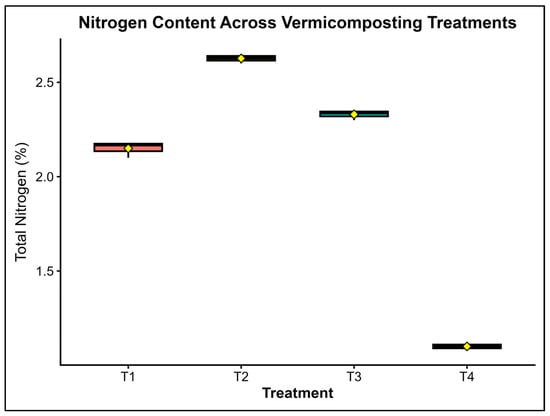
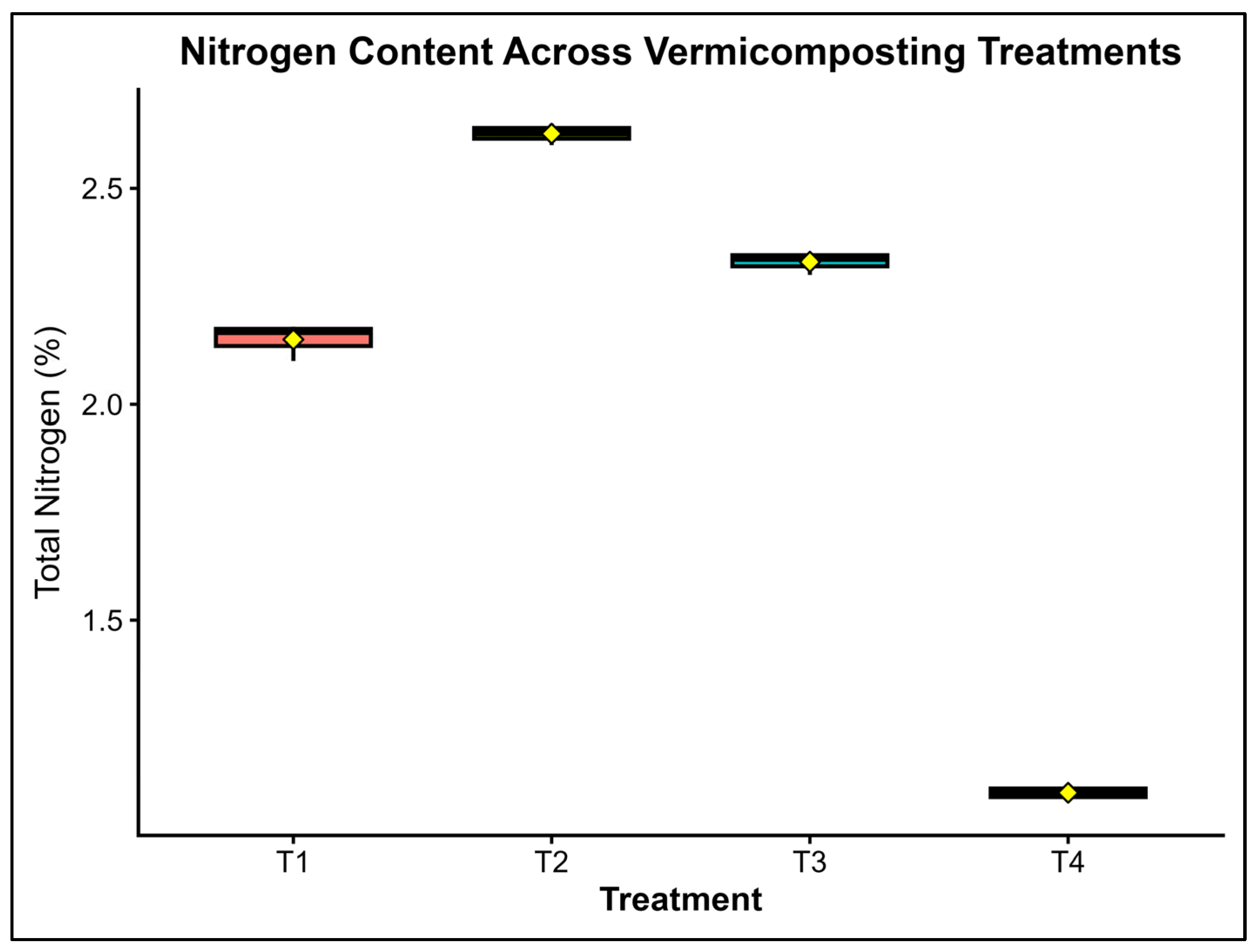
TN differed significantly (p < 0.05). T2 had the highest TN content (2.63 ± 0.11%), followed by T3 (2.34 ± 0.09%), T1 (2.15 ± 0.08%), and T4 (1.10 ± 0.05%) (Figure 3).
Figure 3.
Composition of Total Nitrogen (TN) in Different Vermicompost Treatments.
3.4.2. Available Phosphorus (P)
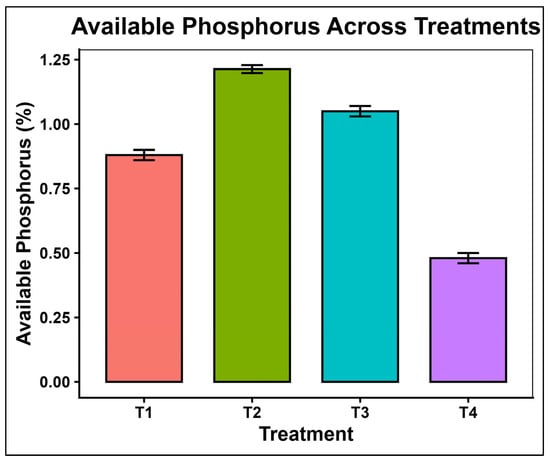
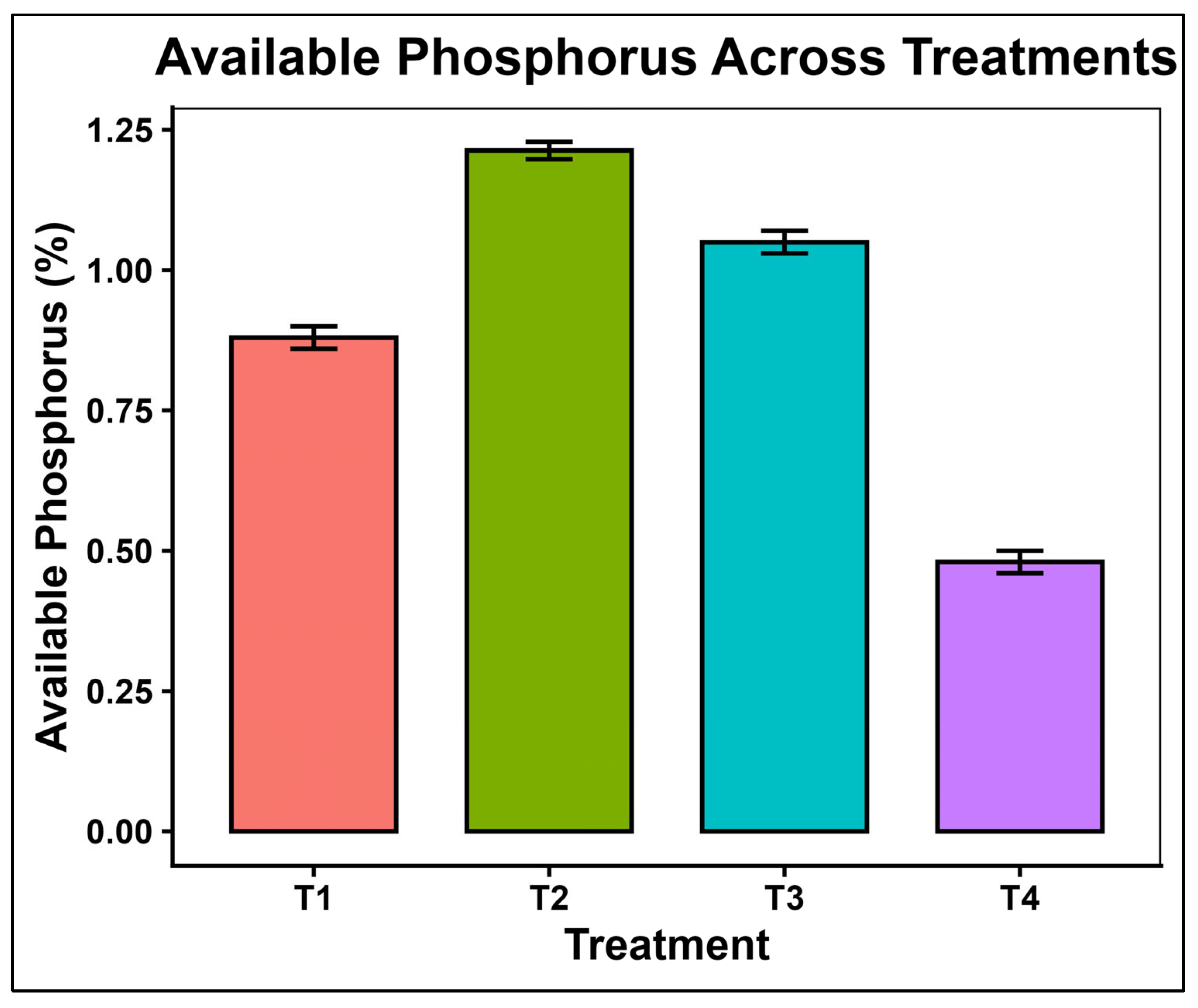
Available P varied significantly (p < 0.05). T2 had the highest value (1.21 ± 0.06%), followed by T3 (1.05 ± 0.05%), T1 (0.88 ± 0.04%), and T4 (0.48 ± 0.03%) (Figure 4).
Figure 4.
Available Phosphorus (P) Content across Treatments.
3.4.3. Available Potassium (K)
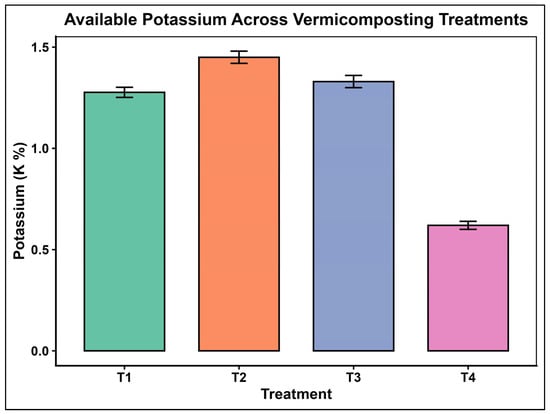
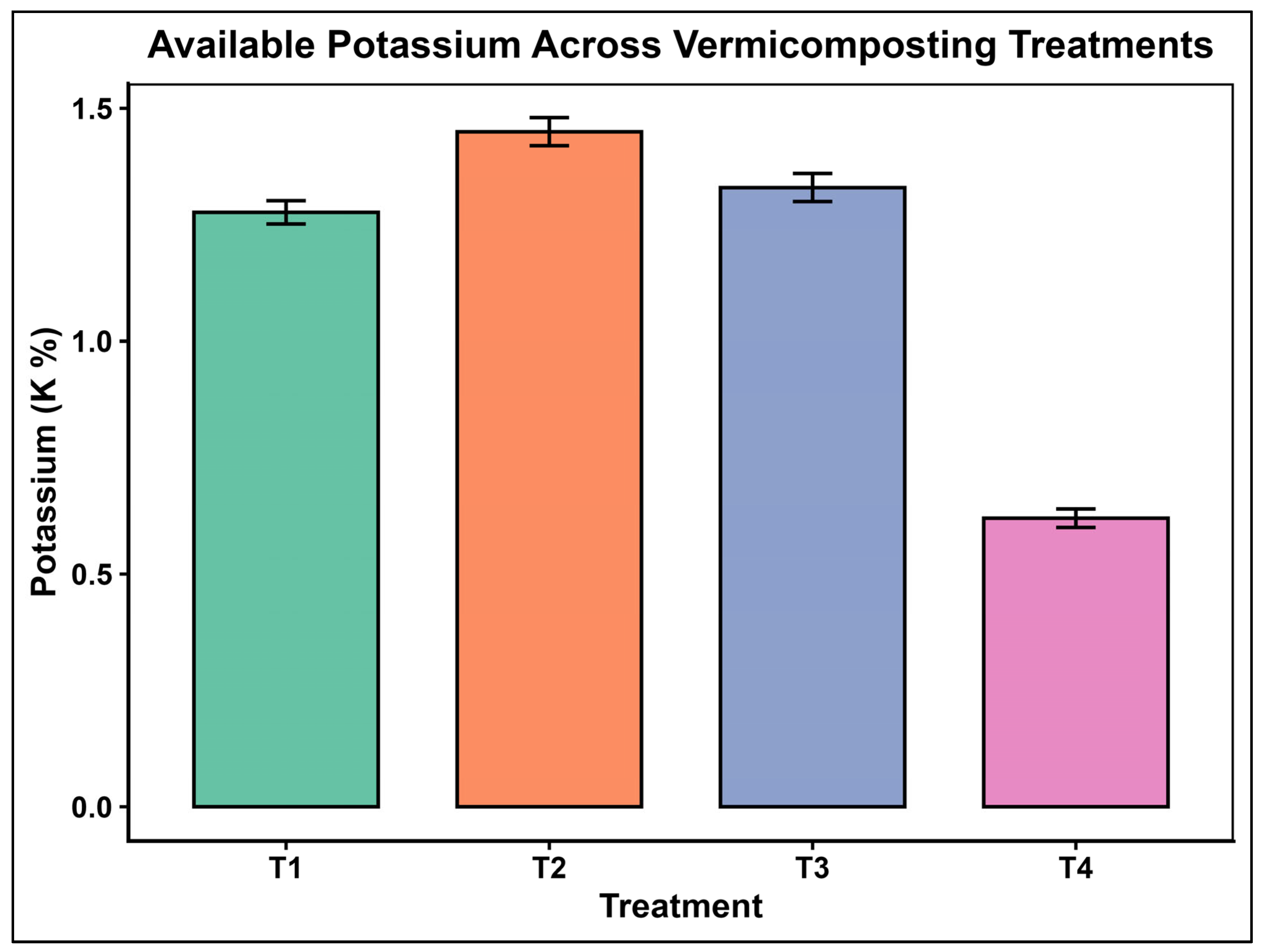
Available K varied significantly (p < 0.05). T2 had the highest concentration (1.45 ± 0.08%), followed by T3 (1.33 ± 0.06%), T1 (1.28 ± 0.07%), and T4 (0.62 ± 0.04%) (Figure 5).
Figure 5.
The Mean Available Potassium (K) Content of Across Treatments.
3.4.4. Summary of Macronutrient Trends
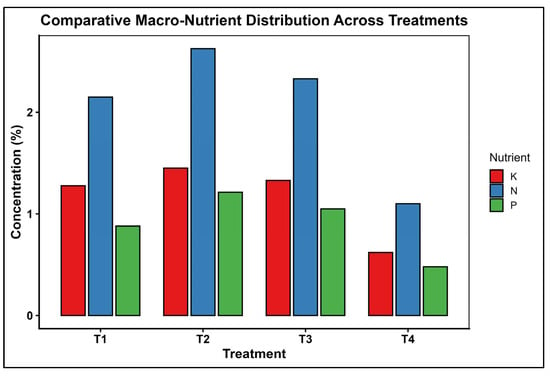
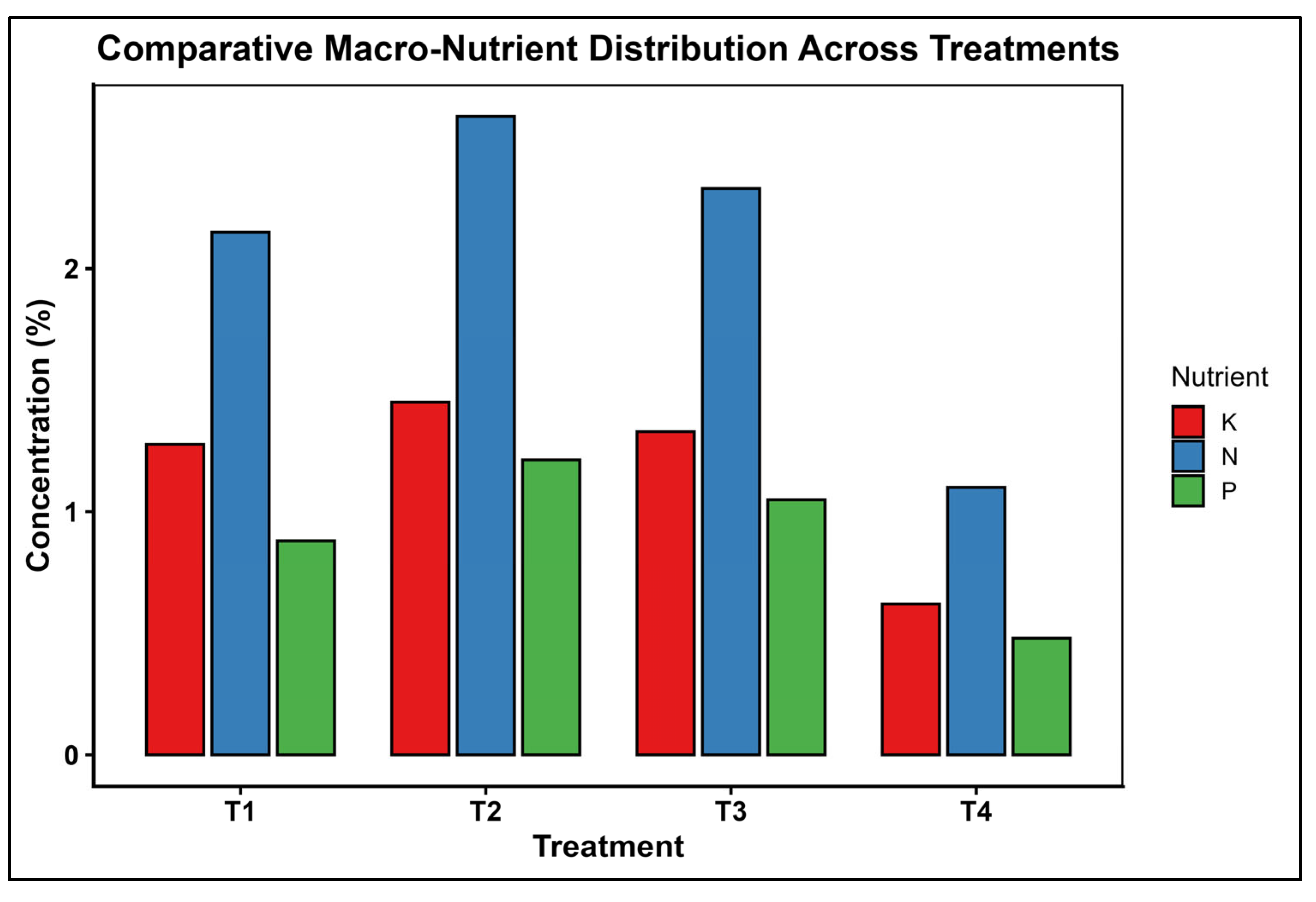
The highest values for TN, P, and K were observed in T2 (TN: 2.63 ± 0.11%, P: 1.21 ± 0.06%, K: 1.45 ± 0.08%), followed by T3 and T1. The lowest values were found in T4 (Figure 6).
Figure 6.
Comparisons of Macro-Nutrient across treatment.
3.5. Decomposition and Mass Reduction Efficiency
Decomposition efficiency (percentage mass loss) differed significantly (p < 0.05). Vermicomposted treatments (T1–T3) showed higher mass reduction than T4. T2 had the highest decomposition efficiency, followed by T3 and T1. T4 showed the lowest mass loss.
3.6. Bulk Density
Bulk density varied significantly (p < 0.05). T4 had the highest bulk density (0.84 g cm−3). T2 had the lowest bulk density (0.68 g cm−3), followed by T1 (0.71 g cm−3) and T3 (0.73 g cm−3).
3.7. Comparative Efficiency of Treatments
Significant differences (p < 0.05) were observed across treatments for all evaluated parameters. T2 consistently showed the highest total nitrogen (2.63 ± 0.11%), available phosphorus (1.21 ± 0.06%), and potassium (1.45 ± 0.08%); the highest decomposition efficiency; the lowest organic carbon (24.83%); the lowest C:N ratio (12.23); and the lowest bulk density (0.68 g cm−3). T4 showed the lowest nutrient values (TN: 1.10 ± 0.05%, P: 0.48 ± 0.03%, K: 0.62 ± 0.04%); the highest bulk density (0.84 g cm−3); the highest organic carbon (36.66%); and the highest C:N ratio (26.43). T3 had higher values than T1 for most parameters, but both were lower than T2. The overall ranking of treatments was T2 > T3 > T1 > T4 for most variables.
3.8. Sustainable Waste Management’s Effects
Vermicomposted treatments (T1–T3) had lower organic carbon, lower C:N ratios, and higher concentrations of N, P, and K (p < 0.05) compared to T4. Among vermicomposted treatments, T2 showed the highest values for N, P, K, and stability parameters, and the lowest values for organic carbon and C:N ratio. T3 showed intermediate values between T2 and T1 for most parameters. T4 showed the highest organic carbon (36.66%) and C:N ratio (26.43) and the lowest nutrient concentrations (N: 1.10%, P: 0.48%, K: 0.62%).
4. Discussion
The results indicate that, under the conditions tested, vermicomposting was associated with improved physicochemical and nutritional properties compared with conventional composting. The observed differences among treatments—particularly the consistent performance of T2—suggest that earthworm–microbial interactions accelerated organic matter degradation and enhanced compost stabilization [26,27]. The shift in pH toward near-neutral to slightly alkaline values in vermicomposted treatments is likely associated with increased ammonification and organic acid degradation during decomposition [28]. Vermicomposting systems typically maintain pH levels considered suitable for agricultural applications, which is consistent with similar findings reported in other research [33,34]. However, factors such as feedstock composition, moisture content, and aeration parameters are known to influence pH dynamics during composting, indicating that these results may vary under various operational conditions.
The higher electrical conductivity (EC) observed in vermicomposted treatments, especially T1 and T2, was likely related to the release of soluble mineral ions as organic waste decomposes [31,32]. This increase in EC indicates enhanced mineralization activity and nutrient release. Nevertheless, EC values are also influenced by substrate salinity and the initial composition of organic wastes. In systems containing high salt concentrations, EC may exceed optimal agronomic thresholds, emphasizing the importance of careful feedstock selection in vermicomposting systems [35].
The reduction in organic carbon and the C:N ratio in vermicomposted treatments is consistent with progressive organic matter decomposition and stabilization [34]. These changes are usually associated with increased microbial respiration and carbon loss through mineralization [36]. However, the rate of C and N transformation can be influenced by substrate heterogeneity, temperature fluctuations, moisture variability, and system size. The lower C:N ratios observed in T2 may reflect more efficient coordination of carbon degradation and nitrogen retention under mixed-substrate conditions. Similar observations have been reported in previous vermicomposting studies involving combined animal manure and plant residue substrates [36].
The increases in total nitrogen, available phosphorus, and potassium in vermicomposted treatments were likely associated with enhanced microbial activity and earthworm-mediated organic matter processing [37,38]. These processes contribute to nutrient solubilization, mineralization, and redistribution within the compost matrix. However, nutrient retention is greatly impacted by environmental parameters such as aeration, moisture stability, and the original nutrient composition of feedstocks [37]. In less regulated situations, nutrient losses from volatilization or leaching may reduce the stated gains.
The higher nutrient concentrations in T2 suggest that substrate diversity influenced microbial activity and nutrient processing pathways [29]. Mixed substrates may support a wider range of microbial communities and provide a more balanced carbon-to-nitrogen ratio. However, as the effectiveness of such combinations may vary depending on the number and quality of inputs, the optimal combination is likely context-specific rather than broadly applicable.
Higher decomposition rates and greater mass loss in vermicomposted treatments indicate more extensive organic matter degradation [32], though this process is influenced by system size, earthworm density, and environmental stability. The relatively reduced mass loss in conventional composting under the conditions of our investigation suggests slower breakdown kinetics. Decomposition efficiency, however, may differ in large-scale systems with less control over temperature and aeration.
Lower bulk density in vermicomposted treatments suggests improved structural properties such as increased porosity and aggregation. These changes are most likely connected to earthworm activity and the production of stabilized cast. Improved physical structure may contribute to better soil aeration, water infiltration, and root penetration when vermicompost is applied as a soil amendment. However, bulk density measurements can be impacted by feedstock particle size distribution, moisture content during measurement, and compaction during handling.
The results show a performance gradient of T2 > T3 > T1 > T4 for most parameters. This pattern suggests that combining a variety of organic substrates with earthworm activity enhanced composting efficiency under the tested conditions.The magnitude of these changes likely depends on feedstock composition and system management.
4.1. Limitations of the Study
This study has several limitations that should be considered when interpreting the findings. First, the pilot-scale experimental setup using 250 L reactors may not fully represent large-scale or commercial vermicomposting operations. Second, the 60-day duration, while sufficient for initial stabilization, did not assess longer-term compost stability or changes during storage. Third, agronomic performance—such as crop yield, germination rate, or soil health improvements—was not evaluated. Fourth, key parameters (initial C:N ratio, moisture content at multiple time points) were estimated from literature or measured only at start and end, limiting understanding of temporal dynamics. Fifth, the manual turning every 7 days, while justified for this mixed-substrate system, deviates from standard vermicomposting protocols and may have affected earthworm activity and reproduction, though cocoon and juvenile counts suggest that reproduction was not severely impaired. Therefore, the findings should be interpreted within the specific conditions of this study.
4.2. Comparison with Other Studies
Although the observed patterns are generally in line with other studies that found vermicomposting improved compost quality [38,39], the degree of improvement varies greatly between investigations. Substrate type, earthworm species, environmental factors, and system design all probably have an impact on these variations. Specifically, depending on feedstock ratios and the breakdown environment, mixed-substrate systems like T2 may behave differently, suggesting that results cannot be applied generally without taking local factors into account.
5. Conclusions
Under the conditions tested, this study provides evidence that vermicomposting can enhance the conversion of agricultural organic wastes into stable compost with improved physicochemical and nutritional properties compared with conventional composting. Vermicomposted treatments showed higher levels of total nitrogen, available phosphorus, and available potassium, as well as lower organic carbon content and lower C:N ratios, indicating more advanced decomposition and nutrient availability.
The mixed-substrate system (T2) consistently performed better than the other treatments across several parameters, including nutrient content, decomposition efficiency, and bulk density. These patterns suggest that integrating diverse organic substrates may promote more balanced nutrient dynamics and decomposition processes, although the magnitude of this effect is likely dependent on feedstock composition and operating conditions.
Collectively, these results support a conceptual framework in which substrate diversity—specifically the combination of nitrogen-rich poultry manure, microbially active cow dung, and carbon-rich vegetable waste—enhances earthworm-mediated nutrient mineralization through complementary resource partitioning.
The findings indicate the potential value of vermicomposting in integrated organic waste management strategies, particularly when a range of agricultural residues is available. However, the results should be evaluated within the limitations of this experiment. Variations in substrate characteristics, environmental conditions, and system scale may affect outcomes in practical applications. Further research is recommended to evaluate long-term performance, optimize substrate combinations under different environmental conditions, and analyze agronomic repercussions such as crop production response and soil health improvements under field conditions.
Author Contributions
All authors contributed to the study as follows: C.W.M., conceptualization, methodology, writing—original draft, data curation, and formal analysis; R.B.R., review and editing, and supervision; J.W.R., review and editing. All authors have read and agreed to the published version of the manuscript.
Funding
This research was supported in part by the Centre of Excellence in Agrifood Systems at Eduardo Mondlane University, and by the Accelerating Impacts of CGIAR Climate Research for Africa (AICCRA), International Livestock Research Institute (ILRI). We sincerely thank all funders who support CGIAR research through contributions to the CGIAR Trust Fund.
Institutional Review Board Statement
This research involved the use of the earthworm species Eisenia fetida for the purpose of vermicomposting agricultural wastes. The study was conducted in accordance with the internal research guidelines of the Faculty of Agronomy and Forest Engineering at Eduardo Mondlane University. As this study involved non-protected invertebrate species and did not involve human participants or vertebrate animal subjects, the Eduardo Mondlane University Research Ethics Committee granted exemption. All experimental procedures were performed with strict adherence to environmental safety and sustainable research practices. Humans and vertebrate animals did not take part in this study. The use of earthworms (Eisenia fetida) complied with standard ethical guidelines for invertebrate research and did not require formal ethics approval.
Informed Consent Statement
Not applicable. This study did not involve human participants, and therefore, informed consent was not required.
Data Availability Statement
All of the data generated or analyzed during this study will be provided upon reasonable request.
Acknowledgments
We gratefully acknowledge the support of the Centre of Excellence in Agrifood Systems and Nutrition at Eduardo Mondlane University. We also acknowledge that generative artificial intelligence was utilized exclusively for language editing and clarity enhancement. All scientific content, including experimental design, data analysis, and interpretation, were fully developed and verified by the authors.
Conflicts of Interest
The authors declare that there are no conflicts of interest.
References
- Wang, H.; Convertino, M. Algal bloom ties: Systemic biogeochemical stress and Chlorophyll-a shift forecasting. Ecol. Indic. 2023, 154, 110760. [Google Scholar] [CrossRef] [Scilit]
- Swamy, S.L.; Darro, H.; Mishra, A.; Lal, R.; Kumar, A.; Kumar Thakur, T. Carbon stock dynamics in a disturbed tropical forest ecosystem of Central India: Strategies for achieving carbon neutrality. Ecol. Indic. 2023, 154, 110775. [Google Scholar] [CrossRef] [Scilit]
- Sharma, K.; Garg, V.K. Vermicomposting Technology for Organic Waste Management. In Current Developments in Biotechnology and Bioengineering; Elsevier: Amsterdam, The Netherlands, 2022; pp. 29–56. Available online: https://www.sciencedirect.com/science/article/pii/B9780323918749000097 (accessed on 18 April 2025).
- Dume, B.; Hanc, A.; Svehla, P.; Michal, P.; Chane, A.D.; Nigussie, A. Composting and vermicomposting of sewage sludge at various C/N ratios: Technological feasibility and end-product quality. Ecotoxicol. Environ. Saf. 2023, 263, 115255. [Google Scholar] [CrossRef] [Scilit]
- Kastner, T.; Chaudhary, A.; Gingrich, S.; Marques, A.; Persson, U.M.; Bidoglio, G.; Le Provost, G.; Schwarzmüller, F. Global agricultural trade and land system sustainability: Implications for ecosystem carbon storage, biodiversity, and human nutrition. One Earth 2021, 4, 1425–1443. [Google Scholar] [CrossRef] [Scilit]
- Garg, K.; Dhar, S.; Sharma, V.K.; Azman, E.A.; Meena, R.P.; Hashim, M.; Kumar, D.; Ali, G.; Karunakaran, V.; Kumar, Y.; et al. Optimizing agricultural sustainability: Enriched organic formulations for growth, yield, and soil quality in a multi-crop system. Front. Plant Sci. 2024, 15, 1398083. [Google Scholar] [CrossRef] [Scilit]
- Ghosh, M.; Devi, A. Assessment of crop growth, soil properties and crop yield in an upland acidic soil with inorganic fertilizer blended with organic amendments in summer rice cropping seasons. Int. J. Recycl. Org. Waste Agric. 2019, 8, 1–9. [Google Scholar] [CrossRef] [Scilit]
- Christyraj, J.D.S.; Mathews, M.G.R.; Subramaniam, R.; Yesudhason, B.V.; Chelladurai, K.S.; Christyraj, J.R.S.S. Importance of Vermicomposting and Vermiremediation Technology in the Current Era. In Advances in Bioremediation and Phytoremediation for Sustainable Soil Management: Principles, Monitoring and Remediation; Springer: Cham, Switzerland, 2022; pp. 313–326. Available online: https://link.springer.com/chapter/10.1007/978-3-030-89984-4_20 (accessed on 18 April 2025).
- Huntley, S.; Ansari, A.A. Vermicomposting evaluation of different combinations of organic waste using perionyx excavates. Int. J. Recycl. Org. Waste Agric. 2021, 10, 287–295. [Google Scholar]
- Mohite, D.D.; Chavan, S.S.; Jadhav, V.S.; Kanase, T.; Kadam, M.A.; Singh, A.S. Vermicomposting: A holistic approach for sustainable crop production, nutrient-rich bio fertilizer, and environmental restoration. Discov. Sustain. 2024, 5, 60. [Google Scholar] [CrossRef] [Scilit]
- Batista, L.G.D.; Montero, L.L.; Shinzato, M.C. Millicomposting Versus Vermicomposting: A Statistical Comparison Of The Quality Of The Resulting Organic Composts. Res. Sq. 2021. [Google Scholar] [CrossRef] [Scilit]
- Poornima, S.; Dadi, M.; Subash, S.; Manikandan, S.; Karthik, V.; Deena, S.R.; Balachandar, R.; Kumaran, S.K.N.; Subbaiya, R. Review on advances in toxic pollutants remediation by solid waste composting and vermicomposting. Sci. Afr. 2024, 23, e02100. [Google Scholar] [CrossRef] [Scilit]
- Dejene, W.; Natarajan, P.; Ayele, S. Evaluation of Substrates for Optimizing Vermicomposting Products. BioResources 2024, 19, 7183–7194. [Google Scholar] [CrossRef] [Scilit]
- Rupani, P.F.; Zabed, H.M.; Domínguez, J. Vermicomposting and Bioconversion Approaches Towards the Sustainable Utilization of Palm Oil Mill Waste. In Advanced Organic Waste Management; Elsevier: Amsterdam, The Netherlands, 2022; pp. 193–205. Available online: https://www.sciencedirect.com/science/article/pii/B9780323857925000034 (accessed on 18 April 2025).
- Ibrahim, M.H.; Quaik, S.; Ismail, S.A. Vermicomposting: An Earthworm Mediated Waste Treatment Technique. In Prospects of Organic Waste Management and the Significance of Earthworms; Springer: Cham, Switzerland, 2016; pp. 167–199. Available online: https://link.springer.com/chapter/10.1007/978-3-319-24708-3_8 (accessed on 17 April 2025).
- Boonna, P.; Kungskulniti, N.; Tangkoonboribun, R.; Charoenca, N. Vermicomposting Different Organic Wastes To Determine Suitability for Use in Organic Farming. GEOMATE J. 2020, 18, 29–34. [Google Scholar] [CrossRef] [Scilit]
- Ileleji, K.E.; Garcia, A.A.; Kingsly, A.R.P.; Clementson, C.L. Comparison of standard moisture loss-on-drying methods for the determination of moisture content of corn distillers dried grains with solubles. J. AOAC Int. 2010, 93, 825–832. [Google Scholar] [CrossRef] [Scilit] [PubMed]
- Zirbes, L.; Renard, Q.; Dufey, J.; Tu, P.K.; Duyet, H.N.; Lebailly, P.; Francis, F.; Haubruge, É. Valorisation of a water hyacinth in vermicomposting using an epigeic earthworm perionyx excavatus in central Vietnam. Biotechnol. Agron. Soc. Environ. 2011, 15, 85–93. [Google Scholar]
- Karmegam, N.; Vijayan, P.; Prakash, M.; John Paul, J.A. Vermicomposting of paper industry sludge with cowdung and green manure plants using Eisenia fetida: A viable option for cleaner and enriched vermicompost production. J. Clean. Prod. 2019, 228, 718–728. [Google Scholar] [CrossRef] [Scilit]
- Kumar, R.; Jha, S.; Singh, S.P.; Kumar, M.; Kumari, R.; Padbhushan, R. Organic waste recycling by vermicomposting amended with rock phosphate impacts the stability and maturity indices of vermicompost. J. Air Waste Manag. Assoc. 2023, 73, 553–567. [Google Scholar] [CrossRef] [Scilit]
- Kumar, A.; Muzamil, M.; Dixit, J. Smart vermicomposting bin for rapid transformation of Dal lake aquatic weed into fortified vermicompost. Int. J. Recycl. Org. Waste Agric. 2023, 12, 221–233. [Google Scholar]
- Mago, M.; Gupta, R.; Yadav, A.; Kumar Garg, V. Sustainable treatment and nutrient recovery from leafy waste through vermicomposting. Bioresour. Technol. 2022, 347, 126390. [Google Scholar] [CrossRef] [Scilit]
- Wisnieski, L.; Brown, J.L.; Holcombe, S.J.; Gandy, J.C.; Sordillo, L.M. Serum vitamin D concentrations at dry-off and close-up predict increased postpartum urine ketone concentrations in dairy cattle. J. Dairy Sci. 2020, 103, 1795–1806. [Google Scholar] [CrossRef] [Scilit]
- Gelman, F.; Binstock, R.; Halicz, L. Application of the Walkley-Black titration for the organic carbon quantification in organic rich sedimentary rocks. Fuel 2012, 96, 608–610. [Google Scholar] [CrossRef] [Scilit]
- Maharjan, K.K.; Noppradit, P.; Jutidamrongphan, W.; Techato, K.; Dhakal, R.P. Biotransformation of varieties of food waste supplemented by bonemeal and eggshell powder using vermicomposting technology. Int. J. Recycl. Org. Waste Agric. 2024, 13, 1. [Google Scholar]
- Tasnim, U.F.; Shammi, M.; Uddin, M.K.; Akbor, M.A. Effect of biochar amended vermicomposting of food and beverage industry sludge along with cow dung and seed germination bioassay. Pollution 2021, 7, 355–365. [Google Scholar]
- Fathololoumi, S.; Biswas, A. A new digital soil mapping approach based on the adjacency effect. Sci. Total Environ. 2024, 957, 177798. [Google Scholar] [CrossRef] [Scilit]
- Lleó, T.; Albacete, E.; Barrena, R.; Font, X.; Artola, A.; Sánchez, A. Home and vermicomposting as sustainable options for biowaste management. J. Clean. Prod. 2013, 47, 70–76. [Google Scholar] [CrossRef] [Scilit]
- Boruah, T.; Barman, A.; Kalita, P.; Lahkar, J.; Deka, H. Vermicomposting of citronella bagasse and paper mill sludge mixture employing Eisenia fetida. Bioresour. Technol. 2019, 294, 122147. [Google Scholar] [CrossRef] [Scilit]
- Vannucchi, F.; Bondi, G.; Traversari, S.; Peruzzi, E.; Doni, S.; Masciandaro, G.; Carpi, G.; Calcaprina, M.; Macci, C. Vermicomposting Nursery Green Waste: A Circular Economy Approach. Waste Biomass Valorization 2024, 15, 3803–3810. [Google Scholar] [CrossRef] [Scilit]
- Simpson, G.L. gratia: An R package for exploring generalized additive models. J. Open Source Softw. 2024, 9, 6962. [Google Scholar] [CrossRef] [Scilit]
- Nishimura, M.; Joshi, A. Competitive loan-groups and economic achievements of microcredit loan users in a group-lending program: Estimating the impacts of a self-selected loan group on the household income of its members: Evidence from India. Soc. Sci. Humanit. Open 2021, 4, 100196. [Google Scholar] [CrossRef] [Scilit]
- Xing, M.; Lv, B.; Zhao, C.; Yang, J. Towards understanding the effects of additives on the vermicomposting of sewage sludge. Environ. Sci. Pollut. Res. 2015, 22, 4644–4653. [Google Scholar] [CrossRef] [Scilit] [PubMed]
- Filipović, A.; Mandić, A.; Hadžiabulić, A.; Johanis, H.; Stipanović, A.; Brekalo, H. Characterization and Evaluation of Vermicomposting Materials. Ekol. Bratisl. 2023, 42, 101–107. [Google Scholar] [CrossRef] [Scilit]
- Gutiérrez-Miceli, F.A.; García-Gómez, R.C.; Oliva-Llaven, M.A.; Montes-Molina, J.A.; Dendooven, L. Vermicomposting leachate as liquid fertilizer for the cultivation of sugarcane (Saccharum sp.). J. Plant Nutr. 2017, 40, 40–49. [Google Scholar] [CrossRef] [Scilit]
- Zhou, Y.; Xiao, R.; Klammsteiner, T.; Kong, X.; Yan, B.; Mihai, F.C.; Liu, T.; Zhang, Z.; Awasthi, M.K. Recent trends and advances in composting and vermicomposting technologies: A review. Bioresour. Technol. 2022, 360, 127591. [Google Scholar] [CrossRef] [Scilit] [PubMed]
- Duan, Y.; Yang, J.; Awasthi, M.K.; Pandey, A.; Li, H. Innovations in Design and Operation of Aeration Devices for Composting and Vermicomposting. In Current Developments in Biotechnology and Bioengineering; Elsevier: Amsterdam, The Netherlands, 2022; pp. 57–81. Available online: https://www.sciencedirect.com/science/article/pii/B9780323918749000061 (accessed on 18 April 2025).
- Vyas, P.; Sharma, S.; Gupta, J. Vermicomposting with microbial amendment: Implications for bioremediation of industrial and agricultural waste. Biotechnologia 2022, 103, 203–215. [Google Scholar] [CrossRef] [Scilit] [PubMed]
- Agulló, E.; Martínez-Fernández, M.; Ángeles Bustamante, M.; Pérez-Murcia, M.D.; Pérez-Espinosa, A.; Moral, R. Vermicomposting as an Added-Value Post-treatment for Livestock Waste Composts. Commun. Soil Sci. Plant Anal. 2015, 46, 208–218. [Google Scholar] [CrossRef] [Scilit]
Disclaimer/Publisher’s Note: The statements, opinions and data contained in all publications are solely those of the individual author(s) and contributor(s) and not of MDPI and/or the editor(s). MDPI and/or the editor(s) disclaim responsibility for any injury to people or property resulting from any ideas, methods, instructions or products referred to in the content. |
© 2026 by the authors. Licensee MDPI, Basel, Switzerland. This article is an open access article distributed under the terms and conditions of the Creative Commons Attribution (CC BY) license.