


Abstract
In volatile environments, teams must rapidly adapt to complex internal and external pressures. Although paradoxical leadership (PL) has been linked to enhanced team adaptability, the motivational pathways driving this systemic outcome remain underexplored. To address this gap, we examine how collective goal orientations—treated as resource-allocation rules—mediate the relationship between PL and team adaptability. Grounded in Conservation of Resources theory, we tested the model in a three-wave, multi-source study of 114 high-tech specialist teams, where team members rated PL at T1 and team goal orientations at T2, while supervisors rated team adaptability at T3. Our findings reveal that, within this dataset and context, PL’s indirect association with team adaptability operates largely through a performance approach orientation, an agentic strategy that mobilizes resources for visible competence in the short term. In contrast, while a team learning orientation predicts adaptability when assessed alone, its unique mediating effect becomes non-significant when performance approach orientation is taken into account, consistent with conceptual and empirical overlap between the two constructs. Moreover, although PL reduces performance avoidance orientation, this reduction does not significantly enhance team adaptability. In the present dataset and context, these findings indicate performance approach orientation as the more robust motivational pathway linking PL to team adaptability, thereby providing a foundation for further inquiry into how systemic levers might selectively shape distinct team motivational states.
1. Introduction
In volatile environments, work teams function as complex adaptive systems that must continually reconfigure internal processes to manage persistent tension stability versus change, discipline versus autonomy, and uniformity versus diversity—which in turn shape emergent behaviors and make team adaptability a critical outcome [1,2]. Yet prior research has not specified the internal motivational mechanisms by which teams develop adaptability under paradoxical leadership. The present study addresses this gap by examining how teams mobilize internal resource allocation in response to a paradoxical leader. Complexity leadership theory provides a macro-level framework for this challenge, highlighting that leaders should configure interactions and resource flows to enable adaptation rather than rely on hierarchical control [3,4]. Within that broad systemic view, paradoxical leadership (PL) refers to a team-leader behavioral style that simultaneously pursues competing demands (e.g., high standards paired with tolerance for error). However, complexity leadership does not specify the micro-level motivational processes that translate such configurations into team behavior. We therefore use the systems perspective to frame the problem at the macro level (teams as complex adaptive systems) and adopt Conservation of Resources (COR) theory to specify the proximate motivational and resource-allocation mechanisms through which paradoxical leadership shapes team adaptability.
Despite growing evidence linking paradoxical leadership to team outcomes [5], existing research has focused largely on external information processing pathways (e.g., knowledge sharing [6]) or contextual mediators such as inclusive climate [7], leaving the internal motivational mechanisms largely unexamined. Moreover, while leaders set the motivational context, followers’ existing knowledge and skills, along with their capacity to continuously update them in response to environmental changes, are critical enabling conditions that translate leadership into team adaptability. This gap is important for a wider academic audience as, without understanding how specific leadership behaviors are internalized by team members, leadership theories remain disconnected from team-level outcomes. Bridging this gap is essential for generalizing leadership theories and informing adaptive team management across diverse organizational and cultural contexts.
To address this gap, we draw on Conservation of Resources (COR) theory and propose that team goal orientations function as collective resource-allocation rules—systemic policies that determine how teams mobilize, invest, and conserve resources under tension [8]. Using a multi-wave, multi-source sample of 114 high-tech teams, this study tests these three allocation pathways at the team level: learning orientation, performance approach orientation, and performance avoidance orientation.
This study offers three context-bound contributions. First, it introduces team goal orientations as collective resource allocation rules, offering one lens for examining how PL may relate to team adaptability in this setting. Second, in the present sample, the performance approach orientation emerged as the more distinct pathway in a parallel mediation model, while the indirect path via learning orientation was not significant. Third, it extends COR theory by highlighting the interplay between resource protection and acquisition in collective contexts, pointing toward further theoretical development. The theoretical model is shown in Figure 1.
Figure 1.
The integrated model of paradoxical leadership, team goal orientation, and team adaptability.
2. Theory and Hypothesis Development
2.1. Conservation of Resources Theory
This study is grounded in Conservation of Resources (COR) theory, as its core theoretical framework. While COR theory has been widely applied to understand individual stress and coping [9,10], its application to collective phenomena—particularly how paradoxical leaders shape team-level resource allocation strategies—remains less developed. We extend COR theory to the team level by conceptualizing paradoxical leadership as a critical resource-enabling force that shapes the team’s shared resource calculus. The theory posits that individuals and organizations are fundamentally motivated to acquire, retain, and accumulate valued resources to meet environmental demands and thrive in dynamic settings [9,10]. According to this theory, “resources” are broadly defined as anything valued by an individual or collective, primarily categorized into four types—objects (e.g., tools), conditions (e.g., job security and psychological safety), personal characteristics (e.g., self-efficacy), and energies (e.g., time and attention)—which together form the foundation for responding to challenges [9]. This broad definition helps capture how team members perceive resources across different aspects of their work and personal capacities.
The theory is governed by several key principles. First, the primacy of resource loss holds that the threat or actual loss of resources is psychologically more salient and motivating than resource gain [10]—a principle that explains why teams under uncertainty often default to defensive, loss-protective strategies. Second, the resource investment principle states that people must invest resources to protect against loss, recover from loss, and gain new resources [10,11]. These two principles together create an inherent theoretical tension; in particular, while loss aversion motivates conservation, resource investment is necessary for growth and adaptation, leading to a strategic dilemma of when to conserve and when to invest. Resolving this tension is central to understanding how leadership can shift teams from defensive to proactive resource strategies. Third, resources tend to aggregate in “resource caravans” and their dynamics can lead to gain spirals (where resource acquisition fosters further acquisition) or loss spirals (where resource scarcity exacerbates depletion) [10,12]. Viewed systemically, these caravans represent resource flows and feedback loops that drive emergent team dynamics and stability or change [13,14].
Recent research applying COR theory to team leadership has shown how leaders can simultaneously trigger resource-building and resource-depleting pathways to team effectiveness [15]. Building on this integrated theoretical base, we conceptualize paradoxical leadership as uniquely positioned to address the tension between resource conservation and investment [16]. By integrating contradictory demands (e.g., granting autonomy while maintaining control), leaders create a unique resource context for the team. This context not only directly provides or activates critical condition resources (e.g., psychological safety) and personal resources (e.g., cognitive flexibility) but also, through its “both/and” integrative logic, conveys vital signals to the team about how to value and strategically invest resources. This dual action—where both resource provision and demand are simultaneously communicated—represents a unique mechanism that extends COR theory’s traditional focus on clear-cut resource gains or losses.
According to Conservation of Resources (COR) theory, teams are primarily driven by the primacy of loss principle, meaning that the threat of failure looms larger than the potential for gain [10]. Consequently, teams naturally default to a performance avoidance orientation to conserve their existing resources. Paradoxical leadership intervenes in this defensive cycle. By embracing the ‘both/and’ logic—offering support and tolerance for errors alongside high demands—these leaders first mitigate the perceived threat of resource depletion. This signals that setbacks are not fatal losses, thereby reducing the team’s avoidance tendencies. Once this fear is managed, the resource investment principle comes into play [11]. Paradoxical leaders actively require teams to invest their freed-up resources to meet high standards and navigate complexity. This pushes the team toward proactive learning (investing to develop resources) and performance approach (investing to validate resources) orientations. Ultimately, this shift triggers a resource gain spiral [12]; in particular, by shifting the strategy from conservation to active investment, the team builds the collective capacity needed to adapt to change. Thus, from a systems perspective, paradoxical leadership shapes the team’s internal allocation rules and feedback structure, altering system trajectories toward gain-spirals of team adaptability. We therefore argue that paradoxical leadership enhances team adaptability by reshaping the team’s shared goal orientation—in terms of its collective focus on learning, demonstrating competence, or avoiding failure-as a core mediating mechanism. This theoretical lens offers a granular understanding of how paradoxical leadership resolves the inherent tension between resource conservation and investment, a mechanism that prior empirical research has linked to paradoxical leadership and team adaptability [6,7] but whose precise COR-based motivational underpinnings, particularly at the team level, warrant further theoretical explication.
2.2. Paradoxical Leadership and Team Goal Orientation
Paradoxical leadership refers to leaders who simultaneously balance structural and behavioral contradictions, integrating competing demands such as maintaining control while allowing autonomy, or enforcing discipline while showing flexibility. While prior empirical research has consistently demonstrated the significant positive impact of paradoxical leadership on various team outcomes, including creativity, information processing [5,17], and team adaptation [7], the precise motivational mechanisms through which these complex leadership behaviors translate into collective team adaptability remain an area of ongoing theoretical development. From the COR perspective, such leaders act as architects of the team’s resource context: they shape the availability and perceived value of condition resources (e.g., psychological safety), personal resources (e.g., cognitive autonomy), and energy resources (e.g., time for mastery) [11]. By signaling which investments are legitimate and safe—particularly in the face of contradictory demands—paradoxical leadership alters the team’s shared strategy for allocating cognitive, emotional, and effort resources; that is, its goal orientation.
We treat team goal orientation as the team’s collective allocation logic [18,19]. Empirically, team goal orientations predict critical team processes and outcomes, such as information exchange and creativity [20]. Conceptually, these orientations represent the team’s shared motivational stance regarding how resources are collectively invested. This logic takes three forms: learning orientation (investing in capability development and experimentation), performance approach orientation (investing to demonstrate competence and obtain favorable judgments), and performance avoidance orientation (conserving resources to avoid displays of incompetence and loss of esteem) [21]. Framed systemically, these orientations operate as distinct policy rules that bias the team toward gain-oriented feedback loops (learning and performance approach) or loss-protective loops (performance avoidance), influencing the team’s trajectory under changing conditions. While other leadership theories may explain how certain behaviors foster specific goal orientations (e.g., supportive leadership promoting learning) [22], COR theory provides a robust framework to understand how the simultaneous and contradictory resource signals from paradoxical leadership uniquely shape the team’s collective resource allocation strategy across these three goal orientations.
Building on COR theory’s score tenets of resource gain and loss, paradoxical leaders are uniquely positioned to manage the inherent tension between resource conservation and investment within teams, thereby influencing all three goal orientations. Paradoxical leaders promote a learning orientation by combining high standards with tolerance for experimentation, pairing decision control with operational autonomy, and creating psychological safety—actions that lower the perceived cost of risk and legitimize resource investments in mastery [2,23]. They promote a performance approach orientation by creating clear expectations, ceding social spotlight when appropriate, and allowing flexible pathways to achieve demanding goals—structural signals that increase the immediate payoff of demonstrating competence and thus mobilize short-term, agentic resource investments [24]. At the same time, paradoxical behaviors reduce performance avoidance tendencies by lowering perceived threat: building closeness while maintaining distance and reframing setbacks as learning opportunities diminishes fear of loss and the defensive resource-locking that inhibits engagement [12,25]. This simultaneous reduction in threat and promotion of investment is what distinguishes the influence of paradoxical leadership on team goal orientations from more singular leadership styles.
In summary, by constructing a resource-rich context that supports growth, legitimizes demonstration, and buffers against loss, paradoxical leadership channels the team’s collective resource investments toward adaptive motivation. From a systems standpoint, paradoxical leadership therefore functions as a leverage mechanism that reconfigures resource flows and feedback loops, shaping whether teams adopt growth-oriented or loss-protective policies. While prior work has identified other mechanisms through which paradoxical leadership influences team outcomes (e.g., inclusive climate and comprehensive decision-making) [7,17], a critical gap remains in understanding the foundational motivational pathways. Our study uniquely proposes and empirically tests team goal orientations as a distinct and foundational motivational pathway that explains how teams collectively resolve the contradictory resource signals inherent in paradoxical leadership, thereby providing a more granular understanding of its effects. Thus, we propose the following hypotheses:
Hypothesis 1a.
Paradoxical leadership is positively related to team learning goal orientation.
Hypothesis 1b.
Paradoxical leadership is positively related to team performance approach goal orientation.
Hypothesis 1c.
Paradoxical leadership is negatively related to team performance avoidance goal orientation.
2.3. Team Goal Orientation and Team Adaptability
Team adaptability is defined as a team’s capacity to adjust its collective knowledge, skills, and behaviors, as well as its internal processes and structural configurations, to effectively meet anticipated or actual changes in the work environment [26,27,28]. While its importance is undeniable for team effectiveness under uncertainty [29], the motivational logic that governs how teams decide to deploy their collective resources in the face of changing demands is less well understood [30,31]. Especially, a comparative analysis of how the three orientations—learning, performance approach, and performance avoidance—differentially shape team adaptability, and the inherent theoretical tensions among their resource logics, remains notably underexplored. This represents a critical theoretical gap, which we address by drawing on Conservation of Resources (COR) theory.
From the COR perspective, adaptability is fundamentally an active, resource-reconfiguration process: the team dynamically re-tunes its cognitive, behavioral, and relational resources to meet shifting demands [29,32]. Systemically, this re-tuning process is critically governed by the team’s shared motivational stance—that is, its goal orientation. We argue that goal orientation constitutes the team’s core allocation rules; in particular, it determines why collective resources are invested to enable flexible reconfiguration or conserved in ways that constrain change [19].
Teams with a high learning goal orientation prioritize the investment of cognitive and effort-based resources into mastery and competence development. COR theory explicitly positions this focus as fostering a resource-gain spiral [12], where novel situations are appraised as opportunities to acquire skills and knowledge rather than as threats, which fuels open information exchange, proactive experimentation, and iterative feedback-seeking [23,33]. These behaviors directly build the cognitive flexibility, creative capacity, and behavioral repertoire necessary for effective adaptation [20,24,34]. In systems terms, learning orientation strengthens positive feedback loops that accumulate team adaptability and increase the system’s plasticity [18]. This aligns with a resource-investment logic that prioritizes long-term adaptive capacity, even if immediate performance gains are not always evident, thereby fostering robust exploratory adaptation.
In contrast to the mastery focus of learning orientation, teams characterized by a performance approach orientation strategically invest resources to demonstrate competence and attain favorable judgments [35]. While this orientation differs in its motivational focus—external validation versus internal mastery—COR theory suggests that it also mobilizes significant resource investment, though with distinct implications for adaptability. The desire to prove capability motivates teams to remain hyper-vigilant to shifting performance benchmarks and responsive to clear challenges. In the face of environmental change, this orientation channels collective energy toward efficiently realigning existing resources to meet explicit new standards or seize visible opportunities [36]. This yields tactical adaptability—efficient, targeted adjustments that preserve or enhance perceived effectiveness—even if it favors short-term returns over deep exploratory learning [11,37]. Viewed as a system policy, performance approach biases resource flows toward quick payoff loops that can accelerate team adaptability in specialist settings [38]. Critically, this represents a distinct resource-allocation logic within COR theory: it invests resources to achieve team adaptability but with a narrower, goal-directed focus, which may lead to domain-specific adaptive benefits rather than an enhanced broad exploratory capacity.
A central theoretical tension emerges when considering performance avoidance orientation, which diverges fundamentally from the prior two in its resource logic. Teams with a performance avoidance orientation primarily invest resources to prevent displays of incompetence and avoiding negative evaluations. From the COR perspective, this is a defensive, “loss-prevention” strategy rooted in COR theory’s primacy of loss principle [39]. While learning and performance approach orientations both involve resource investment (albeit for different purposes), performance avoidance critically orients the team towards resource conservation and active depletion of cognitive/emotional reserves to prevent perceived losses, promoting rigidity and risk aversion while leaving little capacity for processing novel information or exploring alternatives [11,40]. This fundamental distinction has critical systemic consequences; for example, in system terms, performance avoidance strengthens negative feedback loops that lock the team into stable but nonadaptive equilibria, producing inertia and resistance to change [41].
Synthesizing these insights through a COR lens, the three goal orientations embody fundamentally divergent resource-allocation policies—investment for mastery, investment for demonstration, and conservation for loss prevention—each with distinct implications for the nature and extent of team adaptability. While prior research has often treated these orientations as parallel predictors (e.g., Gong et al. [20],; Hirst et al. [24]; Porter et al. [42]), our theoretical analysis, grounded in COR theory, explicates how and why they operate through distinct and sometimes conflicting resource dynamics. In this way, we move beyond a descriptive account of “what predicts what” to offer a more theoretically grounded and nuanced explanation of the motivational underpinnings of team adaptability, thereby addressing a critical gap in the literature.
Based on this reasoning, we propose the following hypotheses.
Hypothesis 2a.
Team learning goal orientation is positively related to team adaptability.
Hypothesis 2b.
Team performance approach goal orientation is positively related to team adaptability.
Hypothesis 2c.
Team performance avoidance goal orientation is negatively related to team adaptability.
2.4. The Mediating Role of Team Goal Orientation
Guided by Conservation of Resources (COR) theory, we propose a sequential motivational model in which team goal orientation constitutes the core mechanism linking paradoxical leadership to team adaptability. Our investigation focuses on teams of specialists in high-tech innovation, where deep individual expertise can heighten adaptive challenges by creating knowledge boundaries [43,44]. This context allows us to critically examine how COR theory’s resource calculus [12] might differentially prioritize certain motivational pathways over others, moving beyond generalized assumptions that treat all goal orientations as equally salient or uniformly beneficial across team types.
The core logic unfolds as follows. Building on empirical evidence that paradoxical leadership positively influences team adaptability [7,17] and that team goal orientations are crucial for team outcomes [20], paradoxical leadership first architects a resource-rich context that supports complex demands. This context shapes the team’s collective strategy for investing its cognitive, emotional, and effort-based resources, which crystallizes as its dominant goal orientation [19]. This conceptualization, rooted in COR, emphasizes that goal orientations are not merely cognitive preferences but, rather, collective strategies for resource allocation in response to perceived environmental demands and opportunities. These orientations, in turn, channel resources toward the exploratory, integrative, and reconfigurative actions that constitute adaptability [20,21,29]. From a systems perspective, these shifts amount to reconfiguring resource flows and feedback structures, thereby changing the team’s trajectory under tension [13,14].
Within the specialist-team context, a critical examination of COR theory’s resource calculus [12] suggests that not all motivational pathways are equally salient or direct. Pursuing a learning goal orientation requires deconstructing specialized knowledge and co-creating understanding—a process involving significant short-term resource risk and delayed gains [23]. This can be particularly challenging for specialist teams, where the “primacy of loss” principle might make leaders and members hesitant to invest in activities with uncertain, long-term returns, especially when facing immediate performance pressures. Conversely, a performance approach orientation allows experts to leverage validated expertise to demonstrate competence and secure more immediate rewards [21,24]. Thus, in specialist teams, where resource allocation rules are often biased towards quicker, demonstrable returns, the performance approach pathway may emerge as a more direct and potent route to adaptability, potentially even crowding out longer-term, more exploratory learning investments.
We expect paradoxical leadership to strengthen team adaptability through two proactive resource investment pathways that strategically navigate the specialist context. By fostering psychological safety, clear-yet-flexible standards, and integrative cognitive frameworks, paradoxical leadership makes it viable and valuable for teams to (a) invest in mastering new challenges (learning goal orientation) and (b) invest resources in demonstrating competence (performance approach orientation). These orientations, while both involving active resource investment, differ in their motivational focus—internal mastery versus external validation—and may therefore generate distinct forms of team adaptability; for example, exploratory deep-learning-oriented adaptability versus tactical, goal-directed adaptability [34]. From a systems standpoint, they activate positive feedback loops that accumulate this adaptive capacity, albeit through different feedback architectures [18,42].
The performance avoidance orientation pathway warrants cautious consideration, as it operates through a distinct loss-protection logic rather than active resource investment. Paradoxical leadership—through integrative support and reframing setbacks—reduces perceived threat of resource loss that drives avoidance [25,41], thereby loosening defensive “resource-locking” and potentially freeing resources for adaptation. However, this mechanism’s strength and consistency are critical points for inquiry. The effectiveness of reducing avoidance may be highly contingent on baseline threat levels, the team’s historical context, or the specific forms of perceived resource loss perceived (e.g., reputational vs. material). Thus, this pathway’s effect likely depends on baseline threat levels and team climate, so it may operate as a conditional or weaker indirect route.
By distinguishing between investment-based pathways (learning and performance approach) and a loss-reduction pathway (performance avoidance), and by embedding this distinction within the specialist-team context, our model moves beyond a parallel-mediator account to offer a more nuanced explanation of how and why different motivational logics transmit the effects of paradoxical leadership to team adaptability, and under what contextual conditions these pathways may vary in strength. Accordingly, we hypothesize the following indirect effects:
Hypothesis 3.
Team goal orientations mediate the relationship between paradoxical leadership and team adaptability. Specifically, based on COR theory’s resource calculus, performance approach orientation will be the primary mediator, whereas learning orientation may exhibit a weaker or conditional indirect effect, and performance avoidance orientation is not expected to uniquely mediate adaptability when the other pathways are controlled.
3. Method
3.1. Participants, Procedures, and Sample Characteristics
This study employed a multi-wave, multi-source, non-experimental longitudinal design to reduce common method bias and establish a temporal sequence. Data were collected at three time points (T1, T2, and T3), with a two-week interval between each wave. [45]. Data collection began on 10 December 2025, and lasted for approximately 9 weeks in total.
The participants were employed in high-technology sectors, including biomedicine, artificial intelligence, integrated circuits, semiconductors, information technology, cloud computing, mechanical equipment, machinery manufacturing and intelligent technology.
This study employed a convenience sampling approach. Teams were recruited through the HR departments of participating companies. To balance budget constraints with the need for reliable team-level estimates, we used a stratified invitation strategy based on team size: for teams with five or fewer members, four members were invited; for teams with six to ten members, six were invited; and for teams with eleven or more members, seven were invited. Invited members were randomly selected from HR-provided team rosters. The participating members reported their own initials and their supervisor’s initials at T1 and T2 to enable reliable cross-wave and within-team linkage. As this is a non-probability sample, statistical sampling error cannot be calculated; this limitation is acknowledged in the Limitations section.
At T1, team members provided demographic information and rated paradoxical leadership. At T2, team members rated team goal orientations. At T3, team supervisors rated team adaptability.
The final analytic sample consists of 114 teams, comprising 114 team supervisors (one per team) and 921 team members nested within these teams. All hypothesis tests were conducted at the team level (n = 114). The retention rate from baseline (T1: 129 teams) to final sample (T3) was 88.37%. Attention-check items and minimum response time were employed to ensure data quality. All participants provided informed consent, were assured of confidentiality, and could withdraw at any time.
In terms of gender distribution, the majority of participants were male (supervisors: 68.4%; members: 64.7%). The average age of supervisors was 37.00 years (SD = 3.92), which was higher than that of team members (M = 32.40, SD = 3.45). Educationally, most participants held a bachelor’s degree or above (supervisors: 98.2%; members: 90.5%), with a notable proportion of supervisors holding a postgraduate degree (22.8%). Regarding team size, half of the teams (50.0%) consisted of 6–10 members, followed by teams with 11–15 members (21.9%), ≤5 members (20.2%), and ≥15 members (7.9%). Supervisors had an average tenure in their leadership role of 6.42 years (SD = 1.96), while team members reported an average organizational tenure of 4.13 years (SD = 1.81) and had worked with their current supervisor for an average of 3.20 years (SD = 1.45). In terms of team function, the sample was predominantly composed of R&D teams (44.7%), followed by engineering teams (26.3%), sales teams (14.9%), and administrative teams (14.0%).
3.2. Measures and Measurement Validation
3.2.1. Measures
To ensure robust methodological and epistemic alignment between our theoretical constructs and their empirical operationalization, we rigorously selected and, where necessary, adapted established scales. Our approach specifically addresses the team-level nature of our core constructs, ensuring that the referent and aggregation strategies align with their conceptual definitions as collective phenomena.
All constructs in this study were measured using established scales and variables were assessed on a 7-point Likert scale (1 = “Strongly Disagree” to 7 = “Strongly Agree”). With the exception of team adaptability, which was rated by supervisors, all core constructs were initially assessed at the individual level by team members and subsequently aggregated to the team level for analysis.
Paradoxical leadership was assessed at T1 by individual team members evaluating their direct supervisor’s behavior, using the 22-item scale developed by Zhang et al. [2]. The scale encompasses five dimensions: treating subordinates uniformly while allowing individuality (5 items, e.g., “My team leader treats all subordinates uniformly with fairness, but also acknowledges their individual personalities”), combining self-centeredness with other-centeredness (5 items), maintaining decision control while allowing autonomy (4 items), enforcing work requirements while allowing flexibility (4 items), and maintaining distance while being approachable (4 items). The overall scale demonstrated good reliability in this study (Cronbach’s α = 0.914).
Team goal orientations were scored at T2 by individual team members regarding their team’s collective focus.
Regarding team learning goal orientation, we used the 5-item scale adapted by Bunderson and Sutcliffe [18] from their earlier work [46] and the work of VandeWalle [35]. This scale focuses on the team’s collective desire for learning and development (e.g., “The team seeks opportunities to develop new skills and knowledge”).
Regarding team performance approach and performance avoidance goal orientations, we used 4-item scales adapted from VandeWalle [35]. The items were modified to reflect the team rather than the individual (e.g., “The team values proving that its performance is better than other teams” and “The team would avoid taking on a new task if it might make the team look incompetent”).
The Cronbach’s alphas values for these three dimensions were 0.712, 0.758, and 0.829, respectively.
Team adaptability was directly assessed at Time 3 by the team’s direct supervisor using the 14-item scale developed by Han and Williams [47] (e.g., “When dealing with an unexpected event, the team understands the key roles and critical paths”). Consistent with the composition-based approach to team adaptation [48], we operationalized team adaptability through the aggregate of team members‘ adaptive performance, treating observable adaptive behaviors as valid indicators of the team’s underlying adaptive capacity. The scale demonstrated high reliability (Cronbach’s α = 0.874).
To address potential confounding influences, we controlled for several key variables at multiple levels. At the team level, we included team size and team type. At the supervisor level, we controlled for supervisor leadership tenure. These variables were selected because they could systematically affect team processes and outcomes; specifically, they may influence the team’s motivational structure or adaptability.
3.2.2. Measurement Validation
Prior to hypothesis testing, we conducted two sets of analyses to ensure the psychometric quality and aggregation appropriateness of our measures.
We calculated within-group agreement (Rwg) and intraclass correlation coefficients (ICCs) to justify aggregating individual responses to the team level. For paradoxical leadership, the average Rwg was 0.750, ICC (1) was 0.400, and ICC (2) was 0.798. For team learning goal orientation, the average Rwg was 0.774, ICC (1) was 0.400, and ICC (2) was 0.798. For team performance approach orientation, the average Rwg was 0.743, ICC (1) was 0.398, and ICC (2) was 0.797. For team performance avoidance orientation, the average Rwg was 0.749, ICC (1) was 0.406, and ICC (2) was 0.802. All Rwg values exceeded the conventional 0.70 threshold [49]. The ICC (1) values indicated substantial between-team variance, exceeding the median value of 0.12 reported in organizational research [50]. The ICC (2) values were all above the acceptable 0.70 cutoff, indicating reliable team-level means [51]. These results fully satisfy the established criteria, justifying data aggregation.
To validate the measurement model, we conducted a series of confirmatory factor analyses (CFAs) using Mplus 8.3 with robust maximum likelihood (MLR) estimation. Given the nested nature of the data (individuals within teams), we first performed a multilevel CFA on the individual-level data to examine the factor structure while accounting for non-independence. The results indicated acceptable fit at the individual level: χ2/df = 1.86, RMSEA = 0.036, CFI = 0.891, TLI = 0.882, SRMRwithin = 0.048, SRMRbetween = 0.075. Although CFI and TLI were slightly below the conventional 0.90 threshold, the excellent RMSEA and SRMR values supported the tenability of the factor structure at the individual level.
Second, we aggregated individual responses to the team level and conducted a conventional CFA on the aggregated data. Due to the reduced sample size at the team level (n = 114 teams) and the increased model complexity, the CFA on the aggregated items showed acceptable but suboptimal fit: χ2/df = 1.65, RMSEA = 0.075, CFI = 0.714, TLI = 0.699, SRMR = 0.088. This decline in fit was expected, as conventional CFA with a large number of indicators is often unstable with modest sample sizes [52].
We used item parceling to improve estimation stability at the team level, grouping items by content within each dimension. Item parceling was deemed appropriate for both conceptual and practical reasons. Conceptually, the goal orientation and paradoxical leadership dimensions are well-established constructs with clear factorial structures; parceling items within each dimension preserves substantive meaning while reducing the influence of item-specific measurement error [53,54]. Practically, with only 114 team-level observations, a full item-level CFA would require the estimation of a large number of parameters relative to available cases, which can yield unstable estimates and inflated standard errors [52]. Although parceling may obscure item-level misfit, it represents a reasonable trade-off in this context to obtain more reliable latent variable estimates for hypothesis testing. The parceled nine-factor model (five PL dimensions, three goal-orientation dimensions, and AD) showed a good fit: χ2(194) = 291.02, χ2/df = 1.50, CFI = 0.929, TLI = 0.916, RMSEA = 0.066 (90% CI [0.050, 0.081]), and SRMR = 0.080 (See Table 1). The fit indices meet recommended thresholds, supporting the parceled measurement model’s construct validity for subsequent hypothesis testing.
Table 1.
Confirmatory factor analysis results for the parceled measurement model.
Construct reliability and convergent validity were evaluated at the team level using parceled data (n = 114; see Table 2). Paradoxical leadership (second-order) showed excellent reliability and convergent validity (CR = 0.931, AVE = 0.739). For team goal orientation, AP (CR = 0.747, AVE = 0.597) and AV (CR = 0.831, AVE = 0.551) met the criteria; LGO was slightly lower (CR = 0.659, AVE = 0.492). Given the modest team-level sample size and the exploratory nature of this investigation, and following Fornell and Larcker [55], who note that AVE is a conservative criterion, we retained LGO because discriminant validity was supported and its correlations aligned with theoretical expectations. Findings involving LGO are interpreted with appropriate caution. Team adaptability also demonstrated good reliability and validity (CR = 0.865, AVE = 0.617). Overall, the measures are adequate for hypothesis testing.
Table 2.
Construct reliability and convergent validity of measures.
To prepare the variables for subsequent hypothesis testing in SPSS 24.0, paradoxical leadership (PL) was modeled as a second-order construct with five first-order dimensions. Given the varying contributions of these dimensions to the overall construct, as reflected by their CFA loadings (PLUI = 0.973, PLSO = 0.949, PLCA = 0.408, PLRF = 0.627, PLDC = 0.882), we computed a weighted average of the dimension means using these loadings as weights. Specifically, PL was calculated as (0.973 × PLUI + 0.949 × PLSO + 0.408 × PLCA + 0.627 × PLRF + 0.882 × PLDC) divided by the sum of the loadings. This weighting approach is recommended for second-order constructs when dimensions contribute differentially to the higher-order factor [56], as it more accurately preserves the empirically derived structure of the measure than simple averaging. For the remaining unidimensional constructs (LGO, AP, AV, AD), we used the arithmetic mean of their respective indicators.
4. Results
We first conducted preliminary analyses using SPSS 24.0. Table 3 presents the means, standard deviations, and bivariate correlations among all study variables. The correlation patterns provided strong initial support for our hypotheses. As predicted, paradoxical leadership (PL) was significantly and positively correlated with team adaptability (AD) (r = 0.523, p < 0.01). PL was also positively correlated with team learning goal orientation (LGO) (r = 0.381, p < 0.01) and team performance approach orientation (AP) (r = 0.420, p < 0.01), while negatively correlated with team performance avoidance orientation (AV) (r = −0.325, p < 0.05). These results offer preliminary evidence in favor of Hypotheses 1a, 1b, and 1c. Furthermore, LGO (r = 0.543, p < 0.01) and AP (r = 0.650, p < 0.01) were positively related to AD, while AV was negatively related to AD (r = −0.451, p < 0.01), providing initial support for Hypotheses 2a, 2b, and 2c. The magnitudes of these correlations were in the small to large range, indicating meaningful relationships without suggesting severe multicollinearity. Most of the control variables were not significantly correlated with the core theoretical variables.
Table 3.
Means, standard deviations and correlations among study variables.
We assessed multicollinearity by calculating variance inflation factors (VIF) for the regression model predicting team adaptability from the three goal orientations (learning orientation, performance approach orientation, performance avoidance orientation) and paradoxical leadership. Across these models, all VIF values were below 3.0 (LGO = 2.035, AP = 2.236, AV = 2.031, PL = 1.244), well within the conventional threshold of 5 [56], indicating that multicollinearity did not unduly influence the regression estimates. Control variables were not included in this VIF calculation.
To test the proposed hypotheses, this study employed the PROCESS macro [57] for bootstrap mediation analysis. First, Model 4 (with 5000 bias-corrected bootstrap samples) was used to examine the individual mediating roles of the three goal orientation dimensions separately. Subsequently, we conducted a parallel multiple mediation analysis (using Model 4 with all mediators entered simultaneously) to assess the relative independence and robustness of the pathways. All analyses controlled for supervisor leadership tenure, team size, and team type.
Hypothesis 1 predicts the relationships between paradoxical leadership (PL) and team goal orientations. The results from the simple mediation models showed that paradoxical leadership had significant positive effects on team learning goal orientation (LGO; b = 0.399, p < 0.001) and on team performance approach orientation (AP; b = 0.578, p < 0.001), and a significant negative effect on team performance avoidance orientation (AV; b = −0.411, p < 0.001). Thus, Hypotheses 1a, 1b, and 1c were fully supported.
Hypothesis 2 predicts the relationships between team goal orientations and team adaptability (AD). The results from the second stage of the simple mediation models indicated that, when controlling for paradoxical leadership, both team learning goal orientation (b = 0.610, p < 0.001) and team performance approach orientation (b = 0.588, p < 0.001) were significant positive predictors of team adaptability, whereas team performance avoidance orientation was a significant negative predictor (b = −0.365, p < 0.001). Therefore, Hypotheses 2a, 2b, and 2c were also fully supported.
Hypothesis 3 proposes that team goal orientations mediate the relationship between paradoxical leadership and team adaptability, with performance approach orientation expected as the primary mediator. To test this, we first examined each indirect pathway in separate simple mediation models (see Table 4). The indirect effect via performance approach orientation was significant (indirect effect = 0.340, 95% BootCI: [0.041, 0.846]). The indirect effect via learning orientation was also significant in isolation (indirect effect = 0.243, 95% BootCI: [0.024, 0.662]), and the indirect effect via performance avoidance orientation was similarly significant (indirect effect = 0.150, 95% BootCI: [0.004, 0.622]).
Table 4.
Simple mediation results: indirect effects of individual goal orientations.
To compare the unique contributions of the three pathways, we then conducted a parallel multiple mediation analysis including all three mediators simultaneously. Table 5 reports the parallel multiple mediation results. The total indirect effect was significant (effect = 0.373, 95% BootCI: [0.059, 0.854]). However, when examining the specific indirect effects in this parallel model, only the pathway via performance approach orientation remained significant (effect = 0.293, 95% BootCI: [0.031, 0.721]); the indirect effect via learning orientation became non-significant (effect = 0.116, 95% BootCI: [−0.071, 0.415]), and the indirect effect via performance avoidance orientation remained non-significant (effect = −0.037, 95% BootCI: [−0.553, 0.097]).
Table 5.
Parallel multiple mediation results: indirect effects through three goal orientations.
In summary, the parallel mediation results support Hypothesis 3: team goal orientations mediate the relationship, and performance approach orientation emerges as the primary mediator. The learning orientation pathway only showed an indirect effect in isolation, and its effect disappeared when competing with performance approach orientation. The performance avoidance pathway did not provide a unique indirect effect. Paradoxical leadership also maintained a significant direct effect on team adaptability in the final model (b = 0.423, p < 0.001, 95% CI: [0.195, 0.651]), indicating partial mediation (See Figure 2).
Figure 2.
Results of mediation model. Note. All estimates are standardized (β). Dotted lines represent nonsignificant paths (p ≥ 0.05). Solid lines represent significant or marginally significant paths (* p < 0.05, *** p < 0.001). Total effects are presented in brackets. ns indicates non-significant.
5. Discussion
This study sought to explain how paradoxical leadership fosters team adaptability by unpacking the motivational mechanisms linking paradoxical leadership to team adaptability. Drawing on Conservation of Resources (COR) theory [10,12], we argue that paradoxical leaders shape teams’ resource management strategies, which manifest in the teams’ shared goal orientations and, ultimately, in their adaptive capacity. Overall, the results provide support for this framework and—more importantly—reveal nuanced patterns that clarify one possible motivational logic through which paradoxical leadership translates into team adaptability. We acknowledge that these findings are situated within a specific cultural (Chinese, high power distance) and industrial (high-tech, high-pressure) context. The motivational dynamics we observed—particularly the relative dominance of the performance approach pathway—might differ substantially in other settings, a point we return to in our limitations.
From a systems perspective, team goal orientations function as internal feedback rules that determine whether a team’s resource dynamics follow gain-spirals (learning, performance approach) or loss-protective loops (performance avoidance). Within the present dataset, the performance approach orientation emerged as a discernible leverage point in this system, suggesting that future research might explore whether and how deliberately cultivating this orientation could shift team resource dynamics from loss-protective loops toward gain spirals.
Specifically, our results reveal three key patterns regarding how paradoxical leadership is associated with team goal orientations.
First, consistent with theoretical expectations, paradoxical leadership serves as a resource-allocation signal. Paradoxical leadership predicted all three goal orientations (higher learning and performance approach; lower performance avoidance). Rather than viewing this as simply “good leadership produces good motivation,” COR theory suggests a more specific interpretation: paradoxical leaders send credible and simultaneous signals that (a) reduce perceived loss risk (e.g., through tolerance for errors and psychological safety) and (b) legitimize proactive investment (e.g., through high standards and accountability). In this sense, paradoxical leadership functions as a team-level “resource allocation cue,” helping members decide when it is safe to stop protecting resources and when it is worthwhile to invest them. This interpretation aligns with paradox leadership literature, emphasizing that leaders help teams to handle competing demands without collapsing into either/or responses [1,2], and extends it by specifying resource calculus as the motivational logic underlying those responses.
Consistent with prior international research on goal orientation and adaptability functioning, both learning and performance approach orientations positively predicted adaptability, whereas performance avoidance negatively predicted it [38,58]. COR theory helps to explain this asymmetry; in particular, adaptability is inherently resource-consuming and uncertain, so it is more compatible with investment-oriented motivational states (learning and performance approach) than with loss-protection states (performance avoidance). In other words, avoidance is not merely “less helpful”—it is directionally misaligned with the resource expenditures required to reconfigure roles, information flows, and action patterns during change.
Second, in the parallel mediation model, the indirect path via performance approach orientation were statistically significant, whereas the indirect paths via learning and performance avoidance orientations were not. However, it is important to acknowledge that the non-significant effect of learning orientation in the parallel model may partly reflect its conceptual and empirical overlap with performance approach orientation, as indicated by their moderate correlation in the present sample. Thus, this finding should not be interpreted as evidence of a strict theoretical hierarchy or the irrelevance of learning orientation; rather, it suggests that in this specific context, the unique variance attributable to learning orientation may be limited once the shared variance with performance approach orientation is accounted for. Within the constraints of the current design and sample, this pattern suggests that paradoxical leadership’s motivational impact tended to be channeled more distinctly through achievement-striving than through exploration-for-its-own-sake—especially in performance-pressured specialist contexts.
There are two possible explanations. First, in high-pressure, fast-paced high-tech settings, performance approach orientation may represent a more immediate and instrumentally rewarding investment strategy for acquiring and protecting resources [12]. Learning orientation often involves delayed payoffs and higher short-term uncertainty (e.g., experimentation costs and temporary inefficiencies), whereas performance approach orientation offers clearer near-term signals of competence and value. International evidence similarly suggests that performance approach goals can drive focused effort and adaptability when evaluation standards are salient [38], and that learning and performance goals can coexist and not necessarily conflict [24,59]. Second, as noted, learning and performance approach orientations showed a positive correlation in our data, meaning that performance approach may absorb shared variance that might otherwise be attributed to learning. Research using experimental designs or longitudinal mediation with more distinct measures is needed to disentangle these two constructs and determine the conditions under which each uniquely contributes to team adaptability. The present findings indicate only that, under strong performance demands, learning may become instrumentally subordinated to achievement (i.e., teams learn in order to perform). This qualifies the common assumption in the teams literature that learning orientation is the “default” or “superior” route to adaptability [18,23]. Instead, our data raise the possibility that, in some contexts, adaptability is fueled less by “explore broadly” motivation and more by “prove and deliver” motivation—provided that leaders simultaneously supply the supportive resources that prevent efforts from becoming threat-driven or defensive.
Finally, the disappearance of the performance avoidance indirect effect in the parallel model is theoretically informative. It indicates that reducing loss threat (and thus avoidance) may be necessary but not sufficient for adaptability once investment-oriented motivations are accounted for. COR theory and motivation research both imply that proactive adaptation requires not only diminished fear of loss but also an active approach [25]. Put differently, paradoxical leadership may free teams from resource-locking, but adaptability occurs when freed resources are redirected into approach-oriented investment rather than merely withheld due to avoidance. From a systems engineering perspective, removing a constraint (avoidance) is necessary but not sufficient; one must also introduce a reinforcing feedback loop (performance approach) to drive system change.
5.1. Theoretical Contributions
This study offers three primary context-bound theoretical contributions.
First, we identify team goal orientation as a motivational mechanism through which paradoxical leadership may shape team adaptability, serving as a key system-level emergent outcome. Prior research has predominantly focused on external, information-processing pathways such as team learning behavior or knowledge sharing [17]. By shifting the explanatory focus to internal resource and motivation dynamics, we illustrate how paradoxical leadership may not only shape what teams do, but also fundamentally reshape why they do it—namely, their collective orientation toward resource investment. By identifying team goal orientations as a motivational mechanism that could potentially shape system dynamics, we illustrate how a COR-based analysis can bridge individual-level motivation and systems concepts (such as feedback dynamics, gain-spirals, and leverage points), providing a basis for future system-level modeling.
Second, by testing the three goal orientations simultaneously in the specific context of high-pressure, fast-paced Chinese high-tech enterprises, we show that goal orientations are not equally distinct conduits of team adaptability in this sample. The observed pattern—in which performance approach orientation emerged as the sole significant indirect path in the parallel model—calls for cautious interpretation given the conceptual and empirical overlap between learning and performance approach orientations. Consequently, while this pattern challenges simplistic “learning-first” assumptions in the team learning and psychological safety literature [18,23], it does not constitute definitive evidence for the primacy of performance approach orientation. Rather, it underscores the need for further research to clarify the boundary conditions and measurement distinctions that govern when each orientation uniquely contributes to adaptability. Consistent with international work suggesting that the joint pursuit of learning and performance goals can be functional [24], our results suggest that paradoxical leadership may be associated with the integration of these motivations, yet in the present context the variance uniquely associated with achievement-striving appeared more directly linked to adaptability.
Third, we refine COR theory by distinguishing between (a) reducing loss-protection motivation and (b) activating gain-seeking investment motivation. The non-significant mediation via performance avoidance in the parallel model is consistent with the proposition that “reducing the negative” does not automatically “create the positive.” Leadership that lowers threat is valuable, but adaptability requires that teams also experience an approach-oriented motivational pull that organizes active resource deployment.
5.2. Practical Implications
Our findings offer actionable insights for organizations, leaders and teams operating in dynamic environments. For leaders, they should first practice paradoxical leadership deliberately; for example, by pairing high standards with visible support (e.g., protect teams from blame while maintaining accountability). This combination signals that investment is both safe and worthwhile and, through this, leaders can foster a strong drive for achievement—a critical system-level motivational state that enhances team adaptability. Second, in specialist/high-pressure contexts, leaders should explicitly cultivate a performance approach orientation (clear goals, competence signaling, and recognition for adaptive achievements) while using learning as a means to enhance performance. This avoids “learning without direction” and channels experimentation toward measurable adaptive execution, which contributes to teams’ adaptability. Third, interventions should target both mechanisms: reduce avoidance (threat, blame, and fear of failure) and activate approach investment (ambitious goals, competence affirmation, and progress visibility). The study shows that simply reducing fear is not enough to generate adaptability. Leaders must go a step further: after alleviating anxiety through supportive behaviors [23], they must actively channel that energy into goal-directed pursuits. Practically, this means that leaders combine reassurance with challenge: “We support you and we expect you to deliver.” Also, leaders should emphasize safeguards against excessive competition (e.g., balanced evaluation criteria, team-level rewards, and the monitoring of psychological safety) so that performance approach does not devolve into counterproductive rivalry.
The success of paradoxical leadership depends on how team members respond to and co-construct the relationship with their leaders. Two concrete actions are central to this process. First, proactively articulating requests helps unlock available support. Paradoxical leaders offer both high standards and tolerance for error, yet they cannot calibrate support without clear feedback. Teams can explicitly indicate when and what type of help would be useful—whether time for refinement, protection from interference, or clarification of competing demands. Second, trusting the leader and embracing a robust performance approach orientation can strengthen this dynamic. The leader’s tolerance for error represents an investment in learning, not permission for complacency. Members might interpret this as psychological safety with accountability. Concretely, this may involve—but is not limited to—setting ambitious performance targets (performance approach), openly sharing and learning from setbacks (learning/mastery), and refraining from defensively hiding difficulties for fear of negative evaluation (mitigating performance avoidance). When teams demonstrate such trust-fueled achievement drive, they reduce the perceived need for hierarchical control. This reduction, in turn, fosters deeper leader trust in the team, which prompts more supportive and inclusive—rather than directive and restrictive—leadership behaviors. In response, the team develops stronger endogenous motivation—one that is authentically felt—to enhance its own adaptive capacity.
5.3. Limitations and Future Directions
Despite its strengths, this study has several limitations that point to avenues for future research.
Our first limitation concerns the modest team-level sample size (n = 114) relative to the complexity of the measurement model. This gave rise to two specific problems. First, the AVE of LGO (0.492) is marginally below the recommended threshold of 0.50, suggesting that further validation of its construct validity is needed. Second, to improve model estimation stability given the limited sample, we used item parceling—a common and well-established practice—which, however, may obscure item-level measurement nuances and artificially inflate fit indices, a concern supported by the weak fit of the initial item-level CFA. Consequently, future research should use larger team-level samples and employ item-level confirmatory factor analysis to re-examine the factor structure of LGO and ensure the robustness of our findings. Additionally, the modest AVE and CR values for LGO suggest that its observed relationships with other variables may be attenuated due to measurement error. Accordingly, the non-significant indirect effect for learning orientation in the parallel mediation model should not be interpreted as definitive evidence that learning orientation is irrelevant to team adaptability; rather, the present findings indicate only that, in this specific context and with the current measures, performance approach orientation emerged as the more distinct pathway. Future research with refined measurement of learning orientation is needed to clarify its unique contribution. Researchers could also report basic power/sensitivity analyses for mediation effects to aid interpretation.
Second, regarding the sampling methodology, this study employed a convenience sampling approach. As this is a non-probability sample, the statistical sampling error could not be calculated, and the generalizability of our findings to the broader population of high-tech teams—or to other industries and cultural contexts—may be limited. Future research using probability sampling and involving multi-industry replication would strengthen the external validity.
Third, the Chinese high-tech context may amplify performance approach salience due to face concerns and power distance. Future cross-cultural studies should test whether the dominance of performance approach mediation persists in lower-evaluation-pressure or more individualistic contexts, and examine boundary conditions (task uncertainty, knowledge heterogeneity, time pressure, and psychological safety) that may reactivate learning orientation as a unique pathway, thereby enriching our understanding of how contextual factors shape motivational dynamics within team systems [18,60].
6. Conclusions
This study demonstrated that, in the present sample and context, team goal orientations serve as key motivational pathways through which paradoxical leadership shapes team adaptability. Specifically, our findings indicate that paradoxical leadership fosters adaptability primarily by promoting a team performance approach orientation, which emerged as the most distinct mediator in our parallel model. Importantly, we position team goal orientation as the proximal mechanism (motivation) linking leadership to adaptability: paradoxical leadership alters collective motivational states, and those shifts drive behaviors and resource investments that produce adaptive capacity. When examined in isolation, team learning orientation also showed an indirect association with adaptability; however, this association was no longer statistically distinguishable from zero in the parallel mediation model. Additionally, although paradoxical leadership reduced team performance avoidance orientation, this reduction did not translate into enhanced adaptability in the more stringent parallel test. We note, however, that the observed prominence of performance approach orientation may partly reflect its conceptual and empirical overlap with learning orientation in this dataset.
Theoretical Contributions. This study advances COR theory by extending it to team-level resource allocation dynamics and distinguishing between loss-protection and gain-seeking motivational mechanisms. In this specific high-tech, high-pressure setting, it challenges the prevalent “learning-first” assumption in the team literature, suggesting that in performance-pressured specialist contexts, achievement-striving may represent a more direct route to adaptability.
Practical Contributions. For leaders operating in similar contexts, our findings suggest three actionable strategies: (a) embrace paradoxical leadership by pairing high standards with strong support; (b) deliberately cultivate performance approach orientation, treating learning as a means to improve performance rather than an end in itself; and (c) address both avoidance reduction (psychological safety) and approach activation (strategic ambition) to fully unlock team adaptability capacity.
Methodological Contributions. This study employed a multi-wave, multi-source design with time-lagged data and validated measures, providing rigorous evidence for the associations examined and strengthening confidence in the proposed motivational pathways at the team level.
Author Contributions
Conceptualization, Y.Z. and W.W.; methodology, Y.Z.; software, Y.Z. and Z.Q.; validation, Y.Z. and W.W.; formal analysis, Y.Z.; investigation, Y.Z., Z.Q. and Z.W.; resources, Y.Z.; data curation, Y.Z.; writing—original draft preparation, Y.Z., Z.Q. and Z.W.; writing—review and editing, Y.Z. and W.W.; visualization, Y.Z.; supervision, W.W.; project administration, Y.Z. and W.W.; funding acquisition, W.W. All authors have read and agreed to the published version of the manuscript.
Funding
This paper was supported by the Fundamental Research Funds for the Central Universities (2021JBWZD001).
Institutional Review Board Statement
Ethical review and approval were waived for this study by the Ethics Committee of the Business Administration Department, Beijing Jiaotong University (waiver granted on 24 March 2026) under Article 32 of the 2023 national regulation of PRC for non-experimental, minimal-risk survey research using only temporary, deleted identifiers. The study was conducted in accordance with the Declaration of Helsinki.
Informed Consent Statement
Informed consent was obtained from all subjects involved in the study.
Data Availability Statement
The data presented in this study are not publicly available due to privacy or ethical restrictions but are available on request from the corresponding author.
Conflicts of Interest
The authors declare no conflicts of interest.
Abbreviations
The following abbreviations are used in this manuscript:
| PL | Paradoxical leadership |
| PLUI | PL—Treating subordinates uniformly while allowing individualization(UI) |
| PLSO | PL—Combining self-centeredness with other-centeredness (SO) |
| PLCA | PL—Maintaining decision control while allowing autonomy (CA) |
| PLRF | PL—Enforcing work requirements while allowing flexibility (RF) |
| PLDC | PL—Maintaining both distance and closeness (DC) |
| LGO | Team learning goal orientation |
| AP | Team performance approach goal orientation |
| AV | Team performance avoidance goal orientation |
| AD | Team adaptability |
References
- Smith, W.K.; Lewis, M.W. Toward a Theory of Paradox: A Dynamic Equilibrium Model of Organizing. Acad. Manag. Rev. 2011, 36, 381–403. [Google Scholar] [CrossRef] [Scilit]
- Zhang, Y.; Waldman, D.A.; Han, Y.L.; Li, X.B. Paradoxical Leader Behaviors in People Management: Antecedents and Consequences. Acad. Manag. J. 2015, 58, 538–566. [Google Scholar] [CrossRef] [Scilit]
- Uhl-Bien, M.; Marion, R.; McKelvey, B. Complexity Leadership Theory: Shifting Leadership from the Industrial Age to the Knowledge Era. Leadersh. Q. 2007, 18, 298–318. [Google Scholar] [CrossRef] [Scilit]
- Uhl-Bien, M.; Arena, M. Leadership for Organizational Adaptability: A Theoretical Synthesis and Integrative Framework. Leadersh. Q. 2018, 29, 89–104. [Google Scholar] [CrossRef] [Scilit]
- Zhang, M.J.; Zhang, Y.; Law, K.S. Paradoxical Leadership and Innovation in Work Teams: The Multilevel Mediating Role of Ambidexterity and Leader Vision as a Boundary Condition. Acad. Manag. J. 2022, 65, 1652–1679. [Google Scholar] [CrossRef] [Scilit]
- Wei, W.; Zhou, Y.; Wang, D. Learning to Integrate Conflicts: Paradoxical Leadership Fosters Team Innovation. J. Bus. Res. 2023, 165, 114076. [Google Scholar] [CrossRef] [Scilit]
- Meng, W.; Xu, Z.; Abuliezi, Z.; Lyu, Y.; Zhang, Q. Paradoxical Leadership, Team Adaptation and Team Performance: The Mediating Role of Inclusive Climate. Front. Psychol. 2023, 14, 1052732. [Google Scholar] [CrossRef] [Scilit]
- Hobfoll, S.E.; Halbesleben, J.; Neveu, J.-P.; Westman, M. Conservation of Resources in the Organizational Context: The Reality of Resources and Their Consequences. Annu. Rev. Organ. Psychol. Organ. Behav. 2018, 5, 103–128. [Google Scholar] [CrossRef] [Scilit]
- Hobfoll, S.E. Conservation of Resource Caravans and Engaged Settings. J. Occup. Organ. Psychol. 2011, 84, 116–122. [Google Scholar] [CrossRef] [Scilit]
- Hobfoll, S.E. Conservation of Resources: A New Attempt at Conceptualizing Stress. Am. Psychol. 1989, 44, 513–524. [Google Scholar] [CrossRef] [PubMed]
- Halbesleben, J.R.; Neveu, J.-P.; Paustian-Underdahl, S.C.; Westman, M. Getting to the “Cor” Understanding the Role of Resources in Conservation of Resources Theory. J. Manag. 2014, 40, 1334–1364. [Google Scholar] [CrossRef] [Scilit]
- Hobfoll, S.E. The Influence of Culture, Community, and the Nested-Self in the Stress Process: Advancing Conservation of Resources Theory. Appl. Psychol. 2001, 50, 337–421. [Google Scholar] [CrossRef] [Scilit]
- Meadows, D. Leverage Points-Places to Intervene in a System; The Sustainability Institute: North Charleston, SC, USA, 2015. [Google Scholar]
- Sterman, J. System Dynamics: Systems Thinking and Modeling for a Complex World; Massachusetts Institute of Technology, Engineering Systems Division: Cambridge, MA, USA, 2002. [Google Scholar]
- Feng, X.Y.; Tse, H.; Tong, J.; Butt, H. A Resource-Based Model Linking Ambidextrous Leadership and Team Effectiveness. In Proceedings of the Annual Meeting of the Academy of Management 2025, Copenhagen, Denmark, 25–29 July 2025. [Google Scholar]
- Kauffeld, S.; Behrens, L.; Büchner, H.; Schulte-Seitz, E.-M. Paradoxical Leadership—Enduring, Integrating, and Addressing Tensions: The Tense Leadership Model. Gr. Interakt. Organ. Z. Für Angew. Organ. (GIO) 2026, 57, 41–61. [Google Scholar] [CrossRef] [Scilit]
- Wei, W.; Zhou, Y.; Zhang, Y. Fostering Team Adaptivity under Uncertain Environment: Comprehensive Decision-Making under Paradoxical Leadership. Asia Pac. J. Manag. 2025, 42, 2427–2458. [Google Scholar] [CrossRef] [Scilit]
- Bunderson, J.S.; Sutcliffe, K.M. Management Team Learning Orientation and Business Unit Performance. J. Appl. Psychol. 2003, 88, 552–560. [Google Scholar] [CrossRef] [Scilit] [PubMed]
- Chen, G.; Kanfer, R. Toward a Systems Theory of Motivated Behavior in Work Teams. Res. Organ. Behav. 2006, 27, 223–267. [Google Scholar] [CrossRef] [Scilit]
- Gong, Y.; Kim, T.-Y.; Lee, D.-R.; Zhu, J. A Multilevel Model of Team Goal Orientation, Information Exchange, and Creativity. Acad. Manag. J. 2013, 56, 827–851. [Google Scholar] [CrossRef] [Scilit]
- Dragoni, L. Understanding the Emergence of State Goal Orientation in Organizational Work Groups: The Role of Leadership and Multilevel Climate Perceptions. J. Appl. Psychol. 2005, 90, 1084–1095. [Google Scholar] [CrossRef] [Scilit]
- Hein, V.; Urban, K. The Relationship between Perceived Leader Support and Autonomous Motivation to Learn in the Workplace. Vocat. Learn. 2025, 18, 16. [Google Scholar] [CrossRef] [Scilit]
- Edmondson, A. Psychological Safety and Learning Behavior in Work Teams. Adm. Sci. Q. 1999, 44, 350–383. [Google Scholar] [CrossRef] [Scilit]
- Hirst, G.; Van Knippenberg, D.; Zhou, Q.; Zhu, C.J.; Tsai, P.C.-F. Exploitation and Exploration Climates’ Influence on Performance and Creativity: Diminishing Returns as Function of Self-Efficacy. J. Manag. 2015, 44, 870–891. [Google Scholar] [CrossRef] [Scilit]
- Elliot, A.J.; Thrash, T.M. Approach-Avoidance Motivation in Personality: Approach and Avoidance Temperaments and Goals. J. Personal. Soc. Psychol. 2002, 82, 804–818. [Google Scholar] [CrossRef]
- Christian, J.S.; Christian, M.S.; Pearsall, M.J.; Long, E.C. Team Adaptation in Context: An Integrated Conceptual Model and Meta-Analytic Review. Organ. Behav. Hum. Decis. Process. 2017, 140, 62–89. [Google Scholar] [CrossRef] [Scilit]
- Maynard, M.T.; Kennedy, D.M.; Sommer, S.A. Team Adaptation: A Fifteen-Year Synthesis (1998–2013) and Framework for How This Literature Needs to “Adapt” Going Forward. Eur. J. Work. Organ. Psychol. 2015, 24, 652–677. [Google Scholar] [CrossRef] [Scilit]
- Sanford, N.; Lounsbury, O.; Reedy, G.; Rafferty, D.A.M.; Anderson, J.E. Team Adaptive Capacity and Adaptation in Dynamic Environments: A Scoping Review of the Literature. Hum. Factors Healthc. 2024, 6, 100089. [Google Scholar] [CrossRef] [Scilit]
- Burke, C.S.; Stagl, K.C.; Salas, E.; Pierce, L.; Kendall, D. Understanding Team Adaptation: A Conceptual Analysis and Model. J. Appl. Psychol. 2006, 91, 1189–1207. [Google Scholar] [CrossRef] [Scilit]
- Pearsall, M.J.; Christian, J.S.; Croitoru, N. A Stimulus-Based Model of the Team Adaptation Process: An Integrated Conceptual Review. J. Appl. Psychol. 2024, 4, 459–480. [Google Scholar] [CrossRef] [Scilit]
- Grenier, S.; Gagné, M.; O’Neill, T. Self-Determination Theory and Its Implications for Team Motivation. Appl. Psychol. 2024, 73, 1833–1865. [Google Scholar] [CrossRef] [Scilit]
- Baard, S.K.; Rench, T.A.; Kozlowski, S.W. Performance Adaptation: A Theoretical Integration and Review. J. Manag. 2014, 40, 48–99. [Google Scholar] [CrossRef] [Scilit]
- Button, S.B.; Mathieu, J.E.; Zajac, D.M. Goal Orientation in Organizational Research: A Conceptual and Empirical Foundation. Organ. Behav. Hum. Decis. Process. 1996, 67, 26–48. [Google Scholar] [CrossRef] [Scilit]
- LePine, J.A. Adaptation of Teams in Response to Unforeseen Change: Effects of Goal Difficulty and Team Composition in Terms of Cognitive Ability and Goal Orientation. J. Appl. Psychol. 2005, 90, 1153–1167. [Google Scholar] [CrossRef] [Scilit]
- VandeWalle, D. Development and Validation of a Work Domain Goal Orientation Instrument. Educ. Psychol. Meas. 1997, 57, 995–1015. [Google Scholar] [CrossRef] [Scilit]
- Dietz, B.; Van Knippenberg, D.; Hirst, G.; Restubog, S.L.D. Outperforming Whom? A Multilevel Study of Performance-Prove Goal Orientation, Performance, and the Moderating Role of Shared Team Identification. J. Appl. Psychol. 2015, 100, 1811–1824. [Google Scholar] [CrossRef] [Scilit]
- Janssen, O.; Van Yperen, N.W. Employees’ Goal Orientations, the Quality of Leader-Member Exchange, and the Outcomes of Job Performance and Job Satisfaction. Acad. Manag. J. 2004, 47, 368–384. [Google Scholar] [CrossRef] [Scilit]
- Mehta, A.; Feild, H.; Armenakis, A.; Mehta, N. Team Goal Orientation and Team Performance: The Mediating Role of Team Planning. J. Manag. 2009, 35, 1026–1046. [Google Scholar] [CrossRef] [Scilit]
- Elliot, A.J.; McGregor, H.A. A 2 × 2 Achievement Goal Framework. J. Personal. Soc. Psychol. 2001, 80, 501–519. [Google Scholar] [CrossRef]
- Murayama, K.; Elliot, A.J. The Competition–Performance Relation: A Meta-Analytic Review and Test of the Opposing Processes Model of Competition and Performance. Psychol. Bull. 2012, 138, 1035–1070. [Google Scholar] [CrossRef] [Scilit]
- Cury, F.; Elliot, A.J.; Da Fonseca, D.; Moller, A.C. The Social-Cognitive Model of Achievement Motivation and the 2 × 2 Achievement Goal Framework. J. Personal. Soc. Psychol. 2006, 90, 666–679. [Google Scholar] [CrossRef] [Scilit]
- Porter, C.O.L.H.; Webb, J.W.; Gogus, C.I. When Goal Orientations Collide: Effects of Learning and Performance Orientation on Team Adaptability in Response to Workload Imbalance. J. Appl. Psychol. 2010, 95, 935–943. [Google Scholar] [CrossRef] [Scilit]
- Carlile, P.R. Transferring, Translating, and Transforming: An Integrative Framework for Managing Knowledge across Boundaries. Organ. Sci. 2004, 15, 555–568. [Google Scholar] [CrossRef] [Scilit]
- Gardner, H.K.; Gino, F.; Staats, B.R. Dynamically Integrating Knowledge in Teams: Transforming Resources into Performance. Acad. Manag. J. 2012, 55, 998–1022. [Google Scholar] [CrossRef] [Scilit]
- Ployhart, R.E.; Vandenberg, R.J. Longitudinal Research: The Theory, Design, and Analysis of Change. J. Manag. 2010, 36, 94–120. [Google Scholar] [CrossRef] [Scilit]
- Bunderson, J.S.; Sutcliffe, K.M. Comparing Alternative Conceptualizations of Functional Diversity in Management Teams: Process and Performance Effects. Acad. Manag. J. 2002, 45, 875–893. [Google Scholar] [CrossRef] [Scilit]
- Han, T.Y.; Williams, K.J. Multilevel Investigation of Adaptive Performance: Individual- and Team-Level Relationships. Group Organ. Manag. 2008, 33, 657–684. [Google Scholar] [CrossRef] [Scilit]
- Zhang, G.; Le, C. Recent Advancements in Team Effectiveness Research: A Review of Team Adaptation Studies. Sci. Technol. Prog. Policy 2017, 34, 154–160. [Google Scholar] [CrossRef]
- James, L.R.; Demaree, R.G.; Wolf, G. Estimating within-Group Interrater Reliability with and without Response Bias. J. Appl. Psychol. 1984, 69, 85–98. [Google Scholar] [CrossRef]
- James, L.R. Aggregation Bias in Estimates of Perceptual Agreement. J. Appl. Psychol. 1982, 67, 219–229. [Google Scholar] [CrossRef]
- Bliese, P.D. Within-Group Agreement, Non-Independence, and Reliability: Implications for Data Aggregation and Analysis. In Multilevel Theory, Research, and Methods in Organizations: Foundations, Extensions, and New Directions; Kozlowski, K.J.K.S., Ed.; Jossey-Bass: San Francisco, CA, USA, 2000; pp. 349–381. [Google Scholar]
- Marsh, H.W.; Hau, K.-T.; Balla, J.R.; Grayson, D. Is More Ever Too Much? The Number of Indicators Per Factor in Confirmatory Factor Analysis. Multivar. Behav. Res. 1998, 33, 181–220. [Google Scholar] [CrossRef] [Scilit]
- Little, T.D.; Cunningham, W.A.; Shahar, G.; Widaman, K.F. To Parcel or Not to Parcel: Exploring the Question, Weighing the Merits. Struct. Equ. Model. 2002, 9, 151–173. [Google Scholar] [CrossRef] [Scilit] [PubMed]
- Matsunaga, M. Item Parceling in Structural Equation Modeling: A Primer. Commun. Methods Meas. 2008, 2, 260–293. [Google Scholar] [CrossRef] [Scilit]
- Fornell, C.; Larcker, D.F. Evaluating Structural Equation Models with Unobservable Variables and Measurement Error. J. Mark. Res. 1981, 18, 39–50. [Google Scholar] [CrossRef] [Scilit]
- Hair, J.F.; Black, W.C.; Babin, B.J.; Anderson, R.E.; Tatham, R.L. Multivariate Data Analysis, 8th ed.; Cengage Learning: Boston, MA, USA, 2019. [Google Scholar]
- Hayes, A.F. Introduction to Mediation, Moderation, and Conditional Process Analysis: A Regression-Based Approach, 2nd ed.; Guilford Publications: New York, NY, USA, 2018. [Google Scholar]
- Elliot, A.J. Approach and Avoidance Motivation and Achievement Goals. Educ. Psychol. 1999, 34, 169–189. [Google Scholar] [CrossRef] [Scilit] [PubMed]
- Sohn, W.; Harvey, J.F. Chasing Two Hares at Once: The Effects of Goal Orientation (in) Congruence in Teams. Hum. Resour. Manag. 2024, 63, 939–957. [Google Scholar] [CrossRef] [Scilit]
- Cellar, D.F.; Stuhlmacher, A.F.; Young, S.K.; Fisher, D.M.; Adair, C.K.; Haynes, S.; Twichell, E.; Arnold, K.A.; Royer, K.; Denning, B.L. Trait Goal Orientation, Self-Regulation, and Performance: A Meta-Analysis. J. Bus. Psychol. 2011, 26, 467–483. [Google Scholar] [CrossRef] [Scilit]
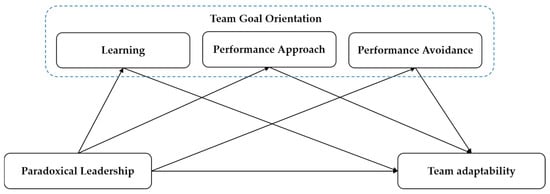
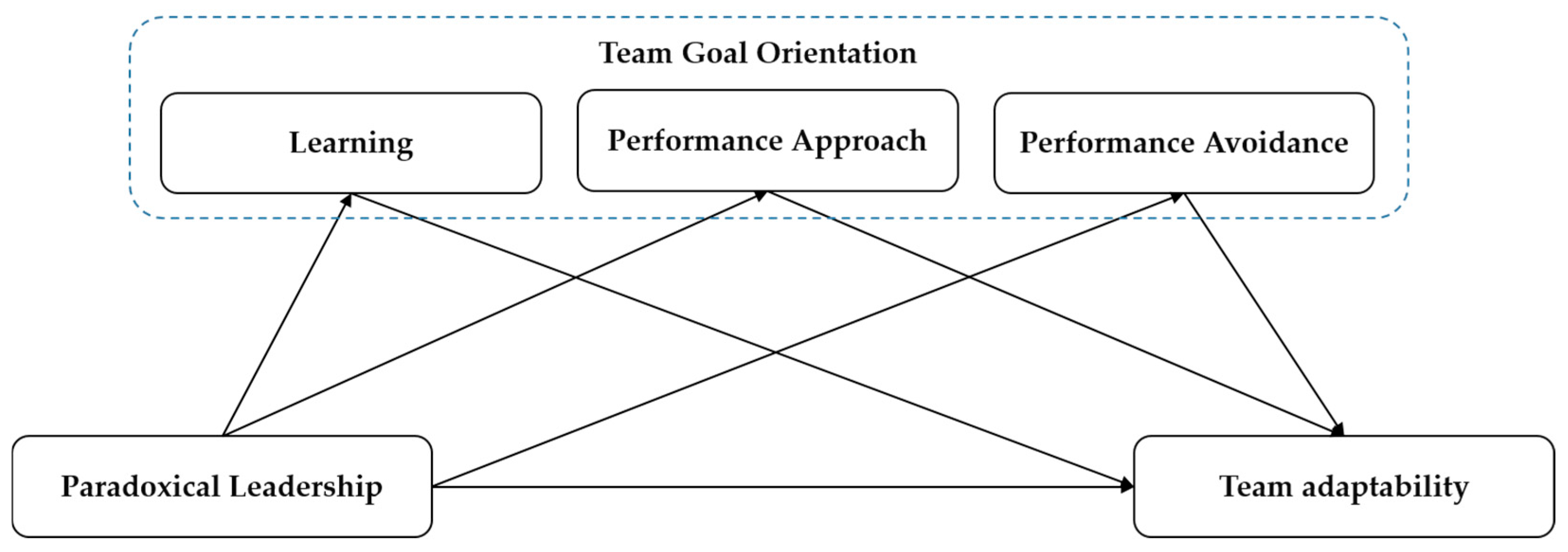
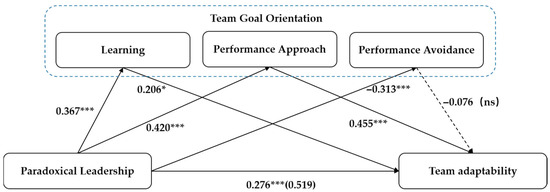
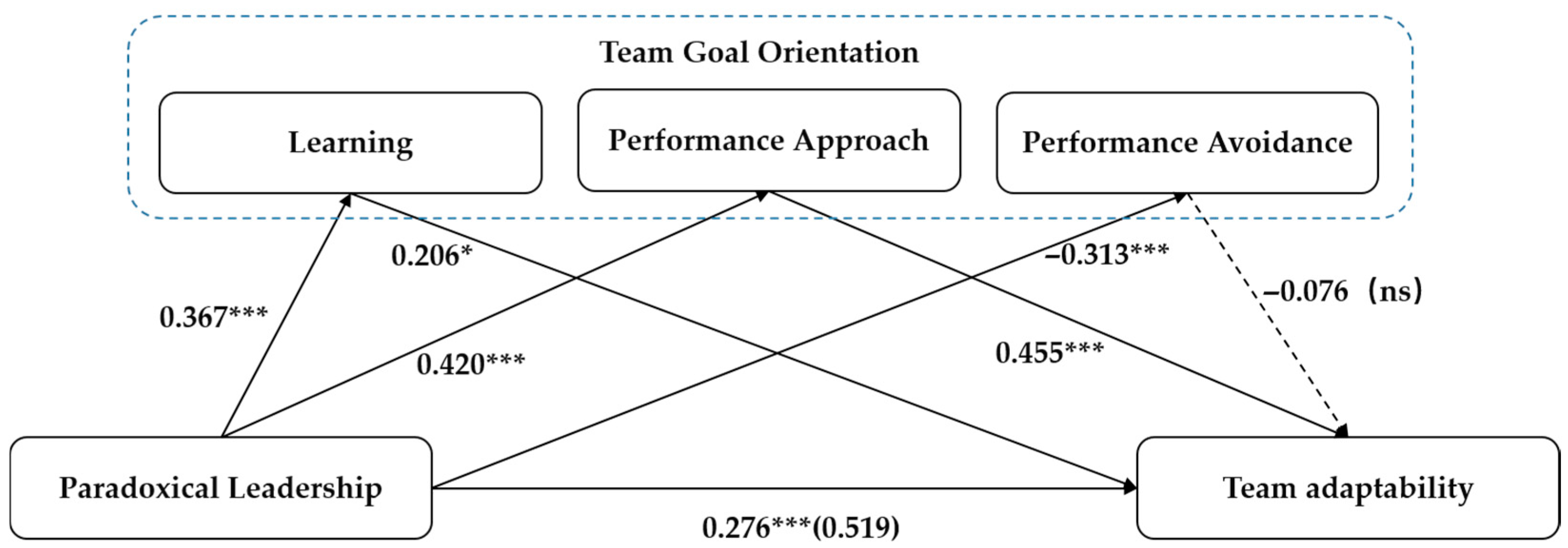

Disclaimer/Publisher’s Note: The statements, opinions and data contained in all publications are solely those of the individual author(s) and contributor(s) and not of MDPI and/or the editor(s). MDPI and/or the editor(s) disclaim responsibility for any injury to people or property resulting from any ideas, methods, instructions or products referred to in the content. |
© 2026 by the authors. Licensee MDPI, Basel, Switzerland. This article is an open access article distributed under the terms and conditions of the Creative Commons Attribution (CC BY) license.