


Abstract
As industrial internet platforms increasingly play a central role in the digital transformation of manufacturing, they have become crucial areas for manufacturing enterprises to pursue digital innovation. Current academic research has paid relatively little attention to the digital innovation of participating enterprises within industrial internet platforms, failing to fully reveal the driving mechanisms of such innovation in this context. Based on the TOE framework and adopting a platform participant perspective, this study employs fuzzy set qualitative comparative analysis (fsQCA). By surveying 169 manufacturing enterprises participating in industrial internet platforms, it integrates seven key antecedents—technology availability, technology fit, digital leadership, organizational structural flexibility, resource orchestration, policy support, and competitive pressure—to systematically explore the complex influence pathways of multi-factor concurrent interactions on digital innovation. The research results show that the high digital innovation of manufacturing enterprises on the industrial internet platform includes precise implementation type, exploration-oriented type and co-evolution type, while the non-high digital innovation paths include technology blocking type, dual-core absence type and system disorder type. These conclusions expand the theoretical framework for digital innovation in manufacturing enterprises within industrial internet platforms and offer practical recommendations for their digital innovation practices.
1. Introduction
As the digital economy accelerates, driving deep integration between digital innovation and the real economy has become an inevitable path for manufacturing enterprises to break through innovation boundaries and achieve high-quality development [1]. Compared to traditional innovation models, digital innovation possesses distinctive characteristics such as self-growth, openness, and availability. Within industrial internet platform applications, the integration and reconstruction of various reprogrammable digital resources with traditional physical resources have become core elements underpinning digital innovation [2,3]. At a major conference in China, the major aims regarding this were made clear: “Improve systems to promote the deep integration of the real economy and the digital economy. Accelerate the advancement of new industrialization, foster and expand advanced manufacturing clusters, and drive the high-end, intelligent, and green development of manufacturing”. As a key vehicle for driving the digital, networked, and intelligent development of industries, industrial internet platforms serve as the core engine for achieving this strategic goal. By systematically integrating open resources both within and outside industrial chains, they establish a new architecture system with regenerative properties. This enables enterprises of varying scales within the industrial chain to collaboratively create digital value [4,5]. Simultaneously, by joining industrial internet platforms, manufacturing enterprises can not only directly access advanced production tools and data resources but can also efficiently integrate heterogeneous resources and knowledge through the platform ecosystem, significantly enhancing their digital innovation capabilities. Against this backdrop, digital innovation—defined as a systematic transformation activity that reorganizes products, processes, or business models based on digital technologies [6]—centers on enterprises identifying and leveraging action opportunities enabled by digital technologies and data resources. By empowering business transformation and upgrading through digital technologies, it ultimately drives improvements in innovation performance [7]. However, in practice, although many enterprises have carried out large-scale resource investment in digital construction, it is difficult to effectively transform digital investment into expected income return, and they often fall into the dilemma of digital investment and income mismatch. Therefore, how manufacturing enterprises, as participants in industrial internet platforms, can leverage these platforms to effectively drive digital innovation has become a critical research area and a practical challenge requiring urgent resolution by both academia and industry.
Digital innovation exhibits dual characteristics, encompassing both process and outcome attributes [8]. From the process perspective, digital innovation is deeply integrated into the entire production and operational workflow of enterprises, covering key stages such as initiation, development, and implementation [9]. Its evolution is significantly influenced and empowered by various digital technologies, including the Internet of Things, big data, and cloud computing [6]. From the outcome perspective, the effectiveness of digital innovation is shaped by multiple factors, such as the role of the Chief Information Officer [10], the enabling capabilities of industrial internet platforms [11], and data-rich environments [12]. In summary, although existing research has separately explored factors related to technology, individuals, and the environment, several research gaps remain. First, there is a relative scarcity of studies focusing exclusively on manufacturing enterprises participating in industrial internet platforms. For participant enterprises with limited resources and relatively weak capabilities, leveraging digital platforms to drive digital innovation has become a crucial pathway. However, given the extensive demand for digital resources in innovation activities, the resource reserves and innovation capabilities of a single enterprise often prove insufficient. Therefore, it is essential to rely on the connectivity and enabling functions of platforms, integrate multi-actor collaborative networks, and advance digital transformation through resource complementarity and collective collaboration. Second, regarding the research content, existing studies tend to focus on exploring the linear relationships between specific factors or platform entities and the innovation outcomes of participating enterprises, without adequately addressing the compound effects arising from the joint influence of multiple key elements. In the context of digital platforms, the innovation activities of participating enterprises exhibit complex characteristics involving multi-actor interactions and cross-level linkages [13]. On the one hand, there are close multilateral interactions between the platform provider, upstream and downstream partners, and product users. On the other hand, these innovation activities are embedded within a hierarchical structure encompassing micro-level individual decisions, meso-level organizational collaboration, and the macro-level platform environment. However, the current academic literature has yet to systematically analyze the internal operating mechanisms and pathway logic through which participating enterprises achieve digital innovation by leveraging digital platforms. This gap makes it difficult to clearly explain the specific mechanisms by which these enterprises overcome existing resource constraints and successfully realize digital innovation.
Based on this, in the context of industrial internet platforms, applying configurational thinking is essential to explore the factors influencing digital innovation in manufacturing enterprises from the perspective of platform participants. This approach enables a systematic analysis of the interactions among various factors, revealing how their synergistic effects enhance the digital innovation process within manufacturing enterprises engaged in the platform. Therefore, which factors influence digital innovation in manufacturing enterprises from the viewpoint of platform participants? What are the pathways to improve digital innovation in these enterprises? Existing research indicates that the TOE (Technology–Organization–Environment) framework is well-suited for studying digital applications in Chinese enterprises [14]. Building on this and considering the current characteristics of factors influencing digital innovation in manufacturing enterprises, this paper introduces the TOE framework and employs the fuzzy set qualitative comparative analysis method (fsQCA). Using a sample of 169 manufacturing enterprises operating on industrial internet platforms, it systematically analyzes the complex causal relationships between platform-participating manufacturing enterprises and digital innovation. This analysis further clarifies the influencing factors and adaptive configurational pathways for digital innovation in participating enterprises, providing both a theoretical foundation and practical guidance for manufacturing enterprises to implement precise and efficient digital innovation.
2. Literature Review and Framework Construction
2.1. Literature Review
2.1.1. Enterprises Participating in Industrial Internet Platforms
Industrial internet platforms are oriented toward the development needs of digitalization, networking, and intelligent transformation in manufacturing. Built upon cloud platforms, they establish integrated service systems for the collection, aggregation, and analysis of massive data, providing core support for the ubiquitous connection, elastic supply, and efficient optimization of manufacturing resources. The participants in industrial internet platforms can be categorized into three major groups: the platform itself, platform-participating enterprises, and platform-complementary enterprises. Enterprise-level platforms currently dominate the landscape. These platforms are established and operated by specific enterprises to provide specialized services to other companies within their industrial chains, giving the platform entities a pronounced corporate identity—for example, Haier Group as the builder of the COSMOPLat. Platform-participating enterprises are entities that join the platform primarily to access innovation resources. Specifically, these are companies that need to complete the application process and pass the platform’s qualification review. The industrial internet plays a dual role as both a consumer and provider of digital knowledge within the platform ecosystem. Platform-complementary enterprises primarily consist of specialized service providers operating at the resource layer of the industrial internet platform’s physical architecture. Their core function is supplying modular knowledge capable of integrated application, making them the primary providers of modular knowledge for the platform. In summary, platform-complementary enterprises focus on supplying modular knowledge, while industrial internet platforms serve as knowledge integrators. Leveraging their knowledge integration capabilities, these platforms deliver one-stop modular services to participating enterprises. Participating enterprises exhibit core characteristics including proactive resource seeking, embedded innovation implementation, and interactive value co-creation. They are not passive technology adopters but strategic actors who proactively embed themselves within the platform ecosystem to overcome resource constraints and acquire external digital capabilities. All their innovation activities are deeply embedded within the platform’s architecture, governance rules, and relational networks. Value co-creation is achieved through continuous interaction with multiple stakeholders, including platform operators and complementary enterprises. Based on this, this paper further focuses its research on user-participating enterprises within industrial internet platforms—specifically manufacturing enterprises that join as demand-side entities and consumers—aiming to seek and integrate both internal and external platform resources to drive their own digital innovation.
2.1.2. Enterprise Digital Innovation
The concept of digital innovation was first proposed by scholars such as Yoo, who defined it as “the process of combining digital and physical components to produce new products” [8]. In recent years, it has become a research hotspot in the field of innovation management [1]. The essence of digital innovation lies in digitally reconstructing and transforming the entire value chain, including products, processes, and business models [6]. Its implementation requires enterprises to strengthen their internal capabilities in applying digital technologies while also relying on external systems such as digital infrastructure and digital service platforms [15]. Compared to traditional innovation models, digital technology fundamentally reshapes existing innovation paradigms, leading to systemic transformations in core dimensions such as digital innovation actors, innovation factors, innovation boundaries, and innovation processes. First, the theoretical core of digital innovation centers on digital technology as the primary research focus, favoring an analytical perspective grounded in complex ecosystems. It emphasizes the interactive relationships and dynamic evolution among actors within these ecosystems [16]. Second, the research subjects of digital innovation exhibit an evolutionary trend toward openness, diversity, decentralization, and platformization. The form of innovation actors has expanded from single organizations to comprehensive ecosystems composed of diverse entities, breaking the limitations of traditional innovation actors [17]. Third, the strategic orientation of digital innovation no longer focuses solely on independent value creation by individual enterprises. Instead, it increasingly emphasizes achieving ecosystem-level value co-creation through deep integration of multiple innovation actors, highlighting the incremental value of collective synergy [18]. Therefore, as a crucial component of the industrial internet platform, further research on how the internal and external elements of platform-participating enterprises interact and influence the performance of digital innovation will help to reveal and deepen our understanding of the digital innovation mechanisms within the specific context of manufacturing enterprises engaged in the platform.
2.2. TOE Theoretical Analysis Framework
As a systematic analytical framework grounded in technology application contexts, the TOE framework integrates both internal/external organizational contexts and inherent technological attributes. It categorizes key elements influencing organizational decisions and behaviors into three dimensions: Technology, Organization, and Environment [19]. Within this framework, T represents technological factors, O denotes organizational factors, and E signifies environmental factors. Technological factors focus on the core characteristics inherent to the technology itself, which directly influence an organization’s willingness to adopt new technologies and its decision-making process. Typical examples include technological suitability [20] and technological complexity [21]. Organizational factors encompass core elements such as firm size, organizational resource endowment, core competency levels, and internal coordination mechanisms [22]. These influence the implementation process of new technologies by affecting the efficiency of internal resource allocation. Environmental factors specifically refer to the external context in which an organization operates, encompassing macro-level industry trends, market structure characteristics, competitive intensity, and government regulatory policies [23]. It is noteworthy that the specific manifestations of the three dimensions—technology, organization, and environment—vary significantly across different industries and application scenarios. Therefore, when applying the TOE framework for research, core influencing factors must be defined in conjunction with the specific research context. Targeted refinement and expansion are necessary to continuously enrich the framework’s theoretical content, thereby enhancing its adaptability to solving practical problems [24].
In practice, industrial internet platforms act as central drivers of digital innovation within manufacturing enterprises [25]. By integrating key elements such as data, technology, resources, and ecosystems, these platforms establish essential hubs that connect both the internal and external innovation environments of enterprises. Their multidimensional empowerment framework provides critical contextual support for analyzing the factors that drive digital innovation in participating enterprises. From the perspective of technical support, the digital technology foundation established by the platform lowers barriers for enterprises to adopt digital technologies by providing data analysis tools and modular knowledge resources, thereby forming the core technological basis for digital innovation [8,26]. At the enterprise level, variations in resource endowments, choices of innovation strategies, and the balance between reliance on platform resources and independent innovation directly influence the efficiency of execution and the selection of pathways for digital innovation efforts [13,27]. From the external context perspective, governance rules within the platform ecosystem, policy guidance, and market demand orientation collectively constitute the external support layer for digital innovation [28]. It is important to note that the digital innovation of enterprises participating in the platform is not driven by a single factor at one level; rather, it is a complex process involving dynamic coupling and mutual interaction among multiple internal and external conditions [1,29]. Different combinations of these factors lead to varying levels of innovation effectiveness. Therefore, it is evident that the digital innovation of participating enterprises is synergistically driven by factors at the technological, organizational, and environmental levels, consistent with the logical framework of the TOE model. In industrial internet platform enterprises, digital innovation results from the dynamic interplay of technological empowerment, organizational support, and environmental constraints, rather than from any single factor. Given the diversity of configurations and theoretical perspectives, this study integrates Technology Availability Theory, Dynamic Capability Theory, and Institutional Theory to develop a TOE analysis framework. This framework examines the multiple driving pathways of digital innovation in manufacturing enterprises from the perspective of platform-participating companies.
2.3. Influence of TOE Factors on Digital Innovation in Manufacturing Enterprises from the Perspective of Platform Participation
2.3.1. Technological Factors
In the context of industrial internet platforms, technological enablement stems not only from the technical tools provided by the platform but more critically depends on the possibilities for innovative actions that platform technologies can offer participating enterprises, as well as the degree to which these possibilities effectively connect and integrate with the enterprises’ existing foundations. Affordance theory posits that digital technology is not a static tool but an enabling medium that offers organizations specific possibilities for action. The realization of technological value depends on the degree of alignment between the technology’s characteristics and the organization’s needs [30]. In the context of industrial internet platforms, technological affordances manifest as the platform’s potential action possibilities for enterprises’ digital innovation, such as data collaboration, modular development, and ecosystem linkage. The concept of technological affordances emphasizes that a platform is not a static toolbox but a dynamic environment filled with “calls to action” [31]. Its embedded capabilities—such as data analytics, collaborative connectivity, and modular development—reveal potential pathways for manufacturing enterprises to achieve digital innovations like process optimization, precision operations, and ecosystem collaboration [32]. Technological adaptability, meanwhile, refers to the degree of compatibility between an enterprise’s existing technological foundation and the platform’s offerings, which determines whether the technological affordances can be effectively activated and transformed. Together, these two aspects form a comprehensive technology-driven logic of ‘technology potential release—technology implementation matching,’ serving as the fundamental premise for enterprises to pursue digital innovation through the platform. Technological adaptability emphasizes the correlation and collaborative alignment between a company’s proprietary technological reserves and platform-based technical resources. This encompasses compatibility in technical standards and data formats, as well as complementary spaces for technological capabilities [33]. This compatibility not only avoids innovation efficiency losses caused by technological mismatches but also builds core competitive advantages through heterogeneous technology combinations [27]. It serves as a critical prerequisite for manufacturing enterprises to compensate for their technological shortcomings and achieve digital innovation through platforms [26]. Therefore, technological availability and technological adaptability jointly form the core foundation for platform-participating enterprises to apply and integrate digital technologies, profoundly influencing their digital innovation pathways.
2.3.2. Organizational Factors
The realization of digital innovation ultimately depends on an organization’s systemic capability to translate external technological features into tangible value creation. This organizational driver encompasses an integrated capability framework comprising three core dimensions: strategy, structure, and process. The dynamic capabilities theory emphasizes that enterprises must rapidly adapt to changes in the external environment through dynamic processes such as sensing opportunities, integrating resources, and restructuring systems to achieve sustainable competitive advantage [34]. Among these capabilities, digital leadership represents a high-level dynamic capability that enables enterprises to identify digital opportunities and guide transformational initiatives. Organizational structural flexibility provides the necessary support for quickly reorganizing resources and responding to changes within the platform ecosystem. Resource orchestration serves as the core execution mechanism through which enterprises integrate internal and external resources, transforming platform empowerment into innovative outcomes. Together, these three elements form an organizational capability loop—leadership, organizational support, and resource implementation—that serves as the key driver for translating digital innovation from potential into reality. Specifically, digital leadership serves as the strategic core of digital transformation. Senior managers with a digital vision can articulate platform value, shape consensus for change, and drive cross-departmental collaboration. Their strategic decisiveness is crucial for overcoming organizational inertia and steering innovation direction [35]. Digital leadership is a crucial organizational element that drives digital innovation within enterprises. Existing research often conceptualizes it as a structural capability that coordinates digital strategy and cross-departmental resources [36]. Building on Solberg et al. (2020) [37] and their theory of the digital mindset, this study argues that digital leadership is not merely a structural capability but an organic integration of structural capabilities and cognitive cultural attributes. At its core, it also encompasses the digital mindset of managers and employees—that is, their fundamental beliefs about the value of digital technology, innovation through trial and error, and continuous learning. Secondly, organizational structural flexibility provides the essential organizational vehicle for innovation. Faced with rapidly changing collaboration demands and market feedback within platform ecosystems, rigid hierarchical structures hinder responsiveness. In contrast, flexible structures featuring delegation mechanisms, cross-functional teams, and agile processes enable enterprises to dynamically reorganize internal units, continuously explore, and solidify innovation models [38]. Finally, resource orchestration profoundly reveals the dynamic management processes underlying innovation. It emphasizes that managers must proactively build, bundle, and leverage both internal and external resources [39]. In platform participation, this implies that enterprises must not only acquire platform resources but also strategically match and deeply integrate them with their own heterogeneous resources. This orchestration process is not a simple aggregation but involves three dynamic stages—structuring, bundling, and leveraging—ultimately building complex organizational capabilities that are difficult for competitors to replicate. This transforms the generic technological possibilities offered by platforms into unique digital innovation drivers for the enterprise.
2.3.3. Environmental Factors
Corporate digital innovation is susceptible to external contextual influences. Institutional theory emphasizes that corporate behavior is influenced by three types of institutional pressures: regulatory, normative, and cognitive. Organizations must conform to these external institutional demands to gain legitimacy and access resources [40]. Government support acts as a regulatory institutional force, providing external empowerment and legitimacy for corporate digital innovation through policies, funding, and pilot programs. Industry pressure represents normative and competitive institutional forces, compelling companies to align with industry digitalization trends and pursue innovation. Together, these two forces—‘positive incentives’ and ‘negative coercion’—constitute the external institutional context that drives corporate digital innovation [41]. On one hand, governments provide critical support for manufacturing enterprises’ digital innovation through industrial planning, fiscal subsidies, demonstration projects, and standardization initiatives. On the other hand, facing highly homogeneous market competition, enterprises often fall into the strategic dilemma of competitive convergence. This structural pressure from the industry constitutes a compelling external force driving enterprises toward technological breakthroughs and strategic transformation. For enterprises participating in industrial internet platforms, environmental drivers simultaneously offer opportunity windows and resource support from policy dividends while also imposing survival and development pressures stemming from the industry ecosystem’s “progress or perish” dynamic. The ability to keenly perceive and respond to these dual environmental forces directly impacts their digital innovation journey.
The theoretical model presented in this paper is ultimately constructed as shown in Figure 1. This model highlights the combined influence of seven antecedent conditions on digital innovation in manufacturing enterprises from the perspective of platform-participating companies. These conditions are categorized into three levels: at the technological level—technological affordance and technological adaptability; at the organizational level—digital leadership, organizational structural flexibility, and resource orchestration; and at the environmental level—government support and industry pressure.
Figure 1.
Research framework diagram. Source(s): Authors’ own work.
3. Research Design
3.1. Research Methodology
Miller [42] advocates a configurational perspective centered on elucidating the interdependence and synergistic effects among antecedent conditions on outcome variables, offering a novel theoretical framework to overcome the inherent limitations of traditional regression analysis. The emergence of qualitative comparative analysis (QCA) offers a viable approach to unraveling such complex configurational problems. By organically integrating the in-depth analytical power of case studies with the systematic advantages of variable-based research, QCA leverages set-theoretic analysis to reveal set-level associations between antecedent configurations and outcome variables. This methodology enables the verification of three core assumptions inherent in complex causal relationships: causal combinability, causal equivalence, and causal asymmetry [43]. As a vital branch of the QCA methodology, Fuzzy Set Qualitative Comparative Analysis (fsQCA) employs set theory to conceptualize antecedent conditions and outcome variables as membership values within the 0–1 range through Boolean operations. This approach identifies necessary conditions or mutually exclusive relationships among subsets [44], fully aligning with the core objectives of configurational analysis. Compared to Clear Set Qualitative Comparative Analysis (CS/QCA) and Multi-Valued Set Qualitative Comparative Analysis (MV/QCA), fsQCA uniquely excels at handling variable degree variations and partial membership issues. Therefore, this study employs fsQCA within the TOE framework to analyze seven key factors across three levels: technical level (technology availability, technology adaptation), organizational level (digital leadership, organizational structure flexibility, resource arrangement), and environmental level (government support, industry pressure). By employing fuzzy set qualitative comparative analysis (fsQCA), this study aims to explore the causal configuration pathways leading to two distinct outcomes—high digital innovation versus non-high digital innovation—among manufacturing enterprises within the industrial internet platform context.
3.2. Sample Data
Data collection was conducted via questionnaire surveys targeting manufacturing enterprises with prior experience using industrial internet platforms. The questionnaire comprised the following sections: The first section explains and defines the concept of digital innovation within enterprises, focusing specifically on manufacturing companies. Before proceeding, respondents are asked to indicate whether they have used industrial internet platforms such as Haier COSMOPlat, Inspur Cloud, Alibaba Cloud, Bluetron, or others, and whether they belong to a manufacturing company. Questionnaires completed by respondents who have not used these platforms or are not part of a manufacturing company will be considered invalid. The second section gathered basic information about the respondent’s enterprise, including industry sector and company age, and no personal information of employees was involved. The third section measured relevant variables. Furthermore, to ensure the applicability and accuracy of questionnaire items, two professors in the relevant field were invited to evaluate the questionnaire prior to formal survey implementation. Based on their feedback, the wording and structure of the scales were further refined to guarantee the questionnaire’s validity.
Data collection occurred from May to November 2025, primarily through three methods: First, leveraging resources such as university alumni networks, fellow students, and the Industrial Internet Platform Association, manufacturing enterprises operating on industrial internet platforms were selected. Surveys were conducted among middle-level and higher management personnel, primarily through face-to-face distribution of paper questionnaires and interviews. A total of 50 paper questionnaires were distributed, with 45 valid responses collected, yielding a 90% response rate. Second, data was collected by distributing paper questionnaires and conducting interviews with relevant manufacturing enterprise managers at conferences related to industrial internet and other relevant events. A total of 100 paper questionnaires were distributed. Among these, 36 were deemed invalid due to obvious carelessness in completion or errors/omissions, resulting in 64 valid paper questionnaire returns, yielding a 64% return rate. Third, through the Credamo platform (https://www.credamo.com), we distributed survey questionnaires to manufacturing enterprises on the industrial internet platform. A total of 100 questionnaires were distributed. After excluding 40 questionnaires with abnormally short completion times or exhibiting obvious patterns in responses, 60 valid questionnaires were recovered, achieving a recovery rate of 60%. The online samples were distributed across more than 20 provinces and municipalities, including Shanxi, Yunnan, Guizhou, Hubei, Hunan, Ningxia, Shanghai, Jiangsu, Zhejiang, and Hebei. Statistically, this study distributed 250 questionnaires and collected 169 valid responses, achieving a 67.6% recovery rate. Sample characteristics are detailed in Table 1.
Table 1.
Sample characteristics (n = 169).
3.3. Variable Measurement
To ensure the reliability and validity of the measurement instruments, this study referenced established scales from existing literature wherever possible. These scales were then modified and adapted to suit the context of industrial internet platforms. A unified 5-point Likert scale was adopted, where “1” indicates “Strongly Disagree” and “5” indicates “Strongly Agree”. Technology availability (TA) refers to the research of Chatterjee et al. [45] and Cheng Cong et al. [46]; technology adaptation (TC) refers to the research of Lin and Huang [47]; digital leadership (DL) refers to the research of Benitez et al. [48], Li and Miao [49]. The organizational structure flexibility (OSF) refers to the research of Bag et al. [50], the resource orchestration (RO) measurement refers to the research of Sirmon [39], the government support (GS) mainly refers to the research of Li and Atuahene-Gima [51], and the competitive pressure (CP) refers to the research of Delmasm and Toffel [52]. Digital innovation (DI) refers to the research of Kohli and Melville [16], Henfridsson et al. [53] and Jansen et al. [54]. The specific measurement items are shown in Table 2.
Table 2.
Results of reliability and convergent validity analysis of the research scale.
This study employed SPSS 24 for reliability and validity testing. The analysis results are presented in Table 2. All variables demonstrated Cronbach’s α coefficients exceeding 0.7, and the total item correlation coefficient (CITC) exceeded 0.5. Removing any item did not improve Cronbach’s α, confirming the scale’s excellent reliability. To further evaluate the structural validity of the scale, this study conducted a confirmatory factor analysis (CFA) using AMOS 26. The standardized factor loadings for each item exceeded 0.6 and were statistically significant at p < 0.001. Metrics such as the average variance extracted (AVE) and composite reliability (CR) also met requirements, indicating the scale possesses good convergent validity. Furthermore, the square root of the average variance extracted was greater than the absolute value of the correlation coefficient for each variable, demonstrating good discriminant validity for the questionnaire. The results are presented in Table 3. According to the data in Table 4, the fit indices of the eight-factor model (χ2/df = 1.517, GFI = 0.849, CFI = 0.921, NFI = 0.803) are higher than those of the competing models, indicating that the scale demonstrates strong convergent and discriminant validity.
Table 3.
Results of discriminant validity analysis.
Table 4.
Model fitting indexes.
In addition, this study employed Harman’s single-factor test to assess the presence of common method bias. The results indicate that the maximum variance explained by a single factor is 36.398%, which is below the 40% threshold [55], suggesting that common method bias is not a significant concern.
3.4. Variable Calibration
Variable calibration forms the foundation of fuzzy set qualitative comparative analysis (fsQCA) [56]. Following the methodology of Ragin et al. [57], this study conducted descriptive statistical analysis on both condition and outcome variables and performed direct calibration. Based on the descriptive statistics of the cases and following the approach of Garcia-Castro and Francoeur (2014) [58], the calibration points were set at the 90%, 50%, and 10%. Given the left-skewed distribution of the variables, the 90% is more effective than the 95% in capturing the typical state of “high digital innovation”, avoiding the issue of overly narrow membership sets caused by extreme values dominating. In summary, this study uses the 90%, 50%, and 10% of the case sample descriptive statistics as calibration anchors for full membership, the crossover point, and full non-membership for both antecedent conditions and outcome variables. The calibration anchors and descriptive statistics for each variable are presented in Table 5.
Table 5.
Calibration anchors and descriptive statistics for conditions and outcomes.
4. Empirical Analysis
4.1. Necessity Analysis of Single Conditions
Prior to configurational analysis, a necessity analysis must be conducted on the condition and outcome variables. Referencing Ragin and Rihoux [59], this study sets the consistency threshold at 0.9. Conditions with consistency scores exceeding 0.9 are deemed necessary. As shown in Table 6, none of the conditions achieved a consistency score above 0.9. This indicates that no single condition constitutes a necessary condition for digital innovation, making configurational analysis essential.
Table 6.
Analysis of necessary conditions for digital innovation.
4.2. Sufficiency Analysis of Configuration Conditions
This paper employs fsQCA to conduct a configurational analysis of the digital innovation implementation pathways of manufacturing enterprises from the perspective of platform-participating companies. For small to medium sample sizes (approximately 10 to 100 cases), the frequency threshold is generally no less than 1, whereas for larger samples, this value can be appropriately increased [60], provided that more than 75% of the total cases are included [61]. Considering the sample size in this study, we adopt Ragin’s (2008) [57] approach to screen combinations in the truth table, using 1.5% of the original number of cases as the standard. When the frequency threshold is set to 2, the samples included in the analysis account for 77.5%, meeting this standard; however, when the frequency threshold is set to 3, the samples included account for only 55%, which does not meet the required proportion. Therefore, this paper sets the case frequency threshold at 2. Second, following the recommendations of Du and Jia (2017) [62], the original consistency threshold of 0.8 and the PRI consistency threshold of 0.7 were applied. Subsequently, by analyzing intermediate and simplified solutions, the configuration results are presented in Table 7 and Table 8. The six configurations for high-digital innovation all exhibit consistency above 0.8, with an overall consistency of 0.915 and total coverage of 0.629, demonstrating good explanatory power. This result aligns with the core principles of fsQCA methodology, which emphasize multiple conjunctural causation and equifinality. Configurational analysis does not aim to exhaustively explain all cases; the remaining 37% of unexplained cases reflect the high heterogeneity and limited diversity inherent in digital innovation-driven pathways. The five configurations constituting non-high-digital innovation all feature the absence of core conditions across three levels yet maintain consistency above 0.8. Their overall consistency is 0.943 with total coverage of 0.562, yielding results with strong interpretability.
Table 7.
High digital innovation configuration.
Table 8.
Non-high digital innovation configurations.
4.2.1. Analysis of High Digital Innovation Pathways
Based on the theoretical model constructed earlier, the six high-digital innovation configuration paths in Table 7 are analyzed across seven dimensions of manufacturing enterprises’ digital innovation:
(1) Precision Implementation Type: This corresponds to paths H1a and H1b, where technology fit, resource orchestration, and government support play central roles. In H1a, technology availability and executive support serve as supplementary factors; in H1b, digital leadership, organizational structural flexibility, and industry pressure act as supplementary factors. In this configuration, small and medium-sized manufacturing enterprises rely on pilot demonstrations, financial support, and resource guarantees provided by government digital transformation policies to establish a stable external institutional foundation for digital innovation. They achieve deep compatibility between their own technology systems and the industrial internet platform infrastructure through technology fit, thereby reducing transformation losses caused by technological mismatches. By leveraging systematic resource orchestration, they integrate, bundle, and utilize elements such as internal and external platform data, technology, and ecosystems, unlocking the critical link that converts external enablement into internal innovation momentum. Under the support of core conditions, enterprises following H1a expand their innovation implementation space by relying on platform technology availability, supplemented by executive support to overcome organizational inertia and resistance to transformation. H1b anchors strategic direction through digital leadership, enhances operational adaptability via organizational structural flexibility, and strengthens transformation execution motivation through industry pressure. The primary pathway through which this configuration influences manufacturing enterprises’ digital innovation participation on the platform is through enterprises that capitalize on policy dividends, using technology fit as the implementation foundation and resource orchestration as the integration core in combination with multiple supplementary conditions to precisely align with the platform’s empowerment system. This efficiently advances technology integration, resource consolidation, and process optimization, ensuring steady and effective digital innovation implementation. Because this configuration focuses on precise technology matching, efficient resource integration, and targeted policy empowerment—driving digital innovation implementation through a systematic and refined execution logic—it is named the ‘Precision Implementation’ digital innovation path. This finding echoes and extends Mai et al. (2024)’s view that government policies empower SME digital transformation through IT infrastructure [63], confirming the coupling effect between external institutional resources and internal integration capabilities. Interestingly, in this path, technology availability serves only as a supplementary rather than a core condition, engaging in a theoretical dialogue with Ballerini et al. (2023) [64], who emphasize that platform availability directly drives performance. This suggests that under government support contexts, the role of availability may be diluted or replaced by government empowerment mechanisms, indicating that the applicability boundaries of availability theory need to consider the moderating effects of institutional environments. A typical case is Zibo Luzhong Refractory Materials Co., Ltd., a small and medium-sized enterprise in the traditional refractory materials sector. The company capitalized on policy support for the digital transformation of local characteristic industrial clusters, deeply integrating with the COSMOPlat Industrial Internet Platform to achieve high compatibility between its kiln production lines and the platform’s intelligent technologies. Through resource orchestration, it integrated shared platform testing equipment, production data, and technical solutions. Supported by strategic leadership from management and internal flexible organizational adjustments, the company completed a full-process digital transformation and optimization of production. Relying on precisely implemented digital initiatives, it achieved breakthroughs in digital innovation and successfully completed the digital transformation and upgrading of a traditional manufacturing enterprise. Reason: The text was revised to improve clarity, coherence, and readability by restructuring sentences, enhancing vocabulary, and correcting punctuation and grammar. Technical terms were clarified to ensure precision, and the flow of ideas was optimized for better comprehension. The meaning and technical accuracy were preserved while making the text more accessible and professionally polished.
(2) Exploration-Oriented: This corresponds to paths H2a and H2b, where technological affordances, organizational structural flexibility, and resource orchestration play central roles. In H2a, digital leadership serves as the primary condition, with government support acting as a supplementary factor; in H2b, government support and industry pressure function as supplementary factors. In this configuration, small and medium-sized manufacturing enterprises fully leverage the technological affordances provided by industrial internet platforms to tap into diverse innovation potentials such as data collaboration, modular development, and ecosystem linkage, thereby expanding the boundaries of digital innovation exploration. By relying on highly flexible organizational structures, they dismantle traditional bureaucratic barriers and departmental constraints, establishing a foundation for rapid trial-and-error, agile responses, and dynamic adjustments to adapt to the ever-changing innovation scenarios within the platform ecosystem. Furthermore, through systematic resource orchestration, they integrate and efficiently utilize innovation resources—such as technology, data, and knowledge—both inside and outside the platform, providing stable resource support for continuous exploration. Under the support of core conditions, enterprises in H2a anchor their exploratory direction and consolidate consensus on transformation through digital leadership while also leveraging government support to obtain policy pilot programs and financial subsidies. In H2b, enterprises cultivate an innovative environment based on policy support and are driven by industry competition pressure to accelerate their pace of exploration. The primary pathway through which this configuration influences digital innovation among manufacturing enterprises participating in the platform is when enterprises utilize platform technological affordances as the source of innovation, organizational structural flexibility as the vehicle for agile trial-and-error, and resource orchestration as the integration core. Combined with strategic guidance, policy empowerment, and market pressure, they proactively break through traditional manufacturing models and openly explore digital innovation solutions across R&D, production, and service stages, achieving a transformation from passive adaptation to active exploration. This configuration emphasizes leveraging the technological potential of platforms and conducting open innovation through flexible organizational structures, highlighting the proactive pursuit of digital innovation directions and models. Therefore, it is termed the “Exploration-Oriented” digital innovation path. This finding supports the theoretical perspective proposed by Fan et al. (2024) [65], which posits that meaning construction and resource orchestration co-evolve to drive the development of digital innovation ecosystems. Furthermore, it provides configurational-level empirical evidence for Wang et al. (2025) [66] on how artificial intelligence applications facilitate exploratory digital innovation through cross-boundary search. A typical example is Jinan Heavy Industry Co., Ltd., a company deeply rooted in the mill equipment manufacturing sector. It proactively engaged with the Inspur Yunzhou Industrial Internet Platform, extensively leveraging the platform’s technological capabilities, such as the Zhiyie large model and intelligent algorithms, to explore pathways for the intelligent upgrading of traditional equipment. The company dismantled departmental barriers to form cross-disciplinary R&D teams and established a flexible innovation organization. Through resource orchestration, it integrated Inspur Yunzhou’s industrial data, intelligent solutions, and its own equipment manufacturing expertise to build an intelligent mill innovation system. Under the digital strategic leadership of management and with local policy support, the company successfully developed intelligent mills featuring predictive maintenance and energy consumption optimization functions, overcoming challenges associated with traditional equipment operation. Simultaneously, it actively expanded multi-domain application scenarios, achieving a breakthrough in the digital upgrading of equipment manufacturing through proactive exploratory innovation.
(3) Co-evolutionary Type: Corresponding to paths H3a and H3b, technological availability, technology adaptation, digital leadership, and industry pressure play central roles. In H3a, policy support serves a supplementary function, while in H3b, organizational flexibility and resource orchestration remain pivotal. In this configuration, manufacturing enterprises leverage the technological availability of industrial internet platforms to continuously explore potential value in data interoperability, ecosystem collaboration, and modular innovation, thereby steadily expanding their digital innovation space. Through technology adaptation, they achieve deep compatibility among their production systems, technological frameworks, and platform infrastructure, ensuring efficient and seamless technology implementation and innovation transformation. Senior digital leadership coordinates internal transformation and external ecosystem linkages, fostering consensus on collaborative innovation and dismantling barriers to cross-entity cooperation. The intense competitive pressure from industry-wide intelligent upgrades compels enterprises to move beyond independent innovation models and proactively integrate into platform ecosystems for joint innovation. Supported by these core conditions, H3a enterprises secure transformation funding, pilot qualifications, and industrial guidance through policy support, thereby providing institutional guarantees for co-evolution. H3b enterprises overcome internal and external collaboration barriers through organizational flexibility and achieve efficient integration of enterprise, platform, and supply chain resources via resource orchestration, enhancing the effectiveness of collaborative innovation. The primary pathway through which this configuration influences manufacturing enterprises’ participation in digital innovation on platforms is as follows: enterprises, empowered by platform technology and with their own technology adaptation as a prerequisite, guided by digital strategy leadership and driven by industry pressure—combined with policy support, organizational flexibility, and resource integration—engage deeply with platforms and supply chain partners. Through technological iteration, resource sharing, and joint model development, they achieve dynamic adaptation, mutual growth, and continuous innovation. This configuration fundamentally reflects the innovation logic of two-way interaction, synchronized growth, and continuous iteration among enterprises, platforms, and ecosystem partners. It emphasizes co-evolution and upgrading through multi-party collaboration, which is why it is termed the ‘Co-evolutionary Type’ digital innovation path. This finding aligns with the micro-mechanisms of co-evolution between digital transformation strategies and platformization processes proposed by Iden and Bygstad (2025) [67], as well as Chen et al.’s (2025) research on strategic interactions between governments and platform enterprises in the collaborative governance of cross-domain digital innovation ecosystems [68]. A typical example is Shandong Zhengkai New Materials Co., Ltd., a small-to-medium manufacturing enterprise specializing in high-end spinning production. The company proactively connected to the COSMOPlat industrial internet platform, leveraging the platform’s technological capabilities to explore large-scale customized innovation opportunities. By adapting technology, it seamlessly integrated its spinning equipment with the platform’s intelligent scheduling system. Senior management established a digital collaborative innovation strategy and, in response to competitive pressures from customization and intelligent upgrades in the textile industry, actively integrated into the Kaos textile industry ecosystem to drive collaborative innovation. Supported by local policies, the company formed a flexible cross-ecosystem collaboration team and, through resource orchestration, integrated the platform’s industrial big data with its own manufacturing technologies. Together, they co-developed an intelligent spinning production management platform, achieving full-process digital collaboration. Through continuous interaction with the platform ecosystem, the company iteratively upgraded its production model and product system, realizing simultaneous improvements in its digital innovation capabilities and supply chain collaboration.
4.2.2. Analysis of Non-High Digital Innovation Pathways
Based on the theoretical model established earlier, we analyze the five non-high-digital innovation configuration paths in Table 8 across seven dimensions of manufacturing enterprises’ digital innovation: technology blockage type, dual-core deficiency type, and system dysfunction type.
(1) Technology Blockage Type: This corresponds to paths N1a and N1b. The N1a path is characterized by the absence of core conditions such as technology availability, government support, and industry pressure, while technology adaptation and resource orchestration are only marginally present. This configuration indicates that the lack of technology availability deprives enterprises of the essential technical support required to pursue platform-based digital innovation. Combined with insufficient policy support, weak competitive pressure, and limited capabilities in technology adaptation and resource integration, this results in an innovation bottleneck centered on technological deficiency. In the N1b path, the core conditions of technology availability, organizational flexibility, and industry pressure are missing, with technology adaptation and resource orchestration also marginally insufficient. The primary issue remains the lack of technology supply, further exacerbated by inadequate organizational flexibility and the absence of competitive impetus. Consequently, enterprises are unable to establish the technological infrastructure and organizational foundations necessary for digital innovation. Overall, both paths suffer primarily from the absence of critical technological elements, which prevents enterprises from leveraging platform empowerment and hinders the coordination of internal and external innovation factors. Digital innovation is directly obstructed at the technological level. Essentially, this represents a “source-level innovation blockage” caused by insufficient technology supply within platform empowerment scenarios. Therefore, this study classifies these paths as the “Technology Blockage Type”.
(2) Dual-Core Absence Type: This corresponds to the paths N2a and N2b. The N2a path is characterized by the absence of core conditions such as technology availability, technology adaptability, digital leadership, government support, and industry pressure. This configuration indicates that enterprises lack both the essential technological foundation required for platform-based digital innovation and the organizational leadership necessary to drive transformation. Simultaneously, external environmental drivers, including policy support and industry competitive pressure, are entirely missing. This multiple-core vacuum means that digital innovation lacks a technological basis, strategic leadership, and external impetus from the outset, making it impossible to establish the fundamental driving logic for digital innovation. In the N2b path, technology availability, technology adaptability, and digital leadership are also absent as core conditions, with organizational flexibility slightly lacking, while resource orchestration and industry pressure are marginally present. This configuration demonstrates that even if enterprises possess a weak resource integration base and some industry competitive pressure, the dual absence of core technology and organizational leadership remains a significant constraint. Scattered marginal conditions cannot compensate for the fundamental gaps in technology supply, technology adaptation, and digital strategic leadership, making it difficult to activate the core driving forces necessary for digital innovation. Overall, both paths suffer from the simultaneous absence of core enabling elements in the technological dimension and core leadership elements in the organizational dimension, causing digital innovation to lose its most critical technological foundation and strategic guidance. As a result, enterprises cannot leverage industrial internet platforms to generate effective innovation momentum. Essentially, this represents fundamental innovation stagnation caused by the simultaneous loss of the two core pillars of digital innovation, reflecting a vacuum at the core capability level. Therefore, this study classifies it as the “Dual-Core Absence Type”.
(3) Systemic Imbalance Type: This corresponds to path N3. This configuration is characterized by the absence of core conditions such as technology availability, digital leadership, organizational flexibility, government support, and industry pressure, with resource orchestration only marginally present. This indicates that enterprises lack essential elements across the three major dimensions of technological enablement, organizational support, and environmental drivers. Furthermore, resource orchestration, which is crucial for resource integration, is also slightly deficient. The technological, organizational, and environmental components remain isolated from one another, lacking collaborative linkage. As a result, the components of the digital innovation driving system fail to establish effective transmission, exhibiting features of “fragmented elements, broken linkages, and functional failure.” This systemic imbalance directly prevents enterprises from connecting with the technological empowerment provided by industrial internet platforms or harnessing innovation potential. They also struggle to leverage internal organizational capabilities to absorb external resources and advance innovation implementation, while lacking effective external policy and competitive environmental drivers. Consequently, the entire support system for digital innovation collapses. Even if sporadic innovation attempts occur, they rarely translate into effective outcomes due to the system’s inability to coordinate, ultimately resulting in a low level of digital innovation. Essentially, this represents a rupture in the overall operational logic of the digital innovation driving system, hindering its function of “element integration and collaborative empowerment”. It reflects a systemic-level operational imbalance rather than a partial deficiency at the element level. Therefore, this study classifies it as the “Systemic Imbalance Type”.
Based on the analysis above, the configuration results of this study further confirm the causal asymmetry inherent in digital innovation. From the perspective of configuration structure, the three types of high digital innovation configurations—precision implementation, exploration-oriented, and collaborative evolution—all demonstrate positive synergy among multiple factors. They emphasize the coupling and alignment of elements across different levels, such as technology, organization, and environment, to achieve innovation empowerment. In contrast, the three types of non-high digital innovation configurations exhibit distinct failure characteristics, including partial absence, and their formation mechanisms lack logical isomorphism with those of high digital innovation configurations. This difference clearly illustrates that the formation of high digital innovation and non-high digital innovation are two independent causal processes rather than symmetrical inverse relationships. In other words, the presence of a single factor may serve as core support for high innovation, but its absence does not necessarily lead to non-high innovation; the final outcome depends on the overall combination pattern and synergy among the configuration’s elements.
4.3. Robustness Testing
This paper conducts several robustness tests on the digital innovation configuration. First, following the approach of Schneider and Wagemann [69], the original consistency threshold is adjusted from 0.90 to both 0.95 and 0.85, meaning the configuration analysis is repeated using both a stricter and a more lenient threshold. Second, the case frequency threshold is varied from 2 to 3 and from 2 to 1, with the configuration analysis repeated accordingly. The robustness test results indicate that the digital innovation configurations obtained after adjusting either the consistency threshold or the case frequency threshold are subsets of the configurations presented in Table 7 and Table 8, thereby confirming the robustness of the findings.
5. Conclusions and Outlook
5.1. Research Findings
This paper is situated within the research framework of digital innovation and platform ecosystems, specifically examining how manufacturing enterprises leverage industrial internet platforms from a configurational perspective to achieve digital innovation. By integrating the TOE framework with affordance theory, dynamic capabilities theory, and institutional theory, this study employs the fsQCA method to analyze data from 169 manufacturing firms. It investigates the configurational effects of seven influencing factors—technological affordance, technological compatibility, digital leadership, organizational structural flexibility, resource orchestration, policy support, and competitive pressure—on digital innovation.
The results indicate the following: First, no single antecedent condition alone constitutes a necessary factor for high digital innovation among manufacturing firms participating in platforms. Second, three equivalent pathways supporting high-level digital innovation from the perspective of platform-participating manufacturing firms were identified: the precision implementation type, the exploration-oriented type, and the co-evolution type. The precision implementation type emphasizes the driving role of technological compatibility; the exploration-oriented type highlights the interplay among technological affordance, organizational structure, and resource orchestration; and the co-evolution type stresses the synergy between digital technology and corporate strategy. Although the antecedent conditions differ across these configurations, all effectively facilitate high-level digital innovation within manufacturing firms on industrial internet platforms. Third, three equivalent pathways leading to low digital innovation were identified: the technology blockage type, the dual-core absence type, and the systemic imbalance type. Among these, the lack of technological affordance is the primary factor causing low digital innovation, reflecting its foundational, triggering, and structural role in digital innovation. Its absence not only hinders the potential for digital initiatives but also triggers cascading misalignments in organizational structure, resource orchestration, and strategic levels, making it difficult for firms to sustain high-level innovation.
5.2. Research Contributions
The research contributions of this paper can be summarized in two main areas: First, by focusing on the perspective of platform participants, this study addresses the existing bias in research perspectives and broadens the scope of digital innovation within platform ecosystems. Current research on digital innovation tends to concentrate on platform leaders or core enterprises, often neglecting participant firms. However, digital innovation is not only crucial for participant firms to enhance their core competitiveness and improve their peripheral positions within the ecosystem, but it also plays a vital role in activating platform resource value and driving the emergence of ecosystem value. Within this unique context, this paper thoroughly analyzes the driving mechanisms and diverse pathways of digital innovation among participant firms, clarifying the key antecedent configurations of their digital innovation. This approach responds to Liu et al. (2020)’s call for research on digital platform innovation from the participant perspective and fills a gap in existing studies regarding the innovation mechanisms of platform participants [1].
Second, this paper advances theoretical development by shifting the focus from static configuration analysis to the dynamic evolution of systems. Drawing on the core theory proposed by Neumeyer et al. (2025) [70], which emphasizes continuous evolution and co-construction among technology, innovation, and entrepreneurship, it positions industrial internet platforms as central drivers of technological entrepreneurship evolution systems. The study reveals a digital innovation generation logic characterized by mutual shaping, symbiotic coexistence, and collaborative evolution among manufacturing firms, institutional environments, and platform technologies. This identified “co-evolutionary” digital innovation pathway directly supports Neumeyer et al.’s academic proposition regarding the dynamic nature of technological entrepreneurship systems, confirming that firms do not passively adapt to technological and institutional conditions but actively shape digital innovation trajectories through deep integration with industrial internet platforms, institutional environments, and technological systems. This effectively addresses a deficiency in existing configuration research, which has insufficiently considered the dynamic evolution of innovation ecosystems. It extends the TOE framework from static element combination analysis to digital innovation research from a system evolution perspective, thereby enriching configurational theory outcomes related to technological entrepreneurship ecosystems. Simultaneously, it validates the findings of Jahanbakht and Ahmadi (2025) [71], who emphasize that digital innovation depends on the joint driving forces of technological readiness and non-technical system elements, further advancing digital innovation research toward a dynamic, evolutionary perspective of ecosystems.
5.3. Management Implications
First of all, enterprises participating in the platform should dynamically select an appropriate digital innovation-driven path based on their scale, resource endowments, and transformation foundation. Small and medium-sized enterprises (SMEs), which often face significant resource constraints and are at the initial stage of digital transformation, should prioritize adopting a precision implementation path. This approach emphasizes the core integration of technology adaptation, resource orchestration, and government support, enabling SMEs to achieve platform technology integration and coordinate internal and external resources efficiently and cost-effectively, thereby steadily realizing tangible results in digital innovation. Large manufacturing enterprises, endowed with strong organizational flexibility, resource integration capabilities, and ecosystem embedding, can simultaneously pursue exploration-oriented and collaborative evolution paths. They can leverage platform technology availability to unlock innovation potential and expand innovation boundaries, utilize digital leadership and organizational flexibility to conduct open innovation exploration, and deeply connect the platform with key industry chain players to achieve collaborative iteration of technology, resources, and business models. By selecting paths aligned with their capabilities, these enterprises can maximize the digital innovation empowerment effect of the industrial internet platform.
Secondly, platform enterprises should develop a layered, categorized, and precisely matched empowerment system tailored to the platform’s maturity stage and the diverse needs of participating manufacturing enterprises. In the early stage of platform development, the focus should be on core functions such as technology adaptation and basic resource supply, providing manufacturing enterprises with standardized, lightweight technical support and integration services. During the platform growth stage, the platform should continuously enhance technological accessibility, open innovative interfaces—such as modular development, data collaboration, and ecosystem linkage—and build an agile innovation platform that enables manufacturing enterprises to experiment and expand their boundaries. Additionally, at the platform maturity stage, a comprehensive full-chain ecosystem collaboration mechanism should be perfected to promote cross-entity resource sharing, capability complementarity, and value co-creation, thereby constructing a symbiotic and prosperous industrial ecosystem for manufacturing enterprises. Simultaneously, empowerment solutions tailored to different industry scenarios should be designed to achieve precise alignment between platform empowerment and enterprise digital innovation pathways.
Thirdly, government departments should implement precise policies and targeted guidance tailored to the diverse development paths and unique characteristics of manufacturing enterprises’ digital innovation. First, policy support, financial subsidies, and fundamental guarantees for small and medium-sized manufacturing enterprises should be increased to reduce barriers and costs associated with platform access, technology adaptation, and resource integration. Second, for entrepreneurial manufacturing, enterprises, pilot demonstrations, institutional incentives, and fault-tolerant mechanisms should be strengthened to encourage digital innovation experiments and model exploration based on the platform. Additionally, for large manufacturing enterprises, assistance should be provided to improve industrial chain collaborative governance rules and industry competition standards, fostering a healthy and orderly innovation ecosystem. At the same time, a balance should be maintained between platform cultivation and enterprise empowerment by establishing a collaborative digital innovation framework involving policy guidance, platform support, and enterprise participation.
5.4. Limitations and Outlook
Although this study reveals the multi-factor synergistic influence mechanism from a configurational perspective, certain limitations remain. First, to overcome sample constraints, future research should collect data spanning a broader geographic range and diverse industries to uncover differentiated innovation configurations across regions and sectors. Second, this study relies on cross-sectional survey data, which limits the ability to capture the dynamic evolution of platform-participating enterprises and their innovation behaviors. Therefore, future research could adopt a longitudinal design to explore the dynamic impact of various antecedent conditions on firms’ digital innovation paths at different stages of platform development. Third, the antecedent conditions included in this study can be further expanded. Future studies might consider incorporating additional contextual or boundary conditions, such as digital infrastructure endowment, digital talent reserves, industry digitalization levels, and regional policy enforcement intensity, to identify more equivalent configurations and enhance the model’s explanatory power.
Author Contributions
Conceptualization, J.L. (Jun Liu) and K.R.; methodology, J.L. (Jun Liu), K.R. and J.L. (Jing Lv); software, K.R. and J.L. (Jing Lv); validation, K.R., J.L. (Jing Lv) and J.Y.; formal analysis, K.R.; investigation, K.R., J.L. (Jing Lv) and J.Y.; resources, J.L. (Jun Liu) and K.R.; data curation, K.R.; writing—original draft preparation, K.R.; writing—review and editing, J.L. (Jun Liu) and K.R.; visualization, K.R., J.L. (Jing Lv) and J.Y.; funding acquisition, J.L. (Jun Liu). All authors have read and agreed to the published version of the manuscript.
Funding
This research received no external funding.
Institutional Review Board Statement
Ethical review and approval were waived due to this study distributed questionnaires to manufacturing enterprises in the platform ecosystem, inviting their staff to fill in only relevant information regarding the enterprise. This did not involve the personal details of employees, and so this study did not require ethical approval. So, this study was given ethical exemption from the Institutional Review Board of Business Administration, Shandong University of Finance and Economics (1 May 2025).
Informed Consent Statement
Patient consent was waived due to that base on the comprehensive informed consent presented on the first page of our questionnaire, all participants were explicitly informed that the survey collects anonymized organizational-level data, involves no personal privacy information, and that their participation is voluntary. Their consent was obtained when they chose to proceed with the questionnaire after reviewing this information.
Data Availability Statement
The data that support the findings of this study are available from the corresponding author upon reasonable request.
Conflicts of Interest
The authors declare no conflicts of interest.
References
- Liu, Y.; Dong, J.Y.; Wei, J. Digital Innovation Management: Theoretical Framework and Future Research. Manag. World 2020, 36, 198–217. [Google Scholar]
- Cao, X.; Ouyang, T.H.; Huang, J.M. Research on How Smart Connected Products Reshape Enterprise Boundaries: The Case of Xiaomi. Manag. World 2022, 38, 125–142. [Google Scholar]
- Yoo, Y.; Henfridsson, O.; Kallinikos, J.; Gregory, R.; Burtch, G.; Chatterjee, S.; Sarker, S. The Next Frontiers of Digital Innovation Research. Inf. Syst. Res. 2024, 35, 1507–1523. [Google Scholar] [CrossRef] [Scilit]
- Xu, H.; Yu, C.; Wang, Y.J. Research on the Mechanism of Platform Organization Value Creation from the Perspective of Modularity and Openness: The Case of Inspur and Neusoft. Sci. Sci. Manag. Sci. Technol. 2021, 42, 77–95. [Google Scholar]
- Zhang, X.; Liu, R.Z.; Wu, X.L.; Sun, R.C. Meta-Empowerment: Industrial Internet Platform Drives the Building of Business Model Innovation Capability in Enterprises. J. Manag. World 2024, 40, 26–45+83+46. [Google Scholar] [CrossRef]
- Nambisan, S.; Lyytinen, K.; Majchrzak, A.; Song, M. Digital Innovation Management: Reinventing Innovation Management Research in a Digital World. MIS Q. 2017, 41, 223–238. [Google Scholar] [CrossRef] [Scilit]
- Liu, Y.; Dong, J.Y.; Mei, L. Digital Innovation and Performance of Manufacturing Firms: An Affordance Perspective. Technovation 2023, 44, 102458. [Google Scholar] [CrossRef] [Scilit]
- Yoo, Y.; Henfridsson, O.; Lyytinen, K. The New Organizing Logic of Digital Innovation: An Agenda for Information Systems Research. Inf. Syst. Res. 2010, 21, 724–735. [Google Scholar] [CrossRef] [Scilit]
- Kohli, R.; Melville, N.P. Digital Innovation: A Review and Synthesis. Inf. Syst. J. 2019, 29, 200–223. [Google Scholar] [CrossRef] [Scilit]
- Wang, X.C.; Li, Y. CIO, CEO and Digital Innovation. Sci. Technol. Prog. Policy 2022, 39, 83–93. [Google Scholar]
- Wang, Y.R.; Duan, Y.T.; Zhuo, S.F. Effects of Industrial IoT on Enterprise Digital Innovation: A PSM-DID Approach. Sci. Technol. Prog. Policy 2022, 39, 89–98. [Google Scholar]
- Troilo, G.; De Luca, L.M.; Guenzi, P. Linking Data-Rich Environments with Service Innovation in Incumbent Firms: A Conceptual Framework and Research Propositions. J. Prod. Innov. Manag. 2017, 34, 617–639. [Google Scholar] [CrossRef] [Scilit]
- Zhang, M. How do Platform-dependent Enterprises Get Rid of Innovation Inertia? Configuration Research from the Perspective of Actor Network. Foreign Econ. Manag. 2023, 45, 101–117. [Google Scholar]
- Tian, H.M.; Li, H.L.; Zhou, W.H.; Zhang, L.P. Research on the Influence of Artificial Intelligence Application Degree on Enterprise Digital Technology Innovation. Contemp. Financ. Econ. 2025, 6, 85–98. [Google Scholar]
- Zhang, C.; Chen, K.H.; Mu, R.P. The Digital Innovation Ecosystems: Theory Building and a Research Agenda. Sci. Res. Manag. 2021, 42, 1–11. [Google Scholar]
- Beltagui, A.; Rosli, A.; Candi, M. Exaptation in a Digital Innovation Ecosystem: The Disruptive Impacts of 3D Printing. Res. Policy 2020, 49, 103833. [Google Scholar] [CrossRef] [Scilit]
- Gupta, R.; Mejia, C.; Kajikawa, Y. Business, Innovation and Digital Ecosystems Landscape Survey and Knowledge Cross Sharing. Technol. Forecast. Soc. Change 2019, 147, 100–109. [Google Scholar] [CrossRef] [Scilit]
- Antonopoulou, K.; Begkos, C. Strategizing for Digital Innovations: Value Propositions for Transcending Market Boundaries. Technol. Forecast. Soc. Change 2020, 156, 120042. [Google Scholar] [CrossRef] [Scilit]
- Tornatzky, L.G.; Fleischer, M.; Chakrabarti, A.K. The Processes of Technological Innovation; Lexington Books: Lanham, MD, USA, 1990. [Google Scholar]
- Tam, C.K.Y. Factors Affecting the Adoption of Open Systems: An Exploratory Study. MIS Q. 1997, 21, 1–24. [Google Scholar] [CrossRef] [Scilit]
- Wang, R.L.; Zheng, X.Q.; Sun, J.P. Technological Complexity and the Impact on Organizational Structure. Stud. Sci. Sci. 2001, 3, 29–33. [Google Scholar] [CrossRef]
- Walker, R.M. Internal and External Antecedents of Process Innovation: A Review and Extension. Public Manag. Rev. 2014, 16, 21–44. [Google Scholar] [CrossRef] [Scilit]
- Oliveira, T.; Martins, M.F. Literature Review of Information Technology Adoption Models at Firm Level. Electron. J. Inf. Syst. Eval. 2011, 1, 312–323. [Google Scholar]
- Awa, H.O.; Ojiabo, O.U. A Model of Adoption Determinants of ERP Within T-O-E Framework. Inf. Technol. People 2016, 29, 901–930. [Google Scholar] [CrossRef] [Scilit]
- Liu, Z.; Kuang, H.S.; Zuo, Y.H.; Zhang, Y. Research on the Impact of Smart Supply Chain Construction on the Digital Innovation of Enterprises. Sci. Res. Manag. 2025, 46, 100–111. [Google Scholar] [CrossRef]
- Cai, C.W.; Qi, Y.D. The Empowerment Path of Industry Internet to China’s Manufacturing Industry. Contemp. Econ. Manag. 2021, 43, 40–48. [Google Scholar]
- Helfat, C.E.; Raubitschek, R.S. Dynamic and Integrative Capabilities for Profiting From Innovation in Digital Platform-Based Ecosystems. Res. Policy 2018, 47, 1391–1399. [Google Scholar] [CrossRef] [Scilit]
- Lu, F.C.; Chen, H. Industrial Internet, Enterprise Growth and Enterprise Value Creation. Econ. Manag. J. 2023, 45, 5–24. [Google Scholar]
- Ma, Y.K.; Li, S.M.; Pan, J.M. Value Co-creation Model for Industrial IoT. Manag. World 2020, 36, 211–222. [Google Scholar]
- Leonardi, P.M. When Does Technology Use Enable Network Change in Organizations? A Comparative Study of Feature Use and Shared Affordances. MIS Q. 2013, 37, 749–775. [Google Scholar] [CrossRef] [Scilit]
- Majchrzak, A.; Markus, M.L. Technology Affordances and Constraints in Management Information Systems. In Encyclopedia of Management Theory; Sage Publications: Thousand Oaks, CA, USA, 2013. [Google Scholar]
- Huang, J.; Henfridsson, O.; Liu, M.J.; Newell, S. Growing on Steroids: Rapidly Scaling The User Base of Digital Ventures Through Digital Innovaton. MIS Q. 2017, 41, 301–314. [Google Scholar] [CrossRef] [Scilit]
- Liu, X.; Li, J.B. Technological Complementarity and Collaborative Innovation in the Artificial Intelligence Innovation Ecosystem. Sci. Technol. Prog. Policy 2025, 42, 14–26. [Google Scholar]
- Teece, D.J. Explicating Dynamic Capabilities: The Nature and Microfoundations of (Sustainable) Enterprise Performance. Strateg. Manag. J. 2007, 28, 1319–1350. [Google Scholar] [CrossRef] [Scilit]
- El Sawy, O.A.; Kræmmergaard, P.; Amsinck, H.; Vinther, A.L. How LEGO Built the Foundations and Enterprise Capabilities for Digital Leadership. Mis Q. Exec. 2016, 15, 141–166. [Google Scholar]
- Warner, K.S.R.; Wäge, M. Building Dynamic Capabilities for Digital Transformation: An Ongoing Process of Strategic Renewal. Long Range Plan. 2019, 52, 326–349. [Google Scholar] [CrossRef] [Scilit]
- Solberg, E.; Traavik, L.E.; Wong, S.I. Digital Mindsets: Recognizing and Leveraging Individual Beliefs for Digital Transformation. Calif. Manag. Rev. 2020, 62, 105–124. [Google Scholar] [CrossRef] [Scilit]
- Bharadwaj, A.; El Sawy, O.A.; Pavlou, P.A.; Venkatraman, N. Digital Business Strategy: Toward a Next Generation of Insights. MIS Q. 2013, 37, 471–482. [Google Scholar] [CrossRef] [Scilit]
- Sirmon, D.G.; Hitt, M.A.; Ireland, R.D.; Gilbert, B.A. Resource Orchestration to Create Competitive Advantage: Breadth, Depth, and Life Cycle Effects. J. Manag. 2011, 37, 1390–1412. [Google Scholar] [CrossRef] [Scilit]
- DiMaggio, P.J.; Powell, W.W. The Iron Cage Revisited: Institutional Isomorphism and Collective Rationality in Organizational Fields. Am. Sociol. Rev. 1983, 48, 147–160. [Google Scholar] [CrossRef] [Scilit]
- Kang, Z.Y.; Liu, X. Interaction Effect of Government Support and Market Competition on Corporate Innovation Performance. Res. Dev. Manag. 2020, 32, 66–77. [Google Scholar]
- Miller, D. Configurations of Strategy and Structure: Towards a Synthesis. Strateg. Manag. J. 2010, 7, 233–249. [Google Scholar] [CrossRef] [Scilit]
- Berg-Schlosser, D.; De Meur, G.; Rihoux, B.; Ragin, C.C. Qualitative Comparative Analysis (QCA) as an Approach. In Configurational Comparative Methods; Sage: Thousand Oaks, CA, USA, 2009. [Google Scholar] [CrossRef] [Scilit]
- Misangyi, V.F.; Greckhamer, T.; Furnari, S.; Fiss, P.C.; Crilly, D.; Aguilera, R. Embracing Causal Complexity: The Emergence of a Neo-configurational Perspective. J. Manag. 2017, 43, 255–282. [Google Scholar] [CrossRef] [Scilit]
- Chatterjee, S.; Moody, G.; Lowry, P.B. Information Technology and Organizational Innovation: Harmonious Information Technology Affordance and Courage-Based Actualization. J. Strateg. Inf. Syst. 2020, 29, 101596. [Google Scholar] [CrossRef] [Scilit]
- Cheng, C.; Miao, Z.F.; Yan, L.L.; Chen, F. Research on the relationship between digital technology affordance and digital innovation value of enterprises. Stud. Sci. Sci. 2022, 40, 915–926. [Google Scholar]
- Lin, T.C.; Huang, C.C. Understanding Knowledge Management System Usage Antecedents: An Integration of Social Cognitive Theory and Task Technology Fit. Inf. Manag. 2008, 45, 410–417. [Google Scholar] [CrossRef] [Scilit]
- Benitez, J.; Arenas, A.; Castillo, A.; Esteves, J. Impact of Digital Leadership Capability on Innovation Performance: The Role of Platform Digitization Capability. Inf. Manag. 2022, 59, 103590. [Google Scholar] [CrossRef] [Scilit]
- Li, Y.P.; Miao, L. The Structural Dimensions of Enterprise Digital Leadership And Its Impact A Study of Grounded Theory in the Chinese Context. Wuhan Univ. J. (Philos. Soc. Sci.) 2020, 73, 125–136. [Google Scholar]
- Bag, S.; Pretorius, J.H.C.; Gupta, S.; Dwivedi, Y.K. Role of Institutional Pressures and Resources in the Adoption of Big Data Analytics Powered Artificial Intelligence, Sustainable Manufacturing Practices and Circular Economy Capabilities. Technol. Forecast. Soc. Change 2021, 163, 120420. [Google Scholar] [CrossRef] [Scilit]
- Li, H.Y.; Atuahene-Gima, K. Product Innovation Strategy and the Performance of New Technology Ventures in China. Acad. Manag. J. 2001, 44, 1123–1134. [Google Scholar] [CrossRef] [Scilit]
- Delmas, M.; Toffel, M.W. Stakeholders and Environmental Management Practices: An Institutional Framework. Bus. Strategy Environ. 2004, 13, 209–222. [Google Scholar] [CrossRef] [Scilit]
- Henfridsson, O.; Nandhakumar, J.; Scarbrough, H.; Panourgias, N. Recombination in the open-ended value landscape of digital innovation. Inf. Organ. 2018, 28, 89–100. [Google Scholar] [CrossRef] [Scilit]
- Jansen, J.J.P.; Van Den Bosch, F.A.; Volberda, H.W. Exploratory Innovation, Exploitative Innovation, and Performance: Effects of Organizational Antecedents and Environmental Moderators. Manag. Sci. 2006, 52, 1661–1674. [Google Scholar] [CrossRef] [Scilit]
- Podsakoff, P.M.; MacKenzie, S.B.; Lee, J.-Y.; Podsakoff, N.P. Common method biases in behavioral research: A critical review of the literature and recommended remedies. J. Appl. Psychol. 2003, 88, 879–903. [Google Scholar] [CrossRef] [Scilit]
- Fiss, P.C. Building Better Causal Theories: A Fuzzy Set Approach to Typologies in Organization Research. Acad. Manag. J. 2011, 54, 393–420. [Google Scholar] [CrossRef] [Scilit]
- Ragin, C.C. Redesigning Social Inquiry: Fuzzy Sets and Beyond; University of Chicago Press: Chicago, IL, USA, 2008. [Google Scholar]
- Garcia-Castro, R.; Francoeur, C. When more is not better: Complementarities, costs and contingencies in stakeholder management. Strateg. Manag. J. 2014, 37, 406–424. [Google Scholar] [CrossRef] [Scilit]
- Ragin, C.C.; Rihoux, B. Qualitative Comparative Analysis (QCA):State of the Art and Prospects. Qual. Methods 2004, 2, 3–13. [Google Scholar]
- Schneider, C.Q.; Wagemann, C. Set-Theoretic Methods for the Social Sciences: A Guide to Qualitative Comparative Analysis; Cambridge University Press: Cambridge, UK, 2012. [Google Scholar]
- Du, Y.Z.; Ma, H.J. Research on Innovation and Entrepreneurship in the Context of Complexity: Based on the QCA Method. RD Manag. 2022, 34, 1–9. [Google Scholar]
- Du, Y.Z.; Jia, L.D. Configuration Perspective and Qualitative Comparative Analysis (QCA): A New Way of Management Research. Manag. World 2017, 6, 155–167. [Google Scholar]
- Mai, B.T.; Van Nguyen, P.; Vo, N.T.T.; Ahmed, Z.U.; Stokes, P. Government policy, IT infrastructure, business model innovation, digital transformation, and dynamic capability: Catalysts for firm performance enhancement. Dyn. Relatsh. Manag. J. 2024, 13, 17–36. [Google Scholar] [CrossRef] [Scilit]
- Ballerini, J.; Herhausen, D.; Ferraris, A. How commitment and platform adoption drive the e-commerce performance of SMEs: A mixed-method inquiry into e-commerce affordances. Int. J. Inf. Manag. 2023, 72, 102649. [Google Scholar] [CrossRef] [Scilit]
- Fan, Y.N.; Liu, Y.; Yun, L.X. Internal Mechanism of the Construction of Core Enterprise Digital Innovation Ecosystem: Based on the Perspective of Meaning Construction and Resource Arrangement. Sci. Technol. Manag. Res. 2024, 44, 128–138. [Google Scholar]
- Wang, Y.; Li, M.Q.; Jia, C.X.; Guo, J. How AI Applications Promote Corporate Ambidextrous Digital Innovation: A Perspective form Resource Orchestration Theory. Sci. Technol. Prog. Policy 2025, 42, 24–34. [Google Scholar]
- Iden, J.; Bygstad, B. The ‘How’ of Digital Transformation: Understanding the Micro-Processes of Digital Transformation Strategising and Internal Platformisation Coevolution. Inf. Syst. Front. 2025, 27, 2651–2676. [Google Scholar] [CrossRef] [Scilit]
- Chen, D.; Fu, M.; Wang, L. Study on the symbiosis evolution mechanism of the digital innovation ecosystem: Considering government regulation. Kybernetes 2025, 54, 3023–3039. [Google Scholar] [CrossRef] [Scilit]
- Schneider, C.Q.; Wagemann, C. Standards of Good Practice in Qualitative Comparative Analysis (QCA) and Fuzzy-Sets. Comp. Sociol. 2010, 9, 397–418. [Google Scholar] [CrossRef] [Scilit]
- Neumeyer, X.; Santos, S.C.; Liguori, E.; Walsh, S.T.; Mahto, R.V. The ever-evolving relationship between technology, innovation, and entrepreneurship: Current state and future research needs. Technol. Forecast. Soc. Change 2025, 215, 124059. [Google Scholar] [CrossRef] [Scilit]
- Jahanbakht, M.; Ahmadi, F. Empirical assessment of external enablers on new venture creation: The effect of technologies and non-technological change in Iran digital entrepreneurship. J. Entrep. Emerg. Econ. 2025, 17, 819–850. [Google Scholar] [CrossRef] [Scilit]
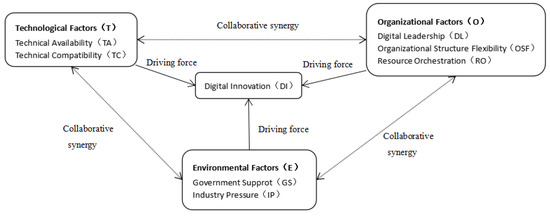
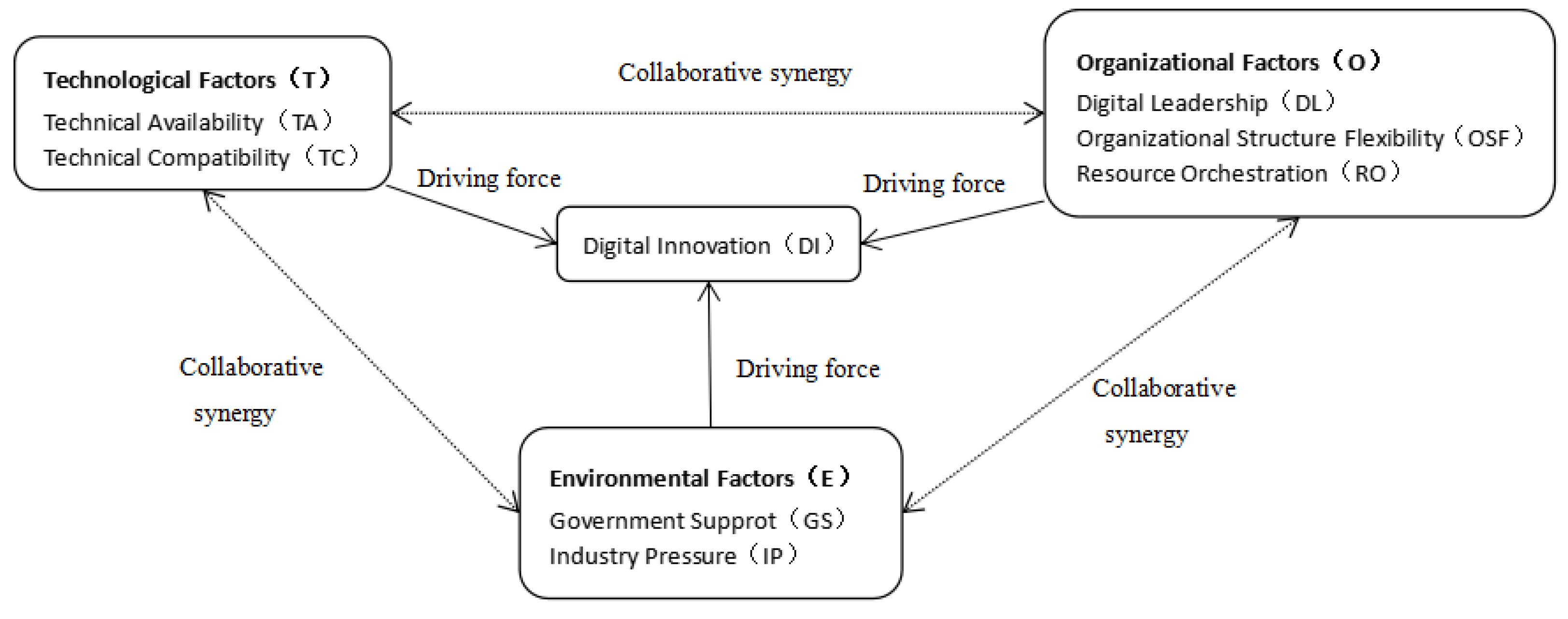

Disclaimer/Publisher’s Note: The statements, opinions and data contained in all publications are solely those of the individual author(s) and contributor(s) and not of MDPI and/or the editor(s). MDPI and/or the editor(s) disclaim responsibility for any injury to people or property resulting from any ideas, methods, instructions or products referred to in the content. |
© 2026 by the authors. Licensee MDPI, Basel, Switzerland. This article is an open access article distributed under the terms and conditions of the Creative Commons Attribution (CC BY) license.