Skip Content
You are currently on the new version of our website. Access the old version .

Biology

Biology is an international, peer-reviewed, open access journal of biological sciences published semimonthly online by MDPI.
The Spanish Society for Nitrogen Fixation (SEFIN) and Federation of European Laboratory Animal Science Associations (FELASA) are affiliated with Biology and their members receive discounts on the article processing charges.
Indexed in PubMed | Quartile Ranking JCR - Q1 (Biology)

All Articles (8,883)

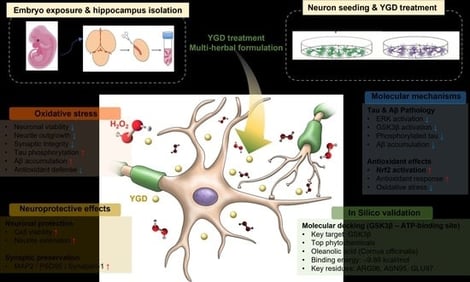
This study sought to evaluate the neuroprotective effects of YGD in an oxidative stress-induced Alzheimer’s disease (AD)-like cellular model and to elucidate the underlying molecular pathways, with a focus on tau phosphorylation, Aβ accumulation, and antioxidant defense mechanisms. Rat primary hippocampal neurons were exposed to hydrogen peroxide to induce oxidative stress. The effects of YGD on neuronal viability, neurite outgrowth, and synaptic integrity were assessed using the immunodetection of microtubule-associated protein 2 (MAP2), postsynaptic density protein 95 (PSD-95), and synapsin-1. Levels of phosphorylated tau and Aβ were quantified, and the involvement of extracellular signal-regulated kinase (ERK), glycogen synthase kinase 3β (GSK3β), and nuclear factor-erythroid 2-related factor-2 (Nrf2) pathways was examined. Additionally, in silico molecular docking studies targeting the ATP-binding site of GSK3β were conducted to screen major phytochemicals from the ten medicinal herbs constituting YGD. YGD markedly enhanced neuronal viability under oxidative stress, promoted neurite extension, and increased synaptic marker expression (MAP2, PSD-95, and synapsin-1). Treatment reduced phosphorylated tau by suppressing ERK and GSK3β activation and significantly decreased Aβ accumulation. YGD also upregulated antioxidant defenses via the activation of the Nrf2 pathway. Docking simulations identified oleanolic acid (from Cornus officinalis) as the most potent GSK3β binder (−9.86 ± 0.40 kcal/mol), forming stable interactions with ARG96, ASN95, and GLU97. Additional compounds, including alisol C, drypemolundein B, and friedelin, demonstrated favorable binding energies and engaged key ATP-binding site residues. YGD confers neuroprotection through the integrated modulation of tau phosphorylation, Aβ pathology, and oxidative stress, partly via the multi-target engagement of GSK3β by its constituent phytochemicals. These findings support that YGD attenuates oxidative stress-induced AD-like cellular alterations.

6 February 2026
YGD enhances cell viability and provides neuroprotection to hippocampal neurons under H2O2-induced oxidative stress. (A) CCK assay results following the treatment of hippocampal neurons, cultured for 2 days, with YGD at concentrations of 1–100 μg/mL, either alone or in combination with H2O2, and analyzed on day 3. (B) CCK assay results for hippocampal neurons cultured for 14 days, treated with YGD at concentrations of 1–100 μg/mL, either alone or in combination with H2O2, and analyzed on day 15. (C) Representative images from the live/dead assay on day 3, where hippocampal neurons were cultured for 2 days and treated with optimal concentrations of YGD (10, 25, and 50 μg/mL) alongside the H2O2 and blank groups. The white scale bar represents 400 μm. (D) Quantitative analysis of the live/dead assay showing the dead cell intensity. (E) Quantitative analysis of the live/dead assay displaying the live/dead ratio. Data are presented as the mean ± standard deviation. Significant variations were evaluated using one-way analysis of variance (ANOVA) coupled with Tukey’s post hoc analysis. Significance levels are denoted as follows: #### p < 0.0001 compared with the blank group; * p < 0.05, ** p < 0.01, *** p < 0.001, and **** p <0.0001 compared with the H2O2 group.

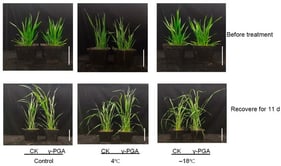
Low-temperature stress significantly limits wheat growth and productivity. Poly-γ-glutamic acid (γ-PGA) is an environmentally friendly green molecular material that plays an important role in plant growth and regulation; however, its protective mechanisms against cold stress in wheat remain poorly understood. In this study, the effect of γ-PGA on both chilling (4 °C) and freezing (−18 °C) resistance in wheat seedlings and its underlying mechanisms were comparatively studied. The results showed that the γ-PGA-treated seedlings exhibited a 128.81% higher survival rate after freezing stress and maintained significantly greater biomass accumulation under both stress conditions (62.44% and 26.56% higher dry weight under chilling and freezing stress, respectively). A physiological analysis revealed that γ-PGA enhanced osmoprotectant (proline and soluble sugars) accumulation and activated key antioxidant enzymes (SOD, POD, and APX). Then, an RNA-seq analysis identified 11,401 and 7721 differentially expressed genes under chilling and freezing stress, respectively, with 3598 common genes constituting a core cold-response network. KEGG and GO analyses demonstrated significant enrichment in pathways related to carbon metabolism, glutathione metabolism, phenylpropanoid–flavonoid biosynthesis, fatty acid metabolism, and cell wall organization. Notably, γ-PGA strongly upregulated key genes in phenylpropanoid–flavonoid metabolism (TraesCS2B02G615000 and TraesCS2B02G624400), glutathione metabolism (TraesCS1B02G127900), and lipid metabolism (TraesCS1B02G018700). These results provide comprehensive molecular insights into γ-PGA-mediated cold tolerance and support its potential application in sustainable wheat production under low-temperature stress conditions.

6 February 2026

Phenotypic effects of exogenous γ-PGA application on chilling (4 °C) and freezing (−18 °C) resistance in wheat. (bar = 10 cm).

In Vitro Fish Cell Culture: From Primary Muscle Cells to Cell-Based Meat in Cyprinidae

  • Piyathip Setthawong,
  • Chanati Jantrachotechatchawan and
  • Kornsorn Srikulnath
  • + 4 authors

Fish offer an excellent source of high-quality protein with balanced nutrients and low fat content. However, the increasing global demand for food and the impacts of climate change have led to a significant decline in wild fish stocks. Cultivated fish meat has therefore emerged as a promising sustainable food alternative. In this review, we summarize the structural and physiological characteristics of fish muscle and highlight the methods used to establish primary muscle cell cultures, including explant outgrowth and enzymatic dissociation, alongside the optimization of environmental conditions and growth media composition. Particular attention is given to the isolation, development, and characterization of Cyprinidae muscle-derived cell lines via morphological assessments, gene expression profiling, and karyotyping. In addition, we discuss recent advances in scaffold-based and three-dimensional culture systems as well as the application of bioreactors for large-scale production. Current challenges include the limited availability of standardized muscle cell lines, dependence on serum-containing media, and the high cost of growth factors. Future progress will depend on innovations in serum-free formulations, cost-effective media, and reproducible culture protocols. Ultimately, fish muscle cell culture supports not only the development of alternative protein sources but also aquatic health research, disease modeling, and sustainable bioproduction.

6 February 2026

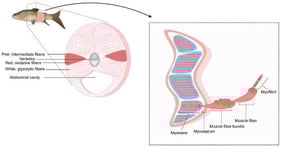
Schematic representation of the hierarchical structure of vertebrate muscles represented by the muscle of a Cyprinid fish cut longitudinally and in cross-section to show a cross-sectional view of a muscle with a single fascicle, muscle fiber, and myofibril. The single muscle is oriented such that the muscle fibers run parallel to the page.

Behavioral regulation in elite combat sports relies on traits such as anxiety, impulsivity, and personality, which are partly shaped by dopaminergic signaling. However, integrative approaches linking multidimensional behavioral profiles with genetic variability in athletes remain limited. This study aimed to identify distinct psychological profiles in elite combat athletes and examine whether these profiles differ in selected dopaminergic gene polymorphisms. A total of 200 male Polish elite combat athletes completed validated questionnaires assessing personality, anxiety, impulsivity, attention-related symptoms, and hedonic capacity. Standardized psychological variables were analyzed using a two-step clustering procedure. Genotype distributions were compared across clusters using chi-square tests. The clusters showed clear behavioral differentiation. Cluster 1 demonstrated higher anxiety, impulsivity, neuroticism, and attention-related symptoms. Cluster 2 showed lower anxiety and impulsivity alongside higher extraversion and conscientiousness. Cluster 3 displayed intermediate behavioral characteristics but the most distinctive genotype pattern. These findings suggest that combining behavioral clustering with genetic data may help characterize meaningful neurogenetic profiles in elite athletes and provide hypothesis-generating insights into genotype–phenotype relationships.

6 February 2026

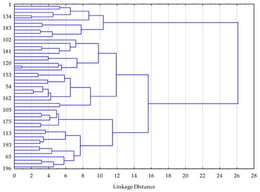
Dendrogram from hierarchical cluster analysis illustrating linkage distances between observations based on standardized psychological variables. The marked increase in linkage distance supports a three-cluster solution (k = 3).

News & Conferences

Issues

Open for Submission

Editor's Choice

Reprints of Collections

Editorial Board Members' Collection Series
Reprint

Editorial Board Members' Collection Series

“Biodiversity and Ecosystem Function under Global Change”
Editors: Shucun Sun, Panayiotis G. Dimitrakopoulos
Biology, Ecology and Management of Aquatic Macrophytes and Algae
Reprint

Biology, Ecology and Management of Aquatic Macrophytes and Algae

Editors: Jinlin Liu, Shuang Zhao, Wei Liu

Get Alerted

Add your email address to receive forthcoming issues of this journal.

XFacebookLinkedIn
Biology - ISSN 2079-7737