


Highlights
What are the main findings?
- •
- The weave structure is the dominant factor influencing the multidirectional surface roughness of woven fabrics.
- •
- Plain weave fabrics exhibited higher amplitude roughness and more uniform surface behavior, while twill weave fabrics showed lower overall roughness but pronounced directional dependence, especially in diagonal directions.
- •
- Linear peak density is mainly affected by weave type, whereas laundering cycles, fiber composition, and antimicrobial finishing showed no statistically significant influence.
What are the implications of the main findings?
- •
- The surface roughness of woven fabrics cannot be adequately described using a single parameter or only principal measurement directions due to the orthotropic nature of woven structures.
- •
- A combined evaluation of amplitude and spatial roughness descriptors, including off-axis directions, is necessary for accurate characterization of textile surface topography, which provides a basis for designing hospital textiles with improved tactile comfort and reduced risk of skin irritation during prolonged skin contact.
Abstract
Surface roughness of woven fabrics plays a key role in tactile comfort and skin–textile interaction, particularly in medical applications involving prolonged contact with human skin. This study focuses on the surface roughness of woven fabrics in plain and twill (1/3 S) weaves intended for hospital bed sheets and bedding applications. Plain weave represents a structurally symmetric system, while twill weave exhibits a pronounced diagonal structure. Roughness was evaluated using the Fabric Touch Tester (FTT) and further analyzed through amplitude (Rq), height distribution (Rku), and frequency-related parameters (linear peak density) obtained by signal processing and peak analysis in OriginPro 2026. The results showed that weave structure is the dominant factor influencing surface topography. Plain weave fabrics exhibited higher amplitude roughness and more uniform height distribution, while twill fabrics showed lower global roughness but stronger directional dependence, particularly in diagonal directions. Linear peak density was not significantly affected by laundering cycles, fiber composition, or finishing, but was strongly dependent on weave type. The findings demonstrate that due to the orthotropic nature of woven fabrics, surface roughness, derived from surface topography, cannot be adequately described by a single parameter, and that a combined analysis of amplitude and spatial descriptors is required, with the surface being evaluated not only along the principal symmetry directions (warp and weft) but also in off-axis directions. These results provide valuable insight for the design of hospital textiles with improved tactile comfort and reduced risk of skin irritation.
1. Introduction
Woven fabrics are composed of yarn systems formed by assemblies of torsionally twisted fibers, making them suitable for healthcare applications, particularly in direct contact with human skin. However, prolonged contact increases skin sensitivity to mechanical interactions, whereby fabrics with pronounced surface topography may cause irritation and damage [1,2]. Friction between skin and textiles is a critical factor affecting comfort and skin integrity, especially in vulnerable populations such as patients with disabilities and older adults. It is influenced by fiber composition, yarn structure, fabric construction, finishing, and skin conditions such as moisture, which increases the coefficient of friction and the risk of damage [1,2,3].
Excessive friction may result in skin damage such as blisters, tissue deformation, and pressure ulcers (decubitus). Pressure ulcers are a serious medical condition, particularly in patients with disability, caused by the combined action of pressure, friction, and shear forces. These forces lead to tissue deformation and reduced blood circulation, potentially resulting in severe complications or even fatal outcomes. Moisture is an additional critical risk factor, as it increases the coefficient of friction. Therefore, hospital textiles must be designed to regulate the skin microclimate, absorb and transport moisture, and reduce friction. A proper selection and design of textiles, considering fiber type, structure, and surface characteristics, can significantly reduce friction and help prevent pressure ulcer formation. This requires a comprehensive understanding of skin–textile interaction and further research in this field.
Surface roughness is a key parameter in predicting tactile behavior and end-use performance. It is commonly evaluated using objective methods, although discrepancies between measured values and subjective perception are often observed [4]. Roughness is typically analyzed in warp and weft directions, where it is governed by structural parameters such as thread density and weave type [5,6].
The perception of roughness is governed by both material properties and the complexity of the human somatosensory system [7,8]. It depends on the spatial distribution of surface irregularities, which in this study are represented by peaks in the roughness profile. Their density reflects the number of surface elements per unit area. Tactile perception is additionally influenced by individual sensitivity and multisensory interactions, including visual and auditory inputs [8,9,10].
Tactile comfort is determined by the interaction of amplitude and frequency-related surface characteristics. Linear peak density represents the frequency of irregularities, while amplitude describes their magnitude [4]. High peak density with low amplitudes leads to a smoother perceived surface, whereas low peak density with higher amplitudes results in increased roughness perception [11,12,13].
This study focuses on the surface roughness of woven fabrics in plain and twill weaves intended for hospital bed sheets and bedding applications. Plain weave represents a structurally symmetric system, while twill weave exhibits a pronounced diagonal structure. In addition to fiber composition, the influence of antimicrobial finishing and repeated laundering cycles (up to 10 cycles) was investigated. The aim was to analyze multidirectional surface roughness and to establish a relationship between amplitude parameters and frequency-related descriptors of surface topography.
The development of woven fabrics with engineered surface topography, ensuring reduced surface roughness and friction while maintaining favorable properties such as bending flexibility, absorbency, and strength, is of great importance. It should be emphasized that fabric topography and the resulting properties may change during finishing processes and maintenance cycles. Consequently, surface roughness must be considered in the context of long-term use and repeated laundering.
1.1. Surface Roughness of Woven Fabrics and Its Measurement
Methods for evaluating surface roughness can be divided into subjective and objective approaches, with objective methods further classified into contact and non-contact techniques. A discrepancy often exists between objectively measured values and the subjective perception of roughness [4]. A key reason for measuring surface roughness lies in ensuring favorable end-use performance, as roughness is directly related to finishing processes and tactile comfort. Tactile comfort is particularly important for textiles in direct contact with human skin. Although numerous roughness parameters can be obtained through profiling methods, only a subset is suitable depending on the specific research context and purpose of analysis [4]. One of the main aims of this research is to contribute to establishing a relationship between subjective tactile perception of woven fabrics and objectively measured parameters derived from the surface topography, which results from the combined influence of weave, yarn characteristics, structural parameters and finishing process. To date, such a relationship has not been clearly defined, and this study represents a step toward bridging that gap.
Surface roughness is most commonly evaluated in the principal directions, in warp and weft directions, yet due to the orthotropic nature of woven fabrics, roughness profiles in off-axis directions may differ significantly from those in principal directions. Therefore, a comprehensive characterization of surface topography requires the inclusion of additional measurement directions. This research contributes to the development of a standardized methodology for subjective roughness evaluation of woven fabric, with the intention that future studies will incorporate representative evaluation directions whose individual contributions will influence the overall perception of tactile comfort.
1.2. Tactile Perception of Roughness and Evaluation Challenges
The optimization of tactile properties of textile materials represents a significant challenge due to the limited number of systematic studies correlating subjective tactile perception with measurable material parameters. This issue is further complicated by the complexity of the human somatosensory system, which requires simultaneous consideration of both microscopic and macroscopic material scales [7,8]. One of the key challenges is the definition and quantification of subjective tactile sensation. Methods based on quantitative descriptive analysis have been developed, allowing descriptors such as texture, abrasiveness, slipperiness, and hairiness to be measured and compared across different evaluators. Although the coefficient of friction can be effectively measured, tactile descriptors are not strongly correlated with friction, indicating the complexity of tactile perception. Among the parameters investigated, surface hairiness shows the highest, albeit weak, correlation with friction [14]. Furthermore, frictional behavior at the textile–skin interface is strongly influenced by material properties and fiber geometry, while its relationship with tactile perception remains complex and not fully understood. Textile–skin contact may also generate triboelectric charges during touch, separation, and friction, which can influence interfacial interactions. However, this aspect is beyond the scope of the present study [15].
Previous research has shown that the perception of roughness depends on the spacing between surface irregularities. In this study, these irregularities are considered as peaks in the roughness profile. Their product in the warp and weft directions represents the number of elements per unit area (cm2), i.e., the density of surface elements.
Tactile perception is additionally influenced by individual differences in sensory sensitivity, which can significantly affect the evaluation of roughness and other surface properties [8,9]. Furthermore, roughness perception is influenced by multisensory processes, where visual and auditory stimuli can modulate tactile perception [10].
1.3. Frequency and Amplitude Characteristics in Roughness Perception
The analysis of tactile comfort in textiles is based on the interaction between frequency-related and amplitude-related characteristics of surface roughness, where linear peak density and amplitude of surface irregularities play a key role [4]. Linear peak density represents the frequency of irregularities, while amplitude describes their magnitude. Surfaces with a high number of peaks per unit length exhibit fine and densely distributed microgeometry. Due to the limited spatial resolution of mechanoreceptors, individual irregularities are not perceived separately but rather as a continuous surface, resulting in a smoother tactile sensation [11,12]. Conversely, surfaces with a lower peak density allow the detection of individual irregularities, leading to a more pronounced perception of roughness. In addition to frequency, amplitude has a significant effect. Higher amplitudes produce stronger pressure variations on the skin, facilitating detection by mechanoreceptors and enhancing the perception of roughness. Lower amplitudes generate weaker stimuli and contribute to the perception of smoothness [13].
Therefore, tactile properties of fabrics can be interpreted as a combined effect of the frequency and amplitude of surface irregularities. Surfaces characterized by high peak density and low amplitude are perceived as smooth and comfortable, whereas surfaces with low peak density and high amplitude result in a more pronounced sensation of roughness.
This study investigates the surface roughness characteristics of woven fabrics in two weave types, plain and twill, intended for hospital bed sheets used primarily in healthcare environments. Plain and twill weaves were selected as representatives of two structurally distinct fabric categories commonly used in applications requiring high mechanical and dimensional stability, such as hospital textiles. Plain weave, characterized by a high frequency of interlacements, provides superior structural stability but exhibits higher bending rigidity, which may negatively affect tactile comfort. In contrast, twill weave fabrics, due to longer floats, show increased flexibility and better drape, while still maintaining sufficient structural integrity under repeated laundering cycles.
From a structural perspective, plain weave represents a symmetric system with respect to the principal directions (warp and weft), whereas twill weave exhibits a pronounced diagonal structure, resulting in deviation from orthotropic behavior. Although the principal directions remain unchanged, twill fabrics may exhibit different properties in off-axis directions (45° and 135°) due to their structural organization. For this reason, these two weave types were selected to enable a comparative analysis of multidirectional surface roughness.
A portion of the fabric samples was subjected to antimicrobial finishing, with the aim of preserving their initial surface topography. Given their application in hospital environments, these fabrics may represent a source of microorganism transmission and negatively affect both patients and healthcare personnel. Microorganisms not only persist on their surfaces but also use them as a substrate for growth and development, thereby allowing textiles to become vectors of infection. The application of antimicrobial agents can inhibit or completely prevent their growth and proliferation, thus reducing the development of infections [16,17,18]. Microorganisms most commonly develop under conditions of elevated temperature and high humidity, during which they secrete enzymes that degrade fiber structure while simultaneously creating favorable conditions for further colonization. Cellulosic fibers are particularly susceptible to such processes and may further promote microbial growth, whereas synthetic fibers are more resistant due to their hydrophobic nature. For effective antimicrobial treatment, it is essential to ensure long-lasting performance without compromising material properties, while using environmentally acceptable agents that do not disturb the natural skin microflora. The most commonly used agents include metal ions, quaternary ammonium compounds, phenols, and oxidizing agents [17,19,20,21]. Quaternary ammonium compounds are particularly notable due to their effectiveness over a wide pH range and activity against various microorganisms [19], and their efficacy has been confirmed on cellulosic and blended fibers [20,21,22]. One such compound is dimethyltetradecyl (3-(trimethoxysilyl)-propyl) ammonium chloride (QVAT), whose structure enables bonding to fibers and antimicrobial activity [21,22,23,24]. However, despite its relative stability, long-term effectiveness may decrease due to washing and mechanical wear [25]. This study examines the influence of treatment with dimethyltetradecyl (3-(trimethoxysilyl)-propyl) ammonium chloride (QVAT) on the comfort properties of textiles intended for hospital use, as well as its antimicrobial effectiveness before and after multiple washing cycles [21,24].
This study analyzes the multidirectional surface roughness of plain and twill woven fabrics intended for hospital applications, considering the influence of fiber composition, antimicrobial finishing, and maintenance processes (involving washing and tumble drying cycles), and establishes a relationship between amplitude roughness parameters and frequency-related descriptors of surface topography. The durability of surface topography during use was evaluated on such treated and washed fabrics.
2. Materials and Methods
2.1. Samples
Fabric samples were produced using the same warp production batch and the yarn from the same lot in both the warp and weft. Table 1 presents the main characteristics of the analyzed samples, including fiber composition (CO for 100% cotton fiber sample, CO_PES for 50% cotton fiber/50% polyester fiber sample), weave type (T for twill weave sample, P for plain weave sample), finishing treatment (Q-QVAT), and number of washing cycles (1 W for samples washed once, and 10 W for samples washed ten times).
Table 1.
Test samples’ characteristics.
The samples were impregnated using a pad dry method (Benz, Zurich, Switzerland) with a wet pick-up of 100%, using a bath containing 35 g/L of 1,2,3,4-butanetetracarboxylic acid (BTCA, Sigma–Aldrich, Darmstadt, Germany) as a crosslinking agent, a 50% solution of dimethyltetradecyl (3-(trimethoxysilyl)-propyl) ammonium chloride (QVAT, Sigma–Aldrich, Germany), 32 g/L of sodium hypophosphite hydrate (SHP, Sigma–Aldrich, Germany) as a catalyst, and 1 g/L of FELOSAN NOF (CHT Bezema, Montlingen, Switzerland) as a wetting agent. The pH value of the prepared bath was 5.9 at a temperature of 22.4 °C. The treated samples were left to dwell in the bath for 24 h, then passed through the pad dry method (Benz, Switzerland) and dried on a stenter frame (Benz, Switzerland) at 110 °C for 3 min. Plain weave samples were thermally condensed on the stenter frame (Benz, Switzerland) at 160 °C for 3 min and at 170 °C for 1 min, whereas twill weave samples were thermally condensed under the same conditions at 160 °C for 3 min and at 170 °C for 2 min. The specified temperatures and thermocondensation times were determined using a high-temperature FTIR-ATR Golden Gate unit (Specac Golden Gate Diamond, Mount Kisco, NY, USA).
After treatment, the samples were subjected to a washing process in a Wascator FOM71 CLS (Electrolux, Sweden) according to a modified EN ISO 15797:2017 standard, with a reduced washing temperature of 50 °C. A total of 64 g/L of standard detergent with optical brighteners and without phosphates (WFK 88060) and 32 g of the environmentally friendly agent ε-(phthalimido) peroxyhexanoic acid (PAP) were used. The samples were dried in an Electrolux T5130-LAB (Electrolux, Stockholm, Sweden) dryer according to the NORMAL LAB program.
2.2. Roughness Measurement
Amplitude roughness parameters describe the vertical component of surface topography, i.e., the height and depth of surface irregularities, while frequency-related parameters define their spatial distribution and occurrence. In this study, the amplitude component was represented by the root mean square roughness parameter (Rq), the shape of the height distribution was described by the kurtosis parameter (Rku), and the frequency component by linear peak density [4,10].
The kurtosis parameter (Rku) describes the sharpness of the height distribution of the surface profile. A value of Rku = 3 corresponds to a normal (Gaussian) distribution. Values higher than 3 indicate a leptokurtic distribution with pronounced peaks and deep valleys, whereas values lower than 3 indicate a flatter (platykurtic) distribution with fewer extreme height deviations. In the context of textile surfaces, lower Rku values are associated with more uniformly distributed surface features, while higher values indicate the presence of locally dominant irregularities [26].
Fabric Touch Tester (FTT)
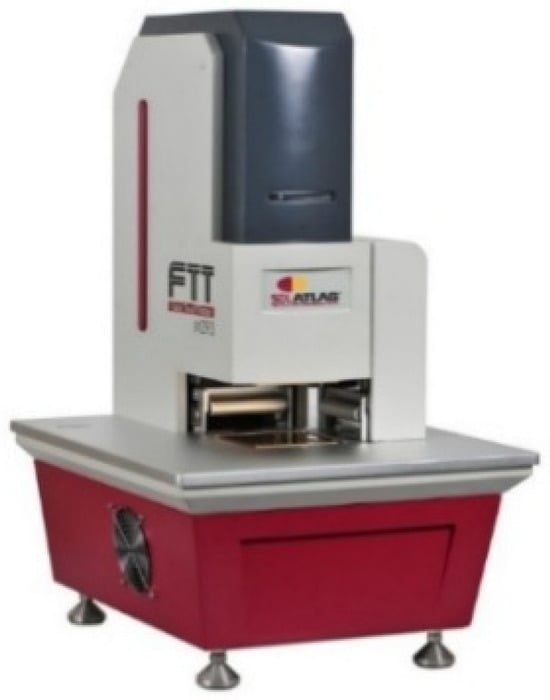
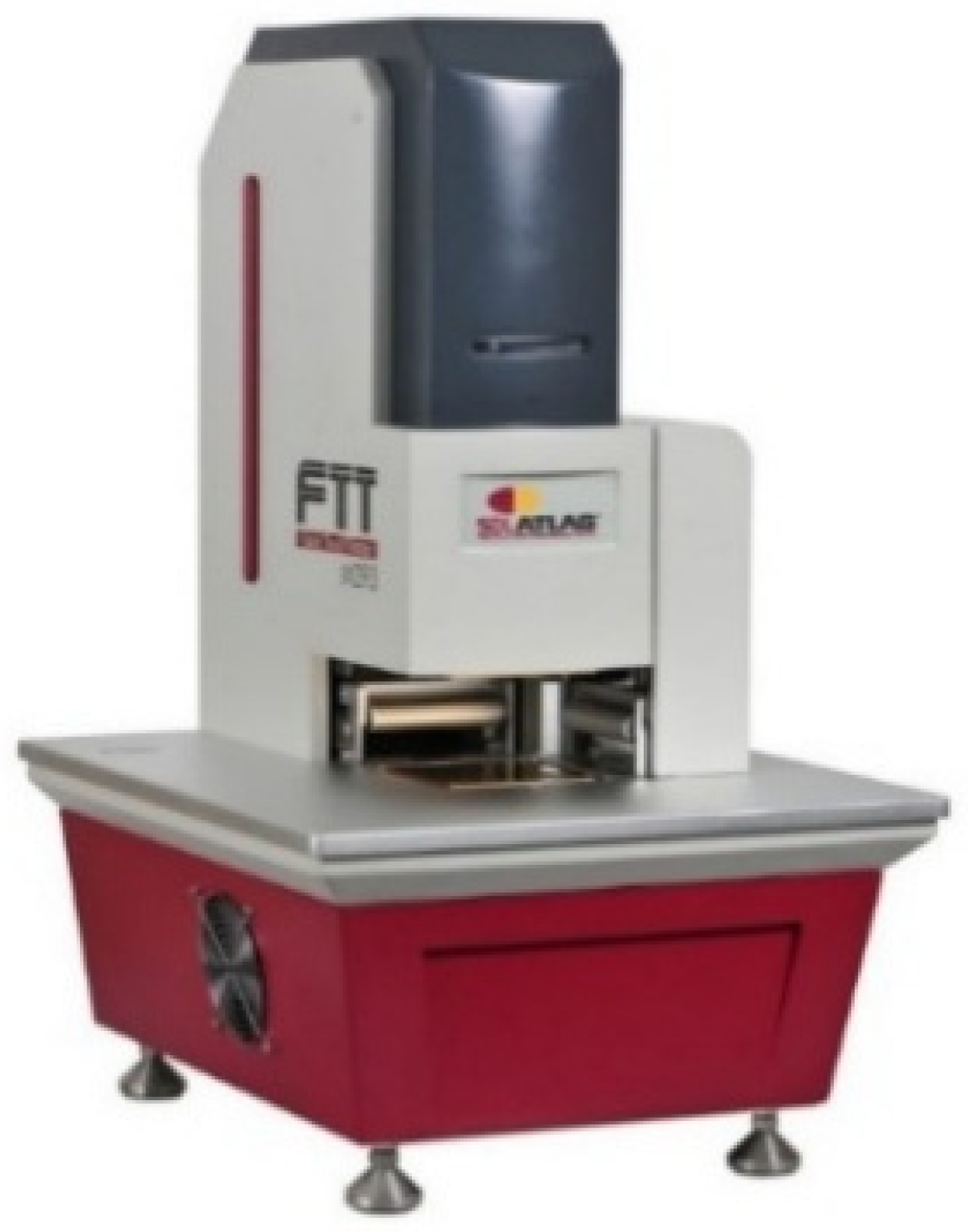
Surface roughness measurements were performed using a Fabric Touch Tester (FTT, SDL Atlas) (Figure 1). The FTT simultaneously measures physical properties related to the tactile characteristics of textiles within four domains: compression, thermal, bending, and surface properties. The external moving part of the device consists of a stationary lower plate and a movable upper plate, between which the sample is positioned. The instrument is equipped with friction plates, a bending element, a pressure roller, and a series of sensors and components enabling accurate and efficient measurement of all parameters.
Figure 1.
Fabric Touch Tester (FTT).
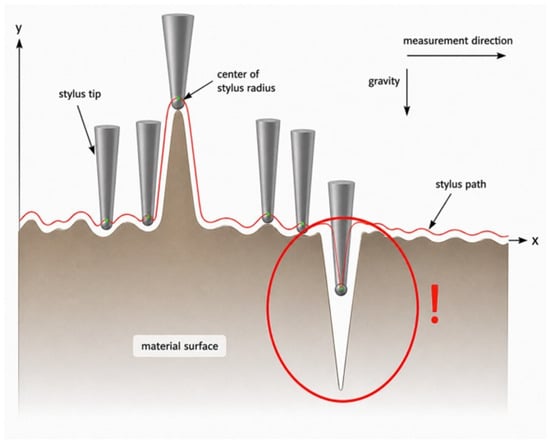
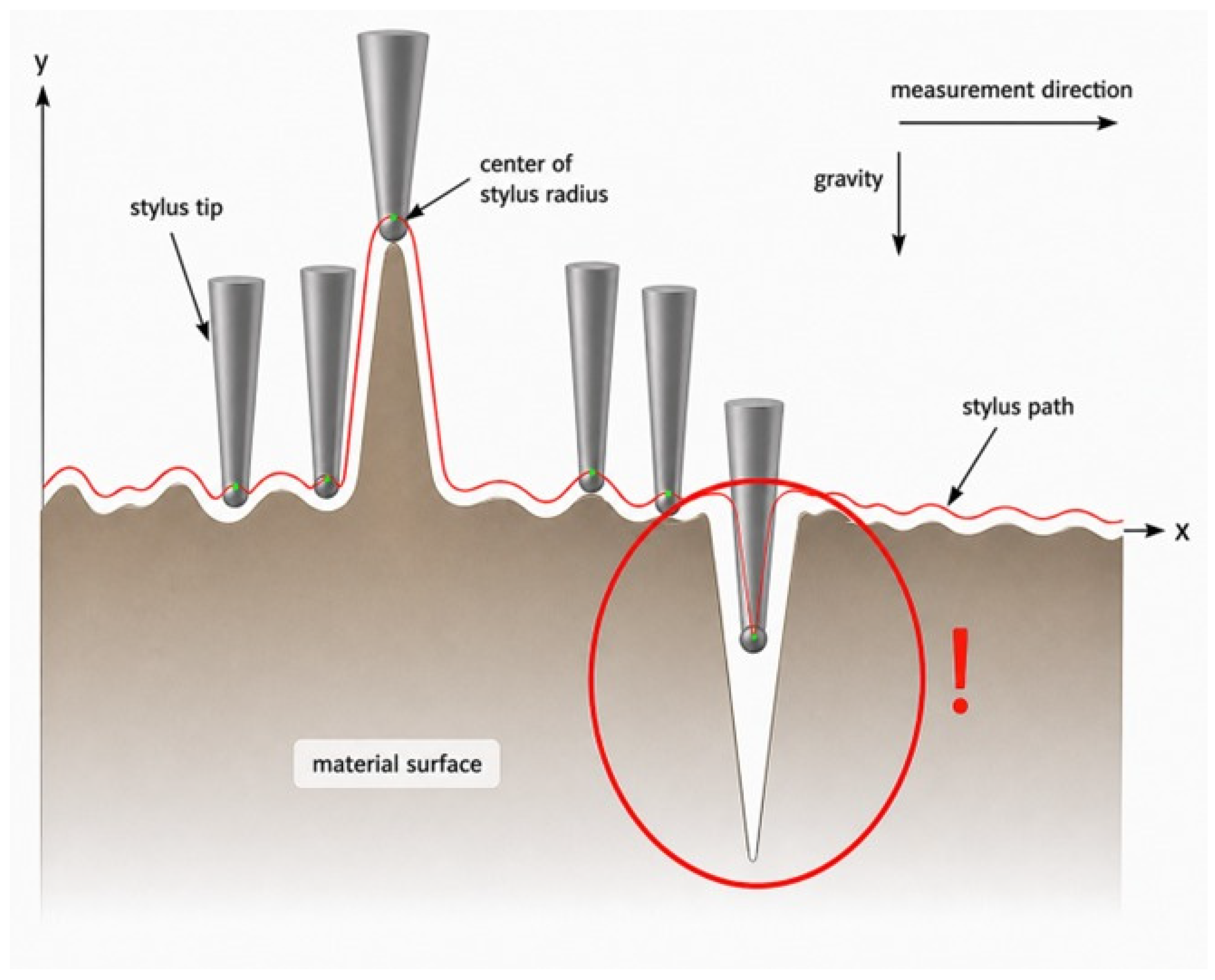
Since this study focuses on methodological analysis, measurements were conducted exclusively on the fabric face in four directions: two principal directions (warp and weft) and two diagonal directions (45° and 135°). The FTT is a contact-based tactile method in which the stylus moves along a fixed and standardized path over the real fabric surface. Due to the finite geometry of the stylus tip, it cannot penetrate deeply into narrow inter-yarn gaps or steep surface valleys (Figure 2).
Figure 2.
Limitation of stylus movement across the material surface [27]. The red circle/exclamation mark was intentionally included to emphasize the issue occurring in the highlighted part of the surface probing process.
Therefore, the recorded profile represents the part of the surface topography that is mechanically accessible to the stylus, rather than the complete geometrical depth of the fabric surface. This is important for interpretation because the measured roughness corresponds more closely to the surface level involved in tactile contact [28].
In this study, a single type of stylus geometry was used, which is an integral part of the FTT device. The stylus is a cylindrical rod with a semi-spherical head, where the diameter of the semi-spherical tip is 1 mm.
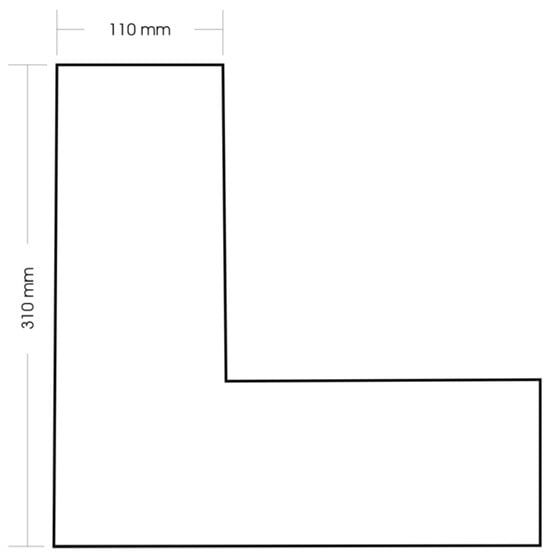
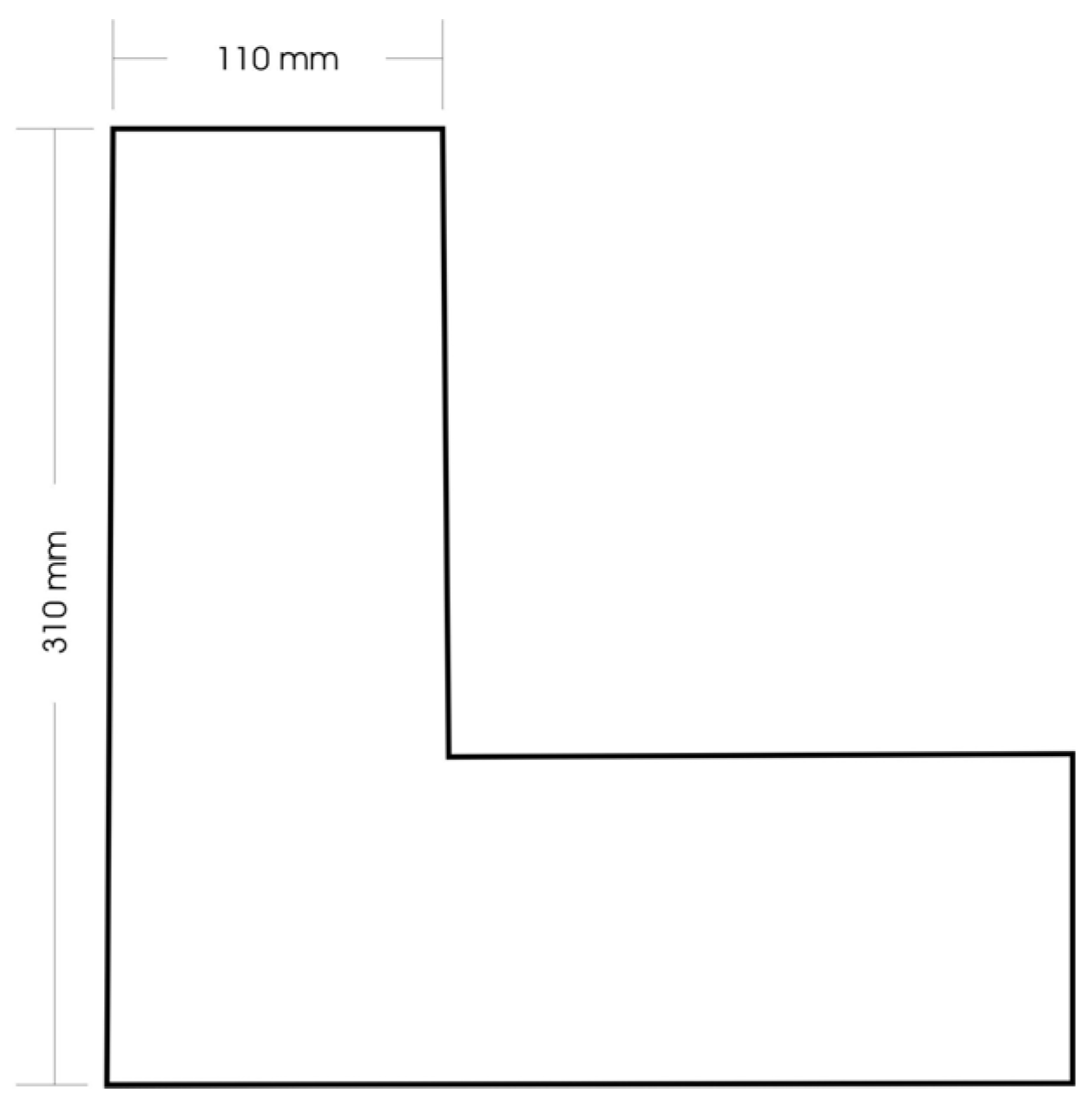
Prior to testing, all samples were conditioned under standard atmospheric conditions (20 ± 2 °C and 65 ± 4% relative humidity). The test specimen was prepared in an L-shaped geometry (Figure 3) with defined dimensions.
Figure 3.
Shape of the specimen for FTT analysis.
To enable directional analysis, fabric specimens were prepared so that the measurement direction of the stylus corresponded to predefined orientations relative to the fabric structure. The specimens were therefore cut and positioned to allow measurements to be performed along four directions: 0° (warp), 90° (weft), and two off-axis directions (45° and 135°).
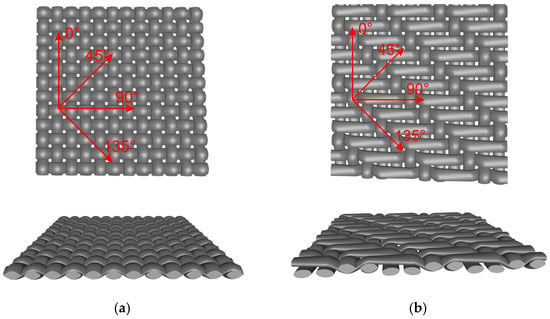
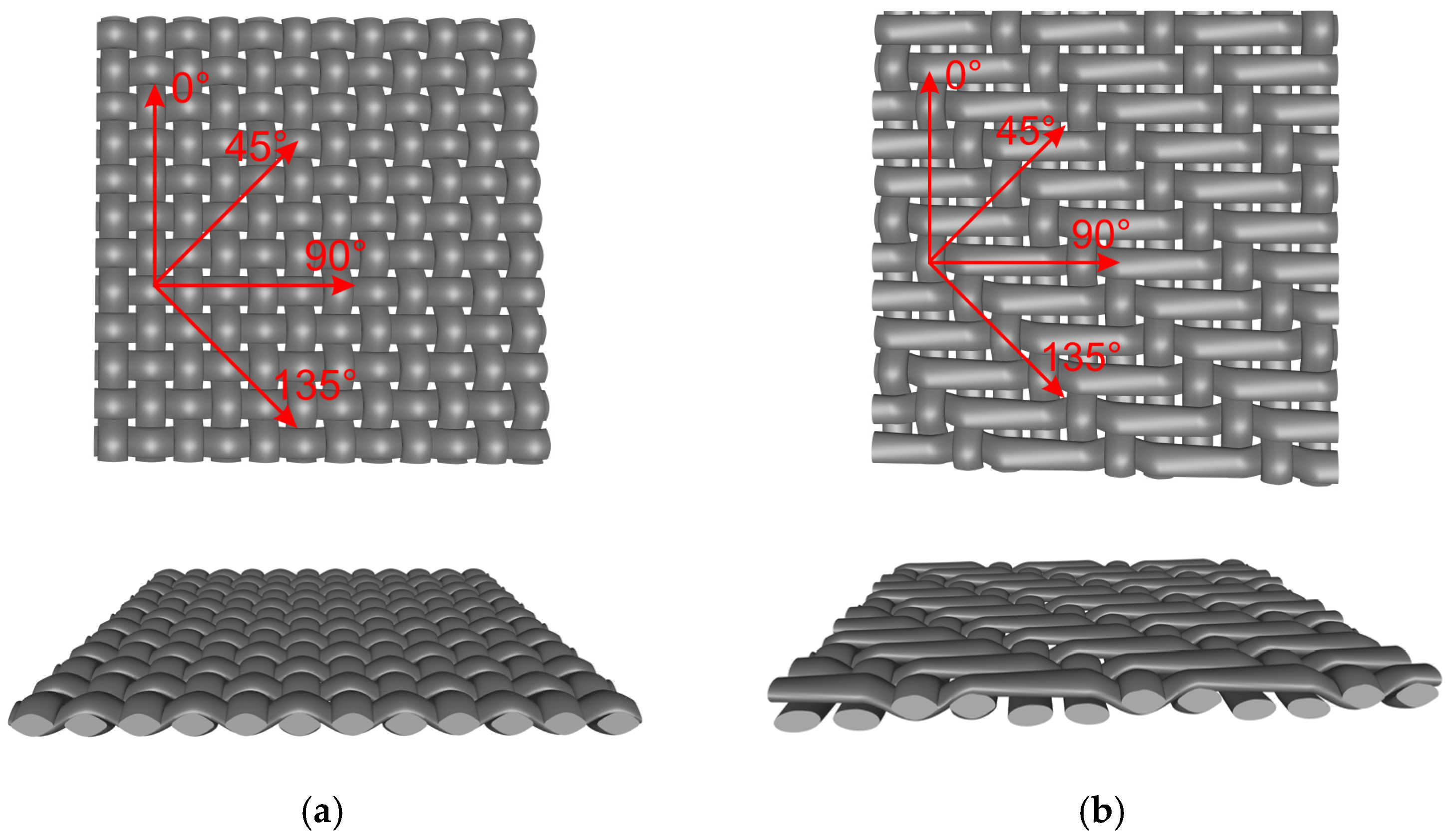
During measurement, the stylus moved along a fixed path aligned with the selected direction, ensuring that the recorded surface profile corresponded to the defined orientation of the yarn system. The structural characteristics of plain and twill weaves, together with the defined measurement directions (0°, 45°, 90°, and 135°), are schematically illustrated in Figure 4, highlighting the difference between structurally symmetric and diagonally structured fabric systems.
Figure 4.
Simulation of woven fabrics in plain (a) and twill (b) weave with indicated measurement directions and cross-sectional view of the fabrics.
During measurement, the upper plate is brought into contact with the sample and moves vertically. Under the applied compressive force, the sensor initiates measurement, providing roughness values simultaneously in the warp and weft directions. As the FTT provides only numerical ratings and averaged values, the data processing methodology required additional manipulation to enable a more detailed analysis of fabric surface roughness.
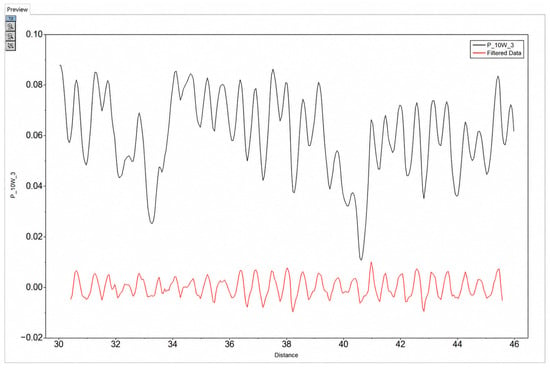
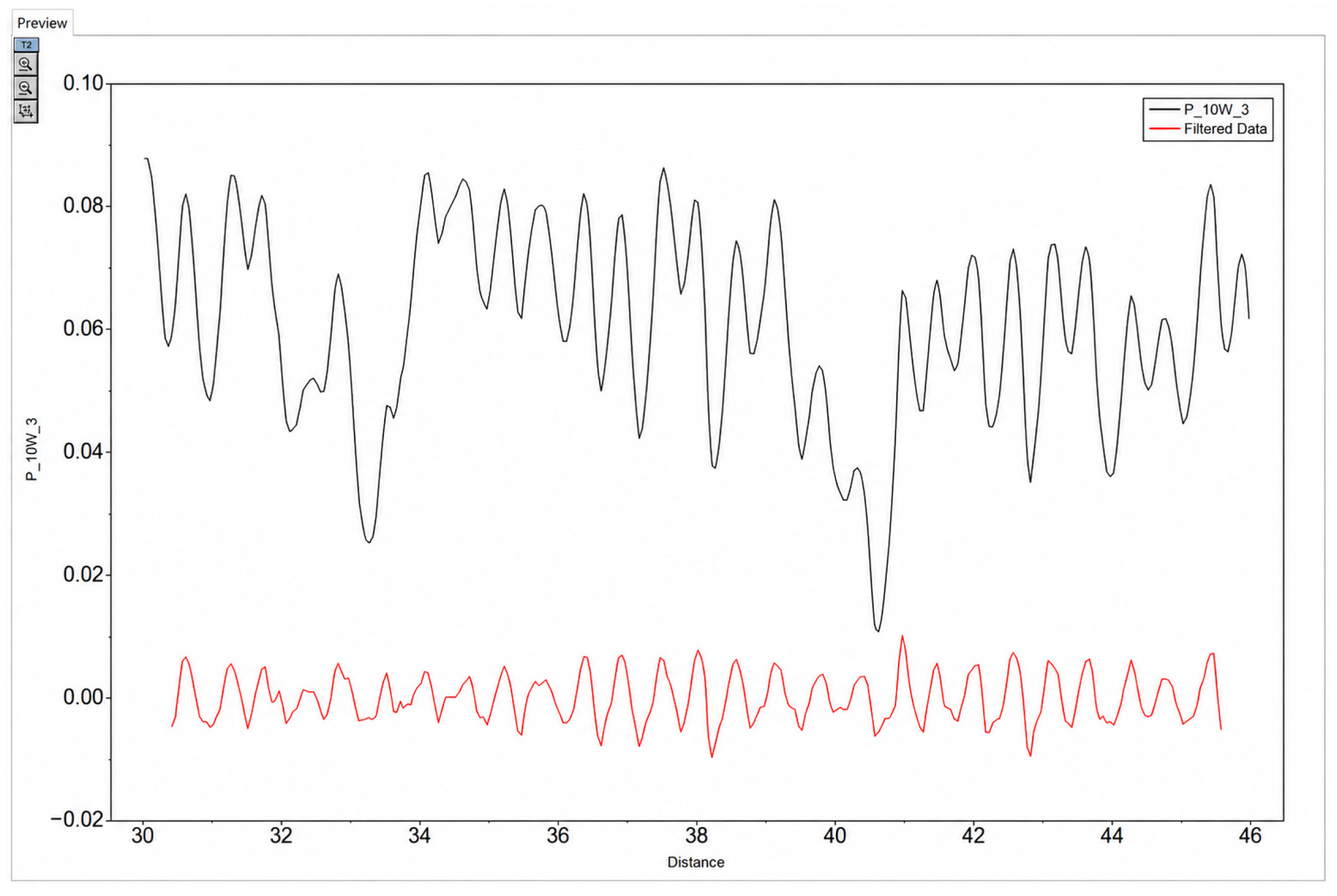
During data analysis, the FTT considers the primary profile, which contains multiple scales of surface irregularities, including waviness associated with global fabric features (weave unit, wrinkles, etc.) as well as roughness at the level of the yarn surface, which consists of parallelized, torsionally twisted fibers. Since the primary profile obtained from FTT measurements includes waviness components related to structural fabric characteristics, the directly extracted values from the device output do not provide a sufficiently selective representation of fine surface roughness. Therefore, prior to further analysis, the profile was filtered to remove long-wavelength components.
Additionally, roughness data were separated into horizontal and vertical components. Along with the principal warp and weft directions, the inclusion of measurements at 45° and 135° provided additional directional information.
It should be noted that the FTT does not record roughness data from the very beginning of the measurement, which required the exclusion of data in the range from 0 to 30 mm and beyond 49 mm.
For analysis purposes, the data were processed using a constant spatial interval (cut-off). The profile was filtered to retain wavelengths above 0.5 mm in order to isolate the influence of weave-induced waviness and the spherical geometry of the stylus.
Subsequently, the dataset was imported into statistical analysis software, where the filtering procedure illustrated in Figure 5 was performed to isolate undesirable wavelengths that interfere with the roughness profile analysis. Since four measurements were performed on each specimen, the arithmetic mean was calculated and used to obtain the representative roughness profile for each direction per specimen.
Figure 5.
Example of data filtering in OriginPro.
Peak Analysis in OriginPro
Roughness profile analysis was performed using OriginPro software in order to determine linear peak density as a quantitative descriptor of the surface microgeometry of the fabrics. The roughness profile was considered as a function of height deviations along the measured length, and local maxima were detected using the Quick Peaks gadget. Detection parameters were adjusted to ensure reliable differentiation between actual surface irregularities and noise, with particular emphasis on the selection of an appropriate threshold value. Although parameters describing the distribution of profile heights, such as kurtosis (Rku), can provide additional information about surface characteristics, the focus of this study was placed on the number of peaks per unit length.
Linear peak density was defined as the ratio of the total number of detected peaks to the length of the analyzed profile segment and expressed as peaks per centimeter. This parameter was selected as an indicator of the frequency of surface irregularities, under the assumption that it depends on the structural characteristics of the fabric.
Accordingly, samples in both plain and twill weaves were analyzed in order to evaluate the influence of weave type on linear peak density.
3. Results
The following section presents the results of the multidirectional analysis of surface roughness of fabrics in plain and twill (1/3 S) weaves, considering the amplitude parameter Rq, the shape of the height distribution described by the Rku parameter, and the frequency-related descriptor of surface topography expressed as linear peak density. All analyzed samples had the same warp density (36 threads/cm), whereas the weft density differed, amounting to 18.5 threads/cm for plain weave and 22 threads/cm for twill weave. The investigation was conducted on three groups of samples (CO, CO_PES, and CO_PES with antimicrobial finishing) before and after the 10th washing cycles (1 as the initial sample, and 10 W).
3.1. Multidirectional Analysis of Fabric Amplitude Roughness
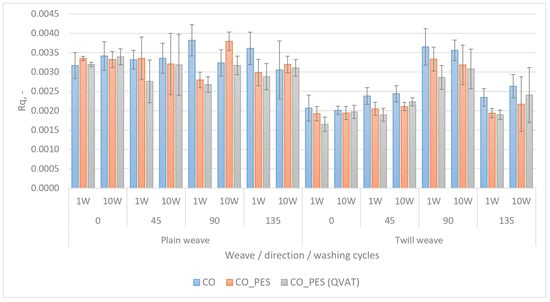
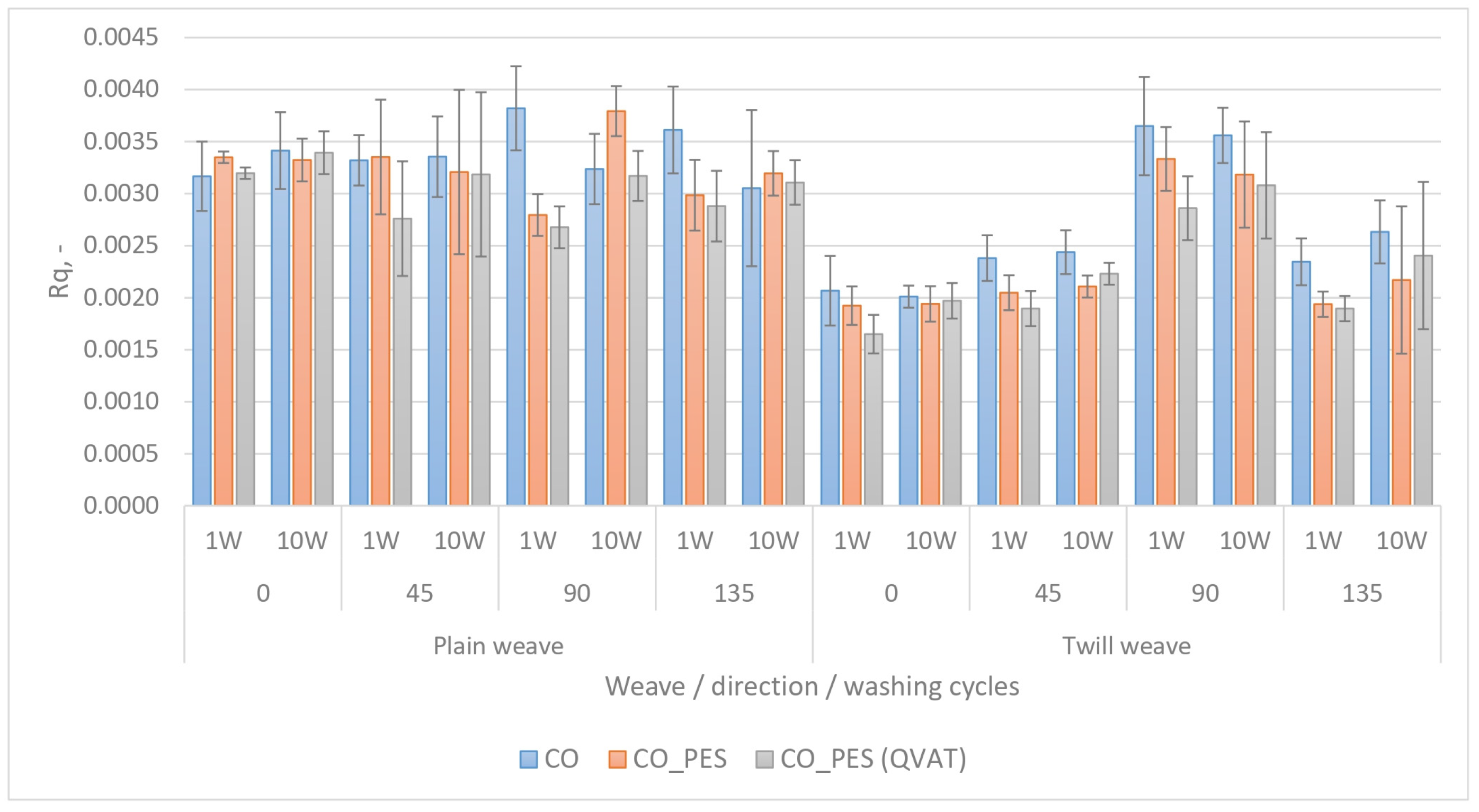
In Figure 6, the values of the roughness parameter Rq for fabrics in plain and twill weaves are shown as a function of measurement direction and the number of washing cycles.
Figure 6.
Root mean square deviation of a surface’s height distribution, Rq.
For plain weave fabrics, the highest values of the Rq parameter were recorded for the CO sample in the weft direction. Considering the measurement orientation, in which the stylus passes over the warp yarns, it can be concluded that this yarn system predominantly contributes to the formation of the measured surface topography and the associated amplitude roughness characteristics. In the plain weave CO_PES blend sample, a similar pattern appears only after 10 washing cycles, suggesting that the maintenance process affects the cellulosic component and thereby contributes to the redistribution of the structure and surface irregularities. Plain weave fabric samples exhibit more uniform roughness values between directions, due to their compact and symmetrical structure, which creates a uniform surface topology. However, an increasing trend in Rq after 10 washing cycles is observed in antimicrobial finished CO_PES plain weave samples. This may indicate a partial release of QVAT from the CO_PES structure, changes in stability, and the possibility of shrinkage due to the combined effects of washing parameters, all contributing to an increase in surface roughness.
For twill weave fabrics, a pronounced directional dependence of roughness is also evident, with more significant differences between the analyzed directions compared to plain weave. The highest Rq values occur in the weft direction, i.e., when the stylus passes over the warp yarns, confirming the dominant influence of this yarn system on the formation of the surface profile. For 100% cotton (CO) samples, in the principal axes of symmetry (warp and weft direction), a slight decrease in Rq values is observed in samples subjected to washing cycles, which may indicate partial structural relaxation and surface smoothing. In contrast, in diagonal directions or secondary axes of symmetry (45° and 135°), an increasing trend in Rq values is recorded, suggesting that the washing process leads to more pronounced local irregularities in directions intersecting the dominant structural orientation of the twill fabric. For samples with antimicrobial finishing (CO_PES_Q) in twill weave, a consistent increase in Rq values is observed in all analyzed directions in samples subjected to washing cycles. This trend may be associated with the partial release of QVAT from the material structure, and fibrillation and deformation of the fabric due to the mechanical, thermal, and chemical effects involved in the washing process. Furthermore, considering the surface charge of the material after QVAT treatment, the washing process may also lead to additional deposition or retention of anionic detergent components on the surface, which contributes to the increase in Rq values [29].
At the level of overall values, twill weave fabrics generally exhibit lower Rq values than plain weave fabrics, with differences ranging from approximately 1.2 to 2 times lower values. However, analysis of direction-dependent results reveals that Rq values in twill fabrics in the weft direction reach values very close to those in plain weave and, in some cases, even exceed them.
3.2. Multidirectional Analysis of Profile Height Distribution Using the Rku Parameter
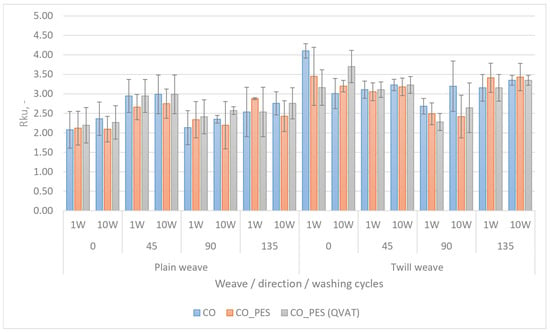
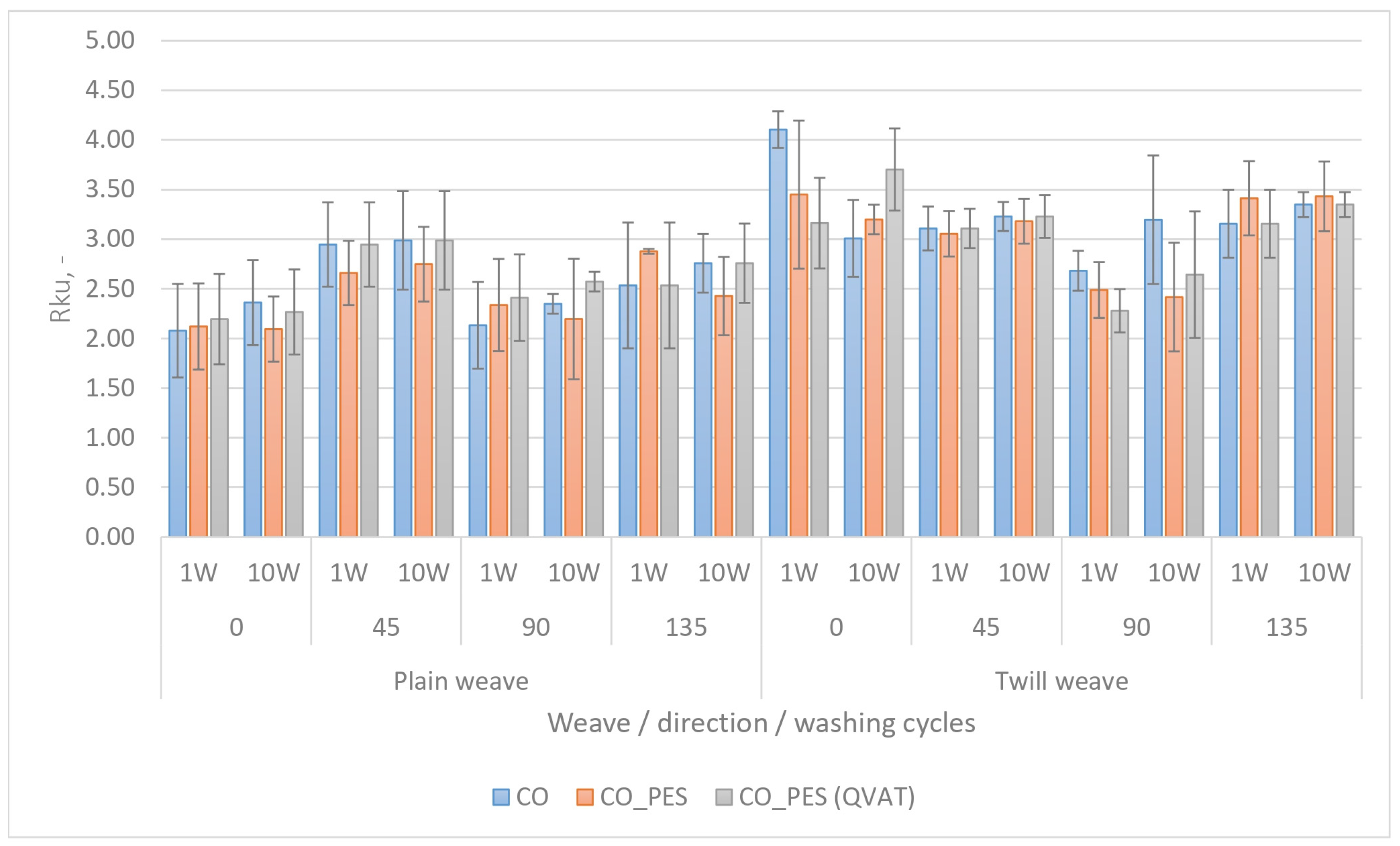
In Figure 7, the values of the kurtosis parameter Rku for fabrics in plain and twill weaves are shown as a function of measurement direction and the number of laundering cycles.
Figure 7.
The sharpness of a surface height distribution, Rku.
The kurtosis parameter (Rku) describes the shape of the height distribution of the profile, where a value of Rku = 3 corresponds to a normal distribution. Plain weave exhibits lower Rku values. In diagonal directions (45° and 135°), no significant deviations are observed. Observing the differences between CO_PES (QVAT), it is evident that in plain weave, in the warp direction, there are no significant differences in Rku values before and after 10 washing cycles.
By contrast, twill weave exhibits increased Rku values, especially in directions intersecting the dominant structural orientation. Similarly, in twill weave samples, greater changes are observed in the warp direction for the CO_PES and CO_PES (QVAT) samples after washing cycles. For the untreated CO_PES, a decrease in Rku values is observed after the washing cycles, indicating possible changes due to fabric shrinkage in the weft direction. In the CO_PES (QVAT) sample, an increase in Rku values was recorded after 10 washing cycles, suggesting that material relaxation occurred, indicating that the presence of QVAT influenced the behavior of the fibers during washing by preventing the swelling of cotton itself and the shrinkage of the entire fabric after washing. Meanwhile, CO_PES (QVAT) samples in the weft direction show significantly lower Rku values both before and after 10 washing cycles.
3.3. Directional Distribution of Linear Peak Density as a Spatial Roughness Parameter
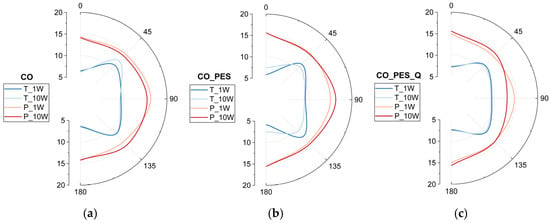
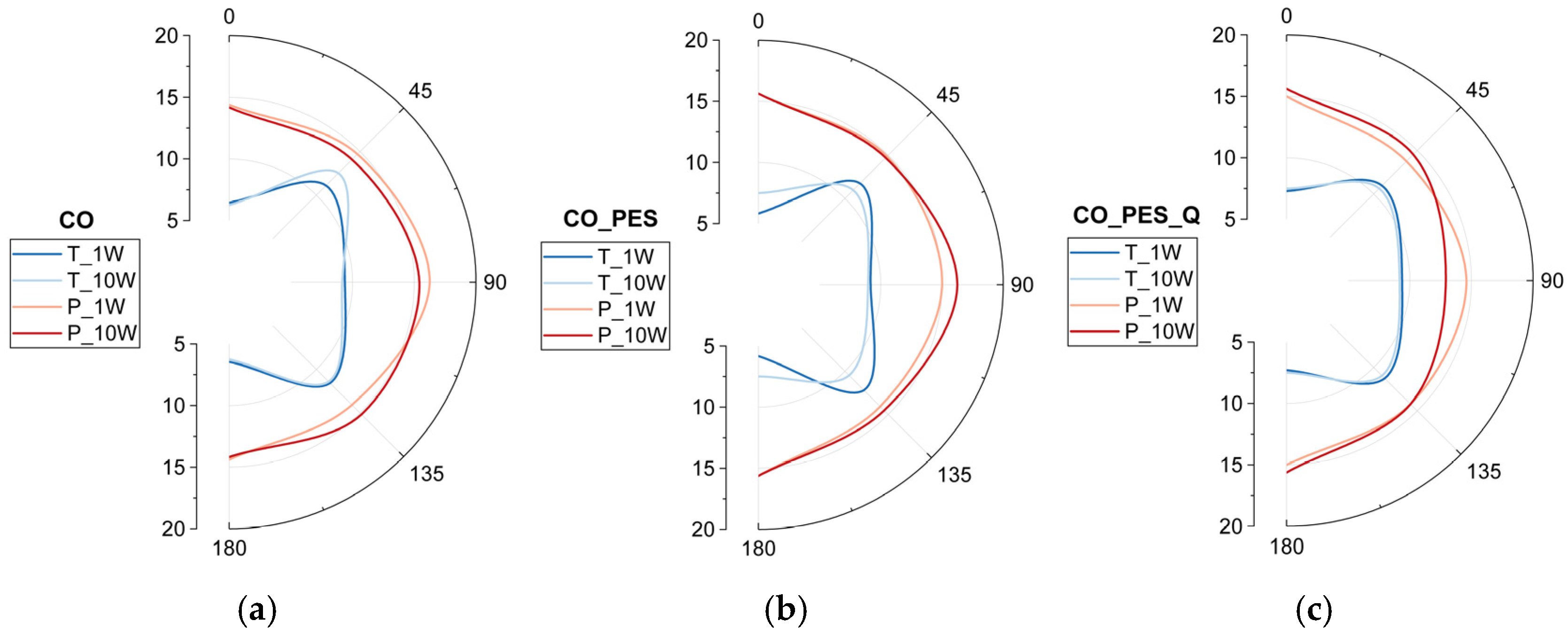
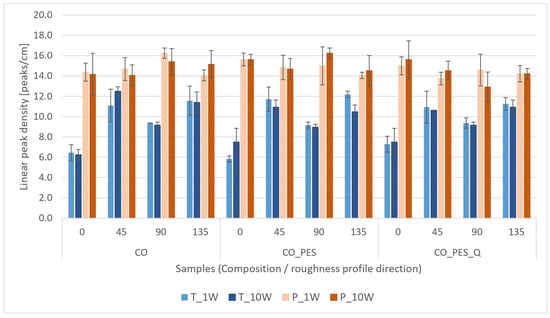
The graphical representations in Figure 8 show the distribution of linear peak density of fabric sample surfaces over a length of 1 cm, depending on profile direction, for samples washed 1 and 10 times.
Figure 8.
Angular distribution of linear peak density for 100% cotton samples (a), 50% cotton fiber/50% polyester samples (b), and 50% cotton fiber/50% polyester fiber and QVAT-treated samples (c).
The results indicate that fiber composition and the washing cycles do not have a significant influence on this spatial parameter of surface roughness. The most pronounced influence was observed for twill weave samples, showing lower peak density than plain weave samples. In addition, twill weave samples show more pronounced extremes in the 45° and 135° directions. By contrast, fabrics in symmetrical plain weave show a greater tendency towards uniform behavior.
3.4. Representative Roughness Profiles in Different Directions
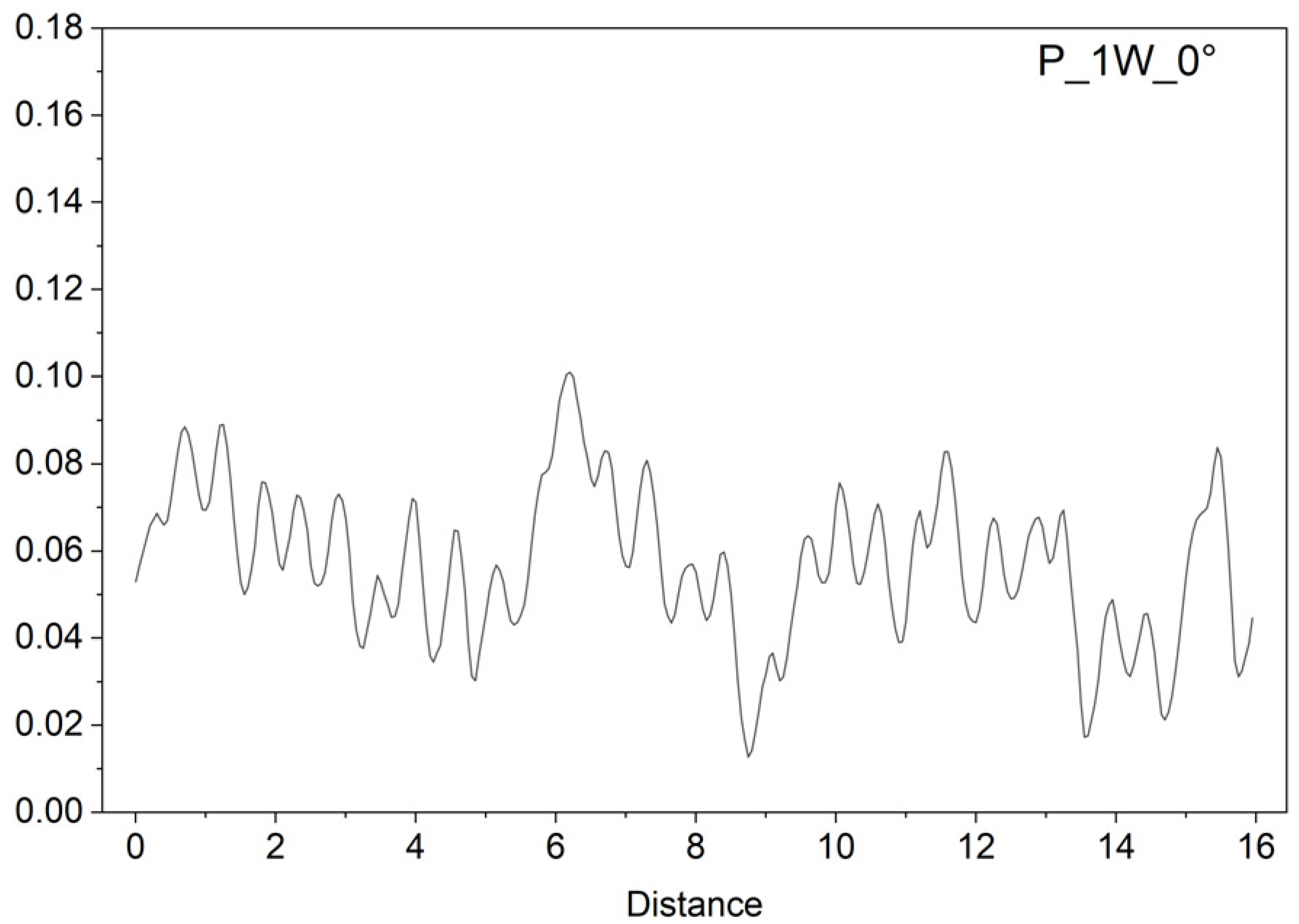
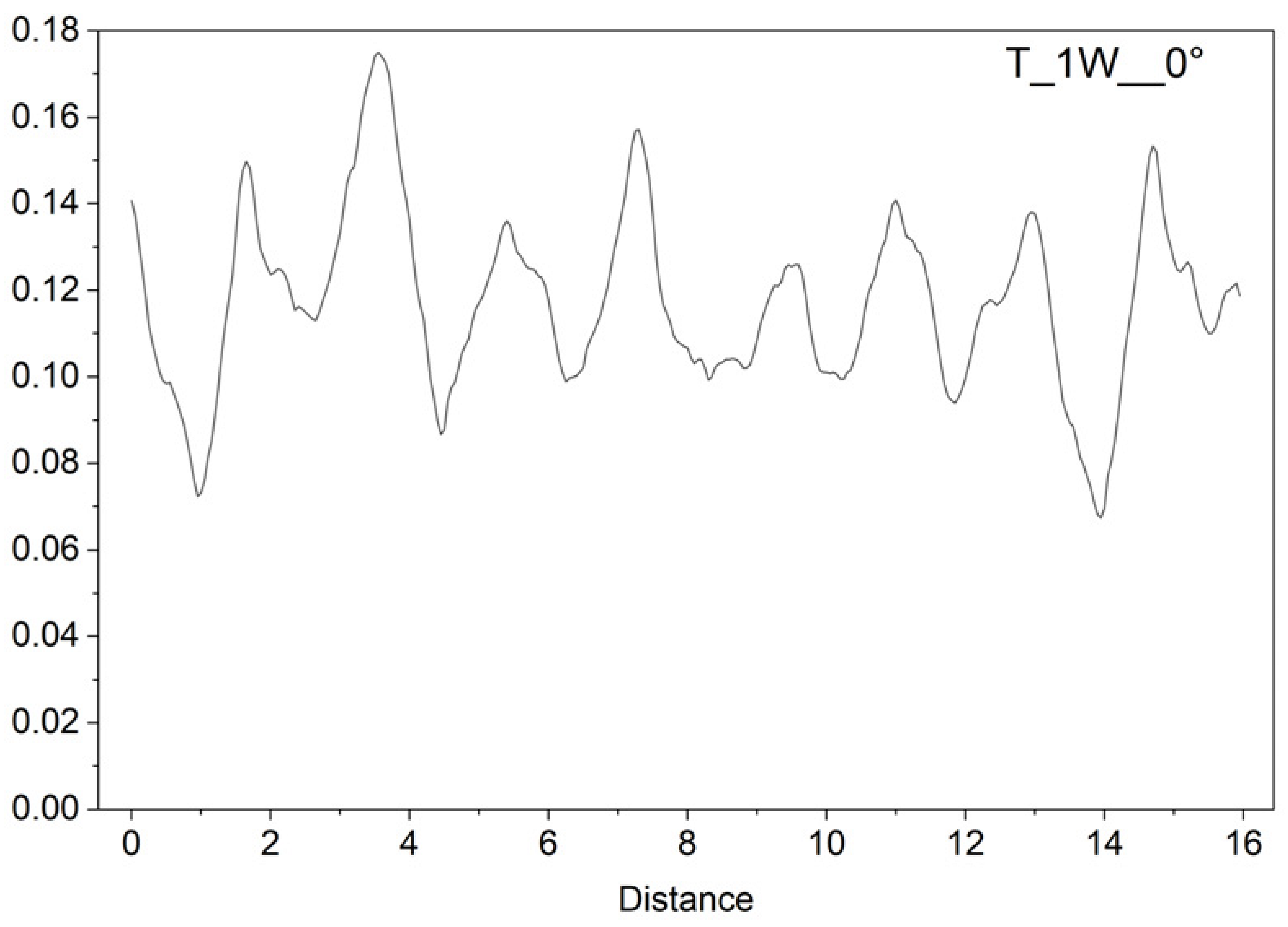
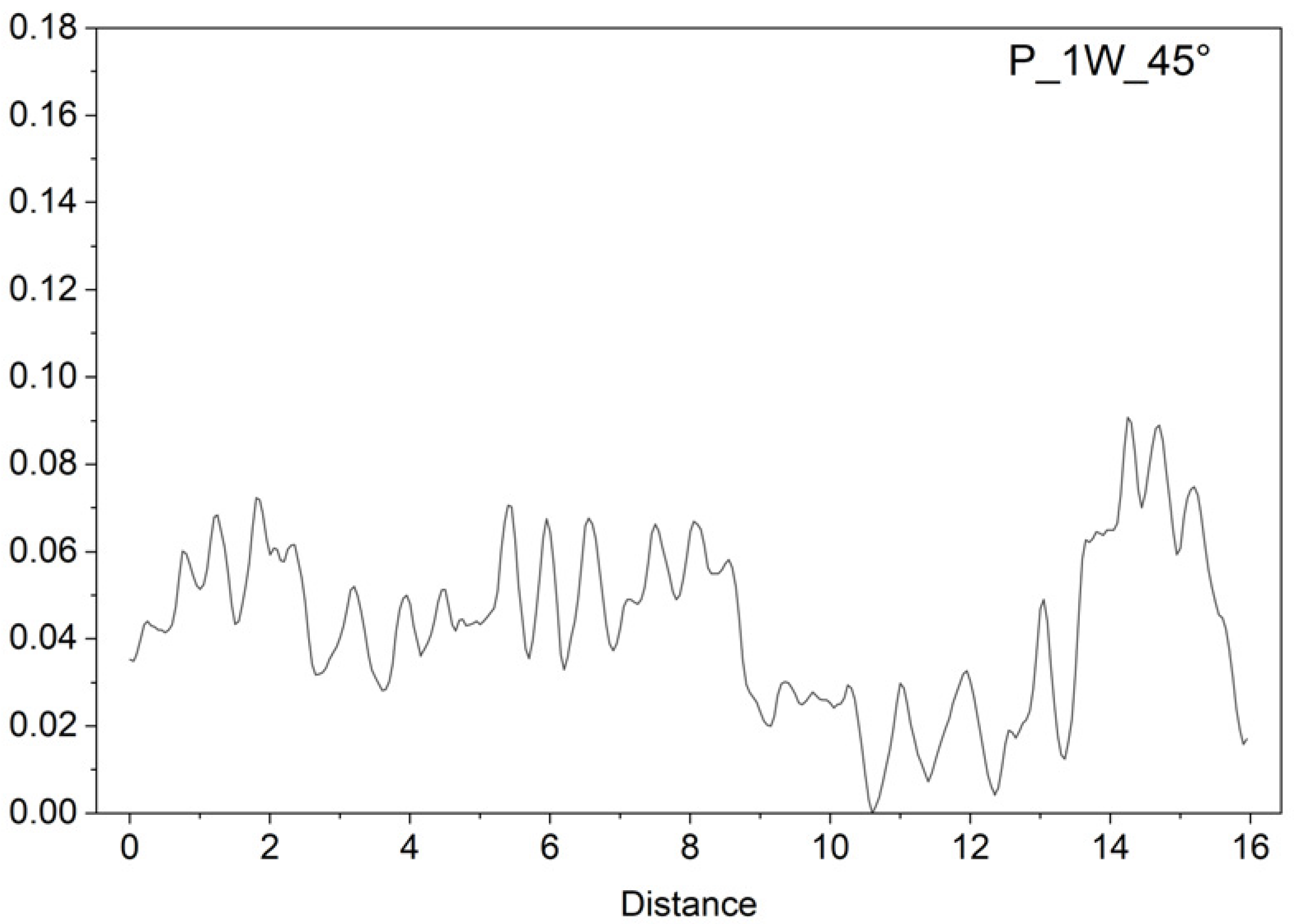
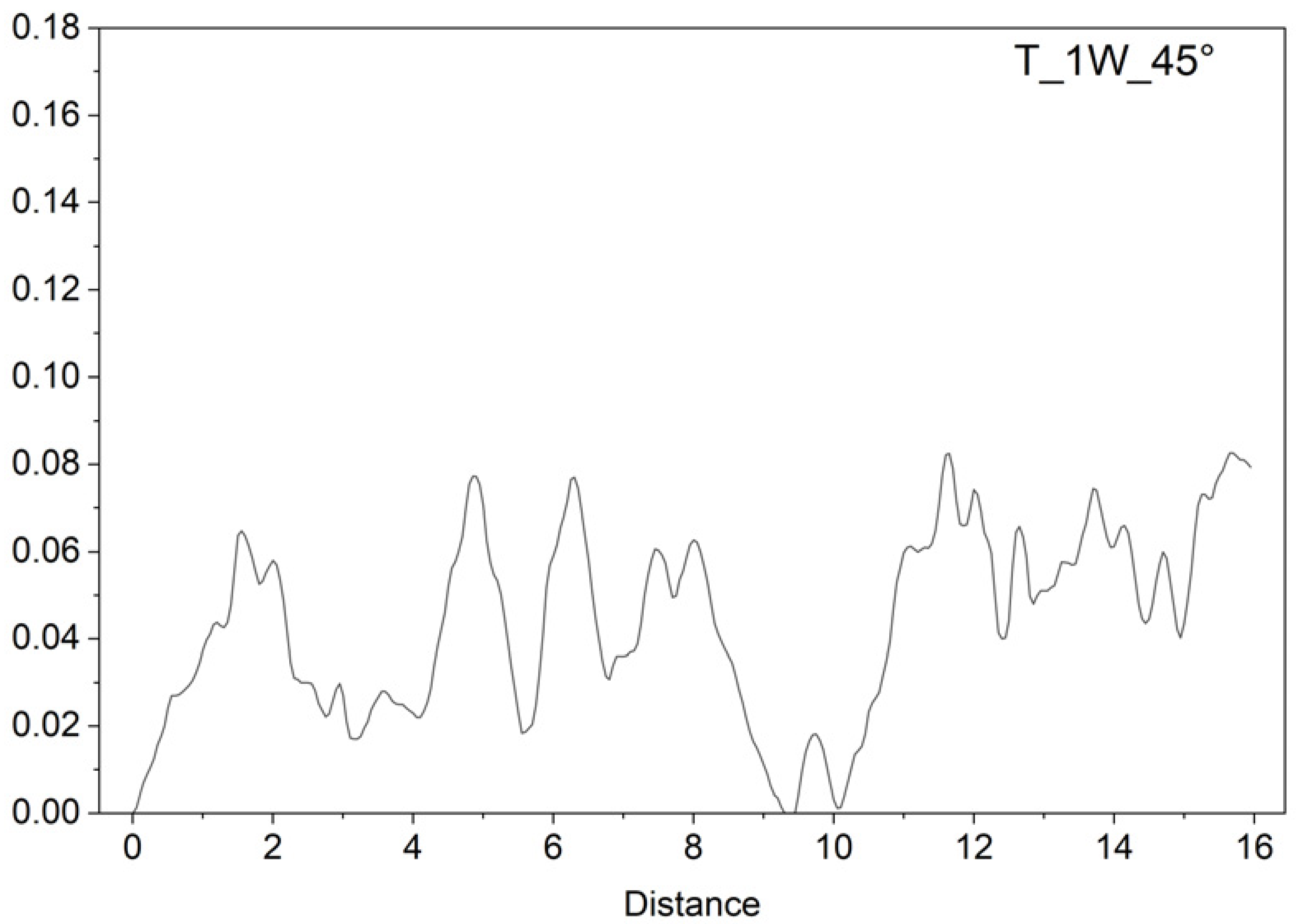
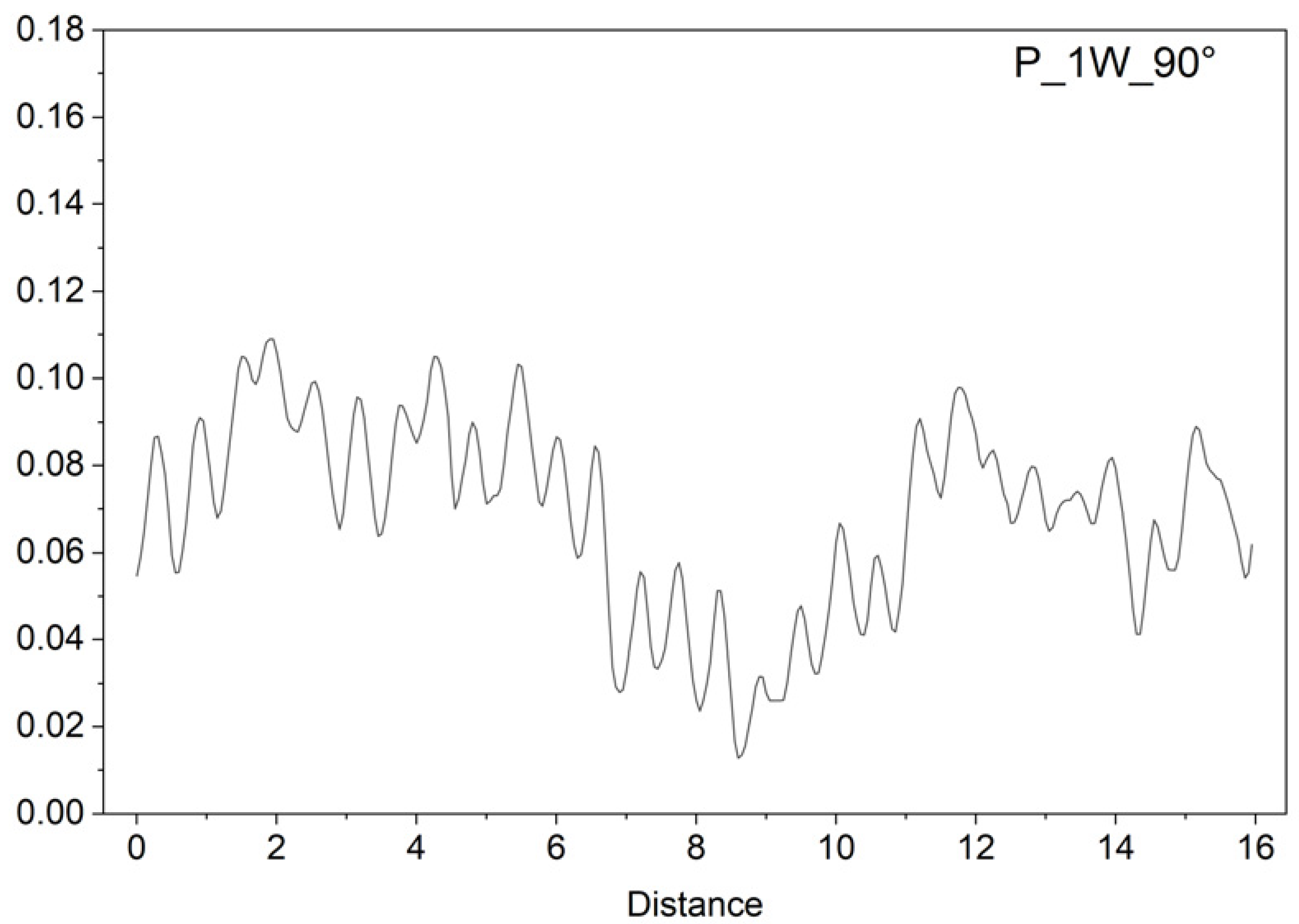
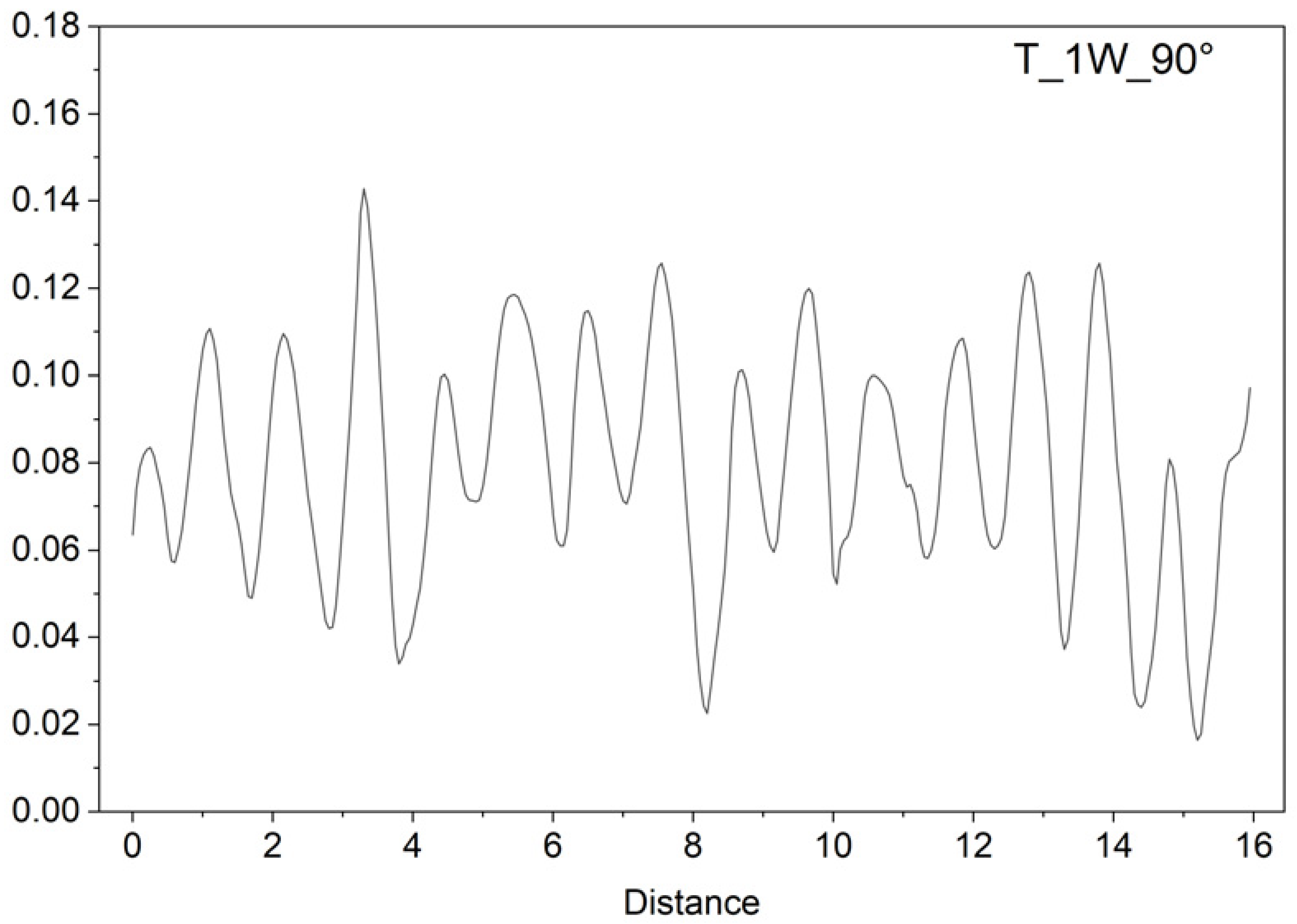
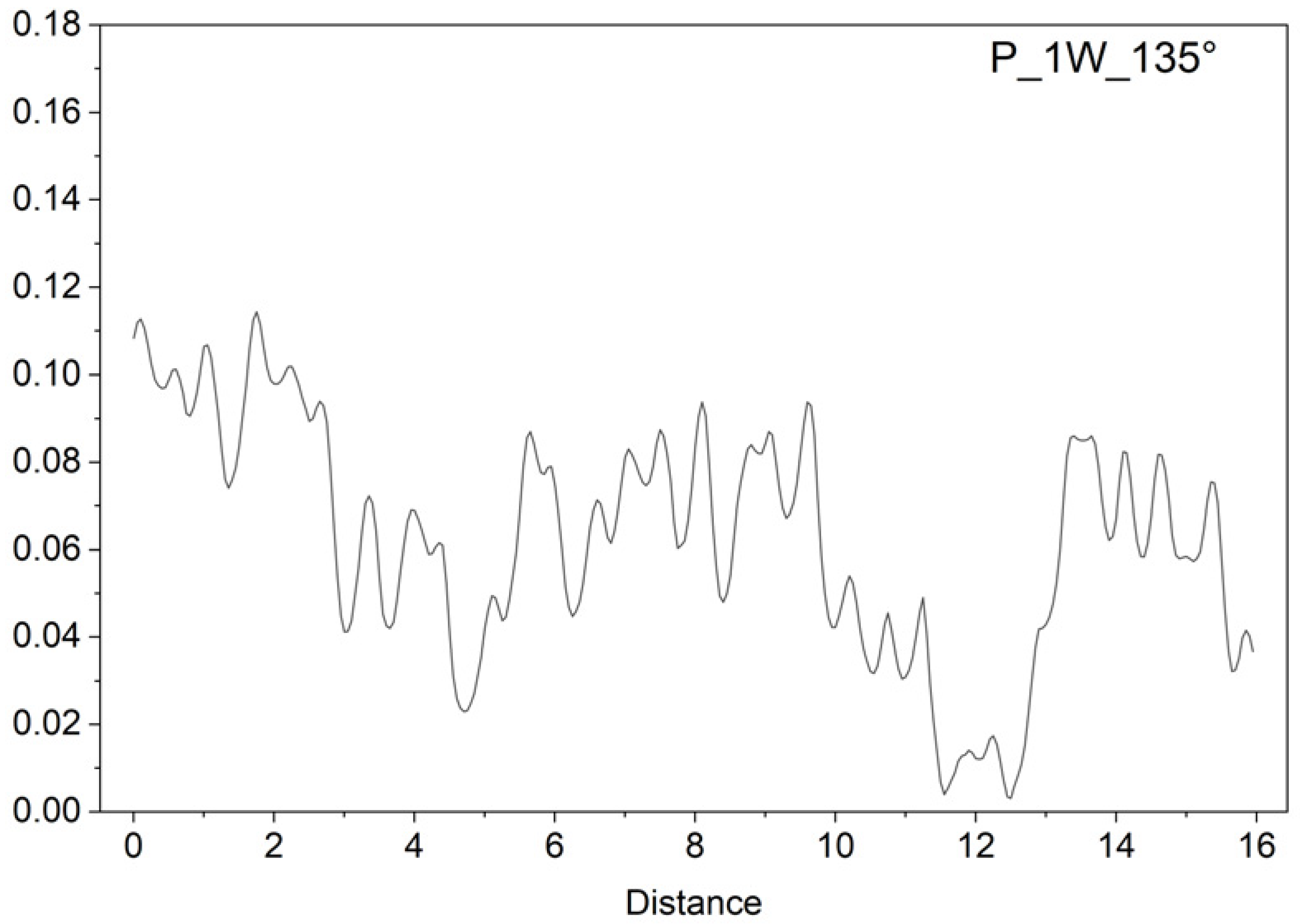
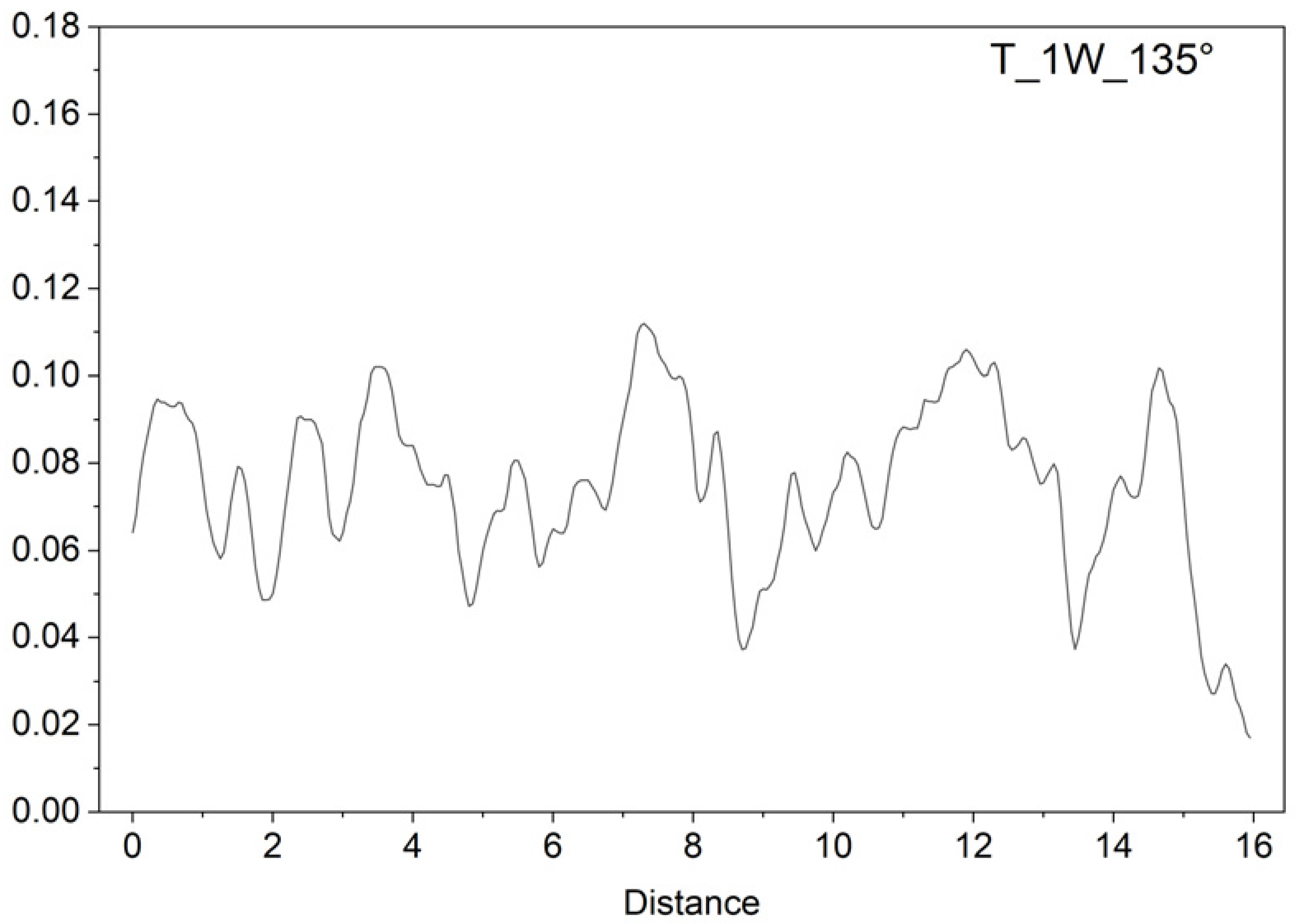
Table 2 presents representative roughness profiles of fabrics in plain and twill (1/3 S) weaves after one laundering cycle, analyzed in four directions (0°, 45°, 90°, and 135°).
Table 2.
Representative roughness profiles of fabrics in plain and twill (1/3 S) weaves.
In plain weave fabrics, the profiles are characterized by relatively uniform amplitudes and many small, densely distributed irregularities along the observed segment. Such morphology is associated with high linear peak density. In all analyzed directions, the profiles show a similar shape and distribution of irregularities.
On the other hand, in twill weave fabrics, a smaller number of more pronounced and more widely spaced peaks is observed. The profiles show the presence of locally dominant peaks and deeper valleys, particularly in diagonal directions (45° and 135°). Differences between directions are clearly visible, with diagonal directions showing more pronounced amplitudes and irregularities than the principal directions.
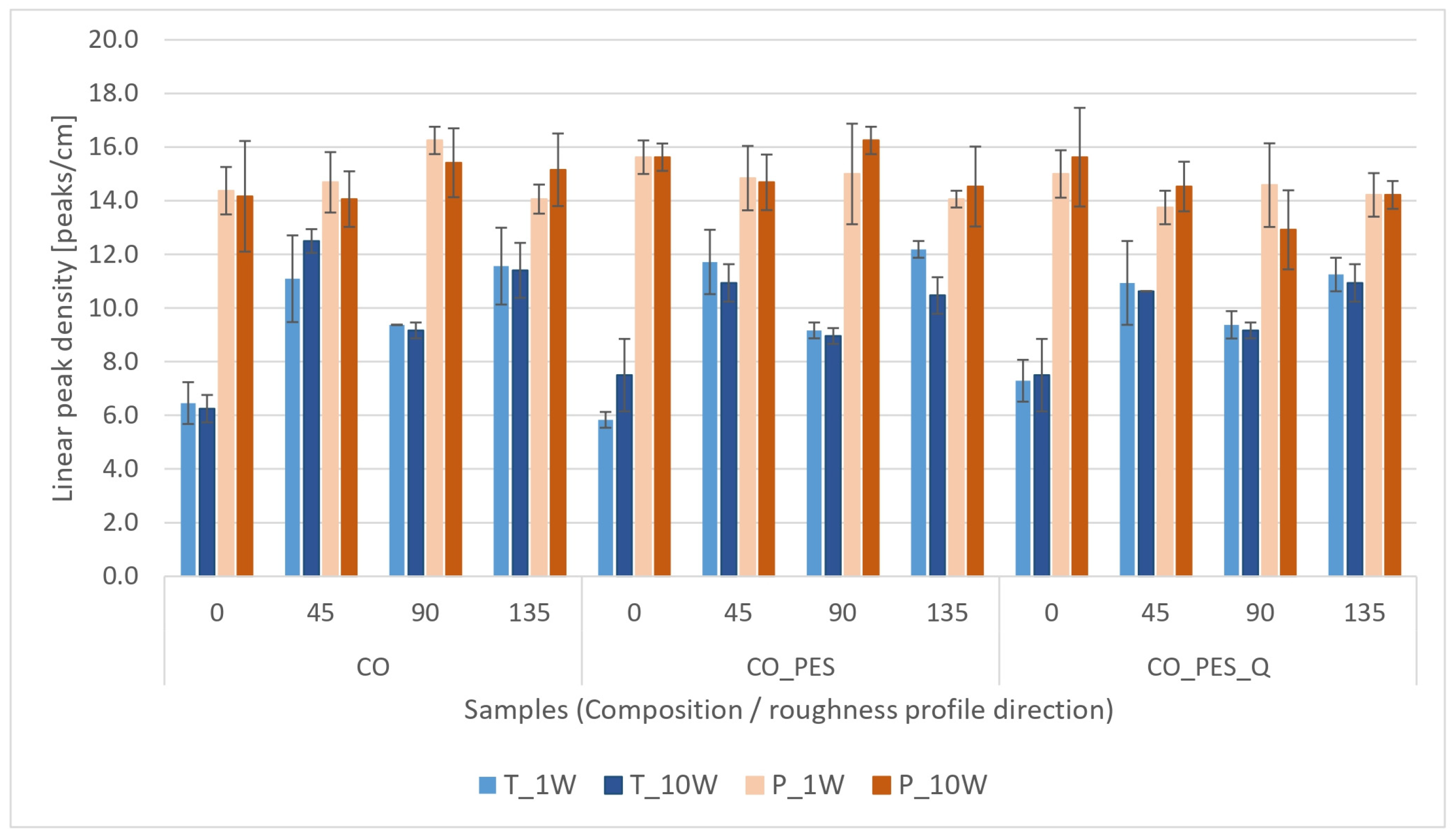
The graphical representation (Figure 9) shows the linear peak density of fabric samples after 1 and 10 laundering cycles, analyzed in two principal and two secondary directions of the axes of orthotropic symmetry. The results confirm that the number of laundering cycles had no statistically significant effect on this spatial parameter of surface roughness. In addition, fiber composition showed no statistically significant effect on the observed parameter. Plain weave samples are characterized by a denser distribution of peaks than twill weave samples. In twill weave samples, a more pronounced difference in peak density between the principal and secondary axes of orthotropic symmetry was observed. By contrast, such differences were not observed in plain weave samples. However, the obtained results show that these differences are not statistically significant.
Figure 9.
Linear peak density of fabric samples.
To evaluate linear peak density as a spatial surface roughness parameter, comparative tests were conducted using non-parametric methods due to sample size limitations. The influence of laundering cycles and the effect of the applied treatment were analyzed. The results showed no statistically significant differences in linear peak density between initial and washed fabric samples. Likewise, no statistically significant difference was found between treated and untreated samples.
4. Discussion
The results indicate that the structural characteristics of the weave play a major role in the formation of fabric surface topography. In plain weave fabrics, the highest Rq values recorded in the weft direction suggest that, under the given measurement orientation, the warp yarn system makes a dominant contribution to the measured amplitude roughness. A similar pattern in the CO_PES plain weave sample, appearing only after 10 washing cycles, suggests that repeated washing affects the redistribution of the structure and the arrangement of surface irregularities. The more uniform roughness values observed in antimicrobial-finished plain weave fabrics (CO_PES_Q), together with the increase in Rq after 10 laundering cycles, may indicate progressive modification of the surface layer during repeated washing. In twill fabrics, the more pronounced directional dependence of Rq compared with plain weave reflects the structural deviation from orthotropic behavior of the twill weave surface. The decrease in Rq values in the principal directions for 100% cotton twill samples may indicate partial structural relaxation and surface smoothing, whereas the increase in diagonal directions suggests the development of more pronounced local irregularities in directions intersecting the dominant twill orientation. The consistent increase in Rq values observed in CO_PES_Q twill samples may be associated with washing-induced changes in the finished surface. The generally lower global Rq values in twill fabrics compared with plain weave fabrics may be attributed to the structural characteristics of twill, especially the presence of longer floats and a lower frequency of interlacements. Such a structure allows a more efficient redistribution of local height deviations and a certain degree of surface smoothing. Conversely, plain weave fabric, with its higher frequency of yarn interlacements and larger number of interlacements, exhibits greater structural stability and consequently more pronounced amplitude deviations over the entire surface. At the same time, the fact that Rq values in twill fabrics in the weft direction reach values comparable to, or even exceeding, those of plain weave indicates that global roughness averages are not sufficient to describe functionally relevant surface behavior. When the profile is measured across the warp yarns, local height deviations become more pronounced, which underlines the importance of multidirectional analysis.
The Rku results complement the amplitude analysis by showing that plain weave fabrics are characterized by a more uniform distribution of heights without pronounced extremes, while twill fabrics exhibit greater heterogeneity, particularly in directions intersecting the dominant structural orientation. This is consistent with the presence of localized peaks and the more complex topography associated with the diagonal organization of the twill weave.
The absence of statistically significant differences in linear peak density with respect to laundering cycles, fiber composition, and antimicrobial treatment suggests that this parameter is less sensitive to such factors than to weave structure itself. The lower peak density observed in twill fabrics is a direct consequence of the interlacements in the weave unit, whereas the denser distribution of peaks in plain weave reflects its more frequent structural interruptions. The more pronounced extremes observed in twill fabrics in the diagonal directions further confirm the orthotropic nature of woven structures and indicate that restricting the analysis to principal directions alone would not provide a complete description of fabric roughness.
The representative roughness profiles additionally support these findings. Plain weave is characterized by a high frequency of surface irregularities with a relatively uniform height distribution, while twill weave shows lower peak frequency but greater local variability with more pronounced peaks. In tactile terms, a denser and more uniform distribution of smaller irregularities may contribute to a more homogeneous and potentially smoother tactile response, whereas the more pronounced local irregularities observed in twill fabrics, particularly in diagonal directions, may lead to a more direction-dependent tactile perception. However, since the differences in linear peak density between directions in twill fabrics were not statistically significant, such effects should be interpreted with caution.
5. Conclusions
In this study, the multidirectional surface roughness of woven fabrics in plain and twill (1/3 S) weaves intended for hospital applications was analyzed, considering the influence of fiber composition, antimicrobial finishing, and the washing cycles. The results showed that the weave type represents the most influential factor in shaping the surface topography of the fabrics, whereas the effects of fiber composition, finishing, and maintenance were not equally pronounced across all evaluated parameters.
The analysis of the amplitude roughness parameter Rq indicated that plain weave fabrics generally exhibit higher amplitude roughness compared to twill weave fabrics, which can be attributed to the higher frequency of interlacements and a greater number of interlacing points. In contrast, the twill weave fabric surface, due to longer floats and a lower interlacement frequency, shows lower global Rq values but a more pronounced directional dependence, particularly in diagonal directions. This confirms that analysis limited to the principal directions is insufficient for a comprehensive characterization of surface roughness in orthotropic textile structures. The kurtosis parameter (Rku) further complements the interpretation of amplitude results, as it describes not only the magnitude of height deviations but also their distribution within the profile. Lower Rku values observed in plain weave fabrics indicate a more uniform distribution of irregularities without pronounced local extremes, whereas higher Rku values in twill fabrics confirm the presence of locally dominant peaks and greater heterogeneity of the surface topography. The analysis of linear peak density showed that neither the number of washing cycles, nor the fiber composition, nor the presence of antimicrobial finishing had a statistically significant effect on this spatial roughness parameter. At the same time, it was confirmed that the weave type has the most significant influence on the distribution and frequency of surface irregularities. Plain weave fabrics exhibited higher linear peak density, corresponding to a denser distribution of smaller irregularities, whereas twill fabrics showed lower peak density but more pronounced local peaks and stronger directional dependence, particularly in the 45° and 135° directions.
The obtained results confirm that the surface roughness of textile materials cannot be reliably described by a single parameter; instead, both amplitude and spatial descriptors of surface topography must be considered simultaneously. The combined interpretation of Rq, Rku, and linear peak density enabled a more comprehensive understanding of the differences between plain and twill weaves, as well as the role of measurement direction in shaping surface properties.
These findings have practical relevance for the development of textiles intended for hospital applications, as they demonstrate that fabric construction can significantly influence the nature of surface contact and, consequently, tactile comfort and mechanical interaction with sensitive skin. In the context of hospital textiles and bed sheets, such insights may contribute to the selection and design of structurally optimized materials aimed at reducing the risk of skin irritation and improving user comfort during prolonged contact. However, this study is limited to dry conditions and does not account for the influence of moisture (e.g., water, sweat), which may significantly alter textile–skin interactions. Frictional properties were not directly investigated, although they are relevant to tactile perception. Future work will therefore integrate friction measurements with surface roughness parameters, include a wider range of weave structures, and examine the effects of moisture content, which may arise from diverse sources in a hospital environment. The aim is to establish a comprehensive framework linking objective surface characteristics with subjective tactile comfort for improved textile design in hospital applications.
In order to improve clarity and support reader understanding the key terms and definitions used throughout the paper are presented in Table 3.
Table 3.
Definition of terms used in the study.
Author Contributions
Conceptualization, S.B. and A.K.; methodology, S.B. and A.P.; validation, S.B. and A.K.; formal analysis, S.B. and A.K.; investigation, S.B., S.F.G. and A.K.; resources: S.F.G.; data curation, S.B., S.F.G., A.P. and A.K.; writing—original draft preparation, S.B. and A.K.; writing—review and editing, S.B., S.F.G. and AK; visualization, S.B., A.K. and A.P.; supervision, S.B. and S.F.G.; project administration, S.B. and S.F.G.; funding acquisition, S.F.G. All authors have read and agreed to the published version of the manuscript.
Funding
This work has been supported in part by Croatian Science Foundation under the project UIP-2017-05-8780 HPROTEX. The funding number is UIP-2017-05-8780.
Data Availability Statement
The original contributions presented in this study are included in the article. Further inquiries can be directed to the corresponding authors.
Acknowledgments
The publication of the work is a result of the implementation of the institutional research project “Research and development of sustainable, functional textile components for next-Generation composites”, FUNK-TEX, TTF-IIP-06 and “Green Technologies in Ecological Design and Development of Sustainable Materials—ZORA”, TTF-IIP-04, funded by the European Union—NextGenerationEU. The part of the research was performed on equipment purchased by K.K.01.1.1.02.0024 project “Modernization of Textile Science Research Centre Infrastructure” (MI-TSRC).
Conflicts of Interest
The authors declare no conflicts of interest.
References
- Baby, R.; Mathur, K.; DenHartog, E. Skin–textiles friction: Importance and prospects in skin comfort and in healthcare in prevention of skin injuries. J. Text. Inst. 2021, 112, 1514–1530. [Google Scholar] [CrossRef] [Scilit]
- Ramalho, A.; Szekeres, P.; Fernandes, E. Friction and tactile perception of textile fabrics. Tribol. Int. 2013, 63, 29–33. [Google Scholar] [CrossRef] [Scilit]
- Vilhena, L.; Ramalho, A. Friction of human skin against different fabrics for medical use. Lubricants 2016, 4, 6. [Google Scholar] [CrossRef] [Scilit]
- Mooneghi, S.A.; Saharkhiz, S.; Varkiani, S.M.H. Surface roughness evaluation of textile fabrics: A literature review. J. Eng. Fibers Fabr. 2014, 9, 155892501400900201. [Google Scholar] [CrossRef] [Scilit]
- Akgun, M. Assessment of the surface roughness of cotton fabrics through different yarn and fabric structural properties. Fibers Polym. 2014, 15, 405–413. [Google Scholar] [CrossRef] [Scilit]
- Brnada, S.; Malinar, R.; Kovačević, S.; Odak, L. Impact of weave on topographic characteristics of polyester/cotton fabrics before and after washing. In Book of Proceedings of the 10th International Textile, Clothing & Design Conference-Magic World of Textiles; Tekstilno-Tehnološki Fakultet Sveučilišta u Zagrebu: Zagreb, Croatia, 2022. [Google Scholar]
- Wu, J.; Li, N.; Liu, W.; Song, G.; Zhang, J. Experimental study on the perception characteristics of haptic texture by multidimensional scaling. IEEE Trans. Haptics 2015, 8, 410–420. [Google Scholar] [CrossRef] [Scilit]
- Mehta, S.; Holásková, I.; Walker, M. Tactile sensitivity alters textile touch perception. PLoS ONE 2024, 19, e0308957. [Google Scholar] [CrossRef] [Scilit]
- Santos, R.R.; Nakanishi, M.; Sukigara, S. Tactile perception of woven fabrics by a sliding index finger with emphasis on individual differences. Textiles 2023, 3, 115–128. [Google Scholar] [CrossRef] [Scilit]
- Di Stefano, N.; Spence, C. Roughness perception: A multisensory/crossmodal perspective. Atten. Percept. Psychophys. 2022, 84, 2087–2114. [Google Scholar] [CrossRef] [Scilit] [PubMed]
- Abraira, V.E.; Ginty, D.D. The sensory neurons of touch. Neuron 2013, 79, 618–639. [Google Scholar] [CrossRef] [Scilit] [PubMed]
- Sahli, R.; Prot, A.; Wang, A.; Müser, M.H.; Piovarči, M.; Didyk, P.; Bennewitz, R. Tactile perception of randomly rough surfaces. Sci. Rep. 2020, 10, 15800. [Google Scholar] [CrossRef] [Scilit] [PubMed]
- Ding, S.; Pan, Y.; Tong, M.; Zhao, X. Tactile perception of roughness and hardness to discriminate materials by friction-induced vibration. Sensors 2017, 17, 2748. [Google Scholar] [CrossRef] [Scilit]
- Darden, M.A.; Schwartz, C.J. Investigation of skin tribology and its effects on the tactile attributes of polymer fabrics. Wear 2009, 267, 1289–1294. [Google Scholar] [CrossRef] [Scilit]
- Xiong, J.; Cui, P.; Chen, X.; Wang, J.; Parida, K.; Lin, M.-F.; Lee, P.S. Skin-touch-actuated textile-based triboelectric nanogenerator with black phosphorus for durable biomechanical energy harvesting. Nat. Commun. 2018, 9, 4280. [Google Scholar] [CrossRef] [Scilit]
- Kimiran Erdem, A.; Sanli Yurudu, N.O. The evaluation of antibacterial activity of fabrics impregnated with dimethyltetradecyl (3-(trimethoxysilyl) propyl) ammonium chloride. IUFS J. Biol. 2008, 67, 115–122. [Google Scholar]
- Malnick, S.; Bardenstein, R.; Huszar, M.; Gabbay, J.; Borkow, G. Pyjamas and sheets as a potential source of nosocomial pathogens. J. Hosp. Infect. 2008, 70, 89–92. [Google Scholar] [CrossRef] [Scilit]
- Grancarić, A.M.; Rybicki, E.; Tarbuk, A.; Pavlović, G.; Botteri, L. Nanočestice srebra u antimikrobnoj obradi tekstila. Tekstil 2011, 60, 629–639. [Google Scholar]
- Simončić, B.; Tomšić, B. Structures of novel antimicrobial agents for textiles—A review. Text. Res. J. 2010, 80, 1721–1737. [Google Scholar] [CrossRef] [Scilit]
- Bischof Vukušić, S.; Flinčec Grgac, S.; Katović, D. Antimikrobna modifikacija tekstilija i problematika metoda ispitivanja. Tekstil 2007, 56, 36–49. [Google Scholar]
- Flinčec Grgac, S.; Palčić, A.; Kovaček, I.; Mlinar, Z.; Dekanić, T. Development of fabrics with permanent antimicrobial effect using a quaternary ammonium compound. In Conference Book of InnovaTex 2023—Innovative Aspects of the Textile Industry; Tokarska, M., Ed.; Łódź University of Technology: Łódź, Poland, 2023; pp. 71–78. [Google Scholar]
- Flinčec Grgac, S.; Bischof Vukušić, S.; Katović, D.; Matica, B.; Dragoša, M. Antimicrobial functionalisation of knitted fabrics. In Proceedings of the 3rd International Textile, Clothing & Design Conference; A & C Design: Zagreb, Croatia, 2006; pp. 270–276. [Google Scholar]
- Messaoud, M.; Chadeau, E.; Chaudouët, P.; Oulahal, N.; Langlet, M. Quaternary ammonium-based composite particles for antibacterial finishing of cotton-based textiles. J. Mater. Sci. Technol. 2014, 30, 19–29. [Google Scholar] [CrossRef] [Scilit]
- Palčić, A.; Flinčec Grgac, S.; Vasiljević, A.; Tarbuk, A. Functionalization of cotton/polyester fabric with dimethyltetradecyl (3-(trimethoxysilyl) ammonium chloride. In Proceedings of the 10th International Textile, Clothing & Design Conference—Magic World of Textiles; University of Zagreb Faculty of Textile Technology: Zagreb, Croatia, 2022; pp. 136–141. [Google Scholar]
- Ramya, P.; Prakash, C. Antimicrobial finish in textiles. J. Text. Assoc. 2024, 85, 127–133. [Google Scholar] [CrossRef]
- ISO 4287:1997; Geometrical Product Specifications (GPS)—Surface Texture: Profile Method—Terms, Definitions and Surface Texture Parameters. International Organization for Standardization: Geneva, Switzerland, 1997.
- Mechanical filtering of surface finish trace. Available online: https://commons.wikimedia.org/wiki/File:Mechanical_filtering_of_surface_finish_trace (accessed on 5 May 2026).
- Kalazić, A.; Brnada, S.; Bušac, T.; Pušić, T. Quantitative Analysis of the Impact of Finishing and Washing Processes on the Roughness of Polyester Fabric. Polymers 2024, 16, 2199. [Google Scholar] [CrossRef] [Scilit]
- Kaurin, T.; Pušić, T.; Dekanić, T.; Flinčec Grgac, S. Impact of Washing Parameters on Thermal Characteristics and Appearance of Proban®—Flame Retardant Material. Materials 2022, 15, 5373. [Google Scholar] [CrossRef] [Scilit]

Disclaimer/Publisher’s Note: The statements, opinions and data contained in all publications are solely those of the individual author(s) and contributor(s) and not of MDPI and/or the editor(s). MDPI and/or the editor(s) disclaim responsibility for any injury to people or property resulting from any ideas, methods, instructions or products referred to in the content. |
© 2026 by the authors. Licensee MDPI, Basel, Switzerland. This article is an open access article distributed under the terms and conditions of the Creative Commons Attribution (CC BY) license.