


Highlights
What are the main findings?
- Dragonwood PSB with face-bonded sections exhibited higher mean bearing capacity and stiffness than Ekki, based on compression perpendicular-to-grain tests, indicating strong potential for bearing-dominated applications.
- Glue-line orientation strongly influenced flexural behavior, resulting in strength reductions and undesirable shear failures; while single-lift specimens eliminated glue-line failures, their flexural strength was lower than Ekki.
What are the implications of these findings?
- The results demonstrate that manufacturing configuration, particularly the presence of glue-line interfaces, governs both the mechanical performance and reliability of PSB materials.
- Although single-lift Dragonwood shows strong potential for jacking applications, its bearing behavior remains unverified and requires further experimental validation before practical implementation.
Abstract
Engineered bamboo composites (EBCs) are increasingly considered as sustainable alternatives to tropical hardwoods in structural applications. In jacking systems, performance is primarily governed by compression perpendicular-to-grain (bearing), although improper use may introduce flexural demands. This study evaluates the bearing and flexural behavior of Dragonwood, a commercial parallel strand bamboo (PSB), in comparison to Ekki (Lophira alata) through 120 full-scale tests. Dragonwood exhibited higher mean bearing capacity than Ekki, with yield stresses exceeding those of Ekki by over 60%, indicating strong potential for bearing-dominated applications such as in jacking. However, face-bonded specimens showed sensitivity to glue-line orientation, resulting in flexural strength reductions of up to 42% and undesirable shear failures. Increasing adhesive content and pressing pressure in the manufacturing process did not eliminate this behavior. Single-lift specimens removed the glue-line and showed improved failure behavior in flexure, although with reduced strength. The results demonstrate that manufacturing strategy heavily influences PSB performance. While single-lift Dragonwood products show the most potential, further testing under bearing is required before its suitability for jacking applications can be fully established.
1. Introduction
1.1. Background
Tropical hardwoods have historically been favored in heavy-load transfer systems, such as jacking and skidding operations, due to their superior strength, dimensional stability, resistance to decay, and fire resistance compared to many temperate hardwoods [1,2,3]. Among these materials, Ekki (Lophira alata), also marketed as Azobé and Bongossi, is one of the most used hardwoods in jacking applications. However, increasing sustainability concerns associated with tropical deforestation, long growth cycles in the ranges of 60–80 years, and growing variability in material quality due to the use of less mature trees have motivated the search for alternative materials [4,5].
In response to these challenges, engineered bamboo composites (EBCs) have emerged as a promising alternative to tropical hardwoods. Bamboo is a rapidly renewable resource, with some species reaching structural maturity within a short period, offering advantages in resource availability and sustainability. EBCs typically exhibit high strength-to-weight ratios and reduced dimensional instability compared to solid hardwood products due to controlled processing and resin impregnation [1,6,7,8]. Similarly to wood, bamboo is an orthotropic natural material; however, the hollow, node-segmented structure of bamboo culms leads to non-uniform geometric and mechanical properties, necessitating reconstitution into engineered forms for structural use [2,9].
With the scarcity of tropical hardwood, there is increasing interest in evaluating the suitability of EBCs for use in the jacking industry as a potential alternative material. Notably, EBCs exhibit reduced warping and shrinkage due to the coatings applied in the final stages while also having high strength-to-weight ratios [1]. With over 1200 species worldwide, bamboo is a rapidly renewable resource that can be harvested in two to six years for structural applications [1], providing an advantage compared to the longer growth periods required for tropical hardwoods. However, as a natural material, bamboo exhibits orthotropic behavior and inherent variability, which must be addressed through engineering processes.
Two principal classes of EBCs are currently employed in structural applications, namely laminated veneer bamboo (LVB) and parallel strand bamboo (PSB). LVB is produced by laminating the bamboo culms into strips, strands, and mats to form boards or sheets with standardized rectangular sections that can be used for structural applications [1]. PSB, also known as bamboo scrimber, is manufactured by saturating crushed bamboo fibers in resin and pressing them into a mold to form the desired section [10]. These PSB sections typically consist of approximately 80% bamboo fiber and retain the longitudinal fiber orientation of the culm. As a result, PSB composites have been reported to achieve compression perpendicular-to-grain and flexural properties comparable to or exceeding those of some hardwoods [2,8]. However, the adhesive and bonding processes used during manufacturing can potentially affect both the sustainability and structural behavior of the material [11].
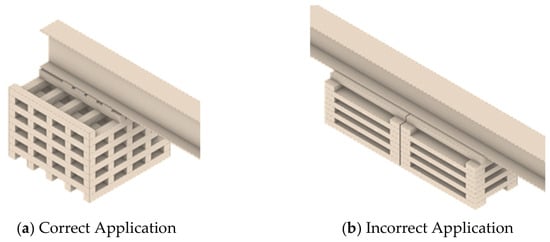
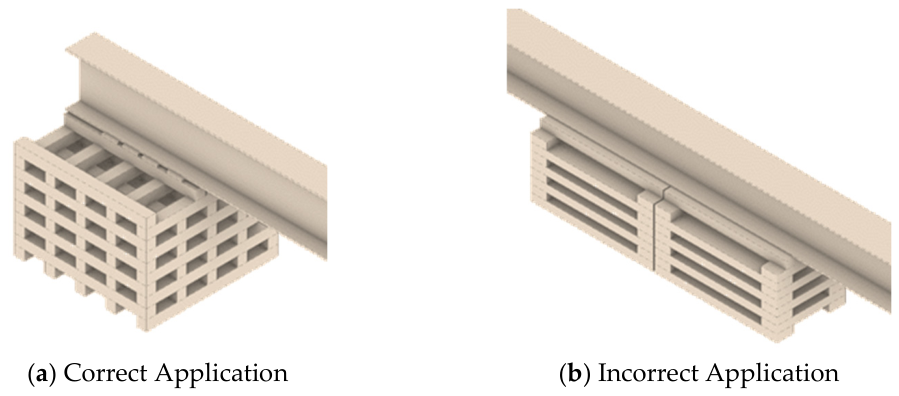
In typical jacking configurations, the beams are arranged over short spans to form rigid skidding tracks beneath heavy loads as shown in Figure 1a, thereby leveraging the bearing strength (i.e., compression perpendicular-to-grain) of the members.
Figure 1.
Representative examples of skidding tracks comprising jacking timber beams.
Under these load conditions, localized crushing and progressive deformation, rather than brittle failure, are desired. In practice, however, the jacking timbers are not always used correctly, as shown in Figure 1b, thus resulting in increased flexural loads as the beams span larger distances. Consequently, materials intended to replace tropical hardwood jacking timbers must exhibit reliable performance under both bearing- and flexure-dominated loading scenarios.
In recent years, there has been a growing interest in using EBCs in structural applications with several studies investigating their mechanical properties and overall performance [2,3,6,12]. The key physical and mechanical properties used for grading of EBCs are density, modulus of elasticity (MOE), and flexural strength [3,6,7].
Table 1 provides a summary of the flexural and compressive perpendicular-to-grain strengths reported in selected studies relevant to the current research program [2,3,12,13]. Key information such as the material type, density, number of replicas, specimen size, mean strength and MOE for both compression perpendicular-to-grain and flexure are presented. In general, PSB composites demonstrate higher compression perpendicular-to-grain capacities and flexural strengths than LVB products, while achieving flexural properties comparable to Ekki. However, most existing data are derived from small-scale experiments and do not explicitly address the influence of manufacturing-induced features, such as glue-line interfaces, on the full-scale structural performance.
Table 1.
Summary of literature review results.
Based on this context, the present study tests the hypotheses that: (i) compression perpendicular-to-grain governs the mechanical performance of jacking timbers under correct application; (ii) the presence and orientation of the glue-line interface in PSB composites affects the overall performance; and (iii) eliminating glue-lines through single-lift manufacturing improves flexural performance.
However, limited research exists on the influence of manufacturing-induced interfaces and their interaction with full-scale behavior under both bearing and flexural loading. Furthermore, uncertainty remains regarding the extent to which EBCs can reliably substitute tropical hardwoods in demanding applications such as jacking.
1.2. Research Objectives and Outcomes
The focus of this study is to experimentally evaluate the mechanical performance of a commercially available PSB composite, namely Dragonwood, relative to Ekki and assess its potential suitability for jacking applications. Full-scale compression perpendicular-to-grain and flexural tests are conducted on Dragonwood specimens manufactured using different processes, including face-bonded sections with discrete glue-lines and monolithic single-lift sections. These Dragonwood specimens are compared against Ekki specimens under identical conditions.
The results demonstrate that the glue-line orientation influences flexural performance in face-bonded PSB members due to premature shear failures, while single-lift Dragonwood specimens improve failure behavior by eliminating the adhesive interface.
2. Experimental Program
2.1. Description of Materials and Test Matrix
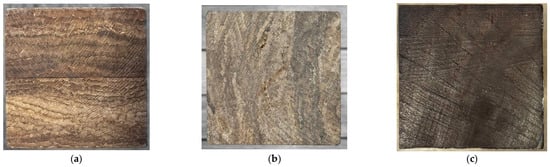
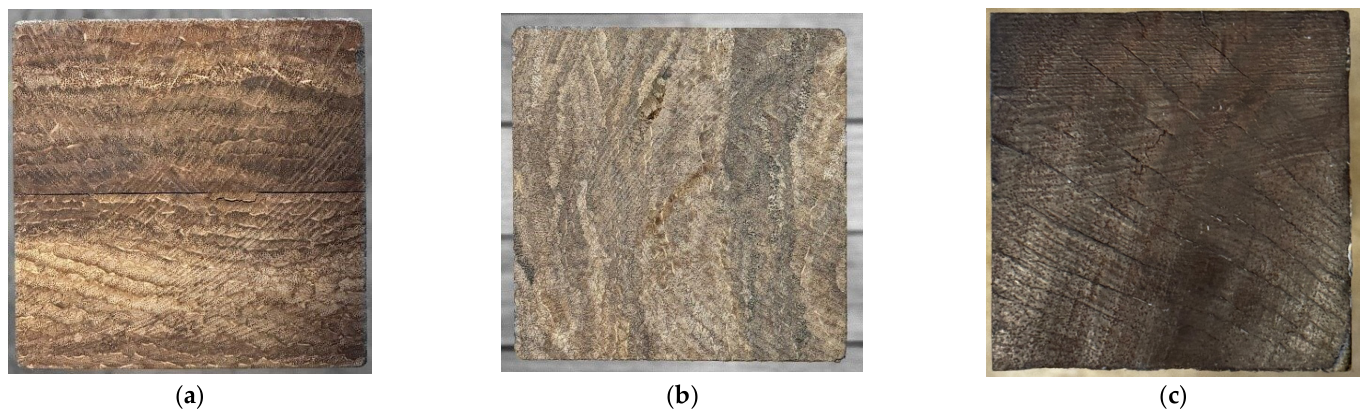
Two types of commercially available Dragonwood EBCs produced with different manufacturing processes across three production batches were evaluated as potential replacements for Ekki for jacking beams. The first type of EBC is produced by face-bonding two 50 mm × 100 mm PSB sections (i.e., type 1) and is shown in Figure 2a. The second EBC product consists of a custom 100 mm × 100 mm PSB section produced in a single compression press (i.e., no face-bond, type 2) as shown in Figure 2b. The Ekki specimens consist of a solid wood section (i.e., type 2). Depending on the specimen placement, type 1 specimens will either have a horizontal or vertical glue-line orientation relative to the span, while type 2 specimens will have fibers either in a vertical or horizontal radial orientation. As such, it is important to determine if the orientation of the glue-line or fibers affects the overall performance of the specimens.
Figure 2.
PSB and Ekki specimens. (a) Type 1 DW1 specimens with horizontal glue-line. The specimen can be re-orientated to have a vertical glue-line and is representative of type 1 DW2 specimens. (b) Type 2 DW3. (c) Type 2 EK specimen with vertical radial fiber orientation.
Table 2 presents an overview of the experimental program which was conducted in two testing phases for which a total of 40 compression perpendicular-to-grain and 80 flexural tests were carried out. All bearing tests were conducted on full-scale 100 mm × 100 mm × 250 mm specimens, whereas the flexural tests were conducted on full-scale 100 mm × 100 mm × 1000 mm specimens.
Table 2.
Summary of test matrix.
Initially, Phase 1 focused on evaluating both the bearing and flexural behavior of both Dragonwood and Ekki to evaluate whether Dragonwood in its existing form can be a suitable alternative to traditional tropical hardwood jacking beams based on preliminary experimental results. An initial batch of twenty type 1 Dragonwood specimens (i.e., type 1 DW1) and twenty Ekki (EK) specimens were evaluated for their flexural and bearing strength. Both the Dragonwood (i.e., DW1) and Ekki were in-kind donations from the industry partner and were representative of what was used in the industry. As such, no additional details on the grading outside of what is contained in this paper are available. Since the DW1 specimens have a glue-line interface, ten were tested with a horizontal glue-line (i.e., DW1-HL) and ten were tested with a vertical glue-line (i.e., DW1-VL). Similarly, ten Ekki specimens with a vertical radial fiber orientation (i.e., EK-VL) and ten with a horizontal radial fiber orientation (i.e., EK-HL) were evaluated.
The initial findings from the testing conducted in Phase 1 informed the testing program in Phase 2. Dragonwood specimens in Phase 1 with a horizontal glue-line interface were observed to undergo premature debonding resulting in poor flexural performance. Two improvements were considered by the manufacturer: 1. Increase the amount of adhesive used at the interface of the two PSB sections along with increased pressure (i.e., type 1 DW2) 2. Produce one solid section using a single lift to eliminate the glue-line interface (i.e., type 2 DW3). Due to the proprietary nature of the manufacturing process, additional details such as quantity of additional adhesive, cure time, curing pressure, and bamboo fiber to resin ratio are not available to the authors given that a revised product is currently commercially available. In Phase 2, forty Dragonwood specimens manufactured with these two new production methods were tested solely in flexure to confirm any improvements in performance. From the DW2 batch, only ten specimens were tested in the governing horizontal glue-line orientation (i.e., DW2-HL). Finally, a total of thirty specimens from the DW3 batch were tested in flexure, with fifteen specimens having their radial fibers oriented vertically (i.e., DW3-VL) and fifteen specimens having their radial fibers oriented horizontally (i.e., DW3-HL). Since DW3 was the first attempt from the manufacturer to produce jacking timbers in a single lift, the purpose of the preliminary testing was to ensure that the flexural behavior was adequate. Future research should be conducted for both compression perpendicular-to-grain and flexural strength once the manufacturing process is fully established and implemented.
2.2. Compression Perpendicular-to-Grain Test Setup
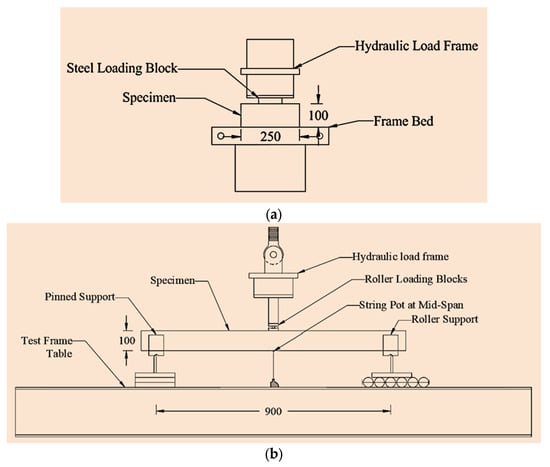
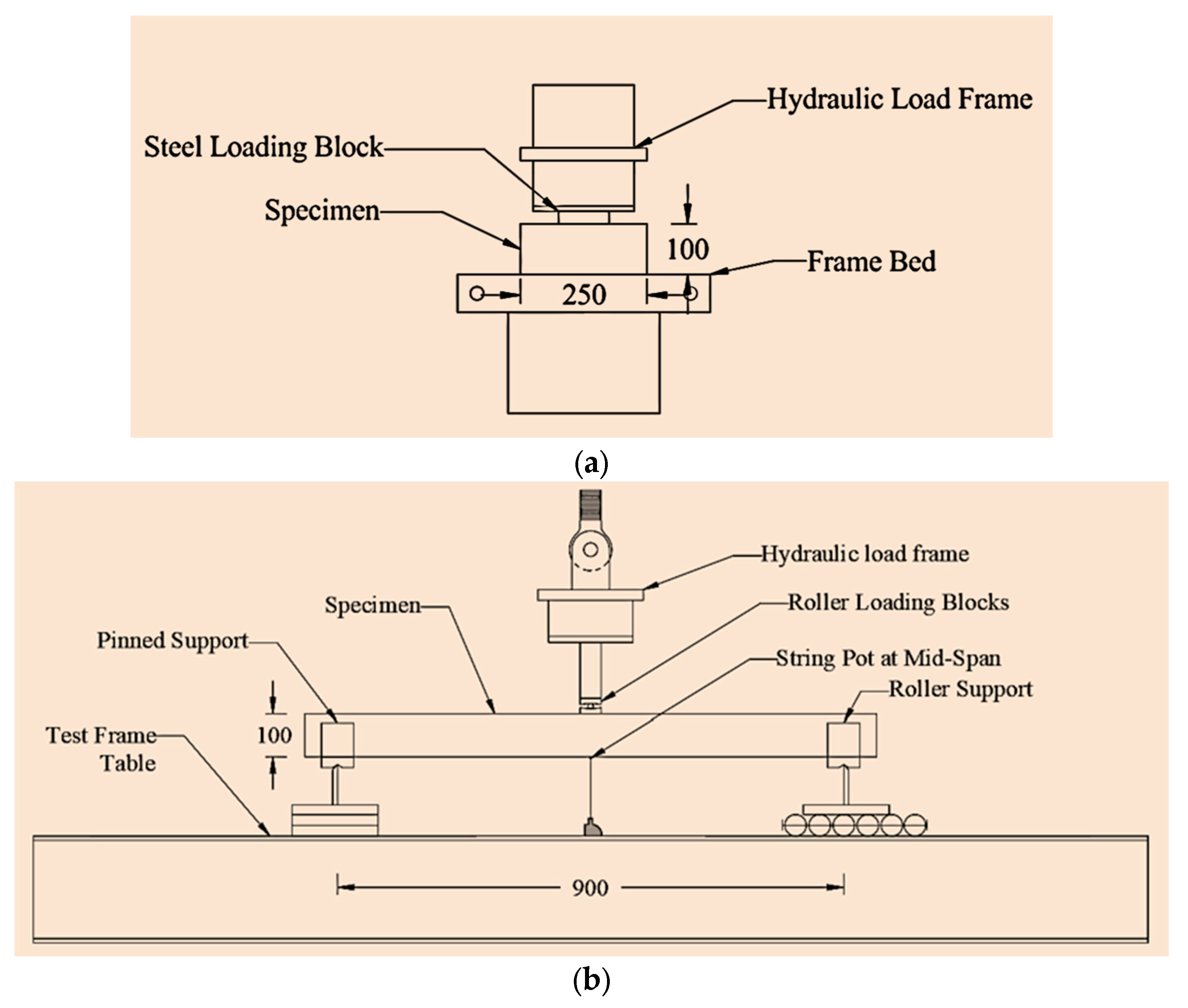
All compression perpendicular-to-grain (bearing) tests were conducted in a universal testing machine (MTS 311) following a modified methodology adapted from the Standard Test Methods for Small Clear Specimens of Timber (ASTM D143) [14]. To simulate a representative scenario from a jacking application, specimens of 100 mm × 100 mm × 250 mm were placed on top of the universal testing frame bed, compared to the 50 mm × 50 mm × 150 mm specimens specified by [14]. The specimens were loaded using a 100 mm × 100 mm steel loading block representative of another jacking specimen placed on top of the specimen at the center. The steel loading block was pushed into the specimen by the load actuator at a displacement-controlled rate of 0.305 mm per minute until a maximum displacement of 7.5 mm was achieved. This limit was selected to characterize both the yield and post-yield behavior. In comparison, the standard specifies a bearing plate of 50 mm × 50 mm, a loading rate of 0.305 mm/min, and termination of the test when the displacement has reached 2.5 mm. The bearing test setup is shown in Figure 3a.
Figure 3.
Experimental test setups. (a) Compression perpendicular-to-grain (bearing) test setup; (b) flexural test setup.
2.3. Flexural Test Setup
The flexural tests were conducted in a universal testing machine (MTS 322, MTS Systems Corporation, Eden Prairie, MN, USA) and followed the Standard Test Methods for Static Test of Lumber in Structural Sizes (ASTM D198) [15] where possible. Due to the nature of the specimens, the 100 mm × 100 mm × 1000 mm full-scale specimens were simply supported with a span of 900 mm. This loading scenario represents the worst-case scenario in terms of flexural demand in the context of an incorrect application (i.e., see Figure 1b). The specimens were loaded at a displacement-controlled rate of 1 mm per minute in three-point bending using a load actuator at mid-span. The load and mid-span displacement were recorded at a sampling rate of 10 Hz using the calibrated internal test frame load cell and a wire gauge sensor attached to the specimen at mid-span, respectively. The flexural test setup is presented in Figure 3b.
3. Experimental Results and Analysis
3.1. Compression Perpendicular-to-Grain Behavior
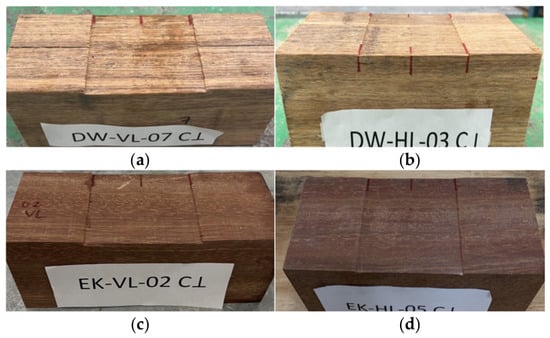
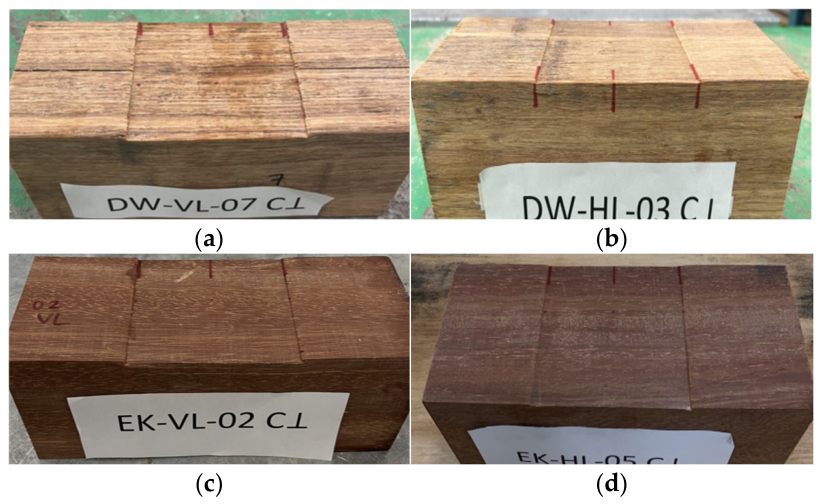
All DW1 and Ekki specimens tested in bearing exhibited primary wood fiber crushing failure as permanent deformations occurred on the surface of each 100 mm × 100 mm × 250 mm block. Representative failure modes are presented in Figure 4. While the displacement achieved was three times that specified by the standard [14], this was done in order to fully capture the bearing behavior. Edge shearing was observed at the perimeter of the contact surface area. For Dragonwood specimens with a vertical glue-bond orientation, crack propagation was observed along the glue-bond interface as shown in Figure 4a. This was not observed in Dragonwood specimens with a horizontal glue bond (Figure 4b) and in Ekki (Figure 4c,d) specimens.
Figure 4.
Representative bearing failure modes. (a) DW1-VL-07 fiber crushing with crack propagation along face-bond interface, (b) DW1-HL-03 fiber crushing, (c) EK-VL-02 fiber crushing, (d) EK-HL-05 fiber crushing.
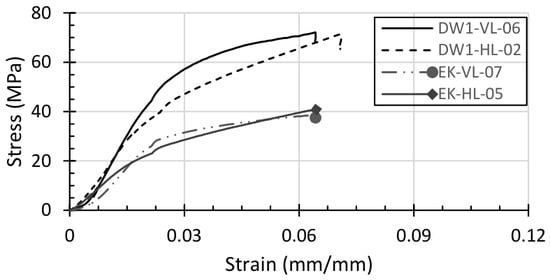
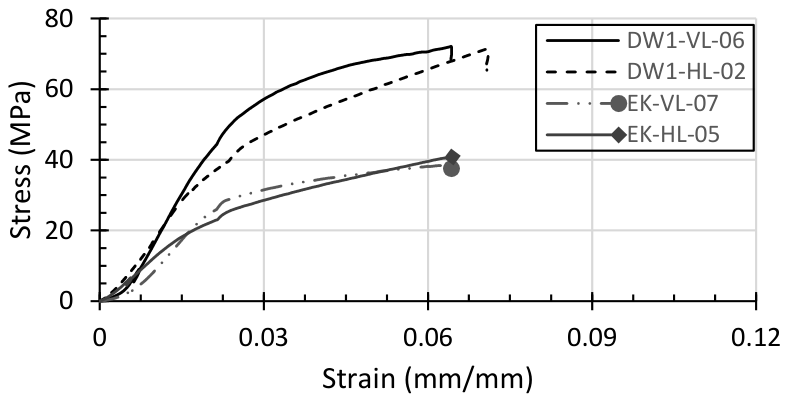
A summary of the 40 compression perpendicular-to-grain test results is presented in Table 3 for both the Dragonwood (i.e., DW1-VL and DW1-HL) and Ekki specimens. The tests were conducted until a maximum displacement of approximately 7.5 mm was reached, and as shown in Figure 5, for both the Dragonwood and Ekki specimens, the maximum compression perpendicular-to-grain stress was attained near the maximum displacement. The reported standard deviations indicate moderate variability across specimen groups. Additionally, the strains presented in Table 3 were obtained by measuring the displacement below the applied load and dividing by the specimen height. The maximum compressive strength (fc,90-max) of Dragonwood in comparison to Ekki is on average 68% larger. However, for design-oriented interpretation, the maximum bearing strength should not be used as the quantifiable metric as large deformations are not desired in jacking applications.
Table 3.
Summary of experimental bearing stress test results.
Figure 5.
Representative stress–strain curves for Dragonwood and Ekki specimens in Phase 1.
Therefore, yield stress and corresponding yield strain were determined using the Commonwealth Scientific and Industrial Research Organisation (CSIRO) approach [16], which defines the yield stress as the point on the curve corresponding to the displacement at 40% of peak load multiplied by a factor of 1.25. On average, the bearing yield stress was lower than the maximum bearing stress for both the Dragonwood and Ekki, ranging from 48 to 51% and 51 to 52%, respectively. The strain levels at yield correspond to displacement levels ranging from 1.83 to 2.11 mm, which is below the limit of 2.5 mm set by the standard [14], and well below those at ultimate capacity. Notably, the compression perpendicular-to-grain modulus of elasticity of the Dragonwood was on average 57% larger than that of the Ekki. In comparison to the values in the literature, the average yield stresses obtained for the Dragonwood are within the reported ranges in Table 1 of 35.5–51.2 for PSB sections.
The values for Ekki are also observed to be lower than those of the Dragonwood and more in line with LVB sections reported in Table 1. The experimental data for the Phase 1 compression tests are available in Appendix A.
3.2. Flexural Behavior
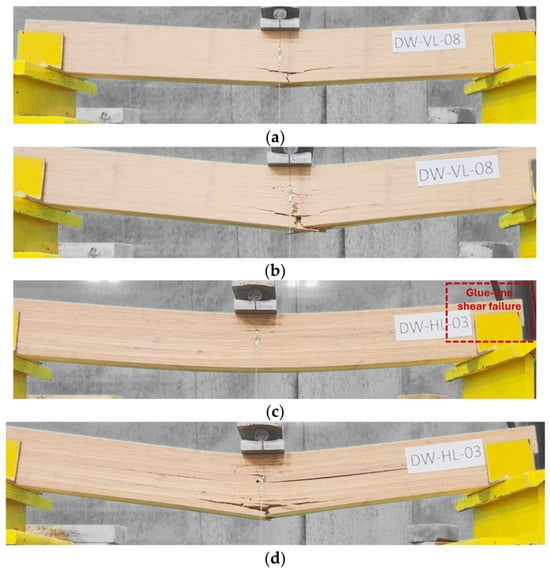
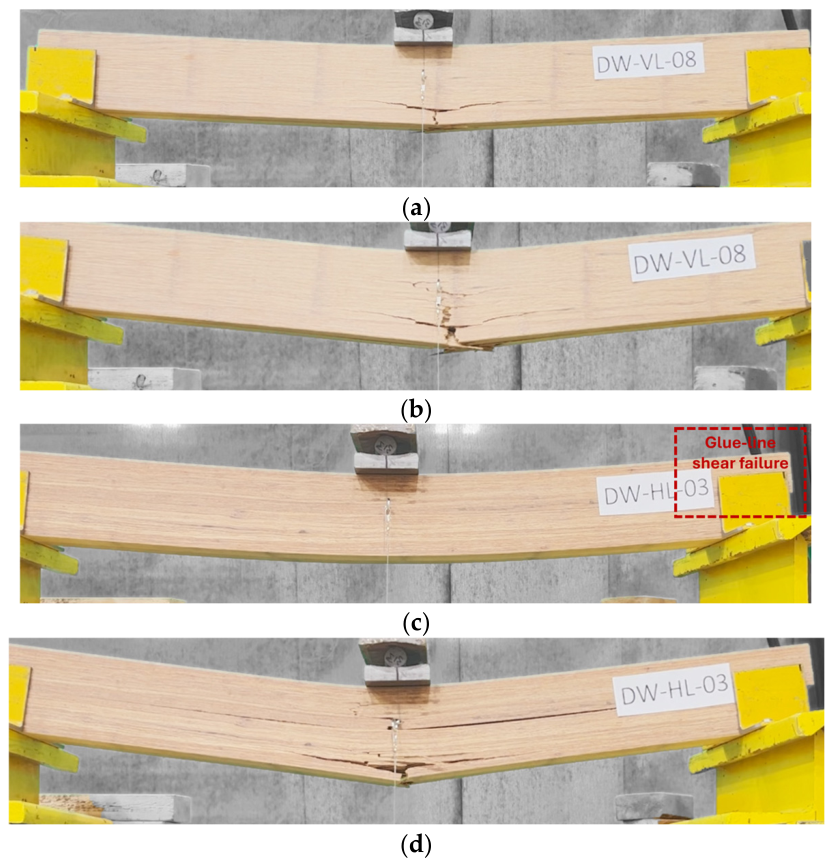
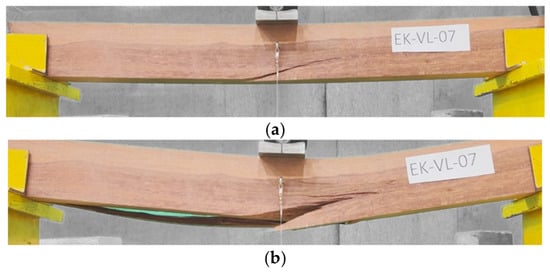
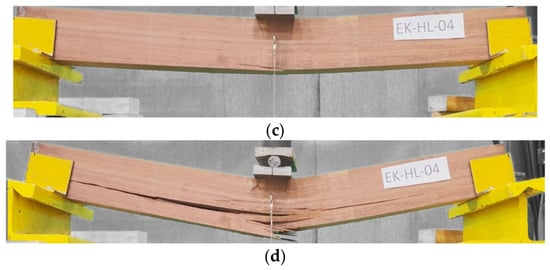
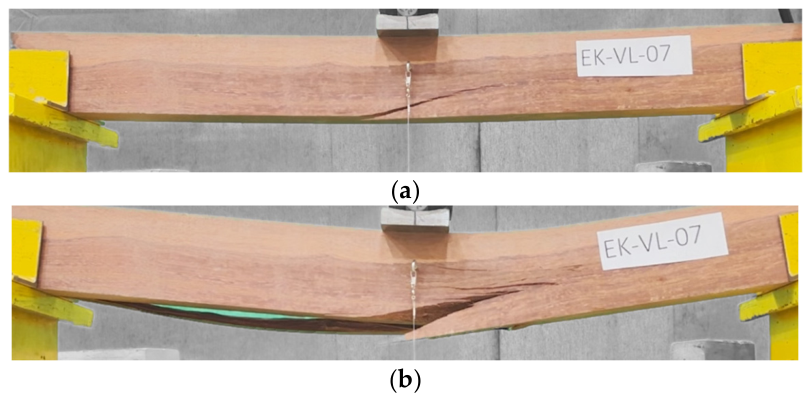
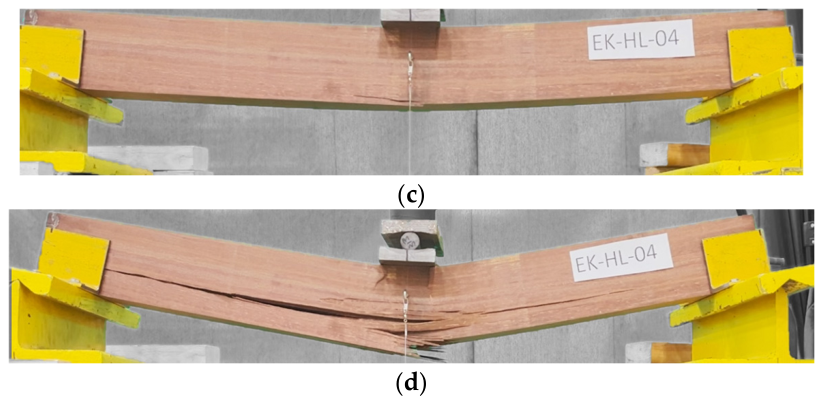
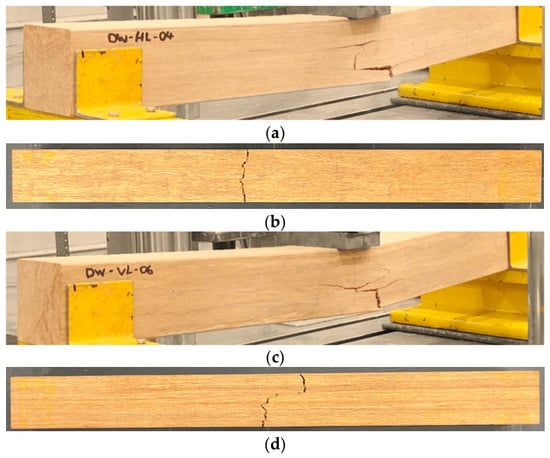
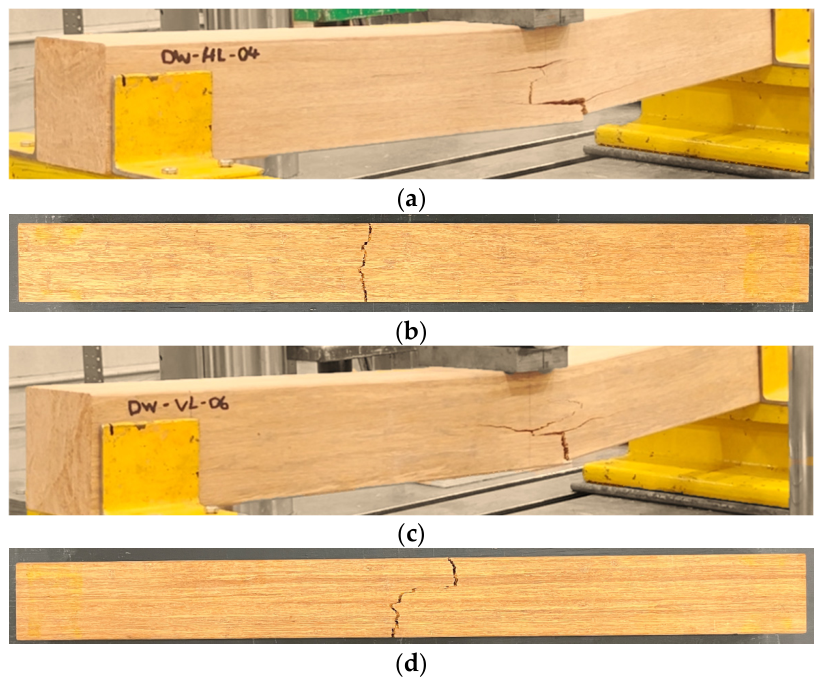
A total of 80 Dragonwood and Ekki specimens were tested to failure in Phase 1 and Phase 2 under a concentrated point load at mid-span with simply supported boundary conditions. Representative failure modes are shown in Figure 6, Figure 7 and Figure 8 for Dragonwood specimens in Phase 1, Ekki specimens in Phase 1, and Dragonwood specimens in Phase 2, respectively.
Figure 6.
Representative failure modes of Dragonwood in Phase 1. (a) Initial tension failure in DW1-VL-08, (b) ultimate tension failure in DW1-VL-08, (c) initial glue-line shear failure at support end of DW2-HL-03, (d) ultimate horizontal shear and tension failure in DW2-HL-03.
Figure 7.
Representative failure modes of Ekki in Phase 1. (a) Initial cross-grain failure in EK-VL-07; (b) ultimate tension failure in EK-VL-07; (c) initial simple tension failure in EK-HL-04; (d) ultimate failure in EK-HL-04.
Figure 8.
Representative failure modes of DW3 in Phase 2. (a) Initial tension failure in DW3-HL-04; (b) tension face failure in DW3-HL-04; (c) initial failure in DW3-VL-06; (d) tension face failure in DW3-VL-06.
The Dragonwood specimens in Phase 1 with the vertically oriented laminations (i.e., DW1-VL) generally all failed in simple tension with fracturing of the tension fibers observed at mid-span (Figure 6a), which corresponds to the maximum-moment region. Following the initial failure, the damage propagated throughout the section towards the compression face (Figure 6b). Specimens with the glue-line aligned horizontally all initially experienced a glue-bond failure (Figure 6c) followed by simple tension or brash failure of the tension-side section sequentially followed by crack propagation towards the tension face (Figure 6d). After the initial shear failure, the two sections of the type 1 DW1-HL samples behaved independently due to loss of composite action, thus resulting in an increased slip between the two sections at the glue-bond interface.
The Ekki specimens were observed to fail in simple tension, cross-grain tension, brash failure, or a combination thereof as shown in Figure 7. The direction of the radial fibers (i.e., vertical or horizontal) did not affect the failure modes. Upon further loading, the initial tension-side failure propagated through the depth of the member towards the compression face.
Dragonwood specimens manufactured with additional adhesive and clamping pressure (i.e., DW2-HL) tested in Phase 2 are not shown as there were no noticeable improvements or changes in failure mode from those tested in Phase 1 (i.e., DW1-HL). The revised manufacturing process with additional adhesive and pressure did not change the failure mode observed in Phase 1 for specimens with the glue-line oriented horizontally.
The Dragonwood specimens manufactured in a single lift (i.e., DW3) and tested in Phase 2 generally failed in simple tension, cross-grain tension, brash failure, or a combination thereof. Due to the lack of a glue-line at mid-height, shear failures were eliminated. Figure 8 shows representative failure modes where the failure occurred at the tension face of the specimens (i.e., Figure 6b,c) as opposed to the mid-height of the specimens as observed for DW1-HL and DW2-HL.
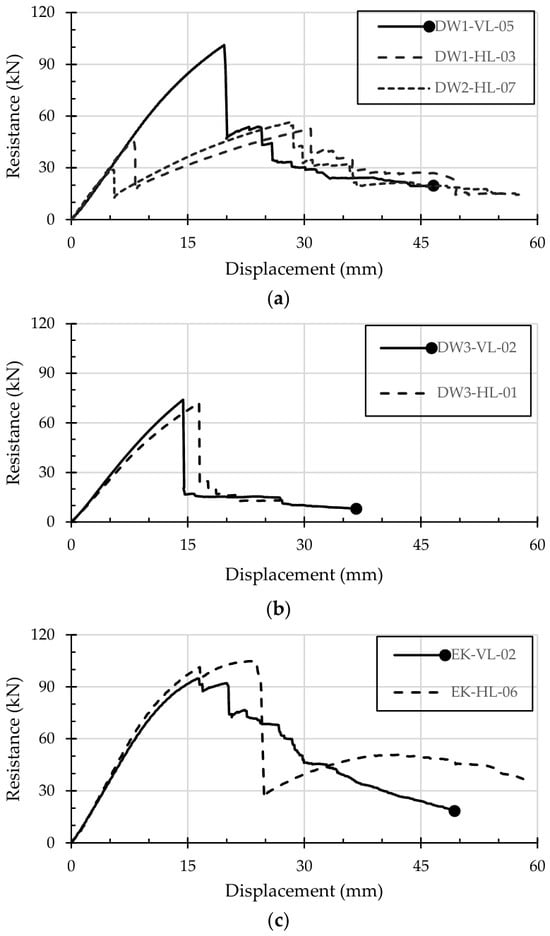
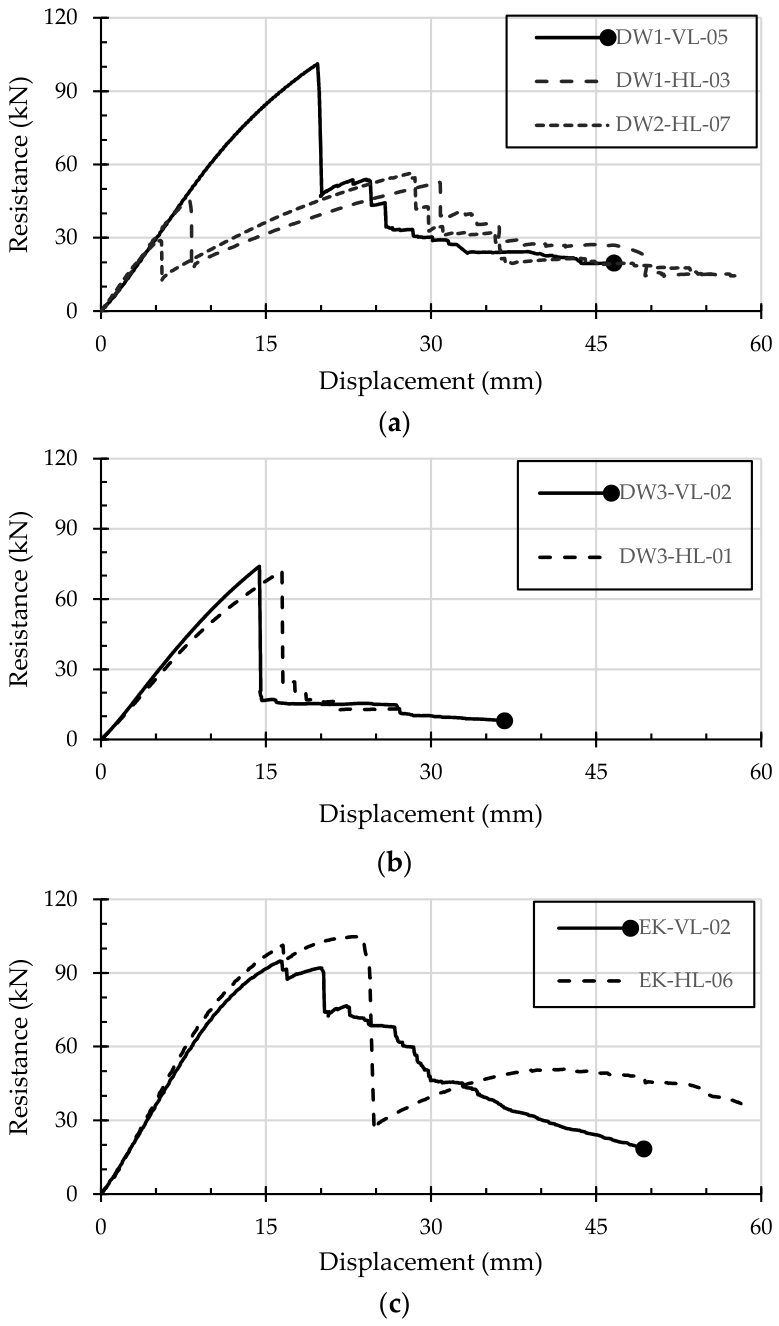
A summary of the flexural test results is presented in Table 4, while Figure 6 illustrates representative resistance curves for all of the Dragonwood and Ekki specimens tested. The detailed experimental MOR and MOE values for all DW1, DW2, and DW3 samples are available in Appendix A. The MOR and MOE were calculated using Equation (1) and Equation (2), respectively.
where K is the stiffness of the specimen, L is the span length of the beam, I is the moment of inertia of the square cross-section about the neutral axis, Pmax is the maximum applied load before failure, and S is the section modulus. The reported flexural modulus of elasticity should be interpreted as an apparent MOE, as shear deformation effects may influence the results due to the relatively low span-to-depth ratio. Nonetheless, as noted earlier, this reflects the worse-case scenario in terms of flexural demand (i.e., Figure 1b).
Table 4.
Summary of flexural test results.
From Table 4, of the type 1 EBCs tested in flexure, DW2-HL specimens had the highest initial stiffness, which is hypothesized to be attributed to changes made by the manufacturer in producing these specimens. To the authors’ knowledge an increased quantity of adhesive at the PSB interface combined with a higher curing pressure were employed by the manufacturer. While the process appears to have contributed to a higher initial stiffness, it is put forward that it remained a surface-bond, and combined with the limited number of specimens using a new process, contributed to a higher coefficient of variation. Similar initial stiffnesses were obtained for the DW1-HL and DW1-VL specimens but premature failure of the glue bond in shear occurred before a tension failure of the fibers occurred in DW1-HL specimens. Similarly, horizontal shear failure caused premature glue-line failure in DW2-HL specimens, with both DW1-HL and DW2-HL achieving lower maximum flexural strength than DW1-VL specimens. This can be clearly observed in the representative resistance curves presented in Figure 9a. Since DW3 specimens did not have a glue-line interface, the DW3-VL and DW3-HL specimens exhibited similar bending strengths and stiffnesses. However, DW3 specimens demonstrated lower maximum flexural strengths and stiffnesses compared to the type 1 DW1 and DW2 specimens tested which may be attributed to the lower average density of DW3 specimens. Representative resistance curves for DW3 specimens are similarly presented in Figure 9b.
Figure 9.
Representative resistance curves of Dragonwood and Ekki specimens. (a) Type 1 DW1 of both orientations and DW2 specimens; (b) type 2 DW3 specimens of both orientations; (c) type 2 Ekki specimens of both orientations.
In comparison, Ekki specimens had an overall higher maximum load and maximum deflection at peak load than most Dragonwood specimens, except for DW1-VL. Similar to the DW3 specimens, as shown in Figure 9c, the Ekki specimens performed more consistently across the horizontal and vertical fiber orientations compared to the type 1 Dragonwood specimens. DW1-VL specimens were observed to have the highest flexural strength of the Dragonwood samples with an initial stiffness relatively similar to the Ekki specimens.
4. Discussion and Conclusions
The overarching aim of the study was to evaluate the mechanical performance of EBCs, specifically Dragonwood, in comparison to traditional Ekki jacking timbers, in response to concerns with the declining quality of Ekki available. The experimental program focused on assessing both the bearing (i.e., compression perpendicular-to-grain) and flexural behavior of commercially available Dragonwood and Ekki specimens, while also investigating the influence of different manufacturing processes on the performance of Dragonwood jacking specimens.
In its commercially available form, Dragonwood jacking beams are manufactured by face-bonding two 50 mm × 100 mm PSB sections, resulting in either horizontal or vertical glue-line orientations. The orientation of the glue-line affected the performance of the specimen in both bearing and flexure.
Under bearing loads, initial crushing was followed by crack propagation along the glue-line when it was oriented vertically. Although the commercially available Dragonwood (i.e., DW1) exhibited higher mean ultimate and yield bearing stresses (i.e., approximately 68% and 62% greater, respectively), and higher stiffness than the Ekki, the observed variability and the presence of glue-line-dominated failure modes limit its reliability in jacking applications. These findings indicate that strength alone is insufficient to assess suitability, and that the failure behavior must also be considered. While the specimens did exhibit a 57% higher stiffness, their undesirable failure mode does not lend itself well to jacking applications.
In flexure, the glue-line orientation had a pronounced effect on performance. Specimens with a horizontal glue-line exhibited reductions in strength to approximately 54–58% of those with a vertical glue-line. This sensitivity to orientation highlights the importance of installation control, which cannot always be reliably ensured in field conditions. As such, face-bonded Dragonwood configurations (DDW1 and DW2) cannot be considered reliable for jacking applications due to the risk of unfavorable failure modes associated with improper orientation.
To address this limitation, the manufacturing process was modified to produce single-lift (i.e., solid section) specimens (DW3), thereby eliminating the glue-line. It should be noted that these DW3 specimens were evaluated only in flexure and were not tested in bearing in the current study. The revised manufacturing approach eliminated the premature shear failure mode observed in face-bonded specimens, resulting instead in more splintering and cross-grain tension-dominated failures in the bamboo fibers. However, the flexural strength of DW3 specimens was lower, averaging approximately 76–78% of the DW1 specimens with vertical glue-lines. Despite this reduction, the improved failure mode represents a more predictable and structurally desirable behavior, indicating a trade-off between mechanical strength and reliability of performance governed by manufacturing strategy. With the elimination of the undesirable failure modes, the manufacturer can focus on improving the mechanical properties while leveraging the structural benefits of EBCs.
From a design perspective, jacking systems are primarily governed by bearing under correct application (i.e., Figure 1a). However, when jacking timbers are not used properly (i.e., Figure 1b), and the loads are transferred in bending before bearing, the flexural strength of the specimens remains critical. For example, considering the loading scenario in Figure 1b with a clear span of 900 mm and bearing area at the supports of 100 mm × 100 mm, assuming that the average flexural strength of 98.2 MPa (i.e., avg. of DW3-VL and DW3-HL) is achieved at mid-span due to the point load, the resulting bearing stress at the supports would be only 7.3 MPa, which is well below the average bearing stress at which yielding occurred in the Dragonwood specimens tested in Phase 1 (i.e., DW1-VL and DW1-HL). As such, the governing failure mode would still be in flexure when considering 50th-percentile values, thereby highlighting the importance of properly using the jacking timbers.
It should be emphasized that yield bearing stress represents a more relevant parameter for jacking applications and design, whereas maximum bearing stress at large deformations is more indicative of comparative material behavior.
Given that the DW3 specimens were produced as trial batches and the manufacturing process remains under refinement, bearing tests were not conducted at this stage. Consequently, the bearing performance of the single-lift Dragonwood represents an important limitation of the present study and should be tested to establish the bearing strength. Further experimental work is required to establish characteristic material properties for Dragonwood produced using the refined manufacturing process.
Based on the findings of this study, the following conclusions are drawn:
- Dragonwood exhibited higher mean bearing capacity and stiffness than Ekki; however, glue-line-driven failure modes in face-bonded specimens limit their reliability for jacking applications.
- Glue-line orientation influences flexural behavior, with horizontal configurations resulting in substantial reductions in strength and increased susceptibility to premature failure.
- Increasing adhesive content and pressing pressure does not eliminate glue-line-related weaknesses, indicating that manufacturing configuration governs performance more strongly than adhesive quantity alone.
- Single-lift manufacturing effectively eliminates the glue-line and associated failure modes, resulting in more stable and predictable flexural behavior.
- Despite improved behavior, DW3 specimens exhibited reduced flexural strength relative to vertically oriented face-bonded specimens, reflecting a trade-off between strength and reliability.
- The bearing performance of single-lift Dragonwood remains unverified in the present study and represents a key limitation requiring further investigation.
- Variability in measured properties, as indicated by standard deviations and coefficients of variation, suggests that overlapping performance ranges should be considered when comparing Dragonwood and Ekki.
Overall, the single-lift Dragonwood (i.e., DW3) shows the most potential; however, its successful use in jacking systems is highly dependent on manufacturing strategy and requires further validation. In particular, its bearing performance was not evaluated in the present study and must be established prior to practical implementation.
Author Contributions
Conceptualization and methodology, T.A. and D.L.; flexural testing, H.C., M.D., C.S., M.H. and T.H.; compression testing, T.A.; analysis, M.H., T.A., H.C. and D.L.; writing—original draft preparation, H.C. and M.H.; writing and manuscript preparation, H.C. and D.L.; supervision and funding acquisition, D.L. All authors have read and agreed to the published version of the manuscript.
Funding
This research was funded by Mitacs Accelerate (IT33914) in partnership with Hydra-Slide Ltd.
Data Availability Statement
All data are presented in the Appendix A. Additional data supporting the findings of this study are available upon simple request from the corresponding author.
Acknowledgments
The authors wish to acknowledge the in-kind donations of the Dragonwood and Ekki specimens.
Conflicts of Interest
The authors declare no conflicts of interest.
Abbreviations
The following abbreviations are used in this manuscript:
| ASTM | American Society for Testing and Materials |
| CoV | Covariance |
| EBC | Engineered Bamboo Composite |
| LVB | Laminated Veneer Bamboo |
| MTS | Material Test Systems |
| MOR | Modulus of Rupture, Flexural Strength |
| MOE | Modulus of Elasticity |
| PSB | Parallel Strand Bamboo, Bamboo Scrimber |
Appendix A
Table A1.
Phase 1 DW1-HL compression data.
Table A2.
Phase 1 DW1-VL compression data.
Table A3.
Phase 1 EK-HL compression data.
Table A4.
Phase 1 EK-VL compression data.
Table A5.
Phase 1 DW1-HL flexure data.
Table A6.
Phase 1 DW1-VL flexure data.
Table A7.
Phase 1 EK-HL flexure data.
Table A8.
Phase 1 EK-VL flexure data.
Table A9.
Phase 2 DW2-HL flexure data.
Table A10.
Phase 2 DW3-HL flexure data.
Table A11.
Phase 2 DW3-VL flexure data.
References
- Sun, X.; He, M.; Li, Z. Novel engineered wood and bamboo composites for structural applications: State-of-art of manufacturing technology and mechanical performance evaluation. Constr. Build. Mater. 2020, 249, 118751. [Google Scholar] [CrossRef] [Scilit]
- Li, H.; Wei, Y.; Du, H.; Chen, J.; Zhang, Y. Comparative experimental investigation on mechanical properties of bamboo scrimber and SPF. Structures 2024, 67, 106993. [Google Scholar] [CrossRef] [Scilit]
- Tang, S.; Zhou, A.; Li, J. Mechanical Properties and Strength Grading of Engineered Bamboo Composites in China. Adv. Civ. Eng. 2021, 2021, 6666059. [Google Scholar] [CrossRef] [Scilit]
- Oladipo, E. Global Impact of Environmental Sustainability on Deforestation. Int. J. Sci. Eng. Res. 2015, 6, 13. [Google Scholar]
- Bahru, T.; Ding, Y. A Review on Bamboo Resource in the African Region: A Call for Special Focus and Action. Int. J. For. Res. 2021, 2021, 8835673. [Google Scholar] [CrossRef] [Scilit]
- Sharma, B.; Gatóo, A.; Ramage, M.H. Effect of processing methods on the mechanical properties of engineered bamboo. Constr. Build. Mater. 2015, 83, 95–101. [Google Scholar] [CrossRef] [Scilit]
- Sharma, B.; Gatoo, A.; Bock, M.; Mulligan, H.; Ramage, M. Engineered bamboo: State of the art. Proc. Inst. Civ. Eng. Constr. Mater. 2015, 168, 57–67. [Google Scholar] [CrossRef] [Scilit]
- Wu, F.; Wei, Y.; Lin, Y.; Zhao, K.; Huang, L. Experimental study of bamboo scrimber-filled steel tube columns under axial compression. Eng. Struct. 2023, 280, 115669. [Google Scholar] [CrossRef] [Scilit]
- Gutierrez, M. Fire Analysis of Load-Bearing Bamboo Structures. Ph.D. Thesis, The University of Queensland, Brisbane, Australia, 2020. [Google Scholar] [CrossRef] [Scilit]
- Huang, Y.; Ji, Y.; Yu, W. Development of bamboo scrimber: A literature review. J. Wood Sci. 2019, 65, 25. [Google Scholar] [CrossRef] [Scilit]
- Nkeuwa, W.N.; Zhang, J.; Semple, K.E.; Chen, M.; Xia, Y.; Dai, C. Bamboo-based composites: A review on fundamentals and processes of bamboo bonding. Compos. Part B Eng. 2022, 235, 109776. [Google Scholar] [CrossRef] [Scilit]
- Sharma, B.; Gatóo, A.; Bock, M.; Ramage, M. Engineered bamboo for structural applications. Constr. Build. Mater. 2015, 81, 66–73. [Google Scholar] [CrossRef] [Scilit]
- van de Kuilen, J.W.G.; Blass, H.J. Mechanical properties of azobé (Lophira alata). Holz Roh Werkst. 2005, 63, 1–10. [Google Scholar] [CrossRef] [Scilit]
- ASTM D143-21; Standard Test Methods for Small Clear Specimens of Timber. ASTM International: West Conshohocken, PA, USA, 2021.
- ASTM D198-22; Standard Test Methods of Static Tests of Lumber in Structural Sizes. ASTM: West Conshohocken, PA, USA, 2022.
- Muños, W.; Salenikovich, A.; Mohammad, M.; Quenneville, P. Determination of Yield Point and Ductility of Timber Assemblies: In Search for a Harmonised Approach. In Proceedings of the World Conference on Timber Engineering, Miyazaki, Japan, 2–5 June 2008; Volume 1. [Google Scholar]

Disclaimer/Publisher’s Note: The statements, opinions and data contained in all publications are solely those of the individual author(s) and contributor(s) and not of MDPI and/or the editor(s). MDPI and/or the editor(s) disclaim responsibility for any injury to people or property resulting from any ideas, methods, instructions or products referred to in the content. |
© 2026 by the authors. Licensee MDPI, Basel, Switzerland. This article is an open access article distributed under the terms and conditions of the Creative Commons Attribution (CC BY) license.