1. Introduction
The development of carbon-fiber reinforced polymer (CFRP) tendons has attracted considerable attention over recent decades, particularly for prestressed concrete (PSC) systems and long-span cable supported bridges. Compared with conventional steel tendons, CFRP tendons offer high tensile strength, a superior stiffness-to-weight ratio, and excellent corrosion resistance, which are essential for improving the durability and service life of civil infrastructure [
1,
2,
3]. These advantages make CFRP a promising alternative to metallic prestressing materials, especially in aggressive service environments where chloride ingress, freeze–thaw action, and chemical exposure can accelerate the corrosion and deterioration of steel tendons. Nevertheless, the structural application of CFRP tendons remains constrained by the need to verify their anchorage reliability and long-term mechanical performance. Because CFRP exhibits anisotropic and brittle behavior, the safety and serviceability of CFRP-prestressed structures are strongly governed by the load-transfer mechanism at the anchorage and by time-dependent performance under sustained and cyclic loading [
4,
5].
One of the most critical challenges in the structural application of CFRP tendons is the development of a reliable anchorage system. Conventional prestressing steel strands can be effectively anchored using wedge-type or friction-based mechanical systems because of their ductility and relatively high transverse bearing resistance. In contrast, CFRP tendons exhibit anisotropic and brittle behavior, with limited transverse strength, making them highly susceptible to stress concentration, local crushing, splitting, and interfacial slip at the anchorage zone. These failure mechanisms can reduce load-transfer efficiency and may lead to premature rupture or pull-out before the tensile capacity of the tendon is fully mobilized [
6]. Therefore, various anchorage concepts have been proposed, including adhesive-bonded anchors, confinement sleeves, resin-filled sockets, and hybrid systems combining mechanical restraint and interfacial bonding [
7,
8]. Nevertheless, achieving stable load transfer without inducing local damage remains a major technical barrier to the broader implementation of CFRP tendons in prestressed concrete and cable-supported structures.
Beyond anchorage performance, the long-term behavior of CFRP tendons under sustained loading is another fundamental issue for structural implementation. Prestressed concrete bridges and cable-supported structures are subjected to sustained tensile forces for several decades; therefore, creep rupture, stress relaxation, and prestress loss must be quantitatively evaluated to ensure serviceability and structural safety [
9]. Although carbon fibers exhibit negligible creep compared with aramid or glass fibers, the polymer matrix and fiber–matrix interface are susceptible to time-dependent deformation, microstructural degradation, and environmental deterioration, particularly under elevated temperature, moisture ingress, and alkaline exposure [
10,
11]. These mechanisms may reduce the effective prestress level and alter the long-term load-carrying performance of CFRP tendon systems. Accordingly, systematic relaxation and creep tests are required to quantify time-dependent prestress losses, assess creep rupture resistance, and predict long-term service performance under sustained loading conditions.
Recent studies have shown that CFRP tendons can generally maintain their load-carrying capacity under sustained loading; however, their long-term response is not governed solely by the carbon fibers. Stress relaxation, creep rupture resistance, and residual tensile performance can be affected by tendon-level parameters, including fiber volume fraction, resin stiffness and viscoelasticity, fiber–matrix interfacial quality, and anchorage configuration [
12]. In addition, accelerated aging tests and finite element simulations have indicated that sustained tensile stress may interact with environmental stressors, such as temperature, moisture, and alkaline exposure, thereby promoting coupled degradation mechanisms at the matrix and interface levels [
13]. These findings suggest that the long-term reliability of CFRP tendons should be evaluated not only from the intrinsic properties of carbon fibers but also from the integrated performance of the tendon–anchorage system under service-relevant loading and environmental conditions. Therefore, further experimental and analytical validation is required to establish the applicability of CFRP tendons for long-term use in prestressed concrete and cable-supported structures.
In this study, the long-term mechanical performance of a developed CFRP tendon–anchorage system was evaluated through relaxation, creep rupture, and fatigue tests. The technical contribution of this study is not limited to the material characterization of the CFRP tendon alone. Rather, the novelty lies in the integrated evaluation of a developed 9.5 mm pultruded CFRP tendon combined with a compression-type anchorage system under sustained and cyclic loading conditions. Compared with previous studies on commercially available CFRP tendon systems, such as CFCC and Leadline tendons, this study evaluates the tendon properties, anchorage load-transfer behavior, prestress retention, creep rupture resistance, and fatigue performance within a consistent tendon–anchorage assembly. Therefore, the main contribution of this study is the assembly-level performance evaluation of the developed CFRP tendon–anchorage system for prestressed concrete and cable-supported structural applications.
2. Technical Trends in CFRP Tendons
The early adoption of CFRP reinforcement in civil engineering was primarily driven by the need for prestressing tendons and cable elements capable of replacing steel in aggressive service environments. Previous studies have consistently reported that CFRP tendons exhibit high tensile strength, low self-weight, and excellent corrosion resistance compared with conventional steel tendons, while also emphasizing the limitations associated with their linear-elastic and brittle failure behavior [
1,
2]. In parallel, research has examined the effects of resin formulation, fiber alignment, fiber volume fraction, and manufacturing processes, particularly pultrusion, on the mechanical performance and durability of CFRP tendons [
3]. Environmental durability has also been a major research focus, with studies investigating chloride exposure, freeze–thaw action, moisture ingress, alkaline environments, and thermal fluctuations. These studies have generally confirmed that although carbon fibers are inherently resistant to corrosion, the polymer matrix and fiber–matrix interface can remain susceptible to long-term environmental degradation [
10,
11]. Therefore, recent technical developments have increasingly focused on improving not only the intrinsic material properties of CFRP tendons but also their manufacturing quality, interface stability, and long-term performance under service-relevant environmental conditions.
Anchorage systems have long been recognized as a critical performance-limiting component in CFRP tendon applications because of the material’s low transverse strength, anisotropic behavior, and susceptibility to stress concentration [
6]. To address these limitations, various anchorage solutions have been proposed, including adhesive-filled metallic sleeves, resin-filled sockets, composite clamps, confinement-based anchors, and hybrid mechanical–bond systems [
7,
8]. Finite element modeling has also been widely used to optimize stress distribution, evaluate contact pressure, and reduce interfacial slip in the anchorage zone under tensile and sustained loading conditions [
12,
13]. Experimental studies have further demonstrated that anchorage design plays a decisive role in the reliability of CFRP tendon systems, as premature anchorage failure or pull-out can prevent full mobilization of the tendon’s tensile capacity [
14]. Therefore, recent developments have increasingly focused on anchorage configurations that provide gradual load transfer, sufficient confinement, and damage-free gripping to ensure stable performance of CFRP tendons in structural applications.
Creep and stress relaxation are among the most extensively investigated aspects of CFRP tendons because they directly affect long-term prestress retention and serviceability in prestressed structural applications. Experimental studies have generally shown that CFRP tendons exhibit favorable resistance to time-dependent deformation; however, stress relaxation, creep rupture resistance, and residual tensile performance are strongly influenced by resin properties, fiber volume fraction, manufacturing quality, and anchorage configuration [
9,
12]. Accelerated laboratory tests have therefore been used to simulate long-term service conditions by applying sustained tensile loads under elevated temperature, high humidity, and other aggressive environmental conditions [
11]. In parallel, analytical and numerical models have been developed to predict long-term behavior by incorporating the viscoelastic response of the polymer matrix, fiber–matrix interfacial degradation, and time-dependent bond deterioration at the tendon–anchorage interface [
13,
15]. Collectively, these studies have established a growing technical database for assessing CFRP tendon durability, while also revealing substantial variability attributable to differences in constituent materials, manufacturing processes, and anchorage systems.
Beyond sustained loading, CFRP tendons used in bridges and cable-supported structures may experience millions of stress cycles during their service life. Fatigue studies have generally shown that CFRP tendons can retain stable tensile properties under repeated loading; however, fatigue performance is governed not only by the carbon fibers but also by matrix cracking, fiber–matrix debonding, interfacial degradation, and anchorage-induced stress concentration [
3,
16]. In particular, cyclic loading can progressively deteriorate the resin matrix and tendon–anchorage interface, which may reduce residual tensile strength or promote premature failure under high stress ranges. Coupled environmental actions, including seawater exposure, ultraviolet radiation, moisture ingress, freeze–thaw cycles, and temperature variation, can further accelerate fatigue-related damage accumulation. Consequently, recent research has increasingly emphasized combined fatigue–durability testing to support more realistic service-life prediction and performance qualification of CFRP tendon systems [
14].
Life-cycle cost analyses comparing CFRP and steel cables in long-span bridges have indicated that CFRP can be economically viable when durability, corrosion resistance, and reduced maintenance requirements are considered [
2,
17]. Owing to its low density and high specific strength, CFRP can reduce cable self-weight, dead load, and associated demands on supporting members and foundations, thereby enabling more efficient structural configurations and potentially longer spans. In addition, studies on long-span cable-supported bridges have suggested that CFRP cables may offer advantages in terms of structural efficiency and aerodynamic design flexibility, particularly when reductions in cable weight are combined with appropriate control of vibration, damping, and cable surface characteristics [
6,
17]. These findings support the potential of CFRP cable systems as high-performance alternatives for future long-span and mega-span bridge applications.
Although previous studies have demonstrated the favorable tensile, durability, relaxation, creep, and fatigue characteristics of CFRP tendons, many of these studies have focused on commercially available tendon systems, such as CFCC and Leadline tendons, or on isolated aspects of material behavior and anchorage performance. The long-term performance of CFRP tendon systems, however, cannot be assessed solely from the intrinsic properties of carbon fibers. In practical prestressing applications, time-dependent behavior is strongly coupled with tendon manufacturing quality, resin and fiber–matrix interfacial properties, effective cross-sectional area definition, and anchorage-induced load-transfer mechanisms. In particular, limited integrated data are available for domestically developed CFRP tendon–anchorage systems subjected to relaxation, creep rupture, and cyclic loading within a consistent experimental framework. Therefore, this study evaluates the long-term performance of a developed 9.5 mm pultruded CFRP tendon combined with a compression-type anchorage system, with emphasis on prestress retention, sustained-load resistance, anchorage stability, and residual tensile performance. This integrated evaluation provides assembly-level experimental evidence that complements previous studies on CFCC, Leadline, and other CFRP tendon systems.
3. Evaluation of the Long-Term Load Effects on CFRP Tendons
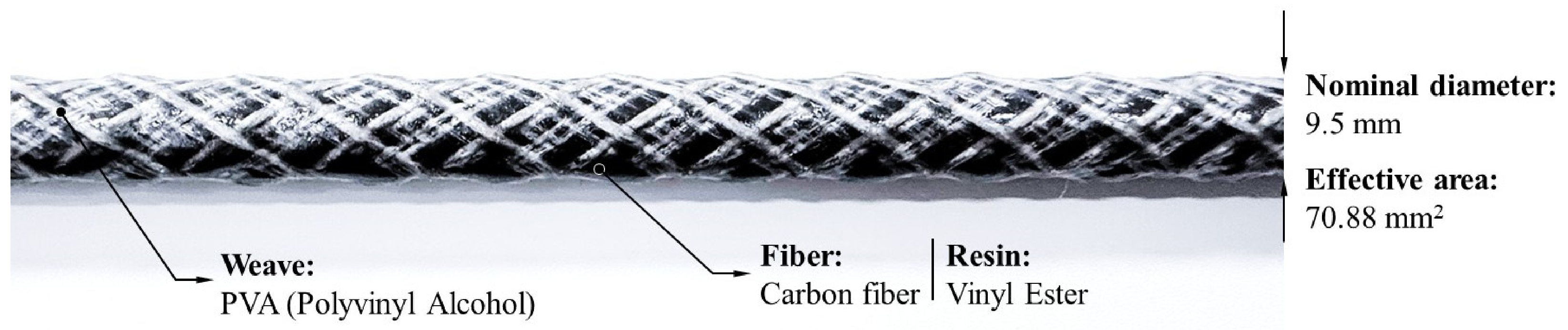
In this study, a CFRP tendon was developed as a prestressing element for structural applications. The configuration of the tendon used for evaluating long-term performance is shown in
Figure 1, and its geometrical and material properties are summarized in
Table 1. The tendon was manufactured as a pultruded round rod. The nominal diameter was defined based on the carbon-fiber core, which serves as the primary load-bearing component, whereas the surface weave was excluded from the effective cross-sectional area. Based on this definition, the nominal diameter and effective cross-sectional area were 9.5 mm and 70.88 mm
2, respectively. The effective cross-sectional area was calculated as (A =
), using the 9.5 mm carbon-fiber core diameter. The surface weave was excluded from the effective area because it was not considered the primary load-bearing component in the axial direction. Therefore, the stress and load ratio values reported in this study are based on the carbon-fiber core area. When comparing these values with those of other CFRP tendon systems, differences in the definition of the nominal or effective area should be considered. The tensile test results indicated that the CFRP tendon exhibited a tensile strength of 2501 MPa and an elastic modulus of 132.5 GPa.
A compression-type anchorage system was applied to the developed CFRP tendon to provide stable load transfer while minimizing localized stress concentration.
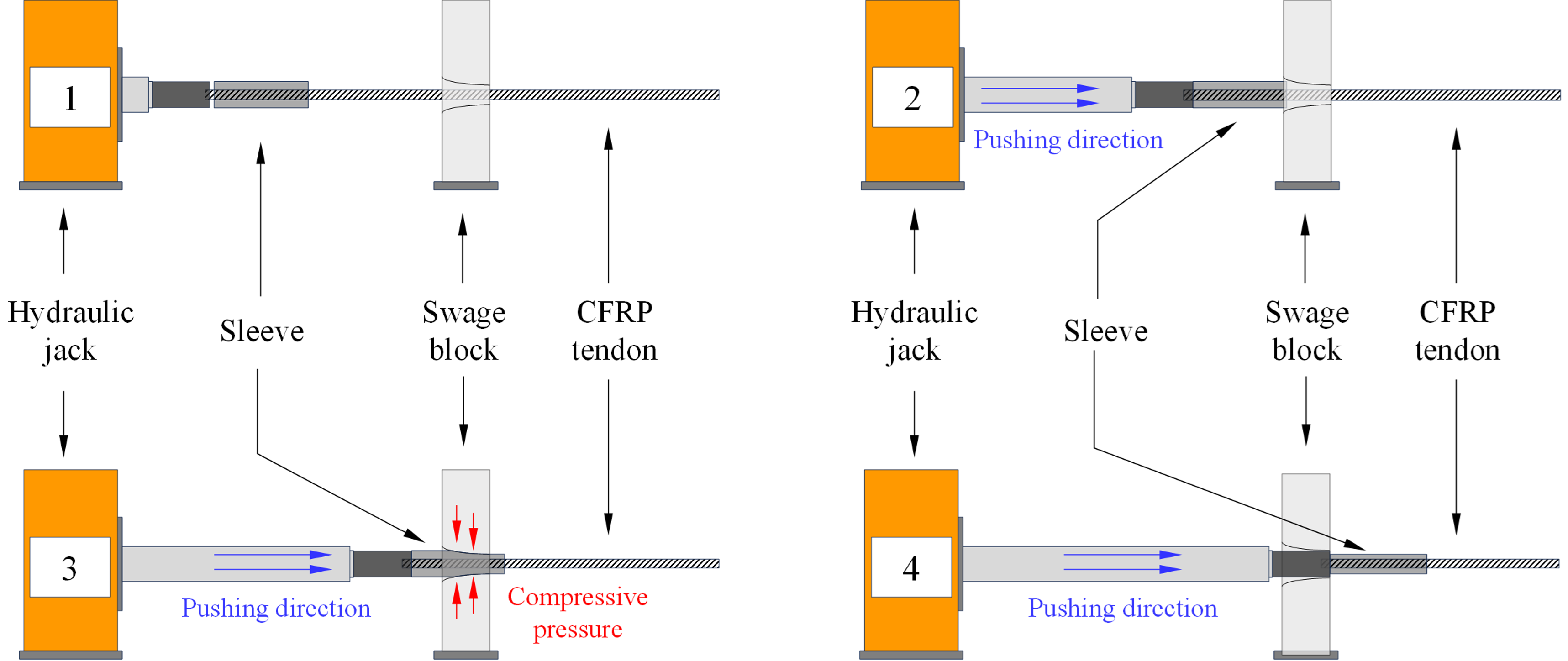
Figure 2 illustrates the sleeve compression process used to fabricate the compression-type anchorage. First, the steel sleeve was placed between the swage block and the hydraulic cylinder. The CFRP tendon was then inserted through the swage block and steel sleeve and aligned coaxially with the hydraulic cylinder. Subsequently, the hydraulic cylinder pushed the steel sleeve toward the swage block to apply compressive pressure to the sleeve. After compression, the change in sleeve length was measured to verify the deformation of the compressed sleeve and the consistency of the anchorage fabrication process. Through this sleeve compression process, radial confinement and frictional resistance were generated along the tendon–sleeve interface, forming the primary load-transfer mechanism of the compression-type anchorage. This mechanism was adopted to reduce local crushing, splitting, and premature anchorage failure, which can occur when transverse pressure is concentrated over a short gripping length in CFRP tendons.
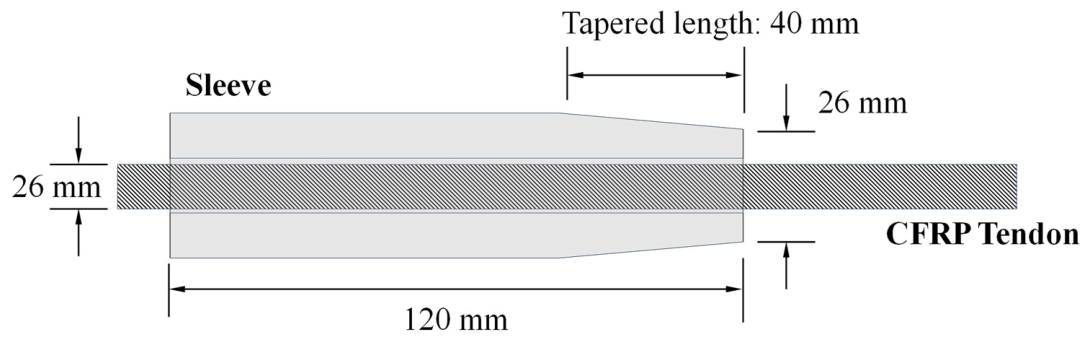
Figure 3 presents the geometry and dimensions of the steel sleeve before compression in the compression-type anchorage system. A tapered stress-relief zone was incorporated at the sleeve end to mitigate stress concentration during sleeve compression and to ensure a gradual transfer of radial confinement to the CFRP tendon. This geometry was intended to reduce localized transverse pressure, thereby minimizing the risk of local crushing, splitting, and premature anchorage failure. The dimensional details shown in
Figure 3 provide the basis for reproducing the tendon–anchorage assembly used in the relaxation, creep rupture, and fatigue tests.
3.1. Relaxation
3.1.1. Overview
This study presents one of the first domestic developments and experimental evaluations of CFRP tendons for prestressing applications in Korea. FRP tendons can be configured as rods, bars, or cables depending on the target structural application and anchorage configuration. Although the intrinsic material properties of FRP composites and their interaction with concrete have been extensively investigated internationally, domestic studies on CFRP tendons for prestressing applications remain relatively limited.
Relaxation is a critical time-dependent phenomenon in prestressing applications because it directly affects prestress retention and long-term serviceability. In FRP tendons, relaxation loss (
) is generally associated with three primary mechanisms: resin relaxation,
, fiber straightening,
, and fiber relaxation,
. The combined effect of these mechanisms can be expressed in terms of stress transfer efficiency, as given in Equation (1).
When a tendon is initially stressed, part of the applied load is transferred through the resin matrix. Over time, the resin matrix may exhibit stress relaxation, thereby reducing its contribution to load transfer; this mechanism is referred to as resin relaxation,
. Resin relaxation typically occurs within the first 24 to 96 h after prestressing and may be accelerated by elevated-temperature curing during PSC member fabrication [
18]. Its magnitude depends on the resin volume fraction,
, and the modulus ratio,
, where
and
denote the elastic moduli of the resin and fibers, respectively. Accordingly, the relaxation loss associated with resin relaxation can be expressed as shown in Equation (2).
For typical resin systems used in pultruded FRP tendons, the resin-to-fiber modulus ratio,
, is approximately 1.5% for carbon-fiber composites and about 3% for aramid-fiber composites. The resin content generally accounts for 35–40% of the tendon cross-section. Based on these constituent ratios, the relaxation loss associated with the resin matrix is estimated to be approximately 0.6–1.2% of the transferred stress. As summarized in
Table 2, this level of relaxation loss can be considered acceptable when it remains within the allowable stress limit of the tendon [
18]. However, if relaxation occurs when the tendon stress approaches the allowable prestressing stress, additional losses associated with the fibers may lead to irreversible deformation, which should be avoided in prestressing applications.
In pultruded FRP tendons, the fibers are manufactured to be nearly straight, although perfect alignment cannot be fully achieved. When tensile stress is applied, slight fiber misalignment may be progressively corrected, and the resulting fiber straightening,
, can appear as an additional relaxation component. Therefore, the degree of fiber straightness is an important quality-control parameter in the pultrusion process. The relaxation loss associated with fiber straightening has been reported to be approximately 1–2% [
19].
Fiber relaxation,
, is governed primarily by the type of reinforcing fiber used in the tendon. Carbon fibers have been reported to exhibit negligible relaxation under sustained loading; therefore,
can reasonably be assumed to be zero for CFRP tendons in practical calculations. In contrast, aramid fibers are more susceptible to creep deformation under sustained tensile stress, and this time-dependent deformation can significantly influence their relaxation behavior. For aramid-fiber tendons, fiber-related relaxation losses have been reported to range from 6% to 18% over a design service life of 100 years [
20].
3.1.2. Relaxation Testing Device
In the design of prestressed concrete (PSC) bridges, the gradual loss of prestressing force due to tendon relaxation, concrete drying shrinkage, and creep must be properly considered because it directly affects long-term serviceability and structural safety. Although the relaxation behavior of conventional prestressing steel tendons has been extensively characterized and reflected in design provisions, experimental data for FRP tendons remain comparatively scarce. Kanda [
21] investigated the relaxation behavior of FRP tendons using a reaction-frame-based setup and fabricated concrete beams to simulate prestress loss under restrained conditions. In addition, lever-type loading devices and spring-equipped frames have been adopted in previous studies to apply sustained tensile loading and quantify time-dependent relaxation losses [
22,
23].
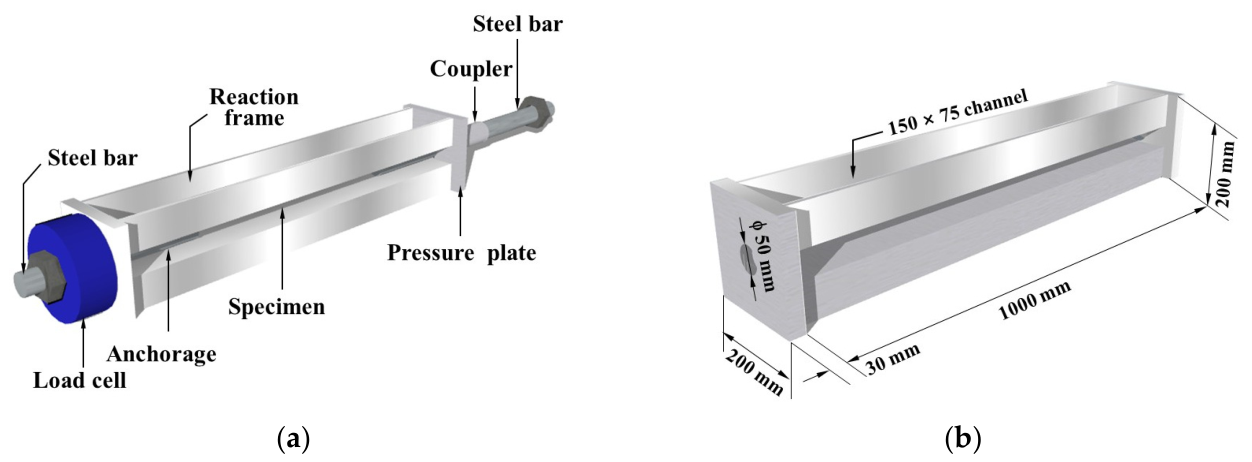
Among the available relaxation test setups, reaction-frame-based systems are advantageous because they are relatively simple to fabricate, easy to handle, and capable of maintaining stable restraint during long-term testing. Accordingly, a reaction-frame-based relaxation testing device was designed and fabricated in this study to evaluate the stress relaxation behavior of the CFRP tendon. As illustrated in
Figure 4a, the device consists of a steel bearing plate and a channel section that provide sufficient stiffness and restraint to sustain the imposed tensile deformation. The detailed dimensions and specifications of the device are shown in
Figure 4b.
3.1.3. Relaxation Testing Method
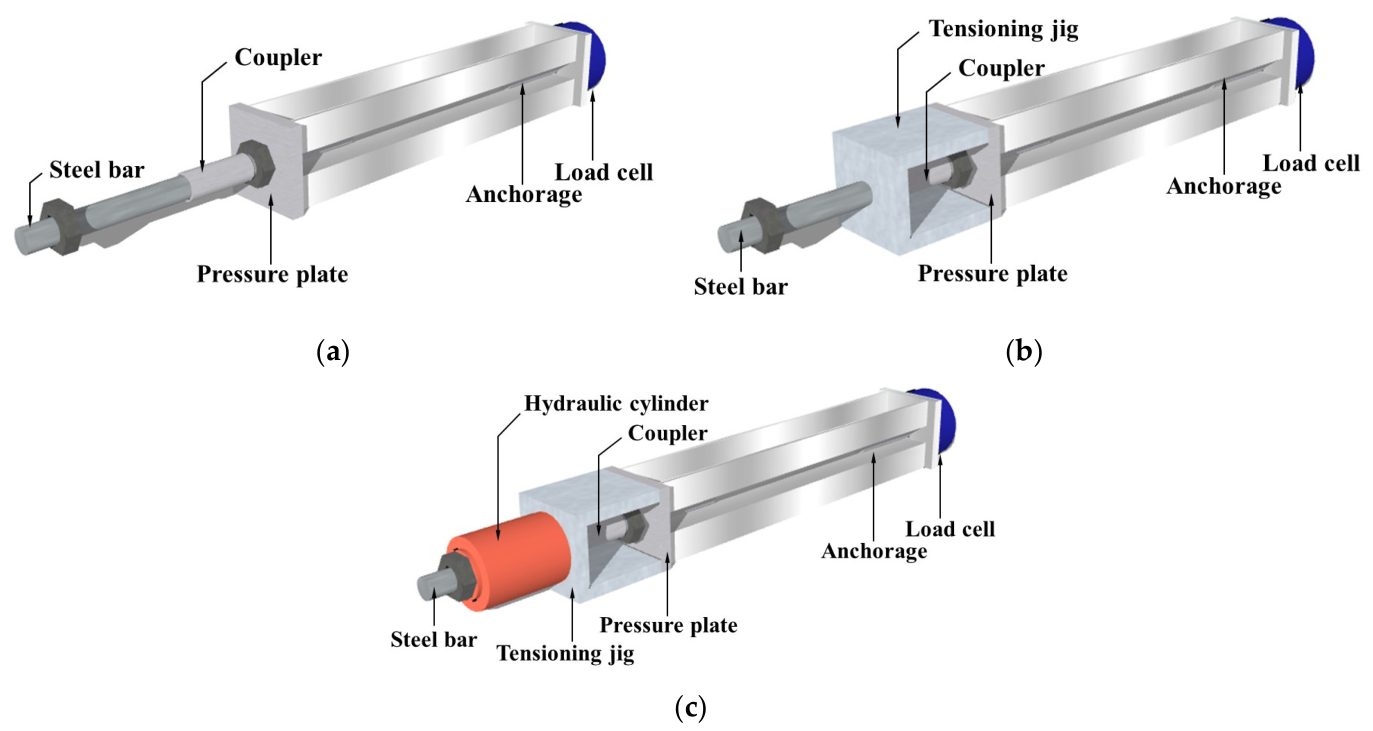
The CFRP tendon specimen was installed in the reaction-frame-based relaxation device and prestressed using an external tensioning system. As shown in
Figure 5a, the steel bar was first connected to the anchorage using a coupler, after which the tensioning jig was assembled as shown in
Figure 5b. A center-hole hydraulic cylinder was then installed outside the jig, and the nut was tightened to complete the prestressing setup, as illustrated in
Figure 5c.
The prestressing force was introduced by the hydraulic cylinder and transferred to the specimen through the steel bar, coupler, and anchorage system. After the target prestressing force was reached, the anchorage nut was tightened against the bearing plate of the relaxation device to fix the imposed tensile deformation. The time-dependent variation in tensile force was subsequently monitored using a load cell installed in the device.
The relaxation test was performed at room temperature using 9.5 mm CFRP tendon specimens. Each specimen was installed in the reaction-frame-based testing device and tensioned to an initial load corresponding to 70% of the specified minimum tensile load at a loading rate of 200 ± 50 MPa/min. After reaching the target load, the initial load was maintained for 120 ± 2 s, and the specimen was then locked in the device to maintain a constant clamping interval. The tensile force was monitored for 1000 h, and the relaxation value was calculated as the percentage reduction in tensile force relative to the initial load. The test procedure was established with reference to KS D 7002 [
24] and CSA S806-02 [
25].
The testing concept was similar to that used for conventional prestressing steel strands. However, compression-type anchorages were used for the CFRP tendons instead of wedge-type anchorages, considering the low transverse strength and susceptibility of CFRP to local stress concentration.
As shown in
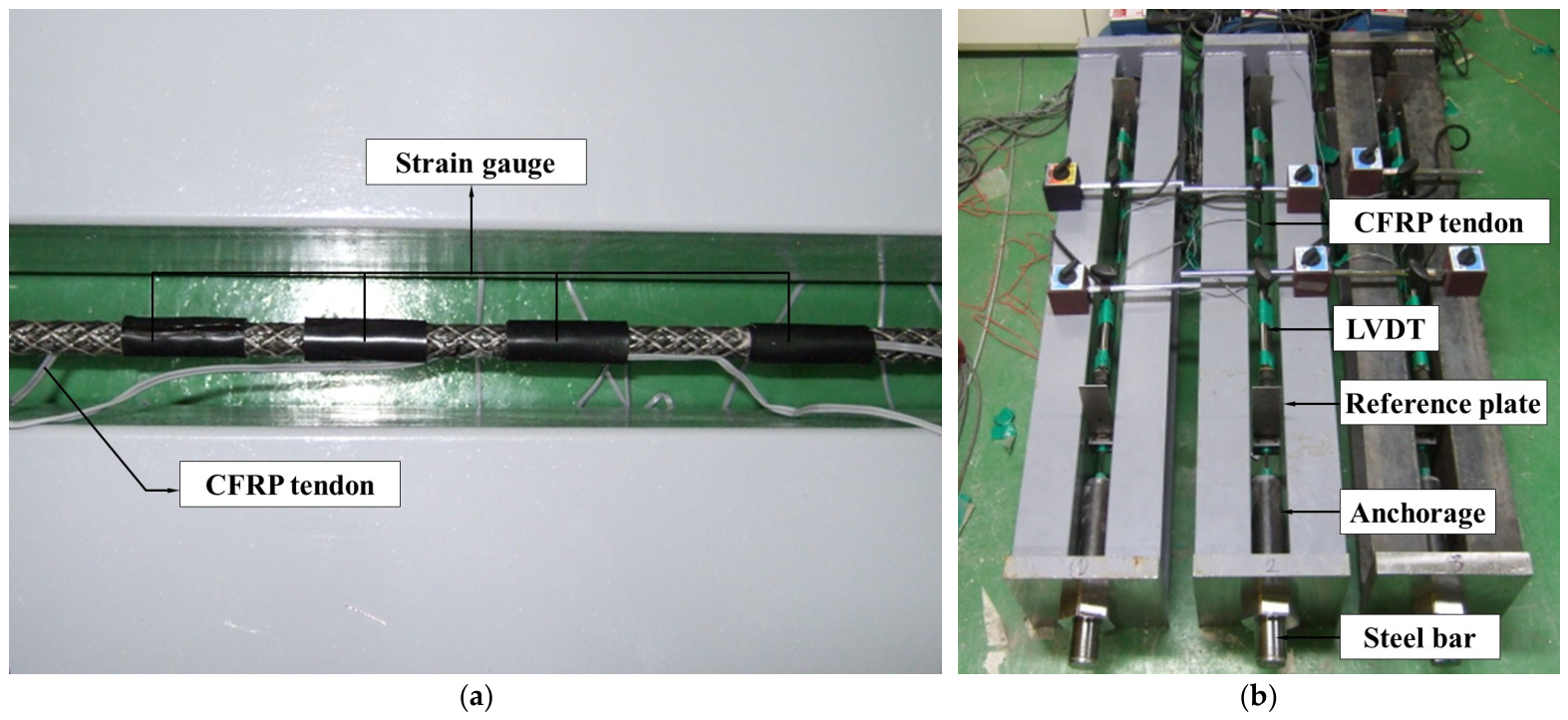
Figure 6a, strain gauges were attached to the surface of the CFRP tendon to measure strain changes during prestressing and anchorage fixation. To detect possible anchorage slip, displacement transducers were installed near the tendon–anchorage interface, as shown in
Figure 6b. Prestressing was introduced using an external tensioning system similar to that used in conventional strand relaxation tests. Because compression-type anchorages were adopted for the CFRP tendons, the specimens were finally secured by tightening the anchorage nuts after the target prestressing force had been applied.
The compression-type anchorage was adopted to avoid the localized stress concentration commonly associated with wedge-type anchorage systems for CFRP tendons. The anchorage transfers tensile force through distributed radial confinement and frictional resistance along the compressed sleeve region. This mechanism was intended to reduce local crushing and splitting of the CFRP tendon, which can occur when high transverse pressure is concentrated over a short gripping length.
3.1.4. Relaxation Testing Results
The CFRP tendon was initially tensioned to a load slightly higher than 70% of its ultimate tensile load to account for the immediate force loss occurring during anchorage fixation. After prestress transfer and anchorage locking, the stabilized prestressing force was measured to be approximately 70% of the ultimate tensile load. The relative displacement between the CFRP tendon and the anchorage device was monitored to evaluate anchorage slip. The relaxation value was then calculated after correcting the measured force loss by subtracting the load reduction associated with the measured slip. This measurement was also used to examine whether the compression-type anchorage induced premature slip or local damage during prestress transfer. No measurable anchorage slip was observed during the relaxation test after anchorage fixation. In addition, the residual tensile specimens failed in the central region of the tendon rather than near the anchorage transition zone. These observations indicate that the relaxation response and residual tensile capacity were not governed by anchorage-induced premature damage under the adopted test conditions.
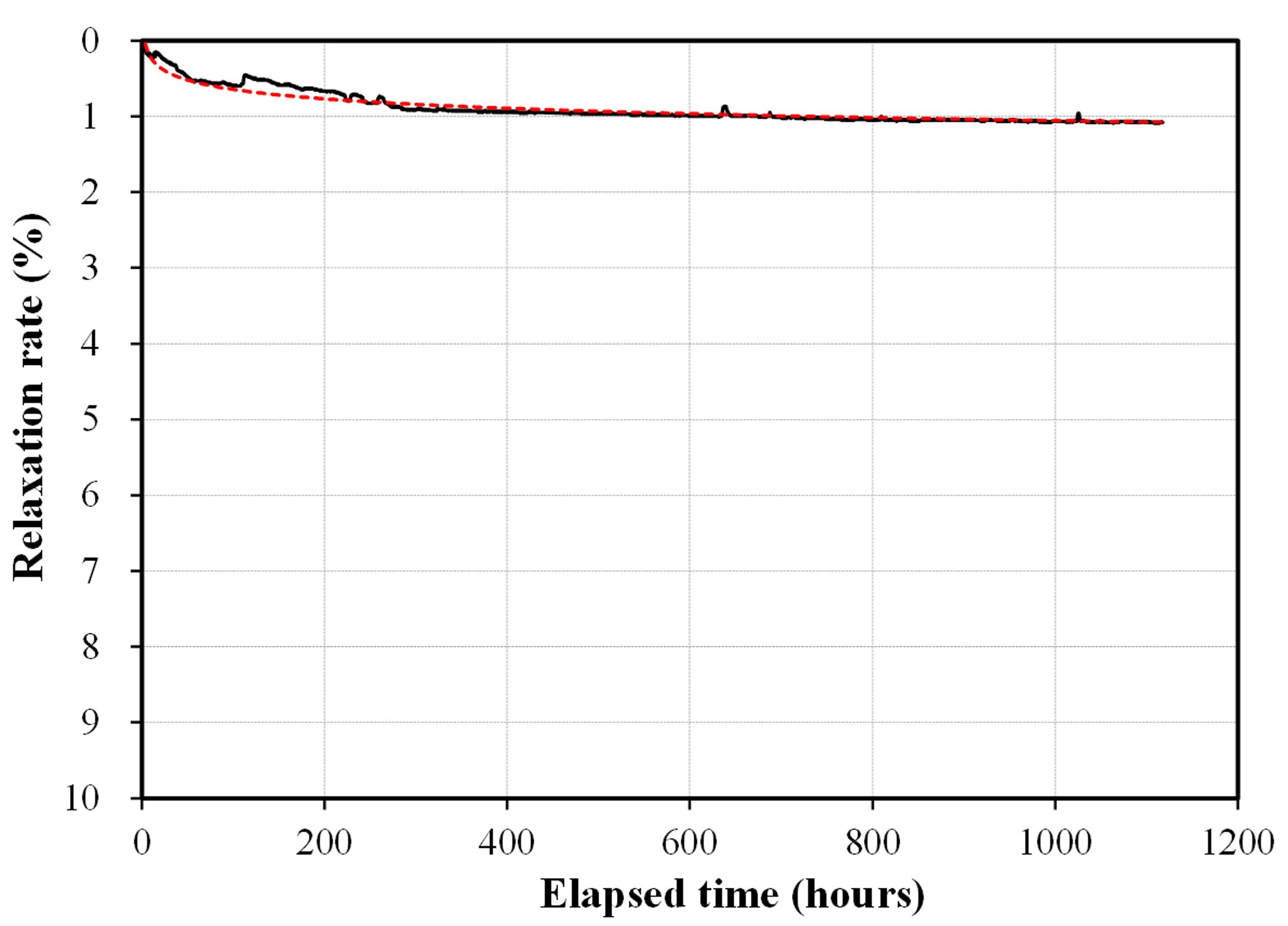
The relaxation loss of the CFRP tendon was measured to be 1.02% after 1000 h, as shown in
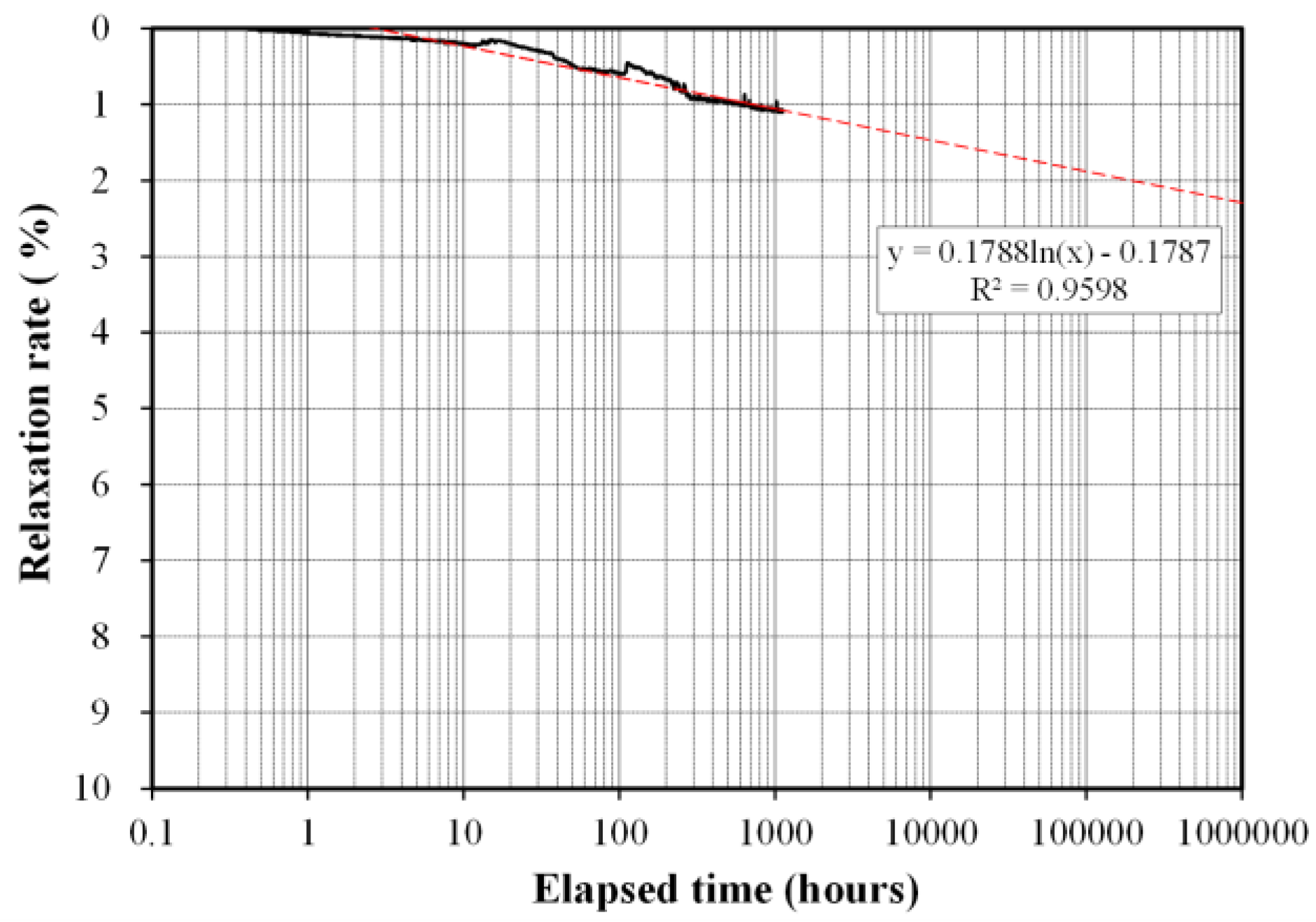
Figure 7. Based on extrapolation of the measured relaxation trend, the relaxation loss of the 9.5 mm CFRP tendon at 1,000,000 h was estimated to be 2.11%, as shown in
Figure 8. The long-term relaxation value was obtained using logarithmic regression, as indicated in
Figure 8. The regression equation and coefficient of determination,
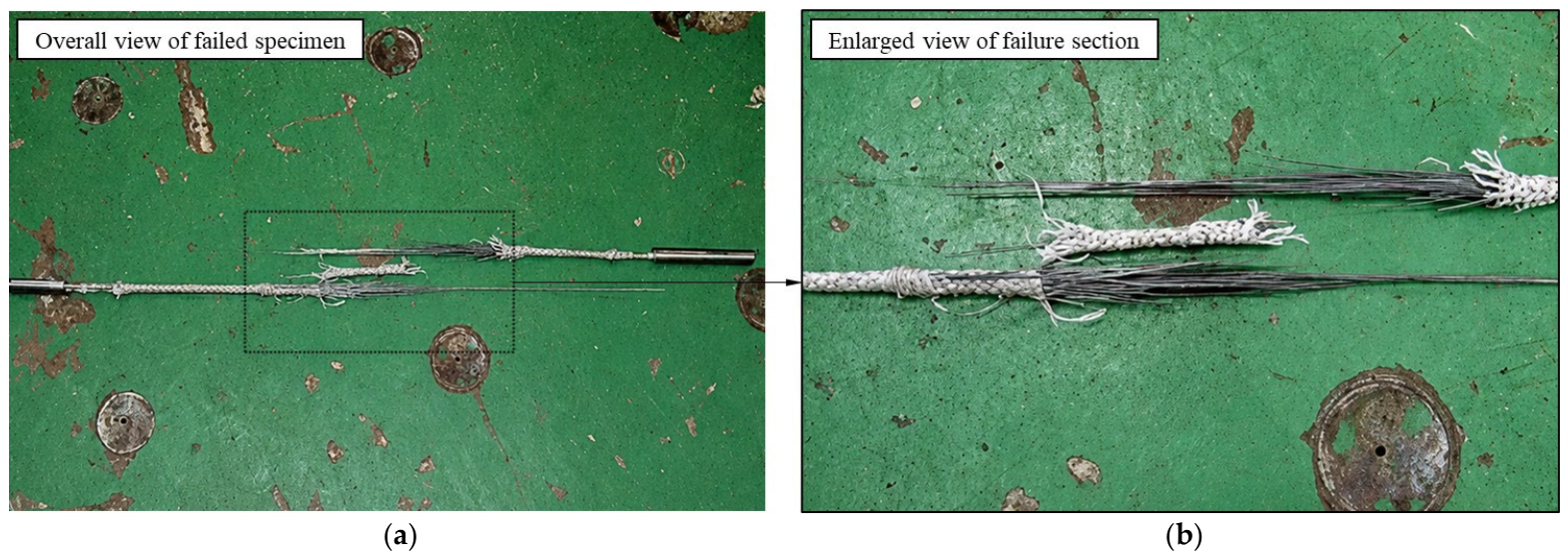
, were added to the figure to clarify the basis of the extrapolation. Although the regression result provides a useful estimate of the long-term relaxation trend, the 1,000,000 h relaxation loss should not be interpreted as a directly measured value. Rather, it represents a regression-based extrapolated estimate derived from the 1000 h test data. Therefore, additional long-term relaxation tests with a larger number of specimens are required to improve the statistical reliability of the extrapolated value. After completion of the relaxation test, residual tensile tests were conducted on the specimens to evaluate their remaining tensile capacity. The specimens exhibited fracture in the central region of the tendon, away from the anchorage zones, as shown in
Figure 9. The ultimate loads were measured as 168.4, 171.5, and 173.5 kN, respectively. The residual tensile test after the relaxation test was conducted on three specimens. Therefore, the residual tensile capacity results should be interpreted as individual test results rather than statistically representative values. These values were comparable to the tensile capacity of the CFRP tendon before relaxation testing, indicating that no significant degradation in tensile performance occurred during the sustained loading period.
The relaxation losses of the prestressing steel strand and the CFRP tendon developed in this study are summarized in
Table 3.
Table 4 compares the relaxation performance of the developed CFRP tendon with that of commercially available carbon-fiber-based tendons, including CFCC and Leadline tendons, reported in previous studies [
26,
27,
28]. At the 1,000,000 h reference time, the extrapolated relaxation loss of the developed CFRP tendon was approximately 9% lower than that of the CFCC tendon and remained within a range similar to that of conventional prestressing steel strands.
The comparison also indicates that relaxation data for carbon-fiber-based tendons reported in the literature exhibit substantial scatter. Some studies reported relaxation losses less than half those of prestressing steel strands, whereas others reported values greater than those of steel strands. These discrepancies are unlikely to be explained solely by the intrinsic relaxation of carbon fibers. Rather, they are likely associated with tendon-level and test-dependent factors, such as anchorage configuration, interfacial slip, load-transfer efficiency, initial stress level, and slip-correction procedures. For this reason, a conservative design relaxation loss of 6% is often used to account for uncertainty in the long-term performance of CFRP tendon systems.
3.2. Creep
3.2.1. Overview
Creep testing is essential for evaluating the long-term behavior and creep rupture resistance of FRP tendons under sustained tensile loading. In FRP materials, creep rupture is caused by the progressive accumulation of damage, including fiber breakage, matrix microcracking, and fiber–matrix interfacial debonding, and may occur at stress levels considerably lower than the short-term ultimate tensile strength [
29].
As shown in
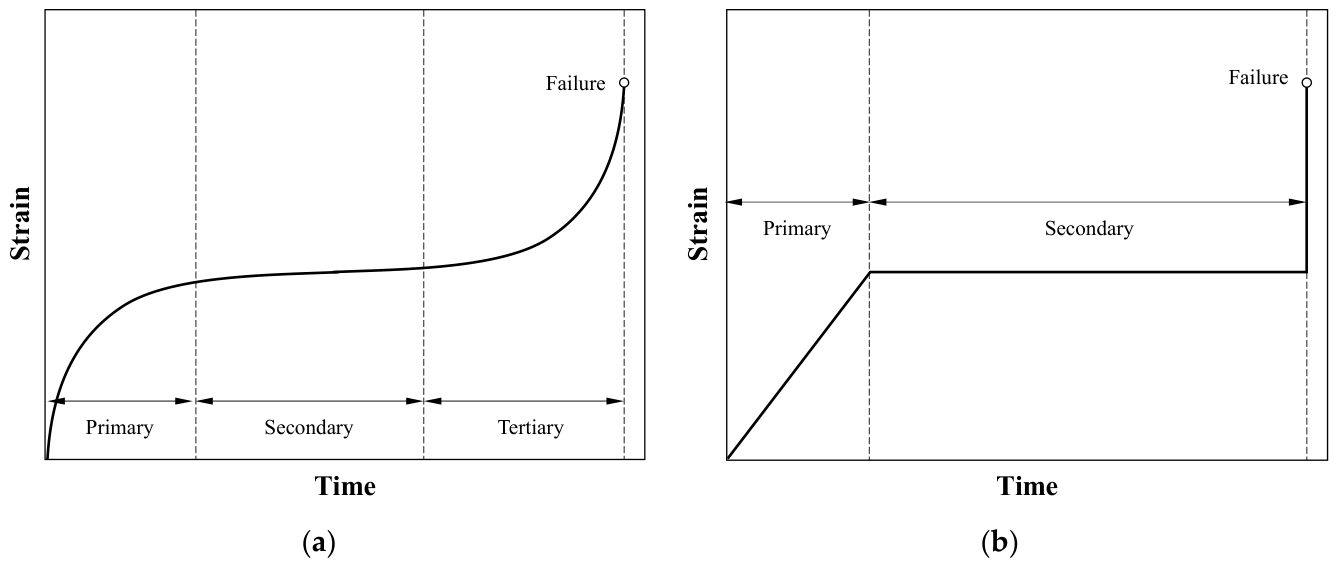
Figure 10a, the creep response of FRP tendons is generally divided into three stages: primary, secondary, and tertiary creep. Primary creep occurs immediately after load application and is characterized by a decreasing creep strain rate. Secondary creep corresponds to a quasi-steady-state region in which the creep strain rate remains approximately constant under sustained stress. During this stage, local damage may occur, but load redistribution through the resin matrix and adjacent fibers can temporarily maintain the load-carrying capacity of the tendon. Tertiary creep is characterized by an accelerating increase in strain due to progressive fiber breakage, matrix damage, and interfacial degradation, eventually leading to rupture.
Aramid-fiber tendons typically exhibit this three-stage creep behavior. In contrast, carbon-fiber-based tendons show a nearly negligible creep strain rate during the secondary stage because carbon fibers have high resistance to time-dependent deformation. However, when the applied stress exceeds the creep rupture threshold, the time to failure can decrease sharply, and rupture may occur without a prolonged secondary creep stage, as illustrated in
Figure 10b.
The ACI 440.1R provisions [
30] specify creep rupture stress limits for FRP materials, as summarized in
Table 5. The CFRP tendon developed in this study was therefore evaluated with reference to these limits to verify its suitability for sustained prestressing applications.
3.2.2. Creep Testing Device
The configuration of the creep testing device is generally similar to that of the relaxation testing device and is typically based on a frame-type structure. Two loading methods are commonly used for creep testing: the spring-loading method and the lever-arm load amplification method. In the spring-loading method, the applied load may decrease with time after initial loading owing to spring deformation and system compliance, thereby requiring periodic reloading. In contrast, the lever-arm method can maintain a relatively stable sustained load on the specimen as long as the counterweight remains constant and the lever system is properly balanced.
In this study, the creep testing device was designed based on the lever-arm load amplification principle. To generate a high sustained tensile load using relatively small counterweights, a high amplification ratio was adopted.
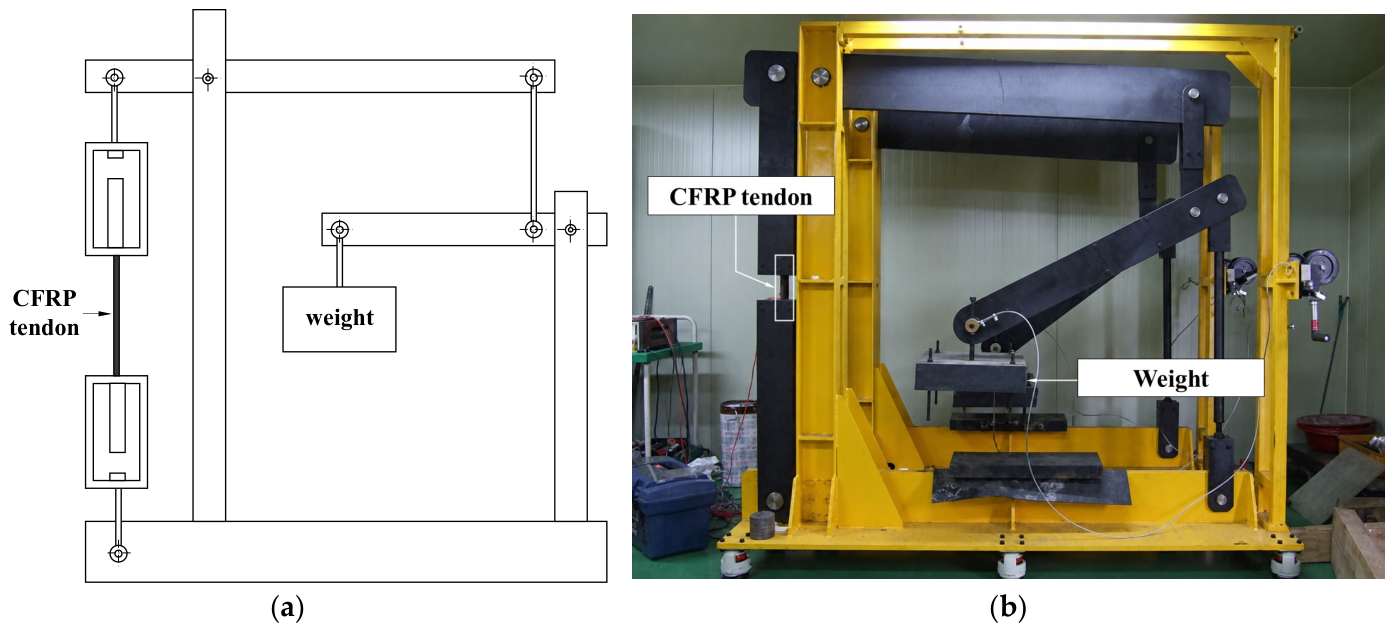
Figure 11a shows the schematic configuration of the creep testing device, and
Figure 11b presents the fabricated device.
3.2.3. Creep Testing Method
Creep specimens of CFRP tendons were prepared using 9.5 mm tendons (ultimate tensile strength: 2500 MPa), and the experimental procedure was conducted in accordance with the method proposed in CSA S806-02. Unlike prestressing steel strands or reinforcing bars, which can withstand significant sustained loads over long durations before creep rupture, CFRP tendons may fail by creep rupture under stress levels below their static tensile strength. Therefore, the creep strength can be employed to determine the allowable stress level of CFRP tendons.
In this test method, the tensile strain of the CFRP tendons is measured over time under specified environmental conditions and sustained loading. The ratio of the applied sustained load to the ultimate tensile load of the specimen is defined as the load ratio. The stress level at which failure occurs after a certain period of sustained loading, particularly the stress that causes rupture after one million hours, is defined as the one-million-hour creep rupture strength. The ratio of the applied sustained load to the ultimate tensile load of the specimen under this condition is referred to as the one-million-hour creep rupture load ratio. To evaluate creep performance, the test must be performed with at least five different load ratios, with at least one load ratio selected such that no failure occurs even after 1000 h of loading.
The creep testing devices used in this study was designed to apply a load exceeding 200 kN to the specimen. Once the load was applied, rotation occurred at the hinges of the posts and the specimen anchorage ends, thereby allowing the vertical load to be directly introduced into the specimen anchorage without the need for a spherical seat.
Table 6 presents the load amplification ratios of the creep testing device. To assess the creep behavior of CFRP tendons, tests were performed at load ratios corresponding to 82.4%, 85%, 87%, 92.7%, and 100% of the ultimate tensile capacity of the tendons.
3.2.4. Creep Testing Results
Table 7 summarizes the creep rupture test results of individual CFRP tendon specimens, and
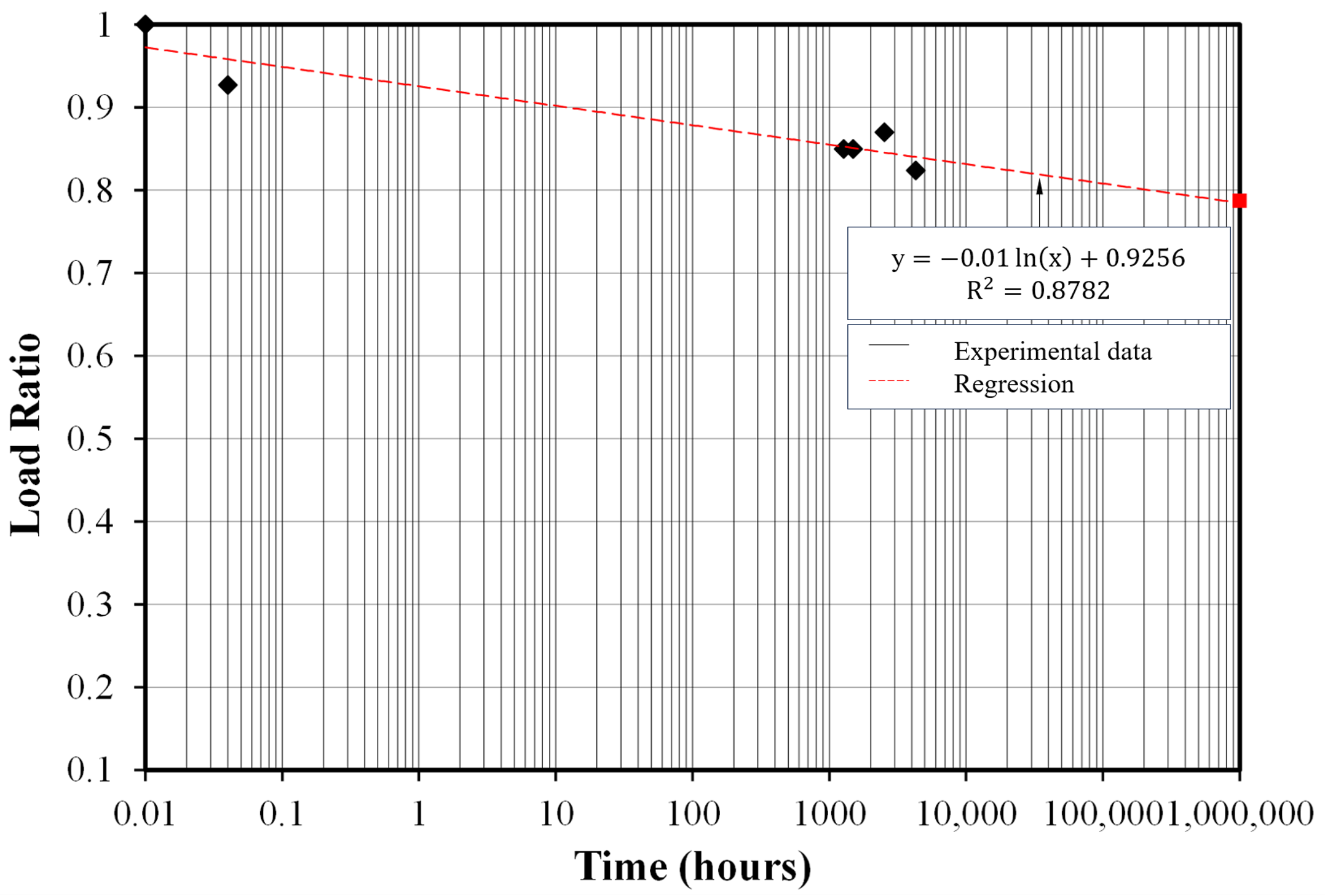
Figure 12 shows the relationship between the applied load ratio and rupture time. The specimen loaded to 100.0% of the ultimate tensile capacity failed almost immediately, as expected because the applied load corresponded to the short-term tensile capacity of the tendon. The specimen tested at 92.7% also failed within a very short duration, whereas the specimens tested at load ratios of 82.4–87.0% ruptured after sustained loading durations ranging from 1272 to 4296 h. In general, the rupture time tended to decrease as the applied load ratio increased, although noticeable scatter was observed among individual specimens.
It should be noted that the specimen tested at a load ratio of 87.0% showed a longer rupture time than the two specimens tested at 85.0%. This apparent inconsistency is attributed primarily to specimen-level scatter rather than anchorage variation or loading error. No measurable anchorage slip was observed during the creep tests, and all failed specimens ruptured within the tendon gauge length rather than at the anchorage transition zone. Therefore, premature anchorage failure was not considered the governing cause of the observed scatter. The variation in rupture time may be associated with local material variability in the pultruded CFRP tendon, including fiber alignment, resin distribution, fiber–matrix interfacial quality, and local defects. Because CFRP tendons exhibit brittle rupture behavior under sustained tensile loading, even small local defects or manufacturing-induced variability can lead to noticeable scatter in rupture time.
Based on the available creep rupture data and regression-based extrapolation of the load ratio–time relationship, the 1,000,000 h creep rupture load ratio of the CFRP tendon was estimated to be approximately 80%, as shown in
Figure 12. The regression equation and coefficient of determination, (
), were added to
Figure 12 to improve the transparency of the extrapolation procedure. However, the estimated 1,000,000 h creep rupture load ratio should be interpreted with caution because the regression was based on a limited number of failed specimens and included early rupture data at high load ratios of 92.7% and 100.0%. In particular, the specimen loaded to 100.0% failed almost immediately because the applied load corresponded to the short-term tensile capacity of the tendon. Therefore, the estimated creep rupture load ratio is presented as a preliminary regression-based extrapolated value rather than a definitive design value.
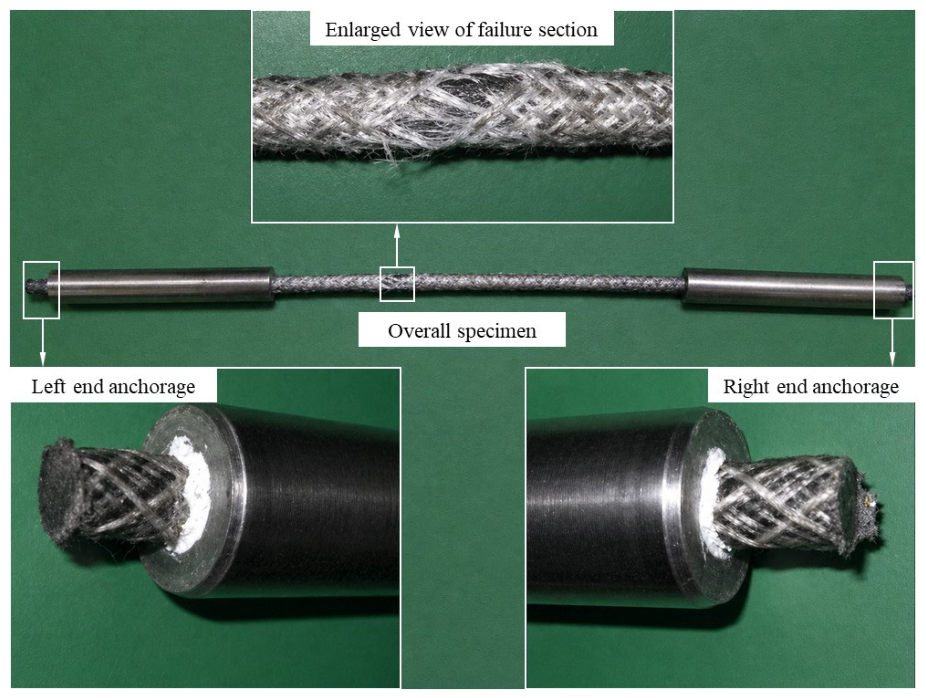
Figure 13 shows the CFRP tendon specimens that failed under sustained creep loading. During the creep tests, including the moment of rupture, no measurable slip was observed at either end of the anchorage system. In addition, all failed specimens ruptured within the tendon gauge length rather than at the anchorage transition or neck region, and the observed failure mode was similar to that obtained from the direct tensile tests. These observations indicate that the creep rupture behavior was governed primarily by the tendon material response rather than by anchorage slip, hidden local damage, or premature anchorage failure.
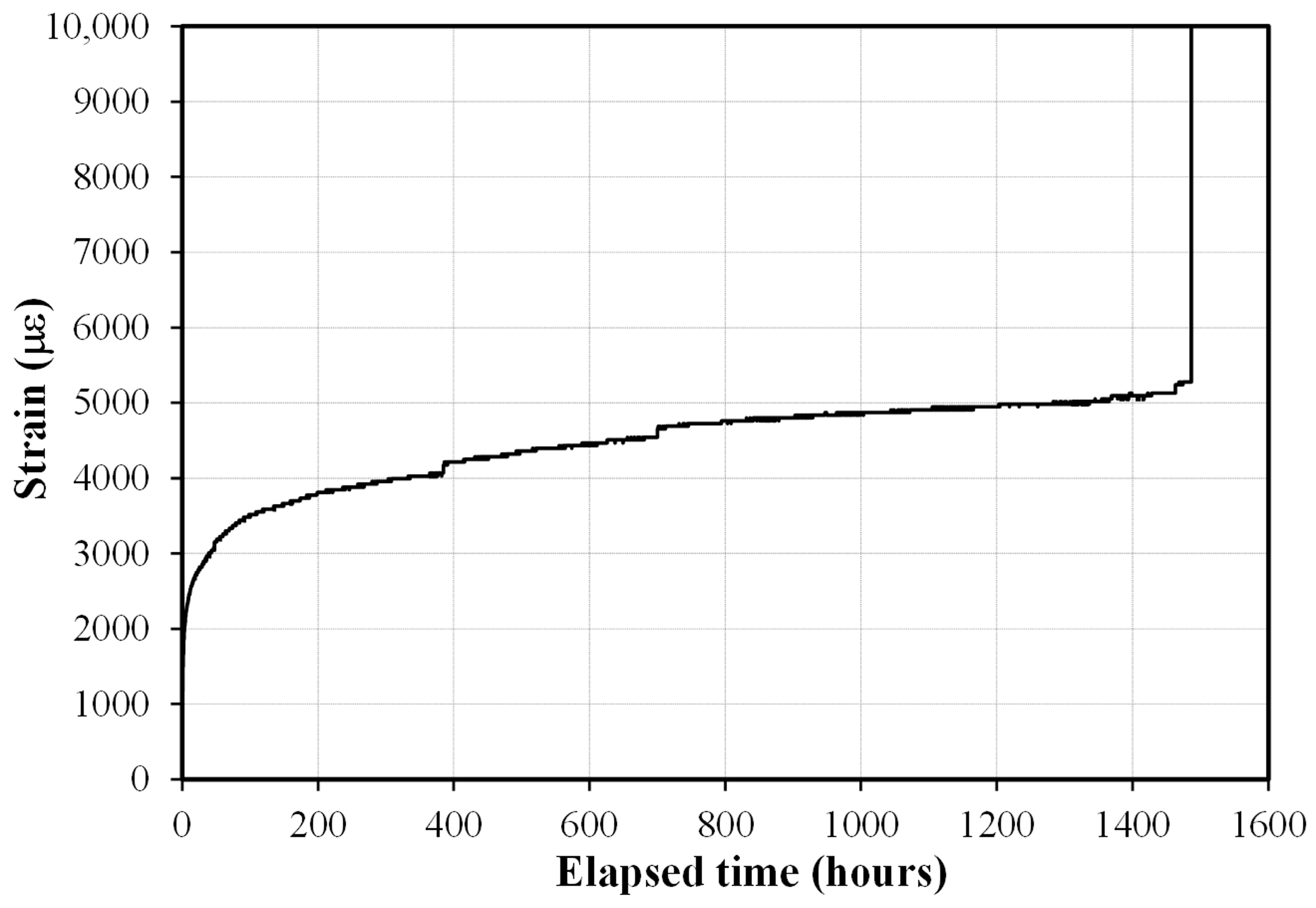
Figure 14 presents the strain–time response of the specimen tested at a load ratio of 85%. The curve exhibited a trend similar to the creep rupture response of carbon fibers schematically shown in
Figure 10b.
According to JSCE [
27], the creep rupture load ratio of CFCC tendons is reported to be approximately 85%. Dolan et al. [
19] suggested a creep rupture load ratio of 70% for carbon-fiber rods corresponding to a 100-year service life. The extrapolated value obtained in this study was slightly lower than that reported for CFCC tendons but higher than the value reported for other carbon-fiber rod systems.
The estimated creep rupture load ratio may be affected by specimen-level scatter, early rupture at high load ratios, and test-dependent uncertainties. Because the present regression was based on a limited number of failed specimens, additional creep rupture tests with a larger number of high-quality specimens are required to reduce statistical uncertainty and refine the long-term regression model.
3.3. Fatigue Performance of CFRP Tendons and Anchorages
3.3.1. Overview
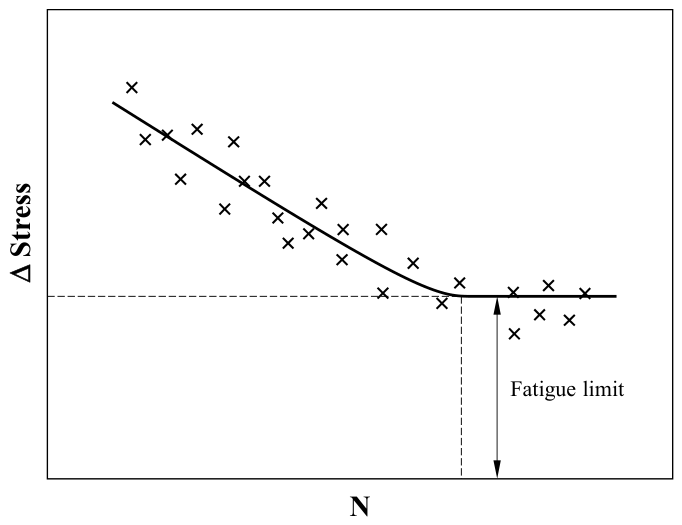
FRP materials have attracted continued interest for prestressed concrete applications because of their high tensile strength, corrosion resistance, durability, and favorable fatigue resistance compared with conventional steel tendons. The fatigue behavior of structural members can generally be evaluated using stiffness degradation models or strength degradation models under constant-amplitude cyclic loading. Stiffness degradation models focus on the reduction in stiffness with increasing number of load cycles, whereas strength degradation models describe the decrease in residual strength caused by cyclic loading. Among these approaches, strength degradation models are more commonly used and are typically represented by an S–N curve, which describes the relationship between stress amplitude and the number of cycles to failure, as shown in
Figure 15. The S–N curve is therefore an important basis for evaluating fatigue life under cyclic loading.
In structural members subjected to cyclic loading, a stress range may exist below which fatigue failure does not occur, even under a very large number of load cycles. The upper bound of this stress range is defined as the fatigue limit, which is an important design parameter for preventing fatigue failure in structures subjected to repeated loading. In prestressed concrete structures, the tensile fatigue performance of tendons is a key factor governing service-life design. Therefore, in this study, cyclic loading tests were conducted to evaluate the fatigue behavior of the developed CFRP tendon and anchorage system under repeated tensile loading.
3.3.2. Fatigue Test of Anchorages
Fatigue tests were conducted on the developed CFRP tendon–anchorage assembly to assess its resistance to cyclic tensile loading and its suitability for prestressing applications. The fatigue specimens had the same dimensions as those used in the direct tensile tests. Since no domestic standard specifically addresses fatigue testing of FRP anchorage systems in Korea, the test protocol was established with reference to the Road Bridge Design Specifications [
31].
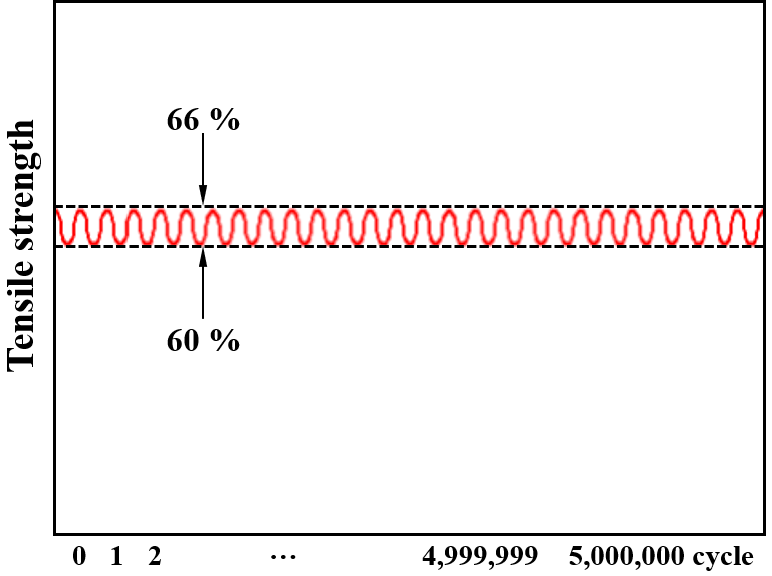
As shown in
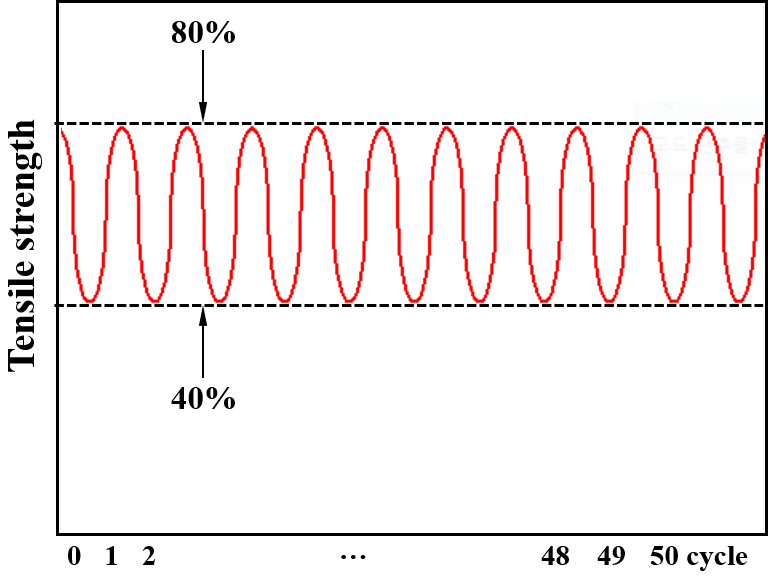
Figure 16, cyclic loading was applied under two conditions: 500,000 cycles at a stress level corresponding to 60–66% of the tensile strength of the CFRP tendon (
Figure 16, top), and 50 cycles within a stress range corresponding to 40–80% of the tensile strength (
Figure 16, bottom). The fatigue specimens were fabricated using the 9.5 mm CFRP tendons developed in this study, and compression-type anchorages were installed at both ends.
The results of the fatigue tests conducted on the compression-type CFRP tendon–anchorage assemblies are summarized in
Table 8. Each row in
Table 8 represents an individual tendon–anchorage assembly tested under the corresponding fatigue loading condition. Because the number of specimens was limited, the fatigue results were used to assess the preliminary cyclic performance of the developed assembly under the adopted loading protocol rather than to establish statistically representative fatigue design values. The specimens satisfied the fatigue loading requirements specified in the Road Bridge Design Specifications. Subsequent static tensile tests indicated that the CFRP tendons retained their tensile capacity after cyclic loading, with no apparent reduction attributable to fatigue damage. In addition, the compression-type anchorage system maintained stable performance beyond 500,000 cycles, and its fatigue resistance was further confirmed through extended testing up to 2,000,000 cycles.
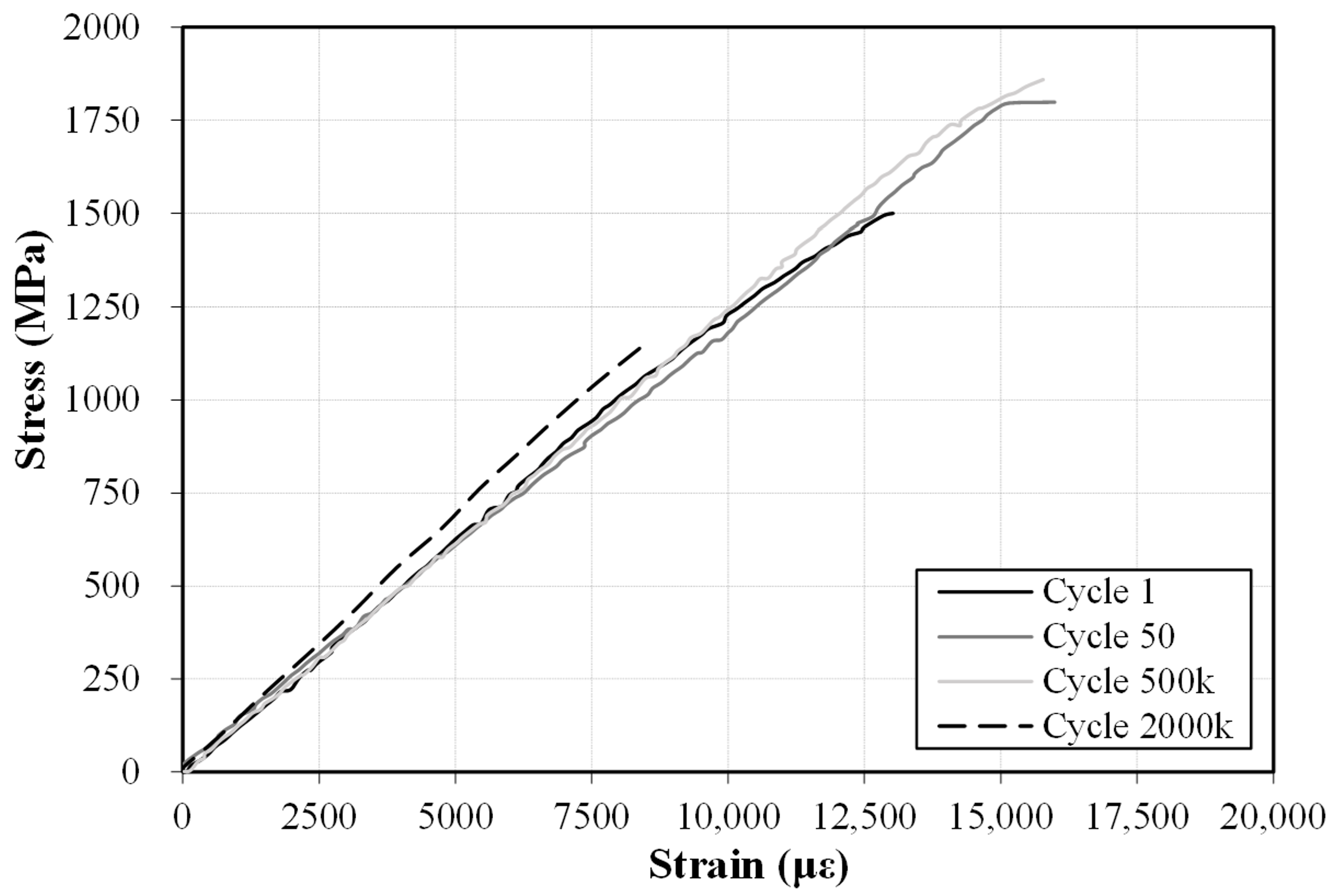
After completion of the fatigue tests, residual tensile tests were conducted on the specimens, and the stress–strain responses of the CFRP tendons subjected to different numbers of fatigue cycles were obtained, as shown in
Figure 17. The slope of the stress–strain curve corresponds to the elastic modulus and can be used as an indicator of potential changes in the mechanical performance of the tendon. Refai [
32] reported that the reduction in service life caused by repeated loading is negligible and that changes in the elastic modulus of FRP tendons under fatigue loading can be disregarded. Consistent with this finding, the results of the present study showed that the slopes of the stress–strain curves remained nearly unchanged as the number of fatigue cycles increased. This indicates that the applied fatigue loading did not cause measurable degradation in the mechanical performance of the CFRP tendons.
3.3.3. Fatigue Test of CFRP Tendons
The CFRP tendon specimens for fatigue testing were fabricated using the same procedure as that adopted for the direct tensile tests, and the fatigue test protocol was established with reference to CSA S806-02. The fatigue performance of CFRP materials is commonly evaluated using an S–N relationship under a fixed stress ratio, , where is defined as the ratio of the minimum stress to the maximum stress. In this approach, is often set to 0.1 to determine the fatigue strength or fatigue limit. Alternatively, fatigue performance can be evaluated by maintaining a constant minimum stress while varying the stress range, particularly when the performance of anchorage systems or specific structural details is assessed. In this study, both approaches were adopted to investigate the fatigue behavior of the CFRP tendon and the cyclic performance of the compression-type anchorage system.
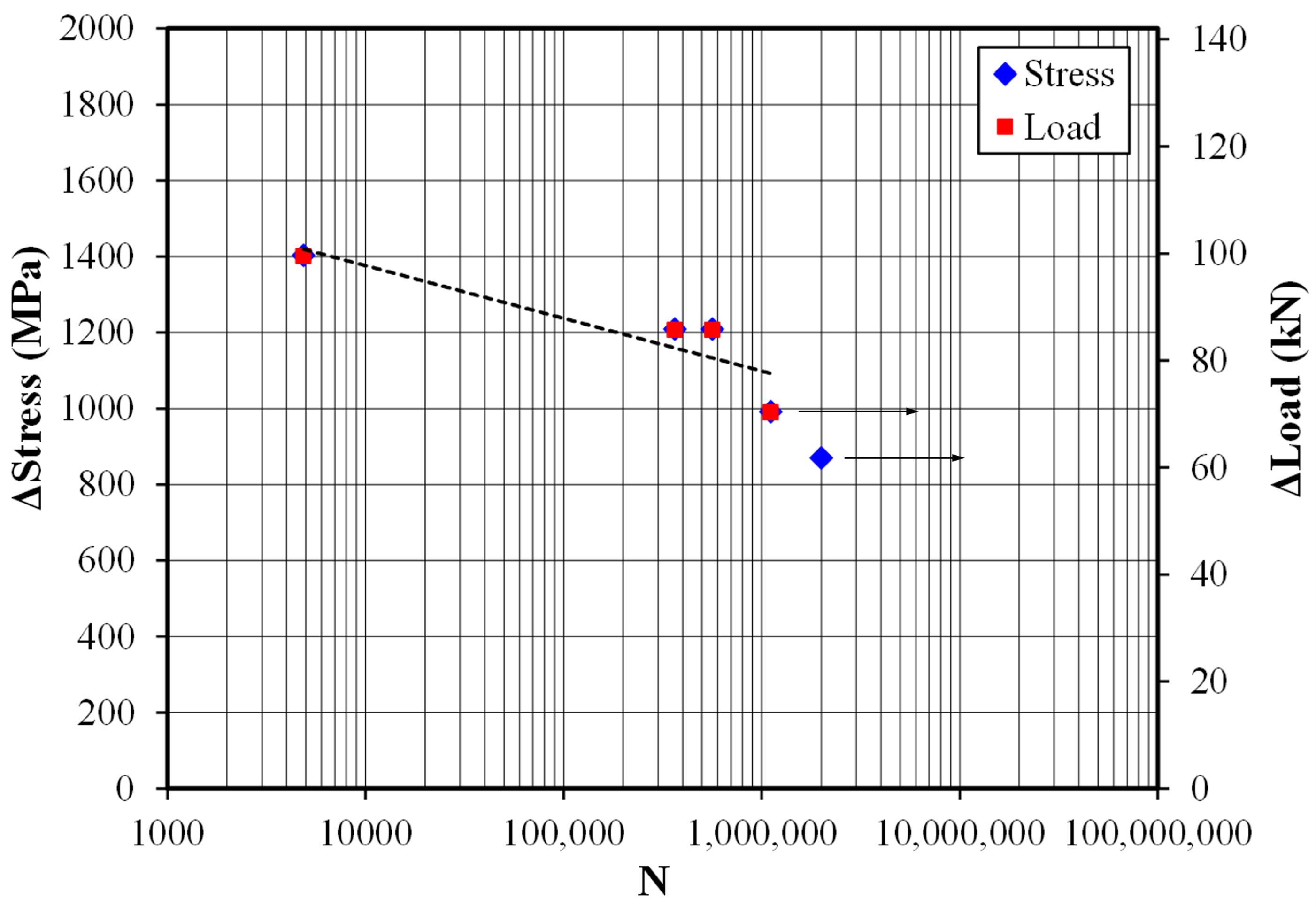
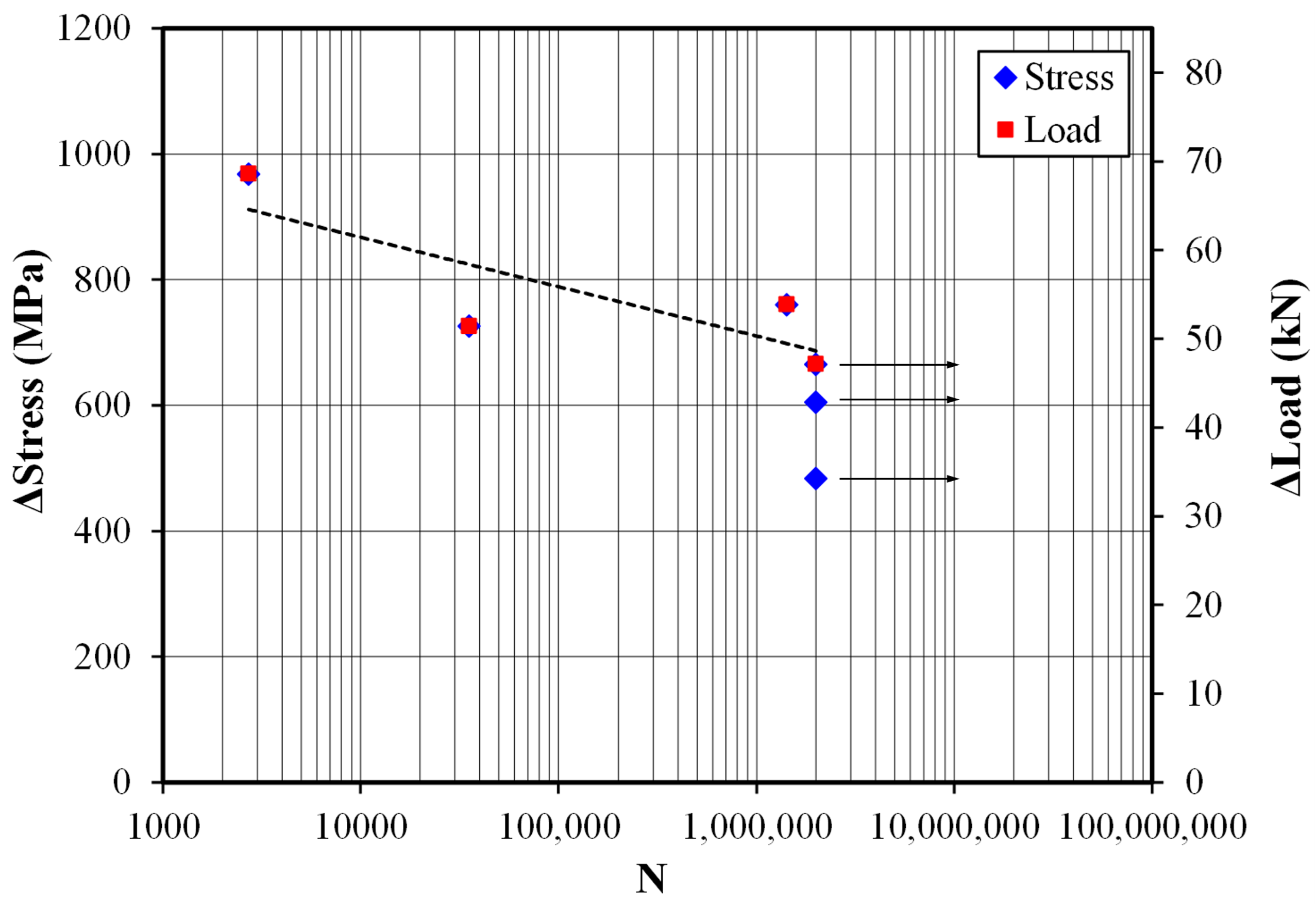
The S–N relationships shown in
Figure 18 and
Figure 19 were constructed from individual fatigue test results. Run-out specimens were indicated separately, and the fitted trend lines were used only to describe the observed fatigue tendency within the tested stress range. The results of the fatigue tests conducted at a fixed stress ratio of
are summarized in
Table 9, and the corresponding S–N curve is presented in
Figure 18. In
Table 9, the fatigue strength ratio is defined as the ratio of the maximum applied fatigue stress to the ultimate tensile strength of the tendon. In the S–N curve, the arrows indicate run-out specimens for which no fatigue failure occurred up to 1,000,000 and 2,000,000 cycles, respectively. The test results showed that the specimens tested at fatigue strength ratios of 36% (871 MPa) and 41% (992 MPa) survived without failure up to 2,000,000 and 1,000,000 cycles, respectively. In contrast, specimens tested at fatigue strength ratios of 50% or higher failed within the cycle counts listed in
Table 9. Based on these individual fatigue test results, the preliminary fatigue strength levels of the 9.5 mm CFRP tendon were estimated to be approximately 871 MPa at 2,000,000 cycles and 992 MPa at 1,000,000 cycles under the adopted
loading condition.
The results of the fatigue tests conducted with the minimum fatigue strength ratio fixed at 40% are summarized in
Table 10, and the corresponding S–N curve is shown in
Figure 19. In these tests, no fatigue failure occurred up to 2,000,000 cycles for specimens subjected to maximum fatigue strength ratios of 60%, 65%, and 68% while maintaining the minimum fatigue strength ratio at 40%. This loading condition is more stringent than the anchorage fatigue performance requirement described earlier. Therefore, the design requirement of 500,000 cycles under a stress range corresponding to 60–66% of the tensile strength is less demanding than the fatigue loading conditions applied in this study. These results indicate that the developed CFRP tendon–anchorage system satisfied the required fatigue performance under the adopted test conditions, although additional fatigue tests with a larger number of specimens are required to establish statistically representative design values.
4. Conclusions
In this study, the long-term mechanical performance of the developed CFRP tendon–anchorage assembly was experimentally evaluated through relaxation, creep rupture, and fatigue tests. Based on the experimental results and the regression-based interpretation of the long-term test data, the following conclusions can be drawn.
The stress relaxation of the CFRP tendon was mainly associated with resin relaxation and fiber straightening during the early stage after prestressing. The measured relaxation loss was 1.02% after 1000 h, and the relaxation loss at 1,000,000 h was estimated to be 2.11% based on logarithmic regression. This extrapolated value was approximately 9% lower than that reported for conventional CFCC tendons and was within a range comparable to that of prestressing steel strands. These results indicate that the developed CFRP tendon exhibited favorable prestress retention performance under the adopted test conditions, although additional long-term relaxation tests are required to improve the statistical reliability of the extrapolated prediction.
Creep rupture tests were conducted using a lever-arm load amplification device at load ratios ranging from 82.4% to 100.0% of the ultimate tensile load. The specimen loaded to 100.0% failed almost immediately, as expected for loading at the short-term tensile capacity, and the specimen tested at 92.7% also exhibited rapid rupture. In contrast, specimens tested at load ratios of 82.4–87.0% ruptured after sustained loading durations exceeding 1000 h. Based on regression-based extrapolation of the available creep rupture data, the 1,000,000 h creep rupture load ratio was estimated to be approximately 80%. Although this value was slightly lower than the 85% reported for CFCC tendons by JSCE, it exceeded the 70% value suggested by Dolan et al. for carbon-fiber rods corresponding to a 100-year service life. These results suggest that the developed CFRP tendon exhibited promising creep rupture resistance under the adopted test conditions. However, because the 1,000,000 h creep rupture load ratio was obtained from regression-based extrapolation using a limited number of specimens with noticeable scatter, the estimated value should be interpreted as a preliminary long-term estimate rather than a definitive design value for sustained prestressing applications.
Fatigue tests performed on the CFRP tendon–anchorage assembly indicated that the compression-type anchorage system satisfied the fatigue loading requirements specified in the Road Bridge Design Specifications under the adopted test conditions. The specimens withstood cyclic loading up to 2,000,000 cycles without fatigue failure under selected loading conditions. In addition, residual tensile tests after fatigue loading showed no measurable reduction in elastic modulus, indicating that the applied cyclic loading did not cause significant degradation in the mechanical performance of the CFRP tendon.
Overall, the developed CFRP tendon–anchorage assembly showed low relaxation loss, preliminary creep rupture resistance comparable to previously reported carbon-fiber-based tendon systems, and stable fatigue performance under the adopted loading conditions. These findings provide preliminary experimental evidence supporting the potential applicability of the developed CFRP tendon–anchorage system in prestressed concrete structures and cable-supported infrastructure. However, further validation through additional long-term testing, field application, and structural monitoring is required to establish design and qualification criteria for practical implementation. In future studies, vision-based monitoring techniques could also be incorporated to quantify tendon surface cracking, anchorage slip evolution, fracture localization, and damage propagation during sustained and cyclic loading. DeepLab-based semantic segmentation models can be used to identify and segment crack or damage regions at the pixel level [
33], whereas EfficientNet-based image classification models can provide an efficient framework for classifying damage stages and fracture patterns from test images [
34]. The integration of such computer vision approaches with conventional load, strain, and displacement measurements could improve the quantitative assessment of damage evolution in CFRP tendon–anchorage systems.