


Abstract
3D-printed concrete (3DPC) enables formwork-free automated construction with geometric flexibility and improved material efficiency, yet its engineering reliability remains limited by interlayer weakening generated during sequential deposition. This review critically examines the formation, cross-scale consequences, and control of weak interlayer interfaces in 3DPC. In most studies, the 3DPC printing interval ranges from 20 s to 120 min, and the average interfacial bond strength ranges from 0.1 to 16 MPa. Interfacial weakness arises from the asynchronous evolution of adjacent layers in terms of contact quality, rheological recovery, moisture exchange, and early-age hydration. This mismatch promotes pore enrichment, discontinuity of hydration products, reduced phase continuity, and consequent local mechanical softening. These defects govern interlayer bonding, crack propagation, anisotropy, and stress-transfer pathways, and their effects propagate from material properties to member response, structural performance, and durability degradation. Rather than treating the interface as a localized cold joint, this review frames it as a process-induced multiscale variable linking printing history, microstructure, mechanical response, transport behavior, and serviceability. Current research remains constrained by non-comparable testing methods, undefined quantitative thresholds, and models that still rely heavily on empirical calibration. Future work should establish standardized characterization, transferable interface descriptors, multiscale predictive models, real-time quality control, and design methods that explicitly incorporate interfacial variability.
1. Introduction
Three-dimensional printed concrete (3DPC), as a representative technology in smart construction, has attracted increasing attention in civil engineering owing to its capability for fabricating geometrically complex elements, reducing formwork dependence, automating construction, and improving material utilization [1,2,3,4]. During extrusion-based deposition, however, 3DPC exhibits time-dependent rheological behavior, pronounced sensitivity to early-age hydration, and multiphase heterogeneity. Layer deposition therefore constitutes a coupled process in which structural build-up and material-state evolution proceed concurrently [5,6,7]. Among the issues arising in this process, the weak interlayer interfaces induced by sequential deposition constitute one of the most fundamental and inherent challenges associated with 3DPC [8,9]. The 3DPC interfaces include the layer-to-layer interfaces, the filament-to-filament interfaces, the reinforcement-to-matrix interfaces, and formwork-to-concrete interfaces. Among these interfaces, the bond interface between filaments is of critical importance. This paper focuses on the bond interface between filaments. Weak interlayer cannot be reduced to localized adhesion failure. It emerges instead from coupled mechanisms operating across multiple stages: time gaps between layers, incomplete contact upon redeposition, and the resulting microstructural defects [10,11,12]. These effects extend beyond the local material scale and emerge as multi-scale weaknesses, expressed as clear mechanical anisotropy [13,14], preferential crack propagation along interfaces [15,16,17,18], reduced load-bearing capacity of members [19,20,21], degraded structural response [20,22,23,24], and impaired long-term durability [25,26,27,28]. The interlayer region acts as a central node that links the printing process, material performance, and long-term structural service across scales.
In recent years, research on 3DPC interfaces has expanded considerably, with progress reported on formation mechanisms, mechanical response, structural effects, durability degradation, and reinforcement strategies [10,25,29,30,31,32,33,34,35,36,37,38,39]. For instance, Geng et al. [10] identified a dual-layer structure at the 3DPC interlayer interface. The macro-interface is governed by the deformation capacity of the rough surface, whereas the micro-interface is controlled by the hydration product assemblage. Moini et al. [29] identified an interconnected pore network within 3DPC, in which microchannels are linked through micropores located in the interfacial zone. Weng et al. [30] examined the effects of superplasticizer dosage, printing speed, and curing conditions on the interlayer bond strength of 3DPC. Nguyen-Van et al. [33] improved the structural performance and sustainability of 3D-printed reinforced concrete columns by introducing a sinusoidal infill path. Ler et al. [32] reviewed the porosity and durability testing methods reported in the literature and summarized the relevant protocols and reference standards. Weng et al. [36] further proposed a simultaneous deposition system for concrete and binder to mitigate the weak interlayer bond strength of extrusion-based 3DPC. Notwithstanding these advances, the current literature suffers from several limitations. First, the interface is commonly treated as an isolated cold joint or a localized weak zone. Consequently, it is rarely analyzed within a continuous framework linking the printing process, interface formation, defect evolution, and macroscopic failure. Second, owing to the considerable variability in specimen scales, printing parameters, characterization techniques, and evaluation metrics, comparability across studies is constrained, and interfacial performance lacks unified criteria and well-defined quantitative thresholds. Third, existing studies have largely focused on individual aspects, such as interlayer bond strength, anisotropy, and durability degradation. Few studies have systematically captured how interfacial effects propagate across scales to ultimately govern element- and structural-level behavior. Moreover, the incorporation of coarse aggregates [28,40,41], fibers [42,43], and reinforcing bars [19,41,44,45] has shifted the research focus from a single interlayer interface to a composite system with multiple coupled interfaces. The traditional single-interface framework is therefore no longer sufficient to capture the mechanisms governing performance degradation and enhancement. Research on 3DPC interfaces accordingly calls for a transition from phenomenological description toward mechanism-oriented analysis, and from localized characterization toward a unified, cross-scale understanding.
To better identify the current research focuses and gaps, a quantitative analysis of the existing literature was conducted. A literature search was conducted in the Web of Science database (2016–2026) using “3D-printed concrete” and “interface” as topic keywords. VOSviewer 1.6.20. was then used to construct a keyword co-occurrence network (Figure 1a). In addition, the relative attention given to each influencing factor of 3DPC interfaces was quantified by counting how often it appeared as a primary research focus across the retrieved literature (Figure 1b). The type of analysis and counting method are both co-occurrence, and the unit of analysis is keywords. The counting method is full counting. Minimum number of occurrences of a keyword is 5. Number of keywords to be selected is 101. There is a total of 101 data points. First, the frequency of occurrence for each specific factor affecting the 3DPC interface was counted. These specific factors are categorized as follows: moisture, temperature, curing methods, process parameters, cement pastes, aggregates, fiber, geopolymer, microstructure and porosity, and mix design. These factors were then grouped into three major categories: materials, process parameters, and environmental factors. The frequency of occurrence for these three major categories of factors was calculated based on the literature. The relative weight distribution represents the percentage of each factor’s occurrence out of the total data points. The results reveal an uneven distribution of research attention: material-related factors account for 41% of the studies, substantially exceeding the shares of printing process parameters (15%) and environmental factors (12%). This imbalance indicates that materials have received considerably more attention than processing and environmental factors. It also reveals that the formation and evolution of interfacial defects under the coupled action of process, material, and environment remain poorly understood.
Figure 1.
(a) Keyword co-occurrence network generated via VOSviewer; (b) Relative weight distribution of the primary factors affecting the 3DPC interface.
While most existing studies focus solely on bond strength, the unique contribution of this paper lies in its attempt to move beyond the limitations of such a narrow focus. Instead, it places interface issues within a multiscale framework that encompasses microstructure, mechanical behavior, structural scale, durability, and control strategies, thereby providing a comprehensive examination of the subject. Focusing on interfacial weakening, this review provides a systematic account of the formation mechanisms, cross-scale mechanical and structural effects, durability degradation, and enhancement strategies associated with 3DPC interfaces. Particular attention is given to the coupled effects of time, process, material and environmental conditions on the evolution of interlayer interfaces in 3DPC. The propagation of interfacial effects from microscopic defects through macroscopic material properties to member and structural responses is also delineated. On this basis, key challenges in current research are identified with respect to interfacial mechanisms, evaluation frameworks, numerical modeling, intelligent fabrication, and standards development. This review seeks to establish a coherent understanding of the mechanisms governing 3DPC interfaces and to inform their predictive design.
2. The Formation and Evolution of Weak Interfaces Between Layers
Unlike conventionally cast concrete, 3DPC is fabricated through sequential layer deposition. Temporal discontinuities between successive depositions induce material-state asynchrony between adjacent layers, making the interlayer region a primary weak zone in 3DPC [40,46,47]. A typical illustration of the weak interlayer interface in 3DPC is shown in Figure 2 [48]. When two adjacent layers come into contact, they generally differ in rheological state, moisture content, and degree of early-age hydration. As a result, the interface fails to achieve bulk-like continuity. A transition zone forms instead, marked by pore enrichment, phase discontinuity, and localized mechanical softening. The discussion in this section is limited to single-layer interfaces formed directly through layer-by-layer deposition. When coarse aggregates, fibers, or reinforcing bars are incorporated, the analysis extends to a multi-interface system with coupled interactions. The resulting formation mechanisms and degradation pathways are far more complex than those of a single-layer interface.
Figure 2.
Printing effect of cement-based material under different parameters [48]: (a) Shapes at low speed and high pressure, (b) Optimized printing parameters, (c) Shape at high speed and low pressure, (d) Printed morphology under low speed and high pressure, (e) Printed morphology under the best matching parameters, (f) Printed morphology under high speed and low pressure. Figure 2 is taken from [48].
Current additive manufacturing techniques used to obtain 3DPC can be grouped into four main categories: (1) Extrusion-based 3D printing, in which fresh concrete is pumped and deposited as continuous filaments through a nozzle. Representative processes include contour crafting and concrete printing. This is the most widely used method, suitable for large-scale elements but demanding in terms of pumpability, extrudability, and buildability. (2) Powder-bed binder jetting, where a liquid binder is selectively sprayed onto a powder bed layer by layer. It enables complex geometries with overhangs, but the build size and mechanical performance are limited. (3) Shotcrete-based 3D printing, in which concrete is robotically sprayed onto a target surface, providing strong interlayer bonding and allowing integration of conventional reinforcement. (4) Selective paste intrusion/cement activation, which selectively introduces paste or water into an aggregate or powder bed to produce small, geometrically intricate components. Among these, extrusion-based 3D printing is the most mature and scalable approach, and is therefore the focus of the present study.
2.1. Basic Formation Mechanism
The formation of weak interlayer interfaces originates from discontinuities in the material state across adjacent deposited layers [49,50,51]. In conventional monolithic casting, the entire mass consolidates simultaneously. Extrusion-based 3DPC, by contrast, builds up components by sequentially stacking filaments. Each deposited layer therefore undergoes successive stages of environmental exposure, interlayer contact, and structural build-up. During the time gap between two depositions, the lower layer undergoes structural build-up, surface drying, and early-age hydration, whereas the upper layer remains in a flowable or semi-flowable state. Such asymmetry produces substantial mismatches in rheological compatibility, wettability, and particle interpenetration at the moment of contact. The interlayer region therefore constitutes a chemo-physico-mechanically coupled transition zone, dictated by the deposition sequence and continuously reconfigured by the evolving material state [11,52].
Interface deterioration first manifests as a reduction in contact quality. As the exposure time increases, the static yield stress and viscosity of the underlying layer rise progressively, while its deformability declines. The newly deposited material therefore struggles to spread over and conform to the underlying surface. Concurrently, evaporation and capillary suction reduce the wettability of the exposed surface, restricting the local flow redistribution and effective bonding of the fresh paste within the contact zone. Interlayer weakening therefore originates at the contact stage, where adjacent layers fail to fully re-bond into a continuous structural network [10,11,53].
At the microstructural level, interlayer weakening does not originate from isolated defects but from the coupled evolution of geometric imperfections, phase discontinuities, and localized stress concentrations. Rapid thixotropic recovery and moisture-loss-induced stiffening jointly restrict the remoldability of the paste. As a result, pores within the interfacial region tend to remain elongated, preferentially oriented, or partially interconnected [53]. Surface desiccation and non-uniform local moisture migration retard hydration kinetics. The result is a population of residual unhydrated particles, discontinuities in the hydration product network, and underdeveloped interfacial bonding phases [10]. The interfacial zone generally exhibits a lower local elastic modulus and tensile strength, as well as a higher susceptibility to cracking [54,55,56]. Although the above mechanistic chain is broadly applicable, its evolution rate, critical time window, and dominant defect type remain highly dependent on the material system, particle gradation, printing path, and environmental conditions. Results reported across different studies are therefore not necessarily directly comparable.
The formation of weak interlayer interfaces can therefore be summarized mechanistically as follows. Time intervals between successive depositions induce differences in the material state of adjacent layers, thereby limiting intimate contact and structural re-bonding at the interface. Such incomplete contact produces pore enlargement and disrupts the continuity of hydration product phases. At the macroscale, these microstructural alterations translate into a reduced interlayer bond strength, anisotropy, and preferential crack propagation along the interlayer plane.
2.2. Effects of Time and Process Parameters
The time interval between successive depositions is one of the principal factors shaping the formation of weak interlayer interfaces. Its influence is intrinsically coupled with the printing rhythm and the sequence of layer deposition. As the interlayer delay increases, the substrate progressively undergoes structural build-up, bleeding cessation, surface desiccation, and early-age hardening. These processes gradually reduce its capacity to re-integrate with the subsequently deposited material [8,9,10,11]. The accompanying increase in yield stress and viscosity gradually narrows the effective bonding window between adjacent layers. As the interface evolves from a deformable plastic to a hardened configuration, the interlayer bond strength generally decreases. Geng et al. [10] reported that extending the time interval from the final setting time of 3.5 h to 7 h sharply reduced the relative interfacial bond strength from 72.7% to 25.6%. This decline was accompanied by an increase in interfacial porosity from 36.8% to 62.8% and a drop in local elastic modulus from 26.2 GPa to 10.7 GPa. Nerella et al. [54] further showed that a one-day delay caused a 91.9% reduction in the flexural strength of a plain cement system. Wolfs et al. [46] reported a 21% loss in tensile strength after a 24 h delay, accompanied by brittle fracture along the interfacial plane. These results primarily reflect the potential magnitude of interfacial degradation within a specific system. As their absolute values depend on material composition, testing methodology, and specimen scale, they are better regarded as trend-level evidence than as universal thresholds.
The effect of the time interval on interlayer behavior is not strictly monotonic. Huang et al. [57] reported that, within very short intervals, surface wetting and local moisture enrichment can improve the wetting conditions at subsequent contact, leading to a moderate increase in interfacial adhesion over a limited time window. This finding indicates that interfacial evolution involves more than a direct shift from bonding to degradation. A short transitional stage may exist, during which contact quality remains partially recoverable. Beyond this stage, thixotropic recovery, moisture-loss-induced stiffening, and early-age hydration become the dominant processes, and the interface gradually shifts from a deformable to a rigid state. The time effect can therefore be understood as the macroscopic manifestation of competing rates of structural build-up, surface moisture loss, and recompaction during re-contact.
In conjunction with time-dependent effects, process parameters govern whether the aforementioned competing mechanisms are amplified or attenuated. Variables including printing speed [57], layer height [12,58], extrusion rate [59], nozzle standoff distance [60], and inter-filament overlap [30] directly regulate the contact stress, lateral spreading, and effective bonding area during deposition of the subsequent layer. Specifically, an excessive layer thickness or nozzle standoff distance results in insufficient compaction, thereby leading to the persistence of macroscopic pores at the interface. In addition, a mismatch between printing speed and extrusion rate leads to unstable filament morphology, abnormal aspect ratios, and localized deposition irregularities. These effects further aggravate geometric deviations and the accumulation of interfacial defects. Conversely, when process parameters are appropriately calibrated to reconcile deposition stability with contact compaction, interfacial pores can be partially consolidated, leading to a corresponding improvement in interlayer bonding quality.
Current empirical findings concerning the optimal time window, nozzle standoff distance, and process parameters diverge across studies [11,61,62,63,64]. Such inconsistency reflects the inherent system dependence of the critical conditions governing interfacial behavior. The underlying mechanistic principles remain relevant, although their thresholds and dominant manifestations vary across different 3DPC systems. In particular, different material systems exhibit distinct structural build-up kinetics, water retention capacities, and yield stress evolution paths. Contact stress and geometric shaping conditions also vary substantially with equipment type and nozzle configuration. Moreover, different evaluation metrics, including tensile, flexural, shear, and fracture properties, exhibit different sensitivities to interfacial defects. Of greater value is the formulation of interfacial state criteria transferable across material systems and processing conditions, which would supersede the prevailing practice of documenting parameter-specific effects in isolation. Such criteria would progressively shift interface prediction and control from empirical optimization to mechanism-driven approaches. Current research remains confined to the phenomenological optimization of parameters, lacking a unified mechanistic understanding of the entire process of interface formation, evolution, and failure. Consequently, it remains difficult to establish verifiable theoretical models.
2.3. Material and Environmental Effects
Temporal and processing parameters predominantly control initial interfacial defect formation, while intrinsic material properties and environmental conditions govern the interface’s susceptibility to degradation and subsequent evolution [11,65]. Interfacial integrity is primarily determined by contact mechanics during deposition and material evolution between layers, governed by thixotropic recovery, moisture retention, bleeding, and early-age hydration.
The flowability, thixotropic recovery, bleeding behavior, and moisture retention of the cementitious ink critically control interfacial re-bonding and defect evolution. Although accelerated early-age structural build-up ensures buildability and form stability, it concurrently narrows the effective interlayer bonding window. Insufficient moisture retention promotes desiccation-induced stiffening of the surface layer during the interlayer interval. This stiffening weakens the wetting, lateral spreading, and compaction of the subsequently deposited layer [66]. Existing studies have shown that interlayer bonding can be improved through internal curing, superplasticizer adjustment, and rheological optimization [30,62,67,68]. The effectiveness of these strategies is reflected in more than improved macroscopic flowability. More importantly, they help restore moisture retention, structural remoldability, and favorable contact conditions within the interfacial zone. The formation of interfaces in 3D-printed gas concrete is governed by the coupled effects of rheology and bubble stability. Interlayer stacking is prone to microstructural weakening due to bubble collapse, and the properties of surfactants directly determine bubble surface tension and the ability to preserve pore morphology during printing [69]. At the same time, the yield stress and thixotropy of the slurry are key to ensuring smooth extrusion and interface integrity [70]. Precise control of rheological properties and the physical stability of the foam after extrusion can effectively mitigate the anisotropy caused by microporosity concentration at the interface [71].
Beyond the cementitious matrix itself, the incorporation of aggregates and reinforcing constituents further influences the morphology and evolution of interfacial defects. Inclusions such as recycled fine aggregates [12,58,67], fibers [12,58], and recycled coarse aggregates [31,40,72] introduce localized geometric constraints and multiphase interfaces of considerable complexity. Excessive particle size or residual mortar coating on aggregate surfaces promotes localized pore enrichment and stress concentration at the interface. Fibers, in turn, can enhance crack-bridging and load-bearing capacity along specific directions while aggravating interlayer weakening in the orthogonal direction owing to flow-induced alignment and non-uniform local dispersion. These results suggest that material modification exerts a dual effect on interfacial behavior. It reconfigures the local stress field, defect structure, and failure mode, rather than producing a purely strengthening or weakening response [8,18,73,74]. Studies on recycled coarse aggregate, fiber-reinforced, and rubber-particle systems consistently report that the incorporation of such constituents improves localized performance while concurrently introducing new interfacial heterogeneities [12,31,40,58,72].
Environmental conditions further determine whether interfacial defects intensify during early-age consolidation and evolve into preferential damage pathways under long-term service. Temperature and humidity fluctuations during open-air printing regulate evaporation, plastic shrinkage, and moisture gradients, controlling the interface’s initial microcracking susceptibility and subsequent degradation. Liu et al. [66] identified a strong coupling between connected interfacial pores and early-age shrinkage. This suggests that interlayer weakening arises from deposition-induced geometric discontinuities and the subsequent development of volumetric instability. Under more complex or extreme environmental exposures, the interlayer regions generally exhibit greater vulnerability than the bulk matrix. For example, elevated temperatures have been shown to impair the stability of hydration products and the integrity of the local microstructure, thereby accelerating interfacial degradation [75,76]. Underwater printing introduces additional effects, including hydrodynamic scouring, washout resistance, and interfacial roughening [77]. As a result, interfacial formation follows mechanisms distinct from those governing conventional in-air extrusion. Aggressive exposures, including carbonation, chloride ingress, and freeze–thaw cycling [78], promote preferential degradation along the porous interlayer pathways. These channels may subsequently evolve into preferential pathways for durability-related deterioration. Material and environmental factors act in a coupled fashion across the formation and in-service degradation stages of the interface. Their joint influence controls both early-age defect mitigation and the propensity for long-term degradation pathways.
Rather than cataloguing mix designs and exposure scenarios, future studies of material–environment interactions should isolate the factors that govern interfacial sensitivity and dictate the dominant degradation pathways. Interfacial weakening is particularly sensitive to the moisture retention capacity of the material, particle geometric characteristics, multiphase heterogeneity, and environmental evaporation conditions. Nevertheless, the net effect of different material design strategies still needs to be assessed in conjunction with specific process windows and deposition conditions. Evaluating a material system in isolation from deposition timing and fresh-state conditions risks misrepresenting the mechanisms of interfacial weakening and yields conclusions of limited transferability across processing windows.
2.4. Multiscale Interpretation and Mechanistic Synthesis
The understanding of weak interlayer interfaces has progressed from early qualitative descriptions based on macroscopic phenomena and morphological features to mechanistic analyses based on the integration of multiscale evidence. Current research typically addresses four levels: pore structure, phase continuity, local mechanical fields, and macroscopic mechanical responses. Techniques such as micro-CT and mercury intrusion porosimetry have revealed increased interfacial porosity, a shift in pore size distribution toward larger pores, and preferential orientation of pore morphology [18,29,32,53,79,80]. Scanning electron microscopy and complementary microstructural analyses have revealed that the interfacial region often contains accumulated unhydrated particles, incipient microcracks, and discontinuous hydration products [11,81]. Nanoindentation measurements have further confirmed that the local elastic modulus at the interface is generally lower than that of the adjacent bulk matrix [10]. Interfacial weakening is not an incidental outcome of macroscopic testing, but rather has an identifiable microstructural basis [82,83].
However, the intrinsic correlations among observations obtained at different length scales remain insufficiently clarified. Higher porosity does not entail a proportional strength loss, nor does phase discontinuity scale linearly with interfacial embrittlement. Macroscopic interlayer performance reflects the combined contact area, pore connectivity, local modulus gradients, and crack-deflection trajectories. Its assessment therefore demands a multidimensional framework, as no single indicator can encompass these interacting factors. In essence, interlayer weakening originates from the coupled effects of geometric defects, material discontinuities, and localized stress concentrations, reflecting a multiscale interaction mechanism governed by multiple interconnected factors. Moreover, incorporating coarse aggregates [31,40,47,72,84], fibers [42], cement-coated recycled rubber particles [85], steel reinforcement [19,41], or permanent formwork [86] transforms the interface problem from a single interlayer boundary into a composite system of interacting interfaces. The interfacial issue thus extends from an interlayer adhesion problem to a multiphase interaction problem, increasing both the difficulty of microscopic quantification and the uncertainty in identifying the underlying mechanisms. Oversimplified analysis that attributes all degradation to interlayer “cold joints” compromises mechanistic interpretation and leads to misguided material design and processing strategies.
Based on the current evidence, the mechanisms underlying weak interlayer interfaces can be delineated at three hierarchical levels. First, interfacial weakening arises from discontinuities in the material state between successive layers, primarily manifested as insufficient physical contact and limited interlayer re-bonding [19,28,41,42,47,83,84]. Second, this discontinuity manifests at the microstructural scale as pore coarsening, reduced phase continuity, and localized mechanical softening, with material-system-dependent contributions [25,28,85,87]. At the upper level, deposition timing, processing parameters, material properties, and environmental conditions act in concert to shape interfacial performance by regulating moisture distribution, rheological evolution, and compaction quality [42,47,84,88,89,90,91]. Interlayer weakening therefore unfolds as a coupled, sequential cascade. The deposition stage establishes the initial interfacial state, which governs microstructural evolution. The resulting microstructure controls stress transfer and crack-propagation paths. Cumulative local damage ultimately determines macroscopic response and durability. Within this framework, the assessment of interlayer interfaces should not rely on isolated indicators, such as porosity or strength alone. A multidimensional characterization is required, encompassing contact continuity, pore connectivity, local stiffness gradients, and crack-propagation behavior. Most existing studies characterize interfacial defects statically and discretely, failing to capture the coupled deposition–evolution–failure process, which fundamentally undermines interfacial theory’s predictive power. Establishing a unified dynamic framework through in situ dynamic characterization integrated with multi-physics coupled modeling is therefore imperative to advance interfacial research from qualitative description toward quantitative prediction.
3. Effects of Interfaces on the Mechanical Properties of 3DPC
Interfacial weakening in 3DPC arises from the coupled evolution of pore accumulation, phase discontinuity, localized mechanical softening, and crack-path deflection. This degradation transcends local bonding defects and propagates across scales, manifesting as macroscale deterioration characterized by strength loss, anisotropy enhancement, damage localization, and failure-mode transition. Accordingly, the mechanical response of 3DPC primarily hinges on the continuity of interfacial contact, the connectivity of defects, and the interaction between local modulus gradients and load transfer paths.
3.1. Mechanisms of Interface Bonding and Strength Characterization
Mechanical characterization of the weak interlayer interface is a prerequisite for developing structural design theories for 3DPC. Interfacial strength reduction originates in extended deposition intervals, which trigger surface moisture loss, restrict particle interpenetration, and retard local hydration. The coupled action of these mechanisms diminishes the effective load-bearing area, heightens defect sensitivity, and reduces the threshold for crack initiation. Various test methods to obtain interlayer bond strengths are shown in Figure 3 [92]. Correspondingly, interfacial weakening represents the macroscopic manifestation of local structural degradation and evolving failure mechanisms. A reduction in macroscopic strength is only one observable outcome of this process. To date, no standardized testing method has been established for evaluating the interfacial bond strength of 3DPC [11].
Figure 3.
Various test methods to obtain interlayer bond strengths [92]. Figure 3 is taken from [92].
Multiscale investigations have revealed a clear local structural basis for the mechanical degradation of interfaces. Taleb et al. [93] reported that the nanoindentation modulus within the interfacial region is approximately 15%–25% lower than that of the bulk matrix, while the corresponding reduction in macroscopic tensile strength typically exceeds 30%. Lan et al. [94] further observed that the interlayer fracture toughness of alkali-activated recycled sand concrete decreased by approximately 42.5% relative to cast specimens. Overall, these results support the view that interfacial weakening simultaneously compromises peak load-bearing capacity, energy dissipation, and crack-propagation stability. Although fracture parameters offer a more comprehensive representation of interfacial failure than single strength-based metrics, they remain sensitive to the initial defect distribution and parameter-identification procedures. Quantitative comparisons across studies should therefore be interpreted with caution.
Improvements in interfacial performance are generally achieved through a combination of process control and material modification. Extending the printing interval from 10 to 30 min reduced the interlayer tensile strength by 45.2% [95], whereas in situ spraying of a cement-based composite interfacial agent increased the interlayer bond strength by more than 38% [96]. These findings highlight the strong dependence of interfacial re-bonding capacity on open time. Effective interfacial enhancement may be achieved through base-material optimization, as well as by improving wetting, filling, and contact conditions during deposition. However, the effectiveness of such enhancement depends on the uniformity of spray application, penetration depth, and their compatibility with the rheological behavior of the matrix. The geometric configuration of the deposited filaments and their spatial overlap also directly affect the formation of interfacial defects. Flat filaments (width-to-thickness ratio > 3) exhibit approximately 12% lower interlayer porosity than near-circular ones [97], and the pore volume reaches a minimum at an overlap ratio of 15%–20% [98]. Interfacial performance is largely governed by deposition geometry, while material constitutive behavior contributes as one of multiple interacting factors. However, the notion of an optimal filament morphology or overlap ratio is not universally transferable, as its applicability is constrained by nozzle size, material yield stress, extrusion stability, and forming accuracy [54].
With respect to raw material systems and solid waste utilization, interfacial regulation displays a dual character. Carbonated recycled sand has been reported to increase the interlayer shear strength by 18.6% through enhanced mechanical interlocking [99]. The incorporation of moderate amounts of coarse aggregate increased interfacial roughness but simultaneously disrupted the homogeneity of the interlayer paste-rich zone [100]. Recycled aggregates and coarse particles may further intensify local geometric discontinuities and stress concentrations, thereby introducing new interfacial weak zones. A similar trade-off has been identified in rubber-modified systems. Surface treatment can improve the interfacial transition zone, but this benefit is often accompanied by a 10%–20% loss in compressive strength. Meanwhile, deformability and energy dissipation capacity are enhanced [85,101]. Differences among cementitious systems further suggest that interfacial bonding depends on fresh-contact mechanics, hydration kinetics, and subsequent microstructural evolution. Calcium sulfoaluminate cement, while favorable for early-age buildability, may narrow the effective bonding window owing to restricted interlayer moisture migration [102]. Supplementary cementitious materials, such as limestone calcined clay cement and fly ash, have shown potential for tailoring rheological behavior and promoting late-age interfacial hydration [103,104]. Material modification should therefore be understood as a means of restructuring interfacial defect morphology, local stress fields, and crack propagation paths. To resolve the inherent conflict between lightweight construction and high strength, multi-scale reinforcement strategies are commonly employed in 3D-printed foam concrete [105]. The introduction of dispersed fibers effectively limits the propagation of microcracks in the matrix, significantly improving flexural and compressive strength. In addition, the incorporation of porous lightweight aggregates such as expanded perlite can provide both pore-filling and pore-wall-reinforcing effects, thereby improving extrusion stability without significantly increasing weight and achieving synergistic enhancement of mechanical properties [106,107]. The fundamental difference between these materials lies in their chemical composition.
Although Table 1 summarizes the available experimental studies on the interfacial bond performance of 3DPC, considerable variability remains among investigations in specimen dimensions, printing and sampling procedures, and fixation methods. This variability limits the comparability of the reported results. We have included the bond strength values with their ranges. The strength of the interface bond is subject to potential practical limitations, primarily related to the type of printing material, printing process parameters, and testing methods. Furthermore, most existing methods are unable to isolate pure tensile or pure shear interfacial behavior and cannot ensure consistent failure modes. The assessment of 3DPC interfacial bond strength relies predominantly on relative comparisons, and the development of standardized, broadly applicable testing protocols is required. Overall, interfacial bonding research should move beyond confirming interface–matrix strength differences. The key objective is to reveal the mechanisms driving interfacial weakening, quantify its degree with reliable methods, and determine how different regulation strategies modify the dominant weakening mechanisms. Interfacial characterization should therefore evolve from reliance on peak strength alone toward an integrated assessment of strength, fracture behavior, and energy dissipation. Likewise, interfacial optimization should progress from localized material modification or process adjustment to the coordinated improvement of contact continuity, defect connectivity, and resistance to crack propagation.
Table 1.
Existing experimental studies on the bond properties of 3DPC interfaces.
3.2. Anisotropy and Damage Evolution
Owing to its layer-by-layer deposition, the mechanical response of 3DPC is inherently direction-dependent. Compared with conventionally cast concrete, the anisotropy of 3DPC extends beyond directional variations in strength and stiffness. It also governs damage initiation sites, crack propagation paths, and the resulting failure modes. Anisotropy in 3DPC should therefore be interpreted as a consequence of the coupled effects of interfacial defects, material orientation, and stress-transfer paths, with directional strength differences representing only one manifestation of this behavior. This interpretation is supported by previous studies. Zhang et al. [17] reported that the compressive strength of ultra-high-performance concrete varied appreciably by up to 28% among loading directions of 0°, 45°, and 90°, with the failure mode transitioning from matrix crushing to slip–shear failure along weak interfaces. Surehali et al. [124] further quantified the effects of layer height and fiber incorporation on compressive anisotropy. These results highlight the continuous role of interfacial boundaries in steering stress redistribution and local failure paths throughout loading, preceding the onset of ultimate failure. In this regard, comparisons based solely on anisotropy indices are insufficient. It is essential to identify the dominant mechanisms governing the observed behavior, including interfacial weakening, oriented pore distribution, and load-path redistribution induced by fiber orientation and filament geometry.
The oriented distribution of pore structures is generally recognized as a key mechanism contributing to anisotropic damage. Micro-CT analyses have revealed directionally interconnected pore networks within 3D-printed geopolymer concrete [125]. Under conventional triaxial compression, morphologically irregular pores clustered along weak interfaces amplify local stress concentrations once the confining pressure exceeds 5 MPa, thereby driving a direction-dependent brittle–ductile transition [16]. Rheological behavior exerts a considerable influence on pore rearrangement and the evolution of anisotropy. Although higher fluidity facilitates interlayer bonding, excessive fluidity can promote gravity-driven pore redistribution and non-uniform deposition [126]. Anisotropy in 3DPC emerges from the coupled interactions among interfacial coalescence, geometric stability, and defect reorganization. It should be interpreted as a multimechanistic response governed by multiple interacting factors.
The evolution of interfacial defects under dynamic loading and complex service environments provides further insight into their intrinsic vulnerability. Split Hopkinson pressure bar tests show that the dynamic increase factor is lower when loading is applied parallel to the interface than perpendicular to it, and that interface porosity is negatively correlated with the dissipation of dynamic splitting energy [127,128]. Under combined high-temperature and durability-related exposure conditions, preferential interfacial damage becomes more pronounced. Within the 400–800 °C range, interfacial cracks tend to initiate earlier and propagate more rapidly [14]. Comparable behavior has been reported in aluminate systems and PVC-incorporated recycled concrete subjected to elevated temperatures or freeze–thaw cycles, where damage originates predominantly within the micro-interfacial regions [129,130]. Interfacial weakening plays a dual role: it shapes the early-stage mechanical response and sets the threshold and evolution of material degradation under environmental loading.
To predict the complex anisotropic behavior and failure modes of 3DPC, recent studies have begun to integrate design and modeling approaches for coordinated control. Bayrak et al. [131] proposed a semi-empirical prediction framework based on spatial variability, which enables the tracking of damage trajectories. Subsequent studies have shown that internal infill patterns and path planning not only modify the transmission directions of principal stresses but also induce crack deflection, bifurcation, or arrest [132,133]. Material modification can mitigate interface-induced anisotropy to a certain extent, although its effectiveness remains limited [134,135]. Anisotropy and damage evolution in 3DPC are therefore intrinsically coupled. The former defines the directional dependence of mechanical response, whereas the latter captures its progressive development under loading and environmental exposure. Most existing studies examine anisotropy and damage evolution separately, without establishing a cross-scale mechanistic linkage among interfacial microstructure, stress redistribution, and macroscopic failure modes. Consequently, direction-dependent failure prediction remains largely empirical rather than being developed into a generalizable theoretical framework.
3.3. Cross-Scale Transfer of Interfacial Effects to the Mechanical Behavior of Structural Members
Linking material-scale interfacial degradation to member- and structural-scale response is a critical step toward engineering implementation of 3DPC. Beyond weakening local bonding, interfacial defects reshape the stress-transfer paths, fracture trajectories, and failure modes within printed elements, thereby dominating how microstructural deficiencies propagate into macroscopic structural behavior.
Continuous reinforcement systems exhibit clear potential for multi-scale modulation. Continuous jute yarns and steel cables have been shown to enhance the flexural load-bearing capacity perpendicular to the interface through interlayer bridging, thereby mitigating brittle fracture [15,136]. By comparison, short-cut fibers contribute more evidently to microcrack suppression and local bridging, and their cross-scale effects display marked directional selectivity. Under the extrusion-induced shear field, more than 80% of the fibers tend to align parallel to the printing direction [137,138]. Although this orientation improves in-plane tensile strength and cracking resistance, it limits the contribution to interlayer toughening in the normal direction. The combined incorporation of PVA fibers and SAP has been reported to reduce shrinkage and increase the frictional work at the fiber–matrix interfaces, thereby improving overall crack resistance [43,139]. Component-level toughness can be improved by establishing a continuous and effective load-transfer pathway across layers. Such a pathway can mitigate the adverse effects of interfacial weakening and promote a more controllable, progressive failure process.
At present, finite element simulation combined with interfacial constitutive models remains the principal approach for multi-scale analysis. Previous studies have demonstrated that interlayer interfaces can be effectively modeled using cohesive zone models or zero-thickness weakening elements. Such approaches can capture interfacial slip, localized delamination, and crack propagation in components under compressive and flexural loading [13,140]. When a fiber-reinforced interfacial constitutive model incorporating damage factors was adopted, the agreement between experimental and predicted results exceeded 92% [141]. These findings indicate that the transfer of interfacial effects to the component scale relies on the appropriate incorporation of interfacial softening, fracture, and bridging mechanisms into the constitutive formulation. However, most existing models assume idealized interfaces and uniform defect distributions. In actual printed members, the interfaces are commonly influenced by geometric deviations, material variability, path adjustments, and construction-related disturbances. High model agreement merely reflects strong fitting capability under specific experimental conditions. Its ability to represent interfacial uncertainties in engineering components awaits further verification.
Interfacial structural defects largely govern local mechanical softening and the tendency for crack initiation, which in turn alter the internal stress redistribution and damage propagation paths within the member. At the member scale, these effects are commonly reflected in reduced load-bearing capacity, stiffness degradation, insufficient ductility, and shifts in failure modes. Cross-scale research should shift from directly transferring material-testing parameters into structural models toward developing a unified design framework that links printing process, interface formation, damage evolution, and structural response. Most cross-scale studies remain confined to unidirectional parameter transfer and lack feedback coupling among the material, printing, component, and structural levels. A multi-scale closed-loop framework centered on interfacial evolution and integrating process, mechanics, and design is therefore urgently needed to advance 3DPC from weakness compensation toward integrated, synergistic design.
4. Effects of Interfaces on the Structural Performance of 3DPC
The influence of interfaces on structural performance cannot be interpreted as a direct amplification of material-scale defects. Instead, it results from the coupled effects of interfacial characteristics, member configuration, and loading boundary conditions. The resulting structural response is mainly determined by interface position, connectivity within the global load-transfer system, orientation relative to the principal tensile stress, and continuity as a potential damage path.
4.1. Interface Weakening and Load-Bearing Performance of Typical Members
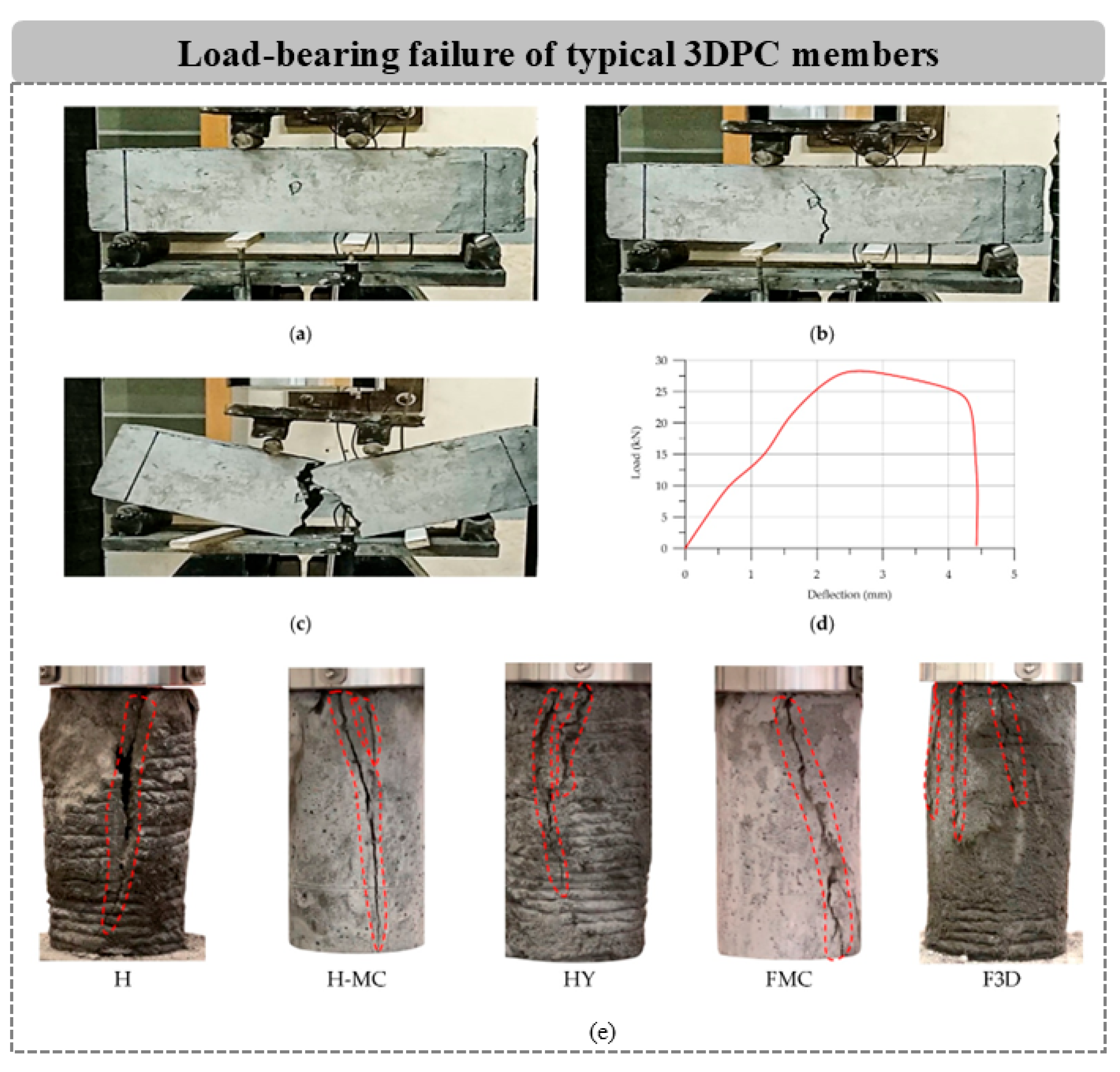
Interface weakening primarily modifies the load-transfer mechanisms within the member. In unreinforced or lightly reinforced members, the interlayer region tends to act as a weak plane for stress redistribution and preferential crack growth owing to its limited continuity. 3DPC is strongly anisotropic, with non-uniform load-bearing capacity across directions. Heterogeneity arising from filament skin effects, particle agglomeration, and deposition-induced discontinuities leads to member-scale variations in strength, stiffness, and failure paths under different loading directions [142]. Load-bearing failure of typical 3DPC members is shown in Figure 4.
In flexural members, interfacial weakening is typically reflected in early-stage stiffness degradation, an increased tendency for crack propagation along interlayers, and a shift toward interface-controlled failure modes. Liu et al. and Pal et al. [143,144] reported that the printing path and deposition interval affect material anisotropy and, in turn, alter the damage propagation patterns in the tensile and shear zones of the beam. Interfacial effects should therefore be evaluated through a comprehensive framework that integrates peak load, crack paths, stiffness evolution, and failure modes.
In compressive members, interfacial weakening may have a limited effect on global compressive strength, yet it increases the likelihood of localized splitting and instability-induced failure. To limit the amplifying effect of interfacial defects on the overall load-bearing capacity, internal topology and geometric design have been used to reconfigure the load-transfer paths. Nguyen-Van et al. [33] reported that the mass-to-load-bearing efficiency of 3D-printed columns differed markedly among infill topologies, with the 12-peak sinusoidal pattern showing the highest structural efficiency. Wang et al. [145] showed that, when a permanent formwork and the core concrete acted as a composite load-bearing system, the hollow-glass-microsphere concrete formwork provided lateral confinement and improved the axial compressive performance of short columns. In infilled or irregularly shaped members, interfacial behavior is strongly influenced by internal geometry. Arch infill has been reported to suppress interfacial shear slip and enhance flexural performance more effectively than truss infill or solid configurations [146]. These results suggest that mitigating interfacial weakening requires more than material modification. Internal load-transfer paths can be reconfigured to reduce the influence of weak interfaces on the overall response.
The low density and programmable geometric properties of aerated materials have significantly expanded the boundaries of manufacturing for complex, lightweight components. By adopting a hybrid approach that combines chemical foaming with lightweight particles, it is possible to produce ultra-low-density composites that meet customized functional requirements [147]. The use of mineral foam in 3D printing can even serve as permanent formwork for lightweight composite floor slabs, demonstrating its structural potential in large-scale load-bearing systems [148]. It has demonstrated a high degree of technical feasibility in structured applications [149].
Interfacial weakening affects the load-bearing performance of typical members beyond localized strength loss along a specific weak plane. It reshapes the overall mechanical response by altering internal stress distribution, crack propagation paths, and damage localization patterns. Interface evaluation at the member scale should therefore extend beyond a single load-bearing indicator. Instead, it should adopt an integrated analysis incorporating load-bearing capacity, stiffness evolution, crack control, and failure modes.
Figure 4.
Load-bearing failure of typical 3DPC members [150,151]: (a) initial sample of H-HPC prism; (b) crack; (c) failure; (d) load–deflection diagram; (e) Compressive crack patterns in specimens fabricated under different configurations. Figure 4a–c) is taken from [150]. Figure 4e is taken from [151].
4.2. Interface Interaction in Reinforcement and Connection Systems
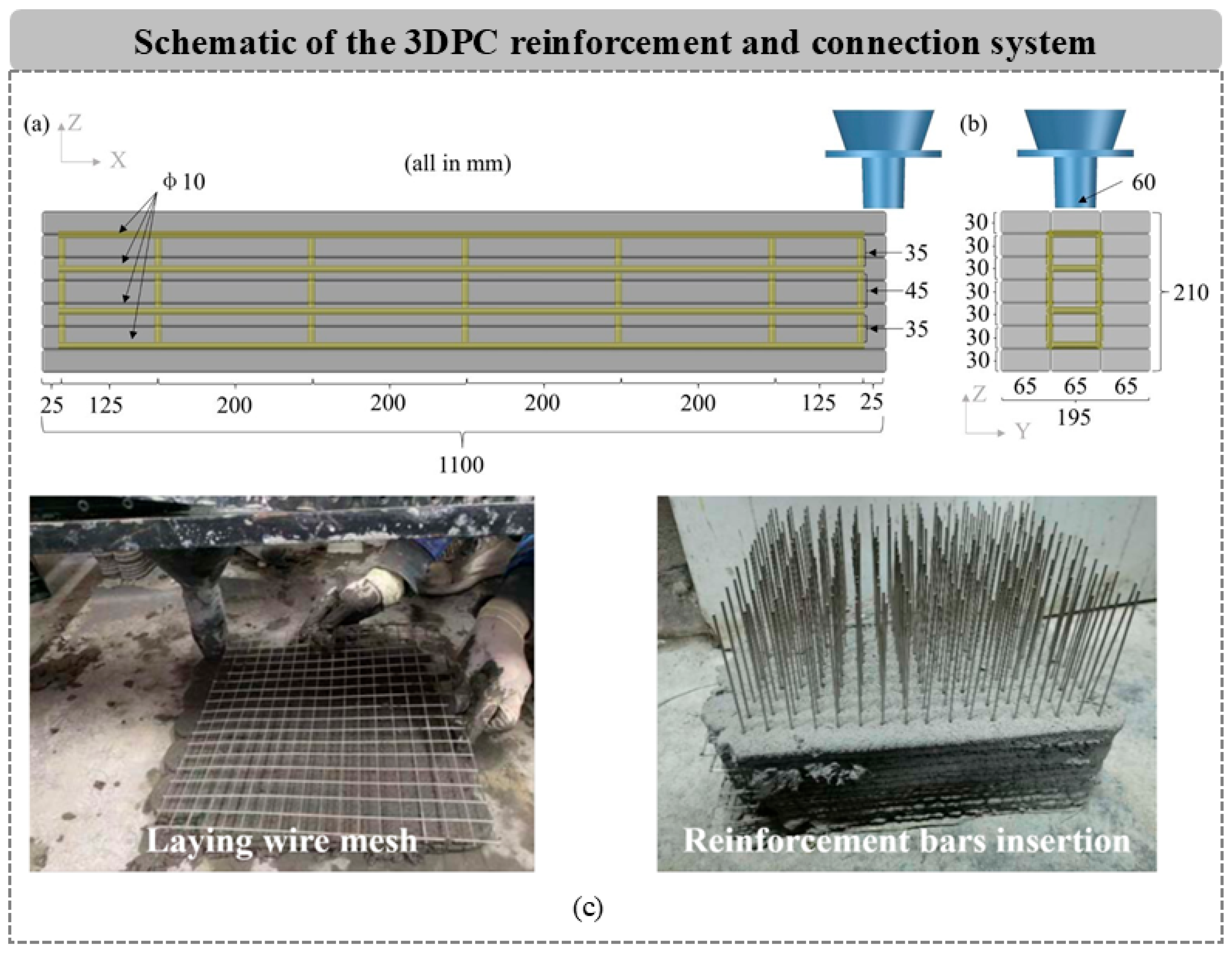
When reinforcing bars, fiber-reinforced composites, prestressed elements, or connection joints are incorporated into 3DPC, the interfacial problem extends beyond interlayer adhesion. It evolves into a multiphase interaction among printed layers, the cementitious matrix, and reinforcing components. Structural performance is not dictated by interfacial discontinuities alone. It depends on whether reinforcing elements can bridge weak interfacial regions and establish a continuous load-transfer path across them. Because 3DPC is formed without external mechanical compaction, mortar filling around reinforcing bars and the interfacial transition zone are typically less dense than in conventionally cast concrete. This increases the sensitivity of bar–concrete bond and bond–slip behavior to printed interfaces. Pull-out tests have shown that the bond–slip response at the reinforcement–matrix interface degraded under the confinement provided by the 3D-printed formwork [44]. In 3DPC containing coarse aggregates, the structural features of the interfacial transition zone around the reinforcement further affected the corresponding interaction mechanisms [19]. Reinforcement systems do not inherently restore weak interfaces. In some cases, they may couple the interlayer interface with the reinforcement–matrix interface, thereby creating a new composite weak zone. Schematic of the 3DPC reinforcement and connection system is shown in Figure 5.
To improve the synergistic load-transfer capacity across interfaces, 3D reinforcement and prestressing strategies have been adopted to reconfigure the internal load-transfer paths within members. Deng et al. [152] showed that a three-dimensional perforated steel-strip skeleton could establish direct cross-layer connections between printed layers. This reinforcement strategy enabled the printed beams to reach or exceed the ultimate load-bearing capacity of conventionally reinforced cast beams, while substantially restoring ductility. Bai et al. [22] showed that the prestressing system provided substantial flexural strengthening and crack control in ultra-high-performance concrete composite beams. In addition, 3D conical reinforcement joints offered the possibility of stress redistribution and load-transfer reconfiguration within complex joint regions. Zeng et al. [153] further indicated that the use of continuous-fiber-reinforced thermoplastic polymers as reinforcement in concrete columns improved confinement compatibility and enhanced the compressive performance to a certain extent. These strategies do not fully resolve interfacial issues, because reinforcement systems may themselves introduce additional local stress concentrations and structural complexity.
In specialized forming processes, spray-based 3D printing may improve reinforcement encapsulation and filling relative to conventional extrusion-based printing, owing to the higher impact kinetic energy of the deposited material. Multi-angle spraying can further reduce reinforcement-region voids and improve structural performance. Directionally reinforced beams produced by this method can achieve shear and flexural capacities comparable to those of conventional cast-in situ members [154,155]. With the superposition of multiple interfaces, the governing failure mode of the structural member is correspondingly altered. In reinforced arches, the failure mechanism has been reported to shift progressively from matrix-dominated brittle fracture toward progressive damage governed by interfacial bond slip [74]. Crack-width evolution in formwork composite beams has also been described using a modified parametric model [20]. Both experimental and finite element results suggest that reinforcement can bridge weak interfaces, limit crack opening, and enhance ductility [21]. A transition from brittle fracture to slip-dominated failure, however, cannot be equated with enhanced structural safety: such modes may yield nominal ductility gains while incurring stiffness degradation and compromising serviceability.
Overall, 3DPC structural performance can be improved by reinforcement strategies that bridge weak interfaces, redistribute localized stress concentrations, and retard interface-controlled damage evolution, without requiring complete elimination of weak interfaces. Current reinforcement strategies still largely rely on empirical trial and error, lacking targeted design principles tailored to the distribution of interfacial defects and stress transmission paths. There is an urgent need to establish a reinforcement optimization framework guided by interfacial mechanical behaviors, thereby propelling 3DPC from passive strengthening toward active cross-interfacial regulation.
Figure 5.
Schematic of the 3DPC reinforcement and connection system: (a) 3D front view; (b) left view of designed ASC reinforced concrete beam [156]; (c) Scheme of transversely placed wire mesh with longitudinal dowel bars [157]. (a,b) are taken from [156]. Figure 5c is taken from [157].
4.3. Overall Structural Response and Safety Assessment
As the scope of investigation expands from individual members to full-scale walls, modular units, and infrastructure such as bridges, the effects of interfacial weakening become increasingly amplified. This amplification arises from spatial accumulation and the coupled action of multiple structural members. Under such conditions, the overall structural response cannot be interpreted as a simple superposition of local effects from isolated weak interfaces. It reflects the combined influence of discrete interface distribution, connection details, structural stiffness, and loading boundary conditions [23,24,33,158,159]. Seismic failure modes of 3D-printed reinforced concrete walls are shown in Figure 6 [23]. The spatial variability of physical and mechanical properties across different scales has been identified as a key factor limiting the engineering application of 3DPC [45]. In situ measurements on full-scale walls have revealed a non-uniform spatial distribution of these properties [160]. Structural assessment of 3DPC should move beyond the assumption of uniform material or component properties. The spatial accumulation and stochastic distribution of interfacial defects should therefore be explicitly incorporated into structural evaluation frameworks.
Figure 6.
Seismic failure modes of 3D-printed reinforced concrete walls [23]: (a) Shear dominant shear-flexural failure; (b) Flexural dominant shear-flexural failure; (c) Pure flexural failure. Figure 6 is taken from [23].
At the level of static performance, multiscale analysis has been increasingly employed to establish response correlations among materials, members, and structural systems. Multiscale evaluations of modular housing have indicated that, under specific load combinations, the maximum structural stress remained at a relatively low level, implying a certain degree of safety reserve [34,161]. In a related study, the deformation resistance of an irregularly shaped printed formwork was assessed under the combined action of self-weight and the lateral pressure exerted by cast-in-place concrete [162]. 3DPC structures can be safely designed under controlled parameters and idealized boundary conditions. However, such safety margins should not be extrapolated to engineering practice without explicitly considering fabrication-induced deviations, interfacial discontinuities, and variability in on-site construction.
The dominant role of interfacial weakening emerges most clearly under seismic and cyclic loading conditions. Mercimek et al. [163] reported that printed walls containing interlayer interfaces exhibited a substantial reduction in peak load-carrying capacity under cyclic loading, which was primarily attributed to insufficient interlaminar shear resistance. In parallel, analytical models have been developed to quantify the in-plane ultimate shear capacity of unreinforced masonry walls [24]. Comparative studies indicate partial similarities between 3D-printed walls and conventional masonry in diagonal tensile behavior and shear brittleness. However, differences remain in their energy dissipation mechanisms and damage propagation paths [159]. Accordingly, while the interface-dominated structural response of 3DPC shows certain similarities to that of layered masonry, it remains fundamentally distinguished by intrinsic material continuity and process-induced anisotropy. Empirical knowledge from conventional masonry therefore cannot be directly extrapolated to the structural assessment of 3DPC members.
Numerical simulation has emerged as an important tool for complementing the inherent limitations of full-scale experimental testing. Chortis et al. [23] employed the finite element method to evaluate the nonlinear seismic response of printed walls. More recently, An et al. [164] adopted a coupled SPH–FE framework for fluid–solid interaction, with the aim of integrating material extrusion, interface formation, and ultimate structural failure within a unified analysis chain. The significance of such studies lies in shifting the perspective from treating the interface as an isolated defect examined retrospectively to understanding how interface evolution during printing governs the subsequent structural response. Current models generally rely on idealized interface parameters, simplified geometries, and calibration against a limited number of specimens. Consequently, their ability to capture the coupled effects of stochastic on-site defects, cumulative geometric deviations, and long-term service environments remains limited. In research on 3DPC interfaces, the finite element method can characterize interlayer bond failure using cohesive elements or damage models. However, the continuous medium assumption struggles to capture the anisotropic microstructure formed by layer-by-layer deposition. Constitutive models typically rely on conventional concrete frameworks, and their descriptions of fresh-mix thixotropy, age-dependent behavior, and hydration coupling depend heavily on empirical parameters. Additionally, the interface region suffers from significant mesh sensitivity and convergence issues. Although the SPH-FE fluid–structure interaction framework can effectively capture the extrusion and deposition of the slurry, the coupling algorithm in the fluid-solid transition zone lacks stability. There is no unified criterion for the transition of physical states during the setting and hardening stages, and particle resolution limits the accuracy of describing the weak interface region. Furthermore, the computational cost makes it difficult to scale up to the structural level. Most models perform reasonably well for small-scale cases such as single walls and short columns. However, they generally simplify the coupling among process parameters, including nozzle trajectory, printing speed, ambient temperature and humidity, and interlayer time intervals. Consequently, reproducing the randomness and multi-field characteristics of on-site construction remains difficult. Validation is often based on strength or load–displacement curves under monotonic static loading, posing a risk of overfitting specific test results. Furthermore, measurements of interfacial bond strength and fracture energy are inherently inconsistent and lack standardized protocols, and experimental comparisons regarding cyclic loading and long-term durability behavior are insufficient. Consequently, the reliability of existing numerical results is more reflective of trend predictions than quantitative forecasts.
From a broader engineering perspective, interface degradation extends beyond a material-level issue in buildings and bridge infrastructure. It needs to be treated as a key variable in structural reliability assessment and service-life design [165]. Future safety evaluations should move beyond reliance on mean material properties and the response of representative specimens. A robust assessment system should instead integrate interfacial discontinuities, damage-evolution pathways, and structural redundancy across multiple scales, thereby capturing the stochastic and cumulative nature of 3DPC defects under engineering service conditions. Structural reliability methods for 3DPC still inherit the statistical assumptions of conventional cast-in-place concrete and have yet to incorporate interfacial variability and time-dependent degradation into probabilistic models and design codes. A probabilistic service-life assessment framework that integrates process variability, interfacial degradation, and structural redundancy is therefore urgently needed to provide quantifiable safety assurance for the engineering deployment of 3DPC.
5. Effects of Interfaces on the Durability of 3DPC
Interfacial defects in 3DPC constitute regions of mechanical weakness and frequently act as preferential pathways for the ingress of external aggressive agents. The durability of 3DPC reflects a coupled response that emerges from interfacial microstructure, transport behavior, and damage evolution. Its degradation extends beyond conventional environmental erosion. Long-term performance primarily hinges on the connectivity and orientation of interfacial defects relative to the transport pathways of aggressive media. It also depends on whether these defects evolve into persistent degradation channels under prolonged environmental exposure.
5.1. Transport Behavior and Erosion Processes Under Interface Control
Asynchronous hydration and microscopic defects at the 3DPC interlayer interface primarily modify the transport behavior of media within the material. In contrast to conventionally cast concrete, 3DPC is more susceptible to the formation of directional pore networks and interfacial channels owing to the absence of formwork confinement and mechanical vibration. As a result, the migration of water, ions, and aggressive media exhibits notable anisotropy and interface-dominated characteristics [32,166]. The key durability concern for 3DPC therefore lies in the formation of interconnected and directionally aligned preferential transport pathways within interfacial zones. Total porosity alone is insufficient to characterize this phenomenon. The dynamic ion transport properties of 3DPC are shown in Figure 7 [167].
Du et al. [87] reported that pore size distribution and pore interconnectivity are the principal determinants of capillary water absorption and ion permeation rates. Consistent with these findings, interlayer interfaces generally exhibit greater sensitivity to the diffusion of aggressive media. This directional migration effect becomes more pronounced when the printing direction is aligned with the interface orientation [167]. Such results reveal the general tendency of interface-controlled transport, but their direct extrapolation is constrained. Variations in mix design, curing regime, and testing protocol can substantially affect the degree of interface-enhanced transport. The topology of the pore network after curing and the density of the interlayer interfaces determine the ultimate durability of 3D-printed gas concrete [168]. Scientific material design can optimize pore uniformity and closed-cell porosity, reduce capillary permeability, and thereby enhance resistance to environmental erosion. Due to the inherently layered nature of additive manufacturing, moisture and corrosive agents can easily penetrate along the weak interlayer interfaces [149]. Microstructural defects have a significant adverse effect on long-term freeze–thaw resistance and carbonation resistance. Therefore, optimizing material matching and print paths is essential to ensuring the long-term dimensional stability and durability of 3D-printed gas concrete.
These interface-controlled characteristics are particularly evident in the case of chloride ingress. Chloride transport is governed by layer height, interface type, and printing path, and generally proceeds more rapidly along the interface orientation, whereas transport in the perpendicular direction is comparatively restricted [26]. Microscopic characterization has further shown that chloride penetration depth in the interfacial region is appreciably greater than that in the adjacent matrix. This observation indicates that porous interfacial zones can serve as preferential pathways for chloride ingress [169]. The influence of printing parameters is essentially mediated by the resulting interfacial microstructure. For instance, tuning the filament aspect ratio densifies the interlayer pore network, thereby suppressing interface-dominated transport pathways [27]. Nevertheless, such optimizations provide only a conditional mitigation of transport-related issues, with their effectiveness governed by fresh-mixture rheology, deposition stability, and printing accuracy.
The transport processes governing the durability of 3DPC are therefore dominated by interface-controlled pathways, indicating that durability evolution cannot be fully interpreted solely through conventional porosity–diffusion relations. Directional defects, pore interconnectivity, and localized rarefaction zones emerge as the principal controlling features.
5.2. Interface Deterioration and Durability Degradation Under Environmental Conditions
Whereas transport behavior governs the ingress of aggressive media into the material, environmental action further determines whether interfacial defects propagate and evolve into substantial durability damage. In 3DPC, the interlayer interface is more susceptible than the bulk matrix to microcrack nucleation and propagation under environmental exposure. This susceptibility is mainly attributable to localized porosity concentration, the absence of mechanical confinement, and structural heterogeneity at the interface. As a result, durability degradation in many cases does not progress uniformly but tends to develop preferentially along the interfacial regions.
This interfacial sensitivity is particularly evident under freeze–thaw conditions. Studies on 3DPC incorporating recycled coarse aggregate (RCA) have shown that frost resistance deteriorates substantially with increasing RCA replacement ratio. Such degradation cannot be attributed solely to the inferior quality of recycled aggregates. It arises from the combined effects of pores in the residual adhered mortar, the interfacial transition zones surrounding RCA, and the printed interlayer interfaces. Together, these features form an interconnected network of preferential damage pathways [28]. Observations of the freeze–thaw damage process further revealed that interlayer bonding interfaces are more prone to delamination, spalling, and localized through-thickness failure [35]. Freeze–thaw damage in 3DPC is controlled by preferential propagation along pre-existing interfacial defects, with limited evidence of uniform inward progression from the surface. Figure 8 shows the appearance of 3DPC specimens after 56 freeze–thaw cycles. The tested surface of 3DPC specimens after 56 freeze–thaw cycles is destroyed, especially the corners of the specimens [170].
Figure 8.
The appearance of 3DPC specimens after 56 freeze–thaw cycles: the surface of hardened concrete product modified with perlite after 56 freeze–thaw cycles: (a–c) specimen S1 [170]. S1 is 3DPC with perlite. Figure 8 is taken from [170].
Under chemical attack, phase instability within the interfacial zone likewise accelerates the degradation process. The study by Rui et al. [171] on sulfate attack demonstrated that surface deterioration, mass loss, and the reduction in dynamic elastic modulus all exhibit clear directional dependence. This behavior essentially reflects differences in interfacial defect distribution and ingress pathways among different deposition directions. Compressive strength changes and surface damage with sulfate exposure period for 3DPC specimens are shown in Figure 9 [172]. Under more aggressive acidic conditions, hydration products at the interfacial regions undergo preferential decalcification and progressive dissolution, inducing localized loosening and weakening of the load-bearing skeleton [25]. Yang et al. [173] reported calcium leaching in 3DPC exposed to ammonium chloride solutions, where the preferential dissolution of calcium hydroxide at the interfacial zone may serve as an early indicator of interlayer softening and load-bearing degradation. In 3DPC systems incorporating unconventional solid-waste components, the hydrophobicity and low stiffness of recycled PVC particles may interact with interlayer defects, thereby reshaping the transport pathways of aggressive media and the kinetics of anisotropic degradation [130]. Overall, the mechanisms driving interfacial degradation differ among environmental actions: freeze–thaw damage is primarily governed by internal porosity and microcrack propagation, whereas chemical degradation is dominated by phase stability and dissolution–reaction kinetics.
Figure 9.
Compressive strength changes with sulfate exposure period for MC and 3DPC specimens [172]. MC is mold-cast samples. Figure 9 is taken from [172].
5.3. Long-Term Performance Evolution and Lifespan Prediction
From a long-term serviceability perspective, the principal durability concern for 3DPC extends beyond the existence of initial interfacial defects. It also encompasses their evolution under the combined effects of environmental exposure and time-dependent degradation. This evolution ultimately governs the deterioration of structural performance and determines the end of service life. Accordingly, to narrow the gap between laboratory research and engineering application, interfacial studies should shift from short-term performance evaluation toward long-term evolution characterization and service life prediction. A unified performance benchmark and evaluation framework constitute a prerequisite for such work. Integrated benchmarking of printability, strength, and durability provides the foundational data required for the subsequent development of constitutive relationships and life assessment models [174]. Current evaluation systems are still largely confined to material- or specimen-scale assessments, with limited capacity to account for interfacial variability, member-level geometric deviations, and service-environment fluctuations. Consequently, they are more appropriate for identifying relative trends among different systems than for serving as a direct basis for engineering life prediction. Hierarchical diagram of durability control mechanisms is shown in Figure 10.
Figure 10.
Hierarchical diagram of durability control mechanisms.
In interfacial reinforcement, polymers and tailored aggregate modifications have been widely employed to mitigate interfacial degradation. Specifically, PAM was reported to promote synchronized interlayer hydration and improve interfacial compactness [175]. Carbonated recycled sand enhanced the mechanical interlocking between the matrix and the interface [99]. In addition, an appropriate dosage of rubber aggregate showed potential for improving interlayer bonding while maintaining a balance between mechanical and durability performance [101]. From a multiscale perspective, macro-scale crack control and structural-level reinforcement also represent important routes to enhanced long-term durability. PVA fibers suppressed early-age plastic shrinkage cracking at the interface and improved subsequent crack resistance as well as resistance to aggressive media [43]. The in situ incorporation of FRP grids increased the ultimate load-bearing capacity of structural members and, through stress redistribution, restrained the unstable propagation of cracks along interfacial zones [176]. Improving the durability of 3DPC does not necessarily require the complete elimination of initial interfacial defects. Delaying performance degradation by regulating crack evolution and restricting damage propagation paths represents an equally feasible strategy.
Interfacial defects should be regarded as key input variables in the service life assessment of 3DPC, with their influence extending beyond localized perturbations that can be addressed through simple homogenization. Accordingly, the effectiveness of durability enhancement strategies should be evaluated through their integrated effects on interfacial transport, damage propagation, and long-term stability. Engineering-oriented service-life prediction should move beyond material-scale empirical regressions and incorporate the coupled evolution of interface formation, environmental actions, cracking behavior, and structural service demands. Service-life prediction of 3DPC remains largely confined to material-scale empirical regression and has yet to bridge the continuous coupling among interface formation, environmental action, and damage evolution. A whole-life prediction framework centered on interfacial degradation and integrating environment, damage, and performance is therefore urgently needed to elevate 3DPC durability assessment to genuine engineering predictive capability.
6. Strategies for Enhancing Interface Performance and Optimization Design
Interfacial reinforcement should aim less at optimizing isolated local strength indices than at establishing continuity across material evolution, the deposition process, and structural load transfer. In 3DPC, weak-interface formation arises from the joint action of rheological recovery, surface moisture loss, asynchronous early-age hydration, and deposition contact conditions. Its optimization therefore requires integrated strategies rather than a single intervention. Existing strategies fall broadly into three categories. These include optimizing interface formation via material-system regulation, tailoring the interlayer contact state through process control, and mitigating interface-dominated effects on the global mechanical response through member-scale collaborative design. The underlying enhancement mechanisms differ among these methods, and their effectiveness depends substantially on the material system, the printing window, and the intended service conditions. In this regard, evaluations based solely on the increment of a single performance indicator are insufficient for comparative assessment.
6.1. Material System Modulation and Interface Enhancement
The intrinsic characteristics of the material system govern interfacial remoldability and the subsequent kinetics of structural build-up. In contrast to conventionally cast concrete, the interlayer regions in 3DPC are distinctly controlled by the competing effects of moisture loss and accelerated thixotropic recovery. Correspondingly, effective material optimization extends beyond simply increasing viscosity or strength, requiring instead a balanced consideration of water retention, interlayer re-bonding, and long-term densification capacity. Previous studies have shown that functional admixtures with water-retention and pore-structure regulation capabilities can contribute positively to interfacial enhancement. Zhang et al. [177] reported that the incorporation of engineered biochar reduced both the dynamic yield stress and plastic viscosity, decreased the porosity of the interfacial layer by 23.8%, and increased the interlayer bonding strength by 21.3%. Yuan et al. [178] showed that replacing 15% of cement with bagasse ash promoted secondary hydration at the interface. This modification reduced 90-day interfacial porosity by 69% and increased tensile strength and interlayer bond strength by 10.0% and 31.4%, respectively. These results indicate that interfacial optimization depends on deposition-stage contact conditions and subsequent hydration-driven microstructural reconstruction. Nevertheless, later-age densification may not directly improve early interfacial quality. Its overall contribution remains governed by the compatibility between rheological evolution and open time.
Microbially induced mineralization offers an alternative strategy for interfacial repair. The introduction of effective microorganisms into a limestone calcined clay cement system reduces interlayer pore size and porosity. It also increases the interfacial tensile and flexural bonding strengths by 26.1% and 33.7% on average, respectively [179]. The underlying mechanism involves the filling of local defects and the improvement of interlayer continuity through mineral precipitation. However, this approach is sensitive to environmental and curing conditions, and its long-term stability and practical applicability require further verification. In magnesium phosphate cement systems, the addition of an appropriate amount of borax was found to regulate the hardening process and improve pore uniformity. At a dosage of 2%, the total porosity decreased by 4.20%, the 28-day compressive strengths in the X, Y, and Z directions ranged from 10.45 to 11.39 MPa, and the isotropy index reached 3.6% [180]. These results indicate that material regulation can serve a dual function: directly enhancing interfacial bond strength while simultaneously reducing the contribution of interfacial defects to structural anisotropy.
The central objective of material-system modulation is therefore to identify the key variables that govern interface formation and its subsequent evolution. Water retention, structural build-up rate, late-age hydration capacity, and defect-mitigation potential each exert a substantial influence on interfacial performance. Yet the actual contribution of any given modification strategy can only be appraised in conjunction with the deposition timing, fresh-state conditions, and intended service environment. Assessing a material in isolation from its process window risks misattributing performance gains and ultimately impedes the formulation of transferable design criteria.
6.2. Process Optimization and Control
The material system determines the intrinsic sensitivity of the interface, while process control determines whether this sensitivity is amplified during deposition. Interlayer weakening arises from the coupled effects of contact stress, surface wettability, local spreading kinetics, and mechanical re-compaction during deposition. It reflects a process-dependent response associated with deposition history and interfacial evolution, with intrinsic material properties representing only part of the governing factors. Accordingly, process optimization seeks to actively reconstruct the interlayer contact state, thereby reducing the constraints imposed by geometrically induced boundaries. Expanding the effective contact area represents one of the most direct routes to interfacial reinforcement. The synchronous application of cement slurry prior to the deposition of a new layer was reported to increase the relative interfacial bonding strength by 267% [37]. Similarly, the use of cementitious pastes to fill local voids enhanced interlayer strength through expansion of the effective bonding area [109]. These results suggest that interfacial enhancement can be achieved by improving wetting and filling conditions during deposition, without requiring substantial modification of bulk material properties. The effectiveness of such methods is contingent upon application uniformity, slurry compatibility, and processing timing, and improper operation may itself introduce additional weak zones.
In situ chemical treatments act further on the internal structure of the interface. Munemo et al. [38] sprayed a silicate-based solution between 3DPC layers and observed a reduction in both the maximum pore size and total pore volume, accompanied by a 126% increase in bonding strength. Beyond surface wetting, this approach modifies the pore structure and the distribution of bonding phases through localized chemical reactions. Its effectiveness is constrained, and the outcomes are strongly dependent on the open state of the interface and the timing of application. Accordingly, the efficacy of process-based enhancement is determined by the extent to which the treatment is temporally aligned with the evolution of the interface.
Beyond local treatments, path planning reconstructs the geometric organization of the interface. The use of woven and inclined non-planar paths produced a three-dimensionally interlaced interfacial network, improving the flexural performance in the weakest orientation by 179% [181]. These results indicate that mitigating interfacial vulnerability is not limited to reducing defect density but also involves reconfiguring the topology of defects and the trajectories of internal stress transfer. The integrated design of printing paths and nozzle configurations represents another important direction for component-level performance optimization. Jiang et al. [182] showed that a toothed nozzle generated mechanical interlocking between adjacent layers, yielding a splitting tensile strength anisotropy coefficient close to 1.0. Wang et al. [183] employed path optimization to redirect stress transfer in large-scale members, thereby avoiding stress concentrations at local weak interfaces at the structural level. Rather than being regarded solely as an inherent defect requiring remediation, the interface can be engineered through appropriate printing trajectories and structural topology. It can serve as a functional node for stress redistribution and energy dissipation. However, most existing strategies are validated primarily at the laboratory scale under idealized boundary conditions. Their applicability to complex component geometries, cumulative printing deviations, and variable on-site construction conditions therefore requires further verification.
Existing research on process-based reinforcement is generally conducted under specific equipment configurations, nozzle designs, and experimental boundary conditions, and the reported outcomes exhibit a strong dependence on operating conditions. Variations in printing scale, path turning frequency, construction disturbances, and field environments can each alter the actual effectiveness of interfacial treatments. The research emphasis in process optimization should therefore extend beyond reporting strength increments achieved by individual methods. It should focus on establishing quantitative relationships among treatment timing, material state, deposition parameters, and reinforcement performance.
6.3. Multiscale Collaborative Design for Engineering Applications
As 3DPC progresses from specimen-scale studies to engineering-scale members, the focus of interfacial optimization correspondingly shifts from local reinforcement to system-level synergy. At this scale, the challenge is no longer confined to improving individual interlayer strength but extends to suppressing the propagation of local weakening into global failure. Interfacial design therefore needs to evolve from the single-point optimization of materials or processes toward the integrated design of the material, interface, and component topology.
In reinforced regions, interfacial defects frequently coexist with macro-voids surrounding the steel reinforcement. Targeted filling with expansive cement mortar reconstructed the local stress environment through hydration-induced expansion, and increased the tensile and shear bonding strengths at the reinforcement interface by 111.0% and 36.2%, respectively [41]. These results indicate that, in engineering applications, interfacial reinforcement should focus on composite weak zones formed by multiple interacting defects. Individual interlayer interfaces represent only one component of this broader reinforcement target. Likewise, the vertical placement of micro steel fibers between layers increased the shear and tensile strengths by 256.32% and 353.61%, respectively [123]. In 3DP-ECC beams, the ultimate load-bearing capacity increases by 96%–214%, while ductility increases by 12%–98%. These improvements are achieved when steel wire meshes are placed between layers in combination with epoxy resin or pinning treatments [37]. Beyond improving interfacial bond strength, such techniques also modify fracture pathways and load distribution patterns through effective interlayer bridging.
In larger-scale composite structures, interfacial optimization is further manifested in the design of load transfer systems. In composite systems with 3D-printed permanent formwork and post-cast concrete, physical grooving can enhance mechanical interlocking, reduce stress concentration, and improve synergistic shear capacity [184]. In long-span floor systems, cross-section optimization, span decoupling, closed-loop printing, and post-tensioned prestressing were combined to compensate for insufficient interlayer tensile strength while satisfying load-bearing requirements [185]. Engineering-scale interfacial optimization does not necessarily require the elimination of weak interfaces. A more practical strategy is to reduce the likelihood of these interfaces entering the primary failure chain through structural design.
To prevent the transmission of interfacial damage to macroscale component failure, various cross-layer reinforcement and topological toughening strategies have been proposed. Reported results show that the synchronous implantation of U-shaped nails increased the interlayer shear strength by more than 120% [186]. Techniques such as saddle stitching and printed strip stitching enhanced structural ductility and energy absorption capacity by a factor of 1.5 to 2.0 through three-dimensional cross-layer connections [187,188]. These strategies share a common objective that extends beyond direct interface strengthening. They rely on cross-layer bridging and mechanical interlocking to prevent local interfacial defects from evolving into continuous macroscale failure paths. The conceptual approach to 3DPC interfacial enhancement therefore shifts from eliminating weak interfaces toward controlling the consequences of interfacial failure.
Interfacial optimization in 3DPC is therefore evolving from localized defect mitigation toward multiscale integrated design. The core challenge lies in identifying the critical interfaces that govern structural performance and in establishing a coherent design rationale that spans the material, process, and component levels. Current 3DPC research still lacks quantitative criteria for identifying critical interfaces and quantitative coupling among cross-scale design logics. There is therefore an urgent need to develop performance-sensitivity-based methods for critical interface identification. This should be coupled with co-design principles integrating material, process, and component levels. Such approaches would advance 3DPC interfacial reinforcement from laboratory validation toward predictable engineering-scale application.
7. Challenges and Outlook
Previous studies have established a broad conceptual framework for 3DPC interfaces, spanning formation mechanisms, mechanical response, durability degradation, and design optimization. However, mechanistic understanding still lags behind the rapid accumulation of empirical observations. The conceptual framework of the multiscale coupling mechanisms governing interfacial weakening in 3DPC is shown in Figure 11. To date, interpretations of interlayer weakening have largely remained within a generalized causal framework, linking depositional discontinuities, insufficient interfacial contact, and pore enrichment to performance degradation. The coupling among rheological recovery, moisture migration, localized hydration, particle interpenetration, and crack initiation, however, has yet to be fully elucidated. Likewise, quantitative correlations between structural features across multiple scales and the macroscopic strength, fracture behavior, and durability of printed elements await rigorous establishment. Existing testing protocols and evaluation criteria diverge across studies, with substantial variations in specimen geometry, loading configuration, and characterization procedures. These inconsistencies hinder the establishment of standardized methods for comparable evaluation of interfacial performance. Correspondingly, multiscale modeling and numerical simulations continue to depend heavily on parameter calibration and are not yet capable of faithfully representing the stochasticity, discontinuity, and multi-field coupling that characterize the interface. Future research should integrate standardized characterization and multiscale modeling within a unified framework, thereby shifting interface studies from empirical induction toward verifiable and predictive quantitative descriptions. The key to enhancing the comparability of research on 3DPC interfaces lies in establishing a systematic and unified set of testing standards. This includes standardizing printing equipment, printing materials, printing process parameters, curing and testing conditions, data reporting, and specimen geometry. Through multi-institutional collaboration to verify the repeatability and reproducibility of testing methods, we can gradually develop testing standards for 3DPC interface performance that are widely recognized by the international community.
Figure 11.
Conceptual framework of the multiscale coupling mechanism for 3DPC interface weakening.
From the perspective of engineering application, research on 3DPC interfaces has progressively shifted from confirming the existence of weak interfaces toward translating them into engineering variables that can be measured, controlled, and incorporated into design. Material control, interface treatment, path optimization, and cross-layer reinforcement can mitigate interfacial weakening to varying degrees. Their engineering transferability, however, is constrained, because their effectiveness is strongly governed by the material system, processing window, and loading conditions. Subsequent efforts should further integrate in-line sensing, process feedback, and closed-loop control to develop real-time quality-assurance strategies aligned with intelligent manufacturing. On this basis, design methodologies and evaluation criteria that explicitly account for load-bearing capacity, durability, and safety margins need to be established for members, connections, and composite structures. Such developments would support the progressive establishment of an engineering application and standardization system spanning materials, processes, acceptance, and structural design. By embedding interfacial considerations into a full-chain design framework that extends from manufacturing to service, 3DPC can attain reliable performance at the engineering scale.
8. Conclusions
Interfacial weakening in 3DPC originates in the asynchronous material states, restricted interfacial contact, and incomplete structural reorganization that accompany layer-by-layer deposition. Interlayer weakening therefore extends far beyond a localized bonding deficiency. It constitutes a multiscale control problem that originates in the printing process, manifests through microscale defects, and ultimately shapes the macroscopic mechanical response, structural behavior, and long-term durability. The literature consistently identifies this weakening as a key factor governing anisotropy, crack propagation, load-bearing degradation, and in-service reliability. Material control, process optimization, and structural co-design have each been shown to alleviate its consequences. Yet a unified mechanistic framework and generalizable evaluation criteria for interfacial formation, evolution, and control have not yet been established. This constrains the translation of current findings into engineering design methodology.
- (1)
- Weak interlayer interfaces in 3DPC arise from deposition-time-induced rheological recovery, surface dehydration, restricted particle interpenetration, and asynchronous early-age hydration. Their formation is therefore a process-driven outcome governed by coupled physical, rheological, and hydration-related factors.
- (2)
- Interfacial weakening in 3DPC is typically expressed through pore enrichment, reduced phase continuity, diminished local modulus, and increased crack sensitivity. Microscopic defects and macroscopic performance are not linked by a simple linear relationship. Rather, the interfacial response is determined by defect connectivity, effective contact area, and local stress-transfer conditions.
- (3)
- The interface constitutes a principal control factor for mechanical anisotropy, damage localization, and the evolution of failure modes in 3DPC. Its influence is further amplified from the material scale to the member and structural scales, with more complex synergistic effects emerging in the presence of multiple interfaces.
- (4)
- Beyond degrading mechanical performance, interfacial defects markedly reshape ionic transport pathways and environmental ingress routes, acting as critical susceptibility zones that constrain the long-term durability and service life of 3DPC.
- (5)
- Future research should shift from empirical enhancement toward mechanism-based predictive design, supported by unified theoretical frameworks, standardized testing and evaluation systems, multiscale modeling, intelligent manufacturing, and real-time quality assurance. In parallel, design methodologies and standards for engineering applications should be developed, thereby reframing interfacial issues from unavoidable defects into designable engineering variables.
Funding
Qinchuangyuan’s Scientist and Engineer” Team Building of Shanxi Province (2023KXJ-242).
Institutional Review Board Statement
Not applicable.
Informed Consent Statement
Not applicable.
Data Availability Statement
The original contributions presented in this study are included in the article. Further inquiries can be directed to the corresponding authors.
Acknowledgments
The authors would like to acknowledge the “Qinchuangyuan’s Scientist and Engineer” Team Building of Shanxi Province (2023KXJ-242) for financial support. We thank the editor and reviewers very much for their comments and helpful suggestions.
Conflicts of Interest
Author Rongfei Zhang was employed by the company PowerChina Kunming Engineering Corporation Limited. Author Zhenyuan Lv was employed by the company China Construction Eighth Engineering Division Co., Ltd. The remaining authors declare that the research was conducted in the absence of any commercial or financial relationships that could be construed as a potential conflict of interest.
References
- De Schutter, G.; Lesage, K.; Mechtcherine, V.; Nerella, V.N.; Habert, G.; Agusti-Juan, I. Vision of 3D printing with concrete—Technical, economic and environmental potentials. Cem. Concr. Res. 2018, 112, 25–36. [Google Scholar] [CrossRef] [Scilit]
- Xiao, J.; Ji, G.; Zhang, Y.; Ma, G.; Mechtcherine, V.; Pan, J.; Wang, L.; Ding, T.; Duan, Z.; Du, S. Large-scale 3D printing concrete technology: Current status and future opportunities. Cem. Concr. Compos. 2021, 122, 104115. [Google Scholar] [CrossRef] [Scilit]
- Liu, D.; Zhang, Z.; Zhang, X.; Chen, Z. 3D printing concrete structures: State of the art, challenges, and opportunities. Constr. Build. Mater. 2023, 405, 133364. [Google Scholar] [CrossRef] [Scilit]
- Baktheer, A.; Classen, M. A review of recent trends and challenges in numerical modeling of the anisotropic behavior of hardened 3D printed concrete. Addit. Manuf. 2024, 89, 104309. [Google Scholar] [CrossRef] [Scilit]
- Khan, S.A.; Ghazi, S.M.U.; Amjad, H.; Imran, M.; Khushnood, R.A. Emerging horizons in 3D printed cement-based materials with nanomaterial integration: A review. Constr. Build. Mater. 2024, 411, 134815. [Google Scholar] [CrossRef] [Scilit]
- Fasihi, A.; Libre, N.A. Tip penetration test for rapid in-line assessment of static yield stress during 3D concrete printing process. Cem. Concr. Compos. 2026, 166, 106412. [Google Scholar] [CrossRef] [Scilit]
- Lian, H.; Ding, T. Deformation of inclined concrete 3D printing: A computational fluid dynamics analysis. Cem. Concr. Res. 2026, 199, 108032. [Google Scholar] [CrossRef] [Scilit]
- Mawas, K.; Maboudi, M.; Gerke, M. A review on geometry and surface inspection in 3D concrete printing. Cem. Concr. Res. 2026, 199, 108030. [Google Scholar] [CrossRef] [Scilit]
- Vetrivelan, R.; Gettu, R.; Palaniappan, S.; Kumar, Y. Embodied carbon, time and cost of two post-office buildings: Comparison of 3D printed concrete and conventional buildings. J. Build. Eng. 2026, 121, 115636. [Google Scholar] [CrossRef] [Scilit]
- Geng, Z.; She, W.; Zuo, W.; Lyu, K.; Pan, H.; Zhang, Y.; Miao, C. Layer-interface properties in 3D printed concrete: Dual hierarchical structure and micromechanical characterization. Cem. Concr. Res. 2020, 138, 106220. [Google Scholar] [CrossRef] [Scilit]
- Ding, T.; Xiao, J.; Mechtcherine, V. Microstructure and mechanical properties of interlayer regions in extrusion-based 3D printed concrete: A critical review. Cem. Concr. Compos. 2023, 141, 105154. [Google Scholar] [CrossRef] [Scilit]
- Bai, M.; Xiao, J.; Ding, T.; Yu, K. Interfacial bond properties between 3D printed engineered cementitious composite (ECC) and post-cast concrete. Cem. Concr. Compos. 2025, 157, 105897. [Google Scholar] [CrossRef] [Scilit]
- Xiao, J.; Liu, H.; Ding, T. Finite element analysis on the anisotropic behavior of 3D printed concrete under compression and flexure. Addit. Manuf. 2021, 39, 101712. [Google Scholar] [CrossRef] [Scilit]
- Cheng, J.; Chen, M.; Ge, Y.; Zhang, T. Mechanical behavior and damage evolution of 3D-printed engineered cementitious composites at elevated temperatures: Insights from acoustic emission characterization. Cem. Concr. Compos. 2026, 167, 106425. [Google Scholar] [CrossRef] [Scilit]
- Xiao, J.; Chen, Z.; Ding, T.; Zou, S. Bending behaviour of steel cable reinforced 3D printed concrete in the direction perpendicular to the interfaces. Cem. Concr. Compos. 2022, 125, 104313. [Google Scholar] [CrossRef] [Scilit]
- Wu, Y.; Liu, C.; Liu, H.; Bai, G.; Meng, Y.; Ding, S. Mechanism of the influence of multi-scale pore structure on the triaxial mechanical properties of 3D printed concrete with recycled sand. Cem. Concr. Compos. 2024, 152, 105661. [Google Scholar] [CrossRef] [Scilit]
- Zhang, H.; Wu, J.; Huang, B.-T.; Yu, R.C.; Xia, M.; Sanjayan, J.G.; Huang, Y.-J. Cross-scale mechanisms of anisotropy in 3D-printed Ultra-High-Performance Concrete (UHPC). Addit. Manuf. 2025, 114, 105014. [Google Scholar] [CrossRef] [Scilit]
- Liu, C.; Zhang, R.; Liu, H.; He, C.; Wang, Y.; Wu, Y.; Liu, S.; Song, L.; Zuo, F. Analysis of the mechanical performance and damage mechanism for 3D printed concrete based on pore structure. Constr. Build. Mater. 2022, 314, 125572. [Google Scholar] [CrossRef] [Scilit]
- Liu, H.; Liu, C.; Zhang, Y.; Bai, G. Bonding properties between 3D printed coarse aggregate concrete and rebar based on interface structural characteristics. Addit. Manuf. 2023, 78, 103893. [Google Scholar] [CrossRef] [Scilit]
- Mak, B.; Kim, T.-K.; Dong, W.-J.; Shim, C.-S. Crack width investigation of reinforced concrete beam with 3D concrete printed formwork using modified parameters. Eng. Struct. 2025, 343, 121232. [Google Scholar] [CrossRef] [Scilit]
- Prakash, P.; Tripathi, S.; Zade, N.P.; Shariff, M.N. Experimental and numerical investigation of bond and flexural behaviour of additively manufactured structural concrete beams. Structures 2026, 86, 111260. [Google Scholar] [CrossRef] [Scilit]
- Bai, G.; Wang, L.; Li, Z.; Qu, Y.; Ma, G. Integrating prestress into 3D printed ultra-high performance concrete composite beams for superior flexural performance. Eng. Struct. 2025, 343, 121255. [Google Scholar] [CrossRef] [Scilit]
- Chortis, A.; Gkountas, C.; Melidis, L.; Katakalos, K. Seismic Performance Evaluation of 3D-Printed Concrete Walls Through Numerical Methods. Buildings 2025, 15, 3205. [Google Scholar] [CrossRef] [Scilit]
- Giulivo, M.; Capozzi, V.; Menna, C. Experimental and analytical assessment of the in-plane behaviour of 3D printed concrete walls subjected to cyclic loads. Eng. Struct. 2025, 345, 121516. [Google Scholar] [CrossRef] [Scilit]
- Baz, B.; Aouad, G.; Kleib, J.; Bulteel, D.; Remond, S. Durability assessment and microstructural analysis of 3D printed concrete exposed to sulfuric acid environments. Constr. Build. Mater. 2021, 290, 123220. [Google Scholar] [CrossRef] [Scilit]
- Surehali, S.; Tripathi, A.; Nimbalkar, A.S.; Neithalath, N. Anisotropic chloride transport in 3D printed concrete and its dependence on layer height and interface types. Addit. Manuf. 2023, 62, 103405. [Google Scholar] [CrossRef] [Scilit]
- Lin, Y.; Yan, J.; Sun, M.; Han, X.; Tang, B. Interlayer cohesion in 3D printed concrete: The role of width-to-height ratio in modulating transport properties and pore structure. J. Build. Eng. 2024, 98, 111009. [Google Scholar] [CrossRef] [Scilit]
- Liu, H.; Tao, Y.; Zhu, C.; Liu, C.; Wang, Y.; Yun, J.; Zhang, Y. 3D printed concrete with recycled coarse aggregate: Freeze–thaw resistance assessment and damage mechanisms. Cem. Concr. Res. 2026, 200, 108095. [Google Scholar] [CrossRef] [Scilit]
- Moini, R.; Baghaie, A.; Rodriguez, F.B.; Zavattieri, P.D.; Youngblood, J.P.; Olek, J. Quantitative microstructural investigation of 3D-printed and cast cement pastes using micro-computed tomography and image analysis. Cem. Concr. Res. 2021, 147, 106493. [Google Scholar] [CrossRef] [Scilit]
- Weng, Y.; Li, M.; Zhang, D.; Tan, M.J.; Qian, S. Investigation of interlayer adhesion of 3D printable cementitious material from the aspect of printing process. Cem. Concr. Res. 2021, 143, 106386. [Google Scholar] [CrossRef] [Scilit]
- Liu, H.; Liu, C.; Wu, Y.; Bai, G.; He, C.; Yao, Y.; Zhang, R.; Wang, Y. 3D printing concrete with recycled coarse aggregates: The influence of pore structure on interlayer adhesion. Cem. Concr. Compos. 2022, 134, 104742. [Google Scholar] [CrossRef] [Scilit]
- Ler, K.-H.; Ma, C.-K.; Chin, C.-L.; Ibrahim, I.S.; Padil, K.H.; Ab Ghafar, M.A.I.; Lenya, A.A. Porosity and durability tests on 3D printing concrete: A review. Constr. Build. Mater. 2024, 446, 137973. [Google Scholar] [CrossRef] [Scilit]
- Nguyen-Van, V.; Jie, C.C.; Zhang, Y.X.; Wong, H.S. Effect of infill architecture on structural performance and sustainability of 3D-printed reinforced concrete columns. Eng. Struct. 2026, 351, 122057. [Google Scholar] [CrossRef] [Scilit]
- Wang, H.; Shi, Y.; Sun, X.; Lin, X.; Ye, Y. Design, multi-scale structural analysis, and construction of modular prefabricated 3D-printed concrete residence. Autom. Constr. 2026, 182, 106705. [Google Scholar] [CrossRef] [Scilit]
- Assaad, J.J.; Hamzeh, F.; Hamad, B. Qualitative assessment of interfacial bonding in 3D printing concrete exposed to frost attack. Case Stud. Constr. Mater. 2020, 13, e00357. [Google Scholar] [CrossRef] [Scilit]
- Weng, Y.; Li, M.; Wong, T.N.; Tan, M.J. Synchronized concrete and bonding agent deposition system for interlayer bond strength enhancement in 3D concrete printing. Autom. Constr. 2021, 123, 103546. [Google Scholar] [CrossRef] [Scilit]
- Lin, M.; Ding, Y.; Yu, F.; Li, L.; Yu, K. Synergistic strengthening of 3D-printed ECC beams through steel-wire mesh and interfaces treatments. Eng. Struct. 2025, 343, 121205. [Google Scholar] [CrossRef] [Scilit]
- Munemo, R.; Kruger, J.; van Zijl, G.P.A.G. Surface treatment of 3DPC interlayers with silicate-based solution for enhanced interfacial bonding. Cem. Concr. Res. 2025, 196, 107948. [Google Scholar] [CrossRef] [Scilit]
- Zhang, G.; Chen, L.; Liu, M.; Morsy Amr, M.; Ding, H.; He, R.; Luo, X.; Sun, J.; Wang, Y. Enhancing the shear properties of U-Shaped steel wire mesh reinforced 3D printed composites. J. Build. Des. Environ. 2025, 3, 202567. [Google Scholar] [CrossRef] [Scilit]
- Wu, Y.; Liu, C.; Liu, H.; Zhang, Z.; He, C.; Liu, S.; Zhang, R.; Wang, Y.; Bai, G. Study on the rheology and buildability of 3D printed concrete with recycled coarse aggregates. J. Build. Eng. 2021, 42, 103030. [Google Scholar] [CrossRef] [Scilit]
- Liu, H.; Dai, M.; Liu, C.; Du, H. Targeted enhancement strategy for the rebar interface bond in 3D printed coarse aggregate concrete: Performance evaluation and mechanistic insights. Cem. Concr. Res. 2026, 203, 108175. [Google Scholar] [CrossRef] [Scilit]
- Chen, W.; Yu, J.; Ye, J.; Yu, J.; Li, V.C.; Yu, K. 3D printed high-performance fiber-reinforced cementitious composites (3DP-HPFRCC): Fresh, mechanical, and microstructural properties. Autom. Constr. 2026, 181, 106629. [Google Scholar] [CrossRef] [Scilit]
- Sun, X.; Zhou, J.; Wang, Q.; Shi, J.; Wang, H. PVA fibre reinforced high-strength cementitious composite for 3D printing: Mechanical properties and durability. Addit. Manuf. 2022, 49, 102500. [Google Scholar] [CrossRef] [Scilit]
- Liu, Z.; Li, M.; Wang, S.; Deng, B.; Wang, X.; Wong, T.N.; Tan, M.J. Investigation on bond-slip performance of steel rebar embedded in concrete confined by 3D concrete printing formwork. Constr. Build. Mater. 2026, 508, 145108. [Google Scholar] [CrossRef] [Scilit]
- Hasani, A.; Dorafshan, S. Transforming construction? Evaluation of the state of structural 3D concrete printing in research and practice. Constr. Build. Mater. 2024, 438, 137027. [Google Scholar] [CrossRef] [Scilit]
- Wolfs, R.J.M.; Bos, F.P.; Salet, T.A.M. Hardened properties of 3D printed concrete: The influence of process parameters on interlayer adhesion. Cem. Concr. Res. 2019, 119, 132–140. [Google Scholar] [CrossRef] [Scilit]
- Liu, H.; Liu, C.; Wu, Y.; Bai, G.; He, C.; Zhang, R.; Wang, Y. Hardened properties of 3D printed concrete with recycled coarse aggregate. Cem. Concr. Res. 2022, 159, 106868. [Google Scholar] [CrossRef] [Scilit]
- Li, Z.; Liu, H.; Cheng, X.; Nie, P.; Yang, X.; Zheng, G.; Su, H.; Jin, W. Improvement of 3D Printing Cement-Based Material Process: Parameter Experiment and Analysis. Coatings 2022, 12, 1973. [Google Scholar] [CrossRef] [Scilit]
- Wu, Y.-C.; Li, M. Effects of Early-Age rheology and printing time interval on Late-Age fracture characteristics of 3D printed concrete. Constr. Build. Mater. 2022, 351, 128559. [Google Scholar] [CrossRef] [Scilit]
- Tay, Y.W.D.; Ting, G.H.A.; Qian, Y.; Panda, B.; He, L.; Tan, M.J. Time gap effect on bond strength of 3D-printed concrete. Virtual Phys. Prototyp. 2019, 14, 104–113. [Google Scholar] [CrossRef] [Scilit]
- Pan, T.; Jiang, Y.; He, H.; Wang, Y.; Yin, K. Effect of Structural Build-Up on Interlayer Bond Strength of 3D Printed Cement Mortars. Materials 2021, 14, 236. [Google Scholar] [CrossRef] [Scilit]
- Peng, C.; Yang, Z.; Li, H. A predictive model for interlayer water evolution and experimental validation of 3D printed cementitious materials. Constr. Build. Mater. 2024, 451, 138712. [Google Scholar] [CrossRef] [Scilit]
- Kruger, J.; du Plessis, A.; van Zijl, G. An investigation into the porosity of extrusion-based 3D printed concrete. Addit. Manuf. 2021, 37, 101740. [Google Scholar] [CrossRef] [Scilit]
- Nerella, V.N.; Hempel, S.; Mechtcherine, V. Effects of layer-interface properties on mechanical performance of concrete elements produced by extrusion-based 3D-printing. Constr. Build. Mater. 2019, 205, 586–601. [Google Scholar] [CrossRef] [Scilit]
- Chen, Y.; Jansen, K.; Zhang, H.; Romero Rodriguez, C.; Gan, Y.; Çopuroğlu, O.; Schlangen, E. Effect of printing parameters on interlayer bond strength of 3D printed limestone-calcined clay-based cementitious materials: An experimental and numerical study. Constr. Build. Mater. 2020, 262, 120094. [Google Scholar] [CrossRef] [Scilit]
- Vespalec, A.; Novák, J.; Kohoutková, A.; Vosynek, P.; Podroužek, J.; Škaroupka, D.; Zikmund, T.; Kaiser, J.; Paloušek, D. Interface Behavior and Interface Tensile Strength of a Hardened Concrete Mixture with a Coarse Aggregate for Additive Manufacturing. Materials 2020, 13, 5147. [Google Scholar] [CrossRef] [Scilit]
- Huang, X.; Yang, W.; Song, F.; Zou, J. Study on the mechanical properties of 3D printing concrete layers and the mechanism of influence of printing parameters. Constr. Build. Mater. 2022, 335, 127496. [Google Scholar] [CrossRef] [Scilit]
- Xiao, J.; Bai, M.; Wu, Y.; Duan, Z.; Qin, J. Interlayer bonding strength and pore characteristics of 3D printed engineered cementitious composites (ECC). J. Build. Eng. 2024, 84, 108559. [Google Scholar] [CrossRef] [Scilit]
- Salaimanimagudam, M.P.; Jayaprakash, J. Effect of printing parameters on inter-filament voids, bonding, and geometrical deviation in concrete 3D printed structures. Mater. Lett. 2023, 349, 134815. [Google Scholar] [CrossRef] [Scilit]
- Liu, X.; Cai, H.; Ma, G.; Hou, G. Spray-based 3D concrete printing parameter design model: Actionable insight for high printing quality. Cem. Concr. Compos. 2024, 147, 105446. [Google Scholar] [CrossRef] [Scilit]
- Si, W.; Khan, M.; McNally, C. A Comprehensive Review of Rheological Dynamics and Process Parameters in 3D Concrete Printing. J. Compos. Sci. 2025, 9, 299. [Google Scholar] [CrossRef] [Scilit]
- Panda, B.; Noor Mohamed, N.A.; Paul, S.C.; Bhagath Singh, G.; Tan, M.J.; Šavija, B. The Effect of Material Fresh Properties and Process Parameters on Buildability and Interlayer Adhesion of 3D Printed Concrete. Materials 2019, 12, 2149. [Google Scholar] [CrossRef] [Scilit] [PubMed]
- Kiyani, M.M.R.; Hussain, S.M.; Emaan, R.; Kamal, M.B.; Rehman, S.U.; Riaz, R.D.; Usman, M. Influence of process parameters on 3D concrete printing: A step towards standardized approaches. Case Stud. Constr. Mater. 2025, 23, e05212. [Google Scholar] [CrossRef] [Scilit]
- Kloft, H.; Krauss, H.-W.; Hack, N.; Herrmann, E.; Neudecker, S.; Varady, P.A.; Lowke, D. Influence of process parameters on the interlayer bond strength of concrete elements additive manufactured by Shotcrete 3D Printing (SC3DP). Cem. Concr. Res. 2020, 134, 106078. [Google Scholar] [CrossRef] [Scilit]
- Babafemi, A.J.; Kolawole, J.T.; Miah, M.J.; Paul, S.C.; Panda, B. A Concise Review on Interlayer Bond Strength in 3D Concrete Printing. Sustainability 2021, 13, 7137. [Google Scholar] [CrossRef] [Scilit]
- Liu, C.; Ma, R.; Liu, H.; Dai, M.; Chen, B.; Liu, L.; Wang, Z.; Bai, G. Shrinkage in concrete additive manufacturing: A critical review of mechanisms, characterization, and control strategies. Cem. Concr. Compos. 2026, 168, 106516. [Google Scholar] [CrossRef] [Scilit]
- Wu, Y.; Liu, C.; Bai, G.; Liu, H.; Cao, S.; Ma, Z.; Sun, Y. Effect of time interval on the interlayer adhesion of 3D printed concrete with recycled sand: Multi-factor influencing mechanisms and superabsorbent polymer enhancement. Addit. Manuf. 2024, 86, 104206. [Google Scholar] [CrossRef] [Scilit]
- Kristombu Baduge, S.; Navaratnam, S.; Abu-Zidan, Y.; McCormack, T.; Nguyen, K.; Mendis, P.; Zhang, G.; Aye, L. Improving performance of additive manufactured (3D printed) concrete: A review on material mix design, processing, interlayer bonding, and reinforcing methods. Structures 2021, 29, 1597–1609. [Google Scholar] [CrossRef] [Scilit]
- Boddepalli, U.; Gandhi, I.S.R.; Panda, B. Stability of three-dimensional printable foam concrete as function of surfactant characteristics. Front. Struct. Civ. Eng. 2023, 17, 935–947. [Google Scholar] [CrossRef] [Scilit]
- Cho, S.; Kruger, J.; van Rooyen, A.; van Zijl, G. Rheology and application of buoyant foam concrete for digital fabrication. Compos. Part B Eng. 2021, 215, 108800. [Google Scholar] [CrossRef] [Scilit]
- Cho, S.; van Rooyen, A.; Kearsley, E.; van Zijl, G. Foam stability of 3D printable foamed concrete. J. Build. Eng. 2022, 47, 103884. [Google Scholar] [CrossRef] [Scilit]
- Liu, H.; Liu, C.; Bai, G.; Wu, Y.; He, C.; Zhang, R.; Wang, Y. Influence of pore defects on the hardened properties of 3D printed concrete with coarse aggregate. Addit. Manuf. 2022, 55, 102843. [Google Scholar] [CrossRef] [Scilit]
- Dilawar Riaz, R.; Usman, M.; Ali, A.; Majid, U.; Faizan, M.; Jalil Malik, U. Inclusive characterization of 3D printed concrete (3DPC) in additive manufacturing: A detailed review. Constr. Build. Mater. 2023, 394, 132229. [Google Scholar] [CrossRef] [Scilit]
- Tang, B.; Yan, J.; Lin, Y.; Han, X.; Fan, F.; Du, H. Failure mechanism of reinforced 3D printed concrete arches: Transition from brittle fracture to interface bond-slip. Thin-Walled Struct. 2026, 223, 114606. [Google Scholar] [CrossRef] [Scilit]
- Zhang, Y.; Tao, Y.; Godinho, J.R.A.; Ren, Q.; Jiang, Z.; Van Tittelboom, K.; De Schutter, G. Layer interface characteristics and adhesion of 3D printed cement-based materials exposed to post-printing temperature disturbance. Cem. Concr. Compos. 2025, 155, 105837. [Google Scholar] [CrossRef] [Scilit]
- Dong, L.; Yang, Y.; Liu, Z.; Zhang, Y.; Wu, C. Interface bonding characteristics of 3D printed ultra-high performance concrete after elevated temperatures. J. Build. Eng. 2024, 93, 109801. [Google Scholar] [CrossRef] [Scilit]
- Wang, Y.; Qiu, L.-c.; Hu, Y.-y.; Chen, S.-g.; Liu, Y. Influential factors on mechanical properties and microscopic characteristics of underwater 3D printing concrete. J. Build. Eng. 2023, 77, 107571. [Google Scholar] [CrossRef] [Scilit]
- Bradshaw, J.; Si, W.; Khan, M.; McNally, C. Emerging Insights into the Durability of 3D-Printed Concrete: Recent Advances in Mix Design Parameters and Testing. Designs 2025, 9, 85. [Google Scholar] [CrossRef] [Scilit]
- Sikora, P.; Techman, M.; Federowicz, K.; El-Khayatt, A.M.; Saudi, H.A.; Abd Elrahman, M.; Hoffmann, M.; Stephan, D.; Chung, S.-Y. Insight into the microstructural and durability characteristics of 3D printed concrete: Cast versus printed specimens. Case Stud. Constr. Mater. 2022, 17, e01320. [Google Scholar] [CrossRef] [Scilit]
- Mohan, M.K.; Rahul, A.V.; Van Stappen, J.F.; Cnudde, V.; De Schutter, G.; Van Tittelboom, K. Assessment of pore structure characteristics and tortuosity of 3D printed concrete using mercury intrusion porosimetry and X-ray tomography. Cem. Concr. Compos. 2023, 140, 105104. [Google Scholar] [CrossRef] [Scilit]
- Yu, S.; Xia, M.; Sanjayan, J.; Yang, L.; Xiao, J.; Du, H. Microstructural characterization of 3D printed concrete. J. Build. Eng. 2021, 44, 102948. [Google Scholar] [CrossRef] [Scilit]
- Rahul, A.V.; Santhanam, M.; Meena, H.; Ghani, Z. Mechanical characterization of 3D printable concrete. Constr. Build. Mater. 2019, 227, 116710. [Google Scholar] [CrossRef] [Scilit]
- Tao, Y.; Rahul, A.V.; Lesage, K.; Van Tittelboom, K.; Yuan, Y.; De Schutter, G. Mechanical and microstructural properties of 3D printable concrete in the context of the twin-pipe pumping strategy. Cem. Concr. Compos. 2022, 125, 104324. [Google Scholar] [CrossRef] [Scilit]
- Liu, C.; Zhang, Y.; Liu, H.; Wu, Y.; Yu, S.; He, C.; Liang, Z. Interlayer reinforced 3D printed concrete with recycled coarse aggregate: Shear properties and enhancement methods. Addit. Manuf. 2024, 94, 104507. [Google Scholar] [CrossRef] [Scilit]
- Liu, J.; Setunge, S.; Tran, P. 3D concrete printing with cement-coated recycled crumb rubber: Compressive and microstructural properties. Constr. Build. Mater. 2022, 347, 128507. [Google Scholar] [CrossRef] [Scilit]
- Wang, L.; Yang, Y.; Yao, L.; Ma, G. Interfacial bonding properties of 3D printed permanent formwork with the post-casted concrete. Cem. Concr. Compos. 2022, 128, 104457. [Google Scholar] [CrossRef] [Scilit]
- Du, L.; Zhou, J.; Lai, J.; Wu, K.; Yin, X.; He, Y. Effect of pore structure on durability and mechanical performance of 3D printed concrete. Constr. Build. Mater. 2023, 400, 132581. [Google Scholar] [CrossRef] [Scilit]
- Liu, L.; Liu, H.; Ma, R.; Wang, Z.; Wang, Z.; Liu, C. A review of carbon capture, utilization and storage technologies in concrete additive manufacturing. J. Build. Des. Environ. 2026, 4, 2025129. [Google Scholar] [CrossRef] [Scilit]
- Zhu, W.; Liu, C.; Zhang, Y.; Zhu, C.; Wang, T.; Wang, Y.; Liu, H. Rheological rejuvenation and structural build-up of 3D printed manufactured sand concrete via secondary mixing protocol. J. Build. Des. Environ. 2026, 4, 2025141. [Google Scholar] [CrossRef] [Scilit]
- Tao, Y.; Zhang, Y.; Mohan, M.K.; Dai, X.; Ren, Q.; Rahul, A.V. Waste-derived aggregates in 3D printable concrete: Current insights and future perspectives. Mater. Rep. Solidwaste Ecomater. 2025, 1, 9520013. [Google Scholar] [CrossRef] [Scilit]
- Sun, J.; Wang, H.; Zhang, Y.; Liu, H.; Zhang, M.; Wang, X. Sustainable utilization of waste in the 3D printed concrete. J. Build. Des. Environ. 2026, 4, 202579. [Google Scholar] [CrossRef] [Scilit]
- Lee, Y.J.; Lee, S.-H.; Kim, J.H.; Jeong, H.; Han, S.-J.; Kim, K.S. Interlayer Bond Strength of 3D Printed Concrete Members with Ultra High Performance Concrete (UHPC) Mix. Buildings 2024, 14, 2060. [Google Scholar] [CrossRef] [Scilit]
- Taleb, M.; Bulteel, D.; Betrancourt, D.; Roudet, F.; Rémond, S.; Montagne, A.; Chicot, D. Multi-scale mechanical characterization of the interface in 3D printed concrete. Mater. Struct. 2023, 56, 24. [Google Scholar] [CrossRef] [Scilit]
- Lan, T.; Yang, S.; Xu, M.; Chen, Z.; Lin, D.; Wang, Y. Quantitative assessment of interfacial fracture properties in 3D printed alkali-activated recycled sand concrete based on a closed-form fracture model. J. Mater. Res. Technol. 2024, 33, 2899–2923. [Google Scholar] [CrossRef] [Scilit]
- Luo, S.; Lin, Q.; Xu, W.; Wang, D. Effects of interval time and interfacial agents on the mechanical characteristics of ultra-high toughnessnn cementitious composites under 3D-printed technology. Constr. Build. Mater. 2023, 374, 130936. [Google Scholar] [CrossRef] [Scilit]
- Luo, X.; Zhao, Y.; Yang, M.; Yao, X.; Hu, J.; Shi, H.; Li, M.; Zhao, Y.; Qin, J.; Tian, Z. Introducing cement composite agents during printing process to enhance the 3D-printed concrete interfaces between layers and filaments. Constr. Build. Mater. 2025, 505, 144707. [Google Scholar] [CrossRef] [Scilit]
- Chen, W.; Guan, Y.; Zhu, B.; Han, J.; Zhang, Y.; Qian, Y.; Cai, J.; Pan, J. Influence of extruded strip shape and dimension on the mechanical properties and pore characteristics of 3D printed geopolymer concrete. Constr. Build. Mater. 2025, 464, 140176. [Google Scholar] [CrossRef] [Scilit]
- Luo, X.; Shi, H.; Wu, Y.; Chen, J.; Zhao, Y.; Duan, L.; Zou, C.; Yang, M. Inter-filaments pore features and mechanical properties of 3D printed concrete with different overlap. J. Build. Eng. 2026, 120, 115283. [Google Scholar] [CrossRef] [Scilit]
- Luo, S.; Li, W.; Cai, Y.; Zhang, K. Effects of carbonated recycled sand on the interfacial bonding performance of 3D printed cement-based material. J. Build. Eng. 2025, 99, 111551. [Google Scholar] [CrossRef] [Scilit]
- Liu, Y.; Wang, L.; Yuan, Q.; Peng, J. Effect of coarse aggregate on printability and mechanical properties of 3D printed concrete. Constr. Build. Mater. 2023, 405, 133338. [Google Scholar] [CrossRef] [Scilit]
- Liu, C.; Zou, M.; Chen, X.; Deng, Y.; Zhang, L.; Luo, X.; Liu, L. Feasibility study of 3D-printed rubberized concrete as a permanent formwork: Mechanical properties, interlayer interface and durability. J. Build. Eng. 2025, 106, 112544. [Google Scholar] [CrossRef] [Scilit]
- Liu, C.; Xiong, Y.; Chen, Y.; Jia, L.; Ma, L.; Deng, Z.; Wang, Z.; Chen, C.; Banthia, N.; Zhang, Y. Effect of sulphoaluminate cement on fresh and hardened properties of 3D printing foamed concrete. Compos. Part B Eng. 2022, 232, 109619. [Google Scholar] [CrossRef] [Scilit]
- Ibrahim, K.A.; van Zijl, G.P.A.G.; Babafemi, A.J. Comparative studies of LC3- and fly ash-based blended binders in fibre-reinforced printed concrete (FRPC): Rheological and quasi-static mechanical characteristics. J. Build. Eng. 2023, 80, 108016. [Google Scholar] [CrossRef] [Scilit]
- de la Flor Juncal, L.; Scott, A.; Clucas, D.; Loporcaro, G. Influence of alternative supplementary cementitious materials (SCMs) and printing parameters on the mechanical properties of 3D-printed mortars. Mater. Struct. 2025, 58, 323. [Google Scholar] [CrossRef] [Scilit]
- Rudziewicz, M.; Hutyra, A.; Maroszek, M.; Korniejenko, K.; Hebda, M. 3D-Printed Lightweight Foamed Concrete with Dispersed Reinforcement. Appl. Sci. 2025, 15, 4527. [Google Scholar] [CrossRef] [Scilit]
- Liu, X.; Cai, H.; Sun, Y.; Wang, L.; Qiao, J.; Ma, G. Spray-based 3D printed foam concrete: Cooperative optimization for lightweight and high-strength performance. Constr. Build. Mater. 2024, 444, 137636. [Google Scholar] [CrossRef] [Scilit]
- Pasupathy, K.; Ramakrishnan, S.; Sanjayan, J. Enhancing the properties of foam concrete 3D printing using porous aggregates. Cem. Concr. Compos. 2022, 133, 104687. [Google Scholar] [CrossRef] [Scilit]
- Panda, B.; Paul, S.C.; Mohamed, N.A.N.; Tay, Y.W.D.; Tan, M.J. Measurement of tensile bond strength of 3D printed geopolymer mortar. Measurement 2018, 113, 108–116. [Google Scholar] [CrossRef] [Scilit]
- Marchment, T.; Sanjayan, J.; Xia, M. Method of enhancing interlayer bond strength in construction scale 3D printing with mortar by effective bond area amplification. Mater. Des. 2019, 169, 107684. [Google Scholar] [CrossRef] [Scilit]
- Lee, H.; Kim, J.-H.J.; Moon, J.-H.; Kim, W.-W.; Seo, E.-A. Correlation between pore characteristics and tensile bond strength of additive manufactured mortar using X-ray computed tomography. Constr. Build. Mater. 2019, 226, 712–720. [Google Scholar] [CrossRef] [Scilit]
- He, L.; Chow, W.T.; Li, H. Effects of interlayer notch and shear stress on interlayer strength of 3D printed cement paste. Addit. Manuf. 2020, 36, 101390. [Google Scholar] [CrossRef] [Scilit]
- He, L.; Tan, J.Z.M.; Chow, W.T.; Li, H.; Pan, J. Design of novel nozzles for higher interlayer strength of 3D printed cement paste. Addit. Manuf. 2021, 48, 102452. [Google Scholar] [CrossRef] [Scilit]
- Tao, Y.; Lesage, K.; Van Tittelboom, K.; Yuan, Y.; De Schutter, G. Influence of substrate surface roughness and moisture content on tensile adhesion performance of 3D printable concrete. Cem. Concr. Compos. 2022, 126, 104350. [Google Scholar] [CrossRef] [Scilit]
- Wang, L.; Tian, Z.; Ma, G.; Zhang, M. Interlayer bonding improvement of 3D printed concrete with polymer modified mortar: Experiments and molecular dynamics studies. Cem. Concr. Compos. 2020, 110, 103571. [Google Scholar] [CrossRef] [Scilit]
- Ma, G.; Salman, N.M.; Wang, L.; Wang, F. A novel additive mortar leveraging internal curing for enhancing interlayer bonding of cementitious composite for 3D printing. Constr. Build. Mater. 2020, 244, 118305. [Google Scholar] [CrossRef] [Scilit]
- Sanjayan, J.G.; Nematollahi, B.; Xia, M.; Marchment, T. Effect of surface moisture on inter-layer strength of 3D printed concrete. Constr. Build. Mater. 2018, 172, 468–475. [Google Scholar] [CrossRef] [Scilit]
- Napolitano, R.; Forni, D.; Menna, C.; Asprone, D.; Cadoni, E. Dynamic characterization of the layer-interface properties of 3D-printed concrete elements. Case Stud. Constr. Mater. 2021, 15, e00780. [Google Scholar] [CrossRef] [Scilit]
- Wang, H.; Shao, J.; Zhang, J.; Zou, D.; Sun, X. Bond shear performances and constitutive model of interfaces between vertical and horizontal filaments of 3D printed concrete. Constr. Build. Mater. 2022, 316, 125819. [Google Scholar] [CrossRef] [Scilit]
- Yao, H.; Xie, Z.; Li, Z.; Huang, C.; Yuan, Q.; Zheng, X. The relationship between the rheological behavior and interlayer bonding properties of 3D printing cementitious materials with the addition of attapulgite. Constr. Build. Mater. 2022, 316, 125809. [Google Scholar] [CrossRef] [Scilit]
- Kim, K.; Park, S.; Kim, W.; Jeong, Y.; Lee, J. Evaluation of Shear Strength of RC Beams with Multiple Interfaces Formed before Initial Setting Using 3D Printing Technology. Materials 2017, 10, 1349. [Google Scholar] [CrossRef] [Scilit]
- Zareiyan, B.; Khoshnevis, B. Effects of interlocking on interlayer adhesion and strength of structures in 3D printing of concrete. Autom. Constr. 2017, 83, 212–221. [Google Scholar] [CrossRef] [Scilit]
- Keita, E.; Bessaies-Bey, H.; Zuo, W.; Belin, P.; Roussel, N. Weak bond strength between successive layers in extrusion-based additive manufacturing: Measurement and physical origin. Cem. Concr. Res. 2019, 123, 105787. [Google Scholar] [CrossRef] [Scilit]
- Cao, J.; Shengzhao, E.; Yang, Y.; Shi, Y.; Chai, J.; Xu, Z. A strategy for the improvement of the bonding performance of 3D-printed concrete interlayer interfaces. J. Build. Eng. 2024, 97, 110675. [Google Scholar] [CrossRef] [Scilit]
- Surehali, S.; Tripathi, A.; Neithalath, N. Anisotropy in Additively Manufactured Concrete Specimens under Compressive Loading—Quantification of the Effects of Layer Height and Fiber Reinforcement. Materials 2023, 16, 5488. [Google Scholar] [CrossRef] [Scilit]
- Chen, Y.; Zhang, Y.; Xie, Y.; Zhang, Z.; Banthia, N. Unraveling pore structure alternations in 3D-printed geopolymer concrete and corresponding impacts on macro-properties. Addit. Manuf. 2022, 59, 103137. [Google Scholar] [CrossRef] [Scilit]
- Song, X.; Xu, Q.; Wang, H.; Sun, X.; Xue, F. Flowability-Dependent Anisotropic Mechanical Properties of 3D Printing Concrete: Experimental and Theoretical Study. Appl. Sci. 2025, 15, 6070. [Google Scholar] [CrossRef] [Scilit]
- Li, Y.-F.; Liang, Y.-F.; Syu, J.-Y.; Huang, C.-H.; Tsai, Y.-K.; Lok, M.-H. Static and dynamic mechanical characteristics of 3D-Printed anisotropic basalt fiber-reinforced cement mortar. J. Build. Eng. 2025, 100, 111692. [Google Scholar] [CrossRef] [Scilit]
- Chen, M.; Sun, H.; Wang, Y.; Zhang, T. Relationship between interfacial pore structure and anisotropic dynamic splitting behaviour of 3D printed engineered cementitious composites. Constr. Build. Mater. 2025, 486, 141931. [Google Scholar] [CrossRef] [Scilit]
- Wang, L.; Lin, W.; Ma, H.; Li, D.; Wang, Q. Mechanical and microstructural properties of 3D-printed aluminate cement based composite exposed to elevated temperatures. Constr. Build. Mater. 2022, 353, 129144. [Google Scholar] [CrossRef] [Scilit]
- Yu, C.; Si, Q.; Pan, Z.; Ding, F. Study on the anisotropic mechanical and durability properties of 3D-printed recycled PVC concrete. Structures 2026, 86, 111378. [Google Scholar] [CrossRef] [Scilit]
- Bayrak, A.T.; Shaban, N.; Saritas, A.; Meral Akgul, C. A semi-empirical framework for modeling anisotropy, spatial variation and failure mechanisms in 3D printed concrete. Constr. Build. Mater. 2025, 491, 142648. [Google Scholar] [CrossRef] [Scilit]
- Nakase, K.; Hashimoto, K.; Sugiyama, T.; Kono, K. Influence of print paths on mechanical properties and fracture propagation of 3D printed concrete. Constr. Build. Mater. 2024, 438, 137019. [Google Scholar] [CrossRef] [Scilit]
- Heras Murcia, D.; Genedy, M.; Reda Taha, M.M. Examining the significance of infill printing pattern on the anisotropy of 3D printed concrete. Constr. Build. Mater. 2020, 262, 120559. [Google Scholar] [CrossRef] [Scilit]
- Chen, G.; Zhang, X.; Wang, J.; Hu, K.; Duan, J.; Zhao, B. Anisotropy and mechanical enhancement of 3D-printed vitrified microsphere thermal insulation mortar incorporating basalt fiber under different printing paths. Constr. Build. Mater. 2026, 510, 145282. [Google Scholar] [CrossRef] [Scilit]
- Zhu, B.; Qi, M.; Chen, W.; Pan, J. Anisotropic Mechanical Properties of 3D Printed Low-Carbon Concrete and Connection Strategies for Large-Scale Reusable Formwork in Digital Construction. Materials 2026, 19, 145. [Google Scholar] [CrossRef] [Scilit]
- Cui, X.; Pu, X.; Zhang, D.; Li, W.; Zhang, H.; Pang, G. Study on the mechanical properties of 3D-printed continuous jute yarn-reinforced concrete. Constr. Build. Mater. 2026, 506, 145047. [Google Scholar] [CrossRef] [Scilit]
- Zhang, Y.; Zhu, Y.; Ren, Q.; He, B.; Jiang, Z.; Van Tittelboom, K.; De Schutter, G. Comparison of printability and mechanical properties of rigid and flexible fiber-reinforced 3D printed cement-based materials. Constr. Build. Mater. 2023, 400, 132750. [Google Scholar] [CrossRef] [Scilit]
- Xia, Z.; Geng, J.; Zhou, Z.; Liu, G. Comparative analysis of polypropylene, basalt, and steel fibers in 3D printed concrete: Effects on flowability, printabiliy, rheology, and mechanical performance. Constr. Build. Mater. 2025, 465, 140098. [Google Scholar] [CrossRef] [Scilit]
- Oh, S.; Lee, J.; Oh, G.; Choi, S. Effects of the combined incorporation of superabsorbent polymers and polyvinyl alcohol fibers on material properties of 3D printable mortar: Rheology, shrinkage, and mechanical behavior. Constr. Build. Mater. 2025, 503, 144551. [Google Scholar] [CrossRef] [Scilit]
- Xu, S.; Lin, X.-T.; Chen, X. Numerical investigation of anisotropic in 3D printed concrete specimens considering the effects of weak interfaces and pore-induced defects. Constr. Build. Mater. 2025, 502, 144388. [Google Scholar] [CrossRef] [Scilit]
- Wang, L.; Wang, F.; Li, R.; Wang, Q. Interfacial constitutive model of 3D printed fiber reinforced concrete composites and its experimental validation. Case Stud. Constr. Mater. 2024, 20, e02807. [Google Scholar] [CrossRef] [Scilit]
- Kolawole, J.T.; Buswell, R.; Mahmood, S.; Isa, M.N.; Cavalaro, S.; Austin, S.; Engelberg, D.; Dobrzanski, J.; Xu, J.; Withers, P.J. On the origins of anisotropy of extrusion-based 3D printed concrete: The roles of filament skin and agglomeration. Cem. Concr. Res. 2025, 192, 107817. [Google Scholar] [CrossRef] [Scilit]
- Liu, X.; Xu, J.; Dobrzanski, J.; Kolawole, J.T.; Buswell, R.; Cavalaro, S. Factors affecting the flexural performance of reinforced 3D printed concrete beams. Eng. Struct. 2025, 337, 120497. [Google Scholar] [CrossRef] [Scilit]
- Pal, B.; Chourasia, A.; Kapoor, A. Intricacies of various printing parameters on mechanical behaviour of additively constructed concrete. Arch. Civ. Mech. Eng. 2024, 24, 41. [Google Scholar] [CrossRef] [Scilit]
- Wang, H.; Xu, Y.; Gong, H.; Wang, P.; Liu, M.; Li, X.; Zhou, X.; Miao, S. Behavior of hollow glass microsphere aggregate concrete composite short columns with 3D-printed permanent formwork under axial load. J. Build. Eng. 2026, 120, 115421. [Google Scholar] [CrossRef] [Scilit]
- Kiyani, M.M.R.; Kamal, M.B.; Hussain, S.M.; Emaan, R.; Usman, M.; Rehman, S.U.; Riaz, R.D. A novel arch infill for 3D concrete printed beams: A comparative study of flexural performance against truss and solid designs. Structures 2026, 85, 111125. [Google Scholar] [CrossRef] [Scilit]
- Zandifaez, P.; Shen, Z.; Sorgenfrei, R.; Li, Y.; Dias-da-Costa, D.; Zhou, H. Pathways to formulate lightweight and ultra-lightweight 3D printable cementitious composites. Constr. Build. Mater. 2024, 424, 135874. [Google Scholar] [CrossRef] [Scilit]
- Bedarf, P.; Szabo, A.; Scoccimarro, E.; Dillenburger, B. Foamwork: Challenges and strategies in using mineral foam 3D printing for a lightweight composite concrete slab. Int. J. Archit. Comput. 2023, 21, 388–403. [Google Scholar] [CrossRef] [Scilit]
- Rudziewicz, M.; Maroszek, M.; Góra, M.; Dziura, P.; Mróz, K.; Hager, I.; Hebda, M. Feasibility Review of Aerated Materials Application in 3D Concrete Printing. Materials 2023, 16, 6032. [Google Scholar] [CrossRef] [Scilit] [PubMed]
- Hematibahar, M.; Hasanzadeh, A.; Kharun, M.; Beskopylny, A.N.; Stel’makh, S.A.; Shcherban’, E.M. The Influence of Three-Dimensionally Printed Polymer Materials as Trusses and Shell Structures on the Mechanical Properties and Load-Bearing Capacity of Reinforced Concrete. Materials 2024, 17, 3413. [Google Scholar] [CrossRef] [Scilit]
- Giwa, I.; Kazemian, A.; Gopu, V.; Rupnow, T. A Compressive Load Bearing Analysis of 3D-Printed Circular Elements. Buildings 2024, 14, 2170. [Google Scholar] [CrossRef] [Scilit]
- Wang, L.; Fan, H.; Wang, Q.; Bai, G.; Qu, Y.; Ma, G. Design method and force transmission mechanism of 3D printed concrete truss beams reinforced with 3D conical reinforcement. Eng. Struct. 2025, 344, 121368. [Google Scholar] [CrossRef] [Scilit]
- Zeng, J.-J.; Jiang, Y.-Y.; Yan, Z.-T.; Sun, H.-Q.; Huang, J.-H.; Zhuge, Y. 3D printing of continuous carbon fiber-reinforced polymer reinforcement for concrete columns. Constr. Build. Mater. 2025, 502, 144415. [Google Scholar] [CrossRef] [Scilit]
- Sun, Y.; Yang, X.; Liu, X.; Ma, G.; Feng, T. Coordinated spray-based 3D printing of reinforced concrete structure: A multi-angle strategy for blockage mitigation. Constr. Build. Mater. 2026, 506, 144875. [Google Scholar] [CrossRef] [Scilit]
- Sawicki, B.; Chen, Z.; Leusmann, T.; Kloft, H. Shotcrete 3D printed reinforced concrete beam: Design, testing, and comparison against conventional cast reinforced concrete solution. Mater. Struct. 2026, 59, 44. [Google Scholar] [CrossRef] [Scilit]
- Chen, Y.; Zhang, W.; Zhang, Y.; Liu, Z.; Liu, C.; Zhang, Y.; Quan, H.; Chen, J.; Chen, M. A novel in-process rebar integration method for 3D printing reinforced concrete beams and performance evaluation. Virtual Phys. Prototyp. 2025, 20, e2536556. [Google Scholar] [CrossRef] [Scilit]
- Nan, B.; Qiao, Y.; Leng, J.; Bai, Y. Advancing Structural Reinforcement in 3D-Printed Concrete: Current Methods, Challenges, and Innovations. Materials 2025, 18, 252. [Google Scholar] [CrossRef] [Scilit]
- Deng, N.B.; Wang, S.; Li, M.; Wang, X.; Liu, Z.; Wong, T.N.; Teoh, B.K.; Tan, M.J. A perforated strip-based three-dimensional reinforcement strategy for 3D printed concrete: Flexural testing of beams as a proof of concept. Addit. Manuf. 2026, 115, 105065. [Google Scholar] [CrossRef] [Scilit]
- Mercimek, Ö.; Akkaya, S.T.; Bıçakçıoğlu, K.; Çelik, A.; Özdoğru, E.; Yıldırım, F.N.; Yakut, Ş.B.; Arslantürk, Y.; İlcan, H.; Anıl, Ö.; et al. Diagonal tension testing of 3D printed concrete walls: Benchmarking against conventional masonry. J. Build. Eng. 2026, 121, 115603. [Google Scholar] [CrossRef] [Scilit]
- Bayrak, A.T.; Shaban, N.; Seyedian Choubi, S.; Tuncer, E.; Yang, S.-H.; Yılmaz, H.D.; Alkilani, A.Z.; Dal, H.; Unluer, C.; Dino, İ.G.; et al. Spatial variation of physical, mechanical, and thermophysical properties of 3D printed concrete across a full-scale wall. Constr. Build. Mater. 2024, 431, 136574. [Google Scholar] [CrossRef] [Scilit]
- Liu, C.; Liang, Z.; Liu, H.; Wu, Y.; Zhang, Y.; Bai, G. Seismic performance of 3D printed reinforced concrete walls: Experimental study and numerical simulation. Eng. Struct. 2025, 333, 120176. [Google Scholar] [CrossRef] [Scilit]
- Ma, W.; Chen, J.; Dai, Y.; Zhou, Y.; Ren, J.; Wang, L.; Xu, Q. Mechanical properties of 3D printed concrete irregular structural formwork: Experimental study and finite element analysis. J. Build. Eng. 2025, 114, 114252. [Google Scholar] [CrossRef] [Scilit]
- Mercimek, Ö.; Şahin, O.; Çelik, A.; Özkan Ekinci, M.; Teksin, E.; Bıçakçıoğlu, K.; Akkaya, S.T.; İlcan, H.; Ulugöl, H.; Anıl, Ö.; et al. Structural performance of pre-fabricated 3D printed concrete walls: Effect of cold joint, axial load and load type. J. Build. Eng. 2025, 112, 113788. [Google Scholar] [CrossRef] [Scilit]
- An, D.; Zhu, Z.; Rahman, M.; Zhang, Y.X.; Yang, R. Process-informed smooth particle hydrodynamics-finite element (SPH-FE) simulation of 3D concrete printing: From flow behaviour to structural failure. J. Build. Eng. 2026, 120, 115447. [Google Scholar] [CrossRef] [Scilit]
- Zhang, N.; Sanjayan, J. Concrete 3D printing and digital fabrication technologies for bridge construction. Autom. Constr. 2025, 179, 106485. [Google Scholar] [CrossRef] [Scilit]
- Mohan, M.K.; Rahul, A.V.; De Schutter, G.; Van Tittelboom, K. Extrusion-based concrete 3D printing from a material perspective: A state-of-the-art review. Cem. Concr. Compos. 2021, 115, 103855. [Google Scholar] [CrossRef] [Scilit]
- Huang, T.; Peng, Z.; Wang, M.; Feng, S. Study on the Ionic Transport Properties of 3D Printed Concrete. Buildings 2024, 14, 1216. [Google Scholar] [CrossRef] [Scilit]
- Markin, V.; Nerella, V.N.; Schröfl, C.; Guseynova, G.; Mechtcherine, V. Material Design and Performance Evaluation of Foam Concrete for Digital Fabrication. Materials 2019, 12, 2433. [Google Scholar] [CrossRef] [Scilit] [PubMed]
- Bran-Anleu, P.; Wangler, T.; Nerella, V.N.; Mechtcherine, V.; Trtik, P.; Flatt, R.J. Using micro-XRF to characterize chloride ingress through cold joints in 3D printed concrete. Mater. Struct. 2023, 56, 51. [Google Scholar] [CrossRef] [Scilit] [PubMed]
- Skripkiunas, G.; Tolegenova, A.; Rishko, L.; Akmalaiuly, K.; Baltuškiene, D. Durability and Cracking Defects in 3D-Printed Concrete. Adv. Civ. Eng. 2025, 2025, 8592029. [Google Scholar] [CrossRef] [Scilit]
- Rui, A.; Wang, L.; Lin, W.; Ma, G. Experimental study on damage anisotropy of 3D-printed concrete exposed to sulfate attack. Constr. Build. Mater. 2023, 407, 133590. [Google Scholar] [CrossRef] [Scilit]
- Zhang, Y.; Zhang, Y.; Yang, L.; Liu, G.; Chen, Y.; Yu, S.; Du, H. Hardened properties and durability of large-scale 3D printed cement-based materials. Mater. Struct. 2021, 54, 45. [Google Scholar] [CrossRef] [Scilit]
- Yang, H.; Che, Y.; Luo, J. Calcium Leaching of 3D-Printed Cement Paste Exposed to Ammonium Chloride Solutions. Sustainability 2023, 15, 12688. [Google Scholar] [CrossRef] [Scilit]
- Sapata, A.; Šinka, M.; Šahmenko, G.; Korat Bensa, L.; Hanžič, L.; Šter, K.; Ručevskis, S.; Bajāre, D.; Bos, F.P. Establishing Benchmark Properties for 3D-Printed Concrete: A Study of Printability, Strength, and Durability. J. Compos. Sci. 2025, 9, 74. [Google Scholar] [CrossRef] [Scilit]
- Yuan, Q.; Xie, Z.; Yao, H.; Huang, T.; Li, Z.; Zheng, X. Effect of polyacrylamide on the workability and interlayer interface properties of 3D printed cementitious materials. J. Mater. Res. Technol. 2022, 19, 3394–3405. [Google Scholar] [CrossRef] [Scilit]
- Sun, H.-Q.; Zeng, J.-J.; Wu, C.-L.; Zhou, J.-K.; Zhuge, Y.; Dai, J.G. In-process embedded FRP grid for enhanced flexural performance of 3D-printed concrete plates. Compos. Struct. 2026, 383, 120132. [Google Scholar] [CrossRef] [Scilit]
- Zhang, C.; Zhu, X.; Li, M.; Zhang, Y.; Zhang, Y.; Banthia, N.; Ye, H.; Tsang, D.C.W. Enhancing interface adhesion of 3D printable concrete by biochar integration. Cem. Concr. Compos. 2026, 166, 106383. [Google Scholar] [CrossRef] [Scilit]
- Yuan, Y.; Zia, S.M.M.; Sheikh, T.M.; Irfan-ul-Hassan, M.; Yao, X.-P.; Zhu, H.-B.; Zhang, J.-L. Enhancing interlayer bond strength of 3D-printed concrete through microstructural densification by means of incorporating sugarcane bagasse ash. Structures 2026, 86, 111307. [Google Scholar] [CrossRef] [Scilit]
- Ibrahim, K.A.; van Zijl, G.P.A.G.; Babafemi, A.J. Mitigation of lack of fusion in 3D printed limestone calcined clay cement concrete induced by effective microorganisms. Case Stud. Constr. Mater. 2024, 20, e03176. [Google Scholar] [CrossRef] [Scilit]
- Liu, X.; Zhao, X.; Wang, N.; Zhang, Y.; Dai, Z. Powder-based 3D printed magnesium phosphate cement: Mechanical isotropy optimization using borax. Constr. Build. Mater. 2024, 432, 136660. [Google Scholar] [CrossRef] [Scilit]
- Jiang, Y.; Gao, P.; Adhikari, S.; Yao, X.; Zhou, H.; Liu, Y. Studies on the mechanical properties of interlayer interlocking 3D printed concrete based on a novel nozzle. Case Stud. Constr. Mater. 2025, 22, e04193. [Google Scholar] [CrossRef] [Scilit]
- Zhou, W.; McGee, W.; Gökçe, H.S.; Li, V.C. A bio-inspired solution to alleviate anisotropy of 3D printed engineered cementitious composites (3DP-ECC): Knitting/tilting filaments. Autom. Constr. 2023, 155, 105051. [Google Scholar] [CrossRef] [Scilit]
- Wang, B.; Yang, M.; Liu, S.; Liu, X.; Zhao, H.; Wang, X.; Liang, Y.; Yao, X. Research on Mechanical Properties of a 3D Concrete Printing Component-Optimized Path by Multimodal Analysis. Sustainability 2024, 16, 9388. [Google Scholar] [CrossRef] [Scilit]
- Yu, Q.; Zuo, Q.; Zhang, Y.; Pan, J. An investigation on enhancing the bonding properties of 3D printed concrete permanent formwork and post-casted concrete. Constr. Build. Mater. 2024, 444, 137841. [Google Scholar] [CrossRef] [Scilit]
- Sakha, M.; Raza, S.; Wang, X.; Fan, H.; Pichler, N.; Shahverdi, M. Design optimization and assessment of stay-in-place 3D printed concrete formwork for slabs. Autom. Constr. 2026, 181, 106572. [Google Scholar] [CrossRef] [Scilit]
- Wang, L.; Ma, G.; Liu, T.; Buswell, R.; Li, Z. Interlayer reinforcement of 3D printed concrete by the in-process deposition of U-nails. Cem. Concr. Res. 2021, 148, 106535. [Google Scholar] [CrossRef] [Scilit]
- Yang, R.; Xu, C.; You, X.; Li, X.; Xue, H.; Peng, Y.; Zeng, Q.; Wang, Z. Saddle stitching-enabled interfacial toughening in 3D printed concrete. Cem. Concr. Compos. 2026, 165, 106336. [Google Scholar] [CrossRef] [Scilit]
- Zhou, W.; Xu, Y.; Meng, Z.; Xie, J.; Zhou, Y.; Schlangen, E.; Šavija, B. Filament stitching: An architected printing strategy to mitigate anisotropy in 3D-Printed engineered cementitious composites (ECC). Cem. Concr. Compos. 2025, 160, 106044. [Google Scholar] [CrossRef] [Scilit]
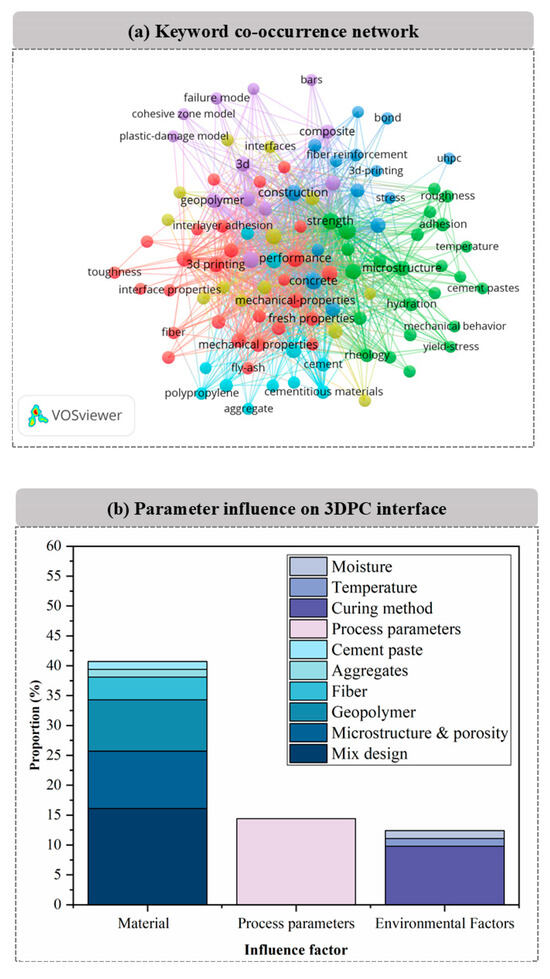
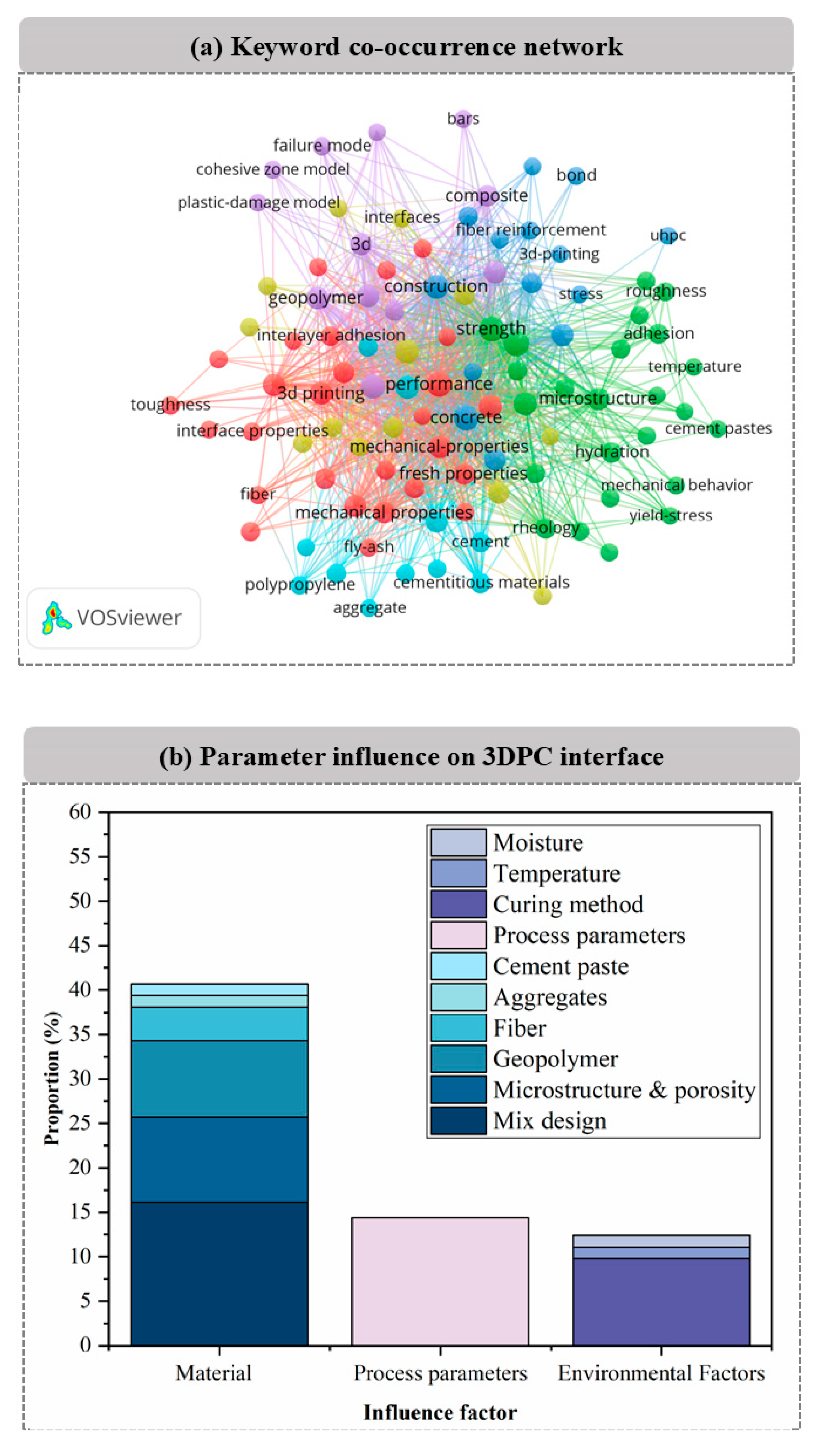
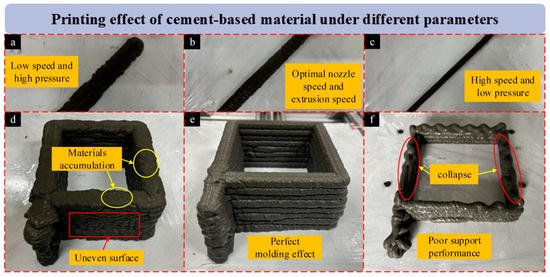
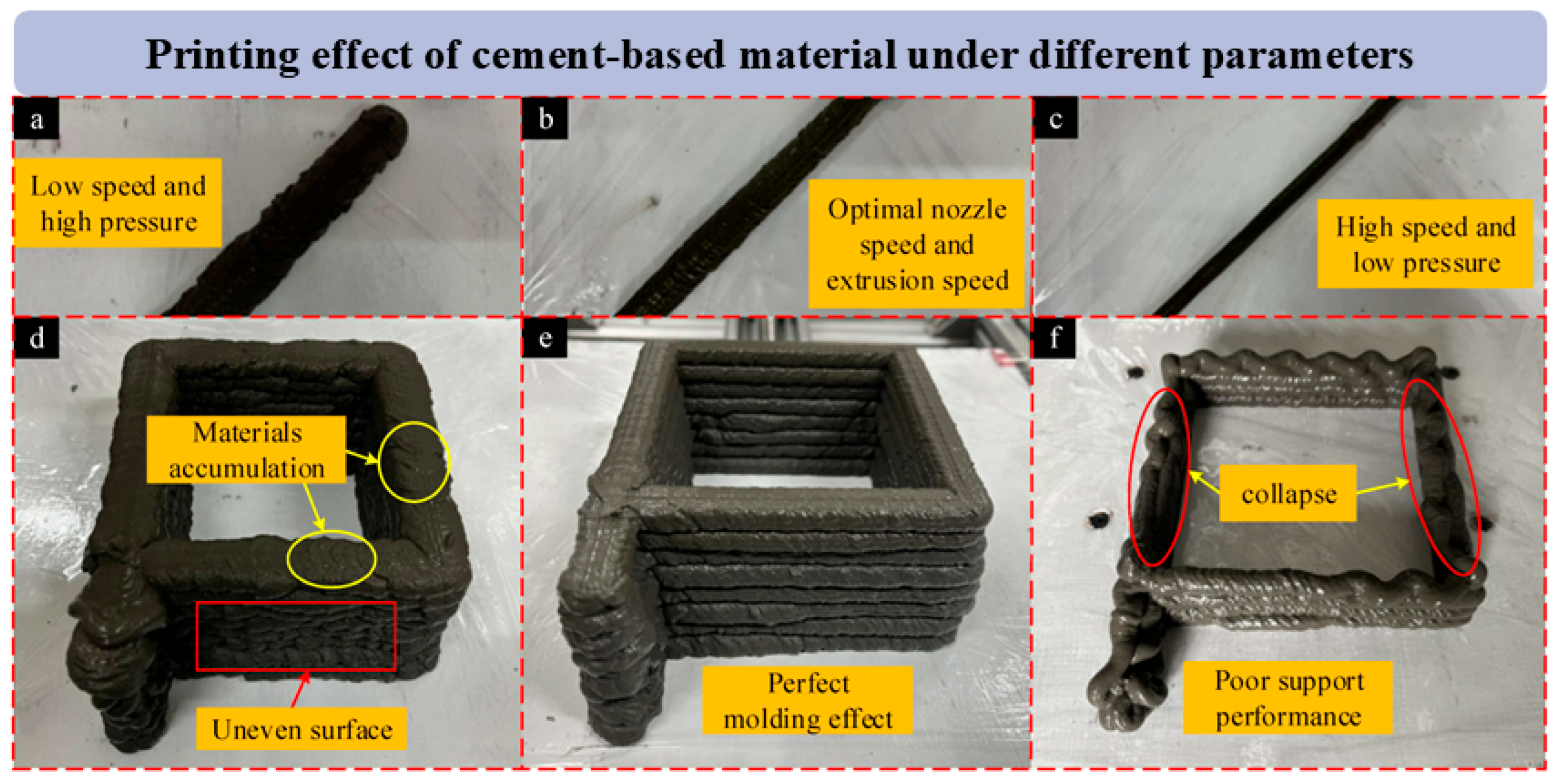
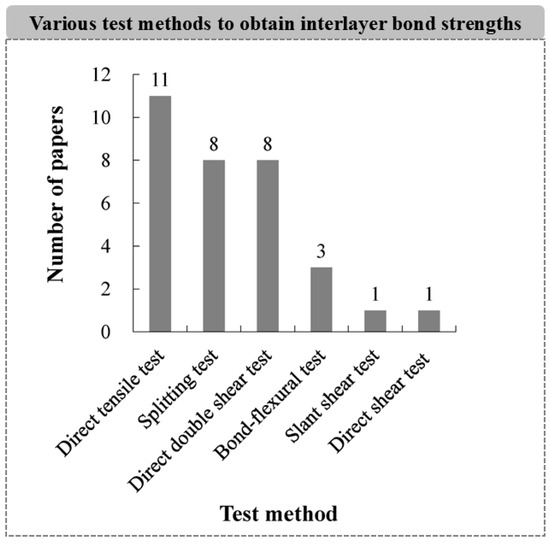
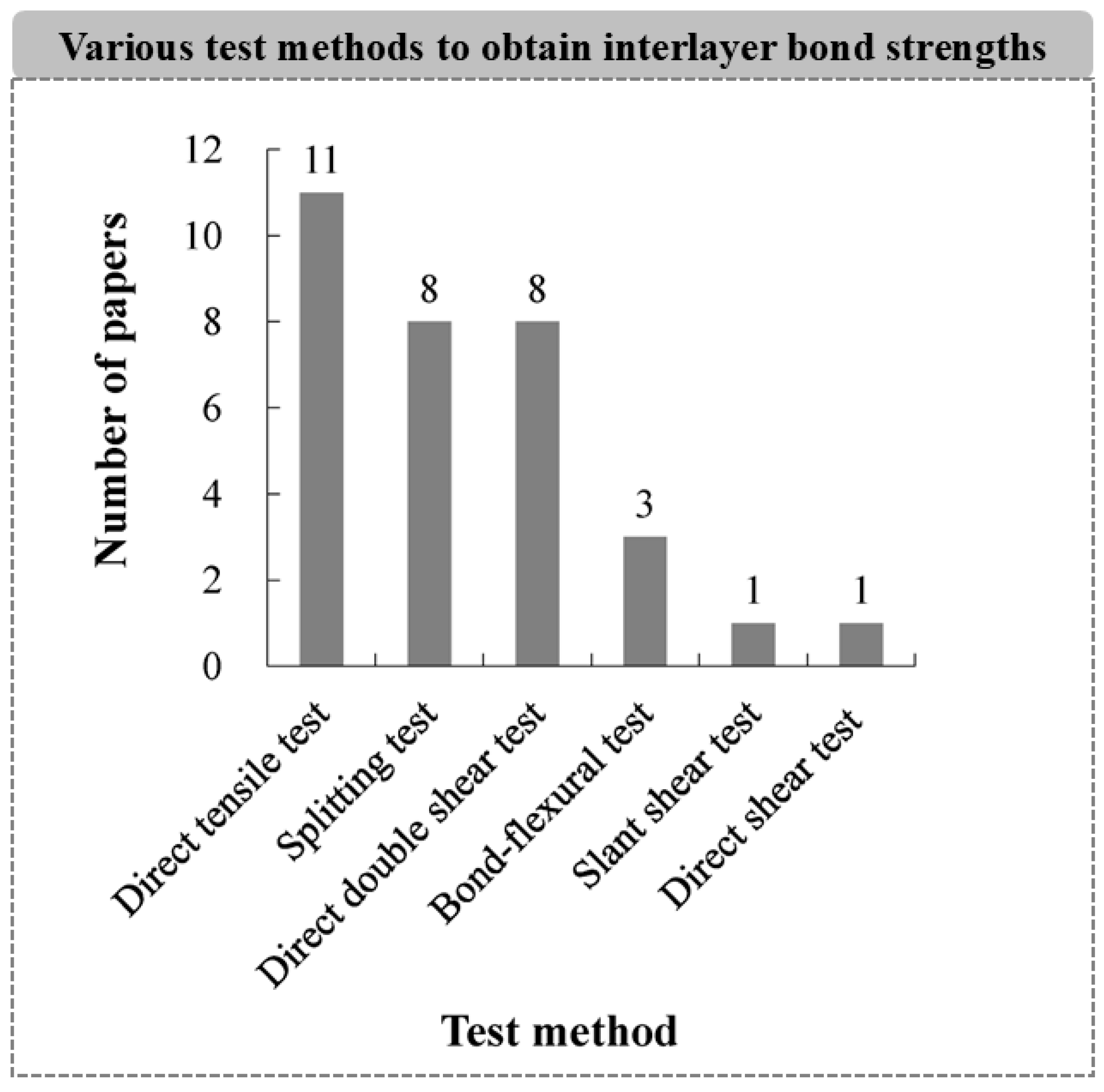
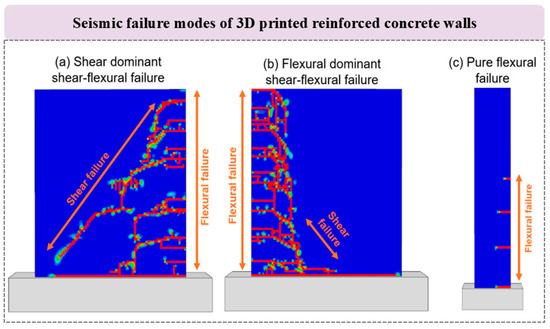
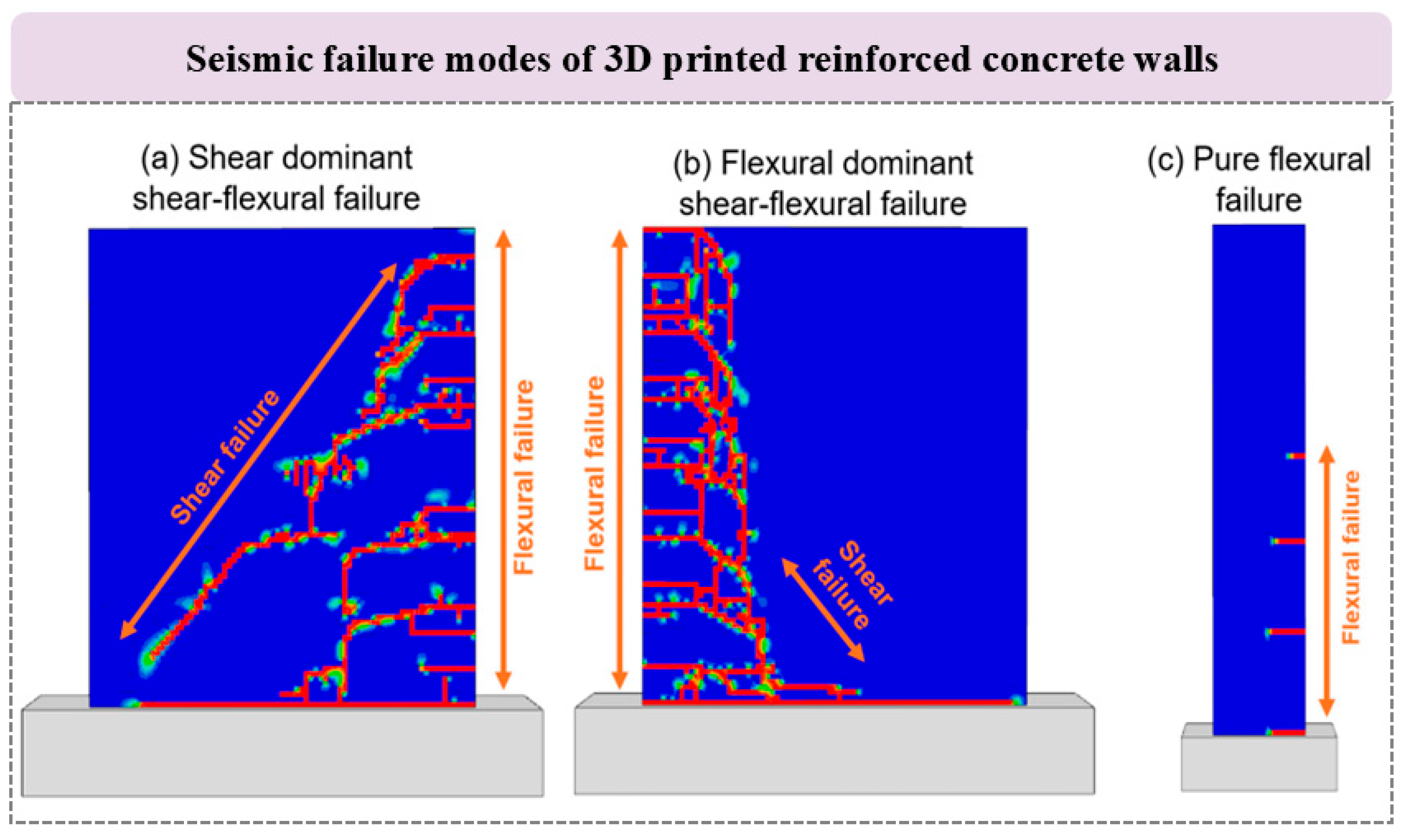
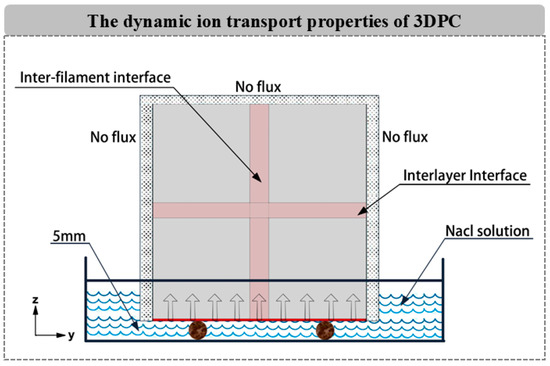
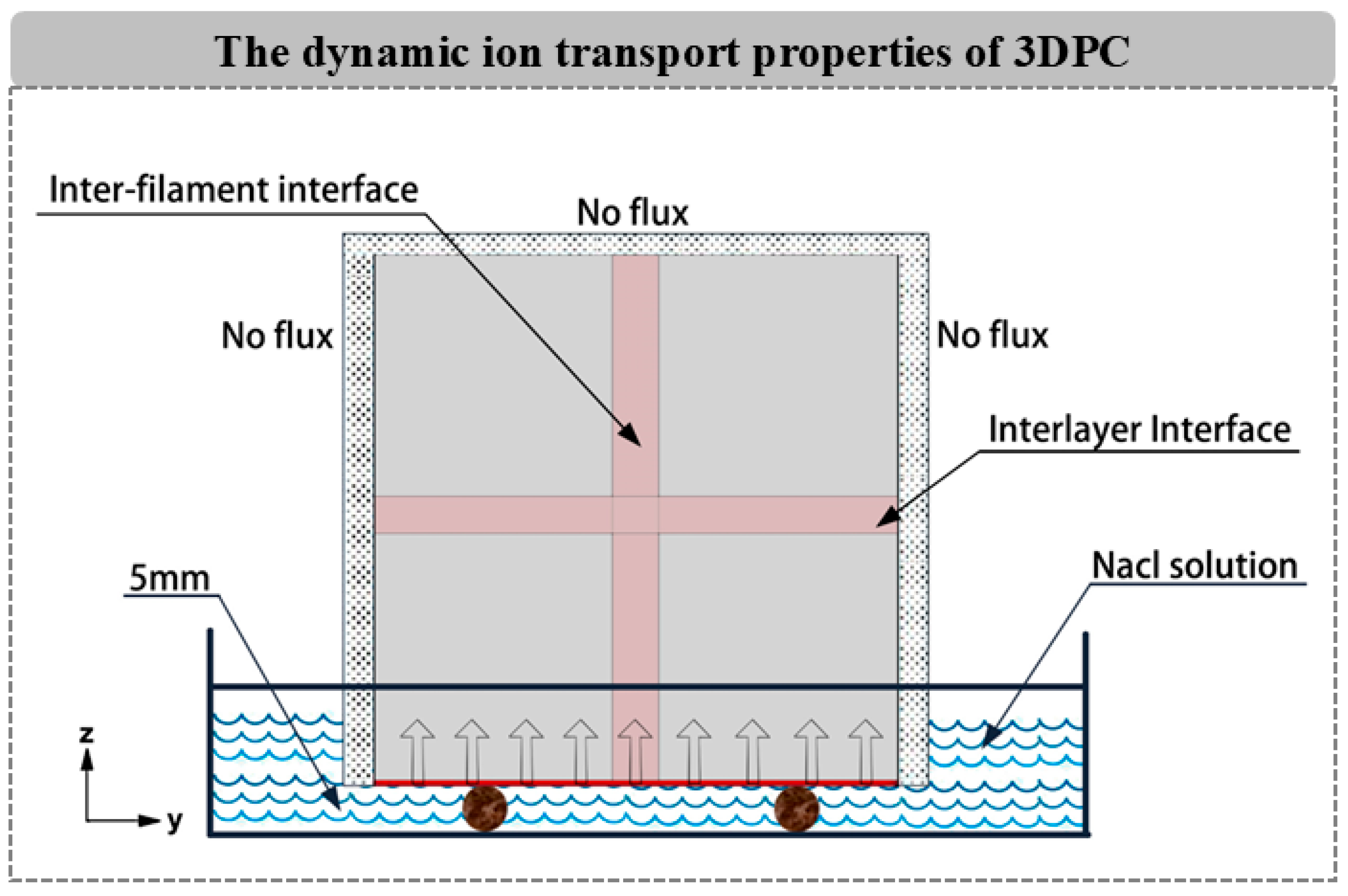
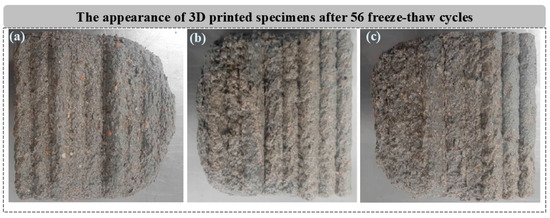
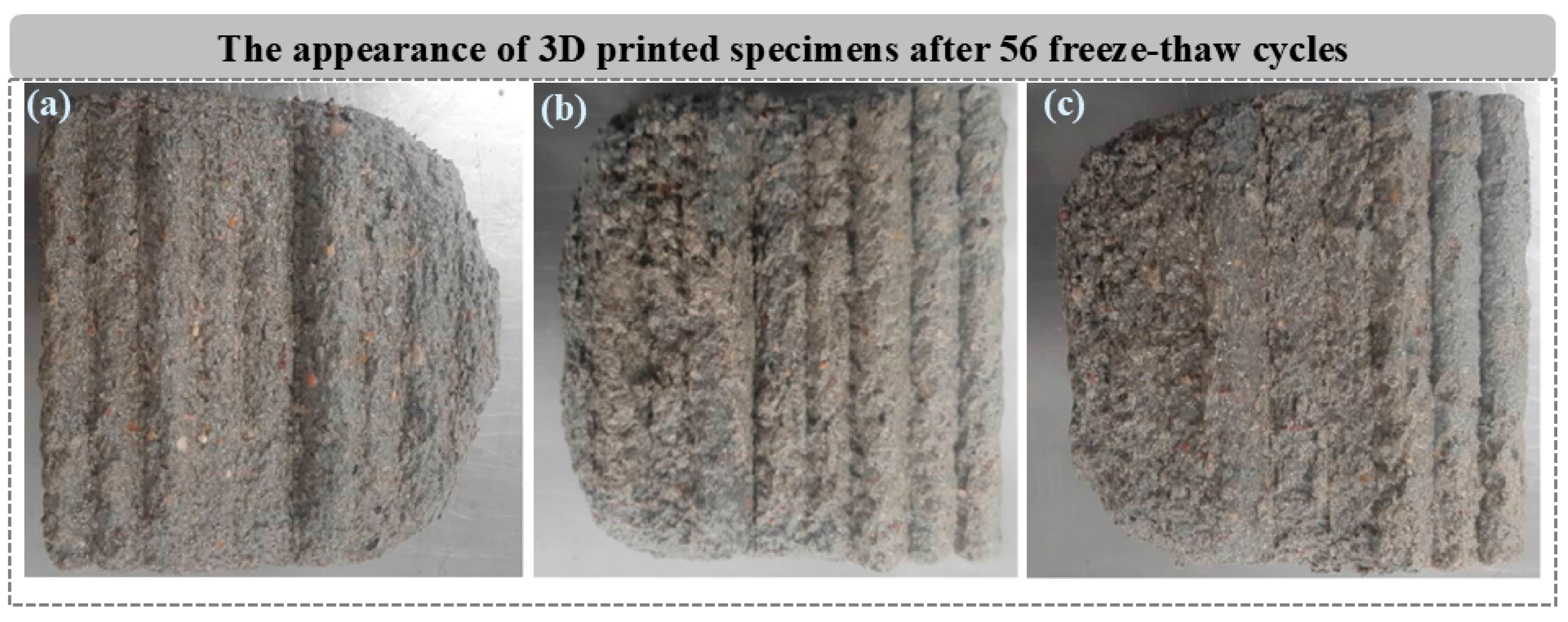
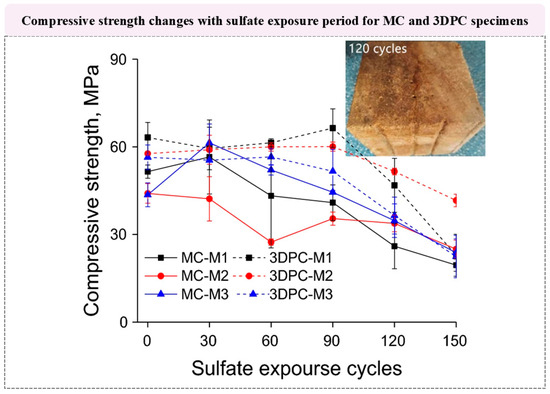
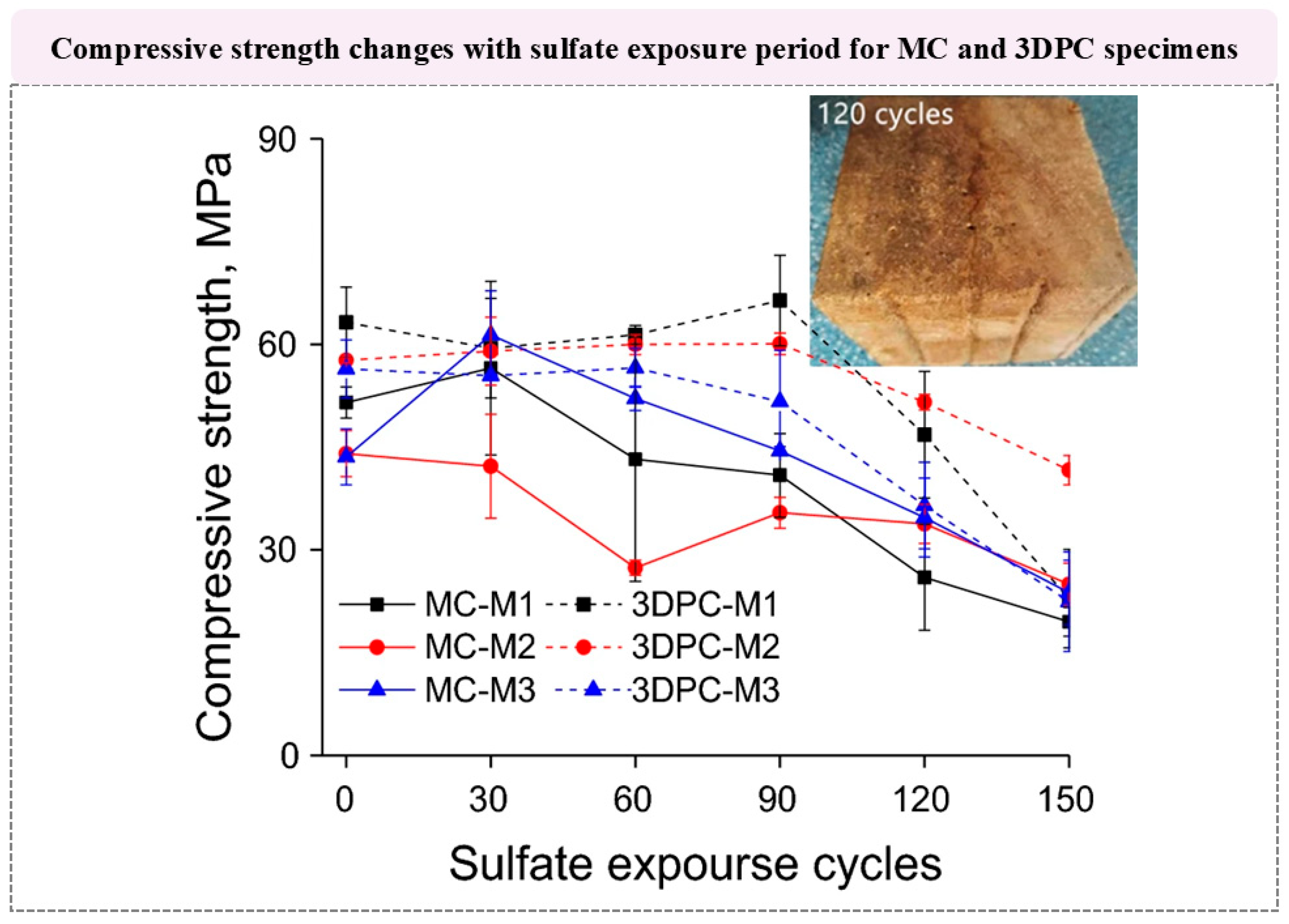
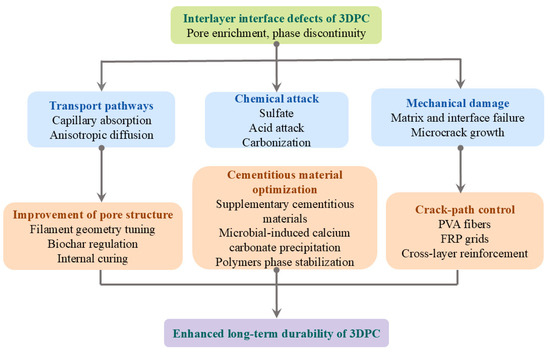
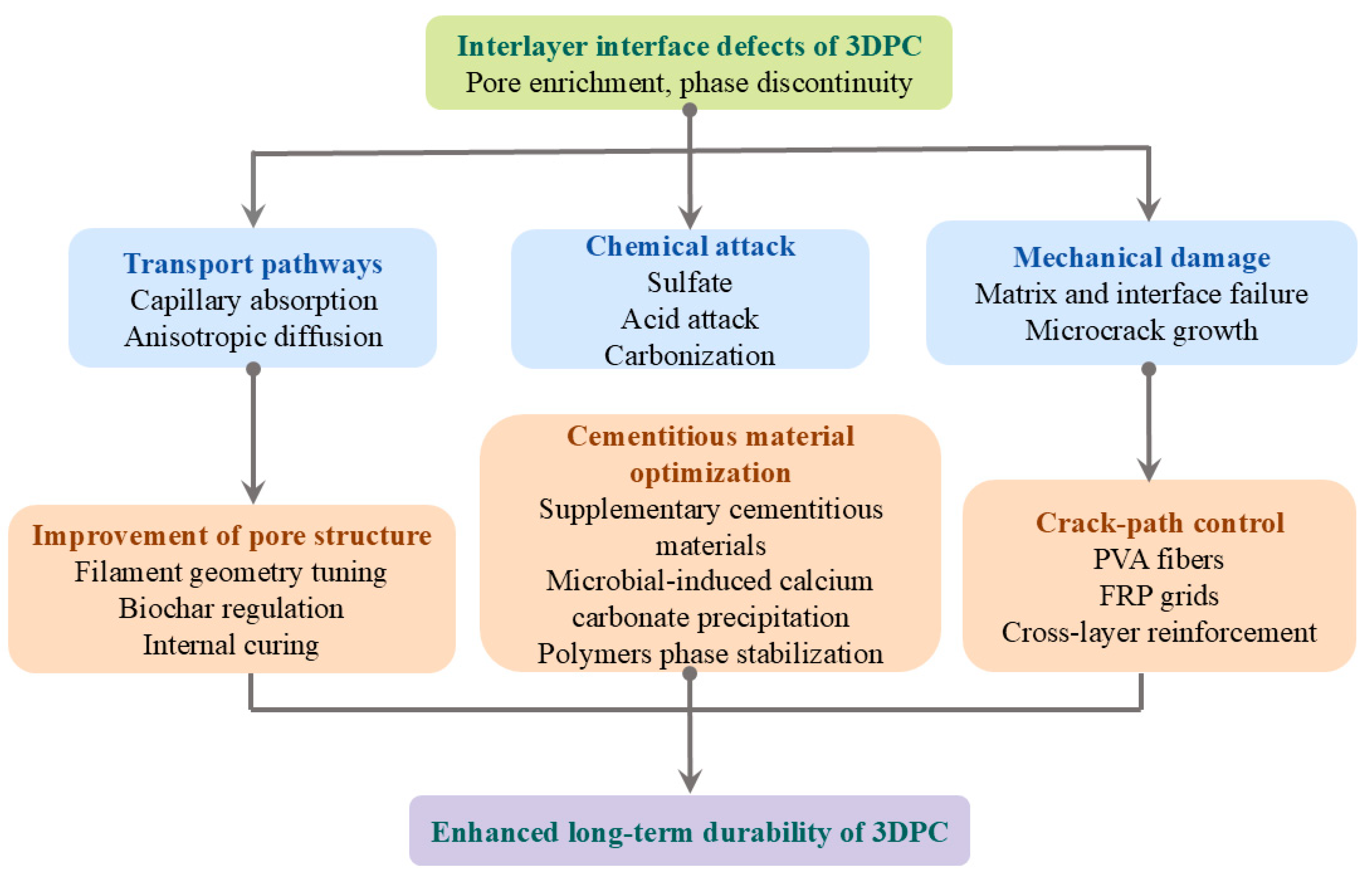
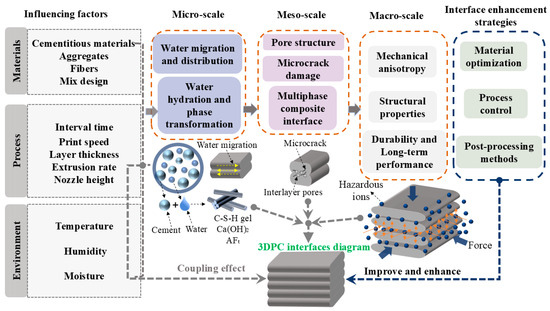
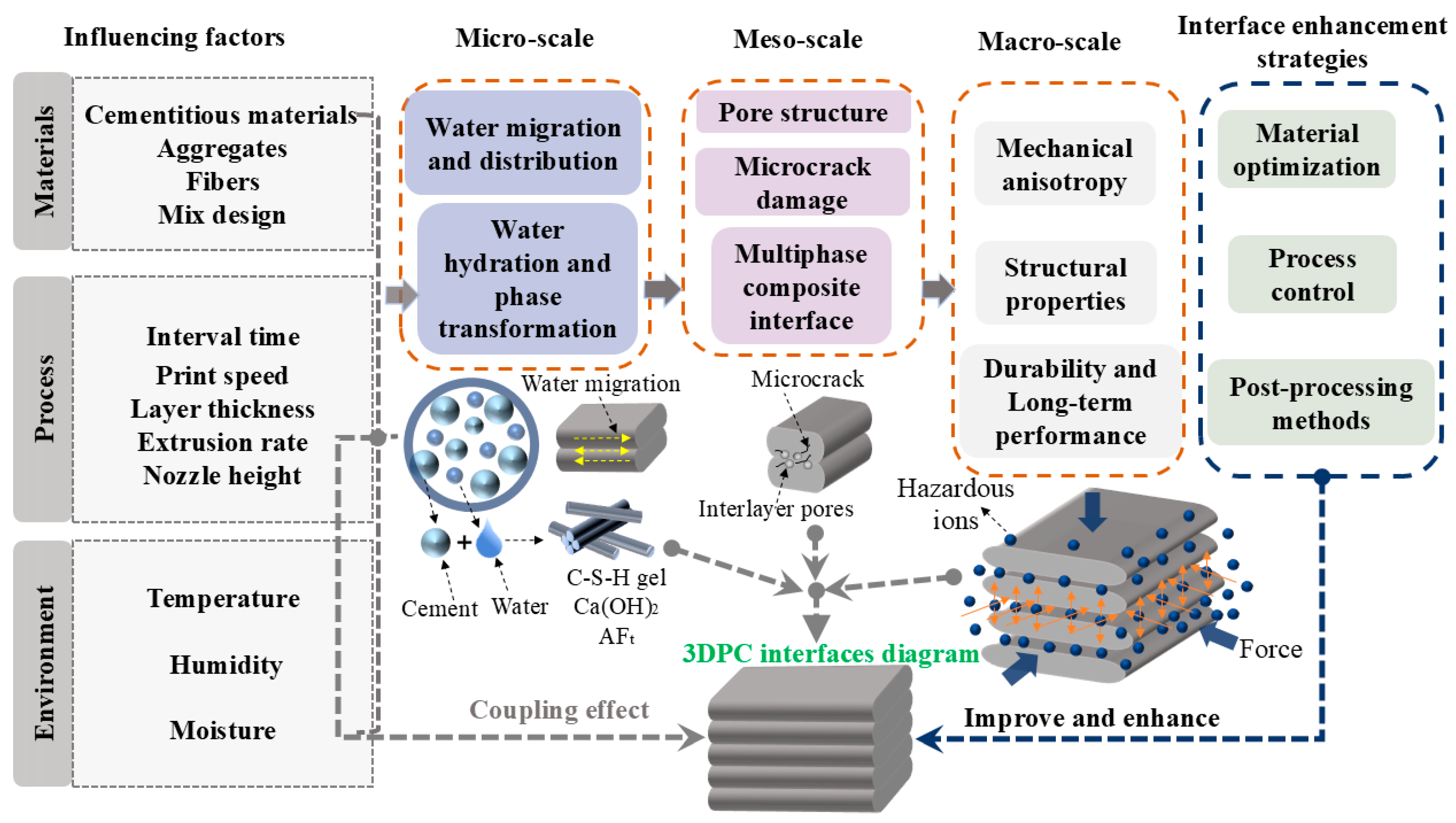

Disclaimer/Publisher’s Note: The statements, opinions and data contained in all publications are solely those of the individual author(s) and contributor(s) and not of MDPI and/or the editor(s). MDPI and/or the editor(s) disclaim responsibility for any injury to people or property resulting from any ideas, methods, instructions or products referred to in the content. |
© 2026 by the authors. Licensee MDPI, Basel, Switzerland. This article is an open access article distributed under the terms and conditions of the Creative Commons Attribution (CC BY) license.