1. Introduction
With the rapid growth of global plastic consumption, environmental problems caused by the large accumulation of waste plastics have become increasingly serious [
1,
2,
3]. The use of waste plastics in asphalt pavements not only enables the resource utilization of solid waste, but also provides a new technical route for developing sustainable pavement materials [
4,
5,
6]. Among various waste plastics, polyethylene terephthalate (PET) has attracted particular attention due to its extensive application in food packaging and beverage bottles, as well as its large post-consumer waste generation and high recycling volume in China [
7,
8]. Previous studies have shown that PET-modified asphalt can effectively improve the high-temperature deformation resistance, durability, and fatigue resistance of asphalt binders and mixtures [
9,
10,
11], which indicates promising potential for engineering applications. However, while the incorporation of waste plastic enhances some pavement properties, it may also alter the composition of the asphalt colloidal system and its surface characteristics, thereby weakening the interfacial adhesion between asphalt and aggregate [
12,
13,
14]. This issue is particularly critical in rainy and humid regions, where moisture can easily penetrate the asphalt–aggregate interface. The hydrodynamic pressure generated by traffic loading further accelerates interfacial debonding and aggregate loss, thereby deteriorating pavement performance, accelerating structural degradation, and shortening service life [
15,
16]. Therefore, in waste plastic modified asphalt (WPA) systems, how to retain the advantages of resource utilization and performance enhancement while effectively compensating for the loss of interfacial adhesion has become a key issue that must be addressed before practical engineering application can be achieved.
Adding anti-stripping agents to asphalt binders is an effective strategy for improving moisture damage resistance. Compared with traditional mineral anti-stripping materials, such as cement and hydrated lime, liquid anti-stripping agents generally have the advantages of low dosage, good dispersibility, and easy incorporation into asphalt binders, and thus have been widely used in pavement engineering [
17,
18,
19]. Specifically, Mirzababaei et al. [
20] showed that liquid silicone-based anti-stripping agents can significantly reduce moisture damage in asphalt mixtures. Among the tested agents, 0.5% Zycotherm and 0.5% Zycosoil produce better effects and generally outperform traditional materials such as cement and hydrated lime, although their influence on the rheological properties of the binder remains relatively limited. From the perspectives of binder rheology and mixture pavement performance, Tang et al. [
21] and Zhu et al. [
22] report that liquid anti-stripping agents can increase rotational viscosity, complex modulus, rutting factor, adhesion work, and water stability, and can also improve high-temperature rutting resistance. Some products are particularly effective in enhancing wet adhesion energy. However, they may also increase low-temperature creep stiffness, reduce the m-value, or decrease the low-temperature failure strain, which suggests a certain negative effect on low-temperature cracking resistance. Wang et al. [
23] further demonstrate from the perspective of surface free energy that anti-stripping agents can increase the cohesive work and adhesion work of asphalt systems and reduce the tendency for moisture-induced stripping, while compound blending performs better than the use of a single agent. Zhang et al. [
24] find that the effectiveness of anti-stripping agents is closely related to the service environment. Under saline and humid conditions, AMR shows better performance, and the recommended dosage is approximately 0.5% to 0.6%. Studies by Jalota et al. [
25] and Ghabchi et al. [
26] also indicate that when liquid anti-stripping agents are used together with polypropylene fibers, warm-mix additives, or PPA, coupled effects on rheological and mechanical properties arise. These combinations can further improve moisture damage resistance and high-temperature performance, although some low-temperature or fatigue properties may be adversely affected.
Overall, existing studies have extensively examined the application of anti-stripping agents in base asphalt and conventional polymer-modified asphalt, whereas research on WPA remains limited. The incorporation of waste plastic may alter the binder composition and surface characteristics, leading to more complex asphalt–aggregate interfacial behavior. The effects of anti-stripping agents on the WPA-aggregate interfacial adhesion, as well as their regulation of high- and low-temperature properties, remain to be clarified. In addition, the long-term effectiveness and durability mechanisms of anti-stripping agents in WPA remain unclear. A systematic evaluation is needed to determine whether liquid anti-stripping agents can compensate for the adhesion loss caused by waste plastic modification while maintaining an acceptable balance among adhesion, rheological performance, and aging resistance.
Based on the above research gaps, this study selected two types of anti-stripping agents, namely amine-based and non-amine additives, to investigate their effects on the adhesion performance and property evolution of WPA. Specifically, the adhesion performance between WPA and limestone aggregate was evaluated by the boiling water test and the binder bond strength (BBS) test. The high- and low-temperature rheological properties were analyzed by dynamic shear rheometer (DSR) and bending beam rheometer (BBR) tests. In addition, the anti-aging performance and microscopic characteristics of the modified binders were characterized by rolling thin-film oven test (RTFOT), pressurized aging vessel (PAV), and Fourier transform infrared spectroscopy (FTIR). The findings could provide a reference for improving the moisture damage resistance and performance balance of WPA, thereby promoting the high-value utilization of waste PET plastics in asphalt pavements.
2. Materials and Methods
2.1. Raw Materials
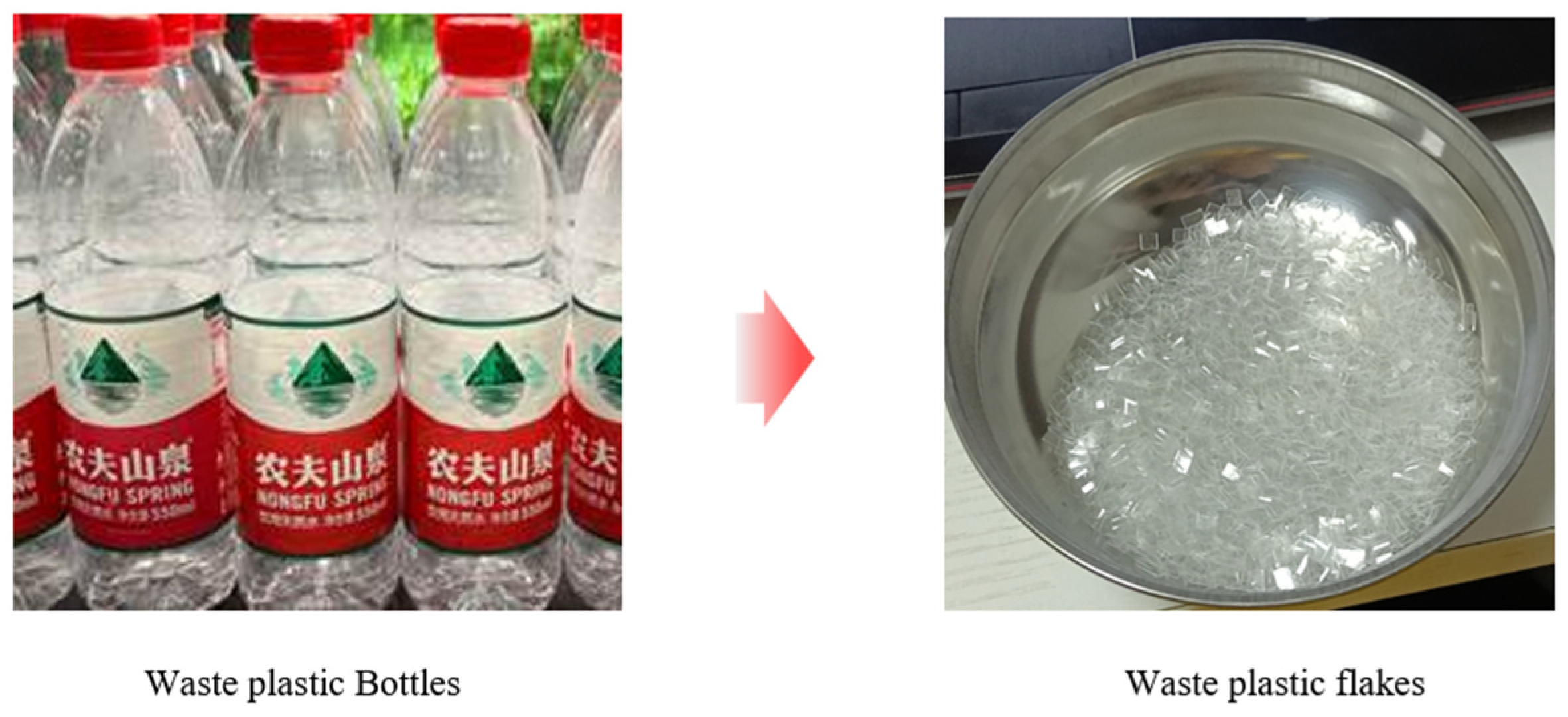
Waste PET plastic was selected in this study because of its high recycling volume, broad engineering relevance, and previously reported potential in asphalt modification. The waste PET was recycled from discarded drinking water bottles. After collection and washing, the recycled plastic was cut into flakes with a size of approximately 5.0 ± 0.1 mm, as shown in
Figure 1. To minimize the effects of impurities and colorants on the test results, only colorless waste plastic was used. The properties of waste plastic are listed in
Table 1.
AJ-1 and AMR-II, two commercially available liquid anti-stripping agents with established engineering applications in China, were selected in this study to comparatively evaluate the effects of different anti-stripping systems. AJ-1 is an amine-based anti-stripping agent supplied by Sichuan Kelutai Traffic Technology Co., Ltd. (Chengdu, China), with polyethyleneimine ([–CH2CH2NH–]n) as its main active component. AMR-II is a non-amine anti-stripping agent supplied by Hengshui Diyi Petroleum and Chemical Co., Ltd. (Hengshui, China), and is mainly composed of phosphorus-containing hydroxyl compounds and other non-amine substances.
Table 2 provides detailed information on the two anti-stripping agents. The Pen 70 base asphalt used in this study was supplied by PetroChina Karamay Petrochemical Co., Ltd. (Karamay, China). Its properties are shown in
Table 3.
Limestone and granite, two representative aggregates widely used in pavement engineering in China, were selected because of their broad engineering application and distinct mineral compositions. Both aggregates were collected from Xi’an, with an average particle size of about 13.2 mm. Their main chemical compositions were determined by X-ray fluorescence using a Rigaku ZSX Primus IV X-ray fluorescence spectrometer (Rigaku, Tokyo, Japan), and the results are presented in
Table 4.
2.2. Preparation of Modified Asphalt
The preparation procedures for modified asphalt are described below.
Step 1: Preparation of waste plastic
Colorless waste plastic bottles were collected, cleaned to remove dirt, and cut into pieces measuring 5 × 5 mm after the caps were removed. The plastic pieces were sieved to ensure a uniform size, then washed and air-dried to remove excess moisture. Previous studies have shown that a suitable waste plastic content in asphalt is 5.0%–7.5% [
34]. Therefore, in this study, waste plastic was used to partially replace asphalt at 5.0% by weight.
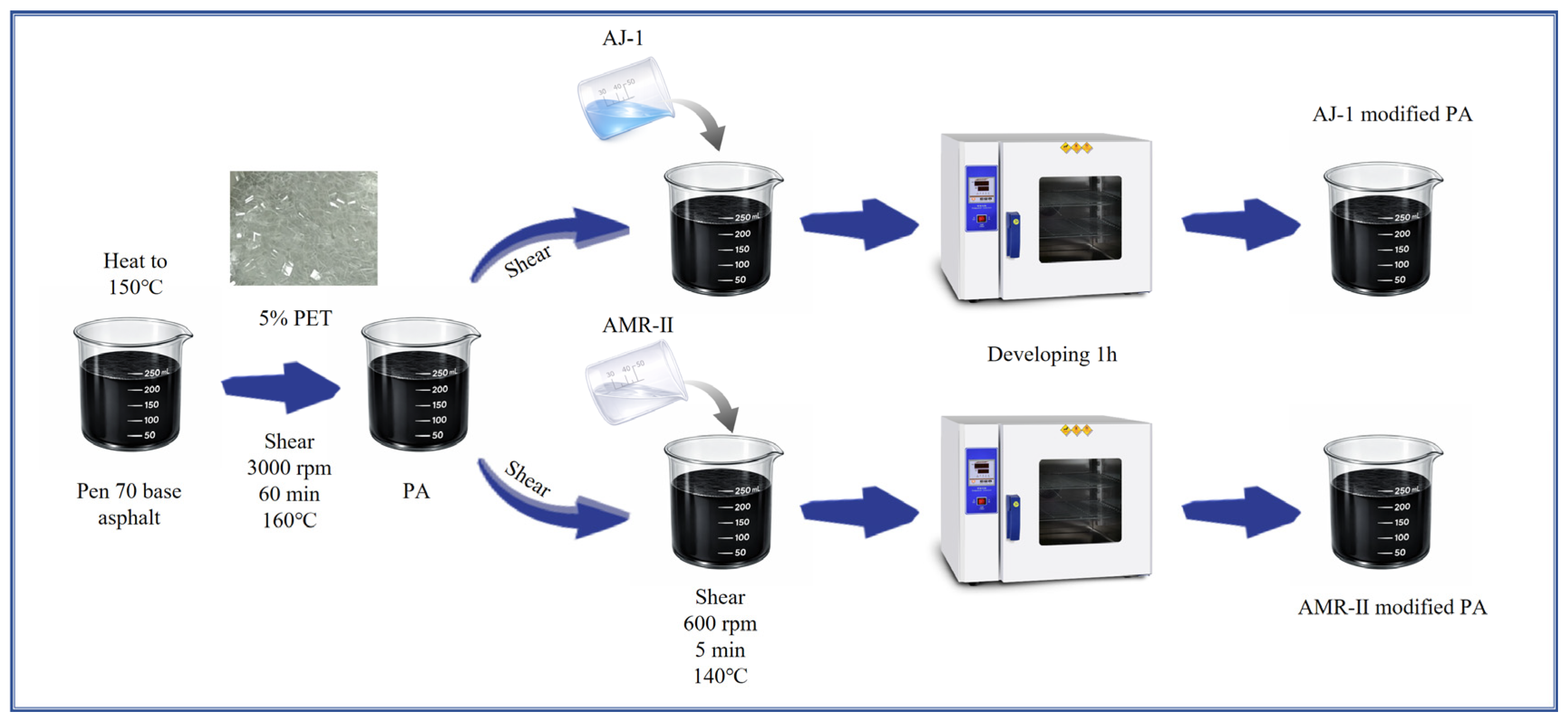
Step 2: Preparation of WPA
First, the Pen 70 base asphalt was heated in an oven at 160 °C for 1 h until it reached a fully fluid state. Then, waste plastic was added to the asphalt binder. The mixture was stirred at 3000 rpm for 60 min in an oil bath at 160 °C. After this process, WPA was obtained, in which waste plastic was mainly physically dispersed as small particles or fragments within the asphalt matrix.
Step 3: Preparation of anti-stripping agents-modified WPA
After the WPA was prepared, the required amounts of AJ-1 and AMR-II anti-stripping agents were calculated based on the target dosage. The anti-stripping agent was added to the WPA in batches and sheared at 140 °C for 5 min at 600 r/min [
35,
36,
37]. During shearing, the temperature was monitored and controlled with a temperature probe to ensure consistency. Air bubbles generated during the process were removed by continuous stirring. This also helped maintain a uniform temperature distribution. Following this procedure, modified asphalt samples with different anti-stripping-agent dosages were prepared. The test flow is shown in
Figure 2.
2.3. Interfacial Adhesion Test Methods
2.3.1. Water-Boiling Test
The adhesion performance of WPA with anti-stripping agents was evaluated using the water-boiling test in accordance with Test Method T0616 in JTG E20-2011 [
38]. In each test, five aggregate particles with an average size of about 13.2 mm were selected. They were suspended with a thin metal wire and immersed in hot asphalt binder for 45 s to ensure that the aggregate surface was uniformly coated with an asphalt film. The coated aggregates were then cooled to room temperature and immersed in boiling water for 3 min. After boiling, the asphalt residual coating ratio on the aggregate surface was calculated according to Equation (1).
where
T1 is the residual rate of asphalt after boiling, (%);
m1 is the mass of aggregate after washing and drying, (g);
m2 indicates the mass of the aggregate after coating with asphalt (g);
m3 is the mass of air-dried aggregate after boiling for 3 min (g).
2.3.2. BBS Test
The BBS test is widely used to evaluate the bonding performance between asphalt and aggregate and has been extensively applied to characterize moisture damage resistance at the asphalt–aggregate interface [
39,
40]. In this study, a PosiTest AT-A device manufactured by DeFelsko, Ogdensburg, NY, USA, was used to conduct the BBS test. The test was performed to investigate the moisture damage resistance of anti-stripping-agent-modified WPA at the asphalt–aggregate scale. The detailed procedure followed ASTM D4541 [
41], AASHTO T361 [
42], and the method reported by Huang et al. [
15]. The loading rate was 0.7 MPa/s, and the asphalt film thickness was 0.2 mm. For each asphalt–aggregate combination and anti-stripping agent dosage, three replicate specimens were tested, and the average value was used for analysis. After the pull-off test, all groups predominantly exhibited mixed failure, involving both interfacial adhesion failure and cohesive failure within the asphalt binder, with no significant difference in failure area among groups. Therefore, the maximum pull-off tensile strength (POTS) was used as the primary quantitative indicator to evaluate the bonding performance of the asphalt–aggregate system.
2.4. General Performance Test Methods
2.4.1. Physical Properties Test
According to JTG 3410-2025 [
43], the penetration, softening point, and ductility of anti-stripping agent-modified WPA were tested using a WSY-026 penetrometer, a WSY-025E softening point tester, and an LLY-10A-CL ductility tester, respectively. The penetration test was conducted at 15 °C, 25 °C, and 30 °C. The penetration index (PI) was used to evaluate temperature sensitivity, and it was calculated using Equation (3). The anti-stripping agents were added to the WPA at 0.3%, 0.4%, and 0.5% to investigate the effect of dosage on its high-temperature performance. The softening point was measured under a nitrogen atmosphere. The temperature was increased at a rate of 2 °C/min until the probe was able to draw the asphalt into a thin filament. The temperature at that point was defined as the softening point of the asphalt. The ductility test was carried out at 5 °C and 15 °C. The low-temperature performance of the asphalt was evaluated based on the ductility at these two temperatures. The stretching rate was set at 5 cm/min.
where
T is the test temperature (°C);
is the logarithm of the penetration value at different test temperatures;
is the intercept of the regression equation;
is the coefficient of the regression equation; and
PI is the penetration index.
2.4.2. DSR Test
Once the anti-stripping agent was fully blended with the WPA, the mixture was immediately poured into a mold with a diameter of 25 mm and a height of 1 mm. A DSR test was conducted using a DHR-1 dynamic shear rheometer manufactured by TA Instruments (New Castle, DE, USA) to evaluate the effects of the two anti-stripping agents on the rheological properties of the WPA. Each sample was tested in triplicate. Temperature sweep tests were conducted to obtain the complex shear modulus (G*), phase angle (δ), and rutting factor (G*/sinδ). The high-temperature viscoelastic behavior at 70 °C was analyzed in particular. The test conditions were a strain level of 1%, a frequency of 10 rad/s, and a temperature range of 30–80 °C.
2.4.3. BBR Test
A BBR test was conducted using a Cannon TE-BBR (State College, PA, USA) to evaluate the low-temperature cracking resistance of WPA with anti-stripping agents. The indicators were creep stiffness,
S(
t), and
m-value, which were calculated using Equations (4) and (5). The BBR test was conducted in accordance with ASTM D6648–08. The modified asphalt was poured into a 127 mm × 12.7 mm × 6.35 mm mold while still in a fluid state. A release agent made of talcum powder and glycerol was applied to the inside of the mold to facilitate demolding. The specimen was then subjected to a constant load of 980 ± 50 mN for 240 s at test temperatures of −12 °C, −18 °C, and −24 °C. For each asphalt binder, at least three parallel tests were conducted to verify repeatability. By analyzing the strain response under loading, the S-value and m-value at 60 s were obtained. These results were used to characterize the cracking resistance and stress relaxation potential of the asphalt.
where
S(
t) is the creep stiffness (MPa);
L is the span length between the beam supports (mm);
h is the beam height (mm);
P is the applied load (N);
b is the beam width (mm); and Δ(
t) is the deformation at a given time (mm).
2.4.4. Aging Procedures
When evaluating the long-term service performance of asphalt pavements, aging should be considered. To characterize the short-term and long-term aging behavior of asphalt binders under laboratory conditions, the RTFOT and PAV tests were conducted in accordance with ASTM D2872 and ASTM D6521, respectively [
44,
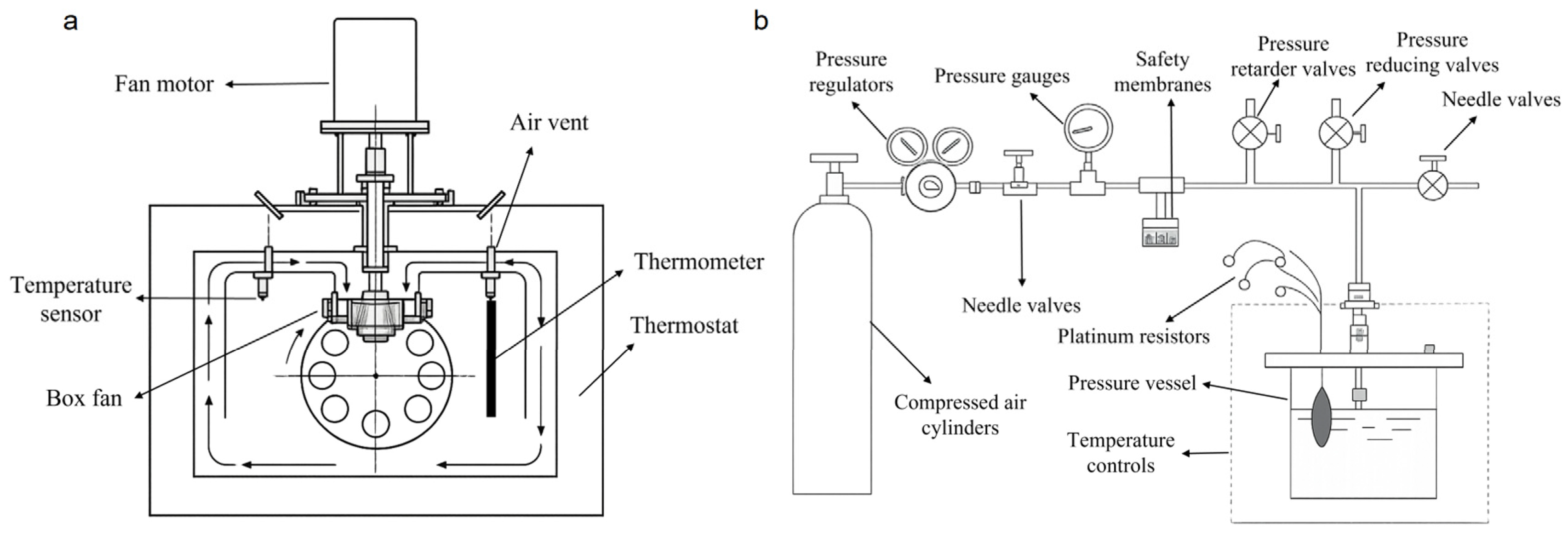
45]. WPA containing 0.4% AJ-1 and 0.4% AMR-II anti-stripping agents was used, and WPA was used as the control. It should be noted that, in this study, the unaged WPA was first subjected to RTFOT aging. The residues were then further aged by the PAV test. During short-term aging, cylindrical glass bottles containing 35 ± 0.5 g of unaged binder were placed in a rolling thin-film oven at 163 °C and 15 rpm. Hot air was introduced at a flow rate of 4 ± 0.2 L/min for 85 min. After RTFOT aging, the samples were placed in a pressure aging vessel and aged at 100 ± 0.5 °C under 2.1 MPa compressed air for 20 h to simulate long-term aging. The test setup is shown in
Figure 3. The aging performance of the anti-stripping agent-modified WPA was evaluated by the penetration ratio at 25 °C, ductility ratio at 5 °C, increase in softening point, viscosity ratio at 135 °C, and aging index. The aging index was calculated using Equation (6).
where
is the aging index;
is the viscosity after aging at 135 °C (Pa·s); and
is the viscosity before aging at 135 °C (Pa·s).
2.5. FTIR Test
To analyze the chemical interactions and functional group changes between the anti-stripping agents and WPA, FTIR was performed using a Bruker INVENIO spectrometer. The spectra were collected over the range of 4000–400 cm−1 with a spectral resolution of 4 cm−1, and 32 scans were accumulated for each sample. Before analysis, the spectra were baseline-corrected and normalized to reduce background interference and improve comparability among samples. The characteristic peak areas were then integrated to calculate the functional group indices.
3. Results and Discussion
3.1. Interfacial Adhesion Evaluation
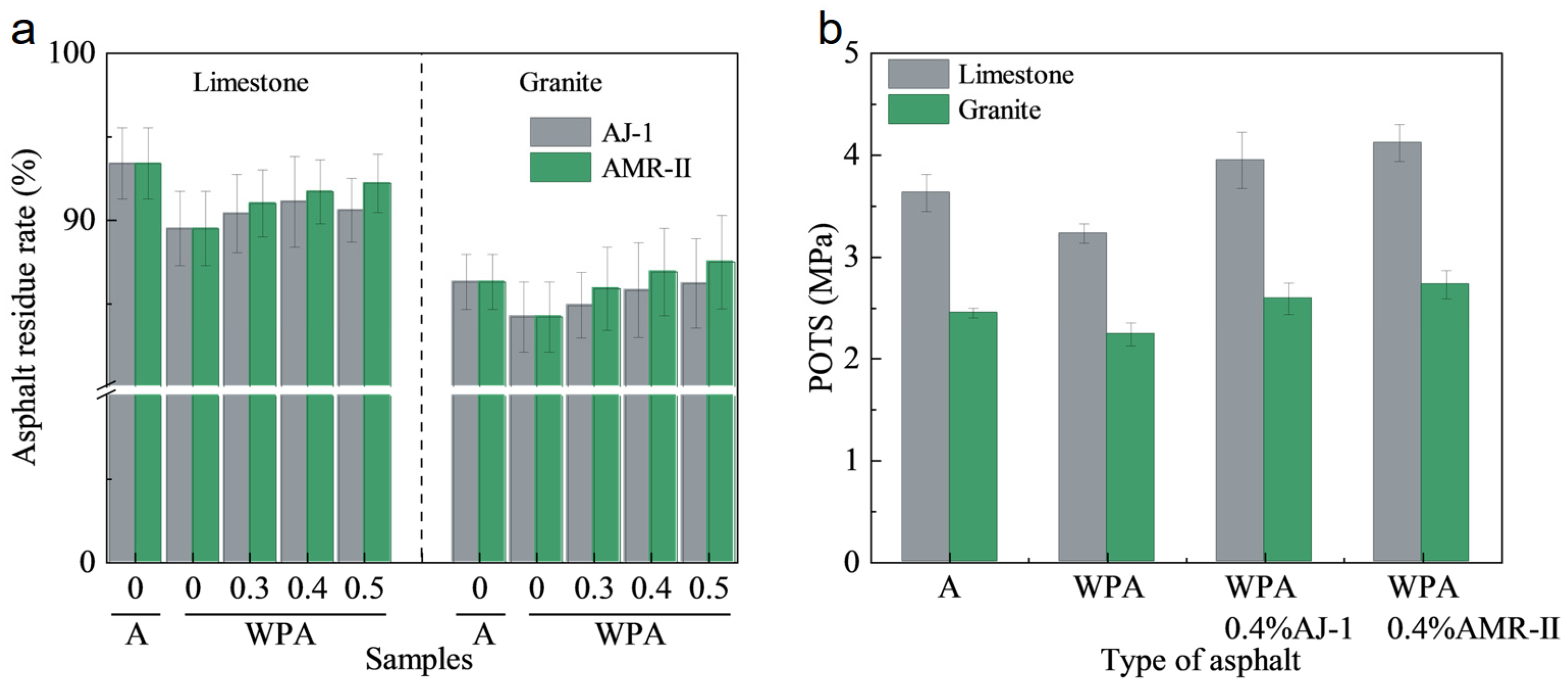
Figure 4 presents the interfacial adhesion performance of base asphalt (A), WPA, and anti-stripping-agent modified WPA on limestone and granite aggregates. As shown in
Figure 4a, the residual coating ratio of both aggregate systems decreased after waste plastic modification, indicating that the incorporation of waste plastic weakened the asphalt–aggregate adhesion. Specifically, for limestone, the residual coating ratio decreased from approximately 93%–94% for A to 89%–90% for WPA, while for granite, it decreased from about 86% to 84%. After the addition of anti-stripping agents, the asphalt residual coating ratio gradually increased with dosage in both aggregate systems, indicating that the anti-stripping agents effectively compensated for the adhesion loss caused by waste plastic modification. Compared with WPA without anti-stripping agents, AMR-II increased the residual coating ratio by approximately 1.5–3.5 percentage points, whereas AJ-1 increased it by approximately 1.3–2.7 percentage points. At the same dosage, AMR-II consistently produced a higher residual coating ratio than AJ-1, and at 0.5% dosage, the residual coating ratio of AMR-II-modified WPA approached or even exceeded that of base asphalt.
A similar trend was observed in the BBS results shown in
Figure 4b. Compared with base asphalt, the POTS of WPA decreased by approximately 11.1% and 8.0% for limestone and granite, respectively, confirming that waste plastic weakened the tensile debonding resistance of the asphalt–aggregate interface. After the addition of anti-stripping agents, the POTS of both aggregate systems increased significantly. Compared with WPA, AJ-1 increased the POTS of the limestone and granite systems by approximately 25.0% and 13.0%, respectively, while AMR-II increased them by 28.1% and 17.4%, respectively. This further confirms that anti-stripping agents effectively improve interfacial bonding, with AMR-II showing a stronger enhancement effect.
The differences in interfacial performance between the two aggregate systems are closely related to their chemical compositions. As shown in
Table 4, limestone has a high CaO content of 56.7%, whereas granite has a high SiO
2 content of 65.4%, indicating clear differences in their mineral compositions. Previous studies have shown that asphalt is generally weakly acidic, and acidic components in asphalt, such as asphalt acids and their derivatives, tend to interact more favorably with CaO-rich alkaline minerals through acid–base interactions, thereby contributing to a more stable asphalt–aggregate interfacial adhesion [
46,
47]. In contrast, granite with a high SiO
2 content generally shows relatively weaker interfacial interaction with asphalt and is therefore more susceptible to interfacial stripping.
In addition, the adverse effect of waste plastic on interfacial adhesion may be attributed to its highly nonpolar nature and limited compatibility with asphalt, which may reduce the effective contact and chemical adsorption between polar components in asphalt and aggregate surfaces [
14,
48]. Previous studies by Dan et al. [
19], Lu et al. [
37], and Zhu et al. [
22] also reported that liquid anti-stripping agents can improve the wetting behavior of asphalt on aggregate surfaces, increase interfacial adhesion work, and enhance moisture damage resistance. This helps explain the improved interfacial adhesion observed for both AJ-1 and AMR-II. Compared with AJ-1, AMR-II produced greater improvements in both aggregate systems, which may be related to differences in their chemical compositions and interfacial regulation mechanisms.
3.2. Physical Properties
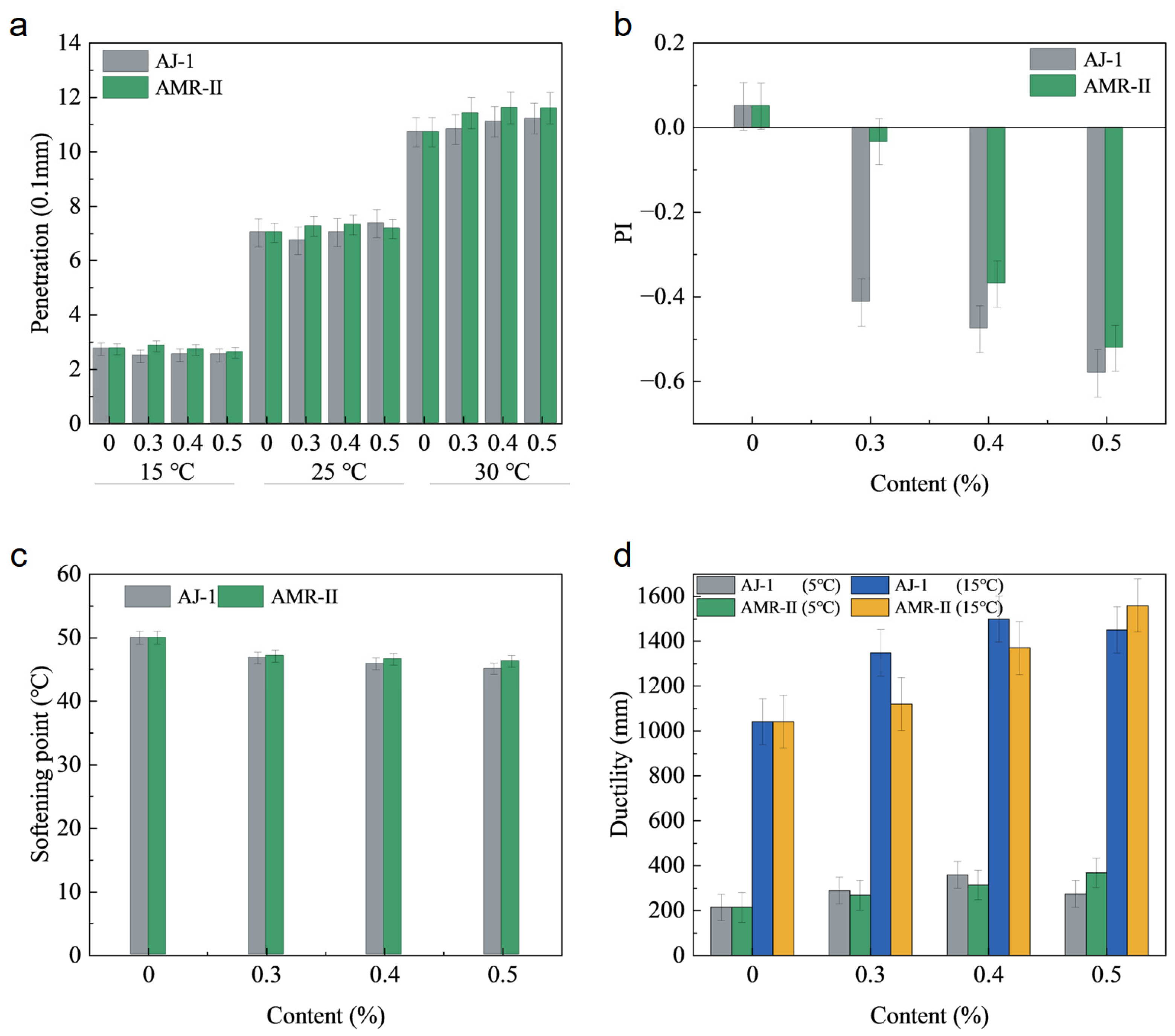
Figure 5 shows the effects of anti-stripping agents on the physical properties of waste plastic modified asphalt. At 15 °C, the penetration changed only slightly with increasing additive dosage, whereas at 25 °C and 30 °C, it showed an increasing trend. This may be related to the presence of oily or light components in liquid anti-stripping agents, which can soften asphalt to some extent [
49]. As the dosage increased, the penetration differences at different temperatures became larger. At the same time, the PI value dropped from 0.0503 to −0.5809. This indicates that the anti-stripping agents increased the temperature sensitivity of the asphalt and reduced its resistance to temperature fluctuations. According to Lu et al. [
50] and Xiao et al. [
51], such temperature-dependent changes may be associated with changes in the colloidal structure of the binder, the enhanced effect of light components, and weakened intermolecular interactions. Both agents reduced the PI value, but AJ-1 had a stronger effect. At a dosage of 0.5%, the PI value of the AJ-1-modified asphalt was 0.0596 lower than that of the AMR-II-modified WPA. This suggests that AMR-II caused less disturbance to the asphalt structure and was more favorable for maintaining thermal stability.
The addition of anti-stripping agents generally reduced the softening point, indicating a decline in high-temperature deformation resistance. AJ-1 showed a stronger softening effect. On average, the softening point decreased by about 1 °C for every 0.1% increase in dosage. When the dosage reached 0.5%, the softening point was already close to the lower limit of the specification, which clearly limited its high-temperature applicability. In contrast, AMR-II had a smaller negative effect on the softening point and showed better thermal stability.
The ductility results indicate that the anti-stripping agents could effectively improve the low-temperature ductility of the WPA, but the two agents showed different trends. For AJ-1, ductility first increased and then decreased as the dosage increased, and it reached a peak at 0.4%. At this dosage, the ductility values at 5 °C and 15 °C were 359.4 mm and 1500.5 mm, respectively. These values were 67.7% and 44.1% higher than those of the WPA. This suggests that AJ-1 had a relatively narrow optimal dosage range. In contrast, the ductility of the AMR-II-modified WPA increased continuously with dosage, and the increase became more pronounced at higher contents. This indicates that its toughening effect was more stable and that its effective dosage window was wider. Overall, the anti-stripping agents improved the low-temperature ductility of the WPA, but they also reduced its high-temperature stability to some extent. Compared with AJ-1, AMR-II maintained the low-temperature improvement while causing less damage to the high-temperature properties. Therefore, it showed better overall applicability.
3.3. Low-Temperature Rheological Properties
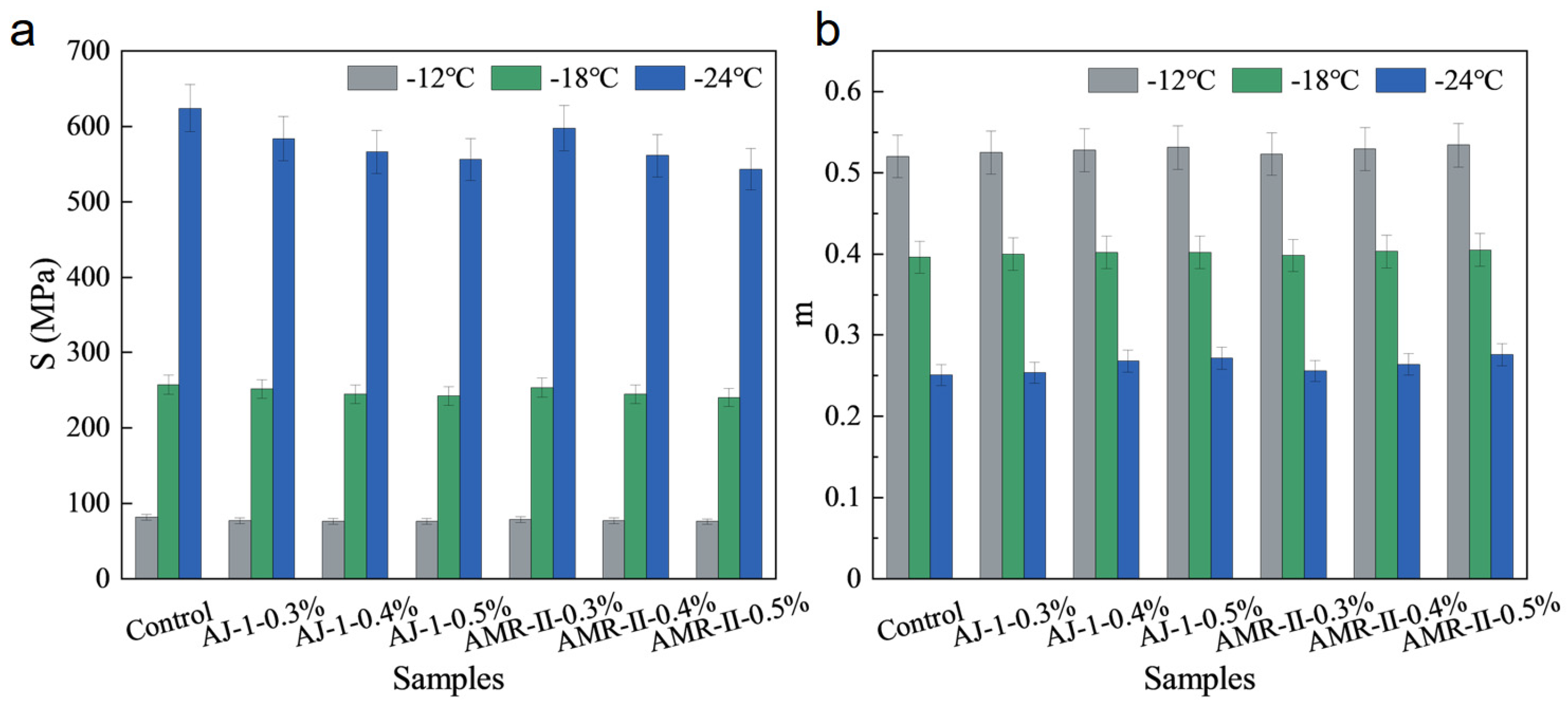
Figure 6 presents the S and m values of the anti-stripping agent-modified WPA. As shown in
Figure 6a, the stiffness modulus increased continuously as the temperature decreased, and the rate of increase became greater at lower temperatures. This indicates that the asphalt became more brittle and less resistant to cracking under low-temperature conditions. At the same temperature, the stiffness modulus generally decreased as the anti-stripping agent dosage increased. This suggests that both anti-stripping agents improved the low-temperature performance of the WPA, which is consistent with the ductility results. Furthermore, this observation is also supported by the results of studies by Zhang et al. [
52] and Zhu et al. [
53]. For AJ-1, the stiffness modulus decreased as the dosage increased, but the reduction gradually became smaller. At −24 °C, the modulus decreased by 17.8 MPa when the dosage increased from 0.3% to 0.4%. When the dosage was further increased to 0.5%, the modulus decreased by only another 9.8 MPa. At −12 °C, the stiffness modulus instead increased by 0.3 MPa when the dosage reached 0.5%. This indicates that AJ-1 had an optimal dosage range for low-temperature improvement. In contrast, the stiffness modulus of the AMR-II-modified WPA decreased continuously as the dosage increased, showing a more stable low-temperature modification effect. At −12 °C, the stiffness modulus decreased by 2.9 MPa and 1.7 MPa at dosages of 0.3% and 0.4%, respectively, compared with the previous level. This suggests that its low-temperature improvement began to appear once the dosage reached 0.3%. Overall, when the dosage exceeded 0.4%, AMR-II showed a greater improvement in low-temperature stability than AJ-1.
As shown in
Figure 6b, the m value of the asphalt generally decreased as the test temperature decreased, indicating a gradual reduction in its stress relaxation ability at low temperatures. At the same temperature, the m value increased with increasing anti-stripping agent dosage, indicating that the addition of anti-stripping agents helped improve the low-temperature cracking resistance of the WPA. For AJ-1, the m value increased with dosage, but the rate of increase gradually slowed. At −18 °C, for example, when the dosage increased from 0 to 0.3%, the m value rose from 0.396 to 0.400. When the dosage was further increased from 0.4% to 0.5%, the m value remained nearly stable at 0.402. A similar trend was also observed at −12 °C and −24 °C. This indicates that the improvement in low-temperature stress relaxation provided by AJ-1 was mainly concentrated at lower dosages and that the benefit became limited as the dosage continued to increase. In contrast, the m value of the AMR-II-modified WPA continued to increase with dosage, and the increase did not show a clear reduction. At −24 °C, when the dosage increased from 0 to 0.3%, the m value increased by 0.004. It increased by 0.008 as the dosage rose from 0.3% to 0.4%, and by a further 0.012 as the dosage increased from 0.4% to 0.5%. This indicates that AMR-II provided a more sustained improvement in low-temperature stress relaxation and was more favorable for reducing low-temperature cracking sensitivity. Overall, based on the variation in m value, AMR-II showed a better improvement in the low-temperature cracking resistance of the WPA than AJ-1 within an appropriate dosage range.
3.4. High-Temperature Rheological Properties
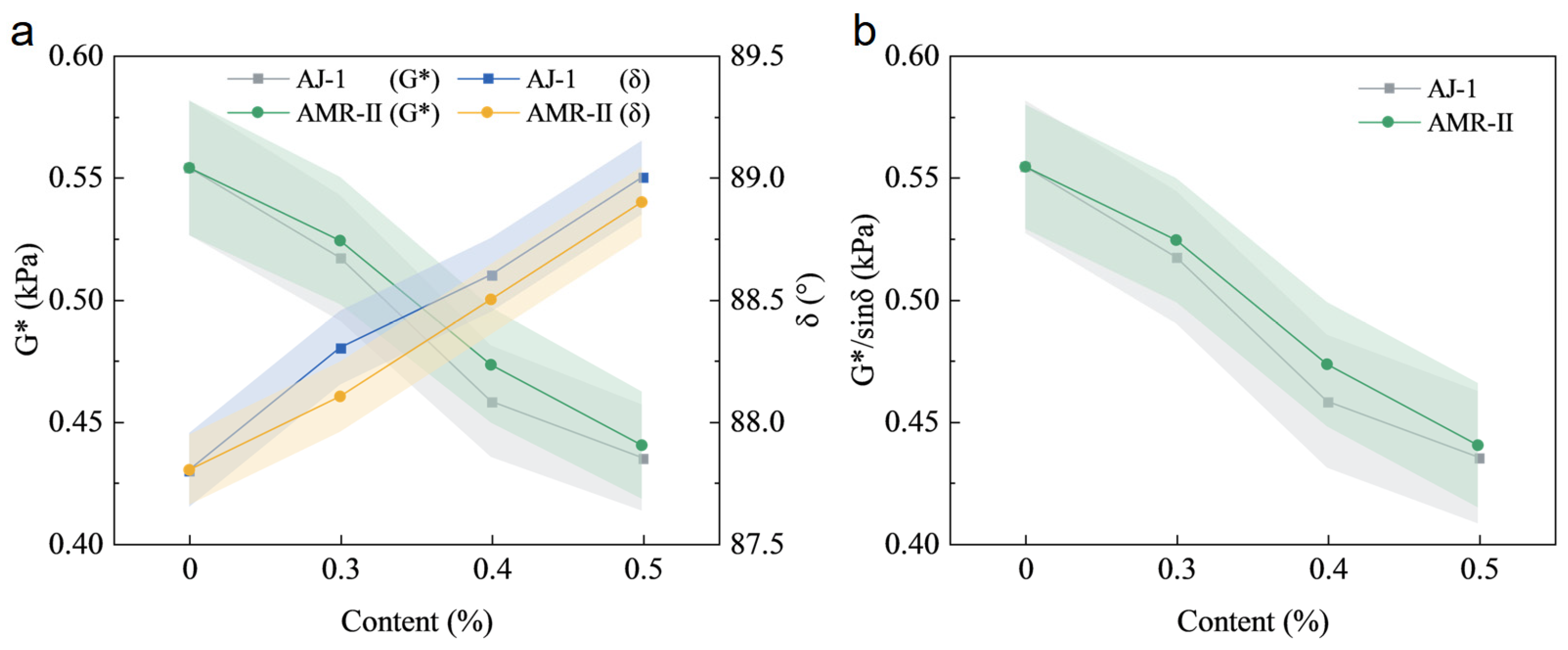
The phase angle is used to describe the relative proportions of elastic and viscous components in asphalt. As shown in
Figure 7, regardless of whether AJ-1 or AMR-II was added, the δ increased only slightly as the anti-stripping agent dosage increased. The increase was within 2°, and the overall change was small. In contrast, the G* showed a continuous decrease with increasing dosage. When the dosage reached 0.5%, the reduction was about 20%. This indicates that the addition of anti-stripping agents changed the viscoelastic composition of the asphalt to some extent. It increased the relative influence of the light components, weakened the elastic response, and enhanced the viscous response. At the same dosage, the G* of the AJ-1-modified WPA was always lower than that of the AMR-II-modified WPA. At a dosage of 0.4%, the former was 0.016 kPa lower than the latter. At the same time, the δ of AJ-1-modified WPA was slightly higher than that of AMR-II-modified WPA. Compared with AMR-II, AJ-1 had a stronger softening effect on the internal structure of the asphalt system, resulting in a more pronounced viscous response. The G*/sinδ further reflects the effect of anti-stripping agents on high-temperature performance. As the dosage increased, G*/sinδ continued to decrease. The reduction was relatively small at low dosages. At 0.3%, it decreased by only about 6%. When the dosage increased to 0.5%, the reduction exceeded 20%. This indicates that anti-stripping agents weakened the high-temperature deformation resistance of the WPA, and this negative effect became more pronounced as the dosage increased. This finding is consistent with the studies by Zhu et al. [
53] and Liu et al. [
17]. In addition, at the same dosage, the G*/sinδ of the AJ-1-modified WPA was consistently lower than that of the AMR-II-modified WPA. The maximum difference between them reached 0.0381 kPa. These results show that AJ-1 had a greater negative effect on the high-temperature stability of the WPA than AMR-II.
3.5. Anti-Aging Performance
3.5.1. Evaluation of Aging Performance
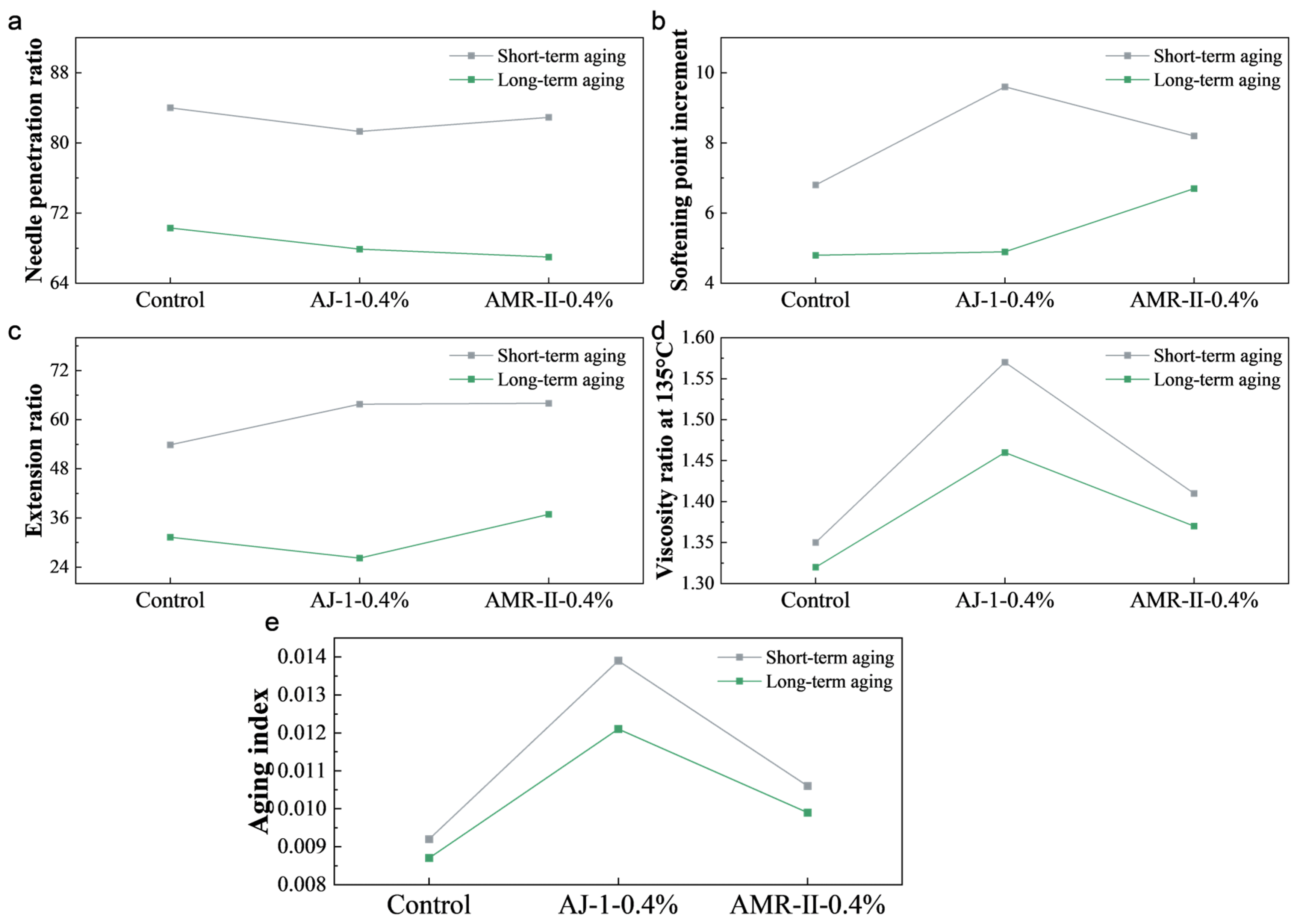
Figure 8 shows the penetration ratio at 25 °C, ductility ratio at 5 °C, increase in softening point, viscosity ratio at 135 °C, and aging index of the anti-stripping agent-modified WPA after aging. After the anti-stripping agents were added, the penetration ratio at 25 °C was lower than that of the WPA in all cases. The penetration ratio of the WPA was 84.0%, while those of the AJ-1- and AMR-II-modified WPA were 81.3% and 82.9%, respectively. This indicates that the addition of anti-stripping agents reduced the aging resistance of the asphalt and made it more susceptible to aging. The penetration ratio of the AMR-II-modified WPA was higher than that of the AJ-1-modified asphalt, indicating better aging resistance than the amine-based anti-stripping agent. Even so, the penetration values of the anti-stripping agent-modified WPA after aging were still higher than those of the WPA. Compared with the WPA, the ductility ratio decreased by 5.1% after AJ-1 was added, while it increased by 5.6% after AMR-II was added. This further indicates that AMR-II had a better anti-aging effect than AJ-1. After aging, the ductility of the asphalts containing anti-stripping agents was higher than that of the WPA. For example, the ductility of the AJ-1-modified WPA was 94.2 mm, which was 26.6 mm higher than that of the WPA. This suggests that anti-stripping agents helped improve the low-temperature ductility of asphalt after short-term aging.
In addition, after the anti-stripping agents were added, the increase in softening point caused by short-term aging was greater than that of the WPA. Taking AMR-II as an example, the increase in softening point was 6.7 °C, which was higher than the 4.8 °C of the WPA. This indicates that anti-stripping agents aggravated the deterioration of high-temperature performance after aging. After the anti-stripping agents were added, the aging index also increased. It rose from 0.0087 for the WPA to 0.0121 for the AJ-1-modified asphalt, an increase of 39.1%, while the increase for AMR-II was 13.8%. These results indicate that anti-stripping agents weakened the aging resistance of the asphalt, but the negative effect of AMR-II was smaller than that of AJ-1. The viscosity ratio results showed that, with the addition of anti-stripping agents, the viscosity ratio increased from 1.32 to 1.46, indicating a higher degree of aging. However, the viscosity of the anti-stripping-agent modified WPA after aging was still lower than that of the WPA. For example, the viscosity of the AJ-1-modified WPA was 1120 Pa·s, which was 20 Pa·s lower than that of the WPA. This indicates that the anti-stripping agent still had a certain effect after aging.
3.5.2. Mechanism Analysis
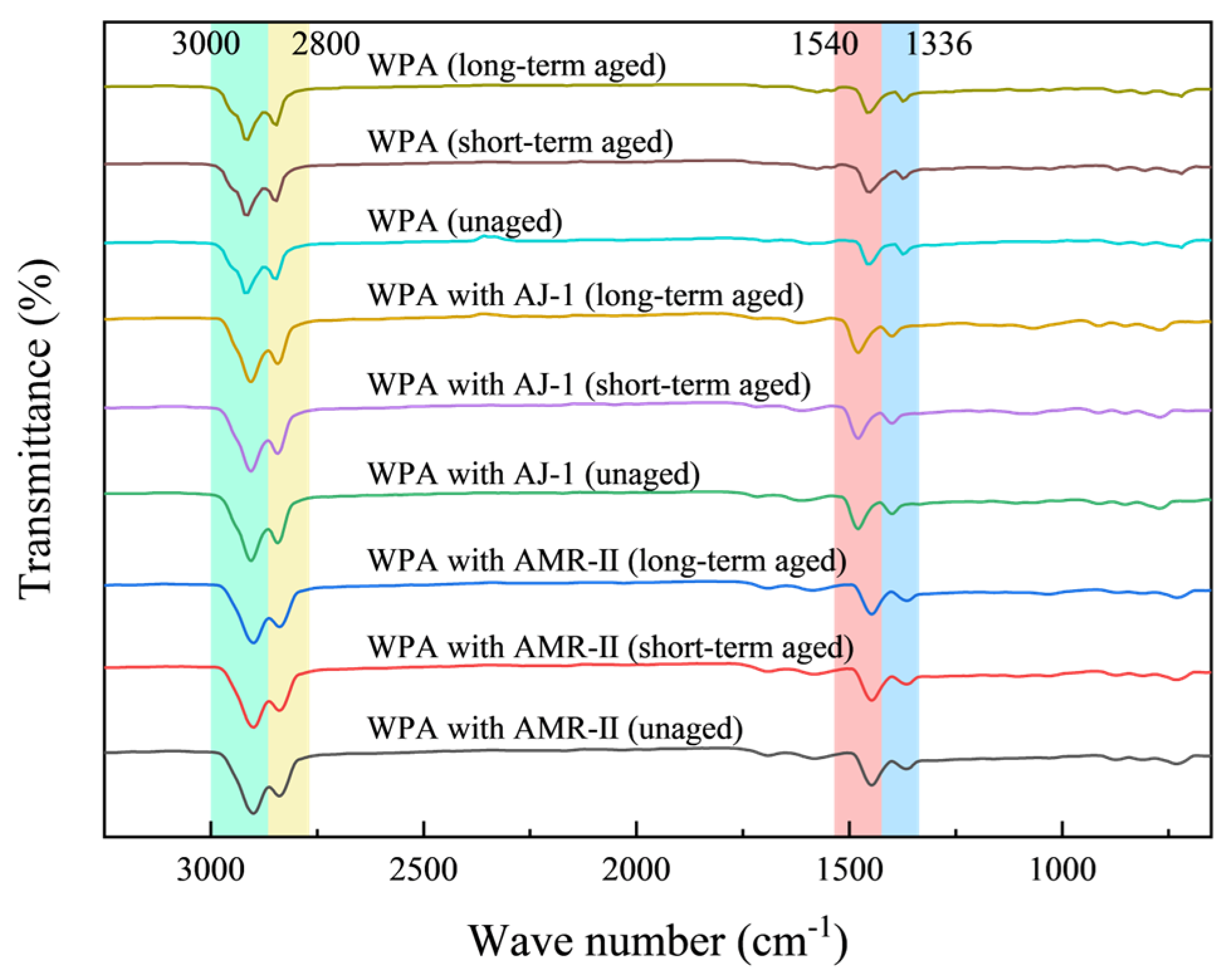
As shown in
Figure 9, the positions of the characteristic FTIR peaks were generally consistent among the asphalts modified with different anti-stripping agents, indicating that the main types of functional groups in the asphalt were not changed. The band at 910–650 cm
−1 is assigned to the out-of-plane C–H bending vibrations of aromatic rings. The peaks at 1376 and 1456 cm
−1 are attributed to methyl and methylene vibrations. The band near 1602 cm
−1 is associated with C=O stretching and partial C=C vibration. The peaks at 2847 and 2917 cm
−1 correspond to the stretching vibration of aliphatic C–H bonds. Aging was mainly reflected by changes in peak intensity. After short-term aging, the absorptions at 1602 and 1690 cm
−1 increased, while the alkyl absorption in the range of 3000–2800 cm
−1 decreased. This indicates a reduction in alkyl groups and an increase in oxygen-containing functional groups. After the addition of anti-stripping agents, these changes became more pronounced. In particular, the peak intensity of AMR-II increased near 1710 cm
−1, indicating an increase in C=O functional groups. The 910–650 cm
−1 band increased after short-term aging but decreased after long-term aging, indicating that aromatic C–H-related absorptions changed at different aging stages. This variation may be associated with changes in the relative content or substitution state of aromatic structures [
54,
55]. For AJ-1-modified WPA, the peak intensity in the range of 1400–1500 cm
−1 increased with aging, while the peak area near 2920 cm
−1 decreased, indicating noticeable changes in methyl, methylene, and aliphatic C–H-related structures during aging.
The evolution of functional groups was quantitatively evaluated by the ratio of the characteristic peak area to the total spectral area. The ranges of 981–1103 cm
−1 and 1680–1700 cm
−1 were selected to characterize changes in sulfoxide and carbonyl groups, respectively. The results were shown in
Table 5. It can be seen that both indices increased during short-term aging for all samples. During long-term aging, the carbonyl index decreased, whereas the sulfoxide index continued to increase. The anti-stripping agents amplified these changes. For the 981–1103 cm
−1 index, the increase was only 0.76 for the WPA, but reached 1.17 and 1.16 for the AJ-1- and AMR-II-modified WPA, respectively. For the 1680–1700 cm
−1 index, the change was 0.24 for the WPA, compared with 1.30 and 0.57 for AJ-1 and AMR-II, respectively. These results indicate that anti-stripping agents accelerate asphalt aging, and the amine-based AJ-1 shows a stronger promoting effect than AMR-II. Overall, asphalt oxidation was concentrated mainly in the short-term aging stage, while the aging rate slowed during long-term aging.
3.6. Statistical Analysis
To assess the statistical significance of the effects of AJ-1 and AMR-II on WPA performance, one-way analysis of variance (ANOVA) was performed on the key parameters, including POTS, penetration, softening point, S-value, m-value, complex modulus and phase angle. Tukey’s honestly significant difference (HSD) test was then used for post hoc comparisons among groups. Differences were considered statistically significant at the 95% confidence level when the p-value was less than 0.05.
Table 6 presents the mean differences and
p-values obtained from Tukey’s HSD test. When WPA was compared with the AJ-1- and AMR-II-modified WPA groups, and when the AJ-1- and AMR-II-modified asphalt groups were compared with each other, the
p-values were below 0.05. This indicates statistically significant differences in asphalt performance. The mean difference was used to quantify the degree of difference between WPA and the other groups, as well as between AJ-1- and AMR-II-modified WPA. Notably, AJ-1 and AMR-II had the most pronounced effects on the S-value, phase angle, POTS, and softening point.
4. Conclusions
In this study, two anti-stripping agents, AJ-1 and AMR-II, were incorporated into WPA to enhance the interfacial bonding between the binder and aggregate. DSR, BBR, RTFOT, PAV, and FTIR tests were used to evaluate the high- and low-temperature rheological properties and aging resistance of the binders. The main findings are as follows:
- (1)
The addition of anti-stripping agents improved the low-temperature ductility of waste plastic-modified asphalt but increased its temperature susceptibility and weakened its high-temperature stability. Compared with AJ-1, AMR-II caused a smaller loss in high-temperature performance while maintaining the low-temperature modification effect, and therefore showed better overall applicability.
- (2)
Both AJ-1 and AMR-II reduced the high-temperature rheological performance of WPA. As the dosage increased, the phase angle showed a slight increase, whereas the complex modulus and rutting factor decreased markedly. When the dosage reached 0.5%, the reductions in G* and G*/sinδ both exceeded 20%. At the same dosage, the G* and G*/sinδ values of AJ-1-modified WPA were lower than those of AMR-II-modified WPA, with the maximum difference reaching 0.0381 kPa, indicating that AJ-1 had a stronger adverse effect on high-temperature deformation resistance than AMR-II.
- (3)
With increasing anti-stripping agent dosage, the low-temperature creep stiffness S generally decreased, and the creep rate m increased, suggesting that the anti-stripping agents reduced low-temperature brittleness and improved stress relaxation capacity. AMR-II showed a more continuous and stable improvement trend under all low-temperature conditions, and its low-temperature modification effect became more pronounced than that of AJ-1 when the dosage exceeded 0.4%.
- (4)
Waste plastic modification reduced the interfacial adhesion between asphalt and both limestone and granite, whereas the anti-stripping agents significantly restored and enhanced the interfacial adhesion. The limestone system consistently performed better than the granite system, and AMR-II was superior to AJ-1 in improving both the residual coating ratio and pull-off strength.
- (5)
Although the anti-stripping agents did not change the main types of functional groups in asphalt, the FTIR results showed more pronounced changes in carbonyl- and sulfoxide-related peak areas after aging, indicating increased aging sensitivity of the modified WPA. As a result, the penetration ratio became lower than that of WPA, the aging index increased from 0.0087 to 0.0121, and the viscosity ratio rose from 1.32 to 1.46. AJ-1 showed a more pronounced negative effect on aging resistance, whereas AMR-II had a relatively smaller impact and still maintained better low-temperature ductility and adhesion performance after aging.
Overall, this study preliminarily revealed the effects of two liquid anti-stripping agents on the binder properties of WPA and WPA–aggregate interfacial adhesion. AMR-II at a dosage of 0.4% provided stronger adhesion enhancement while maintaining a better balance of binder performance, indicating greater potential for engineering applications. However, owing to limitations in experimental variables, material types, and characterization methods, the dispersion stability of WPA, mixture-level moisture damage resistance, and the corresponding multiscale mechanisms have not yet been fully investigated. Future research will focus on three aspects: (1) evaluating the dispersion uniformity and phase-separation behavior of WPA, and verifying the water stability and overall pavement performance of anti-stripping-agent-modified WPA mixtures through Hamburg wheel tracking tests; (2) using contact angle measurements, Atomic Force Microscopy, SARA fractionation, and molecular dynamics simulations to reveal the mechanisms by which anti-stripping agents affect interfacial wetting, adsorption, aging, and moisture competition in WPA at micro- and molecular scales; (3) expanding the material systems and service environments by considering different waste plastic types, anti-stripping agent systems, aggregate mineral compositions, and dosage combinations, as well as complex environmental conditions such as salt erosion, acid rain, wet–dry cycles, and thermal–oxidative aging, to improve the generality and engineering applicability of the findings.