


Abstract
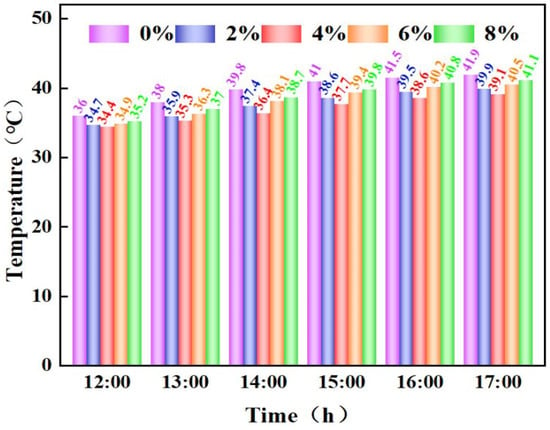
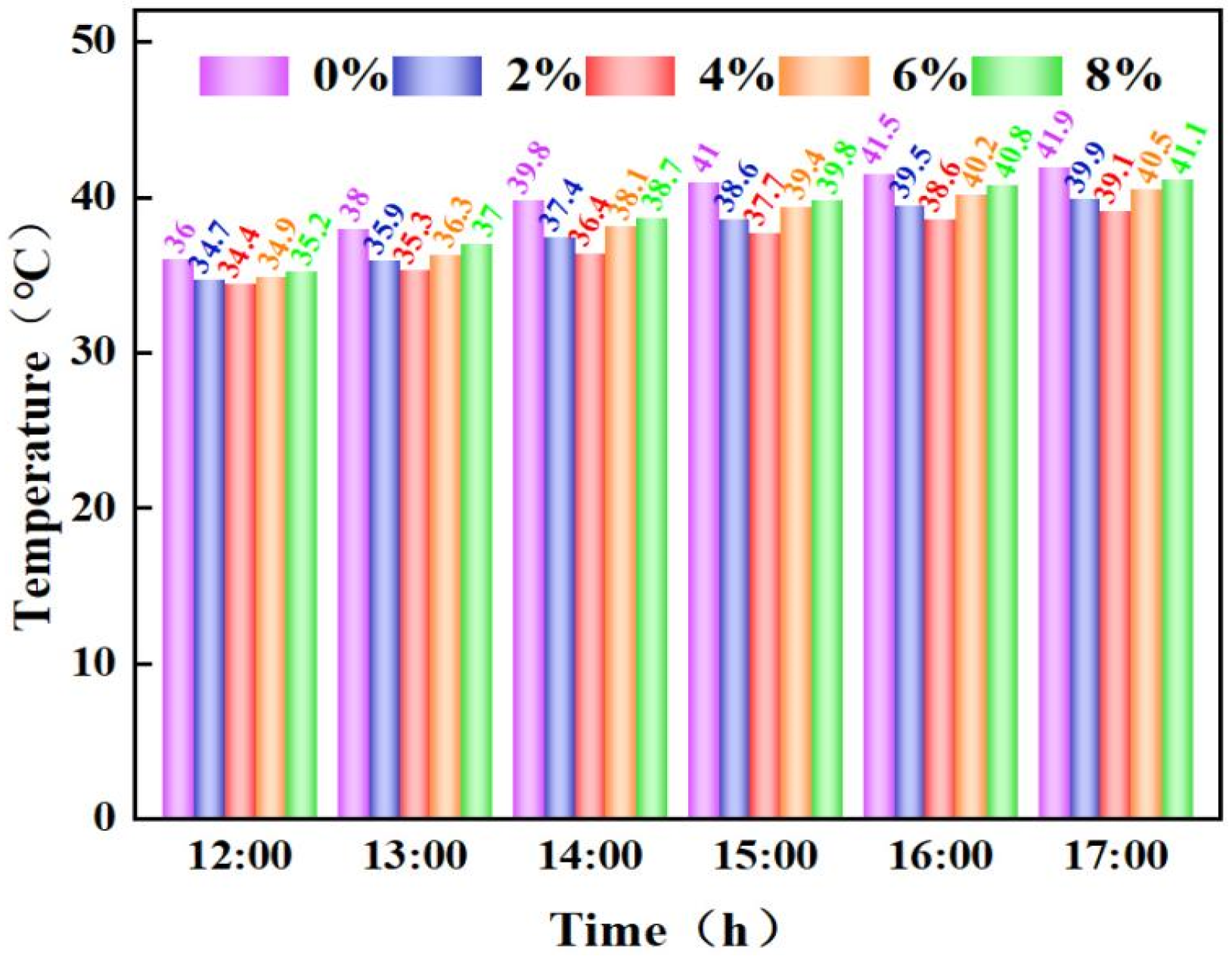
This study developed a nano-TiO2 modified emulsified asphalt, and the effects of varying dosages of nano-TiO2 on the performance of emulsified asphalt were systematically investigated. The photocatalytic performance of nano-TiO2 modified emulsified asphalt was evaluated through NOx degradation assessment using a self-developed device. Results showed that after adding nano-TiO2, the high-temperature stability and aging resistance of the modified emulsified asphalt had improved. Specifically, when the TiO2 content ranged from 4% to 6%, the surface temperature of the photocatalytic fog seal layer decreased by 2.0 °C. At 4% TiO2 content, the cumulative degradation efficiencies of NO and NO2 reached 50% and 70%, respectively. When the fog seal layer spraying amount was set at 300 g/m2, the pavement performance met the required standards. Overall, nano-TiO2 photocatalytic materials simultaneously enhance the physical properties of asphalt and its environmental benefits, providing a promising solution for the development of multifunctional pavement materials.
1. Introduction
Based on the demand for environmental protection and green ecological road construction, nanomaterials have been gradually introduced into road engineering and successfully applied in various ecological road constructions, both domestically and internationally [1,2,3,4,5,6]. The advantages and future development directions of binary oxide ceramics in solar cells have been clearly defined [7]. Among these nanomaterials, nano-TiO2 can absorb and reflect sunlight across different wavelengths, thereby enhancing the physical properties of asphalt and significantly improving asphalt pavement performance.
Ortelli S et al. modified the surface of nano-TiO2 by coating it with a silica (SiO2) matrix to achieve the dual goals of reducing the risk of ROS generation and improving the photocatalytic denitrification (NOx) performance, and verified the feasibility of the “molecular design safetyization (SbD)” strategy [8]. Zhong et al. added varying proportions of nano-TiO2 to emulsified asphalt to prepare a coating applicable to asphalt pavement. Field tests revealed that higher nano-TiO2 content resulted in better cooling effects of the coating [9]. Ayar et al. incorporated nano-TiO2 into asphalt mixtures, finding that its high specific surface area effectively increased asphalt viscosity and reduced rutting and permanent deformation under high-temperature conditions [10]. Another study showed that adding 1%–7% nano-TiO2 and 0.4%–2.8% nano-SiO2 to 60/70 asphalt increased asphalt viscosity, reduced elasticity, increased complex shear modulus, decreased phase angle, enhanced permanent deformation resistance, and improved high-temperature performance [11]. Shafabakhsh et al. prepared modified asphalt mixtures with different nano-TiO2 contents to explore their influence on asphalt mixture performance. Test results indicated that, compared to traditional asphalt mixtures, nano-TiO2 incorporation significantly improved permanent deformation resistance and fatigue life under high-temperature conditions [12].
Moreover, combining nano-TiO2 with asphalt pavement materials not only enhances anti-aging and high-temperature performance but also effectively degrades pollutants due to its excellent photocatalytic absorption of ultraviolet light. Tang et al. systematically reviewed the research progress of TiO2 in photocatalytic treatment of cement and asphalt, focusing on the environmental purification function, and providing a direction for the development of low-carbon and green building materials [13]. Fan et al. developed C-TiO2 suspensions sprayed on asphalt rutting plates, showing superior NOx degradation compared to P25 [14]. Jin et al. prepared TiO2-MMT (T/M) composite photocatalytic materials via sol–gel methods, demonstrating improvements in aging resistance, high-temperature rheology, and tail gas degradation performance [15]. Li et al. prepared TiO2@SiO2 composite photocatalytic materials by sol–gel method and made them into photocatalytic coatings to evaluate the degradation efficiency of NO and Rhodamine B. When the content of TiO2@SiO2 was 7%, the degradation rates of NO and Rhodamine B by the photocatalytic coating were the highest, reaching 0.17% and 32.94% respectively [16].
In this paper, based on the characteristics of sprayed asphalt pavements, a photocatalytic fog sealing material was prepared by dispersing nano-TiO2 into emulsified asphalt. This approach enhances the interface bonding force of emulsified asphalt, improves high-temperature resistance and anti-aging performance, and helps maintain road integrity by preventing cracking and rutting. Additionally, the microporous structure formed during emulsification increases the contact between photocatalytic materials and polluted gases, thereby improving photocatalytic degradation efficiency and reducing air pollution [17,18,19,20].
2. Materials and Experiment
2.1. Materials
Nano-TiO2 was prepared using the sol–gel method in this study [21]. The reagents used, including anhydrous ethanol, tetrabutyl titanate, deionized water, and hydrochloric acid, were all supplied by Sinopath Group Chemical Reagent Co., Ltd. (Shanghai, China). Nano-TiO2 appears as a white powder. Its main component is a mixed crystal composed of anatase and rutile. The XRD spectrum of it is presented in the Supporting Information (Figure S1), and its physical and chemical properties are shown in Table 1. The dispersant sodium oleate of analytical purity was provided by Sinopharm Chemical Reagent Co., Ltd. (Shanghai, China). The emulsifier SQ-M3 was produced by Jinan Shengquan Group Co., Ltd. (Jinan, China), and the asphalt used was the 70# matrix asphalt from the Jingbo brand (Binzhou, China). The main technical specifications of these raw materials are summarized in Table 2, Table 3 and Table 4.
Table 1.
Main physical and chemical properties of nano-TiO2.
Table 2.
Main technical indicators of sodium oleate.
Table 3.
Basic technical specifications of SQ-M3 emulsifier.
Table 4.
The basic technical specifications of the 70# asphalt.
2.2. Preparation of TiO2 Modified Emulsified Asphalt
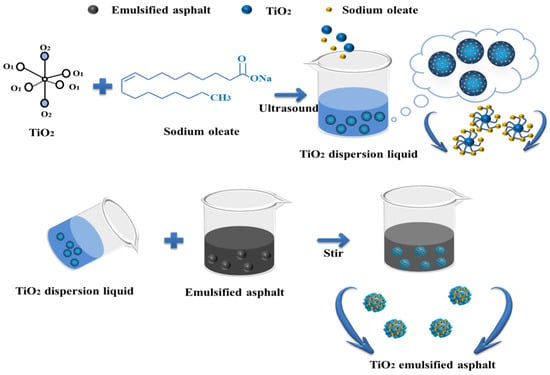
The preparation flow chart of nano-TiO2 modified emulsified asphalt is shown in Figure 1. The typical preparation process is as follows: (1) The Preparation of Soap Liquid: Weigh the emulsifier SQ-M3 with different mass fractions (0.4%, 0.6%, 0.8%, 1.0%), mix it with water in a 500 mL beaker, heat, and stir until the temperature reaches approximately 70 °C, and maintain this temperature to complete the soap liquid preparation. (2) The Preparation of Asphalt: Place 70# base asphalt into an oven set at 140 °C, heat until fully molten, and store for later use. (3) The Preparation of Emulsified Asphalt: Pour the prepared soap liquid into a colloid mill and shear for 1 min. Slowly add the molten matrix asphalt at 140 °C (the mass ratio of matrix asphalt to soap liquid is 50:50), and continue shearing for an additional 3 min after blending to produce finely dispersed cationic emulsified asphalt. (4) The Preparation of nano-TiO2 Dispersion Solution: Weigh nano-TiO2 with different mass fractions, prepare a dispersant solution using sodium oleate at 50% of the TiO2 mass fraction, and ultrasonicate for 20 min (detailed explanations can be found in Supporting Information Figure S2). (5) The Preparation of Modified Emulsified Asphalt: Incorporate nano-TiO2 dispersions with different mass fractions (2%, 4%, 6%, 8%) into the prepared emulsified asphalt, stir thoroughly to ensure even distribution, and disperse evenly to prepare the nano-TiO2 modified emulsified asphalt [22,23].
Figure 1.
Preparation flow chart of nano-TiO2 modified emulsified asphalt.
2.3. Preparation of Fog Sealing Layer of TiO2 Modified Emulsified Asphalt
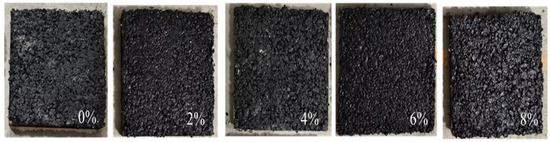
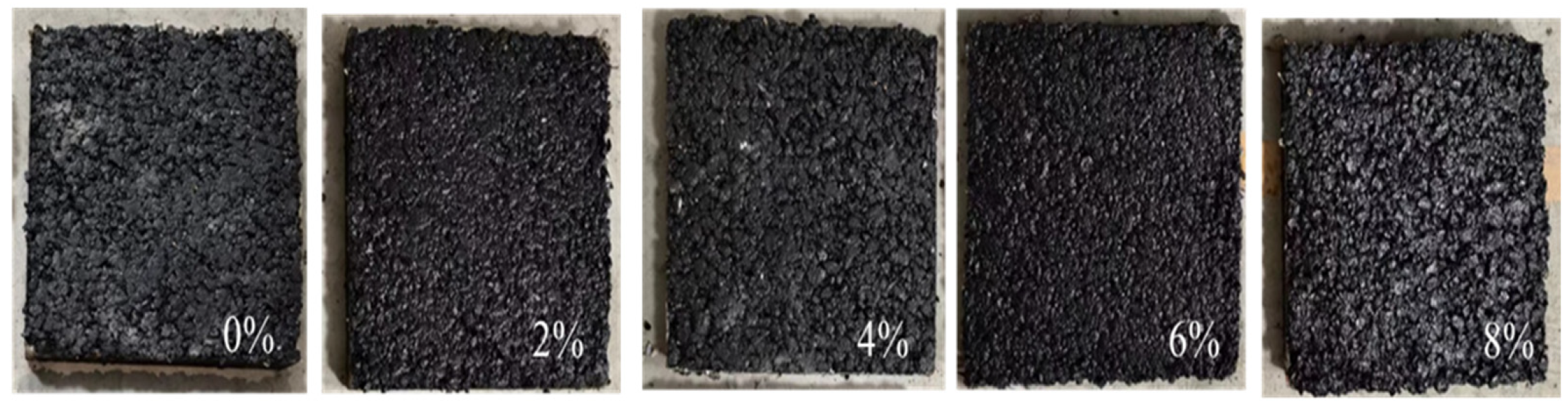
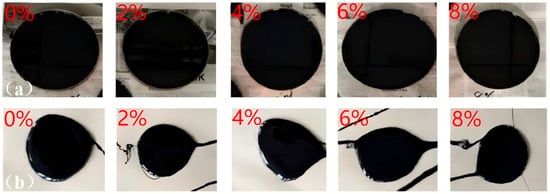
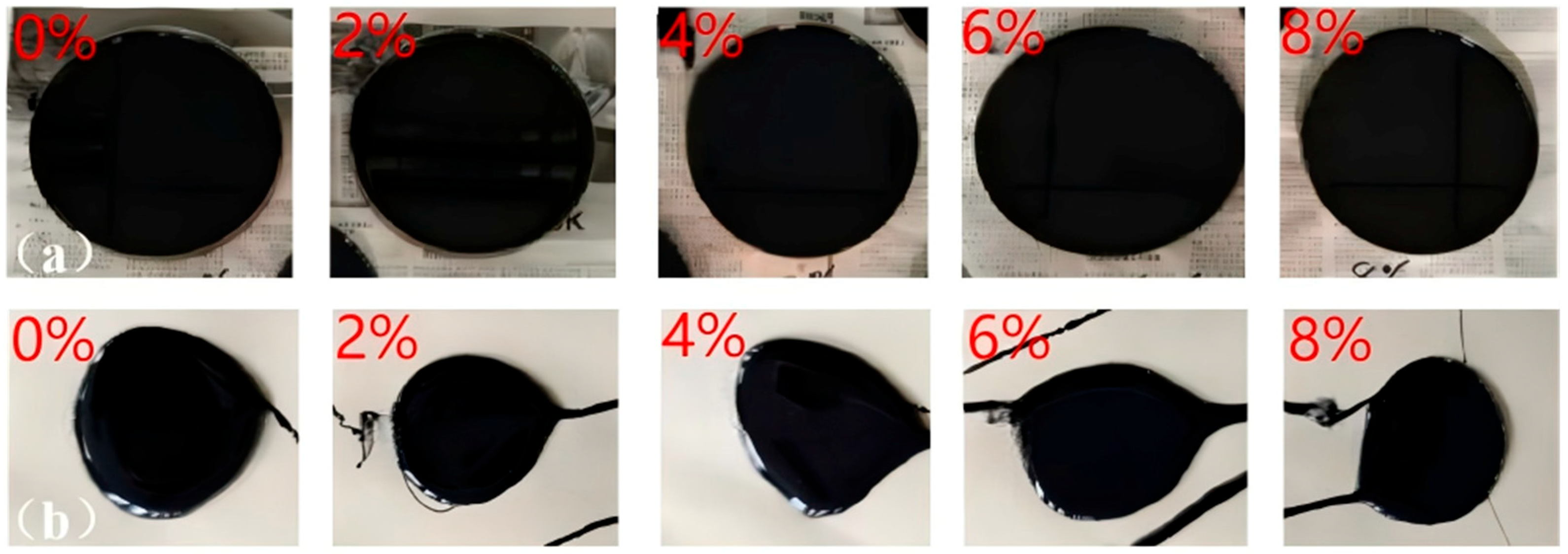
The preparation process of the nano-TiO2 modified emulsified asphalt fog seal layer is as follows: The detailed preparation process comprises the following steps: (1) The Preparation of Asphalt Mixture: Adjust the temperature of the mixing pot to 160 °C. Place the aggregate in the mixing pot and dry mix for 90 s. Add lignin fiber to the mixing pot and dry-mix for an additional 90 s. After ensuring the aggregate and lignin fiber are evenly mixed, add the asphalt and mix for 90 s. Finally, add the mineral powder and mix for another 90 s. Once the asphalt and other minerals are fully mixed, transfer the fully blended mixture into the rutting plate mold and compact it using a rutting compactor. (2) The Preparation of the Modified Emulsified Asphalt Fog Seal Layer: Uniformly apply nano-TiO2-modified emulsified asphalt (with mass fractions of 0%, 2%, 4%, 6%, and 8%) onto the surface of a 300 mm × 300 mm SMA-13 rutting plate onto the surface of a 300 × 300 mm SMA-13 rutting plate. Allow the coated specimen to cure in a well-ventilated area at ambient temperature until fully dried. The specimens of modified emulsified asphalt fog seal coat after curing are shown in Figure 2.
Figure 2.
Sample of photocatalytic fog seal.
2.4. Investigation Methods of Modified Emulsified Asphalt
2.4.1. Routine Physical Property Test
The conventional physical performance tests of nano-TiO2-modified emulsified asphalt were carried out in accordance with the “Standard Test Methods of Bitumen and Bituminous Mixtures for Highway Engineering” (JTG E20-2011) [24]. The specific test procedures followed were T0651-1993 and T0655-1993 to measure the evaporation residue content and storage stability.
The anti-aging performance was evaluated through thermal-oxidative aging tests according to the T0610-2011 test method. Short-term aging experiments were performed on the evaporation residue of emulsified asphalt using an SDY-3061-type asphalt rotary film oven (Cangzhou Changzhi Construction Instrument Co., Ltd., Cangzhou, China). The samples utilized in these tests are illustrated in Figure 3a.
Figure 3.
(a) short-term aging test sample (b) high temperature rheological test sample.
2.4.2. DSR Test
High-temperature rheological properties were measured using a Gemini 200 ADS dynamic shear rheometer (DSR) (Malvern Panalytical, Shanghai, China), following the ASTM D7175 test method to perform a temperature sweep on the modified emulsified asphalt before aging. Figure 3b shows the samples of the evaporated residue of nano-TiO2-modified emulsified asphalt that were tested.
2.5. Road Performance Evaluation of Fog Sealing Layer
2.5.1. Anti-Skid Performance Test
The sliding resistance of the nano-TiO2 photocatalytic fog seal layer on asphalt pavement at varying dosages was assessed through friction coefficient measurements and surface structure depth analysis. The surface structure depth was determined using the T0731-2000 method from the “Standard Test Methods of Bitumen and Bituminous Mixtures for Highway Engineering” [24]. The friction coefficient was measured using a pendulum type tribometer according to the T0964-2008 method in the “Field Test Regulations for Highway Subgrade and Pavement” [25].
2.5.2. Water Penetration Performance Test
To investigate the effect of varying nano-TiO2 content on the impermeability of the photocatalytic fog seal layer, tests were conducted using the T0730-2011 method from the “Standard Test Methods of Bitumen and Bituminous Mixtures for Highway Engineering” [24].
2.5.3. Pavement Cooling Performance Test
A field simulation experiment was designed to validate the temperature-reduction efficacy of the photocatalytic fog seal layer on asphalt pavement. Rut plates coated with the photocatalytic fog seal layer were placed under outdoor sunlight to simulate real-world conditions. The test was conducted on 24 June, with ambient temperatures exceeding 30 °C, and the measurement period was from 12 p.m. to 5 p.m.
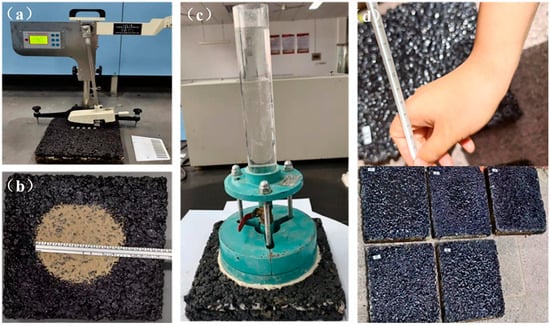
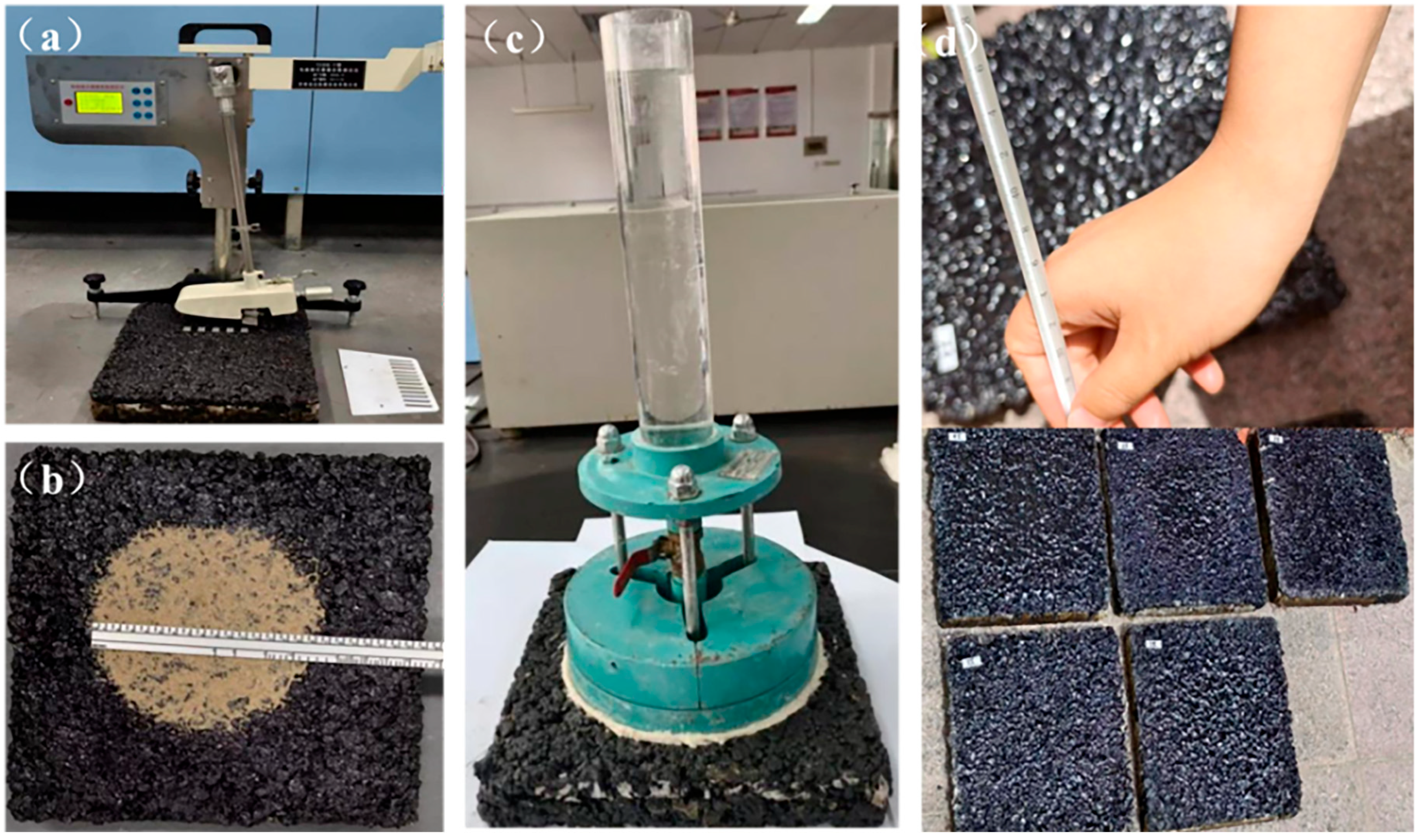
The experimental configurations for evaluating the road performance of the modified emulsified asphalt fog seal layer are systematically summarized in Figure 4.
Figure 4.
(a) Friction coefficient test; (b) structural depth test; (c) seepage coefficient test; (d) pavement cooling effect test.
2.5.4. Evaluation of Photocatalytic Performance of Fog Seal Layer
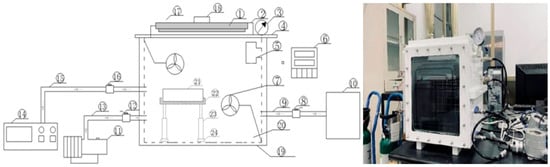
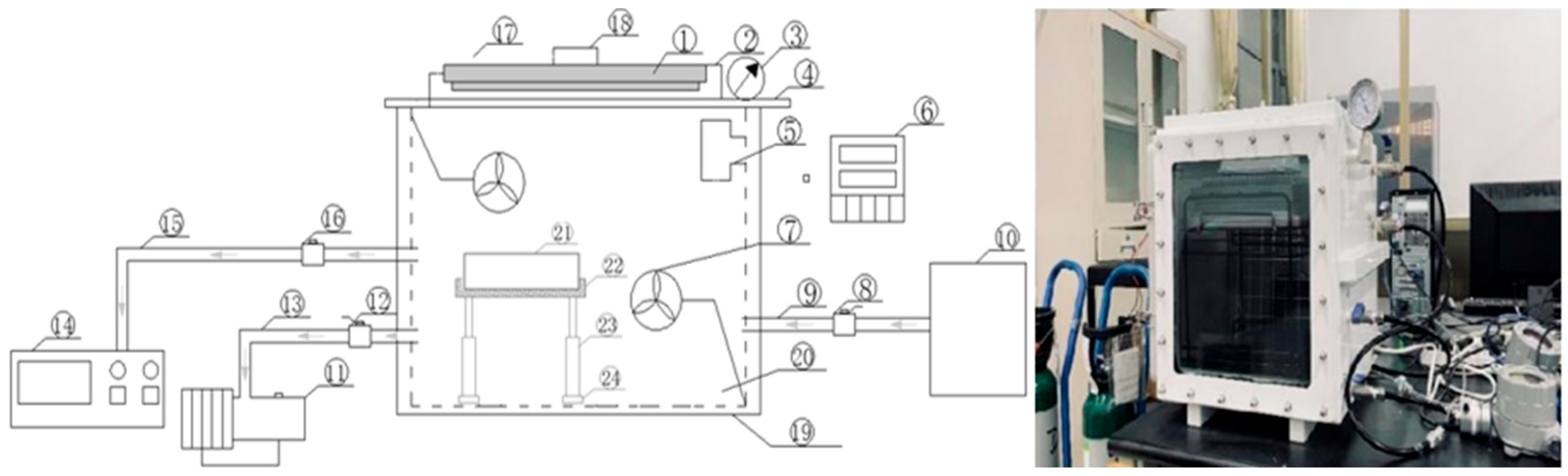
This experiment utilized a self-developed photocatalytic exhaust gas degradation device. The degradation device includes: (1) an ultraviolet lamp, (2) a lamp holder, (3) a negative pressure gauge, (4) sealing cover, (5) an air heating device, (6) a temperature controller, (7) a fan, (8) a tail gas intake valve, (9) a tail gas intake pipe, (10) a tail gas container, (11) a vacuum pump, (12) an air extraction valve, (13) an air extraction pipe, (14) a tail gas analyzer, (15) a tail gas outlet pipe, (16) a tail gas outlet valve, (17) wire, (18) a light source controller, (19) a reaction chamber container, (20) a tail gas reaction chamber, (21) photocatalytic coating, (22) a specimen slot, (23) an elevating bracket, (24) and a fixed bracket. The photocatalytic degradation device has a volume of approximately 40 L, utilizing a UV lamp with a wavelength of 365 nm. The UV irradiation intensity is stabilized at 26 W/m2 by voltage adjustment. Testing was conducted at room temperature, with initial NO/NO2 concentrations around 25 ppm. As illustrated in Figure 5, to evaluate the photocatalytic performance of the TiO2-modified emulsified asphalt fog seal layer based on the degradation rates of NO and NO2. The specific evaluation indicators are outlined as follows [26].
Figure 5.
Illustration of the photocatalytic degradation reaction system utilized in the study.
- (1)
- Cumulative degradation rate
In the formula, e is the cumulative degradation rate, %; C0 is the initial gas concentration, ppm; and Ct is the gas concentration at time t, ppm.
- (2)
- Immediate degradation rate
In the formula, pt represents the instantaneous degradation rate of the photocatalytic fog seal layer at time t; CBlank,t is the gas concentration of the blank control group at time t; and CTest,t is the gas concentration of the experimental group at time t.
- (3)
- Average value of immediate degradation rate
In the formula, Pt-AVE represents the average degradation rate of the photocatalytic fog sealing layer; and Ck + Ck+1 + Ck+2 +……+ Cn represents the instantaneous degradation rates of the photocatalytic fog sealing layer at moments k, k + 1, k + 2, …, n, respectively.
Furthermore, to detect whether nitrate ions are generated during the degradation of NOx, 20 mL of deionized water was placed in a Petri dish prior to the start of the experiment. Nitrate ions are colorless and soluble in water. If nitrate ions are produced during the experiment, they can be identified using ultraviolet absorption spectroscopy.
3. Results and Discussion
3.1. Performance Analysis of TiO2 Modified Emulsified Asphalt
3.1.1. Evaporation Residue Content
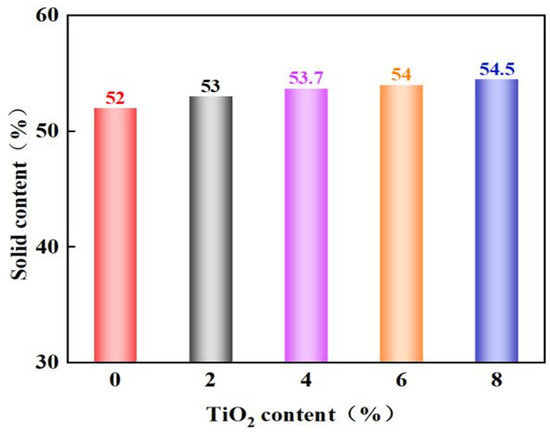
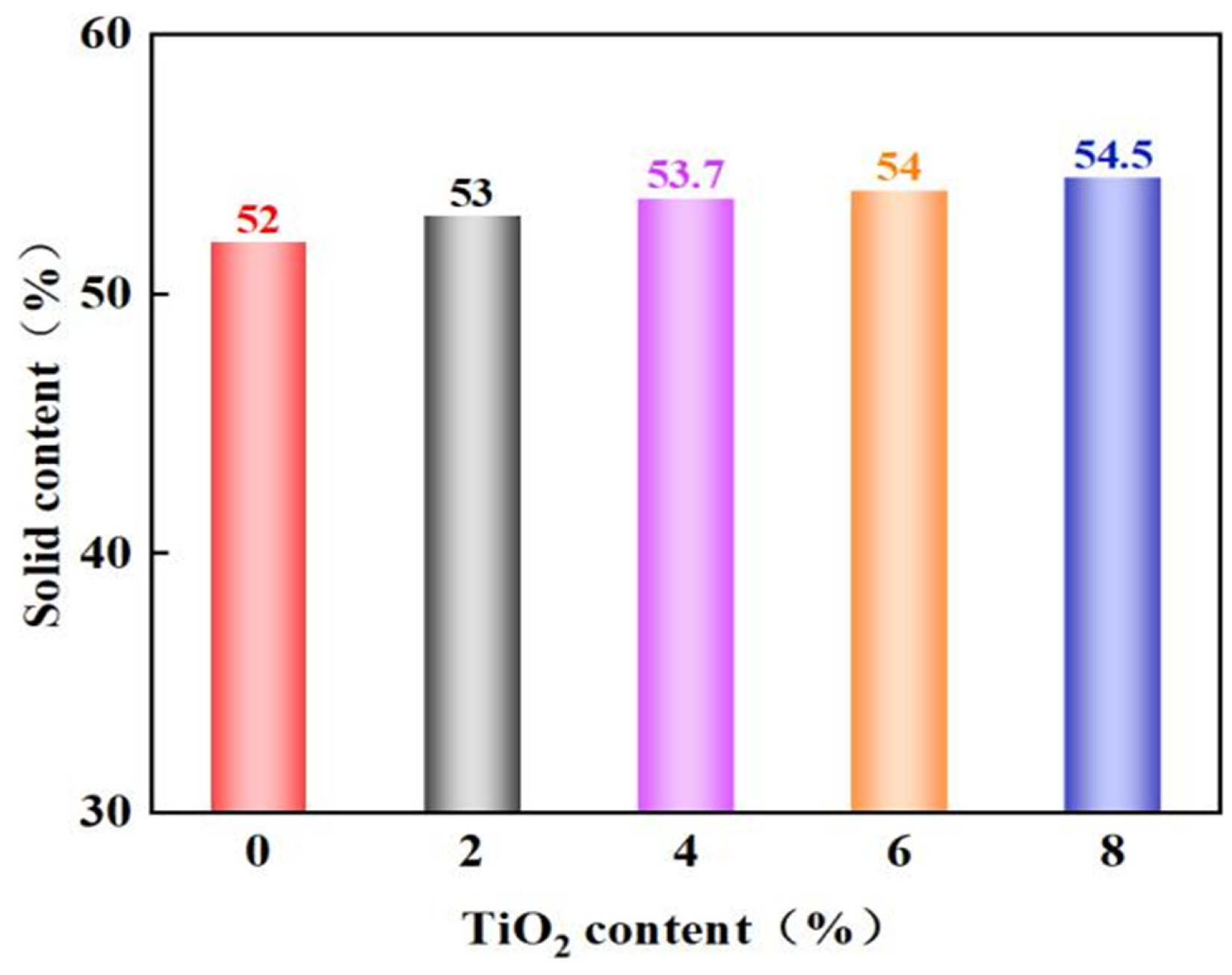
The evaporation residue content is a critical parameter influencing the performance of emulsified asphalt. According to the specifications, the evaporation residue content for medium split cationic modified emulsified asphalt must not be less than 50%. Figure 6 illustrates the evaporation residue content of modified emulsified asphalt with varying TiO2 concentrations. As shown in the figure, an increase in nano-TiO2 content leads to higher evaporation residue content and viscosity, thereby enhancing the storage stability of the emulsified asphalt. However, excessive nano-TiO2 content results in increased residue on the 1.18 mm sieve, destabilizing the oil-in-water structure of the emulsified asphalt and leading to diminished stability. This is attributed to the nano-scale nature of TiO2, which has low specific gravity and high specific surface area, causing it to adsorb asphalt particles and increase viscosity. When the concentration exceeds the optimal level, it not only increases the residue on the sieve but also adversely affects performance and increases costs [27].
Figure 6.
Evaporation residue content of modified emulsified asphalt.
3.1.2. Three Indexes
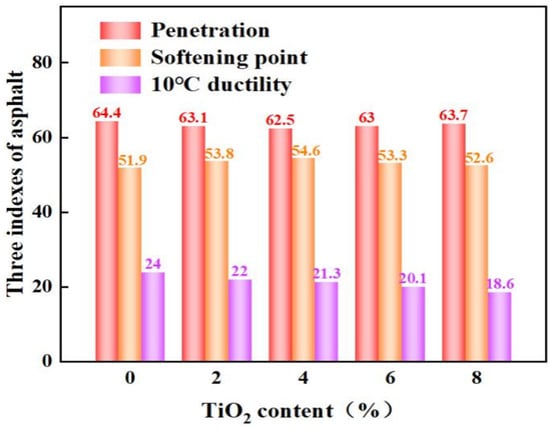
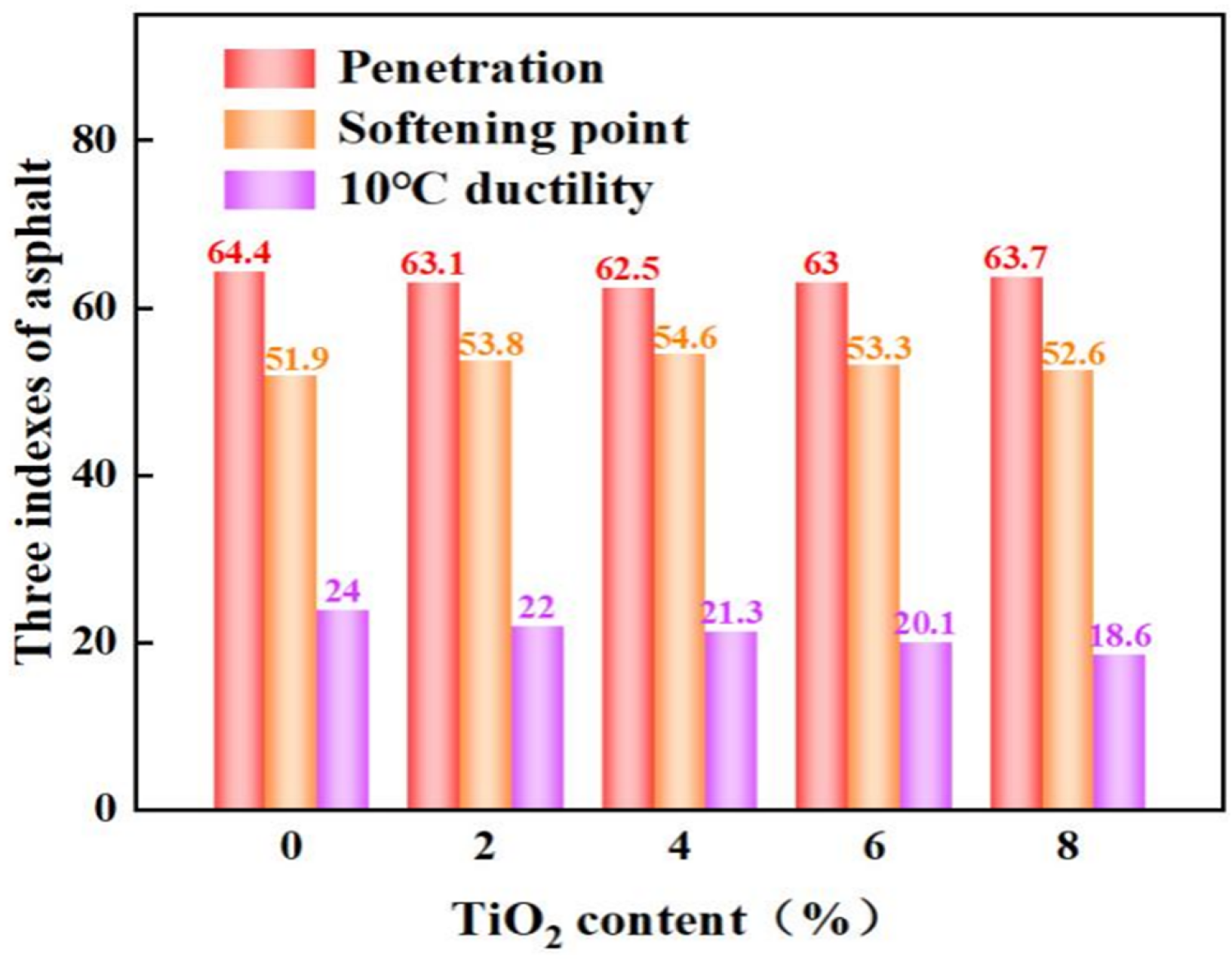
Three indices can evaluate the quality and performance of asphalt: penetration, softening point, and ductility. Penetration reflects the consistency of asphalt, the softening point indicates its high-temperature performance, and ductility measures its low-temperature flexibility.
Figure 7 presents the test results for three indicators of the evaporation residue from modified emulsified asphalt with varying TiO2 contents. As shown in the figure, the needle penetration values are 4% < 2% < 6% < 8% < 0%, the softening points follow the trend 4% > 2% > 6% > 8% > 0%, and the ductility decreases in the order 0% > 2% > 4% > 6% > 8%. Notably, at a TiO2 content of 4%, there is an inflection point where penetration initially decreases and then increases, while the softening point first increases and then decreases. Ductility consistently decreases throughout, indicating that TiO2 addition significantly alters asphalt performance.
Figure 7.
Three indexes of evaporated residue of modified emulsified asphalt.
The aforementioned phenomenon can be attributed to the fact that the addition of nanomaterials alters the viscosity of emulsified asphalt, leading to its increased rigidity. Additionally, nanomaterials possess a large specific surface area and strong surface activity, leading to enhanced adsorption of asphalt components. This reduces light fractions in the asphalt, alters its temperature sensitivity, and consequently improves high-temperature performance while diminishing low-temperature performance [27].
3.1.3. Storage Stability
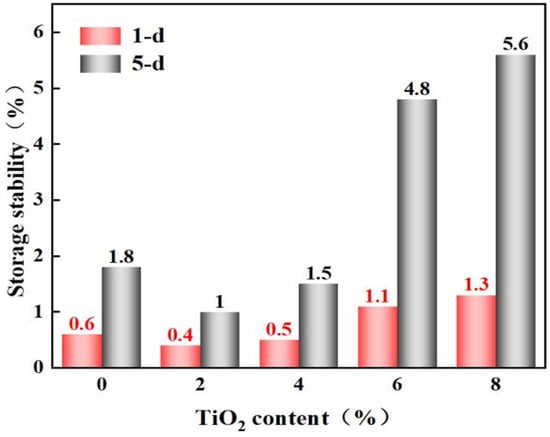
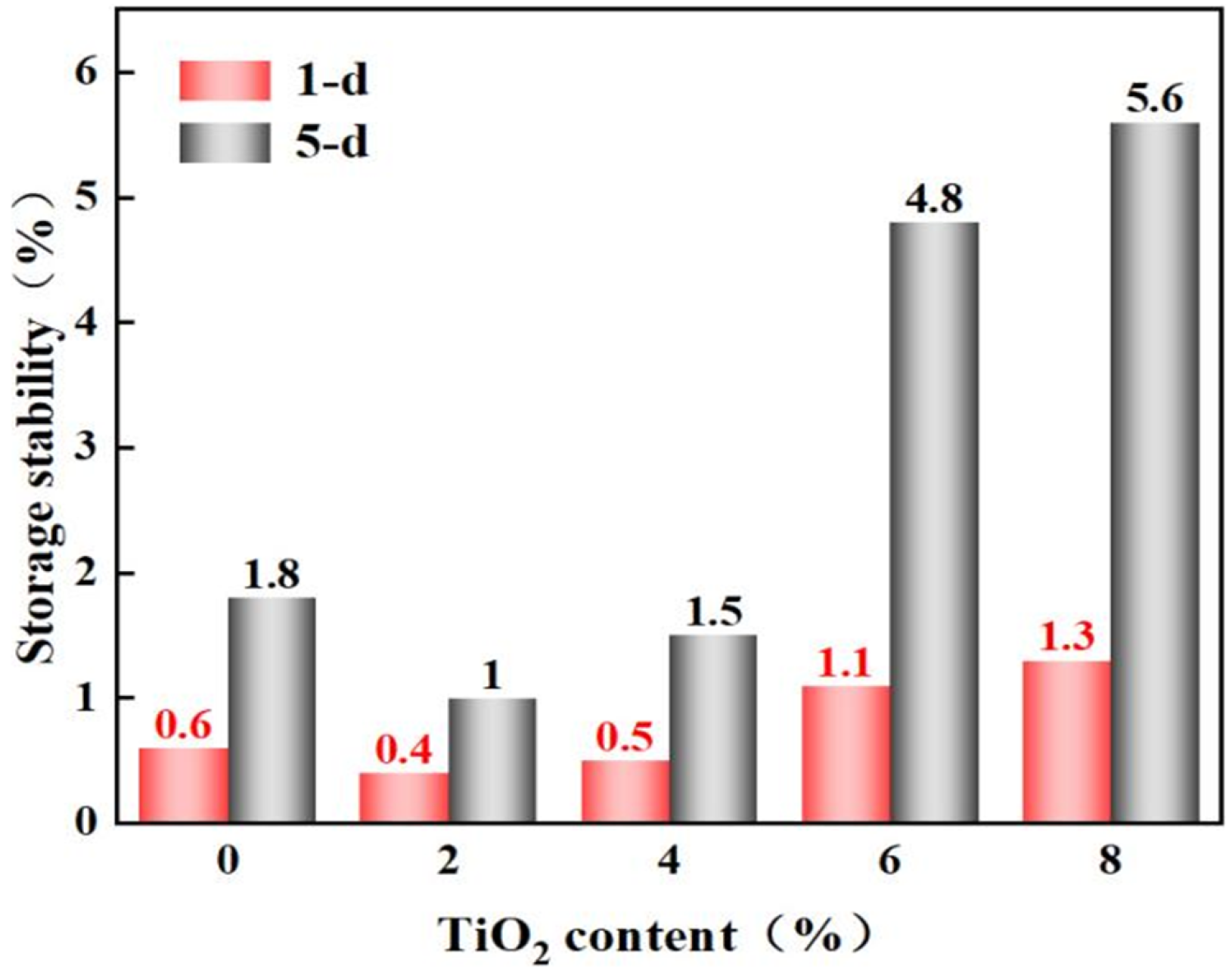
Figure 8 shows the storage stability of modified emulsified asphalt after 1 day and 5 days. As can be seen from the figure, within a certain range of nano-TiO2 content, it can improve the storage stability of emulsified asphalt. However, when the content exceeds a certain range, the storage stability will deteriorate. When the content of TiO2 is 6% and 8%, the storage stability after 1 day is greater than 1%, and the storage stability after 5 days is greater than 5% (the corresponding photos are presented in Supporting Information Figure S3). These do not meet the specification requirements. The reason for the deterioration of the stability effect lies in the fact that TiO2 is nano-sized, with a light weight and large specific surface area. When the content is small, it will adsorb asphalt particles, increase the viscosity of asphalt, and make the settling speed of asphalt particles slower, thereby improving the storage stability. However, when the content exceeds a certain range, some nano-TiO2 will adsorb asphalt, causing the asphalt particle size to be larger, resulting in an accelerated settling phenomenon of asphalt particles, while the excess TiO2 floats on the surface of the emulsified asphalt, leading to the appearance of skinning and subsequently deteriorating the storage stability and affecting the pavement performance of the fog seal layer [28].
Figure 8.
Storage stability of modified emulsified asphalt.
3.1.4. Anti-Aging Performance
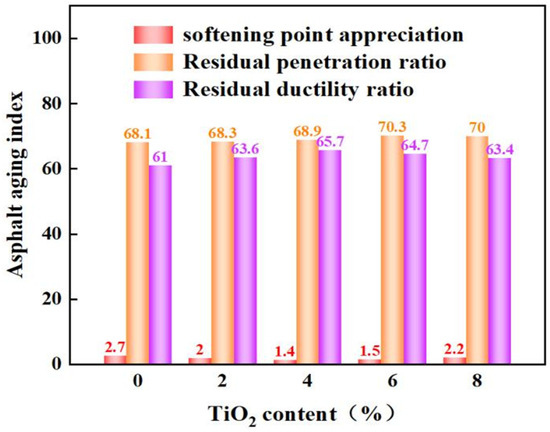
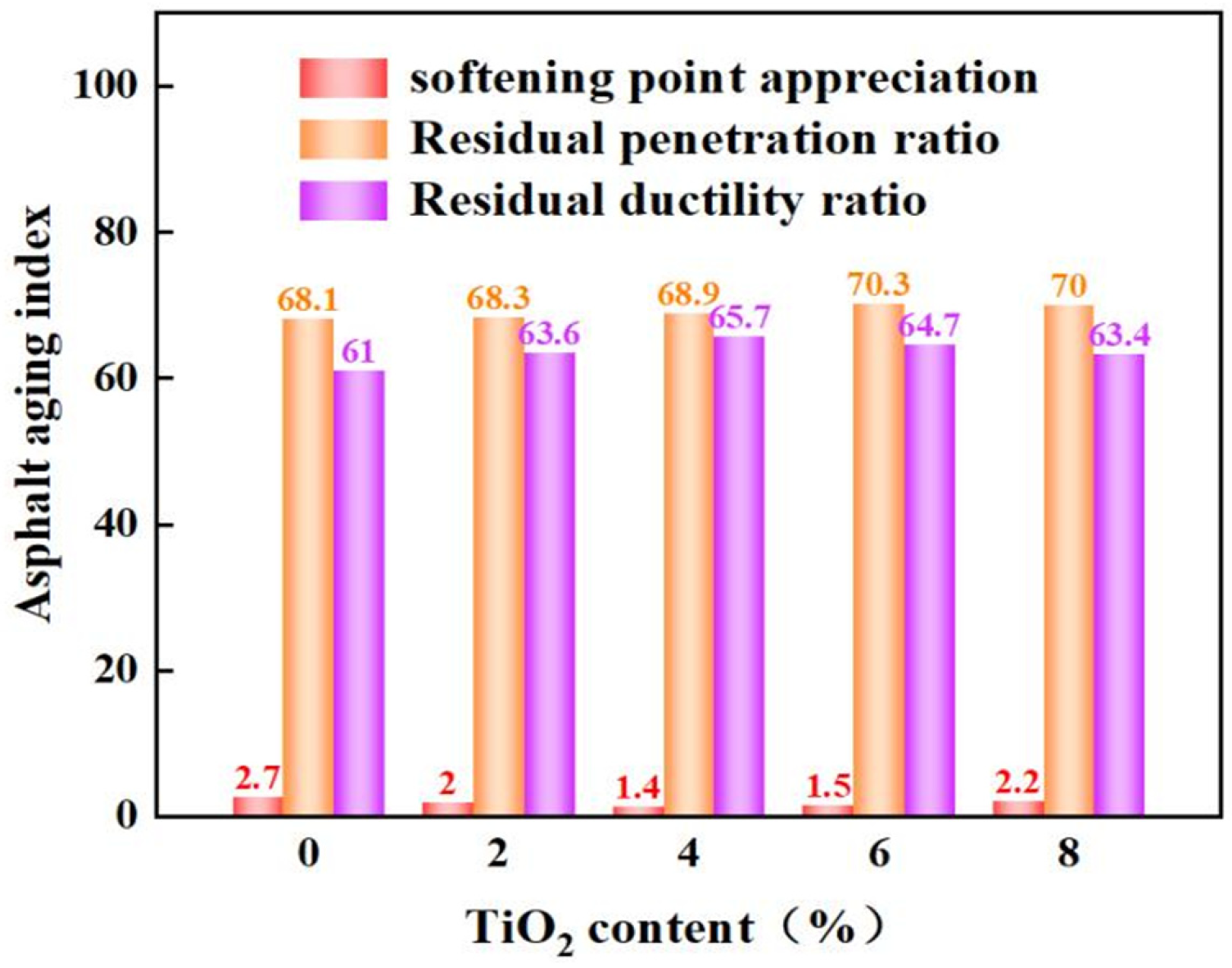
The anti-aging performance of asphalt is typically evaluated using indicators such as the residual needle penetration ratio, softening point increment, and residual elongation ratio. Higher values for the residual needle penetration ratio and residual elongation ratio, along with a smaller softening point increment, indicate better atmospheric stability, slower aging, and superior anti-aging performance.
Figure 9 presents the test results for the anti-aging performance of the evaporative residue from modified emulsified asphalt with varying TiO2 dosages. As shown in the figure, the residual needle penetration ratios are 6% > 8% > 4% > 2% > 0%, the softening point increments follow the trend 4% < 6% < 2% < 8% < 0%, and the residual elongation ratios are 4% > 6% > 2% > 8% > 0%. By comprehensive comparison, the anti-aging performance of the evaporative residue of modified emulsified asphalt under different TiO2 contents ranks as follows: 4% > 6% > 2% > 8% > 0%.
Figure 9.
Aging index of evaporated residue of modified emulsified asphalt.
The addition of nano-TiO2 enhances the anti-aging performance of the evaporative residue of modified emulsified asphalt compared to unmodified asphalt. This improvement can be attributed to two main factors: (1) Nano-TiO2 has a very high refractive index and strong reflection and scattering capabilities for light, thus having a good shielding function against ultraviolet rays. It can absorb ultraviolet light with wavelengths less than 300 nm, effectively reducing the irradiation of ultraviolet rays on asphalt, and thereby reducing the impact of ultraviolet rays on the performance of asphalt such as penetration index and softening point. (2) Nano-TiO2 particles have a large specific surface area and high surface activity, and can act as physical cross-linking points to promote the combination of modifiers and asphalt, making the transition of interface bonding between modifiers and asphalt more gradual. This smooth and uniform microstructure provides higher stability and elasticity for asphalt, thereby improving its hardness and high-temperature performance. Therefore, an optimal amount of nano-TiO2 can significantly improve the anti-aging performance of emulsified asphalt [29,30].
3.1.5. DSR Analysis
Temperature scanning was conducted on the evaporative residue of nano-TiO2 modified emulsified asphalt with varying dosages to evaluate its high-temperature performance.
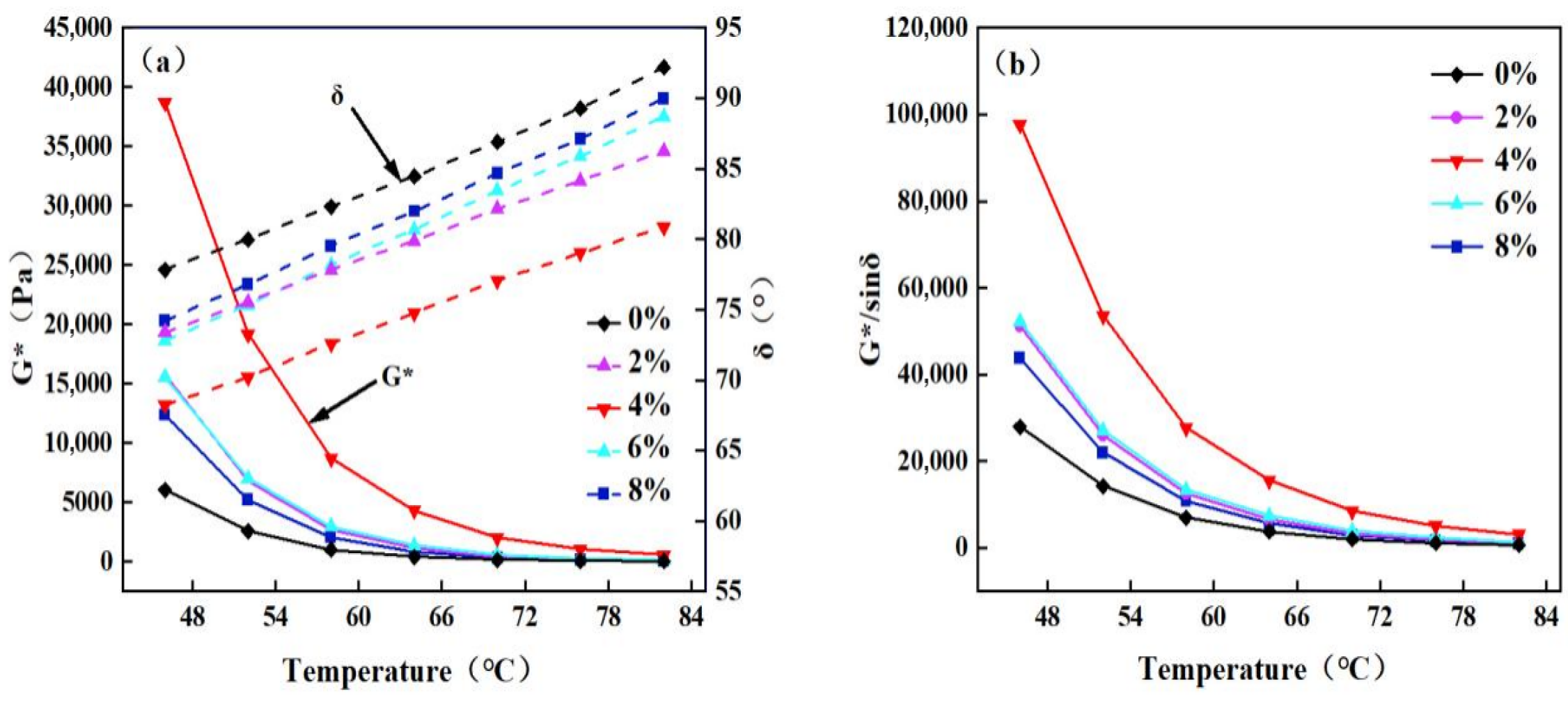
The complex modulus G* reflects the asphalt’s resistance to deformation under external pressure. A higher G* indicates stronger resistance to deformation and greater viscoelasticity [31]. The change in phase angle δ can reflect the viscoelastic ratio and fluidity of asphalt. Larger δ signifies a higher viscous component, lower elasticity, and greater fluidity, indicating that the asphalt is gradually becoming a viscous liquid [32,33]. The rutting factor G*/sinδ reflects the high-temperature stability of asphalt. Larger G*/sinδ indicates better resistance to permanent deformation at high temperatures and superior high-temperature stability [34].
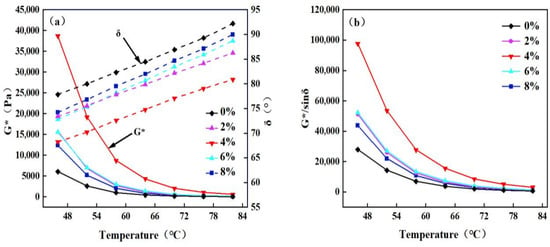
Figure 10a illustrates the variation in asphalt complex shear modulus and phase angle with temperature. As shown in the figure, the complex modulus G* of the evaporative residue follows the trend 4% > 2% > 6% > 8% > 0%. This indicates that the shear deformation resistance of modified emulsified asphalt is also 4% > 2% > 6% > 8% > 0%, suggesting that nano-TiO2 can enhance the anti-deformation ability of asphalt to some extent.
Figure 10.
Temperature variation law of emulsified asphalt before aging. (a) Phase angle and complex shear modulus. (b) Rutting factor.
From Figure 10a, it can also be observed that the phase angle δ of the evaporative residue of emulsified asphalt at different TiO2 contents is positively correlated with temperature; as temperature increases, the phase angle δ also increases. This is because rising temperatures cause the elastic components in asphalt to transform into viscoelastic components, leading to increased viscosity and decreased elasticity, ultimately resulting in a viscoelastic liquid state. Within the temperature range of 46 °C to 82 °C, the modified emulsified asphalt with a TiO2 content of 4% exhibits the weakest viscous flow, followed by 2%, 6%, and 8%, while the emulsified asphalt with 0% TiO2 content shows the highest viscous flow. This phenomenon may be attributed to the low specific gravity and large specific surface area of nano-TiO2, which adsorbs light components of asphalt particles, increasing viscosity, reducing elasticity, and improving anti-deformation ability.
Figure 10b presents the change curve of G*/sinδ for the evaporative residue of modified emulsified asphalt with temperature. As shown in the figure, the rutting factor G*/sinδ follows the trend 4% > 2% > 6% > 8% > 0%. Therefore, the rutting resistance of modified emulsified asphalt at high temperatures is also 4% > 2% > 6% > 8% > 0%, indicating that nano-TiO2 can improve the high-temperature stability of asphalt to some extent, consistent with the conclusions drawn from the complex modulus G*.
3.2. Road Performance Analysis of Fog Seal Layer
3.2.1. Anti-Skid Performance Analysis
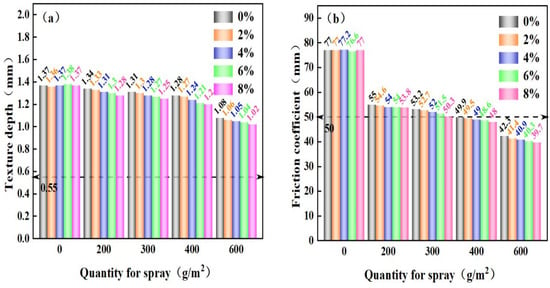
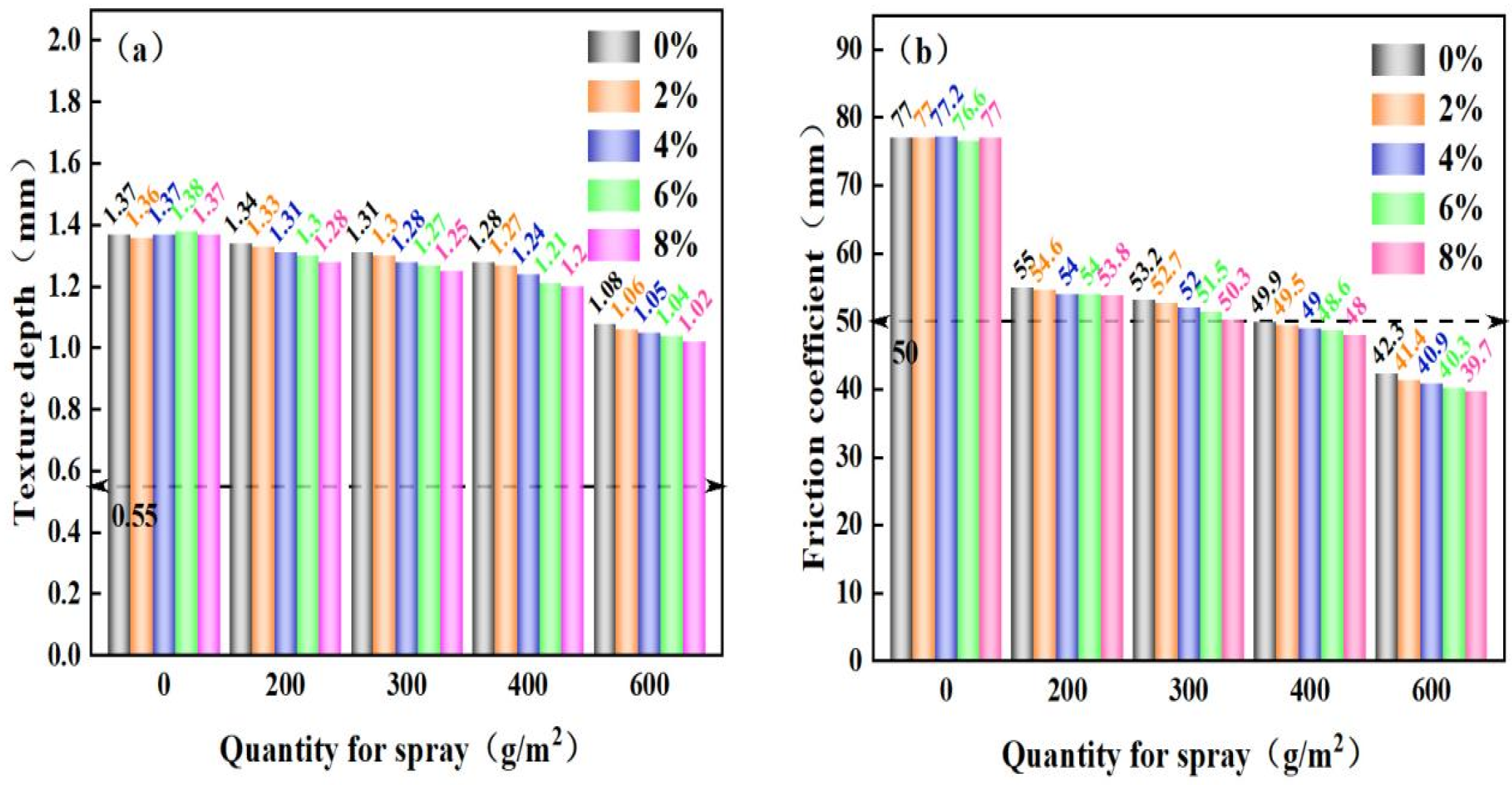
Figure 11 illustrates the relationship between the structure depth and friction coefficient of the fog seal layer, as influenced by nano-TiO2 content and spray amount. As shown in the figure, when the coating amount is constant, an increase in nano-TiO2 content results in a slight decrease in surface structure depth and friction coefficient, but this decline is relatively gradual, indicating that nano-TiO2 has minimal impact on the anti-skid performance of the pavement.
Figure 11.
(a) Structure depth of fog seal layer; (b) friction coefficient of fog seal layer.
When the nano-TiO2 content is held constant, both the surface structure depth and friction coefficient of the fog seal layer exhibit a downward trend with increasing spray amount. When the spray amount does not exceed 300 g/m2, the friction coefficient remains above 50, meeting the code requirements. However, when the spray amount reaches 400 g/m2, the friction coefficient drops below 50, failing to meet the code standards. This indicates that the spray amount significantly affects the anti-skid performance of the road surface.
The observed phenomenon can be attributed to the fact that initially sprayed modified emulsified asphalt fills the cracks in the mixture after demulsification without affecting its anti-skid performance. As the spray amount of modified emulsified asphalt increases, the cracks are gradually filled, altering the surface texture and structure depth of the mixture, which ultimately leads to a deterioration in anti-skid performance.
3.2.2. Analysis of Water Seepage Performance
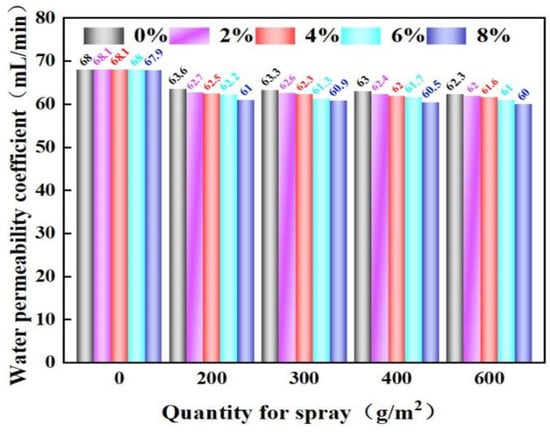
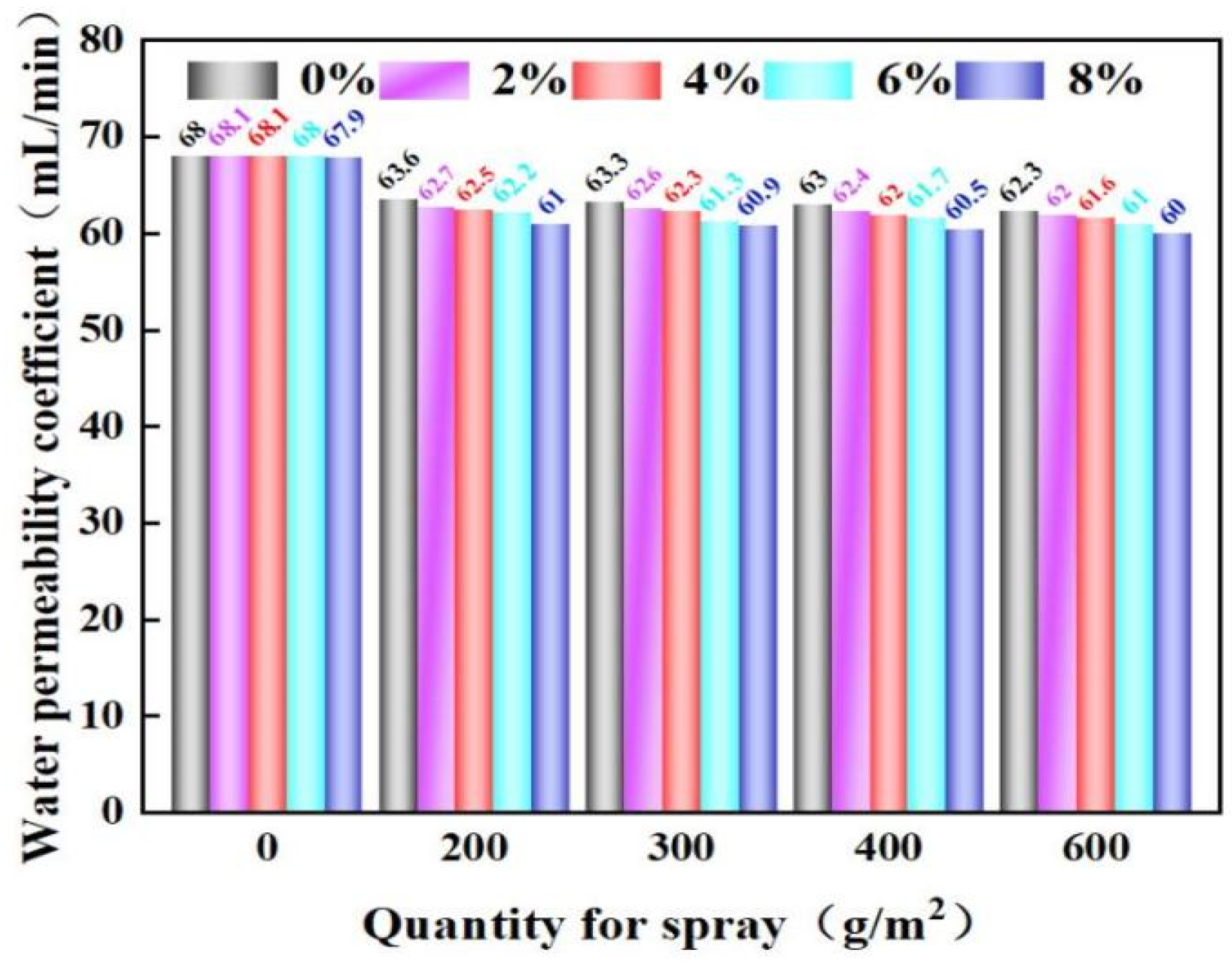
Figure 12 illustrates the relationship between the water permeability coefficient of the fog seal layer and the nano-TiO2 content as well as the spray amount. As shown in the figure, the water permeability coefficient of the asphalt pavement meets standard requirements. With increasing nano-TiO2 content and spray amount, the water permeability coefficient of the fog seal layer decreases, indicating that higher nano-TiO2 content and spray amount can enhance the water-sealing performance of the asphalt pavement.
Figure 12.
Water seepage coefficient of fog seal layer.
This improvement in water-sealing performance is attributed to the modified emulsified asphalt penetrating into the surface voids of the mixture, forming a film on the surface and filling the gaps, thereby preventing water from seeping further. Based on the above test results for anti-skid and water permeability performance, it is recommended that the spray volume of the fog seal layer be approximately 300 g/m2 and should not exceed 400 g/m2. In practical engineering applications, the optimal spray volume of the fog seal layer can be determined by balancing anti-skid and waterproofing performance.
3.2.3. Analysis of Pavement Cooling Performance
The field test method for evaluating the cooling effect of nano-TiO2 modified emulsified asphalt fog seal layers is as follows: (1) Weigh the emulsified asphalt and nano-TiO2 dispersion liquid using an electronic balance, combine the two materials in a beaker, and thoroughly mix them with a stirrer to prepare the fog seal layer. (2) Select five rutting plate specimens, each measuring 30 cm × 30 cm. Apply the fog seal layer with five different TiO2 concentrations uniformly onto the rutting plates at a coating rate of 300 g/m2. Ensure that the fog seal layer completely covers the asphalt surface and allow it to cure naturally at room temperature for 12 h. (3) Choose a placement site where all five rutting plate specimens are fully exposed to sunlight. (4) Measure the temperature every hour from noon until 5 p.m. using a thermometer and record the data.
Figure 13 illustrates the temperature changes over time for the fog seal layer under varying TiO2 content. As shown in the figure, compared to the fog seal layer without nano-TiO2, the road temperature of the fog seal layer containing nano-TiO2 increases more slowly. This indicates that the presence of nano-TiO2 reduces the surface temperature of the rutting plates. It is widely recognized that nano-TiO2 exhibits excellent ultraviolet absorption capabilities. When ultraviolet radiation interacts with asphalt pavements containing TiO2, the particles become excited and undergo photocatalytic reactions, converting absorbed UV energy into chemical energy to degrade pollutants. The photocatalytic mechanism of TiO2 prevents UV-induced temperature elevation in pavements, thereby achieving the effect of reducing asphalt pavement temperatures.
Figure 13.
Temperature change in fog seal layer.
3.3. Analysis of Photocatalytic Performance of Fog Sealing Layer
3.3.1. Analysis of NO Degradation Performance
During the experiment, the detector will consume some of the gas, and a small amount of gas in the gas reaction chamber may react due to the action of ultraviolet light, resulting in a decrease in the NOx concentration. Therefore, before the experiment begins, a blank control method should be adopted to calibrate the degradation system, thereby reducing the influence of these factors on the experimental results. The cumulative degradation rate, immediate degradation rate, and average degradation rate were calculated using the stable-state gas concentrations to evaluate the actual degradation of NO and NO2 in photocatalytic specimens [35].
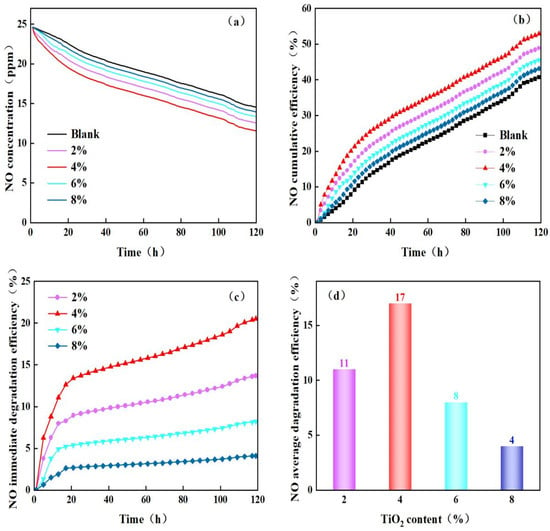
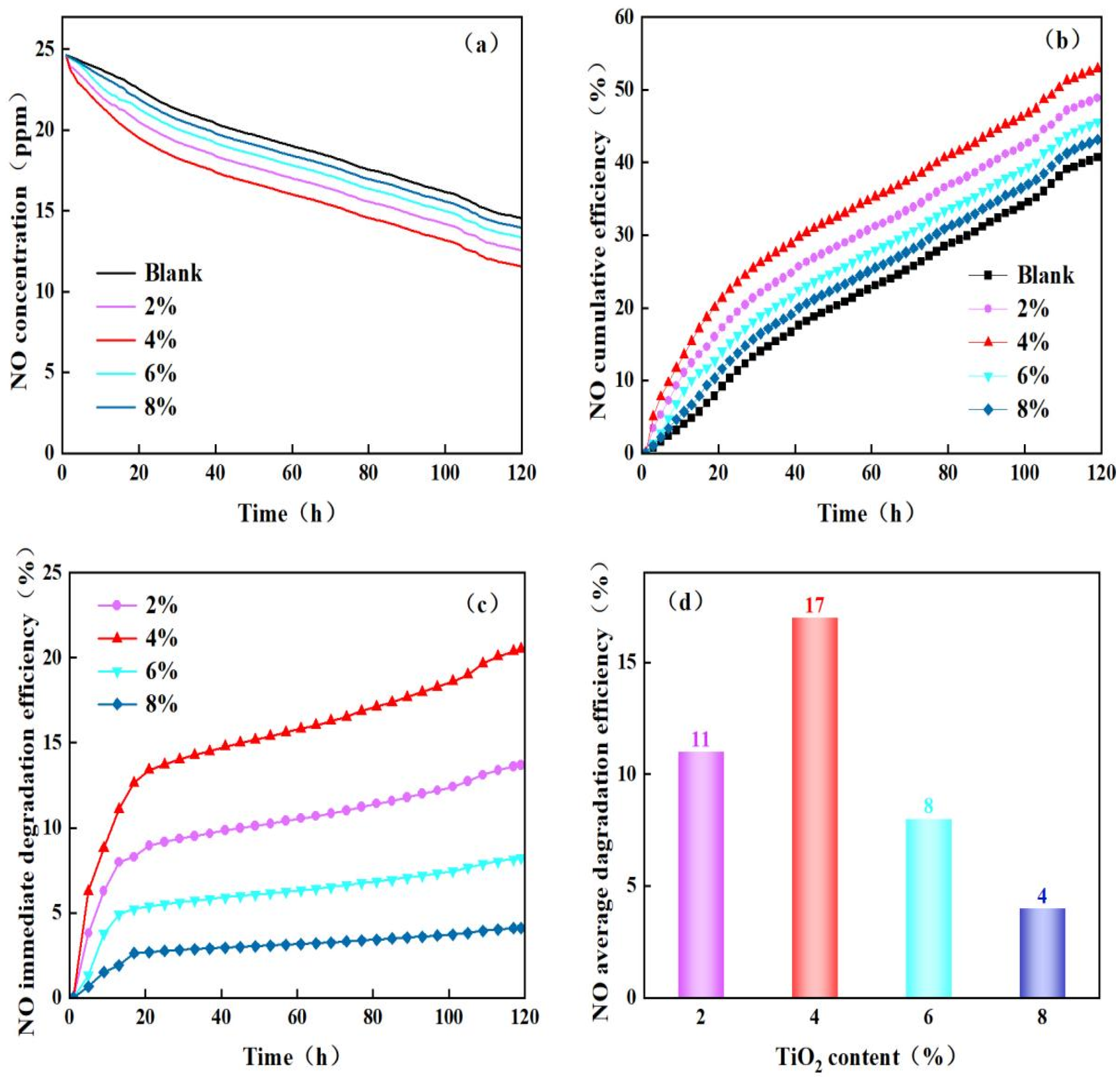
Figure 14 shows the time-varying curves of NO concentration, cumulative degradation rate, immediate degradation rate, and average degradation rate for the photocatalytic mist seal specimen over a period of 120 min. As shown in the figure, within 120 min, as time increased, the NO concentration in the reaction chamber with different TiO2 content gradually decreased, while the degradation rates progressively increased. Calculations using Formulas (1)–(3) revealed that the cumulative degradation rates of NO for the photocatalytic mist seal specimens with varying TiO2 content over 120 min were 36%, 45%, 50%, 42%, and 40%, respectively. The immediate degradation rates were 11%, 20.26%, 5.3%, and 2.5%, and the average degradation rates were 11%, 17%, 8%, and 4%, respectively. Therefore, the degradation effect of NO gas under different nano-TiO2 dosages was ranked as follows: 4% > 2% > 6% > 8% > 0%.
Figure 14.
The photocatalytic results of NO gas: (a) concentration, (b) cumulative degradation rate, (c) immediate degradation efficiency, (d) average degradation rate.
It was observed that the photocatalytic degradation of NO was accompanied by NO2 production [36]. Consequently, the photocatalytic fog sealing layer with different TiO2 content was subsequently used to test the degradation effect on NO2 gas.
3.3.2. Degradation Performance Analysis of NO2
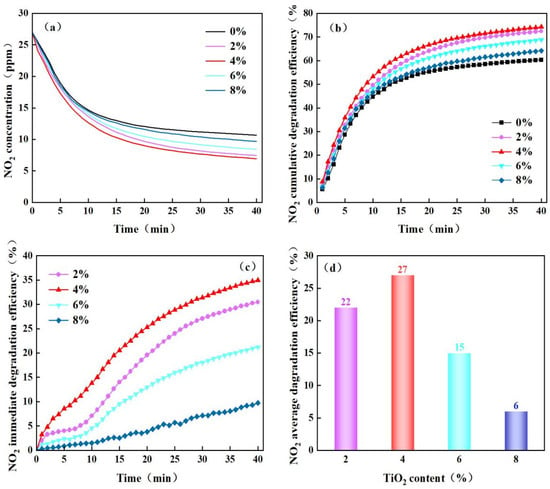
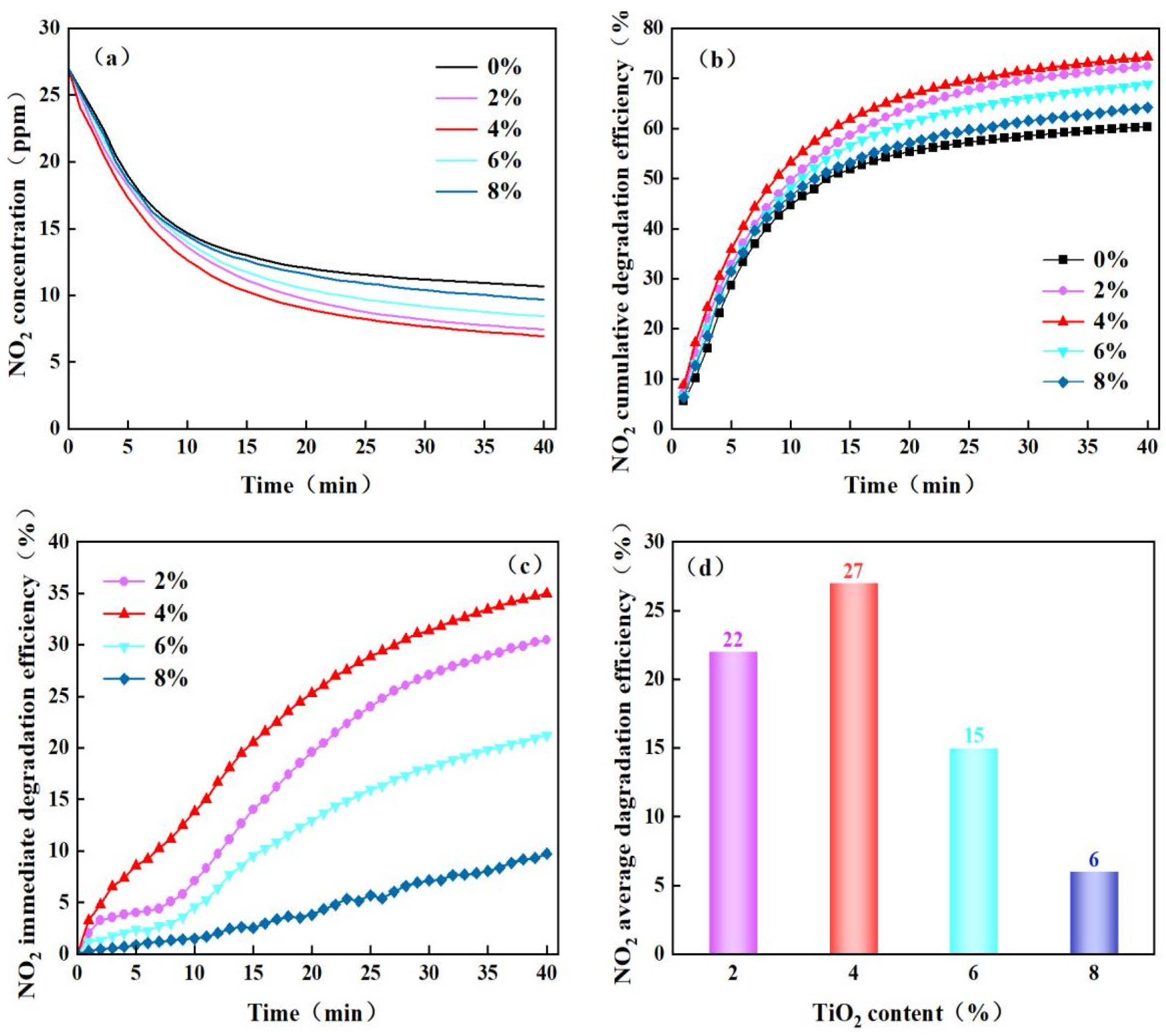
Figure 15 shows the time-varying curves of NO2 concentration, cumulative degradation rate, immediate degradation rate, and average degradation rate for the photocatalytic mist seal specimens over a period of 40 min. As can be seen from the figure, after 40 min of ultraviolet illumination, the photocatalytic fog sealing layers with five different TiO2 contents exhibited significant degradation effects on NO2 gas. During this period, the NO2 gas concentration in the reaction chamber decreased markedly as time progressed. The cumulative degradation rate, immediate degradation rate, and average degradation rate of NO2 for each photocatalytic mist seal specimen were calculated using Equations (1)–(3). The cumulative and immediate degradation rates of NO2 gas for each specimen increased continuously with different TiO2 content and gradually stabilized over time. At the end of the 40 min period, the average degradation rates were 22%, 27%, 15%, and 6%, respectively.
Figure 15.
The photocatalytic results of NO2 gas: (a) concentration, (b) cumulative degradation rate, (c) immediate degradation efficiency, (d) average degradation rate.
The following conclusions can be drawn from the degradation effects of NO and NO2 gases: The TiO2 photocatalytic fog seal with a 4% TiO2 content exhibits excellent exhaust gas degradation performance. During the test, the degradation conditions for the two primary pollutants, NO and NO2, differed. The tail gas degradation efficiency of the photocatalytic fog seal is influenced by the nano-TiO2 content, the effective contact area between the gas and the surface, and the application rate of the fog seal.
The reason for this phenomenon may be that nano-TiO2 can fully contact and react with the polluted gas when its content is within 4%. However, when the dosage exceeds 4%, the effective contact area between nano-TiO2 and the gas becomes limited due to the surface area constraints of the specimen. Excessive nano-TiO2 tends to agglomerate, leading to a saturation effect where the number of effective nano-TiO2 particles in contact with the gas per unit area does not increase significantly. Consequently, further improvement in degradation efficiency is hindered.
3.3.3. Ultraviolet Absorption Spectrum Analysis of Nitrate Ion
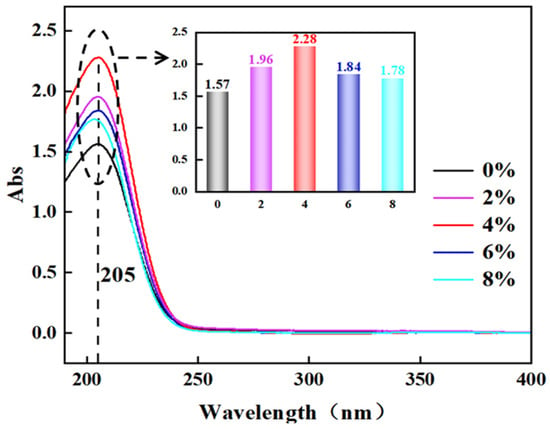
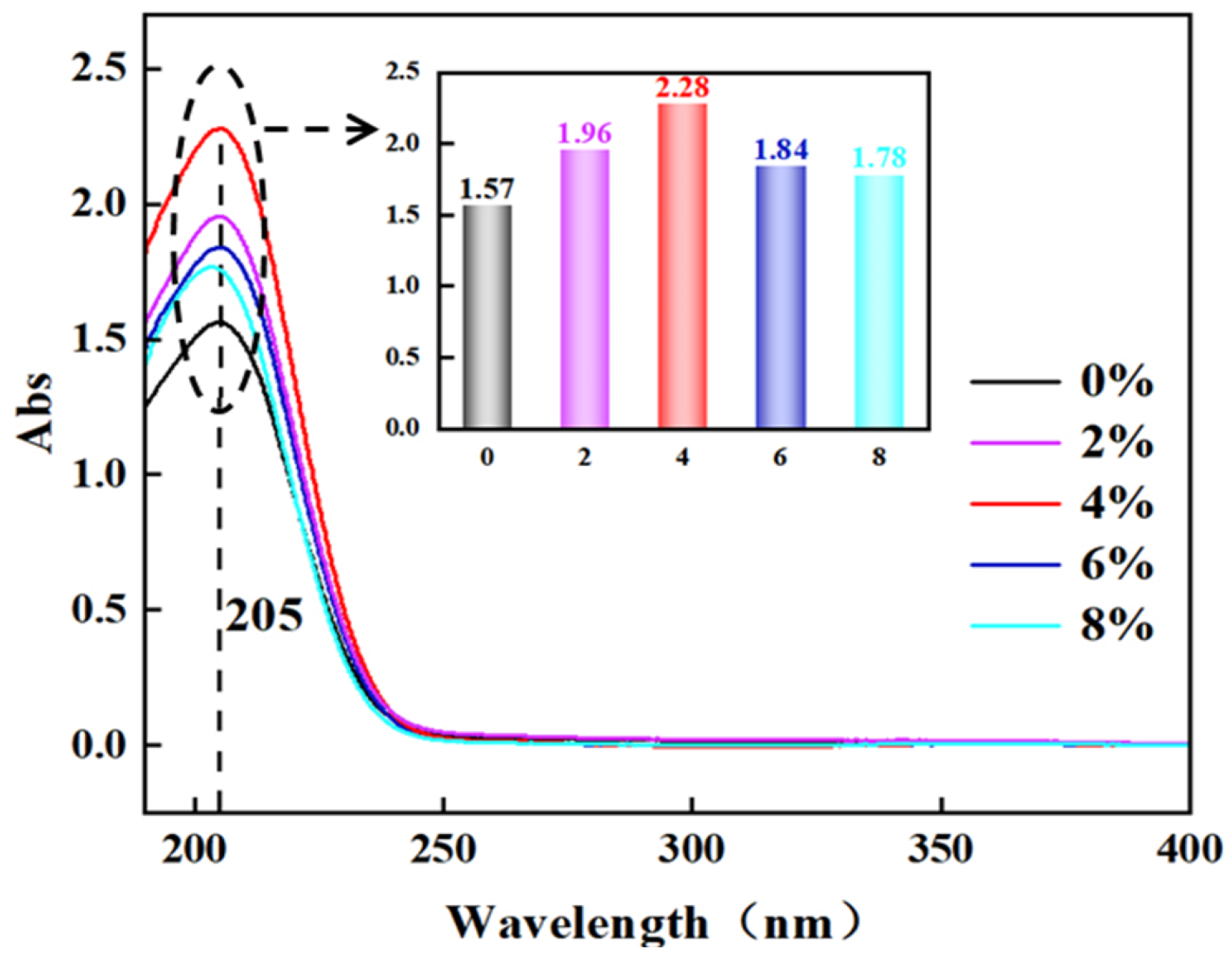
After the NO2 gas degradation test was completed, the Petri dish containing deionized water was removed, and the presence of nitrate ions was verified using ultraviolet absorption spectroscopy. As shown in Figure 16, there is a characteristic absorption peak of nitrate ions near 205 nm, with the main absorption band ranging from 190 to 230 nm. These findings are consistent with results obtained by other researchers [19,37], indicating the formation of nitrate ions during the NO2 gas degradation process.
Figure 16.
Ultraviolet absorption spectrum of nitration.
With increasing nano-TiO2 content, the characteristic absorption peak intensity of nitrate ions follows the order: 4% > 2% > 6% > 8% > 0%. This trend aligns with the positive correlation between the nitrate ion concentration and absorbance, confirming that the nitrate ion concentration also follows the same order. Subsequently, we performed a quantitative analysis of nitrate concentration and established a nitrate standard curve (Figure S4, Table S1). When the TiO2 content is 4%, the photocatalytic fog sealing layer exhibits the highest NO2 degradation rate, resulting in the highest characteristic absorption peak for nitrate ions. This is because at 4% TiO2 content, NO2 gas in the reaction chamber is more fully contacted, leading to the generation of more nitrate ions in the presence of H2O and O2. However, when the TiO2 content is 6% and 8%, despite the NO2 gas being fully contacted within the reaction chamber, the excess TiO2 particles tend to agglomerate due to surface area limitations of the specimen. This aggregation reduces the effective contact area between TiO2 and the gas, significantly decreasing the degradation efficiency. Consequently, fewer nitrate ions are formed compared to the 4% TiO2 content condition. In practical engineering applications, the nitrate generated during the degradation process can be removed by rainwater erosion.
4. Conclusions
This study selects appropriate medium-split cationic emulsifiers, uses sodium oleate as the colloidal stabilizer, and laboratory-synthesized nano-TiO2 as the modifier. By employing an emulsification-followed-by-modification method, it prepares modified emulsified asphalt with varying contents of nano-TiO2. The effects of different nano-TiO2 dosages on the aging resistance, high-temperature rheological properties, skid resistance, water permeability, road cooling, and photocatalytic performance of the emulsified asphalt were investigated. The main conclusions are as follows:
Aging Resistance Analysis: Compared to the evaporated residue of unmodified emulsified asphalt, that of the nano-TiO2-modified emulsified asphalt exhibits increased viscosity and enhanced aging resistance.
High-Temperature Rheological Properties: The viscoelasticity and rutting resistance of the evaporated residue from modified emulsified asphalt improve with elevated temperatures, compared to those of the unmodified emulsified asphalt.
Skid Resistance and Water Seepage Performance: As the spray amount of the fog seal layer increases, the pavement skid resistance decreases while the water sealing performance improves. When the spray amount reaches 400 g/m2, the friction coefficient no longer meets the specification requirements. It is recommended that the spray amount of the fog seal layer be approximately 300 g/m2 and not exceed 400 g/m2.
Pavement Cooling Performance: Due to the ability of nano-TiO2 to absorb solar ultraviolet rays and enable photocatalysis, the photocatalytic fog seal layer applied to the pavement can reduce surface temperature under high-temperature weather and sunlight irradiation.
We independently developed a photocatalytic tail gas degradation test device, and the NOx degradation experiment was conducted using an indoor simulation method. The results indicate that incorporating an appropriate amount of nano-TiO2 into emulsified asphalt can enhance photocatalytic efficiency. Specifically, when the TiO2 content is 4%, the fog seal layer achieves optimal NOx degradation efficiency. Additionally, during the NOx degradation process, nitrate ions are generated, which can be washed away by rainfall, thereby achieving air purification.
Supplementary Materials
The following supporting information can be downloaded at: https://www.mdpi.com/article/10.3390/coatings16050532/s1, Figure S1 demonstrates that the nano-TiO2 exhibits a mixed-phase composition consisting of Anatase (JCPDS No. 21-1272) and Rutile (JCPDS No. 21-1276). Figure S2. Effect of different sodium oleate concentrations on the dispersion solution (a) Sedimentation condition photographs; (b) Variation chart of absorbance ratio. Figure S3. Storage state change diagram of modified emulsified asphalt with different TiO2 content. Figure S4. Standard curve of nitrate ion. Table S1. Determination of trace nitrate ion concentration by ultraviolet absorption spectrometry.
Author Contributions
X.J.: Methodology, Investigation, Data curation, and Writing—original draft. J.L.: Revising manuscript, Supervision, Funding acquisition. Z.N.: Visualization, Investigation, Writing—review and editing. Y.W.: Validation, Supervision, Funding acquisition. Z.M.: Software, Formal analysis. X.W.: Conceptualization, Data curation, Writing—review and editing, Supervision, Funding acquisition. All authors have read and agreed to the published version of the manuscript.
Funding
This work was supported by the Shandong Province Transportation Science and Technology Innovation Plan Project (2023B05-03), the Natural Science Foundation of Shandong Province (ZR2021 ME207), and the 2025 Postgraduate Science and Technology Innovation Project of Shandong Jiaotong University (2025YK042), the Innovation Training Foundation for College Students of Shandong Jiaotong University.
Institutional Review Board Statement
Not applicable.
Informed Consent Statement
Not applicable.
Data Availability Statement
The raw data supporting the conclusions of this article will be made available by the authors on request.
Conflicts of Interest
The authors declare no conflict of interest.
References
- Guan, Q.; Chen, M. Study on decontamination of vehide emissions by Nano-TiO2 sprayed on highway concrate pavement. J. Highw. Transp. Res. Dev. 2009, 26, 154–158. [Google Scholar]
- Chen, M.; Jin, L.S.; Chu, J.W.; Li, X.; Wang, H. Performance study on the decontamination of NOx from vehicle base on photocatalytic active concrete road. J. Wuhan Univ. Technol. 2013, 35, 61–65. [Google Scholar]
- Poon, C.S.; Cheung, E. NO removal efficiency of photocatalytic paving blocks prepared with recycled materials. Constr. Build. Mater. 2007, 21, 1746–1753. [Google Scholar] [CrossRef] [Scilit]
- Ye, Q.; Mo, R.H.; Yu, Y.C.; Liu, H. Application research on polymer cement mortar incorporated with nitrogen modified Nano-TiO2 photocatalysis material. Newbuilding Mater. 2009, 36, 15–17. [Google Scholar]
- Zhou, J.L.; Zhang, Y.X.; Cai, L.Z.; Wang, X. Influence of supported TiO2 photocatalyst on macroporous asphalt pavement performance. J. Highw. Transp. Res. Dev. 2023, 40, 46–52. [Google Scholar]
- Chen, M.; Liu, Y.H. NOX removal from vehicle emissions by functionality surface of asphalt road. J. Hazard. Mater. 2010, 174, 375–379. [Google Scholar] [CrossRef] [Scilit]
- Suchikova, Y.; Nazarovets, S.; Konuhova, M.; Popov, A.I. Binary Oxide Ceramics (TiO2, ZnO, Al2O3, SiO2, CeO2, Fe2O3, and WO3) for Solar Cell Applications: A Comparative and Bibliometric Analysis. Ceramics 2025, 8, 119. [Google Scholar]
- Ortelli, S.; Poland, C.A.; Baldi, G.; Costa, A.L. Silica matrix encapsulation as a strategy to control ROS production while preserving photoreactivity in nano-TiO2. Environ. Sci. Nano 2016, 3, 602–610. [Google Scholar] [CrossRef] [Scilit]
- Zhong, Y. Research on Thermal Reflection and Cooling Curing Coating Material of Nano Modified Emulsified Asphalt for Urban Road Pavement. E3S Web Conf. 2021, 261, 02051. [Google Scholar] [CrossRef] [Scilit]
- Ayar, P.; Ruhi, A.; Baibordy, A.; Kocak, S. Toward sustainable roads: A critical review on nano-TiO2 application in asphalt pavement. Innov. Infrastruct. Solut. 2024, 9, 148. [Google Scholar]
- Shafabakhsh, G.H.; Ani, O.J. Experimental investigation of effect of Nano TiO2/SiO2 modified bitumen on the rutting and fatigue performance of asphalt mixtures containing steel slag aggregates. Constr. Build. Mater. 2015, 98, 692–702. [Google Scholar] [CrossRef] [Scilit]
- Shafabakhsh, G.; Mirabdolazimi, S.M.; Sadeghnejad, M. Evaluation the effect of nano-TiO2 on the rutting and fatigue behavior of asphalt mixtures. Constr. Build. Mater. 2014, 54, 566–571. [Google Scholar]
- Tang, S.; Mu, B.; Li, Y.; Wang, J. Advances in TiO2-enhanced photocatalytic building materials: Applications in cement and asphalt for environmental purification. Low-Carbon Mater. Green Constr. 2024, 2, 26. [Google Scholar]
- Fan, W.; Chan, K.Y.; Zhang, C.; Yu, J. Advanced solar photocatalytic asphalt for removal of vehicular NOx. Energy Procedia 2017, 143, 811–816. [Google Scholar] [CrossRef] [Scilit]
- Jin, J.; Xiao, T.; Tan, Y.; Zhang, Z. Effects of TiO2 pillared montmorillonite nanocomposites on the properties of asphalt with exhaust catalytic capacity. J. Clean. Prod. 2018, 205, 339–349. [Google Scholar]
- Li, X.; Fang, Y.L.; Xu, X.G.; Han, Z. Study on photocatalytic performance of carbonated coating supported TiO2@SiO2. Constr. Build. Mater. 2024, 411, 134574. [Google Scholar]
- Wu, P.; Wang, X.C. Purification performance of thin layer cover of TiO2 modified asphalt. J. Jiangsu Univ. 2017, 38, 113–118. [Google Scholar]
- Cao, X.J.; Yang, X.Y.; Wu, T.; Li, J. g-C3N4/TiO2 Photocatalyst and its Performance of NO Degradation in Emulsified Asphalt. J. Mater. Civ. Eng. 2019, 31, 04019031.1–04019031.7. [Google Scholar]
- Jie, Y.D. Experimental Study on Photocatalytic Micro-Surfacing Mixture with Glass for Degrading Automobile Exhaust; Yangzhou University: Yangzhou, China, 2021. [Google Scholar]
- Yang, Y.; Zhao, J.G. Analysis of influence of nano-TiO2 sand-bearing fog seal layer pavement degrading automobile exhaust. Tianjin Constr. Sci. Technol. 2019, 29, 6–10. [Google Scholar]
- Li, Y. Research on the Performance of NO Degradation on Nanomaterials Fog Seal; Changsha University of Science and Technology: Changsha, China, 2015. [Google Scholar]
- Wang, T.X.; Cai, Z.T. Preparation and Properties of Nano-TiO2 Emulsified Asphalt; Shangdong Jiaotong Keji: Jinan, China, 2021; pp. 31–34. [Google Scholar]
- Huang, M.; Wen, X.J. Experimental Study on Photocatalytic Effect of Nano TiO2 Epoxy Emulsified Asphalt Mixture. Appl. Sci. 2019, 9, 2464. [Google Scholar] [CrossRef] [Scilit]
- JTG E20-2011; Standard Test Methods of Bitumen and Bituminous Mixtures for Highway Engineering. China Communications Press: Beijing, China, 2011; p. 344.
- JTG 3450-2019; Field Test Methods of Highway Subgrade and Pavement. China Communications Press: Beijing, China, 2019; p. 344.
- Yuan, Y.G. Development and Evaluation of TiO2-Based Auto Exhaust Degradation Asphalt Pavement Materia; Beijing University of Civil Engineering and Architecture: Beijing, China, 2016. [Google Scholar]
- Nan, B.Z.; Wang, Y.B.; Zhang, X.Y.; Li, S. Research on storage stability of modified asphalt of micrometer. J. Lanzhou Jiaotong Univ. 2022, 41, 14–18, 46. [Google Scholar]
- Chen, Q.U.; Tian, Y.B.; Liang, M.; Guo, R. Effect of Emulsifier and Penetrating Agent on the Properties of Permeable Emulsified Asphalt. Pet. Asph. 2023, 37, 34–38. [Google Scholar]
- Chen, G.Z.; Fan, L. Research on Road Technical Properties of Nano TiO2 Modified Asphalt; Shandong Jiaotong Keji: Jinan, China, 2018; pp. 6–9. [Google Scholar]
- Liu, Y.; Zou, G.H. Study on the anti-aging property of Nano-TiO2/MMT composite modified asphalt. J. China Foreig Highw. 2022, 42, 236–241. [Google Scholar]
- Yang, Q.; Ye, Q.; Liu, Y. Dispersion and Re-aging Properties of Asphalt Modified with TiO2. J. Tongji Univ. 2011, 39, 263–265+281. [Google Scholar]
- Yan, K.Z.; Tian, S.; Chen, J.H.; Li, H. High temperature rheological properties of APAO and EVA compound modified asphalt. Constr. Build. Mater. 2020, 233, 117246. [Google Scholar] [CrossRef] [Scilit]
- Zhang, H.T.; Wu, Y.G. Comparisons of rheological properties among different modified asphalt at high and low temperatures. J. For. Eng. 2022, 7, 174–179. [Google Scholar]
- Gong, F.Y.; Lin, W.J.; Chen, Z.K.; Wang, L. High-Temperature Rheological Properties of Crumb Rubber Composite Modified Asphalt. Sustainability 2022, 14, 8999. [Google Scholar] [CrossRef] [Scilit]
- Yao, Z.J. Study on the Microscopic Mechanism Action of Rejuvenator and Aged Asphalt; Lanzhou Jiaotong University: Lanzhou, China, 2018. [Google Scholar]
- Hou, M.F.; Li, F.B.; Wan, H.F.; Liu, J. Domestic and International Research on TiO2-Based Catalysts for NOx Catalytic Removal; China Environmental Protection Excellent Papers Collection (2005); Chinese Society for Environmental Sciences: Beijing, China; China Environmental Science Press: Beijing, China, 2005; Volume 2. [Google Scholar]
- Ai, X.Y. Uitraviolet Absorption Spectroscopy Properties of Inorganic Anions Such as Sulphate and Nitrate; Harbin Institute of Technology: Harbin, China, 2019. [Google Scholar]

Disclaimer/Publisher’s Note: The statements, opinions and data contained in all publications are solely those of the individual author(s) and contributor(s) and not of MDPI and/or the editor(s). MDPI and/or the editor(s) disclaim responsibility for any injury to people or property resulting from any ideas, methods, instructions or products referred to in the content. |
© 2026 by the authors. Licensee MDPI, Basel, Switzerland. This article is an open access article distributed under the terms and conditions of the Creative Commons Attribution (CC BY) license.