


Abstract
The present work aimed at resolving the mystery accompanying the famous Ko-Kutani Honzenji temple shallow bowl by investigating the main elements associated with the coating composition in the surface decoration. This unique vessel belongs to Honzenji temple, located in the Maeda Domain (today’s Ishikawa Prefecture) and is on display at the Ishikawa Prefecture Kutaniyaki Art Museum in Kaga. The Honzenji temple bowl bears a cryptic figure painted in red enamel on the underside and story has it that the Maeda Lord himself may have painted it in the mid-17th century, thus making the bowl a very relevant piece of the history of the Maeda clan, Ishikawa Prefecture (Maeda fiefdom in the Edo period), and Japanese porcelain as a whole. Yet the identification of the actual firing date of the bowl has proven a daunting task for curators worldwide. On the basis of the previously published studies on the world’s most extensive collection of Ko-Kutani Masterpieces belonging to the Ishikawa Prefectural Museum of Art, and shards excavated at Kaga kiln sites, including the celebrated Hakuji bowl (Ishikawa Archaeological Foundation), both conducted by Energy-Dispersive X-Ray Fluorescence spectroscopy (pED-XRF), and in consideration of the absolute prohibition to sample or even touch the Honzenji bowl, pED-XRF was once again selected as the most suitable technique for the analysis of all the enamels and glazing materials. Analytical evidence, for the first time ever, has proven crucial to resolving the issue by enabling the precise dating of the bowl and unveiling the true story behind its technical features and the cryptic underside decoration.
1. Introduction
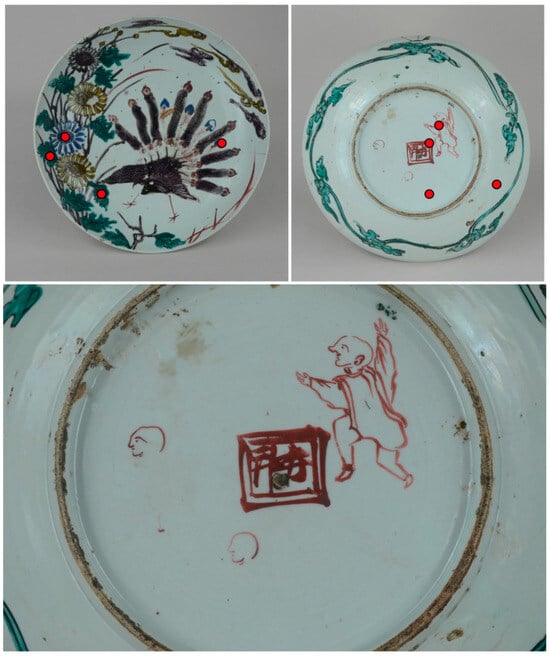
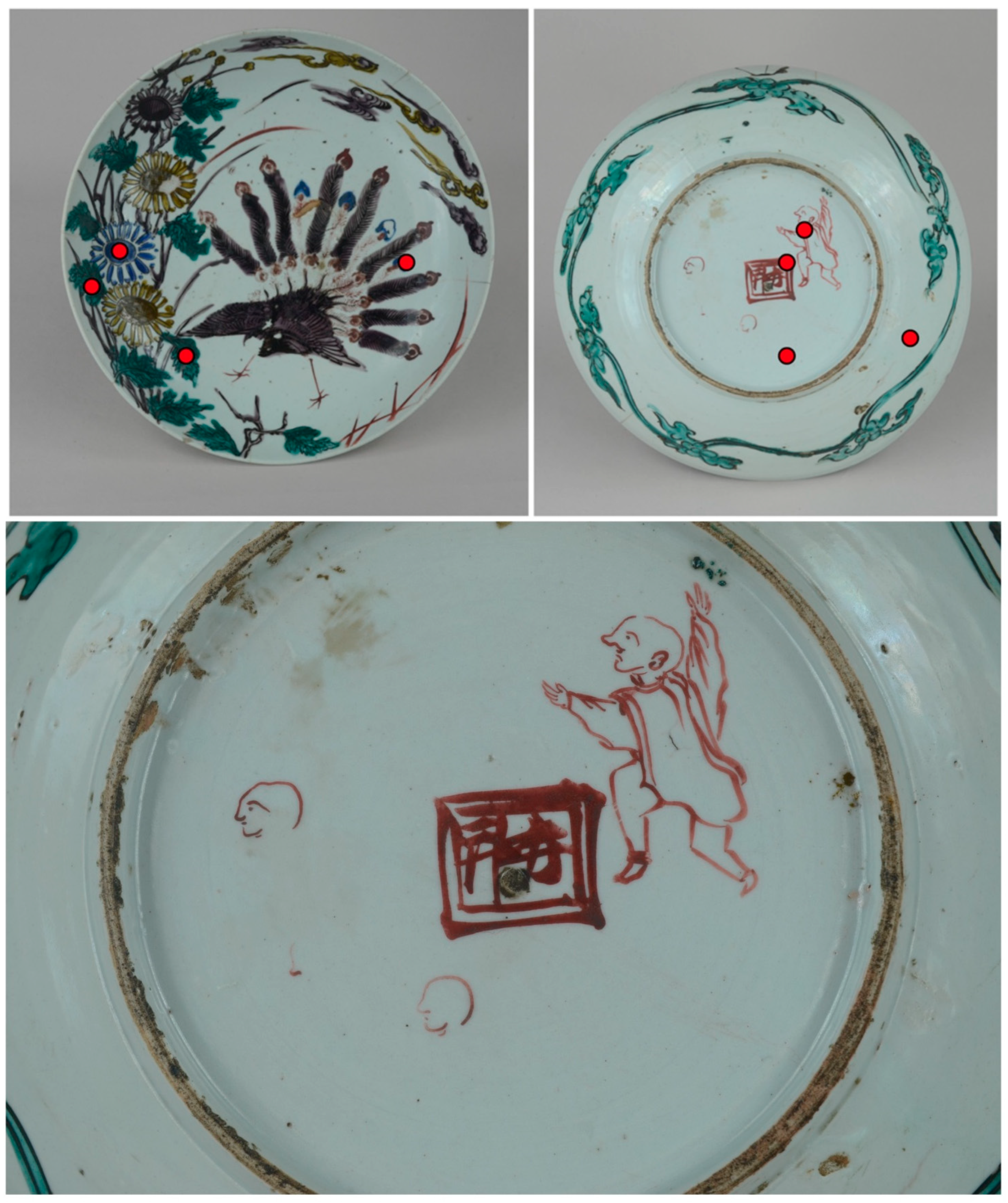
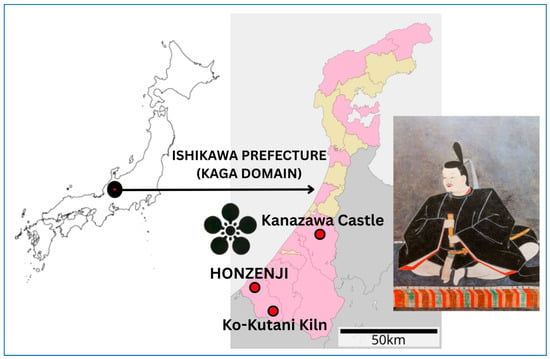
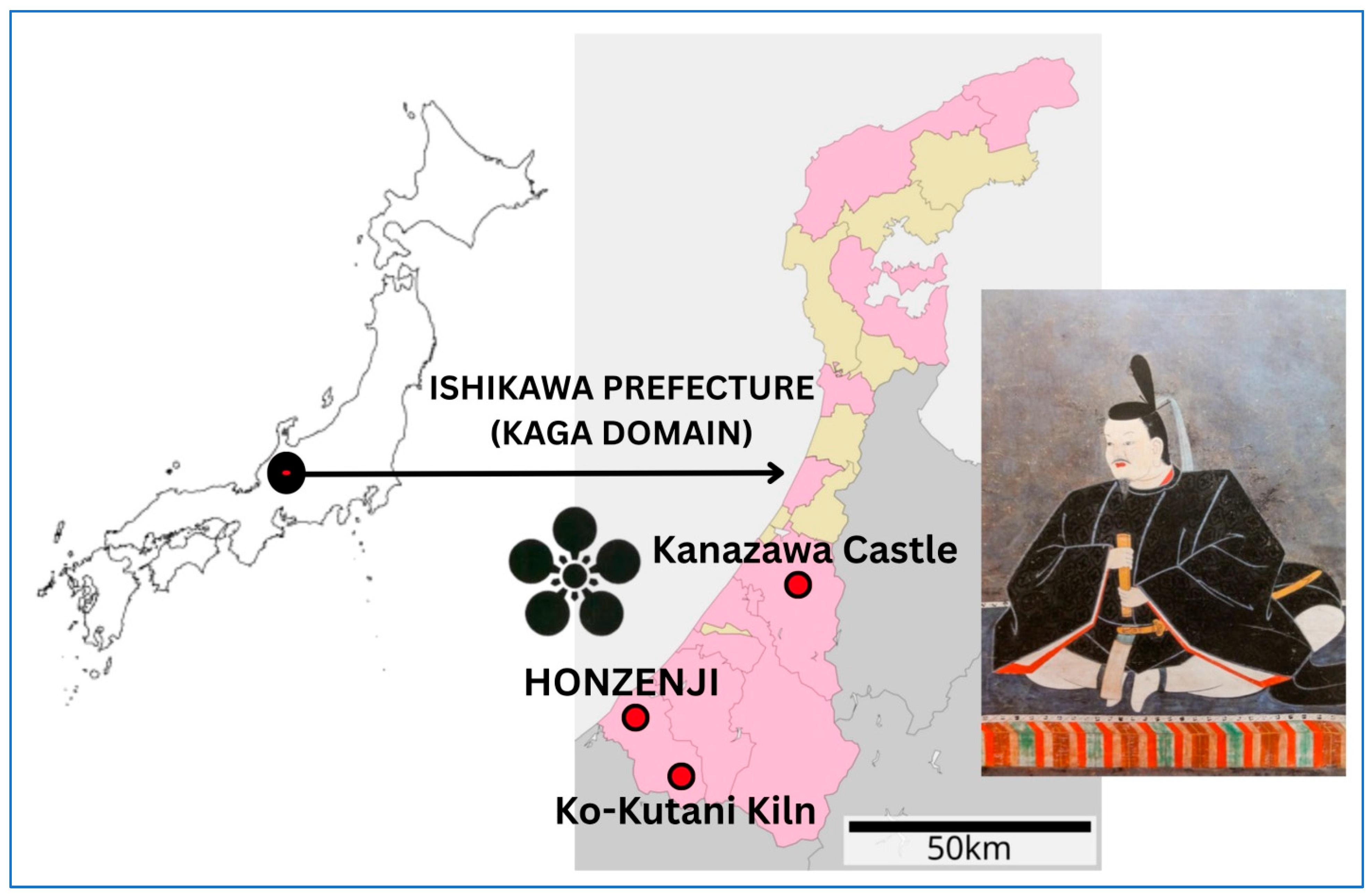
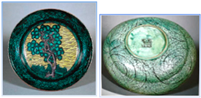
There has been a century-long debate regarding the mystery accompanying the famous Ko-Kutani Honzenji porcelain bowl (Figure 1). The unique vessel belongs to the Honzenji temple, located in the Maeda Domain (today’s Ishikawa Prefecture) and is on display at the Ishikawa Prefecture Kutaniyaki Art Museum in Kaga (Figure 2).
Figure 1.
Honzenji shallow bowl: front, back and detail of foot decoration. Red dots identify the analyzed areas (blue enamel, green enamel, red enamel and glaze). Bowl diameter 32.8 cm, foot diameter 16.9 cm.
Figure 2.
Map of today’s Ishikawa Prefecture (Kaga domain) showing the locations of Honzenji temple, the Ko-Kutani kiln and Maeda castle (Kanazawa). (Map adapted from https://commons.wikimedia.org/wiki/File:Map_of_Ishikawa_Prefecture_Ja.svg) (accessed on 8 April 2026).
Story has it that, in the mid-17th century, the Maeda lord himself painted the cryptic figure on the bowl’s underside in red enamel (Figure 1)—a tradition reportedly confined to an inner circle, where its transmission was governed by an implicit prohibition against any external disclosure.
This unique yet undocumented occurrence was handed down for generations and contributed to making the bowl a very relevant piece of the history of the Maeda clan, of Ishikawa Prefecture (the Maeda fiefdom in the Edo period) (Figure 1 and Figure 2), and Japan as a whole. The firm identification of the firing date of the vessel, though, has proven puzzling for curators worldwide over the past eighty years, making it difficult to confirm the direct involvement of the Daimyo in the production of this outstandingly important Ko-Kutani piece. Therefore, on the basis of the previously published studies on the world’s most extensive collection of Ko-Kutani Masterpieces belonging to the Ishikawa Prefectural Museum of Art [1,2] and shards excavated at Kaga kiln sites, including the celebrated Hakuji bowl (Ishikawa Archaeological Foundation) [1,2], both conducted by portable Energy-Dispersive X-Ray Fluorescence spectroscopy (pED-XRF), and in consideration of the strict requirements and the absolute prohibition to sample or even touch the Honzenji bowl, pED-XRF was once again selected as the most suitable technique to finally resolve the mystery. The use of pED-XRF, in fact, allows for the comparison of key element ratios and data. Such sound evidence, if integrated with the historical context so fundamental in cultural heritage studies, can lead to unveiling the puzzling history of the famous Ko-Kutani Honzenji porcelain bowl. XRF spectroscopy is a powerful technique in cultural heritage application due to its non-invasive and portable characteristics [3,4,5,6,7].
Moreover, XRF analysis may be performed without touching the artifact, making it preferred in case of particularly delicate artworks or objects of great relevance for conservators, museums, and collections [3,8]. Portable XRF instruments can be easily transported and used in several kinds of conditions such as scaffolding where other instruments cannot be applied [9].
Due to all these reasons, XRF spectroscopy has become probably the most used and preferred technique in cultural heritage applications, as testified by the extensive literature concerning this analytical tool, especially when sampling is not possible such as the case of enamels, ceramics and decorated porcelain [4,10,11,12].
It is well-known that XRF spectroscopy is able to detect chemical elements and that the compounds to which such elements belong may be only hypothesized, but the combination of XRF results with historical data, a deep knowledge of materials and techniques of a specific class of objects will make XRF a powerful tool of analysis without the necessity to further use other kinds of investigation [13].
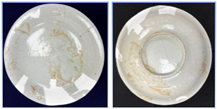
It is clearly out of the scope of this paper to produce a review of papers in which XRF spectroscopy is used as sole non-destructive, non-invasive and no-touch techniques to characterize various artwork’s materials, but the reported references, especially some recent review [4], demonstrate that our approach is absolutely and scientifically correct and supported by historical findings and evidence.
2. Materials and Methods
2.1. Analyzed Porcelain
The Honzenji shallow bowl (Figure 1) was made available by the Kutaniyaki Art Museum in Kaga (Ishikawa Prefecture). It does belong to Honzenji temple, also located in Kaga, and is on display at the Kutaniyaki Art Museum as a very relevant piece of the history of the Maeda clan in the Edo Period—mid-17th century.
2.2. XRF Spectrometer: Experimental and Measurement Parameters
The employed XRF portable instrument consists of a miniature X-ray tube system (Amptek, X-123 SDD, Mini-X X-ray tube, Bedford, MA, USA), which includes the X-ray tube (max voltage of 50 kV, max current of 0.2 mA, target Rh, collimator 1 or 2 mm), the power supply, the control electronics, and the USB communication for remote control; a silicon drift detector (Amptek, Bedford, MA, USA) with a 125 to 140 eV FWHM @ 5.9 keV Mn Kα line energy resolution (depends on peaking time and temperature); 1 keV to 40 keV detection range of energy; max rate of counts to 5.6 × 10⁵ cps; software (DPPMCA Version 1.0.0.22) for acquiring and processing the XRF spectra. Primary beam and detector axis form an angle of 0 and 40° respectively with the perpendicular to the sample surface. Measurement parameters were as follows: tube voltage 35 kV; current 80 μA, acquisition time 100 s; no filter was applied between the X-ray tube and the sample; distance between sample and detector around 1 cm (at this instrumental set-up the measured area is 1 mm2). The setup parameters were selected to have a good spectral signal and to optimize the signal-to-noise ratio. Measurement data were processed using the factory provided data reduction DPPMCA software (Version 1.0.0.22), which enables the acquisition, display, and control for Amptek signal processors and allows the automatic peak recognition supported by manual peak selection and checking. The software further enables curve fitting based on chosen elements to ensure a match between the measured spectra and theoretically predicted spectra calculated from fundamental parameters. Lastly, XRF spectra have been graphically provided by Origin Pro 8.5.
3. Results and Discussion
Glaze and enamels were analyzed by pED-XRF. Detailed results for the blue and green enamels, the most relevant for the detection and identification of both European influence and Kaga distinctive enameling practices, are presented and discussed in the respective sections in line with our previously published articles [1,2]. Table 1 summarizes the established firing timeline and the chemical compositions of the blue and green enamels analyzed on all the Ko-Kutani porcelains and shards studied in the present and previously published works [1,2]. Such summary enables a deeper understanding of the relevance of the Honzenji shallow bowl in relation to the previous groundbreaking findings and in the overall context of Ko-Kutani production.
Table 1.
Chemical elements detected by p-ED-XRF on the multiple points analyzed for each color, along with the corresponding hypothesized pigments: Major and (minor or trace elements); underlined elements identify the chromophore. The Honzenji shallow bowl studied in the present paper is enclosed in a red frame for a quick identification.
The three periods of Ko-Kutani production are: the Early Period (1648–1650), the Middle Period (1650–1651) and the Late Period (1651–1655) [1,2].
3.1. Overglaze Blue—The Smalt Connection
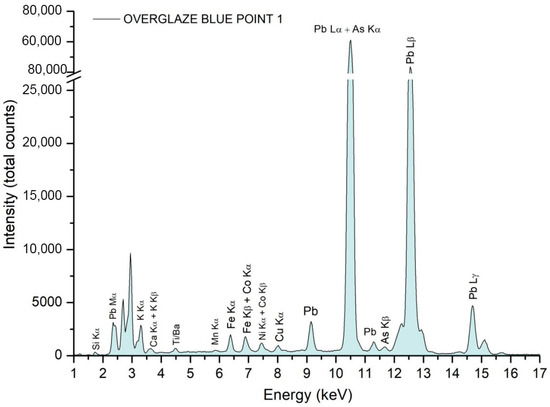
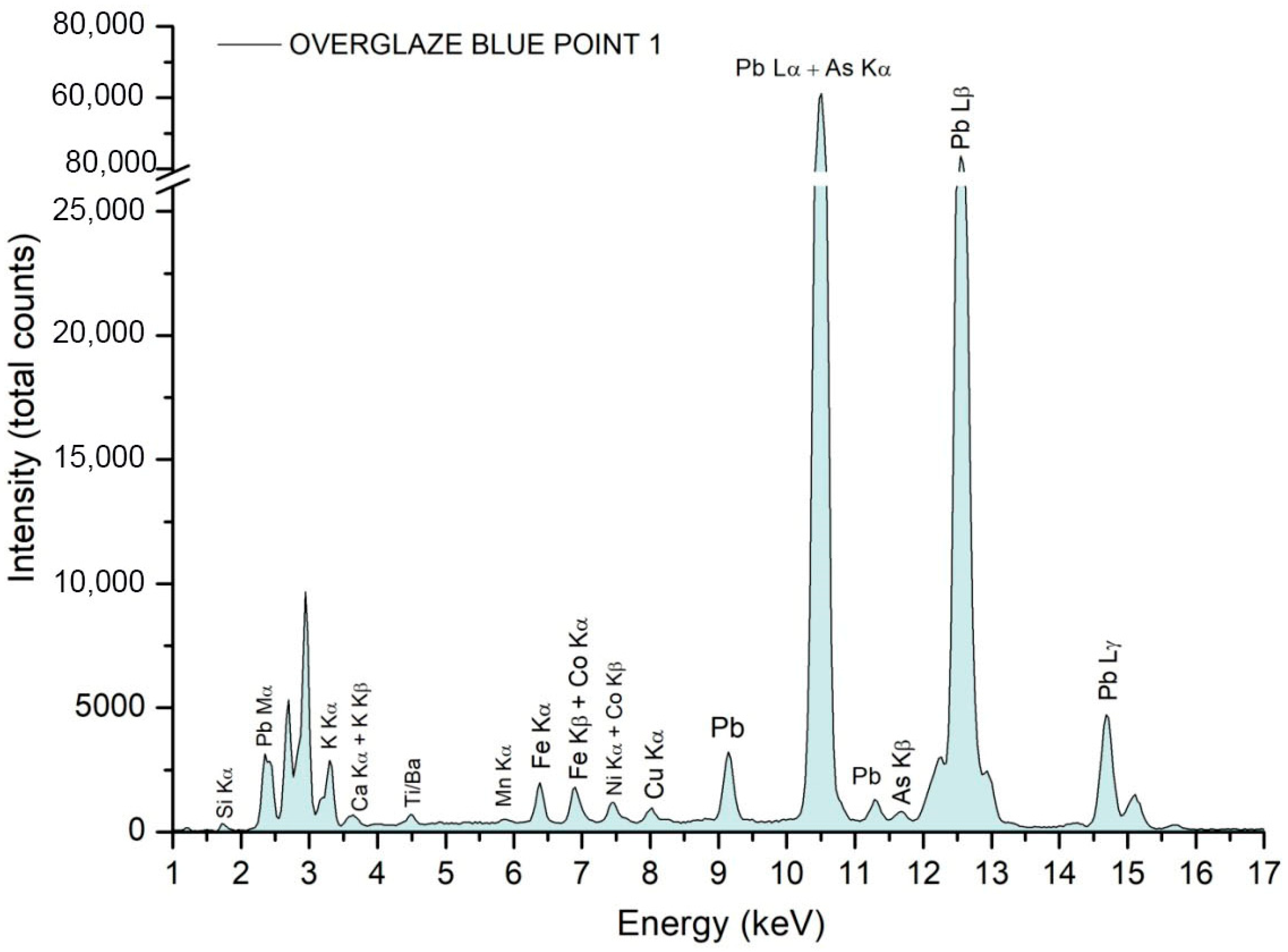
XRF analysis carried out on the overglaze-blue decoration of the Honzenji bowl has revealed that the blue enamel consists of a Smalt-based chromophore (Figure 3). The presence of Smalt proves to be perfectly in line with the blue pigment detected on all Ko-Kutani porcelains fired in the three periods of production, that is, the Early Period (1648–1650), the Middle Period (1650–1651) and the Late Period (1651–1655) [1,2] (Table 1). Specifically, the coloring agent bears the characteristic fingerprint of European Smalt: the chemical composition Fe-Co-Ni-As with element ratios of Mn/Co < 1 and As/Co between 0.35 and 0.50, noticeable levels of Cu, no Cr, and trace to minor levels of Mn as observed on 17th-century European Smalt and firmly established in several literature references [14,15,16,17,18,19,20,21,22,23,24,25,26].
Figure 3.
XRF spectrum of the overglaze-blue enamel analyzed on the Honzenji shallow bowl. Fe-Co-Ni-As chemical composition with detected ratios Mn/Co = 0.3, As/Co = 0.48, Co/Ni = 1.46. Note: The emission energy lines centered at 2.69 keV and 2.83 keV are to be referred to the X-ray tube Rhodium target and do not identify any chemical elements characterizing the analyzed enamel.
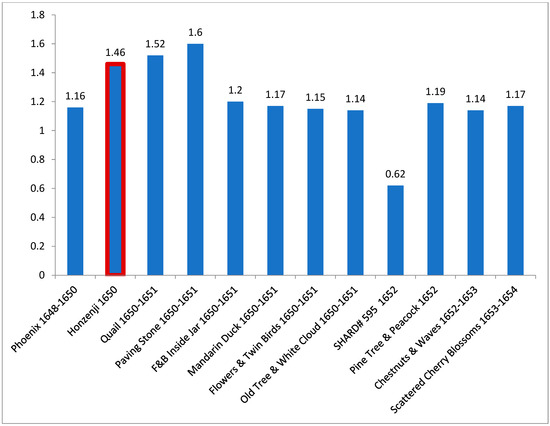
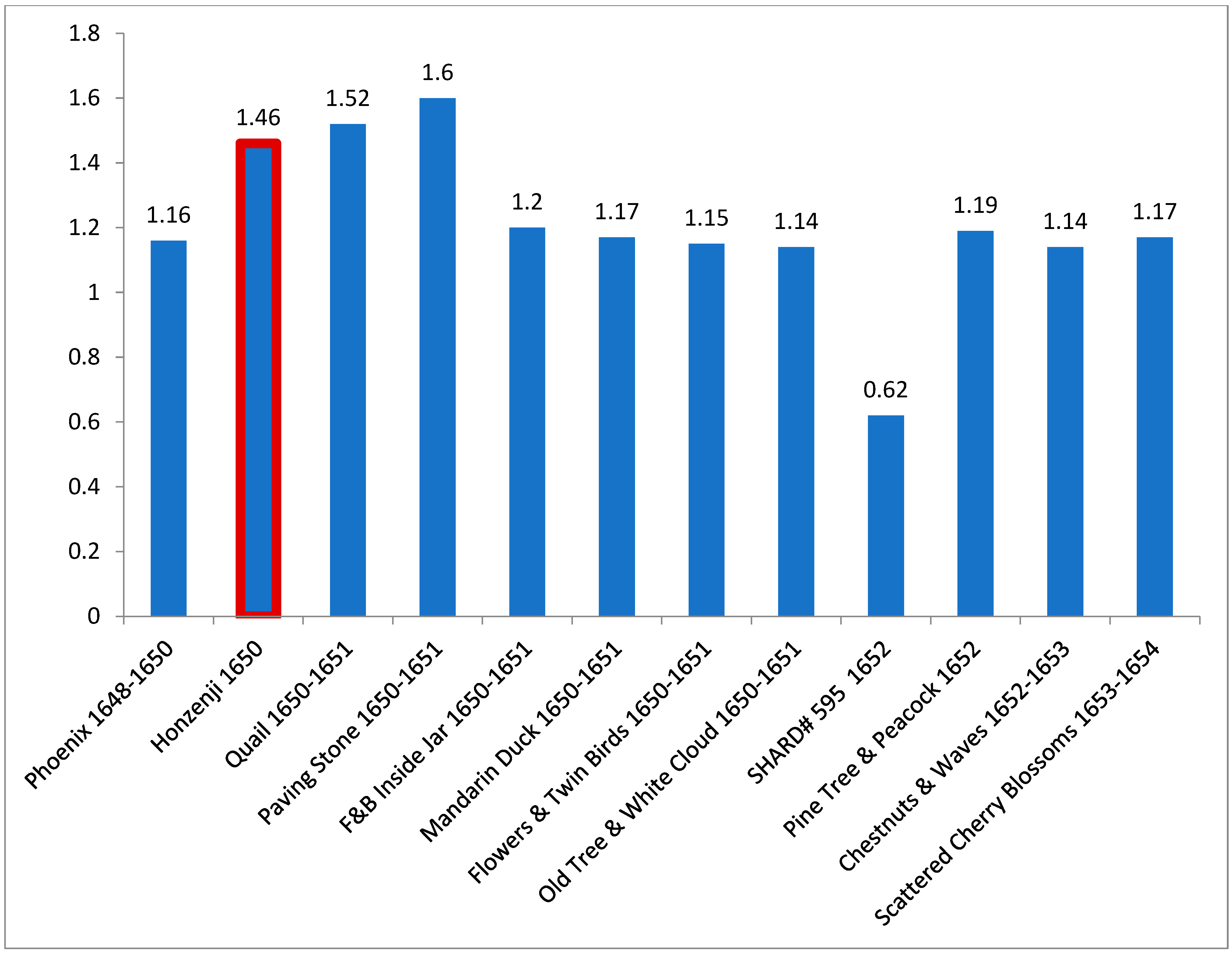
Crucial to report here is the Co/Ni ratio of 1.46 detected on the overglaze-blue enamel analyzed on the Honzenji bowl: the bar graph in Figure 4 shows that such ratio is the result of a thorough experimentation that was taking place in the late Early Period (1649) and early Middle Period (1650) [1] as testified by the variability of the ratios within that timeframe, namely, 1.16–1.6. The bar graph also shows that stabilization was achieved in the Middle Period (1651) with Co/Ni ratios basically staying within the 1.14–1.2 range (Figure 4). It appears very clear from Figure 4 that the Honzenji bowl bore a bridging recipe between the Phoenix bowl—Co/Ni ratio of 1.16 and the Quail bowl—Co/Ni ratio of 1.52, thus strongly pointing to the year 1650 as its firing date.
Figure 4.
Co/Ni ratios detected on all the analyzed Ko-Kutani porcelains. The Honzenji shallow bowl studied in the present paper is enclosed in a red frame.
Very relevant is also to mention that the Phoenix bowl, fired between 1649 and 1650 (Early Period) (Table 1) [1], is the earliest Ko-Kutani porcelain bearing the distinctive Kaga palette: Smalt-based blue, Cu-Zn-As green, yellow, red, black and purple [1,2]. On the basis of the Co/Ni-ratio comparison presented in Figure 4, the Honzenji bowl appears to have been the first bowl ever to be decorated with the Kaga palette in the Middle Period (1650–1651), thus pointing, once again, to the year 1650 as its firing date.
Noteworthy is that the reliance of Japanese potters on the Smalt-based enamel imported from Europe has continued throughout the whole Edo Period (1603–1868), and it was not until the late Meiji Period (1868–1912) that a full-fledged and state-of-the-art industry was established with the introduction of preparative chemistry [26,27] for the industrial production of purified chemical compounds such as carbonates, sulfates, nitrates and oxides.
3.2. Overglaze Green—The Cu-Zn-As Connection
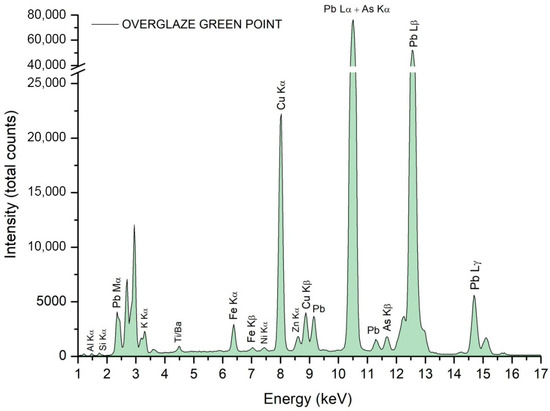
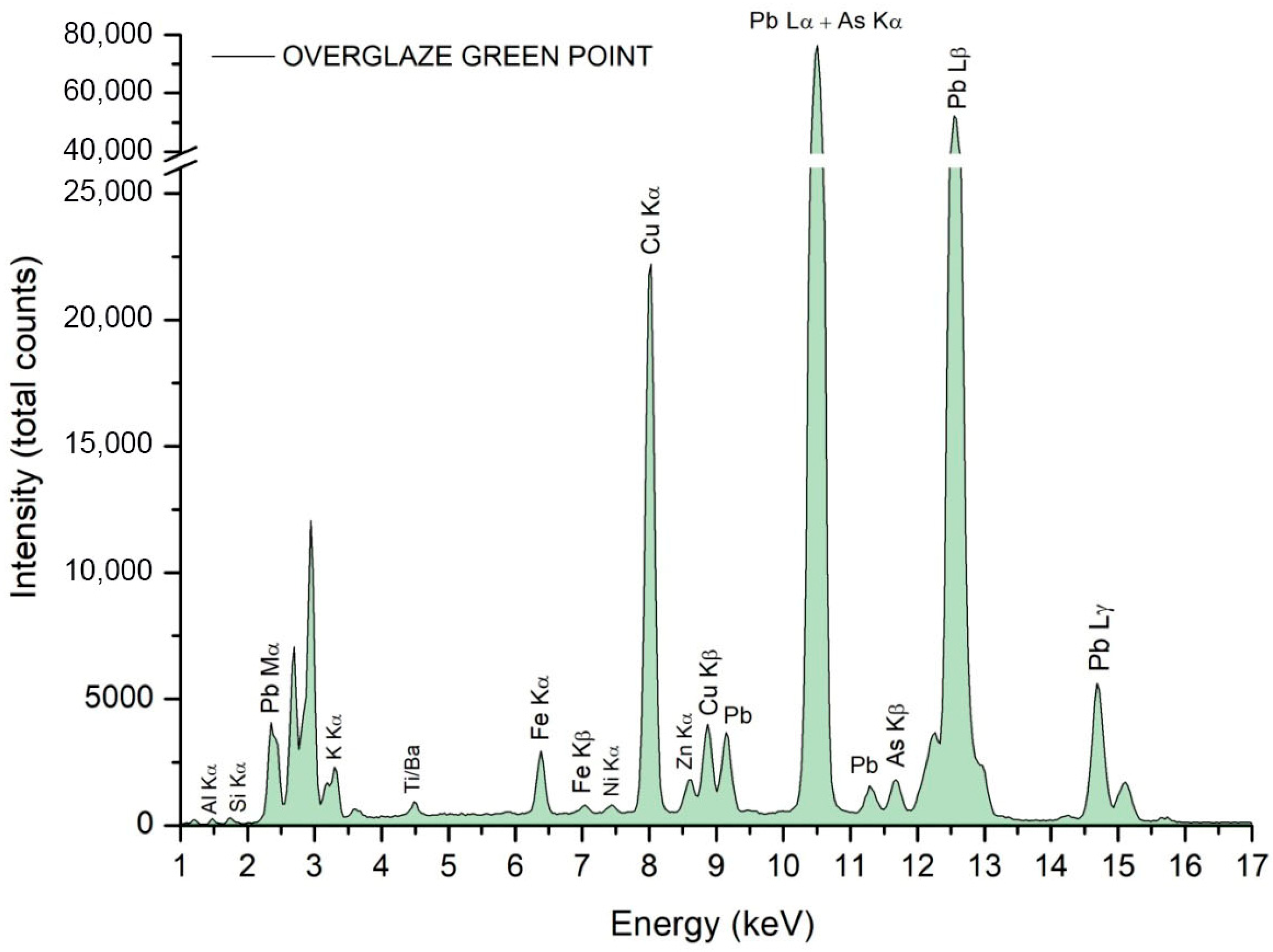
The green chromophore analyzed on the Honzenji shallow bowl (Figure 5) is characterized by the chemical composition Cu-Zn-As: this element association proves perfectly consistent with the green enamels detected on all Ko-Kutani porcelains fired in the Early Period (1648–1650) and Middle Period (1650–1651) (Table 1) [1,2].
Figure 5.
XRF spectrum of the overglaze-green enamel analyzed on the Honzenji shallow bowl. Note: The emission energy lines centered at 2.69 keV and 2.83 keV are to be referred to the X-ray tube Rhodium target and do not identify any chemical elements characterizing the analyzed enamel.
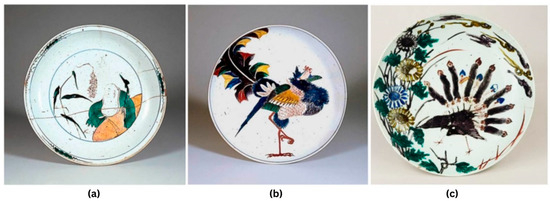
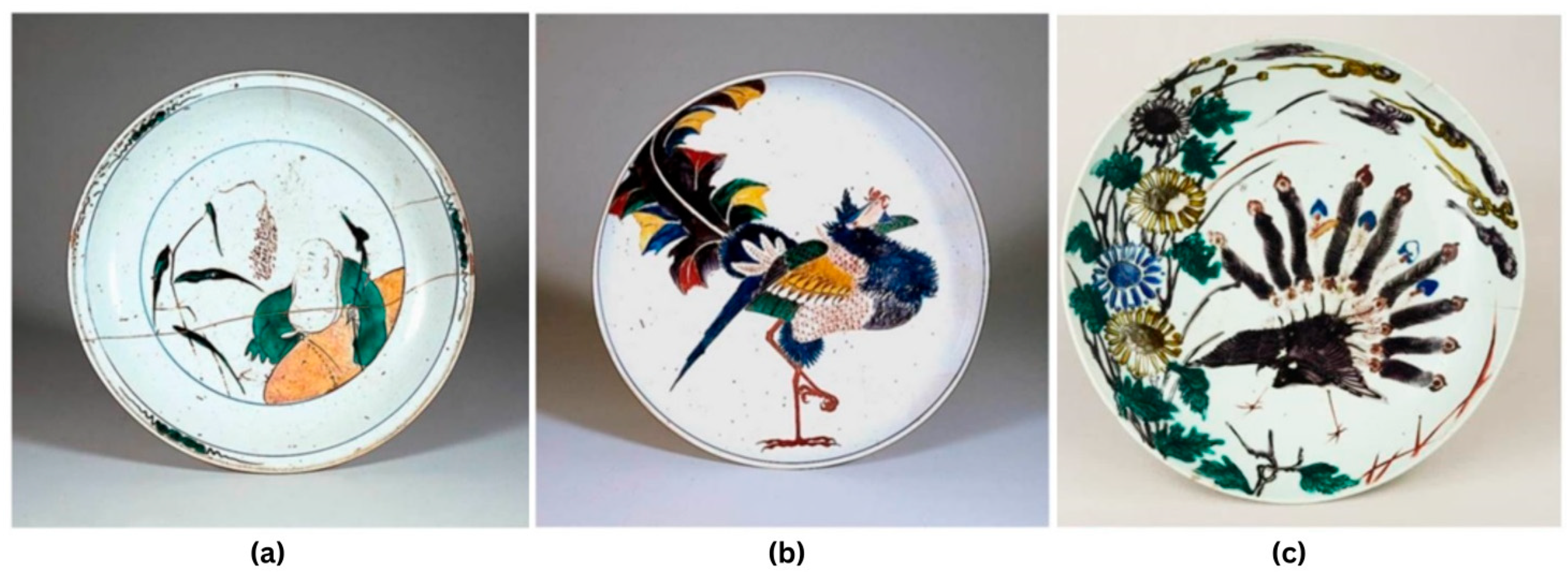
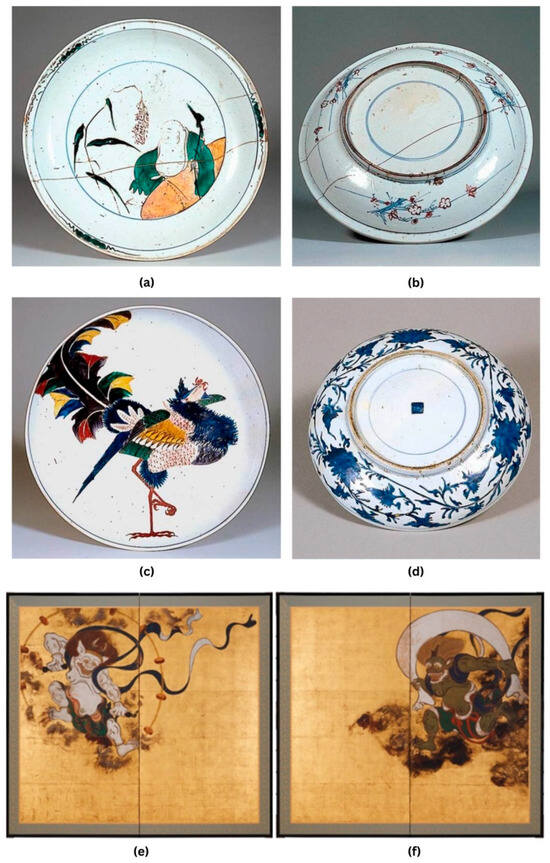
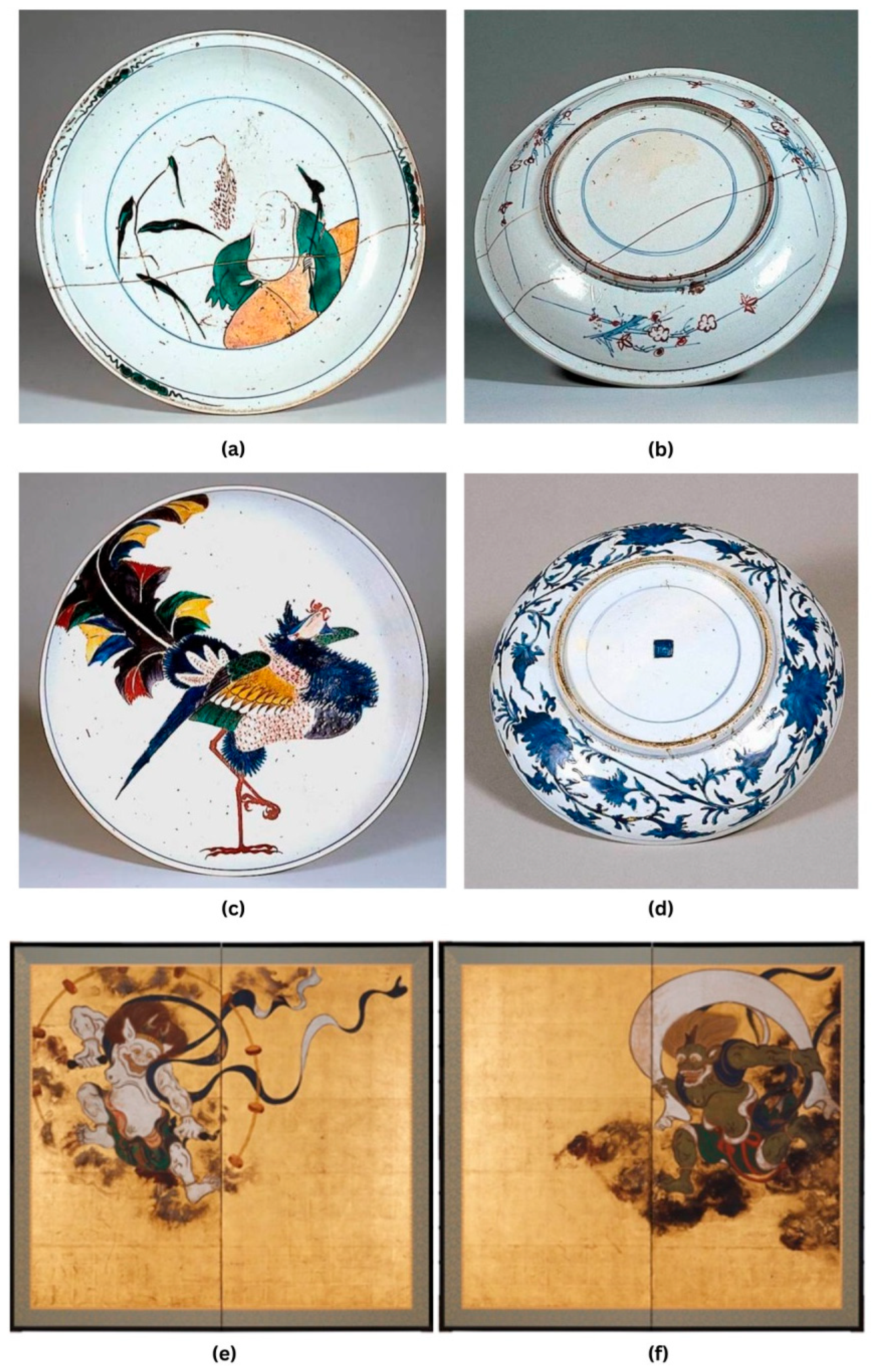
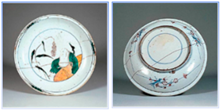
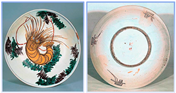
Moreover, previous studies on Ko-Kutani ware [1,2] have unveiled that European Smalt started being incorporated into overglaze enameling in the Early Period (1648–1650) as a novel addition to the traditional palette (red, yellow, green, black) that had been utilized on the earliest bowl ever fired in Kaga, namely, the Hotei bowl (Figure 6a).
Figure 6.
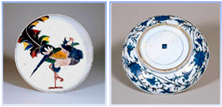
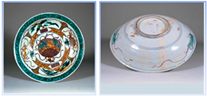
(a) Hotei bowl, 1648–1649: earliest bowl ever fired in Kaga and decorated with red, yellow, green and black enamels; (b) Phoenix bowl, 1649–1650: introduction of the new palette with the Smalt-based blue enamel; courtesy of Ishikawa Prefectural Museum of Art; (c) the Honzenji bowl: decorated with the new palette including the Smalt-based blue enamel; courtesy of the Ishikawa Kutaniyaki Art Museum.
To conclude, the Phoenix bowl (Figure 6b) is the second earliest Ko-Kutani porcelain ever fired in Kaga (1649–1650) [1,2] and it does feature both the Cu-Zn-As green and the novel Smalt-based blue enamel (Table 1). The analytical evidence herein presented has unveiled that also the Honzenji bowl (Figure 6c) bears both the Cu-Zn-As green and the novel Smalt-based blue enamel as the Phoenix bowl (1649–1659) (Figure 6b): results, once again, point to the year 1650 as the firing date for the Honzenji bowl as confirmed by the presence of the new palette of colors (including the European Smalt) for its decoration.
3.3. Glaze Type and Decoration Style—The Rb/Sr and Tawaraya Sotatsu Connection
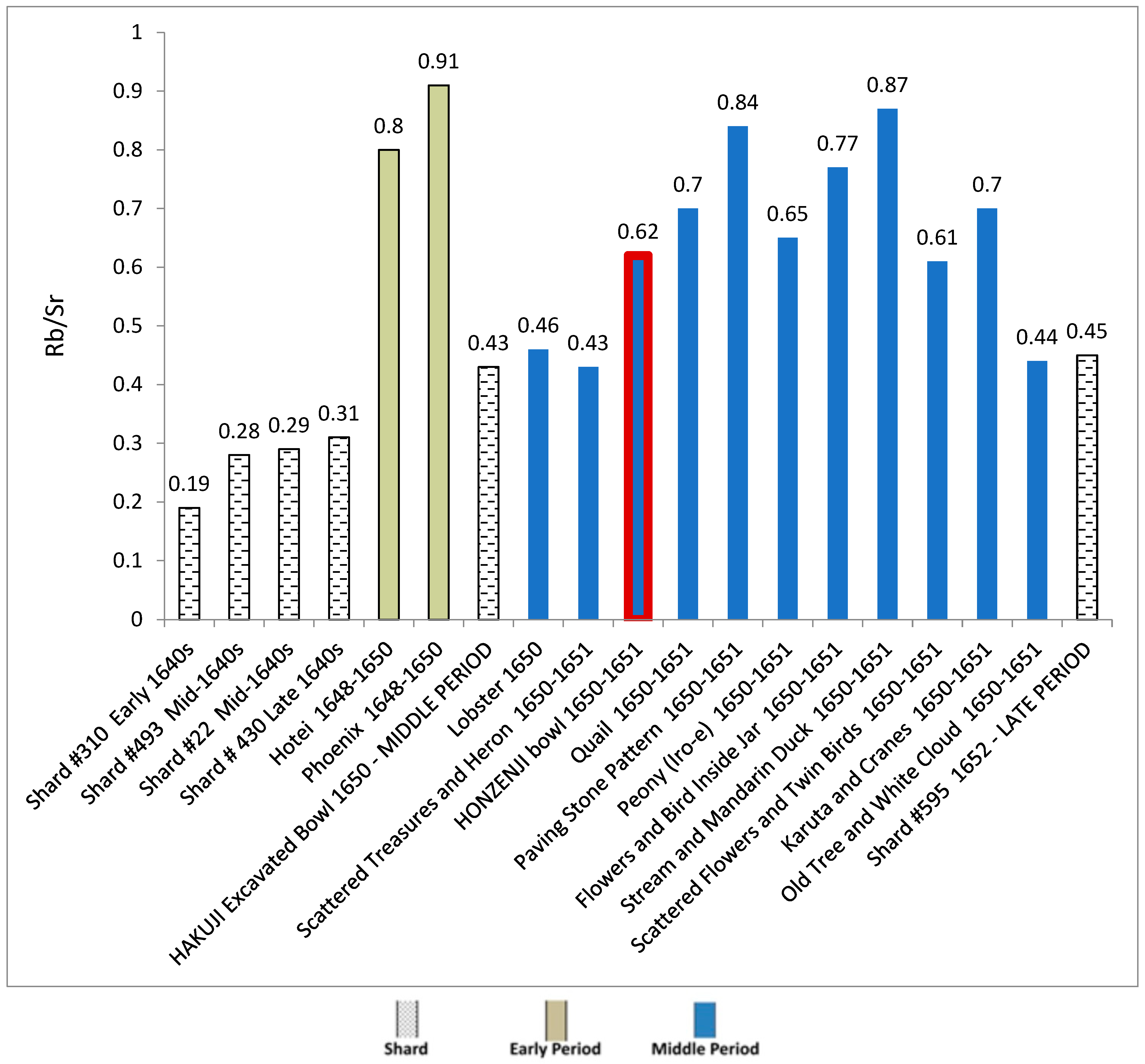
The analysis of the glaze on the Honzenji bowl (Figure 7) provides further crucial evidence for the definitive identification of its firing date on the basis of the Rb/Sr ratio. In particular, the Rb/Sr ratio of 0.62 proves perfectly consistent with the Ko-Kutani glaze type that marked the Middle Period (1650–1651) as previously reported and firmly demonstrated [1,2]. The bar graph in Figure 8 enables a better understanding of how the Rb/Sr ratio fits into the firing timeline of Ko-Kutani porcelains and shards in all three periods.
Figure 7.
XRF spectrum of the glaze analyzed on the Honzenji bowl. Note: The emission energy lines centered at 2.69 keV and 2.83 keV are to be referred to the X-ray tube Rhodium target and do not identify any chemical elements characterizing the analyzed enamel.
Figure 8.
Rb/Sr ratios detected on the analyzed Ko-Kutani porcelains and excavated shards in all three periods of production. The Honzenji shallow bowl studied in the present paper is enclosed in a red frame.
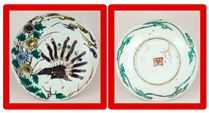
As it clearly emerges from the bar graph, the Rb/Sr ratio of 0.62 proves perfectly in line with the ratios detected on the Ko-Kutani porcelains fired in the Middle Period, specifically, after the Hakuji, Lobster, and Scattered Treasures and Heron bowls that are all characterized by Rb/Sr ratios in the range of 0.43–0.46 (Figure 8) [1,2].
Very importantly, the decoration style observed on the Honzenji bowl still shows some of the compositional concepts and trends inspired by the paintings of Tawaraya Sotatsu [2] (Figure 9): dominant polychrome designs and blank space intertwined in a masterful balance. The implication is clear: the distinctive Ko-Kutani motifs of the Early Period (1648–1650) and the beginning of the Middle Period (1650) prove to have been the result of the direct influence of Tawaraya Sotatsu, who is known to have stayed and worked in the Kaga domain in the mid-17th century [28].
Figure 9.
(a) Front of Hotei bowl. (b) Underside of Hotei bowl. (c) Front of Phoenix bowl. (d) Underside of Phoenix bowl. Collection of Ishikawa Prefectural Museum of Art. (e,f) Wind God and Thunder God Screens by Tawaraya Sotatsu, Japan, 17th century, pair of two-fold screens, ink and color on gold-foiled paper, each H. 154.5 cm, W. 169.8 cm, Kennin-ji Temple, Kyoto; public domain via Wikimedia Commons; (https://commons.wikimedia.org/wiki/File:Wind_God_and_Thunder_God_Screens_by_Tawaraya_Sotatsu_hi-res.png) (accessed on 8 April 2026).
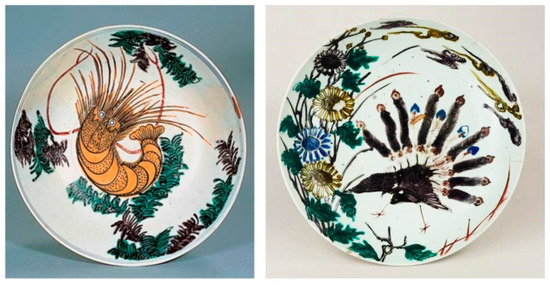
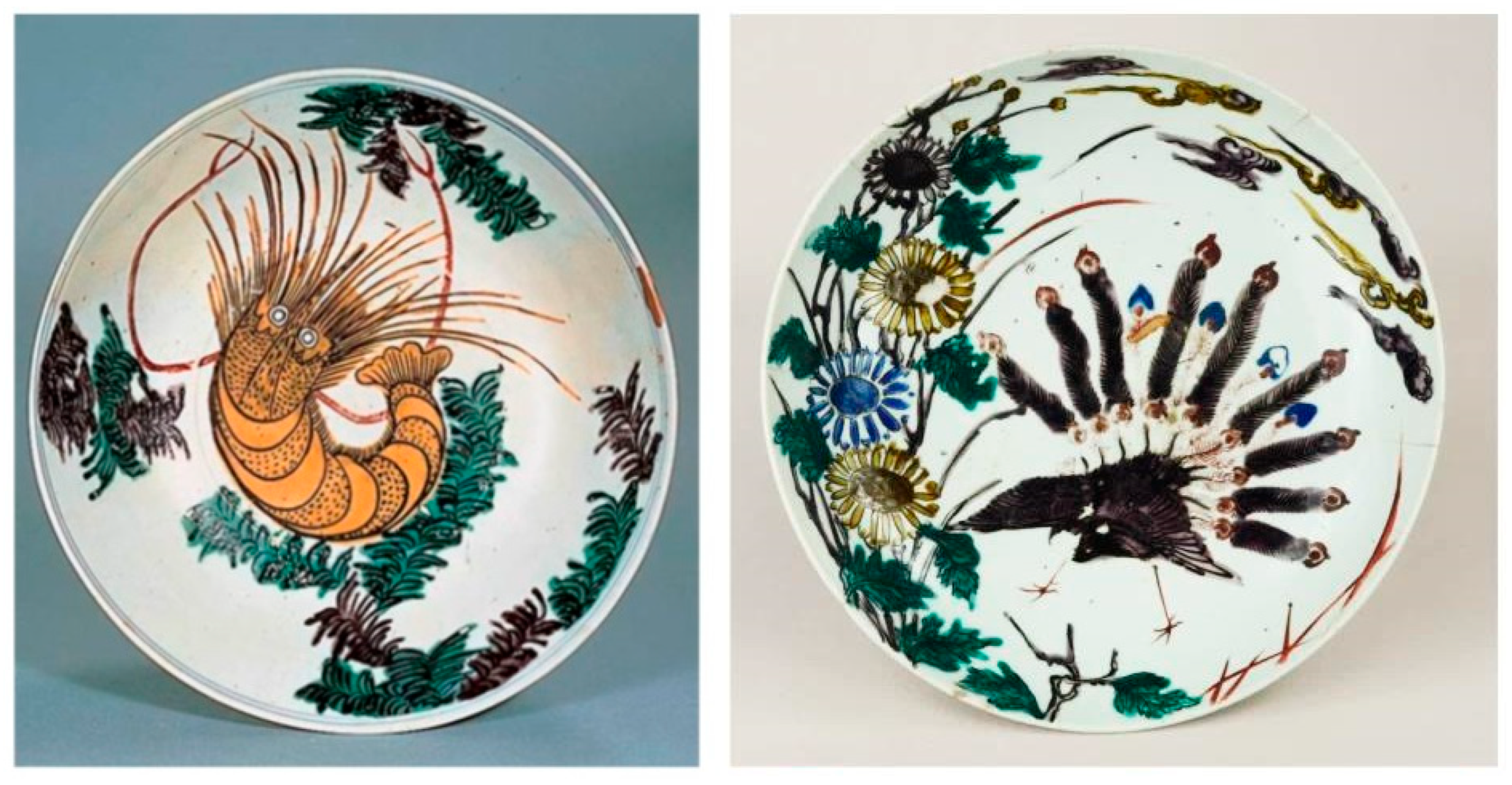
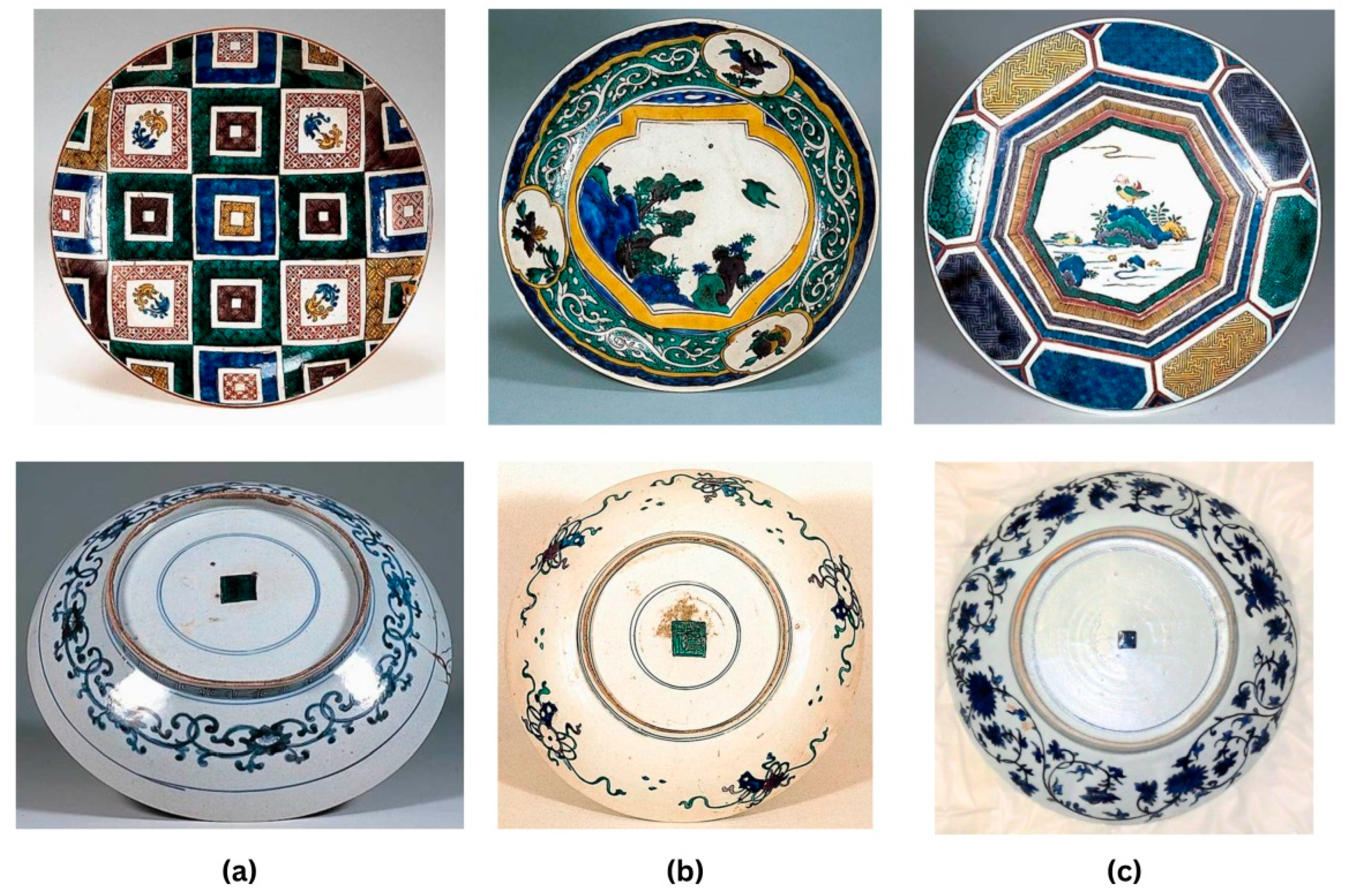
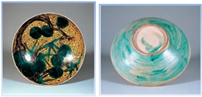
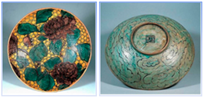
Yet, as shown in Figure 10, both the Lobster and Honzenji bowls, contrary to the cases of the Hotei and Phoenix bowls (Figure 9c,d), bear vegetal and floral scrolls that surround the main designs. Such instances clearly anticipate the iconic intensive decoration of the Proto-Aode style (Figure 11). The implication is clear: the transitional nature of the decoration featured by the Honzenji bowl points to the year 1650 as its firing date.
Figure 10.
Comparison between the decoration style observed on the Lobster bowl fired in 1650 (left) and the Honzenji bowl also fired in 1650 (right).
Figure 11.
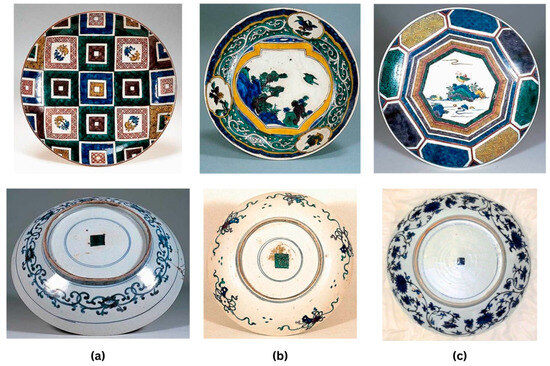
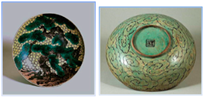
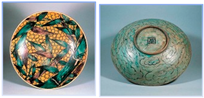
Ko-Kutani shallow bowls fired in the Middle Period and decorated with the mature Proto-Aode style (Table 1): (a) Paving Stone Pattern fired in 1651; (b) Flowers and Birds Inside Jar fired in 1651; (c) Stream and Mandarin Duck fired in 1651.
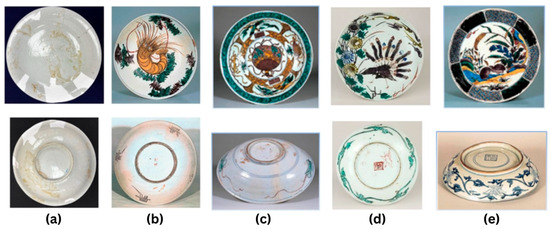
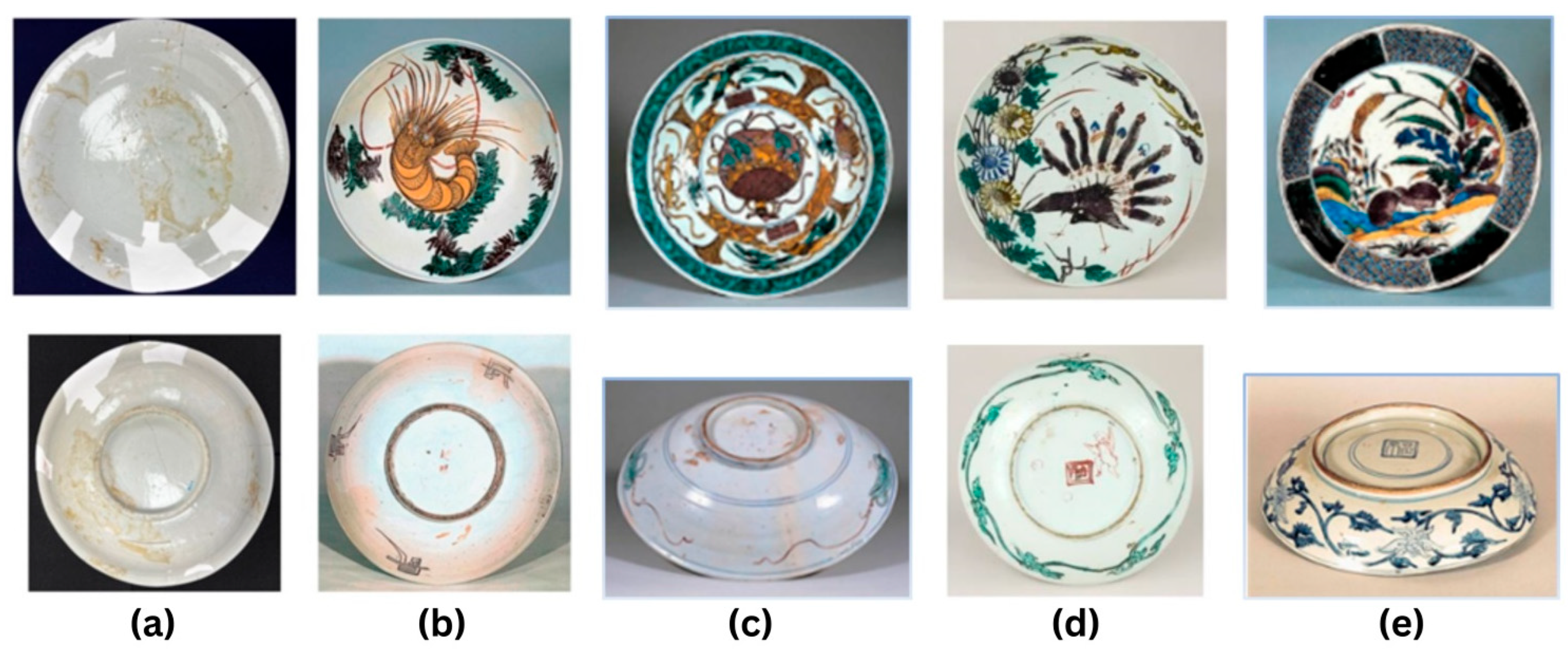
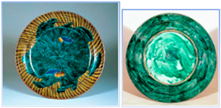
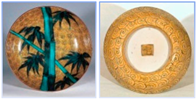
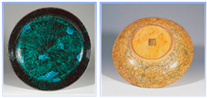
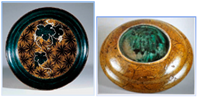
Moreover, from a potting standpoint, the large foot observed on the Honzenji bowl (Figure 1) is the result of the ongoing transition from the earliest production of the year 1650 characterized by the predominance of the distinctive Ko-Kutani small foot featured by the Hakuji, Lobster, and Scattered Treasures and Heron bowls (Figure 12) [1,2], to the year 1651 that saw the reappearance of the large foot (Figure 12). The Rb/Sr ratio of 0.62 detected on the Honzenji bowl confirms its transitional nature as it represents the shift from the 0.43–0.46 range that characterized the small foot in 1650 to the higher values, Rb/Sr > 0.6, detected on the bowls fired after 1650.
Figure 12.
Firing timeline (Table 1) with foot type and Rb/Sr ratios: (a) Hakuji, 1650, small foot, Rb/Sr ratio of 0.43; (b) Lobster, 1650, small foot, Rb/Sr ratio of 0.46; (c) Treasures and Heron, 1650, small foot, Rb/Sr ratio of 0.43; (d) Honzenji, 1650, large foot, Rb/Sr ratio of 0.62; (e) Quail, 1650, large foot, Rb/Sr ratio of 0.7.
The implication of these observations is clear: the Honzenji bowl is the transitional piece that proved instrumental to the reintroduction of the large foot of Chinese origin in the Middle Period (1650–1651). Its firing, therefore, must have occurred in late 1650.
To conclude, analytical evidence, stylistic features and potting techniques point to the year 1650 as the timeframe for the firing of the Honzenji bowl.
4. The Mysterious Figure Painted on the Honzenji Bowl
The analytical evidence reported so far has enabled, for the first time ever, the identification of the firing date of the Honzenji bowl, thus providing the firm confirmation that the precious vessel had actually been fired under the supervision of the Lord Maeda Toshitsune (1594–1658) himself [28,29,30].
It is important to mention here that Maeda Toshitsune was the father of Ko-Kutani porcelain: he had established the Kaga kiln in order to promote the distinctive cultural openness and boldness of his Clan, making the fiefdom home to several exceptional artists such as Tawaraya Sotatsu, Nonomura Ninsei, along with historical figures in the early 1600s such as Takayama Ukon and Niato Tokuan Johan (both Christian Samurai) [28,29,30,31].
Maeda Toshitsune introduced a crucial innovation in 17th-century Japan: culture and art as means of mutual understanding, prosperity and survival in times of censorship, social control, persecutions, and tense relations with the reigning Tokugawa Shogunate [2,28]. The Meada Clan had managed to realize the cultural prosperity that Tokugawa will be credited for a century later in the Genroku Period (1684–1702). This is a crucial point that explains the nature and purpose of the cryptic figure on the underside as clarified by the following considerations.
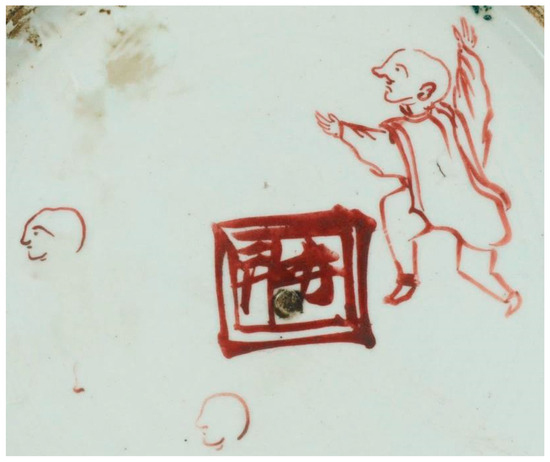
Now that the direct involvement of Maeda Toshitsune has proven a solid possibility, we need to answer the question of why the bowl bears the cryptic figure and the raw sketches in the first place (Figure 13).
Figure 13.
Details of the mark and decoration painted on the underside of the Honzenji bowl.
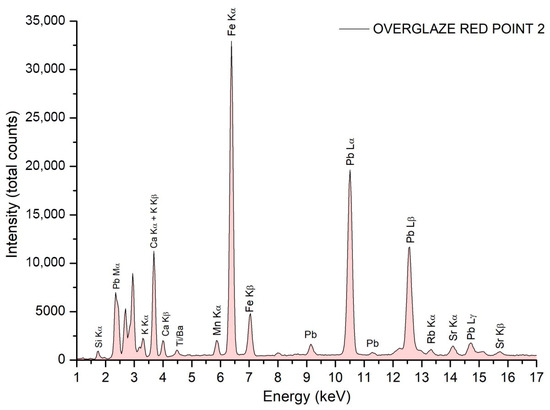
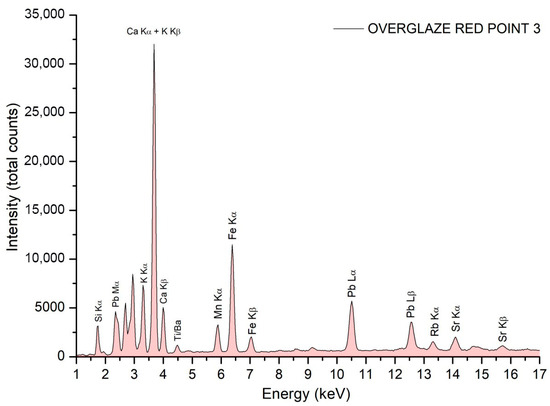
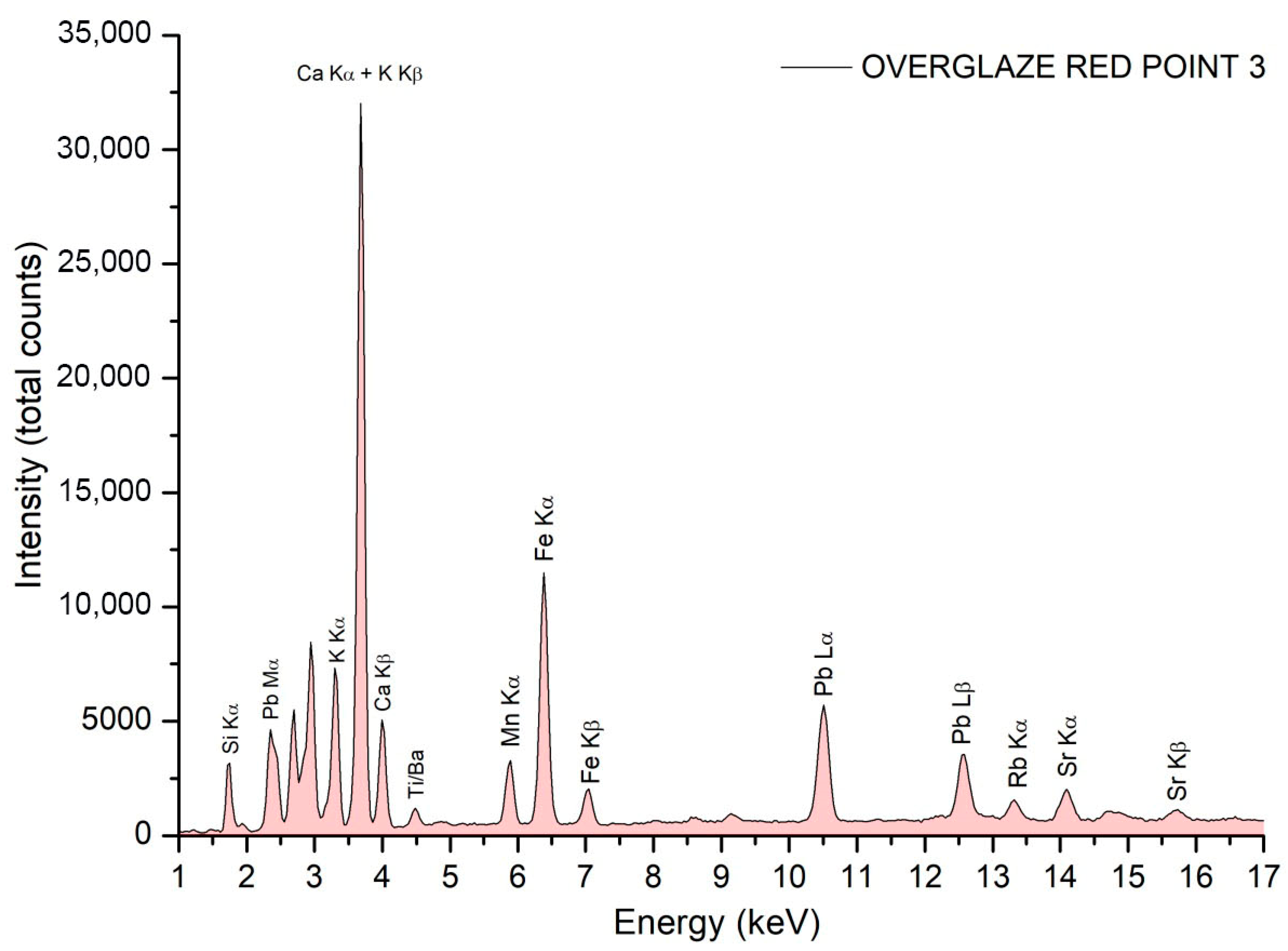
XRF spectra of the red color analyzed on both the mark (thick frame) and figure have revealed that the enamel, as expected, consists of a Pb-based matrix within which a Fe-based chromophore had been embedded (Figure 14 and Figure 15). The difference in Fe counts is the result of the thicker layer of color applied to draw the frame enclosing the mark compared to the thinner brush strokes that outline the figure’s body (Figure 13). It appears evident that the mark, the figure and the sketches had all been fired at the same time and using the same red enamel. So, one question remains: why had the sketches not been removed prior to the final firing, their removal being an easy task for any experienced potter.
Figure 14.
Overglaze-red enamel analyzed on the Honzenji shallow bowl: mark painted on the underside. Note: The emission energy lines centered at 2.69 keV and 2.83 keV are to be referred to the X-ray tube Rhodium target and do not identify any chemical elements characterizing the analyzed enamel.
Figure 15.
Overglaze-red enamel analyzed on the Honzenji shallow bowl: outline of the figure painted on the underside. Note: The emission energy lines centered at 2.69 keV and 2.83 keV are to be referred to the X-ray tube Rhodium target and do not identify any chemical elements characterizing the analyzed enamel.
The answer lies in the considerations we have been presenting in this section. No potter would ever remove any sketches drawn by a Daimyo (Lord) because such an act would prove disrespectful and would deserve exemplary punishment. Yet, fear and obedience were not the sole reason for this choice. The sketches drawn on the underside are instead a crucial testament to the openness of the Maeda toward shared culture and mutual understating, based on freedom of religion and a thriving cultural environment.
The bowl was donated to the Honzenji temple during the persecutions, when Buddhist temples had become means of social control as a result of Tokugawa’s vision of the new social order [32]. Maeda Toshitsune had broken such rigid and censorial attitude through the donation of one of the earliest examples of his new art, an innovation that was flourishing through the technological development incepted by the many artists and potters who had contributed to make the Kaga domain a hub of global culture in Japan. A token of mutual support and understating based on a vision of peaceful coexistence that conflicted with the brutal persecutions and isolation policy enforced by the Tokugawa Shogunate in the 17th century. Maeda Toshitsune aimed at creating a cultural and social environment where religion, art and innovation would make human capabilities flourish freely.
The sketches, untouched by the potter who fired the bowl, proved a testament to Maeda Toshitsune’s participation in a new artistic and technological advancement that had successfully been established in Kaga. The character Shō (勝), meaning ‘Excellence’, was chosen as the porcelain mark to symbolize such distinctively refined achievement in the arts.
It now appears very clear that the figure depicts a Gigaku performance (ancient form of ritual masked-dance drama) within a Buddhist ritual context: the raised arms, the rhythmic motion of the legs and the flowing robe (Figure 13) all successfully convey a dynamic and joyful embracement of a peaceful and enlightened world.
To conclude, Maeda Toshitsune had drawn a Buddhist ritual to share a universal vision of peaceful coexistence and virtue, and those very sketches testify to an unfiltered and humble respect for humanity as a whole, a value that is the foundation of modern society.
5. Conclusions
Analytical evidence, combined and integrated with the historical context, has unveiled for the first time ever that the Honzenji bowl was fired in the year 1650 under the supervision of Maeda Toshitsune (Daimyo of Kaga domain, today’s Ishikawa Prefecture).
The bowl bears the distinctive Ko-Kutani palette: Smalt-based blue enamel of European origin, Cu-Zn-As green, and traditional red, yellow, black and purple colors. The glaze is characterized by a Rb/Sr ratio of 0.62 which makes the bowl the earliest Ko-Kutani porcelain fired in the Middle Period to bear both the European Smalt-based overglaze-blue and Cu-Zn-As green, thus confirming its firing date.
The cryptic figure and sketches, along with the mark, proved to have all been fired at the same time using a traditional Fe-based red enamel. Their mysterious meaning has finally been deciphered: they depict a Buddhist ritual performed by a Gigaku dancer. The ritual may well reflect an ethos of cultural openness and peaceful coexistence within Buddhist philosophy. The bowl was donated by the Maeda Lord himself to the Buddhist temple Honzenji, located in the Kaga domain, as a testament of peaceful coexistence in the tense times of persecutions and censorship enforced by the Tokugawa Shogunate. The values represented by the Honzenji bowl were of openness, religious freedom, cultural innovation and mutual understanding, values that had survived those harsh times to lay the foundation of modern Japan.
Author Contributions
This research project was conceived by R.M. and H.M. R.M. prepared the manuscript. The analyses were carried out by R.M. The results were interpreted by R.M., M.F.A., S.S. and C.P. M.F.A., C.P., H.M. and S.S. also revised the manuscript. All authors have read and agreed to the published version of the manuscript.
Funding
This research received no external funding.
Institutional Review Board Statement
Not applicable.
Informed Consent Statement
Not applicable.
Data Availability Statement
The original contributions presented in this study are included in the article. Further inquiries can be directed to the corresponding author.
Acknowledgments
We would like to expressly thank the Kutaniyaki Art Museum for providing the Honzenji shallow bowl and allowing the analysis to be carried out.
Conflicts of Interest
Authors Maria Francesca Alberghina and Salvatore Schiavone were employed by S.T.Art-Test sas. The remaining authors declare that the research was conducted in the absence of any commercial or financial relationships that could be construed as a potential conflict of interest.
References
- Montanari, R.; Murase, H.; Alberghina, M.F.; Schiavone, S.; Pelosi, C. The Origin of Ko-Kutani Porcelain: New Discoveries and a Reassessment. Coatings 2024, 14, 1146. [Google Scholar] [CrossRef] [Scilit]
- Montanari, R.; Murase, H.; Alberghina, M.F.; Schiavone, S.; Pelosi, C. The Origin of KO-KUTANI Porcelain—Part II: The Unearthed Secrets of the Hakuji Shallow Bowl. Coatings 2025, 15, 1007. [Google Scholar] [CrossRef] [Scilit]
- Liss, B.; Stout, S. Materials Characterization for Cultural Heritage: XRF Case Studies in Archaeology and Art. In Heritage and Archaeology in the Digital Age; Quantitative Methods in the Humanities and Social Sciences; Vincent, M., López-Menchero Bendicho, V., Ioannides, M., Levy, T., Eds.; Springer: Cham, Switzerland, 2017. [Google Scholar] [CrossRef] [Scilit]
- Harth, A. X-ray fluorescence (XRF) on painted heritage objects: A review using topic modeling. Herit. Sci. 2024, 12, 17. [Google Scholar] [CrossRef] [Scilit]
- Galli, A.; Bonizzoni, L. Contribution of X-ray Fluorescence Techniques in Cultural Heritage Materials Characterization. Appl. Sci. 2022, 12, 6309. [Google Scholar] [CrossRef] [Scilit]
- Janssens, K.; Van der Snickt, G.; Vanmeert, F.; Legrand, S.; Nuyts, G.; Alfeld, M.; Monico, L.; Anaf, W.; De Nolf, W.; Vermeulen, M.; et al. Non-invasive and non-destructive examination of artistic pigments, paints, and paintings by means of X-ray methods. Top. Curr. Chem. 2016, 374, 81. [Google Scholar] [CrossRef] [Scilit] [PubMed]
- Mantler, M.; Schreiner, M. X-ray fluorescence spectrometry in art and archaeology. X-Ray Spectrom. 2000, 29, 3–17. [Google Scholar] [CrossRef]
- Colomban, P.; Gerken, M.; Gironda, M.; Mesqui, V. On-site micro-XRF mapping of enameled porcelain paintings and sculpture. First demonstration. J. Eur. Ceram. Soc. 2025, 45, 116849. [Google Scholar] [CrossRef] [Scilit]
- Freitas, R.P.d.; Oliveira, M.A.d.; Oliveira, M.B.d.; Pimenta, A.R.; Felix, V.d.S.; Pereira, M.O.; Gonçalves, E.A.S.; Grechi, J.V.L.; Silva, F.L.e.; Carvalho, C.d.S.; et al. Development of a Macro X-ray Fluorescence (MA-XRF) Scanner System for In Situ Analysis of Paintings That Operates in a Static or Dynamic Method. Quantum Beam Sci. 2024, 8, 26. [Google Scholar] [CrossRef] [Scilit]
- Braekmans, D.; Storre, J.; Lechelt, C.; Seepma, R.; Shortland, A.J. Light and Dark Blue: A Non-Destructive Analysis of Blue Enamel and Underglaze Compositions in Fürstenberg Porcelains. In Of Goblins and Gods: 3500 Years of Cobalt and Its Pigments; Shortland, A.J., Kemp, V., Bjørnland, L.H., Degyse, P., Eds.; Leuven University Press: Leuven, Belgium, 2026; Volume 9. [Google Scholar] [CrossRef] [Scilit]
- Demirsar Arli, B.; Simsek Franci, G.; Kaya, S.; Arli, H.; Colomban, P. Portable X-ray Fluorescence (p-XRF) Uncertainty Estimation for Glazed Ceramic Analysis: Case of Iznik Tiles. Heritage 2020, 3, 1302–1329. [Google Scholar] [CrossRef] [Scilit]
- Simsek Franci, G.; Colomban, P. On-Site Identification of Pottery with pXRF: An Example of European and Chinese Red Stonewares. Heritage 2022, 5, 88–102. [Google Scholar] [CrossRef] [Scilit]
- Mastrotheodoros, G.P.; Asvestas, A.; Gerodimos, T.; Anagnostopoulos, D.F. Revealing the Materials, Painting Techniques, and State of Preservation of a Heavily Altered Early 19th Century Greek Icon through MA-XRF. Heritage 2023, 6, 1903–1920. [Google Scholar] [CrossRef] [Scilit]
- Muhlethaler, B.; Thissena, J. Smalt. In Artists’ Pigments: A Handbook of Their History and Characteristics; Roy, A., Ed.; Archetype Publications, National Gallery of Art: London, UK, 1993; Volume 2, pp. 113–130. [Google Scholar]
- Ciliberto, E.; Fragalà, I.; Pennisi, G.; Spoto, G. Bulk and surface characterization of early pigments: Case study of a renaissance smalt. Sci. Technol. Cult. Herit. 1994, 3, 163–168. [Google Scholar]
- Förster, J. Kobaltbergbau und Blaufarbenindustrie im Sächsischen Erzgebirge (Cobalt Mining and Cobalt Blue Industries in the Saxon Erzgebirge). Master’s Thesis, Technische Universität Dresden, Dresden, Germany, 2018. [Google Scholar]
- Wypyski, M.T. Technical Study of Renaissance Venetian Enameled Glass. In Proceedings of the Annales of the 17th Congress of the International Association for the History of Glass, Antwerp, Belgium, 4–8 September 2006. [Google Scholar]
- Padeletti, G.; Fermo, P.; Gilardoni, S.; Galli, A. Technological study of ancient ceramics produced in Casteldurante (central Italy) during the Renaissance. Appl. Phys. A 2004, 79, 335–339. [Google Scholar] [CrossRef] [Scilit]
- Bajnóczi, B.; Nagy, G.; Tóth, M.; Ringer, I.; Ridovics, A. Archaeometric characterization of 17th-century tin-glazed Anabaptist (Hutterite) faience artefacts from North-East-Hungary. J. Arch. Sci. 2014, 45, 1–14. [Google Scholar] [CrossRef] [Scilit]
- Barilaro, D.; Crupi, V.; Interdonato, S.; Majolino, D.; Venuti, V.; Barone, G.; La Russa, M.F.; Bardelli, F. Characterization of blue decorated Renaissance pottery fragments from Caltagirone (Sicily, Italy). Appl. Phys. A 2008, 92, 91–96. [Google Scholar] [CrossRef] [Scilit]
- Padeletti, G.; Ingo, G.M.; Bouquillon, A.; Pages-Camagna, S.; Aucouturier, M.; Roehrs, S.; Fermo, P. First-time observation of Maestro Giorgio masterpieces by means of non-destructive techniques. Appl. Phys. A 2006, 83, 475–483. [Google Scholar] [CrossRef] [Scilit]
- Roldán, C.; Coll, J.; Ferrero, J. EDXRF analysis of blue pigments used in Valencian ceramics from the 14th century to modern times. J. Cult. Herit. 2006, 7, 134–138. [Google Scholar] [CrossRef] [Scilit]
- Maggetti, M. A SEM study of black, blue, violet and yellow inglaze colours of the oldest Swiss tin opacified stove tiles (c. 1450–c. 1512, Canton Bern). Archaeometry 2021, 63, 721–737. [Google Scholar] [CrossRef] [Scilit]
- Wen, R. The Cobalt Blue Pigment Used on Islamic Ceramics and Chinese Blue-and-White Porcelains. Ph.D. Thesis, University of Oxford, Oxford, UK, 2012. [Google Scholar]
- Zucchiatti, A.; Bouquillon, A.; Katona, I.; D’Alessandro, A. The ‘Della Robbia Blue’: A case study for the use of cobalt pigments in ceramics during the Italian Renaissance. Archaeometry 2006, 48, 131–152. [Google Scholar] [CrossRef] [Scilit]
- Takamatsu, T. On Japanese Pigments; Department of Science in Tokio Daigaku: Tokyo, Japan, 1878; pp. 23–29. [Google Scholar]
- Montanari, R.; Murakami, N.; Colomban, P.; Alberghina, M.F.; Pelosi, C.; Schiavone, S. European ceramic technology in the FarEast: Enamels and pigments in Japanese art from the 16th to the 20th century and their reverse influence on China. Herit. Sci. 2020, 8, 48. [Google Scholar] [CrossRef] [Scilit]
- Murase, H. Rethinking Ko-Kutani from the perspective of Convergence Knowledge. In Bulletin of the Kutaniyaki Art Museum, “Pioneering Kutani” (Kutani wo Hiraku); Kutaniyaki Art Museum: Kaga, Japan, 2025; Volume 7, pp. 5–35. Available online: https://researchmap.jp/alleukeinen/published_papers/50460974?lang=en (accessed on 28 February 2026)(In Japanese and English).
- Ishikawa Prefecture Kutaniyaki Art Museum. Treasures of Ko-Kutani from the Collection of the Ishikawa Prefectural Museum of Art; Ishikawa Prefecture Kutaniyaki Art Museum: Kaga, Japan, 2025; (Exhibition catalogue in Japanese and English).
- Ishikawa Prefectural Museum of Art. Honor of Excellence in Both the Literary and Military Arts—Honor of Excellence in Both the Literary and Military Arts—History and Succession of the Wealthiest Daimyo in Kaga Domain; Ishikawa Prefectural Museum of Art: Kanazawa, Japan, 2021; (Exhibition catalogue in Japanese and English).
- NHK Publishing Inc. NHK (NHK Historical Documents 6); NHK Publishing Inc.: Tokyo, Japan, 1987; pp. 18–54. (In Japanese) [Google Scholar]
- Sato, A. The Prohibition of Christianity in the Bungo Region and the System of Social Control. In Proceedings of the Tracing Christianity in Early Modern Japan, the Marega Collection in the Vatican Library and Its Value for International Co-Operation, Rome, Italy, 12 September 2015. [Google Scholar]

Disclaimer/Publisher’s Note: The statements, opinions and data contained in all publications are solely those of the individual author(s) and contributor(s) and not of MDPI and/or the editor(s). MDPI and/or the editor(s) disclaim responsibility for any injury to people or property resulting from any ideas, methods, instructions or products referred to in the content. |
© 2026 by the authors. Licensee MDPI, Basel, Switzerland. This article is an open access article distributed under the terms and conditions of the Creative Commons Attribution (CC BY) license.