


Abstract
Qiangduo Tibetan paper is a typical intangible cultural heritage in the Shangri-La region of Yunnan, China, mainly handmade from two local fibrous plants, Stellera chamaejasme and Wikstroemia canescens. This study focuses on the correlations among its surface properties, water absorption and dry heat durability, which are critical for heritage conservation. Four paper samples (Z1–Z4) were investigated via micromorphology, physicochemical property testing and dry heat aging (105 °C, 216 h). The results show that the two raw materials lead to distinct fiber and pore structures: Stellera chamaejasme paper has coarser fibers and loose pores, while Wikstroemia canescens paper has finer and denser fibers. All samples present a near-neutral to weakly alkaline pH (6.87–7.56) and favorable water absorption, jointly regulated by fiber structure and alkaline wood ash fillers. After dry heat aging, all samples undergo whiteness loss, tensile index decay and slight acidification, with extremely significant changes (p < 0.001). Notably, Stellera chamaejasme paper exhibits much higher aging resistance, with whiteness and tensile index retention reaching 77.97%–93.07% and 71.46%–74.77% respectively, far superior to Wikstroemia canescens paper. The mechanism lies in the high flavonoid content and low lignin level in Stellera chamaejasme fibers, which enhance antioxidant stability and reduce yellowing, whereas the opposite composition accelerates degradation in Wikstroemia canescens paper. This study provides a scientific basis for the conservation, inheritance and targeted application of Qiangduo Tibetan paper, supports the sustainable protection of handmade paper cultural relics, and enriches the application of surface science in cultural heritage conservation.
1. Introduction
Tibetan paper is a core carrier of Tibetan civilization. It has a history of more than 1300 years. It originated from the localization of papermaking technology from the Central Plains. This technology was introduced to Tibetan areas during the Tang Dynasty [1].
Qiangduo Tibetan paper is produced in Nixi Township, Shangri-La, Yunnan. It is a typical local traditional handmade paper and a precious intangible cultural heritage. Unlike papermaking in the Central Plains (which uses hemp and bamboo), its core raw materials are two toxic plants: Stellera chamaejasme and Wikstroemia canescens [2]. Qiangduo Tibetan paper has excellent absorption performance and natural dry heat durability. It is the preferred material for copying Buddhist scriptures, daily official documents, and developing cultural and creative products. To this day, it remains an important material carrier for cultural inheritance in Tibetan areas [3].
In recent decades, cultural heritage conservation research has increasingly relied on advanced material characterization technologies. These technologies help reveal deterioration mechanisms. They also assist in formulating targeted conservation strategies [4]. Tibetan paper research has gradually attracted academic attention. However, existing studies mainly focus on process investigations and preliminary basic performance tests [5,6]. There is an obvious gap in research on the correlations between surface properties and core functional properties (e.g., absorption performance, durability) [7,8].
Surface properties directly determine the performance of handmade paper. These properties include fiber morphology, pore structure, and chemical composition. They affect paper–ink interaction, writing adaptability, and long-term aging behavior. For traditional handmade paper as cultural heritage, these properties also determine its aging rate in the natural environment. Currently, the academic community has not reached clear conclusions on two key points. First, how does the micro-surface structure of Qiangduo Tibetan paper regulate its absorption performance? Extensive studies have demonstrated that the pore structure of paper directly governs its liquid absorption behavior [9,10], while fiber composition and supramolecular structure further influence the degradation and aging resistance of handmade paper [11,12]. Second, how does the composition of natural raw materials affect its aging resistance?
This cognitive gap limits the in-depth understanding of the scientific nature of traditional Qiangduo Tibetan paper craftsmanship. It also poses challenges to the conservation and functional optimization of this intangible cultural heritage. Against this background, this study takes Qiangduo Tibetan paper as the research object. It uses modern material analysis technologies to systematically characterize the paper’s surface morphology, physicochemical properties, absorption performance, and dry heat durability. The goal is to deeply reveal the intrinsic correlation mechanism among these properties. This study aims to provide technical support for the inheritance and innovation of Qiangduo Tibetan paper craftsmanship. It also seeks to support the living conservation of intangible cultural heritage. Additionally, it offers a scientific reference for the application of advanced material characterization technologies in paper-based cultural heritage conservation.
2. Materials and Methods
2.1. Samples
Four Qiangduo Tibetan paper samples (Z1–Z4) were all collected from Qiangduo Village, Nixi Township, Shangri-La, Yunnan. Basic information on the samples’ raw materials and craftsmanship is shown in Table 1. The cooking process for all samples was performed using traditional wood ash lye, an alkaline solution prepared by boiling hardwood ash in water, following the indigenous papermaking techniques of the Qiangduo Tibetan region. Specifically, the raw stems of Stellera chamaejasme and Wikstroemia canescens were manually cut into suitable segments for cooking. An appropriate proportion of wood ash or kitchen ash was added into the pot, followed by an adequate amount of clean water for cooking. The mixture was heated to a gentle simmer and maintained for 3–4 h. During cooking, water was continuously replenished and the material was stirred frequently to ensure uniform heating until the fibers were fully softened and turned yellow.
Table 1.
Basic information of Qiangduo Tibetan paper samples.
All samples were conditioned before testing. The conditioning followed the national standard GB/T 10739-2002, Standard atmospheric conditions for conditioning and testing of paper, board and pulps [13]. The conditions were 23 ± 1 °C and 50 ± 2% relative humidity (RH). Conditioning time was 24 h to ensure stable experimental conditions.
2.2. Surface Characterization
2.2.1. Fiber Morphology
Fiber observation used two advanced instruments. The first was a VHX-600K 3D video microscope (Keyence, Osaka, Japan) at 200× magnification. The second was a JEOL JSM-6610LV scanning electron microscope (Jeol, Tokyo, Japan). These instruments are commonly used for cultural heritage material characterization [14].
Elemental composition analysis was conducted with a JEOL JED-2300 integrated X-ray energy-dispersive spectrometer (EDS) (Jeol, Tokyo, Japan). It was coupled with the SEM to characterize micro-area elemental distribution. The analysis was performed in EDS mapping mode with a single measurement at an accelerating voltage of 20 kV.
Fiber width was measured using ImageJ software (version 1.53t, National Institutes of Health, Bethesda, MD, USA). Each sample was measured 10 times repeatedly for quantitative analysis.
Fiber identification combined two methods. One was an XSP-2CA biological microscope (Shanghai No.6 Optical Instrument Factory, Shanghai, China) at 200× magnification. The other was the Herzberg staining method [15].
2.2.2. Physical Performance
Basis weight was determined in accordance with GB/T 451.2-2002, Determination of basis weight of paper and board [16]. Testing tools included a ZDYQ-100 sampler (Changchun Paper Testing Machine Factory, Changchun, China) and an AUX320 electronic analytical balance (Shimadzu, Kyoto, Japan).
Thickness was measured following GB/T 451.3-2002, Determination of thickness of paper and board [17]. A ProGage thickness gauge (Thwing-Albert Instrument Company, Philadelphia, PA, USA) was used.
Apparent density was calculated using the following formula:
where D = apparent density (g/cm3); G = basis weight (g/m2); T = thickness (mm); 1000 = unit conversion factor (to convert thickness from micrometers (μm) to centimeters (cm) and align the area/volume units for consistent calculation).
D = G/(T × 1000)
D5 whiteness (D5 diffuse reflectance factor) was determined in accordance with GB/T 7974-2013, Determination of diffuse blue reflectance factor (D65 brightness) of paper, board and pulps (diffuse/vertical method, outdoor daylight conditions) [18]. An XT-48B/BN whiteness meter (Hangzhou Research & Special Technology Co., Ltd., Hangzhou, China) was used.
Glossiness was measured at 45°, 60°, 75°, and 85°. A TC-108DP/A gloss meter (Tokyo Denshoku, Tokyo, Japan) was employed. The test complied with GB/T 8941-2013, Determination of specular gloss of paper and board [19].
2.2.3. Chemical Performance
Surface pH value was determined following GB/T 13528-2015, Determination of surface pH of paper and board [20]. A PHS-3C pH meter (Shanghai Yitian Scientific Instrument Co., Ltd., Shanghai, China) was used.
Functional group analysis was performed with a BRUKER ALPHA Fourier transform infrared (FTIR) spectrometer (BRUKER, Karlsruhe, Germany). Parameters were set as follows: scan range of 400~4000 cm−1, 32 scans, and resolution of 4.0 cm−1. This technology is key for identifying chemical components related to aging resistance [21].
2.3. Absorption Performance Test
Paper absorbency refers to its ability to absorb water or other liquids. It directly affects ink adhesion.
In this experiment, water absorption was determined by the immersion method. The test followed GB/T 461.3-2005, Determination of water absorption of paper and board (immersion method) [22]. Samples (100 mm × 100 mm) were immersed in distilled water for 5 min.
Two indicators were calculated: water absorption (g/m2) and relative water absorption (%). These indicators reflect the paper’s hydrophilicity and its impact on storage stability.
2.4. Dry Heat Durability Test
A single-cycle dry heat aging treatment was conducted in strict accordance with the national standard GB/T 464-2008, Paper and board—Accelerated aging test methods [23]. All paper samples were cut to a size of 150 mm × 150 mm before the test. A DHG-9241A drying oven (Shanghai Jinghong Experimental Equipment Co., Ltd., Shanghai, China) was used. The parameters were 105 ± 2 °C and 216 h. This simulated the long-term natural aging of Tibetan paper in a dry heat environment.
After aging, the samples were reconditioned. The conditions were 23 ± 1 °C and 50 ± 2% RH. Reconditioning time was 24 h. Then, three properties were measured: D5 whiteness, tensile strength, and surface pH value. For each of the 4 paper samples, all the above indicators were measured in 10 replicates after aging. To ensure statistical reliability, standard deviations were calculated for all quantitative data, and paired t-tests were performed to evaluate the significance of aging-induced changes.
Tensile strength was tested in accordance with GB/T 12914-2008, Determination of tensile properties of paper and board [24]. The constant speed tensile method was used with a KZW-300 tester (Changchun Paper Testing Machine Co., Ltd./Changchun Paper Testing Machine Factory, Changchun, China).
Three additional indicators were calculated: tensile index, D5 whiteness retention rate, and tensile index retention rate.
2.5. Data Analysis
All tests were repeated 10 times. Experimental data were expressed as Mean ± standard deviation (Mean ± SD).
Paired-sample t-tests were performed using SPSS 26.0 software (IBM, Armonk, NY, USA). They analyzed significant differences in key properties before and after aging. Statistical significance was set at p < 0.05.
OriginPro 2023 software (OriginLab, Northampton, MA, USA) was used for data visualization. It also supported correlation analysis between surface properties and functional performance indicators.
The coefficient of variation (CV) was calculated as (SD/Mean) × 100%. It evaluated the uniformity of fiber width.
3. Results
3.1. Fiber Morphology Characteristics
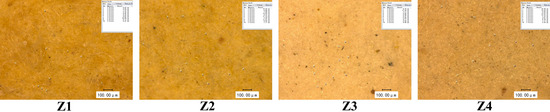
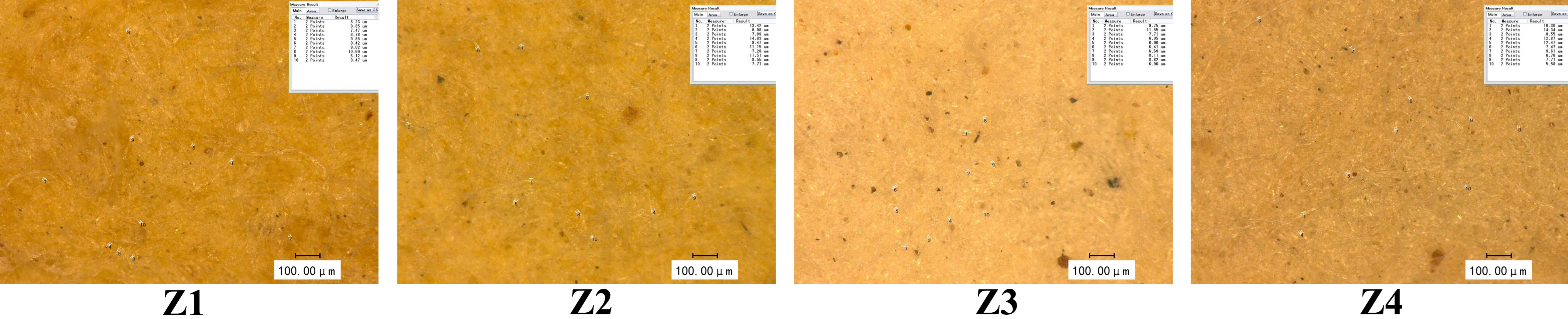
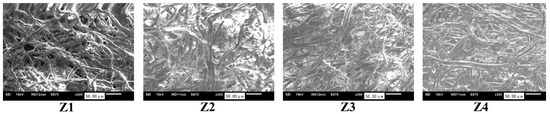
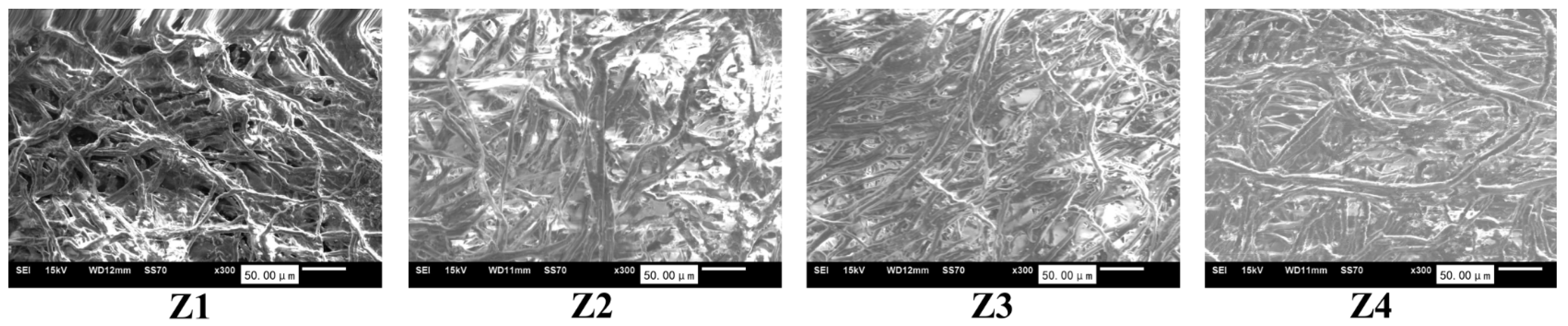
The fiber morphology of Qiangduo Tibetan paper was comprehensively characterized. Three methods were used: quantitative statistics (Table 2), ultra-depth-of-field 3D micrography (Figure 1), and SEM analysis (Figure 2). Significant differences in fiber size and network structure were found between samples from different raw materials.
Table 2.
Fiber width and physical–chemical properties of Qiangduo Tibetan paper.
Figure 1.
Ultra-depth-of-field 3D micrographs of Qiangduo Tibetan paper fibers (scale bar: 100 μm).
Figure 2.
SEM micrographs of the fiber network structure of Qiangduo Tibetan paper (×300, scale bar: 50 μm).
As shown in Table 2, fiber widths varied by raw material. For Stellera chamaejasme-based samples, Z1 had a fiber width of 8.69 μm, and Z2 was 10.72 μm. For Wikstroemia canescens-based samples, Z3 had a fiber width of 7.90 μm, and Z4 was 9.57 μm. Overall, the average fiber width of Stellera chamaejasme-based samples was slightly larger than that of Wikstroemia canescens-based samples. Both groups had relatively high CV values (17.5%–26.2%). This reflects the natural variability of fiber size of handmade papermaking. It is consistent with reported typical size characteristics of fibers from such toxic plants [25].
Ultra-depth-of-field 3D optical microscopy (Figure 1) intuitively verified these statistical results. Thicker fiber bundles were observed in Z2. Z3 had finer fibers with slight differences in distribution uniformity. This matched the quantitative results in Table 2 (Z2 had the largest average fiber width, Z3 the smallest). Meanwhile, the size dispersion of fibers in Figure 1 directly reflected the natural variability indicated by the high CV values.
Scanning electron microscopy (SEM, Figure 2) further revealed differences at the micro-network structure level. Stellera chamaejasme-based samples (Z1, Z2) had coarser fibers. They formed a looser pore structure with larger pore sizes. Wikstroemia canescens-based samples (Z3, Z4) had finer fibers. Their interweaving was denser, and pore distribution was more uniform.
This difference in fiber morphology and network structure fully corresponded to the fiber width statistics. It also provided a core structural basis for subsequent differences in water absorption and dry heat durability.
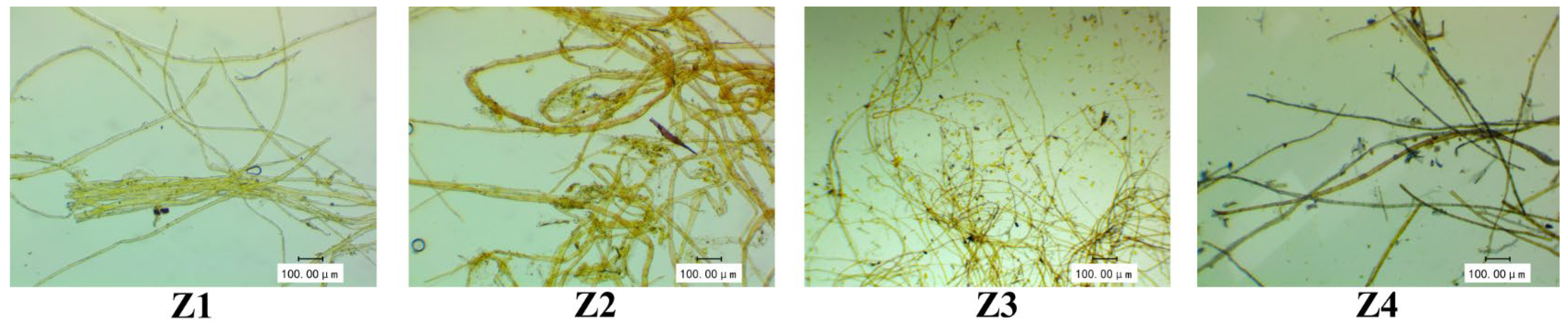
Herzberg staining results were observed under a biological microscope at 200× magnification (Figure 3). They intuitively revealed differences in fiber chemical composition between raw materials. Stellera chamaejasme-based samples (Z1, Z2) had yellow to dark yellow fibers. Z1 fibers were pale yellow and mostly interwoven in bundles. Z2 fibers were darker and thicker with occasional impurity particles. This indicates a higher enrichment of residual lignin and flavonoids. Wikstroemia canescens-based samples (Z3, Z4) had pale yellow to yellowish-brown fibers. Z3 fibers were finer and paler with more uniform distribution, and a noticeable amount of fines (fine fiber fragments and cellular debris) was observed filling the gaps between fibers. Z4 fibers were thicker and darker brown. This suggests a relatively higher lignin content.
Figure 3.
Optical micrographs of Qiangduo Tibetan paper fibers with Herzberg staining (×200).
These yellow/yellowish-brown characteristics are typical of toxic plant fibers. Flavonoids in Stellera chamaejasme fibers improve dry heat aging resistance by scavenging free radicals. The high lignin content in Wikstroemia canescens fibers enhances structural stability but increases yellowing risk. Notably, the fines generated during traditional handmade papermaking also play a critical role in determining the paper’s physical properties: these fine particles fill the interstitial spaces between the main fibers, directly increasing the apparent density and reducing the intrinsic porosity of the final sheet, which further contributes to the durability differences of Qiangduo Tibetan paper. This durability difference is closely related to the chemical composition of the raw fibers: Stellera chamaejasme fibers are rich in flavonoid antioxidants with low lignin content, while Wikstroemia canescens fibers have low flavonoid content and high lignin content. Flavonoids can scavenge free radicals and inhibit cellulose oxidative degradation, and low lignin content reduces the risk of yellowing during aging, forming the chemical basis for the durability differences in Qiangduo Tibetan paper [25,26,27]. Together, they form the chemical basis for durability differences in Qiangduo Tibetan paper [28].
3.2. Physical Performance Analysis
Significant differences in D5 whiteness were found between raw material groups. Stellera chamaejasme-based samples (Z1, Z2) had lower D5 whiteness (23.11%–23.65% ISO). Wikstroemia canescens-based samples (Z3, Z4) had higher whiteness (29.42%–40.16% ISO). Notably, a marked discrepancy in whiteness was observed between Z3 and Z4, despite both being derived from Wikstroemia canescens fibers. This difference can be attributed to multiple interconnected factors: first, the residual black impurities in Z3 introduce additional light absorption, directly reducing its measured brightness; second, variations in the traditional handmade papermaking process, such as cooking temperature, duration, and rinsing degree, lead to differences in residual lignin and natural pigment content in the finished paper, which are critical determinants of paper whiteness. Furthermore, the slightly higher apparent density of Z4 enhances light scattering on the paper surface, contributing to its higher brightness. In contrast, Z1 and Z2, with consistent raw materials and processing conditions, exhibit stable and similar whiteness values. This difference may come from natural pigments residual in Stellera chamaejasme fibers [29].
Qiangduo Tibetan paper showed slight inter-sample differences in glossiness (Table 3). At 45°, Z1 had the highest glossiness (5.7% for side A, 6.0% for side B). This superior glossiness of Z1 can be explained by its unique fiber structure and surface properties: Z1, prepared from Stellera chamaejasme fibers, has the highest apparent density among all samples, resulting in a more compact and uniform paper surface. A denser surface reduces diffuse light scattering and enhances specular reflection, which directly improves glossiness. Additionally, the relatively fine and evenly distributed fibers in Z1 (compared to the long fiber bundles in Z4) further increase surface smoothness, contributing to its significantly higher gloss performance at 45°. As shown in Table 3, this advantage diminishes at higher angles (60–85°), which is consistent with the optical behavior of dense, smooth paper surfaces. Z2, Z3, and Z4 had a glossiness range of 2.0%–2.7% at 45°. Their A/B side values were nearly consistent, reflecting optical uniformity.
Table 3.
Glossiness of Qiangduo Tibetan paper.
As the measurement angle increased from 45° to 85°, glossiness of all samples decreased significantly. At 85°, it dropped to an extremely low level (0.1%–0.3%). Overall, glossiness ranged from 0.1 to 6.0% at all test angles.
This uniform low-gloss characteristic effectively avoids glare during reading. It is highly consistent with the functional requirements of low gloss and anti-glare for cultural heritage preservation paper [30].
3.3. Chemical Performance Analysis
The chemical performance test results are shown in Table 2. Samples Z1 and Z2 were nearly neutral (pH 6.87–6.99), while samples Z3 and Z4 were neutral to weakly alkaline (pH 7.35–7.56). This pH difference is closely related to the cooking process during papermaking. Specifically, based on the elemental composition data in Table 4, Z1 contains only 0.95% Ca with no detectable Na, and Z2 contains 1.51% Ca and 0.37% Na, which is consistent with their weakly acidic, nearly neutral pH characteristics. In contrast, Z3 and Z4 exhibit significantly higher Ca contents, reaching 1.95% and 2.01% respectively, with no detectable Na. The cooking temperature, duration, and alkali dosage during the traditional fiber preparation process directly affect the residual alkaline components in the fibers, thereby determining the pH of the finished paper. They maintain a neutral to weakly alkaline environment for the paper. This environment helps inhibit cellulose acid hydrolysis. It is of great significance for the long-term preservation of paper-based cultural heritage [31].
Table 4.
Surface elemental composition of QiangDuo Tibetan paper (mass fraction, %).
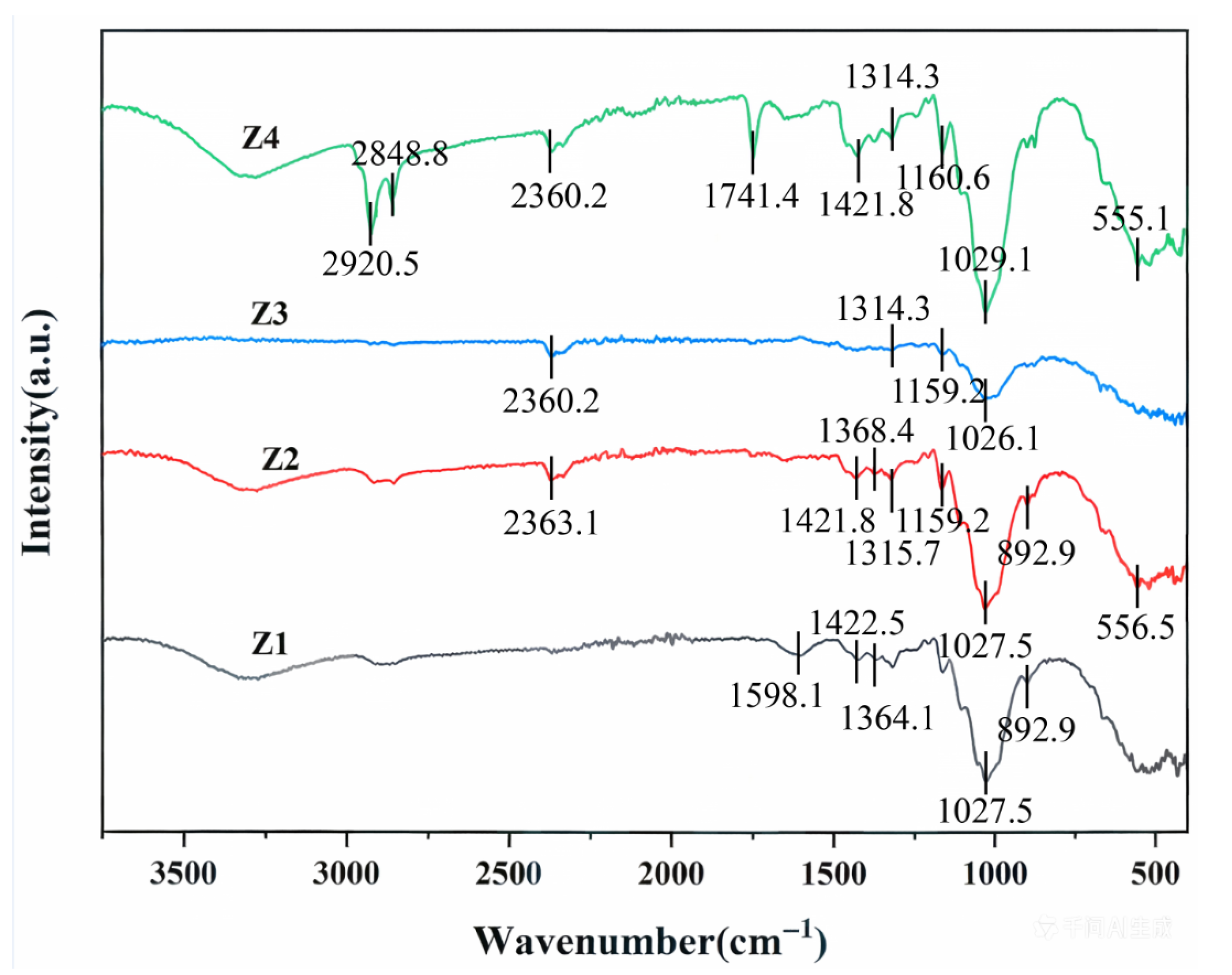
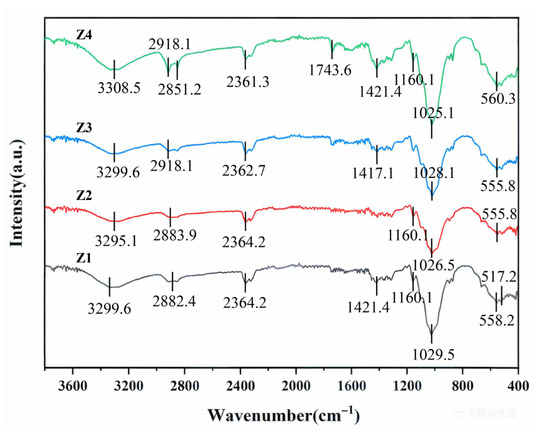
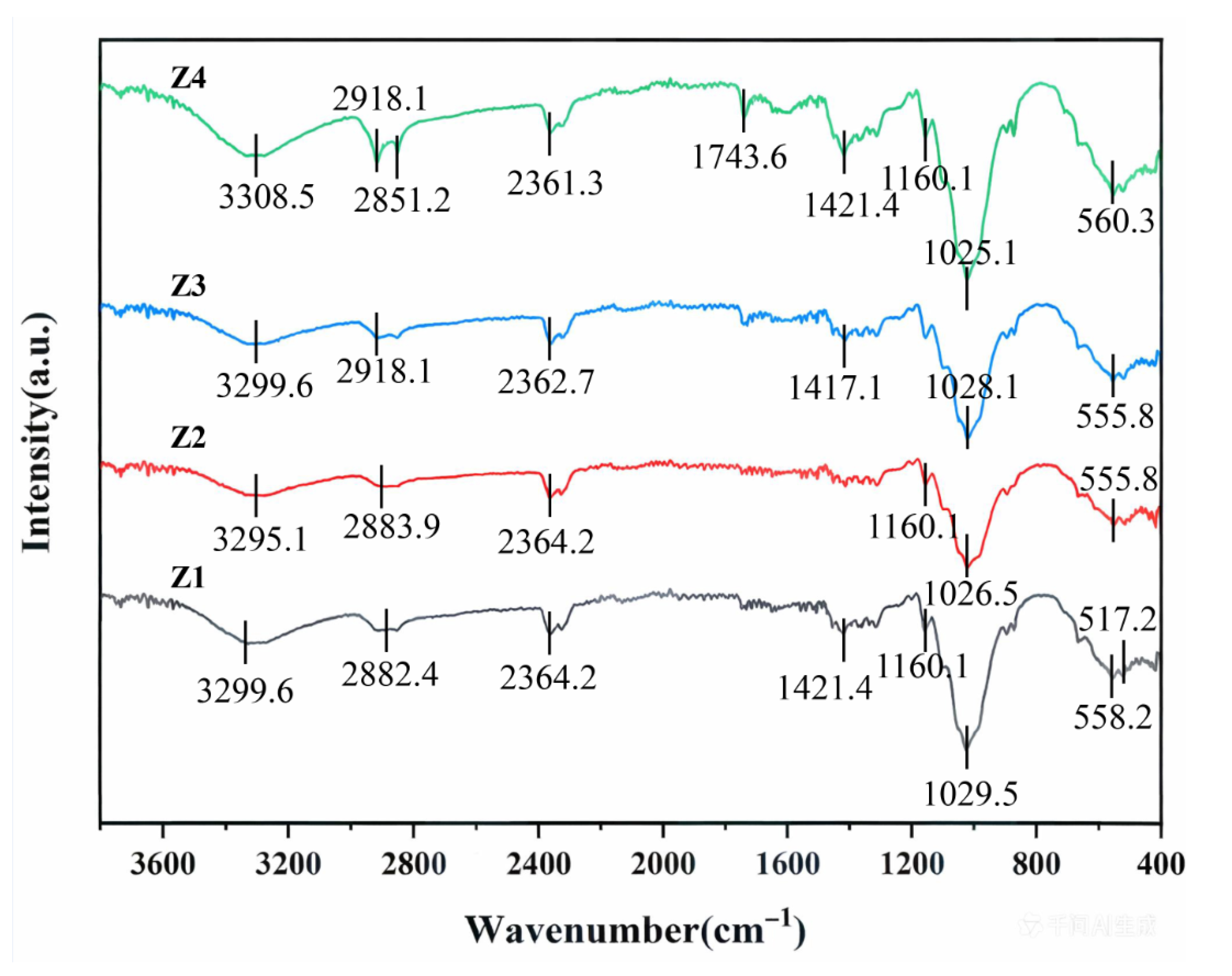
Attenuated total reflection Fourier transform infrared spectroscopy (ATR-FTIR, Figure 4) showed typical cellulose characteristic peaks in all four samples. This confirms that cellulose is the core skeleton component of the paper fibers. Key peaks included a broad absorption peak at 3000–3500 cm−1 (stretching vibration of hydroxyl groups (O-H) in cellulose molecules); a double peak at 2848–2921 cm−1 (stretching vibration of saturated carbon–hydrogen (C-H)); a strong absorption peak at 1027–1161 cm−1 (stretching vibration of carbon–oxygen (C-O)); a characteristic peak near 893 cm−1 (skeleton vibration of the cellulose sugar ring, a typical identifier of β-1,4-glycosidic bonds) [32].
Figure 4.
ATR-FTIR spectra of Qiangduo Tibetan paper samples before aging.
Notably, Z1′s spectrum showed a weak characteristic peak at −1598 cm−1. This is a typical signal of flavonoid benzene ring skeleton vibration. It indicates residual flavonoids in Stellera chamaejasme fibers. These flavonoids have excellent antioxidant activity. They scavenge free radicals to inhibit cellulose oxidative degradation. They are an important chemical basis for the good dry heat aging resistance of Qiangduo Tibetan paper [33]. In addition, peak position differences in the 1314–1422 cm−1 range reflect variations in lignin and flavonoid content. This provides direct chemical evidence for subsequent aging performance differences.
3.4. Absorption Performance Analysis
Water absorption is a core indicator of absorption performance. It is also a key prerequisite for the ink absorption of Qiangduo Tibetan paper. Test results (Table 5) showed significant differences in water absorption and relative water absorption among samples. These differences were closely related to raw material type among other variables.
Table 5.
Water absorption and relative water absorption of Qiangduo Tibetan paper.
Stellera chamaejasme-based samples (Z1, Z2) had high water absorption. Z1′s water absorption was 170.56 g/m2, and Z2′s was 186.78 g/m2. Their relative water absorption rates were 119.3% and 166.2%, respectively. Wikstroemia canescens-based samples (Z3, Z4) had mild and controllable water absorption. Z3′s water absorption was 112.46 g/m2, and Z4′s was 122.88 g/m2. Their relative water absorption rates were 116.2% and 110.2%, respectively.
Overall, Stellera chamaejasme-based samples had significantly higher water absorption and relative water absorption than Wikstroemia canescens-based samples. This difference comes from fiber structure and pore characteristics.
Paper made from Stellera chamaejasme fibers has a coarser texture and higher paper porosity, creating abundant channels that enable rapid water penetration and high water absorption. In contrast, paper made from Wikstroemia canescens fibers has finer fibers and a denser paper sheet structure, which restricts water flow and results in much gentler, slower water absorption.
The relative water absorption of all samples (110.2%–166.2%) was higher than that of ordinary traditional handmade paper. This is consistent with Qiangduo Tibetan paper’s structural characteristics: high overall porosity and low apparent density [34].
This raw material-driven water absorption difference provides an important structural basis for understanding the paper–ink interaction mechanism. It also indirectly reflects the performance adaptability of Qiangduo Tibetan paper in traditional writing scenarios [35].
3.5. Dry Heat Durability Analysis
Dry heat aging is a key accelerated aging method for evaluating paper-based cultural heritage durability. After dry heat aging at 105 °C for 216 h, samples from different raw materials showed significant deterioration differences. However, the overall fiber structure remained relatively intact. This reflects the good intrinsic durability of Qiangduo Tibetan paper (Table 6) [36].
Table 6.
Comparison of key performance indicators of Qiangduo Tibetan paper before and after aging and t-test results.
3.5.1. Optical Durability
Stellera chamaejasme-based samples (Z1, Z2) had significantly better D5 whiteness retention than Wikstroemia canescens-based samples (Z3, Z4). Z1′s D5 whiteness retention rate was as high as 93.06%. Z2′s was 77.97%.
In contrast, Z3 and Z4′s D5 whiteness retention rates dropped to 65.29% and 59.93%, respectively. Their whiteness loss was more severe.
Paired-sample t-tests confirmed extremely significant decreases in D5 whiteness for all samples (p < 0.001). Z3 had the largest Mean difference (−13.94% ISO). Z1 had the smallest (−1.64% ISO) (Table 6).
This inter-group difference mainly comes from cellulose oxidation and lignin yellowing under dry heat conditions. Residual flavonoids in Stellera chamaejasme fibers have antioxidant activity. They effectively inhibit oxidative degradation. The high lignin content in Wikstroemia canescens fibers exacerbates yellowing during aging. This leads to more significant whiteness loss [37].
3.5.2. Mechanical Durability
Stellera chamaejasme-based samples also showed better tensile index retention. Z1′s tensile index retention rate was 71.46% (28.54% performance loss). Z2′s was 74.77% (25.23% performance loss). In contrast, Z3 and Z4′s tensile index retention rates were only 36.19% and 36.02%, respectively. Their mechanical property deterioration was more severe (Table 6).
Paired-sample t-tests showed extremely significant differences in tensile index before and after aging (p < 0.001). Z3 had the largest Mean decrease (−21.23 N·m/g). Z1 had the smallest (−2.44 N·m/g) (Table 6).
The negative impact of dry heat aging on mechanical properties mainly comes from cellulose hydrolysis and oxidative degradation. Flavonoids in Stellera chamaejasme fibers scavenge free radicals generated during aging. They slow down cellulose degradation and reduce mechanical property loss.
High lignin content in Wikstroemia canescens fibers is prone to oxidative degradation under dry heat conditions. This accelerates fiber network structure breakage. It leads to a more significant decrease in mechanical properties [38].
3.5.3. pH Value Changes
All samples showed an obvious acidification trend after dry heat aging. The pH retention rate ranged from 82.55% to 85.71% (Table 6).
Stellera chamaejasme-based samples (Z1, Z2) had pH values dropping from weakly acidic/neutral to acidic (5.77~5.84). Wikstroemia canescens-based samples (Z3, Z4) had pH values dropping from weakly alkaline to weakly acidic (6.24–6.48).
This acidification mainly comes from acidic substances generated during dry heat aging. Hemicellulose and lignin oxidation produce formic acid and acetic acid [39].
Z1 showed a relatively small pH change. This is closely related to the buffering effect of residual flavonoids and natural fillers in its fibers. These substances partially neutralize generated acidic substances. They effectively slow down the acidification rate [40].
3.5.4. ATR-FTIR Analysis After Aging
After dry heat aging, ATR-FTIR spectra of the four samples showed obvious characteristic peak changes (Figure 5). These changes intuitively reflect the deterioration of the fiber chemical structure. Two key changes were observed:
Figure 5.
ATR-FTIR spectra of Qiangduo Tibetan paper samples after aging.
The intensity of the broad absorption peak near 3300 cm−1 (O–H stretching vibration) increased significantly. This is due to the breakage and degradation of cellulose and hemicellulose molecular chains under dry heat conditions. A large number of hydroxyl groups involved in hydrogen bonds are released. Slight oxidation and moisture absorption during aging further enhance the hydroxyl signal. This indicates damage to the chemical structural integrity of the fibers [41].
A new characteristic absorption peak appeared near 1740 cm−1, or the intensity of the original peak increased. This is a carbonyl (C=O) characteristic peak. It is direct evidence of cellulose and hemicellulose oxidative degradation, and also indicates the occurrence of lignin oxidation during the aging process. The dry heat environment accelerates polysaccharide chain oxidation. This generates aldehyde, ketone, and carboxyl groups. In addition to the oxidation of polysaccharides, the cleavage of ether linkages in the lignin aromatic ring structure also contributes to the formation of carbonyl groups, which further confirms the oxidative degradation of lignin. The peak intensity is usually positively correlated with paper aging degree [42].
A comparison of samples from different raw materials showed greater changes in Z3 and Z4 than in Z1 and Z2. This indicates more severe fiber oxidation and structural degradation in Z3 and Z4 under the same aging conditions.
This result is closely related to the composition of Stellera chamaejasme fibers. According to previous studies, such fibers are rich in flavonoid antioxidants and have low lignin content. Flavonoids can scavenge free radicals and inhibit cellulose oxidative degradation. Wikstroemia canescens fibers have high lignin content. They are more prone to oxidation and chain scission under dry heat conditions. This leads to more obvious aging characteristics [43].
These ATR-FTIR analysis results are consistent with the test conclusions of whiteness decrease, mechanical property reduction, and surface acidification. They confirm from the chemical structure level that Stellera chamaejasme-based Qiangduo Tibetan paper has better dry heat aging resistance.
3.6. Correlation Between Fiber Structure, Water Absorption and Dry Heat Durability
There are clear intrinsic correlations among the fiber structure, absorption performance, and dry heat durability of Qiangduo Tibetan paper. These correlations are mainly reflected in two aspects.
First, the fiber network structure and natural alkaline wood ash fillers jointly regulate absorption performance and basic physicochemical stability. Stellera chamaejasme-based samples (Z1, Z2) have coarser fibers. They form a loose pore structure with larger pore sizes. This results in high water absorption and relative water absorption. Wikstroemia canescens-based samples (Z3, Z4) have finer fibers. Their interweaving is denser, and pore distribution is more uniform. This enables mild and controllable water absorption [44].
This water absorption characteristic, caused by both fiber morphology differences and surface chemical components (as revealed by elemental composition analysis in Table 4), reflects the technological characteristics of traditional handmade papermaking. It also lays a structural and chemical foundation for the paper’s physical stability.
Wood ash fillers added during papermaking are rich in alkaline metal elements such as calcium and sodium. As shown in Table 4, the quantitative mass fractions of these elements vary significantly among different paper samples, which maintains the paper in a weakly acidic to neutral/weakly alkaline pH environment. This environment effectively inhibits cellulose acid hydrolysis. It provides a key chemical guarantee for the long-term preservation of paper-based cultural heritage. Furthermore, the residual inorganic components (e.g., Ca, Na) also influence the water absorption capacity of the paper through their inherent hydrophilicity. Together with the fiber network structure, it supports the good basic physicochemical properties of Qiangduo Tibetan paper.
Second, differences in raw material chemical composition directly determine dry heat aging resistance. Previous research by our team on Nyemo Xuelai Tibetan paper has confirmed this [45]. Stellera chamaejasme fibers contain residual flavonoids. These substances have excellent antioxidant activity. They scavenge free radicals generated during dry heat aging. This inhibits the oxidative degradation of cellulose and lignin. It also significantly improves the retention rates of D5 whiteness and tensile index. Meanwhile, as reported in relevant studies, Stellera chamaejasme fibers have relatively low lignin content. This further reduces the risk of yellowing during aging.
In contrast, according to literature data, Wikstroemia canescens fibers have low flavonoid content and relatively high lignin content [46]. In a dry heat environment, they are more prone to lignin oxidative yellowing and fiber network structure breakage. This leads to more severe whiteness loss and a sharp decrease in tensile index. Therefore, their dry heat aging performance is significantly weaker than that of Stellera chamaejasme-based samples.
This performance difference, shaped by fiber structure and chemical composition, clarifies the different positioning of Qiangduo Tibetan paper from the two raw materials. Stellera chamaejasme-based Tibetan paper has better dry heat aging resistance. It is more suitable for use as an important carrier for precious documents, Buddhist scriptures, and other materials requiring long-term preservation. Wikstroemia canescens-based Tibetan paper has mild and controllable water absorption and a more uniform fiber structure. It is more suitable for short-term use scenarios such as daily writing and cultural and creative products.
4. Conclusions
This study focused on Qiangduo Tibetan paper from Shangri-La, Yunnan. Four samples were selected: Z1 and Z2 (from Stellera chamaejasme), and Z3 and Z4 (from Wikstroemia canescens). Modern material characterization technologies were used to systematically analyze fiber morphology, surface physicochemical properties, and absorption performance. A dry heat aging experiment (105 °C, 216 h) was conducted to investigate dry heat durability. The intrinsic correlations and regulatory mechanisms among surface properties, absorption performance, and dry heat durability were revealed. The main conclusions are as follows:
(1) Qiangduo Tibetan paper has typical structural and physicochemical characteristics of traditional handmade paper. Significant differences exist in fiber morphology and basic properties between samples from different raw materials. Stellera chamaejasme-based samples have coarser fibers (8.69–10.72 μm in width) and loose pore structures. Wikstroemia canescens-based samples have finer fibers (7.90–9.57 μm in width) with dense interweaving and uniform pore distribution. The paper’s apparent density ranges from 0.389 to 0.536 g/cm3. Stellera chamaejasme-based samples have low D5 whiteness (23.11%–23.65% ISO). Wikstroemia canescens-based samples have higher whiteness (29.42%–40.16% ISO). All samples show low glossiness (0.1%–6.0%), which avoids reading glare and meets the visual requirements of traditional cultural heritage paper. The paper’s pH value is weakly acidic to weakly alkaline. Z1 is weakly acidic (6.87 ± 0.08). Z2 to Z4 are neutral to weakly alkaline (6.99–7.56). Alkaline metal elements such as calcium and sodium in wood ash fillers neutralize acidic groups in fibers. They are the core factors maintaining this pH environment.
(2) The absorption performance of Qiangduo Tibetan paper is directly determined by the fiber morphology and pore structure of raw materials. Obvious inter-group differences exist between raw materials. Stellera chamaejasme-based samples have coarse fibers and loose pores. Their water absorption ranges from 170.56 to 186.78 g/m2. Relative water absorption is 119.3%–166.2%. Wikstroemia canescens-based samples have fine fibers and dense structures. Their water absorption ranges from 112.46 to 122.88 g/m2. Relative water absorption is 110.2%–116.2%. The relative water absorption of all samples is higher than that of ordinary traditional handmade paper. This is consistent with Qiangduo Tibetan paper’s high porosity and low apparent density.
(3) Qiangduo Tibetan paper has a certain degree of dry heat durability. Stellera chamaejasme-based samples have significantly better dry heat aging resistance than Wikstroemia canescens-based samples. Raw material chemical composition is the key factor determining aging resistance. After dry heat aging at 105 °C for 216 h, the fiber structure of all four samples remains relatively intact. However, all samples show whiteness decrease, mechanical property attenuation, and acidification. Extremely significant changes (p < 0.001) are observed in D5 whiteness, tensile index, and pH value before and after aging. Stellera chamaejasme-based samples have a whiteness retention rate of 77.97%–93.07% and a tensile index retention rate of 71.46%–74.77%. The pH retention rate was 82.55%–85.71%. Wikstroemia canescens-based samples have a whiteness retention rate of only 59.93%–65.29% and a tensile index retention rate of 36.02%–36.19%. Their aging deterioration is more significant. ATR-FTIR analysis confirms that Wikstroemia canescens-based samples show more obvious changes in hydroxyl and carbonyl peaks after aging. Their fiber oxidation and structural degradation are more severe.
(4) Based on literature reports and the findings of this study, a clear dual regulatory mechanism exists in the performance correlation of Qiangduo Tibetan paper. Structure and chemical composition dominate absorption performance and dry heat durability, respectively. The fiber network structure and natural alkaline wood ash fillers are core regulatory factors for absorption performance. Fiber morphology and pore characteristics directly determine the level and controllability of water absorption. Wood ash fillers provide basic chemical stability by regulating the pH environment. Differences in raw material chemical composition, supported by our experimental results, determine dry heat aging resistance. Specifically, flavonoids in Stellera chamaejasme fibers, as documented in previous literature, can scavenge free radicals during aging. Our results further confirm that they inhibit the oxidative degradation of cellulose and lignin. Low lignin content also reduces yellowing risk. In contrast, according to literature data, Wikstroemia canescens fibers have low flavonoid content and high lignin content. Our experimental observations indicate that they are prone to oxidative yellowing and fiber network breakage, which leads to weak aging resistance.
This study clarifies the regulatory effects and mechanisms of Stellera chamaejasme and Wikstroemia canescens on the core properties of Qiangduo Tibetan paper. It provides a scientific basis for the inheritance, conservation strategy formulation, and functional optimization of traditional Qiangduo Tibetan paper craftsmanship. According to our results, Stellera chamaejasme paper exhibits higher whiteness and tensile index retention after aging, making it suitable for long-term conservation of paper cultural relics. Wikstroemia canescens paper shows better water absorption, which is more appropriate for daily writing applications. It also enriches the application practice of modern material characterization technologies in paper-based cultural heritage conservation. Future research can focus on the long-term natural aging mechanism of Qiangduo Tibetan paper. It can also explore the optimization and upgrading of traditional papermaking craftsmanship. This will provide more comprehensive technical support for the living inheritance of this intangible cultural heritage.
Author Contributions
Conceptualization, Z.X.; methodology, Z.X. and H.L.; software, Z.L.; validation, Z.X., Z.L. and H.L.; formal analysis, Z.X.; investigation, Z.X. and X.L. (Xiaofan Li); resources, Z.X.; data curation, M.W., X.L. (Xiaofan Li), J.Y. and X.L. (Xingyu Liu); writing—original draft preparation, Z.X.; writing—review and editing, Z.X.; visualization, M.W.; supervision, Y.L.; project administration, Z.X.; funding acquisition, Z.X. and Z.L. All authors have read and agreed to the published version of the manuscript.
Funding
This research was funded by the Special Project for Research on Rare and Endangered Academic Disciplines of the National Social Science Foundation of China (Grant No.: 25VJXG026); the General Project of the Scientific Research Program of the Beijing Municipal Commission of Education (Grant No.: KM202110015006); and the Horizontal Scientific Research Project of the Beijing Institute of Graphic Communication (Grant No.: HXDK2024242).
Institutional Review Board Statement
Not applicable.
Informed Consent Statement
Not applicable.
Data Availability Statement
Data is contained within the article.
Conflicts of Interest
The authors declare no conflicts of interest.
References
- Jia, L. Research on the Inheritance and Innovation of Tibetan Paper Making Craft in Tibet. J. Tibet Minzu Univ. (Philos. Soc. Sci. Ed.) 2022, 43, 70–75. [Google Scholar]
- Yan, M.L.; Hao, Y.H.; Lin, L.W. Research on Qiangduo Tibetan Papermaking Craft from the Perspective of Cultural Awareness. Art Life-J. Xiamen Univ. Technol. (Xiamen) 2016, 3, 23–26. [Google Scholar]
- Duan, L. Comprehensive Application Research of Handmade Tibetan Paper in Contemporary Art Creation. Comp. Study Cult. Innov. 2020, 4, 62–63. [Google Scholar]
- Wei, J.P.; Gong, D.C.; Wang, S. Research Progress on Jindong Tibetan Paper Technology. China Pulp Pap. 2022, 41, 92–98. [Google Scholar]
- Zan, Q.G.; Li, H.C.; Ji, Q.S.; Zhang, X.P.; Liang, T.; Ren, Q.Z.M. Preliminary Study on Aging Resistance of Four Kinds of Tibetan Paper. China Pulp Pap. 2020, 39, 87–90. [Google Scholar]
- Gao, D.; Zhang, S.P.; Zhang, G.; Song, R.J.; Sun, Y.F.; Zhao, W.; Zhao, B.Y. Study on Durability of Zhikong Tibetan Paper. China Pulp Pap. 2019, 38, 36–40. [Google Scholar]
- Li, J.; Fu, H.; Liu, X.; Huang, J.; Li, P.C.; Feng, S.L.; Liu, R.; Su, K. Preliminary Study on Improving Tibetan Paper with Broussonetia papyrifera Bark. Shandong Chem. Ind. 2025, 54, 5–8. [Google Scholar]
- Hubbe, M.A.; Gardner, D.J.; Shen, W. Contact angles and wettability of cellulosic surfaces: A review of proposed mechanisms and test strategies. BioResources 2015, 10, 8657–8749. [Google Scholar] [CrossRef] [Scilit]
- Liu, Y.X.; Li, X.C.; Wang, S. Research Progress on Raw Materials, Manufacturing and Restoration of Tibetan Paper. China Pulp Pap. 2022, 41, 126–132. [Google Scholar]
- Lv, X.H.; Yang, L.; Liu, W.B. Pore Structure and Properties of Paper. China Pulp Pap. 2016, 35, 64–70. [Google Scholar]
- Yao, N. Scientific Research on Paper Cultural Relics of the Ming and Qing Dynasties Based on Pyrolysis-Gas Chromatography-Mass Spectrometry. Ph.D. Thesis, University of Science and Technology Beijing, Beijing, China, 2022. [Google Scholar] [CrossRef]
- Zhang, X.; Liu, P.; Yan, Y.; Yao, J.; Tang, Y. Degradation of Chinese Handmade Papers with Different Fiber Raw Materials on Molecular and Supramolecular Structures. Polym. Degrad. Stab. 2023, 211, 110330. [Google Scholar] [CrossRef] [Scilit]
- GB/T 10739-2002; Standard Atmospheric Conditions for Conditioning and Testing of Paper, Board and Pulps. Standardization Administration of the People’s Republic of China: Beijing, China; China Standard Press: Beijing, China, 2002.
- Zhao, X.L.; Zhang, X.L.; Chen, Z.F.; Zhou, S.L. Research on Protection, Restoration and Technology of Collected Waxed Paper Calligraphy and Painting Cultural Relics. China Pulp Pap. 2024, 43, 114–121. [Google Scholar]
- Guang, R.; Wang, X.; Ge, M.; Lv, X.; Yang, Y.; Zhang, M.; Han, B. Paper Production and Usage in the Late Fourteenth Century in Northern China: Insight from Paper Fragments Unearthed at the Dove Cave Site. Archaeol. Anthropol. Sci. 2025, 17, 247. [Google Scholar] [CrossRef] [Scilit]
- GB/T 451.2-2002; Determination of Basis Weight of Paper and Board. Standardization Administration of the People’s Republic of China: Beijing, China; China Standard Press: Beijing, China, 2002.
- GB/T 451.3-2002; Determination of Thickness of Paper and Board. Standardization Administration of the People’s Republic of China: Beijing, China; China Standard Press: Beijing, China, 2002.
- GB/T 7974-2013; Standardization Administration of the People’s Republic of China: Beijing, China; China Standard Press: Beijing, China, 2013.
- GB/T 8941-2013; Determination of Specular Gloss of Paper and Board. Standardization Administration of the People’s Republic of China: Beijing, China; China Standard Press: Beijing, China, 2013.
- GB/T 13528-2015; Determination of Surface pH of Paper and Board. Standardization Administration of the People’s Republic of China: Beijing, China; China Standard Press: Beijing, China, 2015.
- Tan, J.; Fu, X.; Lu, Y.; Chen, B.; Ding, Y. Investigating the Moisture Sorption Behavior of Naturally and Artificially Aged Bamboo Paper with Multi-Analytical Techniques. J. Cult. Herit. 2023, 61, 65–75. [Google Scholar] [CrossRef] [Scilit]
- GB/T 461.3-2005; Determination of Water Absorption of Paper and Board (Immersion Method). Standardization Administration of the People’s Republic of China: Beijing, China; China Standard Press: Beijing, China, 2005.
- GB/T 464-2008; Paper and Board—Accelerated Aging Test Method. Standardization Administration of the People’s Republic of China: Beijing, China; China Standard Press: Beijing, China, 2008.
- GB/T 12914-2008; Determination of Tensile Properties of Paper and Board. Standardization Administration of the People’s Republic of China: Beijing, China; China Standard Press: Beijing, China, 2008.
- Zhang, C.Q.; Zhao, C.X.; Hao, B.R.; Lei, Y.M.; Zhang, W.J.; Tong, G.L. Study on Chemical Composition and Fiber Morphology of Phloem from Some Thymelaeaceae Plants. Trans. China Pulp Pap. Soc. 2023, 38, 86–91. [Google Scholar]
- Hanasaki, Y.; Ogawa, S.; Fukui, S. The Correlation between Active Oxygens Scavenging and Antioxidative Effects of Flavonoids. Free Radic. Biol. Med. 1994, 16, 845–850. [Google Scholar] [CrossRef] [Scilit] [PubMed]
- Zhang, W.; Shen, Y.H.; Lou, Z.Y.; Liu, R.H.; Zhang, C.; Fu, P.; Shan, L.; Zhang, W.D. Two New Flavanes and Bioactive Compounds from Daphne tangutica Maxim. Nat. Prod. Res. 2007, 21, 1021–1026. [Google Scholar] [CrossRef] [Scilit]
- Zhao, R.X.; Chen, G.; Yu, H.; Yang, G.H. Study on Characteristics of Handmade Paper from Wikstroemia canescens Bark. China Pulp Pap. 2020, 39, 1–8. [Google Scholar]
- Fan, H.M.; Li, F.Y.; Liao, Y.F.; Zeng, D.L.; Ge, G.; Liu, J.A. Study on Durability of Cultural Paper Based on National Test Standards for Dry Heat/Humid Heat Aging. China Pulp Pap. 2023, 42, 59–64. [Google Scholar]
- Wang, Y.F.; Wang, Y.L. Performance Analysis and Testing of Acid-Free Paper for Cultural Relic Preservation. In Proceedings of the 9th Academic Annual Conference of Chinese Association for Conservation Technology of Cultural Relics; Chinese Association for Conservation Technology of Cultural Relics, Chongqing Municipal Administration of Cultural Relics, Eds.; Science Press: Beijing, China, 2016; pp. 363–369. [Google Scholar]
- Liu, J.A.; Zhang, Y.L.; Wang, H.H.; Zhou, Z.Y.; Liao, Y.F.; Fan, H.M. Study on Suitable pH Range for Preservation of Paper Documents. China Pulp Pap. 2021, 40, 46–52. [Google Scholar]
- Maréchal, Y.; Chanzy, H. The Hydrogen Bond Network in Iβ Cellulose as Observed by Infrared Spectrometry. J. Mol. Struct. 2000, 523, 183–196. [Google Scholar] [CrossRef] [Scilit]
- Luo, Y.; Cigić, I.K.; Wei, Q.; Marinšek, M.; Strlič, M. Material Properties and Durability of 19th–20th Century Tibetan Manuscripts: Role of Lignin and Flavonoids in Oxidative Stability. Cellulose 2023, 30, 11783–11795. [Google Scholar] [CrossRef] [Scilit]
- Xiao, Z.; Li, Y.; Lv, X. Research on the Basic Performance and Fiber Appearance Characteristics of Grass Paper from Stellera chamaejasme in Different Origins on the Qinghai–Tibet Plateau. Coatings 2025, 15, 449. [Google Scholar] [CrossRef] [Scilit]
- Dong, Y.F.; Wang, B.S.; Ji, H.; Zhang, L.; Li, D.; Dong, C.H. Effect of Papermaking Conditions on the Ink Absorption and Overprint Accuracy of Paper. BioResources 2020, 15, 1397–1406. [Google Scholar] [CrossRef] [Scilit]
- Li, G.H.; Gao, Y.; Zheng, D.Q.; Chen, H.L.; Sun, X.J.; Qu, L. Evaluation of Aging Degree of Ancient Calligraphy and Painting Paper Based on Hyperspectral Imaging Technology. J. Beijing Univ. Chem. Technol. (Nat. Sci. Ed.) 2025, 52, 209–218. [Google Scholar] [CrossRef]
- Tomak, E.D.; Gonultas, M. A Natural Flavonoid Treatment of Wood: Artificial Weathering and Decay Resistance. Wood Sci. Technol. 2020, 54, 1689–1708. [Google Scholar] [CrossRef] [Scilit]
- Małachowska, E.; Dubowik, M.; Boruszewski, P.; Łojewska, J.; Przybysz, P. Influence of Lignin Content in Cellulose Pulp on Paper Durability. Sci. Rep. 2020, 10, 19998. [Google Scholar] [CrossRef] [Scilit]
- Smedemark, S.H.; Ryhl-Svendsen, M. Indoor Air Pollution in Archives: Temperature Dependent Emission of Formic Acid and Acetic Acid from Paper. J. Pap. Conserv. 2020, 21, 22–30. [Google Scholar] [CrossRef] [Scilit]
- Chen, Y.; Zhang, L.; Wang, H.; Liu, Y.; Zhao, X.; Zhou, J. Antioxidant and pH-Buffering Effects of Flavonoids in Traditional Paper During Accelerated Aging. Cellulose 2022, 29, 6789–6805. [Google Scholar] [CrossRef] [Scilit]
- Li, D.X.; Shang, X.; Li, Y.J.; Qian, C.; Chen, J.; Ren, X.D.; Yang, B.Q. Structural and Compositional Analysis of Aged Newspaper Paper. Chin. J. Anal. Chem. 2021, 49, 1890–1896. [Google Scholar] [CrossRef]
- Munajad, A.; Subroto, C.; Suwarno. Fourier Transform Infrared (FTIR) Spectroscopy Analysis of Transformer Paper in Mineral Oil-Paper Composite Insulation under Accelerated Thermal Aging. Energies 2018, 11, 364. [Google Scholar] [CrossRef] [Scilit]
- Yu, M.L. Preliminary Study on Physicochemical Properties of Common Thymelaeaceae Bast Fibers in China. Master’s Thesis, South China University of Technology, Guangzhou, China, 2022. [Google Scholar] [CrossRef]
- Yu, M.L.; Liu, M.R.; Shi, L.S.; Xiao, Y.Y.; Li, H.L. Study on Structural Characteristics of Common Thymelaeaceae Bast Fibers in China. China Pulp Pap. 2022, 41, 25–33. [Google Scholar]
- Xiao, Z.; Zhang, X.; Li, Y.; Liu, Z.; Li, H.; Zhang, X.; Ma, R. Nyemo Xuelai Tibetan Paper (Tibet, China): Research on Synergistic Correlations Between Surface Properties, Aging Resistance Mechanisms, Traditional Papermaking Crafts, and Protection Strategies. Coatings 2026, 16, 273. [Google Scholar] [CrossRef] [Scilit]
- Zhou, Y.; Yin, J.Y.; Yue, F.X.; Ren, J.L.; Liu, C.F.; Li, W.Y. Chemical Component Analysis and Lignin Structure Characterization of Five Different Bast Fiber Raw Materials. Pap. Sci. Technol. 2025, 44, 59–63. [Google Scholar] [CrossRef]

Disclaimer/Publisher’s Note: The statements, opinions and data contained in all publications are solely those of the individual author(s) and contributor(s) and not of MDPI and/or the editor(s). MDPI and/or the editor(s) disclaim responsibility for any injury to people or property resulting from any ideas, methods, instructions or products referred to in the content. |
© 2026 by the authors. Licensee MDPI, Basel, Switzerland. This article is an open access article distributed under the terms and conditions of the Creative Commons Attribution (CC BY) license.