


Abstract
Meltblown polypropylene (PP) nonwoven fabrics are widely used in medical and daily protective facemasks. However, the incorporation of nanomaterials such as titanium dioxide nanoparticles (nano-TiO2) into meltblown PP structures remains insufficiently investigated, particularly regarding the physical and thermophysiological comfort properties of facemask materials. This study investigated the weight, thickness, morphology, air permeability, water vapour permeability, and moisture management properties of meltblown PP nonwoven fabrics incorporated with different concentrations of nano-TiO2. A commercial 3-ply meltblown PP facemask and laboratory-fabricated 3-ply facemasks containing 5% and 10% nano-TiO2 were tested. The 3-ply with 10% nano-TiO2 facemask showed increases in fabric weight and thickness of 58% and 64%, respectively, compared to the commercial facemask. The SEM and EDX confirmed the deposition of TiO2 nanoparticles on the fabric surfaces. In terms of comfort performance, the 10% nano-TiO2 facemask demonstrated the highest air permeability with approximately 197.27 + 3.95 mm·s−1, while water vapour permeability values for all samples were similar, ranging between 123 and 125 g·h−1·m−2. The moisture management tests exhibited a low liquid transport in all samples due to the hydrophobicity of polypropylene. Overall, the study shows the development of facemask material with enhanced structural properties and acceptable comfort performance.
1. Introduction
The invention of facemasks is among the greatest inventions mankind has ever achieved, especially during pandemics, such as the COVID-19 pandemic [1]. In recent years, the meltblown technique, which is one of the methods used to produce nonwoven fabric, has become popular in polypropylene (PP) mask-making. PP is the most common type of mask available in today’s market. PP masks gained popularity amongst consumers because of their excellent filtration capacity, light weight, and low price [2]. In the process of meltblown, the PP fibres are very small in size, which gives the fibre a very high surface area that enables the fibres to trap airborne particles. According to Fang et al., PP facemasks can prevent the spread of infectious diseases carried by bacteria and viruses. They have played an important role in ensuring that bacteria and viruses do not spread by blocking the airborne particles containing pathogens from infecting other individuals [3].
Despite the promising benefits that a facemask exhibits, conventional meltblown PP facemasks have several disadvantages. The long-term use of facemasks will result in discomfort to the wearer. Decreased breathability, heat accumulation, and moisture retention are side effects of prolonged use of a mask [4]. These elements may have negative effects on the wearer when the mask is worn continuously for a long period of time, especially in a hot and humid atmosphere. Furthermore, research conducted by Zhiltsova et al. has revealed that the hydrophobic nature of PP prevents moisture from being absorbed and evaporated, which may result in a humid microenvironment that encourages the growth of microorganisms [5]. Traditional facemasks lack antimicrobial and self-cleaning properties, allowing harmful pathogens to grow on their surfaces, increasing the risk of secondary infections and cross-contamination [6].
To overcome these limitations, recent advances in nanotechnology offer promising solutions. Titanium dioxide (TiO2) nanoparticles have gained attention due to their unique antibacterial and UV resistance properties. The incorporation of TiO2 nanoparticles into filtration materials has been widely investigated in previous studies. Most of these studies used commercially available TiO2 nanoparticles or TiO2 synthesized from synthetic titanium, which were incorporated into electrospun polymer nanofibres, applied through post-treatment coating methods, or introduced via the meltblowing process [7,8,9,10,11,12]. For example, electrospun membranes functionalized with commercial nanoparticles such as TiO2, Ag, or MgO have demonstrated high filtration efficiencies (up to ~99.4%) together with antibacterial activity against common pathogens [11]. Similarly, electrospun nanofibre filters embedded with commercial TiO2 have been reported to achieve particle filtration efficiencies exceeding 99.9% with low pressure drop and good antibacterial performance [12]. This is due to their extremely small fibre diameters and high surface area.
In contrast, our group synthesized nanotitania (nano-TiO2) using a modified hydrothermal method. The synthesized nano-TiO2 exhibited an anatase crystalline structure and was produced from synthetic TiO2 rutile wastes, supporting a more sustainable approach. It has also demonstrated promising antibacterial activity against Staphylococcus aureus, Klebsiella pneumoniae, and Haemophilus influenzae, as well as a self-cleaning capability when applied to textile materials [13,14]. The nano-TiO2 exhibited a spherical structure with particle sizes ranging from 20 to 50 nm and a band gap of 3.06 eV [14]. Despite these advantages, the application of the synthesized nano-TiO2 in meltblown polypropylene (PP) facemask materials remains limited. Therefore, the novelty of this study is to incorporate the synthesized nano-TiO2 directly into meltblown PP fibres during the meltblowing process to produce facemask fabrics.
In this project, the synthesized nano-TiO2 was used to enhance the functional properties of meltblown PP nonwoven facemask materials. As breathability has become an important consideration in the development of facemask materials, the scope of this study is limited to evaluating the comfort performance of modified nonwoven fabrics incorporated with nano-TiO2 and surface characterization of the fabrics. This study aimed to evaluate the thickness, weight, and morphology of the nano-TiO2 incorporated meltblown PP nonwoven fabrics, as well as to analyze aspects of comfort, such as air permeability, water vapour permeability and moisture management of the fabrics. These properties are essential, especially for facemasks that are worn over long periods. As comfort has become a significant factor in user compliance and mask effectiveness, it is crucial to assess how nanomaterial treatments can influence wearability and breathability [15]. By undertaking this study, the comfort and physical performance of nano-TiO2 incorporated in meltblown PP nonwoven fabrics can be better understood. Therefore, to benefit users, improved facemask materials should be developed by providing enhanced protection, comfort, and hygiene.
2. Materials and Methods
The commercial 3-ply facemask and nano-TiO2 deposited on PP meltblown nonwoven fabrics were used as the main materials in this study. Nano-TiO2 incorporated meltblown PP nonwoven fabrics were formed by extruding a mixture of thermoplastic propylene (homopolymer polypropylene, Formosa Chemicals & Fibre Corporation, Changhua City, Taiwan) and our synthesized nano-TiO2 and peroxide-based polymer modifiers (Irgatec® CR 76 IC, BASF, Levallois-Perret, France) using a meltblowing machine. The peroxide-based polymer modifier promotes controlled degradation of polypropylene (PP), which increases the melt flow rate (MFR) and enables the formation of finer fibres during the meltblown process.
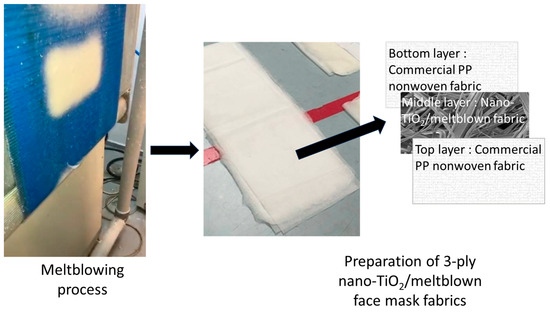
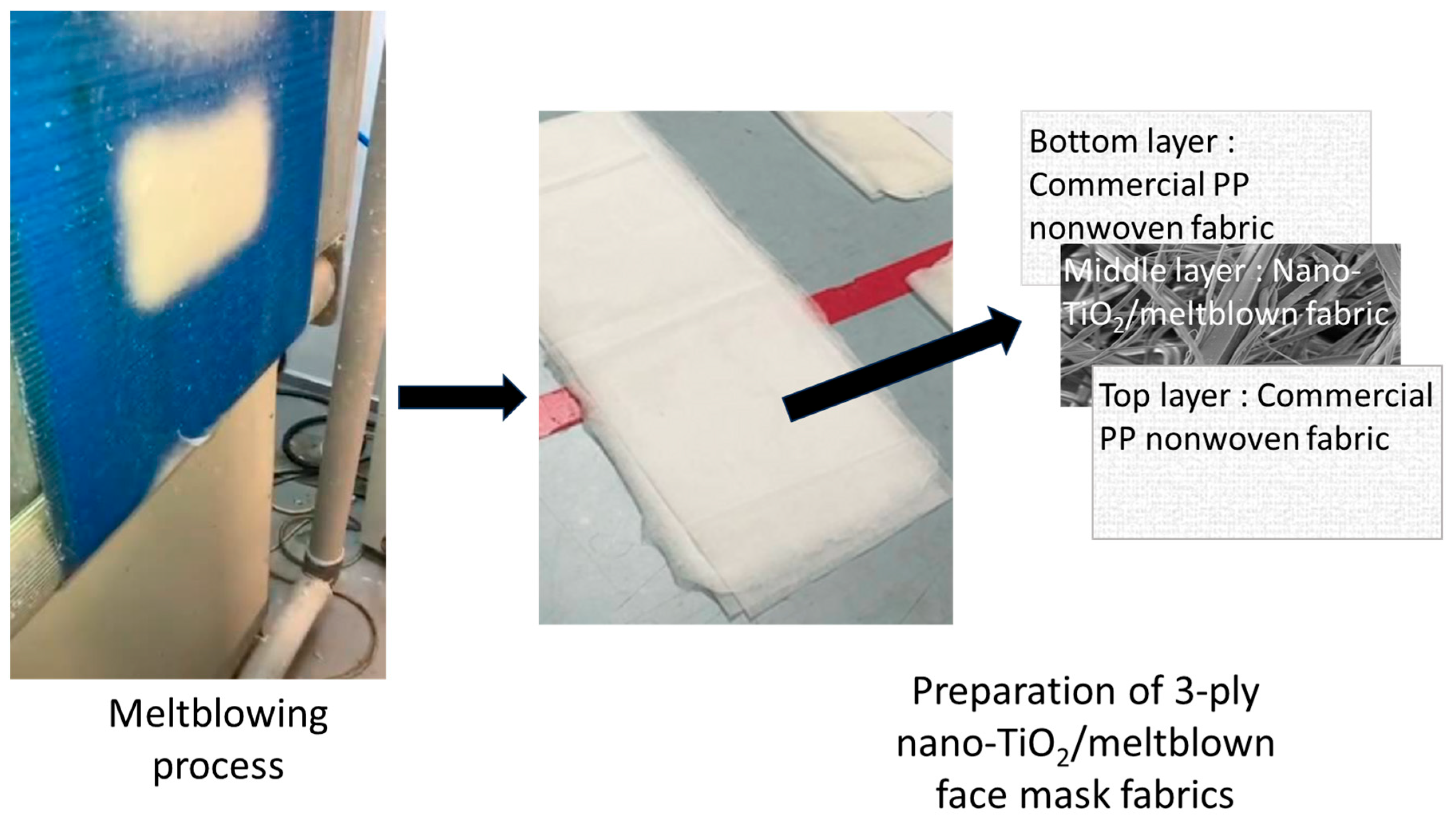
Two different nano-TiO2 concentrations were used: 5 wt% and 10 wt%, respectively. TiO2 loadings above 10% can cause blockage during the meltblowing process. The nonwoven fabrics were produced at the Textile Materials & Machinery Research Group (TEMAG), University of Istanbul, Turkey. To form the facemask material, a three-layer structure was prepared (Figure 1), where the nano-TiO2/meltblown nonwoven fabric was placed as the middle layer and sandwiched between two layers of commercial PP nonwoven fabrics used in facemask materials, supplied by Fibertex Personal Care Sdn. Bhd, Negeri Sembilan, Malaysia.
Figure 1.
Schematic diagram of 3-ply nano-TiO2/meltblown nonwoven fabric.
2.1. Thickness and Fabric Weight
The commercial facemask, which acted as the control sample, 5 wt% nano-TiO2 and 10 wt% nano-TiO2/meltblown nonwoven fabric were tested for thickness and fabric weight. The thickness of each fabric sample was measured using a fabric thickness tester (SDL Atlas Limited, Rock Hill, SC, USA) according to the ASTM D1777-96: Standard Test Method for Thickness of Textile Materials, 2019. For each group, five measurements were taken to ensure accuracy and reliability. Similarly, the base weight of a fabric was tested using an analytical balance (Merck, Darmstadt, Germany), according to a standard method (ASTM D3776/D3776M-20: Standard Test Methods for Mass Per Unit Area (Weight) of Fabric, 2025) that determines the mass per unit area of the fabric. Representative values were determined using five samples per group. This physical property analysis provides important baseline data when measuring the implications of different facemask materials on their performance and effectiveness [16].
2.2. Morphology and Elemental Analysis of 3-Ply Commercial Facemask and 3-Ply Nano-TiO2/Meltblown Facemask Fabrics
The surface morphology of the middle layer of the 3-ply commercial facemask and 3-ply nano-TiO2/meltblown nonwoven fabrics was observed using a scanning electron microscope equipped with Energy-Dispersive X-ray Spectroscopy (SEM-EDX, Hitachi TM3000, Tokyo, Japan). Before the SEM observation, all samples were coated with a thin layer of carbon to avoid electrostatic charging during analysis. This coating step is necessary because PP is a non-conductive material and can cause charging effects under the electron beam. Small pieces of fabric with dimensions of approximately 1 cm × 1 cm were prepared for the SEM analysis. The samples were mounted on aluminum stubs using carbon tape and then carbon-coated for a short period before observation. The SEM images were captured at a magnification of 2000× with an accelerating voltage of 15 kV. The middle layer of the commercial facemask, 5 wt% nano-TiO2 fabrics and 10 wt% nano-TiO2/meltblown nonwoven fabrics were analyzed under the same conditions to allow comparison. The EDX analysis was carried out together with SEM observation to identify the elemental composition and verify the presence of titanium on the meltblown nonwoven fabric samples.
2.3. Comfort Properties of 3-Ply Commercial Facemask and 3-Ply Nano-TiO2/Meltblown Facemask Fabrics
The comfort properties of facemask materials are significant for wearer satisfaction and the possibility of long-term use. In this research, evaluation of comfort properties focused on the following three parameters: air permeability, water vapour permeability and moisture management. These characteristics are essential predictors of breathability of a facemask, its capacity to transmit moisture vapour and the successful control of the movement of sweat or liquid when using a facemask.
2.3.1. Air Permeability
The air permeability of the samples was determined according to the standard test method ASTM D737-18 Standard Test Method for Air Permeability of Textile Fabrics, 2023. It was measured with an MESDAN Air-Tronic tester, Lombardy, Italy, for the rate of airflow in the perpendicular direction over a 10 cm2 area of a fabric placed under a pressure of around 100 Pa. The reading was indicated by millilitres per second (mm·s−1), and the volume of air was estimated at 10 L. Five replicates were conducted for each sample type to ensure accuracy. A major parameter contributing to the breathability of facemasks is air permeability, which has a direct influence on user comfort.
2.3.2. Water Vapour Permeability
The water vapour permeability (WVP) is used to determine the ability of a fabric to transmit moisture vapour, contributing to wearer comfort by reducing heat and humidity build-up. The test was conducted using a water vapour permeability tester (SDL Atlas International Water Vapour Permeability tester (M261), Rock Hill, SC, USA) based on the principles of ISO 8096: Rubber- or Plastic-Coated Fabrics for Water-Resistant Clothing, 2005. For this method, a piece of fabric is sealed over a container filled with an amount of water in its reservoir. The weight loss of the container is measured over a specific period, which in this case was 5 h. This weight loss corresponds to the amount of water vapour that has passed through the material, and the permeability values are estimated using Equation (1):
where M is the water vapour loss (g) in an exposed time period t (h), and A is the area of the uncovered specimen (m2), A = 0.0054113 m2. The results were recorded in grams per hour per square metre (g·h−1·m−2) [17].
2.3.3. Moisture Management Test (MMT)
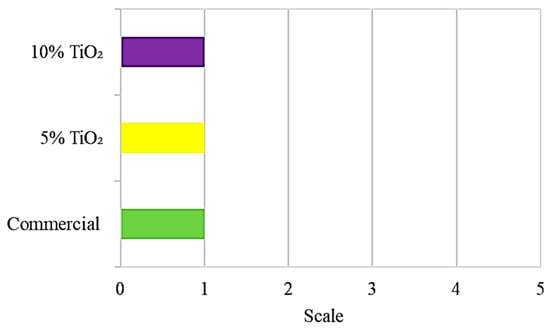
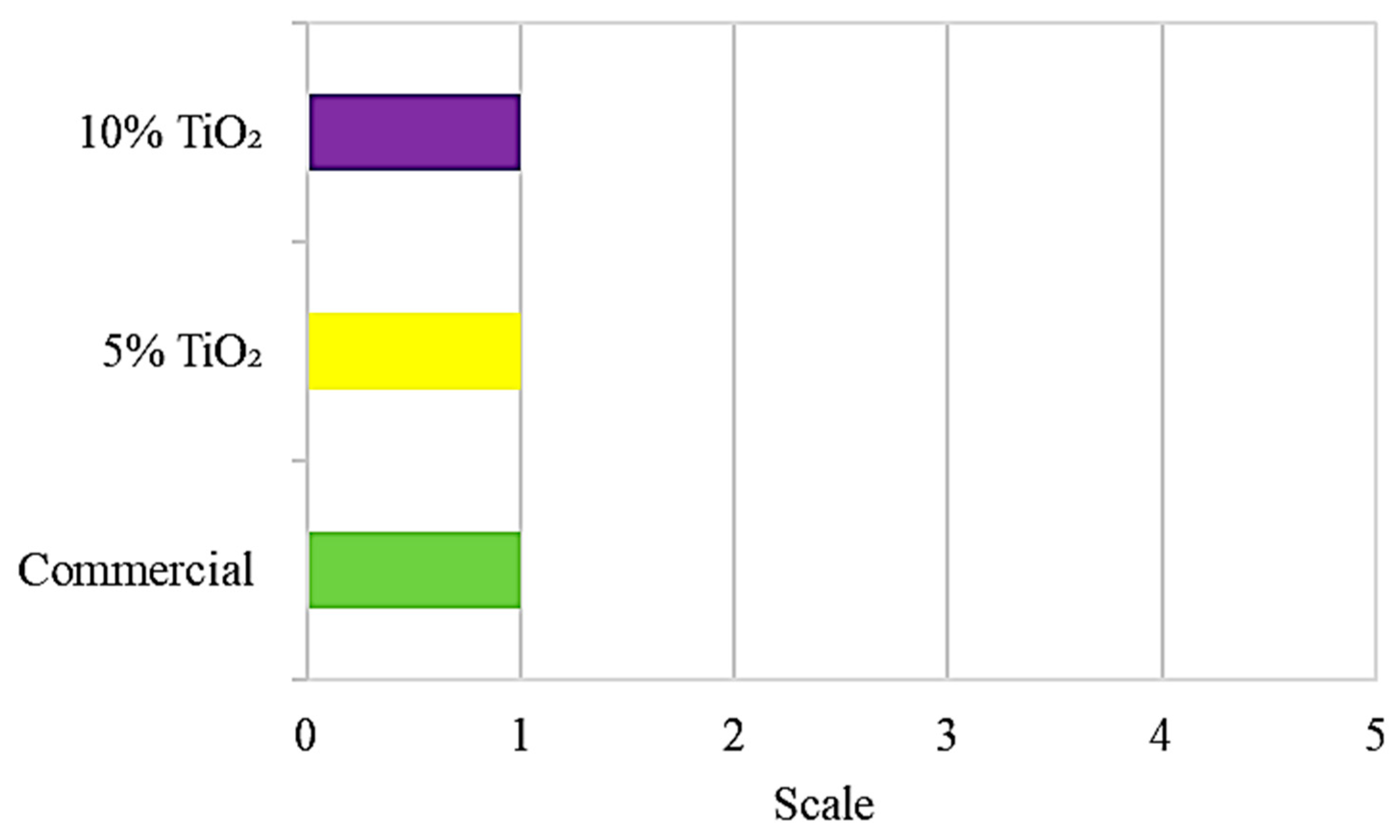
The facemask fabrics were evaluated in terms of moisture management properties using the Moisture Management Tester (SDL Atlas, USA) in accordance with the American Association of Textile Chemists and Colorists (AATCC) TM195-2011e2(2017)e5, Liquid Moisture Management Properties of Textile Fabrics, 2017. The test simulates real-world sweating conditions by applying a saline solution to the sample and monitoring the movement of liquid across the fabric surface. This test measures the overall moisture management capacity (OMMC) based on scales. The OMMC scales were: 1 indicates “Poor”; 2 indicates “Fair”; 3 indicates “Good”; 4 indicates “Very Good”; and 5 indicates “Excellent” moisture management properties, as tabulated in Table 1.
Table 1.
The overall moisture management capacity (OMMC) testing scale.
3. Results and Discussion
3.1. Thickness and Weight of Commercial Facemask Fabrics and Nano-TiO2/Meltblown Facemask Fabrics
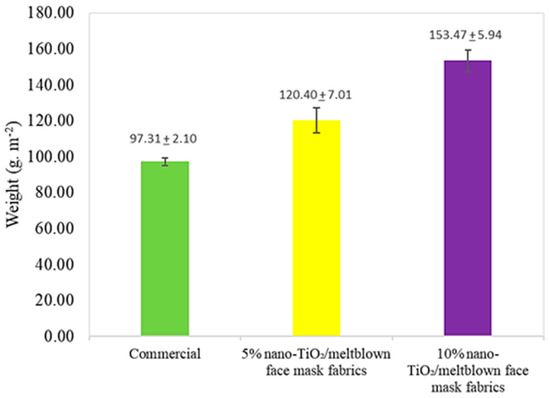
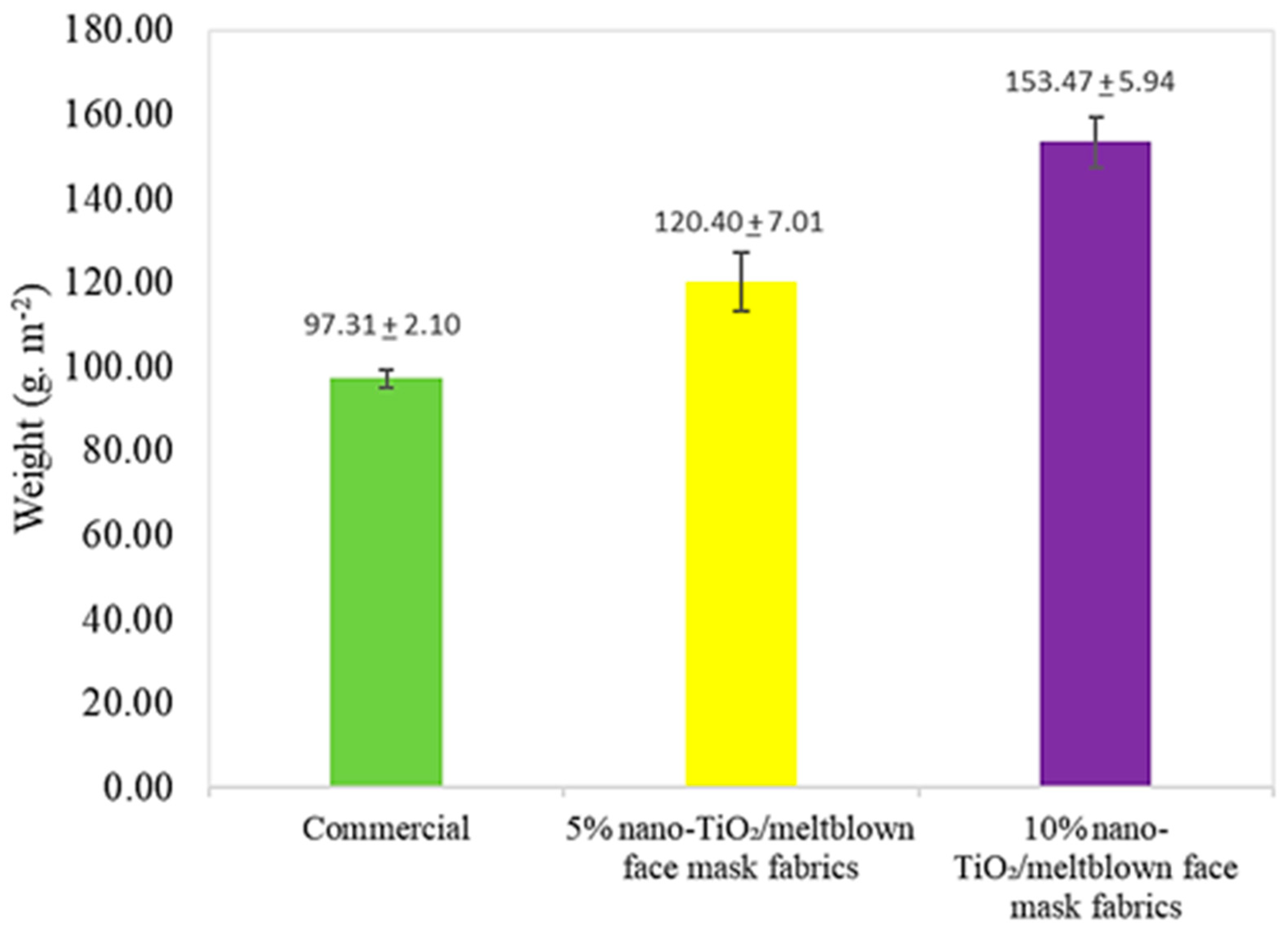
Figure 2 shows the average weight of the commercial facemask fabrics and nano-TiO2/meltblown facemask fabrics. The commercial facemask fabric has a mean weight of 97.31 ± 2.10 g·m−2. In comparison, the 5% nano-TiO2/meltblown fabrics show a higher mean weight of 120.40 ± 7.01 g·m−2, while the 10% nano-TiO2 sample exhibits a 58% increase relative to the commercial samples, reaching 153.47 ± 5.94 g·m−2. These values indicate that the fabric weight increases as the TiO2 concentration increases.
Figure 2.
The average weight (g·m−2) of commercial, 5% nano-TiO2/meltblown fabrics, and 10% nano-TiO2/meltblown fabrics, respectively.
The increase in weight is mainly due to nano-TiO2 particles that deposit on the fibre surfaces during the meltblowing process, which add extra mass to the PP meltblown fabrics. Similar increases in weight have been reported for several fabrics after coating with TiO2 or other nanoparticles [10].
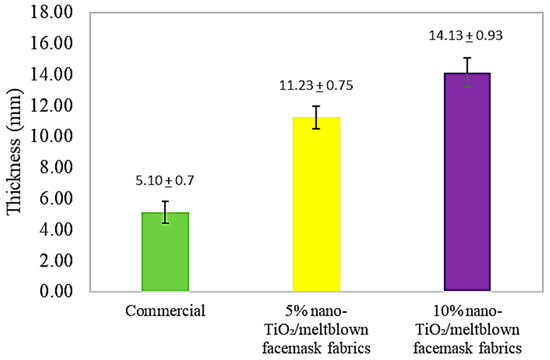
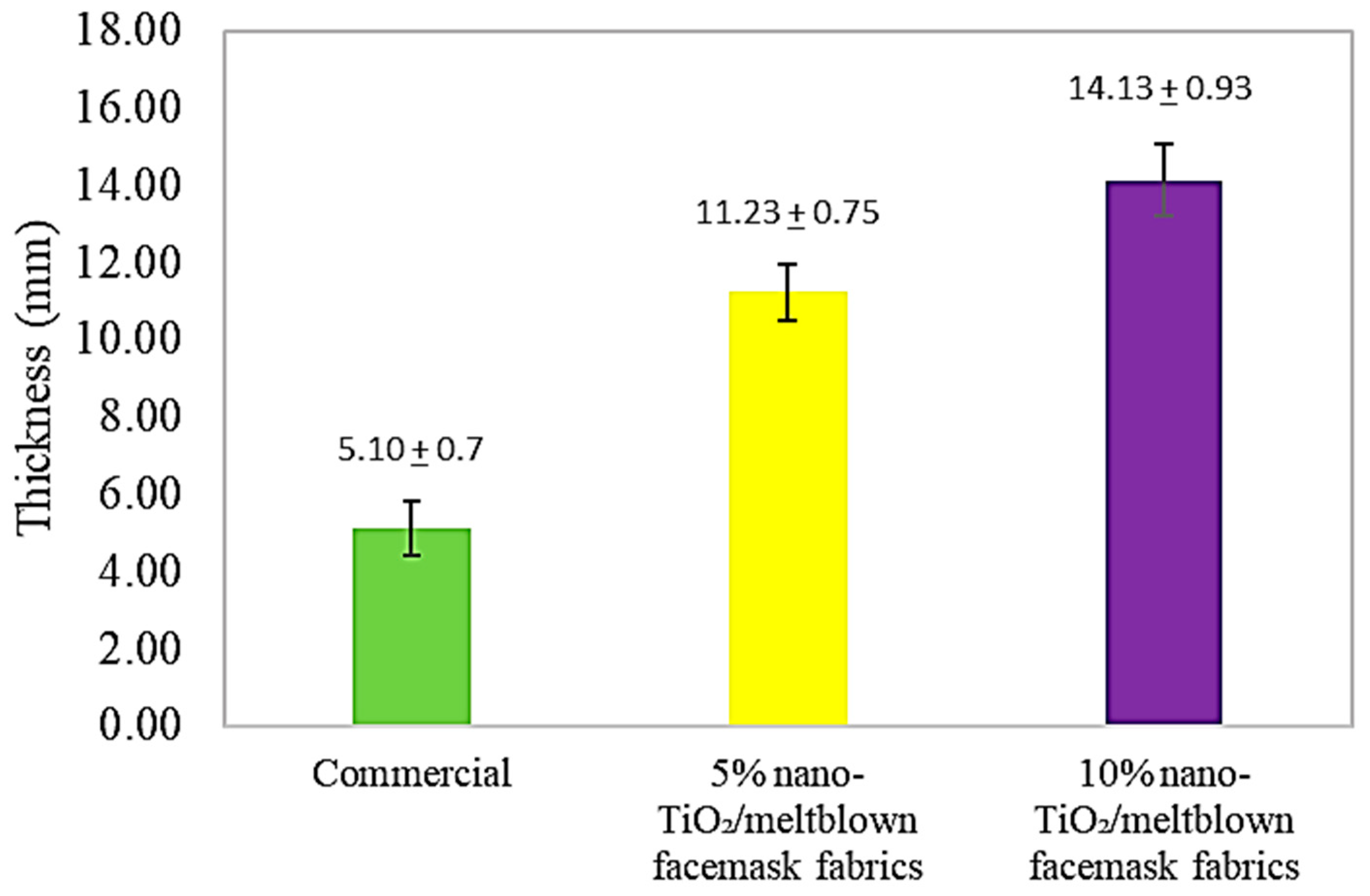
The fabric thickness of the samples was evaluated, and the results are presented in Figure 3. The commercial facemask fabrics show an average thickness of 5.10 ± 0.7 mm. The 5% nano-TiO2 sample has an average thickness of 11.23 ± 0.75 mm, which is more than twice that of the commercial fabric. By contrast, the 10% nano-TiO2 sample has an average thickness of 14.13 ± 0.93 mm, which is almost three times thicker than the commercial samples. At this concentration, the increase in fabric thickness is likely caused by a combination of factors, including slight TiO2 agglomeration and the higher viscosity of the nano-TiO2/PP melt during the meltblown process. The agglomerated TiO2 may create additional spaces between fibres, resulting in a bulkier and more open structure. Moreover, the higher viscosity of the nano-TiO2/PP melt can lead to the formation of thicker fibres, resulting in a bulkier fabric.
Figure 3.
The average thickness (mm) of commercial, 5% nano-TiO2/meltblown fabrics, and 10% nano-TiO2/meltblown fabrics, respectively.
3.2. Morphological Structure and Elemental Analysis of Commercial Facemask Fabrics and Nano-TiO2/Meltblown Facemask Fabrics
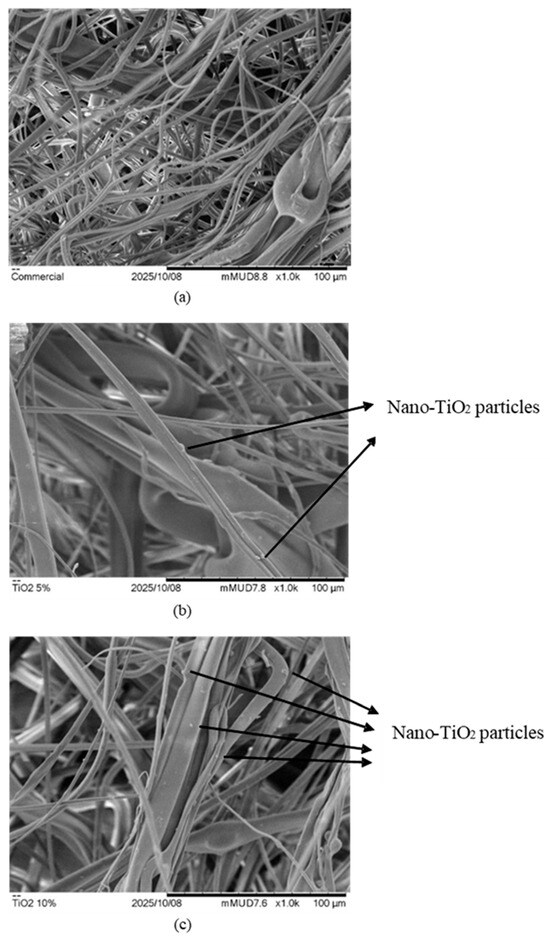
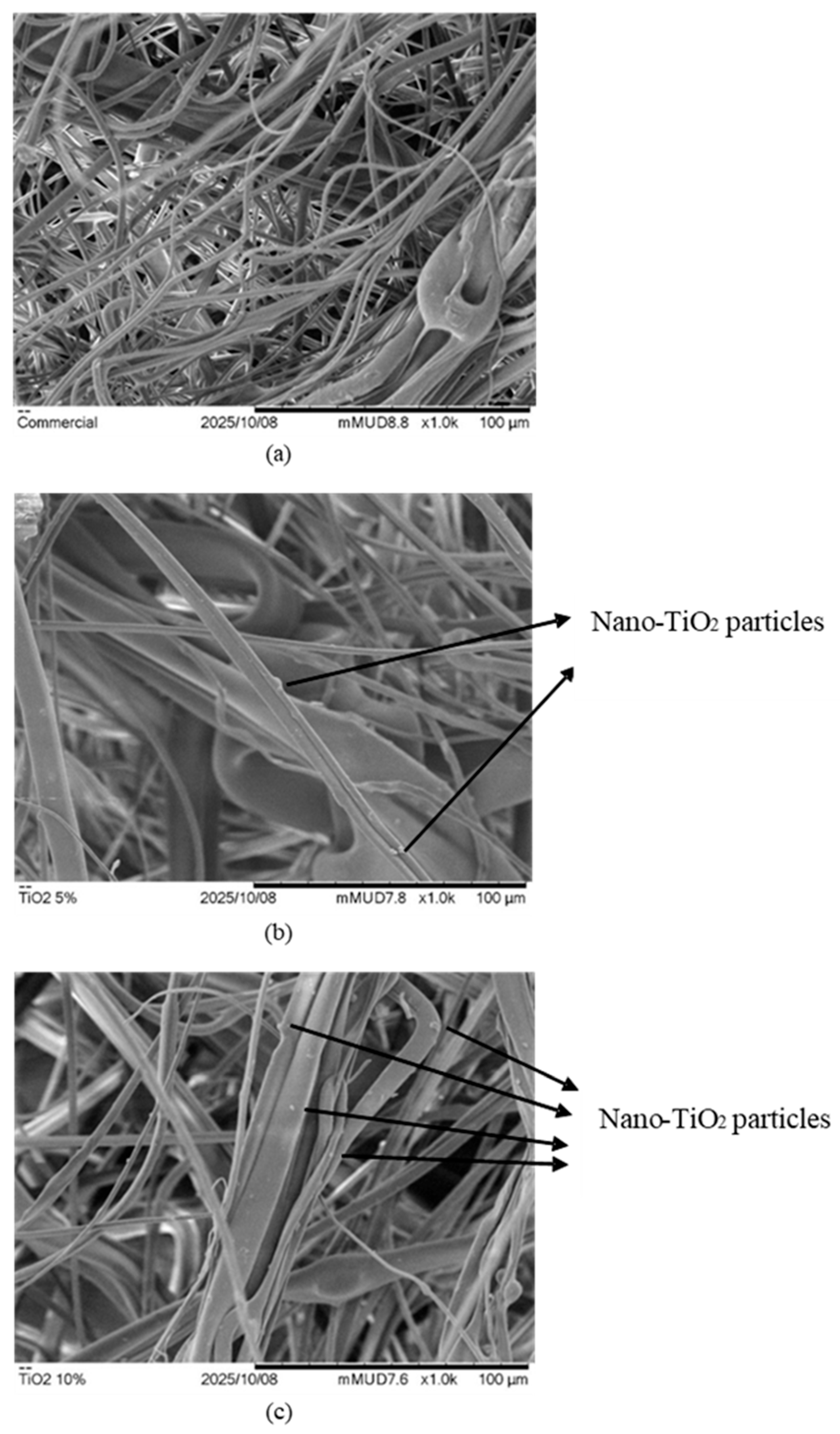
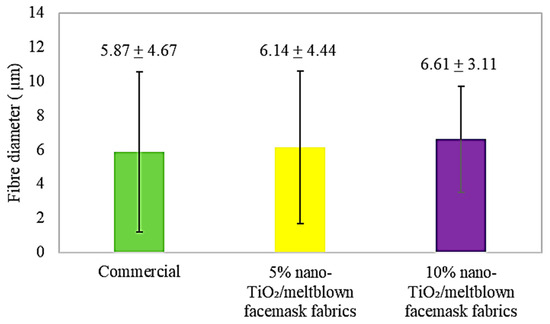
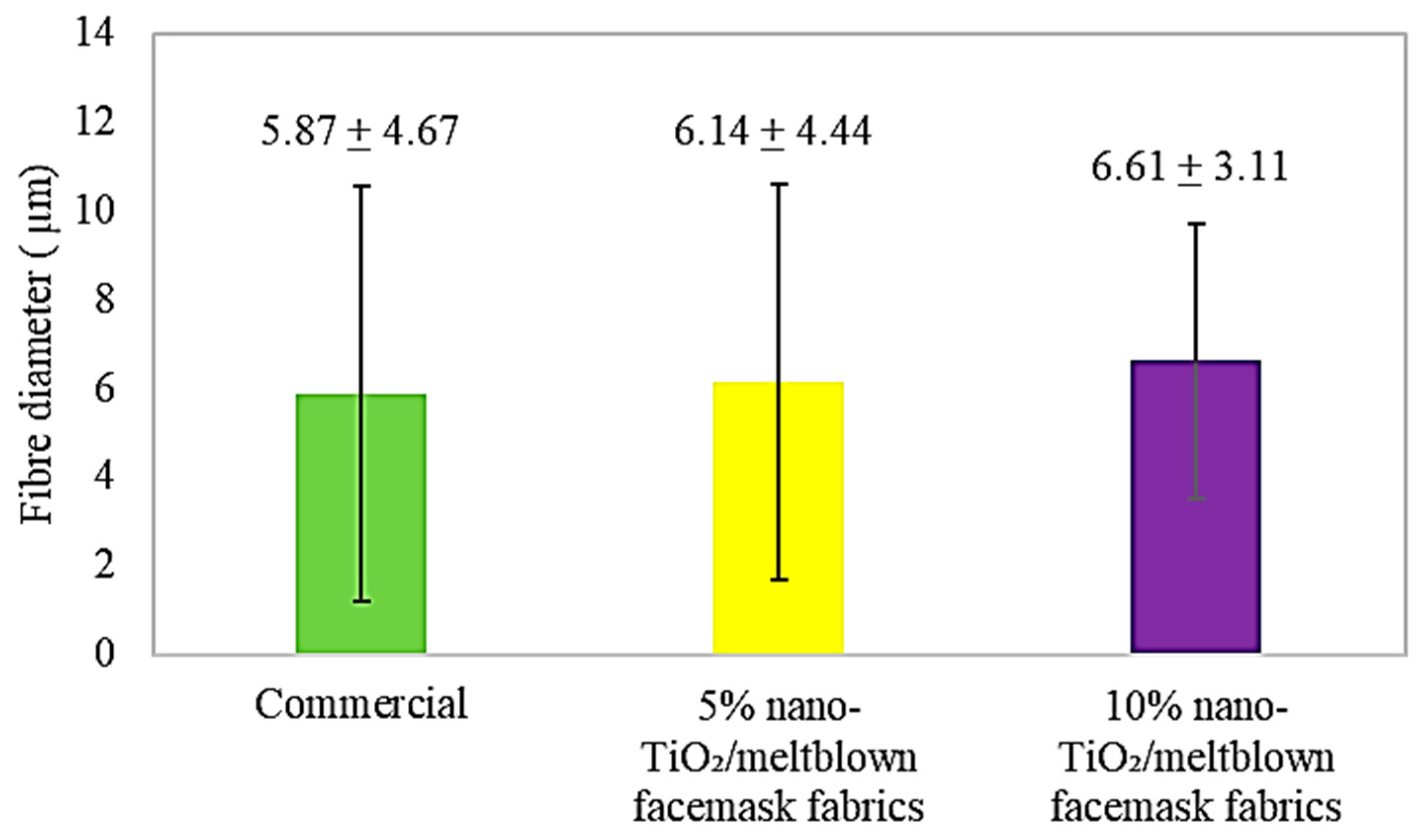
To investigate the morphological structures and the presence of nano-TiO2 in meltblown facemask fabrics, the middle layers of the 3-ply commercial facemask and 3-ply nano-TiO2/meltblown facemask fabrics were analyzed using the SEM-EDX. As shown in Figure 4, the commercial meltblown PP shows long, continuous and irregular fibres with smooth surfaces and a random web structure. No particles are visible on the fibre surfaces, which is expected for a commercial PP nonwonven fabric. The fibre diameters appear non-uniform at approximately 5.87 ± 4.67 µm (Figure 5).
Figure 4.
SEM images of (a) commercial, (b) 5% nano-TiO2/meltblown fabrics, and (c) 10% nano-TiO2/meltblown fabrics.
Figure 5.
Average fibre diameter (µm) of commercial, 5% nano-TiO2/meltblown fabrics, and 10% nano-TiO2/meltblown fabrics.
For the 5% nano-TiO2 sample, the fibres remain long and irregular with an average fibre diameter of 6.14 ± 4.44 µm. The fibres are randomly distributed within the fabric, which is similar to other meltblown PP mask materials reported in the literature [18]. In addition, small particles appear on the fibre surfaces. These particles are nano-TiO2-deposited during the meltblowing processes. In the 10% nano-TiO2 sample, the number of particles increases further. Clusters of TiO2 can be observed along the fibres. This shows that a higher concentration of nano-TiO2 produces a higher surface coverage of the samples, while the basic nonwoven structure remains intact. The fibre diameter was about 6.61 ± 3.11 µm.
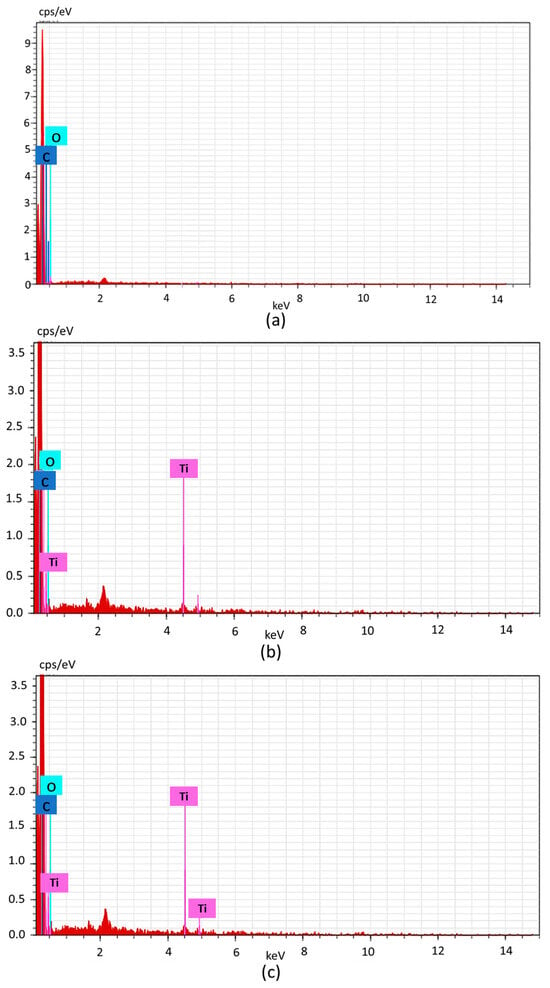
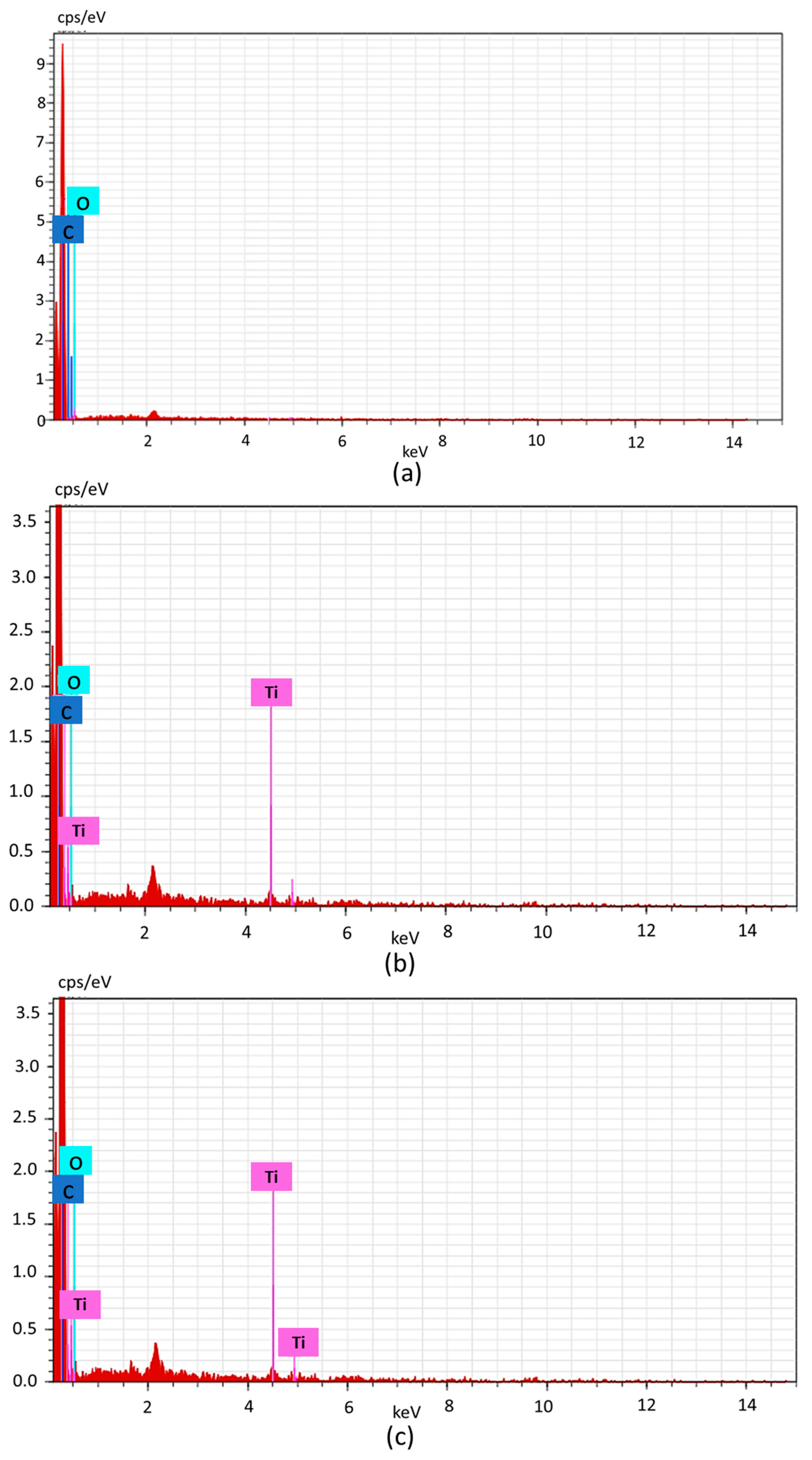
To confirm the presence of TiO2 on the fabric samples, an elemental analysis using an Energy-Dispersive X-ray (EDX) was recorded and presented in Figure 6 and Table 2. In the commercial PP fabric, only carbon (C) and oxygen (O) peaks were detected, with an approximate weight % of 96.87 for C and 3.13 for O. No titanium (Ti) is present in the commercial fabric samples. In the 5% nano-TiO2 sample, a Ti peak appears and the Ti content reaches about 0.99 weight %, while the C and O contents remain close to those of the commercial sample. In the 10% nano-TiO2 sample, the Ti content increases further to about 1.27 weight %, accompanied by a small change in the C and O percentages. These results confirm that TiO2 is deposited on the fibre surfaces and that the amount of TiO2 on the fabric increases with the TiO2 loading. The successful attachment of TiO2 on the fabric samples is important because these particles can provide additional functions, such as comfort properties, including air permeability, which will be discussed in the next section.
Figure 6.
EDX analysis of (a) commercial, (b) 5% nano-TiO2/meltblown fabrics, and (c) 10% nano-TiO2/meltblown fabrics.
Table 2.
The weight percentage for commercial, 5% nano-TiO2/meltblown fabrics, and 10% nano-TiO2/meltblown fabrics.
3.3. Air and Water Vapour Permeability of 3-Ply Commercial Facemask and 3-Ply Nano-TiO2/Meltblown Facemask Fabrics
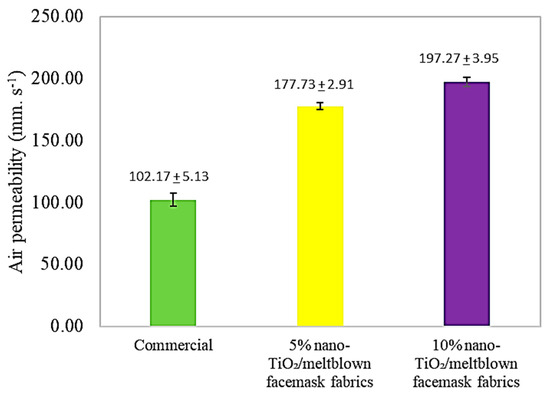
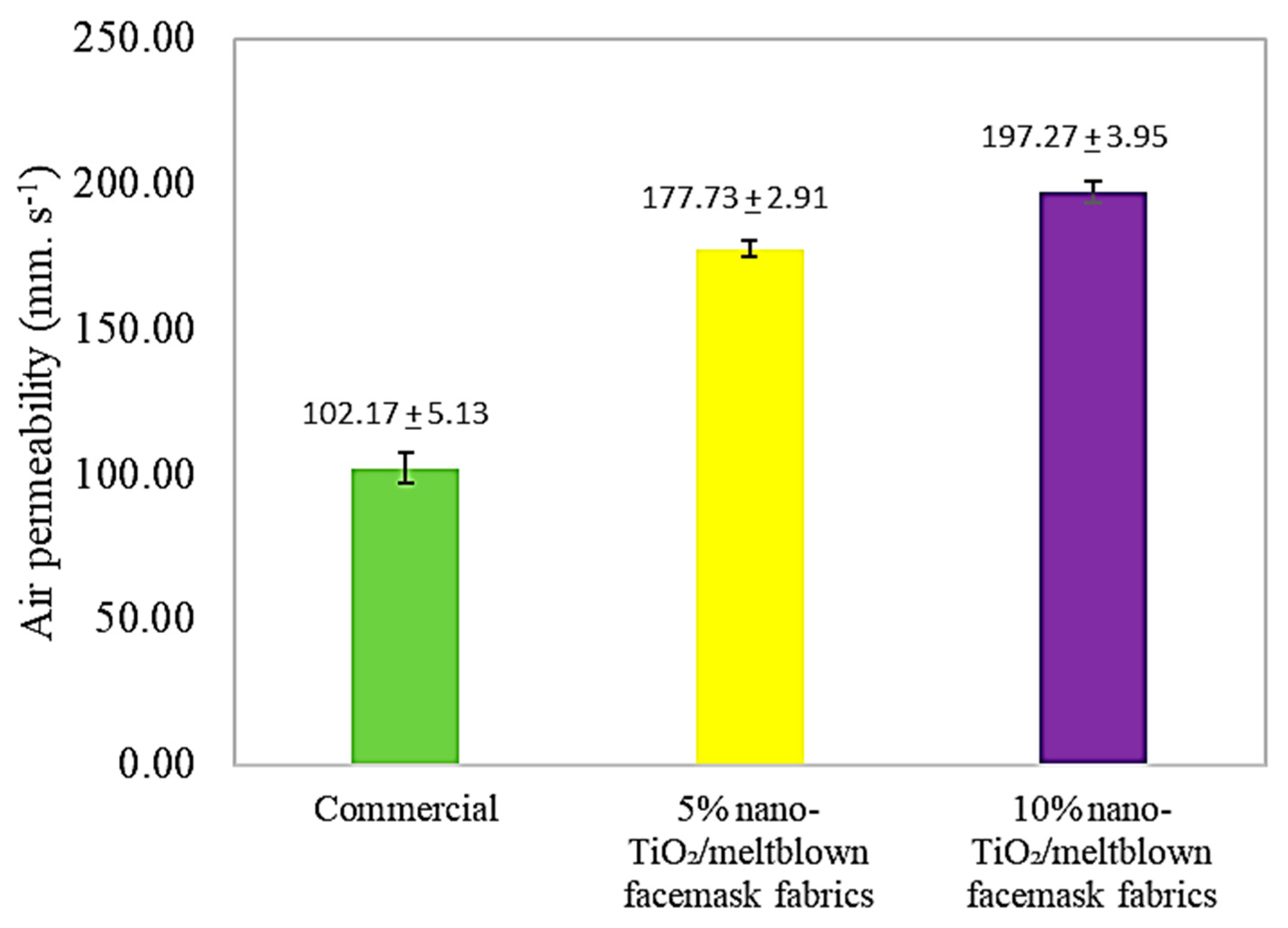
Air permeability values for the three samples are presented in Figure 7. The commercial fabrics record an average air permeability of 102.17 ± 5.13 mm·s−1. The 5% nano-TiO2 sample shows a much higher value of 177.73 ± 2.91 mm·s−1, and the 10% nano-TiO2 sample shows the highest value of 197.27 ± 3.95 mm·s−1. These results demonstrate that both coated fabrics are more permeable to air than the commercial fabric. The increases are approximately 74% for the 5% nano-TiO2 fabric and 93% for the 10% nano-TiO2 fabric.
Figure 7.
The average air permeability (mm·s−1) of commercial, 5% nano-TiO2/meltblown fabrics, and 10% nano-TiO2/meltblown fabrics.
The higher air permeability suggests that the slight agglomeration of nano-TiO2 does not block the voids of the nonwoven web. Instead, it may create additional spaces between the fibres, allowing more air to pass through the fabric. The results are supported by the fabric thickness, where the deposition of nano-TiO2 makes the fabric bulkier and creates a more open structure. Earlier work done by Freeman et al. on modified filter fabrics also showed that changes in porosity strongly control air permeability of the samples [19]. In many mask studies, higher air permeability is associated with better breathability, which can reduce thermal stress and improve comfort during long-term wear [20]. In this study, the TiO2 coating increases the air permeability of the fabric samples to a level that is still within the range reported for functional mask filter media [21]. Although the fabrics exhibit improved breathability, the particle rejection performance may be reduced. Therefore, further investigation on filtration efficiency is recommended for future studies to better understand the balance between breathability and filtration performance.
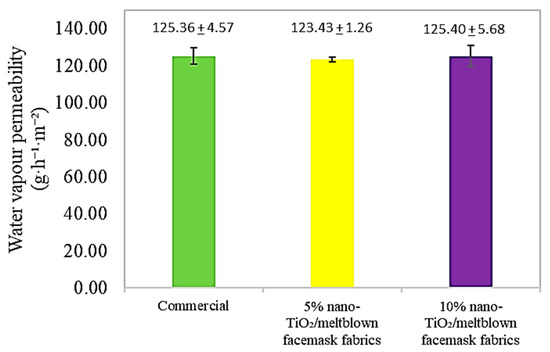
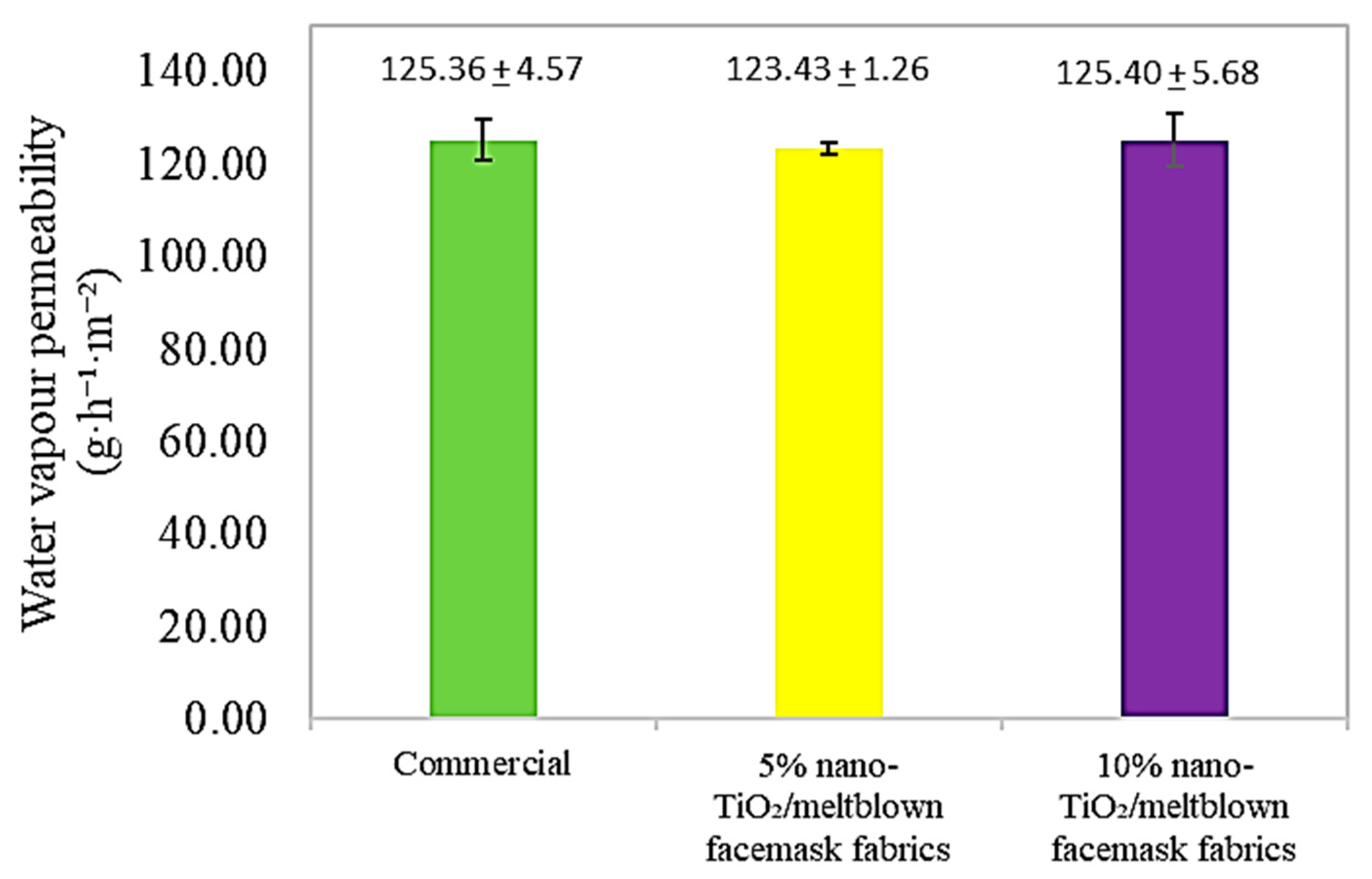
For water vapour permeability (WVP), the results are presented in Figure 8. The commercial sample has an average WVP of 125.36 ± 4.57 g·h−1·m−2. The 5% nano-TiO2 sample records a value of 123.43 ± 1.26 g·h−1·m−2, and the 10% TiO2 sample shows 125.40 ± 5.68 g·h−1·m−2. All three values lie in a narrow range between 123 and 125 g·h−1·m−2, and the differences are small. These results indicate that the deposition of nano-TiO2 on meltblown fabric has no significant effect on water vapour permeability. The nano-TiO2/meltblown fabric samples allow water vapour to pass through at almost the same rate as the commercial fabric. This behaviour is consistent with a previous study where thin nanoparticle coatings did not strongly influence WVP due to the hydrophobicity of polypropylene used in the facemask materials, which prevents the water vapour from passing through the fibre surface [22]. For facemask applications, adequate WVP is important because it helps to remove moisture produced by breathing and reduces the feeling of dampness and heat in the micro-climate between the mask and the face [21]. Since nano-TiO2/meltblown fabrics exhibited WVP values similar to the commercial filter, they can be considered acceptable for vapour transport in facemask applications.
Figure 8.
The average value of water vapour permeability (g·h−1·m−2) for commercial, 5% nano-TiO2/meltblown fabrics, and 10% nano-TiO2/meltblown fabrics.
3.4. Moisture Management Properties of 3-Ply Commercial Facemask and 3-Ply Nano-TiO2/Meltblown Facemask Fabrics
Moisture management performance was evaluated using the Moisture Management Tester (MMT), and the results are shown in Figure 9. All three fabrics, namely the commercial, 5% nano-TiO2 and 10% nano-TiO2 samples, obtained an average grade of one on the MMT scale. This grade corresponds to poor moisture management behaviour. All replicates fall into the same category, which shows that there is no meaningful difference among the samples.
Figure 9.
The scale of commercial PP fabrics, 5% nano-TiO2/meltblown fabrics, and 10% nano-TiO2/meltblown fabrics.
A grade of one indicates that the fabric has a low ability to absorb, spread and transfer liquid moisture from the inner to the outer surface. This is expected because polypropylene is a hydrophobic fibre with very low moisture absorbency [21]. The nano-TiO2 used in this study does not significantly change the surface wettability of the fibres, so the moisture management behaviour remains poor for all samples. Other researchers also found that hydrophobic mask filter layers usually show weak liquid moisture transport even when air permeability and water vapour permeability are acceptable [22]. Although the moisture management properties of both the three-layer commercial facemask fabric and the three-layer nano-TiO2/meltblown facemask fabrics are relatively low, this indicates limited moisture absorption and transport within the fabrics.
4. Conclusions
Nano-TiO2 particles were successfully incorporated into meltblown fabrics to develop facemask materials. By imitating the structure of a commercial 3-ply facemask, the nano-TiO2/meltblown fabrics were layered between two sheets of polypropylene (PP) nonwoven fabric, and the fabrics were investigated for their weight, thickness, morphology, air permeability, water vapour permeability and moisture management behaviour. Two different concentrations of nano-TiO2 were tested, and the results were compared with the commercial 3-ply facemask. From that experiment, it was found that meltblown fabrics containing 10% nano-TiO2 exhibited the greatest thickness and weight compared to the 5% nano-TiO2 sample and the commercial facemask. The SEM images and elemental analysis also confirmed the presence of TiO2 nanoparticles on the fabric surface. For comfort properties, the 5% and 10% nano-TiO2 samples had higher air permeability than the commercial fabric samples. Water vapour permeability was similar across all samples, which suggests that the nano-TiO2 particles did not strongly block vapour transfer through the fabric. The moisture management test showed a low liquid transport for all samples because of the hydrophobicity of polypropylene. Based on these findings, the 10% nano-TiO2 fabric sample shows good potential to be used as a facemask filter material with acceptable comfort behaviour. Although the 10% nano-TiO2 fabric exhibits improved breathability, prolonged use of the material can cause moisture buildup from respiration due to the hydrophobic nature of PP. In addition, future work should further investigate the filtration performance of nano-TiO2-incorporated meltblown polypropylene nonwoven fabrics, including antimicrobial properties, bacterial filtration efficiency (BFE), particle filtration efficiency (PFE), viral filtration efficiency, and the effects of pore structures on the filtration properties. From a manufacturing perspective, both higher and lower nano-TiO2 loading may also affect fibre formation and process stability during the meltblown process.
Author Contributions
Conceptualization, A.A.K., N.D.N.A., A.M.H., L.I. and M.F.; methodology, N.D.N.A., A.M.H. and L.I.; software, A.A.K.; validation, N.D.N.A., A.M.H. and L.I.; formal analysis, A.A.K.; investigation, A.A.K.; resources, N.D.N.A., A.M.H., L.I. and M.F.; data curation, A.A.K., N.D.N.A., A.M.H. and L.I.; writing—original draft preparation, A.A.K.; writing—review and editing, A.A.K., N.D.N.A., A.M.H. and L.I.; visualization, A.A.K.; supervision, N.D.N.A.; project administration, N.D.N.A. and L.I.; funding acquisition, L.I. All authors have read and agreed to the published version of the manuscript.
Funding
The research was funded by the University of Oradea, Romania.
Institutional Review Board Statement
Not applicable.
Informed Consent Statement
Not applicable.
Data Availability Statement
Data are contained within the article.
Acknowledgments
The authors would like to acknowledge the Faculty of Applied Sciences and Research Management Centre, Universiti Teknologi MARA, Malaysia, and the Textile Materials & Machinery Research Group (TEMAG), University of Istanbul, Turkey, for their support of the research activities.
Conflicts of Interest
The authors declare no conflicts of interest.
References
- Khan, M.T.; Shah, I.A.; Hossain, M.F.; Akther, N.; Zhou, Y.; Khan, M.S.; Al-shaeli, M.; Bacha, M.S.; Ihsanullah, I. Personal protective equipment (PPE) disposal during COVID-19: An emerging source of microplastic and microfiber pollution in the environment. Sci. Total Environ. 2023, 860, 160322. [Google Scholar] [CrossRef] [Scilit]
- Shiu, B.C.; Zhang, Y.; Yuan, Q.; Lin, J.H.; Lou, C.W.; Li, Y. Preparation of agzif-8@pp melt-blown nonwoven fabrics: Air filter efficacy and antibacterial effect. Polymers 2021, 13, 3773. [Google Scholar] [CrossRef] [Scilit]
- Fang, Z.; Wang, J.; Xie, S.; Lian, Z.; Luo, Z.; Du, Y.; Zhang, X. Advancements in Research and Applications of PP-Based Materials Utilizing Melt-Blown Nonwoven Technology. Polymers 2025, 17, 1013. [Google Scholar] [CrossRef] [Scilit] [PubMed]
- Kwong, L.H.; Wilson, R.; Kumar, S.; Crider, Y.S.; Reyes Sanchez, Y.; Rempel, D.; Pillarisetti, A. Review of the Breathability and Filtration Efficiency of Common Household Materials for Face Masks. ACS Nano 2021, 15, 5904–5924. [Google Scholar] [CrossRef] [Scilit]
- Zhiltsova, T.; Costa, A.; Oliveira, M.S.A. Assessment of Long-Term Water Absorption on Thermal, Morphological, and Mechanical Properties of Polypropylene-Based Composites with Agro-Waste Fillers. J. Compos. Sci. 2024, 8, 288. [Google Scholar] [CrossRef] [Scilit]
- Sharma, S.; Pinto, R.; Saha, A.; Chaudhuri, S.; Basu, S. On secondary atomization and blockage of surrogate cough droplets in single-and multilayer face masks. Sci. Adv. 2021, 7, eabf0452. [Google Scholar] [CrossRef] [Scilit]
- Hartati, S.; Zulfi, A.; Maulida, P.Y.D.; Yudhowijoyo, A.; Dioktyanto, M.; Saputro, K.E.; Noviyanto, A.; Rochman, N.T. Synthesis of Electrospun PAN/TiO2/Ag Nanofibers Membrane as Potential Air Filtration Media with Photocatalytic Activity. ACS Omega 2022, 7, 10516–10525. [Google Scholar] [CrossRef] [Scilit]
- Kwon, M.; Kim, J.; Kim, J. Photocatalytic Activity and Filtration Performance of Hybrid TiO2-Cellulose Acetate Nanofibers for Air Filter Applications. Polymers 2021, 13, 1331. [Google Scholar] [CrossRef] [Scilit]
- Chen, K.-N.; Sari, F.N.I.; Ting, J.-M. Multifunctional TiO2/polyacrylonitrile nanofibers for high efficiency PM2.5 capture, UV filter, and anti-bacteria activity. Appl. Surf. Sci. 2019, 493, 157–164. [Google Scholar] [CrossRef] [Scilit]
- Aragon, A.G.; Sánchez, J.A.C.; Zimeri, C.; Shim, E.; Fang, X.; Young, K.R.L. TiO2-Coated Meltblown Nonwoven Fabrics Prepared via Atomic Layer Deposition for the Inactivation of E. coli as a Model Photocatalytic Drinking Water Treatment System. Environments 2024, 11, 92. [Google Scholar] [CrossRef] [Scilit]
- Costa, S.M.; Pacheco, L.; Antunes, W.; Vieira, R.; Bem, N.; Teixeira, P.; Fangueiro, R.; Ferreira, D.P. Antibacterial and Biodegradable Electrospun Filtering Membranes for Facemasks: An Attempt to Reduce Disposable Masks Use. Appl. Sci. 2022, 12, 67. [Google Scholar] [CrossRef] [Scilit]
- Biswas, T.; Thakur, B.; Kumar, S.; Kumar, A.; Shukla, P.K.; Sinha-Ray, S. Breathable and antibacterial ultra-low particulate air filters using porous nanofibres. Sep. Purif. Technol. 2026, 394, 137629. [Google Scholar] [CrossRef] [Scilit]
- Harun, A.M.; Noor, N.F.M.; Zaid, A.; Yusoff, M.E.; Shaari, R.; Affandi, N.D.N.; Fadil, F.; Rahman, M.A.A.; Alam, M.K. The Antimicrobial Properties of Nanotitania Extract and Its Role in Inhibiting the Growth of Klebsiella pneumonia and Haemophilus influenza. Antibiotics 2021, 10, 961. [Google Scholar] [CrossRef] [Scilit]
- Sallehudin, M.E.; Affandi, N.D.A.; Harun, A.M.; Alam, M.K.; Indrie, L. Morphological Structures and Self-Cleaning Properties of Nano-TiO2 Coated Cotton Yarn at Different Washing Cycles. Nanomaterials 2023, 13, 31. [Google Scholar] [CrossRef] [Scilit]
- Hamouda, T.; Kafafy, H.; Mashaly, H.M.; Aly, N.M. Breathability performance of antiviral cloth masks treated with silver nanoparticles for protection against COVID-19. J. Ind. Text. 2022, 51, 1494–1523. [Google Scholar] [CrossRef] [Scilit]
- Hanif, M.A.; Shin, H.; Chun, D.; Kim, H.G.; Kwac, L.K.; Han, S.W.; Kang, S.S.; Kim, Y.S. Development of Highly Ultraviolet-Protective Polypropylene/TiO2 Nonwoven Fiber. J. Compos. Sci 2024, 8, 86. [Google Scholar] [CrossRef] [Scilit]
- Adamu, B.F.; Gao, J. Comfort related woven fabric transmission properties made of cotton and nylon. Fash. Text. 2022, 9, 8. [Google Scholar] [CrossRef] [Scilit]
- Wang, A.B.; Zhang, X.; Gao, L.J.; Zhang, T.; Xu, H.J.; Bi, Y.J. A Review of Filtration Performance of Protective Masks. Int. J. Environ. Res. Public Health 2023, 20, 2346. [Google Scholar] [CrossRef] [Scilit] [PubMed]
- Freeman, C.; Burch, R.; Black, C.; Strawderman, L.; Rickert, J.; Wilson, J.; Saucier, D.; Smith, B. Filtration efficiency and differential pressure of fabrics used in non-medical masks based on SARS COVID-19 particle size. Text. Res. J. 2022, 92, 3234–3242. [Google Scholar] [CrossRef] [Scilit]
- Guan, X.; Lin, J.; Han, J.; Gao, X.; Zhang, Y.; Hu, B.; Guidoin, R.; Wang, L. Prolonged Use of Surgical Masks and Respirators Affects the Protection and Comfort for Healthcare Workers. Materials 2022, 15, 7918. [Google Scholar] [CrossRef] [Scilit]
- Rahman, M.Z.; Hoque, M.E.; Alam, M.R.; Rouf, M.A.; Khan, S.I.; Xu, H.; Ramakrishna, S. Face Masks to Combat Coronavirus (COVID-19)—Processing, Roles, Requirements, Efficacy, Risk and Sustainability. Polymers 2022, 14, 1296. [Google Scholar] [CrossRef] [Scilit] [PubMed]
- Fadil, F.; Affandi, N.D.N.; Harun, A.M.; Alam, M.K. Improvement of Moisture Management Properties of Face Masks Using Electrospun Nanofiber Filter Insert. Adsorp. Sci. Technol. 2022, 2022, 9351778. [Google Scholar] [CrossRef] [Scilit]

Disclaimer/Publisher’s Note: The statements, opinions and data contained in all publications are solely those of the individual author(s) and contributor(s) and not of MDPI and/or the editor(s). MDPI and/or the editor(s) disclaim responsibility for any injury to people or property resulting from any ideas, methods, instructions or products referred to in the content. |
© 2026 by the authors. Licensee MDPI, Basel, Switzerland. This article is an open access article distributed under the terms and conditions of the Creative Commons Attribution (CC BY) license.