


Abstract
The crack-free welding of aluminum alloy is very significant in manufacturing lightweight components since aluminum alloys are susceptible to solidification cracking during welding. This work reviews the current understanding and advancements in the study of solidification cracking during welding aluminum alloys. Solidification cracks typically form near the end of the solidification process within the mushy zone, a region behind the molten pool where the material is partially solid and partially liquid. The complex high-temperature metallurgical behaviors in this zone play a crucial role in crack initiation. Research on the cracking resistance of filler materials has progressed significantly, offering valuable insights for mitigating cracks. The review covers the mechanisms of solidification cracking, influencing factors, and the cracking resistance of filler materials. It also highlights future research directions to deepen the understanding of metallurgical mechanisms and to support practical engineering solutions for controlling solidification cracks in welding aluminum alloys.
1. Introduction
With the implementation of lightweight strategies and the rapid advancement of lightweight materials, there is an urgent need to address the existing shortcomings in the processing and manufacturing of light alloys [1,2,3,4]. As a lightweight and high-performance structural material, aluminum alloy has the advantages of low density, high specific strength, high specific stiffness, good corrosion resistance and good processability, and has great application prospects in the fields of energy, construction, rail transit, and aerospace [5,6,7,8,9]. The wide application of aluminum alloys has greatly reduced the weight of cars, high-speed rail and subways, which greatly reduced energy consumption and emissions [10,11,12,13]. With the rapid development of high-end equipment manufacturing field, people pay more attention to the high-efficiency and high-quality welding technology of aluminum alloy components [14,15,16,17,18]. However, the high-temperature metallurgical behavior of aluminum alloy led to its high susceptibility to solidification cracks during the welding process [19,20,21,22,23]. The research on solidification crack involves many factors such as mechanisms, susceptibility testing methods, metallurgy and mechanics, etc. As shown in Figure 1, solidification cracking is a complex high-temperature phenomenon. As illustrated in Figure 1, the formation of solidification cracks in aluminum alloys is a multi-factor coupled process, which is primarily governed by the comprehensive influence of four core elements. First is the material composition, specifically encompassing the types of alloying elements, the solidification temperature range, and the crack susceptibility index. Second is the liquid phase behavior during solidification, which involves the amount of liquid phase generated, its distribution state, and the critical liquid feeding. Third are the microstructural characteristics, which are mainly dictated by grain boundary morphology, grain size, and the distribution of eutectic phases. Finally, there are the external welding conditions, covering welding heat input, welding speed, and the degree of restraint at the joint. These four major elements and their sub-variables interact with each other, jointly determining the crack susceptibility of aluminum alloys during the welding process. Although the composition and preparation process of aluminum alloys have been continuously optimized and the welding quality of aluminum alloy has been greatly improved, solidification crack is still one of the most harmful defects during the welding process of aluminum alloy [24,25,26]. The problem of solidification cracking seriously affects the reliability and safety of structures and directly restricts the manufacturing and application of high-strength aluminum alloy welded structures.
Figure 1.
Factors related to solidification cracking of Al alloys during welding.
Solidification crack is the main welding defect that restricts the development of high-quality welding technology of aluminum alloy. In this work, the research results of solidification cracking of aluminum alloy during welding are systematically reviewed, and research progress of the metallurgical mechanism, criterion, theoretical model, influencing factors and crack resistance of filler materials are summarized. On this basis, the future development direction is also prospected, which provides theoretical basis and technical support for the development of new high-strength aluminum alloys and the optimization of filler materials. This work is also of great significance for promoting the high-quality welding application of light alloy materials.
It is noteworthy that in processes such as laser cladding, surface alloying, and directed energy deposition (DED) of aluminum-based coatings, the molten pool undergoes a rapid transition from localized melting to high-rate solidification [27,28,29,30,31]. Consequently, the solidification cracking issues conventionally encountered in aluminum alloy welding remain a significant challenge in the fabrication of surface coatings. This study provides a critical theoretical framework and technical foundation for the optimization of filler materials. The theoretical insights discussed herein serve as a fundamental basis for the compositional design of aluminum alloy surface coatings. Therefore, elucidating the mechanisms of solidification cracking is not only vital for structural joining but also constitutes a prerequisite for achieving high-quality, defect-free surface coatings.
Despite extensive efforts in recent decades to understand the solidification cracking of aluminum alloys, a comprehensive and universally accepted mechanistic framework has yet to emerge. While contemporary models and criteria suggest that the thermo-mechanical–metallurgical processes occurring within the mushy zone significantly exacerbate the susceptibility to cracking, these phenomena lack detailed and systematic analysis. Accordingly, the objective of this study is to bridge the gap between fundamental yet incomplete theoretical models and advanced evaluation methodologies and practical materials. This work provides a critical comparative analysis of the theoretical boundaries and predictive accuracies of various solidification cracking criteria. Furthermore, it introduces a novel perspective by specifically investigating the impact of localized stress–strain distributions and liquid feeding behavior within the mushy zone at the terminal stages of solidification. Ultimately, this research aims to transcend current theoretical limitations, providing a strategic roadmap for precise modeling and the development of advanced, crack-resistant aluminum alloys tailored for surface coating applications.
2. Mechanism and Criterion of Solidification Cracking
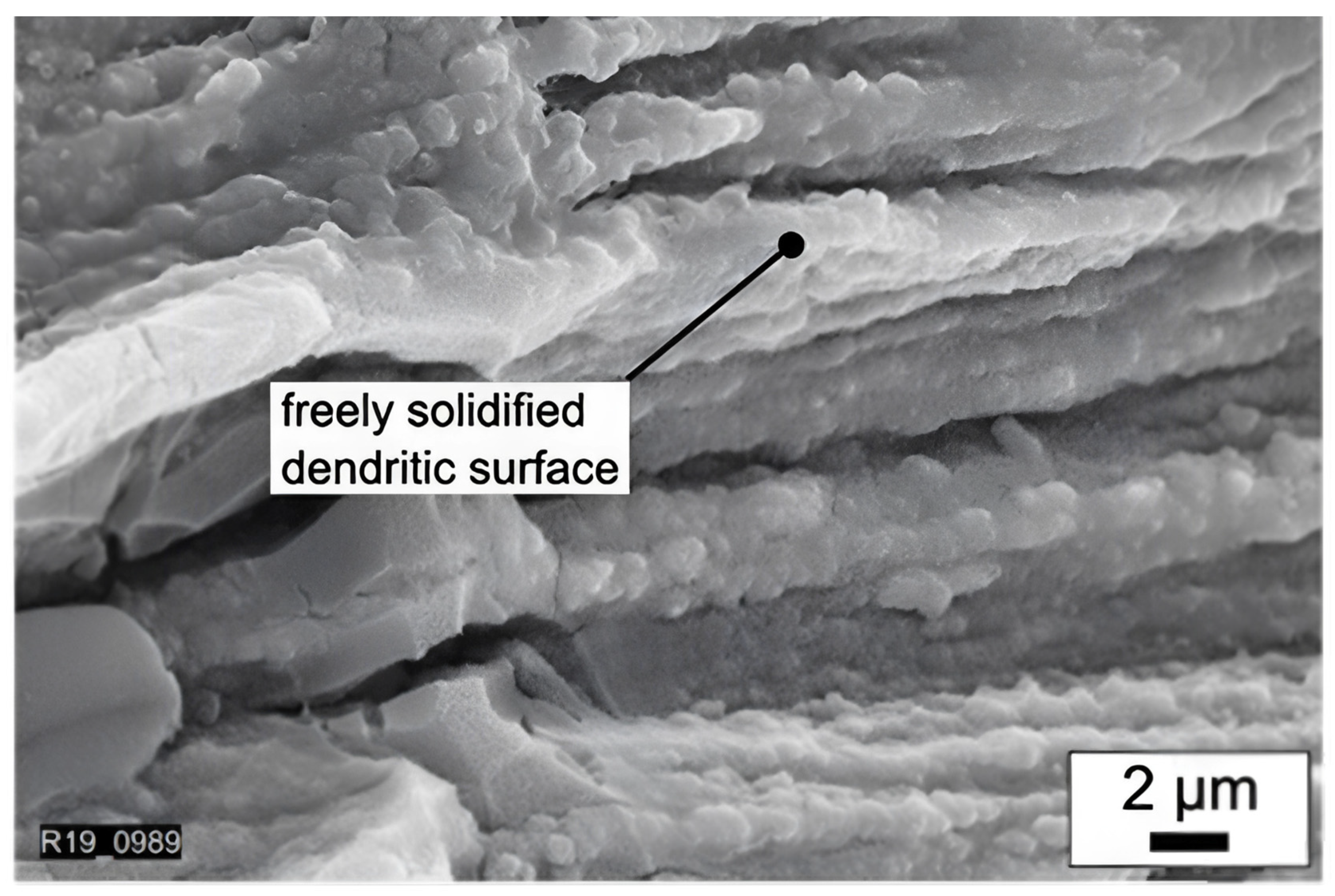
Aluminum alloy has high crack susceptibility, and solidification cracks are easy to appear during welding. The macroscopic morphology of solidification cracks is shown in Figure 2. Solidification cracks are mainly located in the fusion zone, and its fracture surface shows typical dendrite morphology, as shown in Figure 3. Solidification cracking occurs in the mushy zone (solid–liquid two-phase zone) behind the molten pool. Because there are many factors (involving metallurgy, mechanics and other factors) affecting solidification behavior at high temperature, the mechanism of solidification cracking is very complex.
Solidification cracks occur at elevated temperatures during the welding process, involving complex metallurgical phenomena such as molten pool solidification and dendritic growth. Solidification cracking of alloy during welding was caused by shrinkage obstruction [22]. The solidifying weld metal tends to contract because of solidification shrinkage and thermal contraction. As the weld pool moves forward, both the solidifying metal and the workpiece cool and shrink. Because the density of solid phase is higher than that of liquid phase, it will lead to shrinkage of weld metal during solidification. The high coefficient of thermal expansion of aluminum alloy resulted in the solidification shrinkage up to 6.6% [32]. According to the fundamental laws of thermodynamics, in the absence of external forced constraint stresses, the volume expansion of a metal during melting is theoretically equal to its volumetric shrinkage during solidification. A high coefficient of thermal expansion (CTE) induces severe volumetric expansion within both the aluminum alloy base material and the molten pool, followed by an equally drastic volumetric contraction. Consequently, a high expansion coefficient implies a higher solidification shrinkage coefficient, which leads to an escalation in shrinkage stress. A solidification shrinkage of 6.6% serves as a critical threshold; beyond this value, the liquid metal cannot replenish the corresponding regions in a timely manner, ultimately resulting in severe solidification cracking [33,34,35,36,37]. During welding, because the workpiece is clamped or connected with the rigid body, the solidification shrinkage is blocked, which will cause tensile stress in the mushy zone. With the development of research about the critical conditions for solidification cracking, strain rate is considered to be an important factor for solidification crack. Once the strain rate exceeds the critical strain rate, solidification crack will occur. Clyne et al. thought that liquid feeding is another important factor [38]. The mushy zone is usually composed of columnar or equiaxed dendrites. The solidified dendrites are separated by continuous liquid films and cannot be firmly bonded before complete solidification, so the strength of the mushy zone is very low. During the terminal stage of solidification, the liquid fraction is not enough to guarantee the grain movement or rearrangement to adapt to the tensile strain, and it is difficult to feed the micro-gap between grain boundaries, so cracks will occur along the grain boundaries at the end of solidification. The Rappaz, Drezet and Gremaud (RDG) model [39] suggests that the crack is caused by the local pressure drop in the mushy zone due to solidification shrinkage and thermal shrinkage. Eskin and Katgerman [40] considered the initiation and propagation mechanism of solidification cracks, and they thought that the tensile stress caused by non-uniform thermal shrinkage of dendrites would lead to the formation of pores, which would be fed and healed by liquid. With the decrease in temperature, tensile stress accumulates continuously, which leads to the rupture of the intergranular liquid film. Meanwhile, the thermal shrinkage will lead to the local pressure drop in the mushy zone, and the liquid pressure is not enough to feed the long and narrow gap, resulting in cracks.
Figure 2.
Solidification cracking in fusion zone of 6061 Al alloy [41].
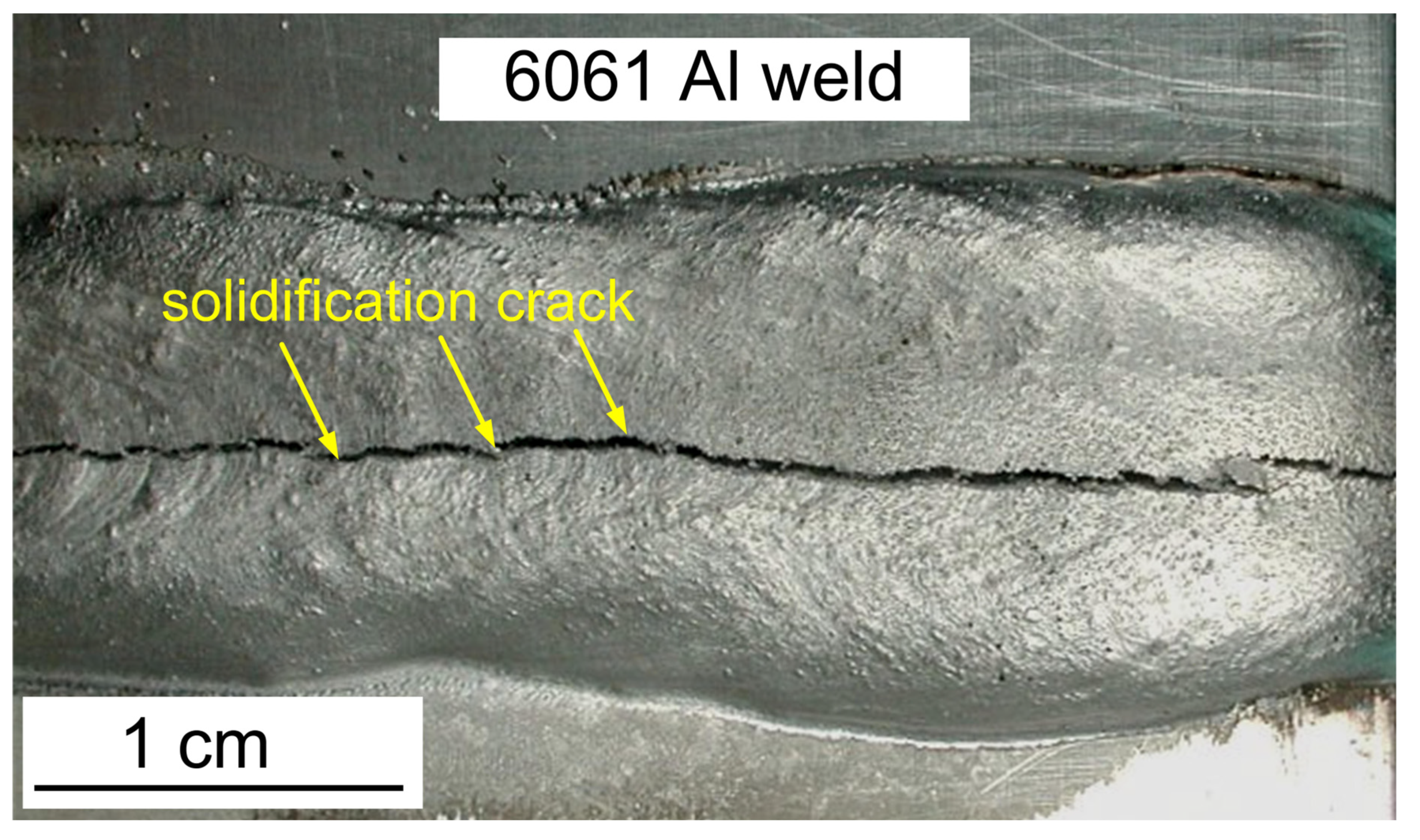
Figure 3.
Dendrite morphology on the fracture surface of solidification cracks of Al alloy [42].
Many models and criteria have been proposed for research on solidification cracks. Most of these criteria are based on stress, strain, or strain rate. Critical conditions are introduced into the criteria. Once a certain variable exceeds the critical value, the mushy zone will crack.
Criterion based on stress usually focuses on the relationship between stress value and strength of the material. When the shrinkage is blocked during solidification, solidification cracks will occur when the tensile stress at the solid–liquid interface exceeds the strength of material. Suyitno, Kool and Katgerman [43] proposed a hot crack criterion related to micropores, which is called SKK criterion. At the end of solidification, the backfilling of liquid is regarded as the starting point of cavity nucleation. The core grows into micropores or solidification cracks, and when the cavity reaches the critical size, cracking will occur.
According to the strain theory, the total strain in the mushy zone should be considered. Assuming that the grains are separated by the liquid film at the end of solidification, solidification cracking will occur when the high local strain in the liquid film exceeds the critical value. With the research continuing, researchers have realized that strain rate plays a key role in solidification cracking [44]. The classical model of Prokhorov [45] focuses on the thermodynamic factors of solidification cracks, and it is regarded that cracking will occur when the strain rate exceeds the critical value. Matsuda [46,47] applied this model to the study of solidification cracking in aluminum alloy during welding. Rappaz, Drezet and Gremaud [39] developed the famous RDG model for solidification cracking, which included both uniaxial tensile deformation and solidification shrinkage. Coniglio et al. [48,49] applied RDG model to study solidification cracking of aluminum alloy during welding. RDG model provided solid physical foundation for studying the formation mechanism of solidification cracking.
Based on the solidification theory, Kou [50,51] proposed a new criterion for solidification cracking, namely Kou criterion. Compared with the traditional criterion, Kou criterion focuses on grain boundary (GB) behavior since solidification crack occurs along grain boundaries. Kou considered three main factors for solidification crack. The first one is the transverse separation of grains caused by tension (crack-causing factor). The second one is the transverse growth and bonding of grains towards each other to resist cracks (crack-resistant factor). And the last one is the liquid feeding along grain boundary to resist cracks (crack-resistant factor). When the crack-causing factor (factor one) is greater than the sum of crack-resistant factors (factor two and factor three), solidification cracking will occur. Kou used |dT/d(fS)1/2|max at the end of the solidification stage as the index to predict the solidification crack susceptibility of alloys. Local shrinkage, grain growth and liquid feeding were taken into account in the Kou criterion. It is very accurate in predicting the solidification crack susceptibility of aluminum alloys. However, because local shrinkage and liquid feeding are two unquantified factors, it is difficult to predict whether and when solidification cracks will occur. The effects of surface tension of intergranular liquid, second phase and solid-state phase transformation on the solidification crack is not considered in the model.
We must address a pivotal question: despite the extreme difficulty of precisely quantifying shrinkage stress and interdendritic liquid feeding in situ, why are they universally regarded as indispensable factors in solidification cracking? From a thermodynamic perspective, the formation of solidification cracks is inherently a dynamic process involving complex metallurgical reactions and microstructural evolution that elude real-time detection. Nevertheless, shrinkage stress exerts a profound influence on the mushy zone during the terminal stages of solidification, acting as a primary driver of weldment failure. Simultaneously, liquid feeding—the infiltration of the remaining liquid phase into interdendritic gaps to replenish the liquid film—is equally critical in determining cracking susceptibility. Fundamentally, any model that disregards or neglects these two factors is inherently flawed, as it violates the law of conservation of mass within the mushy zone.
The significance of this study lies in further elucidating how various theoretical criteria attempt to indirectly incorporate these two pivotal factors into their analytical frameworks. Simultaneously, it examines how aluminum alloy filler materials fundamentally mitigate cracking by enhancing liquid feeding capabilities and reducing shrinkage strain rates. Looking forward, the critical next step involves the application of multi-angle testing methodologies to validate and quantify these two influential parameters.
Recently, Hu et al. [52] proposed a solidification crack model based on dendrite morphology to accurately predict the solidification crack susceptibility of alloys. It considers both mechanical and non-mechanical factors, which also focuses on grain boundary behavior. According to the Feurer model, Hu et al. derived the specific expressions of local shrinkage and liquid feeding factors in Kou criterion, and they introduced alloy composition, process parameters and microstructure into the model. The effectiveness of the model was verified by the solidification cracking behavior of the Mg-Ce alloy. In addition, Hu also proposed the solidification crack susceptibility index based on equiaxed grains, that is, |dT/d(fs)1/3| near (fs)1/3 = 1 and verified its accuracy.
While the SKK criterion pioneered the concept of pore nucleation—stipulating that cracking occurs once a pore exceeds a critical dimension—it fails to account for other influential parameters [53,54,55]. Similarly, although the RDG model was the first to integrate strain rate, liquid feeding, and crystalline mechanics—conceptualizing solidification as a “flow and stretching” phenomenon within the mushy zone—it relies on highly idealized assumptions for pore nucleation that are seldom realized in actual mushy zone environments [56]. Building upon the RDG model, the Kou criterion further narrowed the analytical scale to examine the impact of localized shrinkage stress and liquid feeding on cracking susceptibility [57,58,59,60]. However, it neglects the interfacial tension of grain boundary liquids and the influence of secondary phases. Furthermore, the lack of a robust theoretical basis for certain empirical constants in its formulation limits its applicability to practical industrial production. Ultimately, isolated theoretical models cannot fully capture the complex thermo-mechanical coupling inherent in real-world manufacturing; they must be rigorously validated and explored through diverse experimental methodologies.
3. Testing Methods for Solidification Cracking Susceptibility
Up to now, researchers from all over the world have developed a variety of test methods to evaluate solidification crack susceptibility [61,62,63,64,65]. Among them, the most widely used test in welding production and research is the Varestraint test developed by Savage [66,67,68]. During the welding process, the workpiece is bent suddenly, and the tensile strain on the workpiece surface induces tension in the mushy zone, resulting in solidification crack. The total or maximum crack length is used as the crack susceptibility index. In subsequent research, Senda et al. [69,70] developed a transverse mode of the Varestraint method where the workpiece is bent in the transverse direction. Arata et al. [71,72] determined the ductility curve characteristics of aluminum alloy during solidification by the Varestraint method. Nakata and Matsuda [73] studied the effects of dihedral angle and average grain size on solidification crack susceptibility of aluminum alloy by the Varestraint method.
Remarkable results in the study of crack susceptibility of aluminum alloy have been achieved by the Varestraint method, but this method still presents some limitations. Coniglio [74] pointed out that the tensile strain in the Varestraint test is the global strain rather than the local tensile strain in the mushy region. The strain rate in this method is much higher than that under actual welding conditions. Coniglio and Cross [29] developed a controlled tensile weldability (CTW) testing method, in which an extensometer was set under the weld at a certain gauge distance to measure the minimum transverse deformation rate required to cause solidification cracks, which was divided by the gauge distance as the critical strain rate.
To overcome the shortcomings of the Varestraint testing method (such as the interference of liquation cracking on solidification cracking), Kou et al. [75,76,77,78] developed a transverse motion weldability (TMW) testing method. In TMW test method, the upper sheet and the lower sheet are lap welded. During TMW testing, the upper sheet remains stationary, and the lower sheet moves transversely perpendicular to the welding direction at a predetermined speed, which only causes tensile strain in the mushy zone and causes solidification cracking. The minimum transverse velocity required to induce cracking is called critical velocity Vc. The smaller the value of Vc is, the higher the solidification cracking susceptibility of alloys is. At present, TMW test method has been effectively applied to study the solidification cracking susceptibility of aluminum alloys [75,77,78], stainless steels [79], magnesium alloys [76], and other materials. The TMW method presents great application prospects in the research and development of new materials, as well as the matching and crack resistance optimization of filler materials.
Coniglio [74] pointed out that the strain in the Varestraint method is applied to the entire workpiece instead of the mushy zone where solidification cracks occur, and the strain rate in the test is much higher than the strain rate under actual welding conditions and the critical strain rate for crack formation. Nakata et al. [73] reduced the strain rate and developed the slow-bending Varestraint test. However, the global strain in the workpiece still cannot reflect the local strain in the mushy zone that causes solidification cracking. Matsuda et al. developed the Variable Deformation Rate (VDR) test [47], which used the critical deformation rate as the cracking susceptibility index, and the alloys with better crack resistance have a higher critical deformation rate. Coniglio and Cross [48] developed a controlled tensile weldability (CTW) test method. Global strain refers to the macroscopic deformation applied to the entire welded specimen or structural component, such as the global bending strain imposed during a Varestraint test. A primary characteristic of global strain is its ease of measurement and control via conventional external equipment; it intuitively reflects the overall mechanical boundary conditions and structural constraint of the workpiece. However, global strain fails to represent the actual mechanical driving force for cracking, as the deformation distribution throughout the weldment is highly non-uniform. In contrast, local strain denotes the microscopic deformation strictly concentrated within the mushy zone of the molten pool, or even at specific grain boundaries. A defining feature of the mushy zone is that its yield strength is substantially lower than that of the surrounding fully solidified metal and the base material. Consequently, any applied macroscopic global strain inherently localizes within this critically weak region, where it is amplified into severe local strain. From a metallurgical perspective, it is this microscopic local strain that acts as the primary catalyst for ultimate crack propagation. Unlike its global counterpart, local strain is notoriously difficult to measure directly and exhibits a high sensitivity to the selection of gauge length, typically necessitating advanced, high-resolution instrumentation for accurate observation and analysis [80,81,82]. To measure the deformation (or displacement) of the weld and thereby measure the lateral strain, an extensometer with a certain gauge was connected below the weld. The test can be repeated at different speeds to determine the minimum velocity required to cause solidification cracks, i.e., the critical deformation rate, and it was divided by the gauge as the critical strain rate.
Recently, Soysal et al. [83] developed a new static weld pool deformation (SWPD) testing method to evaluate solidification crack susceptibility. In the SWPD test, two workpieces are connected by the Gas Tungsten Arc Welding (GTAW) method, and one workpiece moves to induce cracking. Load is applied to the mushy zone to ensure that the cracks are solidification cracks. However, it is still difficult to evaluate the crack resistance of filler materials by the SWPD test.
Although the average transverse strain rate within the mushy zone can be approximated as V (the velocity of the lower weld edge relative to the upper weld edge) divided by the weld width W, the localized strain rate in the immediate vicinity of a crack may be substantially higher than V/W. Given that the critical strain rate is fundamentally dictated by the plate composition, welding parameters, and microstructural characteristics, different aluminum alloy filler materials inherently exhibit distinct critical strain rates in practical manufacturing scenarios. Consequently, accurately evaluating their cracking susceptibility necessitates a context-specific analysis, which is ultimately essential for extending the service life of the materials.
Li et al. applied the TMW testing method to investigate the effect of different welding modes on the solidification cracking susceptibility of 7075 alloy welds with 7055 and 7150 filler wires [84]. The results show that the Cold Metal Transfer (CMT) welding mode can reduce the solidification cracking susceptibility of 7075 alloy welds. In addition, CMT + pulse (CMT + P) can further reduce the solidification cracking susceptibility, as illustrated in Figure 4.
Figure 4.
The effect of different welding modes on solidification cracking susceptibility of 7075 alloy welds with 7055 filler wire [84]: (a) metal inert gas (MIG) mode; (b) CMT mode; (c) CMT + P mode; (d) comparison among different arc modes.
Traditional Varestraint testing has yielded significant insights into the cracking susceptibility of aluminum alloys; however, it focuses on global deformation while neglecting localized strain-induced shrinkage, which deviates from actual production conditions. In contrast, tests such as TMW introduce a transverse critical velocity to isolate variables and investigate how localized strain within the molten pool’s mushy zone influences crack initiation. Ultimately, it has been observed that no single testing method can perfectly replicate the intricate thermal-mechanical cycles experienced by aluminum alloys during welding. Consequently, a multi-faceted approach that integrates various testing methodologies is strongly recommended for a comprehensive evaluation.
Through diverse testing methodologies, researchers can precisely quantify the cracking susceptibility of various aluminum alloy welds under specific thermodynamic conditions. However, the ultimate objective of evaluating cracking sensitivity extends beyond mere material testing; it aims to elucidate the underlying mechanisms and formulate effective mitigation strategies. The various parameters measured during testing are fundamentally governed by intrinsic factors—such as chemical composition, microstructural evolution, and grain morphology—as well as extrinsic welding process parameters. Only by comprehending these fundamental influence mechanisms and investigating their complex interdependencies can we effectively optimize crack-resistant filler materials and high-performance aluminum alloy coatings for practical industrial applications.
4. Factors Influencing Solidification Crack
The formation of solidification cracks in aluminum alloy during welding is a complex process, which is affected by metallurgy factors and mechanical factors. Researchers have carried out a large number of studies on the effects of factors on welding solidification cracking of aluminum alloys by means of experiments and theoretical calculations.
4.1. Composition
During the welding process of aluminum alloy, composition is an important factor influencing on the maximum solidification temperature range, grain structure, and shrinkage stress. Therefore, reasonable control of the composition of the fusion zone plays an important role in reducing solidification crack susceptibility of aluminum alloys. Eskin et al. [85] evaluated the effect of alloying elements on solidification crack susceptibility of various aluminum alloys. With the rapid development of research tools, the simulation method can greatly shorten the research period compared with experimental research and can realize high-throughput calculation on multi-factor influencing mechanisms. There are great advantages to studying the effect of alloying elements on solidification crack susceptibility of aluminum alloys by the simulation calculation method. Zhang et al. [86] calculated the solidification crack susceptibility of AA2xxx, AA6xxx, and AA7xxx aluminum alloys through the improved Scheil [37] model and also calculated the crack susceptibility index (CSI) of more than 1000 different compositions for each series of alloys. After considering the effect of back diffusion, the crack susceptibility maps for three series of aluminum alloys were constructed by using the simulation results. When matching filler materials for welding alloys, it was suggested to ensure the composition of fusion zone are far away from the highly susceptible areas in the map to avoid solidification cracking.
The simulation method solves the problem of tedious test methods and huge workload. The influence of alloying elements content on solidification crack susceptibility is clearly and accurately characterized in the crack susceptibility map, which has important guidance value for the research on matching and crack resistance optimization of filler materials.
Al 6061 is notorious for its high susceptibility to solidification cracking. Due to the presence of Mg and Si as primary alloying elements, the alloy undergoes complex metallurgical reactions during solidification that result in an insufficient volume of terminal eutectic liquid. This deficiency significantly increases the probability of crack initiation within the fusion zone.
In contrast, while Al 2219 is also a high-strength alloy, the copper (Cu) content leads to the formation of an Al-Cu eutectic phase during the final stages of solidification. This liquid phase acts as an effective bonding agent, infiltrating and replenishing the liquid films at the grain boundaries. Consequently, the inherent resistance to solidification cracking in Al 2219 is fundamentally superior to that of Al 6061.
4.2. Liquid Feeding
Solidification shrinkage and thermal shrinkage during welding are important reasons for solidification cracks of aluminum alloys. If the voids produced by shrinkage can be effectively filled by liquid in time, solidification cracks can be effectively prevented. At the initial stage of crack initiation, liquid feeding can effectively heal cracks. Liquid feeding generally occurs along the grain boundary at the end of solidification and is greatly affected by the size and shape of feeding channels.
Soysal and Kou [87] evaluated the solidification crack susceptibility of 2024, 2219, 6061, and 7075 aluminum alloys by TMW method to investigate the effect of liquid channel on the solidification crack susceptibility of aluminum alloys and analyzed the microstructure of high strain zone around the crack. Some fine healed microcracks in the form of a large number of eutectics can be found around the main crack. The liquid feeding channel of 2219 aluminum alloy is wide and short, which makes liquid feeding for healing cracks much easier. At the end of solidification, a large amount of liquid feeds the shrinkage between columnar dendrites, so the susceptibility to solidification cracks of 2219 aluminum alloy is lower. However, the liquid feeding channel of 6061 aluminum alloy is narrow and long, and the liquid feeding is difficult at the end of solidification, so the solidification cracking susceptibility is higher.
The influence of liquid phase feeding channel is also reflected in Kou criterion. According to the three factors of solidification crack in the Kou criterion, the root radius R of columnar crystal is proportional to (fS)1/2. If dT/dR is larger (i.e., dT/d(fS)1/2 value is larger), that is, in the cooling process, the lateral growth dR is smaller, at this time, the lateral growth of columnar crystals is slow, and it is difficult to combine transversely to resist cracking (the anti-cracking effect of factor 2 is weakened). In addition, the longitudinal growth of columnar crystals is accelerated, and the liquid phase channel between crystals becomes longer, which leads to the difficulty of liquid phase feeding (the anti-crack effect of factor three is weakened), and finally leads to the increase in solidification crack susceptibility.
4.3. Grain Size and Microstructure
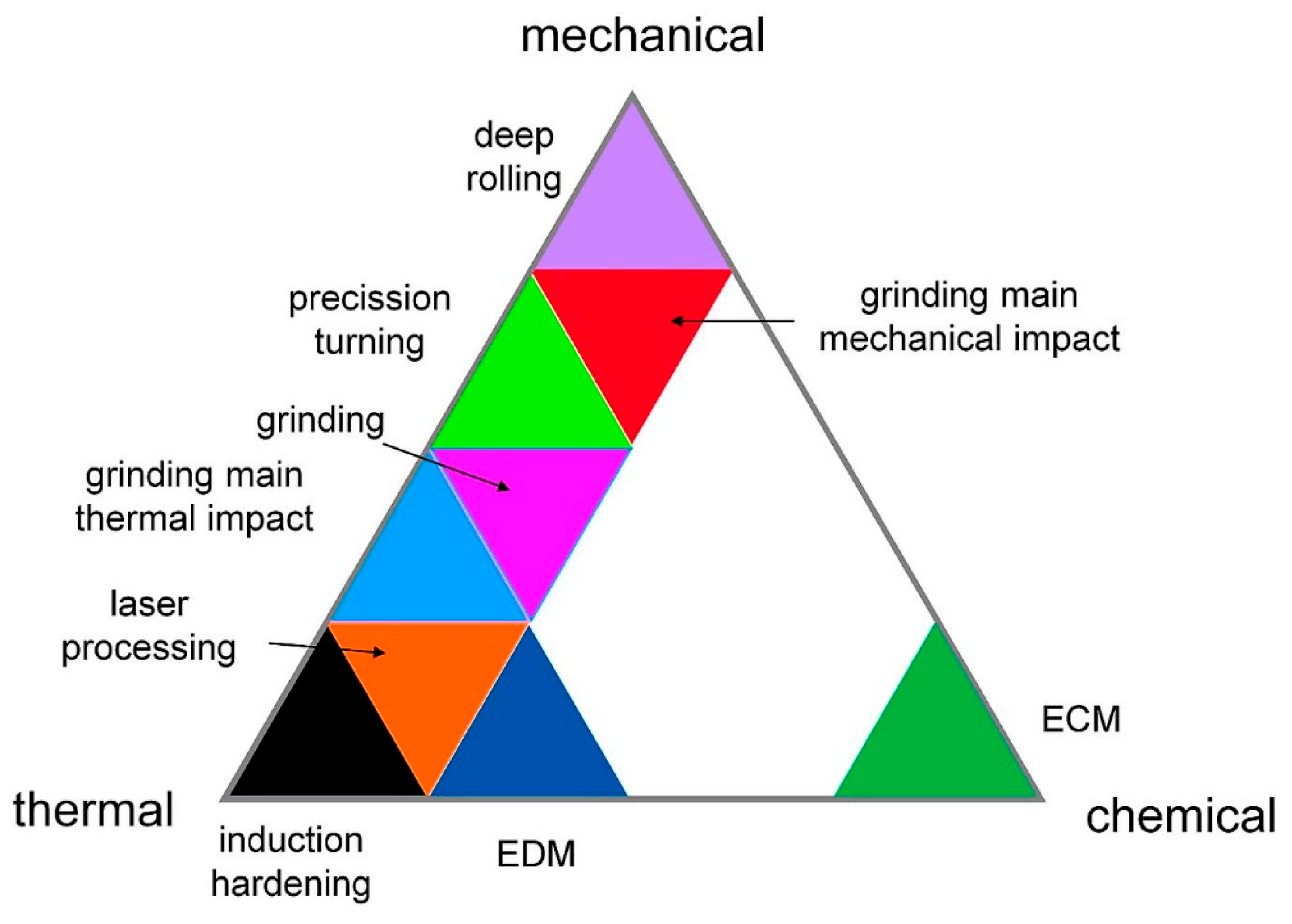
For aluminum alloys, the fine equiaxed grains can better realize the coordinated deformation between grains to adapt to the shrinkage strain during welding and have lower crack susceptibility. At the same time, the effect of liquid phase feeding and crack healing is better for fine equiaxed grains, so forming a fine solidification structure is an effective means to inhibit solidification cracks of aluminum alloy. As illustrated by the processing classification map in Figure 5, microstructural evolution during manufacturing is fundamentally governed by the interplay of fundamental load types: thermal, mechanical, and chemical impacts. The ternary diagram in Figure 5 categorizes different process surface modifications based on the dominance of these load types. Conventional fusion welding is predominantly driven by intense thermal impacts (rapid heating and directional cooling), which would be localized near the ‘thermal’ vertex (bottom-left) of the processing map. This intense thermal dominance typically results in coarse, directionally grown columnar grains. There are many ways of grain refinement, such as adjusting Cu content, adding grain refining elements, and increasing arc swing, which have good refining effect. Critically, introducing kinetic disturbances, such as increasing arc swing or beam oscillation, is a strategic way to shift the process condition away from purely thermal impacts toward a thermo-mechanical coupled regime (shifting the condition upwards towards the ‘mechanical’ vertex of the map in Figure 5). Kou and Le [88,89,90] studied the effect of magnetically controlled arc wobble on solidification crack of aluminum alloy. The low-frequency transverse arc wobble changes the crystallization direction of the columnar crystal, and the alternating columnar dendrites hinders the propagation of solidification crack. Compared with the state without arc wobble, the solidification crack length of aluminum alloy with transverse arc wobble is obviously reduced. Different from 2014 aluminum alloy, 5052 aluminum alloy contains 0.043% Ti. Using high-frequency arc swing can promote heterogeneous nucleation, refine weld grain, and reduce solidification crack susceptibility. Oscillating beams during laser welding aluminum alloy is also considered as an effective way to promote the formation of equiaxed grain within the fusion and to improve cracking resistance due to stirring effect.
In the process of studying the effect of solidification structure on solidification cracking of aluminum alloy, not only will the arc swing affect the grain morphology but so does the shape of molten pool. Kou recently discussed the influence of pool shape on solidification crack susceptibility [51]. The test results show that “teardrop” weld pool has higher solidification crack susceptibility in the weld center than an “elliptical” weld pool. In the “teardrop” weld pool, the angle between adjacent columnar crystals is sharper, and low melting point segregation will be formed in the weld center when they grow opposite to each other. The dendrite growth rate decreases, and the liquid phase feeding effect weakens, which increases the solidification crack susceptibility in the weld center.
During solidification in molten pool, the behavior of liquid-solid interface has an important influence on the solidification microstructure. The reverse diffusion of solute atoms from liquid phase to solid phase at the liquid–solid interface has an important influence on dendrite growth and solidification crack susceptibility, which cannot be ignored in the study of solidification crack susceptibility of some aluminum alloys.
When Liu [91,92] calculated the crack susceptibility of Al-Mg alloy, the results show that the crack susceptibility index of Al-Mg alloy is higher than that of Al-Cu alloy. When the reverse diffusion of solute atoms is not considered, the maximum tangent slope of Al-Mg alloy in T-(fS)1/2 curve is larger than that of Al-Cu alloy. According to Kou criterion, Al-Mg alloy should have higher crack susceptibility. However, some researchers found that there are fewer cracks in Al-Mg alloys than in Al-Cu alloys. Liu [91] studied the high-temperature microstructure characteristics of the mushy zone of aluminum alloy and found that there are a large number of liquid films at the tail of the mushy zone of 2014 aluminum alloy, which promotes the generation of solidification cracks. However, the liquid phase film at the tail of the paste region of 5086 aluminum alloy is discontinuous, and a large number of dendrites are combined to resist cracking, which is mainly due to the reverse diffusion of solute atoms, which reduces the solidification temperature range. The composition measurement of the paste region confirms that the reverse diffusion of solute atoms Mg occurs in the solid–liquid interface region. Therefore, the reverse diffusion effect of solute atoms in the liquid-solid interface region cannot be ignored in the simulation calculation of solidification crack susceptibility.
Figure 5.
Effect of welding process on columnar grains in Al-Li alloy weld [93].
For the relatively crack-resistant Al 2219, the primary strategy involves the use of matching or near-matching filler wires. The judicial selection of filler materials modifies the microstructural composition of the fusion zone, transforming coarse columnar grains into fine equiaxed grain structures, thereby significantly enhancing the cracking resistance of the weld.
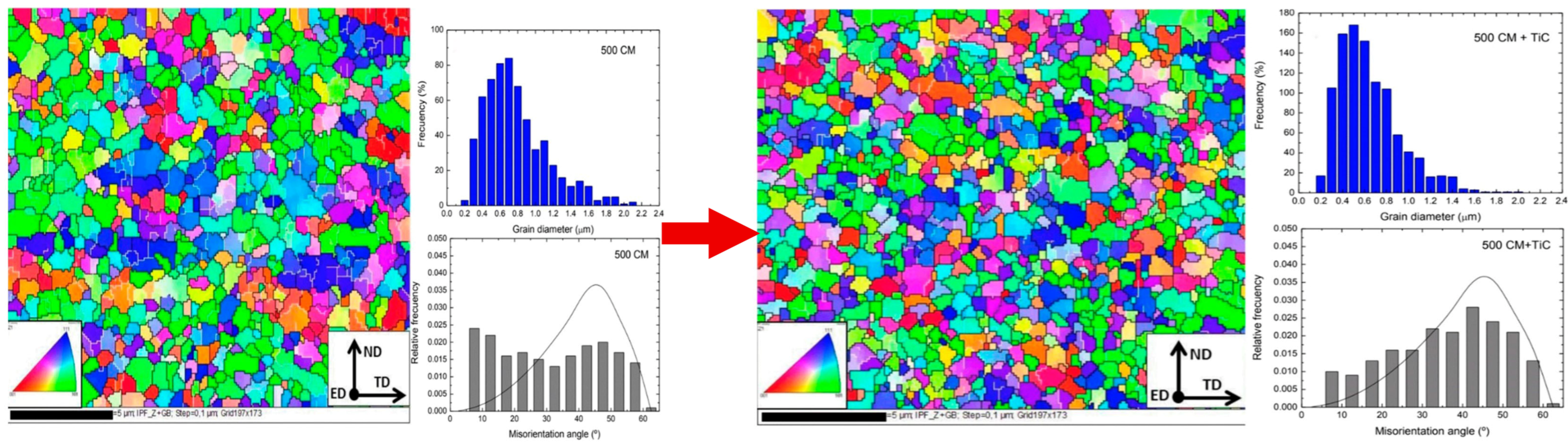
In contrast, Al 6061 necessitates the use of non-matching filler wires enriched with Silicon (Si) or Magnesium (Mg). These fillers undergo metallurgical reactions with the Mg and Si solutes in the aluminum matrix, facilitating the formation of secondary phases that modify the melt pool composition. This process provides a substantial volume of Al-Si or Al-Mg eutectic liquid, which facilitates liquid feeding within the mushy zone. In recent years, advanced strategies have been developed for Al 6061, such as the introduction of filler wires reinforced with TiC nanoparticles to promote heterogeneous nucleation and further suppress cracking [94,95]. This microstructural enhancement—particularly the drastic reduction in grain size and the transition to an equiaxed morphology—is crucial for mitigating crack susceptibility. As comparatively illustrated in Figure 6, the unreinforced Al 6061 matrix typically exhibits coarse and unevenly distributed grains. However, the introduction of TiC nanoparticles promotes extensive heterogeneous nucleation, leading to remarkable grain refinement. This addition not only transforms the microstructure into uniform, fine equiaxed grains with a significantly narrower size distribution but also optimizes the grain boundary misorientation angles. Collectively, these microstructural evolutions effectively bolster the resistance of a material to crack propagation.
Figure 6.
Strong refining effect of TiC particle addition on the microstructure and grain size distribution of the base material [96].
4.4. Welding Process Parameters
Welding process parameters have an important influence on solidification characteristics, stress, and strain of molten pool, and they can also be used as an important way to control solidification cracks. Fabrègue et al. [97] carried out laser butt welding test on aluminum alloy, and reduced solidification crack from the angle of adjusting welding process parameters. The number of solidification cracks increases with the increase in welding speed in the case of faster or slower wire feeding speed. The influence of cooling rate was studied by using different backing plates between the plate to be welded and the worktable. Reducing the cooling rate properly is beneficial to reduce solidification cracks. The change in wire feeding speed will change the chemical composition of molten pool, and the increase in wire feeding speed will lead to the increase in Si content and the decrease in solidification cracks.
In the solidification process, the shrinkage stress between adjacent grains caused by solidification shrinkage or thermal shrinkage is also an important factor leading to solidification cracks. In the welding process, a considerable part of the stress is provided by the fixed device. The greater the restraint on the component, the easier it is to produce solidification cracks. Researchers [97] used different fixed devices to study the influence of restraint on solidification cracks.
As one of the important welding process parameters, welding speed plays an important role in inhibiting solidification crack susceptibility of aluminum alloy. Schempp et al. [98] effectively inhibited the generation of solidification cracks by adjusting the welding speed. Increasing the welding speed has a significant effect on the microstructure of weld metal. At low welding speed, higher heat input causes larger temperature gradient, which leads to the decrease in grain number and the formation of coarse columnar crystal structure. With the increase in welding speed, the ratio of heat input to temperature gradient decreases sharply, resulting in a larger undercooling. High cooling rate promotes grain nucleation, forms a large number of fine equiaxed grains, and inhibits solidification cracks. In addition, increasing the welding speed is not only beneficial to the nucleation of equiaxed crystals but also reduces the volume fraction and size of columnar crystals, while also reducing the susceptibility to solidification cracks.
While laser and electron beam welding processes are characterized by ultra-high cooling rates, it is equally critical to investigate solidification cracking under the “conventional cooling rates” typical of standard arc welding. At these lower cooling rates, the temperature gradient is relatively shallow, and the molten pool remains at elevated temperatures for a longer duration. This extended thermal cycle results in a broader and more expansive mushy zone, providing more time for macroscopic tensile strains to accumulate and concentrate at grain boundaries. Consequently, this increases the probability of the interdendritic liquid films being ruptured by transverse stresses. To mitigate cracking susceptibility under these conventional conditions, engineers cannot rely on the inherent rapid solidification characteristics of the heat source; instead, they must perform active intervention in the thermo-metallurgical cycle. Techniques such as reducing the net heat input, increasing travel speeds, or employing pulsed arc welding can be utilized to indirectly accelerate the localized cooling rate. Furthermore, the composition of the weld metal can be strategically modified. By introducing filler wires containing potent nucleating agents, the prolonged cooling duration can be leveraged to fully facilitate heterogeneous nucleation. This promotes significant grain refinement, thereby enhancing the cracking resistance of the fusion zone.
M. Sheikhi et al. [99,100] carried out the pulsed laser welding test of aluminum alloy and pointed out that preheating can effectively reduce the susceptibility of solidification crack and decrease the plastic strain produced by welding. It was also pointed out that solidification cracking can also be effectively avoided by controlling the laser, and proper control of pulse slope descent shape is beneficial to reduce solidification crack susceptibility. Whether using high energy density welding methods (such as electron beam, laser beam) or low restraint and appropriate preheating treatment, the mechanism lies in reducing strain to reduce solidification crack susceptibility. The initial condition of materials has significant effect on the cracking susceptibility [101], which is also investigated in welding and additive manufacturing, as shown in Figure 7.
Figure 7.
Effect of preheating on cracking of 7075 aluminum alloy [101].
The fourth section of this paper provides a systematic review of the critical factors dictating solidification cracking in welded aluminum alloys. As listed in Table 1, the initiation of solidification cracks is an intricate metallurgical and mechanical phenomenon, synergistically constrained by the material composition, the liquid phase evolved during the melting-solidification cycle, the microstructural evolution, and the applied welding parameters.
Table 1.
Summary of factors influencing solidification cracking and basic mechanisms.
5. Crack Resistance of Filler Materials
When welding aluminum alloy, it is necessary to ensure that the metal composition of the final weld is far away from the peak area in the crack susceptibility map, and the weld composition can be controlled by the welding material composition, which puts forward certain crack resistance requirements for the composition and selection of aluminum alloy welding materials, especially for aluminum alloys with high solidification crack susceptibility (such as 6-series and 7-series aluminum alloys).
When studying the crack resistance of welding materials, attention should be paid to the dilution of weld composition by base metal in the actual welding process, and effective and accurate calculation and prediction can greatly reduce the workload of crack resistance test research. Soysal and Kou [77,86] calculated and predicted the influence of different aluminum alloy welding wires on the solidification crack susceptibility of 2024 aluminum alloy and 6061 aluminum alloy, with |dT/d(fS)1/2| as the solidification crack susceptibility index. For 2024 aluminum alloy base metal, 4145 aluminum alloy welding wire has the best crack resistance, while 2319 aluminum alloy welding wire has poor crack resistance. For 6061 aluminum alloy base metal, 4043 welding wire and 4943 welding wire have similar crack resistance effect, which can effectively resist solidification cracks, but 4943 welding wire can also improve the strength of weld metal.
Kou et al. have studied the crack resistance effect of welding materials of different series of aluminum alloys by the TMW test method [77]. 4043 and 4145 welding wires have remarkable crack resistance effect when used in welding aluminum alloys (2 series, 6 series, and 7 series). By adding appropriate welding wires, the welding solidification crack susceptibility of aluminum alloys can be effectively reduced.
Building upon these theoretical foundations, the established hot cracking susceptibility model based on the |dT/d(fS)1/2| index has proven exceptionally advantageous in recent research. Its primary superiority lies in its ability to quantitatively link the macroscopic thermal cycle of the weld pool with microscopic metallurgical evolution (i.e., the solid fraction). As prominently illustrated in Figure 8, this thermodynamic model accurately captures the dynamic thermal behavior and pinpoints the critical terminal freezing range where the intergranular liquid channels become dangerously narrow [84]. By dynamically tracking the temperature gradient against the square root of the solid fraction, the model effectively visualizes the steep rise in the susceptibility index near the end of solidification. This predictive capability is highly valuable: it not only provides a robust theoretical explanation for the crack-restraining mechanisms of advanced welding processes (such as the Cold Metal Transfer technique) but also allows researchers to intentionally bypass peak susceptibility zones through precise alloy design and heat input optimization, thereby drastically reducing the reliance on costly trial-and-error experiments.
Figure 8.
Application of the thermodynamic susceptibility model linking thermal behavior and solid fraction evolution [84]: (a) schematic of the dendritic growth within the mushy zone; (b) T-(fAl)1/2 curves of AA7075 + 7055 weld; (c) T-(fAl)1/2 curves of AA7075 + 7150 weld.
In addition to welding material matching and welding material composition optimization to improve crack resistance, in recent years, researchers have focused on trying to introduce nanotechnology into casting and welding fields to improve crack resistance of materials [102,103,104,105,106]. Nanoparticles can not only improve the properties of metal matrix but also affect the grain growth during solidification, so as to reduce the crack susceptibility of the alloy [107,108,109,110].
In order to explore the influence of nanoparticle reinforced welding wire on solidification crack susceptibility of 7 series aluminum alloy, Sokoluk et al. [111] welded AA7075 aluminum alloy with nanoparticle-reinforced welding wire. The nanoparticle-reinforced welding wire effectively inhibits the solidification crack. The joint of AA7075 welding wire containing TiC nanoparticles has fine spherical grains and improved secondary phase, both of which essentially reduce the solidification crack susceptibility during welding of aluminum alloy.
Jin et al. [112] developed a new Zr-core-Al-shell wire coupled with an oscillating laser-arc hybrid welding process to obtain a crack-free joint of a 2024 high-strength aluminum alloy. The formation of the Al3Zr phase (when using the ZCASW filler material) promotes heterogeneous nucleation of α-Al, thereby resulting in finer and equiaxed non-dendrite structures, which shortens the liquid phase channels and decreases cracking susceptibility index.
Alireza Abdollahi et al. [113] investigated the weldability of 3 mm thick Al7075 sheets in fusion arc welding and indicated that the nanoparticles were effective in eliminating welding solidification cracks completely. Two mechanisms are proposed: (1) TiC nanoparticles act as nucleants in the early stage of solidification to alter the microstructure from dendritic to equiaxed and to refine the grains; (2) TiC nanoparticles act as nucleants in the late stage of solidification to change the shape of eutectic precipitates from continuous to discontinuous and to promote the formation of the Al-Cu-Mg phase at the expense of the deleterious Mg(Cu, Zn)2 (η) phase.
6. Conclusions and Prospects
In this paper, the research progress in the field of solidification crack in aluminum alloy welding is summarized. The metallurgical mechanism of solidification crack in aluminum alloy is mainly analyzed. The new criterion of solidification crack susceptibility and the new test method of solidification crack susceptibility are summarized. The research on influencing factors, inhibition measures, and crack resistance of welding materials of aluminum alloy welding solidification crack was summarized. Solidification crack of aluminum alloy is a high-temperature, complex process affected by many factors such as metallurgy and mechanics during the solidification process. The author thinks that related research in the future can pay attention to the following points:
(1) The existing solidification crack models and criteria have pointed out the importance of metallurgical behavior in the mushy zone. Although solidification cracks are located at the end of solidification, there is still no more accurate and recognized conclusion about the joints where solidification cracks are most likely to occur. The selection of solid volume fractions is empirical, and relevant experimental research can be carried out. In addition, the quantitative solidification crack model and susceptibility criterion of aluminum alloy welding, which can reflect the actual welding site, need to be proposed, and the new model and criterion need to describe and express the solidification crack susceptibility index, intergranular behavior in the mushy zone, as well as crack initiation and propagation. Crack initiation and propagation need to be considered separately. The solidification crack initiation can focus on the solid–liquid interface behavior in the mushy zone at the end of solidification, while the solidification crack propagation is dominated by mechanical factors, which forms a more accurate prediction for solidification crack initiation and propagation of aluminum alloy.
(2) There are many experimental data on aluminum alloy solidification crack susceptibility, but it is difficult to form a unified database for evaluation and comparison due to the difference in welding conditions and material composition. Through simulation calculation and the experimental study, the correlation mechanism of solidification crack susceptibility data of aluminum alloy is established, and an accurate and effective susceptibility multi-factor map is formed, which is not only beneficial to efficient theoretical research, but it also meets the research and development needs of new aluminum alloy and welding materials in enterprises.
(3) With the development of advanced characterization technology, in situ characterization of solidification crack initiation and propagation at high temperature has been reported. With the promotion of in situ technology, the crack resistance mechanism of new aluminum alloy welding materials will be further studied, which will also provide powerful technical support for the optimization of crack resistance of welding materials and high-quality welding of aluminum alloy.
Author Contributions
Conceptualization, K.L.; methodology, Z.G.; validation, Z.G.; formal analysis, Z.G. and W.Y.; investigation, Z.G. and K.L.; resources, K.L.; data curation, Z.G. and W.Y.; writing—original draft preparation, Z.G.; writing—review and editing, K.L.; visualization, Z.G. and W.Y.; supervision, K.L.; project administration, K.L.; funding acquisition, K.L. All authors have read and agreed to the published version of the manuscript.
Funding
This work is supported by the Natural Science Foundation of the Higher Education Institutions of Jiangsu Province (Grant No. 24KJA460002) and the “Shenlan Talent Project” of the Jiangsu University of Science and Technology (No. 2023).
Institutional Review Board Statement
Not applicable.
Informed Consent Statement
Not applicable.
Data Availability Statement
Data will be made available on request.
Conflicts of Interest
Author Wei Yu was employed by the company Nanjing Huazhong Inspection & Testing Co., Ltd. The remaining authors declare that the research was conducted in the absence of any commercial or financial relationships that could be construed as a potential conflict of interest.
Abbreviations
| AA | Aluminum Alloy |
| CSI | Crack Susceptibility Index |
| CTW | Controlled Tensile Weldability |
| GB | Grain Boundary |
| GTAW | Gas Tungsten Arc Welding |
| MIG | Metal Inert Gas |
| PMZ | Partially Melted Zone |
| RDG | Rappaz, Drezet and Gremaud (Model) |
| SKK | Suyitno, Kool and Katgerman (Criterion) |
| SWPD | Static Weld Pool Deformation |
| TMW | Transverse Moving Weldability |
| VDR | Variable Deformation Rate |
References
- Liu, K.; Wang, H.; Li, J.; Geng, S.; Chen, Z.; Okulov, A. A Review on Factors Influencing Solidification Cracking of Magnesium Alloys During Welding. Met. Mater. Int. 2024, 30, 1723–1742. [Google Scholar] [CrossRef] [Scilit]
- Rapp, J.; Glumann, C.; Dausinger, F.; Hügel, H. Laser welding of aluminium lightweight materials: Problems, solutions, readiness for application. Opt. Quantum Electron. 1995, 27, 1203–1211. [Google Scholar] [CrossRef] [Scilit]
- Holtschke, N.; Jüttner, S. Joining lightweight components by short-time resistance spot welding. Weld. World 2017, 61, 413–421. [Google Scholar] [CrossRef] [Scilit]
- Li, Z.; Gobbi, S.L. Laser welding for lightweight structures. J. Mater. Process. Technol. 1997, 70, 137–144. [Google Scholar] [CrossRef] [Scilit]
- Li, Y.; Zou, W.; Lee, B.; Babkin, A.; Chang, Y. Research progress of aluminum alloy welding technology. Int. J. Adv. Manuf. Technol. 2020, 109, 1207–1218. [Google Scholar] [CrossRef] [Scilit]
- Tang, J.; Su, J.; Sun, J.; Hu, M.; Luo, Z. Enhancing tensile properties and suppressing porosity in laser beam welding aluminum alloys via novel oscillation technology. Int. J. Adv. Manuf. Technol. 2025, 137, 1293–1303. [Google Scholar] [CrossRef] [Scilit]
- Wu, Y.; Liu, K.; Li, J.; Wang, J.; Soboleva, N. A review on formation and suppression mechanisms of porosity and cracks in wire arc-directed energy deposition Al-Zn-Mg-Cu alloys. J. Manuf. Process. 2025, 148, 173–211. [Google Scholar] [CrossRef] [Scilit]
- Benedyk, J.C. Aluminum alloys for lightweight automotive structures. In Materials, Design and Manufacturing for Lightweight Vehicles; Woodhead Publishing: Sawston, UK, 2010; pp. 79–113. [Google Scholar]
- Khademian, N.; Peimaei, Y. Lightweight materials (LWM) in transportation especially application of aluminum in light weight automobiles (LWA). In Proceedings of the International Conference on Interdisciplinary Studies in Nanotechnology, Tehran, Iran, 5 February 2020; pp. 1–22. [Google Scholar]
- Ramakanth, K.; Babu, P.Y.; Jagadeesh, G.V.; Dey, S.; Veerendra, G.T.N. Prediction and optimization of process parameters of friction stir welded aluminum 6063 alloy. J. Alloys Compd. Commun. 2025, 8, 100105. [Google Scholar] [CrossRef] [Scilit]
- Busarac, N.; Adamovic, D.; Grujovic, N.; Zivic, F. Lightweight materials for automobiles. IOP Conf. Ser. Mater. Sci. Eng. 2022, 1271, 012010. [Google Scholar] [CrossRef] [Scilit]
- Yong, Y. Research on properties and applications of new lightweight aluminum alloy materials. Highlights Sci. Eng. Technol. 2024, 84, 99–107. [Google Scholar] [CrossRef] [Scilit]
- Kim, H.J.; McMillan, C.; Keoleian, G.A.; Skerlos, S.J. Greenhouse gas emissions payback for lightweighted vehicles using aluminum and high-strength steel. J. Ind. Ecol. 2010, 14, 929–946. [Google Scholar] [CrossRef] [Scilit]
- Czerwinski, F. Current trends in automotive lightweighting strategies and materials. Materials 2021, 14, 6631. [Google Scholar] [CrossRef] [Scilit]
- Li, W. Application and lightweight research of new aluminum alloy materials in automotive components. Acad. J. Mater. Chem. 2025, 6, 91–99. [Google Scholar] [CrossRef] [Scilit]
- Yan, L.; Xu, H. Lightweight composite materials in automotive engineering: State-of-the-art and future trends. Alex. Eng. J. 2025, 118, 1–10. [Google Scholar] [CrossRef] [Scilit]
- Feddal, I.; Chairi, M.; Di Bella, G. Analysis of friction stir welding of aluminum alloys. Metals 2025, 15, 532. [Google Scholar] [CrossRef] [Scilit]
- Bintoro, S.R.; Surojo, E.; Muhayat, N.; Triyono. A comprehensive review on fusion arc welding of aluminum matrix composites: Challenges, mechanisms, and advancements. Results Eng. 2025, 27, 106257. [Google Scholar] [CrossRef] [Scilit]
- Han, J.; Shi, Y.; Zhang, G.; Xu, Y.; Korzhyk, V.; Le, W.; Dai, F. Solidification cracking restraining mechanism of laser-welded aluminum alloy joints using power modulation technique. Trans. Nonferrous Met. Soc. China 2025, 35, 2521–2535. [Google Scholar] [CrossRef] [Scilit]
- Coniglio, N.; Cross, C.E. Effect of weld travel speed on solidification cracking behavior. Part 1: Weld metal characteristics. Int. J. Adv. Manuf. Technol. 2020, 107, 5011–5023. [Google Scholar] [CrossRef] [Scilit]
- Birru, A.K.; Karunakar, D.B. Effects of grain refinement and residual elements on hot tearing of A713 aluminium cast alloy. Trans. Nonferrous Met. Soc. China 2016, 26, 1783–1790. [Google Scholar] [CrossRef] [Scilit]
- Zhang, C.; Gao, M.; Wang, D.; Yin, J.; Zeng, X. Relationship between pool characteristic and weld porosity in laser arc hybrid welding of AA6082 aluminum alloy. J. Mater. Process. Technol. 2017, 240, 217–222. [Google Scholar] [CrossRef] [Scilit]
- Liu, Y.; Guo, F.; Li, J.; Liu, K.; Wang, J.; Okulov, A.; Sonar, T. Research progress on wire arc additive manufactured Al-Zn-Mg-Cu alloys: Metallurgical defects, refining grains, enhancing mechanical properties. Mater. Des. 2025, 253, 114005. [Google Scholar] [CrossRef] [Scilit]
- Hu, Y.; Wu, S.; Guo, Y.; Shen, Z.; Korsunsky, A.M.; Yu, Y.; Zhang, X.; Fu, Y.; Che, Z.; Xiao, T.; et al. Inhibiting weld cracking in high-strength aluminium alloys. Nat. Commun. 2022, 13, 5816. [Google Scholar] [CrossRef] [Scilit]
- Chang, C.C.; Chen, C.L.; Wen, J.Y.; Cheng, C.M.; Chou, C.P. Characterization of Hot Cracking Due to Welding of High-Strength Aluminum Alloys. Mater. Manuf. Process. 2012, 27, 658–663. [Google Scholar] [CrossRef] [Scilit]
- Li, Z.; Teng, Z.; Xia, Y.; Ma, Y.; Geng, P.; Guo, X.; Brown, J.; Li, Y. Prediction of hot cracking susceptibility in resistance spot welding of aluminum alloys. J. Manuf. Process. 2025, 156, 411–427. [Google Scholar] [CrossRef] [Scilit]
- Xin, M.; Li, S.; Li, W.; Zhang, G.; Chen, W. Study on the laser self-fusion welding process, microstructure, and properties of 6082 aluminum alloy. J. Phys. Conf. Ser. 2025, 2954, 012014. [Google Scholar] [CrossRef] [Scilit]
- Zhu, C.; Cheon, J.; Tang, X.; Na, S.J.; Cui, H. Molten pool behaviors and their influences on welding defects in narrow gap GMAW of 5083 Al-alloy. Int. J. Heat Mass Transf. 2018, 126, 1206–1221. [Google Scholar] [CrossRef] [Scilit]
- Kureshi, A.; T, S.K.; Sourav, A.; Verma, A.; Shanmugasundaram, T. Comparison of corrosion behavior of high strength aluminum alloy welded using various fusion and solid-state welding processes. Weld. Int. 2025, 39, 489–498. [Google Scholar] [CrossRef] [Scilit]
- Chen, M.; Yang, X.; Zhang, Z.; Gu, Y.; Li, K.; Liu, Y.; Ma, J. Research status of laser cladding technology on aluminum alloy surface. Int. J. Adv. Manuf. Technol. 2025, 137, 1–21. [Google Scholar] [CrossRef] [Scilit]
- Li, P.; Sui, Y.; Jiang, Y. Hot tearing behavior of cast aluminum alloys: Mechanisms, assessment, and strategies. J. Mater. Eng. Perform. 2026, 1–33. [Google Scholar] [CrossRef] [Scilit]
- Flemings, M.C. Solidification processing. Metall. Mater. Trans. B 1974, 5, 2121–2134. [Google Scholar] [CrossRef] [Scilit]
- Shi, H.; Bai, L.; Zhang, X.; Wang, D.; Xi, H.; Bao, X.; Liu, J.; Li, Y.; Ma, Y. Research on the influence of casting process on hot tearing tendency of 7050 aluminum alloy. Int. J. Metalcast. 2025, 19, 2774–2787. [Google Scholar] [CrossRef] [Scilit]
- Peng, H.; Zhou, T.; Fan, Y.; Shangguan, L.; Zhang, N. Recent advances in aluminum alloy surface treatment technology and bonding properties. Phys. Status Solidi A 2025, 222, 2400715. [Google Scholar] [CrossRef] [Scilit]
- Cai, X.; Liu, D.; Dong, B.; Lin, S. Improvements of microstructure and mechanical properties of wire-arc directed energy deposition 2024 aluminum alloy after adding TiC nanoparticles. Virtual Phys. Prototyp. 2025, 20, e2442489. [Google Scholar] [CrossRef] [Scilit]
- Yao, C.; He, S.; Lee, K.Y.; Shin, K.Y.; Shim, D.S. Microstructural and interfacial characteristics in repair of nickel-aluminum bronze by in-situ synthesis of Cu-Al alloys via directed energy deposition. Addit. Manuf. 2025, 105, 104787. [Google Scholar] [CrossRef] [Scilit]
- Zhao, Y.Z.; Zhao, Y.H.; Li, Q.; Chen, S.L.; Zhang, J.Y.; Chou, K.C. Effects of step size and cut-off limit of residual liquid amount on solidification simulation of Al–Mg–Zn system with Scheil model. Intermetallics 2009, 17, 491–495. [Google Scholar] [CrossRef] [Scilit]
- Clyne, T.W.; Davies, G.J. The influence of composition on solidification cracking susceptibility in binary alloy systems. Br. Foundrym. 1981, 74, 65–73. [Google Scholar]
- Rappaz, M.; Drezet, J.M.; Gremaud, M. A new hot-tearing criterion. Metall. Mater. Trans. A 1999, 30, 449–455. [Google Scholar] [CrossRef] [Scilit]
- Eskin, D.G.; Katgerman, L. A Quest for a New Hot Tearing Criterion. Metall. Mater. Trans. A 2007, 38, 1511–1519. [Google Scholar] [CrossRef] [Scilit]
- Kou, S. Welding Metallurgy, 2nd ed.; John Wiley and Sons: New York, NY, USA, 2003; pp. 263–264. [Google Scholar]
- Böhm, C.; Werz, M.; Weihe, S. Practical Approach to Eliminate Solidification Cracks by Supplementing AlMg4.5Mn0.7 with AlSi10Mg Powder in Laser Powder Bed Fusion. Materials 2022, 15, 572. [Google Scholar] [CrossRef] [Scilit] [PubMed]
- Suyitno, S.; Kool, W.H.; Katgerman, L. Micro-Mechanical Model of Hot Tearing at Triple Junctions in DC Casting. Mater. Sci. Forum 2002, 396, 179–184. [Google Scholar] [CrossRef] [Scilit]
- Coniglio, N.; Cross, C.E. Initiation and growth mechanisms for weld solidification cracking. Int. Mater. Rev. 2013, 58, 375–397. [Google Scholar] [CrossRef] [Scilit]
- Prokhorov, N. Refinement in the hot tearing of cast Al-Cu alloy. Russ. Cast. Prod. 1962, 2, 172–175. [Google Scholar]
- Matsuda, F.; Nakagawa, H.; Nakata, K.; Okada, H. The VDR cracking test for solidification crack susceptibility on weld metals and its application to aluminum alloys (materials, metallurgy, weldability). Trans. JWRI 1979, 8, 85–95. [Google Scholar]
- Matsuda, F.; Nakagawa, H.; Sorada, K. Dynamic observation of solidification and solidification cracking during welding with optical microscope (I): Solidification front and behavior of cracking (materials, metallurgy & weldability). Trans. JWRI 1982, 11, 67–77. [Google Scholar]
- Coniglio, N.; Cross, C.E.; Michael, T.; Lammers, M. Defining a critical weld dilution to avoid solidification cracking in aluminum. Weld. J. 2008, 87, 237s–247s. [Google Scholar]
- Coniglio, N.; Cross, C.E. Mechanisms for Solidification Crack Initiation and Growth in Aluminum Welding. Metall. Mater. Trans. A 2009, 40, 2718–2728. [Google Scholar] [CrossRef] [Scilit]
- Kou, S. A criterion for cracking during solidification. Acta Mater. 2015, 88, 366–374. [Google Scholar] [CrossRef] [Scilit]
- Yu, P.; Kou, S.; Lin, C.-M. Solidification and Liquation Cracking in Welds of High Entropy CoCrFeNiCux Alloys. Materials 2023, 16, 5621. [Google Scholar] [CrossRef] [Scilit]
- Hu, B.; Li, Z.; Li, D.; Ying, T.; Zeng, X.; Ding, W. A hot tearing criterion based on solidification microstructure in cast alloys. J. Mater. Sci. Technol. 2022, 105, 68–80. [Google Scholar] [CrossRef] [Scilit]
- Guo, Y.; Qi, F.; Wang, Y.; Zhang, L.; Pang, S.; Li, Q.; Zeng, G.; Zhan, J.; Li, Q.; Wang, Y.; et al. An extended criterion for hot cracking susceptibility of Al-Li alloys. Eng. Fail. Anal. 2025, 171, 109348. [Google Scholar] [CrossRef] [Scilit]
- Kaufmann, N.; Imran, M.; Wischeropp, T.M.; Emmelmann, C.; Siddique, S.; Walther, F. Influence of process parameters on the quality of aluminium alloy EN AW 7075 using selective laser melting (SLM). Phys. Procedia 2016, 83, 918–926. [Google Scholar] [CrossRef] [Scilit]
- Yuan, G.; Wang, Y.; Niu, G.; Mao, J. A review: Investigation, insights and perspectives on current hot tearing criteria of aluminum alloys. Proc. Inst. Mech. Eng. Part L J. Mater. Des. Appl. 2025, 240, 409–435. [Google Scholar] [CrossRef] [Scilit]
- Zhang, Z.; Yang, L.; Wang, H.; Han, F.; Yang, J.; Zhu, X.; Li, Q.; Li, C.; Wang, C.; Dong, Z.; et al. A permeability model for hot cracking susceptibility prediction across near-equilibrium to rapid solidification conditions. J. Mater. Res. Technol. 2025, 36, 6902–6910. [Google Scholar] [CrossRef] [Scilit]
- Yang, Y.; Ge, Z.; Wang, Y.; Feng, C.; Zhang, S.; Geng, Z.; Li, X. Weight analysis of influencing factors on hot cracking susceptibility of multi-alloy steel based on solidification micro-segregation model. J. Mater. Res. Technol. 2025, 34, 566–574. [Google Scholar] [CrossRef] [Scilit]
- Soysal, T. Solidification crack susceptibility of 5xxx aluminum alloys. Weld. World 2025, 69, 2975–2981. [Google Scholar] [CrossRef] [Scilit]
- Kou, S. Dihedral angle and cracking during solidification. Metall. Mater. Trans. A 2025, 56, 1024–1036. [Google Scholar] [CrossRef] [Scilit]
- Dasgupta, S.; Thoma, D.; Kou, S. A test for susceptibility to solidification cracking and liquation cracking in additive manufacturing. Metals 2025, 15, 1147. [Google Scholar] [CrossRef] [Scilit]
- Yamashita, S.; Okano, S.; Mochizuki, M.; Saida, K. Quantitative evaluation of augmented strain at the weld metal during the Trans-Varestraint test. Weld. World 2021, 65, 2013–2021. [Google Scholar] [CrossRef] [Scilit]
- Yamashita, S.; Saida, K. Interpretation of evaluation indices based on solidification cracking behavior by in situ observation in Trans-Varestraint test. Weld. World 2022, 66, 341–349. [Google Scholar] [CrossRef] [Scilit]
- Da Silva, C.L.M.; Scotti, A. Performance assessment of the (Trans) Varestraint tests for determining solidification cracking susceptibility when using welding processes with filler metal. Meas. Sci. Technol. 2004, 15, 2215–2223. [Google Scholar] [CrossRef] [Scilit]
- Soysal, T.; Kou, S. Solidification cracking test of aluminium alloy 5052. Sci. Technol. Weld. Join. 2022, 27, 301–308. [Google Scholar] [CrossRef] [Scilit]
- Xia, C.; Kou, S. Evaluating susceptibility of Ni-base alloys to solidification cracking by transverse-motion weldability test. Sci. Technol. Weld. Join. 2020, 25, 690–697. [Google Scholar] [CrossRef] [Scilit]
- Savage, W. The Varestraint test. Weld. J. 1965, 44, 433–442. [Google Scholar]
- Savage, W.F.; Lundin, C.D. The Evaluation of the Weldability of Structural Alloys with the Varestraint Test; Defense Technical Information Center: Fort Belvoir, VA, USA, 1968. [Google Scholar]
- Kadoi, K.; Okano, S.; Yamashita, S.; Abe, D.; Takemori, A.; Yamada, S.; Takada, A.; Kawata, J. Investigation of standardizing for evaluation method of transverse-Varestraint test. Weld. Int. 2019, 33, 189–199. [Google Scholar]
- Senda, T.; Matsuda, F.; Takano, G. Studies on solidification crack susceptibility for weld metals with trans-varestraint test. J. Jpn. Weld. Soc. 1973, 42, 48–56. [Google Scholar] [CrossRef] [Scilit]
- Senda, T.; Matsuda, F.; Takano, G.; Watanabe, K.; Kobayashi, T.; Matsuzaka, T. Fundamental investigations on solidification crack susceptibility for weld metals with Trans-Varestraint test. Trans. Jpn. Weld. Soc. 1971, 2, 141–162. [Google Scholar]
- Arata, Y.; Matsuda, F.; Nakata, K.; Sasaki, I. Solidification crack susceptibility of aluminum alloy weld metals (Report I): Characteristics of ductility curves during solidification by means of the trans-varestraint Test. Trans. JWRI 1976, 5, 153–167. [Google Scholar]
- Arata, Y.; Matsuda, F.; Katayama, S. Solidification crack susceptibility in weld metals of fully austenitic stainless steels (Report II): Effect of ferrite, P, S, C, Si and Mn on ductility properties of solidification brittleness. Trans. JWRI 1977, 6, 105–116. [Google Scholar]
- Nakata, K.; Matsuda, F. Evaluations of ductility characteristics and cracking susceptibility of Al alloys during welding (materials, metallurgy & weldability). Trans. JWRI 1995, 24, 83–94. [Google Scholar]
- Coniglio, N. Aluminum Alloy Weldability: Identification of Weld Solidification Cracking Mechanisms Through Novel Experimental Technique and Model Development; Bundesanstalt für Materialforschung und-prüfung (BAM): Berlin, Germany, 2008. [Google Scholar]
- Soysal, T.; Kou, S. A simple test for assessing solidification cracking susceptibility and checking validity of susceptibility prediction. Acta Mater. 2018, 143, 181–197. [Google Scholar] [CrossRef] [Scilit]
- Liu, K.; Kou, S. Susceptibility of magnesium alloys to solidification cracking. Sci. Technol. Weld. Join. 2020, 25, 251–257. [Google Scholar] [CrossRef] [Scilit]
- Soysal, T.; Kou, S. A Simple Test for Solidification Cracking Susceptibility and Filler Metal Effect. Weld. J. 2017, 96, 389s–401s. [Google Scholar]
- Soysal, T.; Kou, S. Predicting Effect of filler metals on solidification cracking susceptibility of Al alloys 2024 and 6061. J. Mater. Process. Technol 2019, 24, 559–565. [Google Scholar]
- Liu, K.; Yu, P.; Kou, S. Solidification Cracking Susceptibility of Stainless Steels: New Test and Explanation. Weld. J. 2020, 99, 255s–270s. [Google Scholar] [CrossRef] [Scilit]
- Han, B.Q.; Huang, J.Y.; Zhu, Y.T.; Lavernia, E.J. Strain rate dependence of properties of cryomilled bimodal 5083 Al alloys. Acta Mater. 2006, 54, 3015–3024. [Google Scholar] [CrossRef] [Scilit]
- Korbel, A.; Embury, J.D.; Hatherly, M.; Martin, P.L.; Erbsloh, H.W. Microstructural aspects of strain localization in Al–Mg alloys. Acta Metall. 1986, 34, 1999–2009. [Google Scholar] [CrossRef] [Scilit]
- Kromm, A.; Kannengießer, T. Influence of local weld deformation on the solidification cracking susceptibility of a fully austenitic stainless steel. In Hot Cracking Phenomena in Welds II; Springer: Berlin/Heidelberg, Germany, 2008; pp. 127–145. [Google Scholar]
- Soysal, T. A new solidification cracking test: Stationary weld-pool deformation test. Sci. Technol. Weld. Join. 2021, 26, 622–630. [Google Scholar] [CrossRef] [Scilit]
- Li, Z.; Ou, L.; Wang, Y.; Li, H.; Bober, M.; Senkara, J.; Zhang, Y. Solidification Cracking Restraining Mechanism of Al-Cu-Mg-Zn Alloy Welds Using Cold Metal Transfer Technique. Materials 2023, 16, 721. [Google Scholar] [CrossRef] [Scilit] [PubMed]
- Eskin, D.G.; Suyitno; Katgerman, L. Mechanical properties in the semi-solid state and hot tearing of aluminium alloys. Prog. Mater. Sci. 2004, 49, 629–711. [Google Scholar] [CrossRef] [Scilit]
- Zhang, F.; Liang, S.; Zhang, C.; Chen, S.; Lv, D.; Cao, W.; Kou, S. Prediction of Cracking Susceptibility of Commercial Aluminum Alloys during Solidification. Metals 2021, 11, 1479. [Google Scholar] [CrossRef] [Scilit]
- Soysal, T.; Kou, S. Role of liquid backfilling in reducing solidification cracking in aluminium welds. Sci. Technol. Weld. Join. 2020, 25, 415–421. [Google Scholar] [CrossRef] [Scilit]
- Kou, S.; Le, Y. Grain structure and solidification cracking in oscillated arc welds of 5052 aluminum alloy. Metall. Trans. A 1985, 16, 1345–1352. [Google Scholar] [CrossRef] [Scilit]
- Kou, S. Fluid flow and solidification in welding: Three decades of fundamental research at the University of Wisconsin. Weld. J. 2012, 91, 287s–302s. [Google Scholar]
- Kou, S.; Le, Y. Alternating grain orientation and weld solidification cracking. Metall. Trans. A 1985, 16, 1887–1896. [Google Scholar] [CrossRef] [Scilit]
- Liu, J.; Duarte, H.P.; Kou, S. Evidence of back diffusion reducing cracking during solidification. Acta Mater. 2017, 122, 47–59. [Google Scholar] [CrossRef] [Scilit]
- Liu, J.; Kou, S. Effect of diffusion on susceptibility to cracking during solidification. Acta Mater. 2015, 100, 359–368. [Google Scholar] [CrossRef] [Scilit]
- Borchers, F.; Clausen, B.; Eckert, S.; Ehle, L.; Epp, J.; Harst, S.; Hettig, M.; Klink, A.; Kohls, E.; Meyer, H.; et al. Comparison of Different Manufacturing Processes of AISI 4140 Steel with Regard to Surface Modification and Its Influencing Depth. Metals 2020, 10, 895. [Google Scholar] [CrossRef] [Scilit]
- Li, Q.; Wang, Q.; Xu, Y.; Sun, P.; Wang, K.; Tong, X.; Wu, G.; Zhang, L.; Xu, Y.; Ding, W. Welding of Advanced Aluminum–Lithium Alloys: Weldability, Processing Technologies, and Grain Structure Control. Materials 2026, 19, 738. [Google Scholar] [CrossRef] [Scilit]
- Wang, L.; Gao, M.; Zhang, C.; Zeng, X. Effect of beam oscillating pattern on weld characterization of laser welding of AA6061-T6 aluminum alloy. Mater. Des. 2016, 108, 707–717. [Google Scholar] [CrossRef] [Scilit]
- Feijoo, I.; Merino, P.; Pena, G.; Rey, P.; Cabeza, M. Microstructure and Mechanical Properties of an Extruded 6005A Al Alloy Composite Reinforced with TiC Nanosized Particles and Strengthened by Precipitation Hardening. Metals 2020, 10, 1050. [Google Scholar] [CrossRef] [Scilit]
- Fabrègue, D.; Deschamps, A.; Suéry, M.; Proudhon, H. Hot Tearing During Laser Butt Welding of 6xxx Aluminium Alloys: Process Optimisation and 2D/3D Characterisation of Hot Tears. In Hot Cracking Phenomena in Welds II; Böllinghaus, T., Herold, H., Cross, C.E., Lippold, J.C., Eds.; Springer: Berlin/Heidelberg, Germany, 2008; pp. 241–255. [Google Scholar]
- Schempp, P.; Cross, C.E.; Pittner, A.; Oder, G.; Neumann, R.S.; Rooch, H.; Dorfel, I.; Osterle, W.; Rethmeier, M. Solidification of GTA Aluminum Weld Metal: Part I—Grain Morphology Dependent upon Alloy Composition and Grain Refiner Content. Weld. J. 2014, 93, 53–59. [Google Scholar]
- Sheikhi, M.; Malek Ghaini, F.; Assadi, H. Solidification crack initiation and propagation in pulsed laser welding of wrought heat treatable aluminium alloy. Sci. Technol. Weld. Join. 2014, 19, 250–255. [Google Scholar] [CrossRef] [Scilit]
- Sheikhi, M.; Malek Ghaini, F.; Assadi, H. Prediction of solidification cracking in pulsed laser welding of 2024 aluminum alloy. Acta Mater. 2015, 82, 491–502. [Google Scholar] [CrossRef] [Scilit]
- Velikajne, N.; Medved, J.; Donik, Č.; Paulin, I. Influence of Base Plate Preheating on Laser Powder Bed Fusion–Processed EN AW-7075 Aluminium Alloy. Materials 2026, 19, 970. [Google Scholar] [CrossRef] [Scilit] [PubMed]
- Choi, H.; Cho, W.-h.; Konishi, H.; Kou, S.; Li, X. Nanoparticle-Induced Superior Hot Tearing Resistance of A206 Alloy. Metall. Mater. Trans. A 2013, 44, 1897–1907. [Google Scholar] [CrossRef] [Scilit]
- Fattahi, M.; Mohammady, M.; Sajjadi, N.; Honarmand, M.; Fattahi, Y.; Akhavan, S. Effect of TiC nanoparticles on the microstructure and mechanical properties of gas tungsten arc welded aluminum joints. J. Mater. Process. Technol. 2015, 217, 21–29. [Google Scholar] [CrossRef] [Scilit]
- Ahmadi, E.; Ranjkesh, M.; Mansoori, E.; Fattahi, M.; Mojallal, R.Y.; Amirkhanlou, S. Microstructure and mechanical properties of Al/ZrC/TiC hybrid nanocomposite filler metals of tungsten inert gas welding fabricated by accumulative roll bonding. J. Manuf. Process. 2017, 26, 173–177. [Google Scholar] [CrossRef] [Scilit]
- Zeng, C.; Sun, X.; Qi, B.; Wang, Y.; Wang, H.; Tan, Z.; Peng, Y.; Cong, B. In-situ TiC particles reinforced AA2219 Al-6.3Cu alloy joint via ultrasonic frequency double-pulsed arc. Mater. Sci. Eng. A 2022, 842, 143078. [Google Scholar] [CrossRef] [Scilit]
- Gao, Y.; Xu, L.; Hao, K.; Han, Y.; Zhao, L.; Ren, W. Grain refinement, twin formation and mechanical properties of magnesium welds with addition of CNTs and TiC particles. J. Magnes. Alloys 2025, 13, 2711–2723. [Google Scholar] [CrossRef] [Scilit]
- Huang, J.; Hao, K.; Xu, L.; Han, Y.; Zhao, L.; Ren, W. Grain refinement and mechanical properties enhancement of laser-arc hybrid welded 2219 aluminum alloy with TiC addition. Mater. Charact. 2026, 231, 115844. [Google Scholar] [CrossRef] [Scilit]
- Qin, Y.; Yue, S.; Sun, X.; Wang, G.; Huang, M.; Yang, S. Enhancing strength performance of laser welded 7075 aluminum alloy joints with TiC nanoparticle-mixed filler powder. Mater. Sci. Eng. A 2024, 915, 147285. [Google Scholar] [CrossRef] [Scilit]
- Lee, T.; Jeong, W.; Chung, S.; Kim, J.J.; Lee, D.; Kim, J.; Ryu, H.J. Role of B4C in the directed energy deposition of aluminum alloy 6061/B4C composite using core-shell powder for crack annihilation, pore mitigation, and grain refinement. Addit. Manuf. 2023, 72, 103622. [Google Scholar] [CrossRef] [Scilit]
- Jiang, W.; Zhao, C.; Huang, Y.; Ding, Y.; Qi, L.; Chen, J.; Li, Z. Microstructure and mechanical properties of MIG-welded 6061-T6 aluminum alloy joints with 6061–TiC filler wire: Synergistic effects of TiC nanoparticles and post-weld heat treatment. Mater. Sci. Eng. A 2026, 957, 149978. [Google Scholar] [CrossRef] [Scilit]
- Sokoluk, M.; Cao, C.; Pan, S.; Li, X. Nanoparticle-enabled phase control for arc welding of unweldable aluminum alloy 7075. Nat. Commun. 2019, 10, 98. [Google Scholar] [CrossRef] [Scilit] [PubMed]
- Jin, J.; Geng, S.; Jiang, P.; Ren, L.; Han, C.; Li, Y. Solidification cracking inhibition mechanism of 2024 Al alloy during oscillating laser-arc hybrid welding based on Zr-core-Al-shell wire. J. Mater. Sci. Technol. 2025, 217, 153–168. [Google Scholar] [CrossRef] [Scilit]
- Abdollahi, A.; Nganbe, M.; Kabir, A.S. On the elimination of solidification cracks in fusion welding of Al7075 by TiC-nanoparticle enhanced filler metal. J. Manuf. Process. 2022, 81, 828–836. [Google Scholar] [CrossRef] [Scilit]
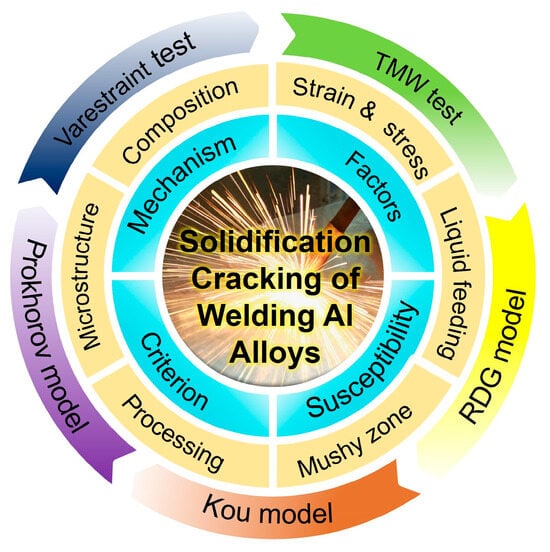
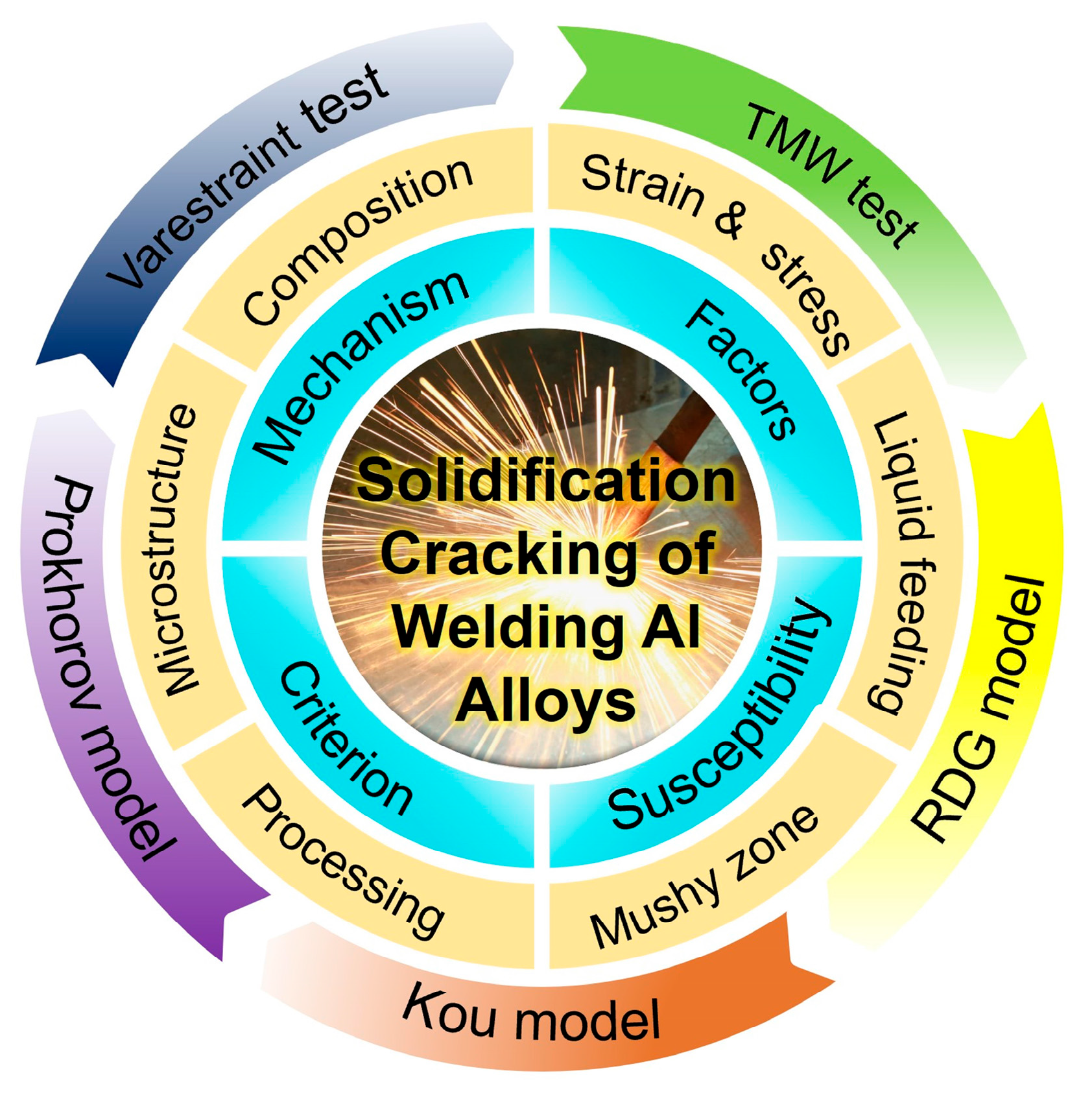
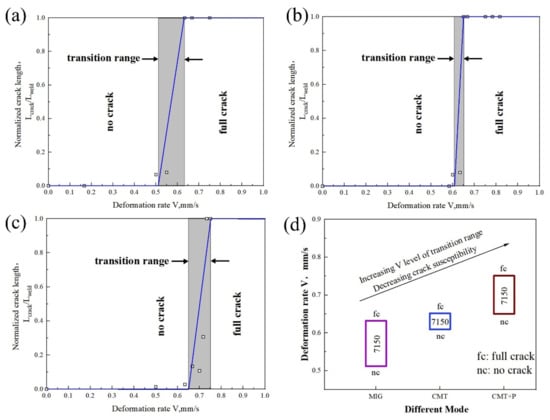
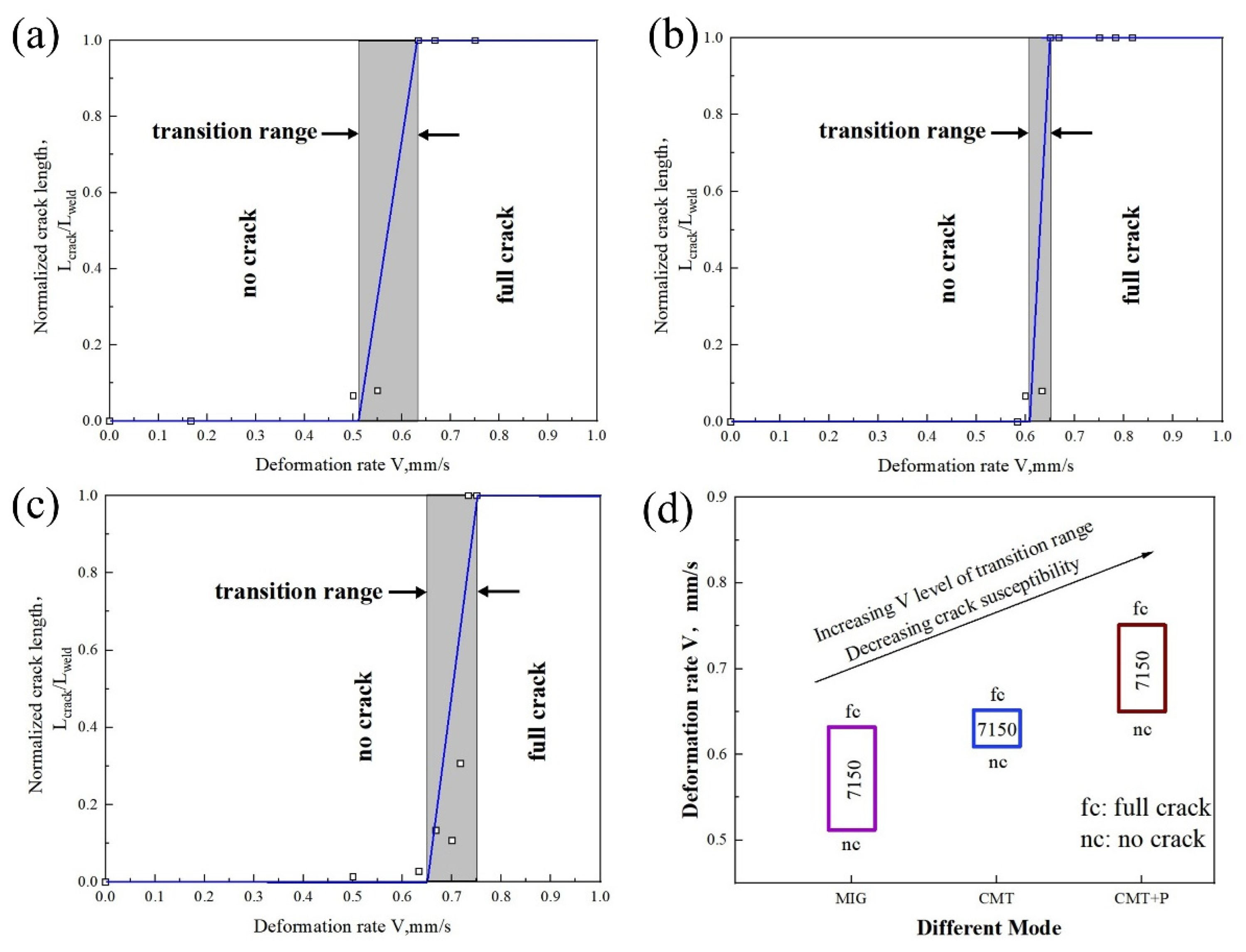
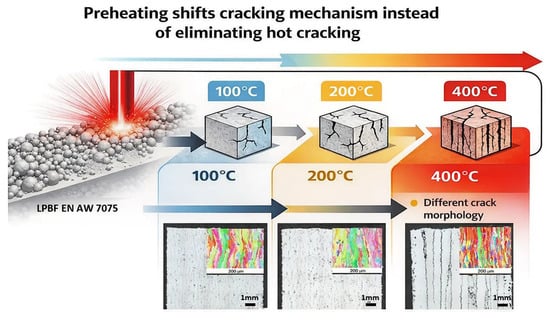
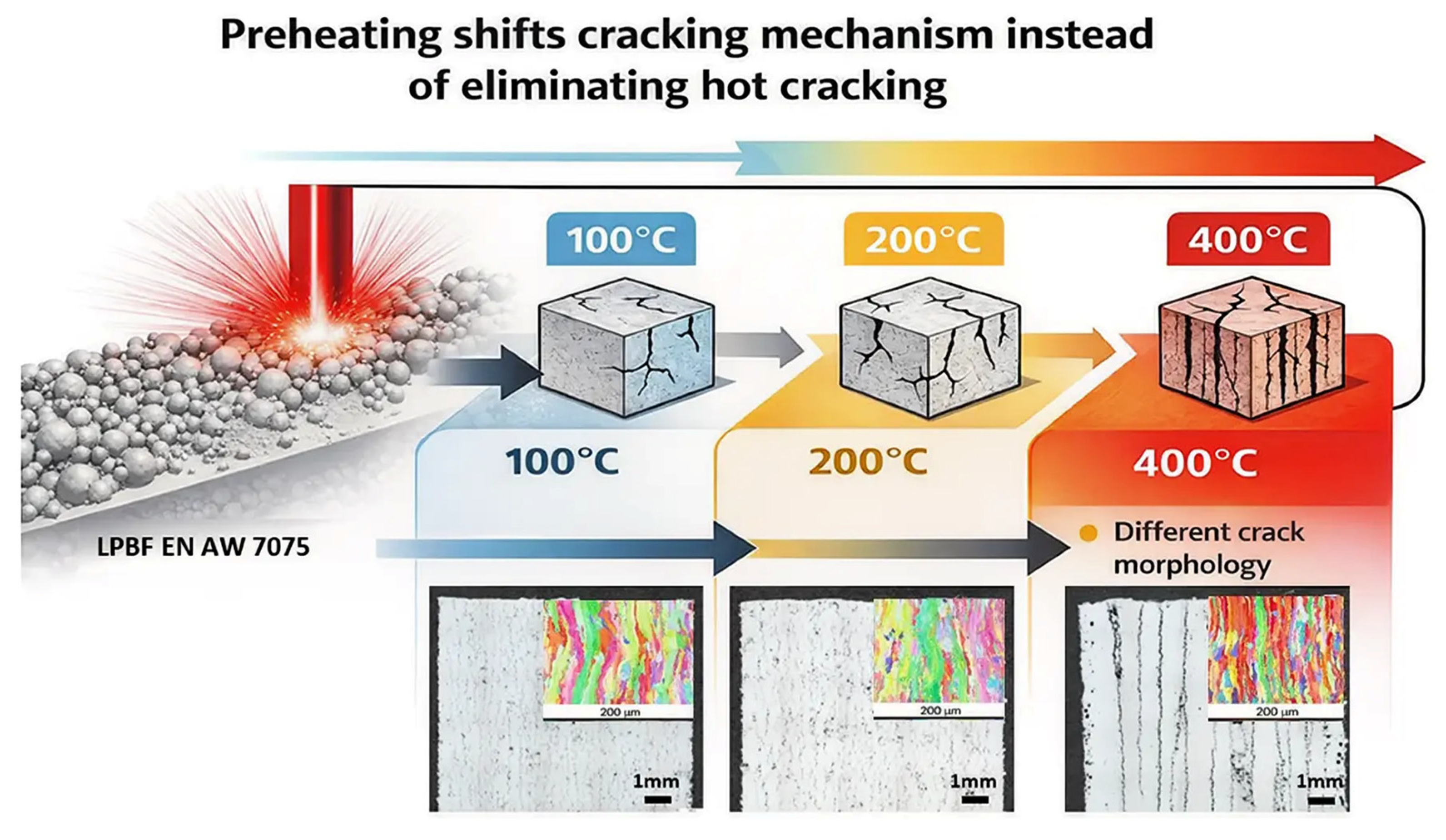
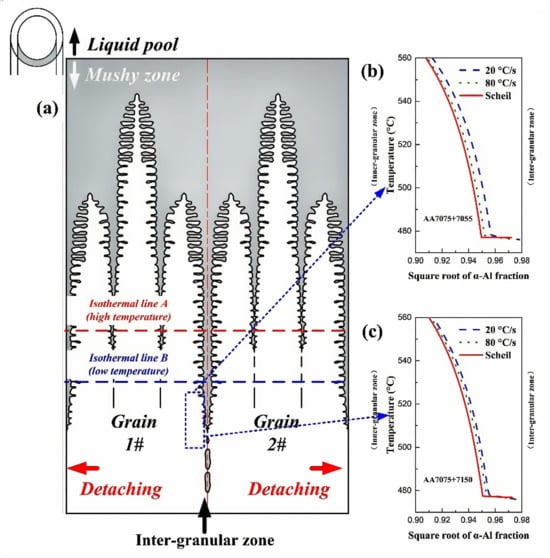
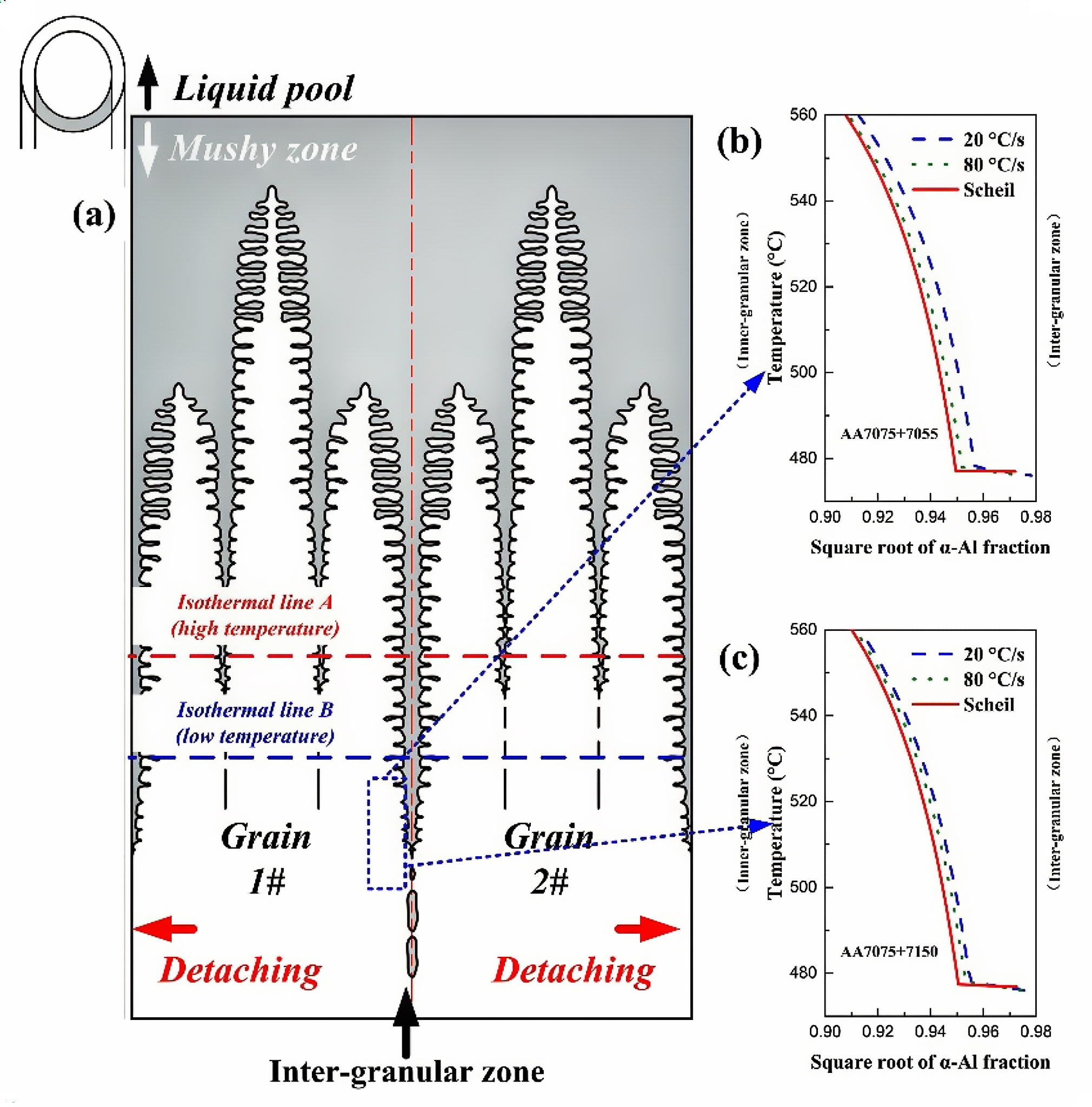

Disclaimer/Publisher’s Note: The statements, opinions and data contained in all publications are solely those of the individual author(s) and contributor(s) and not of MDPI and/or the editor(s). MDPI and/or the editor(s) disclaim responsibility for any injury to people or property resulting from any ideas, methods, instructions or products referred to in the content. |
© 2026 by the authors. Licensee MDPI, Basel, Switzerland. This article is an open access article distributed under the terms and conditions of the Creative Commons Attribution (CC BY) license.