Experimental Study on Flexural Fatigue Performance of Steel-Fiber-Concrete-Layered Beams


Abstract
1. Introduction
2. Experimental Scheme
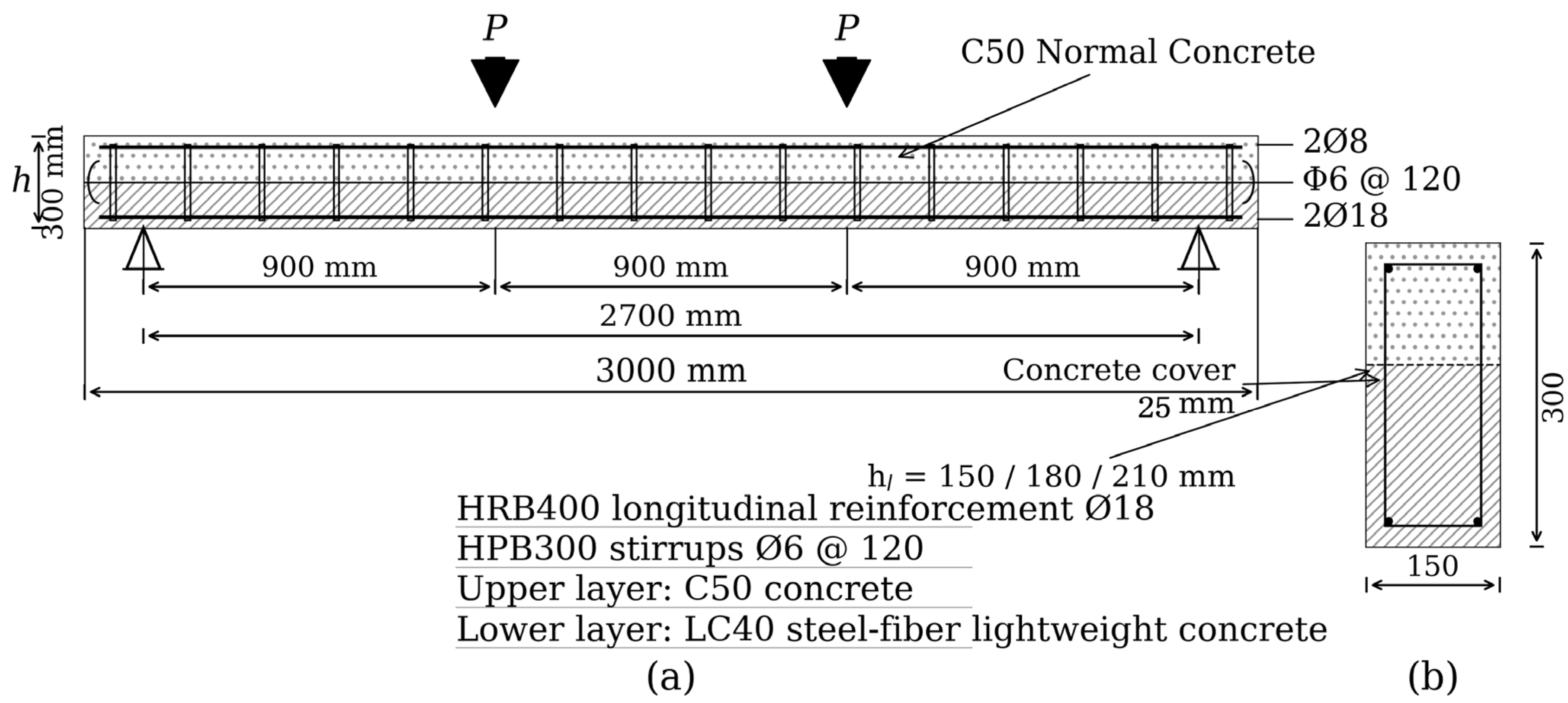
2.1. Experimental Introduction
2.2. Experimental Design and Procedures
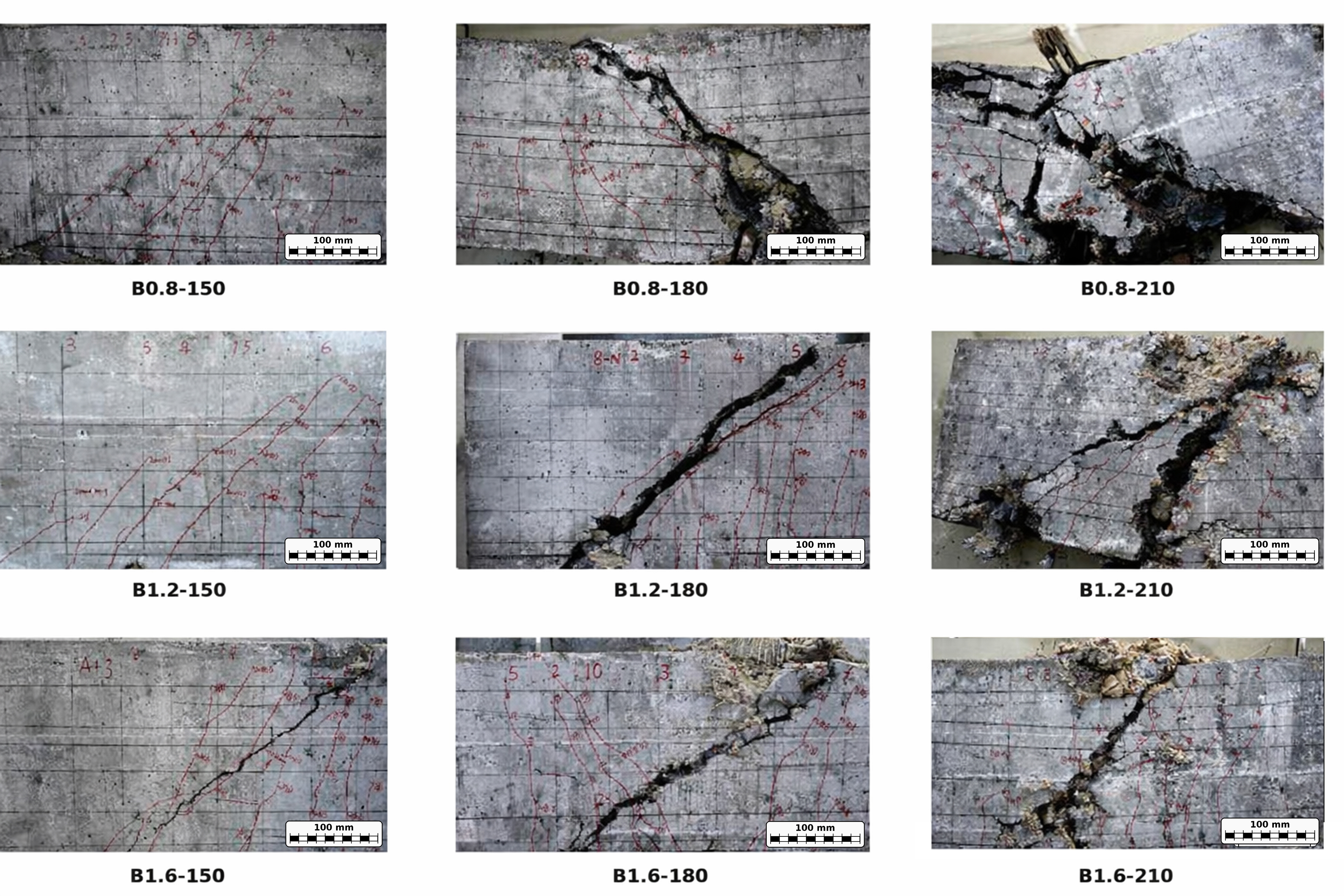
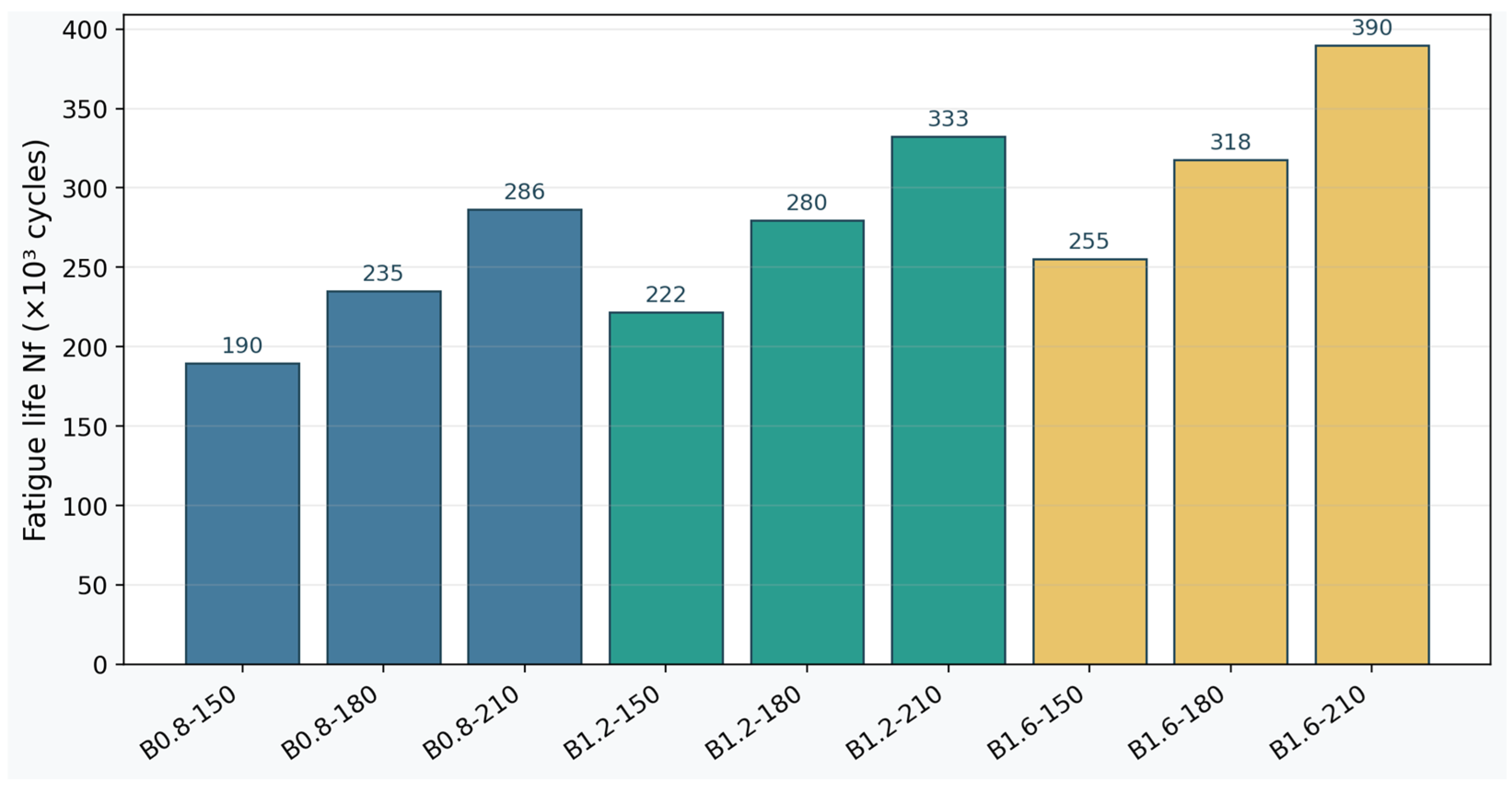
2.3. Experimental Results
3. Numerical Model
3.1. Definition of the Numerical Model
3.2. Parameters of the Model and Calibration
3.3. Model Verification with Test Results
3.4. Simulation Cases and Procedures
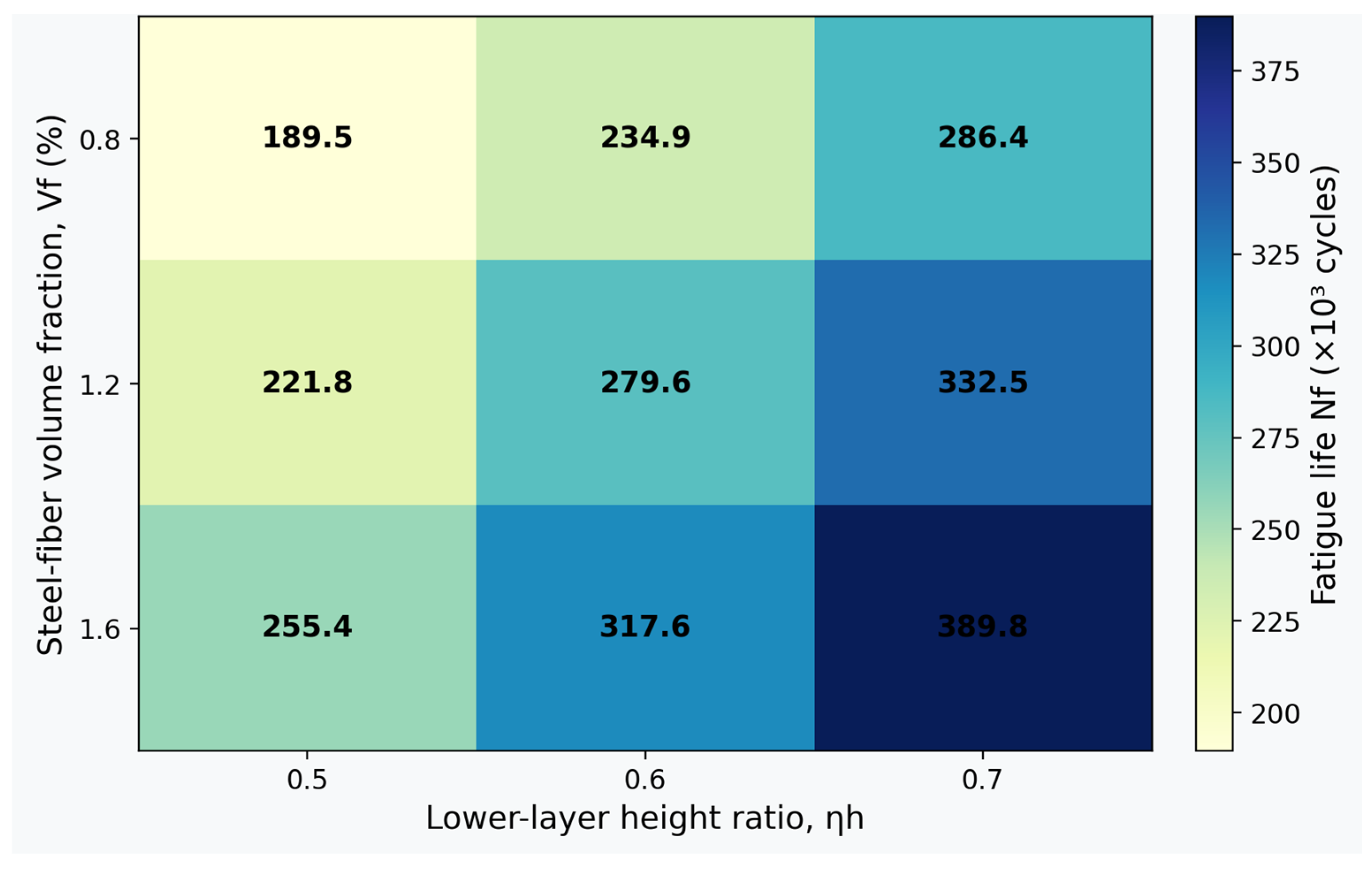
3.5. Analysis of Simulation Results
4. Conclusions
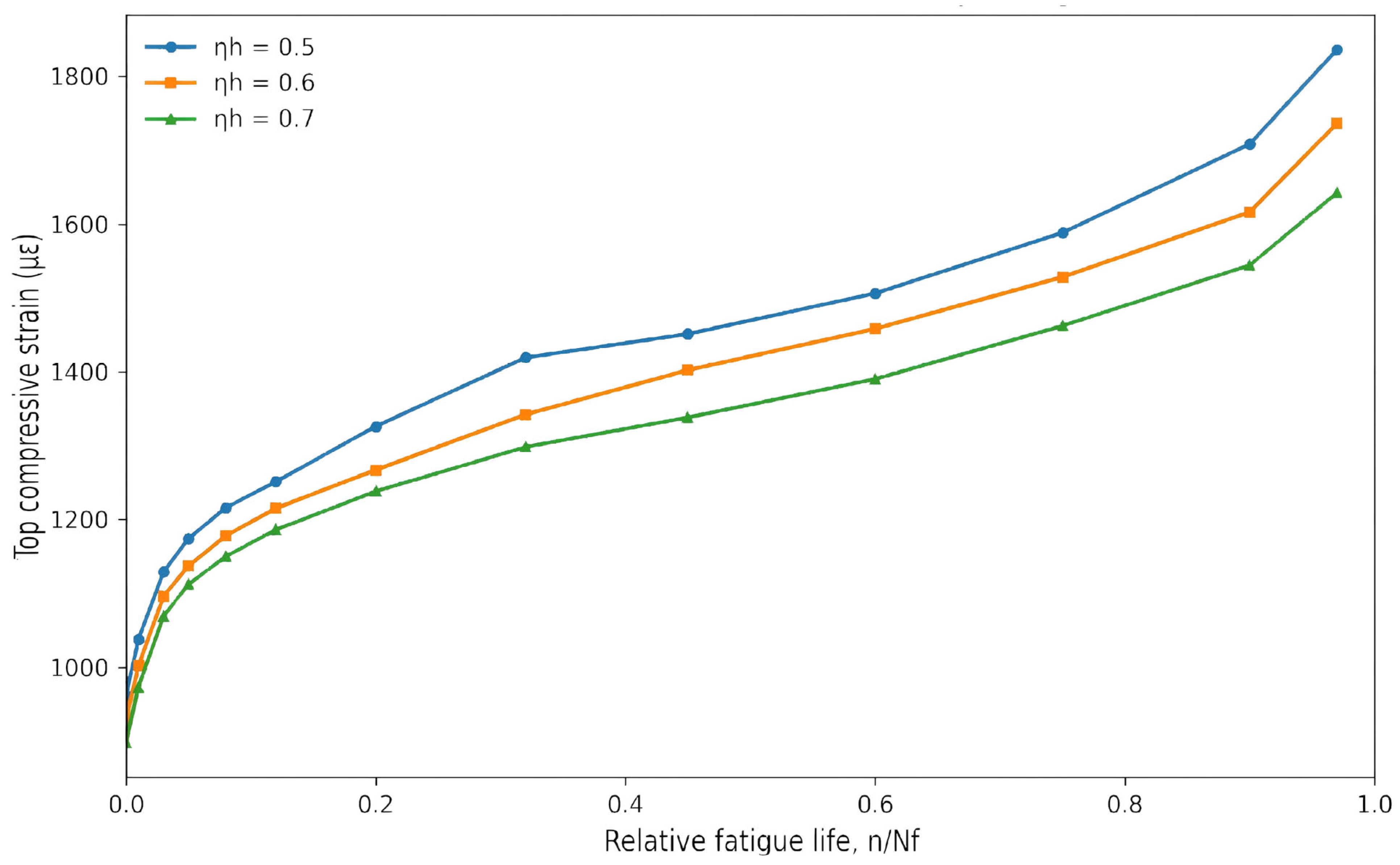
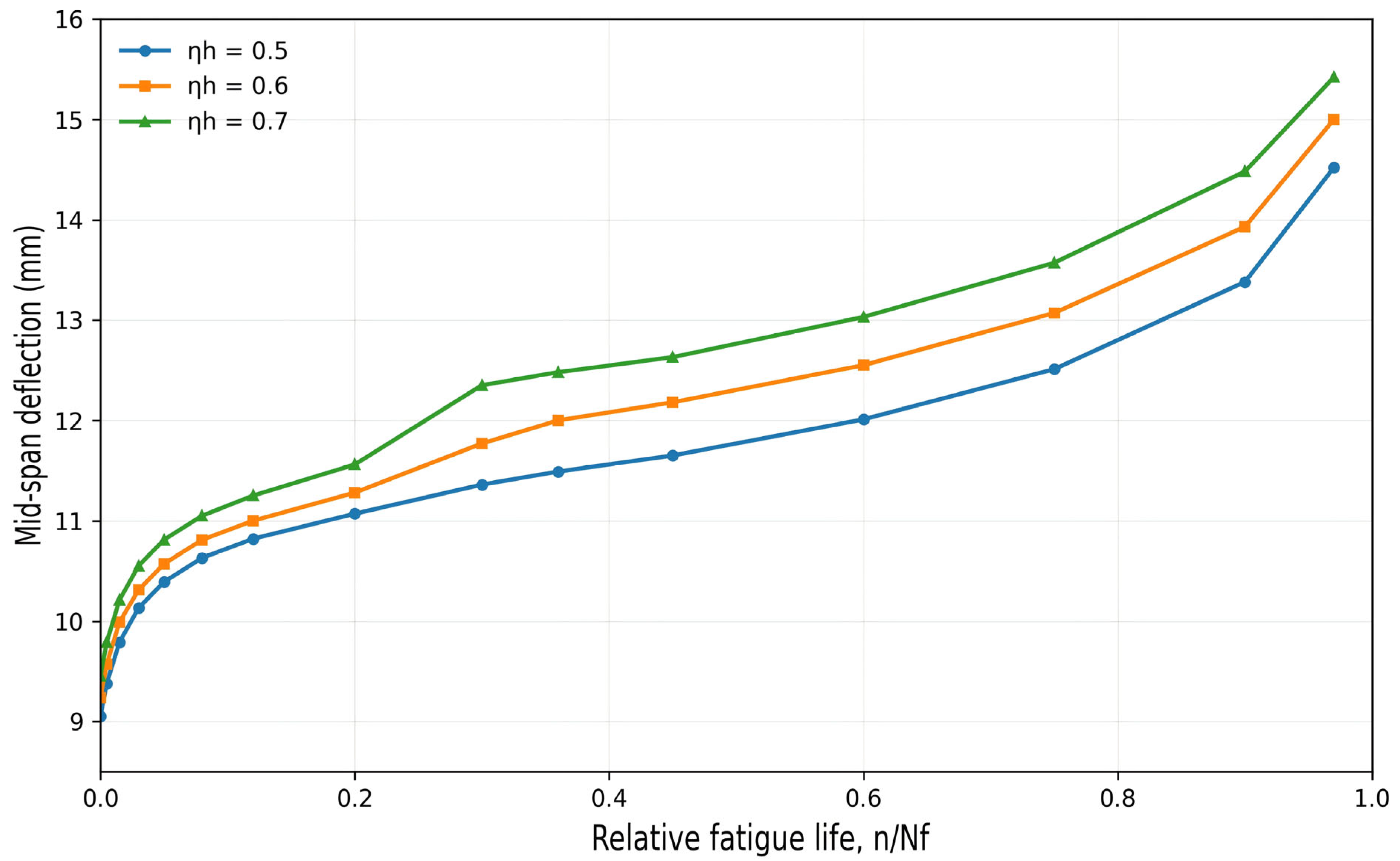
- No premature horizontal crack formed at the interface between the two concretes, which indicates that the cast-in-place layered section can work monolithically under flexural fatigue when proper casting continuity is ensured. The global response of the beams, including compressive strain and mid-span deflection, followed the classical three-stage fatigue-development law.
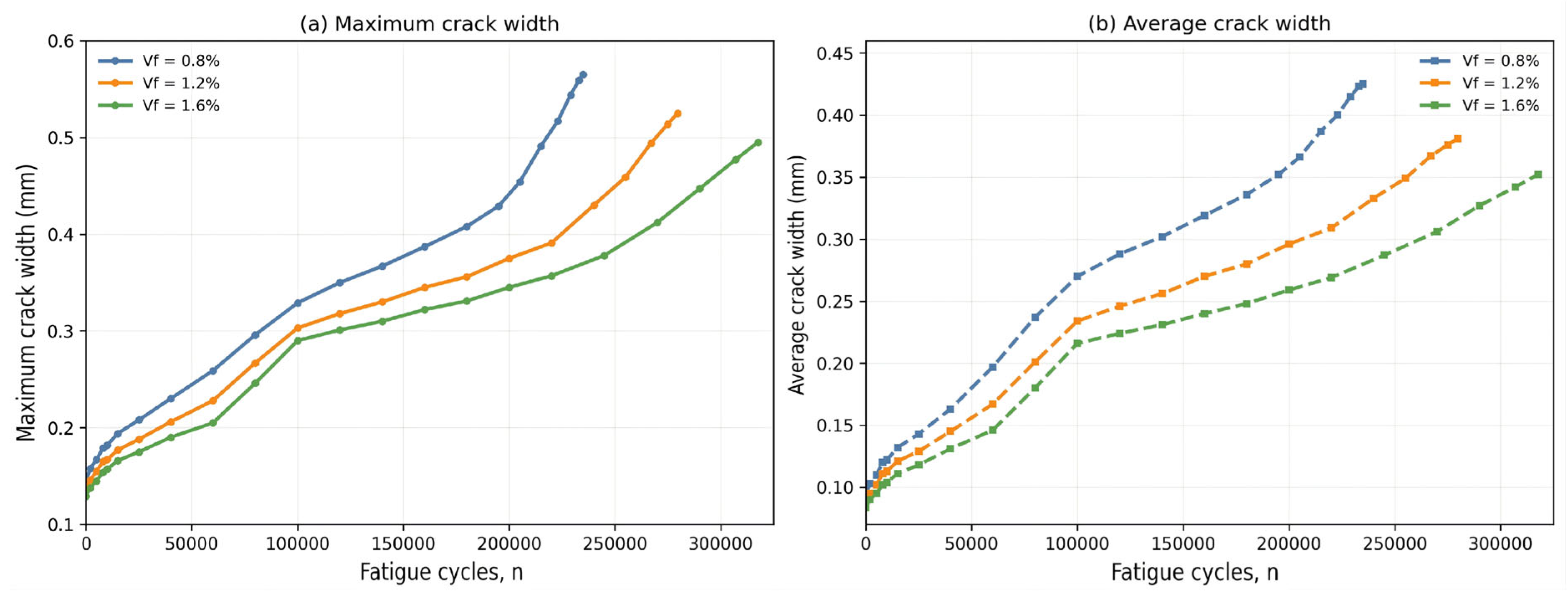
- Increasing the lower-layer height ratio from 0.5 to 0.7 markedly prolonged fatigue life, reduced compressive-zone strain, and reduced crack width because more steel-fiber concrete remained effective in the tension zone and delayed the upward movement of the neutral axis.
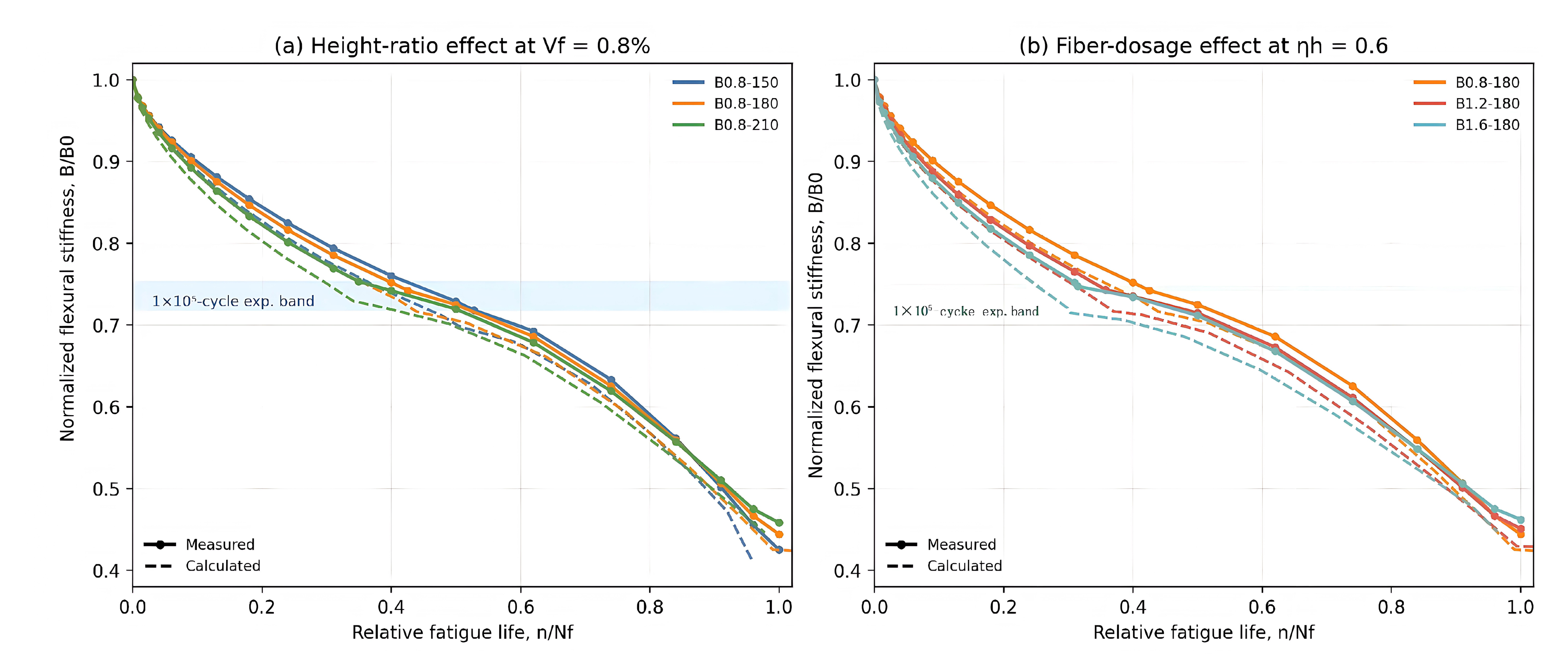
- Increasing the steel-fiber volume fraction from 0.8% to 1.6% improved crack distribution, reduced crack width, enhanced stiffness retention, and shifted the failure mechanism toward a more ductile compression-dominated mode. The marginal benefit became smaller once the dosage exceeded approximately 1.2%–1.6%, indicating that unlimited fiber addition is not the most economical strategy.
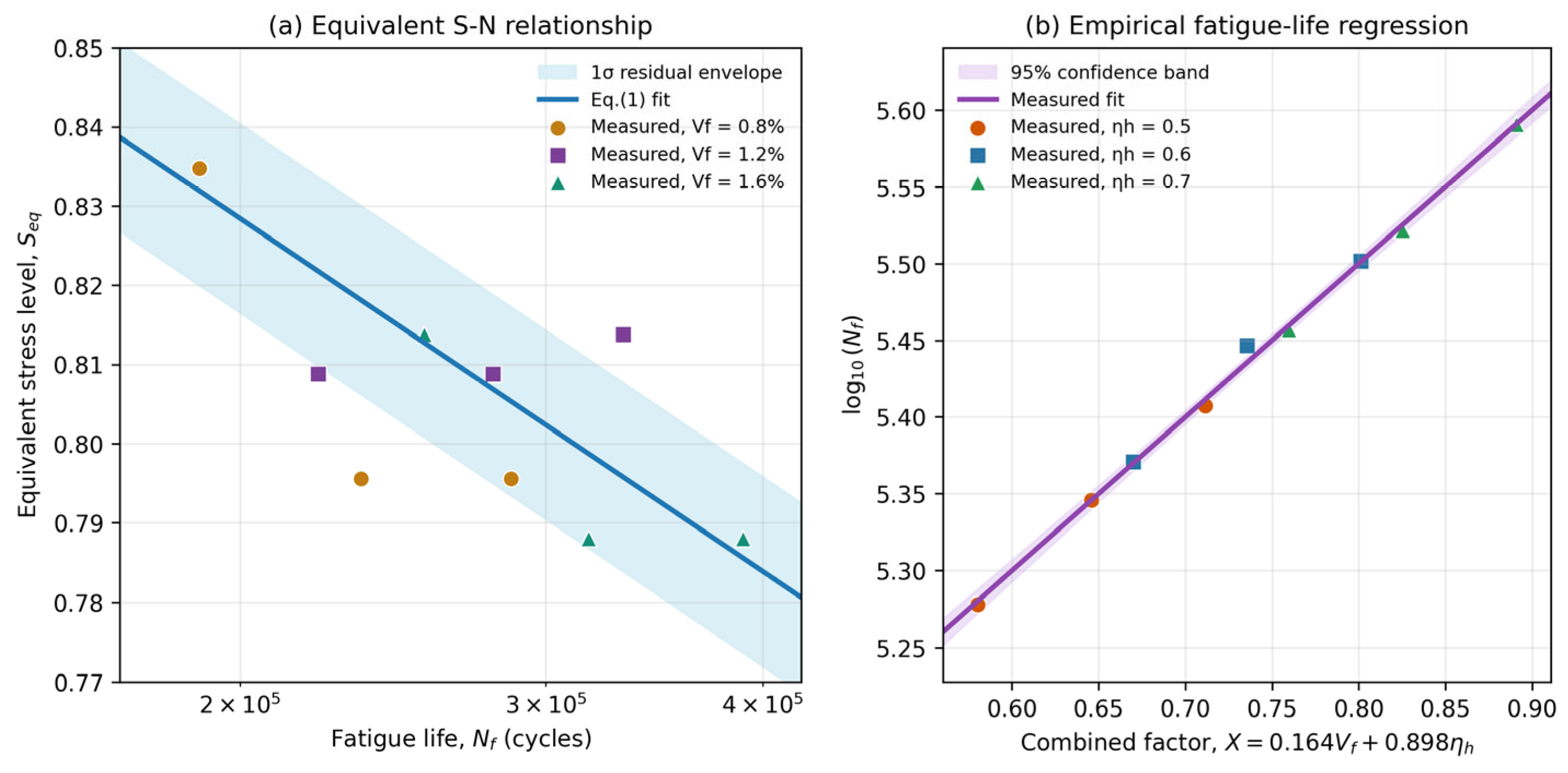
- Within the present loading protocol and tested parameter range, the fatigue response can be represented by the empirical relations Seq = 1.613 − 0.148log10(Nf) and log10(Nf) = 4.700 + 0.164Vf + 0.898ηh. The former is an S–N-type stress-life relation for the tested layered beams, whereas the latter is a design-oriented regression for comparing alternative layered configurations within the present experimental domain. Therefore, these relations should be used only as preliminary engineering references for this beam type and should not be regarded as universally applicable fatigue design equations.
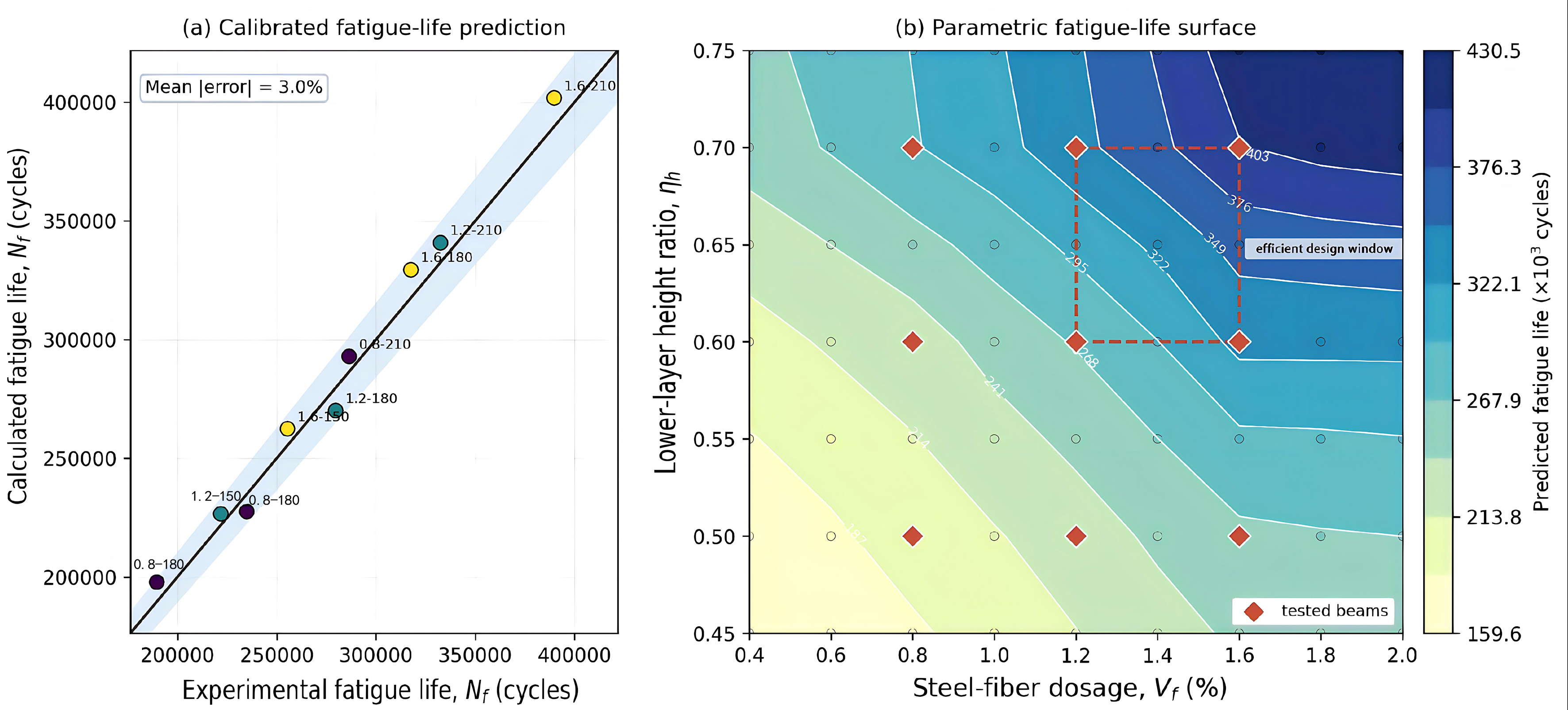
- The proposed numerical model reproduced the measured fatigue life and stiffness degradation with satisfactory accuracy and indicated that a lower-layer height ratio of ηh = 0.6–0.7 combined with a steel-fiber volume fraction of Vf = 1.2%–1.6% provides a balanced combination of fatigue durability, stiffness retention, crack control, and failure ductility. Because only one beam was tested for each parameter combination, the present conclusions mainly establish comparative fatigue-performance trends rather than statistical fatigue-life distributions. Future studies should include repeated specimens for each test condition so that standard deviations, confidence intervals, and probabilistic fatigue analyses can be reported. In addition, because the fatigue tests were conducted at 10 Hz without direct temperature measurement, the possible thermal influence associated with loading frequency was not quantitatively verified. Accordingly, the present conclusions should be understood as being applicable to the adopted loading protocol, and further temperature-monitored fatigue tests are needed for a more rigorous assessment of frequency effects.
Author Contributions
Funding
Institutional Review Board Statement
Informed Consent Statement
Data Availability Statement
Acknowledgments
Conflicts of Interest
References
- Gao, D.Y.; Gu, Z.Q.; Wei, C.J.; Wu, C.L.; Pang, Y.Y. Effects of fiber clustering on fatigue behavior of steel fiber reinforced concrete beams. Constr. Build. Mater. 2021, 301, 124070. [Google Scholar] [CrossRef]
- Abdo, A.; Sharaky, I.; Eisa, A.; Ahmed, S. Flexural behavior of steel/GFRP reinforced concrete beams having layered sections integrated with normal and rubberized concrete. Structures 2024, 70, 107633. [Google Scholar] [CrossRef]
- Albidah, A.; Alsaif, A. Flexural Response of Functionally Graded Rubberized Concrete Beams. Materials 2024, 17, 1931. [Google Scholar] [CrossRef] [PubMed]
- Bai, M.; Xiao, J.; Wu, Y.; Ding, T. Experimental and numerical study on the flexural behavior of 3D-printed composite beams with U-shaped ECC formwork. Eng. Struct. 2024, 312, 118225. [Google Scholar] [CrossRef]
- da Silva, I.J.; Monteiro, V.; Patel, D.; Gaspar, C.; Mobasher, B.; Silva, F. Generalized Nonlinear Moment-Curvature model for flexural fatigue of hybrid reinforced concrete beams. Eng. Struct. 2025, 345, 121539. [Google Scholar] [CrossRef]
- Fares, A.; Bakir, B. Nonlinear finite element analysis of layered steel fiber reinforced concrete beams. Comput. Struct. 2025, 307, 107637. [Google Scholar] [CrossRef]
- Gao, D.; Gu, Z.; Zhu, H.; Huang, Y. Fatigue behavior assessment for steel fiber reinforced concrete beams through experiment and Fatigue Prediction Model. Structures 2020, 27, 1105–1117. [Google Scholar] [CrossRef]
- Guo, Z.; Chai, J.; Qin, Y.; Xu, Z.; Zhang, P. Functionally graded fibre concrete constitutive model considering fibre spacing effects and interfacial interactions. J. Build. Eng. 2024, 96, 110427. [Google Scholar] [CrossRef]
- Guo, Z.; Xu, Z.; Li, F.; Lu, L.; Geng, O. Flexural static and high-cycle fatigue behavior of steel fiber-reinforced ultra-high-performance concrete. J. Build. Eng. 2025, 105, 112550. [Google Scholar] [CrossRef]
- Ke, S.; Gao, Z. Experimental and numerical study on flexural behavior of steel fiber reinforced high-strength concrete (SFRHC) beams. Sci. Rep. 2025, 15, 18338. [Google Scholar] [CrossRef]
- Liu, H.; Xiao, J.; Ding, T. Flexural performance of 3D-printed composite beams with ECC and recycled fine aggregate concrete: Experimental and numerical analysis. Eng. Struct. 2023, 283, 115865. [Google Scholar] [CrossRef]
- Luo, S.; Su, Y.; Zhang, Q.; Zhang, K. Effects of steel fibers on the flexural fatigue performance of recycled aggregate concrete. Constr. Build. Mater. 2024, 412, 134709. [Google Scholar] [CrossRef]
- Mak, M.; Lees, J. Carbon reduction and strength enhancement in functionally graded reinforced concrete beams. Eng. Struct. 2023, 277, 115358. [Google Scholar] [CrossRef]
- Mandala, V.; Khan, M. Experimental investigations on layered functionally graded fiber-reinforced concrete. Structures 2024, 70, 107679. [Google Scholar] [CrossRef]
- Monteiro, V.; Cardoso, D.; Silva, F. A novel methodology for estimating damage evolution and energy dissipation for steel fiber reinforced concrete under flexural fatigue loading. Int. J. Fatigue 2023, 166, 107244. [Google Scholar] [CrossRef]
- Qin, C.; Dong, X.; Wu, B.; Cai, L.; Wang, S.; Xia, Q. Fatigue damage analysis of plain and steel fiber-reinforced concrete material based on a stiffness degradation microplane model. Front. Mater. 2024, 11, 1505295. [Google Scholar] [CrossRef]
- Zhang, M.; Jing, J.; Zhang, S. Effect of steel fiber content on fatigue performance of high-strength concrete beams. Sci. Rep. 2025, 15, 11815. [Google Scholar] [CrossRef]
- Xiang, D.; Liu, S.; Li, Y.; Liu, Y. Improvement of flexural and cyclic performance of bridge deck slabs by utilizing steel fiber reinforced concrete (SFRC). Constr. Build. Mater. 2022, 329, 127184. [Google Scholar] [CrossRef]
- Yousef, A.; Atef, N.; Tahwia, A. Experimental and numerical study on flexural behavior of functionally graded UHPFRC-HSC beams. Eng. Fail. Anal. 2025, 182, 110108. [Google Scholar] [CrossRef]
- Yousef, A.; Atef, N.; Tahwia, A. Flexural performance of functionally graded UHPFRC-NSC beams. Case Stud. Constr. Mater. 2024, 21, e03653. [Google Scholar] [CrossRef]
- Wu, F.; Zhao, B.; Cao, J.; Shen, X.; Wang, Z.; Lei, H.; Cui, Z. Experimental and theoretical investigations on flexural performance of hybrid fiber reinforced ECC-NC composite beams. Case Stud. Constr. Mater. 2024, 20, e03178. [Google Scholar] [CrossRef]
- Wu, F.; Zhang, Y.; Chen, A.; He, L.; Li, Z.; Lei, H.; Ma, Y. Flexural behavior of hybrid fiber reinforced UHTCC-NC composite beams: Experimental and numerical investigations. Struct. Concr. 2025, 26, 6229–6248. [Google Scholar] [CrossRef]
- Yang, F.; Sun, Y.; Rizwan, M.; Khan, M.; Tian, M.; Wang, Z.; Guo, X.; Naeem, M. Numerical analysis of fatigue performance of steel fiber reinforced concrete pavement based on microscopic crack growth theory. Adv. Bridge Eng. 2025, 6, 33. [Google Scholar] [CrossRef]
- Qin, F.; Wei, X.; Lu, Y.; Zhang, Z.; Di, J.; Yin, Z. Flexural behaviour of high strength engineered cementitious composites (ECC)-reinforced concrete composite beams. Case Stud. Constr. Mater. 2023, 18, e02002. [Google Scholar] [CrossRef]
- Qiu, M.; Qian, Y.; Dai, J. Enhancing the flexural performance of concrete beams with 3D-printed UHP-SHCC permanent formwork via graded fiber volume fraction. Compos. Struct. 2024, 341, 118211. [Google Scholar] [CrossRef]
- Tian, X.; Fang, Z.; Liu, S.; Xiang, Y.; Zhu, Q.; Shao, Y. Flexural fatigue behavior of ultra-high performance concrete under low temperatures. Cem. Concr. Compos. 2024, 150, 105550. [Google Scholar] [CrossRef]
- Xiao, Z.; Wei, H.; Wu, T.; Ren, W.; Li, X. Flexural behavior and serviceability of steel fiber-reinforced lightweight aggregate concrete beams reinforced with high-strength steel bars. Constr. Build. Mater. 2024, 437, 136977. [Google Scholar] [CrossRef]
- Wang, Z.; Li, H.; Ye, X.; Luo, W.; Zhang, B.; Hu, A.; Wu, L. Research on Layered Steel Fiber Reinforced Concrete Mix Ratio Design Based on Orthogonal Test. Coatings 2024, 14, 697. [Google Scholar] [CrossRef]
- Yuan, S.; Yang, T.; Lu, C.; Zhou, C.; Wang, J.; Fang, Y. Experimental and analytical investigation on the combined effect of repeated loading and chloride exposure on the flexural performance of HPC beams. Constr. Build. Mater. 2024, 435, 136831. [Google Scholar] [CrossRef]
- Zhang, Y.; Zhao, J.; Feng, H.; Xin, H. Flexural fatigue behavior of ultra-high-performance concrete: A Comparative study of two-parameter and three-parameter Weibull models. Constr. Build. Mater. 2025, 498, 143726. [Google Scholar] [CrossRef]
- Zhang, Z.; Liu, D.; Abdalla, J.; Hawileh, R.; Qin, F.; Xu, X. Flexural behavior of reinforced concrete beams externally strengthened with ECC and FRP grid reinforcement. Constr. Build. Mater. 2024, 446, 137964. [Google Scholar] [CrossRef]





| Material | Vf (%) | Cube Strength (MPa) | Axial Compressive Strength (MPa) | Axial Tensile Strength (MPa) | Elastic Modulus (GPa) | Specimen Type and Size | Test Purpose/Method |
|---|---|---|---|---|---|---|---|
| NC (C50) | 0 | 68.4 | 63.8 | 2.83 | 37.2 | Cube, 150 × 150 × 150 mm/ Prism, 150 × 150 × 300 mm/ Prism, 100 × 100 × 500 mm/ Prism, 150 × 150 × 300 mm | Cube compressive strength/ Axial compressive strength/ Axial tensile test/ Elastic modulus |
| SF-WC (LC40) | 0.8 | 43.6 | 40.8 | 3.18 | 22.95 | Cube, 150 × 150 × 150 mm/ Prism, 150 × 150 × 300 mm/ Prism, 100 × 100 × 500 mm/ Prism, 150 × 150 × 300 mm | Cube compressive strength/ Axial compressive strength/ Axial tensile test/ Elastic modulus |
| SF-WC (LC40) | 1.2 | 39.2 | 38.0 | 3.39 | 22.35 | Cube, 150 × 150 × 150 mm/ Prism, 150 × 150 × 300 mm/ Prism, 100 × 100 × 500 mm/ Prism, 150 × 150 × 300 mm | Cube compressive strength/ Axial compressive strength/ Axial tensile test/ Elastic modulus |
| SF-WC (LC40) | 1.6 | 42.7 | 41.1 | 3.81 | 23.88 | Prism, 150 × 150 × 300 mm/100 × 100 × 500 mm/150 × 150 × 300 mm | Axial compressive strength/axial tensile test/elastic modulus |
| Mixture | Cement | Fly Ash | Water | Coarse Aggregate | Fine Aggregate | Steel Fiber | SP |
|---|---|---|---|---|---|---|---|
| NC-C50 | 368.20 | 92.05 | 176.40 | 1118.60 | 612.30 | - | 4.60 |
| SF-WC, Vf = 0.8% | 438.00 | 112.00 | 210.82 | 470.10 | 375.20 | 62.4 | 5.40 |
| SF-WC, Vf = 1.2% | 438.00 | 112.00 | 210.35 | 465.90 | 374.80 | 93.6 | 5.40 |
| SF-WC, Vf = 1.6% | 438.00 | 112.00 | 209.88 | 461.70 | 374.20 | 124.8 | 5.40 |
| Fiber Type | Length (mm) | Equivalent Diameter (mm) | Aspect Ratio | Tensile Strength (MPa) |
|---|---|---|---|---|
| Milled steel fiber | 36 | 1.35 | 26.7 | 600 |
| Beam | Vf (%) | ηh | Lower-Layer Height (mm) | Pmax (kN) | Pmax/Pu | Fatigue Life, Nf | Rebar Stress Amplitude (MPa) | Equivalent Stress Level, Seq |
|---|---|---|---|---|---|---|---|---|
| B0.8-150 | 0.8 | 0.5 | 150 | 95 | 95/Pu, 0.8-150 | 189,540 | 236.7 | 0.8348 |
| B0.8-180 | 0.8 | 0.6 | 180 | 94 | 94/Pu, 0.8-180 | 234,860 | 231.9 | 0.7956 |
| B0.8-210 | 0.8 | 0.7 | 210 | 93 | 93/Pu, 0.8-210 | 286,430 | 227.0 | 0.7956 |
| B1.2-150 | 1.2 | 0.5 | 150 | 96 | 96/Pu, 1.2-150 | 221,780 | 235.6 | 0.8088 |
| B1.2-180 | 1.2 | 0.6 | 180 | 96 | 96/Pu, 1.2-180 | 279,640 | 231.1 | 0.8088 |
| B1.2-210 | 1.2 | 0.7 | 210 | 95 | 95/Pu, 1.2-210 | 332,510 | 226.0 | 0.8138 |
| B1.6-150 | 1.6 | 0.5 | 150 | 97 | 97/Pu, 1.6-150 | 255,360 | 234.1 | 0.8138 |
| B1.6-180 | 1.6 | 0.6 | 180 | 98 | 98/Pu, 1.6-180 | 317,580 | 231.8 | 0.788 |
| B1.6-210 | 1.6 | 0.7 | 210 | 97 | 97/Pu, 1.6-210 | 389,760 | 224.9 | 0.788 |
| Beam | Mid-Span Deflection at 1 × 10⁵ Cycles (mm) | Top Compressive Strain at 1 × 10⁵ Cycles (με) | Maximum Crack Width at 1 × 10⁵ Cycles (mm) | B100k/B0 |
|---|---|---|---|---|
| B0.8-150 | 12.2 | 1380 | 0.37 | 0.718 |
| B0.8-180 | 12.55 | 1297 | 0.329 | 0.742 |
| B0.8-210 | 12.9 | 1228 | 0.281 | 0.753 |
| B1.2-150 | 11.65 | 1449 | 0.34 | 0.726 |
| B1.2-180 | 12.0 | 1362 | 0.303 | 0.743 |
| B1.2-210 | 12.35 | 1290 | 0.259 | 0.754 |
| B1.6-150 | 11.25 | 1490 | 0.326 | 0.733 |
| B1.6-180 | 11.6 | 1401 | 0.29 | 0.747 |
| B1.6-210 | 11.95 | 1326 | 0.247 | 0.759 |
| Component | Element/Law | Elastic Parameters | Strength Parameters | Fatigue-Related Calibration |
|---|---|---|---|---|
| NC (C50) | CDP solid, C3D8R | E = 37.2 GPa, ν = 0.20 | fc = 63.8 MPa; ft = 2.83 MPa | Gf = 0.11 N/mm; dilation = 36° |
| SF-WC, Vf = 0.8% | CDP solid, C3D8R | E = 22.95 GPa, ν = 0.21 | fc = 40.8 MPa; ft = 3.18 MPa | Residual tensile factor = 0.55; Gf = 0.20 N/mm |
| SF-WC, Vf = 1.2% | CDP solid, C3D8R | E = 22.35 GPa, ν = 0.21 | fc = 38.0 MPa; ft = 3.39 MPa | Residual tensile factor = 0.63; Gf = 0.25 N/mm |
| SF-WC, Vf = 1.6% | CDP solid, C3D8R | E = 23.88 GPa, ν = 0.21 | fc = 41.1 MPa; ft = 3.81 MPa | Residual tensile factor = 0.72; Gf = 0.31 N/mm |
| Rebar HRB400 | Embedded truss, T3D2 | E = 200 GPa, ν = 0.30 | fy = 462 MPa; fu = 635 MPa | Miner-based fatigue accumulation |
| Cast interface | Surface tie/cohesive check | Kn = 5 × 10⁵ MPa/mm | ft, int = 2.3 MPa; τint = 3.8 MPa | No significant slip before failure |
| Beam | Exp. Nf | FE Nf | Error in Nf (%) | Exp. B100k (×1012 N·mm2) | FE B100k (×1012 N·mm2) | Error in B100k (%) |
|---|---|---|---|---|---|---|
| B0.8-150 | 189,540 | 197,800 | +4.4 | 2.579 | 2.507 | −2.8 |
| B0.8-180 | 234,860 | 227,600 | −3.1 | 2.610 | 2.519 | −3.5 |
| B0.8-210 | 286,430 | 292,900 | +2.3 | 2.593 | 2.510 | −3.2 |
| B1.2-180 | 279,640 | 270,100 | −3.4 | 2.792 | 2.692 | −3.6 |
| B1.6-180 | 317,580 | 329,400 | +3.7 | 2.903 | 2.777 | −4.3 |
| B1.6-210 | 389,760 | 401,800 | +3.1 | 2.880 * | 2.765 * | −4.0 |
Disclaimer/Publisher’s Note: The statements, opinions and data contained in all publications are solely those of the individual author(s) and contributor(s) and not of MDPI and/or the editor(s). MDPI and/or the editor(s) disclaim responsibility for any injury to people or property resulting from any ideas, methods, instructions or products referred to in the content. |
© 2026 by the authors. Licensee MDPI, Basel, Switzerland. This article is an open access article distributed under the terms and conditions of the Creative Commons Attribution (CC BY) license.
Share and Cite
Zhao, H.; Fan, W.; Liu, P.; Gao, W.; Li, X.; Meng, Y. Experimental Study on Flexural Fatigue Performance of Steel-Fiber-Concrete-Layered Beams. Coatings 2026, 16, 465. https://doi.org/10.3390/coatings16040465
Zhao H, Fan W, Liu P, Gao W, Li X, Meng Y. Experimental Study on Flexural Fatigue Performance of Steel-Fiber-Concrete-Layered Beams. Coatings. 2026; 16(4):465. https://doi.org/10.3390/coatings16040465
Chicago/Turabian StyleZhao, Huibing, Wenjuan Fan, Panpan Liu, Weiliang Gao, Xingxin Li, and Ying Meng. 2026. "Experimental Study on Flexural Fatigue Performance of Steel-Fiber-Concrete-Layered Beams" Coatings 16, no. 4: 465. https://doi.org/10.3390/coatings16040465
APA StyleZhao, H., Fan, W., Liu, P., Gao, W., Li, X., & Meng, Y. (2026). Experimental Study on Flexural Fatigue Performance of Steel-Fiber-Concrete-Layered Beams. Coatings, 16(4), 465. https://doi.org/10.3390/coatings16040465