


Abstract
Conventional adhesives for plywood are mostly derived from petroleum-based materials and commonly suffer from formaldehyde emission, posing threats to the environment and human health. In this study, a renewable resource, Xanthoceras sorbifolium Bunge oil, was used as the raw material. A high-performance bio-based adhesive was successfully prepared by synthesizing Xanthoceras sorbifolium Bunge oil dimethacrylate (MXOEA) as a reactive diluent, blending it with acrylated epoxy Xanthoceras sorbifolium Bunge oil (AEXO), and introducing 2-isocyanatoethyl methacrylate (IEM) to enhance crosslinking. The effects of the MXOEA/AEXO ratio and the IEM addition level on the properties of the adhesive and the resulting plywood were systematically investigated. The results showed that when the mass ratio of AEXO to MXOEA was 3:7, and the IEM content was 10%, the adhesive exhibited the best bonding performance: the resulting plywood achieved a modulus of rupture of 68.85 MPa, a modulus of elasticity of 8086 MPa, and dry and wet bonding strengths of 3.21 MPa and 2.32 MPa, respectively. Mechanistic analysis indicated that the introduction of IEM moderately reduced the viscosity of the adhesive system. Meanwhile, the isocyanate groups in IEM reacted with the hydroxyl groups on the wood surface, forming a chemical crosslinking structure at the adhesive-wood interface, which is considered one of the reasons for the improved mechanical properties of the plywood. This study provides a formaldehyde-free, high-performance bio-based adhesive derived from Xanthoceras sorbifolium Bunge oil for the field of wood-based composites.
1. Introduction
As an important engineered wood-based composite material, the performance of plywood is highly dependent on the properties of the adhesive used. In application fields such as furniture manufacturing, interior decoration, and sports equipment, where high mechanical properties and environmental friendliness are required, the structural integrity and environmental adaptability of plywood are particularly important [1]. However, the adhesives widely used in industry, such as phenolic resins, urea-formaldehyde resins, and epoxy resins, not only rely on increasingly depleted petrochemical resources but also tend to release volatile, harmful substances like formaldehyde during their curing or service life [2]. Therefore, developing formaldehyde-free, bio-based adhesives derived from renewable resources that combine excellent bonding performance with environmental friendliness has become an important research direction to promote the green and sustainable development of the wood-based composites field [3,4].
Tannin [5], lignin [6], starch [7], and protein [8] serve as natural polymer raw materials for renewable bio-based adhesives. Most adhesives prepared from these raw materials are water-soluble, non-toxic or low-toxic natural adhesives, featuring simple production processes, fast bonding, low cost, degradability, and no environmental pollution. However, due to their drawbacks, such as poor water resistance, low solid content, and low bonding strength, they cannot meet the requirements of modern production. Vegetable oils are derived from various plants (soybean, palm, rapeseed, etc.). Their main component is triglyceride molecules containing three fatty acids [9]. These three fatty acids can be saturated or unsaturated [10]. Saturated fatty acids contain unreactive aliphatic chains, such as stearic acid or palmitic acid; unsaturated fatty acids contain reactive double bonds in their structure, such as oleic acid, linoleic acid, linolenic acid, and ricinoleic acid [11]. Owing to the hydrophobicity of their fatty acid chains, vegetable oils are ideal raw materials for preparing water-resistant adhesives. Furthermore, the presence of highly reactive sites in triglycerides [12], such as double bonds, allyl groups, and ester groups, allows them to be used to synthesize various polymers, including epoxy resins, polyamides, polyesters, and polyurethanes [13].
Although some progress has been made in the research of vegetable oil-based adhesives in recent years, most of the raw materials used are common oils such as soybean oil and palm oil, and research on adhesives based on Xanthoceras sorbifolium Bunge oil, a high-value resource, remains unexplored. As a woody oil-bearing tree species, Xanthoceras sorbifolium Bunge has an unsaturated fatty acid content exceeding 90% in its oil. Due to the high content of oleic acid and linoleic acid in Xanthoceras sorbifolium Bunge oil, its triglyceride molecules contain a large number of C=C bonds, a structural feature that provides abundant reactive sites for subsequent chemical modification. Because the reactivity of these C=C bonds in fatty acids is relatively low, it is usually necessary to modify Xanthoceras sorbifolium Bunge oil through acrylation and epoxidation reactions. The reactive C=C bonds and -OH groups introduced during the acrylation modification provide a key reaction basis for the construction of high-performance polymers [14]. However, the main drawbacks of acrylated epoxy Xanthoceras sorbifolium Bunge oil (AEXO) are its high viscosity at room temperature and the lack of a rigid structure. Therefore, the core challenge in developing AEXO-based adhesive resins lies in screening suitable reactive diluents (rd) [15].
In addition to the acrylation–epoxidation modification route, the synthesis of polyols via triglyceride transesterification and amidation provides a feasible method for preparing Xanthoceras sorbifolium Bunge oil-based polyurethanes [16]. Simple amidation of Xanthoceras sorbifolium Bunge oil with diethanolamine yields a reactive vinyl monomer based on Xanthoceras sorbifolium Bunge oil. This monomer retains the reactive functional groups derived from the original oil, exhibiting good polymerization activity, and can be further used as an adhesive matrix for wood. On the other hand, the introduction of reactive functional groups (e.g., isocyanate groups) into the adhesive can improve the bonding strength to wood, which is attributed to the reaction between the hydroxyl groups of wood and the isocyanate groups [17]. The high reactivity of the isocyanate moieties enables the adhesive to cure rapidly with a high crosslinking density.
This study aims to develop a high-performance bio-based thermosetting adhesive derived from Xanthoceras sorbifolium Bunge oil. For the first time, Xanthoceras sorbifolium Bunge oil is introduced into wood adhesive systems, with the goal of expanding the raw material sources for bio-based adhesives. To address the bottlenecks of high room-temperature viscosity and insufficient crosslinking density in existing vegetable oil-based adhesives, a strategy combining reactive dilution and crosslinking enhancement is proposed: MXOEA is synthesized as a reactive diluent and blended with AEXO, allowing the viscosity and crosslinking density of the system to be regulated. Meanwhile, the bifunctional monomer IEM is introduced; its double bond participates in free-radical polymerization, co-constructing the bulk crosslinking network together with MXOEA and AEXO, while its isocyanate group reacts with hydroxyl groups on the wood surface to form interfacial chemical crosslinks. Through the above molecular design, it is anticipated that the adhesive performance will be improved while retaining the environmental advantages of bio-based materials, thereby providing a theoretical basis and technical solution for the development of bio-based adhesives for plywood.
2. Materials and Methods
2.1. Materials
Xanthoceras sorbifolium Bunge oil (XO) was purchased from Qiaodongfang Biofuel Group Co., Ltd. (Baotou, China). Diethanolamine (DEA, 99%), sodium methoxide (CH3ONa, 98%), methacrylic anhydride (MAA, 94%), 4-dimethylaminopyridine (DMAP, 99.8%), Amberlite IR120 cation exchange resin (H resin, analytical grade), triphenylphosphine (PPh3/C18H15P, 99.8%), hydroquinone (C6H6O2, 99%), 2-isocyanatoethyl methacrylate (IEM, 98%), and benzoyl peroxide (BPO, 99%) were all obtained from Shanghai Macklin Biochemical Technology Co., Ltd. (Shanghai, China). Glacial acetic acid (CH3COOH, analytical grade) and sodium chloride (NaCl, analytical grade) were supplied by Tianjin Xinbote Chemical Co., Ltd. (Tianjin, China), while hydrogen peroxide (H2O2, 30%) and acrylic acid (AA, analytical grade) were purchased from Sinopharm Chemical Reagent Co., Ltd. (Shanghai, China). Sodium carbonate (Na2CO3, analytical grade) and sodium bicarbonate (NaHCO3, analytical grade) were provided by Tianjin Xinbote Chemical Co., Ltd. (Tianjin, China). Ayous wood veneers, spruce wood veneers, and limba wood veneers (all with moisture contents of 8%–12%) were supplied by Tianjin 729 Sports Goods Co., Ltd. (Tianjin, China). Deionized water was used throughout all experiments.
2.2. Preparation of Xanthoceras sorbifolium Bunge Oil-Based Adhesive
Under a nitrogen atmosphere, 105 g of Xanthoceras sorbifolium Bunge (XO) was mixed with 70 g of diethanolamine and 1.62 g of sodium methoxide catalyst. The mixture was stirred at 80 °C for 20 min, then heated to 120 °C and reacted at 520 rpm for 4 h. After cooling, Xanthoceras sorbifolium Bunge oil-based diol (XOEA) was obtained. Subsequently, XOEA was reacted with methacrylic anhydride (MAA) at a mass ratio of 1:2, catalyzed by 4-dimethylaminopyridine (DMAP, 2% by mass of XOEA), at 65 °C and 520 rpm for 5 h. Upon reaction completion, the product was washed sequentially with saturated NaHCO3 solution and saturated NaCl solution, and then purified by rotary evaporation to obtain Xanthoceras sorbifolium Bunge dimethyl methacrylate (MXOEA).
Separately, 50 g of XO, 1.5 g of cation exchange resin, and 45 mL of glacial acetic acid were uniformly mixed. Then, 125 mL of 30% H2O2 solution was added dropwise at room temperature. The mixture was subsequently heated to 65 °C and stirred continuously at 500 rpm for 3 h to obtain epoxidized Xanthoceras sorbifolium Bunge (EXO). The product was washed sequentially with saturated Na2CO3 solution and saturated NaCl solution until neutral, followed by purification via rotary evaporation.
Furthermore, 100 g of the obtained EXO was mixed with 3.75 g of triphenylphosphine (PPh3) and 1.25 g of hydroquinone as an inhibitor. Then, 50 g of acrylic acid (AA) was added dropwise at 80 °C, and the mixture was heated to 100 °C and reacted at 500 rpm for 4 h to obtain acrylated epoxidized Xanthoceras sorbifolium Bunge (AEXO). The reaction product was similarly washed with saturated Na2CO3 solution and saturated NaCl solution until neutral, and purified by rotary evaporation.
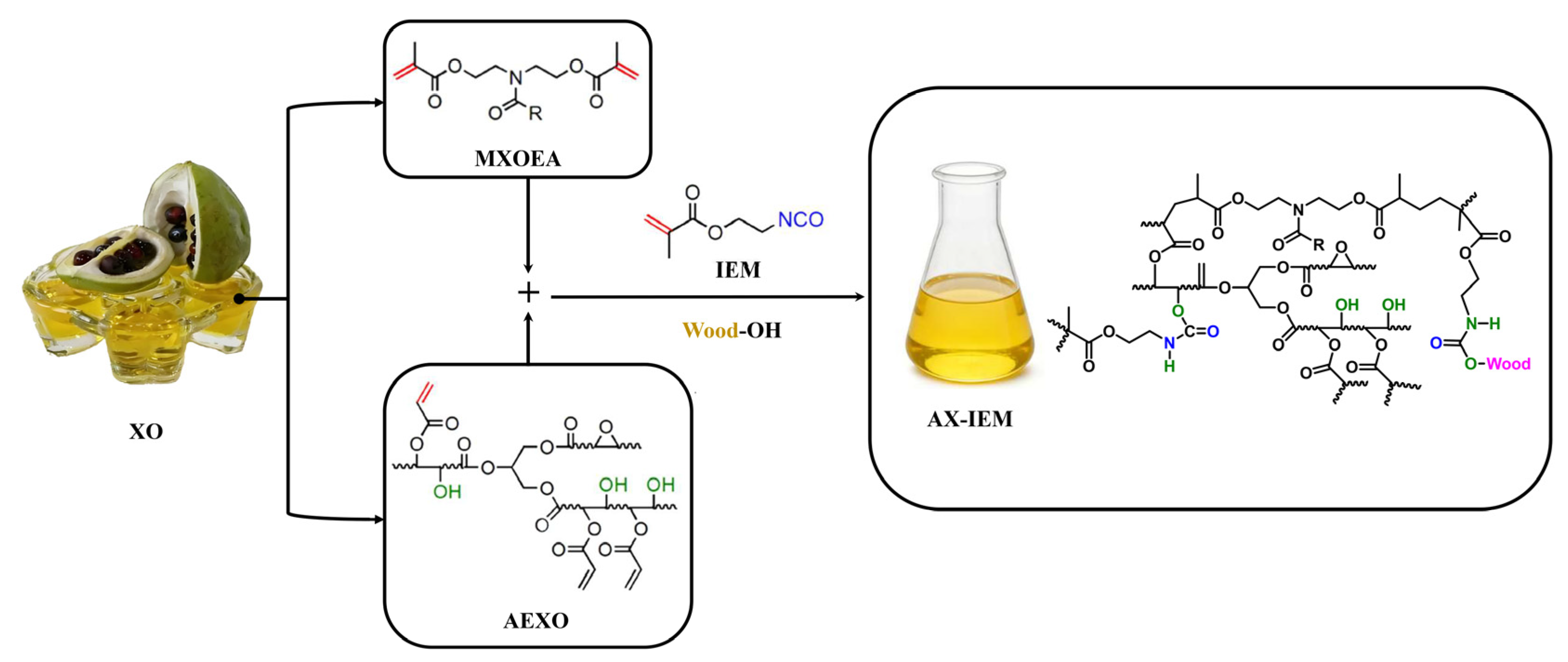
Finally, the prepared MXOEA and AEXO were mixed, followed by the addition of 2-isocyanatoethyl methacrylate (IEM) and benzoyl peroxide (BPO) at 2% by mass of the total adhesive. The mixture was stirred at 300 rpm for 10 min at room temperature to obtain the final Xanthoceras sorbifolium Bunge oil-based adhesive (Figure 1).
Figure 1.
Crosslinking mechanism of AEXO, MXOEA, and IEM, and the possible reactions between the adhesives and wood.
2.3. Preparation of Plywood Specimens
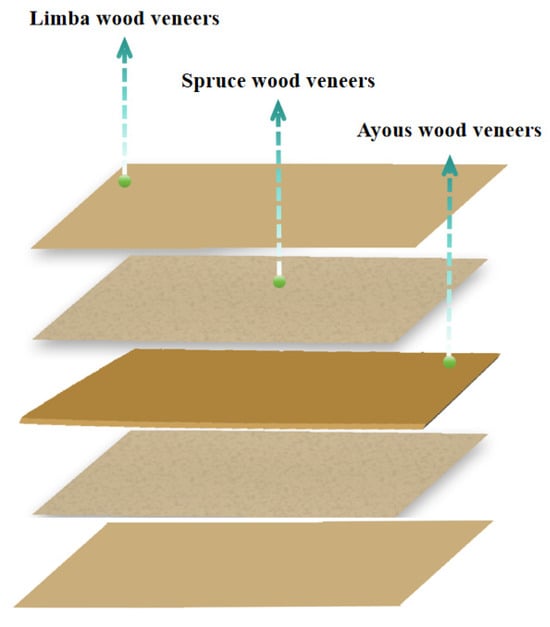
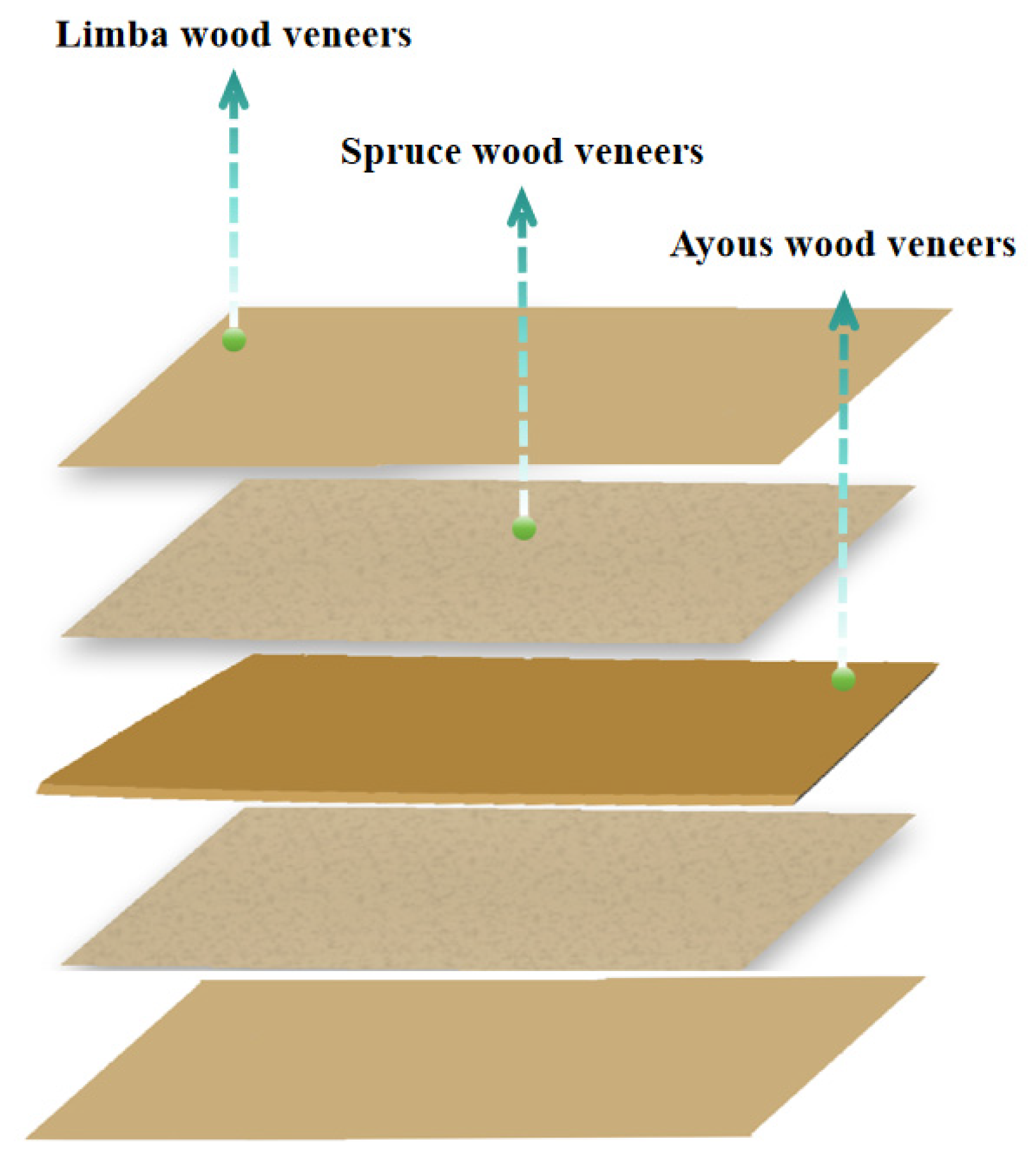
The prepared Xanthoceras sorbifolium Bunge oil-based adhesive was placed in a vacuum oven for degassing to remove internal bubbles and residual volatile substances. Five layers of wood veneers were treated using a single-sided gluing process, with the adhesive application amount controlled at 180 g/m2. After uniformly spreading the adhesive with a brush, the veneers were assembled in a perpendicular grain direction. After open aging at room temperature for 15 min, the assembly was placed in a hot press, and the hot pressing parameters were set as follows: temperature 120 °C, pressure 1.0 MPa, time 480 s, to complete the preparation of the five-layer plywood. The processing parameters, including hot pressing temperature, pressure, time, and adhesive application amount, were optimized through preliminary single-factor experiments. Under these conditions, the prepared plywood achieved the best overall mechanical properties. After being removed from the hot press, the pressed panel should be immediately wrapped and sealed with plastic cling film and placed in an insulated foam box. After returning to room temperature for 24 h, the plywood was cut into samples and subjected to performance testing (Figure 2).
Figure 2.
Schematic diagram of symmetric veneer assembly for plywood (limba/spruce/ayous/spruce/limba).
2.4. Methods
The chemical structure of the cured adhesive was characterized by Fourier transform infrared spectroscopy (FTIR, Nicolet iS20, Thermo Fisher Scientific, USA, Waltham, MA, USA) using KBr pellets, with spectra recorded over a range of 4000–400 cm−1 at a resolution of 4 cm−1. Morphological observations were performed using scanning electron microscopy (SEM, Phenom Pro, Chongqing Napson Scientific Instruments Co., Ltd., Chongqing, China) at an accelerating voltage of 10 kV. Specimens were sputter-coated with gold before imaging, and both secondary electron (SE) and backscattered electron (BSE) detectors were employed at a magnification of 2000×. Rheological properties of the liquid adhesives were evaluated using a rotational rheometer under a nitrogen atmosphere, with a constant shear rate of 10 s−1 and a temperature ramp from 25 °C to 140 °C at 10 °C/min. Thermal stability was analyzed by a simultaneous thermal analyzer (TG-DSC, STA200, HITACHI, Tokyo, Japan). Samples (approximately 10–15 mg) were heated from room temperature to 800 °C at 10 °C/min under a nitrogen flow of 20 mL/min. Dynamic thermomechanical properties were investigated using a dynamic mechanical analyzer in single cantilever mode with a three-point bending fixture. Cured specimens with dimensions of 60 mm × 15 mm × 4 mm were tested from room temperature to 160 °C at a heating rate of 5 °C/min. Surface wettability was characterized by contact angle measurements, where 2 μL of adhesive was deposited onto the wood surface, and the contact angle was recorded within 1 s. Five measurements were performed for each sample, and the average value was reported.
The modulus of rupture (MOR), modulus of elasticity (MOE), as well as dry and wet bonding strength of the plywood specimens were tested according to GB/T 17657-2022 “Test methods of evaluating the properties of wood-based panels and surface decorated wood-based panels” [18], using a computer-controlled electronic universal testing machine (WDW-20A, Tianchen Machine Manufacturing Co., Ltd., Jinan, China). The testing conditions for modulus of rupture and modulus of elasticity were as follows: specimen length was set as (20t + 50) mm based on thickness t, width was 50 mm, span length was 20t mm, and loading speed was 20 mm/min. For bonding strength tests, the specimen dimensions were 100 mm × 25 mm, and the loading speed was 5 mm/min. For wet-state specimens, they were immersed in water at 63 °C for 3 h, then taken out and cooled for 10 min before testing. The impact strength of the adhesive bulk was determined according to GB/T 1043.1-2008 “Plastics—Determination of Charpy impact properties—Part 1: Non-instrumented impact test” [19], using a charpy impact tester, with cured specimen dimensions of 80 mm × 10 mm × 4 mm. All mechanical tests were performed in triplicate, and the average value of the three parallel specimens was taken as the result.
3. Results and Discussion
3.1. Effect of MXOEA/AEXO Mass Ratio on Plywood Mechanical Properties
When the modifier (IEM) content was 5% of the total mass of the Xanthoceras sorbifolium Bunge oil-based adhesive, MXOEA and AEXO were blended at different mass ratios to investigate the effect of the Xanthoceras sorbifolium Bunge oil-based adhesive with different MXOEA/AEXO blending mass ratios on the mechanical properties of plywood.
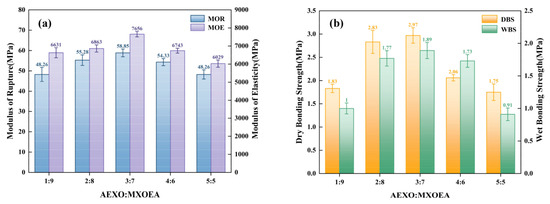
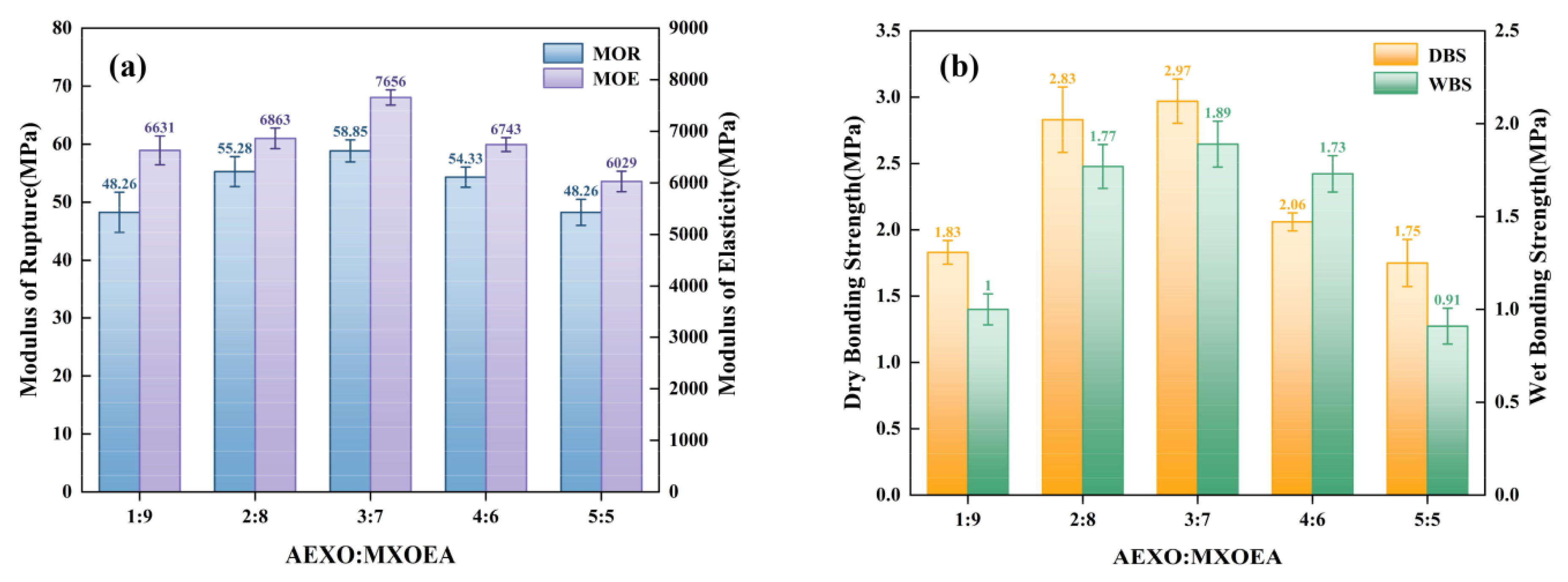
According to Figure 3 and Table 1, as the AEXO/MXOEA blending mass ratio increased, the modulus of rupture, modulus of elasticity, and dry and wet bonding strength of the plywood all exhibited a trend of first increasing and then decreasing. When the proportion of MXOEA was low, its crosslinking ability was limited; when the proportion was too high, it led to insufficient rigidity of the adhesive, reducing its resistance to deformation after curing, and the mechanical properties were not optimal. When the AEXO/MXOEA mass ratio was 3:7, on the one hand, the acrylate groups in AEXO and the double bonds in MXOEA formed a chemical crosslinking structure via free-radical polymerization; on the other hand, the adhesive had a suitable viscosity at this ratio, which facilitated its penetration into the cell lumens and microporous structures of the wood. Studies have shown that the penetration depth and distribution uniformity of the adhesive in wood directly affect the mechanical properties of the bonded interface. A moderate viscosity facilitates good physical penetration, producing a mechanical interlocking effect in the pores after curing, thereby further enhancing the interfacial bonding strength [20]. The synergistic effect of chemical crosslinking and physical interlocking enabled the plywood to achieve optimal mechanical properties. When AEXO was in excess, the viscosity of the adhesive system increased, its ability to fill wood pores decreased, and the physical penetration was weakened, leading to reduced bonding strength. Conversely, when MXOEA was in excess, the adhesive viscosity was too low and its fluidity too high, making it prone to drain out of the wood pores before curing, which was detrimental to the formation of effective mechanical interlocking and also resulted in decreased mechanical properties. According to GB/T 9846-2015 “Plywood for general use”, the bonding strength requirement for Class II plywood is ≥0.70 MPa [21]. The wet bonding strength of the plywood prepared in this study ranged from 0.91 ± 0.10 to 1.89 ± 0.12 MPa, and the lowest value already exceeded the standard requirement, indicating that the Xanthoceras sorbifolium Bunge oil-based adhesive exhibited good water resistance at all mixing ratios.
Figure 3.
Effect of the blending mass ratio of AEXO and MXOEA on the mechanical properties of plywood. (a) Effect of the blending mass ratio of AEXO and MXOEA on the MOR and MOE of plywood. (b) Effect of the blending mass ratio of AEXO and MXOEA on the dry/wet bonding strength of plywood.
Table 1.
Mechanical properties of the resulting plywood.
3.2. Effect of IEM Content on Plywood Mechanical Properties
When the blending mass ratio of MXOEA to AEXO was 7:3, the modifier (IEM) was added to the adhesive to investigate the effect of the Xanthoceras sorbifolium Bunge oil-based adhesive with different modifier (IEM) contents on the mechanical properties of plywood.
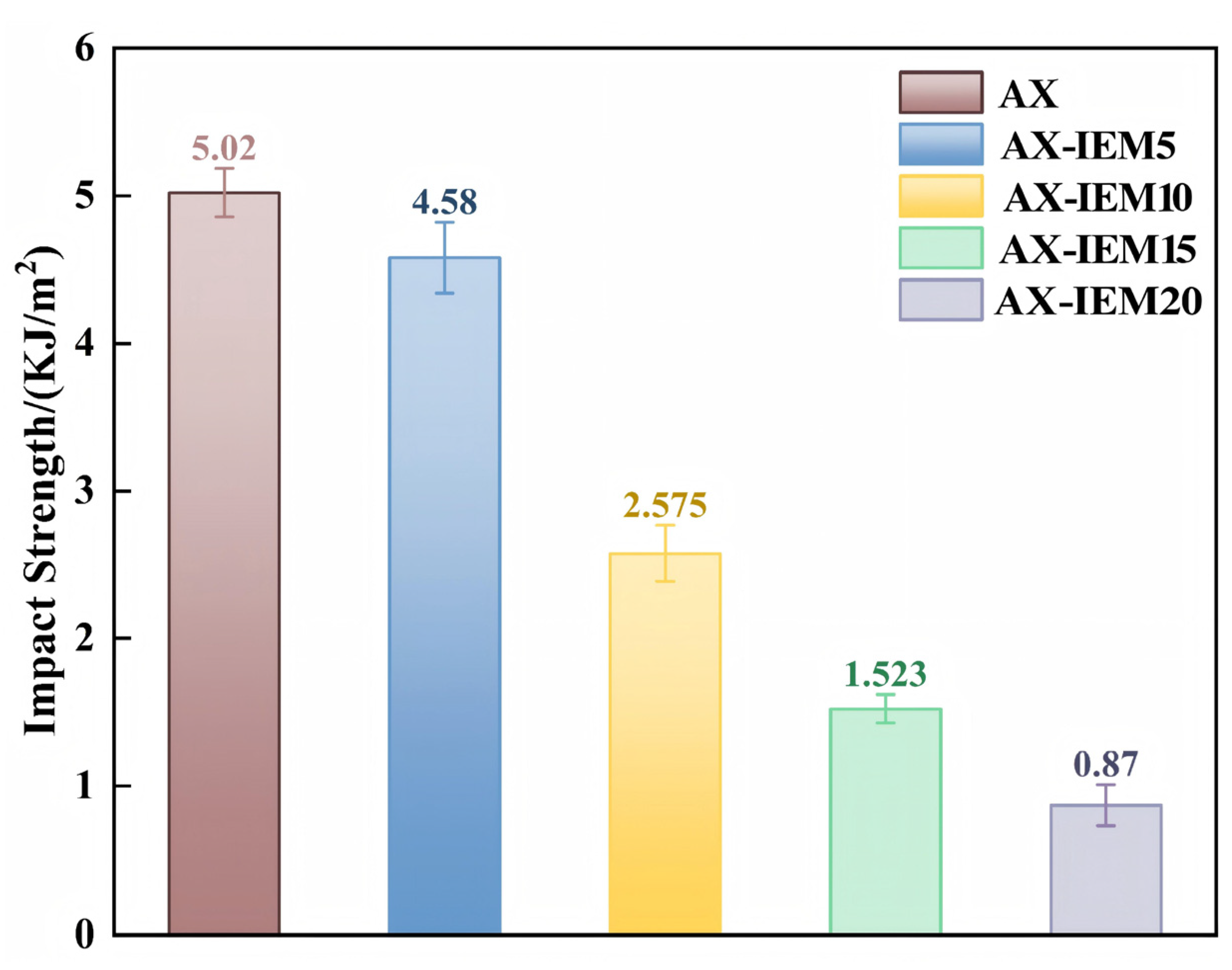
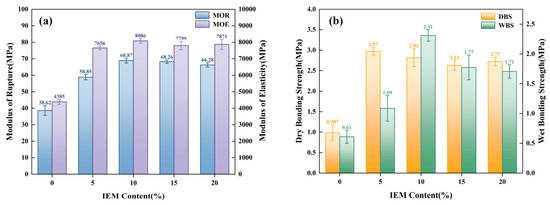
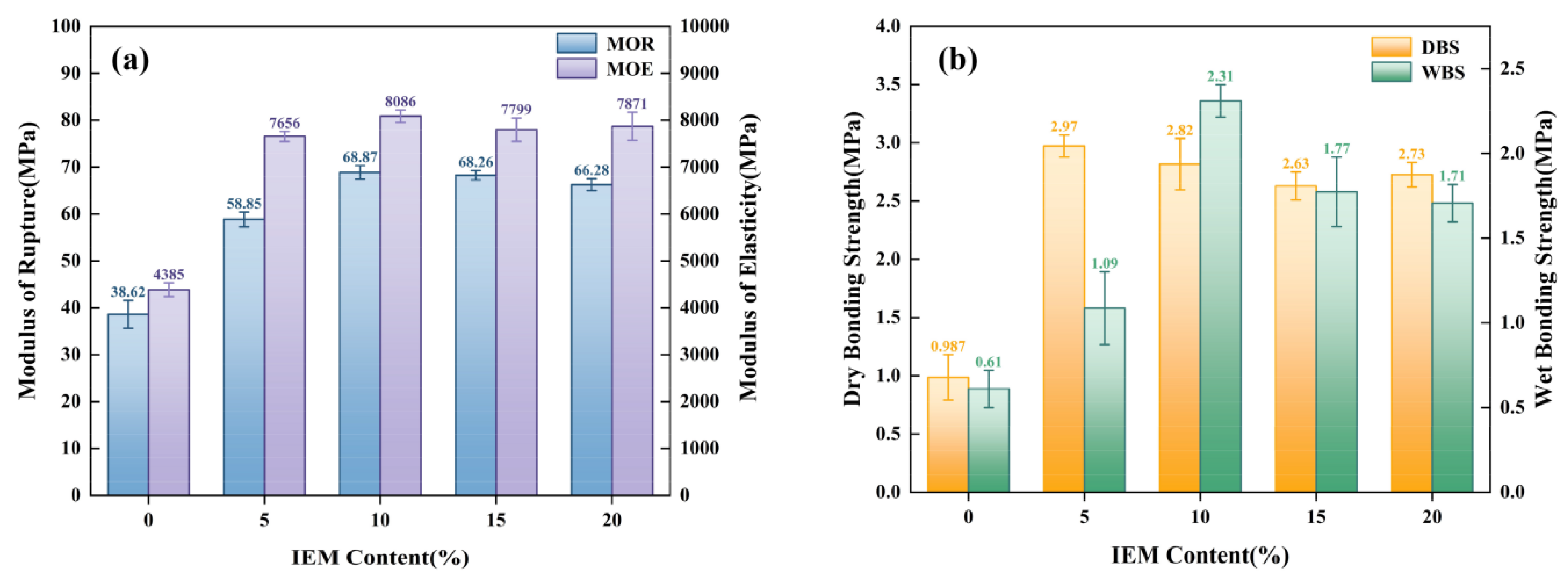
According to Figure 4 and Table 2, as the IEM content increased, the modulus of rupture and modulus of elasticity of the plywood both showed a trend of first increasing and then slightly decreasing, while the dry and wet bonding strengths first increased and then decreased. When no IEM was added, the adhesive relied solely on free-radical polymerization of the double bonds in AEXO and MXOEA for crosslinking, resulting in low crosslinking density, insufficient interfacial bonding strength, high system viscosity, and poor fluidity, leading to unsatisfactory mechanical properties of the plywood. When the IEM content was 10%, its isocyanate groups (-NCO) reacted with the hydroxyl groups (-OH) of wood to form urethane bonds. The molar ratio of -NCO to -OH was approximately 0.955, close to stoichiometric balance, resulting in a relatively complete reaction and significantly improved interfacial bonding strength. When the IEM content was increased to 15%, the crosslinking density further increased, but excessive crosslinking led to increased brittleness of the adhesive. Impact strength tests also confirmed this: the impact strength of AX-IEM10 was 5.02 kJ/m2, while that of AX-IEM15 decreased to 2.93 kJ/m2. This indicates that determining the IEM content is a comprehensive optimization process: at an IEM content of 10%, the bonding strength and toughness reach an optimal balance; a higher IEM content, although increasing crosslinking density, sacrifices toughness. At the same time, the addition of IEM also reduces the system viscosity, which is detrimental to the effective retention of the adhesive in the wood pores, collectively leading to a decrease in mechanical properties. In this study, except for the adhesive without IEM, which had a wet bonding strength of 0.61 ± 0.11 MPa, falling below the requirement of ≥0.70 MPa for Class II plywood [21], after adding 5%–20% IEM, the strength ranged from 1.092 ± 0.22 to 2.31 ± 0.10 MPa, all meeting the standard requirement.
Figure 4.
Effect of IEM addition on the mechanical properties of plywood. (a) Effect of IEM addition on the MOR and MOE of plywood; (b) Effect of IEM addition on the dry/wet bonding strength of plywood.
Table 2.
Mechanical properties of the resulting plywood.
3.3. FTIR Analysis
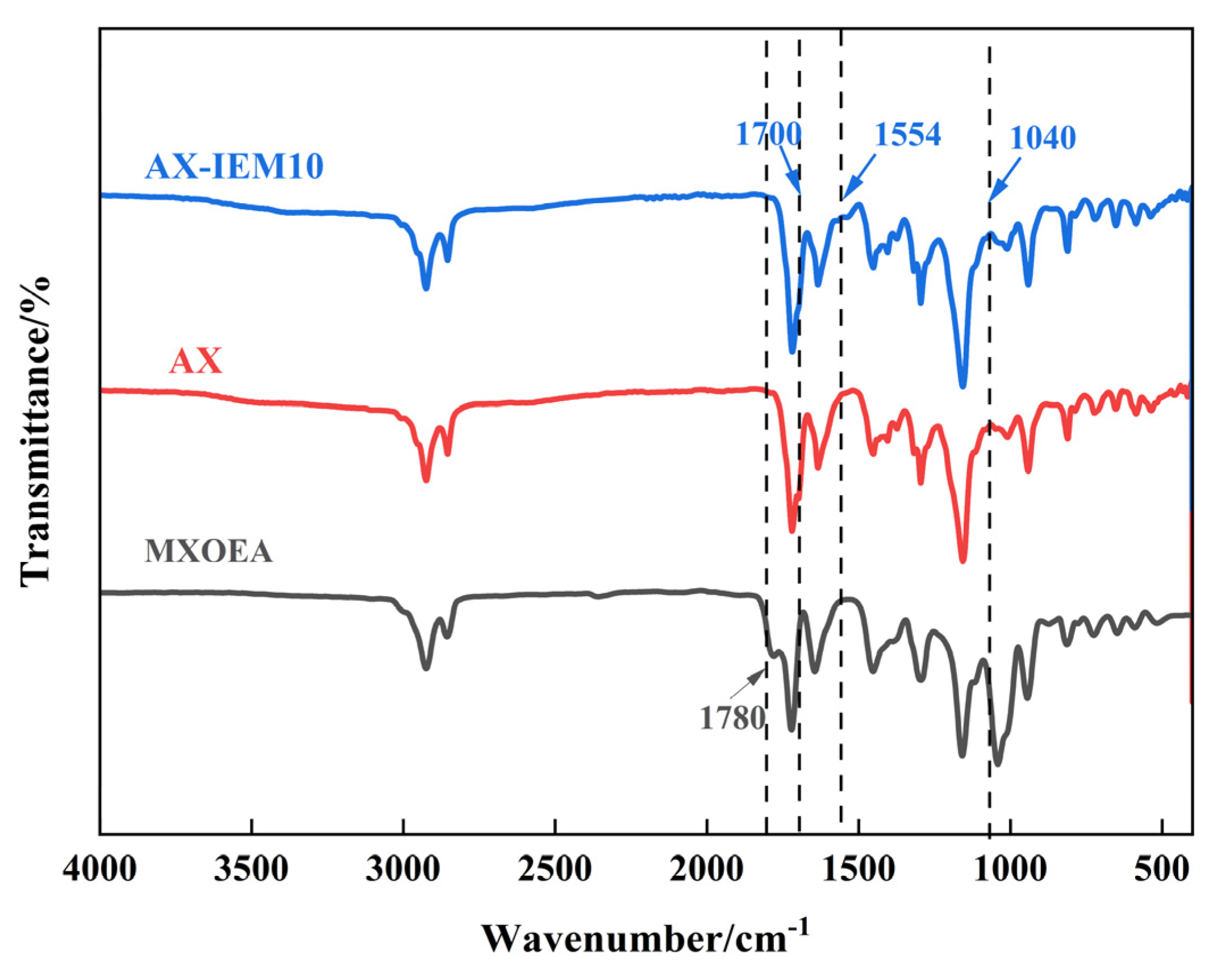
FTIR characterization was performed on MXOEA, adhesive AX (the Xanthoceras sorbifolium Bunge oil-based adhesive without IEM), and AX-IEM10 (the Xanthoceras sorbifolium Bunge oil-based adhesive with 10% IEM). The results are shown in Figure 5. For MXOEA, the stretching vibration peak of the methacrylate carbonyl (C=O) appeared at 1782 cm−1, and the symmetric stretching vibration peak of the ester bond (C-O-C) appeared at 1040 cm−1, indicating that the diester group was successfully introduced into its structure. In the spectrum of AX, the carbonyl peak of MXOEA shifted to 1720 cm−1 and overlapped with the ester peak of AEXO, while the characteristic peak of the ester bond at 1040 cm−1 disappeared due to the formation of the crosslinking network, indicating that MXOEA and AEXO formed a three-dimensional crosslinked structure via free-radical polymerization of the double bonds. Compared with AX, AX-IEM10 exhibited a new peak at 1700 cm−1, attributed to the urethane bond (-NH-CO-O-), and a peak at 1554 cm−1 corresponding to the N-H bending vibration of the urethane group [14], confirming that the isocyanate groups (-NCO) in IEM reacted with the hydroxyl groups in AEXO. Furthermore, no characteristic -NCO peak was observed around 2270 cm−1, indicating that the isocyanate groups had almost completely reacted [22]. These results demonstrate that IEM was successfully incorporated into the crosslinking network via chemical bonding.
Figure 5.
The FT-IR spectra of MXOEA, AX and AX-IEM10.
3.4. SEM Analysis
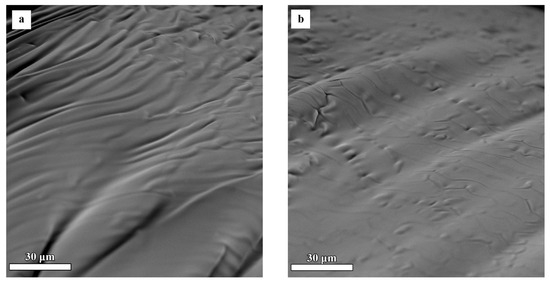
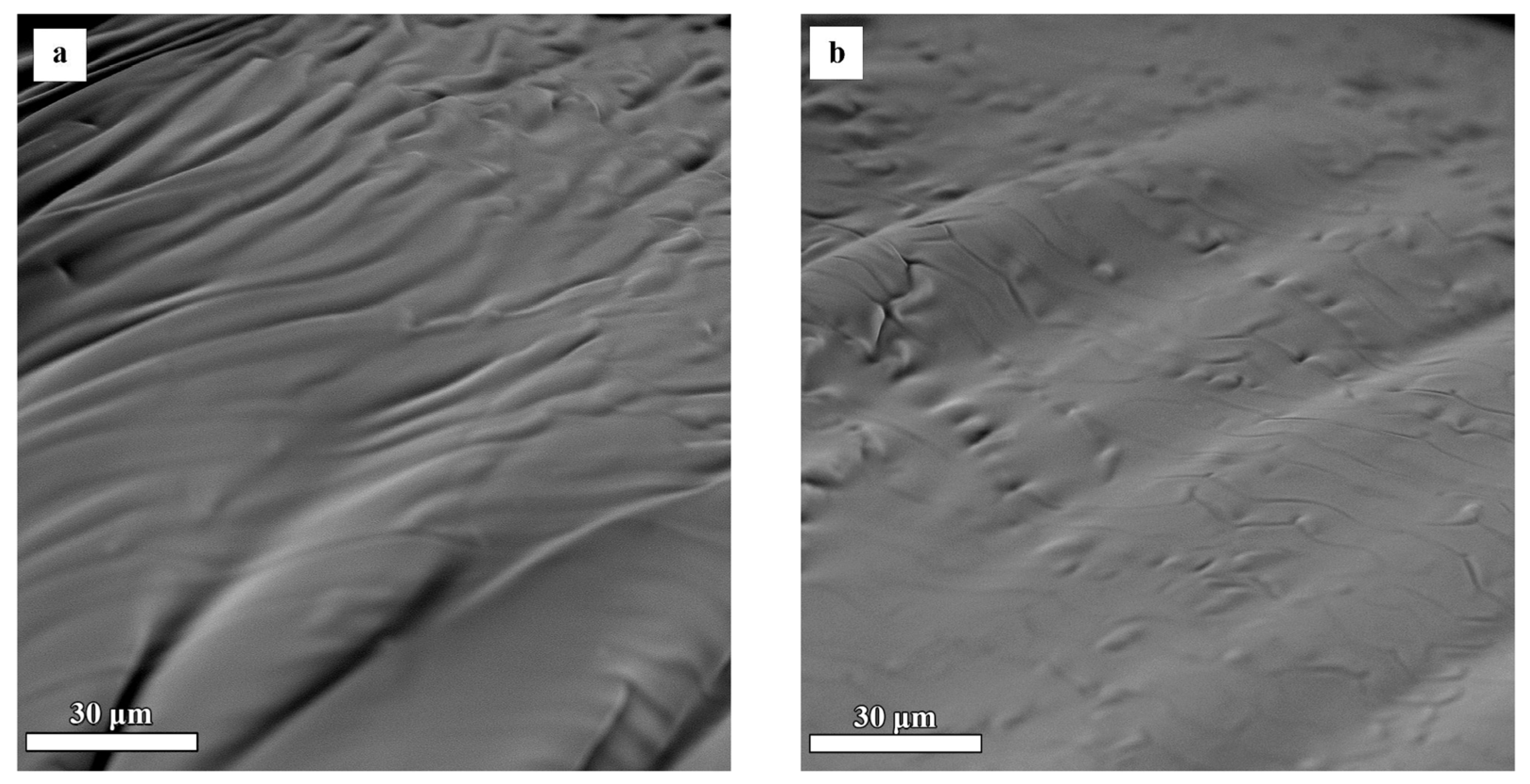
The fracture morphologies of AX and AX-IEM10 were characterized by scanning electron microscopy (SEM), and the results are shown in Figure 6. The SEM image of AX shows an irregular ravine-like morphology on the fracture surface (Figure 6a), indicating significant plastic deformation of the material during fracture [8,23], which is attributed to the molecular mobility of the flexible fatty acid long chains in AX and its low crosslinking density. Under stress, the flexible fatty acid long chains absorb energy through slippage and rearrangement, resulting in a layered fold structure on the fracture surface. In contrast, the fracture surface of AX-IEM10 is smooth and flat (Figure 6b), with a single and unbranched crack propagation path, exhibiting typical brittle fracture characteristics. This phenomenon indicates that the introduction of IEM significantly increases the crosslinking density of the adhesive, forming a dense three-dimensional network structure. The highly crosslinked three-dimensional network restricts the mobility of molecular chains, making it difficult for the material to dissipate energy through plastic deformation during fracture, ultimately resulting in a brittle fracture mode.
Figure 6.
SEM of the fracture surfaces of AX and AX-IEM10: (a) AX and (b) AX-IEM10.
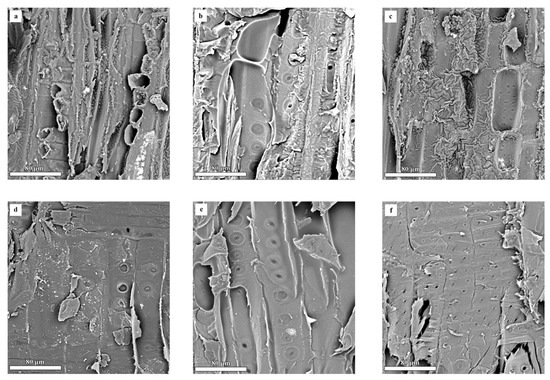
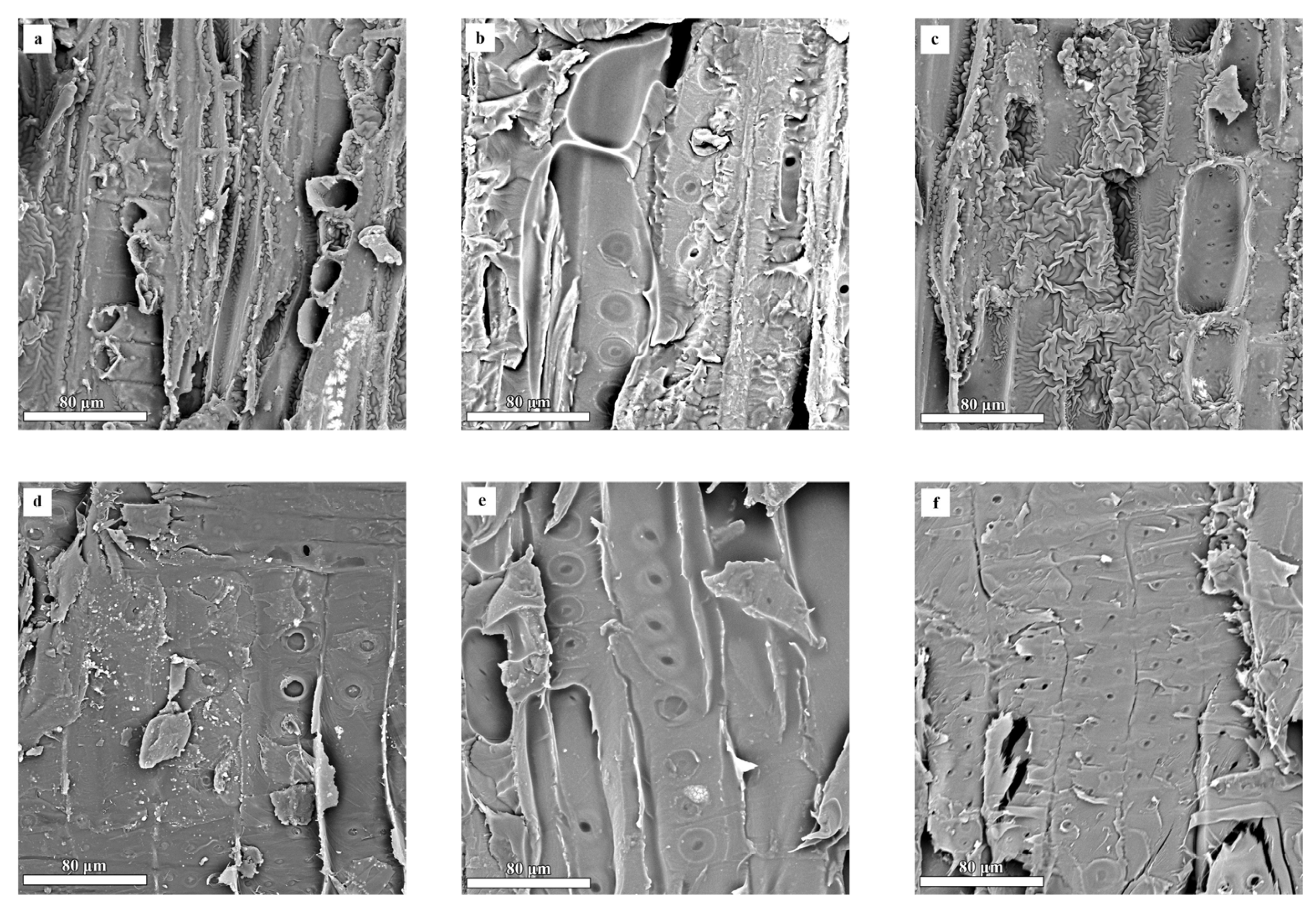
The interfacial debonding morphologies of AX and AX-IEM10 with ayous, spruce, and limba wood were analyzed by scanning electron microscopy (SEM), and the results are shown in Figure 6. In the ayous wood interface, AX (Figure 7a) mainly relied on physical penetration, exhibiting irregular ravines and local agglomerations at the interface; whereas AX-IEM10 (Figure 7d) showed a smooth and flat surface. On the one hand, this is attributed to its increased bulk crosslinking density, resulting in a denser cured adhesive layer; on the other hand, IEM reduced the system viscosity, enhanced fluidity, and strengthened the physical penetration effect. Meanwhile, the isocyanate groups (-NCO) reacted with wood hydroxyl groups (-OH) to form urethane bonds, creating chemical crosslinking and significantly improving interfacial bonding. In the spruce wood interface, the adhesive layer of AX (Figure 7b) showed debonding cracks [24], likely due to insufficient crosslinking degree; whereas AX-IEM10 (Figure 7e) achieved tight and uniform bonding through chemical bonding. In the limba wood interface, AX (Figure 7c) exhibited edge warping due to agglomeration of flexible segments; while the adhesive layer of AX-IEM10 (Figure 7f) was dense and uniform, with significantly improved flatness. These results indicate that IEM modification effectively improves the interfacial bonding quality between the adhesive and different wood species through the synergistic effects of increased adhesive layer densification, enhanced physical penetration, and chemical crosslinking.
Figure 7.
Interfacial debonding morphologies of AX and AX-IEM10 with wood: (a) debonding morphology of AX with ayous wood; (b) debonding morphology of AX with spruce wood; (c) debonding morphology of AX with limba wood; (d) debonding morphology of AX-IEM10 with ayous wood; (e) debonding morphology of AX-IEM10 with spruce wood; and (f) debonding morphology of AX-IEM10 with limba wood.
3.5. Rheological Analysis
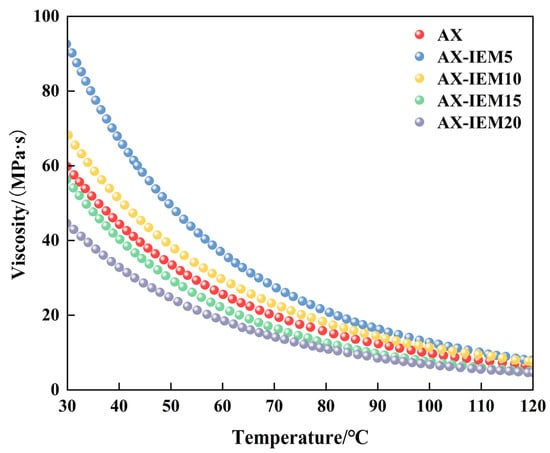
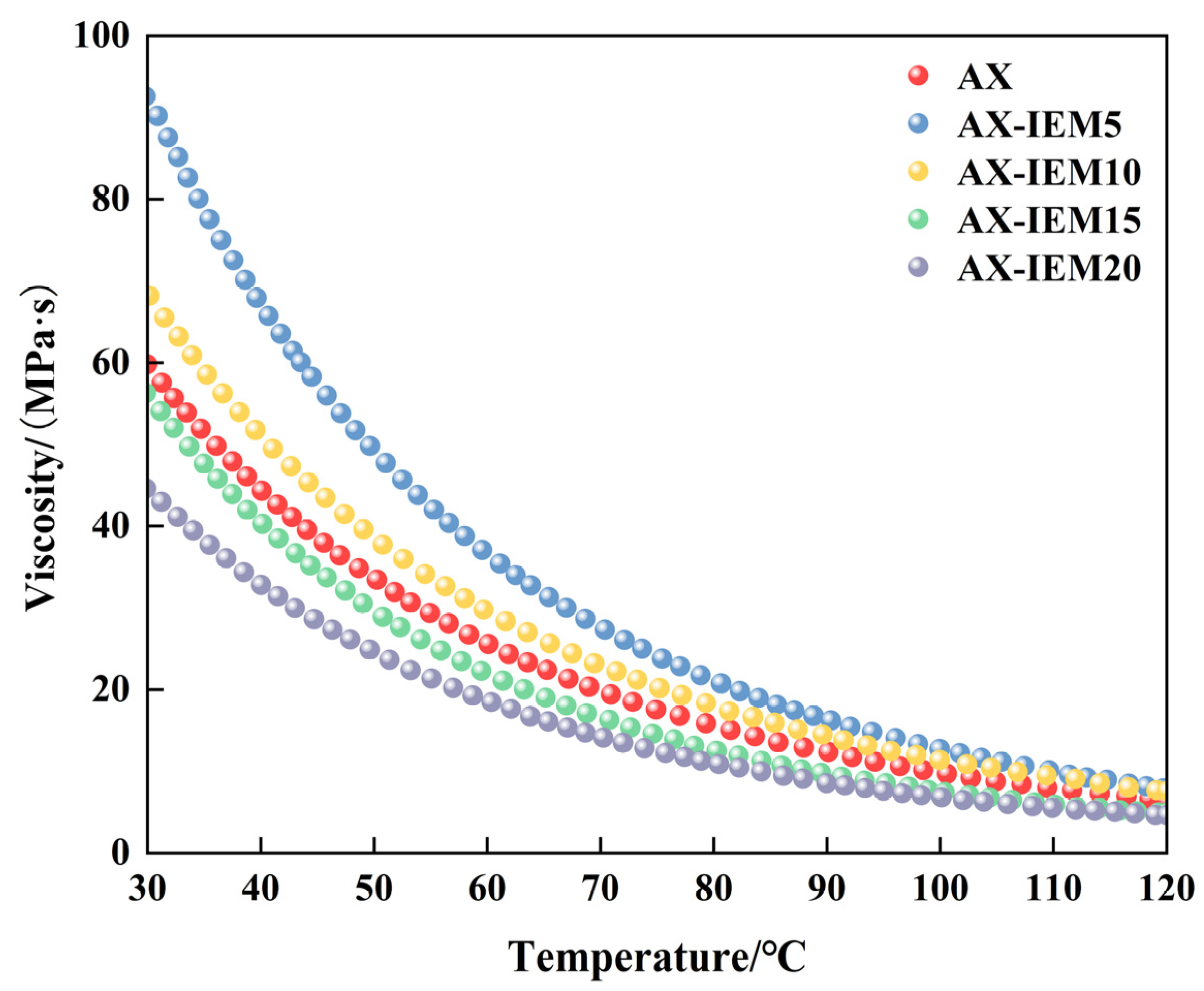
The viscosity–temperature characteristics of the liquid Xanthoceras sorbifolium Bunge oil-based adhesive were analyzed by rheological testing, and the variation in viscosity with temperature is shown in Figure 8. The viscosity of all adhesives decreased exponentially with increasing temperature. AX exhibited the lowest viscosity at 30 °C, indicating high molecular chain flexibility and low entanglement density. After the introduction of 5 wt% IEM, the viscosity slightly increased, which is attributed to the branched structures formed by urethane bonds generated from the prepolymerization of isocyanate groups (-NCO) and hydroxyl groups (-OH), increasing the intermolecular forces within the system. When the IEM content increased to 10–20 wt%, the viscosity decreased significantly. This is because, on the one hand, excess IEM acts as a small-molecule diluent that reduces the entanglement density of molecular chains [24]; on the other hand, the high reactivity of IEM accelerates free-radical chain termination, inhibiting the continued growth of molecular chains [25], resulting in enhanced overall fluidity of the system. The viscosities of all adhesives in the figure were below 500 mPa·s, all meeting the viscosity processing requirements for composite material preparation.
Figure 8.
The viscosity–temperature curve of Xanthoceras sorbifolium Bunge oil-based adhesive.
3.6. Thermal Stability Analysis
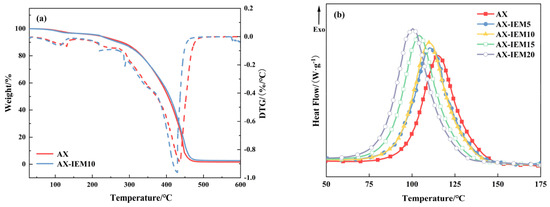
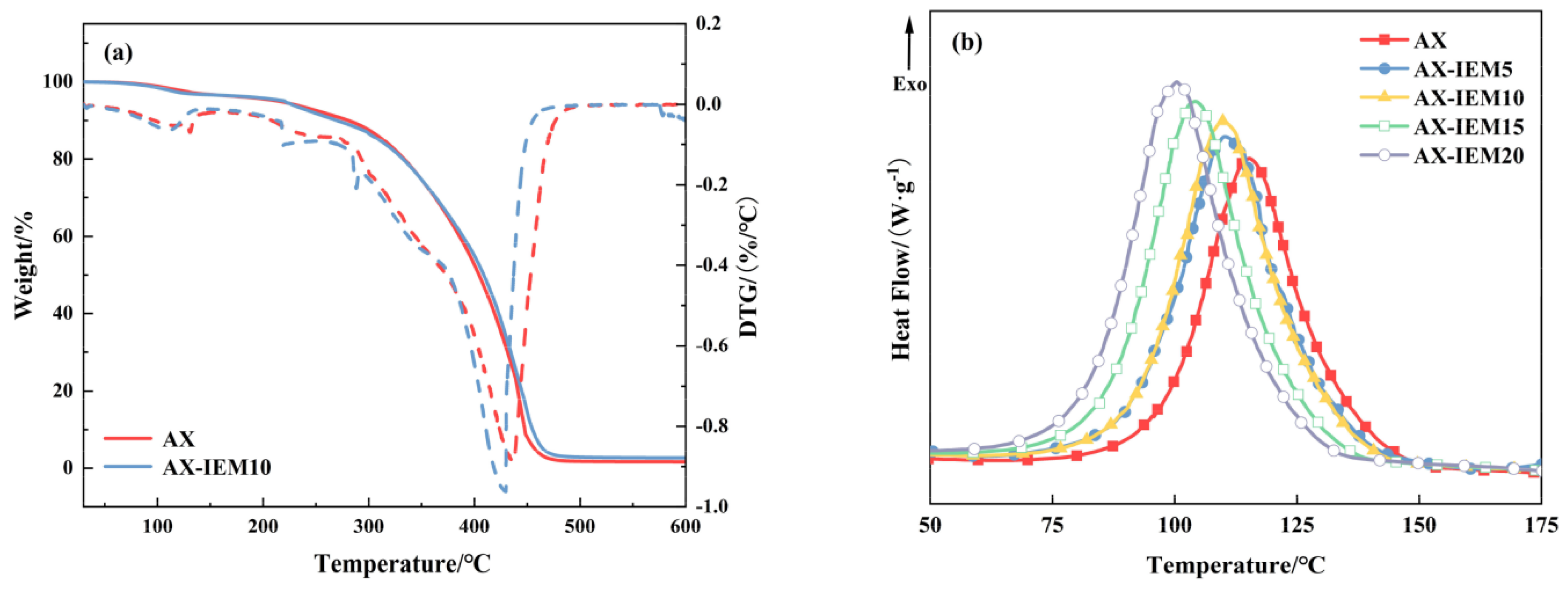
The thermal stability of several Xanthoceras sorbifolium Bunge oil-based adhesives was characterized by TG and DSC analyses. As shown in Figure 9a, the TG curves indicate that both AX and AX-IEM10 exhibited no significant weight loss in the range of 0–269 °C, demonstrating good thermal stability. In the range of 269–496 °C, both adhesives underwent three-stage decomposition: initial ester bond cleavage and fatty acid chain decomposition (269–320 °C), main chain ester bond pyrolysis (320–420 °C), and oxidative carbonization of the carbon chains (420–496 °C). The onset decomposition temperature of AX-IEM10 was slightly higher than that of AX, which is attributed to the suppression of molecular chain thermal motion by the crosslinked network [15]. The DSC curves show that AX exhibited a solvent evaporation peak at 130 °C and a carbonization peak at 436 °C, while AX-IEM10 displayed a four-stage weight loss corresponding to solvent evaporation (112 °C), decomposition of unreacted -NCO (220 °C), weak bond cleavage (288 °C), and carbon chain carbonization (428 °C). The improved thermal stability of its ester bonds originates from the enhanced intermolecular interactions due to crosslinking.
Figure 9.
Thermogravimetric (TG) and derivative thermogravimetric (DSC) curves of the Xanthoceras sorbifolium Bunge oil-based adhesive: (a) TG and DTG curves of AX and AX-IEM; (b) DSC curve of Xanthoceras sorbifolium Bunge oil-based adhesive.
Figure 9b shows that the curing process involves the combined action of free-radical polymerization and step-growth polymerization. The introduction of IEM significantly increased the exothermic peak intensity, because its -NCO groups reacted with the -OH groups in AEXO to form urethane bonds, constructing a three-dimensional network; meanwhile, IEM acted as a reactive diluent, reducing system viscosity and promoting diffusion, lowering the initial curing temperature from 91.98 °C for AX to 72.79 °C for AX-IEM20. The synergy between chemical crosslinking and physical dilution improved processing efficiency while maintaining network strength [26], indicating that IEM optimizes the thermal behavior of the adhesive.
3.7. Dynamic Thermomechanical Analysis
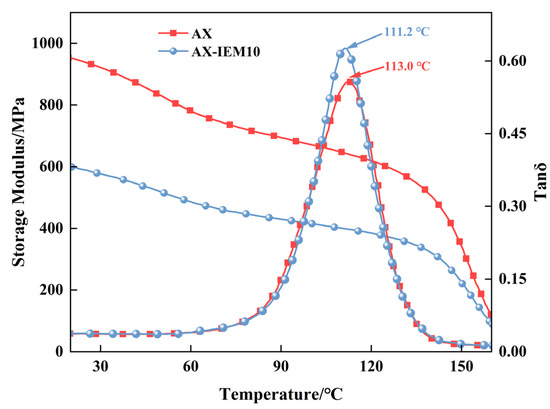
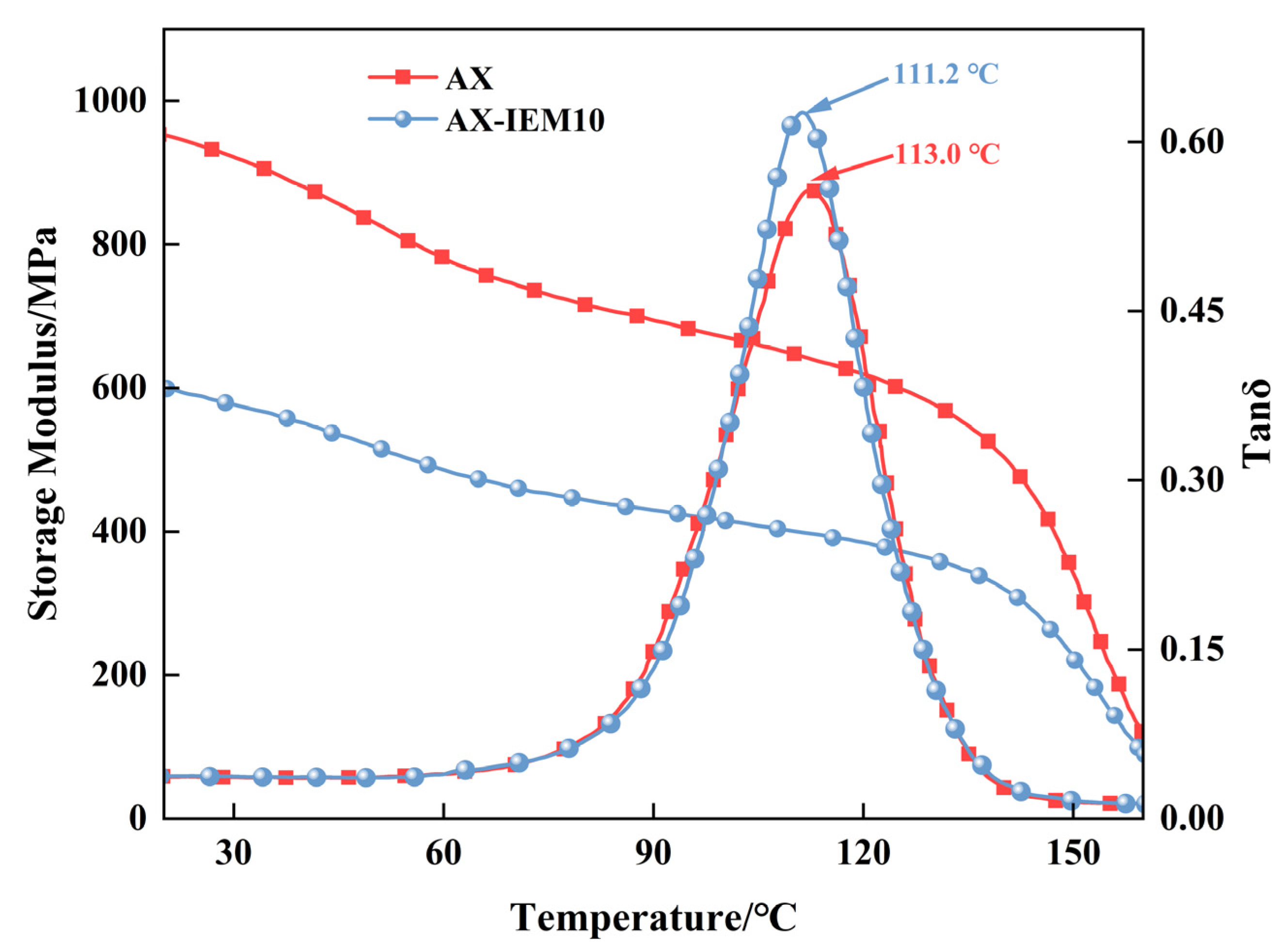
The thermomechanical properties of AX and AX-IEM10 adhesives were characterized by dynamic mechanical analysis (DMA), and the results are shown in Figure 10. As the temperature increased from 20 °C to 140 °C, the storage modulus (E′) of both adhesives decreased significantly, which is associated with the enhanced mobility of molecular chains. The E′ values of AX-IEM10 were higher than those of AX at all temperatures, indicating that its higher crosslinking density effectively suppressed molecular chain relaxation [24]. The loss factor (tan δ) curves of both adhesives exhibited a single characteristic peak, indicating that the materials have a homogeneous structure. The glass transition temperatures (Tg) determined from the tan δ peaks were 111.2 °C for AX and 113.0 °C for AX-IEM10, indicating that the introduction of IEM had no significant effect on Tg. These results indicate that IEM primarily enhances the storage modulus by increasing the crosslinking density, without significantly altering the Tg or the homogeneous nature of the materials.
Figure 10.
DMA and loss factor (tan δ) curves of AX and AX-IEM10.
3.8. Impact Strength Analysis
The impact properties of the Xanthoceras sorbifolium Bunge oil-based adhesive were investigated by pendulum impact testing. As shown in Figure 11, the experimental data indicate that with increasing IEM content, the impact strength significantly decreased from 5.02 kJ/m2 for AX to 0.87 kJ/m2 for AX-IEM20. When the IEM content exceeded 10% (from AX-IEM10 to AX-IEM15), the impact strength decreased by approximately 40%, indicating that the significantly increased crosslinking density restricted molecular chain motion, and the fracture mode transitioned from ductile fracture (energy absorption) to brittle fracture (rapid crack propagation) [27]. AX, with its lower crosslinking degree, allowed molecular chains to absorb energy through slippage and plastic deformation, thus exhibiting higher impact strength; whereas AX-IEM20, with its excessively high crosslinking density, restricted the plastic deformation capability of the molecular chains, resulting in increased brittleness and significantly reduced toughness.
Figure 11.
Impact strength of Xanthoceras sorbifolium Bunge oil-based adhesive.
3.9. Surface Wettability Analysis
The differences in surface wetting behavior of water, AX, and AX-IEM10 adhesive with wood were revealed by contact angle measurements. As shown in Figure 12, the contact angles of water, AX, and AX-IEM10 with the wood surface were 65.0°, 53.1°, and 46.7°, respectively. This difference is attributed to the fact that the ester groups and isocyanate groups (-NCO) of IEM in AX-IEM10 can undergo polar interactions with the hydroxyl groups (-OH) on the wood surface, effectively improving the wetting performance and interfacial bonding strength of the adhesive; whereas the AX adhesive, lacking reactive functional groups, exhibits limited interfacial affinity. Furthermore, the contact angle of water on wood was higher than that of both adhesives, further confirming that AX and AX-IEM10 possess superior wood interfacial affinity and interfacial bonding advantages compared with water. These results indicate that IEM significantly improves the surface wetting ability of the adhesive on wood through the synergistic effect of polar groups.
Figure 12.
Contact angles of deionized water, AX, and AX-IEM10 on wood veneers. (a) Contact angle of distilled water on wood veneer. (b) Contact angle of AX on wood veneer. (c) Contact angle of AX-IEM10 on wood veneer.

3.10. Performance Comparison with Conventional Adhesives
To objectively evaluate the performance level of the Xanthoceras sorbifolium Bunge oil-based adhesive developed in this study, it was compared with three typical commercial wood adhesives: urea-formaldehyde resin (UF), phenolic resin (PF), and polymeric MDI (pMDI). The performance data of the conventional adhesives were sourced from published literature and are summarized in Table 3.
Table 3.
Performance comparison between Xanthoceras sorbifolium Bunge oil-based adhesive and conventional commercial adhesives.
As shown in Table 3, the dry bonding strength (3.21 MPa) and wet bonding strength (2.32 MPa) of the adhesive prepared in this study (AX-IEM10) were significantly higher than those of urea-formaldehyde resin 1.21/0.96 MPa and phenolic resin 1.59/0.96 MPa, and the wet strength was slightly better than that of polymeric MDI (2.04 MPa). In terms of bending properties, the modulus of rupture (68.85 MPa) and modulus of elasticity (8086 MPa) were also higher than the literature-reported values of the three conventional adhesives (51.63–67.00 MPa/5175–7096 MPa). It is worth noting that urea-formaldehyde resin and phenolic resin suffer from formaldehyde emission, while polymeric MDI is formaldehyde-free but relies on petrochemical resources; in contrast, the Xanthoceras sorbifolium Bunge oil-based adhesive developed in this study uses renewable vegetable oil as a raw material and emits no formaldehyde, demonstrating significant advantages in environmental friendliness and sustainability. It should be noted that the performance data of conventional adhesives are sourced from different literature, with variations in wood species, hot-pressing processes, and testing conditions. Therefore, the comparison in Table 3 is intended only as a reference for performance levels and should not be regarded as a strictly controlled comparative study. Nevertheless, this comparison still provides a valuable reference for evaluating the performance of the present adhesive. In summary, the Xanthoceras sorbifolium Bunge oil-based adhesive developed in this study exhibits good bonding performance while being environmentally friendly and based on renewable resources, demonstrating preliminary feasibility as a substitute for conventional petroleum-based adhesives.
4. Conclusions
In this study, a formaldehyde-free bio-based thermosetting adhesive was successfully prepared using Xanthoceras sorbifolium Bunge oil as a raw material. By introducing IEM, the interfacial bonding performance between the adhesive and wood was effectively enhanced. FTIR analysis indicated that MXOEA and AEXO formed a three-dimensional crosslinked structure via free-radical polymerization of double bonds, while IEM was successfully incorporated into the crosslinking network through chemical bonding. Rheological and wettability analyses showed that the appropriate viscosity and wettability enabled the adhesive to effectively penetrate wood pores, forming a mechanical interlocking structure and further improving interfacial bonding performance. Scanning electron microscopy (SEM) observations revealed that the introduction of IEM transformed the fracture surface of the adhesive from a dimple structure to a smooth brittle fracture morphology, with a significant increase in crosslinking density. When the mass ratio of AEXO to MXOEA was 3:7, and the IEM content was 10%, the resulting plywood achieved optimal mechanical properties: dry bonding strength of 3.21 MPa, wet bonding strength of 2.32 MPa, modulus of rupture of 68.85 MPa, and modulus of elasticity of 8086 MPa. Comparison with conventional commercial adhesives (urea-formaldehyde resin, phenolic resin, and polymeric MDI) showed that the mechanical properties of this bio-based adhesive have reached or exceeded typical values reported in the literature, while offering environmental advantages of formaldehyde-free emission and renewable raw materials.
This study provides an effective design and preparation strategy for developing high-performance bio-based adhesives for plywood as alternatives to petroleum-based products. Future work could further explore low-temperature hot-pressing or cold-pressing curing technologies to reduce curing temperature and energy consumption. Meanwhile, systematic long-term durability evaluation should be conducted to comprehensively verify the reliability of this bio-based adhesive in practical application scenarios, thereby expanding its application potential in heat-sensitive wood-based composites and humid environments.
Author Contributions
Conceptualization, G.Z.; Methodology, T.H.; Validation, Z.W.; Investigation, L.J.; Resources, Y.L.; Writing—original draft, R.D.; Supervision, Y.Z.; Project administration, J.W. and Y.H. All authors have read and agreed to the published version of the manuscript.
Funding
This work was supported by the Capacity Building Project of the National Forestry Grassland Engineering Technology Research Center for Efficient Development and Utilization of Sandy Shrubs (BR251013); The Natural Science Foundation of Inner Mongolia (No. 2024MS03068); The Technical Service Project “Research on Performance Improvement of Resilient Table Tennis Blade Elastomer” from Tianjin 729 Sports Goods Co., Ltd.; and The Student Innovation and Entrepreneurship Training Program Project of Inner Mongolia Agricultural University (202510129026; 202510129058).
Institutional Review Board Statement
Not applicable.
Informed Consent Statement
Not applicable.
Data Availability Statement
Data will be made available on request.
Conflicts of Interest
Authors Jie Wang and Yihua Zhang were employed by the company Tianjin 729 Sports Goods Co., Ltd. The remaining authors declare that the research was conducted in the absence of any commercial or financial relationships that could be construed as a potential conflict of interest.
References
- Sellers, T. Plywood and Adhesive Technology; CRC Press: Boca Raton, FL, USA, 1985. [Google Scholar]
- Meys, R.; Kätelhön, A.; Bachmann, M.; Winter, B.; Zibunas, C.; Suh, S.; Bardow, A. Achieving net-zero greenhouse gas emission plastics by a circular carbon economy. Science 2021, 374, 71–76. [Google Scholar] [CrossRef] [Scilit] [PubMed]
- Zhang, L.; Chen, Y.; Geng, S.; Huang, Z.; Qiu, R.; Chen, T.; Liu, W. Development of plant oil-based adhesives for formaldehyde-free bamboo particleboards. Ind. Crops Prod. 2024, 210, 118146. [Google Scholar] [CrossRef] [Scilit]
- Rajpoot, L.; Tagade, A.; Deshpande, G.; Verma, K.; Geed, S.R.; Patle, D.S.; Sawarkar, A.N. An overview of pyrolysis of de-oiled cakes for the production of biochar, bio-oil, and pyro-gas: Current status, challenges, and future perspective. Bioresour. Technol. Rep. 2022, 19, 101205. [Google Scholar]
- Oliveira, P.R.; May, M.; Panzera, T.H.; Scarpa, F.; Hiermaier, S. Reinforced biobased adhesive for eco-friendly sandwich panels. Int. J. Adhes. Adhes. 2020, 98, 102550. [Google Scholar] [CrossRef] [Scilit]
- Shirmohammadli, Y.; Pizzi, A.; Raftery, G.M.; Hashemi, A. One-component polyurethane adhesives in timber engineering applications: A review. Int. J. Adhes. Adhes. 2023, 123, 103358. [Google Scholar] [CrossRef] [Scilit]
- Ni, K.; Yu, J.; Du, G.; Qian, J.; Yang, H.; Wang, J.; Wan, J.; Ran, X.; Gao, W.; Yang, L.; et al. Lobster-inspired chitosan-derived adhesives with a biomimetic design. ACS Appl. Mater. Interfaces 2024, 16, 7950–7960. [Google Scholar]
- Tratnik, N.; Kuo, P.Y.; Tanguy, N.R.; Gnanasekar, P.; Yan, N. Biobased epoxidized starch wood adhesives: Effect of amylopectin and amylose content on adhesion properties. ACS Sustain. Chem. Eng. 2020, 8, 17997–18005. [Google Scholar] [CrossRef] [Scilit]
- Cai, Y.; Chen, G.; Yu, Z.; Lu, J.; Fang, X. Synthesis of a novel biodegradable curing agent modified by castor oil for polyacrylate adhesive applications. J. Appl. Polym. Sci. 2023, 140, e53648. [Google Scholar] [CrossRef] [Scilit]
- Ma, Y.; Ji, Y.; Zhang, J.; Sha, Y.; Jia, P.; Zhou, Y. Research advances in vegetable-oil-based pressure-sensitive adhesives. Green Mater. 2023, 11, 147–161. [Google Scholar] [CrossRef] [Scilit]
- Golling, F.E.; Pires, R.; Hecking, A.; Weikard, J.; Richter, F.; Danielmeier, K.; Dijkstra, D. Polyurethanes for coatings and adhesives–chemistry and applications. Polym. Int. 2019, 68, 848–855. [Google Scholar] [CrossRef] [Scilit]
- Liu, W.; Wang, Z.; Wang, Z.K. Research Progress and Dynamic State of Plant Oil-based Pressure-sensitive Adhesives. Biomass Chem. Eng. 2022, 56, 47–56. [Google Scholar]
- Tremblay-Parrado, K.K.; García-Astrain, C.; Avérous, L. Click chemistry for the synthesis of biobased polymers and networks derived from vegetable oils. Green Chem. 2021, 23, 4296–4327. [Google Scholar] [CrossRef] [Scilit]
- Mauck, S.C.; Wang, S.; Ding, W.; Rohde, B.J.; Fortune, C.K.; Yang, G.; Ahn, S.-K.; Robertson, M.L. Biorenewable tough blends of polylactide and acrylated epoxidized soybean oil compatibilized by a polylactide star polymer. Macromolecules 2016, 49, 1605–1615. [Google Scholar] [CrossRef] [Scilit]
- Wu, Y.; Fei, M.; Qiu, R.; Liu, W.; Qiu, J. A review on styrene substitutes in thermosets and their composites. Polymers 2019, 11, 1815. [Google Scholar] [CrossRef] [Scilit] [PubMed]
- Wu, Y.; Fei, M.; Chen, T.; Qiu, R.; Liu, W. Biocomposites from bamboo fibers and palm oil-based thermosets: Effects of natural phenolic cross-linkers. Compos. Commun. 2020, 22, 100489. [Google Scholar] [CrossRef] [Scilit]
- Li, T.; Zhang, B.; Jiang, S.; Zhou, X.; Du, G.; Wu, Z.; Cao, M.; Yang, L. Novel highly branched polymer wood adhesive resin. ACS Sustain. Chem. Eng. 2020, 8, 5209–5216. [Google Scholar] [CrossRef] [Scilit]
- GB/T 17657-2022; Test Methods of Evaluating the Properties of Wood-Based Panels and Surface Decorated Wood-Based Panels. Standardization Administration of China: Beijing, China; Standards Press of China: Beijing, China, 2022.
- GB/T 1043.1-2008; General Administration of Quality Supervision, Inspection and Quarantine of the People’s Republic of China. Standardization Administration of China: Beijing, China; Standards Press of China: Beijing, China, 2008.
- Purusatama, B.D.; Wibowo, E.S.; Santoso, A.; Kim, N.H.; Iswanto, A.H.; Lubis, M.A.R. Exploring bonding and interfacial adhesion properties of normal and reaction wood in wood-based composites-A review. Int. J. Adhes. Adhes. 2025, 140, 104008. [Google Scholar] [CrossRef] [Scilit]
- GB/T 9846-2015; Plywood for General Use. Standardization Administration of China: Beijing, China; Standards Press of China: Beijing, China, 2015.
- Kizuka, K.; Inoue, S.I. Synthesis and Properties of Polyurethane Elastomers with Trehalose Units. Open J. Org. Polym. Mater. 2016, 6, 63. [Google Scholar] [CrossRef]
- Liu, W.; Xie, T.; Qiu, R. Improvement of properties for biobased composites from modified soybean oil and hemp fibers: Dual role of diisocyanate. Compos. Part A Appl. Sci. Manuf. 2016, 90, 278–285. [Google Scholar] [CrossRef] [Scilit]
- Yang, G.; Park, M.; Park, S.J. Recent progresses of fabrication and characterization of fibers-reinforced composites: A review. Compos. Commun. 2019, 14, 34–42. [Google Scholar] [CrossRef] [Scilit]
- Elsheikh, A.H.; Panchal, H.; Shanmugan, S.; Muthuramalingam, T.; El-Kassas, A.M.; Ramesh, B. Recent progresses in wood-plastic composites: Pre-processing treatments, manufacturing techniques, recyclability and eco-friendly assessment. Clean. Eng. Technol. 2022, 8, 100450. [Google Scholar] [CrossRef] [Scilit]
- Wang, Z.; Kang, H.; Liu, H.; Zhang, S.; Xia, C.; Wang, Z.; Li, J. Dual-network nanocross-linking strategy to improve bulk mechanical and water-resistant adhesion properties of biobased wood adhesives. ACS Sustain. Chem. Eng. 2020, 8, 16430–16440. [Google Scholar] [CrossRef] [Scilit]
- Luo, J.; Luo, J.; Yuan, C.; Zhang, W.; Li, J.; Gao, Q.; Chen, H. An eco-friendly wood adhesive from soy protein and lignin: Performance properties. RSC Adv. 2015, 5, 100849–100855. [Google Scholar] [CrossRef] [Scilit]
- Shen, J.; Liu, M.; Huang, T.; Lin, Z.; Wen, L.; Chen, F.; Xie, D.; Ding, H.; Jiang, J.; Jin, Y.; et al. Simultaneously enhanced bonding strength, water resistance and flame retardancy of urea-formaldehyde adhesive using polymerized polyborosiloxane for plywood. Int. J. Adhes. Adhes. 2025, 145, 104202. [Google Scholar] [CrossRef] [Scilit]
- Chen, Y.; Gong, X.; Yang, G.; Li, Q.; Zhou, N. Preparation and characterization of a nanolignin phenol formaldehyde resin by replacing phenol partially with lignin nanoparticles. RSC Adv. 2019, 9, 29255–29262. [Google Scholar] [CrossRef] [Scilit]
- Aydin, I.; Colakoglu, G.; Colak, S.; Demirkir, C. Effects of moisture content on formaldehyde emission and mechanical properties of plywood. Build. Environ. 2006, 41, 1311–1316. [Google Scholar] [CrossRef] [Scilit]
- Seidu, H.; Bejó, L.; Németh, R. Comparative Analysis of moe and mor of PF and MUF-Bonded Eucalyptus Plywood of Varying Thickness. Short notes. WOOD Res. 2025, 70, 478–486. [Google Scholar] [CrossRef] [Scilit]

Disclaimer/Publisher’s Note: The statements, opinions and data contained in all publications are solely those of the individual author(s) and contributor(s) and not of MDPI and/or the editor(s). MDPI and/or the editor(s) disclaim responsibility for any injury to people or property resulting from any ideas, methods, instructions or products referred to in the content. |
© 2026 by the authors. Licensee MDPI, Basel, Switzerland. This article is an open access article distributed under the terms and conditions of the Creative Commons Attribution (CC BY) license.