


Abstract
Functional membrane coatings enhance wastewater treatment by regulating interfacial transport, suppressing fouling, and introducing selective or reactive sites. However, their practical effectiveness depends on maintaining these functions during prolonged operation and repeated regeneration. This review examines how coating chemistry, morphology, and attachment to porous supports govern treatment performance, deterioration, and recovery. The reviewed studies were published during the period 2015–2026. Hydration-mediated fouling resistance, selective transport, adsorption, and catalytic conversion are discussed in relation to their distinct failure mechanisms and regeneration requirements. Particular attention is given to the distinction between hydraulic recovery and restoration of pollutant-removal function: recovered water flux does not necessarily indicate renewed adsorption capacity or catalytic activity, while high rejection can persist despite substantial throughput loss. Physical cleaning, chemical desorption, assisted cleaning, and layer renewal are critically compared in terms of functional recovery, coating retention, cumulative damage, and resource consumption. The analysis identifies paired hydraulic and pollutant-specific measurements, together with useful treated volume, as a basis for evaluating regeneration effectiveness. Finally, priorities are outlined for validating coating durability in complex wastewaters, quantifying material release and secondary wastes, and establishing reliable lifecycle and cost comparisons.
1. Introduction
Functional membrane coatings provide a versatile means of improving wastewater treatment by tailoring the chemistry and structure of the water-facing interface. Hydrated groups can reduce foulant attachment, selective layers regulate solute passage, and immobilized adsorbents or catalysts introduce functions that porous supports alone cannot provide. These benefits depend on preserving accessible flow pathways and active sites while maintaining sufficient coating–support adhesion. During operation, however, foulant deposition, adsorption-site exhaustion, catalyst deactivation, and coating loss can progressively reduce treatment performance. Cleaning and regeneration introduce additional hydraulic, chemical, and thermal stresses. The central challenge is therefore to sustain water production and pollutant removal through repeated treatment and recovery, rather than to maximize initial performance alone.
Recent studies illustrate both the benefits and the limitations of interfacial functionalization. A tannic-acid/Fe(III) coating on nylon increased ciprofloxacin hydrochloride removal from 24.3% to 96.7% at a feed concentration of 10 mg L−1 while achieving a permeance of 3815 L m−2 h−1 bar−1 [1]. Co-hydrolyzed silane/polyphenol coatings and electrostatically cross-linked nanocomposite layers instead improve surface hydration and resistance to foulant attachment [2,3]. Nevertheless, effective separation does not necessarily imply complete recovery. A polyaniline-coated alumina membrane maintained greater than 99% crude-oil-emulsion rejection but recovered approximately 70% of its initial flux after cleaning [4]. Similarly, a caffeic-acid/ε-polylysine coating retained 99.89% of oil and 96.99% of 100-nm polystyrene particles during a 300-min mixed-feed challenge, yet its water-rinse flux recovery ratio was 72.63% [5]. These results demonstrate that high pollutant retention can coexist with persistent hydraulic resistance. They also show why incomplete flux recovery must be distinguished from intrinsic coating degradation, which requires additional structural or chemical evidence.
Practical wastewater treatment further requires coatings to withstand variable feed composition and repeated maintenance. A cyclodextrin/polydimethylsiloxane interface was evaluated over 72 h, with hydraulic cleaning every 4 h and chemical cleaning after 48 h [6]. Pilot ultrafiltration with a powder-activated-carbon precoating and catalytic ceramic membranes examined with hospital wastewater provide additional application-relevant examples [7,8]. Although these architectures differ in how they retain or renew their functional phases, both highlight the importance of evaluating useful treatment output alongside maintenance requirements. Broader wastewater-to-energy studies likewise identify component stability, fouling, auxiliary inputs, and economic constraints as barriers to practical implementation [9,10]. For functional coatings, these considerations translate into specific questions: whether regeneration remains effective in complex feeds, whether active material is retained, and whether the recovered treatment interval justifies the associated energy, chemical consumption, and secondary-waste generation.
Existing reviews have established the importance of surface chemistry in antifouling membrane construction [11] and compared techniques for immobilizing catalytic phases [12]. Building on these contributions, there is a critical need to connect coating design with the diagnosis of performance loss and the selection of an appropriate recovery strategy. Antifouling describes resistance to foulant accumulation, whereas self-cleaning concerns the removal or transformation of deposited material. Regeneration additionally requires verification that the relevant treatment function is restored during subsequent operation. These outcomes are related but not interchangeable: recovered water flux does not establish renewed adsorption capacity or catalytic activity, and restored pollutant removal after recoating may conceal an accumulating transport penalty. A useful comparison must therefore consider hydraulic performance, pollutant-specific removal, and coating retention over the same operating history.
Figure 1 summarizes this relationship between fabrication, interfacial function, operational failure, and regeneration. Coating chemistry, morphology, and attachment determine both the accessible treatment pathways and their susceptibility to deterioration. Failure diagnosis then guides the choice between physical cleaning, chemical desorption, assisted cleaning, and layer renewal. Verification during the next treatment run closes this sequence by establishing which functions have recovered and whether the coating or support has sustained additional damage.
Figure 1.
Relationships among coating fabrication, interfacial function, operational failure, and regeneration. Coating structure and attachment govern transport and active-site accessibility, while the identified failure mechanism guides recovery selection. Hydraulic performance, pollutant-specific removal, and coating retention are evaluated together to verify regeneration.
This review focuses on functional coatings on porous filtration supports, linking their structural characteristics to treatment mechanisms, deterioration, and recovery. Membrane distillation interfaces, pore-confined catalysts, and self-healing membranes are included as complementary examples, with their distinct transport and recovery mechanisms explicitly distinguished. This narrative review considers studies published during the period 2015–2026, selected by coating architecture, treatment mechanism, and interpretable performance or reuse measurements, with targeted topic searches and citation cross-checking. Comparisons prioritize within-study evidence and account for differences in feed composition, driving force, and cycle definitions. Particular attention is given to whether regeneration restores both water production and pollutant-removal function, providing a basis for assessing coating durability, application suitability, and the requirements for practical implementation.
2. Fabrication and Structural Characteristics of Functional Membrane Coatings
2.1. Coating Formation and Morphological Control
Coating formation sets the spatial distribution of functional groups and the fraction of the support accessible to flow. A caffeic-acid/ε-polylysine deposition series provides a quantitative example: apparent surface porosity decreased from 40.8 ± 2.4% to 3.3 ± 0.9% after 100 min, while gravity-driven clean-water flux, measured at approximately 10 cm water head, declined from 1262.6 ± 26.4 to 590.4 ± 22.2 L m−2 h−1 as deposition time increased from 20 to 100 min [5]. The selected 80-min coating retained 682.3 ± 27.7 L m−2 h−1. Figure 2a illustrates a related use of marine-derived chitosan, obtained from shrimp waste and combined with trimesoyl chloride to form a water-facing layer on a ceramic support [13]. The significance of this route is the conversion of a biomass-derived polymer into an exposed hydrophilic interface; its precursor origin alone does not determine separation durability. In the caffeic-acid/ε-polylysine system, Figure 2b shows E. coli inactivation exceeding 93.4%, whereas Figure 2c shows S. aureus inactivation exceeding 97.0%, with high antibacterial activity retained after 30 days of water immersion [5]. Figure 2d connects these results to the proposed oxidative-stress and membrane-disruption actions of caffeic acid and electrostatic contact killing by ε-polylysine. The cross-linked coating also presents hydrated groups to water. Antibacterial activity, surface hydration and pore narrowing are distinct contributions, so persistent bacterial inactivation does not alone establish resistance to repeated fouling and cleaning.
Figure 2.
Formation and spatial uniformity of hydrophilic coatings. (a) Shrimp-derived chitosan coating on a ceramic membrane [13]. (b,c) Antibacterial activity after different immersion times and (d) proposed antibacterial and hydration mechanisms of a caffeic-acid/ε-polylysine coating. (e) Proposed retention of oil–microplastic co-contaminants, (f) a 33.0 cm × 20.0 cm membrane and (g) location-dependent flux and rejection measurements [5]. Immersion duration, fabrication scale and regeneration cycles denote different experimental challenges.
The separation and scale-up panels extend this chemistry from bacterial contact to mixed-pollutant transport [5]. Figure 2e depicts size exclusion, hydration-mediated resistance and electrostatic interactions in an oil–microplastic feed, alongside possible adsorption competition and dispersant redistribution. The proposed contributions are consistent with simultaneous retention, although the separation measurements do not isolate their individual effects: the 300-min experiment retained 99.89% of oil and 96.99% of 100-nm polystyrene. Figure 2f shows a 33.0 cm × 20.0 cm membrane and nine sampling positions, while Figure 2g demonstrates comparable local transport and rejection, with a reported overall flux of 447.2 ± 25.8 L m−2 h−1, 93.95% polystyrene rejection and 99.80% oil rejection. These panels demonstrate retained antibacterial activity during immersion, mixed-feed separation and comparable performance across the tested membrane area. The decrease in surface porosity and clean-water flux with increasing deposition time shows that greater coating coverage can restrict water transport. Coating duration should be selected to provide sufficient coverage for the intended interfacial function while preserving accessible flow pathways. Flux and rejection measurements at multiple positions further assess whether the selected fabrication conditions produce spatially uniform separation performance.
Apparent surface porosity denotes the projected open-area fraction measured by image segmentation; it is distinct from bulk void fraction, effective pore-throat size and connected water-accessible porosity. SEM, gravimetry, capillary-flow porometry and solute-cutoff tests therefore cannot be compared without their measurement definitions and sample states. In the Darcy regime, , where μ is viscosity and Rtotal includes support, coating and foulant resistance. Tortuosity, wetting and pore connectivity determine whether visible openings contribute to flow; otherwise, porosity comparisons should remain within a study.
The hydraulic consequence of a coating also depends on support architecture. An ultrathin conformal hydrogel filter reported a gravity-driven flux of up to 14.8 m h−1 and greater than 99.5% oil/water separation [14], whereas a surface-segregated PVDF composite reported a permeance of 571.52 L m−2 h−1 bar−1 and a 14.18% flux decline in its emulsion test [15]. The gravity throughput and pressure-normalized permeance describe different driving forces and cannot be ranked as equivalent transport coefficients. Chitosan-coated ceramics, CuO-coated meshes and hydrogel-functionalized PVDF similarly distribute deposited material over different pore entrances and flow networks [13,16,17]. A cellulose-acetate-coated PVDF-HFP distillation fiber operates through vapor transport and liquid-entry control [18], while a lysozyme–polymer brush on cotton changes the chemistry of an open textile network [19]. The transferable fabrication criterion is consequently the preservation of the relevant transport pathway, assessed using liquid permeance, gravity throughput or vapor flux as appropriate to the support.
Polymer deposition and coordination-mediated assembly offer different controls over the location and chemistry of the functional layer. Aminomalononitrile immobilizes pseudo-zwitterionic compounds [20], cellulose-hydrogel deposition introduces a hydrated polymer network [21], and PDA anchors Ce-MOF to PES [22]. Sulfonated PDA supplies hydrophilic ionic groups through a related adhesive platform [23]. These routes modify wetting and foulant interactions, but connected pores and accessible active sites remain necessary for useful treatment. Interlayer/mineral and hydrogel/framework architectures separate anchoring from the exposed functional phase [24,25,26], allowing adhesion and loading to be adjusted through different components. This separation is useful when the required anchoring chemistry would otherwise obstruct or deactivate the outer surface. Polymeric–inorganic hybrids [27], oxide-coated meshes [28], sulfonate-coated meshes [29] and MIL-101(Cr)-coated meshes [30] illustrate how the support aperture and deposited phase jointly determine transport. Rapid tannic-acid/APTES deposition [31] and metal–phenolic assembly on PES and PVDF [32,33] offer coordination-rich alternatives. Their common fabrication requirement is controlled coverage with accessible flow pathways; a lower contact angle alone does not establish that this balance has been achieved.
Spatially controlled deposition can reduce unnecessary loading within the flow network. Successive inkjet delivery of Fe3+ and oxidant directs tannic-acid assembly, while MOF-nanosheet growth controls the morphology of an exposed active phase [34,35]. Corona-plasma grafting of zwitterionic monomers on PES modifies surface chemistry without relying on the same mineral-growth process [36]. Sulfonic nanohydrogels, PDA-mediated amphiphilic grafting, polyvinyl-acetate-coated nylon/SiO2 fibers and mist-based lignin modification provide related routes with different support geometries [37,38,39,40]. These methods are most informative when deposition location is linked to a matched pressure–flux response and pollutant-removal measurement. For a renewable interface, reconstruction introduces an additional structural constraint. A supramolecular coating on a thin-film composite membrane illustrates intentional layer regeneration [41]; reconstruction of the antibiotic-binding tannic-acid/Fe(III) film supplies a complementary example of rebuilding an adsorptive interface [1]. High post-renewal removal does not by itself establish restoration of pore accessibility, making baseline permeance an essential companion to functional recovery. Table 1 compares deposition routes by processing complexity, chemical demand, scalability and uniformity. These trade-offs are route-dependent: rapid deposition is useful only when coverage, adhesion and function remain reproducible after washing and scale-up.
Table 1.
Processing trade-offs for coating fabrication. Qualitative entries are route-dependent considerations; they do not substitute for matched measurements of production time, chemical consumption, coating yield or environmental impact.
2.2. Coating–Support Interactions and Structural Integrity
An anchoring interlayer must retain the active phase without isolating it from water and reactants. PDA with amino-functionalized SiO2 on PES, mineral–hydrogel hybrids on PVDF and NH2-MIL-88B on quartz fibers illustrate distinct interlayer geometries [47,48,49]. Figure 3a compares conventional multistep mineralization with one-pot metal–half-Salen assembly: the latter forms an initial coordination layer and then a mineralized β-FeOOH layer under a compatible reaction environment [24]. The reported reductions of approximately 50% in processing time, 75% in reagent use and 90% in waste liquid arise from this integrated preparation. Figure 3b explains the chemical requirement through competition between ligand coordination and metal-ion hydrolysis. Sufficiently strong coordination maintains the supporting network while additional metal participates in mineral growth; weak coordination can instead allow separation of the mineral phase from the substrate. Figure 3g locates uranium capture, dye transformation, antibacterial activity and oil repellency within the resulting architecture, and Figure 3h tests uranium removal under dark, light, H2O2 and combined light/H2O2 conditions. The combined treatment reached 98.3% removal after 720 min, supporting reaction-assisted uranium immobilization beyond passive uptake. The source identifies an insoluble uranyl-peroxide product, so removal should not be described as adsorption alone. Separate dye and oil experiments reported 99.8% degradation and greater than 99.3% rejection, respectively, while six uranium catalysis–desorption cycles retained removal above 83.2% and desorption above 88.2%.
Figure 3.
Coordination-controlled mineralization and hierarchical functional interfaces. (a) Multistep versus one-pot metal–half-Salen mineralization and (b) competition between coordination and metal hydrolysis. (g) Proposed functions and (h) uranium-removal kinetics of β-FeOOH under different reaction conditions [24]. (c) Lotus-leaf antifouling geometry, (d) its underwater analog on Co-HHTP-mediated MnO2, (e) cross-sectional Co/Mn distributions and (f) antifouling/permeance comparison [25]. The panels connect interlayer chemistry and morphology to the corresponding treatment responses.
Figure 3c–f provides a separate coordination/mineralization example and shows how an interlayer organizes the exposed antifouling surface [25]. Figure 3c depicts the air-pocket barriers of a lotus leaf, while Figure 3d translates the hierarchical geometry into water-filled pockets on a superhydrophilic Co-HHTP-mediated MnO2 interface [25]. The functional analogy concerns limited pollutant–solid contact under the relevant surrounding liquid, rather than identical wettability in air. Figure 3e maps Co and Mn across the membrane cross-section, connecting the coordination interlayer to the mineralized outer phase. Figure 3f then compares hydraulic permeance and the source-defined antifouling figure of merit: the engineered membrane showed a 24.8-fold antifouling enhancement and an approximately 186% increase in the emulsion-separation permeance shown in Figure 3f relative to its plotted comparator. This comparison is distinct from the source’s clean-water permeance measurement. The same study reported 99.9% oil rejection and near-complete permeance recovery in the specified crude-oil protocol. A separate triple-defensive coating combines attachment, hydration and exposed low-surface-energy domains, with water permeance above 4200 L m−2 h−1 bar−1 and FRR above 95% [50]. These examples converge on a structural principle: the interlayer must control mineral placement and attachment, while the water-facing topography preserves reactant access and reduces foulant contact. Increasing mineral loading without preserving this arrangement does not by itself ensure better transport or recovery.
Structural integrity is expressed differently on an open mesh and within a finer porous membrane. MnCo2O4-, chitosan/cellulose-nanocrystal- and TiO2-coated meshes can retain high gravity throughput despite a locally imperfect surface, whereas pore occlusion on a filtration skin can markedly reduce permeance [51,52,53]. Hydrated manganese–phosphate interfaces challenged by crude oil and zwitterionic membrane-bioreactor surfaces experience different combinations of adhesion, shear and biological loading [54,55]. Post-exposure coverage and composition, measured alongside transport and rejection, help distinguish an intact interface from a layer whose function persists despite partial material loss. TEPA–SiO2@PDA on copper mesh and polyacrylamide/tannic-acid hydrogel on PVDF further demonstrate that attachment must be evaluated under the solvents, oxidants and shear expected during cleaning [56,57]. A multilayer SiO2/aminomalononitrile/TiO2/lysine interface achieved 95.5 ± 4.1% UV-assisted flux recovery in an emulsion protocol [58]. That value establishes hydraulic recovery under irradiation, while retained catalyst mass and post-cleaning activity are separate measures of the junction’s survival.
Adhesion requires wet-state mechanical evidence, such as scratch/progressive-load, peel/pull-off where geometry permits, or abrasion/shear tests, with loading conditions and failure location specified. Cohesive coating rupture must be distinguished from separation at the support, and responses on meshes or fibers are geometry-dependent. Cross-sectional microscopy, surface composition and dissolved/particulate release into permeate, concentrate and cleaning liquid provide complementary evidence of coverage, chemical change and material loss. Hydraulic FRR is not bond strength. Reduced activity with retained mass suggests masking or deactivation; reversible thickness changes suggest swelling; persistent resistance with retained chemistry suggests blockage.
A hydrogel/ZIF-8 coating combines a hydrated, oil-repellent matrix with accessible dye-binding regions [26]. It delivered 1313.4 L m−2 h−1 flux and greater than 99.77% emulsion separation, with model emulsified/dyed wastewater separation reported up to 99.7%. Ten-cycle oil separation, filtration recovery and repeated dye uptake used different protocols, so they establish individual functions rather than simultaneous recovery in a shared mixed-feed cycle. The coating must preserve both access to active sites and attachment under the intended maintenance conditions.
Across these architectures, chemistry governs hydration, binding and trigger sensitivity; thickness balances active inventory against transport resistance; morphology controls exposure and stress; and support stiffness, pores and surface chemistry determine infiltration and adhesion. Stronger anchoring can improve retention while limiting site accessibility or intentional stripping. Useful designs therefore retain the required function with minimal obstruction under a compatible recovery protocol.
Application suitability depends on the limiting function. Hydrated coatings reduce oil adhesion, but coarse coated meshes cannot be assumed to retain surfactant-stabilized emulsions from immiscible-mixture tests [5,14,59]. Selective/adsorptive layers for dissolved solutes require breakthrough and regenerant balances [1,60]; catalytic layers additionally require reactant access, oxidant accounting, transformation-product analysis and release measurements [61,62]. Variable industrial feeds favor chemically compatible supports and accessible maintenance [63,64]. Distillation coatings instead control wetting under thermal driving forces [65,66]. These requirements preclude a universal ranking by initial flux or removal.
3. Interfacial Transport and Pollutant-Removal Mechanisms
Coating structure and surface chemistry determine how water and pollutants encounter the functional interface. Dispersed droplets are affected by wetting, adhesion and pore-entry conditions, whereas dissolved solutes must reach selective, adsorptive or catalytic regions. A coating can combine these functions, but their controlling variables differ: surface hydration influences foulant attachment, the availability of binding sites limits adsorption capacity, and access to catalytic sites and reactants governs conversion. Each mechanism is assessed through the measurements needed to establish its contribution to treatment, providing a basis for understanding how and why membrane performance declines during operation.
3.1. Interfacial Hydration, Water Transport, and Dispersed-Pollutant Rejection
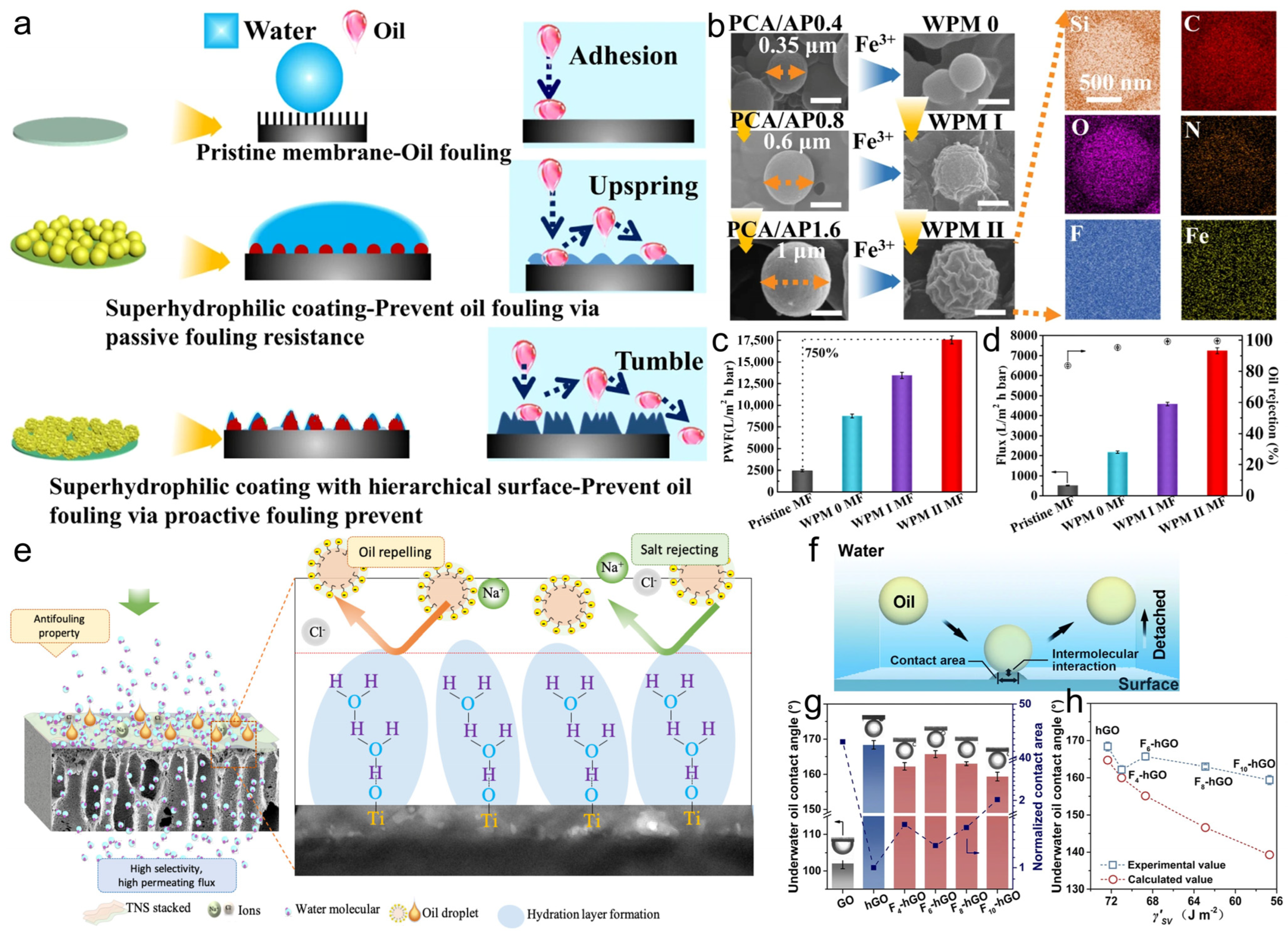
For oil-in-water emulsions, a hydrated pore entrance can inhibit direct droplet contact while maintaining water access. Metal–tannin and peptide coatings on PVDF implement this principle through different chemistries [67,68]. Figure 4a distinguishes direct oil adhesion on a bare membrane, passive resistance from smooth hydrophilic particles and the stronger contact barrier proposed for wrinkled particles [69]. Water retained around the hierarchical surface limits the approach and lateral migration of viscous droplets, making hydration continuity and local contact geometry central to antifouling. Figure 4b follows smooth caffeic-acid/APTES particles of approximately 0.35, 0.6 and 1.0 µm through Fe3+-induced surface restructuring; elemental maps establish the distribution of the coating constituents. Figure 4c shows increasing clean-water permeance through the modified series, with the most structured interface displaying a reported 750% increase over the unmodified membrane. Figure 4d connects that accessible flow network to emulsion separation, reaching 7247 L m−2 h−1 bar−1 with 99.6% crude-oil rejection under the reported 1-bar dead-end test. The structural and transport evidence is consistent with reduced oil contact while retaining open flow pathways; the reported permeance gain depends on the specific comparator and feed. Zwitterionic grafting on cellulose fibers and amphiphilic graphene-oxide modification provide related routes to this balance [70,71].
Surface hydration and low oil adhesion depend on the arrangement of both polar and nonpolar groups. Nonionic brushes and sulfonate coatings modify foulant interactions through hydrated segments or ionic groups [29,72], while plasma-grafted zwitterionic PES supplies a charge-balanced interface [36]. Figure 4e illustrates a denser transport regime: oppositely charged titania nanosheets provide a hydrated water-facing layer on a reverse-osmosis membrane while the underlying selective skin controls salt passage [73]. Figure 4f identifies the oil–surface contact area and intermolecular attraction governing droplet detachment on graphene oxide [71]. Figure 4g compares underwater oil contact angles with normalized contact area, showing that interfaces with similarly large angles can still differ in their actual contact with oil. Figure 4h relates the experimental and calculated angles to surface energy and hydrophobic-chain architecture. These panels explain why static wettability is an incomplete descriptor of fouling resistance: chain arrangement and retained interfacial water control how strongly a droplet remains attached. Feed-dependent cleaning makes this distinction measurable. Water rinsing recovered 93.95% of the flux after petroleum-ether emulsion filtration, but only 58.95%, 68.29% and 81.82% after filtration of 100-, 200- and 500-nm particles [5]. An interface that releases droplets can still retain small rigid particles within its pore network, as supported by the source’s post-rinse microscopy.
Figure 4.
Relationships among surface architecture, hydration and oil adhesion. (a–d) Proposed fouling-resistance mechanism, surface morphology and elemental maps, clean-water permeance, and emulsion transport/rejection of hierarchically structured coatings [69]. (e) Hydration and selective transport associated with titania-nanosheet modification of a reverse-osmosis membrane [73]. (f–h) Oil-contact/detachment schematic and experimental/calculated wetting relationships for hydrophobic-chain-engineered graphene oxide [71]. These panels illustrate different transport regimes and do not constitute a common performance comparison.
Mixed feeds complicate the relationship between repellency and retention because droplets, surfactants and rigid particles can aggregate or compete for access to the surface. The caffeic-acid/ε-polylysine membrane retained 99.89% of oil and 96.99% of 100-nm particles during its mixed-feed test [5]. Its subsequent 72.63% rinse FRR shows that simultaneous retention did not provide complete hydraulic recovery. GO-coated and oriented-MOF-nanosheet meshes supply open pathways whose selectivity depends on coating coverage and liquid-entry conditions [74,75]. A reduced-GO/PDA/fluorinated membrane uses a different wetting preference and must be distinguished from a hydrated, water-permeating interface [76]. Tween-20-modified PVDF changes the surface environment of a porous polymer support [77]. Across these architectures, a high separation percentage can arise from different combinations of interfacial selectivity and geometric retention. Comparing coated-area integrity, permeate composition and operating flux after a specified washing or chemical challenge establishes which of those contributions persists.
Droplet-size distributions identify the small-droplet fraction able to enter pores. Surfactant identity and concentration relative to the critical micelle concentration govern stabilization, adsorption and wetting; oil loading promotes collisions and cake growth. Viscosity lowers flux at fixed resistance, while ionic strength modifies aggregation, electrostatic screening, ligand competition and swelling. Higher pressure can compact deposits or deform droplets through openings. Comparisons therefore require oil identity, droplet distribution, surfactant/solid/salt concentrations, viscosity, temperature and driving force; missing descriptors prevent attribution of differences to coating chemistry alone.
Fiber networks introduce an additional coverage constraint because a small, unprotected opening can dominate oil breakthrough. TiO2-coated PAN, plasma-functionalized fibers and coated electrospun membranes illustrate how interfacial chemistry is distributed over interconnected gaps [78,79,80]; CuO- and photoactive TiO2-coated meshes extend the same problem to larger apertures [81,82]. Evidence of reduced deposition should connect surface coverage to both oil passage and hydraulic response. A pressure-responsive piezoelectric membrane achieved 98.85% emulsion separation, less than 14% flux decline over 2 h and nearly complete flux recovery in the prescribed cleaning test [83]. These three endpoints establish rejection, in-operation stability and subsequent recovery, respectively. The greater than 99% crude-oil rejection but approximately 70% cleaned-flux recovery of polyaniline/alumina provides the complementary case of an effective barrier with persistent resistance [4]. A polyionic nanogel coating reported greater than 99% emulsion separation and permeance above 8014.70 ± 298.86 L m−2 h−1 bar−1 over five dead-end separation cycles; its 96.13% Cr(VI) removal was assessed separately [84]. Hydrogel/ZIF-8, NiAlFe-LDH and electrically assisted textile interfaces likewise combine droplet separation with a dissolved-pollutant function [26,85,86]. Each function requires its own treatment and regeneration endpoint, even when both originate from the same coated surface.
Dispersed-pollutant rejection requires a persistent aqueous interface with connected flow pathways. Its benefit remains feed-dependent: surfactants, viscosity and particle size alter attachment and pore entry, while a retained cake can strengthen rejection but restrict flow. Flux, permeate composition and post-cleaning structure must therefore be evaluated together before attributing residual resistance to fouling, swelling or coating loss. Dissolved pollutants introduce the additional capacity and reaction limits discussed below.
3.2. Interfacial Adsorption and Catalytic Removal of Dissolved Pollutants
Dissolved contaminants encounter a different service limit from dispersed droplets. Selective exclusion depends on the effective pore and charge environment, adsorption consumes a finite inventory of accessible sites, and catalysis depends on continuing access to reactants and active centers. Both zwitterionic PVDF designed for oil separation and metal capture and multifunctional hydrophilic coatings targeting oil, dyes and metals bring several of these interactions together at one interface [87,88]. Their first-use multifunctionality is informative but does not establish simultaneous recovery after regeneration. A conductive textile membrane achieved 99.9% oil and 97.6% methylene-blue removal during one mixed-feed pass at 6.5 kPa and a DC current of 10 mA [86]. By comparison, a hydrogel/ZIF-8 coating reported 1313.4 L m−2 h−1 flux and greater than 99.77% emulsion separation, with dye uptake investigated in a distinct protocol [26]. Both studies demonstrate multifunctionality, including model mixed-feed treatment, while the extent of paired recovery must be judged from their respective reuse protocols. Following each analyte against the treated volume on the same membrane is necessary to determine whether the dissolved-pollutant function remains effective after the droplet-separation surface has been cleaned.
Ion-binding interfaces must account for competition as well as initial affinity. MOF-grafted membranes targeting selenium in saline produced water and nitrate-selective multilayers face different co-ion environments [89,90]. A PEDOT:PSS/Fe–Mn-oxide/PVDF system treated 2.70 L of 100 µg L−1 As(V) solution below a 10 µg L−1 outlet limit, but only 1.70 L after alkaline regeneration [60]. Figure 5a shows the proposed metal-removal pathways of Fe/ZSM-5-coated clay, including adsorption, ion exchange, surface complexation and precipitation [91]. These pathways depend on ion identity and solution chemistry and should not all be assigned to every metal. Figure 5c compares pH-drift curves: the reported point of zero charge changes from approximately 8.86 for the support to 6.63 after zeolite modification. This shift indicates a changed surface-charge environment, which can influence metal uptake. A point-of-zero-charge measurement does not by itself establish ion exchange, surface complexation or precipitation. Pb-binding metal–phenolic films exploit coordination-responsive capture and release [92,93], whereas tannic-acid/CNT/PVDF, gradient hydrogel fibers and GO/chitosan/PVDF address dissolved-organic uptake [94,95,96]. Across these cases, binding-site accessibility and speciation in the feed determine how much of the nominal chemical functionality participates during flow.
Figure 5.
Chemical capture and selective transport of dissolved pollutants. (a) Proposed metal-removal pathways and (c) pH-drift determination of the point of zero charge for Fe/ZSM-5-coated clay [91]. (b) PFOA/PFOS retention, molecular-weight cutoff and surface charge before/after PAA/PAH coating; (e) concentration-dependent comparison of ultrafiltration, coated ultrafiltration, nanofiltration and reverse-osmosis membranes [42]. (d) PFBA effluent concentration versus throughput before/after regeneration of amine-functionalized PVDF [97].
Size exclusion depends on pore dimensions, whereas electrostatic exclusion reflects charge-dependent partitioning. Adsorption may involve ion exchange, as demonstrated by counter-ion displacement, or complexation, which is supported by coordination evidence. Precipitation requires evidence of a new solid and appropriate pH/speciation controls. Catalytic conversion changes chemical form; retention or adsorption alone does not demonstrate it. Lower permeate concentration can thus represent transfer to a coating, concentrate or precipitate rather than destruction. For metals, oxidation-state conversion and sequestration redistribute elemental mass without eliminating it.
Figure 5b compares a coated transport barrier with pristine ultrafiltration, nanofiltration and reverse-osmosis membranes [42]. PAA/PAH coating reduced the nominal cutoff of the 20-kDa ultrafiltration membrane to 12 kDa and shifted its zeta potential from −13.21 to −30.07 mV. In the displayed comparison, PFOA removal increased from 29.90% to 73.30% and PFOS removal increased from 34.40% to 77.80%. Figure 5e shows that these values depend on the concentration interval: coated UP020 gave 64.5–65.1% PFOA and 74.1–75.9% PFOS removal in the lower-concentration series, compared with 71.9–73.3% and 75.6–77.8%, respectively, in the higher-concentration series. Coating the more open 150-kDa support yielded lower retention. The concurrent changes in cutoff and charge are consistent with contributions from pore restriction and electrostatic exclusion; adsorption must still be distinguished from sustained rejection through loading-dependent measurements. Figure 5d provides such an adsorption-oriented comparison. Primary- and quaternary-amine-functionalized PVDF were challenged with a mixed feed containing approximately 120 µg L−1 PFOA and 140 µg L−1 PFBA, followed by regeneration [97]. The displayed PFBA outlet trajectories reveal feed-dependent capture and subsequent reuse rather than complete recovery inferred from an initial removal value. Acid-resistant polyamine nanofiltration illustrates an additional selective-transport architecture [98]. These examples separate modifications that restrict solute passage from binding interfaces whose accessible capacity is progressively consumed.
Ligand selection determines which dissolved contaminants benefit from accessible interfacial area. PDA-supported β-FeOOH provides phosphorus-binding sites [99], cyclodextrin-functionalized nanofibers target steroid hormones [100], and thiolated titania/PVC or cellulose nanofibers provide metal-binding groups [101,102]. Coated polyurethane fibers for ethinylestradiol and PDA–chitosan/PLA interfaces further illustrate the relationship between target chemistry and ligand accessibility [103,104]. Dye-interacting hydrogel coatings and cross-linked CNT/chitosan layers can combine sorption with changes in pore transport [105,106], whereas annealed and weak-polyelectrolyte multilayers form selective nanofiltration skins [43,107]. Carbon-functionalized thin-film composites for PFAS, Fe-MOF-containing skins for urea and amino-MOF/GO or PDA-functionalized nanofibers add further internal area or binding chemistry [108,109,110,111]. That area becomes useful only when solutes can reach it during flow and the active phase survives regeneration. For example, a 25-mm-diameter La/Fe/PAN filter treated 535 mL of 50 µg L−1 As(III) below a 10 µg L−1 outlet limit at 0.5 mL min−1 and pH 7, while its reported ten-cycle sorbent result arose from a separate test [112]. This embedded-adsorbent comparison illustrates why dynamic membrane capacity and separate sorbent reuse cannot be treated as the same regeneration result.
Catalytic interfaces can extend removal beyond a finite adsorption inventory, but sustained conversion requires retained activity and continuing delivery of reactants and, where applicable, oxidant, light or electrical energy. FeOOH/CuO arrays combined at least 1400 L m−2 h−1 emulsion flux and at least 99.2% separation with electroflotation-assisted cleaning within 2 min, while electro-Fenton dye treatment was investigated as an additional function [113]. A β-FeOOH coating achieved 99.8% dye degradation in a specified acidic H2O2 challenge and greater than 99.3% oil rejection in a separate emulsion experiment [24]. The active phase contributes to both separation and reaction, but evidence for one function does not establish recovery of the other. Parent-solute disappearance, mineralization, catalyst retention and water-pathway recovery probe different parts of the mechanism. Their joint evolution determines whether later decline originates from deposited matter, inaccessible active sites, intrinsic deactivation or loss of the layer.
For catalytic coatings, parent-compound disappearance or decolorization alone does not establish mineralization. Dark-adsorption, catalyst-free and energy/oxidant controls, transformation-product analysis, TOC or DOC reduction, and an organic-carbon balance are needed to distinguish retention from conversion. Dissolved-metal and particulate-release measurements assess secondary contamination; residual oxidant and product toxicity should also be considered. COD reduction alone is insufficient evidence of complete or harmless destruction.
The mechanisms imply different recovery decisions: masked hydrated surfaces require deposit removal; altered selective pores or charges require integrity/rejection checks; occupied adsorption sites require desorption and repeated breakthrough tests; and masked catalysts may benefit from cleaning, whereas lost or irreversibly altered active phases require renewal. Multifunctional coatings should be assessed against the earliest limiting function.
4. Performance Decline of Coated Membranes During Operation
Performance loss can appear as restricted flow, earlier solute breakthrough, reduced conversion or coating detachment. Paired hydraulic and effluent measurements identify the limiting response; microscopy, pore characterization, composition and material-release measurements then distinguish deposits, occupied sites, chemical deactivation and material loss.
Reversible fouling is resistance removed by a specified compatible cleaning step; residual fouling is irreversible only relative to that cleaning window. Coating degradation denotes persistent alteration or loss of the functional layer, whereas support deterioration involves substrate compaction or damage. These processes can coexist and cannot be diagnosed from post-rinse flux alone.
4.1. Fouling-Induced Decline in Hydraulic Performance
Hydraulic decline can originate from surface-cake growth, pore invasion, coating swelling or reduced wetted area. Interfacial energy analysis, nonionic brush tests and sulfonated PDA interfaces examine different contributions to this resistance [23,72,114]. The mixed oil–microplastic experiment provides a direct example: after 300 min, oil and 100-nm-particle retention remained 99.89% and 96.99%, while operating flux decreased from 456.9 ± 14.4 to 390.6 ± 19.1 L m−2 h−1 and subsequent rinse FRR was 72.63% [5]. The separation barrier remained effective, but water pathways were not fully restored. Additional biological or adsorptive functions on lysozyme-brush cotton, nanocellulose/PES and GO/chitosan/PVDF alter the interactions responsible for deposit formation [19,96,115]. Their interpretation requires a clean-water baseline, the operating trajectory and a post-cleaning baseline on the same membrane. These measurements distinguish reversible deposition from residual resistance; microscopy or resistance analysis then identifies whether the latter is associated with internal blockage or the external layer.
Feed composition determines how much of that resistance is recoverable. Hydrogel coatings on mesh or PVDF differ in aperture, swelling and the likelihood of pore invasion [21,26,57,116]. Salt-tolerant cellulose, chitosan–alginate, sulfonate and MIL-101(Cr) meshes address additional wetting and stability constraints [29,30,117,118], but static salt or pH exposure does not reproduce repeated fouling and cleaning. The MXene/MWCNT study isolates the effect of oil type within one membrane system [119]. Across five water-washed canola-oil cycles, emulsion flux decreased from 14.8 to 10.26 L m−2 h−1 and rejection decreased from 94.4% to 89.3%. With viscous motor oil, flux decreased from 10.2 to 0.7 L m−2 h−1 while rejection remained near 99% and rinse-only FRR was approximately 7%. High retained rejection in the latter case is compatible with a strongly resistive oil deposit. Absolute throughput, oil properties and cleaned baseline determine whether maintained selectivity represents useful hydraulic service.
High rejection during severe flux decline does not ensure useful capacity. Fixed-pressure operation loses output; fixed-flux operation requires greater pressure and pumping work. Shorter runs increase cleaning, waste and downtime. Service limits should therefore include effluent quality, minimum production, allowable pressure and recoverability. The motor-oil example [119] demonstrates a hydraulic limitation despite retained rejection, not an economically validated lifetime.
4.2. Decline in Pollutant-Removal Function and Coating Integrity
A decline in pollutant-removal function can occur before a pronounced hydraulic change. Arsenate-binding Fe–Mn oxide and selenium-binding MOF interfaces can lose accessible capacity [60,89], whereas polyelectrolyte and polyamine selective skins can change charge or solute passage [42,97,98]. In the As(V) example, the reduction from 2.70 to 1.70 L after regeneration corresponds to 62.9% recovery of threshold-defined treated volume, rather than a measurement of water-flux recovery [60]. Site occupation, ligand alteration and active-phase loss are possible causes of earlier breakthrough, but they cannot be distinguished from the volume-recovery result alone. Phosphorus-binding β-FeOOH, thiolated cellulose and amino-MOF/GO interfaces illustrate the relevant range of chemistries [99,102,110]. Pb-binding metal–phenolic films retained approximately 95% removal over ten regeneration cycles, and another coordination-responsive membrane reported high Pb removal over a defined electroplating-water throughput [92,93]. These observations support retained treatment function under the reported challenges. Distinguishing renewed sites from partial active-phase loss additionally requires the full outlet trajectory and post-cycle layer composition.
Catalytic function can decline through masking, chemical changes or active-phase loss; visible coating retention alone does not establish retained activity. Fe–Cu-LDH/PVDF, photo-Fenton coatings, FeOCl-coated ceramics, cobalt-oxide-containing pores and CoMn-MOF-74/ozonation interfaces expose active centers to different oxidative environments [61,120,121,122,123,124]. TiO2/PVDF, MnO2 and FeOOH/CuO also couple reaction and separation through different geometries [25,113,125]. Figure 6a illustrates this chemistry–geometry coupling for carbon fibers coated with Cu–TiO2 and subsequently modified with octadecyltrimethoxysilane (OTMS) [126]. Figure 6b shows oil uptake of 5.5–6.7 g g−1 and retention of 87.5–89.7% for four liquids, characterizing the oil-affine silanized surface. Figure 6c follows water contact angle through 20 cycles, with the surface remaining above 150° despite gradual decline. Figure 6d follows underwater oil contact angle over a longer operating history and shows its recovery after UV-assisted treatment within the source’s maintenance protocol. Figure 6e displays relatively stable, oil-dependent mixture-separation flux over 24 h. These panels characterize wetting and transport stability rather than directly measuring catalytic deactivation. They separate initial affinity, repeated wetting behavior, maintenance response and sustained throughput. Restoration of an underwater contact angle supports renewed wetting selectivity, while retention of catalytic activity or active-phase mass requires the corresponding chemical measurements.
Figure 6.
Wetting function and operational response of two coated interfaces. (a) Cu–TiO2/carbon-fiber preparation and OTMS modification, (b) oil uptake/retention, (c) cyclic water contact angle, (d) underwater oil contact angle and UV-assisted recovery of unsilanized Cu–TiO2/carbon fibers, and (e) 24-h mixture-separation flux of the silanized oil-permeating variant [126]. (f) Nine-oil separation efficiencies and underwater droplet profiles, (g) flux for six mixtures, (h) water-entry schematic and (i) underwater oil-entry schematic of bamboo-cellulose-hydrogel-coated copper mesh [116]. Oil uptake, wettability, sustained filtration and regeneration probe distinct interfacial properties.
Figure 6f–i supplies a complementary water-affine interface: bamboo-cellulose hydrogel coats a copper mesh [116]. Figure 6f shows 98.12–99.96% separation across nine oils together with underwater oil-droplet profiles. Figure 6g shows gravity-driven water flux varying from 4326 to 9168 L m−2 h−1 across six immiscible oil/water mixtures, demonstrating that nearly constant high separation efficiency can coexist with more than a twofold throughput difference. Figure 6h represents capillary entry of water into a hydrophilic opening; Figure 6i represents the positive pressure barrier encountered by oil beneath water. The signs of the indicated pressure differences depend on the schematic’s convention, but the physical distinction is spontaneous water access versus inhibited underwater oil entry. Comparing these panels with the silanized carbon-fiber system shows that selective wetting can favor different permeating phases. A high contact angle acquires meaning only after the surrounding liquid, permeating phase and pore-entry conditions are specified. Interfacial survival is best judged by whether that same transport preference and useful throughput persist after the prescribed maintenance step.
Deliberate layer removal provides a useful contrast to unintended degradation. The antibiotic-binding tannic-acid/Fe(III) film was stripped using 0.1 M HCl for 1 h and reconstructed after use [1]. Ciprofloxacin removal reached 99.4% in cycle ten, while permeance decreased from 3815 to 2615 L m−2 h−1 bar−1. Residual nanoparticles were proposed as a source of added resistance, but the removal–permeance divergence itself is the direct observation. For unsilanized Cu–TiO2/carbon fibers, 10 min of UV treatment restored underwater oil repellency. The silanized, oil-permeating variant required UV treatment followed by renewed OTMS modification to restore its original wetting function; both variants were examined over 100 immiscible-mixture separation cycles [126]. These examples distinguish rebuilding active chemistry from retaining the original surface. Table 2 translates the resulting failure signatures into discriminating measurements and initial interventions, providing the basis for the regeneration routes examined next.
Table 2.
Diagnostic signatures and conditional first interventions for coated interfaces. Each intervention requires compatibility with coating chemistry, selective-layer integrity and support geometry. Risks are stated explicitly; failure thresholds remain application-specific.
Diagnosis begins with matched clean-water permeance and target-specific effluent measurements, followed by a mild compatible rinse, microscopy of residual deposits, and assessment of coating chemistry/coverage, release and support integrity. Recovered flow without recovered breakthrough or conversion points to occupied or altered active sites; declining rejection with coating loss prompts checks for delamination or barrier defects. A damaged support requires validated repair or replacement. Table 2 links these decisions to compatibility and intervention risks.
Combined pressure/shear, pH, oxidants and temperature can cause edge delamination, swelling, binder attack and interfacial strain. Single-stressor controls should precede representative feed–loading–cleaning sequences, with paired permeance, effluent, coating-state and release measurements. The 30-day immersion [5], 2-h filtration [83] and 72-h maintenance records [6] represent different limited exposures, not long-term combined-stress validation. Dose-matched cleaning-only and support controls distinguish foulant removal from maintenance-induced damage.
5. Performance Recovery and Reuse of Coated Membranes
Regeneration should restore the limiting function while preserving useful coating and support components. Hydraulic cleaning removes detachable deposits, desorption releases occupied sites, assisted cleaning promotes foulant release or transformation, and recoating replaces a spent layer. Success is verified in the next run through paired water production, effluent quality and coating-state measurements.
5.1. Physical Removal of Fouling Deposits
Water rinsing and backwashing can restore flow when removable external deposits dominate resistance and the active layer withstands the imposed shear. Hydrogel-coated PVDF, cellulose-hydrogel/PVDF, zwitterionic cellulose fibers and carbide-derived-carbon/ceramic interfaces provide different combinations of foulant adhesion and support stiffness [21,57,70,127]. Their recoverable fraction depends strongly on the feed: rinsing restored 72.63% of the baseline flux after the mixed oil–microplastic challenge, but only approximately 7% after viscous motor-oil loading of MXene/MWCNT [5,119]. These values identify different cleaning limitations rather than a cross-study material ranking. Real-feed operation provides a complementary challenge. Cyclodextrin/PDMS membranes were tested for 72 h with backwashing and forward flushing every 4 h, including a chemical intervention after 48 h [6]. Polymer-brush and PDA/CNT-coated membranes modify deposition through related surface interactions [128,129], while the co-hydrolyzed silane/polyphenol coating reported greater than 90% FRR after its oily/biofoulant challenge [2]. Persistent resistance after a specified rinse calls for localization of the residual deposit. Deteriorating effluent quality without comparable flux loss instead indicates that repeated hydraulic cleaning is unlikely to restore the limiting chemical function.
Rinsing is least effective for strongly adsorbed viscous oils, internal deposits and persistent biofilm matrices. Backwashing reaches different locations but requires a reverse-pressure-tolerant support and selective skin. Greater shear may improve removal while delaminating coatings or damaging fibers. Flow direction, pressure/flow, duration, rinse volume and material release should therefore be reported; cleaning intensity is not transferable between meshes, asymmetric skins, ceramic tubes and hollow fibers from FRR alone.
5.2. Desorption and Regeneration of Adsorption Sites
When an attached coating has occupied binding sites, desorption must release captured solutes while preserving the chemistry needed for the next run. PEDOT:PSS/Fe–Mn oxide used alkaline regeneration, whereas Pb-binding metal–phenolic films used dilute acid [60,92,93]. Electrical affinity switching provides a different route in Figure 7a–f [130]. Figure 7a distinguishes membrane construction and eventual support/solvent recycling: a ceramic-supported carbon-paper assembly is functionalized through spin coating and polypyrrole electropolymerization, while end-of-life disassembly uses solvent immersion. Figure 7b shows the filtration configuration in which organic molecules and cations encounter the AOT-doped polypyrrole interface before permeation. Figure 7c compares removal across six organic compounds and six metal ions, establishing broad initial affinity under the tested conditions. Figure 7d then follows Pb2+ and 1-NP removal during five consecutive filtration/regeneration cycles. Brief stimulation at the source-specified positive or negative 1.5-V potential changes interfacial affinity and releases the respective adsorbates; filtration resumes without a continuously applied field. This sequence directly tests whether occupied sites can be reactivated on the same membrane, rather than inferring regeneration from the initial multi-solute removal panel.
Figure 7.
Affinity regeneration and the hydraulic constraints of coated membranes. (a) Janus-membrane construction and end-of-life support/solvent recycling, (b) filtration configuration, (c) initial organic/metal removal, (d) electrically regenerated Pb2+/1-NP removal, (e) spiked-tap-water comparison and (f) source-specific performance accounting [130]. (g) Pressure–flux responses, (h) concentration-dependent emulsion flux and (i) separation efficiency of MXene/MWCNT membranes with different deposited masses [119]. Electrical site regeneration and solvent-based material recycling are separate operations.
The remaining panels connect affinity switching to water output and hydraulic constraints. Figure 7e compares Pb2+ and 1-NP removal in spiked tap water with NF90 and NF270, showing renewed Janus-membrane performance after the indicated intervention [130]. At 227 L m−2 h−1, specific treatment capacity exceeded 1100 L m−2, defined in the source by greater than 90% removal of both monitored solutes. The source estimates an energy demand of 0.01 kWh m−3 from its operating and regeneration assumptions; this is not a measured whole-process energy or cost saving. Figure 7f summarizes its source-specific removal, flux, energy and cost comparison; those axes depend on the selected analytes and accounting assumptions. Figure 7g shows approximately linear pressure–flux responses of MXene/MWCNT membranes with different deposited masses [119]. Figure 7h shows decreasing flux as emulsion concentration rises from 67.5 to 250 mg L−1, while Figure 7i retains approximately 98–100% separation across the same challenges. These lower panels establish a hydraulic burden that affinity switching alone does not address. The two source systems illustrate distinct limitations: electrochemical affinity switching renews capture, whereas hydraulic cleaning must address restricted water pathways. Their juxtaposition does not demonstrate joint recovery on a single membrane. The maintenance route should be selected according to the function limiting the next run, rather than according to conductivity or initial removal alone.
Desorption transfers contaminants to a receiving stream. Report regenerant concentration/volume, contact time, exported contaminant concentration, rinsing and neutralization; reuse is limited by accumulated salts, competition and declining next-run capacity. Electrical switching also requires a receiving-stream balance. Extreme pH or polarization can hydrolyze ligands, dissolve oxides or alter polymer doping. Initial removal recovery, equilibrium capacity recovery and dynamic breakthrough-volume recovery are distinct: the As(V) membrane recovered only approximately 63% of useful volume after pH-11 treatment [60]. Repeat capacity measurements under matched feed, flow, area and outlet criteria.
5.3. Catalytic, Electrical and Photothermal Cleaning
Assisted cleaning is an option when deposits persist after hydraulic cleaning and the interface or an external treatment can promote their release or transformation. Its effectiveness depends on placing heat or reactive species near the blocked pathways while limiting damage to the polymer support, binder and functional phase. Lignin-coated PVDF and chitosan/lignin variants illustrate this balance for photoelectrocatalytic cleaning [131,132]. With TiO2-modified electrodes, a lignin-coated PVDF hollow-fiber membrane achieved 94.3% FRR and 98.9% oil rejection after the prescribed treatment; FRR remained above 91.8% and oil rejection above 98.0% over ten consecutive cycles [61]. This paired series supplies evidence for oil-separation recovery on the reused membrane. It does not require assuming that hydraulic recovery measures every chemical function. Visible-light-responsive membranes, NiFe-LDH composites and TiO2/PAN interfaces use different irradiation geometries and active phases [78,133,134]. Their dose, photon access and catalyst retention govern whether organic-foulant transformation produces a reproducible recovery benefit.
Figure 8a–c connects catalytic loading to the accessibility of the deposited phase [135]. Figure 8a shows electrospun PAN followed by alternating tannic-acid and Fe(III) deposition; the subscripts identify assembly passes, not reuse cycles. Figure 8b follows RhB concentration through a dark interval and subsequent visible-light irradiation. Five coating passes gave 98% reported RhB removal after 360 min illumination, whereas seven passes gave approximately 72%, indicating that additional material did not translate into greater usable activity. Figure 8c compares apparent kinetic responses and confirms the lower effective reaction rate of the heavily deposited interface. Aggregation and reduced exposure of reaction sites provide a plausible explanation, consistent with the loading-dependent response. A separate photocatalytic reuse experiment retained degradation above 70% and showed fewer attached grains after cycling, connecting activity decline to changes in the deposited phase. Hydrogel catalytic separators, Al2O3@ZnO, ZnO-coated ceramics and photocatalytic double-network hydrogels offer further support–catalyst combinations [136,137,138,139]. These results establish loading-dependent dye disappearance and reuse stability. Absorbance-based removal does not establish complete mineralization or hydraulic self-cleaning without organic-carbon and post-fouling transport measurements. The design requirement is exposed catalytic area at a loading that remains attached and accessible during reaction and reuse.
Electrical and oxidative interventions also differ in the location of reaction and current transport. Laser-induced-graphene nanofiltration skins, CuCo2O4- and CuO-coated meshes, and FeOOH/CuO arrays provide distinct conductive interfaces [113,140,141,142]. The FeOOH/CuO system achieved at least 99.2% oil separation and electroflotation-assisted cleaning within 2 min under its protocol [113]. PVA/PES–TiO2 for pretreated rubber wastewater and photocatalytic nanofiltration place reaction zones in different separation layers [143,144]. Electrical cleaning must distinguish bubble-assisted deposit release from electrochemical transformation, while photocatalytic cleaning must record the irradiation and oxidant conditions. Delivered charge or irradiation dose, next-cycle effluent quality and active-phase release are complementary measurements. In the oil-fouling example, a tannic-acid-based photo-Fenton coating recovered 96.96% of original flux after five cycles [121]. By comparison, the ten-cycle lignin/PVDF series reported both hydraulic and oil-rejection recovery [61]. The distinction is the evidence supplied for the next treatment run, rather than the nominal use of an assisted-cleaning mechanism.
Figure 8.
Catalytic accessibility, wetting-mediated separation and layer renewal. (a–c) Assembly, RhB concentration evolution and kinetic analysis of tannic-acid/Fe(III)-coated PAN; subscripts denote coating passes [135]. (d,g,h) Gravity-driven mixture-separation setup, wettability and separation efficiency of WO3- and ZnO-coated meshes [59]. (e,f) Rejection and chemical-oxygen-demand removal under dark/UV conditions for PDA- or polyaniline-stabilized TiO2/PVDF interfaces [62]. (i,j) Jute-derived cellulose/ceramic skin replacement and separation efficiency across the stated replacement cycles [145]. Catalytic fabrication, photocatalytic reuse, filtration and skin replacement are different cycle definitions.
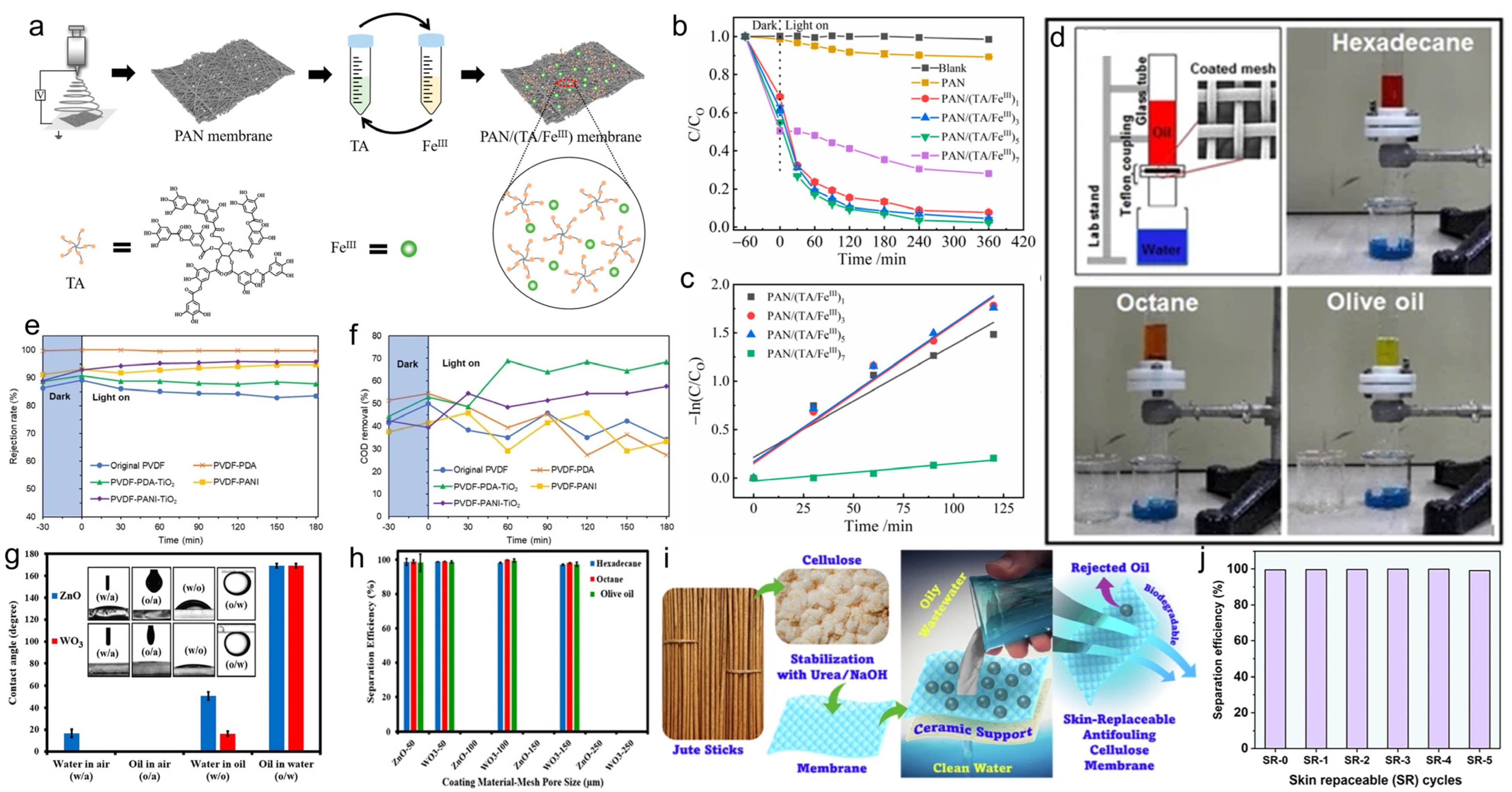
The other Figure 8 panels distinguish selective wetting from photocatalytic contribution. WO3-coated ceramics, ZnO/alumina and CeO2/Co3O4 meshes combine oxide chemistry with different supports [45,146,147]. Figure 8d shows gravity-driven separation of hexadecane, octane and olive-oil mixtures using oxide-coated meshes [59]. Figure 8g compares water-in-air, oil-in-air, water-in-oil and oil-in-water contact angles, with underwater oil angles close to 170°. Figure 8h then tests separation across coating materials and mesh openings, retaining approximately 97–100% efficiency; this is evidence of wetting-mediated mixture separation rather than of pollutant degradation. Figure 8e compares dye rejection under dark/UV conditions for PDA- or polyaniline-stabilized TiO2/PVDF [62]. Figure 8f supplies the corresponding COD measurements: PDA/PANI coatings alone remained near 33% COD removal, whereas TiO2-containing coatings reached 68.4% and 57.6%, respectively, after 3 h. High dye rejection and greater COD reduction describe different effluent-quality responses. The latter is consistent with an additional photocatalytic contribution under the stated test conditions, but permeate COD alone cannot separate retention from mineralization or establish that the transformation products are harmless. The analytical implication is to assess both selective retention and organic-load reduction when assigning a catalytic benefit.
Photothermal assistance has a limited dose window. For MXene/MWCNT, motor-oil viscosity decreased from 280 to 78.5 mPa s at 60 °C, but 10-min cleaning gave approximately 92.8% FRR versus approximately 60% after 20 min [119]. Later cycles retained 4.2 L m−2 h−1 flux and approximately 69% recovery. The source associates poorer extended-heating recovery with oil hardening and adhesion. More heating or catalyst loading therefore need not improve regeneration; next-run transport, removal and layer retention must be checked.
Assisted-cleaning comparisons require wavelength, irradiance, illuminated area and time, or cell voltage/current, configuration and polarization time, together with temperature and oxidant dose. Optical dose is time-integrated irradiance. Electrical energy is ∫UI dt, while wall-plug consumption also includes lamps, heating and auxiliaries. Electrode potential is not necessarily cell voltage. Normalize recovery energy by the useful treated volume subsequently, or report event/area inputs when that volume is unavailable. The ±1.5-V switching [130], 2-min electroflotation [113] and 10-min UV recovery [126] cannot be ranked by duration. Permeance must be remeasured at the reference temperature to separate cleaning from viscosity reduction; altered rejection or chemistry requires a damage assessment.
The MXene/MWCNT experiment used an 808-nm laser at 1 kW m−2, reaching approximately 38.5 °C after 10 min before a subsequent 1-h separation test [119]. The calculated incident doses are 0.60 and 1.20 MJ m−2 for 10 and 20 min, respectively; these are not wall-plug energy per useful volume. Conductivity decreased from 64.52 ± 1.57 to 58.64 ± 0.97 S m−1 after cyclic use, providing an electrical proxy rather than a coating-mass measurement.
5.4. Coating Renewal and Repair
Layer renewal becomes appropriate when cleaning the existing film no longer restores its intended function. Figure 8i shows a jute-derived cellulose skin formed on a ceramic support through a urea/NaOH processing route [145]. The hydrated cellulose layer receives the oil-rich deposit and can be removed and reconstructed, allowing the mechanically durable support to serve successive surface layers. Figure 8j reports separation efficiency remaining approximately 98% across the displayed SR-0 to SR-5 replacement sequence; the source additionally reports greater than 99% original-flux recovery after 16 fouling cycles. The two records establish retained separation during replacement and hydraulic restoration under their respective protocols. Starch–amine, carboxymethyl-chitosan, pH-responsive chitosan and disassemblable polyelectrolyte layers use different triggers for the same separation of surface and support lifetimes [44,148,149,150,151]. PDA-, TiO2-, GO- and silica-containing interfaces are intended to retain coverage and chemistry during maintenance [46,152,153,154,155]; this intention does not establish permanent attachment. Fe–Mn-oxide-assisted oxidative cleaning restores function in place [156], while renewed amines [157], hydrophilic PVDF modification [158] and renewable polyelectrolyte interfaces [159,160] illustrate different combinations of retention and reconstruction. The advantage of replacement is a reproducible water-facing interface; its constraint is the added material use and any resistance left by each reconstruction.
The contrast between retention, replacement and physical repair becomes clear from their recovery records. TiO2-biomineralized mesh and PDMS-NH2/PFONa–SiO2-coated mesh depend on maintaining an exposed wetting interface [161,162]. A carboxymethyl-chitosan layer retained greater than 88.8% FRR through four coating/decoating/recoating cycles under natural organic matter fouling [149]. A pH-responsive chitosan coating gave 95% recovery compared with 60.3% for its control during natural-surface-water ultrafiltration [150]. The starch–amine layer exceeded 96.2% FRR after three coat–foul–clean–recoat sequences [148]. These results establish hydraulic benefits of renewal. Antibiotic-film reconstruction additionally preserved 99.4% removal in cycle ten but reduced initial permeance by 31.5%, revealing a cumulative transport penalty [1]. Sacrificial polyelectrolytes gave 97 ± 3% water-flux recovery after replenishment in a reverse-osmosis test, compared with 83 ± 3% for the unmodified control [163]. As a comparison beyond surface-coating renewal, microcapsule-assisted repair restored approximately 103% of the original flux and 90% of the original particle rejection after induced membrane damage [164]. Recovery above 100% should not be interpreted as complete restoration of the original selective structure. Protective-layer renewal, adsorbent rebuilding and repair after induced damage consequently support different durability claims.
Sacrificial-layer replacement removes a fouled protective film, while functional-layer renewal restores active material. Neither repairs a damaged selective barrier. Their lifecycle value depends on equivalent effluent quality and useful volume relative to replacement, accounting for new coating mass, stripping/recoating chemicals, rinse water, residual resistance, spent solvent/solids and support lifetime. The 31.5% permeance loss during antibiotic-film renewal [1] exposes a cumulative penalty; retained separation after cellulose-skin replacement [145] does not alone demonstrate a lower lifecycle cost or impact. Table 3 compares the routes on this functional basis.
Table 3.
Recovery routes and source-specific endpoints. Percentages and cycle counts cannot be ranked across studies with different feeds, driving forces, temperatures, loading/cleaning histories, baselines or cycle definitions. Cycle counts describe source protocols, not equivalent service lifetimes. Missing common-basis measurements do not imply zero inputs or material loss. Permeance in the replacement example is in L m−2 h−1 bar−1.
6. Verifying Recovery of Water Production and Pollutant Removal
6.1. Paired Performance Measurements Across Treatment Cycles
Table 4 separates recovered endpoints: paired oil rejection/FRR [61], antibiotic removal after reconstruction with declining permeance [1], threshold-defined arsenate breakthrough [60], photocatalytic activity after reuse [135], and post-PMS hydraulic recovery [165]. Only measurements obtained through the same loading–intervention sequence establish paired functional recovery; initial activity or water-flux recovery alone is insufficient.
Table 4.
Joint assessment of treatment, regeneration and coating durability. Cycle counts retain the source definitions. Quantitative coating-mass retention is not established by the endpoints extracted here; structural observations are identified separately. NE denotes information not established in this extracted comparison; it does not assert that the original publication omitted the measurement. Different feeds, baselines and transport modes preclude a pooled performance ranking.
The baseline is the conditioned clean coated membrane before first use. At matched transmembrane pressure ΔP and reference temperature, Jw,0 denotes its original clean-water flux. For cycle n, and denote clean-water flux immediately before feed loading and after recovery and reconditioning, respectively. The superscripts identify measurement stages rather than algebraic signs. Original-baseline and within-cycle flux recovery are defined separately as
Equation (1) tracks recovery relative to the original membrane. Equation (2) describes recovery within the current cycle and can conceal cumulative decline when the preloading baseline has already fallen. Clean-water permeance Lp and its original-baseline retention PRn are defined as
The original and post-recovery permeances use matched reference conditions. Pressure normalization alone does not correct viscosity, osmotic-pressure or concentration-polarization differences between tests. Apparent pollutant removal is
Here, Cf and Cp are contemporaneous feed and permeate concentrations. Integrated removal uses flow-weighted analyte masses and does not by itself establish destruction.
Useful treated volume, Vuse, integrates permeate flow while all effluent limits and minimum production requirements are met; normalizes by area. Breakthrough volume ends at the defined outlet-limit crossing. Dynamic adsorbed mass is the inlet–outlet analyte balance corrected for storage, concentrate and verified reaction, normalized by stated adsorbent/coating mass. For an unreplaced coating, mass retention is the remaining coating or active mass divided by its initial mass and multiplied by 100%, measured directly or through a validated marker balance. XPS intensity and image coverage are proxies, not mass-retention percentages. Source-defined metrics are retained when their baselines cannot be reconstructed. Useful volume is an experimental performance measure only when obtained from measured permeate flow over a verified compliance interval; values extrapolated beyond that interval must be identified as projections.
Deposition cycles are fabrication passes; filtration cycles are loading intervals; cleaning cycles are specified interventions; complete regeneration cycles include loading, intervention, reconditioning and next-run verification. Replacement adds stripping/redeposition. Counts require durations, processed volumes and checkpoints: five TA/Fe(III) deposition passes [135], five adsorption/regeneration cycles [130] and SR-0–SR-5 replacements [145] are different exposures.
Recovery ratios require replicate/batch numbers, numerator and baseline uncertainties, and controls for temperature, conditioning and feed/instrument drift. For independent, nonzero X and Y, let . Its relative standard uncertainty is approximately , where u denotes standard uncertainty; correlated baselines require covariance. Values above 100% may reflect uncertainty or structural change. Reported FRR variation, such as 95.5 ± 4.1% [58] and 97 ± 3% [163], is retained. Uncertainty is unavailable for the rounded 2.70/1.70-L comparison [60], so calculated 63.0% is not more precise than reported 62.9%. Activity-only reuse [135] cannot establish joint recovery.
Table 4 operating conditions. NE means that a condition could not be established from the extracted information. A statement that the original publication did not report it would require source verification; no such omission is inferred from NE. The 10-cm gravity head in clean-water characterization [5] is not assigned to the mixed-feed recovery run. Feeds, exposure times and cycle definitions are retained, but incomplete pressure/head, area and temperature records prevent matched permeance, area-normalized capacity or energy-per-useful-volume rankings.
Joint assessment exposes trade-offs concealed by a single recovery value. Mixed-feed retention with incomplete rinse FRR [5] differs from paired oil/FRR recovery over ten assisted cycles [61]. Antibiotic-film renewal retains removal but reduces permeance from 3815 to 2615 L m−2 h−1 bar−1: 68.5% retention and, conditionally at matched viscosity/driving force, 45.9% higher total resistance [1]. This calculated resistance change does not identify its structural cause. Arsenate desorption restores 62.9% of useful volume [60], while fewer attached grains after photocatalytic reuse suggest unquantified material loss [135]. Different feeds, baselines and missing retained-mass data prevent an overall durability ranking.
Complex feeds challenge the selectivity and accessibility established with model solutions. Structured antifouling coatings provide controlled multicomponent challenges [50]. Titania-nanoflower/calcium-bentonite hollow fibers reported greater than 90% FRR during the first five UV-assisted cycles with real refinery-produced water [63], while BiOI-coated ceramic nanofiltration was examined with semiconductor wastewater [64]. MoS2/intercalant channels provide a distinct selective architecture for comparison [166]. These tests must retain the identity and pretreatment of each matrix when used to support real-feed durability. Figure 9a shows Cr(VI) capture during vacuum filtration through chitosan-coated iron-oxide nanoparticles immobilized on PVDF [167]. Figure 9b follows removal against solution pH in the same material system, reaching 90.45% at pH 4 and decreasing at both higher pH and pH 2. The nonmonotonic response reflects changes in protonation, oxide surface charge and Cr(VI) speciation; stronger acidity does not simply guarantee better capture. Figure 9c tests competing anions at 1 and 10 mg L−1, with phosphate causing a particularly strong reduction in removal relative to the control. Figure 9d shows removal above approximately 95% in the tested tap, drinking and river waters. These results demonstrate capture from the tested spiked water matrices while identifying a competing-ion vulnerability; they do not establish long-term operation with untreated industrial wastewater. The high values in Figure 9d do not contradict Figure 9c: a water sample challenges the coating only with the constituents and concentrations present in that sample. Feed robustness is established by combining representative waters with controlled tests of the solutes most likely to disrupt the binding mechanism.
Figure 9.
Feed-dependent capture and protection against pore wetting. (a) Vacuum-filtration capture of Cr(VI) on chitosan-coated iron-oxide/PVDF, (b) solution-pH dependence of Cr(VI) removal, (c) interference by competing anions and (d) removal from the tested spiked water matrices [167]. (e) Surfactant-induced wetting of hydrophobic PTFE and protection by a hydrophilic polyurethane coating during membrane distillation [65]. Adsorption-site competition and vapor-pore wetting represent different feed-dependent failure mechanisms.
Figure 9e addresses a different vulnerability: surfactants can wet the gas-filled pores of a hydrophobic PTFE membrane during distillation and allow salt-bearing liquid to enter the recovered stream [65]. The study proposes that a hydrophilic polyurethane coating reduces surfactant-induced wetting of the underlying hydrophobic PTFE while retaining a vapor-transport architecture. This protective function must be judged through vapor flux and distillate contamination, rather than liquid-filtration FRR. The design implication differs from Figure 9a–d: liquid-filtration coatings require water access to reactive sites, whereas distillation coatings must preserve the barrier against liquid entry. PDA/MOF ultrafiltration challenged by algal water, titania/zirconia-coated mullite, PDA/PEI/MOF-coated PVC for shale-gas wastewater and substrate-independent coatings add further feed–support combinations [168,169,170,171]. Activated-carbon precoating supplies a process-level sorption/protection function [7], while slippery polypropylene and electrospun TiO2 address distillation wetting and micropollutant conversion, respectively [66,172]. Across these processes, durability is the persistence of the intended transport and removal mechanism under the relevant matrix. Matched measurements before loading, after loading and after intervention then separate feed-induced performance changes from their reversibility. Post-cycle permeance against the original baseline detects cumulative hydraulic drift; repeated breakthrough or retained conversion diagnoses chemical-function recovery.
Cumulative damage requires a shared record of operating time, useful volume, cleaning events and chemical/irradiation exposure. At common checkpoints, pair reference-temperature permeance and effluent trajectories with coating/active-mass or validated-marker balances, chemistry and release; include cleaning-only controls and contaminants exported in regenerants/solids. Antibiotic reconstruction quantifies hydraulic decline despite preserved removal [1], whereas TA/Fe(III)/PAN records activity loss without paired hydraulic recovery [135]. Neither supplies a complete lifetime mass balance.
6.2. Useful Treated Volume and the Cost of Regeneration
Cumulative useful water production relates these cycle measurements to treatment service. A pilot catalytic ceramic membrane processed 1200 L of hospital wastewater at a reported permeance of 150 L m−2 h−1 bar−1, and separately reported greater than 97% removal of monitored emerging contaminants over a 168-h stability test [8]. The pilot throughput and stability record should retain their respective operating conditions rather than be combined into an assumed single run. Its catalyst was confined within ceramic nanopores rather than deposited only as a water-facing film; this is evidence of continuous real-feed performance rather than of repeated coating reconstruction. Upcycled membrane-distillation treatment of anaerobic-membrane-bioreactor effluent provides another process example with vapor transport [173]. NiFe-LDH membranes reported 93–100% FRR over six recovery cycles under a visible-light/PMS protocol, while a PEDOT:PSS/bimetallic-MOF/PVDF interface reported As(III) uptake and repeated rejection after alkaline regeneration [134,174]. These records become comparable within their intended application when useful volume is defined by an explicit effluent limit and paired with recovery inputs. Figure 10 illustrates how such a definition changes the interpretation of an adsorption membrane: the outlet trajectory and post-desorption run length establish how much treated water remains acceptable before the next intervention [60].
Figure 10.
Structure, binding and functional recovery of PEDOT: PSS/Fe–Mn-oxide/PVDF [60]. (a) Compared formulations and proposed binding pathway, (b) concentration-dependent As(V) breakthrough, (c) alkaline desorption and re-adsorption, (d) surface topography, (e) equilibrium isotherms, (f) pseudo-first-order and (g) pseudo-second-order kinetic representations. The 10 µg L−1 outlet criterion defines useful treated volume; equilibrium capacity and kinetic fits provide complementary material characterization.
Quantitative comparisons require transport mode, pressure/gravity head, wetted area, temperature, feed/pretreatment and duration or volume. Pressure-driven tests additionally require configuration and water recovery; distillation requires both stream temperatures and vapor-pressure driving force. The 14.8 m h−1 gravity flux [14], 571.52 L m−2 h−1 bar−1 permeance [15] and distillation response [65] are therefore different process measures, not a common ranking.
Figure 10a compares PVDF, PEDOT: PSS/PVDF, Fe–Mn-oxide/PVDF and their combined formulation, relating dispersion/wetting to metal-hydroxyl sites [60]. Surface topography (Figure 10d) and 27.33 m2g−1 specific area support increased area, not binding chemistry alone. Figure 10e reports a Langmuir maximum of 30.43 mg g−1 versus 0.21 mg g−1 for PVDF. Figure 10f,g compares pseudo-first- and pseudo-second-order fits, with uptake approaching equilibrium after approximately 12 h. These empirical fits describe kinetics; separate XPS/EXAFS evidence supports ligand exchange and inner-sphere Fe/Mn–O–As complexation.
The dynamic panels establish the regeneration conclusion more directly than equilibrium capacity. Figure 10b shows volumes of approximately 6.00, 2.70 and 1.70 L below a 10 µg L−1 outlet limit at feed concentrations of 50, 100 and 150 µg L−1, respectively [60]. Increasing the feed concentration shortens the acceptable run because the available sites receive contaminant mass more rapidly. Figure 10c shows adsorption, alkaline desorption and re-adsorption at the same 100 µg L−1 feed: after pH-11 treatment, useful volume falls from 2.70 to 1.70 L. The source reports 62.9% recovery, consistent with the rounded volume ratio of 1.70/2.70 ≈ 63.0%. This is partial recovery of threshold-defined treated volume, not clean-water flux recovery or a direct measurement of equilibrium adsorption-capacity retention. A single high removal percentage immediately after regeneration would obscure this reduction. Embedded La/Fe/PAN comparator studies treated 535 mL at 0.5 mL min−1 and 1375 mL at 2 mL min−1 from 50 µg L−1 As(III) feeds below the same nominal outlet limit using 25-mm-diameter membranes [112,175]. These As(III) tests differ in target speciation from the As(V) coating example. Their differing loading, preparation and residence time preclude direct capacity ranking. Figure 10 establishes the appropriate comparison within a membrane system: repeat the same feed, area, flow conditions and outlet criterion, then measure the usable interval restored by regeneration. These breakthrough volumes are experimental treatment outcomes; they do not measure cost savings or an economically validated service lifetime.
Regeneration cost per cumulative useful volume should include pumping/backwash, light, electrical and thermal energy; cleaning, neutralization and recoating reagents; rinse water; labor, downtime, coating/support replacement, concentrate handling and disposal. Use equivalent effluent criteria and time horizons, annualize equipment/replacement consistently, and avoid double-counting lost production. Experimentally measured flows, acceptable run volumes, regeneration inputs and downtime should be reported separately from assumed tariffs, labor requirements, lifetimes and scale factors. Economic or environmental benefits calculated from these assumptions remain scenario projections until supported by matched process measurements, including secondary-waste management. Sensitivity analysis should identify which assumptions control the projected benefit. The Janus estimate of 0.01 kWh m−3 [130] is source-specific; without long-duration useful-volume and waste-treatment data, only scenario-based cost comparisons are justified.
Real wastewater changes both useful output and maintenance demand. Competing ions occupy sites; organic matter/solids mask catalysts and pores; biofilms and variable pH, salinity or oil/surfactant loading alter recovery. Pilot records should include pretreatment, feed variability, reject/regenerant quality and downtime. The hospital [8] and refinery [63] studies improve application relevance but do not establish a common cost basis. Desorption yields concentrated liquids, oxidation can release products/metals or residual oxidant, and stripping creates contaminated solids/solvent. Quantify these streams and their treatment per useful volume before claiming environmental benefit.
Scale-up must preserve access to the recovery mechanism throughout modules. Turbidity attenuates light; current, backwash delivery and coating thickness may be nonuniform. Relate spatial coverage and release to pressure loss, effluent quality and intervention frequency, and assess required pretreatment or module redesign. Wastewater-to-energy studies [9,10] reinforce system-level accounting of net output and maintenance, but their numerical lifetimes and costs cannot be transferred to functional coatings.
7. Conclusions
Functional coatings improve treatment through hydration-mediated fouling resistance, selective pore/charge environments, adsorption and catalytic conversion. Their durability depends on accessible pathways and active sites, with attachment compatible with recovery. The reviewed evidence links these structural choices to distinct failure signatures and shows why water production, pollutant-specific removal and retained coating function must be evaluated over the same history.
The integrated design–diagnosis–recovery framework translates these relationships into a practical maintenance sequence. It links the limiting hydraulic or pollutant-removal function and the coating/support condition to a compatible intervention, then requires verification of water quality and useful throughput in the next run. This sequence provides a basis for application-specific cleaning or renewal triggers and identifies the evidence needed to justify maintenance choices. Its effects on service lifetime and lifecycle cost require validation in prospective operating studies.
Physical cleaning is appropriate for detachable deposits; desorption for occupied, chemically intact sites; assisted cleaning for persistent foulants within a compatible dose window; and renewal for an unrecoverable surface film on a sound support. Renewal cannot repair a damaged selective barrier. Different feeds, transport modes, baselines and cycle definitions, together with incomplete retained-mass, product, uncertainty and long-duration records, limit cross-study ranking. Useful volume at a common effluent target provides a functional basis for comparison.
Near-term priorities are matched coated/support/cleaned controls, independent replicates and paired permeance–removal measurements, followed by material balances that distinguish masking, exhaustion, chemical change and release. Combined real-feed and maintenance challenges should establish operating windows and intervention triggers while quantifying products and spent regenerants. Longer-term priorities are uniform deposition and recovery access inside modules, extended variable-feed pilots, and measured downtime and support integrity. Lifecycle comparisons should then combine energy, chemicals, rinse water, replacement layers and waste management per useful volume against equivalent treatment alternatives.
Author Contributions
G.L.: Writing-original draft, Investigation, Formal analysis, Data curation, Conceptualization. J.G.: Investigation, Data curation. M.Z.: Visualization, Investigation, Data curation. M.D. and S.G.: Investigation, Formal analysis, Data curation. L.M.: Writing-review and editing, Project administration, Data curation, Conceptualization, Visualization, Investigation. X.N.: Writing-review & editing, Supervision, Resources, Conceptualization. All authors have read and agreed to the published version of the manuscript.
Funding
This study was supported by the Opening Foundation of Shandong Key Laboratory of Intelligent Manufacturing Technology for Advanced Power Equipment, Weifang University, China (SKLOIMTFAPE26001), and Dezhou City Research and Development Program (DZSKJ202548), Dezhou Key Research and Development Program (Policy Guidance Project, ZD2025ZC027). The authors would like to acknowledge the technical support from the Shandong Engineering Research Center of Low Carbon Energy Internet of Things Technology (PT2025KJS004) and Green and low-carbon smart heating and cooling technology characteristic laboratory (PT2025KJS001).
Data Availability Statement
The original contributions presented in this study are included in the article. Further inquiries can be directed to the corresponding authors.
Conflicts of Interest
The authors declare that they have no known competing financial interests or personal relationships that could have appeared to influence the work reported in this paper.
References
- Zhang, H.; Geng, W.; Cai, Y.; Huo, J.; Zang, Y.; Chen, C. Metal–phenolic coating on membrane for ultrafast antibiotics adsorptive removal from water. npj Clean Water 2024, 7, 128. [Google Scholar] [CrossRef] [Scilit]
- Huang, C.; Huang, P.; Yang, W.; Liu, J.; Zeng, H. Co-hydrolyzed bio-inspired antifouling coatings for functional membranes in oily wastewater treatment. J. Colloid Interface Sci. 2025, 699, 138197. [Google Scholar] [CrossRef] [Scilit] [PubMed]
- Xu, X.; Liu, W.; Yuan, J.; Guan, J.; Cheng, L.; Wang, H.; Zhang, R.; Jiang, Z. Construction of nanocomposite coating on PVDF membrane via in-situ electrostatic crosslinking toward oil-water separation. J. Membr. Sci. 2025, 736, 124647. [Google Scholar] [CrossRef] [Scilit]
- Baig, U.; Waheed, A.; Usman, J.; Aljundi, I.H. Fabrication of Tailored Membranes with Special Surface Wettability Features for Highly Efficient Crude Oil-in-Water Emulsion Separation. ACS Appl. Mater. Interfaces 2024, 16, 33504–33516. [Google Scholar] [CrossRef] [Scilit] [PubMed]
- Chen, Q.; Liu, R.; Zhang, W.; Du, J.; Yu, Z.; Chen, J.; Chen, Q.; Ge, M.; Wang, Y.; Seo, D.H.; et al. High-performance caffeic acid-based superhydrophilic membranes for efficient removal of microplastics-oil co-contaminants. Nat. Commun. 2026, 17, 6327. [Google Scholar] [CrossRef] [Scilit] [PubMed]
- He, M.; He, Y.; Lu, D.; Wang, M.; Yang, J.; Wu, T.; Ma, J. Supramolecular dynamics-enhanced synergistic antifouling mechanisms for enhanced membrane antifouling and permeability. Nat. Commun. 2025, 16, 6956. [Google Scholar] [CrossRef] [Scilit] [PubMed]
- Yu, T.; Yin, H.; Cheng, L.; Bi, X. Effect of powder-activated carbon pre-coating membrane on the performance of the UF system for wastewater reclamation: A pilot-scale study. J. Water Reuse Desalin. 2021, 11, 586–596. [Google Scholar] [CrossRef] [Scilit]
- Yang, Y.; Li, H.; Fu, W.; Hu, Z.; Yang, R.; Xu, H.; Chang, Q.; Wang, Q.; Wang, Y.; Chen, X.; et al. Large-scale deployment of single-atom catalysts via cross-scale confinement in ceramic membranes for advanced water treatment. Nat. Water 2025, 3, 1281–1290. [Google Scholar] [CrossRef] [Scilit]
- Álvarez-Ley, J.E.; Méndez-Novelo, R.I.; Giácoman-Vallejos, G.; Paniagua Solar, L.A.; San-Pedro, L. Microbial fuel cells for power generation and wastewater treatment: A review of components, performance and sustainability. Int. J. Hydrogen Energy 2025, 137, 429–447. [Google Scholar] [CrossRef] [Scilit]
- Luque Di Salvo, J.; Cosenza, A.; Cipollina, A.; Tamburini, A.; Micale, G. Experimental analysis of a continuously operated reverse electrodialysis unit fed with wastewaters. Chem. Eng. Trans. 2017, 60, 307–312. [Google Scholar] [CrossRef] [Scilit]
- Zhao, X.; Zhang, R.; Liu, Y.; He, M.; Su, Y.; Gao, C.; Jiang, Z. Antifouling membrane surface construction: Chemistry plays a critical role. J. Membr. Sci. 2018, 551, 145–171. [Google Scholar] [CrossRef] [Scilit]
- Qing, W.; Liu, F.; Yao, H.; Sun, S.; Chen, C.; Zhang, W. Functional catalytic membrane development: A review of catalyst coating techniques. Adv. Colloid Interface Sci. 2020, 282, 102207. [Google Scholar] [CrossRef] [Scilit] [PubMed]
- Alhussain, N.A.; Nazal, M.K.; Baig, N. Marine-inspired chitosan-coated ceramic membranes for efficient oil-in-water emulsion separation. Results Surf. Interfaces 2025, 21, 100668. [Google Scholar] [CrossRef] [Scilit]
- Kim, W.; Lim, J. Ultrathin conformal hydrogel-coated oil filter with tunable pore architecture for highly efficient oil-in-water emulsion separation. J. Environ. Chem. Eng. 2026, 14, 123111. [Google Scholar] [CrossRef] [Scilit]
- Liu, W.; Liu, Q.; Liu, Z.; Liu, Z.; Hu, B.; Ding, R.; Deng, H.; Zheng, Y.; Yang, Z.; Zhang, R.; et al. In-situ construction of nanocomposite coating by electrostatic enhanced surface segregation toward antifouling oil-water separation membrane. J. Membr. Sci. 2025, 717, 123663. [Google Scholar] [CrossRef] [Scilit]
- Swain, J.; Bhandaru, N. One-step fabrication of CuO coated mesh for efficient oil-water separation in harsh environments. Surf. Interfaces 2025, 72, 107242. [Google Scholar] [CrossRef] [Scilit]
- Hayder, H.A.; Shi, P.; Liu, R. Study on the hydrogel-functionalized PVDF membrane for ultrafast oily wastewater separation and simultaneous demulsification. Mater. Lett. 2025, 401, 139259. [Google Scholar] [CrossRef] [Scilit]
- Aghajari, M.; Mansourizadeh, A.; Faramarzi, M.; Jelvegar Filband, A. Upgrading PVDF-HFP hollow fiber membrane by cellulose acetate coating for membrane distillation of oily wastewater. Cellulose 2025, 32, 4449–4467. [Google Scholar] [CrossRef] [Scilit]
- Wu, Z.; Wang, Z.; Li, J.; Chen, W.; Zhang, Z. Cotton fiber coated with a novel lysozyme-polymer brush conjugates for efficient oil-water separation. Mater. Today Commun. 2024, 40, 109837. [Google Scholar] [CrossRef] [Scilit]
- Gao, P.; Wong, P.W.; Huang, J.; Eyley, S.; Rutgeerts, L.A.J.; Thielemans, W.; Dehaen, W.; An, A.K.; Yang, X. Design of anti-fouling membranes via prebiotic chemistry-inspired aminomalononitrile (AMN) coating strategy: Aldehyde-mediated chemical immobilization of pseudo-zwitterionic compounds. J. Membr. Sci. 2024, 699, 122672. [Google Scholar] [CrossRef] [Scilit]
- Yu, X.; Ji, J.; Wu, Q.-Y.; Gu, L. Direct-coating of cellulose hydrogel on PVDF membranes with superhydrophilic and antifouling properties for high-efficiency oil/water emulsion separation. Int. J. Biol. Macromol. 2024, 256, 128579. [Google Scholar] [CrossRef] [Scilit] [PubMed]
- Kadadou, D.; Arumugham, T.; Tizani, L.; Hasan, S.W. Enhanced antifouling and separation capabilities of polydopamine@Ce-MOF functionalized PES ultrafiltration membrane. npj Clean Water 2024, 7, 7. [Google Scholar] [CrossRef] [Scilit]
- Tinh, V.D.C.; Bhandari, S.C.; Bose, A. A sulfonated polydopamine coated-PVDF membrane development for oil/water separation via eco-friendly methodology. J. Environ. Chem. Eng. 2023, 11, 110560. [Google Scholar] [CrossRef] [Scilit]
- Wen, R.M.; Ye, H.; Wu, M.B.; Ma, L.L.; Ye, Q.H.; Yuan, Z.H.; Xie, Y.; Yao, J.; Yang, H.C. Metal-Half-Salen Chemistry for One-Pot Mineralization on Hydrophobic Polymer Membranes. Adv. Sci. 2026, 13, e76821. [Google Scholar] [CrossRef] [Scilit] [PubMed]
- Yang, X.; Bao, H.; Wang, H.; Li, Y.; Gao, R.; Wang, X.; Ma, J.; Mamba, B.B.; An, A.K.; Shao, L. Lotus-leaf-mimetic catalytic cleaning membranes with enriched oxygen vacancies for efficient water purification. Nat. Commun. 2026, 17, 5519. [Google Scholar] [CrossRef] [Scilit] [PubMed]
- Liu, Y.; Zhao, S.; Xu, C.; Huang, J.; Guo, Z. Construction of ZIF-8 composited hydrogel coated PVDF membrane with durable superhydrophilicity and dyes adsorption properties for efficient separation of emulsified and dyed wastewater. Sep. Purif. Technol. 2025, 353, 128299. [Google Scholar] [CrossRef] [Scilit]
- Baig, U.; Waheed, A.; Aljundi, I.H. Facile fabrication of polymeric-inorganic hybrid coated membrane with super-hydrophilic and underwater super-oleophobic properties for highly efficient crude oil-in-water emulsion separation. Surf. Interfaces 2024, 48, 104251. [Google Scholar] [CrossRef] [Scilit]
- Su, C.; Cheng, M.; Gao, H.; Li, J.; Chen, R. Facile preparation and modification of robust BiOCl/Bi2O3 coated mesh with superwetting and anti-biofouling performance for oil/water separation and wastewater treatment. Sep. Purif. Technol. 2024, 336, 126229. [Google Scholar] [CrossRef] [Scilit]
- Chen, L.; Zhou, J.; Li, K.; Wu, X.; Chen, Z.; Chen, S.; Li, X.; Xie, H.; Su, X.; Lin, P.; et al. Robust and stable organic sulfonate sodium salt-coated superhydrophilic mesh for ultra-fast gravity-drive oil-water separation. Surf. Interfaces 2024, 49, 104331. [Google Scholar] [CrossRef] [Scilit]
- Hassani, F.; Aroujalian, A.; Rashidi, A. Robust and stable superhydrophilic MIL-101 (Cr)-coated copper mesh for highly efficient oil/water emulsion separation. Environ. Sci. Pollut. Res. 2024, 31, 30663–30675. [Google Scholar] [CrossRef] [Scilit] [PubMed]
- Zhu, L.; Zhang, J.; He, F.; Zhao, J.; Wang, Z. (TA-APTES)Plus: A rapid, green and universal coating for membrane modification toward oil-in-water emulsion separation. J. Membr. Sci. 2023, 680, 121741. [Google Scholar] [CrossRef] [Scilit]
- Liu, C.; Yan, M.; Guo, K.; Gao, Y.; Liu, F.; Gao, B. Ta-Fe in-situ coating PES membrane and its application in oily wastewater treatment: Insight into modification and anti-fouling mechanisms. Sep. Purif. Technol. 2024, 346, 127506. [Google Scholar] [CrossRef] [Scilit]
- Wu, J.; Hou, Z.; Yu, Z.; Lang, J.; Cui, J.; Yang, J.; Dai, J.; Li, C.; Yan, Y.; Xie, A. Facile preparation of metal-polyphenol coordination complex coated PVDF membrane for oil/water emulsion separation. Sep. Purif. Technol. 2021, 258, 118022. [Google Scholar] [CrossRef] [Scilit]
- Xie, H.; Shen, L.; Xu, Y.; Hong, H.; Yang, L.; Li, R.; Lin, H. Tannic acid (TA)-based coating modified membrane enhanced by successive inkjet printing of Fe3+ and sodium periodate (SP) for efficient oil-water separation. J. Membr. Sci. 2022, 660, 120873. [Google Scholar] [CrossRef] [Scilit]
- Liu, G.; Cai, Y.; Yuan, H.; Zhang, J.; Zhang, Z.; Zhao, D. Mesh membranes coated with zirconium metal-organic framework nanosheets of optimized morphology for oil-water separation. J. Membr. Sci. 2023, 668, 121077. [Google Scholar] [CrossRef] [Scilit]
- Salimi, P.; Aroujalian, A.; Iranshahi, D. Graft copolymerization of zwitterionic monomer on the polyethersulfone membrane surface by corona air plasma for separation of oily wastewater. Sep. Purif. Technol. 2021, 258, 117939. [Google Scholar] [CrossRef] [Scilit]
- Tong, Y.; Zuo, C.; Ding, W.; Jiang, S.; Li, W.; Xing, W. Sulfonic nanohydrogelled surface-modified microporous polyvinylidene fluoride membrane with excellent antifouling performance for treating water-oil separation of kitchen wastewater. J. Membr. Sci. 2021, 628, 119113. [Google Scholar] [CrossRef] [Scilit]
- Nayak, K.; Kumar, A.; Das, P.; Tripathi, B.P. Amphiphilic antifouling membranes by polydopamine mediated molecular grafting for water purification and oil/water separation. J. Membr. Sci. 2021, 630, 119306. [Google Scholar] [CrossRef] [Scilit]
- Islam, M.S.; McCutcheon, J.R.; Rahaman, M.S. A high flux polyvinyl acetate-coated electrospun nylon 6/SiO2 composite microfiltration membrane for the separation of oil-in-water emulsion with improved antifouling performance. J. Membr. Sci. 2017, 537, 297–309. [Google Scholar] [CrossRef] [Scilit]
- Taghipour, A.; Karami, P.; Manikantan Sandhya, M.; Sadrzadeh, M. An Innovative Surface Modification Technique for Antifouling Polyamide Nanofiltration Membranes. ACS Appl. Mater. Interfaces 2024, 16, 37197–37211. [Google Scholar] [CrossRef] [Scilit] [PubMed]
- Zhu, X.; Liang, H.; Tang, X.; Bai, L.; Zhang, X.; Gan, Z.; Cheng, X.; Luo, X.; Xu, D.; Li, G. Supramolecular-Based Regenerable Coating Layer of a Thin-Film Composite Nanofiltration Membrane for Simultaneously Enhanced Desalination and Antifouling Properties. ACS Appl. Mater. Interfaces 2019, 11, 21137–21149. [Google Scholar] [CrossRef] [Scilit] [PubMed]
- Turk, O.K.; Cakmakci, M.; Zengin, I.H.; Karadag, D.; Yuksel, E. Improving PFAS Rejection by Ultrafiltration Membranes via Polyelectrolyte Multilayer Coating. Membranes 2025, 15, 172. [Google Scholar] [CrossRef] [Scilit] [PubMed]
- Abtahi, S.M.; Marbelia, L.; Gebreyohannes, A.Y.; Ahmadiannamini, P.; Joannis-Cassan, C.; Albasi, C.; de Vos, W.M.; Vankelecom, I.F.J. Micropollutant rejection of annealed polyelectrolyte multilayer based nanofiltration membranes for treatment of conventionally-treated municipal wastewater. Sep. Purif. Technol. 2019, 209, 470–481. [Google Scholar] [CrossRef] [Scilit]
- Ahmadiannamini, P.; Bruening, M.L.; Tarabara, V.V. Sacrificial polyelectrolyte multilayer coatings as an approach to membrane fouling control: Disassembly and regeneration mechanisms. J. Membr. Sci. 2015, 491, 149–158. [Google Scholar] [CrossRef] [Scilit]
- Baig, U.; Al-Kuhaili, M.F.; Dastageer, M.A. Solar-light active tungsten oxide coated ceramic membrane with unique surface wettability fabricated by RF magnetron sputtering: Remediation of oily wastewater and photo-catalytic self-cleaning. Sustain. Mater. Technol. 2024, 39, e00837. [Google Scholar] [CrossRef] [Scilit]
- Kang, H.; Sun, Y.; Li, Y.; Qin, W.; Wu, X. Mechanically Robust Fish-Scale Microstructured TiO2-Coated Stainless Steel Mesh by Atomic Layer Deposition for Oil–Water Separation. Ind. Eng. Chem. Res. 2020, 59, 21088–21096. [Google Scholar] [CrossRef] [Scilit]
- Bonyadi, E.; Ashtiani, F.Z.; Ghorabi, S.; Niknejad, A.S. Bio-inspired hybrid coating of microporous polyethersulfone membranes by one-step deposition of polydopamine embedded with amino-functionalized SiO2 for high-efficiency oily wastewater treatment. J. Environ. Chem. Eng. 2022, 10, 107121. [Google Scholar] [CrossRef] [Scilit]
- Yan, L.; Yang, X.; Zhao, Y.; Wu, Y.; Motlhaletsi Moutloali, R.; Mamba, B.B.; Sorokin, P.; Shao, L. Bio-inspired mineral-hydrogel hybrid coating on hydrophobic PVDF membrane boosting oil/water emulsion separation. Sep. Purif. Technol. 2022, 285, 120383. [Google Scholar] [CrossRef] [Scilit]
- Xie, A.; Wu, Y.; Liu, Y.; Xue, C.; Ding, G.; Cheng, G.; Cui, J.; Pan, J. Robust antifouling NH2-MIL-88B coated quartz fibrous membrane for efficient gravity-driven oil-water emulsion separation. J. Membr. Sci. 2022, 644, 120093. [Google Scholar] [CrossRef] [Scilit]
- Yang, W.; Yang, D.; Zhao, Z.; Huang, C.; Yan, B.; Liu, Y.; Zhang, L.; Gong, L.; Zeng, H. Hierarchically Engineered Triple-Defensive Antifouling Coating with Well-Regulated Structure for Enhanced Wastewater Treatment. Adv. Funct. Mater. 2025, 35, 2420149. [Google Scholar] [CrossRef] [Scilit]
- Zhang, Y.; Wang, H.; Wang, X.; Liu, B.; Wei, Y. An anti-oil-fouling and robust superhydrophilic MnCo2O4 coated stainless steel mesh for ultrafast oil/water mixtures separation. Sep. Purif. Technol. 2021, 264, 118435. [Google Scholar] [CrossRef] [Scilit]
- Wang, Y.; He, Y.; Li, H.; Yu, J.; Zhang, L.; Chen, L.; Bai, Y. Layer-by-layer construction of CS-CNCs multilayer modified mesh with robust anti-crude-oil-fouling performance for efficient oil/water separation. J. Membr. Sci. 2021, 639, 119776. [Google Scholar] [CrossRef] [Scilit]
- Jo, S.; Kim, Y. Superhydrophilic–underwater superoleophobic TiO2-coated mesh for separation of oil from oily seawater/wastewater. Korean J. Chem. Eng. 2016, 33, 3203–3206. [Google Scholar] [CrossRef] [Scilit]
- Yang, J.; Yu, T.; Jiang, X.; Zhang, X.; Guo, J.; Chen, Y.; Li, S.; Wang, Z. Hydrated manganese hydrogen phosphate coated membrane with excellent anticrude oil-fouling property for separating crude oil from diverse wastewater. Surf. Coat. Technol. 2023, 454, 129215. [Google Scholar] [CrossRef] [Scilit]
- Song, W.; Xu, D.; Yang, X.; Li, J.; Zhao, P.; Wang, X.; Ng, H.Y. Membrane surface coated with zwitterions for fouling mitigation in membrane bioreactor: Performance and mechanism. J. Membr. Sci. 2023, 676, 121622. [Google Scholar] [CrossRef] [Scilit]
- Cao, H. TEPA-SiO2@PDA composite as a highly stable underwater oleophobic coating on copper mesh for oil-water separation with high flux. Prog. Org. Coat. 2023, 177, 107446. [Google Scholar] [CrossRef] [Scilit]
- Jiang, Y.; Xian, C.; Xu, X.; Zheng, W.; Zhu, T.; Cai, W.; Huang, J.; Lai, Y. Robust PAAm-TA hydrogel coated PVDF membranes with excellent crude-oil antifouling ability for sustainable emulsion separation. J. Membr. Sci. 2023, 667, 121166. [Google Scholar] [CrossRef] [Scilit]
- Lin, Z.; Pang, C.; Jia, S.; Wang, P.; Liao, J.; Hong, L. Bioinspired Multilayer Membranes with Integrated Antifouling and Photocatalytic Self-Cleaning for Oil–Water Separation. Langmuir 2026, 42, 12841–12852. [Google Scholar] [CrossRef] [Scilit] [PubMed]
- Gondal, M.A.; Sadullah, M.S.; Qahtan, T.F.; Dastageer, M.A.; Baig, U.; McKinley, G.H. Fabrication and Wettability Study of WO3 Coated Photocatalytic Membrane for Oil-Water Separation: A Comparative Study with ZnO Coated Membrane. Sci. Rep. 2017, 7, 1686. [Google Scholar] [CrossRef] [Scilit] [PubMed]
- Luo, M.; Yang, H.; Zhang, W. Synergistic PEDOT:PSS/Fe-Mn Oxide Functional Coating on PVDF Membrane for Enhanced Arsenate Removal: Surface Properties, Interfacial Adsorption Behavior, and Ligand Exchange Mechanism. Coatings 2026, 16, 671. [Google Scholar] [CrossRef] [Scilit]
- Xu, Y.; Leo, C.P.; Hu, Z. Photoelectrocatalytic regeneration of oil-fouled lignin-coated PVDF hollow fiber membranes using TiO2-modified electrodes. Process Saf. Environ. Prot. 2026, 213, 108975. [Google Scholar] [CrossRef] [Scilit]
- Le, T.M.H.; Chuchak, R.; Sairiam, S. Empowering TiO2–coated PVDF membranes stability with polyaniline and polydopamine for synergistic separation and photocatalytic enhancement in dye wastewater purification. Sci. Rep. 2024, 14, 15969. [Google Scholar] [CrossRef] [Scilit] [PubMed]
- Mohamad Esham, M.I.; Ahmad, A.L.; Othman, M.H.D.; Adam, M.R. Durable hybrid photocatalytic/microfiltration titania nanoflowers-calcium bentonite hollow fiber membrane with exceptional antifouling performance for real refinery-produced water treatment. Sep. Purif. Technol. 2025, 373, 133616. [Google Scholar] [CrossRef] [Scilit]
- So, Y.; Park, C. Innovative bismuth oxyiodide-coated tubular ceramic nanofiltration membrane for improved treatment of semiconductor wastewater. Sep. Purif. Technol. 2025, 361, 131553. [Google Scholar] [CrossRef] [Scilit]
- Villalobos García, J.; Dow, N.; Milne, N.; Zhang, J.; Naidoo, L.; Gray, S.; Duke, M. Membrane Distillation Trial on Textile Wastewater Containing Surfactants Using Hydrophobic and Hydrophilic-Coated Polytetrafluoroethylene (PTFE) Membranes. Membranes 2018, 8, 31. [Google Scholar] [CrossRef] [Scilit] [PubMed]
- Chin, J.Y.; Teoh, G.H.; Ahmad, A.L.; Low, S.C. Slippery membrane surface tuning with polypropylene coating to treat real aquaculture wastewater in membrane distillation. Sci. Total Environ. 2021, 794, 148657. [Google Scholar] [CrossRef] [Scilit] [PubMed]
- Yang, J.; Wang, L.; Xie, A.; Dai, X.; Yan, Y.; Dai, J. Facile surface coating of metal-tannin complex onto PVDF membrane with underwater Superoleophobicity for oil-water emulsion separation. Surf. Coat. Technol. 2020, 389, 125630. [Google Scholar] [CrossRef] [Scilit]
- Wu, W.; Huang, R.; Qi, W.; Su, R.; He, Z. Bioinspired Peptide-Coated Superhydrophilic Poly(vinylidene fluoride) Membrane for Oil/Water Emulsion Separation. Langmuir 2018, 34, 6621–6627. [Google Scholar] [CrossRef] [Scilit] [PubMed]
- Zhao, Y.; Yang, X.; Cheng, Z.; Lau, C.H.; Ma, J.; Shao, L. Surface manipulation for prevention of migratory viscous crude oil fouling in superhydrophilic membranes. Nat. Commun. 2023, 14, 2679. [Google Scholar] [CrossRef] [Scilit] [PubMed]
- Son, D.; Kim, S.; Kim, J.; Kim, D.; Ryu, S.; Lee, Y.; Kim, M.; Lee, H. Surface grafting of a zwitterionic copolymer onto a cellulose nanofiber membrane for oil/water separation. Cellulose 2023, 30, 9635–9645. [Google Scholar] [CrossRef] [Scilit]
- Yang, C.; Long, M.; Ding, C.; Zhang, R.; Zhang, S.; Yuan, J.; Zhi, K.; Yin, Z.; Zheng, Y.; Liu, Y.; et al. Antifouling graphene oxide membranes for oil-water separation via hydrophobic chain engineering. Nat. Commun. 2022, 13, 7334. [Google Scholar] [CrossRef] [Scilit] [PubMed]
- He, Y.; Xu, K.; Feng, X.; Chen, L.; Jiang, Z. A nonionic polymer-brush-grafted PVDF membrane to analyse fouling during the filtration of oil/water emulsions. J. Membr. Sci. 2021, 637, 119644. [Google Scholar] [CrossRef] [Scilit]
- Ahmad, N.A.; Goh, P.S.; Zulhairun, A.K.; Ismail, A.F. Antifouling Property of Oppositely Charged Titania Nanosheet Assembled on Thin Film Composite Reverse Osmosis Membrane for Highly Concentrated Oily Saline Water Treatment. Membranes 2020, 10, 237. [Google Scholar] [CrossRef] [Scilit] [PubMed]
- Liu, Y.-Q.; Zhang, Y.-L.; Fu, X.-Y.; Sun, H.-B. Bioinspired Underwater Superoleophobic Membrane Based on a Graphene Oxide Coated Wire Mesh for Efficient Oil/Water Separation. ACS Appl. Mater. Interfaces 2015, 7, 20930–20936. [Google Scholar] [CrossRef] [Scilit] [PubMed]
- Ma, C.; Li, Y.; Nian, P.; Liu, H.; Qiu, J.; Zhang, X. Fabrication of oriented metal-organic framework nanosheet membrane coated stainless steel meshes for highly efficient oil/water separation. Sep. Purif. Technol. 2019, 229, 115835. [Google Scholar] [CrossRef] [Scilit]
- Cheng, Y.; Barras, A.; Lu, S.; Xu, W.; Szunerits, S.; Boukherroub, R. Fabrication of superhydrophobic/superoleophilic functionalized reduced graphene oxide/polydopamine/PFDT membrane for efficient oil/water separation. Sep. Purif. Technol. 2020, 236, 116240. [Google Scholar] [CrossRef] [Scilit]
- Wu, D.; Zhou, W.; Cheng, X.; Luo, C.; Li, P.; Zhang, F.; Ren, Z. Fabrication of Tween-20 coated PVDF membranes for wastewater treatment: Optimization of preparation parameters, removal and membrane fouling control performance. RSC Adv. 2019, 9, 20035–20043. [Google Scholar] [CrossRef] [Scilit] [PubMed]
- Wang, Y.-X.; Li, Y.-J.; Yang, H.; Xu, Z.-L. Super-wetting, photoactive TiO2 coating on amino-silane modified PAN nanofiber membranes for high efficient oil-water emulsion separation application. J. Membr. Sci. 2019, 580, 40–48. [Google Scholar] [CrossRef] [Scilit]
- You, Y.S.; Kang, S.; Mauchauffé, R.; Moon, S.Y. Rapid and selective surface functionalization of the membrane for high efficiency oil-water separation via an atmospheric pressure plasma process. Sci. Rep. 2017, 7, 15345. [Google Scholar] [CrossRef] [Scilit] [PubMed]
- Yalcinkaya, F.; Siekierka, A.; Bryjak, M. Surface modification of electrospun nanofibrous membranes for oily wastewater separation. RSC Adv. 2017, 7, 56704–56712. [Google Scholar] [CrossRef] [Scilit]
- Liu, Y.; Xu, P.; Ge, W.; Lu, C.; Li, Y.; Niu, S.; Zhang, J.; Feng, S. Synchronous oil/water separation and wastewater treatment on a copper-oxide-coated mesh. RSC Adv. 2021, 11, 17740–17745. [Google Scholar] [CrossRef] [Scilit] [PubMed]
- Liu, H.; Raza, A.; Aili, A.; Lu, J.; AlGhaferi, A.; Zhang, T. Sunlight-Sensitive Anti-Fouling Nanostructured TiO2 coated Cu Meshes for Ultrafast Oily Water Treatment. Sci. Rep. 2016, 6, 25414. [Google Scholar] [CrossRef] [Scilit] [PubMed]
- Yan, Y.; Zhou, P.; Zhou, Y.; Zhang, W.; Pi, P.; Qian, Y.; Wen, X.; Jiang, L. Boosting Demulsification and Antifouling Capacity of Membranes via an Enhanced Piezoelectric Effect for Sustaining Emulsion Separation. J. Am. Chem. Soc. 2024, 146, 13306–13316. [Google Scholar] [CrossRef] [Scilit] [PubMed]
- Luo, W.; Zheng, Y.; Long, X.; Wang, R.; Pi, Y.; Jiao, F. Ultrathin and Metal Ions-Free Polyionic Nanogel Coating Membrane for Efficient and Fast Oil-in-Water Emulsions Separation and Cr(VI) Removal: Adsorption Properties, Kinetics, and Mechanism. Ind. Eng. Chem. Res. 2024, 63, 13308–13325. [Google Scholar] [CrossRef] [Scilit]
- Zong, Y.; Ma, S.; Xue, J.; Gu, J.; Wang, M. Bifunctional NiAlFe LDH-coated membrane for oil-in-water emulsion separation and photocatalytic degradation of antibiotic. Sci. Total Environ. 2021, 751, 141660. [Google Scholar] [CrossRef] [Scilit] [PubMed]
- Jin, K.; Hou, K.; Wang, J.; Zhai, S.; Fan, Z.; Zhao, Y.; Xie, K.; Cai, Z.; Feng, X. Composite membranes with multifunctionalities for processing textile wastewater: Simultaneous oil/water separation and dye adsorption/degradation. Sep. Purif. Technol. 2023, 320, 124176. [Google Scholar] [CrossRef] [Scilit]
- Xia, D.; Pan, H.; Yang, C.; Chen, Z.; Liao, M.; Lin, Q. One-step separation of oil-water emulsion with heavy metal ions by PVDF membrane modified with zwitterionic coating. Colloids Surf. A Physicochem. Eng. Asp. 2024, 701, 134855. [Google Scholar] [CrossRef] [Scilit]
- Wang, Z.; Guan, M.; Yang, X.; Li, H.; Zhao, Y.; Chen, Y. A trifecta membrane modified by multifunctional superhydrophilic coating for Oil/Water separation and simultaneous absorption of dyes and heavy metal. Sep. Purif. Technol. 2024, 333, 125904. [Google Scholar] [CrossRef] [Scilit]
- Modak, S.; Warren, E.; Esfahani, M.R. Adsorptive Metal–Organic Framework-Grafted Membranes for Selective Removal of Selenium from Highly Saline Produced Water. ACS ES&T Water 2026, 6, 2969–2980. [Google Scholar] [CrossRef] [Scilit]
- Hiep, N.T.; Su, J.F. Highly selective layer-by-layer membranes for targeted nitrate separation in multi-ion wastewater. Sep. Purif. Technol. 2026, 406, 139089. [Google Scholar] [CrossRef] [Scilit]
- Khalil, A.K.A.; El-kordy, A.; Elgamouz, A.; Tijani, N.; Kawde, A.-N.; Laoui, T.; Alharthi, S.S. Preparation of Iron doped Zeolite-coated porous clay ceramic membrane (Fe/ZSM−5) for heavy metal filtration: Electrochemical study of the rejection mechanism. J. Hazard. Mater. Adv. 2025, 18, 100720. [Google Scholar] [CrossRef] [Scilit]
- Song, Y.; Zhang, M.; Chen, Z.; Jian, M.; Ling, C.; Zhang, Q. Sustainable Pb(II) Removal and Recovery from Wastewater Using a Bioinspired Metal-Phenolic Hybrid Membrane with Efficient Regeneration. ChemSusChem 2025, 18, e202401770. [Google Scholar] [CrossRef] [Scilit] [PubMed]
- Liu, Z.; Zhang, M.; Wang, S.; Qiu, H.; Song, Y.; Sun, Q.; Jiao, T.; Zhang, Q. Tunable coordination-responsive metal-phenolic membranes for selective and efficient Pb(II) remediation with low-chemical regenerant in actual wastewaters. J. Clean. Prod. 2025, 516, 145807. [Google Scholar] [CrossRef] [Scilit]
- Xue, Y.; Yu, Y.; Liu, Q.; Hao, X.; Wu, Y.; Sun, S. Tannic acid-coated carbon nanotubes modified Polyvinylidene fluoride membrane for dye wastewater treatment. Polymer 2026, 352, 129888. [Google Scholar] [CrossRef] [Scilit]
- Liu, H.; Xie, J.; Zhao, J.; Wang, R.; Qi, Y.; Lv, Z.; Yu, Y.; Sun, S. Construction of gradient SA-TiO2 hydrogel coated PVDF-g-IL fibre membranes with high hydrophilicity and self-cleaning for the efficient separation of oil-water emulsion and dye wastewater. J. Membr. Sci. 2024, 697, 122580. [Google Scholar] [CrossRef] [Scilit]
- Ndeh, N.T.; Sairiam, S.; Nuisin, R. Graphene oxide-chitosan coated PVDF adsorptive microfiltration membrane: Enhancing dye removal and antifouling properties. Int. J. Biol. Macromol. 2024, 282, 137005. [Google Scholar] [CrossRef] [Scilit] [PubMed]
- Thompson, S.; Gutierrez, A.M.; Bukowski, J.; Bhattacharyya, D. Microfiltration Membrane Pore Functionalization with Primary and Quaternary Amines for PFAS Remediation: Capture, Regeneration, and Reuse. Molecules 2024, 29, 4229. [Google Scholar] [CrossRef] [Scilit] [PubMed]
- Lasisi, K.H.; Tao, B.; Shao, S.; Liu, M.; Zhang, K. Sustainable spray coating fabrication of acid-resistant polyamine nanofiltration membrane to separate heavy metal ions and treat acid wastewater. J. Membr. Sci. 2025, 724, 123989. [Google Scholar] [CrossRef] [Scilit]
- Abu-Obaid, S.; Ozguler, A.; Aktij, S.A.; Tabe, S.; Sadrzadeh, M.; Farnood, R.R. Polydopamine-Coated Adsorptive Ultrafiltration Membrane with In Situ Grown β-FeOOH for Phosphorus Recovery from Wastewater. Ind. Eng. Chem. Res. 2023, 62, 12255–12268. [Google Scholar] [CrossRef] [Scilit]
- Imbrogno, A.; Lin, H.Y.; Gopalakrishnan, A.; Minofar, B.; Schäfer, A.I. Functionalized composite nanofiber membranes for selective steroid hormone micropollutants uptake from water: Role of cyclodextrin type. Water Res. 2024, 267, 122543. [Google Scholar] [CrossRef] [Scilit] [PubMed]
- Hezarjaribi, M.; Bakeri, G.; Sillanpää, M.; Chaichi, M.J.; Akbari, S.; Rahimpour, A. Novel adsorptive PVC nanofibrous/thiol-functionalized TNT composite UF membranes for effective dynamic removal of heavy metal ions. J. Environ. Manag. 2021, 284, 111996. [Google Scholar] [CrossRef] [Scilit] [PubMed]
- Choi, H.Y.; Bae, J.H.; Hasegawa, Y.; An, S.; Kim, I.S.; Lee, H.; Kim, M. Thiol-functionalized cellulose nanofiber membranes for the effective adsorption of heavy metal ions in water. Carbohydr. Polym. 2020, 234, 115881. [Google Scholar] [CrossRef] [Scilit] [PubMed]
- Yasir, M.; Asabuwa Ngwabebhoh, F.; Šopík, T.; Ali, H.; Sedlařík, V. Electrospun polyurethane nanofibers coated with polyaniline/polyvinyl alcohol as ultrafiltration membranes for the removal of ethinylestradiol hormone micropollutant from aqueous phase. J. Environ. Chem. Eng. 2022, 10, 107811. [Google Scholar] [CrossRef] [Scilit]
- Zia, Q.; Tabassum, M.; Meng, J.; Xin, Z.; Gong, H.; Li, J. Polydopamine-assisted grafting of chitosan on porous poly (L-lactic acid) electrospun membranes for adsorption of heavy metal ions. Int. J. Biol. Macromol. 2021, 167, 1479–1490. [Google Scholar] [CrossRef] [Scilit] [PubMed]
- Wang, Y.; Liu, D.; Fang, T.; Ao, W.; Hong, L.; Li, N.; Li, Y. Synthesis of layer-by-layer hydrogel composite membrane and its application in dye wastewater. Surf. Interfaces 2026, 90, 109170. [Google Scholar] [CrossRef] [Scilit]
- Zhao, J.; Liu, H.; Qi, Y.; Wang, R.; Lv, Z.; Yu, Y.; Sun, S. Construction of robust DA@CNTs/CS hydrogel coatings on hydrophobic PVDF membrane by deposition of self-assembly for efficient separation of oil-water emulsion and dye wastewater. Sep. Purif. Technol. 2024, 333, 125956. [Google Scholar] [CrossRef] [Scilit]
- Abtahi, S.M.; Ilyas, S.; Joannis Cassan, C.; Albasi, C.; de Vos, W.M. Micropollutants removal from secondary-treated municipal wastewater using weak polyelectrolyte multilayer based nanofiltration membranes. J. Membr. Sci. 2018, 548, 654–666. [Google Scholar] [CrossRef] [Scilit]
- Kasula, M.; Pala, J.; Esfahani, M.R. Designing Super Fine Activated Carbon-Functionalized Thin-Film Nanocomposite Membranes for Adsorptive Removal of Per- and Poly-Fluoroalkyl Substances. ACS Appl. Eng. Mater. 2024, 2, 143–155. [Google Scholar] [CrossRef] [Scilit]
- Le, T.; Esfahani, M.R. Thin-Film Nanocomposite Membranes Functionalized with Fe-Based Metal–Organic Frameworks for Enhanced Removal of Urea from Water. ACS ES&T Water 2024, 4, 2064–2075. [Google Scholar] [CrossRef] [Scilit]
- Rao, Z.; Feng, K.; Tang, B.; Wu, P. Surface Decoration of Amino-Functionalized Metal–Organic Framework/Graphene Oxide Composite onto Polydopamine-Coated Membrane Substrate for Highly Efficient Heavy Metal Removal. ACS Appl. Mater. Interfaces 2017, 9, 2594–2605. [Google Scholar] [CrossRef] [Scilit] [PubMed]
- Wu, C.; Wang, H.; Wei, Z.; Li, C.; Luo, Z. Polydopamine-mediated surface functionalization of electrospun nanofibrous membranes: Preparation, characterization and their adsorption properties towards heavy metal ions. Appl. Surf. Sci. 2015, 346, 207–215. [Google Scholar] [CrossRef] [Scilit]
- Song, X.; Nong, L.; Zhang, M.; Liu, J. Efficient removal of As (III) by a La/Fe composite membrane filter: The composite form of La, the dynamic adsorption and adaptability. J. Environ. Chem. Eng. 2024, 12, 113056. [Google Scholar] [CrossRef] [Scilit]
- Liu, B.; Liu, P.; Deng, K.; Chen, Y.; Lv, X.; Wang, C.; Tian, W.; Tan, S.; Ji, J. In situ transformation of hierarchical FeOOH/CuO arrays with electro-cleaning capability for oil-in-water emulsion separation and electro-fenton degradation of organic dye. Sep. Purif. Technol. 2023, 311, 123274. [Google Scholar] [CrossRef] [Scilit]
- Wang, R.; Qu, D.; Cai, Y.; Chen, Y.; Wang, Y.; Li, Y.; Wang, D.; Yang, H. XDLVO-guided design of a robust SDBS/GO-SiO2/TiO2 coating membrane for ultra-efficient oil-water separation and sustainable wastewater remediation. Colloids Surf. A Physicochem. Eng. Asp. 2025, 727, 138263. [Google Scholar] [CrossRef] [Scilit]
- Aguilar-Sanchez, A.; Jalvo, B.; Mautner, A.; Nameer, S.; Pöhler, T.; Tammelin, T.; Mathew, A.P. Waterborne nanocellulose coatings for improving the antifouling and antibacterial properties of polyethersulfone membranes. J. Membr. Sci. 2021, 620, 118842. [Google Scholar] [CrossRef] [Scilit]
- Peng, Y.; Zhao, S.; Huang, C.; Deng, F.; Liu, J.; Liu, C.; Li, Y. Superhydrophilic and Underwater Superoleophobic Copper Mesh Coated with Bamboo Cellulose Hydrogel for Efficient Oil/Water Separation. Polymers 2024, 16, 14. [Google Scholar] [CrossRef] [Scilit] [PubMed]
- Ao, C.; Hu, R.; Zhao, J.; Zhang, X.; Li, Q.; Xia, T.; Zhang, W.; Lu, C. Reusable, salt-tolerant and superhydrophilic cellulose hydrogel-coated mesh for efficient gravity-driven oil/water separation. Chem. Eng. J. 2018, 338, 271–277. [Google Scholar] [CrossRef] [Scilit]
- Li, Y.; Zhang, H.; Ma, C.; Yin, H.; Gong, L.; Duh, Y.; Feng, R. Durable, cost-effective and superhydrophilic chitosan-alginate hydrogel-coated mesh for efficient oil/water separation. Carbohydr. Polym. 2019, 226, 115279. [Google Scholar] [CrossRef] [Scilit] [PubMed]
- Byun, S.; Sim, D.; An, A.K.; Lee, E.-J.; Koo, J.-W.; Hwang, T.-M.; Jeong, S. Photothermal-assisted cleaning and reusability of MXene-MWCNT membranes for efficient oil–water separation. npj Clean Water 2025, 8, 54. [Google Scholar] [CrossRef] [Scilit]
- Zhang, L.; Wen, X.; Zhang, G.; Wang, X.; Li, X.; Peng, C.; Jiang, M.; Wang, M.; Ma, L. An Anchored Fe–Cu LDH onto a Polyvinylidene Fluoride Membrane with Strong Peroxymonosulfate Activation-Induced Degradation of Methylene Blue and Self-Cleaning Property of Oil/Water Separation. Langmuir 2024, 40, 21663–21674. [Google Scholar] [CrossRef] [Scilit] [PubMed]
- Zheng, Y.; Zhang, C.; Wang, L.; Long, X.; Zhang, J.; Zuo, Y.; Jiao, F. Tannic acid-based complex coating modified membranes with photo-Fenton self-cleaning property for sustainable oil-in-water emulsion separation. Sep. Purif. Technol. 2021, 272, 118893. [Google Scholar] [CrossRef] [Scilit]
- Liu, F.; Yao, H.; Sun, S.; Tao, W.; Wei, T.; Sun, P. Photo-Fenton activation mechanism and antifouling performance of an FeOCl-coated ceramic membrane. Chem. Eng. J. 2020, 402, 125477. [Google Scholar] [CrossRef] [Scilit]
- Bao, Y.; Lee, W.J.; Lim, T.-T.; Wang, R.; Hu, X. Pore-functionalized ceramic membrane with isotropically impregnated cobalt oxide for sulfamethoxazole degradation and membrane fouling elimination: Synergistic effect between catalytic oxidation and membrane separation. Appl. Catal. B Environ. 2019, 254, 37–46. [Google Scholar] [CrossRef] [Scilit]
- Han, L.; Liu, J.; Li, F.; Zhao, Y.; Guo, X.; Wang, S.; Ji, Z. CoMn-MOF-74 coated ceramic membranes for catalytic ozonation of azo dye in wastewater by membrane dispersion—Membrane catalysis process. J. Environ. Chem. Eng. 2025, 13, 116612. [Google Scholar] [CrossRef] [Scilit]
- Penboon, L.; Khrueakham, A.; Sairiam, S. TiO2 coated on PVDF membrane for dye wastewater treatment by a photocatalytic membrane. Water Sci. Technol. 2019, 79, 958–966. [Google Scholar] [CrossRef] [Scilit] [PubMed]
- Chen, Y.; Chen, Y.; Li, X.; Li, R.; Lei, G.; Jia, Z.; Liu, D.; Duan, Z. Superwettable Carbon Fiber Membranes Functionalized with Cu-TiO2: High-Performance Oil–Water Separation and Sustainable Reusability. Coatings 2025, 15, 1273. [Google Scholar] [CrossRef] [Scilit]
- Baig, U.; Waheed, A.; Abussaud, B.; Aljundi, I.H. A Simple Approach to Fabricate Composite Ceramic Membranes Decorated with Functionalized Carbide-Derived Carbon for Oily Wastewater Treatment. Membranes 2022, 12, 394. [Google Scholar] [CrossRef] [Scilit] [PubMed]
- Pourziad, S.; Omidkhah, M.R.; Abdollahi, M. Improved antifouling and self-cleaning ability of PVDF ultrafiltration membrane grafted with polymer brushes for oily water treatment. J. Ind. Eng. Chem. 2020, 83, 401–408. [Google Scholar] [CrossRef] [Scilit]
- Bose, P.; Kim, J. Spray-coated PDA-wrapped carboxylic CNT/PES membrane to augment fouling mitigation, organic removal, and membrane stability in electrochemical membrane filtration. Appl. Surf. Sci. 2024, 676, 160980. [Google Scholar] [CrossRef] [Scilit]
- Liu, L.; Lan, H.; Cui, Y.; Tang, Q.; Bai, J.; An, X.; Sun, M.; Liu, H.; Qu, J. A Janus membrane with electro-induced multi-affinity interfaces for high-efficiency water purification. Sci. Adv. 2024, 10, eadn8696. [Google Scholar] [CrossRef] [Scilit] [PubMed]
- Xu, Y.; Leo, C.P.; Hu, Z.; Hong, C.-H. Photocatalytic valorization and cleaning of lignin coating on PVDF hollow fiber membranes for oil–water separation. Sep. Purif. Technol. 2025, 360, 131062. [Google Scholar] [CrossRef] [Scilit]
- Chiam, S.L.; Wong, P.Y.; Xu, Y.; Leo, C.P.; Pung, S.-Y. Tunable photoelectrocatalytic oxidation of chitosan/lignin coating on PVDF hollow fiber membrane for efficient oil-water separation. J. Water Process Eng. 2026, 81, 109293. [Google Scholar] [CrossRef] [Scilit]
- Zhao, C.; Jin, P.; Du, J.; Yang, Z.; Wang, Y.; Liu, J.; Wang, C.; You, Q.; Xiao, X.; Jin, J.; et al. Visible-light-responsive photocatalytic membranes with recovered catalysts for self-cleaning-membrane oil-water separation. J. Membr. Sci. 2026, 748, 125365. [Google Scholar] [CrossRef] [Scilit]
- Zhu, H.; Liu, Y.; Yuan, S.; Shen, L.; Lin, H.; Zhang, S.; Zhao, D.L. Microstructure-engineered NiFe-LDH composite membranes integrating high flux with visible-light-driven self-regeneration for sustainable treatment of complex oily water. Desalination 2026, 622, 119807. [Google Scholar] [CrossRef] [Scilit]
- Chen, X.; Zha, L.; Zeng, F.; Meng, J.; Pan, T.; Lv, J. Tannic Acid/FeIII Complexes Coating PAN Nanofibrous Membrane for Highly Efficient Photocatalytic Degradation of Dyeing Wastewater. Coatings 2023, 13, 1212. [Google Scholar] [CrossRef] [Scilit]
- Wang, J.; Li, C.; Shi, Y.; Hou, K.; Yao, C.; Jin, K.; Cai, Z. Dual-strategy anti-fouling based on hydrogel-coated catalytic separation membrane material. Chem. Eng. J. 2025, 521, 166483. [Google Scholar] [CrossRef] [Scilit]
- Kuang, C.; Li, Y.; Liu, D.; Li, Y.; Sun, D.; Chen, J.; Ding, D.; Xiao, G. An Al2O3@ZnO membrane for oil-in-water emulsion separation with photocatalytic regeneration prepared via a simple deposition route. J. Water Process Eng. 2024, 67, 106254. [Google Scholar] [CrossRef] [Scilit]
- Baig, U.; Al-Kuhaili, M.F.; Dastageer, M.A. Remediation of crude oil contaminated oily wastewater using nanostructured ZnO-decorated ceramic membrane: Membrane fouling and their mitigation using photo-catalytic self-cleaning process. Desalination 2025, 597, 118333. [Google Scholar] [CrossRef] [Scilit]
- Luo, W.; Zuo, Y.; Zheng, Y.; Long, X.; Jiao, F. Double network cross-linked hydrogel coating membrane with photocatalytic self-cleaning performance for efficient oil-water separation. Prog. Org. Coat. 2023, 185, 107882. [Google Scholar] [CrossRef] [Scilit]
- Nandan, R.; Singh, S.P. Laser-Induced Graphene-Based Thin Film Composite Nanofiltration Membrane with Electrochemical Fouling Cleaning. ACS ES&T Eng. 2026, 6, 1962–1971. [Google Scholar] [CrossRef] [Scilit]
- Zhang, Y.; Jia, B.; Li, B.; Shi, K.; Liu, B.; Zhang, S. Dual-functional superwetting CuCo2O4 coated stainless steel mesh for wastewater treatment: Highly efficient oil/water emulsion separation and photocatalytic degradation. Colloids Surf. A Physicochem. Eng. Asp. 2023, 659, 130730. [Google Scholar] [CrossRef] [Scilit]
- Meng, T.; Zhang, J.; Wang, H.; Fu, N.; Wang, M.; Li, W.; Shi, R.; Peng, B.; Li, P.; Deng, Z. Multifunctional CuO-Coated Mesh for Wastewater Treatment: Effective Oil/Water Separation, Organic Contaminants Photodegradation, and Bacterial Photodynamic Inactivation. Adv. Mater. Interfaces 2021, 8, 2101179. [Google Scholar] [CrossRef] [Scilit]
- Kusworo, T.D.; Kumoro, A.C.; Utomo, D.P.; Kusumah, F.M.; Pratiwi, M.D. Performance of the Crosslinked PVA Coated PES-TiO2 Nano Hybrid Membrane for the Treatment of Pretreated Natural Rubber Wastewater Involving Sequential Adsorption—Ozonation Processes. J. Environ. Chem. Eng. 2021, 9, 104855. [Google Scholar] [CrossRef] [Scilit]
- Lv, Y.; Zhang, C.; He, A.; Yang, S.J.; Wu, G.P.; Darling, S.B.; Xu, Z.K. Photocatalytic Nanofiltration Membranes with Self-Cleaning Property for Wastewater Treatment. Adv. Funct. Mater. 2017, 27, 1700251. [Google Scholar] [CrossRef] [Scilit]
- Baig, N.; Ahmad, T.; Sufyan, A.; Asif, M.B.; Alqudaihi, K.; Alrwaily, B.; Ahmed, M.S.; Maniruzzaman, M.; Hussain, A.; Shah, S.S.; et al. Skin-replaceable antifouling cellulose ceramic membranes from jute agro-waste for sustainable and efficient oily wastewater treatment. npj Clean Water 2026, 9, 8. [Google Scholar] [CrossRef] [Scilit]
- Baig, U.; Al-Kuhaili, M.F.; Dastageer, M.A. Photo-responsive Zinc Oxide-coated alumina ceramic membrane with super-wettable and self-cleaning features fabricated by single step RF magnetron sputtering for oily water treatment. Process Saf. Environ. Prot. 2023, 175, 541–553. [Google Scholar] [CrossRef] [Scilit]
- Liu, Y.N.; Liu, N.; Chen, Y.; Zhang, W.; Qu, R.; Zhang, Q.; Tzungyu-Shih; Feng, L.; Wei, Y. A versatile CeO2/Co3O4 coated mesh for food wastewater treatment: Simultaneous oil removal and UV catalysis of food additives. Water Res. 2018, 137, 144–152. [Google Scholar] [CrossRef] [Scilit] [PubMed]
- Xu, C.; Zhang, G.; Rong, Y.; Zhang, P.; Shen, S.; Liu, D.; Zhou, X.; Hong, Y. Cross-Linked Dialdehyde-Starch/Diethylenetriamine Sacrificial Layer for Antifouling and Sustainable Ultrafiltration Membrane Regeneration. ACS Appl. Polym. Mater. 2026, 8, 6773–6786. [Google Scholar] [CrossRef] [Scilit]
- Li, S.; Meng, H.; Wang, H.; Vrouwenvelder, J.S.; Li, Z. A sacrificial protective layer as fouling control strategy for nanofiltration in water treatment. Water Res. 2022, 219, 118554. [Google Scholar] [CrossRef] [Scilit] [PubMed]
- Zhou, W.; Li, Y.; Zhao, X.; Wang, J.; Zhu, X.; Lai, C.; Wu, D.; Cheng, X.; Xu, J.; Liang, H. pH-Responsive Chitosan Sacrificial Layer for Simultaneous Enhancement of Ultrafiltration Performance and Sustainable Membrane Fouling Control. ACS Appl. Polym. Mater. 2023, 5, 6875–6885. [Google Scholar] [CrossRef] [Scilit]
- Ilyas, S.; English, R.; Aimar, P.; Lahitte, J.-F.; de Vos, W.M. Preparation of multifunctional hollow fiber nanofiltration membranes by dynamic assembly of weak polyelectrolyte multilayers. Colloids Surf. A Physicochem. Eng. Asp. 2017, 533, 286–295. [Google Scholar] [CrossRef] [Scilit]
- Wu, W.; Wan, J.; Zhou, W.; Shao, J.; Chen, S.; Hou, H.; Lei, Z. A durable efficient oil–water separation material: Polydopamine coating on modified stainless steel mesh. Appl. Surf. Sci. 2025, 686, 162168. [Google Scholar] [CrossRef] [Scilit]
- Azad, A.K.; Abu-Thabit, N.Y.; Abu Elella, M.H. Sustainable and durable superwetting textiles coated with polydopamine for oil/water separation. RSC Sustain. 2025, 3, 2501–2533. [Google Scholar] [CrossRef] [Scilit]
- Swain, J.; Reddy, B.H.; Bhandaru, N. Enhancing durability and oil-water separation efficiency with plasma-treated graphene oxide coated mesh. Surf. Coat. Technol. 2024, 494, 131495. [Google Scholar] [CrossRef] [Scilit]
- Huang, F.; Zhao, Z.; Yang, Z.; He, F.; Sun, H.; Li, Y.; Wang, Z. Protein-induced silica coated PVDF membrane with long-term acid resistance and outstanding anti-oil-fouling performance for highly efficient separation of strongly acidic emulsion. Sep. Purif. Technol. 2025, 361, 131466. [Google Scholar] [CrossRef] [Scilit]
- Zhang, G.; Yang, X.; Wu, Z.; Wu, W.D.; Wang, X.; Chen, X.D.; Sun, S.-P. Fe-Mn Bimetallic Oxide-Enabled Facile Cleaning of Microfiltration Ceramic Membranes for Effluent Organic Matter Fouling Mitigation via Activation of Oxone. ACS ES&T Water 2022, 2, 1234–1246. [Google Scholar] [CrossRef] [Scilit]
- Bera, P.; Jewrajka, S.K. Regenerable planting of multifunctional amine: Regeneration-enhanced antifouling/antiscaling properties and performance of thin film composite nanofiltration membrane. J. Membr. Sci. 2024, 692, 122292. [Google Scholar] [CrossRef] [Scilit]
- Zhang, S.; Li, Y.; Yuan, Y.; Jiang, L.; Wu, H.; Dong, Y. Biomimetic hydrophilic modification of poly (vinylidene fluoride) membrane for efficient oil-in-water emulsions separation. Sep. Purif. Technol. 2024, 329, 125227. [Google Scholar] [CrossRef] [Scilit]
- Kang, Y.; Zheng, S.; Finnerty, C.; Lee, M.J.; Mi, B. Regenerable Polyelectrolyte Membrane for Ultimate Fouling Control in Forward Osmosis. Environ. Sci. Technol. 2017, 51, 3242–3249. [Google Scholar] [CrossRef] [Scilit] [PubMed]
- Ilyas, S.; de Grooth, J.; Nijmeijer, K.; de Vos, W.M. Multifunctional polyelectrolyte multilayers as nanofiltration membranes and as sacrificial layers for easy membrane cleaning. J. Colloid Interface Sci. 2015, 446, 386–393. [Google Scholar] [CrossRef] [Scilit] [PubMed]
- Deng, W.; Li, C.; Pan, F.; Li, Y. Efficient oil/water separation by a durable underwater superoleophobic mesh membrane with TiO2 coating via biomineralization. Sep. Purif. Technol. 2019, 222, 35–44. [Google Scholar] [CrossRef] [Scilit]
- Amirpoor, S.; Siavash Moakhar, R.; Dolati, A. A novel superhydrophilic/superoleophobic nanocomposite PDMS-NH2/PFONa-SiO2 coated-mesh for the highly efficient and durable separation of oil and water. Surf. Coat. Technol. 2020, 394, 125859. [Google Scholar] [CrossRef] [Scilit]
- Son, M.; Yang, W.; Bucs, S.S.; Nava-Ocampo, M.F.; Vrouwenvelder, J.S.; Logan, B.E. Polyelectrolyte-Based Sacrificial Protective Layer for Fouling Control in Reverse Osmosis Desalination. Environ. Sci. Technol. Lett. 2018, 5, 584–590. [Google Scholar] [CrossRef] [Scilit]
- Kim, S.-R.; Getachew, B.A.; Park, S.-J.; Kwon, O.-S.; Ryu, W.-H.; Taylor, A.D.; Bae, J.; Kim, J.-H. Toward Microcapsule-Embedded Self-Healing Membranes. Environ. Sci. Technol. Lett. 2016, 3, 216–221. [Google Scholar] [CrossRef] [Scilit]
- Wang, H.; Wang, X.; Yu, Y.; Mamba, B.B.; Jiang, X.; Yang, X.; Shao, L. Engineering self-rebound catalytic membranes for efficient high-viscosity oily wastewater purification and emerging contaminants removal. Water Res. 2026, 288, 124750. [Google Scholar] [CrossRef] [Scilit] [PubMed]
- Zhang, H.; Yong, M.; Hu, T.; Kang, Y.; Wang, Z.; Xu, Z.; Li, X.; Sun, X.; Guo, L.; Sheng, F.; et al. Multifunctional intercalants create stable subnanochannels in MoS2 membranes for wastewater treatment. Nat. Commun. 2025, 16, 8353. [Google Scholar] [CrossRef] [Scilit] [PubMed]
- Park, J.; Shin, J.-H.; Oh, W.; Choi, S.-J.; Kim, J.; Kim, C.; Jeon, J. Removal of Hexavalent Chromium(VI) from Wastewater Using Chitosan-Coated Iron Oxide Nanocomposite Membranes. Toxics 2022, 10, 98. [Google Scholar] [CrossRef] [Scilit] [PubMed]
- Yao, M.; Li, Y.; Ran, Z.; Chen, T.; Ju, Z. Polydopamine-functionalized metal-organic framework nanomaterials for enhanced ultrafiltration membrane performance in high-algae water treatment. J. Environ. Chem. Eng. 2025, 13, 115482. [Google Scholar] [CrossRef] [Scilit]
- Fooladi, I.; Ghanbarizadeh, P.; Azari, A.; Abbasi, M.; Karami, R.; Akrami, M. Titania and zirconia ceramic nanofiltration membrane fabrication by coating method on mullite and mullite-alumina microfiltration supports for industrial wastewater treatment. Arab. J. Chem. 2024, 17, 105973. [Google Scholar] [CrossRef] [Scilit]
- Xie, W.; Chen, G.; Chen, C.; Song, Z.; Wu, Q.; Tian, L.; Dai, Z.; Liang, S.; Tang, P.; Zhang, X.; et al. Polydopamine/polyethyleneimine/MOF ternary-coated poly (vinyl chloride) nanocomposite membranes based on green solvent for shale gas wastewater treatment. J. Membr. Sci. 2023, 665, 121100. [Google Scholar] [CrossRef] [Scilit]
- Yang, J.; Yu, T.; Wang, Z.; Li, S.; Wang, L. Substrate-independent multifunctional nanostructured coating for diverse wastewater treatment. J. Membr. Sci. 2022, 654, 120562. [Google Scholar] [CrossRef] [Scilit]
- Geltmeyer, J.; Teixido, H.; Meire, M.; Van Acker, T.; Deventer, K.; Vanhaecke, F.; Van Hulle, S.; De Buysser, K.; De Clerck, K. TiO2 functionalized nanofibrous membranes for removal of organic (micro)pollutants from water. Sep. Purif. Technol. 2017, 179, 533–541. [Google Scholar] [CrossRef] [Scilit]
- Park, H.-J.; Park, H.; Kim, J.; Lee, K.; Naddeo, V.; Choo, K.-H. Enhancing sustainability: Upcycled membrane distillation for water and nutrient recovery from anaerobic membrane bioreactor effluent. Chem. Eng. J. 2024, 498, 155267. [Google Scholar] [CrossRef] [Scilit]
- Luo, M.; Xu, M.; Yang, Y.; Liu, X.; Zhang, W.; Wong, J. Electron-shuttling PEDOT:PSS/bimetallic MOF/PVDF membrane for non-photocatalytic arsenite oxidation and sequestration in the dark. Sep. Purif. Technol. 2026, 405, 138967. [Google Scholar] [CrossRef] [Scilit]
- Zhao, H.; Song, X.; Nong, L.; Liu, J. Mercaptosilane coupling agent surface modification of Fe-La nanoparticle to enhance its dispersion in PAN nanofibers for effective removing As (III): Dynamic membrane filters, trace As(III) and mechanism. J. Environ. Chem. Eng. 2026, 14, 121859. [Google Scholar] [CrossRef] [Scilit]
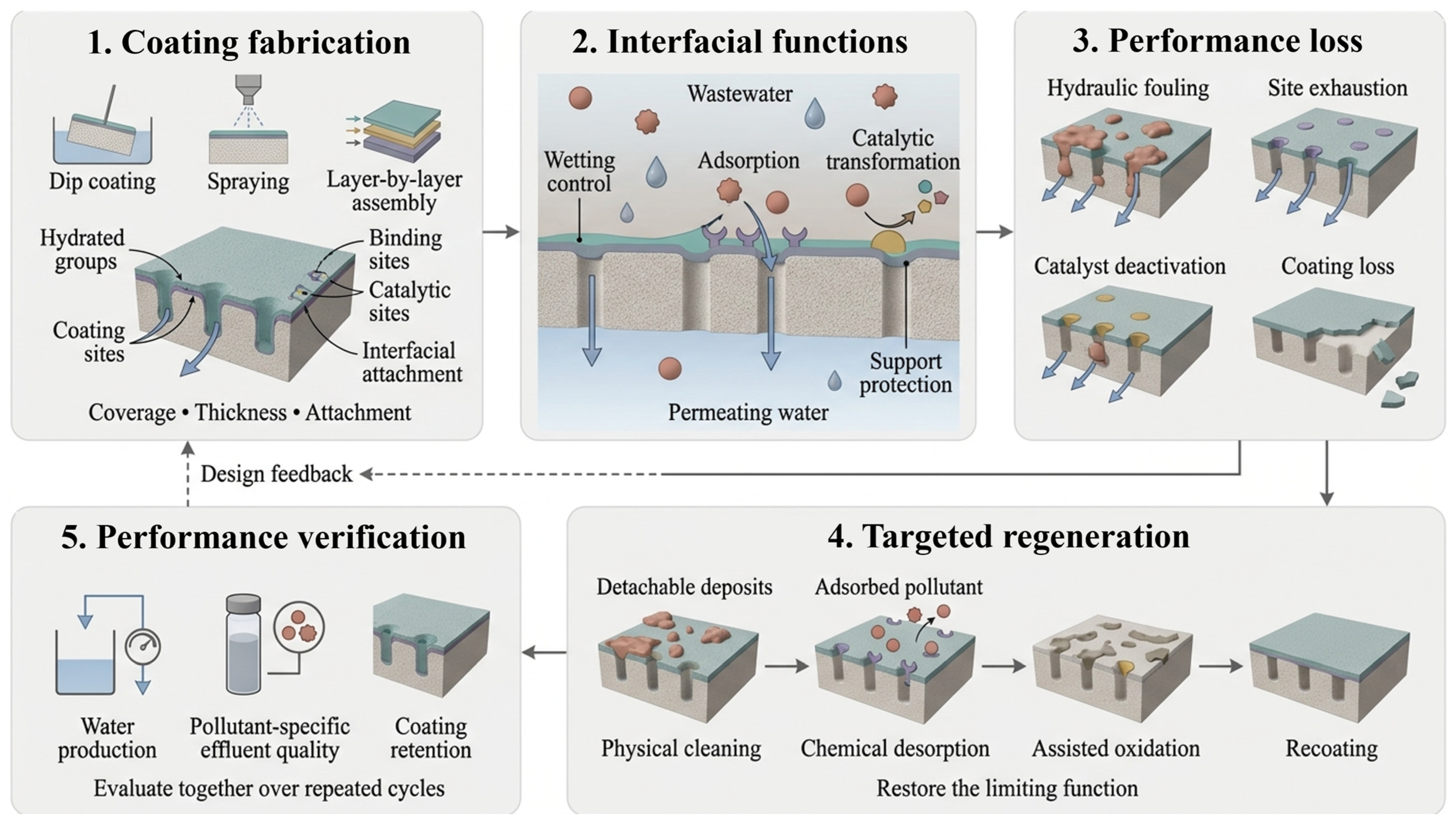
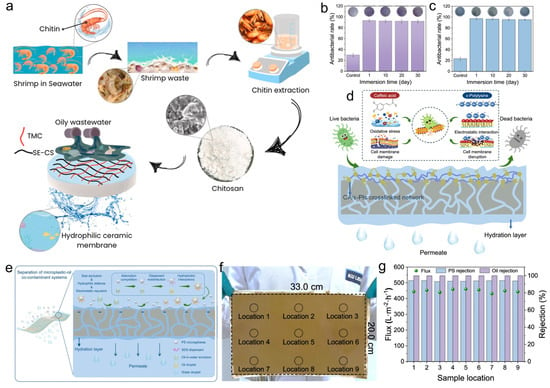
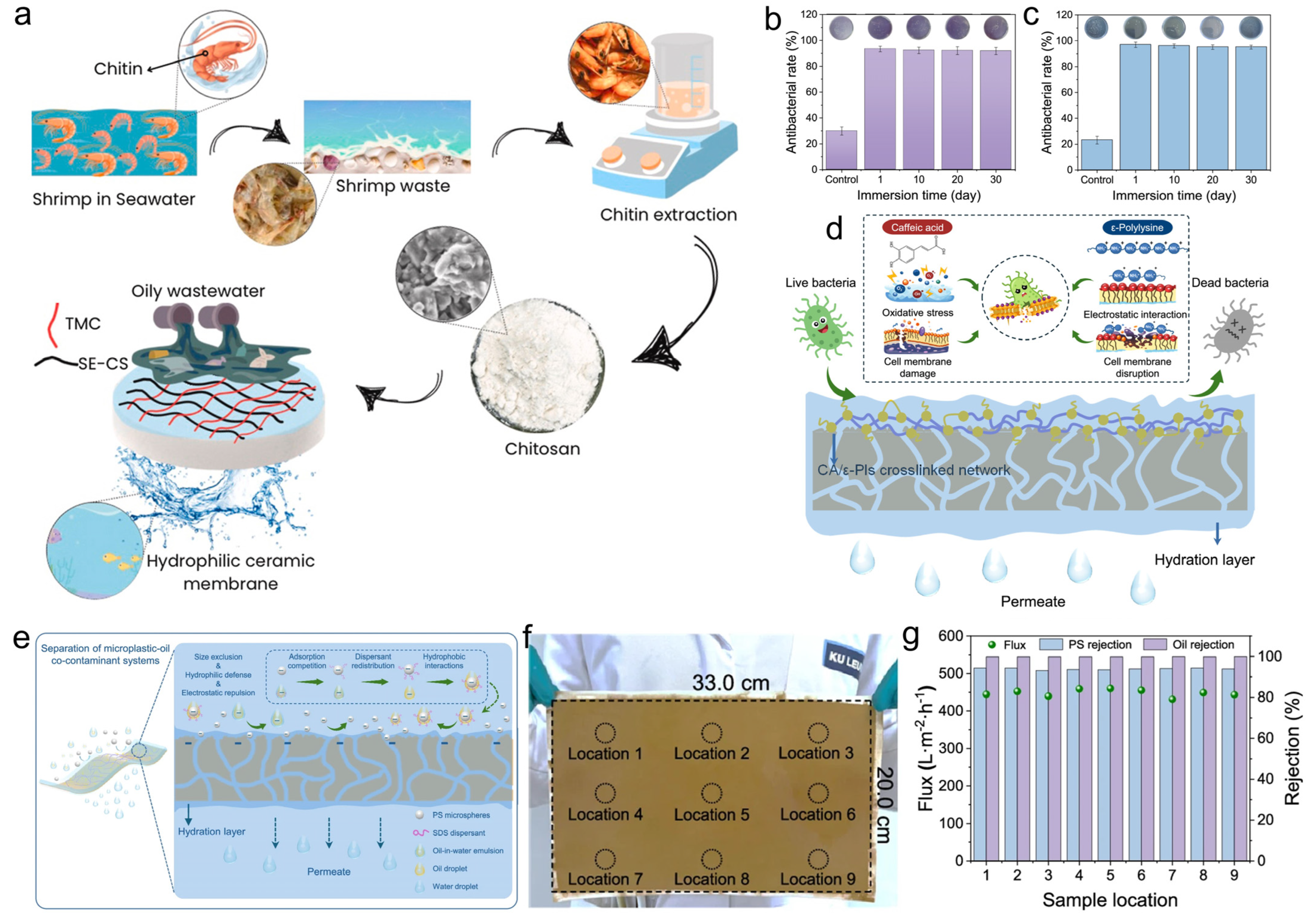
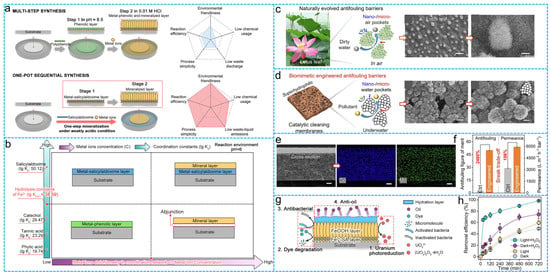
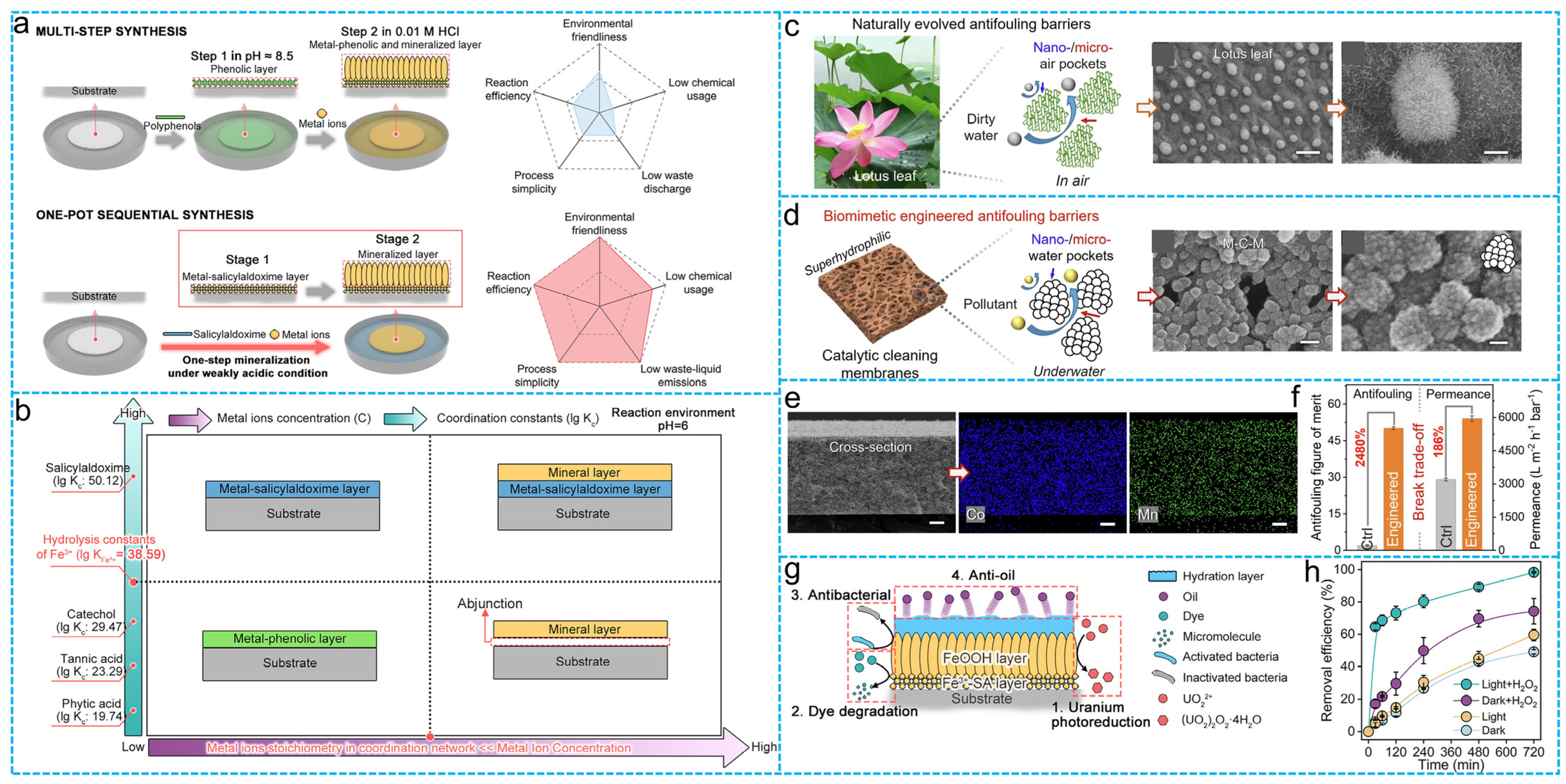
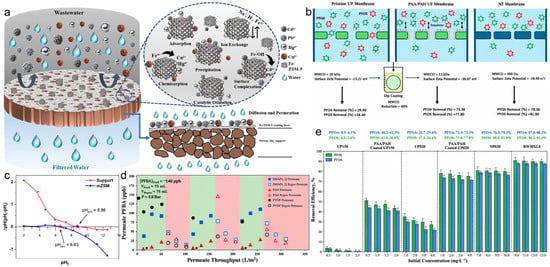
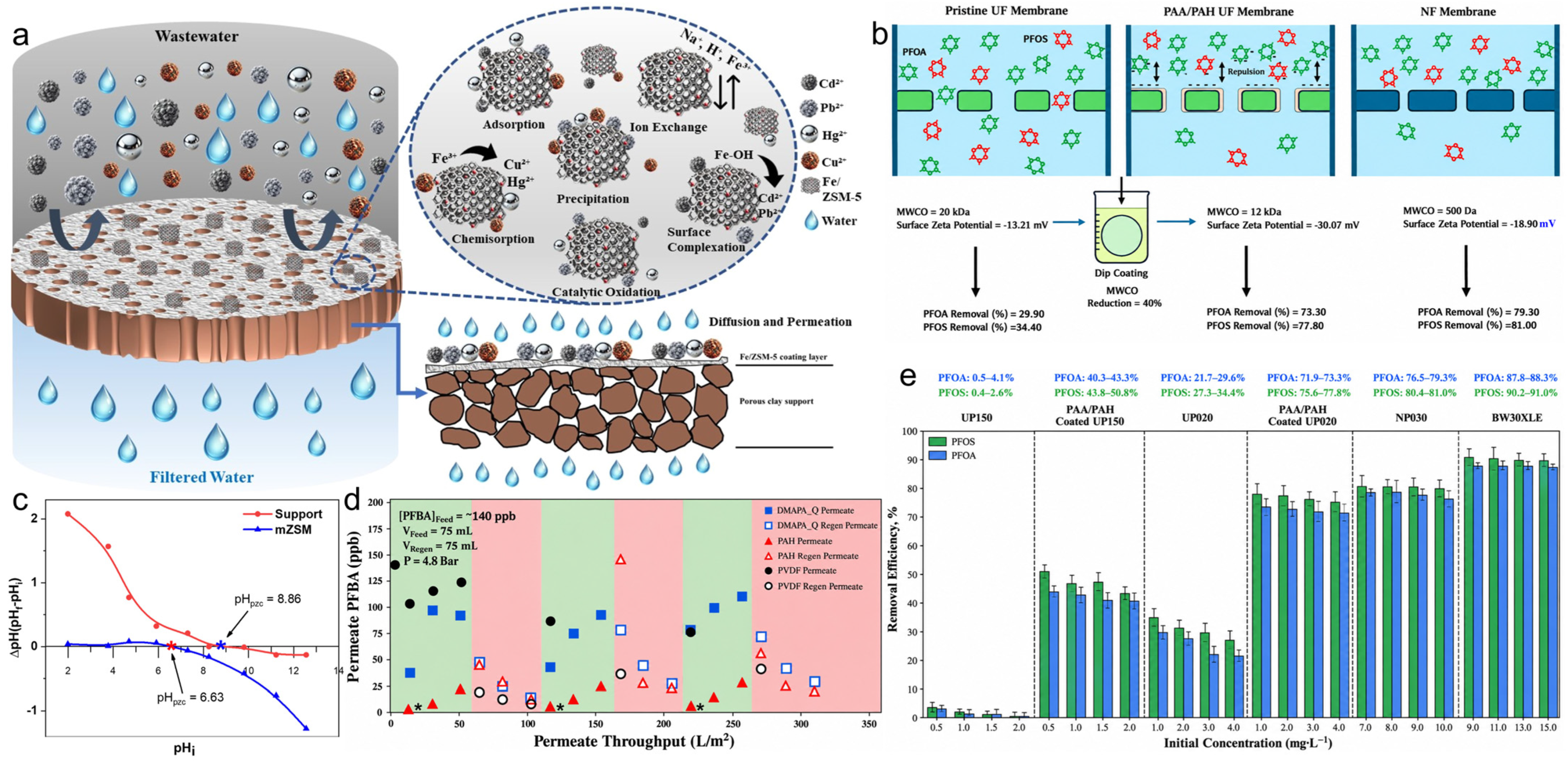
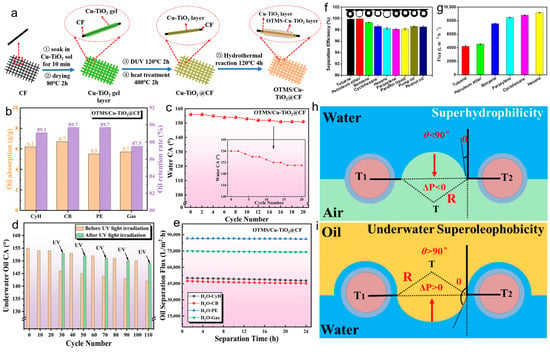
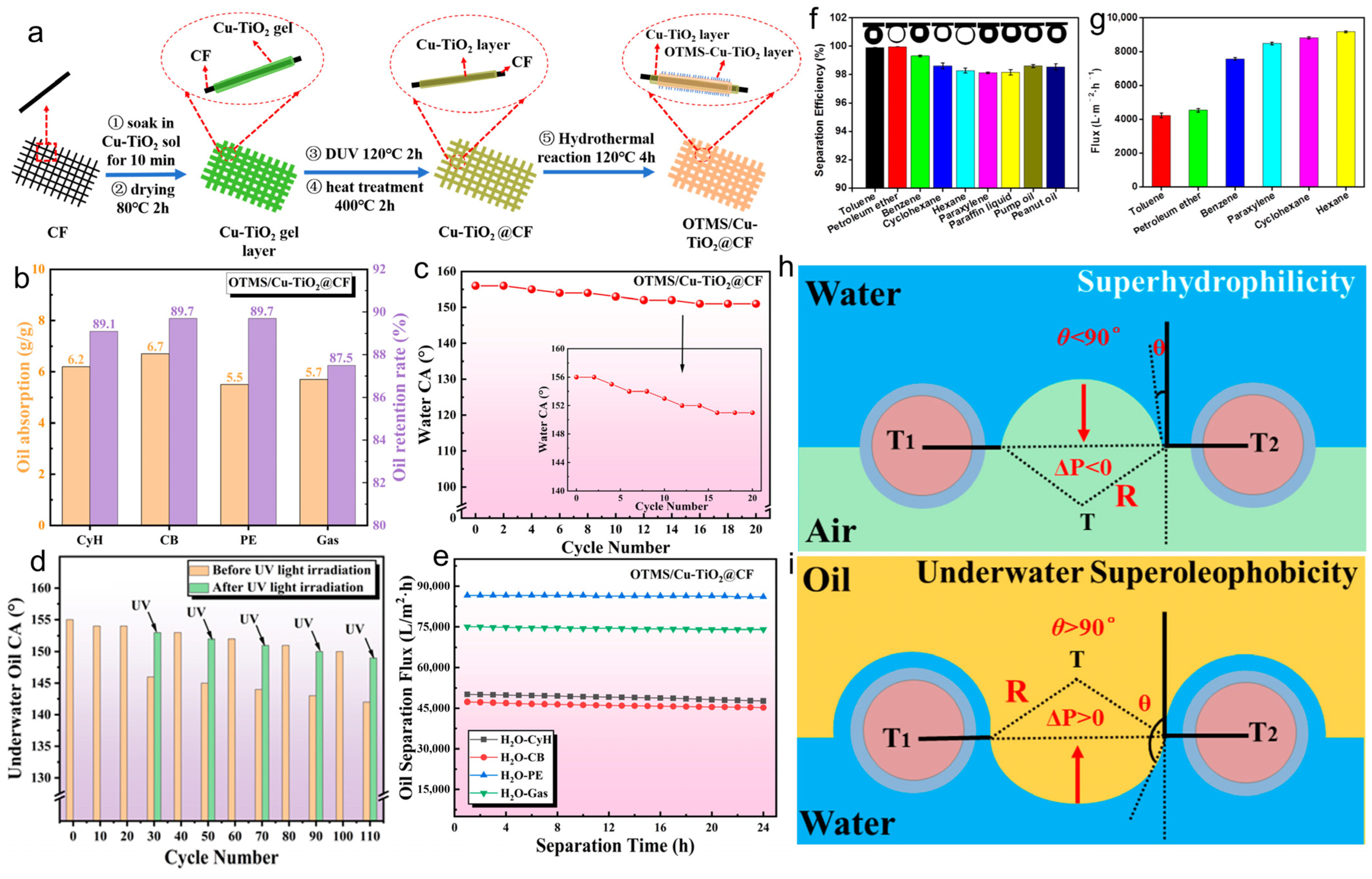
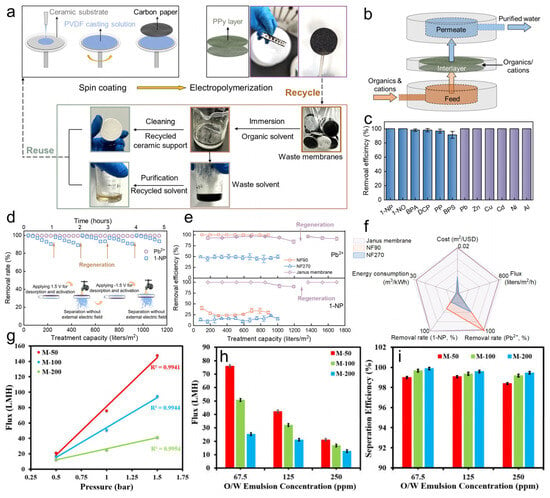
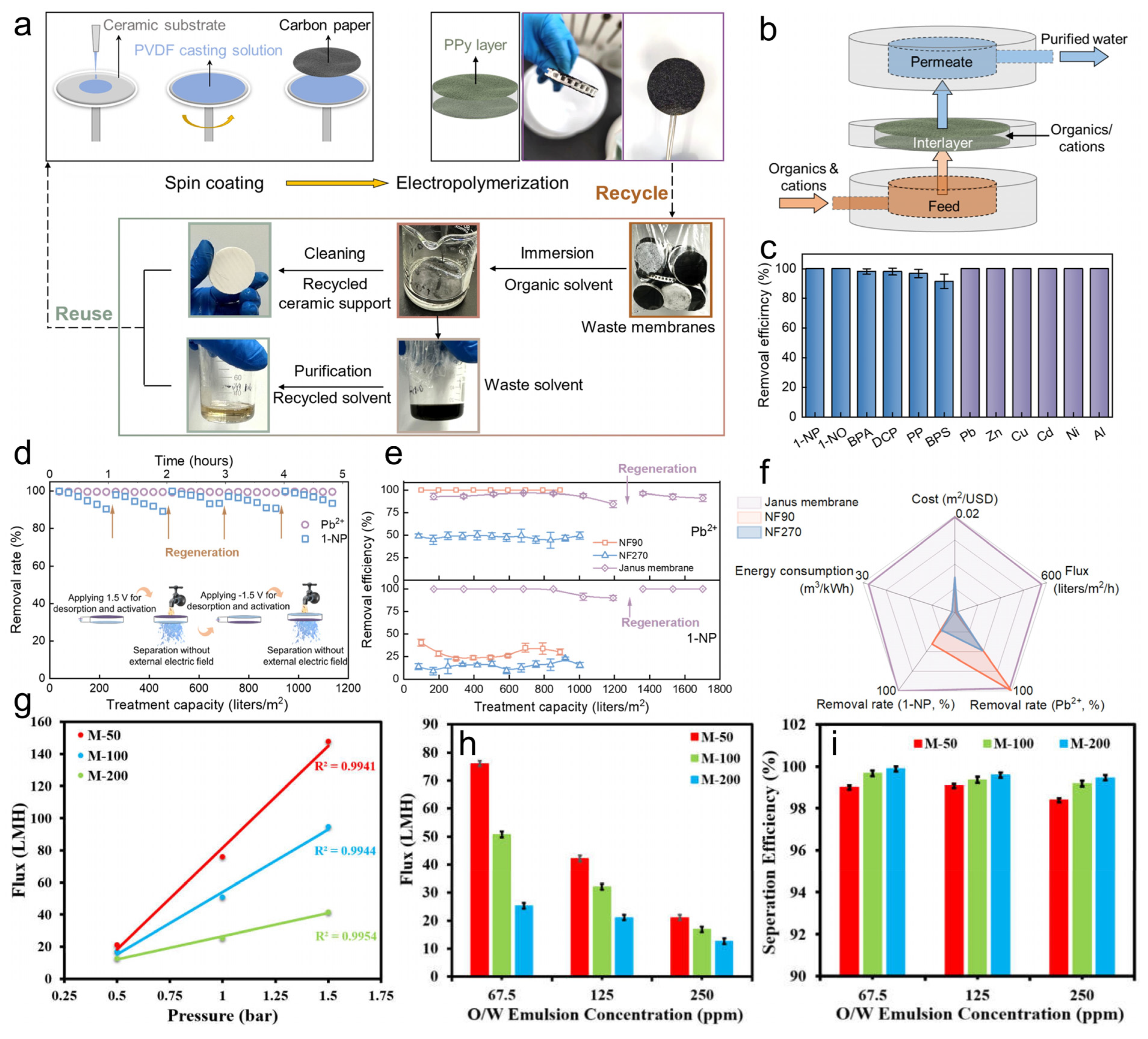
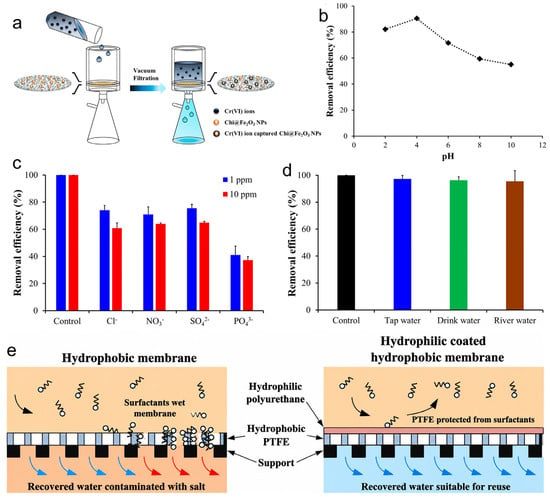
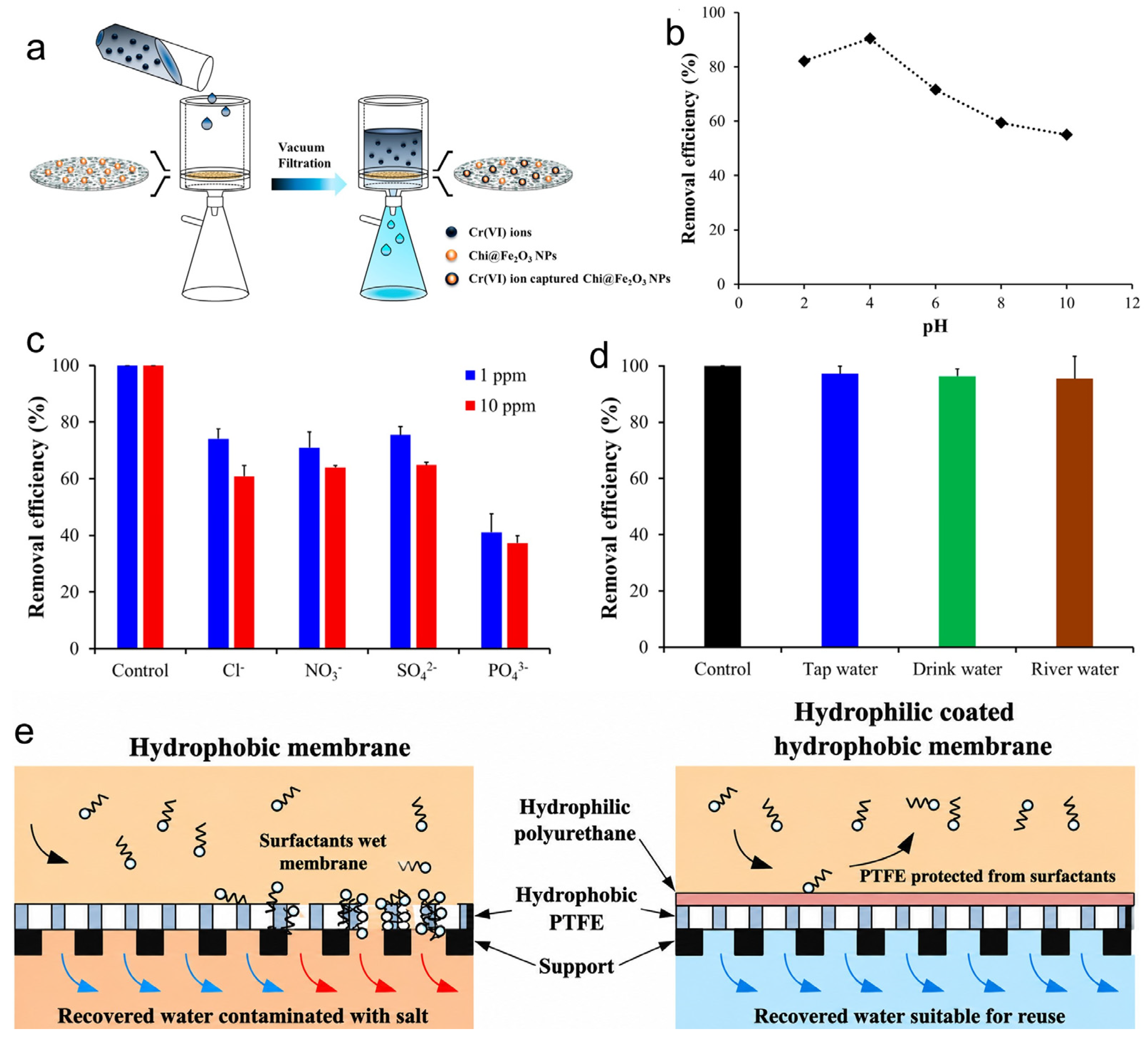
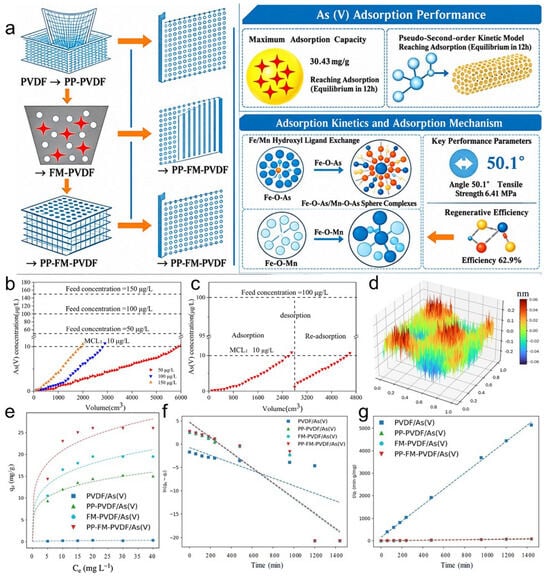
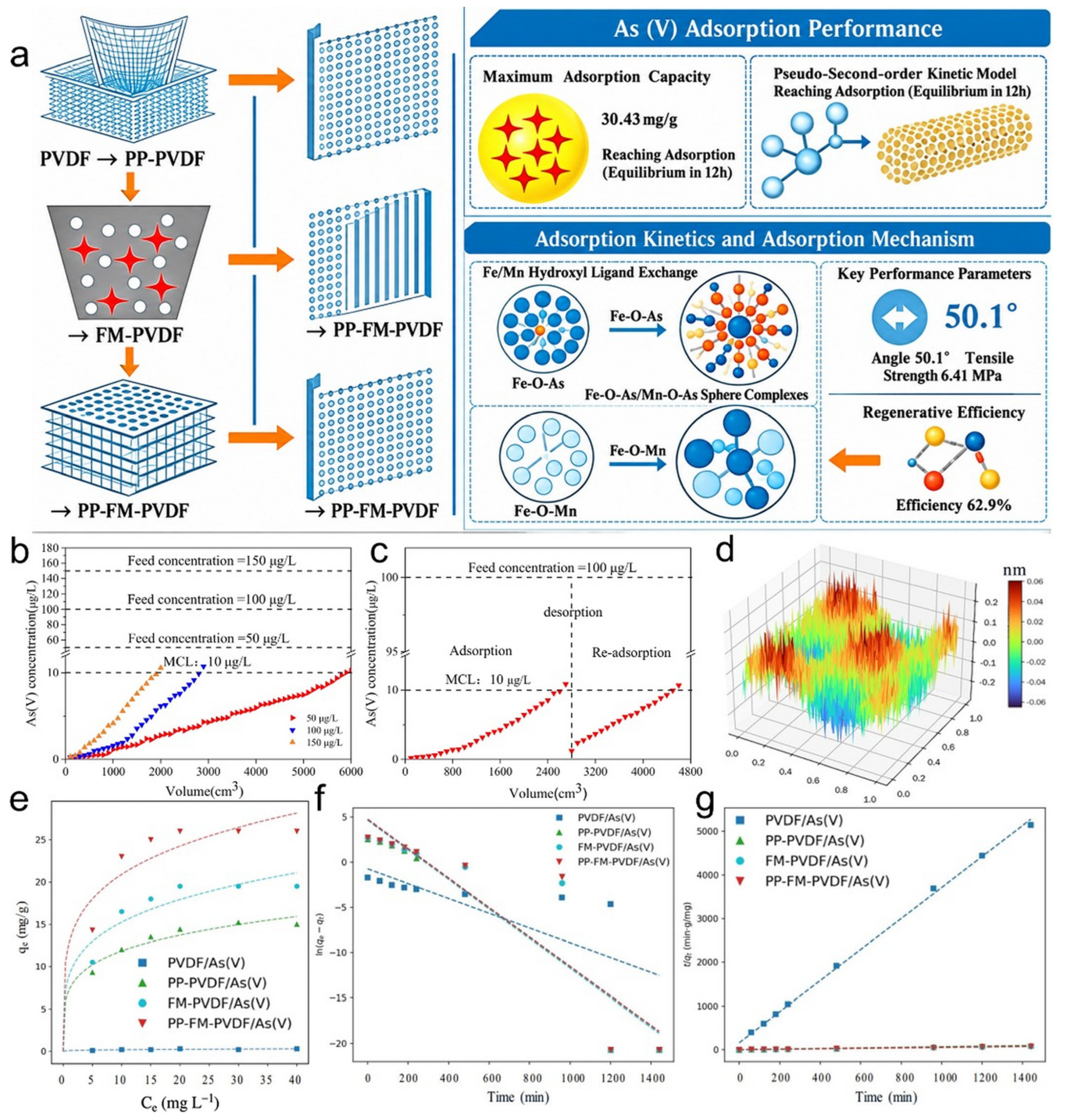

Disclaimer/Publisher’s Note: The statements, opinions and data contained in all publications are solely those of the individual author(s) and contributor(s) and not of MDPI and/or the editor(s). MDPI and/or the editor(s) disclaim responsibility for any injury to people or property resulting from any ideas, methods, instructions or products referred to in the content. |
© 2026 by the authors. Licensee MDPI, Basel, Switzerland. This article is an open access article distributed under the terms and conditions of the Creative Commons Attribution (CC BY) license.