




J. Intell., Volume 14, Issue 2 (February 2026) – 17 articles
Cover Story (view full-size image):
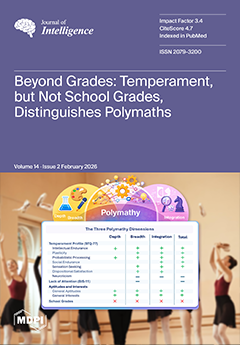
Polymathy involves the cultivation and use of knowledge with breadth, depth, and integration. Since learning lies at its core, one might expect polymathic orientation to translate into strong school performance. The evidence suggests otherwise: polymaths are not captured by our grading systems. Drawing on a neurochemistry-based temperament model (FET/STQ), impulsivity measures, and academic records from 296 participants, we find strong associations with sustained attention, probabilistic processing, and plasticity—but no meaningful relationship with high school or university grades. This may reflect broader institutional misalignment: by privileging narrow indicators, institutions overlook and penalize the intrapersonal diversity and integrative habits of polymaths, thereby forgoing the broader social benefits such a profile can generate. View this paper
- Issues are regarded as officially published after their release is announced to the table of contents alert mailing list.
- You may sign up for e-mail alerts to receive table of contents of newly released issues.
- PDF is the official format for papers published in both, html and pdf forms. To view the papers in pdf format, click on the "PDF Full-text" link, and use the free Adobe Reader to open them.
Previous Issue
Next Issue
