


Abstract
The transport of He, O, and Ar ions with energies of 10, 25, 50, and 100 keV in a 500 nm thick gallium nitride layer was investigated by using Monte Carlo simulations. The calculations were performed with SRIM/TRIM and Geant4. Depth profiles of ionizing and non-ionizing energy losses, as well as projected and radial range characteristics, were compared. For He ions, ionizing energy losses dominate over the entire energy range considered, whereas increasing the mass of the incident ion leads to a larger fraction of the energy being transferred to atomic collision cascades. For Ar ions, non-ionizing energy losses exceed ionizing losses up to 100 keV. The mean absolute differences between the Geant4 and SRIM results are 7.81% for the projected range, 17.44% for ionizing energy losses, and 18.54% for non-ionizing energy losses. These results show that reproducing the spatial scale of ion stopping does not necessarily imply an equivalent description of energy partitioning between the electronic and nuclear channels.
1. Introduction
Gallium nitride is a wide-bandgap semiconductor material with strong potential for power and high-frequency electronics, optoelectronics, and devices operating under elevated temperatures and radiation exposure [1,2,3]. Ion implantation is widely used in GaN technology for controlled doping, electrical isolation, and modification of near-surface regions [2,3]. At the same time, energy transfer to lattice atoms leads to the formation of point defects and defect clusters and may degrade the electrical properties of the material [4,5]. Therefore, analysis of ion irradiation requires not only determining the penetration depth of incident particles but also evaluating how the deposited energy is partitioned between the electronic subsystem and atomic collision cascades.
SRIM/TRIM is widely used to simulate ion transport in solids and is based on the binary collision approximation [6]. It provides estimates of ion ranges, depth distributions of stopping losses, and characteristics of the primary displacement cascade. However, the calculated number of vacancies may depend on the selected simulation mode and the treatment of near-threshold collisions; for the full-cascade mode, SRIM has been shown to overestimate vacancy production [7]. For multilayer structures, arbitrary geometries, and separate scoring of individual processes, Geant4 provides a more flexible simulation framework [8,9]. However, standard physics configurations do not automatically ensure an accurate description of particle transport in the low-energy range, from several tens of keV to a few MeV.
The simulation of low-energy heavy ions in Geant4 strongly depends on the choice of electronic stopping models, screened nuclear scattering models, and step size limitations. Therefore, the results obtained with SRIM and Geant4 should be quantitatively compared using identical target and beam parameters. The capabilities of Geant4 for separate analysis of ionizing and non-ionizing energy deposition, secondary particle scoring, and spatial localization of interactions have previously been demonstrated in simulations of radiation effects in semiconductor materials [10]. However, the applicability of the selected Geant4 physics models to low-energy ion transport in GaN, as well as the degree of agreement with SRIM results, requires separate evaluation.
The aim of this work is to compare the transport of He, O, and Ar ions with energies of 10–100 keV in GaN using SRIM and Geant4. Particular attention is paid to the projected and radial range characteristics, depth profiles of ionizing energy loss (IEL) and non-ionizing energy loss (NIEL), and the dependence of the differences between the two models on ion energy and mass.
2. Calculation Details
The calculations were performed using SRIM-2013. The target was represented by a homogeneous GaN layer with a thickness of 500 nm and a density of 6.15 g/cm3. The atomic fractions of Ga and N were both set to 0.5. The 500 nm thickness was selected because the projected ranges of the investigated 10–100 keV ions are relatively small and the energy deposition is localized within the near-surface region. A substantially thicker target would not provide additional information on ion stopping in this energy range and would reduce the spatial resolution of the depth profiles by compressing the relevant features into a small fraction of the plotted depth scale. The selected thickness therefore provides sufficient depth for most ion energy combinations while preserving clear visualization of the IEL and NIEL distributions.
Monoenergetic He, O, and Ar ions with energies of 10, 25, 50, and 100 keV were incident normally on the target surface. The selected energies cover the low-energy ion transport regime in which the relative contributions of electronic and nuclear stopping vary substantially with ion mass and energy. The same energy set was used for all three ion species to provide a consistent basis for comparison. For each irradiation condition, 105 primary ions were simulated. The TRIM calculations were performed using the Kinchin–Pease damage model. The displacement threshold energies were set to Ed(Ga) = 25 eV and Ed(N) = 28 eV for gallium and nitrogen atoms (default values used in the SRIM/TRIM calculation), respectively, while the lattice binding energy was 3 eV for both target elements. The values of 25 eV and 28 eV were treated as fixed effective parameters of the simulation setup. The displacement threshold energies were used to calculate the number of vacancies and to reconstruct the non-ionizing energy loss.
It should be noted that the displacement threshold energy in GaN depends on the direction of the primary recoil atom and on the simulation conditions. Recent molecular dynamics studies have shown a substantial variation in the reported values [5].
The ionizing energy loss produced by a single incident ion was determined by summing the ionization energy deposited by the primary ion and recoil atoms as a function of depth (z) in the material:
The number of vacancies produced per unit depth nvac(z) and the number of excited phonons per unit depth nphon(z) were obtained along the thickness of the material. Accordingly, ENIEL can be expressed as:
where Ebind is the lattice binding energy and Ephonon is the energy required to create a phonon.
The total energy locally transferred to the target through the considered channels was written as:
Edeposited = EIEL + ENIEL.
Numerical integration of Equations (1) and (2) was performed using the depth distributions obtained from SRIM. For each depth interval, the ionization contributions from primary ions and recoil atoms were taken into account, together with the energy associated with vacancy formation and phonon excitation.
The quantity defined by Equation (2) represents a reconstructed estimate of the energy associated with vacancy formation and phonon excitation. It was used to analyze relative changes in the NIEL channel as the ion type and energy were varied. A similar approach based on the analysis of depth distributions of ionization, vacancies, and phonon contributions was previously applied to simulations of proton irradiation of perovskite structures [11].
For the Geant4 simulations, version 11.3.2 was used [12]. The geometry consisted of a GaN target 500 nm thick along the beam direction and 10 × 10 μm2 in cross-section. A point source was placed 10 nm in front of the target surface, and the initial ion direction was normal to the target. For each combination of ion species and energy, 105 events were simulated. The maximum geometrical step size was limited to 1 nm. The production cuts for secondary γ-rays, electrons, positrons, and protons were also set to 1 nm. In GaN, these values corresponded to energy thresholds of approximately 990 eV for secondary photons and electrons and 0.1 eV for secondary protons.
Nuclear scattering was described using the G4ScreenedNuclearRecoil process [13], which accounts for screened Coulomb scattering and the production of recoil atoms. An explicit recoil track was generated when the transferred energy was at least 100 eV; for lower transferred energies, the corresponding contribution was deposited locally.
Electronic energy losses of oxygen and argon ions were calculated using the G4IonParametrisedLossModel based on ICRU 73 data [14]. For helium ions, the dedicated α-particle ionization treatment implemented in G4ionIonisation was used [14,15]. The energy transferred in screened nuclear scattering was partitioned between the ionizing and non-ionizing components according to the Lindhard–Robinson model [16,17].
For each event, the final projected depth, maximum penetration depth, radial displacement, primary ion trajectory length, total deposited energy obtained using GetTotalEnergyDeposit() [8], IEL, NIEL obtained using GetNonIonizingEnergyDeposit() [8], depth profiles, and process counters were recorded.
The selected physics configuration was preliminarily validated by comparing ion ranges and integral energy losses obtained with Geant4 and SRIM using identical geometry and beam parameters.
3. Results and Discussion
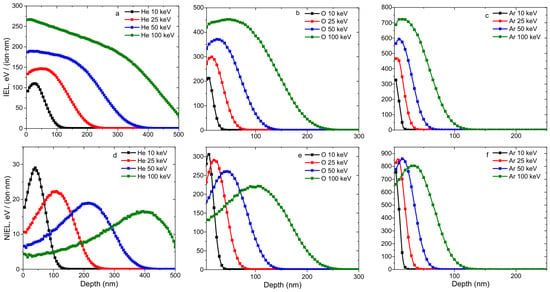
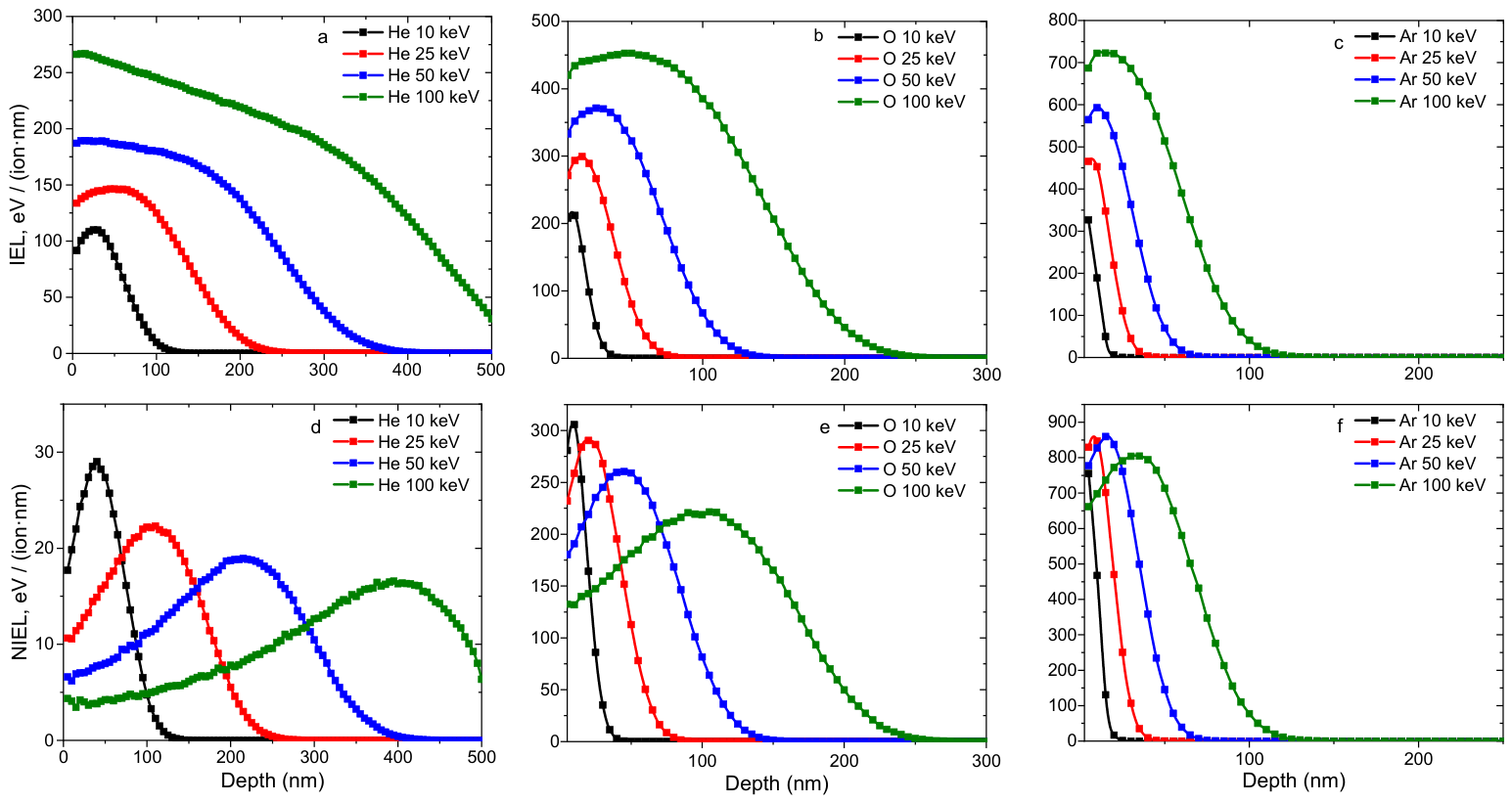
Figure 1 shows the depth distributions of ionizing and non-ionizing energy losses calculated with SRIM for He, O, and Ar ions. For all ion species, increasing the initial energy shifts the energy-deposition region deeper into the target and broadens the corresponding profile. At the same time, the shape of the distribution strongly depends on the mass of the incident ion.
Figure 1.
Depth profiles of ionizing and non-ionizing energy losses in GaN calculated with SRIM under irradiation with He (a,d), O (b,e), and Ar (c,f) ions.
For He ions, the IEL profile extends over the largest depth range. At low energy, the maximum is located near the surface, after which the losses gradually decrease with depth. As the ion energy increases, the contribution of ionizing stopping extends to greater depths and the profile decreases more gradually. For O ions, and especially for Ar ions, the ionizing energy loss region is more localized. The maximum occurs closer to the surface and is followed by a relatively rapid decrease in energy deposition. Thus, increasing ion mass results in a narrower longitudinal region of ionizing energy deposition.
The depth distributions of NIEL exhibit a pronounced maximum associated with the development of atomic collision cascades. For all ions considered, the position of this maximum shifts deeper into the target as the initial energy increases. At the same time, the region over which energy is transferred to lattice atoms becomes broader. This shift is most clearly observed for He ions, for which the maxima corresponding to different energies are spatially separated.
For O and Ar ions, the profiles remain more compact and are located closer to the irradiated surface. These trends reflect the transition from predominantly electronic stopping for light ions to a stronger contribution of elastic collisions and recoil-atom cascades for heavier ions.
For 100 keV He ions, the energy loss profiles extend to the rear boundary of the 500 nm GaN layer, indicating incomplete stopping of a fraction of the incident ions. The transmitted fractions are approximately 25.0% in SRIM/TRIM and 39.2% in Geant4, whereas the corresponding backscattered fractions are 0.86% and 0.87%, respectively. Therefore, the integral IEL and NIEL values reported for this case correspond to energy deposited within the finite 500 nm target and should not be interpreted as the total energy loss in an infinitely thick GaN medium.
For the other ion energy combinations, transmission through the 500 nm layer was absent or negligible, while the backscattered fraction remained small and did not affect the interpretation of the depth-integrated IEL and NIEL values.
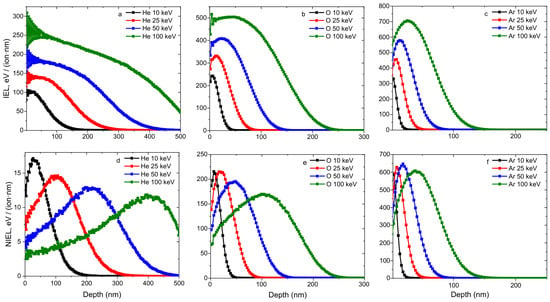
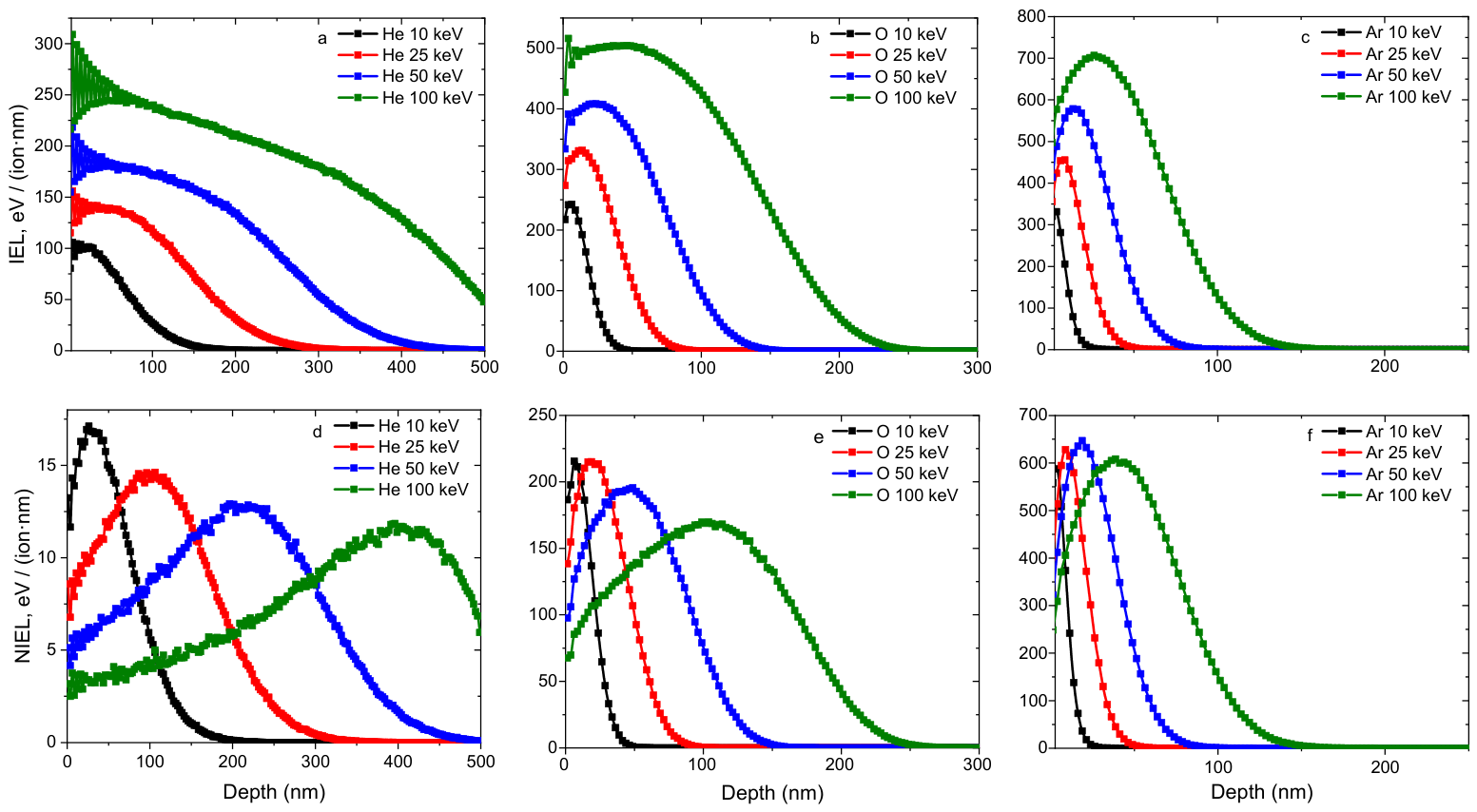
Figure 2 shows the corresponding depth distributions calculated with Geant4.
Figure 2.
Depth profiles of ionizing and non-ionizing energy losses in GaN calculated with Geant4 under irradiation with He (a,d), O (b,e), and Ar (c,f) ions.
Overall, Geant4 reproduces the main trends obtained with SRIM: the penetration depth increases with ion energy, the energy deposition maxima shift progressively deeper into the target, and the losses become more strongly localized near the surface for heavier ions. The general shapes and relative positions of the profiles for He, O, and Ar are also preserved.
For the heaviest ions, non-ionizing energy losses are concentrated mainly within a narrow near-surface layer. This behavior is consistent with their short projected range and with the efficient transfer of energy to GaN atoms through elastic collisions.
A comparison of Figure 1 and Figure 2 shows that the depth profiles obtained with SRIM and Geant4 are generally similar in shape. Both approaches reproduce the shift in the energy deposition region deeper into the target with increasing initial ion energy, as well as the stronger near-surface localization of energy losses when moving from He to O and Ar ions. The positions of the main maxima and the overall decay behavior of the curves are also in qualitative agreement.
The most noticeable differences are observed at small depths near the irradiated surface, where Geant4 and SRIM produce somewhat different initial values and near-surface profile shapes. In addition, the peak magnitudes and distribution widths do not fully coincide. These discrepancies are moderate and may be related to differences in the models of electronic stopping, screened elastic scattering, and recoil cascade formation implemented in SRIM and Geant4.
In Geant4, these processes are treated by separate physics components, including parametrized electronic stopping, screened nuclear recoil scattering, and Lindhard–Robinson energy partitioning. SRIM/TRIM uses a different binary collision-based transport scheme and its own treatment of stopping and recoil cascades. Therefore, the observed tendency of Geant4 to predict larger ranges and IEL and lower reconstructed NIEL should be interpreted as a combined model-dependent effect. The present calculations do not isolate the contribution of each individual model component.
Thus, Geant4 reproduces the main trends in the depth distributions of ionizing and non-ionizing energy losses obtained with SRIM. The differences between the calculations are manifested primarily in the near-surface region and in the absolute energy deposition values, whereas the overall profile shapes and their shifts with ion energy and ion mass remain similar.
The integral energy loss values were obtained by numerical integration of the corresponding depth distributions.
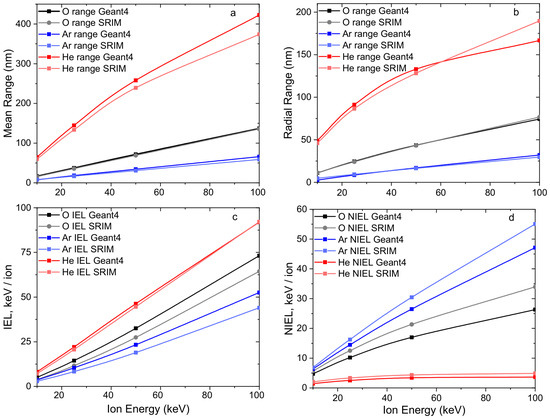
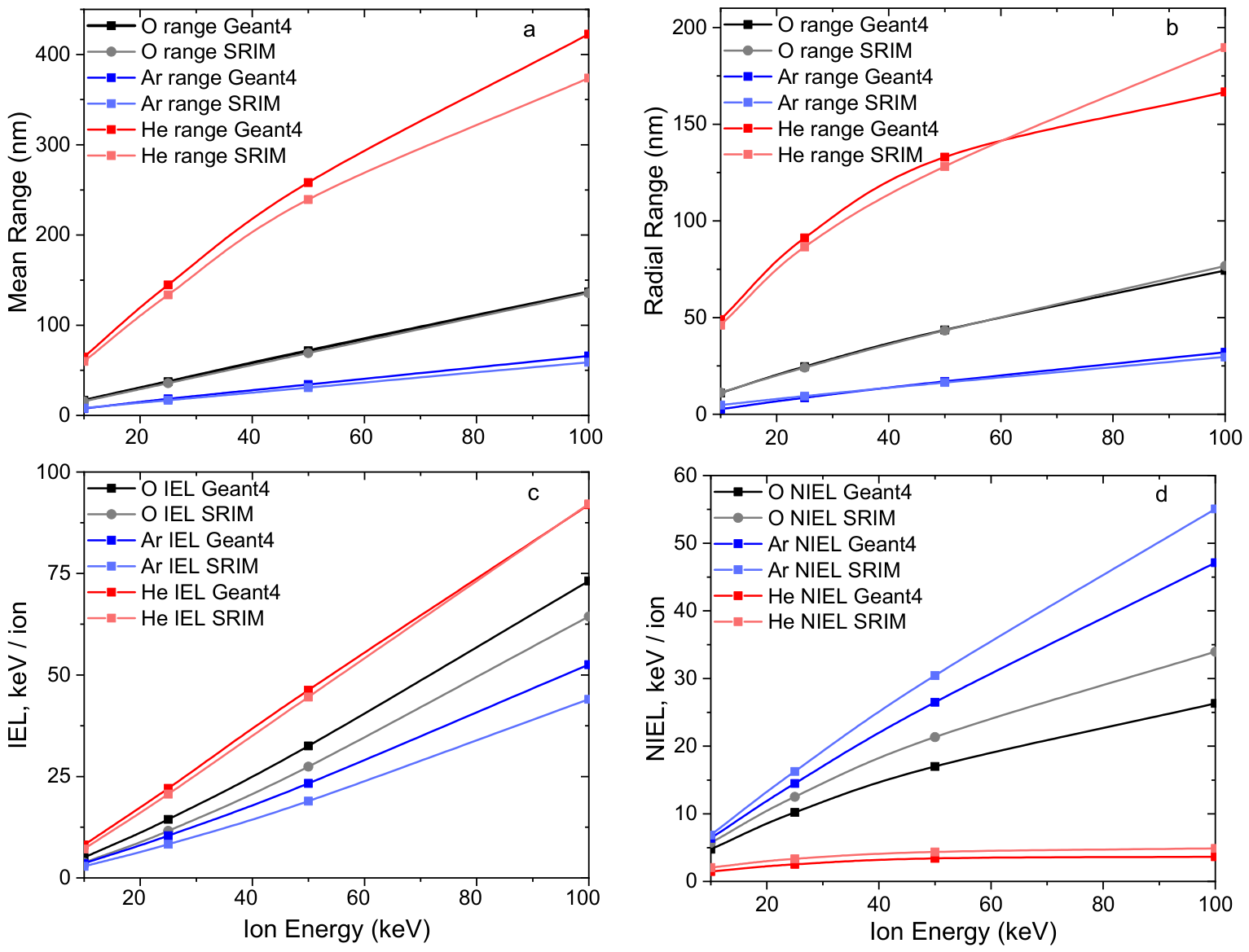
For a direct comparison of the calculated characteristics, the SRIM and Geant4 results are combined in Figure 3. The combined plots show that the degree of agreement depends on the quantity considered. The closest agreement is obtained for the spatial characteristics of ion transport. The energy dependences of the projected and radial ranges have similar shapes, while the differences are mainly reflected in the absolute values of individual data points.
Figure 3.
Comparison of SRIM and Geant4 results for GaN irradiated with He, O, and Ar ions: (a) mean projected range; (b) radial range; (c) IEL; (d) NIEL.
For the integral energy losses, the discrepancies are more pronounced. Both approaches reproduce the increase in IEL and NIEL with increasing initial ion energy, as well as the change in the relative contribution of these channels when moving from He to O and Ar ions. However, the partitioning of the transferred energy between the ionizing and non-ionizing components is more sensitive to the selected physical model than the mean penetration depth.
This is particularly evident for NIEL. In both calculations, the same general ordering is preserved: the lowest non-ionizing losses are obtained for He, intermediate values for O, and the highest values for Ar. However, the absolute Geant4 and SRIM values differ more strongly than the corresponding range values. A similar, although less pronounced, trend is observed for IEL.
Table 1.
Comparison of projected range, IEL, and reconstructed NIEL calculated using SRIM/TRIM and Geant4.
The mean absolute relative differences between Geant4 and SRIM are 7.81% for the projected range, 8.61% for the radial spread, 17.44% for IEL, and 18.54% for NIEL. The corresponding root mean square (RMS) relative deviations are 8.46%, 14.44%, 19.94%, and 19.49%, respectively, while the RMS deviations are 15.76 nm, 7.24 nm, 4.24 keV/ion, and 3.75 keV/ion. On average, Geant4 overestimates the projected range by 6.56% and IEL by 17.41%, whereas the radial spread and NIEL are lower than the SRIM values by 3.50% and 18.54%, respectively.
The statistical uncertainties of the simulations are substantially smaller than the observed differences between the two models. For Geant4, the relative standard error of the mean does not exceed 0.21% for the projected range, 0.28% for the radial spread, 0.07% for IEL, and 0.21% for NIEL. For SRIM, the relative standard error of the mean calculated for the projected range and radial spread does not exceed 0.17% and 0.19%, respectively. For IEL and NIEL in SRIM, approximate lower bound estimates of the counting statistical uncertainty were used, amounting to no more than 0.018% and 0.051%, respectively.
These estimates do not account for correlations within collision cascades or for systematic uncertainties associated with the physical models. Nevertheless, they show that the observed differences of approximately 8–19% cannot be attributed to an insufficient number of primary ions.
Published experimental studies of ion implantation in GaN confirm that irradiation with ions in the considered energy range produces strongly localized near-surface modification. For 100 keV Ar implantation, transmission electron microscopy revealed an implanted region at a depth of approximately 100–130 nm and an additional deeper damage band, while the experimentally observed modified depth was comparable to the damage region estimated by TRIM calculations [18,19]. For O implantation at 120 keV, the implanted ion profile was reported to peak at approximately 160 nm, with a maximum penetration depth of about 280–300 nm [20]. Experimental studies of He implantation at higher energy also show the formation of a well-localized buried damaged layer [21], although the substantially higher implantation energy prevents a direct quantitative comparison with the present calculations. These experimental results are consistent with the general submicron spatial scale of ion transport obtained in the present simulations. However, direct quantitative validation is not possible because the available experiments differ in ion energy, fluence, crystallographic orientation, implantation geometry, and characterization conditions.
Thus, reproducing the spatial scale of ion stopping does not guarantee an equivalent description of energy partitioning between the ionizing and non-ionizing channels. Ion ranges are determined by the integral outcome of particle transport, whereas IEL and NIEL are more sensitive to the models of electronic stopping, effective charge, screened nuclear scattering, and recoil cascade formation.
The results indicate that the Geant4 configuration considered here is suitable for analyzing the spatial localization of energy deposition and the general transport trends of He, O, and Ar ions in GaN. However, when quantitatively evaluating individual energy loss channels, particularly NIEL, the model dependence of the calculated values should be taken into account.
4. Conclusions
The transport of He, O, and Ar ions with energies of 10–100 keV in a GaN layer was investigated using SRIM and Geant4. Both approaches reproduce the shift in the energy deposition region deeper into the target with increasing ion energy, as well as the increasing relative contribution of non-ionizing energy losses when moving from He to O and Ar ions. The closest agreement is obtained for the projected ranges, whereas the differences in IEL and NIEL are more pronounced.
SRIM provides an efficient framework for calculating ion ranges, stopping losses, and displacement cascades within the binary collision approximation, but it offers a less detailed description of individual interaction processes, secondary particles, and complex irradiation geometries. Geant4, in turn, enables separate scoring of interaction mechanisms, trajectories of primary and secondary particles, and the spatial distribution of energy deposition in arbitrary geometries. However, the reliability of low-energy ion simulations in Geant4 strongly depends on the appropriate choice of electronic stopping models, screened nuclear scattering models, step size limitations, and scoring parameters. Therefore, the use of Geant4 in this energy range requires prior validation of the selected physics configuration against specialized calculations or experimental data.
Author Contributions
Conceptualization, I.S.Z.; Methodology, I.E.N.; Software, I.E.N.; Validation, I.E.N.; Formal analysis, I.E.N. and I.S.Z.; Investigation, I.E.N.; Writing—original draft, I.E.N.; Writing—review & editing, I.E.N. and I.S.Z.; Visualization, I.E.N.; Supervision, I.S.Z.; Project administration, I.S.Z.; Funding acquisition, I.S.Z. All authors have read and agreed to the published version of the manuscript.
Funding
This work was supported by the Ministry of Science and Higher Education of the Russian Federation (Project No. 075-15-2024-532).
Data Availability Statement
The original contributions presented in this study are included in the article. Further inquiries can be directed to the corresponding author.
Conflicts of Interest
The authors declare no conflict of interest.
References
- Drabczyk, A.; Uss, P.; Bucka, K.; Bulowski, W.; Kasza, P.; Mazur, P.; Boguta, E.; Mazur, M.; Putynkowski, G.; Socha, R.P. Gallium Nitride for Space Photovoltaics: Properties, Synthesis Methods, Device Architectures and Emerging Market Perspectives. Micromachines 2025, 16, 1421. [Google Scholar] [CrossRef] [Scilit] [PubMed]
- Lu, H.; Hao, X.; Zhang, Y.; Yang, L.; Hou, B.; Zhang, M.; Wu, M.; Ma, X.; Hao, Y. Recent Progress of Ion Implantation Technique in GaN-Based Electronic Devices. Micromachines 2025, 16, 999. [Google Scholar] [CrossRef] [Scilit] [PubMed]
- Hsu, Y.H.; Lin, S.H.; Wuu, D.S.; Horng, R.H. Development of Blue-Light GaN Based Micro Light-Emitting Diodes Using Ion Implantation Technology. Discov. Nano 2024, 19, 209. [Google Scholar] [CrossRef] [Scilit] [PubMed]
- Sequeira, M.C.; Mattei, J.G.; Vazquez, H.; Djurabekova, F.; Nordlund, K.; Monnet, I.; Mota-Santiago, P.; Kluth, P.; Grygiel, C.; Zhang, S.; et al. Unravelling the Secrets of the Resistance of GaN to Strongly Ionising Radiation. Commun. Phys. 2021, 4, 51. [Google Scholar] [CrossRef] [Scilit]
- Hauck, A.S.; Jin, M.; Tuttle, B.R. Atomic Displacement Threshold Energies and Defect Generation in GaN, AlN, and AlGaN: A High-Throughput Molecular Dynamics Investigation. Appl. Phys. Lett. 2024, 124, 152107. [Google Scholar] [CrossRef] [Scilit]
- Ziegler, J.F.; Ziegler, M.D.; Biersack, J.P. SRIM—The Stopping and Range of Ions in Matter. Nucl. Instrum. Methods Phys. Res. Sect. B 2010, 268, 1818–1823. [Google Scholar] [CrossRef] [Scilit]
- Lin, Y.R.; Zinkle, S.J.; Ortiz, C.J.; Crocombette, J.P.; Webb, R.; Stoller, R.E. Predicting Displacement Damage for Ion Irradiation: Origin of the Overestimation of Vacancy Production in SRIM Full-Cascade Calculations. Curr. Opin. Solid State Mater. Sci. 2023, 27, 101120. [Google Scholar] [CrossRef] [Scilit]
- Agostinelli, S.; Allison, J.; Amako, K.; Apostolakis, J.; Araujo, H.; Arce, P.; Asai, M.; Axen, D.; Banerjee, S.; Barrand, G.; et al. Geant4—A Simulation Toolkit. Nucl. Instrum. Methods Phys. Res. Sect. A 2003, 506, 250–303. [Google Scholar] [CrossRef] [Scilit]
- Allison, J.; Amako, K.; Apostolakis, J.; Arce, P.; Asai, M.; Aso, T.; Bagli, E.; Bagulya, A.; Banerjee, S.; Barrand, G.; et al. Recent Developments in Geant4. Nucl. Instrum. Methods Phys. Res. Sect. A 2016, 835, 186–225. [Google Scholar] [CrossRef] [Scilit]
- Novoselov, I.E.; Xing, Z.; Sun, H.; Zhidkov, I.S. From Tracks to Hotspots: Particle-Dependent Radiation Energy Deposition in MAPbI3 Perovskite. Nanomaterials 2026, 16, 803. [Google Scholar] [CrossRef] [Scilit] [PubMed]
- Novoselov, I.E.; Zhidkov, I.S. Proton-Induced Energy Deposition and Displacement Damage in Hybrid Halide Perovskites. In Proceedings of the 2026 IEEE Ural-Siberian Conference on Biomedical Engineering, Radioelectronics and Information Technology (USBEREIT), Yekaterinburg, Russia, 14–15 May 2026; pp. 1–4. [Google Scholar] [CrossRef] [Scilit]
- Geant4 11.3 Release Notes. Available online: https://geant4.web.cern.ch/download/release-notes/notes-v11.3.0.html (accessed on 13 February 2026).
- Mendenhall, M.H.; Weller, R.A. An Algorithm for Computing Screened Coulomb Scattering in Geant4. Nucl. Instrum. Methods Phys. Res. Sect. B 2005, 227, 420–430. [Google Scholar] [CrossRef] [Scilit]
- Lechner, A.; Ivanchenko, V. Recent Developments of Electronic Stopping Models for Heavy Ions in Geant4. In Proceedings of the 2008 IEEE Nuclear Science Symposium Conference Record, Dresden, Germany, 19–25 October 2008; pp. 837–840. [Google Scholar] [CrossRef] [Scilit]
- Lechner, A.; Ivanchenko, V.N.; Knobloch, J. Validation of Recent Geant4 Physics Models for Application in Carbon Ion Therapy. Nucl. Instrum. Methods Phys. Res. B 2010, 268, 2343–2354. [Google Scholar] [CrossRef] [Scilit]
- Lindhard, J.; Scharff, M.; Schiøtt, H.E. Range Concepts and Heavy Ion Ranges (Notes on Atomic Collisions, II). In Matematisk-Fysiske Meddelelser; Ejnar Munksgaard: Copenhagen, Denmark, 1963; Volume 33, No. 14, pp. 1–42. [Google Scholar]
- Lindhard, J.; So, A.H. Relativistic Theory of Stopping for Heavy Ions. Phys. Rev. A 1996, 53, 2443. [Google Scholar] [CrossRef] [Scilit] [PubMed]
- U.S. Patent Application for Patterning of GaN Crystal Films with Ion Beams and Subsequent Wet Etching Patent Application (Application #20020096496 Issued 25 July 2002)—Justia Patents Search. Available online: https://patents.justia.com/patent/20020096496?utm_source=chatgpt.com (accessed on 1 October 2026).
- Carosella, C.A.; Molnar, B.; Schiestel, S.; Sprague, J.A. Wet Etching of Ion-Implanted GaN Crystals by AZ-400K Photoresist. Mater. Res. Soc. Internet J. Nitride Semicond. Res. 2000, 5, 859–865. [Google Scholar] [CrossRef] [Scilit]
- Pandey, A.; Raman, R.; Dalal, S.; Kaur, D.; Kapoor, A.K. Structural and Optical Characteristics Investigations in Oxygen Ion Implanted GaN Epitaxial Layers. Mater. Sci. Semicond. Process. 2020, 107, 104833. [Google Scholar] [CrossRef] [Scilit]
- Li, B.; Liu, Y.; Liu, H.; Kang, L.; Xiong, A. Transmission Electron Microscopy Study of Extended Defects in High Dose He-Implanted GaN after Annealing at 450 °C. Nucl. Instrum. Methods Phys. Res. Sect. B 2019, 454, 45–49. [Google Scholar] [CrossRef] [Scilit]

Disclaimer/Publisher’s Note: The statements, opinions and data contained in all publications are solely those of the individual author(s) and contributor(s) and not of MDPI and/or the editor(s). MDPI and/or the editor(s) disclaim responsibility for any injury to people or property resulting from any ideas, methods, instructions or products referred to in the content. |
© 2026 by the authors. Licensee MDPI, Basel, Switzerland. This article is an open access article distributed under the terms and conditions of the Creative Commons Attribution (CC BY) license.