


Abstract
Sweeping gas membrane distillation (SGMD) is a thermally driven desalination process that uses a membrane to remove salts from seawater, achieving high salt-rejection rates at relatively low operating temperatures. Considering the coupled nature of heat and mass transfer and the nonlinearities in the process, predicting performance is challenging. However, analytical methodologies do not always accurately predict nonlinear interactions among SGMD operating parameters. On the other hand, artificial neural network (ANN) methodologies have been applied to desalination, but limited architectural configurations and suboptimal hyperparameter tuning lead to poor predictive performance. Therefore, the purpose of this study is to systematically optimize an ANN model to predict the SGMD Performance Index. The study built a total of 108 ANN configurations by varying network depth, neuron distribution, activation functions, optimization methods/learning rates. Fifty-three experimental data points were created from actual SGMD operating conditions to train/validate/test the ANN models. The performance of the ANN models was evaluated using , MSE, and MAE. From the results, we found that the ANN architecture and hyperparameter settings significantly affect predictive accuracy. The best-performing ANN model comprises four hidden layers [3:128:64:32:16:1] with ReLU activation, Adamax optimization, and a learning rate of 0.0050, yielding an of 0.9321. These findings indicate that implementing systematic ANN optimization can serve as a data-driven methodology for modeling SGMD performance, aiding process optimization and future scale-up.
1. Introduction
1.1. Background and Literature Review
The increasing global demand for freshwater has intensified research into developing energy-efficient desalination technologies. Conventional desalination processes, particularly reverse osmosis (RO), account for the majority of installed desalination capacity worldwide [1,2,3]. Reverse osmosis is the primary type of desalination process currently in use, which makes up the majority of installed capacity around the world. It is a widely used desalination process with a long history of use; however, it operates at relatively high hydraulic pressures and is commonly plagued by membrane fouling/scaling and large energy costs associated with its operation [3,4,5]. Due to these problems, researchers have explored alternate means of desalination that operate at intermediate temperatures but still have high levels of salt rejection. According to various sources, membranes distillation (MD) is a thermal driven separation technology that has gained much popularity because of its capability to use low-grade waste and renewable sources of energy for MD applications [6,7,8].
In MD, hot feed fluid is delivered to the front of a hydrophobic porous membrane; only the vapor phase for water can cross the pores of the membranes while rejecting all dissolved salts. Each of the different configurations of membrane distillations has been developed: direct contact membrane distillation (DCMD); air-gap membrane distillation (AGMD); vacuum membrane distillation (VMD); and sweeping gas membrane distillation (SGMD) [9,10,11,12]. One of the uses for SGMD is to create a sweeping gas stream across the permeate sides of the membranes in order to continuously remove water vapor from the membranes, which reduces the buildup of vapor pressure on the permeate side and promotes mass transfer across the membranes [13,14]. However, predicting the performance of SGMD is difficult, as there are many interacting phenomena, including coupled heat and mass transfers, temperature polarization, concentration polarization, and resistance to gas transport. Each of these interacting phenomena will create a strong nonlinear relationship between the operating parameters of SGMD and the performance of SGMD systems [9,10,11,12].
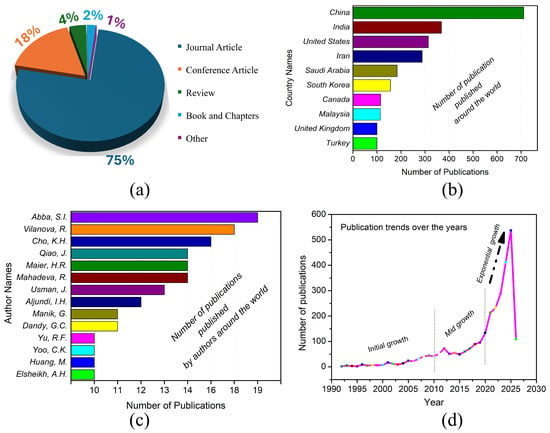
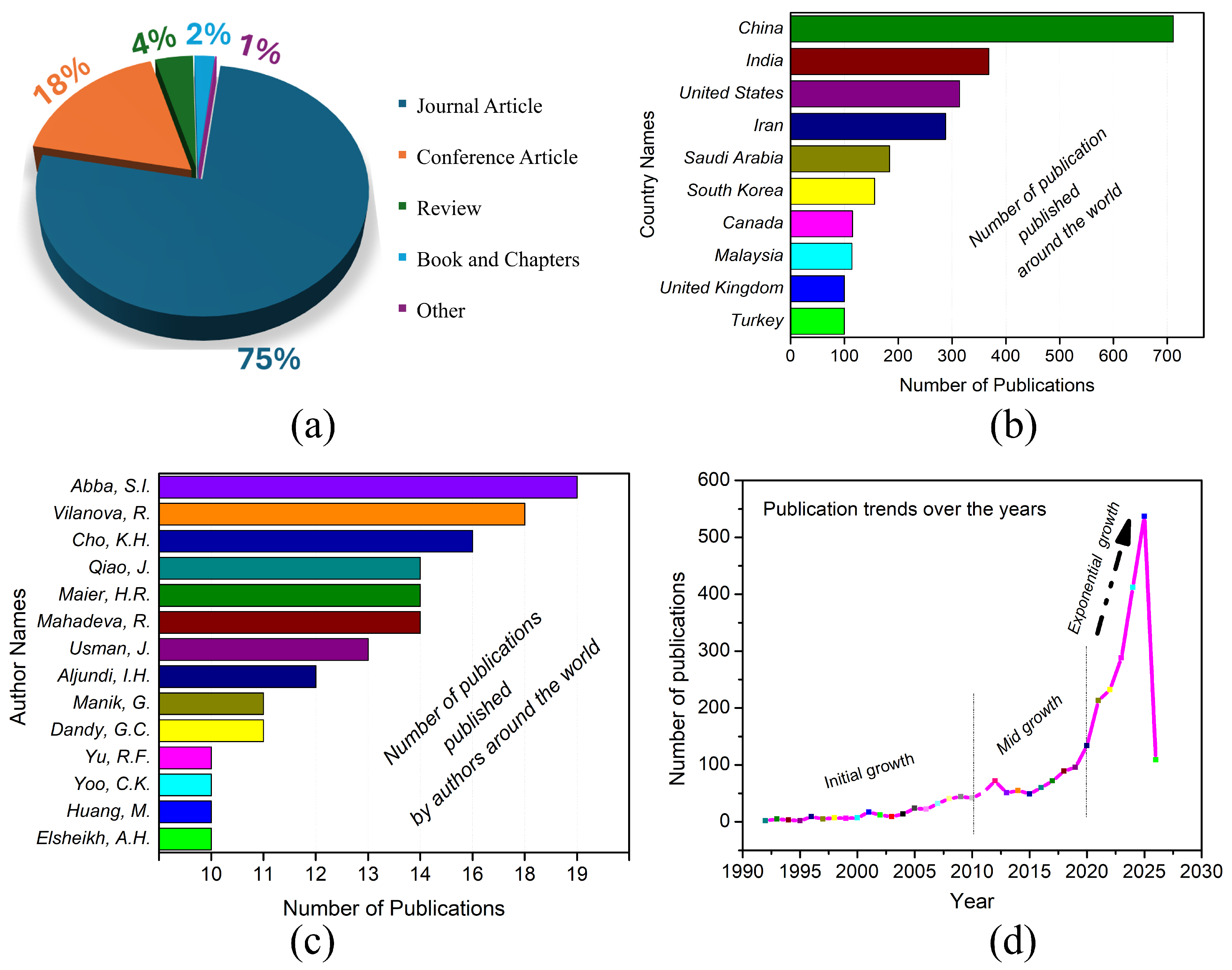
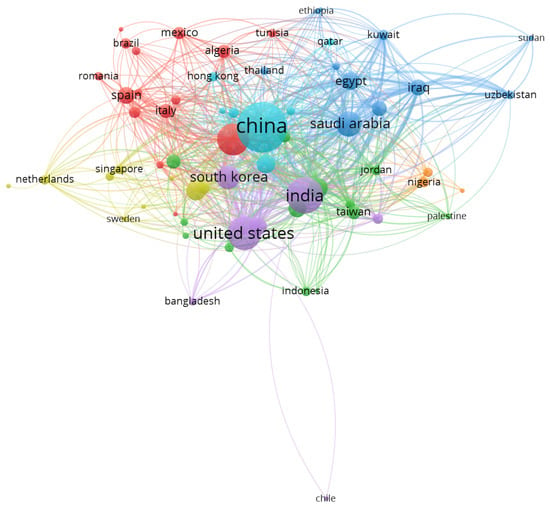
The feed inlet temperature, feed flow rate, and sweeping gas velocity are key parameters that affect the overall performance of an SGMD system. Most traditional analytical or semi-empirical models rely on simplifications that limit their ability to accurately predict behavior under varying conditions. Therefore, various new modeling approaches for describing nonlinear interactions have become a growing area of interest. On the other hand, artificial neural networks (ANNs) have emerged as powerful tools for modeling complex engineering systems without requiring explicit physical assumptions. In desalination research, ANN techniques have been applied for flux prediction, fouling estimation, and process optimization [13,14,15,16,17,18,19,20,21]. The growing research interest in ANN-based desalination modeling is evident in the bibliometric trends exported from Scopus dated 12 February 2026. The distribution of publications by document type, source title, country, author, and funding agency is summarized in Tables S1 and S2 of the supplementary file. The global publication trend and research expansion are illustrated in Figure 1, while the international collaboration network between contributing countries is presented in Figure 2.
Figure 1.
Progress of ANN techniques in desalination plants worldwide: number of publications by type (a), country (b), author (c), and year (d) (Source: Scopus database, exported on 12 February 2026).
Figure 2.
Country network connected to growth and improving plants’ performance using ANN techniques.
Although ANN-based models have demonstrated superior predictive performance compared to conventional models, most existing MD studies employ relatively limited architectures and limited hyperparameter tuning. In particular, ANN modeling efforts for SGMD remain scarce, and reported studies typically achieve only moderate prediction accuracy. A comprehensive and systematic investigation of the influence of network depth, neuron distribution, activation functions, optimizers, and learning rates on SGMD performance index prediction has not yet been adequately addressed in the literature [11,12].
An important advantage of membrane distillation is its ability to operate using low-grade thermal energy obtained from solar collectors, industrial processes, electrolyzers, and fuel cells. This characteristic creates opportunities to integrate membrane distillation into emerging water–energy–hydrogen systems. Kumar et al. [22] experimentally demonstrated that waste heat recovered from electrolyzer and fuel-cell operation could drive a direct-contact membrane-distillation system for seawater treatment and freshwater supply within a renewable-hydrogen system. Similarly, Traisak et al. [23] developed an integrated thermoelectric-generator and membrane-distillation system that simultaneously produced electricity and freshwater using low-grade thermal energy. Such configurations improve overall energy utilization and promote water–energy circularity by converting otherwise unused thermal energy into valuable water and power outputs. These developments strengthen the practical relevance of membrane distillation, including SGMD, for renewable-energy-integrated and resource-efficient desalination applications.
1.2. Research Gap and Objective
Although ANN models have been applied to desalination and membrane-distillation processes, the systematic evaluation of ANN architecture and training hyperparameters for SGMD performance prediction remains limited. Khayet and Cojocaru [11] demonstrated the feasibility of using ANN to model SGMD performance based on experimentally obtained operating variables. However, the combined influence of network depth, neuron distribution, activation function, optimizer, and learning rate was not comprehensively examined. Consequently, it remains unclear how these architectural and training choices influence the prediction accuracy of ANN models for SGMD. To address this gap, the present study systematically evaluates 108 ANN configurations using a consistent SGMD dataset and evaluation procedure. The investigated configurations vary in hidden-layer size, network depth, neuron distribution, activation function, optimizer, and learning rate. The principal contribution is therefore a structured analysis of ANN architecture and hyperparameter sensitivity for SGMD performance prediction, rather than the general application of ANN to desalination. The study identifies the best-performing configuration among the investigated models and provides insights into the combinations of architectural and training parameters that support accurate SGMD prediction.
The organization of the paper is as follows: Section 2 presents an overview of the research methodology used in this investigation, including information on how and where the data were collected, how the ANN model was developed, the optimization strategy, and the criteria used to evaluate performance. In addition, Section 3 provides results from the optimized ANN models along with an extensive discussion of the predictive performance of the ANN models to be used in a comparison format with each other. Lastly, Section 4 contains the conclusions that summarize the major findings of the research and provide information on their overall significance to real world applications and suggestions for future research avenues.
2. Methodology
This study uses a methodology to systematically assess and improve artificial neural networks for predicting the SGMD system’s performance index. The entire structure of the design consists of the acquisition of data, formulation of an artificial neural network model, architectural optimization, and statistical performance assessment.
2.1. Experimental Dataset and Preprocessing
The dataset used in this study was obtained from experimentally validated results reported for a laboratory-scale SGMD desalination system. The dataset comprises 53 experimental runs, each corresponding to a distinct combination of operating conditions [11].
Table 1 shows a summary of the ranges for all input and output parameters used in the simulation. The chosen ranges provide sufficient representation of the operation of the SGMD system in a wide range of operational conditions. Three random subsets of the data were created: a training set (70%), a validation set (15%), and a testing set (15%). The variables in the dataset were normalized prior to the start of the model development process to increase numerical stability and ensure consistent training convergence.
Table 1.
Input/output parameters and their ranges used for modeling of the process [11].
2.2. Artificial Neural Network Model Formulation
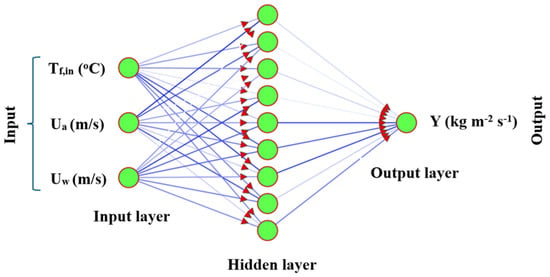
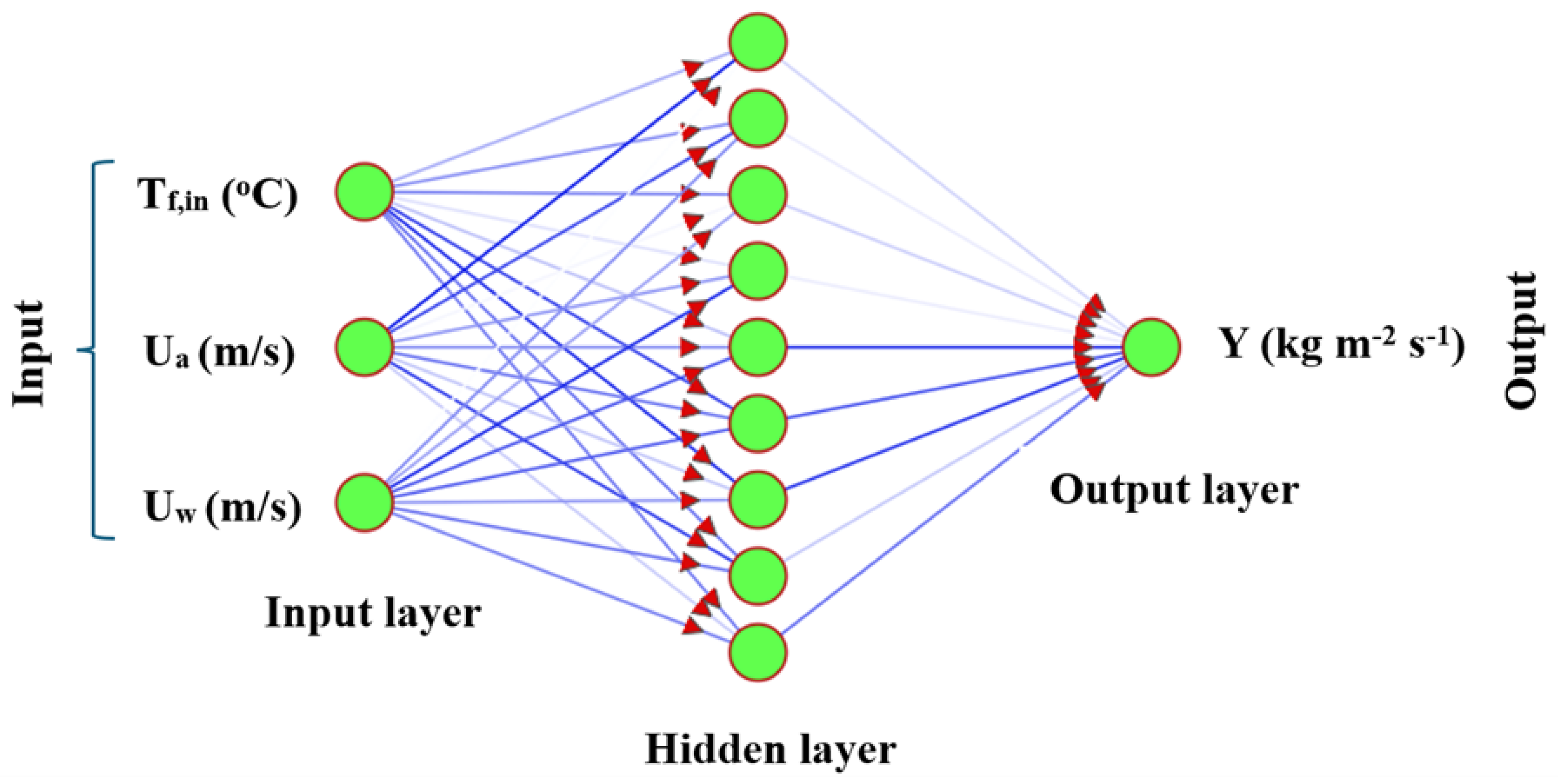
The nonlinear relationship between the operating parameters and SGMD performance was modeled using a feedforward multilayer perceptron (MLP) architecture. This ANN consists of multiple layers of neurons and includes an input layer, one or more hidden layers, and an output layer that are fully interconnected via weighted links and include bias terms in order to increase the flexibility of the model. The baseline ANN architecture adopted in this study follows a [3:9:1] configuration, consisting of three input neurons representing , , and , a single hidden layer with nine neurons, and one output neuron corresponding to the performance index. A schematic representation of this architecture is presented in Figure 3.
Figure 3.
Schematic representation of the baseline ANN architecture [3:9:1] used for predicting the performance index of SGMD Desalination plant.
2.3. Systematic ANN Optimization Strategy
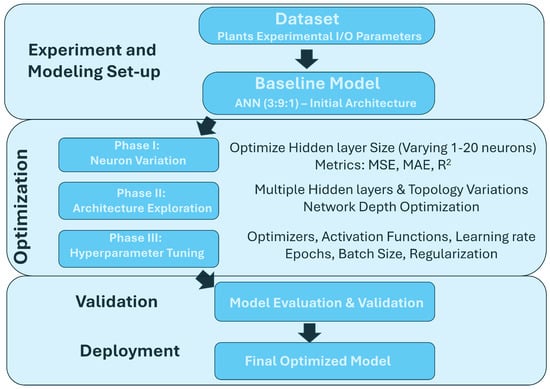
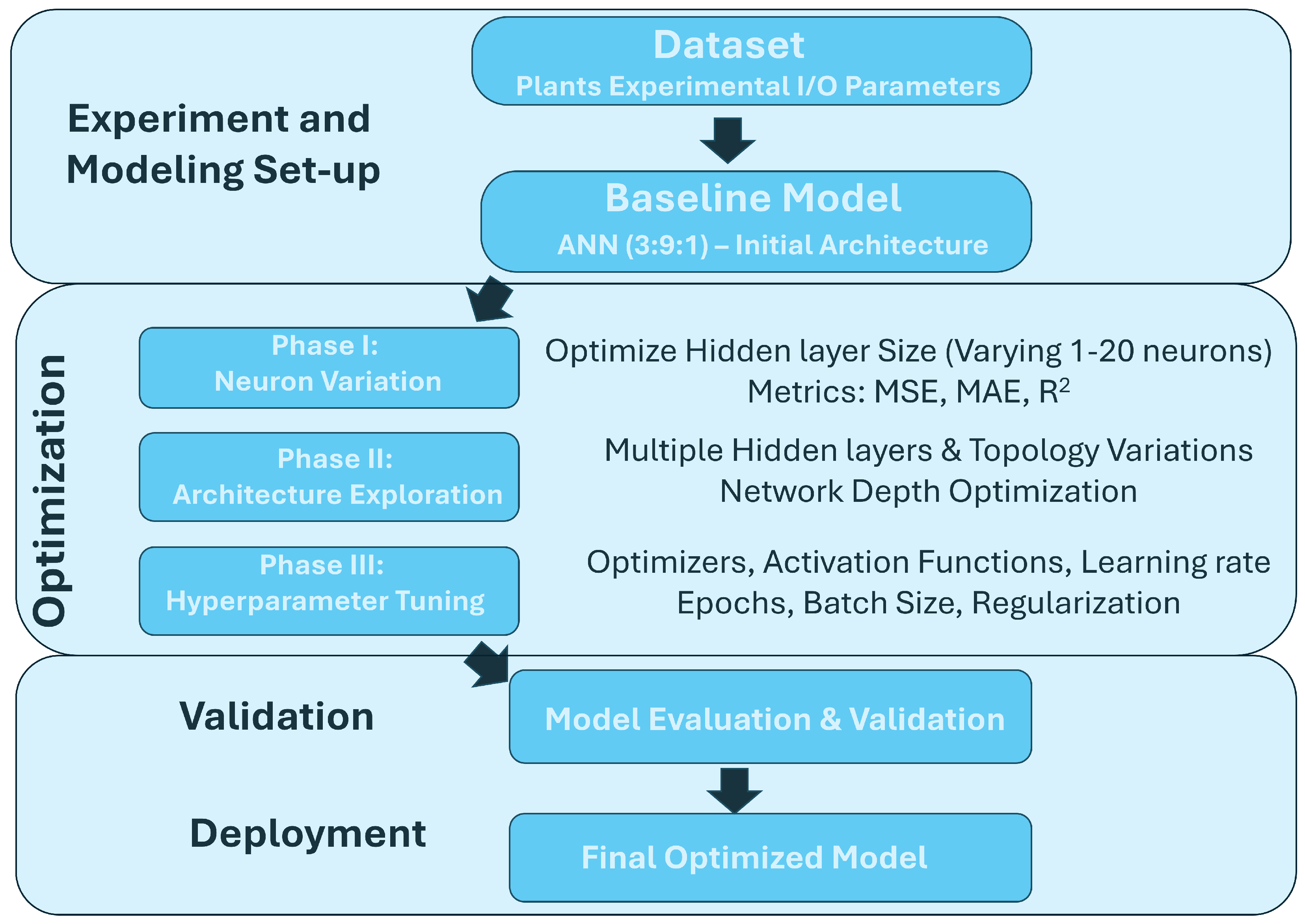
To improve predictive accuracy and robustness, a structured three-phase ANN optimization strategy was implemented. The overall optimization framework adopted in this study is illustrated in Figure 4.
Figure 4.
A systematic flow diagram for improving a plant’s performance.
2.3.1. Phase I: Hidden Neuron Optimization
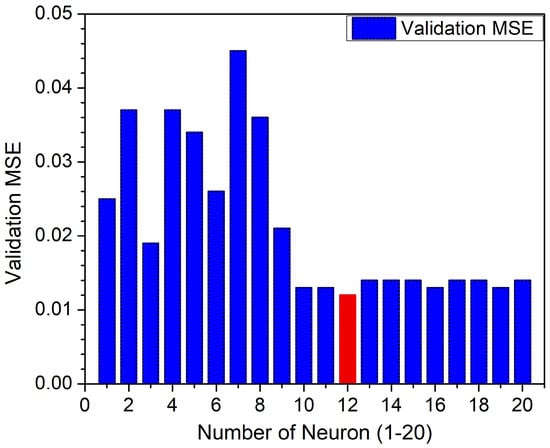
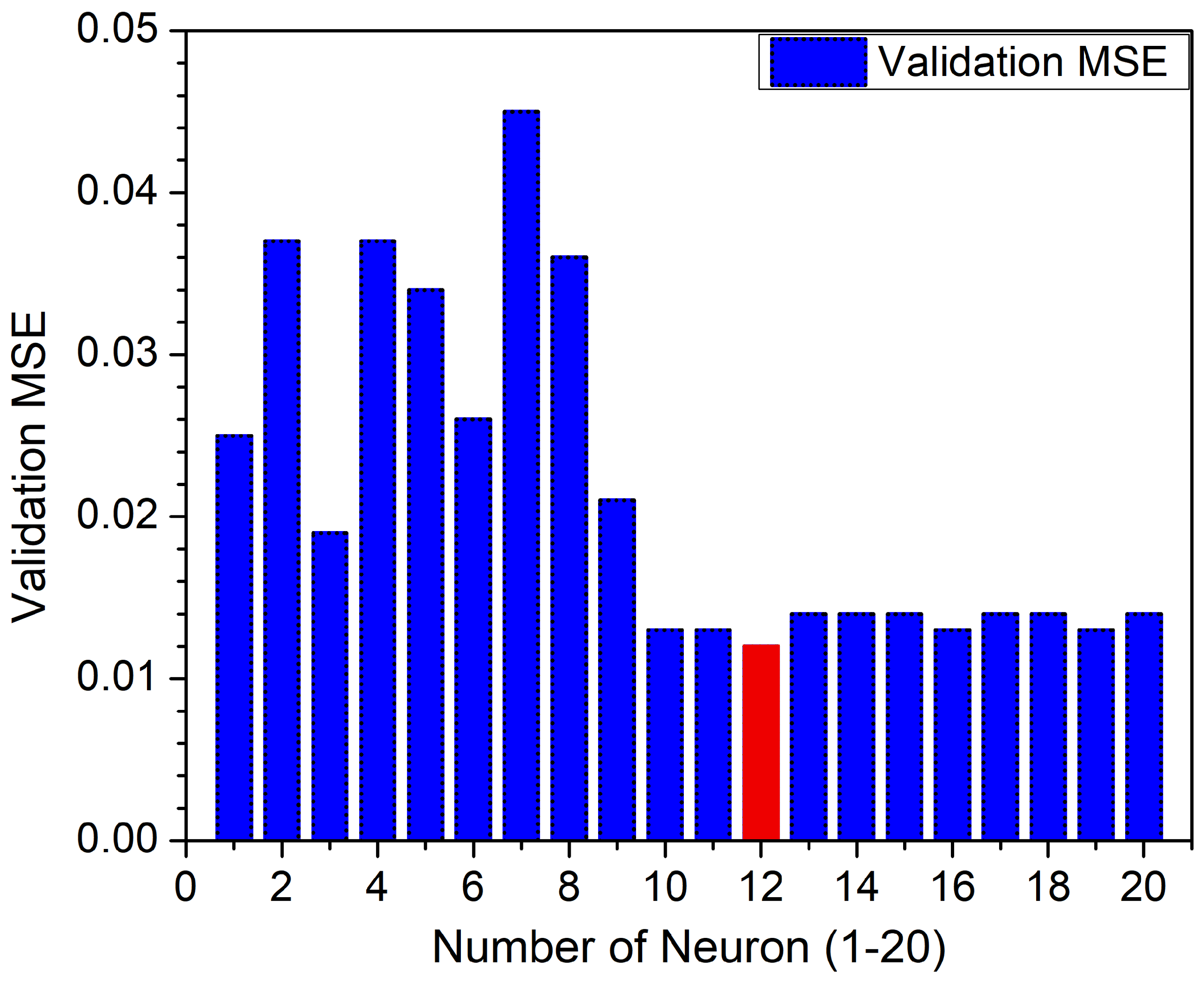
To determine the optimal network complexity, the number of neurons in the hidden layer was varied between 1 and 20, with all other training parameters held constant. The optimal configuration was selected based on the validation performance. The results indicated that the [3:12:1] architecture provides the best predictive performance among the single-hidden-layer models.
2.3.2. Phase II: Architectural Depth Exploration
To assess the effect of network depth on model performance, several deeper ANN architectures were examined, including [3:32:16:1], [3:64:32:1], [3:64:32:16:1], and [3:128:64:32:16:1]. These architectures facilitate a systematic comparison between shallow and deep neural network configurations.
2.3.3. Phase III: Hyperparameter Optimization
Three activation functions (tanh, ReLU, and sigmoid), four optimization algorithms (Adam, RMSprop, Nadam, and Adamax), and three learning rates (0.0005, 0.001, and 0.005) were evaluated.
Early stopping with a patience of 100 epochs was applied to prevent overfitting. The learning rate was reduced by 50% after 20 epochs without improvement, with a minimum threshold of . In total, 108 ANN configurations were developed and compared under identical conditions.
2.4. Performance Evaluation Metrics
The performance of the developed ANN models was evaluated using three widely accepted statistical indicators: , MSE, and MAE. These metrics collectively assess the goodness of fit, prediction accuracy, and error magnitude. The is defined as in Equation (1):
where is the experimental value, is the predicted value, is the mean of the experimental values, and n is the number of samples.
The MSE is expressed as in Equation (2):
The MAE is calculated as in Equation (3):
Higher values of and lower values of the MSE and MAE indicate superior model performance.
2.5. Implementation Environment
All ANN models were implemented using Python version 3.11 and executed on a 64-bit Windows 11 operating system equipped with an Intel Core i7 processor and 16 GB of RAM. Model training was performed using the CPU without dedicated GPU acceleration. All 108 ANN configurations were trained in the same computational environment to ensure a consistent and fair comparison.
3. Results and Discussion
This section presents and discusses the results of the systematic optimization of ANN models for predicting the performance index of an SGMD desalination plant. The discussion is based on three criteria: evaluating how well each variable (network architecture, network depth, and hyperparameter settings) affects model predictability; comparing the most optimal models developed in the study with previously published models from the literature; and providing an overall assessment of each criterion.
3.1. Effect of Hidden Layer Neuron Optimization
The first phase of the ANN optimization is focused on determining the optimal number of neurons in a single hidden layer. We used a range of neurons, ranging from 1 to 20, while maintaining identical training, validation, and testing conditions. Figure 5 illustrates the effect of the number of hidden layer neurons on the ANN prediction performance in terms of the MSE.
Figure 5.
Effect of the number of hidden layer neurons on ANN prediction performance in terms of MSE.
The data show improvements in the predictive accuracy correlated with the number of neurons until reaching a critical limit. In fact, an ANN model with 12 hidden layer neurons ([3:12:1]) achieved an optimal balance of accuracy and generalization producing the smallest mean square error. However, increasing the number of hidden layer neurons beyond this threshold did not yield significant gains in model performance and/or produced worse results demonstrating the beginning stages of overfitting.
3.2. Phase II and III: Architectural Exploration and Hyperparameter Tuning
Following the establishment of the optimized baseline model during the first phase of the study (Phase I [3:12:1]), the research has now shifted to investigating deeper structures of artificial neural networks (ANN) along with additional hyperparameters. This phase of the experiment was to determine whether there were alternative architectures and ways of training ANNs that could yield measurable performance improvements. Accordingly, the following four ANN architectures were investigated based on the number of hidden layers and the number of hidden layer neurons, (a) 3:32:16:1; (b) 3:64:32:1; (c) 3:64:32:16; and (d) 3:128:64:32:16.
The three activation functions for each ANN architecture were tested: (a) tanh; (b) ReLU; and (c) sigmoid; and the four optimizers tested were (a) Adam; (b) RMSProp; (c) Nadam; and (d) Adamax. In addition, three learning rates (0.0005; 0.0010; and 0.0050) were used to further test the stability of training. The entire set of configurations gives a wide range of potential search space based on the depth of the architecture, the activation function behavior, the dynamics of the optimizer, and the rate/speed at which to train. All of the individual configurations were trained to demonstrate early stopping with a maximum patience of 100 epochs. The learning rate was reduced to half every 20 epochs that training did not improve. The minimum allowable learning rate was maintained at . The established controls were used to stop the occurrence of overfitting and ensure continuing stability of convergence while training. Each model was evaluated using MSE, MAE, and R2. This was done so that the model comparisons across all configurations could determine which combinations of features produced the most accurate prediction. This process also provided a configuration for moving from a one-layer neural network to more complex adaptable models of ANN. As presented in Table 2, the optimized prediction performance of both two-hidden-layer ANN architectures [3:32:16:1] and [3:64:32:1] was produced by the use of various activation functions, optimizers, and learning rates.
Table 2.
Optimized performance results () for two-hidden-layer ANN architectures [3:32:16:1] and [3:64:32:1] using different activation functions, optimizers, and learning rates.
The results show that the overall tanh and ReLU activations consistently outperformed the sigmoid across multiple configurations, whereas the sigmoid showed poor predictive performance and negative values. Among the optimizers, RMSProp and Adam produced the most stable results and the highest scores for both architectures, with Nadam performing competitively in selective cases. Higher learning rates (0.0050) generally improved model performance for both tanh and ReLU. The results show the best performance as = 0.9014 (ReLU–Adam, 32–16).
Furthermore, a three-layer ANN architecture is analyzed, and the results are presented in Table 3. The three-layer ANN architecture demonstrated a marked improvement in predictive accuracy compared to the two-layer models. The highest performance was achieved using the ReLU activation with the Adam optimizer at a learning rate of 0.0050, yielding an value of 0.9000. ReLU also showed consistently strong performance with RMSprop and Nadam, both achieving values close to 0.89, indicating robust learning across optimizers. The performance of the tanh activation function was reasonable, achieving a score of around 0.87, whereas the sigmoid activation function still suffered from the problem of convergence, resulting in negative or near-zero scores. The results have further confirmed that the inclusion of the extra hidden layer was beneficial to the network’s ability to learn the complex nonlinear relationships present in the experimental dataset.
Table 3.
Optimized performance results () for three-hidden-layer ANN architecture [3:64:32:16:1] using different activation functions, optimizers, and learning rates.
Moreover, the results of the four-layer ANN architecture have also been analyzed, and the results are given in Table 4. The model’s robustness was further improved using the four-layer ANN architecture, which provided increased accuracy over the previous models. The best results were obtained using the ReLU activation and the Adamax optimizer with a learning rate of 0.0050, which provided an of 0.9321, the highest among all the models tested. The ReLU activation with the RMSprop and Nadam optimizers also provided good results, with values close to 0.89, indicating that the model was learning well using the optimizers. The results obtained using the tanh activation were moderate but consistent, with values ranging from 0.82 to 0.86.
Table 4.
Optimized performance results () for four-hidden-layer ANN architecture [3:128:64:32:16:1] using different activation functions, optimizers, and learning rates.
On the one hand, the sigmoid activation function continued to perform poorly, as it was not able to learn the underlying nonlinear relationship, as shown by the negative or zero value at all learning rates. The findings have shown that the four-layer model was able to benefit from the increased network depth, which resulted in better modeling of complex interactions. On the other hand, the ReLU activation function was identified as the best activation function to be used in deeper networks. The four-layer ANN architecture was more robust, which shows that the increased depth of the network improves the modeling of complex nonlinear interactions in SGMD desalination systems.
3.3. Final Top 10 Optimized ANN Models Ranked
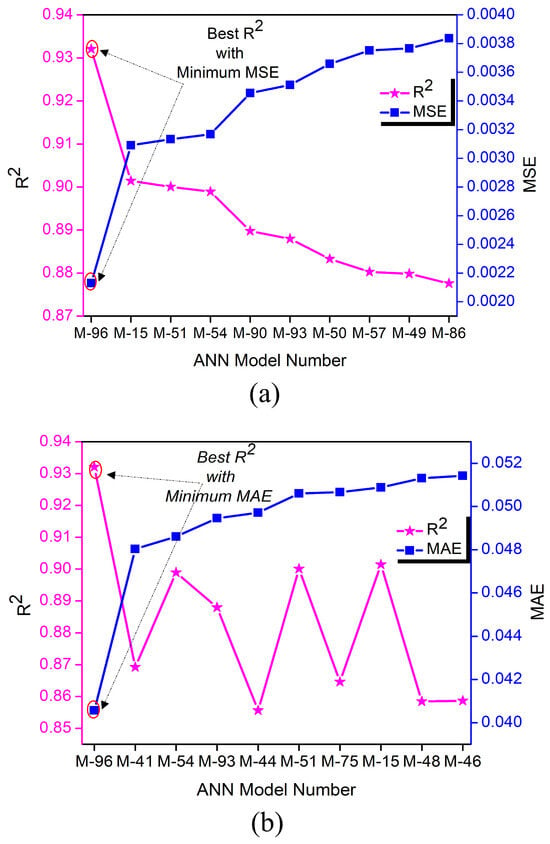
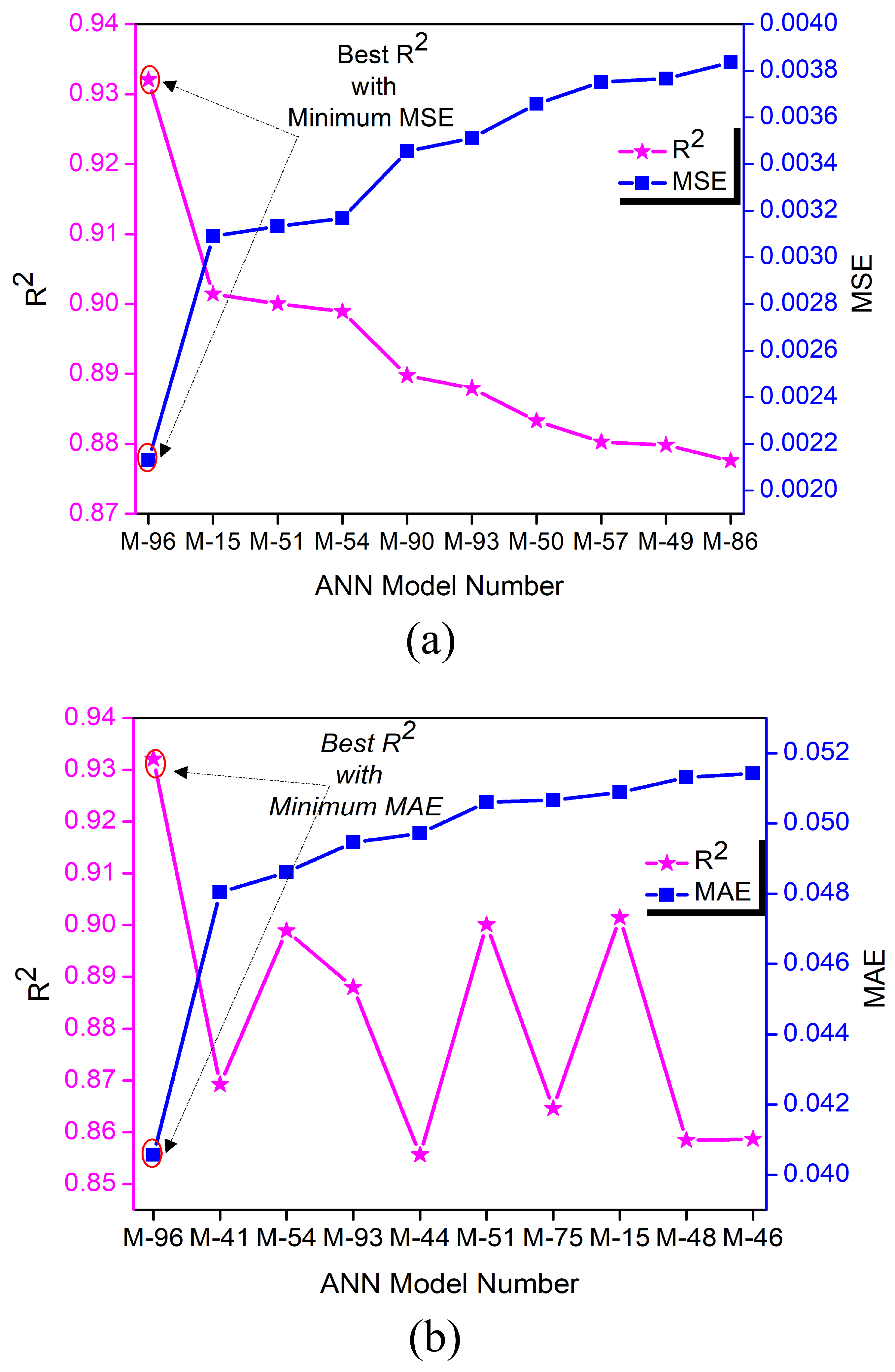
All developed models were ranked using three statistical performance indicators for the evaluation of the best ANN models for the prediction of the SGMD performance index: , MSE, and MAE. These criteria guarantee that the selected models have high accuracy in predictions as well as a minimum prediction error. Figure 6 depicts the top 10 optimized ANN models, while the statistical values for all models are listed in the corresponding Table 5. The results indicate that the deeper ANN models have better performance than the shallow ones. Specifically, the models with three and four hidden layers are ranked higher than the others, showing their superiority in capturing the nonlinear relationships of the SGMD operating parameters and the performance index. The best configuration is the four-hidden-layer architecture [3:128:64:32:16:1], which obtained the highest value and the lowest MSE and MAE. This validates the idea that an increase in the depth of the network is beneficial when optimized properly for improving the representation capability of the model. One major observation from the results in Figure 6 is the superiority of ReLU-based models over the top-performing models. Sigmoid-based models did not appear in the top ten results due to their poor convergence characteristics and higher prediction errors. Another observation is the use of adaptive optimizers such as Adam and Adamax for better performance. Figure 6 summarizes the results of the experiment for the best ten models, showing the importance of architectural and hyperparameter optimization for accurate performance prediction for the SGMD.
Figure 6.
Ranking of the top 10 optimized ANN models based on the coefficient of determination (), (a) vs. MSE and (b) vs. MAE.
Table 5.
Top 10 ANN optimized models comparison.
3.4. Comparative Analysis
Table 5 presents a summary of the performance of the top 10 ANN models based on their evaluation metrics such as R2, MSE, and MAE. The table demonstrates the effectiveness of the architecture of the ANN models, activation function, optimizers, and their learning rate in determining the accuracy of the predictions made. From the results obtained in Table 5, it is evident that the use of deeper ANN models is effective in improving their performance. The use of three and four hidden layers in the ANN models is effective in improving their performance since they have higher R2 values and lower MSE and MAE values than the models using fewer hidden layers. The activation function also affects the performance of the ANN models. The use of the ReLU activation function is common in the top models. The sigmoid activation function is associated with lower performance since it is rarely used in the top models. Adaptive optimizers such as Adam, RMSprop, and Adamax have lower errors during training. From the analysis in Table 5, it is evident that the selection of the ANN parameters is crucial in ensuring accurate performance predictions for the SGMD.
The ANN predictions can be interpreted in relation to the physical mechanisms governing SGMD. Increasing the feed temperature raises the water-vapor pressure and strengthens the transmembrane driving force, thereby improving permeate flux. A higher feed-flow velocity reduces the thermal and concentration boundary-layer resistance and limits temperature and concentration polarization. Similarly, increasing the sweeping-gas velocity promotes the removal of water vapor from the permeate side, maintains the vapor-pressure gradient, and reduces gas-side mass-transfer resistance. The interactions among these parameters are nonlinear because changes in hydrodynamic and thermal conditions simultaneously influence heat and mass transfer. The optimized ANN captures these coupled relationships within the investigated operating range, although it does not explicitly represent the underlying transport equations.
3.5. Engineering Implications and Practical Significance
For practical deployment, the optimized ANN can initially be implemented as a soft sensor or decision-support model for estimating the SGMD performance index using continuously measured feed inlet temperature, feed-flow velocity, and sweeping-gas velocity. Its application should be restricted to the operating ranges represented in the present dataset: 52–70 °C, 0.140–0.200 ms−1, and 0.966–2.028 ms−1, respectively. Predictions outside these ranges should be identified as extrapolations and treated cautiously. Before real-time implementation, the model should be externally validated using independent data from different membranes, modules, salinities, and operating scales. Input-data validation, residual-error monitoring, and periodic recalibration should also be employed to detect sensor faults and performance changes caused by membrane fouling, scaling, wetting, or aging. Following successful validation, the ANN could be integrated into a supervisory control system to assist operators in selecting suitable operating conditions, while maintaining process constraints, safety limits, and human oversight.
3.6. Comparison Between the Proposed ANN and Conventional Models
The predictive performance of the proposed ANN was compared with conventional regression and machine-learning models reported in closely related membrane-separation and desalination studies. Conventional models, including gamma regression, support vector regression (SVR), and random forest regression, have been employed because of their relatively simple structures, computational efficiency, and ability to address different types of regression problems. However, their predictive capability may depend strongly on the complexity of the process, the available data, and the selected model parameters. Alkhammash [24] compared different regression models for predicting solute concentration in a membrane-distillation separation process. Gamma regression achieved an R2 of 0.9214, while SVR produced an R2 of 0.8710. Ahmed et al. [25] applied random forest, gradient boosting, and decision-tree models to predict distillate production in a spray-flash desalination system. Among the investigated models, random forest demonstrated the best performance, with an R2 of 0.9300. These reported results are compared with the optimized ANN developed in the present study in Table 6.
Table 6.
Contextual comparison of the proposed ANN with conventional models reported in related studies.
As shown in Table 6, the proposed ANN achieved an R2 of 0.9321, which was higher than the values reported for gamma regression (R2 = 0.9214), SVR (R2 = 0.8710), and random forest regression (R2 = 0.9300). The improved performance of the proposed ANN may be attributed to the systematic evaluation of the network depth, neuron distribution, activation functions, optimizers, and learning rates. This optimization enabled the ANN to represent the nonlinear interactions among the feed inlet temperature, feed-flow velocity, sweeping-gas velocity, and the SGMD performance index. Nevertheless, the comparison presented in Table 6 should be interpreted cautiously. The cited studies investigated different membrane or desalination processes and used different datasets, sample sizes, input variables, prediction targets, and validation procedures. Therefore, the comparison provides a contextual assessment of the predictive performance reported in the related research rather than a controlled head-to-head evaluation. A direct comparison using the same SGMD dataset and identical training and testing partitions would be required to establish whether the proposed ANN statistically outperforms conventional machine-learning models.
4. Conclusions
This study systematically evaluated 108 ANN configurations for predicting the SGMD performance index using the feed inlet temperature, feed-flow velocity, and sweeping-gas velocity. The best-performing architecture, [3:128:64:32:16:1], employed ReLU activation, the Adamax optimizer, and a learning rate of 0.005, achieving R2 = 0.9321, MSE = 0.0021, and MAE = 0.0405. However, the performance did not improve monotonically with the network depth, indicating that the prediction accuracy depends on the combined selection of architecture and training hyperparameters. The optimized ANN captured the nonlinear effects of feed temperature and hydrodynamic conditions on the vapor-pressure driving force, polarization, and mass-transfer resistance. It also demonstrated competitive performance compared with selected conventional models reported in related studies. However, this literature-based comparison is contextual because the studies used different datasets, processes, targets, and validation procedures. The model may initially be employed as a soft sensor or decision-support tool within the investigated operating ranges. Nevertheless, the study is limited by its dataset of 53 observations obtained from a single laboratory-scale SGMD system. Therefore, validation using larger independent datasets, different operating conditions, and other SGMD configurations is necessary before broader generalization and practical deployment. Future work should also compare ANN and conventional models using the same SGMD dataset and evaluation procedure.
Supplementary Materials
The following supporting information can be downloaded at https://www.mdpi.com/article/10.3390/computation14100241/s1, Table S1: Number of publications in various sources; Table S2: Number of funds sponsored by various funding agencies.
Author Contributions
Conceptualization: A.B., S.A., R.R., A.K.G., G.K.H. and R.M.; methodology: A.B., R.R., G.K.H. and R.M.; formal analysis: A.B., S.A., R.R., A.K.G., G.K.H. and R.M.; investigation: A.K.G. and R.M.; supervision: R.M. and A.K.G.; resources: R.R., A.K.G., G.K.H. and R.M.; writing—original draft: A.B., S.A., R.R., A.K.G., G.K.H. and R.M.; writing—review and editing: S.A., R.R., A.K.G., G.K.H. and R.M. All authors have read and agreed to the published version of the manuscript.
Funding
This research received no external funding.
Data Availability Statement
The experimental dataset used in this study was obtained from the published work of Khayet and Cojocaru [11]. The processed data supporting the findings of this study are available from the corresponding author upon reasonable request due to privacy restrictions.
Acknowledgments
The authors acknowledge the use of OpenAI’s ChatGPT (GPT-4) in the preparation of this manuscript. The AI system was used to assist in drafting and refining portions of the text, particularly in enhancing clarity, formatting LaTeX sections, organizing reviewer responses, and polishing academic language. All scientific concepts, experimental results, interpretations, and conclusions were developed and validated by the authors. The AI tool functioned solely as a language assistant and did not contribute to the generation of original research findings, figures, or model designs.
Conflicts of Interest
The authors declare no conflicts of interest.
References
- Liang, Y.; Li, M. Unsteady-state dynamics and AI in membrane desalination: Challenges and emerging opportunities. Desalination 2025, 618, 119507. [Google Scholar] [CrossRef] [Scilit]
- Jamil, S.; Jamil, M.A.; Mustafa, J.; Shahzad, M.W. Comprehensive review of desalination: Techniques, renewable energy integration, and the role of artificial intelligence. Int. Commun. Heat Mass Transf. 2026, 172, 110733. [Google Scholar] [CrossRef] [Scilit]
- Shouman, L.A.; Afify, R.M.; Fadel, D.A.; Esawy, M.H. Fouling effect on Reverse Osmosis (RO) membranes performance in desalination plant. Desalin. Water Treat. 2024, 319, 100502. [Google Scholar] [CrossRef] [Scilit]
- Shabib, A.; Tatan, B.; Elbaz, Y.; Hassan, A.A.; Hamouda, M.A.; Maraqa, M.A. Advancements in reverse osmosis desalination: Technology, environment, economy, and bibliometric insights. Desalination 2025, 598, 118413. [Google Scholar] [CrossRef] [Scilit]
- Gobran, A.S.; Rabie, M.; Mohammed, A.H.; Maghrabie, H.M. Technologies, materials, applications, and challenges of membrane distillation: A comprehensive review. J. Ind. Eng. Chem. 2025, 158, 1–56. [Google Scholar] [CrossRef] [Scilit]
- Augusty, A.C.; Fan, L.; Kim, S. Emerging trends in fouling mitigation for membrane distillation and pervaporation: Implications for desalination and wastewater treatment. Adv. Membr. 2025, 6, 100177. [Google Scholar] [CrossRef] [Scilit]
- Wu, J.; Li, C.; Yu, F.; Zhu, X.; Chen, W.; Feng, S.; Huang, D.; Meng, L.; Huang, M. Membrane distillation system for treatment of emerging contaminants in water: Enhancement of removal efficiency and mitigation of membrane fouling. J. Hazard. Mater. 2025, 498, 139592. [Google Scholar] [CrossRef] [Scilit]
- Arkin, A.; Li, Z. Membrane distillation for sustainable urine resource management: Recovery potential and implementation challenges. Desalination 2025, 615, 119247. [Google Scholar] [CrossRef] [Scilit]
- Patel, R.V.; Yadav, A.; Shahi, V.K. Advances in membrane distillation for wastewater treatment: Innovations, challenges, and sustainable opportunities. Sci. Total Environ. 2025, 969, 178749. [Google Scholar] [CrossRef] [Scilit]
- Soumbati, Y.; Bouatou, I.; Abushaban, A.; Belmabkhout, Y.; Necibi, M.C. Review of membrane distillation for desalination applications: Advanced modeling, specific energy consumption, and water production cost. J. Water Process Eng. 2025, 71, 107296. [Google Scholar] [CrossRef] [Scilit]
- Khayet Souhaimi, M.; Cojocaru, C. Artificial neural network model for desalination by sweeping gas membrane distillation. Desalination 2013, 308, 102–110. [Google Scholar] [CrossRef] [Scilit]
- Said, I.A.; Chomiak, T.; Floyd, J.; Li, Q. Sweeping gas membrane distillation (SGMD) for wastewater treatment, concentration, and desalination: A comprehensive review. Chem. Eng. Process.-Process Intensif. 2020, 153, 107960. [Google Scholar] [CrossRef] [Scilit]
- Alenezi, A.; Alabaiadly, Y. Emerging technologies in water desalination: A review and future outlook. Energy Nexus 2025, 17, 100373. [Google Scholar] [CrossRef] [Scilit]
- Jawad, J.; Hawari, A.H.; Zaidi, S.J. Artificial neural network modeling of wastewater treatment and desalination using membrane processes: A review. Chem. Eng. J. 2021, 419, 129540. [Google Scholar] [CrossRef] [Scilit]
- Elsheikh, A.H.; Sharshir, S.W.; Abd Elaziz, M.; Kabeel, A.E.; Guilan, W.; Haiou, Z. Modeling of solar energy systems using artificial neural network: A comprehensive review. Sol. Energy 2019, 180, 622–639. [Google Scholar] [CrossRef] [Scilit]
- Karabacak, K.; Cetin, N. Artificial neural networks for controlling wind–PV power systems: A review. Renew. Sustain. Energy Rev. 2014, 29, 804–827. [Google Scholar] [CrossRef] [Scilit]
- Essa, F.A.; Abd Elaziz, M.; Elsheikh, A.H. Optimizing a solar-driven hybrid desalination-power plant with parabolic trough collectors, multi-stage flash, and reverse osmosis: Mathematical modeling and artificial neural network-based predictive study. Sep. Purif. Technol. 2025, 383, 136162. [Google Scholar] [CrossRef] [Scilit]
- Naeini, A.; Jalali, A.; Houshfar, E. Double and integer multi-objective optimization of solar HDH desalination system with bubble column dehumidifier: An artificial neural network approach. Case Stud. Therm. Eng. 2025, 73, 106727. [Google Scholar] [CrossRef] [Scilit]
- Durairaj, D.; Paramasivam, S.; Rajamohan, N.; Rajasimman, M.; Yennamalli, R.M.; Baccoli, R.; Gatto, G. Performance of functionalized CNT membranes for desalination-Parametric effects and Artificial neural network modelling. Clean. Eng. Technol. 2025, 26, 100977. [Google Scholar] [CrossRef] [Scilit]
- Wang, X.; Sun, X.; Wu, Y.; Gao, F.; Yang, Y. Optimizing reverse osmosis desalination from brackish waters: Predictive approach employing response surface methodology and artificial neural network models. J. Membr. Sci. 2024, 704, 122883. [Google Scholar] [CrossRef] [Scilit]
- Mahadeva, R.; Kumar, M.; Diwan, A.; Manik, G.; Dixit, S.; Das, G.; Gupta, V.; Sharma, A. Improvised grey wolf optimizer assisted artificial neural network (IGWO-ANN) predictive models to accurately predict the permeate flux of desalination plants. Heliyon 2024, 10, e34132. [Google Scholar] [CrossRef] [Scilit]
- Kumar, P.; Date, A.; Das, R.K.; Shabani, B. Electrolyser and fuel cell waste-heat-powered desalination enabling water–energy circularity in renewable hydrogen systems: An experimental proof of concept. Appl. Therm. Eng. 2026, 293, 130429. [Google Scholar] [CrossRef] [Scilit]
- Traisak, O.; Kumar, P.; Das, R.K.; Vahaji, S.; Zhang, Y.; Velankar, V.; Date, A. Integrated thermoelectric power generation and membrane-based water desalination using low-grade thermal energy. Energies 2026, 19, 1054. [Google Scholar] [CrossRef] [Scilit]
- Alkhammash, A. Intelligence analysis of membrane distillation via machine learning models for pharmaceutical separation. Sci. Rep. 2024, 14, 22876. [Google Scholar] [CrossRef] [Scilit]
- Ahmed, F.; Mohammed, N.; Mewada, H.; Shaik, F. Experimental Optimization Coupled with Advanced Machine Learning Modeling of a Spray Flash Desalination System. Water Conserv. Sci. Eng. 2026, 11, 49. [Google Scholar] [CrossRef] [Scilit]

Disclaimer/Publisher’s Note: The statements, opinions and data contained in all publications are solely those of the individual author(s) and contributor(s) and not of MDPI and/or the editor(s). MDPI and/or the editor(s) disclaim responsibility for any injury to people or property resulting from any ideas, methods, instructions or products referred to in the content. |
© 2026 by the authors. Licensee MDPI, Basel, Switzerland. This article is an open access article distributed under the terms and conditions of the Creative Commons Attribution (CC BY) license.