


Abstract
Over the past 24 years, research on trace metal contamination along the Algerian Mediterranean coast has grown substantially, yet its findings remain fragmented. This review compiles and analyses data from 111 samples reported in 24 independent studies on cadmium (Cd) and lead (Pb) concentrations in the sentinel bivalve Mytilus galloprovincialis. The compiled dataset includes 23 samples from 5 harbour stations and 88 samples from 36 open-coast stations, spanning the three major coastal regions of Algeria. To account for the heterogeneity of the dataset, appropriate non-parametric and multivariate statistical analyses were performed using R version 4.3.2. Results revealed that Western Algeria was the most heavily contaminated region, with significant spatial variability in metal concentrations and a pronounced westward contamination gradient (PERMANOVA, Region R2 = 0.27, p < 0.001). These findings identify priority areas for environmental surveillance. Regarding regulatory compliance, Cd concentrations remained below the Codex Alimentarius maximum level for bivalve molluscs at all open sites, whereas Pb exceeded it at 30.3% of stations (10/33), indicating a greater concern with respect to food-safety limits. This synthesis provides the first coherent national assessment of Cd and Pb contamination along the Algerian Mediterranean coast and establishes a scientific foundation for targeted, harmonized biomonitoring strategies.
1. Introduction
Metals are among the most significant pollutants responsible for environmental degradation in coastal areas. In recent decades, trace metal pollution has become a major focus of the scientific literature, with researchers developing various strategies for monitoring, assessment, and detection of these contaminants in the marine environment [1,2].
Trace metals are considered particularly hazardous due to their toxicity, persistence, and resistance to degradation in the environment. Among the various toxic metals present in marine environments, lead (Pb) and cadmium (Cd) are of particular concern due to their high toxicity even at low exposure levels, their non-essential biological role, and their tendency to bioaccumulate in aquatic organisms. For molluscs, the Codex Alimentarius has established maximum residue limits of 1.5 μg g−1 and 2 μg g−1 wet weight, respectively [3]. Their presence in coastal ecosystems may pose risks to marine life and human health through trophic transfer [4,5,6].
Cd exposure can cause serious health effects, including damage to bones, the cardiovascular system, kidneys, and liver as well as impairments in vision and hearing. Pb is also highly toxic, affecting the nervous, respiratory, digestive, and reproductive systems and interfering with normal enzyme functions [7,8,9].
These impacts have been documented across different environmental compartments, from changes in the sedimentary environment [10,11,12,13,14,15] to fish communities, including Sardina pilchardus, Mullus surmuletus, and Mullus barbatus [16,17,18] and to benthic communities, including the sea urchin Paracentrotus lividus and mussels Perna perna and M. galloprovincialis [19,20,21,22].
Among the various biological models used in environmental monitoring, sentinel organisms, especially bivalve molluscs, have garnered growing interest. This approach was first popularized by Edward D. Goldberg through the Mussel Watch concept [23] and later evolved into large-scale biomonitoring initiatives, notably the NOAA National Mussel Watch Program, established in 1986 in the United States [24,25]. Similar initiatives also emerged in France through the Réseau National d’Observation (RNO, National Observation Network) and the Réseau Intégrateurs Biologiques (RINBIO, Biological Integrator Network) [26]. The International Commission for the Scientific Exploration of the Mediterranean Sea (CIESM) developed and implemented a regional Mediterranean Mussel Watch (MMW) in the early 2000s [27,28].
Bivalves are particularly valuable biomonitoring organisms because of their sedentary nature, broad geographical distribution, filter-feeding habits, and pronounced ability to bioaccumulate contaminants [29]. Among these, M. galloprovincialis, a species native to the Mediterranean and northeastern Atlantic, has become one of the most extensively used sentinel organisms for monitoring trace metal contamination in Mediterranean coastal environments [30,31,32,33].
In North Africa, the application of mussels as bioindicators of trace metal contamination emerged during the late 20th century through regional Mediterranean monitoring programs and was later expanded by local researchers in Algeria initially started by [34,35,36], Tunisia, and Morocco [37,38] using M. galloprovincialis as a sentinel species.
Within this context, the Algerian coastline has become a key focus of environmental monitoring studies due to its ecological sensitivity and its increasing exposure to coastal pollution sources driven by demographic and socio-economic growth [39,40].
Most studies monitoring contamination using M. galloprovincialis have been confined to short sampling periods, typically no more than two years and structured around a single seasonal cycle. These efforts have progressively expanded spatial coverage of the Algerian coastline, yet a longer temporal perspective remains comparatively rare. To date, no study in Algeria has attempted to synthesize these dispersed findings into a unified assessment capable of reconstructing contamination trends across both space and time.
Furthermore, given the profound and rapid transformations Algeria’s coastal zone has undergone over the past two decades, including industrial expansion, scaling up of desalination and wastewater infrastructure, and agricultural intensification, studies conducted at different points in time are, in effect, capturing different pollution scenarios, yet none can, alone, reveal the underlying temporal trajectory of contamination. Taken together, however, they make it possible to estimate the evolution of metal contamination in parallel with coastal development and anthropogenic modifications.
There is, therefore, a clear need for studies adopting broader temporal frameworks capable of contextualizing current pollution levels against the backdrop of Algeria’s evolving coastal anthropogenic pressures. It is against this background that the present review endeavours to consolidate the existing body of evidence on trace metal contamination in M. galloprovincialis along the Algerian coast. By archiving and synthesizing findings from previous monitoring campaigns, the review aims to
- (a)
- Reconstruct the spatial and temporal trends of Cd and Pb contamination in M. galloprovincialis along the Algerian coast between 2000 and 2024;
- (b)
- Delineate regions of persistent contamination that warrant prioritised surveillance and identify areas where data remain insufficient;
- (c)
- Evaluate the compliance of Cd and Pb concentrations in mussels from non-harbour stations with the Codex Alimentarius maximum levels for bivalve molluscs;
- (d)
- Provide a scientific basis for more coordinated, sustained, and evidence-based biomonitoring programmes along the Algerian coastline.
Detailed Case Study: Anthropogenic Pressure on the Algerian Coast
Algeria’s population increased by about 55% between 2000 and 2026, and 91% of it lives along the coast [41], concentrating anthropogenic pressures on coastal ecosystems [10,13,39] (Figure 1). The industrial dimension of coastal contamination is equally considerable: by 2024, 38% of all industries and more than 60% of the most polluting activities were located in coastal zones [42].
Figure 1.
Anthropogenic pressures, land cover, and coastal infrastructure along the Algerian coast. The top panel shows industrial zones (red circles) and desalination plants (blue squares) across Western, Central, and Eastern Algeria overlaid on land cover classes (forest, agriculture, agglomeration, water, and wetland). The bottom panels detail specific industrial complexes and list desalination plants with their capacities (m3/day).
This trend has also necessitated a substantial expansion of water infrastructure, particularly seawater desalination, in response to increasing water scarcity and recurrent droughts. In the early 2000s, Algeria launched a national desalination programme comprising 11 plants distributed along the coastline [43]. This programme was subsequently expanded through the addition of multiple plants under the emergency programme “Miah 2021”. By 2025, Algeria had 19 operational seawater desalination plants with a combined installed production capacity of approximately 3.7 million m3 day−1, meeting around 42% of national drinking-water needs [44].
Alongside the expansion of desalination, significant investments have been directed toward securing freshwater resources, whereas wastewater collection and treatment have historically received less priority and remain a persistent environmental concern [45,46]. Nevertheless, the number of wastewater treatment plants increased from fewer than 50 in 2000 to about 234 in 2025 [47,48]. However, this quantitative expansion does not necessarily reflect effective or consistent wastewater treatment performance, as the presence of infrastructure does not guarantee operational reliability, compliance with discharge standards, or efficient removal of pollutants [49,50]. Studies in similar contexts in Algeria have also highlighted variability in treatment efficiency and the persistence of partially treated or untreated discharges into the environment [51]. In 2020, it was recorded that more than 60% of treated wastewater was reused for agricultural irrigation in some provinces, clearly demonstrating the potential of this practice to alleviate the symptoms of water scarcity [52].
Furthermore, beyond liquid effluent discharge, the management and agricultural reuse of sewage sludge derived from wastewater treatment plants constitute an additional environmental concern due to persistent operational and regulatory constraints [53]. Sewage sludge is a potential reservoir of Cd and Pb, whose concentrations vary with urban and industrial inputs [54]. Only a limited proportion is reused in agriculture [55], and substantial quantities are inadequately managed [53,54,55,56], allowing these metals to reach rivers, groundwater, and coastal waters through leaching and runoff. Agricultural intensification on the Utilized Agricultural Area of about 19.5% of the national territory [57] adds diffuse inputs from fertilizers and pesticides: nearly 400 active substances are marketed annually [58], and the most hazardous continue to be used illegally [59]. Phosphogypsum, a by-product of phosphate fertilizer production, contains trace metals, notably Cd; the ASMIDAL complex at Annaba (Figure 1, Table S1 [60,61,62,63,64,65]) generates approximately 500,000 tonnes annually, part of which is discharged directly into the sea [66].
Maritime activity adds Pb and Cd. Antifouling paints are a documented source of Cd in port basins [67], and leaded petrol was a diffuse atmospheric source of Pb until its phase-out [68]. Algeria has twelve commercial ports, three of them dedicated to hydrocarbon exports (Skikda, Arzew, and Béjaïa), and several hydrocarbon spills have been documented since 2002 (Table S1). Hydrocarbons and associated pollutants settle in port and coastal sediments, from which they are gradually rereleased and become bioavailable to filter-feeding organisms [69,70]. These pressures concentrate in three sectors: Oran–Arzew, Algiers–Rouiba–Réghaïa, and Skikda–Annaba (Figure 1, Table S1).
2. Material and Methods
2.1. Literature Search and Study Selection
A literature search was conducted to identify studies reporting Cd and Pb concentrations in the Mediterranean mussel M. galloprovincialis from the Algerian coastal environments. Scientific databases including Google Scholar, ResearchGate, and Web of Science were consulted. The search included studies published between 2000 and 2026 reporting samples collected between 2000 and 2024, and it used combinations of keywords such as “cadmium” or “Cd”, “lead” or “Pb”, “M. galloprovincialis”, and the geographical term Algeria.
Studies were included if they investigated M. galloprovincialis, reported concentrations of Cd and/or Pb, analysed soft tissues, and were conducted in coastal regions of Algeria.
2.2. Data Extraction and Standardization
The present study retained 24 studies published between 2000 and 2026 whose sampling covered 2000–2024, spanning 24 years of monitoring along the Algerian coastline, following a systematic screening of the available literature.
For each selected study, several variables were extracted, including Cd and Pb concentrations, geographic location of sampling stations, sampling year, and when available, the season or month of sampling. To ensure comparability among studies, when metal concentrations were reported on a wet weight (WW) basis, they were converted to DW using weight-to-weight conversion factors for marine benthic macroinvertebrates. For M. galloprovincialis, a dry weight fraction of 19% of wet weight was assumed, corresponding to a moisture content of 81.05% [71]. This same conversion factor was applied to the Codex Alimentarius Commission General Standard for Contaminants and Toxins in Food and Feed [3] limits to allow direct comparison with the reported concentration data.
2.3. Exposure Modelling and Statistical Boundaries
It is worth noting that harbour stations were deliberately excluded from the food safety evaluation, as mussels collected from port areas are not intended for human consumption and are prohibited from commercial sale due to well-documented contamination associated with port activities.
To represent the upper bound of metal exposure at each site and sampling period, maximum recorded concentrations were preferentially extracted from each study. In cases where maximum values were not explicitly reported, they were estimated from the available descriptive statistics using the formula µ + 2σ, where µ represents the sample mean and σ the standard deviation, following the statistical framework in [72]. This methodological choice was adopted to ensure that contamination assessments reflect worst-case exposure conditions rather than central tendency values, which may underestimate the environmental and toxicological significance of peak contamination events.
2.4. Spatial Distribution of Sampling Stations Along the Algerian Coast
Sampling locations were compiled from the selected studies investigating trace metal (Cd and Pb) contamination in M. galloprovincialis along the Algerian coastline. Overall, 41 sampling stations were identified, distributed across the western, central, and eastern coastal regions. A detailed mapping of these stations was conducted to better illustrate their spatial distribution (Figure 2). Station names, sampling years and the source studies for each station are listed in Table 1 (open-coast stations, n = 36) and Table 2 (harbour stations, n = 5), grouped by region (Eastern, Central and Western Algeria).
Figure 2.
Spatial distribution of sampling stations for Cd and Pb in Mytilus galloprovincialis along the Algerian coast, divided into western, central, and eastern regions. Orange circles represent open-coast sites (n = 36), and red stars indicate harbours (n = 5).
Table 1.
Open-coast sampling sites, sampling years, and corresponding studies included in the compiled dataset.
Table 2.
Harbour sampling sites, sampling years, and corresponding studies included in the compiled dataset.
The 24 studies differed in their analytical methods. To evaluate cross-study comparability, we extracted the following information from each study: analytical technique, tissue analysed, use of certified reference materials (CRMs), reporting of limits of detection (LODs), sampling season, mussel size range and weight basis (dry or wet weight). Table 3 summarizes these characteristics, and per-study details are given in Table S2.
Table 3.
Summary of analytical and reporting characteristics across the 24 studies included in the synthesis (n = 24).
Analytical methods were broadly consistent in technique but uneven in quality assurance. Most studies (20 of 24) used AAS, which is suitable for the Cd and Pb concentrations typically found in mussels, and the four ICP-based studies are expected to be at least as sensitive (Table 3). However, only 14 studies verified accuracy with a CRM, and only one reported a limit of detection, so analytical accuracy and detection capability cannot be verified for the remaining studies. In addition, five studies reported concentrations on a wet-weight basis, which are not directly comparable with dry-weight values without a water-content conversion.
2.5. Statistical Analysis and Spatial Mapping
Given the volume and heterogeneity of Cd and Pb concentration data compiled from the literature, a comprehensive statistical pipeline was applied to characterize contamination patterns, identify spatial and temporal trends, and assess compliance with international food safety standards.
All concentration data compiled from the literature were subjected to a statistical analysis pipeline. Descriptive statistics (mean ± SD, range) were first computed for Cd and Pb concentrations across the three Algerian coastal regions (Western, Central and Eastern Algeria) and two site types (harbour and non-harbour). Each observation corresponds to one station × sampling season × year × source study.
To compare Cd and Pb, a paired Wilcoxon signed-rank test [95] was applied to the observations in which both metals were quantified. Pairs were formed within the same observation (same station, season, year and study). Of the 111 observations, 76 had Cd and 103 had Pb; 68 had both and were included (35 Pb-only and 8 Cd-only observations were excluded). Effect size was quantified with the matched-pairs rank-biserial correlation (r; [96]). Because the two metals differ in background levels and toxicity, the same test was repeated on concentrations normalised to the corresponding Codex limit (dry-weight equivalent).
Spatial heterogeneity among regions was assessed separately for Cd and Pb with the Kruskal–Wallis non-parametric test [97] given the non-normal distribution of the data and unequal sample sizes. Effect sizes are reported as epsilon-squared (ε2 = H/(n − 1)), and post hoc pairwise comparisons were made with Dunn’s test with Bonferroni correction [98].
The contribution of region, site type and decade to the multivariate variation in metal concentrations was examined by permutational multivariate analysis of variance (PERMANOVA; [99]). The response was the two-variable matrix of log10(x + 1)-transformed Cd and Pb concentrations (µg g−1 DW) for the 68 observations with both metals quantified. No standardization was applied, because both variables are in the same unit. Analyses used Euclidean distance; 9999 permutations; and region (Western, Central, Eastern), site type (harbour, open coast) and decade (2000s, 2010s, 2020s) as fixed factors. Terms were tested sequentially (Type I sums of squares) in the order region, site type, decade followed by all two-way interactions (Table 2); the three-way interaction could not be estimated because of empty cells.
Compliance with international food-safety standards was assessed by comparing measured Cd and Pb concentrations with the maximum levels set by the Codex Alimentarius Commission for bivalve molluscs [3]: 2.0 mg kg−1 wet weight for Cd and 1.5 mg kg−1 wet weight for Pb. These were converted to dry-weight equivalents by dividing by the dry-matter fraction (0.19), giving 10.53 µg g−1 DW for Cd and 7.89 µg g−1 DW for Pb. Harbour stations were excluded, because mussels from port areas are not intended for human consumption. For each open-coast station, the mean of all available observations (across seasons and studies) was calculated (Cd: n = (28) stations; Pb: n = (33) stations) and compared with the dry-weight limit. Compliance is expressed as the percentage of stations whose mean exceeded the limit. As a complementary descriptive test, station means were compared with the limits using one-sample Wilcoxon signed-rank tests (wilcox.test, two-sided); the two tests (one per metal) were not adjusted for multiplicity.
Mean Cd and Pb concentrations per sampling station were visualized using ranked lollipop charts, with stations ordered by ascending mean concentration and regional affiliation distinguished by colour. The Codex Alimentarius regulatory thresholds were indicated by a red dashed line to allow direct visual assessment of food safety compliance at non-harbour sites.
The spatial distribution of Cd and Pb concentrations across the stations was illustrated using bubble maps generated in Python and visualized in QGIS, providing a georeferenced overview of contamination gradients along the Algerian coastline.
Finally, to detect monotonic trends in trace metal concentrations over the 24-year study period, we applied the non-parametric Mann–Kendall test with significance set at p < 0.05 [100,101] to annual medians computed per region and site-type combination. Where significant trends were detected, we estimated the rate of change using Sen’s slope estimator [102], which provides a robust median slope unaffected by extreme values. Together, these methods allowed us to identify whether a trend exists and quantify its magnitude. Annual medians were computed across all individual observations available in that year (station × season × source), pooling stations rather than averaging station means first; because sampling effort was heterogeneous, the annual median represents the year-specific observation pool rather than a fixed station panel. Medians were used instead of station-standardized anomalies because Cd and Pb concentrations are strongly right-skewed with outliers and because the compiled dataset is unbalanced, with the number and identity of stations changing between years and conditions under which anomaly standardization would require a consistent station panel that the data do not provide and would introduce more noise than it removes. Given the short and discontinuous annual series (typically n = 5 years, with gaps), serial dependence was not formally tested; the Mann–Kendall test is, therefore, applied as an exploratory tool to identify preliminary directional patterns rather than as a definitive trend determination.
All statistical analyses were performed using R version (4.3.2, while spatial data processing and map production were carried out using QGIS (3.40.4; QGIS Development Team) in combination with Python scripts (version 3.12.9; Python Software Foundation).
Land cover data were obtained from ESA WorldCover (v200, 2021), a global 10 m land cover classification derived from Sentinel-1/2 imagery [103]. Ten tiles covering the study area (33° N–39° N, 3° W–12° E) were retrieved from the ESA WorldCover S3 archive and mosaicked into a single virtual raster (VRT) using GDAL 3.x, preserving native 10 m resolution.
The eleven WorldCover land cover classes were reclassified for cartographic purposes to isolate three categories relevant to the coastal socio-environmental context:
- -
- Cropland (agricultural land),
- -
- Built-up areas (agglomeration/urban land),
- -
- Tree cover (forest).
Remaining classes including permanent water bodies, shrubland, grassland, bare/sparse vegetationand wetlands were rendered as fully transparent to emphasize the three target classes against the underlying basemap.
Raster styling was implemented via a paletted (categorical) renderer in QGIS 3.40, with cubic convolution resampling applied to preserve visual fidelity at varying zoom levels.
3. Results and Discussion
The compiled data from the research papers on Cd and Pb conducted in northern Algeria on M. galloprovincialis between 2000 and 2024 reveals a concerning and spatially structured pattern of trace metal accumulation in M. galloprovincialis along the Algerian coastal zone. With 111 samples documented over the past two decades, including 23 samples from 5 harbours and 88 samples from 36 open sites considered non-harbour locations (Figure 1), Algeria stands as the most extensively studied country in the region compared with its North African neighbours.
Consequently, Algeria remains the best-documented country, especially given the extensive sampling conducted across numerous activity sites (Table 1; Table 2).
Against this regional backdrop, the following discussion focuses primarily on Cd and Pb accumulation patterns documented along the Algerian coastal zone, which provided the most extensive and spatially and temporal representative dataset in the region.
Across the Algerian coast, the reviewed literature reveals a consistent and spatially structured contamination pattern. The Pb concentration varied between 0.003 and 37.6 µg g−1 DW, which was substantially greater than Cd concentrations, 0.002–6.24 µg g−1 DW (Table 4).
Table 4.
Summary statistics of Cd and Pb concentrations (µg g−1 dry weight) recorded in M. galloprovincialis along the Algerian Mediterranean coast (2000–2026), grouped by site type and region. Values represent mean ± standard deviation; ranges (minimum–maximum) are given in parentheses.
Overall, Pb concentrations were significantly higher than Cd concentrations in the paired observations (n = 68 observations with both metals quantified out of 111 total; 103 with Pb and 76 with Cd; Wilcoxon signed-rank test, V = 2124.5, p < 0.001). Pb exceeded Cd in 56 of the 68 pairs, with a large effect size (rank-biserial correlation r = 0.81). This comparison addresses measured concentrations only; toxicological effect and risk were not assessed; because the two metals differ in background levels and toxicity, it does not, by itself, indicate relative risk. Cd and Pb concentrations compiled from the literature varied by region, with the highest levels on the west coast (Table 5). The Kruskal–Wallis test revealed significant spatial heterogeneity in both metals (Cd: H = 20.475, df = 2, p < 0.001, ε2 = 0.273; Pb: H = 32.828, df = 2, p < 0.001, ε2 = 0.322; both large effects) (Table 5).
Table 5.
Regional differences in Cd and Pb concentrations (µg g−1 DW) in M.s galloprovincialis along the Algerian coast: Kruskal–Wallis tests and Dunn’s post hoc pairwise comparisons among western, central and eastern regions.
Dunn’s post hoc tests with Bonferroni correction showed that the Western region differed significantly from both the Central and Eastern regions for Cd (adjusted p < 0.001 and p = 0.004, respectively) and for Pb (both adjusted p < 0.001), whereas no significant difference was observed between the Central and Eastern regions for either metal (adjusted p = 1.00; Table 5).
These results indicate a strong west–east spatial gradient in trace metal contamination along the Algerian coastline. Furthermore, the PERMANOVA results indicate that spatial variability is the main source of variation in trace metal patterns along the Algerian coast, with region explaining the largest proportion of variance (R2 = 0.265, p < 0.001; Table 6). Site type (harbour vs. non-harbour) also contributed significantly (R2 = 0.097, p < 0.001). In addition, the significant region × decade interaction (R2 = 0.138, p < 0.001) shows that the regional pattern changed over time, and the site type × decade interaction was also significant (R2 = 0.027, p = 0.040), whereas decade alone (p = 0.060) and region × site type (p = 0.58) were not. Given the unbalanced sampling across decades, the interaction terms are best regarded as exploratory (Table 6).
Table 6.
Sequential PERMANOVA (Type I) of Cd and Pb concentrations in Mytilus galloprovincialis as a function of region, site type, decade and their two-way interactions.
To assess the spatial distribution and relative magnitude of Cd and Pb contamination, mean concentrations at individual sampling stations were displayed as lollipop plots, allowing direct visual comparison among stations and regions along the Algerian coast separately for harbour and non-harbour sites (Figure 3).
Figure 3.
Mean Cd and Pb concentrations (µg g−1 DW) in M. galloprovincialis at individual sampling stations along the Algerian coast shown as lollipop plots. (A) Cd, harbour stations; (B) Cd, non-harbour stations; (C) Pb, harbour stations; (D) Pb, non-harbour stations. Stations are ordered from west to east and coloured by region (western, central, eastern). The dashed red line indicates the Codex Alimentarius maximum residue limit (10.53 μg g−1 DW) for Cd and (7.89 μg g−1 DW) for Pb.
4. Regional Assessment: The Western Coast (Oran, Arzew, and Mostaganem)
4.1. Cadmium (Cd) Accumulation Patterns
Cd levels in the M. galloprovincialis found within the harbour are lower than those found in the open sea. According to [104], the main outfalls are located along the coast; the outfall discharging 80% of Oran’s wastewater is located at Cueva del Agua (east of the harbour), which explains the high concentrations recorded in the Gulf of Oran. Indeed, the maximum Cd value was recorded at the Fort Lamoune station (6.24 µg g−1 DW), followed by Cueva del Agua (5.96 µg g−1 DW) (Figure 3B) [86]; both of these stations are located near Oran harbour (Figure 1), where a concentration of 3.75 µg g−1 DW was reported by [87] (Figure 4a).
Figure 4.
Regional distribution of Cd (a–c) (Western, Central, and Eastern Algeria) and Pb (d–f) (Western, Central, and Eastern Algeria) concentrations in M. galloprovincialis along the Algerian coast in relation to Codex Alimentarius limits. Circle size and colour indicate the concentration category based on the legend (Low to Very High), with red circles denoting sites that exceed the Codex Alimentarius maximum limits for Cd and Pb in bivalve molluscs. Background shading represents provincial population density (inhabitants per province).
Cd concentrations decrease westward after Oran, indicating that the highest levels are particularly localized within the Gulfs of Oran and Arzew. Elevated levels were also observed in Terga Beach, approximately 70 km west of Oran (Ain Temouchent) (Figure 3), reaching 4.8 µg g−1 DW [91]. This site is adjacent to the river El mallah, which receives continuous input of untreated urban effluent as well as industrial wastewater from a detergents factory located 40 km upstream (Figure 3B). These values are comparable to those documented in the Moroccan region by [37,105], specifically, at the Tensift Estuary (SA7: 5 µg g−1 DW) and Cap Cantin (SA1: 3.25 µg g−1 DW). However, the highest Cd level recorded along the Moroccan Atlantic coastline was reported south of Jorf Lasfar, reaching 20.375 µg g−1 DW (Table 7).
Table 7.
Comparison of Cd and Pb concentrations (µg g−1 dry weight; minimum–maximum and median) in Mytilus galloprovincialis soft tissue from the Algerian coast (this study) and other Mediterranean and Black Sea regions.
The rest of the stations sampled in the Algerian west coast vary; the lowest of the region is at Hafer al Jamel 0.5 µg g−1 DW (Figure 4d). It was initially considered a control site [91]; however, this designation was later reconsidered due to the high level of trace metals reported from subsequent sampling in [91].
Cd concentrations decrease east of the Gulf of Arzew, showing that the concentration gradient points toward the heavily industrialized regions of the Gulfs of Oran and Arzew. Indeed, Kharouba Beach, near Mostaganem Harbour (Figure 4d), showed a lower concentration of 2.9 µg g−1 DW (Figure 3A). This is comparable to concentrations reported at Sepat Aquaculture and La Galite in Tunisia (2.9 µg g−1 DW and 2.18 µg g−1 DW, respectively) [38]. These values are also broadly consistent with Cd concentrations recorded along the Libyan coastline by [111], which ranged between 1.87 and 2.41 µg g−1 DW, as well as with those at Cala Iris (0.767 µg/g DW) [108] and Cheikh Sidi Ali Ifni (0.19 µg g−1 DW) [106] (Table 7).
4.2. Lead (Pb) Accumulation Patterns and the “Kristel” Paradox
Pb concentrations were particularly elevated at several non-harbour sites; the highest values were measured in Sidi Mejdoub (25.61 µg g−1 DW) and Willis (22.9 µg g−1 DW), both in the province Mostaganem (Figure 4d) [20,78] (Figure 3D).
The Kristel station, located 26 km from the petrochemical industrial area of Arzew and near the harbour Kristel, was initially considered a reference site by [36]. It reached a maximum of 37.63 µg/g DW (spring) and 24.9 µg/g DW (winter) in 2016, as reported by [88], followed by, as [89] reported, 18.3 µg g−1 DW (Figure 3D). According to [87], the origins of high levels of Pb pollution in the Kristel site are not clear; however, as mentioned in [88], the high level of Pb could be caused the use of petroleum products for the manufacture of mechanized vessels, industrial effluent and sewage effluent [115]. This is further supported by the Individual Multi-metal Bioaccumulation Index (IMBI), calculated as the mean ratio of each metal’s concentration to its site maximum value, following [116] and reported by [89], with Kristel showing the highest value recorded (IMBI = 0.9068, approaching 1) reflecting intense contamination, likely resulting from localized discharges, industrial activity, or hydrodynamic retention effects. These values should be interpreted with caution; however, even the lowest value remains elevated, suggesting that this site cannot reasonably be considered a reference (uncontaminated) location.
Arzew [88], Ain Defla [85,86], Cueva del Agua and Fort Lamoune [86] also exhibit high Pb levels, with the mean of 9.26 µg g−1 DW. Notably, all these non-harbour sites exceeded the Codex Alimentarius limit (7.89 µg g−1 DW). Contrary to expectations, Pb concentrations in Oran harbour were lower than those recorded at non-harbour locations, ranging from 1.48 µg g−1 DW [36]. to 16.97 µg g−1 DW by [93] (Figure 3D).
In a regional comparison, Western Algeria surpassed neighbouring countries in Pb concentrations. The maximum value reported in Tunisia was 32.1 µg g−1 DW at Sepat Aquaculture [110], while along the Moroccan Atlantic coastline, the highest values reached 23.97 and 20.75 µg g−1 DW [37,105]. In contrast, Pb concentrations along the Libyan coastline remained very low, not exceeding 1 µg g−1 DW [111]. (Table 7).
4.3. Anthropogenic Drivers and Environmental Factors
These findings are consistent with the high degree of urbanization and industrialization characterizing this region, with a current population estimated at 942,340 [117]. The city has experienced considerable demographic growth since 1998, when its population stood at 735,166 [118], corresponding to an overall increase of approximately 28.2%. This sustained urban expansion is closely intertwined with the region’s intense industrial development (Figure 1).
At the heart of this industrial landscape lies Arzew, which hosts Algeria’s largest oil refineries, liquefied natural gas (LNG) plants, and petrochemical complexes operated by Sonatrach [119]. Covering an area of 2800 hectares, this industrial zone includes two specialized ports and a major industrial platform characterized by a high concentration of high-risk petrochemical and refining facilities, namely, five liquefaction complexes, one refinery, a methanol and resin production complex, an ammonia complex, and a 960 MW power plant. It further encompasses six production units handling helium, nitrogen, liquid fertilizers, industrial gas, and packaging, as well as an extensive pipeline network connecting the oil fields of Hassi Messaoud and Hassi R’Mel, complemented by service units specializing in industrial maintenance, civil engineering, and personnel training [120] (Figure 1).
This is followed by the newly developed industrial zone of Betioua (592 hectares); the Hassi Amer industrial zone, located between the municipalities of Hassi Bonif and Hassi Ben Okba (315 hectares); the Senia industrial zone, divided into three distinct areas totalling 293 hectares; and finally, the Oued Tleilat industrial zone (152 hectares), home to the Renault Algérie plant. In addition, 35 activity zones covering a combined area of 1230 hectares are distributed across the territory, further underscoring the scale of industrial pressure bearing on this region [121] (Figure 1).
Western Algeria exhibits contamination primarily driven by petrochemical activities, untreated industrial discharges, and domestic wastewater released directly into the sea. Coastal outfalls generally discharge more pollutants than harbour environments. The combination of all these sources in the open sea explains the higher Cd and Pb values recorded at coastal stations compared with those in neighbouring harbours.
5. Regional Assessment: The Central Coast (Algiers, Tipaza, and Boumerdès)
5.1. Cadmium (Cd) Accumulation Patterns and Agrochemical Runoff
In contrast to Western Algeria, Cd concentrations reported along the Central Algerian coastline ranged from 0.08 to 2.6 µg g−1 DW, remaining below the Codex Alimentarius limit (10.53 µg g−1 DW).
The maximum concentration of Cd in M. galloprovincialis was recorded at Berrard Farm, situated in proximity to Bouharoun Harbour (Figure 1 and Figure 2) and an agricultural area [22] (Figure 3B). Agricultural land uses treated phosphate fertilizers which, at the end of the chemical treatment process, contain 12 mg Cd/kg of fertilizer [122]. This maximum Cd concentration is thought to result from excessive pesticide treatment on agricultural land [123]. These compounds enter aquatic systems mainly through runoff, erosion, and leaching; residues are then transported to rivers, lakes, and other surface water bodies [124]. Once these pollutants reach the marine environment, mussels filter the water and concentrate the Cd within their tissues [125].
These findings are consistent with those reported by [111] along the Libyan coastline at Derna, Misratah, Ras Lanuf, Sidra, and Zavia, as well as with values documented by [38]. at Tabarka and La Galite in Tunisia and those reported by [37] at Lalla Fatna Beach and El Jadida (Table 7). This is further followed by Sercouf, located near the periphery of Reghaia–Rouiba, where two major industrial zones are present and whose industrial discharges are conveyed toward the sea via the Reghaia River (Figure 1). This site recorded a mean Cd concentration of 1.35 µg g−1 DW [81] (Figure 3A), a value comparable to that reported in Benghazi, Libya [111]. Lower Cd values were recorded at Tigzirt, east of the Tigzirt harbour (6 km) near a touristic complex, with 0.011 µg g−1 DW by [79] and at Rocher Lilly, with a mean of 0.1475 µg g−1 DW [84].
5.2. Lead (Pb) Accumulation Patterns and Urban–Industrial Hotspots
Regarding Pb concentrations, the highest value was recorded east of the Bay of Algiers (Bateau Cassé station), reaching 14.83 µg g−1 DW (Figure 3B) in the vicinity of a desalination plant and the El Hamiz River, which conveys the industrial effluents of the Rouiba industrial zone as well as untreated urban discharges, given that the Bordj El Kiffan commune lacks a functional sewage treatment plant. The Rouiba–Reghaia industrial zone spans more than 1000 hectares and accommodates a diverse range of enterprises operating across several industrial sectors, including agri-food, chemicals, metallurgy, and electronics. It was established in the 1970s in response to Algeria’s growing industrial production demands [126] (Figure 1).
The Pb concentration recorded at this station is consistent with values reported by [37,105] along the Moroccan Atlantic coastline, specifically at SA-3 (Safi city), EL-5 (south of Jorf Lasfar), and SA-4 (an industrial area), where concentrations reached 14, 15.6, and 15 µg g−1 DW, respectively (Table 7).
The fishing harbour of Algiers (Figure 4e) recorded a mean of 5.44 µg g−1 DW concentration, with a maximum 19.315 µg g−1 DW [81] sampled in 2016 (Figure 3C).
These concentrations are consistent with the broader pollution context of the Port of Algiers, which receives a total of 26 wastewater discharge points totalling an estimated 500,000 to 700,000 cubic meters, unevenly distributed across its basins, carrying domestic wastewater and stormwater runoff. Industrial sources include soap and oil manufacturing plants (fatty-substance processing units); petroleum-related industries and activities (refined products, crude oil, tar, and bitumen); as well as storage areas for hydrocarbons, bitumen, and grain. The thermal power plant additionally releases warm, chlorinated seawater previously used as cooling water directly into the port environment (Figure 1) [127,128,129]. The significant concentration of metallic pollutants, combined with the large number of discharge points and the complete absence of wastewater treatment facilities, renders the port a high-risk environmental zone [130].
6. Regional Assessment: The Eastern Coast (Jijel, Skikda, and Annaba)
The eastern region of Algeria covered in this study encompasses three provinces: Jijel, Skikda, Annaba (Figure 1 and Figure 2).
6.1. Cadmium (Cd) Bioaccumulation Dynamics
Eastern Algeria shows that the highest concentrations in M. galloprovincialis converge toward the Skikda region, even though these concentrations remain lower than those recorded in the Western and Central sectors. Indeed, the highest Cd concentration was recorded in Skikda, reaching 3.26 µg g−1 [55], followed by Annaba with 1.24 µg g−1 [77]. In Collo, a coastal city within the Skikda province, a concentration of 0.53 µg g−1 was reported by [78] (Figure 3B and Figure 4d).
The low Cd concentrations observed along the Jijel coastline (around 0.233 µg g−1) can be explained by the region’s limited industrial development at the sites of Sidi Abdelaziz, Oued Zhour, and Rabta, according to [73,74], compared with Algeria’s major industrial and port hubs (Figure 3B).
Although the port of Djen Djen is one of the most important deep-water ports in the Mediterranean, its economic and industrial impact remained relatively limited for many years, thereby restricting anthropogenic contaminant inputs [131], which explains the low concentrations observed. Regarding harbour environments, Cd concentrations ranged between 0.31 and 0.56 µg g−1 across the ports of Djen Djen, Boudis, and Ziama Mansouriah [74] (Figure 3A).
Furthermore, Ref. [132] showed that Cd contamination along the Jijel coastline is mainly localized near urban and port areas, while [133] confirmed, using algal biomarkers, variable metal pollution across sites, primarily linked to local anthropogenic activities rather than heavy regional-scale industrialization.
6.2. Lead (Pb) Bioaccumulation Dynamics
Pb concentrations in M. galloprovincialis exhibited considerable spatial variability across the study region. The highest values were recorded in Annaba (12.3 µg g−1), followed by the Seybouse in Annaba province (10.19 µg g−1) (Figure 4f) and the city of Skikda itself (7.13 µg g−1 DW) [51,52,53,54,55] (Figure 3D). The elevated levels at the Seybouse site are broadly comparable to those documented at Sidi Abderrahman in the Casablanca coastline by [107], suggesting similar patterns of industrial and urban Pb discharge along North African coastal zones. The Skikda values are further consistent with concentrations reported by [113] (Figure 3D).
In contrast, the lowest Pb concentration was detected at Oued Zhour in Jijel province, recording an exceptionally low value of 0.003 µg g−1 [73], indicative of minimal anthropogenic pressure at this site, as previously explained for Cd (Figure 3D). In harbour environments, Pb concentrations recorded at Djen Djen, Boudis, and Ziama Mansouriah were 4.17, 3.07, and 1.33 µg g−1, respectively [74] (Figure 3C). These values agree with those reported by [107] on the Atlantic coast of Morocco (Table 7).
Skikda ranks as the third most important port in Algeria, after Arzew and Algiers, supported by its petrochemical platform and large-scale chemical industries, including major complexes such as ENIP, CP1K, and POLYMED, which produce and process chemical products in significant quantities. This industrial concentration led to the city being officially classified as a high-risk urban zone under Law 04-20 of 25 December 2004, further confirmed by Executive Decree No. 06-161 of 2006 [134] (Figure 1).
During the colonial era, Skikda served as a major hub for petroleum storage and transit to France via its port. After independence (1962), the city emerged as the leading industrial centre of eastern Algeria in the chemical and petrochemical sectors, becoming a cornerstone of the national economy (Figure 1). Through the expansion of its industrial zone, Skikda joined the two regional metropolises Constantine and Annaba to form an industrial triangle, constituting a key pillar of the Algerian economy. The proximity of hazardous industrial facilities to the sea introduces a critical environmental dimension, as accidents such as those of 2004, 2005, and 2015 posed real risks of hydrocarbon spills, toxic releases, and chemical contamination affecting the marine ecosystem of the Gulf (Figure 1).
Annaba concentrates essentially four types of industry: steel production, chemical industry, metallurgy through the Société Nationale de Métallurgie (SN Métal), and plastics processing. Nearly all major industrial units are located outside the urban perimeter, including the El Hadjar steel complex, the Asmidal phytosanitary and phosphate fertilizer complex, and the Maadplastoform plastics processing complex, the latter having entered production in 2013 before halting operations in 2019 due to insufficient working capital [134] (Figure 1).
On the other hand, the province of Jijel recorded the lowest concentration of both metals, which may be attributed to the absence of petrochemical industries in the region. Most of its industrial activities revolve around glass production (Africaverre), brick manufacturing (Société Briqueterie Taher), and food conservation (COJAK) [135]. Jijel is also widely recognized for hosting one of the most notable protected areas in the region, the Taza Marine Protected Area (MPA) [136,137] (Figure 1).
According to the Directory of Agricultural Statistics and Economic Surveys of the province of Jijel [57,138], forest lands cover a total area representing 48.43% of the total regional area, while agricultural lands occupy 45.7%, constituting useful agricultural land and irrigated land (6.27%) distributed between greenhouse and open-field cultivation (DSA). Urban areas cover 9% of the total surface. Furthermore, Jijel’s reputation for its exceptionally clean beaches attracts considerable numbers of tourists, a phenomenon particularly pronounced during the summer season (Figure 1).
7. Food Safety Thresholds and Compliance
Regarding the food-safety assessment, none of the 27 stations with Cd data exceeded the Codex Alimentarius maximum level for Cd (10.53 µg g−1 DW; Figure 4a–c), whereas 10 of the 33 stations with Pb data (30.3%) exceeded the Pb limit (7.89 µg g−1 DW; Figure 4d–f). One-sample Wilcoxon tests confirmed that Cd was significantly below the limit (V = 0, p = 2.58 × 10⁻⁷; median = 0.55 µg g−1) and that Pb was significantly below the limit at the median (V = 158, p = 8.41 × 10⁻⁴; median = 2.96 µg g−1).
Pb exceedances were concentrated in Western Algeria, where Willis, Sidi Mejdoub, Fort Lamoune, and Cueva del Agua showed 100% sample-level exceedance, followed by Kristel and Arzew (75% of samples; Figure 4d). In Eastern Algeria, Annaba recorded 100% and Le Seybouse 50% sample-level exceedance (Figure 4f), while in Central Algeria, Bateau Cassé reached 66.7% (Figure 4e). Overall, the Algerian coastline remains close to the Codex threshold for Pb, with exceedances confined to a minority of stations.
8. Temporal Analysis
Temporal trends in Cd and Pb concentrations were assessed using the Mann–Kendall test applied to annual medians computed per region and site type to account for unequal sampling effort across years. Sen’s slope was used to quantify the rate of change. Results are summarized in Table 8 and illustrated in Figure 5.
Table 8.
Mann–Kendall trend test results and Sen’s slope estimates for Cd and Pb concentrations in M. galloprovincialis along the Algerian coast (2000–2024) by region and site type.
Figure 5.
Temporal trends in Cd (upper panels) and Pb (lower panels) concentrations (µg g−1 DW) in M. galloprovincialis along the Algerian coast (2000–2024) by region and site type. Points represent annual medians; lines are LOESS smoothed trends with 95% confidence intervals (shaded ribbons). Blue: harbour sites; green: open coast sites. Wide confidence intervals reflect years with limited sampling replication.
It should be noted that the available dataset does not constitute a continuous long-term monitoring record, as sampling efforts were heterogeneous across years and sites, with several years lacking observations for certain regions or site types (Table 3). Under these conditions, the Mann–Kendall test was applied not as a definitive determination of trend, but as an exploratory statistical tool to identify preliminary directional patterns in metal accumulation over the study period. Moreover, because the number and identity of stations varied among years, the annual medians represent year-specific observation pools rather than a fixed station panel, so part of any apparent trend may reflect changes in station composition and sampling effort rather than changes in emissions. The results presented here should, therefore, be interpreted as an initial assessment of temporal dynamics in Cd and Pb bioaccumulation in M. galloprovincialis along the Algerian coast, pending the establishment of systematic and continuous monitoring programs that would allow more robust trend characterization.
At western Algerian harbour sites, Cd concentrations exhibited a significant increasing trend over the 2000–2023 period (Mann–Kendall τ = 1.00, p = 0.028, Sen’s slope (Q) = +0.51 µg g−1 DW yr−1; Table 8), a pattern clearly visible in the rising trajectory observed between 2000 and 2013 (Figure 5).
The most robust result was detected for Pb at central Algerian open coast sites, where a highly significant decreasing trend was identified (τ = −0.845, p = 0.002, Sen’s slope (Q) = −0.75 µg g−1 DW yr−1; Table 3), consistent with the visually declining LOESS curve observed from 2013 onward (Figure 4). No statistically significant trends were detected in the remaining region–site type combinations (Table 8), likely due to limited temporal coverage (n = 5 years).
Trend analysis was not performed for eastern Algerian harbour sites due to insufficient temporal replication (single year of data available) (Figure 5).
M. galloprovincialis, a bioindicator of marine pollution, was used as a tool for assessing Cd and Pb concentrations. However, these metal concentrations in mussels are not solely due to their environmental exposure to metal contaminants; they are also influenced by their reproductive cycle. Physiological variability related to gametogenesis has been demonstrated in M. galloprovincialis, showing that seasonal fluctuations in metal concentrations are closely linked to the reproductive cycle and to variations in the physiological state of individuals [139,140,141,142]. Furthermore, metal bioaccumulation is also regulated by detoxification mechanisms [143,144]. Accordingly, several authors recommend taking intrinsic parameters into account when interpreting metal concentrations in mussels in order to distinguish variations related to the biological cycle from those resulting from changes in environmental contamination [145]. To reduce this biological variability, the proposed national monitoring program should standardize sampling season, for example, by sampling within a fixed seasonal window each year, outside the peak reproductive period so that metal concentrations remain comparable across years and stations.
The temporal profile of Cd concentrations revealed distinct patterns across regions and site types. In Western Algeria, harbour sites exhibited a progressive increase in Cd levels throughout the study period, consistent with a sustained and growing anthropogenic pressure on this industrially active coastal zone. In contrast, open coast sites in the same region recorded elevated Cd concentrations during the 2011–2012 period, which coincided with an intensive phase of infrastructure development and industrial expansion in the Oran–Arzew region, including major road construction projects along the coastal strip and a reported surge in production at the Fertial ammonia and fertilizer complex in Arzew [146], followed by a marked and continuous decline through to 2024, potentially reflecting a reduction in diffuse coastal inputs.
In Central Algeria, open coast sites displayed a decreasing trend in Cd concentrations from 2016 onward, consistent with the significant result obtained from the Mann–Kendall analysis (Table 8). Harbour sites in the same region, however, showed a contrasting pattern. Cd levels increased between 2018 and 2020 (harbour environments are inherently subject to elevated trace metal inputs arising from vessel maintenance operations, including the application and degradation of antifouling paints, a well-documented source of Cd in enclosed port basins [67] before subsequently declining; this may partly reflect the reduction in port traffic associated with the COVID-19 pandemic restrictions [147] which temporarily reduced vessel-derived metal inputs to the harbour environment.
In Eastern Algeria, open coast sites exhibited considerable interannual variability throughout the collected studies. Cd concentrations decreased from 2012 to 2016; this decline may reflect the impact of environmental regulatory measures enforced in the Annaba region during this period (two industrial units were shut down in 2012 for non-compliance with environmental protection legislation, and 25 formal notices were issued to local enterprises for violation of environmental standards [148]). They then rose sharply to reach a peak around 2020, after which a gradual declining trend was observed.
The temporal profile of Pb concentrations revealed contrasting dynamics across regions and site types. In Western Algeria, harbour sites recorded a marked increase in Pb levels between 2000 and 2009, likely attributable to the intense maritime traffic and recurrent hydrocarbon spills characteristic of the Oran–Arzew industrial corridor, where port activities, vessel antifouling systems, and fuel combustion represent persistent point sources of Pb contamination [85,92,149].
This period predates the progressive phase-out of leaded petrol in Algeria, during which atmospheric deposition constituted an additional diffuse input to coastal waters [68] Pb contamination is not restricted to the immediate vicinity of its emission source but can extend throughout coastal waters via biogeochemical, physicochemical, and biological transport processes, affecting the water column, sediment, and biota compartments alike [150]. Furthermore, road traffic is likely to remain a significant diffuse source of Pb along the Algerian coast [151].
In Central Algeria, Pb concentrations at harbour sites exhibited a declining trajectory from approximately 2015 onward, reaching minimum values around 2021–2022. This decrease may be temporally consistent with Algeria’s ban on leaded gasoline [152] and may also reflect reduced maritime activity during the COVID-19 pandemic period, which led to a temporary contraction of port traffic and associated anthropogenic inputs across Mediterranean harbours [147,153].
Paradoxically, open coast sites in central Algeria displayed an increasing trend in Pb concentrations from 2020 onward, despite the enforcement of the leaded fuel ban. It is probably due the intensive industrial increasing post-COVID-19 [154], although this does not allow for the establishment of a direct link between this post-pandemic industrial recovery and Pb bioaccumulation.
9. Conclusions
This study provides the first national synthesis of available data on Cd and Pb contamination in M. galloprovincialis along the Algerian coast covering samples collected between 2000 and 2024 and studies published up to 2026. Integrating findings from twenty-four independent studies across space and time, it reveals marked spatial heterogeneity in contamination levels, with the highest concentrations in the western region and localized hotspots in the eastern region, particularly near the major industrial and port complexes of Oran–Arzew and Skikda–Annaba, marking these sectors as priority zones for surveillance. Jijel showed comparatively lower levels, though data scarcity limits robust interpretation there.
This review also identifies substantial spatial gaps, particularly along the Tlemcen coastline west of Ain Témouchent, the Chlef sector between Mostaganem and the Algiers–Tipaza cluster, and the Béjaïa–Jijel boundary. These unmonitored stretches limit continuous assessment of contamination patterns and should be prioritized in future sampling efforts.
Cd concentrations remained below the Codex maximum level at all open-coast stations, whereas Pb exceeded it at 10 of 33 stations (30.3%). These comparisons are with regulatory limits only; no exposure or health-risk assessment was undertaken, and the data cannot be used to quantify risk to consumers.
Several limitations of the evidence base and of this review should be considered when interpreting the results. Most source studies rely on short-term, punctuated monitoring, which restricts the detection of long-term trends. Metal concentrations in M. galloprovincialis are also influenced by physiological variation linked to the reproductive cycle, which must be taken into account when interpreting concentration data. Heterogeneous sampling protocols and the lack of spatial coordination among studies limit comparability, making it difficult to confirm zones of persistent contamination or to distinguish recurrent episodes from isolated events.
The review itself has further limitations. The literature search used English keywords in Google Scholar, ResearchGate and Web of Science and covered a fixed window (2000–2026); because grey literature (theses and conference abstracts) was included, Arabic-language and non-indexed sources may be under-represented. The source studies were not formally appraised for quality: analytical quality assurance (certified reference materials, detection limits, digestion and instrumental methods) and sampling design (mussel size, season, depuration) differed among studies and could not be harmonised, and a fixed 19% dry-weight factor was used to convert wet-weight data. The review is restricted to a single species and does not integrate sediment or water chemistry, so contamination pathways cannot be resolved. Furthermore, observations are unevenly distributed in space and time, and repeated seasonal observations from the same stations are not statistically independent. The regional and temporal results should, therefore, be regarded as exploratory. Finally, the review does not include a quantitative health-risk assessment, as it focuses on concentrations in relation to regulatory limits.
Toward a harmonised Algerian mussel watch: To overcome these limitations, we propose a roadmap with six components: (i) a fixed network of reference and hotspot stations, including the unmonitored stretches identified here (west of Aïn Témouchent, the Chlef sector and the Béjaïa–Jijel boundary); (ii) annual sampling in the same season, with standardised mussel size and reporting of condition index and dry-weight fraction; (iii) common analytical protocols with certified reference materials, reported detection limits and inter-laboratory comparison exercises; (iv) co-sampling of sediments and water, with mussel caging where native populations are absent; (v) open, shared reporting of results in dry and wet weight; and (vi) extension to other metals and other sentinel species.
By bringing together previously scattered data, this review provides a first national reference point for Cd and Pb contamination in M. galloprovincialis along the Algerian coast and a basis for future analyses. Given ongoing industrial, port and coastal development pressures, M. galloprovincialis remains a valuable sentinel species, and this work supports the move from isolated local studies toward a harmonised, standardised national biomonitoring programme.
Supplementary Materials
The following supporting information can be downloaded at: https://www.mdpi.com/article/10.3390/jmse14212085/s1. Table S1. Inventory of anthropogenic pressures on the Algerian coast; Table S2. Per-study methodological metadata (analytical technique, tissue, CRM use, LOD, sampling season, size range and weight basis) for the studies pooled in the synthesis.
Author Contributions
A.K. and N.K.-Z. contributed to the conceptualization, data curation, formal analysis, visualization and drafting of the main manuscript text. H.A. contributed to data curation, data validation, supervision, and writing—review and editing of the manuscript. H.C. contributed to writing—review and editing of the manuscript. All authors have read and agreed to the published version of the manuscript.
Funding
This research received no external funding.
Data Availability Statement
All data analyzed in this review were extracted from previously published studies, which are appropriately cited and accessible through the references provided in this article. No new experimental data were generated for this study.
Acknowledgments
During the preparation of this manuscript, the authors used Claude Sonnet 5.5 (Anthropic) for the purposes of improving the English language and grammar. The authors have reviewed and edited the output and take full responsibility for the content of this publication.
Conflicts of Interest
The authors declare no conflict of interest.
References
- Phillips, D.J.H.; Rainbow, P.S. Biomonitoring of Trace Aquatic Contaminants, 2nd ed.; Chapman & Hall: New York, NY, USA, 1994. [Google Scholar] [CrossRef] [Scilit]
- Rainbow, P.S. Trace metal concentrations in aquatic invertebrates: Why and so what? Environ. Pollut. 2002, 120, 497–507, Erratum in Environ. Pollut. 2003, 121, 489. [Google Scholar] [CrossRef] [Scilit] [PubMed]
- Codex Alimentarius Commission. General Standard for Contaminants and Toxins in Food and Feed (CODEX STAN 193-1995, Revised 2023); Food and Agriculture Organization of the United Nations: Rome, Italy; World Health Organization: Geneva, Switzerland, 2023; Available online: https://www.fao.org/fao-who-codexalimentarius/sh-proxy/en/?lnk=1&url=https%3A%2F%2Fworkspace.fao.org%2Fsites%2Fcodex%2FStandards%2FCODEX%2BSTAN%2B193-1995%2FCXS_193e.pdf (accessed on 30 October 2026).
- Miquel, G. Rapport sur les Effets des métaux lourds sur l’environnement et la santé. Assemblée Nationale, n° 2979; Sénat, n° 261, Office Parlementaire d’Evaluation des Choix Scientifiques et Technologiques, 365p. 2001. Available online: https://fr.scribd.com/doc/133758497/LES-EFFETS-DES-METAUX-LOURDS-SUR-L-ENVIRONNEMENT-ET-LA-SANTE (accessed on 30 October 2026).
- Picot, A. Introduction à la Toxicochimie Environnementale. Rapport ou Support de Cours de l’Association Toxicologie-CNAM (Conservatoire National des Arts et Métiers), Paris. 2003. Available online: https://www.librairiejle.com/fr/recherche/doc/ecotoxicochimie-appliquee-aux-hydrocarbures_4528/lm_ouvrage.dhtml (accessed on 30 October 2026).
- Ali, H.; Khan, E.; Ilahi, I. Environmental chemistry and ecotoxicology of hazardous heavy metals: Environmental persistence, toxicity, and bioaccumulation. J. Chem. 2019, 2019, 6730305. [Google Scholar] [CrossRef] [Scilit]
- Järup, L. Hazards of heavy metal contamination. Br. Med. Bull. 2003, 68, 167–182. [Google Scholar] [CrossRef] [Scilit] [PubMed]
- Yu, G.; Zheng, W.; Wang, W.; Dai, F.; Zhang, Z.; Yuan, Y.; Wang, Q. Health Risk Assessment of Chinese Consumers to Cadmium via Dietary Intake. J. Trace Elem. Med. Biol. 2017, 44, 137–145. [Google Scholar] [CrossRef] [Scilit] [PubMed]
- Genchi, G.; Sinicropi, M.S.; Lauria, G.; Carocci, A.; Catalano, A. The Effects of Cadmium Toxicity. Int. J. Environ. Res. Public Health 2020, 17, 3782. [Google Scholar] [CrossRef] [Scilit] [PubMed]
- Grimes, S. Peuplements Benthiques Des Substrats Meubles De La Cote Algérienne: Taxonomie, Structure Et Statut Ecologique. Doctoral Dissertation, Université d’Oran, Alger, Algeria, 2010; 362p. Available online: https://virtuallibrary.enssmal.edu.dz/collection/item/10209-initiation-a-la-taxonomie-des-peuplements-macrozoobenthiques-du-secteur-centre-et-ouest-de-la-cote-algerienne?offset=2 (accessed on 30 October 2026).
- Pejman, A.; Bidhendi, G.N.; Ardestani, M.; Saeedi, M.; Baghvand, A. A new index for assessing heavy metals contamination in sediments: A case study. Ecol. Indic. 2015, 58, 365–373. [Google Scholar] [CrossRef] [Scilit]
- Bachouche, S.; Houma, F.; Rabah, B. Risk assessment of heavy metal in surface sediments from Algiers harbour (Algeria). Int. J. Sci. Knowl. 2016, 5, 32–40. [Google Scholar]
- Inal, A.; Boulahdid, M.; Angelleti, B.; Radakovitch, O. Levels and ecological risk assessment of heavy metals in surface sediments of fishing grounds along Algerian coast. Mar. Pollut. Bull. 2018, 136, 322–333. [Google Scholar] [CrossRef] [Scilit] [PubMed]
- El Ouaty, O.; El M’rini, A.; Nachite, D.; Marrocchino, E.; Rodella, I. Sediment Quality Indices for the Assessment of Heavy Metal Risk in Nador Lagoon Sediments (Morocco) Using Multistatistical Approaches. Sustainability 2024, 16, 1921. [Google Scholar] [CrossRef] [Scilit]
- Smatti-Hamza, I.; Keddari, D.; Mehennaoui, S.; Afri-Mehennaoui, F.-Z. Assessment of the level of heavy metals contamination via sediments quality indices of the Koudiet Medouar Dam and its tributary (Batna, Algeria). Appl. Water Sci. 2024, 14, 254. [Google Scholar] [CrossRef] [Scilit]
- Khatib-Zagh, N.; Azzi, E.H.; Bachari, N.E.I. Cadmium behavior in gills, muscle and gonads for sardine Sardina pilchardus in Algiers bay, consumption and its consequences. Wulfenia J. 2017, 24, 123–135. Available online: https://www.researchgate.net/publication/334023850_Study_of_the_Toxic_Contaminants_Cadmium_and_Lead_in_Sardines_Sardina_pilchardus_in_the_Bay_of_Algiers_Algeria (accessed on 30 October 2026).
- Khatib-Zagh, N.; Bachari, N.E.I. Study of the toxic contaminants cadmium and lead in sardines (Sardina pilchardus) in the Bay of Algiers (Algeria). J. Aquat. Food Prod. Technol. 2019, 28, 734–743. [Google Scholar] [CrossRef] [Scilit]
- Inal, A.; Guendouzi, Y.; Benfares, R.; Belkacem, Y.; Kourdali, S.; Zenati, B.; Benmoussa, S.; Boulahdid, M. Using the red mullet, European hake, and common seabream as biomonitors of trace metal levels and associated health risks from the southwestern Mediterranean Sea. Mar. Pollut. Bull. 2025, 222, 118897. [Google Scholar] [CrossRef] [Scilit] [PubMed]
- Guendouzi, Y.; Soualili, D.L.; Boulahdid, M.; Boudjenoun, M.; Mezali, K. Seasonal variation in bioavailability of trace metals in the echinoid Paracentrotus lividus (Lamarck, 1816) from Algerian coastal waters: Effect of physiological indices. Reg. Stud. Mar. Sci. 2017, 14, 112–117. [Google Scholar] [CrossRef] [Scilit]
- Guendouzi, Y.; Soualili, D.L.; Fowler, S.W.; Boulahdid, M. Environmental and human health risk assessment of trace metals in the mussel ecosystem from the southwestern Mediterranean. Mar. Pollut. Bull. 2020, 151, 110820. [Google Scholar] [CrossRef] [Scilit] [PubMed]
- Oros, A.; Pantea, E.-D.; Ristea, E. Heavy Metal Concentrations in Wild Mussels Mytilus galloprovincialis (Lamarck, 1819) during 2001–2023 and Potential Risks for Consumers: A Study on the Romanian Black Sea Coast. Sci 2024, 6, 45. [Google Scholar] [CrossRef] [Scilit]
- Benhalima, M.; Guendouzi, Y.; Boulahdid, M.; Radakovitch, O.; Angeletti, B.; Boudjenoun, M. Assessment of human health risks associated with the consumption of wild and cultivated Mytilus galloprovincialis from the southwestern Mediterranean Sea. Thalass. An. Int. J. Mar. Sci. 2025, 41, 227. [Google Scholar] [CrossRef] [Scilit]
- Goldberg, E.D. The Mussel Watch: A first step in global marine monitoring. Mar. Pollut. Bull. 1975, 6, 111. [Google Scholar] [CrossRef] [Scilit]
- Edwards, M.A.; Jacob, A.; Kimbrough, K.L.; Johnson, W.E.; Davenport, E.D. Great Lakes Mussel Watch Sites: Land-use Characterization and Assessment (NOAA Technical Memorandum NOS NCCOS 208); National Oceanic and Atmospheric Administration: Silver Spring, MD, USA, 2016. [Google Scholar] [CrossRef]
- Kimbrough, K.L.; Johnson, W.E.; Lauenstein, G.G.; Christensen, J.D.; Apeti, D.A. An assessment of two decades of contaminant monitoring in the nation’s coastal zone. In NOAA Technical Memorandum NOS NCCOS 74; National Oceanic and Atmospheric Administration: Washington, DC, USA, 2018. Available online: https://coastalscience.noaa.gov/data_reports/an-assessment-of-two-decades-of-contaminant-monitoring-in-the-nations-coastal-zone/ (accessed on 30 October 2026).
- Andral, B.; Stanisiere, J.Y.; Sauzade, D.; Damier, E.; Thébault, H.; Galgani, F.; Boissery, P. Monitoring chemical contamination levels in the Mediterranean based on the use of mussel caging. Mar. Pollut. Bull. 2004, 49, 704–712. [Google Scholar] [CrossRef] [Scilit] [PubMed]
- Fowler, S.W. A Mediterranean Mussel Watch for radionuclides: What is the best information that can be gained? CIESM Workshop Ser. 2002, 15, 67–70. Available online: https://ciesm.org/online/monographs/15/WM_15_67_70.pdf (accessed on 30 October 2026).
- Thébault, H.; Rodriguez y Baena, A.M.; Andral, B.; Barišić, D.; Benedicto, J.; Bologa, A.S.; Boudjenoun, R.; Delfanti, R.; Egorov, V.N.; El Khoukhi, T.; et al. 137Cs baseline levels in the Mediterranean and Black Sea: A cross-basin survey of the CIESM Mediterranean Mussel Watch programme. Mar. Pollut. Bull. 2008, 57, 801–806. [Google Scholar] [CrossRef] [Scilit] [PubMed]
- Auffret, M.; Rousseau, S.; Boutet, I.; Tanguy, A.; Baron, J.; Moraga, D.; Duchemin, M. A multiparametric approach for monitoring immunotoxic responses in mussels from contaminated sites in Western Mediterranea. Ecotoxicol. Environ. Saf. 2006, 63, 393–405. [Google Scholar] [CrossRef] [Scilit] [PubMed]
- Boening, D.W. An evaluation of bivalves as biomonitors of heavy metals pollution in marine waters. Environ. Monit. Assess. 1999, 55, 459–470. [Google Scholar] [CrossRef] [Scilit]
- Sericano, J.L.; Wade, T.L.; Sweet, S.T.; Ramirez, J.; Lauenstein, G.G. Temporal trends and spatial distribution of DDT in bivalves from the coastal marine environments of the continental United States, 1986–2009. Mar. Pollut. Bull. 2014, 81, 303–316. [Google Scholar] [CrossRef] [Scilit] [PubMed]
- Lacroix, C.; Duvieilbourg, E.; Guillou, N.; Guyomarch, J.; Bassoulet, C.; Moraga, D.; Chapalain, G.; Auffret, M. Seasonal monitoring of blue mussel (Mytilus spp.) populations in a harbour area: A focus on responses to environmental factors and chronic contamination. Mar. Environ. Res. 2017, 129, 24–35. [Google Scholar] [CrossRef] [Scilit] [PubMed]
- El Boudammoussi, M.; El Hammoudani, Y.; Reklaoui, K.; Dimane, F.; Haboubi, K. Trace element correlations in mussels and sediments on the Moroccan Mediterranean coast. Ecol. Eng. Environ. Technol. 2024, 25, 106–117. [Google Scholar] [CrossRef] [Scilit] [PubMed]
- Asso, A. Etude Des Teneurs Globales En Métaux Lourds Chez La Moule Perna Perna Dans La Région d’Alger. Variation de Ces Teneurs En Fonction Des Paramètres Biologiques. In VIIème Journées d’Étude des Pollutions; C.I.E.S.M: Lucerne, Switzerland, 1984. [Google Scholar]
- Boudjellal, B.; Refes, W.; Eddalia, N.; Ounadi, F.; Benchikh, S.; Azzouz, M. Etude de la variabilité des teneurs en métaux lourds chez la moule Mytilus galloprovincialis (Lmk) d’un milieu lagunaire: Le Lac Mellah (El-kala/Algérie). CIESM. Rapp. Comm. int. Mer. Médit. 1998, 35, 236–237. Available online: https://ciesm.org/online/archives/abstracts/pdf/35/CIESM_Congress_1998_Dubrovnik_article_0236.pdf (accessed on 30 October 2026).
- Taleb, M.Z.; Boutiba, Z. La moule Mytilus galloprovincialis: Bioindicatrice de pollution marine. Cas du port d’Oran. Sci. Technol. C 2007, 25, 59–64. Available online: https://www.researchgate.net/publication/260779025_LA_MOULE_Mytilus_galloprovincialis_BIOINDICATRICE_DE_POLLUTION_MARINE_-_CAS_DU_PORT_D’ORAN (accessed on 30 October 2026).
- Maanan, M. Biomonitoring of heavy metals using Mytilus galloprovincialis in Safi coastal waters, Morocco. Environ. Toxicol. 2007, 22, 525–531. [Google Scholar] [CrossRef] [Scilit] [PubMed]
- Mzoughi, N.; Chouba, L. Heavy metals and PAH assessment based on mussel caging in the North Coast of Tunisia (Mediterranean Sea). Int. J. Environ. Res. 2012, 6, 109–118. Available online: https://www.researchgate.net/publication/253953271_Heavy_Metals_and_PAH_Assessment_Based_on_Mussel_Caging_in_the_North_Coast_of_Tunisia_Mediterranean_Sea/figures?lo=1 (accessed on 30 October 2026). [CrossRef] [Scilit]
- Aroua, M.; Boulahdid, M.; Radakovitch, O.; Benhalima, M.; Guendouzi, Y.; Fowler, S.W.; Ambrosi, J.P. Sediment pollution: An assessment of anthropogenic and geogenic trace element contributions along the central Algerian coast. Mar. Pollut. Bull. 2023, 186, 114398. [Google Scholar] [CrossRef] [Scilit] [PubMed]
- Belhouchet, N.; Inal, A.; Nait-Mohand, H.; Belkacem, Y.; Chenchouni, H. Assessment of pollutants in coastal waters, sediments, and biota of marine ecosystems in Algeria, North Africa. Reg. Stud. Mar. Sci. 2024, 70, 103355. [Google Scholar] [CrossRef] [Scilit]
- Ministère de l’aménagement du territoire et de l’environnement (mate). Rapport sur l’etat et l’avenir de l’environnement, 490. 2006. Available online: https://www.un.org/esa/dsd/dsd_aofw_ni/ni_pdfs/NationalReports/algeria/full_report.pdf (accessed on 30 October 2026).
- Ministry of Fisheries and Fishery Products, Algeria. National Strategy for the Blue Economy in Algeria: SNEB 2030; Government of Algeria: Algiers, Algeria, 2020; Available online: https://westmed-initiative.ec.europa.eu/presentation-de-la-strategie-nationale-pour-leconomie-bleue-sneb-2030/?lang=fr (accessed on 30 October 2026).
- Algerian Desalination Company (ADC Spa). Accueil_beta2|ADC (Algerian Desalination Company). Available online: https://aec.dz/accueil_beta2/ (accessed on 30 October 2026).
- Ministry of Hydrocarbons and Mines. Projet de dessalement de l’eau de mer. 2026. Available online: https://www.oilmines.gov.dz/?article=projet-de-dessalement-de-l-eau-de-mer (accessed on 30 October 2026).
- Tamrabet, L. Contribution à l’étude de la valorisation des eaux usées en maraîchage. Doctoral Dissertation, Université Hadj Lakhdar, Batna, Algeria, 2011. Available online: http://eprints.univ-batna2.dz/186/1/TAMRABET%20Lahbib.pdf (accessed on 30 October 2026).
- Kettab, A.; Metiche, R.; Bennacar, N. Water for a sustainable development: Challenges and strategies. Water Sci. 2008, 21, 247–256. [Google Scholar] [CrossRef] [Scilit]
- Algérie Presse Service. Moins de 50 Stations d’Épuration Étaient Opérationnelles en 2000. 2014. Available online: https://www.aps.dz/.
- Les Enjeux Éco. Eaux Usées: Épuration de 601 Millions de Mètres Cubes par An. 26 November 2025. Available online: https://lesenjeuxeco.dz/eaux-usees-epuration-de-601-millions-de-metres-cubes-par-an/ (accessed on 30 October 2026).
- World Health Organization. Guidelines for Drinking-Water Quality: Fourth Edition Incorporating the First Addendum; World Health Organization: Geneva, Switzerland, 2017; Available online: https://www.who.int/publications/i/item/9789241549950 (accessed on 30 October 2026).
- World Bank. Wastewater: From Waste to Resource; World Bank: Washington, DC, USA, 2018; Available online: https://www.worldbank.org/en/topic/water/publication/wastewater-initiative (accessed on 30 October 2026).
- Drif, F.; Abdennour, C.; Ciğerci, İ.; Ali, M.M.; Mansouri, O.; Messarah, M. Preliminary assessment of stress and genotoxicity biomarkers in bivalve molluscs from the Gulf of Annaba, Algeria. Bull. Environ. Contam. Toxicol. 2019, 102, 669–675. [Google Scholar] [CrossRef] [Scilit] [PubMed]
- Zeroual, A.; Assani, A.A.; Meddi, M.; Alkama, R. Assessment of climate change in Algeria from 1951 to 2098 using the KöppenGeiger climate classification scheme. Clim. Dyn. 2019, 52, 227–243. [Google Scholar] [CrossRef] [Scilit]
- Smith, S.R. Organic contaminants in sewage sludge (biosolids) and their significance for agricultural recycling. Philos. Trans. R. Soc. A Math. Phys. Eng. Sci. 2009, 367, 4005–4041. [Google Scholar] [CrossRef] [Scilit] [PubMed]
- Sommers, L.E. Chemical composition of sewage sludges and analysis of their potential use as fertilizers. J. Environ. Qual. 1977, 6, 225–232. [Google Scholar] [CrossRef] [Scilit]
- Nakib, M.; Kettab, A.; Karef, S.; Benziada, S.; Mohammed Nacer, C.; Benmamar, S.; Boumalek, W.; Bouanani, H.; Djillali, Y. Study of the fertilizing potential of the treated water of the Jijel wastewater treatment plant (Algeria). 2026. Available online: https://www.researchgate.net/publication/341554297_Study_of_the_fertilizing_potential_of_the_treated_water_of_the_JIJEL_wastewater_treatment_plant_ALGERIA (accessed on 30 October 2026).
- Rezzoug, C.; Merzougui, T.; Bouchiba, A. Wastewater treatment technologies and challenges in Algeria and their future prospects. Discov. Sustain. 2025, 6, 884. [Google Scholar] [CrossRef] [Scilit]
- Ministère de l’Agriculture et du Développement Rural; Direction des Statistiques Agricoles et des Systèmes d’Information (DSASI). Statistique agricole: Superficies et productions, Série B, 2019. Alger, Algérie. 2021. Available online: https://madr.gov.dz/wp-content/uploads/2022/04/SERIE-B-2019.pdf (accessed on 30 October 2026).
- Gouri, S.; Djaaboub, S.; Berroukeche, F.; Bouzid, M.; Guenaia, A.; Tidjini, A. Assessment of the Compliance of Phytosanitary Product Usage Practices and Their Impact on the Environment: Case of the Bechar Region (Algeria). Braz. J. Anim. Environ. Res. 2024, 7, e75835. [Google Scholar] [CrossRef] [Scilit]
- Bettiche, F.; Chaib, W.; Halfadji, A.; Mancer, H.; Bengouga, K.; Grunberger, O. The human health problems of authorized agricultural pesticides: The Algerian case. Microb. Biosyst. 2021, 5, 69–82. [Google Scholar] [CrossRef] [Scilit]
- Mehtougui, M.S.; Mehtougui, F.; Kerfouf, A. Impact of desalination of sea water on a coastal environment of Chatt El Hillal (Beni Saf—Western northern Algeria). Int. J. Sci. Basic Appl. Res. 2015, 22, 327–333. Available online: https://www.gssrr.org/index.php/JournalOfBasicAndApplied/article/view/3921 (accessed on 30 October 2026).
- IEA. Global Hydrogen Review 2023; International Energy Agency: Paris, France, 2023; Available online: https://www.iea.org/reports/global-hydrogen-review-2023 (accessed on 30 October 2026).
- SIPSA FILAHA. L’Agriculture en Algérie [Agriculture in Algeria]; Fondation Filaha Innove: Algiers, Algeria, 2026. Available online: https://www.sipsa-filaha.com/ledito-du-president-edition-2026/ (accessed on 30 October 2026).
- Kadi, A. The role of seawater desalination plants in achieving water security in Algeria: An analytical study from 2010 to 2025. Innov. Econ. Manag. 2026, 13, 44–59. [Google Scholar] [CrossRef] [Scilit]
- Haddoum, K. La pollution dans les ports de commerce en Algérie [Pollution in commercial ports in Algeria]. Rev. Droit Transp. Act. Portuaires 2015, 2, 21–45. Available online: https://asjp.cerist.dz/en/downArticle/164/2/1/126672 (accessed on 30 October 2026).
- Tayeb, A.; Chellali, M.R.; Hamou, A.; Debbah, S. Impact of urban and industrial effluents on the coastal marine environment in Oran, Algeria. Mar. Pollut. Bull. 2015, 98, 281–288. [Google Scholar] [CrossRef] [Scilit] [PubMed]
- Benamar, A. Etude expérimentale de l’influence du phosphogypse sur les propriétés chimiques d’un échantillon de sol salé. Ann. Agron. I.N.A. 1995, 16, 49–62. Available online: https://asjp.cerist.dz/en/article/4312 (accessed on 30 October 2026).
- Turner, A. Marine pollution from antifouling paint particles. Mar. Pollut. Bull. 2010, 60, 159–171. [Google Scholar] [CrossRef] [Scilit] [PubMed]
- Flegal, A.R. Lead in tropical marine systems: A review. Sci. Total Environ. 1986, 58, 1–8. [Google Scholar] [CrossRef] [Scilit]
- Tiano, J.C.; de Borger, E.; O’Flynn, S.; Cheng, C.H.; van Oevelen, D.; Soetaert, K. Physical and electrical disturbance experiments uncover potential bottom fishing impacts on benthic ecosystem functioning. J. Exp. Mar. Biol. Ecol. 2021, 545, 151628. [Google Scholar] [CrossRef] [Scilit]
- Rios-Yunes, D.; Grandjean, T.; di Primio, A.; Tiano, J.; Bouma, T.J.; van Oevelen, D.; Soetaert, K. Sediment resuspension enhances nutrient exchange in intertidal mudflats. Front. Mar. Sci. 2023, 10, 1155386. [Google Scholar] [CrossRef] [Scilit]
- Koral, S.; Süleyman, B. Determination of Seasonal Variation in the Biochemical Composition of Mediterrian Mussel (Mytilus galloprovincialis Lamarck, 1819) from the Eastern Black Sea Region. Aquac. Stud. 2016, 16. [Google Scholar] [CrossRef] [Scilit]
- DeGroot, M.H.; Schervish, M.J. Probability and Statistics, 4th ed.; Pearson Education: London, UK, 2012. [Google Scholar]
- Khedimallah, F.; Roula, I. Évaluation de l’Effet de la Pollution chez la Moule (Mytilus galloprovincialis) et le Mulet (Chelon labrosus) Pêchés dans la Région de Jijel. Master’s Thesis, Université Mohamed Seddik Benyahia, Jijel, Algeria, 2016. Available online: http://dspace.univ-jijel.dz:8080/xmlui/handle/123456789/8764 (accessed on 30 October 2026).
- Laredj, F.Z.; Karaoui, A. Évaluation des teneurs en éléments traces métalliques (Pb, Cd, Zn) dans les moules du littoral jijelien. Master’s Thesis, Université de Jijel, Jijel, Algeria, 2012. Available online: http://dspace.univjijel.dz:8080/xmlui/discover?field=author&filtertype_0=dateIssued&filtertype_1=dateIssued&filtertype_2=subject&filter_relational_operator_1=equals&filtertype_3=has_content_in_original_bundle&filter_relational_operator_0=equals&filter_2=Pollution&filter_relational_operator_3=equals&filter_1=%5B2010+TO+2020%5D&filter_relational_operator_2=equals&filter_0=2012&filter_3=true&filtertype=author&filter_relational_operator=equals&filter=Karaoui%2C+Amina (accessed on 30 October 2026).
- Guendouzi, Y. Étude de la bioaccumulation des métaux traces et des radioéléments chez la moule Mytilus galloprovincialis et l’oursin Paracentrotus lividus dans le littoral algérien. Doctoral Dissertation, Université Abdelhamid Ibn Badis Mostaganem, Mostaganem, Algeria, 2019. Available online: https://www.researchgate.net/profile/Yassine-Guendouzi/publication/334068134_Etude_de_la_bioaccumulation_des_metaux_traces_et_des_radionucleides_chez_la_moule_M_galloprovincialis_et_l’oursin_P_lividus_dans_le_littoral_algerien/links/5f721e4b92851c14bc9ce4ad/Etude-de-la-bioaccumulation-des-metaux-traces-et-des-radionucleides-chez-la-moule-M-galloprovincialis-et-loursin-P-lividus-dans-le-littoral-algerien.pdf (accessed on 30 October 2026).
- Guendouzi, Y.; Boulahdid, M.; Rouane Hacene, O.; Inal, A.; Boudjellal, B.; Fowler, S. Contamination level and ecological risk assessment of particulate trace metals in Southwestern Mediterranean Sea. Reg. Stud. Mar. Sci. 2021, 46, 101876. [Google Scholar] [CrossRef] [Scilit]
- Sabrina, A.; Fatima, A.; Soumaya, B.; Asma, N.; Chahinez, B.; Noureddine, G. Croissance of Mytilus galloprovincialis (mollusc, bivalves) bioindicator species of pollution in the Gulf of Annaba (Algeria). Euro-Mediterr. J. Environ. Integr. 2025, 1, 3729–3741. [Google Scholar] [CrossRef] [Scilit]
- Guendouzi, Y.; Soualili, D.; Boulahdid, M.; Boudjellal, B. Biosurveillance saisonnière des métaux traces à travers la moule Mytilus galloprovincialis dans le bassin sud-ouest méditerranéen (Algérie). In Proceedings of the 41st CIESM CONGRESS, Kiel, Germany, 12–16 September 2016; Available online: https://www.researchgate.net/publication/311546077 (accessed on 30 October 2026).
- Boukri, K.; Rezzeli, S. Biosurveillance des ETM dans quelques stations du littorale de la région centre d’Algérie en utilisant un bioindicateur, la moule Mytilus galloprovincialis (Lamarck 1819). Master’s Thesis, Université Mouloud Mammeri de Tizi-Ouzou, Tizi Ouzou, Algeria, 2019. Available online: https://www.ummto.dz/dspace/bitstream/handle/ummto/14048/Boukri%20Khelifa%20&%20Rezzeli%20Sonia.pdf?sequence=1&isAllowed=y (accessed on 30 October 2026).
- Righi, H. Evaluation de la pollution métallique chez la moule Mytilus galloprovincialis (Lamarck, 1819) au niveau du littoral Algérois. Master’s Thesis, Université des Sciences et de la Technologie Houari Boumediene, Bab Ezzouar, Algeria, 2021. [Google Scholar]
- Abderrahmani, K.; Boulahdid, M.; Bendou, N.; Aissani, A. Seasonal distribution of cadmium, lead, nickel, and magnesium in several tissues of mussels from the Algerian coasts. Environ. Sci. Pollut. Res. 2020, 27, 22547–22567. [Google Scholar] [CrossRef] [Scilit] [PubMed]
- Moumene, I. Bioaccumulation des Métaux Traces chez les Moules de la Côte Algéroise. Master’s Thesis, École Nationale Supérieure des Sciences de la Mer et de l’Aménagement du Littoral, Algiers, Algeria, 2017. Available online: https://dspace.enssmal.edu.dz/items/d06527a0-5b4e-4a54-bb75-b9f5079bbf03 (accessed on 30 October 2026).
- Arabi, I.; Djemaoun, L. Evaluation de la Contamination Métallique chez la Moule «Mytilus galloprovincialis» par le Plomb (Pb) et le Mercure (Hg) dans la Baie de Bouismail (Ferme Conchylicole “Cultmare” et Région de Bérard). Master’s Thesis, Université des Sciences et de la Technologie Houari Boumediene, Bab Ezzouar, Algeria, 2021. [Google Scholar]
- Abderrahmani, K.; Dahdouh, M.; Boudjema, K.; Guenachi, B.; Montevecchi, G. Assessment of toxic trace elements (Cd, Pb, As, and Co) in small, medium, and large individuals of Mytilus galloprovincialis and Perna perna mussel species along the Algerian coast. Environ. Sci. Pollut. Res. 2023, 30, 123274–123285, Correction in Environ. Sci. Pollut. Res. 2023, 30, 126230. [Google Scholar] [CrossRef] [Scilit] [PubMed]
- ROUANE-Hacene, O.; Boutiba, Z.; Belhaouari, B.; Guibbolini-Sabatier, M.E.; Francour, P.; Risso-de Faverney, C. Seasonal assessment of biological indices, bioaccumulation and bioavailability of heavy metals in mussels Mytilus galloprovincialis from Algerian west coast, applied to environmental monitoring. Oceanologia 2015, 57, 362–374. [Google Scholar] [CrossRef] [Scilit]
- Benzaoui, M.; Bentaallah, M.E.A.; Naoum, B.; Kerfouf, A.; Boutiba, Z. Heavy metals (Hg, Cd, Pb) concentrations on Mytilus galloprovincialis (Lamarck, 1819) in Oran coastal waters (Western Algeria): New evidences. J. Appl. Environ. Biol. Sci. 2015, 5, 1–9. Available online: https://www.researchgate.net/publication/283546158_Heavy_Metals_Hg_Cd_Pb_Concentrations_on_Mytilus_galloprovincialis_Lamarck_1819_in_Oran_Coastal_Waters_Western_Algeria_New_Evidences (accessed on 30 October 2026).
- Benali, I.; Boutiba, Z.; Grandjean, D.; de Alencastro, L.F.; Rouane-Hacene, O.; Chèvre, N. Spatial distribution and biological effects of trace metals (Cu, Zn, Pb, Cd) and organic micropollutants (PCBs, PAHs) in mussels Mytilus galloprovincialis along the Algerian west coast. Mar. Pollut. Bull. 2017, 115, 539–550. [Google Scholar] [CrossRef] [Scilit] [PubMed]
- Tires, H.; Hebbar, C. The Mussel Mytilus galloprovincialis Lamarck, 1819 (Bivalvia: Mytilidae) a bioindicator of metallic pollution on the Algerian West coasts. Biodivers. J. 2021, 12, 663–672. [Google Scholar] [CrossRef] [Scilit]
- Bennaoum, B.; Boucetta, S.; Taleb Bendiab, A.A.; Kerfouf, A. Seasonal variations and multivariate assessment of trace metals in mussels (Mytilus galloprovincialis, Lamarck, 1819) from the Algerian west coast. Egypt. J. Aquat. Biol. Fish. 2025, 29, 2295–2321. [Google Scholar] [CrossRef] [Scilit]
- ROUANE-Hacene, O.; Benkhedda, B.; Boutiba, Z. Trace element concentrations (Zn, Cu, Pb and Cd) in the Mediterranean mussel Mytilus galloprovincialis from Oran Harbour (Oran Bay, Algerian West Coast). J. Appl. Environ. Biol. Sci. 2012, 2, 446–452. Available online: https://www.researchgate.net/publication/312467651_Trace_element_concentrations_Zn_Cu_Pb_and_Cd_in_the_Mediterranean_mussel_Mytilus_galloprovincialis_from_Oran_Harbour_Oran_Bay_Algerian_West_Coast (accessed on 30 October 2026).
- Benali, I. Utilisation de la moule Mytilus galloprovincialis (Lmk, 1819) collectée sur le littoral ouest algérien, pour l’évaluation de l’impact d’une pollution anthropogénique (Métaux lourds, PCBs et HAPs). Doctoral Dissertation, Université d’Oran 1 Ahmed Ben Bella, Oran, Algeria, 2015. Available online: https://theses-algerie.com/1572586414635971/these-de-doctorat/universite-ahmed-ben-bella---oran-1/utilisation-de-la-moule-mytilus-galloprovincialis-lmk-1819-collect%C3%A9e-sur-le-littoral-ouest-alg%C3%A9rien-pour-l-%C3%A9valuation-de-l-impact-d-une-pollution-anthropog%C3%A9nique-m%C3%A9taux-lourds-pcbs-et-haps- (accessed on 30 October 2026).
- Baghdad, K.; Bendraoua, A.; Hasnaoui, A. Assessment of marine pollution at Bay of Oran, Algeria. J. Water Resour. Prot. 2015, 7, 1010–1016. [Google Scholar] [CrossRef]
- Rouabhi, Y.L. Étude comparative de la biologie et de la bioaccumulation des métaux traces chez deux Mytilidae: Mytilus galloprovincialis (Lamarck, 1819) et Perna perna (Linnaeus, 1758) de la côte ouest algérienne. Doctoral Dissertation, Université de Mons, Mons, Belgium, 2020. Available online: https://www.researchgate.net/publication/355445839_These_de_doctorat_ROUABHI (accessed on 30 October 2026).
- Bacha, Y.; Isli, F.-Z. Évaluation de la toxicité de la moule Mytilus galloprovincialis en contaminants métalliques dans deux sites côtiers algériens. Master’s Thesis, Université M’Hamed Bougara de Boumerdès, Boumerdès, Algeria, 2021. Available online: https://dspace.univ-boumerdes.dz/handle/123456789/10335 (accessed on 30 October 2026).
- Wilcoxon, F. Individual comparisons by ranking methods. Biom. Bull. 1945, 1, 80–83. [Google Scholar] [CrossRef] [Scilit]
- Kerby, D.S. The Simple Difference Formula: An Approach to Teaching Nonparametric Correlation. Compr. Psychol. 2014, 3, 2165–2228. Available online: https://www.researchgate.net/publication/304355151_The_Simple_Difference_Formula_An_Approach_to_Teaching_Nonparametric_Correlation (accessed on 30 October 2026). [CrossRef] [Scilit]
- Kruskal, W.H.; Wallis, W.A. Use of ranks in one-criterion variance analysis. J. Am. Stat. Assoc. 1952, 47, 583–621. [Google Scholar] [CrossRef]
- Dunn, O.J. Multiple comparisons using rank sums. Technometrics 1964, 6, 241–252. [Google Scholar] [CrossRef] [Scilit]
- Anderson, M.J. A new method for non-parametric multivariate analysis of variance. Austral Ecol. 2001, 26, 32–46. [Google Scholar] [CrossRef] [Scilit]
- Mann, H.B. Nonparametric tests against trend. Econometrica 1945, 13, 245–259. [Google Scholar] [CrossRef] [Scilit]
- Kendall, M.G. Rank Correlation Methods, 4th ed.; Griffin: London, UK, 1975; ISBN 0852641990. Available online: https://www.scirp.org/reference/referencespapers?referenceid=2099295 (accessed on 30 October 2026).
- Sen, P.K. Estimates of the regression coefficient based on Kendall’s tau. J. Am. Stat. Assoc. 1968, 63, 1379–1389. [Google Scholar] [CrossRef]
- Zanaga, D.; Van De Kerchove, R.; Daems, D.; De Keersmaecker, W.; Brockmann, C.; Kirches, G.; Wevers, J.; Cartus, O.; Santoro, M.; Fritz, S.; et al. ESA WorldCover 10 m 2021 v200. 2022. [CrossRef]
- Remili, S.; Kerfouf, A. Évaluation de la qualité physico-chimique et du niveau de contamination métallique (Cd, Pb, Zn) des rejets d’eaux usées d’Oran et de Mostaganem (littoral Ouest algérien). Physio-Géo Géographie Phys. Environ. 2013, 7, 165–182. [Google Scholar] [CrossRef] [Scilit]
- Maanan, M. Heavy metal concentrations in marine molluscs from the Moroccan coastal region. Environ. Pollut. 2008, 153, 176–183. [Google Scholar] [CrossRef] [Scilit] [PubMed]
- Abbassi, M.; Aboudlou, L.; Charioui, I.; Nadir, M.; Agnaou, M.; Achahour, O.; Bari, S.; Jebali, J.; Hamoudi, B.; Bani, M.; et al. Assessment of Cd, Cu, Zn and Ni bioaccumulation and metallothionein concentrations in Mytilus galloprovincialis in Sidi Ifni Coast (South Atlantic of Morocco). Int. J. Agric. Environ. Biores. 2021, 6, 103–115. [Google Scholar] [CrossRef] [Scilit]
- Mejdoub, Z.; Zaid, Y.; Hmimid, F.; Kabine, M. Assessment of metals bioaccumulation and bioavailability in mussels Mytilus galloprovincialis exposed to outfalls pollution in coastal areas of Casablanca. J. Trace Elem. Med. Biol. 2018, 48, 30–37. [Google Scholar] [CrossRef] [Scilit] [PubMed]
- Azizi, G.; Layachi, M.; Akodad, M.; Yáñez-Ruiz, D.R.; Martín-García, A.I.; Baghour, M.; Mesfioui, A.; Skalli, A.; Moumen, A. Seasonal variations of heavy metals content in mussels (Mytilus galloprovincialis) from Cala Iris offshore (Northern Morocco). Mar. Pollut. Bull. 2018, 137, 688–694. [Google Scholar] [CrossRef] [Scilit] [PubMed]
- Azizi, G.; Layachi, M.; Akodad, M.; Martín-García, A.I.; Yáñez-Ruiz, D.R.; Baghour, M.; Ait Hmeid, H.; Gueddari, H.; Moumen, A. Bioaccumulation and health risk assessment of trace elements in Mytilus galloprovincialis as sea food in the Al Hoceima coasts (Morocco). E3S Web Conf. 2021, 240, 01002. [Google Scholar] [CrossRef] [Scilit]
- Ghribi, R.; Correia, A.T.; Elleuch, B.; Nunes, B. Effects of chronic exposure to sediments from the Zarzis area, Gulf of Gabes, measured in the mussel (Mytilus spp.): A multi-biomarker approach involving oxidative stress and neurotoxicity. Soil Sediment Contam. An. Int. J. 2020, 29, 744–769. [Google Scholar] [CrossRef] [Scilit]
- Galgani, F.; Chiffoleau, J.F.; Barrah, M.; Drebika, U.; Tomasino, C.; Andral, B. Assessment of heavy metal and organic contaminants levels along the Libyan coast using transplanted mussels (Mytilus galloprovincialis). Environ. Sci. Pollut. Res. Int. 2014, 21, 11331–11339. [Google Scholar] [CrossRef] [Scilit] [PubMed]
- Benedicto, J.; Andral, B.; Martínez-Gómez, C.; Guitart, C.; Deudero, S.; Cento, A.; Scarpato, A.; Caixach, J.; Benbrahim, S.; Chouba, L.; et al. A large scale survey of trace metal levels in coastal waters of the Western Mediterranean basin using caged mussels (Mytilus galloprovincialis). J. Environ. Monit. 2011, 13, 1495–1505. [Google Scholar] [CrossRef] [Scilit] [PubMed]
- Belivermiş, M.; Kılıç, Ö.; Çotuk, Y. Assessment of metal concentrations in indigenous and caged mussels (Mytilus galloprovincialis) on entire Turkish coastline. Chemosphere 2016, 144, 1980–1987. [Google Scholar] [CrossRef] [Scilit] [PubMed]
- Jović, M.; Stanković, S. Human exposure to trace metals and possible public health risks via consumption of mussels Mytilus galloprovincialis from the Adriatic coastal area. Food Chem. Toxicol. 2014, 70, 241–251. [Google Scholar] [CrossRef] [Scilit] [PubMed]
- Muduli, S.; Nayak, L. Comparative study on iron, copper, zinc and lead metals in two commercially important shrimps Penaeus monodon and Penaeus indicus. Int. J. Curr. Innov. Adv. Res. 2018, 1, 7–11. Available online: https://ijciar.com/index.php/journal/article/view/2 (accessed on 30 October 2026).
- Maes, G.E.; Raeymaekers, J.A.M.; Pampoulie, C.; Seynaeve, A.; Goemans, G.; Belpaire, C.; Volckaert, F.A.M. The catadromous European eel Anguilla anguilla (L.) as a model for freshwater evolutionary ecotoxicology: Relationship between heavy metal bioaccumulation, condition and genetic variability. Aquat. Toxicol. 2005, 73, 99–114. [Google Scholar] [CrossRef] [Scilit] [PubMed]
- Worldometer. Algeria Population (2026). Worldometer: Geneva, Switzerland, 2026. Available online: https://www.worldometers.info/world-population/algeria-population (accessed on 30 October 2026).
- Office National des Statistiques (ONS). Résultats Du Quatrième Recensement Général de La Population et de L’habitat de 1998; ONS: Alger, Algeria, 2000. [Google Scholar]
- Radio Algérienne. Sonatrach: Attribution de la Réalisation d’un Complexe Pétrochimique pour 1,5 Milliards USD à Arzew. 18 May 2023. Available online: https://news.radioalgerie.dz/fr/node/26507 (accessed on 30 October 2026).
- Kacemi, M. Protection du littoral en Algérie entre politiques et pouvoirs locaux: Le cas du pôle industriel d’Arzew (Oran, Algérie). VertigO Rev. Électronique Sci. Environ. 2006, 7. [Google Scholar] [CrossRef] [Scilit]
- Remmas, M.A.; Zouad, R. Éléments de diagnostic économique: Approche sectorielle; étude de la wilaya d’Oran. ASJP 2022, 5, 234–253. Available online: https://asjp.cerist.dz/en/article/139533 (accessed on 30 October 2026).
- Belmeskine, H.; Kaemmerer, M.; Audhuy, M.; Khalaf, H. Cadmium removal from phosphates of Djebel-Onk by thermal treatments. Asian J. Chem. 2005, 17, 2105–2116. Available online: https://asianpubs.org/index.php/ajchem/article/view/13876 (accessed on 30 October 2026).
- Wang, D.; Dang, Z.; Feng, H.; Wang, R. Distribution of anthropogenic cadmium and arsenic in arable land soils of Hainan, China. Toxicol. Environ. Chem. 2015, 97, 402–408. [Google Scholar] [CrossRef] [Scilit]
- Sharma, A.; Kumar, V.; Shahzad, B.; Tanveer, M.; Sidhu, G.P.S.; Handa, N.; Kohli, S.K.; Yadav, P.; Bali, A.S.; Parihar, R.D.; et al. Worldwide pesticide usage and its impacts on ecosystem. SN Appl. Sci. 2019, 1, 1446. [Google Scholar] [CrossRef] [Scilit]
- Beyer, J.; Green, N.W.; Brooks, S.; Allan, I.J.; Ruus, A.; Gomes, T.; Bråte, I.L.N.; Schøyen, M. Blue mussels (Mytilus edulis spp.) as sentinel organisms in coastal pollution monitoring: A review. Mar. Environ. Res. 2017, 130, 338–365. [Google Scholar] [CrossRef] [Scilit] [PubMed]
- Bouder, A.-M. Industrialisation et urbanisation dans le grand Alger. Villes Parallèle 2003, 36–37, 258–273. [Google Scholar] [CrossRef] [Scilit]
- PAC Programme d’Aménagement Côtier “Zone Côtière Algéroise”. Rapport Final intégré; Ministère de l’Aménagement du Territoire et de l’Environnement: Alger, Algeria, 2006; 190p, Available online: https://planbleu.org/wp-content/uploads/2005/10/pac_alger_final.pdf (accessed on 30 October 2026).
- Laboratoire d’Études Maritimes. Étude Hydrodynamique et de Dispersion Thermique Des Eaux de Refroidissement de La Centrale de Skikda/Annaba [Hydrodynamic and Thermal Dispersion Study of Cooling Waters from the Skikda/Annaba Power Plant] (Expert Report); Ministère des Transports: Algiers, Algeria, 2007. [Google Scholar]
- Talbi, Y. Évaluation de la pollution marine par les hydrocarbures dans le port d’Alger. Master’s Thesis, Ecole Nationale Supérieure des Sciences de la Mer et de l’Aménagement du Littoral, Algiers, Algeria, 2014. Available online: https://dspace.enssmal.edu.dz/bitstreams/6991a3b5-b238-412a-bc81-a07bdf3efd2d/download (accessed on 30 October 2026).
- Laama, C. Contribution à l’étude des paramètres physico-chimiques et bactériologiques des eaux du port d’Alger. Available online: https://www.memoireonline.com/08/11/4738/Contribution--letude-des-parametres-physico-chimiques-et-bacteriologiques-des-eaux-du-port-dA.html (accessed on 30 October 2026).
- Aidat, A.; Messaci, N. Désenclavement et attractivité du territoire de Jijel: Rôle et impacts du port de Djen Djen. Sci. Technol. D 2017, 0, 49–60. Available online: https://asjp.cerist.dz/en/article/58038 (accessed on 30 October 2026).
- Gherib, A.; Bedouh, Y.; Messai, K.; Menad, A. Biomonitoring of maritime pollution by heavy metals (Pb and Zn) in the coast of Jijel (Algeria). Int. J. Environ. Stud. 2016, 73, 214–225. [Google Scholar] [CrossRef] [Scilit]
- Gherib, A.; Bounamous, A.; Aissaoui, A.; Charchar, N.; Bouchaala, L.; Bouaarouj, S.; Ahmed, M. Biomonitoring of metallic pollution in the coast of Jijel (Algeria) by using algological biomarkers. Int. J. Environ. Stud. 2018, 77, 61–81. [Google Scholar] [CrossRef] [Scilit]
- Journal officiel de la République algérienne démocratique et populaire. Décret exécutif n° 06-161 du 19 Rabie Ethani 1427 correspondant au 17 mai 2006 déclarant la zone industrielle de Skikda zone à risques majeurs. J. Off. 2006. N° 33, p. 4. Available online: https://www.joradp.dz/FTP/jo-francais/2006/F2006033.PDF (accessed on 30 October 2026).
- Retima, I.; Khelifa, M. Etude de la pollution des eaux liée aux pratiques agricoles dans les plaines de l’Est de Jijel (Algérie du Nord-Est). Master’s Thesis, Université Mohammed Seddik Benyahia-Jijel, Jijelès, Algeria, 2021. (accessed on 30 October 2026). [Google Scholar]
- Boubekri, I.; Djebar, A.B. Marine protected areas in Algeria: Future marine protected area of “Taza” (SW Mediterranean), continuing challenges and new opportunities facing an integrated coastal management. Ocean Coast. Manag. 2016, 130, 277–289. [Google Scholar] [CrossRef] [Scilit]
- Abbad, K. Gestion des aires marines protégées: Le patrimoine naturel marin côtier du Parc National de Taza dans la Wilaya de Jijel. Doctoral Dissertation, ENSSMAL DSpace, École Nationale Supérieure des Sciences de la Mer et de l’Aménagement du Littoral, Alger, Algérie, 2023. Available online: https://dspace.enssmal.edu.dz/items/d905b60d-4cc7-42dc-946c-ca1a1576a8c2 (accessed on 30 October 2026).
- Zahri, A.; Boukhalfa, O. Étude et cartographie de la pollution aux composés azotés des eaux de la vallée du bas Djendjen (Jijel, Nord-Est algérien). Master’s Thesis, Université Mohamed Seddik Ben Yahia Jijel, Jijel, Algeria, 2022. Available online: http://dspace.univjijel.dz:8080/xmlui/bitstream/handle/123456789/12620/MHy.G%C3%A9o.17-22.pdf?sequence=1 (accessed on 30 October 2026).
- Cardellicchio, N.; Brandini, E.; Di Leo, A.; Giandomenico, S.; Annicchiarico, C. The influence of environmental and physiological factors on the accumulation of heavy metals in mussels (Mytilus galloprovincialis). Ann. Di Chim. 1998, 88, 253–260. Available online: https://hero.epa.gov/reference/4971471 (accessed on 30 October 2026).
- Strogyloudi, E.; Angelidis, M.O.; Christides, A.; Papathanassiou, E. Metal concentrations and metallothionein levels in Mytilus galloprovincialis from Elefsis Bay (Saronikos Gulf, Greece). Environ. Monit. Assess. 2012, 184, 7189–7205. [Google Scholar] [CrossRef] [Scilit] [PubMed]
- González-Fernández, C.; Albentosa, M.; Campillo, J.A.; Viñas, L.; Fumega, J.; Franco, A.; Besada, V.; González-Quijano, A.; Bellas, J. Influence of mussel biological variability on pollution biomarkers. Environ. Res. 2015, 137, 14–31. [Google Scholar] [CrossRef] [Scilit] [PubMed]
- Knopf, B.; Fliedner, A.; Radermacher, G.; Rüdel, H.; Paulus, M.; Pirntke, U.; Koschorreck, J. Seasonal variability in metal and metalloid burdens of mussels: Using data from the German Environmental Specimen Bank to evaluate implications for long-term mussel monitoring programs. Environ. Sci. Eur. 2020, 32, 45. [Google Scholar] [CrossRef] [Scilit]
- Bebianno, M.J.; Serafim, A.; Simões, D.C. Metallothioneins in the clam Ruditapes decussatus: An overview. Analusis 2000, 28, 386–390. [Google Scholar] [CrossRef] [Scilit]
- Geffard, A.; Amiard-Triquet, C.; Amiard, J.-C. Do seasonal changes affect metallothionein induction by metals in mussels, Mytilus edulis? Ecotoxicol. Environ. Saf. 2005, 61, 209–220. [Google Scholar] [CrossRef] [Scilit] [PubMed]
- Zuykov, M.; Pelletier, E.; Harper, D.A.T. Bivalve mollusks in metal pollution studies: From bioaccumulation to biomonitoring. Chemosphere 2013, 93, 201–208. [Google Scholar] [CrossRef] [Scilit] [PubMed]
- Fertial. Fertial News (N° 19). 2011. Available online: https://fr.scribd.com/document/790141771/fertial-news-n19 (accessed on 30 October 2026).
- March, D.; Metcalfe, K.; Tintoré, J.; Godley, B.J. Tracking the global reduction of marine traffic during the COVID-19 pandemic. Nat. Commun. 2021, 12, 2415. [Google Scholar] [CrossRef] [Scilit] [PubMed]
- Mebirouk, H.; Boubendir Mebirouk, F. La pollution à Annaba: Sources, conséquences et mesures préventives. Sci. Technol. D Sci. Terre 2019, 50, 61–70. Available online: https://univ-cotedazur.hal.science/hal-03818639v1/document (accessed on 30 October 2026).
- Oudainia, S.; Derbal, F.; Alik, O.; Bourehail, N. Seasonal and sexual variations of trace-metal elements (Cd, Pb, Cu, Zn, Fe) in muscle and eggs of the deep-water Pandalid shrimp Plesionika edwardsii (Brandt, 1851) from Northeast Algeria. Res. Sq. 2022, Preprint. [Google Scholar] [CrossRef] [Scilit] [PubMed]
- Belabed, B.-E. La Pollution par les Métaux Lourds dans la Région d’Annaba: Sources de Contamination des Écosystèmes Aquatiques. Doctoral Dissertation, Université Badji Mokhtar, Annaba, Algeria, 2010. Available online: https://biblio.univ-annaba.dz/wp-content/uploads/2014/07/BELABED-BOURHANE-EDDINE.pdf (accessed on 30 October 2026).
- Boudia, H.; Vassalo, L.; Hadjel, H.; Prudent, P.; Boudenne, J.-L. Spatial contamination and health risks of heavy metal(loid)s in surface soils from a petrochemical complex in the north-eastern region of Algeria. Int. J. Environ. Sci. Technol. 2019, 16, 4707–4722. [Google Scholar] [CrossRef] [Scilit]
- UNEP. Inside the 20-Year Campaign to Rid the World of Leaded Fuel; United Nations Environment Programme: Nairobi, Kenya, 2021; Available online: https://www.unep.org/news-and-stories/story/inside-20-year-campaign-rid-world-leaded-fuel-0 (accessed on 30 October 2026).
- Saliba, M.; Azzopardi, F.; Muscat, R.; Grima, M.; Smyth, A.; Jalkanen, J.-P.; Johansson, L.; Deidun, A.; Gauci, A.; Galdies, C.; et al. Trends in Vessel Atmospheric Emissions in the Central Mediterranean over the Last 10 Years and during the COVID-19 Outbreak. J. Mar. Sci. Eng. 2021, 9, 762. [Google Scholar] [CrossRef] [Scilit]
- World Bank. Algeria’s Economic Update: Fall (2021). Restoring the Algerian Economy After the Pandemic; World Bank: Washington, DC, USA, 2021; Available online: https://www.worldbank.org/en/country/algeria/publication/algeria-economic-update-fall-2021 (accessed on 30 October 2026).
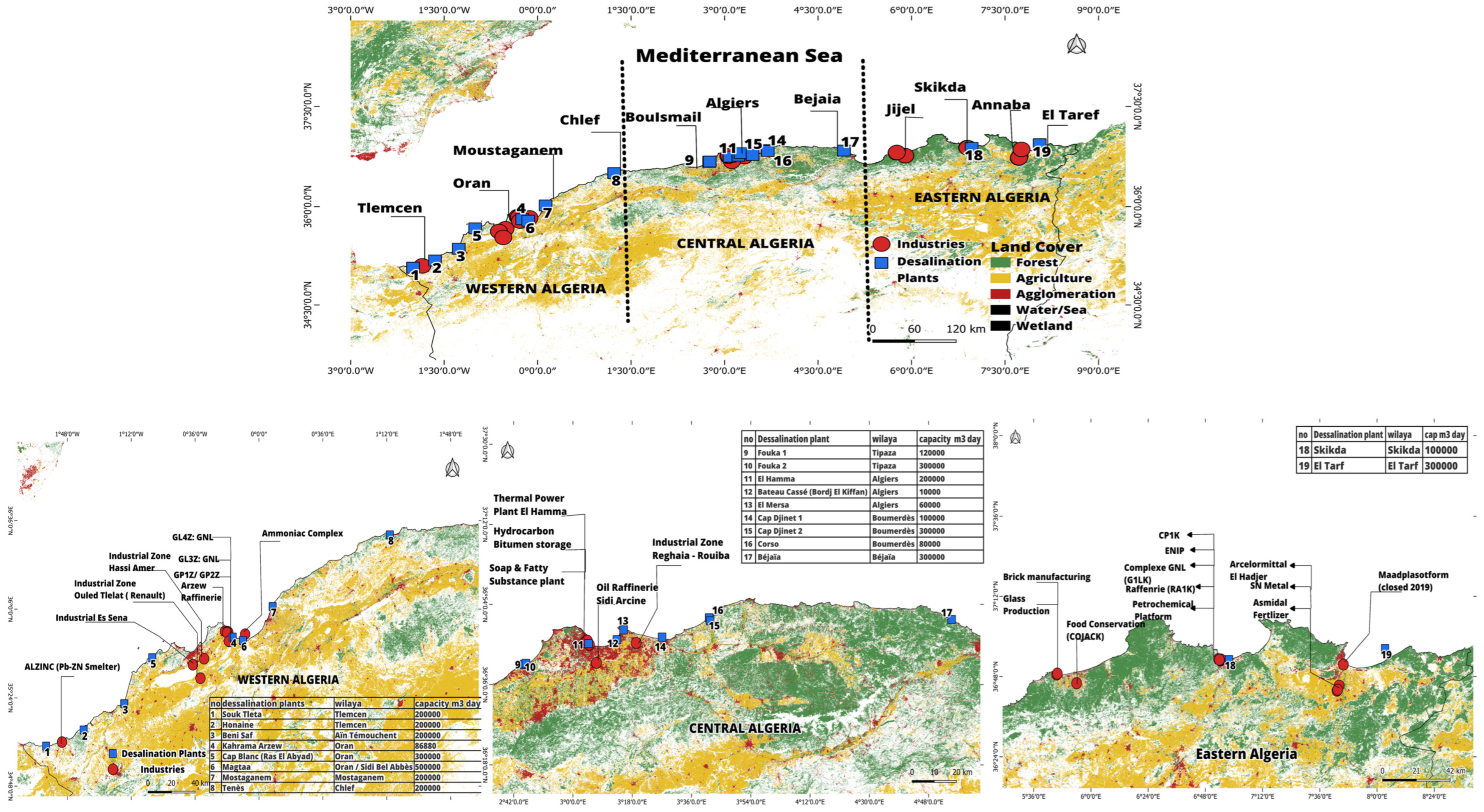
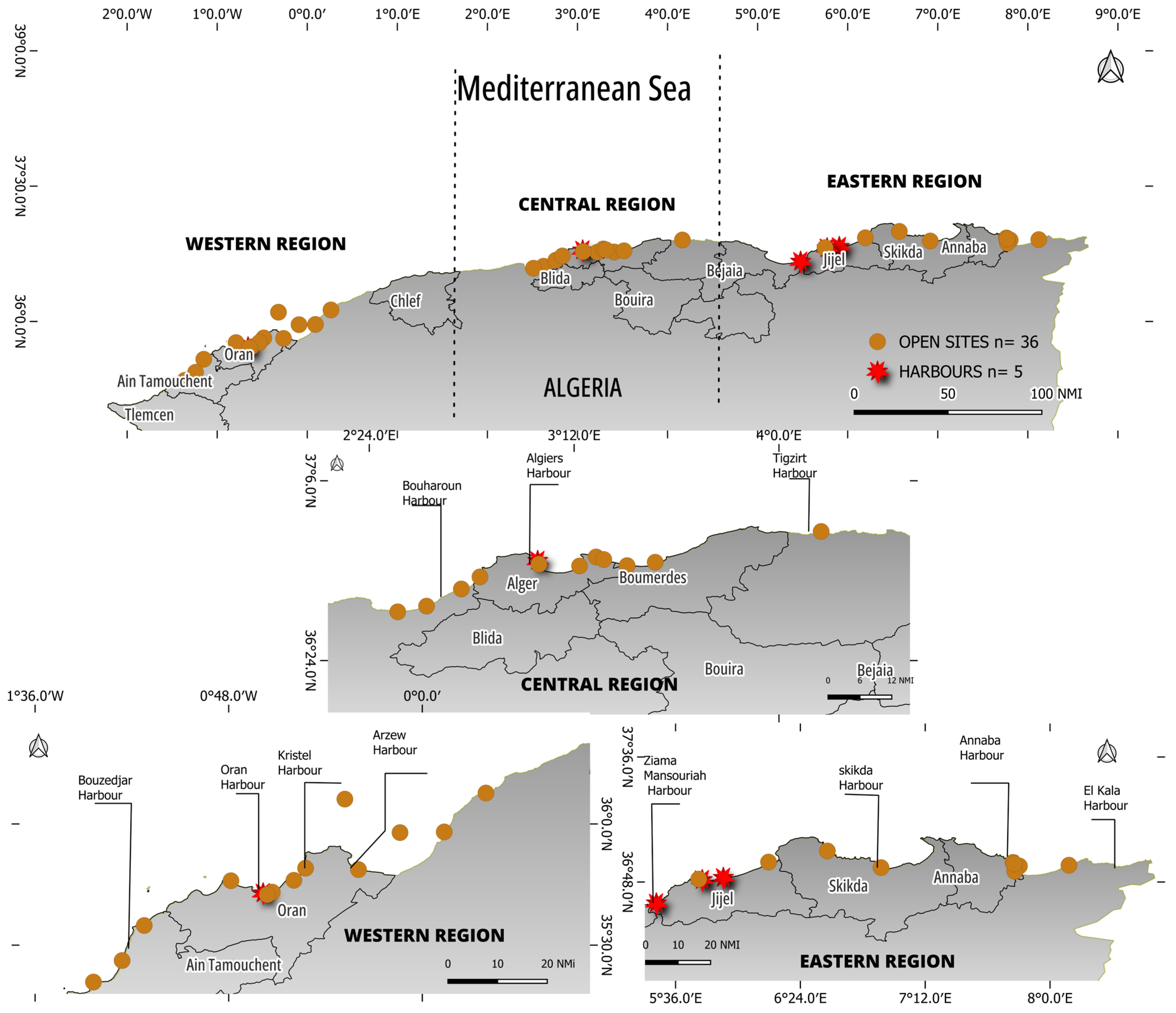
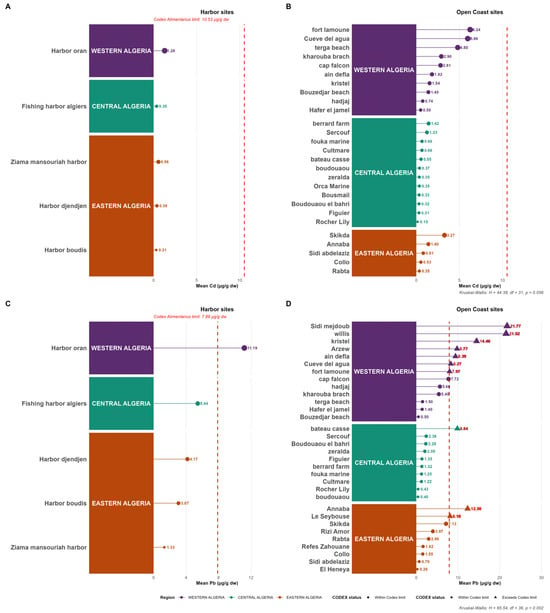
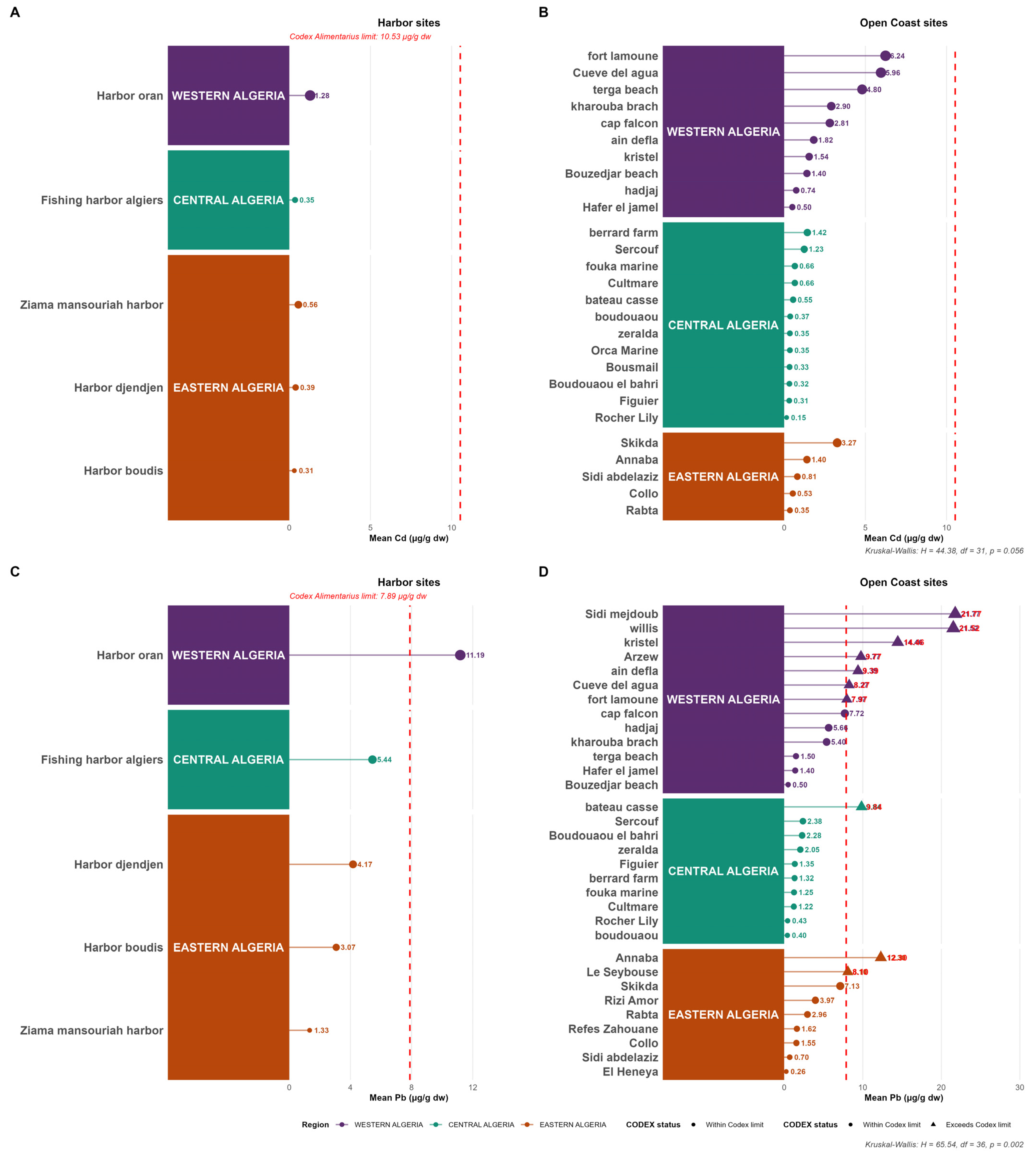
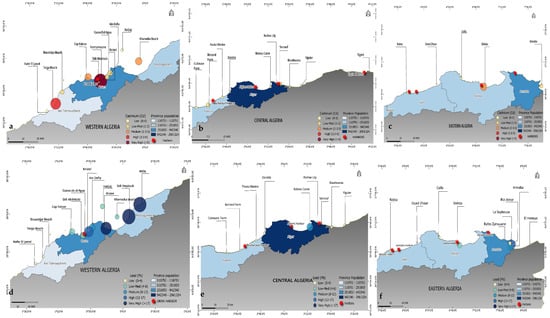
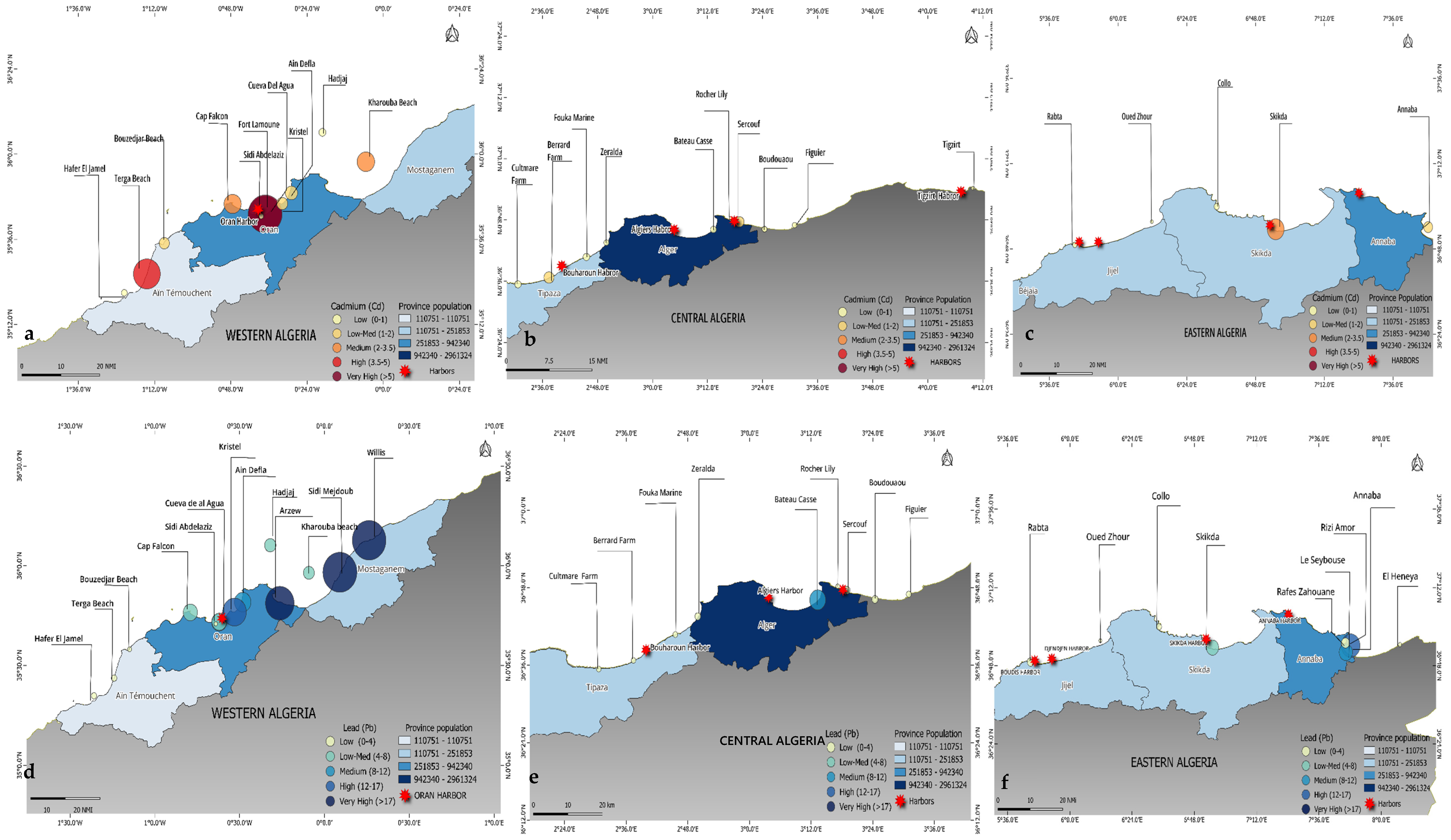
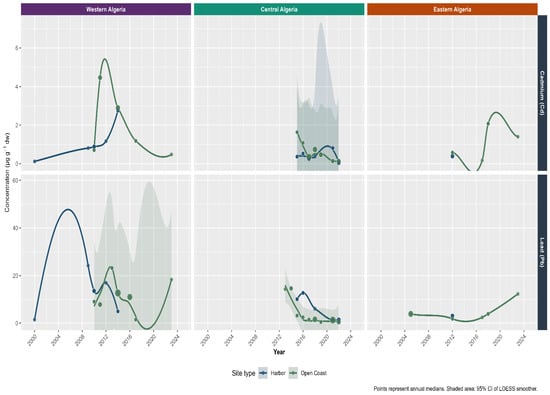
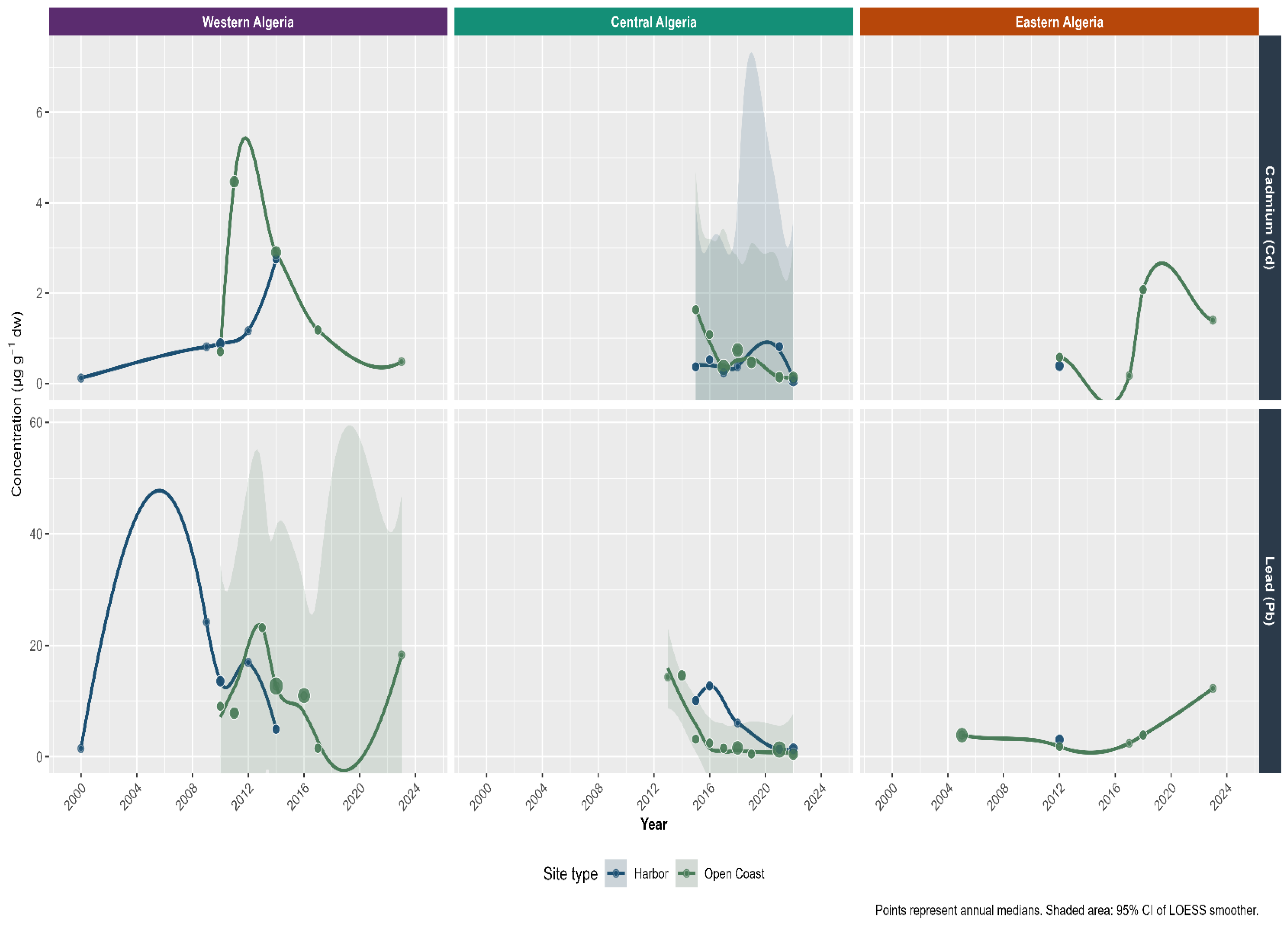

Disclaimer/Publisher’s Note: The statements, opinions and data contained in all publications are solely those of the individual author(s) and contributor(s) and not of MDPI and/or the editor(s). MDPI and/or the editor(s) disclaim responsibility for any injury to people or property resulting from any ideas, methods, instructions or products referred to in the content. |
© 2026 by the authors. Licensee MDPI, Basel, Switzerland. This article is an open access article distributed under the terms and conditions of the Creative Commons Attribution (CC BY) license.