Article

Transcriptome Analysis of the Nematodes Caenorhabditis elegans and Litoditis marina in Different Food Environments
1
CAS and Shandong Province Key Laboratory of Experimental Marine Biology, Institute of Oceanology, Chinese Academy of Sciences, Qingdao 266071, China
2
Laboratory of Marine Biology and Biotechnology, Qingdao National Laboratory for Marine Science and Technology, Qingdao 266237, China
3
Center for Ocean Mega-Science, Chinese Academy of Sciences, 7 Nanhai Road, Qingdao 266071, China
4
University of Chinese Academy of Sciences, Beijing 100049, China
*
Author to whom correspondence should be addressed.
J. Mar. Sci. Eng. 2022, 10(5), 580; https://doi.org/10.3390/jmse10050580
Submission received: 18 March 2022 / Revised: 19 April 2022 / Accepted: 21 April 2022 / Published: 25 April 2022

Abstract

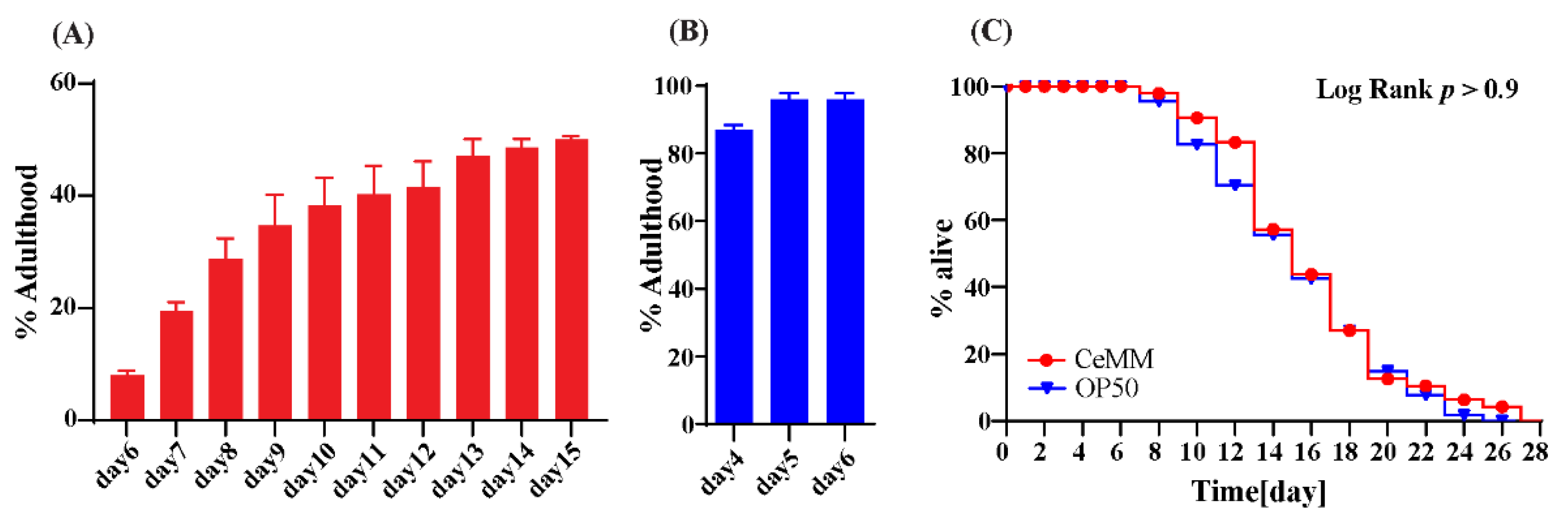
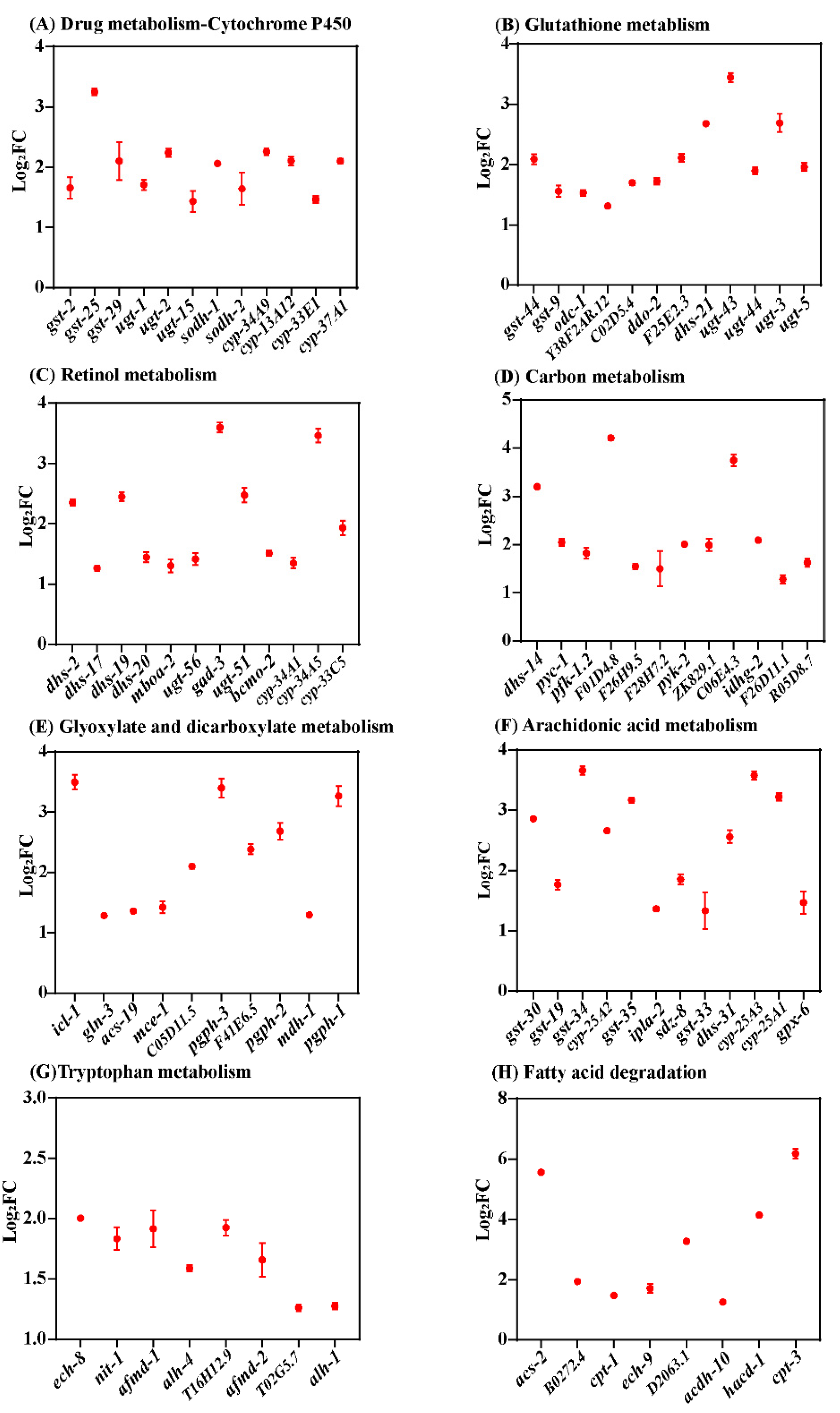
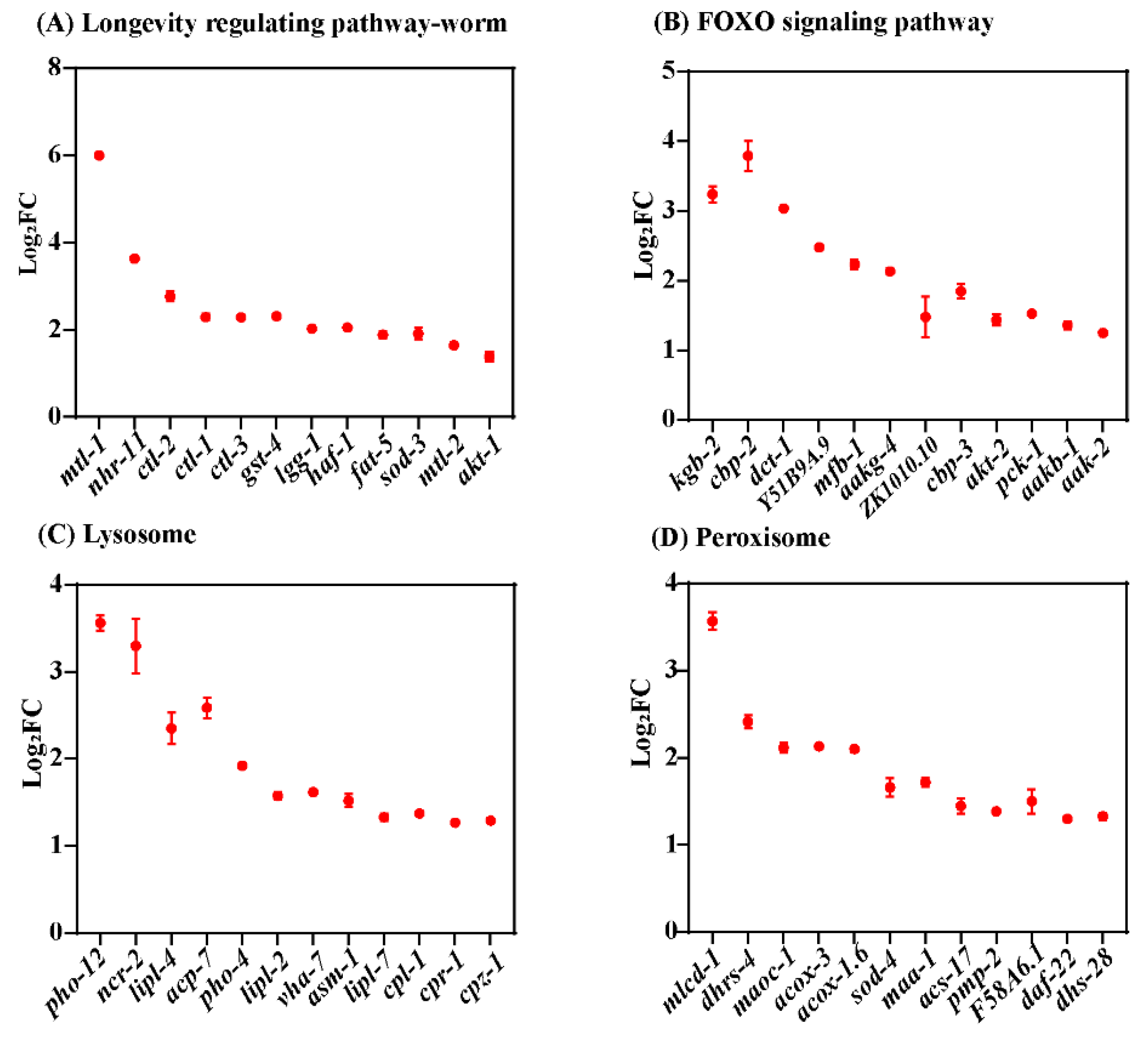
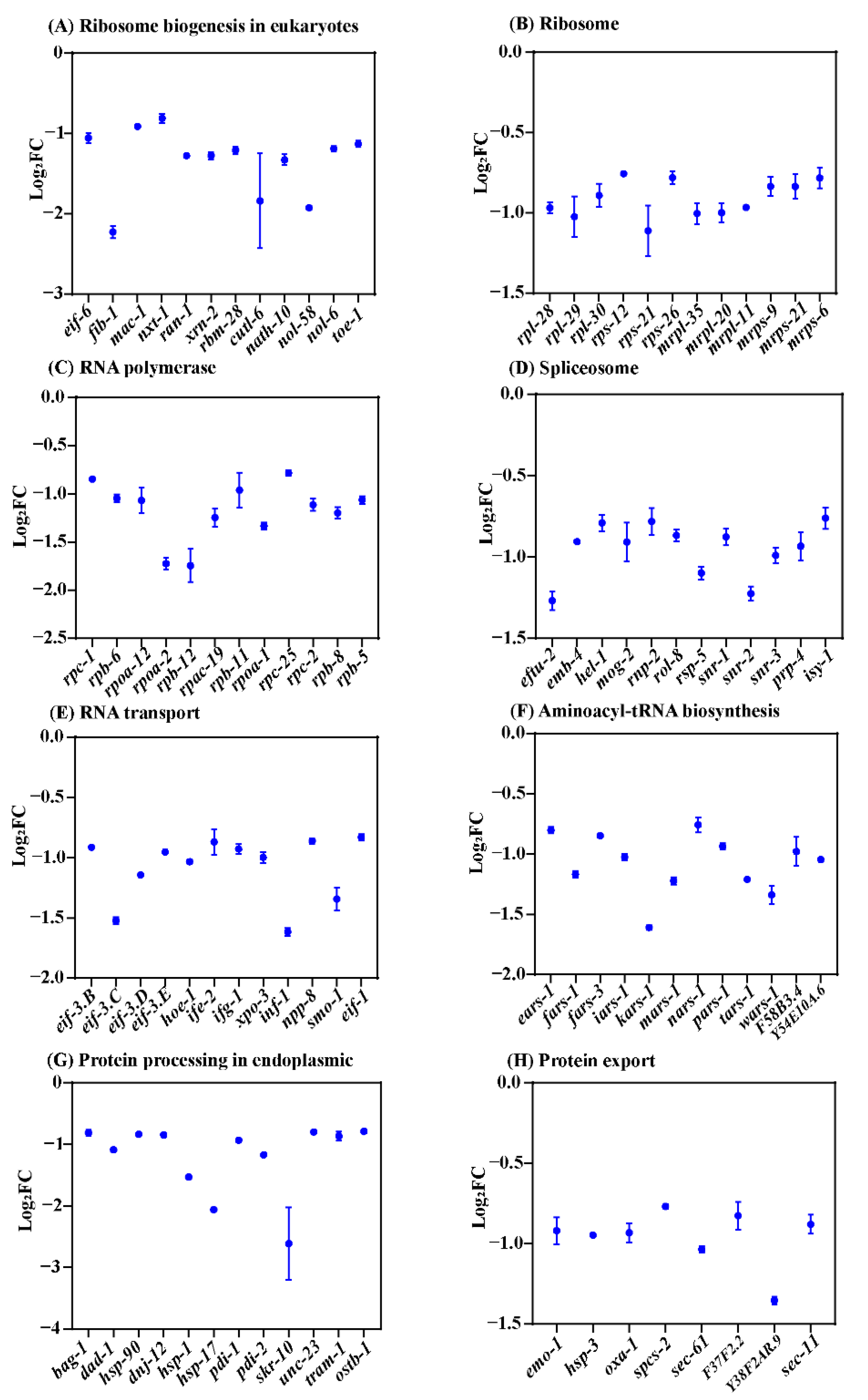
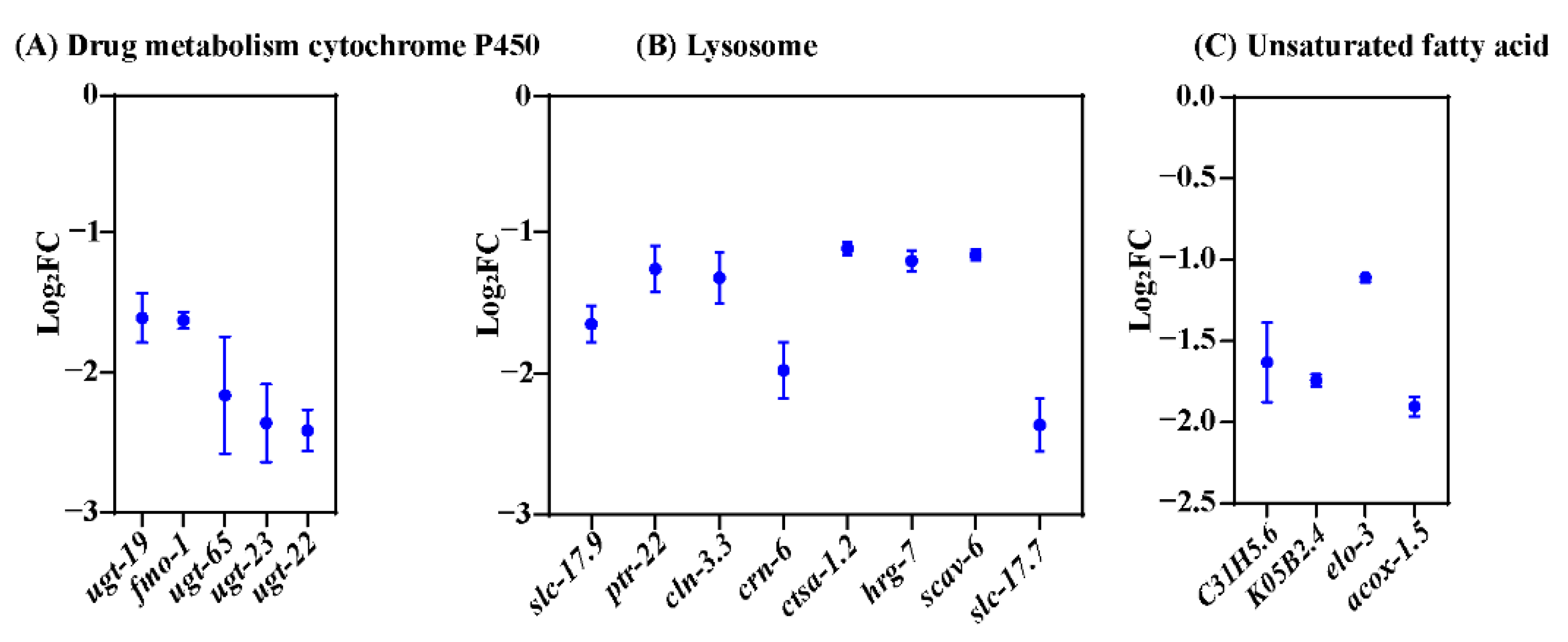
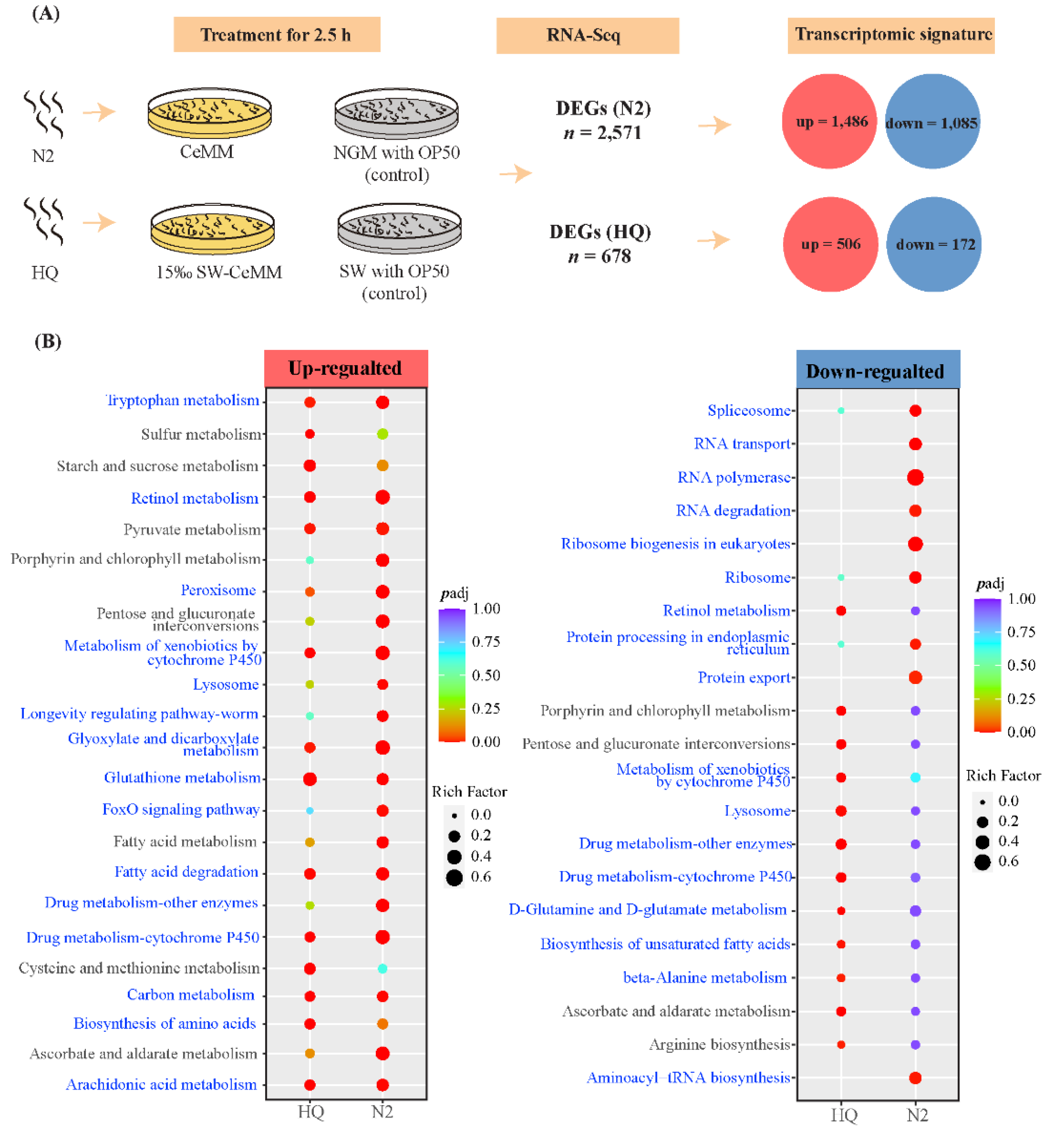
Diets regulate animal development, reproduction, and lifespan. However, the underlying molecular mechanisms remain elusive. We previously showed that a chemically defined CeMM diet attenuates the development and promotes the longevity of C. elegans, but whether it impacts other nematodes is unknown. Here, we studied the effects of the CeMM diet on the development and longevity of the marine nematode Litoditis marina, which belongs to the same family as C. elegans. We further investigated genome-wide transcriptional responses to the CeMM and OP50 diets for both nematodes, respectively. We observed that the CeMM diet attenuated L. marina development but did not extend its lifespan. Through KEEG enrichment analysis, we found that many of the FOXO DAF-16 signaling and lysosome and xenobiotic metabolism related genes were significantly increased in C. elegans on the CeMM diet, which might contribute to the lifespan extension of C. elegans. Notably, we found that the expression of lysosome and xenobiotic metabolism pathway genes was significantly down-regulated in L. marina on CeMM, which might explain why the CeMM diet could not promote the lifespan of L. marina compared to bacterial feeding. Additionally, the down-regulation of several RNA transcription and protein generation and related processes genes in C. elegans on CeMM might not only be involved in extending longevity, but also contribute to attenuating the development of C. elegans on the CeMM diet, while the down-regulation of unsaturated fatty acids synthesis genes in L. marina might contribute to slow down its growth while on CeMM. This study provided important insights into how different diets regulate development and lifespan, and further genetic analysis of the candidate gene(s) of development and longevity will facilitate exploring the molecular mechanisms underlying how diets regulate animal physiology and health in the context of variable nutritional environments.
Keywords: C. elegans; L. marina; lifespan; development; FOXO DAF-16; lysosome C. elegans; L. marina; lifespan; development; FOXO DAF-16; lysosome