


Abstract
Climate change exerts an increasing impact on the health and resilience of honey bees through a combination of rising temperatures, altered precipitation patterns, and intensified parasitic and infectious pressure. The present study aims to analyze climatic conditions in Bulgaria for the period 2021–2024 and to evaluate the results of a national survey conducted among beekeepers, focusing on winter colony losses during the 2023/2024 season and the feeding strategies applied. The survey was carried out in 2024 among 70 beekeepers from 20 administrative regions of the country, managing a total of 8935 bee colonies. The data were analyzed using descriptive statistics and stratified by region. The reported average winter mortality was 2.22% (198 colonies), with pronounced territorial variability. The most frequently indicated self-reported probable cause of losses was bee diseases, with varroosis identified as the dominant factor. Analysis of management practices revealed widespread application of combined feeding schemes based on plant-derived supplementary feeds, primarily administered in spring (March–April) and late summer (August–September). The obtained results differ from published national data for 2024, according to which total colony losses reached 16.3%, while losses associated with mortality or severe demographic collapse accounted for 11.6%. Despite the limitations inherent to the survey-based approach and self-reported data, the results suggest that integrated management combining parasite control with targeted nutritional support through the use of Bulgarian herbal supplementary feeds may coincide with the winter survival patterns reported within the surveyed sample.
1. Introduction
Climate change represents a major challenge for climate-sensitive agricultural systems, including beekeeping. Scientific evidence indicates sustained increases in temperature, altered precipitation regimes, and more frequent extreme weather events [1,2,3,4,5,6]. Such climatic changes directly affect biological systems and agroecosystems and are particularly relevant for honey bee colonies, whose survival and productivity depend on stable seasonal and ecological conditions.
The health and productivity of honey bee colonies (Apis mellifera) are closely dependent on climate-driven vegetation, forage availability, and seasonal biological dynamics, making beekeeping particularly sensitive to climatic variability.
Climatic and meteorological changes may affect nectar and pollen availability and seasonal colony dynamics [7,8]. Estimates indicate that even moderate temperature increases can result in significant shifts in bee distribution and survival, with warming of 1–2 °C associated with range contraction and elevated risk for numerous species [9]. Rising temperatures may shorten or entirely eliminate broodless periods in colonies, creating favorable conditions for the development and reproduction of parasites such as Varroa spp. and Tropilaelaps spp. [10,11].
The combined effects of these parasites and the viruses they transmit are expected to intensify, further exacerbating colony health problems [12,13,14]. Climate change facilitates the spread of invasive pests, including the small hive beetle (Aethina tumida) [15] and the Asian hornet (Vespa velutina) [16], posing further threats to the sustainability of the beekeeping sector.
Climatic shifts also influence the distribution and virulence of infectious diseases affecting bees [17]. Increased temperatures are associated with elevated risk of varroosis and sacbrood disease, whereas poor nutritional conditions and high precipitation increase the risk of European foulbrood [18].
Under changing climatic conditions, traditional colony health management approaches are often insufficient. Elevated temperatures, shortened broodless periods, and recurrent nutritional deficits may induce chronic physiological stress and weaken immune defenses in bees. This necessitates the implementation of integrated management strategies combining parasite control, adequate nutrition, and support of natural defense mechanisms [19].
In Bulgaria, recent years have been characterized by warming above long-term climatic norms and precipitation levels around or below average [20]. Varroosis and nosemosis are among the most widespread bee diseases in the country and represent major causes of winter colony mortality. According to Ivanova et al. [21], total colony losses in Bulgaria during 2017–2023 show a persistent upward trend with marked regional variability.
Natural products and herbal complementary feeds are attracting increasing scientific interest as potential components of adaptive strategies in beekeeping. These products contain biologically active compounds such as polyphenols, flavonoids, and antioxidants, which have been reported to support immune responses and physiological resilience in honey bees [22,23,24,25], while experimental and field studies further demonstrate that plant-based nutritional supplements may contribute to improved colony development and overwinter survival under certain environmental and management conditions. Within the framework of climate-adapted beekeeping, such nutritional approaches are considered supportive components of integrated management, particularly under conditions of recurrent environmental and pathogenic stress. Their role is primarily discussed in the context of enhancing colony stability rather than replacing conventional veterinary control measures.
Despite increasing evidence on climate-related stress in honey bees globally, integrated analyses combining climatic trends, management practices, and reported winter survival at national scale remain limited for Bulgaria.
- -
- Research objective and working hypotheses
The aim of the present study was to investigate whether climatic conditions in Bulgaria during the period 2021–2024, together with applied management and feeding practices, are associated with winter survival of honey bee colonies during the 2023/2024 season, based on official climate data and a survey conducted among beekeepers.
The study is based on the following working hypotheses:
H1.
During the period 2021–2024, Bulgaria experienced persistently elevated mean annual temperatures and altered precipitation dynamics compared to the climatic norm, creating conditions for increased climatic stress on honey bee colonies.
H2.
Winter colony mortality during the 2023/2024 season exhibits significant spatial variability across the country, reflecting differences in local environmental conditions and management practices.
H3.
The application of integrated management approaches, including control of Varroa destructor and targeted nutritional supplementation, is associated with reported winter survival within the surveyed sample.
2. Materials and Methods
The present study was designed as an observational analysis based on official national climatic data combined with results from a survey conducted among beekeepers in Bulgaria.
2.1. Climate Data
Climatic data for the period 2021–2023 were extracted from the official annual bulletins of the National Institute of Meteorology and Hydrology (NIMH), published on the institute’s website (http://www.weather.bg/). The data for 2024 were obtained from the preliminary annual climate assessment of NIMH, available via the meteo.bg platform (https://meteo.bg/).
Two primary indicators were analyzed:
- (1)
- mean annual air temperature and
- (2)
- total annual precipitation,
presented as national average values derived through spatial averaging of measurements from the country’s meteorological station network. These aggregated values may not fully reflect microclimatic variability at individual apiary locations; however, they provide a consistent national-scale climatic background suitable for comparative analysis of nationwide climatic trends.
Temperature anomalies were calculated relative to the climatic norm for the reference period 1991–2020, in accordance with the standards of the World Meteorological Organization (WMO). The data for 2024 are preliminary and subject to subsequent revision. The use of nationally aggregated climatic indicators was considered appropriate for evaluating broad climatic tendencies over the study period rather than site-specific microclimatic effects.
2.2. Survey
In 2024, a voluntary and anonymous scientific survey was conducted among 70 beekeepers from 20 administrative regions of Bulgaria, covering a total of 8935 bee colonies, with participants recruited through beekeeper associations and professional communication networks without application of random sampling procedures.
The questionnaire included mixed and semi-closed questions with the option for open responses and collected the following information:
- total number of colonies;
- number of colonies found dead at the first spring inspection in 2024;
- reported winter mortality during the 2023/2024 season;
- veterinary medicinal products used for the control of Varroa destructor;
- applied feeding strategies and timing of application;
- self-assessed evaluation of the probable causes of colony losses.
Reported causes of colony losses were based solely on beekeeper observations and were not systematically confirmed through laboratory or veterinary diagnostic testing.
Participants provided informed consent for the use of aggregated data for scientific purposes. No personal data allowing identification of individuals or apiaries were collected. Because participation was voluntary, the survey may be affected by reporting and selection bias and cannot be considered fully representative of the national beekeeping population; therefore, the results should be interpreted as indicative rather than nationally representative.
2.3. Classification of Feeding Strategies
The herbal complementary feeds used by the beekeepers were classified into four main schemes according to their functional orientation:
S1. Immunomodulatory + anti-nosemosis orientation
IMMUNOSTART HERB® + NOZEMAT HERB®/NOZEMAT HERB PLUS®
S2. Immunomodulatory + anti-nosemosis + antiviral orientation
IMMUNOSTART HERB® + NOZEMAT HERB®/NOZEMAT HERB PLUS® + VIRUSOMAT HERB®
S3. Immunomodulatory + antibacterial + anti-nosemosis orientation
IMMUNOSTART HERB® + BACTEROMAT HERB® + NOZEMAT HERB®
S4. Immunomodulatory + anti-ascosphaerosis orientation
IMMUNOSTART HERB® + ASCOMAT HERB®
All complementary feeds were produced by Extract Pharma Ltd., Sofia, Bulgaria, and were applied primarily during two critical periods: spring (March–April) and late summer (August–September). Some beekeepers used more than one scheme within the same season.
2.4. Statistical Analysis
The climatic and survey data were subjected to descriptive statistical analysis to characterize variability in climatic indicators and winter colony mortality across the surveyed regions. Statistical processing was performed using IBM SPSS Statistics v.26 (IBM Corp., Armonk, NY, USA), while graphical visualization was carried out with Microsoft Excel.
Normality of data distribution for apiary size (number of colonies per beekeeper) and percentage winter colony mortality was evaluated using the Shapiro–Wilk test. As both variables deviated from normal distribution, non-parametric statistical methods were applied. Spearman correlation analysis was used to evaluate associations between apiary size (number of colonies per beekeeper) and reported winter colony mortality. The Mann–Whitney U test was applied to compare apiary size (number of colonies per beekeeper) between regions with recorded winter colony mortality and regions without recorded losses. Confidence intervals were calculated for the mean percentage winter colony mortality to describe variability of mortality estimates within the surveyed sample.
Due to the observational survey-based design, reliance on self-reported data, and absence of untreated control colonies, statistical analyses allow identification of associations but do not support causal inference.
3. Results
3.1. Climatic Conditions
The analysis of national climatic data for the period 2021–2024 reveals a pronounced and consistent upward trend in mean annual air temperature in Bulgaria. In all examined years, recorded temperature values exceeded the climatic norm for the reference period 1991–2020, indicating a sustained increase in mean annual air temperature during the study period.
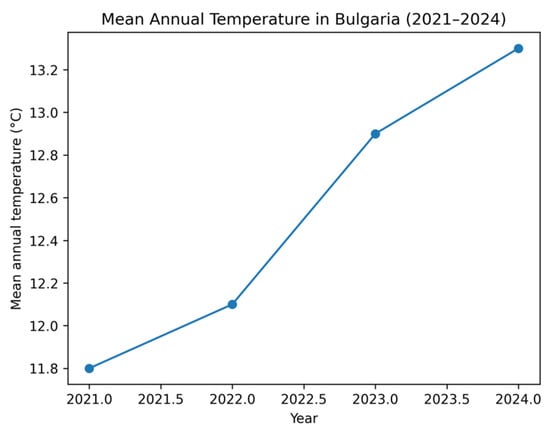
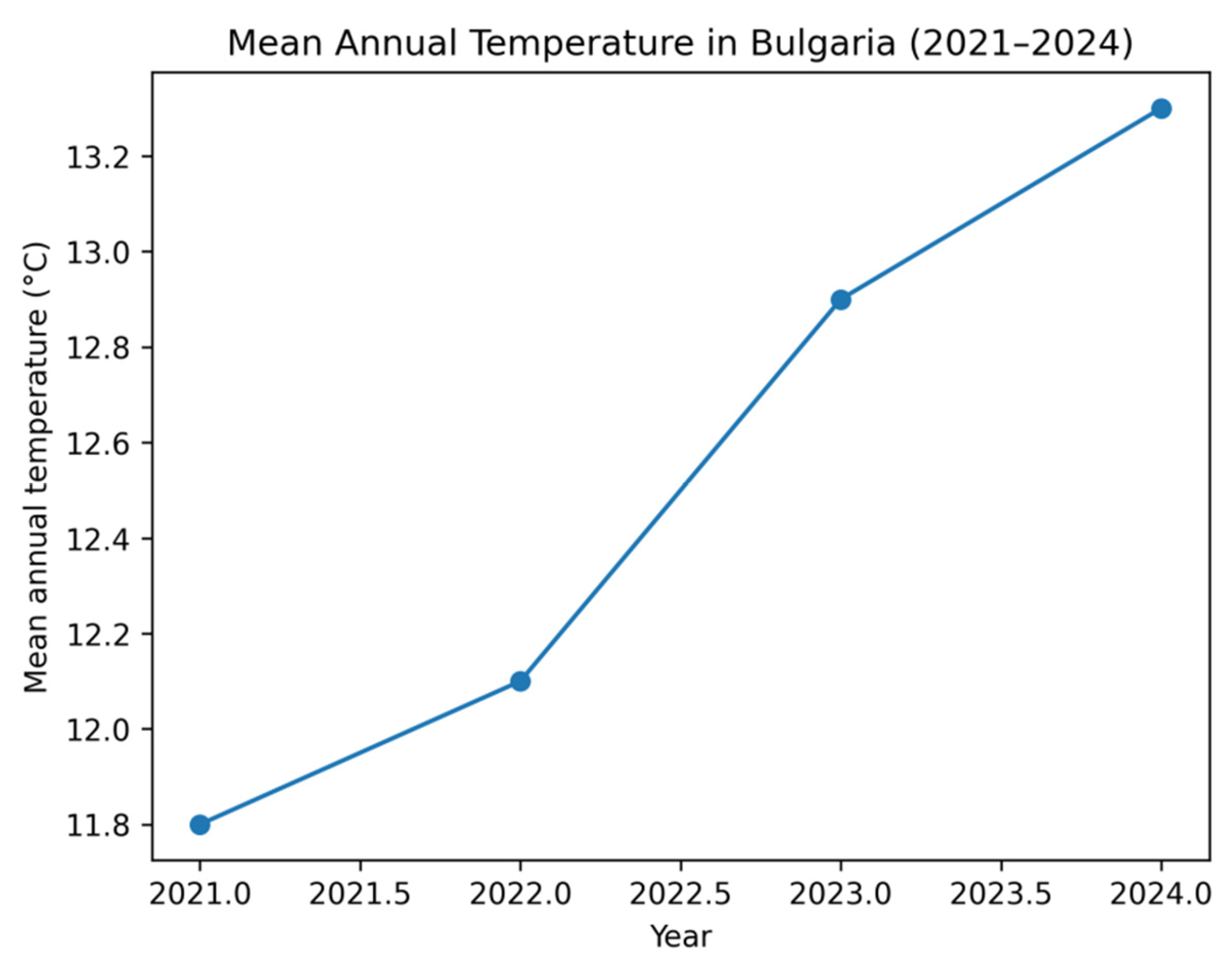
In 2021, the national mean annual temperature was 11.8 °C, representing a positive anomaly of +1.3 °C relative to the norm. In 2022, the temperature increased to 12.1 °C (+1.8 °C), while the total annual precipitation amounted to 565 mm (approximately 15% below the norm). In 2023, a mean annual temperature of 12.9 °C (+1.6 °C) was recorded, with total annual precipitation reaching 694 mm (around 5% above the norm). Preliminary data for 2024 indicate a mean annual temperature of approximately 13.3 °C (+2.0 °C) and total annual precipitation of 628 mm (about 5% below the norm).
The summarized annual values are presented in Table 1.
Table 1.
Mean annual air temperature, temperature anomalies relative to the 1991–2020 climate norm, and total annual precipitation in Bulgaria for the period 2021–2024, based on spatially averaged national meteorological data used to characterize the climatic background of the study.
During the period 2021–2024, the mean annual temperature ranged between 11.8 and 13.3 °C, showing a consistent year-to-year increase. Positive deviations from the climatic norm (1991–2020) were maintained throughout all years, with the largest anomaly recorded in 2024 (+2.0 °C). Precipitation exhibited greater interannual variability (565–766 mm) and no stable trend: the period includes years with precipitation surplus (2021, 2023) as well as years with deficit (2022, 2024). The data indicate the coexistence of increasing temperature values and interannual variability in precipitation totals. The temporal dynamics of mean annual temperature are illustrated in Figure 1.
Figure 1.
Mean annual air temperature in Bulgaria for the period 2021–2024 based on spatially averaged national meteorological data published by the National Institute of Meteorology and Hydrology (NIMH); values for 2024 are preliminary (https://meteo.bg/). The figure displays mean annual air temperature values for Bulgaria during the period 2021–2024.
3.2. Survey Characteristics and Winter Colony Mortality (2023/2024 Season)
The survey included 70 beekeepers from 20 administrative regions of Bulgaria, managing a total of 8935 honey bee colonies (Table 2).
Table 2.
Summary characteristics of the voluntary beekeeper survey conducted in Bulgaria in 2024, including number of participating beekeepers, administrative regions represented, and total number of managed honey bee colonies in the surveyed sample.
Table 3 presents descriptive statistics at the apiary level.
Table 3.
Descriptive statistics of apiary size, number of winter dead colonies, and percentage winter colony mortality per beekeeper in the surveyed sample during the 2023/2024 season, based on self-reported questionnaire data.
Table 4 presents the confidence interval for the estimated mean mortality.
Table 4.
Mean percentage of winter colony mortality per apiary (n = 70) and corresponding 95% confidence interval calculated for the surveyed sample during the 2023/2024 season, based on self-reported questionnaire data.
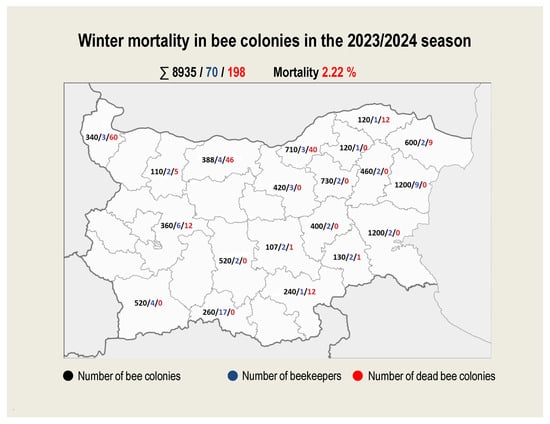
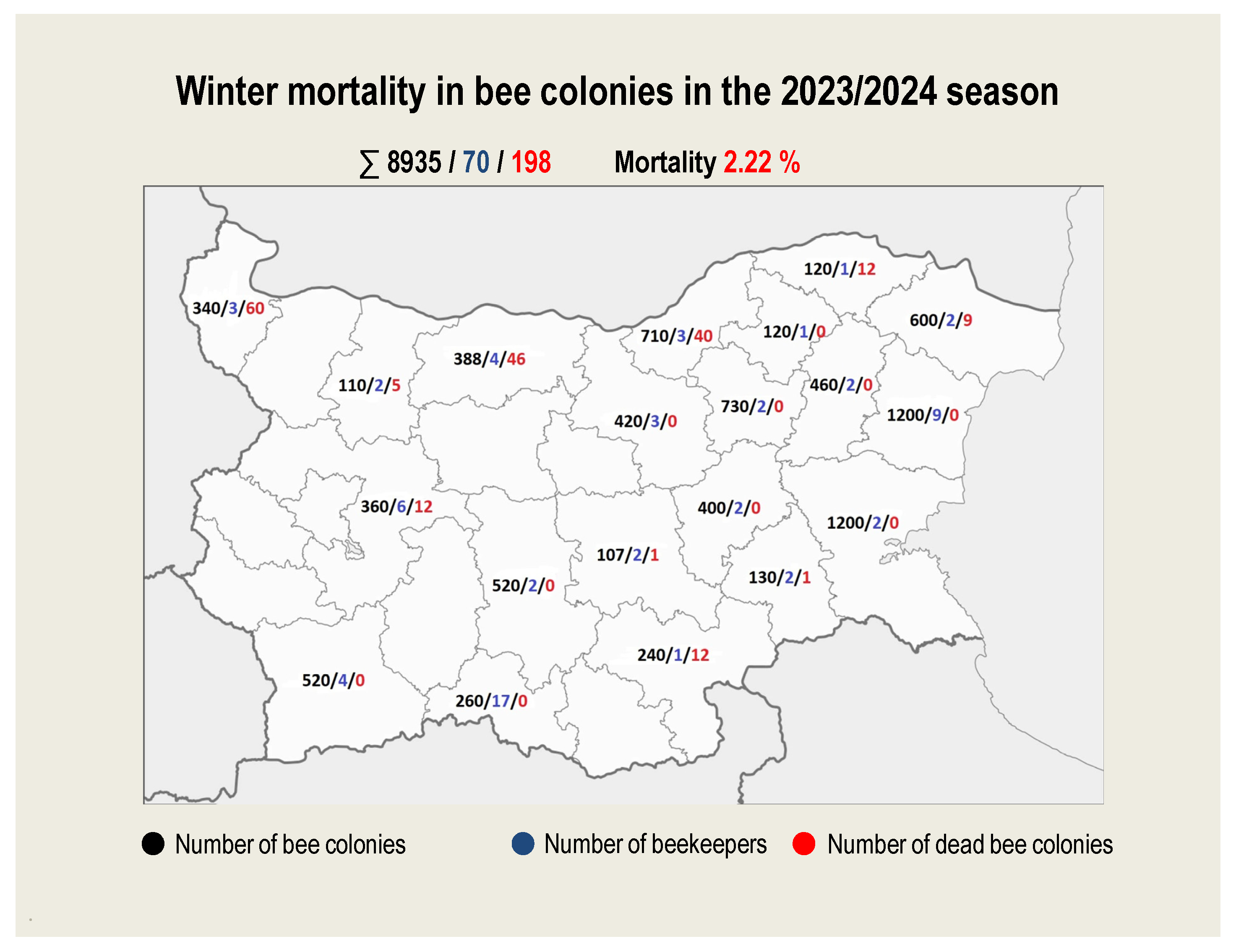
The spatial distribution of reported winter colony mortality in the surveyed sample by administrative region is presented in Figure 2.
Figure 2.
Spatial distribution of reported winter honey bee colony mortality in surveyed apiaries across administrative regions of Bulgaria during the 2023/2024 season. Values represent the number of managed colonies and reported dead colonies per region based on self-reported questionnaire data from participating beekeepers.
Reported winter colony mortality in the surveyed sample by administrative region is summarized in Table 5.
Table 5.
Reported winter colony mortality in surveyed apiaries by administrative region in Bulgaria during the 2023/2024 season, including number of participating beekeepers, managed colonies, and self-reported colony losses.
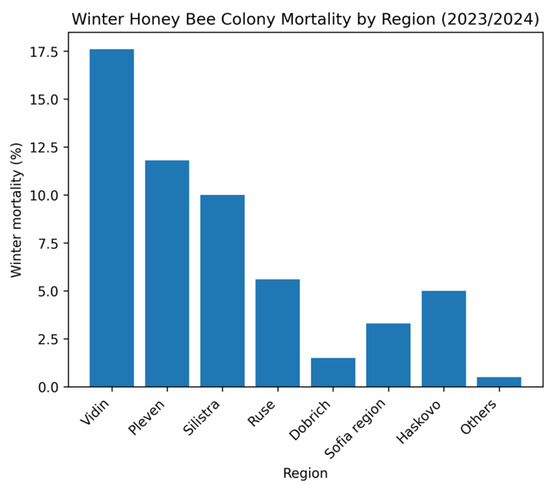
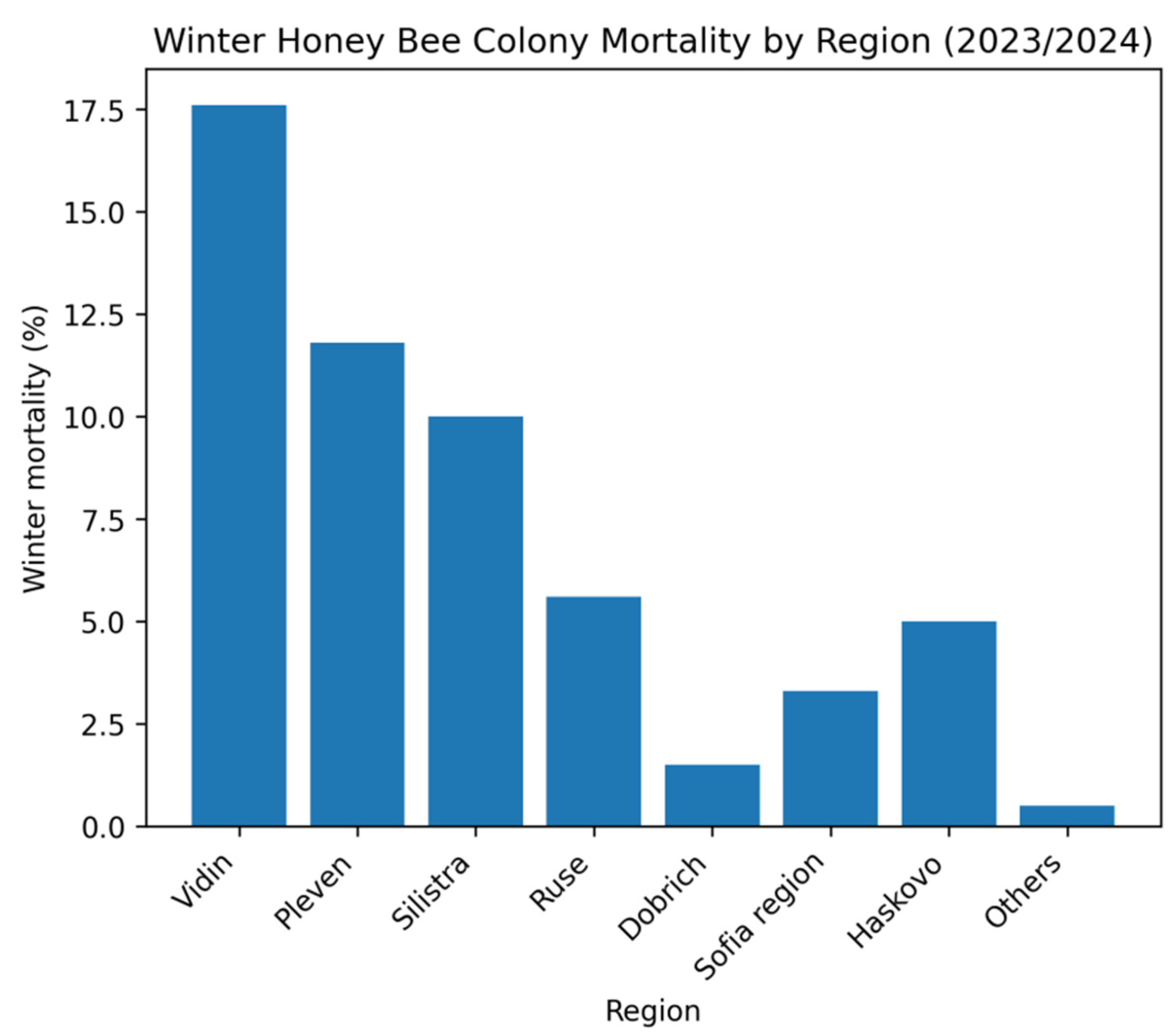
Higher reported mortality values were recorded in Vidin, Pleven, and Silistra, while mortality in most surveyed regions was zero or below 1%. Reported winter colony mortality values varied among administrative regions included in the surveyed sample.
A comparison of apiary size between regions with and without reported winter colony mortality is presented in Table 6.
Table 6.
Mann–Whitney U test comparing apiary size (number of colonies per beekeeper) between regions with reported winter colony mortality (>0%) and regions without recorded losses (=0%) in the surveyed sample (n = 70) during the 2023/2024 season.
A statistically significant difference in apiary size between regions with and without reported winter colony losses was identified (Mann–Whitney U = 96.5, Z = −2.21, p = 0.027). The comparison reflects differences in the distribution of apiary sizes between the two regional groups within the surveyed sample.
The correlation analysis is presented in Table 7.
Table 7.
Spearman’s rank correlation analysis between apiary size (number of colonies per beekeeper) and percentage winter colony mortality per apiary in the surveyed sample (n = 70) during the 2023/2024 season.
Spearman correlation analysis identified a statistically significant negative association between apiary size and reported winter colony mortality in the surveyed sample (rs = −0.41, p = 0.031).
The distribution of reported winter colony mortality by administrative region in the surveyed sample is presented in Figure 3.
Figure 3.
Percentage of reported winter honey bee colony mortality by administrative region in Bulgaria during the 2023/2024 season based on self-reported questionnaire data from surveyed apiaries. Bars represent mortality percentage calculated at regional level within the surveyed sample.
The graph illustrates variation in reported winter colony mortality percentages among administrative regions included in the surveyed sample. Reported probable causes of losses were based on beekeeper self-assessment and were not laboratory confirmed.
3.3. Nutritional Strategy and Applied Supplementary Feeding Schemes
Within the framework of the conducted survey, data were collected regarding the feeding strategies and supplementary nutritional schemes applied to honey bee colonies during the active season preceding overwintering. Survey responses show that surveyed beekeepers applied supplementary feeding schemes involving herbal complementary feeds with different functional orientations. Four main types of feeding schemes were identified, used either individually or in combination. Schemes combining immunomodulatory herbal complementary feeds with products enhancing resistance to nosemosis were reported by 70% of the surveyed beekeepers. Combined schemes including immunomodulatory, anti-nosemosis, and antiviral herbal complementary feeds were used by 30% of the participants. While 45% of the beekeepers applied schemes incorporating immunomodulatory herbal complementary feeds aimed at enhancing resistance to bacterial infections and nosemosis, 55% used two-component schemes including immunomodulatory products supporting colony resistance to ascosphaerosis. It should be noted that the reported percentages may exceed 100%, as some beekeepers applied more than one feeding scheme within the observed period. The complementary feeds were reported to be administered mainly during spring (March–April) and late summer (August–September), with dosages and frequency adjusted according to the manufacturer’s recommendations. The distribution of the applied feeding schemes is presented in Table 8.
Table 8.
Supplementary feeding schemes reported by surveyed beekeepers (n = 70) in Bulgaria during the active season preceding overwintering (spring–late summer 2023), based on self-reported questionnaire data.
Percentages may exceed 100%, as some beekeepers applied more than one scheme. Percentages represent the proportion of surveyed beekeepers reporting the use of each scheme.
3.4. Relationship Between Winter Colony Mortality and Applied Feeding Schemes
The non-parametric statistical analyses presented in Section 3.2 showed statistically significant differences and associations between apiary characteristics and reported mortality levels among surveyed apiaries.
All surveyed apiaries reported the application of one or more supplementary feeding schemes during the season preceding overwintering, which prevents direct comparison with unsupplemented control colonies. Reported mortality values varied among regions, while supplementary feeding strategies were reported across surveyed apiaries.
4. Discussion
4.1. Climatic Background and Patterns of Winter Colony Mortality
The obtained results suggest that climatic and agrometeorological conditions in recent years, and particularly in 2023, may have contributed to increased physiological stress in honey bee colonies. Warmer winters, unstable transitional seasons, and periods of summer drought represent a combination of factors capable of disrupting the normal biological cycle of the colony through alterations in brood dynamics, access to nutritional resources, and pressure from pathogens and parasites. Similar climate scenarios have been described as key risk factors for bee health in other studies. Despite this unfavorable climatic background, the recorded average winter colony mortality in the surveyed sample during the 2023/2024 season (2.22%) is substantially lower than published national data for the same and previous periods. A 95% confidence interval was calculated for the mean mortality (95% CI: 1.04–3.40), consistent with a low mean mortality level within the surveyed sample. At the same time, descriptive statistics reveal considerable heterogeneity among individual apiaries (min–max: 0–17.6%), indicating the presence of localized clusters of losses despite the low mean value. This discrepancy indicates that winter colony mortality may be influenced by complex and multifactorial interactions and cannot be explained solely by climatic conditions. The statistical characteristics of the mortality distribution further support this conclusion. The Shapiro–Wilk test showed that mortality data significantly deviate from normal distribution (W = 0.62; p < 0.001), consistent with the observed asymmetry and the accumulation of zero values among a substantial proportion of respondents. This necessitates the use of non-parametric approaches when interpreting comparisons and relationships between variables. Data from national laboratory investigations demonstrate a widespread occurrence of major bee diseases in Bulgaria. Official analyses conducted in 2021 revealed that 100% of tested samples in several regions were positive for nosemosis, while the causative agent of varroosis was detected in 100% of samples in other areas. Mixed infections involving both nosemosis and varroosis were also identified in many parts of the country. Comparable findings were reported by Salkova and Gurgulova [26], who established that a large proportion of samples in Bulgaria were positive for varroosis, nosemosis, or combined infections, whereas completely negative samples accounted for less than 10%. The widespread presence of parasitic and infectious diseases provides additional context for interpreting the results of the present study. The high national prevalence of pathogens contrasts sharply with the low winter mortality reported in the survey sample, suggesting the influence of additional management and biological factors. It is important to consider that Varroa destructor is recognized as a key stressor that not only damages bees directly but also facilitates the circulation and clinical expression of viral infections by increasing viral loads and modifying transmission dynamics [12,13,14]. The Varroa–virus complex has been linked to the global spread and epidemic nature of Deformed Wing Virus [27].
Such interactions support the view that winter colony losses may result from multiple combined factors rather than a single cause. A similar contrast has been observed when comparing these findings with those of Koev and Petrova [28], who reported an average winter mortality of 29.7% for the 2022/2023 season, as well as with the data of Ivanova et al. [21], according to which winter losses in Bulgaria frequently range between 20% and 30%.
The authors attribute these losses to complex causes, including varroosis, insufficient food reserves, unfavorable climatic conditions, pesticide exposure, and queen-related problems.
4.2. Associations Between Apiary Characteristics and Mortality
The non-parametric comparative analysis (Mann–Whitney) between regions without recorded mortality and regions with mortality >0% revealed a statistically significant difference in “Colonies per beekeeper” (U = 96.5; p = 0.027). This result indicates an association between apiary size and reported losses within the survey sample, without implying causality. The Spearman correlation analysis identified a moderate negative statistically significant relationship between colony number and mortality percentage (rs = −0.41; p = 0.031). In interpreting this result, it is important to consider that the observed association may reflect sample structure, management practices, or reporting differences rather than a biological effect per se.
4.3. Nutritional Factors and Colony Resilience
Accumulated scientific evidence indicates that nutritional status plays an important role in immune competence and resilience in honey bees. Nosemosis compromises the intestinal epithelium, suppresses immune function, and induces energetic deficiency, leading to reduced lifespan of affected bees [29,30,31]. These processes support the view that nutritional status and metabolic resilience are relevant under conditions of increased pathogen pressure and climatic stress. Numerous authors emphasize the importance of dietary diversity and plant-derived bioactive compounds in maintaining immune responses in bees. El Seedi et al. [23,24] discuss phytochemicals and plant products as potential factors contributing to immune responses and reducing reliance on antibiotic treatments in diseases such as nosemosis, while Dolezal and Toth [22] highlight the role of nutritional diversity in resistance to viral and bacterial infections. Polyphenolic compounds constitute an important component of the antioxidant defenses of honey bees and contribute to detoxification and protection against oxidative stress. Climate-driven reduction in floral diversity may limit bees’ access to these compounds, potentially affecting physiological resilience [25]. Natural antioxidants, including plant-derived ones, are characterized by high bioavailability and safety for bee physiology [32,33]. Evidence on the antioxidant activity of bee products and its dependence on botanical and geographical origin further supports the relationship between nutrition, immunity, and environmental conditions [34,35].
El Seedi et al. [24] reported beneficial effects of herbal and natural products on bee immunity and their potential role as alternatives to antibiotics in the control of Nosema. Experimental studies also report favorable effects of Bulgarian herbal complementary feeds IMMUNOSTART HERB®, NOZEMAT HERB®, NOZEMAT HERB PLUS®, and BACTEROMAT HERB® on physiological and immune parameters and resistance to pathogens [36,37,38,39,40]. ASCOMAT HERB® and VIRUSOMAT HERB® have been associated with reduced Nosema spore loads and improvements in selected immune markers in supplemented colonies [36,37]. IMMUNOSTART HERB® has been associated with increased brood production and changes in physiological and immune parameters [38,39]. BACTEROMAT HERB® has demonstrated antibacterial activity against agents of European foulbrood under experimental and field conditions [40].
In the present survey-based study, colonies managed by surveyed beekeepers frequently received such supplementary feeding schemes. The relatively low mortality observed in the surveyed sample occurred in apiaries where combined management and nutritional practices were reported; however, due to the observational design and absence of experimental controls, no causal relationship between feeding strategies and colony survival can be established. Reported positive field observations by beekeepers should therefore be interpreted as empirical observations rather than experimentally validated effects. Under conditions of climate change imposing prolonged ecological stress on bee colonies, integrated management combining parasite control, adequate nutrition, and maintenance of colony physiological status may be relevant in supporting colony stability under climatic stress. These considerations are consistent with broader concepts of climate-adapted beekeeping discussed by Neumann et al. [41], Moore et al. [42], and Brown et al. [43,44].
The present findings should not be interpreted as evidence of efficacy of specific commercial products but rather as descriptive field observations within the surveyed sample.
4.4. Methodological Differences and Limitations
Differences in methodological approach are important for interpretation of the present results. In this study, colonies that died from starvation, queenless colonies, or colonies that had not been treated with authorized veterinary medicinal products against Varroa destructor were not included. This selection may contribute to the lower reported mortality levels and should be considered when comparing these findings with national monitoring data.
The survey-based approach relies on voluntary participation and self-reported data provided by beekeepers, which may introduce reporting bias and prevents full representativeness of the national beekeeping population. Disease diagnoses were not systematically confirmed through laboratory or veterinary testing, which limits the precision of reported causes of colony losses.
Due to the observational design and absence of untreated control colonies, causal relationships between specific management or feeding practices and winter survival cannot be established. Statistical analyses should therefore be interpreted as identification of associations within the surveyed sample rather than demonstration of cause and effect relationships.
Another limitation relates to the use of nationally aggregated climatic data, which may not fully reflect local microclimatic conditions experienced by individual apiaries. Regional climatic effects on colony survival may be under- or overestimated.
These methodological constraints indicate that the present findings should be interpreted with caution and highlight the need for future controlled field experiments and laboratory-supported monitoring programs to quantify the effects of management and nutritional strategies on colony survival under changing climatic conditions. The results should be interpreted primarily as descriptive observations rather than predictive indicators of colony survival.
5. Conclusions
The results of the present study indicate that climatic conditions in Bulgaria during the period 2021–2024 were characterized by increasing mean annual temperatures combined with variability in precipitation regimes. Such conditions may contribute to increased environmental and physiological stress in honey bee colonies, as suggested by recent observations. Within this climatic background, the low average winter mortality reported in the surveyed sample during the 2023/2024 season suggests that integrated colony management practices, including parasite control and supplementary nutritional support, may be associated with winter colony survival under changing environmental conditions. Due to the observational survey-based design, these results represent statistical associations rather than causal relationships. The findings remain consistent with published literature emphasizing the importance of nutritional status, bioactive plant compounds, and antioxidant capacity in supporting colony resilience under pathogen pressure and climatic stress. These findings should be interpreted with caution due to the survey-based observational design and reliance on self-reported data. The study should be considered exploratory and descriptive. Future controlled field experiments and laboratory investigations are required to quantitatively evaluate management and nutritional interventions, while the present results provide baseline field observations that may contributing to future evaluation of adaptation strategies for beekeeping under changing climatic conditions.
Author Contributions
Conceptualization, K.K. and M.G.; methodology, K.K.; software, M.G.; validation, K.K. and P.O.; formal analysis, M.G.; investigation, M.G.; resources, K.K.; data curation, K.K. and P.O.; writing—original draft preparation, K.K.; writing—review and editing, K.K.; visualization, M.G.; supervision, K.K.; project administration, K.K.; funding acquisition, K.K. All authors have read and agreed to the published version of the manuscript.
Funding
This research was funded by the Bulgarian Ministry of Education and Science (MES) in the frames of the Bulgarian National Recovery and Resilience Plan, Component “Innovative Bulgaria,” the Project No. BG-RRP-2.004-0006-C02 “Development of research and innovation at Trakia University in service of health and sustainable well-being”.
Institutional Review Board Statement
Not applicable.
Data Availability Statement
Publicly available climate data used in this study are cited in the manuscript. Aggregated regional data on honey bee colony mortality derived from a questionnaire survey of beekeepers are available.
Acknowledgments
This work was supported by the Bulgarian Ministry of Education and Science.
Conflicts of Interest
The authors declare no conflicts of interest.
References
- Van Aalst, M.K. Climate change and disaster risk: The impacts of climate change on the risk of natural disasters. Disasters 2006, 30, 5–18. [Google Scholar] [CrossRef] [Scilit]
- Garnaut, R. The Garnaut Climate Change Review; Cambridge University Press: Cambridge, UK, 2008. [Google Scholar]
- Dawson, B.; Spannagle, M. The Complete Guide to Climate Change; Routledge: London, UK, 2009. [Google Scholar]
- Nelson, G.C.; Rosegrant, M.W.; Koo, J.; Robertson, R.; Sulser, T.; Zhu, T.; Ringler, C.; Msangi, S.; Palazzo, A.; Batka, M.; et al. Climate Change: Impact on Agriculture and Costs of Adaptation; IFPRI Food Policy Report No. 21; International Food Policy Research Institute: Washington, DC, USA, 2009; Available online: https://www.ifpri.org/publication/climate-change-impact-agriculture-and-costs-adaptation (accessed on 15 October 2024).
- Myhre, G.; Alterskjær, K.; Stjern, C.W.; Hodnebrog, Ø.; Marelle, L.; Samset, B.H.; Schulz, M. Extreme precipitation frequency under global warming. Sci. Rep. 2019, 9, 16063. [Google Scholar] [CrossRef] [Scilit]
- Pörtner, H.O.; Roberts, D.C.; Tignor, M.M.B.; Poloczanska, E.; Mintenbeck, E.; Alegría, A.; Craig, M.; Langsdorf, S.; Löschke, S.; Möller, V.; et al. Climate Change 2022: Impacts, Adaptation and Vulnerability; Contribution of Working Group II to the Sixth Assessment Report of the IPCC; Cambridge University Press: Cambridge, UK, 2022. [Google Scholar] [CrossRef] [Scilit]
- Le Conte, Y.; Navajas, M. Climate change: Impact on honey bee populations and diseases. Rev. Sci. Tech. Off. Int. Epizoot. 2008, 27, 485–510. [Google Scholar] [CrossRef] [Scilit]
- Calovi, M.; Grozinger, C.M.; Miller, D.A.; Goslee, S.C. Summer weather conditions influence winter survival of honey bees (Apis mellifera) in the northeastern United States. Sci. Rep. 2021, 11, 81051. [Google Scholar] [CrossRef] [Scilit] [PubMed]
- Soroye, P.; Newbold, T.; Kerr, J. Climate change contributes to widespread declines among bumble bees across continents. Science 2020, 367, 685–688. [Google Scholar] [CrossRef] [Scilit] [PubMed]
- Chantawannakul, P.; Ramsey, S.D.; vanEngelsdorp, D.; Khongphinitbunjong, K.; Phokasem, P. Tropilaelaps mites: An emerging threat to European honey bees. Curr. Opin. Insect Sci. 2018, 26, 69–75. [Google Scholar] [CrossRef] [Scilit]
- Cornelissen, B.; Neumann, P.; Schweiger, O. Global warming promotes biological invasion of a honey bee pest. Glob. Change Biol. 2019, 25, 3642–3655. [Google Scholar] [CrossRef] [Scilit]
- Dietemann, V.; Pflugfelder, J.; Anderson, D.; Charrière, J.-D.; Chejanovsky, N.; Dainat, B.; de Miranda, J.; Delaplane, K.; Dillier, F.-X.; Fuch, S.; et al. Varroa destructor: Research avenues towards sustainable control. J. Apic. Res. 2012, 51, 125–132. [Google Scholar] [CrossRef] [Scilit]
- Neumann, P.; Yañez, O.; Fries, I.; de Miranda, J.R. Varroa invasion and virus adaptation. Trends Parasitol. 2012, 28, 353–354. [Google Scholar] [CrossRef] [Scilit]
- Retschnig, G.; Neumann, P.; Williams, G.R. Thiacloprid–Nosema interactions in honey bees. J. Invertebr. Pathol. 2015, 130, 184–189. [Google Scholar] [CrossRef] [Scilit]
- Barbet-Massin, M.; Rome, Q.; Muller, F.; Perrard, A.; Villemant, C.; Jiguet, F. Climate change increases the risk of invasion by the yellow-legged hornet. Biol. Conserv. 2013, 157, 4–10. [Google Scholar] [CrossRef] [Scilit]
- Gisder, S.; Hedtke, K.; Möckel, N.; Frielitz, M.C.; Linde, A.; Genersch, E. Five-year cohort study of Nosema spp. in Germany. Appl. Environ. Microbiol. 2010, 76, 3032–3038. [Google Scholar] [CrossRef] [Scilit]
- Rowland, B.W.; Rushton, S.P.; Shirley, M.D.F.; Brown, M.A.; Budge, G.E. Climatic drivers of honey bee disease. Sci. Rep. 2021, 11, 21953. [Google Scholar] [CrossRef] [Scilit] [PubMed]
- Insolia, L.; Molinari, R.; Rogers, S.; Williams, G.; Chiaromonte, F.; Calovi, M. Honey bee colony loss linked to parasites, pesticides and extreme weather. Sci. Rep. 2022, 12, 20787. [Google Scholar] [CrossRef] [Scilit] [PubMed]
- National Institute of Meteorology and Hydrology. Annual Climate Bulletins 2022–2025; NIMH: Sofia, Bulgaria, 2025. [Google Scholar]
- Ivanova, E.; Petrov, P.; Staykova, T. Mortality of Honey Bees in Bulgaria—Visible and Invisible Causes and Their Consequences. In Proceedings of the Инфoрмациoннo-oбучителни семинар, Plovdiv, Bulgaria, 26 November 2025. [Google Scholar]
- Petrov, P.; Ivanova, E.; Staykova, T. Honeybee Mortality in Bulgaria: Visible and Invisible Causes and Their Consequences: Scientific Monograph; Университетскo издателствo „Паисий Хилендарски“: Plovdiv, Bulgaria, 2025. [Google Scholar]
- Dolezal, A.G.; Toth, A.L. Feedbacks between nutrition and disease in honey bee health. Curr. Opin. Insect Sci. 2018, 26, 114–119. [Google Scholar] [CrossRef] [Scilit] [PubMed]
- ElEl-Seedi, H.R.; El-Wahed, A.A.A.; Al Naggar, Y.; Saeed, A.; Xiao, J.; Ullah, H.; Musharraf, S.G.; Boskabady, M.H.; Cao, W.; Guo, Z.; et al. Insights into the role of natural products in the control of the honey bee gut parasite (Nosema spp.). Animals 2022, 12, 3062. [Google Scholar] [CrossRef] [Scilit]
- El-Seedi, H.R.; Ahmed, H.R.; El-Wahed, A.A.A.; Saeed, A.; Algethami, A.F.; Attia, N.F.; Guo, Z.; Musharraf, S.G.; Khatib, A.; Alsharif, S.M.; et al. Bee stressors from an immunological perspective and strategies to improve bee health. Vet. Sci. 2022, 9, 199. [Google Scholar] [CrossRef] [Scilit]
- Tlak Gajger, I.; Cvetkovikj, A. Antioxidant potential of pollen polyphenols in mitigating environmental stress in honeybees (Apis mellifera). Antioxidants 2025, 14, 1086. [Google Scholar] [CrossRef] [Scilit]
- Salkova, D.; Gurgulova, K. Detection of Varroa destructor and Nosema spp. in Bulgaria. Bee Stud. 2022, 14, 21–26. [Google Scholar]
- Wilfert, L.; Long, G.; Leggett, H.C.; Schmid-Hempel, P.; Butlin, R.; Martin, S.J.M.; Boots, M. Deformed wing virus is a recent global epidemic in honeybees driven by Varroa mites. Science 2016, 351, 594–597. [Google Scholar] [CrossRef] [Scilit]
- Koev, K.; Petrova, N. Study of bee mortality in Bulgaria during the winter period of 2022/2023. Intell. Anim. Husb. 2023, 2, 2815–4193. [Google Scholar] [CrossRef] [Scilit]
- Chaimanee, V.; Chantawannakul, P.; Chen, Y.P.; Evans, J.D.; Pettis, J.S. Differential expression of immune genes of adult honey bees after inoculation by Nosema ceranae. J. Insect Physiol. 2012, 58, 1090–1095. [Google Scholar] [CrossRef] [Scilit] [PubMed]
- Eiri, D.M.; Suwannapong, G.; Endler, M.; Nieh, J.C. Nosema ceranae can infect honey bee larvae and reduces subsequent adult longevity. PLoS ONE 2015, 10, e0126330. [Google Scholar] [CrossRef] [Scilit] [PubMed]
- Li, W.; Chen, Y.; Cook, S.C. Chronic Nosema ceranae infection inflicts comprehensive immunosuppression and accelerated lipid loss in Apis mellifera. Int. J. Parasitol. 2018, 48, 433–444. [Google Scholar] [CrossRef] [Scilit]
- Velioglu, Y.S.; Mazza, G.; Gao, L.; Oomah, B.D. Antioxidant activity and total phenolics in selected fruits, vegetables, and grain products. J. Agric. Food Chem. 1998, 46, 4113–4117. [Google Scholar] [CrossRef] [Scilit]
- Embuscado, M.E. Spices and herbs: Natural sources of antioxidants—A mini review. J. Funct. Foods 2015, 18, 811–819. [Google Scholar] [CrossRef] [Scilit]
- Durazzo, A.; Lucarini, M.; Plutino, M.; Pignatti, G.; Karabagias, I.K.; Martinelli, E.; Souto, E.B.; Santini, A.; Lucini, L. Antioxidant properties of bee products derived from medicinal plants as beekeeping sources. Agriculture 2021, 11, 1136. [Google Scholar] [CrossRef] [Scilit]
- Shakoori, Z.; Salaseh, E.; Mehrabian, A.R.; Tehrani, D.M.; Dardashti, N.F.; Salmanpour, F. The amount of antioxidants in honey has a strong relationship with the plants selected by honey bees. Sci. Rep. 2024, 14, 351. [Google Scholar] [CrossRef] [Scilit]
- Shumkova, R.; Balkanska, R.; Hristov, P. The herbal supplements NOZEMAT HERB® and NOZEMAT HERB PLUS® as alternative therapy for Nosema ceranae. Pathogens 2021, 10, 234. [Google Scholar] [CrossRef] [Scilit]
- Shumkova, R.; Balkanska, R.; Koynarski, T.; Hristov, P. Application of NOZEMAT HERB products can decrease honey bee colony losses during the winter. Diversity 2021, 13, 228. [Google Scholar] [CrossRef] [Scilit]
- Shumkova, R.; Balkanska, R. Influence of IMMUNOSTART HERB feeding on bee colony development. Bulg. J. Agric. Sci. 2021, 27, 896–902. [Google Scholar]
- Shumkova, R.; Balkanska, R.; Salkova, D.; Hristov, P. Impact of the plant-based natural supplement IMMUNOSTART HERB on honey bee colony performance. Acta Vet. 2022, 72, 348–361. [Google Scholar] [CrossRef] [Scilit]
- Orozova, P.; Takova, S.; Ganeva, M.; Alexandrov, R.; Ivanov, D. Antimicrobial Activity of the Herbal Product BACTEROMAT HERB Against Paenibacillus larvae and Melissococcus plutonius—Causative Agents of Foulbrood Diseases in Bees. Acta Microbiol. Bulg. 2025, 41, 253–258. [Google Scholar] [CrossRef] [Scilit]
- Neumann, P.; Straub, L. Beekeeping under climate change. J. Apic. Res. 2023, 62, 963–968. [Google Scholar] [CrossRef] [Scilit]
- Moore, E.; de Sousa, R.T.; Felsinger, S.; Arnesen, J.A.; Dyekjær, J.D.; Farman, D.I.; Gonçalves, R.F.S.; Stevenson, P.C.; Borodina, I.; Wright, G.A. Engineered yeast provides rare but essential pollen sterols for honey bees. Nature 2025, 646, 365–371. [Google Scholar] [CrossRef] [Scilit]
- Brown, A.F.; Rodriguez, V.; Brzoska, C.; Pfister, J.; Neumann, P.; Retschnig, G. Dream team for honey bee health: Pollen and unmanipulated gut microbiota promote worker longevity and body weight. Front. Sustain. Food Syst. 2022, 6, 864741. [Google Scholar] [CrossRef] [Scilit]
- Brown, A.; Rodriguez, V.; Pfister, J.; Perreten, V.; Neumann, P.; Retschnig, G. The dose makes the poison: Feeding antibiotic-treated winter honey bees with probiotics and B-vitamins. Apidologie 2022, 53, 19. [Google Scholar] [CrossRef] [Scilit]

Disclaimer/Publisher’s Note: The statements, opinions and data contained in all publications are solely those of the individual author(s) and contributor(s) and not of MDPI and/or the editor(s). MDPI and/or the editor(s) disclaim responsibility for any injury to people or property resulting from any ideas, methods, instructions or products referred to in the content. |
© 2026 by the authors. Licensee MDPI, Basel, Switzerland. This article is an open access article distributed under the terms and conditions of the Creative Commons Attribution (CC BY) license.