


Abstract
Nutrient surpluses in regions with intensive livestock farming challenge sustainable crop production and have driven interest in alternative fertilization strategies and microbial biostimulants. Although microbial inoculation (MO) has been extensively studied in plant production, its agronomic relevance under field conditions remains controversial due to inconsistent outcomes. To address these inconsistencies, we conducted three-year field trials on two well-fertilized sandy sites in northern Germany. A microbial consortium consisting of Rhizoglomus irregulare, Funneliformis mosseae, Funneliformis caledonium, and Bacillus atrophaeus Abi05 was applied to silage maize (cultivar Amaroc S230) under contrasting fertilization regimes. In two of three years, microbial inoculation increased dry mass yield in the absence of starter fertilization, whereas both a high nutrient input variant (100 kg ha−1 diammonium phosphate, DAP) and a lower nutrient input organo-mineral microgranular fertilizer (25 kg ha−1) suppressed inoculant effects. Notably, yields from plots amended solely with the microbial inoculant reached at least the same level as those obtained with starter fertilization. In the third year, under drought conditions, defined as soil water contents below 10% in the 0–30 cm depth, no positive yield responses to microbial inoculation were observed. Quantitative PCR-based analyses of pre-sowing soils revealed that the abundances of Firmicutes, β-Proteobacteria, and total fungi were associated with yield responses, with Firmicutes and β-Proteobacteria showing negative and fungi showing positive correlations; together, these microbial predictors explained 38% of the variance in inoculant-induced yield response. Our findings demonstrate that soil microbiome characteristics can predict inoculant performance and that microbial inoculation is most effective without starter fertilization and under adequate soil moisture.
1. Introduction
Regions with intensive livestock farming often face nutrient surpluses due to the excessive availability of farm fertilizers. The resulting excess of phosphorus (P) and nitrogen (N) poses a significant threat to surface and groundwater quality through leaching and eutrophication [1,2,3]. Maize (Zea mays L.) is one of the most important cereal crops worldwide and represents a key component of intensive livestock production systems, particularly as silage feed. Due to its high nutrient demand and widespread cultivation in regions with intensive manure application, maize production is especially affected by nutrient surpluses and associated environmental risks [4]. To mitigate the problems of nutrient surpluses, new fertilization strategies are emerging to reduce nutrient inputs. For instance, N- and P-reduced starter fertilizers in microgranular form are increasingly used to ensure nutrient supply during early growth stages while avoiding nutrient surpluses [5,6,7,8].
Another promising approach to maintain crop productivity under reduced fertilization is the application of microbial biostimulants [9,10]. In the sense of bioaugmentation, inocula containing Bacillus spp., Pseudomonas spp., Rhizoglomus spp., and many other taxa have been shown to exert positive effects on plants [9,10,11,12,13,14,15,16]. Despite these promising results, particularly under controlled conditions, field outcomes remain variable [17]. This inconsistency is commonly attributed to soil and climatic heterogeneity [18,19] and possibly also to publication bias, as neutral or negative results are reported less frequently [20,21]. In addition, the microbial background of soils used for inoculation is often not adequately represented in experimental trials, since artificial or sterilized soils are frequently employed [13,22,23]. While such approaches under controlled environments have yielded important insights into the ecological dimensions of plant–microbe interactions, they only partly reflect field conditions and highlight the need to move beyond within-domain or within-kingdom taxonomic dynamics [23,24].
In earlier research, when microbial analysis techniques were less advanced, soil parameters were often used to explain or predict microbial effects on plant growth [25,26,27,28]. More recent contributions, however, indicate that traditional soil chemistry, covering nutrients and other physicochemical properties, may have only limited predictive value for the effect of inoculated microorganisms on crops [24,29,30]. Instead, microbial parameters themselves are reported to be equally or even more important under field conditions [31]. As a result, the numerous positive effects of microbial inoculants observed under laboratory or greenhouse conditions are not consistently reproduced in the field, which limits their commercial relevance [32]. To better exploit the ecological and economic potential of microbial inoculants in modern agriculture, their effects must therefore become more predictable. Ideally, soil analyses would include microbial parameters that help decide whether the use of a microbial inoculant is beneficial. With the laboratory infrastructure available today and the increasingly affordable costs of quantitative PCR (qPCR) and similar techniques for the evaluation of specific microbial taxa, the required investment would not exceed what agricultural enterprises already spend on conventional soil testing.
A milestone in improving the predictability of mycorrhiza applications was achieved by Lutz et al. (2023) [31], who demonstrated that fungal taxa, particularly potentially pathogenic species, had greater predictive power for maize yield response than soil parameters, including nutrient status. Building on this predictive framework, the present study extends the approach to a combined bacterial–fungal inoculant and evaluates its performance under realistic agronomic fertilization regimes, including mineral, reduced starter, and farm fertilizer applications. Further factors, such as genotype-specific or site-specific plant–microbe constellations, should also be taken into consideration, as microbial effects on plants are not limited to species-level interactions. Previous studies have shown that even intraspecific variation, such as plant cultivar or local ecotype, as well as microbial strain or population origin, can influence the outcome of plant–microbe interactions [33,34].
We hypothesized that (H1) the yield response to microbial inoculation would depend on agronomic context factors, particularly fertilization regime and drought stress, and that (H2) the pre-sowing abundance of specific soil microbial taxa would be predictive of the magnitude and direction of yield responses under field conditions. This study aims to improve our understanding of soil–microorganism interactions and their value for predicting microbial inoculant performance in crop production. A microbial consortium consisting of Rhizoglomus irregulare, Funneliformis mosseae, Funneliformis caledonium, and Bacillus atrophaeus Abi05 was applied under field conditions in silage maize cultivation under contrasting fertilization regimes, including diammonium phosphate (DAP) band fertilization supplying high nutrient inputs, N- and P-reduced microgranular starter fertilizer (MG), and farm fertilizer alone. qPCR data from prominent soil microbial taxa were analyzed to identify potential predictors of yield response.
2. Materials and Methods
2.1. Site Description and Experimental Design
The field experiment was conducted at two sites near Wanna, Lower Saxony, Germany: “Wanna Sand” (WS) (53.751389, 8.763083) and “Wanna Sand without biogas slurry” (WSo) (53.741333, 8.817417). The region is classified as having a temperate oceanic climate (Cfb) according to the classification of Köppen & Geiger [35], characterized by mild winters and moderate summer temperatures. Climatic conditions differed markedly between years, with pronounced drought during the 2022 growing season compared to 2021 and 2023. Detailed climate data and corresponding diagrams are provided in Appendix A.
The WS site is characterized as a deep podzol–gley with a 30 cm thick A horizon, whereas the WSo site consists of a plaggic anthrosol overlaying podzol with a 70 cm deep A/E horizon. Both soils are sandy in texture and representative of coarse-textured arable soils in the region. Soil physical properties were determined for the 0–30 cm and 30–60 cm depth intervals by using HYPROP device (METER Group AG, Pullman, WA, USA) [36] at the laboratory of the Ingenieurbüro für Landschaftswasserhaushalt (Rehfelde, Germany).
The total pore volume (PV) was 46% and 45% for the upper and lower layers, respectively. The permanent wilting point (pWP) was 8.3% (0–30 cm) and 8.9% (30–60 cm).
The plant-available water capacity, defined as the difference between field capacity at pF 1.8 (soil water potential pF = log10 (h)) and the PWP, was 31%. Bulk density was 1.36 g cm−3 for both layers. Chemical soil properties (pH, TOC, N, P, K, etc.) are summarized in Table 1.
Table 1.
Soil parameters of the two sandy study sites “Wanna Sand” (WS) and “Wanna Sand without biogas slurry” (WSo).
The site has been used for maize cultivation for years and was managed according to good agricultural practice. The WS site had received regular applications of biogas slurry once per year prior to sowing at a rate of 30 m3 ha−1 (see Section 2.2), while the WSo site had not. The WSo site was relocated after 2021. However, both locations shared the same soil type and comparable properties. Therefore, two separate soil datasets, viz. WSo 2021 and WSo 2022, are reported for that site in Table 1 below. Soil parameters were determined from samples collected before sowing (Section 2.4).
2.2. Fertilizer Application and Microbial Inoculant
At the WS site, biogas slurry originating from a local agricultural biogas plant containing 4.3 kg m−3 total N, 0.56 kg m−3 P, and 4.3 kg m−3 K was applied prior to sowing and experimental setup at a rate of 30 m3 ha−1. This corresponded to a nutrient input of 129.0 kg N ha−1, 16.9 kg P ha−1, and 128.3 kg K ha−1. The WSo site did not receive biogas slurry. Both sites received 10.5 t ha−1 of cattle manure (rich in undigested feed residues and originating from local livestock production) in autumn, following the management practice applied consistently over several years. The manure contains 2.56% total N and 0.46% P. Plant-available nutrients in the cropping season following autumn application were estimated according to the following equations:
R is the application rate (t FM fresh mass ha−1), CN and CP are total N and P concentrations (kg t−1 FM), and fN and fP are the plant available coefficients.
Based on literature values for straw-rich cattle manure and feed-residue-rich organic fertilizers [37,38,39,40,41,42], we assumed fN = 0.368 and fP = 0.611. This resulted in 105 kg N ha−1 and 34 kg P ha−1 being considered plant-available out of 285.6 kg N ha−1 and 55.65 kg P ha−1 applied with 10 t FM ha−1 of the material. Two starter fertilizers for growing maize were used in the present study. DAP, a standard mineral fertilizer produced from rock phosphate, bought from a local supplier, contains 18.0% total N and 20.1% P was applied at a rate of 100 kg ha−1, resulting in the nutrient inputs shown in Table 2. The microgranular fertilizer Startec® (MG) (De Ceuster Meststoffen NV (DCM), Bannerlaan 79, Grobbendonk, Belgium), was used as the nutrient-reduced pendant to DAP. This product is classified as an organo-mineral fertilizer, composed of approximately 80% organic industrial by-products, namely oil cake and deglued bone meal. The mineral fraction contains ammonium phosphate, ammonium sulfate, ethylenediaminetetraacetic acid (EDTA)-chelated iron, manganese, zinc, zinc sulfate, and zinc oxide. The final product contains 7.5% N, 9.6% P, 3.3% K, 4% sulfur (S), 1.5% zinc (Zn), 0.5% iron (Fe), and 0.5% manganese (Mn). The applied microorganism inoculum (MO) consisted of a commercially available arbuscular mycorrhizal fungal (AMF) consortium and a well-characterized bacterial reference strain and was prepared using two different carrier materials, either MG or bentonite. The AMF and bacterial components were produced separately and combined immediately prior to application. Application rates are therefore reported on an area basis (per hectare), as inoculants were applied in-furrow and localized to the seed zone rather than homogeneously mixed into bulk soil. The commercially available AMF product INOQ Advantage Pellets (INOQ GmbH, Schnega, Germany), containing the three species Rhizoglomus irregulare, Funneliformis mosseae, and Funneliformis caledonium (144 propagules g−1), originates from standardized commercial production systems and was ground to achieve a particle size comparable to that of MG and bentonite. The ground mycorrhizal product was then blended with either MG or bentonite to obtain a final concentration of 0.12–0.128 million propagules kg−1. The application rate was 25 kg ha−1, resulting in 3.0–3.2 million propagules ha−1. To add a further plant growth-promoting microorganism, the mixtures were sprayed with the commercial liquid product RhizoVital C5 (ABiTEP GmbH, Berlin, Germany), which contains the defined bacterial strain Bacillus atrophaeus Abi05 (DSM 29418), a well-documented reference strain with established use in agricultural applications. The product was applied at a rate of 0.08 L kg−1 (≙2 L ha−1), resulting in 6.94 × 10¹³ colony-forming units (CFU) ha−1. The product was then air-dried and remixed to ensure homogeneity.
Table 2.
Experimental treatments with resulting nutrient input.
The inoculum was applied directly into the seed furrow using a AMAZONE precision seeder (EDX 6000-2C precision air-seeder, Amazonen-Werke H. Dreyer SE Co. KG, Hasbergen, Germany) with separate chambers for fertilizer and inoculants. The maize cultivar Amaroc S230 was sown with 80 cm row distance and 8.5 seeds per m2.
At each field site, the plot experiment comprised six treatments: control (no starter fertilizer or microorganism inocolum (MO)), DAP, MG, MO alone, DAP + MO, and MG + MO. Each treatment was replicated five times in plots measuring 8 × 20 m, arranged in a randomized design. Application rates of starter fertilizers and MO, along with the resulting nutrient inputs for each treatment, are summarized in Table 2.
2.3. Soil and Root Sampling and Harvest Analyses
Soil sampling was carried out on four dates. The sampling dates were t1 (April), t2 (June), t3 (July), and t4 (August). At the time points t2, t3 and t4, the maize plants were at developmental stages BBCH 13–19, 33–35, and 69, respectively, according to the German BBCH scale [43]. The sampling in April (t1) was done by taking five soil samples (0–30 cm depth) from each site, a few weeks after biogas digestate application and before sowing. At t2 and t3, four soil cores were collected per plot from positions close to the maize rows. These cores were thoroughly homogenized to obtain one composite sample per plot for soil analysis.
The sampling at t3 and t4 involved a further collection of six soil cores (0–30 cm depth) per plot within the maize row, between four neighboring plants, inside the application zone of the starter fertilizer and MO. The other three cores were taken adjacent to the first set but positioned midway between two maize rows, outside the application zone. At t3 the rootstock of five plants per treatment were collected from the soil sampling area. Soil samples were kept cool immediately after collection in the field and frozen at −20 °C upon arrival at the laboratory until further processing. Rootstocks were transported without cooling but stored at 5 °C upon arrival. Within one week of collection, fine root material was isolated from each rootstock, rinsed with tap water, and stored in 2 mL tubes filled with deionized water at −20 °C until further use. Maize harvesting was performed using a maize shredder equipped with an integrated system for logging fresh mass yield and measuring crop characteristics such as starch, crude protein, acid detergent fiber (ADF), neutral detergent fiber (NDF), crude fat, dry mass content, and ash content via a near-infrared spectroscopy (NIRS) sensor. To determine total N and P contents, dried and ground samples of whole plants were analyzed. Total N was measured using elemental analysis with a TruSpec CNS analyzer (LECO Instrumente GmbH, 41069, Mönchengladbach, Germany), following DIN ISO 13878 and HFA 05.1.3.1. Total P was determined photometrically after Kjeldahl digestion using flame atomic absorption spectroscopy (F-AAS), in accordance with DIN EN 25663. All analyses were conducted by the central laboratory of the Leibniz Centre for Agricultural Landscape Research (ZALF) (15374, Müncheberg, Germany). Measured N and P contents were used for the calculation of nutrient removal through harvest and corresponding nutrient balance.
2.4. Soil Nutrient Analysis
The plant-available P concentration (PDL) and mineral N content (Nmin) in the soil were determined following the standard protocol of the Association of German Agricultural Analytic and Research Institutes (VDLUFA, Speyer, Germany). For PDL determination, 4 g of air-dried, sieved (2 mm) soil was extracted with 200 mL of double-lactate solution (0.4 M calcium lactate (C6H10CaO6·5H2O) and 0.5 M hydrochloric acid) adjusted to pH 3.6. The suspension was shaken overhead for 90 min at 35 rpm. After filtration, PDL concentrations were quantified using inductively coupled plasma–optical emission spectrometry (ICP-OES; Optima 8300 D, PerkinElmer, Waltham, MA, USA). For Nmin determination, 20 g of fresh soil was suspended in 200 mL of a 12.5 mM CaCl2 solution and shaken overhead for 2 h. The resulting extracts were analyzed for nitrate and ammonium using continuous flow analysis (AutoAnalyzer AA3, Seal Analytical, King’s Lynn, UK).
2.5. Quantification of Mycorrhizal Colonization Rate
Roots were stained following a modified version of the method described by Vierheilig and Piché 1998 [44] using 10% KOH for preparation and methyl blue as a staining agent. Samples were shaken overnight in a New Brunswick Innova® 42 incubator shaker (Eppendorf SE, Hamburg, Germany) at 50 °C. Afterwards, the roots were rinsed with tap water several times and immersed in staining liquid (1:1:1 ratio of distilled water, glycerol, and DL-Lactic acid, 0.05% methyl blue). The flasks containing the roots and staining liquid were boiled in a water bath for 3–4 min. After that procedure, the roots were rinsed with tap water and stored in 100 µL lactoglycerol at 5 °C.
The degree of root mycorrhizal colonization was assessed using the grid-intersect method described by Giovannetti and Mosse 1980 [45], counting 100 intersects per sample under a SteREO Discovery V20 microscope (ZEISS, Oberkochen, Germany) at 265× magnification.
2.6. Soil DNA Extraction and qPCR Analyses
Thawed soil samples were thoroughly homogenized in their sample bags. The dry mass content was determined by drying approximately 5 g of soil at 70 °C in a drying cabinet. The choice of a 70 °C drying temperature followed the protocol used for processing additional organic soil samples that were not part of this study [46]. DNA extraction was performed from 500 g of fresh soil using the NucleoSpin™ Soil Kit (Macherey-Nagel, Düren, Germany) with lysis buffer SL1 and without enhancer. Sample homogenization, centrifugation steps and the two-step elution procedure followed the protocol described in Geist et al. (2023) [47]. DNA concentration and purity were determined using a NanoDrop™ Lite spectrophotometer (Thermo Fisher Scientific, Waltham, MA, USA). All samples showed A260/A280 ratios above 1.8, and DNA yields ranged between approx. 75–200 ng µL−1.
The extracted DNA was analyzed using nine distinct quantitative (qPCR) assays to quantify the abundance of six bacterial taxa (Acidobacteria, Actinobacteria, α-Proteobacteria, β-Proteobacteria, Firmicutes, and Cyanobacteria), total fungi (based on the internal transcribed spacer region of rDNA, abbreviated as ITS), the fungal genus Fusarium, and the inoculated bacterial strain Bacillus atrophaeus Abi05 in each soil sample. Primer sequences and thermal cycling conditions for all qPCR assays were identical to those described in Geist et al. (2023) [47] and are provided in Table A1 (Appendix B) for completeness. The inoculated strain was quantified using primers designed by ABiTEP GmbH, which were specific to strain Abi05 and discriminated it from other B. atrophaeus strains.
2.7. Measurement of Enzyme Activities
Soil enzyme activities of acid phosphatase and β-glucosidase were determined photometrically using established soil enzymatic assays. For each measurement, 2 g of air-dried soil were incubated with substrate solutions specific to each enzyme under controlled pH and temperature conditions. Acid phosphatase activity was quantified using p-nitrophenyl phosphate as substrate, and β-glucosidase activity using p-nitrophenyl-β-D-glucopyranoside. After incubation, the reactions were terminated, and absorbance was measured spectrophotometrically using a UV–Vis spectrophotometer. Enzyme activities were calculated based on calibration curves derived from p-nitrophenol standards and expressed per gram of dry soil and incubation time.
All assay conditions, substrates, incubation times, and calculation procedures were identical to those described in Geist et al. (2023) [47], and no methodological modifications were applied in the present study.
2.8. Statistical Analyses
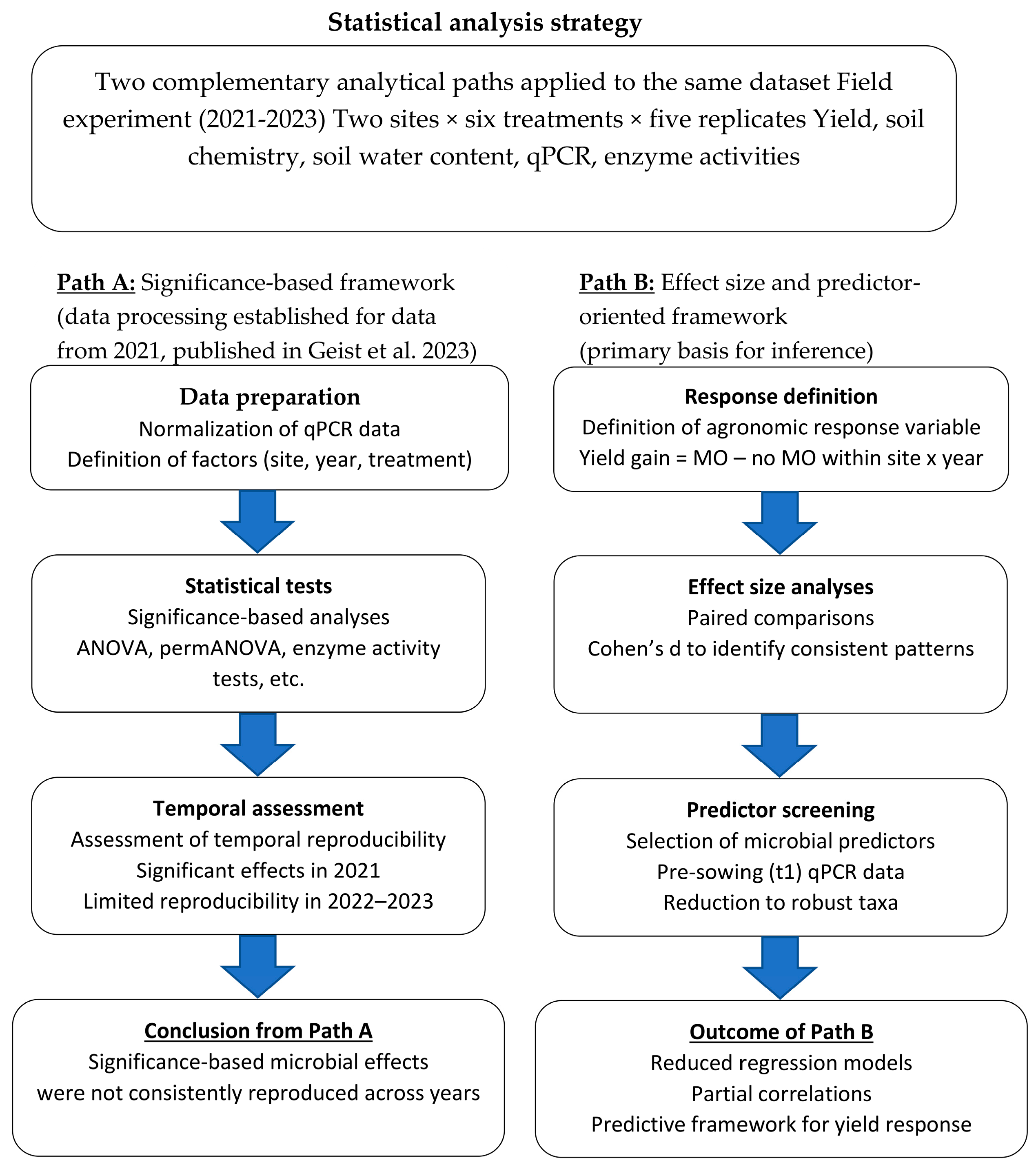
The statistical analyses followed two complementary analytical paths (Appendix C). The first path applied the significance-based framework previously described by Geist et al. (2023) [47] to all study years to evaluate whether previously reported microbial and yield-related effects could be reproduced under additional environmental conditions. In addition, an effect size- and pattern-oriented analytical path was employed to complement significance-based analyses and to identify robust and agronomically relevant yield responses and microbial predictors across sites and years. Year and site were treated as independent experimental context factors throughout the analyses; where appropriate, treatment effects were tested within and across years and sites using factorial models.
Data organization and visualization were performed using R Statistical Software (v4.3.2). Treatment effects on dry mass yield and mycorrhizal colonization rates were screened using a three-factorial analysis of variance (ANOVA) with the factor site, MO application, and starter fertilization. Soil Nmin and PDL concentrations were analyzed with a four-factorial ANOVA including sampling date as an additional factor. For qPCR data, genome copy numbers (gcn) from each group-specific assay were summed to obtain the total genome copy number (tot-gcn), used as an indicator of overall community size. Relative abundances of each group were then calculated as the proportion of the group-specific gcn to the tot-gcn. These values do not represent the relative abundances in the complete bacterial community but are used to normalize for differences in total microbial biomass, as recommended for qPCR-based community analyses [48]. Further analyses were conducted in PRIMER (PRIMER-e, Auckland, New Zealand) with the multifactorial nested permutational ANOVAs (permANOVA) add-on for outlier identification and data procession followed Geist et al. 2023 [47]. Changes in microbial community structure from t2–t4 were screened using permANOVA, with site, sampling date, MO application, and starter fertilization as fixed factors and plot as a random factor nested within site, MO application, and starter fertilization.
Yield comparisons within one site or for the collective data of both sites were tested using Student‘s t-test. For analyzing effects over both sites, a paired dataset comprising ten plot-level yield observations was created. Each of the ten data pairs consisted of maize yield from a control treatment without microbial inoculant and the corresponding treatment with microbial inoculation, under zero starter fertilization, DAP or MG application. One-sided paired t-tests were conducted to test the hypothesis that microbial inoculation leads to increased maize biomass yield in the absence of fertilization. The test assumed normal distribution of differences between paired observations. To ensure that the distribution was normal, the yield was transformed using an exponential function.
For assessment of effect sizes of the impact of MO on maize yield under different fertilization strategies, we performed a pairwise comparison of yield means for each fertilization variant (DAP, MG, and unfertilized control) with and without microbial addition. The data were grouped by year and site to maintain agronomic context, and yields for each treatment pair were calculated within each group. The resulting paired values were pooled across all sites and years for each fertilizer to improve statistical robustness. Effect sizes were then calculated using Cohen’s d according to the Savilowsky rule [49] (in R: rules = “sawilowsky”) for pooled standard deviation:
Yield gain through microbial inoculation was defined as the pairwise difference in dry mass yield between inoculated and non-inoculated plots within the same site and year. Genome copy numbers of Firmicutes, total fungi, and β-Proteobacteria were derived from qPCR measurements at t1. For the final regression model, only Firmicutes and total fungi were included to avoid overparameterization and because both taxa showed consistent and statistically significant differences across sites and years. Predictor variables and yield gain values were z-scaled before modeling. Linear regression was implemented in R 4.3.2 using the lm() function. To further evaluate the independent contribution of each taxon, partial correlations were calculated using the ppcor package in R. This allowed estimation of the correlation between Firmicutes, total fungi, β-Proteobacteria and yield gain. A significance threshold of α = 0.05 was adopted.
3. Results
3.1. Soil Water and Nutrient Content
Soil water availability varied strongly between years, with severe drought conditions in 2022 coinciding with uniformly reduced yields across sites and treatments. Soil water content (SWC) in the top 0–30 cm varied markedly among years but not between the sites (Figure 1). In 2021, SWC remained well above the permanent wilting point (pWP; 8.32 Vol.-%) at all sampling dates for both WS and WSo. In contrast, the 2022 growing season was characterized by a sharp decline in SWC after the first sampling date. While values in spring were still close to the lower range of plant-available water, they dropped to below pWP to the second sampling date. In 2023, SWC remained consistently above pWP for both sites. Across all years, WS generally exhibited slightly higher SWC than WSo, particularly in wetter years.
Figure 1.
Soil water content (0–30 cm) at sampling times t2–t4 during the growing seasons 2021–2023. Values represent means ± standard errors across both sites (WS and WSo).
Due to the differences in the soil structure described above, namely an A horizon with a thickness up to 70 cm deep at WSo compared to 30 cm at WS, the PDL concentrations in 30–60 and 60–90 cm differed significantly with higher concentrations at the WSo site.
At the WS site, the Nmin concentration in the top 30 cm was roughly twice as high, and the KDL concentration was about three times higher than those measured at the WSo site. Notably, at the WSo site, the Nmin and PDL concentrations in the 30–60 cm layer were similar to those in the topsoil, whereas at the WS site these concentrations declined substantially with depth.
In accordance with the long-term management practices at the sites, the application of biogas digestate and cattle manure generally resulted in N and P surpluses at site WS. In contrast, at site WSo, where biogas digestate application was omitted, P balances were essentially neutral (surpluses only on DAP plots), while N balances were consistently negative throughout the experiment on that site. Nutrient inputs from the fertilizer treatments, nutrient removal through harvest, and the corresponding balances are exemplified for the year 2021, which represents a climatically and agronomically typical growing season and clearly illustrates the contrasting nutrient balance patterns between the two sites (Table 3).
Table 3.
Nutrient input, removal and balance of fertilizer treatments for control, including its combination with microbial inoculant (MO), diammonium phosphate (DAP) and microgranular fertilizer (MG) in 2021 on sites “Wanna Sand with biogas digestate application” (WS) and “Wanna Sand without biogas digestate application” (WSo).
3.2. Establishment of Inoculated Microorganisms, Microbial Community and Enzyme Dynamics
The inoculated bacterial strain established in the seed furrow, whereas microbial community shifts and enzyme responses were pronounced only in the first year of application. The proportion of root intersects colonized by mycorrhiza varied significantly between the sites, from 9.8% at WS site to 21.7% at WSo site (p < 0.001) in 2021 and from 7.7% (WS) to 15.5% (WSo) in 2023 (p < 0.001). In 2022, the colonization rate was 9.2% at WS and 12.5% at WSo, with no statistically significant difference (p = 0.068). Root mycorrhizal colonization rates were not affected by microbial inoculation or fertilizer treatment in any year, indicating that the applied AMF did not measurably alter overall colonization intensity under field conditions.
qPCR-data analyses showed a significant increase in total bacterial abundance in 2021, whereas no significant differences between inoculated and control plots were detected in 2022 or 2023. Relative abundance data indicated compositional shifts in 2021, while no significant differences in the relative abundances of Firmicutes, Proteobacteria, Acidobacteria, or total bacterial genome copy numbers were observed between inoculated and non-inoculated plots in 2022 and 2023 (e.g., Firmicutes at WS: 13.1% ± 1.0% vs. 13.2% ± 1.3%). Soil enzyme activities followed a similar pattern: treatment effects were detected in 2021 but not in 2022 or 2023 (differences between inoculated and control plots: −0.2 to +0.4 µmol g−1 h−1 for phosphatase; −0.3 to +0.2 µmol g−1 h−1 for β-glucosidase).
The establishment of the inoculated bacterial strain B. atrophaeus Abi05 in maize rows was clearly confirmed, although the degree of establishment varied between sites and years (Figure 2). In 2021 and 2022, comparable genome copy numbers of B. atrophaeus Abi05 were detected in inoculated plots at both WS and WSo. In 2023, no establishment of the bacterial strain was observed at WSo, whereas at WS, establishment success depended on the fertilization treatment with higher genome copy numbers on plots amended with MG compared to control and DAP plots (p < 0.01). In 2021 and 2022, genome copy numbers of B. atrophaeus Abi05 in inoculated plots did not change significantly over the sampling dates t2–t4. The data indicate that B. atrophaeus Abi05 reaches full establishment within the first two months following application and remained stable until the harvest. In 2021, a combined analysis of both sites, WS and WSo, revealed a significant interaction between site and fertilization (p = 0.0457). At WSo, the plots amended with the microgranular fertilizer (MG) differed significantly from the control without starter fertilizer (p = 0.044) and from the DAP treatment (p = 0.0044). The described extent of Abi05 establishment was in each case restricted to the application area in the plant row, while no influence of the fertilizer variant or the microbial inoculant was observed between the rows.
Figure 2.
Log-transformed genome copy numbers (gcn) of inoculated Bacillus atrophaeus Abi05 at sampling date t3 across years and sites in inoculated (MO) and non-inoculated plots.
The community structure at the pre-sowing stage (t1) was characterized by a stable dominance of Acidobacteria and Actinobacteria, which together accounted for 61–75% of all genome copy numbers (gcn) with comparable proportions and only minor fluctuations across years (Figure 3). α-Proteobacteria contributed 16–21% of the community with little variation between sites and years, whereas β-Proteobacteria showed greater variability, ranging from 4 to 11%. Firmicutes displayed a similar range, comprising 1–5% of gcn, while total fungi accounted for only 0.16–0.46%. Mean values and standard deviations of gcn per gram of soil for all analyzed taxa are summarized in Table 4.
Figure 3.
Microbial community composition on the sites “Wanna Sand with biogas digestate application” (WS) and “Wanna Sand without biogas digestate application” (WSo) at sampling date t1 (before sowing) in 2021 and 2023.
Table 4.
Mean (±SD) genome copy numbers of different taxa at the WS and WSo sites at sampling date before sowing and after biogas slurry application on WS (t1) in 2021 and 2023.
Accordingly, statistically significant differences between sites and years were confined to total fungi, Firmicutes, α-Proteobacteria (Figure 4, Figure 5 and Figure 6) and occasionally to Fusaria. The latter taxon was present at low relative abundances (0.004% of the total community) but was on average more than twofold higher in 2021 compared to 2023 at the WS site, and up to fifteenfold higher on WSo. The difference observed on WSo was statistically significant according to the Mann–Whitney U test (p = 0.031). On WSo, the relative abundance of Firmicutes (Figure 4) was significantly lower in 2021 compared to 2023 (p = 0.008). Between the sites, Firmicutes abundances differed in 2021, with lower levels detected on WSo (p = 0.008).
Figure 4.
Log-transformed genome copy numbers (gcn) of autochthonous Firmicutes before sowing and after the application of biogas digestate on site “Wanna Sand” (WS) and “Wanna Sand without biogas digestate” (WSo). Different lowercase letters between the plots “a”, “b” or “c” indicate a statistically significant difference between variants (Mann–Whitney U test, p < 0.05).
Figure 5.
Log-transformed genome copy numbers (gcn) of autochthonous β-Proteobacteria before sowing and after the application of biogas digestate on site “Wanna Sand” (WS). Different lowercase letters between the plots, “a” or “b”, indicate a statistically significant difference between variants (Mann–Whitney U test, p < 0.05).
Figure 6.
Log-transformed genome copy numbers (gcn) of autochthonous total fungi (ITS) before sowing and after the application of biogas digestate on site “Wanna Sand” (WS). Different lowercase letters between the plots “a” or “b” indicate a statistically significant difference between variants (Mann–Whitney U test, p < 0.05).
A comparable pattern, albeit with smaller differences, was observed for β-Proteobacteria (Figure 5). On WSo, abundances were lower in 2021 than in 2023 (p = 0.008), while the differences on WS did not reach significance. In addition, abundances were higher on WS compared to WSo in 2021 (p = 0.032).
For total fungi, the higher abundance on WSo compared to WS narrowly missed statistical significance in both years (p = 0.076) (Figure 6). In contrast, abundances were consistently higher in 2021 than in 2023, both on WSo (p = 0.0079) and on WS (p = 0.008).
3.3. Effect of Microbial Inoculants on Dry Mass Yield
Microbial inoculation increased dry mass yield in the absence of starter fertilization and only in years with sufficient soil water availability. No such effects were observed under drought conditions or in combination with starter fertilization. Yield differences between fertilizer variants were absent in the dry year 2022. In that year, the average yield was significantly (p < 0.001) lower across all fertilizer variants and sites (Table 5) compared to 2021 and 2023. In 2021 and 2023, the dry mass yield from control plots with microbial inoculation was generally higher compared to control plots without microbial application. Across both years and sites, the average yield in untreated control plots was 16.59 t ha−1, whereas inoculated control plots reached 17.99 t ha−1, corresponding to a difference in statistical significance (p = 0.03; Cohen’s d = 0.45). In 2021, the yield from inoculated plots averaged 17.83 t ha−1, which was 1.43 t ha−1 higher than in the untreated control plots (p = 0.0045; Cohen’s d = 1.05). In 2023, the yield difference between inoculated plots and untreated control plots narrowly achieved statistical significance (p = 0.039; Cohen’s d = 0.63).
Table 5.
Dry mass yield (t ha−1, mean ± SD) for all treatments across sites (WS, WSo) and years (2021–2023).
Between the sites, the positive effect of microbial inoculation was more pronounced at WSo compared to WS. In 2021, the yield on inoculated plots at WSo averaged 16.65 t ha−1, which was 1.65 t higher than on control plots (p = 0.018; Cohen’s d = 1.40). The corresponding yield increase at WS was smaller and not statistically significant (p = 0.09; Cohen’s d = 0.72).
A similar pattern was observed in 2023, with consistently strong effect sizes at WSo and moderate effect sizes at WS. At WSo, inoculated plots yielded on average 18.73 t ha−1, which was 1.83 t higher than on control plots, corresponding to a large effect size (p = 0.07; Cohen’s d = 0.80). At WS, the yield difference between inoculated and control plots was smaller and characterized by a moderate effect size (p = 0.20; Cohen’s d = 0.43).
In contrast, yields from plots amended with DAP or MG, compared to their combination with MO, showed neither consistent trends comparable to those observed between the control and the control + MO nor statistically relevant differences beyond isolated, non-systematic instances. Consequently, the effect sizes, calculated according to Sawilowsky’s benchmarks, were predominantly small in these cases, being <0.4 for the DAP treatment and <0.2 for the MG variant, thereby confirming the absence of relevant influences of the applied inoculant on dry mass yield.
3.4. Yield Differences Explained by Microbial Community Composition
Pre-sowing soil microbial composition, particularly the relative abundances of Firmicutes and total fungi, explained a substantial proportion of the variability in inoculant-induced yield responses. The regression model including Firmicutes and total fungi explained 38% of the variance in yield gain (R2 = 0.38) (Figure 7). Notably, the pre-sowing abundances of Firmicutes and total fungi explained 38% of the variance in subsequent inoculant-induced yield gain, demonstrating substantial predictive potential of microbial soil parameters assessed before sowing. Regression coefficients indicated a negative association for Firmicutes (β = −0.42) and a positive association for total fungi (β = +0.51), suggesting that low Firmicutes abundance and high fungal abundance in soils at sowing favored a stronger yield increase through microbial inoculation.
Figure 7.
Standardized regression coefficients of microbial predictors explaining 38% of the variability in yield increase. Firmicutes were negatively correlated with yield increase after inoculation, whereas total fungi showed a positive correlation with yield gain. Predictors and response were z-scaled prior to modeling.
Partial correlation analyses confirmed these patterns, with Firmicutes negatively (r = −0.71) and total fungi positively (r = +0.74) associated with yield gain. β-Proteobacteria also showed a negative association (r = −0.63), but their explanatory power was limited by collinearity with Firmicutes. Effects were stronger in 2021 than in 2023, indicating interannual variability. Visualization of model weights highlighted taxon-specific contributions to yield responses (Figure 8).
Figure 8.
Partial correlations of microbial taxa with yield gain across all experimental scenarios, comparing dry mass yield without and with microbial inoculation on plots only amended with farm fertilizers. Firmicutes and β-Proteobacteria were negatively associated with yield response, while total fungi showed a positive association.
4. Discussion
4.1. Abiotic Influences and Fertilizer Effects on Nutrient Balance and Microbial Dynamics
The results indicate that nutrient availability was generally not yield-limiting at either site, whereas environmental factors, particularly soil water availability and site-specific soil properties, exerted stronger control over crop performance and microbial responses than additional fertilizer inputs. The high Nmin and PDL concentrations reflect the traditional regional availability of farm fertilizers that have been applied for several decades. Both study sites represent typical well-supplied agricultural soils in a central European region characterized by high livestock densities. The plaggic anthrosol originated with German settlements in the late Neolithic period was gradually enriched with organic mass over several centuries [50,51,52]. This process led to the development of a 30–70 cm deep A/E horizon, which provides favorable conditions for maize growth and a higher capacity for nutrients than the sandy sublayers.
Nutrients, at the levels typically achieved through mineral fertilization, are not growth-limiting under such conditions. This is evident from the absence of significant differences between the control plots and the DAP- or MG-fertilized plots. Instead, the results indicate that additional mineral fertilization on well-supplied soils is unlikely to provide further yield benefits. This aligns with recommendations from the Chamber of Agriculture for Lower Saxony (2003) [53], which advise farmers to verify whether fertilization provides additional yield responses under such conditions.
In contrast, water can become yield-limiting, as clearly demonstrated in 2022. The weakly silty sand warms up relatively quickly in spring compared to other soils in the region, which is characterized by a mild but cool Atlantic climate. However, these sandy elevations are distant from the groundwater table and may therefore be susceptible to temporary drought conditions, although the organic-rich topsoil can partially mitigate their effects. Soil water contents in the upper 30 cm likely fell below the tolerance threshold of 10% SWC for Firmicutes (e.g., Bacillus atrophaeus Abi05) and other taxa too frequently during early spring [54,55]. Although deeper soil layers may still have sufficient water for plants and supported considerable microbial activity [56], the decisive microbial processes are expected to occur in the upper 30 cm [57,58,59].
Mycorrhiza are well known to support plants in water and nutrient uptake by effectively enlarging the absorptive surface area of roots [16,17,60,61]. However, on sites with abundant nutrient supply or under generally dry conditions, mycorrhiza can also exert negative effects [24,25]. In this study, inoculating B. atrophaeus Abi05 together with mycorrhizal fungi did not affect the proportion of root intersections colonized by mycorrhiza. Mycorrhizal colonization rates differed between sites and years, but neither fertilization nor microbial inoculation had a measurable effect. This suggests that local soil conditions exerted stronger control over colonization than management interventions. However, the absence of an effect of the inoculant on mycorrhizal colonization does not mean that the mycorrhizal treatment had no overall effect. Colonization rates alone cannot indicate the extent or effectiveness of the potential symbiosis between mycobiont and phytobiont [62]. Moreover, microbial context factors, such as the presence or absence of specific bacterial taxa, can substantially influence the effect of mycorrhiza on plants [31,63,64,65,66]. The frequently reported increase in drought tolerance through mycorrhiza in the literature was not evident in our case. Also, the potential improvements in water uptake attributable to the Bacillus component of our inoculum, as reported under laboratory and field conditions [12,13,23,67], were not observable in terms of yield in this study.
Similar short-lived responses were documented in our earlier analysis of the 2021 dataset (Geist et al. 2023) [47], indicating that reproducibility across years cannot be assumed under field conditions.
The microbial inoculant Bacillus atrophaeus Abi05 induced clear shifts in bacterial abundance, community composition, and enzyme activities only in the first year of application, while no effects of statistical relevance persisted in subsequent years. These findings suggest that inoculant responses in the field may be transient and highly sensitive to temporal and site-specific factors or unknown technical issues. A short-term event before sampling (e.g., surface drying followed by rewetting in 2023) may also have masked effects seen in 2021. The influence of water is well described to shape temporal community structure and microbial activity while the soil microbiome itself exerts long-term stability [68,69,70]. In future studies, additional techniques should be applied to evaluate direct plant responses, for example, through measurements of hormone levels, as demonstrated in other contributions [12,67]. Such approaches could provide a more detailed understanding of the effects of microbial inoculation or biostimulant application.
The establishment of B. atrophaeus Abi05 in maize rows was clearly demonstrated, but its persistence varied with site and year. Importantly, establishment was confined to the inoculation zone within the plant row, indicating that the strain did not spread beyond the application area. It can therefore be assumed that the microbial inoculant exerted its influence on the autochthonous soil microbiome only within a small spatial scale limited to the application area. Fertilization effects in inoculation were inconsistent: significant interactions between site and fertilizer type point to locally specific responses, with MG supporting higher establishment. This may be due to the organic compounds of the MG used, such as oil cake and bonemeal, which likely influenced the activity of the native soil microbiome, as reported in our earlier studies [24,47]. Oil cake is commonly used to enhance microbial metabolism in soil bioremediation and other biotechnological applications [71,72]. Bonemeal is known to accelerate soil mineralization dynamics and to act as a biostimulant for bacteria [73,74].
4.2. Soil Community Structure
The qPCR-derived relative abundances of key bacterial phyla largely align with values reported in other arable soils, supporting the ecological validity of our dataset [75,76,77]. Actinobacteria and Acidobacteria together accounted for 61–75% of the measured genome copy numbers. These values are consistent with those typically dominant in terrestrial soils and often collectively representing the majority of bacterial community structures [78,79,80]. Firmicutes were comparatively low in 2021 (~0.5–1.5%), matching expectations for sandy topsoils where their abundance tends to be minor [81]. Total fungi also exhibited modest abundances (~0.2–0.46%), aligning with typical fungal-to-bacterial ratios found in arable fields, especially in cultivated topsoils [82,83,84]. The abundances of β-Proteobacteria, which are commonly associated with high C-mineralization rates and elevated nutrient inputs, were consistent with the intensive organic fertilization regimes at our study sites [85]. Ecologically, the observed balance between Actinobacteria and Acidobacteria is plausible given the nutrient status of the site: Acidobacteria are often prevalent in oligotrophic, sandy soils, while Actinobacteria thrive under more nutrient-rich conditions [86,87,88]. In our case, the elevated Actinobacterial presence likely reflects the humic-rich, nutrient-amended nature of the plaggic anthrosol, while Acidobacteria remain abundant due to the low pH and sandy texture that may support their oligotrophic lifestyle.
4.3. Yield Responses to Microbial Inoculation Under Contrasting Environmental Conditions
Taken together, microbial inoculation increased yield only under conditions without starter fertilization and sufficient soil water availability, whereas fertilized or drought-affected conditions suppressed inoculant benefits. In the dry year 2022, maize yield was depressed across all treatments, and differences among fertilizer and MO variants disappeared. This highlights how severe environmental stress can suppress both baseline productivity and treatment effects. Even a single drying–rewetting cycle may reduce the contribution of the soil microbiome to ecosystem functioning to more than one tenth of total net production [69]. In the more favorable growing seasons of 2021 and 2023, microbial inoculation produced a clear and statistically supported increase in dry mass yield. In 2021, the effect was particularly strong, while in 2023 effects were smaller but still significant. Effects varied by location: at site WSo, inoculation produced large effect sizes in both 2021 and 2023, though the latter did not reach conventional significance thresholds. At site WS, effect sizes were more moderate. The exact mechanisms by which the inoculum promoted plant performance cannot be determined from our data. It remains unclear whether the observed effects were primarily driven by the potential activity of Bacillus atrophaeus [12,13,23,67] or by the mycorrhizal components [14,15,16,17]. An interaction between the bacterial strain and the mycorrhiza is also conceivable [63,64,65,66]. In another field study, microbial inoculants combining fungal and bacterial components were reported to perform more consistently under agronomic conditions [89]. In general, the use of Firmicutes representatives such as Bacillus atrophaeus appears particularly promising, as these organisms show rapid population recovery after drying and subsequent rewetting [55,90]. This dynamic closely reflects field conditions, where sowing often takes place in relatively dry soil and germination coincides with the next rainfall. Furthermore, Bacillus sp. strains developed by the ABiTEP company are among the most widely used plant growth-promoting organisms in European agriculture and are well documented in the scientific literature [91,92].
To predict effects of microbial inoculants, intermediate supply levels of macronutrients such as P and N were sometimes defined as a precondition [18,25,93]. More recent work, however, has highlighted additional factors, e.g., certain microbial taxa, beyond soil nutrient parameters [31,94]. Also, our data did not reveal a consistent relationship between the MO effect and the different nutrient inputs through fertilizer. This is most likely because the amendments represented only minor inputs relative to the large native soil nutrient pools. Another relevant factor may be the strong impact of the organic and organomineral fertilizer on the native soil microbiome reducing or masking the effect of microbial inoculation. The more pronounced MO effect observed on the WSo site further suggests that the digestate application on WS partially obscured the inoculant effect. The introduced microorganisms are expected to compete primarily with resident taxa occupying similar ecological niches. This was also demonstrated in our earlier work, where Bacillus atrophaeus Abi05 inoculation significantly reduced autochthonous Firmicutes populations [47]. Since any nutrient addition can selectively promote specific microbial groups, it is plausible that fertilizer inputs from DAP, MG, and digestate increased competitive pressure in our study.
In addition, organic fertilizer components may exert biostimulatory effects beyond nutrient supply alone [71,72,73,74], potentially strengthening native microbial communities and increasing competitive pressure on the introduced inoculants. Consistent with this, our earlier field experiment at a different site revealed clear differences in inoculant performance between control, DAP-amended, and MG-amended plots, with consistently lower inoculant effects under MG fertilization [24].
As highlighted above, more recent studies emphasize the strong influence of microecological context on inoculant efficacy. A notable example is the work by Lutz et al. (2023) [31], who identified a ubiquitous soil fungus as a strong predictor of the effectiveness of mycorrhizal inoculations. In our study, most components of the microbial community did not show remarkable or statistically significant shifts between sites and years. By contrast, Firmicutes and β-Proteobacteria exhibited consistent patterns, namely higher abundances on both sites in 2023 compared to 2021 and mostly lower numbers on WSo site (Figure 4 and Figure 5). The opposite trend was observed for total fungi, which showed higher abundances in 2021 and slightly elevated values on WSo (Figure 6). The more pronounced inoculant effect on WSo compared to WS was associated with lower average abundances of Firmicutes and β-Proteobacteria and higher fungal abundances. A similar year-to-year pattern was evident: stronger inoculant effects coincided with lower Firmicutes and β-Proteobacteria densities and higher fungal abundances in 2021 compared to 2023. Consequently, these groups emerged from our database as the most suitable predictors for yield response in our regression models.
To avoid overparametrization, only Firmicutes and total fungi were included in the final regression model. Although β-Proteobacteria displayed a partial correlation with yield gain of similar magnitude as Firmicutes (r ≈ −0.63), differences in genome copy numbers across sites and years were of lower or none statistically significance. Moreover, high collinearity with Firmicutes resulted in unstable and unrealistically large regression coefficients when β-Proteobacteria were added to the model. In contrast, both Firmicutes and total fungi exhibited more consistent and significant contrasts across sites, supporting their inclusion as robust predictors in the final model (R2 = 0.38).
Beyond the final regression model including Firmicutes and total fungi, exploratory partial correlation analyses suggested that β-Proteobacteria may also contribute to shaping the yield response to microbial inoculation. Their negative association with yield gain resembled the pattern observed for Firmicutes, indicating that higher relative abundances of these bacterial groups might constrain the effectiveness of the inoculant. These findings may point to a broader ecological mechanism, where the relative dominance of some fast-growing bacterial groups reduces the ecological niche space for introduced strains, while higher fungal abundances are correlated with better inoculant establishment.
Taken together, the contrasting associations of native Firmicutes (negative) and total fungi (positive) with inoculant-induced yield gain allow for a cautious ecological interpretation of the observed patterns. Elevated abundances of autochthonous Firmicutes and β-Proteobacteria may reflect a competitive, resource-saturated bacterial niche that constrains the establishment or functional contribution of introduced strains such as Bacillus atrophaeus. Conversely, higher fungal abundances may indicate a soil microbiome structure that favors plant–microbiome interactions over competition within the microbial community and is associated with a soil nutrient status in which plant–microbe interactions become more relevant for plant performance. Additional correlations with broader soil properties, such as organic matter quality or aggregation status, as well as interactions with soil-borne pathogens, are also conceivable. These interpretations remain conceptual, as the present dataset does not permit functional attribution within the soil microbiome. Nevertheless, such patterns require validation in larger datasets and across multiple seasons and soils to determine whether they represent consistent drivers or context-dependent correlations. In other soils, sites or geographic regions other taxa may be relevant [95]. This context dependency of microbial predictors and inoculant performance under field conditions has also been emphasized in recent syntheses of microbial inoculant research [96].
4.4. Steps Towards Practical Application
Building on the conceptual framework outlined above, the results of this study point towards selected methodological steps that could improve the practical predictability of microbial inoculant performance under field conditions. This diagnostic, context-dependent approach aligns with recent perspectives advocating a shift from universal inoculant application towards predictive, soil microbiome-based decision frameworks in sustainable agriculture, [97]. In general, fungal communities exhibit greater stability than bacterial communities in response to fluctuations in water availability, pH, and management practices [70,84,95,98]. This resilience makes them particularly valuable as potential predictors of microbial inoculant effects on crop yield. In addition, fungal taxa are of increasing relevance as potential plant pathogens and therefore represent an important component of soil microbiome assessments [31,99,100]. Consequently, fungal community characteristics should not be neglected in soil analyses aimed at evaluating the suitability of microbial inoculant application at the pre-sowing stage. As discussed above, sowing and thus microbial inoculant application in maize cultivation usually take place under relatively dry soil conditions. To better assess microbial community development after rewetting, when both native and inoculated microorganisms are expected to become metabolically active, a standardized incubation or rewetting step prior to molecular analyses may be beneficial. Temporary drought can transiently mask the structure and activity of bacterial communities, thereby increasing data variability and reducing comparability. Limitations related to formulation, field consistency, and competitive interactions in native soil microbiomes have also been discussed in broader analyses of microbial inoculants, underlining the importance of context dependency [101]. Implementing such pre-analytical procedures may therefore improve comparability across sites, regions, and years and allow microbial indicators to better reflect the functional soil microbiome relevant at the time of inoculant application.
5. Conclusions
Our data suggest that microbial inoculants can serve as an alternative to starter fertilizers on well-supplied sandy soils in silage maize cultivation. Under drought conditions (SWC < 10%), however, the yield-stabilizing effects of microbial inoculants reported in other studies were not observable in our trials. Autochthonous populations of Firmicutes, β-Proteobacteria, and total fungi (ITS), quantified by qPCR before sowing, emerged as potential microbial predictors of the yield response to inoculation with the mycorrhizal–Bacillus atrophaeus consortium in silage maize.
For the economic and ecological success of microbial biostimulants, it is essential to identify indicators that improve the predictability of yield responses. Research should therefore focus on practice-relevant soil conditions that influence inoculant efficacy and can be evaluated before application, with particular attention to the soil’s microbial context.
Such efforts must span diverse soils and cropping systems to establish a robust predictive basis, as relevant taxa are likely to vary across environments and inoculant formulations.
Taken together, our findings support a shift from universal application strategies towards a more diagnostic, context-dependent use of microbial inoculants. Importantly, the analytical tools required for such an approach are already available: quantitative PCR and related methods allow the targeted assessment of microbial indicators at costs comparable to conventional analyses in agricultural practice. Integrating microbial diagnostics into routine soil analyses could therefore represent a realistic and immediately actionable step towards more reliable and efficient use of microbial inoculants under field conditions.
Author Contributions
Conceptualization, F.E.; Data Curation, M.T., L.G., R.W., R.T. and M.W.; Formal Analysis, M.T., L.G., R.W. and R.T.; Funding Acquisition, F.E.; Investigation, L.G.; Methodology, F.E.; Supervision, B.E.-L. and F.E.; Writing—Original Draft, M.T.; Writing—Review and Editing, B.E.-L. and F.E. AI-assisted tools were used for language editing and stylistic refinement of the manuscript. The authors are fully responsible for the content, data interpretation, and conclusions presented. All authors have read and agreed to the published version of the manuscript.
Funding
This research was funded by the Federal Ministry of Food and Agriculture (BMEL) via the Fachagentur Nachwachsende Rohstoffe e.V. (FNR), Gülzow-Prüzen, Germany (Förderkennzeichen 2220NR059A). Additional funding was provided by Leibniz-Zentrum for Agricultural Landscape Research (ZALF) e.V.
Data Availability Statement
The qPCR measurement data have been published in BonaRES: Geist, L., & Wolfer, R. (2024). Abundance of different microorganism groups in soil and roots in a field trial on starter fertilization and application of plant growth-promoting microorganisms [Data set]. Leibniz Centre for Agricultural Landscape Research (ZALF). https://doi.org/10.4228/ZALF-3WP6-V631. The raw sequencing data have been deposited in the NCBI Sequence Read Archive under the project “Mikromais” (SRA: SRP497566, BioProject: PRJNA1091546, https://www.ncbi.nlm.nih.gov/bioproject/PRJNA1091546, accessed 4 August 2025). All additional datasets generated during and/or analyzed during the current study are available from the corresponding author upon reasonable request.
Conflicts of Interest
The authors declare no conflicts of interest.
Abbreviations
The following abbreviations are used in this manuscript:
| ADF | acid detergent fiber |
| AMF | arbuscular mycorrhiza fungi |
| cfu | colony forming units |
| cN | total N concentrations |
| cP | total P concentrations |
| DAP | diammonium phosphate |
| EDTA | ethylenediaminetetraacetic acid |
| fN | plant available coefficients for nitrogen |
| fP | plant available coefficients for phosphorus |
| gcn | genome copy numbers |
| KDL | plant-available potassium |
| MG | starter fertilizer in microgranular form |
| MGDL | starter plant-available magnesium |
| MO | microbial inoculant (as inoculated microorganisms into the soil) |
| N | nitrogen |
| NDF | neutral detergent fiber |
| NIRS | near-infrared spectroscopy |
| Nmin | mineral nitrogen |
| Ntot | total nitrogen |
| P | phosphorus |
| PDL | plant-available phosphorous |
| PV | pore volume |
| pWP | permanent wilting point |
| SWC | soil water content |
| TOC | total organic carbon |
| tot-gcn | total genome copy number |
| WS | study site Wanna Sand |
| WSo | study site Wanna Sand without biogas slurry application |
Appendix A
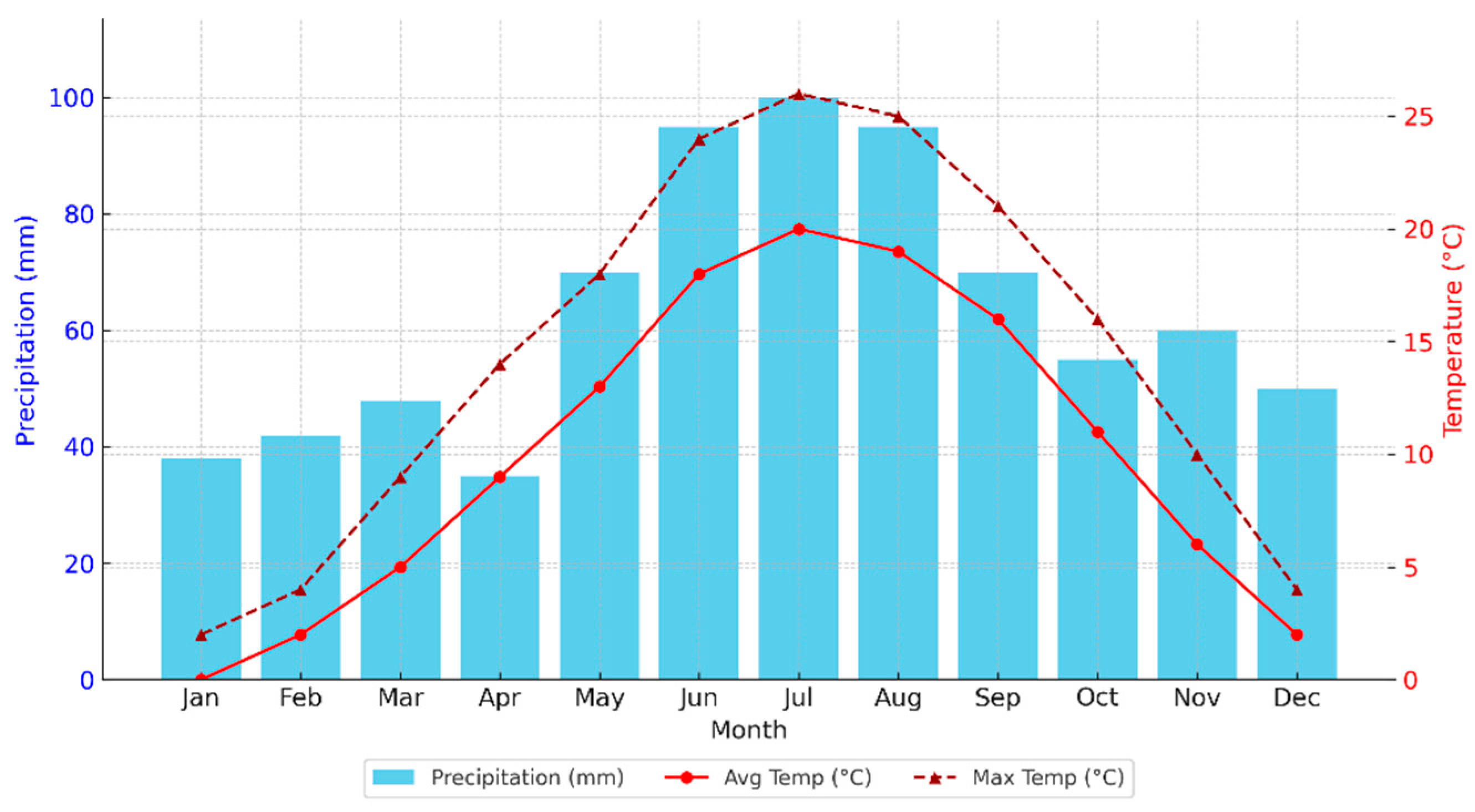
Meteorological data (daily precipitation and air temperature) were obtained from the weather station Steinau (near the city Cuxhaven) via the Meteostat platform. Data were aggregated to monthly sums (precipitation) and monthly means and maxima (air temperature) for the period 2021–2023. The average annual precipitation in Wanna is 735 mm, with a mean annual temperature of 9.9 °C, of which approximately 45% occurs between April and September. Climatic conditions during the experimental period differed markedly between years. In 2021, precipitation from sowing to harvest totaled 497 mm (mean temperature 15.8 °C) (Figure A1). In contrast, the 2022 growing season received only 260 mm of rainfall, accompanied by higher mean (16.2 °C) and peak temperatures (Figure A2), resulting in pronounced drought stress. In 2023, precipitation (444 mm) and temperature (15.8 °C) were comparable to 2021 (Figure A3).
Figure A1.
Monthly precipitation and temperature regime in 2021. Bars show precipitation (mm; left y-axis). Solid line indicates mean air temperature (°C; right y-axis) and dashed line indicates maximum air temperature (°C; right y-axis).
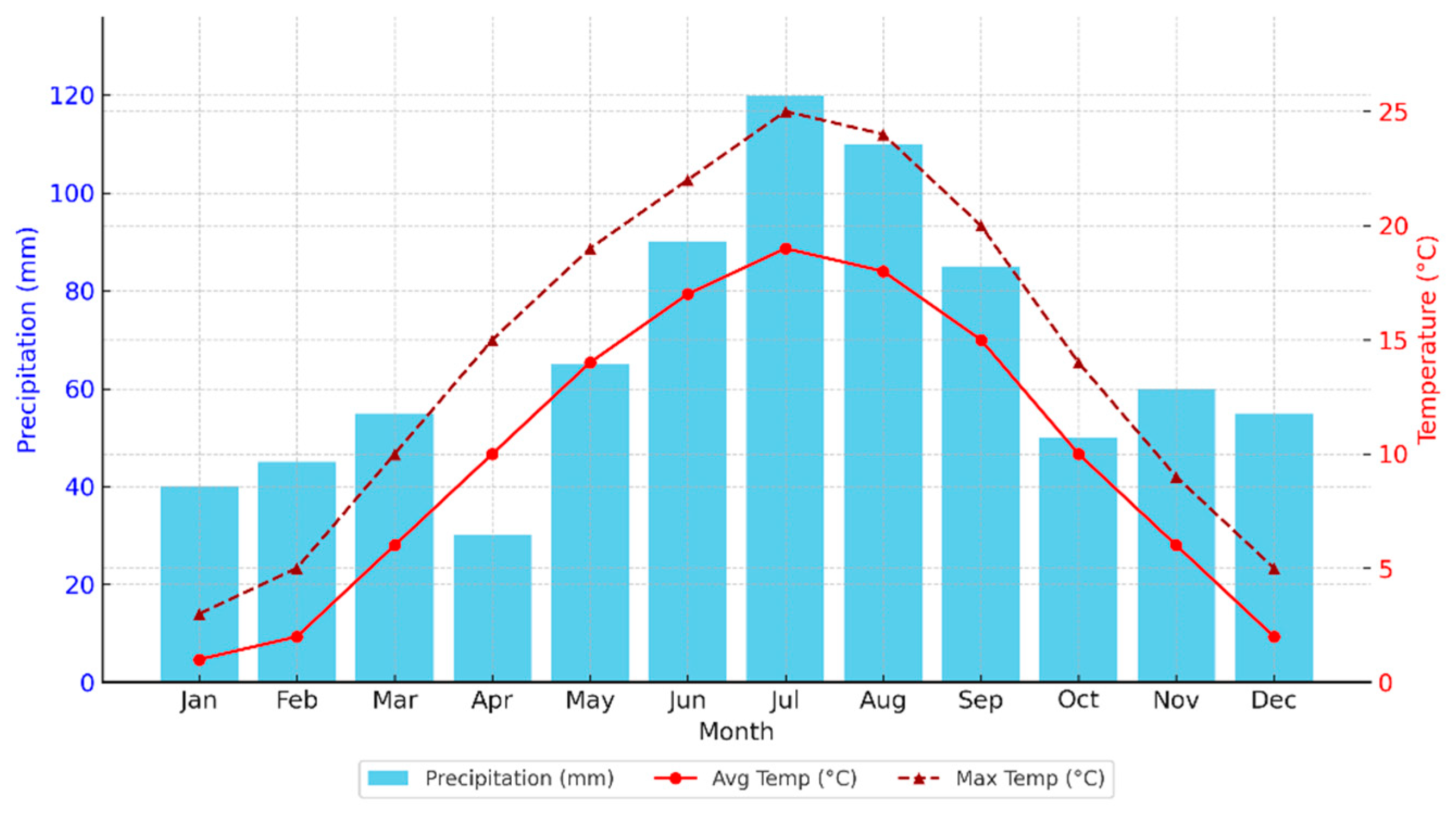
Figure A2.
Monthly precipitation and temperature regime in 2022. Bars show precipitation (mm; left y-axis). Solid line indicates mean air temperature (°C; right y-axis) and dashed line indicates maximum air temperature (°C; right y-axis).
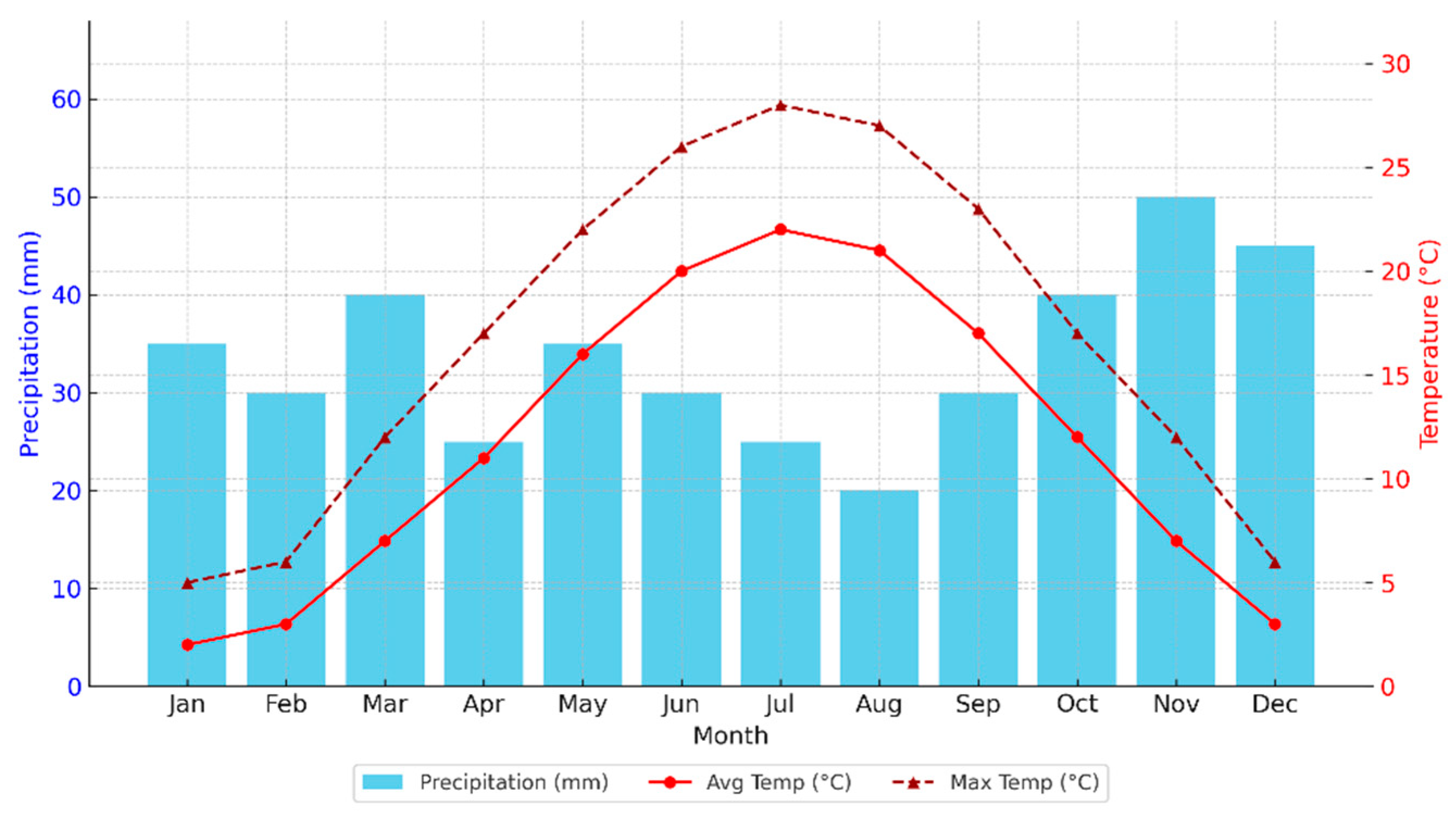
Figure A3.
Monthly precipitation and temperature regime in 2023. Bars show precipitation (mm; left y-axis). Solid line indicates mean air temperature (°C; right y-axis) and dashed line indicates maximum air temperature (°C; right y-axis).
Appendix B
Table A1.
Primer sequences, qPCR conditions, and assay references used for quantification of bacterial and fungal taxa and the inoculated strain.
Appendix C
Figure A4.
Schematic overview of the statistical analysis strategy. Two complementary analytical paths were applied: a significance-based framework (Path A) used to assess reproducibility across years, and an effect size- and pattern-oriented approach (Path B) used to identify robust yield responses and microbial predictors. Cited Literature: [47] Geist, L.; Wolfer, R.; Thiem, R.; Thielicke, M.; Eichler-Löbermann, B.; Eulenstein, F.; Müller, M.E. Alternative Starter Fertilization Strategies in Maize (Zea mays L.) Cultivation: Agronomic Potential of Microgranular Fertilizer and Plant Growth-Promoting Microorganisms and Their Impact on the Soil Native Microbial Community. Agronomy 2023, 13, 2900.
References
- Ulén, B.; Bechmann, M.; Fölster, J.; Jarvie, H.P.; Tunney, H. Agriculture as a Phosphorus Source for Eutrophication in the North-West European Countries, Norway, Sweden, United Kingdom and Ireland: A Review. Soil Use Manag. 2007, 23, 5–15. [Google Scholar] [CrossRef] [Scilit]
- Einarsson, R.; McCrackin, M.L.; Destouni, G. Fertilizer Leakage from Agricultural Land to Groundwater in Europe. Sci. Total Environ. 2020, 721, 137736. [Google Scholar]
- Panagos, P.; Muntwyler, A.; Liakos, L.; Borrelli, P.; Biavetti, I.; Bogonos, M.; Lugato, E. Phosphorus plant removal from European agricultural land. J. Consum. Prot. Food S. 2022, 17, 5–20. [Google Scholar] [CrossRef] [Scilit]
- FAO. The State of the World’s Land and Water Resources for Food and Agriculture—Systems at Breaking Point (SOLAW 2021); FAO: Rome, Italy, 2021. [Google Scholar]
- Eulenstein, F.; Ahlborn, J.; Thielicke, M. The Potential of Microgranular Fertilizers to Reduce Nutrient Surpluses When Growing Maize (Zea mays) in Regions with High Livestock Farming Intensity. Life 2024, 14, 81. [Google Scholar] [CrossRef] [Scilit]
- Thielicke, M.; Ahlborn, J.; Životić, L.; Saljnikov, E.; Eulenstein, F. Microgranular Fertilizer and Biostimulants as Alternatives to Diammonium Phosphate Fertilizer in Maize Production on Marshland Soils in Northwest Germany. Zemljište I Biljka 2022, 71, 53–66. [Google Scholar] [CrossRef] [Scilit]
- Balawejder, M.; Szostek, M.; Gorzelany, J.; Antos, P.; Witek, G.; Matłok, N. A Study on the Potential Fertilization Effects of Microgranule Fertilizer Based on Protein and Calcined Bones in Maize Cultivation. Sustainability 2020, 12, 1343. [Google Scholar] [CrossRef] [Scilit]
- Olbrycht, M.; Kołodziej, M.; Bochenek, R.; Przywara, M.; Balawejder, M.; Matłok, N.; Antos, P.; Piątkowski, W.; Antos, D. Mechanism of Nutrition Activity of a Microgranule Fertilizer Fortified with Proteins. BMC Plant Biol. 2020, 20, 126. [Google Scholar] [CrossRef] [Scilit]
- Ricci, M.; Tilbury, L.; Daridon, B.; Sukalac, K. General Principles to Justify Plant Biostimulant Claims. Front. Plant Sci. 2019, 10, 494. [Google Scholar] [CrossRef] [Scilit] [PubMed]
- Calvo, P.; Nelson, L.; Kloepper, J.W. Agricultural Uses of Plant Biostimulants. Plant Soil 2014, 383, 3–41. [Google Scholar] [CrossRef] [Scilit]
- Kampouris, I.D.; Kuhl-Nagel, T.; Behr, J.H.; Sommermann, L.; Babin, D.; Francioli, D.; Zrenner, R.; Kublik, S.; Schloter, M.; Ludewig, U.; et al. Selective Recruitment of Beneficial Microbes in the Rhizosphere of Maize Affected by Microbial Inoculants, Farming Practice, and Seasonal Variations. Environ. Microbiome 2025, 20, 69. [Google Scholar] [CrossRef] [Scilit] [PubMed]
- Santander, C.; González, F.; Pérez, U.; Ruiz, A.; Aroca, R.; Santos, C.; Cornejo, P.; Vidal, G. Enhancing Water Status and Nutrient Uptake in Drought-Stressed Lettuce Plants (Lactuca sativa L.) via Inoculation with Different Bacillus spp. Isolated from the Atacama Desert. Plants 2024, 13, 158. [Google Scholar] [CrossRef] [Scilit]
- Tanveer, Y.; Yasmin, H.; Nosheen, A.; Farah, M.A.; Altaf, M.A. Synergizing Bacillus halotolerans, Pseudomonas sihuiensis and Bacillus atrophaeus with Folic Acid for Enhanced Drought Resistance in Wheat by Metabolites and Antioxidants. BMC Plant Biol. 2024, 24, 1003. [Google Scholar] [CrossRef] [Scilit] [PubMed]
- Basiru, S.; Ait Si Mhand, K.; Elfermi, R.; Khatour, I.; Errafii, K.; Legeay, J.; Hijri, M. Enhancing chickpea growth through arbuscular mycorrhizal fungus inoculation: Facilitating nutrient uptake and shifting potential pathogenic fungal communities. Mycorrhiza 2025, 35, 1. [Google Scholar] [CrossRef] [Scilit] [PubMed]
- Eulenstein, F.; Tauschke, M.; Behrendt, A.; Monk, J.; Schindler, U.; Lana, M.A.; Monk, S. The Application of Mycorrhizal Fungi and Organic Fertilisers in Horticultural Potting Soils to Improve Water Use Efficiency of Crops. Horticulturae 2017, 3, 8. [Google Scholar] [CrossRef] [Scilit]
- Pons, C.; Voß, A.C.; Schweiger, R.; Müller, C. Effects of Drought and Mycorrhiza on Wheat and Aphid Infestation. Ecol. Evol. 2020, 10, 10481–10491. [Google Scholar] [CrossRef] [Scilit] [PubMed]
- Neuhoff, D.; Neumann, G.; Weinmann, M. Testing plant growth promoting microorganisms in the field-a proposal for standards. Front. Plant Sci. 2024, 14, 1324665. [Google Scholar] [CrossRef] [Scilit]
- Schütz, L.; Gattinger, A.; Meier, M.; Müller, A.; Boller, T.; Mäder, P.; Mathimaran, N. Improving Crop Yield and Nutrient Use Efficiency via Biofertilization—A Global Meta-Analysis. Front. Plant Sci. 2018, 8, 2204. [Google Scholar] [CrossRef] [Scilit]
- Sun, W.; Shahrajabian, M.H. The Application of Arbuscular Mycorrhizal Fungi as Microbial Biostimulant, Sustainable Approaches in Modern Agriculture. Plants 2023, 12, 3101. [Google Scholar] [CrossRef] [Scilit]
- Fanelli, D. Negative Results Are Disappearing from Most Disciplines and Countries. Scientometrics 2012, 90, 891–904. [Google Scholar] [CrossRef] [Scilit]
- Mlinarić, A.; Horvat, M.; Šupak Smolčić, V. Dealing with the Positive Publication Bias: Why You Should Really Publish Your Negative Results. Biochem. Med. 2017, 27, 447–452. [Google Scholar] [CrossRef] [Scilit]
- Cavaglieri, L.; Orlando, J.R.M.I.; Rodríguez, M.I.; Chulze, S.; Etcheverry, M. Biocontrol of Bacillus subtilis against Fusarium verticillioides In Vitro and at the Maize Root Level. Res. Microbiol. 2005, 156, 748–754. [Google Scholar] [CrossRef] [Scilit] [PubMed]
- Yim, B.; Heider, M.A.; Bloem, E.; Vetterlein, D.; Behr, J.H.; Babin, D.; Smalla, K. Exploring the Potential of Seed Inoculation with Microbial Consortia to Mitigate Drought Stress in Maize Plants under Greenhouse Conditions. Plant Soil 2025, 1–17. [Google Scholar] [CrossRef] [Scilit]
- Thielicke, M.; Ahlborn, J.; Eichler-Löbermann, B.; Eulenstein, F. On the Negative Impact of Mycorrhiza Application on Maize Plants (Zea mays) Amended with Mineral and Organic Fertilizer. Microorganisms 2023, 11, 1663. [Google Scholar] [CrossRef] [Scilit]
- Koide, R. The Nature of Growth Depressions in Sunflower Caused by Vesicular–Arbuscular Mycorrhizal Infection. New Phytol. 1985, 99, 449–462. [Google Scholar] [CrossRef] [Scilit]
- Tinker, P.B.; Durall, D.M.; Jones, M.D. Carbon Use Efficiency in Mycorrhizas: Theory and Sample Calculations. New Phytol. 1994, 128, 115–122. [Google Scholar] [CrossRef] [Scilit]
- Ruiz-Lozano, J.M. Arbuscular Mycorrhizal Symbiosis and Alleviation of Osmotic Stress: New Perspectives for Molecular Studies. Mycorrhiza 2003, 13, 309–317. [Google Scholar] [CrossRef] [Scilit]
- Aikio, S.; Ruotsalainen, A. The Modelled Growth of Mycorrhizal and Non-Mycorrhizal Plants under Constant versus Variable Soil Nutrient Concentration. Mycorrhiza 2002, 12, 257–261. [Google Scholar] [CrossRef] [Scilit]
- Karamanos, R.E.; Flore, N.A.; Harapiak, J.T. Re-Visiting Use of Penicillium bilaii with Phosphorus Fertilization of Hard Red Spring Wheat. Can. J. Plant Sci. 2010, 90, 265–277. [Google Scholar] [CrossRef] [Scilit]
- Krey, T.; Vassilev, N.; Baum, C.; Eichler-Löbermann, B. Effects of Long-Term Phosphorus Application and Plant-Growth-Promoting Rhizobacteria on Maize Phosphorus Nutrition under Field Conditions. Eur. J. Soil Biol. 2013, 55, 124–130. [Google Scholar] [CrossRef] [Scilit]
- Lutz, S.; Bodenhausen, N.; Hess, J.; Valzano-Held, A.; Waelchli, J.; Deslandes-Hérold, G.; Schlaeppi, K.; van der Heijden, M.G. Soil Microbiome Indicators Can Predict Crop Growth Response to Large-Scale Inoculation with Arbuscular Mycorrhizal Fungi. Nat. Microbiol. 2023, 8, 2277–2289. [Google Scholar] [CrossRef] [Scilit]
- Raymond, N.S.; Gómez-Muñoz, B.; van der Bom, F.J.; Nybroe, O.; Jensen, L.S.; Müller-Stöver, D.S.; Oberson, A.; Richardson, A.E. Phosphate-Solubilising Microorganisms for Improved Crop Productivity: A Critical Assessment. New Phytol. 2021, 229, 1268–1277. [Google Scholar] [CrossRef] [Scilit] [PubMed]
- Walters, W.A.; Jin, Z.; Youngblut, N.; Wallace, J.G.; Sutter, J.; Zhang, W.; González-Peña, A.; Peiffer, J.; Koren, O.; Shi, Q.; et al. Large-scale replicated field study of maize rhizosphere identifies heritable microbes. Proc. Natl. Acad. Sci. USA 2018, 115, 7368–7373. [Google Scholar] [CrossRef] [Scilit]
- Klironomos, J.N. Variation in Plant Response to Native and Exotic Arbuscular Mycorrhizal Fungi. Ecology 2003, 84, 2292–2301. [Google Scholar] [CrossRef] [Scilit]
- Köppen, W.; Geiger, R. Handbuch der Klimatologie; Gebrüder Bornträger: Berlin, Germany, 1930; Volume 1. [Google Scholar]
- Schindler, U.; Durner, W.; von Unold, G.; Müller, L. Evaporation Method for Measuring Unsaturated Hydraulic Properties of Soils: Extending the Measurement Range. Soil Sci. Soc. Am. J. 2010, 74, 1071–1083. [Google Scholar] [CrossRef] [Scilit]
- DLG (Deutsche Landwirtschafts-Gesellschaft). Düngewirkung Organischer Dünger: Faustzahlen für die Landwirtschaft (DLG-Merkblatt 406); DLG: Frankfurt, Germany, 2021. [Google Scholar]
- KTBL (Kuratorium für Technik und Bauwesen in der Landwirtschaft e. V.). Organische Dünger–Wirkung, Lagerung, Ausbringung (KTBL Data Bank); KTBL: Darmstadt, Germany, 2023. [Google Scholar]
- LfL (Bayerische Landesanstalt für Landwirtschaft). Basisdaten für die Düngung 2021–Tabelle 5a: Nährstoffgehalte Organischer Düngemittel; LfL: Freising, Germany, 2021. [Google Scholar]
- BMEL (Bundesministerium für Ernährung und Landwirtschaft). Düngeverordnung–DüV (2020), Anlage 4: Anrechenbare Nährstoffgehalte; BMEL: Bengaluru, India, 2020. [Google Scholar]
- VDLUFA. Nährstoffverwertung tierischer Exkremente. In Methodenbuch Band III, Teil 6: Düngemittel, 2nd ed.; VDLUFA: Darmstadt, Germany, 2018. [Google Scholar]
- Küppers, M.; Müller, T. Stickstofffreisetzung aus Ernteresten und Wirtschaftsdüngern im Winterhalbjahr. Arch. Agrarwiss. 2008, 56, 249–262. [Google Scholar]
- Meier, U. Entwicklungsstadien Mono-und Dikotyler Pflanzen: BBCH Monografie; Julius Kühn-Institut (JKI): Quedlinburg, Germany, 2018. [Google Scholar]
- Vierheilig, H.; Piché, Y. A Modified Procedure for Staining Arbuscular Mycorrhizal Fungi in Roots. Z. Pflanzenernähr. Bodenk. 1998, 161, 601–602. [Google Scholar] [CrossRef] [Scilit]
- Giovannetti, M.; Mosse, B. An Evaluation of Techniques for Measuring Vesicular Arbuscular Mycorrhizal Infection in Roots. New Phytol. 1980, 84, 489–500. [Google Scholar] [CrossRef] [Scilit]
- O’Kelly, B.C. Oven-Drying Characteristics of Soils of Different Origins. Dry. Technol. 2005, 23, 1141–1149. [Google Scholar] [CrossRef] [Scilit]
- Geist, L.; Wolfer, R.; Thiem, R.; Thielicke, M.; Eichler-Löbermann, B.; Eulenstein, F.; Müller, M.E. Alternative Starter Fertilization Strategies in Maize (Zea mays L.) Cultivation: Agronomic Potential of Microgranular Fertilizer and Plant Growth-Promoting Microorganisms and Their Impact on the Soil Native Microbial Community. Agronomy 2023, 13, 2900. [Google Scholar] [CrossRef] [Scilit]
- Philippot, L.; Bru, D.; Saby, N.P.A.; Cuhel, J.; Arrouays, D.; Simek, M.; Hallin, S. Spatial Patterns of Bacterial Taxa in Nature Reflect Ecological Traits of Deep Branches of the 16S rRNA Bacterial Tree. Environ. Microbiol. 2009, 11, 3096–3104. [Google Scholar] [CrossRef] [Scilit]
- Sawilowsky, S.S. New Effect Size Rules of Thumb. J. Mod. Appl. Stat. Methods 2009, 8, 597–599. [Google Scholar] [CrossRef] [Scilit]
- Giani, L.; Makowsky, L.; Mueller, K. Plaggic Anthrosol: Soil of the Year 2013 in Germany: An Overview on Its Formation, Distribution, Classification, Soil Function and Threats. J. Plant Nutr. Soil Sci. 2014, 177, 320–329. [Google Scholar] [CrossRef] [Scilit]
- Klamm, M. Göttinger Bodenkundliche Berichte 102: Aufbau und Entstehung eisenzeitlicher Ackerfluren (“Celtic Fields”). Archäologische Informationen 1993, 16, 122–124. [Google Scholar]
- Mueller, K. Bauern, Plaggen, Neue Böden: 1000 Jahre Plaggenwirtschaft in Nordwestdeutschland; Springer: Berlin/Heidelberg, Germany, 2025. [Google Scholar]
- Landwirtschaftskammer Niedersachsen. Empfehlungen zur Grunddüngung. Available online: https://www.lwk-niedersachsen.de/services/download.cfm?file=22858 (accessed on 28 September 2023).
- Brockett, B.F.; Prescott, C.E.; Grayston, S.J. Soil Moisture Is the Major Factor Influencing Microbial Community Structure and Enzyme Activities across Seven Biogeoclimatic Zones in Western Canada. Soil Biol. Biochem. 2012, 44, 9–20. [Google Scholar] [CrossRef] [Scilit]
- Veach, A.M.; Zeglin, L.H. Historical Drought Affects Microbial Population Dynamics and Activity during Soil Drying and Re-Wet. Microb. Ecol. 2020, 79, 662–674. [Google Scholar] [CrossRef] [Scilit]
- van Leeuwen, P.T.; van der Peet, J.M.; Bikker, F.J.; Hoogenkamp, M.A.; Oliveira Paiva, A.M.; Kostidis, S.; Mayboroda, O.A.; Smits, W.K.; Krom, B.P. Interspecies Interactions between Clostridium difficile and Candida albicans. mSphere 2016, 1, e00128-16. [Google Scholar] [CrossRef] [Scilit]
- Loeppmann, S.; Blagodatskaya, E.; Pausch, J.; Kuzyakov, Y. Enzyme Properties down the Soil Profile—A Matter of Substrate Quality in Rhizosphere and Detritusphere. Soil Biol. Biochem. 2016, 103, 274–283. [Google Scholar] [CrossRef] [Scilit]
- Piotrowska-Długosz, A.; Długosz, J.; Gryta, A.; Frąc, M. Responses of N-Cycling Enzyme Activities and Functional Diversity of Soil Microorganisms to Soil Depth, Pedogenic Processes and Cultivated Plants. Agronomy 2022, 12, 264. [Google Scholar] [CrossRef] [Scilit]
- Piotrowska-Długosz, A.; Długosz, J.; Kalisz, B.; Gąsiorek, M. Soil Microbial and Enzymatic Properties in Luvisols as Affected by Different Types of Agricultural Land-Use Systems and Soil Depth. Agronomy 2023, 14, 83. [Google Scholar] [CrossRef] [Scilit]
- Al-Karaki, G.; McMichael, B.; Zak, J. Field Response of Wheat to Arbuscular Mycorrhizal Fungi and Drought Stress. Mycorrhiza 2004, 14, 263–269. [Google Scholar] [CrossRef] [Scilit] [PubMed]
- Boomsma, C.R.; Vyn, T.J. Maize Drought Tolerance: Potential Improvements through Arbuscular Mycorrhizal Symbiosis? Field Crops Res. 2008, 108, 14–31. [Google Scholar] [CrossRef] [Scilit]
- Frew, A. What Does Colonisation Tell Us? Revisiting the Functional Outcomes of Root Colonisation by Arbuscular Mycorrhizal Fungi. New Phytol. 2025, 247, 1572. [Google Scholar] [CrossRef] [Scilit] [PubMed]
- Jäderlund, L.; Arthurson, V.; Granhall, U.; Jansson, J.K. Specific Interactions between Arbuscular Mycorrhizal Fungi and Plant Growth-Promoting Bacteria: As Revealed by Different Combinations. FEMS Microbiol. Lett. 2008, 287, 174–180. [Google Scholar] [CrossRef] [Scilit]
- Yadav, R.; Ror, P.; Rathore, P.; Ramakrishna, W. Bacteria from Native Soil in Combination with Arbuscular Mycorrhizal Fungi Augment Wheat Yield and Biofortification. Plant Physiol. Biochem. 2020, 150, 222–233. [Google Scholar] [CrossRef] [Scilit]
- Rozmoš, M.; Bukovská, P.; Hršelová, H.; Kotianová, M.; Dudáš, M.; Gančarčíková, K.; Jansa, J. Organic Nitrogen Utilisation by an Arbuscular Mycorrhizal Fungus Is Mediated by Specific Soil Bacteria and a Protist. ISME J. 2021, 16, 676–685. [Google Scholar] [CrossRef] [Scilit] [PubMed]
- Artursson, V. Bacterial-Fungal Interactions Highlighted Using Microbiomics. Ph.D. Thesis, Uppsala Universitet, Uppsala, Sweden, 15 December 2005. [Google Scholar]
- Francioli, D.; Kampouris, I.D.; Kuhl-Nagel, T.; Babin, D.; Sommermann, L.; Behr, J.H.; Chowdhury, S.P.; Zrenner, R.; Moradtalab, N.; Schloter, M.; et al. Microbial Inoculants Modulate the Rhizosphere Microbiome, Alleviate Plant Stress Responses, and Enhance Maize Growth at Field Scale. Genome Biol. 2025, 26, 148. [Google Scholar] [CrossRef] [Scilit] [PubMed]
- Fierer, N.; Schimel, J.P.; Holden, P.A. Influence of Drying–Rewetting Frequency on Soil Bacterial Community Structure. Microb. Ecol. 2003, 45, 63–71. [Google Scholar] [CrossRef] [Scilit]
- Schimel, J.; Balser, T.C.; Wallenstein, M. Microbial Stress-Response Physiology and Its Implications for Ecosystem Function. Ecology 2007, 88, 1386–1394. [Google Scholar] [CrossRef] [Scilit]
- Swift, J.F.; Kolp, M.R.; Carmichael, A.; Ford, N.E.; Hansen, P.M.; Sikes, B.A.; Kleiner, M.; Wagner, M.R. Drought Stress Homogenizes Maize Growth Responses to Diverse Natural Soil Microbiomes. Plant Soil 2025, 509, 181–199. [Google Scholar] [CrossRef] [Scilit]
- Govarthanan, M.; Park, S.H.; Park, Y.J.; Myung, H.; Krishnamurthy, R.R.; Lee, S.H.; Lovanh, N.; Kamala-Kannan, S.; Oh, B.T. Lead Biotransformation Potential of Allochthonous Bacillus sp. SKK11 with Sesame Oil Cake Extract in Mine Soil. RSC Adv. 2015, 5, 54564–54570. [Google Scholar] [CrossRef] [Scilit]
- Ramachandran, S.; Singh, S.K.; Larroche, C.; Soccol, C.R.; Pandey, A. Oil Cakes and Their Biotechnological Applications—A Review. Bioresour. Technol. 2007, 98, 2000–2009. [Google Scholar] [CrossRef] [Scilit]
- Mondini, C.; Cayuela, M.L.; Sinicco, T.; Sánchez-Monedero, M.A.; Bertolone, E.; Bardi, L. Soil Application of Meat and Bone Meal: Short-Term Effects on Mineralization Dynamics and Soil Biochemical and Microbiological Properties. Soil Biol. Biochem. 2008, 40, 462–474. [Google Scholar] [CrossRef] [Scilit]
- Liu, X.; Selonen, V.; Steffen, K.; Surakka, M.; Rantalainen, A.L.; Romantschuk, M.; Sinkkonen, A. Meat and Bone Meal as a Novel Biostimulation Agent in Hydrocarbon Contaminated Soils. Chemosphere 2019, 225, 574–578. [Google Scholar] [CrossRef] [Scilit] [PubMed]
- Chaparro, J.M.; Badri, D.V.; Vivanco, J.M. Rhizosphere Microbiome Assemblage Is Affected by Plant Development. ISME J. 2014, 8, 790–803. [Google Scholar] [CrossRef] [Scilit] [PubMed]
- Peiffer, J.A.; Spor, A.; Koren, O.; Jin, Z.; Tringe, S.G.; Dangl, J.L.; Buckler, E.S.; Ley, R.E. Diversity and Heritability of the Maize Rhizosphere Microbiome under Field Conditions. Proc. Natl. Acad. Sci. USA 2013, 110, 6548–6553. [Google Scholar] [CrossRef] [Scilit]
- Fierer, N.; Bradford, M.A.; Jackson, R.B. Toward an Ecological Classification of Soil Bacteria. Ecology 2007, 88, 1354–1364. [Google Scholar] [CrossRef] [Scilit]
- Jones, R.T.; Robeson, M.S.; Lauber, C.L.; Hamady, M.; Knight, R.; Fierer, N. A Comprehensive Survey of Soil Acidobacterial Diversity Using Pyrosequencing and Clone Library Analyses. ISME J. 2009, 3, 442–453. [Google Scholar] [CrossRef] [Scilit]
- Chen, T.; Hu, R.; Zheng, Z.; Yang, J.; Fan, H.; Deng, X.; Yao, W.; Wang, Q.; Peng, S.; Li, J. Soil Bacterial Community in the Multiple Cropping System Increased Grain Yield within 40 Cultivation Years. Front. Plant Sci. 2021, 12, 804527. [Google Scholar] [CrossRef] [Scilit]
- Abdelmoneim, T.K.; Mohamed, M.S.; Abdelhamid, I.A.; Wahdan, S.F.M.; Atia, M.A. Development of Rapid and Precise Approach for Quantification of Bacterial Taxa Correlated with Soil Health. Front. Microbiol. 2023, 13, 1095045. [Google Scholar] [CrossRef] [Scilit] [PubMed]
- Fierer, N.; Jackson, J.A.; Vilgalys, R.; Jackson, R.B. Assessment of Soil Microbial Community Structure by Use of Taxon-Specific Quantitative PCR Assays. Appl. Environ. Microbiol. 2005, 71, 4117–4120. [Google Scholar] [CrossRef] [Scilit]
- Wessén, E.; Hallin, S.; Philippot, L. Differential Responses of Bacterial and Archaeal Groups at High Taxonomical Ranks to Soil Management. Soil Biol. Biochem. 2010, 42, 1759–1765. [Google Scholar] [CrossRef] [Scilit]
- Momesso, L.; Crusciol, C.A.C.; Cantarella, H.; Tanaka, K.S.; Kowalchuk, G.A.; Kuramae, E.E. Optimizing Cover Crop and Fertilizer Timing for High Maize Yield and Nitrogen Cycle Control. Geoderma 2022, 405, 115423. [Google Scholar] [CrossRef] [Scilit]
- Rousk, J.; Bååth, E.; Brookes, P.C.; Lauber, C.L.; Lozupone, C.; Caporaso, J.G.; Knight, R.; Fierer, N. Soil Bacterial and Fungal Communities across a pH Gradient in an Arable Soil. ISME J. 2010, 4, 1340–1351. [Google Scholar] [CrossRef] [Scilit] [PubMed]
- Deng, J.; Yin, Y.; Zhu, W.; Zhou, Y. Variations in Soil Bacterial Community Diversity and Structures among Different Revegetation Types in the Baishilazi Nature Reserve. Front. Microbiol. 2018, 9, 2874. [Google Scholar] [CrossRef] [Scilit]
- Zhang, S.; Li, X.; Chen, K.; Shi, J.; Wang, Y.; Luo, P.; Yang, J.; Wang, Y.; Han, X. Long-Term Fertilization Altered Microbial Community Structure in an Aeolian Sandy Soil in Northeast China. Front. Microbiol. 2022, 13, 979759. [Google Scholar] [CrossRef] [Scilit] [PubMed]
- Xu, Y.; Liang, T.; Dai, H.; Zhai, Z.; Chen, Y.; Yin, G.; Zhang, Y.; Yue, C. Characteristics of Soil Microbial Communities in Farmland with Different Comprehensive Fertility Levels in the Panxi Area, Sichuan, China. Front. Microbiol. 2023, 14, 1237409. [Google Scholar] [CrossRef] [Scilit] [PubMed]
- Navarrete, A.A.; Kuramae, E.E.; de Hollander, M.; Pijl, A.S.; van Veen, J.A.; Tsai, S.M. Acidobacterial Community Responses to Agricultural Management of Soybean in Amazon Forest Soils. FEMS Microbiol. Ecol. 2013, 83, 607–621. [Google Scholar] [CrossRef] [Scilit]
- Nacoon, S.; Jogloy, S.; Riddech, N.; Mongkolthanaruk, W.; Ekprasert, J.; Cooper, J.; Boonlue, S. Combination of Arbuscular Mycorrhizal Fungi and Phosphate Solubilizing Bacteria on Growth and Production of Helianthus tuberosus under Field Condition. Sci. Rep. 2021, 11, 6501. [Google Scholar] [CrossRef] [Scilit]
- Siebielec, S.; Siebielec, G.; Klimkowicz-Pawlas, A.; Gałązka, A.; Grządziel, J.; Stuczyński, T. Impact of Water Stress on Microbial Community and Activity in Sandy and Loamy Soils. Agronomy 2020, 10, 1429. [Google Scholar] [CrossRef] [Scilit]
- Fan, B.; Wang, C.; Song, X.; Ding, X.; Wu, L.; Wu, H.; Gao, X.; Borriss, R. Bacillus velezensis FZB42 in 2018: The Gram-Positive Model Strain for Plant Growth Promotion and Biocontrol. Front. Microbiol. 2018, 9, 2491. [Google Scholar] [CrossRef] [Scilit]
- Xie, C.; Wu, Y.; Wu, Z.; Cao, H.; Huang, X.; Cui, F.; Meng, S.; Chen, J. Bacillus velezensis TCS001 Enhances the Resistance of Hickory to Phytophthora cinnamomi and Reshapes the Rhizosphere Microbial Community. Agriculture 2025, 15, 193. [Google Scholar] [CrossRef] [Scilit]
- Gómez-Muñoz, B.; Jensen, L.S.; De Neergaard, A.; Richardson, A.E.; Magid, J. Effects of Penicillium bilaii on Maize Growth Are Mediated by Available Phosphorus. Plant Soil 2018, 431, 159–173. [Google Scholar] [CrossRef] [Scilit]
- Benitez, M.-S.; Ewing, P.M.; Osborne, S.L.; Lehman, R.M. Rhizosphere Microbial Communities Explain Positive Effects of Diverse Crop Rotations on Maize and Soybean Performance. Soil Biol. Biochem. 2021, 159, 108309. [Google Scholar] [CrossRef] [Scilit]
- Yu, K.; van den Hoogen, J.; Wang, Z.; Averill, C.; Routh, D.; Smith, G.R.; Drenovsky, R.E.; Scow, K.M.; Mo, F.; Waldrop, M.P.; et al. The Biogeography of Relative Abundance of Soil Fungi versus Bacteria in Surface Topsoil. Earth Syst. Sci. Data 2022, 14, 4339–4350. [Google Scholar] [CrossRef] [Scilit]
- Díaz-Rodríguez, A.M.; Parra Cota, F.I.; Cira Chávez, L.A.; García Ortega, L.F.; Estrada Alvarado, M.I.; Santoyo, G.; de los Santos-Villalobos, S. Microbial Inoculants in Sustainable Agriculture: Advancements, Challenges, and Future Directions. Plants 2025, 14, 191. [Google Scholar] [CrossRef] [Scilit] [PubMed]
- Khoulati, A.; Ouahhoud, S.; Taibi, M.; Ezrari, S.; Mamri, S.; Merah, O.; Hakkou, A.; Addi, M.; Maleb, A.; Saalaoui, E. Harnessing biostimulants for sustainable agriculture: Innovations, challenges, and future prospects. Discover. Agric. 2025, 3, 56. [Google Scholar] [CrossRef] [Scilit]
- de Vries, F.T.; Griffiths, R.I.; Bailey, M.; Craig, H.; Girlanda, M.; Gweon, H.S.; Hallin, S.; Kaisermann, A.; Keith, A.M.; Kretzschmar, M.; et al. Soil Bacterial Networks Are Less Stable under Drought than Fungal Networks. Nat. Commun. 2018, 9, 3033. [Google Scholar] [CrossRef] [Scilit]
- Zhang, L.; Yang, Y.; Zhao, Z.; Feng, Y.; Bate, B.; Wang, H.; Li, Q.; Cui, J. Maize–Soybean Rotation and Intercropping Increase Maize Yield by Influencing the Structure and Function of Rhizosphere Soil Fungal Communities. Microorganisms 2024, 12, 1620. [Google Scholar] [CrossRef] [Scilit]
- Aydoğdu, M.; Kurbetli, İ.; Canpolat, S.; Öztürk, A. Host Response of Maize to Root Infection of Macrophomina phaseolina Varies Depending on Maize Variety Groups. Rhizosphere 2024, 32, 100996. [Google Scholar] [CrossRef] [Scilit]
- O’Callaghan, M. Microbial inoculation of seed for improved crop performance: Issues and opportunities. Appl. Microbiol. Biotechnol. 2016, 100, 5729–5746. [Google Scholar] [CrossRef] [Scilit]
- Pfeiffer, S.; Pastar, M.; Mitter, B.; Lippert, K.; Hackl, E.; Lojan, P.; Oswald, A.; Sessitsch, A. Improved group-specific primers based on the full SILVA 16S rRNA gene reference database. Environ. Microbiol. 2014, 16, 2389–2407. [Google Scholar] [CrossRef] [Scilit] [PubMed]
- Mühling, M.; Woolven-Allen, J.; Murrell, J.C.; Joint, I. Improved group-specific PCR primers for denaturing gradient gel electrophoresis analysis of the genetic diversity of complex microbial communities. ISME J. 2008, 2, 379–392. [Google Scholar] [CrossRef] [Scilit] [PubMed]
- Müller, T.; Ruppel, S.; Behrendt, U.; Lentzsch, P.; Müller, M.E.H. Antagonistic Potential of Fluorescent Pseudomonads Colonizing Wheat Heads Against Mycotoxin Producing Alternaria and Fusaria. Front. Microbiol. 2018, 9, 2124. [Google Scholar] [CrossRef] [Scilit] [PubMed]
- Degelmann, D.M.; Borken, W.; Drake, H.L.; Kolb, S. Different Atmospheric Methane-Oxidizing Communities in European Beech and Norway Spruce Soils. Appl. Environ. Microbiol. 2010, 76, 3228–3235. [Google Scholar] [CrossRef] [Scilit]
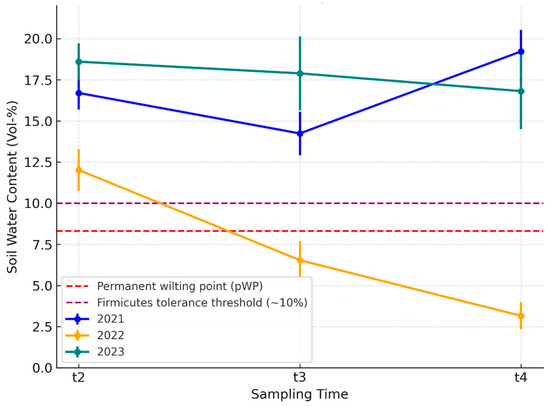
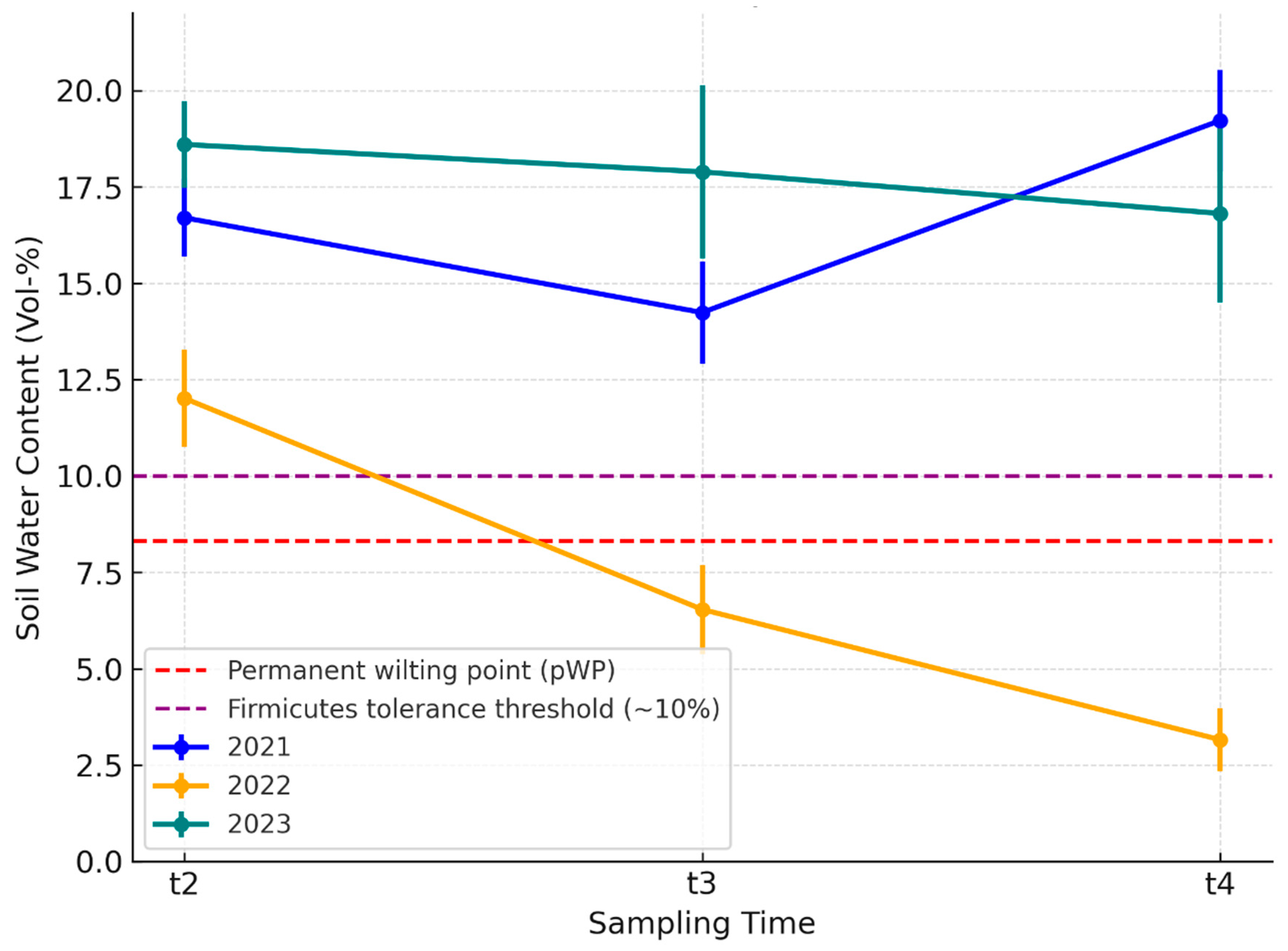
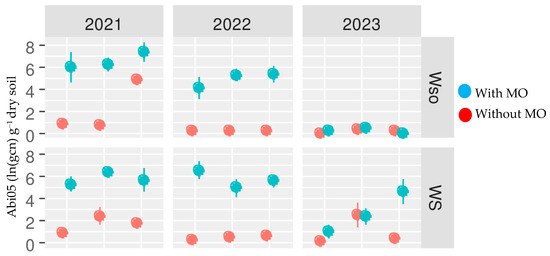
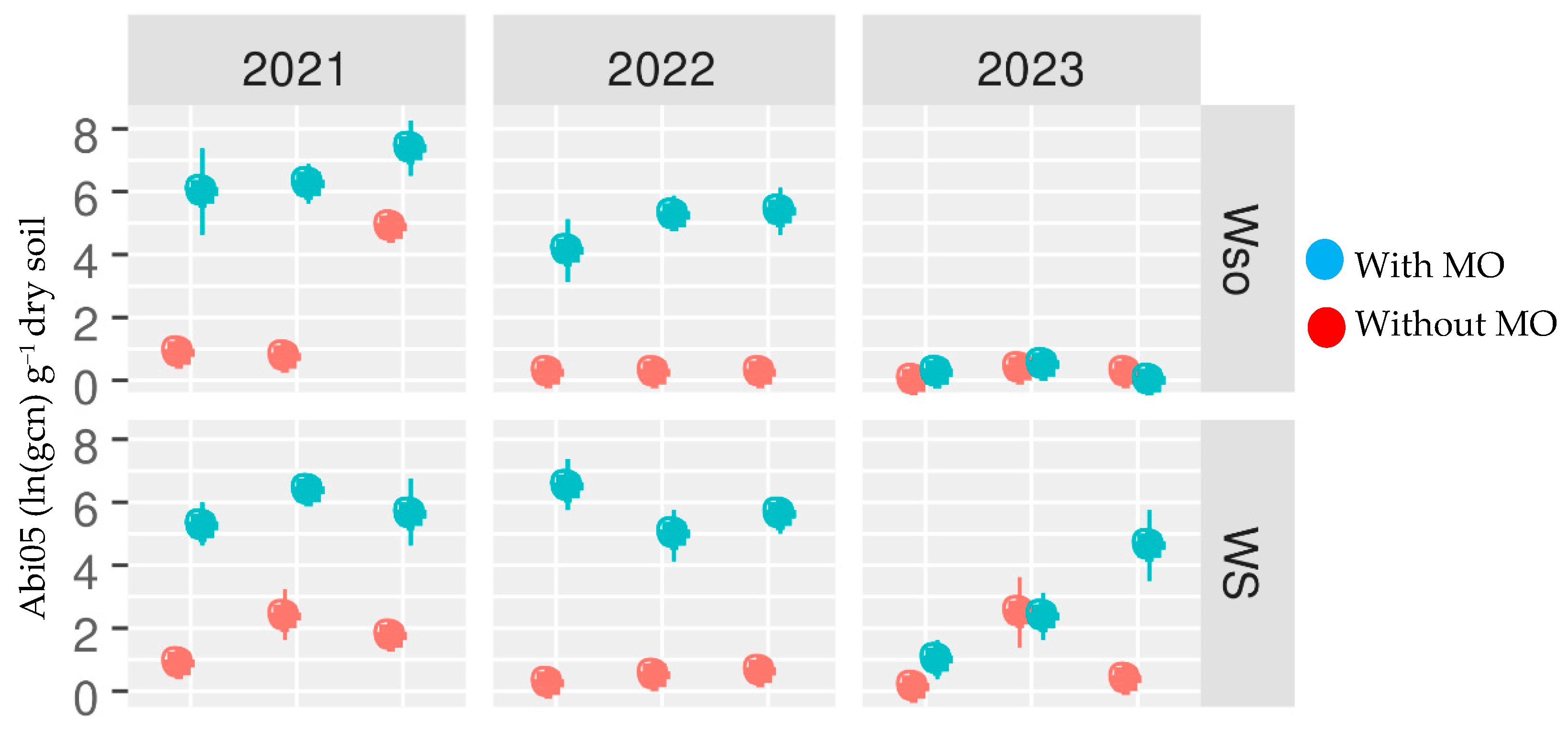
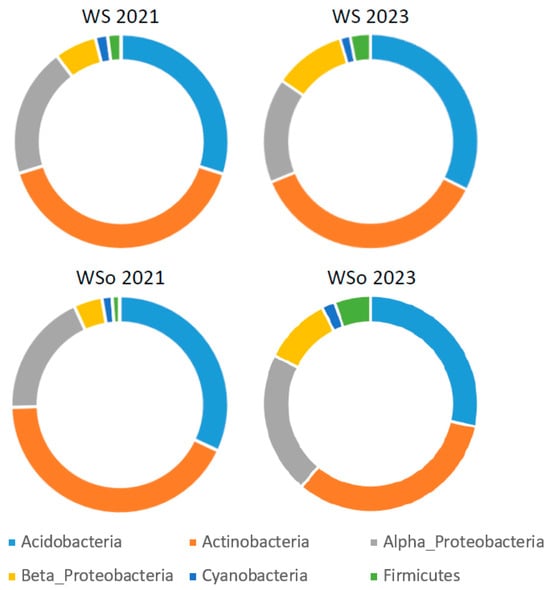
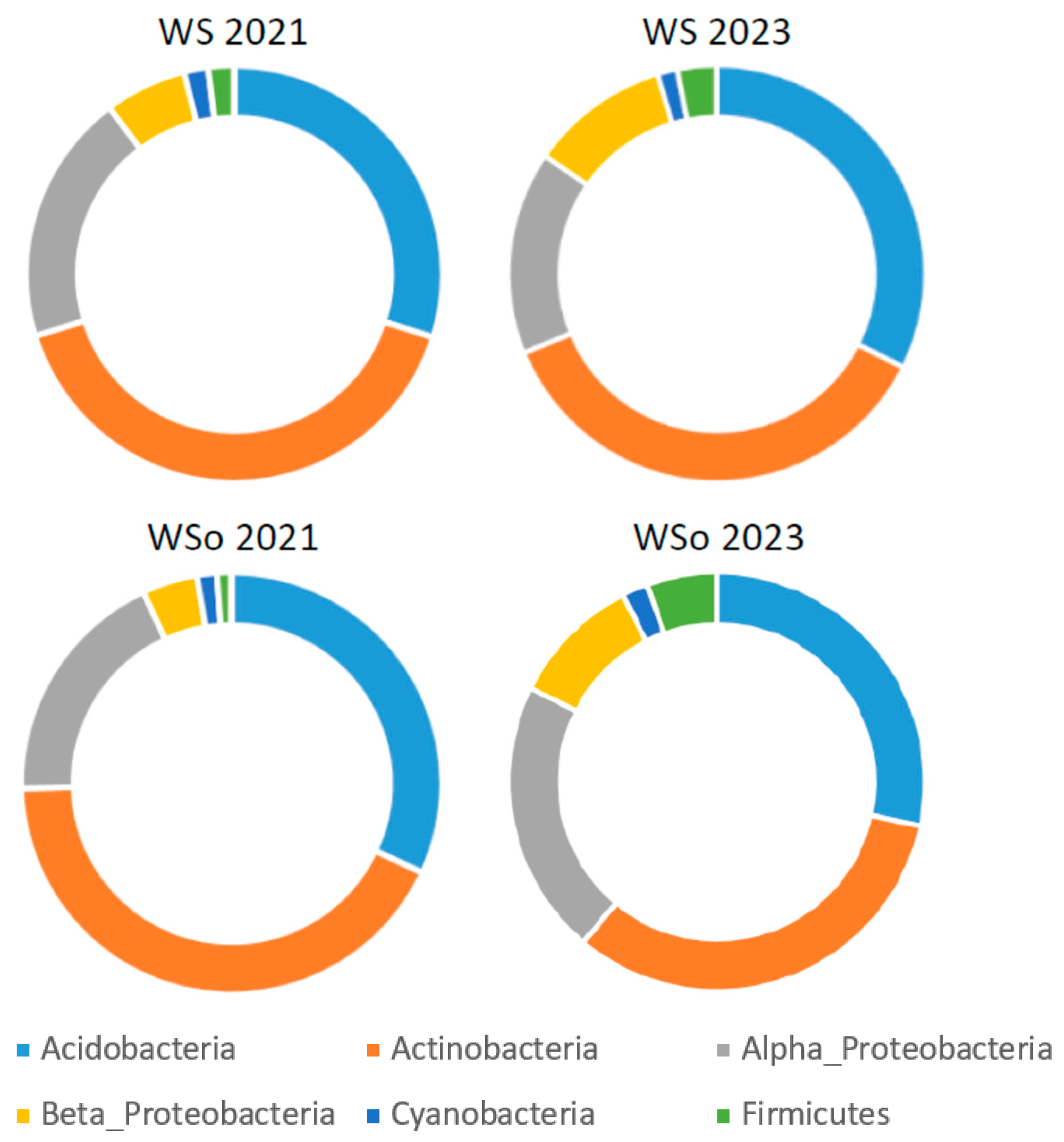
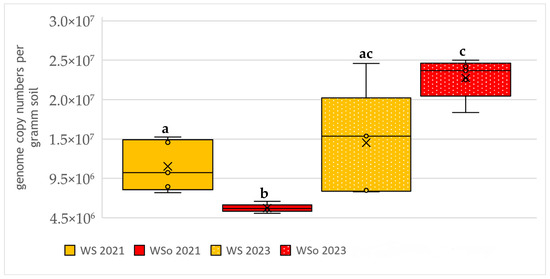
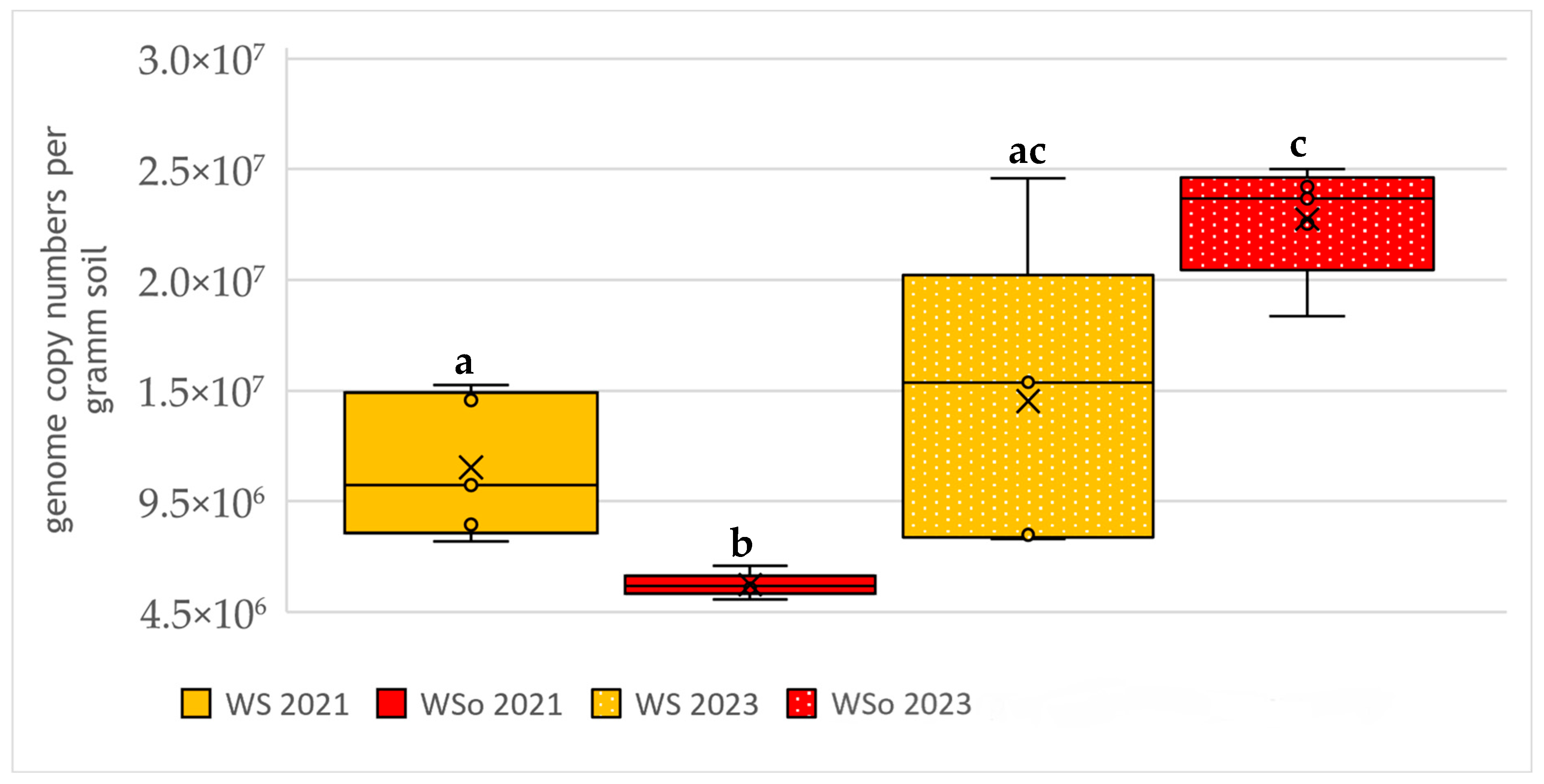
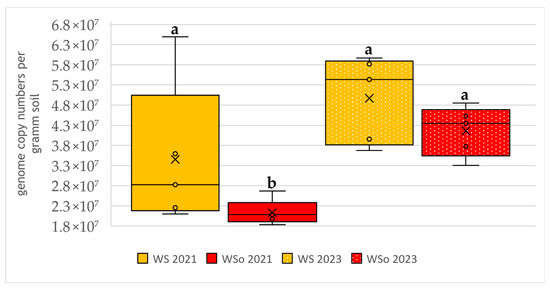
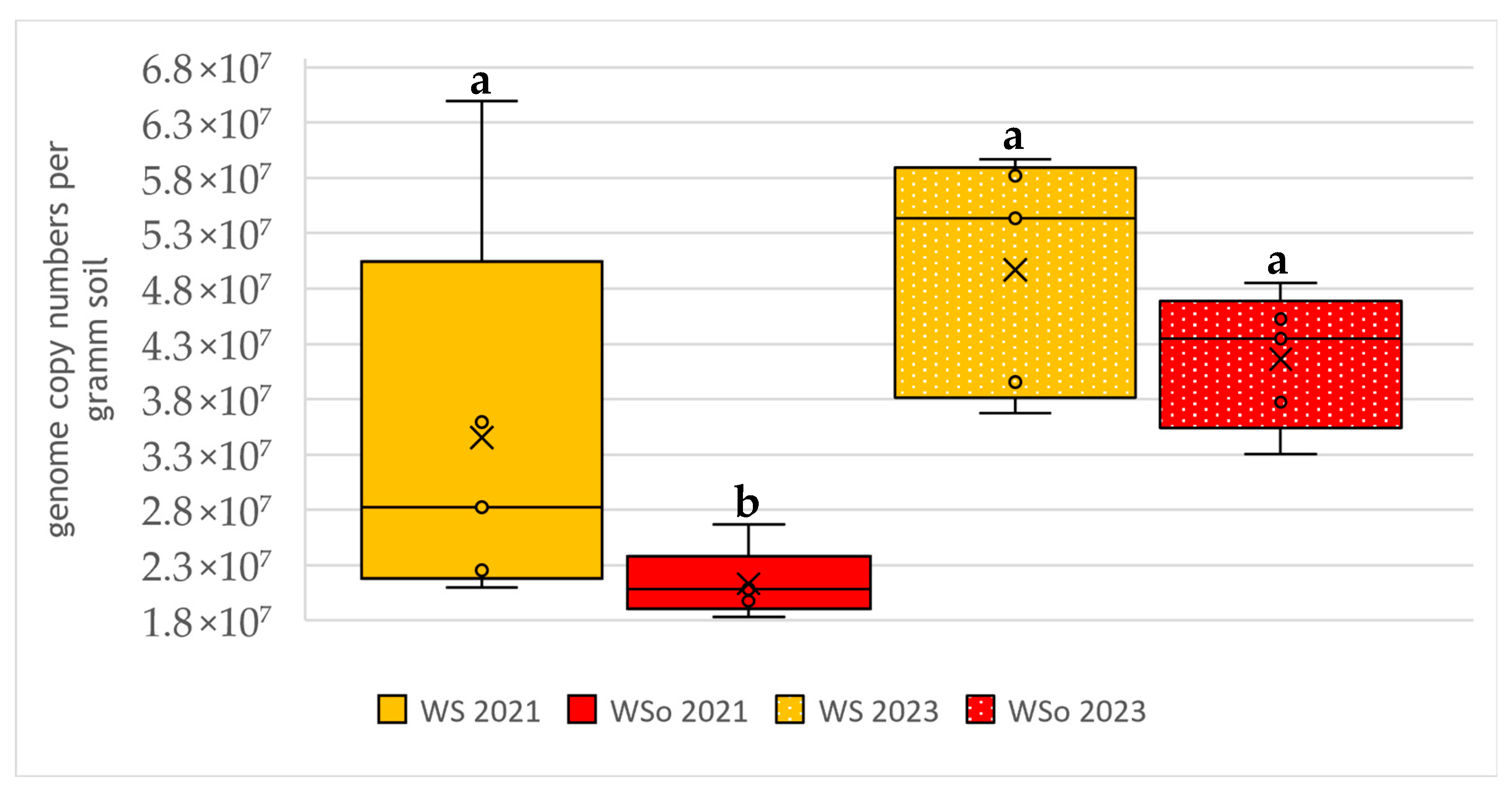
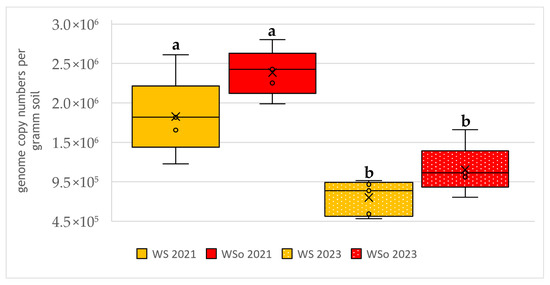
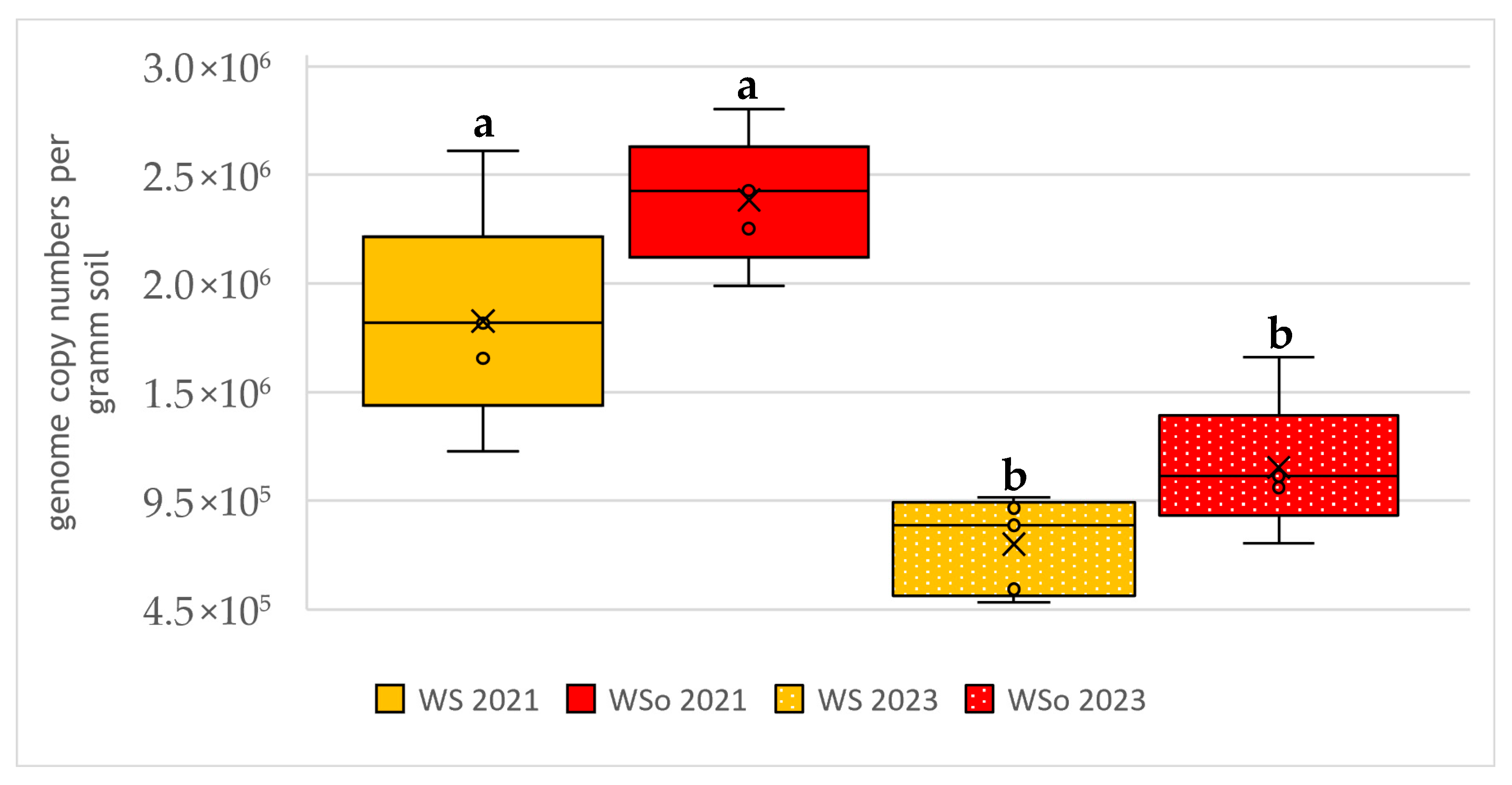
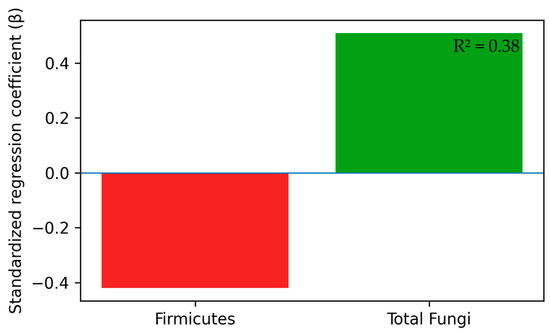
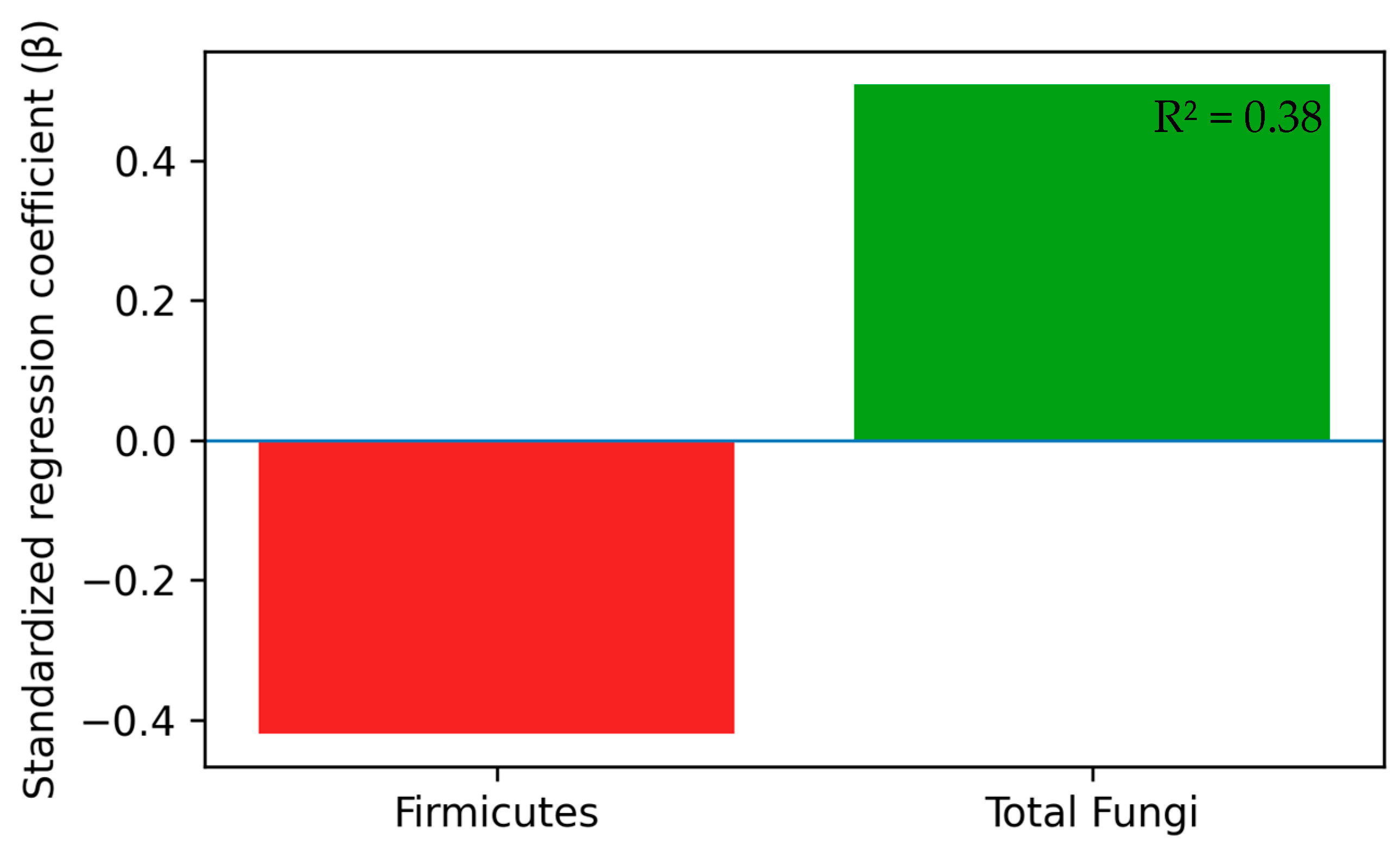
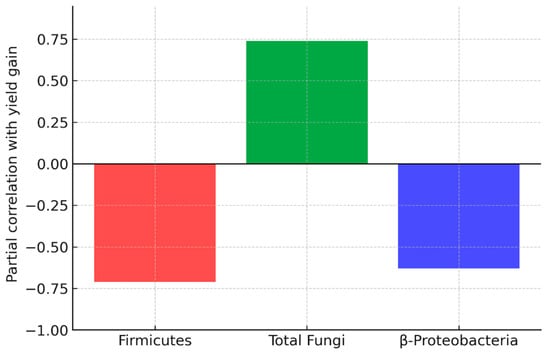
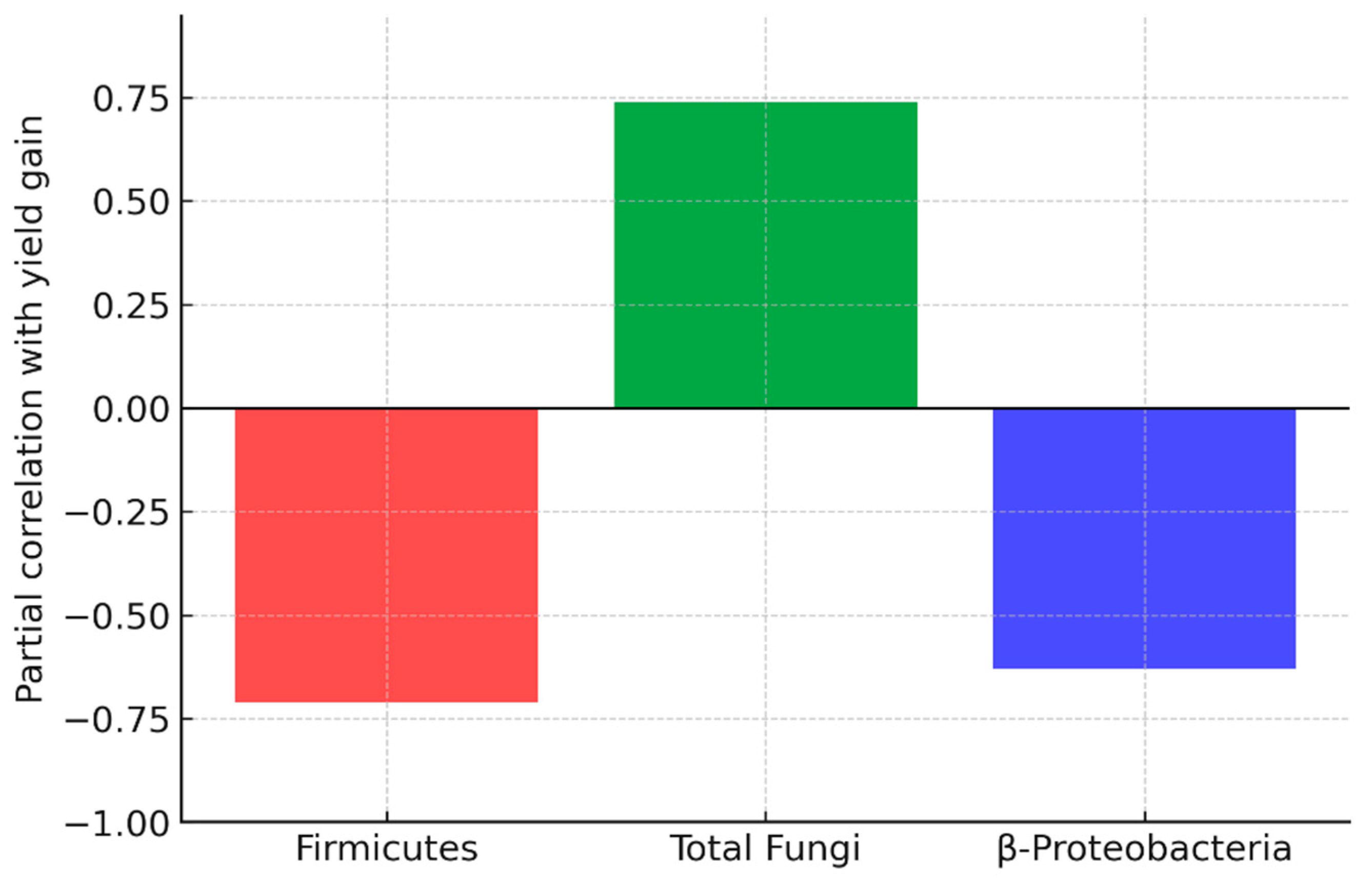

Disclaimer/Publisher’s Note: The statements, opinions and data contained in all publications are solely those of the individual author(s) and contributor(s) and not of MDPI and/or the editor(s). MDPI and/or the editor(s) disclaim responsibility for any injury to people or property resulting from any ideas, methods, instructions or products referred to in the content. |
© 2026 by the authors. Licensee MDPI, Basel, Switzerland. This article is an open access article distributed under the terms and conditions of the Creative Commons Attribution (CC BY) license.