


Abstract
To address the lack of contact and breakage parameters in the discrete element method (DEM) simulation of potato seed cutting and sorting processes, this study took the ‘Atlantic’ potato seed as the research object and constructed a crushable potato model using EDEM. Through physical experiments, the mean average diameter, moisture content, density, Poisson’s ratio, and elastic modulus were measured. The coefficients of collision restitution, static friction, and rolling friction between the potato seed and the Q235 steel plate were determined as 0.576, 0.559, and 0.073, respectively. Using the actual repose angle of 22.89° as the response target, and combining the steepest ascent test with the Box–Behnken design, the non-cohesive contact parameters between potato seed particles were calibrated. The resulting coefficients of collision restitution, static friction, and rolling friction between particles were determined as 0.404, 0.412, and 0.0156, respectively. Finally, based on physical shear tests (maximum shear force 23.56 N), significant influencing factors were identified through Plackett–Burman screening as the bonding radius ratio r and the normal stiffness per unit area Kn. Using the steepest ascent test and the Box–Behnken response surface method, the key bonding parameters of the Bonding V2 model were calibrated as follows: r = 1.098, Kn = 8.597 × 10⁷ N·mm−3, tangential stiffness per unit area Kt = 3.250 × 10⁶ N·mm−3, critical compressive stress σn = 5.500 × 10⁵ Pa, and shear strength τt = 3.000 × 10⁴ Pa. The relative error between the simulated and actual maximum shear forces was 0.89%, which is small. The calibrated flexible model accurately represents the physical characteristics of potato seeds and provides a reliable reference for the design of mechanized potato seed cutting and sorting equipment.
1. Introduction
Potato is the most widely cultivated and consumed crop worldwide, ranking as the fourth most important food crop after wheat, maize, and rice [1]. According to data released by the Food and Agriculture Organization of the United Nations (FAO), the global potato cultivation area reached 16.8 million hectares in 2023 [2]. Currently, two primary planting methods are employed in potato cultivation: seed tuber cutting and mini-tuber planting. Although seed tuber cutting can reduce seed usage and improve utilization efficiency, it suffers from issues such as low labor productivity, inconsistent operational standards, and high labor costs. In particular, traditional manual cutting requires a 2–3 day pretreatment period to promote wound healing and mitigate disease risks, making this method unsuitable for large-scale cultivation [3]. On the other hand, mini-tuber planting avoids the risks associated with cutting and is compatible with mechanized operations; however, its application is constrained by high seed costs and stringent storage and transportation requirements. Therefore, the development of mechanical equipment to enhance cutting efficiency, optimize post-cutting processing techniques, and advance the full mechanization of whole tuber planting has become an important direction for promoting the industrialization of potato cultivation [4,5,6]. The development of a standardized and highly automated seed tuber cutter represents a crucial step toward achieving full mechanization in potato production. Researchers and manufacturers have conducted relevant studies on seed tuber cutting equipment. For instance, All Star Manufacturing & Design in the United States has developed the Model 4603 seed tuber cutter [7], while Dewulf in Belgium has introduced the PGS seed tuber cutter [8]. Xiangyou Wang [9] designed an integrated device for whole-row positioning, clamping, and cutting, further improving the level of automation in seed tuber cutting and grading.
With the development of computer technology and the discrete element method, an increasing number of scholars have begun to use discrete element simulation for experimental research. This method has been widely applied in multiple fields such as agriculture [10,11,12,13]. However, for biological materials like potato tubers that possess both viscoelastic and brittle characteristics, the commonly used particle contact models (such as the Hertz–Mindlin model and the Hertz–Mindlin–JKR model) still have limitations when simulating their mechanical behavior [14,15,16]. While the Hertz–Mindlin and JKR models are effective for simulating the collision and flow of discrete particles, they lack intrinsic mechanisms to simulate cohesive failure and crack propagation, which are critical for cutting operations. In contrast, the Bonding V2 model introduces bond stiffness (Kn, Kt) and strength (σn, τt) parameters that allow for the simulation of bond formation and breakage, directly representing the cohesive fracture behavior observed in potato tissue under shear. This makes it uniquely suitable for scenarios where material integrity is disrupted, such as seed tuber cutting. The Bonding V2 model can simulate the complex fragmentation behavior of materials by capturing the bonding forces between particles [17]. For instance, in the simulation of corn stalk cutting, the model based on Hertz–Mindlin with bonding constructed different bonding models with various structures and particle characteristics, verifying the effectiveness of the discrete element model [18]; in the simulation of tomato stem harvesting, the bonded particle model was also applied and optimized [19]; for the fragmentation behavior of coal powder briquettes, the Bonding V2 model could effectively predict the initiation and propagation of cracks [20]. Additionally, this model could achieve the precise simulation of material properties through parameter calibration, such as the bonded particle model and the optimal bonding parameters of corn kernels [21], and the precise fragmentation model of wheat kernels [22]. When simulating brittle or quasi-brittle materials, the Bonding V2 model achieves the simulation of crack initiation and propagation by setting parameters such as bonding strength (normal and tangential) and bonding stiffness [23]. Recent progress in the parameter identification of the discrete element method has also explored microstructure-based approaches, such as identifying the micro-parameters for optimized discrete element models of granular materials in two dimensions using a hexagonal close-packed structure [24]. Many studies have utilized this model to conduct parameter calibration and simulation work. For instance, Li H [25] obtained the optimal parameter combination for the garlic seed crushing model based on the Bonding V2 model; Wu D [26] studied the Procambarus clarkii using a two-layer flexible discrete element combined model and determined the bonding parameters at the contact points of its head and tail; Liu W [18] established a discrete element model of the outer skin and inner core of corn stalks using a Hertz–Mindlin discrete element model with bonding characteristics and different types of spherical particles; Huang H [27] optimized the contact parameters and bonding parameters of wheat straw through discrete element simulation experiments, taking the repose angle and bending failure load as indicators, and obtained the best parameter combination with the aid of Design Expert software. To study the process of seed potato cutting, sorting, and grading, it is necessary to obtain accurate contact parameters and crushing parameters. However, the measurement errors of the coefficient of restitution, dynamic friction coefficient, and static friction coefficient between seed potatoes are usually large, and the crushing parameters required by the model are also difficult to measure directly, which has become a difficulty in the current simulation research.
Therefore, for the specific scenario of potato tuber cutting and sorting involving material fracture, the Bonding V2 model is more suitable for constructing a flexible discrete element model in terms of mechanism. This model defines a set of bonding parameters (stiffness and strength) with clear physical meanings at the contact scale, which can directly simulate the establishment and fracture process of “bonds” between particles, thereby effectively reproducing the cohesive failure behavior of potato tissue under shear and compressive loads. However, despite the significant potential of this model, a complete set of contact parameters and bonding parameters for potato tubers has not yet been established, which directly restricts the construction of high-precision simulation models and their application in equipment optimization. Compared with the existing discrete element model (DEM) calibration studies for biological materials such as grains, straws, or fruits, these studies usually only rely on non-viscous contact models or simple bonding models for flow simulation, while Bonding V2 can simulate the overall flow during the sorting process and the viscous fracture during the cutting process in a unified DEM. Based on this, this study took the “Atlantic” potato seed tuber as the object, aiming to systematically solve the following problems: (1) Measuring the basic physical and mechanical performance parameters and contact parameters of Atlantic potato seed tubers; (2) Calibrating the particle contact parameters in the non-bonded state through virtual experiments; and (3) Using the force–displacement curve of the physical shear test as the response target, adopting a strategy combining experimental design and optimization algorithms to accurately back-calculate and calibrate the key bonding parameters of the Bonding V2 model, and verifying the final established model. This study will provide a high-precision model basis and theoretical basis for potato seed tuber cutting and sorting.
2. Experiments and Methods
2.1. Determination of Basic Parameters of Potatoes and Establishment of Discrete Element Simulation Model
2.1.1. Average Diameter and Sphericity
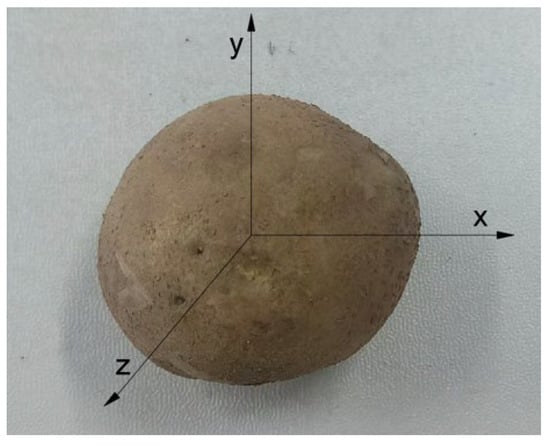
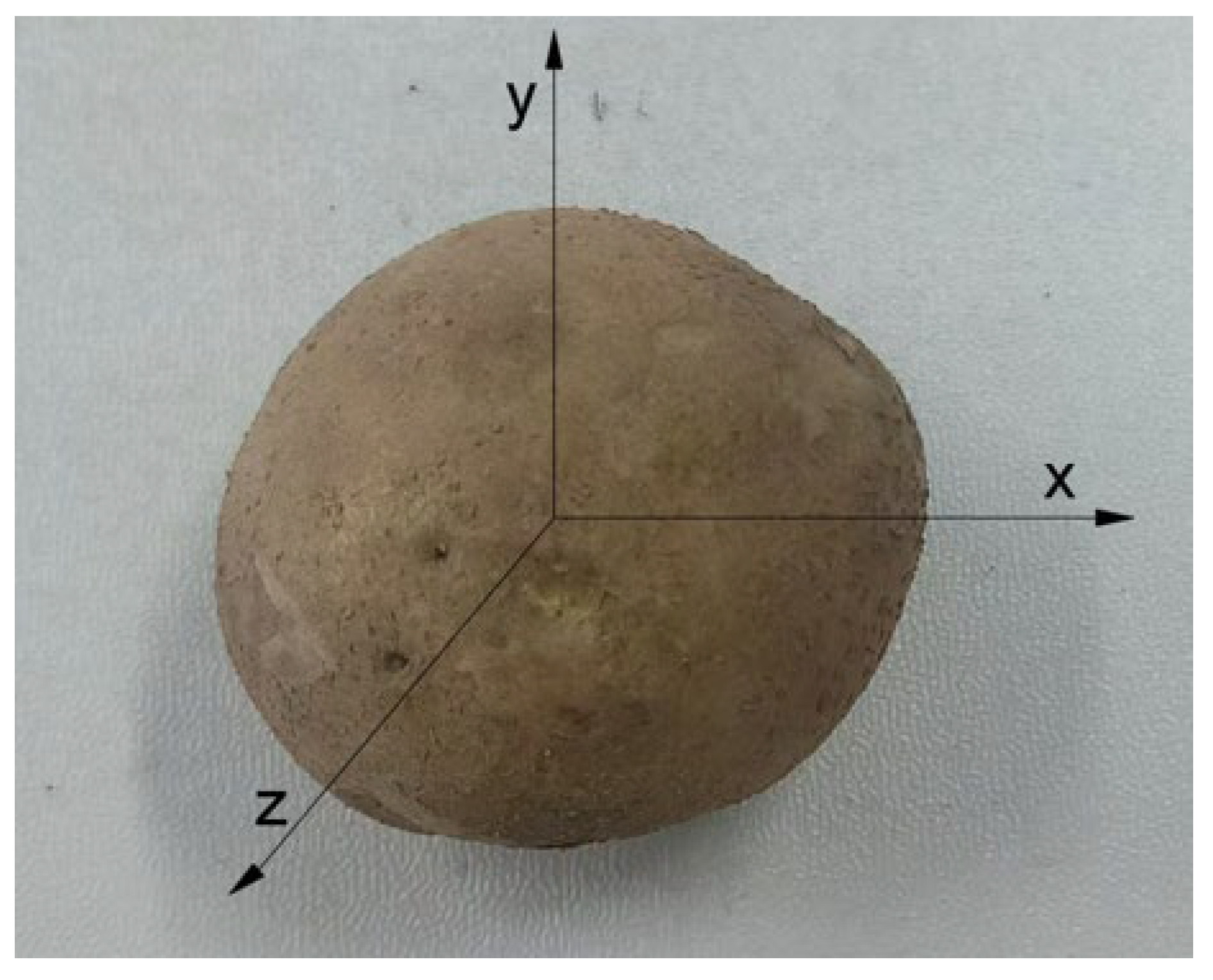
The potato variety used was “Atlantic”, which is characterized by a round shape, thin and rough skin, and white flesh. The eyes are shallow and flat, and the overall shape is uniform (Figure 1). Using the equidistant sampling method, 50 seed potatoes were selected for measurement. During the sampling process, potatoes with abnormally protruding or sunken eyes were excluded to minimize the impact of local surface irregularities on size measurement and subsequent mechanical modeling. In the 3D modeling process, the eyes were regarded as minor variations within the overall contour. A digital vernier caliper with an accuracy of 0.01 mm and a range of 0 to 150 mm was used for measurement. To ensure consistency and repeatability of the measurements, care was taken to maintain stable contact between the measuring surface and the potato without applying excessive pressure, thereby reducing errors caused by surface irregularities or excessive force. After calculation, the average diameter was 65.07 ± 7.40 mm, and the sphericity was approximately 0.91.
Figure 1.
Atlantic potato.
2.1.2. Moisture Content and Density
All potato tubers were stored in a temperature and humidity adjustable preservation refrigerator at 6 °C and 85% relative humidity for 24 h before testing to stabilize their water content. Before each measurement, the surface moisture was gently wiped off with a dry cloth. The water content of the seed potatoes was determined to be approximately 78.23% by the HKSF-2 rapid moisture meter (Huake Instrument and Meter Co., Ltd., with a standard deviation of ±0.52% from ten repeated measurements. The density was determined by the water displacement method to be 1.16 g/cm3, with a coefficient of variation of 1.3% from five repeated samples.
2.1.3. Poisson’s Ratio
Due to the irregular shape of the seed potatoes, standard cylindrical samples (33 mm in diameter and 25 mm in height) were prepared using a thin-walled cutting cylinder with an inner diameter of 33 mm. Although the cutting edges were damaged during sample preparation, the core area remained undamaged by using a sharp knife and avoiding squeezing. The measured values can be regarded as representative of the overall tissue behavior. The Poisson’s ratio was determined by measuring the change in the outer diameter of the samples during compression using a TAXT Plus texture analyzer (Stable Micro System, Godalming, Surrey, UK). The corresponding calculation formula is shown in Equation (1).
In this formula, μ represents Poisson’s ratio; εx and εγ respectively denote the longitudinal strain and circumferential strain of the specimen; ΔT and T respectively represent the deformation amount and original height (in millimeters) of the specimen, while ΔW and W respectively represent the deformation amount and original width (in millimeters) of the specimen. The dimensions before and after compression were measured multiple times using a digital vernier caliper. Substituting the values into the formula, the Poisson’s ratio was calculated to be 0.48, with a standard deviation of 0.066 and a coefficient of variation of 13.9%.
2.1.4. Elastic Modulus
The prepared seed potato samples were subjected to compression tests using a texture analyzer, with each group repeated 10 times. The elastic region of the stress–strain curve is the linear part before reaching the proportional limit, during which stress is directly proportional to strain. Once the elastic limit is reached, further increase in stress will cause plastic deformation of the material. In actual tests, due to measurement accuracy limitations, it is usually difficult to distinguish it from the proportional limit numerically. The elastic modulus is obtained by fitting the linear part of the stress–strain curve using Origin 2021 software, ensuring that the response during the test is within the elastic limit and reversible upon unloading. The elastic modulus was 3.96 MPa, with a standard deviation of 0.556 and a coefficient of variation of 14.5%. By substituting this elastic modulus and the previously determined Poisson’s ratio into Formula (2), the shear modulus of the potato seed was calculated to be 1.34 MPa.
In the formula, G—the shear modulus of the seed potato (MPa); E—the elastic modulus of the seed potato (MPa); μ—the Poisson ratio.
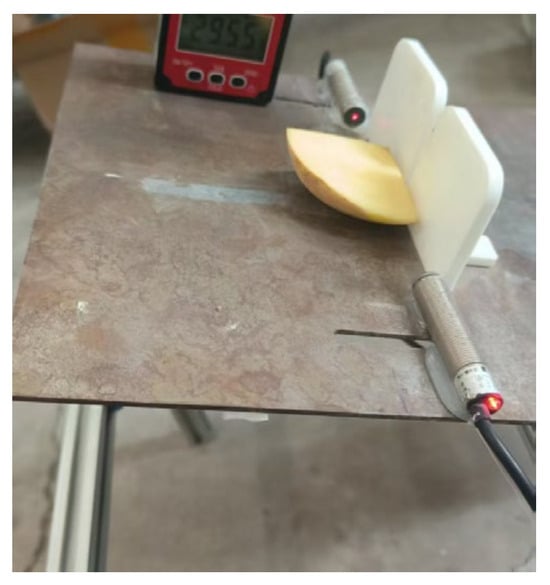
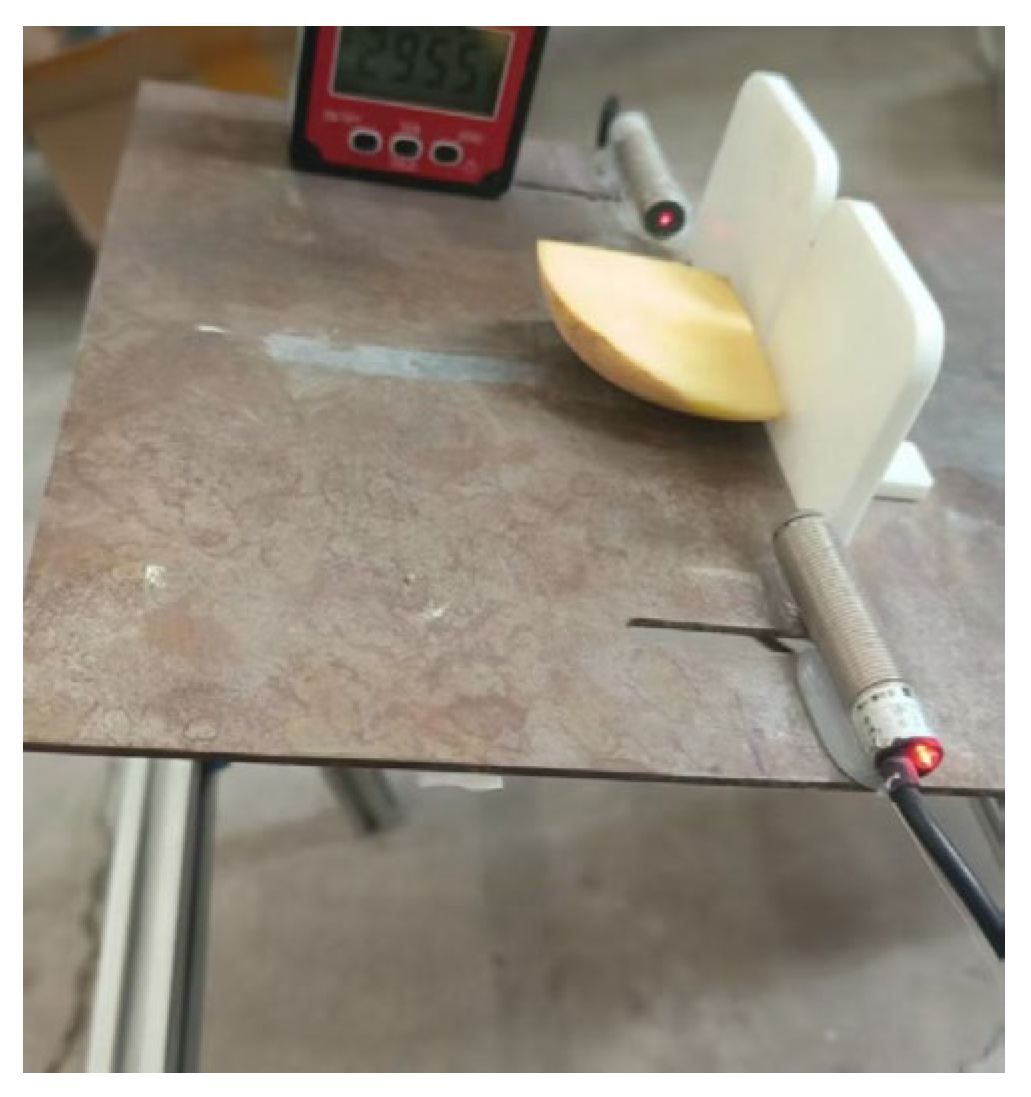
2.1.5. Coefficient of Restitution
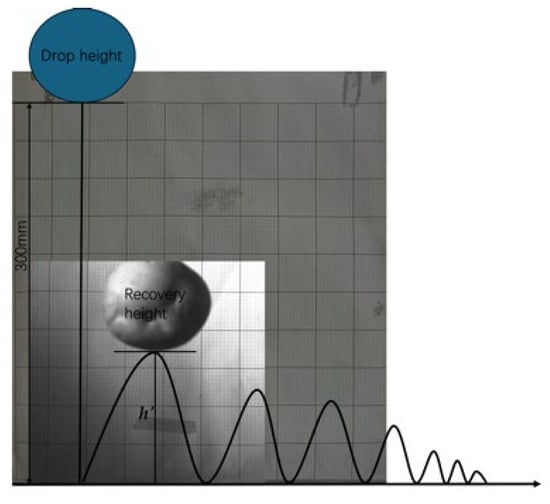
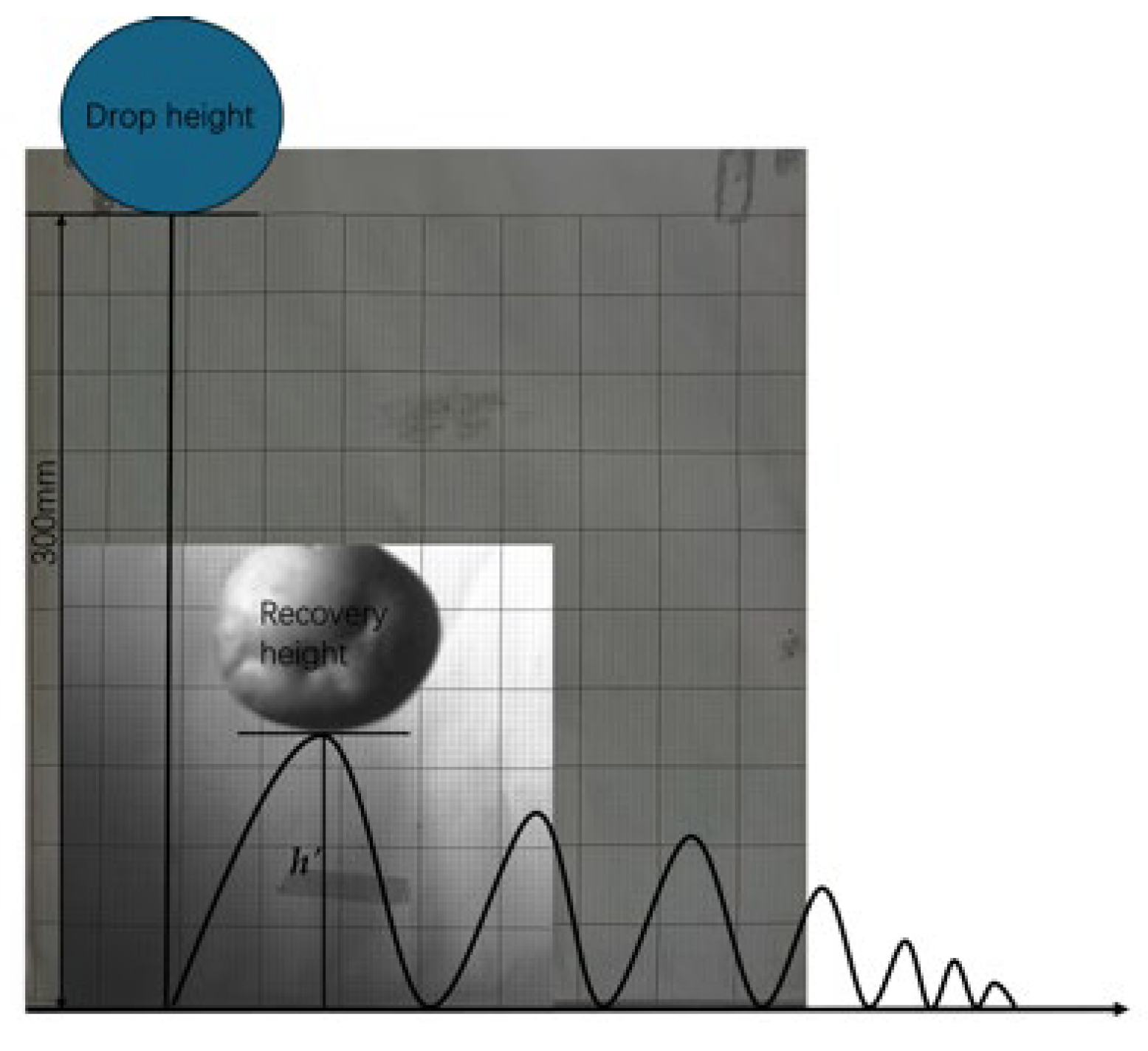
The coefficient of restitution between seed potatoes and Q235 steel plates was measured using the free-fall method. The test procedure is shown in Figure 2, and the coefficient of restitution f was computed using Equation (3).
Figure 2.
Collision recovery test.
In the formula, v1—the velocity of the seed potato before collision (mm·s−1);
v2—the velocity of the seed potato after collision (mm·s−1);
v3—the velocity of the contact material before collision (mm·s−1);
v4—the velocity of the contact material after collision (mm·s−1);
h—the height of the seed potato before collision (mm);
h’—the maximum height the seed potato bounces to after collision (mm).
From formula (3), based on the average value of multiple measurements, the coefficient of restitution between potato seeds and Q235 steel plates was determined to be 0.576, with a standard deviation of ±0.0287 (N = 20) and a coefficient of variation of 4.82%.
2.1.6. Determination of the Coefficient of Friction Between Potato Seed Tubers and Q235 Steel Plates
The coefficient of friction is defined as the ratio of the frictional force between two surfaces to the normal force acting on the object. For this study, the static friction coefficient between seed potatoes and Q235 steel plates was determined using the inclined plane method. Potato samples were cleaned with a dry cloth to remove soil and moisture prior to testing. The static friction coefficient f is related to the incline angle θ as given in Equation (4).
During the experiment, the angle θ between the plate surface and the horizontal plane was recorded, as shown in Figure 3. Based on the average of multiple measurements, the static friction coefficient between the potato seeds and the Q235 steel plate was determined to be 0.559, with a standard deviation of ±0.0238 (n = 20) and a coefficient of variation of 4.24%.
Figure 3.
Static Friction Test.
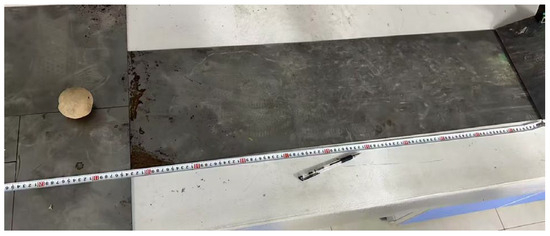
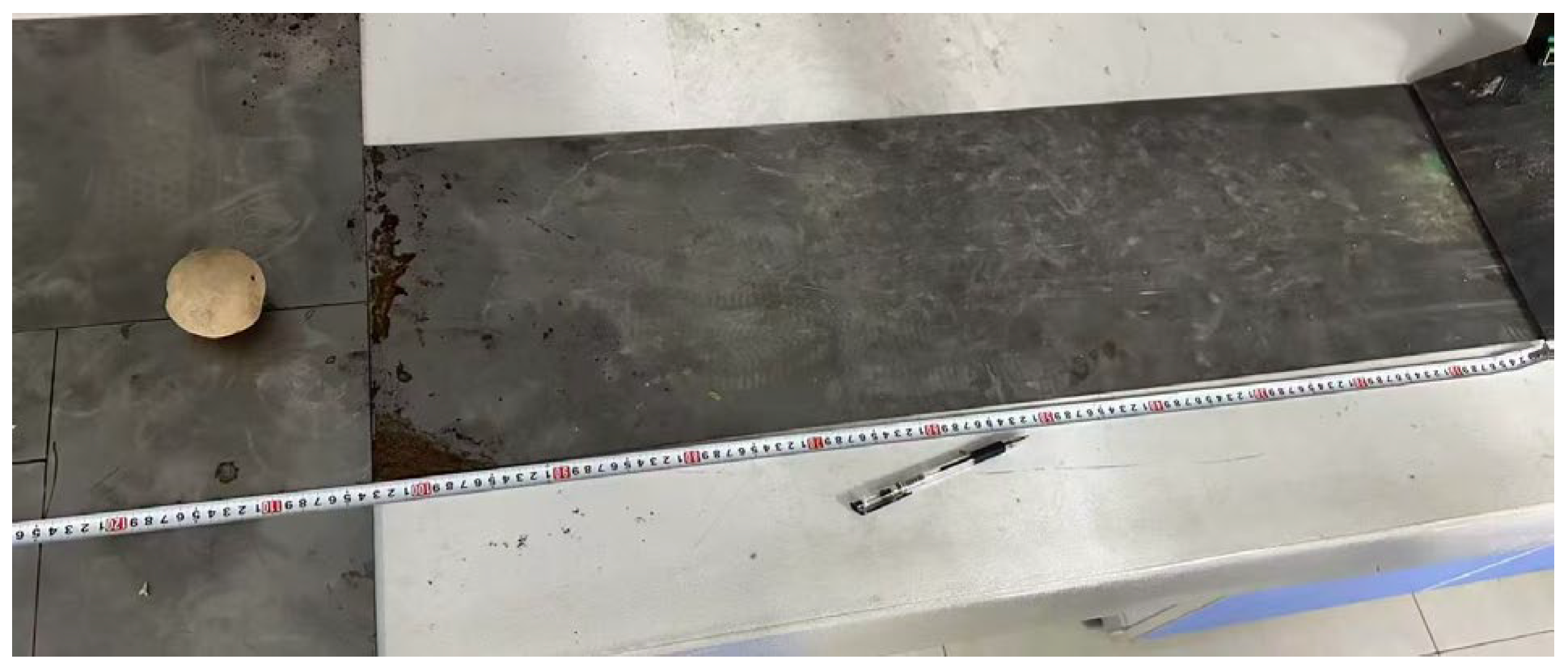
The rolling friction coefficient between seed potatoes and Q235 steel plates was determined using a method combining the inclined-plane rolling test with the law of conservation of energy, as illustrated in Figure 4. To minimize the influence of path deviation due to the irregular shape of the seed potatoes, 20 sets of valid data with consistent rolling trajectories were selected from repeated trials to ensure measurement accuracy. The calculation formula is as follows:
Figure 4.
Rolling Friction Test.
In the formula: θ—fixed angle of the friction device (°); μf—coefficient of rolling friction; M—sliding distance on the slope (mm); P0—sliding distance on the plane (mm).
Based on the average of multiple measurements, the rolling friction coefficient between potato seeds and Q235 steel plates was determined to be 0.073, with a standard deviation of ±0.00745 and a coefficient of variation of 10.1%.
2.2. Calibration of Contact Parameters Between Seed Potato Particles
2.2.1. Establishment of the Hertz–Mindlin Discrete Element Model for Seed Potatoes
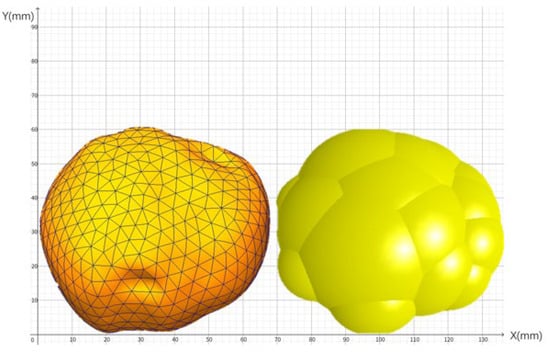
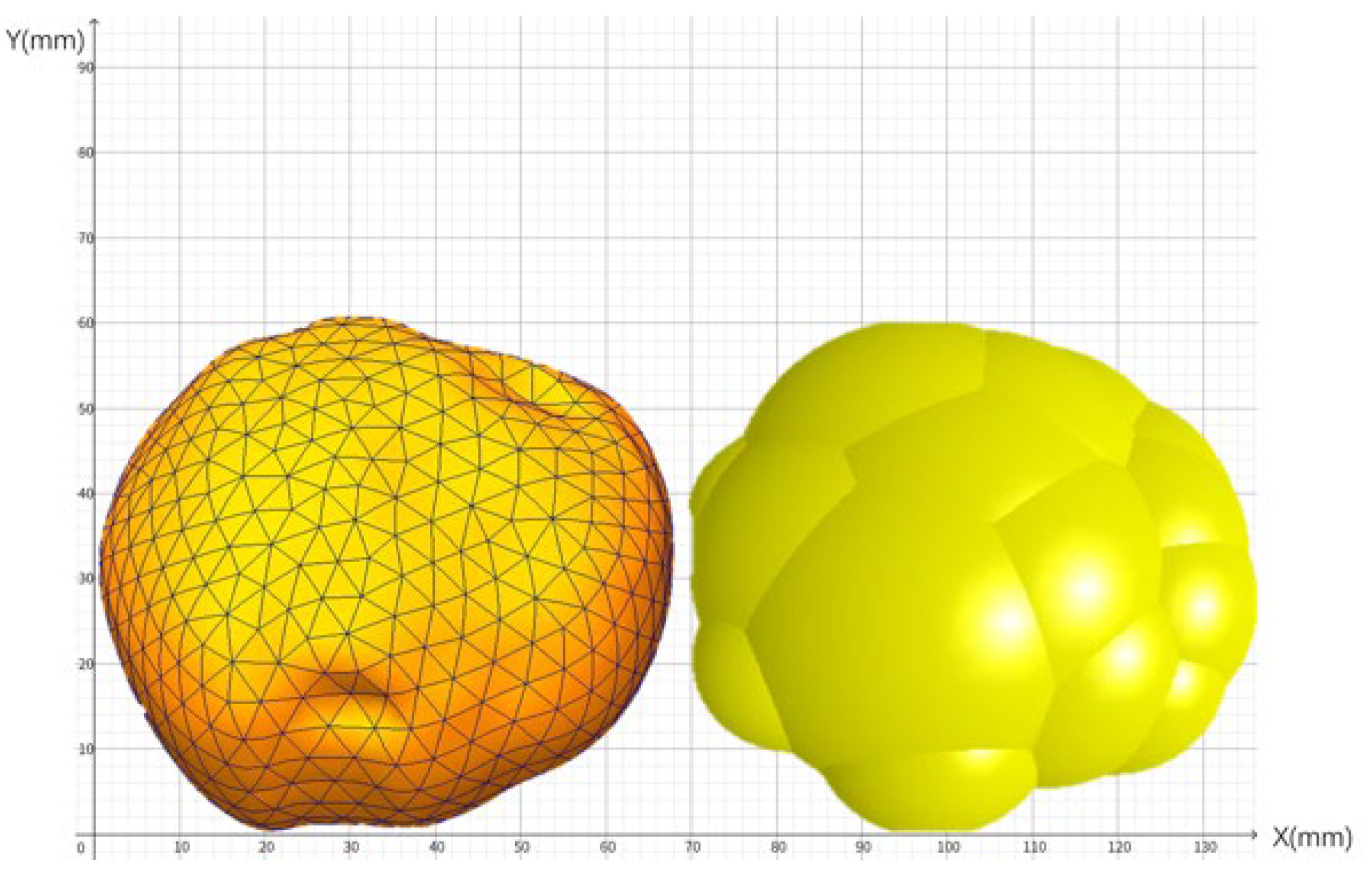
From the selected seed potatoes, one with dimensions representative of the average three-axis measurements was chosen. Multi-layer contour curves were obtained using a slicing approach, and a three-dimensional solid model of the seed potato was reconstructed in SolidWorks 2024 using boundary-based geometry. Based on the Hertz–Mindlin contact model, the model was then filled with spherical particles in EDEM, as illustrated in Figure 5.
Figure 5.
Discrete Element Model of Potato.
Due to the irregular shape of seed potatoes, it is difficult to directly measure the contact parameters between particles through physical experiments. Therefore, this study calibrated the static friction coefficient and rolling friction coefficient between seed potato particles by combining the angle of repose test with numerical simulation approximation.
2.2.2. Angle of Repose Measurement
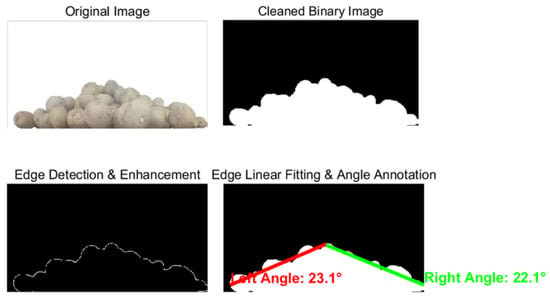
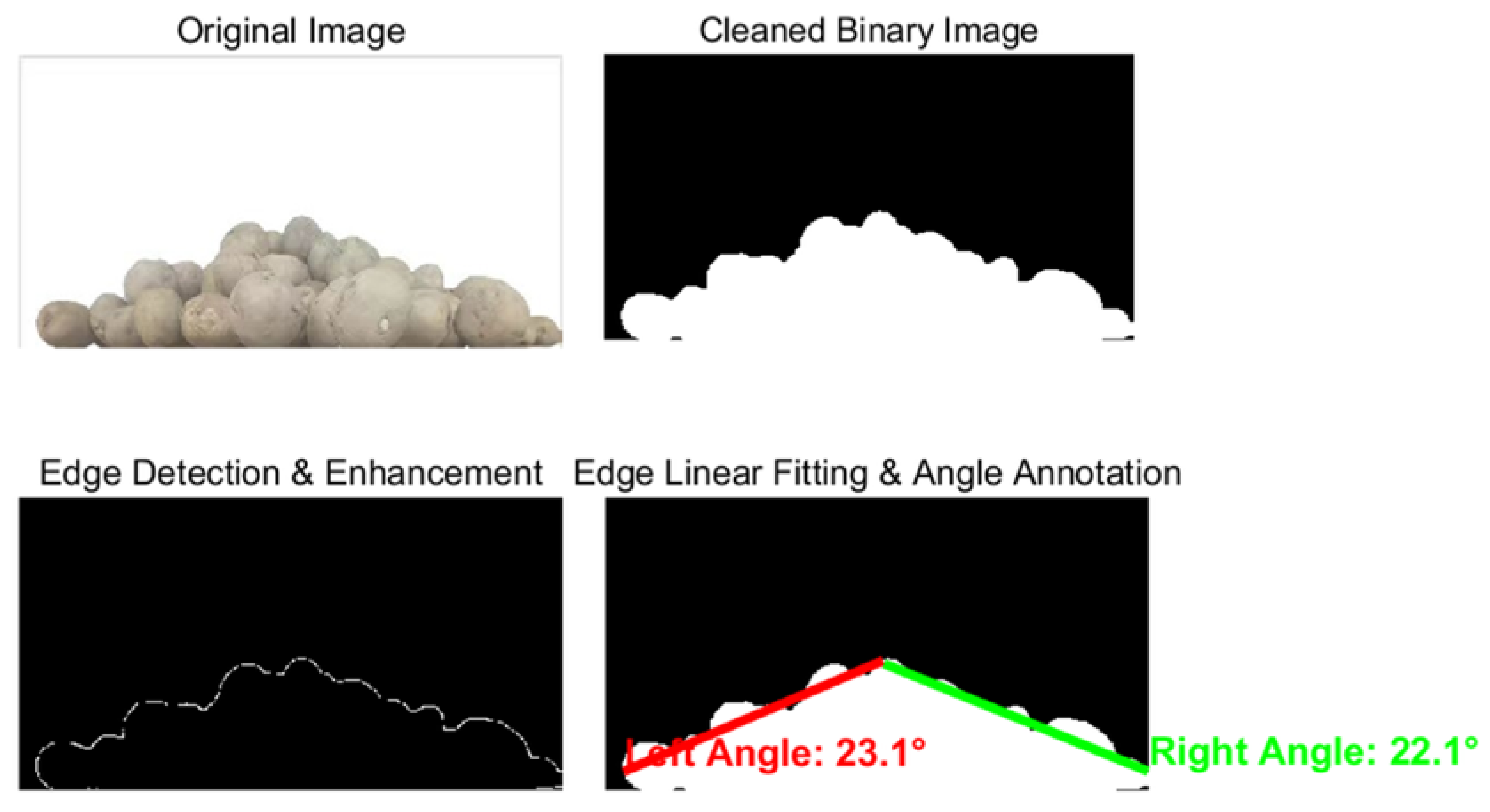
The angle of repose was determined using a bench-scale test. Place a conical funnel with an inlet diameter of 300 mm, a height of 250 mm, and an outlet diameter of 100 mm, 300 mm above the plane. For each test, use approximately 200 seed potatoes. According to the preliminary test, this is sufficient to form a stable pile of seed potatoes. In the experiment, a funnel was fixed vertically at a set height above a level surface. Seed potatoes were then gradually introduced into the funnel, allowing them to flow freely and uniformly from the outlet to form a conical pile. Throughout the test, the funnel height remained constant, and care was taken to avoid external vibrations or disturbances, ensuring natural accumulation and reliable measurement of the angle of repose. Once the pile reached a stable shape, photographs were taken for documentation. The images were processed in MATLAB R2024b through steps including background removal, binarization, noise cleaning, and linear fitting of detected edges to extract the angle of repose, as shown in Figure 6. This program performs image binarization using the Otsu threshold method, extracts the sediment contour by combining Canny edge detection with morphological post-processing, and conducts linear regression on the left and right edge points respectively using the RANSAC robust fitting and least squares alternative strategy. Finally, it calculates the sediment accumulation angle and ensures the stability of the fitting values through coordinate centralization processing and a vertical line judgment mechanism. After analyzing multiple test images, the angle of repose of the seed potatoes was determined to be 22.89° on average, with a standard deviation of ±0.465.
Figure 6.
MATLAB stacked angle image processing.
2.2.3. Steepest Hill Climb Test
The steepest ascent test is an efficient method for quickly approaching the central region of significant factors, narrowing the optimal response range, and evaluating the effect of factor variation on experimental outcomes [28]. Based on preliminary experiments, the static friction coefficient, rolling friction coefficient, and coefficient of restitution between seed potato particles were estimated to lie within the ranges of 0.15–0.65, 0.005–0.03, and 0.3–0.8, respectively. Accordingly, a steepest ascent test was designed, and the results are presented in Table 1.
Table 1.
Test scheme and results of steepest climb.
2.2.4. Box–Behnken Experiment and Regression Model
As shown in Table 1, the relative error of the angle of repose in Test 3 was the smallest. The relative errors of Tests 2 to 4 first increased, then decreased, and then increased again. Based on the results of the steepness increase test and the response surface design principle, Test 3 was selected as the center point, Test 2 as the low level, and Test 4 as the high level for the response surface test design. The Box–Behnken test includes 12 non-central points, which are located at the midpoints of each factor axis, that is, each time two factors take ±1 and the other factor takes 0. To estimate the test error and model fit, three additional center points (all factors at the 0 level) were added. The results of the Box–Behnken test are shown in Table 2.
Table 2.
Design and results of the Box–Behnken experiment.
Multiple regression analysis was performed with A, B, and C as independent variables and the stacking angle as the response variable, yielding the quadratic regression equation presented in Equation (6).
Note: Interaction terms (such as AB) reflect the coupling effect between the coefficient of restitution and the static friction coefficient of particles. For instance, a higher coefficient of restitution (more elastic collisions) may alter the tangential force transmission during particle contact, thereby jointly influencing the stability of the granular assembly with the static friction coefficient. Square terms (such as A2) indicate the nonlinear relationship of a single parameter with itself. For example, the influence of the static friction coefficient (A) on the angle of repose may not be a simple linear increase; when the friction coefficient reaches a certain value, its contribution to the “locking” effect between particles may tend to saturate. These parameters are introduced to describe more accurately the complex nonlinear mechanical behaviors between particles in discrete element simulations.
The variance analysis of the regression model is presented in Table 3. The model was highly significant (p < 0.0001), exhibited a strong fit (R2 = 0.984), and showed good experimental reliability (coefficient of variation = 0.75%). With an adequate precision of 22.923, the model demonstrated high accuracy. Furthermore, the lack-of-fit term was not significant (p > 0.05), indicating that no other major factors influenced the response in this experiment. The model is therefore reliable and can be used to predict the relationship between seed potato particle parameters and the angle of repose.
Table 3.
Box–Behnken regression model analysis of variance.
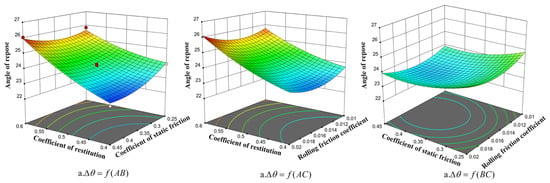
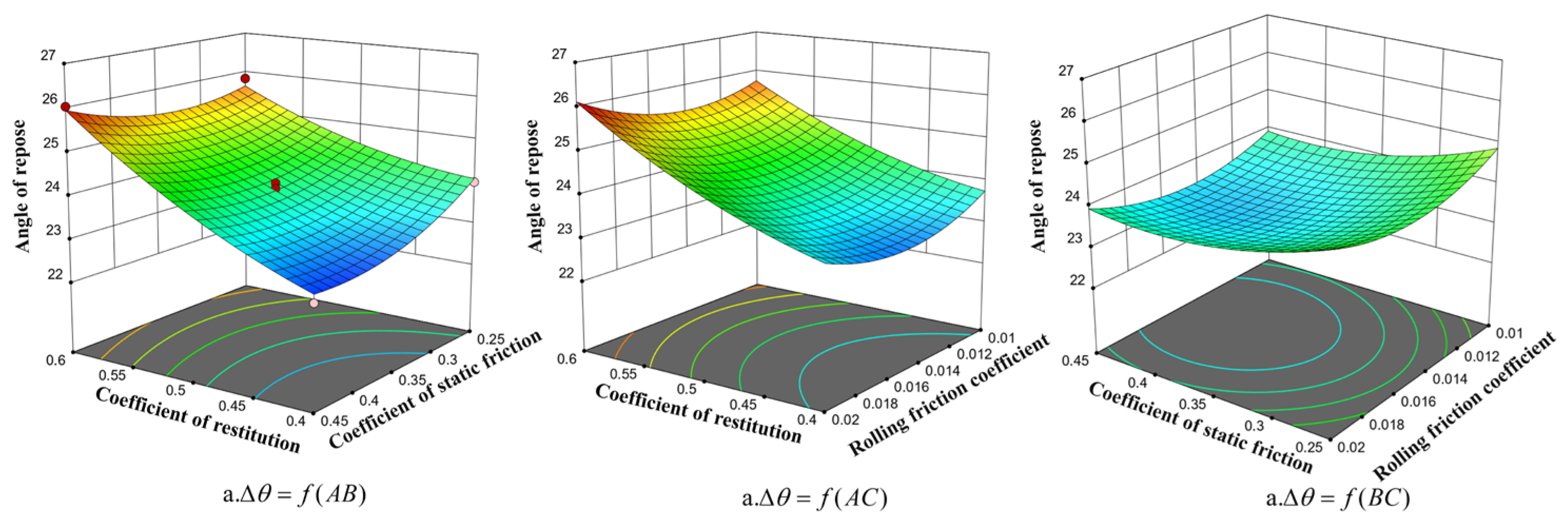
Analysis of variance indicated that the model as a whole was extremely significant (p < 0.0001). Among the various terms, the first-order terms A (coefficient of restitution) and B (static friction coefficient), the interaction term AB, as well as the quadratic terms A2, B2, and C2 had significant effects on the response value (p < 0.05). However, the first-order term C (rolling friction coefficient) and the interaction terms AC and BC had no significant effects (p > 0.1). This suggests that within the parameter range of this study, the rolling friction coefficient and its interaction with other factors have relatively weak influences on the pile angle. To ensure the simplicity and predictive ability of the model, the significant factors can be mainly considered in subsequent optimizations, but the complete model should be retained to fully present the analysis process. The coefficient of determination R2 of the model was 0.984, indicating that the model could explain 98.37% of the variation in the response value, and the fit was good.
2.2.5. Interaction Analysis
Based on regression Equation (6), an analysis of the interaction effects among the coefficient of restitution, static friction coefficient, and rolling friction coefficient of seed potatoes was conducted, yielding the response surface plots that illustrate their combined influence on the stacking angle, as shown in Figure 7.
Figure 7.
Interaction surfaces of various parameters affecting the pile angle of seed potatoes.
2.2.6. Determination and Verification of the Optimal Parameter Combination
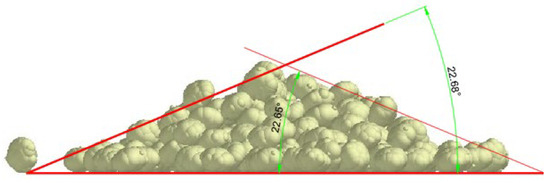
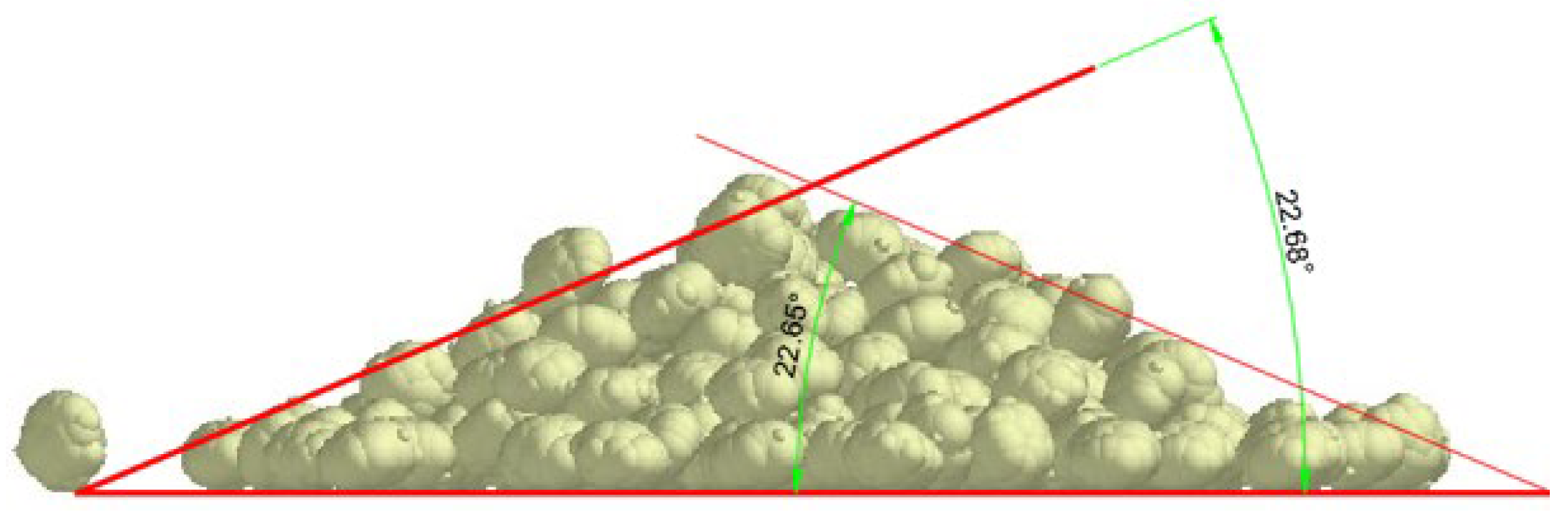
Using the optimization module in Design Expert 13 software, a solution was sought with the target set to the actual angle of repose of 22.89°. The optimal parameter combination was determined as A = 0.404, B = 0.412, and C = 0.0156. Validation through an EDEM simulation test (Figure 8) yielded a simulated angle of repose of 22.67°, corresponding to a relative error of 1.34% compared to the physical measurement. These results confirm that the calibrated parameters are suitable for discrete element simulations investigating the contact mechanics of seed potato particles.
Figure 8.
Simulation Test Pile Angle Measurement.
2.3. Discrete Element Parameters Based on Hertz–Mindlin with Bonding V2
2.3.1. Mechanical Parameters
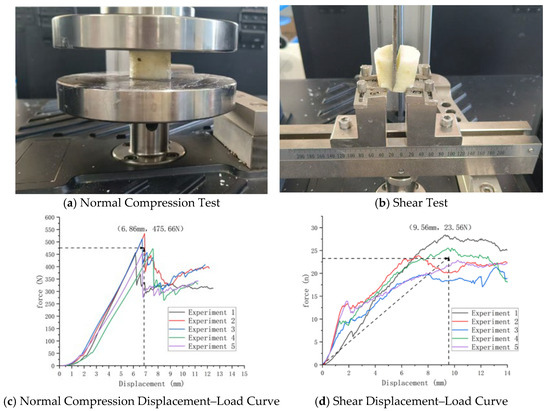
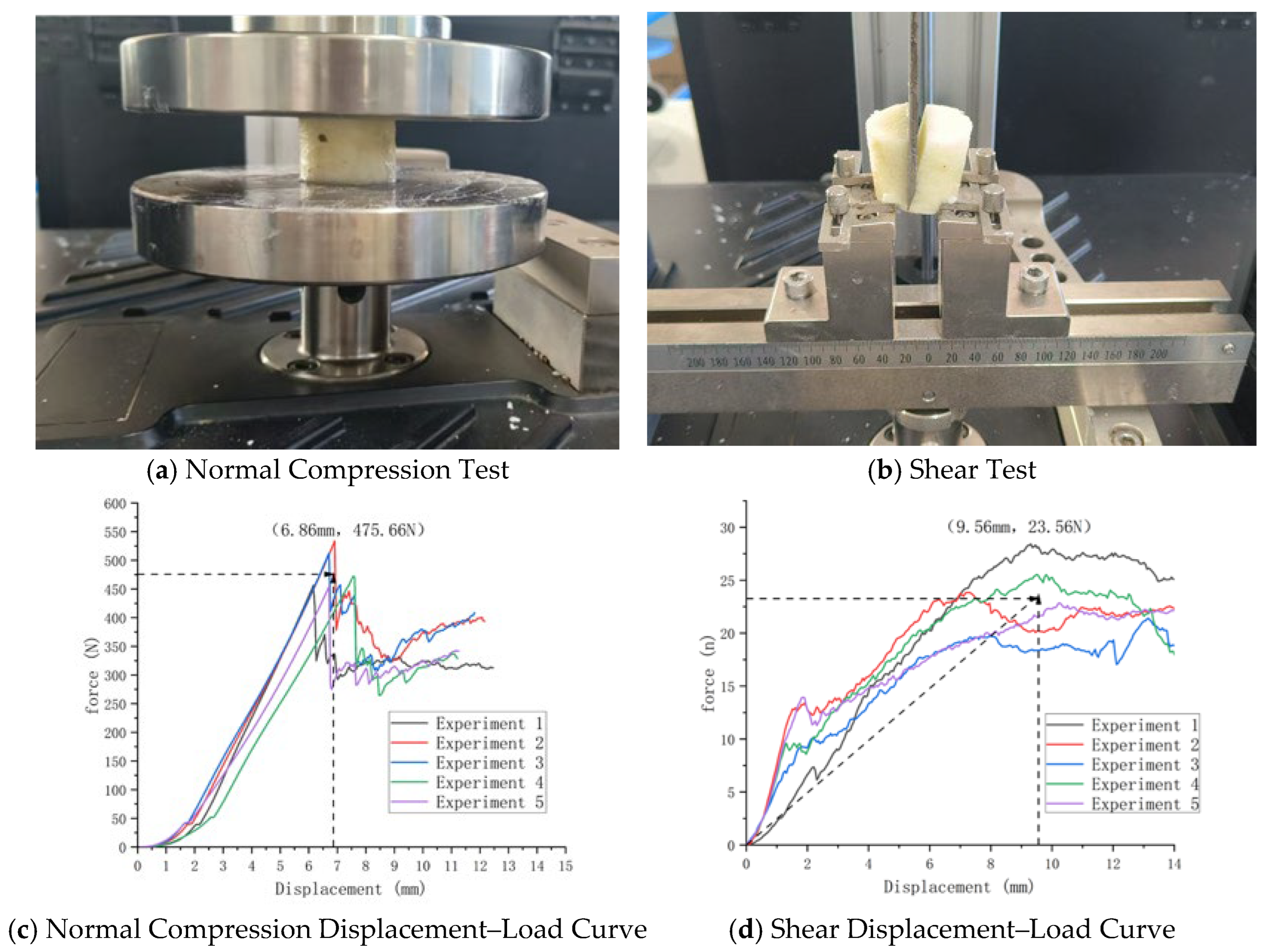
Preliminary experiments indicate that the moisture content of the seed potatoes was approximately 80%. Data analysis suggests that variations in moisture content significantly affect the macroscopic mechanical properties of the tubers but have no substantial impact on their cohesion and flow function values [29]. To determine the mechanical parameters of the seed potatoes, compression and shear tests were performed on prepared tuber specimens using an E43.104 Microcomputer Controlled Electronic Universal Testing Machine (Mates System Co., Ltd., Hong Kong, China). Randomly cut seed potato blocks, measuring 33 mm in outer diameter and 25 mm in height, were tested at a constant speed of 1 mm·s−1. The compression tests (Figure 9a) yielded a maximum compressive force (Fnmax) of 533.45 N and a minimum (Fnmin) of 426.1 N, with corresponding displacements of 6.91 mm and 7.11 mm, respectively. The shear tests (Figure 9b) resulted in a maximum shear force (Ftmax) of 25.27 N and a minimum (Ftmin) of 18.77 N, corresponding to displacements of 9.308 mm and 8.1 mm. The normal compression displacement–load curve (Figure 9c) showed a critical compression displacement of 6.86 mm at a load of 475.66 N. The shear displacement–load curve (Figure 9d) indicates a maximum shear force of 23.56 N occurring at a displacement of 9.56 mm.
Figure 9.
Seed Potato Mechanical Test. (a) Normal Compression Test, (b) Shear Test, (c) Normal Compression Displacement–Load Curve, (d) Shear Displacement–Load Curve.
2.3.2. Simulation Parameter Settings
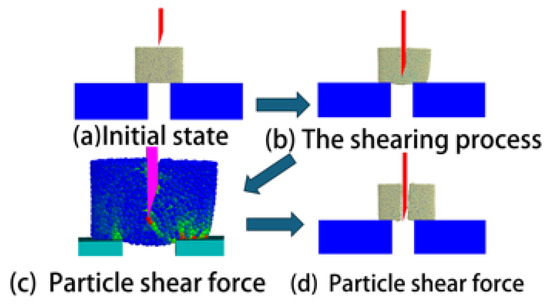
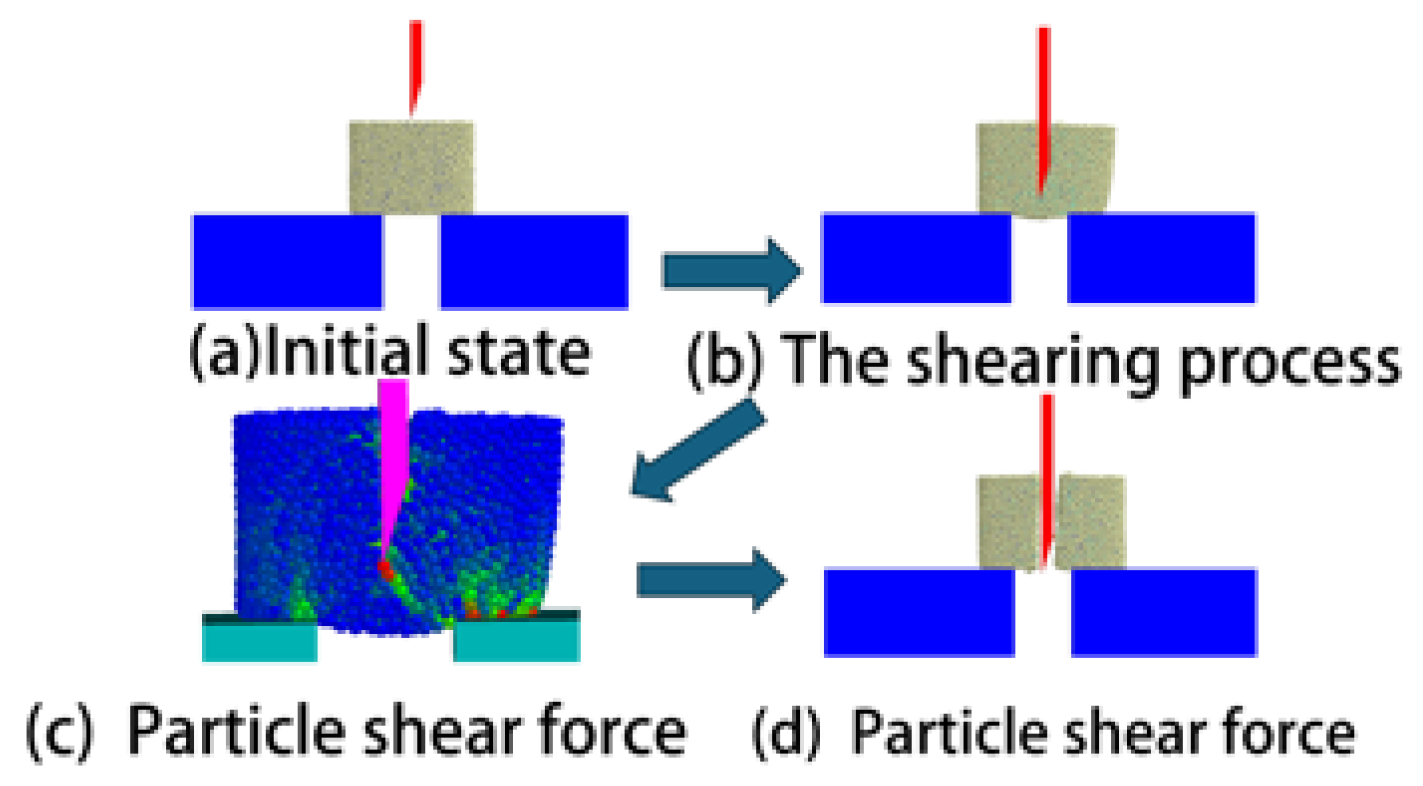
A contact model based on the Hertz–Mindlin with the Bonding V2 formulation was established. The filling particle model was assigned a bonding radius of 0.75 mm and a contact radius of 0.9 mm. Using this configuration, a model of a seed tuber block (33 mm in outer diameter and 25 mm in height) was created, consisting of 6557 filling particles. Shear tests were simulated in EDEM with a fixed time step of 7.26 × 10⁻⁷ s, a total duration of 6 s, and a simulation step size of 0.01. To balance computational accuracy and efficiency, the fluid grid gap was set to three times the particle diameter. The simulation process is illustrated in Figure 10, and the key simulation parameters, determined from preliminary experiments, are listed in Table 4. According to previous studies [30,31,32], the breakage resistance of the Bonding V2 model is primarily governed by the following parameters: normal stiffness per unit area (Kn), shear stiffness per unit area (Kt), normal strength (σn), shear strength (τt), and the bonding radius ratio. It should be noted that the bonding radius ratio is a virtual parameter in the simulation and cannot be measured experimentally. The stiffness parameters, however, can be derived from theoretical formulas [33] as follows:
Figure 10.
Numerical simulation test of seed tuber cutting. (a) Initial state. (b) The shearing process. (c) Particle shear force. (d) Particle shear force.
Table 4.
Shear Model Discrete Element Simulation Parameters.
In the formula: Fn, Ft—normal extrusion force, shear force (N); Ln, Lt—extrusion displacement, shear displacement (mm); Sn, St—equivalent extrusion contact area (mm2), equivalent shear contact area (mm2).
It should be noted that the bonding radius (r) is a dimensionless virtual parameter in the EDEM simulation environment. It defines the ratio of the effective radius of the bonding disk to the contact radius of the particles, influencing the volume of material considered as “bonded” and thus participating in stress transmission and failure. Although it cannot be directly measured, its value range (typically >1) is constrained by the requirement to ensure the overlap of bonding between adjacent particles, thereby achieving continuum-like mechanical behavior before failure. The selected range (1.0–1.1) aims to balance computational efficiency with sufficient bonding coverage to characterize the cohesive properties of potato parenchyma.
2.3.3. Test Scheme
In the Bonding V2 model, the bonding behavior is governed by five key parameters: normal stiffness per unit area (Kn), tangential stiffness per unit area (Kt), normal strength (σn), shear strength (τt), and bonding radius ratio (r). To systematically investigate the influence of these parameters on the mechanical response of the model, a normal-shear simulation test was adopted as the numerical framework. The maximum shear force (Ftmax) was selected as the primary response variable, and a response surface model was developed. This model quantitatively captures the nonlinear relationship between the significant parameters and Ftmax, and was subsequently utilized to identify the optimal parameter combination of the Bonding V2 model that achieved the target mechanical performance.
2.3.4. Plackett–Burman Experiment
An N = 11 Plackett–Burman design was adopted, incorporating six dummy variables for error estimation. Using Equations (7)–(10) in conjunction with the critical-state parameters, the factor levels for the five test variables were determined, as detailed in Table 5.
Table 5.
Experimental Factor Coding.
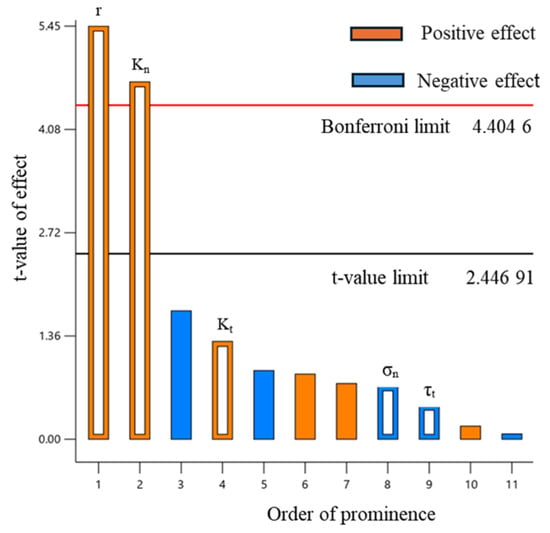
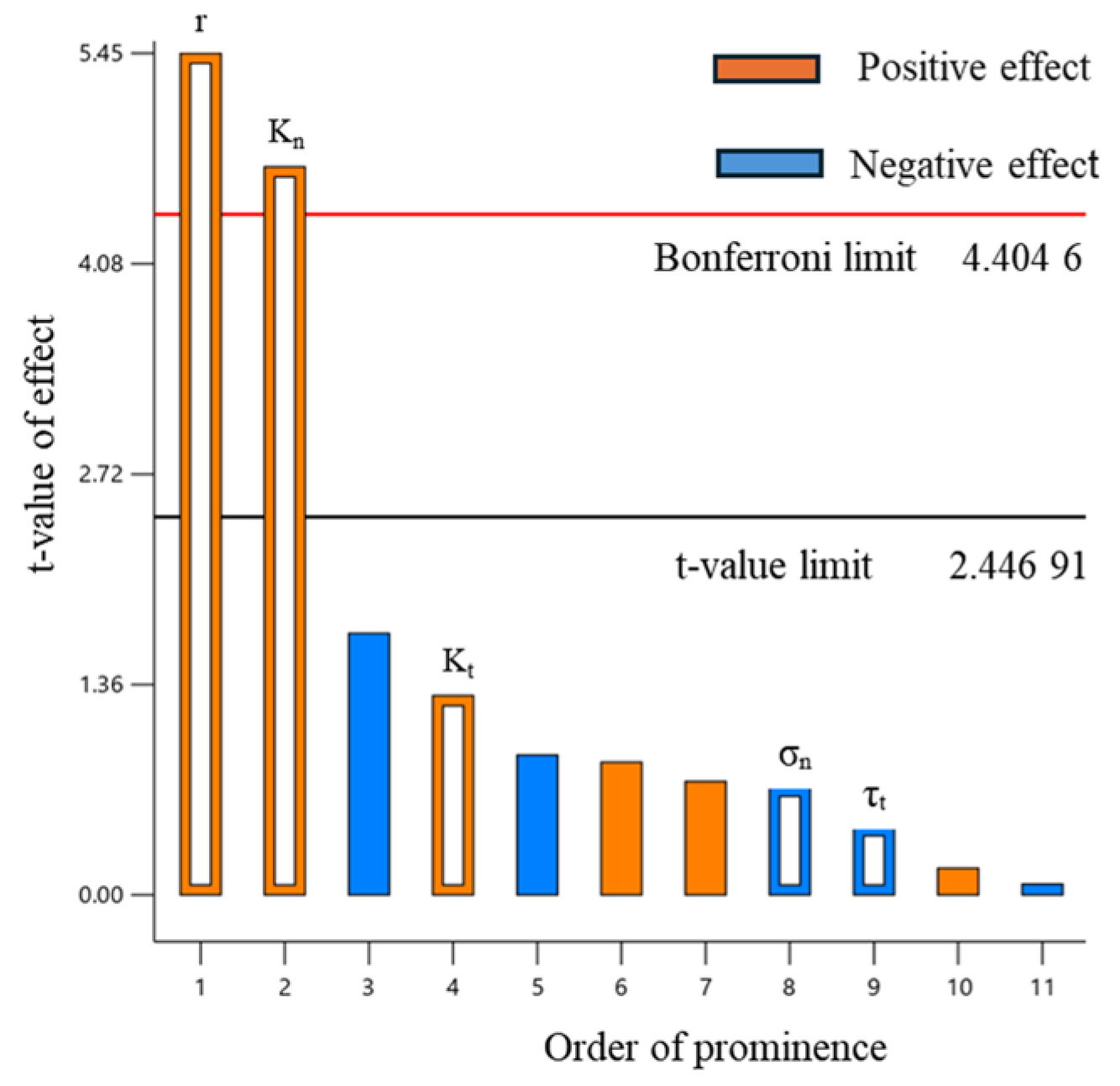
The Plackett–Burman test results are presented in Table 6. To clearly identify the significance of each factor’s effect, this study employed Design Expert software and conducted a combined analysis of variance and t-tests to systematically screen for factors that significantly influence the target response. The corresponding results are shown in Table 7 and Figure 11, respectively.
Table 6.
Plackett–Burman Test Results.
Table 7.
Analysis of Variance for Parameters.
Figure 11.
Pareto Chart.
The screening results indicate that the bond radius ratio and the unit area normal stiffness are the most significant factors influencing the maximum shear force. This is consistent with fundamental mechanical principles: r controls the geometric scale of the bond interface and directly affects the bearing area; while Kn determines the ability to resist compressive deformation within the bond region, which is crucial for stress accumulation before shear failure. The significance of the strength parameters (σn, τt) was relatively low in the screening, possibly due to the selected range of levels or because stiffness plays a dominant role in the initial force–displacement response before reaching the peak force (i.e., the response target).
As shown in Table 7 and Figure 11, the parameters influencing the maximum shear force (Ftmax) in the seed potato tuber shear test ranked in the following order of effect: r, Kn, Kt, σn, τt. The factors r, Kn, and Kt exhibited positive effects, whereas σn and τt showed negative effects. The regression equation relating the maximum shear force (Ftmax) to these factors is as follows:
2.3.5. Steepest Hill Climb Test
Based on the Plackett–Burman test results in Table 8, factors r and Kn were identified as extremely significant (p < 0.01), while Kt, σn, and τt were non-significant (p > 0.05). Therefore, Kt, σn, and τt were fixed at their median values: Kt = 3.25 × 10⁶ N·mm−3, σn = 5.5 × 10⁵ Pa, and τt = 3 × 10⁴ Pa. The ranges for the significant factors were defined as 1.0–1.1 for r and 7 × 10⁷–9 × 10⁷ N·mm−3 for Kn, as summarized in Table 7. With the maximum shear force from prior physical tests being 23.56 N, the relative error between simulated and actual shear forces was evaluated across trials (Table 5). The error trend showed an initial decrease followed by an increase, reaching a minimum relative error of 4.29% in the fifth trial. Accordingly, trials 4, 5, and 6 were selected as the low, medium, and high levels, respectively, for the subsequent Box–Behnken numerical simulation tests.
Table 8.
Shear Test on the Steepest Slope.
2.3.6. Box–Behnken Experiment
The Box–Behnken design included center points to evaluate experimental error, with the corresponding test matrix and results shown in Table 9.
Table 9.
Box–Behnken Experiment.
Multiple regression analysis was performed with r and Kn as independent variables and the maximum shear force as the response, resulting in the quadratic regression equation given in Equation (12).
The final Box–Behnken model (Equation (12)) variance analysis confirmed the dominant influence of Kn and r, with both their linear and quadratic terms being highly significant. This indicates that in simulating the shear failure of potatoes, the model’s peak force response is most sensitive to the parameters that control the stiffness of the particle assembly and the effective bonding area. Analyses of variance for the regression model confirmed that it was highly significant (p < 0.0001) with an excellent fit (R2 = 0.9517). The experimental reliability was further supported by a low coefficient of variation (1.32%). An adequate precision value of 39.51 indicates strong predictive capability. Therefore, this model is reliable for predicting the relationship between seed potato particle parameters and shear force.
2.3.7. Determination of the Optimal Parameter Combination and Crushing Verification
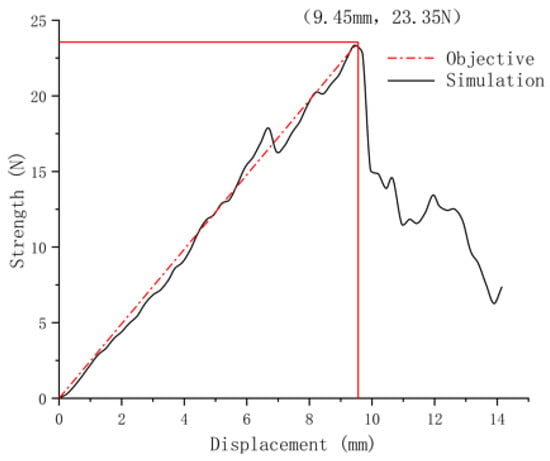
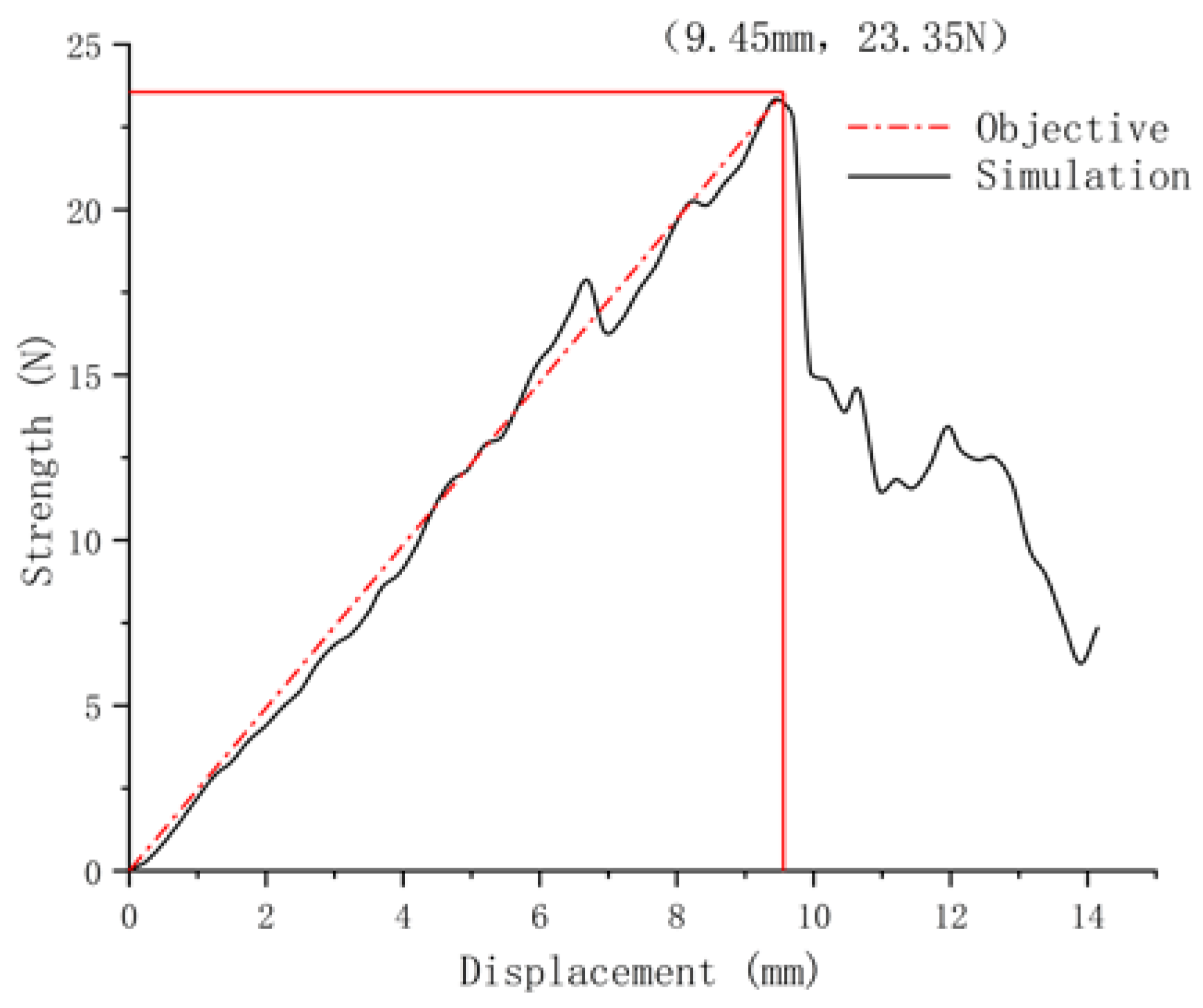
Based on the physical test target of maximum shear force Ftmax = 23.56 N, the optimization module in Design Expert software was used to determine the following optimal parameter set: r = 1.098, Kn = 8.597 × 10⁷ N·mm−3, with the remaining parameters fixed at Kt = 3.25 × 10⁶ N·mm−3, σn = 5.5 × 10⁵ Pa, and τt = 3 × 10⁴ Pa. EDEM simulation tests conducted with these parameters yielded a maximum shear force of 23.351 N and a corresponding displacement of 9.45 mm, as presented in Figure 12. The relative errors compared to the actual measured values were 0.89% in force and 1.15% in displacement. These results confirm that the calibrated parameters are suitable for discrete element simulations investigating the mechanical response of seed potatoes under crushing conditions.
Figure 12.
Simulation Shear Displacement–Load Curve.
2.3.8. Model Establishment
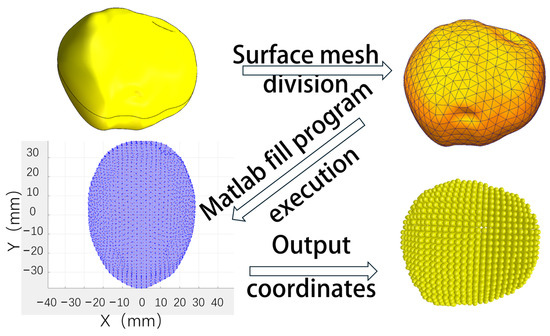
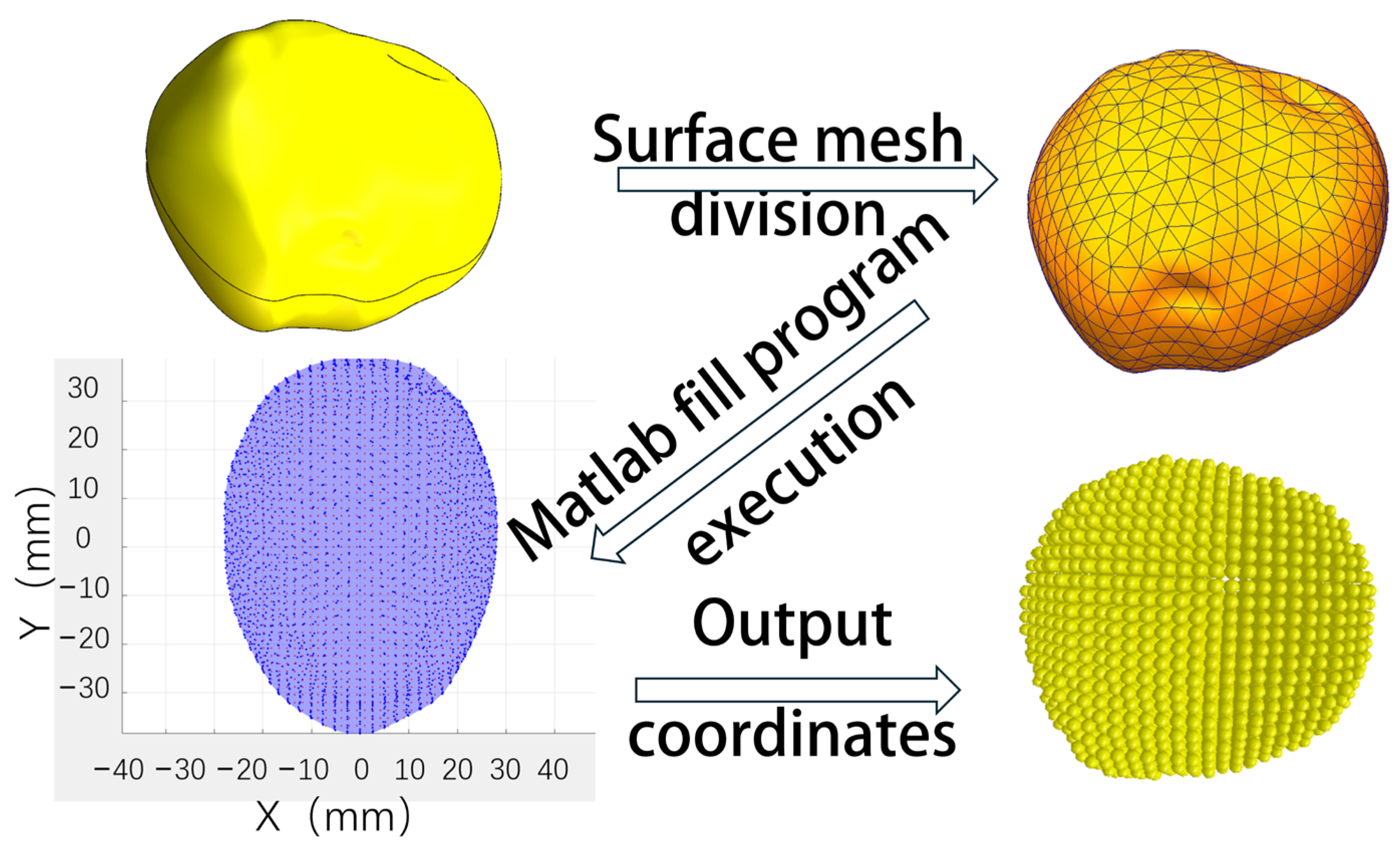
A discrete element model of the potato was developed using the Hertz–Mindlin with the Bonding V2 contact model, as shown in Figure 13. Within this contact-fracture framework, a three-dimensional geometric model of the potato was constructed and discretized into a surface mesh. The nodal coordinates of the surface mesh were then extracted, and the enclosed volume was filled with particles in MATLAB based on these coordinates. By exporting the coordinates of the filled particles, the discrete element model of the potato was successfully generated.
Figure 13.
Potato Discrete Element Model Modeling Process.
2.3.9. Experimental and Simulation Comparative Verification
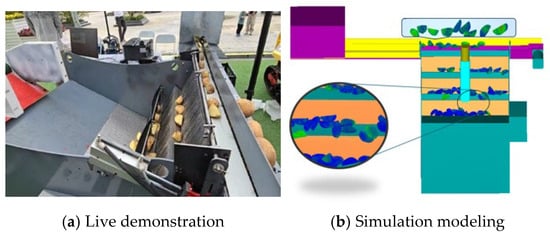
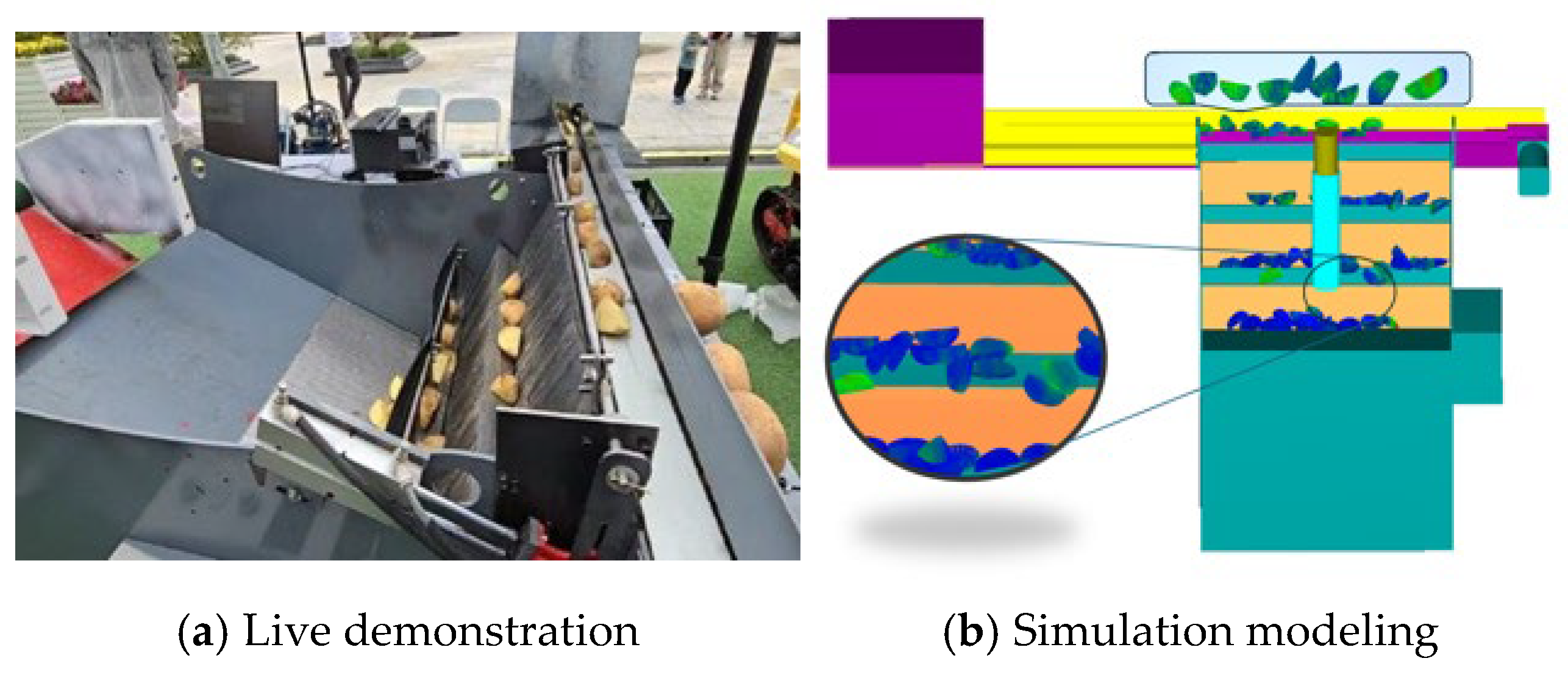
To verify the reliability of the calibration parameters, this study adopted a practical working scenario, namely a potato cutter integrated with an intelligent sorting device. The evaluation index was the number of potato blocks with the skin facing up after each batch of potatoes passed through the detection unit. A comparative study was conducted between physical prototype testing and discrete element simulation. In the simulation model, the contact and adhesion parameters of the potato blocks were assigned calibrated values. The geometric model was simplified and imported into the EDEM software. The simulation conditions were configured as follows: the cutting blade speed was 500 mm/s, the reciprocating speed of the push plate was 390 mm/s, the potato feeding rate was 2 per second, and the simulation lasted for 15 s, generating a total of 15 potatoes. In both the physical test and the simulation, the potatoes were cut into blocks by the cutting device and fell into the sorting hopper. The sorting mechanism sent the potato blocks layer by layer to avoid overlapping. Under the action of gravity, the potato blocks slid down the inclined surface onto the conveyor belt, which transported them to the recognition and sorting unit. As shown in Figure 14, each of the 15 potatoes was cut into 4 blocks, resulting in a total of 60 blocks. For the blocks pushed up step by step by the push plate on the conveyor belt before being sent to the recognition device, a total of 51 seed potato blocks with the skin facing up were measured in the actual machine, while the simulation recorded 54 potato blocks with the skin facing up, with a difference of only 5%. These results indicate that the calibrated discrete element model of potatoes has high reliability and is suitable for subsequent simulation-based analysis of intelligent potato sorting equipment.
Figure 14.
Simulation vs. Real Machine Comparison Test. (a) Live demonstration, (b) Simulation modeling.
3. Discussion
This study successfully calibrated the discrete element model parameters of “Atlantic” potato seed tubers through systematic experimental design and numerical optimization. Firstly, the coefficient of variation of the basic physical parameters (three-axis dimensions, density, elastic modulus, etc.) was less than 15%, indicating good sample consistency. The measured water content and density were consistent with the typical range of potato tubers reported by Xie et al. [34], providing reliable input for subsequent simulations. The calibration of non-bonded contact parameters was based on the repose angle as the response target, using the steepest ascent test combined with the Box–Behnken response surface method. The established regression model had a high goodness of fit (R2 = 0.9837), and the final calibrated inter-particle collision restitution coefficient, static friction coefficient, and rolling friction coefficient resulted in a relative error of only 1.34% between the simulated repose angle and the physical experiment value. This error is lower than the threshold for calibration error of agricultural material discrete element parameters proposed by Jiang et al. [35] (≤5%), demonstrating the effectiveness of the calibration results in simulating the accumulation and flow behavior of particles.
For the key bonded breakage parameters, this study innovatively used the force–displacement curve of the physical shear test as the calibration target. The Plackett–Burman test was used to screen out the bond radius ratio (r) and the unit area normal stiffness (Kn) that had a highly significant impact on the maximum shear force, which is consistent with the conclusion of Chen et al. [32] that “stiffness and geometric-related parameters dominate the breakage behavior of cohesive particles”. Subsequently, the optimized parameter combination obtained through the response surface method reduced the relative error of the simulated maximum shear force (23.35 N) to the physical experiment value (23.56 N) to 0.89%, and the displacement error to 1.15%. This inversion calibration strategy based on macroscopic mechanical responses effectively overcame the difficulty of directly measuring the microscopic breakage parameters of potatoes, ensuring the reliability of the model in simulating elastic–plastic deformation and fracture processes.
Compared with traditional non-cohesive contact models such as Hertz–Mindlin, the Bonding V2 model demonstrated unique advantages in simulating the potato chipping process. Traditional models are good at simulating the collision and flow of discrete particles, but they essentially cannot represent the continuity and cohesion within the material, thus making it difficult to simulate the disruption of tissue integrity during the chipping process. This study confirmed that the Bonding V2 model can effectively establish “virtual” bonding keys between particles by introducing bond parameters (stiffness and strength) with clear physical meanings. In shear simulations, these bonds accumulate stress and strain under load until they reach the defined strength limit (σn, τt) and break, thereby intuitively reproducing the complete process of potato chunks from elastic deformation, yield to fracture. This mechanism is more physically consistent with the actual failure mode of the intercellular layer between the thin-walled cells of potatoes under mechanical action. The final overall cutting and sorting verification test showed that the number of “skin-up” potato chunks simulated based on this model differed from the physical experiment results by only 5%, which is comparable to the accuracy level of cutting model verification for crops such as corn stalks [27] and ginger [33], demonstrating the comprehensive advantages of the Bonding V2 model in simulating material breakage and motion states in complex agricultural operation scenarios.
Although the model established in this study achieved high accuracy, there are still certain limitations. Firstly, the model assumes that the calibrated potato material is uniform and isotropic. However, actual seed tubers may have internal defects, uneven bud eye distribution, or anisotropic microstructure, all of which may lead to spatial variations in their mechanical properties, and these complexities have not been incorporated into the current model. Secondly, some parameters in the Bonding V2 model (such as the bonding radius ratio) are “virtual parameters”. Although their physical meaning can be interpreted as a macroscopic equivalent of the microscopic bonding geometry, they cannot be directly measured through physical experiments. This, to some extent, affects the physical transparency of the model and the uniqueness of parameter determination.
Regarding the transferability of parameters, the calibration results of this study directly correspond to a specific variety (“Atlantic”) and moisture content (about 78.23%) of potatoes. Since different varieties, growth environments, storage times, and moisture contents can significantly affect the mechanical properties of potatoes [28,35], directly applying this set of parameters to other conditions may lead to errors. However, the entire methodological framework proposed in this study, “basic physical property measurement → non-bonding parameter calibration → bond parameter inversion based on mechanical response”, is universal. For new varieties or conditions, this framework can be followed, and the initial parameter range can be determined by supplementing corresponding physical and mechanical tests, and then recalibrated using the same experimental design and optimization methods. Relatively speaking, the non-bonding contact parameters between particles (such as the friction coefficient) may be less sensitive to variety changes and can be used as a reference for preliminary simulations.
This study provides ideas for the discrete element modeling of agricultural materials with high water content and vulnerability. Future research can be further explored in the following directions: First, the influence laws of different moisture contents and temperatures on the mechanical properties of potatoes and the corresponding discrete element parameters can be systematically studied, and the predictive relationship between parameters and environmental variables can be established to enhance the adaptability of the model. Second, the model can be coupled with the finite element method (FEM) to conduct structural mechanics and fatigue analysis of cutting devices, achieving multi-scale, high-fidelity collaborative simulation of the “soil–crop–machine” system. Third, methods for automatic parameter calibration based on machine learning can be explored to handle more complex multi-factor, nonlinear problems and improve calibration efficiency.
At the application level, the calibrated high-precision discrete element model of potatoes has become a powerful digital tool. It can be directly used for virtual simulation and problem diagnosis of the working process of existing seed-cutting and sorting equipment, and can also be used for the optimization design of key components of new equipment (such as the geometric shape of the cutting knife and the motion parameters of the sorting mechanism). Through a large number of “virtual experiments”, the best solution can be selected, thereby significantly reducing R&D costs and shortening the design cycle, providing core technical support for the full mechanization and intelligence of the potato production process.
4. Conclusions
This study established a systematic and flexible discrete element model calibration process suitable for high-moisture, easily damaged biological materials (represented by potatoes). The process integrates basic physical parameter measurement, non-bonding parameter calibration based on the angle of repose, screening and optimization of bonding parameters using the Plackett–Burman and response surface method, and final machine operation verification, providing a repeatable method template for DEM modeling of similar materials.
The calibration results show that the potato flexible discrete element model based on the Bonding V2 model can accurately reproduce its macroscopic mechanical behavior (angle of repose error 1.34%, shear force error 0.89%) and the motion state during the cutting and sorting process (skin-up ratio error 5%). This confirms the effectiveness of the model in simulating the cohesive fracture and complex flow of potatoes.
Parameter sensitivity analysis revealed that among the bonding parameters affecting the model’s fracture behavior, the normal stiffness per unit area (Kn) and the bonding radius ratio (r) are decisive factors, highlighting the importance of accurately characterizing the compressive stiffness and internal bonding geometry range when simulating such materials.
Author Contributions
H.G.: Conceptualization, methodology, data curation, writing—original draft, writing—review and editing. J.H.: Conceptualization, methodology, data curation, supervision, writing—review and editing. Q.F.: Conceptualization, investigation, formal analysis, methodology. M.Y.: Conceptualization, methodology. W.S.: Conceptualization, methodology. H.W.: Conceptualization, methodology. W.Q.: Conceptualization, methodology. P.W.: Conceptualization, methodology. All authors have read and agreed to the published version of the manuscript.
Funding
This research was supported by the Gansu Province Key Science and Technology Project (24ZDNJ001) and the Gansu Provincial Department of Agriculture and Rural Affairs’ Agricultural Machinery Integration Project (4-3).
Institutional Review Board Statement
Not applicable.
Informed Consent Statement
Not applicable.
Data Availability Statement
The original contributions presented in this study are included in the article. Further inquiries can be directed to the corresponding author.
Conflicts of Interest
The authors declare no conflicts of interest.
References
- Birch, P.R.J.; Bryan, G.; Fenton, B.; Gilroy, E.M.; Hein, I.; Jones, J.T.; Prashar, A.; Taylor, M.A.; Torrance, L.; Toth, I.K. Crops that feed the world 8: Potato: Are the trends of increased global production sustainable? Food Secur. 2012, 4, 477–508. [Google Scholar] [CrossRef] [Scilit]
- Food and Agriculture organization, FAO Statistical Database. Available online: https://www.fao.org (accessed on 12 October 2025).
- Wu, Y.; La, X.; Zhao, X.; Liu, F.; Yan, J. Design and Performance Testing of Seed Potato Cutting Machine with Posture Adjustment. Agriculture 2025, 15, 732. [Google Scholar] [CrossRef] [Scilit]
- Ashok, G.D.M.; Mohanty, A.; Ananya, M.; Subhalaxmi. Impact of cutting and chemical treatments to seed potato on crop establishment and yield. J. Pharmacogn. Phytochem. 2021, 10, 2526–2530. [Google Scholar]
- Xu, R.; Chen, C.; Liu, F.; Xie, S. Intelligent 3D Potato Cutting Simulation System Based on Multi-View Images and Point Cloud Fusion. Agriculture 2025, 15, 2088. [Google Scholar] [CrossRef] [Scilit]
- Elghobashy, H.; Yehia, I. Development of the potato tuber cutting prototype. Misr J. Agric. Eng. 2014, 31, 1395–1412. [Google Scholar] [CrossRef] [Scilit]
- All Star Manufacturing & Design. Available online: http://allstarmfgllc.com (accessed on 7 August 2025).
- Dewuif. Available online: https://www.dewulfgroup.com (accessed on 18 September 2025).
- Wang, X.; Liu, W.; Zhang, H.; Su, G.; Ren, J. Design and Experiment of a Combined Potato Seed Cutting Device with Whole-row Positioning and Clamping. Trans. Chin. Soc. Agric. Mach. 2023, 54, 148–158. [Google Scholar]
- Shi, G.; Li, J.; Ding, L.; Zhang, Z.; Ding, H.; Li, N.; Kan, Z. Calibration and Tests for the Discrete Element Simulation Parameters of Fallen Jujube Fruit. Agriculture 2021, 12, 38. [Google Scholar] [CrossRef] [Scilit]
- Shi, S.; Gao, L.; Cai, X.; Yin, H.; Wang, X. Effect of tamping operation on mechanical qualities of ballast bed based on DEM-MBD coupling method. Comput. Geotech. 2020, 124, 103574. [Google Scholar] [CrossRef] [Scilit]
- Nigmetova, A.; Masi, E.; Simonin, O.; Dufresne, Y.; Moureau, V. Three-dimensional DEM-CFD simulation of a lab-scale fluidized bed to support the development of two-fluid model approach. Int. J. Multiph. Flow 2022, 156, 104189. [Google Scholar] [CrossRef] [Scilit]
- Cheng, H.; Shuku, T.; Thoeni, K.; Yamamoto, H. Probabilistic calibration of discrete element simulations using the sequential quasi-Monte Carlo filter. Granul. Matter 2018, 20, 11. [Google Scholar] [CrossRef] [Scilit]
- Horabik, J.; Molenda, M. Parameters and contact models for DEM simulations of agricultural granular materials: A review. Biosyst. Eng. 2016, 147, 206–225. [Google Scholar] [CrossRef] [Scilit]
- Zhao, Z.; Wu, M.; Jiang, X. A Review of Contact Models’ Properties for Discrete Element Simulation in Agricultural Engineering. Agriculture 2024, 14, 238. [Google Scholar] [CrossRef] [Scilit]
- Liang, Z.; Huang, Y.; Li, D.; Wada, M.E. Parameter determination of a viscoelastic–plastic contact model for potatoes during transient collisions. Biosyst. Eng. 2023, 234, 156–171. [Google Scholar] [CrossRef] [Scilit]
- Brown, N.J.; Chen, J.-F.; Ooi, J.Y. A bond model for DEM simulation of cementitious materials and deformable structures. Granul. Matter 2014, 16, 299–311. [Google Scholar] [CrossRef] [Scilit]
- Liu, W.; Su, Q.; Fang, M.; Zhang, J.; Zhang, W.; Yu, Z. Parameters Calibration of Discrete Element Model for Corn Straw Cutting Based on Hertz-Mindlin with Bonding. Appl. Sci. 2023, 13, 1156. [Google Scholar] [CrossRef] [Scilit]
- Gao, Q.; Cheng, L.; Wang, R.; Chen, M.; Zhao, W.; Fu, J.; Wang, Z. Discrete Element Model Building and Optimization of Tomato Stalks at Harvest. Agriculture 2024, 14, 531. [Google Scholar] [CrossRef] [Scilit]
- Rotter, S.; Dosta, M.; Düster, A. Discrete element simulation of the breakage behavior of porous granules utilizing bond models. Comput. Part. Mech. 2024, 11, 89–103. [Google Scholar] [CrossRef] [Scilit]
- Han, D.-D.; Tang, C.; Li, W.; Xu, L.-J.; Chen, L. Calibration of corn kernel simulation parameters during harvest and evaluation of its adaptability. Comput. Part. Mech. 2025, 12, 1001–1017. [Google Scholar] [CrossRef] [Scilit]
- Zhou, Y.; Shang, W.; Hui, Y.; Shi, C.; Gao, J.; Zhang, Y.; Liu, J.; Cheng, D.; Zhu, K. Construction of an Accurate Wheat-Grain Model Based on X-ray Tomography and Bonding Parameters by Discrete Element. Appl. Sci. 2023, 13, 9265. [Google Scholar] [CrossRef] [Scilit]
- Zhu, R.; Gao, H.; Zhan, Y.; Wu, Z.-X. Construction of Discrete Element Constitutive Relationship and Simulation of Fracture Performance of Quasi-Brittle Materials. Materials 2022, 15, 1964. [Google Scholar] [CrossRef] [Scilit]
- Zhou, X.; Jin, D.; Ge, D.; Chen, S.; You, Z. Identify the Micro-Parameters for Optimized Discrete Element Models of Granular Materials in Two Dimensions Using Hexagonal Close-Packed Structures. Materials 2023, 16, 3073. [Google Scholar] [CrossRef] [Scilit] [PubMed]
- Li, H.; Meng, Y.; Qi, X.; Wang, Y.; Li, Y.; Li, M. Discrete Element Modelling Method and Parameter Calibration of Garlic Species Based on Bonding V2 Model. Trans. Chin. Soc. Agric. Mach. 2025, 56, 150–157+169. [Google Scholar]
- Wu, D.; Ding, Z.; Huang, S.; Zhang, S.; Cao, W. Parameter calibration and optimization of double-layer flexible discrete element bonding model for Procambarus clarkii. Trans. Chin. Soc. Agric. Eng. 2025, 41, 309–318. [Google Scholar]
- Huang, H.; Zhang, Y.; Hou, G.; Su, B.; Yin, H.; Fu, Z.; Zhuang, Y.; Lv, Z.; Tian, H.; Li, L. Establishment of Hollow Flexible Model with Two Types of Bonds and Calibration of the Contact Parameters for Wheat Straw. Agriculture 2025, 15, 1686. [Google Scholar] [CrossRef] [Scilit]
- Cheng, G.; Xu, J.; Guo, Y.; Xu, K.; Zhang, W. Mutagenesis breeding of L-arginine-producing bacteria by atmospheric pressure room temperature plasma and optimization of fermentation conditions. Bull. Microbiol. 2016, 43, 360–369. [Google Scholar] [CrossRef]
- Huang, Z.; Chen, H.; Fang, X.; Li, L. Effects of Moisture Content on the Rheological Properties of Soybean Straw. Soybean Sci. 2011, 30, 847–850. [Google Scholar]
- Zhao, H.; Wang, X.; Zheng, Z.; Li, X.; Huang, Y. Research Progress on the Application of Discrete Element Method in Agricultural Machinery Field. Trans. Chin. Soc. Agric. Mach. 2025, 56, 1–19. [Google Scholar]
- Zhaoguo, Z.; Hongwei, X.; Haotian, X.; Chang, N.; Chao, W. Calibration and Testing of Discrete Element Parameters of Panax Notoginseng Stems. Trans. Chin. Soc. Agric. Mach. 2023, 54, 61–70+91. [Google Scholar]
- Chen, Z.; Duan, A.; Liu, Y.; Zhao, H.; Dai, C.; Hu, S.; Lei, X.; Hu, J.; Chen, L. Discrete element contact model and parameter calibration of sticky particles and agglomerates. J. Terramechanics 2024, 116, 100998. [Google Scholar] [CrossRef] [Scilit]
- Zhang, P.; Li, F.; Wang, F. Optimization and test of ginger-shaking and harvesting device based on EDEM software. Comput. Electron. Agric. 2023, 213, 108257. [Google Scholar] [CrossRef] [Scilit]
- Xie, S.; Wang, C.; Deng, W. Collision damage test and acceleration characteristic analysis of potato. J. China Agric. Univ. 2020, 25, 163–169. [Google Scholar]
- Jiang, W.; Wang, L.; Tang, J.; Yin, Y.; Zhang, H.; Jia, T.; Qin, J.; Wang, H.; Wei, Q. Calibration and Experimental Validation of Contact Parameters in a Discrete Element Model for Tobacco Strips. Processes 2022, 10, 998. [Google Scholar] [CrossRef] [Scilit]

Disclaimer/Publisher’s Note: The statements, opinions and data contained in all publications are solely those of the individual author(s) and contributor(s) and not of MDPI and/or the editor(s). MDPI and/or the editor(s) disclaim responsibility for any injury to people or property resulting from any ideas, methods, instructions or products referred to in the content. |
© 2026 by the authors. Licensee MDPI, Basel, Switzerland. This article is an open access article distributed under the terms and conditions of the Creative Commons Attribution (CC BY) license.