


Abstract
Achieving high sowing precision for small and irregularly shaped seeds remains a significant challenge in air-suction plug-tray seeding systems due to frequent seed slipping and detachment during the seed-picking and conveying processes. To address this issue, a novel seed cap incorporating a seed-carrying plate structure was developed. A DEM-CFD gas–solid coupling model of the seed-metering device was established for metering chili pepper seeds. With suction (negative) pressure, seed-carrying plate height, and suction-hole diameter as affecting factors, simulations with a quadratic orthogonal rotational combination were conducted. Response surface methodology (RSM) was employed for multi-objective parameter optimization, followed by comparative bench test verification. The results indicate that the interaction between suction pressure and suction-hole diameter had a highly significant effect on the multiple-filling rate. The optimal combination of working parameters was determined as a suction pressure of 25.5 kPa, a seed-carrying plate height of 0.2 mm, and a suction-hole diameter of 0.4 mm. Experiments with the seed-metering machine demonstrated that under these optimal parameters, the single-seed qualification rate reached 95.09%, the miss-seeding rate was 3.06%, and the re-seeding rate was 1.85%. Compared to the conventional seed cap without a seed-carrying plate, the single-seed qualification rate increased by 4.49%, while the miss-seeding and re-seeding rates decreased by 2.06% and 2.43%, respectively. The seed-carrying plate structure effectively reduced the dependence of the seed-metering device on high suction pressure, providing a technical reference for the research and development of precision plug-tray seeding of irregular seeds.
1. Introduction
Plug-tray seeding for transplanting is a crucial step in modern vegetable industrialization and large-scale cultivation, with precision seeding equipment serving as the foundation for efficient seedling production [1]. Traditionally, precision seeders adopt mechanical seed-metering technologies which exhibit poor adaptability to seed shape and size and are highly prone to causing mechanical damage to seeds [2]. In contrast, air-suction drum-type seeders utilize airflow pressure differences for metering seeds. Owing to their significant advantages, such as low damage, high adaptability, and the facilitation of high-speed, large-area operations, they have become the mainstream developmental direction of current precision seeding technology [3]. However, challenges remain for small and irregular vegetable seeds, such as pepper seeds. During the high-speed rotating of the metering drum, small, irregular seeds are susceptible to tangential slipping and detaching due to insufficient normal suction force, resulting in a high miss-filling rate [4].
There have been attempts to improve seed bulk flowability through seed pelleting technology and install vibration devices inside the seed hopper to maintain the seeds in a “boiling and fluidized” state, thereby increasing the suction probability and the qualified sowing rate [5]. Nevertheless, pelleting treatments not only increase production costs but may also impede the seed germination rate [6]. Meanwhile, relying solely on external vibration cannot fundamentally resolve the slipping and detachment issues after the seeds are separated from the seed bulk [7]. Furthermore, simply increasing the negative pressure to forcibly maintain suction stability is likely to cause multiple-seed filling and a drastic surge in system airflow energy consumption [8]. Therefore, it is urgent to explore reliable metering technologies to prevent miss-filling and multiple filling.
Studies on the structural optimization design of seed-metering devices and the microscopic mechanisms of seed movement have been conducted. Shi et al. [9] applied computational fluid dynamics (CFD) and discrete element method (DEM) coupling technology to numerically simulate the internal gas–solid two-phase flow of an air-suction seed-metering device with driving-guided seed filling. Their study delineated the critical points of each seed-filling stage from both macroscopic and microscopic scales, thereby revealing the influence of the curvature coefficient, depth, and slope angle of the seed-guiding groove on the stable adsorption time of seeds and the filling performance. Numerous studies have employed the DEM-CFD coupling approach to investigate the working mechanisms of pneumatic seed-metering devices across various crop seeds [10,11,12,13]. Further efforts have focused on structural optimization and seed-cleaning mechanisms for air-suction drum seeders handling small or irregular-shaped seeds [14,15,16,17]. However, the approach reported in [15] primarily focused on modifying the suction-nozzle configuration to improve seed separation and metering performance. Research on mechanical support to the seed during the carrying stage is lacking in the literature. Seed slipping and detachment after individual seeds have been separated from the seed bulk need to be addressed. This is important because increasing aerodynamic suction alone may improve seed retention but can simultaneously increase the probability of multiple filling.
Recent investigations of multi-row vegetable seeders have further demonstrated the importance of jointly optimizing design and operating parameters and validating the optimized configuration experimentally under practical operating conditions [18]. Although the metering mechanisms differ from those investigated in the present study, these studies highlight the broader importance of integrating parameter optimization with experimental validation in precision seeding systems. Zhang et al. [19] proposed an optimization strategy combining response surface methodology (RSM) with CFD to improve the structural parameters of seed meters in an axial-flow air-suction drum-type seed-metering device. Through an experiment, they analyzed the influence of fan blade rotational speed, the number of fan blades, and meter geometry to optimize the inlet negative pressure. To achieve the efficient and precision seeding of wheat, Li et al. [20] designed an air-suction precision seed-metering device equipped with an assisted seed-filling and seed-supporting plate structure. During the seed-filling stage, this device used seed-cell bosses to effectively agitate the seed bulk and increase its dispersion. In the seed-carrying zone, the mechanical supporting of the bosses facilitated the stable adsorption of seeds, which in turn reduced the critical negative pressure required for suction. The study also used the DEM to conduct simulation analysis on the complete dynamic operational process of the metering device, confirming the effectiveness of the seed-supporting structure in reducing the system’s negative pressure requirements and mitigating seed detachment.
Building upon previous research, this study focuses on an air-suction drum-type seeder and proposes a systematic optimization approach to improve the seed-filling performance of small, irregular-shaped seeds by reducing their tangential slip during the adsorption process. The objectives of this study were to (1) develop a seed cap incorporating a seed-carrying plate to provide additional mechanical support for small, irregular-shaped seeds; (2) establish a DEM–CFD coupled simulation model of the seed-metering device to investigate the effects of key design and operating parameters on seed-metering performance; (3) employ response surface methodology (RSM) to perform multi-objective optimization based on the simulation results and determine the optimal design and operating parameters; and (4) conduct comparative bench experiments on seed-metering machine with and without the seed-carrying plate to verify the feasibility and reliability of the proposed design.
2. Materials and Methods
2.1. Design and Working Principle of the Air-Suction Drum-Type Seeder
2.1.1. Overall Structure and Working Principle
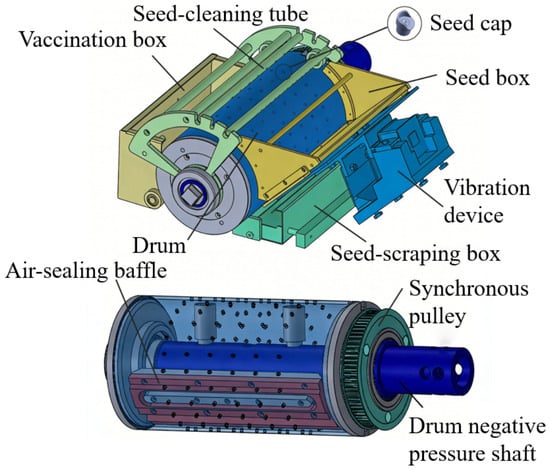
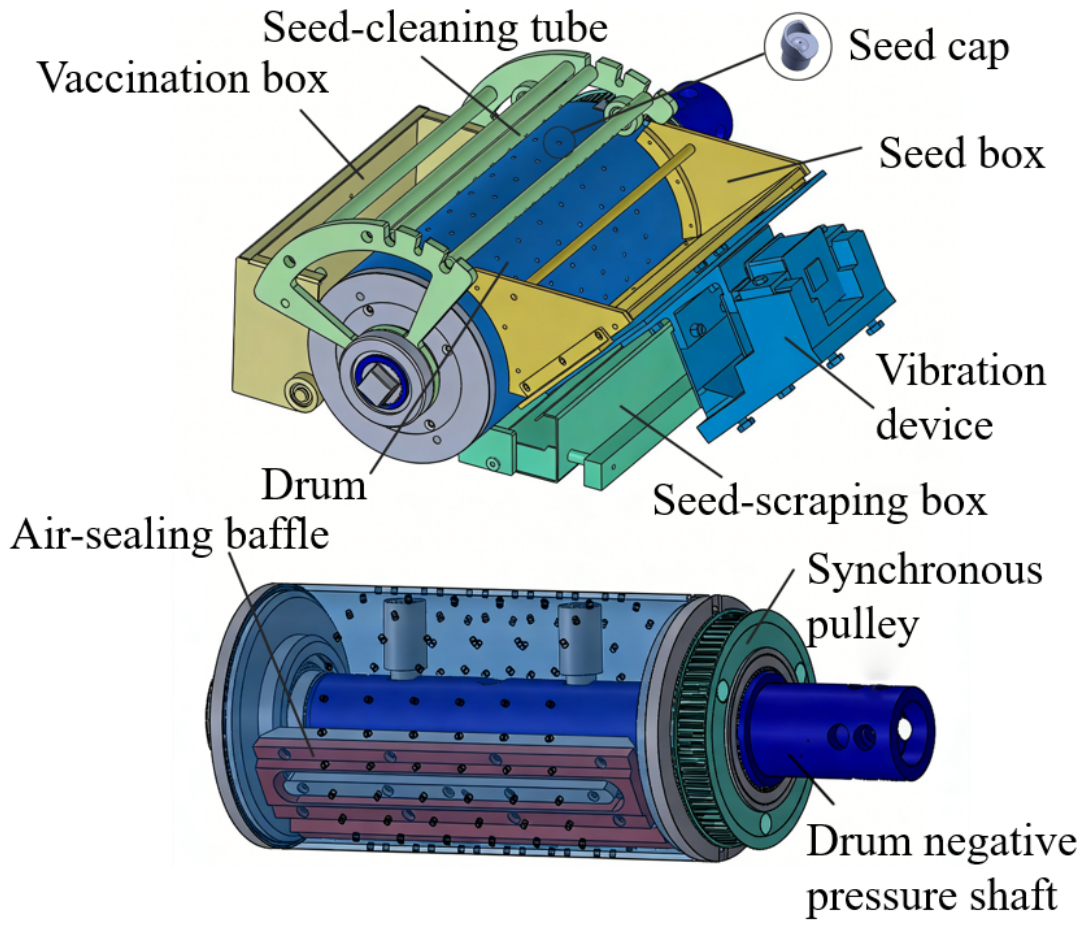
As illustrated in Figure 1, the air-suction drum-type seeder designed for small and irregular seeds primarily consisted of a seed-metering drum, a vacuum shaft, a seed hopper, a seed cap, an electromagnetic vibrator, a seed-cleaning device (a nozzles), a seed-receiving box, a seed-scraping box, a vacuum-cutoff baffle, a driving motor, a synchronous pulley, a negative-pressure generator, and a positive-pressure air pump.
Figure 1.
Structure of the air-suction drum-type seeder and the seed-metering drum.
The motor drives the seed-metering drum via a synchronous pulley. Simultaneously, a vacuum blower extracts the air inside the drum through a vacuum tube and a vacuum shaft, thereby establishing a vacuum chamber within the drum. Relying on the negative pressure difference generated between the suction holes on the drum surface and the external environment, the reliable adsorption of seeds is achieved [21]. An electromagnetic vibrator is mounted on the side wall of the seed hopper. By utilizing high-frequency vibration, the seed bulk inside the hopper is maintained in a “boiling and fluidized” state, thereby significantly enhancing the suction probability of the seeds [22]. As the adsorbed seeds are conveyed to the seed-cleaning zone by the rotating drum, the nozzles on the cleaning tube utilize positive-pressure airflow to precisely blow off the excess re-adsorbed seeds, ensuring single-seed filling. When the seeds rotate into the region of the vacuum-cutoff baffle, the negative-pressure airflow at the suction holes is intercepted, causing the normal suction force to dissipate. Subsequently, under the combined effects of gravity, the seed-scraping box, and assisted positive-pressure blowing, the seeds accurately drop into the plug tray, thereby completing the seed-metering operation [23].
2.1.2. Design of Seed-Supplying Components
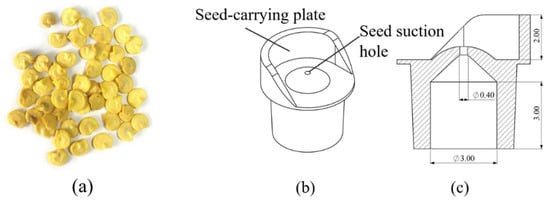
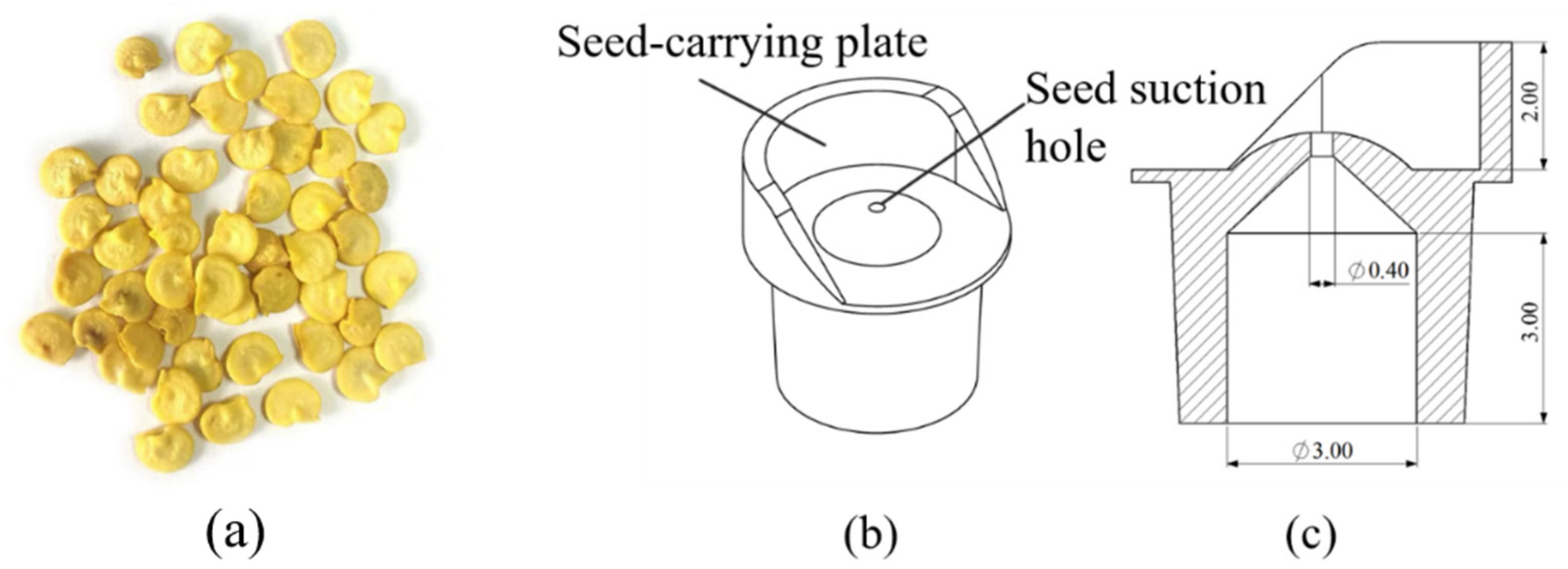
The seed-metering components were designed for chili pepper seeds (variety: Jinluosi) (Figure 2a). As the core seed-supplying component, the seed cap, particularly its suction-hole diameter and overall structural characteristics, has a significant influence on sowing precision [24]. Considering the morphological dimensions of pepper seeds, as well as the effects of centrifugal force and gravity components on suction stability during the seed-filling process, a seed cap integrated with a seed-carrying plate of a specific height was designed (Figure 2b,c). This seed-carrying plate was designed to provide direct tangential mechanical support for the seeds during the filling stage, effectively reducing the suction difficulty and significantly enhancing the adsorption probability of individual seeds.
Figure 2.
Seeds and seed cap: (a) pepper seeds; (b) front view of seed cap; (c) sectional view of seed cap.
2.1.3. Force Analysis During the Seed-Filling Process
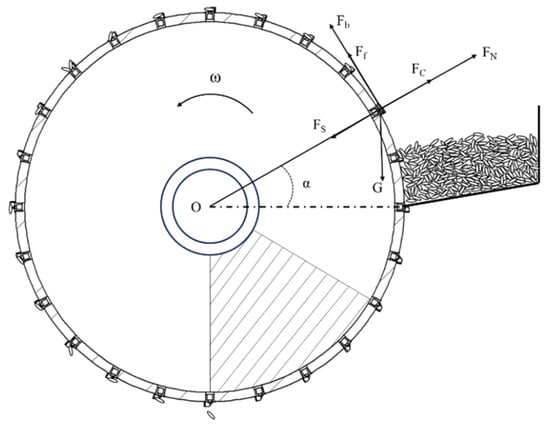
To simplify the mechanical model while highlighting the main influencing factors, this study proposes the following assumptions: first, the pepper seed is abstracted as a homogeneous single material point; second, the aerodynamic drag acting on the seed at the instant of adsorption is neglected; finally, it is assumed that once adsorbed, the seed maintains a relatively stationary, rigid-constraint state with the metering drum. Taking the rotation center O of the metering drum as the coordinate origin, a planar polar coordinate system that rotates synchronously with the drum is established. After the seed separates from the seed bulk and enters the seed-carrying zone (0° < α < 270°), its mechanical force state is illustrated in Figure 3.
Figure 3.
Force analysis during the seed-filling process. ω is the rotational angular velocity of the drum; α denote the position angle of the seed rotating with the drum; G is the gravity of the pepper seed; FS is the normal suction force exerted on the seed at the suction hole; FC is the centrifugal force acting on the seed; FN is the normal supporting force provided by the bottom surface of the seed cap; Fb is the tangential supporting force provided by the seed-carrying plate; and Ff is the static friction force between the seed and the inner wall of the cap.
To ensure that the seed does not detach from the suction hole, the airflow suction force must be sufficient to overcome the centrifugal force, the normal component of gravity, and the normal support force. During the ascending stage of seed carrying, the tangential component of gravity tends to induce downward slipping and detachment of the seed. In conventional seed cap structures without a carrying plate, balancing this tangential component relies solely on the static friction derived from the negative-pressure suction force. In contrast, in the seed cap with a carrying plate innovatively designed in this study, the tangential forces are jointly balanced by the mechanical supporting force of the carrying plate and the static friction. Accordingly, the force equilibrium equations for the seed are established along the normal direction and the tangential direction:
where G is the gravity of the pepper seed; FS is the normal suction force exerted on the seed at the suction hole; FC is the centrifugal force acting on the seed; FN is the normal supporting force provided by the bottom surface of the seed cap; Fb is the tangential supporting force provided by the seed-carrying plate; Ff is the static friction force between the seed and the inner wall of the cap; and α is the position angle of the seed rotating with the drum.
When the seed reaches the critical state of incipient slip and detachment, the normal supporting force FN approaches its minimum value. For a conventional seed cap without a seed-carrying plate structure (i.e., Fb = 0), the critical mechanical condition to prevent the seed from slipping is that the maximum static friction force must be greater than the tangential component of gravity, which is expressed as:
where μ is the friction coefficient; FS1 is the minimum critical suction force without the seed-carrying plate; m is the mass of the pepper seed; R is the outer circumferential radius of the metering drum; and g is the gravitational acceleration.
μ(FS1 − mω2R − mgsinα) ≥ mgcosα
Consequently, it can be derived that in the absence of a seed-carrying plate structure, the FS1 required to maintain seed stability must satisfy:
In contrast, in the seed cap designed in this study, this structure provides direct tangential mechanical support for the seed. Under ideal working conditions, the tangential component of gravity is entirely borne by the carrying plate, thereby drastically reducing the system’s reliance on static friction. Under extreme hypothetical conditions (i.e., assuming the static friction force Ff ≈ 0), the seed can be prevented from detachment merely by satisfying the normal force equilibrium, and its critical mechanical condition is expressed as:
where FS2 is the minimum critical suction force with the seed-carrying plate.
FS2 ≥ mω2R + mgsinα
Comparing the mechanical conditions, it is evident that FS1 is inevitably much greater than FS2 under identical conditions. Furthermore, given the surface characteristic of pepper seeds and a static friction coefficient μ < 1, the friction-related tangential component in the conventional model is significantly amplified, drastically increasing the required negative pressure. In contrast, the designed seed cap with a seed-carrying plate skillfully converts the tangential force, originally reliant on friction from high negative pressure, into a rigid mechanical supporting force. This design substantially reduces the critical negative pressure and airflow energy consumption, while effectively circumventing multiple filling induced by high negative pressure and seed detachment caused by insufficient suction.
To simplify the mechanical model, the pepper seed was represented as a homogeneous particle, and the relative position between the seed and the seed-carrying plate was assumed to remain unchanged during the seed-carrying process. This assumption neglects the variation in the contact position and effective moment arm caused by the irregular seed morphology and the relative motion between the seed and the carrying plate. In the actual seed-carrying process, the contact point between the seed and the carrying plate may vary with the rotational position of the drum, and the resulting tangential supporting moment may therefore deviate from the idealized constant-support condition used in the present model.
Consequently, Equations (1)–(4) should be regarded as a simplified mechanical criterion for interpreting the dominant force-transfer mechanism rather than an exact prediction of the critical suction pressure under all operating conditions. The idealized model may introduce deviations in the calculated critical suction pressure because it does not explicitly account for the instantaneous contact geometry, seed orientation, and variation in the effective moment arm. Nevertheless, the model captures the principal difference between the conventional seed cap and the proposed seed-carrying plate structure: the latter introduces an additional mechanical constraint in the tangential direction and therefore reduces the extent to which seed retention depends solely on aerodynamic suction and friction.
The influence of the neglected contact-position variation is further reflected in the DEM-CFD simulations, in which the seed geometry, contact conditions, and dynamic motion are explicitly considered. Therefore, the analytical model is used primarily to explain the underlying mechanical mechanism, whereas the DEM-CFD model and subsequent bench tests are used to evaluate the actual seed-filling performance.
2.2. Structural Verification Through Modeling and Simulation
2.2.1. Establishment of the Discrete-Element Particle Model for Pepper Seeds
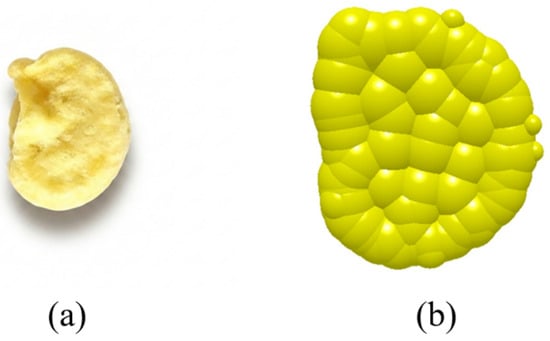
To obtain the parameters of pepper seeds, 1000 Jinluosi pepper seeds were randomly sampled (Figure 4a). The thousand-seed weight was 5.361 ± 0.209, with the average mass calculated from five equal groups. The triaxial dimensions (length × width × thickness) of an individual seed (Figure 4a) were 4.16 ± 0.15 × 3.50 ± 0.14 × 1.01 ± 0.19, measured from 50 seeds. The moisture content (%, dry) was 7.4 ± 0.47, determined by the 105 °C drying method [25]. Based on the mean triaxial dimensions, a 3D solid seed model was constructed in SolidWorks (2025) and refined with edge filleting to approximate actual geometry. The model was imported into EDEM (Altair), where the multi-sphere method generated the discrete-element particle model. The number of spheres was selected by balancing geometric fidelity and computational efficiency. Based on the preliminary comparison among models containing 69, 86, and 105 spheres, the 86-sphere model (Figure 4b) provided an acceptable compromise between geometric accuracy and computational efficiency and was therefore adopted for the subsequent simulations.
Figure 4.
Chili pepper seeds: (a) real seed; (b) seed particle model.
Each model particle consisted of 86 spheres. (The seed property measurements described in this subsection were performed in October 2025).
The geometric accuracy of the multi-sphere seed model was further evaluated by comparing the simulated seed geometry with the measured morphology of the physical seeds. The length, width, and thickness dimensions of the 86-sphere model were 4.12, 3.47, and 0.97 mm, respectively, resulting in relative errors of 0.96%, 0.86%, and 3.96% when compared to the measured mean dimensions of pepper seeds.
2.2.2. Calibration and Measurement of Model Parameters of the Pepper Seed Model
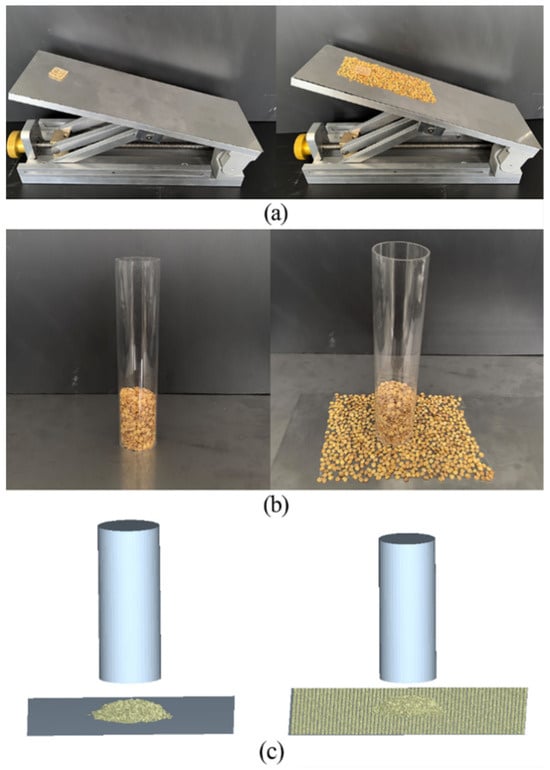
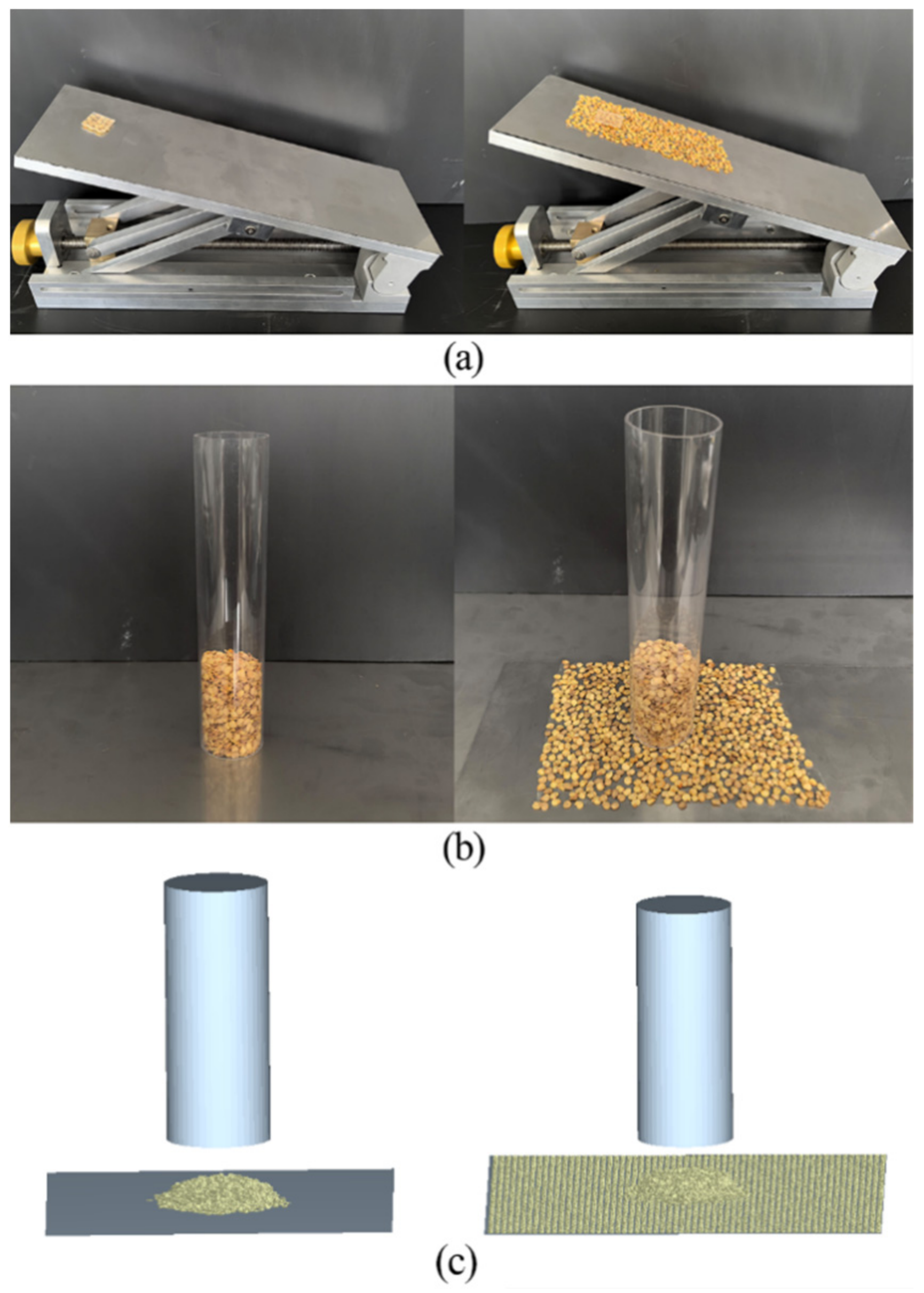
For contact parameters, the inclined plane method was used to determine static friction coefficients among seeds and between seeds and the steel interface (Figure 5a). The critical sliding angles were recorded using an angle meter to calculate the coefficients. The rolling friction coefficient of irregular seeds is difficult to measure, and thus, it was calibrated using the cylinder lifting test. Utilizing a No. 45 steel plate and a base covered with a pepper seed cushion layer, the actual physical angles of repose for the seed–steel interface and the seed–seed interface were respectively measured (Figure 5b). Taking the physical angles of repose as calibration benchmarks, corresponding virtual testing using the cylinder lifting method was established in the EDEM (2022) software (Figure 5c). The measured and simulated angles of repose were compared quantitatively to evaluate the calibration of the rolling friction coefficients. For the seed–steel contact, the measured angle of repose was 31.4°, while the corresponding simulated value was 30.6°, giving a relative error of 2.55%. For the seed–seed contact, the measured and simulated values were 34.7° and 33.9°, respectively, with a relative error of 2.31%. Each physical and numerical test was repeated 3 times, and the mean value was used for parameter calibration. The calibrated rolling friction coefficients were accepted when the relative error between the simulated and measured angles of repose was below 5%. The physical contact-parameter measurements, including the inclined-plane method and the cylinder-lifting angle-of-repose tests described in this subsection, were obtained in October 2025.
Figure 5.
Model parameter measurements and simulations: (a) inclined-plane method; (b) cylinder-lifting physical tests for measuring angle of repose of pepper seeds on a steel base and a seed-covered base; (c) simulations of the tests of angle of repose on a steel base and a seed-covered base.
2.2.3. Establishment of the DEM-CFD Gas–Solid Coupling Simulation Model
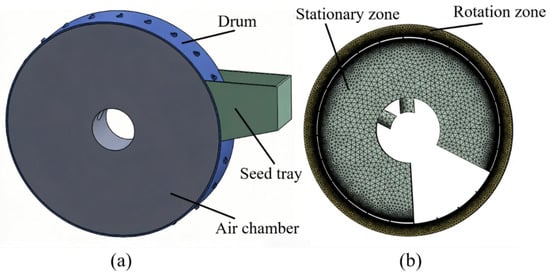
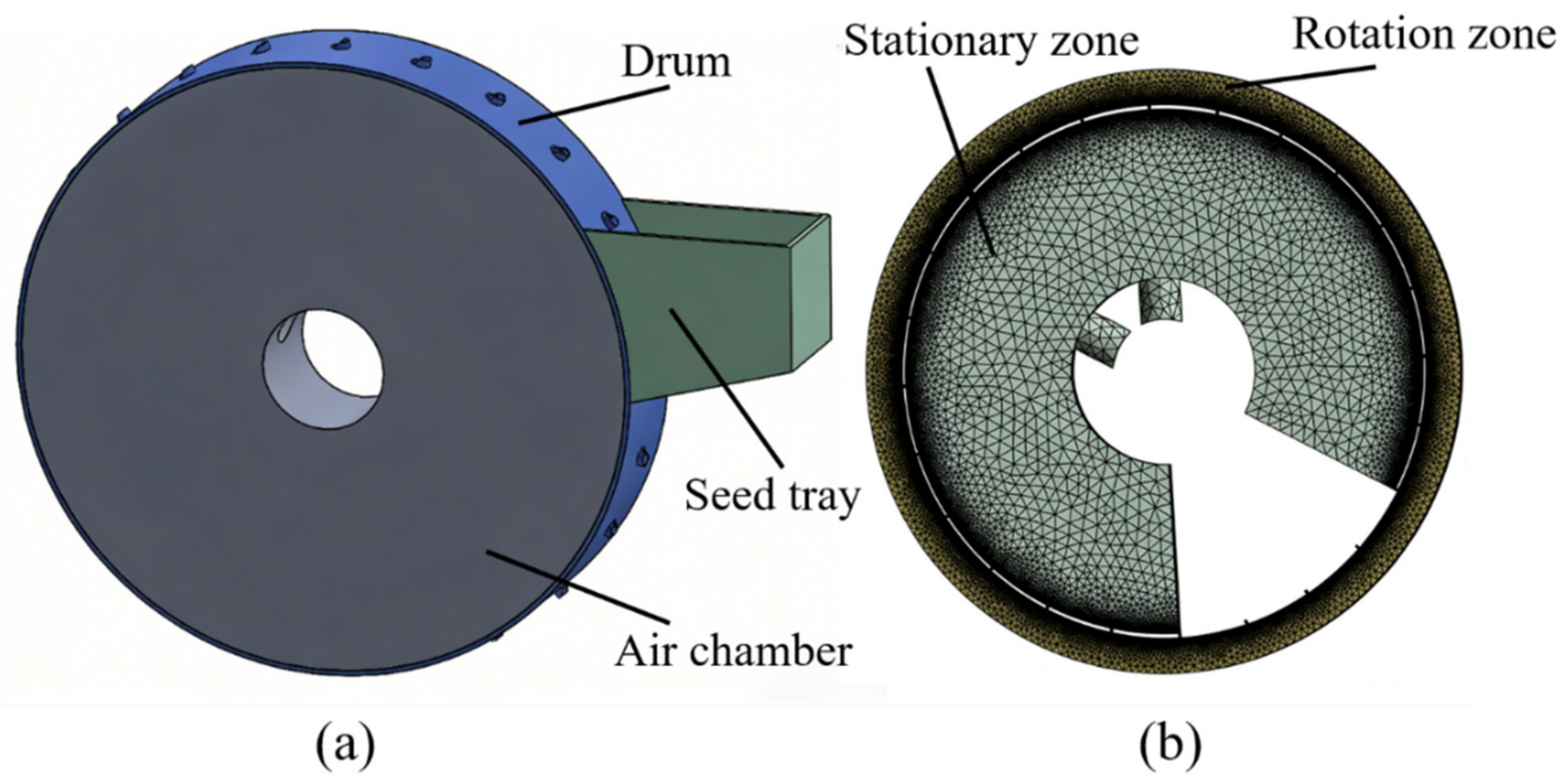
To enhance computational efficiency, the 3D model of the seed-metering drum was simplified to include a single row of suction holes (Figure 6a). This model was imported into EDEM to configure kinematic parameters, including rotational speed and timing. The internal fluid domain was extracted and imported into Fluent (Ansys) for pre-processing and meshing. The sliding-mesh method divided the domain into stationary and rotating zones, with their contact boundary defined as an interface for real-time data exchange [26]. To reproduce the vacuum-cutoff mechanism of the metering drum, the stationary zone boundary (270–300°, seed-dropping zone) was set as a no-slip wall, replicating seed dropping under zero negative pressure. The fluid domain was discretized with unstructured tetrahedral meshes (Figure 6b). Local refinement was applied at the interface (0.5 mm) and suction holes (0.15 mm), Fluent fixed time step = 0.001 s, total 5000 steps, total simulation duration = 5.0 s, and preliminary simulations were conducted using a simulation duration of 5 s to assess the simulation setup. For the formal simulation experiments, the seeding rate was set to 1200 trays/h, and the simulation was continued until the equivalent of five trays had been seeded. EDEM time step = 1 × 10⁻⁵ s, and the coupling method is bidirectional coupling. RNG k-ε turbulence model with standard wall functions (SWF), with default settings elsewhere [27].
Figure 6.
Model of seed-metering drum: (a) simplified drum structure with a single row of suction holes; (b) grid division.
After importing the seed particle and coupling simulation models into EDEM, a particle factory was configured above the seed hopper. This ensured that the generated particle stacking height matched actual physical operating conditions, completing the discrete element simulation model of the seed-metering device. The DEM-CFD coupling model was established, and all gas–solid coupling simulations, including the internal flow-field verification and the quadratic orthogonal rotational simulation runs, were carried out in November 2025.
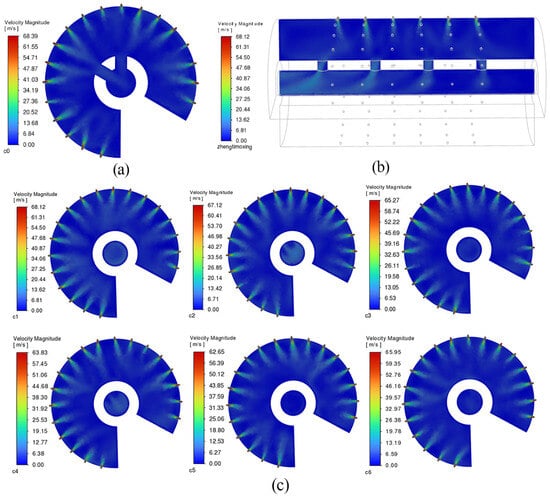
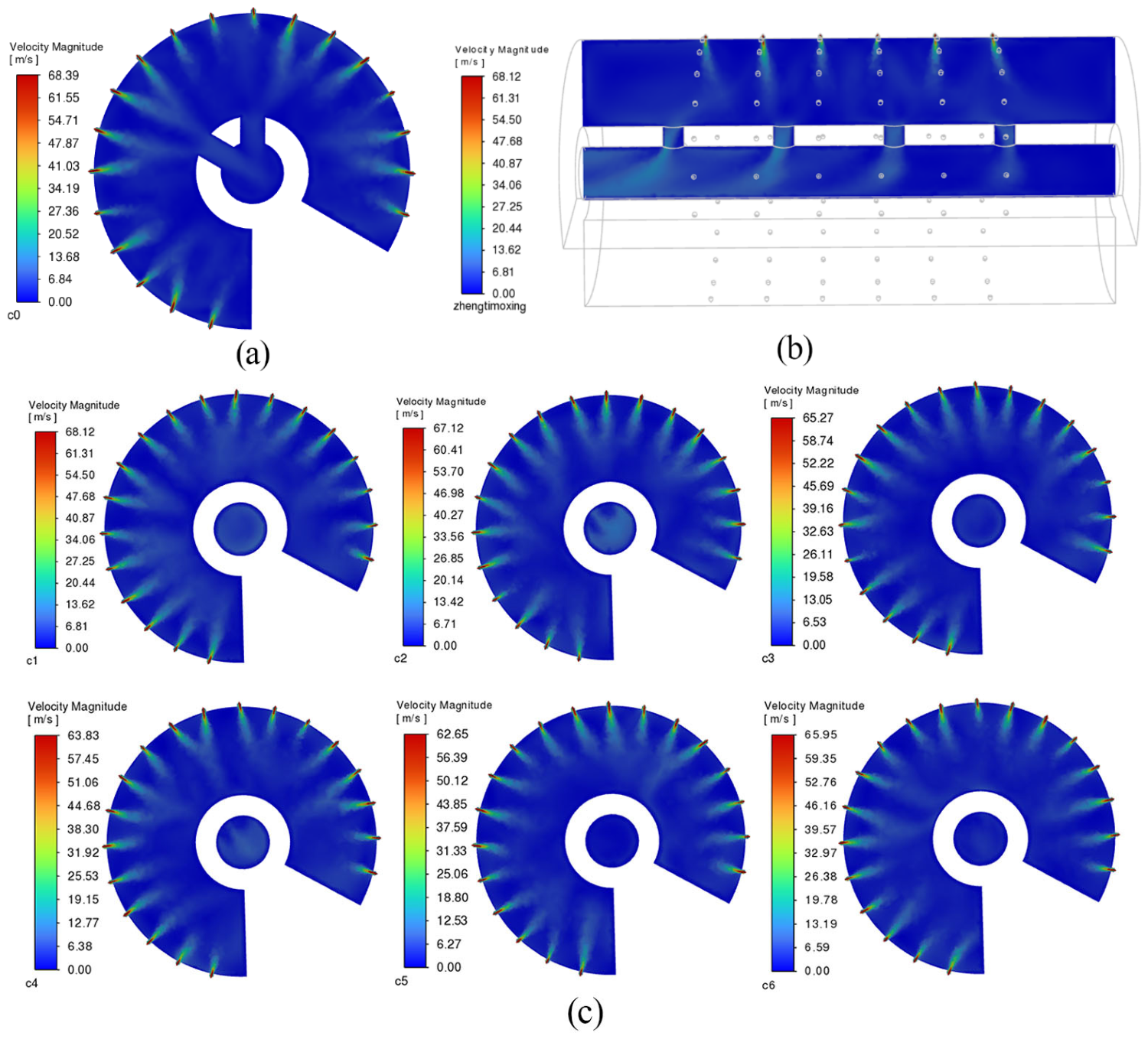
To verify the feasibility of the simplified model with a single row of suction holes, a CFD analysis of the internal flow field was conducted. The maximum airflow velocity reached 68.39 m/s in the simplified single-row model (Figure 7a) and 68.12 m/s in the complete seed-metering drum model (Figure 7b). Moreover, following the spatial order of distance from the negative-pressure outlet—from near to far—the flow field distribution profiles at the cross-sections of each row of suction holes were sequentially extracted (Figure 7c).
Figure 7.
Flow field from CFD simulations for verifications: (a) cross-section of the simplified model of a single row of suction holes; (b) complete seed-metering drum model; (c) flow field distribution at six cross-sections of the complete model, from the section nearest to the negative-pressure outlet to the section farthest away in succession.
Comparison between Figure 7a and Figure 7b reveals that the global maximum airflow velocity of the simplified model is slightly higher than the maximum velocity at each suction hole cross-section of the complete model; nevertheless, the flow field characteristics and distribution trends between the two models remain highly consistent. In-depth analysis of flow fields in Figure 7c shows higher airflow velocity at the drum ends than in the middle, with a slight overall downward trend, due to the frictional pressure drop that occurs as the airflow travels along the tube wall and central axis of the vacuum shaft in the complete model. Although the simplified model’s global maximum velocity slightly exceeds that of the complete model, the suction stability is primarily dictated by the local flow field at the suction hole inlets. Thus, local negative pressure and average velocity at the inlets of suction hole were extracted for quantitative comparisons.
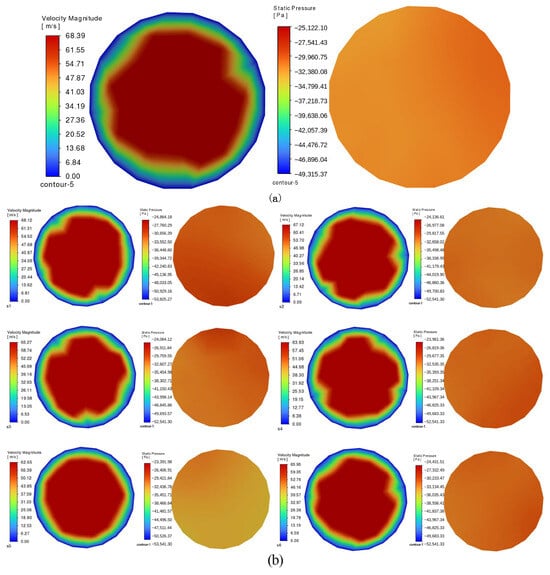
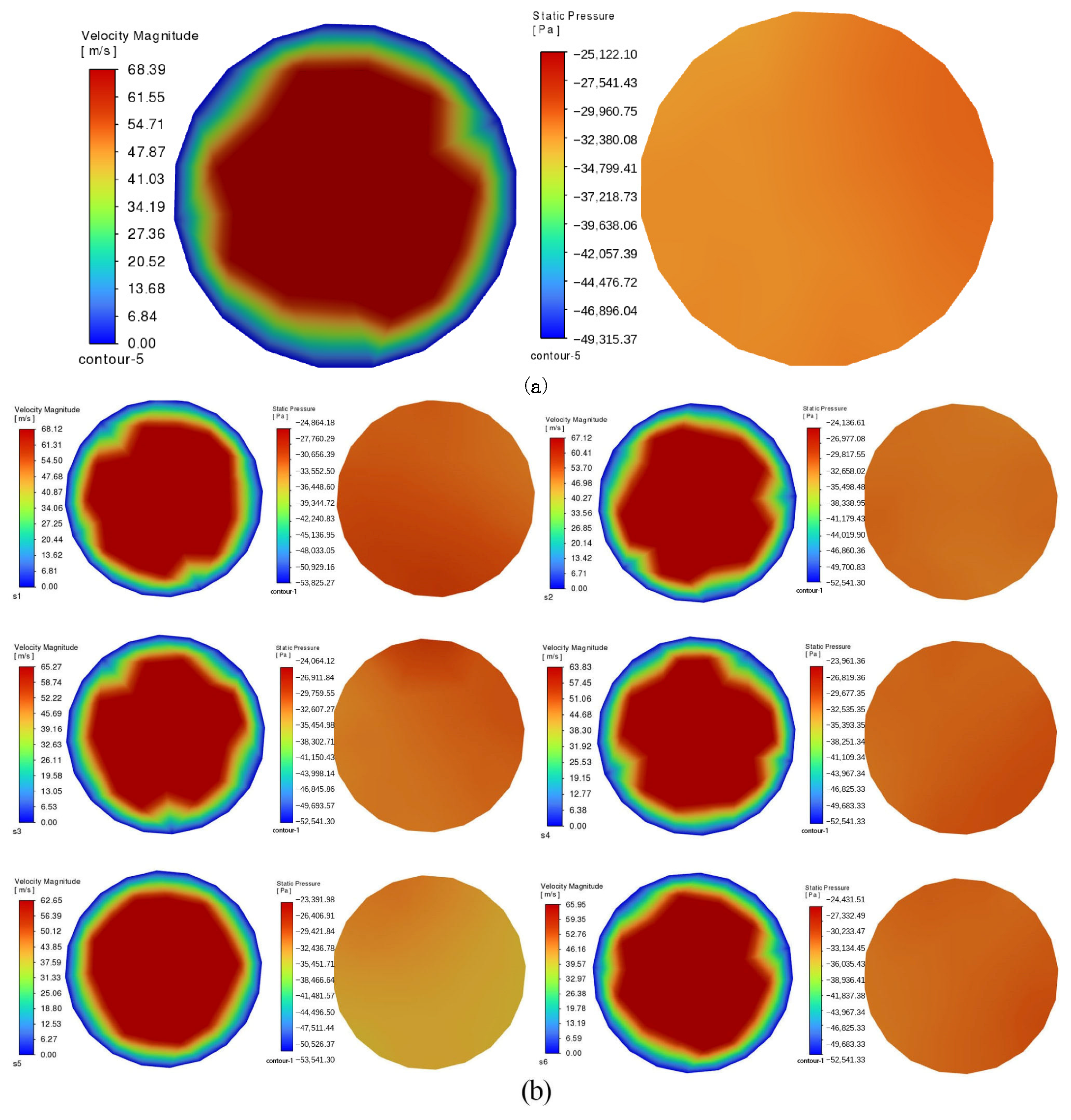
Comparing the suction hole velocity and pressure characteristics between the simplified and complete models, as shown in Figure 8, the maximum airflow velocity is 68.39 m/s for the simplified model and 65.49 m/s for the complete model. The relative errors for maximum velocity (4.24%) and average maximum pressure (3.90%) are both well within 5%. Additionally, the airflow velocity at the vacuum-cutoff baffle zone is 0 m/s for both models, perfectly matching the air-cutoff state observed in physical bench tests [28]. In conclusion, the simplified model can achieve high-precision numerical simulation of the flow field, while enhancing the computational efficiency of the simulation. Consequently, the subsequent gas–solid coupling simulations were all carried out based on this simplified model.
Figure 8.
Velocity and pressure contours at the suction holes of the seed-metering drum: (a) the simplified model of a single row of suction holes; (b) the complete model of the drum, from the section nearest to the negative-pressure outlet to the section farthest away in succession.
In addition to comparing the global maximum airflow velocity, representative suction-hole locations were selected at the positions near the vacuum outlet, in the middle section, and far from the outlet. The local pressure and velocity distributions at these positions were compared between the simplified and complete drum models. As shown in Table 1, the relative differences in local pressure and velocity were 0.87–1.25% and 1.00–1.68%, respectively. The comparison showed that the simplified model reproduced the local aerodynamic characteristics of the complete drum with acceptable accuracy, particularly at the suction-hole inlets that directly determine seed-retention performance. Therefore, the simplified model was considered suitable for the subsequent DEM-CFD simulations.
Table 1.
Average pressure and speed of representative suction holes.
2.3. Seed-Filling Performance Optimization
To optimize geometry and working parameters and enhance performance, the seed-metering device was evaluated through simulations, following the GB/T 6973-2005 “Testing methods of single seed drills (precision drills)” standards. Negative suction pressure, suction-hole diameter, and seed-carrying plate height were selected as affecting factors. The performance indices used were single-seed qualification rate (A1), miss-filling rate (A2), and multiple-filling rate (A3), and they were calculated as follows:
where n1, n2, n3, and N represent the number of qualified single-seed holes, miss-filled holes, multiple-filled holes, and total tested holes, respectively [29].
Using a quadratic orthogonal rotational composite design, the seed-metering device was systematically optimized through multiple regression analysis, response surface methodology (RSM), and multi-objective optimization. A response surface methodology was applied to the optimization of agricultural machinery components, allowing estimation of the effects of geometric and operating parameters simultaneously and verification of the design solutions experimentally [30]. To ensure a consistent evaluation baseline, identical seed quantities were allocated to each simulation group [18]. Based on kinetic analysis and CFD-DEM pre-simulations, the affecting factor ranges were determined: the negative suction pressure range of 24.3–26.7 kPa was determined based on preliminary seed-retention tests and CFD-DEM simulations. Preliminary simulations indicated that negative pressures below approximately 24.3 kPa resulted in a substantial increase in miss-filling because the aerodynamic suction force was insufficient to maintain stable seed attachment. Conversely, pressures above approximately 26.7 kPa increased the probability of multiple filling because the stronger airflow enlarged the effective suction region and facilitated the simultaneous capture of neighboring seeds. Therefore, 24.3–26.7 kPa was selected to cover the transition from insufficient seed retention to excessive suction while maintaining a practical operating range for the investigated seed-metering device. The suction-hole diameter was 0.3–0.5 mm, and the seed-carrying plate height was 0.1–0.3 mm. According to the factors and levels defined in Table 2, the quadratic orthogonal rotational simulation was performed via the DEM-CFD platform.
Table 2.
Factors and levels of quadratic orthogonal rotational composite design used in simulations.
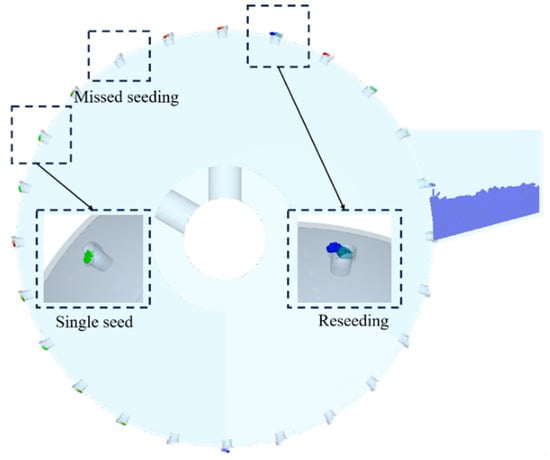
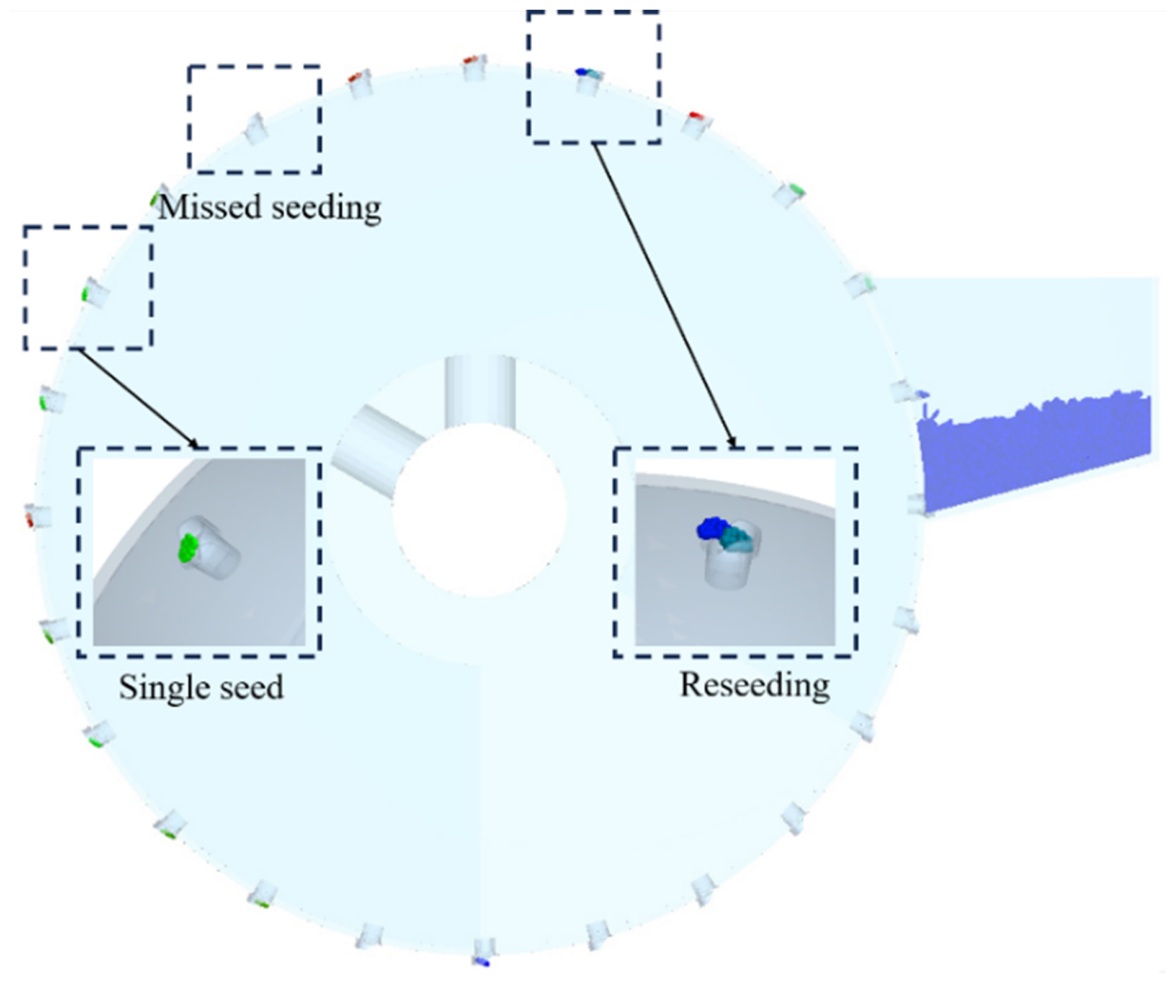
In the simulations, the metering-drum speed was set for a target efficiency of 1200 trays/h. The number of seeds sown for five trays was simulated each time, and the simulation was repeated three times. Single-seed qualification, miss-filling, and multiple-filling rates were recorded. Negative suction pressure was adjusted to the target value using a vacuum valve and gauge. The simulated seed-filling process is illustrated in Figure 9.
Figure 9.
Simulation of the seed-filling process.
2.4. Bench Verification Tests
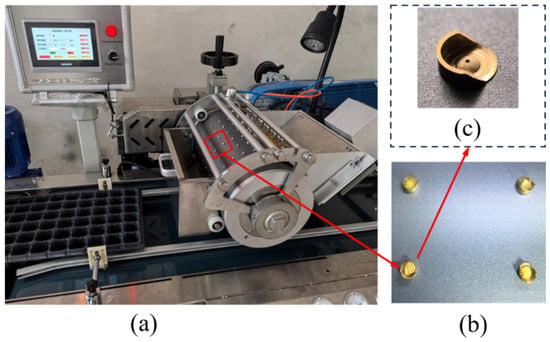
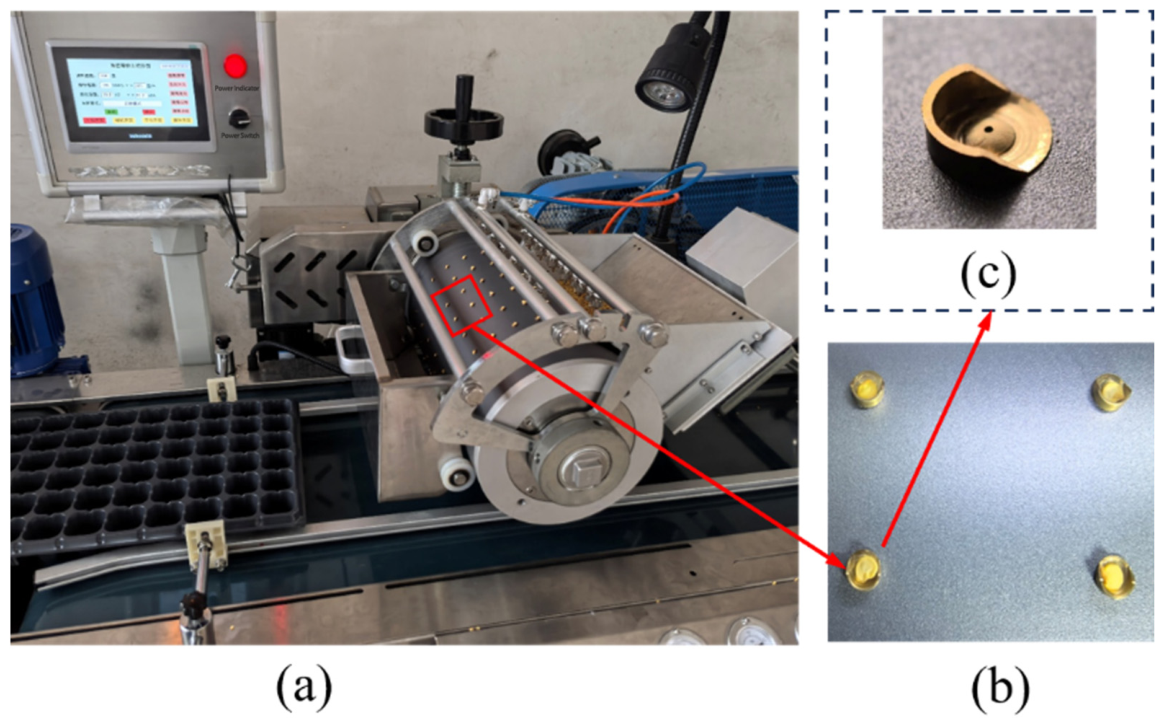
To verify the DEM-CFD coupling model and performance optimization, bench tests were conducted at South China Agricultural University in March 2026. Jinluosi pepper seeds were pre-screened for uniform moisture content and quality. The test platform (Figure 10) used a 2BP-1200A pneumatic seeder (Hebei Kairuote Machinery Manufacturing, Baoding, China), a vacuum generator, and other custom components, with negative pressure monitored by a high-precision gauge.
Figure 10.
Bench test setup: (a) seeding machine; (b) seed suction effect; (c) seed cap.
In the tests, the experimental factors were the negative suction pressure, suction-hole diameter, and seed-carrying plate height, for which the optimal values were obtained from the optimization results of the DEM-CFD coupled simulations. The seeding efficiency was set to 1200 trays/h. Five plug trays were seeded continuously in each test group, with three repetitions. The rates of single-seed qualification filling, miss-seed filling, and multiple-seed filling during the seed-filling process, as well as the re-seeding rate and miss-seeding rate during the seeding process were measured. Each measurement was replicated three times, and the average values were taken as the final experimental results [31].
3. Results and Discussion
3.1. Calibration and Measurement Results of Model Parameters
The contact interface material used for the seed-metering device in this study is completely identical to that of the apparatus in the literature (both are No. 45 steel). In the discrete element simulation model, the physical property parameters of the pepper seeds and the coefficients of restitution between the contact materials were adopted from the cited literature [32]. These specific parameters and those obtained from this study for seeds, steel, seed–seed, and seed–steel are summarized in Table 3.
Table 3.
Properties of pepper seeds and simulation parameters of pepper seeds and steel plates.
3.2. Simulation Results of Seed-Filling Performance
Table 4 presents the results of the three-factor (negative suction pressure, seed-carrying plate height, and suction-hole diameter), five-level quadratic orthogonal rotational simulation runs. When all factors are at their central levels (the combination of coded value 0 in Table 2), the single-seed qualification rate reaches its peak, significantly outperforming the other combinations. Simultaneously, both miss-filling and multiple-filling rates are minimized, indicating optimal metering performance.
Table 4.
Results from the quadratic rotational orthogonal combination simulation runs.
Although the factor settings were identical for the replicated center-point simulations, the single-seed qualification rate varied from 92.13% to 98.61%. This variation originated mainly from the stochastic nature of the DEM seed-feeding process. The initial seed arrangement, seed orientation, inter-seed contact state, and instantaneous seed–cap contact conditions differed between repetitions, resulting in different seed trajectories and suction outcomes.
3.3. Relationships Between Performance Indices and Affecting Factors
Based on the response surface results, multiple quadratic nonlinear regression models were established using Design-Expert 13 (2021) software to correlate the single-seed qualification filling (A1), the miss-filling rate (A2), and the multiple-filling rate (A3) with the affecting factors: negative suction pressure (X1), the height of the seed-carrying plate on the seed cap (X2), and the suction-hole diameter (X3). Analysis of variance (ANOVA) and significance tests for the regression coefficients were also performed. The detailed analysis results are described below.
3.3.1. Single-Seed Qualification Rate A1
Table 5 summarizes the ANOVA for the single-seed qualification rate (A1). The model is highly significant (p < 0.01), while the lack-of-fit is insignificant (p > 0.05), indicating a good fit without distortion. Among coefficients, linear terms (X1, X2, X3) are insignificant; however, is significant (p < 0.05), and are highly significant (p < 0.01). This suggests that the response surface is convex with a clear peak, confirming an optimal parameter combination. All linear terms were retained to ensure model hierarchy and integrity. The final quadratic regression equation is:
A1 = −7265.59 + 525.29X1 + 1224.19X2 + 2648.15X3 − 36.67X1X2 − 67.50X1X3 − 116.00X2X3 − 9.61X12 − 596.91X22 − 1128.91X32
Table 5.
ANOVA table of the regression model of the single-seed qualification rate A1.
Furthermore, the interaction between negative suction pressure and suction-hole diameter (X1X3) was significant (p = 0.0416), whereas the interaction between seed-carrying plate height and suction-hole diameter (X2X3) was not significant (p = 0.7650). This difference can be interpreted from the distinct physical mechanisms associated with the three factors. Negative suction pressure and the suction-hole diameter jointly determine the magnitude and effective area of the aerodynamic suction acting on the seed. Therefore, changing the hole diameter can modify the response of seed retention to the applied negative pressure, resulting in a significant X1X3 interaction.
In contrast, within the investigated range, the seed-carrying plate mainly provides a geometric constraint and direct mechanical support in the tangential direction. Changing its height modifies the degree of mechanical restriction, but its interaction with suction-hole diameter was not statistically significant in the present experimental domain. This result indicates that no detectable combined effect between X2 and X3 was identified within the tested range; it does not imply that the mechanical supporting force is strictly constant or independent of the instantaneous seed-contact position.
Thus, the statistical results and the mechanical interpretation are consistent in showing that the aerodynamic parameters have a stronger coupled effect on seed retention, whereas the carrying-plate height primarily acts through its individual mechanical constraint effect within the investigated range.
3.3.2. Miss-Filling Rate A2
Table 6 presents the ANOVA for the miss-filling rate (A2) regression model. The model is highly significant (p < 0.01), confirming its validity, with an insignificant lack-of-fit (p > 0.05), indicating excellent goodness of fit. Among the coefficients, all linear (X1, X2, X3) and quadratic terms () are highly significant (p < 0.01), whereas all interaction terms (X1X2, X1X3, X2X3) are insignificant. This implies that within the established range of experimental parameters, the impact mechanisms of each factor on the miss-filling rate are independent of one another, with no significant coupling interaction effects. The final optimized regression equation for the miss-filling rate A2 is obtained as follows:
A2 = 3934.39 − 285.50X1 − 324.99X2 − 787.66X3 + 3.92X1X2 + 7.75X1X3 + 93.00X2X3 + 5.39X12 + 406.1X22 + 637.60X32
Table 6.
ANOVA table of the regression model for the miss-filling rate A2.
3.3.3. Multiple-Filling Rate A3
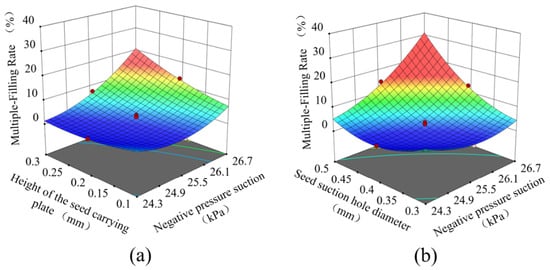
Table 7 presents the ANOVA for the multiple-filling rate (A3) regression model. The model is highly significant (p < 0.01), confirming its reliability, with an insignificant lack-of-fit (p > 0.05), indicating excellent goodness of fit. Among the coefficients, all linear (X1,X2,X3) and quadratic terms () are highly significant (p < 0.01), while is significant (p < 0.05), indicating a notable nonlinear influence. For interaction effects, X1X2 is significant (p < 0.05), X1X3 is highly significant (p < 0.01), whereas X2X3 is insignificant. The final optimized regression equation for the multiple-filling rate A3 is established as follows:
A3 = 3430.95 − 239.72X1 − 901.44X2 − 1862.76X3 + 32.83X1X2 + 59.83X1X3 + 23.00X2X3 + 4.22X12 + 190.98X22 + 491.48X32
Table 7.
ANOVA table of the regression model for the multiple-filling rate A3.
3.4. Effects of Various Factors on Seed-Filling Performance Indices
3.4.1. Rate of Single-Seed Qualification Filling
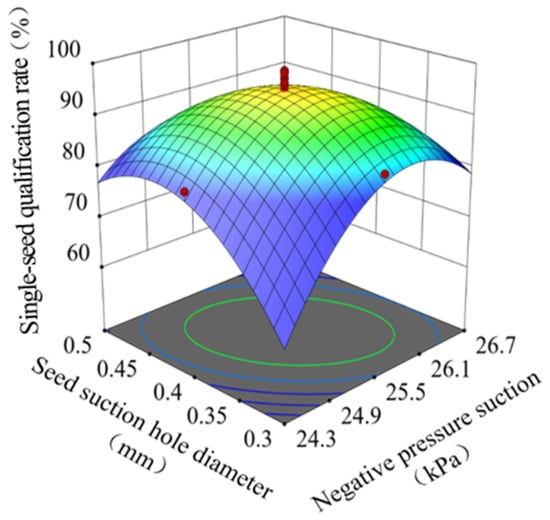
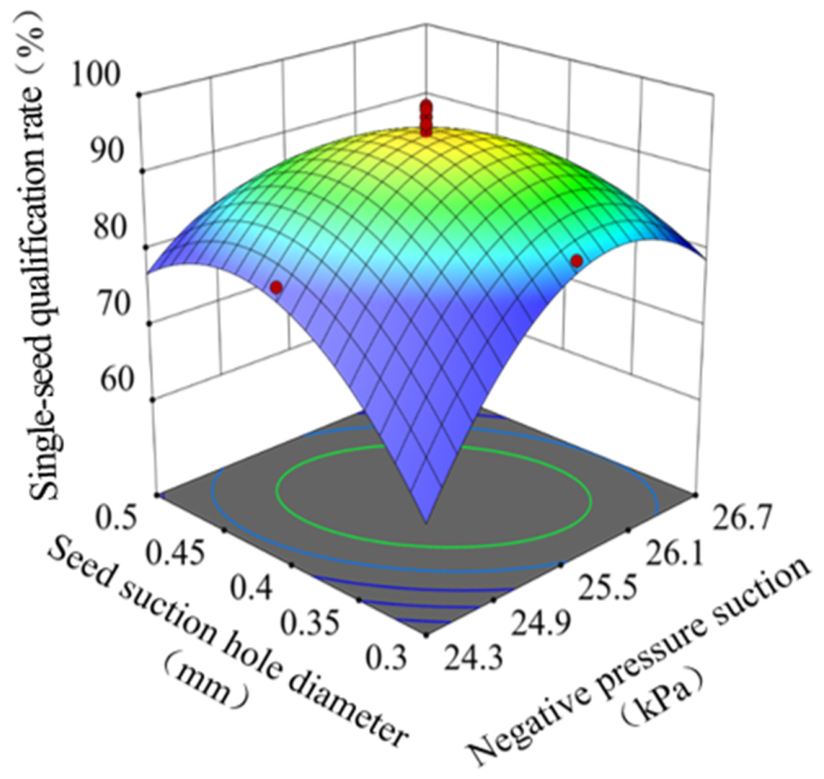
Based on the ANOVA results, the interaction term between negative suction pressure and suction-hole diameter (X1X3) has a significant interaction effect on the single-seed qualification filling (A1). The corresponding 3D response surface is illustrated in Figure 11.
Figure 11.
The influence of factors on the single-seed qualification rate at a fixed plate height (0.2 mm).
With fixed hole diameter, the single-seed qualification rate (A1) shows an inverted U-shaped trend with negative pressure: low pressure causes miss-filling due to insufficient suction; moderate pressure optimizes A1; and excessive pressure triggers multiple-filling, causing A1 to drop. Similarly, with fixed pressure, A1 follows an inverted U-shaped trend with hole diameter: small holes limit the suction area, causing miss-filling; moderate diameters optimize A1; and excessively large holes increase the seed-contact area, inducing multiple-filling and reducing A1.
3.4.2. Miss-Filling Rate
Based on the ANOVA results, none of the interaction terms is statistically significant (X1X2, X1X3, X2X3), whereas all linear and quadratic terms are highly significant (p < 0.01). This indicates that within the established range of parameters, no statistically detectable interaction effect was identified among the three factors. This result does not prove that the factors are physically independent; rather, it indicates that their combined effects were not sufficiently strong to reach statistical significance under the present experimental design.
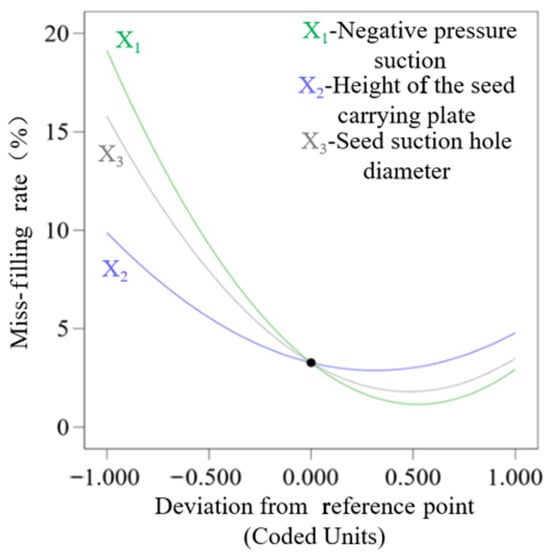
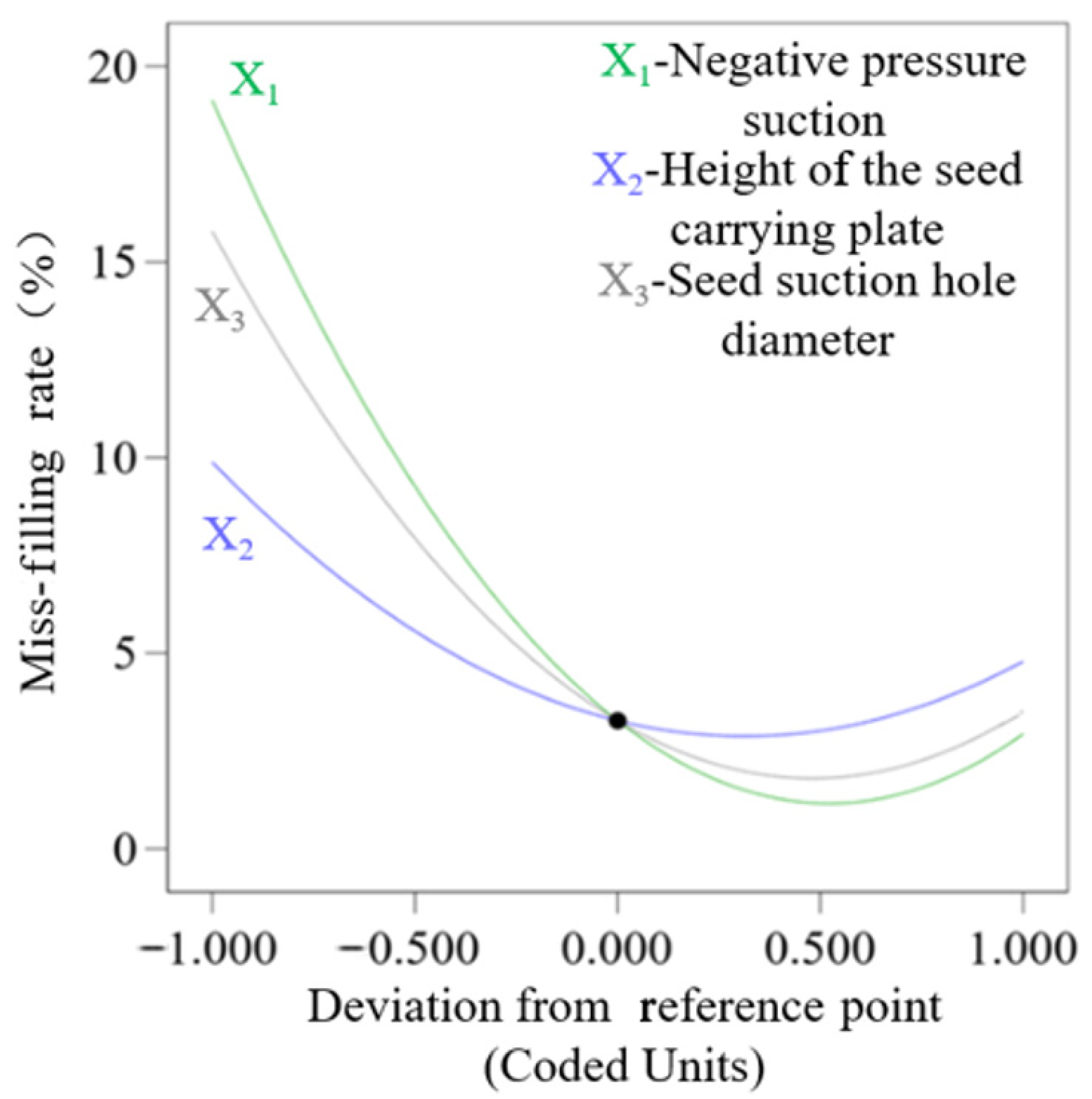
The significant linear and quadratic terms indicate that each factor independently contributes to the variation in the miss-filling rate, while the absence of significant interaction terms suggests that the response can be adequately represented by the main and quadratic effects within the investigated range. The influence and sensitivity degrees of each single factor on A2 can be analyzed through a perturbation plot (Figure 12).
Figure 12.
Diagram of factors influencing the miss-filling rate.
All three perturbation curves exhibit typical upward-opening U-shaped characteristics. The negative suction pressure (X1) has the highest F-value (93.65), indicating the most sensitive impact on A2. Mechanistically, negative pressure drives seed capture; initially, increasing pressure significantly reduces A2. Beyond the central level (coded value 0 in Table 2), the downward trend slows, followed by a slight rebound. The other factors show a consistent pattern of initial decrease followed by a slow increase. Notably, the three curves intersect near the origin (coded level 0), geometrically and statistically implying that an optimal parameter combination near the central point minimizes A2.
3.4.3. Multiple-Filling Rate
According to the ANOVA results for the multiple-filling rate (A3), both the interaction term between negative suction pressure and seed-carrying plate height (X1X2) and the interaction term between negative suction pressure and suction-hole diameter (X1X3) are highly significant (p < 0.01), indicating prominent synergistic coupling effects of these interacting factors on A3 [33]. The corresponding 3D response surfaces are illustrated in Figure 13a,b.
Figure 13.
The influence of factors on the multiple-filling rate: (a) X1X2; (b) X1X3. X1 is negative pressure suction; X2 is height of the seed-carrying plate; X3 is seed suction-hole diameter.
As observed from Figure 13a, when the suction-hole diameter is fixed at the central level (i.e., 0.4 mm), a distinct valley (optimal minimum value) emerges on the response surface of A3 within the range of the seed-carrying plate height from 0.1 to 0.3 mm and the negative suction pressure from 24.3 to 26.7 kPa. Under a constant seed-carrying plate height, A3 exhibits a U-shaped trend of initially decreasing and then increasing as the negative suction pressure intensified; conversely, when the negative suction pressure is fixed, A3 demonstrates a slow upward trend with the increase in the seed-carrying plate height.
Similarly, as shown in Figure 13b, when the seed-carrying plate height is fixed at the central level (i.e., 0.2 mm), a minimum value for A3 also exists within the domains of suction-hole diameter (0.3–0.5 mm) and negative suction pressure (24.3–26.7 kPa). If the suction-hole diameter is fixed, the multiple-filling rate displays the same trend of first decreasing and then increasing with the rise of negative suction pressure; under a fixed negative suction pressure, A3 likewise follows a nonlinear “decrease-then-increase” trend as the suction-hole diameter expands. In summary, when a non-interacting factor is fixed, the interaction terms between negative suction pressure and seed-carrying plate height (X1X2) and between negative suction pressure and suction-hole diameter (X1X3) both enable A3 to reach a global minimum within the parameter domain. This phenomenon fully demonstrates that by reasonably matching the aerodynamic pressure with the mechanical restriction dimensions, the aggregation of multiple seeds can be effectively suppressed, thereby achieving the optimization goal of precision seed-metering.
3.5. Multi-Objective Parameter Optimization and Solution
To obtain the optimal working parameter combination within the target parameter domain, a multi-objective optimization criterion was formulated based on the established regression models. The optimization aimed at maximizing the single-seed qualification filling rate while minimizing the miss-filling and multiple-filling rates. Through incorporating the actual physical boundary conditions of each experimental factor, the optimal parameter combination was solved using the Numerical Optimization module of the Design-Expert 13 software. The optimized model is:
The results showed that with a negative suction pressure of 25.5 kPa, seed-carrying plate height of 0.2 mm, and suction-hole diameter of 0.4 mm, the seeder achieved the best seed-filling performance where the single-seed qualification rate was 94.94%, the miss-filling rate was 3.05%, and the multiple-filling rate was 2.01%.
3.6. Bench Validation Test Results and Analysis
3.6.1. Comparisons Between Simulation Optimization and Bench Test Values
The results of the seed-filling performance tests showed that with the seed cap installed, the actual single-seed qualification, miss-filling, and multiple-filling rates were 95.00%, 2.87%, and 2.13%, respectively. Its comparisons with the optimized values from simulation are shown in Table 8.
Table 8.
Comparison of the optimized performance indices from simulations with those from the bench test.
As shown in Table 8, under the optimal parameters, the bench test indices highly matched the simulated values, with relative errors all below 10% [34]. The relative errors of the miss-filling rate and multiple-filling rate were 6.27% and 5.63%, respectively. To further explain these deviations, the positive-pressure cleaning nozzle was monitored during the bench tests. The measured pressure fluctuated within 13.68–14.12 kPa, corresponding to a pressure fluctuation of approximately 3.17%. Such fluctuations can alter the local aerodynamic force acting on seeds during the cleaning process and consequently affect the final filling classification.
In addition to pneumatic fluctuations, several physical factors were not explicitly represented in the DEM-CFD model. These include the individual variation in seed morphology and mass, small differences in seed orientation at the suction hole, surface roughness and possible wear of the drum wall, and the stochastic nature of seed–seed and seed–wall contacts. These factors are difficult to reproduce identically in numerical simulations and may contribute to the observed differences between the simulated and experimental results. Therefore, the deviations of 6.27% and 5.63% are considered to arise from the combined effects of pneumatic fluctuations, seed variability, and model idealization rather than from a single error source. This verification confirms the accuracy and reliability of the established regression optimization model.
3.6.2. Seeding Performance Comparison Before and After Optimization
To verify the seeding performance improvement by the seed-carrying plate feature, comparative bench tests were conducted at five negative suction pressures (24.3, 24.9, 25.5, 26.1, and 26.7 kPa), with a suction-hole diameter of 0.4 mm and a target seeding efficiency of 1200 trays/h. Five seed trays were planted, and the process was repeated three times. The results are presented in Table 9.
Table 9.
Comparison of seeding performance before and after optimization of hats.
As shown in Table 9, the carrying-plate seed cap consistently achieved a higher single-seed qualification rate (A1) and lower miss-seeding (A2) and multiple-seeding rates (A3) than the conventional seed cap across all tested pressures. At 25.5 kPa, A1 increased from 90.60% to 95.09%, an improvement of 4.49 percentage points, which is equal to 4.96% relative increase. While A2 and A3 decreased by 2.06 and 2.43 percentage points, respectively.
The advantage of the carrying-plate structure was more pronounced at lower negative pressures. At 24.3 kPa, A1 increased by 8.09 percentage points, while A2 and A3 decreased by 5.94 and 2.15 percentage points, respectively. These results indicate that the carrying plate improves seed retention and reduces missed and multiple seeding across the tested pressure range. The best overall performance was obtained at 25.5 kPa, with A1, A2, and A3 reaching 95.09%, 3.06%, and 1.85%, respectively. In contrast, by incorporating the seed-carrying plate structure, the novel seed cap introduces a mechanical lifting force that breaks the traditional extreme reliance on “forced high-negative-pressure suction”. This advancement enables the seeder to retain seeds stably within a moderate and optimal negative pressure range, avoiding the occurrence of multiple seeding from the root of aerodynamic and mechanical coupling.
4. Conclusions
To address the low seeding accuracy of pneumatic drum seeders caused by the irregular shape and poor mobility of small pepper seeds, a novel seed cap incorporating a seed-carrying plate was developed. Mechanical analysis demonstrated that the seed-carrying plate provides additional tangential support to the seeds, thereby reducing their dependence on high negative suction pressure during seed carrying. This design effectively mitigates multiple filling induced by excessive suction pressure while reducing seed slipping and miss-filling during the seed-filling process. The DEM–CFD simulation results showed that the interaction between negative suction pressure and suction-hole diameter (X1X3) significantly affected the single-seed qualification rate. For the miss-filling rate, the interaction terms X1X2, X1X3, and X2X3 were not statistically significant within the investigated parameter range. In contrast, for the multiple-filling rate, X1X2 and X1X3 were significant, whereas X2X3 was not significant. Multi-objective optimization based on nonlinear regression models identified the optimal operating parameters as a negative suction pressure of 25.5 kPa, a seed-carrying plate height of 0.2 mm, and a suction-hole diameter of 0.4 mm. Bench validation demonstrated a single-seed qualification filling rate of 95.09%, a miss-filling rate of 3.06%, and a multiple-filling rate of 1.85%, all in close agreement with the simulation predictions. Compared with the conventional seed cap, the proposed design increased the single-seed qualification filling rate by 4.49% while reducing the miss-filling and multiple-filling rates by 2.06% and 2.43%, respectively. These results confirm the effectiveness of the proposed seed-cap design and demonstrate the reliability of the DEM–CFD-based optimization approach for improving precision seeding performance. The present study was conducted using Jinluosi pepper seeds, and the applicability of the optimized structural parameters to other small, irregularly shaped seeds remains to be verified.
Author Contributions
S.Y.: Writing—original draft and Conceptualization and Data curation. C.X.: Methodology and Writing—original draft. Y.H.: Writing—original draft and Formal analysis. X.C.: Writing—review & editing and Investigation. C.L.: Resources and Writing—review & editing. L.Q.: Project administration and Writing—review & editing. H.G.: Writing—review & editing and Conceptualization and Project administration. All authors have read and agreed to the published version of the manuscript.
Funding
This research was funded by the National Key R&D Program of China (Grant No.: 2024YFD2000601).
Data Availability Statement
The original contributions presented in this study are included in the article. Further inquiries can be directed to the corresponding author.
Conflicts of Interest
The authors declare no conflicts of interest.
References
- Bustos-Gaytán, A.S.; Saldaña-Robles, N.; Joya-Cárdenas, D.R.; Gutiérrez-Vaca, C.; Alfaro-Ayala, J.A.; Barco-Burgos, J.; Saldaña-Robles, A. Advancements in pneumatic seed-metering devices: A review of numerical and experimental approaches. Results Eng. 2025, 26, 105626. [Google Scholar] [CrossRef] [Scilit]
- Jiang, K.; Chen, T.E.; Chen, D.; Zhang, Q.; Cao, L.L. Research status and development trends of plug tray seeding technology and equipment. J. Agric. Mech. Res. 2026, 8, 292–300. [Google Scholar]
- Xu, G.L.; Yang, F.Z.; Zhao, S.; Sui, X.B.; Peng, Z.H.; Shen, X.T. Research status and development trend of air-suction seed dispenser. J. Chin. Agric. Mech. 2025, 46, 1–8. [Google Scholar]
- Xu, Y.J.; Wang, J.K.; Sheng, H.W.; Hu, F.; Qi, X.N. Experimental study on adsorption characteristics of small irregular seeds. J. Chin. Agric. Mech. 2024, 45, 25–32. [Google Scholar]
- Xu, J.; Sun, S.; He, Z.; Wang, X.; Zeng, Z.; Li, J.; Wu, W. Design and optimisation of seed-metering plate of air-suction vegetable seed-metering device based on DEM-CFD. Biosyst. Eng. 2023, 230, 277–300. [Google Scholar] [CrossRef] [Scilit]
- Bozdar, B.; Ahmed, N. Seed Pelleting Technologies: Paving the Way for Resilient and Sustainable Future Farming. Food Energy Secur. 2026, 15, e70193. [Google Scholar] [CrossRef] [Scilit]
- Zhao, X.S.; Hou, Z.Z.; Lyu, W.; Lu, C.; Yu, H.L.; Wei, Z.M. Design and test of a positive–negative pressure quinoa precision seed-metering device with a disturbed seed-filling mechanism. Int. J. Agric. Biol. Eng. 2024, 17, 131–144. [Google Scholar] [CrossRef] [Scilit]
- Liao, Y.T.; Liao, Q.X.; Wang, L.; Zheng, J.; Gao, L.P. Investigation on vacuum singulating effect influencing factors of pneumatic precision seed metering device for small particle size of seeds. Trans. CSAE 2018, 34, 10–17. [Google Scholar]
- Shi, S.; Liu, H.; Wei, G.J.; Zhou, J.L.; Jian, S.C.; Zhang, R.F. Optimization and experiment of pneumatic seed metering device with guided assistant filling based on EDEM-CFD. Trans. Chin. Soc. Agric. Mach. 2020, 51, 54–66. [Google Scholar]
- Ding, L.; Yang, L.; Wu, D.H.; Li, D.Y.; Zhang, D.X.; Liu, S.R. Simulation and experiment of corn air suction seed metering device based on DEM-CFD coupling method. Trans. Chin. Soc. Agric. Mach. 2018, 49, 10–18. [Google Scholar]
- Han, D.D.; Zhang, D.X.; Yang, L.; Li, K.H.; Zhang, T.L.; Wang, Y.X.; Cui, T. EDEM-CFD simulation and experiment of working performance of inside-filling air-blowing seed metering device in maize. Trans. Chin. Soc. Agric. Mach. 2017, 48, 19–26. [Google Scholar]
- Zou, Y.; Hao, X.Z.; He, R.Y. Numerical simulation and experiment of air-distribution seed-metering device based on coupled EDEM-Fluent. J. South China Agric. Univ. 2017, 38, 110–116. [Google Scholar]
- Li, B.H.; Li, H.; Qi, X.D.; Chen, X.; Ma, Y.L.; Wang, Y.J. Simulation and parameter optimization of seed metering device based on CFD-DEM. J. Intell. Agric. Mech. 2021, 2, 26–34. [Google Scholar] [CrossRef]
- Mei, Y.R.; Xie, F.P.; Wang, X.S.; Li, X.; Liu, D.W. Optimization design and experiment of tomato pneumatic roller type seed-metering device. J. Hunan Agric. Univ. (Nat. Sci. Ed.) 2022, 48, 730–736. [Google Scholar]
- Li, Y.J.; Liu, Y.Q.; Ning, Y.C.; Wu, H.X.; Zhao, Y.Q. Design and experiment of air-suction drum-type seedling seeder for irregular-shaped vegetable seeds. Sci. Rep. 2025, 15, 4694. [Google Scholar] [CrossRef] [Scilit] [PubMed]
- Wang, Z.W.; Chen, Y.; Adilet, S.; Wei, N.S.; Zhou, J.G.; Zhang, D.Y.; Jiang, Y.W.; Fan, Y.L.; Zhang, W.; Chen, J. Design and optimization of a combined seed cleaning mechanism for an air-suction seed metering device for small-seed crops with multi-seed hill. Sustainability 2026, 18, 4274. [Google Scholar] [CrossRef] [Scilit]
- Zhang, H.X.; Zhang, Y.D.; Han, C.; Tang, J.J.; Zhang, D.P.; Zhu, C. Design and experiment of straw roller type eggplant seed metering device. J. Agric. Mech. Res. 2025, 47, 166–170. [Google Scholar]
- Mamatov, F.; Syromiatnykov, Y.; Eshdavlatov, A.; Ibragimov, A.; Snitko, V.; Khamidov, N.; Abdurakhmanov, A.; Tovashov, R.; Yuldoshev, S.; Ravshanov, S.; et al. Integrated Multi-Row Onion Production Under Contrasting Seasonal Conditions: Seeder Optimization, Nutrient Management, Crop Protection, and EIQ-Adjusted Sustainability. Agriculture 2026, 16, 1716. [Google Scholar] [CrossRef] [Scilit]
- Zhang, H.D.; Yu, Q.; Zhang, Y.Q.; Yang, W.C.; Zheng, A.Q. Optimization of negative pressure in mold hole of axial flow air suction seed metering drum based on RSM and CFD. J. Shenyang Agric. Univ. 2025, 56, 116–125. [Google Scholar]
- Li, H.C.; Gao, F. Design and experiment of a gas-pushing and seed-dispensing precision seed distributor for wheat. Jiangsu Agric. Sci. 2022, 50, 176–181. [Google Scholar]
- Ni, X.D.; Xu, G.J.; Wang, Q.; Peng, X.R.; Wang, J.; Hu, B. Design and experiment of pneumatic cylinder array precision seed-metering device for cotton. Trans. Chin. Soc. Agric. Mach. 2017, 48, 58–67. [Google Scholar]
- Zeng, S.; Wen, Z.Q.; Liu, W.J.; Xu, Z.; He, S.Y.; Wang, P. Optimal design and experiment of air-suction precision hole sowing seed metering device for small-grain vegetable seed. J. South China Agric. Univ. 2021, 42, 52–59. [Google Scholar]
- Du, J.; Xia, J.F.; Zhang, J.M.; Hu, Y. Design and experiment of pneumatic drum type metering device for rice and wheat. J. Huazhong Agric. Univ. 2020, 39, 127–134. [Google Scholar]
- Zhang, C.Y.; Kang, J.M.; Zhang, N.N.; Peng, Q.J.; Zhang, H.; Wang, X.Y. Design and experiment of seed separation tray of air-suction roller dibbler for peanut. Trans. Chin. Soc. Agric. Mach. 2023, 54, 28–37. [Google Scholar]
- Wang, X.D.; Liao, Q.X.; Wang, L.; Wang, X.F.; Liu, Z.B.; Wang, M.Z.; Bu, Z.X. Design and experiment of the pneumatic needle suction device for the precision seeding of small particle size sprout seeds. Trans. CSAE 2026, 42, 1–12. [Google Scholar]
- Li, K.; Cai, W.; Zhao, B.; Lu, B.; Li, S.F.; Ni, X.D. Simulation and experimental study on the seed filling performance of a split cotton seeder. Biosyst. Eng. 2025, 253, 104128. [Google Scholar] [CrossRef] [Scilit]
- Zhao, X.S.; Hou, Z.Z.; Shi, W.Q.; Yu, H.L.; Li, Y.; Zhao, D.W.; Li, X.L. Design and test of positive and negative pressure air-suction seed-metering device. J. Hebei Agric. Univ. 2024, 47, 97–103. [Google Scholar]
- Lu, B.; Ni, X.D.; Li, S.F.; Li, K.Z.; Wang, J.; Qi, Q.Z.; Shao, W.P. Design and testing of an air-absorbing double-drum precision cotton seed feeder. J. Gansu Agric. Univ. 2023, 58, 249–264. [Google Scholar]
- Syromiatnykov, Y.; Mamatov, F.; Fayzullaev, K.; Karshiev, F.; Chuyanov, D.; Eshdavlatov, E.; Ismailov, I.; Temirov, I.; Eshdavlatov, A.; Gulomov, L.; et al. Optimization of Leveler–Compactor Parameters in Combined Strip Tillage for Soil Preparation Under Plastic Film for Melon Crops. Agronomy 2026, 16, 809. [Google Scholar] [CrossRef] [Scilit]
- Xing, H.; Wang, Z.; Luo, X.; Zang, Y.; He, S.; Xu, P.; Liu, S. Design and experimental analysis of rice pneumatic seeder with adjustable seeding rate. Int. J. Agric. Biol. Eng. 2021, 14, 113–122. [Google Scholar] [CrossRef] [Scilit]
- Cao, X.L.; Ma, X.; Li, H.W.; Wen, Z.C.; Li, Z.H.; Wang, Y.C. Design and experiments of pneumatic roller type precision seed-metering device for rapeseed plug seedlings. Trans. CSAE 2021, 37, 51–60. [Google Scholar]
- Xu, Z.W. Simulation and Experiment of Chili Seed Treatment for Rotary Kettle Type Pelletizing Equipment. Master’s Thesis, Nanjing Forestry University, Nanjing, China, 2022. Available online: https://jour.blyun.com/views/specific/3004/thesisDetail.jsp?dxNumber=390109956986&d=CE65FACFF0461D19CA32645AB88D2C62 (accessed on 15 October 2025).
- Shang, Z.Q.; Zhang, K.L.; Yang, D.F.; Ma, Z.P. Simulation optimization of seed plate of air suction soybean seed-metering device based on DEM-CFD coupling. J. Chin. Agric. Mech. 2023, 44, 1–8. [Google Scholar]
- Li, Y.H.; Chu, S.; Jiao, R.Z.; Li, B.G.; Liu, Z.M.; Song, Q.; He, X.W. Design and testing of the dual-wheel seed clearing mechanism of the air-suction high-speed precision seed dispenser. J. Agric. Mech. Res. 2026, 48, 82–89. [Google Scholar]

Disclaimer/Publisher’s Note: The statements, opinions and data contained in all publications are solely those of the individual author(s) and contributor(s) and not of MDPI and/or the editor(s). MDPI and/or the editor(s) disclaim responsibility for any injury to people or property resulting from any ideas, methods, instructions or products referred to in the content. |
© 2026 by the authors. Licensee MDPI, Basel, Switzerland. This article is an open access article distributed under the terms and conditions of the Creative Commons Attribution (CC BY) license.