


Highlights
Additives regulate enzyme, biomass, humification, and bacterial succession.
What are the main findings?
- CaCN2 raised pH from 4.5–4.7 to 5.0–5.7 and shoot growth up to 15.32-fold.
- CaCN2 slowed nitrification via its N=C=N group, giving a steadier N supply than urea.
- Fungal network complexity rose sharply (edges 818 to 4500); Mortierella was enriched.
What are the implications of the main findings?
- CaCN2 is a slow-release N source and soil amendment in one practice.
- Partial urea substitution curbs acidification while raising sugar beet yield.
Abstract
Canteen food waste (FW) and Chinese medicine residues (CMR) are difficult to compost. Additive addition can enhance compost maturity, probably by reshaping microbial communities. Yet, the synergistic effect of biochar and gypsum on compost quality remains unknown. Thus, we conducted a four-treatment (control, CK; gypsum, T1; biochar, T2; and biochar + gypsum, T3) composting experiment, integrating 16S rRNA sequencing, co-occurrence network analysis, and partial least squares path modeling (PLS-PM). Compared to CK, T3 increased the comprehensive maturity (CM) index by 70.36%, extended thermophilic phase duration by 42.8%, and elevated the germination index (GI) to 108.11% at maturity. These enhancements were accompanied by the highest microbial biomass carbon and cellulase activity. The final compost with T3 treatment had pH = 8.61, EC = 3.14 ms cm−1 and contained 515.7 mg kg−1 MBC, while the activities of sucrase and cellulase reached 32.56 U and 4.39 U, respectively. The dominant bacterial community shifted from Bacillus during the thermophilic phase to Pusillibacter (Bacillota, Oscillospiraceae) at maturity. Core amplicon sequence variants (ASVs) exhibited positive correlations with the CM index and the humic acid to fulvic acid ratio. Furthermore, biological indicators were the principal drivers of the maturation process, whereas the additives primarily functioned through abiotic modulation. These findings provide a mechanistic basis for improving the co-composting of FW and CMR using composite additives.
1. Introduction
Canteen food waste (FW, mainly leftover food collected from canteens) and Chinese medicine residues (CMR, mainly derived from Chinese patent medicine production, medicinal material processing, herbal chemical production, and decoction in hospitals, pharmacies, and households) are large-scale organic solid wastes in China, with annual outputs of approximately 61.37 Mt and 35 Mt, respectively [1,2]. If not properly treated, these nutrient-rich wastes cause resource loss and environmental pollution [3]. Aerobic composting is an effective technology for recycling organic solid wastes, promoting organic matter degradation, pathogen inactivation, and humus condensation [4]. However, CMR are lignin-rich and contain various antibacterial components (e.g., alkaloids), while FW is nutrient-rich but has high moisture and a low carbon-to-nitrogen ratio, making both difficult to compost alone [5]. Although their combination meets the basic requirements for co-composting, low maturity remains the primary bottleneck, inhibiting seed germination, adversely affecting plant growth, and harming soil health. Therefore, improving the maturation efficiency of FW and CMR co-composting is key to their utilization as fertilizers.
Composting is a biochemical process dominated by functional microbiota and highly susceptible to environmental factors [6]. Additives can reconfigure the ecological niches for microbial growth and functional expression by improving compost pore structure [7] and altering nutrient migration pathways [8]. For instance, porous biochar promotes organic matter degradation and nitrogen retention by enhancing aeration, improving nutrient adsorption, pH buffering, and providing microbial habitats [7]. Mineral additives, in turn, enhance compost stabilization and humification by modulating the ionic environment, promoting humus formation, and facilitating organic–mineral complexation [9]. Such additive-induced physicochemical alterations further reshape the compost microbial community, especially by enriching organic matter-degrading bacteria, nitrogen-transforming bacteria, and humification-associated microbiota, while influencing their coexistence relationships [10,11]. In summary, appropriate additives induce microbial reorganization that alters material transformation pathways within the composting system, thereby influencing compost maturity.
However, current understanding of how additives improve compost outcomes mainly focuses on apparent parameters such as temperature, pH, C/N, and humus content, with insufficient systematic explanation of how these physicochemical changes further shape microbial interactions and core functional groups [12]. Particularly in complex multi-ingredient compost systems, increased microbial community diversity does not necessarily enhance maturation efficiency. The true determinants likely lie in the enrichment, synergy, and stability of specific functional microbial groups under optimal physicochemical conditions [13].
The core functional microbes can secrete extracellular enzymes, participate in carbon, nitrogen, and phosphorus cycles, promote humus precursor synthesis or regulate microbial interaction stability to facilitate compost maturation [14]. However, identifying these functionally critical microbes remains challenging. On one hand, the continuous changes in environmental factors and substrate composition across phases create significant phase-specific differences in dominant microbes and their key functions [15]); on the other hand, high-abundance microbes are not necessarily the most functionally critical taxa, whereas lower-abundance microbiota closely associated with key enzyme activities or maturation indicators may play pivotal roles in maintaining system stability and driving organic matter transformation [16].
Biochar possesses a porous structure, large surface area, diverse surface functional groups, and strong adsorption capacity, enabling it to buffer local fluctuations in water, oxygen, and nutrient availability during composting, while providing microhabitats for microbial colonization [7,17]. Meanwhile, gypsum, a typical mineral conditioning agent, enhances the organic component fixation and humus precursors polymerization through Ca2+ bridging, sulfur participation, and structural improvement [18,19]. These suggest a positive complementary effect of biochar and gypsum co-addition. However, previous research work on biochar-gypsum co-addition focused mainly on manure-based composting [20]. It is unknown whether this combination addition remains effective for composting a high-moisture, salt-rich FW and cellulose-recalcitrant CMR by influencing microbial network mechanisms. Therefore, the composite addition of biochar and gypsum is expected to overcome the limitations (such as complex composition and asynchronous degradation) associated with the co-composting of FW and CMR, thereby enhancing composting maturity.
To test this hypothesis, we established an FW–CMR co-composting system with four treatments (CK, 3% gypsum, 10% biochar, 10% biochar + 3% gypsum). Specifically, we aimed to (1) track changes in physicochemical properties, enzyme activities, and maturity indices during composting; (2) identify core bacterial groups associated with compost maturity via co-occurrence network analysis; and (3) use partial least squares path modeling (PLS-PM) to elucidate how composite additives enhance maturation. This study provides mechanistic insights into the coordinated regulation of composite additives in the complex FW–CMR co-composting system, and offers practical guidance for the resource utilization of FW and CMR in China.
2. Materials and Methods
2.1. Raw Materials
FW comprised vegetables, chicken, pork, rice, and noodles, collected from a canteen. Impurities such as large bones and plastic debris were manually removed, and the remaining waste was ground to less than 5 mm. Its main properties were total organic carbon (TOC) = 45.10%, total nitrogen (TN) = 3.18%, C/N = 14.26, moisture (M) = 71.29%, and pH = 5.32.
CMR (plant-derived medicinal materials obtained by water decoction at 100 °C) were collected from a traditional Chinese medicine clinic in Chongqing, China, and then air-dried. Their main properties were TOC = 53.26%, TN = 1.32%, C/N = 40.39, M = 49.85%, and pH = 6.34.
Biochar was produced from rice husk-rich distiller’s grains in strong-aroma liquor fermentation via pyrolysis at 600 °C under oxygen-limited conditions. The spent grains had a pH of 8.25 and contained 28.94% ash, 58.91% TOC, 0.74% TN, 1.04% TP, and 0.43% TK. Gypsum was purchased from a local materials market (pH 6.80, 38.6% CaO, 55.2%SO3).
2.2. Experimental Design
FW and CMR were mixed at 1:1 (w/w). At this time, the mixture contained 60.26% M (no water was added during the 30 d composting period), 51.40% TOC, and 2.04% TN (C/N = 25.20). Four treatments with three replicates for each treatment were established: CK (no additive), T1 (3% calcined gypsum), T2 (10% biochar), and T3 (3% calcined gypsum + 10% biochar). The addition rate of biochar and gypsum was based on the dry matter of the substrate and our preliminary tests. All treatments were inoculated with 0.5% (w/w) microbial agent (1.0 × 10⁸ CFU g−1), which was purchased from Jiu Bang Biology Co., Ltd., Quanzhou, China. This inoculation rate was determined according to the manufacturer’s recommendation for composting kitchen food wastes, which is intended to promote the composting process. Microbial agent, biochar, and gypsum were homogeneously mixed into the FW-CMR substrate. Thereafter, 20 kg of the mixture was placed in a polystyrene foam box (0.6 m × 0.5 m × 0.5 m). The composting experiment was conducted from March to April 2025 in a greenhouse in Chongqing, China, and each box was externally wrapped with a 5 cm rock wool layer to reduce heat loss. Ventilation openings were installed at the bottom of each box, with the ventilation rate maintained at 0.6 L min−1 kg−1 DM on a dry matter basis.
2.3. Sample Collection and Pretreatment
The composting experiment lasted for 30 days, and the substrates were turned once every 3 days. Samples were collected after composting for 1 (initial phase), 7 (thermophilic phase), 14 and 21 (cooling phase), and 30 d (compost end). Each time, 500 g of substrate was sampled using the five-point sampling method. Each sample was divided into two sub-samples: one was stored at 4 °C for physicochemical property and enzyme activity assays, and the other sub-samples collected in the thermophilic and maturity phases were stored at −80 °C for microbial amplicon sequencing analysis.
2.4. Measurement of Composting Physicochemical Properties, Microbial Biomass, and Enzyme Activity
2.4.1. Physicochemical Properties
During composting, the core temperature of each pile was measured with digital thermometers at 9:00 AM and 6:00 PM daily, together with the ambient temperature. The accumulated composting temperature (ACT) was used as an indicator of organic matter degradation intensity and pathogen inactivation potential, and was calculated using the following formula:
Ti: average compost temperature (°C);
Te: ambient temperature (°C);
Δt: time interval.
Electrical conductivity (EC) and pH were measured using a glass electrode pH meter and conductivity meter (DDS-307A, INESA, Shanghai, China). TOC was determined by potassium dichromate oxidation with external heating; TN was measured by the Kjeldahl method, total phosphorus (TP) by the vanadium-molybdenum yellow colorimetric procedure, and total potassium (TK) using a flame photometer (FP640, Shanghai, China) after digesting in a 98% H2SO4-30% H2O2 solution on a block digester (400 °C) for 1.5–2 h until clear.
2.4.2. Microbial Biomass and Enzyme Activities
The activities of sucrase and cellulase were determined using the 3,5-dinitrosalicylic acid colorimetric method. Microbial biomass carbon (MBC) and nitrogen (MBN) were measured by CHCl3 fumigation-K2SO4 extraction, with conversion coefficients kC = 0.45 and kN = 0.54, respectively.
2.5. Determination and Calculation of Compost Maturity Indices
The humic components were extracted using the sodium pyrophosphate-sodium hydroxide method. Fulvic acid (FA) and humic acid (HA) were separated by acid precipitation. The carbon content of each component was determined by potassium dichromate oxidation, and the HA/FA ratio was calculated to assess the degree of humification and structural stability of the compost product [21].
The germination index (GI) was determined in accordance with the China agricultural industry standard NY/T 525-2021 [22]. Compost samples (10.0 g, dry weight basis) were extracted with 100 mL of distilled water (1:10, w/v), shaken at 180 rpm for 1 h at 25 °C, and left standing for 30 min. The extract was then filtered through qualitative filter paper. Subsequently, 10 mL of extract (distilled water as control) was added to a culture dish lined with two layers of filter paper, and 20 cucumber seeds (Cucumis sativus L.) were evenly distributed. All incubations were performed at 25 °C in the dark for 72 h in triplicate. Seed germination rate (GR) and root length (RL) were recorded [23]. The GI was calculated as follows:
The comprehensive maturity index (CM) was constructed to integrate three complementary indicators of compost maturity: the germination index (GI; weight 0.5) as a measure of phytotoxic safety, the C/N ratio (C/N, weight 0.25) as a measure of nutrient stabilization, and the HA/FA ratio (H/F, weight 0.25) as a measure of humification degree. The relative weights follow a previously proposed weighting scheme that assigns the highest weight to biosafety (GI) while balancing nutrient and humification dimensions; this framework is currently being formalized [24]. A GI above 80% is considered the threshold of phytotoxic safety, a final C/N between 15 and 20 indicates nutrient stabilization, and an increase in HA/FA ratio indicates progressive humification [24,25].
- (1)
- Normalization:
GI and H/F: Xnorm = (X − Xmin)/(Xmax − Xmin), C/N: Xnorm = (Xmax − X)/(Xmax − Xmin)
Xnorm: standardized value;
Xmax: maximum value;
Xmin: minimum value.
- (2)
- Calculate:
CM = 0.5 × GInorm + 0.25 × C/Nnorm + 0.25 × H/Fnorm
2.6. DNA Extraction and 16S rRNA Amplicon Sequencing
Total DNA was extracted from each sample using the E.Z.N.A.® Soil DNA Kit (Omega Bio-tek, GA, USA). DNA concentration and purity were determined using a NanoDrop 2000 spectrophotometer (Thermo Scientific, MA, USA), and the DNA integrity was verified by 1.0% agarose gel electrophoresis. The bacterial 16S rRNA gene was amplified by PCR using primers 338F (5′-actcctacgggaggcagcag-3′) and 806R (5′-ggactachvgggtwtctaat-3′). The products were validated by 2% agarose gel electrophoresis to establish a library and sequenced on the Illumina NovaSeq™ PE250 platform, generating approximately 12 Gb of raw sequence data. Raw data were qualified with QIIME 2 (version 2022.2).
Taxonomic assignment was performed against the SILVA 138 database using a Naive Bayes classifier in QIIME2 (version 2023.9) with a confidence threshold of 0.7. All samples were rarefied to the minimum sequencing depth prior to downstream analyses to reduce the influence of sequencing depth differences among samples.
2.7. Data Analysis
2.7.1. Physicochemical Data Analysis
Physicochemical data were subjected to two-way analysis of variance (ANOVA) using SPSS 27.0. Thereafter, means were compared with the least significant difference (LSD) test at p < 0.05 to test treatment effects (biochar, gypsum, and biochar × gypsum).
2.7.2. Bacterial Diversity Analysis
Alpha diversity indices were calculated from ASV abundance. Bacterial community composition was visualized using non-metric multidimensional scaling (NMDS) based on distance matrices in R v4.5.0. Differences in community composition in compost substrates at each composting phase were tested by permutational multivariate analysis of variance (PERMANOVA, 999 permutations) on Bray–Curtis distances calculated from the rarefied ASVs. Homogeneity of multivariate dispersions was evaluated with the betadisper procedure followed by a permutation test to confirm that any significant PERMANOVA result was not driven by unequal multivariate dispersion.
2.7.3. Co-Occurrence Network Analysis and Identification of Core Functional Taxa
To identify microbial taxa closely associated with composting, a co-occurrence network was constructed based on Spearman’s rank correlations (r > 0.7, p < 0.01) [26]. Core functional taxa were identified by the following criteria: (1) Network topological roles were determined using within-module connectivity (Zi) and among-module connectivity (Pi). Taxa with Zi > 2.5 or Pi > 0.62, including module hubs, network hubs, and connectors, were considered keystone taxa involved in maintaining community structure [27]. (2) Temporal stability was evaluated using Venn analysis to identify ASVs shared across composting phases [28]. (3) Niche adaptation was assessed using an occupancy–specificity model, and taxa with both occupancy and specificity values > 0.8 were retained. Taxa that simultaneously met the criteria of high connectivity, persistent occurrence, and high occupancy/specificity were defined as core functional microbiota [15]. For each treatment, networks were constructed using all sequenced samples of that treatment (n = 6, three replicate boxes across the two sequenced phases). Positive cohesion was calculated as the abundance-weighted mean of positive pairwise correlations among taxa, providing an index of community-wide interaction intensity, and network stability was evaluated from the compositional persistence of the network [26,29].
2.7.4. Correlation Analysis and Partial Least Squares Path Modeling (PLS-PM)
Spearman correlation analysis was used to assess the relationships among physicochemical factors, core bacterial taxa, and enzyme activities. PLS-PM was used to examine the relationships among physicochemical factors, microbial diversity, and humification-related indices. The model was constructed and fitted in R using the plspm package. Model fit was evaluated using the goodness-of-fit (GoF) index, and the explanatory power of the model was assessed by the R2 values of endogenous latent variables.
3. Results
3.1. Effects of Additives on Physicochemical Properties of Compost
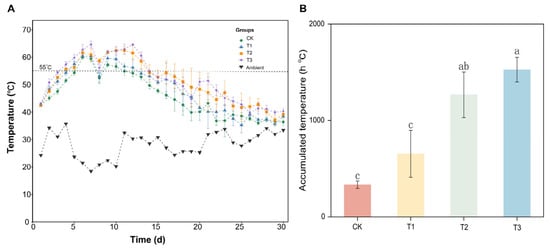
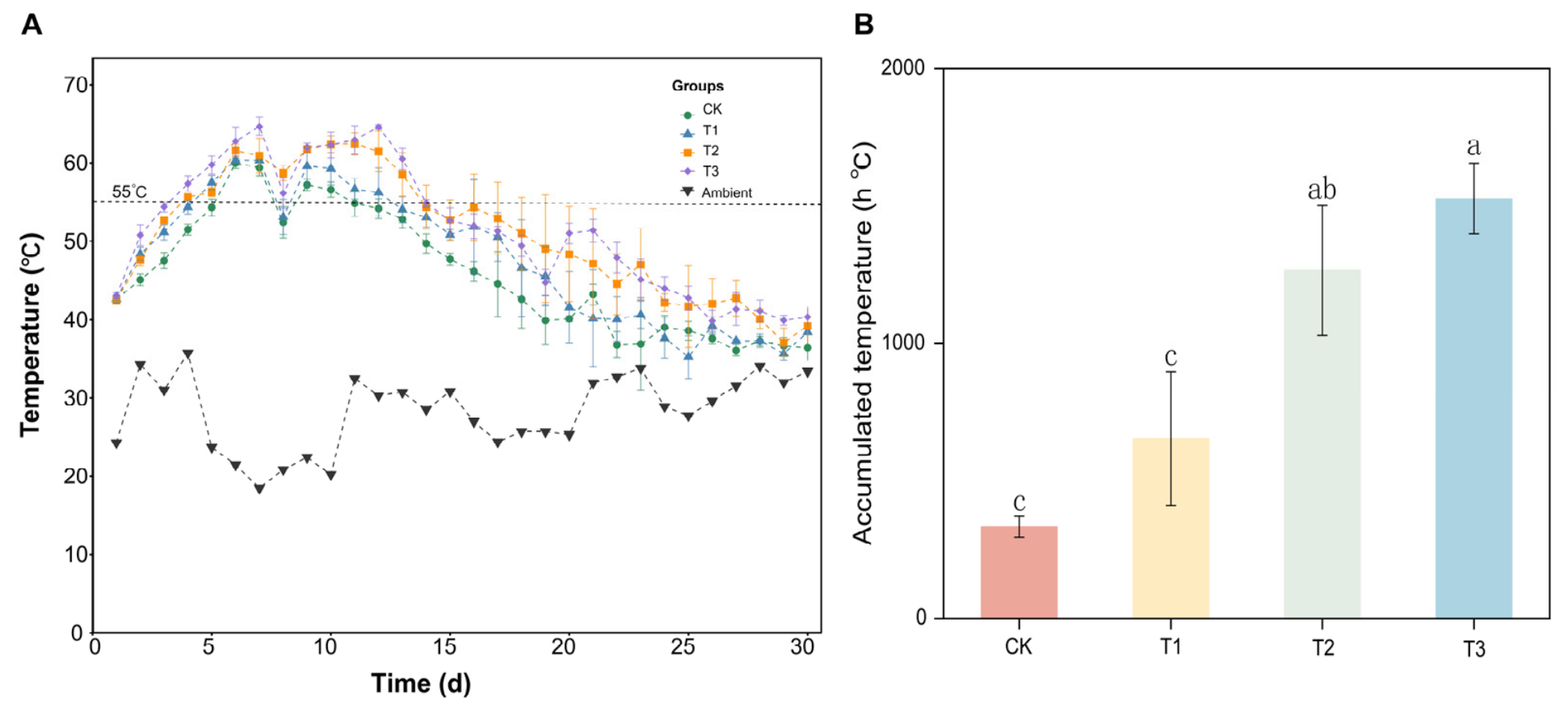
The composite additive of 10% biochar + 3% calcined gypsum (T3) markedly enhanced the heating performance of the compost, as reflected by both the duration of the thermophilic phase (≥55 °C) and the accumulated temperature (Figure 1A,B). Compared with CK and T1, the thermophilic phase under T3 was prolonged by 42.8% (p < 0.05). The accumulated temperature in T3 reached 1526.4 °C h, which was 3.57 and 1.33 times higher than those of CK and T1, respectively (p < 0.05). However, there was no significant difference compared with T2. Peak temperature followed: T3 (64.70 °C) > T2 (62.47 °C) > T1 (60.36 °C) > CK (59.59 °C).
Figure 1.
Effects of different additives on composting temperature. (A), Dynamic changes in the average temperature under different treatments; (B), Cumulative temperature during the high-temperature period, different lowercase letters indicate significant differences among treatments (p < 0.05). CK: No additive; T1: 3% calcined gypsum; T2: 10% biochar; T3: 3% calcined gypsum + 10% biochar.
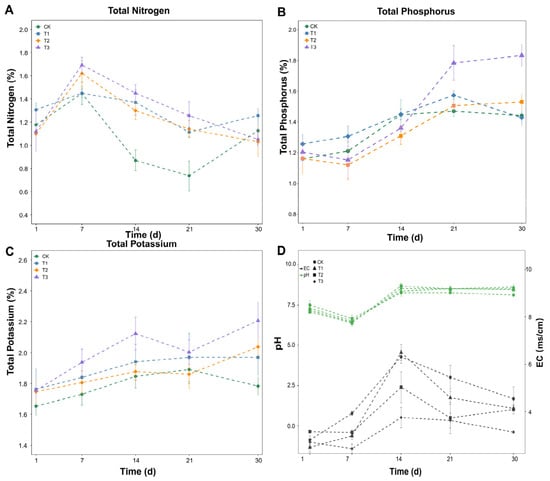
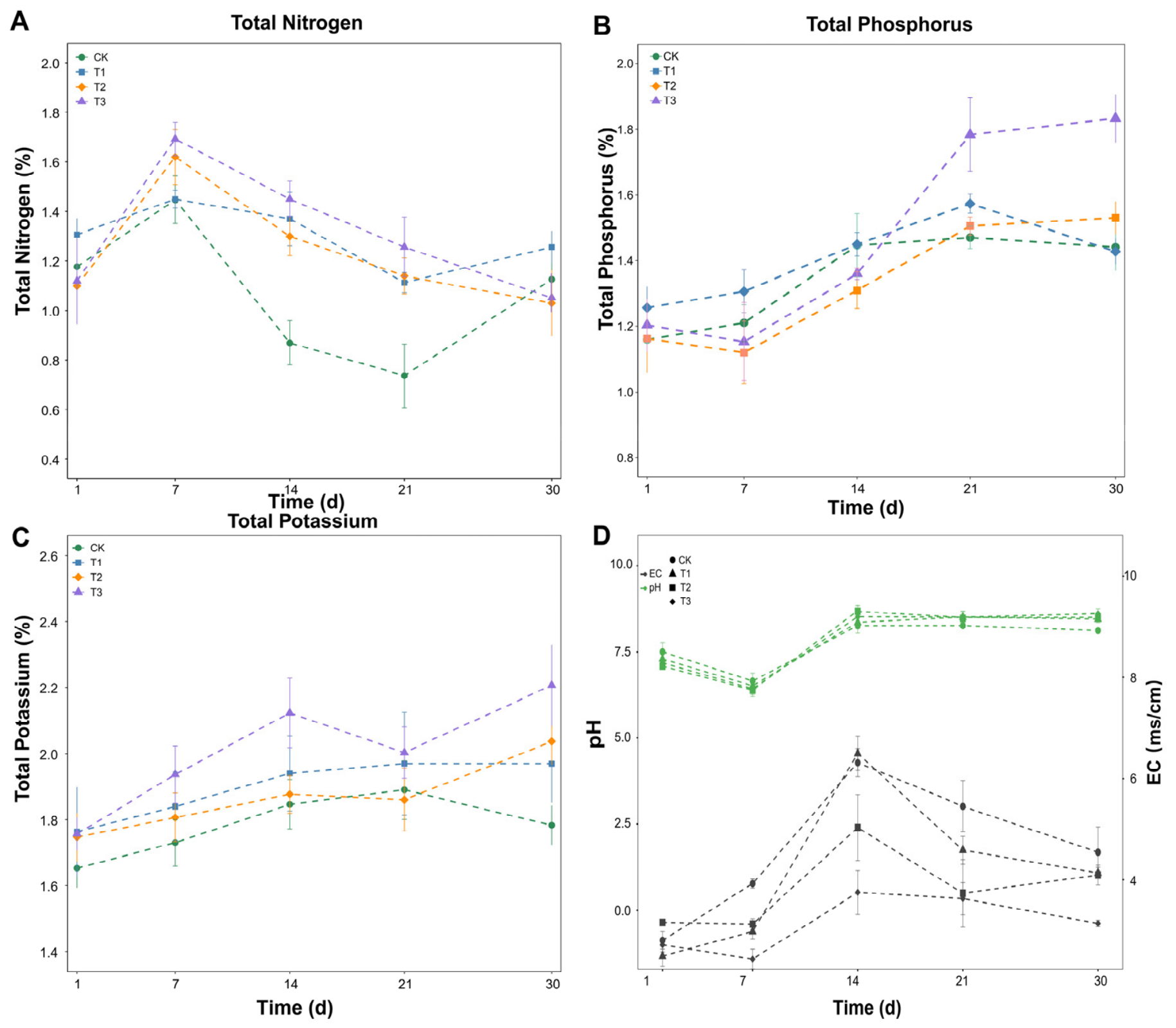
T3 also promoted the enrichment of TP and TK, while its effect on TN was phase-dependent (Figure 2A–C). At the end of composting, TP and TK in T3 reached 1.83% and 2.21%, respectively, both of which were significantly higher than those in the other treatments (p < 0.05). During the thermophilic phase, the TN was 1.69% in T3, significantly higher than that in T1 and CK (p < 0.05). After 30 days of composting, substrate mass was lost from 49.94% to 54.74% among treatments.
Figure 2.
Effect of additives on the physicochemical indicators of compost. (A), Dynamic changes in total nitrogen content; (B), Dynamic changes in total phosphorus content; (C), Dynamic changes in total potassium content; (D), Dynamic changes in pH and EC. CK: No additive; T1: 3% calcined gypsum; T2: 10% biochar; T3: 3% calcined gypsum + 10% biochar.
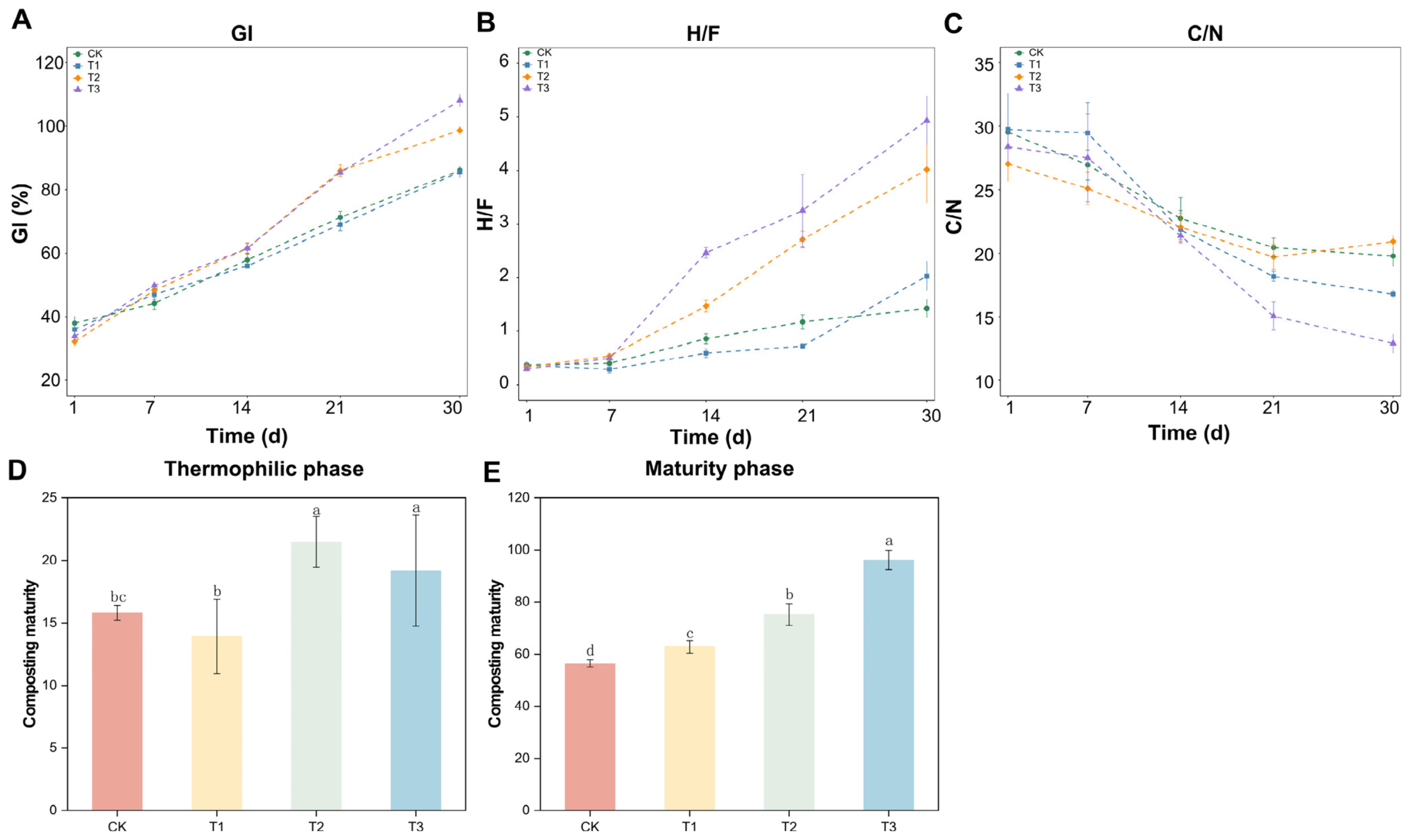
Substrate pH in all treatments showed similar temporal changes during composting, with an initial decline followed by a gradual increase, and pH ranged from 8.11 to 8.61 at the end of composting. In contrast, EC showed the opposite trend during the composting process (Figure 2D), increasing during the early and thermophilic phases and subsequently declining during the cooling and maturity phases. This decline coincided with the rapid increase in GI (Figure 3C), suggesting a progressive relief of salinity stress during maturation.
Figure 3.
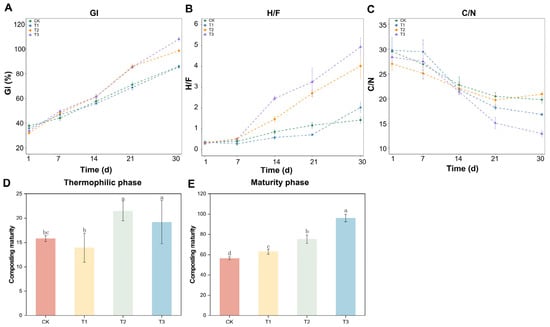
Composting maturation indicators under different treatments. C/N, carbon-to-nitrogen ratio; H/F, humic acid/fulvic acid ratio; GI, seed germination index; CM, comprehensive maturity index. (A), Dynamic changes in GI; (B) Dynamic changes in the ratio of H/F; (C) Dynamic changes in C/N; (D), compost maturity index at thermophilic phase; (E), compost maturity index at maturity phase. Different lowercase letters indicate significant differences among treatments (p < 0.05). CK: No additive; T1: 3% calcined gypsum; T2: 10% biochar; T3: 3% calcined gypsum + 10% biochar.
3.2. Effects of Additives on Compost Maturity Indices
The C/N and GI exhibited opposite temporal trends across all treatments during composting (Figure 3A,C). C/N decreased significantly as composting progressed, and T3 showed the lowest final value (12.88), which was significantly lower than those of the other treatments (p < 0.05). Notably, the GI (85.40%) in T3 exceeded 80% on day 21, earlier than in the other treatments; this threshold is generally considered indicative of phytotoxic safety. At the end of composting, GI in T3 reached 108.11%, which was 25.55% higher than that of CK (86.11%) (p < 0.05).
At the end of composting, the HA/FA in T3 reached 4.93, significantly higher than those in the other treatments (p < 0.05) (Figure 3B). The CM index also differed among treatments and at composting phases (Figure 3D,E). During the thermophilic phase, the CM index ranged from 13.91 to 21.45. After composting for 30 d, the CM index in T3 increased to 96.11 (when the CM index reached >90, the substrate was thought to be well composted), representing an increase of 70.36%, 53.12%, and 22.76%, respectively, compared with CK, T1 and T2 (p < 0.05). The phase-resolved comparison (Figure 3D,E) showed that the advantage of T3 started at the cooling phase and reached its maximum at maturity, indicating that the additives promoted the maturation process rather than only improving the final endpoint.
3.3. Enzyme Activities and Microbial Biomass
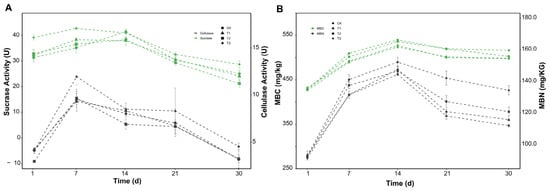
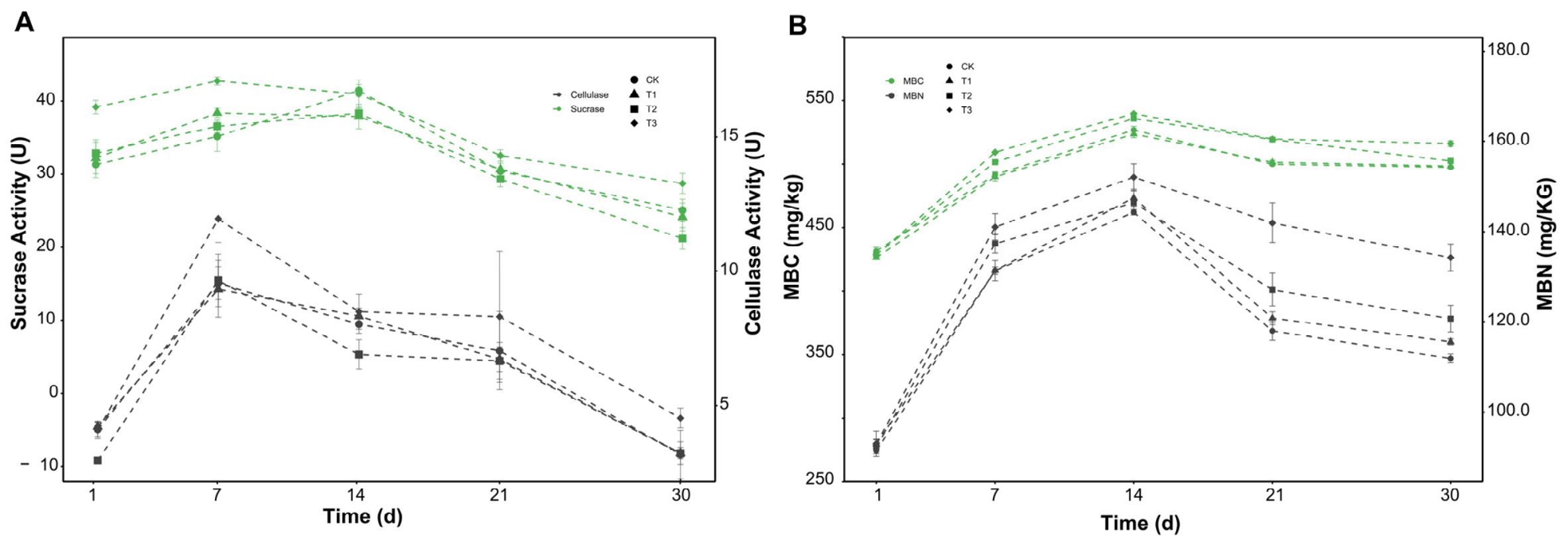
Both sucrase and cellulase activities showed a unimodal pattern during composting, increasing initially and then declining (Figure 4A). Cellulase activity peaked on day 7 in all treatments, with the highest value observed in T3 (11.63 U), significantly exceeding those in the other treatments. The timing of peak sucrase activity differed among treatments: T3 and T1 peaked on day 7 (42.70 and 38.36 U, respectively), whereas the peaks in CK and T2 were delayed until day 14. By the end of composting, sucrase activity had stabilized at 29.30–32.56 U across treatments. Overall, enzyme activities remained consistently highest in T3 throughout composting.
Figure 4.
Microbial enzyme activity and biomass. MBC, microbial biomass carbon; MBN, microbial biomass nitrogen. (A), Dynamic changes in sucrase and cellulase activities; (B), Dynamic changes in MBC and MBN. CK: No additive; T1: 3% calcined gypsum; T2: 10% biochar; T3: 3% calcined gypsum + 10% biochar.
The temporal dynamics of microbial biomass carbon (MBC) and microbial biomass nitrogen (MBN) were similar to those of enzyme activities (Figure 4B). Both MBC and MBN reached their maximum values on day 14 in all treatments. The MBC value in T3 (539.54 mg kg−1) was significantly higher than those in CK and T1 (p < 0.05), while the MBN value in T3 (152.09 mg kg−1) was significantly higher than that in CK (144.29 mg kg−1). At the end of composting, MBC and MBN in T3 remained significantly higher than those in the other treatments, indicating a stronger capacity for biomass maintenance.
3.4. Bacterial Diversity and Community Succession
The alpha diversity of bacterial communities showed pronounced temporal dynamics during composting (Table 1). Both Chao1 richness and Shannon diversity indices were significantly higher at the maturity phase than at the thermophilic phase. T3 showed the highest Chao1 values (266.6 and 532.8 at the thermophilic and maturity phases, respectively). On the contrary, Pielou evenness and Simpson diversity differed little, if at all, at these two phases (p > 0.05; Table 1). Within each phase, the differences among treatments within a phase were not significant (p > 0.05). In the two-way ANOVA, the biochar × gypsum interaction was not significant for any alpha-diversity index at either phase.
Table 1.
Microbial α-diversity index.
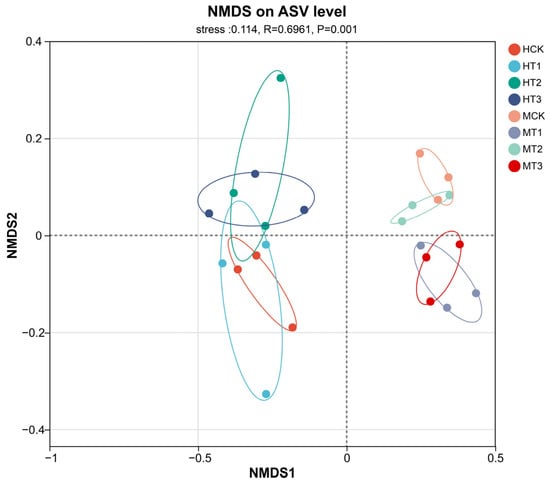
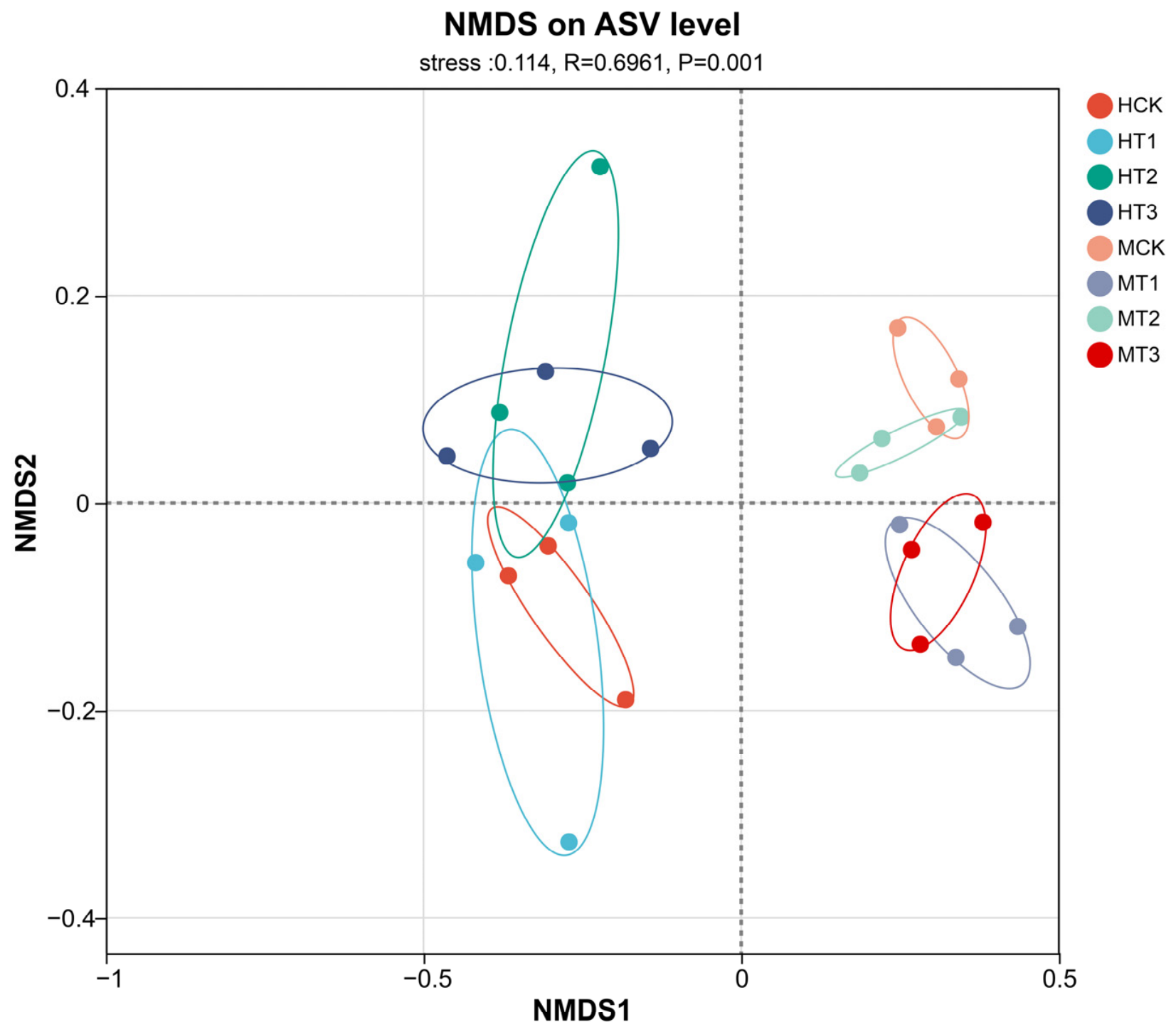
Shifts in community structure were further examined based on Bray–Curtis distances (Figure 5). Thermophilic-phase samples clustered on the negative axis and maturity-phase samples on the positive axis, showing clear separation between composting phases (ANOSIM: R = 0.6961, p = 0.001). No significant differences in bacterial community composition were detected at the thermophilic phase (Table S2). In the maturity phase, gypsum significantly altered community composition (Table S3, p = 0.01), whereas the others were not significant (p > 0.05); PERMDISP indicated homogeneous dispersions (p = 0.98). These results indicated that the effects of biochar and gypsum on bacterial β-diversity were phase-specific, with gypsum exerting a significant community-shaping effect only during the maturity phase.
Figure 5.
Non-metric multidimensional scaling (NMDS) ordination of bacterial communities. H and M represent the thermophilic and maturity phases, respectively. CK: No additive; T1: 3% calcined gypsum; T2: 10% biochar; T3: 3% calcined gypsum + 10% biochar.
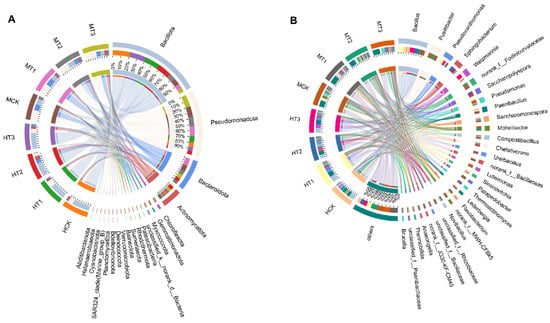
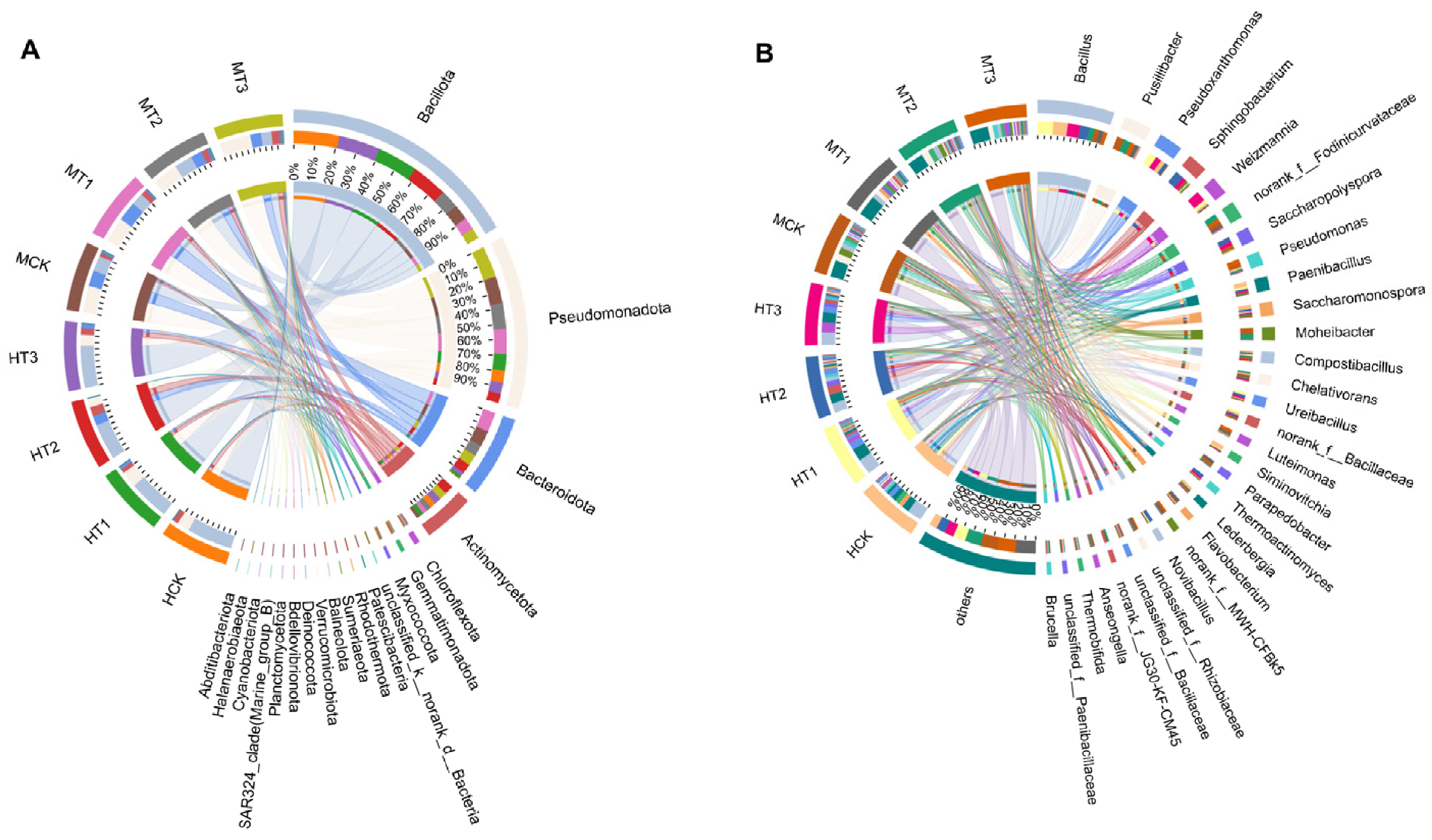
The additives also altered bacterial community composition during composting. At the phylum level, the dominant taxa shifted markedly between composting phases (Figure 6A). During the thermophilic phase, Bacillota was the dominant phylum, accounting for 56.37–71.22% of the total relative abundance across treatments. At the maturity phase, the relative abundance of Bacillota declined sharply to 16.38–28.28%, whereas Pseudomonadota and Bacteroidota became dominant. In particular, Pseudomonadota was strongly enriched in T3, increasing from 16.96% during the thermophilic phase to 48.91% at maturity.
Figure 6.
A significant dynamic succession in the composition of bacterial communities across composting phases. (A), Relative abundance at the bacterial phylum level; (B), relative abundance at the bacterial genus level.
Bacterial composition also underwent phase-dependent succession at the genus level (Figure 6B). Bacillus was the dominant genus during the thermophilic phase, with a relative abundance of 16.46–27.19% across treatments, and the abundance was highest in T3. At maturity, Bacillus decreased to 5.90–9.14%, while Pusillibacter became the predominant genus, ranging from 8.95% to 13.85%.
3.5. Effects of Additives on Bacterial Co-Occurrence Network Complexity, Stability, and Cohesion
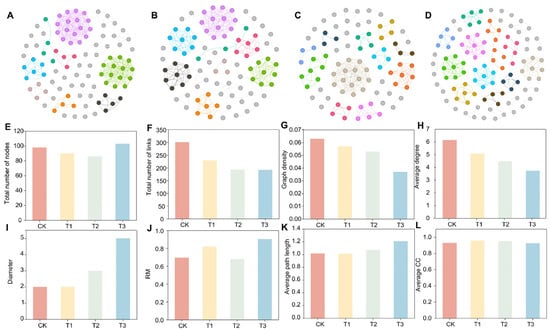
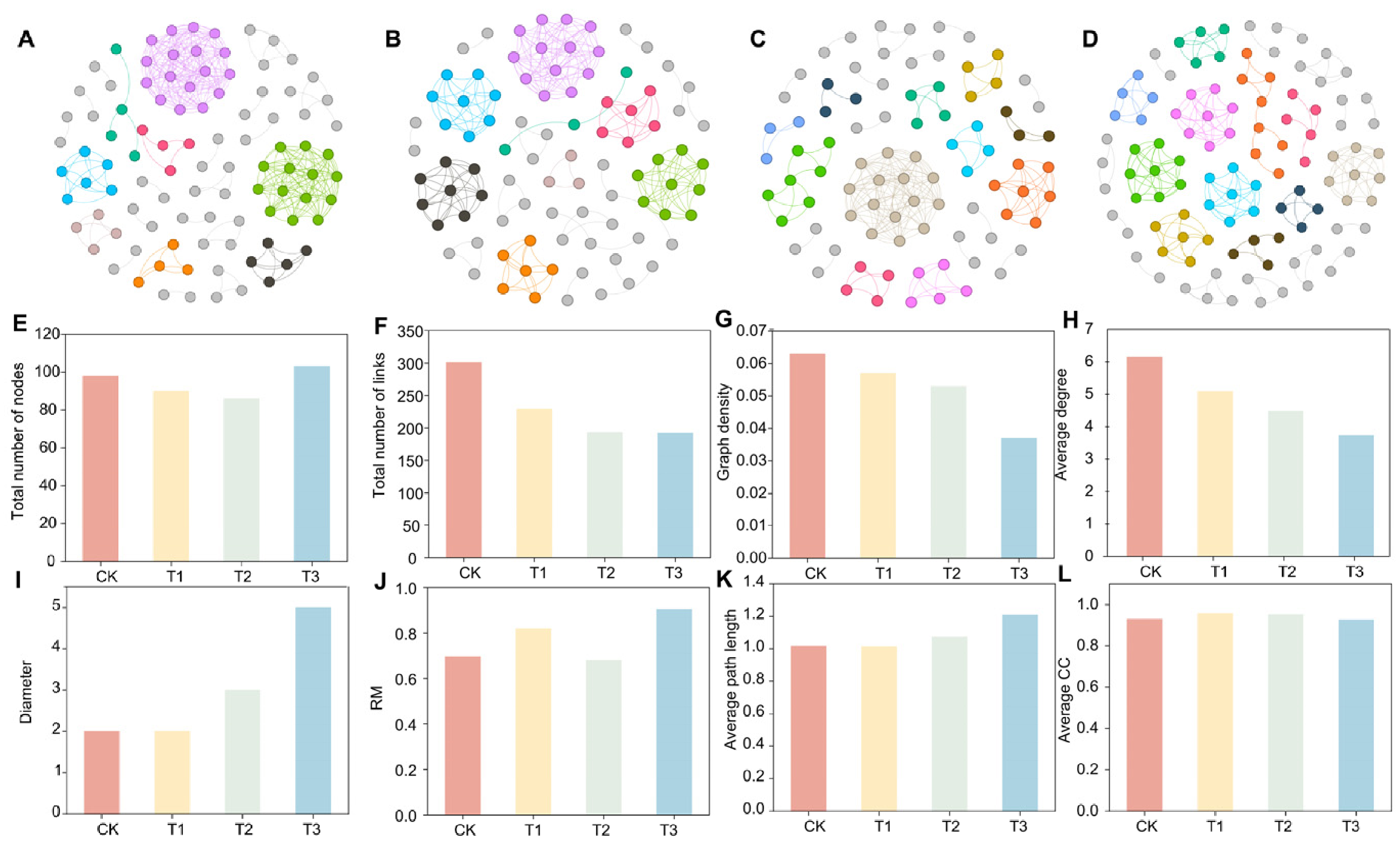
Co-occurrence networks revealed that T3 substantially altered microbial interaction patterns (Figure 7A–D). Network complexity differed among treatments (Figure 7E–L). T3 had the highest number of nodes (102), exceeding CK (98), T1 (90), and T2 (86) (Figure 7E). In contrast, network connectivity showed the opposite pattern: CK exhibited the highest number of edges (302) and graph density (0.063), whereas T3 showed fewer edges (194) and lower density (0.037) (Figure 7F,G). Consistently, the average degree in T3 was 39.31% lower than that in CK (6.12) (Figure 7H).
Figure 7.
Composting bacterial networks with different additives. Visualization of network structures constructed under various additive composting treatments ((A), CK; (B), calcined gypsum; (C), biochar; (D), biochar + calcined gypsum). Different colors represent different modules. (E–L) Changes in network topology under different composting treatments. CK: No additive; T1: 3% calcined gypsum; T2: 10% biochar; T3: 3% calcined gypsum + 10% biochar.
Despite the lower connection density, T3 displayed higher modularity and greater network extension. The network diameter in T3 increased to 5.0, exceeding those of the other treatments (Figure 7I). The modularity coefficient (RM) was highest in T3 (0.91), markedly higher than those in T1 (0.82), T2 (0.68), and CK (0.70) (Figure 7J).
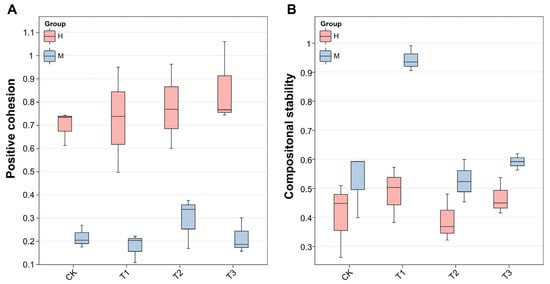
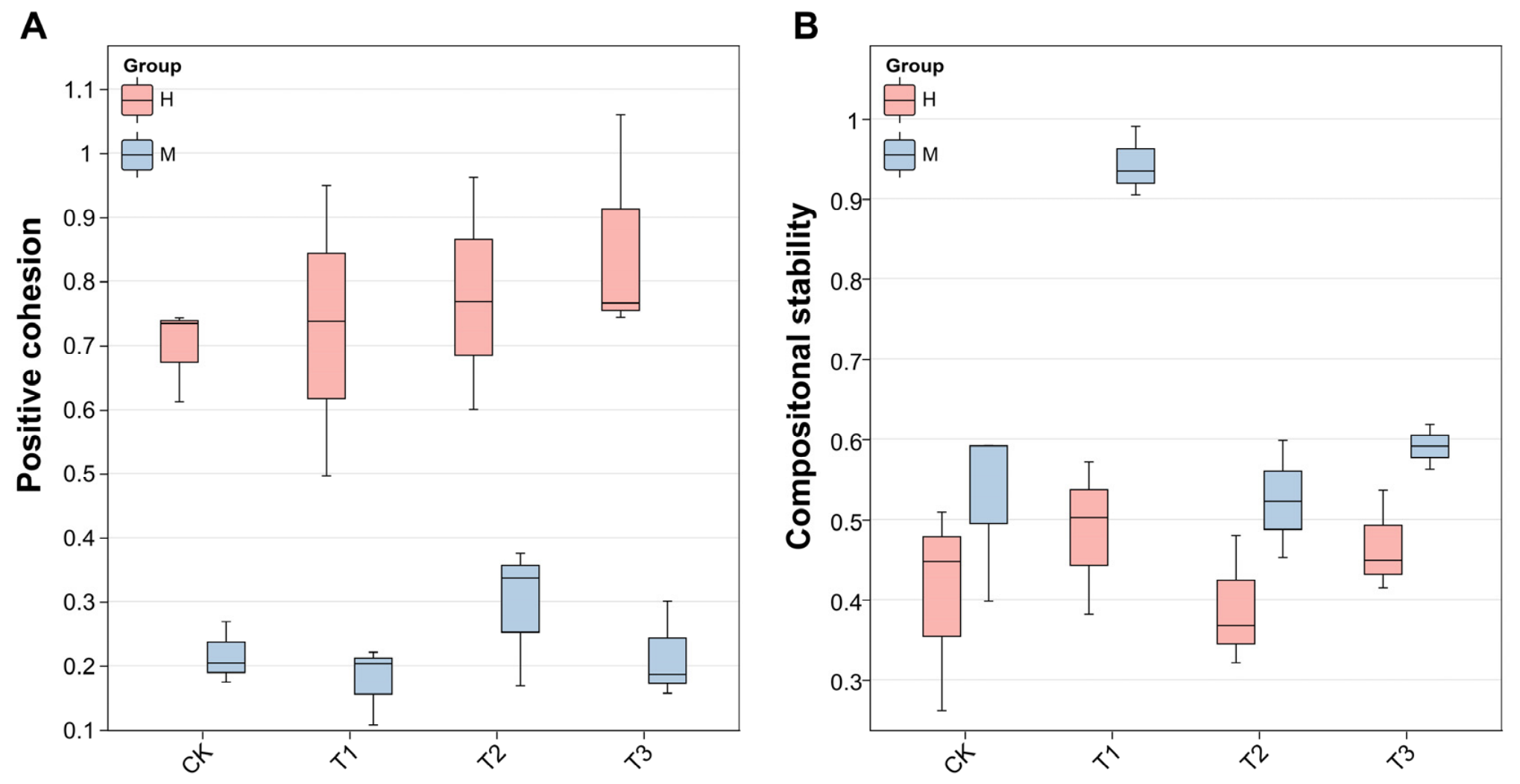
Marked phase-dependent shifts were also observed in network cohesion and stability. Positive cohesion was higher during the thermophilic phase than during the maturity phase (Figure 8A). T3 showed the strongest interaction intensity among taxa (0.86) during the thermophilic phase; however, cohesion declined sharply in all treatments at maturity. By contrast, network stability generally increased, with all treatments except T2 showing higher stability than CK. In T3, stability increased by 26.64% at the maturity phase compared with the thermophilic phase (Figure 8B).
Figure 8.
Analysis of bacterial community cohesion and network stability. (A), Variation in positive cohesion; (B), Stability of network composition. CK: No additive; T1: 3% calcined gypsum; T2: 10% biochar; T3: 3% calcined gypsum + 10% biochar.
3.6. Identification of Core Bacterial Taxa
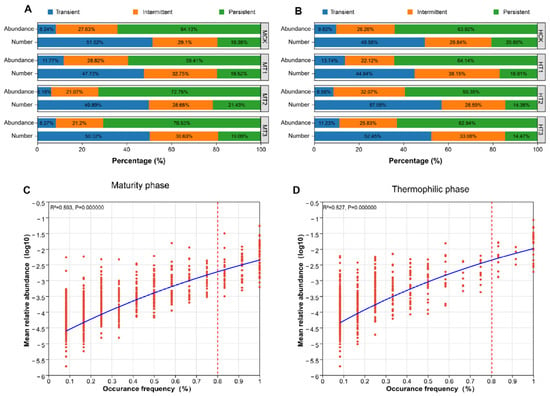
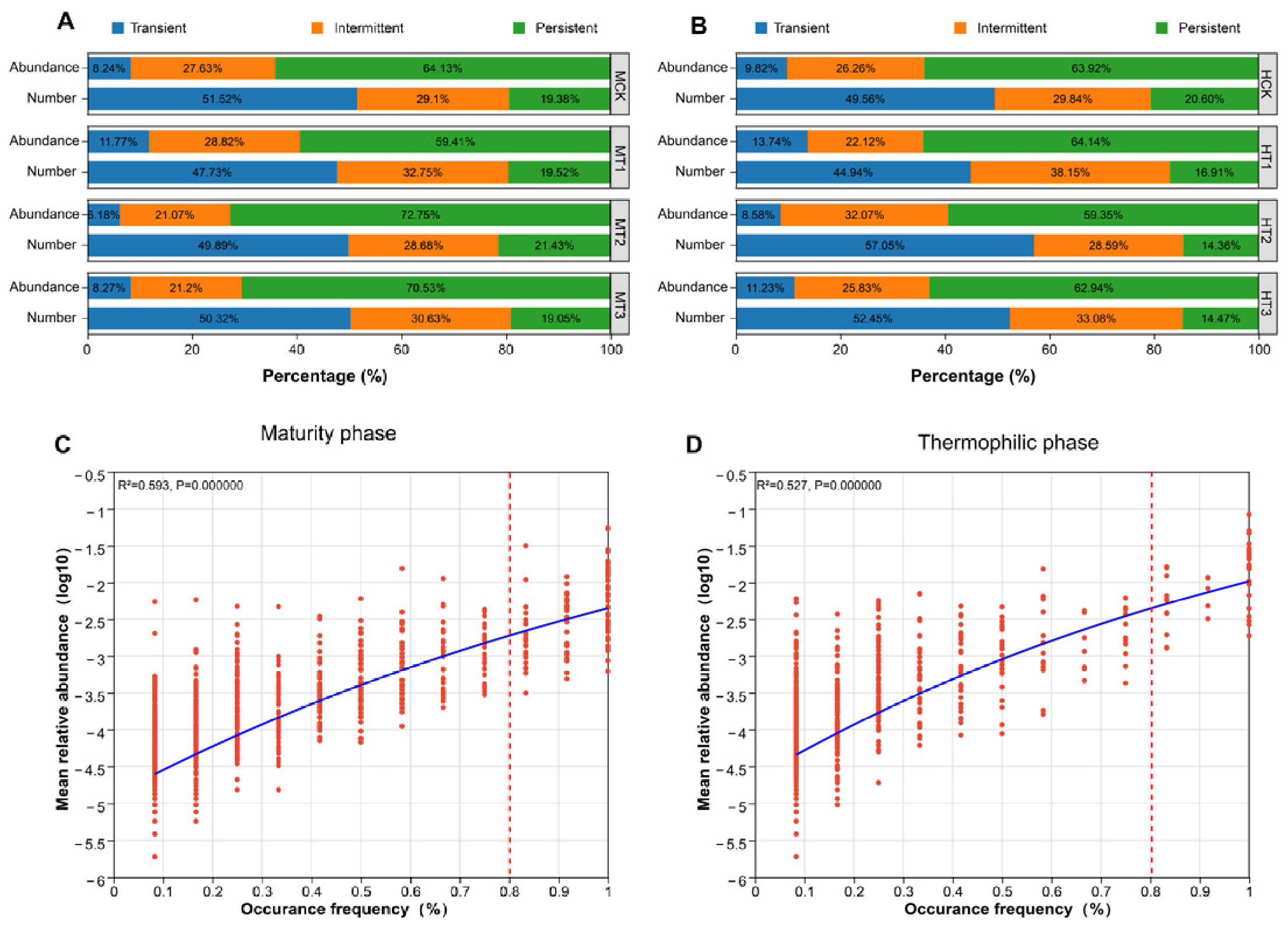
Based on the abundance–occupancy model, bacterial taxa were classified into transient, intermittent, and persistent groups (Figure 9A,B). Across treatments, persistent taxa accounted for only 14.36–21.43% of total ASVs, but contributed 59.35–72.74% of total relative abundance, suggesting that these taxa represented the dominant component of the composting microbiome. Correlation analysis further showed that taxon prevalence was positively correlated with relative abundance at both the thermophilic and maturity phases, with correlation coefficients of 0.593 and 0.527, respectively (p < 0.05) (Figure 9C,D).
Figure 9.
Comparison of microbial community abundance and dominance. Number and relative abundance of ASVs during the composting process ((A), maturity phase; (B), thermophilic phase); correlation between the average abundance of microbial ASVs and their occurrence frequency ((C), maturity phase; (D), thermophilic phase).
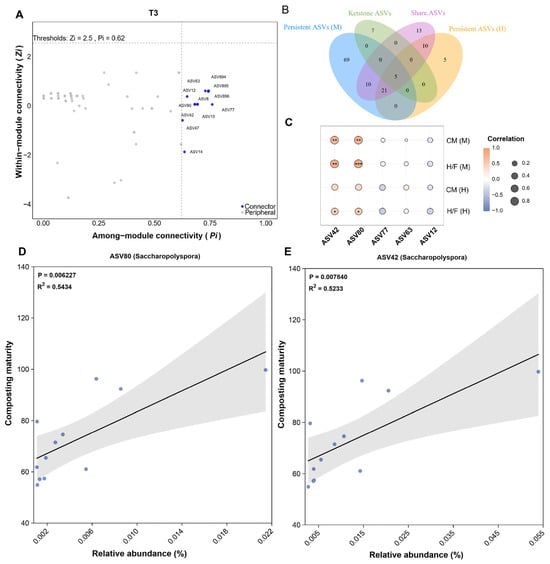
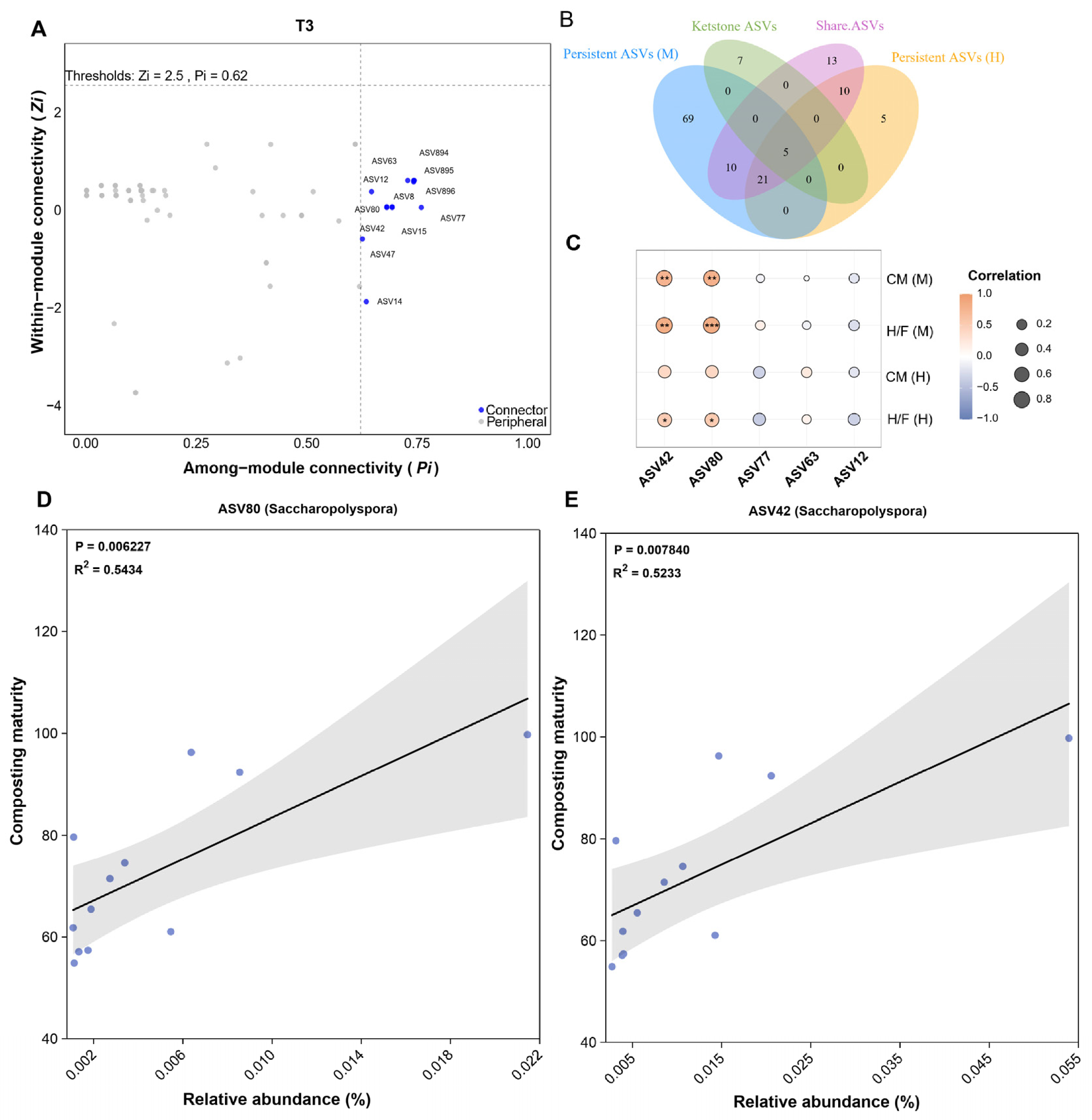
To identify taxa potentially associated with network properties and community cohesion, core taxa were defined using multiple criteria: (1) shared taxa across composting phases identified by Venn analysis (Figure 10B); (2) keystone nodes with high within-module connectivity (Zi) and among-module connectivity (Pi) identified from network topology (Figure 10A); and (3) taxa with high specificity (>0.8) and high occupancy (>0.8) (Figure 9C,D). Based on these criteria, five core ASVs were identified.
Figure 10.
Identification of core species. (A), The Zi-Pi method reveals the core ASVs in the composting process; (B), Screening of core species based on “shared ASVs”, “core ASVs”, and “Persistent taxa”. (C), Heatmap showing the correlation between core ASVs and maturation indicators. CM, Comprehensive maturity; humic acid/fulvic acid ratio; Pearson correlation between core ASVs and comprehensive maturity ((D), ASV80; (E), ASV42). Significant differences between groups are indicated by asterisks: * p < 0.05, ** p < 0.01, and *** p < 0.001.
Correlation analysis showed that two core taxa, ASV80 and ASV42, were significantly and positively correlated with the HA/FA ratio and the CM during the maturity phase (p < 0.01) (Figure 10C). Linear regression further supported these relationships (Figure 10D,E): the relative abundances of ASV80 and ASV42 increased significantly with compost maturity, with R2 values of 0.5434 (p = 0.006227) and 0.5233 (p = 0.00784), respectively.
3.7. Relationships Between Microbial Communities and Environmental Factors and PLS-PM Analysis
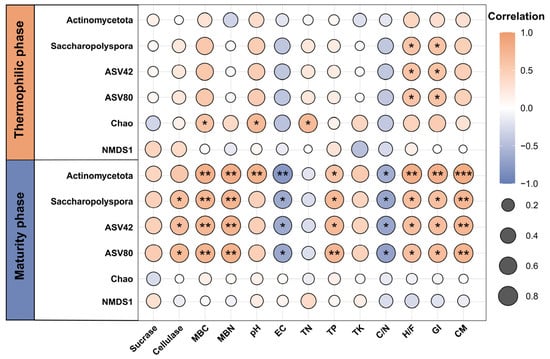
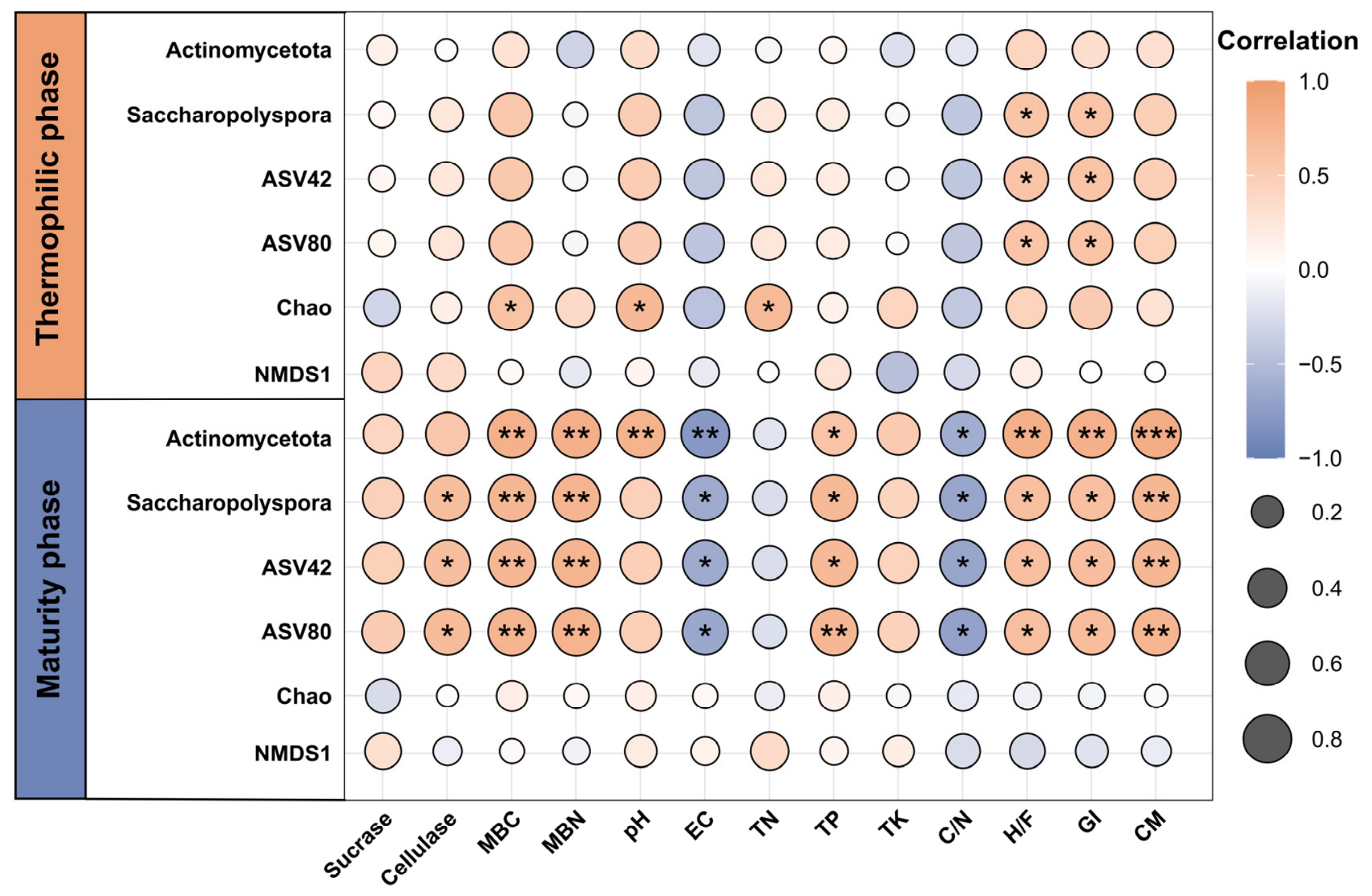
Spearman correlation analysis revealed phase-specific associations between microbial community attributes and physicochemical factors (Figure 11). Overall, the strength and significance of biotic–environmental interactions were greater in the maturity phase than in the thermophilic phase. In the maturity phase, the core phylum Actinomycetota and its dominant genus Saccharopolyspora (including the core ASVs: ASV42 and ASV80) were significantly and positively correlated with MBN, MBC, TP, HA/FA, GI, and CM (p < 0.05), but negatively correlated with TN, EC, and C/N (p < 0.05).
Figure 11.
Correlation analysis between microbial community characteristics and physicochemical factors at different composting phases. MBC, microbial biomass carbon; MBN, microbial biomass nitrogen; EC, conductivity; TN, total nitrogen; TP: total phosphorus; TK, total potassium; C/N, carbon-to-nitrogen ratio; H/F, humic acid/fulvic acid ratio; GI, seed germination index; CM, comprehensive maturity. Significant differences between groups are indicated by asterisks: * p < 0.05, ** p < 0.01, and *** p < 0.001.
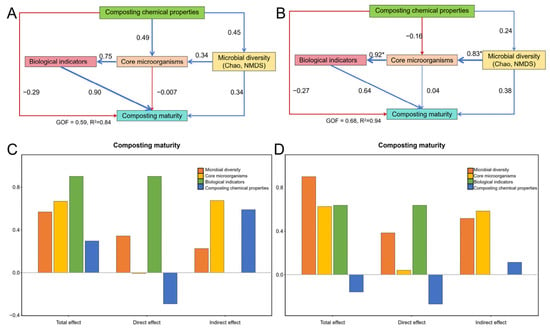
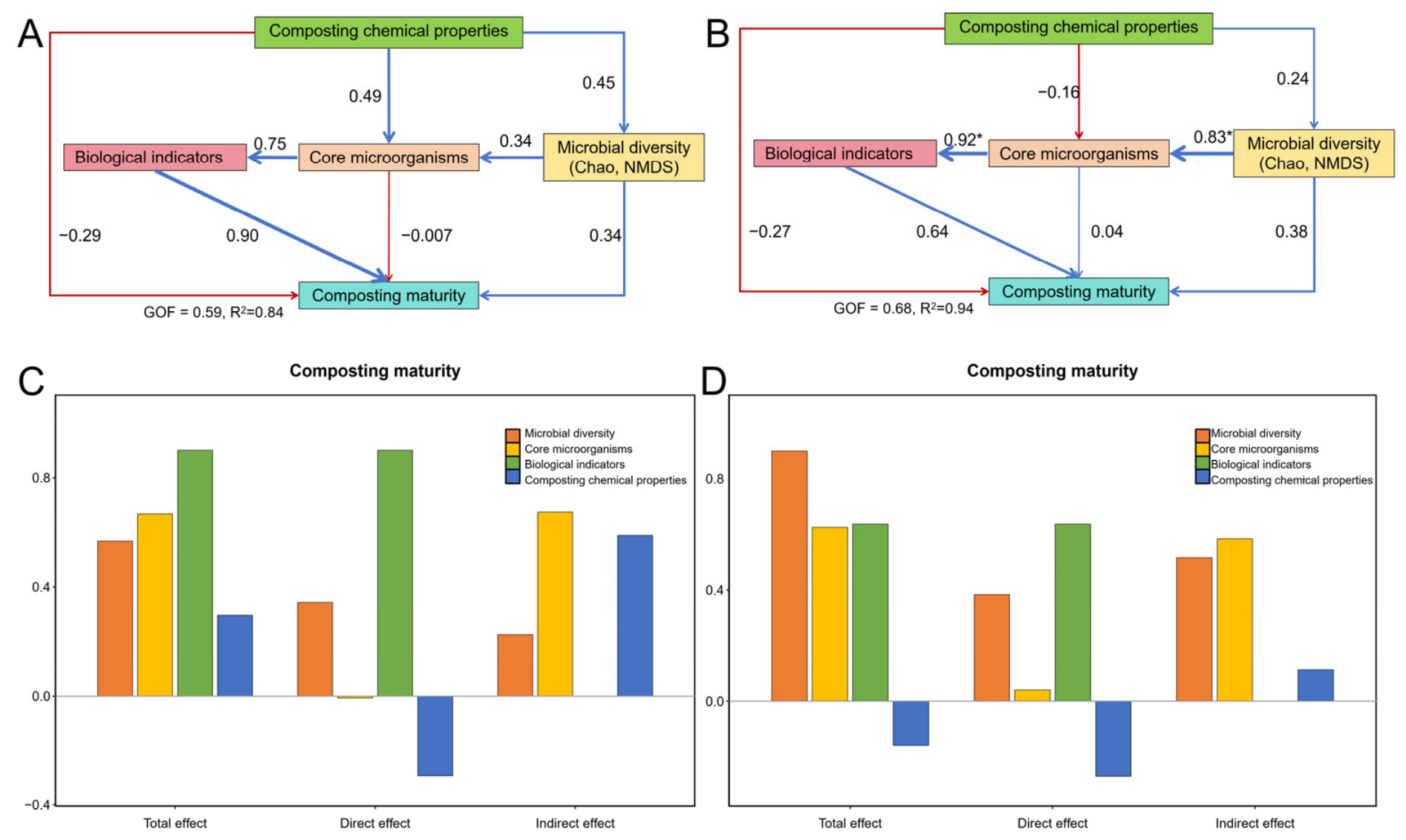
Partial least squares path modeling (PLS-PM) was used to disentangle the contributions of physicochemical properties, enzyme activities, microbial diversity, and core taxa to compost maturity (Figure 12). During the thermophilic phase (Figure 12A,C), biological indicators exerted the strongest positive direct effect on the maturity index (0.90). Chemical properties and microbial diversity primarily influenced maturity indirectly through core microorganisms with 0.49 and 0.34, respectively. The direct effect of core microorganisms on maturity was negligible (−0.007), indicating their role was mainly mediated via biological indicators. During the maturity phase (Figure 12B,D), microbial diversity exhibited the highest total effect on maturity (0.90), followed by biological indicators (0.64) and core microorganisms (0.63). The direct effect of biological indicators on maturity remained strong (0.64), while core microorganisms and microbial diversity primarily drove maturity indirectly. The pathway from microbial diversity to core microorganisms was also highly significant (0.83), indicating that diversity increasingly shaped the core community in the later phase.
Figure 12.
Partial Least Squares Path Modeling (PLS-PM) of Microbial-Physiological Interactions. (A,C): Partial Least Squares Path Modeling, the total effect, indirect effect and direct effect in the thermophilic phase; (B,D): Partial Least Squares Path Modeling, the total effect, indirect effect and direct effect in the maturity phase. Composting chemical properties include pH, TN, TP, TK; Biological indicators include sucrase, cellulase, MBC and MBN; Microbial diversity includes Chao and NMDS. Core microorganisms include Actinomycetota, Saccharopolyspora, ASV80 and ASV42. * indicate significant path coefficients (p < 0.05).
4. Discussion
4.1. Combined Additives Reshaped the Compost Thermal Environment
The addition of compost additives can alleviate unfavorable conditions during the initial phase of composting and thereby support microbial activity [30,31]. In the present study, the combined application of biochar and calcined gypsum (T3) outperformed either single-additive treatment in composting efficiency. T3 entered the thermophilic phase earlier (days 3–4, >55 °C) and maintained a markedly higher accumulated temperature than the other treatments (Figure 1). This thermal regime likely created favorable conditions for thermotolerant functional groups such as Bacillota and Actinomycetota, while also stimulating the activities of degradative enzymes, particularly cellulase and sucrase.
This advantage may be attributed to complementary effects between the porous spatial microhabitats of biochar and the ionic and structural modification provided by calcined gypsum [30,32]. Specifically, biochar continuously improved the aeration conditions and oxygen retention capacity of the compost, while calcined gypsum released Ca2+ ions to promote colloidal flocculation, mitigating the tendency of high-moisture materials to collapse and clog aeration pores [33]. Furthermore, the combined use of additives led to a rapid reduction in the C/N ratio, with GI in T3 exceeding the 80% biosafety threshold on day 21, earlier than in the other treatments, demonstrating that the additive combination effectively shortens the maturation cycle [34]). Thus, the additives coordinately improved the physical and chemical properties of compost substrates and thus accelerated decomposition. Conventional composting of lignocellulose-rich CMR (Chinese medicine residues) commonly requires longer time (36–50 days) in summer to reach maturity [25,26] than 30 d in the current experiment. Calcined gypsum did not measurably alter the pH trajectory: all treatments, including T1, followed the same temporal pattern and converged to pH 8.11–8.61 at maturity. The contribution of gypsum is therefore structural and ionic rather than a pH-buffering effect.
In addition to the increase in temperature at the thermophilic phase, the additives promoted substrate maturity by alleviating compost phytotoxicity. High salinity and accumulation of ammonium and low-molecular-weight organic acids in organic fertilizer produced from FW and CMR are recognized as the main water-soluble factors inhibiting seed germination. In contrast, humus and humus-like substances promote seed germination [25]. In line with this framework, organic fertilizer obtained from T3 exhibited the lowest C/N (12.88) but the highest GI (108.11% at maturity). The results indicated effective humification, which relieved phytotoxicity to seeds. Moreover, the high TP and TK contents in T3 (p < 0.05) implied nutrient retention. The final compost product also had high fertilizer quality. Given the low nutrients in biochar (0.74% TN, 1.04% TP, and 0.43% TK), biochar addition in composting FW-CMR substrate could achieve a dual positive effect.
4.2. Microbial Succession and Enrichment of Core Functional Taxa Under Microenvironmental Regulation
Alteration of the microbial fermentation microenvironment during composting promotes the selective enrichment of functional microbial taxa under high-temperature and chemical selection pressures, an effect that may be further enhanced by additives [35]. In our study, Bacillota (predominantly Bacillus) was clearly dominant during the thermophilic phase in T3, indicating that the composite additive selectively enriched heat-resistant and efficient organic matter–degrading taxa by modulating the microenvironment. Notably, the highest alpha diversity in T3 did not necessarily translate into superior functionality, suggesting compression of functionally redundant microbial groups and release of ecological niches for core functional taxa [28]. The higher MBC and the earlier activity peaks of cellulase and sucrase in T3 indicated that the additive enhanced both the size and the degradative capacity of the microbial community (Figure 4). Microbial biomass and its extracellular enzymes drive the breakdown of lignocellulose into low-molecular-weight intermediates that act as precursors of humus. Accordingly, the HA/FA ratio in T3 increased continuously during composting and was significantly higher than those in the other treatments at maturity (p < 0.05). This pattern is consistent with previous findings that biochar stimulated humus formation by enhancing degradative enzyme activities and microbial metabolic activity during composting [10,36].
Core taxa analysis indicated that Saccharopolyspora may be important taxon potentially associated with community succession. Saccharopolyspora is known to secrete various hydrolytic enzymes, such as cellulase and lignin peroxidase [29,37], and has been implicated in the humification processes; its abundance was significantly and positively correlated with GI and HA/FA (p < 0.01). Consequently, the composite additives may promote humification through complementary mechanisms: (1) the porous structure of biochar provides microbial refugia that protect the key functional bacteria from heat, desiccation, and nutrient stress [10,38,39]; and (2) calcined gypsum releases Ca2+ and promotes colloidal flocculation, thereby alleviating acid inhibition against microbes [18]. These mechanisms drove the core microbial community from passive adaptation to active enrichment, ultimately facilitating the directional conversion of readily degradable organic carbon into humus [20,40].
4.3. Modular Reorganization of Microbial Networks and Ecological Stability
Co-occurrence network analysis revealed ecological adaptation mechanisms beyond simple abundance variation. Although the network connectivity density of T3 was lower than that of CK (Figure 7), it exhibited a higher modularity and network diameter, indicating that the microbial community in T3 developed a modular steady-state structure. Compared with highly connected “small-world” networks, modular networks confine environmental disturbances within isolated functional modules, potentially enhancing ecological resilience [41,42]. This interpretation awaits validation through controlled perturbation experiments.
T3 maintained the highest network stability (Figure 8B); positive cohesion peaked during the thermophilic phase and declined at maturity in all treatments, with T3 showing the strongest thermophilic interaction intensity (Figure 8A). Thus, the combination of biochar and calcined gypsum not only reorganized community structure but also promoted ecological differentiation and functional complementarity within the microbial community. The microbial community structure evolved from a more competitive and loosely organized state to a more coordinated modular structure [18,43], ensuring the efficient degradation of complex organic components in Chinese medicine residues and providing the biological basis for the resistance of T3 to adverse habitat fluctuations.
4.4. Pathways Driving Compost Maturity and Ecological Implications
PLS-PM quantified the causal contributions of the physicochemical environment, microbial attributes, and composting functions, delineating a cascading pathway of “additive-induced modulation of abiotic factors, microbial community responses, efficient realization of ecological functions” (Figure 12). The biological indicator modulated by additives served as the dominant driver of compost maturity, with a standardized total effect of 0.90 (thermophilic phase) and 0.64 (maturity phase), substantially exceeding the contribution of microbial network metrics in the PLS-PM. The results indicate that the primary role of the amendments lies in modulating abiotic conditions, which indirectly reshape the core microbial community. The core microbial community then promoted compost maturity mainly through improving the physical, chemical, and biological properties of compost substrates.
Core microorganisms are the central functional hub linking environmental drivers and community diversity to compost maturity (Figure 12). During the thermophilic phase, core microorganisms were primarily driven by composting chemical properties (0.49) and microbial diversity (0.34), and they dictated maturation almost entirely through indirect effects mediated by biological indicators, with a negligible direct effect. As composting progressed into the maturity phase, microbial diversity became the dominant force shaping the core microbial community (0.83), which subsequently exerted a strong regulatory effect on biological indicators (0.90). Despite this shift in the driving network, the core microbial community consistently governed compost maturation through indirect pathways. These core taxa thus converted chemical selection pressures and diversity into enzyme activities that ultimately drove maturation. Overall, these results indicate that compost maturation was primarily driven by biological indicators, while the driving mechanisms shifted from direct biological effects in the thermophilic phase to a more complex, diversity-mediated network in the maturity phase.
Correlation analysis further established connections between these microbial community contributions and maturation outcomes (Figure 11). During the maturity phase, the core genus Saccharopolyspora showed significant positive correlations with GI, CM, and HA/FA ratios, while exhibiting negative correlations with EC and C/N ratios (p < 0.05). This pattern indicates that enriched core microbial taxa mediated the translation of improved physicochemical conditions into measurable maturity gains. Collectively, biochar and calcined gypsum functioned through complementary rather than redundant mechanisms: biochar primarily provided physical microhabitats and sustained microbial biomass, whereas calcined gypsum regulated chemical parameters. Consequently, their combination generated synergistic contributions to compost substrate maturation that exceeded what either amendment could achieve individually.
Although this study elucidated the regulatory mechanism of the composite additive, certain limitations remain. First, although the PLS-PM showed an acceptable goodness-of-fit (GoF = 0.59 and 0.68) and explained more than 80% of the variance in compost maturity, the relatively small sample size (n = 12) may reduce the robustness of path coefficients. Second, as the study primarily relied on 16S rRNA amplicon sequencing, future research should integrate transcriptomics or isotope tracing to directly validate the contribution of core taxa to the degradation of Chinese medicine residues at the molecular level. Additionally, the thermal equilibrium characteristics and economic feasibility of the T3 strategy for large-scale engineering applications warrant further evaluation.
5. Conclusions
This study demonstrates that the combined application of biochar and calcined gypsum coordinately regulates enzyme activity, microbial biomass, and humification processes, and promotes the phase-specific succession of bacterial communities by improving the physicochemical environment of the compost. The composite additive achieved stronger environmental regulation and better composting outcomes than either single additive. Co-occurrence network analysis further revealed that the composite additive not only reshaped the composition of bacterial communities but also enhanced the stability of community interaction networks, while enriching core functional bacteria associated with enzymatic transformation and improved compost maturity. Based on the widely accepted maturity thresholds (GI > 80%, final C/N below 15–20, and a progressively increasing HA/FA ratio), T3 can produce good-quality compost high in fertilizer efficiency and free of phytotoxicity within 30 d of composting, much shorter than conventional composting. The PLS-PM indicated that changes in biological indicators were the primary driver through which the additives promoted compost maturation, acting through the regulation of microbial community structure, the enrichment of core bacteria, and alterations in enzyme activity, ultimately facilitating the transformation of complex organic compounds and the maturation of compost. These findings illuminate the mechanism by which the composite additive enhances compost maturation across three dimensions: environmental factors, microbial interactions, and functional pathways, highlighting the potential of the additive to improve the composting outcomes of complex organic wastes.
Supplementary Materials
The following supporting information can be downloaded at: https://www.mdpi.com/article/10.3390/agriculture16212326/s1, Table S1: Interactive effects of α-diversity in T3.; Table S2: PERMANOVA test of β-diversity during the Thermophili phase.; Table S3: PERMANOVA test of β-diversity during the Maturity phase. Table S4: Analysis of significant differences in indicators among treatments across different stages.
Author Contributions
J.W.: Conceptualization, Writing—original draft. L.Z.: Carried out the experiments, Writing—review and editing, Validation. Z.H.: Data collection. X.R.: Visualization. H.Y.: Conceptualization, Review & editing. All authors have read and agreed to the published version of the manuscript.
Funding
This research was supported by the Science and Technology Research Program of Chongqing Education Commission of China (KJQN202503405) and the 10th Division’s Science and Technology Plan for Beitun City in 2026 (2026SS23).
Data Availability Statement
The original contributions presented in this study are included in the Supplementary Material. Further inquiries can be directed to the corresponding authors.
Conflicts of Interest
The authors declare that they have no known competing financial interests or personal relationships that could have appeared to influence the work reported in this paper.
References
- Lu, Q.; Li, C. Comprehensive utilization of Chinese medicine residues for industry and environment protection: Turning waste into treasure. J. Clean. Prod. 2021, 279, 123856. [Google Scholar] [CrossRef] [Scilit]
- Ogunmoroti, A.; Liu, M.; Li, M.; Liu, W. Unraveling the environmental impact of current and future food waste and its management in Chinese provinces. Resour. Environ. Sustain. 2022, 9, 100064. [Google Scholar] [CrossRef] [Scilit]
- Rudziak, P.; Batung, E.; Luginaah, I. The effects of gases from food waste on human health: A systematic review. PLoS ONE 2024, 19, e0300801. [Google Scholar] [CrossRef] [Scilit] [PubMed]
- Ho, T.T.K.; Tra, V.T.; Le, T.H.; Nguyen, N.; Tran, C.; Nguyen, P.; Vo, T.; Thai, V.; Bui, X. Compost to improve sustainable soil cultivation and crop productivity. Case Stud. Chem. Environ. Eng. 2022, 6, 100211. [Google Scholar] [CrossRef] [Scilit]
- Lu, Z.; Liu, J.; Nan, T.; Ge, Y.; Yang, G.; Li, Y.; Shen, Y.; Kang, L.; Wang, Z.; Chen, M.; et al. Indigenous lignocellulose-degrading consortium efficiently degrade Traditional Chinese medicine residues. Ind. Crops Prod. 2025, 226, 120641. [Google Scholar] [CrossRef] [Scilit]
- Aguilar-Paredes, A.; Valdés, G.; Araneda, N.; Valdebenito, E.; Hansen, F.; Nuti, M. Microbial Community in the Composting Process and Its Positive Impact on the Soil Biota in Sustainable Agriculture. Agronomy 2023, 13, 542. [Google Scholar] [CrossRef] [Scilit]
- Ouyang, X.; Lin, H.; Hu, Z.; Zheng, Y.; Li, P.; Huang, W. Effect of biochar structure on H2S emissions during sludge aerobic composting: Insights into microscale characterization and microbial mechanism. Biomass Convers. Biorefinery 2024, 14, 12469–12482. [Google Scholar] [CrossRef] [Scilit]
- Li, T.; Yan, Z.; Sun, Y.; Hu, X.; Peng, C.; Zhao, S.; Xu, D.; Liu, D.; Shen, Q. Inorganic and organic additives differently regulate compost microbiomes in response to heavy metals immobilization. Chem. Eng. J. 2024, 502, 158087. [Google Scholar] [CrossRef] [Scilit]
- Ren, J.; Ren, X.; Chen, J.; Guo, W.; Yang, B.; Du, P. Humic-mineral interactions modulated by pH conditions in bauxite residues—Implications in stable aggregate formation. Geoderma 2021, 385, 114856. [Google Scholar] [CrossRef] [Scilit]
- Li, Y.; Kumar Awasthi, M.; Sindhu, R.; Binod, P.; Zhang, Z.; Taherzadeh, M.J. Biochar preparation and evaluation of its effect in composting mechanism: A review. Bioresour. Technol. 2023, 384, 129329. [Google Scholar] [CrossRef] [Scilit] [PubMed]
- Liu, X.; Zhang, L. Effects of additives on the co-composting of forest residues with cattle manure. Bioresour. Technol. 2023, 368, 128384. [Google Scholar] [CrossRef] [Scilit] [PubMed]
- Nemet, F.; Perić, K.; Lončarić, Z. Microbiological activities in the composting process—A review. COLUMELLA–J. Agric. Environ. Sci. 2021, 8, 41–53. [Google Scholar] [CrossRef] [Scilit]
- Li, X.; Chu, X.; Zhang, W.; Sun, Z.; Tang, Y. In-Depth Comparison of Sorghum Straw Composting Process Inoculated with Mature Compost or Commercial Microbial Agent. Waste Biomass Valorization 2025, 16, 2469–2482. [Google Scholar] [CrossRef] [Scilit]
- Wu, D.; Wei, Z.; Gao, X.; Wu, J.; Chen, X.; Zhao, Y.; Jia, L.; Wen, D. Reconstruction of core microbes based on producing lignocellulolytic enzymes causing by bacterial inoculation during rice straw composting. Bioresour. Technol. 2020, 315, 123849. [Google Scholar] [CrossRef] [Scilit] [PubMed]
- Ding, S.; Zhong, J.; Du, S.; Liu, X.; Yao, A.; Xu, X.; Wu, D. Exploring the function of key species in different composting stages for effective waste biotransformation. J. Environ. Manag. 2025, 381, 125234. [Google Scholar] [CrossRef] [Scilit] [PubMed]
- Meng, L.; Xu, C.; Wu, F.; Huhe. Microbial co-occurrence networks driven by low-abundance microbial taxa during composting dominate lignocellulose degradation. Sci. Total Environ. 2022, 845, 157197. [Google Scholar] [CrossRef] [Scilit] [PubMed]
- Pan, X.; Shu, T.; Shi, R.; Mao, X.; Li, J.; Nkoh, J.N.; Xu, R. The Synergistic Effects of Rice Straw-Pyrolyzed Biochar and Compost on Acidity Mitigation and Carbon Sequestration in Acidic Soils: A Comparative Study. Sustainability 2025, 17, 4408. [Google Scholar] [CrossRef] [Scilit]
- You, F.; Zhang, L.; Ye, J.; Huang, L. Microbial decomposition of biomass residues mitigated hydrogeochemical dynamics in strongly alkaline bauxite residues. Sci. Total Environ. 2019, 663, 216–226. [Google Scholar] [CrossRef] [Scilit] [PubMed]
- Shu, L.; Yang, Y.; Zheng, X.; Chen, Q.; Wu, Y.; Yang, Z. Effects of different exogenous additives on humification and microbial community during tomato straw composting process. Sci. Rep. 2025, 15, 43685. [Google Scholar] [CrossRef] [Scilit] [PubMed]
- Qu, J.; Zhang, L.; Zhang, X.; Gao, L.; Tian, Y. Biochar combined with gypsum reduces both nitrogen and carbon losses during agricultural waste composting and enhances overall compost quality by regulating microbial activities and functions. Bioresour. Technol. 2020, 314, 123781. [Google Scholar] [CrossRef] [Scilit] [PubMed]
- Sun, X.; Awasthi, M.K.; Syed, A.; Bahkali, A.H. Effect of cyanobacteria biochar addition on humification, fungal dynamics and its mechanism of action in pig manure composting. J. Environ. Chem. Eng. 2024, 12, 113755. [Google Scholar] [CrossRef] [Scilit]
- NY/T 525-2021; Organic fertilizer. China Agriculture Press: Beijing, China, 2021.
- Huang, J.; Yu, Z.; Gao, H.; Yan, X.; Chang, J.; Wang, C.; Hu, J.; Zhang, L. Chemical structures and characteristics of animal manures and composts during composting and assessment of maturity indices. PLoS ONE 2017, 12, e0178110. [Google Scholar] [CrossRef] [Scilit] [PubMed]
- Zou, J.; Hua, Y.; Cheng, Y.; Zhang, L.; Zhang, H.; Shen, F. Comprehensive evaluation framework for compost maturity with biochar amendment. Bioresour. Technol. 2025, 436, 132970. [Google Scholar] [CrossRef] [Scilit] [PubMed]
- Wang, G.; Yang, Y.; Kong, Y.; Ma, R.; Yuan, J.; Li, G. Key factors affecting seed germination in phytotoxicity tests during sheep manure composting with carbon additives. J. Hazard. Mater. 2022, 421, 126809. [Google Scholar] [CrossRef] [Scilit] [PubMed]
- Zhao, Y.; An, R.; Zhang, J.; Yu, R.; Xing, Y.; Bao, X.; Peng, J.; Li, L. Keystone microbes mediate root traits and phosphorus uptake to enhance maize crop productivity in intercropping systems. Plant Soil 2026, 518, 1997–2013. [Google Scholar] [CrossRef] [Scilit]
- Iram, N.; Ren, Y.; Zhao, R.; Zhao, S.; Dong, C.; Han, Y.; Zhang, Y. Deciphering Soil Keystone Microbial Taxa: Structural Diversity and Co-Occurrence Patterns from Peri-Urban to Urban Landscapes. Microorganisms 2025, 13, 1726. [Google Scholar] [CrossRef] [Scilit] [PubMed]
- Li, J.; Peduruhewa, J.H.; Brown, R.W.; Chadwick, D.R.; Griffiths, R.I.; Fu, H.; Bian, H.; Sheng, L.; Ma, Q.; Jones, D.L. Biochar reshapes soil bacterial community composition and survival strategies: A meta-analysis revealing trade-offs between microbial stability and functional complexity. Biol. Fertil. Soils 2026, 62, 251–266. [Google Scholar] [CrossRef] [Scilit] [PubMed]
- Zheng, H.; Wang, M.; Fan, Y.; Yang, J.; Zhao, Z.; Chen, H.; Ye, Z.; Zheng, Z.; Yu, K. Reuse of composted food waste from rural China as vermicomposting substrate: Effects on earthworms, associated microorganisms, and economic benefits. Environ. Technol. 2024, 45, 2685–2697. [Google Scholar] [CrossRef] [Scilit] [PubMed]
- Ma, S.; Liu, H. Effects of 3D-printed bulking agent on microbial community succession and carbohydrate-active enzymes genes during swine manure composting. Chemosphere 2022, 306, 135513. [Google Scholar] [CrossRef] [Scilit] [PubMed]
- Chen, S.; Fan, Z.; Li, Y.; Cai, H.; Liang, Y.; Wu, H.; Wang, L. Straw additive enhances manure compost quality by promoting diverse aerobic bacteria and unitary thermophilic fungi. Environ. Technol. Innov. 2024, 36, 103818. [Google Scholar] [CrossRef] [Scilit]
- Yan, Q.; Kong, L.; Fang, S. Synergistic Effects of Microbial-Induced Carbonate Precipitation and Modified Biochar on the Engineering Properties of Loess. Crystals 2025, 15, 504. [Google Scholar] [CrossRef] [Scilit]
- Zhu, F.; Hou, J.; Xue, S.; Wu, C.; Wang, Q.; Hartley, W. Vermicompost and Gypsum Amendments Improve Aggregate Formation in Bauxite Residue. Land Degrad. Dev. 2017, 28, 2109–2120. [Google Scholar] [CrossRef] [Scilit]
- Tang, R.; Yao, S.; Liu, Y.; Ren, T.; Ma, J.; Gong, X.; Li, G.; Ma, R.; Yuan, J. Iron-modified biochar enhanced nitrogen retention during composting: Bridging chemisorption and microbiome modulation. Chem. Eng. J. 2025, 513, 162761. [Google Scholar] [CrossRef] [Scilit]
- Chen, X.; Ma, X.; Liu, Z.; Gu, H.; Fang, H.; Shen, Z.; Zhang, H.; Wan, S.; Li, W.; Hao, X.; et al. Organic fertilizers increase microbial community diversity and stability slowing down the transformation process of nutrient cycling. Environ. Microbiome 2025, 20, 130. [Google Scholar] [CrossRef] [Scilit] [PubMed]
- Liu, Q.; He, X.; Wang, K.; Li, D. Biochar drives humus formation during composting by regulating the specialized metabolic features of microbiome. Chem. Eng. J. 2023, 458, 141380. [Google Scholar] [CrossRef] [Scilit]
- Wei, Y.; Wu, D.; Wei, D.; Zhao, Y.; Wu, J.; Xie, X.; Zhang, R.; Wei, Z. Improved lignocellulose-degrading performance during straw composting from diverse sources with actinomycetes inoculation by regulating the key enzyme activities. Bioresour. Technol. 2019, 271, 66–74. [Google Scholar] [CrossRef] [Scilit] [PubMed]
- Jaafar, N.M.; Clode, P.L.; Abbott, L.K. Soil microbial responses to biochars varying in particle size, surface and pore properties. Pedosphere 2015, 25, 770–780. [Google Scholar] [CrossRef] [Scilit]
- Lehmann, J.; Rillig, M.C.; Thies, J.; Masiello, C.A.; Hockaday, W.C.; Crowley, D. Biochar effects on soil biota—A review. Soil Biol. Biochem. 2011, 43, 1812–1836. [Google Scholar] [CrossRef] [Scilit]
- Li, H.; Liu, C.; Ni, J.; Zhuo, G.; Li, Y.; Zheng, Y.; Zhen, G. Impact of cellulolytic nitrogen-fixing composite inoculants on humification pathways and nitrogen cycling in kitchen waste composting. Bioresour. Technol. 2025, 416, 131819. [Google Scholar] [CrossRef] [Scilit] [PubMed]
- Bello, A.; Han, Y.; Zhu, H.; Deng, L.; Yang, W.; Meng, Q.; Sun, Y.; Egbeagu, U.U.; Sheng, S.; Wu, X.; et al. Microbial community composition, co-occurrence network pattern and nitrogen transformation genera response to biochar addition in cattle manure-maize straw composting. Sci. Total Environ. 2020, 721, 137759. [Google Scholar] [CrossRef] [Scilit] [PubMed]
- Gao, Q.; Gao, S.; Bates, C.; Zeng, Y.; Lei, J.; Su, H.; Dong, Q.; Qin, Z.; Zhao, J.; Zhang, Q.; et al. The microbial network property as a bio-indicator of antibiotic transmission in the environment. Sci. Total Environ. 2021, 758, 143712. [Google Scholar] [CrossRef] [Scilit] [PubMed]
- Cheng, Y.; Wan, W. Strong linkage between nutrient-cycling functional gene diversity and ecosystem multifunctionality during winter composting with pig manure and fallen leaves. Sci. Total Environ. 2023, 867, 161529. [Google Scholar] [CrossRef] [Scilit] [PubMed]

Disclaimer/Publisher’s Note: The statements, opinions and data contained in all publications are solely those of the individual author(s) and contributor(s) and not of MDPI and/or the editor(s). MDPI and/or the editor(s) disclaim responsibility for any injury to people or property resulting from any ideas, methods, instructions or products referred to in the content. |
© 2026 by the authors. Licensee MDPI, Basel, Switzerland. This article is an open access article distributed under the terms and conditions of the Creative Commons Attribution (CC BY) license.