

Agro-Food Waste Valorization: Sustainable Pathways for Agricultural Applications

A special issue of Agriculture (ISSN 2077-0472). This special issue belongs to the section "Agricultural Technology".

Deadline for manuscript submissions: 15 June 2026 | Viewed by 4777

Special Issue Editor


E-Mail Website
Guest Editor
Department of Food Science and Nutrition, University of Thessaly, Terma N. Temponera Str., 43100 Karditsa, Greece
Interests: functional foods; polyphenols; antioxidants; public health; nutritional evaluation; natural product extracts
Special Issues, Collections and Topics in MDPI journals

Special Issue Information

Dear Colleagues,

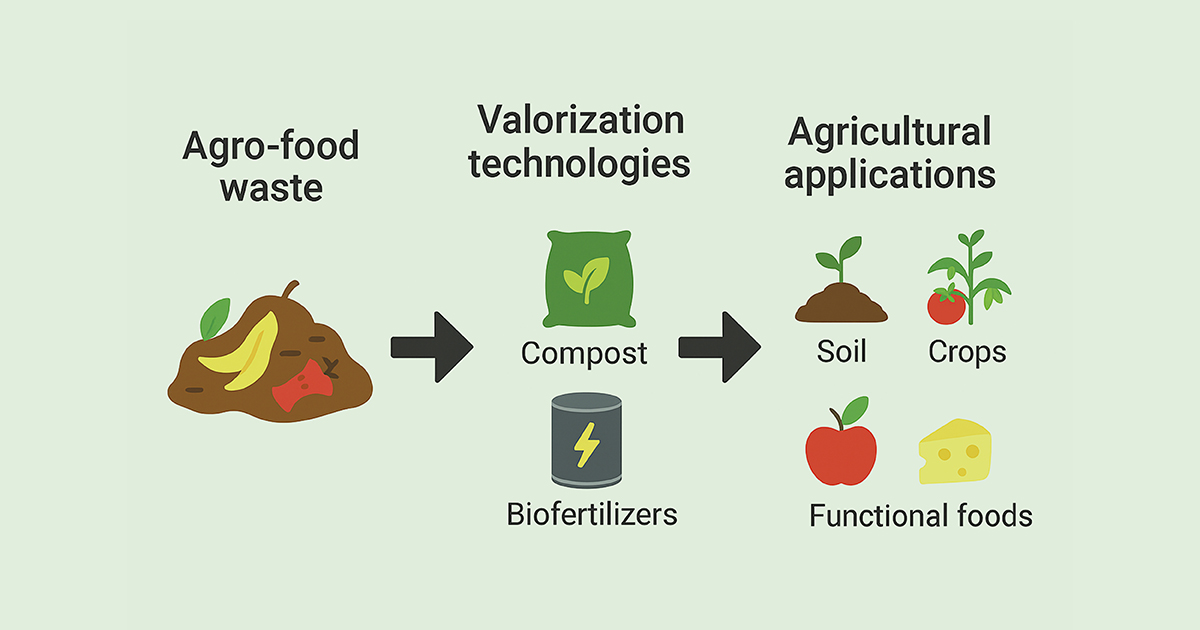
Agro-food waste valorization has emerged as a critical pillar of sustainable agriculture and the circular economy. Every year, large volumes of food and agricultural by-products are discarded, leading to environmental burdens and economic losses. Transforming these residues into valuable resources—such as biofertilizers, biostimulants, animal feed, bioenergy, and functional ingredients—offers a promising pathway to enhance agricultural productivity, reduce waste, and improve food system resilience.

This Special Issue aims to highlight cutting-edge research on innovative strategies for agro-food waste valorization and its direct applications in agriculture. Topics of interest include biotechnological approaches, green extraction methods, composting and fermentation technologies, and the development of bio-based products that improve soil health, crop yield, and food quality. Contributions addressing policy frameworks, life-cycle assessments, and socio-economic impacts are also welcome.

We invite original research articles, reviews, and case studies that explore novel valorization techniques, interdisciplinary approaches, and practical applications. By gathering diverse perspectives from food science, agronomy, environmental engineering, and public health, this Special Issue seeks to advance knowledge and promote sustainable solutions for the agro-food sector.

Dr. Vassilis Athanasiadis
Guest Editor

Manuscript Submission Information

Manuscripts should be submitted online at www.mdpi.com by registering and logging in to this website. Once you are registered, click here to go to the submission form. Manuscripts can be submitted until the deadline. All submissions that pass pre-check are peer-reviewed. Accepted papers will be published continuously in the journal (as soon as accepted) and will be listed together on the special issue website. Research articles, review articles as well as short communications are invited. For planned papers, a title and short abstract (about 250 words) can be sent to the Editorial Office for assessment.

Submitted manuscripts should not have been published previously, nor be under consideration for publication elsewhere (except conference proceedings papers). All manuscripts are thoroughly refereed through a single-blind peer-review process. A guide for authors and other relevant information for submission of manuscripts is available on the Instructions for Authors page. Agriculture is an international peer-reviewed open access semimonthly journal published by MDPI.

Please visit the Instructions for Authors page before submitting a manuscript. The Article Processing Charge (APC) for publication in this open access journal is 2600 CHF (Swiss Francs). Submitted papers should be well formatted and use good English. Authors may use MDPI's English editing service prior to publication or during author revisions.

Keywords

  • agro-food waste
  • valorization
  • circular economy
  • biofertilizers
  • biostimulants
  • sustainable agriculture
  • food by-products
  • green technologies
  • nutritional evaluation
  • environmental impact

Benefits of Publishing in a Special Issue

  • Ease of navigation: Grouping papers by topic helps scholars navigate broad scope journals more efficiently.
  • Greater discoverability: Special Issues support the reach and impact of scientific research. Articles in Special Issues are more discoverable and cited more frequently.
  • Expansion of research network: Special Issues facilitate connections among authors, fostering scientific collaborations.
  • External promotion: Articles in Special Issues are often promoted through the journal's social media, increasing their visibility.
  • Reprint: MDPI Books provides the opportunity to republish successful Special Issues in book format, both online and in print.

Further information on MDPI's Special Issue policies can be found here.

Published Papers (4 papers)

Order results
Result details
Select all
Export citation of selected articles as:

Research

Jump to: Review

19 pages, 3826 KB  
Article
Synergistic Fermentation of Pu-Erh Tea Residue with a Tailored Bacterium and Enzymes: Unlocking Its Potential as a Sustainable Feed Ingredient
by Ding Xie, Zicheng Zhang, Yongliang Wang, Luya Feng, Zhiyi Tang, Meijuan Bai, Xiaokang Ma, Bi’e Tan, Chen Zhang and Dingfu Xiao
Agriculture 2026, 16(10), 1036; https://doi.org/10.3390/agriculture16101036 - 10 May 2026
Viewed by 611
Abstract
Pu-erh tea residue (Ptr), an insoluble byproduct generated during the industrial production of ready-to-drink Pu-erh beverages, is often discarded as waste despite its substantial nutritional potential. To enhance its feed value, this study developed a microbial–enzymatic synergistic fermentation system. A dominant strain, isolated [...] Read more.
Pu-erh tea residue (Ptr), an insoluble byproduct generated during the industrial production of ready-to-drink Pu-erh beverages, is often discarded as waste despite its substantial nutritional potential. To enhance its feed value, this study developed a microbial–enzymatic synergistic fermentation system. A dominant strain, isolated from decaying tea residue, was identified as Bacillus albus and designated as Bacillus albus C01 (Bacillus.a C01). The Bacillus.a C01 strain was sensitive to all nine antibiotics tested and reduced system pH to 3.9 after 5 days of fermentation. 16S rRNA sequencing revealed that microbial–enzymatic synergistic fermentation enriched Bacillus spp., inhibited Pseudomonas spp., and optimized Ptr quality by upgrading nutrients and degrading tannins. Synergistic fermentation significantly increased the contents of crude protein (+7.50%), soluble protein (+93.32%), acid-soluble protein (+41.87%), reducing sugars (+506.49%), γ-aminobutyric acid (+28.00%), tea polyphenols (+7.47%), acetic acid (+22.87%), and total antioxidant capacity (+23.78%), while decreasing crude fiber (−26.61%), tannins (−90.10%), and suppressing polyphenol oxidase activity (−55.41%). In summary, co-fermentation of Ptr with Bacillus.a C01 and composite enzymes significantly improved its nutritional profile by increasing available proteins and organic acids, and enhancing antioxidant capacity, thereby upgrading this industrial byproduct into a functional feed ingredient. This approach offers a practical strategy to mitigate feed shortages and upcycle solid waste from the beverage industry. Full article
Show Figures

Figure 1

19 pages, 2827 KB  
Article
Humification Pathways of Crop Residues Under Ammonification–Steam Explosion Pretreatment and Multi-Fungal Inoculation
by Zhonglin Wu, Chao Zhao, Kunjie Chen, Lijun Xu, Farman Ali Chandio, Xiangjun Zhao and Bin Li
Agriculture 2026, 16(7), 817; https://doi.org/10.3390/agriculture16070817 - 7 Apr 2026
Viewed by 405
Abstract
The pathways governing the transformation of crop residues into humic acid (HA) remain incompletely understood because multiple biochemical routes may operate simultaneously during composting-like humification. In this study, a 30-day solid-state humification experiment was conducted by integrating physicochemical pretreatments, including steam explosion (SE) [...] Read more.
The pathways governing the transformation of crop residues into humic acid (HA) remain incompletely understood because multiple biochemical routes may operate simultaneously during composting-like humification. In this study, a 30-day solid-state humification experiment was conducted by integrating physicochemical pretreatments, including steam explosion (SE) and ammonification coupled with steam explosion (SE-N), with a multi-fungal inoculation strategy involving Aspergillus niger, Candida spp., and Phanerochaete chrysosporium. Across three representative substrate–pretreatment systems and 81 experimental groups, the contents of lignocellulosic fractions, reducing sugars (RS), a UV-280-based soluble nitrogen-containing precursor index (operationally denoted as SNP), fulvic acid (FA), and HA were compared. The results showed that neither physicochemical pretreatment alone nor single-strain inoculation was sufficient to achieve substantial HA formation. SE mainly improved substrate accessibility and promoted carbon release, whereas ammonification provided essential nitrogen preloading for subsequent precursor coupling. In the saccharification-dominant treatment, RS reached 27.5%, but HA remained negligible. In the Candida-only treatment, the soluble nitrogen-containing precursor index increased markedly, yet HA formation was still minimal. By contrast, the highest HA yield (13.7%) was obtained under multi-fungal co-inoculation, particularly when nitrogen preloading by ammonification was combined with concurrent accumulation of carbon and aromatic precursors. The data suggest that lignin-targeting activity by P. chrysosporium was associated with the likely generation of phenolic and quinone-like intermediates that bridged the condensation of sugar- and nitrogen-derived compounds. Overall, the findings support a synergistic humification framework in which polysaccharide depolymerization, microbial nitrogen transformation, and lignin-derived aromatic precursor formation jointly contribute to HA accumulation, rather than a single linear pathway dominating the process. Full article
Show Figures

Figure 1

22 pages, 762 KB  
Article
Upcycling Residues from Salvia rosmarinus Distillation and Agroforestry Processes into a Dual-Function Bioagrochemical with Biostimulant and Antifungal Properties
by Gonzalo Ortiz de Elguea-Culebras, Tamara Ferrando-Beneyto, Enrique Melero-Bravo and Raúl Sánchez-Vioque
Agriculture 2026, 16(5), 628; https://doi.org/10.3390/agriculture16050628 - 9 Mar 2026
Viewed by 445
Abstract
There is a growing demand for sustainable crop strategies that reduce the use of agrochemicals while improving productivity. This study investigates distillation residues of Salvia rosmarinus to develop a novel biostimulant with enhanced antifungal activity, together with natural additives that ensure homogeneity and [...] Read more.
There is a growing demand for sustainable crop strategies that reduce the use of agrochemicals while improving productivity. This study investigates distillation residues of Salvia rosmarinus to develop a novel biostimulant with enhanced antifungal activity, together with natural additives that ensure homogeneity and water dispersibility. Accordingly, several residual by-products released from agroforestry processes and regarded as “plant protection products” were evaluated in phytotoxicity tests in seeds of Lactuca sativa and Lolium perenne. The tested substances included solvents (ethanol, glycerol, propylene glycol, and DMSO) and adjuvants (soy lecithin, polysorbate-20, acetic acid, and ascorbic acid). Those showing the lowest adverse effects were combined with the extract following a 32 factorial design. Most formulations exhibited good water dispersibility and significantly enhanced the germination index of Lactuca sativa, while simultaneously reducing the growth of Lolium perenne and the fungus Aspergillus flavus, all in a clear dose–response manner, as suggested by the four-parameter log-logistic (log10(x)) models. These results indicate that both stimulatory and inhibitory effects were strongly influenced by concentrations, highlighting the importance of optimizing application doses. Among the evaluated carriers, the one lacking glycerol and containing high ratios of polysorbate-20 and soy lecithin demonstrated the most balanced overall performance in terms of physical stability, dispersibility, and biological activity, a response that can be attributed to the combined contribution of the extract and the selected carrier components. Overall, this study demonstrates that bioagrochemicals derived from agroforestry by-products can provide dual-function agricultural applications (biostimulant/antifungal or herbicide/antifungal), while supporting the framework of the circular bioeconomy. Full article
Show Figures

Figure 1

Review

Jump to: Research

54 pages, 3201 KB  
Review
Black Soldier Fly (Hermetia illucens) Larvae and Frass: Sustainable Organic Waste Conversion, Circular Bioeconomy Benefits, and Nutritional Valorization
by Nicoleta Ungureanu and Nicolae-Valentin Vlăduț
Agriculture 2026, 16(3), 309; https://doi.org/10.3390/agriculture16030309 - 26 Jan 2026
Cited by 1 | Viewed by 2660
Abstract
The rapid increase in organic waste generation poses significant environmental challenges and highlights the limitations of conventional waste management practices. In this context, black soldier fly (Hermetia illucens) larvae (BSFL) have emerged as a promising biological tool for valorizing organic residues [...] Read more.
The rapid increase in organic waste generation poses significant environmental challenges and highlights the limitations of conventional waste management practices. In this context, black soldier fly (Hermetia illucens) larvae (BSFL) have emerged as a promising biological tool for valorizing organic residues within circular bioeconomy frameworks. This review provides an integrated analysis of BSFL-based bioconversion systems, focusing on the biological characteristics of BSFL, suitable organic waste streams, and the key process parameters influencing waste reduction efficiency, larval biomass production, and frass (the residual material from larval bioconversion) yield. The performance of BSFL in converting organic waste is assessed with emphasis on substrate characteristics, environmental conditions, larval density, and harvesting strategies. Environmental and economic implications are discussed in comparison with conventional treatments such as landfilling, composting, and anaerobic digestion. Special attention is given to the nutritional composition of BSFL and their valorization as sustainable protein and lipid sources for animal feed and emerging human food applications, while frass is highlighted as a nutrient-rich organic fertilizer and soil amendment. Finally, current challenges related to scalability, safety, regulation, and social acceptance are highlighted. By linking waste management, resource recovery, and sustainable protein production, this review clarifies the role of BSFL and frass in resilient and resource-efficient food and waste management systems. Full article
Show Figures

Figure 1

Back to TopTop