


Abstract
This review focuses on the basic mechanisms, media responses, modeling methods, and engineering applications of agricultural machinery–media interactions, and presents an integrated framework linking mechanical interaction mechanisms to equipment design and operational regulation. This review analyzes the transmission and dissipation mechanisms of mechanical loads in agricultural media. Typical responses in soil–machinery and crop–machinery interactions are summarized, with soil emphasis on cutting, disturbance, compaction, and residue coupling, and crop emphasis on cutting, bending, compression, impact, threshing, and grasping-induced damage. Subsequently, experimental characterization, discrete element method (DEM), multibody dynamics, and coupled modeling methods such as DEM–FEM and DEM–CFD are reviewed. On this basis, this review further discusses pathways for translating mechanical insights into engineering applications, including geometric structure optimization, material and surface engineering, operating parameter matching, low-damage equipment design, and adaptive machinery–media interactions. The above analysis indicates that existing research has increasingly linked material properties and interfacial interactions with numerical simulation and parameter calibration to equipment optimization and intelligent control. However, the cross-material and cross-condition transferability of models under complex field conditions, the computational efficiency of coupled models, and the cross-scale correlation between microdamage evolution and macroscopic agronomic effects remain the main challenges. Future work should integrate mechanism models, data-driven approaches and digital twins, and link machinery mechanical response with soil, crop and energy consumption indicators to support the design of low-disturbance, low-damage agricultural machinery.
1. Introduction
1.1. Background and Engineering Significance
With the acceleration of global agricultural mechanization and intelligence, the mechanical interactions between agricultural machinery and soil and crop-derived media have become an important factor restricting the quality and energy efficiency of equipment operations. During field operations, repeated machinery traffic and mechanical disturbance may compact the soil and alter soil pore structure, thereby adversely affecting crop root growth [1]. When dealing with complex soil conditions, tillage and soil crushing components face typical engineering problems such as operational resistance, energy consumption, and soil dispersion uniformity [2]. In addition, the collision and compression between the threshing elements and the grains during the harvesting process may cause internal and macroscopic damage to the grains, thereby affecting their integrity and subsequent storage quality [3]. It can be seen that the mechanical interaction between agricultural machinery and agricultural media such as soil and crop-derived materials is not limited to a single contact process. Therefore, it is necessary to start from the basic mechanism of mechanical interaction and link the mechanical properties of the medium, interfacial response, and equipment performance for systematic analysis.
1.2. From Agricultural Machinery Design to Machinery–Media Interaction
Traditional agricultural machinery design relies heavily on empirical formulas and structural reinforcement, making it difficult to fully adapt to the complex and changing mechanical responses of field media. With the development of computational mechanics and sensing technology, research has gradually expanded from simple “structural design” to “machinery–media interfacial interaction mechanism”. In the field of deep tillage and cultivation, exploring the dynamic interaction mechanism between the shovel and soil is an important foundation for reducing operational resistance and suppressing dust [4]. In highly viscous and humid soil environments, characterizing the adhesion and flow characteristics between soil and soil-engaging components is an important condition for analyzing soil adhesion behavior [5]. In terms of composite media treatment, the analysis of the interaction characteristics between straw soil components by deep tillage has a significant impact on the burial and crushing effects [6]. In the field of robot harvesting and fine harvesting, the study of microdamage mechanisms based on the contact stress between fruits and end effectors provides theoretical support for the design of low-damage harvesting mechanisms [7]. At the same time, the analysis of the mechanical behavior of the threshing process based on dynamic collision and multisource sensing is expanding the research ideas for optimizing agricultural machinery components [8,9].
Although previous reviews have provided valuable insights into soil mechanics, soil–tool interactions, crop damage, DEM, and agricultural machinery design, these topics are often studied from different disciplinary perspectives. Existing reviews of soil–tool interactions mainly address soil damage, traction resistance, and tillage performance. However, research on crop–machinery interactions often emphasizes deformation, abrasion, fracture, or damage during harvesting and postharvest processing. In contrast, reviews of numerical modeling typically focus on model formulations, parameter calibration, or computational performance. Therefore, the relationships between these aspects and their impact on engineering design are not always integrated within a common analytical framework. The main contribution of this review is its integrated analytical framework, which links (i) the physical properties and state-dependent mechanical behavior of soil and crop-derived media, (ii) contact, friction, deformation, fracture, and energy dissipation mechanisms, (iii) experimental characterization and numerical modeling, and (iv) mechanical design, operating-parameter optimization, and adaptive control.
1.3. Mechanical Characteristics of Agricultural Media
Agricultural media exhibit significant nonlinearity, anisotropy, and spatiotemporal variability. Crop stems exhibit a complex mechanical transition from anisotropic viscoelasticity to brittle fracture under tensile and shear loads [10]. The mechanical strength of granular media such as grains is greatly affected by moisture content and loading rate, exhibiting significant stress sensitivity [11]. In addition, the coefficient of restitution (CoR) and damage tolerance of fruit-like media exhibit nonlinear evolution characteristics during impact collision processes [12]. Thoroughly elucidating the mechanical behavior of agricultural media is the foundation for constructing numerical models and achieving precision design of agricultural machinery.
Meanwhile, different media have differences in moisture content, loading rate, microstructure, and spatial distribution, which may result in different deformation and failure responses under the same mechanical load. Therefore, subsequent research not only needs to describe the constitutive and failure characteristics of a single medium, but also needs to further focus on how mechanical loads are transmitted to the interior of the medium through interfacial interactions. Figure 1 shows the overall analytical framework for mechanical interactions between agricultural machinery and agricultural media. It covers load transfer, medium-specific mechanical responses, model development and validation, engineering design, and performance evaluation.
Figure 1.
Framework for machinery–agricultural media mechanical interaction.
2. Review Methodology and Analytical Framework
2.1. Literature Sources and Search Strategy
In order to investigate the mechanical interactions between agricultural machinery and agricultural media (soil and crop-derived media) at the physical scales, through numerical modeling approaches, and in engineering applications, this study adopted a structured-search narrative review approach. A literature search was conducted in the Web of Science Core Collection and Scopus on 7 July 2026, and updated on 25 August 2026. The main publication period is from 2020 to 2026, supplemented by earlier foundational studies on terramechanics, contact mechanics, and computational modeling.
The search strategy integrates three Boolean concept modules:
Module A (Equipment and Components): “agricultural machinery”, “agricultural tool”, “subsoiler”, “rotary tiller”, “threshing drum”, “end effector”, and “picking robot”.
Module B (Media and Mechanical Responses): “soil–tool interaction”, “soil compaction”, “root–soil complex”, “crop damage”, “grain breakage”, “fruit clamping”, and “straw returning”.
Module C (Mechanisms and Engineering): “contact mechanics”, “discrete element method”, “DEM calibration”, “finite element method”, “CFD–DEM”, “DEM–MBD”, “bionic drag reduction”, and “digital twin”.
For the Web of Science Core Collection (Topic field, TS), the query was
TS = ((“agricultural machinery” OR “agricultural tool” OR “subsoiler” OR “threshing drum” OR “end effector”) AND (“soil-tool interaction” OR “soil compaction” OR “crop damage” OR “grain breakage” OR “fruit clamping”) AND (“discrete element method” OR “DEM” OR “DEM calibration” OR “CFD-DEM” OR “bionic” OR “digital twin”))
For Scopus (Title, Abstract, and Keywords fields), the query was
TITLE-ABS-KEY((“agricultural machinery” OR “agricultural tool” OR “threshing” OR “end effector”) AND (“soil interaction” OR “crop damage” OR “grain breakage”) AND (“discrete element method” OR “DEM” OR “CFD-DEM” OR “digital twin”))
Both searches were limited to English-language research articles and review articles primarily published between 2020 and 2026. The retrieved literature was intended for thematic synthesis rather than quantitative meta-analysis, with the narrative synthesis focusing on mechanical mechanisms, methodological scope, model transferability, and implications for mechanical design.
2.2. Scope, Screening, and Eligibility Criteria
In this review, “crop-derived media” functionally refers to plant-derived materials that interact with machinery during field operations, harvesting, threshing, transport, and postharvest processing. These include stems, stalks, roots, straw, seeds, grains, and fruits, as well as plant–soil composites (such as root–soil complexes and straw–soil mixtures).
Studies were included if they met the following criteria: (i) they directly investigated the interaction between machinery and soil or crop-derived media; (ii) they reported quantitative experimental data, analytical formulations, or validated numerical simulations; and (iii) they provided actionable evidence for component design, parameter optimization, damage mitigation, or adaptive control. Studies were excluded if they focused exclusively on agronomic cultivation, crop genetics, or plant pathology without force/strain analysis, or addressed robot vision and path planning problems without mechanical contact or force feedback.
The initial search retrieved 1483 records from the Web of Science Core Collection (n = 815) and Scopus (n = 668). After removing 594 duplicate records, 889 unique records were retained for title and abstract screening. Preliminary screening excluded 580 records, leaving 309 articles for full-text assessment. After full-text assessment, 141 articles were excluded, resulting in 168 primary studies included in the narrative synthesis. In addition, 66 foundational references were included to provide historical, theoretical, and methodological background. Therefore, the final reference list comprised 234 references.
The reasons for exclusion during the title and abstract screening stage were classified into the following categories: studies focusing on agronomic cultivation, plant genetics, or crop pathology research without mechanical force or strain analysis (n = 186); studies addressing robot vision, object detection, or path planning without mechanical contact, force feedback, or damage mechanics (n = 154); and other records that did not meet the predefined scope or eligibility criteria (n = 240).
Because of insufficient information on mechanical methods or quantitative data, 141 studies were further excluded during full-text assessment of the remaining 309 articles. In the end, 168 primary studies were included in the thematic synthesis, and 66 foundational references provided historical, theoretical, and methodological context, bringing the total number of references to 234.
2.3. Analytical Framework and Evidence Synthesis
This review categorizes evidence into four interrelated analytical levels.
(1) Fundamental Interfacial Mechanics
Section 3 examines contact and load transfer, friction, adhesion, deformation, fracture, and energy dissipation at the machinery–media interface.
(2) Medium-Specific Mechanical Responses
Section 4 and Section 5 synthesize soil–machinery interactions (cutting, disturbance, compaction, and straw–soil coupling) and crop–machinery interactions (cutting, bending, impact, threshing-related damage, and robotic grasping).
(3) Experimental Characterization and Numerical Modeling
Section 6 compares the differences in target media and characteristic scales, parameter calibration, validation conditions, and computational efficiency between DEM, FEM, MBD, and coupled modeling approaches (DEM–FEM, CFD–DEM, and DEM–MBD).
(4) Engineering Application
Section 7 links mechanistic insights to tool geometry, surface modification, operating-parameter optimization, low-damage equipment design, and adaptive control.
At these four levels, evidence is synthesized around the connections between mechanical mechanisms, medium-specific mechanical responses, modeling and validation, and engineering applications. Experimental observations, numerical predictions, and engineering outcomes validated under operational conditions are considered different types of evidence. The reported performance metrics are interpreted by considering material properties, moisture content, loading rate, experimental scale, equipment configuration, and validation environment. Metrics obtained under different experimental protocols or operating conditions cannot be directly compared, and there is no universal ranking of methods evaluated under incompatible conditions. This mechanism-based synthesis summarizes existing findings and emphasizes the limitations of model applicability, cross-condition transferability, and the translation of mechanistic insights into reliable engineering improvements.
3. Fundamental Mechanics of Agricultural Machinery–Media Interactions
The interaction between agricultural machinery and agricultural media can be understood as an interconnected mechanical process. Contact establishes load transfer, friction and adhesion regulate interfacial resistance, and the resulting stresses induce deformation, flow, and, under critical conditions, fracture and damage. Energy is transferred and dissipated throughout the process. Figure 2 summarizes these interrelated mechanisms and provides a framework for Section 3.1, Section 3.2, Section 3.3, Section 3.4 and Section 3.5.
Figure 2.
Fundamental mechanical processes of machinery–media interactions.
3.1. Contact and Load Transfer
The contact and load transfer between agricultural machinery and media interface exhibit strong nonlinear and time-varying characteristics. In the research of nonagricultural soil operations, the combination of physical models and data-driven methods has been used to explore the online prediction of soil–tool resistance [13]. This study can serve as a cross-disciplinary reference for hybrid modeling ideas, but its conclusions cannot be directly regarded as empirical evidence under agricultural machinery conditions. Under traction and tillage conditions, the MPSO-VMD-IWTD-based tractor implement-load signal denoising method can effectively extract low-frequency periodic excitation signals caused by soil shear failure [14]. The DEM–MBD coupled model has been used to analyze the relationship between changes in tillage depth and dynamic responses such as draft resistance in the tractor–implement–soil system, and has been validated through corresponding field experiments [15]. This study suggests that coupled modeling can be used to connect soil particle behavior with mechanical system loads, but its predictive ability still needs to be evaluated in conjunction with specific soil conditions and operational parameters. For wet, cohesive soils, the EEPA contact model can characterize soil compressibility and adhesion during contact and load transfer. Figure 3 illustrates the calibration of this model using a vane shear test [16]. In terms of draft force measurement, the new S-shaped sensing element achieves real-time acquisition of tillage resistance through three-point suspension geometric mapping [17]. For suspension systems, the force matrix of the upper/lower linkage points established based on space vector mechanics can effectively solve the real tillage resistance experienced by the implement [18].
Figure 3.
Shear torque calibration of the EEPA contact model using a vane shear test: (a) vane shear test setup; (b) corresponding DEM simulation.
Overall, contact and load transfer constitute the initial mechanical link of agricultural machinery–medium interaction, determining how external loads enter soil, particles, or crop tissues. Existing research has expanded from static contact parameter characterization to dynamic load sensing and multibody coupling analysis, but different studies still rely on specific media and operating conditions to describe contact stiffness, adhesion characteristics, and load variability. Therefore, accurate characterization of the contact state is an important prerequisite for further analysis of friction, deformation, and failure behavior.
3.2. Friction and Adhesion
The friction and adhesion at the interface of soil-engaging components are important factors that cause an increase in tillage resistance and soil blockage. The biomimetic nonsmooth surface designed based on the microstructure of dung beetles can reduce the normal contact force between flexible media and components by reducing the effective contact area and inducing high-frequency microvibrations [19]. In terms of surface modification of rotary tillage components, composite coatings such as Ni-P-PTFE exhibit lower friction coefficients and better anti-adhesion and drag-reducing performance [20]. Once contact is established, friction and adhesion affect the transmission of mechanical loads across the interface, thereby affecting operational resistance and soil movement. Figure 4 shows a biomimetic design approach that uses badger-claw-inspired cutting teeth and anti-adhesion coatings to reduce cutting stress and soil adhesion [21].
Figure 4.
Badger claws and biomimetic cutting teeth. (a) natural badger claw; (b) biomimetic cutting tooth model.
These studies indicate that friction and adhesion are not surface phenomena independent of the contact process, but are influenced by factors such as contact area, material surface characteristics, and the moisture content of the medium, which further alter the transmission of mechanical loads. The existing research mainly reduces interfacial resistance through biomimetic surface structuring and material modification, but the related mechanisms still have significant dependence on the medium and operating conditions. Therefore, the changes in friction and adhesion characteristics ultimately need to be reflected through the deformation and flow behavior of the medium.
3.3. Deformation and Flow
Interfacial forces and friction can cause particle rearrangement, deformation, and bulk flow beyond the local contact region. Figure 5 compares the particle flow patterns obtained from physical experiments and numerical simulations, illustrating the transition from local interactions to the collective response of agricultural media [22]. The DEM–CFD method using EDEM Fluent coupling can characterize the particle mixing and spatial rheological uniformity of organic–inorganic composite fertilizers during diffusion disk scattering [23]. In the paddy field environment, the CFD–DEM coupled model can effectively describe the rheological and scattering behavior of high moisture paddy soil under the disturbance of trencher by combining JKR surface energy and VOF two-phase flow [24]. The DEM–MBD coupled model incorporating adhesive contact parameters can simulate soil cohesion, soil deformation, and interparticle bond breakage during rotary tillage and ridge tillage operations, and support the optimization of operating parameters for ridge formation [25]. During the process of potato soil fragmentation and separation, the soil-covering rotating-disc mechanism can effectively promote the breaking of bond breakage between soil particles and the flow of loosened soil particles [26].
Figure 5.
Comparison of particle flow patterns between physical experiments and simulations.
From the above research, it can be seen that mechanical effects do not only manifest as changes in local contact forces, but also further induce particle rearrangement, plastic deformation, flow, and even macroscopic crack formation. There are differences in the response forms of different media at the particle scale, continuum scale, and composite medium scale, so corresponding characterization methods need to be selected based on the structure of the media. For media that have reached critical strain or strength conditions, their deformation process will further evolve into local fracture and overall failure.
3.4. Fracture and Failure
The fracture and failure mechanisms of crop roots, stems, and soil complexes have a significant impact on tillage energy consumption and harvest quality. When deformation and stress concentration exceed the strength or bonding capacity of the medium, the response may progress from particle rearrangement and deformation to fracture and failure. Figure 6 shows the stress–strain response and fracture evolution of a maize stubble–soil composite under external loading [27]. During the direct shearing process of corn root–soil composite, the root system enhances the binding effect on the soil through effective circumference and uniform distribution [28]. Studies have demonstrated that the internal friction angle and cohesion of corn stubble–soil composites exhibit significant nonlinear changes with the distribution of root systems [29]. In terms of the connection between the grain and the cob, the fracture force of the corn kernel stem under radial tension is higher than the axial and tangential shear forces [30]. Pineapple fruit stalks exhibit brittle fracture under bending moment, and the starting angle of fracture is closely related to the fixed distance [31]. During the process of corn threshing, the force chain migration and trapezoidal stress transfer of the stem under tangential load induce grain detachment [32]. During the threshing process of rice stems, the internodes wrapped in leaf sheaths are more prone to breakage under the combined action of three-point bending and stretching [33].
Figure 6.
Stress–strain and fracture evolution of a maize stubble–soil composite under external loading. (a) initial contact stage; (b) stress accumulation stage; (c) crack initiation stage; (d) fracture and separation stage.
The above research further indicates that the failure of agricultural media is usually not an instantaneous result of a single load, but is closely related to factors such as root distribution, tissue structure, load direction, and contact state. For a soil root complex, failure manifests as the coupling of interface failure and structural fracture. For biomaterials such as grains and stems, it manifests as crack initiation and propagation after local stress concentration. These failure processes are accompanied by energy dissipation through deformation, fracture, friction, and vibration. The following section examines the mechanisms of energy dissipation in greater detail.
3.5. Energy Dissipation and Damage
The dissipation laws of mechanical excitation and impact loads in media and structures will affect system vibration and cumulative damage. Under multisource excitation, the longitudinal and vertical vibrations of the center of mass position of the self-propelled baler are more obvious, and the periodic reciprocating motion of the compression mechanism is an important factor causing frame impact [34]. During the bundling and compression process of wheat stems, their creep recovery curve conforms to the creep after effect theory, and there is a significant energy coupling between the block density and hydraulic load at high moisture content [35]. Under time-varying loads, the frame of a self-propelled pickup and bundling machine exhibits strong vibration coupling response in the Z direction. Combustion harmonics and low-frequency compression impact are the main factors causing structural cumulative damage [36].
Overall, contact, friction, deformation, and fracture are not isolated from each other, but together constitute a continuous process of energy transfer and dissipation in the agricultural machinery–media interaction. Part of the external input energy is used for medium deformation and damage, while the other part is dissipated in the form of friction, vibration, and impact, and ultimately reflected in macroscopic indicators such as operational resistance, structural load, and medium damage. Therefore, the basic mechanics mechanism needs to be further combined with specific soil and crop scenarios to analyze the engineering response under different medium conditions. It should be pointed out that although the rearrangement and shear failure of soil particles, the bending and fracture of crop tissues, and the vibration response of frames and working components all involve load transfer and energy dissipation, the corresponding material mechanisms and evaluation indicators are not the same. Therefore, cross-media comparisons should focus on analyzing common mechanical connections and their applicable conditions, rather than directly equating the failure thresholds or energy indicators of different media. To further compare the mechanical response under different agricultural media and mechanical action forms, this section summarizes the representative research objects, main modeling or experimental methods, key mechanical parameters, and main conclusions. Table 1 focuses on the mechanical description methods used by different studies and their applicable boundaries, in order to extract common mechanisms of action from individual research results.
Table 1.
Representative studies on fundamental agricultural machinery–media interactions.
The studies summarized in Table 1 show that research on agricultural machinery–media interactions has gradually expanded from a single soil or crop material to composite systems such as root–soil, plant–soil, and machinery particles. DEM, FEM, and experimental methods provide complementary information from the perspectives of particle motion, continuum deformation, and macroscopic mechanical response, but most studies are still limited by specific medium states and experimental conditions. The above differences provide a basis for further discussions on soil–machinery and crop–machinery interactions.
4. Soil–Machinery Interactions: Mechanisms, Responses, and Engineering Effects
Soil–machinery interactions can be analyzed through five components: soil characteristics, contact between soil contacting components, soil deformation disturbance, residue soil machinery coupling, and engineering effects. Figure 7 shows the core elements of each component, organizing the interaction relationships between soil and machinery and providing a framework for analyzing soil mechanical characteristics and interaction mechanisms in the following sections.
Figure 7.
Framework of soil–machinery interactions.
4.1. Soil Mechanical Properties Relevant to Machinery Interactions
The physical and mechanical state of soil is an important factor affecting the performance of tractors and tillage machinery. In different soil environments, soil strength and cohesion have a significant impact on the draft force and engine torque of the moldboard plow. The torque demand in hard clay can reach 2.14 times that of soft soil [49]. Under traditional farming methods, the particle size distribution of soil aggregates is jointly influenced by soil type and operating parameters, and it is difficult to accurately predict with a single mechanical model [50]. When using the finite element method (FEM) to simulate a cylindrical plate plow, the resistance prediction model based on shear strength (SS) has higher accuracy than the traditional cone penetration index (CI) model [51]. Based on the EEPA model, the dynamic compaction response between the compaction roller and the soil after rotary tillage can be well characterized, thereby achieving adaptive control of seedbed compaction [52].
Overall, soil strength, cohesiveness, and compression characteristics determine the initial response under mechanical loading and further affect the stress transfer and operational resistance at the contact interface. Existing research has shown that a single macroscopic soil index is difficult to fully describe complex operational processes; therefore, it is necessary to combine soil material parameters with mechanical soil contact states for analysis. Thus, the basic mechanical properties of soil form the basis for understanding the subsequent stress and soil deformation behavior of soil-engaging components.
4.2. Tool–Soil Contact and Force Generation
The distribution of contact stress at the interface between soil-engaging components and soil has a significant impact on the draft force and energy consumption of machinery. The DEM of the chisel-type deep loosening shovel process shows that increasing depth leads to a nonlinear increase in tillage resistance [53]. The DEM–MBD coupling method can effectively predict the autonomous rotation speed and soil lateral displacement of a unidirectional modified disc plow [54]. The force analysis of the loosening device in Xinjiang cotton fields during deep loosening operations shows that the forward speed and depth of penetration have an interactive effect on the soil disturbance coefficient [55]. The deep loosening simulation of a narrow cutting edge in cohesive soil shows that the cutting depth/width ratio and advancing speed are important factors leading to high stress concentration and increased resistance in soil [56]. In the interaction between agricultural radial tires and soft soil, the coupled Euler–Lagrange (CEL) method confirms that herringbone pattern blocks can generate high shear and draft forces [57]. The interaction between track-tooth height and soil moisture content in paddy soil indicates that increasing tooth height can improve thrust and traction performance [58]. The finite element method simulation of a disc plow shows that increasing the inclination angle and decreasing the disc angle can effectively reduce draft force and lateral force [59]. The disc cutting force model based on fuzzy logic can achieve accurate prediction of draft force and three-dimensional lateral force [60]. Hertz–Mindlin and the bond model can effectively describe the resistance characteristics of double disc and notched disc trenchers in no-tillage and trenching in paddy fields [61].
Existing research has shown that the geometric parameters, motion state, soil moisture content, and strength conditions of soil-engaging components jointly determine the distribution of interfacial stress and load transfer paths. Although different models differ in their representations of contact and parameterization, they generally emphasize the relationship between mechanical loads and local stress concentration in soil. As the load further increases, the local contact response will be transformed into soil shear, fragmentation, and particle migration. Therefore, contact force analysis needs to be further evaluated by combining soil deformation and disturbance processes.
4.3. Soil Deformation, Cutting, and Disturbance
The soil damage and deformation patterns induced by cutting and tillage components can affect the quality of soil fragmentation and seedbed preparation. The interactive simulation between purple soil in the hilly regions of southwestern China and narrow-width subsoiler confirms that calibrating DEM parameters based on static/dynamic accumulation angle can control the prediction error of forward resistance within 7.22% [62]. Studies have demonstrated that the biomimetic furrow opener based on earthworm head surface curve characteristics can achieve a maximum 9.08% reduction in resistance and improved ditching quality by reducing soil particle contact points [63]. DEM simulations of vertical axis rotary tillage blades at different speed ratios (u/v) show that low speed ratios increase the volume of soil being cut, thereby increasing torque requirements [64]. The double shovel deep loosening device designed based on the shape of the front toe of the armadillo can achieve optimal layered soil disturbance effects at a spacing of 400 mm [65]. When the T-shaped trencher of the no-till seeder is equipped with a concave arc side blade, it can generate secondary shear on the bottom soil and enhance the cutting effect [66]. During the deep plowing process of rice residues, the double disc digging shovel can reduce the residual mass and longitudinal displacement of the root–soil complex [67]. The endpoint tangent angle and soil entry angle of the side picking knife of the no-till strip planter have a significant impact on the thickness of the soil cover in the planting ditch and the straw mixing rate [68]. The improved nontensile three-layer adhesive soil DEM model reveals that the increase in soil adhesion force leads to a decrease in tillage disturbance area and an increase in resistance [69]. As shown in Figure 8, during the process of digging Cyperus esculentus, reversing rotary tillage can increase soil disturbance intensity by 166.67% and improve soil fragmentation rate compared to forward rotation [70]. High-speed tracking of particle trajectories indicates that the depth of the rotary tiller shaft significantly affects the ratio of forward and backward soil scattering in reverse tillage [71].
Figure 8.
Counter-rotation Cyperus esculentus harvester.
The above research indicates that soil cutting is not simply a process of resistance generation, but is accompanied by spatial restructuring processes such as particle fragmentation, displacement, and scattering. The use of a single draft force or torque indicator makes it difficult to comprehensively evaluate the tillage effect, and it is necessary to simultaneously consider the range of soil disturbance, degree of soil fragmentation, and spatial distribution. Especially under biomimetic components and complex motion trajectory conditions, geometric parameters and motion parameters have a coupled effect on soil failure modes, which is further related to soil compaction problems caused by repeated vehicle passes.
4.4. Soil Compaction and Traffic Impact
The repeated compaction of agricultural machinery, tractors, and tires can lead to soil compaction and structural changes. The DEM simulation of the repeated rolling process of tractor tires (1–8 times) shows that stress will propagate to a depth of 0.20–0.70 m, and the number of force chains increases in a stepwise manner [72]. Nonpneumatic tires (NPTs) equipped with new arrow-shaped spokes can reduce soil settlement and dry density, thereby helping to slow down physical compaction [73]. The single round test bench DEM simulation confirms that adding farmyard manure can effectively loosen the soil and reduce the increase in bulk density caused by repeated compaction [74]. The DEM simulation of the excavation process of rapeseed seedlings shows that high soil compaction can lead to a nonlinear increase in excavation resistance and expand the stress-affected zone [75]. The tire soil model calibrated based on virtual dead weight method can accurately predict the stress evolution and settlement depth of the top soil under 1–8 compaction cycles [76]. The thickness and quantity of the arc-shaped isolation spoke structure for agricultural NPTs have a clear functional response to soil subsidence and bulk density evolution [77].
Unlike local cutting and disturbance, repeated traffic action has a significant cumulative effect, and its impact can be gradually transmitted from the surface to the deep soil. Therefore, soil compaction is not only determined by the size of a single load, but also influenced by factors such as tire or track form, number of passes, soil moisture state, and load history. Existing research has begun to explain the compaction mechanism from the perspectives of force chain evolution and stress propagation, but the long-term cumulative effects under complex field conditions still need to be further evaluated in conjunction with actual operational processes.
4.5. Residue–Soil–Machinery Coupling
The three-phase coupling among straw, soil, and agricultural machinery under conservation tillage is relatively complex. In the interactive simulation of soft soil and soil throwing components after ginseng cultivation, the JKR model and sliding friction angle calibration can better characterize the soil throwing distance [78]. Under the full amount of rice straw returning to the field, the inclination angle and ground clearance of the wide width fertilizer throwing device have an interactive effect on the uniformity CV of fertilizer distribution [79]. By using Pro/Engineer 5.0 (PTC) and MATLAB R2016a spatial coordinate digitization technology, the three-dimensional spatial mixing uniformity of straw of different lengths in soil after rotary tillage can be quantitatively evaluated [80]. The C-type biomimetic rotary tiller with a mole-claw-like structure can increase burial speed by 5.2−7.8% and reduce torque under full straw coverage [81]. Studies have demonstrated that the coupling simulation of the elastic teeth soil residual film of the residual film recycling machine can effectively predict the torque and force on the tooth body during the peeling process [82]. The wheat straw returning machine can reduce machine vibration and improve stubble removal rate at low PTO speed and high stubble height [83]. The vertical rotating fixed-angle cleaning device achieved a cleaning rate of 94.1% and a soil disturbance rate of only 27.2% through a 48° angle design [84].
The addition of straw, residual film, and other field residues further transforms the soil–machinery interaction from two-phase contact to a multimedia coupling process. At this point, the mechanical structure not only changes the movement of soil particles, but may also alter the fragmentation, mixing, and migration state of residues, thereby forming a coupling relationship between work quality and soil disturbance. Related studies have shown that the three-phase coupling model may provide richer process information than a single soil model, but its parameter count and computational complexity also increase, posing higher requirements for subsequent numerical modeling and parameter calibration. To compare the structural forms, simulation methods, and engineering responses under different soil–machinery interaction scenarios, Table 2 summarizes the key components, main evaluation indicators, and corresponding performance changes in representative studies. Unlike the previous section, which focused on fundamental mechanical processes, this table further highlights the correspondence between soil characteristics and specific equipment design parameters.
Table 2.
Representative soil–machinery interaction studies and engineering responses.
The table shows that existing studies on soil mechanics and mechanical soil interactions are increasingly linking the optimization of soil-engaging component parameters with the evaluation of overall machine performance.
5. Crop–Machinery Interactions: Deformation, Failure, and Mechanical Damage
5.1. Mechanical Characteristics of Crop-Derived Media
The physical and mechanical properties of crop-derived media (stems, grains, fruits) are an important foundation for designing low-damage harvesting and processing equipment. Studies have reported that the rupture force of oil palm fruits under lateral impact (939.4 N) is higher than that under longitudinal impact, and the rupture energy decreases as the fruit matures [98]. The bending and shear strength of tea stems are positively correlated with cellulose content and segment number [99]. Researchers have found that the compressive strength of corn kernels decreases nonlinearly with moisture content (11.2–21.3%) and loading rate [100]. As shown in Figure 9, researchers reported a tensile strength of 29.02 MPa for rice stems. The strength of the stem fibers followed a Weibull distribution [101]. Researchers have found that the simulation of the bending curvature of tea stems shows that the elastic modulus decreases monotonically from bottom to top, and the nonuniform cross-section virtual segment model can better predict large deformation bending [102].
Figure 9.
Schematic diagram of fiber tensile test.
The above research indicates that crop-derived media exhibit substantial structural and material heterogeneity, and their mechanical response depends not only on the load form, but also on factors such as moisture content, maturity, fiber composition, and tissue location. Therefore, the crop–machinery interaction cannot be simply described using the assumption of homogeneous materials. The differences in the mechanical properties of materials further determine the failure modes under different load modes such as cutting, bending, compression, and collision, providing a material basis for subsequent analysis of low-damage operations.
5.2. Cutting and Bending Interactions
Cutting, bending, and shedding are the main mechanical forms of action during crop harvesting. At a forward speed of 0.3 m/s and a brush roller speed of 53 rpm, the ground-operated jujube harvester achieved a picking rate of 92.11% and a damage rate of only 2.07% [103]. A pipe-type canopy opener is installed in the front of the spray. Through transient dynamic simulation, the height of the opener can be optimized (0.6 m), and the droplet deposition in the middle and lower canopy can be improved [104,105]. Studies have demonstrated that under quasi-static cutting, increasing the cutting speed and combining it with a 24.23° blade inclination angle and a 20° lifting angle can reduce shear stress by 43.48% in jute leaves [106]. A review of the cutting mechanism of mechanical lawn mowers shows that high cutting speed, sharp edge, and high moisture content can cause brittle fracture of the stem, thereby reducing cutting energy [107]. Researchers found that the double disc vertical cotton straw crushing and returning machine has a crushing qualification rate of 95.9% at a speed of 1500 r/min [108].
Cutting and bending mainly achieve the separation of crop tissues by changing the local stress distribution, and the results are not only related to the blade geometry and motion speed, but also closely related to the crop moisture state and fiber structure. Existing research has analyzed cutting forces, fracture forms, and job quality, but the differences in material properties between different crops limit direct comparisons. Therefore, it is necessary to further analyze the formation mechanism of internal damage in crops from the perspectives of compression and impact loads.
5.3. Compression and Impact Interactions
Squeezing and high-speed collision are important forms of mechanical action that cause hidden damage and rupture inside grains and fruits. When adjusting the potato harvester, reducing the height difference between the two-stage lifting chains and adding buffer wrapping can reduce collision damage [109]. Static compression simulation of loquat fruit shows that stress is concentrated at the junction between the flesh and the core, and the rubber material contact surface can effectively alleviate the compressive stress [110]. By using machine learning (RF algorithm) combined with momentum theorem, collision impact force can be predicted based on corn ear weight and falling posture [111]. The contact force distribution between corn kernels is highest in the middle of the ear, and the staggered arrangement has a wider range of stress transmission compared to the row arrangement [112]. Under the compression of the 46 mm arc-shaped gripper, the critical load for pulp damage in red oranges is higher than that of the flat gripper [113]. Based on image processing and the enhanced generalized Maxwell model, the viscoelastic stress relaxation of tomato peel cells can be directly simulated through microscopic images [114]. Sorghum grains have the highest apparent elastic modulus (72 MPa) in the Z-axis direction, and the prediction error of the impact fracture angle model is less than 3% [115]. The apple collision damage model (BRI *) based on X-ray CT scanning has achieved damage assessment based on impact energy and damage area [116].
Compared to cutting, compression and collision are more likely to cause internal damage that is not easily recognizable by appearance, so their evaluation usually requires a combination of indicators such as stress, deformation, and damage volume. Existing research indicates that contact materials, collision speed, load direction, and internal structure of crops may all alter the location of stress concentration and degree of damage. Therefore, the design of low-damage equipment not only needs to reduce peak loads, but also needs to control the load transfer mode and local stress concentration.
5.4. Threshing-Induced Fracture and Damage
The high-speed impact and squeezing friction during the threshing process are important factors causing grain damage and cleaning losses. The squeezing oscillating wheat thresher uses cyclic friction squeezing instead of hitting, achieving a threshing efficiency of 98.0% at 350 rpm with low damage [117]. The corn stepless taper adjustment threshing drum is designed with a tapered streamline, reducing the grain damage rate to 2.826% [118]. Based on BP-PSO neural network monitoring of feeding amount and adaptive adjustment of soybean threshing gap, the breakage rate was reduced to 2.36% [119]. The variable stiffness spring buffering corn threshing device controls the grain damage rate at 4.7% under high-moisture-content conditions [120]. The large axial flow combine harvester uses a variable diameter drum to match the feeding amount in real time, reducing the grain damage rate by 34.1% [121]. The comparison of traditional rice threshing methods shows that the rate of grain damage caused by mechanical impact is higher than that caused by manual peeling [122]. The noncircular gear variable speed transmission threshing mechanism utilizes instantaneous inertia force to compensate for threshing force, reducing the harvest loss rate of small rice in hilly areas [123]. The von Mises stress of buckwheat grains during threshing collision decreases with increasing moisture content, and the critical damage velocity is 10.15–13.07 m/s [124]. The TAF threshing device showed the lowest damage rate (5.4%) when threshing high moisture corn at a low speed of 1.0 m/s [125]. The combination of 360° angle concave plate and adjustable guide plate can reduce the threshing loss rate of rapeseed by 4.25% and the damage rate by 0.93% [126]. The longitudinal flow sunflower seed thresher adopts a circular tube concave plate screen, which can reduce sunflower disk fragmentation and seed impurities [127]. The combined axial flow transverse flow corn threshing system uses a plate-toothed mixing drum to reduce the grain damage rate by 59.5% compared to a full-toothed drum [128]. Studies using the DEM model of rice with flexible long stems confirms that concentric threshing gaps can generate smoother squeezing force and reduce stem breakage rate more than eccentric gaps [129].
Based on these studies, it can be seen that threshing damage is essentially the result of the combined action of threshing elements, crop material status, and dynamic loads. Different threshing structures mainly affect the loading state of grains by changing the collision frequency, contact mode, squeezing force, and crop movement trajectory. Simply comparing the damage rate cannot fully explain the performance differences between different threshing mechanisms. Combining the material damage threshold with the dynamic load during the threshing process is an important direction for further establishing a low-damage threshing design basis.
5.5. Grasping, Picking, and Handling Damage
The clamping force and attitude control of the end effector of the picking robot have a significant impact on the damage and detachment of fruits and vegetables during the picking process. Researchers found that the gripper of citrus-picking robots is significantly affected by occlusion and lighting, and a deviation from the optimal gripping angle of 90° can lead to a 1.8% increase in damage rate every 10° [130]. The apple-picking series drive gripper combined with soft suction cups and telescopic fingers achieved a 96% success rate in grasping while blocking canopy [131]. The evaluation of the mango harvesting end effector showed that the 6-flexible finger mechanism can provide a grasping area of 150 cm2 and no significant post ripening damage was observed [132]. The tomato-picking robot combining Detectron2 keypoint detection with soft auxetic fingers achieved a success rate of 80% at low clamping forces of 0.20–0.50 N [133]. Researchers found that the underactuated rigid flexible coupling end effector for apple picking utilizes real-time force feedback to limit the fingertip force below the damage threshold of 24 N [134]. The end effector for pepper plug seedling extraction uses a rubber wrapped clamp, reducing the stem breakage rate from 80% to 3.33% [135]. In apple robot harvesting, horizontal folding has a shorter cycle time (12.53 s) and higher success rate compared to humanoid posture, and no significant stem damage was observed [136]. The 3D-printed flexible gripper based on biomimetic design of broad bean fruit contour for picking bell peppers has a fruit damage rate of only 1.7% [137]. Multiscale FEM simulations of grape harvesting indicate that contact force is an important factor in causing internal damage, and the silicone rubber interface can effectively disperse stress [138]. The combination of air jet soil loosening and the flexible gripper vegetable plug seedling extraction device has a success rate of 94.49% for pepper seedling extraction [139].
The picking and grasping process further reflects the coupling relationship between mechanical action and robot execution strategy. Unlike traditional harvesting machinery which relies on high-speed collisions, robotic end effectors typically achieve fruit separation through lower speeds and controlled contact forces. Therefore, the clamping posture, compliant material, and real-time force feedback have become important factors affecting damage. Existing research has shown that flexible and underactuated mechanisms can adapt to differences in fruit morphology to a certain extent, but occlusion, attitude deviation, and differences in fruit stem structure can still affect practical operational stability.
5.6. Moisture, Maturity, and Material Variability
The biological variability of crops (moisture content, maturity, variety) increases the nonlinearity of mechanical processes. The rupture ratio index (BRI) established based on centrifugal shock can characterize the mechanical degradation sensitivity of rice grains with different moisture contents [140]. Partial least squares neural network (NGO-BP) optimization of the forward speed and reel rotation speed of the quinoa harvester reduced the grain drop rate to 1.802% [141]. Simulation of broccoli stem harvesting shows that shear fracture is more suitable for stem leaf separation than tensile fracture, and there are significant differences in cellulose density among different parts [142].
Overall, moisture content, maturity, and variety differences run through various stages of crop–machinery interactions, directly altering material stiffness, strength, toughness, and damage sensitivity. Therefore, mechanical parameters obtained based on a single material state have difficulty fully representing the material response during the actual harvesting process. Future modeling and equipment optimization need to further consider the dynamic changes in crop material states and jointly characterize material parameters with mechanical load conditions.
To compare studies of mechanical damage in different crops, it is necessary to first distinguish the material state, loading mode, damage criteria, and experimental methods. Crop variety, moisture content, maturity, and tissue location affect the mechanical properties of materials. The loading rate, contact form, and constraint conditions change the stress and failure process, so the fracture force, critical impact velocity, and damage rate measured for different crops and test conditions cannot be directly compared across studies to assess relative damage susceptibility. When integrating evidence, priority should be given to comparing studies on the same crop, under similar material conditions and using consistent loading methods and damage definitions, and to examining the experimental scale and validation methods. For the literature that is difficult to quantitatively compare, qualitative synthesis can be made based on the mechanisms of damage, trends in factor changes, applicable threshold ranges, and evaluation limitations. It is necessary to differentiate mechanical indicators and damage results at different levels: characterizing material responses such as fracture force, and assessing operational results such as fracture rate and internal damage. This layered analysis can identify common patterns across studies and avoid using heterogeneous test values as unified indicators that can be directly converted and sorted. Table 3 summarizes representative studies from crop types, interaction modes, damage indicators, and key thresholds.
Table 3.
Representative crop–machinery interaction studies and damage responses.
The results summarized in the table indicate that the evaluation of crop–machinery damage has gradually expanded from a single macroscopic damage rate to multidimensional indicators such as stress, deformation, critical impact velocity, latent damage volume, and fruit stem detachment force. The evaluation scales and material states used in different studies vary, so the values in the table are mainly used to characterize the typical results of each study, and should not be directly used as an absolute performance ranking between different crops or equipment.
6. Modeling and Experimental Approaches for Machinery–Media Interactions
6.1. Experimental Characterization
Accurately obtaining the physical and mechanical parameters of agricultural media is essential for model development. The rapid prototyping method enables high-precision DEM modeling of irregular crop particles including corn kernels, corncobs, garlic, and wheat via the comprehensive evaluation index Y that assesses modeling quality from volume and mass perspectives [160]. For sunflower seeds and corn kernels, simplifying them into a rotating ellipsoid can better characterize the statistical characteristics of loose particles [161]. The comparison of physical parameters of small vegetable seeds (such as cauliflower and lettuce) with the EDEM 2021 stacking angle test shows that nearly spherical seeds have good flowability [162]. Researchers found that DEM parameters of the seedling substrate were calibrated using Plackett–Burman and the steepest climbing method, and the simulated stacking angle at a static friction coefficient of 0.427 was consistent with the experimental results [163]. The electronic corn ear (SECE) based on UWB/IMU multisensor fusion can collect three-dimensional motion trajectories and dynamic impact forces in real time during threshing [164,165]. As shown in Figure 10, researchers calibrated a set of DEM parameters to reproduce soybean stacking behavior during harvest, achieving a stacking-angle simulation error of 0.545% [166].
Figure 10.
Angle-of-repose test and DEM simulation for soybean seed stacking.
Experimental characterization is not only used to obtain basic physical and mechanical parameters of the medium; it is also an important basis for establishing and verifying numerical models. Existing research has expanded from traditional single mechanical experiments to particle morphology reconstruction, dynamic trajectory acquisition, and multisensor synchronous measurement, thereby improving the ability to describe the state of complex agricultural media. However, the parameters obtained from experiments often have significant material state and experimental condition dependencies, so determining how to convert macroscopic experimental results into microscopic parameters in the model remains an important issue for subsequent modeling.
6.2. Discrete Element Method
DEM is an important tool for simulating the dynamic behavior of granular media. By modeling soil particles and combining the EEPA model with direct shear testing for sensitive parameter calibration, the simulation accuracy under variable loads can be improved [167]. Researchers found that the wheat root DEM model was constructed using the bonding model, and the root–soil contact parameters were calibrated through single root pull-out tests [168]. The introduction of EEPA contact model into the Compressed Straw Block (CSC) DEM model can reproduce the elastic–plastic and viscoelastic evolution of flexible straw during compression [169]. By combining a GA–BP neural network with the Whale Optimization Algorithm (WOA), the bonding parameters between soybean stems and seeds can be automatically calibrated [170]. The flexible wheat plant DEM model can characterize the bending, breaking, and multibody collision during the threshing process [171]. The DEM model of soybean whole plant revealed the mechanism of feeding amount on cleaning loss by statistically analyzing particle collision and separation behavior [172]. The corn ear DEM model constructed based on the Burgers creep model can describe the stress–strain characteristics of grains under the impact of threshing elements [173].
The advantage of DEM lies in its ability to describe the movement, contact, and damage processes of agricultural loose media at the particle or discrete unit scale, making it suitable for complex media such as soil, straw, grains, and root–soil. However, DEM results are highly sensitive to contact models and microscopic parameters, and as the computational scale of the model increases, the computational cost also increases. Therefore, the engineering application of DEM not only relies on reasonable selection of contact models, but also on reliable parameter calibration and experimental verification.
6.3. Coupled and Multibody Modeling
Multiphysics coupled simulation (DEM–MBD, CFD–DEM, FEM–DEM) can address some limitations of individual methods. The cleaning system of the flax combine harvester adopts CFD–DEM coupled simulation, which effectively reproduces the gas–solid separation process involving airflow and flax particles [174]. A DEM model of a single disc trencher for shredding flexible straw covered soil was developed, and the process of straw cutting and sliding was described using Hertz–Mindlin with bonding [175]. The multistage tangential drum buckwheat thresher combined FEA and modal analysis to reduce structural resonance and optimize the flow field [176]. Researchers established a flexible DEM model of grape clusters using a wine grape vibration thresher based on Bonding V2, revealing the differential effects of impact threshing and vibration threshing on the breakage rate [177]. Researchers have found that the tractor rotary tiller combination system exhibits structural resonance at 350 Hz through time-domain/frequency-domain vibration testing of its three-point suspension and frame at forward speeds of 2.1–4.5 km/h [178]. Researchers have found that the toothed chain delamination device of the residual film recycling machine, coupled with DEM–MBD, can predict the soil compaction, torque, and stress acting on the tooth body [179].
The coupled model further expands the descriptive ability of a single DEM for fluids, flexible bodies, and mechanical motion, enabling joint analysis of multimedia and multiscale interactions in complex agricultural machinery operations. However, the parameter transfer and timescale differences between different physical fields also increase the burden of model construction and computation. Therefore, the engineering value of coupled models not only depends on their physical descriptive ability, but also requires comprehensive consideration of model accuracy, computational cost, and practical application scenarios. The applicability of different numerical methods depends on the medium structure, main mechanical processes, and target output of the research object, and cannot be judged solely by a single prediction error. The DEM is suitable for describing the particle motion, contact force transmission, and fragmentation processes of discrete media such as soil, grains, and straw. The FEM is more suitable for analyzing the stress, strain, and local damage of continuous media or flexible components. The MBD method is mainly used to describe the motion constraints, load transfer, and overall dynamic response between agricultural machinery components. CFD–DEM is suitable for studying the interaction between airflow or fluid and particles. DEM–FEM can be used to analyze the bidirectional interaction between granular media and continuous structures. The differences between the above methods are not only reflected in the calculation objects and characteristic scales, but also in parameter requirements, boundary conditions, computational costs, and verification methods. Therefore, model selection should be based on the target mechanical process and should be calibrated and validated using experimental data obtained under conditions representative of the target operation. For complex operational processes involving particles, flexible components, and fluids, coupling methods may provide more complete process information, but their accuracy and engineering applicability still depend on coupling strategies, parameter calibration quality, and computational resources, and cannot be judged solely by model complexity.
6.4. Model Calibration and Validation
The scientific calibration and verification of model parameters are important steps in ensuring the reliability of simulations. The contact parameters for the black soil–65Mn steel interface were calibrated using a segmented calibration method. In the first stage, the JKR surface energy of the soil was calibrated based on the stacking angle (0.46 J/m2), and in the second stage, the JKR surface energy of the steel interface was calibrated (0.29 J/m2) [180]. The layered soil DEM model divides the soil into three layers, and combines the JKR and bonding models to control the simulation error of deep loosening excavation resistance within 10% [181]. The DEM rheological model of paddy field yellow brown soil introduces Nash equilibrium and genetic algorithm framework to analyze the mapping relationship between microparameters and macroaccumulation angle [182]. The DEM parameters of red clay are calibrated based on the GEMM database and steepest climbing test. When the surface energy of JKR is 8.981 J/m2, the relative error of stacking angle is only 1.80% [183]. The flexible DEM model of rapeseed stem is based on three-point bending test and Box–Behnken design, and the calibrated failure force error is only 3.5% [184]. The DEM parameters of rapeseed stem are calibrated based on stacking angle and response surface, and the relative error of simulated stacking angle is only 2.2% [185]. Breaking the traditional assumption of a rigid body as a whole, a sub-region crushable maize grain DEM model was constructed based on the mechanical testing of grain heterogeneity in three regions, which improved the accuracy of threshing and crushing prediction [186].
Based on existing research, model calibration has gradually evolved from simple single parameter adjustment to a multiparameter process based on experimental design, response surface optimization, intelligent algorithms, and staged calibration. Different calibration strategies can, to some extent, reduce the uncertainty caused by the inability to directly measure microscopic parameters, but the model accuracy still has significant scene dependence. Especially as the experimental indicators, parameter ranges, and error definitions used in different studies are not completely consistent, model errors should not be compared horizontally without specific validation conditions.
Existing model validation is often limited to specific materials and experimental conditions. Soil DEM models are often calibrated using stacking angle and penetration tests to predict traction resistance and soil disturbance. Crop models rely on compression, impact, and other tests for parameter determination and are validated against destructive forces and damage results. However, the calibration objectives, validation indicators, and experimental scales of each study are not consistent. The model parameters are highly correlated with the characteristics of the medium, and soil texture, crop variety, moisture content, and loading conditions can all alter the mechanical response of the medium. Low error under a single operating condition does not mean that the model can be directly transferred. The lack of independent validation across conditions within a consistent framework makes it difficult to quantitatively evaluate transfer errors. Therefore, it cannot be concluded generally that the model has no generalization ability, and its performance across materials and operating conditions still needs to be specifically verified. Subsequent research can introduce independent operating conditions as an external validation set to compare three schemes: direct parameter transfer, limited parameter updates, and recalibration. Prediction errors, computational costs, and operational effects should be reported simultaneously to distinguish model fitting, transfer, and engineering practicality. Table 4 summarizes the calibration objects, main methods, key parameters, and validation results of different studies.
Table 4.
Calibration and validation of machinery–media interaction models.
Existing research has calibrated model parameters using different methods such as direct shear, angle-of-repose tests, inclined sliding, compression, bending, and field operation experiments, and validated them using indicators such as traction resistance, groove morphology, particle flow, crop failure force, or operation quality. These methods can constrain model parameters under their respective experimental conditions, but the physical processes reflected by different validation metrics are not the same. For example, the agreement in angle of repose mainly indicates that the model can reproduce the macroscopic flow characteristics of particles under corresponding experimental conditions, and cannot independently prove its ability to accurately predict field traction resistance or crop damage. A relatively low prediction error in traction resistance under a single operating condition does not directly prove that the model is applicable to different soil moisture contents, operating speeds, or crop varieties. Therefore, model evaluation should distinguish between parameter calibration, independent validation under specific conditions, and validation across materials or operating conditions, and report the material state, loading conditions, validation scale, and error definition simultaneously. Only when these pieces of information are relatively consistent is quantitative comparison within a clearly defined scope appropriate.
7. From Interaction Mechanics to Agricultural Machinery Design and Operation
7.1. Geometry Optimization
Structural geometry optimization based on the mechanism of medium interaction is an important way to reduce resistance and improve work quality. The biomimetic trencher integrating the geometric design of cricket-jaw-inspired geometric contours has improved the stability of no-till sowing depth by 42.10% [198]. The 1LFT-450D variable-width reversible plow equipped with a shark-scale-inspired biomimetic plow breast achieves a 12.55% reduction in average draft resistance and a 12.34% reduction in energy consumption compared with conventional plow structures [199]. The paddy field blade weed control device optimizes its geometric posture through blade–soil interaction simulation, achieving an 85% weed control rate and only 3.4% seedling damage rate at a speed of 0.30 m/s [200]. The deep loosening shovel inspired by the sinusoidal movement of sand lizards can reduce resistance by 6.75−9.40% compared to traditional linear deep loosening under sinusoidal oscillation conditions [201]. The multitrajectory sweet potato transplanter is based on DEM–MBD kinematic optimization of link length (0.4 m) and claw angle (35°), with a qualified rate of over 96.8% for both inclined and horizontal transplanting [202]. The longitudinal flow corn threshing device reduces unit energy consumption by 14.74% by optimizing the guide plate angle (33.16°) and threshing gap through response surface optimization [203]. The vibration test of the single suspension structure of the no-till seeder shows that the working speed is the main factor causing the 10–50 Hz vibration change in the frame [204]. A chain deep loosening machine designed based on the upward cutting action of burrowing animals can reduce draft force by more than 30% compared to traditional downward cutting deep loosening [205].
The above research indicates that the mechanism of machinery–media interaction can be directly transformed into the design basis of structural geometric parameters. Biomimetic structures, motion trajectories, and optimization of key dimensions can alter the force path and motion state of the medium, thereby affecting resistance, energy consumption, disturbance, and operational quality. However, the optimization results of different structures are usually related to specific operating speeds, soil conditions, or crop conditions, so geometric parameter optimization still needs to be validated in conjunction with actual operating conditions.
7.2. Material and Surface Engineering
Interface materials and surface engineering can improve the wear resistance and anti-adhesion performance of soil-engaging components. The combination of bench simulation and real soil pressure distribution map using paired modeling method can provide a basis for life assessment of the selection of surface hardening materials for soil-engaging components [206]. The biomimetic nonsmooth surface designed inspired by the overlapping microscales of the sand lizard’s outer skin reduced the mass loss of soft abrasive wear by changing the trajectory of the abrasive flow in the rotational wear test [207,208].
Compared with geometric optimization, material and surface engineering mainly regulates the machinery–media interaction process by changing the interfacial friction, adhesion, and wear behavior. Existing research indicates that surface microstructure and functional coatings can affect particle motion and material loss at the interface scale, but their long-term performance is also influenced by factors such as abrasive particle type, water content state, and load history. Therefore, the evaluation of surface engineering should not only focus on the initial drag reduction effect but also needs to be comprehensively analyzed in combination with wear resistance and long-term operational stability.
7.3. Operating Parameter Optimization
The reasonable matching of operating parameters is an important condition for ensuring the high-efficiency operation of equipment. Researchers have found that optimizing the bottom inclination angle (42°) and partition height of the cup bucket potato seeder seed box through DEM simulation can reduce the phenomenon of arching and missed sowing in potato populations [209]. Researchers have found that under DEM–MBD coupled simulation, increasing the forward speed of corn sowing monomers can increase the longitudinal displacement of seeds, thereby reducing sowing uniformity [210]. Researchers found that the corn overlapping strip fertilizer applicator optimized the swing angle (52°) and height through single-factor ternary orthogonal rotation simulation, and the coefficient of variation for horizontal and vertical fertilization was less than 0.15% [211]. The combing, scraping and brushing grape soil cleaning machine uses EDEM simulation to optimize working parameters, and the measured and simulated field soil cleaning rate has an error of only 0.05% [212]. The peanut cleaning machine utilizes the ANFIS neural network fuzzy reasoning system to optimize the suction wind speed and screen amplitude, reducing the peanut pod damage rate and cleaning loss [213]. Researchers have found that a tillage depth control system based on engine load characteristics (speed and throttle opening) can dynamically adjust the tillage depth to ensure that the tractor always operates in the low-fuel-consumption and high-power range [214]. Researchers have found that the strip tillage no-tillage seeder can achieve good consistency in sowing depth by optimizing the response surface by reasonably matching the forward speed (8–9 km/h) with the PTO speed (540 r/min) [215]. At the L3 seedbed preparation level and appropriate speed, the quality feeding index of the pneumatic corn precision seeder reached 89.03% [216].
The optimization of operating parameters further reflects the synergistic relationship between mechanical structure and operating conditions. Existing research typically uses DEM, response surface, and intelligent optimization methods to find combinations of parameters such as speed, rotation speed, angle, and clearance, but there are often trade-offs between different indicators. Therefore, parameter optimization should gradually shift from single index optimization to comprehensive matching under multiobjective and working condition constraints.
7.4. Low-Damage Machinery Design
Low-damage design is an important development direction for high-value crop harvesting and plant protection equipment. A collaborative weed control robot combining mechanical cutting and wound oriented spraying achieved 81.5% control effect on malignant weeds at a speed of 0.6 m/s, with a seedling damage rate of less than 5% [217]. When the anti-blocking mechanism of the no-till seeder is equipped with a 2/3 type partition, it can effectively guide the lateral displacement of straw and reduce the risk of the anti-blocking knife wrapping grass and soil stacking [218]. The cumulative damage model based on the tractor pull rod force sensor and the strain spectrum of the deep loosening shovel shows that the damage of the deep loosening shovel in the front row is 16.86% higher than that in the rear row [219].
Low-damage design reflects the transformation of agricultural machinery from simply pursuing operational efficiency to balancing product quality and resource protection. Current research mainly reduces the adverse response of crops or soil by reducing impact loads, improving contact modes, and optimizing motion trajectories, but there are significant differences in the sensitivity of different work objects to damage. Therefore, low-damage design requires establishing a corresponding relationship between material damage threshold and equipment load parameters, rather than relying solely on the final damage rate for evaluation.
7.5. Adaptive Machinery–Media Interaction
Faced with time-varying harsh operating conditions, agricultural machinery equipment with adaptive perception and control capabilities has demonstrated certain advantages. Based on MBD–DEM coupling and fuzzy PID control, the adaptive copying harvester for the first season harvest of regenerated rice has achieved adaptive adjustment of the harvester height (with an average error of 6.75 mm) [220]. Based on DEM response surface optimization, the variable-spacing toothed roller chain rod device of the Ophiopogon japonicus harvester delivers a high soil drop rate. Meanwhile, the optimized structure achieves an extremely low plant-soil carrying residue of 0.012 kg [221]. For contour no-till sowing, the slope adaptive covering compaction device based on DEM–MBD reduced the soil compaction coefficient of variation by 44.9% in field experiments [222]. The digital twin (DT) system for combine harvester threshing performance combines DEM replacement model with ANN prediction to achieve online real-time optimization of threshing gap, reducing grain damage rate by 2.08% [223].
Compared with static structure and parameter optimization, adaptive machinery–media interaction further incorporates changes in medium state into equipment operation decisions, enabling equipment to adjust key parameters based on real-time load, material state, or operational feedback. Existing research has begun to combine sensors, intelligent algorithms, and digital twins to achieve online parameter updates, but related methods still rely heavily on specific scenarios and limited samples.
The transformation from mechanical mechanisms to engineering applications requires the establishment of a reasonable correspondence, rather than just comparing the performance of different optimization algorithms or structural forms. For the interaction between soil and machinery, interface contact stress, friction, and adhesion can be used to guide the contact geometry, surface material, and coating design of working parts. Soil shear failure and particle migration can be used to determine parameters such as soil entry angle, working depth, forward speed, and motion trajectory. For the interaction between crops and machinery, the compression, bending, collision, and fracture characteristics of crop tissues can provide a basis for the selection of clamping force, contact materials, separation speed, and impact buffering structures. For complex operational systems containing particles, flexible components, and fluids, models and sensor data can be used to identify load changes and the state of the interacting media, but their engineering value still needs to be verified through measurable indicators such as operational resistance, energy consumption, soil disturbance, crop damage, and operational quality. Therefore, design optimization should simultaneously consider mechanical mechanisms, controllable variables, and final operational results, and clarify the media types, equipment configurations, and operating conditions corresponding to the improvement effect. Table 5 summarizes the optimization methods, core indicators, and engineering effects of different equipment or components. This table focuses on examining how mechanical mechanisms, numerical simulations, and experimental verification are ultimately transformed into structural design, parameter optimization, and intelligent control strategies.
Table 5.
Engineering optimization of agricultural machinery based on machinery–media interactions.
Existing research has explored various technological paths such as biomimetic structure design, material and surface modification, optimization of operating parameters, and adaptive control, and reported improvements in resistance, operating quality, or damage indicators under certain equipment and specific experimental conditions. However, most of these results are specific to particular media states, equipment structures, and operating conditions. The evaluation indicators and validation scales used by different research groups are not completely consistent. Therefore, the optimization results obtained in a single experiment cannot be directly regarded as a universal rule that can be generalized across materials, equipment, or operating conditions. Subsequent research needs to further validate the transferability of these mechanisms and design methods based on clearly defined applicability boundaries.
Overall, the engineering value of studying the interaction between agricultural machinery and media lies not only in obtaining more refined numerical models or better algorithm parameters, but also in the ability to transform mechanical mechanisms into clear design variables and verify their impact on operational performance through independent experiments. Existing research has reported valuable results in structural drag reduction, soil disturbance control, low-damage crop handling, and adaptive parameter adjustment. However, the evaluation criteria, medium state, and validation scale of these results are not completely consistent. Subsequent research should prioritize establishing reproducible benchmark protocols and consistent key evaluation indicators, clearly distinguishing between model prediction improvements and actual operational improvements, and testing the stability of results under different material states and operating conditions. Thus, mechanical mechanisms, numerical models, data-driven methods, and digital twins can form verifiable engineering loops, rather than just combinations at the method level.
8. Conclusions
This review summarizes the mechanical mechanisms, numerical modeling methods, and applications of the interaction between agricultural machinery, soil, and crop-derived media in equipment engineering. Throughout relevant research, the study of the agricultural machinery–media interaction has gradually evolved from early single empirical mechanical characterization to micro–meso–macro cross-scale mechanical coupling analysis.
(1) Deepening understanding of interface mechanics and media damage
In terms of soil–machinery interaction, the EEPA contact model and JKR surface energy characterization of high moisture content cohesive soil were used to analyze the mechanical relationship between interface adhesion, stress transfer, and cumulative compaction. In terms of crop–machinery interaction, the relevant mechanical thresholds for anisotropic grain fracture, stem composite load fracture, and latent damage caused by fruit collision/grasping were characterized, providing a physical benchmark for the design of low-damage equipment.
(2) Development of multiphysics modeling and calibration methods
Based on the DEM as the core, combined with multibody dynamics (MBD), computational fluid dynamics (CFD), and finite element method (FEM), a multiphysics field coupling method has been developed to improve the simulation ability of straw soil–machinery three body mixing, wind field particle separation, and large deformation of flexible bodies. The establishment of intelligent algorithms (GA, PSO, BBD) and segmented/heterogeneous calibration system alleviates the problem of difficult direct measurement of microcontact parameters.
(3) Integration of equipment structure optimization and intelligent regulation
The introduction of bionics and flexible/variable stiffness structures can help reduce tillage resistance and threshing/harvesting damage. At the same time, the application of sensor fusion, physical constraint neural network, and digital twin technology has promoted the development of agricultural machinery regulation from static structure optimization to dynamic adaptive matching and online real-time control.
Despite the continuous development of related research in recent years, current research still faces three main problems:
(1) Real-time computational efficiency problem of multifield coupling
High fidelity DEM–MBD–CFD coupled simulation typically has high computational costs and is currently difficult to directly apply to real-time online control of field equipment.
(2) Limited generalization ability of models under time-varying characteristics of complex farmland environment media
The existing DEM calibration parameters mostly rely on specific moisture content and soil types. When facing complex changes such as heterogeneity, stone content, and residual film in real field conditions, the robustness and transferability of the model need to be improved.
(3) The cross-scale mapping mechanism between microdamage evolution and macroagronomic effects is not yet perfect
Future research should focus on developing a lightweight surrogate model driven by physical principles, further integrating digital twins and edge computing, and promoting the development of intelligent agricultural machinery that integrates perception, decision making, and adaptive execution.
In response to the above challenges, future research can be divided into two levels: short-term engineering implementation and long-term fundamental research. In the near future, priority will be given to specific equipment and operational tasks, and a lightweight surrogate model with clearly defined applicability boundaries will be constructed. With the help of multisensor fusion and online parameter updates, estimates of media states and mechanical loads will be corrected. Based on bench and field experiments, the performance of the model in terms of computational latency, prediction accuracy, operational stability, and energy consumption will be verified. Digital twins can integrate mechanistic models, sensor data, and device status, but their engineering value needs to be evaluated using reference benchmarks and reproducible field experiments.
In the long run, it is necessary to reveal the parameter-transfer laws across different media, loading conditions, and scales, establish quantitative correlations between microscopic damage behavior and macroscopic operational responses, including the mechanical interactions between soil and machinery and between crops and machinery, and rely on multicondition experiments and long-term observations to construct more generalizable relationships. Future research needs to balance computational efficiency, cross-condition adaptability, and reproducibility of results. In the near future, the focus should be on achieving stable engineering applications of models. In the long term, the goal should be to establish interpretable and verifiable design theories with clearly defined applicability boundaries across materials and scales.
Author Contributions
All authors contributed significantly to this work. Their contributions included the conceptualization and design of the study, collection and/or interpretation of the relevant data and literature, drafting of the manuscript, and critical revision for important intellectual content. In addition, all authors agree to take responsibility for the integrity, accuracy, and reliability of the work and to ensure that any questions related to the study are appropriately addressed. All authors have read and agreed to the published version of the manuscript.
Funding
This research was jointly funded by National Key R&D Program of China, grant number 2025YFE0211700, the Jiangsu Provincial Special Program for Frontier Technology Research (Modern Agriculture), grant number BF2025312; and Xinjiang Production and Construction Corps Key Laboratory of Modern Agricultural Machinery, grant number XDNJ2023006, the Zhenjiang Municipal Youth Science and Technology Talent Support Program, grant number ZJTJ-2025-021.
Data Availability Statement
No new data were created or analyzed in this study. Data sharing is not applicable to this article.
Conflicts of Interest
The authors declare no conflicts of interest.
Abbreviations
The following abbreviations are used in this manuscript:
| DEM | Discrete element method |
| FEM | Finite element method |
| CFD | Computational fluid dynamics |
| MBD | Multibody dynamics |
| SPH | Smoothed particle hydrodynamics |
| RSM | Response surface methodology |
| ANOVA | Analysis of variance |
| JKR | Johnson–Kendall–Roberts |
| EEPA | Edinburgh Elasto-Plastic Adhesion |
| MPSO | Modified Particle Swarm Optimization |
| VMD | Variational Mode Decomposition |
| IWTD | Improved Wavelet Threshold Denoising |
| PTFE | Polytetrafluoroethylene |
| VOF | Volume of Fluid |
| EBE | Energy-Based Erosion |
| TVCC | Time-Varying Cumulative Cycle |
| TVPD | Time-Varying Pseudo-Damage |
| SS | Shear Strength |
| CI | Cone Index |
| CEL | Coupled Eulerian–Lagrangian |
| RF | Random Forest |
| CT | Computed Tomography |
| BP | Backpropagation |
| PSO | Particle Swarm Optimization |
| NGO | Northern Goshawk Optimization |
| EPDM | Ethylene Propylene Diene Monomer |
| YOLO | You Only Look Once |
| HSV | Hue, Saturation, Value |
| FDF | Fruit Detachment Force |
| UWB | Ultra-Wideband |
| IMU | Inertial Measurement Unit |
| CSC | Compressed Straw Block |
| GA | Genetic Algorithm |
| WOA | Whale Optimization Algorithm |
| FEA | Finite Element Analysis |
| PB | Plackett–Burman |
| CCD | Central Composite Design |
| BBD | Box–Behnken Design |
| ANFIS | Adaptive Neuro-Fuzzy Inference System |
| PID | Proportional–Integral–Derivative |
| RBF | Radial Basis Function |
| DT | Digital Twin |
| ANN | Artificial Neural Network |
| DTAOO | DT-assisted online optimization method |
References
- Júnnyor, W.D.G.; De Maria, I.C.; Araujo, C.F., Jr.; Diserens, E.; Severiano, E.D.; Farhate, C.V.V.; de Souza, Z.M. Conservation systems change soil resistance to compaction caused by mechanised harvesting. Ind. Crops Prod. 2022, 177, 114532. [Google Scholar] [CrossRef] [Scilit]
- Chu, P.; Zhang, H.; Ding, Z.; Fang, M.; Su, Z.; Tang, Z. Research Progress on Wear Mechanisms and Surface Engineering of Agricultural Soil Contact Components for Tillage and Seeding. Lubricants 2026, 14, 293. [Google Scholar] [CrossRef] [Scilit]
- Li, L.; Li, Y.N.; Chen, Y.L.; Ding, Q.S.; He, R.Y.; Liu, Y.Y. Effects of Mechanical Damage for Different Type of Threshing Patterns on Wheat Storage Quality Traits. Foods 2025, 14, 1577. [Google Scholar] [CrossRef] [Scilit] [PubMed]
- Wang, Y.M.; Lu, C.J.; Fan, J.J.; Zhang, X.; Chen, K.; Chen, J.; Li, X.G. Evaluating the effects of subsoiler type and spacing on tillage resistance and soil conservation with DEM simulation and field experiment. Int. J. Agric. Biol. Eng. 2025, 18, 115–123. [Google Scholar] [CrossRef] [Scilit]
- Han, D.; Qin, J.; Lu, S.; Gao, Y.; Chen, X. Research Progress on the Application of the Discrete Element Method in Agricultural Engineering. Appl. Sci. 2026, 16, 8694. [Google Scholar] [CrossRef] [Scilit]
- Lin, J.; Liao, Q.; Wang, X.; Kang, Y.; Du, W.; Zhang, Q. Exploring straw movement through the simulation of shovel-type seedbed preparation machine-straw-soil interaction using the DEM-MBD coupling method. Comput. Electron. Agric. 2024, 226, 109465. [Google Scholar] [CrossRef] [Scilit]
- Ji, W.; Qian, Z.; Xu, B.; Tang, W.; Li, J.; Zhao, D. Grasping damage analysis of apple by end-effector in harvesting robot. J. Food Process Eng. 2017, 40, e12589. [Google Scholar] [CrossRef] [Scilit]
- Fang, X.W.; Zhang, J.S.; Zhao, X.L.; Zhang, Q.; Zhang, L.; Zhou, D.Y.; Yu, C.S.; Hu, W.; Wang, H. Maize kernel damage dynamic prediction in threshing through PSO-LSTM and discrete element modelling. Biosyst. Eng. 2024, 242, 179–195. [Google Scholar] [CrossRef] [Scilit]
- Looh, G.A.; Xie, F.P.; Wang, X.S.; Looh, A.N.; Hind, H. Grain kernel damage during threshing: A comprehensive review of theories and models. J. Agric. Eng. 2025, 56, 1674. [Google Scholar] [CrossRef] [Scilit]
- Xu, Y.; Zhang, X.; Sun, X.; Wang, J.; Liu, J.; Li, Z.; Guo, Q.; Li, P. Tensile mechanical properties of greenhouse cucumber cane. Int. J. Agric. Biol. Eng. 2016, 9, 1–8. [Google Scholar]
- Li, Y.; Chandio, F.A.; Ma, Z.; Lakhiar, I.A.; Sahito, A.R.; Ahmed, F.; Mari, I.A.; Farooq, U.; Suleman, M. Mechanical strength of wheat grain varieties influenced by moisture content and loading rate. Int. J. Agric. Biol. Eng. 2018, 11, 52–57. [Google Scholar] [CrossRef]
- Chen, C.; Wei, R.Y.; He, L.L.; Xia, M.; Li, R.; Yang, L.L.; Soloviev, V.; Grecheneva, A.; Sahni, R.; Majeed, Y.; et al. High-speed camera-based coefficient of restitution of apple under threedimensional fruit-to-fruit collision in air for vibration harvesting. Int. J. Agric. Biol. Eng. 2025, 18, 248–253. [Google Scholar] [CrossRef] [Scilit]
- Yu, S.C.; Song, X.Y.; Sun, Z.X. On-Line Prediction of Resistant Force During Soil-Tool Interaction. J. Dyn. Syst. Meas. Control-Trans. ASME 2023, 145, 81004. [Google Scholar] [CrossRef] [Scilit]
- Lei, S.H.; Liu, M.N.; Yin, Y.X.; Liang, J. Research on adaptive denoising methods and characteristic analysis of load signals in agricultural tractors. Comput. Electron. Agric. 2026, 253, 112219. [Google Scholar] [CrossRef] [Scilit]
- Kim, Y.S.; Lee, S.D.; Baek, S.M.; Baek, S.Y.; Jeon, H.H.; Lee, J.H.; Siddique, M.A.; Kim, Y.J.; Kim, W.S.; Sim, T.; et al. Development of DEM-MBD coupling model for draft force prediction of agricultural tractor with plowing depth. Comput. Electron. Agric. 2022, 202, 107405. [Google Scholar] [CrossRef] [Scilit]
- Bae, B.M.; Kim, Y.S.; Kim, W.S.; Kim, Y.J.; Lee, S.D.; Kim, T.J. The Development of a Draft Force Prediction Model for Agricultural Tractors Based on the Discrete Element Method in Loam and Clay Loam. Agriculture 2023, 13, 2205. [Google Scholar] [CrossRef] [Scilit]
- Upadhyay, G.; Raheman, H.; Dubey, R. Novel draught resistance sensing elements for measurement of drawbar power of agricultural machinery. Span. J. Agric. Res. 2022, 20, e0208. [Google Scholar] [CrossRef] [Scilit]
- Han, J.Y.; Lin, C.H. Research on a method to measure and calculate tillage resistance of tractor mounted plough. Trans. Chin. Soc. Agric. Mach. 2019, 50, 35–43. [Google Scholar]
- Zhang, H.L.; Tian, L.Q.; Tang, Z.; Fang, M.; Zhang, B. Friction-Reduction Mechanism and Performance Optimization of Biomimetic Non-Smooth Surfaces Inspired by Dung Beetle Microstructures. Lubricants 2025, 13, 490. [Google Scholar] [CrossRef] [Scilit]
- Guan, C.; Fu, J.; Cui, Z.; Wang, S.; Gao, Q.; Yang, Y. Evaluation of the tribological and anti-adhesive properties of different materials coated rotary tillage blades. Soil Tillage Res. 2021, 209, 104933. [Google Scholar] [CrossRef] [Scilit]
- Guan, C.; Fu, J.; Xu, L.; Jiang, X.; Wang, S.; Cui, Z. Study on the reduction of soil adhesion and tillage force of bionic cutter teeth in secondary soil crushing. Biosyst. Eng. 2022, 213, 133–147. [Google Scholar] [CrossRef] [Scilit]
- Chen, L.T.; Wang, J.; Peng, X.J.; Chen, X.S.; Wang, M.N.; Mou, X.W.; Jiang, M.H.; Ma, X.; Jiang, H.Y. DEM Study on Moisture-Induced Flow Behavior and Force-Chain Evolution of Rice Seeds During Silo Discharge. Appl. Sci. 2026, 16, 7132. [Google Scholar] [CrossRef] [Scilit]
- Fan, C.S.; Shi, Y.Y.; Sun, J.F.; He, R.Y.; Xu, G.M.; Li, Y.N. DEM-CFD Simulation of Organic-Inorganic Fertiliser Mixing-Spreading: Optimizing Inorganic Fertiliser Placement for Uniformity. Agriculture 2025, 15, 2256. [Google Scholar] [CrossRef] [Scilit]
- Tang, Z.Y.; Gong, H.; Wu, S.L.; Zeng, Z.W.; Wang, Z.Q.; Zhou, Y.H.; Fu, D.B.; Liu, C.; Cai, Y.H.; Qi, L. Modelling of paddy soil using the CFD-DEM coupling method. Soil Tillage Res. 2023, 226, 105591. [Google Scholar] [CrossRef] [Scilit]
- Yang, Z.; Zhang, K.; Zhang, Y.; An, J. Discrete element method–multibody dynamics coupling simulation and experiment of rotary tillage and ridging process for chili pepper cultivation. Agronomy 2024, 14, 446. [Google Scholar] [CrossRef] [Scilit]
- Yan, D.; Deng, W.G.; Xie, S.S.; Liu, C.L.; Ren, Z.Q.; Zhao, H.H.; Cai, Y.S.; Zhao, Z.X. Discrete Element-Based Simulation Analysis and Research of Potato Soil Agglomerate Fragmentation and Separation. Appl. Sci. 2023, 13, 8416. [Google Scholar] [CrossRef] [Scilit]
- Zhuo, C.X.; Tian, H.Q.; Xiao, Z.Q.; Mu, Q.F.; Tang, L.F.; Zhao, K. Simulation analysis of mechanical response and failure mechanisms of maize stubble-soil composite based on discrete element method and fiber bundle model. Comput. Electron. Agric. 2025, 236, 110452. [Google Scholar] [CrossRef] [Scilit]
- Yuan, Y.W.; Du, M.X.; Zhou, Y.L.; Yang, Y.Q.; Zhang, X.; Zhao, S.H. FEM-SPG coupling modelling and reinforced soil effect of maize root-soil composite. Biosyst. Eng. 2025, 259, 104293. [Google Scholar] [CrossRef] [Scilit]
- Zhang, S.L.; Zhao, H.B.; Wang, X.Z.; Dong, J.X.; Zhao, P.F.; Yang, F.F.; Chen, X.H.; Liu, F.; Huang, Y.X. Discrete element modeling and shear properties of the maize stubble-soil complex. Comput. Electron. Agric. 2023, 204, 107519. [Google Scholar] [CrossRef] [Scilit]
- Li, X.P.; Wang, J.Y.; Li, Y.N.; Xu, S.D.; Hou, J.R. Fracture regularity of corn kernel and stalk based on fractal theory. Int. J. Agric. Biol. Eng. 2025, 18, 37–43. [Google Scholar] [CrossRef] [Scilit]
- Li, M.T.; He, L.; Yue, D.D.; Wang, B.B.; Li, J.L. Fracture mechanism and separation conditions of pineapple fruit-stem and calibration of physical characteristic parameters. Int. J. Agric. Biol. Eng. 2023, 16, 248–259. [Google Scholar] [CrossRef] [Scilit]
- Li, X.P.; Li, Y.A.; Bin, P.; Sun, R.Z.; Xu, S.D.; Wang, J.Y.; Hou, J.R. Simulation Analysis of Fracture Process of High Moisture Content Corn Kernel Carpopodium. Appl. Sci. 2025, 15, 2215. [Google Scholar] [CrossRef] [Scilit]
- Tang, Z.; Zhang, B.; Wang, B.; Wang, M.; Chen, H.; Li, Y. Breaking paths of rice stalks during threshing. Biosyst. Eng. 2021, 204, 346–357. [Google Scholar] [CrossRef] [Scilit]
- Tang, Z.; Wang, H.; Jing, T.; Liu, S.; Shen, C. Centroid swinging property of a machine body undergoing longitudinal excitation in a straw compression baler. Eng. Agríc. 2024, 44, e20230109. [Google Scholar] [CrossRef] [Scilit]
- Tang, Z.; Liang, Y.; Zhang, B.; Wang, M.; Zhang, H.; Li, Y. Effects of multi-sequence combination forces on creep characteristics of bales during wheat harvesting. Int. J. Agric. Biol. Eng. 2021, 14, 88–99. [Google Scholar] [CrossRef] [Scilit]
- Wang, B.; Que, K.; Tang, Z.; Sun, M.; Lian, Y.; Wang, H. Multivariate structural vibration coupling response of the self-propelled straw pickup baler under time-varying loads. Agriculture 2024, 14, 1960. [Google Scholar] [CrossRef] [Scilit]
- Liu, W.; Yang, R.; Wu, M.; Zhang, J.; Zha, X.; Zhu, H. Damage characteristics and crack evolution regularity of cassava under cumulative impacts by micro-CT and discrete element method (DEM). Ind. Crops Prod. 2026, 251, 124290. [Google Scholar] [CrossRef] [Scilit]
- Jeong, D.W.; Kim, M.S.; Choi, S.O.; Noh, S.Y.; Kim, Y.S.; Kim, W.S.; Baek, S.Y.; Kim, Y.J. Effect analysis of soil texture and water content on soil adhesive force based on the discrete element method. Sci. Rep. 2026, 16, 20708. [Google Scholar] [CrossRef] [Scilit] [PubMed]
- Jia, X.; Zhao, P.; Gao, X.; Fu, Z.; Guo, G.; Zhang, S.; Dong, J.; Zhao, Y.; Yang, Y.; Huang, Y. Test and analysis of soil microscopic parameters on maize seed displacement and post-impact behavior based on a vertical dual-camera high-speed imaging system. Comput. Electron. Agric. 2026, 243, 111318. [Google Scholar] [CrossRef] [Scilit]
- Zhu, J.; Leung, A.K.; Wang, Y. Modelling root-soil mechanical interaction considering root pull-out and breakage failure modes. Plant Soil 2022, 480, 675–701. [Google Scholar] [CrossRef] [Scilit]
- Mattetti, M.; Molari, G.; Sereni, E. Damage evaluation of driving events for agricultural tractors. Comput. Electron. Agric. 2017, 135, 328–337. [Google Scholar] [CrossRef] [Scilit]
- Kshetri, S.; Steward, B.L.; Tekeste, M.Z. Effects of rotary tine tool velocity on soil reaction forces, power, and energy intensity. J. ASABE 2023, 66, 897–907. [Google Scholar] [CrossRef] [Scilit]
- Zhuang, H.Y.; Wang, X.L.; Zhang, X.C.; Cheng, X.P.; Wei, Z.C. Discrete element-based design of key parameters for wheel rut tillage devices. Eng. Agríc. 2023, 43, e20230039. [Google Scholar] [CrossRef] [Scilit]
- Zhu, H.; Wang, D.W.; He, X.N.; Shang, S.Q.; Zhao, Z.; Wang, H.Q.; Tan, Y.; Shi, Y.X. Study on Plant Crushing and Soil Throwing Performance of Bionic Rotary Blades in Cyperus esculentus Harvesting. Machines 2022, 10, 562. [Google Scholar] [CrossRef] [Scilit]
- Liang, Z.; Huang, Y.; Li, D.; Wada, M.E. Parameter determination of a viscoelastic–plastic contact model for potatoes during transient collisions. Biosyst. Eng. 2023, 234, 156–171. [Google Scholar] [CrossRef] [Scilit]
- Sun, Y.R.; Zhao, P.; Xu, Q.B.; Wang, X.J.; Zhao, Q.; Guo, R.J. Analysis of Freefall and Oblique Collision Damage during Potato Harvesting Process. Potato Res. 2025, 68, 3607–3629. [Google Scholar] [CrossRef] [Scilit]
- Hailemesikel, S.T.; Alebachew, M.; Delele, M.A.; Ali, A.N.; Fanta, S.W.; Kidanemariam, G. Effects of machine-crop parameters on mechanical grain damage in rice threshing. Cogent Food Agric. 2024, 10, 2367381. [Google Scholar] [CrossRef] [Scilit]
- Li, X.P.; Peng, B.; Sun, R.Z.; Li, Y.A.; Ma, F.L.; Zhang, H.; Geng, L.X.; Pang, J.; Wu, H.J.; Zhang, J.L. Vortex Airflow Coupled with Flexible Collision: An Optimized Low-Damage Threshing Approach for High-Moisture Maize. Appl. Sci. 2026, 16, 6542. [Google Scholar] [CrossRef] [Scilit]
- Kim, Y.S.; Lee, S.D.; Baek, S.M.; Baek, S.Y.; Jeon, H.H.; Lee, J.H.; Kim, W.S.; Shim, J.Y.; Kim, Y.J. Analysis of the Effect of Tillage Depth on the Working Performance of Tractor-Moldboard Plow System under Various Field Environments. Sensors 2022, 22, 2750. [Google Scholar] [CrossRef] [Scilit] [PubMed]
- Mileusnic, Z.I.; Saljnikov, E.; Radojevic, R.L.; Petrovic, D.V. Soil compaction due to agricultural machinery impact. J. Terramech. 2022, 100, 51–60. [Google Scholar] [CrossRef] [Scilit]
- Naderi-Boldaji, M.; Karparvarfard, S.H.; Azimi-Nejadian, H. Investigation of the predictability of mouldboard plough draught from soil mechanical strength (cone index vs. shear strength) using finite element modelling. J. Terramech. 2023, 108, 21–31. [Google Scholar] [CrossRef] [Scilit]
- Zhao, Z.; Li, H.; Liu, J.; Yang, S.X. Control method of seedbed compactness based on fragment soil compaction dynamic characteristics. Soil Tillage Res. 2020, 198, 104551. [Google Scholar] [CrossRef] [Scilit]
- Kayahan, N.; Bahadir, M.; Çarman, K. Modelling of soil-chisel tine interactions using the discrete element method. J. Terramech. 2025, 119, 101068. [Google Scholar] [CrossRef] [Scilit]
- Ucgul, M. Simulating Soil-Disc Plough Interaction Using Discrete Element Method-Multi-Body Dynamic Coupling. Agriculture 2023, 13, 305. [Google Scholar] [CrossRef] [Scilit]
- Li, J.M.; Zhang, J.X.; Wang, Y.C.; Zhang, H.; Shen, S.L.; Dong, W.H.; Abudu, S. Study on the Interaction Mechanism Between Sandy Soils and Soil Loosening Device in Xinjiang Cotton Fields Based on the Discrete Element Method. Agriculture 2025, 15, 2587. [Google Scholar] [CrossRef] [Scilit]
- Amoghin, M.L.; Shahgholi, G.; Dziwulska-Hunek, A.; Szymanek, M. Modelling the effect of depth, width, and velocity of tillage tine on soil stress and draught using the finite element method. Int. Agrophys. 2025, 39, 29–39. [Google Scholar] [CrossRef] [Scilit] [PubMed]
- Li, S.; Wu, J.; Wan, Y.; Su, B.L.; Wang, Y.S. Numerical Study of Tangential Traction Mechanism between Pattern Blocks of Agricultural Radial Tires and Soft Soil. Materials 2024, 17, 3906. [Google Scholar] [CrossRef] [Scilit] [PubMed]
- Li, J.Z.; Sun, S.L.; Sun, C.R.; Liu, C.; Tang, W.G.; Wang, H.B. Analysis of Effect of Grouser Height on Tractive Performance of Tracked Vehicle under Different Moisture Contents in Paddy Soil. Agriculture 2022, 12, 1581. [Google Scholar] [CrossRef] [Scilit]
- Ibrahmi, A.; Bentaher, H. Simulation of tillage forces and soil movement during soil-disc plow interaction using FEM. Sci. Rep. 2025, 15, 36022. [Google Scholar] [CrossRef] [Scilit] [PubMed]
- Chandio, F.A.; Li, Y.; Xu, L.; Ma, Z.; Ahmad, F.; Cuong, D.M.; Lakhiar, I.A. Predicting 3D forces of disc tool and soil disturbance area using fuzzy logic model under sensor based soil-bin. Int. J. Agric. Biol. Eng. 2020, 13, 77–84. [Google Scholar] [CrossRef] [Scilit]
- Ahmad, F.; Qiu, B.; Ding, Q.; Ding, W.; Khan, Z.M.; Shoaib, M.; Chandio, F.A.; Rahim, A.; Khaliq, A. Discrete element method simulation of disc type furrow openers in paddy soil. Int. J. Agric. Biol. Eng. 2020, 13, 103–110. [Google Scholar] [CrossRef] [Scilit]
- Li, S.T.; Hu, M.; Liu, Y.; Li, Y.W. DEM parameters of slope cultivated purple soil in Southwest China and interaction mechanism between very narrow tine. Sci. Rep. 2024, 14, 18089. [Google Scholar] [CrossRef] [Scilit] [PubMed]
- Liu, G.M.; Yao, J.Y.; Chen, Z.; Han, X.K.; Zou, M. Mesoscopic analysis of drag reduction performance of bionic furrow opener based on the discrete element method. PLoS ONE 2023, 18, e0293750. [Google Scholar] [CrossRef] [Scilit] [PubMed]
- Patidar, P.; Soni, P.; Jain, A.; Mahore, V. Modelling soil-rotor blade interaction of vertical axis rotary tiller using discrete element method (DEM). J. Terramech. 2024, 112, 59–68. [Google Scholar] [CrossRef] [Scilit]
- Zhang, J.C.; Wang, B.C.; Wang, D.W.; Wang, X.Y.; Li, F.M.; Zhao, X.G.; Dou, G.; Jin, N.; Du, J.M.; Bai, H.R. Soil disturbance experiment of double shovel in saline-alkali soil based on discrete element method. Comput. Part. Mech. 2025, 12, 4699–4724. [Google Scholar] [CrossRef] [Scilit]
- Liu, L.; Wang, X.L.; Zhang, X.C.; Cheng, X.P.; Wei, Z.C.; Zhou, H.; Zhao, K.L. The impact of ‘T’-shaped furrow opener of no-tillage seeder on straw and soil based on discrete element method. Comput. Electron. Agric. 2023, 213, 108278. [Google Scholar] [CrossRef] [Scilit]
- Che, H.L.; Zhou, H.; Li, Z.Z.; Wang, X.; Wang, X.L.; Wei, Z.C.; Li, Y.J.; Zhang, Y.P. Evaluation of the working performance of different digging shovels based on the maize root-soil complex model. Biosyst. Eng. 2025, 260, 104316. [Google Scholar] [CrossRef] [Scilit]
- Liu, L.; Wang, X.L.; Zhong, X.K.; Zhang, X.C.; Geng, Y.L.; Zhou, H.; Chen, T. Design and experiment of furrow side pick-up soil blade for wheat strip-till planter using the discrete element method. J. Agric. Eng. 2024, 55, 1546. [Google Scholar] [CrossRef] [Scilit]
- Li, X.; Luo, Z.T.; Hao, Z.H.; Zheng, E.L.; Yao, H.P.; Zhu, Y.; Wang, X.C. Investigation on tillage resistance and soil disturbance in wet adhesive soil using discrete element method with three-layer soil-plough coupling model. Powder Technol. 2024, 436, 119463. [Google Scholar] [CrossRef] [Scilit]
- Zhao, Z.; Wang, D.W.; Shang, S.Q.; Hou, J.L.; He, X.N.; Gao, Z.H.; Xu, N.; Chang, Z.C.; Guo, P.; Zheng, X.S. Analysis of Cyperus esculentus-Soil Dynamic Behavior during Rotary Tillage Based on Discrete Element Method. Agriculture 2023, 13, 358. [Google Scholar] [CrossRef] [Scilit]
- Gao, J.; Qi, H. Soil throwing experiments for reverse rotary tillage at various depths, travel speeds, and rotational speeds. Trans. ASABE 2017, 60, 1113–1121. [Google Scholar] [CrossRef] [Scilit]
- Bai, M.Y.; Wang, X.L.; Zhuang, H.Y.; Zhao, W.Q.; Zhou, W.F. Influence of tire pass on soil stress transfer and particle cohesion via DEM simulation. Rev. Bras. Cienc. Solo 2025, 49, e0240198. [Google Scholar] [CrossRef] [Scilit]
- Phromjan, J.; Suvanjumrat, C. Development of spoke structure for agricultural non-pneumatic tire based on the decrease in soil compaction. Mech. Based Des. Struct. Mach. 2025, 53, 119–148. [Google Scholar] [CrossRef] [Scilit]
- Dehghan, S.; Shahgholi, G.; Sharabiani, V.R.; Moinfar, A.; Szymanek, M.; Dziwulska-Hunek, A. Discrete element method (DEM) and soil bin evaluation of farmyard manure and tire traffic on the soil compaction. Sci. Rep. 2025, 15, 43411. [Google Scholar] [CrossRef] [Scilit] [PubMed]
- Gong, H.; Chen, Y.; Wu, S.L.; Tang, Z.Y.; Liu, C.; Wang, Z.Q.; Fu, D.B.; Zhou, Y.H.; Qi, L. Simulation of canola seedling emergence dynamics under different soil compaction levels using the discrete element method (DEM). Soil Tillage Res. 2022, 223, 105461. [Google Scholar] [CrossRef] [Scilit]
- Acquah, K.; Chen, Y. Discrete element modelling of soil pressure under varying number of tire passes. J. Terramech. 2023, 107, 23–33. [Google Scholar] [CrossRef] [Scilit]
- Phromjan, J.; Suvanjumrat, C. Non-pneumatic tire with curved isolated spokes for agricultural machinery in agricultural fields: Empirical and numerical study. Heliyon 2023, 9, e18984. [Google Scholar] [CrossRef] [Scilit] [PubMed]
- Du, K.; Wang, J.L.; Liu, M.; Wang, P.Y.; Fu, D.P.; Feng, W.Z.; Chu, L.D.; Ning, Y.C.; Wang, Y.; Guo, Y.J. Parameter Calibration for Discrete Element Simulation of the Interaction Between Loose Soil and Thrown Components After Ginseng Land Tillage. Processes 2024, 12, 246. [Google Scholar] [CrossRef] [Scilit]
- Luo, W.W.; Wu, F.; Gu, F.W.; Xu, H.B.; Wang, G.P.; Wang, B.K.; Yang, H.G.; Hu, Z.C. Optimization and Experiment of Fertilizer-Spreading Device for Wheat Wide-Boundary Sowing Planter under Full Rice Straw Retention. Agronomy 2022, 12, 2251. [Google Scholar] [CrossRef] [Scilit]
- Xu, G.; Xie, Y.; Alele, J.O.; Chen, X.; Matin, M.A.; Abbas, A.; He, R.; Ding, Q. A novel method for measuring and evaluating spatial distribution of straw incorporated by rotary tillage. Agron. J. 2022, 114, 853–866. [Google Scholar] [CrossRef] [Scilit]
- Chen, X.; Xu, G.; Zhang, X.; Tan, W.; Ding, Q.; Tagar, A.A. Performance evaluation of biomimetic-designed rotary blades for straw incorporation in an intensive tillage system. Agriculture 2024, 14, 1426. [Google Scholar] [CrossRef] [Scilit]
- Fang, W.; Wang, X.; Han, D.; Enema Ohiemi, I. Design and testing of film picking–unloading device of tillage residual film recycling machine based on DEM parameter calibration. Agronomy 2025, 15, 955. [Google Scholar] [CrossRef] [Scilit]
- Gao, Y.; Hu, Y.; Yang, S.; Feng, K.; Han, X.; Li, P.; Zhu, Y.; Song, Q. Optimization of operating parameters for straw returning machine based on vibration characteristic analysis. Agronomy 2024, 14, 2388. [Google Scholar] [CrossRef] [Scilit]
- Shi, N.; Li, H.; Jiang, B.; Chen, Y.; Cui, J.; Ji, W.; Zhang, H. Design and parameter optimization of a vertical rotary fixed-angle straw cleaning device. Agriculture 2025, 15, 2113. [Google Scholar] [CrossRef] [Scilit]
- Zhuo, C.X.; Tian, H.Q.; Fan, J.H.; Zhao, K.; Zheng, X.L.; Yue, Q. Analysis of soil disturbance characteristics and wind erosion response during straw harvesting operations in cold and arid regions based on the discrete element method. Comput. Electron. Agric. 2026, 243, 111413. [Google Scholar] [CrossRef] [Scilit]
- Chen, G.B.; Liu, Z.D.; Wan, J.Y.; Yang, F.Z.; Wang, Q.J.; He, J.; Liu, Z.J. Modelling and strip application validation of granulated straw based on DEM. Biosyst. Eng. 2025, 257, 104216. [Google Scholar] [CrossRef] [Scilit]
- Zhu, D.Q.; Shi, M.H.; Yu, C.Y.; Yu, Z.Y.; Kuang, F.M.; Xiong, W.; Xue, K. Tool-straw-paddy soil coupling model of mechanical rotary-tillage process based on DEM-FEM. Comput. Electron. Agric. 2023, 215, 108410. [Google Scholar] [CrossRef] [Scilit]
- Xu, G.W.; Wang, Y.B.; Tang, Z.J.; Fang, H.M.; Liu, J.X.; Chen, Y.X. Stability research of the cavity under the action of the drilling mechanism based on the inverse effect of cavity expansion method. Int. J. Agric. Biol. Eng. 2026, 19, 50–60. [Google Scholar]
- Xu, G.; Xie, Y.; Liang, L.; Ding, Q.; Xie, H.; Wang, J. Straw-soil-rotary blade interaction: Interactive effects of multiple operation parameters on the straw movement. Agronomy 2022, 12, 847. [Google Scholar] [CrossRef] [Scilit]
- Zhang, X.Y.; Zhang, L.X.; Hu, X.; Wang, H.; Shi, X.B.; Ma, X. Simulation of Soil Cutting and Power Consumption Optimization of a Typical Rotary Tillage Soil Blade. Appl. Sci. 2022, 12, 8177. [Google Scholar] [CrossRef] [Scilit]
- Li, B.; Sun, W.; Meng, Y.; Simionescu, P.A. Potato sprouted mulch-film rotational hole-punching planter based on DEM-MBD coupled simulation. Comput. Electron. Agric. 2025, 239, 111072. [Google Scholar] [CrossRef] [Scilit]
- Zhang, C.L.; Xu, J.; Zheng, Z.H.; Wang, W.W.; Liu, L.C.; Chen, L.Q. Three-dimensional DEM tillage simulation: Validation of a suitable contact model for a sweep tool operating in cohesion and adhesion soil. J. Terramech. 2023, 108, 59–67. [Google Scholar] [CrossRef] [Scilit]
- Li, Y.; Hu, Z.; Gu, F.; Wang, B.; Fan, J.; Yang, H.; Wu, F. DEM-MBD coupling simulation and analysis of the working process of soil and tuber separation of a potato combine harvester. Agronomy 2022, 12, 1734. [Google Scholar] [CrossRef] [Scilit]
- Xie, D.B.; He, J.X.; Liu, T.; Liu, C.; Zhao, G.; Chen, L.Q. Establishment and validation the DEM-MBD coupling model of flexible straw-Shajiang black soil-walking mechanism interactions. Comput. Electron. Agric. 2024, 224, 109203. [Google Scholar] [CrossRef] [Scilit]
- Cheng, J.; Zheng, K.; Xia, J.F.; Ni, Y.; Ma, J.; Zhang, B.H. Preliminary exploration of a novel tillage tool based on ultrasonic vibration-assisted cutting for efficient and sustainable agricultural tillage. J. Clean. Prod. 2025, 521, 146233. [Google Scholar] [CrossRef] [Scilit]
- Chen, X.; Guo, Y.; Hu, J.; Xu, G.; Liu, W.; Ma, G.; Ding, Q.; He, R. Quantitative evaluation of post-tillage soil structure based on close-range photogrammetry. Agriculture 2024, 14, 2124. [Google Scholar] [CrossRef] [Scilit]
- Huang, B.; Pan, H.; Wang, X.M.; Li, Y.R.; Zhang, T.; Li, S.D.; Jiang, Y.C.; Wang, F.Z. Parameter calibration of discrete element simulation for the interaction between heavy soil and soil-engaging components in shellfish culture. Can. J. Soil Sci. 2024, 104, 38–53. [Google Scholar] [CrossRef] [Scilit]
- Rasli, A.M.M.; Nawi, N.M.; Ahmad, D.; Yahya, A. The effect of crop parameters on mechanical properties of oil palm fruitlets. Sci. Hortic. 2019, 250, 352–358. [Google Scholar] [CrossRef] [Scilit]
- Du, Z.; Hu, Y.; Buttar, N.A. Analysis of mechanical properties for tea stem using grey relational analysis coupled with multiple linear regression. Sci. Hortic. 2020, 260, 108886. [Google Scholar] [CrossRef] [Scilit]
- Chandio, F.A.; Li, Y.; Ma, Z.; Ahmad, F.; Syed, T.N.; Shaikh, S.A.; Tunio, M.H. Influences of moisture content and compressive loading speed on the mechanical properties of maize grain orientations. Int. J. Agric. Biol. Eng. 2021, 14, 41–49. [Google Scholar] [CrossRef] [Scilit]
- Tang, Z.; Liang, Y.; Wang, M.; Zhang, H.; Wang, X. Effect of mechanical properties of rice stem and its fiber on the strength of straw rope. Ind. Crops Prod. 2022, 180, 114729. [Google Scholar] [CrossRef] [Scilit]
- Wu, W.; Hu, Y.; Jiang, Z. Investigation on the bending behavior of tea stalks based on non-prismatic beam with virtual internodes. Agriculture 2022, 12, 370. [Google Scholar] [CrossRef] [Scilit]
- Zhou, L.; Li, J.B.; Ding, L.P.; Ding, H.Z.; Shi, G.K.; Li, D.L. Design and Evaluation of a Mechanical Floor-Standing Jujube Picker. Agriculture 2022, 12, 1203. [Google Scholar] [CrossRef] [Scilit]
- Wu, S.; Wei, X. Mechanical interaction between a canopy opener and rice stalks based on the transient dynamic analysis. Biosyst. Eng. 2019, 178, 256–263. [Google Scholar] [CrossRef] [Scilit]
- Jing, L.; Wei, X.; Song, Q.; Wang, F. Mechanical analysis of rice canopy using explicit dynamics and practical applications of canopy opener. Agronomy 2023, 13, 2908. [Google Scholar] [CrossRef] [Scilit]
- Song, S.; Zhou, H.; Jia, Z.; Xu, L.; Zhang, C.; Shi, M.; Hu, G. Effects of cutting parameters on the ultimate shear stress and specific cutting energy of sisal leaves. Biosyst. Eng. 2022, 218, 189–199. [Google Scholar] [CrossRef] [Scilit]
- Li, Z.; Wu, M.; Wang, G.; Dong, X.; Ou, M.; Jia, W. The physical cutting process of weeds. Weed Sci. 2025, 73, e67. [Google Scholar] [CrossRef] [Scilit]
- Guo, X.; Li, B.; Liu, Y.; Wang, S.; Tang, Z.; Dong, Y.; Liu, X. Design and experiment of a vertical cotton stalk crushing and returning machine with large and small dual-blade discs. Agriculture 2025, 15, 1572. [Google Scholar] [CrossRef] [Scilit]
- Thornton, R.E.; Peterson, C.L.; Smittle, D.A. potato harvester adjustment to reduce mechanical damage. Am. Potato J. 1973, 50, 337–338. [Google Scholar]
- Xu, C.S.; Zhang, P.Z.; Song, R.; Tang, H.; Li, Y.W. Time-varying compressive mechanical characteristics and empirical model construction of loquat (Eriobotrya japonica Lindl.) based on FEM-RSM. Comput. Electron. Agric. 2025, 231, 110062. [Google Scholar] [CrossRef] [Scilit]
- Fan, C.L.; Wang, W.J.; Cui, T.; Liu, Y.; Qiao, M.M. Research on Impact Prediction Model for Corn Ears by Integrating Motion Features Using Machine Learning Algorithms. Processes 2024, 12, 2362. [Google Scholar] [CrossRef] [Scilit]
- Li, X.P.; Li, Y.A.; Wang, J.Y.; Hou, J.R.; Peng, B.; Sun, R.Z.; Xu, S.D.; Zhang, W.T.; Pang, J.; Geng, L.X. The Variation Law of the Contact Force Between Corn Kernels Under External Force Action. J. Food Process Eng. 2026, 49, e70556. [Google Scholar] [CrossRef] [Scilit]
- Song, R.; He, Y.; Li, Z.; Yu, Y.; Li, Y.W.; Xu, C.S. Blood orange clamping damage mechanism based on finite element method. J. Food Meas. Charact. 2025, 19, 453–466. [Google Scholar] [CrossRef] [Scilit]
- Liu, W.Y.; Yang, J.C.; Tan, Z.H.; Liu, R.X.; Xie, W.G. Micro-modelling of tomato pericarp and simulation of the ripeness-related mechanical properties for advanced robot harvesting. J. Food Meas. Charact. 2024, 18, 8265–8274. [Google Scholar] [CrossRef] [Scilit]
- Qiu, S.; Yu, Y.; Feng, Y.; Tang, Z.; Cui, Q.; Yuan, X. Crushing characteristics of sorghum grains subjected to compression and impact loading at different moisture contents. Agriculture 2022, 12, 1422. [Google Scholar] [CrossRef] [Scilit]
- Huang, Y.; Liang, Z. Assessment of apple bruise resistance under transient collisions through X-ray computed tomography and image processing. Biosyst. Eng. 2024, 244, 16–25. [Google Scholar] [CrossRef] [Scilit]
- Khawaja, A.N.; Khan, Z.M. DEM study on threshing performance of compression-oscillation thresher. Comput. Part. Mech. 2022, 9, 1233–1248. [Google Scholar] [CrossRef] [Scilit]
- Chen, L.F.; Zhang, L.; Li, L.; Zhang, L.H. Design and Experiment of a Low-Damage Threshing Drum for Corn with Stepless Taper Adjustment. Agriculture 2025, 15, 4. [Google Scholar] [CrossRef] [Scilit]
- Liu, A.W.; Li, P.; Xie, F.P.; Ashwehmbom, L.G.; Wang, X.S.; Zhu, L.X.; Ji, B. Design and experiment of adaptive adjustment of threshing gaps based on the feed rate monitoring of soybean combine harvester conveyor trough. Comput. Electron. Agric. 2025, 237, 110687. [Google Scholar] [CrossRef] [Scilit]
- Niu, L.; Zha, Z.H.; Yang, H.R.; Ma, J.; He, Q.H.; Wang, Y.A.; Cui, Y.P.; Li, X.; Geng, D.Y. Design and Experiment of Flexible Threshing Device with Variable Stiffness for Corn. Agriculture 2024, 14, 836. [Google Scholar] [CrossRef] [Scilit]
- Wang, F.Z.; Liu, Y.B.; Li, Y.M.; Ji, K.Z. Research and Experiment on Variable-Diameter Threshing Drum with Movable Radial Plates for Combine Harvester. Agriculture 2023, 13, 1487. [Google Scholar] [CrossRef] [Scilit]
- Jena, P.P.; Swain, S.K.; Goel, A.K.; Behera, D. Comparative Performance of Different Paddy Threshing Methods in Odisha, India. AMA-Agric. Mech. Asia Afr. Lat. Am. 2024, 55, 101–110. [Google Scholar]
- Jing, T.T.; Tang, Z.; Hao, S.H.; Shen, C.; Wang, T.; Wang, M.L. Structure design and rice threshing performance of the variable-speed inertial pulley for simulating artificial threshing. Int. J. Agric. Biol. Eng. 2024, 17, 33–40. [Google Scholar] [CrossRef] [Scilit]
- Liu, Y.; Zhang, Y.; Yang, L.F.; Feng, S.; Yan, H.R.; Zheng, D.C. The Mechanical Properties and the Threshing Damage and Its Effects on Nutritional Quality of Buckwheat Grains. Agronomy 2024, 14, 2585. [Google Scholar] [CrossRef] [Scilit]
- Feng, X.; Wang, L.J.; Bi, S.Y.; Wang, B.; Ma, Z.; Gao, Y.P. Effects of Threshing Devices, Maize Varieties and Moisture Content of Grains on the Percentage of Maize Grains Broken in Harvesting. Agronomy 2023, 13, 1615. [Google Scholar] [CrossRef] [Scilit]
- Wu, J.; Tang, Q.; Mu, S.L.; Jiang, L.; Hu, Z.C. Test and Optimization of Oilseed Rape (Brassica napus L.) Threshing Device Based on DEM. Agriculture 2022, 12, 1580. [Google Scholar] [CrossRef] [Scilit]
- Liu, W.; Ma, L.A.; Zong, W.Y.; Liu, J.Y.; Li, M.; Lian, G.D. Design and Experimentation of a Longitudinal Axial Flow Sunflower Oil Threshing Device. Agriculture 2023, 13, 876. [Google Scholar] [CrossRef] [Scilit]
- Yang, L.Q.; Lü, Q.Q.; Zhang, H.M. Experimental Study on Direct Harvesting of Corn Kernels. Agriculture 2022, 12, 919. [Google Scholar] [CrossRef] [Scilit]
- Liu, Y.; Li, Y.; Zhang, T.; Huang, M. Effect of concentric and non-concentric threshing gaps on damage of rice straw during threshing for combine harvester. Biosyst. Eng. 2022, 219, 1–10. [Google Scholar] [CrossRef] [Scilit]
- Zeeshan, S.; Aized, T.; Riaz, F. Analysis of the impact of damage rate on the performance of orange fruit harvesting robot. Ain Shams Eng. J. 2025, 16, 103735. [Google Scholar] [CrossRef] [Scilit]
- Velasquez, A.; Grimm, C.; Davidson, J.R. Compact Robotic Gripper With Tandem Actuation for Selective Apple Harvesting. IEEE Robot. Autom. Lett. 2025, 10, 11030–11037. [Google Scholar] [CrossRef] [Scilit]
- Goulart, R.; Jarvis, D.; Walsh, K.B. Evaluation of End Effectors for Robotic Harvesting of Mango Fruit. Sustainability 2023, 15, 6769. [Google Scholar] [CrossRef] [Scilit]
- Ansari, S.; Gohil, M.K.; Maeda, Y.; Bhattacharya, B. An integrated tomato harvesting framework using a hybrid soft-rigid gripper with semantic segmentation and keypoint detection. Sci. Rep. 2026, 16, 16770. [Google Scholar] [CrossRef] [Scilit] [PubMed]
- Li, Z.Y.; Zhang, Z.Y.; Li, J.B.; Hou, G.; Wang, X.F.; Li, Y.J.; Ding, H.Z.; Li, Y.F. Design and Evaluation of an Underactuated Rigid-Flexible Coupled End-Effector for Non-Destructive Apple Harvesting. Agriculture 2026, 16, 178. [Google Scholar] [CrossRef] [Scilit]
- Ren, Z.Y.; Hu, M.J.; Li, K.; Yan, W.; Ji, Y.; Yang, Y.F.; Yuan, P.C.; Zhang, W.Y. Design and experiment of a flexible end effector for seedling picking with adjustable clamping diameter. Int. J. Agric. Biol. Eng. 2026, 19, 123–132. [Google Scholar] [CrossRef] [Scilit]
- Bu, L.X.; Chen, C.K.; Hu, G.R.; Sugirbay, A.; Sun, H.X.; Chen, J. Design and evaluation of a robotic apple harvester using optimized picking patterns. Comput. Electron. Agric. 2022, 198, 107092. [Google Scholar] [CrossRef] [Scilit]
- Deng, L.X.; Liu, T.Y.; Jiang, P.; Qi, A.L.; He, Y.C.; Li, Y.J.; Yang, M.Q.; Deng, X. Design and Testing of Bionic-Feature-Based 3D-Printed Flexible End-Effectors for Picking Horn Peppers. Agronomy 2023, 13, 2231. [Google Scholar] [CrossRef] [Scilit]
- Wei, H.L.; Zhang, Y.C.; Xiao, H.; Chen, W.L.; Chen, M.Y.; Luo, L.F. Mechanism and sensitivity prediction of grasp-induced damage in table grapes via multiscale finite element modeling. Comput. Electron. Agric. 2026, 243, 111357. [Google Scholar] [CrossRef] [Scilit]
- Han, L.; Ma, H.; Mo, M.; Kumi, F.; Hu, J.; Mao, H. Design and test of an efficient seedling pick-up device with a combination of air jet ejection and mechanical action. J. Agric. Eng. 2024, 55, 1572. [Google Scholar] [CrossRef] [Scilit]
- Xu, F.D.; Zhu, G.X.; Yuan, Z.X.; Xu, C.S.; Wang, J.W.; Tang, H. Centrifugal impact-based breakage ratio index for moisture-dependent prediction of breakage in rice grain biomass. Ind. Crops Prod. 2026, 251, 124207. [Google Scholar] [CrossRef] [Scilit]
- Chang, L.L.; Shi, R.J.; Dai, F.; Zhao, W.Y.; Wang, H.C.; Zhao, Y.M. Header parameters optimization for quinoa mechanical harvesting using neural network and approximation modeling. Comput. Electron. Agric. 2025, 237, 110472. [Google Scholar] [CrossRef] [Scilit]
- Cao, Y.; Tang, Z.; Lu, D.; Lin, S. Performance test of artificial defoliating broccoli conveyor line and analysis of defoliating broccoli inflorescences. Agronomy 2024, 14, 1925. [Google Scholar] [CrossRef] [Scilit]
- Zhao, Y.; Tang, Z.; Chen, S. Loading model and mechanical properties of mature broccoli (Brassica oleracea L. Var. Italica Plenck) stems at harvest. Agriculture 2022, 12, 1519. [Google Scholar] [CrossRef] [Scilit]
- Marcinkiewicz, J.; Slaski, G.W.; Spadlo, M. Effect of Moisture Content and Normal Impact Velocity on the Coefficient of Restitution of ‘Memory’ Wheat Grains. Appl. Sci. 2025, 15, 6055. [Google Scholar] [CrossRef] [Scilit]
- Zhang, B.; Tang, Z.; Wang, M.; Li, Y. Breaking behaviour of wheat stem undergoing multiple forces combination sequence during threshing process. J. Agric. Sci. Technol. 2022, 24, 351–363. [Google Scholar]
- Wan, J.Y.; Luo, Y.; Chen, G.B.; Yuan, Q.Y.; Zhang, Z.H.; Yang, F.Z.; Liu, Z.J.; Sun, Y.F. Construction and validation of a characteristic apple discrete element model for mechanical compression and grasping. Comput. Electron. Agric. 2026, 248, 111727. [Google Scholar] [CrossRef] [Scilit]
- Tian, Z.; Wei, Z.; Liu, Y.; Su, G.; Cui, Z.; Wang, F.; Zhang, X.; Wang, X.; Cheng, X.; Wang, X.; et al. Experimental study on flow field distribution and material separation characteristics in a pneumatic potato impurity removal device based on CFD-DEM coupling. Comput. Electron. Agric. 2026, 253, 112163. [Google Scholar] [CrossRef] [Scilit]
- Guo, J.; Liu, Y.F.; Karkee, M.; Feng, X.P.; Huang, Z.C.; Wang, Y.W.; Zhang, W.K.; Li, X.L.; He, Y. Determination and quantitative evaluation of early postharvest hidden damage in fresh strawberry fruit based on coupling of dynamic finite element method and response surface methodology. Comput. Electron. Agric. 2024, 227, 109588. [Google Scholar] [CrossRef] [Scilit]
- Cao, M.L.; Zhu, X.B.; He, Q.; Yan, H.; Hu, Y.; Cao, X.R.; Gao, H.Y. Flexible clamping fingers with a leaf spring-like pattern in the pneumatic end-effector for loquat harvesting. Comput. Electron. Agric. 2025, 239, 110901. [Google Scholar] [CrossRef] [Scilit]
- Wang, Y.Z.; Li, L.L.; Gao, S.; Guo, Y.N.; Zhang, G.Q.; Ming, B.; Xie, R.Z.; Xue, J.; Hou, P.; Wang, K.R.; et al. Evaluation of grain breakage sensitivity of maize varieties mechanically-harvested by combine harvester. Int. J. Agric. Biol. Eng. 2020, 13, 8–16. [Google Scholar] [CrossRef] [Scilit]
- Looh, G.A.; Wang, X.S.; Kang, J.X.; Looh, A.N.; Xie, F.P.; Zheng, P.; Hamdaoui, H. Mechanics of rice grain breakage and YOLOV4-based damage quantification. Mater. Des. 2025, 259, 114831. [Google Scholar] [CrossRef] [Scilit]
- Li, Y.B.; Fan, H.F.; Xu, Y.; Jiang, J.J.; Cui, T.; Su, Y.; Qiao, M.M.; Han, S.Y.; Qian, J. Decreasing grain processing breakage with a novel flexible threshing system: Multivariate optimization and wear investigation. J. Food Process. Preserv. 2022, 46, e16794. [Google Scholar] [CrossRef] [Scilit]
- Pang, J.; Hu, T.Y.; Du, Z.; Wang, S.S.; Jin, X.; Xie, W.D. Research into Simulation Optimization and a Specialist System for Single-Longitudinal-Axial-Flow Threshing Devices for Grain Harvesters. Appl. Sci. 2026, 16, 4570. [Google Scholar] [CrossRef] [Scilit]
- Yang, R.B.; Wang, P.Y.; Qing, Y.R.; Chen, D.Q.; Chen, L.; Sun, W.B. Discrete element simulation optimization design and testing of low-damage flexible drum threshing elements suitable for high-quality seed harvesting. Sci. Rep. 2025, 15, 13601. [Google Scholar] [CrossRef] [Scilit] [PubMed]
- Angamarca-Avendaño, D.A.; Calle, L.A.; Cobos-Torres, J.C. A Robotic Tomato Classification System Using Computer Vision and a Soft Gripper on an xArm6 Collaborative Robot. IEEE Access 2026, 14, 38679–38690. [Google Scholar] [CrossRef] [Scilit]
- Sobol, Z.; Kurpaska, S.; Nawara, P.; Pedryc, N.; Basista, G.; Tabor, J.; Hebda, T.; Tomasik, M. Prototype of a New Head Grabber for Robotic Strawberry Harvesting with a Vision System. Sensors 2024, 24, 6628. [Google Scholar] [CrossRef] [Scilit] [PubMed]
- Zhang, Y.N.; Chen, Y.H.; Song, Y.F.; Zhang, R.F.; Wang, X.C. Finding the lowest damage picking mode for tomatoes based on finite element analysis. Comput. Electron. Agric. 2023, 204, 107536. [Google Scholar] [CrossRef] [Scilit]
- Zhao, P.; Gao, X.; Su, Y.; Xu, Y.; Huang, Y. Investigation of seeding performance of a novel high-speed precision seed metering device based on numerical simulation and high-speed camera. Comput. Electron. Agric. 2024, 217, 108563. [Google Scholar] [CrossRef] [Scilit]
- Fang, W.T.; Wu, Z.C.; Li, W.W.; Sun, X.M.; Mao, W.L.; Li, R.; Majeed, Y.; Fu, L.S. Fruit detachment force of multiple varieties kiwifruit with different fruit-stem angles for designing universal robotic picking end-effector. Comput. Electron. Agric. 2023, 213, 108225. [Google Scholar] [CrossRef] [Scilit]
- Li, X.Y.; Du, Y.F.; Liu, L.; Mao, E.R.; Wu, J.; Zhang, Y.A.; Guo, D.F. A rapid prototyping method for crop models using the discrete element method. Comput. Electron. Agric. 2022, 203, 107451. [Google Scholar] [CrossRef] [Scilit]
- Arzhenovsky, A.G.; Nesmiyan, A.Y.; Khizhnyak, V.I.; Dubina, K.P. On the Question of Modeling Particles of Bulk Media Using the Example of Formalizing Arrays of Seeds of Some Row Crops. Tech. Phys. Lett. 2026, 52, 387–392. [Google Scholar] [CrossRef] [Scilit]
- Duan, J.Y.; Shi, X.R.; Wang, B.L. Testing and EDEM Simulation Analysis of Material Properties of Small Vegetable Seeds for Sustainable Seeding Process. Sustainability 2025, 17, 7292. [Google Scholar] [CrossRef] [Scilit]
- Ding, X.T.; Wei, Y.Z.; Yan, Z.Y.; Zhu, Y.T.; Cao, D.D.; Li, K.; He, Z.; Cui, Y.J. Simulation and Experiment of the Spiral Digging End-Effector for Hole Digging in Plug Tray Seedling Substrate. Agronomy 2022, 12, 779. [Google Scholar] [CrossRef] [Scilit]
- Xing, S.L.; Cui, T.; Zhang, D.X.; Yang, L.; He, X.T.; Li, C.; Dong, J.Q.; Jiang, Y.Y.; Wu, W.; Zhang, C.K. Design and experiment of a simulated electronic corn ear based on multi-sensor information fusion. Comput. Electron. Agric. 2025, 236, 110482. [Google Scholar] [CrossRef] [Scilit]
- Xing, S.L.; Cui, T.; Zhang, D.X.; Yang, L.; He, X.T.; Dong, J.Q. Development of an Embedded System for Agricultural Sensors Based on IoT Technology: A Simulated Electronic Corn Ear. IEEE Internet Things J. 2026, 13, 33981–33996. [Google Scholar] [CrossRef] [Scilit]
- Fang, M.; Tang, Z.; Chen, Y.X.; He, X.Y.; Wu, Y.P.; Hu, Y.F. Soybean Seed Characterization and Discrete Element Parameter Calibration for Harvesting Simulation. Agronomy 2026, 16, 1551. [Google Scholar] [CrossRef] [Scilit]
- Yan, D.X.; Yu, J.Q.; Wang, Y.; Zhou, L.; Tian, Y.; Zhang, N. Soil Particle Modeling and Parameter Calibration Based on Discrete Element Method. Agriculture 2022, 12, 1421. [Google Scholar] [CrossRef] [Scilit]
- Zhao, J.W.; Yu, J.Q.; Sun, K.; Wang, Y.; Liang, L.S.; Sun, Y.C.; Zhou, L.; Yu, Y.J. A discrete element method model and experimental verification for wheat root systems. Biosyst. Eng. 2024, 244, 146–165. [Google Scholar] [CrossRef] [Scilit]
- Zhang, Z.Y.; Mei, F.W.; Xiao, P.J.; Zhao, W.; Zhu, X.H. Discrete element modelling and simulation parameters calibration for the compacted straw cube. Biosyst. Eng. 2023, 230, 301–312. [Google Scholar] [CrossRef] [Scilit]
- Gou, F.Q.; Ni, Y.L.; Qian, Z.J.; Yang, T.X.; Jin, C.Q.; Wang, J.; Li, M.B. A study on the calibration method of bonding parameters for soybean threshing materials based on GA-BP model and whale optimization algorithm. Powder Technol. 2026, 469, 121711. [Google Scholar] [CrossRef] [Scilit]
- Fan, J.H.; Xu, J.T.; Wang, L.; Yu, J.Q.; Han, Z.W. Analysis of the threshing performance through DEM simulation and machine learning for flexible wheat plants. Biosyst. Eng. 2026, 270, 104557. [Google Scholar] [CrossRef] [Scilit]
- Gou, F.Q.; Qian, Z.J.; Ni, Y.L.; Jin, C.Q.; Yang, T.X.; Zhang, G.Y.; Liu, Z.; Chen, M.; Cai, Z.Y. Research on interaction mechanisms and operating parameter optimization of soybean threshing based on the discrete element method. Comput. Electron. Agric. 2026, 255, 112354. [Google Scholar] [CrossRef] [Scilit]
- Li, X.Y.; Du, Y.F.; Liu, L.; Mao, E.R.; Yang, F.; Wu, J.; Wang, L. Research on the constitutive model of low-damage corn threshing based on DEM. Comput. Electron. Agric. 2022, 194, 106722. [Google Scholar] [CrossRef] [Scilit]
- Dai, F.; Xu, P.Q.; Yuan, Z.X.; Shi, R.J.; Zhao, Y.M.; Song, X.F.; Zhao, W.Y. Simulation and Optimization Experiment: Working Process of a Cleaning Device for Flax Combine Harvester. Agriculture 2023, 13, 2123. [Google Scholar] [CrossRef] [Scilit]
- Liu, L.; Wang, X.L.; Zhang, X.C.; Zhong, X.K.; Wei, Z.C.; Geng, Y.L.; Cheng, X.P.; Zhao, K.L.; Bai, M.Y. Determination and verification of parameters for the discrete element modelling of single disc covering of flexible straw with soil. Biosyst. Eng. 2023, 233, 151–167. [Google Scholar] [CrossRef] [Scilit]
- Hussain, S.; Lei, X.P.; Wu, H.Q.; Li, H.; Song, H.Y.; Zheng, D.C.; Jiawei, W.; Li, A.B.; Farid, M.U.; Ghafoor, A. Optimizing the design of a multi-stage tangential roller threshing unit using CFD modeling and experimental studies. Comput. Electron. Agric. 2024, 226, 109400. [Google Scholar] [CrossRef] [Scilit]
- Zhou, H.N.; Tan, H.C.; Shen, C.C.; Ma, J.L.; Guo, Z.Y.; Huang, Z.D.; Xu, L.M.; Ma, S. Vibratory threshing mechanism and multi-species threshing parameter testing of wine grapes based on discrete element method. Comput. Electron. Agric. 2025, 239, 110955. [Google Scholar] [CrossRef] [Scilit]
- Gao, Y.; Yang, Y.; Fu, S.; Feng, K.; Han, X.; Hu, Y.; Zhu, Q.; Wei, X. Analysis of vibration characteristics of tractor–rotary cultivator combination based on time domain and frequency domain. Agriculture 2024, 14, 1139. [Google Scholar] [CrossRef] [Scilit]
- Fang, W.; Wang, X.; Han, D.; Enema Ohiemi, I. Analysis of the resistance to teeth during the picking process based on DEM-MBD coupling simulation. Agronomy 2025, 15, 1002. [Google Scholar] [CrossRef] [Scilit]
- Qi, B.D.; Guo, S.C.; Gao, Y.P.; Ye, M.M.; Xie, C.G.; Zhang, A.T.; Wu, Y.H.; Feng, X. Segmental Calibration of Soil-Tool Contact Models for Sustainable Tillage Using Discrete Element Method. Sustainability 2025, 17, 8126. [Google Scholar] [CrossRef] [Scilit]
- Hao, B.E.; Ma, X.J.; Wang, L.X.; Tong, X. Discrete Element Method-Based Stratified Soil Modeling to Improve the Precision of Soil-Machine Interaction Simulations. Agronomy 2025, 15, 1421. [Google Scholar] [CrossRef] [Scilit]
- Xie, C.S.; Xiao, M.H.; Li, H.J.; Zhu, Y.J.; Wei, W.B.; Chen, T.L.; Ding, J.C. Calibration and experimental verification of tillage model parameters for yellow-brown loam soil in paddy fields based on the discrete element method. Measurement 2026, 266, 120431. [Google Scholar] [CrossRef] [Scilit]
- Yang, L.; Li, J.W.; Lai, Q.H.; Zhao, L.L.; Li, J.J.; Zeng, R.H.; Zhang, Z.H. Discrete element contact model and parameter calibration for clayey soil particles in the Southwest hill and mountain region. J. Terramech. 2024, 111, 73–87. [Google Scholar] [CrossRef] [Scilit]
- Shan, Y.Y.; Liao, Q.X.; Wan, X.Y.; Yuan, J.C.; Liao, Y.T.; Gao, D.X. Calibration of bonded-particle model parameters and simulation of compression behavior for oilseed rape shoot stalks. Int. J. Agric. Biol. Eng. 2024, 17, 46–58. [Google Scholar] [CrossRef] [Scilit]
- Guan, Z.H.; Mu, S.L.; Li, H.T.; Jiang, T.; Zhang, M.; Wu, C.Y. Flexible DEM Model Development and Parameter Calibration for Rape Stem. Appl. Sci. 2022, 12, 8394. [Google Scholar] [CrossRef] [Scilit]
- Xu, J.D.; Yao, Y.C.; Zhu, Y.K.; Sun, C.X.; Cao, Z.; Geng, D.Y. Discrete Meta-Modeling Method of Breakable Corn Kernels with Multi-Particle Sub-Area Combinations. Agriculture 2025, 15, 1620. [Google Scholar] [CrossRef] [Scilit]
- Nalawade, R.D.; Singh, K.P.; Roul, A.K.; Patel, A. Parametric study and calibration of hysteretic spring and linear cohesion contact models for cohesive soils using definitive screening design. Comput. Part. Mech. 2023, 10, 707–728. [Google Scholar] [CrossRef] [Scilit]
- Wang, X.Z.; Zhang, Q.K.; Huang, Y.X.; Ji, J.T. An efficient method for determining DEM parameters of a loose cohesive soil modelled using hysteretic spring and linear cohesion contact models. Biosyst. Eng. 2022, 215, 283–294. [Google Scholar] [CrossRef] [Scilit]
- Deng, X.; Wu, W.C.; You, J.W.; Jiang, R.; Li, M.L.; Li, J.; Tao, Y.F.; Cheng, H.; Zhou, W.; Deng, F.; et al. Calibration of the Edinburgh Elasto-Plastic Adhesion contact model for modelling clay-moist soil with high moisture content. Comput. Electron. Agric. 2025, 237, 110518. [Google Scholar] [CrossRef] [Scilit]
- Zhang, X.Y.; Hu, X.; Zhang, L.X.; Kheiry, A.N.O. Simulation and structural parameter optimization of rotary blade cutting soil based on SPH method. Int. J. Agric. Biol. Eng. 2024, 17, 82–90. [Google Scholar] [CrossRef] [Scilit]
- Zhang, X.Y.; Zhang, L.X.; Hu, X.; Wang, H.; Shi, X.B. Calibrating contact parameters of typical rotary tillage components cutting soil based on different simulation methods. Sci. Rep. 2023, 13, 5757. [Google Scholar] [CrossRef] [Scilit] [PubMed]
- Shi, F.; Wu, M.; Zhao, Z.; Chen, H.; Jiang, X.; Quan, W. Calibration of rototilled soil block discrete element parameters after rotary tillage in rape planting by machinery. Int. J. Agric. Biol. Eng. 2026, 19, 28–38. [Google Scholar] [CrossRef] [Scilit]
- Wang, L.; Cong, J.; Liu, Z.; Liao, Q.; Liao, Y.; Shi, Y.; Wang, X. Design and experimental analysis of the air-assisted fertilizer apparatus’s distributor using DEM-CFD and high-speed photography. Comput. Electron. Agric. 2025, 237, 110653. [Google Scholar] [CrossRef] [Scilit]
- Xu, T.Y.; Zhang, R.X.; Wang, Y.; Jiang, X.M.; Feng, W.Z.; Wang, J.L. Simulation and Analysis of the Working Process of Soil Covering and Compacting of Precision Seeding Units Based on the Coupling Model of DEM with MBD. Processes 2022, 10, 1103. [Google Scholar] [CrossRef] [Scilit]
- Kim, M.S.; Jeong, D.W.; Choi, S.O.; Noh, S.Y.; Kim, Y.S.; Kim, Y.J. Development of an Optimization Method for Dry-Type Rice Straw Modeling Considering Mechanical Properties Using the Discrete Element Method. Agronomy 2025, 15, 2712. [Google Scholar] [CrossRef] [Scilit]
- Wasfy, T.; Elmaraghi, O.; Ghike, O.; Gaonkar, A.; El-Mounayri, H.; Jayakumar, P.; Sanikommu, S. Calibration and validation of a discrete element model for sand and fine grain soil for use in vehicle mobility applications. J. Terramech. 2025, 120, 101082. [Google Scholar] [CrossRef] [Scilit]
- Chen, Y.; Tang, Z.; Li, B.; Wang, S.; Liu, Y.; Zhou, W.; Jing, J.; He, X. Analysis of damage characteristics and fragmentation simulation of soybean seeds based on the finite-element method. Agriculture 2025, 15, 780. [Google Scholar] [CrossRef] [Scilit]
- Jiang, X.M.; Wang, X.X.; Yang, S.B.; Yu, Y.J.; Xu, T.Y.; Li, C.R. Design and Testing of a Bionic Seed Planter Furrow Opener for Gryllulus Jaws Based on the Discrete Element Method (DEM). Processes 2024, 12, 2834. [Google Scholar] [CrossRef] [Scilit]
- Geng, A.L.; Lou, X.Y.; Wang, J.; Zhang, K.; Deng, Y.; Wang, Q.; Wang, J.W. Design and Test of the 1LFT-450D Variable Width Reversible Plough with Resistance Reduction Function. Agriculture 2026, 16, 855. [Google Scholar] [CrossRef] [Scilit]
- Tian, L.; Ge, J.; Fang, L.F.; Qin, K.; Cao, C.M. Design and experiment of key components of paddy field weeding device. Eng. Agríc. 2022, 42, e20210066. [Google Scholar] [CrossRef] [Scilit]
- Wei, Z.M.; Gan, S.H.; Zhang, Z.H.; Sun, Y.T.; Li, Q.L.; Sun, Y.J.; Li, R. Exploring resistance reduction of subsoiling through sandfish (Scincus scincus) inspired sinusoidal locomotion. J. ASABE 2024, 67, 289–303. [Google Scholar] [CrossRef] [Scilit]
- Liu, Z.D.; Zheng, W.X.; Lv, Z.Q.; Pan, J.Q. Optimization and experimental analysis of multi-path sweet potato transplanter device. Sci. Rep. 2025, 15, 11164. [Google Scholar] [CrossRef] [Scilit] [PubMed]
- Xing, S.L.; Cui, T.; Zhang, D.X.; Yang, L.; He, X.T.; Li, C.; Dong, J.Q.; Jiang, Y.Y.; Wu, W.; Zhang, C.K.; et al. Design and optimization for a longitudinal-flow corn ear threshing device of low loss and low energy consumption. Comput. Electron. Agric. 2024, 226, 109328. [Google Scholar] [CrossRef] [Scilit]
- Gao, Y.; Yang, Y.; Hu, Y.; Han, X.; Feng, K.; Li, P.; Wei, X.; Zhai, C. Study on operating vibration characteristics of different no-tillage planter row units in wheat stubble fields. Agriculture 2024, 14, 1878. [Google Scholar] [CrossRef] [Scilit]
- Gao, P.; Liu, X.; Xu, Z.; Wang, S.; Qu, M.; Ma, Y. DEM simulation and experimental investigation of draft-reducing performance of up-cutting subsoiling method inspired by animal digging. Agriculture 2025, 15, 2046. [Google Scholar] [CrossRef] [Scilit]
- Myalenko, V.I. Paired Modeling of the Tribological Process of the Abrasive Wear of Soil-Cutting Parts. J. Frict. Wear 2023, 44, 248–252. [Google Scholar] [CrossRef] [Scilit]
- Li, J.G.; Qi, H.Y.; Ma, Y.H.; Gao, P.; Wu, B.G. Simulation and Structural Analysis of a Flexible Coupling Bionic Desorption Mechanism Based on the Engineering Discrete Element Method. Biomimetics 2024, 9, 224. [Google Scholar] [CrossRef] [Scilit] [PubMed]
- Zhang, Z.H.; Yuan, S.; Lai, Q.H.; Zuo, G.B.; Guler, H. Bioinspired imbricated microthorn scale surfaces and their abrasive wear performance. J. ASABE 2022, 65, 209–220. [Google Scholar] [CrossRef] [Scilit]
- Cai, H.; Luo, X.; Hu, B.; He, H.M.; Pan, F. Optimization and testing of seed box parameters of potato planters based on seed potato group motion simulation. J. ASABE 2022, 65, 39–50. [Google Scholar] [CrossRef] [Scilit]
- Sun, K.; He, C.L.; Zhou, Q.; Yu, X.N.; Dong, Q.; Wang, W.J.; Chen, Y.L.; Li, M.W.; Xia, X.M.; Wang, Y.; et al. Study on the Influence Mechanism of Soil Covering and Compaction Process on Maize Sowing Uniformity Based on DEM-MBD Coupling. Agronomy 2024, 14, 2883. [Google Scholar] [CrossRef] [Scilit]
- Dun, G.; Mao, N.; Ji, X.X.; Zhang, F.L.; Ji, W.Y. Optimal Design and Experiment of Corn-Overlapped Strip Fertilizer Spreader. Appl. Sci. 2023, 13, 2559. [Google Scholar] [CrossRef] [Scilit]
- Yang, G.Q.; Wu, D.; Xu, W.P.; Tang, Y. Design and experiment of a comb-and-scrape Idesia Polycarpa Maxim threshing device. Sci. Rep. 2025, 15, 33871. [Google Scholar] [CrossRef] [Scilit] [PubMed]
- Abdi, J.; Golmohammadi, A.; Shahgholi, G.; Fanaei, A.R. Improving Processing Efficiency and Reducing Loss in Peanut Threshing via Intelligent Control of Sieve and Fan Parameters. J. Food Process Eng. 2026, 49, e70542. [Google Scholar] [CrossRef] [Scilit]
- Han, J.; Yan, X.; Tang, H. Method of controlling tillage depth for agricultural tractors considering engine load characteristics. Biosyst. Eng. 2023, 227, 95–106. [Google Scholar] [CrossRef] [Scilit]
- Gao, Y.; Hu, Y.; Yang, S.; Zhao, X.; Lu, S.; Dou, H.; Zhu, Q.; Li, P.; Zhu, Y. Experimental investigation of impact mechanisms of seeding quality for ridge-clearing no-till seeder under strip tillage. Agronomy 2025, 15, 1875. [Google Scholar] [CrossRef] [Scilit]
- Ahmad, F.; Adeel, M.; Qui, B.; Ma, J.; Shoaib, M.; Shakoor, A.; Chandio, F.A. Sowing uniformity of bed-type pneumatic maize planter at various seedbed preparation levels and machine travel speeds. Int. J. Agric. Biol. Eng. 2021, 14, 165–171. [Google Scholar] [CrossRef] [Scilit]
- Li, H.; Li, C.X.; Chai, J.J.; Wang, L.L.; Yang, Z.S.; Yuan, Y.C.; Cheng, S.S. Design and Experimental Validation of a Weeding Device Integrating Weed Stem Damage and Targeted Herbicide Application. Agronomy 2026, 16, 151. [Google Scholar] [CrossRef] [Scilit]
- Huimin, F.; Mengmeng, N.; Zhengbo, Z.; Qingyi, Z. Experimental and numerical investigations of the impacts of separating board and anti-blocking mechanism on maize seeding. J. Agric. Eng. 2022, 53, 1251. [Google Scholar] [CrossRef] [Scilit]
- Zhang, B.; Bai, T.; Wu, G.; Wang, H.; Zhu, Q.; Zhang, G.; Meng, Z.; Wen, C. Fatigue analysis of shovel body based on tractor subsoiling operation measured data. Agriculture 2024, 14, 1604. [Google Scholar] [CrossRef] [Scilit]
- Liu, W.J.; Zeng, S.; Chen, X.G. Design and Experiment of Adaptive Profiling Header Based on Multi-Body Dynamics-Discrete Element Method Coupling. Agriculture 2024, 14, 105. [Google Scholar] [CrossRef] [Scilit]
- Li, A.C.; Wu, M.; Gao, L.; Zhang, F.Z.; Yang, Q.H.; Zheng, Z. Design and Testing of a Root-Soil Separation Device for Ophiopogon japonicus Harvesters Based on the Discrete Element Method. Agriculture 2026, 16, 554. [Google Scholar] [CrossRef] [Scilit]
- Li, H.; He, J.; Wang, Q.; Wang, C.; Wu, Z.; Guo, Z. Analysis of Slope-Adaptive in Covering-Compacting Device for No-Till Sowing Based on DEM-MBD. Comput. Electron. Agric. 2025, 233, 110175. [Google Scholar] [CrossRef] [Scilit]
- Guo, D.F.; Du, Y.F.; Wang, L.Z.; Zhang, W.R.; Sun, T.T.; Wu, Z.K. Digital twin for monitoring threshing performance of combine harvesters. Measurement 2025, 239, 115411. [Google Scholar] [CrossRef] [Scilit]
- Xie, C.S.; Wei, W.B.; Zhu, Y.J.; Xiao, M.H.; Chen, T.L. Wear reduction damage mitigation and operational reliability analysis of rotary tiller knives based on the self-excited vibration theory. Comput. Electron. Agric. 2025, 231, 109991. [Google Scholar] [CrossRef] [Scilit]
- Sawant, C.P.; Gaikwad, B.B.; Magar, A.P.; Khadatkar, A.; Kumar, N.; Rao, K.V.R.; Chaudhary, V.P. Development and performance evaluation of variable width raised bed former with optimal parameters predicted by RBF neural network-PSO technique. Sci. Rep. 2026, 16, 3655. [Google Scholar] [CrossRef] [Scilit] [PubMed]
- Katinas, E.; Bendikiene, R.; Ciuplys, A.; Choteborsky, R.; Hromasová, M.; Kuretová, B. Marine inspired design of soil rippers using ship bulbous bow geometries: A cross-disciplinary approach with DEM simulation insights. Particuology 2025, 106, 291–304. [Google Scholar] [CrossRef] [Scilit]
- Liu, K.H.; Sozzi, M.; Gasparini, F.; Marinello, F.; Sartori, L. Combining simulations and field experiments: Effects of subsoiling angle and tillage depth on soil structure and energy requirements. Comput. Electron. Agric. 2023, 214, 108323. [Google Scholar] [CrossRef] [Scilit]
- Zhao, X.Y.; Dai, F.; Shi, R.J.; Pan, H.F.; Zhang, S.L.; Zhao, Q.X.; Xu, P.Q. Study on the impact of flax unloading parameters on grain flow dynamics in high-position screw conveyors unloading systems. Comput. Part. Mech. 2025, 12, 4131–4147. [Google Scholar] [CrossRef] [Scilit]
- Yang, S.M.; Cui, Z.; Wang, Q.; Gao, D.H.; Li, M.Q.; Wang, Y.T.; Li, J.H. Parameter optimization for a scraping-rotating-brushing dehilling machine using EDEM. Int. J. Agric. Biol. Eng. 2024, 17, 152–165. [Google Scholar] [CrossRef] [Scilit]
- Sedara, A.M.; Abdeldayem, M.A.A.; de Freitas, F.P.G.; Mehari, T.Z. Optimization of subsoiler design using similitude-based DEM simulation and soil bin testing on cohesive-frictional artificial soil. J. Terramech. 2025, 117, 101026. [Google Scholar] [CrossRef] [Scilit]
- Zheng, X.; Hao, J.X.; Xie, H.Y.; Xu, W.B. Design and Analysis of a Bionic Pressing Roller Based on the Structural Characteristics of Pangolin Scales. Biomimetics 2026, 11, 50. [Google Scholar] [CrossRef] [Scilit] [PubMed]
- Yang, J.Y.; Wu, H.L.; Guo, A.F.; Rugerinyange, R.; Liu, C.; Zhao, Z.Y.; Han, W.C.; Yin, L. Performance Optimization and Simulation Test of No-Tillage Corn Precision Planter Based on Discrete Element Method (DEM). Machines 2024, 12, 465. [Google Scholar] [CrossRef] [Scilit]
- Guo, D.F.; Wang, L.Z.; Du, Y.F.; Wu, Z.K.; Zhang, W.R.; Zhi, Q.; Ma, R.F. Online optimization of adjustable settings for agricultural machinery assisted by digital twin. Comput. Electron. Agric. 2024, 227, 109504. [Google Scholar] [CrossRef] [Scilit]
- Zhu, Y.; Cui, B.; Yu, Z.; Gao, Y.; Wei, X. Tillage depth detection and control based on attitude estimation and online calibration of model parameters. Agriculture 2024, 14, 2130. [Google Scholar] [CrossRef] [Scilit]
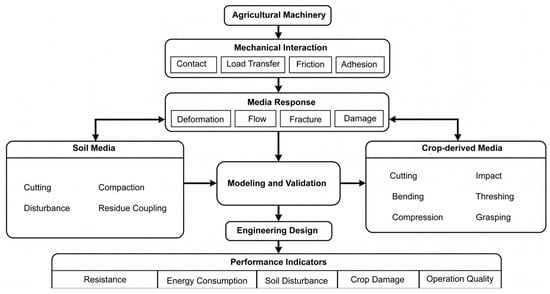
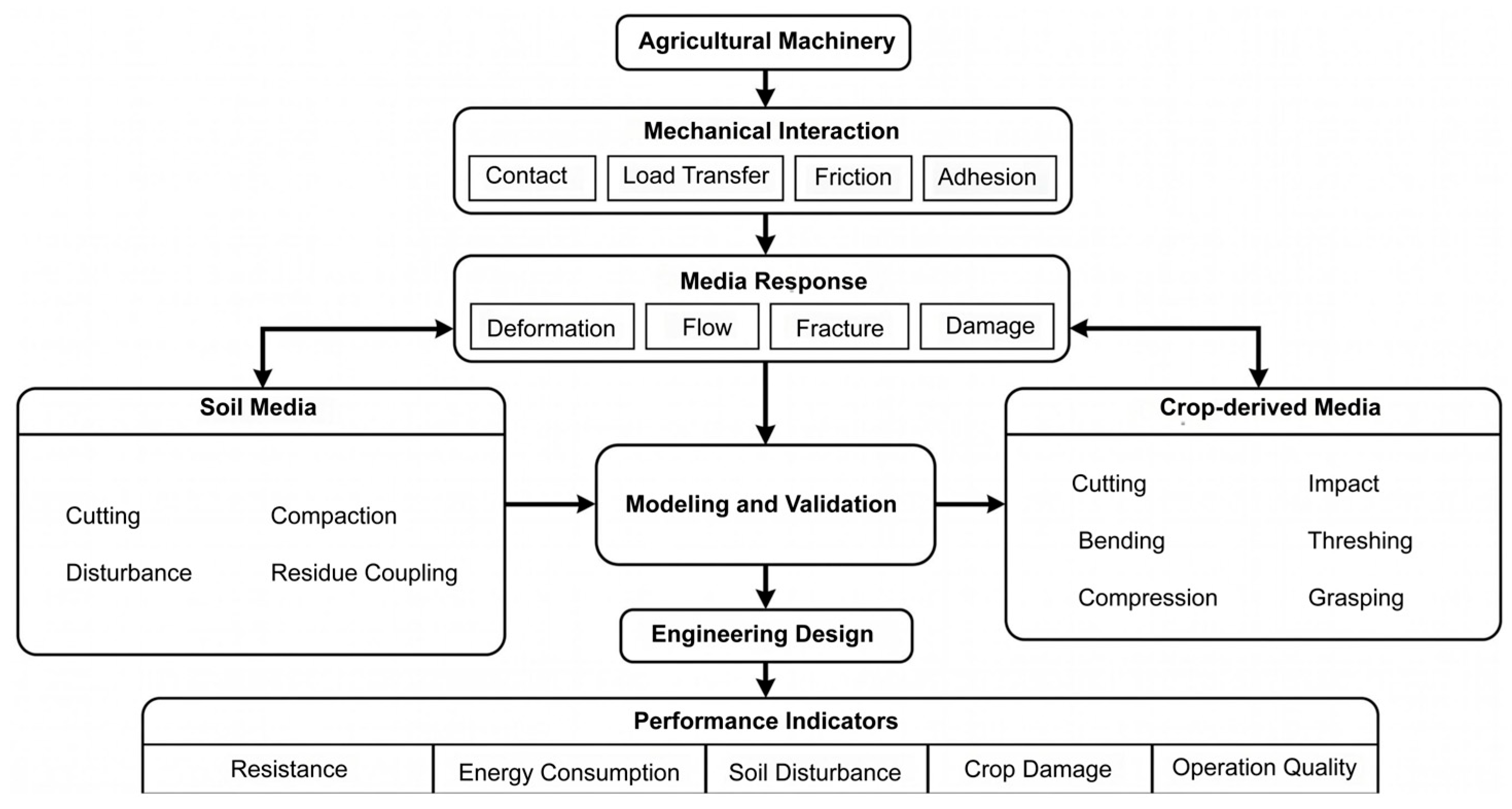
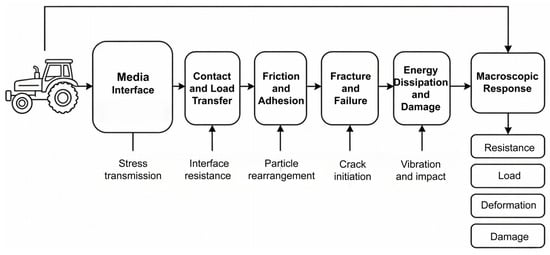
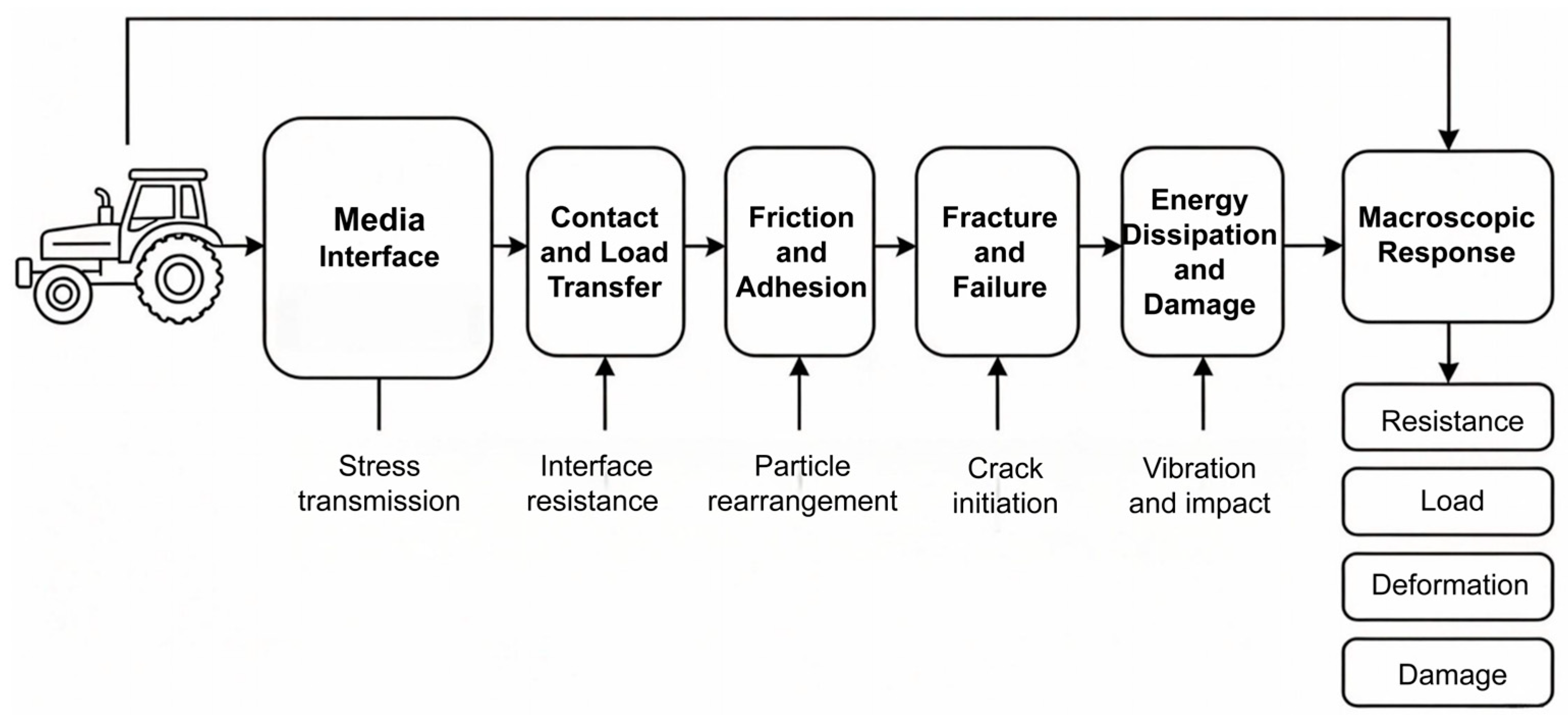
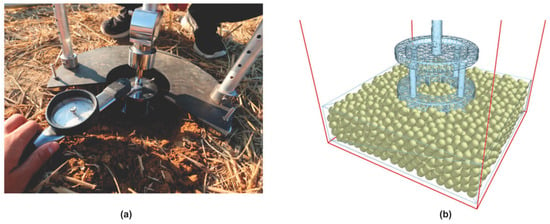
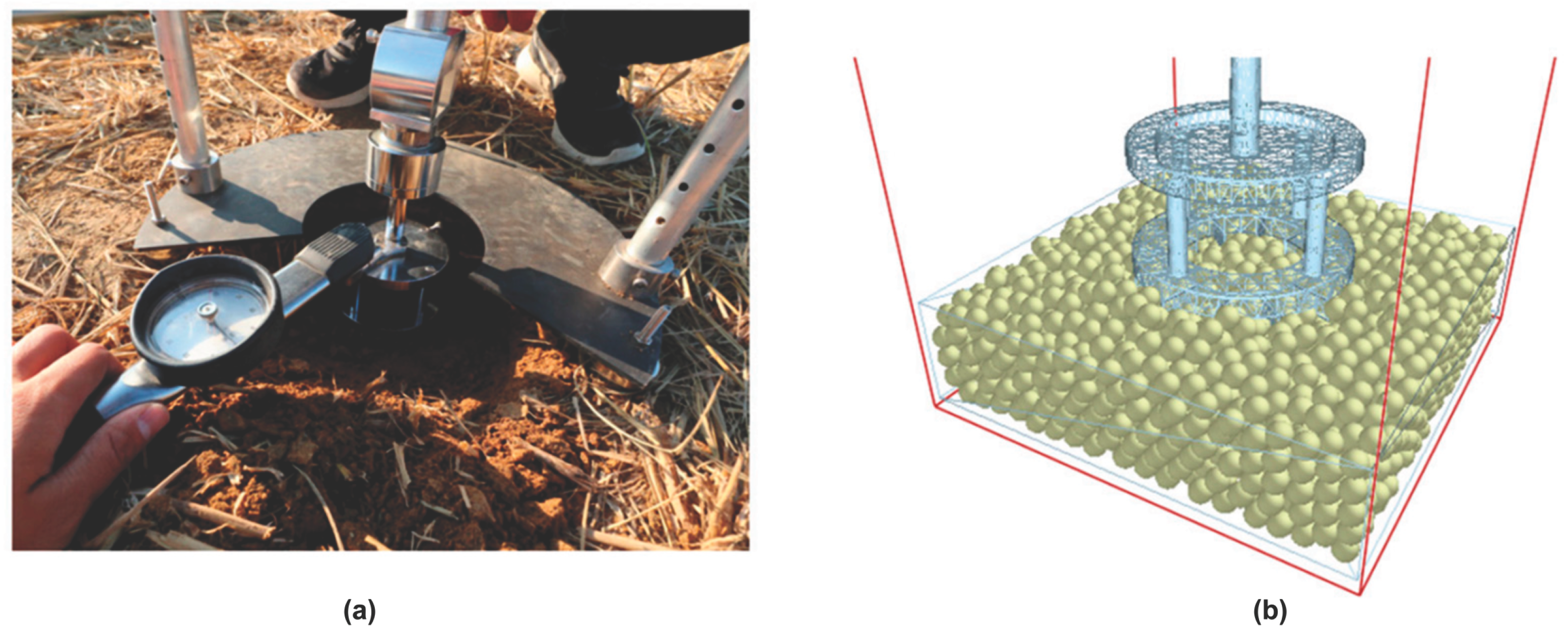
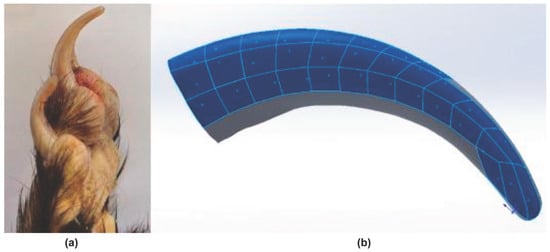
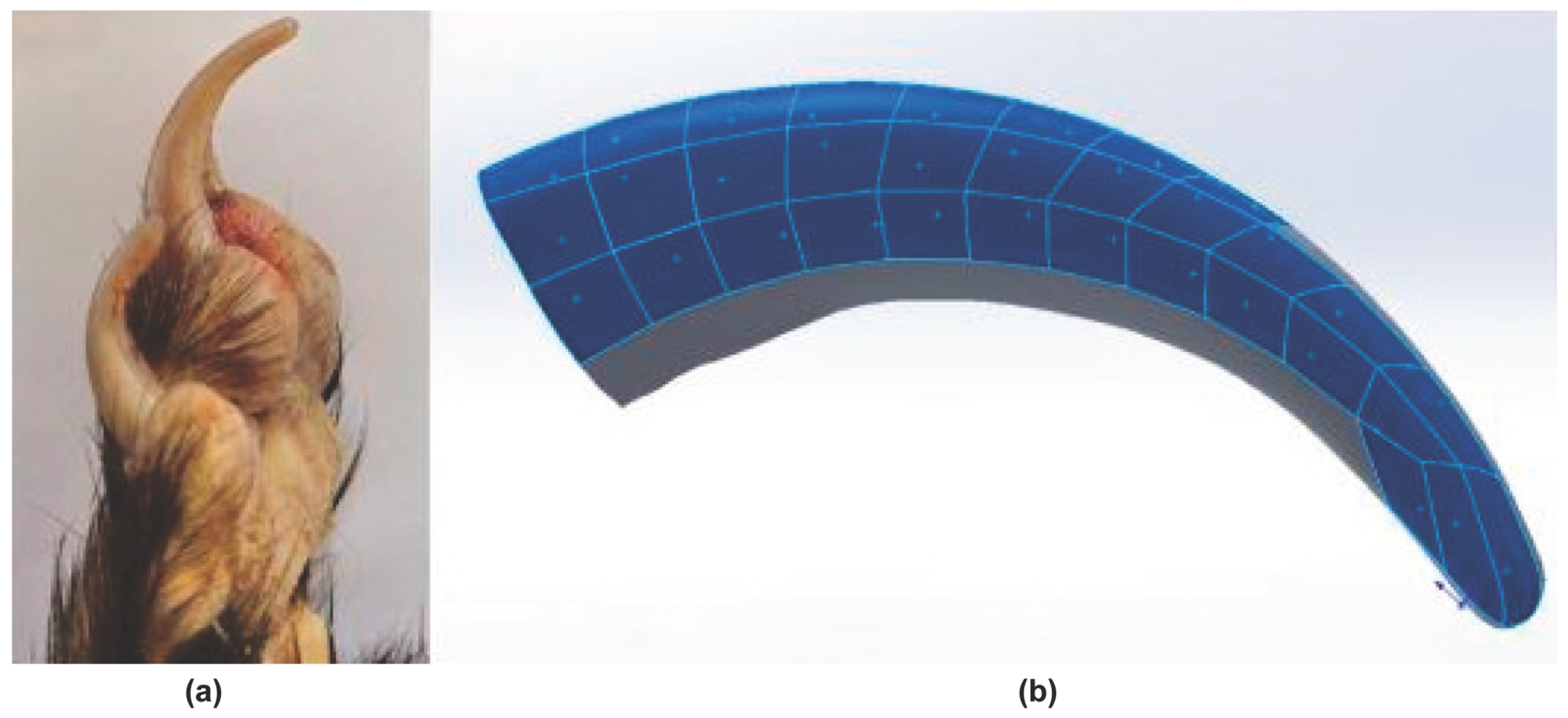
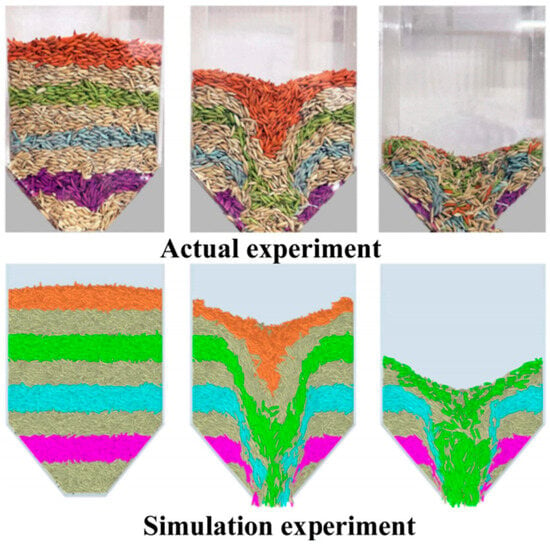
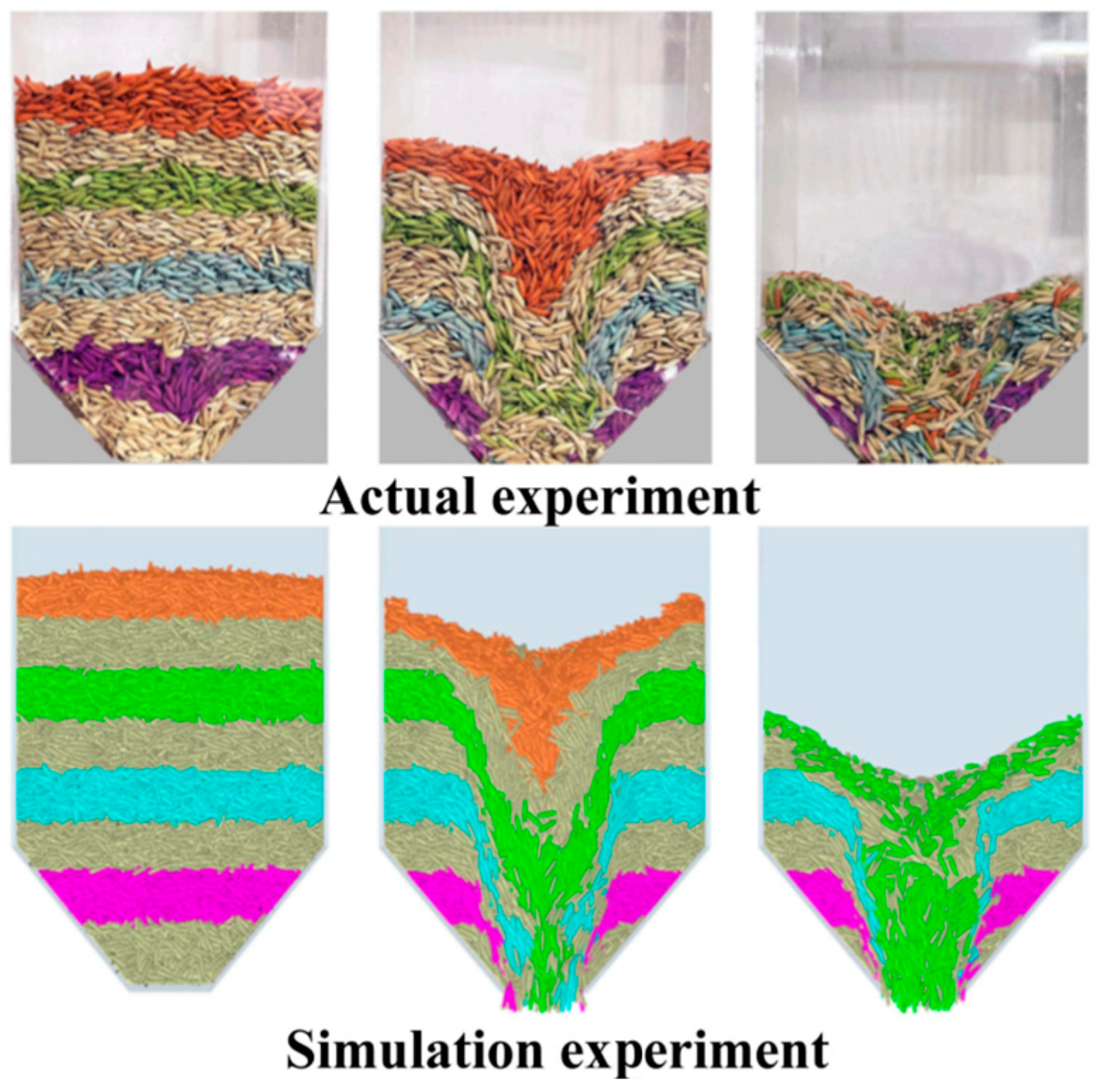
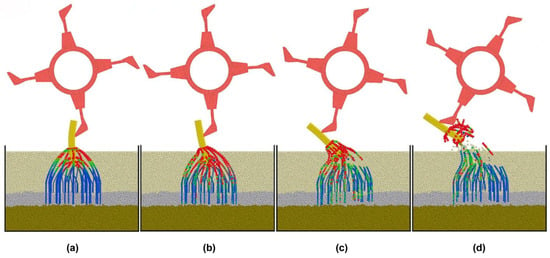
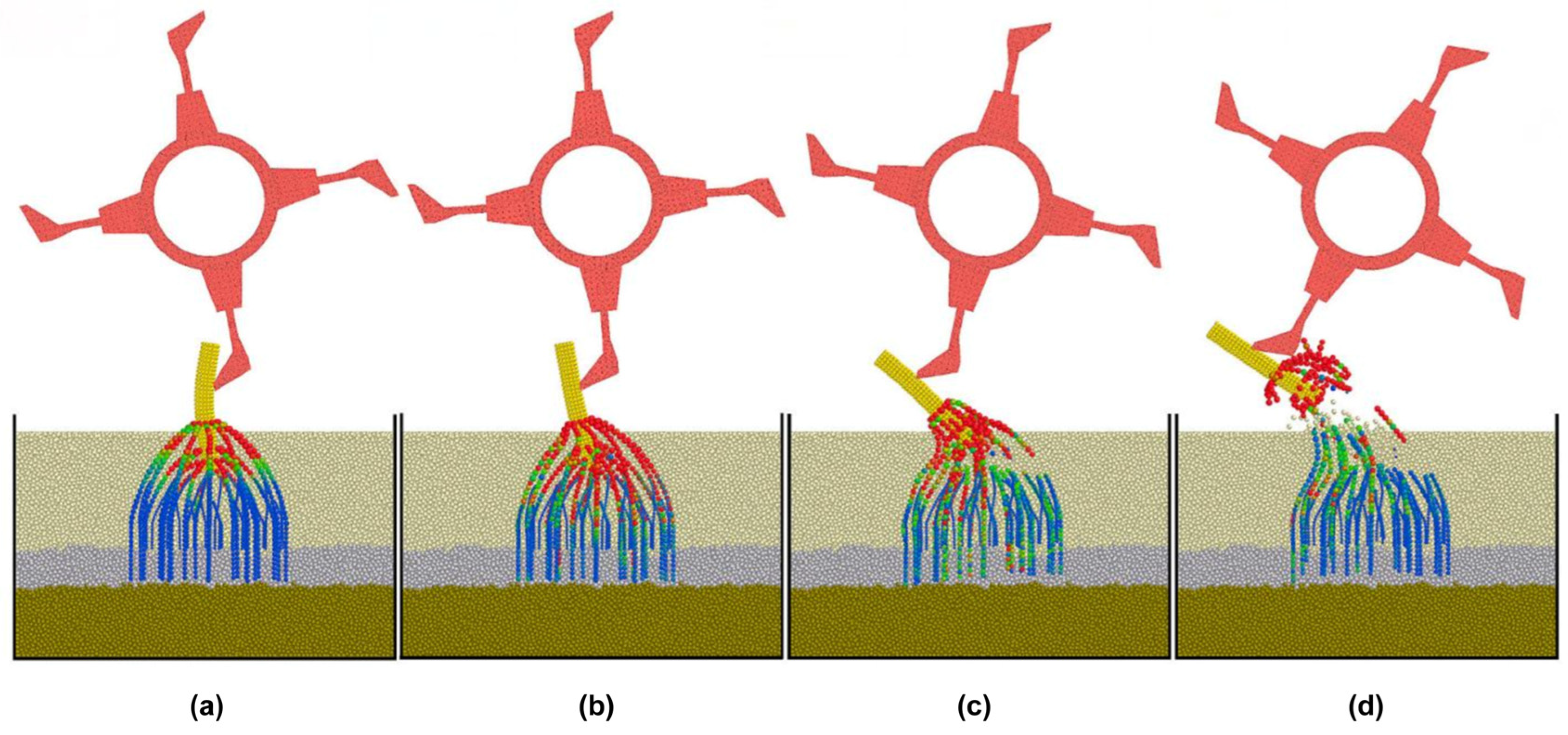
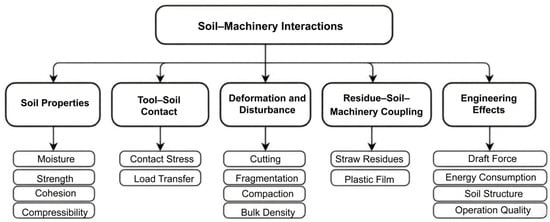
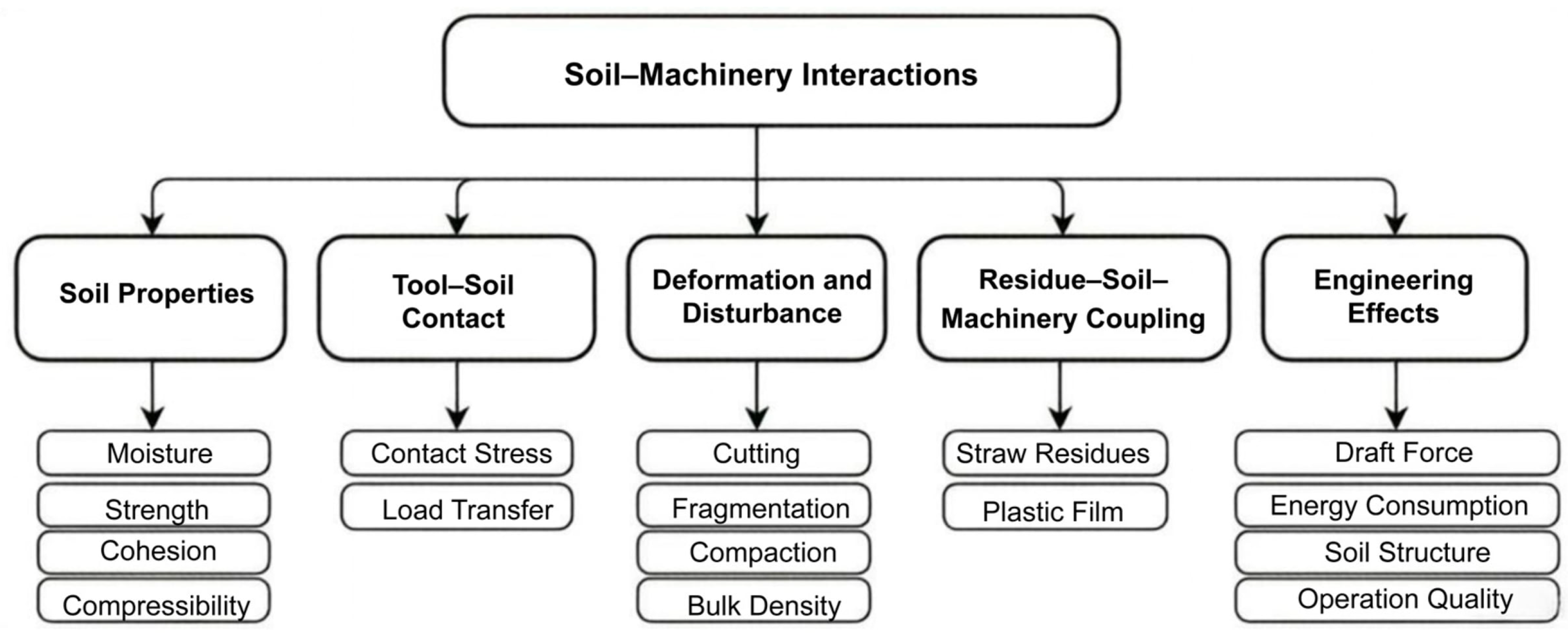
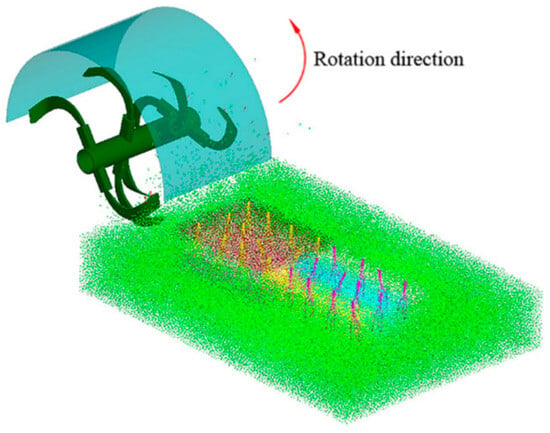
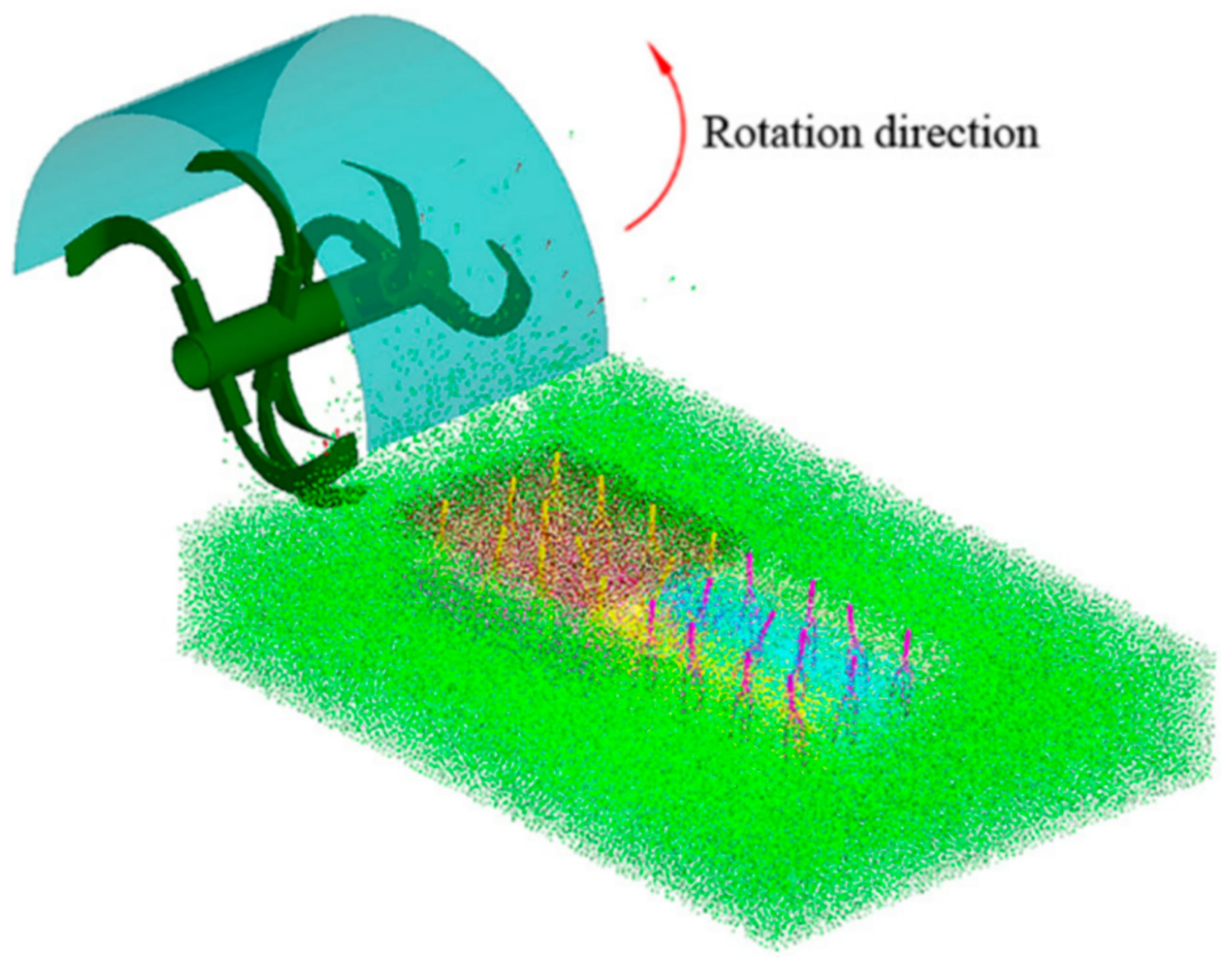
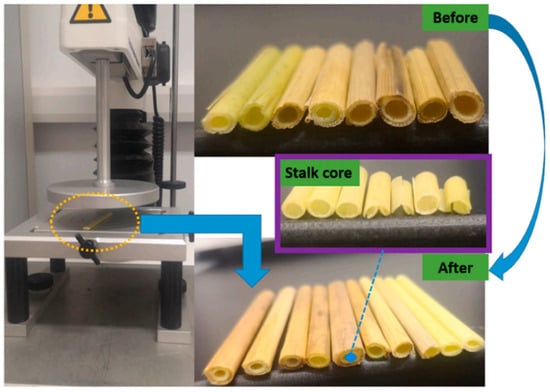
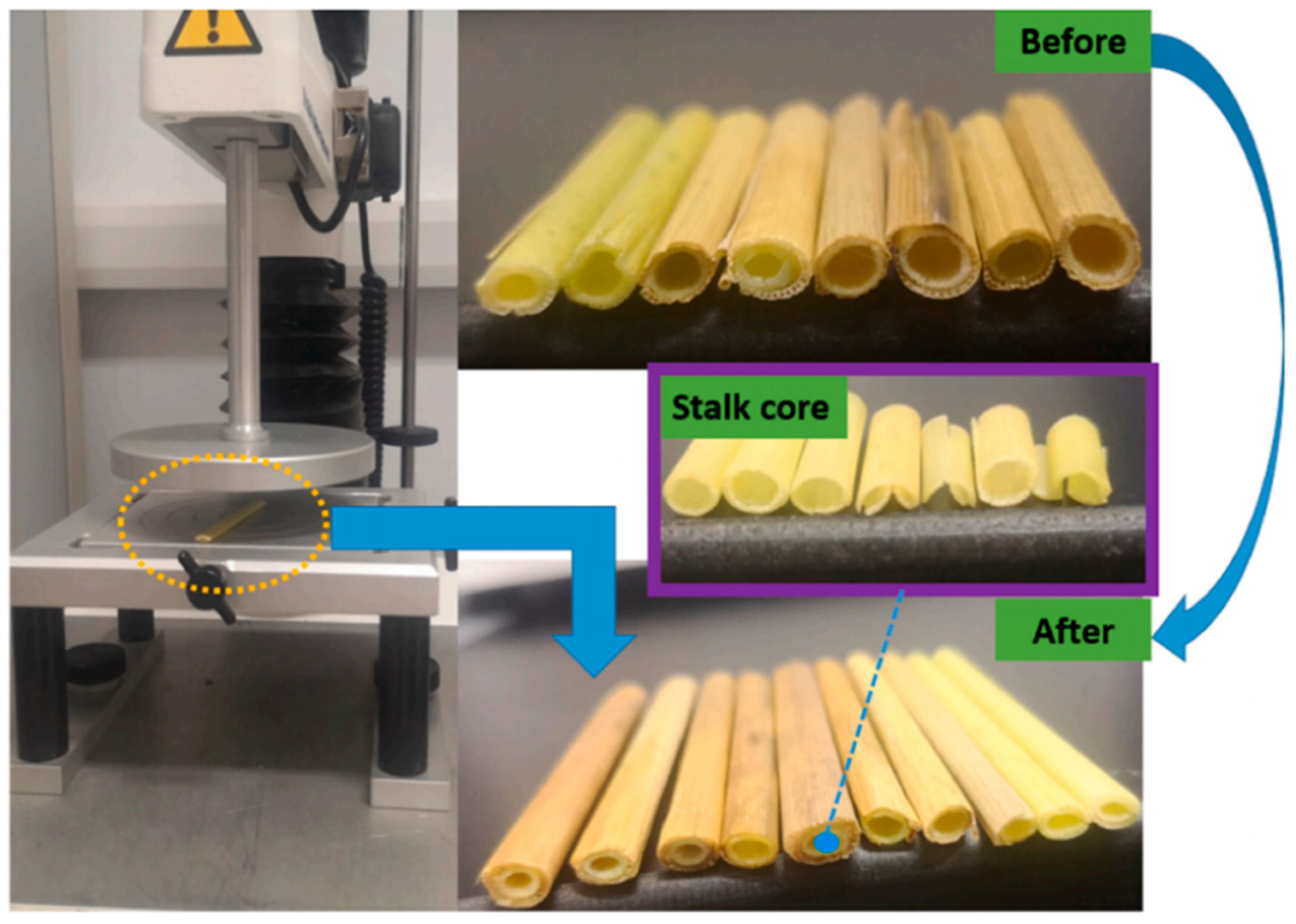
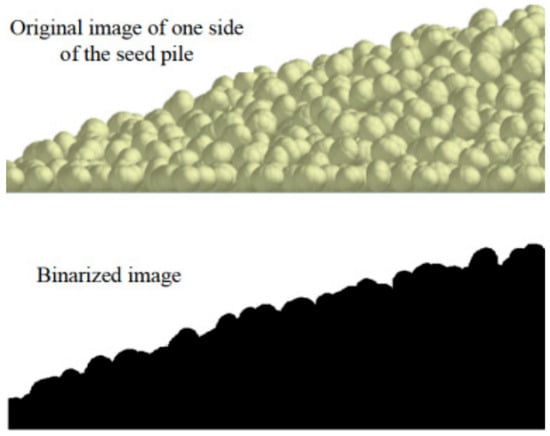
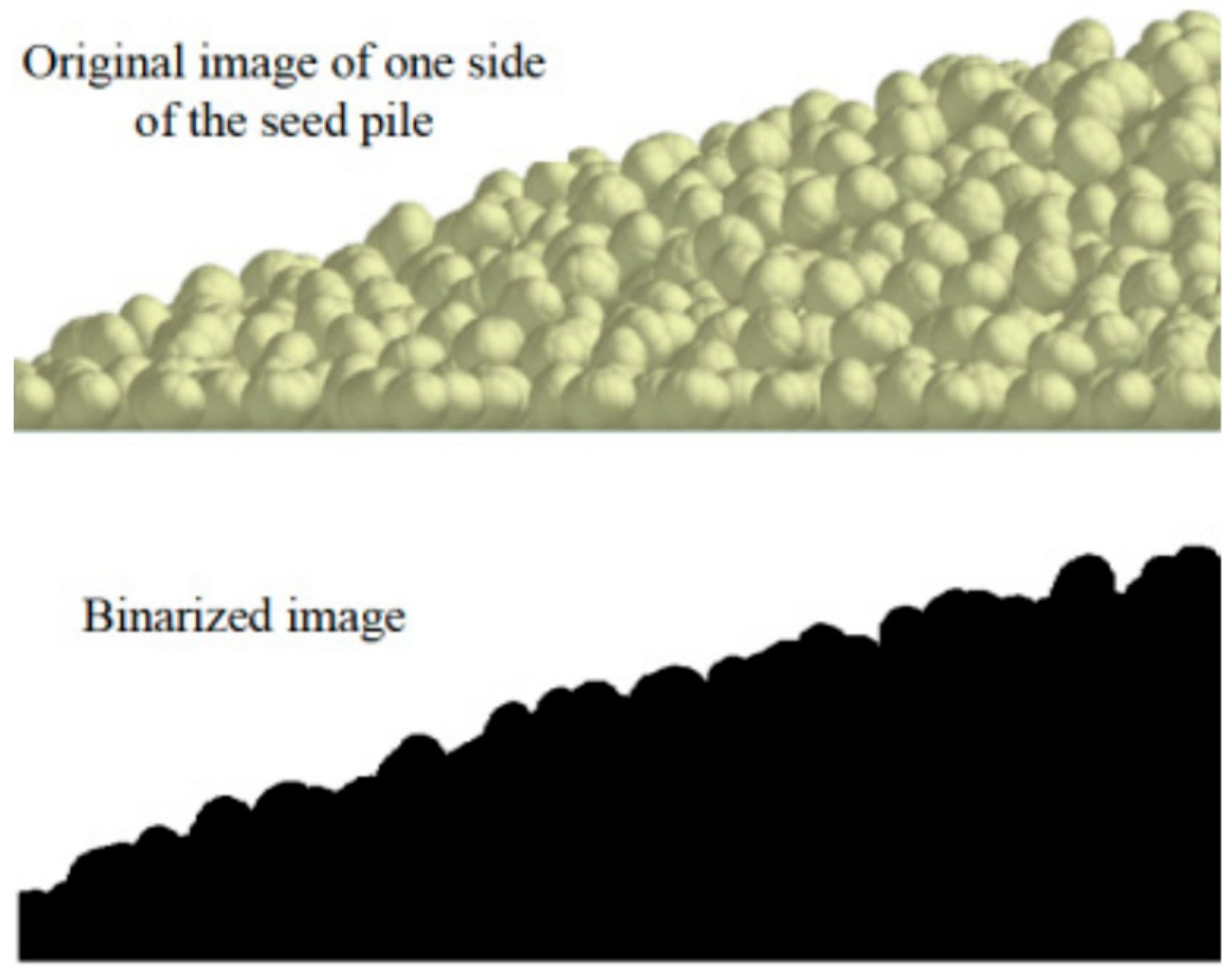

Disclaimer/Publisher’s Note: The statements, opinions and data contained in all publications are solely those of the individual author(s) and contributor(s) and not of MDPI and/or the editor(s). MDPI and/or the editor(s) disclaim responsibility for any injury to people or property resulting from any ideas, methods, instructions or products referred to in the content. |
© 2026 by the authors. Licensee MDPI, Basel, Switzerland. This article is an open access article distributed under the terms and conditions of the Creative Commons Attribution (CC BY) license.