


Abstract
Greenhouse cultivation plays an important role in food security, resource-use efficiency, and sustainable agricultural development. Temperature management is particularly critical because it directly affects crop growth, yield and quality, energy consumption, and environmental control. To clarify the technological pathways, application boundaries, and future directions of intelligent greenhouse temperature management, this review synthesizes recent studies from a closed-loop perspective. A structured narrative approach was adopted to organize the literature around an integrated framework linking multi-source sensing and data governance, predictive modeling, control strategies, system deployment, and feedback-based operation and maintenance. The review first examines the roles of sensors, Internet of Things (IoT) technologies, wireless sensor networks, and multi-source data fusion in reliable greenhouse state perception. It then compares mechanistic, machine-learning, deep-learning, hybrid and physics-guided models in terms of prediction capability, interpretability, generalization, uncertainty, and control compatibility. Control strategies ranging from rule-based and fuzzy control to model predictive control, reinforcement learning, and RL-MPC are further evaluated with respect to constraints, adaptability, energy efficiency, and operational safety. Finally, edge–cloud collaboration, digital twins, safety fallback, and model lifecycle management are discussed as key enablers for translating prediction and control methods into deployable closed-loop systems. Overall, recent advances indicate that high prediction accuracy alone is insufficient for practical greenhouse management; reliable sensing, trustworthy modeling, safe control, system integration, and long-term maintainability must be considered jointly. Future research should therefore move toward crop-oriented, energy-efficient, trustworthy, and practically deployable closed-loop systems for intelligent greenhouse temperature management.
1. Introduction
Protected agriculture plays an important role in improving agricultural production stability, resource-use efficiency, and climate adaptability. Under the combined pressures of population growth, limited arable land, water scarcity, and frequent extreme climate events, greenhouse cultivation creates a relatively controllable crop-growing environment that supports year-round horticultural production, high-quality supply, and agricultural system resilience [1,2,3]. Compared with open-field production, greenhouse systems reduce the constraints of seasonal variation, regional conditions, and external weather fluctuations, while increasing yield per unit area through precise water and fertilizer supply, environmental regulation, and automated management. Temperature is a key environmental variable that affects crop growth and development, energy consumption, and environmental control strategies. It is also one of the most critical and complex control variables in intelligent greenhouse management [1,4].
Temperature directly affects physiological processes such as photosynthesis, respiration, transpiration, nutrient uptake, pollination, fruit set, and quality formation. Optimal temperature ranges vary among crops and growth stages. Excessively high or low temperatures can inhibit growth, reduce pollen viability and fruit set, lower product quality, and induce diseases or physiological disorders [4,5,6]. For example, the optimal temperature for tomato is generally 21–29.5 °C during the day and 18.5–21 °C at night, whereas lettuce grows best at approximately 22–26 °C during the day and 15–20 °C at night. Deviations from these ranges can adversely affect yield and quality [7]. Beyond these crop-specific thermal requirements, crop architecture can also influence the spatial microclimate experienced by plants. Tall, vertically trained crops such as tomato and sweet pepper can promote stronger microclimatic stratification because canopy height and density modify radiation interception, transpiration, and airflow, whereas lower canopies interact differently with the surrounding greenhouse air. Consequently, sensor height and spatial distribution should be adapted to crop architecture and growth stage rather than treated as fixed across crop types [8]. Compared with open-field production, greenhouse cultivation can reduce water consumption by 50–90% and increase crop yield by approximately 2.17 times [9,10]. However, heating, cooling, and ventilation systems typically account for 50–80% of total greenhouse energy consumption, and energy use related to environmental control has been estimated at 65–85% in some studies [11,12]. Greenhouse cultivation offers clear advantages in yield improvement, water conservation, and production stability, but efficient operation depends on precise regulation of environmental factors, particularly temperature. Because temperature regulation influences both crop physiology and energy consumption, temperature serves as a core management variable linking yield, quality, and operating costs in greenhouse production.
Greenhouse management has evolved from experience-based regulation to AI-driven closed-loop decision-making, as shown in Figure 1. Early systems relied mainly on manual experience, threshold-based regulation, on–off control, and PID control. The controlled variables were limited, and system responses were largely passive. Since the early twenty-first century, fuzzy control, expert systems, sensor networks, wireless communication, and Internet of Things technologies have enabled continuous monitoring and data acquisition, allowing environmental variables such as temperature, humidity, light, and CO2 to be sensed in real time and transmitted remotely [13,14]. After approximately 2015, machine learning methods were increasingly applied to greenhouse temperature prediction and feature modeling. From 2018 to 2021, deep learning models such as LSTM, GRU, CNN, and Transformer improved multi-step temperature prediction. More recently, MPC, reinforcement learning, digital twin, edge–cloud collaboration, and data fusion technologies have expanded research on greenhouse temperature management from offline prediction toward intelligent control and closed-loop optimization [7,15,16,17]. However, their deployment maturity differs substantially. Conventional control strategies and IoT-based monitoring platforms have reached relatively higher levels of engineering maturity, whereas many reinforcement learning, RL-MPC, and digital twin approaches remain mainly at the simulation or experimental validation stage [18,19,20]. Therefore, assessment of intelligent greenhouse technologies should consider not only algorithmic performance but also validation scale, deployment environment, and long-term operational evidence.
Figure 1.
Evolution of Greenhouse Temperature Management Technologies.
Multi-source sensing systems provide continuous data for temperature prediction, state estimation, and control decision-making. However, high-frequency sensor data do not necessarily ensure high data quality. Sensor drift, communication interruptions, missing values, abrupt anomalies, and spatial heterogeneity can affect model reliability and control safety [21,22,23]. Data governance is therefore essential for advancing intelligent greenhouse temperature management from monitoring toward prediction, control, and deployment. Temperature prediction methods have expanded from mechanistic models, statistical models, and traditional machine learning to deep learning and hybrid and physics-guided models [24,25,26,27,28,29,30]. Control strategies have progressed from rule-based, on–off, and PID control to MPC, reinforcement learning, and RL-MPC collaborative control [16,17,31,32]. System integration technologies, including edge–cloud collaboration and digital twin, are driving greenhouse temperature management beyond single-point algorithm validation toward closed-loop intelligent systems that integrate sensing, prediction, control, deployment, and feedback.
Research on intelligent greenhouse temperature management has advanced substantially across multi-source sensing, predictive modeling, intelligent control, and system integration, yet several gaps remain. Existing reviews often focus on individual components, such as IoT-based monitoring, prediction models, or control algorithms, with limited attention to the closed-loop relationships among data quality, predictive modeling, control strategies, system deployment, and feedback-based operation and maintenance. Many prediction studies still evaluate models primarily using offline accuracy metrics, with insufficient consideration of stability, interpretability, uncertainty, real-time capability, and safety in practical control scenarios. Engineering challenges, including sensor drift, communication latency, actuator constraints, energy consumption, model degradation, and safety fallback, also limit the transition of greenhouse temperature management systems from algorithm validation to long-term application. To address these gaps, this review examines intelligent greenhouse temperature management through a closed-loop framework linking sensing, modeling, control, deployment, and feedback. Its contributions are fourfold. First, it examines multi-source sensing, data governance, and state representation as the foundation for reliable prediction and control. Second, it compares mechanistic, machine-learning, deep temporal, hybrid, physics-guided hybrid, and probabilistic models in terms of accuracy, generalization, interpretability, uncertainty, and control compatibility. Third, it evaluates major control strategies, including rule-based and fuzzy control, MPC, RL, and RL-MPC, with emphasis on constraints, adaptability, energy efficiency, and operational safety. Fourth, it synthesizes edge–cloud collaboration, digital twins, safety fallback, and model lifecycle management as key enablers of practical closed-loop deployment and long-term operation. The overall review framework is shown in Figure 2.
Figure 2.
Closed-Loop Framework for Intelligent Greenhouse Temperature Management.
2. Review Framework and Literature Selection
This review adopts a structured narrative approach, rather than a strictly systematic review, to synthesize, compare, and critically analyze research on intelligent greenhouse temperature management. It examines the interconnections among multi-source sensing and data governance, predictive modeling, control strategies, system deployment, and feedback-based operation and maintenance from a closed-loop perspective. On this basis, the review assesses the technological evolution, applicability boundaries, and future directions of intelligent greenhouse temperature management.
Relevant literature was retrieved primarily from Web of Science, Scopus, ScienceDirect, SpringerLink, IEEE Xplore, and Google Scholar. Supplementary searches of publisher platforms were conducted to capture recent studies on smart greenhouses, protected agriculture, environmental control, and digital agriculture. Search terms included “greenhouse temperature prediction,” “greenhouse climate control,” “smart greenhouse system,” “greenhouse Internet of Things,” “wireless sensor network greenhouse,” “machine learning greenhouse temperature,” “deep learning greenhouse climate prediction,” “model predictive control greenhouse,” “reinforcement learning greenhouse climate control,” “digital twin greenhouse,” “edge computing smart agriculture,” and “edge–cloud collaboration greenhouse.” Boolean operators, including AND and OR, were used to combine terms according to the thematic focus of each search.
The literature search focused primarily on peer-reviewed articles published between 2015 and 2025, reflecting the rapid development of IoT-based monitoring, machine learning, deep learning, model predictive control, reinforcement learning, edge computing, and digital twin technologies in greenhouse temperature management over the past decade. For foundational topics, including greenhouse energy balance models, microclimate simulation, classical control theory, MPC, and agricultural building environmental analysis, selected earlier studies with theoretical or methodological relevance were also included.
The literature was screened according to the objectives of this review, with priority given to four categories of studies. The first category addressed greenhouse environmental sensing, sensor deployment, IoT platforms, wireless communication, data quality control, and multi-source data fusion. The second included studies that proposed or compared greenhouse temperature and microclimate prediction models, including mechanistic models, statistical models, machine learning, deep learning, hybrid models, and physics-guided models. The third focused on greenhouse temperature or climate control strategies, including rule-based control, PID, fuzzy control, MPC, reinforcement learning, and RL-MPC collaborative control. The fourth covered system integration studies involving edge–cloud collaboration, digital twin, model deployment, fault diagnosis, safety fallback, and long-term operation and maintenance. Review articles and representative foundational studies were also included to support a comprehensive assessment of technological evolution and application bottlenecks in this field.
When multiple studies addressed similar topics, representative studies were prioritized based on their direct relevance to greenhouse temperature management, methodological transparency, recency, the availability of quantitative or experimental evidence, and their ability to represent distinct methodological approaches or application scenarios. Earlier seminal studies were retained when they provided important theoretical or methodological foundations. This prioritization was intended to ensure balanced thematic coverage and methodological diversity rather than to rank studies solely according to reported performance.
Studies with limited relevance to greenhouse temperature management, a focus only on general smart agriculture concepts, or insufficient description of specific methods or application scenarios were not prioritized. By synthesizing these four research domains, this review provides a system-level understanding of intelligent greenhouse temperature management and highlights its transition from isolated algorithm optimization toward integrated closed-loop deployment and long-term operation.
Use of Generative AI in Manuscript Preparation
Generative artificial intelligence was used during manuscript preparation to translate the original Chinese draft into English and to assist with language polishing. Specifically, ChatGPT 5.4 (OpenAI) was used to improve grammatical accuracy, wording, sentence clarity, and readability. The tool was not used for literature retrieval, literature screening, data extraction, analysis, interpretation, figure or table generation, or the formulation of scientific conclusions. All AI-assisted translation and language-polishing outputs were carefully reviewed, edited, and verified by the authors, who take full responsibility for the final content of the manuscript.
3. Sensing and Data Governance for Intelligent Greenhouse Temperature Management
Intelligent greenhouse temperature management depends on a continuous, reliable, and traceable data foundation. Unlike general environmental monitoring, greenhouse temperature data not only describe environmental states but also support temperature prediction, control decision-making, anomaly warning, and feedback calibration [33]. The value of a sensing system depends less on the number of sensors or monitoring coverage than on data quality, spatial representativeness, temporal synchronization, and control usability. This section examines how sensing systems support greenhouse temperature prediction and closed-loop control through multi-source data collection, data governance, multimodal fusion, and engineering bottlenecks.
3.1. Multi-Source Data Collection
Data acquisition systems for greenhouse temperature management typically comprise sensors, microcontrollers, communication modules, edge gateways, databases, and visualization platforms. Common sensing targets include air temperature and humidity, solar radiation, light intensity, CO2 concentration, wind speed and direction, leaf temperature, soil temperature and moisture, and the operating states of actuators such as vents, fans, heating systems, shading devices, wet pads, and supplemental lighting [34]. Indoor temperature is the primary controlled variable, while outdoor weather conditions and solar radiation are the main disturbances. Crop and soil information reflects heat and moisture exchange within the greenhouse, whereas actuator states help explain the effects of human intervention on temperature dynamics.
After the sensing targets are defined, the organization, transmission, and use of these data for model analysis must be clarified. Greenhouse temperature management involves more than sensor deployment; it requires a data pipeline linking field sensing, data transmission, platform management, and application decision-making. From a system architecture perspective, smart greenhouse IoT systems can generally be divided into sensing, network, platform, and application layers. The sensing layer collects multi-source state information. The network layer enables communication through ZigBee, Bluetooth Low Energy, Wi-Fi, LoRa/LoRaWAN, NB-IoT, or cellular networks [35]. The platform layer supports time-series storage, data cleaning, anomaly detection, missing-value handling, feature construction, and model invocation. The application layer supports temperature prediction, control decision-making, equipment management, and production warning.
Data acquisition systems vary substantially across greenhouse scales in hardware selection, communication methods, and platform functions. Small or experimental greenhouses typically prioritize low cost, ease of deployment, and rapid validation, with open-source hardware such as Arduino, Raspberry Pi, and ESP32 commonly used to develop prototype systems for environmental monitoring and control [36,37]. Large-scale multi-span greenhouses or park-level facilities require stable multi-node communication, long-distance transmission, edge gateway access, and centralized cloud management. NB-IoT, LoRa/LoRaWAN, and modular IoT platforms are better suited for cross-regional, low-power, multi-node data aggregation [38,39]. As closed-loop control requirements increase, data acquisition systems are evolving from basic environmental monitoring toward integrated functions, including edge preprocessing, anomaly detection, mobile inspection, cloud storage, and model services, as shown in Table 1.
Table 1.
Main Types and Application Scenarios of Data Acquisition and Processing Systems for Greenhouse Temperature Management.
For temperature prediction, the system must ensure data completeness, temporal synchronization, and variable interpretability. For closed-loop control, it must also provide low latency, stable communication, and traceable actuator states.
The greenhouse interior is spatially heterogeneous. Solar radiation, ventilation patterns, fan circulation, crop canopies, wet pad–fan systems, heating pipes, shading screens, and enclosure structures can generate horizontal temperature gradients, vertical stratification, and local hot or cold spots [49,50,51]. Bournet and Rojano [26] showed in their review of CFD applications in agricultural buildings that airflow organization, ventilation strategies, crop canopies, and enclosure structures strongly affect the spatial distribution of heat, humidity, and air movement. Crop architecture is an important source of this spatial heterogeneity. In tall, vertically trained crops such as tomato and sweet pepper, canopy height, foliage density, and row structure interact with solar radiation, transpiration, and ventilation, contributing to vertical differences within the canopy as well as horizontal differences among greenhouse zones. Studies in tomato greenhouses have reported substantial vertical gradients in air temperature, vapor pressure deficit, and CO2 concentration, as well as persistent horizontal variations in temperature and vapor pressure deficit across commercial greenhouse compartments [52,53]. These findings indicate that a single centrally located sensor may not adequately represent the microclimate experienced by the crop. For low-canopy leafy vegetables, sensing closer to the crop surface may provide a more representative characterization of the crop microclimate; for example, an IoT-based lettuce production system positioned environmental sensors 20 cm above the canopy and adjusted their height as the crop developed [54]. Sensor-placement strategies should therefore account for crop type, canopy height and density, growth stage, row orientation, and proximity to major disturbances such as vents, heating pipes, fans, and cooling devices. Multi-height sensing is particularly relevant for tall-canopy crops, whereas spatially distributed sensor networks can help identify local hot or cold zones and provide more representative state information for zonal prediction and control. Model training data should specify sensor location, installation height, sampling frequency, and representative area; otherwise, prediction results and control effects are difficult to compare across studies. Sensing systems are shifting from single-node monitoring to coordinated monitoring across multiple nodes, heights, and zones. Fixed WSNs can characterize the long-term spatial distribution of greenhouse microclimates [51,55]. Mobile robots, unmanned platforms, and three-dimensional visual reconstruction can compensate for the limited coverage of fixed nodes [46,47], whereas CFD simulation, spatial interpolation, and optimization algorithms can support the selection of representative measurement locations [48,56]. Multi-source perception and data governance processes are shown in Figure 3.
Figure 3.
Multi-source Sensing and Data Governance for Intelligent Greenhouse Temperature Management.
3.2. Data Processing and Quality Control
High-frequency sensor data do not inherently guarantee high data quality. Greenhouse sensors often operate under high humidity, intense light, dust exposure, frequent agricultural operations, and disturbances from equipment start–stop cycles. These conditions can cause missing data, noise, abrupt anomalies, inconsistent timestamps, sensor drift, and communication interruptions [46,57]. If these issues are not properly addressed before model training or control implementation, they may increase prediction errors and even trigger inappropriate control actions. Bicamumakuba et al. [23] noted that multi-sensor systems can improve environmental state perception and system resilience, but they also introduce challenges related to calibration consistency, system interoperability, data processing complexity, and computational cost. Greenhouse data processing should not be treated as a simple preprocessing step before modeling, but as a data governance component that supports reliable operation of the sensing–prediction–control closed loop.
Data governance for greenhouse temperature management typically includes temporal synchronization, outlier detection, missing-value imputation, sensor drift monitoring, scale normalization, feature construction, and data quality assessment, as shown in Table 2. Outlier detection identifies values beyond physical ranges, abrupt changes, long-term constant readings, and observations that are clearly inconsistent with neighboring nodes [58,59]. Missing-value imputation can be performed according to missing-data duration and inter-variable correlations using methods such as linear interpolation, moving averages, K-nearest neighbors, Kalman filtering, or deep imputation [60,61]. Scale normalization and feature construction include normalization, lag features, rolling statistical features, diurnal cycle encoding, and seasonal cycle encoding, which improve the representation of time-lag effects, periodic patterns, and seasonal variation.
Table 2.
Typical Data Quality Issues and Processing Methods in Greenhouse Temperature Management.
Offline prediction and online control impose different data quality requirements. In offline prediction, abnormal data mainly increase model error, whereas in online control, erroneous data can directly affect actuator actions, crop status, energy consumption, and equipment safety. Different data quality issues should therefore be handled with distinct strategies. Short-term random missing values can be corrected through interpolation or filtering, whereas long-term communication interruptions should not be simply imputed, as this may create artificial continuous trends. Some anomalies may indicate actual equipment faults, extreme environmental changes, or local spatial heterogeneity, in which case the system should trigger alarms, degraded control, or manual takeover. The goal of greenhouse data governance is not to convert all anomalies into smooth data, but to distinguish sensor errors, real environmental disturbances, and equipment faults to ensure reliable inputs for prediction models and safe operation of control systems.
3.3. Multi-Source Fusion and Greenhouse State Representation
Building on data governance, multimodal data fusion can improve state representation in greenhouse temperature prediction and control systems under complex environmental conditions. Rather than simply increasing the number of sensors, multimodal fusion integrates information from different sensors, spatial locations, and data types to provide a more comprehensive and robust description of greenhouse environmental states [62,63]. According to the fusion stage, multimodal fusion is generally classified into data-level, feature-level, and decision-level fusion, corresponding to raw observations, feature representations, and model or control decisions, respectively [7,62]. Data-level fusion is mainly used for sensor calibration and noise suppression. Feature-level fusion combines environmental variables, crop status, temporal features, and equipment operating states as inputs to prediction models. Decision-level fusion integrates the outputs of multiple models or controllers to improve system robustness and fault tolerance [63,64].
Yu et al. [7] noted that multimodal fusion can partly reduce the sensitivity of individual sensors to noise, local environmental variation, and device errors. By integrating complementary information on temperature, humidity, CO2, light, and solar radiation, multimodal fusion provides a more stable data foundation for greenhouse temperature prediction and environmental control. Meng et al. [65] highlighted its value in extracting reliable and informative signals from multi-source, heterogeneous, incomplete, or noisy data, thereby enhancing the ability of machine learning models to represent complex system states through signal-level, feature-level, or decision-level fusion.
Fusion methods should be selected according to data type, sensor deployment, prediction horizon, and control requirements. Filtering methods are suitable for noise suppression and continuous state estimation, while feature selection and dimensionality reduction can identify key variables and environmental patterns. Bayesian inference, Dempster–Shafer evidence theory, and Kalman filtering can support the fusion of uncertain information. Deep neural networks, autoencoders, and attention mechanisms are increasingly used to learn latent representations from high-dimensional, multivariate, and nonlinear data, enabling advanced feature-level and deep fusion of heterogeneous environmental information [65,66]. For temperature prediction, fusion aims to improve time-series forecasting accuracy, enhance model generalization, and reduce prediction fluctuations caused by single-sensor noise or local errors. For temperature control, fusion also supports stable state estimation, reduces the risk of false alarms and incorrect control actions, and provides reliable constraint information for controllers [67]. Multimodal data fusion technologies for greenhouse temperature management are summarized in Table 3.
Table 3.
Multimodal Data Fusion Technologies in Greenhouse Temperature Management.
3.4. Effects of Multi-Source Fusion on Temperature Prediction and Control
After data-level, feature-level, and decision-level fusion, the role of multi-source fusion should be distinguished between prediction and control tasks. For prediction models, multi-source fusion primarily improves the ability of input variables to represent greenhouse thermal dynamics. Historical indoor temperature series alone often cannot accurately characterize changes in the greenhouse thermal environment, because indoor temperature is jointly affected by solar radiation, outdoor weather conditions, crop transpiration, soil heat storage, and actuator actions. Using indoor and outdoor environmental variables, external disturbances, crop status, temporal features, and equipment operating states as model inputs can improve the representation of time-lag effects, diurnal cycles, seasonal variation, and human intervention processes.
For control systems, the primary value of multi-source fusion lies not only in improving prediction accuracy but also in providing stable and reliable state estimation. In model predictive control, the controller requires information on the current greenhouse state, future external disturbances, actuator capabilities, and operating constraints. In reinforcement learning control, the agent also relies on reliable state observations to learn action policies [67,71,72]. If input states are affected by noise, drift, or local anomalies, the controller may generate inappropriate actions, reducing system safety, energy efficiency, and crop environmental stability [73,74,75]. Control-oriented data fusion should shift from an accuracy-driven paradigm to reliable state estimation. When state-estimation uncertainty is high, the controller should reduce action aggressiveness or switch to a more conservative safety control mode.
Multimodal data fusion improves temperature prediction accuracy and provides an important basis for reducing risks in closed-loop control. Future greenhouse temperature management should strengthen the coordinated fusion of sensor data, actuator logs, crop feedback, and external weather forecasts to support stable operation of prediction models and controllers under uncertain environmental conditions.
3.5. Engineering Bottlenecks and Summary
Although sensing technologies, IoT platforms, and multimodal data fusion provide an important foundation for greenhouse temperature management, their engineering application still faces several bottlenecks. Inconsistent interfaces, incompatible protocols, and non-standardized data formats among sensors, controllers, and platforms from different manufacturers limit system integration, long-term scalability, and cross-platform reuse. A recent review of IoT-based greenhouse systems noted that such systems usually involve multiple layers, including physical devices, communication protocols, cloud/fog computing, and intelligent decision-making. Their engineering bottlenecks lie not only in individual sensor performance but also in system architecture, protocol adaptation, and resource management [22]. Research on smart agriculture platforms also shows that agricultural data are heterogeneous in source, format, and semantics, and that the lack of standardized data and system integration mechanisms can affect data sharing, collaborative services, and decision-support performance [76].
Unlike the data processing issues discussed in Section 3.2, engineering challenges are often long-term, hidden, and context-dependent. Although low-cost sensors support large-scale deployment, their long-term stability, calibration consistency, and field maintenance costs can limit practical scalability. Bhujel et al. [34] noted that appropriate sensor deployment, location selection, and environmental protection significantly affect microclimate monitoring quality. From a fault diagnosis perspective, Shekarian et al. [77] showed that greenhouse sensor anomalies can compromise stable monitoring and control of environmental factors, while fault detection methods based on IoT, edge servers, and machine learning can improve the identification of erroneous readings and enhance system fault tolerance. Future greenhouse sensing systems should not only improve sensor-level performance but also integrate redundant deployment, online calibration, anomaly detection, and data compensation mechanisms to establish a reliable long-term data acquisition system.
The growing scale of multi-source data places greater demands on edge computing, cloud storage, real-time analysis, and network bandwidth. Maraveas and Bartzanas [21] noted that cloud computing can support greenhouse data storage, remote monitoring, and historical analysis. However, under limited network coverage or transmission speed, reliance on cloud-based processing alone may cause data transmission delays, whereas edge computing can partly reduce network load and real-time processing pressure. Recent reviews on smart greenhouses have also emphasized that multi-sensor integration, intelligent control, and data filtering must be developed together with calibration, interoperability, computing resources, and standardized communication protocols to move greenhouse sensing systems from experimental monitoring platforms toward scalable and maintainable engineering systems [23].
Sensing technologies and data processing constitute the engineering foundation of greenhouse temperature management, shaping the upper limit of model accuracy, control reliability, and system deployability. This section shows that sensing systems and data governance underpin the reliability of greenhouse temperature prediction and control. The effectiveness of subsequent predictive modeling and control strategies therefore depends on data completeness, temporal synchronization, spatial representativeness, and traceable actuator-state records.
4. Predictive Modeling for Intelligent Greenhouse Temperature Management
Predictive modeling is a core component of intelligent greenhouse temperature management because it estimates future indoor temperature dynamics and provides forward-looking information for ventilation, heating, shading, wet pad–fan operation, supplemental lighting, energy scheduling, and risk assessment [78]. Early approaches mainly relied on mechanistic models of energy balance, mass transfer, and crop–environment coupling, which were used for greenhouse design, climate simulation, and control strategy analysis [24,79]. Greenhouse temperature prediction should not be viewed as simple univariate extrapolation from historical temperature data, but as a dynamic modeling problem involving environmental states, external disturbances, and responses to control actions.
From an application perspective, greenhouse temperature prediction can be classified as short-term, medium-term, or long-term prediction. Short-term prediction mainly supports immediate regulation of ventilation, heating, shading, and wet pad–fan systems. Medium-term prediction is commonly used for model predictive control, energy scheduling, and equipment pre-starting, whereas long-term prediction supports production planning, extreme weather risk warning, and cross-seasonal management [78,80]. Different prediction horizons impose distinct requirements for model accuracy, stability, and computational efficiency. A model that performs well in 15 min single-step prediction may not be suitable for 24 h multi-step rolling prediction. Similarly, a model with a high R2 on an offline test set may not remain stable and safe in closed-loop control [28,81]. Greenhouse temperature prediction can be formulated as follows:
where denotes the predicted indoor temperature sequence over the next H time steps; X, U, D, and Z represent historical environmental states, control actions, external disturbances, and available future weather or temporal features, respectively; and fθ(⋅) denotes the prediction model. This formulation highlights the need to jointly consider the dynamic relationships among environmental states, external disturbances, control actions, and temperature responses in greenhouse temperature prediction [80].
4.1. Traditional Prediction Methods
Traditional methods for greenhouse temperature prediction mainly include mechanistic models, gray-box models, and early statistical and machine learning methods. Mechanistic models typically describe greenhouse energy balance, mass transfer, and coupled heat–moisture processes mathematically. They explicitly account for the effects of solar radiation, heat transfer through covering materials, ventilation, crop transpiration, soil heat storage, and heating, cooling, and shading equipment on indoor temperature dynamics [24,79,82]. These models offer clear physical meaning, strong interpretability, and natural compatibility with model predictive control and digital twin systems. However, they require complex parameter calibration, depend strongly on boundary conditions, and are sensitive to changes in greenhouse structure, crop growth stage, and management operations. Changes in greenhouse indoor air temperature can be simplified as follows:
where Tin denotes indoor air temperature, Cg is the equivalent thermal capacity of the greenhouse, and Qsolar, Qheating, Qventilation, Qcover, Qevap, and Qsoil represent solar heat gain, heating input, ventilation heat exchange, heat loss through covering materials, latent heat from evaporation and transpiration, and soil heat storage and release, respectively. This formulation explicitly represents heat input, heat loss, and heat storage and release in greenhouses, making mechanistic models suitable for physical interpretation, parameter analysis, and controller constraint design.
Based on model complexity, mechanistic models can be classified into lumped-parameter, distributed, and CFD models. Lumped-parameter models have simple structures and high computational efficiency, making them suitable for real-time prediction, MPC, and energy optimization. Distributed and CFD models can represent indoor temperature fields, airflow patterns, local humidity distribution, and canopy microclimate differences, making them more suitable for ventilation structure optimization, sensor deployment, and spatial heterogeneity analysis [83]. However, CFD requires detailed geometric modeling, accurate boundary conditions, and substantial computational resources, making it more appropriate for spatial mechanistic interpretation and offline optimization than for direct use in high-frequency closed-loop control.
Gray-box models provide a compromise between mechanistic and data-driven models. They retain the main structure of energy balance, thermal network, or state-space models while correcting structural errors caused by greenhouse type, seasonal variation, equipment aging, and management disturbances through parameter identification, online estimation, recursive least squares, Kalman filtering, or residual learning [84]. A gray-box model can generally be expressed as follows:
where xt, ut, dt, and yt denote the system state, control input, external disturbance, and sensor observation, respectively. This formulation preserves the structure of greenhouse thermal dynamics while enabling parameter correction using online data. Gray-box models are particularly suitable for MPC and digital twin systems because they combine structural interpretability, computational efficiency, and data correction capability. Mahmood et al. [81] incorporated mass and energy balance models and artificial neural network prediction models into a robust MPC framework, indicating that uncertainty, robustness, and energy constraints should be considered when prediction models are coupled with controllers.
Early statistical models and traditional machine learning methods learn the mapping between input variables and temperature from historical data. Statistical models, including ARX, ARMAX, ARIMAX, NARX, and linear regression, have clear structures and high computational efficiency, making them suitable for short-term linear or approximately linear dynamic prediction [85,86]. Machine learning models, including SVR, random forest, ELM, LSSVM, XGBoost, and LightGBM, provide robust nonlinear fitting capability in small-sample, low-computing-resource, and short-horizon prediction scenarios [81,82,83,84,85]. Machine learning methods can generally be expressed as follows:
where denotes the predicted indoor temperature at the future h-step, and xt represents the input feature vector composed of historical temperature, indoor and outdoor environmental variables, temporal features, and control states. When xt includes multiple historical lag terms, this formulation can be extended to NARX or supervised-learning-based multi-step time-series prediction models [86,87]. The main types, advantages, limitations, and application scenarios of traditional greenhouse temperature prediction methods are summarized in Table 4.
Table 4.
Comparison of Traditional Greenhouse Temperature Prediction Methods.
As shown in Table 4, traditional methods retain value for their interpretability, computational efficiency, and ease of engineering deployment, particularly in short-term prediction, lightweight implementation, and baseline controller modeling.
4.2. AI-Based Prediction Methods
Artificial neural networks can model complex nonlinear relationships and are important data-driven methods for greenhouse temperature prediction. Early models, including ANN, BP, RBF, MLP, and WNN, have been applied to greenhouse temperature and microclimate prediction. They are effective in capturing nonlinear input–output relationships but have limited capacity to represent temporal dependence, long-term memory, and multi-step rolling prediction [88]. With the accumulation of high-frequency multivariate environmental data, deep temporal models such as RNN, LSTM, GRU, CNN, attention mechanisms, and Transformer have become increasingly important for greenhouse temperature prediction [28,29,89,90,91].
In recurrent neural networks, LSTM and GRU use gating mechanisms to alleviate the vanishing-gradient problem in traditional RNNs and capture long-term dependencies in greenhouse temperature dynamics. LSTM preserves historical state information through input, forget, and output gates, making it suitable for greenhouse temperature and humidity sequences with pronounced periodicity and lag effects. GRU has a simpler structure and fewer parameters, offering deployment advantages in small-sample or low-computing-resource scenarios. He et al. [91] compared several machine learning and deep learning models and found that GRU performed well in predicting greenhouse minimum temperature from local meteorological data, indicating that relatively simple recurrent networks remain useful for low-cost prediction. Yang et al. [28] proposed an FAM-LSTM model for multi-step temperature and humidity prediction in solar greenhouses, supporting precise environmental regulation and disaster warning.
Building on LSTM and GRU, attention mechanisms further enhance model capacity to identify critical time steps and important variables. Although traditional recurrent networks can capture temporal dependencies, they are susceptible to irrelevant historical information and noisy data under long-window, multivariate-input, and complex-disturbance conditions. Li et al. [29] applied Attention-LSTM to multi-step prediction of greenhouse air and soil temperature, showing that attention mechanisms can highlight key time steps and variable relationships. Jin et al. [89] proposed a bidirectional self-attention encoder–decoder framework based on BiLSTM and multi-head self-attention to predict temperature, humidity, and CO2 concentration in smart greenhouses, demonstrating the ability of deep temporal models to extract complex dynamic features from noisy IoT sensor data. Moon and Son applied transfer learning to prediction across different greenhouse environments and validated the adaptability of pretrained deep models under limited-data conditions using datasets from 27 sweet pepper and tomato greenhouses in South Korea [90]. These studies suggest that advances in deep temporal models are reflected not only in network architecture but also in improved cross-greenhouse transferability and low-sample adaptability.
In addition to recurrent networks, CNNs have been applied to greenhouse environmental prediction. Unlike LSTM and GRU, which focus on temporal dependency modeling, CNNs are better suited to extracting local temporal patterns and spatiotemporal features, particularly from multi-node sensor data, local environmental patterns, and spatial heterogeneity. Hybrid architectures such as CNN-LSTM and BiLSTM-Attention further combine local feature extraction, temporal dependency modeling, and key variable selection to improve the stability of multivariate and multi-step prediction [92,93,94].
Transformer models and their variants have increasingly been applied to greenhouse temperature prediction. Unlike RNN, LSTM, and GRU, which model sequences recursively across time steps, Transformer captures relationships among temporal positions in long sequences through self-attention mechanisms, making it suitable for multivariate, multi-step, and long-window prediction tasks [92,93,94]. Yu et al. [92] combined Transformer with BiLSTM for winter temperature prediction in solar greenhouses in northern China, demonstrating the potential of Transformer for long-sequence modeling. Ahn et al. [93] compared Autoformer, DLinear, LSTM, and SegRNN for predicting greenhouse temperature, relative humidity, and CO2 concentration, and found that DLinear and SegRNN outperformed Autoformer and LSTM in some tasks, indicating that greater model complexity does not necessarily improve performance. Morales-García et al. [94] noted that a single deep learning model may show imbalanced performance across target variables in multivariate smart greenhouse forecasting, and proposed a multi-model deep learning framework to improve the overall reliability of decision-support systems.
Deep learning models for greenhouse temperature prediction have evolved from shallow neural networks to recurrent neural networks, from gated temporal models to attention-enhanced models, and from local feature extraction to long-sequence self-attention modeling. Greater structural complexity, however, does not necessarily improve prediction performance. The practical value of deep learning models should be assessed not only by network depth or architectural complexity, but also by their ability to represent multivariate coupling, diurnal cycles, time-lag effects, actuator responses, and cross-scenario variation in greenhouses while balancing prediction accuracy, computational cost, generalization, and deployability. The characteristics, advantages, and application scenarios of major AI-based greenhouse temperature prediction models are summarized in Table 5.
Table 5.
Comparison of AI-Based Greenhouse Temperature Prediction Models.
4.3. Hybrid and Physics-Guided Modeling
Research on greenhouse temperature prediction has shifted from comparing individual data-driven models toward hybrid modeling and physics-guided learning. Hybrid models follow the principle that mechanisms preserve structure while data compensate for errors: mechanistic models provide physical boundaries, including energy conservation, heat transfer processes, and actuator constraints, whereas data-driven models learn unmodeled disturbances, parameter drift, local nonlinearities, and residual errors [95]. This approach helps balance prediction accuracy, generalization, and interpretability.
Common hybrid modeling strategies include serial, parallel, hierarchical, and iterative structures. Serial hybrid models typically use a mechanistic model to provide baseline predictions, followed by a data-driven model to correct residuals. Parallel models generate separate predictions from mechanistic and data-driven models and combine them through weighted fusion. Hierarchical models assign different models to specific processes, such as radiation, ventilation, crop transpiration, soil heat storage, or actuator responses. Iterative models continuously update parameters and residual terms during rolling prediction or online operation.
Among these hybrid modeling strategies, serial or residual-correction models are the most common. They use a mechanistic model to capture the main physical trends in greenhouse temperature dynamics, followed by a data-driven model to learn residual terms, local disturbances, and nonlinear errors that are difficult to represent mechanistically. This type of model can be expressed as follows:
where denotes the prediction from the mechanistic model, fϕ(⋅) represents the data-driven residual correction model, and et−L+1:t denotes historical prediction errors or unmodeled disturbances. Linker and Seginer provided an early comparison of physical models and neural network-based hybrid structures for greenhouse temperature modeling, showing that hybrid structures can improve prediction reliability across different operating domains [96].
Unlike residual-correction hybrid models, physics-guided neural networks or PINN-based methods do not necessarily separate mechanistic and data-driven models into independent modules. Instead, they embed physical information, such as energy conservation, heat transfer, boundary conditions, and actuator constraints, directly into model training. A common approach is to incorporate both data-fitting error and physical residuals into the loss function:
where denotes the data-fitting error, represents the physical residual or physical constraint term, and λ is the weighting coefficient. Compared with pure black-box models, physics-guided models can improve the physical plausibility of predictions and enhance cross-scenario extrapolation. Their effectiveness, however, depends on the appropriateness of the physical constraints, parameter identifiability, and the stability of coupling between physical and data-driven modules. Zhou et al. [95] combined a process model, particle filtering, and deep neural networks to improve the prediction accuracy of a greenhouse climate–tomato production model, reflecting the hybrid modeling principle that process models provide structural information while data-driven methods correct parameters and residuals.
Not all model combinations constitute physics-guided learning. The variable-weight hybrid model combining BiGRU-Attention and LightGBM proposed by Mao et al. [68] and the Transformer-BiLSTM dual deep learning model proposed by Yu et al. [92] are more appropriately regarded as data-driven ensemble models or deep learning fusion models. These approaches can improve prediction accuracy by exploiting complementary model strengths. However, without energy conservation, heat transfer processes, actuator constraints, or control interface design, their physical interpretability and engineering deployment value remain limited. Future hybrid models for greenhouse temperature prediction should move beyond ensemble accuracy toward integrated designs emphasizing physical consistency, control compatibility, and online updating capability. The structures and application scenarios of different hybrid models for greenhouse climate prediction are summarized in Table 6.
Table 6.
Structures and Application Scenarios of Hybrid Models for Greenhouse Climate Prediction.
4.4. Comparative Analysis and Model Applicability Boundaries
From the perspective of model applicability, the evolution of greenhouse temperature prediction methods does not indicate that deep learning replaces traditional methods. Rather, different models are complementary under different data conditions, prediction horizons, and control objectives. Mechanistic models provide physical interpretation and control boundaries, gray-box models support online correction and control coupling, traditional machine learning offers lightweight baselines, deep temporal models capture complex nonlinearity, multivariate coupling, and long-term dependence, and hybrid models help balance accuracy, generalization, and interpretability [24]. Existing studies have shown that combining process models, particle filtering, and deep learning can improve the predictive capability of greenhouse climate–crop systems, while residual correction or weighted fusion between mechanistic models and LSTM can also improve greenhouse climate prediction accuracy [30,95].
From a closed-loop control perspective, the value of greenhouse temperature prediction models lies not only in minimizing offline errors but also in providing stable, real-time, interpretable predictions that controllers can use safely. Mahmood et al. [81] integrated a data-driven prediction model with robust MPC for greenhouse temperature control and energy consumption assessment, showing that error propagation, constraint satisfaction, and energy objectives should be considered when prediction models are embedded in control systems. Future research should avoid treating the highest R2 on a single dataset as the sole criterion for model evaluation and should also assess model stability, interpretability, and deployability across seasons, greenhouse types, crop growth stages, sensor quality levels, and control strategies [90,93,94].
Different prediction models cannot be ranked in absolute terms; their suitability depends on data scale, prediction horizon, interpretability requirements, computational resources, and control coupling. For closed-loop temperature management, model selection should move beyond accuracy alone toward a comprehensive trade-off among accuracy, stability, interpretability, and control compatibility. The types and applicability boundaries of different prediction models are shown in Figure 4. Table 7 provides a comprehensive comparison of greenhouse temperature prediction models in terms of data dependence, computational and deployment cost, interpretability, generalization ability, uncertainty representation, and control compatibility.
Figure 4.
Main Types and Applicability Boundaries of Greenhouse Temperature Prediction Models.
Table 7.
Comprehensive Comparison of Different Greenhouse Temperature Prediction Models.
5. Control Strategies for Intelligent Greenhouse Temperature Management
Accurate temperature prediction models can translate into effective environmental regulation in greenhouse production only when integrated with stable, reliable, and deployable control strategies. Unlike conventional set-point control, greenhouse temperature control is influenced by external weather disturbances, crop physiological responses, actuator capabilities, energy prices, and production objectives, making it a multi-disturbance, multi-actuator, multi-constraint, and multi-objective optimization problem [98,99,100]. Actuators such as heating, ventilation, shading, wet pad–fan systems, supplemental lighting, and CO2 enrichment are strongly coupled, and a single control action often affects temperature, humidity, CO2 concentration, light level, and energy consumption simultaneously [100,101]. From a system perspective, the greenhouse control process can be formulated as follows:
where xt denotes the greenhouse state variables, ut the control inputs, dt the external disturbances, and yt the sensor observations, while wt and vt represent process and observation noise, respectively. This formulation describes the dynamic relationships among actuator actions, external disturbances, and indoor environmental states [102]. In practical production, a controller focused only on minimizing temperature error may reduce temperature deviations through frequent equipment switching, but at the cost of higher energy consumption, shorter equipment lifespan, or deviations of humidity, CO2 concentration, and light from crop-suitable ranges. The selection of greenhouse control methods should not rely solely on algorithmic sophistication, but should consider greenhouse scale, actuator complexity, sensor quality, computational resources, energy prices, and management objectives [16].
yt = g(xt) + vt
From a technological evolution perspective, greenhouse temperature control has progressed from manual experience and rule-based control to PID, fuzzy control, MPC, RL, and RL-MPC collaborative control [1]. Rule-based control, PID, and fuzzy control have simple structures, are easy to maintain, and remain basic control approaches in many commercial greenhouses. MPC explicitly handles system constraints, rolling optimization, and future disturbances, making it suitable for multi-actuator coordinated control and energy optimization [81]. RL offers new possibilities for long-term adaptive control, but practical deployment still faces challenges related to sample efficiency, safe exploration, and limited interpretability [16,32]. RL-MPC combines constrained optimization with data-driven learning and represents an important direction for intelligent greenhouse control [17]. This section evaluates the applicability, advantages, limitations, and safety boundaries of different control strategies within closed-loop intelligent greenhouse temperature management.
5.1. Traditional Control Methods
Rule-based control, on–off control, and PID control are the most common basic methods for greenhouse environmental regulation. On–off control activates or deactivates heating systems, fans, or vents according to predefined upper and lower temperature thresholds. Its simple structure and low deployment cost make it suitable for small-scale greenhouses, systems with few actuator types, and budget-constrained scenarios. Lafont et al. [103] noted that traditional PID, on–off, and Boolean control are widely used in industrial greenhouses because they do not require complex mathematical models. Rule-based control should not be regarded simply as outdated. Its interpretable logic, ease of maintenance, and intuitive fault diagnosis allow it to serve as an empirical constraint or low-level safety fallback mechanism in advanced optimal control systems [104]. PID control regulates actuator actions according to the error between the setpoint and the measured value and can be expressed as follows:
where e(t) denotes the temperature error, and Kp, Ki, and Kd are the proportional, integral, and derivative parameters, respectively. PID control offers good real-time performance, simple implementation, and ease of interpretation for engineers, making it suitable for single-variable or weakly coupled scenarios, such as independent heating equipment, local ventilation devices, or low-level actuator regulation [105]. However, in multi-actuator, multi-constraint, and multi-objective optimization scenarios, traditional PID lacks global coordination capability and cannot explicitly handle temperature comfort zones, actuator constraints, or energy consumption objectives. PID is therefore better positioned as a low-level actuator controller, local loop controller, or safety fallback when advanced control strategies fail, rather than as a standalone method for global optimization in complex greenhouse systems.
5.2. Fuzzy Logic Control
Fuzzy logic control represents an important transition from rule-based control to intelligent control. It converts expert experience into a rule base and uses linguistic variables and fuzzy inference to handle uncertain relationships among variables such as temperature, humidity, soil moisture, light, and ventilation status. These features make it suitable for nonlinear, coupled, and experience-driven decision-making scenarios common in greenhouse systems [106,107].
Compared with conventional on–off control, fuzzy control does not require an accurate mathematical model. Instead, it represents control experience through “if–then” rules. For example, when both temperature and humidity are high, ventilation or fan operation can be increased; when indoor and outdoor temperatures are low, heating can be increased or ventilation reduced. This approach explicitly embeds the experience of growers or agronomic experts into the control logic, improving system interpretability and engineering acceptance.
When the control objective expands from temperature alone to the integrated optimization of temperature, humidity, CO2, light, energy cost, and crop status, the number of rules increases rapidly, along with rule conflicts and parameter-tuning difficulty. Fuzzy control is better suited as an expert-knowledge-embedded controller, a low-cost intelligent controller, or a component integrated with PID, MPC, or neural networks, rather than as a standalone method for global optimal control in complex greenhouse systems.
5.3. Model Predictive Control
Model predictive control is one of the most representative approaches in advanced greenhouse control research. MPC uses a system model at each sampling instant to predict greenhouse states over a future horizon and solve the optimal control input sequence under state, input, and output constraints. Only the first control action is implemented, and the optimization problem is updated at the next sampling instant in a receding-horizon manner [108]. This mechanism enables MPC to continuously correct prediction errors and disturbance effects, making it particularly suitable for greenhouse systems with time-varying disturbances, thermal inertia, and multi-actuator coupling [12].
For greenhouse temperature control, MPC objectives typically include maintaining the temperature comfort range, reducing energy consumption, smoothing actuator actions, and satisfying constraints. Compared with PID and fuzzy control, MPC can explicitly handle actuator constraints, temperature bounds, energy limits, and multivariable coupling, making it well suited to coordinated control of multiple actuators, including heating, ventilation, shading, supplemental lighting, and CO2 enrichment [101,109]. Bersani et al. [12] showed that MPC can improve microclimate management and reduce energy consumption. Mahmood et al. [81] combined an energy balance model with an artificial neural network model and proposed a data-driven robust MPC approach for greenhouse temperature control and energy-use assessment. The general MPC optimization problem can be formulated as follows:
where yref denotes the environmental reference trajectory or crop-suitable range, E represents the energy consumption term, and Q, R, and α are weighting coefficients. This formulation shows that MPC can jointly address temperature deviation, control action magnitude, energy consumption, and constraint satisfaction.
s. t. xt+k+1 = f(xt+k, ut+k, dt+k)
xmin ≤ xt+k ≤ xmax, umin ≤ ut+k ≤ umax
As greenhouse production places increasing emphasis on energy efficiency, low-carbon operation, and economic returns, MPC research has shifted from simple temperature tracking toward integrated optimization of energy consumption, cost, and yield. Economic MPC no longer aims only to maintain temperature near a fixed reference value, but dynamically identifies economically optimal operating states based on energy prices, crop requirements, external weather conditions, carbon emission costs, and equipment operating costs [110,111]. Ren et al. [110] incorporated heating/cooling, ventilation, irrigation, CO2 supply, and carbon emission costs into a greenhouse energy–water–carbon–food nexus optimization model. Wadinger et al. [111] further combined a lettuce growth model, greenhouse environmental model, real-time weather data, energy consumption, and the social cost of CO2 for carbon-neutral greenhouse control.
From a system-level techno-economic perspective, however, operational expenditure should be distinguished from capital and lifecycle costs. Operational expenditure mainly includes electricity or fuel for heating and cooling, ventilation, supplemental lighting, CO2 supply, irrigation, and routine maintenance [110,111]. Capital expenditure includes investments in sensors, communication and computing infrastructure, controllers, actuators, and thermal-energy equipment, while lifecycle costs additionally encompass calibration, major maintenance, component replacement, software or cloud services, equipment depreciation, and system upgrades [112,113]. Conventional Economic MPC typically focuses on short-term operational optimization rather than directly accounting for capital investment [110,111]. Nevertheless, capital and lifecycle expenditures strongly influence the economic viability of advanced sensing and control architectures in practical greenhouse production. Therefore, system-level techno-economic assessment should consider operational savings together with amortized capital investment, maintenance requirements, equipment lifetime, and crop-related economic returns [112,113].
Beyond economic objectives, a complementary line of MPC development concerns the explicit treatment of uncertainty and disturbance risk. Robust MPC, stochastic MPC, and chance-constrained MPC mainly address model uncertainty and weather disturbances. Greenhouse weather conditions are highly stochastic, while crop transpiration, actuator responses, and model parameters vary with season, structure, and management practice. Deterministic MPC may violate constraints under extreme weather conditions or sensor noise. Robust MPC emphasizes constraint satisfaction under worst-case disturbances, whereas stochastic MPC and chance-constrained MPC balance control performance, energy consumption, and the probability of constraint violation at a specified risk level [114]. Advanced MPC is better suited as an upper-level optimization or supervisory controller working with low-level PID, rule-based control, and safety fallback mechanisms, rather than as a complete replacement for existing control systems.
5.4. Reinforcement Learning and Safe RL-MPC Collaborative Control
Reinforcement learning provides a learning-based optimization pathway for greenhouse temperature control. Unlike MPC, which relies on explicit prediction models and online optimization, RL learns state–action mappings through agent–environment interaction and optimizes control behavior based on long-term cumulative rewards. This makes it suitable for nonlinear, multi-stage decision-making and long-term economic objectives. Morcego et al. [16] described MPC and RL as representative model-based and learning-based control approaches in greenhouse climate control, respectively, highlighting their differences in objective function definition, optimal action search, and constraint handling. The RL reward function can integrate temperature deviation, energy consumption, actuator smoothness, crop profit, and safety constraints, enabling the agent to learn action policies for heating, ventilation, shading, CO2 enrichment, and supplemental lighting. The optimization objective of RL can be generally expressed as follows:
where π denotes the control policy, r(xt, ut) represents the reward function, and γ is the discount factor. This formulation shows that RL prioritizes long-term cumulative returns rather than temperature error at a single time point.
Existing studies have demonstrated the potential of RL in greenhouse control. Zhang et al. [115] formulated autonomous greenhouse control as a Markov decision process and proposed a model-based robust reinforcement learning framework to improve sample efficiency and safety. Ajagekar et al. [32] combined deep reinforcement learning with robust optimization for energy-efficient control in semi-closed tomato greenhouses. The Autonomous Greenhouse Challenge reported by Hemming et al. [78] also showed the exploratory value of AI-based control strategies in complex greenhouse production. However, RL should not be viewed as a method that can directly take over real greenhouse operation. Trial-and-error learning in real greenhouses is costly, crop growth cycles are long, and inappropriate actions may cause crop heat stress, sharp increases in energy consumption, or equipment damage. Policies transferred from simulation to real-world scenarios may also be affected by sensor noise, actuator delays, changing weather boundaries, and differences in crop responses [115]. RL is better suited to policy pretraining and safety validation in simulation platforms, digital twins, or offline data environments before gradual deployment in real systems.
RL-MPC collaborative control aims to combine the constraint optimization capability of MPC with the data-learning capability of RL. Rather than replacing MPC with RL, it introduces learning mechanisms into the MPC framework so that the controller can handle physical constraints, adapt to data, and support long-term optimization [16,116]. Reinforcement learning-based MPC frameworks have been proposed to learn models, constraints, or cost-function parameters within MPC online, reducing constraint violations and improving crop growth and resource-use performance. Msaad et al. [117] proposed an RL-guided MPC framework that uses an RL policy to construct the terminal cost and terminal region constraints of MPC, achieving improved control performance under a shorter prediction horizon. Studies on learning-based MPC also indicate that the key value of integrating machine learning with MPC lies in using data to improve model, constraint, or cost representations while retaining the safety constraints and closed-loop optimization advantages of MPC [118].
Despite their potential for adaptive greenhouse climate control, reinforcement learning and RL-MPC approaches are still primarily validated through simulation environments, digital greenhouse models, or short-term experimental trials rather than long-term commercial greenhouse operation [17,18,19]. Their transition toward practical deployment requires further validation under diverse crop conditions, greenhouse structures, and operational scenarios. Therefore, future research should focus on safe reinforcement learning, hybrid control architectures combining learning-based and conventional controllers, and progressive validation from simulation platforms to experimental greenhouses and practical production environments.
RL-MPC does not eliminate deployment risks. Its design, validation, and maintenance are more complex than those of traditional rule-based control or standard MPC, and it still depends on high-quality sensor data, reliable prediction models, stable solvers, simulation-based validation, and rigorous safety testing. The predictive safety filter proposed by Wabersich and Zeilinger provides an important reference for the safe deployment of learning-based control: after a learning controller generates a candidate action, an MPC-based safety filter evaluates whether it may violate state or input constraints and, when necessary, corrects it to a safe action [118]. RL-MPC is therefore better suited at present as an advanced optimization controller or decision-support module that operates alongside traditional controllers, human supervision, and safety protection mechanisms.
5.5. Comparison of Control Strategies and Engineering Applicability
In evaluating control strategies, temperature tracking error alone is insufficient to reflect practical production value. A comprehensive assessment should also consider energy use, actuator actions, environmental constraints, crop responses, and system safety. Existing studies have shown that the objective of optimal greenhouse control is often not to maintain temperature strictly at a fixed setpoint, but to minimize energy input within grower-defined suitable boundaries [119]. Control strategy evaluation should therefore extend beyond temperature control accuracy to include stability, energy savings, crop suitability, economic performance, and system resilience. Table 8 lists the control objectives and evaluation indicators for greenhouse temperature control. Table 9 compares different greenhouse temperature control strategies in terms of control mechanism, advantages, limitations, and application scenarios.
Table 8.
Control Objectives and Evaluation Indicators for Greenhouse Temperature Control.
Table 9.
Comparison of Greenhouse Temperature Control Strategies.
Rule-based control, PID, fuzzy control, MPC, RL, and RL-MPC are not simple substitutes for one another, but complementary approaches suited to different greenhouse scales, actuator complexity levels, computational resources, and safety requirements. Real greenhouse control is better supported by a hybrid control structure that combines advanced optimal control, low-level safety fallback, and human supervision. Figure 5 shows the evolution pathway and applicability boundaries of these control strategies.
Figure 5.
Evolution Pathway and Applicability Boundaries of Greenhouse Temperature Control Strategies.
6. Closed-Loop Deployment and System Integration
Building on the preceding review of sensing, predictive modeling, and control strategies, this review synthesizes a closed-loop deployment framework for practical intelligent greenhouse temperature management. Rather than treating prediction models, control algorithms, edge–cloud platforms, and digital twin as independent modules, the framework emphasizes their coordination across data, control, feedback, and operation and maintenance flows. The edge side supports real-time response and safety protection; the cloud side supports long-term data management, model training, and cross-greenhouse optimization; the digital twin supports pre-deployment strategy validation and extreme-scenario simulation; and model lifecycle management supports model monitoring, updating, rollback, and human takeover. Together, these components form a closed-loop system integrating sensing, prediction, control, validation, feedback, and updating.
The practical value of greenhouse temperature prediction and control depends not only on the offline performance of individual models or algorithms, but also on their ability to be embedded in real production systems and operate stably over the long term. A mature intelligent greenhouse system requires a closed-loop pathway from data acquisition, state estimation, predictive modeling, and control execution to feedback-based updating. The monitoring system collects data on temperature, humidity, radiation, CO2, soil conditions, and equipment states; the prediction model forecasts future environmental trends; the controller generates regulation commands based on prediction results, crop requirements, and energy constraints; and environmental changes after actuator responses are fed back into the system for model calibration and strategy updating [14,33,125]. This closed-loop pathway also provides a basis for evaluating the practical application value of prediction models and control algorithms.
At the engineering deployment level, greenhouse temperature management is shifting from local monitoring and manual regulation toward end-to-end systems that integrate IoT sensing, data platforms, intelligent models, and automatic control. Maraveas et al. [33] noted that the role of IoT in greenhouse resource optimization has expanded from environmental monitoring to coordinated management of water and fertilizer, energy, equipment operation, and production processes. Studies on intelligent greenhouses have also shown that sensor networks, cloud/edge computing, big data analytics, and intelligent decision-making collectively form the key technology stack for greenhouse automation systems [13,22,126]. Rather than revisiting the principles of sensing, prediction, and control algorithms, this section focuses on how these methods can be translated into closed-loop deployment through edge–cloud collaboration, digital twin, and lifecycle management.
6.1. Closed-Loop System Architecture
A closed-loop system for greenhouse temperature management can be organized into six layers: device, edge, cloud platform, digital twin, control decision, and operation and maintenance feedback. The device layer collects environmental, crop, and actuator states and executes regulation commands. The edge layer supports low-latency processing, anomaly detection, and local safety protection. The cloud platform layer manages long-term data, model training, and cross-greenhouse optimization. The digital twin layer enables virtual validation, scenario simulation, and fault diagnosis. The control decision layer performs multi-objective optimization and constraint handling. The operation and maintenance feedback layer supports model monitoring, drift detection, version updates, and retraining mechanisms [127].
Unlike the IoT sensing architecture discussed in Section 3, this section emphasizes platform-level system integration during deployment. An IoT platform for closed-loop temperature management should extend beyond data acquisition and visualization to support time-series storage, model invocation, online inference, control command delivery, feedback recording, and operational status tracking [128,129]. The greenhouse IoT platform proposed by Muñoz et al. [125] provides a reference for platform-based integration of prediction and control models through real-time and historical data access, RESTful services, and model service interfaces. However, many systems remain focused on data display and remote monitoring, with insufficient support for online inference, control loops, model monitoring, and long-term operation and maintenance. IoT platforms therefore need to evolve from monitoring platforms into integrated data–model–control platforms [22,127]. Table 10 summarizes the hierarchical components, core functions, and roles of intelligent greenhouse closed-loop systems in temperature management.
Table 10.
Layers and Functions of an Intelligent Greenhouse Closed-Loop System.
6.2. Edge–Cloud Collaborative Deployment
In deployment architecture, an “edge-side fast loop plus cloud-side slow loop” represents an important direction for intelligent greenhouse implementation. Edge computing operates close to sensors and actuators, reducing communication latency, alleviating bandwidth pressure, and improving system availability under network fluctuations. Related studies have shown that cloud computing is suitable for large-scale data processing and complex model training, but has limitations in real-time response, bandwidth consumption, and on-site reliability. Edge and fog computing can compensate for these limitations through near-end processing [130,131].
In greenhouse temperature management, the edge side is better suited to low-latency processing, safety protection, anomaly detection, and lightweight inference, including temperature alarms, sensor diagnosis, actuator protection, rule-based fallback, and short-term prediction. The cloud side is more suitable for long-term storage, complex model training, cross-greenhouse optimization, model retraining, and historical performance analysis. Edge–cloud collaboration separates real-time safety control from long-term intelligent optimization, improving the reliability and scalability of closed-loop systems.
Zamora-Izquierdo et al. [132] proposed a smart agriculture IoT platform based on a three-layer architecture comprising local, edge, and cloud layers. The local layer interacts with crop-related devices and executes real-time control actions, while the edge and cloud layers support data processing, platform services, and management functions. This architecture suggests that intelligent greenhouses should not rely entirely on cloud-based decision-making. Excessive cloud dependence may delay ventilation, heating, and shading actions during network latency or interruption, weakening safety protection under extreme weather conditions. Excessive reliance on the edge side may also be constrained by computing power, storage capacity, model updating, and on-site maintenance capability.
Model selection for edge deployment should therefore consider not only predictive accuracy but also memory footprint, inference latency, computational load, and power consumption. Standard Transformer architectures can provide strong capability for multivariate and long-horizon prediction, but their self-attention operations may impose substantial computational and memory requirements on resource-constrained embedded devices [133]. In comparison, compact GRU models and lightweight machine-learning approaches such as LightGBM may provide a practical balance between prediction performance and computational efficiency for greenhouse applications [27,91,134]. Hardware capability should also guide deployment architecture: GPU-enabled edge computers such as the Jetson Nano can support comparatively computationally intensive neural-network inference, whereas microcontroller-class platforms such as the ESP32 are more appropriate for lightweight or compressed TinyML workloads [135,136]. When model complexity exceeds local resources, computationally intensive training and optimization can remain on more capable edge or cloud platforms, while lightweight or compressed inference models are deployed closer to sensors and actuators.
Greenhouse application cases reported by Nguyen et al. [137] and Abdo-Peralta et al. [138] show that edge computing has begun to enter specific crop production scenarios. However, existing studies still focus mainly on monitoring, lightweight inference, and data uploading, with insufficient attention to edge-side control safety, model drift detection, and anomaly-based degraded control. Table 11 compares the applicability of different deployment architectures in greenhouse temperature management.
Table 11.
Comparison of Deployment Architectures for Greenhouse Temperature Management.
6.3. Digital Twin and Virtual Validation Platform
The maturity evolution of digital twins is shown in Figure 6. Digital twin provides a virtual validation environment for edge–cloud collaborative systems under conditions close to real operation. Its value lies not in three-dimensional visualization alone, but in continuous data synchronization, state calibration, model updating, and control feedback between the physical greenhouse and the digital model. Ariesen-Verschuur et al. [18] systematically reviewed digital twins in greenhouse horticulture and noted that the field remains at an early stage, although many IoT-based intelligent systems already exhibit implicit digital twin characteristics. Verdouw et al. [139] emphasized that digital twin can simulate intervention effects based on real data, thereby supporting management decision-making.
Figure 6.
Maturity Evolution of Greenhouse Digital Twin from Visualization to Adaptive Optimization.
For greenhouse temperature management, digital twin provides three main functions. First, it offers a risk-isolated environment for pre-deployment testing of control strategies, allowing AI prediction models, MPC controllers, or RL policies to be evaluated in a virtual greenhouse and reducing the risk of crop damage or actuator malfunction in real systems [139,140]. Second, it supports scenario simulation under extreme weather and fault conditions, such as cold waves, heat stress, sensor drift, ventilation equipment failure, and energy price fluctuations, enabling prior assessment of control safety and robustness [20,141]. Third, it serves as a human–machine interaction and decision-support platform, helping growers and engineers observe system states, interpret model outputs, and adjust management strategies [20,142].
Some digital twin studies remain limited to state display, three-dimensional modeling, and data visualization, providing limited support for real control decision-making. A high-level greenhouse digital twin should not merely be a visible virtual greenhouse, but a decision-support platform capable of validation, scenario simulation, and optimization. Only through dynamic interaction with real-time sensing data, temperature prediction models, controllers, and actuator feedback can a digital twin support model calibration, sandbox testing of control strategies, extreme weather simulation, and fault diagnosis. Its functions may also extend to multi-greenhouse collaborative scheduling, energy system optimization, water and fertilizer resource management, and carbon emission assessment [140,143]. Table 12 summarizes the functions, values, and limitations of different development levels of greenhouse digital twins.
Table 12.
Development Levels and Functional Comparison of Greenhouse Digital Twin.
Although digital twin technology represents an important pathway toward intelligent greenhouse integration, its deployment maturity should be evaluated together with other enabling technologies. Different components of intelligent greenhouse temperature management exhibit different levels of practical readiness, ranging from relatively established engineering applications to simulation-based research prototypes. The validation environments and deployment maturity of representative technologies are summarized in Table 13.
Table 13.
Validation environments and deployment maturity of intelligent greenhouse temperature management technologies.
6.4. Prediction–Control–Feedback Integration and Safety Fallback
A closed-loop intelligent greenhouse temperature management system should not be viewed as simply replacing traditional controllers with AI models; rather, it requires the coordinated operation of prediction models, constraint-based controllers, safety fallback mechanisms, and feedback-based updating. IoT sensing provides real-time state observations, while prediction models estimate future temperature trends, disturbance effects, and uncertainty. The controller generates regulation strategies based on crop requirements, equipment constraints, and energy objectives. Environmental responses, changes in energy consumption, and constraint violations after actuator actions are continuously recorded for model calibration, parameter updating, and strategy correction. The key to a closed-loop system lies not only in single-point prediction accuracy or control optimality, but also in a traceable operational pathway linking prediction, execution, feedback, and updating. Platero-Horcajadas et al. [144] combined IoT data acquisition with reinforcement learning for greenhouse climate optimization control, showing that sensor networks, data platforms, and learning-based control algorithms can form an end-to-end climate regulation system, but their application must be constrained by safety requirements, digital twin validation, and human supervision.
To ensure control safety, closed-loop systems should include fallback control and safety filtering mechanisms. When the prediction model fails, the controller generates abnormal actions, sensor data are missing, or network communication is interrupted, the system should switch from intelligent control to safety control mode. Safety fallback can be implemented through rule-based control, PID, or human takeover, with the objective of protecting crops and equipment under abnormal conditions rather than achieving optimal control. The predictive safety filter proposed by Wabersich and Zeilinger can assess whether learning-based control inputs are safe before they act on constrained nonlinear systems and correct them when necessary, providing a useful reference for greenhouse RL control and RL-MPC deployment [118]. Closed-loop integration for real production should adopt a hierarchical architecture in which prediction models provide forward-looking information, MPC/RL-MPC performs constrained optimization, rule-based or PID mechanisms provide safety fallback, and feedback modules support continuous calibration. Table 14 summarizes the prediction–control–feedback closed-loop integration paradigm for intelligent greenhouses. Figure 7 shows the closed-loop deployment mechanism enabled by edge–cloud collaboration and digital twins.
Table 14.
Prediction–Control–Feedback Closed-Loop Integration Paradigm for Intelligent Greenhouses.
Figure 7.
Closed-Loop Deployment Mechanism for Intelligent Greenhouse Temperature Management Enabled by Edge–Cloud Collaboration and Digital Twins.
6.5. Model Lifecycle Management and Long-Term Operation and Maintenance
From an engineering operation perspective, closed-loop deployment requires a clearly defined model lifecycle management mechanism. Many AI-based prediction and control studies remain limited to offline datasets, simulation environments, or short-term greenhouse experiments, whereas real production systems must operate continuously across seasons, crop growth stages, and equipment conditions. Intelligent greenhouse systems should not treat model training as a one-time task, but should incorporate it into a lifecycle loop of monitoring, diagnosis, updating, validation, and rollback.
A deployable greenhouse temperature management system should include sensor and hardware health monitoring, data and concept drift detection, prediction-performance monitoring, control-performance evaluation, and appropriate model-updating and safety-fallback mechanisms. These monitoring signals should be interpreted as distinct failure or degradation modes rather than as equivalent triggers for model retraining. Sensor or hardware faults arise from physical, calibration, communication, or actuator abnormalities, such as persistent sensor bias, missing or stuck signals, network interruption, or equipment malfunction. These conditions should primarily trigger inspection, maintenance, repair or replacement, and sensor recalibration rather than model updating. By contrast, seasonal or crop-stage-related data drift can occur even when sensing hardware operates correctly, because external climate, canopy development, management practices, and operating conditions alter the distributions of model inputs or their relationships with greenhouse temperature. Such drift may require data preprocessing adjustment, model recalibration, incremental updating, transfer learning, or model retraining. Prediction-performance degradation refers specifically to a sustained deterioration in forecasting performance on reliable observations and should trigger diagnosis of data quality and distribution drift before model recalibration or retraining. Control-performance degradation concerns deterioration in closed-loop outcomes, such as increased temperature deviation, energy consumption, actuator switching, or constraint violations, and may occur even when prediction accuracy remains acceptable. In this case, controller retuning, actuator inspection, or safety fallback to rule-based control, PID, or human supervision may be required. Because greenhouse configurations, crop stages, seasons, and operational objectives differ, these responses should be based on context-dependent trends and operational criteria rather than universal numerical thresholds. MLOps studies have noted that automated workflows, continuous monitoring, model version management, and deployment and operation mechanisms are needed to ensure stable model services after machine learning systems enter production environments [145]. Sculley et al. [146] also emphasized that the challenges of real machine learning systems lie not only in modeling itself, but also in long-term maintenance, hidden feedback loops, data dependencies, and system-level technical debt.
For greenhouse temperature management, seasonal transitions, crop canopy development, and changes in management strategies are typical sources of data or concept drift, whereas equipment aging and sensor drift should first be diagnosed as sensing or hardware issues rather than being directly attributed to model degradation. Studies on concept drift have shown that changes in input distributions or input–output relationships in non-stationary data streams can reduce model performance, requiring drift detection, online updating, or model reuse to maintain predictive capability [147]. The goal of long-term operation and maintenance is not to replace complex models frequently, but to establish a traceable updating mechanism linking data quality, model performance, control safety, and human management. Intelligent greenhouse systems can move from one-time algorithm validation toward long-term production application only when models are monitorable, versions are traceable, anomalies can trigger degraded operation, and strategies can be rolled back. Table 15 summarizes the key steps, triggering conditions, and operation and maintenance requirements for intelligent model lifecycle management in greenhouses.
Table 15.
Key Aspects of Model Lifecycle Management for Intelligent Greenhouses.
From a deployment maturity perspective, intelligent greenhouse technologies exhibit different levels of practical readiness. IoT sensing platforms, cloud data management, and edge-based monitoring have demonstrated relatively higher levels of engineering maturity, particularly for environmental monitoring and farm management. In contrast, digital twins, reinforcement learning, and RL-MPC are still frequently demonstrated through simulation platforms, prototype systems, or limited-scale greenhouse experiments. Although these technologies provide promising capabilities for prediction, optimization, and autonomous decision-making, long-term commercial deployment still requires validation under diverse greenhouse structures, crop cycles, climatic conditions, and operational constraints.
6.6. Closed-Loop System Integration Framework
Edge–cloud collaboration, digital twin, and model lifecycle management support closed-loop greenhouse temperature management from three complementary perspectives: deployment architecture, virtual validation, and long-term operation and maintenance. Edge–cloud collaboration determines where computation and control should occur, digital twin assesses whether a strategy can be safely deployed, and model lifecycle management ensures reliable long-term model operation. Together, these components provide the engineering foundation for embedding prediction models and control algorithms into real greenhouse systems.
The closed-loop deployment perspective proposed in this review indicates that the key to intelligent greenhouse systems lies not in introducing a single advanced algorithm, but in establishing a deployment framework with clear data interfaces, well-defined control boundaries, complete validation pathways, and traceable updating mechanisms. System integration capability is critical for translating greenhouse temperature prediction and control technologies into practical applications. To further highlight the engineering interfaces of closed-loop deployment, this review divides greenhouse temperature management systems into sensing, prediction, control, edge, cloud, digital twin, and operation and maintenance layers, and summarizes their core issues, key interfaces, engineering risks, and recommendations in Table 16.
Table 16.
Closed-Loop Deployment Framework and Key Engineering Interfaces for Intelligent Greenhouse Temperature Management.
As shown in Table 16, the main challenge of closed-loop deployment lies not only in model accuracy or control algorithms, but also in the ability of different modules to provide reliable data inputs, safe control outputs, verifiable strategy deployment, and traceable operation and maintenance feedback.
7. Conclusions and Future Perspectives
Intelligent greenhouse temperature management is shifting from isolated optimization of sensing, prediction, or control modules toward integrated closed-loop system construction. Substantial progress has been made in multi-source sensing and data governance, predictive modeling, intelligent control, and system deployment. However, practical greenhouse management cannot rely solely on a high-accuracy prediction model or an individual control strategy. Sustainable operation requires coordinated consideration of data reliability, model trustworthiness, control safety, energy efficiency, crop responses, deployment architecture, and long-term maintainability. Future research should therefore move beyond improving individual algorithms toward integrated sensing–modeling–control–deployment systems with continuous feedback and updating.
7.1. From Environment-Centered Management to Crop–Environment–Energy Coordination
Existing studies on greenhouse temperature management remain centered on environmental variables such as air temperature, humidity, and energy consumption, with limited attention to the roles of crop physiological status, canopy structure, growth stage, and quality formation in prediction and control. Future greenhouse temperature management should extend beyond maintaining indoor temperature near setpoints to account for the integrated effects of temperature regulation on photosynthesis, transpiration, pollination, fruit set, yield, and quality. The control objective of intelligent greenhouses should shift from environmental parameter stabilization toward crop response optimization.
This transition requires the integration of crop status sensing, crop growth models, environmental prediction models, and control strategies. Future studies can incorporate leaf temperature, canopy images, thermal infrared data, sap flow, photosynthetic rate, VPD, and growth phenotypes to develop plant-centered temperature regulation models. These models would allow control systems to dynamically adjust temperature strategies according to crop requirements, rather than relying on fixed setpoints over long periods. For high-value crops and year-round greenhouse production, coordinated crop–environment–energy management will be important for improving yield, quality, and resource-use efficiency.
7.2. From Model Accuracy to Trustworthy and Control-Compatible Modeling
In real control scenarios, prediction models should be evaluated not only by error metrics, but also by trustworthiness, interpretability, and control usability. Future greenhouse temperature prediction models should achieve high accuracy, remain stable under abnormal data, extreme weather, actuator disturbances, and cross-seasonal operation, and provide information that can be safely used by controllers.
Trustworthy prediction comprises at least three aspects. First, model outputs should be physically plausible and consistent with the principles of energy transfer, ventilation heat exchange, and actuator response. Second, models should represent uncertainty and provide risk information to controllers under high weather disturbance, poor sensor data quality, or elevated extrapolation risk. Third, models should be sufficiently interpretable for managers to understand how key variables influence prediction results and control actions. Only interpretable, verifiable, constrained, and safely callable prediction models can be effectively integrated into closed-loop control systems such as MPC, RL-MPC, and digital twin.
7.3. From Single-Greenhouse Validation to Cross-Scenario Generalization and Open Datasets
Many studies on greenhouse temperature prediction and control still rely on data from a single greenhouse, a single season, or short-term experiments, limiting model generalization across greenhouse types, covering materials, crop species, sensor configurations, and climatic regions. Greenhouse microclimate data are not ordinary time series; they reflect interactions among greenhouse structures, enclosure materials, crop canopies, actuator responses, human management, and external weather. Future research should strengthen cross-greenhouse, cross-seasonal, cross-crop, and cross-regional validation to prevent models from performing well only on specific datasets.
A standardized data loop should do more than unify variable formats; it should create long-term data resources that can be reused across greenhouses, seasons, and crops. Future research should establish open benchmark datasets containing environmental variables, actuator logs, crop stages, management operations, and extreme weather events to support unified evaluation of model generalization and closed-loop control stability. Greenhouse temperature management can move from isolated case studies toward scalable application only when data resources are traceable, shareable, and reusable.
7.4. From Temperature-Only Control to Low-Carbon Energy and Resource Co-Optimization
Greenhouse temperature control is closely coupled with energy consumption, as heating, cooling, ventilation, dehumidification, supplemental lighting, and CO2 enrichment all influence operating costs and carbon emissions. Future greenhouse temperature management should extend beyond temperature stability to account for energy prices, renewable energy use, thermal energy storage, carbon emissions, water and fertilizer resources, and crop returns. Under low-carbon agriculture targets and fluctuating energy prices, greenhouse temperature management should shift from environmental control toward coordinated energy–environment–crop optimization.
Future research can develop intelligent control frameworks for low-carbon operation by integrating weather forecasts, energy prices, renewable energy supply, thermal energy storage status, and crop requirements into a unified optimization objective. AI models can predict energy loads and environmental responses, MPC or economic MPC can coordinate temperature control and energy scheduling, and digital twin can evaluate the effects of different energy strategies on yield, energy consumption, and carbon emissions. This direction can facilitate the transition of greenhouse production from energy-intensive environmental control toward low-carbon, resilient, and economically sustainable operation.
7.5. From Isolated Module Development to System-Level Engineering Validation
For closed-loop engineering systems intended for real production, the key challenge is to connect algorithmic models with field systems through reliable interfaces. Future research should clarify how models are called, control commands are delivered, anomalies trigger fallback, model updates are validated, and platforms interoperate. Rather than developing sensing systems, prediction models, or control algorithms in isolation, system engineering validation should assess whether these modules can form a stable, traceable, and maintainable operational chain in real greenhouses.
Future research on closed-loop systems should shift from module construction to system engineering validation, focusing on model service deployment, control interface standardization, abnormal-state identification, pre-deployment strategy validation, version rollback, and human–machine collaborative maintenance. Under network interruption, sensor drift, model degradation, or actuator faults, systems should provide interpretable degradation strategies and traceable operation and maintenance records. Digital twin should serve as a validation stage before intelligent control strategies are deployed in real greenhouses, enabling high-risk strategies to undergo sandbox testing, extreme-scenario simulation, and safety-boundary assessment in virtual environments. The main challenges and future directions of closed-loop greenhouse temperature management are summarized in Table 17.
Table 17.
Key Challenges and Future Directions for Intelligent Greenhouse Temperature Management from a Closed-Loop Perspective.
The future development of intelligent greenhouse temperature management should move beyond isolated optimization of sensing, modeling, or control toward integrated closed-loop systems for real-world production that are perceivable, predictable, controllable, verifiable, updatable, and capable of safe fallback. Such systems require physical mechanisms to define operational boundaries, artificial intelligence to enhance prediction and adaptation under complex environmental conditions, and edge–cloud collaboration, digital twin, and model lifecycle management to support long-term stable operation. Intelligent greenhouse temperature management is expected to evolve from model-driven environmental control toward an integrated regulation system that is crop-centered, low-carbon, trustworthy, and practically deployable.
Author Contributions
Conceptualization, Z.W. and J.L.; methodology, Z.W. and J.L.; investigation, Z.W., W.L., X.Z., K.Y., J.F. and X.Y.; data curation, Z.W., W.L. and X.Z.; formal analysis, Z.W., W.L. and K.Y.; visualization, Z.W., J.F. and X.Y.; writing—original draft preparation, Z.W.; writing—review and editing, W.L., X.Z., K.Y., J.F., X.Y. and J.L.; supervision, J.L.; project administration, J.L.; funding acquisition, J.L. All authors have read and agreed to the published version of the manuscript.
Funding
This research was funded by “National Key R&D Program of China, grant number 2023YFD190003603”.
Institutional Review Board Statement
Not applicable.
Data Availability Statement
No new data were created in this study. Data sharing is not applicable to this article.
Conflicts of Interest
The authors declare no conflicts of interest.
Abbreviations
The following abbreviations are used in this manuscript:
| Abbreviation | Full term |
| AI | Artificial intelligence |
| ANN | Artificial neural network |
| API | Application programming interface |
| ARIMAX | Autoregressive integrated moving average with exogenous variables |
| ARMAX | Autoregressive moving average with exogenous variables |
| ARX | Autoregressive model with exogenous variables |
| BiGRU-Attention | Bidirectional gated recurrent unit with attention mechanism |
| BiLSTM | Bidirectional long short-term memory |
| BP | Backpropagation neural network |
| CFD | Computational fluid dynamics |
| CNN | Convolutional neural network |
| CNN-LSTM | Convolutional neural network–long short-term memory |
| CO2 | Carbon dioxide |
| DL | Deep learning |
| DLinear | Decomposition Linear |
| DNN | Deep neural network |
| ELM | Extreme learning machine |
| FAM-LSTM | Feed-forward attention mechanism–long short-term memory |
| GRU | Gated recurrent unit |
| GSM | Global System for Mobile Communications |
| IoT | Internet of Things |
| KNN | K-nearest neighbors |
| LED | Light-emitting diode |
| LightGBM | Light Gradient Boosting Machine |
| LoRa | Long Range |
| LoRaWAN | Long Range Wide Area Network |
| LSSVM | Least-squares support vector machine |
| LSTM | Long short-term memory |
| MAE | Mean absolute error |
| MC-Dropout | Monte Carlo dropout |
| ML | Machine learning |
| MLOps | Machine learning operations |
| MLP | Multilayer perceptron |
| MPC | Model predictive control |
| NARX | Nonlinear autoregressive model with exogenous inputs |
| NB-IoT | Narrowband Internet of Things |
| PCA | Principal component analysis |
| PID | Proportional–integral–derivative |
| PINN | Physics-informed neural network |
| PLC | Programmable logic controller |
| RBF | Radial basis function neural network |
| REST | Representational State Transfer |
| RF | Random forest |
| RL | Reinforcement learning |
| RL-MPC | Reinforcement learning–model predictive control |
| RMSE | Root mean square error |
| RNN | Recurrent neural network |
| SegRNN | Segment Recurrent Neural Network |
| SHAP | SHapley Additive exPlanations |
| SVR | Support vector regression |
| VPD | Vapor pressure deficit |
| WNN | Wavelet neural network |
| WSN | Wireless sensor network |
| XGBoost | Extreme Gradient Boosting |
References
- Shamshiri, R.; Kalantari, F.; Ting, K.; Thorp, K.R.; Hameed, I.A.; Weltzien, C.; Ahmad, D.; Shad, Z.M. Advances in greenhouse automation and controlled environment agriculture: A transition to plant factories and urban agriculture. Int. J. Agric. Biol. Eng. 2018, 11, 1–22. [Google Scholar] [CrossRef] [Scilit]
- Vatistas, C.; Avgoustaki, D.D.; Bartzanas, T. A systematic literature review on controlled-environment agriculture: How vertical farms and greenhouses can influence the sustainability and footprint of urban microclimate with local food production. Atmosphere 2022, 13, 1258. [Google Scholar] [CrossRef] [Scilit]
- Sagheer, A.; Mohammed, M.; Riad, K.; Alhajhoj, M. A cloud-based IoT platform for precision control of soilless greenhouse cultivation. Sensors 2020, 21, 223. [Google Scholar] [CrossRef] [Scilit] [PubMed]
- Shamshiri, R.R.; Jones, J.W.; Thorp, K.R.; Ahmad, D.; Man, H.C.; Taheri, S. Review of optimum temperature, humidity, and vapour pressure deficit for microclimate evaluation and control in greenhouse cultivation of tomato: A review. Int. Agrophysics 2018, 32, 287–302. [Google Scholar] [CrossRef] [Scilit]
- Lu, N.; Nukaya, T.; Kamimura, T.; Zhang, D.; Kurimoto, I.; Takagaki, M.; Maruo, T.; Kozai, T.; Yamori, W. Control of vapor pressure deficit (VPD) in greenhouse enhanced tomato growth and productivity during the winter season. Sci. Hortic. 2015, 197, 17–23. [Google Scholar] [CrossRef] [Scilit]
- Jiao, X.-C.; Song, X.-M.; Zhang, D.-L.; Du, Q.-J.; Li, J.-M. Coordination between vapor pressure deficit and CO2 on the regulation of photosynthesis and productivity in greenhouse tomato production. Sci. Rep. 2019, 9, 8700. [Google Scholar] [CrossRef] [Scilit] [PubMed]
- Yu, J.; Sun, C.; Zhao, J.; Ma, L.; Zheng, W.; Xie, Q.; Wei, X. Prediction and control of greenhouse temperature: Methods, applications, and future directions. Comput. Electron. Agric. 2025, 237, 110603. [Google Scholar] [CrossRef] [Scilit]
- Both, A.-J.; Benjamin, L.; Franklin, J.; Holroyd, G.; Incoll, L.D.; Lefsrud, M.G.; Pitkin, G. Guidelines for measuring and reporting environmental parameters for experiments in greenhouses. Plant Methods 2015, 11, 43. [Google Scholar] [CrossRef] [Scilit] [PubMed]
- Czyzyk, K.A.; Bement, S.T.; Dawson, W.F.; Mehta, K. Quantifying water savings with greenhouse farming. In Proceedings of the IEEE Global Humanitarian Technology Conference (GHTC 2014); IEEE: New York, NY, USA, 2014; pp. 325–332. [Google Scholar]
- Mishra, J.; Paul, J.; Pradhan, P.; Swain, S. Studies on environmental parameters, energy requirement and techno-economics of capsicum grown under greenhouse. Int. J. Chem. Stud. 2020, 8, 1564–1570. [Google Scholar] [CrossRef] [Scilit]
- Maraveas, C.; Karavas, C.-S.; Loukatos, D.; Bartzanas, T.; Arvanitis, K.G.; Symeonaki, E. Agricultural greenhouses: Resource management technologies and perspectives for zero greenhouse gas emissions. Agriculture 2023, 13, 1464. [Google Scholar] [CrossRef] [Scilit]
- Bersani, C.; Ouammi, A.; Sacile, R.; Zero, E. Model predictive control of smart greenhouses as the path towards near zero energy consumption. Energies 2020, 13, 3647. [Google Scholar] [CrossRef] [Scilit]
- Bersani, C.; Ruggiero, C.; Sacile, R.; Soussi, A.; Zero, E. Internet of things approaches for monitoring and control of smart greenhouses in industry 4.0. Energies 2022, 15, 3834. [Google Scholar] [CrossRef] [Scilit]
- Benyezza, H.; Bouhedda, M.; Kara, R.; Rebouh, S. Smart platform based on IoT and WSN for monitoring and control of a greenhouse in the context of precision agriculture. Internet Things 2023, 23, 100830. [Google Scholar] [CrossRef] [Scilit]
- Subeesh, A.; Mehta, C. Automation and digitization of agriculture using artificial intelligence and internet of things. Artif. Intell. Agric. 2021, 5, 278–291. [Google Scholar] [CrossRef] [Scilit]
- Morcego, B.; Yin, W.; Boersma, S.; Van Henten, E.; Puig, V.; Sun, C. Reinforcement learning versus model predictive control on greenhouse climate control. Comput. Electron. Agric. 2023, 215, 108372. [Google Scholar] [CrossRef] [Scilit]
- Mallick, S.; Airaldi, F.; Dabiri, A.; Sun, C.; De Schutter, B. Reinforcement learning-based model predictive control for greenhouse climate control. Smart Agric. Technol. 2025, 10, 100751. [Google Scholar] [CrossRef] [Scilit]
- Ariesen-Verschuur, N.; Verdouw, C.; Tekinerdogan, B. Digital Twins in greenhouse horticulture: A review. Comput. Electron. Agric. 2022, 199, 107183. [Google Scholar] [CrossRef] [Scilit]
- Purcell, W.; Neubauer, T. Digital Twins in Agriculture: A State-of-the-art review. Smart Agric. Technol. 2023, 3, 100094. [Google Scholar] [CrossRef] [Scilit]
- Goldenits, G.; Mallinger, K.; Raubitzek, S.; Neubauer, T. Current applications and potential future directions of reinforcement learning-based Digital Twins in agriculture. Smart Agric. Technol. 2024, 8, 100512. [Google Scholar] [CrossRef] [Scilit]
- Maraveas, C.; Bartzanas, T. Application of Internet of Things (IoT) for optimized greenhouse environments. AgriEngineering 2021, 3, 954–970. [Google Scholar] [CrossRef] [Scilit]
- Hosny, K.M.; El-Hady, W.M.; Samy, F.M. Technologies, Protocols, and applications of Internet of Things in greenhouse Farming: A survey of recent advances. Inf. Process. Agric. 2025, 12, 91–111. [Google Scholar] [CrossRef] [Scilit]
- Bicamumakuba, E.; Reza, M.N.; Jin, H.; Samsuzzaman; Lee, K.-H.; Chung, S.-O. Multi-sensor monitoring, intelligent control, and data processing for smart greenhouse environment management. Sensors 2025, 25, 6134. [Google Scholar] [CrossRef] [Scilit] [PubMed]
- Katzin, D.; Van Henten, E.J.; Van Mourik, S. Process-based greenhouse climate models: Genealogy, current status, and future directions. Agric. Syst. 2022, 198, 103388. [Google Scholar] [CrossRef] [Scilit]
- Choab, N.; Allouhi, A.; El Maakoul, A.; Kousksou, T.; Saadeddine, S.; Jamil, A. Review on greenhouse microclimate and application: Design parameters, thermal modeling and simulation, climate controlling technologies. Sol. Energy 2019, 191, 109–137. [Google Scholar] [CrossRef] [Scilit]
- Bournet, P.-E.; Rojano, F. Advances of Computational Fluid Dynamics (CFD) applications in agricultural building modelling: Research, applications and challenges. Comput. Electron. Agric. 2022, 201, 107277. [Google Scholar] [CrossRef] [Scilit]
- Cao, Q.; Wu, Y.; Yang, J.; Yin, J. Greenhouse temperature prediction based on time-series features and LightGBM. Appl. Sci. 2023, 13, 1610. [Google Scholar] [CrossRef] [Scilit]
- Yang, Y.; Gao, P.; Sun, Z.; Wang, H.; Lu, M.; Liu, Y.; Hu, J. Multistep ahead prediction of temperature and humidity in solar greenhouse based on FAM-LSTM model. Comput. Electron. Agric. 2023, 213, 108261. [Google Scholar] [CrossRef] [Scilit]
- Li, X.; Zhang, L.; Wang, X.; Liang, B. Forecasting greenhouse air and soil temperatures: A multi-step time series approach employing attention-based LSTM network. Comput. Electron. Agric. 2024, 217, 108602. [Google Scholar] [CrossRef] [Scilit]
- Xiong, Y.; Su, Y. Hybrid modeling approaches for accurate greenhouse climate prediction: Combining mechanistic models and LSTM neural networks. Ecol. Model. 2025, 503, 111059. [Google Scholar] [CrossRef] [Scilit]
- Ullah, I.; Fayaz, M.; Aman, M.; Kim, D. An optimization scheme for IoT based smart greenhouse climate control with efficient energy consumption. Computing 2022, 104, 433–457. [Google Scholar] [CrossRef] [Scilit]
- Ajagekar, A.; Mattson, N.S.; You, F. Energy-efficient AI-based control of semi-closed greenhouses leveraging robust optimization in deep reinforcement learning. Adv. Appl. Energy 2023, 9, 100119. [Google Scholar] [CrossRef] [Scilit]
- Maraveas, C.; Piromalis, D.; Arvanitis, K.G.; Bartzanas, T.; Loukatos, D. Applications of IoT for optimized greenhouse environment and resources management. Comput. Electron. Agric. 2022, 198, 20. [Google Scholar] [CrossRef] [Scilit]
- Bhujel, A.; Basak, J.K.; Khan, F.; Arulmozhi, E.; Jaihuni, M.; Sihalath, T.; Lee, D.; Park, J.; Kim, H.T. Sensor systems for greenhouse microclimate monitoring and control: A review. J. Biosyst. Eng. 2020, 45, 341–361. [Google Scholar] [CrossRef] [Scilit]
- Li, H.; Guo, Y.; Zhao, H.; Wang, Y.; Chow, D. Towards automated greenhouse: A state of the art review on greenhouse monitoring methods and technologies based on internet of things. Comput. Electron. Agric. 2021, 191, 106558. [Google Scholar] [CrossRef] [Scilit]
- Ardiansah, I.; Bafdal, N.; Suryadi, E.; Bono, A. Greenhouse monitoring and automation using Arduino: A review on precision farming and internet of things (IoT). Int. J. Adv. Sci. Eng. Inf. Technol. 2020, 10, 703–709. [Google Scholar] [CrossRef] [Scilit]
- Correa-Quiroz, J.J.; Toribio-Barrueto, M.A.; Castro-Vargas, C. IoT system with ESP32 for smart drip irrigation and climate monitoring in greenhouses. Emerg. Sci. J. 2025, 9, 1133–1157. [Google Scholar] [CrossRef] [Scilit]
- Codeluppi, G.; Cilfone, A.; Davoli, L.; Ferrari, G. LoRaFarM: A LoRaWAN-based smart farming modular IoT architecture. Sensors 2020, 20, 2028. [Google Scholar] [CrossRef] [Scilit] [PubMed]
- Yu, P.; Teng, F.; Zhu, W.; Shen, C.; Chen, Z.; Song, J. Cloud–edge–device collaborative computing in smart agriculture: Architectures, applications, and future perspectives. Front. Plant Sci. 2025, 16, 1668545. [Google Scholar] [CrossRef] [Scilit] [PubMed]
- Vimal, P.; Shivaprakasha, K. IOT based greenhouse environment monitoring and controlling system using Arduino platform. In Proceedings of the 2017 International Conference on Intelligent Computing, Instrumentation and Control Technologies (ICICICT); IEEE: New York, NY, USA, 2017; pp. 1514–1519. [Google Scholar]
- Arshad, J.; Tariq, R.; Saleem, S.; Rehman, A.U.; Munir, H.; Amiri Golilarz, N.; Saleem, A. Intelligent greenhouse monitoring and control scheme: An arrangement of Sensors Raspberry Pi based Embedded System and IoT platform. Indian J. Sci. Technol. 2020, 13, 2811–2822. [Google Scholar] [CrossRef] [Scilit]
- Bustomi, M.; Riauwindu, Q.; Suhiyar, A.; Indarto, B. Smart greenhouse based ESP32 with IoT system for automatic monitoring and control. J. Phys. Conf. Ser. 2025, 3132, 012007. [Google Scholar] [CrossRef] [Scilit]
- Sung, W.-T.; Weng, C.-H.; Hsiao, S.-J. Smart Greenhouse Control via NB-IoT. Intell. Autom. Soft Comput. 2022, 34, 1971–1988. [Google Scholar] [CrossRef] [Scilit]
- Bicamumakuba, E.; Habineza, E.; Reza, M.N.; Chung, S.-O. IoT-enabled LoRaWAN gateway for monitoring and predicting spatial environmental parameters in smart greenhouses: A review. Precis. Agric. Sci. Technol. 2025, 7, 28–46. [Google Scholar] [CrossRef]
- Chamara, N.; Islam, M.D.; Bai, G.; Shi, Y.; Ge, Y. Ag-IoT for crop and environment monitoring: Past, present, and future. Agric. Syst. 2022, 203, 103497. [Google Scholar] [CrossRef] [Scilit]
- Roldán, J.J.; Garcia-Aunon, P.; Garzón, M.; De León, J.; Del Cerro, J.; Barrientos, A. Heterogeneous multi-robot system for mapping environmental variables of greenhouses. Sensors 2016, 16, 1018. [Google Scholar] [CrossRef] [Scilit] [PubMed]
- Li, D.; Xu, L.; Tang, X.-S.; Sun, S.; Cai, X.; Zhang, P. 3D imaging of greenhouse plants with an inexpensive binocular stereo vision system. Remote Sens. 2017, 9, 508. [Google Scholar] [CrossRef] [Scilit]
- Ajani, O.S.; Aboyeji, E.; Mallipeddi, R.; Dooyum Uyeh, D.; Ha, Y.; Park, T. A genetic programming-based optimal sensor placement for greenhouse monitoring and control. Front. Plant Sci. 2023, 14, 1152036. [Google Scholar] [CrossRef] [Scilit] [PubMed]
- Bojacá, C.; Gil, R.; Gómez, S.; Cooman, A.; Schrevens, E. Analysis of greenhouse air temperature distribution using geostatistical methods. Trans. ASABE 2009, 52, 957–968. [Google Scholar] [CrossRef] [Scilit]
- Lopez, A.; Valera, D.L.; Molina-Aiz, F.D.; Pena, A. Sonic anemometry to evaluate airflow characteristics and temperature distribution in empty Mediterranean greenhouses equipped with pad–fan and fog systems. Biosyst. Eng. 2012, 113, 334–350. [Google Scholar] [CrossRef] [Scilit]
- Cesar, T.Q.Z.; Leal, P.A.M.; Branquinho, O.C.; Miranda, F.A.M. Wireless sensor network to identify the reduction of meteorological gradients in greenhouse in subtropical conditions. J. Agric. Eng. 2021, 52, 1105. [Google Scholar] [CrossRef] [Scilit]
- Jerszurki, D.; Saadon, T.; Zhen, J.; Agam, N.; Tas, E.; Rachmilevitch, S.; Lazarovitch, N. Vertical microclimate heterogeneity and dew formation in semi-closed and naturally ventilated tomato greenhouses. Sci. Hortic. 2021, 288, 110271. [Google Scholar] [CrossRef] [Scilit]
- Šalagovič, J.; Vanhees, D.; Verboven, P.; Holsteens, K.; Verlinden, B.; Huysmans, M.; Van de Poel, B.; Nicolaï, B. Microclimate monitoring in commercial tomato (Solanum lycopersicum L.) greenhouse production and its effect on plant growth, yield and fruit quality. Front. Hortic. 2024, 3, 1425285. [Google Scholar] [CrossRef] [Scilit]
- Li, L.; Han, F.; Li, J.; An, S.; Shi, K.; Zhang, S.; Zhangzhong, L. The development of variable system-based internet of things for the solar greenhouse and its application in lettuce. Front. Plant Sci. 2024, 15, 1292719. [Google Scholar] [CrossRef] [Scilit] [PubMed]
- Zhang, C.; Mao, H.; Wu, D.; Liu, Y.; Yang, Q.; Deng, B.; Guan, Z.; Ding, B.; Chen, F. Climatic heterogeneity in a large chrysanthemum greenhouse resolved by a LoRa-based wireless sensor network. Sci. Hortic. 2025, 344, 114109. [Google Scholar] [CrossRef] [Scilit]
- Lee, S.-Y.; Lee, I.-B.; Yeo, U.-H.; Kim, R.-W.; Kim, J.-G. Optimal sensor placement for monitoring and controlling greenhouse internal environments. Biosyst. Eng. 2019, 188, 190–206. [Google Scholar] [CrossRef] [Scilit]
- Guesbaya, M.; García-Mañas, F.; Megherbi, H.; Rodríguez, F. Real-time adaptation of a greenhouse microclimate model using an online parameter estimator based on a bat algorithm variant. Comput. Electron. Agric. 2022, 192, 106627. [Google Scholar] [CrossRef] [Scilit]
- Gaddam, A.; Wilkin, T.; Angelova, M.; Gaddam, J. Detecting sensor faults, anomalies and outliers in the internet of things: A survey on the challenges and solutions. Electronics 2020, 9, 511. [Google Scholar] [CrossRef] [Scilit]
- Zou, X.; Liu, W.; Huo, Z.; Wang, S.; Chen, Z.; Xin, C.; Bai, Y.; Liang, Z.; Gong, Y.; Qian, Y. Current status and prospects of research on sensor fault diagnosis of agricultural internet of things. Sensors 2023, 23, 2528. [Google Scholar] [CrossRef] [Scilit] [PubMed]
- Agbo, B.; Al-Aqrabi, H.; Hill, R.; Alsboui, T. Missing data imputation in the Internet of Things sensor networks. Future Internet 2022, 14, 143. [Google Scholar] [CrossRef] [Scilit]
- Decorte, T.; Mortier, S.; Lembrechts, J.J.; Meysman, F.J.; Latré, S.; Mannens, E.; Verdonck, T. Missing value imputation of wireless sensor data for environmental monitoring. Sensors 2024, 24, 2416. [Google Scholar] [CrossRef] [Scilit] [PubMed]
- Jiao, T.; Guo, C.; Feng, X.; Chen, Y.; Song, J. A comprehensive survey on deep learning multi-modal fusion: Methods, technologies and applications. Comput. Mater. Contin. 2024, 80, 1–35. [Google Scholar] [CrossRef] [Scilit]
- Zhao, F.; Zhang, C.; Geng, B. Deep multimodal data fusion. ACM Comput. Surv. 2024, 56, 1–36. [Google Scholar] [CrossRef] [Scilit]
- Xia, S.; Nan, X.; Cai, X.; Lu, X. Data fusion based wireless temperature monitoring system applied to intelligent greenhouse. Comput. Electron. Agric. 2022, 192, 106576. [Google Scholar] [CrossRef] [Scilit]
- Meng, T.; Jing, X.; Yan, Z.; Pedrycz, W. A survey on machine learning for data fusion. Inf. Fusion 2020, 57, 115–129. [Google Scholar] [CrossRef] [Scilit]
- Castanedo, F. A review of data fusion techniques. Sci. World J. 2013, 2013, 704504. [Google Scholar] [CrossRef] [Scilit] [PubMed]
- Xiao, F. Multi-sensor data fusion based on the belief divergence measure of evidences and the belief entropy. Inf. Fusion 2019, 46, 23–32. [Google Scholar] [CrossRef] [Scilit]
- Mao, X.; Ren, N.; Dai, P.; Jin, J.; Wang, B.; Kang, R.; Li, D. A variable weight combination prediction model for climate in a greenhouse based on BiGRU-Attention and LightGBM. Comput. Electron. Agric. 2024, 219, 108818. [Google Scholar] [CrossRef] [Scilit]
- Liu, Z.; Zhang, W.; Lin, S.; Quek, T.Q. Heterogeneous sensor data fusion by deep multimodal encoding. IEEE J. Sel. Top. Signal Process. 2017, 11, 479–491. [Google Scholar] [CrossRef] [Scilit]
- Huang, S.; Liu, Q.; Wu, Y.; Chen, M.; Yin, H.; Zhao, J. Edible mushroom greenhouse environment prediction model based on attention cnn-lstm. Agronomy 2024, 14, 473. [Google Scholar] [CrossRef] [Scilit]
- Rosolia, U.; Zhang, X.; Borrelli, F. Data-driven predictive control for autonomous systems. Annu. Rev. Control Robot. Auton. Syst. 2018, 1, 259–286. [Google Scholar] [CrossRef] [Scilit]
- Mesbah, A. Stochastic model predictive control: An overview and perspectives for future research. IEEE Control Syst. Mag. 2016, 36, 30–44. [Google Scholar] [CrossRef] [Scilit]
- Pang, G.; Shen, C.; Cao, L.; Hengel, A.V.D. Deep learning for anomaly detection: A review. ACM Comput. Surv. 2021, 54, 1–38. [Google Scholar] [CrossRef] [Scilit]
- Qiu, S.; Cui, X.; Ping, Z.; Shan, N.; Li, Z.; Bao, X.; Xu, X. Deep learning techniques in intelligent fault diagnosis and prognosis for industrial systems: A review. Sensors 2023, 23, 1305. [Google Scholar] [CrossRef] [Scilit] [PubMed]
- Melo, A.; Câmara, M.M.; Pinto, J.C. Data-driven process monitoring and fault diagnosis: A comprehensive survey. Processes 2024, 12, 251. [Google Scholar] [CrossRef] [Scilit]
- Amiri-Zarandi, M.; Hazrati Fard, M.; Yousefinaghani, S.; Kaviani, M.; Dara, R. A platform approach to smart farm information processing. Agriculture 2022, 12, 838. [Google Scholar] [CrossRef] [Scilit]
- Shekarian, S.M.; Aminian, M.; Fallah, A.M.; Moghaddam, V.A. AI-powered sensor fault detection for cost-effective smart greenhouses. Comput. Electron. Agric. 2024, 224, 109198. [Google Scholar] [CrossRef] [Scilit]
- Hemming, S.; de Zwart, F.; Elings, A.; Righini, I.; Petropoulou, A. Remote control of greenhouse vegetable production with artificial intelligence—Greenhouse climate, irrigation, and crop production. Sensors 2019, 19, 1807. [Google Scholar] [CrossRef] [Scilit] [PubMed]
- Vanthoor, B.; Stanghellini, C.; Van Henten, E.J.; De Visser, P. A methodology for model-based greenhouse design: Part 1, a greenhouse climate model for a broad range of designs and climates. Biosyst. Eng. 2011, 110, 363–377. [Google Scholar] [CrossRef] [Scilit]
- Liu, K.; Ji, T.; Li, M.; Yang, X.; Sun, J.; Liu, H.; Liu, R. Prediction of greenhouse temperature and humidity across growing seasons: Hybridization of process-based model and deep neural networks. Inf. Process. Agric. 2025, 13, 238–252. [Google Scholar] [CrossRef] [Scilit]
- Mahmood, F.; Govindan, R.; Bermak, A.; Yang, D.; Al-Ansari, T. Data-driven robust model predictive control for greenhouse temperature control and energy utilisation assessment. Appl. Energy 2023, 343, 121190. [Google Scholar] [CrossRef] [Scilit]
- Reyes-Rosas, A.; Molina-Aiz, F.D.; Valera, D.L.; López, A.; Khamkure, S. Development of a single energy balance model for prediction of temperatures inside a naturally ventilated greenhouse with polypropylene soil mulch. Comput. Electron. Agric. 2017, 142, 9–28. [Google Scholar] [CrossRef] [Scilit]
- Fatnassi, H.; Bournet, P.E.; Boulard, T.; Roy, J.C.; Molina-Aiz, F.D.; Zaaboul, R. Use of computational fluid dynamic tools to model the coupling of plant canopy activity and climate in greenhouses and closed plant growth systems: A review. Biosyst. Eng. 2023, 230, 388–408. [Google Scholar] [CrossRef] [Scilit]
- De Ridder, F.; van Roy, J.; Vanlommel, W.; Van Calenberge, B.; Vliex, M.; De Win, J.; De Schutter, B.; Binnemans, S.; De Pauw, M. Convex parameter estimator for grey-box models, applied to characterise heat flows in greenhouses. Biosyst. Eng. 2020, 191, 13–26. [Google Scholar] [CrossRef] [Scilit]
- Frausto, H.U.; Pieters, J.G.; Deltour, J. Modelling greenhouse temperature by means of auto regressive models. Biosyst. Eng. 2003, 84, 147–157. [Google Scholar] [CrossRef] [Scilit]
- Patil, S.; Tantau, H.; Salokhe, V. Modelling of tropical greenhouse temperature by auto regressive and neural network models. Biosyst. Eng. 2008, 99, 423–431. [Google Scholar] [CrossRef] [Scilit]
- Gao, M.; Wu, Q.; Li, J.; Wang, B.; Zhou, Z.; Liu, C.; Wang, D. Temperature prediction of solar greenhouse based on NARX regression neural network. Sci. Rep. 2023, 13, 1563. [Google Scholar] [CrossRef] [Scilit] [PubMed]
- Bolandnazar, E.; Sadrnia, H.; Rohani, A.; Marinello, F.; Taki, M. Application of artificial intelligence for modeling the internal environment condition of polyethylene greenhouses. Agriculture 2023, 13, 1583. [Google Scholar] [CrossRef] [Scilit]
- Jin, X.-B.; Zheng, W.-Z.; Kong, J.-L.; Wang, X.-Y.; Zuo, M.; Zhang, Q.-C.; Lin, S. Deep-learning temporal predictor via bidirectional self-attentive encoder–decoder framework for IOT-based environmental sensing in intelligent greenhouse. Agriculture 2021, 11, 802. [Google Scholar] [CrossRef] [Scilit]
- Moon, T.; Son, J.E. Knowledge transfer for adapting pre-trained deep neural models to predict different greenhouse environments based on a low quantity of data. Comput. Electron. Agric. 2021, 185, 106136. [Google Scholar] [CrossRef] [Scilit]
- He, Z.; Jiang, T.; Jiang, Y.; Luo, Q.; Chen, S.; Gong, K.; He, L.; Feng, H.; Yu, Q.; Tan, F. Gated recurrent unit models outperform other machine learning models in prediction of minimum temperature in greenhouse based on local weather data. Comput. Electron. Agric. 2022, 202, 107416. [Google Scholar] [CrossRef] [Scilit]
- Yu, J.; Zhao, J.; Sun, C.; Zhang, R.; Zheng, W.; Xu, L.; Wei, X. A dual deep learning approach for winter temperature prediction in solar greenhouses in Northern China. Comput. Electron. Agric. 2025, 229, 109807. [Google Scholar] [CrossRef] [Scilit]
- Ahn, J.Y.; Kim, Y.; Park, H.; Park, S.H.; Suh, H.K. Evaluating time-series prediction of temperature, relative humidity, and CO2 in the greenhouse with transformer-based and RNN-based models. Agronomy 2024, 14, 417. [Google Scholar] [CrossRef] [Scilit]
- Morales-García, J.; Terroso-Sáenz, F.; Cecilia, J.M. A multi-model deep learning approach to address prediction imbalances in smart greenhouses. Comput. Electron. Agric. 2024, 216, 108537. [Google Scholar] [CrossRef] [Scilit]
- Zhou, X.; Liu, Q.; Katzin, D.; Qian, T.; Heuvelink, E.; Marcelis, L.F. Boosting the prediction accuracy of a process-based greenhouse climate-tomato production model by particle filtering and deep learning. Comput. Electron. Agric. 2023, 211, 107980. [Google Scholar] [CrossRef] [Scilit]
- Linker, R.; Seginer, I. Greenhouse temperature modeling: A comparison between sigmoid neural networks and hybrid models. Math. Comput. Simul. 2004, 65, 19–29. [Google Scholar] [CrossRef] [Scilit]
- Paniagua-Tineo, A.; Salcedo-Sanz, S.; Ortiz-García, E.G.; Portilla-Figueras, A.; Saavedra-Moreno, B.; López-Díaz, G. Greenhouse indoor temperature prediction based on extreme learning machines for resource-constrained control devices implementation. In Proceedings of the Highlights in Practical Applications of Agents and Multiagent Systems: 9th International Conference on Practical Applications of Agents and Multiagent Systems; Springer: Berlin/Heidelberg, Germany, 2011; pp. 203–211. [Google Scholar]
- Choi, W.-J.; Yang, M. Probabilistic Deep Learning Framework for Greenhouse Microclimate Prediction with Time-Varying Uncertainty and Covariance Analysis. Agriculture 2025, 15, 2461. [Google Scholar] [CrossRef] [Scilit]
- Gal, Y.; Ghahramani, Z. Dropout as a bayesian approximation: Representing model uncertainty in deep learning. In Proceedings of the International Conference on Machine Learning; PMLR: Cambridge, MA, USA, 2016; pp. 1050–1059. [Google Scholar]
- Chen, S.; Liu, A.; Tang, F.; Hou, P.; Lu, Y.; Yuan, P. A review of environmental control strategies and models for modern agricultural greenhouses. Sensors 2025, 25, 1388. [Google Scholar] [CrossRef] [Scilit] [PubMed]
- Lin, D.; Zhang, L.; Xia, X. Model predictive control of a Venlo-type greenhouse system considering electrical energy, water and carbon dioxide consumption. Appl. Energy 2021, 298, 117163. [Google Scholar] [CrossRef] [Scilit]
- Hamidane, H.; Faiz, S.E.; Rkik, I.; El Khayat, M.; Guerbaoui, M.; Ed-Dahhak, A.; Lachhab, A. Constrained temperature and relative humidity predictive control: Agricultural greenhouse case of study. Inf. Process. Agric. 2024, 11, 409–420. [Google Scholar] [CrossRef] [Scilit]
- Lafont, F.; Balmat, J.-F.; Pessel, N.; Fliess, M. A model-free control strategy for an experimental greenhouse with an application to fault accommodation. Comput. Electron. Agric. 2015, 110, 139–149. [Google Scholar] [CrossRef] [Scilit]
- Xu, D.; Xu, L.; Wang, S.; Wang, M.; Ma, J.; Shi, C. Rule-based year-round model predictive control of greenhouse tomato cultivation: A simulation study. Inf. Process. Agric. 2024, 12, 344–357. [Google Scholar] [CrossRef] [Scilit]
- Kim, T.H.; Lee, K.Y.; Ali, M.R.; Reza, M.N.; Chung, S.-O.; Kang, N.-R. Pid control for greenhouse climate regulation: A review. Precis. Agric. 2023, 5, 94. [Google Scholar] [CrossRef] [Scilit]
- Azaza, M.; Tanougast, C.; Fabrizio, E.; Mami, A. Smart greenhouse fuzzy logic based control system enhanced with wireless data monitoring. ISA Trans. 2016, 61, 297–307. [Google Scholar] [CrossRef] [Scilit] [PubMed]
- Alpay, Ö.; Erdem, E. The control of greenhouses based on fuzzy logic using wireless sensor networks. Int. J. Comput. Intell. Syst. 2018, 12, 190–203. [Google Scholar] [CrossRef] [Scilit]
- Ding, Y.; Wang, L.; Li, Y.; Li, D. Model predictive control and its application in agriculture: A review. Comput. Electron. Agric. 2018, 151, 104–117. [Google Scholar] [CrossRef] [Scilit]
- Chen, W.-H.; Mattson, N.S.; You, F. Intelligent control and energy optimization in controlled environment agriculture via nonlinear model predictive control of semi-closed greenhouse. Appl. Energy 2022, 320, 119334. [Google Scholar] [CrossRef] [Scilit]
- Ren, Z.; Dong, Y.; Lin, D.; Zhang, L.; Fan, Y.; Xia, X. Managing energy-water-carbon-food nexus for cleaner agricultural greenhouse production: A control system approach. Sci. Total Environ. 2022, 848, 157756. [Google Scholar] [CrossRef] [Scilit] [PubMed]
- Wadinger, M.; Fáber, R.; Pavlovičová, E.; Paulen, R. Carbon neutral greenhouse: Economic model predictive control framework for education. Eur. J. Control 2025, 86, 101297. [Google Scholar] [CrossRef] [Scilit]
- Vargas, C.; Gamache, S.; Henao, N.; Agbossou, K.; Nagarsheth, S. A comprehensive cost mapping of digital technologies in greenhouses. Smart Agric. Technol. 2024, 9, 100634. [Google Scholar] [CrossRef] [Scilit]
- Hopwood, W.; Lopez-Reyes, Z.; Bantan, A.; Vietti, C.; Al-Shahrani, D.; Al-Harbi, A.; Qaryouti, M.; Davies, P.; Tester, M.; Wing, R. Benchmarking techno-economic performance of greenhouses with different technology levels in a hot humid climate. Biosyst. Eng. 2024, 244, 177–199. [Google Scholar] [CrossRef] [Scilit]
- Svensen, J.L.; Cheng, X.; Boersma, S.; Sun, C. Chance-constrained stochastic MPC of greenhouse production systems with parametric uncertainty. Comput. Electron. Agric. 2024, 217, 108578. [Google Scholar] [CrossRef] [Scilit]
- Zhang, W.; Cao, X.; Yao, Y.; An, Z.; Xiao, X.; Luo, D. Robust model-based reinforcement learning for autonomous greenhouse control. In Proceedings of the Asian Conference on Machine Learning; PMLR: Cambridge, MA, USA, 2021; pp. 1208–1223. [Google Scholar]
- Hewing, L.; Wabersich, K.P.; Menner, M.; Zeilinger, M.N. Learning-based model predictive control: Toward safe learning in control. Annu. Rev. Control Robot. Auton. Syst. 2020, 3, 269–296. [Google Scholar] [CrossRef] [Scilit]
- Msaad, S.; Harraway, M.; McAllister, R.D. RL-guided MPC for autonomous greenhouse control. IFAC-PapersOnLine 2025, 59, 449–454. [Google Scholar] [CrossRef] [Scilit]
- Wabersich, K.P.; Zeilinger, M.N. A predictive safety filter for learning-based control of constrained nonlinear dynamical systems. Automatica 2021, 129, 109597. [Google Scholar] [CrossRef] [Scilit]
- Van Beveren, P.; Bontsema, J.; Van Straten, G.; Van Henten, E. Optimal control of greenhouse climate using minimal energy and grower defined bounds. Appl. Energy 2015, 159, 509–519. [Google Scholar] [CrossRef] [Scilit]
- Åström, K.J.; Hägglund, T. Advanced PID Control; ISA-The Instrumentation, Systems and Automation Society: Research Triangle Park, NC, USA, 2006. [Google Scholar]
- Benzzine, H.; Labrim, H.; El Aouni, I.; Bajit, A.; Saad, A.; Zejli, D.; El Bouayadi, R. Greenhouse Climate Control at the Food–Water–Energy Nexus: An Analytic Hierarchy Process–Model Predictive Control (AHP–MPC) Approach. Energies 2025, 18, 6219. [Google Scholar] [CrossRef] [Scilit]
- Munoz-Carpintero, D.; Kouvaritakis, B.; Cannon, M. Striped Parameterized Tube Model Predictive Control. Automatica 2016, 67, 303–309. [Google Scholar] [CrossRef] [Scilit]
- Riahi, J.; Nasri, H.; Mami, A.; Vergura, S. Effectiveness of the fuzzy logic control to manage the microclimate inside a smart insulated greenhouse. Smart Cities 2024, 7, 1304–1329. [Google Scholar] [CrossRef] [Scilit]
- Wang, L.; Zhang, H. An adaptive fuzzy hierarchical control for maintaining solar greenhouse temperature. Comput. Electron. Agric. 2018, 155, 251–256. [Google Scholar] [CrossRef] [Scilit]
- Muñoz, M.; Guzmán, J.L.; Sánchez-Molina, J.A.; Rodríguez, F.; Torres, M.; Berenguel, M. A new IoT-based platform for greenhouse crop production. IEEE Internet Things J. 2020, 9, 6325–6334. [Google Scholar] [CrossRef] [Scilit]
- Singh, N.; Sharma, A.K.; Sarkar, I.; Prabhu, S.; Chadaga, K. IoT-based greenhouse technologies for enhanced crop production: A comprehensive study of monitoring, control, and communication techniques. Syst. Sci. Control Eng. 2024, 12, 2306825. [Google Scholar] [CrossRef] [Scilit]
- Farooq, M.S.; Riaz, S.; Helou, M.A.; Khan, F.S.; Abid, A.; Alvi, A. Internet of things in greenhouse agriculture: A survey on enabling technologies, applications, and protocols. IEEE Access 2022, 10, 53374–53397. [Google Scholar] [CrossRef] [Scilit]
- Wolfert, S.; Ge, L.; Verdouw, C.; Bogaardt, M.-J. Big data in smart farming—A review. Agric. Syst. 2017, 153, 69–80. [Google Scholar] [CrossRef] [Scilit]
- Navarro, E.; Costa, N.; Pereira, A. A systematic review of IoT solutions for smart farming. Sensors 2020, 20, 4231. [Google Scholar] [CrossRef] [Scilit] [PubMed]
- Kalyani, Y.; Collier, R. A systematic survey on the role of cloud, fog, and edge computing combination in smart agriculture. Sensors 2021, 21, 5922. [Google Scholar] [CrossRef] [Scilit] [PubMed]
- Gong, R.; Zhang, H.; Li, G.; He, J. Edge computing-enabled smart agriculture: Technical architectures, practical evolution, and bottleneck breakthroughs. Sensors 2025, 25, 5302. [Google Scholar] [CrossRef] [Scilit] [PubMed]
- Zamora-Izquierdo, M.A.; Santa, J.; Martínez, J.A.; Martínez, V.; Skarmeta, A.F. Smart farming IoT platform based on edge and cloud computing. Biosyst. Eng. 2019, 177, 4–17. [Google Scholar] [CrossRef] [Scilit]
- Fournier, Q.; Caron, G.M.; Aloise, D. A practical survey on faster and lighter transformers. ACM Comput. Surv. 2023, 55, 1–40. [Google Scholar] [CrossRef] [Scilit]
- Ke, G.; Meng, Q.; Finley, T.; Wang, T.; Chen, W.; Ma, W.; Ye, Q.; Liu, T.-Y. Lightgbm: A highly efficient gradient boosting decision tree. In Advances in Neural Information Processing Systems; Curran Associates Inc.: Red Hook, NY, USA, 2017; Volume 30. [Google Scholar]
- Lema, D.G.; Usamentiaga, R.; García, D.F. Quantitative comparison and performance evaluation of deep learning-based object detection models on edge computing devices. Integration 2024, 95, 102127. [Google Scholar] [CrossRef] [Scilit]
- Bove, F.; Colli, S.; Bedogni, L. Performance evaluation of split computing with tinyml on iot devices. In Proceedings of the 2024 IEEE 21st Consumer Communications & Networking Conference (CCNC); IEEE: New York, NY, USA, 2024; pp. 1–6. [Google Scholar]
- Nguyen, H.H.; Shin, D.-Y.; Jung, W.-S.; Kim, T.-Y.; Lee, D.-H. An integrated IoT sensor-camera system toward leveraging edge computing for smart greenhouse mushroom cultivation. Agriculture 2024, 14, 489. [Google Scholar] [CrossRef] [Scilit]
- Abdo-Peralta, P.; García-Pumagualle, C.; Carrera-Silva, K.; Frey, C.; Rosero-Erazo, C.R.; Ortega-Castro, J.; Orozco, J.S.S.; Toulkeridis, T. Implementation of an enhanced edge computing system for the optimization of strawberry crop in greenhouses: A smart agriculture approach. Agronomy 2024, 14, 3030. [Google Scholar] [CrossRef] [Scilit]
- Verdouw, C.; Tekinerdogan, B.; Beulens, A.; Wolfert, S. Digital twins in smart farming. Agric. Syst. 2021, 189, 103046. [Google Scholar] [CrossRef] [Scilit]
- Pylianidis, C.; Osinga, S.; Athanasiadis, I.N. Introducing digital twins to agriculture. Comput. Electron. Agric. 2021, 184, 105942. [Google Scholar] [CrossRef] [Scilit]
- Rahman, H.; Shah, U.M.; Riaz, S.M.; Kifayat, K.; Moqurrab, S.A.; Yoo, J. Digital twin framework for smart greenhouse management using next-gen mobile networks and machine learning. Future Gener. Comput. Syst. 2024, 156, 285–300. [Google Scholar] [CrossRef] [Scilit]
- Slob, N.; Hurst, W.; van de Zedde, R.; Tekinerdogan, B. Virtual reality-based digital twins for greenhouses: A focus on human interaction. Comput. Electron. Agric. 2023, 208, 10. [Google Scholar] [CrossRef] [Scilit]
- Subeesh, A.; Chauhan, N. Agricultural digital twin for smart farming: A review. Green Technol. Sustain. 2025, 4, 100299. [Google Scholar] [CrossRef] [Scilit]
- Platero-Horcajadas, M.; Pardo-Pina, S.; Cámara-Zapata, J.-M.; Brenes-Carranza, J.-A.; Ferrández-Pastor, F.-J. Enhancing greenhouse efficiency: Integrating IoT and reinforcement learning for optimized climate control. Sensors 2024, 24, 8109. [Google Scholar] [CrossRef] [Scilit] [PubMed]
- Kreuzberger, D.; Kühl, N.; Hirschl, S. Machine learning operations (mlops): Overview, definition, and architecture. IEEE Access 2023, 11, 31866–31879. [Google Scholar] [CrossRef] [Scilit]
- Sculley, D.; Holt, G.; Golovin, D.; Davydov, E.; Phillips, T.; Ebner, D.; Chaudhary, V.; Young, M.; Crespo, J.-F.; Dennison, D. Hidden technical debt in machine learning systems. In Advances in Neural Information Processing Systems; Curran Associates Inc.: Red Hook, NY, USA, 2015; Volume 28. [Google Scholar]
- Suárez-Cetrulo, A.L.; Quintana, D.; Cervantes, A. A survey on machine learning for recurring concept drifting data streams. Expert Syst. Appl. 2023, 213, 118934. [Google Scholar] [CrossRef] [Scilit]
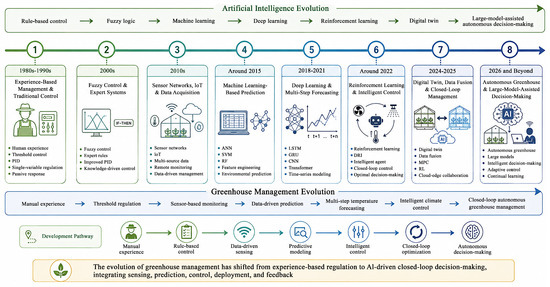
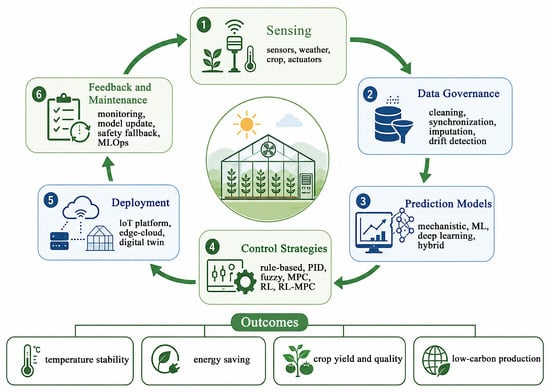
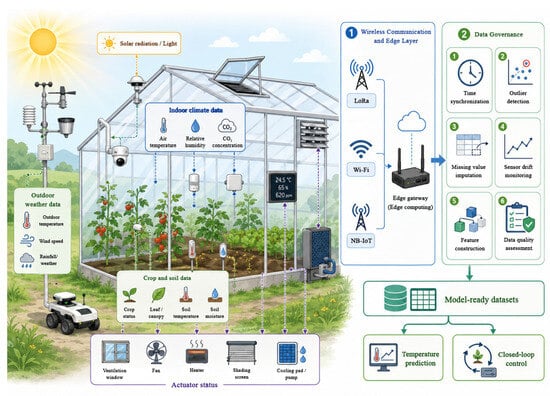
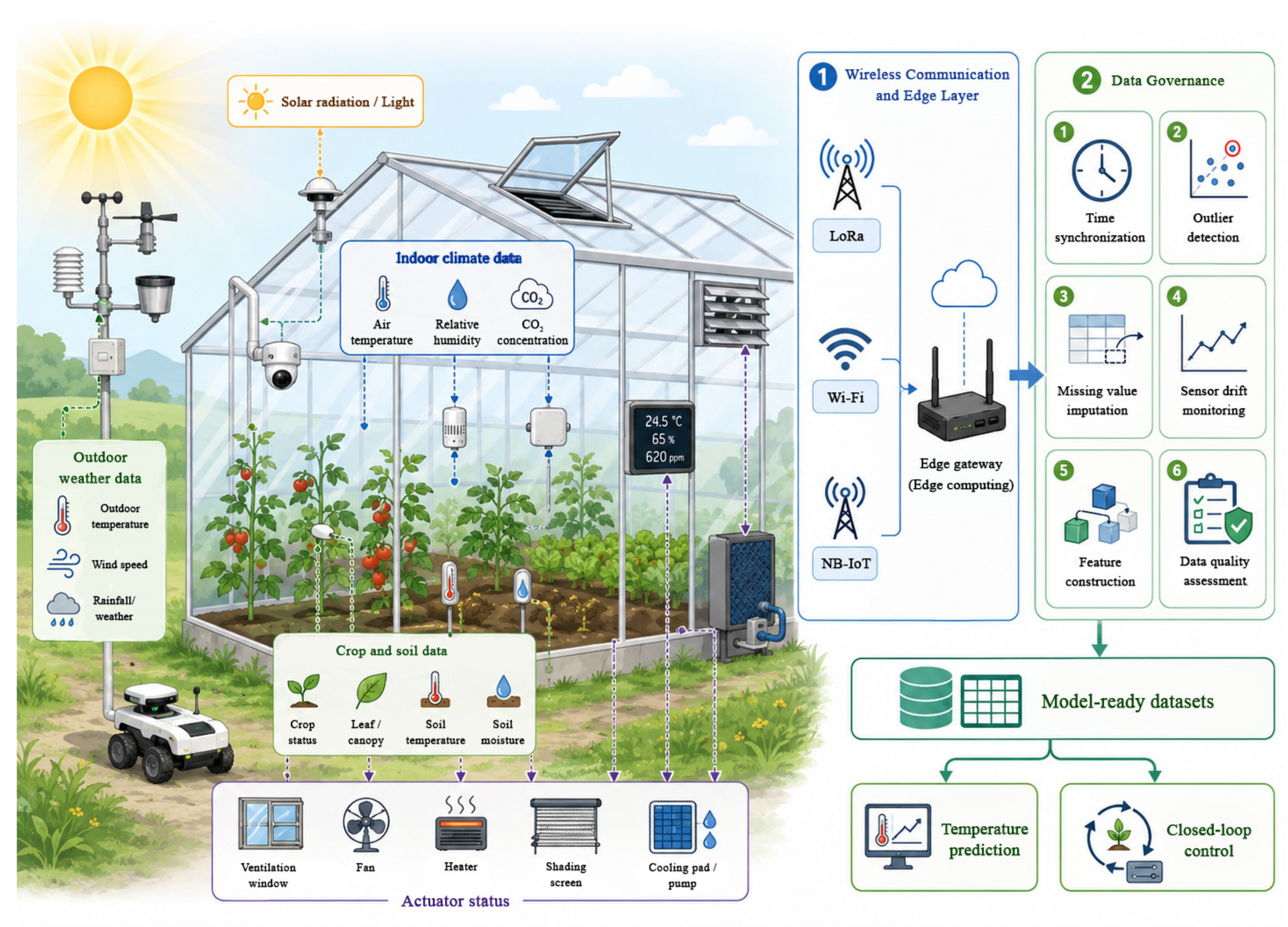
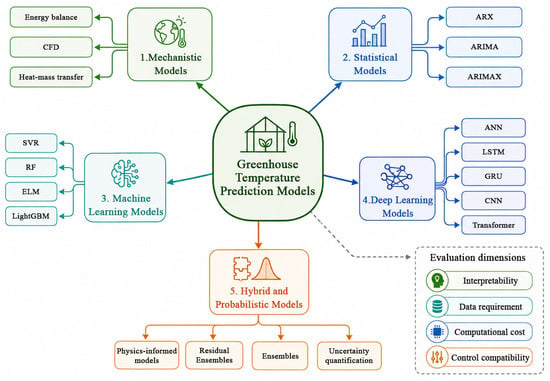
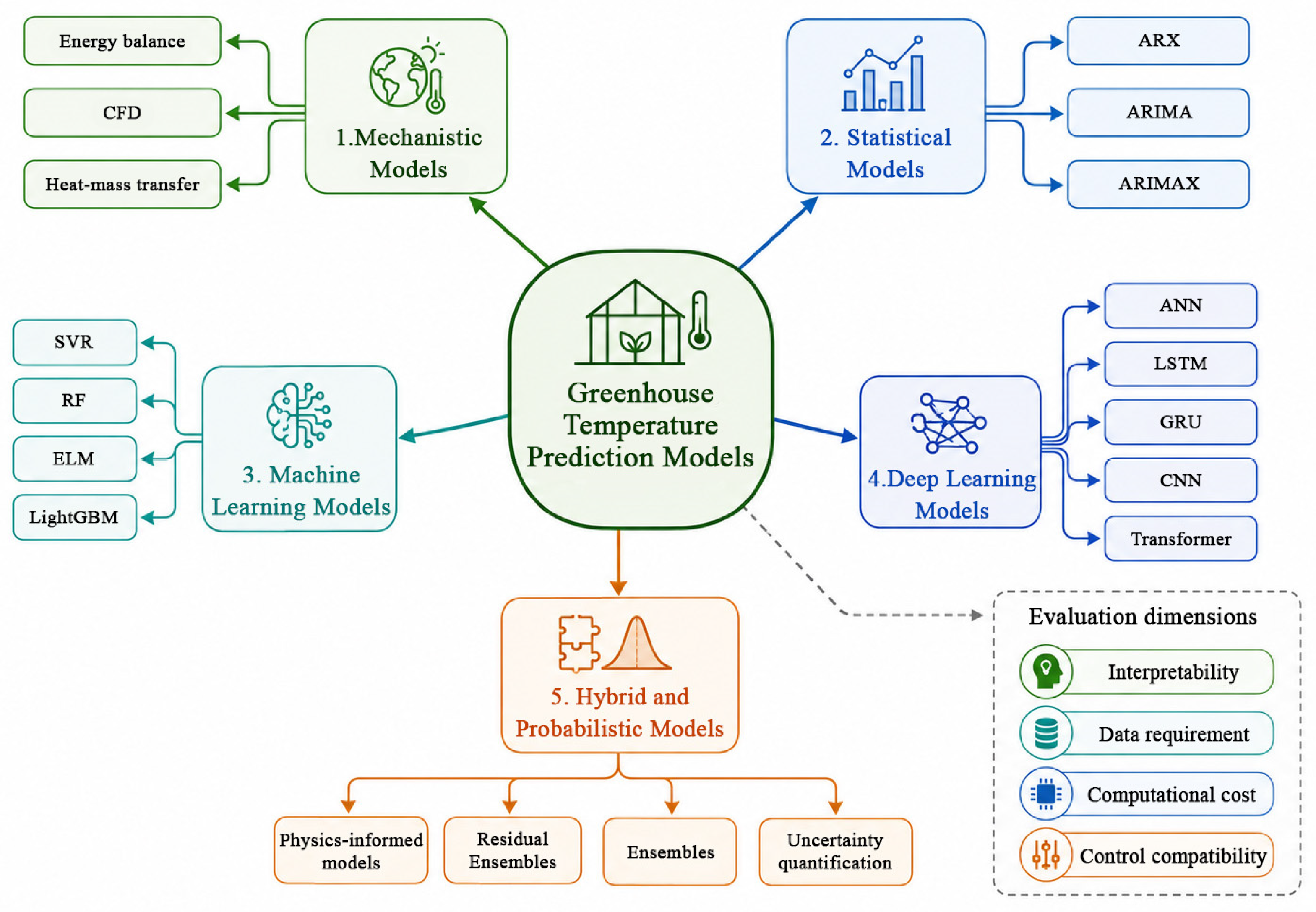
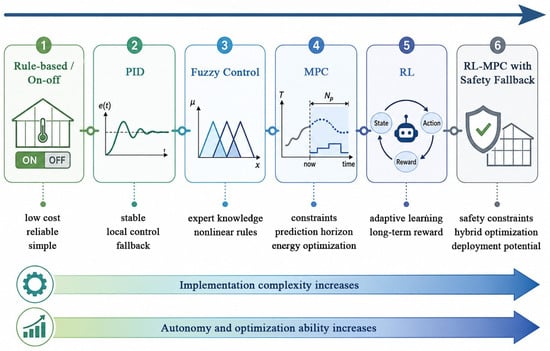
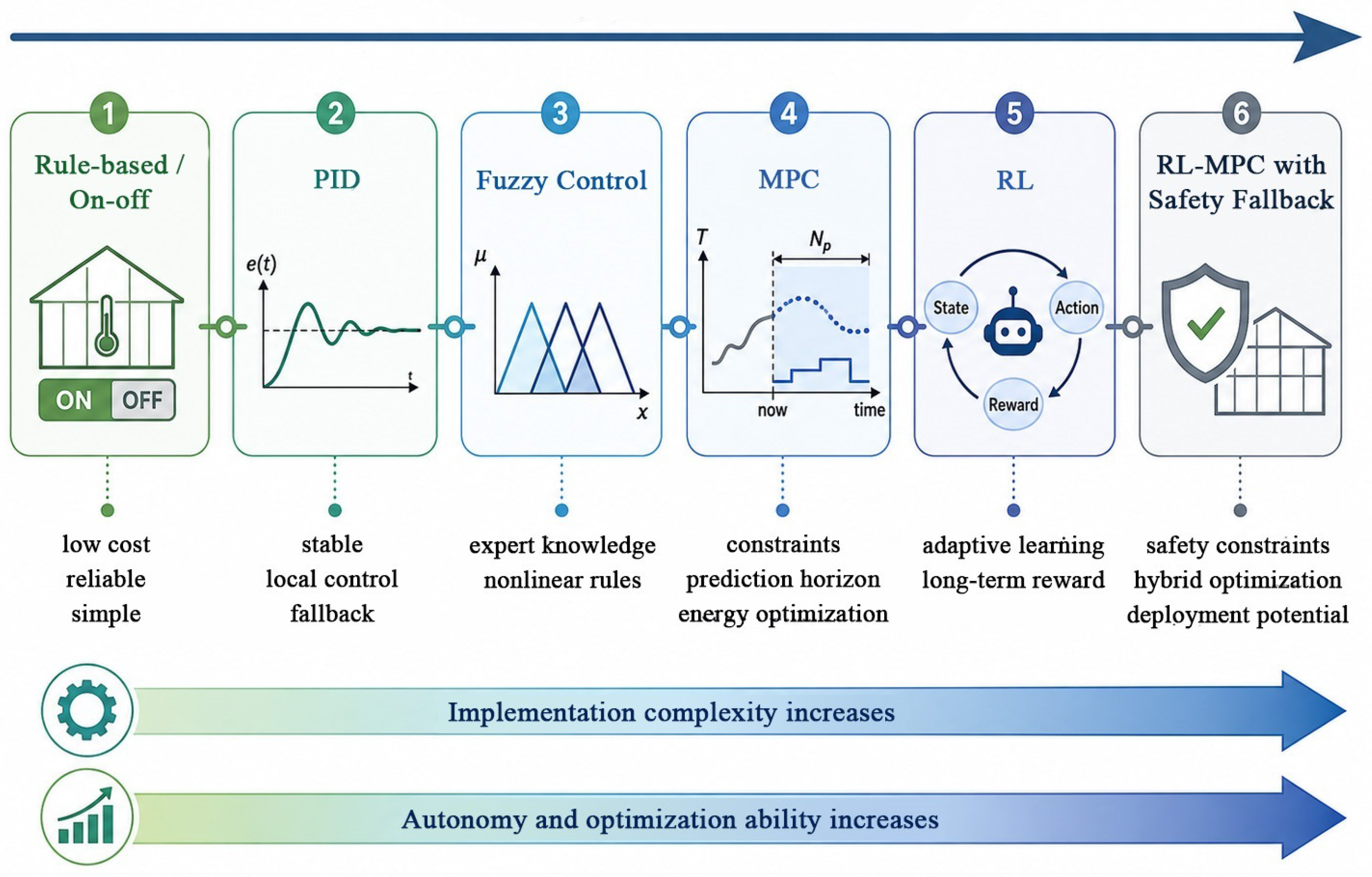
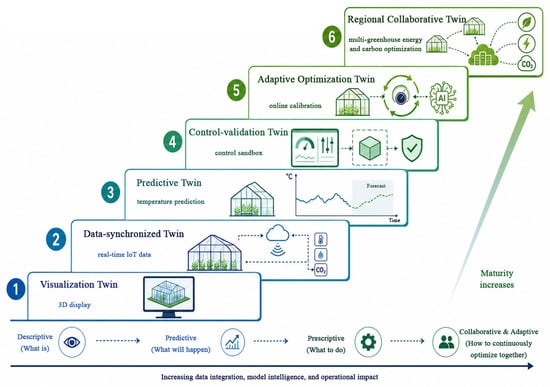
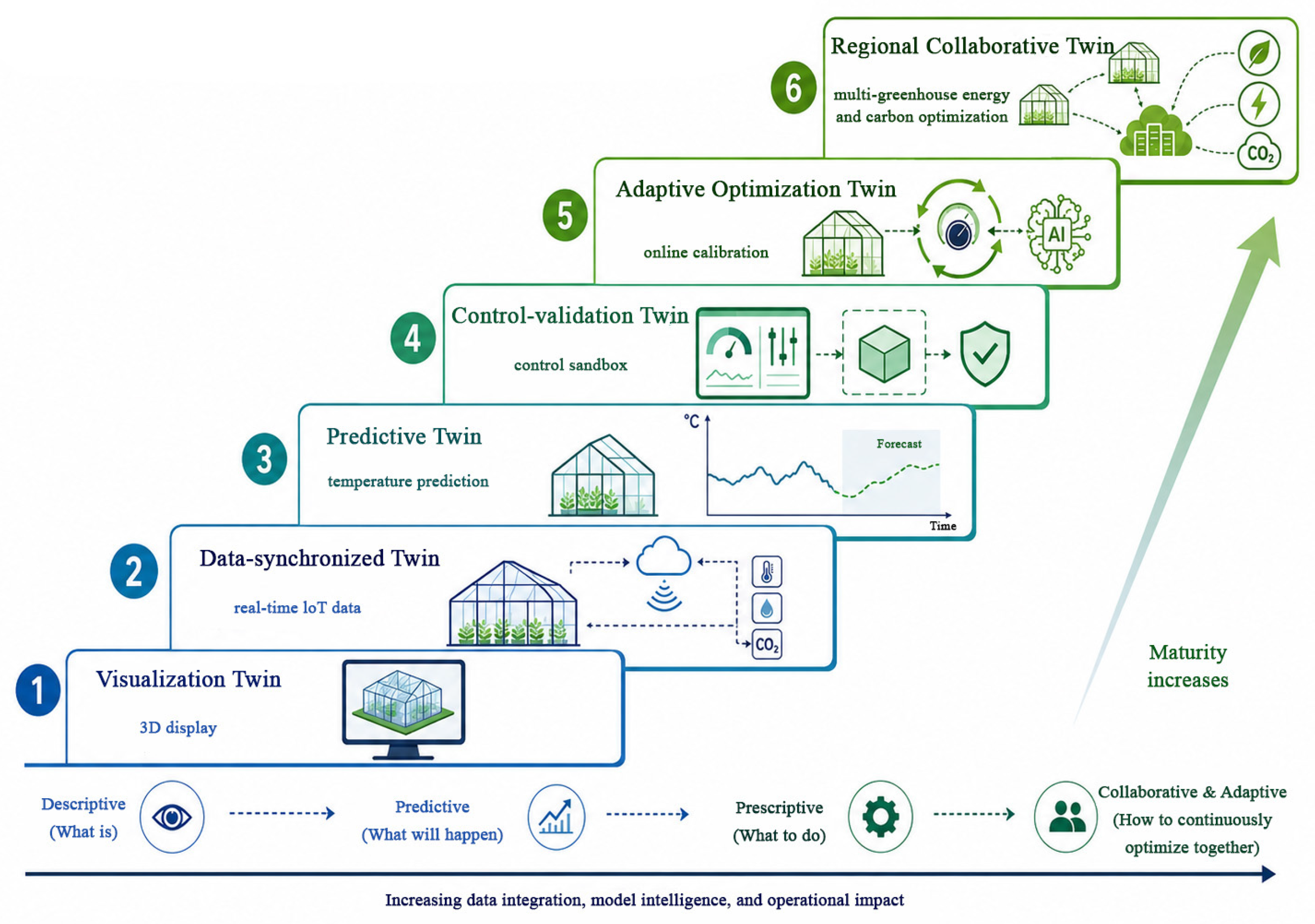
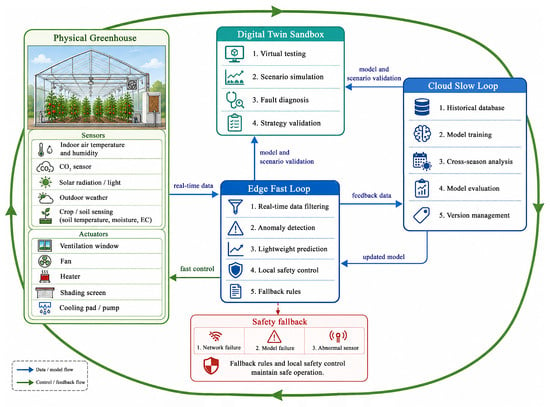
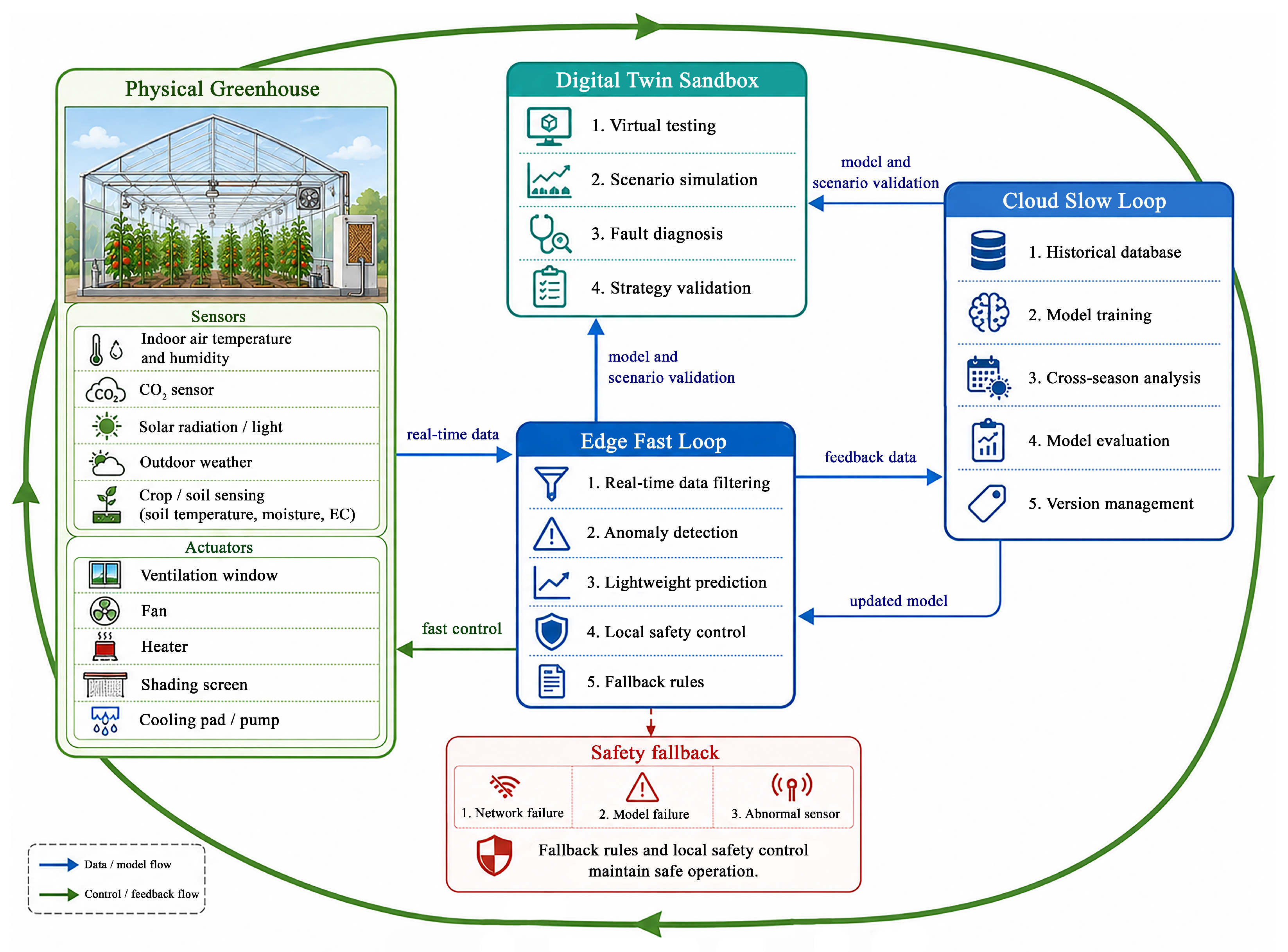

Disclaimer/Publisher’s Note: The statements, opinions and data contained in all publications are solely those of the individual author(s) and contributor(s) and not of MDPI and/or the editor(s). MDPI and/or the editor(s) disclaim responsibility for any injury to people or property resulting from any ideas, methods, instructions or products referred to in the content. |
© 2026 by the authors. Licensee MDPI, Basel, Switzerland. This article is an open access article distributed under the terms and conditions of the Creative Commons Attribution (CC BY) license.